EP3814340B1 - Neuartige katecholderivate oder deren salze, verfahren zu ihrer herstellung und diese enthaltende pharmazeutische zusammensetzungen - Google Patents
Neuartige katecholderivate oder deren salze, verfahren zu ihrer herstellung und diese enthaltende pharmazeutische zusammensetzungen Download PDFInfo
- Publication number
- EP3814340B1 EP3814340B1 EP19837491.0A EP19837491A EP3814340B1 EP 3814340 B1 EP3814340 B1 EP 3814340B1 EP 19837491 A EP19837491 A EP 19837491A EP 3814340 B1 EP3814340 B1 EP 3814340B1
- Authority
- EP
- European Patent Office
- Prior art keywords
- thiophene
- methoxyphenyl
- group
- compound
- ethyl
- Prior art date
- Legal status (The legal status is an assumption and is not a legal conclusion. Google has not performed a legal analysis and makes no representation as to the accuracy of the status listed.)
- Active
Links
Images


Classifications
-
- C—CHEMISTRY; METALLURGY
- C07—ORGANIC CHEMISTRY
- C07D—HETEROCYCLIC COMPOUNDS
- C07D409/00—Heterocyclic compounds containing two or more hetero rings, at least one ring having sulfur atoms as the only ring hetero atoms
- C07D409/02—Heterocyclic compounds containing two or more hetero rings, at least one ring having sulfur atoms as the only ring hetero atoms containing two hetero rings
- C07D409/06—Heterocyclic compounds containing two or more hetero rings, at least one ring having sulfur atoms as the only ring hetero atoms containing two hetero rings linked by a carbon chain containing only aliphatic carbon atoms
-
- A—HUMAN NECESSITIES
- A61—MEDICAL OR VETERINARY SCIENCE; HYGIENE
- A61K—PREPARATIONS FOR MEDICAL, DENTAL OR TOILETRY PURPOSES
- A61K31/00—Medicinal preparations containing organic active ingredients
- A61K31/33—Heterocyclic compounds
- A61K31/38—Heterocyclic compounds having sulfur as a ring hetero atom
- A61K31/381—Heterocyclic compounds having sulfur as a ring hetero atom having five-membered rings
-
- A—HUMAN NECESSITIES
- A61—MEDICAL OR VETERINARY SCIENCE; HYGIENE
- A61K—PREPARATIONS FOR MEDICAL, DENTAL OR TOILETRY PURPOSES
- A61K31/00—Medicinal preparations containing organic active ingredients
- A61K31/33—Heterocyclic compounds
- A61K31/38—Heterocyclic compounds having sulfur as a ring hetero atom
- A61K31/385—Heterocyclic compounds having sulfur as a ring hetero atom having two or more sulfur atoms in the same ring
-
- A—HUMAN NECESSITIES
- A61—MEDICAL OR VETERINARY SCIENCE; HYGIENE
- A61K—PREPARATIONS FOR MEDICAL, DENTAL OR TOILETRY PURPOSES
- A61K31/00—Medicinal preparations containing organic active ingredients
- A61K31/33—Heterocyclic compounds
- A61K31/395—Heterocyclic compounds having nitrogen as a ring hetero atom, e.g. guanethidine or rifamycins
- A61K31/495—Heterocyclic compounds having nitrogen as a ring hetero atom, e.g. guanethidine or rifamycins having six-membered rings with two or more nitrogen atoms as the only ring heteroatoms, e.g. piperazine or tetrazines
- A61K31/496—Non-condensed piperazines containing further heterocyclic rings, e.g. rifampin, thiothixene or sparfloxacin
-
- A—HUMAN NECESSITIES
- A61—MEDICAL OR VETERINARY SCIENCE; HYGIENE
- A61P—SPECIFIC THERAPEUTIC ACTIVITY OF CHEMICAL COMPOUNDS OR MEDICINAL PREPARATIONS
- A61P1/00—Drugs for disorders of the alimentary tract or the digestive system
- A61P1/16—Drugs for disorders of the alimentary tract or the digestive system for liver or gallbladder disorders, e.g. hepatoprotective agents, cholagogues, litholytics
-
- A—HUMAN NECESSITIES
- A61—MEDICAL OR VETERINARY SCIENCE; HYGIENE
- A61P—SPECIFIC THERAPEUTIC ACTIVITY OF CHEMICAL COMPOUNDS OR MEDICINAL PREPARATIONS
- A61P25/00—Drugs for disorders of the nervous system
-
- A—HUMAN NECESSITIES
- A61—MEDICAL OR VETERINARY SCIENCE; HYGIENE
- A61P—SPECIFIC THERAPEUTIC ACTIVITY OF CHEMICAL COMPOUNDS OR MEDICINAL PREPARATIONS
- A61P25/00—Drugs for disorders of the nervous system
- A61P25/14—Drugs for disorders of the nervous system for treating abnormal movements, e.g. chorea, dyskinesia
- A61P25/16—Anti-Parkinson drugs
-
- A—HUMAN NECESSITIES
- A61—MEDICAL OR VETERINARY SCIENCE; HYGIENE
- A61P—SPECIFIC THERAPEUTIC ACTIVITY OF CHEMICAL COMPOUNDS OR MEDICINAL PREPARATIONS
- A61P25/00—Drugs for disorders of the nervous system
- A61P25/28—Drugs for disorders of the nervous system for treating neurodegenerative disorders of the central nervous system, e.g. nootropic agents, cognition enhancers, drugs for treating Alzheimer's disease or other forms of dementia
-
- C—CHEMISTRY; METALLURGY
- C07—ORGANIC CHEMISTRY
- C07D—HETEROCYCLIC COMPOUNDS
- C07D333/00—Heterocyclic compounds containing five-membered rings having one sulfur atom as the only ring hetero atom
- C07D333/02—Heterocyclic compounds containing five-membered rings having one sulfur atom as the only ring hetero atom not condensed with other rings
- C07D333/04—Heterocyclic compounds containing five-membered rings having one sulfur atom as the only ring hetero atom not condensed with other rings not substituted on the ring sulphur atom
- C07D333/26—Heterocyclic compounds containing five-membered rings having one sulfur atom as the only ring hetero atom not condensed with other rings not substituted on the ring sulphur atom with hetero atoms or with carbon atoms having three bonds to hetero atoms with at the most one bond to halogen, e.g. ester or nitrile radicals, directly attached to ring carbon atoms
- C07D333/38—Carbon atoms having three bonds to hetero atoms with at the most one bond to halogen, e.g. ester or nitrile radicals
-
- C—CHEMISTRY; METALLURGY
- C07—ORGANIC CHEMISTRY
- C07D—HETEROCYCLIC COMPOUNDS
- C07D409/00—Heterocyclic compounds containing two or more hetero rings, at least one ring having sulfur atoms as the only ring hetero atoms
- C07D409/02—Heterocyclic compounds containing two or more hetero rings, at least one ring having sulfur atoms as the only ring hetero atoms containing two hetero rings
- C07D409/12—Heterocyclic compounds containing two or more hetero rings, at least one ring having sulfur atoms as the only ring hetero atoms containing two hetero rings linked by a chain containing hetero atoms as chain links
Definitions
- the present invention relates to a novel catechol derivative or pharmaceutically acceptable salt thereof, a process for the preparation thereof, and a pharmaceutical composition comprising the same. More specifically, the present invention relates to a novel catechol derivative or pharmaceutically acceptable salt thereof having an alkyl moiety substituted with alkylamino and/or a N-alkyl-substituted thiophene-(thio)carboxamide moiety, a process for the preparation thereof, and a pharmaceutical composition comprising the same.
- the catechol derivative or pharmaceutically acceptable salt of the present invention has an excellent autophagy-inducing activity.
- Autophagy which is also referred to as autophagocytosis, is the natural regulated mechanism of the cell that disassembles unnecessary or dysfunctional components. It allows the orderly degradation and recycling of cellular components.
- autophagosome a double-membraned vesicle known as an autophagosome. Then, the autophagosome fuses with an available lysosome and eventually the contents of the vesicle are degraded and recycled.
- Three forms of autophagy are commonly described: macroautophagy, microautophagy, and chaperone-mediated autophagy (CMA).
- autophagy when autophagy is reduced, various diseases may be caused by accumulation of misfolded proteins and so on.
- neurodegenerative diseases such as Huntington's disease (HD), Parkinson's disease (PD), Alzheimer's disease (AD), prion disease, multiple sclerosis, and amyotrophic lateral sclerosis (Lou Gehrig's disease) (e.g., Korean Patent No. 10-1731908 ).
- the induction of autophagy can treat hepatic diseases such as liver fibrosis, liver cirrhosis, hepatitis, and fatty liver disease (e.g., Korean Laid-open Publication No. 10-2017-0022790 ).
- KR 2017/0022790 relates to a novel catechol derivative and a pharmaceutical composition comprising the same.
- the catechol derivative according to this document can be usefully used for the prevention and treatment of autophagy-related diseases.
- a material inducing autophagy can be usefully applied for preventing, ameliorating or treating various diseases associated with autophagy, such as neurodegenerative diseases, hepatic diseases, metabolic diseases, sepsis, and so on.
- a certain catechol derivative or pharmaceutically acceptable salt thereof having an alkyl moiety substituted with alkylamino and/or a N-alkyl-substituted thiophene-(thio)carboxamide moiety has an excellent autophagy-inducing activity, and therefore can be usefully applied for preventing, ameliorating or treating various diseases associated with autophagy.
- the present invention provides said catechol derivative or pharmaceutically acceptable salt thereof, a process for the preparation thereof, a pharmaceutical composition comprising the same, and a use thereof.
- a pharmaceutical composition comprising said catechol derivative or pharmaceutically acceptable salt thereof as an active ingredient.
- the compound of the present invention i.e., the catechol derivative or pharmaceutically acceptable salt thereof having an alkyl moiety substituted with alkylamino and/or a N-alkyl-substituted thiophene-(thio)carboxamide moiety, has an excellent autophagy-inducing activity. Therefore, the compound or pharmaceutically acceptable salt thereof of the present invention can be usefully applied for preventing, ameliorating or treating various diseases associated with autophagy, including neurodegenerative diseases, hepatic diseases, metabolic diseases, sepsis, and so on.
- the catechol derivative or pharmaceutically acceptable salt thereof according to the present invention has a molecular structure capable of permeating the blood brain barrier, i.e., an alkyl-substituted amine moiety, thereby being able to be applied for preventing, ameliorating or treating cerebral blood flow-related diseases, for example neurodegenerative diseases, such as Huntington's disease (HD), Parkinson's disease (PD), Alzheimer's disease (AD), prion disease, multiple sclerosis, Lou Gehrig's disease, and the like.
- neurodegenerative diseases such as Huntington's disease (HD), Parkinson's disease (PD), Alzheimer's disease (AD), prion disease, multiple sclerosis, Lou Gehrig's disease, and the like.
- alkyl refers to a straight or branched aliphatic hydrocarbon radical.
- C 1 -C 6 alkyl means a straight or branched aliphatic hydrocarbon having 1 to 6 carbon atoms, such as methyl, ethyl, propyl, n- butyl, n -pentyl, n -hexyl, isopropyl, isobutyl, sec -butyl, tert -butyl, neopentyl, and isopentyl.
- hydroxy refers to the -OH radical.
- alkoxy refers to a radical formed by substituting the hydrogen atom of a hydroxy group with an alkyl.
- C 1 -C 6 alkoxy includes methoxy, ethoxy, propoxy, n -butoxy, n -pentyloxy, isopropoxy, sec -butoxy, tert -butoxy, neopentyloxy, and isopentyloxy.
- halogen refers to the fluoro, bromo, chloro, or iodo radical.
- the present invention provides a compound or salt thereof having an excellent autophagy-inducing activity, i.e., a compound of Formula 1 or pharmaceutically acceptable salt thereof: wherein, Y is O or S,
- Y may be O.
- R 1 may be hydrogen; or a diethylaminoethyl group, and R 2 may be a methyl group.
- Y may be S.
- R 1 may be hydrogen; or a diethylaminoethyl group, and R 2 is a methyl group.
- the compound or pharmaceutically acceptable salt thereof of the present invention may be one or more selected from the group consisting of:
- the compound of the present invention may N-((4-(dimethylam ino)tetrahydro-2H-pyran-4-yl)methyl)-5-(4-hydroxy-3-methoxyphenyl)thiophene-2-carboxamide or pharmaceutically acceptable salt thereof (for example, hydrochloride); or N-((4-(dimethylamino)tetrahydro-2H-pyran-4-yl)methyl)-5-(4-(2-diethylamino)ethoxy-3-methoxyphenyl)thiophene-2-carboxamide or pharmaceutically acceptable salt thereof (for example, hydrochloride).
- the compound of Formula 1 of the present invention may be in a pharmaceutically acceptable salt form, for example in an acid addition salt form.
- the compound of the present invention has an alkyl-substituted amine moiety and therefore can be easily isolated in an acid addition salt form (e.g., in the form of hydrochloride), unlike the conventional compounds (e.g., the compounds disclosed in Korean Laid-open Publication No. 10-2017-0022790 ). That is, the compound of the present invention in the form of an acid addition salt can be easily prepared by acid/base work-up processes and be easily applied to scale-up processes, without performing column chromatography processes, unlike the conventional compounds (e.g., the compounds disclosed in Korean Laid-open Publication No.
- the acid addition salt may be derived from an inorganic acid or an organic acid, such as hydrochloric acid, hydrobromic acid, hydroiodic acid, nitric acid, sulfuric acid, phosphoric acid, acetic acid, lactic acid, citric acid, tartaric acid, succinic acid, maleic acid, malonic acid, oxalic acid, fumaric acid, gluconic acid, saccharic acid, benzoic acid, methanesulfonic acid, ethanesulfonic acid, benzenesulfonic acid, p-toluenesulfonic acid, pamoic acid, and the like, but not limited thereto.
- the acid addition salt may be prepared by reacting the compound of Formula 1 with an inorganic acid or an organic acid in a conventional solvent,
- the present invention also includes, within its scope, a process for preparing the compound of Formula 1 or pharmaceutically acceptable salt thereof.
- the coupling may be carried out in the presences of a catalyst (e.g., tetrakis(triphenylphosphine)palladium(0)) and a base (e.g., sodium carbonate).
- a catalyst e.g., tetrakis(triphenylphosphine)palladium(0)
- a base e.g., sodium carbonate
- the reaction between the compound of Formula 2 and the compound of Formula 3 may be carried out in a molar ratio ranging from 1 : 2 to 2 : 1, preferably in a molar ratio of about 1 : 1.
- the coupling may be carried out in water, C 1 ⁇ C 4 alcohol, tetrahydrofuran, 1,2-dimethoxyethane, or a mixture thereof.
- a compound of Formula 1 or pharmaceutically acceptable salt thereof wherein Y is S may be prepared by carrying out thioamidation of a compound of Formula 2 to prepare a compound of Formula 6; and coupling the compound of Formula 6 with a compound of Formula 3 to prepare a compound of Formula 1b, as shown in the following Reaction Scheme 2:
- R 1 , R 2 , R 3 , R 4 , Z, R 6 and R 7 are the same as defined in the above.
- the compound of Formula 2 may be prepared as described in Reaction Scheme 1.
- the thioamidation may be carried out by reacting the compound of Formula 2 with P 4 S 10 , bis(tricyclohexyltin) sulfide or Lawesson's reagent.
- the thioamidation reaction may be performed in toluene, dichloromethane, tetrahydrofuran, or a mixed solvent thereof.
- the coupling reaction may be carried out as described in Reaction Scheme 1, using the compound of Formula 6 instead of the compound of Formula 2.
- a compound of Formula 1 or pharmaceutically acceptable salt thereof wherein Y is S may be prepared by carrying out thioamidation reaction of a compound of Formula 1a to prepare a compound of Formula 1b, as shown in the following Reaction Scheme 3:
- R 1 , R 2 , R 3 , and R 4 are the same as defined in the above.
- the compound of Formula 1a may be prepared as described in Reaction Scheme 1.
- the thioamidation may be carried out as described in Reaction Scheme 2, using the compound of Formula 1a instead of the compound of Formula 2.
- the catechol derivative of the present invention i.e., the compound of Formula 1 or pharmaceutically acceptable salt thereof, has an excellent autophagy-inducing activity. Therefore, the compound of Formula 1 or pharmaceutically acceptable salt thereof of the present invention can be usefully applied for preventing, ameliorating or treating various diseases associated with autophagy, including neurodegenerative diseases, hepatic diseases, metabolic diseases, sepsis, and so on.
- the present invention includes, within its scope, a pharmaceutical composition for inducing autophagy, comprising a therapeutically effective amount of the compound of Formula 1 or pharmaceutically acceptable salt thereof as an active ingredient.
- the diseases associated with autophagy includes, without limitation, various diseases that can be prevented, ameliorated, or treated through the induction of autophagy.
- the pharmaceutical composition of the present invention may be a pharmaceutical composition for preventing, ameliorating or treating neurodegenerative diseases selected from the group consisting of Huntington's disease, Parkinson's disease, Alzheimer's disease, prion disease, multiple sclerosis, and Lou Gehrig's disease; hepatic diseases selected from the group consisting of liver fibrosis, liver cirrhosis, hepatitis, and fatty liver disease; metabolic diseases selected from the group consisting of diabetes, hyperlipidemia, obesity, and inflammation; or sepsis.
- neurodegenerative diseases selected from the group consisting of Huntington's disease, Parkinson's disease, Alzheimer's disease, prion disease, multiple sclerosis, and Lou Gehrig's disease
- hepatic diseases selected from the group consisting of liver fibrosis, liver cirrhosis, hepatitis, and fatty liver disease
- metabolic diseases selected from
- the pharmaceutical composition of the present invention may comprise a pharmaceutically acceptable carrier, such as diluents, disintegrants, sweeteners, lubricants, or flavoring agents.
- a pharmaceutically acceptable carrier such as diluents, disintegrants, sweeteners, lubricants, or flavoring agents.
- the pharmaceutical composition may be formulated to an oral dosage form such as tablets, capsules, powders, granules, suspensions, emulsions, or syrups; or a parenteral dosage form such as external solutions, external suspensions, external emulsions, gels (e.g., ointments), inhalants, sprays, injections, according to conventional methods.
- the dosage form may be various forms, e.g., dosage forms for single administration or for multiple administrations.
- the pharmaceutical composition of the present invention may comprise, for example, a diluent (e.g., lactose, corn starch, etc); a lubricant (e.g., magnesium stearate); an emulsifying agent; a suspending agent; a stabilizer; and/or an isotonic agent. If necessary, the composition further comprises sweeteners and/or flavoring agents.
- composition of the present invention may be administered orally or parenterally, including inhalable, intravenous, intraperitoneal, subcutaneous, intracerebroventricular, rectal and topical routes of administration. Therefore, the composition of the present invention may be formulated into various forms such as tablets, capsules, aqueous solutions or suspensions.
- carriers such as lactose, corn starch, and lubricating agents, e.g. magnesium stearate, are conventionally used.
- lactose and/or dried corn starch can be used as a diluent.
- the active ingredient may be combined with emulsifying and/or suspending agents.
- composition of the present invention may be in the form of an aqueous solution containing pharmaceutically acceptable carriers, e.g., saline having a pH level of 7.4.
- pharmaceutically acceptable carriers e.g., saline having a pH level of 7.4.
- the solutions may be introduced into a patient's intramuscular blood-stream by local bolus injection.
- the catechol derivative of the present invention i.e., the compound of Formula 1 or pharmaceutically acceptable salt thereof, may be administered in a therapeutically effective amount ranging from about 0.0001 mg/kg to about 100 mg/kg per day, preferably from about 0.001 mg/kg to about 100 mg/kg per day, to a subject patient.
- the administration may be carried out, via oral or parenteral route, once or several times a day.
- the dose may be changed according to the patient's age, condition, weight, susceptibility, degree of disease, route of administration, duration of administration, and the like.
- the pharmaceutical composition according to the present invention may contain the compound of Formula 1 or pharmaceutically acceptable salt thereof in an amount ranging from 0.001 to 99 % by weight, preferably 0.01 to 60 % by weight.
- the present invention also includes, within its scope, a method for inducing autophagy in a mammal in need thereof, comprising administering to the mammal an therapeutically effective amount of the compound of Formula 1 or pharmaceutically acceptable salt thereof.
- the present invention includes a method for preventing, ameliorating or treating neurodegenerative diseases selected from the group consisting of Huntington's disease, Parkinson's disease, Alzheimer's disease, prion disease, multiple sclerosis, and Lou Gehrig's disease; hepatic diseases selected from the group consisting of liver fibrosis, liver cirrhosis, hepatitis, and fatty liver disease; metabolic diseases selected from the group consisting of diabetes, hyperlipidemia, obesity, and inflammation; or sepsis.
- neurodegenerative diseases selected from the group consisting of Huntington's disease, Parkinson's disease, Alzheimer's disease, prion disease, multiple sclerosis, and Lou Gehrig's disease
- hepatic diseases selected from the group consisting of liver fibrosis, liver cirrhosis
- the present invention also includes, within its scope, a use of the compound of Formula 1 or pharmaceutically acceptable salt thereof for the manufacture of a medicament for inducing autophagy in a mammal in need thereof.
- the present invention includes a use of the compound of Formula 1 or pharmaceutically acceptable salt thereof for the manufacture of a medicament for preventing, ameliorating or treating neurodegenerative diseases selected from the group consisting of Huntington's disease, Parkinson's disease, Alzheimer's disease, prion disease, multiple sclerosis, and Lou Gehrig's disease; hepatic diseases selected from the group consisting of liver fibrosis, liver cirrhosis, hepatitis, and fatty liver disease; metabolic diseases selected from the group consisting of diabetes, hyperlipidemia, obesity, and inflammation; or sepsis.
- neurodegenerative diseases selected from the group consisting of Huntington's disease, Parkinson's disease, Alzheimer's disease, prion disease, multiple sclerosis, and Lou Gehrig's disease
- hepatic diseases selected from the group consisting of liver
- the reaction mixture was cooled to room temperature and then filtered for discarding an insoluble material.
- the resulting insoluble material was washed with ethanol (40 ml) and then the resulting washing solution was combined with the filtrate.
- the resulting filtrate was concentrated under reduced pressure to discard the solvent.
- purified water 200 ml
- 6N hydrochloric acid 10 ml
- the resulting solution was washed with chloroform twice (100 ml and 50 ml, respectively) and then the pH thereof was adjusted to pH 8-9, using sodium hydroxide (about 3.0 g).
- the solution was extracted with chloroform twice (100 ml and 50 ml, respectively).
- the extract was washed with ethyl acetate (20 ml) and then the pH thereof was adjusted to pH 7-8, using sodium hydroxide (about 2.0 g).
- the solution was extracted with dichloromethane twice (50 ml and 30 ml, respectively).
- the resulting extract was dried on anhydrous sodium sulfate and then concentrated in vacuo to obtain 4.0 g of the crude product, i.e., N-(4-methylpiperazino)-5-(4-(2-diethylam ino)ethoxy-3-methoxyphenyl)thiophene-2-carboxamide (Yield: 89.5%).
- Ethyl acetate (200 ml) was added to the resulting filtrate, which was then extracted with a mixed solution of purified water (200 ml) and 2N hydrochloric acid (25 ml) and a mixed solution of purified water (200 ml) and 2N hydrochloric acid (15 ml), respectively.
- the combined extract was washed with ethyl acetate (200 ml) and then the pH thereof was adjusted to pH 9-10, using sodium hydroxide (about 4.3 g).
- the solution was extracted with chloroform three times (100 ml, 50 ml and 50 ml, respectively).
- the titled compound was prepared in accordance with the same procedures as in Example 2, using isopropylamine instead of N-methylpiperazine. (Yield: 73.0%)
- the intermediate i.e., N-isopropyl-5-(4-hydroxy-3-methoxyphenyl)thiophene-2-carboxamide
- 3.5 g was prepared in accordance with the same procedures as in Example 1, using isopropylamine instead of N-methylpiperazine (Yield: 85.0%).
- Toluene 50 ml was added thereto and then stirred for 10 minutes.
- Lawesson's reagent (5.0 g) was added to the mixture, which was then stirred at about 80°C for 5 hours.
- the reaction mixture was cooled to room temperature and then filtered to discard an insoluble material. The resulting filtrate was concentrated in vacuo.
- the resulting extract was washed with ethyl acetate (20 ml) and then the pH thereof was adjusted to pH 8-9, using sodium hydroxide (about 0.9 g).
- the solution was extracted with dichloromethane twice (50 ml and 30 ml, respectively).
- the resulting extract was dried on anhydrous sodium sulfate, and then concentrated in vacuo to obtain the crude product, N-(2-(diethylamino)ethyl)-5-(4-(2-diethylamino)ethoxy-3-methoxyphenyl)thiophene-2-carboxamide.
- ethanol 15 ml).
- the titled compound was prepared in accordance with the same procedures as in Example 13, using N-(2-(dimethylamino)ethyl)-5-(4-hydroxy-3-methoxyphenyl)thiophene-2-carboxamide prepared in the same procedures as in Example 14 instead of N-(2-(diethylamino)ethyl)-5-(4-hydroxy-3-methoxyphenyl)thiophene-2-carboxamide. (Yield: 54.7%)
- the titled compound was prepared in accordance with the same procedures as in Example 13, using N-(2-(1-piperidino)ethyl)-5-(4-hydroxy-3-methoxyphenyl)thiophene-2-carboxamide prepared in the same procedures as in Example 17 instead of N-(2-(diethylamino)ethyl)-5-(4-hydroxy-3-methoxyphenyl)thiophene-2-carboxamide. (Yield: 82.6%)
- the titled compound was prepared in accordance with the same procedures as in Example 1, using 1-(2-aminoethyl)pyrrolidine instead of N-methylpiperazine. (Yield: 20.9%)
- the titled compound was prepared in accordance with the same procedures as in Example 13, using N-((4-(dimethylamino)tetrahydro-2H-pyran-4-yl)methyl)-5-(4-hydroxy-3-methoxyphenyl)thiophene-2-carboxamide prepared in the same procedures as in Example 20 instead of N-(2-(diethylamino)ethyl)-5-(4-hydroxy-3-methoxyphenyl)thiophene-2-carboxamide. (Yield: 72.3%)
- the titled compound was prepared in accordance with the same procedures as in Example 13, using N-(2-(2-(1-methyl)pyrrolidino)ethyl)-5-(4-hydroxy-3-methoxyphenyl)thiophene-2-carboxamide prepared in the same procedures as in Example 23 instead of N-(2-(diethylamino)ethyl)-5-(4-hydroxy-3-methoxyphenyl)thiophene-2-carboxamide. (Yield: 60.9%)
- the titled compound was prepared in accordance with the same procedures as in Example 13, using N-((S)-2-(1-ethyl)pyrrolidinomethyl)-5-(4-hydroxy-3-methoxyphenyl)thiophene-2-carboxamide prepared in the same procedures as in Example 25 instead of N-(2-(diethylamino)ethyl)-5-(4-hydroxy-3-methoxyphenyl)thiophene-2-carboxamide. (Yield: 37.6%)
- the autophagy-inducing activities of the compounds of the present invention were measured in Hela cells (Korean Cell Line Bank), using the Autophagy Detection Kit (ab139484, Abcam), according to the manufacturer's instructions. Specifically, 100 ⁇ L of EBSS (Earle's Balanced Salt Solution, WELGENE (LB 002-03)) containing 10% fetal bovine serum (FBS) was added to each well of a 96-well plate. Hela cells (1 ⁇ 10 4 cells) were added to each well and then incubated overnight at 37 °C in a CO 2 incubator so as to stabilize the cells.
- EBSS Earle's Balanced Salt Solution, WELGENE (LB 002-03)
- FBS fetal bovine serum
- the medium of each well containing the stabilized cells was replaced with a medium obtained by adding 10 nM or 100 nM of the compounds prepared in Examples (test compounds) to a EBSS containing 10% FBS.
- rapamycin was dissolved in dimethyl sulfoxide and then treated at a concentration of 500 nM per well. After the treatments, the cells were incubated at 37 °C in a CO 2 incubator for 4 hours or 24 hours and then washed twice with the 1X assay buffer (prepared by adding 9 mL of distilled water to the 10X assay buffer).
- EBSS containing 5% fetal bovine serum, 1 ⁇ L/ml of Green detection reagent and 1 ⁇ L/ml of Nuclear stain was added thereto in the amount of 100 ⁇ L per well.
- the cells were incubated for 1 hour at 37 °C in a CO 2 incubator and then washed twice with the 1X assay buffer.
- the absorbance values were measured at 488 nm, using a microplate reader (Cytation 3). The tests were repeated four times.
- Example 1 Absorbance (incubation for 4 hours) Test compounds (concentration) Absorbance (at 488 nm) Example 1 (100 nM) 1321.2 Example 2 (100 nM) 1460.5 Example 3 (100 nM) 1193.8 Example 4 (100 nM) 1580.6 Example 5 (100 nM) 1348.0 Example 6 (100 nM) 1670.5 Example 7 (100 nM) 1325.5 Example 8 (100 nM) 1315.2 Example 9 (100 nM) 1320.2 Example 10 (100 nM) 1390.0 Example 11 (100 nM) 1268.4 Rapamycin (500 nM) 1306.2 Table 2 Absorbance (incubation for 24 hours) Test compounds Absorbance (at 488 nm) 10 nM 100 nM Example 1 1617.3 1660.3 Example 2 1829.3 1866.3 Example 3 1576.3 1754.3 Example 4 1691.3 1618.3 Example 5 1557.3 1618.3 Example 6 1784.6 1893.7 Example 7 1598.5 160
- the compounds according to the present invention exhibit an excellent autophagy-inducing activity, thereby being able to be usefully applied for preventing, ameliorating or treating various diseases associated with autophagy, including neurodegenerative diseases, hepatic diseases, metabolic diseases, sepsis, and so on.
- Test Example 2 Evaluation of liver function-improving activities by oral administration in the liver injury model (1)
- the compounds according to the present invention were orally administered to dimethylnitrosamine (DMN) - induced liver injury male SD rats for 3 weeks, so as to evaluate liver function-improving activities.
- DNN dimethylnitrosamine
- 7-week-old male SD rats (Orient Bio, Korea) were accommodated to the laboratory environment at room temperature for 7 days. General symptoms were observed and then only healthy animals were used for the experiment.
- DMN was dissolved in purified water and then administered intraperitoneally at the dose of 10 mg/kg for 3 consecutive weeks (3 times per week, for 4 weeks). Blood samples were collected on Day 3 after the completion of the first-week liver injury inducement and then the ALT (Alanine Transaminase) values and the AST (Aspartate Transaminase) values were measured so as to confirm the liver injury thereof.
- the compounds of the present invention were administered for 3 weeks, i.e., from Day 4 after the completion of the first-week liver injury inducement to the DMN-administering period.
- the seven compounds of the present invention were dissolved in purified water or corn oil and then orally administered, using an oral sonde, at the dose of 25 mg/kg once a day for 3 weeks.
- Blood samples were collected on Day 0 (3 days after the completion of the first-week liver injury inducement) and Day 7, 14 and 21 after the administration of the test compounds.
- the collected blood was injected into a vacutainer tube containing a clot activator and then allowed to stand at room temperature for about 20 minutes so as to coagulate each blood sample. After centrifugation for 10 minutes, the resulting serums were subjected to blood-biochemical tests.
- the experimental methods are summarized in FIG. 1 .
- the serum ALT and AST values obtained by performing the blood-biochemical test as described above are shown in Tables 3 and 4 below.
- Table 3 Group ALT values (unit: U/L, average value) 0 week 1 week 2 weeks 3 weeks Normal control group 45.64 54.04 53.68 55.00 DMN-administered group 72.58 107.52 124.82 156.26
- the serum ALT and AST values in the DMN-administered group were respectively increased about 3 times and about 2 times, after 3 weeks.
- the ALT values at the 3 weeks after the administration were 101.18 ⁇ 126.10 U/L (i.e., decreased by about 19 ⁇ 35% in comparison with that of the DMN-administered group); and the AST values at the 3 weeks after the administration were 195.10 ⁇ 250.76 U/L (i.e., decreased by about 17 ⁇ 35% in comparison with that of the DMN-administered group). Therefore, it can be confirmed that the compounds of the present invention have an effectively-improving activity against the liver injuries including liver fibrosis.
- Test Example 3 Evaluation of liver function-improving activities by oral administration in the liver injury model (2)
- the compounds according to the present invention were orally administered to dimethylnitrosamine (DMN) - induced liver injury male SD rats for 4 weeks, so as to evaluate liver function-improving activities.
- DNN dimethylnitrosamine
- 7-week-old male SD rats (Orient Bio, Korea) were accommodated to the laboratory environment at room temperature for 7 days. General symptoms were observed and then only healthy animals were used for the experiment.
- DMN was dissolved in purified water and then administered intraperitoneally at the dose of 10 mg/kg for 3 consecutive weeks (3 times per week, for 4 weeks).
- ALT Alanine Transaminase
- AST Aspartate Transaminase
- the collected blood was injected into a vacutainer tube containing a clot activator and then allowed to stand at room temperature for about 20 minutes so as to coagulate each blood sample. After centrifugation for 10 minutes, the resulting serums were subjected to blood-biochemical tests.
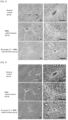
- an autopsy for hepatectomy and fixation was performed to prepare the tissue specimens thereof. After preparing the slides with the tissue specimens, hematoxylin and eosin (H&E) staining was performed thereon for microscopic observation of damages to liver tissue and inflammatory cell infiltrations in liver tissues.
- Masson's trichrome staining was also performed thereon for microscopic observation of collagen fiber depositions in liver tissues. The experimental methods are summarized in FIG. 2 .
- Table 5 The serum ALT and AST values obtained by performing the blood-biochemical test as described above are shown in Tables 5 and 6 below.
- Table 5 Group ALT values (unit: U/L, average value) 0 week 1 week 2 weeks 3 weeks 4 weeks Normal control group 50.90 51.15 50.09 48.38 48.79 DMN-administered group 254.33 111.02 64.26 63.65 65.60 The compound of Example 21 and DMN-administered group 198.02 92.71 57.61 44.48 48.33
- Table 6 Group AST values (unit: U/L, average value) 0 week 1 week 2 weeks 3 weeks 4 weeks Normal control group 103.83 99.78 93.96 117.32 117.91 DMN-administered group 339.76 182.01 132.13 143.45 158.68 The compound of Example 21 and DMN-administered group 329.92 158.91 107.61 112.06 110.45
- the serum ALT and AST values in the DMN-administered group were respectively increased about 4-5 times and about 3.2 times, after 4 weeks.
- the ALT values at the 3 and 4 weeks after the administration were 44.48 and 48.33 U/L, respectively (i.e., decreased by 30% and 26% in comparison with that of the DMN-administered group); and the AST values at the 3 and 4 weeks after the administration were 112.06 and 110.45 U/L, respectively (i.e., decreased by 22% and 30% in comparison with that of the DMN-administered group). Therefore, it can be confirmed that the compounds of the present invention have an effectively-improving activity against the liver injuries including liver fibrosis.
- FIGs. 3 and 4 results obtained by performing hematoxylin and eosin (H&E) staining and Masson's trichrome staining as described above are shown in FIGs. 3 and 4 , respectively. From the results of FIG. 3 , the degrees of damages to liver tissue and the degrees of inflammatory cell infiltrations in liver tissues were measured. And also, from the results of FIG. 4 , the degrees of collagen fiber depositions in liver tissues were measured. The results thereof are shown in Table 7 below.
- the damages to liver tissue and the inflammatory cell infiltrations in liver tissues in the DMN-administered group were respectively increased about 17 times and about 5 times, after 4 weeks, in comparison with those of the normal control group.
- the damages to liver tissue and the inflammatory cell infiltrations in liver tissues were 276.0 cells/1000 cells and 85.33 cells/mm 2 , respectively (i.e., ameliorated by about 50% and 55% in comparison with that of the DMN-administered group).
- the collagen fiber depositions in liver tissues in the DMN-administered group was increased about 12 times, after 4 weeks, in comparison with that of the normal control group.
- the collagen fiber depositions in liver tissues was 10.98 %/mm 2 (i.e., reduced by about 62% in comparison with that of the DMN-administered group).
- the compounds of the present invention have an effectively-improving activity against the liver injuries including liver fibrosis.
Landscapes
- Health & Medical Sciences (AREA)
- Chemical & Material Sciences (AREA)
- Organic Chemistry (AREA)
- Engineering & Computer Science (AREA)
- Bioinformatics & Cheminformatics (AREA)
- Pharmacology & Pharmacy (AREA)
- General Health & Medical Sciences (AREA)
- Veterinary Medicine (AREA)
- Public Health (AREA)
- Medicinal Chemistry (AREA)
- Life Sciences & Earth Sciences (AREA)
- Animal Behavior & Ethology (AREA)
- Neurosurgery (AREA)
- Neurology (AREA)
- Biomedical Technology (AREA)
- Nuclear Medicine, Radiotherapy & Molecular Imaging (AREA)
- General Chemical & Material Sciences (AREA)
- Chemical Kinetics & Catalysis (AREA)
- Epidemiology (AREA)
- Hospice & Palliative Care (AREA)
- Psychiatry (AREA)
- Psychology (AREA)
- Gastroenterology & Hepatology (AREA)
- Pharmaceuticals Containing Other Organic And Inorganic Compounds (AREA)
- Plural Heterocyclic Compounds (AREA)
Claims (14)
- Verbindung der Formel 1 oder pharmazeutisch verträgliches Salz davon:

Y O oder S ist,(1) wenn Y O ist,R1 Wasserstoff; oder eine C2~C4-Alkylgruppe, substituiert mit einem Mono- oder Di-C1~C5-Alkylamino, ist,R2 eine C1~C6-Alkylgruppe ist,R3 Wasserstoff und R4 eine (4-(Dimethylamino)tetrahydro-2H-pyran-4-yl)methylgruppe, eine C1~C4-Alkylgruppe, substituiert mit einer Mono- oder Di-C1~C5-Alkylaminogruppe; eine C1~C4-Alkylgruppe, substituiert mit einem stickstoffhaltigen cyclischen Ring, wobei der stickstoffhaltige cyclische Ring Morpholin, Piperidin oder Pyrrolidin ist, das wahlweise mit C1~C4-Alkyl substituiert ist; oder eine Piperidinylgruppe ist, die wahlweise mit C1~C4-Alkyl substituiert ist, oderR3 und R4 miteinander verbunden sind, wobei das Stickstoffatom, an das sie gebunden sind, einen Piperazinring bildet, wobei der Piperazinring wahlweise mit C1~C4-Alkyl substituiert ist,(2) wenn Y S ist,R1 und R2 unabhängig voneinander Wasserstoff; eine C1-~C6-Alkylgruppe; oder eine C1~C4-Alkylgruppe sind, die mit einem Mono- oder Di-C1-~C4-Alkylamino substituiert ist,R3 Wasserstoff ist und R4 eine C1~C4-Alkylgruppe ist, die mit einem Mono- oder Di-C1~C5-Alkylamino substituiert ist, oderR3 und R4 mit dem Stickstoffatom, an das sie gebunden sind, zum Bilden eines Piperazinrings miteinander verbunden sind, wobei der Piperazinring wahlweise mit C1~C4-Alkyl substituiert ist. - Verbindung oder pharmazeutisch verträgliches Salz davon nach Anspruch 1, wobeiY O ist,R1 Wasserstoff; oder eine Diethylaminoethylgruppe ist, undR2 eine Methylgruppe ist.
- Verbindung oder pharmazeutisch verträgliches Salz davon nach Anspruch 1, wobeiY O ist,R1 Wasserstoff; oder eine Diethylaminoethylgruppe ist,R2 eine Methylgruppe ist,R3 Wasserstoff ist, undR4 eine (4-(Dimethylamino)tetrahydro-2H-pyran-4-yl)methylgruppe, eine Dimethylaminoethylgruppe, eine Diethylaminoethylgruppe, eine Diisopropylaminoethylgruppe, eine Morpholinoethylgruppe, die wahlweise mit C1~C4-Alkyl substituiert ist, eine Piperidinoethylgruppe, die wahlweise mit C1~C4-Alkyl substituiert ist, eine Pyrrolidinoethylgruppe, die wahlweise mit C1~C4-Alkyl substituiert ist oder eine Pyridinilgruppe ist, die wahlweise mit C1~C4-Alkyl substituiert ist.
- Verbindung oder pharmazeutisch verträgliches Salz davon nach Anspruch 1, wobeiY O ist,R1 Wasserstoff; oder eine Diethylaminoethylgruppe ist,R2 eine Methylgruppe ist,R3 Wasserstoff ist, undR4 eine (4-(Dimethylamino)tetrahydro-2H-pyran-4-yl)methylgruppe ist.
- Verbindung oder pharmazeutisch verträgliches Salz davon nach Anspruch 1, wobeiY O ist,R1 Wasserstoff; oder eine Diethylaminoethylgruppe ist,R2 eine Methylgruppe ist undR3 und R4 mit dem Stickstoffatom, an das sie gebunden sind, zum Bilden eines Piperazinrings, der wahlweise mit C1~C4-Alkyl substituiert ist, miteinander verbunden sind.
- Verbindung oder pharmazeutisch verträgliches Salz davon nach Anspruch 1, wobeiY S ist,R1 Wasserstoff; oder eine Diethylaminoethylgruppe ist, undR2 eine Methylgruppe ist.
- Verbindung oder pharmazeutisch verträgliches Salz davon nach Anspruch 1, wobeiY S ist,R1 Wasserstoff; oder eine Diethylaminoethylgruppe ist,R2 eine Methylgruppe ist,R3 Wasserstoff ist, undR4 eine Isopropylgruppe; oder eine Diisopropylaminoethylgruppe ist.
- Verbindung oder pharmazeutisch verträgliches Salz davon nach Anspruch 1, wobeiY S ist,R1 Wasserstoff; oder eine Diethylaminoethylgruppe ist,R2 eine Methylgruppe ist undR3 und R4 mit dem Stickstoffatom, an das sie gebunden sind, zum Bilden eines Piperazinrings, der wahlweise mit C1~C4-Alkyl substituiert ist, miteinander verbunden sind.
- Verbindung oder pharmazeutisch verträgliches Salz davon, das eine oder mehrere ist ausgewählt aus der Gruppe bestehend aus:N-(4-Methylpiperazino)-5-(4-hydroxy-3-methoxyphenyl)thiophen-2-carboxamidhydrochlorid;N-(4-Methylpiperazino)-5-(4-(2-diethylamino)ethoxy-3-methoxyphenyl)thiophen-2-carboxamidhydrochlorid;N-(4-Methylpiperazino)-5-(4-hydroxy-3-methoxyphenyl)thiophen-2-thiocarboxamidhydrochlorid;N-(4-Methylpiperazino)-5-(4-(2-diethylamino)ethoxy-3-methoxyphenyl)thiophen-2-thiocarboxamidhydrochlorid;N-(2-(Diisopropylamino)ethyl)-5-(4-hydroxy-3-methoxyphenyl)thiophen-2-carboxamidhydrochlorid;N-(2-(Diisopropylamino)ethyl)-5-(4-(2-diethylamino)ethoxy-3-methoxyphenyl)thiophen-2-carboxamidhydrochlorid;N-(2-(Diisopropylamino)ethyl)-5-(4-hydroxy-3-methoxyphenyl)thiophen-2-thiocarboxamidhydrochlorid;N-(2-(Diisopropylamino)ethyl)-5-(4-(2-diethylamino)ethoxy-3-methoxyphenyl)thiophen-2-thiocarboxamidhydrochlorid;N-Isopropyl-5-(4-(2-diethylamino)ethoxy-3-methoxyphenyl)thiophen-2-carboxamidhydrochlorid;N-Isopropyl-5-(4-(2-diethylamino)ethoxy-3-methoxyphenyl)thiophen-2-thiocarboxamidhydrochlorid;N-(2-(Diethylamino)ethyl)-5-(4-hydroxy-3-methoxyphenyl)thiophen-2-carboxamidhydrochlorid;N-(2-(Diethylamino)ethyl)-5-(4-(2-diethylamino)ethoxy-3-methoxyphenyl)thiophen-2-carboxamidhydrochlorid;N-(2-(Dimethylamino)ethyl)-5-(4-hydroxy-3-methoxyphenyl)thiophen-2-carboxamidhydrochlorid;N-(2-(Dimethylamino)ethyl)-5-(4-(2-diethylamino)ethoxy-3-methoxyphenyl)thiophen-2-carboxamidhydrochlorid;N-(2-(4-morpholino)ethyl)-5-(4-hydroxy-3-methoxyphenyl)thiophen-2-carboxamidhydrochlorid;N-(2-(1-Piperidino)ethyl)-5-(4-hydroxy-3-methoxyphenyl)thiophen-2-carboxamidhydrochlorid;N-(2-(1-Piperidino)ethyl)-5-(4-(2-diethylamino)ethoxy-3-methoxyphenyl)thiophen-2-carboxamidhydrochlorid;N-(2-(1-Pyrrolidino)ethyl)-5-(4-hydroxy-3-methoxyphenyl)thiophen-2-carboxamidhydrochlorid;N-((4-(Dimethylamino)tetrahydro-2H-pyran-4-yl)methyl)-5-(4-hydroxy-3-methoxyphenyl)thiophen-2-carboxamidhydrochlorid;N-((4-(Dimethylamino)tetrahydro-2H-pyran-4-yl)methyl)-5-(4-(2-diethylamino)ethoxy-3-methoxyphenyl)thiophen-2-carboxamidhydrochlorid;N-(4-(1-Methyl)piperidinyl)-5-(4-hydroxy-3-methoxyphenyl)thiophen-2-carboxamidhydrochlorid;N-(2-(2-(1-Methyl)pyrrolidino)ethyl)-5-(4-hydroxy-3-methoxyphenyl)thiophen-2-carboxamidhydrochlorid;N-(2-(2-(1-Methyl)pyrrolidino)ethyl)-5-(4-(2-diethylamino)ethoxy-3-methoxyphenyl)thiophen-2-carboxamidhydrochlorid;N-((S)-2-(1-Ethyl)pyrrolidinomethyl)-5-(4-hydroxy-3-methoxyphenyl)thiophen-2-carboxamidhydrochlorid; undN-((S)-2-(1-Ethyl)pyrrolidinomethyl)-5-(4-(2-diethylamino)ethoxy-3-methoxyphenyl)thiophen-2-carboxamidhydrochlorid.
- Verbindung oder pharmazeutisch verträgliches Salz davon nach Anspruch 1, wobei die Verbindung N-((4-(Dimethylamino)tetrahydro-2H-pyran-4-yl)methyl)-5-(4-hydroxy-3-methoxyphenyl)thiophen-2-carboxamid ist.
- Verbindung oder pharmazeutisch verträgliches Salz davon nach Anspruch 1, wobei die Verbindung N-((4-(Dimethylamino)tetrahydro-2H-pyran-4-yl)methyl)-5-(4-(2-diethylamino)ethoxy-3-methoxyphenyl)thiophen-2-carboxamid ist.
- Verfahren zur Herstellung einer Verbindung der Formel 1a oder eines pharmazeutisch verträglichen Salzes davon, wobei das Verfahren das Koppeln einer Verbindung der Formel 2 mit einer Verbindung der Formel 3 zum Herstellen einer Verbindung der Formel 1a umfasst:


- Pharmazeutische Zusammensetzung zur Verwendung bei dem Induzieren von Autophagie, die eine therapeutisch wirksame Menge der Verbindung oder eines pharmazeutisch verträglichen Salzes davon gemäß einem der Ansprüche 1 bis 11 als Wirkstoff enthält.
- Pharmazeutische Zusammensetzung zur Verwendung nach Anspruch 13 zur Vorbeugung, Linderung oder Behandlung von neurodegenerativen Erkrankungen, ausgewählt aus der Gruppe bestehend aus der Huntington-Erkrankung, der Parkinson-Erkrankung, der Alzheimer-Erkrankung, der Prion-Erkrankung, der Multiplen Sklerose und der Lou-Gehrig-Erkrankung; hepatischen Erkrankungen, ausgewählt aus der Gruppe bestehend aus Leberfibrose, Leberzirrhose, Hepatitis und Fettlebererkrankung; Stoffwechselerkrankungen, ausgewählt aus der Gruppe bestehend aus Diabetes, Hyperlipidämie, Adipositas und Entzündung; oder Sepsis.
Applications Claiming Priority (2)
| Application Number | Priority Date | Filing Date | Title |
|---|---|---|---|
| KR20180084536 | 2018-07-20 | ||
| PCT/KR2019/008805 WO2020017878A1 (en) | 2018-07-20 | 2019-07-17 | Novel catechol derivatives or salt thereof, processes for preparing the same, and pharmaceutical compositions comprising the same |
Publications (4)
| Publication Number | Publication Date |
|---|---|
| EP3814340A1 EP3814340A1 (de) | 2021-05-05 |
| EP3814340A4 EP3814340A4 (de) | 2022-03-09 |
| EP3814340B1 true EP3814340B1 (de) | 2024-12-18 |
| EP3814340C0 EP3814340C0 (de) | 2024-12-18 |
Family
ID=69164482
Family Applications (1)
| Application Number | Title | Priority Date | Filing Date |
|---|---|---|---|
| EP19837491.0A Active EP3814340B1 (de) | 2018-07-20 | 2019-07-17 | Neuartige katecholderivate oder deren salze, verfahren zu ihrer herstellung und diese enthaltende pharmazeutische zusammensetzungen |
Country Status (9)
| Country | Link |
|---|---|
| US (1) | US12110281B2 (de) |
| EP (1) | EP3814340B1 (de) |
| JP (1) | JP7371082B2 (de) |
| KR (1) | KR102813346B1 (de) |
| CN (1) | CN112437773B (de) |
| AU (1) | AU2019304832A1 (de) |
| CA (1) | CA3106968A1 (de) |
| ES (1) | ES3015173T3 (de) |
| WO (1) | WO2020017878A1 (de) |
Families Citing this family (2)
| Publication number | Priority date | Publication date | Assignee | Title |
|---|---|---|---|---|
| KR102871918B1 (ko) * | 2020-04-21 | 2025-10-17 | (주)헥사파마텍 | 신규의 2-아릴티아졸 유도체 또는 이의 염, 이의 제조방법, 및 이를 함유하는 약학 조성물 |
| TWI831339B (zh) * | 2021-08-24 | 2024-02-01 | 國立陽明交通大學 | 化合物用於製備Cisd2不足相關病症的藥物的用途 |
Family Cites Families (9)
| Publication number | Priority date | Publication date | Assignee | Title |
|---|---|---|---|---|
| WO2003028731A1 (en) * | 2001-10-04 | 2003-04-10 | Smithkline Beecham Corporation | Chk1 kinase inhibitors |
| WO2005063742A2 (en) | 2003-12-23 | 2005-07-14 | Axys Pharmaceuticals, Inc. | Amidino compounds as cysteine protease inhibitors |
| JP2013212994A (ja) * | 2010-06-22 | 2013-10-17 | Sanwa Kagaku Kenkyusho Co Ltd | 新規チオフェンカルボキサミド誘導体及びその医薬用途 |
| KR20120131401A (ko) | 2011-05-25 | 2012-12-05 | 울산대학교 산학협력단 | 자가포식작용 촉진제의 신규 용도 |
| CN104725347A (zh) * | 2015-02-11 | 2015-06-24 | 佛山市赛维斯医药科技有限公司 | 一类烷氧基取代的含甲氧苯基噻吩酰胺类结构的化合物及用途 |
| KR101731908B1 (ko) | 2015-08-18 | 2017-05-11 | 서울대학교산학협력단 | p62 ZZ 도메인에 결합하는 리간드 또는 아르기닌화된 BiP에 의해 매개되는 오토파지 활성을 통한 신경변성 질환 예방 및 치료 |
| KR102100470B1 (ko) | 2015-08-21 | 2020-04-13 | (주)오토파지사이언스 | 신규한 카테콜 유도체 및 이를 포함하는 약학적 조성물 |
| KR101915016B1 (ko) | 2016-07-12 | 2018-11-06 | 연세대학교 산학협력단 | 자가포식 향상물질 및 그 용도 |
| WO2019231290A1 (ko) * | 2018-06-01 | 2019-12-05 | (주) 오토파지사이언스 | 신규한 화합물 및 이를 포함하는 약학적 조성물 |
-
2019
- 2019-07-17 US US17/261,561 patent/US12110281B2/en active Active
- 2019-07-17 CA CA3106968A patent/CA3106968A1/en active Pending
- 2019-07-17 WO PCT/KR2019/008805 patent/WO2020017878A1/en not_active Ceased
- 2019-07-17 CN CN201980048388.3A patent/CN112437773B/zh active Active
- 2019-07-17 EP EP19837491.0A patent/EP3814340B1/de active Active
- 2019-07-17 ES ES19837491T patent/ES3015173T3/es active Active
- 2019-07-17 JP JP2021503013A patent/JP7371082B2/ja active Active
- 2019-07-17 AU AU2019304832A patent/AU2019304832A1/en not_active Abandoned
- 2019-07-17 KR KR1020190086063A patent/KR102813346B1/ko active Active
Also Published As
| Publication number | Publication date |
|---|---|
| WO2020017878A1 (en) | 2020-01-23 |
| JP7371082B2 (ja) | 2023-10-30 |
| EP3814340A4 (de) | 2022-03-09 |
| ES3015173T3 (en) | 2025-04-29 |
| CN112437773B (zh) | 2024-06-11 |
| AU2019304832A1 (en) | 2021-01-21 |
| CA3106968A1 (en) | 2020-01-23 |
| US12110281B2 (en) | 2024-10-08 |
| US20210340119A1 (en) | 2021-11-04 |
| EP3814340A1 (de) | 2021-05-05 |
| CN112437773A (zh) | 2021-03-02 |
| EP3814340C0 (de) | 2024-12-18 |
| JP2021530538A (ja) | 2021-11-11 |
| KR102813346B1 (ko) | 2025-05-27 |
| KR20200010078A (ko) | 2020-01-30 |
Similar Documents
| Publication | Publication Date | Title |
|---|---|---|
| EP3630755B1 (de) | 5-methyl-1,3,4-oxadiazol-2-yl-verbindungen | |
| EP3330259B1 (de) | 1,3,4-oxadiazolamidderivatverbindung als histondeacetylasehemmer und pharmazeutische zusammensetzung damit | |
| KR101118807B1 (ko) | O-치환 히드록시아릴 유도체 | |
| EP1513836B1 (de) | Piperazinylacylpiperidinderivate, deren herstellung und deren therapeutische anwendung | |
| JP7642859B2 (ja) | ヒストン脱アセチル化酵素6阻害剤としての1,3,4-オキサジアゾールチオカルボニル化合物およびこれを含む薬剤学的組成物 | |
| CA2784600A1 (en) | New inhibitors of cyclophilins and uses thereof | |
| EP3354647B1 (de) | Egfr-kinase-inhibitor sowie herstellungsverfahren und verwendung davon | |
| Firke et al. | Synthetic and pharmacological evaluation of some pyridine containing thiazolidinones | |
| US12110281B2 (en) | Catechol derivatives or salt thereof, processes for preparing the same, and pharmaceutical compositions comprising the same | |
| EP4140989B1 (de) | 2-arylthiazolderivat oder salz davon, herstellungsverfahren dafür und pharmazeutische zusammensetzung damit | |
| EP4563576A1 (de) | 2(1h)-pyridiniminderivate | |
| EP3037412B1 (de) | Indolamidverbindung als nekrosehemmer | |
| WO2019079609A1 (en) | SEH / PDE4 DOUBLE INHIBITORS AVAILABLE ORAL | |
| EP3858812B1 (de) | Mdm2-inhibitor, herstellungsverfahren dafür, pharmazeutische zusammensetzung davon und verwendung davon | |
| CN110143995B (zh) | 氮杂环取代18β-甘草次酸衍生物及其制备和应用 | |
| KR20090033583A (ko) | 글라이신 아릴 아마이드를 포함하는 신규한베타-세크리타제 저해용 화합물 | |
| RU2795227C2 (ru) | Новые производные катехола или их соль, способы их получения и содержащие их фармацевтические композиции | |
| EP3481801B1 (de) | Indolinderivate und verfahren zur verwendung und herstellung davon | |
| CN119451953A (zh) | 作为组蛋白脱乙酰酶6抑制剂的1,3,4-噁二唑三唑化合物和包含其的药物组合物 | |
| RU2822057C1 (ru) | Новое производное 2-арилтиазола или его соль, способ его получения и содержащая его фармацевтическая композиция | |
| CN108484640B (zh) | 一种抗肿瘤的细胞凋亡蛋白抑制剂 | |
| CN120058735A (zh) | 一种取代的噁唑并六元环类化合物及其应用 | |
| KR20090033752A (ko) | 인돌-사이아졸린을 포함하는 신규한 베타-세크리타제저해용 화합물 | |
| CA2973484A1 (en) | Furoquinolinediones as inhibitors of tdp2 | |
| BR112018001716B1 (pt) | Composto de derivado de 1,3,4-oxadiazol amida como inibidor de histona desacetilase 6 e composição farmacêutica contendo o mesmo |
Legal Events
| Date | Code | Title | Description |
|---|---|---|---|
| STAA | Information on the status of an ep patent application or granted ep patent |
Free format text: STATUS: THE INTERNATIONAL PUBLICATION HAS BEEN MADE |
|
| PUAI | Public reference made under article 153(3) epc to a published international application that has entered the european phase |
Free format text: ORIGINAL CODE: 0009012 |
|
| STAA | Information on the status of an ep patent application or granted ep patent |
Free format text: STATUS: REQUEST FOR EXAMINATION WAS MADE |
|
| 17P | Request for examination filed |
Effective date: 20210201 |
|
| AK | Designated contracting states |
Kind code of ref document: A1 Designated state(s): AL AT BE BG CH CY CZ DE DK EE ES FI FR GB GR HR HU IE IS IT LI LT LU LV MC MK MT NL NO PL PT RO RS SE SI SK SM TR |
|
| DAV | Request for validation of the european patent (deleted) | ||
| DAX | Request for extension of the european patent (deleted) | ||
| A4 | Supplementary search report drawn up and despatched |
Effective date: 20220203 |
|
| RIC1 | Information provided on ipc code assigned before grant |
Ipc: C07D 333/38 20060101ALI20220128BHEP Ipc: C07D 409/12 20060101ALI20220128BHEP Ipc: A61P 25/28 20060101ALI20220128BHEP Ipc: A61P 25/16 20060101ALI20220128BHEP Ipc: A61P 25/00 20060101ALI20220128BHEP Ipc: A61K 31/385 20060101ALI20220128BHEP Ipc: A61K 31/381 20060101ALI20220128BHEP Ipc: A61K 31/496 20060101ALI20220128BHEP Ipc: C07D 409/06 20060101AFI20220128BHEP |
|
| STAA | Information on the status of an ep patent application or granted ep patent |
Free format text: STATUS: EXAMINATION IS IN PROGRESS |
|
| 17Q | First examination report despatched |
Effective date: 20240104 |
|
| GRAP | Despatch of communication of intention to grant a patent |
Free format text: ORIGINAL CODE: EPIDOSNIGR1 |
|
| STAA | Information on the status of an ep patent application or granted ep patent |
Free format text: STATUS: GRANT OF PATENT IS INTENDED |
|
| INTG | Intention to grant announced |
Effective date: 20240823 |
|
| GRAS | Grant fee paid |
Free format text: ORIGINAL CODE: EPIDOSNIGR3 |
|
| GRAA | (expected) grant |
Free format text: ORIGINAL CODE: 0009210 |
|
| STAA | Information on the status of an ep patent application or granted ep patent |
Free format text: STATUS: THE PATENT HAS BEEN GRANTED |
|
| AK | Designated contracting states |
Kind code of ref document: B1 Designated state(s): AL AT BE BG CH CY CZ DE DK EE ES FI FR GB GR HR HU IE IS IT LI LT LU LV MC MK MT NL NO PL PT RO RS SE SI SK SM TR |
|
| REG | Reference to a national code |
Ref country code: CH Ref legal event code: EP |
|
| REG | Reference to a national code |
Ref country code: DE Ref legal event code: R096 Ref document number: 602019063760 Country of ref document: DE |
|
| REG | Reference to a national code |
Ref country code: IE Ref legal event code: FG4D |
|
| U01 | Request for unitary effect filed |
Effective date: 20250103 |
|
| U07 | Unitary effect registered |
Designated state(s): AT BE BG DE DK EE FI FR IT LT LU LV MT NL PT RO SE SI Effective date: 20250115 |
|
| PG25 | Lapsed in a contracting state [announced via postgrant information from national office to epo] |
Ref country code: HR Free format text: LAPSE BECAUSE OF FAILURE TO SUBMIT A TRANSLATION OF THE DESCRIPTION OR TO PAY THE FEE WITHIN THE PRESCRIBED TIME-LIMIT Effective date: 20241218 |
|
| PG25 | Lapsed in a contracting state [announced via postgrant information from national office to epo] |
Ref country code: NO Free format text: LAPSE BECAUSE OF FAILURE TO SUBMIT A TRANSLATION OF THE DESCRIPTION OR TO PAY THE FEE WITHIN THE PRESCRIBED TIME-LIMIT Effective date: 20250318 |
|
| PG25 | Lapsed in a contracting state [announced via postgrant information from national office to epo] |
Ref country code: GR Free format text: LAPSE BECAUSE OF FAILURE TO SUBMIT A TRANSLATION OF THE DESCRIPTION OR TO PAY THE FEE WITHIN THE PRESCRIBED TIME-LIMIT Effective date: 20250319 |
|
| PG25 | Lapsed in a contracting state [announced via postgrant information from national office to epo] |
Ref country code: RS Free format text: LAPSE BECAUSE OF FAILURE TO SUBMIT A TRANSLATION OF THE DESCRIPTION OR TO PAY THE FEE WITHIN THE PRESCRIBED TIME-LIMIT Effective date: 20250318 |
|
| REG | Reference to a national code |
Ref country code: ES Ref legal event code: FG2A Ref document number: 3015173 Country of ref document: ES Kind code of ref document: T3 Effective date: 20250429 |
|
| PG25 | Lapsed in a contracting state [announced via postgrant information from national office to epo] |
Ref country code: SM Free format text: LAPSE BECAUSE OF FAILURE TO SUBMIT A TRANSLATION OF THE DESCRIPTION OR TO PAY THE FEE WITHIN THE PRESCRIBED TIME-LIMIT Effective date: 20241218 |
|
| PG25 | Lapsed in a contracting state [announced via postgrant information from national office to epo] |
Ref country code: PL Free format text: LAPSE BECAUSE OF FAILURE TO SUBMIT A TRANSLATION OF THE DESCRIPTION OR TO PAY THE FEE WITHIN THE PRESCRIBED TIME-LIMIT Effective date: 20241218 |
|
| PGFP | Annual fee paid to national office [announced via postgrant information from national office to epo] |
Ref country code: GB Payment date: 20250626 Year of fee payment: 7 |
|
| PG25 | Lapsed in a contracting state [announced via postgrant information from national office to epo] |
Ref country code: IS Free format text: LAPSE BECAUSE OF FAILURE TO SUBMIT A TRANSLATION OF THE DESCRIPTION OR TO PAY THE FEE WITHIN THE PRESCRIBED TIME-LIMIT Effective date: 20250418 |
|
| PG25 | Lapsed in a contracting state [announced via postgrant information from national office to epo] |
Ref country code: SK Free format text: LAPSE BECAUSE OF FAILURE TO SUBMIT A TRANSLATION OF THE DESCRIPTION OR TO PAY THE FEE WITHIN THE PRESCRIBED TIME-LIMIT Effective date: 20241218 |
|
| PG25 | Lapsed in a contracting state [announced via postgrant information from national office to epo] |
Ref country code: CZ Free format text: LAPSE BECAUSE OF FAILURE TO SUBMIT A TRANSLATION OF THE DESCRIPTION OR TO PAY THE FEE WITHIN THE PRESCRIBED TIME-LIMIT Effective date: 20241218 |
|
| U20 | Renewal fee for the european patent with unitary effect paid |
Year of fee payment: 7 Effective date: 20250709 |
|
| PGFP | Annual fee paid to national office [announced via postgrant information from national office to epo] |
Ref country code: ES Payment date: 20250805 Year of fee payment: 7 |
|
| PLBE | No opposition filed within time limit |
Free format text: ORIGINAL CODE: 0009261 |
|
| STAA | Information on the status of an ep patent application or granted ep patent |
Free format text: STATUS: NO OPPOSITION FILED WITHIN TIME LIMIT |
|
| REG | Reference to a national code |
Ref country code: CH Ref legal event code: L10 Free format text: ST27 STATUS EVENT CODE: U-0-0-L10-L00 (AS PROVIDED BY THE NATIONAL OFFICE) Effective date: 20251029 |
|
| 26N | No opposition filed |
Effective date: 20250919 |
|
| REG | Reference to a national code |
Ref country code: CH Ref legal event code: H13 Free format text: ST27 STATUS EVENT CODE: U-0-0-H10-H13 (AS PROVIDED BY THE NATIONAL OFFICE) Effective date: 20260224 |
|
| PG25 | Lapsed in a contracting state [announced via postgrant information from national office to epo] |
Ref country code: CH Free format text: LAPSE BECAUSE OF NON-PAYMENT OF DUE FEES Effective date: 20250731 |