EP3823933B1 - Traitement biologique de flux industriels alcalins - Google Patents
Traitement biologique de flux industriels alcalins Download PDFInfo
- Publication number
- EP3823933B1 EP3823933B1 EP19737792.2A EP19737792A EP3823933B1 EP 3823933 B1 EP3823933 B1 EP 3823933B1 EP 19737792 A EP19737792 A EP 19737792A EP 3823933 B1 EP3823933 B1 EP 3823933B1
- Authority
- EP
- European Patent Office
- Prior art keywords
- sulfide
- industrial
- alkaline stream
- process according
- stream
- Prior art date
- Legal status (The legal status is an assumption and is not a legal conclusion. Google has not performed a legal analysis and makes no representation as to the accuracy of the status listed.)
- Active
Links
Images


Classifications
-
- C—CHEMISTRY; METALLURGY
- C02—TREATMENT OF WATER, WASTE WATER, SEWAGE, OR SLUDGE
- C02F—TREATMENT OF WATER, WASTE WATER, SEWAGE, OR SLUDGE
- C02F3/00—Biological treatment of water, waste water, or sewage
- C02F3/34—Biological treatment of water, waste water, or sewage characterised by the microorganisms used
- C02F3/345—Biological treatment of water, waste water, or sewage characterised by the microorganisms used for biological oxidation or reduction of sulfur compounds
-
- C—CHEMISTRY; METALLURGY
- C02—TREATMENT OF WATER, WASTE WATER, SEWAGE, OR SLUDGE
- C02F—TREATMENT OF WATER, WASTE WATER, SEWAGE, OR SLUDGE
- C02F1/00—Treatment of water, waste water, or sewage
- C02F1/66—Treatment of water, waste water, or sewage by neutralisation; pH adjustment
-
- C—CHEMISTRY; METALLURGY
- C02—TREATMENT OF WATER, WASTE WATER, SEWAGE, OR SLUDGE
- C02F—TREATMENT OF WATER, WASTE WATER, SEWAGE, OR SLUDGE
- C02F2101/00—Nature of the contaminant
- C02F2101/10—Inorganic compounds
- C02F2101/101—Sulfur compounds
-
- C—CHEMISTRY; METALLURGY
- C02—TREATMENT OF WATER, WASTE WATER, SEWAGE, OR SLUDGE
- C02F—TREATMENT OF WATER, WASTE WATER, SEWAGE, OR SLUDGE
- C02F2103/00—Nature of the water, waste water, sewage or sludge to be treated
- C02F2103/26—Nature of the water, waste water, sewage or sludge to be treated from the processing of plants or parts thereof
- C02F2103/28—Nature of the water, waste water, sewage or sludge to be treated from the processing of plants or parts thereof from the paper or cellulose industry
-
- C—CHEMISTRY; METALLURGY
- C02—TREATMENT OF WATER, WASTE WATER, SEWAGE, OR SLUDGE
- C02F—TREATMENT OF WATER, WASTE WATER, SEWAGE, OR SLUDGE
- C02F2103/00—Nature of the water, waste water, sewage or sludge to be treated
- C02F2103/34—Nature of the water, waste water, sewage or sludge to be treated from industrial activities not provided for in groups C02F2103/12 - C02F2103/32
- C02F2103/36—Nature of the water, waste water, sewage or sludge to be treated from industrial activities not provided for in groups C02F2103/12 - C02F2103/32 from the manufacture of organic compounds
- C02F2103/365—Nature of the water, waste water, sewage or sludge to be treated from industrial activities not provided for in groups C02F2103/12 - C02F2103/32 from the manufacture of organic compounds from petrochemical industry (e.g. refineries)
-
- Y—GENERAL TAGGING OF NEW TECHNOLOGICAL DEVELOPMENTS; GENERAL TAGGING OF CROSS-SECTIONAL TECHNOLOGIES SPANNING OVER SEVERAL SECTIONS OF THE IPC; TECHNICAL SUBJECTS COVERED BY FORMER USPC CROSS-REFERENCE ART COLLECTIONS [XRACs] AND DIGESTS
- Y02—TECHNOLOGIES OR APPLICATIONS FOR MITIGATION OR ADAPTATION AGAINST CLIMATE CHANGE
- Y02A—TECHNOLOGIES FOR ADAPTATION TO CLIMATE CHANGE
- Y02A50/00—TECHNOLOGIES FOR ADAPTATION TO CLIMATE CHANGE in human health protection, e.g. against extreme weather
- Y02A50/20—Air quality improvement or preservation, e.g. vehicle emission control or emission reduction by using catalytic converters
Definitions
- the present invention relates to a process for the biological treatment of industrial alkaline streams.
- alkaline streams that pose environmental processing challenges due to the mix of salts and contaminants, and if the alkaline stream is no longer needed there can be issues with safe disposal of such streams.
- An example of an industrial alkaline stream is spent caustic, which is an industrial caustic solution that has become exhausted and is no longer useful (i.e. spent).
- Ethylene spent caustic comes from the caustic scrubbing of cracked gas from an ethylene cracker. This liquor is produced by a caustic scrubbing tower. Ethylene product gas is contaminated with H 2 S(g) and CO 2 (g), and those contaminants are removed by absorption in the caustic scrubbing tower to produce NaHS(aq) and Na 2 CO 3 (aq). The sodium hydroxide is consumed and the resulting wastewater (ethylene spent caustic) is contaminated with the sulfides and carbonates and a small fraction of organic compounds.
- Refinery spent caustic comes from multiple sources: the Merox processing of gasoline; the Merox processing of kerosene/jet fuel; and the caustic scrubbing/Merox processing of LPG.
- sulfides and organic acids are removed from the product streams into the caustic phase.
- the sodium hydroxide is consumed and the resulting wastewaters (cresylic for gasoline; naphthenic for kerosene/jet fuel; sulfidic for LPG -spent caustics) are often mixed and called refinery spent caustic.
- This spent caustic is contaminated with sulfides, carbonates, and in many cases a high fraction of heavy organic acids.
- Green liquor is produced from dissolving a smelt from a Kraft recovery furnace. Green liquor normally comprises sodium carbonate (Na 2 CO 3 ), sodium sulfide (Na 2 S) and sodium hydroxide (NaOH) as the main compounds.
- Green liquor normally comprises sodium carbonate (Na 2 CO 3 ), sodium sulfide (Na 2 S) and sodium hydroxide (NaOH) as the main compounds.
- White liquor comprises sodium sulfide and sodium hydroxide as the main components, and is contaminated by carbonate.
- Black liquor comprises lignin derivatives as the main components and sodium sulfide, as well as carbonate.
- industrial alkaline streams are contaminated by carbonate.
- the presence of carbonate in the industrial alkaline streams complicates the processing of industrial alkaline streams due to the occurrence of undesirable carbonate precipitation in reactors and supply lines.
- WO2005044742 discloses relates to the treatment of sulfur-containing salts using biological oxidation with the possibility of recovering dissolved salts.
- the sole example discloses a process in which an aqueous solution is treated, which contained about 75 g/l of sodium (3 M) and 45 g/l of dissolved sulfide.
- the solution was fed together with a nutrient solution containing among other a nitrogen and a phosphorous source to a continuously operating 5 liter bioreactor at a temperature of 30 °C containing Thio(alkali)vibrio strains comprising strain DSM 13738.
- a gas recycle over the bioreactor ensured mixing.
- Oxygen was added to the gas recycle in order to maintain the redox potential in solution to a value between-100 and-450 mV, preferably-360 to-430 mV measured with a platinum electrode against an Ag/AgCl reference electrode.
- the pH was measured with a glass electrode. It was controlled at a value between 9 and 12, in particular at about 10.5 through the injection of CO 2 gas in the gas recycle.
- Thio(alkali)vibrio bacteria converted the dissolved sulfide to elemental sulfur. Effluent from the bioreactor was led through a settler where the sulfur was separated from the liquid.
- WO2009101090A1 provides a method and apparatus for biologically treating a spent caustic to provide a treated spent caustic, said method comprising the steps of: (a) passing a spent caustic stream (25) comprising water, alkali metal hydroxide and sulfide to a first bioreactor (30); (b) biologically oxidizing sulfide in the first bioreactor (30) with sulfide-oxidizing bacteria to form sulfur (S 0 ) and sulfate to provide a partially oxidized spent caustic comprising sulfur (S0) and sulfate; (c) passing the partially oxidized spent caustic to a second bioractor (40) where at least a portion of the partially oxidized spent caustic is further oxidized with sulfide-oxidizing bacteria to generate sulfate from sulfur (S 0 ) to provide a treated spent caustic comprising sulfate.
- the present invention provides an improved method for treating industrial alkaline streams comprising sulfide and carbonate according to claim 1.
- a process as defined above is provided, in which sulfur (present as sulfide) is removed from an industrial alkaline stream comprising sulphide and carbonate in the form of elemental sulfur by contacting the waste stream with sulfide oxidizing bacteria. This results in a treated waste stream that is less prone to undesirable carbonate precipitation, for example pirssonite precipitation, and consequently less blocking of supply lines results.
- a further advantage of the present invention is that by mixing the industrial alkaline stream with a portion of the sulfide oxidizing bacteria prior to supplying the industrial alkaline stream to the bioreactor, conditions are maintained in the bioreactor that stimulate the sulfide oxidizing bacteria.
- the process of the present invention does not require costly, energetically inefficient dilution of the high salt concentration of industrial alkaline streams.
- the process according to the invention can be used for regenerating NaHS containing caustic liquids back to NaOH e.g in various scrubbing processes where H 2 S scrubbing is done by using NaOH as agent, therefore this invention can be used as a replacement for NaOH capturing processes from waste streams.
- industrial alkaline stream means a melt, liquid or aqueous process fluid having a pH > 8.
- spent caustic as used herein in means an aqueous NaHS solution. Typically, such a solution is obtained from the reaction of sodium hydroxide and hydrogen sulphide in the refinery and chemical industries. Typically, spent caustics have a pH of more than 12 and a sulphide concentration exceeding 2 wt.%.
- pulp mill stream means a melt, liquid or aqueous process fluid originating from a pulp mill, for example green liquor, white liquor and black liquor.
- Green liquor as used herein means the liquor produced from dissolving a smelt from a Kraft recovery furnace. Green liquor normally comprises sodium carbonate (Na 2 CO 3 ), sodium sulfide (Na 2 S) and sodium hydroxide (NaOH) as the main compounds. Typically, such a liquor has total alkali concentration of more than 2 M.
- white liquor as used herein means a liquor comprising sodium sulfide and sodium hydroxide as the main components. Typically, such a liquor has total alkali concentration of more than 2 M
- COD Chemical oxygen Demand
- black liquor as used herein means a liquor comprising lignin degradation products and other dissolved wood components as the main components and sodium sulfide originating from a pulping process.
- a liquor typically, such a liquor has total sodium concentration of more than 15% on dry solids content. and preferably a total alkali concentration of more than 1M.
- sulfur compounds as used herein means compounds comprising sulfur, for example metal salts of sulfide, sulfide, sulfate, sulphite, thiosulfate, said metal being sodium or potassium.
- sulfide as used herein relates to sulfide is to any form of sulfide, including sulfide anions, mono-hydrogen sulfide ions, hydrogen sulfide, polysulfide, and organic sulfides such as lower alkyl mercaptans and carbon disulfide.
- sulfidity means the sodium sulfide/sodium hydroxide ratio. Sulfidity is calculated by dividing the weight of sodium sulfide (expressed in g/l on Na 2 O basis) by the weight of sodium hydroxide plus sodium sulfide (also expressed in g/l on Na 2 O basis) multiplied by 100.
- total alkali as used herein means all Na + , and equivalents such as K + , containing compounds.
- carbonate as used herein relates to carbonate in any form of carbonate, including carbonate anions, sodium hydrogen carbonate, sodium carbonate, Burkeite (Na 6 (SO 4 ) 2 (CO 3 )) and pirssonite (Na 2 CO 3 .CaCO 3 ⁇ 2H 2 O).
- the present invention is not limited to any particular industrial alkaline stream. It has been found that industrial alkaline streams comprising significant amounts of sulfide and carbonate can subjected to sulphide oxidizing bacteria without dilution. In addition, a treated industrial alkaline stream is provided that is less prone to carbonate precipitation.
- the industrial alkaline stream is an ethylene spent caustic, refinery spent caustic or pulp mill stream.
- the industrial alkaline stream is a waste stream from a Kraft pulp mill, such as green, white liquor or black liquor.
- the industrial alkaline stream typically contains a high concentration of sulphide, for example above 10 g/l.
- sulphide for example above 10 g/l.
- their aerobic activity has to compete with the abiotic (non-biological oxidation) reaction producing thiosulphate as shown in Equation 1.
- the thiosulphate production does not regenerate caustic strength.
- thiosulphate production depends on both the (poly)sulphide concentration as well as the oxygen concentration.
- the inventors have found that when a portion of the sulfide oxidizing bacteria is removed from the bioreactor and mixed with the industrial alkaline stream prior to supplying the industrial alkaline stream to the bioreactor in step b), the production of thiosulphate is reduced and the production of elemental sulfur is increased.
- the alkaline waste steam may comprise, in addition to sulfide, other sulfur compounds.
- Sulfur compounds that may be present include any sulfur species, such as sulfate, sulfite, sulfide, thiosulfate, etc.
- Levels of sulfur compounds may vary widely e.g. between 0.05 and 50 g of the sulfur compounds (on elemental sulfur basis) per L, in particular between 0.1 and 40 g sulfur per L.
- the weight amounts are three times the amount on elemental sulfur basis because of the molar weight ratio SO 4 / S° of 96/32.
- at least 0.05 g (50 mg) of sulfur compounds per L on elemental sulfur basis corresponds to at least 150 mg of sulfate per L.
- the present invention has the advantage that the process does not require diluting of the total amount of sulfur compounds prior to mixing with the sulfide oxidizing bacteria.
- the sulfide concentration in the aqueous solution to be treated is not critical in the process according to the invention. Feed streams with sulfide concentrations (expressed as by weight of sulfur) as high as 30 grams per litre or even higher may be used.
- the sulfide concentration in the industrial alkaline stream is in the range of from 10 mg/L to 100 g/L, more preferably of from 20 mg/L to 80 g/L, even more preferably of from 0.1 g/L to 60 g/L, still more preferably of from 0.5 g/L to 30 g/L.
- the industrial alkaline stream comprises at least 15 g/L sulfide, preferably at least 20 g/L sulfide even more preferably at least 25 g/L sulfide.
- the industrial alkaline stream comprises carbonate.
- the industrial alkaline stream has a carbonate concentration in the range of at least 50 g/L, preferably at least 60 g/L.
- the industrial alkaline stream preferably has a conductivity of at least 70 mS/cm, preferably at least 80 mS/cm, more preferably at least 90 mS/cm, most preferably at least 100 mS/cm. It has been found that the process of the present invention has the advantage that waste streams having a high conductivity can be tolerated in the bioreactor.
- the industrial alkaline stream has a sodium concentration in the range of 1 to 6 Molar, preferably 2 to 5 Molar, more preferably 2.5 to 4.5 Molar.
- any suitable autotrophic sulfide-oxidising bacteria may be used.
- Suitable sulfide-oxidising bacteria are known in the art.
- the autotrophic sulfide oxidizing bacteria preferably belong to the group of Thioalkalimicrobium, and / or Thioalkalivibrio.
- autotrophic sulfide- oxidising bacteria of the genera Halothiobacillus, Thioalkalispira, Thioalkalibacter, Thiobacillus or Thiomicrospira and related bacteria are used.
- the bacteria may be used as such, or may be supported on a dispersed carrier or may be immobilised on a solid carrier.
- a pH adjustment agent is supplied during step b) to maintain a pH in the range of 8 to 11 at 30 °C, preferably in the range of 9 to 10.5 at 30 °C, even more preferably in the range of 9.2 to 10.2 at 30 °C, even more preferably 9.4 to 10.0 at 30 °C
- the pH adjustment agent is selected from carbon dioxide, sour gas, hydrochloric acid, nitric acid and phosphoric acid.
- the pH adjustment agent is carbon dioxide.
- the conversion of sulfide to element sulfur takes place in the presence of oxygen.
- the amount of oxygen present in step c) in in the range of 0.5-1.25 mole of oxygen (O 2 ) per mole of H 2 S/HS - .
- the oxygen supplied to the bioreactor is provided by a molecular-oxygen comprising gas.
- the molecular-oxygen comprising gas is air or oxygen-depleted air, i.e. air having less than 20% (by volume) of oxygen, e.g. between 2 and 15 vol.% of oxygen.
- the molecular-oxygen containing gas is preferably supplied to the bioreactor in such amount that an optimum amount of oxygen reactant is present for the required oxidation reaction (sufficient for the oxidation to sulfur; not too much in order to avoid sulfate formation) and that sufficient mixing of feed stream with aqueous medium takes place in order to quickly dilute the inlet sulfide concentration.
- the sulfide-oxidising reaction in the bioreactor is preferably carried out at a temperature in the range of from 20 to 45 °C.
- the process according to the present invention comprises step d) of separating elemental sulfur from the treated industrial alkaline stream to provide a sulfur depleted alkaline stream.
- the sulfur depleted alkaline stream can be further processed / recycled in an industrial process with a lower risk of carbonate precipitation due to the lower sulfidty, compared to the sulfidity of the industrial alkaline stream prior to treatment by the process described herein.
- said sulfur depleted alkaline stream is reused in an industrial process.
- the sulfur depleted alkaline stream has a sulfidity of less than 20%, preferably less than 15%, even more preferably less than 10%.
- the sulfide oxidizing bacteria require nutrients for their growth and maintenance. Therefore a balanced solution of the essential minerals is dosed to the bioreactor.
- the concentration of the bacteria is kept at the desired level by supplying the right amount of nutrients.
- the industrial alkaline stream is not diluted with aqueous diluents, such as water, prior to contacting the sulfide oxidizing bacteria.
- FIG. 1 shows an installation for carrying a process according to the present invention.
- a waste stream comprising sulfide and carbonate generated by an industrial process 1 is provided via supply line 2 to bioreactor 3.
- a portion of the bioreactor contents 4 is supplied via supply line 5 to blend with the waste stream prior to the waste stream being supplied to the bioreactor 3.
- Line 6 feeds gas (air, oxygen) to the bioreactor and line 7 feeds a pH adjustment agent 7 to the bioreactor.
- the spent air is removed via 8.
- sulfide is oxidized to elemental sulfur by sulfide-oxidizing bacteria.
- the treated waste stream leaves the bioreactor by line 9 and may optionally be stored in a storage tank 10 before being fed to via line 11 to separator 12.
- the separated elemental sulfur slurry is removed via line 13 and the sulfide depleted waste stream is removed via line 14 and optionally fed back into an industial process.
- the separated elemental sulfur slurry is supplied via line 13 to a processing unit 15, for example to be dried.
- the elemental sulfur may then be fed via line 16 back into an industrial process 1, or removed via line 17.
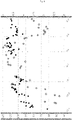
- the calculated sodium concentrated is shown in Figure 2 (sodium equals 2x [sulphate + thiosulphate] + alkalinity).
- the black circles is the conductivity in mS/cm (primary y axis (left)).
- the while circles is the sodium concentration in mol (secondary y axis (right)).
- the time course of the process is plotted in months on the x axis. All concentrations follow the same pattern of increasing and decreasing pattern.
- the alkalinity of the industrial alkaline stream is determined by bringing sample of said stream to pH 4.0 with hydrochloric acid.
- the amount of acid needed indicates the alkalinity (buffering capacity) of the liquid.
- a 100 mL sample of centrifuged or filtered waste stream was pipetted in to a glass beaker and 100 ml demineralized water was added. pH electrode was placed in the solution.
- the solution in the beaker was titrated with 0.1 M hydrochloric acid to pH 4.0, while the solution is continuously stirred.
- Oxidation -reduction potential in the bioreactor was monitored using an ORP-sensor (Endress+Hauser).
- Carbonate (CO 3 ) was measured according to standard method SCAN-N 32:1998, Scandinavian Pulp, Paper and Board Testing Committee, Revised 1998.
- a bioreactor (5L) is fed with a sulfide rich stream (influent) from a holding tank under N 2 atmosphere. Prior to supplying the sulfide rich stream to the bioreactor, the stream to the bioreactor it is mixed with a portion of the bioreactor contents.
- a continuously fed system consisting of one bioreactor series was used.
- the system was operated under sulfide oxidizing conditions (pH 9.5; Na + >4 M) using autotrophic sulphide oxidising bacteria originating from soda lakes.
- the temperature was maintained at 30 °C by using a water-jacket and a thermostat bath (Shinko, Japan).
- the influent was fed to the bioreactor using peristaltic pumps (Watson-Marlow), and the effluent from the reactor was controlled by overflow.
- the sulfide rich stream (influent) was mixed with a portion of the contents of the bioreactor prior to addition to the bioreactor.
- the pH was monitored using a pH sensor (Endress+Hauser The Netherlands).
- the oxygen supply was done with air dosing controlled with an ORP-sensor (Endress+Hauser, the Netherlands)
- the sulfide oxidizing bacteria present in the bioreactor is a species adapted to an increased salt concentration, but not adapted to the high salt concentration of the green liquor.
- Premixing the highly concentrated industrial alkaline stream (green liquor) needs to be done in order to produce sulphur and regenerate the caustic. In case no premixing is executed there are no savings in the caustic consumption of a pulp mill. When the described method is applied the savings are 2.6 kg NaOH/kg S removed. The reduction in total caustic consumption for a pulp mill will range between 10 - 40%.
Landscapes
- Life Sciences & Earth Sciences (AREA)
- Microbiology (AREA)
- Engineering & Computer Science (AREA)
- Hydrology & Water Resources (AREA)
- Environmental & Geological Engineering (AREA)
- Water Supply & Treatment (AREA)
- Chemical & Material Sciences (AREA)
- Organic Chemistry (AREA)
- Molecular Biology (AREA)
- Biodiversity & Conservation Biology (AREA)
- Health & Medical Sciences (AREA)
- Purification Treatments By Anaerobic Or Anaerobic And Aerobic Bacteria Or Animals (AREA)
- Micro-Organisms Or Cultivation Processes Thereof (AREA)
Claims (15)
- - Procédé pour le traitement de courants alcalins industriels comprenant du sulfure et du carbonate, comprenant les étapes consistant à :a) fournir un courant alcalin industriel comprenant du sulfure et du carbonate ;b) adresser le courant alcalin industriel à un bioréacteur comprenant des bactéries d'oxydation de sulfure et retirer le sulfure du courant alcalin industriel en soumettant ledit courant aux bactéries d'oxydation de sulfure en présence d'oxygène, et adresser un agent d'ajustement de pH au bioréacteur pour maintenir un pH dans la plage de 8 à 11, pour oxyder le sulfure en soufre élémentaire ;c) soutirer du bioréacteur un courant alcalin industriel traité comprenant du soufre élémentaire,une partie des bactéries d'oxydation de sulfure étant retirée du bioréacteur et mélangée avec le courant alcalin industriel avant d'adresser le courant alcalin industriel au bioréacteur dans l'étape b),le courant alcalin industriel ayant une concentration en carbonate dans la plage d'au moins 50 g/L,l'agent d'ajustement de pH étant choisi parmi le dioxyde de carbone, un gaz acide, l'acide chlorhydrique, l'acide nitrique et l'acide phosphorique, etl'oxygène étant adressé au bioréacteur par un gaz comprenant de l'oxygène moléculaire.
- - Procédé selon la revendication 1, comprenant la génération du courant alcalin industriel dans un procédé de craquage d'éthylène en tant que caustique usé d'éthylène ou dans un procédé de raffinerie en tant que caustique usé de raffinerie ou dans une usine de pâte à papier en tant que courant d'usine de pâte à papier.
- - Procédé selon l'une des revendications 1 ou 2, dans lequel le courant alcalin industriel a une conductivité d'au moins 70 mS/cm, de préférence d'au moins 80 mS/cm, de façon davantage préférée d'au moins 90 mS/cm, de la façon que l'on préfère le plus d'au moins 100 mS/cm.
- - Procédé selon l'une quelconque des revendications précédentes, dans lequel le courant alcalin industriel a une concentration en sodium dans la plage de 1 à 6 Molaire, de préférence de 2 à 5 Molaire, de façon davantage préférée de 2,5 à 4,5 Molaire.
- - Procédé selon l'une quelconque des revendications précédentes, dans lequel le courant alcalin industriel a une concentration en carbonate dans la plage d'au moins 60 g/L.
- - Procédé selon l'une quelconque des revendications précédentes, dans lequel les courants alcalins industriels comprennent d'autres composés du soufre choisis dans le groupe consistant en sulfate, sulfite, thiosulfate et les mélanges de ceux-ci.
- - Procédé selon l'une quelconque des revendications précédentes, dans lequel le courant alcalin industriel comprend au moins 15 g/L de sulfure.
- - Procédé selon l'une quelconque des revendications précédentes, dans lequel l'agent d'ajustement de pH est du dioxyde de carbone gazeux.
- - Procédé selon l'une quelconque des revendications précédentes, dans lequel le pH est maintenu dans la plage de 9,5 à 10,2 à 30 °C.
- - Procédé selon l'une quelconque des revendications précédentes, dans lequel les bactéries d'oxydation de sulfure appartiennent au groupe de Thioalkalimicrobi et/ou Thioalkalivibrio.
- - Procédé selon l'une quelconque des revendications précédentes, dans lequel la quantité d'oxygène présente à l'étape c) est dans la plage de 0,5 - 1,25 mole d'oxygène (O2) par mole de H2S/HS-.
- - Procédé selon l'une quelconque des revendications précédentes, dans lequel le courant alcalin industriel traité comprend du soufre élémentaire dans la plage de 1 - 20 g/l.
- - Procédé selon l'une quelconque des revendications précédentes, comprenant l'étape d) consistant à séparer du soufre élémentaire à partir du courant alcalin industriel traité pour fournir un courant alcalin appauvri en soufre, et facultativement à réutiliser ledit courant alcalin appauvri en soufre dans un procédé industriel.
- - Procédé selon la revendication 13, dans lequel le courant alcalin appauvri en soufre a une sulfidité inférieure à 20%, de préférence inférieure à 15%, de façon encore plus préférée inférieure à 10%, le terme sulfidité signifiant le rapport sulfure de sodium/hydroxyde de sodium calculé en divisant le poids de sulfure de sodium, exprimé en g/l, sur la base de Na2O, par le poids d'hydroxyde de sodium plus sulfure de sodium, également exprimé en g/l, sur la base de Na2O, multiplié par 100.
- - Procédé selon l'une quelconque des revendications précédentes, comprenant la génération du courant alcalin industriel dans un procédé industriel, et dans lequel le courant alcalin industriel généré n'est pas dilué avec de l'eau avant d'entrer en contact avec les bactéries d'oxydation de sulfure.
Priority Applications (1)
| Application Number | Priority Date | Filing Date | Title |
|---|---|---|---|
| EP22159369.2A EP4043408B1 (fr) | 2018-07-19 | 2019-07-16 | Traitement biologique de flux alcalins industriels |
Applications Claiming Priority (2)
| Application Number | Priority Date | Filing Date | Title |
|---|---|---|---|
| EP18184411 | 2018-07-19 | ||
| PCT/EP2019/069138 WO2020016238A1 (fr) | 2018-07-19 | 2019-07-16 | Traitement biologique de flux alcalins industriels |
Related Child Applications (2)
| Application Number | Title | Priority Date | Filing Date |
|---|---|---|---|
| EP22159369.2A Division EP4043408B1 (fr) | 2018-07-19 | 2019-07-16 | Traitement biologique de flux alcalins industriels |
| EP22159369.2A Division-Into EP4043408B1 (fr) | 2018-07-19 | 2019-07-16 | Traitement biologique de flux alcalins industriels |
Publications (2)
| Publication Number | Publication Date |
|---|---|
| EP3823933A1 EP3823933A1 (fr) | 2021-05-26 |
| EP3823933B1 true EP3823933B1 (fr) | 2022-06-15 |
Family
ID=63142922
Family Applications (2)
| Application Number | Title | Priority Date | Filing Date |
|---|---|---|---|
| EP22159369.2A Active EP4043408B1 (fr) | 2018-07-19 | 2019-07-16 | Traitement biologique de flux alcalins industriels |
| EP19737792.2A Active EP3823933B1 (fr) | 2018-07-19 | 2019-07-16 | Traitement biologique de flux industriels alcalins |
Family Applications Before (1)
| Application Number | Title | Priority Date | Filing Date |
|---|---|---|---|
| EP22159369.2A Active EP4043408B1 (fr) | 2018-07-19 | 2019-07-16 | Traitement biologique de flux alcalins industriels |
Country Status (8)
| Country | Link |
|---|---|
| US (1) | US20210130209A1 (fr) |
| EP (2) | EP4043408B1 (fr) |
| JP (1) | JP2021531960A (fr) |
| KR (1) | KR20210033016A (fr) |
| CN (1) | CN112533875B (fr) |
| CA (1) | CA3106732A1 (fr) |
| FI (1) | FI4043408T3 (fr) |
| WO (1) | WO2020016238A1 (fr) |
Families Citing this family (2)
| Publication number | Priority date | Publication date | Assignee | Title |
|---|---|---|---|---|
| CN111559835A (zh) * | 2020-06-11 | 2020-08-21 | 陕西省石油化工研究设计院 | 一种废碱液的处理系统及处理方法 |
| US11898103B2 (en) | 2021-10-29 | 2024-02-13 | Uop Llc | Systems and process for controlling a sulfur extraction from a hydrocarbon stream |
Family Cites Families (11)
| Publication number | Priority date | Publication date | Assignee | Title |
|---|---|---|---|---|
| NL9002661A (nl) * | 1990-12-04 | 1992-07-01 | Pacques Bv | Werkwijze voor de verwijdering van h2s uit gas. |
| NL9200927A (nl) * | 1992-05-26 | 1993-12-16 | Pacques Bv | Werkwijze voor het verwijderen van zwavelverbindingen uit water. |
| NL9301000A (nl) * | 1993-06-10 | 1995-01-02 | Pacques Bv | Werkwijze voor de zuivering van sulfidehoudend afvalwater. |
| US6156205A (en) * | 1996-05-10 | 2000-12-05 | Paques Bio Systems B.V. | Process for the purification of gases containing hydrogen sulphide |
| EP0958251B1 (fr) | 1996-07-29 | 2002-10-23 | Pâques Bio Systems B.V. | Traitement biologique de caustiques uses |
| JP2004526561A (ja) * | 2001-03-09 | 2004-09-02 | カウンシル・オブ・サイエンティフィック・アンド・インダストリアル・リサーチ | 汚水浄化のためのプロセスおよび逆流動ループリアクタ |
| WO2005044742A1 (fr) | 2003-11-11 | 2005-05-19 | Paques B.V. | Methode de traitement biologique de sels de soufre |
| JP4862314B2 (ja) * | 2005-08-05 | 2012-01-25 | 栗田工業株式会社 | 硫化水素含有ガスの脱硫方法及び脱硫装置 |
| US20110024351A1 (en) * | 2008-02-13 | 2011-02-03 | Albert Joseph Hendrik Janssen | Method and apparatus for biological treatment of spent caustic |
| BR112016017093B1 (pt) * | 2014-02-03 | 2022-10-11 | Paqell B.V | Processo para conversão biológica de bissulfeto em enxofre elementar |
| EP3112442B1 (fr) * | 2015-06-29 | 2019-04-10 | Indian Oil Corporation Limited | Traitement bio-assisté de caustique épuisée |
-
2019
- 2019-07-16 CA CA3106732A patent/CA3106732A1/fr active Pending
- 2019-07-16 JP JP2021501318A patent/JP2021531960A/ja active Pending
- 2019-07-16 FI FIEP22159369.2T patent/FI4043408T3/fi active
- 2019-07-16 WO PCT/EP2019/069138 patent/WO2020016238A1/fr not_active Ceased
- 2019-07-16 EP EP22159369.2A patent/EP4043408B1/fr active Active
- 2019-07-16 KR KR1020217004472A patent/KR20210033016A/ko not_active Ceased
- 2019-07-16 CN CN201980048020.7A patent/CN112533875B/zh active Active
- 2019-07-16 EP EP19737792.2A patent/EP3823933B1/fr active Active
-
2021
- 2021-01-13 US US17/148,472 patent/US20210130209A1/en not_active Abandoned
Also Published As
| Publication number | Publication date |
|---|---|
| EP3823933A1 (fr) | 2021-05-26 |
| EP4043408A1 (fr) | 2022-08-17 |
| CN112533875B (zh) | 2022-11-29 |
| CN112533875A (zh) | 2021-03-19 |
| BR112021000947A2 (pt) | 2021-04-20 |
| FI4043408T3 (fi) | 2023-10-31 |
| JP2021531960A (ja) | 2021-11-25 |
| WO2020016238A1 (fr) | 2020-01-23 |
| US20210130209A1 (en) | 2021-05-06 |
| KR20210033016A (ko) | 2021-03-25 |
| CA3106732A1 (fr) | 2020-01-23 |
| EP4043408B1 (fr) | 2023-08-30 |
Similar Documents
| Publication | Publication Date | Title |
|---|---|---|
| CA1176387A (fr) | Methode pour traiter a l'eau oxygenee des effluents renfermant diverses quantites de substances oxydables | |
| JP2796477B2 (ja) | パルプ工場における白液選択酸化法と酸化白液の製法ならびに酸化反応系操作の制御法 | |
| US20110024351A1 (en) | Method and apparatus for biological treatment of spent caustic | |
| EP3823933B1 (fr) | Traitement biologique de flux industriels alcalins | |
| KR20010052194A (ko) | 공정수를 처리하는 방법 | |
| US4925569A (en) | Process for sorption and catalytic oxidation of sulfides in water | |
| US5843316A (en) | Method of separating sodium hydroxide from white liquor or polysulfide liquor using diffusion dialysis | |
| EP3824136B1 (fr) | Procédé permettant de contrôler l'équilibre du sodium et du soufre dans une usine de pâte à papier | |
| CN111542661B (zh) | 用于调节浆厂的S/Na平衡的方法和系统 | |
| US3554859A (en) | Process for recovery of sulphur from furnaced black liquor | |
| CA1076306A (fr) | Procede permettant de reduire la quantite de produits chimiques consommes sans augmentation consequente des emissions lors du pulpage de materiel cellulosique par une liqueur de sulfate basique contenant du soufre et du sodium | |
| CN113582407B (zh) | 一种冶金行业高硫废水的分步处理方法 | |
| BR112021000947B1 (pt) | Processo para o tratamento de correntes alcalinas industriais | |
| BR112021000948B1 (pt) | Processo para controlar os níveis de sódio e enxofre em uma fábrica de celulose | |
| CN101798068A (zh) | 常温常压下硫化物或硫代硫酸盐的催化空气完全氧化法 | |
| EP0311013A2 (fr) | Décoloration d'effluents de la fabrication du papier par le dioxyde de chlore | |
| KR102828159B1 (ko) | 폐가성소다 용액의 처리방법, 이를 이용한 폐수 내 중금속의 회수방법 및 크래프트 펄프 제조방법 | |
| WO2015001186A1 (fr) | Procédé de traitement d'effluents et d'eaux de processus | |
| JPH05115887A (ja) | 無機の硫黄を含む化合物を含有する廃水の処理方法 | |
| RU2021103886A (ru) | Биологическая обработка промышленных щелочных потоков | |
| CN113443753A (zh) | 一种冶金行业高硫废水的处理工艺 | |
| RU2021103887A (ru) | Способ регулирования баланса натрия и серы на целлюлозном заводе | |
| WO2000044978A1 (fr) | Procede d'oxydation de lessive blanche | |
| Choudhury | 13 Pollution Abatement in Large Pulp and Paper Industry |
Legal Events
| Date | Code | Title | Description |
|---|---|---|---|
| STAA | Information on the status of an ep patent application or granted ep patent |
Free format text: STATUS: UNKNOWN |
|
| STAA | Information on the status of an ep patent application or granted ep patent |
Free format text: STATUS: THE INTERNATIONAL PUBLICATION HAS BEEN MADE |
|
| PUAI | Public reference made under article 153(3) epc to a published international application that has entered the european phase |
Free format text: ORIGINAL CODE: 0009012 |
|
| STAA | Information on the status of an ep patent application or granted ep patent |
Free format text: STATUS: REQUEST FOR EXAMINATION WAS MADE |
|
| 17P | Request for examination filed |
Effective date: 20210205 |
|
| AK | Designated contracting states |
Kind code of ref document: A1 Designated state(s): AL AT BE BG CH CY CZ DE DK EE ES FI FR GB GR HR HU IE IS IT LI LT LU LV MC MK MT NL NO PL PT RO RS SE SI SK SM TR |
|
| DAV | Request for validation of the european patent (deleted) | ||
| DAX | Request for extension of the european patent (deleted) | ||
| GRAP | Despatch of communication of intention to grant a patent |
Free format text: ORIGINAL CODE: EPIDOSNIGR1 |
|
| STAA | Information on the status of an ep patent application or granted ep patent |
Free format text: STATUS: GRANT OF PATENT IS INTENDED |
|
| INTG | Intention to grant announced |
Effective date: 20220201 |
|
| RIN1 | Information on inventor provided before grant (corrected) |
Inventor name: KOTILAINEN, ARI Inventor name: BJOERK, MARIA Inventor name: TIMONEN, OLLI Inventor name: WADSBORN, RICKARD Inventor name: NOORDINK, MICHEL PAULUS MARIA Inventor name: VAN ZESSEN, ERIK |
|
| GRAS | Grant fee paid |
Free format text: ORIGINAL CODE: EPIDOSNIGR3 |
|
| GRAA | (expected) grant |
Free format text: ORIGINAL CODE: 0009210 |
|
| STAA | Information on the status of an ep patent application or granted ep patent |
Free format text: STATUS: THE PATENT HAS BEEN GRANTED |
|
| AK | Designated contracting states |
Kind code of ref document: B1 Designated state(s): AL AT BE BG CH CY CZ DE DK EE ES FI FR GB GR HR HU IE IS IT LI LT LU LV MC MK MT NL NO PL PT RO RS SE SI SK SM TR |
|
| REG | Reference to a national code |
Ref country code: CH Ref legal event code: EP Ref country code: GB Ref legal event code: FG4D |
|
| REG | Reference to a national code |
Ref country code: IE Ref legal event code: FG4D |
|
| REG | Reference to a national code |
Ref country code: DE Ref legal event code: R096 Ref document number: 602019015949 Country of ref document: DE |
|
| REG | Reference to a national code |
Ref country code: AT Ref legal event code: REF Ref document number: 1498310 Country of ref document: AT Kind code of ref document: T Effective date: 20220715 |
|
| REG | Reference to a national code |
Ref country code: SE Ref legal event code: TRGR |
|
| REG | Reference to a national code |
Ref country code: FI Ref legal event code: FGE |
|
| REG | Reference to a national code |
Ref country code: LT Ref legal event code: MG9D |
|
| REG | Reference to a national code |
Ref country code: NL Ref legal event code: MP Effective date: 20220615 |
|
| PG25 | Lapsed in a contracting state [announced via postgrant information from national office to epo] |
Ref country code: NO Free format text: LAPSE BECAUSE OF FAILURE TO SUBMIT A TRANSLATION OF THE DESCRIPTION OR TO PAY THE FEE WITHIN THE PRESCRIBED TIME-LIMIT Effective date: 20220915 Ref country code: LT Free format text: LAPSE BECAUSE OF FAILURE TO SUBMIT A TRANSLATION OF THE DESCRIPTION OR TO PAY THE FEE WITHIN THE PRESCRIBED TIME-LIMIT Effective date: 20220615 Ref country code: HR Free format text: LAPSE BECAUSE OF FAILURE TO SUBMIT A TRANSLATION OF THE DESCRIPTION OR TO PAY THE FEE WITHIN THE PRESCRIBED TIME-LIMIT Effective date: 20220615 Ref country code: GR Free format text: LAPSE BECAUSE OF FAILURE TO SUBMIT A TRANSLATION OF THE DESCRIPTION OR TO PAY THE FEE WITHIN THE PRESCRIBED TIME-LIMIT Effective date: 20220916 Ref country code: BG Free format text: LAPSE BECAUSE OF FAILURE TO SUBMIT A TRANSLATION OF THE DESCRIPTION OR TO PAY THE FEE WITHIN THE PRESCRIBED TIME-LIMIT Effective date: 20220915 |
|
| REG | Reference to a national code |
Ref country code: AT Ref legal event code: MK05 Ref document number: 1498310 Country of ref document: AT Kind code of ref document: T Effective date: 20220615 |
|
| PG25 | Lapsed in a contracting state [announced via postgrant information from national office to epo] |
Ref country code: RS Free format text: LAPSE BECAUSE OF FAILURE TO SUBMIT A TRANSLATION OF THE DESCRIPTION OR TO PAY THE FEE WITHIN THE PRESCRIBED TIME-LIMIT Effective date: 20220615 Ref country code: LV Free format text: LAPSE BECAUSE OF FAILURE TO SUBMIT A TRANSLATION OF THE DESCRIPTION OR TO PAY THE FEE WITHIN THE PRESCRIBED TIME-LIMIT Effective date: 20220615 |
|
| PG25 | Lapsed in a contracting state [announced via postgrant information from national office to epo] |
Ref country code: NL Free format text: LAPSE BECAUSE OF FAILURE TO SUBMIT A TRANSLATION OF THE DESCRIPTION OR TO PAY THE FEE WITHIN THE PRESCRIBED TIME-LIMIT Effective date: 20220615 |
|
| PG25 | Lapsed in a contracting state [announced via postgrant information from national office to epo] |
Ref country code: SM Free format text: LAPSE BECAUSE OF FAILURE TO SUBMIT A TRANSLATION OF THE DESCRIPTION OR TO PAY THE FEE WITHIN THE PRESCRIBED TIME-LIMIT Effective date: 20220615 Ref country code: SK Free format text: LAPSE BECAUSE OF FAILURE TO SUBMIT A TRANSLATION OF THE DESCRIPTION OR TO PAY THE FEE WITHIN THE PRESCRIBED TIME-LIMIT Effective date: 20220615 Ref country code: RO Free format text: LAPSE BECAUSE OF FAILURE TO SUBMIT A TRANSLATION OF THE DESCRIPTION OR TO PAY THE FEE WITHIN THE PRESCRIBED TIME-LIMIT Effective date: 20220615 Ref country code: PT Free format text: LAPSE BECAUSE OF FAILURE TO SUBMIT A TRANSLATION OF THE DESCRIPTION OR TO PAY THE FEE WITHIN THE PRESCRIBED TIME-LIMIT Effective date: 20221017 Ref country code: ES Free format text: LAPSE BECAUSE OF FAILURE TO SUBMIT A TRANSLATION OF THE DESCRIPTION OR TO PAY THE FEE WITHIN THE PRESCRIBED TIME-LIMIT Effective date: 20220615 Ref country code: EE Free format text: LAPSE BECAUSE OF FAILURE TO SUBMIT A TRANSLATION OF THE DESCRIPTION OR TO PAY THE FEE WITHIN THE PRESCRIBED TIME-LIMIT Effective date: 20220615 Ref country code: CZ Free format text: LAPSE BECAUSE OF FAILURE TO SUBMIT A TRANSLATION OF THE DESCRIPTION OR TO PAY THE FEE WITHIN THE PRESCRIBED TIME-LIMIT Effective date: 20220615 Ref country code: AT Free format text: LAPSE BECAUSE OF FAILURE TO SUBMIT A TRANSLATION OF THE DESCRIPTION OR TO PAY THE FEE WITHIN THE PRESCRIBED TIME-LIMIT Effective date: 20220615 |
|
| PG25 | Lapsed in a contracting state [announced via postgrant information from national office to epo] |
Ref country code: PL Free format text: LAPSE BECAUSE OF FAILURE TO SUBMIT A TRANSLATION OF THE DESCRIPTION OR TO PAY THE FEE WITHIN THE PRESCRIBED TIME-LIMIT Effective date: 20220615 Ref country code: IS Free format text: LAPSE BECAUSE OF FAILURE TO SUBMIT A TRANSLATION OF THE DESCRIPTION OR TO PAY THE FEE WITHIN THE PRESCRIBED TIME-LIMIT Effective date: 20221015 |
|
| REG | Reference to a national code |
Ref country code: CH Ref legal event code: PL |
|
| REG | Reference to a national code |
Ref country code: DE Ref legal event code: R097 Ref document number: 602019015949 Country of ref document: DE |
|
| REG | Reference to a national code |
Ref country code: BE Ref legal event code: MM Effective date: 20220731 |
|
| PG25 | Lapsed in a contracting state [announced via postgrant information from national office to epo] |
Ref country code: MC Free format text: LAPSE BECAUSE OF FAILURE TO SUBMIT A TRANSLATION OF THE DESCRIPTION OR TO PAY THE FEE WITHIN THE PRESCRIBED TIME-LIMIT Effective date: 20220615 Ref country code: AL Free format text: LAPSE BECAUSE OF FAILURE TO SUBMIT A TRANSLATION OF THE DESCRIPTION OR TO PAY THE FEE WITHIN THE PRESCRIBED TIME-LIMIT Effective date: 20220615 |
|
| PLBE | No opposition filed within time limit |
Free format text: ORIGINAL CODE: 0009261 |
|
| STAA | Information on the status of an ep patent application or granted ep patent |
Free format text: STATUS: NO OPPOSITION FILED WITHIN TIME LIMIT |
|
| PG25 | Lapsed in a contracting state [announced via postgrant information from national office to epo] |
Ref country code: LU Free format text: LAPSE BECAUSE OF NON-PAYMENT OF DUE FEES Effective date: 20220716 Ref country code: LI Free format text: LAPSE BECAUSE OF NON-PAYMENT OF DUE FEES Effective date: 20220731 Ref country code: DK Free format text: LAPSE BECAUSE OF FAILURE TO SUBMIT A TRANSLATION OF THE DESCRIPTION OR TO PAY THE FEE WITHIN THE PRESCRIBED TIME-LIMIT Effective date: 20220615 Ref country code: CH Free format text: LAPSE BECAUSE OF NON-PAYMENT OF DUE FEES Effective date: 20220731 |
|
| 26N | No opposition filed |
Effective date: 20230316 |
|
| PG25 | Lapsed in a contracting state [announced via postgrant information from national office to epo] |
Ref country code: SI Free format text: LAPSE BECAUSE OF FAILURE TO SUBMIT A TRANSLATION OF THE DESCRIPTION OR TO PAY THE FEE WITHIN THE PRESCRIBED TIME-LIMIT Effective date: 20220615 Ref country code: BE Free format text: LAPSE BECAUSE OF NON-PAYMENT OF DUE FEES Effective date: 20220731 |
|
| PG25 | Lapsed in a contracting state [announced via postgrant information from national office to epo] |
Ref country code: IE Free format text: LAPSE BECAUSE OF NON-PAYMENT OF DUE FEES Effective date: 20220716 Ref country code: FR Free format text: LAPSE BECAUSE OF NON-PAYMENT OF DUE FEES Effective date: 20220815 |
|
| PG25 | Lapsed in a contracting state [announced via postgrant information from national office to epo] |
Ref country code: IT Free format text: LAPSE BECAUSE OF FAILURE TO SUBMIT A TRANSLATION OF THE DESCRIPTION OR TO PAY THE FEE WITHIN THE PRESCRIBED TIME-LIMIT Effective date: 20220615 |
|
| GBPC | Gb: european patent ceased through non-payment of renewal fee |
Effective date: 20230716 |
|
| PG25 | Lapsed in a contracting state [announced via postgrant information from national office to epo] |
Ref country code: MK Free format text: LAPSE BECAUSE OF FAILURE TO SUBMIT A TRANSLATION OF THE DESCRIPTION OR TO PAY THE FEE WITHIN THE PRESCRIBED TIME-LIMIT Effective date: 20220615 Ref country code: CY Free format text: LAPSE BECAUSE OF FAILURE TO SUBMIT A TRANSLATION OF THE DESCRIPTION OR TO PAY THE FEE WITHIN THE PRESCRIBED TIME-LIMIT Effective date: 20220615 Ref country code: GB Free format text: LAPSE BECAUSE OF NON-PAYMENT OF DUE FEES Effective date: 20230716 |
|
| PG25 | Lapsed in a contracting state [announced via postgrant information from national office to epo] |
Ref country code: HU Free format text: LAPSE BECAUSE OF FAILURE TO SUBMIT A TRANSLATION OF THE DESCRIPTION OR TO PAY THE FEE WITHIN THE PRESCRIBED TIME-LIMIT; INVALID AB INITIO Effective date: 20190716 |
|
| PG25 | Lapsed in a contracting state [announced via postgrant information from national office to epo] |
Ref country code: MT Free format text: LAPSE BECAUSE OF FAILURE TO SUBMIT A TRANSLATION OF THE DESCRIPTION OR TO PAY THE FEE WITHIN THE PRESCRIBED TIME-LIMIT Effective date: 20220615 |
|
| PG25 | Lapsed in a contracting state [announced via postgrant information from national office to epo] |
Ref country code: BG Free format text: LAPSE BECAUSE OF FAILURE TO SUBMIT A TRANSLATION OF THE DESCRIPTION OR TO PAY THE FEE WITHIN THE PRESCRIBED TIME-LIMIT Effective date: 20220615 |
|
| PG25 | Lapsed in a contracting state [announced via postgrant information from national office to epo] |
Ref country code: BG Free format text: LAPSE BECAUSE OF FAILURE TO SUBMIT A TRANSLATION OF THE DESCRIPTION OR TO PAY THE FEE WITHIN THE PRESCRIBED TIME-LIMIT Effective date: 20220615 |
|
| PGFP | Annual fee paid to national office [announced via postgrant information from national office to epo] |
Ref country code: FI Payment date: 20250724 Year of fee payment: 7 |
|
| PGFP | Annual fee paid to national office [announced via postgrant information from national office to epo] |
Ref country code: DE Payment date: 20250728 Year of fee payment: 7 |
|
| PGFP | Annual fee paid to national office [announced via postgrant information from national office to epo] |
Ref country code: SE Payment date: 20250725 Year of fee payment: 7 |
|
| PG25 | Lapsed in a contracting state [announced via postgrant information from national office to epo] |
Ref country code: TR Free format text: LAPSE BECAUSE OF FAILURE TO SUBMIT A TRANSLATION OF THE DESCRIPTION OR TO PAY THE FEE WITHIN THE PRESCRIBED TIME-LIMIT Effective date: 20220615 |