EP3832573A1 - System und verfahren zur aufrechterhaltung der kontinuität eines sammeldienstes - Google Patents
System und verfahren zur aufrechterhaltung der kontinuität eines sammeldienstes Download PDFInfo
- Publication number
- EP3832573A1 EP3832573A1 EP20211644.8A EP20211644A EP3832573A1 EP 3832573 A1 EP3832573 A1 EP 3832573A1 EP 20211644 A EP20211644 A EP 20211644A EP 3832573 A1 EP3832573 A1 EP 3832573A1
- Authority
- EP
- European Patent Office
- Prior art keywords
- coin mechanism
- cash
- concentrator element
- module
- messages
- Prior art date
- Legal status (The legal status is an assumption and is not a legal conclusion. Google has not performed a legal analysis and makes no representation as to the accuracy of the status listed.)
- Granted
Links
Images



Classifications
-
- G—PHYSICS
- G06—COMPUTING OR CALCULATING; COUNTING
- G06Q—INFORMATION AND COMMUNICATION TECHNOLOGY [ICT] SPECIALLY ADAPTED FOR ADMINISTRATIVE, COMMERCIAL, FINANCIAL, MANAGERIAL OR SUPERVISORY PURPOSES; SYSTEMS OR METHODS SPECIALLY ADAPTED FOR ADMINISTRATIVE, COMMERCIAL, FINANCIAL, MANAGERIAL OR SUPERVISORY PURPOSES, NOT OTHERWISE PROVIDED FOR
- G06Q20/00—Payment architectures, schemes or protocols
- G06Q20/08—Payment architectures
- G06Q20/20—Point-of-sale [POS] network systems
- G06Q20/202—Interconnection or interaction of plural electronic cash registers [ECR] or to host computer, e.g. network details, transfer of information from host to ECR or from ECR to ECR
-
- G—PHYSICS
- G07—CHECKING-DEVICES
- G07D—HANDLING OF COINS OR VALUABLE PAPERS, e.g. TESTING, SORTING BY DENOMINATIONS, COUNTING, DISPENSING, CHANGING OR DEPOSITING
- G07D11/00—Devices accepting coins; Devices accepting, dispensing, sorting or counting valuable papers
- G07D11/20—Controlling or monitoring the operation of devices; Data handling
- G07D11/26—Servicing, repairing or coping with irregularities, e.g. power failure or vandalism
-
- G—PHYSICS
- G07—CHECKING-DEVICES
- G07D—HANDLING OF COINS OR VALUABLE PAPERS, e.g. TESTING, SORTING BY DENOMINATIONS, COUNTING, DISPENSING, CHANGING OR DEPOSITING
- G07D7/00—Testing specially adapted to determine the identity or genuineness of valuable papers or for segregating those which are unacceptable, e.g. banknotes that are alien to a currency
- G07D7/20—Testing patterns thereon
- G07D7/202—Testing patterns thereon using pattern matching
- G07D7/2033—Matching unique patterns, i.e. patterns that are unique to each individual paper
-
- G—PHYSICS
- G07—CHECKING-DEVICES
- G07F—COIN-FREED OR LIKE APPARATUS
- G07F19/00—Complete banking systems; Coded card-freed arrangements adapted for dispensing or receiving monies or the like and posting such transactions to existing accounts, e.g. automatic teller machines
- G07F19/20—Automatic teller machines [ATMs]
- G07F19/209—Monitoring, auditing or diagnose of functioning of ATMs
-
- G—PHYSICS
- G07—CHECKING-DEVICES
- G07F—COIN-FREED OR LIKE APPARATUS
- G07F5/00—Coin-actuated mechanisms; Interlocks
- G07F5/24—Coin-actuated mechanisms; Interlocks with change-giving
-
- G—PHYSICS
- G07—CHECKING-DEVICES
- G07G—REGISTERING THE RECEIPT OF CASH, VALUABLES, OR TOKENS
- G07G1/00—Cash registers
- G07G1/0009—Details of the software in the checkout register, electronic cash register [ECR] or point of sale terminal [POS]
-
- G—PHYSICS
- G07—CHECKING-DEVICES
- G07G—REGISTERING THE RECEIPT OF CASH, VALUABLES, OR TOKENS
- G07G1/00—Cash registers
- G07G1/0036—Checkout procedures
-
- G—PHYSICS
- G07—CHECKING-DEVICES
- G07G—REGISTERING THE RECEIPT OF CASH, VALUABLES, OR TOKENS
- G07G1/00—Cash registers
- G07G1/01—Details for indicating
- G07G1/06—Details for indicating with provision for the noting of the money to be paid
-
- G—PHYSICS
- G07—CHECKING-DEVICES
- G07G—REGISTERING THE RECEIPT OF CASH, VALUABLES, OR TOKENS
- G07G1/00—Cash registers
- G07G1/12—Cash registers electronically operated
- G07G1/14—Systems including one or more distant stations co-operating with a central processing unit
Definitions
- the invention relates to the field of cash collections, that is to say in banknotes and / or coins, from a collection system comprising an electronic cash register associated with one or more peripherals. collection such as one or more coin mechanisms for example.
- the invention aims to offer continuity of service when such a coin mechanism malfunctions.
- a cash register system is mainly based on a cash register.
- a cash register is said to be “electronic” because it generally consists of a payment application computer program PA, the program instructions of which, previously loaded into a program memory 12, are stored. arranged to be executed or interpreted by a processing unit 11 of a computer 10.
- a processing unit 11 comprises one or more microprocessors or microcontrollers and cooperates with a data memory 13 to record all data necessary for its operation or for historical purposes.
- an input man-machine interface 19i such as a keyboard for example
- an output man-machine interface 19o such as a screen, or even a double screen.
- an electronic cash register uses various collection peripherals, among which a cash drawer 15, a bank card reader (not shown in FIG. figure 1 ), a coin mechanism 20, via wired or wireless communication means or links R1.
- Such a device 20 prevents any type of error in the return of change or the introduction of counterfeit money or foreign currency when these are not accepted, said coin mechanism 20 being able to detect coins C and / or banknotes B unfit or counterfeit.
- a coin mechanism 20 also makes it possible to reduce any direct handling by a cashier P of coins C or banknotes B. The risk of loss or theft of cash is thus reduced or eliminated.
- the manager of the point of sale can benefit from supervision of his cash flow in real time.
- the use of a coin mechanism 20 also makes it possible to minimize the waiting time at the checkout when there are many U customers. Indeed, the coin mechanism 20 is very fast in its action of giving change. In this way, the experience or satisfaction of customers is increased tenfold.
- Using a coin mechanism 20 is also synonymous with hygiene, in particular when the point of sale requires direct contact of the cashier P with foodstuffs.
- a cashier or merchant P does not need to manually handle cash, i.e. C coins or B banknotes, reduces the spread of bacteria or viruses carried by said species.
- a coin mechanism 20 makes it possible to prevent attempts at burglary or robbery of a point of sale.
- Receptacles of cash B, C collected or ready to be distributed, are physically secure, unlike a conventional cash drawer.
- a coin mechanism can in fact be anchored to the ground, or more generally sealed on any suitable support, include one or more doors or shutters arranged to slow down the execution of a harmful action.
- the vast majority of coin mechanisms 20 consist of at least one pair of modules M1, M2, respectively dedicated to the collection, operation hereinafter referred to as "acceptance”, of banknotes B and coins C and to the return, operation hereinafter referred to as “distribution” of said B banknotes and C coins.
- accepted of banknotes B and coins C
- distributed of said B banknotes and C coins.
- Said processing unit 21, 31 is responsible for controlling means 22, 32 for collecting cash, for producing and transmitting to the outside world outgoing MTo processing messages translating, over time, each amount in associated currency. to the ticket B collected, that is to say accepted, or to the coin C collected, that is to say accepted.
- the processing unit 21, 31 of a module M1, M2 of a coin mechanism 20 also controls a container 24, 34 of accepted cash C, B, or even a "cash box", according to English terminology, c ' that is to say a second container 25, 35 intended to collect a surplus of cash beyond a predetermined threshold, or even acceptable but not distributable cash. This second container 25, 35 can be withdrawn, so that its contents are deposited in the bank and replaced by a new empty container without affecting the operation of the coin mechanism 20.
- the processing unit 21, 31 also controls means 23, 33 of outgoing or distributing cash to ensure the return of change C, B.
- said processing unit 21, 31 of the module M1, M2 concerned causes recycling or simple distribution of cash, that is to say a return of banknotes B and / or coins C to the customer U.
- the first container 24, 34 within each module M1, M2 of a coin mechanism 20 is thus generally called a “recycler” because it supplies the said outlet means 23, 33 with cash. of the module M1, M2 concerned.
- the processing unit 21, 31 of a module M1, M2 of a coin mechanism 20 is also arranged to produce and transmit to the outside world, one or more situation messages MS characterizing a current operating state of said module M1, M2.
- a situation message MS can be produced by said processing unit 31 to alert the cash register.
- an electronic or mechanical failure occurs or when such a failure results from a disconnection of a cable providing the link R1, such a failure can be detected by the processing unit 21, 31 d 'one of the two modules M1, M2.
- Said processing unit 21, 31 prepares a situation message MS characterizing said failure.
- This type of MS situation message can be simple, stipulating an undifferentiated fault of the module M1, M2 concerned. It can be more elaborate, that is to say encoding or designating a particular defect.
- the processing unit 21, 31 of a module M1, M2 of a coin mechanism 20 is arranged to decode and process incoming processing messages MTi, emanating for example from a cash register 20.
- Such a processing message incoming MTi may correspond to an order to open deposits whose interpretation by the processing unit 21, 31 of the module M1, M2 concerned causes an activation or an unlocking of the collection means 22, 32 of said module M1, M2 for that the latter is ready to collect, that is to say to accept cash C, B.
- such an incoming processing message MTi can translate an order to close deposits meaning that a sufficient amount of money has been accepted. Any surplus of money can thus be automatically returned to its owner U as soon as such an order to close the deposits has been processed by the respective processing units 21, 31 of the modules M1, M2.
- This situation can arise when a plurality of coins C is discharged by a customer U and the cash sum exceeds the amount expected by the cash register 10.
- a module M1, M2 of a coin mechanism 20 can remain. “Active”, that is to say capable of permanently collecting cash, the cash register 10 being exempt from sending processing messages MTi for opening deposits.
- a coin mechanism 20 generally comprising at least two modules respectively intended for banknotes B for one of them M2, and for coins C for the other M1
- a collection system comprises a concentrator element 14 acting as a gateway between the two modules M1, M2 of a coin mechanism 20 on the one hand and a cash register 10 on the other hand.
- Such concentrator element 14 can be implemented in software and / or hardware.
- this concentrator element 14 results from an execution or interpretation of instructions of a PC computer program, as described in figure 1 , the latter is related to a pilot or "driver" according to a known Anglo-Saxon terminology.
- Said PC driver is then generally implemented by the processing unit 11 of the computer 10 which also implements the collection application program PA.
- Said computer fulfills or ensures both the functions or roles of electronic cash register 10 and of concentrator element 14.
- the latter is then formed by the processing unit 11 when the latter executes or interprets the instructions of the PC program, causing the implementation, by the latter, of a control method 100 of a coin mechanism 20, of which an example of a functional flowchart is described by way of example by the figure 3 .
- a concentrator element 14 can be produced in the form of a physical entity separate from the computer 10 or from the cash register, the latter cooperating with said concentrator element 14 by any suitable communication link.
- This concentrator element 14 consists, as its name suggests, in aggregating the outgoing MTo processing or MS situation messages produced. by the modules M1, M2 of a coin mechanism 20 to communicate them to an electronic cash register 10. Furthermore, said concentrator element 14 intercepts the incoming processing messages MTi, for example opening or closing of deposits, sent by said cash register. register 10 for the coin mechanism 20.
- said concentrator element 14 alerts the cash register 10 that the coin mechanism 20 is generally faulty, when indeed even one of said modules M1, M2 always remains capable of accepting and / or distributing cash C, B.
- This “strict” operating mode is perfectly understandable since it is impossible for a cashier P to know whether a customer U only has coins C or only banknotes B. In the absence of a cash drawer 15, said cashier P is unable to maintain a collection service and consequently to satisfy a customer's need.
- said merchant or service provider generally has a collection system comprising an alternative collection method, if it does not already have one, for example a card reader.
- the patent application EP 3,196,852 discloses a coin mechanism capable of issuing a ticket to have when said coin mechanism is not able to give back all of the change.
- the credit note is issued with the amount of change not returned.
- the customer can then be paid the voucher to have at a dedicated machine returning the change.
- This type of solution requires the addition of an additional machine for the return of change, which represents a significant additional cost for small businesses.
- this type of solution only addresses the problem of lack of change and does not apply in the case where the problem of the coin mechanism comes from a collection.
- the invention makes it possible to resolve the limitations mentioned above by proposing a solution aimed at maintaining a continuity of a collection service, that is to say of acceptance and distribution of cash C, B, whereas a coin mechanism 20 of a cashing system is partially or totally faulty, without having to resort to a redundancy of coin mechanisms or to a cash drawer whose entries and / or exits of money C, B cannot be traced.
- the invention proposes a technical solution making it possible to continue operating a partially defective coin mechanism, to deliver aid to a cashier to guide his action or behavior during such a malfunction, to maintain excellent traceability of currency exchanges. during degraded operation of said coin mechanism.
- the concentrator element causes the activation of a communicating electronic object, the communicating electronic object sending first messages and / or receiving second messages in place of the faulty module in order to simulate the operation of said faulty module.
- the concentrator element causes the activation of an alert device communicating with said concentrator element, said alert device producing in response to its activation sound, light and / or vibratory perceptible by a human within range of perception of said information.
- the concentrator element takes into account a processing message emanating from the electronic object only if a current value of a semaphore recorded in a data memory of the concentrator element is equal to a predetermined value characterizing a detected failure of a coin mechanism.
- the concentrator element can update, in the data memory, the current value of the semaphore so that it is equal to the predetermined value characterizing a detected failure of a coin mechanism.
- the invention further relates to a computer program product comprising program instructions, which, when they are written into the program memory of a computer and interpreted or executed by a processing unit of this last, cause the implementation of a method for controlling a coin mechanism as mentioned above.
- the invention further relates to a collection system comprising an electronic cash register advantageously resulting from an execution or interpretation by a processing unit of instructions of a collection application program previously recorded in a program memory.
- a coin mechanism comprising modules for accepting and / or distributing cash, an element for concentrating processing or situation messages emanating from or intended for said modules of the coin mechanism, an electronic object communicating with said concentrator element and arranged to simulate the operation of a coin mechanism, said system being arranged to implement a method for controlling the coin mechanism in accordance with the invention.
- the concentrator element of such a system can result from an execution or interpretation by the processing unit of instructions of a computer program product as stated above, said instructions being previously recorded in the program memory of the computer implementing the instructions of the collection application program.
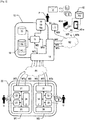
- FIG 2 presents a non-limiting example of the architecture of a collection system according to the invention.
- a system comprises elements similar to those previously described in connection with the figure 1 .
- a system comprises an electronic cash register advantageously consisting of a computer 10 including a processing unit 11, in the form of one or more microprocessors or microcontrollers, interprets or executes instructions from a cash register application program.
- PA previously recorded in a program memory 12 cooperating with said processing unit 11.
- Such an electronic cash register 10, resulting from the execution or interpretation of the instructions of the collection application program PA, comprises an interface input man-machine 19i, for example in the form of a computer keyboard and an output man-machine interface 19o, in the form of one or more computer screens for a merchant or service provider P and / or a customer U can consult the financial consideration for the purchase of a product or a service.
- Such input 19i and 19o output man-machine interfaces may constitute only a single physical entity 19, for example, a touch screen computer.
- such an electronic cash register 10 cooperates with a coin mechanism 20 via a wired or wireless communication link R1.
- Said coin mechanism 20 consists of a coin mechanism similar, or even identical, to the coin mechanism 20 described in connection with the figure 1 . It comprises two modules M1, M2 each integrating a processing unit 21, 31 in the form of one or more microprocessors or microcontrollers associated with data and / or program memories.
- Each processing unit 21, 31 is responsible for controlling collection means 22, 32 of species C, B, for producing and transmitting to the outside world outgoing MTo processing messages translating, over time, each amount into currency associated with an accepted B banknote or C coin.
- the processing unit 21, 31 of a module M1, M2 of the coin mechanism 20 also controls a container 24, 34 of accepted cash C, B, or even a "cash box" 25, 35 to collect a surplus of cash at -beyond a predetermined threshold.
- Each processing unit 21, 31 also controls means 23, 33 for outputting or distributing cash to ensure the return of change C, B in the event of an overpayment.
- the processing unit 21, 31 of a module M1, M2 of a coin mechanism 20 according to the figure 2 is also arranged to produce and transmit to the outside world, one or more situation messages MS characterizing a current operating state of said module M1, M2.
- a situation message MS can be produced by said processing unit 21 or 31, said message MS characterizing said fault.
- the processing unit 21, 31 of a module M1, M2 of such a coin mechanism 20 is furthermore arranged to decode and process incoming processing messages MTi, emanating for example from an electronic cash register 10, such a message incoming processing MTi may for example correspond to an order to open deposits whose interpretation by the processing unit 21, 31 of the module M1, M2 concerned causes an activation or an unlocking of the collection means 22, 32 of said module M1, M2 so that the latter is ready to collect, that is to say to accept cash C, B.
- an incoming processing message MTi can translate an order to close deposits meaning that an amount sufficient change has been accepted.
- a module M1, M2 of a coin mechanism 20 can remain "active", that is to say capable of permanently collecting cash, the electronic cash register 10 being dispensed from sending processing messages MTi to open the cash register. deposits.
- coin mechanism 20 on the one hand and the electronic cash register 10.
- a concentrator element 14 can be produced in software and / or hardware.
- this concentrator element 14 results from the execution or the interpretation of instructions of a PC program by a processing unit 11 of a computer 10, as described in the figures 1 and 2 , this PC computer program is similar to a driver or a "driver" according to a known English terminology.
- Said PC driver is then generally implemented by the processing unit 11 of the computer 10 which also implements the collection application program PA.
- Said computer fulfills or ensures both the functions or roles of electronic cash register 10 and of concentrator element 14.
- the latter is then formed by the processing unit 11 when the latter executes or interprets the instructions of the PC program, causing the implementation, by the latter, of a control method 100 of a coin mechanism 20, of which an example of a functional flowchart is described by way of example by the figure 4 .
- said concentrator element 14 or the PC computer program product is suitable, with regard to that of the figure 1 , to bring about the implementation of the invention.
- such a concentrator element 14 can be produced in the form of a physical entity separate from the computer or from the electronic cash register 10, the latter cooperating with said concentrator element 14 by any suitable communication link.
- the software and / or hardware concentrator by the reference 14.
- the role of this concentrator 14 consists, as its name suggests, in aggregating the MTo processing or MS situation messages produced by the modules M1 , M2 of a coin mechanism 20 to communicate them to an electronic cash register 10.
- said concentrator element 14 intercepts processing messages MTi, for example opening or closing deposits sent by said electronic cash register 10 to the coin mechanism 20.
- said concentrator element 14 alerts the electronic cash register 10 that the coin mechanism 20 is generally faulty, even though one of the two modules M1, M2 the constituent always remains able to accept or distribute cash C, B.
- This “strict” mode of operation is very penalizing.
- the invention thus provides a mode of operation of the concentrator element 14 different from that mentioned in connection with the figure 3 , making it possible to exploit as much as possible the remaining capacities of the coin mechanism 20, without the cash register application program PA of the electronic cash register 10 or said coin mechanism 20 requiring structural or functional modifications.
- a cash register system comprises a first additional element 40, in the form of a communicating electronic object, such as a smart mobile phone 40-a or a touchscreen tablet, or even a laptop computer 40.
- a communicating electronic object such as a smart mobile phone 40-a or a touchscreen tablet, or even a laptop computer 40.
- -b or, more generally, any object capable of translating a gesture of a merchant, service provider or cashier P into information intelligible by a processing unit 11 of a cash register 10.
- Such an electronic object 40 communicates with the cash register 10 , advantageously electronic, by means of any wired or wireless R2 link.
- a wireless communication link for example by means of a proximity communication protocol of the Wi-Fi or Bluetooth type will be favored to promote the mobility and availability of said cashier. P.
- an electronic object 40 comprises a resident application PV, that is to say a computer program whose program instructions, previously loaded into a program memory 42 of said object 40, can be interpreted or executable by a processing unit in the form of one or more microprocessors or microcontrollers, of said electronic object 40.
- Said PV program is arranged so that its program instructions, during their interpretation or execution by said processing unit of said electronic object 40, cause an implementation of a method for assisting the entry of a collection (or acceptance) or a remittance (or distribution) of cash C, B, in the form of a user-friendly graphical interface easily by the cashier, service provider or merchant P.
- the latter can enter, instead of one of the faulty modules M1, M2 of the coin mechanism 20, any manual acceptance or any di manual stribution of a coin C or a banknote B.
- the computer program PV offers in a way a simulation of one of the modules M1, M2 of said faulty coin mechanism 20 or more precisely a simulation of the management or the development of incoming MTi or outgoing MTo processing messages studied previously when they are managed or produced by the processing unit 31, 31 of a module M1, M2 of the coin mechanism 20.
- acceptance or collection is understood to mean manual ”of cash or cash C, B by a cashier P, any operation consisting in receiving such cash C, B by hand from a customer U to deposit it in a suitable receptacle E symbolized by an envelope on the figure 2 .
- financial distribution or remittance is also understood to mean cash or of a species C, B by a cashier P to a customer U, any operation consisting in hand delivering such cash C, B to said customer U, said cash being previously withdrawn from said suitable receptacle E.
- Such a receptacle or " cash register "E may be relatively small compared to the contents of a conventional cash drawer.
- the total amount of cash available in such a receptacle E will be sized to maintain the collection service during a maintenance operation of the coin mechanism 20 so that the latter recovers its full capacities.
- the use of the electronic object 40 in particular of the graphical interface resulting from the implementation of the PV program, makes it possible to precisely trace the inputs and outputs of said receptacle E.
- the banknotes B and / or coins of C coins distributed or accepted are identified and recorded over time, as would a coin mechanism.
- Such exchanges of cash are time-stamped and result in outgoing processing messages MTo similar to those that would have been delivered by the module M1, M2 having failed if the latter were in perfect operating condition.
- the concentrator element 14 adapted according to the invention is thus arranged to drive said electronic object 40 when the latter implements the PV computer program like a module M1, M2 of a coin mechanism 20.
- said PV program can be implemented by the processing unit 11 of the computer 10 implementing the application software PA.
- the elements 10 and 40 form only one and the same physical entity, the program PV being arranged to be implemented by the processing unit 11 after its program instructions have been loaded into the program memory. 12.
- a cash register system in accordance with the invention may include an alert device 50.
- the latter's role is to attract the attention of the cashier P by generating an audible, light or haptic alert. (vibratory) or more generally information that is perceptible and distinguishable by a human on the condition that said cashier P is within range of perception of such information.
- the alert device 50 can be actuated by means of an alert message MW sent by the processing unit 11 under the impulse of the computer program PC or more generally by the concentrator element 14. Said cashier P then knows that a problem concerns a coin mechanism 20 and that it must use the electronic object 40 as a supplement.
- the invention provides, however, that said elements 40 and 50 can constitute only one and the same physical entity.
- the concentrator element 14 is arranged to translate a situation message MS characterizing a malfunction state of a module M1, M2 , said situation message MS being emitted by the latter in an alternative action to the development of an alert of total interruption of the operation of the coin mechanism 20 intended for the electronic cash register 10, according to the state of the art.
- Said concentrator element 14 is thus arranged to cause the operation of the electronic object 40 instead of the faulty module M1, M2 and to aggregate transmission messages MTo emanating from a functional module of the coin 20 and of said electronic object 40 supplanting the faulty module, to the processing unit 11 implementing the software or the payment application program PA.
- PA collection application program “everything happens” as if said coin mechanism 20 were functioning fully and normally.
- the concentrator element 14 is arranged to send incoming processing messages MTi to the module M1, M2 of the coin mechanism 20 remaining functional and / or to the electronic object 40.
- cash will be automatically delivered by said functional module, and / or the merchant, cashier or service provider P will be instructed by the graphical interface caused by the execution of the computer program PV by the processing unit of the electronic object 40, which the latter must withdraw from the receptacle E and manually deliver cash to the customer U.
- the collection service can thus be perfectly maintained without penalizing the customer base U and without inducing the drawbacks of known alternative solutions, such as the use of a cash drawer 15 mentioned in connection with the figure 1 .
- FIG 3 presents, in the form of functional algorithms, processing 100-1, 100-2 and 100-3 implemented by a known concentrator element, such as element 14 illustrated by figure 1 .
- processing consists of a method 100 implemented by a processing unit of a computer, such as the processing unit 11 of the computer 10 implementing a collection method under the impulse of program instructions. PA previously recorded in a program memory 12 of said computer 10.
- a concentrator element 14 can result from the implementation caused by the method 100 by the interpretation or the execution of the instructions of a second program of PC computer by said processing unit 11, said PC program instructions also being loaded into said program memory 12.
- a first processing 100-1 consists of the management of the acceptance of cash by two modules M1, M2 of a coin mechanism 20.
- a first optional step 111 may consist of the decoding or interpretation of a command or request RO sent by the device. payment application program PA, or more colloquially by the cash register 10.
- Such an RO request may consist of opening deposits.
- said request RO is interpreted by the concentrator element 14, in that said step 112 consists of the elaboration and the triggering of the transmission of an incoming processing message MTi to the modules M1, M2 d 'a coin mechanism 20 via a wired or wireless communication link, not shown for the sake of simplification on the figure 3 .
- Such a first processing 100-1 then consists of a step 113 of waiting for the reception of one or more outgoing processing messages MTo, sent by the modules M1, M2 of said coin mechanism 20, relating the cash accepted in respective forms of coins or banknotes by said modules M1, M2.
- a step 114 records, or even records in a data memory, said exchanges of cash for the purposes of history and traceability.
- Steps 113 and 114 are thus iterated as long as the cash deposit flow continues, then a step 115 consists in consolidating said exchanges and developing a total FT of the cash accepted destined for said cash register 10, or more precisely as 1 'indicates the figure 1 , to the processing unit 11 of the computer 10 implementing the collection application program PA, so that said cash register can calculate a possible overpayment with regard to a transaction for the purchase of goods or Services.
- a method 100 for controlling a coin mechanism implemented by a concentrator element 14 can also consist of a second processing 100-2 illustrated by steps 121 to 125 on the figure 3 , consisting in causing a distribution of cash by the coin mechanism, in the event of an overpayment.
- a second processing 100-2 comprises a first step 121 for decoding or interpreting an RR distribution request sent by the cash register 10, said RR request conveying data characterizing a total amount of cash to be distributed by the coin mechanism 20 to recover the excess. -perceived.
- Such a second processing 100-2 then comprises a step 122 for translating such a total amount of cash to be distributed into incoming processing messages MTi and for causing it to be transmitted to at least one of the modules M1, M2 of the coin mechanism 20 of so that said module or modules M1, M2 respectively deliver coins and banknotes to a customer to recover the overpayment.
- said step 122 determines beforehand from said total amount of cash deducted from the request RR an amount in cash to be distributed adapted to the distribution capacities of each module concerned.
- Such amounts in cash to be distributed adapted to the respective capacities of several different modules M1, M2 of the coin mechanism 20 can be zero, identical or different.
- a step 124 may consist in collecting, in response to said incoming processing messages MTi, acknowledgments from the modules M1, M2, in the form of processing messages MTo leaving said modules.
- a step 125 aggregates and consolidates said information deduced in the preceding step 124 in the form of a total RT in cash distributed to the cash register 10.
- Such a method 100 for controlling a coin mechanism 20 implemented by a known concentrator element 14 may consist of the management of a malfunction of the coin mechanism 20.
- a third processing 100-3 consists for this in steps 131 to 133 illustrated by figure 3 .
- a first step 131 consists in this case in decoding a situation message MS sent by a module M1, M2 of said coin mechanism 20.
- Such a situation message MS characterizes a current operating state of said module M1, M2.
- an MS situation message can be produced by the processing unit of said module.
- a step 132 then makes it possible to decode and interpret said situation message MS, in particular if the latter is complex, that is to say rich in terms of information relating to the operating state of said module.
- a step 133 then consists in developing an intelligible SF status for the cash register 10, either by the application software PA implemented by the computer 10. When such a message MS signals a failure, even if only partial. , step 133 for developing such a status SF is arranged so that said electronic cash register 10 considers that the coin mechanism 20 is no longer operational.
- the figure 4 presents, in the form of functional algorithms, processes 100-1, 100-2, 100-3 implemented by a concentrator element adapted according to the invention, such as the concentrator element 14 illustrated by figure 2 .
- processing 100-1, 100-2, 100-3 constitute a control method 100 implemented by the processing unit of a computer, such as the processing unit 11 of the computer 10 implementing a processing method. collection under the impulse of instructions from an application program PA previously recorded in a program memory 12 of said computer 10.
- a concentrator element 14 may result from the implementation caused by the method 100 by the interpretation or execution of instructions of a second PC computer program by said processing unit 11, said instructions of the PC program also being loaded into said program memory 12.
- Such a method 100 in accordance with the invention comprises first 100-1 and second 100-2 treatments similar to the first 100-1 and second 100-2 treatments of the method 100 illustrated by figure 3 . They thus correspond respectively to the management of the acceptance of cash by two modules M1, M2 of a coin mechanism 20 and to the management of a distribution of cash by said coin mechanism 20 in the event of an overpayment.
- the first processing 100-1 of the method 100 corresponding to steps 111 to 115 illustrated by figure 4 differs from the 100-1 treatment described by figure 3 , in that it is designed to transmit and receive processing messages MTi, MTo no longer only to or from the modules M1, M2 of a coin mechanism 20 but also to and from an electronic object 40 used as a supplement. in the event of failure of a module M1, M2 of said coin mechanism 20.
- Such an electronic object 40 has already been described in connection with the figure 2 . It is designed, by installing a suitable PV application, to simulate the operation of a coin mechanism.
- a cashier, service provider or merchant P can manually accept cash from a customer U, said cashier P being able to enter using a adapted graphical interface and a man-machine interface for entering the coins or banknotes collected and deposited in a receptacle E.
- said electronic object 40 can produce and transmitting to the concentrator element 14 one or more MTo processing messages specifying the cash accepted manually by the cashier P.
- step 112 of the first processing 100-1 of the method 100 illustrated by figure 4 can produce and cause the transmission to said electronic object 40 of a processing message MTi for opening deposits or for authorizing the acceptance of cash.
- a transmission message MTi could advantageously be interpreted by the electronic object 40 as a prerequisite for a logical unlocking of the input man-machine interface in order to enter cash accepted manually.
- the invention further provides a preferred embodiment according to which the implementation of step 113, to take into account an MTo processing message emanating from said electronic object 40, is carried out or not according to the current value of an indicator boolean or semaphore recorded in a data memory of the concentrator element 14, for example the memory 13 of the computer 10 implementing the instructions of the PC program according to the figure 2 .
- a semaphore could take first and second predetermined values characterizing respectively the detection or the absence of detection of a current failure of a coin mechanism.
- Step 113, to take into account an MTo processing message emanating from said electronic object 40 can only be implemented if the current value of said semaphore is equal to the predetermined value characterizing a detected failure of a coin mechanism.
- Steps 111, 114 and 115 remain respectively similar, or even identical to steps 111, 114 and 115 described in connection with processing 100-1 of method 100 illustrated by figure 3 .
- Any MTo processing message emanating from a module M1, M2 of the coin mechanism or of the electronic object 40, decoded in step 113, can be historized in a data memory accessible by the concentrator element. 14, in this case in the advantageous embodiment described in connection with the figure 2 , the data memory 13 of the computer 10 whose processing unit 11 interprets or executes the instructions of the PC program, causing the implementation of the method 100 for controlling a coin mechanism 20.
- the second processing 100-2 of the method 100 corresponds to steps 121 to 125 illustrated by figure 4 . However, it differs from the 100-2 treatment described by figure 3 , in that it is designed to transmit and receive processing messages MTi, MTo, no longer only to or from the modules M1, M2 of a coin mechanism 20 but also to and from an electronic object 40 used as a auxiliary in the event of failure of a module M1, M2 of said coin mechanism.
- Such an electronic object 40 has already been described in connection with the figure 2 . It is designed, by installing a suitable PV application, to simulate the operation of a coin mechanism.
- a cashier, service provider or merchant P can manually deliver cash to a customer U, in particular in the event of an overpayment.
- Said cashier, service provider or merchant P can enter, using a suitable graphical interface and a man-machine input interface, the coins or banknotes withdrawn from a receptacle E and delivered to the customer.
- said electronic object 40 can generate and transmit to the concentrator element 14 one or more outgoing processing messages MTo specifying the cash distributed manually by the cashier P.
- step 123 of the second processing 100-2 of the method 100 illustrated by figure 4 can develop and cause the transmission to said electronic object 40 of an incoming processing message MTi authorizing manual distribution of cash.
- Such an incoming processing message MTi could advantageously be interpreted by the electronic object 40 as a prerequisite for a logical unlocking of the input man-machine interface and / or of the graphical interface for entering the cash withdrawn.
- the invention further provides a preferred embodiment according to which the implementation of step 124, to take into account an outgoing processing message MTo emanating from said electronic object 40, is carried out or not according to the current value of a Boolean indicator or semaphore recorded in a data memory of the concentrator element 14, for example the memory 13 of the computer 10 implementing the instructions of the PC program according to the figure 2 .
- a semaphore could take first and second predetermined values characterizing respectively the detection or the absence of detection of a current failure of a coin mechanism.
- Step 124 to take into account an outgoing processing message MTo emanating from said electronic object 40, can only be implemented if the current value of said semaphore is equal to the predetermined value characterizing a detected failure of a module of the change machine.
- Steps 121, 122 and 125 remain respectively similar, or even identical to steps 121, 122 and 125 described in connection with processing 100-2 of method 100 illustrated by figure 3 .
- Any outgoing processing message MTo emanating from a module M1, M2 of the coin mechanism or of the electronic object 40, decoded in step 124 can be historized in a data memory accessible by the element.
- concentrator 14 in this case in the advantageous embodiment described in connection with the figure 2 , the data memory 13 of the computer 10 whose processing unit 11 interprets or executes the instructions of the PC program causing the implementation of the method 100.
- said method 100 in accordance with the invention differs from the state of the art in that it comprises a processing 100-3 d '' a partial failure of a coin mechanism allowing a controlled collection service to be maintained.
- Such a third processing 100-3 comprises steps 131, 132 and 133 similar to those described in connection with the processing 100-3 described by figure 3 to respectively decode, translate a situation message MS sent from a module M1, M2 of a coin mechanism 20, and inform the cash register 10 of the current operating state of said coin mechanism.
- Said steps 131, 132 and 133 are similar to those previously described when said situation message MS characterizes a normal operating state of said module M1, M2.
- This situation is symbolized by the 132-a link on the figure 4 .
- a situation message MS decoded in step 131 characterizes a malfunction of one of the modules M1, M2 of said coin mechanism 20
- a situation symbolized by the link 132-b in figure 4 for example resulting from an insertion of a banknote or an improper document causing a jam of the collection means or else an electronic or mechanical failure
- the interpretation of said situation message MS carried out in step 132 is distinct from that of the state of the art.
- said step 132 causes the implementation of two successive or concomitant steps 134 and 135 instead of a step 133 according to the state of the art described by figure 3 , which instructs the cash register 10 of a total interruption of the operation of the coin mechanism.
- the invention makes it possible to continue partial use of said coin mechanism 20, that is to say of any module M1, M2 of the latter still in perfect operating condition. Any faulty module will no longer be called upon by the concentrator element 14, as long as the fault persists, for the benefit of the electronic object 40 simulating the operation of said faulty module.
- the processing 100-3 of a method 100 comprises a step 135 for causing the activation, by the elaboration and the triggering of a transmission of an adequate incoming processing message MTi, of a resident PV application at the within said additional electronic object 40.
- an incoming processing message MTi makes it possible to configure the implementation of the PV application so that the latter adapts its graphical interface and informs said merchant, cashier or service provider P as to the types of cash that it can accept manually, or banknotes B, taking into account the fact that the module M1 of said coin mechanism 20 recycling coins remains operational.
- the processing 100-3 includes a step 134 to cause the activation of an alert device 50, the latter having the role of '' attract the attention of said merchant, cashier or service provider P using information produced which is perceptible by a human, that is to say for example sound, light or haptic (vibratory), when said human is located within range of perception of said information.
- Said step 134 consists for this in developing and causing the transmission of an alert message MW to said alert device 50.
- said incoming processing MTi and alert MW messages can also be confused.
- step 135 can further update, for example in the memory 13 of the computer 10 implementing the instructions of the PC program according to the figure 2 , said current value of said semaphore so that the latter characterizes the current failure of a coin mechanism.
- step 132 can reset said semaphore so that the latter characterizes an absence of fault.
- said semaphore could be duplicated by coin mechanism, to specify on the one hand a failure of the collection means of a given module and on the other hand the output means of said given module.
- the condition for taking into account an outgoing processing message MTo emanating from the electronic object 40 can be more precise and fine.
- Such an outgoing processing message MTo emanating from the electronic object 40 could be rejected or ignored if it characterizes a manual acceptance of cash, while only the means of return or exit of the given module malfunction and vice versa.
- step 112 or 123 may be arranged to take account of the current value of such a semaphore to request or not request said electronic object 40 instead of and in place of a coin mechanism.
- step 132 of a failure of a module M1, M2 of a coin mechanism 20 the cash register 10 is not informed of such a partial failure.
- the use of the receptacle E to accept or manually return cash via the use of the PV application of the electronic object 40, compensates for the non-use of the faulty module in a “transparent” manner for said cash register 10, more precisely for the collection application program PA implemented by the processing unit 11 implementing the latter.
- the figure 5 illustrates the advantages conferred by the implementation of the invention. It puts into perspective the use of the means described in connection with the figure 2 , either the payment application program PA of the electronic cash register 10, the concentrator element 14 or the computer program PC causing the implementation of a method 100 for controlling a coin mechanism described in connection with the figure 4 , two modules M1 and M2 of such a coin mechanism 20, an electronic object 40 compensating for the failure of a module of said coin mechanism 20 and a warning system 50.
- a customer U presents himself in front of a cashier P and wishes to pay in cash the purchase of a good or a service.
- the figure 5 describes a first phase S1 initiated by the fact that the means for collecting banknotes B of the module M2 of the coin mechanism 20 begin to malfunction.
- the processing unit of said module M2 develops a situation message MS characterizing the failure for the concentrator element 14.
- the latter decodes said situation message MS by implementing step 131 of method 100 described by figure 4 .
- the figure 5 then describes a second phase S2 during which, the concentrator element 14 interprets, by the implementation of step 132 (link 132-b on the figure 4 ), said situation message MS as a partial failure of the coin mechanism, causing step 134 to be implemented to produce and transmit an alert message MW to the alert device 50.
- the cashier P taking account of l The indication delivered by said alert device 50 knows that it must use, as a supplement, the electronic object 40 and the cash receptacle E.
- a customer U purchases a good or a service. Then starts a third phase S3 during which the collection application PA of the electronic cash register 10 delivers a request for opening RO deposits to the concentrator element 14, so that the latter can request an unlocking of the means of cash collection from the coin mechanism 20.
- Phase S4 thus illustrates the triggering of the transmission of a transmission message MTi, by the implementation of step 112 of method 100 according to figure 4 , intended for the module M1 which is in perfect operating condition of said coin mechanism 20.
- the module M1 more precisely its processing unit, prepares and then triggers the transmission of an outgoing transmission message MTo characterizing the wire of water the acceptance of coins C.
- a phase S6 reflects the initialization of an additional operation of the electronic object 40 implementing a PV application for simulating a coin mechanism, instead of the faulty module M2 of the coin mechanism 20
- an incoming transmission message MTi is produced by the concentrator element 14, by the implementation of steps 112 and / or 135 of the method 100 described by the figure 4 , to activate said electronic object 40 and propagate the deposit opening authorizing the cashier P to manually collect banknotes from his customer.
- Said cashier enters the cash collected by hand via the input man-machine interface made available to him on the electronic object 40.
- the latter prepares and transmits in response, in an S7 phase, one or more outgoing transmission messages.
- MTo to the concentrator element 14 which takes it or them into consideration by implementing a step 113 of the method 100 described by figure 4 .
- phase S8 illustrated by figure 5 encompasses an implementation, by said concentrator element 14, of steps 113, 114 and 115 of said method 100, for process the various outgoing transmission messages MTo emanating from the module M1 and / or from the electronic object 40 characterizing the cash collected manually, establishing the total amount of cash received and transmitting said total FT to the cash register 10.
- the phases S1 and S2 presented by the figure 5 describe, like the previous situation, the detection of a failure of the module M2 processing the banknotes of the coin mechanism 20.
- a first phase S1 the means of output or return of banknotes B of the module M2 of the coin mechanism 20 start to malfunction.
- the processing unit of said module M2 prepares a situation message MS characterizing this failure for the concentrator element 14.
- the latter by implementing step 131 of method 100, decodes said situation message MS.
- the concentrator element 14 interprets, by the implementation of step 132 (link 132-b) of the method 100 illustrated by figure 4 , said situation message MS as a partial failure of the coin mechanism 20, causing the implementation of step 134 of said method 100 to develop and transmit an alert message MW to the alert device 50.
- the cashier taking action account the visual, sound or vibratory indication delivered by said warning device 50 knows that it will have to use the electronic object 40 and the cash receptacle E instead of a coin mechanism.
- the cash register 10 having calculated an overpayment, an RR request for distribution of cash is sent, in a phase S3, to the concentrator element 14.
- Phase S4 illustrates the triggering of the transmission of an incoming transmission message MTi, by the implementation of step 123 of method 100 described by figure 4 , intended for the module M1 in perfect working order of said coin mechanism 20.
- the module M1 more precisely its processing unit, prepares and then triggers the transmission of an outgoing transmission message MTo characterizing the distribution of coins C.
- phase S6 reflects the initialization of an additional operation of the electronic object 40 implementing a PV application for emulating a coin mechanism, instead of the faulty module M2 of the coin mechanism 20.
- an incoming transmission message MTi is produced by the concentrator element 14, by the implementation of steps 123 and / or 135 of the method 100 described in connection with the process. figure 4 , and sent to an electronic object 40 in place of the faulty module M2 to propagate a request for the distribution of banknotes.
- the electronic object 40 decodes the incoming transmission message and displays on its man-machine interface a graphic message authorizing the cashier P to distribute, that is to say to deliver manually, banknotes to his customer.
- Said cashier enters the cash delivered by hand via the input man-machine interface made available to him by the electronic object 40.
- the latter prepares and transmits in response, in an S7 phase, one or more outgoing transmission messages.
- MTo to the item concentrator 14 attesting to such a manual distribution which takes it or them into consideration by the implementation of a step 124 of the method 100 described by figure 4 .
- phase S8 illustrated by figure 5 encompasses an implementation by said concentrator element 14 of steps 124 and 125 of the method 100 described in connection with the figure 4 , to process the various outgoing transmission messages MTo emanating from the module M1 and / or from the electronic object 40 characterizing the cash distributed automatically or manually, establish the total amount of cash distributed and transmit said total RT to the cash register 10.
Landscapes
- Physics & Mathematics (AREA)
- General Physics & Mathematics (AREA)
- Business, Economics & Management (AREA)
- Accounting & Taxation (AREA)
- Engineering & Computer Science (AREA)
- Finance (AREA)
- Computer Vision & Pattern Recognition (AREA)
- Computer Networks & Wireless Communication (AREA)
- Strategic Management (AREA)
- General Business, Economics & Management (AREA)
- Theoretical Computer Science (AREA)
- Cash Registers Or Receiving Machines (AREA)
- Financial Or Insurance-Related Operations Such As Payment And Settlement (AREA)
- Retry When Errors Occur (AREA)
Applications Claiming Priority (1)
| Application Number | Priority Date | Filing Date | Title |
|---|---|---|---|
| FR1913693A FR3103943B1 (fr) | 2019-12-03 | 2019-12-03 | Système et procédé pour maintenir une continuité d’un service d’encaissement |
Publications (3)
| Publication Number | Publication Date |
|---|---|
| EP3832573A1 true EP3832573A1 (de) | 2021-06-09 |
| EP3832573B1 EP3832573B1 (de) | 2026-01-28 |
| EP3832573C0 EP3832573C0 (de) | 2026-01-28 |
Family
ID=70978010
Family Applications (1)
| Application Number | Title | Priority Date | Filing Date |
|---|---|---|---|
| EP20211644.8A Active EP3832573B1 (de) | 2019-12-03 | 2020-12-03 | System und verfahren zur aufrechterhaltung der kontinuität eines sammeldienstes |
Country Status (2)
| Country | Link |
|---|---|
| EP (1) | EP3832573B1 (de) |
| FR (1) | FR3103943B1 (de) |
Citations (10)
| Publication number | Priority date | Publication date | Assignee | Title |
|---|---|---|---|---|
| US20030101257A1 (en) * | 2001-11-27 | 2003-05-29 | Isochron Data Corporation | Method and system for predicting the services needs of remote point of sale devices |
| JP2003308556A (ja) * | 2002-04-15 | 2003-10-31 | Glory Ltd | 金融営業店における貨幣処理システム |
| EP1580704A2 (de) * | 2004-03-25 | 2005-09-28 | Seiko Epson Corporation | Eingangs-/Ausgangssteuerungsgerät, Verkaufsstellensystem und Drucker mit Eingangs-/Ausgangssteuerungsgerät, und Datenübertragungsverfahren für das Eingangs-/Ausgangssteuerungsgerät |
| US20090101723A1 (en) * | 2007-10-22 | 2009-04-23 | Glory Ltd. | Bill/coin processing system |
| US20100094458A1 (en) * | 2008-10-10 | 2010-04-15 | Usa Technologies, Inc. | Devices and methods for providing cashless payment and diagnostics for vending machines |
| EP2736022A1 (de) * | 2011-07-20 | 2014-05-28 | Glory Ltd. | Geldautomat, geldausgabesystem und geldausgabeverfahren |
| EP3196852A1 (de) | 2014-09-18 | 2017-07-26 | Glory Ltd. | Geldverarbeitungssystem und geldverarbeitungsverfahren |
| US20180144320A1 (en) * | 2016-11-22 | 2018-05-24 | Toshiba Tec Kabushiki Kaisha | Checkout system and settlement apparatus utilized in the same |
| US20180240311A1 (en) * | 2016-05-26 | 2018-08-23 | Organisation Mecanographique Et Comptable Gervais Omc Gervais | Method for triggering additional actions carried out by an electronic device cooperating with a peripheral |
| EP3416142A1 (de) * | 2017-06-14 | 2018-12-19 | Glory Ltd. | Wechselautomat, geldhandhabungssystem, registrierkasse und geldhandhabungsverfahren |
-
2019
- 2019-12-03 FR FR1913693A patent/FR3103943B1/fr active Active
-
2020
- 2020-12-03 EP EP20211644.8A patent/EP3832573B1/de active Active
Patent Citations (10)
| Publication number | Priority date | Publication date | Assignee | Title |
|---|---|---|---|---|
| US20030101257A1 (en) * | 2001-11-27 | 2003-05-29 | Isochron Data Corporation | Method and system for predicting the services needs of remote point of sale devices |
| JP2003308556A (ja) * | 2002-04-15 | 2003-10-31 | Glory Ltd | 金融営業店における貨幣処理システム |
| EP1580704A2 (de) * | 2004-03-25 | 2005-09-28 | Seiko Epson Corporation | Eingangs-/Ausgangssteuerungsgerät, Verkaufsstellensystem und Drucker mit Eingangs-/Ausgangssteuerungsgerät, und Datenübertragungsverfahren für das Eingangs-/Ausgangssteuerungsgerät |
| US20090101723A1 (en) * | 2007-10-22 | 2009-04-23 | Glory Ltd. | Bill/coin processing system |
| US20100094458A1 (en) * | 2008-10-10 | 2010-04-15 | Usa Technologies, Inc. | Devices and methods for providing cashless payment and diagnostics for vending machines |
| EP2736022A1 (de) * | 2011-07-20 | 2014-05-28 | Glory Ltd. | Geldautomat, geldausgabesystem und geldausgabeverfahren |
| EP3196852A1 (de) | 2014-09-18 | 2017-07-26 | Glory Ltd. | Geldverarbeitungssystem und geldverarbeitungsverfahren |
| US20180240311A1 (en) * | 2016-05-26 | 2018-08-23 | Organisation Mecanographique Et Comptable Gervais Omc Gervais | Method for triggering additional actions carried out by an electronic device cooperating with a peripheral |
| US20180144320A1 (en) * | 2016-11-22 | 2018-05-24 | Toshiba Tec Kabushiki Kaisha | Checkout system and settlement apparatus utilized in the same |
| EP3416142A1 (de) * | 2017-06-14 | 2018-12-19 | Glory Ltd. | Wechselautomat, geldhandhabungssystem, registrierkasse und geldhandhabungsverfahren |
Also Published As
| Publication number | Publication date |
|---|---|
| EP3832573B1 (de) | 2026-01-28 |
| FR3103943B1 (fr) | 2022-06-17 |
| EP3832573C0 (de) | 2026-01-28 |
| FR3103943A1 (fr) | 2021-06-04 |
Similar Documents
| Publication | Publication Date | Title |
|---|---|---|
| CA2310591C (en) | Multi-transaction coin machine | |
| RU2194309C2 (ru) | Способ работы автоматического банковского аппарата, программное обеспечение для его работы, устройство, содержащее автоматический банковский аппарат | |
| US20130151407A1 (en) | Remote currency dispensation systems and methods | |
| RU2255371C2 (ru) | Система автоматизированных банковских машин и способ усовершенствования | |
| GB2517983A (en) | Security apparatus for an automated teller machine | |
| EP2798620A1 (de) | Benutzergerätesystem | |
| CA3025463C (fr) | Procede declencheur d'actions complementaires mis en oeuvre par un dispositif electronique cooperant avec un peripherique | |
| EP3832573B1 (de) | System und verfahren zur aufrechterhaltung der kontinuität eines sammeldienstes | |
| WO2008065271A2 (fr) | Procede et systeme de retrait d'argent a l'aide d'un telephone mobile | |
| EP4136603B1 (de) | Ausgabe einer virtuellen werttragenden karte im zusammenhang mit ausschliesslich nicht persönlichen identifizierungsinformationen aus einem kiosk | |
| WO2004090357A2 (fr) | Systeme automatise de reception-distribution | |
| FR2677153A1 (fr) | Distributeur automatique de tickets. | |
| EP3142054A1 (de) | Datenübertragungsverfahren und entsprechende vorrichtungen und computerprogramme | |
| RU2184393C2 (ru) | Устройство, содержащее автоматический аппарат совершения финансовых операций или автоматический банковский аппарат, и способ работы упомянутого устройства | |
| WO2016110635A1 (fr) | Procédés et dispositifs de commande d'opérations annexes liées a l'exécution de transactions principales | |
| CA2478548C (en) | Automated banking machine system and development method | |
| CA2249461A1 (fr) | Dispositif portatif destine a effectuer des transactions securisees en interne et par carte a micro-circuits, et procede de mise en oeuvre correspondant | |
| JP2004145771A (ja) | 現金処理システムおよびそのプログラム | |
| FR2908912A1 (fr) | Borne de service interactive notamment bancaire | |
| RU2194310C2 (ru) | Устройство, содержащее автоматический банковский аппарат (варианты), и способ работы автоматического банковского аппарата | |
| OA21976A (fr) | Terminal de paiement de monnaie électronique intelligent. | |
| FR2715748A1 (fr) | Système de paiement automatique sécurisé. | |
| OA20687A (fr) | Dispositif monétique de type Automated Teller Machine (ATM) de dépôt et de retrait d'argent au moyen d'un téléphone portable (ATM mobile money). | |
| FR2998700A1 (fr) | Dispositif et methode pour empecher l'alteration des systemes pour le prelevement automatique d'argent (atm) | |
| EP1770655A2 (de) | Münzautomat für mehrfache Transaktionen |
Legal Events
| Date | Code | Title | Description |
|---|---|---|---|
| PUAI | Public reference made under article 153(3) epc to a published international application that has entered the european phase |
Free format text: ORIGINAL CODE: 0009012 |
|
| STAA | Information on the status of an ep patent application or granted ep patent |
Free format text: STATUS: THE APPLICATION HAS BEEN PUBLISHED |
|
| AK | Designated contracting states |
Kind code of ref document: A1 Designated state(s): AL AT BE BG CH CY CZ DE DK EE ES FI FR GB GR HR HU IE IS IT LI LT LU LV MC MK MT NL NO PL PT RO RS SE SI SK SM TR |
|
| STAA | Information on the status of an ep patent application or granted ep patent |
Free format text: STATUS: REQUEST FOR EXAMINATION WAS MADE |
|
| 17P | Request for examination filed |
Effective date: 20211021 |
|
| RBV | Designated contracting states (corrected) |
Designated state(s): AL AT BE BG CH CY CZ DE DK EE ES FI FR GB GR HR HU IE IS IT LI LT LU LV MC MK MT NL NO PL PT RO RS SE SI SK SM TR |
|
| STAA | Information on the status of an ep patent application or granted ep patent |
Free format text: STATUS: EXAMINATION IS IN PROGRESS |
|
| 17Q | First examination report despatched |
Effective date: 20230118 |
|
| GRAP | Despatch of communication of intention to grant a patent |
Free format text: ORIGINAL CODE: EPIDOSNIGR1 |
|
| STAA | Information on the status of an ep patent application or granted ep patent |
Free format text: STATUS: GRANT OF PATENT IS INTENDED |
|
| RIC1 | Information provided on ipc code assigned before grant |
Ipc: G06Q 20/20 20120101AFI20250704BHEP Ipc: G07F 5/24 20060101ALI20250704BHEP Ipc: G07G 1/00 20060101ALI20250704BHEP Ipc: G07G 1/06 20060101ALI20250704BHEP Ipc: G07G 1/14 20060101ALI20250704BHEP Ipc: G07D 11/26 20190101ALI20250704BHEP Ipc: G07F 19/00 20060101ALI20250704BHEP Ipc: G07D 7/2033 20160101ALI20250704BHEP |
|
| INTG | Intention to grant announced |
Effective date: 20250717 |
|
| GRAS | Grant fee paid |
Free format text: ORIGINAL CODE: EPIDOSNIGR3 |
|
| GRAA | (expected) grant |
Free format text: ORIGINAL CODE: 0009210 |
|
| STAA | Information on the status of an ep patent application or granted ep patent |
Free format text: STATUS: THE PATENT HAS BEEN GRANTED |
|
| AK | Designated contracting states |
Kind code of ref document: B1 Designated state(s): AL AT BE BG CH CY CZ DE DK EE ES FI FR GB GR HR HU IE IS IT LI LT LU LV MC MK MT NL NO PL PT RO RS SE SI SK SM TR |
|
| REG | Reference to a national code |
Ref country code: CH Ref legal event code: F10 Free format text: ST27 STATUS EVENT CODE: U-0-0-F10-F00 (AS PROVIDED BY THE NATIONAL OFFICE) Effective date: 20260128 Ref country code: GB Ref legal event code: FG4D Free format text: NOT ENGLISH |
|
| REG | Reference to a national code |
Ref country code: DE Ref legal event code: R096 Ref document number: 602020065823 Country of ref document: DE |
|
| REG | Reference to a national code |
Ref country code: IE Ref legal event code: FG4D Free format text: LANGUAGE OF EP DOCUMENT: FRENCH |
|
| REG | Reference to a national code |
Ref country code: CH Ref legal event code: R17 Free format text: ST27 STATUS EVENT CODE: U-0-0-R10-R17 (AS PROVIDED BY THE NATIONAL OFFICE) Effective date: 20260311 |
|
| U01 | Request for unitary effect filed |
Effective date: 20260227 |
|
| U07 | Unitary effect registered |
Designated state(s): AT BE BG DE DK EE FI FR IT LT LU LV MT NL PT RO SE SI Effective date: 20260304 |