EP3852533B1 - Pyridazinones et leurs procédés d'utilisation - Google Patents
Pyridazinones et leurs procédés d'utilisation Download PDFInfo
- Publication number
- EP3852533B1 EP3852533B1 EP19863481.8A EP19863481A EP3852533B1 EP 3852533 B1 EP3852533 B1 EP 3852533B1 EP 19863481 A EP19863481 A EP 19863481A EP 3852533 B1 EP3852533 B1 EP 3852533B1
- Authority
- EP
- European Patent Office
- Prior art keywords
- mmol
- equiv
- pyrido
- trifluoromethyl
- chloro
- Prior art date
- Legal status (The legal status is an assumption and is not a legal conclusion. Google has not performed a legal analysis and makes no representation as to the accuracy of the status listed.)
- Active
Links
Images


Classifications
-
- A—HUMAN NECESSITIES
- A61—MEDICAL OR VETERINARY SCIENCE; HYGIENE
- A61P—SPECIFIC THERAPEUTIC ACTIVITY OF CHEMICAL COMPOUNDS OR MEDICINAL PREPARATIONS
- A61P13/00—Drugs for disorders of the urinary system
- A61P13/12—Drugs for disorders of the urinary system of the kidneys
-
- C—CHEMISTRY; METALLURGY
- C07—ORGANIC CHEMISTRY
- C07D—HETEROCYCLIC COMPOUNDS
- C07D471/00—Heterocyclic compounds containing nitrogen atoms as the only ring hetero atoms in the condensed system, at least one ring being a six-membered ring with one nitrogen atom, not provided for by groups C07D451/00 - C07D463/00
- C07D471/02—Heterocyclic compounds containing nitrogen atoms as the only ring hetero atoms in the condensed system, at least one ring being a six-membered ring with one nitrogen atom, not provided for by groups C07D451/00 - C07D463/00 in which the condensed system contains two hetero rings
- C07D471/04—Ortho-condensed systems
-
- A—HUMAN NECESSITIES
- A61—MEDICAL OR VETERINARY SCIENCE; HYGIENE
- A61K—PREPARATIONS FOR MEDICAL, DENTAL OR TOILETRY PURPOSES
- A61K31/00—Medicinal preparations containing organic active ingredients
- A61K31/33—Heterocyclic compounds
- A61K31/395—Heterocyclic compounds having nitrogen as a ring hetero atom, e.g. guanethidine or rifamycins
- A61K31/495—Heterocyclic compounds having nitrogen as a ring hetero atom, e.g. guanethidine or rifamycins having six-membered rings with two or more nitrogen atoms as the only ring heteroatoms, e.g. piperazine or tetrazines
- A61K31/505—Pyrimidines; Hydrogenated pyrimidines, e.g. trimethoprim
- A61K31/519—Pyrimidines; Hydrogenated pyrimidines, e.g. trimethoprim ortho- or peri-condensed with heterocyclic rings
-
- A—HUMAN NECESSITIES
- A61—MEDICAL OR VETERINARY SCIENCE; HYGIENE
- A61P—SPECIFIC THERAPEUTIC ACTIVITY OF CHEMICAL COMPOUNDS OR MEDICINAL PREPARATIONS
- A61P25/00—Drugs for disorders of the nervous system
- A61P25/04—Centrally acting analgesics, e.g. opioids
-
- A—HUMAN NECESSITIES
- A61—MEDICAL OR VETERINARY SCIENCE; HYGIENE
- A61P—SPECIFIC THERAPEUTIC ACTIVITY OF CHEMICAL COMPOUNDS OR MEDICINAL PREPARATIONS
- A61P25/00—Drugs for disorders of the nervous system
- A61P25/22—Anxiolytics
-
- A—HUMAN NECESSITIES
- A61—MEDICAL OR VETERINARY SCIENCE; HYGIENE
- A61P—SPECIFIC THERAPEUTIC ACTIVITY OF CHEMICAL COMPOUNDS OR MEDICINAL PREPARATIONS
- A61P25/00—Drugs for disorders of the nervous system
- A61P25/24—Antidepressants
-
- A—HUMAN NECESSITIES
- A61—MEDICAL OR VETERINARY SCIENCE; HYGIENE
- A61P—SPECIFIC THERAPEUTIC ACTIVITY OF CHEMICAL COMPOUNDS OR MEDICINAL PREPARATIONS
- A61P27/00—Drugs for disorders of the senses
- A61P27/02—Ophthalmic agents
-
- A—HUMAN NECESSITIES
- A61—MEDICAL OR VETERINARY SCIENCE; HYGIENE
- A61P—SPECIFIC THERAPEUTIC ACTIVITY OF CHEMICAL COMPOUNDS OR MEDICINAL PREPARATIONS
- A61P29/00—Non-central analgesic, antipyretic or antiinflammatory agents, e.g. antirheumatic agents; Non-steroidal antiinflammatory drugs [NSAID]
-
- A—HUMAN NECESSITIES
- A61—MEDICAL OR VETERINARY SCIENCE; HYGIENE
- A61P—SPECIFIC THERAPEUTIC ACTIVITY OF CHEMICAL COMPOUNDS OR MEDICINAL PREPARATIONS
- A61P3/00—Drugs for disorders of the metabolism
- A61P3/04—Anorexiants; Antiobesity agents
-
- A—HUMAN NECESSITIES
- A61—MEDICAL OR VETERINARY SCIENCE; HYGIENE
- A61P—SPECIFIC THERAPEUTIC ACTIVITY OF CHEMICAL COMPOUNDS OR MEDICINAL PREPARATIONS
- A61P3/00—Drugs for disorders of the metabolism
- A61P3/08—Drugs for disorders of the metabolism for glucose homeostasis
- A61P3/10—Drugs for disorders of the metabolism for glucose homeostasis for hyperglycaemia, e.g. antidiabetics
-
- A—HUMAN NECESSITIES
- A61—MEDICAL OR VETERINARY SCIENCE; HYGIENE
- A61P—SPECIFIC THERAPEUTIC ACTIVITY OF CHEMICAL COMPOUNDS OR MEDICINAL PREPARATIONS
- A61P35/00—Antineoplastic agents
-
- A—HUMAN NECESSITIES
- A61—MEDICAL OR VETERINARY SCIENCE; HYGIENE
- A61P—SPECIFIC THERAPEUTIC ACTIVITY OF CHEMICAL COMPOUNDS OR MEDICINAL PREPARATIONS
- A61P9/00—Drugs for disorders of the cardiovascular system
- A61P9/10—Drugs for disorders of the cardiovascular system for treating ischaemic or atherosclerotic diseases, e.g. antianginal drugs, coronary vasodilators, drugs for myocardial infarction, retinopathy, cerebrovascula insufficiency, renal arteriosclerosis
-
- A—HUMAN NECESSITIES
- A61—MEDICAL OR VETERINARY SCIENCE; HYGIENE
- A61P—SPECIFIC THERAPEUTIC ACTIVITY OF CHEMICAL COMPOUNDS OR MEDICINAL PREPARATIONS
- A61P9/00—Drugs for disorders of the cardiovascular system
- A61P9/12—Antihypertensives
Definitions
- Proteinuria is a condition in which an excessive amount of protein in the blood leaks into the urine. Proteinuria can progress from a loss of 30 mg of protein in the urine over a 24-hour period (called microalbuminuria) to >300 mg/day (called macroalbuminuria), before reaching levels of 3.5 grams of protein or more over a 24-hour period, or 25 times the normal amount. Proteinuria occurs when there is a malfunction in the kidney's glomeruli, causing fluid to accumulate in the body (edema). Prolonged protein leakage has been shown to result in kidney failure. Nephrotic Syndrome (NS) disease accounts for approximately 12% of prevalent end stage renal disease cases at an annual cost in the United States of more than $3 billion.
- NS Nephrotic Syndrome
- kidney disease e.g., proteinuria
- TRP channel proteins form six-transmembrane cation-permeable channels that may be grouped into six subfamilies on the basis of amino acid sequence homology (TRPC, TRPV, TRPM, TRPA, TRPP, and TRPML).
- TRPC, TRPV, TRPM, TRPA, TRPP, and TRPML amino acid sequence homology
- TRPC6, TRPM6, and TRPP2 have been implicated in hereditary focal segmental glomerulosclerosis (FSGS), hypomagnesemia with secondary hypocalcemia (HSH), and polycystic kidney disease (PKD), respectively.
- TRPC5 has also been reported to contribute to the mechanisms underlying regulation of innate fear responses. ( J Neurosci. 2014 Mar 5; 34(10): 3653-3667 ). US20161046624 and US9139573 disclose TRPC5 antagonists and Journal of Biological Chemistry, 2011 July 07; 286; 33436-33446 discloses a TRPC4/C5 antagonist I
- This invention is based, at least in part, on the discovery that Transient Receptor Potential Cation Channel, subfamily C, member 5 (TRPC5), activity abolishes actin stress fibers and diminishes focal adhesion formation, rendering a motile, migratory podocyte phenotype.
- TRPC5 Transient Receptor Potential Cation Channel, subfamily C, member 5
- One aspect of the invention is compounds that are antagonists of TRPC5 or TRPC4 or both.
- the compound of the invention is a compound of structural formula I: or a pharmaceutically acceptable salt thereof; wherein:
- the compound of the invention is represented by structural formula II: or a pharmaceutically acceptable salt thereof; wherein:
- the invention features a pharmaceutical composition
- a pharmaceutical composition comprising a compound of the invention and a pharmaceutically acceptable carrier.
- the invention relates to the compound or composition of the invention for use in methods of treating, or reducing the risk of developing, a disease or condition selected from kidney disease, pulmonary arterial hypertension, anxiety, depression, cancer, diabetic retinopathy, or pain, comprising administering to a subject in need thereof a therapeutically effective amount of the compound or the composition.
- a disease or condition selected from kidney disease, pulmonary arterial hypertension, anxiety, depression, cancer, diabetic retinopathy, or pain, comprising administering to a subject in need thereof a therapeutically effective amount of the compound or the composition.
- the disease is kidney disease, anxiety, depression, cancer, or diabetic retinopathy.
- the disease or condition is kidney disease selected from Focal Segmental Glomerulosclerosis (FSGS), Diabetic nephropathy, Alport syndrome, hypertensive kidney disease, nephrotic syndrome, steroid-resistant nephrotic syndrome, minimal change disease, membranous nephropathy, idiopathic membranous nephropathy, membranoproliferative glomerulonephritis (MPGN), immune complex-mediated MPGN, complement-mediated MPGN, Lupus nephritis, postinfectious glomerulonephritis, thin basement membrane disease, mesangial proliferative glomerulonephritis, amyloidosis (primary), c1q nephropathy, rapidly progressive GN, anti-GBM disease, C3 glomerulonephritis, hypertensive nephrosclerosis, or IgA nephropathy.
- FSGS Focal Segmental Glomerulosclerosis
- the kidney disease is proteinuric kidney disease. In some embodiments, the kidney disease is microalbuminuria or macroalbuminuria kidney disease. In some embodiments, the disease or condition to be treated is pulmonary arterial hypertension. In some embodiments, the disease or condition to be treated is pain selected from neuropathic pain and visceral pain.
- the disease or condition is cancer selected from chemoresistant breast carcinoma, adriamycin-resistant breast cancer, chemoresistant colorectal cancer, medulloblastoma, and tumor angiogenesis.
- the disease or condition to be treated is transplant-related FSGS, transplant-related nephrotic syndrome, transplant-related proteinuria, cholestatic liver disease, polycystic kidney disease, autosomal dominant polycystic kidney disease (ADPKD), obesity, insulin resistance, Type II diabetes, prediabetes, metabolic syndrome, non-alcoholic fatty liver disease (NAFLD), or non-alcoholic steatohepatitis (NASH).
- transplant-related FSGS transplant-related nephrotic syndrome
- transplant-related proteinuria cholestatic liver disease
- polycystic kidney disease autosomal dominant polycystic kidney disease (ADPKD)
- ADPKD autosomal dominant polycystic kidney disease
- NAFLD non-alcoholic fatty liver disease
- NASH non-alcoholic steatohepatitis
- the methods are effective for a variety of subjects including mammals, e.g., humans and other animals, such as laboratory animals, e.g., mice, rats, rabbits, or monkeys, or domesticated and farm animals, e.g., cats, dogs, goats, sheep, pigs, cows, or horses.
- mammals e.g., humans and other animals, such as laboratory animals, e.g., mice, rats, rabbits, or monkeys, or domesticated and farm animals, e.g., cats, dogs, goats, sheep, pigs, cows, or horses.
- the invention provides several advantages.
- the prophylactic and therapeutic methods described herein are effective in treating kidney disease, e.g., proteinuria, and have minimal, if any, side effects. Further, methods described herein are effective to identify compounds that treat or reduce risk of developing a kidney disease, anxiety, depression, or cancer.
- acyl is art-recognized and refers to a group represented by the general formula hydrocarbylC(O)-, preferably alkylC(O)-.
- acylamino is art-recognized and refers to an amino group substituted with an acyl group and may be represented, for example, by the formula hydrocarbylC(O)NH-.
- acyloxy is art-recognized and refers to a group represented by the general formula hydrocarbylC(O)O-, preferably alkylC(O)O-.
- alkoxy refers to an alkyl group, preferably a lower alkyl group, having an oxygen attached thereto.
- Representative alkoxy groups include methoxy, trifluoromethoxy, ethoxy, propoxy, tert-butoxy and the like.
- alkoxyalkyl refers to an alkyl group substituted with an alkoxy group and may be represented by the general formula alkyl-O-alkyl.
- alkenyl refers to an aliphatic group containing at least one double bond and is intended to include both "unsubstituted alkenyls" and “substituted alkenyls", the latter of which refers to alkenyl moieties having substituents replacing a hydrogen on one or more carbons of the alkenyl group. Such substituents may occur on one or more carbons that are included or not included in one or more double bonds. Moreover, such substituents include all those contemplated for alkyl groups, as discussed below, except where stability is prohibitive. For example, substitution of alkenyl groups by one or more alkyl, carbocyclyl, aryl, heterocyclyl, or heteroaryl groups is contemplated.
- alkyl group or “alkane” is a straight chained or branched non-aromatic hydrocarbon which is completely saturated. Typically, a straight chained or branched alkyl group has from 1 to about 20 carbon atoms, preferably from 1 to about 10 unless otherwise defined. Examples of straight chained and branched alkyl groups include methyl, ethyl, n-propyl, iso-propyl, n-butyl, sec-butyl, tert-butyl, pentyl, hexyl, pentyl and octyl.
- a Ci-Cs straight chained or branched alkyl group is also referred to as a "lower alkyl" group.
- alkyl (or “lower alkyl) as used throughout the specification, examples, and claims is intended to include both “unsubstituted alkyls” and “substituted alkyls”, the latter of which refers to alkyl moieties having substituents replacing a hydrogen on one or more carbons of the hydrocarbon backbone.
- substituents can include, for example, a halogen (e.g., fluoro), a hydroxyl, a carbonyl (such as a carboxyl, an alkoxycarbonyl, a formyl, or an acyl), a thiocarbonyl (such as a thioester, a thioacetate, or a thioformate), an alkoxy, a phosphoryl, a phosphate, a phosphonate, a phosphinate, an amino, an amido, an amidine, an imine, a cyano, a nitro, an azido, a sulfhydryl, an alkylthio, a sulfate, a sulfonate, a sulfamoyl, a sulfonamido, a sulfonyl, a heterocyclyl, an aralkyl, or an aromatic or
- a halogen
- the substituents on substituted alkyls are selected from C 1-6 alkyl, C 3-6 cycloalkyl, halogen, carbonyl, cyano, or hydroxyl. In more preferred embodiments, the substituents on substituted alkyls are selected from fluoro, carbonyl, cyano, or hydroxyl. It will be understood by those skilled in the art that the moieties substituted on the hydrocarbon chain can themselves be substituted, if appropriate.
- the substituents of a substituted alkyl may include substituted and unsubstituted forms of amino, azido, imino, amido, phosphoryl (including phosphonate and phosphinate), sulfonyl (including sulfate, sulfonamido, sulfamoyl and sulfonate), and silyl groups, as well as ethers, alkylthios, carbonyls (including ketones, aldehydes, carboxylates, and esters), -CF 3 , -CN and the like. Exemplary substituted alkyls are described below.
- Cycloalkyls can be further substituted with alkyls, alkenyls, alkoxys, alkylthios, aminoalkyls, carbonyl-substituted alkyls, -CF 3 , -CN, and the like.
- alkylene by itself or as part of another substituent refers to a saturated straight-chain or branched divalent group having the stated number of carbon atoms and derived from the removal of two hydrogen atoms from the corresponding alkane.
- straight chained and branched alkylene groups include -CH 2 - (methylene), -CH 2 -CH 2 - (ethylene), -CH 2 -CH 2 -CH 2 -(propylene), -C(CH 3 ) 2 -, -CH 2 -CH(CH 3 )-, -CH 2 -CH 2 -CH 2 -, -CH 2 -CH 2 -CH 2 -CH 2 - (pentylene), -CH 2 -CH(CH 3 )-CH 2 -, and -CH 2 -C(CH 3 ) 2 -CH 2 -.
- C x-y when used in conjunction with a chemical moiety, such as, acyl, acyloxy, alkyl, alkenyl, alkynyl, or alkoxy is meant to include groups that contain from x to y carbons in the chain.
- C x-y alkyl refers to substituted or unsubstituted saturated hydrocarbon groups, including straight-chain alkyl and branched-chain alkyl groups that contain from x to y carbons in the chain, including haloalkyl groups.
- Preferred haloalkyl groups include trifluoromethyl, difluoromethyl, 2,2,2-trifluoroethyl, and pentafluoroethyl.
- C 0 alkyl indicates a hydrogen where the group is in a terminal position, a bond if internal.
- C 2-y alkenyl and C 2-y alkynyl refer to substituted or unsubstituted unsaturated aliphatic groups analogous in length and possible substitution to the alkyls described above, but that contain at least one double or triple bond respectively.
- alkylamino refers to an amino group substituted with at least one alkyl group.
- alkylthio refers to a thiol group substituted with an alkyl group and may be represented by the general formula alkylS-.
- alkynyl refers to an aliphatic group containing at least one triple bond and is intended to include both "unsubstituted alkynyls" and “substituted alkynyls", the latter of which refers to alkynyl moieties having substituents replacing a hydrogen on one or more carbons of the alkynyl group. Such substituents may occur on one or more carbons that are included or not included in one or more triple bonds. Moreover, such substituents include all those contemplated for alkyl groups, as discussed above, except where stability is prohibitive. For example, substitution of alkynyl groups by one or more alkyl, carbocyclyl, aryl, heterocyclyl, or heteroaryl groups is contemplated.
- amide refers to a group wherein each R A independently represent a hydrogen or hydrocarbyl group, or two R A are taken together with the N atom to which they are attached complete a heterocycle having from 4 to 8 atoms in the ring structure.
- amine and “amino” are art-recognized and refer to both unsubstituted and substituted amines and salts thereof, e.g., a moiety that can be represented by wherein each R A independently represents a hydrogen or a hydrocarbyl group, or two R A are taken together with the N atom to which they are attached complete a heterocycle having from 4 to 8 atoms in the ring structure.
- aminoalkyl refers to an alkyl group substituted with an amino group.
- aralkyl refers to an alkyl group substituted with an aryl group.
- aryl as used herein include substituted or unsubstituted single-ring aromatic groups in which each atom of the ring is carbon.
- the ring is a 6- or 10-membered ring, more preferably a 6-membered ring.
- aryl also includes polycyclic ring systems having two or more cyclic rings in which two or more carbons are common to two adjoining rings wherein at least one of the rings is aromatic, e.g., the other cyclic rings can be cycloalkyls, cycloalkenyls, aryls, heteroaryls, and/or heterocyclyls.
- Aryl groups include benzene, naphthalene, phenanthrene, phenol, aniline, and the like.
- carboxylate is art-recognized and refers to a group wherein each R A independently represent hydrogen or a hydrocarbyl group, such as an alkyl group, or both R A taken together with the intervening atom(s) complete a heterocycle having from 4 to 8 atoms in the ring structure.
- carbocycle refers to a saturated or unsaturated ring in which each atom of the ring is carbon.
- carbocycle includes both aromatic carbocycles and non-aromatic carbocycles.
- Non-aromatic carbocycles include both cycloalkane rings, in which all carbon atoms are saturated, and cycloalkene rings, which contain at least one double bond.
- Carbocycle includes 5-7 membered monocyclic and 8-12 membered bicyclic rings. Each ring of a bicyclic carbocycle may be selected from saturated, unsaturated and aromatic rings.
- Carbocycle includes bicyclic molecules in which one, two or three or more atoms are shared between the two rings.
- the term "fused carbocycle” refers to a bicyclic carbocycle in which each of the rings shares two adjacent atoms with the other ring.
- Each ring of a fused carbocycle may be selected from saturated, unsaturated and aromatic rings.
- an aromatic ring e.g., phenyl
- an aromatic ring e.g., phenyl
- a saturated or unsaturated ring e.g., cyclohexane, cyclopentane, or cyclohexene. Any combination of saturated, unsaturated and aromatic bicyclic rings, as valence permits, is included in the definition of carbocyclic.
- Exemplary "carbocycles” include cyclopentane, cyclohexane, bicyclo[2.2.1]heptane, 1,5-cyclooctadiene, 1,2,3,4-tetrahydronaphthalene, bicyclo[4.2.0]oct-3-ene, naphthalene and adamantane.
- Exemplary fused carbocycles include decalin, naphthalene, 1,2,3,4-tetrahydronaphthalene, bicyclo[4.2.0]octane, 4,5,6,7-tetrahydro-1H-indene and bicyclo[4.1.0]hept-3-ene.
- Carbocycles may be substituted at any one or more positions capable of bearing a hydrogen atom.
- a “cycloalkyl” group is a cyclic hydrocarbon which is completely saturated.
- “Cycloalkyl” includes monocyclic and bicyclic rings. Typically, a monocyclic cycloalkyl group has from 3 to about 10 carbon atoms, more typically 3 to 8 carbon atoms unless otherwise defined.
- the second ring of a bicyclic cycloalkyl may be selected from saturated, unsaturated and aromatic rings. Cycloalkyl includes bicyclic molecules in which one, two or three or more atoms are shared between the two rings.
- the term “fused cycloalkyl” refers to a bicyclic cycloalkyl in which each of the rings shares two adjacent atoms with the other ring.
- the second ring of a fused bicyclic cycloalkyl may be selected from saturated, unsaturated and aromatic rings.
- a "cycloalkenyl” group is a cyclic hydrocarbon containing one or more double bonds.
- Carbocyclylalkyl refers to an alkyl group substituted with a carbocycle group.
- carbonate is art-recognized and refers to a group -OCO 2 -R A , wherein R A represents a hydrocarbyl group.
- esters refers to a group -C(O)OR A wherein R A represents a hydrocarbyl group.
- ether refers to a hydrocarbyl group linked through an oxygen to another hydrocarbyl group. Accordingly, an ether substituent of a hydrocarbyl group may be hydrocarbyl-O-. Ethers may be either symmetrical or unsymmetrical. Examples of ethers include, but are not limited to, heterocycle-O-heterocycle and aryl-O-heterocycle. Ethers include "alkoxyalkyl” groups, which may be represented by the general formula alkyl-O-alkyl.
- heteroalkyl and “heteroaralkyl”, as used herein, refers to an alkyl group substituted with a hetaryl group.
- heteroalkyl refers to a saturated or unsaturated chain of carbon atoms and at least one heteroatom, wherein no two heteroatoms are adjacent.
- heteroaryl and “hetaryl” include substituted or unsubstituted aromatic single ring structures, preferably 5- to 7-membered rings, more preferably 5- to 6-membered rings, whose ring structures include at least one heteroatom, preferably one to four heteroatoms, more preferably one or two heteroatoms.
- heteroaryl and “hetaryl” also include polycyclic ring systems having two or more cyclic rings in which two or more carbons are common to two adjoining rings wherein at least one of the rings is heteroaromatic, e.g., the other cyclic rings can be cycloalkyls, cycloalkenyls, aryls, heteroaryls, and/or heterocyclyls.
- Heteroaryl groups include, for example, pyrrole, furan, thiophene, imidazole, oxazole, thiazole, pyrazole, pyridine, pyrazine, pyridazine, and pyrimidine, and the like.
- heteroatom as used herein means an atom of any element other than carbon or hydrogen. Preferred heteroatoms are nitrogen, oxygen, and sulfur.
- heterocyclyl refers to substituted or unsubstituted non-aromatic ring structures, preferably 3- to 10-membered rings, more preferably 3- to 7-membered rings, whose ring structures include at least one heteroatom, preferably one to four heteroatoms, more preferably one or two heteroatoms.
- heterocyclyl and “heterocyclic” also include polycyclic ring systems having two or more cyclic rings in which two or more carbons are common to two adjoining rings wherein at least one of the rings is heterocyclic, e.g., the other cyclic rings can be cycloalkyls, cycloalkenyls, aryls, heteroaryls, and/or heterocyclyls.
- Heterocyclyl groups include, for example, piperidine, piperazine, pyrrolidine, tetrahydropyran, tetrahydrofuran, morpholine, lactones, lactams, and the like.
- heterocyclylalkyl or “heterocycloalkyl”, as used herein, refers to an alkyl group substituted with a heterocycle group.
- Hydrocarbyl groups include, but are not limited to aryl, heteroaryl, carbocycle, heterocyclyl, alkyl, alkenyl, alkynyl, and combinations thereof.
- hydroxyalkyl refers to an alkyl group substituted with a hydroxy group.
- lower when used in conjunction with a chemical moiety, such as, acyl, acyloxy, alkyl, alkenyl, alkynyl, or alkoxy is meant to include groups where there are ten or fewer non-hydrogen atoms in the substituent, preferably six or fewer.
- acyl, acyloxy, alkyl, alkenyl, alkynyl, or alkoxy substituents defined herein are respectively lower acyl, lower acyloxy, lower alkyl, lower alkenyl, lower alkynyl, or lower alkoxy, whether they appear alone or in combination with other substituents, such as in the recitations hydroxyalkyl and aralkyl (in which case, for example, the atoms within the aryl group are not counted when counting the carbon atoms in the alkyl substituent).
- polycyclyl refers to two or more rings (e.g., cycloalkyls, cycloalkenyls, aryls, heteroaryls, and/or heterocyclyls) in which two or more atoms are common to two adjoining rings, e.g., the rings are "fused rings".
- rings e.g., cycloalkyls, cycloalkenyls, aryls, heteroaryls, and/or heterocyclyls
- Each of the rings of the polycycle can be substituted or unsubstituted.
- each ring of the polycycle contains from 3 to 10 atoms in the ring, preferably from 5 to 7.
- sil refers to a silicon moiety with three hydrocarbyl moieties attached thereto.
- substituted refers to moieties having substituents replacing a hydrogen on one or more carbons of the backbone. It will be understood that “substitution” or “substituted with” includes the implicit proviso that such substitution is in accordance with permitted valence of the substituted atom and the substituent, and that the substitution results in a stable compound, e.g., which does not spontaneously undergo transformation such as by rearrangement, cyclization, elimination, etc. As used herein, the term “substituted” is contemplated to include all permissible substituents of organic compounds.
- the permissible substituents include acyclic and cyclic, branched and unbranched, carbocyclic and heterocyclic, aromatic and non-aromatic substituents of organic compounds.
- the permissible substituents can be one or more and the same or different for appropriate organic compounds.
- the heteroatoms such as nitrogen may have hydrogen substituents and/or any permissible substituents of organic compounds described herein which satisfy the valences of the heteroatoms.
- Substituents can include any substituents described herein, for example, a halogen, a hydroxyl, a carbonyl (such as a carboxyl, an alkoxycarbonyl, a formyl, or an acyl), a thiocarbonyl (such as a thioester, a thioacetate, or a thioformate), an alkoxy, a phosphoryl, a phosphate, a phosphonate, a phosphinate, an amino, an amido, an amidine, an imine, a cyano, a nitro, an azido, a sulfhydryl, an alkylthio, a sulfate, a sulfonate, a sulfamoyl, a sulfonamido, a sulfonyl, a heterocyclyl, an aralkyl, or an aromatic or heteroaromatic moiety
- the substituents on substituted alkyls are selected from C 1-6 alkyl, C 3-6 cycloalkyl, halogen, carbonyl, cyano, or hydroxyl. In more preferred embodiments, the substituents on substituted alkyls are selected from fluoro, carbonyl, cyano, or hydroxyl. It will be understood by those skilled in the art that substituents can themselves be substituted, if appropriate. Unless specifically stated as "unsubstituted,” references to chemical moieties herein are understood to include substituted variants. For example, reference to an "aryl" group or moiety implicitly includes both substituted and unsubstituted variants.
- sulfate is art-recognized and refers to the group -OSO 3 H, or a pharmaceutically acceptable salt thereof.
- sulfonamide is art-recognized and refers to the group represented by the general formulae wherein each R A independently represents hydrogen or hydrocarbyl, such as alkyl, or both R A taken together with the intervening atom(s) complete a heterocycle having from 4 to 8 atoms in the ring structure.
- sulfoxide is art-recognized and refers to the group -S(O)-R A , wherein R A represents a hydrocarbyl.
- sulfonate is art-recognized and refers to the group SO 3 H, or a pharmaceutically acceptable salt thereof.
- sulfone is art-recognized and refers to the group -S(O) 2 -R A , wherein R A represents a hydrocarbyl.
- thioalkyl refers to an alkyl group substituted with a thiol group.
- thioester refers to a group -C(O)SR A or -SC(O)R A wherein R A represents a hydrocarbyl.
- thioether is equivalent to an ether, wherein the oxygen is replaced with a sulfur.
- urea is art-recognized and may be represented by the general formula wherein each R A independently represents hydrogen or a hydrocarbyl, such as alkyl, or any occurrence of R A taken together with another and the intervening atom(s) complete a heterocycle having from 4 to 8 atoms in the ring structure.
- Protecting group refers to a group of atoms that, when attached to a reactive functional group in a molecule, mask, reduce or prevent the reactivity of the functional group. Typically, a protecting group may be selectively removed as desired during the course of a synthesis. Examples of protecting groups can be found in Greene and Wuts, Protective Groups in Organic Chemistry, 3rd Ed., 1999, John Wiley & Sons, NY and Harrison et al., Compendium of Synthetic Organic Methods, Vols. 1-8, 1971-1996, John Wiley & Sons, NY .
- nitrogen protecting groups include, but are not limited to, formyl, acetyl, trifluoroacetyl, benzyl, benzyloxycarbonyl (“CBZ”), tert-butoxycarbonyl (“Boc”), trimethylsilyl (“TMS”), 2-trimethylsilyl-ethanesulfonyl (“TES”), trityl and substituted trityl groups, allyloxycarbonyl, 9-fluorenylmethyloxycarbonyl (“FMOC”), nitro-veratryloxycarbonyl (“NVOC”) and the like.
- hydroxyl protecting groups include, but are not limited to, those where the hydroxyl group is either acylated (esterified) or alkylated such as benzyl and trityl ethers, as well as alkyl ethers, tetrahydropyranyl ethers, trialkylsilyl ethers (e.g., TMS or TIPS groups), glycol ethers, such as ethylene glycol and propylene glycol derivatives and allyl ethers.
- a therapeutic that "prevents” or “reduces the risk of developing” a disease, disorder, or condition refers to a compound that, in a statistical sample, reduces the occurrence of the disease, disorder, or condition in the treated sample relative to an untreated control sample, or delays the onset or reduces the severity of one or more symptoms of the disorder or condition relative to the untreated control sample.
- treating includes prophylactic and/or therapeutic treatments.
- prophylactic or therapeutic treatment is art-recognized and includes administration to the host of one or more of the subject compositions. If it is administered prior to clinical manifestation of the unwanted condition (e.g., disease or other unwanted state of the host animal) then the treatment is prophylactic (i.e., it protects the host against developing the unwanted condition), whereas if it is administered after manifestation of the unwanted condition, the treatment is therapeutic, (i.e., it is intended to diminish, ameliorate, or stabilize the existing unwanted condition or side effects thereof).
- the phrases “conjoint administration” and “administered conjointly” refer to any form of administration of two or more different therapeutic compounds such that the second compound is administered while the previously administered therapeutic compound is still effective in the body (e.g., the two compounds are simultaneously effective in the patient, which may include synergistic effects of the two compounds).
- the different therapeutic compounds can be administered either in the same formulation or in a separate formulation, either concomitantly or sequentially.
- the different therapeutic compounds can be administered within one hour, 12 hours, 24 hours, 36 hours, 48 hours, 72 hours, or a week of one another.
- an individual who receives such treatment can benefit from a combined effect of different therapeutic compounds.
- small molecules refers to small organic or inorganic molecules of molecular weight below about 3,000 Daltons.
- small molecules useful for the invention have a molecular weight of less than 3,000 Daltons (Da).
- the small molecules can be, e.g., from at least about 100 Da to about 3,000 Da (e.g., between about 100 to about 3,000 Da, about 100 to about 2500 Da, about 100 to about 2,000 Da, about 100 to about 1,750 Da, about 100 to about 1,500 Da, about 100 to about 1,250 Da, about 100 to about 1,000 Da, about 100 to about 750 Da, about 100 to about 500 Da, about 200 to about 1500, about 500 to about 1000, about 300 to about 1000 Da, or about 100 to about 250 Da).
- a "small molecule” refers to an organic, inorganic, or organometallic compound typically having a molecular weight of less than about 1000. In some embodiments, a small molecule is an organic compound, with a size on the order of 1 nm.
- an "effective amount” is an amount sufficient to effect beneficial or desired results.
- a therapeutic amount is one that achieves the desired therapeutic effect This amount can be the same or different from a prophylactically effective amount, which is an amount necessary to prevent onset of disease or disease symptoms.
- An effective amount can be administered in one or more administrations, applications or dosages.
- a therapeutically effective amount of a composition depends on the composition selected. The compositions can be administered from one or more times per day to one or more times per week; including once every other day.
- treatment of a subject with a therapeutically effective amount of the compositions described herein can include a single treatment or a series of treatments.
- One aspect of the invention provides small molecule inhibitors of TRPC5.
- the compound of the invention is a compound of structural formula I: or a pharmaceutically acceptable salt thereof; wherein:
- the compound of the invention is a compound represented by structural formula II: or a pharmaceutically acceptable salt thereof; wherein:
- R 1 when R 1 is -CHF 2 , R 2 is not hydrogen.
- the compound of the invention is selected from any one of the following compounds, or a pharmaceutically acceptable salt thereof: Compound Structure 100 101 102 103 104 105 106 107 108 109 110 111 112 113 114 115 116 117 117a 118 119 120 121 122 123 124 125 126 126a 127 128 129 130 131 132 133 133a 134 135 136 137 138 139 140
- the compound of the invention is selected from any one of the following compounds, or a pharmaceutically acceptable salt thereof: Compound Structure 100 101 102 104 105 112 113 114 116 124 125 128 134 135 137
- the compound of the invention is selected from any one of the following compounds, or a pharmaceutically acceptable salt thereof: Compound Structure 100 101 102 104 105 114 116 124 125 128 134 135 137
- the compounds of the invention may be racemic. In certain embodiments, the compounds of the invention may be enriched in one enantiomer. For example, a compound of the invention may have greater than 30% ee, 40% ee, 50% ee, 60% ee, 70% ee, 80% ee, 90% ee, or even 95% or greater ee.
- the compounds of the invention have more than one stereocenter. Accordingly, the compounds of the invention may be enriched in one or more diastereomers. For example, a compound of the invention may have greater than 30% de, 40% de, 50% de, 60% de, 70% de, 80% de, 90% de, or even 95% or greater de. In certain embodiments, the compounds of the invention have substantially one isomeric configuration at one or more stereogenic centers, and have multiple isomeric configurations at the remaining stereogenic centers.
- the enantiomeric excess of the stereocenter is at least 40% ee, 50% ee, 60% ee, 70% ee, 80% ee, 90% ee, 92% ee, 94% ee, 95% ee, 96% ee, 98% ee or greater ee.
- hashed or bolded non-wedge bonds indicate relative, but not absolute, stereochemical configuration (e.g., do not distinguish between enantiomers of a given diastereomer).
- hashed or bolded wedge bonds indicate absolute stereochemical configuration.
- the invention relates to pharmaceutical composition
- a therapeutic preparation or pharmaceutical composition of the compound of the invention may be enriched to provide predominantly one enantiomer of a compound.
- An enantiomerically enriched mixture may comprise, for example, at least 60 mol percent of one enantiomer, or more preferably at least 75, 90, 95, or even 99 mol percent.
- the compound enriched in one enantiomer is substantially free of the other enantiomer, wherein substantially free means that the substance in question makes up less than 10%, or less than 5%, or less than 4%, or less than 3%, or less than 2%, or less than 1% as compared to the amount of the other enantiomer, e.g., in the composition or compound mixture.
- substantially free means that the substance in question makes up less than 10%, or less than 5%, or less than 4%, or less than 3%, or less than 2%, or less than 1% as compared to the amount of the other enantiomer, e.g., in the composition or compound mixture.
- a composition or compound mixture contains 98 grams of a first enantiomer and 2 grams of a second enantiomer, it would be said to contain 98 mol percent of the first enantiomer and only 2% of the second enantiomer.
- a therapeutic preparation or pharmaceutical composition may be enriched to provide predominantly one diastereomer of the compound of the invention.
- a diastereomerically enriched mixture may comprise, for example, at least 60 mol percent of one diastereomer, or more preferably at least 75, 90, 95, or even 99 mol percent.
- references in the description to methods of treatment refer to the compounds, pharmaceutical compositions or medicaments of the present invention for use in a method of treatment of the human or animal body by therapy.
- TRP Transient Receptor Potential
- Dynamic rearrangement of the actin cytoskeleton relies on spatiotemporally regulated Ca 2+ influx ( Zheng and Poo, Annu Rev Cell Dev Biol 23, 375-404, 2007 ); Brandman and Meyer, Science 322, 390-395, 2008 ); Collins and Meyer, Dev Cell 16, 160-161, 2009 ) and the small GTPases RhoA and Rac1 serve as key modulators of these changes ( Etienne-Manneville and Hall, Nature 420, 629-635, 2002 ); Raftopoulou and Hall, Dev Biol 265, 23-32, 2004 ).
- RhoA induces stress fiber and focal adhesion formation, while Rac1 mediates lamellipodia formation ( Etienne-Manneville and Hall, Nature 420, 629-635, 2002 ).
- the Transient Receptor Potential Cation Channel, subfamily C, member 5 acts in concert with TRPC6 to regulate Ca 2+ influx, actin remodeling, and cell motility in kidney podocytes and fibroblasts.
- TRPC5-mediated Ca 2+ influx increases Rac1 activity
- TRPC6-mediated Ca 2+ influx promotes RhoA activity.
- Gene silencing of TRPC6 channels abolishes stress fibers and diminishes focal contacts, rendering a motile, migratory cell phenotype.
- TRPC5 and TRPC6 channels rescues stress fiber formation, rendering a contractile cell phenotype.
- RhoA and Rac1 act as switches responsible for cytoskeletal rearrangements in migrating cells ( Etienne-Manneville and Hall, Nature 420, 629-635, 2002 ); Raftopoulou and Hall, Dev Biol 265, 23-32, 2004 ).
- Activation of Rac1 mediates a motile cell phenotype, whereas RhoA activity promotes a contractile phenotype ( Etienne-Manneville and Hall, Nature 420, 629-635, 2002 ).
- Ca 2+ plays a central role in small GTPase regulation ( Aspenstrom et al., Biochem J 377, 327-337, 2004 ). Spatially and temporally restricted flickers of Ca 2+ are enriched near the leading edge of migrating cells ( Wei et al., Nature 457, 901-905, 2009 ). Ca2+microdomains have thus joined local bursts in Rac1 activity ( Gardiner et al., Curr Biol 12, 2029-2034, 2002 ; Machacek et al., Nature 461, 99-103, 2009 ) as critical events at the leading edge. To date, the sources of Ca2+influx responsible for GTPase regulation remain largely elusive.
- TRP Transient Receptor Potential channels generate time and space-limited Ca 2+ signals linked to cell migration in fibroblasts and neuronal growth cones0.
- TRPC5 channels are known regulators of neuronal growth cone guidance1 and their activity in neurons is dependent on PI3K and Rac1 activity ( Bezzerides et al., Nat Cell Biol 6, 709-720, 2004 ).
- Podocytes are neuronal-like cells that originate from the metanephric mesenchyme of the kidney glomerulus and are essential to the formation of the kidney filtration apparatus ( Somlo and Mundel, Nat Genet 24, 333-335, 2000 ; Fukasawa et al., J Am Soc Nephrol 20, 1491-1503, 2009 ).
- TRPC6 TRP Canonical 6 channel mutations have been linked to podocyte injury ( Winn et al., Science 308, 1801-1804, 2005 ; Reiser et al., Nat Genet 37, 739-744, 2005 ; Moller et al., J Am Soc Nephrol 18, 29-36, 2007 ; Hsu et al., Biochim Biophys Acta 1772, 928-936, 2007 ), but little is known about the specific pathways that regulate this process. Moreover, TRPC6 shares close homology with six other members of the TRPC channel family ( Ramsey et al., Annu Rev Physiol 68, 619-647, 2006 ; Clapham, Nature 426, 517-524, 2003 ). TRPC5 channels antagonize TRPC6 channel activity to control a tightly regulated balance of cytoskeletal dynamics through differential coupling to distinct small GTPases.
- Proteinuria is a pathological condition wherein protein is present in the urine.
- Albuminuria is a type of proteinuria. Microalbuminuria occurs when the kidney leaks small amounts of albumin into the urine. In a properly functioning body, albumin is not normally present in urine because it is retained in the bloodstream by the kidneys. Microalbuminuria is diagnosed either from a 24-hour urine collection (20 to 200 ⁇ g/min) or, more commonly, from elevated concentrations (30 to 300 mg/L) on at least two occasions. Microalbuminuria can be a forerunner of diabetic nephropathy. An albumin level above these values is called macroalbuminuria. Subjects with certain conditions, e.g., diabetic nephropathy, can progress from microalbuminuria to macroalbuminuria and reach a nephrotic range (>3.5 g/24 hours) as kidney disease reaches advanced stages.
- Proteinuria can be associated with a number of conditions, including focal segmental glomerulosclerosis, IgA nephropathy, diabetic nephropathy, lupus nephritis, membranoproliferative glomerulonephritis, progressive (crescentic) glomerulonephritis, and membranous glomerulonephritis.
- FGS Focal Segmental Glomerulosclerosis
- FSGS Focal Segmental Glomerulosclerosis
- glomeruli kidney's filtering system
- FSGS is one of the many causes of a disease known as Nephrotic Syndrome, which occurs when protein in the blood leaks into the urine (proteinuria).
- IgA nephropathy also known as IgA nephritis, IgAN, Berger's disease, and synpharyngitic glomerulonephritis
- IgA nephropathy is a form of glomerulonephritis (inflammation of the glomeruli of the kidney).
- IgA nephropathy is the most common glomerulonephritis throughout the world.
- Primary IgA nephropathy is characterized by deposition of the IgA antibody in the glomerulus.
- HSP Henoch-Schönlein purpura
- HSP Henoch-Schönlein purpura presents with a characteristic purpuric skin rash, arthritis, and abdominal pain and occurs more commonly in young adults (16-35 yrs old). HSP is associated with a more benign prognosis than IgA nephropathy. In IgA nephropathy there is a slow progression to chronic renal failure in 25-30% of cases during a period of 20 years.
- Diabetic nephropathy also known as Kimmelstiel-Wilson syndrome and intercapillary glomerulonephritis, is a progressive kidney disease caused by angiopathy of capillaries in the kidney glomeruli. It is characterized by nephrotic syndrome and diffuse glomerulosclerosis. It is due to longstanding diabetes mellitus and is a prime cause for dialysis. The earliest detectable change in the course of diabetic nephropathy is a thickening in the glomerulus. At this stage, the kidney may start allowing more serum albumin than normal in the urine. As diabetic nephropathy progresses, increasing numbers of glomeruli are destroyed by nodular glomerulosclerosis and the amount of albumin excreted in the urine increases.
- Lupus nephritis is a kidney disorder that is a complication of systemic lupus erythematosus. Lupus nephritis occurs when antibodies and complement build up in the kidneys, causing inflammation. It often causes proteinuria and may progress rapidly to renal failure. Nitrogen waste products build up in the bloodstream. Systemic lupus erythematosus causes various disorders of the internal structures of the kidney, including interstitial nephritis. Lupus nephritis affects approximately 3 out of 10,000 people.
- Membranoproliferative glomerulonephritis is a type of glomerulonephritis caused by deposits in the kidney glomerular mesangium and basement membrane thickening, activating complement and damaging the glomeruli.
- Type I is caused by immune complexes depositing in the kidney and is believed to be associated with the classical complement pathway.
- Type II is similar to Type I, however, it is believed to be associated with the alternative complement pathway.
- Type III is very rare and it is characterized by a mixture of subepithelial deposits and the typical pathological findings of Type I disease.
- PG Progressive (crescentic) glomerulonephritis
- PG Progressive (crescentic) glomerulonephritis
- an underlying disease such as Goodpasture's syndrome, systemic lupus erythematosus, or Wegener granulomatosis; the remaining cases are idiopathic.
- PG involves severe injury to the kidney's glomeruli, with many of the glomeruli containing characteristic crescent-shaped scars.
- Patients with PG have hematuria, proteinuria, and occasionally, hypertension and edema.
- the clinical picture is consistent with nephritic syndrome, although the degree of proteinuria may occasionally exceed 3 g/24 hours, a range associated with nephrotic syndrome. Untreated disease may progress to decreased urinary volume (oliguria), which is associated with poor kidney function.
- MGN Membranous glomerulonephritis
- Protein levels in urine can be measured using methods known in the art. Until recently, an accurate protein measurement required a 24-hour urine collection. In a 24-hour collection, the patient urinates into a container, which is kept refrigerated between trips to the bathroom. The patient is instructed to begin collecting urine after the first trip to the bathroom in the morning. Every drop of urine for the rest of the day is to be collected in the container. The next morning, the patient adds the first urination after waking and the collection is complete.
- a single urine sample can provide the needed information.
- the amount of albumin in the urine sample is compared with the amount of creatinine, a waste product of normal muscle breakdown.
- the measurement is called a urine albumin-to-creatinine ratio (UACR).
- UCR urine albumin-to-creatinine ratio
- a urine sample containing more than 30 milligrams of albumin for each gram of creatinine (30 mg/g) is a warning that there may be a problem. If the laboratory test exceeds 30 mg/g, another UACR test should be performed 1 to 2 weeks later. If the second test also shows high levels of protein, the person has persistent proteinuria, a sign of declining kidney function, and should have additional tests to evaluate kidney function.
- Tests that measure the amount of creatinine in the blood will also show whether a subject's kidneys are removing wastes efficiently. Too much creatinine in the blood is a sign that a person has kidney damage. A physician can use the creatinine measurement to estimate how efficiently the kidneys are filtering the blood. This calculation is called the estimated glomerular filtration rate, or eGFR. Chronic kidney disease is present when the eGFR is less than 60 milliliters per minute (mL/min).
- TRPC is a family of transient receptor potential cation channels in animals.
- TRPC5 is subtype of the TRPC family of mammalian transient receptor potential ion channels.
- Three examples of TRPC5 are highlighted below in Table 1.
- TABLE 1 The TRPC5 orthologs from three different species along with their GenBank Ref Seq Accession Numbers. Species Nucleic Acid Amino Acid GeneID Homo sapiens NM_012471.2 NP_03660.1 7224 Mus musculus NM_009428.2 NP_033454.1 22067 Rattus norvegicus NM_080898.2 NP_543174.1 140933
- the invention provides methods for treating, or the reducing risk of developing, a disease or condition selected from kidney disease, pulmonary arterial hypertension, anxiety, depression, cancer, diabetic retinopathy, or pain, comprising administering to a subject in need thereof a therapeutically effective amount of a compound of the invention (e.g., a compound of structural formula I) or a pharmaceutical composition comprising said compound.
- a disease or condition selected from kidney disease, pulmonary arterial hypertension, anxiety, depression, cancer, diabetic retinopathy, or pain
- a compound of the invention e.g., a compound of structural formula I
- a pharmaceutical composition comprising said compound.
- the disease is kidney disease, anxiety, depression, cancer, or diabetic retinopathy.
- the disease or condition is kidney disease selected from Focal Segmental Glomerulosclerosis (FSGS), Diabetic nephropathy, Alport syndrome, hypertensive kidney disease, nephrotic syndrome, steroid-resistant nephrotic syndrome, minimal change disease, membranous nephropathy, idiopathic membranous nephropathy, membranoproliferative glomerulonephritis (MPGN), immune complex-mediated MPGN, complement-mediated MPGN, Lupus nephritis, postinfectious glomerulonephritis, thin basement membrane disease, mesangial proliferative glomerulonephritis, amyloidosis (primary), c1q nephropathy, rapidly progressive GN, anti-GBM disease, C3 glomerulonephritis, hypertensive nephrosclerosis, or IgA nephropathy.
- the kidney disease is proteinuric kidney disease.
- FSGS Focal Segmental
- the disease or condition to be treated is pulmonary arterial hypertension.
- the disease or condition to be treated is pain selected from neuropathic pain and visceral pain.
- the disease or condition is cancer selected from chemoresistant breast carcinoma, adriamycin-resistant breast cancer, chemoresistant colorectal cancer, medulloblastoma, and tumor angiogenesis.
- the invention also provides methods of treating, or the reducing risk of developing, anxiety, or depression, or cancer, comprising administering to a subject in need thereof a therapeutically effective amount of a compound of the invention (e.g., a compound of Formula I), or a pharmaceutical composition comprising said compound.
- a compound of the invention e.g., a compound of Formula I
- a pharmaceutical composition comprising said compound.
- the disease or condition to be treated is transplant-related FSGS, transplant-related nephrotic syndrome, transplant-related proteinuria, cholestatic liver disease, polycystic kidney disease, autosomal dominant polycystic kidney disease (ADPKD), obesity, insulin resistance, Type II diabetes, prediabetes, metabolic syndrome, non-alcoholic fatty liver disease (NAFLD), or non-alcoholic steatohepatitis (NASH).
- transplant-related FSGS transplant-related nephrotic syndrome
- transplant-related proteinuria cholestatic liver disease
- polycystic kidney disease autosomal dominant polycystic kidney disease (ADPKD)
- ADPKD autosomal dominant polycystic kidney disease
- NAFLD non-alcoholic fatty liver disease
- NASH non-alcoholic steatohepatitis
- a subject is selected on the basis that they have, or are at risk of developing, a kidney disease, pulmonary arterial hypertension, anxiety, depression, cancer, diabetic retinopathy, or pain. In another aspect, a subject is selected on the basis that they have, or are at risk of developing, kidney disease, anxiety, depression, cancer, or diabetic retinopathy.
- a subject is selected on the basis that they have, or are at risk of developing, pain, neuropathic pain, visceral pain, transplant-related FSGS, transplant-related nephrotic syndrome, transplant-related proteinuria, cholestatic liver disease, polycystic kidney disease, autosomal dominant polycystic kidney disease (ADPKD), obesity, insulin resistance, Type II diabetes, prediabetes, metabolic syndrome, non-alcoholic fatty liver disease (NAFLD), or non-alcoholic steatohepatitis (NASH).
- ADPKD autosomal dominant polycystic kidney disease
- NAFLD non-alcoholic fatty liver disease
- NASH non-alcoholic fatty liver disease
- Subjects that have, or are at risk of developing, proteinuria include those with diabetes, hypertension, or certain family backgrounds.
- diabetes is the leading cause of end-stage renal disease (ESRD).
- ESRD end-stage renal disease
- albumin in the urine is one of the first signs of deteriorating kidney function. As kidney function declines, the amount of albumin in the urine increases.
- Another risk factor for developing proteinuria is hypertension. Proteinuria in a person with high blood pressure is an indicator of declining kidney function. If the hypertension is not controlled, the person can progress to full kidney failure. African Americans are more likely than Caucasians to have high blood pressure and to develop kidney problems from it, even when their blood pressure is only mildly elevated. Other groups at risk for proteinuria are American Indians, Hispanics/Latinos, Pacific Islander Americans, older adults, and overweight subjects.
- a subject is selected on the basis that they have, or are at risk of developing proteinuria.
- a subject that has, or is at risk of developing, proteinuria is one having one or more symptoms of the condition.
- Symptoms of proteinuria are known to those of skill in the art and include, without limitation, large amounts of protein in the urine, which may cause it to look foamy in the toilet. Loss of large amounts of protein may result in edema, where swelling in the hands, feet, abdomen, or face may occur. These are signs of large protein loss and indicate that kidney disease has progressed. Laboratory testing is the only way to find out whether protein is in a subject's urine before extensive kidney damage occurs.
- the methods are effective for a variety of subjects including mammals, e.g., humans and other animals, such as laboratory animals, e.g., mice, rats, rabbits, or monkeys, or domesticated and farm animals, e.g., cats, dogs, goats, sheep, pigs, cows, or horses.
- the subject is a mammal. In some embodiments, the subject is a human.
- the crude product (150 mg) was purified by Prep-HPLC with the following conditions (Column: XBridge Shield RP18 OBD Column 30* 150mm,5um ; Mobile Phase A:Water (10 mMNH 4 HCO 3 ), Mobile Phase B: acetonitrile; Flow rate: 60 mL/min; Gradient: 20% B to 40% B in 7 min; 220 nm; Rt: 6.63 min) to afford 4-chloro-5-[4-[4-fluoro-2-(trifluoromethyl)phenoxy]-5,6,7,8-tetrahydro-1,7-naphthyridin-7-yl]-2,3-dihydropyridazin-3-one (42.9 mg, 51.09%) as a white solid.
- the crude product was purified by reverse phase flash with the following conditions (Column: XBridge Prep OBD C18 Column 30 ⁇ 150mm 5um; Mobile Phase A:Water (10mM NH 4 HCO 3 ), Mobile Phase B: acetonitrile; Flow rate: 60 mL/min; Gradient: 18% B to 35% B in 8 min; 220 nm; Rt: 7.12 min) to afford 2-benzyl-5-[4-fluoro-2-(trifluoromethyl)phenoxy]-1,2,3,4-tetrahydro-2,6-naphthyridine (180 mg, 54.25%) as a brown solid.
- the crude product (50 mg) was purified by Prep-HPLC with the following conditions (Column: XBridge Prep OBD C18 Column 30 ⁇ 150mm 5um; Mobile Phase A:Water (10 mM NH4HCO 3 ), Mobile Phase B: acetonitrile; Flow rate: 60 mL/min; Gradient: 30% B to 50% B in 8 min; 220 nm; Rt: 7.55 min) to afford 4-chloro-5-[5-[4-fluoro-2-(trifluoromethyl)phenoxy]-1,2,3,4-tetrahydro-2,6-naphthyridin-2-yl]-2,3-dihydropyridazin-3-one (60 mg, 66.78%) as a white solid.
- the crude product (600 mg) was purified by Prep-HPLC with the following conditions (Column: XBridge Shield RP18 OBD Column 30*150mm,5um ; Mobile Phase A:Water (10 mM NH4HCO3), Mobile Phase B: acetonitrile; Flow rate: 60 mL/min; Gradient: 20% B to 40% B in 7 min; 220 nm; Rt: 6.63 min) to afford the racemate (200 mg).
- the residue (200 mg) was purified by Chiral-Prep-HPLC with the following conditions: Column: CHIRALPAK IE, 2*25cm,5um; Mobile Phase A:MTBE (0.1%FA)-HPLC, Mobile Phase B: IPA--HPLC; Flow rate: 18 mL/min; Gradient: 20 B to 20 B in 15 min; 220/254 nm.
- the mixture was purged with nitrogen for 1 hours and then was pressurized to 10 atm with carbon monoxide at 100°C for 16 hours.
- the reaction mixture was cooled to room temperature and filtered to remove insoluble solids.
- the residue was purified by reverse phase flash chromatography with the following conditions: Column: Spherical C 18 , 20 - 40 um, 330 g; Mobile Phase A: Water (plus 10 mM NH 4 HCO 3 ); Mobile Phase B: acetonitrile; Flow rate: 80 mL/min; Gradient: 5% - 5% B, 10 min, 35% B - 65% B gradient in 20 min; Detector: 254 nm.
- the crude product (30 mg) was purified by Prep-HPLC with the following conditions (Column: XBridge Prep OBD C18 Column 30 ⁇ 150mm 5um; Mobile Phase A:undefined, Mobile Phase B: undefined; Flow rate: 60 mL/min; Gradient: 20% B to 40% B in 8 min; 220 nm; Rt: 7.22 min) to afford 4-chloro-5-[4-[2-(difluoromethyl)-4-fluorophenoxy]-2-(hydroxymethyl)-5H,6H,7H,8H-pyrido[3,4-d]pyrimidin-7-yl]-2,3-dihydropyridazin-3-one (8.7 mg) as a white solid.
- the mixture/residue was basified to pH 8 with saturated NaHCO 3 (aq.). The resulting mixture was concentrated under reduced pressure. The residue was purified by reverse phase flash chromatography with the following conditions: Column: Spherical C18, 20 - 40 um, 330 g; Mobile Phase A: Water (plus 5 mM NH 4 HCO 3 ); Mobile Phase B: acetonitrile; Flow rate: 80 mL/min; Gradient: 5% - 5% B, 10 min, 43% B - 55% B gradient in 20 min; Detector: 220 nm.
- the residue was basified to pH 8 with saturated NaHCO3 (aq.). The resulting mixture was concentrated under reduced pressure.
- the residue was purified by reverse phase flash chromatography with the following conditions: Column: Spherical C 18 , 20 - 40 um, 330 g; Mobile Phase A: Water (plus 5 mM NH 4 HCO 3 ); Mobile Phase B: acetonitrile; Flow rate: 80 mL/min; Gradient: 5% - 5% B, 10 min, 40% B - 80% B gradient in 25 min; Detector: 220 nm. The fractions containing the desired product were collected at 55% B and concentrated under reduced pressure.
- the crude product (50 mg) was purified by Chiral-Prep-HPLC with the following conditions (Column: CHIRALPAK IE, 2*25cm,5um; Mobile Phase A:Hex (0.1%FA)--HPLC, Mobile Phase B: EtOH--HPLC; Flow rate: 16 mL/min; Gradient: 30 B to 30 B in 33 min; 220/254 nm ; RT1:26.219 ; RT2:29.589). Although the two isomers were separated by this technique, the absolute orientation was not determined.
- the crude product (100 mg) was purified by Prep-HPLC with the following conditions (Column: XBridge Shield RP18 OBD Column 30*150mm,5um ; Mobile Phase A:Water (10 mM NH 4 HCO 3 ), Mobile Phase B: acetonitrile; Flow rate: 60 mL/min; Gradient: 20% B to 40% B in 7 min; 220 nm; Rt: 6.63 min) to afford 4-chloro-5-[4-[4-fluoro-2-(trifluoromethyl)phenoxy]-1-methyl-2-oxo-1H,2H,SH,6H,7H,8H-pyrido[3,4-d]pyrimidin-7-yl]-2,3-dihydropyridazin-3-one (29.3 mg, 57.54%) as a white solid.
- the crude product (20 mg) was purified by Prep-HPLC with the following conditions (Column: XBridge Shield RP18 OBD Column 30*150mm,5um ; Mobile Phase A:Water (10 mM NH 4 HCO 3 ), Mobile Phase B: acetonitrile; Flow rate: 60 mL/min; Gradient: 20% B to 40% B in 7 min; 220 nm; Rt: 6.63 min) to afford 4-chloro-5-[4-[4-fluoro-2-(trifluoromethyl)phenoxy]-2-methoxy-5H,6H,7H,8H-pyrido[3,4-d]pyrimidin-7-yl]-2,3-dihydropyridazin-3-one (7.5 mg, 58.91%) as a white solid.
- the crude product (150 mg) was purified by Prep-HPLC with the following conditions (Column: XBridge Shield RP18 OBD Column 30* 150mm,5um ; Mobile Phase A:Water (10 mM NH4HCO3), Mobile Phase B: acetonitrile; Flow rate: 60 mL/min; Gradient: 20% B to 40% B in 7 min; 220 nm; Rt: 6.63 min) to afford 2-methoxy-4-[2-(trifluoromethyl)phenoxy]-5H,6H,7H,8H-pyrido[3,4-d]pyrimidine (80 mg, 104.62%) as a light yellow solid.
- the crude product (150 mg) was purified by Prep-HPLC with the following conditions (Column: XBridge Shield RP18 OBD Column 30*150mm,5um ; Mobile Phase A:Water (10 mM NH 4 HCO 3 ), Mobile Phase B: acetonitrile; Flow rate: 60 mL/min; Gradient: 20% B to 40% B in 7 min; 220 nm; Rt: 6.63 min) to afford 4-chloro-5-[2-methoxy-4-[2-(trifluoromethyl)phenoxy]-5H,6H,7H,8H-pyrido[3,4-d]pyrimidin-7-yl]-2,3-dihydropyridazin-3-one (24.1 mg, 23.81%) as a white solid.
- the mixture was purified by reverse flash chromatography with the following conditions: Column:(spnerical C18, 20-40 um,330g; Mobile Phase A:Water (5mM NH 4 HCO 3 ), Mobile Phase B: acetonitrile; Flow rate: 80 mL/min; Gradient: 20% B to 60% B in 55 min; 254 nm).
- the fractions containing the desired product were collected at 40% B and concentrated under reduced pressure. This resulted in tert-butyl 4-(3-bromo-2-chlorophenoxy)-5H,6H,7H,8H-pyrido[3,4-d]pyrimidine-7-carboxylate (300 mg, 36.72%) as an off-white solid.
- the mixture was purified by reverse flash chromatography with the following conditions: Column: spnerical C18, 20-40 um,180g; Mobile Phase A: Water (5mM NH4HCO3), Mobile Phase B: acetonitrile; Flow rate: 45 mL/min; Gradient: 30% B to 60% B in 30 min; 254 nm).
- the fractions containing the desired product were collected at 45% B and concentrated under reduced pressure. This resulted in 2-chloro-3-[5H,6H, 7H, 8H-pyrido [3,4-d]pyrimidin-4-yloxy]benzonitrile (60 mg, 80.95%) as a light yellow oil.
- the mixture was basified to pH 7 with saturated NH 4 CO 3 (aq.).
- the crude product was purified by Prep-HPLC with the following conditions (Column: XBridge Prep OBD C18 Column 30 ⁇ 150mm 5um; Mobile Phase A: Water (10mM NH4HCO3), Mobile Phase B: acetonitrile; Flow rate: 60 mL/min; Gradient: 20% B to 42% B in 8 min; 220 nm; Rt: 7.58 min) to afford 2-chloro-3-[[7-(5-chloro-6-oxo-1,6-dihydropyridazin-4-yl)-5H,6H,7H,8H-pyrido[3,4-d]pyrimidin-4-yl]oxy]benzonitrile (14.5 mg, 34.88%) as an off-white solid.
- the final reaction mixture was irradiated with microwave radiation for 2 hours at 100°C.
- the reaction was monitored by LCMS.
- the mixture was allowed to cool down to rt.
- the resulting mixture was filtered, the filter cake was washed with EtOAc (2x50 mL).
- the filtrate was concentrated under reduced pressure.
- the residue was purified by reverse phase flash chromatography with the following conditions: Column: Spherical C18, 20 - 40 um, 330 g; Mobile Phase A: Water (plus 5 mM AcOH); Mobile Phase B: acetonitrile; Flow rate: 80 mL/min; Gradient: 5% - 5% B, 10 min, 50% B - 90% B gradient in 30 min; Detector: 220 nm.
- the crude product (362mg) was purified by Prep-HPLC with the following conditions (Column: XBridge Shield RP18 OBD Column, 5um,19*1 50mm; Mobile Phase A: Water (10mM NH 4 HCO 3 ), Mobile Phase B: acetonitrile; Flow rate: 80 mL/min; Gradient: 30% B to 80% B in 25 min; 220 nm; Rt: 21.65 min) to afford (3R,4R)-1-benzyl-N,4-dimethyl-N-[5H,6H,7H,8H-pyrido[3,4-d]pyrimidin-4-yl]piperidin-3-amine (250 mg, 77.77%) as red oil.
- Compound 133a was prepared by the methods and scheme described in this example by using (3S,4S)-1-benzyl-N,4-dimethylpiperidin-3-amine in place of (3R,4R)-1-benzyl-N,4-dimethylpiperidin-3-amine.
- the mixture was basified to pH 8 with saturated NH 4 HCO 3 (aq.).
- the mixture was purified by reverse flash chromatography with the following conditions: Column: spnerical C18, 20-40 um,180g ; Mobile Phase A: Water (5mM NH 4 HCO 3 ), Mobile Phase B: acetonitrile; Flow rate: 45 mL/min; Gradient: 25% B to 60% B in 40 min; 254 nm).
- the fractions containing the desired product were collected at 40% B and concentrated under reduced pressure. This resulted in 4-(2-ethyl-3-fluorophenoxy)-5H,6H,7H,8H-pyrido[3,4-d]pyrimidine (120 mg, 78.07%) as a light yellow oil.
- the mixture was basified to pH 7 with saturated NH 4 HCO 3 (aq.).
- the crude product was purified by Prep-HPLC with the following conditions (Column: XBridge Prep OBD C18 Column 30 ⁇ 150mm 5um; Mobile Phase A:Water (10mM NH 4 HCO 3 ), Mobile Phase B: acetonitrile; Flow rate: 60 mL/min; Gradient: 30% B to 50% B in 8 min; 220 nm; Rt: 7.27 min) to afford 4-chloro-5-[4-(2-ethyl-3-fluorophenoxy)-5H,6H,7H,8H-pyrido[3,4-d]pyrimidin-7-yl]-2,3-dihydropyridazin-3-one (41.6 mg, 50.31%) as a white solid.
- the final reaction mixture was irradiated with microwave radiation for 4 hours at 110°C.
- the reaction was monitored by LCMS.
- the resulting mixture was extracted with EtOAc (3 x50 mL).
- the combined organic layers were washed with brine (1x100 mL), dried over anhydrous Na 2 SO 4 . After filtration, the filtrate was concentrated under reduced pressure.
- the resulting mixture was stirred for 16 hours at room temperature.
- the reaction was monitored by LCMS.
- the mixture was purified by reverse phase flash with the following conditions (Column: C18 Column 120 g; Mobile Phase A:Water (10 mM AcOH), Mobile Phase B: acetonitrile; Flow rate: 60 mL/min; Gradient: 40% B to 60% B in 40 min; 254/220 nm).
- the residue was purified by reverse phase flash chromatography with the following conditions (Column: Spherical C18, 20-40 um, 330 g; Mobile Phase A: Water (plus 5 mM NH 4 HCO 3 ; Mobile Phase B: acetonitrile; Flow rate: 80 mL/min; Gradient: 5% in 10 min, 35%B to 45%B in 10 min; Detector: 254 nm/220 nm.
- the resulting mixture was stirred for 2 h at 110 degrees C under nitrogen atmosphere. The reaction was monitored by LCMS. The mixture was allowed to cool down to room temperature. The resulting mixture was filtered, the filter cake was washed with DCM (3 ⁇ 2 mL). The filtrate was concentrated under reduced pressure. The resulting mixture was concentrated under reduced pressure.
- the crude product was purified by reverse phase flash with the following conditions (Column:C18,120 g; Mobile Phase A:Water/0.05% NH4HCO3, Mobile Phase B:ACN; Flow rate:45 mL/min ;Gradient: 45%B to 65%B in 15 min; Detector, 254nm and 220 nm, the desired product were collected at 64%B) to afford tert-butyl 4-[[4-(trifluoromethyl)pyridin-3-yl]amino]-5H,6H,7H,8H-pyrido[3,4-d]pyrimidine-7-carboxylate(600mg,81.86%) as a white solid.
- the crude product was purified by reverse phase flash with the following conditions (Column:C18,120 g; Mobile Phase A:Water/0.05% NH 4 HCO 3 , Mobile Phase B:ACN; Flow rate:45 mL/min; Gradient: 45%B to 65%B in 15 min; Detector, 254nm and 220 nm, the desired product were collected at 64%B) to afford tert-butyl 4-[methyl[4-(trifluoromethyl)pyridin-3-yl]amino]-5H,6H,7H,8H-pyrido[3,4-d]pyrimidine-7-carboxylate (400 mg, 29.26%) as a brown solid.
- the resulting mixture was concentrated under reduced pressure.
- the crude product (100 mg) was purified by Prep-HPLC with the following conditions (Column: XBridge Prep Phenyl OBD Column 19 ⁇ 150mm Sum 13nm; Mobile phase A: water, 5mM NH 4 HCO 3 , Mobile phase B:Acetonitrile; Flow rate: 60 mL/min; Gradient: 35% B to 55% B in 8 min; 220 nm; Rt: 7.13 min) to afford 4-chloro-5-(4-[methyl[4-(trifluoromethyl)pyridin-3-yl]amino]-5H,6H,7H,8H-pyrido[3,4-d]pyrimidin-7-yl)-2,3-dihydropyridazin-3-one (52 mg, 61.99%) as a white solid.
- ICLN-1694 cells HEK-TREx hTRPC4 expressing TRPC4 were generated as follows.
- Commercially available HekTrex-293 cells were seeded at 0.7 ⁇ 10 6 cells/well in a 1 ⁇ 6-well plate 24 hrs prior to transfection using 2 mL cell growth media containing no antibiotics (1x DMEM/high glucose (Hyclone #SH30022.02); 10% fetal bovine serum (Sigma) 2mM sodium pyruvate, 10 mM HEPES).
- the human codon-optimized TRPC4 coding sequence was cloned into pcDNA5/TO (Invitrogen; Cat No.
- the next day selection was initiated to generate a stable pool by adding cell growth media containing 150 ⁇ g/mL Hygromycin and 5 ⁇ g/mL Blasticidin and cells were allowed to grow. Media with the selection agent was changed every 1-2 days as needed to remove dead cells. After 7 days, the hygromycin concentration was reduced to 75 ⁇ g/mL and cells growth was allowed to continue.
- Single clones were selected as follows. The stable pool was diluted to 10 cells/mL and seeded (100 ⁇ l/well) into 24 ⁇ 96 well plates ( ⁇ 1 cell/well) and allowed to grow for 7 days in cell growth media. Fresh media (100 ⁇ l) was added and the cells allowed to grow for another 1-2 weeks and then stored frozen or used immediately.
- Compounds were made up to, or supplied as, a 10 mM stock solution generally using DMSO as the vehicle. 10-point dose response curves were generated using the Echo-550 acoustic dispenser.
- Compound source plates were made by serially diluting compound stocks to create 10mM, 1mM, and 0.1mM solutions in DMSO into Echo-certified LDV plates. The Echo then serially spotted 100% DMSO stock solutions into source dose response plates to generate a 4-fold dilution scheme. 100% DMSO was added to the spotted dose response plates to bring the final volume to 5 ⁇ l. 300n1 of the dose response stock plate was then spotted into pre-incubation and stimulation assay plates. 50 ⁇ l of pre-incubation buffer and 100 ⁇ l of stimulation buffer was then added to the plates resulting in a final assay test concentration range of 30 ⁇ M to 0.0001 ⁇ M with a final DMSO concentration of 0.3%.
- ICLN-1694 cells (HEK-TREx hTRPC4) were plated onto 384 well, black pdl-coated microplates and maintained in cell growth media supplemented with 1 ⁇ g/mL tetracycline the day prior to use for experiments. TRPC4 expression was induced by the application of 1 ⁇ g/mL tetracycline at the time of plating.
- the FLIPR measured a 10 second baseline and then added 10 ⁇ l of 2X compounds (or controls). Changes in fluorescence were monitored for an additional 5 minutes. After a 5 minute pre-incubation, 20 ⁇ l of 2X Englerin A (with 1X compound or controls) was added to the cell plate. The final Engerlin A stimulation concentration in the assay was 100nM. After the Englerin A addition, changes in fluorescence were monitored for an additional 5 minutes.
- TRPC4 calcium response was determined as follows. After the Englerin A, fluorescence was monitored for a 5-minute period. The maximum relative fluorescence response (minus the control response of 1 ⁇ M of an internal control compound known to maximally block TRPC4 calcium response, the "REF INHIB" in the formula below) was captured and exported from the FLIPR.
- % inhibition RFU TEST AGENT ⁇ Plate Average RFU REF INHIB Plate Average RFU CONTROL ⁇ Plate Average RFU REF INHIB ⁇ 100 wherein "RFU” is the relative fluorescent units.
- ICLN-1633 cells HEK-TREx hTRPC5 expressing TRPC5 were generated as follows.
- Commercially available HekTrex-293 cells were seeded at 0.7 ⁇ 10 6 cells/well in a 1 ⁇ 6-well plate 24 hrs prior to transfection using 2 mL cell growth media containing no antibiotics (1x DMEM/high glucose (Hyclone #SH30022.02); 10% fetal bovine serum (Sigma) 2mM sodium pyruvate, 10 mM HEPES).
- the human TRPC5 coding sequence (NM_012471 with a silent T478C mutation) was cloned into pcDNA5/TO (Invitrogen; Cat No.
- the next day selection was initiated to generate a stable pool by adding cell growth media containing 150 ⁇ g/mL Hygromycin and 5 ⁇ g/mL Blasticidin and cells were allowed to grow. Media with the selection agent was changed every 1-2 days as needed to remove dead cells. After 7 days, the hygromycin concentration was reduced to 75 ⁇ g/mL and cells growth was allowed to continue.
- Single clones were selected as follows. The stable pool was diluted to 10 cells/mL and seeded (100 ⁇ l/well) into 24 x 96 well plates ( ⁇ 1 cell/well) and allowed to grow for 7 days in cell growth media. Fresh media (100 ⁇ l) was added and the cells allowed to grow for another 1-2 weeks and then stored frozen or used immediately.
- Compounds were made up to, or supplied as a 10 mM stock solution generally using DMSO as the vehicle. 10-point dose response curves were generated using the Echo-550 acoustic dispenser.
- Compound source plates were made by serially diluting compound stocks to create 10mM, 1mM, and 0.1mM solutions in DMSO into Echo certified LDV plates. The Echo then serially spotted 100% DMSO stock solutions into source dose response plates to generate a 4-fold dilution scheme. 100% DMSO was added to the spotted dose response plates to bring the final volume to 5 ⁇ l. 300nl of the dose response stock plate was then spotted into pre-incubation and stimulation assay plates. 50 ⁇ l of pre-incubation buffer and 100 ⁇ l of stimulation buffer was then added to the plates resulting in a final assay test concentration range of 30 ⁇ M to 0.0001 ⁇ M with a final DMSO concentration of 0.3%.
- TRPC5 expression was induced by the application of 1 ⁇ g/mL tetracycline at the time of plating. Media is removed from the plates and 10 ⁇ l of 4 ⁇ M of Fluo-4 AM (mixed with equal volume of Pluronic F-127) in EBSS is added to the cells. Cells are incubated at room temperature, protected from light, for 60-90 minutes. After the incubation period, the dye is removed and replaced with 10 ⁇ l of EBSS. Cell, pre-incubation and stimulation plates are loaded onto the FLIPR-II and the assay is initiated.
- the FLIPR measures a 10 second baseline and then adds 10 ⁇ l of 2X compounds (or controls). Changes in fluorescence are monitored for an additional 5 minutes. After the 5 minute pre-incubation, 20 ⁇ l of 2X Riluzole (with 1X compound or controls) is added to the cell plate. The final Riluzole stimulation concentration in the assay is 30 ⁇ M. After the Riluzole addition, changes in fluorescence are monitored for an additional 5 minutes.
- TRPC5 calcium response was determined as follows. After the Englerin A, fluorescence was monitored for a 5-minute period. The maximum relative fluorescence response (minus the control response of 1 ⁇ M of an internal control compound known to maximally block TRPC5 calcium response, the "REF INHIB" in the formula below) was captured and exported from the FLIPR
- % inhibition RFU TEST AGENT ⁇ Plate Average RFU REF INHIB Plate Average RFU CONTROL ⁇ Plate Average RFU REF INHIB ⁇ 100 wherein "RFU” is the relative fluorescent units.
- Compound TRPC5 TRPC4 100 A A 101 A A 102 A A 103 A A 104 A A 105 A A 106 A B 107 A B 108 B C 109 A B 110 B A 111 B NT 112 A B 113 A B 114 A A 115 B B 116 A A 117 A B 117a D NT 118 B B 119 A A 120 A A 121 A NT 122 A NT 123 B NT 124 A NT 125 A NT 126 A NT 126a B NT 127 B NT 128 A NT 129 A NT 130 A NT 131 A NT 132 B NT 133 B NT 133a C NT 134 A NT 135 A NT 136 A NT 137 A NT 138 B NT 139 B NT 140 B NT
- the objective of this study is to evaluate the dose-dependent effects of compound 100 on PAN induced glomerular kidney injury as indexed by albuminuria.
- rats received an administration of (5 ml/kg, s.c.) vehicle (sterile saline) or puromycin aminonucleoside (PAN; challenge agent; 75mg/kg) dissolved in vehicle.
- vehicle sterile saline
- PAN puromycin aminonucleoside
- rats were anesthetized with isoflurane, tissues harvested, and animals sacrificed. Endpoint kidney weights and indices were obtained.
- Urine samples were immediately flash-frozen in liquid N 2 and stored at -80°C until analyzed.
- Compound 100 is effective in reducing albuminuria in the PAN model of glomerular injury in rats.
- Example 27 Compound 100 is Efficacious in the AT1R Transgenic Rat Model of FSGS
- the AT1R transgenic rat model of FSGS is characterized by podocyte-specific expression of human AT1R Males have been shown to have substantially worse pathology compared to females.
- the efficacy of TRPC5 inhibitors in the AT1R model has been demonstrated with a tool compound. See Zhou et al., Science (2017), vol. 358 (6368), 1332-1336 .
- TRPC4 plasmid used in Example 24 is included below. Underlined nucleic acids represent those encoding human TRPC4.
- TRPC5 plasmid used in Example 25 is included below. Underlined nucleic acids represent those encoding human TRPC5.
Landscapes
- Health & Medical Sciences (AREA)
- Chemical & Material Sciences (AREA)
- Organic Chemistry (AREA)
- Veterinary Medicine (AREA)
- Pharmacology & Pharmacy (AREA)
- Public Health (AREA)
- General Health & Medical Sciences (AREA)
- Medicinal Chemistry (AREA)
- Animal Behavior & Ethology (AREA)
- Life Sciences & Earth Sciences (AREA)
- Nuclear Medicine, Radiotherapy & Molecular Imaging (AREA)
- General Chemical & Material Sciences (AREA)
- Chemical Kinetics & Catalysis (AREA)
- Bioinformatics & Cheminformatics (AREA)
- Engineering & Computer Science (AREA)
- Biomedical Technology (AREA)
- Neurology (AREA)
- Neurosurgery (AREA)
- Urology & Nephrology (AREA)
- Pain & Pain Management (AREA)
- Diabetes (AREA)
- Heart & Thoracic Surgery (AREA)
- Cardiology (AREA)
- Psychiatry (AREA)
- Epidemiology (AREA)
- Ophthalmology & Optometry (AREA)
- Hematology (AREA)
- Obesity (AREA)
- Vascular Medicine (AREA)
- Rheumatology (AREA)
- Endocrinology (AREA)
- Emergency Medicine (AREA)
- Child & Adolescent Psychology (AREA)
- Pharmaceuticals Containing Other Organic And Inorganic Compounds (AREA)
- Plural Heterocyclic Compounds (AREA)
- Nitrogen Condensed Heterocyclic Rings (AREA)
- Acyclic And Carbocyclic Compounds In Medicinal Compositions (AREA)
Claims (16)
- Composé de formule structurelle I :
 « --- » est une liaison double ou une liaison simple ;X1 est N ou CH ;lorsque « --- » est une liaison double, X2 est N ou CH ;lorsque « --- » est une liaison simple, X2 est N(CH3),lorsque X1 est CH, X2 est N ou N(CH3) ;Y est -O-, -N(CH3)-, -N(CH2CH2OH)-, cyclopropan-1,1-diyle ou -CH(CH3)- ;Q est 2-trifluorométhyl-4-fluorophényle, 2-difluorométhyl-4-fluorophényle, 2-trifluorométhylphényle, 2-méthyl-4-fluorophényle, 2-chloro-4-fluorophényle, 2-chlorophényle, 1-(benzyl)-4-méthylpipéridin-3-yle, 4-trifluorométhylpyridin-3-yle, 2-trifluorométhyl-6-fluorophényle, 2-trifluorométhyl-3-cyanophényle, 2-éthyl-3-fluorophényle, 2-chloro-3-cyanophényle, 2-trifluorométhyl-5-fluorophényle, ou 2-difluorométhylphényle ;R3 est hydrogène, -CH2OH, -CH(OH)-CH2OH, -NH2, -CH(OH)CH3, -OCH3 ou -NH-(CH2)2OH ; et lorsque « --- » est une liaison double, R4 est absent ;et lorsque « --- » est une liaison simple, R3 et R4 sont pris conjointement pour former =O ; etchacun de R5 et R6 est indépendamment hydrogène ou -CH3,à condition que si X1 est N, X2 est N, Y est -O- ou -N(CH3)-, et Q est 2-trifluorométhylphényle, alors au moins l'un de R3, R5 et R6 n'est pas hydrogène.
- Composé selon la revendication 1, représenté par la formule structurelle II :
 R1 est chloro, -CF3, -CHF2 ou -CH3 ;R2 est hydrogène ou fluoro ; etR3 est hydrogène, -NH2, -CH2OH ou CH(OH)-CH2OH.
- Composé selon la revendication 2, dans lequel lorsque R1 est -CHF2, R2 n'est pas hydrogène.
- Composé selon la revendication 1, choisi parmi l'un quelconque des composés suivants, ou sel pharmaceutiquement acceptable de celui-ci :
Composé Structure 100 
101 
102 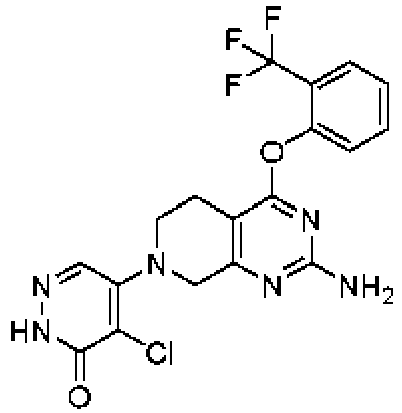
103 
104 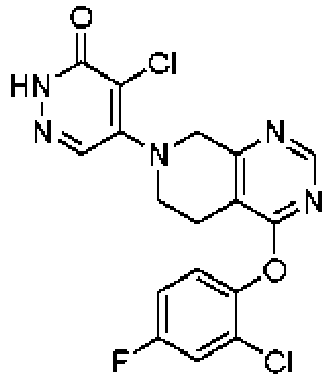
105 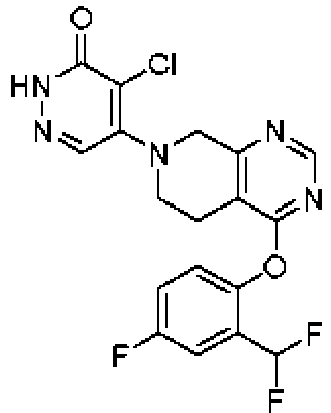
106 
107 
108 
109 
110 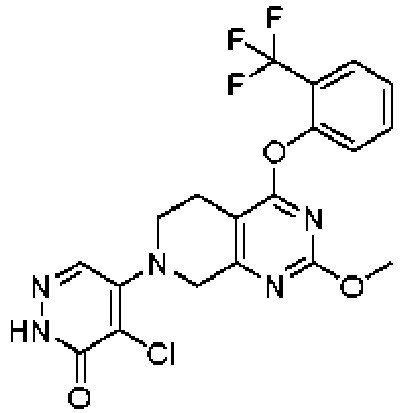
111 
112 
113 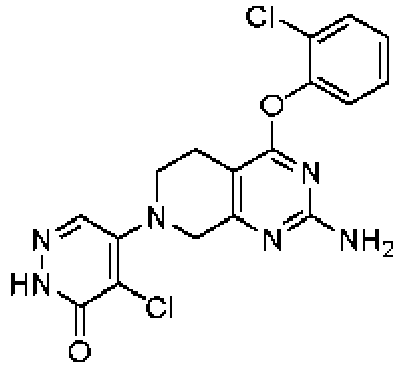
114 
115 
116 
117 
117a 
118 
119 
120 
121 
122 
123 
124 
125 
126 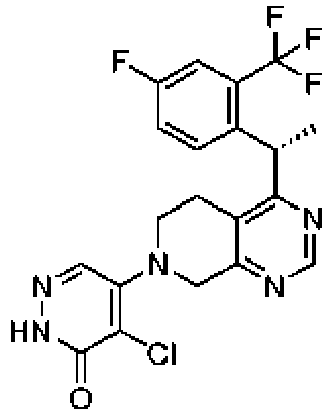
126a 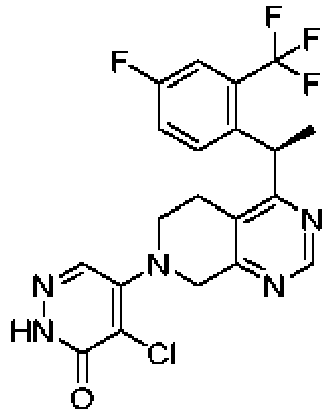
127 
128 
129 
130 
131 
132 
133 
133a 
134 
135 
136 
137 
138 
139 
140 
- Composé selon la revendication 4, choisi parmi l'un quelconque des composés suivants, ou sel pharmaceutiquement acceptable de celui-ci :
Composé Structure 100 
101 
102 
104 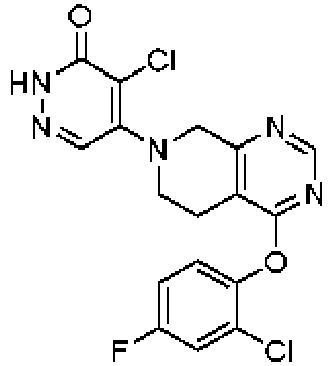
105 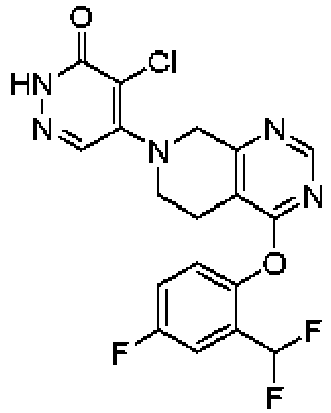
112 
113 
114 
116 
124 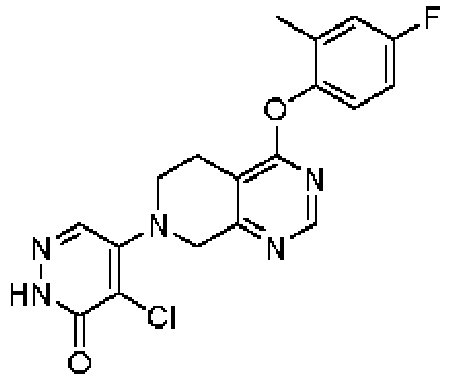
125 
128 
134 
135 
137 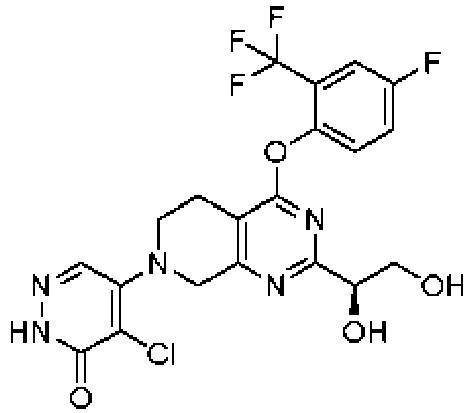
- Composé selon la revendication 5, choisi parmi l'un quelconque des composés suivants, ou sel pharmaceutiquement acceptable de celui-ci :
Composé Structure 100 
101 
102 
104 
105 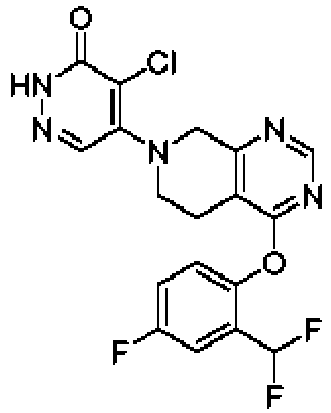
114 
116 
124 
125 
128 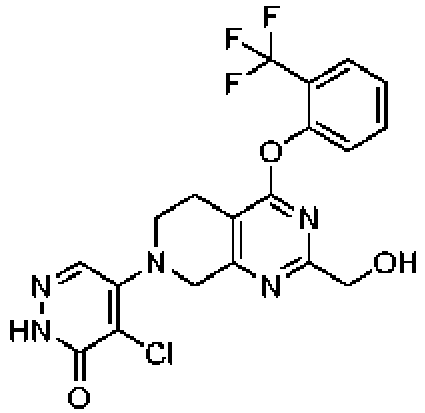
134 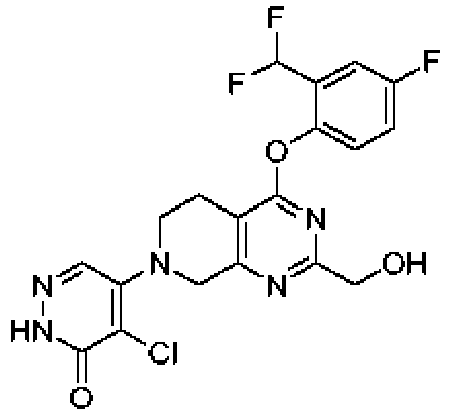
135 
137 
- Composé selon la revendication 1, ledit composé étant le composé 100 :

- Composé selon la revendication 1, ledit composé étant

- Composition pharmaceutique comprenant un composé selon l'une quelconque des revendications 1 à 8 ; et un véhicule porteur pharmaceutiquement acceptable.
- Composé selon l'une quelconque des revendications 1 à 8, ou composition pharmaceutique selon la revendication 9, destiné(e) à être utilisé(e) dans un procédé de traitement, ou la réduction du risque de développement d'une maladie ou d'un état choisi(e) parmi maladie rénale, hypertension artérielle pulmonaire, anxiété, dépression, cancer, rétinopathie diabétique ou douleur.
- Composé ou composition pharmaceutique destiné(e) à être utilisé(e) selon la revendication 10, la maladie ou l'état étant une maladie rénale choisie parmi glomérulosclérose segmentaire et focale (GSF), néphropathie diabétique, syndrome d'Alport, maladie rénale hypertensive, syndrome néphrotique, syndrome néphrotique résistant aux stéroïdes, maladie à changement minimal, néphropathie membraneuse, néphropathie membraneuse idiopathique, glomérulonéphrite membranoproliférative (GMNP), GMNP à médiation par complexes immuns, GMNP à médiation par le complément, néphrite lupique, glomérulonéphrite post-infectieuse, maladie des membranes basales minces, glomérulonéphrite proliférative mésangiale, amyloïdose (primaire), néphropathie clq, GN à progression rapide, maladie anti-GBM, glomérulonéphrite à C3, néphrosclérose hypertensive ou néphropathie à IgA.
- Composé ou composition pharmaceutique destiné(e) à être utilisé(e) selon la revendication 10, la maladie ou l'état étant l'anxiété.
- Composé ou composition pharmaceutique destiné(e) à être utilisé(e) selon la revendication 10, la maladie ou l'état étant la dépression.
- Composé ou composition pharmaceutique destiné(e) à être utilisé(e) selon la revendication 10, la maladie ou l'état à traiter étant une douleur choisie parmi douleur neuropathique et douleur viscérale.
- Composé ou composition pharmaceutique destiné(e) à être utilisé(e) selon la revendication 10, la maladie ou l'état à traiter étant un cancer choisi parmi le carcinome du sein chimiorésistant, le cancer du sein résistant à l'adriamycine, le cancer colorectal chimiorésistant, le médulloblastome et l'angiogénèse tumorale.
- Composé ou composition pharmaceutique destiné(e) à être utilisé(e) selon la revendication 10, la maladie ou l'état étant GSF liée à une transplantation, syndrome néphrotique lié à une transplantation, protéinurie liée à une transplantation, maladie cholestatique du foie, polykystose rénale, polykystose rénale autosomique dominante (PKRAD), obésité, résistance à l'insuline, diabète de type II, prédiabète, syndrome métabolique, stéatose hépatique non-alcoolique (NAFLD) ou stéatohépatite non alcoolique (NASH).
Priority Applications (5)
| Application Number | Priority Date | Filing Date | Title |
|---|---|---|---|
| SI201930755T SI3852533T1 (sl) | 2018-09-18 | 2019-09-18 | Piridazinoni in način njihove uporabe |
| RS20240594A RS65558B1 (sr) | 2018-09-18 | 2019-09-18 | Piridazinoni i postupci primene istih |
| HRP20240707TT HRP20240707T1 (hr) | 2018-09-18 | 2019-09-18 | Piridazinoni i postupci primjene istih |
| SM20240201T SMT202400201T1 (it) | 2018-09-18 | 2019-09-18 | Piridazinoni e procedimenti per il loro uso |
| EP24155641.4A EP4414365A1 (fr) | 2018-09-18 | 2019-09-18 | Pyridazinones et leurs procédés d'utilisation |
Applications Claiming Priority (3)
| Application Number | Priority Date | Filing Date | Title |
|---|---|---|---|
| US201862732728P | 2018-09-18 | 2018-09-18 | |
| US201862780553P | 2018-12-17 | 2018-12-17 | |
| PCT/US2019/051680 WO2020061162A1 (fr) | 2018-09-18 | 2019-09-18 | Pyridazinones et leurs procédés d'utilisation |
Related Child Applications (2)
| Application Number | Title | Priority Date | Filing Date |
|---|---|---|---|
| EP24155641.4A Division-Into EP4414365A1 (fr) | 2018-09-18 | 2019-09-18 | Pyridazinones et leurs procédés d'utilisation |
| EP24155641.4A Division EP4414365A1 (fr) | 2018-09-18 | 2019-09-18 | Pyridazinones et leurs procédés d'utilisation |
Publications (4)
| Publication Number | Publication Date |
|---|---|
| EP3852533A1 EP3852533A1 (fr) | 2021-07-28 |
| EP3852533A4 EP3852533A4 (fr) | 2022-06-15 |
| EP3852533B1 true EP3852533B1 (fr) | 2024-02-28 |
| EP3852533B8 EP3852533B8 (fr) | 2024-07-17 |
Family
ID=69887813
Family Applications (2)
| Application Number | Title | Priority Date | Filing Date |
|---|---|---|---|
| EP19863481.8A Active EP3852533B8 (fr) | 2018-09-18 | 2019-09-18 | Pyridazinones et leurs procédés d'utilisation |
| EP24155641.4A Pending EP4414365A1 (fr) | 2018-09-18 | 2019-09-18 | Pyridazinones et leurs procédés d'utilisation |
Family Applications After (1)
| Application Number | Title | Priority Date | Filing Date |
|---|---|---|---|
| EP24155641.4A Pending EP4414365A1 (fr) | 2018-09-18 | 2019-09-18 | Pyridazinones et leurs procédés d'utilisation |
Country Status (35)
| Country | Link |
|---|---|
| US (3) | US10654850B2 (fr) |
| EP (2) | EP3852533B8 (fr) |
| JP (3) | JP7474243B2 (fr) |
| KR (2) | KR20250171415A (fr) |
| CN (1) | CN112911935A (fr) |
| AU (2) | AU2019344928B2 (fr) |
| BR (1) | BR112021004926A2 (fr) |
| CA (1) | CA3113236A1 (fr) |
| CL (1) | CL2021000648A1 (fr) |
| CO (1) | CO2021004789A2 (fr) |
| DK (1) | DK3852533T3 (fr) |
| EC (1) | ECSP21026485A (fr) |
| ES (1) | ES2982498T3 (fr) |
| FI (1) | FI3852533T3 (fr) |
| HR (1) | HRP20240707T1 (fr) |
| HU (1) | HUE067188T2 (fr) |
| IL (1) | IL281438B2 (fr) |
| LT (1) | LT3852533T (fr) |
| MA (1) | MA71645A (fr) |
| MD (1) | MD3852533T2 (fr) |
| MX (1) | MX2021003152A (fr) |
| MY (1) | MY208106A (fr) |
| PE (2) | PE20250453A1 (fr) |
| PH (1) | PH12021550443A1 (fr) |
| PL (1) | PL3852533T3 (fr) |
| PT (1) | PT3852533T (fr) |
| PY (1) | PY1977703A (fr) |
| RS (1) | RS65558B1 (fr) |
| SG (1) | SG11202102053VA (fr) |
| SI (1) | SI3852533T1 (fr) |
| SM (1) | SMT202400201T1 (fr) |
| TW (3) | TWI894724B (fr) |
| UA (1) | UA128841C2 (fr) |
| UY (1) | UY38377A (fr) |
| WO (1) | WO2020061162A1 (fr) |
Families Citing this family (12)
| Publication number | Priority date | Publication date | Assignee | Title |
|---|---|---|---|---|
| US12435078B2 (en) | 2017-09-18 | 2025-10-07 | Gfb (Abc), Llc | Pyridazinones and methods of use thereof |
| LT3852533T (lt) * | 2018-09-18 | 2024-06-10 | Gfb (Abc), Llc | Piridazinonai ir jų naudojimo būdai |
| MX2021011316A (es) * | 2019-03-20 | 2021-10-13 | Goldfinch Bio Inc | Piridazinonas y metodos de uso de estas. |
| WO2020206623A1 (fr) * | 2019-04-10 | 2020-10-15 | Goldfinch Bio, Inc. | Formes cristallines |
| CA3136632A1 (fr) | 2019-04-11 | 2020-10-15 | Goldfinch Bio, Inc. | Formulation sechee par pulverisation d'un inhibiteur de pyridazinone trpc5 |
| AU2020357178A1 (en) * | 2019-10-04 | 2022-05-12 | Gfb (Abc), Llc | Biomarker-based treatment of focal segmental glomerulosclerosis and diabetic kidney disease |
| TWI782504B (zh) * | 2020-05-08 | 2022-11-01 | 美商美國禮來大藥廠 | (三氟甲基)嘧啶-2-胺化合物 |
| WO2022006278A1 (fr) * | 2020-07-01 | 2022-01-06 | Angion Biomedica Corp. | Réduction de la fibrose et traitement de maladies, de troubles et d'états associés |
| KR102873922B1 (ko) * | 2020-07-03 | 2025-10-20 | 우한 크리에이터나 사이언스 앤드 테크놀로지 컴퍼니, 리미티드 | 헤테로고리 화합물 및 이의 용도 |
| US20240317755A1 (en) * | 2021-02-07 | 2024-09-26 | Wuhan Ll Science And Technology Development Co., Ltd. | Heterocyclic compound, and intermediate thereof, preparation method therefor and use thereof |
| JP7701559B2 (ja) * | 2021-09-10 | 2025-07-01 | メッドシャイン ディスカバリー インコーポレイテッド | ハロゲン置換のピリダジノン系化合物及びその使用 |
| WO2025250920A1 (fr) | 2024-05-31 | 2025-12-04 | Gfb (Abc), Llc | Composés de pyridazinone phosphate, compositions pharmaceutiques et leurs utilisations médicales |
Family Cites Families (21)
| Publication number | Priority date | Publication date | Assignee | Title |
|---|---|---|---|---|
| UA77526C2 (en) | 2002-06-07 | 2006-12-15 | Sanofi Aventis | Substituted derivatives of 1-piperazineacylpiperidine, a method for the preparation thereof and their use in therapy |
| WO2005070929A1 (fr) | 2004-01-23 | 2005-08-04 | Amgen Inc. | Ligands de recepteur vanilloide et leur utilisation dans le cadre de traitements |
| CN101124217A (zh) | 2004-01-29 | 2008-02-13 | 默克公司 | Cgrp受体拮抗剂 |
| DE102004044231A1 (de) | 2004-09-14 | 2006-03-16 | Henkel Kgaa | Mittel zum Färben von keratinhaltigen Fasern |
| EP1802637B1 (fr) | 2004-10-13 | 2008-10-15 | Merck & Co., Inc. | Antagonistes aux récepteurs de cgrp |
| EP2502918B1 (fr) | 2006-07-25 | 2015-03-25 | Cephalon, Inc. | Dérivés de pyridazinone |
| MX2009009849A (es) | 2007-03-15 | 2009-09-24 | Schering Corp | Derivados de piridazinona sustituida con piperazina utiles como inhibidores de glucano sintasa. |
| JP5423679B2 (ja) * | 2007-10-31 | 2014-02-19 | 日産化学工業株式会社 | ピリダジノン化合物及びp2x7受容体阻害剤 |
| US8633233B2 (en) | 2008-08-06 | 2014-01-21 | Hydra Biosciences, Inc. | Methods and compositions for treating anxiety |
| ES2537190T3 (es) * | 2010-09-01 | 2015-06-03 | Gilead Connecticut, Inc. | Piridazinonas, procedimiento de preparación y procedimientos de utilización de las mismas |
| HK1208681A1 (en) * | 2012-06-12 | 2016-03-11 | Abbvie Inc. | Pyridinone and pyridazinone derivatives |
| JO3470B1 (ar) | 2012-10-08 | 2020-07-05 | Merck Sharp & Dohme | مشتقات 5- فينوكسي-3h-بيريميدين-4-أون واستخدامها كمثبطات ناسخ عكسي ل hiv |
| EP3180340B1 (fr) | 2014-08-11 | 2018-10-10 | Hydra Biosciences, Inc. | Dérivés de pyrido[2,3-d]pyrimidine-2,4(1h,3h)-dione |
| CN121974842A (zh) | 2016-05-10 | 2026-05-05 | C4医药公司 | 用于靶蛋白降解的胺连接的c3-戊二酰亚胺降解决定子体 |
| US12435078B2 (en) * | 2017-09-18 | 2025-10-07 | Gfb (Abc), Llc | Pyridazinones and methods of use thereof |
| US10703748B2 (en) | 2017-10-31 | 2020-07-07 | Samumed, Llc | Diazanaphthalen-3-yl carboxamides and preparation and use thereof |
| LT3852533T (lt) * | 2018-09-18 | 2024-06-10 | Gfb (Abc), Llc | Piridazinonai ir jų naudojimo būdai |
| MX2021011316A (es) * | 2019-03-20 | 2021-10-13 | Goldfinch Bio Inc | Piridazinonas y metodos de uso de estas. |
| WO2020206623A1 (fr) * | 2019-04-10 | 2020-10-15 | Goldfinch Bio, Inc. | Formes cristallines |
| CA3136632A1 (fr) * | 2019-04-11 | 2020-10-15 | Goldfinch Bio, Inc. | Formulation sechee par pulverisation d'un inhibiteur de pyridazinone trpc5 |
| AU2020357178A1 (en) * | 2019-10-04 | 2022-05-12 | Gfb (Abc), Llc | Biomarker-based treatment of focal segmental glomerulosclerosis and diabetic kidney disease |
-
2019
- 2019-09-18 LT LTEPPCT/US2019/051680T patent/LT3852533T/lt unknown
- 2019-09-18 PE PE2024003155A patent/PE20250453A1/es unknown
- 2019-09-18 JP JP2021510041A patent/JP7474243B2/ja active Active
- 2019-09-18 MD MDE20210701T patent/MD3852533T2/ro unknown
- 2019-09-18 DK DK19863481.8T patent/DK3852533T3/da active
- 2019-09-18 MY MYPI2021001458A patent/MY208106A/en unknown
- 2019-09-18 KR KR1020257038794A patent/KR20250171415A/ko active Pending
- 2019-09-18 CN CN201980060868.1A patent/CN112911935A/zh active Pending
- 2019-09-18 TW TW112148147A patent/TWI894724B/zh active
- 2019-09-18 PT PT198634818T patent/PT3852533T/pt unknown
- 2019-09-18 SI SI201930755T patent/SI3852533T1/sl unknown
- 2019-09-18 SG SG11202102053VA patent/SG11202102053VA/en unknown
- 2019-09-18 HR HRP20240707TT patent/HRP20240707T1/hr unknown
- 2019-09-18 MX MX2021003152A patent/MX2021003152A/es unknown
- 2019-09-18 ES ES19863481T patent/ES2982498T3/es active Active
- 2019-09-18 MA MA71645A patent/MA71645A/fr unknown
- 2019-09-18 CA CA3113236A patent/CA3113236A1/fr active Pending
- 2019-09-18 TW TW108133609A patent/TWI828758B/zh active
- 2019-09-18 SM SM20240201T patent/SMT202400201T1/it unknown
- 2019-09-18 PE PE2021000320A patent/PE20211774A1/es unknown
- 2019-09-18 TW TW114127767A patent/TW202620022A/zh unknown
- 2019-09-18 EP EP19863481.8A patent/EP3852533B8/fr active Active
- 2019-09-18 KR KR1020217010630A patent/KR102890905B1/ko active Active
- 2019-09-18 UY UY0001038377A patent/UY38377A/es active IP Right Grant
- 2019-09-18 EP EP24155641.4A patent/EP4414365A1/fr active Pending
- 2019-09-18 PL PL19863481.8T patent/PL3852533T3/pl unknown
- 2019-09-18 AU AU2019344928A patent/AU2019344928B2/en active Active
- 2019-09-18 WO PCT/US2019/051680 patent/WO2020061162A1/fr not_active Ceased
- 2019-09-18 HU HUE19863481A patent/HUE067188T2/hu unknown
- 2019-09-18 IL IL281438A patent/IL281438B2/en unknown
- 2019-09-18 FI FIEP19863481.8T patent/FI3852533T3/fi active
- 2019-09-18 PY PY201901977703A patent/PY1977703A/es unknown
- 2019-09-18 BR BR112021004926-6A patent/BR112021004926A2/pt unknown
- 2019-09-18 RS RS20240594A patent/RS65558B1/sr unknown
- 2019-09-18 US US16/575,161 patent/US10654850B2/en active Active
- 2019-09-18 UA UAA202101986A patent/UA128841C2/uk unknown
-
2020
- 2020-05-18 US US16/876,599 patent/US11046690B2/en active Active
-
2021
- 2021-03-02 PH PH12021550443A patent/PH12021550443A1/en unknown
- 2021-03-16 CL CL2021000648A patent/CL2021000648A1/es unknown
- 2021-04-15 CO CONC2021/0004789A patent/CO2021004789A2/es unknown
- 2021-04-15 EC ECSENADI202126485A patent/ECSP21026485A/es unknown
- 2021-06-28 US US17/360,303 patent/US20220024917A1/en not_active Abandoned
-
2024
- 2024-04-11 JP JP2024064210A patent/JP2024099595A/ja active Pending
-
2025
- 2025-09-30 AU AU2025238155A patent/AU2025238155A1/en active Pending
-
2026
- 2026-01-28 JP JP2026012512A patent/JP2026090312A/ja active Pending
Also Published As
Similar Documents
| Publication | Publication Date | Title |
|---|---|---|
| EP4414365A1 (fr) | Pyridazinones et leurs procédés d'utilisation | |
| JP7571039B2 (ja) | ピリダジノン及びその使用法 | |
| US12466834B2 (en) | Imidazodiazepinediones and methods of use thereof | |
| HK40115225A (en) | Pyridazinones and methods of use thereof | |
| HK40056020A (en) | Pyridazinones and methods of use thereof | |
| HK40056020B (en) | Pyridazinones and methods of use thereof | |
| EA048445B1 (ru) | Пиридазиноны и способы их применения | |
| ZA200700129B (en) | Combination of a selective noradrenaline reuptake inhibitor and a PDEV inhibitor |
Legal Events
| Date | Code | Title | Description |
|---|---|---|---|
| STAA | Information on the status of an ep patent application or granted ep patent |
Free format text: STATUS: THE INTERNATIONAL PUBLICATION HAS BEEN MADE |
|
| PUAI | Public reference made under article 153(3) epc to a published international application that has entered the european phase |
Free format text: ORIGINAL CODE: 0009012 |
|
| STAA | Information on the status of an ep patent application or granted ep patent |
Free format text: STATUS: REQUEST FOR EXAMINATION WAS MADE |
|
| 17P | Request for examination filed |
Effective date: 20210409 |
|
| AK | Designated contracting states |
Kind code of ref document: A1 Designated state(s): AL AT BE BG CH CY CZ DE DK EE ES FI FR GB GR HR HU IE IS IT LI LT LU LV MC MK MT NL NO PL PT RO RS SE SI SK SM TR |
|
| REG | Reference to a national code |
Ref country code: HK Ref legal event code: DE Ref document number: 40056020 Country of ref document: HK |
|
| REG | Reference to a national code |
Ref country code: DE Ref legal event code: R079 Free format text: PREVIOUS MAIN CLASS: A01N0043580000 Ipc: C07D0471040000 Ref country code: DE Ref legal event code: R079 Ref document number: 602019047501 Country of ref document: DE Free format text: PREVIOUS MAIN CLASS: A01N0043580000 Ipc: C07D0471040000 |
|
| A4 | Supplementary search report drawn up and despatched |
Effective date: 20220517 |
|
| RIC1 | Information provided on ipc code assigned before grant |
Ipc: A61K 31/4375 20060101ALI20220511BHEP Ipc: A61K 31/519 20060101ALI20220511BHEP Ipc: A61P 35/00 20060101ALI20220511BHEP Ipc: A61P 27/02 20060101ALI20220511BHEP Ipc: A61P 25/24 20060101ALI20220511BHEP Ipc: A61P 25/22 20060101ALI20220511BHEP Ipc: A61P 25/04 20060101ALI20220511BHEP Ipc: A61P 13/12 20060101ALI20220511BHEP Ipc: A61P 9/12 20060101ALI20220511BHEP Ipc: A61P 3/10 20060101ALI20220511BHEP Ipc: A61P 3/04 20060101ALI20220511BHEP Ipc: C07D 471/04 20060101AFI20220511BHEP |
|
| GRAP | Despatch of communication of intention to grant a patent |
Free format text: ORIGINAL CODE: EPIDOSNIGR1 |
|
| STAA | Information on the status of an ep patent application or granted ep patent |
Free format text: STATUS: GRANT OF PATENT IS INTENDED |
|
| INTG | Intention to grant announced |
Effective date: 20230306 |
|
| GRAJ | Information related to disapproval of communication of intention to grant by the applicant or resumption of examination proceedings by the epo deleted |
Free format text: ORIGINAL CODE: EPIDOSDIGR1 |
|
| STAA | Information on the status of an ep patent application or granted ep patent |
Free format text: STATUS: REQUEST FOR EXAMINATION WAS MADE |
|
| INTC | Intention to grant announced (deleted) | ||
| GRAP | Despatch of communication of intention to grant a patent |
Free format text: ORIGINAL CODE: EPIDOSNIGR1 |
|
| STAA | Information on the status of an ep patent application or granted ep patent |
Free format text: STATUS: GRANT OF PATENT IS INTENDED |
|
| INTG | Intention to grant announced |
Effective date: 20230918 |
|
| GRAS | Grant fee paid |
Free format text: ORIGINAL CODE: EPIDOSNIGR3 |
|
| GRAA | (expected) grant |
Free format text: ORIGINAL CODE: 0009210 |
|
| STAA | Information on the status of an ep patent application or granted ep patent |
Free format text: STATUS: THE PATENT HAS BEEN GRANTED |
|
| AK | Designated contracting states |
Kind code of ref document: B1 Designated state(s): AL AT BE BG CH CY CZ DE DK EE ES FI FR GB GR HR HU IE IS IT LI LT LU LV MC MK MT NL NO PL PT RO RS SE SI SK SM TR |
|
| REG | Reference to a national code |
Ref country code: GB Ref legal event code: FG4D Ref country code: TN Ref legal event code: VAGR Ref document number: TN/P/2024/000147 Country of ref document: TN Ref country code: KH Ref legal event code: VAGR Ref document number: KH/P/2024/00024 E Country of ref document: KH |
|
| REG | Reference to a national code |
Ref country code: CH Ref legal event code: EP |
|
| REG | Reference to a national code |
Ref country code: DE Ref legal event code: R096 Ref document number: 602019047501 Country of ref document: DE |
|
| REG | Reference to a national code |
Ref country code: IE Ref legal event code: FG4D |
|
| REG | Reference to a national code |
Ref country code: FI Ref legal event code: FGE |
|
| REG | Reference to a national code |
Ref country code: DK Ref legal event code: T3 Effective date: 20240524 |
|
| REG | Reference to a national code |
Ref country code: MA Ref legal event code: VAGR Ref document number: 53670 Country of ref document: MA Kind code of ref document: B1 Ref country code: PT Ref legal event code: SC4A Ref document number: 3852533 Country of ref document: PT Date of ref document: 20240531 Kind code of ref document: T Free format text: AVAILABILITY OF NATIONAL TRANSLATION Effective date: 20240523 |
|
| RAP2 | Party data changed (patent owner data changed or rights of a patent transferred) |
Owner name: GFB (ABC), LLC |
|
| REG | Reference to a national code |
Ref country code: SE Ref legal event code: TRGR |
|
| REG | Reference to a national code |
Ref country code: CH Ref legal event code: PK Free format text: BERICHTIGUNG B8 |
|
| REG | Reference to a national code |
Ref country code: DE Ref legal event code: R081 Ref document number: 602019047501 Country of ref document: DE Owner name: GFB (ABC), LLC, FOXBORO, US Free format text: FORMER OWNER: GOLDFINCH BIO, INC., CAMBRIDGE, MA, US |
|
| REG | Reference to a national code |
Ref country code: NL Ref legal event code: FP |
|
| REG | Reference to a national code |
Ref country code: SK Ref legal event code: T3 Ref document number: E 44212 Country of ref document: SK |
|
| REG | Reference to a national code |
Ref country code: GR Ref legal event code: EP Ref document number: 20240401218 Country of ref document: GR Effective date: 20240716 |
|
| REG | Reference to a national code |
Ref country code: GB Ref legal event code: 732E Free format text: REGISTERED BETWEEN 20240704 AND 20240710 |
|
| P01 | Opt-out of the competence of the unified patent court (upc) registered |
Free format text: CASE NUMBER: APP_38793/2024 Effective date: 20240628 |
|
| REG | Reference to a national code |
Ref country code: EE Ref legal event code: FG4A Ref document number: E024337 Country of ref document: EE Effective date: 20240523 |
|
| REG | Reference to a national code |
Ref country code: NL Ref legal event code: PD Owner name: GFB (ABC), LLC; US Free format text: DETAILS ASSIGNMENT: CHANGE OF OWNER(S), ASSIGNMENT; FORMER OWNER NAME: GOLDFINCH BIO, INC. Effective date: 20240813 |
|
| REG | Reference to a national code |
Ref country code: MD Ref legal event code: VAGR Ref document number: 3852533 Country of ref document: MD Date of ref document: 20240831 Kind code of ref document: T2 |
|
| REG | Reference to a national code |
Ref country code: HR Ref legal event code: ODRP Ref document number: P20240707T Country of ref document: HR Payment date: 20240816 Year of fee payment: 6 |
|
| REG | Reference to a national code |
Ref country code: HR Ref legal event code: T1PR Ref document number: P20240707 Country of ref document: HR |
|
| VSFP | Annual fee paid to validation state [announced via postgrant information from national office to epo] |
Ref country code: MD Payment date: 20240730 Year of fee payment: 6 |
|
| REG | Reference to a national code |
Ref country code: ES Ref legal event code: FG2A Ref document number: 2982498 Country of ref document: ES Kind code of ref document: T3 Effective date: 20241016 |
|
| REG | Reference to a national code |
Ref country code: HU Ref legal event code: AG4A Ref document number: E067188 Country of ref document: HU |
|
| REG | Reference to a national code |
Ref country code: BE Ref legal event code: PD Free format text: DETAILS ASSIGNMENT: CHANGE OF OWNER(S), ASSIGNMENT Effective date: 20240805 |
|
| REG | Reference to a national code |
Ref country code: DE Ref legal event code: R097 Ref document number: 602019047501 Country of ref document: DE |
|
| PLBE | No opposition filed within time limit |
Free format text: ORIGINAL CODE: 0009261 |
|
| STAA | Information on the status of an ep patent application or granted ep patent |
Free format text: STATUS: NO OPPOSITION FILED WITHIN TIME LIMIT |
|
| 26N | No opposition filed |
Effective date: 20241129 |
|
| REG | Reference to a national code |
Ref country code: AT Ref legal event code: UEP Ref document number: 1661168 Country of ref document: AT Kind code of ref document: T Effective date: 20240228 |
|
| PGFP | Annual fee paid to national office [announced via postgrant information from national office to epo] |
Ref country code: NL Payment date: 20250814 Year of fee payment: 7 |
|
| REG | Reference to a national code |
Ref country code: HR Ref legal event code: ODRP Ref document number: P20240707 Country of ref document: HR Payment date: 20250808 Year of fee payment: 7 |
|
| REG | Reference to a national code |
Ref country code: CH Ref legal event code: U11 Free format text: ST27 STATUS EVENT CODE: U-0-0-U10-U11 (AS PROVIDED BY THE NATIONAL OFFICE) Effective date: 20251001 |
|
| PGFP | Annual fee paid to national office [announced via postgrant information from national office to epo] |
Ref country code: SM Payment date: 20250827 Year of fee payment: 7 |
|
| PGFP | Annual fee paid to national office [announced via postgrant information from national office to epo] |
Ref country code: FI Payment date: 20250912 Year of fee payment: 7 Ref country code: PT Payment date: 20250916 Year of fee payment: 7 |
|
| PGFP | Annual fee paid to national office [announced via postgrant information from national office to epo] |
Ref country code: DE Payment date: 20250730 Year of fee payment: 7 Ref country code: LT Payment date: 20250825 Year of fee payment: 7 Ref country code: DK Payment date: 20250911 Year of fee payment: 7 |
|
| PGFP | Annual fee paid to national office [announced via postgrant information from national office to epo] |
Ref country code: MC Payment date: 20250828 Year of fee payment: 7 Ref country code: NO Payment date: 20250909 Year of fee payment: 7 Ref country code: GR Payment date: 20250818 Year of fee payment: 7 |
|
| PGFP | Annual fee paid to national office [announced via postgrant information from national office to epo] |
Ref country code: TR Payment date: 20250911 Year of fee payment: 7 Ref country code: LU Payment date: 20250912 Year of fee payment: 7 Ref country code: IT Payment date: 20250825 Year of fee payment: 7 Ref country code: PL Payment date: 20250728 Year of fee payment: 7 |
|
| VSFP | Annual fee paid to validation state [announced via postgrant information from national office to epo] |
Ref country code: MD Payment date: 20250806 Year of fee payment: 7 |
|
| PGFP | Annual fee paid to national office [announced via postgrant information from national office to epo] |
Ref country code: BE Payment date: 20250818 Year of fee payment: 7 Ref country code: HU Payment date: 20250828 Year of fee payment: 7 Ref country code: BG Payment date: 20250815 Year of fee payment: 7 Ref country code: GB Payment date: 20250731 Year of fee payment: 7 |
|
| PGFP | Annual fee paid to national office [announced via postgrant information from national office to epo] |
Ref country code: HR Payment date: 20250808 Year of fee payment: 7 |
|
| PGFP | Annual fee paid to national office [announced via postgrant information from national office to epo] |
Ref country code: AL Payment date: 20250904 Year of fee payment: 7 Ref country code: AT Payment date: 20250827 Year of fee payment: 7 Ref country code: FR Payment date: 20250808 Year of fee payment: 7 |
|
| PGFP | Annual fee paid to national office [announced via postgrant information from national office to epo] |
Ref country code: MT Payment date: 20250917 Year of fee payment: 7 Ref country code: SE Payment date: 20250728 Year of fee payment: 7 |
|
| PGFP | Annual fee paid to national office [announced via postgrant information from national office to epo] |
Ref country code: EE Payment date: 20250808 Year of fee payment: 7 Ref country code: CZ Payment date: 20250905 Year of fee payment: 7 Ref country code: IE Payment date: 20250812 Year of fee payment: 7 Ref country code: RS Payment date: 20250820 Year of fee payment: 7 |
|
| PGFP | Annual fee paid to national office [announced via postgrant information from national office to epo] |
Ref country code: RO Payment date: 20250828 Year of fee payment: 7 |
|
| PGFP | Annual fee paid to national office [announced via postgrant information from national office to epo] |
Ref country code: SK Payment date: 20250812 Year of fee payment: 7 |
|
| PGFP | Annual fee paid to national office [announced via postgrant information from national office to epo] |
Ref country code: IS Payment date: 20250911 Year of fee payment: 7 |
|
| PGFP | Annual fee paid to national office [announced via postgrant information from national office to epo] |
Ref country code: LV Payment date: 20250805 Year of fee payment: 7 |
|
| PGFP | Annual fee paid to national office [announced via postgrant information from national office to epo] |
Ref country code: SI Payment date: 20250813 Year of fee payment: 7 |
|
| PGFP | Annual fee paid to national office [announced via postgrant information from national office to epo] |
Ref country code: MK Payment date: 20250806 Year of fee payment: 7 |
|
| VSFP | Annual fee paid to validation state [announced via postgrant information from national office to epo] |
Ref country code: MA Payment date: 20250912 Year of fee payment: 7 Ref country code: MA Payment date: 20240830 Year of fee payment: 6 |
|
| PGFP | Annual fee paid to national office [announced via postgrant information from national office to epo] |
Ref country code: CH Payment date: 20251001 Year of fee payment: 7 |
|
| PGFP | Annual fee paid to national office [announced via postgrant information from national office to epo] |
Ref country code: CY Payment date: 20250819 Year of fee payment: 7 |
|
| PGFP | Annual fee paid to national office [announced via postgrant information from national office to epo] |
Ref country code: ES Payment date: 20251015 Year of fee payment: 7 |