EP3905511A1 - Dispositif d'entraînement pour machine dynamoélectrique et procédé d'entraînement - Google Patents
Dispositif d'entraînement pour machine dynamoélectrique et procédé d'entraînement Download PDFInfo
- Publication number
- EP3905511A1 EP3905511A1 EP19906074.0A EP19906074A EP3905511A1 EP 3905511 A1 EP3905511 A1 EP 3905511A1 EP 19906074 A EP19906074 A EP 19906074A EP 3905511 A1 EP3905511 A1 EP 3905511A1
- Authority
- EP
- European Patent Office
- Prior art keywords
- dynamo
- permanent magnet
- electric machine
- temperature
- magnet synchronous
- Prior art date
- Legal status (The legal status is an assumption and is not a legal conclusion. Google has not performed a legal analysis and makes no representation as to the accuracy of the status listed.)
- Granted
Links
Images





Classifications
-
- H—ELECTRICITY
- H02—GENERATION; CONVERSION OR DISTRIBUTION OF ELECTRIC POWER
- H02P—CONTROL OR REGULATION OF ELECTRIC MOTORS, ELECTRIC GENERATORS OR DYNAMO-ELECTRIC CONVERTERS; CONTROLLING TRANSFORMERS, REACTORS OR CHOKE COILS
- H02P29/00—Arrangements for regulating or controlling electric motors, appropriate for both AC and DC motors
- H02P29/60—Controlling or determining the temperature of the motor or of the drive
-
- B—PERFORMING OPERATIONS; TRANSPORTING
- B60—VEHICLES IN GENERAL
- B60L—PROPULSION OF ELECTRICALLY-PROPELLED VEHICLES; SUPPLYING ELECTRIC POWER FOR AUXILIARY EQUIPMENT OF ELECTRICALLY-PROPELLED VEHICLES; ELECTRODYNAMIC BRAKE SYSTEMS FOR VEHICLES IN GENERAL; MAGNETIC SUSPENSION OR LEVITATION FOR VEHICLES; MONITORING OPERATING VARIABLES OF ELECTRICALLY-PROPELLED VEHICLES; ELECTRIC SAFETY DEVICES FOR ELECTRICALLY-PROPELLED VEHICLES
- B60L15/00—Methods, circuits, or devices for controlling the traction-motor speed of electrically-propelled vehicles
- B60L15/02—Methods, circuits, or devices for controlling the traction-motor speed of electrically-propelled vehicles characterised by the form of the current used in the control circuit
- B60L15/025—Methods, circuits, or devices for controlling the traction-motor speed of electrically-propelled vehicles characterised by the form of the current used in the control circuit using field orientation; Vector control; Direct Torque Control [DTC]
-
- B—PERFORMING OPERATIONS; TRANSPORTING
- B60—VEHICLES IN GENERAL
- B60L—PROPULSION OF ELECTRICALLY-PROPELLED VEHICLES; SUPPLYING ELECTRIC POWER FOR AUXILIARY EQUIPMENT OF ELECTRICALLY-PROPELLED VEHICLES; ELECTRODYNAMIC BRAKE SYSTEMS FOR VEHICLES IN GENERAL; MAGNETIC SUSPENSION OR LEVITATION FOR VEHICLES; MONITORING OPERATING VARIABLES OF ELECTRICALLY-PROPELLED VEHICLES; ELECTRIC SAFETY DEVICES FOR ELECTRICALLY-PROPELLED VEHICLES
- B60L15/00—Methods, circuits, or devices for controlling the traction-motor speed of electrically-propelled vehicles
- B60L15/20—Methods, circuits, or devices for controlling the traction-motor speed of electrically-propelled vehicles for control of the vehicle or its driving motor to achieve a desired performance, e.g. speed, torque, programmed variation of speed
- B60L15/2045—Methods, circuits, or devices for controlling the traction-motor speed of electrically-propelled vehicles for control of the vehicle or its driving motor to achieve a desired performance, e.g. speed, torque, programmed variation of speed for optimising the use of energy
-
- B—PERFORMING OPERATIONS; TRANSPORTING
- B60—VEHICLES IN GENERAL
- B60L—PROPULSION OF ELECTRICALLY-PROPELLED VEHICLES; SUPPLYING ELECTRIC POWER FOR AUXILIARY EQUIPMENT OF ELECTRICALLY-PROPELLED VEHICLES; ELECTRODYNAMIC BRAKE SYSTEMS FOR VEHICLES IN GENERAL; MAGNETIC SUSPENSION OR LEVITATION FOR VEHICLES; MONITORING OPERATING VARIABLES OF ELECTRICALLY-PROPELLED VEHICLES; ELECTRIC SAFETY DEVICES FOR ELECTRICALLY-PROPELLED VEHICLES
- B60L9/00—Electric propulsion with power supply external to the vehicle
- B60L9/16—Electric propulsion with power supply external to the vehicle using AC induction motors
- B60L9/18—Electric propulsion with power supply external to the vehicle using AC induction motors fed from DC supply lines
- B60L9/22—Electric propulsion with power supply external to the vehicle using AC induction motors fed from DC supply lines polyphase motors
-
- H—ELECTRICITY
- H02—GENERATION; CONVERSION OR DISTRIBUTION OF ELECTRIC POWER
- H02P—CONTROL OR REGULATION OF ELECTRIC MOTORS, ELECTRIC GENERATORS OR DYNAMO-ELECTRIC CONVERTERS; CONTROLLING TRANSFORMERS, REACTORS OR CHOKE COILS
- H02P21/00—Arrangements or methods for the control of electric machines by vector control, e.g. by control of field orientation
- H02P21/02—Arrangements or methods for the control of electric machines by vector control, e.g. by control of field orientation specially adapted for optimising the efficiency at low load
-
- H—ELECTRICITY
- H02—GENERATION; CONVERSION OR DISTRIBUTION OF ELECTRIC POWER
- H02P—CONTROL OR REGULATION OF ELECTRIC MOTORS, ELECTRIC GENERATORS OR DYNAMO-ELECTRIC CONVERTERS; CONTROLLING TRANSFORMERS, REACTORS OR CHOKE COILS
- H02P5/00—Arrangements specially adapted for regulating or controlling the speed or torque of two or more electric motors
- H02P5/74—Arrangements specially adapted for regulating or controlling the speed or torque of two or more electric motors controlling two or more AC dynamo-electric motors
-
- B—PERFORMING OPERATIONS; TRANSPORTING
- B60—VEHICLES IN GENERAL
- B60L—PROPULSION OF ELECTRICALLY-PROPELLED VEHICLES; SUPPLYING ELECTRIC POWER FOR AUXILIARY EQUIPMENT OF ELECTRICALLY-PROPELLED VEHICLES; ELECTRODYNAMIC BRAKE SYSTEMS FOR VEHICLES IN GENERAL; MAGNETIC SUSPENSION OR LEVITATION FOR VEHICLES; MONITORING OPERATING VARIABLES OF ELECTRICALLY-PROPELLED VEHICLES; ELECTRIC SAFETY DEVICES FOR ELECTRICALLY-PROPELLED VEHICLES
- B60L2200/00—Type of vehicles
- B60L2200/26—Rail vehicles
-
- B—PERFORMING OPERATIONS; TRANSPORTING
- B60—VEHICLES IN GENERAL
- B60L—PROPULSION OF ELECTRICALLY-PROPELLED VEHICLES; SUPPLYING ELECTRIC POWER FOR AUXILIARY EQUIPMENT OF ELECTRICALLY-PROPELLED VEHICLES; ELECTRODYNAMIC BRAKE SYSTEMS FOR VEHICLES IN GENERAL; MAGNETIC SUSPENSION OR LEVITATION FOR VEHICLES; MONITORING OPERATING VARIABLES OF ELECTRICALLY-PROPELLED VEHICLES; ELECTRIC SAFETY DEVICES FOR ELECTRICALLY-PROPELLED VEHICLES
- B60L2220/00—Electrical machine types; Structures or applications thereof
- B60L2220/10—Electrical machine types
- B60L2220/14—Synchronous machines
-
- B—PERFORMING OPERATIONS; TRANSPORTING
- B60—VEHICLES IN GENERAL
- B60L—PROPULSION OF ELECTRICALLY-PROPELLED VEHICLES; SUPPLYING ELECTRIC POWER FOR AUXILIARY EQUIPMENT OF ELECTRICALLY-PROPELLED VEHICLES; ELECTRODYNAMIC BRAKE SYSTEMS FOR VEHICLES IN GENERAL; MAGNETIC SUSPENSION OR LEVITATION FOR VEHICLES; MONITORING OPERATING VARIABLES OF ELECTRICALLY-PROPELLED VEHICLES; ELECTRIC SAFETY DEVICES FOR ELECTRICALLY-PROPELLED VEHICLES
- B60L2220/00—Electrical machine types; Structures or applications thereof
- B60L2220/40—Electrical machine applications
- B60L2220/42—Electrical machine applications with use of more than one motor
-
- B—PERFORMING OPERATIONS; TRANSPORTING
- B60—VEHICLES IN GENERAL
- B60L—PROPULSION OF ELECTRICALLY-PROPELLED VEHICLES; SUPPLYING ELECTRIC POWER FOR AUXILIARY EQUIPMENT OF ELECTRICALLY-PROPELLED VEHICLES; ELECTRODYNAMIC BRAKE SYSTEMS FOR VEHICLES IN GENERAL; MAGNETIC SUSPENSION OR LEVITATION FOR VEHICLES; MONITORING OPERATING VARIABLES OF ELECTRICALLY-PROPELLED VEHICLES; ELECTRIC SAFETY DEVICES FOR ELECTRICALLY-PROPELLED VEHICLES
- B60L2240/00—Control parameters of input or output; Target parameters
- B60L2240/40—Drive Train control parameters
- B60L2240/42—Drive Train control parameters related to electric machines
- B60L2240/423—Torque
-
- B—PERFORMING OPERATIONS; TRANSPORTING
- B60—VEHICLES IN GENERAL
- B60L—PROPULSION OF ELECTRICALLY-PROPELLED VEHICLES; SUPPLYING ELECTRIC POWER FOR AUXILIARY EQUIPMENT OF ELECTRICALLY-PROPELLED VEHICLES; ELECTRODYNAMIC BRAKE SYSTEMS FOR VEHICLES IN GENERAL; MAGNETIC SUSPENSION OR LEVITATION FOR VEHICLES; MONITORING OPERATING VARIABLES OF ELECTRICALLY-PROPELLED VEHICLES; ELECTRIC SAFETY DEVICES FOR ELECTRICALLY-PROPELLED VEHICLES
- B60L2240/00—Control parameters of input or output; Target parameters
- B60L2240/40—Drive Train control parameters
- B60L2240/42—Drive Train control parameters related to electric machines
- B60L2240/425—Temperature
-
- B—PERFORMING OPERATIONS; TRANSPORTING
- B60—VEHICLES IN GENERAL
- B60L—PROPULSION OF ELECTRICALLY-PROPELLED VEHICLES; SUPPLYING ELECTRIC POWER FOR AUXILIARY EQUIPMENT OF ELECTRICALLY-PROPELLED VEHICLES; ELECTRODYNAMIC BRAKE SYSTEMS FOR VEHICLES IN GENERAL; MAGNETIC SUSPENSION OR LEVITATION FOR VEHICLES; MONITORING OPERATING VARIABLES OF ELECTRICALLY-PROPELLED VEHICLES; ELECTRIC SAFETY DEVICES FOR ELECTRICALLY-PROPELLED VEHICLES
- B60L2240/00—Control parameters of input or output; Target parameters
- B60L2240/40—Drive Train control parameters
- B60L2240/42—Drive Train control parameters related to electric machines
- B60L2240/429—Current
-
- Y—GENERAL TAGGING OF NEW TECHNOLOGICAL DEVELOPMENTS; GENERAL TAGGING OF CROSS-SECTIONAL TECHNOLOGIES SPANNING OVER SEVERAL SECTIONS OF THE IPC; TECHNICAL SUBJECTS COVERED BY FORMER USPC CROSS-REFERENCE ART COLLECTIONS [XRACs] AND DIGESTS
- Y02—TECHNOLOGIES OR APPLICATIONS FOR MITIGATION OR ADAPTATION AGAINST CLIMATE CHANGE
- Y02T—CLIMATE CHANGE MITIGATION TECHNOLOGIES RELATED TO TRANSPORTATION
- Y02T10/00—Road transport of goods or passengers
- Y02T10/60—Other road transportation technologies with climate change mitigation effect
- Y02T10/64—Electric machine technologies in electromobility
-
- Y—GENERAL TAGGING OF NEW TECHNOLOGICAL DEVELOPMENTS; GENERAL TAGGING OF CROSS-SECTIONAL TECHNOLOGIES SPANNING OVER SEVERAL SECTIONS OF THE IPC; TECHNICAL SUBJECTS COVERED BY FORMER USPC CROSS-REFERENCE ART COLLECTIONS [XRACs] AND DIGESTS
- Y02—TECHNOLOGIES OR APPLICATIONS FOR MITIGATION OR ADAPTATION AGAINST CLIMATE CHANGE
- Y02T—CLIMATE CHANGE MITIGATION TECHNOLOGIES RELATED TO TRANSPORTATION
- Y02T10/00—Road transport of goods or passengers
- Y02T10/60—Other road transportation technologies with climate change mitigation effect
- Y02T10/72—Electric energy management in electromobility
Definitions
- the present invention relates to a drive device for a dynamo-electric machine, and is particularly suitable as a drive device of a permanent magnet synchronous motor for a railroad vehicle.
- Patient Literature 1 proposes a control device for a railroad vehicle which has a configuration in which an AC circuit breaker is provided between a power conversion device and each of a plurality of dynamo-electric machines and a circuit breaker control unit for individually controlling the opening and closing of the AC circuit breaker based on an operation control command from a cab is provided and which is driven under operating conditions where the dynamo-electric machine is highly efficient by reducing the number of dynamo-electric machines to be driven in accordance with torque necessary for the vehicle.
- Patient Literature 2 proposes an electric vehicle control device in which when the temperature of a dynamo-electric machine exceeds or is determined to exceed a preset allowance value, in order to change into a torque command suppressing the temperature of the dynamo-electric machine within the allowance value, a dynamo-electric machine whose torque is supplemented is selected in the order in which the temperature has a margin among the other dynamo-electric machines, and the shortage of the output torque in the dynamo-electric machine where the temperature rises is compensated.
- Patent Literature 1 discloses a technique for improving efficiency by driving a dynamo-electric machine at a point where the efficiency of the dynamo-electric machine is enhanced while switching the number of dynamo-electric machines using a circuit breaker. Then, although the dynamo-electric machine is selectively driven so that the temperature of the dynamo-electric machine to be driven is not biased against the temperature fluctuation of the dynamo-electric machine, only by operating the dynamo-electric machine with a low temperature to equalize the losses of a plurality of dynamo-electric machines, the losses themselves generated in the plurality of dynamo-electric machines are not reduced, and there is room for improvement to realize high efficiency.
- Patent Literature 1 if the technique described in Patent Literature 1 is applied to a permanent magnet synchronous motor, since a rotor is provided with a permanent magnet, an iron loss occurs during the free-run of the rotor when an AC circuit breaker is opened, and there is a problem that the temperature of the permanent magnet synchronous motor rises.
- the magnetic flux is weakened by weaker field control during the normal control period, the magnetic flux is not weakened during the free-run at the time of opening, and thus the iron loss increases.
- heat generation possibly increases in the open period rather than in the normal control period, and there is a problem in terms of cooling performance and reliability.
- Patent Literature 2 discloses a technique in which when the temperature of a dynamo-electric machine exceeds or is determined to exceed a preset allowance value, a dynamo-electric machine is selected in the order in which the temperature has a margin, and torque is supplemented.
- An object of the present invention is to improve the efficiency of a system for obtaining, when driving and controlling a plurality of dynamo-electric machines, power by the plurality of dynamo-electric machines by individually changing a torque operation amount in consideration of the temperature dependency of the dynamo-electric machines.
- the present invention is provided with a plurality of voltage generation devices for outputting arbitrary voltages to a plurality of dynamo-electric machines and a control device for adjusting the output voltages of the voltage generation devices, and the control device acquires temperature information of each of the plurality of dynamo-electric machines, selects a relatively highly-efficient dynamo-electric machine from among the plurality of dynamo-electric machines based on each temperature information, and increases a torque command value for the selected dynamo-electric machine relative to the plurality of other dynamo-electric machines.
- the high efficiency of the drive system can be realized and power consumption can be further reduced by individually changing the output torque of the plurality of dynamo-electric machines in consideration of the temperature dependency of the efficiency of the dynamo-electric machines.
- Fig. 1 is a diagram for showing an example of functional blocks of a drive device for a permanent magnet synchronous motor according to a first embodiment.
- a configuration for adjusting a torque command value is shown as functional blocks so that the total efficiency of a drive system configured using plural permanent magnet synchronous motors is enhanced based on temperature information of each permanent magnet synchronous motor.
- Fig. 1 Although two permanent magnet synchronous motors 4a and 4b are shown in Fig. 1 , the number of permanent magnet synchronous motors is not limited to two as long as plural motors are used. Hereinafter, components and functions related to two motors are distinguished by using subscripts a and b so as to correspond to two motors.
- a current between the overhead wire side and the permanent magnet synchronous motor side can be cut off by a high-speed circuit breaker 23 and a line breaker 22.
- an LC filter circuit for smoothing a DC current that is configured using a filter reactor 21 and a filter capacitor 20 is provided between voltage generation devices 3a and 3b and the overhead wire 25.
- a control device for drive control of the permanent magnet synchronous motors includes an integrated control unit 1 and sub control units 2a and 2b. Based on switching commands from the sub control units 2a and 2b, the voltage generation devices 3a and 3b output voltages, and obtain power by allowing the permanent magnet synchronous motors 4a and 4b to output predetermined torque.
- a torque calculation unit 12 included in the integrated control unit 1 outputs torque command values ⁇ m1 * and ⁇ m2 * to be generated in the permanent magnet synchronous motors 4a and 4b to the sub control units 2a and 2b, respectively, in accordance with a power command ⁇ m0 * or a control mode switching command from a higher-level system control unit (not shown in the drawing).
- Control programs for driving and controlling the permanent magnet synchronous motors 4a and 4b connected as loads are installed in the sub control units 2a and 2b.
- the sub control units 2a and 2b output switching commands SW 1 and SW 2 for outputting predetermined torque from the permanent magnet synchronous motors 4a and 4b.
- the voltage generation devices 3a and 3b perform switching control in response to the switching commands SW 1 and SW 2 and output voltages.
- Fig. 1 shows only the minimum functional blocks necessary for the first embodiment, and a power converter configured using power devices such as a driving transistor such as an IGBT (Insulated Gate Bipora Transistor) and a diode and a control configuration for the power converter are shown using the block diagrams of the voltage generation devices 3a and 3b, and detailed illustration thereof is omitted.
- a driving transistor such as an IGBT (Insulated Gate Bipora Transistor)
- IGBT Insulated Gate Bipora Transistor
- the permanent magnet synchronous motors 4a and 4b generate rotational torque by magnet torque generated by attraction and repulsion between a magnetic pole of a rotational magnetic field generated on the stator side by application of a three-phase AC voltage and a magnetic pole of a permanent magnet of a rotor, and reluctance torque generated by attraction force between the magnetic pole of the rotational magnetic field of the stator and a magnetic salient pole of the rotor.
- Current detectors 5a and 5b detect waveforms of three-phase currents I u1 , I v1 , and I w1 and I u2 , I v2 , and I w2 of the U-phase, V-phase, and W-phase flowing in the permanent magnet synchronous motors 4a and 4b, respectively.
- the current detectors 5a and 5b it is not always necessary for the current detectors 5a and 5b to detect the currents of all the three phases, and any two phases among the three phases may be detected, and the remaining one phase may be obtained by calculation on the assumption that the three-phase currents are in an equilibrium state.
- AC contactors 6a and 6b are provided between the voltage generation devices 3a and 3b and the permanent magnet synchronous motors 4a and 4b, and cut off the current when an abnormality occurs.
- the AC contactors 6a and 6b open and close in accordance with control signals (not shown in the drawing) output from the integrated control unit 1 or the sub control units 2a and 2b.
- the sub control units 2a and 2b estimate temperature information T1 ⁇ and T2 ⁇ of the permanent magnet synchronous motors 4a and 4b, respectively, by using the current detection values of the current detectors 5a and 5b, and transmit the same to the integrated control unit 1.
- Fig. 2 shows a configuration in which temperature detectors 40a and 40b are installed in the permanent magnet synchronous motors 4a and 4b to detect the temperature information T1 ⁇ and T2 ⁇ .
- a frame temperature, a winding temperature, a permanent magnet temperature, or the like may be detected.
- Losses generated in the permanent magnet synchronous motor can be largely classified into a copper loss, a mechanical loss, and an iron loss.
- the input electric power is P in
- the output electric power is P out
- the torque is ⁇ m
- the copper loss is W s
- the iron loss is W i
- the mechanical loss is W m
- the angular frequency of the mechanical angle of the dynamo-electric machine is ⁇ m
- the efficiency n of the permanent magnet synchronous motor is represented by Equation (1) .
- Equation (2) the torque ⁇ m of the permanent magnet synchronous motor is represented by Equation (2).
- m is the number of phases
- P m is the number of pole pairs
- K e is a magnet magnetic flux (power generation constant)
- I d is a d-axis current
- I q is a q-axis current
- L d is a d-axis inductance
- L q is a q-axis inductance.
- Equation (2) The first term in Equation (2) is the above-described magnet torque (torque generated by attraction and repulsion between the magnetic pole of the rotational magnetic field and the magnetic pole of the permanent magnet of the rotor), and the second term in Equation (2) is the above-described reluctance torque (torque generated by attraction force between the magnetic pole of the rotational magnetic field of the stator and the magnetic salient pole of the rotor).
- the magnet torque is determined by the product of the magnet magnetic flux K e and the q-axis current I q , the magnet torque fluctuates due to the influence of the fluctuation of the magnet magnetic flux K e , and the output torque increases or decreases.
- a demagnetization of -0.1%/°C of the permanent magnet means that when the temperature rises by 10°C, the magnet magnetic flux K e decreases by 1%. That is, it is often considered that the lowtemperature condition in which the magnet magnetic flux increases results in a more highly efficient operation because the output torque of molecules in Equation (1) increases.
- the inventors focused on the temperature dependency of the loss indicated by the denominator of Equation (1) based on detailed study, and found that the permanent magnet synchronous motor with a low temperature does not simply becomes high efficiency, but becomes high efficiency in different operation regions at low and high temperatures depending on the operating conditions of torque and frequency.
- the copper loss W s is a loss generated in a stator winding, and can be calculated from the current value flowing in the permanent magnet synchronous motor and the resistance value. Regarding the temperature dependency of the copper loss W s , since the resistance value is changed in accordance with the temperature coefficient of a material used for the stator winding, the resistance value increases and the copper loss W s tends to increase as the temperature rises.
- the mechanical loss W m is generated by a pressure loss due to a cooling fan provided in the rotor, friction of a bearing supporting the rotor at a frame of the permanent magnet synchronous motor, or the like, and can be generally calculated as a function of a drive frequency.
- a temperature dependency of the mechanical loss W m strictly speaking, although there is a change in the viscosity of grease used for a bearing, the change can be ignored in the dynamo-electric machine for railroad vehicles. Therefore, the mechanical loss W m of the dynamo-electric machine for railroad vehicles is often treated as not being affected by temperature.
- the iron loss W i is a magnetic loss corresponding to the area of a hysteresis loop when the magnetic flux in a magnetic material used for a stator core or a rotor core is changed by applying an AC magnetic field, and is defined as the sum of a hysteresis loss and an eddy current loss and can be generally calculated as a function of magnetic flux density and a frequency.
- the temperature dependency of the iron loss W i the magnet magnetic flux itself largely affecting the iron loss in the permanent magnet synchronous motor has temperature dependency, and demagnetizes at, for example, about -0.1%/°C when the temperature rises as described above.
- the hysteresis loss in the iron loss W i is often considered to have substantially no temperature dependency.
- the electric resistance of the iron core increases due to the temperature rise, the eddy current loss tends to decrease. Therefore, the iron loss W i in the permanent magnet synchronous motor tends to decrease as the temperature becomes higher.
- the loss in the permanent magnet synchronous motor when the temperature is low, the copper loss decreases and the iron loss increases, whereas when the temperature is high, the copper loss increases and the iron loss decreases. That is, since the copper loss and the iron loss have a trade-off relationship with respect to the temperature, when considering a change in the loss at the time of temperature change under certain operating conditions, the loss as a dynamo-electric machine differently decreases under low or high temperature conditions depending on the ratio of the iron loss to the copper loss.
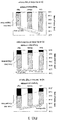
- Figs. 3 are diagrams each showing the change characteristics of the ratio of the copper loss to the iron loss when the permanent magnet synchronous motors are driven at the same rotational speed and the torque and the temperature are changed.
- Figs. 3(a), 3(b), and 3(c) show calculation results by magnetic field analysis at the time of high torque, at the time of middle torque, and at the time of low torque, respectively, and the current value is adjusted so that the output torque becomes the same even when the temperature is changed.
- the values in each drawing are normalized by the loss under the temperature condition where the total of the copper loss and the iron loss is maximized under each condition. Note that the resistance and the magnet temperature are assumed to be similarly changed.
- the condition at the time of middle torque is, as shown in Fig. 3(b) , a condition where the load torque becomes smaller and the current becomes smaller than those in Fig. 3(a) , and thus when the temperature of the dynamo-electric machine is higher, the efficiency becomes slightly higher.
- the torque command value of the permanent magnet synchronous motor with a high temperature is intentionally increased, whereas the torque command value of the permanent magnet synchronous motor with a low temperature is decreased, so that it can be understood that the permanent magnet synchronous motors can be driven with high efficiency as a whole.
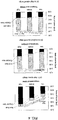
- Figs. 4 are diagrams each showing the change characteristics of the ratio of the copper loss to the iron loss when the permanent magnet synchronous motors are driven with the same torque and the rotational speed and the temperature are changed.
- Figs. 4(a), 4(b), and 4(c) show calculation results by magnetic field analysis in a low-speed range, in a medium-speed range, and in a high-speed range, respectively, and the current is adjusted so that the output torque becomes the same even when the temperature is changed.
- the values in each drawing are normalized by the loss under the temperature condition where the total of the copper loss and the iron loss is maximized under each condition. Note that the resistance and the magnet temperature are assumed to be similarly changed.
- the iron loss is small and the ratio of the copper loss accordingly becomes relatively higher in the operating condition where the rotational speed is low.
- an increase in the copper loss becomes larger than a decrease in the iron loss, and when the temperature of the permanent magnet synchronous motor becomes lower, the efficiency becomes higher.
- the condition in the medium-speed range is, as shown in Fig. 4(b) , is a condition where the rotational speed is higher and the ratio of the iron loss becomes relatively larger than those in Fig. 4(a) , and thus is a region where the efficiency is not substantially changed even when the temperature of the dynamo-electric machine is changed.
- the rotational speed is higher than that in Fig. 4(b) , and under such a condition, as shown in Fig. 4(c) , the total of the copper loss and the iron loss can be reduced by nearly 10% when the temperature is high as compared to when the temperature is low.
- the torque command value of the permanent magnet synchronous motor with a high temperature is intentionally increased, whereas the torque command value of the permanent magnet synchronous motor with a low temperature is decreased, so that it can be understood that the permanent magnet synchronous motors can be driven with high efficiency as a whole.
- Fig. 5 is a diagram for showing an example of an operation region where the permanent magnet synchronous motor becomes highly efficient when the temperature of the permanent magnet synchronous motor is higher or lower than a reference value with respect to the speed (horizontal axis) and the torque (vertical axis).
- the region of high efficiency due to temperatures has a boundary with respect to the torque and the speed.
- the high efficiency of the system can be realized by changing the distribution of the torque command values so as to maximize the total efficiency in accordance with the temperature, speed, and torque.
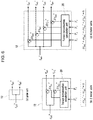
- Figs. 6 are diagrams each showing an example of functional blocks of the torque calculation unit 12 provided in the integrated control unit 1 shown in Fig. 1 .
- the torque calculation unit 12 is configured by using torque operation amount calculation units 26, and outputs the torque command value by adding a torque operation amount to the power command ⁇ m0 * in accordance with a map indicating the efficiency of the permanent magnet synchronous motor at the time of temperature change or a calculation formula for obtaining the efficiency.
- the map indicating the efficiency or the calculation formula for obtaining the efficiency is derived from measured values or magnetic field analysis, and is recorded in a storage device (not shown in the drawing) appropriately provided in the integrated control unit 1 or the torque calculation unit 12.
- the torque command values ⁇ m1 * and ⁇ m2 * are calculated by adding ⁇ m1 * and ⁇ m2 * to the power command ⁇ m0 *.
- the torque command values ⁇ m1 *, ⁇ m2 *, ⁇ m3 *, and ⁇ m4 * are calculated by adding ⁇ m1 *, ⁇ m2 *, ⁇ m3 *, and ⁇ m4 * to the power command ⁇ m0 *.
- the torque operation amount calculation units 26 discriminate the permanent magnet synchronous motor with high efficiency based on each of the temperature estimated values of the permanent magnet synchronous motors, and determines the torque operation amount from the discrimination result.
- the calculation of the operation amounts of the torque command values ⁇ m1 * to ⁇ m4 * shown in Figs. 6 and the compensation method thereof are merely examples, and if the configuration is such that each of the torque operation amounts is adjusted in accordance with the speed and the frequency in consideration of the temperature dependency of the dynamo-electric machine, the present invention is not limited that shown in Fig. 6 .
- the magnetic flux does not decrease when the temperature rises. Therefore, the iron loss (magnetic loss excluding the secondary copper loss generated in the rotor) becomes approximately constant regardless of the temperature.
- the total efficiency of the drive system can be improved by simply increasing the distribution of the torque commands to the dynamo-electric machine (induction motor) with a low temperature.
- Fig. 7 is a diagram for showing an outline configuration of a part of a railroad vehicle on which the drive device for the permanent magnet synchronous motor according to the present invention is mounted.
- a plurality of permanent magnet synchronous motors 4a, 4b, 4c, and 4d driven by an inverter 30 is coupled to axles of the railroad vehicle via reduction gears (not shown in the drawing).
- the railroad vehicle travels by tangential force generated between wheels 27 connected to the axles and rails 28.
- the temperature varies depending on each dynamo-electric machine because control of changing the distribution of torque for each shaft with respect to the travel direction is used due to a change in the center of gravity according to the travel direction, because of the influence of the way the traveling wind blows against the dynamo-electric machine, and because of the influence of the state of defacement of a ventilation duct of the dynamo-electric machine. Therefore, by applying the present invention to a railroad vehicle, it is possible to obtain an effect of improving the efficiency of the drive system of the railroad vehicle.
- the first embodiment it is possible to improve the total efficiency of a plurality of permanent magnet synchronous motors by individually changing the torque operation amount in consideration of the temperature dependency of each permanent magnet synchronous motor.
- a second embodiment is different from the first embodiment in that an estimated magnet temperature at the time of zero-torque control during driving under sensorless control is used as the temperature information of the permanent magnet synchronous motor. Accordingly, the temperature sensors shown in Fig. 2 are not necessary, and the temperature of the permanent magnet can be robustly estimated against the constant error of the inductance and resistance of the permanent magnet synchronous motor.
- Fig. 8 is a diagram for showing an example of functional blocks of a drive device for a permanent magnet synchronous motor according to a second embodiment.
- the sub control unit 2a of the second embodiment includes a PWM control unit 7a, a coordinate converter 8a, a vector control unit 9a, a current command calculation unit 10a, a temperature estimation unit 11a, and a speed estimation unit 31a.
- the current command calculation unit 10a outputs current command values I d1 * and I q1 * based on a torque command value ⁇ m1 * from the integrated control unit 1.
- the coordinate converter 8a converts three-phase currents I u1 , I v1 , and I w1 of a permanent magnet synchronous motor 3 detected by the current detector 5a into dq coordinates of the rotating coordinate system by using a phase angle ⁇ 1 , and outputs the same to the vector control unit 9a as I d1 and I q1 .
- the vector control unit 9a outputs voltage command values V d1 * and V q1 * so as to converge the current deviation to 0 by PI (Proportional-Integral) control or the like so that a d-axis current detection value I d1 and a q-axis current detection value I q1 match I d1 * and I q1 *, respectively.
- PI Proportional-Integral
- the PWM control unit 7a outputs a switching command SW 1 for controlling the voltage generation device 3a based on the voltage command values V d1 * and V q1 *.
- the speed estimation unit 31a estimates the angular frequency ⁇ 1 * of the rotor based on the current detection values I d1 and I q1 and the voltage command values V d1 * and V q1 *.
- the temperature estimation unit 11a outputs a magnet temperature estimated value T 1 ⁇ or a magnet magnetic flux estimated value K e1 ⁇ based on the current command values I d1 * and I q1 * or the current detection values I d1 and I q1 , the voltage command values V d1 * and V q1 *, and the angular frequency ⁇ 1 *.
- the magnet temperature and the magnet magnetic flux are calculated at a rate of -0.1%/°C with respect to a reference value, and either of them may be output as an estimated value.
- the magnet magnetic flux estimated value K e1 ⁇ will be used in the following description.
- the voltage command values v d * and v q * of the voltage generation device 3 may be referred to for the voltages v d and v q , and the current detection values i d and i q may be used for the currents.
- a resistance r 1 and inductances L d and L q depend on the winding temperature of the permanent magnet synchronous motor, the magnetic saturation characteristics of a magnetic material used for the iron core, the motor structure, and the current conditions, it is difficult to accurately grasp them.
- the inventors have found that the magnet magnetic flux K e can be estimated without being affected by the constant errors of the resistance r 1 and the inductances L d and L q by using the voltage command value V q * and the angular frequency ⁇ 1 * in a controlstabilized state in a state where the torque shown in Equation (2) is controlled to be 0 while intentionally setting the current command values I d1 * and I q1 * of the d-axis and the q-axis to 0.
- Equations (2) and (3) when the current command values I d * and I q * are set to 0 and the error of the current control by the vector control unit 10 is regarded as 0, the voltage command values V d * and V q * in a settled state are represented by the following equations (6) and (7).
- Equation (7) does not include the terms of the resistance r 1 and the inductances L d and L q , and the voltage command value V q * can be calculated only by ⁇ 1 * and K e .
- the drive control is performed by setting the current command values I d * and I q * to 0, and the q-axis voltage command value V q * and the angular frequency command value ⁇ 1 * in a state where the control is settled are used.
- a filtering process, a moving average process, or an integration process may be performed.
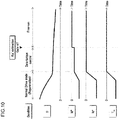
- the estimation of the magnet magnetic flux to be executed in the zero-torque control period is executed by using the zero-torque control period before the torque rising when the permanent magnet synchronous motor is restarted from the gate off and the free-run (coasting) of the rotor, or by using the zero-torque control period immediately before the gate off after the torque falling.
- Fig. 9 is a diagram for showing a time flow in which the magnet magnetic flux is estimated during a zero-torque control period before the torque rising at the time of coasting restart.
- Fig. 10 is a diagram for showing a time flow in which the magnet magnetic flux is estimated during the zero-torque control period immediately before the gate off after the torque falling.
- the current need not be exactly 0, and a minute d-axis current may flow.
- the voltage generation devices 3a and 3b since a period in which upper and lower output elements are simultaneously turned off is provided in order to prevent short-circuit of elements such as IGBTs included in upper and lower arms provided in each phase, the output voltage during the simultaneous turning-off period becomes insufficient when voltage compensation is not applied. Therefore, a well-known dead time compensation technique is used to compensate the voltage command value so as to output the voltage in accordance with the command value based on the polarity of the current detection value or the current command value.
- both of the d-axis current command value I d * and the q-axis current command value I q * shown in the first embodiment are set to 0 in the low speed region, if the polarity of the current detection value or the current command value used for the dead time compensation cannot be accurately grasped and the voltage is compensated based on the incorrect polarity as described above, the voltage error is adversely increased by the dead time compensation, and there is a possibility of deteriorating the estimation accuracy.
- a minute value is intentionally given to the d-axis current command value while setting the q-axis current command value to 0, so that the polarity of the current command value or the current detection value can be determined. Accordingly, even at the time of the zero-torque command, the polarity of the current can be discriminated, the dead time compensation can be accurately operated, and the voltage output accuracy can be improved.
- the magnitude of the minute current command value I d is set so that the magnetic flux (product of L d and I d ) due to the armature reaction is about 1/5 or less of the magnet magnetic flux K e so as not to be affected by the constant error of the d-axis inductance L d .
- the magnitude of the minute current command value I d * may be set in the range of Equation (11) with respect to the set value (reference value) K e * of the power generation constant and the d-axis inductance L d * set in the controller.
- temperature information can be obtained with high accuracy without using a temperature sensor by calculating the magnet temperature (or the magnet magnetic flux) in a period in which the torque command value in the sensorless control is controlled to 0.
- the second embodiment can accurately distribute the allocation of the torque operation amount described in the first embodiment, and can further improve the efficiency and simplify the system as compared to the first embodiment.
Landscapes
- Engineering & Computer Science (AREA)
- Power Engineering (AREA)
- Transportation (AREA)
- Mechanical Engineering (AREA)
- Life Sciences & Earth Sciences (AREA)
- Sustainable Development (AREA)
- Sustainable Energy (AREA)
- Control Of Ac Motors In General (AREA)
- Electric Propulsion And Braking For Vehicles (AREA)
- Control Of Multiple Motors (AREA)
Applications Claiming Priority (2)
| Application Number | Priority Date | Filing Date | Title |
|---|---|---|---|
| JP2018247828 | 2018-12-28 | ||
| PCT/JP2019/044581 WO2020137219A1 (fr) | 2018-12-28 | 2019-11-13 | Dispositif d'entraînement pour machine dynamoélectrique et procédé d'entraînement |
Publications (3)
| Publication Number | Publication Date |
|---|---|
| EP3905511A1 true EP3905511A1 (fr) | 2021-11-03 |
| EP3905511A4 EP3905511A4 (fr) | 2022-10-05 |
| EP3905511B1 EP3905511B1 (fr) | 2024-11-06 |
Family
ID=71126551
Family Applications (1)
| Application Number | Title | Priority Date | Filing Date |
|---|---|---|---|
| EP19906074.0A Active EP3905511B1 (fr) | 2018-12-28 | 2019-11-13 | Dispositif d'entraînement pour machine dynamoélectrique et procédé d'entraînement |
Country Status (4)
| Country | Link |
|---|---|
| EP (1) | EP3905511B1 (fr) |
| JP (1) | JP7181946B2 (fr) |
| CN (1) | CN113196642B (fr) |
| WO (1) | WO2020137219A1 (fr) |
Cited By (2)
| Publication number | Priority date | Publication date | Assignee | Title |
|---|---|---|---|---|
| EP4617100A1 (fr) * | 2024-03-13 | 2025-09-17 | Christian Rudolph | Entraînement électrique pour un système de maintien d'aiguillage |
| EP4704329A1 (fr) * | 2024-09-03 | 2026-03-04 | Volvo Truck Corporation | Système et procédé de commande d'une machine électrique |
Families Citing this family (6)
| Publication number | Priority date | Publication date | Assignee | Title |
|---|---|---|---|---|
| US20230366745A1 (en) * | 2020-10-20 | 2023-11-16 | Fanuc Corporation | Temperature estimation device for estimating temperature of temperature detector of electric motor |
| DE112021004269T5 (de) * | 2020-10-20 | 2023-10-12 | Fanuc Corporation | Parametereinstellvorrichtung zum Einstellen eines Parameters eines Modells für einen Elektromotor |
| CN113400953B (zh) * | 2021-07-30 | 2024-03-26 | 精进电动科技股份有限公司 | 一种双电机转矩分配方法及双电机系统 |
| DE102022208756A1 (de) * | 2022-08-24 | 2024-02-29 | Siemens Mobility GmbH | Elektrisches Antriebssystem |
| JP2024061945A (ja) * | 2022-10-24 | 2024-05-09 | 三菱電機株式会社 | 電力変換装置 |
| CN119636443B (zh) * | 2025-02-18 | 2025-06-10 | 西安建筑科技大学 | 一种电驱动多轴车辆转矩优化分配控制方法与系统 |
Family Cites Families (20)
| Publication number | Priority date | Publication date | Assignee | Title |
|---|---|---|---|---|
| AU586358B2 (en) * | 1986-10-08 | 1989-07-06 | Hitachi Limited | A control apparatus for an induction motor |
| JPH0538182A (ja) * | 1991-07-24 | 1993-02-12 | Hitachi Ltd | エレベーター装置 |
| JPH0739018A (ja) * | 1993-07-16 | 1995-02-07 | Nissan Motor Co Ltd | 電動車両の動力制御装置 |
| JPH07131994A (ja) * | 1993-10-29 | 1995-05-19 | Nissan Motor Co Ltd | 複数モータの駆動制御装置 |
| JPH1118496A (ja) * | 1997-06-18 | 1999-01-22 | Hitachi Ltd | 電気車の制御装置および制御方法 |
| JPH1169871A (ja) * | 1997-08-14 | 1999-03-09 | Oki Electric Ind Co Ltd | モータ制御装置および自動機器 |
| JP4023249B2 (ja) * | 2002-07-25 | 2007-12-19 | ダイキン工業株式会社 | 圧縮機内部状態推定装置及び空気調和装置 |
| JP2006297506A (ja) * | 2005-04-18 | 2006-11-02 | Amada Co Ltd | パンチプレス用タッピング装置及びパンチプレス用タッピング加工制御方法 |
| JP5060266B2 (ja) | 2007-12-14 | 2012-10-31 | 株式会社東芝 | 電気車制御装置 |
| JP5281370B2 (ja) * | 2008-11-25 | 2013-09-04 | トヨタ自動車株式会社 | 交流電動機の制御装置 |
| US7979171B2 (en) * | 2010-09-21 | 2011-07-12 | Ford Global Technologies, Llc | Permanent magnet temperature estimation |
| JP5420006B2 (ja) * | 2012-03-22 | 2014-02-19 | 三菱電機株式会社 | 同期機制御装置 |
| JP2014024442A (ja) * | 2012-07-26 | 2014-02-06 | Toyota Motor Corp | ハイブリッド車両用動力装置の制御装置 |
| JP2014068443A (ja) * | 2012-09-25 | 2014-04-17 | Hitachi Automotive Systems Ltd | 回転電機の駆動制御装置および電動車両駆動システム |
| JP5781235B2 (ja) * | 2012-10-12 | 2015-09-16 | 三菱電機株式会社 | 同期機制御装置 |
| JP5652489B2 (ja) * | 2013-03-21 | 2015-01-14 | ダイキン工業株式会社 | 冷凍装置の電力制御基板 |
| JP2015035874A (ja) * | 2013-08-08 | 2015-02-19 | トヨタ自動車株式会社 | 電力制御装置 |
| JP6111291B2 (ja) * | 2015-06-22 | 2017-04-05 | 株式会社神戸製鋼所 | 移動式クレーン |
| JP2018057185A (ja) | 2016-09-29 | 2018-04-05 | 株式会社日立製作所 | 鉄道車両用制御装置 |
| JP2018137932A (ja) * | 2017-02-23 | 2018-08-30 | コニカミノルタ株式会社 | 電動機制御装置、制御方法、および画像形成装置 |
-
2019
- 2019-11-13 WO PCT/JP2019/044581 patent/WO2020137219A1/fr not_active Ceased
- 2019-11-13 JP JP2020562907A patent/JP7181946B2/ja active Active
- 2019-11-13 CN CN201980083421.6A patent/CN113196642B/zh active Active
- 2019-11-13 EP EP19906074.0A patent/EP3905511B1/fr active Active
Cited By (2)
| Publication number | Priority date | Publication date | Assignee | Title |
|---|---|---|---|---|
| EP4617100A1 (fr) * | 2024-03-13 | 2025-09-17 | Christian Rudolph | Entraînement électrique pour un système de maintien d'aiguillage |
| EP4704329A1 (fr) * | 2024-09-03 | 2026-03-04 | Volvo Truck Corporation | Système et procédé de commande d'une machine électrique |
Also Published As
| Publication number | Publication date |
|---|---|
| CN113196642A (zh) | 2021-07-30 |
| EP3905511A4 (fr) | 2022-10-05 |
| EP3905511B1 (fr) | 2024-11-06 |
| CN113196642B (zh) | 2024-06-28 |
| JPWO2020137219A1 (ja) | 2021-10-21 |
| WO2020137219A1 (fr) | 2020-07-02 |
| JP7181946B2 (ja) | 2022-12-01 |
Similar Documents
| Publication | Publication Date | Title |
|---|---|---|
| EP3905511B1 (fr) | Dispositif d'entraînement pour machine dynamoélectrique et procédé d'entraînement | |
| EP2642658B1 (fr) | Contrôleur pour moteur électrique | |
| US8278855B2 (en) | Controller of motor preventing an increase in inverter loss | |
| JP7312065B2 (ja) | モータ制御装置、機電一体ユニット、発電機システム、モータ駆動装置および電動車両システム | |
| KR101199038B1 (ko) | 전동기 구동용 전력 변환 장치 | |
| EP2322374B1 (fr) | Dispositif de conversion d'énergie | |
| CN102624314B (zh) | 可变磁通电动机驱动器系统 | |
| CN107005181B (zh) | 电动机驱动控制装置 | |
| CN101529714A (zh) | 永磁同步电动机的矢量控制装置 | |
| EP2804311B1 (fr) | Dispositif de commande d'onduleur | |
| CN101490946A (zh) | 可变磁通电动机驱动器系统 | |
| CN103633920A (zh) | 用于旋转电机的控制设备和控制方法、旋转电机驱动系统 | |
| CN104718694A (zh) | 同步电机控制装置 | |
| EP2713502B1 (fr) | Système d'entraînement à moteur CA et véhicule à moteur | |
| EP3985862A1 (fr) | Dispositif et procédé de commande de moteur synchrone à aimant permanent, et véhicule ferroviaire | |
| EP4123898A1 (fr) | Dispositif de commande de machine synchrone, procédé de commande de machine synchrone, et véhicule électrique | |
| JP6203036B2 (ja) | 電気車制御装置 | |
| JP2015006067A (ja) | モータ制御装置及び電気車制御装置 | |
| CN110089022B (zh) | 马达控制装置以及电动车辆 | |
| JP4462207B2 (ja) | 電動駆動制御装置及び電動駆動制御方法 | |
| JP2003018887A (ja) | 電動機制御装置及び方法 | |
| JP5325806B2 (ja) | 鉄道車両駆動制御装置 | |
| JP2017208892A (ja) | 電動機の制御装置及びそれを備えた電動車両 | |
| JP2018064314A (ja) | モータ制御システム |
Legal Events
| Date | Code | Title | Description |
|---|---|---|---|
| STAA | Information on the status of an ep patent application or granted ep patent |
Free format text: STATUS: THE INTERNATIONAL PUBLICATION HAS BEEN MADE |
|
| PUAI | Public reference made under article 153(3) epc to a published international application that has entered the european phase |
Free format text: ORIGINAL CODE: 0009012 |
|
| STAA | Information on the status of an ep patent application or granted ep patent |
Free format text: STATUS: REQUEST FOR EXAMINATION WAS MADE |
|
| 17P | Request for examination filed |
Effective date: 20210616 |
|
| AK | Designated contracting states |
Kind code of ref document: A1 Designated state(s): AL AT BE BG CH CY CZ DE DK EE ES FI FR GB GR HR HU IE IS IT LI LT LU LV MC MK MT NL NO PL PT RO RS SE SI SK SM TR |
|
| DAV | Request for validation of the european patent (deleted) | ||
| DAX | Request for extension of the european patent (deleted) | ||
| REG | Reference to a national code |
Ref country code: DE Ref legal event code: R079 Free format text: PREVIOUS MAIN CLASS: H02P0005460000 Ipc: H02P0021020000 Ref document number: 602019061738 Country of ref document: DE |
|
| A4 | Supplementary search report drawn up and despatched |
Effective date: 20220905 |
|
| RIC1 | Information provided on ipc code assigned before grant |
Ipc: B60L 9/22 20060101ALI20220830BHEP Ipc: H02P 29/60 20160101ALI20220830BHEP Ipc: H02P 5/74 20060101ALI20220830BHEP Ipc: H02P 21/02 20060101AFI20220830BHEP |
|
| STAA | Information on the status of an ep patent application or granted ep patent |
Free format text: STATUS: EXAMINATION IS IN PROGRESS |
|
| 17Q | First examination report despatched |
Effective date: 20230510 |
|
| GRAJ | Information related to disapproval of communication of intention to grant by the applicant or resumption of examination proceedings by the epo deleted |
Free format text: ORIGINAL CODE: EPIDOSDIGR1 |
|
| GRAP | Despatch of communication of intention to grant a patent |
Free format text: ORIGINAL CODE: EPIDOSNIGR1 |
|
| GRAP | Despatch of communication of intention to grant a patent |
Free format text: ORIGINAL CODE: EPIDOSNIGR1 |
|
| STAA | Information on the status of an ep patent application or granted ep patent |
Free format text: STATUS: GRANT OF PATENT IS INTENDED |
|
| RIC1 | Information provided on ipc code assigned before grant |
Ipc: B60L 15/02 20060101ALI20240528BHEP Ipc: B60L 15/20 20060101ALI20240528BHEP Ipc: B60L 9/22 20060101ALI20240528BHEP Ipc: H02P 29/60 20160101ALI20240528BHEP Ipc: H02P 5/74 20060101ALI20240528BHEP Ipc: H02P 21/02 20060101AFI20240528BHEP |
|
| INTG | Intention to grant announced |
Effective date: 20240702 |
|
| GRAS | Grant fee paid |
Free format text: ORIGINAL CODE: EPIDOSNIGR3 |
|
| GRAA | (expected) grant |
Free format text: ORIGINAL CODE: 0009210 |
|
| STAA | Information on the status of an ep patent application or granted ep patent |
Free format text: STATUS: THE PATENT HAS BEEN GRANTED |
|
| AK | Designated contracting states |
Kind code of ref document: B1 Designated state(s): AL AT BE BG CH CY CZ DE DK EE ES FI FR GB GR HR HU IE IS IT LI LT LU LV MC MK MT NL NO PL PT RO RS SE SI SK SM TR |
|
| REG | Reference to a national code |
Ref country code: GB Ref legal event code: FG4D |
|
| REG | Reference to a national code |
Ref country code: CH Ref legal event code: EP |
|
| REG | Reference to a national code |
Ref country code: DE Ref legal event code: R096 Ref document number: 602019061738 Country of ref document: DE |
|
| REG | Reference to a national code |
Ref country code: IE Ref legal event code: FG4D |
|
| REG | Reference to a national code |
Ref country code: LT Ref legal event code: MG9D |
|
| REG | Reference to a national code |
Ref country code: NL Ref legal event code: MP Effective date: 20241106 |
|
| PG25 | Lapsed in a contracting state [announced via postgrant information from national office to epo] |
Ref country code: PT Free format text: LAPSE BECAUSE OF FAILURE TO SUBMIT A TRANSLATION OF THE DESCRIPTION OR TO PAY THE FEE WITHIN THE PRESCRIBED TIME-LIMIT Effective date: 20250306 Ref country code: HR Free format text: LAPSE BECAUSE OF FAILURE TO SUBMIT A TRANSLATION OF THE DESCRIPTION OR TO PAY THE FEE WITHIN THE PRESCRIBED TIME-LIMIT Effective date: 20241106 Ref country code: IS Free format text: LAPSE BECAUSE OF FAILURE TO SUBMIT A TRANSLATION OF THE DESCRIPTION OR TO PAY THE FEE WITHIN THE PRESCRIBED TIME-LIMIT Effective date: 20250306 |
|
| PG25 | Lapsed in a contracting state [announced via postgrant information from national office to epo] |
Ref country code: FI Free format text: LAPSE BECAUSE OF FAILURE TO SUBMIT A TRANSLATION OF THE DESCRIPTION OR TO PAY THE FEE WITHIN THE PRESCRIBED TIME-LIMIT Effective date: 20241106 Ref country code: NL Free format text: LAPSE BECAUSE OF FAILURE TO SUBMIT A TRANSLATION OF THE DESCRIPTION OR TO PAY THE FEE WITHIN THE PRESCRIBED TIME-LIMIT Effective date: 20241106 |
|
| REG | Reference to a national code |
Ref country code: AT Ref legal event code: MK05 Ref document number: 1740492 Country of ref document: AT Kind code of ref document: T Effective date: 20241106 |
|
| PG25 | Lapsed in a contracting state [announced via postgrant information from national office to epo] |
Ref country code: BG Free format text: LAPSE BECAUSE OF FAILURE TO SUBMIT A TRANSLATION OF THE DESCRIPTION OR TO PAY THE FEE WITHIN THE PRESCRIBED TIME-LIMIT Effective date: 20241106 |
|
| PG25 | Lapsed in a contracting state [announced via postgrant information from national office to epo] |
Ref country code: ES Free format text: LAPSE BECAUSE OF FAILURE TO SUBMIT A TRANSLATION OF THE DESCRIPTION OR TO PAY THE FEE WITHIN THE PRESCRIBED TIME-LIMIT Effective date: 20241106 |
|
| PG25 | Lapsed in a contracting state [announced via postgrant information from national office to epo] |
Ref country code: NO Free format text: LAPSE BECAUSE OF FAILURE TO SUBMIT A TRANSLATION OF THE DESCRIPTION OR TO PAY THE FEE WITHIN THE PRESCRIBED TIME-LIMIT Effective date: 20250206 |
|
| PG25 | Lapsed in a contracting state [announced via postgrant information from national office to epo] |
Ref country code: LV Free format text: LAPSE BECAUSE OF FAILURE TO SUBMIT A TRANSLATION OF THE DESCRIPTION OR TO PAY THE FEE WITHIN THE PRESCRIBED TIME-LIMIT Effective date: 20241106 Ref country code: GR Free format text: LAPSE BECAUSE OF FAILURE TO SUBMIT A TRANSLATION OF THE DESCRIPTION OR TO PAY THE FEE WITHIN THE PRESCRIBED TIME-LIMIT Effective date: 20250207 Ref country code: AT Free format text: LAPSE BECAUSE OF FAILURE TO SUBMIT A TRANSLATION OF THE DESCRIPTION OR TO PAY THE FEE WITHIN THE PRESCRIBED TIME-LIMIT Effective date: 20241106 |
|
| PG25 | Lapsed in a contracting state [announced via postgrant information from national office to epo] |
Ref country code: PL Free format text: LAPSE BECAUSE OF FAILURE TO SUBMIT A TRANSLATION OF THE DESCRIPTION OR TO PAY THE FEE WITHIN THE PRESCRIBED TIME-LIMIT Effective date: 20241106 |
|
| PG25 | Lapsed in a contracting state [announced via postgrant information from national office to epo] |
Ref country code: RS Free format text: LAPSE BECAUSE OF FAILURE TO SUBMIT A TRANSLATION OF THE DESCRIPTION OR TO PAY THE FEE WITHIN THE PRESCRIBED TIME-LIMIT Effective date: 20250206 |
|
| REG | Reference to a national code |
Ref country code: DE Ref legal event code: R119 Ref document number: 602019061738 Country of ref document: DE |
|
| REG | Reference to a national code |
Ref country code: CH Ref legal event code: PL |
|
| PG25 | Lapsed in a contracting state [announced via postgrant information from national office to epo] |
Ref country code: SM Free format text: LAPSE BECAUSE OF FAILURE TO SUBMIT A TRANSLATION OF THE DESCRIPTION OR TO PAY THE FEE WITHIN THE PRESCRIBED TIME-LIMIT Effective date: 20241106 |
|
| PG25 | Lapsed in a contracting state [announced via postgrant information from national office to epo] |
Ref country code: DK Free format text: LAPSE BECAUSE OF FAILURE TO SUBMIT A TRANSLATION OF THE DESCRIPTION OR TO PAY THE FEE WITHIN THE PRESCRIBED TIME-LIMIT Effective date: 20241106 |
|
| PG25 | Lapsed in a contracting state [announced via postgrant information from national office to epo] |
Ref country code: LU Free format text: LAPSE BECAUSE OF NON-PAYMENT OF DUE FEES Effective date: 20241113 |
|
| REG | Reference to a national code |
Ref country code: CH Ref legal event code: PL |
|
| PG25 | Lapsed in a contracting state [announced via postgrant information from national office to epo] |
Ref country code: EE Free format text: LAPSE BECAUSE OF FAILURE TO SUBMIT A TRANSLATION OF THE DESCRIPTION OR TO PAY THE FEE WITHIN THE PRESCRIBED TIME-LIMIT Effective date: 20241106 |
|
| PG25 | Lapsed in a contracting state [announced via postgrant information from national office to epo] |
Ref country code: CH Free format text: LAPSE BECAUSE OF NON-PAYMENT OF DUE FEES Effective date: 20241130 |
|
| PG25 | Lapsed in a contracting state [announced via postgrant information from national office to epo] |
Ref country code: RO Free format text: LAPSE BECAUSE OF FAILURE TO SUBMIT A TRANSLATION OF THE DESCRIPTION OR TO PAY THE FEE WITHIN THE PRESCRIBED TIME-LIMIT Effective date: 20241106 |
|
| PG25 | Lapsed in a contracting state [announced via postgrant information from national office to epo] |
Ref country code: SK Free format text: LAPSE BECAUSE OF FAILURE TO SUBMIT A TRANSLATION OF THE DESCRIPTION OR TO PAY THE FEE WITHIN THE PRESCRIBED TIME-LIMIT Effective date: 20241106 |
|
| PG25 | Lapsed in a contracting state [announced via postgrant information from national office to epo] |
Ref country code: CZ Free format text: LAPSE BECAUSE OF FAILURE TO SUBMIT A TRANSLATION OF THE DESCRIPTION OR TO PAY THE FEE WITHIN THE PRESCRIBED TIME-LIMIT Effective date: 20241106 |
|
| REG | Reference to a national code |
Ref country code: BE Ref legal event code: MM Effective date: 20241130 |
|
| PG25 | Lapsed in a contracting state [announced via postgrant information from national office to epo] |
Ref country code: SE Free format text: LAPSE BECAUSE OF FAILURE TO SUBMIT A TRANSLATION OF THE DESCRIPTION OR TO PAY THE FEE WITHIN THE PRESCRIBED TIME-LIMIT Effective date: 20241106 |
|
| PLBE | No opposition filed within time limit |
Free format text: ORIGINAL CODE: 0009261 |
|
| STAA | Information on the status of an ep patent application or granted ep patent |
Free format text: STATUS: NO OPPOSITION FILED WITHIN TIME LIMIT |
|
| PG25 | Lapsed in a contracting state [announced via postgrant information from national office to epo] |
Ref country code: MC Free format text: LAPSE BECAUSE OF FAILURE TO SUBMIT A TRANSLATION OF THE DESCRIPTION OR TO PAY THE FEE WITHIN THE PRESCRIBED TIME-LIMIT Effective date: 20241106 |
|
| PG25 | Lapsed in a contracting state [announced via postgrant information from national office to epo] |
Ref country code: DE Free format text: LAPSE BECAUSE OF NON-PAYMENT OF DUE FEES Effective date: 20250603 |
|
| 26N | No opposition filed |
Effective date: 20250807 |
|
| PG25 | Lapsed in a contracting state [announced via postgrant information from national office to epo] |
Ref country code: BE Free format text: LAPSE BECAUSE OF NON-PAYMENT OF DUE FEES Effective date: 20241130 |
|
| PG25 | Lapsed in a contracting state [announced via postgrant information from national office to epo] |
Ref country code: FR Free format text: LAPSE BECAUSE OF NON-PAYMENT OF DUE FEES Effective date: 20250106 |
|
| PG25 | Lapsed in a contracting state [announced via postgrant information from national office to epo] |
Ref country code: IE Free format text: LAPSE BECAUSE OF NON-PAYMENT OF DUE FEES Effective date: 20241113 |
|
| PGFP | Annual fee paid to national office [announced via postgrant information from national office to epo] |
Ref country code: GB Payment date: 20251119 Year of fee payment: 7 |
|
| PGFP | Annual fee paid to national office [announced via postgrant information from national office to epo] |
Ref country code: IT Payment date: 20251020 Year of fee payment: 7 |
|
| PG25 | Lapsed in a contracting state [announced via postgrant information from national office to epo] |
Ref country code: HU Free format text: LAPSE BECAUSE OF FAILURE TO SUBMIT A TRANSLATION OF THE DESCRIPTION OR TO PAY THE FEE WITHIN THE PRESCRIBED TIME-LIMIT; INVALID AB INITIO Effective date: 20191113 |