EP3920106A1 - Verfahren, computerprogramm und vorrichtung zur evaluierung der widerstandsfähigkeit eines neuronalen netzes gegen bildstörungen - Google Patents
Verfahren, computerprogramm und vorrichtung zur evaluierung der widerstandsfähigkeit eines neuronalen netzes gegen bildstörungen Download PDFInfo
- Publication number
- EP3920106A1 EP3920106A1 EP20305577.7A EP20305577A EP3920106A1 EP 3920106 A1 EP3920106 A1 EP 3920106A1 EP 20305577 A EP20305577 A EP 20305577A EP 3920106 A1 EP3920106 A1 EP 3920106A1
- Authority
- EP
- European Patent Office
- Prior art keywords
- image
- disturbance
- score
- robustness
- disturbances
- Prior art date
- Legal status (The legal status is an assumption and is not a legal conclusion. Google has not performed a legal analysis and makes no representation as to the accuracy of the status listed.)
- Pending
Links
Images

Classifications
-
- G—PHYSICS
- G06—COMPUTING OR CALCULATING; COUNTING
- G06N—COMPUTING ARRANGEMENTS BASED ON SPECIFIC COMPUTATIONAL MODELS
- G06N3/00—Computing arrangements based on biological models
- G06N3/02—Neural networks
- G06N3/08—Learning methods
-
- G—PHYSICS
- G06—COMPUTING OR CALCULATING; COUNTING
- G06F—ELECTRIC DIGITAL DATA PROCESSING
- G06F18/00—Pattern recognition
- G06F18/20—Analysing
- G06F18/21—Design or setup of recognition systems or techniques; Extraction of features in feature space; Blind source separation
- G06F18/217—Validation; Performance evaluation; Active pattern learning techniques
-
- G—PHYSICS
- G06—COMPUTING OR CALCULATING; COUNTING
- G06F—ELECTRIC DIGITAL DATA PROCESSING
- G06F18/00—Pattern recognition
- G06F18/20—Analysing
- G06F18/22—Matching criteria, e.g. proximity measures
-
- G—PHYSICS
- G06—COMPUTING OR CALCULATING; COUNTING
- G06F—ELECTRIC DIGITAL DATA PROCESSING
- G06F18/00—Pattern recognition
- G06F18/20—Analysing
- G06F18/24—Classification techniques
- G06F18/241—Classification techniques relating to the classification model, e.g. parametric or non-parametric approaches
- G06F18/2413—Classification techniques relating to the classification model, e.g. parametric or non-parametric approaches based on distances to training or reference patterns
-
- G—PHYSICS
- G06—COMPUTING OR CALCULATING; COUNTING
- G06N—COMPUTING ARRANGEMENTS BASED ON SPECIFIC COMPUTATIONAL MODELS
- G06N3/00—Computing arrangements based on biological models
- G06N3/02—Neural networks
- G06N3/04—Architecture, e.g. interconnection topology
- G06N3/0464—Convolutional networks [CNN, ConvNet]
-
- G—PHYSICS
- G06—COMPUTING OR CALCULATING; COUNTING
- G06N—COMPUTING ARRANGEMENTS BASED ON SPECIFIC COMPUTATIONAL MODELS
- G06N3/00—Computing arrangements based on biological models
- G06N3/02—Neural networks
- G06N3/08—Learning methods
- G06N3/09—Supervised learning
-
- G—PHYSICS
- G06—COMPUTING OR CALCULATING; COUNTING
- G06V—IMAGE OR VIDEO RECOGNITION OR UNDERSTANDING
- G06V10/00—Arrangements for image or video recognition or understanding
- G06V10/70—Arrangements for image or video recognition or understanding using pattern recognition or machine learning
- G06V10/764—Arrangements for image or video recognition or understanding using pattern recognition or machine learning using classification, e.g. of video objects
-
- G—PHYSICS
- G06—COMPUTING OR CALCULATING; COUNTING
- G06N—COMPUTING ARRANGEMENTS BASED ON SPECIFIC COMPUTATIONAL MODELS
- G06N3/00—Computing arrangements based on biological models
- G06N3/02—Neural networks
- G06N3/04—Architecture, e.g. interconnection topology
- G06N3/045—Combinations of networks
Definitions
- the present invention relates to a method for evaluating the robustness of a neural network against disturbances in the images. It also relates to a device and a computer program configured to implement such a method.
- the field of the invention is the field of neural networks used for the automated processing of images.
- neural networks are widely used in the field of automated image processing, mainly for automated classification of images, or for automated recognition of objects in images.
- a neural network is first trained on an image base, called a training base, then performance is tested on an image base, called a test base; the latter may be partially or totally different from the training base.
- the overall robustness of a neural network to different disturbances is evaluated by taking into account the robustness of this neural network to each type of disturbance individually.
- this solution does not make it possible to obtain a precise evaluation of the overall robustness of a neural network against a group of several disturbances.
- An aim of the present invention is to remedy this drawback.
- Another aim of the present invention is to provide a method making it possible to evaluate the overall robustness of a neural network against a group of several perturbations, in a more precise manner.
- the method according to the invention proposes to take into account the similarities between the disturbances in establishing the overall robustness score. Consequently, the method according to the invention makes it possible to determine the overall robustness score of a neural network in a more precise manner, compared to current solutions which, for their part, do not take into account the similarities between the disturbances. On the contrary, current solutions place as much importance on all disturbances when aggregating the individual robustness scores to establish the overall robustness score. However, when two disturbances are very similar, for example an image rotation or a shearing of the image, the estimation of the global robustness will give too much weight to these two disturbances compared to the other disturbances, which the present invention avoids.
- image is meant a digital image or a digital image, and in particular digital data representing an image.
- a disturbance of an image is understood to mean any modification, or degradation, of an image.
- a disturbance of an image may include a modification, in part or all of said image, of the shape of the image, of the orientation of the image, of a color in the image. image, information contained in the image by deleting or adding extraneous information, etc.
- the method according to the invention can comprise, for each disturbance of the group of disturbances, a determination of an individual similarity score between said disturbance and each of the other disturbances of said group.
- the calculation of the overall robustness score can be performed as a function of all the individual similarity scores thus obtained.
- This preferred version of the method according to the invention makes it possible to determine a more precise overall robustness score, by taking into account all the similarities between all the disturbances of the group of disturbances, taken in pairs.
- This embodiment makes it possible to determine a similarity score between two disturbances by taking into account the specificities of the neural network.
- the similarity between two perturbations is determined as a function of the neural network considered, which is more precise.
- the individual similarity score can correspond to an average of the first and second relative robustness scores.
- the similarity between two disturbances can be determined independently of the neural network.
- the similarity between a first disturbance and a second disturbance can be determined by calculating a correlation between two versions of the same image, one of the versions comprising only the first disturbance and the other of the versions comprising only the second disturbance.
- correlation values can be calculated taking into account several images.
- the similarity score between the two disturbances can be calculated as a function, and in particular as being an average, of all the correlation values obtained for all the images.
- the robustness score of the neural network can be determined individually for each disturbance.
- the same training base can be used for all the disturbances.
- as many versions of said training base are built as there are disturbances.
- the step of calculating the overall robustness score can comprise, for at least one, in particular each, disturbance, a weighting of the individual robustness score obtained for said disturbance with the score of similarity of said disturbance with at least one, in particular each, of the other disturbances.
- an overall similarity score denoted SSG i
- SSG i an overall similarity score
- the overall similarity score can be calculated according to any mathematical relation taking into account all the individual similarity scores obtained for this disturbance.
- the weighting of the individual robustness score by the individual similarity score (s), respectively by the overall similarity score can be carried out according to any mathematical relationship taking these scores into account.
- the overall robustness score can be calculated as being the average of the weighted individual robustness scores.
- the neural network whose robustness is evaluated can be any type of neural network which can be used for image processing.
- the neural network can be a neural network with forward propagation ("feed forward" in English), for example with a single perceptron or with a multilayer perceptron, a recurrent neural network, a resonance neural network, etc.
- a computer program comprising instructions, which when they are executed by an electronic and / or computer device, implement the method according to the invention.
- the computer program can be coded with any type of computer language, such as for example in C, C ++, JAVA, Python, etc.
- the computer program can be stored in a computer or electronic device.
- the computer program can be stored on a medium readable by a computer or electronic device, such as a memory card or a USB key for example.
- the invention also relates to the medium storing said computer program.
- At least one of these modules can be formed by a computer program.
- At least one of these modules can be formed by at least one digital component, such as a chip, a processor, a computer, or at least one analog component, or a combination of at least one digital component and at least an analog component.
- a digital component such as a chip, a processor, a computer, or at least one analog component, or a combination of at least one digital component and at least an analog component.
- At least one of these modules can be separated from the other modules.
- At least two of these modules can be combined or integrated within a single module.
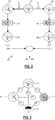
- the FIGURE 1 is a schematic representation of a non-limiting exemplary embodiment of a method according to the invention.
- the method 100 shown in FIGURE 1 , can be used to determine the overall robustness score of a neural network 102 with respect to a group of N different disturbances, or N different types of disturbances, denoted P i , with 1 ⁇ i ⁇ N.
- the method comprises a step 104 of training the neural network 102 on an image base 106, called a training base, which does not include any disturbance.
- This step 104 provides a trained instance of the neural network 102, on the training base 106.
- the method 100 comprises a step 108 for determining a robustness score of the neural network individually for each disturbance.
- step 108 For each disturbance, step 108 comprises a step 110 during which the training base is duplicated, and the disturbance is inserted into each image located in the copy of the training base.
- step 110 provides a version of the training base in which each image includes the disturbance.
- step 112 the neural network 102 trained on the training base 106 is tested on the version of the training base obtained in step 110.
- This step 112 provides an individual robustness score of the network of neurons 102 in relation to this disturbance.
- This step 108 is carried out for each disturbance individually, for example in turn, and provides an individual robustness score, denoted SRI i , of the neural network for each disturbance P i , individually and independently of the other disturbances.
- the method 100 further comprises a step 114 executed individually for each disturbance P i , and providing for each disturbance P i , an individual similarity score between this disturbance and each of the other disturbances.
- this step 114 provides, for each disturbance “i”, (N-1) similarity scores, denoted SSI i, j .
- an overall similarity score is calculated for each disturbance P i as a function of the individual similarity scores calculated between this disturbance Pi and each of the other disturbances.
- step 116 provides as many overall similarity scores as there are disturbances.
- the method 100 further comprises a step 118, los of which, for each disturbance P i , the individual robustness score SRI i of the neural network 102 for this disturbance P i is weighted with the overall similarity score SSG i obtained for this perturbation P i .
- This step 118 provides a weighted individual robustness score, denoted SRIP i , of the neural network 102 for each disturbance P i .
- This weighting can be carried out according to any mathematical relationship taking into account the individual robustness score SRI i and the overall similarity score SRG i .
- the overall robustness score SRG of the neural network 102 is calculated for the group of disturbances as a function of all the weighted individual robustness scores obtained in step 118.
- This calculation can be carried out according to any mathematical relationship taking into account all the weighted individual robustness scores obtained in step 118.
- steps 118 and 120 can be combined into a single calculation step taking into account the individual robustness scores and the individual similarity scores without going through the calculation of the overall similarity scores.
- step 114 the similarity between a first disturbance and a second disturbance can be estimated according to any known technique.
- this similarity can be determined by calculating a correlation score between two versions of an image base, a first version comprising images comprising only the first disturbance and a second version comprising these same images comprising only the second disturbance.
- the FIGURE 2 is a schematic representation of a non-limiting exemplary embodiment of a similarity estimation step between two disturbances.
- Step 200 shown in FIGURE 2 , makes it possible to estimate the similarity between a first disturbance P 1 and a second disturbance P 2 .
- Step 200 shown in FIGURE 2 , may correspond to, or be used in, step 114 of method 100 of FIGURE 1 to estimate the similarity between all the perturbations considered in pairs.
- the perturbation P 1 is an image rotation and the perturbation P2 is a shear deformation of this same image.
- Step 200 is carried out using an image base 202, which can for example be the training base 106, or any other image base.
- Step 200 comprises a generation of a first version 202 1 of the base 202 by generating a first copy of the base 202 and by inserting in each image of this copy the disturbance P 1 , that is to say by applying a rotation at each image of this first copy of the base 202.
- Step 200 also comprises a generation of a second version 202 2 of the base 202 by generating a second copy of the base 202 and by inserting in each image of this second copies the disturbance P 2 , that is to say by applying a rotation to each image of this second copy of the base 202.
- a first instance 102 1 of the neural network 102 is trained on the first version 202 1 of the image base 202 and a second instance 102 2 of the neural network 102 is trained on the second version 202 2 of the image base 202.
- the first instance 102 1 of the neural network, trained on the first version 202 1 of the image base, is tested on the second version 202 2 of the image base, to obtain a first relative robustness score, denoted SRR 1.2 .
- the second instance 102 2 of the neural network trained on the second version 202 2 of the image base is tested on the first version 202 1 of the image base, to obtain a second relative robustness score, rated SRR 2.1 .
- an SSI similarity score 1,2 is calculated between the first disturbance P 1 and the second disturbance P 2 .
- This calculation can be carried out according to any mathematical relation taking into account these relative robustness scores.
- FIGURE 2 is not limited to two disturbances.
- the FIGURE 3 is a non-limiting schematic representation of four image disturbances that can be taken into account in the method according to the invention.
- the disturbance P1 corresponds to an image rotation.
- the disturbance P2 corresponds to a shear deformation of an image.
- the disturbance P3 corresponds to the addition of a noise in an image.
- the disturbance P4 corresponds to an alteration of at least one color in the image.
- the individual similarity score SSI i, j of a disturbance P i with a disturbance P j is equal to the individual similarity score SSI j, i of the disturbance P j with the disturbance P i .
- the method according to the invention determines [(N ⁇ (N-1)) / 2] individual similarity score, which are then taken into account in the calculation of the overall robustness score.
Landscapes
- Engineering & Computer Science (AREA)
- Theoretical Computer Science (AREA)
- Physics & Mathematics (AREA)
- Data Mining & Analysis (AREA)
- Artificial Intelligence (AREA)
- Evolutionary Computation (AREA)
- General Physics & Mathematics (AREA)
- Life Sciences & Earth Sciences (AREA)
- General Engineering & Computer Science (AREA)
- Health & Medical Sciences (AREA)
- Software Systems (AREA)
- General Health & Medical Sciences (AREA)
- Computing Systems (AREA)
- Computer Vision & Pattern Recognition (AREA)
- Molecular Biology (AREA)
- Mathematical Physics (AREA)
- Computational Linguistics (AREA)
- Biophysics (AREA)
- Biomedical Technology (AREA)
- Bioinformatics & Cheminformatics (AREA)
- Bioinformatics & Computational Biology (AREA)
- Evolutionary Biology (AREA)
- Databases & Information Systems (AREA)
- Medical Informatics (AREA)
- Multimedia (AREA)
- Image Analysis (AREA)
Priority Applications (2)
| Application Number | Priority Date | Filing Date | Title |
|---|---|---|---|
| EP20305577.7A EP3920106A1 (de) | 2020-06-02 | 2020-06-02 | Verfahren, computerprogramm und vorrichtung zur evaluierung der widerstandsfähigkeit eines neuronalen netzes gegen bildstörungen |
| US17/336,507 US12321856B2 (en) | 2020-06-02 | 2021-06-02 | Method, computer program and device for evaluating the robustness of a neural network against image disturbances |
Applications Claiming Priority (1)
| Application Number | Priority Date | Filing Date | Title |
|---|---|---|---|
| EP20305577.7A EP3920106A1 (de) | 2020-06-02 | 2020-06-02 | Verfahren, computerprogramm und vorrichtung zur evaluierung der widerstandsfähigkeit eines neuronalen netzes gegen bildstörungen |
Publications (1)
| Publication Number | Publication Date |
|---|---|
| EP3920106A1 true EP3920106A1 (de) | 2021-12-08 |
Family
ID=71994438
Family Applications (1)
| Application Number | Title | Priority Date | Filing Date |
|---|---|---|---|
| EP20305577.7A Pending EP3920106A1 (de) | 2020-06-02 | 2020-06-02 | Verfahren, computerprogramm und vorrichtung zur evaluierung der widerstandsfähigkeit eines neuronalen netzes gegen bildstörungen |
Country Status (2)
| Country | Link |
|---|---|
| US (1) | US12321856B2 (de) |
| EP (1) | EP3920106A1 (de) |
Family Cites Families (2)
| Publication number | Priority date | Publication date | Assignee | Title |
|---|---|---|---|---|
| KR20190117584A (ko) * | 2017-02-09 | 2019-10-16 | 페인티드 도그, 인크. | 스트리밍 비디오 내의 객체를 검출하고, 필터링하고 식별하기 위한 방법 및 장치 |
| DE102019208733A1 (de) * | 2019-06-14 | 2020-12-17 | neurocat GmbH | Verfahren und Generator zum Erzeugen von gestörten Eingangsdaten für ein neuronales Netz |
-
2020
- 2020-06-02 EP EP20305577.7A patent/EP3920106A1/de active Pending
-
2021
- 2021-06-02 US US17/336,507 patent/US12321856B2/en active Active
Non-Patent Citations (1)
| Title |
|---|
| ALFRED LAUGROS ET AL: "Are Adversarial Robustness and Common Perturbation Robustness Independent Attributes ?", ARXIV.ORG, CORNELL UNIVERSITY LIBRARY, 201 OLIN LIBRARY CORNELL UNIVERSITY ITHACA, NY 14853, 4 September 2019 (2019-09-04), XP081485484 * |
Also Published As
| Publication number | Publication date |
|---|---|
| US20210374482A1 (en) | 2021-12-02 |
| US12321856B2 (en) | 2025-06-03 |
Similar Documents
| Publication | Publication Date | Title |
|---|---|---|
| EP0589791B1 (de) | Verfahren und Vorrichtung zur Messung der Ähnlichkeit von Sprachmusten | |
| Aggarwal et al. | Detection of deep fake images using convolutional neural networks | |
| Marques | Predicting and correcting bias caused by measurement error in line transect sampling using multiplicative error models | |
| Širović | Variability in the performance of the spectrogram correlation detector for North-east Pacific blue whale calls | |
| FR3082963A1 (fr) | Systeme et procede d'evaluation et de deploiement de modeles d'apprentissage automatique non supervises ou semi-supervises | |
| BE1026039B1 (fr) | Procede de traitement d'image et systeme de traitement d'image | |
| WO2010076260A1 (fr) | Procede et systeme pour classifier des donnees issues de base de donnees | |
| US20240013315A1 (en) | Computer-implemented methods, computer-readable media, and systems for identifying causes of loss | |
| Cohen et al. | How to get better survey data more efficiently | |
| Grubl et al. | Applying artificial intelligence for age estimation in digital forensic investigations | |
| CN117611335A (zh) | 金融风险识别方法、装置、电子设备和存储介质 | |
| EP3633548A1 (de) | Gesichertes klassifizierungsverfahren von eingangsdaten mittels eines neuronalen netzwerkes mit konvolution | |
| EP1007962B1 (de) | Klassifizieranlage und klassifizierverfahren unter verwendung einer kombination von warscheinlichkeitsverfahren und neuronalen netzwerken | |
| EP3920106A1 (de) | Verfahren, computerprogramm und vorrichtung zur evaluierung der widerstandsfähigkeit eines neuronalen netzes gegen bildstörungen | |
| EP4575975A1 (de) | Verfahren zur superauflösung eines bildes mit universeller robustheit | |
| CN114862819A (zh) | 基于非对称网络的图像质量评价方法、装置、设备及介质 | |
| EP3660748A1 (de) | Analyseverfahren eines parametersatzes eines neuronennetzes zum erzielen einer technischen verbesserung, beispielsweise einer speicherverstärkung | |
| EP4068724B1 (de) | Verfahren zur erkennung von anomalien in einem informationssystem, computerprogramm und system zur erkennung von anomalien, das ein solches verfahren verwendet | |
| Khoo et al. | Perspectives of global and Hong Kong's media on China's Belt and Road Initiative | |
| EP4242921A1 (de) | Verfahren, computerprogramm und vorrichtung zum trainieren eines convolutional neural network mit dynamischer architektur für die semantische bildsegmentierung | |
| Srivastava et al. | Development and impact of e-government: the intertwined role of e-commerce from a cross-country stakeholder's perspective | |
| EP3736743B1 (de) | Entwurfverfahren eines signaturgenerators einer einheit, die aktionen in einer it-architektur durchführt, entsprechendes erkennungsverfahren von anormalem verhalten, computerprogramm und system | |
| FR3153171A1 (fr) | Procédé d'évaluation d'une borne de performance maximale atteignable par un algorithme de classification supervisée sur une base de données d'apprentissage | |
| FR3110268A1 (fr) | Procédés d’utilisation sécurisée d’un premier réseau de neurones sur une donnée d’entrée, et d’apprentissage de paramètres d’un deuxième réseau de neurones | |
| EP4300129A1 (de) | Verfahren zur gruppierung von wellenformbeschreibungen |
Legal Events
| Date | Code | Title | Description |
|---|---|---|---|
| PUAI | Public reference made under article 153(3) epc to a published international application that has entered the european phase |
Free format text: ORIGINAL CODE: 0009012 |
|
| STAA | Information on the status of an ep patent application or granted ep patent |
Free format text: STATUS: THE APPLICATION HAS BEEN PUBLISHED |
|
| AK | Designated contracting states |
Kind code of ref document: A1 Designated state(s): AL AT BE BG CH CY CZ DE DK EE ES FI FR GB GR HR HU IE IS IT LI LT LU LV MC MK MT NL NO PL PT RO RS SE SI SK SM TR |
|
| B565 | Issuance of search results under rule 164(2) epc |
Effective date: 20201204 |
|
| STAA | Information on the status of an ep patent application or granted ep patent |
Free format text: STATUS: REQUEST FOR EXAMINATION WAS MADE |
|
| 17P | Request for examination filed |
Effective date: 20220329 |
|
| RBV | Designated contracting states (corrected) |
Designated state(s): AL AT BE BG CH CY CZ DE DK EE ES FI FR GB GR HR HU IE IS IT LI LT LU LV MC MK MT NL NO PL PT RO RS SE SI SK SM TR |
|
| P01 | Opt-out of the competence of the unified patent court (upc) registered |
Effective date: 20230330 |
|
| STAA | Information on the status of an ep patent application or granted ep patent |
Free format text: STATUS: EXAMINATION IS IN PROGRESS |
|
| 17Q | First examination report despatched |
Effective date: 20250129 |