EP3997103B9 - Composés comprenant un ligand de protéine d'activation de fibroblastes et leur utilisation - Google Patents
Composés comprenant un ligand de protéine d'activation de fibroblastes et leur utilisation Download PDFInfo
- Publication number
- EP3997103B9 EP3997103B9 EP20735646.0A EP20735646A EP3997103B9 EP 3997103 B9 EP3997103 B9 EP 3997103B9 EP 20735646 A EP20735646 A EP 20735646A EP 3997103 B9 EP3997103 B9 EP 3997103B9
- Authority
- EP
- European Patent Office
- Prior art keywords
- ecβ
- compound
- cancer
- nos
- pharmaceutically acceptable
- Prior art date
- Legal status (The legal status is an assumption and is not a legal conclusion. Google has not performed a legal analysis and makes no representation as to the accuracy of the status listed.)
- Active
Links
Images


Classifications
-
- A—HUMAN NECESSITIES
- A61—MEDICAL OR VETERINARY SCIENCE; HYGIENE
- A61K—PREPARATIONS FOR MEDICAL, DENTAL OR TOILETRY PURPOSES
- A61K51/00—Preparations containing radioactive substances for use in therapy or testing in vivo
- A61K51/02—Preparations containing radioactive substances for use in therapy or testing in vivo characterised by the carrier, i.e. characterised by the agent or material covalently linked or complexing the radioactive nucleus
- A61K51/04—Organic compounds
- A61K51/08—Peptides, e.g. proteins, carriers being peptides, polyamino acids, proteins
- A61K51/088—Peptides, e.g. proteins, carriers being peptides, polyamino acids, proteins conjugates with carriers being peptides, polyamino acids or proteins
-
- A—HUMAN NECESSITIES
- A61—MEDICAL OR VETERINARY SCIENCE; HYGIENE
- A61P—SPECIFIC THERAPEUTIC ACTIVITY OF CHEMICAL COMPOUNDS OR MEDICINAL PREPARATIONS
- A61P1/00—Drugs for disorders of the alimentary tract or the digestive system
-
- A—HUMAN NECESSITIES
- A61—MEDICAL OR VETERINARY SCIENCE; HYGIENE
- A61P—SPECIFIC THERAPEUTIC ACTIVITY OF CHEMICAL COMPOUNDS OR MEDICINAL PREPARATIONS
- A61P1/00—Drugs for disorders of the alimentary tract or the digestive system
- A61P1/16—Drugs for disorders of the alimentary tract or the digestive system for liver or gallbladder disorders, e.g. hepatoprotective agents, cholagogues, litholytics
-
- A—HUMAN NECESSITIES
- A61—MEDICAL OR VETERINARY SCIENCE; HYGIENE
- A61P—SPECIFIC THERAPEUTIC ACTIVITY OF CHEMICAL COMPOUNDS OR MEDICINAL PREPARATIONS
- A61P11/00—Drugs for disorders of the respiratory system
-
- A—HUMAN NECESSITIES
- A61—MEDICAL OR VETERINARY SCIENCE; HYGIENE
- A61P—SPECIFIC THERAPEUTIC ACTIVITY OF CHEMICAL COMPOUNDS OR MEDICINAL PREPARATIONS
- A61P29/00—Non-central analgesic, antipyretic or antiinflammatory agents, e.g. antirheumatic agents; Non-steroidal antiinflammatory drugs [NSAID]
-
- A—HUMAN NECESSITIES
- A61—MEDICAL OR VETERINARY SCIENCE; HYGIENE
- A61P—SPECIFIC THERAPEUTIC ACTIVITY OF CHEMICAL COMPOUNDS OR MEDICINAL PREPARATIONS
- A61P35/00—Antineoplastic agents
-
- A—HUMAN NECESSITIES
- A61—MEDICAL OR VETERINARY SCIENCE; HYGIENE
- A61P—SPECIFIC THERAPEUTIC ACTIVITY OF CHEMICAL COMPOUNDS OR MEDICINAL PREPARATIONS
- A61P37/00—Drugs for immunological or allergic disorders
- A61P37/02—Immunomodulators
-
- A—HUMAN NECESSITIES
- A61—MEDICAL OR VETERINARY SCIENCE; HYGIENE
- A61P—SPECIFIC THERAPEUTIC ACTIVITY OF CHEMICAL COMPOUNDS OR MEDICINAL PREPARATIONS
- A61P9/00—Drugs for disorders of the cardiovascular system
-
- C—CHEMISTRY; METALLURGY
- C07—ORGANIC CHEMISTRY
- C07K—PEPTIDES
- C07K7/00—Peptides having 5 to 20 amino acids in a fully defined sequence; Derivatives thereof
- C07K7/04—Linear peptides containing only normal peptide links
- C07K7/06—Linear peptides containing only normal peptide links having 5 to 11 amino acids
-
- C—CHEMISTRY; METALLURGY
- C07—ORGANIC CHEMISTRY
- C07K—PEPTIDES
- C07K7/00—Peptides having 5 to 20 amino acids in a fully defined sequence; Derivatives thereof
- C07K7/04—Linear peptides containing only normal peptide links
- C07K7/08—Linear peptides containing only normal peptide links having 12 to 20 amino acids
-
- A—HUMAN NECESSITIES
- A61—MEDICAL OR VETERINARY SCIENCE; HYGIENE
- A61K—PREPARATIONS FOR MEDICAL, DENTAL OR TOILETRY PURPOSES
- A61K38/00—Medicinal preparations containing peptides
Definitions
- the present invention is related to a chemical compound; an inhibitor of fibroblast activation protein (FAP); a composition comprising the compound and inhibitor, respectively; the compound, the inhibitor and the composition, respectively, for use in a method for the diagnosis of a disease; the compound, the inhibitor and the composition, respectively, for use in a method for the treatment of a disease; the compound, the inhibitor and the composition, respectively, for use in a method of diagnosis and treatment of a disease which is also referred to as "thera(g)nosis” or "thera(g)nostics”; the compound, the inhibitor and the composition, respectively, for use in a method for delivering an effector to a FAP-expressing tissue; a method for the diagnosis of a disease using the compound, the inhibitor and the composition, respectively; a method for the treatment of a disease using the compound, the inhibitor and the composition, respectively; a method for the diagnosis and treatment of a disease which is also referred to as "thera(g)nosis” or "thera(g)nostics, using the
- TME tumor microenvironment
- CAFs have been described as the source and origin for CAFs, such as e.g. fibroblasts, mesenchymal stem cells, smooth muscle cells, cells of epithelial origin, or endothelial cells ( Madar, et al., Trends Mol Med, 2013, 19: 447 ).
- CAFs exhibit mesenchymal-like features and often are the dominant cell type within a solid tumor mass.
- CAFs have attracted increasing attention as a player in tumor progression and homeostasis ( Gascard, et al., Genes Dev, 2016, 30: 1002 ; LeBleu, et al., Dis Model Mech, 2018, 11 ).
- FAP fibroblast activation protein
- Fibroblast activation protein ⁇ is a type II transmembrane serine protease and a member of the S9 prolyl oligopeptidase family ( Park, et al., J Biol Chem, 1999, 274: 36505 ). The closest family member DPP4 shares 53% homology with FAP. Like other DPP enzymes (DPP4, DPP7, DPP8, DPP9), FAP has post-proline exopeptidase activity. In addition, FAP possesses endopeptidase activity, similar to prolyl oligopeptidase/endopeptidase (POP/PREP). The FAP gene is highly conserved across various species. The extracellular domain of human FAP shares 90% amino acid sequence identity with mouse and rat FAP. Mouse FAP has 97% sequence identity with rat FAP.
- FAP is a 760 amino acid transmembrane protein composed of a short N-terminal cytoplasmic tail (6 amino acids), a single transmembrane domain (20 amino acids), and a 734 amino acid extracellular domain ( Aertgeerts, et al., J Biol Chem, 2005, 280: 19441 ).
- This extracellular domain consists of an eight-bladed ⁇ -propeller and an ⁇ / ⁇ hydrolase domain.
- the catalytic triad is composed of Ser624, Asp702, and His734 and is located at the interface of the ⁇ -propeller and the hydrolase domain.
- the active site is accessible through a central hole of the ⁇ -propeller domain or through a narrow cavity between the ⁇ -propeller and the hydrolase domain.
- FAP monomers are not active, but form active homodimers as well as heterodimers with DPP4 ( Ghersi, et al., Cancer Res, 2006, 66: 4652 ). Soluble homodimeric FAP has also been described ( Keane, et al., FEBS Open Bio, 2013, 4: 43 ; Lee, et al., Blood, 2006, 107: 1397 ).
- FAP possesses dual enzyme activity ( Hamson, et al., Proteomics Clin Appl, 2014, 8: 454 ). Its dipeptidyl peptidase activity allows cleaving two amino acids of the N-terminus after a proline residue. FAP substrates that are cleaved rapidly via its dipeptidyl peptidase activity are neuropeptide Y, Peptide YY, Substance P, and ⁇ -type natriuretic peptide. Collagen I and III, FGF21 and ⁇ 2 -antiplasmin have been shown to be cleaved by the endopeptidase activity of FAP.
- FAP is unable to cleave native collagens
- pre-digestion by other proteases such as matrix metalloproteinases
- processing of collagen may influence migratory capacities of cancer cells.
- FAP-mediated tumor promoting roles have been proposed, including proliferation and increasing angiogenesis.
- stromal expression of FAP is linked to escape from immunosurveillance in various cancers, suggesting a role in anti-tumor immunity ( Pure, et al., Oncogene, 2018, 37: 4343 ).
- FAP is transiently expressed during normal development, but only rarely in healthy adult tissues. In transgenic mice, it was demonstrated that FAP is expressed by adipose tissue, skeletal muscle, skin, bone and pancreas ( Pure, et al., Oncogene, 2018, 37: 4343 ; Roberts, et al., J Exp Med, 2013, 210: 1137 ). However, a FAP knockout mouse has a healthy phenotype, suggesting a redundant role under normal conditions ( Niedermeyer, et al., Mol Cell Biol, 2000, 20: 1089 ). At sites of active tissue remodeling, including wound healing, fibrosis, arthritis, atherosclerosis and cancer, FAP becomes highly upregulated in stromal cells ( Pure, et al., Oncogene, 2018, 37: 4343 ).
- FAP expression in the tumor stroma of 90% of epithelial carcinomas was first reported in 1990 under use of a monoclonal antibody, F19 ( Garin-Chesa, et al., Proc Natl Acad Sci USA, 1990, 87: 7235 ; Rettig, et al., Cancer Res, 1993, 53: 3327 ).
- FAP-expressing stromal cells were further characterized as cancer-associated fibroblasts (CAF) and cancer-associated pericytes ( Cremasco, et al., Cancer Immunol Res, 2018, 6: 1472 ).
- FAP expression on malignant epithelial cells has also been reported but its significance remains to be defined ( Pure, et al., Oncogene, 2018, 37: 4343 ).
- Table 1 The following Table 1, taken from Busek et al. ( Busek, et al., Front Biosci (Landmark Ed), 2018, 23: 1933 ), summarizes the expression of FAP in various malignancies indicating the tumor type and the cellular expression.
- Table 1 FAP expression in human malignancies (from Busek et al. ) Tumor Type Expression of FAP in Malignant Cells Expression of FAP in Stroma Cells Notes Basal cell carcinoma, squamous cell carcinoma of the skin - + Expression in fibroblasts strongest in close proximity to cancer cells.
- FAP expression is absent in benign epithelial tumors, its positivity in the stroma may be a useful criterion for differentiating between morpheaform/infiltrative basal cell carcinomas and FAP-negative desmoplastic trichoepithelioma.
- Oral squamous cell carcinoma + + FAP is a negative prognostic marker_elevated expression is associated with greater tumor size, lymph-node metastasis, advanced clinical stage, and worse overall survival.
- Melanoma - ( in situ ) + FAP expression present in a subset of melanocytes in 30% of benign melanocytic nevi, but not detectable in malignant melanoma cells in melanoma tissues.
- FAP-positive stromal cells The quantity of FAP-positive stromal cells is positively associated with ECM content and inflammatory cell infiltration.
- Normal melanocytes express FAP in vitro
- FAP in melanoma cells several human melanoma cell lines express FAP and FAP contributes to their invasiveness in vitro, but immunopositivity has not been detected in melanoma tissues.
- Mouse melanoma cell lines are FAP-negative and mouse FAP is a tumor suppressor independently of its enzymatic activity.
- Esophageal cancer + + FAP is expressed in cancer cells as well as in premalignant metaplastic cells of the esophagus in both adenocarcinoma and squamous cell carcinoma.
- a higher FAP expression is associated with advanced Duke stage.
- a high FAP expression in the tumor center is a negative prognostic factor.
- Stromal FAP expression in stage II/III rectal cancer after chemoradiotherapy is associated with a worse prognosis.
- a higher FAP mRNA expression is associated with worse disease-free survival and a trend for worse overall survival.
- Pancreatic adenocarcinoma + + FAP expression in carcinoma cells is associated with a larger tumor size, presence of a fibrotic focus, perineural invasion, and a worse prognosis.
- Stromal FAP expression correlates with lymph node metastasis and reduced survival.
- FAP expression was virtually absent (2/3 of all tumors) FAP expression is higher in cancer cells in lobular cancer than in ductal carcinoma.
- Stromal FAP and calponin positivity may be an ancillary marker for detecting microinvasion in ductal carcinoma.
- FAP expression increases with the malignant progression of phyllodes tumors, but a later study detected stromal FAP expression only in 12.5% of the malignant phyllodes tumors by IHC.
- conflicting data regarding a possible association with breast cancer survival smaller studies have reported that a higher total FAP mRNA expression is associated with worse survival, while a higher stromal FAP expression detected by IHC was associated with a longer overall survival and disease-free survival.
- FAP-positive malignant cells are present in malignant pleural and peritoneal effusions: strong positivity is associated with worse survival.
- Glioma + + FAP expression increased in glioblastoma, highest expression found in the mesenchymal subtype and gliosarcoma. Low expression in glioma stem-like cells. In glioblastoma, overall FAP quantity is not associated with survival.
- Thyroid cancer - + FAP upregulated in aggressive papillary thyroid carcinomas. In medullary thyroid carcinoma, FAP expression in the peritumoral and intratumoral stromal compartment correlates with the degree of desmoplasia and presence of lymph node metastases. Parathyroid tumors n.d.
- FAP mRNA expression was significantly higher in parathyroid carcinomas than in adenomas.
- FAP is negative in malignant cells with "small round cell” phenotype (embryonal rhabdomyosarcoma, Ewing sarcoma, or mesenchymal chondrosarcoma).
- FAP is expressed in both malignant and benign tumors and its positivity reflects their histogenetic origin rather than malignant potential.
- Myeloma - + FAP expression was detected in osteoclasts, endothelial cells, adipocytes, fibrotic stroma, but not in multiple myeloma cells.
- FAP is upregulated in osteoclasts co-cultured with myeloma cells.
- FAP expression in CAFs was shown for almost all carcinomas and sarcomas ( Pure, et al., Oncogene, 2018, 37: 4343 ; Busek, et al., Front Biosci (Landmark Ed), 2018, 23: 1933 ). Furthermore, CAFs are present in hematological malignancies ( Raffaghello, et al., Oncotarget, 2015, 6: 2589 ). Utilization of FAP as a therapeutic target is therefore not limited to certain tumor entities.
- FAP-expressing CAFs The abundance of FAP-expressing CAFs is described to correlate with poor prognosis. Across a wide range of human tumor indications, FAP expression is described to correlate with higher tumor grade and worse overall survival ( Pure, et al., Oncogene, 2018, 37: 4343 ).
- FAP as well as FAP-expressing cells present in the tumor microenvironment significantly influence tumor progression ( Hanahan, et al., Cancer Cell, 2012, 21: 309 ). Additionally, due to its relatively selective expression in tumors, FAP is regarded as a suitable target for therapeutic and diagnostic agents as described below ( Siveke, J Nucl Med, 2018, 59: 1412 ; Christiansen, et al., Neoplasia, 2013, 15: 348 ; Zi, et al., Mol Med Rep, 2015, 11: 3203 ).
- FAP was utilized as a therapeutic target in cancer.
- various strategies have been explored, including e.g. inhibition of FAP enzymatic activity, ablation of FAP-positive cells, or targeted delivery of cytotoxic compounds.
- WO 2008/116054 disclosed hexapeptide derivatives wherein compounds comprise a C-terminal bis-amino or boronic acid functional group.
- US 2017/0066800 disclosed pseudopeptide inhibitors, such as M83, effective against FAP. These inhibitors were assessed in lung and colon cancer xenografts in immunodeficient mice. A suppression of tumor growth was observed ( Jackson, et al., Neoplasia, 2015, 17: 43 ). These pseudopeptides inhibit the activity of both prolyl oligopeptidase (POP/PREP) and FAP, thereby excluding their use as specific therapeutic FAP inhibitors.
- POP/PREP prolyl oligopeptidase
- US 2008/280856 disclosed a nanomolar boronic acid-based inhibitor.
- the inhibitor shows a bispecific inhibition of FAP and PREP, thereby excluding their use as specific therapeutic FAP inhibitors.
- FAP inhibitors based on cyclic peptides were disclosed, e.g., in WO 2016/146174 and WO 2006/042282 .
- WO 2016/146174 disclosed peptides for diagnosis and treatment of tumors expressing FAP showing specificity for FAP, whereby closely related homologue DPP4 was not recognized by said peptides.
- WO 2006/042282 disclosed polypeptides for treatment of melanoma. In nude mice, inhibition of melanoma growth and melanoma metastasis was shown.
- WO 99/75151 and WO 01/68708 disclosed a humanized FAP monoclonal antibody, F19, (Sibrotuzumab). Furthermore, the anti-FAP antibody F19 and humanized versions thereof were disclosed in WO 99/57151 and WO 01/68708 . Development approaches involved e.g. the generation of high affinity, species cross-reactive, FAP-specific scFvs converted into a bivalent derivative ( Brocks, et al., Mol Med, 2001, 7: 461 ).
- Sibrotuzumab showed specific tumor enrichment whilst failing to demonstrate measurable therapeutic activity in patients with metastatic colorectal cancer, with only 2 out of 17 patients having stable disease ( Hofheinz, et al., Onkologie, 2003, 26: 44 ).
- This F19 antibody has not been shown to block any cellular or protease function of FAP, which might explain the lack of therapeutic effects ( Hofheinz, et al., Onkologie, 2003, 26: 44 ; Scott, et al., Clin Cancer Res, 2003, 9: 1639 ).
- US 2018/022822 disclosed novel molecules specifically binding to human FAP and epitopes thereof, as human-derived antibodies and chimeric antigen receptors (CARs) useful in the treatment of diseases and conditions induced by FAP.
- CARs chimeric antigen receptors
- Treatment of mice bearing orthotopic syngeneic MC38 colorectal tumors with an anti-FAP antibody reduced the tumor diameter and number of metastasis.
- WO 2012/020006 disclosed glycoengineered antibodies that bear modified oligosaccharides in the Fc region. Subsequently, bispecific antibodies specific for FAP and DR5 were developed as subject to WO 2014/161845 .
- WO 2010/036814 disclosed small molecule inhibitors of FAP for use as therapeutic agents through inhibition of FAPs enzyme activity or as radiopharmaceuticals through binding to FAP.
- WO 2019/083990 disclosed imaging and radiotherapeutic agents based on small molecule FAP-inhibitors described by Jansen et al. ( Jansen, et al., J Med Chem, 2014, 57: 3053 ; Jansen, et al., ACS Med Chem Lett, 2013, 4: 491 ).
- WO 2011/040972 disclosed high-affinity antibodies recognizing both human and murine FAP antigen as potent radioimmunoconjugates.
- ESC11 lgG1 induces down modulation and internalization of surface FAP ( Fischer, et al., Clin Cancer Res, 2012, 18: 6208 ).
- WO 2017/211809 disclosed tissue targeting thorium-227 complexes wherein the targeting moiety has specificity for FAP.
- the long circulation time of antibodies makes them unsuitable for a diagnostic, therapeutic, or theragnostic approach involving radionuclides.
- FAP has also been described as being involved in other diseases than oncology indications, examples of which are given below.
- Fibroblast-like synoviocytes in rheumatoid arthritic joints of patients show a significantly increased expression of FAP ( Bauer, et al., Arthritis Res Ther, 2006, 8: R171 ; Milner, et al., Arthritis Res Ther, 2006, 8: R23 ).
- stromal cells play an important role in organizing the structure of synovial tissue of joints by producing extracellular matrix components, recruiting infiltrating immune cells and secreting inflammatory mediators.
- mice a treatment response was demonstrated using SPECT/CT imaging of a 99m Tc-labeled anti-FAP antibody ( van der Geest, et al., Rheumatology (Oxford), 2018, 57: 737 ; Laverman, et al., J Nucl Med, 2015, 56: 778 ; van der Geest, et al., J Nucl Med, 2017, 58: 151 ).
- FAP was recognized not only as a marker of activated fibroblasts in the injury response ( Tillmanns, et al., Int J Cardiol, 2013, 168: 3926 ) but also as an important player in the healing process of wounds ( Ramirez-Montagut, et al., Oncogene, 2004, 23: 5435 ). Jing et al. demonstrated a time-dependent course of change in FAP expression following burn wounds in rats ( Jing, et al., Nan Fang Yi Ke Da Xue Xue Bao, 2013, 33: 615 ).
- FAP inhibition reconstituted extracellular matrix homeostasis ( Truffi, et al., Inflamm Bowel Dis, 2018, 24: 332 ). Similar observations were made by Egger et al. ( Egger, et al., Eur J Pharmacol, 2017, 809: 64 ) under use of a murine model of pulmonary fibrosis.
- FAP farnesoid fibrotic pathology
- FAP is also expressed in the tissue remodelling region in chronically injured liver ( Wang, et al., Front Biosci, 2008, 13: 3168 ), and FAP expression by hepatic stellate cells correlates with the histological severity of liver disease ( Gorrell, et al., Adv Exp Med Biol, 2003, 524: 235 ). Therefore, FAP is also a promising target in the treatment of liver fibrosis ( Lay, et al., Front Biosci (Landmark Ed), 2019, 24: 1 ).
- FAP is expressed in arteriosclerotic lesions and upregulated in activated vascular smooth muscle cells ( Monslow, et al., Circulation, 2013, 128: A17597 ). Monslow et al. showed that targeted inhibition of FAP in arteriosclerotic lesions may decrease overall lesion burden, inhibit inflammatory cell homing, and increase lesion stability through its ability to alter lesion architecture by favoring matrix-rich lesions over inflammation.
- the problem underlying the present invention is the provision of a compound which is suitable as a diagnostic agent and/or a pharmaceutical agent, particularly if conjugated to a diagnostically and/or therapeutically active effector.
- a further problem underlying the present invention is the provision of a compound which is suitable as a diagnostic agent and/or a pharmaceutical agent, particularly if conjugated to a diagnostically and/or therapeutically active effector, whereby the compound is a potent inhibitor of FAP activity; preferably the pIC50 of the compound is equal to or greater than 6.0.
- a further problem underlying the present invention is the provision of a compound which is suitable as a diagnostic agent and/or a pharmaceutical agent, particularly if conjugated to a diagnostically and/or therapeutically active effector, in the diagnosis and/or therapy of a disease where the diseased cells and/or diseased tissues express FAP.
- a still further problem underlying the instant invention is the provision of a compound which is suitable for delivering a diagnostically and/or therapeutically effective agent to a diseased cell and/or diseased tissue, respectively, and more particularly a FAP-expressing diseased cell and/or diseased tissue, preferably the diseased tissue comprises or contains cancer associated fibroblasts.
- a problem underlying the present invention is the provision of a method for the diagnosis of a disease, of a method for the treatment and/or prevention of a disease, and a method for the combined diagnosis and treatment of a disease; preferably such disease is a disease involving FAP-expressing cells and/or tissues, more particularly a FAP-expressing diseased cell and/or diseased tissue, preferably the diseased tissue comprises or contains cancer associated fibroblasts.
- a still further problem underlying the present invention is the provision of a method for the identification of a subject, wherein the subject is likely to respond or likely not to respond to a treatment of a disease, a method for the selection of a subject from a group of subjects, wherein the subject is likely to respond or likely not to respond to a treatment of a disease.
- a problem underlying the present invention is the provision of a pharmaceutical composition containing a compound having the characteristics as outlined above.
- a problem underlying the present invention is the provision of a kit which is suitable for use in any of the above methods.
- a method for the diagnosis of a disease, of a method for the treatment and/or prevention of a disease, and a method for the combined diagnosis and treatment of a disease preferably such disease is a disease involving FAP-expressing cells and/or tissues, more particularly a FAP-expressing diseased cell and/or diseased tissue, preferably the diseased tissue comprises or contains cancer associated fibroblasts.
- a method for the identification of a subject wherein the subject is likely to respond or likely not to respond to a treatment of a disease
- a method for the selection of a subject from a group of subjects wherein the subject is likely to respond or likely not to respond to a treatment of a disease.
- a pharmaceutical composition containing a compound having the characteristics as outlined above there is a need for a kit which is suitable for use in any of the above methods. The present invention satisfies these needs.
- Embodiment 1 A compound selected from the group consisting of compound Hex-[Cys(tMeBn(DOTA-AET))-Pro-Pro-Thr-Gln-Phe-Cys]-OH (3BP-3554) of the following formula and compound Hex-[Cys(tMeBn(DOTA-PP))-Pro-Pro-Thr-Gln-Phe-Cys]-Asp-NH2 (3BP-3407) of the following formula
- Embodiment 2 The compound of Embodiment 1, wherein the compound is compound Hex-[Cys(tMeBn(DOTA-AET))-Pro-Pro-Thr-Gln-Phe-Cys]-OH (3BP-3554) of the following formula
- Embodiment 3 The compound of Embodiment 1, wherein the compound is compound Hex-[Cys(tMeBn(DOTA-PP))-Pro-Pro-Thr-Gln-Phe-Cys]-Asp-NH2 (3BP-3407) of the following formula
- Embodiment 4 The compound of any one of Embodiments 1 to 3, wherein any S atom which can be oxidized, preferably S atoms of thioether groups, is present as -S-, -S(O)- or - S(O 2 )- or a mixture thereof.
- Embodiment 5 The compound of any one of Embodiments 1 to 4, wherein the compound is capable of binding to fibroblast activation protein (FAP).
- FAP fibroblast activation protein
- Embodiment 6 The compound of any one of Embodiments 1 to 5, wherein the compound comprises a therapeutically active nuclide.
- Embodiment 7 The compound of Embodiment 6, wherein the compound is selected from the group comprising compound Hex-[Cys(tMeBn(InDOTA-PP))-Pro-Pro-Thr-Gln-Phe-Cys]-Asp-NH2 (3BP-3590) of the following formula compound Hex-[Cys(tMeBn(LuDOTA-PP))-Pro-Pro-Thr-Gln-Phe-Cys]-Asp-NH2 (3BP-3591) of the following formula compound Hex-[Cys(tMeBn(GaDOTA-PP))-Pro-Pro-Thr-Gln-Phe-Cys]-Asp-NH2 (3BP-3592) of the following formula compound Hex-[Cys(tMeBn(EuDOTA-PP))-Pro-Pro-Thr-Gln-Phe-Cys]-Asp-NH2 (3BP-3661) of the following formula compound He
- Embodiment 10 The compound of any one of Embodiments 6 and 7, wherein the therapeutically active nuclide is a therapeutically active radionuclide.
- Embodiment 11 The compound of Embodiment 10, wherein the therapeutically active radionuclide is selected from the group consisting of 47 Sc, 67 Cu, 89 Sr, 90 Y, 153 Sm, 149 Tb, 161 Th, 177 Lu, 186 Re, 188 Re, 212 Pb, 213 Bi, 223 Ra, 225 Ac, 226 Th, 227 Th, 131 I, 211 At, preferably 47 Sc, 67 Cu, 90 Y, 177 Lu, 188 Re, 212 Pb, 213 Bi, 225 Ac, 227 Th, 131 I, 211 At and most preferably 90 Y, 177 Lu, 225 Ac, 227 Th, 131 I and 211 At.
- the therapeutically active radionuclide is selected from the group consisting of 47 Sc, 67 Cu, 89 Sr, 90 Y, 153 Sm, 149 Tb, 161 Th, 177 Lu, 186 Re, 188 Re, 212 Pb, 213 Bi, 223 Ra,
- Embodiment 12 The compound of any one of Embodiments 1 to 7, 10 to 11, wherein the compound interacts with a fibroblast activation protein (FAP), preferably with human FAP having an amino acid sequence of SEQ ID NO: 1 or a homolog thereof, wherein the amino acid sequence of the homolog has an identity of at least 85% to the amino acid sequence of SEQ ID NO: 1.
- FAP fibroblast activation protein
- Embodiment 13 The compound of Embodiment 12, wherein the compound is an inhibitor of the fibroblast activation protein (FAP).
- FAP fibroblast activation protein
- the compound of the invention as set out in the appended set of claims, is for use in a method for the diagnosis of a disease.
- said method for the diagnosis is an imaging method.
- said imaging method is selected from the group consisting of scintigraphy, Single Photon Emission Computed Tomography (SPECT) and Positron Emission Tomography (PET).
- Embodiment 33 The compound of any one of Embodiments 1 to 7, 10 to 13, for use in a method for the treatment of a disease.
- Embodiment 34 The compound for use of Embodiment 33, wherein the disease is a disease involving fibroblast activation protein (FAP), preferably upregulated expression of fibroblast activation protein (FAP).
- FAP fibroblast activation protein
- FAP upregulated expression of fibroblast activation protein
- Embodiment 35 The compound for use of any one of Embodiments 33 to 34, wherein the disease involves cells showing upregulated expression of fibroblast activation protein (FAP), preferably diseased tissue containing cells showing upregulated expression of fibroblast activation protein (FAP), more preferably disease involving tumor associated fibroblasts.
- FAP fibroblast activation protein
- FAP fibroblast activation protein
- Embodiment 36 The compound for use of any one of Embodiments 33 to 35, wherein the disease is a neoplasm, preferably a cancer or tumor.
- Embodiment 37 The compound for use of Embodiment 36, wherein the neoplasm, cancer, and tumor are each and individually selected from the group comprising a solid tumor, an epithelial tumor, bladder cancer, breast cancer, cervical cancer, colorectal cancer, cholangiocarcinoma, endometrial cancer, esophageal cancer, gastric cancer, gastrointestinal stromal tumors, head and neck cancer, liver cancer, lung cancer, melanoma, mesothelioma, neuroendocrine tumors and carcinomas, ovarian cancer, pancreatic cancer, prostate cancer, renal cell carcinoma, salivary carcinoma, sarcoma, squamous cell carcinoma, and thyroid cancer.
- a solid tumor an epithelial tumor, bladder cancer, breast cancer, cervical cancer, colorectal cancer, cholangiocarcinoma, endometrial cancer, esophageal cancer, gastric cancer, gastrointestinal stromal tumors, head and neck cancer, liver cancer, lung cancer, melanom
- Embodiment 38 The compound for use of Embodiment 37, wherein the neoplasm, cancer, and tumor are each and individually selected from the group comprising breast cancer, colorectal cancer, cholangiocarcinoma, head and neck cancer, lung cancer, mesothelioma, neuroendocrine tumors and carcinomas, ovarian cancer, pancreatic cancer, prostate cancer, sarcoma, and squamous cell carcinoma.
- Embodiment 39 The compound for use of any one of Embodiments 33 to 35, wherein the disease is selected from the groups comprising inflammatory disease, cardiovascular disease, autoimmune disease, and fibrotic disease.
- Embodiment 40 The compound for use of Embodiment 39, wherein the disease is an inflammatory disease.
- Embodiment 41 The compound for use of Embodiment 40, wherein the disease is atherosclerosis, arthritis, or rheumatoid arthritis.
- Embodiment 42 The compound for use of Embodiment 39, wherein the disease is a cardiovascular disease.
- Embodiment 43 The compound for use of Embodiment 42, wherein the diseases is a cardiovascular disease involving atherosclerotic plaques.
- Embodiment 44 The compound for use of Embodiment 43, wherein the diseases is an atherosclerotic pathology caused by rupture of plaques, acute coronary syndrome, myocardial infarction, thrombosis, or vessel occlusion.
- Embodiment 45 The compound for use of Embodiment 39, wherein the disease is a fibrotic disease.
- Embodiment 46 The compound for use of Embodiment 45, wherein the disease is selected form the group comprising idiopathic pulmonary fibrosis, Crohn's disease, and liver fibrosis.
- Embodiment 47 The compound for use of any one of Embodiments 33 to 38, wherein the compound comprises a therapeutically active nuclide, preferably a therapeutically active radionuclide.
- Embodiment 48 The compound for use of Embodiment 47, wherein the therapeutically active nuclide is selected from the group comprising 47 Sc, 67 Cu, 89 Sr, 90 Y, 153 Sm, 149 Tb, 161 Tb, 177 Lu, 186 Re, 188 Re, 212 Pb, 213 Bi, 223 Ra, 225 Ac, 226 Th, 227 Th, 131 I, 211 At, preferably 47 Sc, 67 Cu, 90 Y, 177 Lu, 188 Re, 212 Pb, 213 Bi, 225 Ac, 227 Th, 131 I, 211 At and most preferably 90 Y, 177 Lu, 225 Ac, 227 Th, 131 I and 211 At.
- the therapeutically active nuclide is selected from the group comprising 47 Sc, 67 Cu, 89 Sr, 90 Y, 153 Sm, 149 Tb, 161 Tb, 177 Lu, 186 Re, 188 Re, 212 Pb, 213 Bi, 223 Ra,
- Embodiment 49 The compound for use of any one of Embodiments 33 to 48, wherein the method comprises the administration of a therapeutically effective amount of the compound to a subject, preferably to a mammal, wherein the mammal is selected from the group comprising man, companion animals, pets, and livestock, more preferably the subject is selected from the group comprising man, dog, cat, horse, and cow, and most preferably the subject is a human being.
- Embodiment 99 A method for the treatment of a disease in a subject, wherein the method comprises administering to the subject a therapeutically effective amount of a compound according to any one of Embodiment 1 to 7, 10 to 13.
- Embodiment 100 The method of Embodiment 99, wherein the compound comprises a therapeutically active agent, whereby the agent is preferably a radionuclide.
- Embodiment 101 The method of any one of Embodiments 99 to 100, wherein the disease is a disease involving fibroblast activation protein (FAP), preferably upregulated expression of fibroblast activation protein (FAP).
- FAP fibroblast activation protein
- FAP upregulated expression of fibroblast activation protein
- Embodiment 102 The method of any one of Embodiments 99 to 101, wherein the disease involves cells showing upregulated expression of fibroblast activation protein (FAP), preferably diseased tissue containing cells showing upregulated expression of fibroblast activation protein (FAP), more preferably disease involving tumor associated fibroblasts.
- FAP fibroblast activation protein
- FAP fibroblast activation protein
- Embodiment 103 The method of any one of Embodiments 99 to 102, wherein the disease is selected from the groups comprising neoplasms, preferably cancers or tumors, and inflammatory disease, cardiovascular disease, autoimmune disease, and fibrotic disease.
- the disease is selected from the groups comprising neoplasms, preferably cancers or tumors, and inflammatory disease, cardiovascular disease, autoimmune disease, and fibrotic disease.
- Embodiment 104 A kit comprising a compound according to any one of Embodiments 1 to 7, 10 to 13, one or more optional excipient(s) and optionally one or more device(s), whereby the device(s) is/are selected from the group comprising a labeling device, a purification device, a handling device, a radioprotection device, an analytical device or an administration device.
- the problem underlying the present invention is solved in a second aspect by the compound according to the first aspect, including any embodiment thereof, for use in a method for the diagnosis of a disease.
- the problem underlying the present invention is solved in a third aspect by the compound according to the first aspect, including any embodiment thereof, for use in a method for the treatment of a disease.
- the problem underlying the present invention is solved in a fourth aspect by the compound according to the first aspect, including any embodiment thereof, for use in a method for the identification of a subject, wherein the subject is likely to respond or likely not to respond to a treatment of a disease, wherein the method for the identification of a subject comprises carrying out a method of diagnosis using the compound according to the first aspect including any embodiment thereof.
- the problem underlying the present invention is solved in a fifth aspect by the compound according to the first aspect, including any embodiment thereof, for use in a method for the selection of a subject from a group of subjects, wherein the subject is likely to respond or likely not to respond to a treatment of a disease, wherein the method for the selection of a subject from a group of subjects comprises carrying out a method of diagnosis using the compound according to the first aspect, including any embodiment thereof.
- the problem underlying the present invention is solved in a sixth aspect by the compound according to the first aspect, including any embodiment thereof, for use in a method for the stratification of a group of subjects into subjects which are likely to respond to a treatment of a disease, and into subjects which are not likely to respond to a treatment of a disease, wherein the method for the stratification of a group of subjects comprises carrying out a method of diagnosis using the compound according to the first aspect, including any embodiment thereof.
- composition preferably a pharmaceutical composition
- the composition comprises a compound according to the first aspect including any embodiment thereof and a pharmaceutically acceptable excipient.
- the problem underlying the present invention is solved in an eighth aspect by a method for the diagnosis of a disease in a subject, wherein the method comprises administering to the subject a diagnostically effective amount of a compound according to the first aspect, including any embodiment thereof.
- the problem underlying the present invention is solved in a ninth aspect by a method for the treatment of a disease in a subject, wherein the method comprises administering to the subject a therapeutically effective amount of a compound according to the first aspect including any embodiment thereof.
- kits comprising a compound according to the first aspect, including any embodiment thereof, one or more optional excipient(s) and optionally one or more device(s), whereby the device(s) is/are selected from the group comprising a labeling device, a purification device, a handling device, a radioprotection device, an analytical device or an administration device.
- a or the compound of the invention is any compound disclosed herein, including but not limited to any compound described in any of the above embodiments and any of the following embodiments.
- composition of the invention is any composition disclosed herein, including but not limited to any composition described in any of the above embodiments and any of the following embodiments.
- a or the kit of the invention is any kit disclosed herein, including but not limited to any kit described in any of the above embodiments and any of the following embodiments.
- the present invention is based on the surprising finding of the present inventors that the compound of the invention and more specifically the cyclic peptide thereof provides for a highly specific binding of a compound comprising such cyclic peptide to fibroblast activation protein (FAP), since FAP-specific cyclic peptide-based inhibitors with nanomolar affinity have not been described so far.
- FAP fibroblast activation protein
- the present inventors have found that the compounds of the invention are surprisingly stable in blood plasma, and are surprisingly useful as imaging agents and efficacious in shrinking tumors.
- a chelator is a compound which is capable of forming a chelate, whereby a chelate is a compound, preferably a cyclic compound where a metal or a moiety having an electron gap or a lone pair of electrons participates in the formation of the ring. More preferably, a chelator is this kind of compound where a single ligand occupies more than one coordination site at a central atom.
- a diagnostically active compound is a compound which is suitable for or useful in the diagnosis of a disease.
- a diagnostic agent or a diagnostically active agent is a compound which is suitable for or useful in the diagnosis of a disease.
- a therapeutically active compound is a compound which is suitable for or useful in the treatment of a disease.
- a therapeutic agent or a therapeutically active agent is a compound which is suitable for or useful in the treatment of a disease.
- a theragnostically active compound is a compound which is suitable for or useful in both the diagnosis and therapy of a disease.
- a theragnostic agent or a theragnostically active agent is a compound which is suitable for or useful in both the diagnosis and therapy of a disease.
- theragonstics is a method for the combined diagnosis and therapy of a disease; preferably, the combined diagnostically and therapeutically active compounds used in theragnostics are radiolabeled.
- treatment of a disease is treatment and/or prevention of a disease.
- a disease involving FAP is a disease where cells including but not limited to fibroblasts expressing, preferably in an upregulated manner, FAP and tissue either expressing FAP or containing or comprising cells such as fibroblasts, preferably expressing FAP in an upregulated manner respectively, are either a or the cause for the disease and/or the symptoms of the disease, or are part of the pathology underlying the disease.
- a preferred FAP-expressing cell is a cancer associated fibroblast (CAP).
- CAP cancer associated fibroblast
- labeling of the FAP-expressing cells and/or of the FAP-expressing tissue allows discriminating or distinguishing said cells and/or said tissue from healthy or FAP-non-expressing cells and/or healthy or FAP non-expressing tissue. More preferably such discrimination or distinction forms the basis for said diagnosis and diagnosing, respectively.
- labeling means the interaction of a detectable label either directly or indirectly with the FAP-expressing cells and/or with the FAP-expressing tissue or tissue containing such FAP-expressing cells; more preferably such interaction involves or is based on the interaction of the label or a compound bearing such label with FAP.
- a target cell is a cell which is expressing FAP and is a or the cause for a disease and/or the symptoms of a disease, or is part of the pathology underlying a disease.
- a non-target cell is a cell which is either not expressing FAP and/or is not a or the cause for a disease and/or the symptoms of a disease, or is part of the pathology underlying a disease.
- a neoplasm is an abnormal new growth of cells.
- the cells in a neoplasm grow more rapidly than normal cells and will continue to grow if not treated.
- a neoplasm may be benign or malignant.
- a tumor is a mass lesion that may be benign or malignant.
- a cancer is a malignant neoplasm.
- amino acid sequences of the peptides provided herein are depicted in typical peptide sequence format, as would be understood by the ordinary skilled artisan.
- the three-letter code of a conventional amino acid, or the code for a non-conventional amino acid or the abbreviations for additional building blocks indicates the presence of the amino acid or building block in a specified position within the peptide sequence.
- the code for each amino acid or building block is connected to the code for the next and/or previous amino acid or building block in the sequence by a hyphen which (typically represents an amide linkage).
- amino acid contains more than one amino and/or carboxy group all orientations of this amino acid are in principle possible, but in ⁇ -amino acid the utilization of the ⁇ -amino and the ⁇ -carboxy group is preferred and otherwise preferred orientations are explicitly specified.
- the first letter indicates the stereochemistry of the C- ⁇ -atom if applicable.
- a capital first letter indicates that the L-form of the amino acid is present in the peptide sequence, while a lower case first letter indicating that the D-form of the correspondent amino acid is present in the peptide sequence.
- an aromatic L- ⁇ -amino acid is any kind of L- ⁇ -amino acid which comprises an aryl group.
- a heteroaromatic L- ⁇ -amino acid is any kind of L- ⁇ -amino acid which comprises a heteroaryl group.
- amino acid sequences are presented herein in N- to C-terminus direction.
- Compounds of the invention typically contain amino acid sequences as provided herein.
- Conventional amino acids also referred to as natural amino acids are identified according to their standard three-letter abbreviations and one-letter abbreviations, as set forth in Table 2.
- Table 2. Conventional amino acids and their abbreviations Amino acid 3-letter abbreviation 1-letter abbreviation Alanine Ala A Arginine Arg R Asparagine Asn N Aspartic acid Asp D Cysteine Cys C Glutamic acid Glu E Glutamine Gln Q Glycine Gly G Histidine His H Isoleucine Ile I Leucine Leu L Lysine Lvs K Methionine Met M Phenylalanine Phe F Proline Pro P Serine Ser S Threonine Thr T Tryptophan Trp W Tyrosine Tyr Y Valine Val V
- Non-conventional amino acids also referred to as non-natural amino acids, are any kind of non-oligomeric compound which comprises an amino group and a carboxylic group and is not a conventional amino acid.
- non-conventional amino acids and other building blocks as used for the construction of compounds of the invention are identified according to their abbreviation or name found in Table 3.
- the structures of some building blocks are depicted with an exemplary reagent for introducing the building block into the peptide (e.g., as carboxylic acid like) or these building blocks are shown as residue which is completely attached to another structure like a peptide or amino acid.
- the structures of the amino acids are shown as explicit amino acids and not as residues of the amino acids how they are presented after implementation in the peptide sequence. Some larger chemical moieties consisting of more than one moiety are also shown for the reason of clarity.
- DOTA stands for 1,4,7,10-tetrazacyclododecane-1,4,7,10-tetraacetic acid.
- a chelator in the compound of the invention includes, if not stated otherwise, the possibility that the chelator is complexed to any metal complex partner, i.e. any metal which, in principle, can be complexed by the chelator.
- An explicitly mentioned chelator of a compound of the invention or the general term chelator in connection with the compound of the invention refers either to the uncomplexed chelator as such or to the chelator to which any metal complex partner is bound, wherein the metal complex partner is any radioactive or non-radioactive metal complex partner.
- the chelator metal complex i.e. the chelator to which the metal complex partner is bound, is a stable chelator metal complex.
- Non-radioactive chelator metal complexes have several applications, e.g. for assessing properties like stability or activity which are otherwise difficult to determine.
- cold variants of the radioactive versions of the metal complex partner e.g. non-radioactive Gallium, Lutetium or Indium complexes as described in the examples
- they are valuable tools for identifying metabolites in vitro or in vivo, as well as for assessing toxicity properties of the compounds of invention.
- chelator metal complexes can be used in binding assays utilizing the fluorescence properties of some metal complexes with distinct ligands (e.g. Europium salts).
- the radioactive nuclide which is or which is to be attached to the compound of the invention is selected taking into consideration the disease to be treated and/or the disease to be diagnosed, respectively, and/or the particularities of the patient and patient group, respectively, to be treated and to be diagnosed, respectively.
- the radioactive nuclide is also referred to as radionuclide.
- Radioactive decay is the process by which an atomic nucleus of an unstable atom loses energy by emitting ionizing particles (ionizing radiation).
- ionizing particles ionizing radiation
- a decay, or loss of energy, results when an atom with one type of nucleus, called the parent radionuclide, transforms to an atom with a nucleus in a different state, or to a different nucleus containing different numbers of protons and neutrons. Either of these products is named the daughter nuclide.
- the parent and daughter are different chemical elements, and thus the decay process results in nuclear transmutation (creation of an atom of a new element).
- the radioactive decay can be alpha decay, beta decay, and gamma decay.
- Alpha decay occurs when the nucleus ejects an alpha particle (helium nucleus). This is the most common process of emitting nucleons, but in rarer types of decays, nuclei can eject protons, or specific nuclei of other elements (in the process called cluster decay).
- Beta decay occurs when the nucleus emits an electron ( ⁇ - -decay) or positron ( ⁇ + -decay) and a type of neutrino, in a process that changes a proton to a neutron or the other way around.
- the energy of an excited nucleus may be emitted as a gamma ray in gamma decay, or used to eject an orbital electron by interaction with the excited nucleus in a process called internal conversion, or used to absorb an inner atomic electron from the electron shell whereby the change of a nuclear proton to neutron causes the emission of an electron neutrino in a process called electron capture (EC), or may be emitted without changing its number of proton and neutrons in a process called isomeric transition (IT).
- EC electron capture
- I isomeric transition
- Another form of radioactive decay, the spontaneous fission (SF) is found only in very heavy chemical elements resulting in a spontaneous breakdown into smaller nuclei and a few isolated nuclear particles.
- the radionuclide can be used for labeling of the compound of the invention.
- the radionuclide is suitable for complexing with a chelator, leading to a radionuclide chelate complex.
- one or more atoms of the compound of the invention are of non-natural isotopic composition, preferably these atoms are radionuclides; more preferably radionuclides of carbon, oxygen, nitrogen, sulfur, phosphorus and halogens: These radioactive atoms are typically part of amino acids, in some case halogen containing amino acids, and/or building blocks and in some cases halogenated building blocks each of the compound of the invention.
- the radionuclide has a half-life that allows for diagnostic and/or therapeutic medical use. Specifically, the half-life is between 1 min and 100 days.
- the radionuclide has a decay energy that allows for diagnostic and/or therapeutic medical use.
- the decay energy is between 0.004 and 10 MeV, preferably between 0.05 and 4 MeV, for diagnostic use.
- the decay energy is between 0.6 and 13.2 MeV, preferably between 1 and 6 MeV, for diagnostic use.
- the decay energy is between 0.039 and 10 MeV, preferably between 0.4 and 6.5 MeV, for therapeutic use.
- the radionuclide is industrially produced for medical use. Specifically, the radionuclide is available in GMP quality.
- the daughter nuclide(s) after radioactive decay of the radionuclide are compatible with the diagnostic and/or therapeutic medical use. Furthermore, the daughter nuclides are either stable or further decay in a way that does not interfere with or even support the diagnostic and/or therapeutic medical use. Representative radionuclides which may be used in connection with the present invention are summarized in Table 4.
- the radionuclide is used for diagnosis.
- the radioactive isotope is selected from the group, but not limited to, comprising 43 Sc, 44 Sc, 51 Mn, 52 Mn, 64 Cu, 67 Ga, 68 Ga, 86 Y, 89 Zr, 94m Tc, 99m Tc, 111 In, 152 Tb, 155 Tb, 177 Lu, 201 Tl, 203 Pb, 18 F, 76 Br, 77 Br, 123 I, 124 I, 125 I.
- the radionuclide is selected from the group comprising 43 Sc, 44 Sc, 64 Cu, 67 Ga, 68 Ga, 86 Y, 89 Zr, 99m Tc, 111 In, 152 Tb, 155 Tb, 203 Pb, 18 F, 76 Br, 77 Br, 123 I, 124 I, 125 I. Even more preferably, the radionuclide is selected from the group comprising 64 Cu, 68 Ga, 89 Zr, 99m Tc, 111 In, 18 F, 123 I, and 124 I. It will however, also be acknowledged by a person skilled in the art that the use of said radionuclide is not limited to diagnostic purposes, but encompasses their use in therapy and theragnostics when conjugated to the compound of the invention.
- the radionuclide is used for therapy.
- the radioactive isotope is selected from the group comprising 47 Sc, 67 Cu, 89 Sr, 90 Y, 111 In, 153 Sm, 149 Tb, 161 Tb, 177 Lu, 186 Re, 188 Re, 212 Pb, 213 Bi, 223 Ra, 225 Ac, 226 Th, 227 Th, 131 I, 211 At. More preferably, the radioactive isotope is selected from the group comprising 47 Sc, 67 Cu, 90 Y, 177 Lu, 188 Re, 212 Pb, 213 Bi, 225 Ac, 227 Th, 131 I, 211 At.
- the radionuclide is selected from the group comprising 90 Y, 177 Lu, 225 Ac, 227 Th, 131 I and 211 At. It will however, also be acknowledged by a person skilled in the art that the use of said radionuclide is not limited to therapeutic purposes, but encompasses their use in diagnostic and theragnostics when conjugated to the compound of the invention.
- the compound of the invention is present as a pharmaceutically acceptable salt.
- a "pharmaceutically acceptable salt” of the compound of the present invention is preferably an acid salt or a base salt that is generally considered in the art to be suitable for use in contact with the tissues of human beings or animals without excessive toxicity or carcinogenicity, and preferably without irritation, allergic response, or other problem or complication.
- Such salts include mineral and organic acid salts of basic residues such as amines, as well as alkali or organic salts of acidic residues such as carboxylic acids.
- Compounds of the invention are capable of forming internal salts which are also pharmaceutically acceptable salts.
- Suitable pharmaceutically acceptable salts include, but are not limited to, salts of acids such as hydrochloric, phosphoric, hydrobromic, malic, glycolic, fumaric, sulfuric, sulfamic, sulfanilic, formic, toluenesulfonic, methanesulfonic, benzene sulfonic, ethane disulfonic, 2-hydroxyethylsulfonic, nitric, benzoic, 2-acetoxybenzoic, citric, tartaric, lactic, stearic, salicylic, glutamic, ascorbic, pamoic, succinic, fumaric, maleic, propionic, hydroxymaleic, hydroiodic, phenylacetic, alkanoic such as acetic, HOOC-(CH 2 ) n -COOH where n is any integer from 0 to 4, i.e., 0, 1, 2, 3, or 4, and the like.
- acids such as hydrochloric,
- pharmaceutically acceptable cations include, but are not limited to sodium, potassium, calcium, aluminum, lithium and ammonium.
- a pharmaceutically acceptable acid or base salt can be synthesized from a parent compound that contains a basic or acidic moiety by any conventional chemical method. Briefly, such salts can be prepared by reacting the free acid or base forms of these compounds with a stoichiometric amount of the appropriate base or acid in water or in an organic solvent, or in a mixture of the two.
- non-aqueous media such as ether, ethyl acetate, ethanol, isopropanol or acetonitrile, is preferred.
- a "pharmaceutically acceptable solvate" of the compound of the invention is preferably a solvate of the compound of the invention formed by association of one or more solvent molecules to one or more molecules of a compound of the invention.
- the solvent is one which is generally considered in the art to be suitable for use in contact with the tissues of human beings or animals without excessive toxicity or carcinogenicity, and preferably without irritation, allergic response, or other problem or complication.
- Such solvent includes an organic solvent such as alcohols, ethers, esters and amines.
- a "hydrate” of the compound of the invention is formed by association of one or more water molecules to one or more molecules of a compound of the invention.
- Such hydrate includes but is not limited to a hemi-hydrate, mono-hydrate, dihydrate, trihydrate and tetrahydrate. Independent of the hydrate composition all hydrates are generally considered as pharmaceutically acceptable.
- the compound of the invention has a high binding affinity to FAP and a high inhibitory activity on FAP. Because of this high binding affinity, the compound of the invention is effective as, useful as and/or suitable as a targeting agent and, if conjugated to another moiety, as a targeting moiety.
- a targeting agent is an agent which interacts with the target molecule which is in the instant case said FAP. In terms of cells and tissues thus targeted by the compound of the invention any cell and tissue, respectively, expressing said FAP is or may be targeted.
- the compound interacts with a fibroblast activation protein (FAP), preferably with human FAP having an amino acid sequence of SEQ ID NO: 1 or a homolog thereof, wherein the amino acid sequence of the homolog has an identity of FAP that is at least 85% to the amino acid sequence of SEQ ID NO: 1.
- FAP fibroblast activation protein
- the identity is 90%, preferably 95 %, 96 %, 97 %, 98 % or 99%.
- the identity between two nucleic acid molecules can be determined as known to the person skilled in the art. More specifically, a sequence comparison algorithm may be used for calculating the percent sequence homology for the test sequence(s) relative to the reference sequence, based on the designated program parameters.
- the test sequence is preferably the sequence or protein or polypeptide which is said to be identical or to be tested whether it is identical, and if so, to what extent, to a different protein or polypeptide, whereby such different protein or polypepetide is also referred to as the reference sequence and is preferably the protein or polypeptide of wild type, more preferably the human FAP of SEQ ID NO: 1.
- Optimal alignment of sequences for comparison can be conducted, e.g., by the local homology algorithm of Smith & Waterman ( Smith, et al., Advances in Applied Mathematics, 1981, 2: 482 ), by the homology alignment algorithm of Needleman & Wunsch ( Needleman, et al., J Mol Biol, 1970, 48: 443 ), by the search for similarity method of Pearson & Lipman ( Pearson, et al., Proc Natl Acad Sci U S A, 1988, 85: 2444 ), by computerized implementations of these algorithms (GAP, BESTFIT, FASTA, and TFASTA in the Wisconsin Genetics Software Package, Genetics Computer Group, 575 Science Dr., Madison, Wis.), or by visual inspection.
- BLAST basic local alignment search tool
- NCBI National Center for Biotechnology Information
- the compound of the invention is used or is for use in a method for the treatment of a disease as disclosed herein.
- Such method preferably, comprises the step of administering to a subject in need thereof a therapeutically effective amount of the compound of the invention.
- Such method includes, but is not limited to, curative or adjuvant cancer treatment. It is used as palliative treatment where cure is not possible and the aim is for local disease control or symptomatic relief or as therapeutic treatment where the therapy has survival benefit and it can be curative.
- the method for the treatment of a disease as disclosed herein includes the treatment of the disease disclosed herein, including tumors and cancer, and may be used either as the primary therapy or as second, third, fourth or last line therapy. It is also within the present invention to combine the compound of the invention with further therapeutic approaches. It is well known to the person skilled in the art that the precise treatment intent including curative, adjuvant, neoadjuvant, therapeutic, or palliative treatment intent will depend on the tumor type, location, and stage, as well as the general health of the patient.
- the disease is selected from the group comprising neoplasm nos, neoplasm benign, neoplasm uncertain whether benign or malignant, neoplasm malignant, neoplasm metastatic, neoplasm malignant uncertain whether primary or metastatic, tumor cells benign, tumor cells uncertain whether benign or malignant, tumor cells malignant, malignant tumor small cell type, malignant tumor giant cell type, malignant tumor fusiform cell type, epithelial neoplasms nos, epithelial tumor benign, carcinoma in situ nos, carcinoma nos, carcinoma metastatic nos, carcinomatosis, epithelioma benign, epithelioma malignant, large cell carcinoma nos, carcinoma undifferentiated type nos, carcinoma anaplastic type nos, pleomorphic carcinoma, giant cell and spindle cell carcinoma, giant cell carcinoma, spindle cell carcinoma, pseudosarcomatous carcinoma, polygonal cell carcinoma, spheroidal cell carcinoma, tumorlet, small cell carcinoma nos, oat cell carcinoma, small cell carcinoma, fu
- the disease is selected from the group comprising tumors of pancreas, pancreatic adenocarcinoma, tumors of head of pancreas, of body of pancreas, of tail of pancreas, of pancreatic duct, of islets of langerhans, neck of pancreas, tumor of prostate, prostate adenocarcinoma, prostate gland, neuroendocrine tumors, breast cancer, tumor of central portion of breast, upper inner quadrant of breast, lower inner quadrant of breast, upper outer quadrant of breast, lower outer quadrant of breast, axillary tail of breast, overlapping lesion of breast, juvenile carcinoma of the breast, tumors of parathyroid gland, myeloma, lung cancer, small cell lung cancer, non-small cell lung cancer, tumor of main bronchus, of upper lobe lung, of middle lobe lung, of lower lobe lung, colorectal carcinoma, tumor of ascending colon, of hepatic flexure of colon, of transverse colon
- the aforementioned indications may occur in organs and tissues selected from the group comprising external upper lip, external lower lip, external lip nos, upper lip mucosa, lower lip mucosa, mucosa lip nos, commissure lip, overlapping lesion of lip, base of tongue nos, dorsal surface tongue nos, border of tongue, ventral surface of tongue nos, anterior 2/3 of tongue nos, lingual tonsil, overlapping lesion of tongue, tongue nos, upper gum, lower gum, gum nos, anterior floor of mouth, lateral floor of mouth, overlapping lesion of floor of mouth, floor of mouth nos, hard palate, soft palate nos, uvula, overlapping lesion of palate, palate nos, cheek mucosa, vestibule of mouth, retromolar area, overlapping lesion of other and unspecified parts of mouth, mouth nos, parotid gland, submaxillary gland, sublingual gland, overlapping lesion of major salivary glands, major salivary gland nos, tonsillar fossa, tonsillar pillar,
- the subjects treated with the presently disclosed and claimed compounds may be treated in combination with other non-surgical anti-proliferative (e.g., anti-cancer) drug therapy.
- the compounds may be administered in combination with an anti-cancer compound such as a cytostatic compound.
- a cytostatic compound is a compound (e.g., a small molecule, a nucleic acid, or a protein) that suppresses cell growth and/or proliferation.
- the cytostatic compound is directed towards the malignant cells of a tumor.
- the cytostatic compound is one which inhibits the growth and/or proliferation of vascular smooth muscle cells or fibroblasts.
- Suitable anti-proliferative drugs or cytostatic compounds to be used in combination with the presently disclosed and claimed compounds include anti-cancer drugs.
- Numerous anti-cancer drugs which may be used are well known and include, but are not limited to: Acivicin; Aclarubicin; Acodazole Hydrochloride; Acronine; Adozelesin; Aldesleukin; Altretamine; Ambomycin; Ametantrone Acetate; Aminoglutethimide; Amsacrine; Anastrozole; Anthramycin; Asparaginase; Asperlin; Azacitidine; Azetepa; Azotomycin; Batimastat; Benzodepa; Bicalutamide; Bisantrene Hydrochloride; Bisnafide Dimesylate; Bizelesin; Bleomycin Sulfate; Brequinar Sodium; Bropirimine; Busulfan; Cactinomycin; Calusterone; Caracemide; Carbetimer; Car
- anti-cancer drugs include, but are not limited to: 20-epi-1,25 dihydroxyvitamin D3; 5-ethynyluracil; abiraterone; acylfulvene; adecypenol; adozelesin; ALL-TK antagonists; ambamustine; amidox; amifostine; aminolevulinic acid; amrubicin; anagrelide; andrographolide; angiogenesis inhibitors; antagonist D; antagonist G; antarelix; anti-dorsalizing morphogenetic protein-1; antiestrogen; antineoplaston; antisense oligonucleotides; aphidicolin glycinate; apoptosis gene modulators; apoptosis regulators; apurinic acid; ara-CDP-DL-PTBA; arginine deaminase; asulacrine; atamestane; atrimustine; axinastatin 1; axi
- the presently disclosed and claimed compounds can also be used in combination with any of the following treatments: Therapy in combination with inhibitors of Poly(ADP-ribose) polymerases (PARP), a class of chemotherapeutic agents directed at targeting cancers with defective DNA-damage repair ( Yuan, et al., Expert Opin Ther Pat, 2017, 27: 363 ).
- PARP inhibitors include but are not limited to olaparib, rupacarib, velaparib, niraparib, talazoparib, pamiparib, iniparib, E7449, and A-966492.
- inhibitors of signaling pathways and mechanisms leading to repair of DNA single and double strand breaks as e.g. nuclear factor-kappaB signaling ( Pilie, et al., Nat Rev Clin Oncol, 2019, 16: 81 ; Zhang, et al., Chin JCancer, 2012, 31: 359 ).
- inhibitors include but are not limited to inhibitors of ATM and ATR kinases, checkpoint kinase 1 and 2, DNA-dependen protein kinase, and WEE1 kinase ( Pilie, et al., Nat Rev Clin Oncol, 2019, 16: 81 ).
- an immunomodulator Khalil, et al., Nat Rev Clin Oncol, 2016, 13: 394
- a cancer vaccine Hollingsworth, et al., NPJ Vaccines, 2019, 4: 7
- an immune checkpoint inhibitor e.g.
- PD-1, PD-Ll, CTLA-4-inhibitor Wei, et al., Cancer Discov, 2018, 8: 1069
- Cyclin-D-Kinase 4/6 inhibitor Goel, et al., Trends Cell Biol, 2018, 25: 911
- an antibody being capable of binding to a tumor cell and/or metastases and being capable of inducing antibody-dependent cellular cytotoxicity (ADCC)
- ADCC antibody-dependent cellular cytotoxicity
- Kellner, et al., Transfus Med Hemother, 2017, 44: 327 a T cell- or NK cell engager
- T cell- or NK cell engager e.g.
- Immune checkpoint inhibitors induce but are not limited to nivolumab, ipilimumab, pembrolizuinab, atezolizumab, avelumab, durvalumab, and cemiplimab.
- the compounds may be administered prior to, concurrent with, or following other anti-cancer compounds.
- the administration schedule may involve administering the different agents in an alternating fashion.
- the compounds may be delivered before and during, or during and after, or before and after treatment with other therapies.
- the compound is administered more than 24 hours before the administration of the other anti-proliferative treatment.
- more than one anti-proliferative therapy may be administered to a subject.
- the subject may receive the present compounds, in combination with both surgery and at least one other anti-proliferative compound.
- the compound may be administered in combination with more than one anti-cancer drug.
- the compounds of the present invention are used to detect cells and tissues overexpressing FAP, whereby such detection is achieved by conjugating a detectable label to the compounds of the invention, preferably a detectable radionuclide.
- the cells and tissues detected are diseased cells and tissues and/or are either a or the cause for the disease and/or the symptoms of the disease, or are part of the pathology underlying the disease.
- the diseased cells and tissues are causing and/or are part of an oncology indication (e.g. neoplasms, tumors, and cancers) or a non-oncology indication (e.g. inflammatory disease, cardiovascular disease, autoimmune disease, and fibrotic disease).
- the compounds of the present invention are used to treat cells and tissues overexpressing FAP.
- the cells and tissues treated are diseased cells and tissues and/or are either a or the cause for the disease and/or the symptoms of the disease, or are part of the pathology underlying the disease.
- the diseased cells and tissues are causing and/or are part of an oncology indication (e.g. neoplasms, tumors, and cancers) and the therapeutic activity is achieved by conjugating therapeutically active effector to the compounds of the present invention, preferably a therapeutically active radionuclide.
- the diseased cells and tissues are causing and/or are part of a non-oncology indication (e.g. inflammatory disease, cardiovascular disease, autoimmune disease, and fibrotic disease) and the therapeutic activity is achieved by inhibition of the enzymatic activity of FAP.
- the compounds of the present invention are administered in therapeutically effective amounts; preferably the compound of the present invention does not comprise a therapeutically active nuclide.
- An effective amount is a dosage of the compound sufficient to provide a therapeutically or medically desirable result or effect in the subject to which the compound is administered. The effective amount will vary with the particular condition being treated, the age and physical condition of the subject being treated, the severity of the condition, the duration of the treatment, the nature of the concurrent or combination therapy (if any), the specific route of administration and like factors within the knowledge and expertise of the health practitioner.
- an effective amount to inhibit proliferation in connection with methods directed towards treating subjects having a condition characterized by abnormal cell proliferation, would be an amount sufficient to reduce or halt altogether the abnormal cell proliferation so as to slow or halt the development of or the progression of a cell mass such as, for example, a tumor.
- inhibit embraces all of the foregoing.
- a therapeutically effective amount will be an amount necessary to extend the dormancy of micrometastases or to stabilize any residual primary tumor cells following surgical or drug therapy.
- a therapeutically effective amount when using an unconjugated compound without a therapeutically active radionuclide, a therapeutically effective amount will vary with the subject's age, condition, and sex, as well as the nature and extent of the disease in the subject, all of which can be determined by one of ordinary skill in the art.
- the dosage may be adjusted by the individual physician or veterinarian, particularly in the event of any complication.
- a therapeutically effective amount is typically, but not limited to, an amount in a range from 0.1 ⁇ g/kg to about 2000 mg/kg, or from 1.0 ⁇ g/kg to about 1000 mg/kg, or from about 0.1 mg/kg to about 500 mg/kg, or from about 1.0 mg/kg to about 100 mg/kg, in one or more dose administrations daily, for one or more days.
- the effective daily dose of the active compound may be administered as two, three, four, five, six, or more sub-doses for example administered separately at appropriate intervals throughout the day, optionally, in unit dosage forms.
- the compounds are administered for more than 7 days, more than 10 days, more than 14 days and more than 20 days.
- the compound is administered over a period of weeks, or months.
- the compound is delivered on alternate days. For example, the agent is delivered every two days, or every three days, or every four days, or every five days, or every six days, or every week, or every month.
- the compound of the present invention is for use in the treatment and/or prevention of a disease, whereby such treatment is radionuclide therapy.
- radionuclide therapy makes use of or is based on different forms of radiation emitted by a radionuclide.
- radiation can, for example, be any one of radiation of photons, radiation of electrons including but not limited to ⁇ - -particles and Auger-electrons, radiation of protons, radiation of neutrons, radiation of positrons, radiation of ⁇ -particles or an ion beam.
- radionuclide therapy can, for example, be distinguished as photon radionuclide therapy, electron radionuclide therapy, proton radionuclide therapy, neutron radionuclide therapy, positron radionuclide therapy, ⁇ -particle radionuclide therapy or ion beam radionuclide therapy. All of these forms of radionuclide therapy are encompassed by the present invention, and all of these forms of radionuclide therapy can be realized by the compound of the invention, preferably under the proviso that the radionuclide attached to the compound of the invention, more preferably as an effector, is providing for this kind of radiation.
- Radionuclide therapy preferably works by damaging the DNA of cells.
- the damage is caused by a photon, electron, proton, neutron, positron, ⁇ -particle or ion beam directly or indirectly ionizing the atoms which make up the DNA chain. Indirect ionization happens as a result of the ionization of water, forming free radicals, notably hydroxyl radicals, which then damage the DNA.
- Oxygen is a potent radiosensitizer, increasing the effectiveness of a given dose of radiation by forming DNA-damaging free radicals. Therefore, use of high pressure oxygen tanks, blood substitutes that carry increased oxygen, hypoxic cell radiosensitizers such as misonidazole and metronidazole, and hypoxic cytotoxins, such as tirapazamine may be applied.
- Radioactive dose Other factors that are considered when selecting a radioactive dose include whether the patient is receiving chemotherapy, whether radiation therapy is being administered before or after surgery, and the degree of success of surgery.
- the total radioactive dose may be fractionated, i.e. spread out over time in one or more treatments for several important reasons. Fractionation allows normal cells time to recover, while tumor cells are generally less efficient in repair between fractions. Fractionation also allows tumor cells that were in a relatively radio-resistant phase of the cell cycle during one treatment to cycle into a sensitive phase of the cycle before the next fraction is given. Similarly, tumor cells that were chronically or acutely hypoxic and, therefore, more radioresistant, may reoxygenate between fractions, improving the tumor cell kill.
- radiosensitivity of a particular tumor which to some extent is a laboratory measure, from "curability" of a cancer by an internally delivered radioactive dose in actual clinical practice.
- leukemias are not generally curable with radiotherapy, because they are disseminated through the body. Lymphoma may be radically curable if it is localized to one area of the body.
- many of the common, moderately radioresponsive tumors can be treated with curative doses of radioactivity if they are at an early stage. This applies, for example, to non-melanoma skin cancer, head and neck cancer, non-small cell lung cancer, cervical cancer, anal cancer, prostate cancer.
- the response of a tumor to radiotherapy is also related to its size. For complex reasons, very large tumors respond less well to radiation than smaller tumors or microscopic disease.
- Various strategies are used to overcome this effect. The most common technique is surgical resection prior to radiotherapy. This is most commonly seen in the treatment of breast cancer with wide local excision or mastectomy followed by adjuvant radiotherapy. Another method is to shrink the tumor with neoadjuvant chemotherapy prior to radical radionuclide therapy.
- a third technique is to enhance the radiosensitivity of the cancer by giving certain drugs during a course of radiotherapy. Examples of radiosensiting drugs include, but are not limited to Cisplatin, Nimorazole, and Cetuximab.
- Introperative radiotherapy is a special type of radiotherapy that is delivered immediately after surgical removal of the cancer. This method has been employed in breast cancer (TARGeted Introperative radioTherapy), brain tumors and rectal cancers.
- Radionuclide therapy is in itself painless. Many low-dose palliative treatments cause minimal or no side effects. Treatment to higher doses may cause varying side effects during treatment (acute side effects), in the months or years following treatment (long-term side effects), or after re-treatment (cumulative side effects). The nature, severity, and longevity of side effects depends on the organs that receive the radiation, the treatment itself (type of radionuclide, dose, fractionation, concurrent chemotherapy), and the patient.
- the method for the treatment of a disease of the invention may realize each and any of the above strategies which are as such known in the art, and which insofar constitute further embodiments of the invention.
- the compound of the invention is used in a method for the diagnosis of a disease as disclosed herein.
- Such method preferably, comprises the step of administering to a subject in need thereof a diagnostically effective amount of the compound of the invention.
- an imaging method is selected from the group consisting of scintigraphy, Single Photon Emission Computed Tomography (SPECT) and Positron Emission Tomography (PET).
- SPECT Single Photon Emission Computed Tomography
- PET Positron Emission Tomography
- Scintigraphy is a form of diagnostic test or method used in nuclear medicine, wherein radiopharmaceuticals are internalized by cells, tissues and/or organs, preferably internalized in vivo, and radiation emitted by said internalized radiopharmaceuticals is captured by external detectors (gamma cameras) to form and display two-dimensional images.
- SPECT and PET forms and displays three-dimensional images. Because of this, SPECT and PET are classified as separate techniques to scintigraphy, although they also use gamma cameras to detect internal radiation. Scintigraphy is unlike a diagnostic X-ray where external radiation is passed through the body to form an image.
- Single Photon Emission Tomography (SPECT) scans are a type of nuclear imaging technique using gamma rays. They are very similar to conventional nuclear medicine planar imaging using a gamma camera. Before the SPECT scan, the patient is injected with a radiolabeled chemical emitting gamma rays that can be detected by the scanner. A computer collects the information from the gamma camera and translates this into two-dimensional cross-sections. These cross-sections can be added back together to form a three-dimensional image of an organ or a tissue. SPECT involves detection of gamma rays emitted singly, and sequentially, by the radionuclide provided by the radiolabeled chemical.
- SPECT involves detection of gamma rays emitted singly, and sequentially, by the radionuclide provided by the radiolabeled chemical.
- the gamma camera is rotated around the patient. Projections are acquired at defined points during the rotation, typically every 3 - 6 degrees. In most cases, a full 360 degree rotation is used to obtain an optimal reconstruction. The time taken to obtain each projection is also variable, but 15 - 20 seconds is typical. This gives a total scan time of 15 - 20 minutes. Multi-headed gamma cameras are faster. Since SPECT acquisition is very similar to planar gamma camera imaging, the same radiopharmaceuticals may be used.
- PET Positron Emitting Tomography
- Traditional diagnostic techniques such as X-rays, CT scans, or MRI, produce images of the body's anatomy or structure. The premise with these techniques is that any changes in structure or anatomy associated with a disease can be seen. Biochemical processes are also altered by a disease, and may occur before any gross changes in anatomy. PET is an imaging technique that can visualize some of these early biochemical changes. PET scanners rely on radiation emitted from the patient to create the images.
- Each patient is given a minute amount of a radioactive pharmaceutical that either closely resembles a natural substance used by the body or binds specifically to a receptor or molecular structure.
- positron emission decay also known as positive beta decay
- the radioisotope undergoes positron emission decay (also known as positive beta decay)
- positron emission decay also known as positive beta decay
- the positron After traveling up to a few millimeters, the positron encounters an electron and annihilates, producing a pair of annihilation (gamma) photons moving in opposite directions. These are detected when they reach a scintillation material in the scanning device, creating a burst of light, which is detected by photomultiplier tubes or silicon avalanche photodiodes.
- the technique depends on simultaneous or coincident detection of the pair of photons. Photons that do not arrive in pairs, i.e., within a few nanoseconds, are ignored. All coincidences are forwarded to the image processing unit where the final image data is produced using image reconstruction procedures.
- SPECT/CT and PET/CT is the combination of SPECT and PET with computed tomography (CT).
- CT computed tomography
- the method for the diagnosis of a disease of the invention may realize each and any of the above strategies which are as such known in the art, and which insofar constitute further embodiments of the invention.
- Compounds of the present invention are useful to stratify patients, i.e. to create subsets within a patient population that provide more detailed information about how the patient will respond to a given drug.
- Stratification can be a critical component to transforming a clinical trial from a negative or neutral outcome to one with a positive outcome by identifying the subset of the population most likely to respond to a novel therapy.
- Stratification includes the identification of a group of patients with shared "biological" characteristics to select the optimal management for the patients and achieve the best possible outcome in terms of risk assessment, risk prevention and achievement of the optimal treatment outcome
- a compound of the present invention may be used to assess or detect, a specific disease as early as possible (which is a diagnostic use), the risk of developing a disease (which is a susceptibility/risk use), the evolution of a disease including indolent vs. aggressive (which is a prognostic use) and it may be used to predict the response and the toxicity to a given treatment (which is a predictive use).
- the compound of the invention is used in a theragnostic method.
- the concept of theragnostics is to combine a therapeutic agent with a corresponding diagnostic test that can increase the clinical use of the therapeutic drug.
- the concept of theragnostics is becoming increasingly attractive and is widely considered the key to improving the efficiency of drug treatment by helping doctors identify patients who might profit from a given therapy and hence avoid unnecessary treatments.
- a compound of the present invention is used for the diagnosis of a patient, i.e. identification and localization of the primary tumor mass as well as potential local and distant metastases.
- the tumor volume can be determined, especially utilizing three-dimensional diagnostic modalities such as SPECT or PET. Only those patients having FAP-positive tumor masses and who, therefore, might profit from a given therapy are selected for a particular therapy and hence unnecessary treatments are avoided.
- such therapy is a FAP-targeted therapy using a compound of the present invention.
- cancerly identical tumor-targeted diagnostics preferably imaging diagnostics for scintigraphy, PET or SPECT and radiotherapeutics are applied.
- diagnostics for scintigraphy, PET or SPECT and radiotherapeutics are applied.
- Such compounds only differ in the radionuclide and therefore usually have a very similar if not identical pharmacokinetic profile.
- This can be realized using a chelator and a diagnostic or therapeutic radiometal.
- diagnostic imaging is used preferably by means of quantification of the radiation of the diagnostic radionuclide and subsequent dosimetry which is known to those skilled in the art and the prediction of drug concentrations in the tumor compared to vulnerable side effect organs.
- a truly individualized drug dosing therapy for the patient is achieved.
- the theragnostic method is realized with only one theragnostically active compound such as a compound of the present invention labeled with a radionuclide emitting diagnostically detectable radiation (e.g. positrons or gamma rays) as well as therapeutically effective radiation (e.g. electrons or alpha particles).
- diagnostically detectable radiation e.g. positrons or gamma rays
- therapeutically effective radiation e.g. electrons or alpha particles
- the invention also contemplates a method of intraoperatively identifying/disclosing diseased tissues expressing FAP in a subject.
- Such method uses a compound of the invention, whereby such compound of the invention preferably comprises as Effector a diagnostically active agent.
- the compound of the invention may be employed as adjunct or adjuvant to any other tumor treatment including, surgery as the primary method of treatment of most isolated solid cancers, radiation therapy involving the use of ionizing radiation in an attempt to either cure or improve the symptoms of cancer using either sealed internal sources in the form of brachytherapy or external sources, chemotherapy such as alkylating agents, antimetabolites, anthracyclines, plant alkaloids, topoisomerase inhibitors, and other antitumor agents, hormone treatments that modulate tumor cell behavior without directly attacking those cells, targeted agents which directly target a molecular abnormality in certain types of cancer including monoclonal antibodies and tyrosine kinase inhibitors, angiogenesis inhibitors, immunotherapy, cancer vaccination, palliative care including actions to reduce the physical, emotional, spiritual, and psycho-social distress to improve the patient's quality of life and alternative treatments including a diverse group of health care systems, practices, and products that are
- the subject is a patient.
- a patient is a subject which has been diagnosed as suffering from or which is suspected of suffering from or which is at risk of suffering from or developing a disease, whereby the disease is a disease as described herein and preferably a disease involving FAP.
- Dosages employed in practicing the methods for treatment and diagnosis, respectively, where a radionuclide is used and more specifically attached to or part of the compound of the invention will vary depending e.g. on the particular condition to be treated, for example the known radiosensitivity of the tumor type, the volume of the tumor and the therapy desired. In general, the dose is calculated on the basis of radioactivity distribution to each organ and on observed target uptake.
- a ⁇ -emitting complex may be administered once or at several times for diagnostic imaging.
- an indicated dose range may be from 0.1 ⁇ g/kg to 5 mg/kg of the compound of the invention complexed e.g. with 1 to 200 MBq of 111 In or 89 Zr.
- a ⁇ -emitting complex of the compound of the invention may be administered at several time points e.g. over a period of 1 to 3 weeks or longer.
- an indicated dosage range may be of from 0.1 ⁇ g/kg to 5 mg/kg of the compound of the invention complexed e.g. with 1 to 200 MBq 90 Y or 177 Lu.
- an indicated dosage range is from 0.1 to 100 ⁇ g/kg of the compound of the invention complexed with e.g. 10 to 400 MBq 111 In or 89 Zr.
- an indicated dosage range is of from 0.1 to 100 ⁇ g/kg of the compound of the invention complexed with e.g. 10 to 5000 MBq 90 Y or 177 Lu.
- the instant invention is related to a composition and a pharmaceutical composition in particular, comprising the compound of the invention.
- the pharmaceutical composition of the present invention comprises at least one compound of the invention and, optionally, one or more carrier substances, excipients and/or adjuvants.
- the pharmaceutical composition may additionally comprise, for example, one or more of water, buffers such as, e.g., neutral buffered saline or phosphate buffered saline, ethanol, mineral oil, vegetable oil, dimethylsulfoxide, carbohydrates such as e.g., glucose, mannose, sucrose or dextrans, mannitol, proteins, adjuvants, polypeptides or amino acids such as glycine, antioxidants, chelating agents such as EDTA or glutathione and/or preservatives.
- buffers such as, e.g., neutral buffered saline or phosphate buffered saline
- ethanol mineral oil
- vegetable oil dimethylsulfoxide
- carbohydrates such as e.g., glucose, mannose, sucrose or dextrans, mannitol
- composition of the invention may be formulated for any appropriate route of administration, including, for example, topical such as, e.g., transdermal or ocular, oral, buccal, nasal, vaginal, rectal or parenteral administration.
- parenteral as used herein includes subcutaneous, intradermal, intravascular such as, e.g., intravenous, intramuscular, intrathecal and intraperitoneal injection, as well as any similar injection or infusion technique.
- a preferred route of administration is intravenous administration.
- the compound of the invention comprising a radionuclide is administered by any conventional route, in particular intravenously, e.g. in the form of injectable solutions or suspensions.
- the compound of the invention may also be administered advantageously by infusion, e.g., by an infusion of 30 to 60 min.
- the compound of the invention may be administered as close as possible to the tumor site, e.g. by means of a catheter. Such administration may be carried out directly into the tumor tissue or into the surrounding tissue or into the afferent blood vessels.
- the compound of the invention may also be administered repeatedly in doses, preferably in divided doses.
- a pharmaceutical composition of the invention comprises a stabilizer, e.g. a free radical scavenger, which inhibits autoradiolysis of the compound of the invention.
- Suitable stabilizers include, e.g., serum albumin, ascorbic acid, retinol, gentisic acid or a derivative thereof, or an amino acid infusion solution such, e.g., used for parenteral protein feeding, preferably free from electrolyte and glucose, for example a commercially available amino acid infusion such as Proteinsteril ® KE Nephro. Ascorbic acid and gentisic acid are preferred.
- a pharmaceutical composition of the invention may comprise further additives, e.g. an agent to adjust the pH between 7.2 and 7.4, e.g. sodium or ammonium acetate or Na 2 HPO 4 .
- the stabilizer is added to the non-radioactive compound of the invention and introduction of the radionuclide, for instance the complexation with the radionuclide, is performed in the presence of the stabilizer, either at room temperature or, preferably, at a temperature of from 40 to 120° C.
- the complexation may conveniently be performed under air free conditions, e.g. under N 2 or Ar. Further stabilizer may be added to the composition after complexation.
- Excretion of the compound of the invention essentially takes place through the kidneys.
- Further protection of the kidneys from radioactivity accumulation may be achieved by administration of lysine or arginine or an amino acid solution having a high content of lysine and/or arginine, e.g. a commercially available amino acid solution such as Synthamin ® -14 or - 10, prior to the injection of or together with the compound of the invention, particularly if the Effector is a radionuclide. Protection of the kidneys may also be achieved by administration of plasma expanders such as e.g. gelofusine, either instead of or in addition to amino acid infusion.
- plasma expanders such as e.g. gelofusine
- a pharmaceutical composition of the invention may contain, apart from a compound of the invention, at least one of these further compounds intended for or suitable for kidney protection, preferably kidney protection of the subject to which the compound of the invention is administered.
- composition of the invention and the pharmaceutical composition of the invention contain one or more further compounds in addition to the compound of the invention.
- one or more further compounds can be administered separately from the compound of the invention to the subject which is exposed to or the subject of a method of the invention. Such administration of the one or more further compounds can be performed prior, concurrently with or after the administration of the compound of the invention.
- one or more further compound may be administered to a subject.
- Such administration of the one or more further compounds can be performed prior, concurrently with or after the administration of the compound of the invention.
- one or more further compounds are disclosed herein as being administered as part of a method of the invention, it will be understood that such one or more further compounds are part of a composition of the invention and/or of a pharmaceutical composition of the invention. It is within the present invention that the compound of the invention and the one or more further compounds may be contained in the same or a different formulation.
- the compound of the invention and the one or more further compounds are not contained in the same formulation, but are contained in the same package containing a first formulation comprising a compound of the invention, and a second formulation comprising the one or more further compounds, whereby the type of formulation may be the same or may be different.
- composition of the invention and/or the pharmaceutical composition of the invention. It is also within the present invention that more than one type of a compound of the invention is used, preferably administered, in a method of the invention.
- composition of the invention and a pharmaceutical composition of the invention may be manufactured in conventional manner.
- Radiopharmaceuticals have decreasing content of radioactivity with time, as a consequence of the radioactive decay.
- the physical half-life of the radionuclide is often short for radiopharmaceutical diagnostics. In these cases, the final preparation has to be done shortly before administration to the patient. This is in particular the case for positron emitting radiopharmaceuticals for tomography (PET radiopharmaceuticals). It often leads to the use of semi-manufactured products such as radionuclide generators, radioactive precursors and kits.
- a kit of the invention comprises apart from one or more than one compounds of the invention typically at least one of the followings: instructions for use, final preparation and/or quality control, one or more optional excipient(s), one or more optional reagents for the labeling procedure, optionally one or more radionuclide(s) with or without shielded containers, and optionally one or more device(s), whereby the device(s) is/are selected from the group comprising a labeling device, a purification device, an analytical device, a handling device, a radioprotection device or an administration device.
- Shielded containers known as "pigs" for general handling and transport of radiopharmaceutical containers come in various configurations for holding radiopharmaceutical containers such as bottles, vials, syringes, etc.
- One form often includes a removable cover that allows access to the held radiopharmaceutical container. When the pig cover is in place, the radiation exposure is acceptable.
- a labeling device is selected from the group of open reactors, closed reactors, microfluidic systems, nanoreactors, cartridges, pressure vessels, vials, temperature controllable reactors, mixing or shaking reactors and combinations thereof.
- a purification device is preferably selected from the group of ion exchange chromatography columns or devices, size-exclusion chromatography columns or devices, affinity chromatography columns or devices, gas or liquid chromatography columns or devices, solid phase extraction columns or devices, filtering devices, centrifugations vials columns or devices.
- An analytical device is preferably selected from the group of tests or test devices to determine the identity, radiochemical purity, radionuclidic purity, content of radioactivity and specific radioactivity of the radiolabelled compound.
- a handling device is preferably selected from the group consisting of devices for mixing, diluting, dispensing, labeling, injecting and administering radiopharmaceuticals to a subject.
- a radioprotection device is used in order to protect doctors and other personnel from radiation when using therapeutic or diagnostic radionuclides.
- the radioprotection device is preferably selected from the group consisting of devices with protective barriers of radiation-absorbing material selected from the group consisting of aluminum, plastics, wood, lead, iron, lead glass, water, rubber, plastic, cloth, devices ensuring adequate distances from the radiation sources, devices reducing exposure time to the radionuclide, devices restricting inhalation, ingestion, or other modes of entry of radioactive material into the body and devices providing combinations of these measures.
- An administration device is preferably selected from the group of syringes, shielded syringes, needles, pumps, and infusion devices.
- Syringe shields are commonly hollow cylindrical structures that accommodate the cylindrical body of the syringe and are constructed of lead or tungsten with a lead glass window that allows the handler to view the syringe plunger and liquid volume within the syringe.
- Solvents were used in the specified quality without further purification.
- Acetonitrile Super Gradient, HPLC, VWR - for analytical purposes; PrepSolv, Merck - for preparative purposes
- dichloromethane synthesis, Roth
- ethyl acetate synthesis grade, Roth
- N,N-dimethylformamide peptide synthesis grade, Biosolve
- 1-methyl-2-pyrolidone peptide grade, IRIS BioTech
- 1,4-dioxane reinst, Roth
- methanol p. a., Merck
- HT29 (ECACC Cat. No. 91072201) and WI-38 (ECACC Cat. No. 90020107) were purchased from ECACC and HEK293 cells expressing human FAP (Q12884) were produced by InSCREENeX GmbH (Braunschweig, Germany) using recombinase-mediated cassette exchange (RMCE).
- RMCE recombinase-mediated cassette exchange
- Retention times the ⁇ Find Compounds by Formula'-feature was used.
- the individual 'neutral mass of a compound (in units of Daltons)'-values and the corresponding isotope distribution pattern were used to confirm compound identity.
- the accuracy of the mass spectrometer was approx. ⁇ 5 ppm.
- Preparative HPLC separations were done with reversed phase columns (Kinetex 5 ⁇ XB-C18 100 ⁇ , 150 ⁇ 30 mm from Phenomenex or RLRP-S 8 ⁇ , 100 ⁇ , 150 ⁇ 25 mm) as stationary phase.
- As mobile phase 0.1% TFA in water (A) and 0.1% TFA in ACN (B) were used which were mixed in linear binary gradients. The gradients are described as: "10 to 40% B in 30 min", which means a linear gradient from 10% B (and correspondingly 90% A) to 40% B (and correspondingly 60% A) was run within 30min. Flow-rates were within the range of 30 to 50 ml/min.
- a typical gradient for the purification of the compounds of the invention started at 5-25% B and ended after 30 min at 35-50% B and the difference between the percentage B at end and start was at least 10%.
- a commonly used gradient was "15 to 40% B in 30 min”.
- Solid-phase synthesis was performed on polystyrene (cross linked with 1,4-divinylbenzene (PS) or di (ethylene glycol) dimethacrylate (DEG)), ChemMatrix (CM) or TentaGel (TG) resin.
- Resin linkers were trityl, wang and rink amide.
- the attachment of the first building block was performed as follows.
- the resin polystyrene (PS) trityl chloride, initial loading: 1.8 mmol/g
- PS polystyrene
- DCM dimethyl methacrylate
- DIPEA DIPEA
- the resin was washed with DCM and then treated with HFIP/DCM (7/3, 4 - 6 ml, 4 hours) and subsequently washed with DCM (3 ml, 3x 1 minute), DMF (3 ml, 3x 1ml) and DIPEA (0.9 M in DMF, 3 ml, 1 minute).
- Coupling Coupling of building blocks / amino acids (chain assembly):
- Cleavage method A Cleavage of protectedfragments from hyper-acid labile resin:
- the resin was finally washed with DCM (3 ml, 4x 1 minute) and then dried in the vacuum. Then the resin was treated with HFIP/DCM (7/1, 4 ml, 4 hours) and the collected solution evaporated to dryness. The residue was purified with preparative HPLC or used without further purification.
- Cleavage method B Cleavage of unprotected fragments (complete resin cleavage):
- the resin was finally washed with DCM (3 ml, 4x 1 minute), dried in the vacuum overnight and treated with TFA, EDT, water and TIPS (94/2.5/2.5/1) for 2 h (unless otherwise stated). Afterwards the cleavage solution was poured into a chilled mixture of MTBE and cyclohexane (1/1, 10-fold excess compared to the volume of cleavage solution), centrifuged at 4 °C for 5 minutes and the precipitate collected and dried in the vacuum. The residue was lyophilized from water/acetonitrile prior to purification or further modification.
- the protected/partially protected compound was dissolved in TFA, water and TIPS (95/2.5/2.5) for 2 h (unless otherwise stated). Afterwards the cleavage solution was poured into a chilled mixture of MTBE and cyclohexane (1/1, 10-fold excess compared to the volume of cleavage solution), centrifuged at 4 °C for 5 minutes and the precipitate collected and dried in the vacuum. The residue was lyophilized from water/acetonitrile prior to purification or further modification.
- One general synthesis route for compounds of the invention comprises
- Example 2a The synthesis of the title compound was either performed by initially synthesizing the linear peptide precursor on solid phase and by subsequent solution phase cyclizations (Example 2a, either in non-aqueous solution (Method A) or in aqueous solution (Method B)) or alternatively by performing all steps on solid phase including a solid phase cyclization (Example 2b).
- Fmoc-Cys(Trt)-OH was loaded onto the trityl resin as described in the 'General procedures for Automated/Semi-automated Solid-Phase Synthesis' in a 50 ⁇ mol scale.
- this resin Onto this resin the sequence (Hex-Cys-Pro-Pro-Thr-Gln-Phe-Cys-OH) of the peptide was assembled according to the 'General procedures for Automated/Semi-automated Solid-Phase Synthesis'. After performing the steps of 'Cleavage method B' the crude peptide was lyophilized and cyclized by two alternative methods in solution.
- the crude peptide (based on 50 ⁇ mol resin loading) was dissolved in 10 ml of a 1:1 mixture of ethanol and acetonitrile. To this mixture first 35 ⁇ l DIPEA and then 23.7 mg of 1,3,5-tris(bromomethyl)benzene (66.6 ⁇ mol, 1.3 eq compared to initial resin loading) were added. The solution was stirred for 1 hour and then 42.8 mg cysteamine (555 ⁇ mol, 11 eq compared to initial resin loading) were added. After 1 hour the solvents was removed in vacuo and 25 ml of a 1:1 mixture of acetonitrile and water (containing 50 ⁇ l TFA) were added. The solvents were removed by lyophilization.
- Example 2b Synthesis including solid phase cyclization method
- the resin was washed with DCM, DMF, 0.9 M DIPEA in DMF, DMF, DCM (3/3/2/3/3) and dried in the vaccum. The following cyclization was performed in 200 ⁇ mol portions. To this end, the resin was swollen in DMF and then treated with a solution of 1,3,5-Tris(bromomethyl)benzene (86 mg, 240 ⁇ mol, 1.2 eq), DIPEA (235 ⁇ L, 1 mmol, 5 eq) in 2 mL DMF at 50 °C for 90 minutes. The solution was removed, the resin washed with DMF and then a solution of cysteamine (154.3 mg, 2 mmol, 10 eq) added to the resin.
- 1,3,5-Tris(bromomethyl)benzene 86 mg, 240 ⁇ mol, 1.2 eq
- DIPEA 235 ⁇ L, 1 mmol, 5 eq
- the resin was agited for another 90 minutes at 50 °C. After washing the resin with DMF and DCM (3/3) the peptide resin (Hex-[Cys(tMeBn(H-AET))-Pro-Pro-Thr(tBu)-Gln(Trt)-Phe-Cys]-O-WANG-Tentagel) was dried. By this procedure it may happen that the Trityl group at Glutamine is either partially or fully deprotected. In any case, this does not interfer with the optional derivatization of the free amino group of AET.
- the peptide resin Hex-[Cys(tMeBn(H-AET))-Pro-Pro-Thr(tBu)-Gln(Trt)-Phe-Cys]-O-WANG-Tentagel
- DOTA(tBu) 3 -OH was coupled. After drying the resin was subjected to 'Cleavage method B'.
- the crude peptide (based on 50 ⁇ mol resin loading) was dissolved in 10 ml of a 1:1 mixture of ethanol and acetonitrile. To this mixture first 30 ⁇ l DIPEA and then 26.8 mg of 1,3,5-tris(bromomethyl)benzene (75 ⁇ mol, 1.5 eq compared to initial resin loading) were added. After stirring the solution for 45 minutes a solution of 43 mg piperazine (500 ⁇ mol, 10 eq compared to intial resin loading) in 200 ⁇ l of a 1:1 mixture of ethanol/acetonitrile was added.
- the complex was prepared starting from 25 mg peptide 3BP-3407 (15.7 ⁇ mol) dissolved in Buffer A, diluted with a solution of InCl 3 ⁇ 4 H 2 O which was treated with Condition A. In the purification step 'Purification A' was employed (15 to 40% B in 30 min - RLRP-S) to yield 18.24 mg of the pure title compound (68.1% yield).
- the complex was prepared starting from 25 mg peptide 3BP-3407 (15.7 ⁇ mol) dissolved in Buffer A, diluted with a solution of Ga(NO 3 ) 3 ⁇ H 2 O which was treated with Condition A. In the purification step 'Purification A' was employed (15 to 40% B in 30 min - RLRP-S) to yield 16.78 mg of the pure title compound (69.3% yield).
- LC/TOF-MS exact mass 1658.664 (calculated 1658.639).
- C 73 H 105 GaN 16 O 20 S 2 (MW 1660.568).
- the complex was prepared starting from 25 mg peptide 3BP-3407 (15.7 ⁇ mol) dissolved in Buffer A, diluted with a solution of LuCl 3 which was treated with Condition A. In the purification step 'Purification A' was employed (15 to 40% B in 30 min - RLRP-S) to yield 16.66 mg of the pure title compound (60.1% yield).
- the complex was prepared starting from 9.5 mg peptide (6 ⁇ mol) 3BP-3407 dissolved in Buffer B, diluted with a solution of EuCl 3 ⁇ 6 H 2 O which was treated with Condition B. In the purification step 'Purification B' was employed to yield 8.24 mg of the pure title compound (79.3% yield).
- the complex was prepared starting from 7.9 mg peptide 3BP-3554 (5.4 ⁇ mol) dissolved in Buffer A, diluted with a solution of Ga(NO 3 ) 3 ⁇ H 2 O which was treated with Condition A. In the purification step 'Purification B' was employed to yield 4.2 mg of the pure title compound (51% yield).
- HPLC: R t 6.6 min.
- LC/TOF-MS: exact mass 1535.543 (calculated 1535.541). C 67 H 96 GaN 13 O 18 S 3 (MW 1537.479).
- the complex was prepared starting from 3.4 mg peptide 3BP-3554 (2.3 ⁇ mol) dissolved in Buffer B, diluted with a solution of EuCl 3 ⁇ 6 H 2 O which was treated with Condition B. In the purification step 'Purification B' was employed to yield 3.1 mg of the pure title compound (83% yield).
- the complex was prepared starting from 18 mg peptide 3BP-3554 (12.2 ⁇ mol) dissolved in Buffer A, diluted with a solution of Cu(OAc) 2 which was treated with Condition A. In the purification step ⁇ Purification B' was employed to yield 16.5 mg of the pure title compound (88% yield).
- plasma stability assay measures degradation of compounds of the present invention in blood plasma. This is an important characteristic of a compound as compounds, with the exception of pro-drugs, which rapidly degrade in plasma, generally show poor in vivo efficacy. The results show that those compounds are highly stable in human and mouse plasma. The stability is sufficient for the diagnostic, therapeutic and theragnostic use of these compounds according to the present invention.
- the plasma stability samples were prepared by spiking 50 ⁇ l plasma aliquots (all K2EDTA) with 1 ⁇ l of a 0.5 mM compound stock solution in DMSO. After vortexing the samples were incubated in a Thermomixer at 37°C for 0, 4 and 24 hours. After incubation the samples were stored on ice until further treatment. All samples were prepared in duplicates.
- the determination of the analyte in the clean sample solutions was performed on an Agilent 1290 UHPLC system coupled to an Agilent 6530 Q-TOF mass spectrometer.
- the chromatographic separation was carried out on a Phenomenex BioZen XB-C18 HPLC column (50 ⁇ 2 mm, 1.7 ⁇ m particle size) with gradient elution using a mixture of 0.1% formic acid in water as eluent A and acetonitrile as eluent B (2% B to 41% in 7 min, 800 ⁇ l/min, 40°C).
- Mass spectrometric detection was performed in positive ion ESI mode by scanning the mass range from m/z 50 to 3000 with a sampling rate of 2 / sec.
- the ion currents for the double or triple charged monoisotopic signal was extracted for both, the compound and the internal standard.
- Quantitation was performed by external matrix calibration with internal standard using the integrated analyte signals.
- recovery was determined by spiking a pure plasma sample that only contained the internal standard after treatment with a certain amount of the compound.
- Carry-over was evaluated by analysis of a blank sample (20% acetonitrile) after the highest calibration sample.
- FAP-expressing human WI-38 fibroblasts were cultured in EMEM including 15% fetal bovine serum, 2mM L-Glutamine and 1% Non-essential amino acids. Cells were detached with Accutase (Biolegend, #BLD-423201) and washed in FACS buffer (PBS including 1% FBS). Cells were diluted in FACS buffer to a final concentration of 100.000 cells per ml and 200 ⁇ l of the cell suspension are transferred to a u-shaped non-binding 96-well plate (Greiner).
- Recombinant human FAP (R&D systems, # 3715-SE) was diluted in assay buffer (50 mM Tris, 1 M NaCl, 1 mg/mL BSA, pH 7.5) to a concentration of 3.6 nM. 25 ⁇ l of the FAP solution was mixed with 25 ⁇ l of a 3-fold serial dilution of the test compounds and incubated for 5 min in a white 96-well ProxiPlate (Perkin Elmer).
- the FRET-peptide HiLyteFluor TM 488 - VS(D-)P SQG K(QXL ® 520) - NH2 was used ( Bainbridge, et al., Sci Rep, 2017, 7: 12524 ). 25 ⁇ L of a 30 ⁇ M substrate solution, diluted in assay buffer, was added. All solutions were equilibrated at 37°C prior to use. Substrate cleavage and increase in fluorescence (excitation at 485 nm and emission at 538 nm) was measured in a kinetic mode for 5 minutes at 37°C in a SPECTRAmax M5 plate reader.
- RFU/sec was calculated by SoftMax Pro software and plotted against peptide concentration.
- Four parameter logistic (4PL) curve fitting and pIC50 calculations were performed using ActivityBase software.
- the results of this assay for each compound according to the present invention are given in Table 6 (Example 6).
- pIC50 category A stands for pIC50 values >8.0
- category B for pIC50 values between 7.1 and 8.0
- category C for pIC50 values between 6.1 and 7.0
- category D for pIC50 values ⁇ 6.0.
- the compounds of the present invention show surprisingly superior results in both the FACS Binding assay and the FAP protease activity assay.
- a background response is generated due to the difference in the refractive indices of the running and sample buffers, as well as unspecific binding of the test compounds to the flow cell surface.
- This background is measured and subtracted by running the sample on a control flow cell coated with the same density of capture antibody in the absence of immobilized FAP.
- baseline drift correction of the binding data is performed, which is caused by slow dissociation of the captured FAP from the immobilized antibody. This drift is measured by injecting running buffer through a flow cell with the antibody and FAP immobilized to the sensor surface.
- Biacore TM CM5 sensor chips were used.
- Human anti-FAP antibody MAB3715, R&D systems
- 10 mM acetate buffer, pH 4.5 was diluted in 10 mM acetate buffer, pH 4.5, to a final concentration of 50 ⁇ g/mL.
- a 150 ⁇ L aliquot was transferred into plastic vials and placed into the sample rack of the Biacore TM T200 instrument.
- Amine Coupling Kit Reagent solutions were transferred into plastic vials and placed into the sample rack: 90 ⁇ L of 0.4 M 1-ethyl-3-(3-dimethylaminopropyl)carbodiimide (EDC), and 90 ⁇ L of 0.1 M N-hydroxysuccinimide (NHS).
- EDC 1-ethyl-3-(3-dimethylaminopropyl)carbodiimide
- NHS N-hydroxysuccinimide
- Step Injected solution Contact time Flow rate Surface conditioning 50 mM NaOH 300 s 10 ⁇ L/min Surface activation EDC/NHS 420 s 10 ⁇ L/min Washing Ethanolamine 90 s 10 ⁇ L/min Ligand binding Human/mouse antibodies diluted in acetate buffer 420 s 10 ⁇ L/min Washing Running Buffer 40 s 10 ⁇ L/min Deactivation of reactive, non-ligand bound surface 1 M ethanolamine 420 s 10 ⁇ L/min Washing Running Buffer 30 s 10 ⁇ L/min
- Human recombinant FAP was diluted in Running Buffer to a final concentration of 20 ⁇ g/mL.
- a 100 ⁇ L aliquot of human FAP-Working-Solution was transferred into plastic vials and placed into a sample rack.
- a 0.5 mM Compound-Stock-Solution was prepared by dissolving each compound in DMSO.
- Compound-Stock-Solutions were diluted in Running Buffer (HBST) at 500 nM and further diluted with HBST-DMSO Buffer (0.1% DMSO).
- SPR binding analyses for binary complexes were performed in SCK mode at 25°C. Table 8 describes the protocol for capturing and assessment of the binding kinetics.
- Binding kinetics of test compound Dilution no. 5 (0.19 nM) 120 s 30 ⁇ L/min 2. Binding kinetics of test compound Dilution no. 4 (0.78 nM) 120 s 30 ⁇ L/min 3. Binding kinetics of test compound Dilution no. 3 (3.125 nM) 120 s 30 ⁇ L/min 4. Binding kinetics of test compound Dilution no. 2 (12.5 nM) 120 s 30 ⁇ L/min 5. Binding kinetics of test compound Dilution no. 1 (50 nM) 120 s 30 ⁇ L/min Dissociation cycle HBST-DMSO Buffer 1800 s 30 ⁇ L/min Regeneration 10 nM glycine, pH 2 7 s 30 ⁇ L/min
- PREP activity was measured with recombinant human PREP (R&D systems, #4308-SE).
- R&D systems #4308-SE
- the DPP4 activity assay was performed in DPP assay buffer (25 mM Tris, pH 8.0).
- Recombinant human DPP4 was purchased from R&D systems (#9168-SE). 20 ⁇ M of GP-AMC (Santa Cruz Biotechnology, #115035-46-6) was used as substrate.
- the specificity screening was carried out in order to early identify significant off-target interactions of compounds of the present invention.
- the specificity was tested using a standard battery of assays ("SafetyScreen44 TM Panel") comprising 44 selected targets and compounds binding thereto (referred to as "reference compounds", Ref. Compounds), recommended by Bowes et al. ( Bowes, et al., Nat Rev Drug Discov, 2012, 11: 909 ).
- the reference compounds served as positive controls for the respective assays, therefore inhibition is expected to be detected with these reference compounds.
- the compounds of the invention were not expected to show inhibition in these assays.
- These binding and enzyme inhibition assays were performed by Eurofins Cerep SA (Celle l'Evescault, France).
- 3BP-3407 and 3BP-3554 were tested at 10 ⁇ M.
- Compound binding was calculated as % inhibition of the binding of a radioactively labeled ligand specific for each target ("% Inhibition of Specific Binding" (3BP-3407) or (3BP-3554), respectively.
- Compound enzyme inhibition effect was calculated as % inhibition of control enzyme activity.
- Results showing an inhibition or stimulation higher than 50% are considered to represent significant effects of the test compounds. Such effects were not observed at any of the receptors studied which are listed in the following Table 11.
- Table 11 Results of the specificity screening (SafetyScreen44 TM Panel) for 10 ⁇ M 3BP-3407 and 10 ⁇ M 3BP-3554 Assay % Inhibition of Specific Binding Ref Compound Ki Ref [M] Cerep Catalog Ref Literature Reference (3BP-3407) (3BP-3554) A2A (h) (agonist radioligand) -4 -16 NECA 2.90E-08 4 ( Luthin, et al., Mol Pharmacol, 1995, 47: 307 ) alpha 1A (h) (antagonist radioligand) 2 -12 WB 4101 2.40E-10 2338 ( Schwinn, et al., J Biol Chem, 1990, 265: 8183 ) alpha 2A (h) (antagonist radioligand) -9 2
- 3BP-3407 and 3BP-3554 were tested at 1 ⁇ M and 10 ⁇ M in duplicates.
- the fluorescent intensity (Ft) in each data set was defined as 100% activity.
- the background fluorescent intensity (Fb) in each data set was defined as 0% activity.
- Table 12 Results of the specificity protease screening for 1 ⁇ M and 10 ⁇ M 3BP-3407 and 1 ⁇ M and 10 ⁇ M 3BP-3554 Enzyme Percentage inhibition (%) 3BP-3407 3BP-3554 Reference 1 ⁇ M 10 ⁇ M 1 ⁇ M 10 ⁇ M Activated Protein C 5 8 -11 1 74 (20 ⁇ M Dabigatran) Beta secretase -8 -5 1 7 84 (150nM Verubecestat) Caspase-3 1 -2 -2 -1 89 (100nM Caspase 3/7 Inhibitor I) Caspase-6 1 -1 6 -3 94 (1 ⁇ M Caspase 8 Inhibitor I) Caspase-7 -3 -3 -1 -7 92 (1 ⁇ M Caspase 3/7 Inhibitor I) Caspase-8 0 0 0 -3 87 (100nM Caspase 8 Inhibitor I) Caspase-9 5 8 -1 -2 N/A Cathepsin B
- a compound In order to serve as a diagnostically, therapeutically, or theragnostically active agent, a compound needs to be labeled with a radioactive isotope.
- the labeling procedure needs to be appropriate to ensure a high radiochemical yield and purity of the radiolabeled compound of the invention.
- This example shows that the compounds of the present invention are appropriate for radiolabeling and can be labeled in high radiochemical yield and purity.
- 30-100 MBq of 111 InCl 3 (in 0.02 M HCl) were mixed with 1 nmol of compound (200 ⁇ M stock solution in 0.1 M HEPES pH 7) per 30 MBq and buffer (1 M sodium acetate buffer pH 5 or 1 M sodium acetate / ascorbic acid buffer pH 5 containing 25 mg/ml methionine) at a final buffer concentration of 0.1 - 0.2 M.
- the mixture was heated to 80 °C for 20-30 min. After cooling down, DTPA and TWEEN-20 were added at a final concentration of 0.2 mM and 0.1%, respectively.
- 0.2 - 2.0 GBq 177 LuCl 3 (in 0.04 M HCl) were mixed with 1 nmol of compound (200 ⁇ M stock solution in 0.1 M HEPES pH 7) per 45 MBq and buffer (1 M sodium acetate / ascorbic acid buffer pH 5 containing 25 mg/ml methionine) at a final buffer concentration of ⁇ 0.4 M. The mixture was heated to 90 °C for 20 min.
- the labeling efficiency was analyzed by thin layer chromatography (TLC) and HPLC.
- TLC thin layer chromatography
- HPLC HPLC
- 1-2 ⁇ l of diluted labeling solution was applied to a strip of iTLC-SG chromatography paper (Agilent, 7.6 ⁇ 2.3 mm) and developed in citrate-dextrose solution (Sigma).
- the iTLC strip was then cut into 3 pieces and associated radioactivity was measured with a gamma-counter.
- the radioactivity measured at the solvent front represents free radionuclide and colloids, whereas the radioactivity at the origin represents radiolabeled compound.
- HPLC 5 ⁇ l of diluted labeling solution was analyzed with a Poroshell SB-C18 2.7 ⁇ m (Agilent).
- Eluent A MeCN, eluent B: H 2 O, 0.1 % TFA, gradient from 5% B to 70% B within 15 min, flow rate 0.5 ml/min; detector: NaI (Raytest), DAD 230 nm.
- the peak eluting with the dead volume represents free radionuclide, the peak eluting with the peptide-specific retention time as determined with an unlabeled sample represents radiolabeled compound.
- Radionuclidic incorporation yield was ⁇ 95% and radiochemical purity ⁇ 90% at end of synthesis.
- Exemplary radiochemical purities for 111 In-labeled compounds are shown in Table 13.
- 177 Lu-labeled compounds in formulations suitable for human use maintained a radiochemical purity of ⁇ 90% up to 6 days post synthesis (Table 14).
- the radiochromatograms for selected compounds are shown in Figs. 1 to 4 , whereby Fig. 1 shows a radiochromatogramm of 177 Lu-3BP-3407 in formulation buffer containing 100 mg/mL ascorbate and 5 mg/mL L- methionine analyzed immediately upon end of synthesis, Fig.
- Fig. 2 shows a radiochromatogramm of 177 Lu-3BP-3407 in formulation buffer containing 100 mg/mL ascorbate and 5 mg/mL L- methionine analyzed six days post end of synthesis
- Fig. 3 shows a radiochromatogramm of 177 Lu-3BP-3554 in formulation buffer containing 100 mg/mL ascorbate and 5 mg/mL L- methionine analyzed immediately upon end of synthesis
- Fig. 4 shows a radiochromatogram of 177 Lu-3BP-3554 in formulation buffer containing 100 mg/mL ascorbate and 5 mg/mL L -methionine analyzed six days post end of synthesis.
- Table 13 Radiochemical purity by HPLC of 111 In-labeled compounds.
- Radioactively labeled compounds can be detected by imaging methods such as SPECT and PET. Furthermore, the data acquired by such techniques can be confirmed by direct measurement of radioactivity contained in the individual organs prepared from an animal injected with a radioactively labeled compound of the invention. Thus, the biodistribution (the measurement of radioactivity in individual organs) of a radioactively labeled compound can be determined and analyzed. This example shows that the compounds of the present invention show a biodistribution appropriate for diagnostic imaging and therapeutic treatment of tumors.
- mice were inoculated with 5 ⁇ 10 6 HEK-FAP (embryonic human kidney 293 cells genetically engineered to express high levels of FAP) cells in one shoulder.
- HEK-FAP embryonic human kidney 293 cells genetically engineered to express high levels of FAP
- mice received ⁇ 30 MBq 111 In-labelled compounds of the invention (diluted to 100 ⁇ L with PBS) administered intravenously via the tail vein.
- Images were obtained on a NanoSPECT/CT system (Mediso Medical Imaging Systems, Budapest, Hungary) using exemplarily the following acquisition and reconstruction parameters (Table 15).
- Table 15 Acquisition and reconstruction parameters of NanoSPECT/CT imaging Acquistion parameters SPECT System NanoSPECT/CT TM Scan range whole body, 3-bed holder (mouse hotel) Time per projection 60s Aperture model, pinhole diameter Aperture #2, 1,5 mm Reconstruction parameters Method HiSPECT (Scivis), iterative reconstruction Smoothing 35% Iterations 9 Voxel size 0.15 mm ⁇ 0.15 mm ⁇ 0.15 mm Acquisition parameters CT System NanoSPECT/CT TM Scan range whole body, 3-bed holder (mouse hotel) Scan duration 7 minutes Tube voltage 45 kVp Exposure time 500 ms Number of projections 240
- Imaging data were saved as DICOM files and analysed using VivoQuant TM software (Invicro, Boston, USA). Results are expressed as a percentage of injected dose per gram of tissue (%ID/g).
- %ID/g For biodistribution studies, animals were sacrificed by cervical dislocation at 24h or 48h post injection and then dissected. Different organs and tissues were collected and weighed, and the radioactivity was determined by ⁇ -counting. Two animals were used per time point. Results are expressed as a percentage of injected dose per gram of tissue (%ID/g).
- Radioactively labeled compounds can be used for therapeutic and diagnostic application in various diseases, especially cancer.
- This example shows that the compounds of the present invention have anti-tumor activity suitable for the therapeutic treatment of tumors.
- mice Female swiss nude mice (7- to 8-week-old, Charles River Laboratories, France) were inoculated with 5 ⁇ 10 6 HEK-FAP cells in one shoulder, and treatments were administered when the tumors reached a mean tumor volume of 160 ⁇ 44 mm 3 . Mice were divided into 4 different groups of 10 animals/group: Group 1 - vehicle control, Group 2 - cold compound nat Lu-3BP-3554, Group 3 - 30 MBq 177 Lu-3BP-3554 (low dose), and Group 4 - 60 MBq 177 Lu-FAP-3554 (high close).
- Treatments were administered on Day 0 by intravenous injection into the tail vein at 4 mL/kg (100 ⁇ L/mouse). Tumor volume and body weights were measured on Day 0 (i.e. the first day of radiotracer administration) and then thrice weekly until completion of the study.
- mice injected with 177 Lu-labeled 3BP-3554 was determined by SPECT imaging in three mice per dosing group. Subsequently, following SPECT, a CT scan was done for anatomical information. Imaging was performed 3 h, 24 h, 48 h and 120 h post injection with a NanoSPECT/CT system (Mediso Medical Imaging Systems, Budapest, Hungary) using exemplarily the following acquisition and reconstruction parameters (Table 16).
- Table 16 Acquisition and reconstruction parameters of NanoSPECT/CT imaging Acquistion parameters SPECT System NanoSPECT/CT TM Scan range whole body, 3-bed holder (mouse hotel) Time per projection 60s or 120s Aperture model, pinhole diameter Aperture #2, 1,5 mm Reconstruction parameters Method HiSPECT (Scivis), iterative reconstruction Smoothing 35% Iterations 9 Voxel size 0.15 mm ⁇ 0.15 mm ⁇ 0.15 mm Acquisition parameters CT System NanoSPECT/CT TM Scan range whole body, 3-bed holder (mouse hotel) Scan duration 7 minutes Tube voltage 45 kVp Exposure time 500 ms Number of projections 240
- Imaging data were saved as DICOM files and analysed using VivoQuant TM software (Invicro, Boston, USA). Results are expressed as a percentage of injected dose per gram of tissue (%ID/g).
- Tumors in vehicle and cold compound nat Lu-3BP-3554-treated mice reached a mean tumor volume (MTV) of 1338 ⁇ 670 mm 3 and 1392 ⁇ 420 mm 3 on day 14, respectively ( Fig. 9 A) .
- MTV mean tumor volume
- Statistically significant ( P ⁇ 0.01) anti-tumor activity was observed in mice of both treatment groups.
- Tumor growth inhibition (TGI) at day 14 was 111% and 113% in mice treated with a single dose of 30 or 60 MBq 177 Lu-3BP-3554, respectively, relative to the vehicle-treated group.
- the MTV in all mice treated with 177 Lu-3BP-3554 was reduced to ⁇ 70 mm 3 on day 14.
- SPECT/CT imaging of 3 animals of both 177 Lu-labeled treatment groups showed high tumor-to-background contrast during all examined time points (3-120 h post-injection (p.i.)). High tumor retention up to 120 h was observed.
- the organ with the highest non-target uptake was the kidney, with tumor-to-kidney ratios of 8.6 ⁇ 0.6 and 8.0 ⁇ 1.6 at 3 h p.i. in mice treated with 30 or 60 MBq 177 Lu-3BP-3554, respectively. These ratios increased over time, attaining the highest value at 120 h with 40 ⁇ 7.9 and 32 ⁇ 7.4 tumor-to-kidney ratios in mice treated with 30 or 60 MBq 177 Lu-3BP-3554, respectively.
- An exemplary panel of SPECT/CT images for mouse 5 which is a high-dose animal is shown in Fig. 10 A and for mouse 1 which is a low-dose animal is shown in Fig. 10 B .
- Sarcoma tumors have been reported to express FAP, and imaging of four different sarcoma patient-derived xenograft (PDX) tumor models was performed to evaluate 3BP-3554 uptake.
- the Sarc4183, Sarc4605, Sarc4809 and Sarc12616 PDX models were derived from patients with rhabdomyosarcoma, osteosarcoma, undifferentiated sarcoma and undifferentiated pleiomorphic sarcoma, respectively (Experimental Pharmacology & Oncology Berlin-Buch, Germany). Tumor fragments were transplanted subcutaneously in the left flank of 8-week-old NMRI nu/nu mice (Janvier Labs, France).
- mice per model were imaged 3 hours after a single intravenous injection of 30 MBq of 111 In-3BP-3554. Imaging was performed as described in Example 12.
- 111 In-3BP-3554 showed high tumor uptake 3 h p.i. and a high tumor-to-background contrast.
- Representative SPECT/CT images are shown in Fig. 11 A .
- These results demonstrate 111 In-3BP-3554 uptake in all 4 sarcoma models. Tumor-to-kidney ratios were 4.7 ⁇ 1.2 (Sarc4183), 3.2 ⁇ 0.4 (Sarc4605) 4.1 ⁇ 0.7 (Sarc4809) and 4.3 ⁇ 1.2 (Sarc12616).
- mice All tumors continuously grew throughout the follow-up period of the study until day 42.
- Tumors in vehicle and nat Lu-3BP-3554 treated mice reached an MTV of 894 ⁇ 610 mm 3 and 1225 ⁇ 775 mm 3 on day 31 (the last day on which at least 50% mice per group were still alive), respectively.
- Tumors in mice treated with a single dose of 30 or 60 MBq 177 Lu-3BP-3554 reached an MTV of 635 ⁇ 462 and 723 ⁇ 391 mm 3 on day 31, respectively ( Fig. 12A ).
- Statistically significant ( P ⁇ 0.05) anti-tumor activity was observed in mice of both treatment groups.
- Tumor growth inhibition (TGI) at day 31 was 61% and 73% in mice treated with a single dose of 30 or 60 MBq 177 Lu-3BP-3554, respectively, relative to the vehicle-treated group. No treatment-related body weight loss (BWL) was observed throughout the study. In all groups body weight increased during study follow-up ( Fig. 12B )
- the pharmacokinetic behavior of selected compounds was assessed in mice and rats. This characterization of the pharmacokinetic behavior of a compound enables new insights into distribution and elimination of the compound and the calculation of the exposure.
- Different amounts of the compounds were stable formulated in PBS.
- the formulations were applied intravenous with a dose of 4 nmol/kg, 40 nmol/kg and 400 nmol/kg in mice and 2 nmo/kg, 20 nmol/kg and 200 nmol/kg (3BP-3554) or 40 nmol/kg and 400 mol/kg (3BP-3623) in rats.
- the applied doses represent a human dose range of 0.325 nmol/kg to 32.5 nmol/kg.
- the compounds were quantified in the prepared plasma samples were subjected to a protein precipitation procedure.
- the determination of the analyte in the clean sample solutions was performed on an Agilent 1290 UHPLC system coupled to an Agilent 6470 triple quadrupole mass spectrometer.
- the chromatographic separation was carried out on a Phenomenex BioZen Peptide XB-C18 HPLC column (50 ⁇ 2 mm, 1.7 ⁇ m particle size) at 40°C with gradient elution using a mixture of 0.1 % formic acid in water as eluent A and acetonitrile as eluent B (isocratic at 5% B for 1 min followed by a linear gradient to 43% B in 4 min, 500 ⁇ l/min).
- Mass spectrometric detection was performed in positive ion ESI mode by multiple reaction monitoring (MRM).
- MRM multiple reaction monitoring Table 17: Mass spectrometric detection parameters Compound Fragmentor Precursor Product Collision energy 3BP-4343 190 V Quantifier 767.0 683.2 24 V Qualifier 767.0 542.9 38 V 3BP-3623 110 V Quantifier 791.8 777.6 21 V Qualifier 791.8 708.2 19 V
- Quantitation of test items was accomplished using the Quantitative Analysis software of the Agilent MassHunter software suite. A quadratic regression was performed with a weighting factor of 1/x.
- NCA non-compartmental analysis
- Table 18 Summary of NCA parameters of 3BP-3554 in mouse plasma PK parameter 4 nmol/kg 40 nmol/kg 400 nmol/kg C 0 25.6 nM 177 nM 4970 nM V ss 0.21 L/kg 0.32 L/kg 0.10 L/kg V z 0.26 L/kg 1.02 L/kg 0.21 L/kg AUC inf 8.3 nM h 56 nM h 961 nM h t 1/2 23 min 59 min 40 min CL 0.482 L/kg h 0.711 L / kg h 0.482 L/kg h
- Table 19 Summary of NCA parameters of 3BP-3554 in rat plasma PK parameter 2 nmol/kg 20 nmol/kg 200 nmol/kg C 0 10.3 nM 111 nM 1480 nM V ss 0.28 L/kg 0.30 L/kg 0.17 L/kg V z 0.32 L/kg 0.35 L/kg 0.42 L/kg AUC inf 8.1
Landscapes
- Health & Medical Sciences (AREA)
- Life Sciences & Earth Sciences (AREA)
- Chemical & Material Sciences (AREA)
- General Health & Medical Sciences (AREA)
- Medicinal Chemistry (AREA)
- Organic Chemistry (AREA)
- Veterinary Medicine (AREA)
- Public Health (AREA)
- Animal Behavior & Ethology (AREA)
- Pharmacology & Pharmacy (AREA)
- Proteomics, Peptides & Aminoacids (AREA)
- Nuclear Medicine, Radiotherapy & Molecular Imaging (AREA)
- General Chemical & Material Sciences (AREA)
- Chemical Kinetics & Catalysis (AREA)
- Bioinformatics & Cheminformatics (AREA)
- Engineering & Computer Science (AREA)
- Epidemiology (AREA)
- Genetics & Genomics (AREA)
- Biochemistry (AREA)
- Biophysics (AREA)
- Molecular Biology (AREA)
- Immunology (AREA)
- Optics & Photonics (AREA)
- Physics & Mathematics (AREA)
- Rheumatology (AREA)
- Pain & Pain Management (AREA)
- Heart & Thoracic Surgery (AREA)
- Gastroenterology & Hepatology (AREA)
- Cardiology (AREA)
- Pulmonology (AREA)
- Medicines That Contain Protein Lipid Enzymes And Other Medicines (AREA)
- Medicines Containing Antibodies Or Antigens For Use As Internal Diagnostic Agents (AREA)
- Pharmaceuticals Containing Other Organic And Inorganic Compounds (AREA)
- Peptides Or Proteins (AREA)
- Medicinal Preparation (AREA)
Claims (26)
- Composé choisi dans le groupe constitué par :

et
- Composé selon la revendication 1, dans lequel le composé est

- Composé selon la revendication 2, dans lequel le composé est

- Composé selon la revendication 3, dans lequel le composé est

- Composé selon la revendication 1, dans lequel le composé est

- Composé selon la revendication 5, dans lequel le composé est

- Composé selon la revendication 6, dans lequel le composé est

- Composé ou sel ou solvate pharmaceutiquement acceptable de celui-ci selon l'une quelconque des revendications 1 à 7, dans lequel le composé comprend un nucléide thérapeutiquement actif.
- Composé ou sel ou solvate pharmaceutiquement acceptable de celui-ci selon la revendication 8, dans lequel le nucléide thérapeutiquement actif est un radionucléide thérapeutiquement actif.
- Composé ou sel ou solvate pharmaceutiquement acceptable de celui-ci selon la revendication 9, dans lequel le radionucléide thérapeutiquement actif est un isotope émetteur de particules pour une utilisation thérapeutique et a une énergie de désintégration comprise entre 0,039 et 10 MeV, de préférence entre 0,4 et 6,5 MeV.
- Composé ou sel ou solvate pharmaceutiquement acceptable de celui-ci selon la revendication 9 ou la revendication 10, dans lequel le radionucléide thérapeutiquement actif est choisi dans le groupe constitué par 47Sc, 67Cu, 89Sr, 90Y, 153Sm, 149Tb, 161Tb, 177Lu, 186Re, 188Re, 212Pb, 213Bi, 223Ra, 225Ac, 226Th, 227Th, 131I, et 211At, préférablement 47Sc, 67Cu, 90Y, 177Lu, 188Re, 212Pb, 213Bi, 225Ac, 227Th, 131I, et 211At, et plus préférablement 90Y, 177Lu, 225Ac, 227Th, 131I, et 211At.
- Composé ou sel ou solvate pharmaceutiquement acceptable de celui-ci selon l'une quelconque des revendications 9 à 11, dans lequel le radionucléide thérapeutiquement actif est un radiométal thérapeutiquement actif.
- Composé ou sel ou solvate pharmaceutiquement acceptable de celui-ci selon la revendication 9, dans lequel le radionucléide thérapeutiquement actif est 177Lu.
- Composé ou sel ou solvate pharmaceutiquement acceptable de celui-ci selon l'une quelconque des revendications 8 à 13, dans lequel le nucléide thérapeutiquement actif est complexé au chélateur acide 1,4,7,10-tétraazacyclododécane-1,4,7,10-tétraacétique (DOTA).
- Complexe de chélate de radionucléide comprenant : le composé ou un sel ou solvate pharmaceutiquement acceptable de celui-ci tel que défini dans l'une quelconque des revendications 1 à 7 ; et un radionucléide, dans lequel le radionucléide est complexé au chélateur acide 1,4,7,10-tétraazacyclododécane-1,4,7,10-tétraacétique (DOTA).
- Complexe de chélate de radionucléide selon la revendication 15, dans lequel le radionucléide est un radionucléide thérapeutiquement actif tel que défini dans l'une quelconque des revendications 9 à 13.
- Complexe de chélate de radionucléide selon la revendication 16, choisi dans le groupe constitué par :


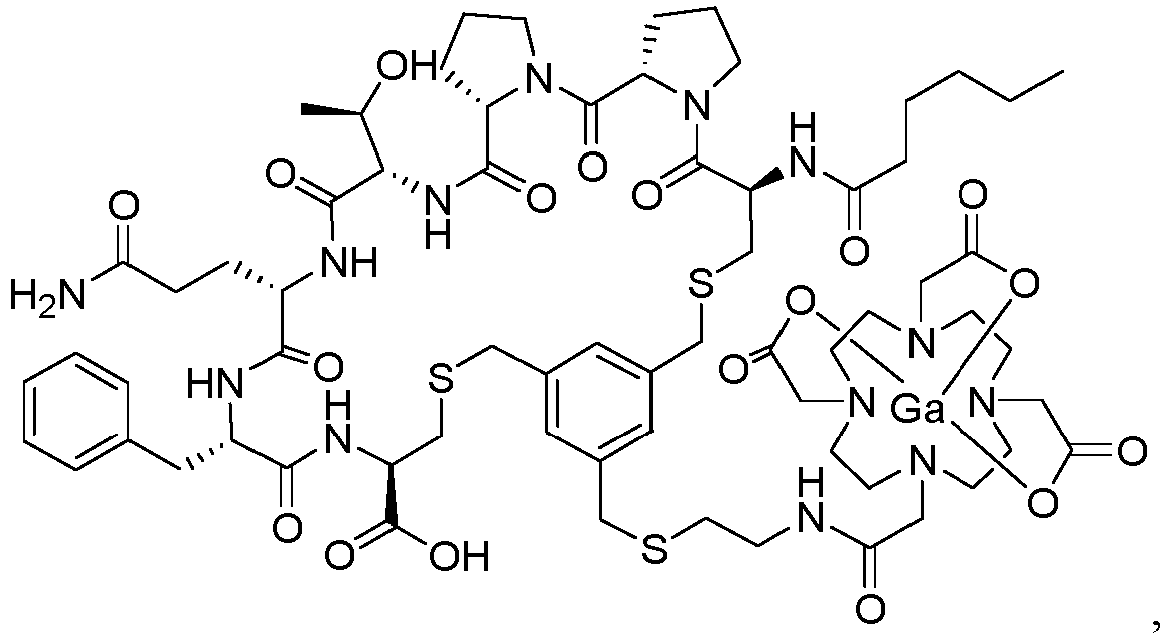

- Complexe de chélate de radionucléide selon la revendication 17, choisi dans le groupe constitué par :

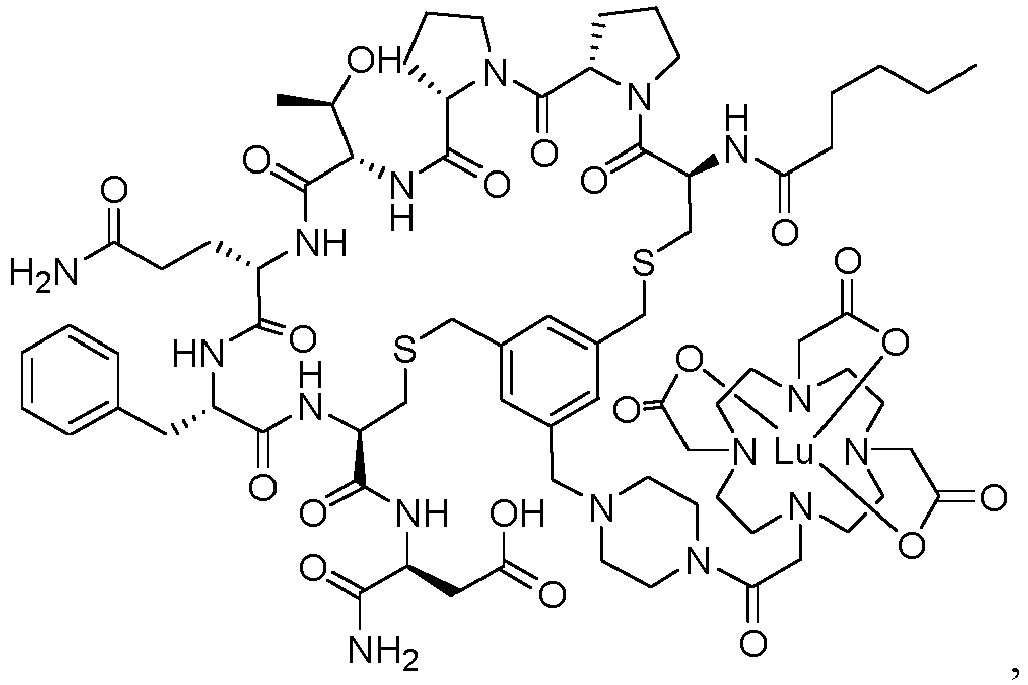


- Composition, de préférence composition pharmaceutique, dans laquelle la composition comprend : le composé ou un sel ou solvate pharmaceutiquement acceptable de celui-ci selon l'une quelconque des revendications 1 à 14 ou le complexe de chélate de radionucléide selon l'une quelconque des revendications 15 à 18 ; et un excipient pharmaceutiquement acceptable.
- Composé ou sel ou solvate pharmaceutiquement acceptable de celui-ci selon l'une quelconque des revendications 8 à 14, ou complexe de chélate de radionucléide selon l'une quelconque des revendications 15 à 18, destiné à être utilisé comme médicament.
- Composé ou sel ou solvate pharmaceutiquement acceptable de celui-ci selon l'une quelconque des revendications 8 à 14, ou complexe de chélate de radionucléide selon l'une quelconque des revendications 15 à 18, destiné à être utilisé dans le traitement d'une maladie, dans lequel la maladie est un néoplasme, de préférence un cancer ou une tumeur.
- Composé ou sel ou solvate pharmaceutiquement acceptable de celui-ci ou complexe de chélate de radionucléide destiné à être utilisé selon la revendication 21, dans lequel la maladie (a) est un néoplasme, de préférence un cancer ou une tumeur, et (b) implique des cellules présentant une expression régulée à la hausse de la protéine d'activation des fibroblastes (FAP), de préférence dans lequel la maladie implique un tissu malade contenant des cellules présentant une expression régulée à la hausse de FAP, plus préférablement dans lequel la maladie implique des fibroblastes associés à une tumeur.
- Composé ou sel ou solvate pharmaceutiquement acceptable de celui-ci ou complexe de chélate de radionucléide destiné à être utilisé selon la revendication 21 ou 22, dans lequel la maladie est choisie parmi une tumeur solide, une tumeur épithéliale, un cancer de la vessie, un cancer du sein, un cancer du col de l'utérus, un cancer colorectal, un cholangiocarcinome, un cancer de l'endomètre, un cancer de l'œsophage, un cancer gastrique, des tumeurs stromales gastro-intestinales, un cancer de la tête et du cou, un cancer du foie, un cancer du poumon, un mélanome, un mésothéliome, des tumeurs et carcinomes neuroendocrines, un cancer de l'ovaire, un cancer du pancréas, un cancer de la prostate, un carcinome à cellules rénales, un carcinome salivaire, un sarcome, un carcinome à cellules squameuses ou un cancer de la thyroïde.
- Composé ou sel ou solvate pharmaceutiquement acceptable de celui-ci ou complexe de chélate de radionucléide destiné à être utilisé selon la revendication 21 ou 22, dans lequel la maladie est choisie parmi le cancer du sein, le cancer colorectal, le cholangiocarcinome, le cancer de la tête et du cou, le cancer du poumon, le mésothéliome, les tumeurs et carcinomes neuroendocrines, le cancer de l'ovaire, le cancer du pancréas, le cancer de la prostate, le sarcome, et le carcinome à cellules squameuses.
- Kit comprenant un composé ou un sel ou solvate pharmaceutiquement acceptable de celui-ci selon l'une quelconque des revendications 1 à 14, ou un complexe de chélate de radionucléide selon l'une quelconque des revendications 15 à 18, un ou plusieurs excipients éventuels et éventuellement un ou plusieurs dispositifs, le ou les dispositifs étant un dispositif de marquage, un dispositif de purification, un dispositif de manipulation, un dispositif de radioprotection, un dispositif analytique ou un dispositif d'administration.
- Combinaison comprenant : (i) un composé ou un sel ou solvate pharmaceutiquement acceptable de celui-ci selon l'une quelconque des revendications 1 à 14, ou un complexe de chélate de radionucléide selon l'une quelconque des revendications 15 à 18 ; et (ii) un composé anticancéreux.
Priority Applications (4)
| Application Number | Priority Date | Filing Date | Title |
|---|---|---|---|
| RS20250117A RS66480B9 (sr) | 2019-07-08 | 2020-07-08 | Jedinjenja koja sadrže ligand proteina za aktivaciju fibroblasta i njihova upotreba |
| EP24213879.0A EP4517326A3 (fr) | 2019-07-08 | 2020-07-08 | Composés comprenant un ligand de protéine d'activation des fibroblastes et leur utilisation |
| HRP20241707TT HRP20241707T1 (hr) | 2019-07-08 | 2020-07-08 | Spojevi koji sadrže ligand proteina za aktiviranje fibroblasta i njihova uporaba |
| SI202030573T SI3997103T1 (sl) | 2019-07-08 | 2020-07-08 | Spojine, ki obsegajo ligand proteina za aktiviranje fibroblastov in uporaba le teh |
Applications Claiming Priority (3)
| Application Number | Priority Date | Filing Date | Title |
|---|---|---|---|
| EP19000325.1A EP3763726A1 (fr) | 2019-07-08 | 2019-07-08 | Composés comprenant un ligand de protéine d'activation de fibroblastes et leur utilisation |
| EP19198813 | 2019-09-20 | ||
| PCT/EP2020/069298 WO2021005125A1 (fr) | 2019-07-08 | 2020-07-08 | Composés comprenant un ligand protéique d'activation des fibroblastes et leur utilisation |
Related Child Applications (2)
| Application Number | Title | Priority Date | Filing Date |
|---|---|---|---|
| EP24213879.0A Division EP4517326A3 (fr) | 2019-07-08 | 2020-07-08 | Composés comprenant un ligand de protéine d'activation des fibroblastes et leur utilisation |
| EP24213879.0A Division-Into EP4517326A3 (fr) | 2019-07-08 | 2020-07-08 | Composés comprenant un ligand de protéine d'activation des fibroblastes et leur utilisation |
Publications (3)
| Publication Number | Publication Date |
|---|---|
| EP3997103A1 EP3997103A1 (fr) | 2022-05-18 |
| EP3997103B1 EP3997103B1 (fr) | 2024-11-20 |
| EP3997103B9 true EP3997103B9 (fr) | 2025-02-26 |
Family
ID=71409439
Family Applications (2)
| Application Number | Title | Priority Date | Filing Date |
|---|---|---|---|
| EP20735646.0A Active EP3997103B9 (fr) | 2019-07-08 | 2020-07-08 | Composés comprenant un ligand de protéine d'activation de fibroblastes et leur utilisation |
| EP24213879.0A Pending EP4517326A3 (fr) | 2019-07-08 | 2020-07-08 | Composés comprenant un ligand de protéine d'activation des fibroblastes et leur utilisation |
Family Applications After (1)
| Application Number | Title | Priority Date | Filing Date |
|---|---|---|---|
| EP24213879.0A Pending EP4517326A3 (fr) | 2019-07-08 | 2020-07-08 | Composés comprenant un ligand de protéine d'activation des fibroblastes et leur utilisation |
Country Status (20)
| Country | Link |
|---|---|
| US (2) | US12427210B2 (fr) |
| EP (2) | EP3997103B9 (fr) |
| JP (3) | JP7608425B2 (fr) |
| KR (1) | KR20220032079A (fr) |
| CN (3) | CN118406106A (fr) |
| AU (1) | AU2020310538B2 (fr) |
| BR (1) | BR112022000122A2 (fr) |
| CA (1) | CA3145340A1 (fr) |
| CL (1) | CL2021003580A1 (fr) |
| DK (1) | DK3997103T3 (fr) |
| ES (1) | ES3012534T3 (fr) |
| FI (1) | FI3997103T3 (fr) |
| HU (1) | HUE070009T2 (fr) |
| IL (2) | IL320543A (fr) |
| LT (1) | LT3997103T (fr) |
| MX (1) | MX2022000252A (fr) |
| PL (1) | PL3997103T3 (fr) |
| RS (1) | RS66480B9 (fr) |
| SI (1) | SI3997103T1 (fr) |
| WO (1) | WO2021005125A1 (fr) |
Families Citing this family (21)
| Publication number | Priority date | Publication date | Assignee | Title |
|---|---|---|---|---|
| IL289673B2 (en) * | 2019-07-08 | 2026-04-01 | 3B Pharmaceuticals Gmbh | Compounds comprising a protein ligand for fibroblast activation and their use |
| CA3176497A1 (fr) | 2020-05-07 | 2021-11-11 | Fatima MECHTA-GRIGORIOU | Antxr1 comme biomarqueur de populations de fibroblastes immunosuppresseurs et son utilisation pour predire la reponse a l'immunotherapie |
| EP4251639A1 (fr) * | 2020-11-30 | 2023-10-04 | Rayzebio, Inc. | Compositions radiopharmaceutiques conjuguées et leurs utilisations |
| US20240139350A1 (en) * | 2021-02-01 | 2024-05-02 | Five Eleven Pharma, Inc | Radioactively labeled ligand for fibroblast activation protein-alpha imaging agent and preparation method therefor |
| CN114369084B (zh) * | 2021-02-10 | 2023-02-03 | 烟台蓝纳成生物技术有限公司 | 一种截短型伊文思蓝修饰的成纤维细胞活化蛋白抑制剂及其制备方法和应用 |
| NZ803235A (en) | 2021-02-10 | 2026-01-30 | Yantai Lannacheng Biotechnology Co Ltd | Truncated evans blue modified fibroblast activation protein inhibitor, preparation method therefor, and application thereof |
| GB202109922D0 (en) | 2021-07-09 | 2021-08-25 | Blue Earth Diagnostics Ltd | Radiotracers and therapeutics binding to fibroblast activation protein (fap) |
| EP4475900A1 (fr) | 2022-02-09 | 2024-12-18 | Novartis AG | Compositions pharmaceutiques comprenant un complexe marqué par 225-actinium et un agent séquestrant le bismuth |
| EP4282439A1 (fr) | 2022-05-23 | 2023-11-29 | Erasmus University Rotterdam Medical Center | Agonistes de sstr2 marqués par un radio-isotope avec des lieurs |
| CN115304582B (zh) * | 2022-07-20 | 2023-05-12 | 北京法伯新天医药科技有限公司 | FAP-α特异性肿瘤诊断显像剂 |
| EP4311557A1 (fr) * | 2022-07-26 | 2024-01-31 | Oncomatryx Biopharma, S.L. | Conjugués de médicaments-anticorps ciblés par la paf |
| JP2025530229A (ja) * | 2022-09-07 | 2025-09-11 | 3ベー ファーマシューティカルズ ゲーエムベーハー | 前立腺特異的膜抗原(psma)リガンドおよびその使用 |
| EP4342890A1 (fr) | 2022-09-21 | 2024-03-27 | Erasmus University Rotterdam Medical Center | Plate-forme et échafaudage pour agents de ciblage fap |
| WO2024198838A1 (fr) * | 2023-03-27 | 2024-10-03 | 晶核生物医药科技(南京)有限公司 | Composé polypeptidique cyclique et son utilisation |
| KR20260009883A (ko) | 2023-05-24 | 2026-01-20 | 베이징 창핑 래보러토리 | 신규 삼관능 화합물 및 이의 용도 |
| TW202502800A (zh) * | 2023-07-11 | 2025-01-16 | 大陸商江蘇恆瑞醫藥股份有限公司 | 一種成纖維細胞活化蛋白配體及其用途 |
| CN121752300A (zh) | 2023-08-31 | 2026-03-27 | 荷兰拉德堡德大学学术医学中心 | 子宫内膜异位症示踪剂 |
| WO2025063849A2 (fr) | 2023-09-21 | 2025-03-27 | Erasmus University Medical Center Rotterdam | Agents de ciblage de fap dimère |
| WO2025082283A1 (fr) * | 2023-10-16 | 2025-04-24 | 四川科伦博泰生物医药股份有限公司 | Composé ligand de structure cyclopeptidique, marqueur nucléotidique de celui-ci, composition pharmaceutique et utilisation |
| TW202532108A (zh) | 2024-02-01 | 2025-08-16 | 瑞士商諾華公司 | 治療癌症的方法 |
| CN121045338A (zh) * | 2025-11-05 | 2025-12-02 | 原子高科股份有限公司 | 一种靶向caix的环肽及其制备方法与应用 |
Family Cites Families (32)
| Publication number | Priority date | Publication date | Assignee | Title |
|---|---|---|---|---|
| CA2304206A1 (fr) | 1997-09-29 | 1999-04-08 | Point Therapeutics, Inc. | Stimulation de cellules hematopoietiques in vitro |
| EP0953639A1 (fr) | 1998-04-30 | 1999-11-03 | Boehringer Ingelheim International GmbH | Anticorps dirigé contre FAPalpha pouvant être produit avec une efficacité accrue |
| US6890904B1 (en) | 1999-05-25 | 2005-05-10 | Point Therapeutics, Inc. | Anti-tumor agents |
| JP2003530092A (ja) | 2000-03-17 | 2003-10-14 | ベーリンガー インゲルハイム ファルマ ゲゼルシャフト ミット ベシュレンクテル ハフツング ウント コンパニー コマンディトゲゼルシャフト | ヒトFAP−α−特異抗体 |
| EP1452868A2 (fr) | 2003-02-27 | 2004-09-01 | Pepscan Systems B.V. | Procédé pour sélectionner un médicament d'intérêt potentiel |
| US7374898B2 (en) | 2004-10-12 | 2008-05-20 | The Research Foundation Of State University Of New York | Peptide inhibitors against seprase |
| EP1943257A2 (fr) | 2005-05-19 | 2008-07-16 | Genentech, Inc. | Composes inhibiteurs de proteines d'activation de fibroblastes et procedes |
| US8933201B2 (en) | 2006-06-07 | 2015-01-13 | The Board Of Regents Of The University Of Oklahoma | Substrates and inhibitors of antiplasmin cleaving enzyme and fibroblast activation protein and methods of use |
| WO2008116054A1 (fr) | 2007-03-20 | 2008-09-25 | Trustees Of Tufts College | Inhibiteur de protéine d'activation des fibroblastes et procédés d'utilisation associés |
| WO2010036814A1 (fr) | 2008-09-25 | 2010-04-01 | Molecular Insight Pharmaceuticals, Inc. | Inhibiteurs sélectifs de la séprase |
| WO2010071894A2 (fr) | 2008-12-19 | 2010-06-24 | Baxter International Inc. | Inhibiteurs de tfpi et procédés d'utilisation |
| EP2483316A1 (fr) | 2009-10-02 | 2012-08-08 | Ludwig Institute for Cancer Research Ltd. | Anticorps dirigés contre la protéine d'activation du fibroblaste, et utilisations et procédés correspondants |
| AU2011227714B2 (en) | 2010-03-19 | 2014-09-04 | Takeda Pharmaceutical Company Limited | TFPI inhibitors and methods of use |
| HUE036077T2 (hu) | 2010-08-13 | 2018-06-28 | Roche Glycart Ag | Anti-FAP ellenanyagok és alkalmazásukra szolgáló eljárások |
| WO2013107820A1 (fr) | 2012-01-17 | 2013-07-25 | Universiteit Antwerpen | Nouveaux inhibiteurs de fap |
| WO2013141965A1 (fr) | 2012-03-21 | 2013-09-26 | Baxter International Inc. | Inhibiteurs de la voie du facteur tissulaire (tfpi) et procédés d'utilisation |
| EP2740726A1 (fr) | 2012-12-07 | 2014-06-11 | 3B Pharmaceuticals GmbH | Ligands de récepteurs de la neurotensine |
| UA118028C2 (uk) | 2013-04-03 | 2018-11-12 | Рош Глікарт Аг | Біспецифічне антитіло, специфічне щодо fap і dr5, антитіло, специфічне щодо dr5, і спосіб їх застосування |
| GB201402006D0 (en) | 2014-02-06 | 2014-03-26 | Oncomatryx Biopharma S L | Antibody-drug conjugates and immunotoxins |
| CN106794264B (zh) | 2014-06-10 | 2021-03-23 | 3B制药有限公司 | 包含神经降压肽受体配体的缀合物及其用途 |
| EP2954933A1 (fr) | 2014-06-10 | 2015-12-16 | 3B Pharmaceuticals GmbH | Conjugué comprenant un ligand du récepteur de la neurotensine |
| WO2016146174A1 (fr) | 2015-03-17 | 2016-09-22 | Biontech Ag | Compositions et méthodes pour le diagnostic et le traitement du cancer |
| EP3405476B1 (fr) | 2016-01-20 | 2022-05-18 | Polypeptide Laboratories Holding (PPL) AB | Procédé de préparation de peptides avec un lieur pswang |
| WO2017211809A1 (fr) | 2016-06-10 | 2017-12-14 | Bayer Pharma Aktiengesellschaft | Complexes radiopharmaceutiques |
| CN106046121B (zh) | 2016-06-20 | 2020-06-16 | 郑州大学 | 一种靶向fap的抗血管生成肽z-gp-v1及其应用 |
| CN105949282B (zh) | 2016-06-20 | 2020-06-16 | 郑州大学 | 一种靶向fap的抗血管生成肽z-gp-v2及其应用 |
| JP2018035137A (ja) | 2016-07-13 | 2018-03-08 | マブイミューン ダイアグノスティックス エイジーMabimmune Diagnostics Ag | 新規な抗線維芽細胞活性化タンパク質(fap)結合薬剤およびその使用 |
| CN116474108A (zh) | 2016-12-14 | 2023-07-25 | 普渡研究基金会 | 成纤维细胞活化蛋白(fap)-靶向成像和治疗 |
| EA202090776A1 (ru) | 2017-10-23 | 2020-07-27 | Дзе Джонс Хопкинс Юниверсити | Визуализирующие и радиотерапевтические агенты, нацеленные на фибробласт-активирующий белок-альфа (fapalpha) |
| IL289673B2 (en) | 2019-07-08 | 2026-04-01 | 3B Pharmaceuticals Gmbh | Compounds comprising a protein ligand for fibroblast activation and their use |
| KR20230129261A (ko) | 2021-01-07 | 2023-09-07 | 쓰리비 파마슈티컬스 게엠베하 | 섬유모세포 활성화 단백질 리간드를 포함하는 화합물및 그의 용도 |
| EP4050018A1 (fr) | 2021-01-07 | 2022-08-31 | 3B Pharmaceuticals GmbH | Composés comprenant un ligand de protéine d'activation de fibroblastes et leur utilisation |
-
2020
- 2020-07-08 CN CN202410413792.9A patent/CN118406106A/zh active Pending
- 2020-07-08 FI FIEP20735646.0T patent/FI3997103T3/fi active
- 2020-07-08 WO PCT/EP2020/069298 patent/WO2021005125A1/fr not_active Ceased
- 2020-07-08 EP EP20735646.0A patent/EP3997103B9/fr active Active
- 2020-07-08 RS RS20250117A patent/RS66480B9/sr unknown
- 2020-07-08 IL IL320543A patent/IL320543A/en unknown
- 2020-07-08 PL PL20735646.0T patent/PL3997103T3/pl unknown
- 2020-07-08 LT LTEPPCT/EP2020/069298T patent/LT3997103T/lt unknown
- 2020-07-08 IL IL289675A patent/IL289675B2/en unknown
- 2020-07-08 HU HUE20735646A patent/HUE070009T2/hu unknown
- 2020-07-08 DK DK20735646.0T patent/DK3997103T3/da active
- 2020-07-08 SI SI202030573T patent/SI3997103T1/sl unknown
- 2020-07-08 US US17/625,139 patent/US12427210B2/en active Active
- 2020-07-08 BR BR112022000122A patent/BR112022000122A2/pt unknown
- 2020-07-08 CN CN202080062650.2A patent/CN114341159B/zh active Active
- 2020-07-08 ES ES20735646T patent/ES3012534T3/es active Active
- 2020-07-08 JP JP2022501192A patent/JP7608425B2/ja active Active
- 2020-07-08 MX MX2022000252A patent/MX2022000252A/es unknown
- 2020-07-08 EP EP24213879.0A patent/EP4517326A3/fr active Pending
- 2020-07-08 AU AU2020310538A patent/AU2020310538B2/en active Active
- 2020-07-08 KR KR1020227004043A patent/KR20220032079A/ko active Pending
- 2020-07-08 CA CA3145340A patent/CA3145340A1/fr active Pending
- 2020-07-08 CN CN202410413789.7A patent/CN118388588A/zh active Pending
-
2021
- 2021-12-30 CL CL2021003580A patent/CL2021003580A1/es unknown
-
2024
- 2024-12-18 JP JP2024221293A patent/JP7783396B2/ja active Active
-
2025
- 2025-11-18 US US19/392,245 patent/US20260061086A1/en active Pending
- 2025-11-26 JP JP2025203677A patent/JP2026035703A/ja active Pending
Also Published As
Similar Documents
| Publication | Publication Date | Title |
|---|---|---|
| EP3997103B9 (fr) | Composés comprenant un ligand de protéine d'activation de fibroblastes et leur utilisation | |
| US20230212549A1 (en) | Compounds comprising a fibroblast activation protein ligand and use thereof | |
| US20220315554A1 (en) | Compounds comprising a fibroblast activation protein ligand and use thereof | |
| US20240115745A1 (en) | Compounds comprising a fibroblast activation protein ligand and use thereof | |
| EP3763726A1 (fr) | Composés comprenant un ligand de protéine d'activation de fibroblastes et leur utilisation | |
| US20250339569A1 (en) | Carbonic anhydrase ix ligands | |
| HK40121319A (en) | Compounds comprising a fibroblast activation protein ligand and use thereof | |
| RU2836270C2 (ru) | Соединения, содержащие лиганд белка активации фибробластов, и их применение | |
| HK40065560B (en) | Compounds comprising a fibroblast activation protein ligand and use thereof | |
| HK40065560A (en) | Compounds comprising a fibroblast activation protein ligand and use thereof |
Legal Events
| Date | Code | Title | Description |
|---|---|---|---|
| REG | Reference to a national code |
Ref country code: HR Ref legal event code: TUEP Ref document number: P20241707T Country of ref document: HR |
|
| STAA | Information on the status of an ep patent application or granted ep patent |
Free format text: STATUS: UNKNOWN |
|
| STAA | Information on the status of an ep patent application or granted ep patent |
Free format text: STATUS: THE INTERNATIONAL PUBLICATION HAS BEEN MADE |
|
| PUAI | Public reference made under article 153(3) epc to a published international application that has entered the european phase |
Free format text: ORIGINAL CODE: 0009012 |
|
| STAA | Information on the status of an ep patent application or granted ep patent |
Free format text: STATUS: REQUEST FOR EXAMINATION WAS MADE |
|
| 17P | Request for examination filed |
Effective date: 20220202 |
|
| AK | Designated contracting states |
Kind code of ref document: A1 Designated state(s): AL AT BE BG CH CY CZ DE DK EE ES FI FR GB GR HR HU IE IS IT LI LT LU LV MC MK MT NL NO PL PT RO RS SE SI SK SM TR |
|
| REG | Reference to a national code |
Ref country code: HK Ref legal event code: DE Ref document number: 40065560 Country of ref document: HK |
|
| DAV | Request for validation of the european patent (deleted) | ||
| DAX | Request for extension of the european patent (deleted) | ||
| GRAP | Despatch of communication of intention to grant a patent |
Free format text: ORIGINAL CODE: EPIDOSNIGR1 |
|
| STAA | Information on the status of an ep patent application or granted ep patent |
Free format text: STATUS: GRANT OF PATENT IS INTENDED |
|
| INTG | Intention to grant announced |
Effective date: 20230120 |
|
| GRAJ | Information related to disapproval of communication of intention to grant by the applicant or resumption of examination proceedings by the epo deleted |
Free format text: ORIGINAL CODE: EPIDOSDIGR1 |
|
| STAA | Information on the status of an ep patent application or granted ep patent |
Free format text: STATUS: REQUEST FOR EXAMINATION WAS MADE |
|
| GRAP | Despatch of communication of intention to grant a patent |
Free format text: ORIGINAL CODE: EPIDOSNIGR1 |
|
| INTC | Intention to grant announced (deleted) | ||
| STAA | Information on the status of an ep patent application or granted ep patent |
Free format text: STATUS: GRANT OF PATENT IS INTENDED |
|
| INTG | Intention to grant announced |
Effective date: 20231005 |
|
| GRAJ | Information related to disapproval of communication of intention to grant by the applicant or resumption of examination proceedings by the epo deleted |
Free format text: ORIGINAL CODE: EPIDOSDIGR1 |
|
| STAA | Information on the status of an ep patent application or granted ep patent |
Free format text: STATUS: REQUEST FOR EXAMINATION WAS MADE |
|
| GRAP | Despatch of communication of intention to grant a patent |
Free format text: ORIGINAL CODE: EPIDOSNIGR1 |
|
| STAA | Information on the status of an ep patent application or granted ep patent |
Free format text: STATUS: GRANT OF PATENT IS INTENDED |
|
| INTC | Intention to grant announced (deleted) | ||
| INTG | Intention to grant announced |
Effective date: 20240208 |
|
| GRAJ | Information related to disapproval of communication of intention to grant by the applicant or resumption of examination proceedings by the epo deleted |
Free format text: ORIGINAL CODE: EPIDOSDIGR1 |
|
| STAA | Information on the status of an ep patent application or granted ep patent |
Free format text: STATUS: REQUEST FOR EXAMINATION WAS MADE |
|
| GRAP | Despatch of communication of intention to grant a patent |
Free format text: ORIGINAL CODE: EPIDOSNIGR1 |
|
| STAA | Information on the status of an ep patent application or granted ep patent |
Free format text: STATUS: GRANT OF PATENT IS INTENDED |
|
| INTC | Intention to grant announced (deleted) | ||
| INTG | Intention to grant announced |
Effective date: 20240620 |
|
| GRAS | Grant fee paid |
Free format text: ORIGINAL CODE: EPIDOSNIGR3 |
|
| GRAA | (expected) grant |
Free format text: ORIGINAL CODE: 0009210 |
|
| STAA | Information on the status of an ep patent application or granted ep patent |
Free format text: STATUS: THE PATENT HAS BEEN GRANTED |
|
| AK | Designated contracting states |
Kind code of ref document: B1 Designated state(s): AL AT BE BG CH CY CZ DE DK EE ES FI FR GB GR HR HU IE IS IT LI LT LU LV MC MK MT NL NO PL PT RO RS SE SI SK SM TR |
|
| REG | Reference to a national code |
Ref country code: GB Ref legal event code: FG4D |
|
| REG | Reference to a national code |
Ref country code: CH Ref legal event code: EP |
|
| REG | Reference to a national code |
Ref country code: DK Ref legal event code: T3 Effective date: 20241128 |
|
| REG | Reference to a national code |
Ref country code: NL Ref legal event code: FP |
|
| REG | Reference to a national code |
Ref country code: DE Ref legal event code: R096 Ref document number: 602020041659 Country of ref document: DE |
|
| REG | Reference to a national code |
Ref country code: IE Ref legal event code: FG4D |
|
| P01 | Opt-out of the competence of the unified patent court (upc) registered |
Free format text: CASE NUMBER: APP_61192/2024 Effective date: 20241114 |
|
| REG | Reference to a national code |
Ref country code: SE Ref legal event code: TRGR |
|
| REG | Reference to a national code |
Ref country code: PT Ref legal event code: SC4A Ref document number: 3997103 Country of ref document: PT Date of ref document: 20250129 Kind code of ref document: T Free format text: AVAILABILITY OF NATIONAL TRANSLATION Effective date: 20250122 |
|
| REG | Reference to a national code |
Ref country code: CH Ref legal event code: PK Free format text: BERICHTIGUNG B9 |
|
| REG | Reference to a national code |
Ref country code: FI Ref legal event code: FGE |
|
| REG | Reference to a national code |
Ref country code: HR Ref legal event code: T1PR Ref document number: P20241707 Country of ref document: HR |
|
| REG | Reference to a national code |
Ref country code: GR Ref legal event code: EP Ref document number: 20250400228 Country of ref document: GR Effective date: 20250314 |
|
| REG | Reference to a national code |
Ref country code: SK Ref legal event code: T3 Ref document number: E 45890 Country of ref document: SK |
|
| REG | Reference to a national code |
Ref country code: ES Ref legal event code: FG2A Ref document number: 3012534 Country of ref document: ES Kind code of ref document: T3 Effective date: 20250409 |
|
| REG | Reference to a national code |
Ref country code: EE Ref legal event code: FG4A Ref document number: E024922 Country of ref document: EE Effective date: 20250211 |
|
| REG | Reference to a national code |
Ref country code: HU Ref legal event code: AG4A Ref document number: E070009 Country of ref document: HU |
|
| REG | Reference to a national code |
Ref country code: SK Ref legal event code: T4 Ref document number: E 45890 Country of ref document: SK |
|
| PG25 | Lapsed in a contracting state [announced via postgrant information from national office to epo] |
Ref country code: SM Free format text: LAPSE BECAUSE OF FAILURE TO SUBMIT A TRANSLATION OF THE DESCRIPTION OR TO PAY THE FEE WITHIN THE PRESCRIBED TIME-LIMIT Effective date: 20241120 |
|
| PGFP | Annual fee paid to national office [announced via postgrant information from national office to epo] |
Ref country code: MC Payment date: 20250626 Year of fee payment: 6 |
|
| PGFP | Annual fee paid to national office [announced via postgrant information from national office to epo] |
Ref country code: PL Payment date: 20250630 Year of fee payment: 6 |
|
| PGFP | Annual fee paid to national office [announced via postgrant information from national office to epo] |
Ref country code: GB Payment date: 20250619 Year of fee payment: 6 |
|
| PGFP | Annual fee paid to national office [announced via postgrant information from national office to epo] |
Ref country code: LT Payment date: 20250618 Year of fee payment: 6 |
|
| PGFP | Annual fee paid to national office [announced via postgrant information from national office to epo] |
Ref country code: RS Payment date: 20250625 Year of fee payment: 6 |
|
| PGFP | Annual fee paid to national office [announced via postgrant information from national office to epo] |
Ref country code: LU Payment date: 20250625 Year of fee payment: 6 Ref country code: NL Payment date: 20250627 Year of fee payment: 6 Ref country code: BE Payment date: 20250626 Year of fee payment: 6 |
|
| PGFP | Annual fee paid to national office [announced via postgrant information from national office to epo] |
Ref country code: PT Payment date: 20250623 Year of fee payment: 6 Ref country code: LV Payment date: 20250619 Year of fee payment: 6 |
|
| PGFP | Annual fee paid to national office [announced via postgrant information from national office to epo] |
Ref country code: EE Payment date: 20250620 Year of fee payment: 6 Ref country code: FR Payment date: 20250623 Year of fee payment: 6 |
|
| PGFP | Annual fee paid to national office [announced via postgrant information from national office to epo] |
Ref country code: GR Payment date: 20250626 Year of fee payment: 6 Ref country code: BG Payment date: 20250627 Year of fee payment: 6 |
|
| PGFP | Annual fee paid to national office [announced via postgrant information from national office to epo] |
Ref country code: RO Payment date: 20250630 Year of fee payment: 6 |
|
| PGFP | Annual fee paid to national office [announced via postgrant information from national office to epo] |
Ref country code: SK Payment date: 20250624 Year of fee payment: 6 |
|
| PGFP | Annual fee paid to national office [announced via postgrant information from national office to epo] |
Ref country code: CZ Payment date: 20250627 Year of fee payment: 6 |
|
| PGFP | Annual fee paid to national office [announced via postgrant information from national office to epo] |
Ref country code: IE Payment date: 20250624 Year of fee payment: 6 |
|
| PGFP | Annual fee paid to national office [announced via postgrant information from national office to epo] |
Ref country code: SE Payment date: 20250626 Year of fee payment: 6 Ref country code: SI Payment date: 20250624 Year of fee payment: 6 |
|
| PGFP | Annual fee paid to national office [announced via postgrant information from national office to epo] |
Ref country code: HU Payment date: 20250711 Year of fee payment: 6 |
|
| REG | Reference to a national code |
Ref country code: DE Ref legal event code: R097 Ref document number: 602020041659 Country of ref document: DE |
|
| REG | Reference to a national code |
Ref country code: HR Ref legal event code: ODRP Ref document number: P20241707 Country of ref document: HR Payment date: 20250702 Year of fee payment: 6 |
|
| PLBE | No opposition filed within time limit |
Free format text: ORIGINAL CODE: 0009261 |
|
| STAA | Information on the status of an ep patent application or granted ep patent |
Free format text: STATUS: NO OPPOSITION FILED WITHIN TIME LIMIT |
|
| PGFP | Annual fee paid to national office [announced via postgrant information from national office to epo] |
Ref country code: FI Payment date: 20250715 Year of fee payment: 6 Ref country code: ES Payment date: 20250807 Year of fee payment: 6 |
|
| PGFP | Annual fee paid to national office [announced via postgrant information from national office to epo] |
Ref country code: DE Payment date: 20250618 Year of fee payment: 6 Ref country code: DK Payment date: 20250714 Year of fee payment: 6 |
|
| PGFP | Annual fee paid to national office [announced via postgrant information from national office to epo] |
Ref country code: NO Payment date: 20250709 Year of fee payment: 6 |
|
| PGFP | Annual fee paid to national office [announced via postgrant information from national office to epo] |
Ref country code: TR Payment date: 20250702 Year of fee payment: 6 Ref country code: IT Payment date: 20250626 Year of fee payment: 6 |
|
| PGFP | Annual fee paid to national office [announced via postgrant information from national office to epo] |
Ref country code: HR Payment date: 20250702 Year of fee payment: 6 |
|
| PGFP | Annual fee paid to national office [announced via postgrant information from national office to epo] |
Ref country code: AL Payment date: 20250718 Year of fee payment: 6 Ref country code: AT Payment date: 20250625 Year of fee payment: 6 |
|
| PGFP | Annual fee paid to national office [announced via postgrant information from national office to epo] |
Ref country code: CH Payment date: 20250801 Year of fee payment: 6 Ref country code: MT Payment date: 20250721 Year of fee payment: 6 |
|
| 26N | No opposition filed |
Effective date: 20250821 |
|
| PGFP | Annual fee paid to national office [announced via postgrant information from national office to epo] |
Ref country code: IS Payment date: 20250704 Year of fee payment: 6 |
|
| PGFP | Annual fee paid to national office [announced via postgrant information from national office to epo] |
Ref country code: CY Payment date: 20250624 Year of fee payment: 6 |