EP4001448A1 - Tôle d'acier électrique non orientée et son procédé de fabrication - Google Patents
Tôle d'acier électrique non orientée et son procédé de fabrication Download PDFInfo
- Publication number
- EP4001448A1 EP4001448A1 EP20859469.7A EP20859469A EP4001448A1 EP 4001448 A1 EP4001448 A1 EP 4001448A1 EP 20859469 A EP20859469 A EP 20859469A EP 4001448 A1 EP4001448 A1 EP 4001448A1
- Authority
- EP
- European Patent Office
- Prior art keywords
- steel plate
- oriented electrical
- electrical steel
- manufacturing
- rate
- Prior art date
- Legal status (The legal status is an assumption and is not a legal conclusion. Google has not performed a legal analysis and makes no representation as to the accuracy of the status listed.)
- Pending
Links
Images


Classifications
-
- C—CHEMISTRY; METALLURGY
- C22—METALLURGY; FERROUS OR NON-FERROUS ALLOYS; TREATMENT OF ALLOYS OR NON-FERROUS METALS
- C22C—ALLOYS
- C22C38/00—Ferrous alloys, e.g. steel alloys
- C22C38/004—Very low carbon steels, i.e. having a carbon content of less than 0,01%
-
- C—CHEMISTRY; METALLURGY
- C21—METALLURGY OF IRON
- C21D—MODIFYING THE PHYSICAL STRUCTURE OF FERROUS METALS; GENERAL DEVICES FOR HEAT TREATMENT OF FERROUS OR NON-FERROUS METALS OR ALLOYS; MAKING METAL MALLEABLE, e.g. BY DECARBURISATION OR TEMPERING
- C21D1/00—General methods or devices for heat treatment, e.g. annealing, hardening, quenching or tempering
- C21D1/26—Methods of annealing
-
- C—CHEMISTRY; METALLURGY
- C21—METALLURGY OF IRON
- C21D—MODIFYING THE PHYSICAL STRUCTURE OF FERROUS METALS; GENERAL DEVICES FOR HEAT TREATMENT OF FERROUS OR NON-FERROUS METALS OR ALLOYS; MAKING METAL MALLEABLE, e.g. BY DECARBURISATION OR TEMPERING
- C21D6/00—Heat treatment of ferrous alloys
- C21D6/005—Heat treatment of ferrous alloys containing Mn
-
- C—CHEMISTRY; METALLURGY
- C21—METALLURGY OF IRON
- C21D—MODIFYING THE PHYSICAL STRUCTURE OF FERROUS METALS; GENERAL DEVICES FOR HEAT TREATMENT OF FERROUS OR NON-FERROUS METALS OR ALLOYS; MAKING METAL MALLEABLE, e.g. BY DECARBURISATION OR TEMPERING
- C21D6/00—Heat treatment of ferrous alloys
- C21D6/008—Heat treatment of ferrous alloys containing Si
-
- C—CHEMISTRY; METALLURGY
- C21—METALLURGY OF IRON
- C21D—MODIFYING THE PHYSICAL STRUCTURE OF FERROUS METALS; GENERAL DEVICES FOR HEAT TREATMENT OF FERROUS OR NON-FERROUS METALS OR ALLOYS; MAKING METAL MALLEABLE, e.g. BY DECARBURISATION OR TEMPERING
- C21D8/00—Modifying the physical properties of ferrous metals or ferrous alloys by deformation combined with, or followed by, heat treatment
- C21D8/12—Modifying the physical properties of ferrous metals or ferrous alloys by deformation combined with, or followed by, heat treatment during manufacturing of articles with special electromagnetic properties
- C21D8/1216—Modifying the physical properties of ferrous metals or ferrous alloys by deformation combined with, or followed by, heat treatment during manufacturing of articles with special electromagnetic properties characterised by the working steps
- C21D8/1222—Hot rolling
-
- C—CHEMISTRY; METALLURGY
- C21—METALLURGY OF IRON
- C21D—MODIFYING THE PHYSICAL STRUCTURE OF FERROUS METALS; GENERAL DEVICES FOR HEAT TREATMENT OF FERROUS OR NON-FERROUS METALS OR ALLOYS; MAKING METAL MALLEABLE, e.g. BY DECARBURISATION OR TEMPERING
- C21D8/00—Modifying the physical properties of ferrous metals or ferrous alloys by deformation combined with, or followed by, heat treatment
- C21D8/12—Modifying the physical properties of ferrous metals or ferrous alloys by deformation combined with, or followed by, heat treatment during manufacturing of articles with special electromagnetic properties
- C21D8/1216—Modifying the physical properties of ferrous metals or ferrous alloys by deformation combined with, or followed by, heat treatment during manufacturing of articles with special electromagnetic properties characterised by the working steps
- C21D8/1233—Cold rolling
-
- C—CHEMISTRY; METALLURGY
- C21—METALLURGY OF IRON
- C21D—MODIFYING THE PHYSICAL STRUCTURE OF FERROUS METALS; GENERAL DEVICES FOR HEAT TREATMENT OF FERROUS OR NON-FERROUS METALS OR ALLOYS; MAKING METAL MALLEABLE, e.g. BY DECARBURISATION OR TEMPERING
- C21D8/00—Modifying the physical properties of ferrous metals or ferrous alloys by deformation combined with, or followed by, heat treatment
- C21D8/12—Modifying the physical properties of ferrous metals or ferrous alloys by deformation combined with, or followed by, heat treatment during manufacturing of articles with special electromagnetic properties
- C21D8/1244—Modifying the physical properties of ferrous metals or ferrous alloys by deformation combined with, or followed by, heat treatment during manufacturing of articles with special electromagnetic properties characterised by the heat treatment
-
- C—CHEMISTRY; METALLURGY
- C21—METALLURGY OF IRON
- C21D—MODIFYING THE PHYSICAL STRUCTURE OF FERROUS METALS; GENERAL DEVICES FOR HEAT TREATMENT OF FERROUS OR NON-FERROUS METALS OR ALLOYS; MAKING METAL MALLEABLE, e.g. BY DECARBURISATION OR TEMPERING
- C21D8/00—Modifying the physical properties of ferrous metals or ferrous alloys by deformation combined with, or followed by, heat treatment
- C21D8/12—Modifying the physical properties of ferrous metals or ferrous alloys by deformation combined with, or followed by, heat treatment during manufacturing of articles with special electromagnetic properties
- C21D8/1244—Modifying the physical properties of ferrous metals or ferrous alloys by deformation combined with, or followed by, heat treatment during manufacturing of articles with special electromagnetic properties characterised by the heat treatment
- C21D8/1261—Modifying the physical properties of ferrous metals or ferrous alloys by deformation combined with, or followed by, heat treatment during manufacturing of articles with special electromagnetic properties characterised by the heat treatment following hot rolling
-
- C—CHEMISTRY; METALLURGY
- C21—METALLURGY OF IRON
- C21D—MODIFYING THE PHYSICAL STRUCTURE OF FERROUS METALS; GENERAL DEVICES FOR HEAT TREATMENT OF FERROUS OR NON-FERROUS METALS OR ALLOYS; MAKING METAL MALLEABLE, e.g. BY DECARBURISATION OR TEMPERING
- C21D8/00—Modifying the physical properties of ferrous metals or ferrous alloys by deformation combined with, or followed by, heat treatment
- C21D8/12—Modifying the physical properties of ferrous metals or ferrous alloys by deformation combined with, or followed by, heat treatment during manufacturing of articles with special electromagnetic properties
- C21D8/1244—Modifying the physical properties of ferrous metals or ferrous alloys by deformation combined with, or followed by, heat treatment during manufacturing of articles with special electromagnetic properties characterised by the heat treatment
- C21D8/1272—Final recrystallisation annealing
-
- C—CHEMISTRY; METALLURGY
- C21—METALLURGY OF IRON
- C21D—MODIFYING THE PHYSICAL STRUCTURE OF FERROUS METALS; GENERAL DEVICES FOR HEAT TREATMENT OF FERROUS OR NON-FERROUS METALS OR ALLOYS; MAKING METAL MALLEABLE, e.g. BY DECARBURISATION OR TEMPERING
- C21D8/00—Modifying the physical properties of ferrous metals or ferrous alloys by deformation combined with, or followed by, heat treatment
- C21D8/12—Modifying the physical properties of ferrous metals or ferrous alloys by deformation combined with, or followed by, heat treatment during manufacturing of articles with special electromagnetic properties
- C21D8/1277—Modifying the physical properties of ferrous metals or ferrous alloys by deformation combined with, or followed by, heat treatment during manufacturing of articles with special electromagnetic properties involving a particular surface treatment
- C21D8/1283—Application of a separating or insulating coating
-
- C—CHEMISTRY; METALLURGY
- C21—METALLURGY OF IRON
- C21D—MODIFYING THE PHYSICAL STRUCTURE OF FERROUS METALS; GENERAL DEVICES FOR HEAT TREATMENT OF FERROUS OR NON-FERROUS METALS OR ALLOYS; MAKING METAL MALLEABLE, e.g. BY DECARBURISATION OR TEMPERING
- C21D9/00—Heat treatment, e.g. annealing, hardening, quenching or tempering, adapted for particular articles; Furnaces therefor
- C21D9/46—Heat treatment, e.g. annealing, hardening, quenching or tempering, adapted for particular articles; Furnaces therefor for sheet metals
-
- C—CHEMISTRY; METALLURGY
- C22—METALLURGY; FERROUS OR NON-FERROUS ALLOYS; TREATMENT OF ALLOYS OR NON-FERROUS METALS
- C22C—ALLOYS
- C22C38/00—Ferrous alloys, e.g. steel alloys
- C22C38/002—Ferrous alloys, e.g. steel alloys containing In, Mg, or other elements not provided for in one single group C22C38/001 - C22C38/60
-
- C—CHEMISTRY; METALLURGY
- C22—METALLURGY; FERROUS OR NON-FERROUS ALLOYS; TREATMENT OF ALLOYS OR NON-FERROUS METALS
- C22C—ALLOYS
- C22C38/00—Ferrous alloys, e.g. steel alloys
- C22C38/008—Ferrous alloys, e.g. steel alloys containing tin
-
- C—CHEMISTRY; METALLURGY
- C22—METALLURGY; FERROUS OR NON-FERROUS ALLOYS; TREATMENT OF ALLOYS OR NON-FERROUS METALS
- C22C—ALLOYS
- C22C38/00—Ferrous alloys, e.g. steel alloys
- C22C38/02—Ferrous alloys, e.g. steel alloys containing silicon
-
- C—CHEMISTRY; METALLURGY
- C22—METALLURGY; FERROUS OR NON-FERROUS ALLOYS; TREATMENT OF ALLOYS OR NON-FERROUS METALS
- C22C—ALLOYS
- C22C38/00—Ferrous alloys, e.g. steel alloys
- C22C38/04—Ferrous alloys, e.g. steel alloys containing manganese
-
- C—CHEMISTRY; METALLURGY
- C22—METALLURGY; FERROUS OR NON-FERROUS ALLOYS; TREATMENT OF ALLOYS OR NON-FERROUS METALS
- C22C—ALLOYS
- C22C38/00—Ferrous alloys, e.g. steel alloys
- C22C38/06—Ferrous alloys, e.g. steel alloys containing aluminium
-
- C—CHEMISTRY; METALLURGY
- C22—METALLURGY; FERROUS OR NON-FERROUS ALLOYS; TREATMENT OF ALLOYS OR NON-FERROUS METALS
- C22C—ALLOYS
- C22C38/00—Ferrous alloys, e.g. steel alloys
- C22C38/12—Ferrous alloys, e.g. steel alloys containing tungsten, tantalum, molybdenum, vanadium, or niobium
-
- C—CHEMISTRY; METALLURGY
- C22—METALLURGY; FERROUS OR NON-FERROUS ALLOYS; TREATMENT OF ALLOYS OR NON-FERROUS METALS
- C22C—ALLOYS
- C22C38/00—Ferrous alloys, e.g. steel alloys
- C22C38/14—Ferrous alloys, e.g. steel alloys containing titanium or zirconium
-
- C—CHEMISTRY; METALLURGY
- C22—METALLURGY; FERROUS OR NON-FERROUS ALLOYS; TREATMENT OF ALLOYS OR NON-FERROUS METALS
- C22C—ALLOYS
- C22C38/00—Ferrous alloys, e.g. steel alloys
- C22C38/60—Ferrous alloys, e.g. steel alloys containing lead, selenium, tellurium, or antimony, or more than 0.04% by weight of sulfur
-
- Y—GENERAL TAGGING OF NEW TECHNOLOGICAL DEVELOPMENTS; GENERAL TAGGING OF CROSS-SECTIONAL TECHNOLOGIES SPANNING OVER SEVERAL SECTIONS OF THE IPC; TECHNICAL SUBJECTS COVERED BY FORMER USPC CROSS-REFERENCE ART COLLECTIONS [XRACs] AND DIGESTS
- Y02—TECHNOLOGIES OR APPLICATIONS FOR MITIGATION OR ADAPTATION AGAINST CLIMATE CHANGE
- Y02P—CLIMATE CHANGE MITIGATION TECHNOLOGIES IN THE PRODUCTION OR PROCESSING OF GOODS
- Y02P10/00—Technologies related to metal processing
- Y02P10/20—Recycling
Definitions
- the present invention relates to a steel plate and a manufacturing method thereof, specifically to a non-oriented electrical steel plate and a manufacturing method thereof.
- the corresponding non-oriented electrical steel plate should have characteristics of high magnetic induction, low iron loss and high strength, and more importantly, thin gauge of generally 0.1-0.3 mm as thin gauge can greatly reduce high-frequency iron loss of finished strip steel.
- thin gauge of generally 0.1-0.3 mm as thin gauge can greatly reduce high-frequency iron loss of finished strip steel.
- the magnetic induction would also be synchronously deteriorated and further reducing mechanical strength, bringing new problem to subsequent production, machining and use of the steel plate.
- Japanese patent with the publication number of JPH11-61257, publication date March 5, 1999 , and titled as "Non-oriented Electrical Steel Plate with Low Iron Loss and Low Magnetic Anisotropy and Manufacturing Method Thereof' discloses an electrical steel plate and a manufacturing method thereof.
- a continuous casting billet is subjected to low-temperature heating treatment within a range of 950-1150°C, then the intermediate billet is subjected to heat holding treatment after hot rolling and rough rolling, requiring that the temperature drop before finish rolling is controlled within 40°C, a finish rolling temperature limiting to Ar1 phase transformation point of +20°C or more, and a coiling temperature limited to 640-750°C.
- the non-oriented electrical steel plate with low magnetic anisotropy can be obtained.
- the target thickness of the hot-rolled strip steel is 2.3 mm.
- Cold-rolling production can be performed by adopting primary cold rolling or adopting secondary cold rolling along with intermediate annealing, and then performing final annealing to the cold-rolled strip steel at a temperature of 700-1100°C.
- Non-oriented Electromagnetic Steel Plate having Low High-frequency Iron Loss and Manufacturing Method Thereof discloses a non-oriented electromagnetic steel plate having low high-frequency iron loss.
- the overall steel plate contains the following elements in percentage by mass: C: 0.005% or less, Si: 2.0%-4.0%, Mn: 1% or less, and Al: 0.1%-8.0%, and the balance of Fe and inevitable impurities, and it further requires that the Al content in the thickness direction of the plate satisfies the following formula: 0.1 ⁇ (Xs-Xc) ⁇ 100.
- At least one of 5% or less of Cu, 1% or less of Nb, 1% or less of Ti, 5% or less of Ni, and 15% or less of Cr, as well as at least one of 0.5% or less of Mo, W, Sn, Mg, Ce, etc. are further needed in the steel.
- vapor deposition or hot dipping is adopted to coat Al-containing coating onto the surface of the hot-rolled strip steel, then cold rolling is performed to a thickness of 0.1-0.3 mm; and finally, performing final annealing for 1 hour or more under 1000°C or below.
- One objective of the present invention is to provide a thin-gauge non-oriented electrical steel plate, and the thin-gauge non-oriented electrical steel plate has excellent magnetic property.
- the present invention provides a thin-gauge non-oriented electrical steel plate comprising the following chemical elements in percentage by mass: 0 ⁇ C ⁇ 0.003%; Si: 1.6-3.4%; Mn: 0.1-1.2%; S ⁇ 0.003%; Al: 0.1-3.0%; Sn: 0.005-0.2%; Ca: 0.0005-0.01%; O ⁇ 0.003%; N ⁇ 0.003%; and the balance of Fe and other inevitable impurities.
- the chemical elements further satisfy: 33 ⁇ O/16+S/32 ⁇ 12 ⁇ Ca/40.
- oxides of Al would inhibit precipitation of the sulfide inclusions and delay the precipitation time, causing size reduction and quantity increase of the sulfide inclusions, which would further deteriorate the electromagnetic property of the finished steel plate.
- calcium treatment can be adopted by combing oxides of Ca with the oxides of Al to form 12CaO ⁇ 7Al 2 O 3 having low melting point and relatively large size to facilitate floatation removal, and in this way, a relationship between Ca, O and S needs to be determined.
- each chemical element should be controlled to satisfy: 33 ⁇ O/16+S/32 ⁇ 12 ⁇ Ca/40.
- the thin-gauge non-oriented electrical steel plate according to the present invention further contains at least one of Nb, V or Ti element, and satisfy the following in percentage by mass: Nb/93 + V/51 + Ti/48 ⁇ C/12 + N/14; and Nb + V + Ti ⁇ 0 .01 % .
- the harmful inclusions are mainly formed by C, S, O and N elements in the non-oriented electrical steel plate, wherein C and N elements are mainly compounded with Nb, V and Ti elements, and the formed optimized inclusions are mainly TiC, TiN, Ti(CN), NbC, NbN, Nb(CN), VC, VN, and V(CN) and such kind of inclusions are low in melting point and low in precipitation temperature and would easily occur solid dissolving and precipitation repeatedly during continuous casting, hot rolling, and subsequent intermediate annealing and continuous annealing processes, the inclusions would have small size and large quantity and are prone to forming wedge domains and high pinning effect to the grain, which would greatly harm the magnetic induction and iron loss of the finished steel plate.
- the feasible method is to consciously adjust their content proportion during smelting process to ensure that the formed harmful inclusions thereof are sufficiently precipitated and precipitated in advance. In this way, sufficient growth of the inclusions can be facilitated, reducing the harm caused by the inclusions as much as possible.
- the saturated components reaching precipitation conditions after calculation according to thermodynamics for forming steady state inclusions is required to be Nb/93+V/51+Ti/48 ⁇ C/12+N/14.
- the relationship should be controlled to Nb/93+V/51+Ti/48 ⁇ C/12+N/14, wherein Nb+V+Ti ⁇ 0.01%, so as to reduce the damage of the inclusions to the finished steel plate and improve the magnetic property of the finished steel plate.
- the thickness is 0.1-0.3 mm.
- the thickness of the hot-rolled steel plate by adjusting the thickness of the hot-rolled steel plate to be, for example, 0.8-2.0 mm thereby obtaining a suitable reduction ratio of cold rolling at, for example, 75%-90%, the crystal recovery can be effectively inhibited in the subsequent continuous annealing process.
- residual stored energy of deformation before recrystallization would be increased and resulting in the increase of nucleation driving force, which reduces the intensity of components of ⁇ 111>//ND recrystallization texture, thereby facilitating improvement and enhancement of the electromagnetic property, and finally obtain the thin-gauge non-oriented electrical steel plate.
- the overall temperature of the hot-rolled steel plate in the hot rolling process can be increased, and the temperature difference between the center and the upper-lower surfaces of the hot-rolled steel plate can be reduced, promoting sufficient recrystallization and grain growth of the hot-rolled steel plate, thereby increasing proportions of favorable ⁇ 100 ⁇ surface texture and ⁇ 110 ⁇ surface texture; on the other hand, after the reduction of the cold-rolling reduction ratio, the dislocation quantity in the cold-rolled steel plate is reduced, which would not generate large amount of lattice distortion and would keep the stored energy low.
- the crystal recovery can be effectively inhibited, and can increase the residual stored energy of deformation before recrystallization, thus the nucleation driving force is increased and reducing the intensity of the components of the ⁇ 111>//ND recrystallization texture, thereby facilitating improvement and enhancement of the electromagnetic property.
- the measurement method of the surface texture is measurement based on metal material quantitative pole figure (YB/T 5360-2006) and adopts a SmartLab X-ray diffractometer for measuring.
- the proportion of the ⁇ 100 ⁇ surface texture is not lower than 15%.
- the iron loss P 10/400 is ⁇ 12 W/kg
- the magnetic induction B 50 is ⁇ 1.68 T.
- the measurement method of the electromagnetic property is based on Epstein square method (GB 10129-1988) by adopting Germany Brockhaus magnetic measurement equipment, wherein P 15/50 represents an iron loss measured under condition of 1.0T and 400Hz, and B 50 represents a magnetic induction measured under condition of 5000 A/m.
- another objective of the present invention is to provide a manufacturing method of thin-gauge non-oriented electrical steel plate, and the thin-gauge non-oriented electrical steel plate with excellent magnetic property can be obtained through the manufacturing method.
- the present invention provides a manufacturing method of the above thin-gauge non-oriented electrical steel plate, including the steps of:
- the present invention in order to achieve reduction of equipment investment, improvement of production efficiency and reduction of energy medium consumption, does not set normalizing treatment between hot rolling and cold rolling, but utilizes an intermediate annealing process to perform rapid and short-time heating as well as heat holding treatment on the hot-rolled steel plate, and the heating method may adopt, for example, ohmic heating or electromagnetic induction heating.
- the heating rate When heating is performed at the first rate, the higher the heating rate is, the more favorable to inhibiting growth of harmful ⁇ 111 ⁇ surface texture and promoting morphology control of equiaxial crystal ratio, and the more favorable to electromagnetic property of the finished steel plate.
- the heating rate is too high, the requirements for equipment performance and investment would also become high.
- the first rate can be controlled to be 50-400°C/s.
- the holding time of the first rate may be controlled to be 1-180 s, preferably 5-30 s, which has been greatly reduced comparing to the existing normalizing soaking time.
- Example A8 comprises the following chemical elements in the steel plate in percentage by mass: 0.0022% of C, 1.67% of Si, 1.2% of Mn, 0.0012% of S, 1.52% of Al, 0.2% of Sn, 0.0008% of O, 0.003% of N, 0.0017% of Nb, 0.0006% of V, 0.0008% of Ti, and 0.0063% of Ca, and has a first rate of 400°C/s and a k value of 450 s;
- Example A12 comprises the following chemical elements in the steel plate in percentage by mass: 0.0011% of C, 2.98% of Si, 0.55% of Mn, 0.0008% of S, 0.94% of Al, 0.14% of Sn, 0.001% of O, 0.0015% of N, 0.0015% of Nb, 0.0021% of V, 0.0014% of Ti, and 0.0075% of Ca, and has a first rate of 300°C/s and a k value of 300 s.
- the higher the contents of the chemical components Si the higher
- ohmic heating or electromagnetic induction heating may also be adopted for heating. Heating is performed from the rapid heating initial temperature T initial to the crystallization ending temperature T crystallization-ending so as to further control release of the stored energy and proportion of different kinds of surface textures in the cold-rolled steel plate.
- the rapid heating process lasts until recrystallization of the cold-rolled steel plate ends, because at this time, nucleation would be sufficient and contains no fibrous structure.
- a conventional heating rate for example, a heating rate of 1-30°C/s
- a rapid heating for example, a heating rate of 100-5000°C/s
- the second rate is 100-5000°C/s, preferably can be controlled to be 100-600°C/s, this is because: if the second rate is too slow, release of the stored energy of deformation during cold rolling would be fast, which is detrimental to controlling of the subsequent favorable structure; or if the second rate is too high, it would result in high requirement for the equipment performance and high cost, and further prolongs the holding time of the cold-rolled steel plate at high temperature stage, which leads to poor uniformity of the grain structure.
- the first rate in the intermediate annealing step is 50-400°C/s.
- the second rate in the continuous annealing step is 100-600°C/s.
- the rapid heating initial temperature T initial is a temperature between room temperature to Curie temperature. If the rapid heating initial temperature T initial is higher than the Curie temperature, it is detrimental to obtaining the favorable texture, and reducing generation of harmful texture.
- the cold-rolled steel plate is further heated to a soaking temperature T soaking at a rate of 1-30°C/s.
- T soaking T crystallization-ending + (50-130) °C. If the soaking temperature is too low, the size of the grain after finished crystallization would not grow sufficiently; and if the soaking temperature is too high, it is detrimental to obtaining the favorable texture, which also increases the manufacturing cost.
- the thickness of the steel plate after the hot rolling step is 0.8-2.0 mm.
- the cold rolling step primary cold rolling is adopted to roll the steel plate into a finished product thickness to reduce production burden and the manufacturing cost.
- the thin-gauge non-oriented electrical steel plate and the manufacturing method thereof according to the present invention have the following advantages and beneficial effects: the thin-gauge non-oriented electrical steel plate according to the present invention has the characteristic of excellent magnetic property with an iron loss P 10/400 of ⁇ 12 W/kg, and a magnetic induction B 50 of ⁇ 1.68 T.
- the manufacturing method according to the present invention also has the above advantages and beneficial effects.
- the thin-gauge non-oriented electrical steel plate of Examples A8-A17 and the conventional steel plate of Comparative examples A1-A7 are manufactured by adopting the following steps:
- Table 1 lists the mass percentage proportion of all chemical elements of the thin-gauge non-oriented electrical steel plate of Examples A8-A18 and the conventional steel plate of the Comparative samples A1-A7. Table 1. wt% the balance of Fe and other inevitable impurities) No.
- Table 2 lists specific technical parameters of the thin-gauge non-oriented electrical steel plate of Examples A8-A18 and the conventional steel plate of Comparative samples A1-A7. Table 2. No. Thickness of the hot-rolled steel plate / mm Initial Temp. of the heating at the first rate /°C First rate /°C/s T Curie-Temp. /°C K/°C 2 /s T holding Temp. /°C Holding time/s Cold rolling reduction ratio/% Initial Temp.
- Table 3 lists all performance parameters of the thin-gauge non-oriented electrical steel plate of Examples A8-A18 and the conventional steel plate of Comparative samples A1-A7.
- Table 3. No. Iron loss P 10/400 /W/kg Magnetic induction B 50 /T Remark A1 13.7 1.63 Comparative example A2 12.8 1.65 Comparative example A3 14.2 1.62 Comparative example A4 13.4 1.64 Comparative example A5 12.9 1.61 Comparative example A6 13.5 1.64 Comparative example A7 12.2 1.62 Comparative example A8 10.9 1.70 Example A9 11.2 1.70 Example A10 11.2 1.71 Example A11 10.6 1.69 Example A12 11.5 1.70 Example A13 10.6 1.71 Example A14 11.2 1.69 Example A15 10.9 1.71 Example A16 10.8 1.71 Example A17 10.5 1.69 Example A18 10.3 1.69 Example
- the thin-gauge non-oriented electrical steel plate of all Examples of the present invention is excellent in magnetic property having an iron loss P 10/400 of ⁇ 12 W/kg, and a magnetic induction B 50 of ⁇ 1.68 T.
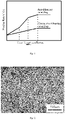
- Fig. 1 is a schematic process diagram showing different annealing process adopted.
- the manufacturing method adopted by the present invention adopts rapid heating annealing, it is different from the conventional heating annealing process.
- the present invention does not set normalizing treatment between hot rolling and cold rolling, but utilizes an intermediate annealing process to perform rapid and short-time heating and heat holding treatment on the hot-rolled steel plate, and the heating method may adopt, for example, ohmic heating or electromagnetic induction heating.
- the heating rate When heating is performed at the first rate, the higher the heating rate is, the more favorable to inhibiting growth of harmful ⁇ 111 ⁇ surface texture and promoting morphology control of equiaxial crystal ratio, and the more favorable to electromagnetic property of the finished steel plate.
- the first rate can be controlled to be 50-400°C/s.
- the holding time of the first rate may be controlled to be 1-180 s, which has been greatly reduced comparing to the normalizing soaking time of the conventional heating annealing process.
- the higher the contents of the chemical components Si, Mn, and Al and the larger the first rate the larger the k value would be, wherein k is ranged from 100-450°C 2 /s.
- ohmic heating or electromagnetic induction heating may also be adopted for heating. Heating is performed from the rapid heating initial temperature T initial to the crystallization end temperature T crystallization-ending so as to further control release of stored energy and proportion of different kinds of surface textures in the cold-rolled steel plate.
- the rapid heating process lasts until recrystallization of the cold-rolled steel plate ends, because at this time, nucleation would be sufficient and contains no fibrous structure.
- a conventional heating rate for example, a heating rate of 1-30°C/s
- a rapid heating for example, a heating rate of 100-5000°C/s
- the second rate is 100-5000°C/s, this is because: if the second rate is too slow, release of the stored energy of deformation during cold rolling would be fast, which is detrimental to controlling of the subsequent favorable structure; or if the second rate is too high, it would result in high requirement for the equipment performance and high cost, and further prolongs the holding time of the cold-rolled steel plate at high temperature stage, which leads to poor uniformity of the grain structure.
- the thin-gauge non-oriented electrical steel plate obtained by adopting the manufacturing method of the present invention has an iron loss P 10/400 of ⁇ 12 W/kg, and a magnetic induction B 50 of ⁇ 1.68 T.
- Fig. 2 is a scanning electron microscope (SEM) image of the thin-gauge non-oriented electrical steel plate of Example A9.
- Fig. 3 is a scanning electron microscope (SEM) image of the conventional steel plate of Comparative example A2.
- the S grains of the thin-gauge non-oriented electrical steel plate of Example A9 are regular in shape, uniform in size and moderate in distribution.
- the conventional steel plate of the Comparative example A2 in Fig. 3 has fine grains, and the grains are irregular in shape and large in size and have a segregation phenomenon.
- Fig. 4 schematically shows influence of different cold rolling reduction ratios on the magnetic induction.
- the thin-gauge non-oriented electrical steel plate with the magnetic induction B 50 of ⁇ 1.68 T and the excellent magnetic property can be obtained, this is because: when the cold rolling reduction ratio is controlled to be 75%-90%, crystal recovery can be effectively inhibited in the subsequent continuous annealing process and can increase residual stored energy of deformation before recrystallization, thus the nucleation driving force is increased and reducing the intensity of the components of the ⁇ 111>//ND recrystallization texture, thereby facilitating improvement and enhancement of the electromagnetic property, and finally obtain the thin-gauge non-oriented electrical steel plate.
- Fig. 5 schematically shows influence of different mass percentages of Ca on the iron loss.
- the mass percentage of Ca is controlled to be 0.0005-0.01 %, so as to obtain the thin-gauge non-oriented electrical steel plate with the iron loss P 10/400 of ⁇ 12 W/kg.
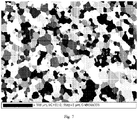
- Fig. 6 is a texture figure of the thin-gauge non-oriented electrical steel plate of Example A15.
- Fig. 7 is a texture figure of the conventional steel plate of the Comparative example A3.
- the thin-gauge non-oriented electrical steel plate according to the present invention has the characteristic of excellent magnetic property, and has an iron loss of P 10/400 ⁇ 12 W/kg, and a magnetic induction B 50 of ⁇ 1.68 T.
- the manufacturing method according to the present invention also has the above advantages and beneficial effects.
Landscapes
- Chemical & Material Sciences (AREA)
- Engineering & Computer Science (AREA)
- Materials Engineering (AREA)
- Mechanical Engineering (AREA)
- Metallurgy (AREA)
- Organic Chemistry (AREA)
- Physics & Mathematics (AREA)
- Thermal Sciences (AREA)
- Crystallography & Structural Chemistry (AREA)
- Electromagnetism (AREA)
- Manufacturing & Machinery (AREA)
- Manufacturing Of Steel Electrode Plates (AREA)
- Soft Magnetic Materials (AREA)
Applications Claiming Priority (2)
| Application Number | Priority Date | Filing Date | Title |
|---|---|---|---|
| CN201910791165.8A CN112430778A (zh) | 2019-08-26 | 2019-08-26 | 一种薄规格无取向电工钢板及其制造方法 |
| PCT/CN2020/111403 WO2021037062A1 (fr) | 2019-08-26 | 2020-08-26 | Tôle d'acier électrique non orientée et son procédé de fabrication |
Publications (2)
| Publication Number | Publication Date |
|---|---|
| EP4001448A1 true EP4001448A1 (fr) | 2022-05-25 |
| EP4001448A4 EP4001448A4 (fr) | 2022-07-27 |
Family
ID=74684525
Family Applications (1)
| Application Number | Title | Priority Date | Filing Date |
|---|---|---|---|
| EP20859469.7A Pending EP4001448A4 (fr) | 2019-08-26 | 2020-08-26 | Tôle d'acier électrique non orientée et son procédé de fabrication |
Country Status (8)
| Country | Link |
|---|---|
| US (1) | US20230416883A1 (fr) |
| EP (1) | EP4001448A4 (fr) |
| JP (1) | JP7815105B2 (fr) |
| CN (1) | CN112430778A (fr) |
| BR (1) | BR112022003356A2 (fr) |
| CA (1) | CA3151686A1 (fr) |
| MX (1) | MX2022001808A (fr) |
| WO (1) | WO2021037062A1 (fr) |
Cited By (1)
| Publication number | Priority date | Publication date | Assignee | Title |
|---|---|---|---|---|
| EP4317474A4 (fr) * | 2021-03-31 | 2024-12-04 | Nippon Steel Corporation | Feuille d'acier électromagnétique non orientée |
Families Citing this family (4)
| Publication number | Priority date | Publication date | Assignee | Title |
|---|---|---|---|---|
| PL4273279T3 (pl) * | 2021-03-31 | 2025-06-09 | Nippon Steel Corporation | Blacha cienka z niezorientowanej stali elektrotechnicznej, rdzeń silnika, sposób wytwarzania blachy cienkiej z niezorientowanej stali elektrotechnicznej i sposób wytwarzania rdzenia silnika |
| CN117120648A (zh) * | 2021-03-31 | 2023-11-24 | 日本制铁株式会社 | 无取向性电磁钢板 |
| KR20230094463A (ko) * | 2021-12-21 | 2023-06-28 | 주식회사 포스코 | 무방향성 전기강판 및 그 제조방법 |
| WO2025159168A1 (fr) * | 2024-01-25 | 2025-07-31 | 日本製鉄株式会社 | Tôle acier électromagnétique à grains non orientés, noyau de rotor, noyau de stator et moteur |
Family Cites Families (44)
| Publication number | Priority date | Publication date | Assignee | Title |
|---|---|---|---|---|
| JPS51151215A (en) * | 1975-06-21 | 1976-12-25 | Kawasaki Steel Corp | Process for manufacturing non-oriented silicon steel plate with low co re loss and high magnetic flux density |
| JPS5974257A (ja) * | 1982-10-20 | 1984-04-26 | Kawasaki Steel Corp | 鉄損の少ない無方向性珪素鋼板 |
| DD299102A7 (de) * | 1989-12-06 | 1992-04-02 | ������@����������@��������@��������@��@��������k�� | Verfahren zur herstellung von nichtorientiertem elektroblech |
| WO1993008313A1 (fr) * | 1991-10-22 | 1993-04-29 | Pohang Iron & Steel Co., Ltd. | Plaques d'acier a grains non orientes pour buts electriques presentant des proprietes magnetiques ameliorees, et procede de fabrication |
| JP4337146B2 (ja) | 1997-08-08 | 2009-09-30 | Jfeスチール株式会社 | 無方向性電磁鋼板の製造方法 |
| JPH11293426A (ja) * | 1998-02-13 | 1999-10-26 | Nkk Corp | 疲労特性に優れた無方向性電磁鋼板 |
| JP2001271147A (ja) * | 2000-03-27 | 2001-10-02 | Kawasaki Steel Corp | 磁気特性に優れた無方向性電磁鋼板 |
| TW498107B (en) | 2000-04-07 | 2002-08-11 | Nippon Steel Corp | Low iron loss non-oriented electrical steel sheet excellent in workability and method for producing the same |
| JP4599843B2 (ja) * | 2004-01-19 | 2010-12-15 | 住友金属工業株式会社 | 無方向性電磁鋼板の製造方法 |
| JP4648910B2 (ja) * | 2006-10-23 | 2011-03-09 | 新日本製鐵株式会社 | 磁気特性の優れた無方向性電磁鋼板の製造方法 |
| WO2009072394A1 (fr) | 2007-12-03 | 2009-06-11 | Nippon Steel Corporation | Plaque d'acier électromagnétique non orienté ayant une faible perte dans le fer aux fréquences élevées et procédé de fabrication de la plaque d'acier électromagnétique non orienté |
| JP5167824B2 (ja) * | 2008-01-17 | 2013-03-21 | Jfeスチール株式会社 | エッチング加工用無方向性電磁鋼板とモータコアの製造方法 |
| CN101684514A (zh) * | 2008-09-27 | 2010-03-31 | 鞍钢股份有限公司 | 一种高效冷轧电工钢产品的制造方法 |
| JP5447167B2 (ja) * | 2010-05-13 | 2014-03-19 | 新日鐵住金株式会社 | 無方向性電磁鋼板およびその製造方法 |
| US20110292798A1 (en) | 2010-05-28 | 2011-12-01 | Qualcomm Incorporated | SELECTIVELY PROVISIONING CALL SETUP QUALITY OF SERVICE (QoS) RESOURCE RESERVATIONS DURING A COMMUNICATION SESSION WITHIN A WIRELESS COMMUNICATIONS SYSTEM |
| JP5402846B2 (ja) * | 2010-06-17 | 2014-01-29 | 新日鐵住金株式会社 | 無方向性電磁鋼板の製造方法 |
| JP5671869B2 (ja) * | 2010-08-09 | 2015-02-18 | 新日鐵住金株式会社 | 無方向性電磁鋼板およびその製造方法 |
| JP2012036459A (ja) * | 2010-08-09 | 2012-02-23 | Sumitomo Metal Ind Ltd | 無方向性電磁鋼板およびその製造方法 |
| JP5716315B2 (ja) * | 2010-08-10 | 2015-05-13 | 新日鐵住金株式会社 | 無方向性電磁鋼板およびその製造方法 |
| MX2013009670A (es) * | 2011-02-24 | 2013-10-28 | Jfe Steel Corp | Lamina de acero electrico no orientado y metodo para fabricar la misma. |
| CN102758150A (zh) * | 2011-04-28 | 2012-10-31 | 宝山钢铁股份有限公司 | 高屈服强度的无取向电工钢板及其制造方法 |
| JP5712863B2 (ja) * | 2011-08-23 | 2015-05-07 | 新日鐵住金株式会社 | 無方向性電磁鋼板の製造方法 |
| CN103305659B (zh) * | 2012-03-08 | 2016-03-30 | 宝山钢铁股份有限公司 | 磁性优良的无取向电工钢板及其钙处理方法 |
| JP5892327B2 (ja) * | 2012-03-15 | 2016-03-23 | Jfeスチール株式会社 | 無方向性電磁鋼板の製造方法 |
| KR101203791B1 (ko) * | 2012-03-27 | 2012-11-21 | 허남회 | 자성특성이 우수한 (100)〔0vw〕 무방향성 전기강판의 제조방법 |
| CN102634729B (zh) * | 2012-04-01 | 2013-07-17 | 首钢总公司 | 一种低铁损高磁感高牌号无取向硅钢的制备方法 |
| WO2014020369A1 (fr) * | 2012-07-31 | 2014-02-06 | Arcelormittal Investigación Y Desarrollo Sl | Procédé de production d'une tôle d'acier au silicium à grains orientés, tôle d'acier électrique à grains orientés et son utilisation |
| CN104583442B (zh) * | 2012-10-19 | 2016-10-05 | 新日铁住金株式会社 | 疲劳特性优良的高频淬火用钢 |
| CN102925816B (zh) * | 2012-11-21 | 2015-05-20 | 武汉钢铁(集团)公司 | 电驱动电机用无取向硅钢及其生产方法 |
| CN103834858B (zh) * | 2012-11-23 | 2016-10-05 | 宝山钢铁股份有限公司 | 一种低铁损无取向硅钢的制造方法 |
| JP6176181B2 (ja) * | 2014-04-22 | 2017-08-09 | Jfeスチール株式会社 | 積層電磁鋼板およびその製造方法 |
| JP5975076B2 (ja) * | 2014-08-27 | 2016-08-23 | Jfeスチール株式会社 | 無方向性電磁鋼板およびその製造方法 |
| JP6406522B2 (ja) * | 2015-12-09 | 2018-10-17 | Jfeスチール株式会社 | 無方向性電磁鋼板の製造方法 |
| CA3008588C (fr) * | 2015-12-28 | 2020-09-01 | Jfe Steel Corporation | Tole d'acier electromagnetique a grains non orientes et procede de production de tole electromagnetique a grains non orientes |
| CN105925884B (zh) * | 2016-05-30 | 2018-03-09 | 宝山钢铁股份有限公司 | 一种高磁感、低铁损无取向硅钢片及其制造方法 |
| CN107541582B (zh) * | 2016-06-23 | 2019-07-19 | 上海梅山钢铁股份有限公司 | 一种磁性优良的无取向电工钢钙处理方法 |
| WO2018079059A1 (fr) * | 2016-10-27 | 2018-05-03 | Jfeスチール株式会社 | Tôle d'acier électromagnétique non orientée et son procédé de production |
| CN108004463A (zh) * | 2016-10-28 | 2018-05-08 | 宝山钢铁股份有限公司 | 一种磁性能优良的无取向电工钢及其制造方法 |
| CA3051823C (fr) * | 2017-02-07 | 2022-07-12 | Jfe Steel Corporation | Methode de production d'une tole en acier a champ electrique non orientee, methode de production d'une ame de moteur, et ame de moteur |
| CN110366604B (zh) * | 2017-03-07 | 2021-08-10 | 日本制铁株式会社 | 无取向电磁钢板及无取向电磁钢板的制造方法 |
| JP6903996B2 (ja) * | 2017-03-28 | 2021-07-14 | 日本製鉄株式会社 | 無方向性電磁鋼板 |
| KR102043525B1 (ko) * | 2017-12-26 | 2019-11-12 | 주식회사 포스코 | 자기적 특성 및 형상이 우수한 박물 무방향성 전기강판 및 그 제조방법 |
| JP7352057B2 (ja) * | 2018-03-30 | 2023-09-28 | 日本製鉄株式会社 | 無方向性電磁鋼板およびその製造方法、並びにモータコアおよびその製造方法 |
| CN108754326A (zh) * | 2018-06-14 | 2018-11-06 | 马鞍山钢铁股份有限公司 | 一种无取向电工钢薄带及其生产方法 |
-
2019
- 2019-08-26 CN CN201910791165.8A patent/CN112430778A/zh active Pending
-
2020
- 2020-08-26 JP JP2022511336A patent/JP7815105B2/ja active Active
- 2020-08-26 EP EP20859469.7A patent/EP4001448A4/fr active Pending
- 2020-08-26 MX MX2022001808A patent/MX2022001808A/es unknown
- 2020-08-26 US US17/636,804 patent/US20230416883A1/en active Pending
- 2020-08-26 CA CA3151686A patent/CA3151686A1/fr active Pending
- 2020-08-26 WO PCT/CN2020/111403 patent/WO2021037062A1/fr not_active Ceased
- 2020-08-26 BR BR112022003356A patent/BR112022003356A2/pt not_active Application Discontinuation
Cited By (1)
| Publication number | Priority date | Publication date | Assignee | Title |
|---|---|---|---|---|
| EP4317474A4 (fr) * | 2021-03-31 | 2024-12-04 | Nippon Steel Corporation | Feuille d'acier électromagnétique non orientée |
Also Published As
| Publication number | Publication date |
|---|---|
| BR112022003356A2 (pt) | 2022-05-17 |
| JP2022545889A (ja) | 2022-11-01 |
| JP7815105B2 (ja) | 2026-02-17 |
| CN112430778A (zh) | 2021-03-02 |
| CA3151686A1 (fr) | 2021-03-04 |
| MX2022001808A (es) | 2022-03-11 |
| US20230416883A1 (en) | 2023-12-28 |
| EP4001448A4 (fr) | 2022-07-27 |
| WO2021037062A1 (fr) | 2021-03-04 |
Similar Documents
| Publication | Publication Date | Title |
|---|---|---|
| JP7454646B2 (ja) | 高磁気誘導方向性ケイ素鋼およびその製造方法 | |
| EP3733880B1 (fr) | Tôle d'acier électrique à grains non orientés et son procédé de fabrication | |
| EP3656885A1 (fr) | Plaque d'acier électromagnétique non orientée | |
| JP4126479B2 (ja) | 無方向性電磁鋼板の製造方法 | |
| EP2832866A1 (fr) | Tôle d'acier magnétique non orienté de type (100 [ovw]présentant une excellente propriété magnétique et son procédé de fabrication | |
| US20230416883A1 (en) | Non-oriented electrical steel plate and manufacturing method therefor | |
| EP3184660B1 (fr) | Tôle d'acier électromagnétique non orienté et son procédé de fabrication | |
| EP3992325B1 (fr) | Tôle d'acier électrique non orientée et son procédé de fabrication | |
| CN104136637B (zh) | 无取向性电磁钢板的制造方法 | |
| CN103270180B (zh) | 具有优异磁性能的取向电工钢板及其制造方法 | |
| EP2940170B1 (fr) | Tôle d'acier magnétique à grains orientés ayant une excellente perte de coeur et son procédé de fabrication | |
| EP3546609B1 (fr) | Tôle d'acier électrique à grains non orientés et son procédé de fabrication | |
| JP7462737B2 (ja) | 600MPa級無方向性電磁鋼板及びその製造方法 | |
| EP3798328A1 (fr) | Tôle d'acier électromagnétique non orientée et son procédé de fabrication | |
| KR102742671B1 (ko) | 무방향성 전자 강판 | |
| EP3901311A1 (fr) | Tôle d'acier électrique à grains orientés et son procédé de fabrication | |
| JP5263012B2 (ja) | 無方向性電磁鋼板およびその製造方法 | |
| WO2023112891A1 (fr) | Tôle d'acier électromagnétique non orienté et son procédé de fabrication | |
| JP5287615B2 (ja) | 方向性電磁鋼板の製造方法 | |
| EP4001451A1 (fr) | Tôle d'acier électrique non orientée contenant du cu et son procédé de fabrication | |
| CN120719213B (zh) | 高牌号无取向硅钢及其免常化生产方法 | |
| JP4586741B2 (ja) | 無方向性電磁鋼板およびその製造方法 | |
| CN1803389B (zh) | 无方向性电磁钢板的制造方法和原料热轧钢板 | |
| JP4660474B2 (ja) | 打抜き加工性と歪取焼鈍後の磁気特性に優れた無方向性電磁鋼板とその製造方法 | |
| JP2002129234A (ja) | 高磁束密度薄手一方向性電磁鋼板の製造方法 |
Legal Events
| Date | Code | Title | Description |
|---|---|---|---|
| STAA | Information on the status of an ep patent application or granted ep patent |
Free format text: STATUS: THE INTERNATIONAL PUBLICATION HAS BEEN MADE |
|
| PUAI | Public reference made under article 153(3) epc to a published international application that has entered the european phase |
Free format text: ORIGINAL CODE: 0009012 |
|
| STAA | Information on the status of an ep patent application or granted ep patent |
Free format text: STATUS: REQUEST FOR EXAMINATION WAS MADE |
|
| 17P | Request for examination filed |
Effective date: 20220215 |
|
| AK | Designated contracting states |
Kind code of ref document: A1 Designated state(s): AL AT BE BG CH CY CZ DE DK EE ES FI FR GB GR HR HU IE IS IT LI LT LU LV MC MK MT NL NO PL PT RO RS SE SI SK SM TR |
|
| REG | Reference to a national code |
Ref country code: DE Ref legal event code: R079 Free format text: PREVIOUS MAIN CLASS: C22C0038000000 Ipc: C22C0038020000 |
|
| A4 | Supplementary search report drawn up and despatched |
Effective date: 20220629 |
|
| RIC1 | Information provided on ipc code assigned before grant |
Ipc: C21D 6/00 20060101ALI20220623BHEP Ipc: C21D 1/26 20060101ALI20220623BHEP Ipc: C21D 8/12 20060101ALI20220623BHEP Ipc: C21D 9/46 20060101ALI20220623BHEP Ipc: C22C 38/14 20060101ALI20220623BHEP Ipc: C22C 38/60 20060101ALI20220623BHEP Ipc: C22C 38/12 20060101ALI20220623BHEP Ipc: C22C 38/00 20060101ALI20220623BHEP Ipc: C22C 38/06 20060101ALI20220623BHEP Ipc: C22C 38/04 20060101ALI20220623BHEP Ipc: C22C 38/02 20060101AFI20220623BHEP |
|
| DAV | Request for validation of the european patent (deleted) | ||
| DAX | Request for extension of the european patent (deleted) | ||
| STAA | Information on the status of an ep patent application or granted ep patent |
Free format text: STATUS: EXAMINATION IS IN PROGRESS |
|
| 17Q | First examination report despatched |
Effective date: 20250108 |