EP4005908B1 - Neigefahrzeug - Google Patents
Neigefahrzeug Download PDFInfo
- Publication number
- EP4005908B1 EP4005908B1 EP20861740.7A EP20861740A EP4005908B1 EP 4005908 B1 EP4005908 B1 EP 4005908B1 EP 20861740 A EP20861740 A EP 20861740A EP 4005908 B1 EP4005908 B1 EP 4005908B1
- Authority
- EP
- European Patent Office
- Prior art keywords
- leaning
- steering handle
- range
- vehicle body
- lean
- Prior art date
- Legal status (The legal status is an assumption and is not a legal conclusion. Google has not performed a legal analysis and makes no representation as to the accuracy of the status listed.)
- Active
Links
Images





Classifications
-
- B—PERFORMING OPERATIONS; TRANSPORTING
- B62—LAND VEHICLES FOR TRAVELLING OTHERWISE THAN ON RAILS
- B62K—CYCLES; CYCLE FRAMES; CYCLE STEERING DEVICES; RIDER-OPERATED TERMINAL CONTROLS SPECIALLY ADAPTED FOR CYCLES; CYCLE AXLE SUSPENSIONS; CYCLE SIDECARS, FORECARS, OR THE LIKE
- B62K5/00—Cycles with handlebars, equipped with three or more main road wheels
- B62K5/10—Cycles with handlebars, equipped with three or more main road wheels with means for inwardly inclining the vehicle body on bends
-
- B—PERFORMING OPERATIONS; TRANSPORTING
- B62—LAND VEHICLES FOR TRAVELLING OTHERWISE THAN ON RAILS
- B62K—CYCLES; CYCLE FRAMES; CYCLE STEERING DEVICES; RIDER-OPERATED TERMINAL CONTROLS SPECIALLY ADAPTED FOR CYCLES; CYCLE AXLE SUSPENSIONS; CYCLE SIDECARS, FORECARS, OR THE LIKE
- B62K5/00—Cycles with handlebars, equipped with three or more main road wheels
- B62K5/08—Cycles with handlebars, equipped with three or more main road wheels with steering devices acting on two or more wheels
-
- B—PERFORMING OPERATIONS; TRANSPORTING
- B62—LAND VEHICLES FOR TRAVELLING OTHERWISE THAN ON RAILS
- B62D—MOTOR VEHICLES; TRAILERS
- B62D9/00—Steering deflectable wheels not otherwise provided for
- B62D9/02—Steering deflectable wheels not otherwise provided for combined with means for inwardly inclining vehicle body on bends
-
- B—PERFORMING OPERATIONS; TRANSPORTING
- B62—LAND VEHICLES FOR TRAVELLING OTHERWISE THAN ON RAILS
- B62J—CYCLE SADDLES OR SEATS; AUXILIARY DEVICES OR ACCESSORIES SPECIALLY ADAPTED TO CYCLES AND NOT OTHERWISE PROVIDED FOR, e.g. ARTICLE CARRIERS OR CYCLE PROTECTORS
- B62J45/00—Electrical equipment arrangements specially adapted for use as accessories on cycles, not otherwise provided for
- B62J45/20—Cycle computers as cycle accessories
-
- B—PERFORMING OPERATIONS; TRANSPORTING
- B62—LAND VEHICLES FOR TRAVELLING OTHERWISE THAN ON RAILS
- B62J—CYCLE SADDLES OR SEATS; AUXILIARY DEVICES OR ACCESSORIES SPECIALLY ADAPTED TO CYCLES AND NOT OTHERWISE PROVIDED FOR, e.g. ARTICLE CARRIERS OR CYCLE PROTECTORS
- B62J45/00—Electrical equipment arrangements specially adapted for use as accessories on cycles, not otherwise provided for
- B62J45/40—Sensor arrangements; Mounting thereof
- B62J45/41—Sensor arrangements; Mounting thereof characterised by the type of sensor
- B62J45/413—Rotation sensors
-
- B—PERFORMING OPERATIONS; TRANSPORTING
- B62—LAND VEHICLES FOR TRAVELLING OTHERWISE THAN ON RAILS
- B62J—CYCLE SADDLES OR SEATS; AUXILIARY DEVICES OR ACCESSORIES SPECIALLY ADAPTED TO CYCLES AND NOT OTHERWISE PROVIDED FOR, e.g. ARTICLE CARRIERS OR CYCLE PROTECTORS
- B62J45/00—Electrical equipment arrangements specially adapted for use as accessories on cycles, not otherwise provided for
- B62J45/40—Sensor arrangements; Mounting thereof
- B62J45/42—Sensor arrangements; Mounting thereof characterised by mounting
- B62J45/422—Sensor arrangements; Mounting thereof characterised by mounting on the handlebar
-
- B—PERFORMING OPERATIONS; TRANSPORTING
- B62—LAND VEHICLES FOR TRAVELLING OTHERWISE THAN ON RAILS
- B62K—CYCLES; CYCLE FRAMES; CYCLE STEERING DEVICES; RIDER-OPERATED TERMINAL CONTROLS SPECIALLY ADAPTED FOR CYCLES; CYCLE AXLE SUSPENSIONS; CYCLE SIDECARS, FORECARS, OR THE LIKE
- B62K5/00—Cycles with handlebars, equipped with three or more main road wheels
- B62K5/01—Motorcycles with four or more wheels
-
- B—PERFORMING OPERATIONS; TRANSPORTING
- B62—LAND VEHICLES FOR TRAVELLING OTHERWISE THAN ON RAILS
- B62K—CYCLES; CYCLE FRAMES; CYCLE STEERING DEVICES; RIDER-OPERATED TERMINAL CONTROLS SPECIALLY ADAPTED FOR CYCLES; CYCLE AXLE SUSPENSIONS; CYCLE SIDECARS, FORECARS, OR THE LIKE
- B62K5/00—Cycles with handlebars, equipped with three or more main road wheels
- B62K5/02—Tricycles
- B62K5/027—Motorcycles with three wheels
-
- B—PERFORMING OPERATIONS; TRANSPORTING
- B62—LAND VEHICLES FOR TRAVELLING OTHERWISE THAN ON RAILS
- B62K—CYCLES; CYCLE FRAMES; CYCLE STEERING DEVICES; RIDER-OPERATED TERMINAL CONTROLS SPECIALLY ADAPTED FOR CYCLES; CYCLE AXLE SUSPENSIONS; CYCLE SIDECARS, FORECARS, OR THE LIKE
- B62K5/00—Cycles with handlebars, equipped with three or more main road wheels
- B62K5/02—Tricycles
- B62K5/05—Tricycles characterised by a single rear wheel
-
- B—PERFORMING OPERATIONS; TRANSPORTING
- B62—LAND VEHICLES FOR TRAVELLING OTHERWISE THAN ON RAILS
- B62K—CYCLES; CYCLE FRAMES; CYCLE STEERING DEVICES; RIDER-OPERATED TERMINAL CONTROLS SPECIALLY ADAPTED FOR CYCLES; CYCLE AXLE SUSPENSIONS; CYCLE SIDECARS, FORECARS, OR THE LIKE
- B62K21/00—Steering devices
Definitions
- the present teaching relates to a leaning vehicle, and more particularly, to a leaning vehicle of which the vehicle body is leaned by a lean actuator in accordance with operation of the steering handle that is mechanically connected to the front wheel(s).
- An objective of the present teaching is to provide a leaning vehicle that is more highly controllable in response to the rider's operation of the steering handle that is mechanically connected to the front wheel(s).
- a leaning vehicle includes: a vehicle body; one or two front wheels supported by the vehicle body; one or two rear wheels supported by the vehicle body, the number of rear wheels being two when the number of front wheels is one and the number of rear wheels being one or two when the number of front wheels is two; a leaning device that leans the vehicle body, the front wheel(s) and the rear wheel(s) leftward when the leaning vehicle turns left and leans the vehicle body, the front wheel(s) and the rear wheel(s) rightward when the leaning vehicle turns right; a steering handle that is mechanically connected to the front wheel(s) and is rotatable by a rider of the leaning vehicle to change the traveling direction of the front wheel(s), the steering handle being rotated counter-clockwise to turn the front wheel(s) left and being rotated clockwise to turn the front wheel(s) right; a lean actuator that is connected to the leaning device and supplies a power to the leaning device for leaning of the vehicle
- a position of the steering handle that permits the leaning vehicle to go straight is defined as the neutral position
- a range in which the steering handle is rotatable counter-clockwise from the neutral position is defined as counter-clockwise rotatable range
- a range that is a part of the counter-clockwise rotatable range and continuous from the neutral position is defined as first counter-clockwise rotation range
- a range in which the steering handle is rotatable clockwise from the neutral position is defined as clockwise rotation range
- a range that is a part of the clockwise rotatable range and continuous from the neutral position is defined as first clockwise rotatable range.
- the control unit controls the lean actuator such that the leaning device restrains the vehicle body, the front wheel(s) and the rear wheel(s) from leaning along with the rotation of the steering handle.
- the traveling direction of the front wheel(s) can be changed mechanically while the vehicle body is, for example, kept perfectly or almost upright.
- the controllability of the leaning vehicle in response to the rider's operation of the steering handle can be enhanced.
- the vehicle body includes a vehicle body frame.
- the vehicle body frame may be a frame assembled from a plurality of components, or a frame formed as a one-piece body of a plurality of parts.
- the material of the vehicle body frame may be metal such as aluminum, iron, or the like, synthetic resin such as CFRP or the like, or a combination of metal and synthetic resin.
- the vehicle body frame may be a monocoque type that is formed of exterior parts of the leaning vehicle or may be a semi-monocoque type, part of which also functions as the exterior of the leaning vehicle.
- the one or two front wheels are supported by the vehicle body, for example, in such a manner as to be rotatable around an axis extending in the upward-downward direction of the vehicle body.
- the axis extending in the upward-downward direction of the vehicle body does not necessarily extend in the vertical direction when the vehicle body is upright.
- the axis extending in the upward-downward direction of the vehicle body may be inclined backward from the vertical direction when the vehicle body is upright. In other words, an upper part of the axis extending in the upward-downward direction of the vehicle body may be in a more rearward position than a lower part of the axis.
- the front wheel(s) may be supported, for example, by the vehicle body directly or indirectly.
- the indirect way of supporting the front wheel(s) by the vehicle body includes, for example, using a suspension that is located between the front wheel(s) and the vehicle body and connects the front wheel(s) to the vehicle body. If the suspension is used to support one front wheel by the vehicle body, the suspension is, for example, a telescopic type or a bottom link type front fork. If the suspension is used to support two front wheels by the vehicle body, the suspension is, for example, an independent suspension. The two front wheels are arranged, for example, side by side in the leftward-rightward direction of the leaning vehicle.
- the rear wheel(s) may be supported, for example, by the vehicle body directly or indirectly.
- the indirect way of supporting the rear wheel(s) by the vehicle body includes, for example, using a suspension that is located between the rear wheel(s) and the vehicle body and connects the rear wheel(s) to the vehicle body. If the suspension is used to support one rear wheel by the vehicle body, the suspension is, for example, a swing arm suspension. If the suspension is used to support two rear wheel(s) by the vehicle body, the suspension is, for example, an independent suspension. The two rear wheels are arranged, for example, side by side in the leftward-rightward direction of the leaning vehicle.
- the leaning device includes a link mechanism that is shape-changeable by a power transmitted from the lean actuator.
- a link mechanism for example, includes a parallelogram -link leaning mechanism that leans two front wheels. How the leaning device leans the vehicle body, the front wheel(s) and the rear wheel(s) leftward or rightward includes the leaning device leaning any of the vehicle body, the front wheel(s) and the rear wheel(s) leftward or rightward, followed by leftward or rightward leaning of the others of the vehicle body, the front wheel(s) and the rear wheel(s).
- the lean actuator may be connected to the leaning device directly or indirectly.
- the lean actuator for example, includes an output member mechanically connected to the leaning device.
- the way of mechanically connecting the output member to the leaning device for example, includes a way to permit power transmission from the output member to the leaning device.
- the lean actuator is, for example, an electric motor that includes an output member that is rotatable forward and in reverse. How the lean actuator supplies a power to the leaning device for leaning of the vehicle body, the front wheel(s) and the rear wheel(s) includes, for example, changing the shape of the link mechanism of the leaning device by a power supplied from the lean actuator.
- the lean actuator supplies a power to the leaning device for leaning of the vehicle body, the front wheel(s) and the rear wheel(s) includes, for example, the lean actuator supplying a power to the leaning device for leaning of any of the vehicle body, the front wheel(s) and the rear wheel(s) leftward or rightward, followed by adjustment of leaning of the others of the vehicle body, the front wheel(s) and the rear wheel(s).
- the way of mechanically connecting the steering handle to the front wheel(s) includes, for example, a way to permit power transmission from the steering handle to the front wheel(s).
- the way of mechanically connecting the steering handle to the front wheel(s) includes, for example, connecting the steering handle to the axle(s) of the front wheel(s).
- the way of mechanically connecting the steering handle to the front wheel(s) includes, for example, connecting the steering handle to the front wheel(s) via a suspension that permits the front wheel(s) to be supported by the vehicle body.
- How the steering handle is rotated includes, for example, the steering handle being rotated around an axis extending in the upward-downward direction of the vehicle body within less than 360 degrees.
- the axis extending in the upward-downward direction of the vehicle body does not necessarily extend in the vertical direction when the vehicle body is upright.
- the signal outputted and sent from the steering-handle rotation sensor, which indicates the amount of rotation of the steering handle may be an analogue signal or a digital signal.
- control unit is, for example, an ECU (electric control unit).
- the ECU is implemented, for example, by a combination of an IC (integrated circuit), an electronic component, a circuit board, and the like.
- the control unit performs control, for example, when a CPU (central processing unit) reads a program stored in a non-volatile memory and carries out a specified procedure following the program.
- the counter-clockwise rotation of the front wheel(s) and the steering handle is counterclockwise rotation from above.
- the clockwise rotation of the front wheel(s) and the steering handle is clockwise rotation from above.
- the first counter-clockwise rotation range when the counter-clockwise rotatable range is divided into a plurality of divisions, the first counter-clockwise rotation range is the closest division to the neutral position among these divisions.
- the first counter-clockwise rotation range may be narrower than the total range of the other divisions.
- the first clockwise rotation range when the clockwise rotatable range is divided into a plurality of divisions, the first clockwise rotation range is the closest division to the neutral position among these divisions.
- the first clockwise rotation range for example, may be narrower than the total range of the other divisions.
- the control unit may control the lean actuator such that the leaning device leans the vehicle body, the front wheel(s) and the rear wheel(s) leftward.
- the control unit may control the lean actuator such that the leaning device leans the vehicle body, the front wheel(s) and the rear wheel(s) leftward in accordance with the amount of the counter-clockwise rotation of the steering handle.
- the mode in which when the steering handle is rotated within the first counter-clockwise rotation range, the control unit controls the lean actuator such that the leaning device restrains the vehicle body, the front wheel(s) and the rear wheel(s) from leaning along with the rotation of the steering handle includes, for example, the control unit controlling the lean actuator such that the leaning device causes the vehicle body, the front wheel(s) and the rear wheel(s) to lean less, compared with a case in which the steering handle is rotated beyond the first counter-clockwise rotation range in the counter-clockwise rotatable range.
- the control unit may control the lean actuator such that the leaning device leans the vehicle body, the front wheel(s) and the rear wheel(s) rightward.
- the control unit may control the lean actuator such that the leaning device leans the vehicle body, the front wheel(s) and the rear wheel(s) rightward in accordance with the amount of the clockwise rotation of the steering handle.
- the mode in which when the steering handle is rotated within the first clockwise rotation range, the control unit controls the lean actuator such that the leaning device restrains the vehicle body, the front wheel(s) and the rear wheel(s) from leaning along with the rotation of the steering handle includes, for example, the control unit controlling the lean actuator such that the leaning device causes the vehicle body, the front wheel(s) and the rear wheel(s) to lean less, compared with a case in which the steering handle is rotated beyond the first clockwise rotation range in the clockwise rotatable range.
- Restraining the vehicle body, the front wheel(s) and the rear wheel(s) from leaning means making a change in the degree of leaning or lean angle along with rotation of the steering handle smaller than a change in the degree of leaning or lean angle along with the rotation of the steering handle when the control unit does not perform the control to restrain the leaning.
- Restraining the vehicle body, the front wheel(s) and the rear wheel(s) from leaning includes making a zero change in the degree of leaning or lean angle along with rotation of the steering handle.
- Restraining the vehicle body, the front wheel(s) and the rear wheel(s) from leaning may include making a power required for leaning of the vehicle body, the front wheel(s) and the rear wheel(s) greater than a power required for the leaning when the control unit does not perform the control to restrain the leaning.
- the control unit controls the lean actuator preferably such that the leaning device keeps the vehicle body, the front wheel(s) and the rear wheel(s) upright.
- a phrase referring to the vehicle body being upright means that the vehicle body is substantially upright for the rider of the leaning vehicle.
- Such a state of the vehicle body includes a state in which the lean angle of the vehicle body is actually within ⁇ 3 degrees.
- Such a state of the vehicle body is preferably a state in which the lean angle of the vehicle body is actually within ⁇ 2 degrees.
- a phrase referring to controlling the lean actuator such that the vehicle body is kept upright may mean controlling the lean actuator with the target value of lean angle set to ⁇ 3 degrees.
- the actual lean angle of the vehicle body may become within ⁇ 3 degrees depending on the accuracy of the sensor that detects the lean angle of the vehicle body and/or the accuracy of the lean actuator. This case is included in controlling the lean actuator such that the vehicle body is kept upright. The same applies to a phrase referring to the front wheel(s) being upright and a phrase referring to the rear wheel(s) being upright, and any detailed descriptions of these phrases will not be given.
- the steering handle is rotated around its axis, and in a left or right side view of the leaning vehicle, the intersection point between the axis of rotation of the steering handle and a road surface is preferably in a more frontward position than the contact point of the front wheel(s) with the road surface.
- the steering-handle rotation sensor is configured to not change the output signal when the steering handle is rotated within the first counter-clockwise rotation range or the first clockwise rotation range.
- the steering-handle rotation sensor for example, includes a movable contact point that moves together with the steering handle during rotation of the steering handle, and a fixed contact point that is capable of coming into contact with the movable contact point.
- the way of configuring the steering-handle rotation sensor to not change the output signal when the steering handle is rotated within the first counter-clockwise rotation range or the first clockwise rotation range includes, for example, preventing the movable contact point from coming into contact with the fixed contact point when the steering handle is rotated within the first counter-clockwise rotation range or the first clockwise rotation range, and preventing the steering-handle rotation sensor from changing the output signal though allowing the movable contact point to come into contact with the fixed contact point when the steering handle is rotated within the first counter-clockwise rotation range or the first clockwise rotation range.
- the steering-handle rotation sensor may be a steering angle sensor that is capable of detecting the steering angle within the entire steerable range. A conventional sensor is usable as such a steering angle sensor.
- the present teaching provides a leaning vehicle that is more highly controllable in response to the rider's operation of the steering handle that is mechanically connected to the front wheel(s).
- FIG. 1 is a diagram including a block diagram showing a system for lean control of the leaning vehicle 10 and illustration diagrams showing the lean control.
- directions relative to the leaning vehicle 10 are directions from the perspective of a rider sitting on the seat of the leaning vehicle 10.
- the vehicle body 20 of the leaning vehicle 10 is capable of leaning leftward L and rightward R.
- the upward-downward direction and the leftward-rightward direction of the vehicle body are not the same with the upward-downward direction UD and the leftward-rightward direction LR of the leaning vehicle 10.
- the upward-downward direction and the leftward-rightward direction of the vehicle body are the same with the upward-downward direction UD and the leftward-rightward direction LR of the leaning vehicle 10, respectively.
- the leaning vehicle 10 includes two front wheels 30F, one rear wheel 30B, a leaning device 40, a steering handle 50, a steering-handle rotation sensor 60, a lean actuator 70, and a control unit 80, in addition to the vehicle body 20. These will be described below.
- the vehicle body 20 includes, for example, a vehicle body frame.
- the two front wheels 30F are supported by the vehicle body 20.
- the two front wheels 30F are arranged side by side in the leftward-rightward direction LR.
- the two front wheels 30F are supported by the vehicle body 20 in such a manner as to be rotatable around an axis 50L extending in the upward-downward direction of the vehicle body 20.
- the rear wheel 30B is supported by the vehicle body 20.
- the leaning device 40 leans the vehicle body 20, the two front wheels 30F and the rear wheel 30B leftward L.
- the leaning device 40 leans the vehicle body 20, the two front wheels 30F and the rear wheel 30B rightward R.
- the steering handle 50 is mechanically connected to the two front wheels 30F.
- the steering handle 50 which is mechanically connected to the two front wheels 30F, the traveling direction of the two front wheels 30F is changed.
- the leaning vehicle 10 is not a type of vehicle that controls steering of the two front wheels 30F by wire.
- the steering handle 50 is placed in such a manner as to be rotatable around the axis 50L extending in the upward-downward direction of the vehicle body 20.
- the axis 50L is the axis of rotation of the steering handle 50.
- the range in which the steering handle 50 is rotatable leftward (counterclockwise in FIG. 1 ) from a neutral position is the same in width as the range in which the steering handle 50 is rotatable rightward (clockwise in FIG. 1 ) from the neutral position.
- the neutral position of the steering handle 50 is the position of the steering handle 50 when the steering handle 50 is not rotated.
- a line crossing the axis 50L of the steering handle 50 and extending in the frontward-backward direction of the vehicle body is parallel to the frontward-backward direction of the vehicle body 20.
- the axis 50L When viewed from a leftward (L) or rightward (R) position, the axis 50L is inclined from the vertical direction in such a manner that an upper part of the axis 50L is in a more rearward position. Accordingly, when viewed from a leftward (L) or rightward (R) position, the intersection point P 1 between the axis 50L and a road surface RS is in a more frontward position than the contact point P2 of each of the two front wheels 30L with the road surface RS. In other words, the leaning vehicle 10 has a positive trail value.
- the steering handle 50 is rotated counter-clockwise from the neutral position (position indicated by phantom line in FIG. 1 ) for a leftward (L) turn of the leaning vehicle 10.
- the steering handle 50 is rotated clockwise, which is the opposite direction to the counter-clockwise, from the neutral position (position indicated by phantom line in FIG. 1 ) for a rightward (R) turn of the leaning vehicle 10.
- the steering-handle rotation sensor 60 detects the amount of rotation of the steering handle 50.
- the steering-handle rotation sensor 60 for example, outputs a signal indicating the counter-clockwise rotation angle of the steering handle 50 from the neutral position and sends the signal to the control unit 80.
- the steering-handle rotation sensor 60 for example, outputs a signal indicating the clockwise rotation angle of the steering handle 50 from the neutral position and sends the signal to the control unit 80.
- the lean actuator 70 is connected to the leaning device 40.
- the lean actuator 70 is, for example, an electric motor that is mechanically connected to the leaning device 40 and includes an output member that is rotatable forward and in reverse.
- the lean actuator 70 supplies a power to the leaning device 40 for leaning of the vehicle body 20, the two front wheels 30F and the rear wheel 30B.
- the control unit 80 controls the lean actuator 70, depending on the signal indicating the amount of rotation of the steering handle 50, which is sent from the steering-handle rotation sensor 60.
- the control unit 80 controls the lean actuator 70 such that the vehicle body 20 is restrained from leaning.
- the control unit 80 controls the lean actuator 70 such that the vehicle body 20 is restrained from leaning.
- the steering handle 50 is rotatable counter-clockwise from the neutral position within a range L1, and the range (counter-clockwise rotatable range) L1 is divided into a first counter-clockwise rotation range L11 and a second counter-clockwise rotation range L12.
- the first counter-clockwise rotation range L 11 is closer to the neutral position
- the second counter-clockwise rotation range L12 is farther from the neutral position and includes the limit of the counter-clockwise rotatable range L1.
- the range L11 may be narrower than the range L12.
- the range L11 may be the same as the range L12 in width.
- the range L11 may be wider than the range L12.
- the steering handle 50 is rotatable clockwise from the neutral position within a range R1, and the range (clockwise rotatable range) R1 is divided into a first clockwise rotation range R11 and a second clockwise rotation range R12.
- the first clockwise rotation range R12 is closer to the neutral position, and the second clockwise rotation range R12 is farther from the neutral position and includes the limit of the clockwise rotatable range R1.
- the range R11 may be narrower than the range R12.
- the range R11 may be the same as the range R12 in width.
- the range R11 may be wider than the range R12.
- the control unit 80 controls the lean actuator 70 such that the more the steering handle 50 is rotated counter-clockwise, the more the vehicle body 20, the front wheels 30F and the rear wheel 30R lean leftward L.
- the control unit 80 does not restrain the vehicle body 20, the front wheels 30F and the rear wheel 30R from leaning leftward L.
- the control unit 80 controls the lean actuator 70 such that the more the steering handle 50 is rotated clockwise, the more the vehicle body 20, the front wheels 30F and the rear wheel 30R lean rightward R.
- the control unit 80 does not restrain the vehicle body 20, the front wheels 30F and the rear wheel 30R from leaning rightward R.
- FIG. 1 shows a case in which the steering handle 50 is rotated within the range L11 and a case in which the steering handle 50 is rotated within the range L12.
- the vehicle body 20 is kept upright.
- the steering handle 50 is rotated within the range L12, the vehicle body 20 leans leftward L in accordance with the amount of counter-clockwise rotation of the steering handle 50.
- the steering handle 50 is rotated within the range R11, as with the case in which the steering handle 50 is rotated within the range L11, the vehicle body 20 is kept upright.
- the steering handle 50 is rotated within the range R12, as with the case in which the steering handle 50 is rotated within the range L12, the vehicle body 20 leans rightward R in accordance with the amount of clockwise rotation of the steering handle 50.
- the control unit 80 determines whether or not the steering handle 50 is rotated counter-clockwise. The determination as to whether or not the steering handle 50 is rotated counter-clockwise is made based on the signal sent from the steering-handle rotation sensor 60.
- step S12 the control unit 80 determines whether or not the steering handle 50 is rotated within the range L11. The determination as to whether or not the steering handle 50 is rotated within the range L11 is made based on the signal sent from the steering-handle rotation sensor 60.
- the control unit 80 controls the lean actuator 70 such that the vehicle body 20 is restrained from leaning. Specifically, the control unit 80 controls the lean actuator 70 such that the vehicle body 20 is kept upright. Then, the control unit 80 completes the lean control.
- the control unit 80 controls the lean actuator 70 such that the vehicle body 20 is caused to lean in accordance with the amount of the counter-clockwise rotation of the steering handle 50. Specifically, the control unit 80 controls the lean actuator 70 such that the more the amount of the counter-clockwise rotation of the steering handle 50 is, the more the vehicle body 20 leans leftward L. Then, the control unit 80 completes the lean control.
- step S15 the control unit 80 determines whether or not the steering handle 50 is rotated clockwise. The determination as to whether or not the steering handle 50 is rotated clockwise is made based on the signal sent from the steering-handle rotation sensor 60.
- the control unit 80 terminates the lean control.
- the control unit 80 determines whether or not the steering handle 50 is rotated within the range R11. The determination as to whether or not the steering handle 50 is rotated within the range R11 is made based on the signal sent from the steering-handle rotation sensor 60.
- the control unit 80 controls the lean actuator 70 such that the vehicle body 20 is restrained from leaning. Specifically, the control unit 80 controls the lean actuator 70 such that the vehicle body 20 is kept upright. Then, the control unit 80 completes the lean control.
- the control unit 80 controls the lean actuator 70 such that the vehicle body 20 is caused to lean in accordance with the amount of the clockwise rotation of the steering handle 50. Specifically, the control unit 80 controls the lean actuator 70 such that the more the amount of the clockwise rotation of the steering handle 50 is, the more the vehicle body 20 leans rightward R. Then, the control unit 80 completes the lean control.
- the vehicle body 20 can be restrained from leaning while the traveling direction of the two front wheels 30F is changed in accordance with the rotation of the steering handle 50. Accordingly, as long as the steering handle 50 is rotated within the range L11 or the range R11, the traveling direction of the two front wheels 30F can be changed, for example, with the vehicle body 20 kept perfectly or almost upright. Thus, the controllability of the leaning vehicle 10 in response to the rider's operation of the steering handle 50 can be enhanced.
- the steering-handle rotation sensor may be configured to not change the output signal while the steering handle 50 is rotated within the range L11 or the range R11. Such a steering-handle rotation sensor will be described with reference to FIG. 6 .
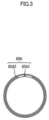
- FIG. 3 is a diagram of an exemplary steering-handle rotation sensor 60A that is configured to not change the output signal while the steering handle 50 is rotated within the range L11 or the range R11.
- the steering-handle rotation sensor 60A includes a movable contact point 60A1 that moves together with the steering handle 50 during rotation of the steering handle 50, and a fixed contact point 60A2 with which the movable contact point 60A1 is capable of coming into contact.
- the movable contact point 60A1 is located, for example, on a steering shaft to which the steering handle 50 is fixed.
- the fixed contact point 60A2 is located, for example, on a head pipe in which the steering shaft is inserted.
- the movable contact point 60A1 does not come into contact with the fixed contact point 60A2 as long as the steering handle 50 is rotated within the range L11 or the range R11. Accordingly, while the steering handle 50 is rotated within the range L11 or the range R11, the signal outputted from the steering-handle rotation sensor 60A does not change.
- the configuration to prevent the steering-handle rotation sensor from changing the output signal as long as the steering handle 50 is rotated within the range L11 or the range R11 may be a configuration to achieve the following: as long as the steering handle 50 is rotated within the range L11 or the range R11, the signal outputted from the steering-handle rotation sensor does not change though the movable contact point comes into contact with the fixed contact point.
- the leaning vehicle 11 includes a vehicle body 21, two front wheels 31F, one rear wheel 31B, a lean linking device 41, a steering handle 51, a lean actuator 71, and a control unit 81.
- the two front wheels 31F are supported by the vehicle body 21. In a cross-section including the rotation axis of each of the two front wheels 31F the tread of each of the two front wheels 31F is curved.
- the two front wheels 31F are arranged side by side in the leftward-rightward direction LR.
- the two front wheels 31F are supported by the vehicle body 21 in such a manner as to be rotatable around a steering axis 51L extending in the upward-downward direction of the vehicle body 21.
- the steering axis 51L When viewed from a leftward (L) or rightward (R) position, the steering axis 51L is inclined from the vertical direction in such a manner that an upper part of the steering axis 50L is in a more rearward position. Accordingly, when viewed from a leftward (L) or rightward (R) position, the intersection point P1 of the steering axis 50L and a road surface RS is in a more frontward position than the contact point P2 of each of the two front wheels 30L with the road surface RS.
- the rear wheel 31B is supported by the vehicle body 21.
- the tread of the rear wheel 31B is curved.
- the lean linking device 41 leans the vehicle body 21, the two front wheels 31F and the rear wheel 31B leftward L.
- the lean linking device 41 leans the vehicle body 21, the two front wheels 31F and the rear wheel 31B rightward R.
- the steering handle 51 is mechanically connected to the two front wheels 31F.
- the steering handle 51 is mechanically connected to the respective rotation axes of the two front wheels 31F.
- the steering handle 51 rotates the steering handle 51, which is mechanically connected to the respective rotation axes of the two front wheels 31F the two front wheels 31F rotate around the steering axis 51L. Accordingly, the traveling direction of the leaning vehicle 11 changes.
- the leaning vehicle 11 is not a type of vehicle that controls steering of the two front wheels 31F by wire.
- the lean actuator 71 is connected to the lean linking device 41.
- the lean actuator 71 is, for example, an electric motor that is mechanically connected to the lean linking device 41 and includes an output member that is rotatable forward and in reverse.
- the lean actuator 71 supplies a power to the lean linking device 41 for leaning of the vehicle body 21, the two front wheels 31F and the rear wheel 31B.
- the lean actuator 71 supplies a power for leaning of the vehicle body 21, the two front wheels 31F and the rear wheel 31B.
- the lean actuator 71 supplies a power to lean the vehicle body 21, the two front wheels 31F and the rear wheel 31B leftward.
- the lean actuator 71 supplies a power to lean the vehicle body 21, the two front wheels 31F and the rear wheel 31B rightward.
- the lean actuator 71 is controlled by the control unit 81.
- the leaning vehicle 11 further includes a drive source 22 and an acceleration operator 24.
- the drive source 22 supplies a drive force to the rear wheel 31B.
- the drive source 22 may be, for example, an engine, an electric motor, or a combination of an engine and an electric motor.
- the drive source 22 is supported by the vehicle body 21. When the rider of the leaning vehicle 11 operates the acceleration operator 24, the drive force outputted from the drive source 22 is adjusted.
- the acceleration operator 24 is attached to the steering handle 51. Thus, the acceleration operator 24 is located in a position to be operable by the rider riding the leaning vehicle 11.
- the leaning vehicle 11 includes a lean control system 91.
- the lean linking device 41, the lean actuator 71 and the control unit 81 are included in the lean control system 91.
- the control unit 81 cuts off the supply of electricity to the lean actuator 71 or breaks the mechanical connection between the lean actuator 71 and the lean linking device 41.
- a mechanism that implements the breaking of the mechanical connection between the lean actuator 71 and the lean linking device 41 is, for example, a clutch mechanism that is electrically controlled by the control unit 81.
- a kind of trouble that possibly occurs in the lean control system 91 is, for example, that the lean actuator 71 does not work as designed.
- the determination as to whether or not the lean control system 91 has trouble may be made based on the period from the time when the lean actuator 71 receives a command value until the time when the output of the lean actuator 71 reaches the command value. For example, by comparing the period from the time when the lean actuator 71 receives a command value until the time when the output of the lean actuator 71 reaches the command value with a time it takes for that in a normal state, it may be determined whether or not trouble has occurred in the lean control system 91.
- Another kind of trouble that possibly occurs in the lean control system 91 is, for example, that a sensor used in the lean control system 91 has trouble. For example, when breaking, signal abnormality or the like is detected in a voltage sensor, a current sensor, a lean angle sensor or the like, it may be determined that trouble has occurred in the lean control system 91.
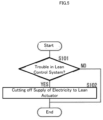
- step S101 the control unit 81 determines whether or not the lean control system 91 has trouble. When any trouble has not occurred in the lean control system 91 (NO at step S101), the control unit 81 terminates the trouble management control. When trouble has occurred in the lean control system 91 (YES at step S101), at step S102, the control unit 81 cuts off the supply of electricity to the lean actuator. Then, the control unit 81 completes the trouble management control.
- the power outputted from the lean actuator 71 which is in accordance with the operation of the steering handle 51 by the rider of the leaning vehicle 11, is transmitted to the vehicle body 21. Thereby, the vehicle body 21 leans.
- the rider can quickly move the leaning vehicle 11 to a safe area. Details will be described below.
- the vehicle body 21 can be leant left and right LR. Details will be described below.
- the steering axis 51L is inclined from the vertical direction such that an upper part of the steering axis 51L is in a more rearward position. Accordingly, when viewed from a leftward (L) or rightward (R) position, the intersection point P1 between the steering axis 51L and a road surface RS is in a more frontward position than the contact point P2 of each of the two front wheels 30L with the road surface RS. This means that the leaning vehicle 11 has a positive trail value. When the leaning vehicle 11 has a positive trail value, the rider of the leaning vehicle 11 can lean the vehicle body 21 left and right LR by performing counter steering.
- the rider can lean the vehicle body 21 rightward R by rotating the steering handle 51 leftward (counterclockwise). Also, the rider can lean the vehicle body 21 leftward L by rotating the steering handle 51 rightward (clockwise). Thus, even when the effect of the lean actuator 71 on the lean linking device 41 is minimized, the rider of the leaning vehicle 11 can lean the vehicle body 21 left and right LR.
- the tread of each of the two front wheels 31F is curved. Therefore, the rider of the leaning vehicle 11 can lean the vehicle body 21 left and right LR by shifting his or her weight. It is easy for the rider to lean the vehicle body 21 left and right LR by shifting his or her weight. Thus, even when the effect of the lean actuator 71 on the lean linking device 41 is minimized, the rider of the leaning vehicle 11 can lean the vehicle body 21 left and right LR.
- the leaning vehicle 11 includes the drive source 22, which supplies a drive force to the two front wheels 31F, and the acceleration operator 24, which adjusts the drive force supplied from the drive source 22 when operated by the rider of the leaning vehicle 11. Accordingly, the rider can lean the vehicle body 21 left and right LR by operating the acceleration operator 24. Specifically, the rider of the leaning vehicle 11 can change the centripetal force by adjusting the moving speed of the leaning vehicle 11 while the leaning vehicle 21 is leaning (that is, while the leaning vehicle is turning), whereby the leftward (L) or rightward (R) leaning of the vehicle body 21 can be adjusted. In this way, even when the effect of the lean actuator 71 on the lean linking device 41 is minimized, the rider of the leaning vehicle 11 can lean the vehicle body 21 left and right LR.
- step S101 it is determined whether or not trouble has occurred in the lean control system 91.
- the control unit 81 terminates the trouble management control.
- step S103 the control unit 81 breaks the mechanical connection between the lean actuator 71 and the lean liking device 41. Then, the control unit completes the trouble management control.
- the lean actuator 71 of the leaning vehicle 11A raises the vehicle body 21 from a leaning state. Specifically, when the vehicle body 21 leans while the leaning vehicle 11A is decelerating to come to a stop, the lean actuator 71 raises the vehicle body 21.
Landscapes
- Engineering & Computer Science (AREA)
- Mechanical Engineering (AREA)
- Chemical & Material Sciences (AREA)
- Combustion & Propulsion (AREA)
- Transportation (AREA)
- Automatic Cycles, And Cycles In General (AREA)
- Steering Control In Accordance With Driving Conditions (AREA)
Claims (4)
- Ein Neigungsfahrzeug (10), das folgende Merkmale aufweist:eine Fahrzeugkarosserie (20);ein oder zwei Vorderräder (30F), die von der Fahrzeugkarosserie (20) getragen werden;ein oder zwei Hinterräder (30B), die von der Fahrzeugkarosserie (20) getragen werden, wobei die Anzahl von Hinterrädern (30B) zwei beträgt, wenn die Anzahl von Vorderrädern (30F) eins beträgt, und die Anzahl von Hinterrädern (30B) eins oder zwei beträgt, wenn die Anzahl von Vorderrädern (30F) zwei beträgt;eine Neigungsvorrichtung (40), die dazu konfiguriert ist, die Fahrzeugkarosserie (20), das/die Vorderrad/-räder (30F) und das/die Hinterrad/-räder (30B) nach links zu neigen, wenn das Neigungsfahrzeug (10) links abbiegt, und die Fahrzeugkarosserie (20), das/die Vorderrad/-räder (30F) und das/die Hinterrad/-räder (30B) nach rechts zu neigen, wenn das Neigungsfahrzeug (10) rechts abbiegt;einen Lenkgriff (50), der mechanisch mit dem/den Vorderrad/-rädern (30F) verbunden ist und durch einen Fahrer des Neigungsfahrzeugs (10) drehbar ist, um die Fahrtrichtung des/der Vorderrads/-räder (30F) zu ändern, wobei der Lenkgriff (50) entgegengesetzt dem Uhrzeigersinn drehbar ist, um das/die Vorderrad/-räder (30F) nach links zu wenden und im Uhrzeigersinn drehbar ist, das/die Vorderrad/-räder (30F) nach rechts zu wenden;ein Neigungs-Betätigungselement (70), das mit der Neigungsvorrichtung (40) verbunden ist und dazu konfiguriert ist, der Neigungsvorrichtung (40) zum Neigen der Fahrzeugkarosserie (20), des/der Vorderrads/-räder (30F) und des/der Hinterrads/- räder (30B) eine Leistung zuzuführen; undeine Steuereinheit (80), die dazu konfiguriert ist, das Neigungs-Betätigungselement (70) gemäß einem Signal zu steuern, das von einem Lenkgriff-Rotationssensor (60) ausgegeben und gesendet wird, der dazu konfiguriert ist, den Rotationsbetrag des Lenkgriffs (50) zu detektieren,wobei:eine Position des Lenkgriffs (50), die dem Neigungsfahrzeug (10) erlaubt, sich geradeaus zu bewegen, als die neutrale Position definiert ist;ein Bereich, in dem der Lenkgriff (50) im Gegenuhrzeigersinn von der neutralen Position aus drehbar ist, als im Gegenuhrzeigersinn drehbarer Bereich (L1) definiert ist;ein Bereich, der Teil des im Gegenuhrzeigersinn drehbaren Bereichs (L1) ist und von der neutralen Position aus fortlaufend ist, als erster Gegenuhrzeigersinn-Rotationsbereich (L11) definiert ist;ein Bereich, in dem der Lenkgriff (50) im Uhrzeigersinn von der neutralen Position aus drehbar ist, als im Uhrzeigersinn drehbarer Bereich (R1) definiert ist;ein Bereich, der Teil des im Uhrzeigersinn drehbaren Bereichs (R1) ist und von der neutralen Position aus fortlaufend ist, als erster Uhrzeigersinn-Rotationsbereich (R11) definiert ist; dadurch gekennzeichnet, dasswenn der Fahrer den Lenkgriff (50) innerhalb des ersten Gegenuhrzeigersinn-Rotationsbereichs (L11) oder des ersten Uhrzeigersinn-Rotationsbereichs (R11) dreht, um die das/die Vorderrad/-räder (30F), das/die mechanisch mit dem Lenkgriff (50) verbunden ist/sind, nach links oder rechts zu wenden und damit die Fahrtrichtung des/der Vorderrads/-räder (30F) mechanisch verändert, die Steuereinheit (80) dazu konfiguriert ist, das Neigungs-Betätigungselement (70) derart zu steuern, dass die Neigungsvorrichtung (40) die Fahrzeugkarosserie (20), das/die Vorderrad/-räder (30F) und das/die Hinterrad/-räder (30B) von einer Neigung zusammen mit der Rotation des Lenkgriffs (50) abzuhalten.
- Das Neigungsfahrzeug (10) gemäß Anspruch 1, bei dem wenn der Fahrer den Lenkgriff (50) innerhalb des ersten Gegenuhrzeigersinn-Rotationsbereichs (L11) oder des ersten Uhrzeigersinn-Rotationsbereichs (R11) dreht, um die das/die Vorderrad/-räder (30F), das/die mechanisch mit dem Lenkgriff (50) verbunden ist/sind, nach links oder rechts zu wenden und damit die Fahrtrichtung des/der Vorderrads/-räder (30F) mechanisch verändert, die Steuereinheit (80) dazu konfiguriert ist, das Neigungs-Betätigungselement (70) derart zu steuern, dass die Neigungsvorrichtung (40) die Fahrzeugkarosserie (20), das/die Vorderrad/-räder (30F) und das/die Hinterrad/-räder (30B) aufrecht hält.
- Das Neigungsfahrzeug (10) gemäß Anspruch 1 oder 2, bei dem:der Lenkgriff (50) um die Achse desselben drehbar ist; undin einer Seitenansicht des Neigungsfahrzeugs (10) von links oder rechts, sich der Schnittpunkt zwischen der Drehachse (50L) des Lenkgriffs (50) und einer Straßenoberfläche in einer Position befindet, die weiter vorne ist als der Kontaktpunkt zwischen jedem des/der Vorderrads/-räder (30F) und der Straßenoberfläche.
- Das Neigungsfahrzeug (10) gemäß einem der Ansprüche 1 bis 3, bei dem
der Lenkgriff-Rotationssensor (60) dazu konfiguriert ist, das Ausgangssignal nicht zu ändern, wenn der Lenkgriff (50) innerhalb des ersten Gegenuhrzeigersinn-Rotationsbereichs (L11) oder des ersten Uhrzeigersinn-Rotationsbereichs (R11) gedreht wird.
Applications Claiming Priority (2)
| Application Number | Priority Date | Filing Date | Title |
|---|---|---|---|
| JP2019159394 | 2019-09-02 | ||
| PCT/JP2020/033273 WO2021045108A1 (ja) | 2019-09-02 | 2020-09-02 | 傾斜車両 |
Publications (3)
| Publication Number | Publication Date |
|---|---|
| EP4005908A1 EP4005908A1 (de) | 2022-06-01 |
| EP4005908A4 EP4005908A4 (de) | 2022-10-05 |
| EP4005908B1 true EP4005908B1 (de) | 2023-11-22 |
Family
ID=74853327
Family Applications (1)
| Application Number | Title | Priority Date | Filing Date |
|---|---|---|---|
| EP20861740.7A Active EP4005908B1 (de) | 2019-09-02 | 2020-09-02 | Neigefahrzeug |
Country Status (4)
| Country | Link |
|---|---|
| US (1) | US11866122B2 (de) |
| EP (1) | EP4005908B1 (de) |
| JP (1) | JP7387747B2 (de) |
| WO (1) | WO2021045108A1 (de) |
Families Citing this family (3)
| Publication number | Priority date | Publication date | Assignee | Title |
|---|---|---|---|---|
| WO2020138395A1 (ja) * | 2018-12-27 | 2020-07-02 | ヤマハ発動機株式会社 | 操舵される前輪を備える傾斜車両 |
| IT202300012462A1 (it) * | 2023-06-16 | 2024-12-16 | Fabio PUGLIA | Veicolo a ruote basculanti e rispettivo sistema di allineamento verticale |
| JP2025069712A (ja) * | 2023-10-18 | 2025-05-01 | ヤマハ発動機株式会社 | 鞍乗型車両 |
Family Cites Families (10)
| Publication number | Priority date | Publication date | Assignee | Title |
|---|---|---|---|---|
| JP2617208B2 (ja) * | 1988-06-08 | 1997-06-04 | 本田技研工業株式会社 | パワーステアリング装置 |
| JPH10291484A (ja) * | 1997-04-18 | 1998-11-04 | Toyota Motor Corp | 操舵制御装置 |
| JP2009126380A (ja) * | 2007-11-26 | 2009-06-11 | Honda Motor Co Ltd | 操舵角補正装置 |
| CA3005803A1 (en) | 2015-11-20 | 2017-05-26 | Yamaha Hatsudoki Kabushiki Kaisha | Leaning vehicle |
| JP2018154272A (ja) * | 2017-03-21 | 2018-10-04 | ローベルト ボッシュ ゲゼルシャフト ミット ベシュレンクテル ハフツング | 制御装置及び制御方法 |
| JP7128432B2 (ja) * | 2017-03-31 | 2022-08-31 | 株式会社アイシン | 車両 |
| JP2019001200A (ja) * | 2017-06-12 | 2019-01-10 | トヨタ自動車株式会社 | 自動傾斜車両 |
| JP2021003904A (ja) * | 2017-09-04 | 2021-01-14 | ヤマハ発動機株式会社 | 傾斜車両 |
| JP2019064535A (ja) * | 2017-10-04 | 2019-04-25 | 株式会社デンソーテン | 車両制御装置および車両制御方法 |
| EP3927609B1 (de) * | 2019-02-22 | 2024-05-08 | Sway Motorsports LLC | Dreirädriges neigefahrzeug |
-
2020
- 2020-09-02 WO PCT/JP2020/033273 patent/WO2021045108A1/ja not_active Ceased
- 2020-09-02 EP EP20861740.7A patent/EP4005908B1/de active Active
- 2020-09-02 JP JP2021544001A patent/JP7387747B2/ja active Active
-
2022
- 2022-03-01 US US17/684,280 patent/US11866122B2/en active Active
Also Published As
| Publication number | Publication date |
|---|---|
| EP4005908A4 (de) | 2022-10-05 |
| EP4005908A1 (de) | 2022-06-01 |
| US20220250706A1 (en) | 2022-08-11 |
| JPWO2021045108A1 (de) | 2021-03-11 |
| WO2021045108A1 (ja) | 2021-03-11 |
| US11866122B2 (en) | 2024-01-09 |
| JP7387747B2 (ja) | 2023-11-28 |
Similar Documents
| Publication | Publication Date | Title |
|---|---|---|
| EP4005908B1 (de) | Neigefahrzeug | |
| JP6408168B2 (ja) | 車両 | |
| EP2154050B1 (de) | Steuerungssystem zum Kippen eines Körpers und Sattelfahrzeug damit | |
| JP5093295B2 (ja) | 操舵装置及び操舵制御装置 | |
| JP6097694B2 (ja) | 電動車両 | |
| EP3891044B1 (de) | Selbstausgleichendes kippfahrzeug mit einem elektrischen kippglied | |
| JP7675875B2 (ja) | 操舵される前輪を備える傾斜車両 | |
| US8256780B2 (en) | Vehicle steering device | |
| CN102131689B (zh) | 车辆转向设备 | |
| JP2020075518A (ja) | 前二輪逆操舵リーン車両 | |
| TWI832423B (zh) | 傾斜控制裝置及傾斜車輛 | |
| JPWO2018181750A1 (ja) | 車両 | |
| WO2022131345A1 (ja) | バーハンドルを備えたストラドルドビークル及び電動操舵装置 | |
| JP4894589B2 (ja) | 車両 | |
| JPH0443165A (ja) | 車両のパワーステアリング装置 | |
| JP5839347B2 (ja) | 作業車両 | |
| KR102145357B1 (ko) | 차량의 토우각 제어장치 및 방법 | |
| WO2023119422A1 (ja) | 傾斜車両 | |
| TWI864993B (zh) | 傾斜車輛 | |
| WO2020138388A1 (ja) | 左右一対の車輪を備えた傾斜車両 | |
| WO2023144922A1 (ja) | 傾斜車両 | |
| JPWO2007007820A1 (ja) | 二輪車 | |
| WO2023119426A1 (ja) | 傾斜車両 |
Legal Events
| Date | Code | Title | Description |
|---|---|---|---|
| STAA | Information on the status of an ep patent application or granted ep patent |
Free format text: STATUS: THE INTERNATIONAL PUBLICATION HAS BEEN MADE |
|
| PUAI | Public reference made under article 153(3) epc to a published international application that has entered the european phase |
Free format text: ORIGINAL CODE: 0009012 |
|
| STAA | Information on the status of an ep patent application or granted ep patent |
Free format text: STATUS: REQUEST FOR EXAMINATION WAS MADE |
|
| 17P | Request for examination filed |
Effective date: 20220228 |
|
| AK | Designated contracting states |
Kind code of ref document: A1 Designated state(s): AL AT BE BG CH CY CZ DE DK EE ES FI FR GB GR HR HU IE IS IT LI LT LU LV MC MK MT NL NO PL PT RO RS SE SI SK SM TR |
|
| REG | Reference to a national code |
Ref country code: DE Free format text: PREVIOUS MAIN CLASS: B62K0005027000 Ipc: B62K0005100000 Ref country code: DE Ref legal event code: R079 Ref document number: 602020021668 Country of ref document: DE Free format text: PREVIOUS MAIN CLASS: B62K0005027000 Ipc: B62K0005100000 |
|
| A4 | Supplementary search report drawn up and despatched |
Effective date: 20220901 |
|
| RIC1 | Information provided on ipc code assigned before grant |
Ipc: B62D 9/02 20060101ALI20220826BHEP Ipc: B62K 5/01 20130101ALI20220826BHEP Ipc: B62K 5/05 20130101ALI20220826BHEP Ipc: B62K 5/027 20130101ALI20220826BHEP Ipc: B62K 5/10 20130101AFI20220826BHEP |
|
| DAV | Request for validation of the european patent (deleted) | ||
| DAX | Request for extension of the european patent (deleted) | ||
| GRAP | Despatch of communication of intention to grant a patent |
Free format text: ORIGINAL CODE: EPIDOSNIGR1 |
|
| STAA | Information on the status of an ep patent application or granted ep patent |
Free format text: STATUS: GRANT OF PATENT IS INTENDED |
|
| INTG | Intention to grant announced |
Effective date: 20230609 |
|
| P01 | Opt-out of the competence of the unified patent court (upc) registered |
Effective date: 20230527 |
|
| GRAS | Grant fee paid |
Free format text: ORIGINAL CODE: EPIDOSNIGR3 |
|
| GRAA | (expected) grant |
Free format text: ORIGINAL CODE: 0009210 |
|
| STAA | Information on the status of an ep patent application or granted ep patent |
Free format text: STATUS: THE PATENT HAS BEEN GRANTED |
|
| AK | Designated contracting states |
Kind code of ref document: B1 Designated state(s): AL AT BE BG CH CY CZ DE DK EE ES FI FR GB GR HR HU IE IS IT LI LT LU LV MC MK MT NL NO PL PT RO RS SE SI SK SM TR |
|
| REG | Reference to a national code |
Ref country code: GB Ref legal event code: FG4D |
|
| REG | Reference to a national code |
Ref country code: CH Ref legal event code: EP |
|
| REG | Reference to a national code |
Ref country code: DE Ref legal event code: R096 Ref document number: 602020021668 Country of ref document: DE |
|
| REG | Reference to a national code |
Ref country code: IE Ref legal event code: FG4D |
|
| REG | Reference to a national code |
Ref country code: LT Ref legal event code: MG9D |
|
| REG | Reference to a national code |
Ref country code: NL Ref legal event code: MP Effective date: 20231122 |
|
| PG25 | Lapsed in a contracting state [announced via postgrant information from national office to epo] |
Ref country code: GR Free format text: LAPSE BECAUSE OF FAILURE TO SUBMIT A TRANSLATION OF THE DESCRIPTION OR TO PAY THE FEE WITHIN THE PRESCRIBED TIME-LIMIT Effective date: 20240223 |
|
| PG25 | Lapsed in a contracting state [announced via postgrant information from national office to epo] |
Ref country code: IS Free format text: LAPSE BECAUSE OF FAILURE TO SUBMIT A TRANSLATION OF THE DESCRIPTION OR TO PAY THE FEE WITHIN THE PRESCRIBED TIME-LIMIT Effective date: 20240322 |
|
| PG25 | Lapsed in a contracting state [announced via postgrant information from national office to epo] |
Ref country code: LT Free format text: LAPSE BECAUSE OF FAILURE TO SUBMIT A TRANSLATION OF THE DESCRIPTION OR TO PAY THE FEE WITHIN THE PRESCRIBED TIME-LIMIT Effective date: 20231122 |
|
| REG | Reference to a national code |
Ref country code: AT Ref legal event code: MK05 Ref document number: 1633594 Country of ref document: AT Kind code of ref document: T Effective date: 20231122 |
|
| PG25 | Lapsed in a contracting state [announced via postgrant information from national office to epo] |
Ref country code: NL Free format text: LAPSE BECAUSE OF FAILURE TO SUBMIT A TRANSLATION OF THE DESCRIPTION OR TO PAY THE FEE WITHIN THE PRESCRIBED TIME-LIMIT Effective date: 20231122 |
|
| PG25 | Lapsed in a contracting state [announced via postgrant information from national office to epo] |
Ref country code: AT Free format text: LAPSE BECAUSE OF FAILURE TO SUBMIT A TRANSLATION OF THE DESCRIPTION OR TO PAY THE FEE WITHIN THE PRESCRIBED TIME-LIMIT Effective date: 20231122 |
|
| PG25 | Lapsed in a contracting state [announced via postgrant information from national office to epo] |
Ref country code: ES Free format text: LAPSE BECAUSE OF FAILURE TO SUBMIT A TRANSLATION OF THE DESCRIPTION OR TO PAY THE FEE WITHIN THE PRESCRIBED TIME-LIMIT Effective date: 20231122 |
|
| PG25 | Lapsed in a contracting state [announced via postgrant information from national office to epo] |
Ref country code: NL Free format text: LAPSE BECAUSE OF FAILURE TO SUBMIT A TRANSLATION OF THE DESCRIPTION OR TO PAY THE FEE WITHIN THE PRESCRIBED TIME-LIMIT Effective date: 20231122 Ref country code: LT Free format text: LAPSE BECAUSE OF FAILURE TO SUBMIT A TRANSLATION OF THE DESCRIPTION OR TO PAY THE FEE WITHIN THE PRESCRIBED TIME-LIMIT Effective date: 20231122 Ref country code: IS Free format text: LAPSE BECAUSE OF FAILURE TO SUBMIT A TRANSLATION OF THE DESCRIPTION OR TO PAY THE FEE WITHIN THE PRESCRIBED TIME-LIMIT Effective date: 20240322 Ref country code: GR Free format text: LAPSE BECAUSE OF FAILURE TO SUBMIT A TRANSLATION OF THE DESCRIPTION OR TO PAY THE FEE WITHIN THE PRESCRIBED TIME-LIMIT Effective date: 20240223 Ref country code: ES Free format text: LAPSE BECAUSE OF FAILURE TO SUBMIT A TRANSLATION OF THE DESCRIPTION OR TO PAY THE FEE WITHIN THE PRESCRIBED TIME-LIMIT Effective date: 20231122 Ref country code: BG Free format text: LAPSE BECAUSE OF FAILURE TO SUBMIT A TRANSLATION OF THE DESCRIPTION OR TO PAY THE FEE WITHIN THE PRESCRIBED TIME-LIMIT Effective date: 20240222 Ref country code: AT Free format text: LAPSE BECAUSE OF FAILURE TO SUBMIT A TRANSLATION OF THE DESCRIPTION OR TO PAY THE FEE WITHIN THE PRESCRIBED TIME-LIMIT Effective date: 20231122 Ref country code: PT Free format text: LAPSE BECAUSE OF FAILURE TO SUBMIT A TRANSLATION OF THE DESCRIPTION OR TO PAY THE FEE WITHIN THE PRESCRIBED TIME-LIMIT Effective date: 20240322 |
|
| PG25 | Lapsed in a contracting state [announced via postgrant information from national office to epo] |
Ref country code: SE Free format text: LAPSE BECAUSE OF FAILURE TO SUBMIT A TRANSLATION OF THE DESCRIPTION OR TO PAY THE FEE WITHIN THE PRESCRIBED TIME-LIMIT Effective date: 20231122 Ref country code: RS Free format text: LAPSE BECAUSE OF FAILURE TO SUBMIT A TRANSLATION OF THE DESCRIPTION OR TO PAY THE FEE WITHIN THE PRESCRIBED TIME-LIMIT Effective date: 20231122 Ref country code: PL Free format text: LAPSE BECAUSE OF FAILURE TO SUBMIT A TRANSLATION OF THE DESCRIPTION OR TO PAY THE FEE WITHIN THE PRESCRIBED TIME-LIMIT Effective date: 20231122 Ref country code: NO Free format text: LAPSE BECAUSE OF FAILURE TO SUBMIT A TRANSLATION OF THE DESCRIPTION OR TO PAY THE FEE WITHIN THE PRESCRIBED TIME-LIMIT Effective date: 20240222 Ref country code: LV Free format text: LAPSE BECAUSE OF FAILURE TO SUBMIT A TRANSLATION OF THE DESCRIPTION OR TO PAY THE FEE WITHIN THE PRESCRIBED TIME-LIMIT Effective date: 20231122 Ref country code: HR Free format text: LAPSE BECAUSE OF FAILURE TO SUBMIT A TRANSLATION OF THE DESCRIPTION OR TO PAY THE FEE WITHIN THE PRESCRIBED TIME-LIMIT Effective date: 20231122 |
|
| PG25 | Lapsed in a contracting state [announced via postgrant information from national office to epo] |
Ref country code: DK Free format text: LAPSE BECAUSE OF FAILURE TO SUBMIT A TRANSLATION OF THE DESCRIPTION OR TO PAY THE FEE WITHIN THE PRESCRIBED TIME-LIMIT Effective date: 20231122 |
|
| PG25 | Lapsed in a contracting state [announced via postgrant information from national office to epo] |
Ref country code: CZ Free format text: LAPSE BECAUSE OF FAILURE TO SUBMIT A TRANSLATION OF THE DESCRIPTION OR TO PAY THE FEE WITHIN THE PRESCRIBED TIME-LIMIT Effective date: 20231122 |
|
| PG25 | Lapsed in a contracting state [announced via postgrant information from national office to epo] |
Ref country code: SK Free format text: LAPSE BECAUSE OF FAILURE TO SUBMIT A TRANSLATION OF THE DESCRIPTION OR TO PAY THE FEE WITHIN THE PRESCRIBED TIME-LIMIT Effective date: 20231122 |
|
| PG25 | Lapsed in a contracting state [announced via postgrant information from national office to epo] |
Ref country code: SM Free format text: LAPSE BECAUSE OF FAILURE TO SUBMIT A TRANSLATION OF THE DESCRIPTION OR TO PAY THE FEE WITHIN THE PRESCRIBED TIME-LIMIT Effective date: 20231122 Ref country code: SK Free format text: LAPSE BECAUSE OF FAILURE TO SUBMIT A TRANSLATION OF THE DESCRIPTION OR TO PAY THE FEE WITHIN THE PRESCRIBED TIME-LIMIT Effective date: 20231122 Ref country code: RO Free format text: LAPSE BECAUSE OF FAILURE TO SUBMIT A TRANSLATION OF THE DESCRIPTION OR TO PAY THE FEE WITHIN THE PRESCRIBED TIME-LIMIT Effective date: 20231122 Ref country code: EE Free format text: LAPSE BECAUSE OF FAILURE TO SUBMIT A TRANSLATION OF THE DESCRIPTION OR TO PAY THE FEE WITHIN THE PRESCRIBED TIME-LIMIT Effective date: 20231122 Ref country code: DK Free format text: LAPSE BECAUSE OF FAILURE TO SUBMIT A TRANSLATION OF THE DESCRIPTION OR TO PAY THE FEE WITHIN THE PRESCRIBED TIME-LIMIT Effective date: 20231122 Ref country code: CZ Free format text: LAPSE BECAUSE OF FAILURE TO SUBMIT A TRANSLATION OF THE DESCRIPTION OR TO PAY THE FEE WITHIN THE PRESCRIBED TIME-LIMIT Effective date: 20231122 |
|
| REG | Reference to a national code |
Ref country code: DE Ref legal event code: R097 Ref document number: 602020021668 Country of ref document: DE |
|
| PLBE | No opposition filed within time limit |
Free format text: ORIGINAL CODE: 0009261 |
|
| STAA | Information on the status of an ep patent application or granted ep patent |
Free format text: STATUS: NO OPPOSITION FILED WITHIN TIME LIMIT |
|
| PG25 | Lapsed in a contracting state [announced via postgrant information from national office to epo] |
Ref country code: SI Free format text: LAPSE BECAUSE OF FAILURE TO SUBMIT A TRANSLATION OF THE DESCRIPTION OR TO PAY THE FEE WITHIN THE PRESCRIBED TIME-LIMIT Effective date: 20231122 |
|
| 26N | No opposition filed |
Effective date: 20240823 |
|
| PG25 | Lapsed in a contracting state [announced via postgrant information from national office to epo] |
Ref country code: SI Free format text: LAPSE BECAUSE OF FAILURE TO SUBMIT A TRANSLATION OF THE DESCRIPTION OR TO PAY THE FEE WITHIN THE PRESCRIBED TIME-LIMIT Effective date: 20231122 |
|
| PG25 | Lapsed in a contracting state [announced via postgrant information from national office to epo] |
Ref country code: MC Free format text: LAPSE BECAUSE OF FAILURE TO SUBMIT A TRANSLATION OF THE DESCRIPTION OR TO PAY THE FEE WITHIN THE PRESCRIBED TIME-LIMIT Effective date: 20231122 |
|
| REG | Reference to a national code |
Ref country code: CH Ref legal event code: PL |
|
| PG25 | Lapsed in a contracting state [announced via postgrant information from national office to epo] |
Ref country code: LU Free format text: LAPSE BECAUSE OF NON-PAYMENT OF DUE FEES Effective date: 20240902 |
|
| GBPC | Gb: european patent ceased through non-payment of renewal fee |
Effective date: 20240902 |
|
| PG25 | Lapsed in a contracting state [announced via postgrant information from national office to epo] |
Ref country code: GB Free format text: LAPSE BECAUSE OF NON-PAYMENT OF DUE FEES Effective date: 20240902 |
|
| REG | Reference to a national code |
Ref country code: BE Ref legal event code: MM Effective date: 20240930 |
|
| PG25 | Lapsed in a contracting state [announced via postgrant information from national office to epo] |
Ref country code: BE Free format text: LAPSE BECAUSE OF NON-PAYMENT OF DUE FEES Effective date: 20240930 |
|
| PG25 | Lapsed in a contracting state [announced via postgrant information from national office to epo] |
Ref country code: CH Free format text: LAPSE BECAUSE OF NON-PAYMENT OF DUE FEES Effective date: 20240930 |
|
| PG25 | Lapsed in a contracting state [announced via postgrant information from national office to epo] |
Ref country code: IE Free format text: LAPSE BECAUSE OF NON-PAYMENT OF DUE FEES Effective date: 20240902 |
|
| PG25 | Lapsed in a contracting state [announced via postgrant information from national office to epo] |
Ref country code: FI Free format text: LAPSE BECAUSE OF FAILURE TO SUBMIT A TRANSLATION OF THE DESCRIPTION OR TO PAY THE FEE WITHIN THE PRESCRIBED TIME-LIMIT Effective date: 20231122 |
|
| PGFP | Annual fee paid to national office [announced via postgrant information from national office to epo] |
Ref country code: DE Payment date: 20250919 Year of fee payment: 6 |
|
| PGFP | Annual fee paid to national office [announced via postgrant information from national office to epo] |
Ref country code: IT Payment date: 20250923 Year of fee payment: 6 |
|
| PGFP | Annual fee paid to national office [announced via postgrant information from national office to epo] |
Ref country code: FR Payment date: 20250922 Year of fee payment: 6 |
|
| PG25 | Lapsed in a contracting state [announced via postgrant information from national office to epo] |
Ref country code: CY Free format text: LAPSE BECAUSE OF FAILURE TO SUBMIT A TRANSLATION OF THE DESCRIPTION OR TO PAY THE FEE WITHIN THE PRESCRIBED TIME-LIMIT; INVALID AB INITIO Effective date: 20200902 |
|
| PG25 | Lapsed in a contracting state [announced via postgrant information from national office to epo] |
Ref country code: HU Free format text: LAPSE BECAUSE OF FAILURE TO SUBMIT A TRANSLATION OF THE DESCRIPTION OR TO PAY THE FEE WITHIN THE PRESCRIBED TIME-LIMIT; INVALID AB INITIO Effective date: 20200902 |