EP4093722B1 - Verfahren zur erhöhung der vorformungsraten von hydroformylierungskatalysatoren - Google Patents
Verfahren zur erhöhung der vorformungsraten von hydroformylierungskatalysatoren Download PDFInfo
- Publication number
- EP4093722B1 EP4093722B1 EP20842559.5A EP20842559A EP4093722B1 EP 4093722 B1 EP4093722 B1 EP 4093722B1 EP 20842559 A EP20842559 A EP 20842559A EP 4093722 B1 EP4093722 B1 EP 4093722B1
- Authority
- EP
- European Patent Office
- Prior art keywords
- aqueous solution
- reaction product
- hydroformylation
- catalyst
- partially spent
- Prior art date
- Legal status (The legal status is an assumption and is not a legal conclusion. Google has not performed a legal analysis and makes no representation as to the accuracy of the status listed.)
- Active
Links
Images


Classifications
-
- C—CHEMISTRY; METALLURGY
- C07—ORGANIC CHEMISTRY
- C07C—ACYCLIC OR CARBOCYCLIC COMPOUNDS
- C07C45/00—Preparation of compounds having >C = O groups bound only to carbon or hydrogen atoms; Preparation of chelates of such compounds
- C07C45/49—Preparation of compounds having >C = O groups bound only to carbon or hydrogen atoms; Preparation of chelates of such compounds by reaction with carbon monoxide
- C07C45/50—Preparation of compounds having >C = O groups bound only to carbon or hydrogen atoms; Preparation of chelates of such compounds by reaction with carbon monoxide by oxo-reactions
- C07C45/505—Asymmetric hydroformylation
-
- C—CHEMISTRY; METALLURGY
- C07—ORGANIC CHEMISTRY
- C07C—ACYCLIC OR CARBOCYCLIC COMPOUNDS
- C07C27/00—Processes involving the simultaneous production of more than one class of oxygen-containing compounds
- C07C27/20—Processes involving the simultaneous production of more than one class of oxygen-containing compounds by oxo-reaction
- C07C27/22—Processes involving the simultaneous production of more than one class of oxygen-containing compounds by oxo-reaction with the use of catalysts which are specific for this process
-
- B—PERFORMING OPERATIONS; TRANSPORTING
- B01—PHYSICAL OR CHEMICAL PROCESSES OR APPARATUS IN GENERAL
- B01J—CHEMICAL OR PHYSICAL PROCESSES, e.g. CATALYSIS OR COLLOID CHEMISTRY; THEIR RELEVANT APPARATUS
- B01J31/00—Catalysts comprising hydrides, coordination complexes or organic compounds
- B01J31/16—Catalysts comprising hydrides, coordination complexes or organic compounds containing coordination complexes
- B01J31/20—Carbonyls
-
- C—CHEMISTRY; METALLURGY
- C07—ORGANIC CHEMISTRY
- C07C—ACYCLIC OR CARBOCYCLIC COMPOUNDS
- C07C29/00—Preparation of compounds having hydroxy or O-metal groups bound to a carbon atom not belonging to a six-membered aromatic ring
- C07C29/17—Preparation of compounds having hydroxy or O-metal groups bound to a carbon atom not belonging to a six-membered aromatic ring by hydrogenation of carbon-to-carbon double or triple bonds
- C07C29/172—Preparation of compounds having hydroxy or O-metal groups bound to a carbon atom not belonging to a six-membered aromatic ring by hydrogenation of carbon-to-carbon double or triple bonds with the obtention of a fully saturated alcohol
-
- C—CHEMISTRY; METALLURGY
- C07—ORGANIC CHEMISTRY
- C07C—ACYCLIC OR CARBOCYCLIC COMPOUNDS
- C07C29/00—Preparation of compounds having hydroxy or O-metal groups bound to a carbon atom not belonging to a six-membered aromatic ring
- C07C29/74—Separation; Purification; Use of additives, e.g. for stabilisation
- C07C29/76—Separation; Purification; Use of additives, e.g. for stabilisation by physical treatment
- C07C29/86—Separation; Purification; Use of additives, e.g. for stabilisation by physical treatment by liquid-liquid treatment
-
- C—CHEMISTRY; METALLURGY
- C07—ORGANIC CHEMISTRY
- C07C—ACYCLIC OR CARBOCYCLIC COMPOUNDS
- C07C45/00—Preparation of compounds having >C = O groups bound only to carbon or hydrogen atoms; Preparation of chelates of such compounds
- C07C45/49—Preparation of compounds having >C = O groups bound only to carbon or hydrogen atoms; Preparation of chelates of such compounds by reaction with carbon monoxide
- C07C45/50—Preparation of compounds having >C = O groups bound only to carbon or hydrogen atoms; Preparation of chelates of such compounds by reaction with carbon monoxide by oxo-reactions
-
- B—PERFORMING OPERATIONS; TRANSPORTING
- B01—PHYSICAL OR CHEMICAL PROCESSES OR APPARATUS IN GENERAL
- B01J—CHEMICAL OR PHYSICAL PROCESSES, e.g. CATALYSIS OR COLLOID CHEMISTRY; THEIR RELEVANT APPARATUS
- B01J2231/00—Catalytic reactions performed with catalysts classified in B01J31/00
- B01J2231/30—Addition reactions at carbon centres, i.e. to either C-C or C-X multiple bonds
- B01J2231/32—Addition reactions to C=C or C-C triple bonds
- B01J2231/321—Hydroformylation, metalformylation, carbonylation or hydroaminomethylation
-
- B—PERFORMING OPERATIONS; TRANSPORTING
- B01—PHYSICAL OR CHEMICAL PROCESSES OR APPARATUS IN GENERAL
- B01J—CHEMICAL OR PHYSICAL PROCESSES, e.g. CATALYSIS OR COLLOID CHEMISTRY; THEIR RELEVANT APPARATUS
- B01J2531/00—Additional information regarding catalytic systems classified in B01J31/00
- B01J2531/80—Complexes comprising metals of Group VIII as the central metal
- B01J2531/84—Metals of the iron group
- B01J2531/845—Cobalt
-
- C—CHEMISTRY; METALLURGY
- C07—ORGANIC CHEMISTRY
- C07C—ACYCLIC OR CARBOCYCLIC COMPOUNDS
- C07C2531/00—Catalysts comprising hydrides, coordination complexes or organic compounds
- C07C2531/16—Catalysts comprising hydrides, coordination complexes or organic compounds containing coordination complexes
- C07C2531/18—Catalysts comprising hydrides, coordination complexes or organic compounds containing coordination complexes containing nitrogen, phosphorus, arsenic or antimony
Definitions
- the present disclosure relates generally to hydroformylation.
- Hydroformylation also referred to as the oxo process, represents the conversion of an olefin into an aldehyde through metal-catalyzed carbonyl addition. Hydroformylation reactions may take place by contacting synthesis gas ("syngas”), a mixture of carbon monoxide (CO) and hydrogen (H 2 ), with an olefin in the presence of a suitable catalyst to form a hydroformylation reaction product. Frequently, the aldehydes within the hydroformylation reaction product are converted into alcohols through subsequent reduction, thereby forming primary alcohols having one carbon atom more than the olefin from which they were produced. Long-chain primary alcohols formed through hydroformylation and subsequent reduction may find many uses including, for example, organic solvents, detergents, surfactants, or the alcohol component of ester-based plasticizers for polymers (e.g., PVC).
- synthesis gas syngas
- CO carbon monoxide
- H 2 hydrogen
- Typical hydroformylation catalysts comprise a Group 9 transition metal, such as cobalt or rhodium. Hydridocobalt tetracarbonyl (HCo(CO) 4 ) is a particularly efficacious Group 9 transition metal hydroformylation catalyst.
- the hydroformylation catalyst may be removed (recovered) from a hydroformylation reaction product or a reduced variant thereof, and undergo subsequent recycling for promoting further use. Catalyst removal from a hydroformylation reaction product may be achieved by converting the catalyst metal, such as cobalt, into an aqueous-soluble form under oxidizing conditions so it may be separated from the organic components of the hydroformylation reaction product.
- the aqueous-soluble form of the catalyst metal is not catalytically active and, therefore, must be converted back into a catalytically active form before it may promote further hydroformylation. Conversion into the catalytically active form may occur in situ under hydroformylation reaction conditions, such as described in U.S. Patent 4,225,458 , wherein cobalt carboxylates (cobalt soaps) may be converted back into an active hydroformylation catalyst under hydroformylation reaction conditions.
- Other representative references describing hydroformylation reactions and various processes conducted therein include, for example, U.S. Patents 3,234,146 and 2,802,846 .
- WO2008/122526 A1 relates to a process for the recovery of cobalt from the product of a continuous cobalt catalyzed hydroformylation reaction.
- Regenerating an active hydroformylation catalyst from a deactivated catalyst solution is not a trivial aspect of a hydroformylation process and sometimes may occur at a rate that is much slower than desired. Identifying sources of hydroformylation catalyst preforming delays and mitigating effects thereof would be beneficial to various industries.
- methods of the present disclosure comprise: contacting an olefinic feed with syngas and a hydroformylation catalyst comprising a Group 9 transition metal under conditions effective to form a hydroformylation reaction product; treating the hydroformylation reaction product with an aqueous carboxylic acid under oxidizing conditions to form a deactivated catalyst aqueous solution having a pH of about 4 or less; reducing the hydroformylation reaction product to form a reduced reaction product; conveying a gas stream through the reduced reaction product at a rate sufficient to strip at least some carbon dioxide therefrom, thereby forming a stripped reduced reaction product; contacting fresh caustic aqueous solution with the stripped reduced reaction product; recovering a partially spent caustic aqueous solution after contacting the stripped reduced reaction product with the fresh caustic aqueous solution; combining at least a portion of the partially spent caustic aqueous solution and the deactivated catalyst aqueous solution to form a combined aqueous mixture having a pH sufficiently acidic to decom
- methods of the present disclosure comprise: contacting an olefinic feed with syngas and a hydroformylation catalyst comprising a Group 9 transition metal under conditions effective to form a hydroformylation reaction product; treating the hydroformylation reaction product with an aqueous carboxylic acid under oxidizing conditions to form a deactivated catalyst aqueous solution having a pH of about 4 or less; combining a partially spent caustic aqueous solution with the deactivated catalyst aqueous solution to form a combined aqueous mixture having a pH sufficiently acidic to decompose carbonate; combining fresh caustic aqueous solution with the combined aqueous mixture after combining the partially spent caustic aqueous solution therewith, the pH of the combined aqueous mixture being at least about 7.5 after combining the fresh caustic aqueous solution; extracting a Group 9 transition metal carboxylate from the combined aqueous mixture into an organic phase; and providing the organic phase to the conditions effective to form the hydroformy
- methods of the present disclosure comprise: forming a reduced reaction product through reduction of a hydroformylation reaction product; conveying a gas stream through the reduced reaction product at a rate sufficient to remove at least some carbon dioxide therefrom, thereby forming a stripped reduced reaction product;_contacting the stripped reduced reaction product with fresh caustic aqueous solution to form a partially spent caustic aqueous solution; contacting the partially spent caustic aqueous solution with a deactivated catalyst aqueous solution to form a combined aqueous mixture having a pH sufficiently acidic to decompose carbonate, the deactivated catalyst aqueous solution comprising a Group 9 transition metal, having a pH of about 4 or less, and being obtained from a hydroformylation reaction; combining fresh caustic aqueous solution with the combined aqueous mixture after combining the partially spent caustic aqueous solution therewith, the pH of the combined aqueous mixture being at least about 7.5 after combining the fresh caustic aque
- the present disclosure relates to hydroformylation and, more specifically, to methods for increasing the rate of hydroformylation catalyst preforming during hydroformylation reactions.
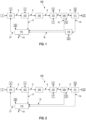
- FIG. 1 is a diagram of a hydroformylation process in which various strategies have been implemented to mitigate the presence of carbonates when recycling catalyst metal.
- the methods of the present disclosure may be implemented separately or, more preferably, in combination with one other, to mitigate the presence of carbonates, particularly during catalyst preforming of a recycled hydroformylation catalyst metal, such as cobalt or another Group 9 transition metal effective for promoting hydroformylation.
- Mitigating the presence of carbonates may comprise removing carbon dioxide from the process stream at one or more locations, specifically by limiting the amount of carbon dioxide introduced to partially spent caustic aqueous solutions formed during hydroformylation reaction product treatment and catalyst recycling operations, thereby limiting the quantity of carbonates returned to the hydroformylation reaction with the catalyst metal, as explained in further detail herein. Additional strategies to mitigate residual carbonates within the partially spent caustic aqueous solution are also addressed herein.
- hydroformylation process 100 illustrates various methods to decrease the formation of catalyst metal carbonates during catalyst metal preforming.
- Hydroformylation 101 may be carried out by contacting olefinic feed 1 with syngas (hydrogen and carbon monoxide, e.g ., a 1:1 mixture) 2 and a hydroformylation catalyst under conditions effective to form hydroformylation reaction product 4, which may comprise at least one aldehyde.
- suitable hydroformylation catalysts may include those comprising a Group 9 transition metal (e.g ., cobalt or rhodium, preferably cobalt).
- suitable hydroformylation catalysts comprising cobalt include cobalt carbonyls, such as Co 2 (CO) 8 , which may convert to HCo(CO) 4 under high CO/H 2 pressures commonly encountered during hydroformylation.
- Suitable syngas pressures effective for forming HCo(CO) 4 in situ may range from about 1 MPa to about 30 MPa, with a ratio of H 2 :CO partial pressures ranging from about 2:3 to about 3:2, preferably about 1.2:1.
- Suitable reaction temperatures during hydroformylation may range from about room temperature to about 200°C ( i.e., about 25°C to about 200°C), or any subrange in between.
- Suitable olefinic feeds 1 useful in the processes described herein are not considered to be particularly limited.
- one or more alpha olefins may comprise olefinic feed 1.
- Suitable alpha olefins may include, but are not limited to C 6+ alpha olefins, such as 1-hexene, 1-heptene, 1-octene, 1-nonene, 1-decene, 1-undecene 1-dodecene, 1-tridecene, 1-tetradecene, 1-pentadecene, 1-hexadecene, 1-heptadecene, 1-octadecene, 1-nonadecene, 1-eicosene, 1-heneicosene, 1-docosene, 1-tricosene, 1-tetracosene, 1-pentacosene, 1-hexacosene, 1-heptacosene, 1-o
- Internal olefins, vinylidene olefins, and the like may also comprise at least a portion of olefinic feed 1 in various process implementations.
- Internal olefins and/or vinylidene olefins may undergo hydroformylation in combination with alpha olefins in some process configurations.
- Other particularly desirable process configurations may include those in which an oligomerization reaction product of propene, butenes, and/or pentenes undergoes hydroformylation according to the disclosure herein, wherein the oligomerization reaction product may comprise a terminal or non-terminal olefinic bond.
- the hydroformylation catalyst may be removed from hydroformylation reaction product 4 as a metal salt in metal extraction 103.
- hydroformylation reaction product 4 may be treated with aqueous carboxylic acid 3 under oxidizing conditions to promote oxidation and formation of a metal carboxylate, which is soluble in water.
- the catalyst metal may undergo oxidation in this process to produce the water-soluble form.
- Suitable oxidizing conditions may include, for example, air, oxygen/inert gas mixtures, oxygen/hydrocarbon gas mixtures, or the like. Mild chemical oxidants, such as hydrogen peroxide, may also be employed.
- suitable carboxylic acids for use in metal extraction 103 to form a water-soluble metal carboxylate include, but are not limited to, acetic acid, formic acid, and propionic acid.
- aqueous acetic acid may be used to extract cobalt into an aqueous phase in the form of cobalt acetate.
- the resulting deactivated catalyst aqueous solution 17 may have a pH of about 4 or less.
- Deactivated catalyst aqueous solution 17 may be separated from an organic phase comprising demetallized hydroformylation reaction product 5, such as via phase partitioning.
- the extraction process undertaken in metal extraction 103 may be repeated until the metal content of the organic phase is decreased to a desired level.
- Metal extraction 103 may be carried out at a temperature and pressure to prevent the aqueous phase from boiling. For example, a temperature from about 38°C to about 93°C, or about 65°C to about 93°C, from about 70°C to about 90°C, or from about 75°C to about 85°C may be used at a pressure of about 40 psi (276 kpa) to about 150 psi (1030 kpa). Atmospheric pressure metal extraction 103 is also contemplated in the present disclosure. Aqueous carboxylic acid 3 may be combined with hydroformylation reaction product 4 at molar excess over the stoichiometric requirement, such as about 50% to about 100% excess on a molar basis. Further processing of deactivated catalyst aqueous solution 17 and the organic phase comprising demetallized hydroformylation reaction product 5 may then take place, as described hereinafter.
- demetallized hydroformylation reaction product 5 may then be reduced 105 to form reduced reaction product 6 comprising at least one alcohol.
- demetallized hydroformylation reaction product 5 may be distilled to remove any unreacted olefins or any unwanted side products.
- demetallized hydroformylation reaction product 5 may be subjected to hydrolysis reaction conditions to convert esters and/or acetals into alcohols and/or aldehydes.
- Reduction may be carried out by any technique known to one of ordinary skill in the art, such as, but not limited to, hydrogenation in the presence of hydrogen and a suitable hydrogenation catalyst (e.g ., nickel, platinum, palladium, sulfided molybdenum, sulfided nickel molybdenum, sulfided cobalt molybdenum, copper chromite, and the like).
- a suitable hydrogenation catalyst e.g ., nickel, platinum, palladium, sulfided molybdenum, sulfided nickel molybdenum, sulfided cobalt molybdenum, copper chromite, and the like.
- a suitable hydrogenation catalyst e.g ., nickel, platinum, palladium, sulfided molybdenum, sulfided nickel molybdenum, sulfided cobalt molybdenum, copper chromite, and the like.
- Hydroformylation process 100 recirculates various process elements in an integrated process of hydroformylation, catalyst metal recycling and product purification as described in further detail hereinafter.
- the integrated process may be conducted such that limited carbonates are returned to hydroformylation 101.
- carbon dioxide may be present in reduced reaction product 6, which may undesirably affect (lower) the rate of catalyst preforming when transported back to deactivated catalyst aqueous solution 17 in the form of dissolved carbonates.
- carbon dioxide may be carried forward in the integrated process in the form of dissolved carbonates from reduced reaction product 6 to hydroformylation 101 via a partially spent caustic aqueous solution in which carbonates have formed in a reaction between caustic (e.g ., NaOH) and the carbon dioxide, as explained further herein.
- caustic e.g ., NaOH
- the present disclosure takes various measures to mitigate the presence of carbon dioxide in reduced reaction product 6 and to promote removal of carbonates in other steps of hydroformylation process 100 so that minimal catalyst metal carbonate is returned to hydroformylation 101.
- reduced reaction product 6 may be subjected to gas stripping 107 following reduction to remove at least some of the carbon dioxide therefrom.
- Gas stripping 107 may employ stripping gas 7 to promote physical desorption of carbon dioxide from reduced reaction product 6 prior to its further processing.
- reduced reaction product 6 may be purged with stripping gas 7 during gas stripping 107 to form stripped reduced reaction product 9.
- Stripping gas 7 may be any gas that will effectively remove (strip/desorb) at least some carbon dioxide from reduced reaction product 7 and carry the carbon dioxide into effluent 8.
- suitable stripping gasses include, but are not limited to, an inert gas (e.g ., nitrogen, helium, or argon or natural gas).
- Stripping gas 7 may be conveyed through reduced reaction product 6 at a rate effective to remove at least a portion of the carbon dioxide therefrom, for example, from about 300 pounds/hour (about 136 kg/hour) to about 650 pounds/hour (about 295 kg/hour), or from about 375 pounds/hour (about 170 kg/hour) to about 500 pounds/hour (about 227 kg/hour), or from about 425 pounds/hour (about 193 kg/hour) to about 475 pounds/hour (about 215 kg/hour). Higher gas flow rates of stripping gas 7 may promote removal of higher quantities of carbon dioxide from reduced reaction product 6. Although not shown, stripping gas 7 may be recirculated to gas stripping 107, if desired. Gas stripping 107 may be conducted in any suitable location, such as a tower or vessel fed with reduced reaction product 6.
- stripped reduced reaction product 9 may then be contacted with caustic aqueous solution 10 in caustic treatment 109 to afford an organic phase comprising partially purified alcohols 11 and an aqueous phase comprising a partially spent caustic aqueous solution 15.
- Caustic aqueous solution 10 may be fresh caustic that contains limited carbonates and has not previously been used for promoting product purification.
- the aqueous and organic phases may be separated from one another by phase partitioning for further processing.
- the term “caustic” refers to a basic alkali metal or alkaline earth metal salt, such as a hydroxide including, but not limited to, sodium hydroxide, lithium hydroxide, potassium hydroxide, magnesium hydroxide, or the like.
- the term “partially spent” means that the concentration or amount of caustic in the aqueous solution has been decreased in the course of contacting stripped reduced reaction product 9, but at least some alkalinity remains.
- the partially spent caustic aqueous solution has a pH higher than 7.
- One of ordinary skill in the art will be familiar with reasons for contacting stripped reduced reaction product 9 with caustic aqueous solution 10, such as to remove acidic impurities arising from hydroformylation 101, the reaction taking place in reduction 105, or during metal extraction 103.
- One having ordinary skill in the art will also be familiar with suitable conditions and equipment for contacting stripped reduced reaction product 9 with caustic aqueous solution 10 to remove acid impurities, such as inline mixers, settling tanks, batch reactors, and the like.
- Such conditions and equipment may be substantially identical to contacting conditions used for removing acidic impurities when gas stripping 107 is not performed, as in conventional hydroformylation processes.
- gas stripping 107 is not necessary for performing further procedures described herein for mitigating the presence of carbonates, but gas stripping 107 may be highly beneficial for process efficiency. If gas stripping 107 is not performed, the carbonate content of partially spent caustic aqueous solution 15 may be very high, which correspondingly results in greater carbon dioxide release during subsequent processing operations described hereinafter. Excessive carbon dioxide release of this type may cause unwanted foaming and process upsets. As such, it can be highly beneficial to remove as much carbon dioxide as possible by performing gas stripping 107.
- the aqueous phase comprising partially spent caustic aqueous solution 15 may retain sufficient alkalinity to perform other process operations, as described hereinafter.
- reuse of partially spent caustic aqueous solution 15 may decrease the need to supply fresh caustic aqueous solution to hydroformylation process 100, thereby simplifying process logistics and decreasing supply costs.
- Residual carbonates formed in partially spent caustic aqueous solution 15 may result in delayed catalyst preforming when used in supporting other process operations, particularly when converting the catalyst metal into a suitable form for recycling as discussed further below.
- a second aspect of the present disclosure addresses mitigation of the carbonates in partially spent caustic aqueous solution 15, as discussed further herein.
- the further process operations for mitigating carbonates in partially spent caustic aqueous solution 15 may be performed in conjunction with gas stripping 107, or the additional carbonate mitigation of partially spent caustic aqueous solution 15 may be omitted if the residual carbonate levels therein are sufficiently low following gas stripping 107.
- both gas stripping 107 and additional carbonate removal from partially spent caustic aqueous solution 15 are performed.
- the carbonate content of partially spent caustic aqueous solution 15 may be decreased significantly by performing gas stripping 107 upon reduced reaction product 6.
- carbon dioxide concentrations within stripped reduced reaction product 9 may decreased to such an extent that partially spent caustic aqueous solution 15 contains not more than about 0.16 mol carbonate/kg partially spent aqueous caustic, or not more than about 0.10 mol carbonate/kg, or not more than about 0.5 mol carbonate/kg, or not more than 0.05 mol carbonate/kg.
- carbonate concentrations in partially spent caustic aqueous solution 15 may advantageously range from 0 mol/kg to about 0.16 mol/kg, from about 0.01 mol/kg to about 0.1 mol/kg, or from about 0.02 mol/kg to about 0.5 mol/kg.
- gas stripping 107 may significantly decrease the carbonate content of partially spent caustic aqueous solution 15, additional reduction of the carbonate content may still be desirable to support a specified rate of catalyst preforming.
- partially spent caustic aqueous solution 15 may be acidified during further use to promote removal of residual carbonates via carbonic acid decomposition.
- processes integrate well with the acidic nature of deactivated catalyst aqueous solution 17.
- organic phase 11 may be distilled 111, which may separate light organic fraction 12, alcohols 13, and heavy organic fraction 14 (e.g., C 9 to C 18 carboxylic acids and carboxylate esters) from one another.
- Heavy organic fraction 14 is also referred herein as "non-distilled bottoms organic fraction".
- Heavy organic fraction 14 may be obtained as a bottoms fraction that is then provided as a precursor to an organic phase used for extracting the catalyst metal from deactivated catalyst aqueous solution 17.
- heavy organic fraction 14 may be combined with fresh caustic aqueous solution 22 to form organic soaps 16 (e.g., alkali or alkaline earth metal carboxylates) in soap formation 113.
- Organic soaps 16 may comprise about 90% organic materials by weight, with about 10% by weight of the organic materials being dissolved. Some organic soap formation may also have previously occurred in caustic treatment 109, with those organic soaps being fed forward with partially spent caustic aqueous solution 15, as described further below.
- the organic soaps formed in partially spent caustic aqueous solution 15 may arise primarily from a reaction of caustic with a carboxylic acid impurity ( i.e., via direct salt formation), whereas organic soaps 16 formed from heavy organic fraction 14 may result primarily from ester hydrolysis.
- Organic soaps 16 may then be combined with deactivated catalyst aqueous solution 17 at blending operation 115 to form a combined aqueous mixture comprising an organic phase and an aqueous phase to promote catalyst metal extraction. As shown in FIG. 1 , organic soaps 16 are formed prior to contacting deactivated catalyst aqueous solution 17 at blending operation 115. Alternately, heavy organic fraction 14 may be provided to blending operation 115 without forming organic soaps 16 beforehand, as shown in the alternative process configuration of FIG. 2 . When heavy organic fraction 14 is provided directly to blending operation 115, organic soaps 16 may be formed under a first set of reaction conditions at blending operation 115, followed by catalyst metal extraction into an organic phase comprising organic soaps 16 under a second set of reaction conditions.
- the pH of deactivated catalyst aqueous solution 17 is about 4 or less ( e.g ., from about 1 to about 4).
- the pH needs to be increased to a value of about 7.5 or greater, which is accomplished, in part, by concurrently feeding partially spent caustic aqueous solution 15 to blending operation 115.
- the low starting pH of deactivated catalyst aqueous solution 17 may convert residual carbonates in partially spent caustic aqueous solution 15 to carbonic acid, which subsequently decomposes to water and carbon dioxide. The carbon dioxide bubbles through the liquid to the top of the reactor, facilitated by heating and stirring of the reactor contents.
- the pH reaches a value of about 6
- further carbonate decomposition becomes inefficient, and a further pH increase to a value of about 7.5 or greater may be accomplished using fresh caustic aqueous solution 20 containing as low as possible amount of carbonates.
- process 100 requires less caustic material input than in conventional processes, while simultaneously promoting carbonate removal as a consequence of the manner in which partially spent caustic aqueous solution 15 is exposed to the catalyst metal.
- Organic phase 21 i.e., a catalyst metal organic soap extract
- aqueous phase 19 may then be separated from one another by phase partitioning.
- the original water-soluble metal carboxylate of the deactivated catalyst metal may be converted to a long-chain, organic-soluble carboxylate in this process.
- caustic aqueous solution 20 may be introduced to blending operation 115 to raise the pH to a level sufficient to promote extraction of the catalyst metal into organic phase 21 as a metal carboxylate, specifically as a metal soap (metal carboxylate) derived from the long-chain acids provided from heavy organic fraction 14.
- the pH needed to facilitate this process may be about 7.5 or greater, particularly in a range of about 7.5 to about 8.
- the present disclosure facilitates more complete exclusion of catalyst metal carbonates, such as cobalt carbonate, during catalyst metal recycling by minimizing the presence of carbonates in partially spent caustic aqueous solution 15 used in conjunction therewith, specifically by performing gas stripping 107 upon reduced reaction product 6 and/or by combining partially spent caustic aqueous solution 15 with deactivated catalyst aqueous solution 17 at a low pH sufficiently acidic to promote decomposition of carbonates.
- catalyst metal carbonates such as cobalt carbonate
- organic phase 21 may comprise organic soaps of the catalyst metal.
- Aqueous phase 19 may then be sent to waste or used to supplement other process operations, as desired.
- Organic phase 21 may then be conveyed to hydroformylation 101 to resume the catalytic process cycle.
- the deactivated catalyst metal may be preformed into an active hydroformylation catalyst (e.g ., HCo(CO) 4 ) under the hydroformylation reaction conditions.
- organic phase 21 may be subjected to a set of preforming conditions effective to convert the deactivated catalyst metal into its catalytically active form before being contacted with an olefinic feed in the presence of syngas, wherein the preforming conditions are different from the hydroformylation conditions.
- methods of the present disclosure may comprise: contacting an olefinic feed with syngas and a hydroformylation catalyst comprising a Group 9 transition metal under conditions effective to form a hydroformylation reaction product; treating the hydroformylation reaction product with an aqueous carboxylic acid under oxidizing conditions to form a deactivated catalyst aqueous solution having a pH of about 4 or less; reducing the hydroformylation reaction product to form a reduced reaction product; conveying a gas stream through the reduced reaction product at a rate sufficient to strip at least some carbon dioxide therefrom, thereby forming a stripped reduced reaction product; contacting fresh caustic aqueous solution with the stripped reduced reaction product; recovering a partially spent caustic aqueous solution after contacting the stripped reduced reaction product with the fresh caustic aqueous solution; combining at least a portion of the partially spent caustic aqueous solution and the deactivated catalyst aqueous solution to form a combined aqueous mixture having a pH sufficiently acidic to decompos
- the combined aqueous mixture may have a pH of at least about 7.5 in various process implementations to allow extraction of the Group 9 transition metal carboxylate to take place into the organic phase. If a pH of about 7.5 is not reached in the combined aqueous mixture, fresh caustic aqueous solution may be added.
- the organic phase used to perform extraction of the catalyst metal may be combined with fresh caustic aqueous solution to form organic soaps before being combined with the deactivated catalyst aqueous solution, or the fresh caustic aqueous solution and the organic phase may be provided to the deactivated catalyst aqueous solution and subsequently undergoing in situ formation of organic soaps.
- partially spent caustic aqueous solution may be provided to the deactivated catalyst aqueous solution until a pH of about 6 ( e.g ., about 4 to about 6, or about 5 to about 6) is reached, and fresh caustic aqueous solution may then be added to increase the pH to a value of about 7.5 or greater.
- the above methods for promoting catalyst preforming employ two different procedures for decreasing carbonate formation in the partially spent caustic aqueous solution used in conjunction with catalyst metal recycling.
- one procedure described herein comprises stripping carbon dioxide from the reduced reaction product
- a second procedure comprises combining the partially spent caustic aqueous solution with the deactivated catalyst aqueous solution at a pH of about 4 or less prior to extracting catalyst metal into the organic phase.
- a pH of about 6 is reached, fresh caustic aqueous solution may be added to reach a higher alkaline pH (e.g ., about 7.5 or greater) before extraction takes place.
- These two procedures may be used in conjunction with each other, as described above, or one of the procedures may be omitted, if sufficient carbon dioxide removal/carbonate mitigation may be accomplished by practicing one of the procedures alone.
- carbon dioxide removal may be carried out by omitting the procedure wherein the reduced reaction product undergoes gas stripping.
- the deactivated catalyst metal may then be extracted into the organic phase upon raising the pH of the combined aqueous mixture to about 7.5 or above.
- the organic phase comprising a catalyst metal carboxylate may then be exposed to hydroformylation reaction conditions to reform the active hydroformylation catalyst.
- such methods may comprise: contacting an olefinic feed with syngas and a hydroformylation catalyst comprising a Group 9 transition metal under conditions effective to form a hydroformylation reaction product; treating the hydroformylation reaction product with an aqueous carboxylic acid under oxidizing conditions to form a deactivated catalyst aqueous solution having a pH of about 4 or less; combining a partially spent caustic aqueous solution with the deactivated catalyst aqueous solution to form a combined aqueous mixture having a pH sufficiently acidic to decompose carbonate; combining fresh caustic aqueous solution with the combined aqueous mixture after combining the partially spent caustic aqueous solution therewith, such that the pH of the combined aqueous mixture is at least about 7.5 after combining the fresh caustic aqueous solution; extracting a Group 9 transition metal carboxylate from the combined aqueous mixture into an organic phase; and providing the organic phase to the conditions effective to form the hydroformylation reaction
- the organic phase may be formed from a precursor comprising a heavy organic phase, specifically a heavy organic phase comprising C 9 to C 18 carboxylic acids and C 9 to C 18 carboxylate esters, which may be hydrolyzed or neutralized to form organic soaps to promote catalyst metal extraction.
- the organic soaps may be provided to the combined aqueous mixture before or after adjusting the pH with the partially spent caustic aqueous solution.
- Catalyst metal carboxylates in the organic phase may then be contacted once more with an olefinic feed and syngas under conditions effective to convert the hydroformylation catalyst to its active form and subsequently form additional hydroformylation reaction product.
- Still other methods for mitigating carbonates may comprise: forming a reduced reaction product through reduction of a hydroformylation reaction product; conveying a gas stream through the reduced reaction product at a rate sufficient to remove at least some carbon dioxide therefrom, thereby forming a stripped reduced reaction product; contacting the stripped reduced reaction product with a caustic aqueous solution to form a partially spent caustic aqueous solution; contacting the partially spent caustic aqueous solution with a deactivated catalyst aqueous solution to form a combined aqueous mixture having a pH sufficiently acidic to decompose carbonate, the deactivated catalyst aqueous solution comprising a Group 9 transition metal, having a pH of about 4 or less, and being obtained from a hydroformylation reaction; extracting a Group 9 carboxylate from the combined aqueous mixture into an organic phase; and exposing the organic phase to hydroformylation reaction conditions.
- a heavy organic fraction specifically a heavy organic fraction comprising one or more C 9 to C 18 carboxylic acids
- the methods described herein may be carried out at any conventional plant equipped with various process equipment such as reactors (e.g ., stirred batch reactors), separators, condensers, compressors, and the like.
- reactors e.g ., stirred batch reactors
- separators e.g ., separators
- condensers e.g ., condensers
- compressors e.g., compressors, and the like.
- illustrative combinations applicable to A include, but are not limited to, 1 and 2; 1-3; 1 and 4; 1 and 5; 1 and 8; 1, 8 and 9; 1 and 10; 1 and 11; 1, 10 and 11; 2 and 3; 2-4; 2 and 5; 2 and 8; 2, 8 and 9; 2 and 10; 2 and 11; 2, 10 and 11; 3 and 4; 3 and 5; 3 and 8; 3 and 10; 3, 10 and 11; 3 and 11; 4 and 5; 4 and 8; 4, 8 and 9; 4 and 10; 4 and 11; 4, 10 and 11; 5 and 8; 5, 8 and 9; 5 and 10; 5 and 11; 5, 10 and 11; and 10 and 11.
- Illustrative combinations applicable to B include, but are not limited to, 1 and 2; 1-3; 1 and 11; 1 and 12; 1 and 13; 1, 9 and 13; 1 and 14; 1 and 15; 2 and 3; 2 and 11; 2 and 12; 2 and 13; 2, 9 and 13; 2 and 14; 2 and 15; 9 and 13; 12 and 13; 9, 12 and 13; 11 and 12; 11 and 14; 11 and 15; 12 and 14; 12 and 15; and 14 and 15.
- Illustrative combinations applicable to C include, but are not limited to, 2 and 4; 2 and 5; 2 and 6; 2 and 8; 2 and 9; 2 and 10; 4 and 5; 4 and 6; 4 and 8; 4 and 9; 4 and 11; 5 and 6; 5 and 8; 5 and 9; 5 and 11; 6 and 8; 6 and 9; 6 and 11; 8 and 9; 8 and 11; and 9 and 11.
- Example 1 A feed comprising octenes made from oligomerization of Raffinate 2 butenes was loaded into a batch reactor along with a cobalt(II) hydroformylation catalyst precursor capable of forming HCo(CO) 4 , such that the concentration of catalyst metal in the reactor was about 3000 ppm.
- the cobalt (II) hydroformylation catalyst precursor was prepared from a cobalt (II) naphthenate solution containing 6 wt. % Co by adding 10 wt. % water thereto. Depending on experiment, the water was pure demineralized water, or contained 5 wt. % sodium carbonate or 5 wt. % sodium acetate.
- the reactor was heated to about 155°C and syngas was added to achieve an initial syngas pressure of 300 bar.
- the preforming time for the catalyst was taken to be that at which a sudden decline in syngas pressure occurred which coincides with the onset of conversion. At that time, the syngas pressure was restored to 300 bar, and conversion was followed over time thereafter.
- FIG. 4 shows an infrared spectrum of the solid obtained in the presence of sodium carbonate. Analysis of the infrared spectrum showed a good peak match for cobalt carbonate. A solid formed under plant recycling conditions exhibited an infrared spectrum very similar in appearance to the infrared spectrum shown in FIG. 4 .
- Example 2 To illustrate the effectiveness of natural gas stripping in decreasing the quantity of carbonates in the partially spent caustic aqueous solution, natural gas was passed through a reduced hydroformylation reaction product at various rates. Caustic aqueous solution was then contacted with the stripped hydroformylation reaction product, and the carbonate concentration of the partially spent caustic aqueous solution was then determined. The carbonate concentration was determined by acidifying the partially spent caustic aqueous solution with excess sulfuric acid and measuring the volume of carbon dioxide liberated therefrom. Results are shown in Table 1 below and in FIG. 5 .
- compositions and methods are described in terms of “comprising,” “containing,” or “including” various components or steps, the compositions and methods can also “consist essentially of” or “consist of” the various components and steps. All numbers and ranges disclosed above may vary by some amount. Whenever a numerical range with a lower limit and an upper limit is disclosed, any number and any included range falling within the range is specifically disclosed.
Landscapes
- Chemical & Material Sciences (AREA)
- Organic Chemistry (AREA)
- Chemical Kinetics & Catalysis (AREA)
- Inorganic Chemistry (AREA)
- Engineering & Computer Science (AREA)
- Materials Engineering (AREA)
- Organic Low-Molecular-Weight Compounds And Preparation Thereof (AREA)
- Catalysts (AREA)
Claims (15)
- Verfahren, bei demolefinisches Einsatzmaterial mit Syngas und Hydroformylierungskatalysator, der Übergangsmetall der Gruppe 9 umfasst, unter Bedingungen kontaktiert wird, die effektiv sind, um Hydroformylierungsreaktionsprodukt zu bilden,das Hydroformylierungsreaktionsprodukt mit wässriger Carbonsäure unter oxidierenden Bedingungen behandelt wird, um deaktivierte wässrige Katalysatorlösung mit einem pH-Wert von etwa 4 oder weniger zu bilden,das Hydroformylierungsreaktionsprodukt reduziert wird, um reduziertes Reaktionsprodukt zu bilden,ein Gasstrom mit ausreichender Rate durch das reduzierte Reaktionsprodukt hindurch gefördert wird, um mindestens einen Teil des Kohlendioxids davon zu strippen, wodurch gestripptes reduziertes Reaktionsprodukt gebildet wird,frische alkalische wässrige Lösung mit dem gestrippten reduzierten Reaktionsprodukt kontaktiert wird,teilweise verbrauchte alkalische wässrige Lösung nach Kontaktieren des gestrippten reduzierten Reaktionsprodukts mit der frischen alkalischen wässrigen Lösung gewonnen wird,mindestens ein Teil der teilweise verbrauchten alkalischen wässrigen Lösung und der deaktivierten wässrigen Katalysatorlösung kombiniert werden, um kombinierte wässrige Mischung mit einem pH-Wert zu bilden, der ausreichend sauer ist, um Carbonat zu zersetzen,Carboxylat von Übergangsmetall der Gruppe 9 aus der kombinierten wässrigen Mischung in organische Phase extrahiert wird, unddie organische Phase den Bedingungen ausgesetzt wird, die effektiv sind, um das Hydroformylierungsreaktionsprodukt zu bilden.
- Verfahren nach Anspruch 1, bei dem die wässrige Carbonsäure Essigsäure umfasst.
- Verfahren nach Anspruch 1 oder Anspruch 2, bei dem das Übergangsmetall der Gruppe 9 Kobalt umfasst.
- Verfahren nach einem der Ansprüche 1 bis 3, bei dem der Hydroformylierungskatalysator HCo(CO)4 umfasst.
- Verfahren nach einem der Ansprüche 1 bis 4, bei dem das reduzierte Reaktionsprodukt durch Hydrierung des Hydroformylierungsreaktionsprodukts gebildet wird.
- Verfahren nach einem der Ansprüche 1 bis 5, bei dem der Gasstrom Erdgas umfasst.
- Verfahren nach einem der Ansprüche 1 bis 6, bei dem der Gasstrom mit einer Rate von etwa 136 kg/Stunde (300 lb pro Stunde) oder mehr durch das reduzierte Reaktionsprodukt hindurch gefördert wird.
- Verfahren nach einem der Ansprüche 1 bis 7, bei dem die teilweise verbrauchte alkalische wässrige Lösung etwa 0,16 Mol oder weniger Carbonat pro kg der Lösung umfasst.
- Verfahren nach einem der Ansprüche 1 bis 8, bei dem des Weiterenein oder mehrere Alkohole von dem reduzierten Reaktionsprodukt oder dem gestrippten reduzierten Reaktionsprodukt destilliert wird bzw. werden,nicht-destillierte organische Sumpffraktion erhalten wird, wenn der eine oder die mehreren Alkohole destilliert wird bzw. werden, undder kombinierten wässrigen Mischung als Vorläufer der organischen Phase mindestens ein Anteil der nicht-destillierten organischen Sumpffraktion als organische Seifen bereitgestellt wird.
- Verfahren nach Anspruch 9, bei dem die nicht-destillierte organische Sumpffraktion ein oder mehrere C9- bis C18-Carbonsäuren, C9- bis C18-Carboxylatester oder beliebige Kombination davon umfasst.
- Verfahren nach einem der Ansprüche 1 bis 10, bei dem des Weiteren
ein pH-Wert der kombinierten wässrigen Mischung mit frischer alkalischer wässriger Lösung auf einen Wert von mindestens etwa 7,5 eingestellt wird, nachdem die teilweise verbrauchte alkalische wässrige Lösung mit der deaktivierten wässrigen Katalysatorlösung kombiniert worden ist. - Verfahren nach einem der Ansprüche 1 bis 11, bei dem der pH-Wert, der ausreichend sauer ist, um Carbonat zu zersetzen, etwa 6 oder weniger beträgt.
- Verfahren, bei demolefinisches Einsatzmaterial mit Syngas und Hydroformylierungskatalysator, der Übergangsmetall der Gruppe 9 umfasst, unter Bedingungen kontaktiert wird, die effektiv sind, um Hydroformylierungsreaktionsprodukt zu bilden,das Hydroformylierungsreaktionsprodukt mit wässriger Carbonsäure unter oxidierenden Bedingungen behandelt wird, um deaktivierte wässrige Katalysatorlösung mit einem pH-Wert von etwa 4 oder weniger zu bilden,teilweise verbrauchte alkalische wässrige Lösung mit der deaktivierten wässrigen Katalysatorlösung kombiniert wird, um kombinierte wässrige Mischung mit einem pH-Wert zu bilden, der ausreichend sauer ist, um Carbonat zu zersetzen,frische alkalische wässrige Lösung mit der kombinierten wässrigen Mischung kombiniert wird, nachdem die teilweise verbrauchte alkalische wässrige Lösung damit kombiniert wurde, wobei der pH-Wert der kombinierten wässrigen Mischung nach Kombinieren der frischen alkalischen wässrigen Lösung mindestens etwa 7,5 beträgt,Carboxylat von Übergangsmetall der Gruppe 9 aus der kombinierten wässrigen Mischung in organische Phase extrahiert wird, undder organischen Phase die Bedingungen verschafft werden, die effektiv sind, um das Hydroformylierungsreaktionsprodukt zu bilden.
- Verfahren nach Anspruch 13, bei dem die Carbonsäure wässrige Essigsäure umfasst.
- Verfahren nach Anspruch 13 oder 14, bei dem das Übergangsmetall der Gruppe 9 Kobalt umfasst.
Applications Claiming Priority (2)
| Application Number | Priority Date | Filing Date | Title |
|---|---|---|---|
| US202062965464P | 2020-01-24 | 2020-01-24 | |
| PCT/EP2020/086386 WO2021148202A1 (en) | 2020-01-24 | 2020-12-16 | Methods for increasing hydroformylation catalyst preforming rates |
Publications (2)
| Publication Number | Publication Date |
|---|---|
| EP4093722A1 EP4093722A1 (de) | 2022-11-30 |
| EP4093722B1 true EP4093722B1 (de) | 2024-06-12 |
Family
ID=74187230
Family Applications (1)
| Application Number | Title | Priority Date | Filing Date |
|---|---|---|---|
| EP20842559.5A Active EP4093722B1 (de) | 2020-01-24 | 2020-12-16 | Verfahren zur erhöhung der vorformungsraten von hydroformylierungskatalysatoren |
Country Status (4)
| Country | Link |
|---|---|
| US (1) | US12559447B2 (de) |
| EP (1) | EP4093722B1 (de) |
| CN (1) | CN114981233B (de) |
| WO (1) | WO2021148202A1 (de) |
Families Citing this family (1)
| Publication number | Priority date | Publication date | Assignee | Title |
|---|---|---|---|---|
| EP4093722B1 (de) | 2020-01-24 | 2024-06-12 | ExxonMobil Chemical Patents Inc. | Verfahren zur erhöhung der vorformungsraten von hydroformylierungskatalysatoren |
Family Cites Families (10)
| Publication number | Priority date | Publication date | Assignee | Title |
|---|---|---|---|---|
| US2802846A (en) | 1955-06-13 | 1957-08-13 | Exxon Research Engineering Co | Preparation of catalyst and fatty acids from oxo process bottoms |
| US3234146A (en) | 1963-01-18 | 1966-02-08 | Monsanto Co | Recovery and regeneration of oxo process catalysts |
| US4225458A (en) | 1979-01-30 | 1980-09-30 | Exxon Research & Engineering Co. | Process for the continuous manufacture and separation of oxo catalysts |
| DE19939491A1 (de) * | 1999-08-20 | 2001-02-22 | Basf Ag | Kontinuierliches Verfahren zur Hydroformylierung von Olefinen mit 6 bis 20 Kohlenstoffatomen |
| DE10045056A1 (de) * | 2000-09-12 | 2002-03-21 | Basf Ag | Verfahren zur kontinuierlichen Hydroformylierung von Polyalkenen mit 30 bis 700 Kohlenstoffatomen |
| GB0706887D0 (en) * | 2007-04-10 | 2007-05-16 | Exxonmobil Chem Patents Inc | Cobalt recovery from cobalt catalysed hydroformylation reactions |
| EP2136917B1 (de) * | 2007-04-18 | 2011-08-17 | ExxonMobil Chemical Patents Inc. | Verbesserungen bei der oxidativen demetallisierung |
| EP2321245B1 (de) * | 2008-08-29 | 2016-04-13 | ExxonMobil Chemical Patents Inc. | Hydroformylierungsverfahren mit katalysatorrückgewinnung |
| WO2017078972A1 (en) * | 2015-11-04 | 2017-05-11 | Archer Daniels Midland Company | Improved hydroformylation process |
| EP4093722B1 (de) | 2020-01-24 | 2024-06-12 | ExxonMobil Chemical Patents Inc. | Verfahren zur erhöhung der vorformungsraten von hydroformylierungskatalysatoren |
-
2020
- 2020-12-16 EP EP20842559.5A patent/EP4093722B1/de active Active
- 2020-12-16 CN CN202080094202.0A patent/CN114981233B/zh active Active
- 2020-12-16 US US17/813,213 patent/US12559447B2/en active Active
- 2020-12-16 WO PCT/EP2020/086386 patent/WO2021148202A1/en not_active Ceased
Also Published As
| Publication number | Publication date |
|---|---|
| US20230202954A1 (en) | 2023-06-29 |
| US12559447B2 (en) | 2026-02-24 |
| EP4093722A1 (de) | 2022-11-30 |
| WO2021148202A1 (en) | 2021-07-29 |
| CN114981233A (zh) | 2022-08-30 |
| CN114981233B (zh) | 2024-04-19 |
Similar Documents
| Publication | Publication Date | Title |
|---|---|---|
| EP0183546B1 (de) | Abtrennung des Hydroformylierungskatalysators | |
| EP1832569B1 (de) | Verfahren zur herstellung von essigsäure | |
| JPS6256789B2 (de) | ||
| US5237105A (en) | Method for removing hydroformylation catalyst | |
| EP4093722B1 (de) | Verfahren zur erhöhung der vorformungsraten von hydroformylierungskatalysatoren | |
| US3579575A (en) | Process for oxidizing lower aliphatic aldehydes | |
| KR20050089989A (ko) | 사이클로헥산온 및 하나 이상의 알데하이드를 포함하는혼합물에서 알데하이드의 농도를 감소시키는 방법 | |
| JPH04210932A (ja) | tert−ブチルヒドロペルオキシドからtert−ブチルアルコールの触媒的製造法 | |
| JP2000344695A (ja) | アルコールの製造法 | |
| EP1315693B1 (de) | Metallwiedergewinnung aus olefinhydroformylierungsreaktionen | |
| EP0391650A2 (de) | Rückgewinnung des Katalysators bei der Alkoholherstellung | |
| TWI308144B (en) | High yield cyclohexyl hydroperoxide decomposition process | |
| EP0642488B1 (de) | Katalysatorregenerierung | |
| US5237104A (en) | Cobalt catalyst recovery using heavy olefin absorbent | |
| NL8204969A (nl) | Werkwijze voor het winnen van kobaltkatalysatoren. | |
| WO1993024436A1 (en) | Method and apparatus for the recovery of metal catalysts | |
| US5410090A (en) | Airless cobalt demetalling in the cobalt flash combination catalyst cycle | |
| JP2005517011A (ja) | アルキルアリールヒドロペルオキシド含有生成物の調製方法 | |
| JPH05168951A (ja) | モリブデンの沈殿方法 | |
| US3634291A (en) | Method of recovering cobalt or cobalt plus group ii metal catalyst in oxo synthesis process | |
| JPH07196552A (ja) | チタニアまたはジルコニアを用いるtert−ブチルヒドロペルオキシドからtert−ブチルアルコールの製造方法 | |
| RU2795030C2 (ru) | Способ получения альдегида и способ получения спирта | |
| EP1988074A1 (de) | Verfahren zur herstellung von dialkylhydroperoxybenzolen | |
| EP1577283B1 (de) | Entfernung von Alkoholen und Wasser aus einem Methylcyclopentadienrückführungsstrom in einem Verfahren zur Herstellung von Methylcyclopentadienyl Mangan-tricarbonyl | |
| JPH06256238A (ja) | フェノール及びメチルエチルケトンの製造方法 |
Legal Events
| Date | Code | Title | Description |
|---|---|---|---|
| STAA | Information on the status of an ep patent application or granted ep patent |
Free format text: STATUS: UNKNOWN |
|
| STAA | Information on the status of an ep patent application or granted ep patent |
Free format text: STATUS: THE INTERNATIONAL PUBLICATION HAS BEEN MADE |
|
| PUAI | Public reference made under article 153(3) epc to a published international application that has entered the european phase |
Free format text: ORIGINAL CODE: 0009012 |
|
| STAA | Information on the status of an ep patent application or granted ep patent |
Free format text: STATUS: REQUEST FOR EXAMINATION WAS MADE |
|
| 17P | Request for examination filed |
Effective date: 20220810 |
|
| AK | Designated contracting states |
Kind code of ref document: A1 Designated state(s): AL AT BE BG CH CY CZ DE DK EE ES FI FR GB GR HR HU IE IS IT LI LT LU LV MC MK MT NL NO PL PT RO RS SE SI SK SM TR |
|
| DAV | Request for validation of the european patent (deleted) | ||
| DAX | Request for extension of the european patent (deleted) | ||
| STAA | Information on the status of an ep patent application or granted ep patent |
Free format text: STATUS: EXAMINATION IS IN PROGRESS |
|
| 17Q | First examination report despatched |
Effective date: 20230510 |
|
| GRAP | Despatch of communication of intention to grant a patent |
Free format text: ORIGINAL CODE: EPIDOSNIGR1 |
|
| STAA | Information on the status of an ep patent application or granted ep patent |
Free format text: STATUS: GRANT OF PATENT IS INTENDED |
|
| RIC1 | Information provided on ipc code assigned before grant |
Ipc: C07C 29/86 20060101ALI20240102BHEP Ipc: C07C 29/17 20060101ALI20240102BHEP Ipc: C07C 45/50 20060101ALI20240102BHEP Ipc: C07C 27/22 20060101AFI20240102BHEP |
|
| INTG | Intention to grant announced |
Effective date: 20240129 |
|
| P01 | Opt-out of the competence of the unified patent court (upc) registered |
Effective date: 20240304 |
|
| GRAS | Grant fee paid |
Free format text: ORIGINAL CODE: EPIDOSNIGR3 |
|
| GRAA | (expected) grant |
Free format text: ORIGINAL CODE: 0009210 |
|
| STAA | Information on the status of an ep patent application or granted ep patent |
Free format text: STATUS: THE PATENT HAS BEEN GRANTED |
|
| AK | Designated contracting states |
Kind code of ref document: B1 Designated state(s): AL AT BE BG CH CY CZ DE DK EE ES FI FR GB GR HR HU IE IS IT LI LT LU LV MC MK MT NL NO PL PT RO RS SE SI SK SM TR |
|
| REG | Reference to a national code |
Ref country code: GB Ref legal event code: FG4D |
|
| REG | Reference to a national code |
Ref country code: CH Ref legal event code: EP |
|
| REG | Reference to a national code |
Ref country code: IE Ref legal event code: FG4D |
|
| REG | Reference to a national code |
Ref country code: DE Ref legal event code: R096 Ref document number: 602020032437 Country of ref document: DE |
|
| PG25 | Lapsed in a contracting state [announced via postgrant information from national office to epo] |
Ref country code: BG Free format text: LAPSE BECAUSE OF FAILURE TO SUBMIT A TRANSLATION OF THE DESCRIPTION OR TO PAY THE FEE WITHIN THE PRESCRIBED TIME-LIMIT Effective date: 20240612 |
|
| PG25 | Lapsed in a contracting state [announced via postgrant information from national office to epo] |
Ref country code: FI Free format text: LAPSE BECAUSE OF FAILURE TO SUBMIT A TRANSLATION OF THE DESCRIPTION OR TO PAY THE FEE WITHIN THE PRESCRIBED TIME-LIMIT Effective date: 20240612 Ref country code: HR Free format text: LAPSE BECAUSE OF FAILURE TO SUBMIT A TRANSLATION OF THE DESCRIPTION OR TO PAY THE FEE WITHIN THE PRESCRIBED TIME-LIMIT Effective date: 20240612 |
|
| REG | Reference to a national code |
Ref country code: LT Ref legal event code: MG9D |
|
| PG25 | Lapsed in a contracting state [announced via postgrant information from national office to epo] |
Ref country code: GR Free format text: LAPSE BECAUSE OF FAILURE TO SUBMIT A TRANSLATION OF THE DESCRIPTION OR TO PAY THE FEE WITHIN THE PRESCRIBED TIME-LIMIT Effective date: 20240913 |
|
| REG | Reference to a national code |
Ref country code: NL Ref legal event code: MP Effective date: 20240612 |
|
| PG25 | Lapsed in a contracting state [announced via postgrant information from national office to epo] |
Ref country code: ES Free format text: LAPSE BECAUSE OF FAILURE TO SUBMIT A TRANSLATION OF THE DESCRIPTION OR TO PAY THE FEE WITHIN THE PRESCRIBED TIME-LIMIT Effective date: 20240612 |
|
| PG25 | Lapsed in a contracting state [announced via postgrant information from national office to epo] |
Ref country code: LV Free format text: LAPSE BECAUSE OF FAILURE TO SUBMIT A TRANSLATION OF THE DESCRIPTION OR TO PAY THE FEE WITHIN THE PRESCRIBED TIME-LIMIT Effective date: 20240612 |
|
| PG25 | Lapsed in a contracting state [announced via postgrant information from national office to epo] |
Ref country code: NO Free format text: LAPSE BECAUSE OF FAILURE TO SUBMIT A TRANSLATION OF THE DESCRIPTION OR TO PAY THE FEE WITHIN THE PRESCRIBED TIME-LIMIT Effective date: 20240912 Ref country code: LV Free format text: LAPSE BECAUSE OF FAILURE TO SUBMIT A TRANSLATION OF THE DESCRIPTION OR TO PAY THE FEE WITHIN THE PRESCRIBED TIME-LIMIT Effective date: 20240612 Ref country code: HR Free format text: LAPSE BECAUSE OF FAILURE TO SUBMIT A TRANSLATION OF THE DESCRIPTION OR TO PAY THE FEE WITHIN THE PRESCRIBED TIME-LIMIT Effective date: 20240612 Ref country code: GR Free format text: LAPSE BECAUSE OF FAILURE TO SUBMIT A TRANSLATION OF THE DESCRIPTION OR TO PAY THE FEE WITHIN THE PRESCRIBED TIME-LIMIT Effective date: 20240913 Ref country code: FI Free format text: LAPSE BECAUSE OF FAILURE TO SUBMIT A TRANSLATION OF THE DESCRIPTION OR TO PAY THE FEE WITHIN THE PRESCRIBED TIME-LIMIT Effective date: 20240612 Ref country code: ES Free format text: LAPSE BECAUSE OF FAILURE TO SUBMIT A TRANSLATION OF THE DESCRIPTION OR TO PAY THE FEE WITHIN THE PRESCRIBED TIME-LIMIT Effective date: 20240612 Ref country code: BG Free format text: LAPSE BECAUSE OF FAILURE TO SUBMIT A TRANSLATION OF THE DESCRIPTION OR TO PAY THE FEE WITHIN THE PRESCRIBED TIME-LIMIT Effective date: 20240612 Ref country code: RS Free format text: LAPSE BECAUSE OF FAILURE TO SUBMIT A TRANSLATION OF THE DESCRIPTION OR TO PAY THE FEE WITHIN THE PRESCRIBED TIME-LIMIT Effective date: 20240912 |
|
| PG25 | Lapsed in a contracting state [announced via postgrant information from national office to epo] |
Ref country code: NL Free format text: LAPSE BECAUSE OF FAILURE TO SUBMIT A TRANSLATION OF THE DESCRIPTION OR TO PAY THE FEE WITHIN THE PRESCRIBED TIME-LIMIT Effective date: 20240612 |
|
| REG | Reference to a national code |
Ref country code: AT Ref legal event code: MK05 Ref document number: 1694125 Country of ref document: AT Kind code of ref document: T Effective date: 20240612 |
|
| PG25 | Lapsed in a contracting state [announced via postgrant information from national office to epo] |
Ref country code: NL Free format text: LAPSE BECAUSE OF FAILURE TO SUBMIT A TRANSLATION OF THE DESCRIPTION OR TO PAY THE FEE WITHIN THE PRESCRIBED TIME-LIMIT Effective date: 20240612 |
|
| PG25 | Lapsed in a contracting state [announced via postgrant information from national office to epo] |
Ref country code: PT Free format text: LAPSE BECAUSE OF FAILURE TO SUBMIT A TRANSLATION OF THE DESCRIPTION OR TO PAY THE FEE WITHIN THE PRESCRIBED TIME-LIMIT Effective date: 20241014 |
|
| PG25 | Lapsed in a contracting state [announced via postgrant information from national office to epo] |
Ref country code: PT Free format text: LAPSE BECAUSE OF FAILURE TO SUBMIT A TRANSLATION OF THE DESCRIPTION OR TO PAY THE FEE WITHIN THE PRESCRIBED TIME-LIMIT Effective date: 20241014 |
|
| PG25 | Lapsed in a contracting state [announced via postgrant information from national office to epo] |
Ref country code: PL Free format text: LAPSE BECAUSE OF FAILURE TO SUBMIT A TRANSLATION OF THE DESCRIPTION OR TO PAY THE FEE WITHIN THE PRESCRIBED TIME-LIMIT Effective date: 20240612 |
|
| PG25 | Lapsed in a contracting state [announced via postgrant information from national office to epo] |
Ref country code: EE Free format text: LAPSE BECAUSE OF FAILURE TO SUBMIT A TRANSLATION OF THE DESCRIPTION OR TO PAY THE FEE WITHIN THE PRESCRIBED TIME-LIMIT Effective date: 20240612 |
|
| PG25 | Lapsed in a contracting state [announced via postgrant information from national office to epo] |
Ref country code: IS Free format text: LAPSE BECAUSE OF FAILURE TO SUBMIT A TRANSLATION OF THE DESCRIPTION OR TO PAY THE FEE WITHIN THE PRESCRIBED TIME-LIMIT Effective date: 20241012 Ref country code: AT Free format text: LAPSE BECAUSE OF FAILURE TO SUBMIT A TRANSLATION OF THE DESCRIPTION OR TO PAY THE FEE WITHIN THE PRESCRIBED TIME-LIMIT Effective date: 20240612 |
|
| PG25 | Lapsed in a contracting state [announced via postgrant information from national office to epo] |
Ref country code: CZ Free format text: LAPSE BECAUSE OF FAILURE TO SUBMIT A TRANSLATION OF THE DESCRIPTION OR TO PAY THE FEE WITHIN THE PRESCRIBED TIME-LIMIT Effective date: 20240612 |
|
| PG25 | Lapsed in a contracting state [announced via postgrant information from national office to epo] |
Ref country code: SK Free format text: LAPSE BECAUSE OF FAILURE TO SUBMIT A TRANSLATION OF THE DESCRIPTION OR TO PAY THE FEE WITHIN THE PRESCRIBED TIME-LIMIT Effective date: 20240612 Ref country code: RO Free format text: LAPSE BECAUSE OF FAILURE TO SUBMIT A TRANSLATION OF THE DESCRIPTION OR TO PAY THE FEE WITHIN THE PRESCRIBED TIME-LIMIT Effective date: 20240612 |
|
| PG25 | Lapsed in a contracting state [announced via postgrant information from national office to epo] |
Ref country code: SM Free format text: LAPSE BECAUSE OF FAILURE TO SUBMIT A TRANSLATION OF THE DESCRIPTION OR TO PAY THE FEE WITHIN THE PRESCRIBED TIME-LIMIT Effective date: 20240612 |
|
| PG25 | Lapsed in a contracting state [announced via postgrant information from national office to epo] |
Ref country code: SM Free format text: LAPSE BECAUSE OF FAILURE TO SUBMIT A TRANSLATION OF THE DESCRIPTION OR TO PAY THE FEE WITHIN THE PRESCRIBED TIME-LIMIT Effective date: 20240612 Ref country code: SK Free format text: LAPSE BECAUSE OF FAILURE TO SUBMIT A TRANSLATION OF THE DESCRIPTION OR TO PAY THE FEE WITHIN THE PRESCRIBED TIME-LIMIT Effective date: 20240612 Ref country code: RO Free format text: LAPSE BECAUSE OF FAILURE TO SUBMIT A TRANSLATION OF THE DESCRIPTION OR TO PAY THE FEE WITHIN THE PRESCRIBED TIME-LIMIT Effective date: 20240612 Ref country code: PL Free format text: LAPSE BECAUSE OF FAILURE TO SUBMIT A TRANSLATION OF THE DESCRIPTION OR TO PAY THE FEE WITHIN THE PRESCRIBED TIME-LIMIT Effective date: 20240612 Ref country code: IS Free format text: LAPSE BECAUSE OF FAILURE TO SUBMIT A TRANSLATION OF THE DESCRIPTION OR TO PAY THE FEE WITHIN THE PRESCRIBED TIME-LIMIT Effective date: 20241012 Ref country code: EE Free format text: LAPSE BECAUSE OF FAILURE TO SUBMIT A TRANSLATION OF THE DESCRIPTION OR TO PAY THE FEE WITHIN THE PRESCRIBED TIME-LIMIT Effective date: 20240612 Ref country code: CZ Free format text: LAPSE BECAUSE OF FAILURE TO SUBMIT A TRANSLATION OF THE DESCRIPTION OR TO PAY THE FEE WITHIN THE PRESCRIBED TIME-LIMIT Effective date: 20240612 Ref country code: AT Free format text: LAPSE BECAUSE OF FAILURE TO SUBMIT A TRANSLATION OF THE DESCRIPTION OR TO PAY THE FEE WITHIN THE PRESCRIBED TIME-LIMIT Effective date: 20240612 |
|
| PG25 | Lapsed in a contracting state [announced via postgrant information from national office to epo] |
Ref country code: IT Free format text: LAPSE BECAUSE OF FAILURE TO SUBMIT A TRANSLATION OF THE DESCRIPTION OR TO PAY THE FEE WITHIN THE PRESCRIBED TIME-LIMIT Effective date: 20240612 |
|
| REG | Reference to a national code |
Ref country code: DE Ref legal event code: R097 Ref document number: 602020032437 Country of ref document: DE |
|
| PG25 | Lapsed in a contracting state [announced via postgrant information from national office to epo] |
Ref country code: DK Free format text: LAPSE BECAUSE OF FAILURE TO SUBMIT A TRANSLATION OF THE DESCRIPTION OR TO PAY THE FEE WITHIN THE PRESCRIBED TIME-LIMIT Effective date: 20240612 |
|
| PLBE | No opposition filed within time limit |
Free format text: ORIGINAL CODE: 0009261 |
|
| STAA | Information on the status of an ep patent application or granted ep patent |
Free format text: STATUS: NO OPPOSITION FILED WITHIN TIME LIMIT |
|
| 26N | No opposition filed |
Effective date: 20250313 |
|
| PG25 | Lapsed in a contracting state [announced via postgrant information from national office to epo] |
Ref country code: MC Free format text: LAPSE BECAUSE OF FAILURE TO SUBMIT A TRANSLATION OF THE DESCRIPTION OR TO PAY THE FEE WITHIN THE PRESCRIBED TIME-LIMIT Effective date: 20240612 |
|
| REG | Reference to a national code |
Ref country code: CH Ref legal event code: PL |
|
| PG25 | Lapsed in a contracting state [announced via postgrant information from national office to epo] |
Ref country code: LU Free format text: LAPSE BECAUSE OF NON-PAYMENT OF DUE FEES Effective date: 20241216 |
|
| GBPC | Gb: european patent ceased through non-payment of renewal fee |
Effective date: 20241216 |
|
| PG25 | Lapsed in a contracting state [announced via postgrant information from national office to epo] |
Ref country code: SE Free format text: LAPSE BECAUSE OF FAILURE TO SUBMIT A TRANSLATION OF THE DESCRIPTION OR TO PAY THE FEE WITHIN THE PRESCRIBED TIME-LIMIT Effective date: 20240612 |
|
| REG | Reference to a national code |
Ref country code: BE Ref legal event code: MM Effective date: 20241231 |
|
| PG25 | Lapsed in a contracting state [announced via postgrant information from national office to epo] |
Ref country code: BE Free format text: LAPSE BECAUSE OF NON-PAYMENT OF DUE FEES Effective date: 20241231 Ref country code: GB Free format text: LAPSE BECAUSE OF NON-PAYMENT OF DUE FEES Effective date: 20241216 |
|
| PG25 | Lapsed in a contracting state [announced via postgrant information from national office to epo] |
Ref country code: FR Free format text: LAPSE BECAUSE OF NON-PAYMENT OF DUE FEES Effective date: 20241231 |
|
| PG25 | Lapsed in a contracting state [announced via postgrant information from national office to epo] |
Ref country code: CH Free format text: LAPSE BECAUSE OF NON-PAYMENT OF DUE FEES Effective date: 20241231 |
|
| PG25 | Lapsed in a contracting state [announced via postgrant information from national office to epo] |
Ref country code: IE Free format text: LAPSE BECAUSE OF NON-PAYMENT OF DUE FEES Effective date: 20241216 |
|
| PGFP | Annual fee paid to national office [announced via postgrant information from national office to epo] |
Ref country code: DE Payment date: 20251229 Year of fee payment: 6 |