EP4101853A1 - Verfahren zum produzieren von 3,6-disubstituierten-imidazo[1,2-b]pyridazin-derivaten - Google Patents
Verfahren zum produzieren von 3,6-disubstituierten-imidazo[1,2-b]pyridazin-derivaten Download PDFInfo
- Publication number
- EP4101853A1 EP4101853A1 EP22186787.2A EP22186787A EP4101853A1 EP 4101853 A1 EP4101853 A1 EP 4101853A1 EP 22186787 A EP22186787 A EP 22186787A EP 4101853 A1 EP4101853 A1 EP 4101853A1
- Authority
- EP
- European Patent Office
- Prior art keywords
- added
- stirred
- hours
- equiv
- mol
- Prior art date
- Legal status (The legal status is an assumption and is not a legal conclusion. Google has not performed a legal analysis and makes no representation as to the accuracy of the status listed.)
- Withdrawn
Links
Images
Classifications
-
- C—CHEMISTRY; METALLURGY
- C07—ORGANIC CHEMISTRY
- C07D—HETEROCYCLIC COMPOUNDS
- C07D487/00—Heterocyclic compounds containing nitrogen atoms as the only ring hetero atoms in the condensed system, not provided for by groups C07D451/00 - C07D477/00
- C07D487/02—Heterocyclic compounds containing nitrogen atoms as the only ring hetero atoms in the condensed system, not provided for by groups C07D451/00 - C07D477/00 in which the condensed system contains two hetero rings
- C07D487/04—Ortho-condensed systems
-
- C—CHEMISTRY; METALLURGY
- C07—ORGANIC CHEMISTRY
- C07C—ACYCLIC OR CARBOCYCLIC COMPOUNDS
- C07C55/00—Saturated compounds having more than one carboxyl group bound to acyclic carbon atoms
- C07C55/02—Dicarboxylic acids
- C07C55/14—Adipic acid
-
- A—HUMAN NECESSITIES
- A61—MEDICAL OR VETERINARY SCIENCE; HYGIENE
- A61K—PREPARATIONS FOR MEDICAL, DENTAL OR TOILETRY PURPOSES
- A61K31/00—Medicinal preparations containing organic active ingredients
- A61K31/33—Heterocyclic compounds
- A61K31/395—Heterocyclic compounds having nitrogen as a ring hetero atom, e.g. guanethidine or rifamycins
- A61K31/495—Heterocyclic compounds having nitrogen as a ring hetero atom, e.g. guanethidine or rifamycins having six-membered rings with two or more nitrogen atoms as the only ring heteroatoms, e.g. piperazine or tetrazines
- A61K31/50—Pyridazines; Hydrogenated pyridazines
- A61K31/5025—Pyridazines; Hydrogenated pyridazines ortho- or peri-condensed with heterocyclic ring systems
-
- A—HUMAN NECESSITIES
- A61—MEDICAL OR VETERINARY SCIENCE; HYGIENE
- A61P—SPECIFIC THERAPEUTIC ACTIVITY OF CHEMICAL COMPOUNDS OR MEDICINAL PREPARATIONS
- A61P35/00—Antineoplastic agents
-
- C—CHEMISTRY; METALLURGY
- C07—ORGANIC CHEMISTRY
- C07B—GENERAL METHODS OF ORGANIC CHEMISTRY; APPARATUS THEREFOR
- C07B2200/00—Indexing scheme relating to specific properties of organic compounds
- C07B2200/13—Crystalline forms, e.g. polymorphs
-
- C—CHEMISTRY; METALLURGY
- C07—ORGANIC CHEMISTRY
- C07B—GENERAL METHODS OF ORGANIC CHEMISTRY; APPARATUS THEREFOR
- C07B61/00—Other general methods
-
- Y—GENERAL TAGGING OF NEW TECHNOLOGICAL DEVELOPMENTS; GENERAL TAGGING OF CROSS-SECTIONAL TECHNOLOGIES SPANNING OVER SEVERAL SECTIONS OF THE IPC; TECHNICAL SUBJECTS COVERED BY FORMER USPC CROSS-REFERENCE ART COLLECTIONS [XRACs] AND DIGESTS
- Y02—TECHNOLOGIES OR APPLICATIONS FOR MITIGATION OR ADAPTATION AGAINST CLIMATE CHANGE
- Y02P—CLIMATE CHANGE MITIGATION TECHNOLOGIES IN THE PRODUCTION OR PROCESSING OF GOODS
- Y02P20/00—Technologies relating to chemical industry
- Y02P20/50—Improvements relating to the production of bulk chemicals
- Y02P20/55—Design of synthesis routes, e.g. reducing the use of auxiliary or protecting groups
Definitions
- the present invention relates to a novel method for producing a 3,6-disubstituted-imidazo[1,2-b]pyridazine derivative.
- Patent Literature 1 It is known that a 3,6-disubstituted-imidazo[1,2-b]pyridazine derivative is useful as a medicament or a raw material for producing the same, and is also useful for the treatment of tumor (Patent Literature 1).
- Patent Literature 1 all 3,6-disubstituted-imidazo[1,2-b]pyridazine derivatives are synthesized by introducing a substituent into position 6 of 3-bromo-6-chloroimidazo[1,2-b]pyridazine used as a starting material using an aromatic nucleophilic substitution reaction, and subsequently introducing a substituent into position 3 thereof using a Suzuki-Miyaura coupling reaction (Patent Literature 1, for example, Example 21).
- Non Patent Literature 1 As another method for synthesizing a 3,6-disubstituted-imidazo[1,2-b]pyridazine derivative, there is known a method which comprises introducing an aryl group into position 3 of 6-chloroimidazo[1,2-b]pyridazine used as a starting material using an aromatic substitution reaction utilizing C-H activation catalyzed by palladium (Non Patent Literature 1).
- Patent Literature 1 has the following restriction: a halogen atom is essential for the reactive site of the Suzuki-Miyaura coupling reaction on the imidazo[1,2-b]pyridazine ring.
- the synthesis method of Non Patent Literature 1 is disadvantageous in that a large amount of a palladium catalyst is required, and also in that when an electron-donating substituent is present on the aryl group to be introduced, the yield becomes moderate (Non Patent Literature 1, for example, Table 2 Entry 11).
- Patent Literature 1 WO2013-183578
- Non Patent Literature 1 Eur. J. Org. Chem., 862-871 (2010 )
- the present invention provides a method for producing a 3,6-disubstituted-imidazo[1,2-b]pyridazine derivative using an aromatic substitution reaction utilizing C-H activation catalyzed by palladium, using 6-fluoroimidazo[1,2-b]pyridazine as a starting material, wherein the method is an industrially useful novel method where the amount of a palladium catalyst used is small and an aryl group having an electron-donating substituent with a complicated structure can be introduced with a high yield.
- the present invention relates to the following (1) to (7).
- the "palladium catalyst” is a divalent palladium catalyst or a zero-valent palladium catalyst. Examples thereof include [tris(2-methylphenyl)phosphine]palladium(0).
- the "palladium catalyst" of the present invention includes a catalyst prepared in a reaction system by, for example, allowing a monodentate phosphine ligand such as triphenylphosphine, tri-t-butylphosphine, or tris(2-methylphenyl)phosphine, or a bidentate phosphine ligand such as 1,1-bis(diphenylphosphino)methane or 1,2-bis(diphenylphosphino)ethane, to act on a palladium compound such as palladium chloride or palladium acetate.
- a monodentate phosphine ligand such as triphenylphosphine, tri-t-butylphosphine, or tris(2-methylphenyl)phosphine
- a bidentate phosphine ligand such as 1,1-bis(diphenylphosphino)methane or 1,2-bis(diphenylphosphino)
- the reaction can be carried out using a very small amount of a palladium catalyst.
- the amount of the palladium catalyst used is preferably 0.5 to 10 mol%, and more preferably 1 to 5 mol %, based on the amount of the compound of the formula (I).
- the amount of the palladium catalyst used is further preferably 2 mol%.
- the protecting group (PG) for the nitrogen atom which can be used in the present invention is not particularly limited, as long as it is a substituent that reduces the reactivity of the nitrogen atom to an electrophilic addition reaction.
- the protecting groups disclosed in Protective Groups in Organic Synthesis can be used.
- the protecting group is preferably a tert-butoxycarbonyl group or a benzyloxycarbonyl group.
- the solvent which can be used in the present invention is not particularly limited, as long as it does not inhibit the aromatic substitution reaction involving a C-H activation reaction catalyzed by palladium.
- Examples thereof include toluene, cyclopentyl methyl ether, 1,4-dioxane, and diethylene glycol dimethyl ether.
- the solvent is preferably a solvent miscible with water, and examples thereof include diethylene glycol dimethyl ether.
- the compound represented by the formula (III) and the compound represented by the formula (V) according to the present invention can be each converted to a salt by reacting the compounds with an acid.
- the salt examples include: inorganic acid salts including hydrohalides such as a hydrofluoride, a hydrochloride, a hydrobromide, or a hydroiodide, a nitrate, a perchlorate, a sulfate, and a phosphate; organic acid salts including C 1 -C 6 alkylsulfonates such as a methanesulfonate, a trifluoromethanesulfonate, or an ethanesulfonate, arylsulfonates such as a benzenesulfonate or a p-toluenesulfonate, an acetate, a malate, a fumarate, a succinate, a citrate, an ascorbate, a tartrate, an oxalate, and an adipate; and amino acid salts such as a glycine salt, a lysine salt, an arginine salt, an
- the present invention can provide a method for producing a 3,6-disubstituted-imidazo[1,2-b]pyridazine derivative using an aromatic substitution reaction utilizing C-H activation catalyzed by palladium, using 6-fluoroimidazo[1,2-b]pyridazine as a starting material, wherein the method is an industrially useful novel method where the amount of a palladium catalyst used is small and an aryl group having an electron-donating substituent with a complicated structure can be introduced with a high yield.
- the reaction conditions of the present invention should not be interpreted as being limited thereto.
- a functional group of a compound is protected by a suitable protecting group.
- examples of such a functional group include a hydroxyl group, a carboxy group, and an amino group.
- protecting groups and conditions for the introduction and removal of such protecting groups those described in Protective Groups in Organic Synthesis (T. W. Green and P. G. M. Wuts, John Wiley & Sons, Inc., New York, 1991 ) can be referred to.
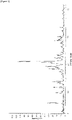
- Figure 1 shows a powder X-ray diffraction pattern of the crystals of compound (6) obtained in Example 7.
- the vertical axis indicates the diffraction intensity as a relative line intensity (counts), and the horizontal axis indicates values of the diffraction angle 2 ⁇ .
- tert-Butyl dicarbonate (162 g, 0.74 mol, 1.3 equiv.) was dissolved in tetrahydrofuran (100 mL), and the resulting solution was added dropwise to the mixture at 6°C or less over about 2 hours. The resulting mixture was stirred at 5°C or less for 1 hour, and then raised to about 20°C and stirred overnight. Ethanol (230 mL) was added thereto, and then water (800 mL) was added dropwise over 1.5 hours. The resulting mixture was stirred at about 50°C for 1 or more hours, and then gradually cooled to 25°C, and stirred overnight. The precipitated solid was filtered and washed with a mixed solution of ethanol (230 mL) and water (270 mL). The solid was dried under vacuum at an external temperature of 40°C to obtain the title compound (1) (170 g).
- benzyltriethylammonium chloride (445 g, 1.95 mol, 1 equiv.) and 6-chloroimidazo[1,2-b]pyridazine (300 g, 1.95 mol, 1 equiv.) (available from Combi-Block or the like) were successively added to dimethyl sulfoxide (1500 mL).
- Cesium fluoride (534 g, 3.51 mol, 1.8 equiv.) was further added thereto, and then the resulting mixture was stirred at an internal temperature of 79°C to 81°C for 4 hours.
- Activated carbon (30 g) moistened with toluene (150 mL) was added thereto. The resulting mixture was stirred around 25°C for 1 hour, and then filtered and washed with toluene (750 mL). Acetonitrile (900 mL) was added thereto, and then methanesulfonic acid (188 g, 1.95 mol, 1 equiv.) was added dropwise at an internal temperature of 22°C to 37°C over 1 hour. The resulting mixture was stirred at 27°C to 31°C for 1.5 hours, and then the precipitated solid was filtered and washed with toluene (900 mL). The solid was dried under reduced pressure at an external temperature of 40°C for 5 hours to obtain the title compound (2) (396.9 g).
- methyl tert-butyl ether (12 L), water (2.6 L), potassium carbonate (691 g, 5.0 mol, 1.1 equiv.), and the compound of the formula (2) (1.17 kg, 5.0 mol, 1.1 equiv.) were successively added.
- the resulting mixture was stirred at an internal temperature of 19°C for 5 minutes and allowed to stand, and then the aqueous layer was discharged.
- the obtained organic layer was concentrated under reduced pressure to adjust the liquid volume to 7.5 L.
- Diethylene glycol dimethyl ether (7.5 L) was added thereto, and the resulting mixture was concentrated under reduced pressure again to adjust the liquid volume to 8.25 L.
- the compound of the formula (1) (1.5 kg, 4.54 mol, 1 equiv.), tris(2-methylphenyl)phosphine (27.7 g, 0.09 mol, 0.02 equiv.), potassium carbonate (1.26 kg, 9.12 mol), and palladium acetate (20.4 g, 0.09 mol, 0.02 equiv.) were successively added, followed by washing with diethylene glycol dimethyl ether (0.3 L). The resulting mixture was stirred at an internal temperature of 95°C to 108°C for 9 hours and then stirred at an internal temperature of 58°C to 61°C for 11 hours.
- the resulting mixture was warmed to 50°C, and the aqueous layer was discharged. After that, water (4 L) was added to the organic layer remaining, and the aqueous layer was discharged again.
- the obtained organic layer was concentrated under reduced pressure to adjust the liquid volume to 4 L.
- the liquid was filtered using cyclopentyl methyl ether (0.4 L).
- the compound of the formula (4) (120.0 g) was dissolved in ethanol (1080 mL), and then activated carbon (12 g) moistened with ethanol (60 mL) was added thereto. The resulting mixture was stirred for 1 hour, and then filtered and washed with ethanol (120 mL).
- concentrated hydrochloric acid (43.3 g) was added, and the resulting mixture was warmed, and stirred at 65°C to 70°C for 4 hours.
- the mixture was cooled to an internal temperature of 20°C over 2 hours and stirred at that temperature for 1 hour, and then further cooled to 1°C over 1 hour.
- the mixture was stirred at an internal temperature of -1°C to 1°C for 19.5 hours.
- the precipitated solid was filtered and washed with a mixed solution of cold ethanol (240 mL) and water (6 mL). The solid was dried under reduced pressure at an external temperature of 40°C to obtain the title compound (5) (100.5 g).
- the compound of the formula (5) (75.5 g, 0.17 mol), ethanol (604 mL), and water (604 mL) were mixed together and then warmed to an internal temperature of 50°C to dissolve the compound.
- a 25% sodium hydroxide aqueous solution (68.1 g) was added thereto at an internal temperature of 50°C for 3 minutes. After that, the resulting mixture was cooled to an internal temperature of 1°C over 1.5 hours and stirred for 18.5 hours.
- the precipitated solid was filtered and washed with a cold mixed solution of ethanol (151 mL) and water (151 mL). The solid was dried under reduced pressure at an external temperature of 40°C to obtain the title compound (V) (58.8 g).
- Non Patent Literature 1 Contrary to the disclosure in Non Patent Literature 1, it was revealed that when 6-chloroimidazo[1,2-b]pyridazine was used as a starting material, the introduction of an aryl group having an electron-donating substituent with a complicated structure causes an extremely large reduction in yield. In contrast, in Example 3 using 6-fluoroimidazo[1,2-b]pyridazine as a starting material, a high reaction rate was exhibited although the amount of the palladium catalyst used was one fifth of that in the Reference Example, and this shows an excellent effect of the present invention.
Landscapes
- Chemical & Material Sciences (AREA)
- Organic Chemistry (AREA)
- Nitrogen Condensed Heterocyclic Rings (AREA)
- Pharmaceuticals Containing Other Organic And Inorganic Compounds (AREA)
- Catalysts (AREA)
- Low-Molecular Organic Synthesis Reactions Using Catalysts (AREA)
- Plural Heterocyclic Compounds (AREA)
Applications Claiming Priority (3)
| Application Number | Priority Date | Filing Date | Title |
|---|---|---|---|
| JP2017049138 | 2017-03-14 | ||
| PCT/JP2018/009596 WO2018168815A1 (ja) | 2017-03-14 | 2018-03-13 | 3,6-ジ置換イミダゾ[1,2-b]ピリダジン誘導体の製造方法 |
| EP18766623.5A EP3597648B1 (de) | 2017-03-14 | 2018-03-13 | Verfahren zur herstellung von 3,6-disubstituiertem imidazo[1,2-b]pyridazinderivat |
Related Parent Applications (2)
| Application Number | Title | Priority Date | Filing Date |
|---|---|---|---|
| EP18766623.5A Division-Into EP3597648B1 (de) | 2017-03-14 | 2018-03-13 | Verfahren zur herstellung von 3,6-disubstituiertem imidazo[1,2-b]pyridazinderivat |
| EP18766623.5A Division EP3597648B1 (de) | 2017-03-14 | 2018-03-13 | Verfahren zur herstellung von 3,6-disubstituiertem imidazo[1,2-b]pyridazinderivat |
Publications (1)
| Publication Number | Publication Date |
|---|---|
| EP4101853A1 true EP4101853A1 (de) | 2022-12-14 |
Family
ID=63523451
Family Applications (2)
| Application Number | Title | Priority Date | Filing Date |
|---|---|---|---|
| EP22186787.2A Withdrawn EP4101853A1 (de) | 2017-03-14 | 2018-03-13 | Verfahren zum produzieren von 3,6-disubstituierten-imidazo[1,2-b]pyridazin-derivaten |
| EP18766623.5A Active EP3597648B1 (de) | 2017-03-14 | 2018-03-13 | Verfahren zur herstellung von 3,6-disubstituiertem imidazo[1,2-b]pyridazinderivat |
Family Applications After (1)
| Application Number | Title | Priority Date | Filing Date |
|---|---|---|---|
| EP18766623.5A Active EP3597648B1 (de) | 2017-03-14 | 2018-03-13 | Verfahren zur herstellung von 3,6-disubstituiertem imidazo[1,2-b]pyridazinderivat |
Country Status (13)
| Country | Link |
|---|---|
| US (3) | US11028091B2 (de) |
| EP (2) | EP4101853A1 (de) |
| JP (4) | JP7082608B2 (de) |
| CN (2) | CN114773351A (de) |
| AU (1) | AU2018234027B2 (de) |
| CA (1) | CA3055504A1 (de) |
| ES (1) | ES2947326T3 (de) |
| HR (1) | HRP20230764T1 (de) |
| HU (1) | HUE063830T2 (de) |
| PL (1) | PL3597648T3 (de) |
| RS (1) | RS64354B1 (de) |
| SM (1) | SMT202300269T1 (de) |
| WO (1) | WO2018168815A1 (de) |
Families Citing this family (3)
| Publication number | Priority date | Publication date | Assignee | Title |
|---|---|---|---|---|
| SMT202300269T1 (it) | 2017-03-14 | 2023-09-06 | Daiichi Sankyo Co Ltd | Metodo per produrre un imidazo[1,2-b]piridazina-derivato 3,6-disostituito |
| CA3223035A1 (en) * | 2021-07-01 | 2023-01-05 | Anheart Therapeutics (Hangzhou) Co., Ltd. | Crystalline forms of 3-{4-[(2r)-2-aminopropoxy]phenyl}-n-[(1r)- 1-(3-fluorophenyl) ethyl]imidazo[1,2-b]pyridazin-6-amine and salts thereof |
| KR20250012111A (ko) * | 2022-05-18 | 2025-01-23 | 안허트 테라퓨틱스 (항저우) 컴퍼니 리미티드 | 3,6-이치환된-이미다조[1,2-b]피리다진 화합물의 제조 방법 |
Citations (1)
| Publication number | Priority date | Publication date | Assignee | Title |
|---|---|---|---|---|
| WO2013183578A1 (ja) | 2012-06-04 | 2013-12-12 | 第一三共株式会社 | キナーゼ阻害剤としてのイミダゾ[1,2-b]ピリダジン誘導体 |
Family Cites Families (12)
| Publication number | Priority date | Publication date | Assignee | Title |
|---|---|---|---|---|
| JPS60197640A (ja) * | 1984-03-19 | 1985-10-07 | Ihara Chem Ind Co Ltd | ハロゲン化ニトロベンゼン類の製造方法 |
| JPS61205220A (ja) * | 1985-03-08 | 1986-09-11 | Rikagaku Kenkyusho | 一級アルコ−ル類の選択的フツ素化方法 |
| JP3551493B2 (ja) * | 1994-10-21 | 2004-08-04 | 三菱化学株式会社 | 新規ビスオキサゾリン化合物 |
| JP2002193914A (ja) * | 2000-05-24 | 2002-07-10 | Nissan Chem Ind Ltd | ニトリル化合物およびその製造方法 |
| WO2001090058A1 (fr) * | 2000-05-24 | 2001-11-29 | Nissan Chemical Industries, Ltd. | Composes de nitrile et procede de preparation correspondant |
| FR2918061B1 (fr) * | 2007-06-28 | 2010-10-22 | Sanofi Aventis | Derives de 6-cycloamino-3-(pyridin-4-yl)imidazo°1,2-b!- pyridazine,leur preparation et leur application en therapeutique. |
| FR2934994B1 (fr) * | 2008-08-12 | 2010-09-17 | Sanofi Aventis | Derives de 2-alkyl-6cycloamino-3-(pyridin-4-yl)imidaz°1,2-b! pyridazine, leur preparation et leur application en therapeutique |
| RU2014140739A (ru) * | 2012-03-09 | 2016-04-27 | Лексикон Фармасьютикалз, Инк. | Соединения на основе имидазо[1, 2-b]пиридазина, композиции таких соединений и способы их применения |
| CN105431148A (zh) * | 2013-03-07 | 2016-03-23 | 加利菲亚生物公司 | 混合谱系激酶抑制剂及治疗方法 |
| WO2014200882A1 (en) * | 2013-06-11 | 2014-12-18 | Janssen Pharmaceutica Nv | PDE10a INHIBITORS FOR THE TREATMENT OF TYPE II DIABETES |
| SMT202300269T1 (it) | 2017-03-14 | 2023-09-06 | Daiichi Sankyo Co Ltd | Metodo per produrre un imidazo[1,2-b]piridazina-derivato 3,6-disostituito |
| JP7648372B2 (ja) * | 2020-11-30 | 2025-03-18 | 株式会社ファンケル | クロロフィル含有食品用緑色退色抑制剤 |
-
2018
- 2018-03-13 SM SM20230269T patent/SMT202300269T1/it unknown
- 2018-03-13 CA CA3055504A patent/CA3055504A1/en active Pending
- 2018-03-13 EP EP22186787.2A patent/EP4101853A1/de not_active Withdrawn
- 2018-03-13 CN CN202210636460.8A patent/CN114773351A/zh active Pending
- 2018-03-13 WO PCT/JP2018/009596 patent/WO2018168815A1/ja not_active Ceased
- 2018-03-13 CN CN201880017847.7A patent/CN110418792B/zh active Active
- 2018-03-13 PL PL18766623.5T patent/PL3597648T3/pl unknown
- 2018-03-13 JP JP2019506027A patent/JP7082608B2/ja active Active
- 2018-03-13 US US16/494,116 patent/US11028091B2/en active Active
- 2018-03-13 ES ES18766623T patent/ES2947326T3/es active Active
- 2018-03-13 RS RS20230550A patent/RS64354B1/sr unknown
- 2018-03-13 AU AU2018234027A patent/AU2018234027B2/en active Active
- 2018-03-13 HU HUE18766623A patent/HUE063830T2/hu unknown
- 2018-03-13 EP EP18766623.5A patent/EP3597648B1/de active Active
- 2018-03-13 HR HRP20230764TT patent/HRP20230764T1/hr unknown
-
2021
- 2021-02-01 US US17/164,684 patent/US11667642B2/en active Active
-
2022
- 2022-05-27 JP JP2022086917A patent/JP7384963B2/ja active Active
-
2023
- 2023-03-13 US US18/183,039 patent/US20230227459A1/en not_active Abandoned
- 2023-09-05 JP JP2023143544A patent/JP2023171735A/ja active Pending
-
2025
- 2025-06-24 JP JP2025106052A patent/JP2025123513A/ja active Pending
Patent Citations (2)
| Publication number | Priority date | Publication date | Assignee | Title |
|---|---|---|---|---|
| WO2013183578A1 (ja) | 2012-06-04 | 2013-12-12 | 第一三共株式会社 | キナーゼ阻害剤としてのイミダゾ[1,2-b]ピリダジン誘導体 |
| US20150051190A1 (en) * | 2012-06-04 | 2015-02-19 | Daiichi Sankyo Company, Limited | IMIDAZO[1,2-b]PYRIDAZINE DERIVATIVES AS KINASE INHIBITORS |
Non-Patent Citations (2)
| Title |
|---|
| EUR. J. ORG. CHEM., 2010, pages 862 - 871 |
| T. W. GREENP. G. M. WUTS: "Protective Groups in Organic Synthesis", 1991, JOHN WILEY & SONS, INC. |
Also Published As
| Publication number | Publication date |
|---|---|
| EP3597648A1 (de) | 2020-01-22 |
| JPWO2018168815A1 (ja) | 2020-04-23 |
| CN110418792A (zh) | 2019-11-05 |
| HUE063830T2 (hu) | 2024-02-28 |
| CN110418792B (zh) | 2022-07-05 |
| JP2025123513A (ja) | 2025-08-22 |
| JP7082608B2 (ja) | 2022-06-08 |
| EP3597648B1 (de) | 2023-06-07 |
| ES2947326T3 (es) | 2023-08-04 |
| WO2018168815A1 (ja) | 2018-09-20 |
| US20200062765A1 (en) | 2020-02-27 |
| US11667642B2 (en) | 2023-06-06 |
| US20230227459A1 (en) | 2023-07-20 |
| PL3597648T3 (pl) | 2023-07-24 |
| HRP20230764T1 (hr) | 2023-10-13 |
| AU2018234027A1 (en) | 2019-10-31 |
| EP3597648C0 (de) | 2023-06-07 |
| JP7384963B2 (ja) | 2023-11-21 |
| CA3055504A1 (en) | 2018-09-20 |
| US11028091B2 (en) | 2021-06-08 |
| US20210171532A1 (en) | 2021-06-10 |
| RS64354B1 (sr) | 2023-08-31 |
| EP3597648A4 (de) | 2020-10-14 |
| SMT202300269T1 (it) | 2023-09-06 |
| JP2022105746A (ja) | 2022-07-14 |
| JP2023171735A (ja) | 2023-12-05 |
| CN114773351A (zh) | 2022-07-22 |
| AU2018234027B2 (en) | 2021-12-09 |
Similar Documents
| Publication | Publication Date | Title |
|---|---|---|
| US20230227459A1 (en) | Method for producing 3,6-disubstituted-imidazo[1,2-b]pyridazine derivative | |
| JP7795485B2 (ja) | ピリミジニル-3,8-ジアザビシクロ[3.2.1]オクタニルメタノン誘導体およびその塩の調製 | |
| JP7684318B2 (ja) | アルカリ土類金属ギ酸塩の製造方法 | |
| CN115298199A (zh) | 环孢菌素衍生物的制备 | |
| JP2020143070A (ja) | ジアリールチオヒダントイン化合物の調製方法 | |
| AU2011218491C1 (en) | Processes for making cyclopropyl amide derivatives and intermediates associated therewith | |
| JP5372771B2 (ja) | プロセス | |
| US10723739B2 (en) | Processes for the preparation of Ribociclib and intermediates thereof | |
| CN109942446A (zh) | 一种普瑞巴林的制备方法 | |
| KR20150066777A (ko) | 광학활성 인돌린 유도체 및 이의 제조방법 | |
| US8394979B2 (en) | Process for preparing cycloplatinated platinum complexes, platinum complexes prepared by this process and the use thereof | |
| CA3185274C (en) | Method for producing 1,3-benzodioxole derivative | |
| JP7720846B2 (ja) | 1,3-ベンゾジオキソール誘導体の製造方法 | |
| JP2024173497A (ja) | 芳香族シクロアルキルアミン化合物の製造方法 | |
| EP4238961A1 (de) | Verfahren zur herstellung eines 3-methyl-4-halo-indolderivats | |
| WO2026061642A1 (en) | Solid form of methyl 6-(cyclopropanecarboxamido)-4-((2-methoxy-3-(1-methyl-1h-1,2,4-triazol-3-yl)phenyl)amino)pyridazine-3-carboxylate or a salt thereof, method for the preparation thereof, and use thereof in the synthesis of deucravacitinib | |
| CN118324651A (zh) | 一种手性酰胺的制备方法及其应用 | |
| JPS6259704B2 (de) |
Legal Events
| Date | Code | Title | Description |
|---|---|---|---|
| PUAI | Public reference made under article 153(3) epc to a published international application that has entered the european phase |
Free format text: ORIGINAL CODE: 0009012 |
|
| STAA | Information on the status of an ep patent application or granted ep patent |
Free format text: STATUS: THE APPLICATION HAS BEEN PUBLISHED |
|
| AC | Divisional application: reference to earlier application |
Ref document number: 3597648 Country of ref document: EP Kind code of ref document: P |
|
| AK | Designated contracting states |
Kind code of ref document: A1 Designated state(s): AL AT BE BG CH CY CZ DE DK EE ES FI FR GB GR HR HU IE IS IT LI LT LU LV MC MK MT NL NO PL PT RO RS SE SI SK SM TR |
|
| STAA | Information on the status of an ep patent application or granted ep patent |
Free format text: STATUS: THE APPLICATION IS DEEMED TO BE WITHDRAWN |
|
| 18D | Application deemed to be withdrawn |
Effective date: 20230615 |