EP4107529B1 - Procédés pour la quantification de glycoprotéines - Google Patents
Procédés pour la quantification de glycoprotéines Download PDFInfo
- Publication number
- EP4107529B1 EP4107529B1 EP21705980.7A EP21705980A EP4107529B1 EP 4107529 B1 EP4107529 B1 EP 4107529B1 EP 21705980 A EP21705980 A EP 21705980A EP 4107529 B1 EP4107529 B1 EP 4107529B1
- Authority
- EP
- European Patent Office
- Prior art keywords
- glycoproteins
- asn
- sample
- linked
- glcnac
- Prior art date
- Legal status (The legal status is an assumption and is not a legal conclusion. Google has not performed a legal analysis and makes no representation as to the accuracy of the status listed.)
- Active
Links
Images




Classifications
-
- G—PHYSICS
- G01—MEASURING; TESTING
- G01N—INVESTIGATING OR ANALYSING MATERIALS BY DETERMINING THEIR CHEMICAL OR PHYSICAL PROPERTIES
- G01N33/00—Investigating or analysing materials by specific methods not covered by groups G01N1/00 - G01N31/00
- G01N33/48—Biological material, e.g. blood, urine; Haemocytometers
- G01N33/50—Chemical analysis of biological material, e.g. blood, urine; Testing involving biospecific ligand binding methods; Immunological testing
- G01N33/68—Chemical analysis of biological material, e.g. blood, urine; Testing involving biospecific ligand binding methods; Immunological testing involving proteins, peptides or amino acids
- G01N33/6803—General methods of protein analysis not limited to specific proteins or families of proteins
- G01N33/6848—Methods of protein analysis involving mass spectrometry
-
- G—PHYSICS
- G01—MEASURING; TESTING
- G01N—INVESTIGATING OR ANALYSING MATERIALS BY DETERMINING THEIR CHEMICAL OR PHYSICAL PROPERTIES
- G01N33/00—Investigating or analysing materials by specific methods not covered by groups G01N1/00 - G01N31/00
- G01N33/48—Biological material, e.g. blood, urine; Haemocytometers
- G01N33/50—Chemical analysis of biological material, e.g. blood, urine; Testing involving biospecific ligand binding methods; Immunological testing
- G01N33/68—Chemical analysis of biological material, e.g. blood, urine; Testing involving biospecific ligand binding methods; Immunological testing involving proteins, peptides or amino acids
- G01N33/6854—Immunoglobulins
-
- G—PHYSICS
- G01—MEASURING; TESTING
- G01N—INVESTIGATING OR ANALYSING MATERIALS BY DETERMINING THEIR CHEMICAL OR PHYSICAL PROPERTIES
- G01N2333/00—Assays involving biological materials from specific organisms or of a specific nature
- G01N2333/90—Enzymes; Proenzymes
- G01N2333/914—Hydrolases (3)
- G01N2333/978—Hydrolases (3) acting on carbon to nitrogen bonds other than peptide bonds (3.5)
- G01N2333/98—Hydrolases (3) acting on carbon to nitrogen bonds other than peptide bonds (3.5) acting on amide bonds in linear amides (3.5.1)
-
- G—PHYSICS
- G01—MEASURING; TESTING
- G01N—INVESTIGATING OR ANALYSING MATERIALS BY DETERMINING THEIR CHEMICAL OR PHYSICAL PROPERTIES
- G01N2400/00—Assays, e.g. immunoassays or enzyme assays, involving carbohydrates
- G01N2400/10—Polysaccharides, i.e. having more than five saccharide radicals attached to each other by glycosidic linkages; Derivatives thereof, e.g. ethers, esters
- G01N2400/12—Homoglycans, i.e. polysaccharides having a main chain consisting of one single sugar
-
- G—PHYSICS
- G01—MEASURING; TESTING
- G01N—INVESTIGATING OR ANALYSING MATERIALS BY DETERMINING THEIR CHEMICAL OR PHYSICAL PROPERTIES
- G01N2400/00—Assays, e.g. immunoassays or enzyme assays, involving carbohydrates
- G01N2400/10—Polysaccharides, i.e. having more than five saccharide radicals attached to each other by glycosidic linkages; Derivatives thereof, e.g. ethers, esters
- G01N2400/38—Heteroglycans, i.e. polysaccharides having more than one sugar residue in the main chain in either alternating or less regular sequence, e.g. gluco- or galactomannans, Konjac gum, Locust bean gum or Guar gum
-
- G—PHYSICS
- G01—MEASURING; TESTING
- G01N—INVESTIGATING OR ANALYSING MATERIALS BY DETERMINING THEIR CHEMICAL OR PHYSICAL PROPERTIES
- G01N2440/00—Post-translational modifications [PTMs] in chemical analysis of biological material
- G01N2440/38—Post-translational modifications [PTMs] in chemical analysis of biological material addition of carbohydrates, e.g. glycosylation, glycation
Definitions
- the present invention relates to methods for the quantification of glycoproteins in a sample and to materials for use in such methods.
- Recombinant proteins are increasingly being developed for use e.g. as drug products.
- Analytical tools such as liquid chromatography (LC) and capillary electrophoresis (CE) have been successfully used to separate and quantify size and charged variants of intact monoclonal antibody variants ( Staub et al, J Pharm Biomed Anal 55, 810-822, 2011 ).
- immunoassays such as the enzyme-linked immunosorbent assay (ELISA) were implemented for quantitation purposes as well, making use of specific antibodies against target proteins e. g. in human serum or plasma ( Mushens et al, J. Immunol. Methods, 162 (1), 1993 ).
- LC-mass spectrometry is a commonly used method for protein analysis and quantification.
- MS LC-mass spectrometry
- SIL stable-isotope-labeled
- IS Internal Standard
- Immunoglobulins are glycoproteins. IgG1, IgG2 and IgG4 have a single conserved Asn-linked glycosylation site in the CH2 region (at position Asn297 for IgG1) and thus carry two glycans per immunoglobulin molecule. Other immunoglobulins are more heavily glycosylated (see e.g. Maverakis et al. (2015) J Autoimmun, 57: 1-13 ).
- the IgG-Fc Asn-linked glycan is a highly heterogeneous post-translational modification due to the variable addition of fucose, galactose, and sialic acid residues to the core complex biantennary heptasaccharide (GlcNAc2Man3GlcNAc2).
- Glycans play an important role in protein conformation, stability and biological function ( Costa et al., Crit Rev Biotechnol 34(4): 281-99 (2014 )).
- the heterogeneity of Fc glycans varies with species and expression system. Mammalian cell lines are commonly applied to manufacture recombinant glycoproteins, with Chinese hamster ovary (CHO)-based expression systems used most commonly.
- Recombinant biotherapeutics are also produced in other expression systems, such as yeast, plants or insects ( Lalonde et al., J Biotechnol 251:128-40 (2017 )). However, these latter organisms produce glycan structures that vary from those produced in mammalian cells due to differences in the enzymatic machinery.
- glycosidases such as Peptide:N-glycosidase F (PNGase F), with each enzyme having its unique glycan cleavage pattern ( Seki et al., (2019) J. Biol. Chem. 294(45): 17143-54 ).
- LC-MS analysis following deglycosylation has been applied to characterize the N-glyco-occupancy of therapeutic monoclonal antibodies ( Liu et al, Anal Biochem 509 p142-45, 2016 ).
- the present invention provides a method for the quantification of glycoproteins which uses an internal standard that has biophysical properties that are highly comparable to the individual protein sample components in a mixture, thereby enabling accurate quantification of the composition of such protein samples.
- the internal standard used in the method of the invention is a variant form of the glycoprotein(s) to be quantified which only contains core GicNAc moieties rather than a full glycan structure.
- the method of the invention exploits the resulting difference in mass between the glycoprotein in the sample and the variant form of the internal standard for quantification of the protein in the sample relative to the internal standard.
- the invention relates to a method for the quantification of one or more glycoproteins in a sample, wherein each glycoprotein to be quantified comprises one or more Asn-linked glycans, said method comprising the steps of:
- the invention relates to a method for the quantification of one or more glycoproteins in a sample, wherein each glycoprotein to be quantified comprises one or more Asn-linked glycans, said method comprising the steps of:
- glycoprotein when used herein refers to a protein which contains one or more glycans (i.e. oligosaccharide- or carbohydrate- side chains) covalently attached to the polypeptide chain.
- glycans i.e. oligosaccharide- or carbohydrate- side chains
- the process of attaching glycans to a polypeptide is known as glycosylation.
- One of the most common types of glycosylation is Asn-linked glycosylation, wherein a glycan is attached to the amide nitrogen of an asparagine residue of a polypeptide.
- internal standard has its usual meaning in the art and refers to a known quantity of a substance, herein a variant glycoprotein, that is added to samples containing an analyte, e.g. a glycoprotein, to be quantified. This substance can then be used for quantification of the analyte by determining the ratio of the analyte signal to the internal standard signal.
- immunoglobulin refers to a class of structurally related glycoproteins consisting of two pairs of polypeptide chains, one pair of light (L) low molecular weight chains and one pair of heavy (H) chains, all four potentially inter-connected by disulfide bonds.
- L light
- H heavy
- each heavy chain typically is comprised of a heavy chain variable region (abbreviated herein as VH) and a heavy chain constant region.
- VH heavy chain variable region
- the heavy chain constant region typically is comprised of three domains, CH1, CH2, and CH3.
- Each light chain typically is comprised of a light chain variable region (abbreviated herein as VL) and a light chain constant region.
- the light chain constant region typically is comprised of one domain, CL.
- the VH and VL regions may be further subdivided into regions of hypervariability (or hypervariable regions which may be hypervariable in sequence and/or form of structurally defined loops), also termed complementarity determining regions (CDRs), interspersed with regions that are more conserved, termed framework regions (FRs).
- CDRs complementarity determining regions
- Each VH and VL is typically composed of three CDRs and four FRs, arranged from amino-terminus to carboxy-terminus in the following order: FR1, CDR1, FR2, CDR2, FR3, CDR3, FR4 (see also Chothia and Lesk J. Mol. Biol. 196, 901 917 (1987 )).
- CDR sequences herein are identified according to IMGT rules using DomainGapAlign ( Lefranc MP., Nucleic Acids Research 1999;27:209-212 and Ehrenmann F., Kaas Q. and Lefranc M.-P. Nucleic Acids Res., 38, D301-307 (2010 ); see also internet http address (www.imgt.org/ ) .
- the Fc-region of an immunoglobulin is defined as the fragment of an antibody which would be typically generated after digestion of an antibody with papain and which includes the two CH2-CH3 regions of an immunoglobulin and a connecting region, e.g. a hinge region.
- the constant domain of an antibody heavy chain defines the antibody isotype, e.g. IgG1, IgG2, IgG3, IgG4, IgA1, IgA2, IgM, IgD, or IgE.
- the Fc-region mediates the effector functions of antibodies with cell surface receptors called Fc receptors and proteins of the complement system.
- glycosylation refers to the post-translational modification that involves selective attachment of glycans to a polypeptide, e.g. an antibody, in order to stabilize the structure of the polypeptide or convey function to the polypeptide.
- Glycan structures vary from organism to organism, but generally comprise two or more GlcNAc moieties, a number of mannose moieties and optionally further carbohydrate moieties, such as galactose moieties, fucose moieties and sialic acid moieties.
- the most prevalent types of glycosylation, N-linked and O-linked glycosylation occur in the endoplasmic reticulum and Golgi apparatus of eukaryotic cells, respectively.
- N-linked (or Asn-linked) glycosylation refers to the process of linking of carbohydrate structures to the side-chain nitrogen atom of asparagine (Asn) residues of a polypeptide
- O-linked glycosylation refers to the process of linking of carbohydrate structures to the side-chain oxygen atom of serine (Ser) or threonine (Thr) residues of a polypeptide.
- Immunoglobulins such as IgG molecules, have a single conserved Asn-linked glycosylation site at amino acid position Asn297 in the CH2 domain.
- deglycosylation refers to the removal, e.g. enzymatic removal, of glycans from a polypeptide, e.g. from an antibody.
- core GlcNAc moiety or “core Asn-linked GlcNAc moiety” refers to an N-acetylglycosamine, also known as GlcNAc, moiety that is directly attached to an Asn acceptor residue in the polypeptide chain (and thus not via another moiety). In other words, it is the GlcNAc moiety that is most proximal to the polypeptide chain.
- fucose or fucosylated refer to fucose moieties that are part of the glycan structure of a glycoprotein. Fucose moieties may occur at various locations in a complex glycan structure. In the present context, the fucose moieties linked to the core GlcNAc moieties are of particular interest.
- full removal in the context of removal of Asn-linked glycans from glycoproteins refers to removal of the entire glycan structure from an Asn acceptor site in the polypeptide chain, including the core GlcNAc moieties. The Asn acceptor residue is thereby converted to Asp.
- hinge region as used herein is intended to refer to the hinge region of an immunoglobulin heavy chain.
- the hinge region of a human IgG1 antibody corresponds to amino acids 216-230 according to the EU numbering.
- CH2 region or "CH2 domain” as used herein is intended to refer to the CH2 region of an immunoglobulin heavy chain.
- CH2 region of a human IgG1 antibody corresponds to amino acids 231-340 according to the EU numbering.
- the CH2 region may also be any of the other subtypes as described herein.
- CH3 region or "CH3 domain” as used herein is intended to refer to the CH3 region of an immunoglobulin heavy chain.
- CH3 region of a human IgG1 antibody corresponds to amino acids 341-447 according to the EU numbering.
- the CH3 region may also be any of the other subtypes as described herein.
- isotype refers to the immunoglobulin class (for instance IgG1, IgG2, IgG3, IgG4, IgD, IgA1, IgGA2, IgE, or IgM or any allotypes thereof such as IgG1m(za) and IgG1m(f)) that is encoded by heavy chain constant region genes. Further, each heavy chain isotype can be combined with either a kappa ( ⁇ ) or lambda ( ⁇ ) light chain.
- antibody in the context of the present invention refers to an immunoglobulin molecule, a fragment of an immunoglobulin molecule, or a derivative of either thereof, which has the ability to specifically bind to an antigen.
- the variable regions of the heavy and light chains of the immunoglobulin molecule contain a binding domain that interacts with an antigen.
- the constant or "Fc" regions of the antibodies may mediate the binding of the immunoglobulin to host tissues or factors, including various cells of the immune system (such as effector cells) and components of the complement system such as C1q, the first component in the classical pathway of complement activation.
- An antibody may also be a multispecific antibody, such as a bispecific antibody or similar molecule.
- bispecific antibody refers to an antibody having specificities for at least two different, typically non-overlapping, epitopes. Such epitopes may be on the same or different targets. If the epitopes are on different targets, such targets may be on the same cell or different cells or cell types.
- antibody herein includes fragments of an antibody which retain the ability to specifically bind to the antigen. Such fragments may be provided by any known technique, such as enzymatic cleavage, peptide synthesis and recombinant expression techniques. It has been shown that the antigen-binding function of an antibody may be performed by fragments of a full-length antibody.
- full-length antibody when used herein, refers to an antibody that contains all heavy and light chain constant and variable domains corresponding to those that are normally found in a wild-type antibody of that isotype.
- a “full length amino acid sequence” refers to the entire amino acid sequence of a protein as it occurs in the sample to be quantified, e.g. the entire amino acid sequence of the heavy chain of an antibody in the sample.
- antigen-binding region refers to a region of an antibody that is capable of binding to the antigen. This binding region is typically defined by the VH and VL domains of the antibody which may be further subdivided into regions of hypervariability (or hypervariable regions which may be hypervariable in sequence and/or form of structurally defined loops), also termed complementarity determining regions (CDRs), interspersed with regions that are more conserved, termed framework regions (FRs).
- CDRs complementarity determining regions
- FRs framework regions
- the antigen can be any molecule, such as a polypeptide, e.g. present on a cell, bacterium, or virion.
- target refers to a molecule to which the antigen-binding region of the antibody binds.
- the target includes any antigen towards which the antibody is directed.
- antigen and target may in relation to an antibody be used interchangeably and constitute the same meaning and purpose with respect to any aspect or embodiment of the present invention.
- a “variant form” is a glycoprotein molecule which comprises one or more modifications, e.g. amino acid substitutions, as compared to a "parent" glycoprotein.
- exemplary parent antibody formats include, without limitation, a wild-type antibody, a full-length antibody or Fc-containing antibody fragment, a bispecific antibody, a human antibody, humanized antibody, chimeric antibody or any combination thereof.
- the modifications may comprise modifications of the glycans or of the amino acid sequence.
- an amino acid substitution in a variant is indicated as: Original amino acid - position - substituted amino acid;
- the three-letter code, or one letter code, are used, including the codes Xaa and X to indicate amino acid residue. Accordingly, the notation "E345R” or “Glu345Arg” means that the variant comprises a substitution of glutamic acid with arginine in the variant amino acid position corresponding to the amino acid in position 345 in the parent antibody.
- Recombinant host cell (or simply "host cell”), as used herein, is intended to refer to a cell into which an expression vector has been introduced. It should be understood that such terms are intended to refer not only to the particular subject cell, but also to the progeny of such a cell. Because certain modifications may occur in succeeding generations due to either mutation or environmental influences, such progeny may not, in fact, be identical to the parent cell, but are still included within the scope of the term “host cell” as used herein.
- Recombinant host cells include, for example, CHO cells, HEK-293 cells, PER.C6, NS0 cells, and lymphocytic cells and other eukaryotic hosts such as plant cells and fungi.
- plasma half-life indicates the time it takes to reduce the concentration of polypeptide in the blood plasma to one half of its initial concentration during elimination (after the distribution phase).
- the distribution phase will typically be 1-3 days, during which there is about 50% decrease in blood plasma concentration due to redistribution between plasma and tissues.
- antibody-drug conjugate refers to an antibody or Fc-containing polypeptide having specificity for at least one type of malignant cell, a drug, and a linker coupling the drug to e.g. the antibody.
- the linker is cleavable or non-cleavable in the presence of the malignant cell, wherein the antibody-drug conjugate kills the malignant cell.
- the invention relates to a method for the quantification of one or more glycoproteins in a sample, wherein each glycoprotein to be quantified comprises one or more Asn-linked glycans, said method comprising the steps of:
- the method of the invention does not comprise a step of proteolytically digesting, or otherwise fragmenting, the polypeptide chain of the glycoproteins to be quantified.
- the method comprises, prior to step c., a treatment of the sample with an enzyme, wherein said enzyme is capable of fully removing Asn-linked glycans from said one or more glycoproteins, but is not capable of removing core Asn-linked GlcNAc moieties from said variant form, i.e. the enzyme is capable of fully removing Asn-linked glycans extending beyond the core GlcNAc moiety, but is not capable of removing Asn-linked glycans with no extension beyond the core GlcNAc moiety, such as Asn-linked glycans only consisting of the, optionally fucosylated, core GlcNAc moiety.
- PNGase F is an example of an enzyme which can fully remove Asn-linked glycans from glycoproteins, i.e. this enzyme removes the entire Asn-linked glycans from the glycoproteins, including the core GlcNAc moieties (thereby converting the Asn to Asp). However, it is also shown in the Examples herein that PNGase F does not remove core GlcNAc moieties from glycoprotein variants that only have core Asn-linked GlcNAc moieties.
- FIG. 1 illustrates a (non-limiting) embodiment of the method of the invention.
- the treatment with the enzyme that is capable of fully removing Asn-linked glycans from said one or more glycoproteins, but is not capable of removing core Asn-linked GlcNAc moieties from the variant form is performed prior to step b.
- said enzyme treatment is performed after addition of the internal standard in step b.
- said enzyme is Peptide:N-glycosidase F, otherwise known as PNGase F (EC 3.5.1.52) ( Norris et al., Structure 2(11): p1049-59 (1994 )).
- the method comprises, prior to step b., a step of treating the sample with an enzyme capable of fully removing Asn-linked glycans from said one or more glycoproteins, optionally followed by removal or deactivation of said enzyme prior to step b.
- an enzyme capable of fully removing Asn-linked glycans from said glycoprotein, but can also remove core Asn-linked GlcNAc from the variant form, then it may be beneficial or even necessary to remove or inactivate said enzyme before addition of the variant form in order to preserve the difference in mass between the variant form and the deglycosylated proteins to be quantified.
- the method of the invention uses variant forms of the glycoproteins to be quantified as internal standard.
- the corresponding variant form in the internal standard is a homogeneous preparation, i.e. for each glycoprotein, all variant molecules are identical in mass.
- the variant form used is a form containing only core Asn-linked GlcNAc moieties.
- each core Asn-linked GlcNAc moiety may consist of a single N-acetylglycosamine moiety that is directly attached to an Asn acceptor residue in the polypeptide chain of said variant form of each of said one or more glycoproteins.
- no fucose moieties are linked to said core GlcNAc moieties.
- Said core GlcNAc moieties may be fucosylated, preferably 100% fucosylated, i.e. all molecules of the variant form used as internal standard are fucosylated.
- the variant form used as internal standard may be more than 95% glycosylated, i.e. more than 95% of the Asn acceptor sites of the total number of acceptor sites of all variant molecules in the composition have a GlcNAc attached. Further, the variant form may be more than 98%, such as more than 99%, e.g. 100% glycosylated.
- the quantification of said one or more glycoproteins is performed by comparison with the internal standard.
- Both the internal standard and sample analyte are analyzed simultaneously to compensate for any possible variation during the entire process of sample preparation and analysis.
- the added amount of the internal standard should be in an appropriate ratio to the analyte after consideration of the dynamic range. No calibration curve is required as long as the concentrations of internal standard and the sample analyte(s) fall in the linear dynamic range.
- the quantification in step c. is performed using mass spectrometry.
- the quantification in step c. is performed using a combination of mass spectrometry and a non-mass-based separation technique.
- a combination of different techniques can in particular be useful if the sample has a complex composition and/or more than one glycoprotein is to be quantified.
- the non-mass-based separation technique may allow separation of two or more proteins having a highly similar mass, thus enabling separate quantification.
- the sample may, after addition of the internal standard, comprise two or more glycoproteins having less than 75 Da, such as less than 60 Da, e.g. less than 50 Da, difference in mass.
- the quantification in step c. is performed using liquid chromatography-mass spectrometry (LC-MS), such as reverse-phase-based LC-MS.
- LC-MS liquid chromatography-mass spectrometry
- the glycoproteins to be quantified may be any glycoprotein comprising one or more Asn-linked glycans, including natural glycoproteins, recombinant glycoproteins, therapeutic glycoproteins, diagnostic glycoproteins, enzymes, etc.
- the glycoproteins to be quantified may contain only Asn-X-Thr glycosylation sites and no Asn-X-Ser sites.
- the glycoproteins to be quantified may be more than 95% glycosylated, i.e. more than 95% of the Asn acceptor sites of the total number of acceptor sites of all molecules in the composition have a glycan attached. Further, the glycoproteins to be quantified may be more than 98%, such as more than 99%, e.g. 100% glycosylated.
- the sample provided may comprise 2-10 different antibodies, such as 2-9, 2-8, 2-7, 2-6, 2-5, 2-4, 2-3, 3-10, 3-9, 3-8, 3-7, 3-6, 3-5, 3-4, 4-10, 4-9, 4-8, 4-7, 4-6, 4-5, 5-10, 5-9, 5-8, 5-7, 5-6, 6-10, 6-9, 6-7, 7-10, 7-9, 7-8, 8-10, 8-9, or 9-10 different antibodies.
- 2-10 different antibodies such as 2-9, 2-8, 2-7, 2-6, 2-5, 2-4, 2-3, 3-10, 3-9, 3-8, 3-7, 3-6, 3-5, 3-4, 4-10, 4-9, 4-8, 4-7, 4-6, 4-5, 5-10, 5-9, 5-8, 5-7, 5-6, 6-10, 6-9, 6-7, 7-10, 7-9, 7-8, 8-10, 8-9, or 9-10 different antibodies.
- the sample may comprise two or more antibodies to be quantified, wherein the least abundant of said two or more different antibodies is present in an amount which is at least 1% (w/w), 2% (w/w), 3% (w/w), 4% (w/w), 5%(w/w), 6% (w/w), 7% (w/w), 8%(w/w), 9% (w/w) or 10% (w/w) of the amount of the most abundant of the said two or more different antibodies.
- the two or more antibodies may be present in such amounts that the ratio (w/w) between the amounts of any two antibodies is between 1:5 and 5:1, such as between 1:4 and 5:1, 1:3 and 5:1, 1:2 and 5:1, 1:1 and 5:1, 2:1 and 5:1, 3:1 and 5: 1, 3:4 and 5:1, 1:5 and 4:1, 1:5 and 3:1, 1:5 and 2:1, 1:5 and 1:1, 1:5 and 1:2, 1:5 and 1:3, 1:5 and 1:4, 1:4 and 4:1, 1:4 and 3:1, 1:4 and 2:1, 1:4 and 1:1, 1:4 and 1:2, 1:4 and 1:3, 1:3 and 4:1, 1:3 and 3:1, 1:3 and 2:1, 1:3 and 1:1, 1:3 and 1:2, 1:2 and 4:1, 1:2 and 3:1, 1:2 and 2:1, 1:2 and 1:1, 1:1 and 4:1, 1:1 and 3:1, or such as between 1:1 and 2:1.
- Natural glycoproteins to be quantified may be of any origin, including e.g. animal origin, such as mammalian origin, or other eukaryotic origin, such as fungal or yeast origin.
- recombinantly produced glycoproteins may be produced in any kind of host cell that is capable of Asn-linked glycosylation, including animal host cells, such as mammalian host cells, such as CHO cells, or human cells, such as HEK cells, or fungal or yeast cells.
- the one or more glycoproteins to be quantified are antibodies.
- the method comprises quantification of two or more, such as two, three, four, five or more different antibodies.
- said two or more different antibodies are IgG antibodies, such as full-length IgG antibodies.
- "different" in this context can be a difference in amino-acid sequence and/or a difference in any post-translational modification other than Asn-linked glycosylation, e.g. conjugation, terminal clipping or other amino acid residue modifications.
- the difference may be a difference in a post-translational modification other than Asn-linked glycosylation.
- the method may comprise simultaneous quantification of an antibody-drug conjugate and a non-conjugated antibody in the same sample.
- the samples containing one or more glycoproteins to be quantified may be samples obtained from one of the steps of a method described in the art to generate bispecific antibodies in vitro via half-molecule exchange (see e.g. Labrijn et al. (2013) PNAS 110:5145 and WO2011131746 ).
- homodimeric parental antibodies are mixed and subjected to controlled reducing conditions in vitro that separate the antibodies into half-molecules and allow reassembly and reoxidation to form bispecific antibodies.
- the quantification method of the present invention can be used to monitor progress and/or assay purity of bispecific antibody formation, by simultaneous quantification of the homodimeric parental antibodies and the resulting bispecific antibodies.
- the samples containing one or more glycoproteins to be quantified may be samples obtained from one of the steps of the method described in WO2019243626 (Genmab ).
- WO2019243626 describes a method for producing an output mixture of two or more different antibodies having a difference in their amino acid sequences, which difference enables separation of the antibodies by chromatography, wherein
- output mixture herein is intended to refer to an antibody mixture, wherein the two or more different antibodies are present at a desired or predetermined concentration ratio.
- input mixture is intended to refer to an antibody mixture, wherein at least two of the two or more different antibodies referred to in the context of the “output mixture” are present at a concentration ratio which is not the desired or predetermined concentration ratio and/or is not within the tolerated deviation from the desired or predetermined concentration ratio.
- the method of the present invention may e.g. be used to quantify antibodies in the input mixture or the output mixture.
- the sample provided in the method of the invention may be any kind of sample comprising glycoproteins.
- the sample is a cell culture sample, i.e. a sample taken from, or derived from, a culture of cells, e.g. recombinant host cells, that produce the glycoprotein(s) to be quantified.
- the method of the invention may thus e.g. be used to monitor production of glycoproteins, including, if more than one glycoprotein is produced in the cell culture, the monitoring of the quantity and/or ratio of the glycoproteins, e.g. antibodies produced.
- the invention relates to a process for monitoring production of glycoproteins in a cell culture, said process comprising culturing host cells producing said glycoproteins and performing the method according to the invention as described herein.
- the cell culture growth conditions may be adjusted to modulate glycoprotein production or, if more than one glycoprotein is produced, the ratio of the glycoproteins.
- the method of the invention may also be used for quality control (GC) of glycoprotein preparation or batches after purification and/or polishing.
- the sample comprises purified glycoproteins, such as purified recombinantly produced glycoproteins.
- the invention relates to a process for the quality control of purified recombinantly produced glycoproteins, said process comprising performing the method according to the invention as described herein.
- the method according to the invention may be carried out in an automated manner, i.e. without human intervention in one or all steps of the method.
- steps b. and c. of the method are performed in an automated manner.
- steps a., b. and c. are performed in an automated manner.
- the method may provide quantification results in a sufficiently short time-frame, e.g. 4 hours or less, to allow adjustment of an ongoing cell culture process.
- the sample is, or is derived from, a bodily fluid sample, such as a blood sample, plasma sample or serum sample.
- a bodily fluid sample such as a blood sample, plasma sample or serum sample.
- the method of the invention may thus be used to monitor the fate, e.g. the plasma half-life, of the glycoprotein(s) in a subject, such as a human subject.
- the method of the invention is suitable for quantifying glycoproteins across a wide range of concentrations.
- the concentration of each of the glycoproteins to be quantified in the sample may be above 0.001 g/L, such as above 0.005 g/L, e.g. above 0.01 g/L.
- the concentration of each of the glycoproteins to be quantified in the sample is below 1 g/L, such as below 0.25 g/L, e.g. below 0.1 g/L.
- the invention relates to a method for the quantification of one or more glycoproteins in a sample, wherein each glycoprotein to be quantified comprises one or more Asn-linked glycans, said method comprising the steps of:
- the method may mutatis mutandis comprise one or more of the further features described above for the method of the first aspect of the invention.
- the step of preparing the internal standard comprises treatment with an endo- ⁇ -N-acetylglucosaminidase (ENGase EC 3.2.1.96) ( Fairbanks (2017) Chem Soc Rev46:5128 ), such as EndoS2 or EndoS.
- an endo- ⁇ -N-acetylglucosaminidase ENGase EC 3.2.1.96
- said treatment with one or more enzymes in step a comprises treatment with an endo- ⁇ -N-acetylglucosaminidase and a fucosidase, capable of hydrolyzing alpha-1,6-linkage from an Asn-linked fucose-alpha-1,6-GlcNAc moiety, e.g. fucosidase 29A, also known as LcFuc29A (GH29), E.C. number 3.2.1.51from Lactobacillus casei or from Bacteroides fragilis ( Tsai et al. 2017 ACS Chem. Biol 12:63 ).
- the step of preparing the internal standard comprises treatment with EndoS2 or EndoS (preferably EndoS2) followed by a treatment with a fucosidase.
- At least one of the one or more glycoproteins to be quantified in the above described methods of the invention may contain fucose on core Asn-linked GlcNAc moieties, i.e. some of all of the core Asn-linked GlcNAc moieties.
- the internal standard used in the methods of the invention may be a standard, which is not isotope labelled.
- Both the glycoprotein to be quantified and the variant form thereof used in the internal standard may be used in their full-length forms, i.e. having a full-length amino acid chain, or almost full-length forms, e.g. comprising 50% or more, such as 75% or more, e.g. 90% or more, such as 95% or more of their full-length amino acid sequence, e.g. comprising 50% or more, such as 75% or more, e.g. 90% or more, such as 95% or more of a heavy-chain antibody sequence.
- the invention relates to the use of a composition
- a composition comprising a known quantity of variant form of a glycoprotein, wherein said variant form is a form containing only core Asn-linked GlcNAc moieties, each core Asn-linked GlcNAc moiety being an N-acetylglycosamine moiety that is directly attached to an Asn acceptor residue in the polypeptide chain of said variant, and wherein no fucose moieties are linked to said core GlcNAc moieties as an internal standard for quantification of said glycoprotein in a sample.
- Example 1 Expression and antibody production of human IgG1-CD19-21D4, human IgG1-CD22-huRFB4, human IgG1-7D8, human IgG1-CD37-37-3 and human IgG1-CD52-Campath and Variants
- variable heavy (VH) chain and variable light (VL) chain sequences were prepared by gene synthesis (GeneArt Gene Synthesis; ThermoFisher Scientific, Germany) and cloned in pcDNA3.3 expression vectors (ThermoFisher Scientific, US) containing IgG1m(f) allotype heavy chain (HC; SEQ ID NO: 1) and light chain (LC; SEQ ID NO: 3) constant regions.
- the heavy chain constant region amino acid sequences as used are identified in the sequence reference table below.
- Desired mutations were introduced either by gene synthesis or site-directed mutagenesis.
- Antibodies mentioned in this application have VH and VL sequences derived from previously described IgG1-CD19-21D4 ( WO2007002223 ; VH: SEQ ID NO 4; VL: SEQ ID NO 8), IgG1-CD22-huRFB4 (humanized variant of murine antibody published in Weber et al., J Immunol Res 2015, 561814 (2015 )), IgG1-7D8 ( WO2004/035607 ; VH: SEQ ID NO 16; VL: SEQ ID NO 20), IgG1-CD37-37-3 ( WO2011/112978 ; VH: SEQ ID NO 23; VL: SEQ ID NO 27) and IgG1-CD52-Campath ( Crowe et al., Immunology 87(1):105-110 (1992 ); VH: SEQ ID NO 30; VL: SEQ ID NO 34).
- the sequences are also provided herein.
- the IgG1-CD19-21D4 and IgG1-CD52-Campath antibodies used in the Examples harbored a mutation at amino acid position E345, E345K (SEQ ID NO: 2), which enhances Fc:Fc interactions between individual antibodies. As these antibody variants are monomeric in solution, the presence of these mutations does not affect the method described in the current application.
- sequences were either subcloned from the pcDNA 3.3 expression vectors into the in-house developed expression vector pGENpr6DGV (IgG1-CD19-21D4-E345K, IgG1-CD22-huRFB4, IgG1-CD37-37-3 and IgG1-CD52-Campath-E345K) or cloned into vector pCon7D8-DGV (for IgG1-7D8), expressing both ORF's from the same vector.
- pGENpr6DGV IgG1-CD19-21D4-E345K, IgG1-CD22-huRFB4, IgG1-CD37-37-3 and IgG1-CD52-Campath-E345K
- pCon7D8-DGV for IgG1-7D8
- These expression vectors contained both antibody open reading frames regulated by an upstream CMV promoter and downstream TK poly-A transcription termination signal, and a glutamine synthetase selection marker expressed under the control of an SV40 promoter fragment and a SV40 poly-A transcription termination signal.
- Vectors were transferred into cells of a CHO-K1 cell line (ECACC cat. nr. 85051005), adapted to suspension growth on chemically defined media, or to the cells of a CHO-K1SV cell line (ECACC cat. nr.
- 85051005 adapted to suspension growth on chemically defined media at 1 ⁇ g/1.0E+06 cells, by nucleofection (Lonza Nucleofector 2b) using Amaxa Solution V kit essentially according to the instructions of the manufacturer using program T020 (Lonza).
- Cells containing expression vectors were grown in 96-well plates in CD-CHO medium (Life Technologies/Thermo Scientific) containing GS EM supplement (Sigma) under MSX selection (Sigma) for 4 weeks, after which a panel of parental cultures displaying growth and IgG expression was expanded to larger volumes.
- Top producing clones were tested for IgG expression in an Ambr15 platform (TAP Biosystems), after which the best producing parentals were selected for inoculation of 500mL up to 3L bioreactors to supply IgG material. Cell cultures were harvested after 14 days and IgG containing supernatants were collected by filtration.
- Antibodies were purified by protein A affinity chromatography.
- the cell culture supernatants were filtered over a 0.2 ⁇ M dead-end filter, followed by loading on a MabSelect SuRe column of the appropriate size (GE Healthcare) and elution of the antibodies with 0.1 M citric acid-NaOH, pH 3.
- the eluate was immediately neutralized with 2 M Tris-HCl, pH 9 and dialyzed overnight to 12.6 mM sodium phosphate, 140 mM NaCl, pH 7.4 (GE Healthcare).
- samples were sterile filtered over a 0.2 ⁇ M dead-end filter. Concentration of the purified IgGs was determined by absorbance at 280 nm. Purified proteins were analyzed by CE-SDS, HP-SEC and mass spectrometry.
- Example 2 Enzymatic deglycosylation of IgG antibodies by EndoS2 reveals sample heterogeneity caused by the presence of afucosylated species, while PNGase F fully deglycosylates IgG antibodies
- IgG antibody clones within a complex protein mixture mass spectrometry in combination with internal IgG antibody standards can be used. These internal standards should have similar biophysical characteristics to those of the sample analytes (e.g. similar ionization efficiencies and physicochemical properties), yet should be distinguishable from the sample analyte.
- the Asn-linked glycosylation site Asn297 harbors structurally diverse Asn-linked glycan branches, all with two N-Acetylglucosamine (GlcNAc) groups at the base.
- EndoS2 hydrolyzes the linkage between these two GlcNAc groups, with only the Asn-linked core GlcNAc moiety that is most proximal to the polypeptide chain remaining.
- EndoS2 it was tested whether enzymatic treatment using EndoS2 allows generation of internal standard antibodies in which a small, homogeneous mass tag is retained.
- LC-MS liquid chromatography-mass spectrometry
- LC-MS liquid chromatography-mass spectrometry
- Samples were injected (5 ⁇ L) onto a BioResolve reversed-phase monoclonal antibody column (1.0 mm ⁇ 5 cm, 2.7 ⁇ m particle size with 450 ⁇ pore size; Waters, cat. no. 186009015).
- the mobile phase A contained 0.1% formic acid (v/v) in water (BioSolve, cat. no.
- the raw data was analyzed using the Genedata Expressionist Refiner MS (Version 13.0) software.
- the retention time (RT) range was restricted from 1 to 22 minutes, and the m/z range was restricted from 1400 to 4000 Da.
- the spectra were deconvoluted using the Harmonic Suppression Deconvolution of the intact protein activity (mode: fully automated, eagerness: standard; multiple retention times per mass: true; step: 1.0 Da) with curvature-based peak detection (smoothing: 7 scans; center computation: intensity-weighed (0% threshold); boundary determination: inflection points) and the following advanced settings: minimal peak intensity: 1%; minimal search mass: 5.0 kDa; maximal search mass: 500.0 kDa; relative mass window: 2%; maximal mass window: 1.0 kDa; mass deconvolution: relative mass window 10%, maximal mass window 5.0 kDa).
- the deconvoluted spectra were then averaged using the Arithmetic Mean method. Peaks of the deconvoluted spectra were detected using the spectrum peak detection activity (smoothing: 3 points; peak detection: ascent-based; center computation: local maximum; boundary determination: inflection points). Peaks with intensities lower than 1% of the maximal intensity were excluded.
- the presence of antibody species without core fucosylation results in sample heterogeneity: in addition to IgG-(GlcNAc-Fuc) 2 antibodies, the EndoS2-treated sample also contains a fraction of antibodies containing one heavy chain with the innermost GicNAc residue linked to the core fucose and one heavy chain with the innermost GicNAc residue without the core fucose (-Fuc, or IgG-(GlcNAc-Fuc)), and a fraction of antibodies containing two heavy chains with the innermost GicNAc residues without the core fucose groups (-Fuc 2 , or IgG-(GlcNAc)).
- Example 3 Enzymatic defucosylation of EndoS2-treated IgG antibodies with the Lactobacillus casei ⁇ -L-fucosidase removes the fucose group from the core GicNAc group
- antibodies may contain two heavy chains with the innermost GlcNAc residue linked to a core fucose group (IgG-(GlcNAc-Fuc) 2 ), or alternatively, one or both of the heavy chains may harbor a core GlcNAc group without a fucose group attached (IgG-(GlcNAc-Fuc) or IgG-(GlcNAc), respectively).
- Example 4 PNGase F from PNGase F-treated samples does not remove the residual GlcNAc moiety from IgG antibodies treated with EndoS2 and ⁇ -L-fucosidase
- IgG-(GlcNAc) 2 antibodies can be spiked into a complex mixture of antibodies that have been fully deglycosylated with the endoglycosidase PNGase F.
- 50 ⁇ L of 600 ⁇ g/mL IgG1-CD19-21D4-E345K was treated with 3 ⁇ L EndoS2 and 3 ⁇ L o-L-fucosidase for 6 hours at 37°C.
- 50 ⁇ L of 600 ⁇ g/mL IgG1-CD19-21D4-E345K was fully deglycosylated overnight at 37°C with 3 ⁇ L PNGase F (2.5 U/mL).
- 25 ⁇ L of each sample and 25 ⁇ L of 600 ⁇ g/mL IgG1-b12 were mixed 1:1:1 and incubated for 3 hours at 37°C.
- LC-MS was performed as described in Example 2.
- IgG1-b12 appears as the IgG1-b12-(GlcNAc)2 and IgG1-b12-(GlcNAc)-(GlcNAc-Fuc) variants, suggesting that the enzymatic activities of EndoS2 and ⁇ -L-fucosidase from the internal standard dominate the enzymatic activity of PNGase F from the sample analyte in this mixture.
- Example 5 Analysis of antibody mixtures is facilitated by multi-dimensional separation methods
- An antibody mixture was generated by mixing equal concentrations of the human antibodies IgG1-CD19-21D4-E345K, IgG1-CD22-huRFB4, IgG1-7D8, IgG1-CD37-37-3 and IgG1-CD52-Campath-E345K to a final concentration of 8 mg/mL total.
- 40 ⁇ L of EndoS2 40 U/ ⁇ L; Genovis, cat. no. A0-GL1-020
- 21.3 ⁇ L of Lactobacillus casei fucosidase (Fucosidase 29A; 0.5 mg/ml; NZYtech, cat. no.
- CZ0566 were added to 200 ⁇ L of the antibody mixture, as well as 378.6 ⁇ L MilliQ (final concentration 2.5 mg/mL), and incubated overnight at 37°C.
- the sample antibody mixture was fully deglycosylated by adding 160 ⁇ L of PNGase F (2.5U/mL; PROzyme, cat. no. GKE-5006D) to 200 ⁇ L of the antibody mixture, as well as 440 ⁇ L MilliQ (final concentration 2 mg/mL) and incubating the sample overnight at 37°C. After diluting the antibody sample to a concentration of 120 ⁇ g/mL, the internal standards were added to a final concentration of 75 ⁇ g/mL.
- LC-MS was performed essentially as described in Example 2.
- the raw data was analyzed using the Genedata Expressionist Refiner MS (Version 13.0) software.
- the retention time (RT) range was restricted from 1 to 16 minutes, followed by alignment of the chromatograms using a pairwise alignment-based tree alignment scheme with a gap penalty of 1 and a maximal RT shift of 50 scans.
- Chemical noise was subtracted using the chromatogram chemical noise subtraction activity (RT window: 50; quantile: 50%, method: clipping, threshold: 0.0, RT structure removal: 6 scans).
- the ion map was deconvoluted using Time-resolved Deconvolution of the intact protein activity (minimal mass: 140 kDa; maximal mass: 150 kDa; method: Harmonic Suppression Deconvolution; 1.0 Da steps; 7 scans, curvature-based, intensity-weighed (0% threshold) peak detection with inflection points to determine the boundaries; minimal peak intensity: 1%; minimal search window: 5.0 kDa; maximal search window: 500.0 kDa; relative mass window: 2%; maximal mass window: 1.0 kDa; and mass deconvolution with a relative mass window of 10% and a maximal mass window of 5.0 kDa).
- Peaks of the deconvoluted ion map were detected using the peak detection activity (summation window: 10 scans; minimum peak size: 10 scans; maximum merge distance: 25 points; merge strategy: centers; smoothing: 3 points; peak detection: ascent-based; isolation filter: true, 3 points; center computation: local maximum; boundary determination: inflection points).
- the peaks were identified by the Protein mapping activity using the known sequences (mass tolerance of 10 Da with consolidate matches of 10 Da; fixed modification of N-terminal glutamine to pyroglutamate and of C-terminal loss of a lysine; glycosylation settings: deglycosylated, only Asn-linked sites, use of consensus sequences and filtering for core structures; fully connected disulfide bridges; complex connectivity for each IgG; and the following mass shifts for conjugates: GlcNAc(Fuc) 2 : 698 ⁇ ; GlcNAc(Fuc): 552 ⁇ ; GlcNAc: 406 ⁇ , with a maximal number of 1 conjugate).
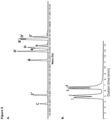
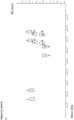
- Figure 5A shows the mass spectrum of the antibody mixture composed of human IgG1-CD19-21D4-E345K, IgG1-CD22-huRFB4, IgG1-7D8, IgG1-CD37-37-3 and IgG1-CD52-Campath-E345K (labeled as species A - E), and their corresponding internal standards (species A' - E', all indicated with an apostrophe).
- Antibody sample B IgG1-CD22-RFB4
- D IgG1-CD37-37-3
- their corresponding internal standards B' and D' have overlapping mass peaks.
- Example 6 Analysis of mixed sample and internal standard by time-resolved deconvolution MS enables IgG concentration determination with high accuracy
- the separation procedure based on time-resolved deconvolution MS as described in Example 5 could be applied to quantitate individual antibodies in a complex antibody mixture.
- the antibody sample concentrations can be accurately determined by measuring MS peak volumes/intensities of the antibody samples containing designated IgG-GlcNAc 2 internal standards (IS).
- a mixture of antibodies was generated by mixing IgG1-CD19-21D4-E345K, IgG1-CD22-huRFB4, IgG1-7D8, IgG1-CD37-37-3 and IgG1-CD52-Campath-E345K as described in Example 5 with defined antibody concentrations to be used as external calibration standards.
- a portion of the mixture was treated with EndoS2 and Lactobacillus casei fucosidase (29A) as described in Example 5 to generate IS, and another portion was fully deglycosylated using PNGase F, as described in Example 2 to generate antibody external standards.
- a dilution series was generated of external standards and spiked with one fixed IS concentration to each standard (i.e.
- the antibody external calibration standards vary from 15 - 80 ⁇ g/mL per individual antibody. Of each calibration standard, 50 ⁇ L was pipetted into Q-sert vials (Sigma). Data were acquired and subsequently processed by
- TRD MS as described in Example 2 and 5.
- the MS peak volumes/intensities of the calibration standards containing deglycosylated IgG1-CD19-21D4-E345K, IgG1-CD22-huRFB4, IgG1-7D8, IgG1-CD37-37-3 and IgG1-CD52-Campath-E345K and the reference IS IgG-GlcNAc 2 variant were measured by LC-MS and data processed by time-resolved deconvolution.
- Calibration curves were generated by first calculating the ratio of the MS peak intensities of the deglycosylated antibodies over the MS peak volume/intensities of the IS (Ext st. /IS).
- Figure 6A-E shows excellent linearity when plotting the obtained ratios (Y-axis) against the individual standard antibody concentrations. For each generated antibody standard curve, a coefficient of determination (R 2 ) of 0.99 was found, indicating the suitability of the IgG-GlcNAc 2 IS to obtain calibration curves.
- Figure 6F-J show the antibody sample concentrations calculated for each antibody as deduced from the calibration curve, versus the expected antibody concentration, indicating high accuracy of the measurements.
- Example 7 In-process IgG concentration determination by Time Resolved Deconvolution MS.
- test samples comprising cell culture supernatants are deglycosylated by PNGase F between 2 and 24 hours (using a method similar to that described in Example 2).
- deglycosylated cell supernatant samples are spiked with previously prepared IS antibodies (Example 5), preferably in the range close to the expected sample IgG concentrations.
- the prepared samples will be injected into the LC-MS system.
- the LC-MS system comprises an affinity purification trap column.
- the affinity trap column contains immobilized protein A that binds the Fc portion of antibodies.
- antibodies are captured on the protein A column. Subsequently, all host cell proteins are washed off the column by utilizing a washing buffer. In the next step, the trapped antibodies are eluted in one step from the column by low pH elution buffer and subsequently separated on a reversed phase (RP) analytical column, which is in-line with the mass spectrometer. The acquired MS data will be processed and antibody masses detected and concentration values will be calculated from the signal intensities according to Example 6.
- RP reversed phase
Landscapes
- Life Sciences & Earth Sciences (AREA)
- Health & Medical Sciences (AREA)
- Engineering & Computer Science (AREA)
- Molecular Biology (AREA)
- Immunology (AREA)
- Physics & Mathematics (AREA)
- Chemical & Material Sciences (AREA)
- Biomedical Technology (AREA)
- Hematology (AREA)
- Urology & Nephrology (AREA)
- Bioinformatics & Computational Biology (AREA)
- Bioinformatics & Cheminformatics (AREA)
- Cell Biology (AREA)
- Biotechnology (AREA)
- Medicinal Chemistry (AREA)
- Microbiology (AREA)
- Analytical Chemistry (AREA)
- Biochemistry (AREA)
- General Health & Medical Sciences (AREA)
- General Physics & Mathematics (AREA)
- Pathology (AREA)
- Food Science & Technology (AREA)
- Proteomics, Peptides & Aminoacids (AREA)
- Spectroscopy & Molecular Physics (AREA)
- Biophysics (AREA)
- Peptides Or Proteins (AREA)
- Other Investigation Or Analysis Of Materials By Electrical Means (AREA)
- Investigating Or Analysing Biological Materials (AREA)
- Measuring Or Testing Involving Enzymes Or Micro-Organisms (AREA)
Claims (26)
- Procédé de quantification d'une ou plusieurs glycoprotéine(s) dans un échantillon, dans lequel chaque glycoprotéine à quantifier comporte un ou plusieurs glycane(s) attaché(s) à Asn, et lequel procédé comporte les étapes suivantes :a) prendre un échantillon comprenant ladite ou lesdites glycoprotéine(s),b) ajouter un étalon interne audit échantillon, lequel étalon interne comprend une forme variante de ladite ou de chacune desdites glycoprotéine(s) à quantifier, laquelle forme variante est une forme qui ne contient que des entités GlcNAc de coeur attachées à Asn, étant entendu que chaque entité GlcNAc de coeur attachée à Asn est une entité N-acétyl-glycosamine directement attachée à un résidu accepteur Asn de la chaîne polypeptidique de ladite variante, et dans laquelle il n'y a pas d'entités fucose attachées auxdites entités GlcNAc de coeur,c) et quantifier ladite ou lesdites glycoprotéine(s) par comparaison avec l'étalon interne.
- Procédé conforme à la revendication 1, lequel procédé comporte, avant l'étape c), un traitement de l'échantillon avec une enzyme, laquelle enzyme est capable de séparer complètement de ladite ou desdites glycoprotéine(s) les glycanes attachés à Asn, mais n'est pas capable de séparer de ladite forme variante les entités GlcNAc de coeur attachées à Asn.
- Procédé conforme à la revendication 2, dans lequel ledit traitement avec une enzyme est réalisé avant l'étape b).
- Procédé conforme à la revendication 2, dans lequel ledit traitement avec une enzyme est réalisé après l'addition de l'étalon interne qui a lieu dans l'étape b).
- Procédé conforme à l'une des revendications 2 à 4, dans lequel ladite enzyme est la PNGase F (EC 3.5.1.52).
- Procédé conforme à la revendication 1, lequel procédé comporte, avant l'étape b), un traitement de l'échantillon avec une enzyme capable de séparer complètement de ladite ou desdites glycoprotéine(s) les glycanes attachés à Asn, traitement suivi, en option, de l'élimination ou de la désactivation de ladite enzyme.
- Procédé conforme à l'une des revendications précédentes, dans lequel, dans l'étape c), la quantification est réalisée par spectrométrie de masse.
- Procédé conforme à l'une des revendications précédentes, dans lequel, dans l'étape c), la quantification est réalisée au moyen d'une combinaison de la spectrométrie de masse et d'une technique de séparation qui ne repose pas sur la masse.
- Procédé conforme à l'une des revendications précédentes, dans lequel, dans l'étape c), la quantification est réalisée par chromatographie en phase liquide couplée à la spectrométrie de masse (CL-SM), comme la CL à polarité de phases inversée couplée à la SM.
- Procédé conforme à l'une des revendications précédentes, lequel procédé ne comporte pas d'étape de digestion protéolytique, ou de fragmentation d'une autre manière, de la chaîne d'acides aminés des glycoprotéines à quantifier.
- Procédé conforme à l'une des revendications précédentes, dans lequel aussi bien la ou les glycoprotéine(s) à quantifier que sa ou leurs forme(s) variante(s) utilisée(s) dans l'étalon interne sont utilisées sous leurs formes complètes, c'est-à-dire possédant une chaîne d'acides aminés complète, ou presque complètes, par exemple comportant 50 % ou plus, comme 75 % ou plus, par exemple 90 % ou plus, comme 95 % ou plus, de leur séquence complète d'acides aminés.
- Procédé conforme à l'une des revendications précédentes, dans lequel la ou les glycoprotéine(s) à quantifier est (sont) un (des) anticorps.
- Procédé conforme à l'une des revendications précédentes, lequel procédé comporte la quantification de deux anticorps ou plus, comme de deux, trois, quatre ou cinq anticorps différents ou plus.
- Procédé conforme à la revendication 13, dans lequel les deux anticorps ou plus sont des anticorps IgG, comme des anticorps IgG complets.
- Procédé conforme à l'une des revendications précédentes, dans lequel la glycoprotéine ou au moins l'une des glycoprotéine(s) à quantifier contient du fucose sur des entités GlcNAc de coeur attachées à Asn.
- Procédé conforme à l'une des revendications précédentes, dans lequel l'échantillon est une échantillon de culture cellulaire.
- Procédé conforme à l'une des revendications précédentes, dans lequel l'échantillon comprend des glycoprotéines produites par recombinaison et purifiées.
- Procédé conforme à la revendication 16 ou 17, dans lequel les étapes b) et c) du procédé sont réalisées de manière automatisée, et de préférence, dans lequel les étapes a), b) et c) du procédé sont réalisées de manière automatisée.
- Procédé conforme à l'une des revendications 1 à 15, dans lequel l'échantillon est un échantillon de sang, un échantillon de plasma ou un échantillon de sérum.
- Procédé visant à surveiller la production de glycoprotéines dans une culture cellulaire, lequel procédé comporte le fait de cultiver des cellules hôtes produisant lesdites glycoprotéines et le fait d'exécuter un procédé conforme à la revendication 16 ou 18.
- Procédé visant à maîtriser la qualité de glycoprotéines produites par recombinaison et purifiées, lequel procédé comporte le fait d'exécuter un procédé conforme à la revendication 17 ou 18.
- Utilisation d'une composition comprenant une quantité connue d'une forme variante d'une glycoprotéine, laquelle forme variante est une forme qui ne contient que des entités GlcNAc de coeur attachées à Asn, étant entendu que chaque entité GlcNAc de coeur attachée à Asn est une entité N-acétyl-glycosamine directement attachée à un résidu accepteur Asn de la chaîne polypeptidique de ladite variante, et dans laquelle il n'y a pas d'entités fucose attachées auxdites entités GlcNAc de coeur, en tant qu'étalon interne pour la quantification de ladite glycoprotéine dans un échantillon.
- Procédé de quantification d'une ou plusieurs glycoprotéine(s) dans un échantillon, dans lequel chaque glycoprotéine à quantifier comporte un ou plusieurs glycane(s) attaché(s) à Asn, et lequel procédé comporte les étapes suivantes :a) préparer un étalon interne en traitant ladite ou lesdites glycoprotéine(s) avec une ou plusieurs enzymes pour obtenir une forme variante de ladite ou de chacune desdites glycoprotéine(s), laquelle forme variante est une forme qui ne contient que des entités GlcNAc de coeur attachées à Asn, étant entendu que chaque entité GlcNAc de coeur attachée à Asn est une entité N-acétyl-glycosamine directement attachée à un résidu accepteur Asn de la chaîne polypeptidique de ladite variante, et dans laquelle il n'y a pas d'entités fucose attachées auxdites entités GlcNAc de coeur,b) prendre un échantillon comprenant ladite ou lesdites glycoprotéine(s) à quantifier,c) ajouter ledit étalon interne audit échantillon,d) et quantifier ladite ou lesdites glycoprotéine(s) par comparaison avec l'étalon interne.
- Procédé conforme à la revendication 23, dans lequel, dans l'étape a), ledit traitement avec une ou plusieurs enzyme(s) comprend un traitement avec une endo-β-N-acétyl-glucosaminidase, telle que EndoS2 ou EndoS.
- Procédé conforme à l'une des revendications 23 et 24, dans lequel, dans l'étape a), ledit traitement avec une ou plusieurs enzyme(s) comprend un traitement avec une endo-β-N-acétyl-glucosaminidase, telle que EndoS2 ou EndoS, et avec une fucosidase, capable d'hydrolyser la liaison alpha-1,6 d'une entité fucose-alpha-1,6-GIcNAc attachée à Asn.
- Procédé conforme à l'une des revendications 23 à 25, qui comporte une ou plusieurs caractéristique(s) supplémentaire(s) indiquée(s) dans les revendications 2 à 19.
Applications Claiming Priority (2)
| Application Number | Priority Date | Filing Date | Title |
|---|---|---|---|
| EP20158905 | 2020-02-21 | ||
| PCT/EP2021/054194 WO2021165488A1 (fr) | 2020-02-21 | 2021-02-19 | Procédés de quantification de glycoprotéines |
Publications (2)
| Publication Number | Publication Date |
|---|---|
| EP4107529A1 EP4107529A1 (fr) | 2022-12-28 |
| EP4107529B1 true EP4107529B1 (fr) | 2024-11-13 |
Family
ID=69740118
Family Applications (1)
| Application Number | Title | Priority Date | Filing Date |
|---|---|---|---|
| EP21705980.7A Active EP4107529B1 (fr) | 2020-02-21 | 2021-02-19 | Procédés pour la quantification de glycoprotéines |
Country Status (6)
| Country | Link |
|---|---|
| US (1) | US20230089196A1 (fr) |
| EP (1) | EP4107529B1 (fr) |
| JP (1) | JP7778705B2 (fr) |
| CN (1) | CN115427814A (fr) |
| ES (1) | ES3007624T3 (fr) |
| WO (1) | WO2021165488A1 (fr) |
Families Citing this family (1)
| Publication number | Priority date | Publication date | Assignee | Title |
|---|---|---|---|---|
| JP7779480B2 (ja) * | 2022-03-29 | 2025-12-03 | 地方独立行政法人 大阪府立病院機構 | 逆相スケールによる高速液体クロマトグラフィー溶出時間標準化法 |
Family Cites Families (11)
| Publication number | Priority date | Publication date | Assignee | Title |
|---|---|---|---|---|
| JPH07325083A (ja) * | 1994-05-31 | 1995-12-12 | Nakarai Tesuku Kk | 糖タンパク質の特定糖鎖割合の測定方法 |
| CN101928344B (zh) | 2002-10-17 | 2014-08-13 | 根马布股份公司 | 抗cd20的人单克隆抗体 |
| WO2007002223A2 (fr) | 2005-06-20 | 2007-01-04 | Medarex, Inc. | Anticorps cd19 et utilisations |
| GB0815576D0 (en) * | 2008-08-28 | 2008-10-01 | Lucas & Co | Analysis of glycated proteins |
| JP2013506404A (ja) * | 2009-10-02 | 2013-02-28 | ロシュ グリクアート アーゲー | 抗体における非フコシル化の検出法 |
| RU2012118620A (ru) | 2009-10-09 | 2013-11-20 | Симфоген А/С | Множественное количественное определение в смеси индивидуальных рекомбинантных белков посредством сигнатурных пептидов и масс-спектрометрии |
| SG183542A1 (en) | 2010-03-12 | 2012-10-30 | Immunogen Inc | Cd37-binding molecules and immunoconjugates thereof |
| DK2560993T3 (da) | 2010-04-20 | 2024-10-14 | Genmab As | Heterodimeric antibody fc-containing proteins and methods for production thereof |
| EP3497229A1 (fr) * | 2016-08-10 | 2019-06-19 | University of Maryland, College Park | Mutants artificiels de la alpha 1,6-fucosidase permettant une fucosylation directe du noyau pentasaccharidique de n-glycopeptides et n-glycoprotéines intacts |
| EP3517623A4 (fr) * | 2016-08-19 | 2020-06-17 | Public University Corporation Yokohama City University | Procédé et système d'analyse de chaînes de sucre à liaison (n) de glycoprotéine |
| CN112513074A (zh) | 2018-06-22 | 2021-03-16 | 健玛保 | 生产两种或更多种不同抗体的受控混合物的方法 |
-
2021
- 2021-02-19 US US17/800,740 patent/US20230089196A1/en active Pending
- 2021-02-19 ES ES21705980T patent/ES3007624T3/es active Active
- 2021-02-19 JP JP2022549792A patent/JP7778705B2/ja active Active
- 2021-02-19 WO PCT/EP2021/054194 patent/WO2021165488A1/fr not_active Ceased
- 2021-02-19 EP EP21705980.7A patent/EP4107529B1/fr active Active
- 2021-02-19 CN CN202180030034.3A patent/CN115427814A/zh active Pending
Also Published As
| Publication number | Publication date |
|---|---|
| US20230089196A1 (en) | 2023-03-23 |
| WO2021165488A1 (fr) | 2021-08-26 |
| CN115427814A (zh) | 2022-12-02 |
| JP2023514692A (ja) | 2023-04-07 |
| JP7778705B2 (ja) | 2025-12-02 |
| ES3007624T3 (en) | 2025-03-20 |
| EP4107529A1 (fr) | 2022-12-28 |
Similar Documents
| Publication | Publication Date | Title |
|---|---|---|
| EP2394173B1 (fr) | Analyse de motif de glycosylation immunoglobuline | |
| KR102589422B1 (ko) | 다중특이적 항체를 제조하기 위한 폴리펩티드 링커 | |
| JP2016523812A (ja) | タンパク質のピログルタミン酸形成を増加させるための方法 | |
| Zhu et al. | Integrating intact mass analysis and middle-down mass spectrometry approaches to effectively characterize trastuzumab and adalimumab structural heterogeneity | |
| US12000839B2 (en) | Methods for characterizing disulfide bonds | |
| Lippold et al. | Proteoform-resolved FcɤRIIIa binding assay for fab glycosylated monoclonal antibodies achieved by affinity chromatography mass spectrometry of Fc moieties | |
| WO2019233842A1 (fr) | Lieur peptidique à modification post-translationnelle réduite | |
| KR20230061462A (ko) | 단백질 정제 공정에서의 숙주 세포 단백질 함량의 감소 방법 | |
| Tayi et al. | Solid‐Phase Enzymatic Remodeling Produces High Yields of Single Glycoform Antibodies | |
| EP4107529B1 (fr) | Procédés pour la quantification de glycoprotéines | |
| Ha et al. | Biochemical and biophysical characterization of humanized IgG1 produced in Pichia pastoris | |
| HK40085930B (en) | Methods for the quantification of glycoproteins | |
| HK40085930A (en) | Methods for the quantification of glycoproteins | |
| Cotham et al. | A generic platform to couple affinity chromatography with native mass spectrometry for the analysis of therapeutic monoclonal antibodies | |
| HK40084849A (en) | Methods for the quantification of glycoproteins | |
| Mota et al. | Cell free remodeling of glycosylation of antibodies | |
| KR20230026434A (ko) | 미처리된 c-말단 리신을 정확하게 측정하기 위한 중질 펩티드 접근법 | |
| CN114316022A (zh) | 结合pd-1抗体的肽及其应用 | |
| US20240383945A1 (en) | Purification method of antibody composition | |
| Shen et al. | Methods to determine the level of afucosylation in recombinant monoclonal antibodies | |
| Reinders et al. | Development of a Two-dimensional Liquid Chromatography High-Resolution Mass Spectrometry Method for the Characterization of Monoclonal Antibodies in Cell-Free Culture Supernatant via FcR Affinity Chromatography | |
| RU2776302C2 (ru) | Полипептидный линкер для получения мультиспецифических антител | |
| WO2026090253A1 (fr) | Procédés de détermination de la teneur en appariement de glycanes | |
| Lippold | Multi-le el structural and functional characterization of therapeutic gl coproteins b mass spectrometr | |
| WO2025186212A1 (fr) | Procédé d'analyse de protéine hôte dans des préparations de protéines recombinantes |
Legal Events
| Date | Code | Title | Description |
|---|---|---|---|
| STAA | Information on the status of an ep patent application or granted ep patent |
Free format text: STATUS: UNKNOWN |
|
| STAA | Information on the status of an ep patent application or granted ep patent |
Free format text: STATUS: THE INTERNATIONAL PUBLICATION HAS BEEN MADE |
|
| PUAI | Public reference made under article 153(3) epc to a published international application that has entered the european phase |
Free format text: ORIGINAL CODE: 0009012 |
|
| STAA | Information on the status of an ep patent application or granted ep patent |
Free format text: STATUS: REQUEST FOR EXAMINATION WAS MADE |
|
| 17P | Request for examination filed |
Effective date: 20220914 |
|
| AK | Designated contracting states |
Kind code of ref document: A1 Designated state(s): AL AT BE BG CH CY CZ DE DK EE ES FI FR GB GR HR HU IE IS IT LI LT LU LV MC MK MT NL NO PL PT RO RS SE SI SK SM TR |
|
| STAA | Information on the status of an ep patent application or granted ep patent |
Free format text: STATUS: EXAMINATION IS IN PROGRESS |
|
| REG | Reference to a national code |
Ref country code: HK Ref legal event code: DE Ref document number: 40085930 Country of ref document: HK |
|
| 17Q | First examination report despatched |
Effective date: 20230803 |
|
| GRAP | Despatch of communication of intention to grant a patent |
Free format text: ORIGINAL CODE: EPIDOSNIGR1 |
|
| STAA | Information on the status of an ep patent application or granted ep patent |
Free format text: STATUS: GRANT OF PATENT IS INTENDED |
|
| INTG | Intention to grant announced |
Effective date: 20240605 |
|
| GRAS | Grant fee paid |
Free format text: ORIGINAL CODE: EPIDOSNIGR3 |
|
| GRAA | (expected) grant |
Free format text: ORIGINAL CODE: 0009210 |
|
| STAA | Information on the status of an ep patent application or granted ep patent |
Free format text: STATUS: THE PATENT HAS BEEN GRANTED |
|
| AK | Designated contracting states |
Kind code of ref document: B1 Designated state(s): AL AT BE BG CH CY CZ DE DK EE ES FI FR GB GR HR HU IE IS IT LI LT LU LV MC MK MT NL NO PL PT RO RS SE SI SK SM TR |
|
| REG | Reference to a national code |
Ref country code: GB Ref legal event code: FG4D |
|
| RIN1 | Information on inventor provided before grant (corrected) |
Inventor name: POULSEN, EMIL Inventor name: JENSEN, SOEREN, SKOV Inventor name: DE JONG, ROB, N. Inventor name: HIBBERT, RICHARD, G. Inventor name: WILLEMSZ, DEMELZA Inventor name: SANGERS, SIPKE Inventor name: VAN DEN BREMER, EWALD, T.J. |
|
| REG | Reference to a national code |
Ref country code: CH Ref legal event code: EP |
|
| REG | Reference to a national code |
Ref country code: DE Ref legal event code: R096 Ref document number: 602021021758 Country of ref document: DE |
|
| P01 | Opt-out of the competence of the unified patent court (upc) registered |
Free format text: CASE NUMBER: APP_58100/2024 Effective date: 20241024 |
|
| REG | Reference to a national code |
Ref country code: IE Ref legal event code: FG4D |
|
| REG | Reference to a national code |
Ref country code: LT Ref legal event code: MG9D |
|
| REG | Reference to a national code |
Ref country code: NL Ref legal event code: MP Effective date: 20241113 |
|
| REG | Reference to a national code |
Ref country code: ES Ref legal event code: FG2A Ref document number: 3007624 Country of ref document: ES Kind code of ref document: T3 Effective date: 20250320 |
|
| PG25 | Lapsed in a contracting state [announced via postgrant information from national office to epo] |
Ref country code: IS Free format text: LAPSE BECAUSE OF FAILURE TO SUBMIT A TRANSLATION OF THE DESCRIPTION OR TO PAY THE FEE WITHIN THE PRESCRIBED TIME-LIMIT Effective date: 20250313 Ref country code: HR Free format text: LAPSE BECAUSE OF FAILURE TO SUBMIT A TRANSLATION OF THE DESCRIPTION OR TO PAY THE FEE WITHIN THE PRESCRIBED TIME-LIMIT Effective date: 20241113 Ref country code: PT Free format text: LAPSE BECAUSE OF FAILURE TO SUBMIT A TRANSLATION OF THE DESCRIPTION OR TO PAY THE FEE WITHIN THE PRESCRIBED TIME-LIMIT Effective date: 20250313 |
|
| PG25 | Lapsed in a contracting state [announced via postgrant information from national office to epo] |
Ref country code: FI Free format text: LAPSE BECAUSE OF FAILURE TO SUBMIT A TRANSLATION OF THE DESCRIPTION OR TO PAY THE FEE WITHIN THE PRESCRIBED TIME-LIMIT Effective date: 20241113 Ref country code: NL Free format text: LAPSE BECAUSE OF FAILURE TO SUBMIT A TRANSLATION OF THE DESCRIPTION OR TO PAY THE FEE WITHIN THE PRESCRIBED TIME-LIMIT Effective date: 20241113 |
|
| REG | Reference to a national code |
Ref country code: AT Ref legal event code: MK05 Ref document number: 1742057 Country of ref document: AT Kind code of ref document: T Effective date: 20241113 |
|
| PG25 | Lapsed in a contracting state [announced via postgrant information from national office to epo] |
Ref country code: BG Free format text: LAPSE BECAUSE OF FAILURE TO SUBMIT A TRANSLATION OF THE DESCRIPTION OR TO PAY THE FEE WITHIN THE PRESCRIBED TIME-LIMIT Effective date: 20241113 |
|
| PG25 | Lapsed in a contracting state [announced via postgrant information from national office to epo] |
Ref country code: NO Free format text: LAPSE BECAUSE OF FAILURE TO SUBMIT A TRANSLATION OF THE DESCRIPTION OR TO PAY THE FEE WITHIN THE PRESCRIBED TIME-LIMIT Effective date: 20250213 |
|
| PG25 | Lapsed in a contracting state [announced via postgrant information from national office to epo] |
Ref country code: LV Free format text: LAPSE BECAUSE OF FAILURE TO SUBMIT A TRANSLATION OF THE DESCRIPTION OR TO PAY THE FEE WITHIN THE PRESCRIBED TIME-LIMIT Effective date: 20241113 Ref country code: GR Free format text: LAPSE BECAUSE OF FAILURE TO SUBMIT A TRANSLATION OF THE DESCRIPTION OR TO PAY THE FEE WITHIN THE PRESCRIBED TIME-LIMIT Effective date: 20250214 Ref country code: AT Free format text: LAPSE BECAUSE OF FAILURE TO SUBMIT A TRANSLATION OF THE DESCRIPTION OR TO PAY THE FEE WITHIN THE PRESCRIBED TIME-LIMIT Effective date: 20241113 |
|
| PG25 | Lapsed in a contracting state [announced via postgrant information from national office to epo] |
Ref country code: PL Free format text: LAPSE BECAUSE OF FAILURE TO SUBMIT A TRANSLATION OF THE DESCRIPTION OR TO PAY THE FEE WITHIN THE PRESCRIBED TIME-LIMIT Effective date: 20241113 |
|
| PG25 | Lapsed in a contracting state [announced via postgrant information from national office to epo] |
Ref country code: RS Free format text: LAPSE BECAUSE OF FAILURE TO SUBMIT A TRANSLATION OF THE DESCRIPTION OR TO PAY THE FEE WITHIN THE PRESCRIBED TIME-LIMIT Effective date: 20250213 |
|
| PG25 | Lapsed in a contracting state [announced via postgrant information from national office to epo] |
Ref country code: SM Free format text: LAPSE BECAUSE OF FAILURE TO SUBMIT A TRANSLATION OF THE DESCRIPTION OR TO PAY THE FEE WITHIN THE PRESCRIBED TIME-LIMIT Effective date: 20241113 |
|
| PG25 | Lapsed in a contracting state [announced via postgrant information from national office to epo] |
Ref country code: DK Free format text: LAPSE BECAUSE OF FAILURE TO SUBMIT A TRANSLATION OF THE DESCRIPTION OR TO PAY THE FEE WITHIN THE PRESCRIBED TIME-LIMIT Effective date: 20241113 |
|
| VS25 | Lapsed in a validation state [announced via postgrant information from nat. office to epo] |
Ref country code: MD Free format text: LAPSE BECAUSE OF FAILURE TO SUBMIT A TRANSLATION OF THE DESCRIPTION OR TO PAY THE FEE WITHIN THE PRESCRIBED TIME-LIMIT Effective date: 20241113 |
|
| PG25 | Lapsed in a contracting state [announced via postgrant information from national office to epo] |
Ref country code: EE Free format text: LAPSE BECAUSE OF FAILURE TO SUBMIT A TRANSLATION OF THE DESCRIPTION OR TO PAY THE FEE WITHIN THE PRESCRIBED TIME-LIMIT Effective date: 20241113 |
|
| PG25 | Lapsed in a contracting state [announced via postgrant information from national office to epo] |
Ref country code: RO Free format text: LAPSE BECAUSE OF FAILURE TO SUBMIT A TRANSLATION OF THE DESCRIPTION OR TO PAY THE FEE WITHIN THE PRESCRIBED TIME-LIMIT Effective date: 20241113 |
|
| PG25 | Lapsed in a contracting state [announced via postgrant information from national office to epo] |
Ref country code: SK Free format text: LAPSE BECAUSE OF FAILURE TO SUBMIT A TRANSLATION OF THE DESCRIPTION OR TO PAY THE FEE WITHIN THE PRESCRIBED TIME-LIMIT Effective date: 20241113 |
|
| PG25 | Lapsed in a contracting state [announced via postgrant information from national office to epo] |
Ref country code: CZ Free format text: LAPSE BECAUSE OF FAILURE TO SUBMIT A TRANSLATION OF THE DESCRIPTION OR TO PAY THE FEE WITHIN THE PRESCRIBED TIME-LIMIT Effective date: 20241113 |
|
| REG | Reference to a national code |
Ref country code: DE Ref legal event code: R097 Ref document number: 602021021758 Country of ref document: DE |
|
| PG25 | Lapsed in a contracting state [announced via postgrant information from national office to epo] |
Ref country code: SE Free format text: LAPSE BECAUSE OF FAILURE TO SUBMIT A TRANSLATION OF THE DESCRIPTION OR TO PAY THE FEE WITHIN THE PRESCRIBED TIME-LIMIT Effective date: 20241113 |
|
| PG25 | Lapsed in a contracting state [announced via postgrant information from national office to epo] |
Ref country code: MC Free format text: LAPSE BECAUSE OF FAILURE TO SUBMIT A TRANSLATION OF THE DESCRIPTION OR TO PAY THE FEE WITHIN THE PRESCRIBED TIME-LIMIT Effective date: 20241113 |
|
| PLBE | No opposition filed within time limit |
Free format text: ORIGINAL CODE: 0009261 |
|
| STAA | Information on the status of an ep patent application or granted ep patent |
Free format text: STATUS: NO OPPOSITION FILED WITHIN TIME LIMIT |
|
| REG | Reference to a national code |
Ref country code: CH Ref legal event code: PL |
|
| PG25 | Lapsed in a contracting state [announced via postgrant information from national office to epo] |
Ref country code: LU Free format text: LAPSE BECAUSE OF NON-PAYMENT OF DUE FEES Effective date: 20250219 |
|
| PG25 | Lapsed in a contracting state [announced via postgrant information from national office to epo] |
Ref country code: CH Free format text: LAPSE BECAUSE OF NON-PAYMENT OF DUE FEES Effective date: 20250228 |
|
| 26N | No opposition filed |
Effective date: 20250814 |
|
| REG | Reference to a national code |
Ref country code: BE Ref legal event code: MM Effective date: 20250228 |
|
| PGFP | Annual fee paid to national office [announced via postgrant information from national office to epo] |
Ref country code: FR Payment date: 20251231 Year of fee payment: 6 |
|
| PG25 | Lapsed in a contracting state [announced via postgrant information from national office to epo] |
Ref country code: BE Free format text: LAPSE BECAUSE OF NON-PAYMENT OF DUE FEES Effective date: 20250228 |
|
| PG25 | Lapsed in a contracting state [announced via postgrant information from national office to epo] |
Ref country code: IE Free format text: LAPSE BECAUSE OF NON-PAYMENT OF DUE FEES Effective date: 20250219 |
|
| PGFP | Annual fee paid to national office [announced via postgrant information from national office to epo] |
Ref country code: GB Payment date: 20260106 Year of fee payment: 6 |
|
| PGFP | Annual fee paid to national office [announced via postgrant information from national office to epo] |
Ref country code: ES Payment date: 20260305 Year of fee payment: 6 |
|
| PGFP | Annual fee paid to national office [announced via postgrant information from national office to epo] |
Ref country code: DE Payment date: 20251230 Year of fee payment: 6 |
|
| PGFP | Annual fee paid to national office [announced via postgrant information from national office to epo] |
Ref country code: IT Payment date: 20260122 Year of fee payment: 6 |
|
| VS25 | Lapsed in a validation state [announced via postgrant information from nat. office to epo] |
Ref country code: MA Free format text: LAPSE BECAUSE OF FAILURE TO SUBMIT A TRANSLATION OF THE DESCRIPTION OR TO PAY THE FEE WITHIN THE PRESCRIBED TIME-LIMIT; INVALID AB INITIO Effective date: 20210219 |