EP4133768B1 - Système à base de microcontrôleur ou de microprocesseur, à contrôle d'autorisation pour des demandes - Google Patents
Système à base de microcontrôleur ou de microprocesseur, à contrôle d'autorisation pour des demandes Download PDFInfo
- Publication number
- EP4133768B1 EP4133768B1 EP21717435.8A EP21717435A EP4133768B1 EP 4133768 B1 EP4133768 B1 EP 4133768B1 EP 21717435 A EP21717435 A EP 21717435A EP 4133768 B1 EP4133768 B1 EP 4133768B1
- Authority
- EP
- European Patent Office
- Prior art keywords
- user
- access
- certificate
- database
- data
- Prior art date
- Legal status (The legal status is an assumption and is not a legal conclusion. Google has not performed a legal analysis and makes no representation as to the accuracy of the status listed.)
- Active
Links
Images




Classifications
-
- H—ELECTRICITY
- H04—ELECTRIC COMMUNICATION TECHNIQUE
- H04W—WIRELESS COMMUNICATION NETWORKS
- H04W12/00—Security arrangements; Authentication; Protecting privacy or anonymity
- H04W12/06—Authentication
- H04W12/069—Authentication using certificates or pre-shared keys
-
- H—ELECTRICITY
- H04—ELECTRIC COMMUNICATION TECHNIQUE
- H04L—TRANSMISSION OF DIGITAL INFORMATION, e.g. TELEGRAPHIC COMMUNICATION
- H04L63/00—Network architectures or network communication protocols for network security
- H04L63/10—Network architectures or network communication protocols for network security for controlling access to devices or network resources
- H04L63/101—Access control lists [ACL]
-
- H—ELECTRICITY
- H04—ELECTRIC COMMUNICATION TECHNIQUE
- H04W—WIRELESS COMMUNICATION NETWORKS
- H04W12/00—Security arrangements; Authentication; Protecting privacy or anonymity
- H04W12/12—Detection or prevention of fraud
- H04W12/125—Protection against power exhaustion attacks
-
- H—ELECTRICITY
- H04—ELECTRIC COMMUNICATION TECHNIQUE
- H04L—TRANSMISSION OF DIGITAL INFORMATION, e.g. TELEGRAPHIC COMMUNICATION
- H04L63/00—Network architectures or network communication protocols for network security
- H04L63/14—Network architectures or network communication protocols for network security for detecting or protecting against malicious traffic
- H04L63/1441—Countermeasures against malicious traffic
- H04L63/1458—Denial of Service
-
- Y—GENERAL TAGGING OF NEW TECHNOLOGICAL DEVELOPMENTS; GENERAL TAGGING OF CROSS-SECTIONAL TECHNOLOGIES SPANNING OVER SEVERAL SECTIONS OF THE IPC; TECHNICAL SUBJECTS COVERED BY FORMER USPC CROSS-REFERENCE ART COLLECTIONS [XRACs] AND DIGESTS
- Y04—INFORMATION OR COMMUNICATION TECHNOLOGIES HAVING AN IMPACT ON OTHER TECHNOLOGY AREAS
- Y04S—SYSTEMS INTEGRATING TECHNOLOGIES RELATED TO POWER NETWORK OPERATION, COMMUNICATION OR INFORMATION TECHNOLOGIES FOR IMPROVING THE ELECTRICAL POWER GENERATION, TRANSMISSION, DISTRIBUTION, MANAGEMENT OR USAGE, i.e. SMART GRIDS
- Y04S40/00—Systems for electrical power generation, transmission, distribution or end-user application management characterised by the use of communication or information technologies, or communication or information technology specific aspects supporting them
- Y04S40/20—Information technology specific aspects, e.g. CAD, simulation, modelling, system security
Definitions
- the present presentations concern microcontroller- or microprocessor-based data processing systems and in particular the access control to their functionality by external systems.
- Microprocessors and especially microcontrollers are important components of most connected devices. These components support the implementation of millions of "end nodes" for the Internet of Things (IoT).
- the IoT refers to technologies of a global IT infrastructure that enables physical and virtual objects to be networked with each other and to work together using information and communication technologies.
- the Internet of Things refers to the linking of clearly identifiable physical objects (things) with a virtual representation in an Internet-like structure.
- the IoT end nodes can be very different elements, such as measuring devices, sensors, wearable devices, displays and preprocessors, as well as complex devices, devices, vehicles and building components that combine several functions in a single device.
- IoT end nodes can often only be small in size and weight due to their function and/or use.
- the increasingly smaller embedded computers are often used to support people without distracting or even attracting attention.
- miniaturized computers, so-called wearables, with different sensors are integrated directly into clothing.
- IoT end nodes Given the often small size of IoT end nodes, the computing capacity and/or storage capacity of IoT end nodes is usually very limited. In addition, IoT end nodes are often battery-operated, so very energy-efficient processors are used, which also comes at the expense of computing power.
- IoT devices When operating on the global Internet, IoT devices must ensure the security of the often sensitive data stored on these devices. An IoT device must therefore be able to protect the sensitive data stored on it from attacks and only release it to authorized entities.
- IoT microcontroller are designed for devices optimized for either low power or high performance, but not both.
- a particular form of attack has proven to be particularly problematic.
- a DoS attack is an attack on a computing unit using a large number of requests within a short time window, the aim of which is to make the computing unit unavailable due to overloading the data network or the computing unit's CPUs.
- a Denial-of-Service attack In the case of a deliberate service blockage caused by a large number of targeted requests, this is referred to as a Denial-of-Service attack and, if the requests are made from a large number of computers, this is referred to as a Distributed Denial-of-Service attack (DDoS attack). Since the requests in a DDoS attack come from a large number of sources, it is not possible to block the attacker without completely stopping communication with the network.
- DoS attacks are technically relatively simple, as their goal is not to penetrate the IoT device, but to paralyze it.
- protection against such attacks is particularly difficult for Internet-enabled IoT devices, as disconnecting the network connection often means a functional failure of the IoT end node.
- IoT end nodes are particularly vulnerable to DoS attacks due to their low computing capacity.
- the disclosure document DE102016221959 A1 discloses a method for controlling access to data records. It comprises linking a first owner certificate, which is assigned to a user data database, to a first user and providing a first and a second interface. Via the first interface, the first user can create a second owner certificate for the user data database and link this to a second user to enable the latter to create data records in the user data database. Via the second interface, the second user who has created a data record in the user data database can create an access certificate and link it to the user certificate of a user who is to be granted access to this data record.
- the user data database grants the first user only has access to a data set created by the second user if the first user is assigned both an owner certificate for the user data database and an access certificate for accessing the data set.
- the disclosure document US2004215771 A1 discloses a method and apparatus for hiding a device of a network.
- a network client inserts a validation key into the SEQ and ACK fields of a TCP connection request (TCP SYN).
- TCP SYN TCP connection request
- the TCP connection request is sent to a validating server.
- the validating server extracts the validation key and uses it, with other implicit and explicit data included in the TCP connection request, to validate the connection setup request.
- the validating server responds with a TCP SYN/ACK as described in the TCP protocol specification. If the TCP connection request is denied, the request is discarded and nothing is sent back to the requestor, in this case the network client.
- the technical challenge is to only grant trusted people or devices access to sensitive data or functions of the device or system, while at the same time only limited computing capacity is available for the potentially complex access control.
- the scarce resources must be robust against DoS attacks.
- the invention is based on the object of creating an improved method for operating a microcontroller-based or microprocessor-based data processing system, as well as a corresponding data processing system.
- the invention relates to a data processing system, referred to here as a "data processing system”.
- the data processing system comprises at least one computing unit, which is designed as a microprocessor and/or microcontroller, a non-volatile storage medium with one or more reference authorization credentials and an interface for receiving requests via a network.
- the network can in particular be the Internet.
- Each reference authorization credential is designed in the form of a numerical data value.
- Embodiments of the invention can have the advantage that this first check can be carried out in a very resource-saving manner.
- the reference authorization is a numerical value.
- a check for the identity of two values can be carried out by processors and in particular microprocessors in a highly efficient, resource-saving manner.
- Embodiments of the invention can also have the advantage that if the first check is negative, the IT system does not return any response, not even an error message. This can prevent a potential attacker from drawing conclusions about the authentication process based on the error message. In any case, the attacker learns from the response that a IT system can actually be reached at the address used by the attacker. Because the IT system does not return any response, the attacker is left in the dark as to whether his attack has even hit a real IT system. This increases security because the attacker is deprived of the motivation and the opportunity to get closer to an answer. of the IT system and adapt the next attack accordingly.
- the IT system disconnects the network connection to the requesting unit if the check shows that the request does not contain this authorization.
- the network connection between the IT system and the requesting unit can, for example, exist at a higher level of the OSI model, in particular the application level.
- the invention has the advantage that the disconnection ensures that, at least initially, no further requests can be sent from the request unit that could possibly contain malicious code.
- a network connection e.g. an SSH connection or a connection according to another data exchange protocol
- the IT system can be configured in such a way that it only allows a new data transmission connection to the same request unit after a minimum time interval, e.g. 5 minutes or an hour. This ensures that the microprocessor or microcontroller of the IT system is not blocked by repeatedly closing and re-establishing a data exchange connection to the request unit.
- the IT system can be connected to other IT systems and/or the request unit via a network connection.
- the network connection can be designed as a radio connection, for example.
- the network connection can also be established via Bluetooth Low Energy (BLE) and WiFi, for example.
- BLE Bluetooth Low Energy
- the data processing system is an embedded system.
- An embedded system is an electronic computer that is embedded in a technical context, whereby the computer either performs monitoring, control or regulation functions and/or is responsible for a form of data or signal processing.
- This data or signal processing can involve, for example, the encryption or decryption, coding or decoding or filtering of data, in particular measurement data.
- An embedded system can be, for example, a medical device, a household appliance such as a washing machine, a vehicle or aircraft, a television set, a router, a mobile phone or a general consumer electronics device.
- Embedded systems are often specifically adapted to a task. For cost reasons, an optimized, mixed hardware-software implementation is chosen. Such a design combines the great flexibility of software with the performance of the hardware.
- the software is used both to control the system itself and for the system to interact with the outside world via defined interfaces or protocols (e.g. LIN bus, CAN bus, ZigBee for wireless communication or IP over Ethernet).
- a plurality of otherwise autonomous, embedded systems are networked together to provide a complex overall system (e.g. in a vehicle or aircraft).
- the data processing system further comprises a software- or hardware-based functionality.
- the data processing system is configured to perform a further authorization check only if the check shows that the request contains this authorization proof.
- the data processing system is configured to execute the functionality only if the further authorization check shows that the requesting entity is authorized to initiate the execution of the functionality.
- a software-based functionality can be implemented, for example, in instructions (“software”) that can be executed by the at least one computing unit.
- the software-based functionality can provide that the request unit receives data from the data processing system, e.g. sensor data that one or more sensors of the data processing system have recorded and stored locally, or a trained ML model that has been trained on locally recorded data of the data processing system, or a prediction that a software of the data processing system makes, e.g. on the basis of information contained in the request. contained data and/or data available locally on the IT system.
- the software-based functionality can also be the functionality of writing data to the memory of the IT system.
- the data can be, for example, data that is contained in the request.
- the data contained in the request can be a trained ML model of another IT system or the request unit, where the request serves, for example, to synchronize several ML models between the IT systems and/or between the IT system and the request unit.
- a hardware-based functionality can, for example, consist of the start of the recording of sensor data by a sensor of the IT system and/or a change in state of a hardware component of the IT system or of an object controlled by it initiated by the IT system.
- the change in state can be a mechanical change, e.g. the opening of a gate, the closing of a locking system, etc.
- Embodiments can have the advantage that the further check is only carried out if the first check showed that the proof of authorization of the display is known to the IT system and is stored in the IT system in the form of an identical reference proof of authorization. This saves the computing capacity of the IT system. While the first check only included one or more comparisons of numerical values for identity, the subsequent check can be more complex and thus comparatively computationally intensive. However, since the further check is only carried out if the first check was already positive, this effort only applies to requests from request units that are probably sufficiently authorized to have the desired function carried out by the IT system. This allows a good compromise between the desire for a low computing load on the one hand and the desire to carry out complex and correspondingly secure authentication procedures.
- the IT system is configured to return results of the execution of the functionality to the request unit.
- measured values recorded by a sensor of the IT system can be analyzed by a software of the IT system, results of a control command to open or close doors or gates can be returned to the requesting unit.
- the storage medium of the data processing system contains a user data database.
- the user data database contains several data records. Access to at least one of the data records is required to carry out the function; in some embodiments, the storage medium can also contain several such user data databases.
- the storage medium of the IT system also includes an ID database.
- a large number of user certificates and a large number of access certificates are stored in the ID database.
- a user certificate is a data value that is uniquely assigned to a user.
- the user certificate can be a number or, preferably, a certificate issued by a certification authority, e.g. an X.509 certificate.
- Embodiments may be advantageous in that the separation of payload data and user certificates as well as associated access rights can enable very complex, flexible and fine-grained access rights management.
- a specific user or his user certificate can be assigned three different access certificates in the form of three different numerical values in the ID database.
- the first access certificate authorizes the user to read data records created by this user.
- the second access certificate authorizes the user to write or modify the data created by this user. created record.
- the third access certificate allows access to an index that contains field values of this record.
- the further authorization check includes a check to see whether the request contains a user certificate that is assigned to one of the access certificates in the ID database that authorizes the requesting unit to initiate the execution of the functionality.
- the IT system is configured to initiate the execution of this functionality only if the request contains such a user certificate.
- Embodiments can be advantageous because the use of different access certificates for different forms of access can enable extremely fine-grained access management.
- the IT system can distinguish between three different types of access rights, each of which can be designed as a unique numerical value.
- the type of access granted by the corresponding access certificate can be specified, for example, by the storage position or field of this access certificate in the ID database and/or in metadata of the access certificates and/or by numerical prefixes or suffixes.
- each of the reference credentials is one of the access certificates of the ID database.
- all access certificates can be designed as purely numerical values.
- Each user can be assigned as many numerical values as access certificates that are unique throughout the IT system as there are types of access that are to be individually permitted or prevented.
- the use of numerical values has the advantage that a check as to whether access rights exist can be carried out very quickly and with little computational effort by comparing two numbers.
- an index access certificate enables a user or a requesting system to obtain a statistical evaluation of several data records, such as how many records in a payload database a particular user has read or write access to, or how many records in the payload field contain the words "calibration error.”
- a "user” can refer to a person but also to another IT system and/or the requesting unit, since such an IT system can be regarded as a "virtual user”.
- the request contains a user certificate, referred to here as the request user certificate.
- the data records of the user database each contain the access certificate of the user who created the data record, as part of the data record in a separate field of the data record.
- the access certificates stored in the corresponding fields of the data set are pure numerical values, not complex x509 certificates. Metadata regarding validity and other aspects can be stored separately from the actual access certificate in the ID database.
- each access certificate stored by a specific user in a payload database contains created data record contains all access certificates of the user who created this data record in its corresponding fields. For example, if a data record DS is created by user (e.g.
- the user data database containing the data set DS automatically sends an authorization request to the ID database in response to the access request from the user U2, together with the access rights of the creator U1 stored in the data set DS.
- the ID database checks whether a user certificate assigned to the user U2 is stored in the ID database linked to one or more of the access rights of the creator U1 stored in the data set DS. Only if this is the case can the user access the data set.
- the at least one access certificate which is preferably stored as part of the created data set, comprises a plurality of access certificates for different types of access.
- the plurality of access certificates comprise, for example, a write access certificate Z.Zert_U2[W] of the creating user, and/or a read access certificate Z.Zert_U2[R] of the creating user and/or an index access certificate Z.Zert_U2[S].
- the checking and/or management of access authorizations e.g. the generation and checking of user certificates, owner certificates, access certificates and/or corresponding chain objects is carried out by a implemented on the IT system instantiated access management system, which can be designed as an access management program, for example.
- the access management system automatically generates an index structure for each of the access types from the access certificates of all data records that specify this access type. For example, a first index for the write access certificates, a second index for the read access certificates and a third index for the index access certificates as well as a further index for the payload data itself can be created.
- the access management system checks whether the user has been assigned an index access certificate (Z.Zert_U2[S]), which enables a user to know the existence of the data record in the payload data database and to read access to metadata of the data record.
- This check can be carried out in particular by the payload data database in interoperation with the ID database and possibly other modules, for example the ID management module.
- the payload database allows the requesting user to use the one or more indices to execute the database query only if the requesting user is assigned the index access certificate.
- the index can be used to quickly query access authorization statistics on the data records in a database for several different users. This then shows, for example, which of the users registered with the access management system is authorized to read, write and/or index access which data records.
- a query made possible by the index access certificate only provides statistical information on several data records; read or write access to the user data of the data records is not included in the rights granted by an index access certificate.
- Embodiments may have the advantage that the access certificate can be indexed separately from the other payload data, so that the index can be used to quick search for records created by a specific user is possible.
- Each access authorization chain object contains one of the access certificates and one or more of the user certificates, whereby the order of the user certificates in the access authorization chain object reflects the sequence of users who have assigned this access certificate to a respective other user whose user certificate is contained in the access authorization chain object.
- the order of the user certificates in the access authorization chain object indicates the sequence of granting the right specified in the access certificate starting from the user represented by the first user certificate in the access authorization chain object.
- the further authorization check includes a check as to whether an access authorization chain object exists in the ID database that contains an access certificate that is identical to the authorization credential contained in the request, whereby this access authorization chain object assigns this access certificate to the request user certificate directly or via a chain of one or more other user certificates, whereby this assignment proves the granting of the right specified in the access certificate to the request user represented by the request user certificate.
- Embodiments of the invention can have the advantage that individual users or data processing systems can be given the opportunity to grant other users or data processing systems access rights to their own (self-created) data records in a delegable or non-delegable form by means of access authorization chain objects.
- the execution of the functionality includes a creation of one or more new data records in the payload database.
- the payload database is associated with an owner certificate.
- the owner certificate in the ID database is associated with a user certificate of a user.
- An owner certificate is a certificate that is associated with one or more payload databases and grants each user to whom it is associated the right to create data records in that payload database.
- the further authorization check includes a check as to whether the request contains a user certificate which is assigned in the ID database to the owner certificate of the payload database, whereby the further authorization check only shows that the request unit is authorized to initiate the execution of the functionality if this is the case.
- Every user or every IT system to which a user certificate is assigned in the ID database has full control over the data records created by them in the user data database, even at the lowest "rights level": even if another user, e.g. another IT system, must first allow the user to whom the IT system is assigned to create data in a user data database by issuing an owner certificate, this does not mean that they automatically have read or manipulate access to the data created by this user.
- This increases data protection enormously because the user or external IT system generating the data can be external systems that are not completely trusted.
- the first owner certificate for a user data database can be issued to an owner of the IT system, who then issues further owner certificates to the staff entrusted with the technical maintenance of the IT system and/or to an external IT system.
- this does not automatically mean that this owner can read the data that the technical staff or the external IT system then creates in this user data database. Rather, this is only possible if a user who creates a specific data record explicitly assigns one or more access rights to the data records created by this user to the owner.
- some embodiments can thus ensure a high level of data protection because two independent parameters are checked before access is granted (both in terms of ownership and access authorization).
- embodiments of the invention can ensure that technical administrators who, for example, provide and administer the IT system do not have special access rights with regard to access rights to the information stored in these databases.
- the payload data database of the IT system is free of access authorization chain objects and the data records of the payload data database contain, in addition to the payload data, only the access certificates that grant the user who created this data record access to this data record.
- the ID database is designed to generate authorization tokens for a requesting user (e.g. for a requesting IT system to which a user certificate is assigned) upon request.
- the user data database is designed to check the authorization on the basis of the authorization token.
- Embodiments can have the advantage that the separation of user data storage in one database and the storage of access and user certificates in another database in combination with the issuing and checking of authorization tokens in the interaction of the two databases enables very fine-grained access control.
- the associated computing operations are only carried out in the course of the further authorization check, i.e. only when the initial check has been successfully completed.
- embodiments can have the advantage that it is possible to export user data to other IT systems without transferring the entire access rights management used in a specific IT system, which is essentially stored in the ID database, to the other IT system, so that each IT system can continue to maintain its own rights management.
- the payload database is configured to grant the requesting user access to the one data set only to the extent of the access certificates assigned to the requesting user in the authorization token.
- the payload database is configured to only allow the requesting user to establish a database connection to the payload database if the requesting user is assigned an owner certificate for the payload database and to only grant the requesting user access to the one data set to the extent that the access certificates assigned to the requesting user in the authorization token grant the requesting user.
- By assigning or revoking e.g. invalidating or refusing to reissue after the expiry of a current owner certificate (typical validity period e.g. within a few days, weeks or months)
- relatively extensive, globally easily controllable access protection can be provided for all data stored in a database.
- the request may be a request to predict and return a future technical parameter value.
- the data set to which access is requested may, for example, be a machine learning model that has learned in a training process on local training data to predict this future parameter value based on other parameter values.
- the parameter value to be predicted could be the expected time when a certain component that functions as a data processing system needs to be replaced due to material fatigue, whereby the parameter values on the basis of which this prediction is calculated are current vibration parameter values recorded by sensors of this component.
- a data object that assigns an owner certificate to a specific user or that assigns the owner certificate to a chain of two or more users who have assigned themselves the owner right contains the delegability parameter.
- an object also referred to below as an ownership authorization chain object
- the delegability parameter can either have the data value "DELEGABLE” or the data value "NOT DELEGABLE".
- Embodiments can have the advantage that a high degree of dynamism and flexibility can be enabled with regard to the allocation of access rights: typically, an owner certificate for a specific payload database is assigned to a specific user, for example the managing director.
- This "first/initial" owner certificate preferably has the delegability parameter value "DELEGABLE".
- This user can then assign this first owner certificate in an identical or modified copy to one or more other users via the first interface, so that these other users also receive owner rights with regard to the payload database and can create data records.
- the owner of the first owner certificate can decide whether the owner certificates assigned to the other users for this payload database should also be delegable, i.e. whether these other users should also should have the option of issuing owner rights to other users with regard to this payload database.
- the other users can create a database connection to the payload database and create data records there, but cannot issue further owner certificates to other users with regard to this payload database.
- the chain of issued owner certificates therefore necessarily ends with the issuance of non-delegable owner certificates, although it is of course possible for a certain user to be issued a delegable owner certificate by one database owner and a non-delegable owner certificate by another database owner.
- the user can issue additional owner certificates for third parties, but preferably the chronological chain of users issuing an owner certificate is stored, for example in the form of authorization objects and/or log entries, so that the path of the chain of responsibility is documented.
- the delegability parameter can be stored within an assignment object, e.g. an ownership authorization chain object, and specify whether a user can create additional assignment objects (additional ownership authorization chain objects) in order to assign an owner certificate to other users).
- an assignment object e.g. an ownership authorization chain object
- additional assignment objects additional ownership authorization chain objects
- Embodiments may have the advantage that the payload database can use the signature to verify that an authorization token was actually generated by the ID database and not by an untrusted third party.
- the ID database of the IT system carries out a certificate chain check when generating the authorization token containing one of the owner certificates in order to determine whether this owner certificate is verifiably integrated into the certificate chain of the user certificate to which this owner certificate is assigned in one of the ownership authorization chain objects.
- the authorization token is only signed if a successful integration is determined.
- the ID database when generating the authorization token containing one or more access certificates of a generating user (generator of a data set), the ID database carries out a certificate chain check to determine for each of the user's access certificates whether this access certificate is verifiably integrated into the certificate chain of the user certificate to which this access certificate is assigned in one of the access authorization chain objects, whereby the authorization token is only signed if a successful integration is determined.
- the access management system provides a graphical user interface (GUI) that allows users of an organization to create additional owner certificates for other, manually selected users (e.g., IT systems) for a specific payload database, provided that the issuing user is assigned a corresponding owner certificate in the ID database.
- GUI graphical user interface
- this user interface can enable the user who created a specific data record to assign one or more selected access rights to one or more other users manually selected via the GUI. to this data set.
- the GUI can graphically represent several people who belong to the organization in the form of a selectable list of people, so that a user of the GUI can specify the recipients of the owner and access rights to be granted by selecting one or more people from this list of people.
- GUI elements for example radio buttons or check boxes, can enable the user of the GUI to determine the delegability parameter of the issued access or owner certificate (delegable or non-delegable) by selecting this element, provided that the user's authorization is sufficient for this.
- the GUI can also have selectable GUI elements that enable a user to revoke access rights that he has granted to other users.
- the GUI is configured in such a way that it automatically creates or invalidates new certificates and/or assignments of certificates in the background according to the user's input via the GUI and updates the contents of the ID database accordingly.
- the one or more user data databases and the ID database are each a NoSQL database.
- the NoSQL databases are each a so-called "structureless" database that supports a free definition of the type and number of data fields.
- the NoSQL database is configured so that the content of all data fields of each new data record is automatically indexed and that changes to the content of the database are saved in the form of new versions ("versioned database").
- versioned database the generation of new access and/or owner certificates as well as the chronological sequence of users who have assigned these certificates to other users are saved in a log (e.g. log file) of the ID database.
- the access management system is a database system.
- the access management system is implemented in the firmware or software of the microcontroller, in whose memory the certificates and authorization chain objects as well as the program logic described here can be implemented.
- the payload database and/or the ID database is a database of a NoSQL database system.
- a first user is assigned to the IT system that receives the request or the IT system itself is treated as the first (virtual) user.
- a first user certificate is assigned to the first user.
- the first user certificate can, for example, be a root certificate issued by a certification authority (CA).
- CA certification authority
- the first user certificate is verifiably placed in a first certificate chain issued by a certification authority (i.e., it can be verified up to the root certificate of the certification authority, for example). This can be advantageous because certification authorities are already widely accepted as independent guarantors of trust and are already used by many existing technical systems to verify the authenticity of certain users and user actions.
- the owner certificate for the first user which certifies his ownership of the payload data database, is created in such a way that it is included in a first certificate chain and can be verified by the first user certificate.
- the owner certificate is signed by the access management system using the private key of the first user certificate.
- the first user can also sign copies of access certificates that grant other users (e.g. other IT systems or the request unit) access to the data records created by the first user, using the private key of his user certificate (here, the first user certificate).
- a second user certificate is assigned to a second user (also called a "request user", e.g. other IT systems or the request unit), wherein the second user certificate is verifiably included in a second certificate chain issued by a certification authority.
- the method comprises creating a third owner certificate by the second user and linking the third owner certificate with a third user to enable him to create data records in the payload database.
- access certificates or the access authorization chain objects are also created as delegable or non-delegable access certificates and assigned to other users, or the assignment itself, i.e. the access authorization chain objects, can be delegable or non-delegable.
- every creator of a data set and every owner of a delegable access certificate of another user who has created a data set can flexibly decide for themselves whether and to what extent they transfer the access responsibility and related duties and activities to other users. This can be advantageous because it enables a high degree of flexibility and complexity in granting access.
- a plurality of user certificates, a plurality of access certificates, and a plurality of owner certificates are stored in an ID database.
- the method includes storing ownership authorization chain objects and/or access authorization chain objects in the ID database.
- each ownership authorization chain object is a data object that contains (and thereby associates with each other) one of the owner certificates and one or more of the user certificates.
- the ordering of the user certificates in the ownership authorization chain object reflects the sequence of users who created that ownership certificate for each other user whose user certificate is contained in the ownership authorization chain object.
- Each access authorization chain object is a data object that contains (and thereby associates) one of the access certificates and one or more of the user certificates.
- the ordering of the user certificates in the access authorization chain object specifies the sequence of users who have this access certificate. for other users whose user certificate is contained in the access authorization chain object.
- the payload databases are free of access authorization chain objects and contain for each data set only the access certificates that grant the user who created that data set access to that data set.
- the link between these access rights of the data record creator and one or more other users in order to grant them access to the data record is not stored in the user data database, but in the ID database.
- the ID database does not contain a reference to individual data records in the user data databases. This can be advantageous because the size and complexity of the individual data records in the user data database is limited and logically largely decoupled from the management of access rights.
- the size of the data records is also limited by the fact that the complete chain of authorization transfers is not stored as part of the data records. This can significantly reduce the storage space required by the database, particularly in the case of a large number of small data records with an identical authorization structure.
- the ID database carries out a certificate chain check when generating the authorization token that contains one of the owner certificates. This is done to determine whether this owner certificate is verifiably integrated into the certificate chain of the user certificate to which this owner certificate is assigned in one of the ownership authorization chain objects.
- the ID database only signs the authorization token if it determines that it has been successfully integrated into the certificate chain of the owner certificate. This certificate chain check can therefore be carried out in particular along the certificate chain of the certification authority that issued the user certificate as a root certificate.
- the ID database carries out a certificate chain check when generating an authorization token that contains one or more access certificates of a user for accessing data sets created by him in order to determine for each of the user's access certificates whether this Access certificate is verifiably integrated into the certificate chain of the user certificate to which this access certificate is assigned in one of the access authorization chain objects.
- the ID database only signs the authorization token if it determines that the integration was successful.
- the second user e.g. the request unit or another external data processing system who created a specific data record in the payload data database of the data processing system, or a third user who is assigned one or more access certificates of the second database user via an access authorization chain object, creates a further access authorization chain object.
- this further access authorization chain object one or more access certificates of the creator (i.e. the second user) are assigned to the fourth user.
- the payload data database is configured to check whether one or more of these access certificates are assigned to the fourth user before granting the fourth user access to the data record created by the second user.
- each of the data records in the payload database is assigned one or more access certificates of the user creating the data record.
- the data records are stored in the user data database in a format that excludes extraction of the information contained in the data records without access via a database connection to the user data database.
- the data records can be stored as binary objects or in encrypted form. Backups of the user data database are carried out by the administrator user (i.e. the digital representation of a technical administrative person without special access rights to the data records) or the access management system by copying the user data database to another storage medium, whereby the administrator user does not have an owner certificate for this user data database.
- the administrator user of the access management system or the data processing system therefore has significantly fewer access rights than is the case in conventional IT systems.
- each or at least some of the data records in the payload database represent a software or hardware functionality that the IT system provides and/or controls. Only a user (e.g. request unit or other external IT system) who is assigned both an owner certificate of the payload database and an access certificate for access to the function object is permitted by the access management system of the IT system that receives the request to carry out the functionality or to initiate the execution of the function.
- the function can be, for example, starting a device, activating or moving a hardware component, opening or closing a door for buildings, rooms or vehicles, opening or closing other access barriers or locking devices for containers or a specific software functionality.
- the advantageous, flexible and fine-grained access control described above can be used not only to control access to data records, but also to control access to a variety of other functions, including hardware functionalities.
- the invention relates to a distributed system.
- the distributed system comprises a plurality of computing systems according to any of the embodiments and examples described herein.
- Each of the computing systems includes a prediction program.
- Each of the prediction programs includes a machine learning (ML) model trained to calculate the same type of prediction.
- the trained models of the prediction programs are different.
- Each of the ML models includes pairs of associated inputs and outputs.
- the invention relates to a system comprising an infrastructure object and a monitoring system.
- the monitoring system can be operatively coupled to the infrastructure object and configured to log and/or control states of the infrastructure object via a network connection.
- the monitoring system is a data processing system according to one of the embodiments described here.
- the infrastructure object can in particular be a building, a power generation plant, a military facility, a device, a machine or component of the aforementioned infrastructure objects.
- a monitoring system according to embodiments of the invention is a data processing system that performs monitoring functions with regard to a monitored physical object, e.g. an infrastructure object. Monitoring can involve recording state data of the monitored physical object, e.g. by means of a sensor of the monitoring system, and/or changing the state of the monitored object, e.g. by means of a control unit of the data processing system.
- Embodiments may have the advantage that such a system or such a monitoring system is robust against DoS attacks.
- the operational linkability can, for example, consist in the fact that the IT system contains one or more sensors which, after a corresponding mechanical coupling or after a purely software-based configuration, are designed to detect states, in particular performance and error parameters, of the infrastructure object to record.
- the operational linkability can additionally or alternatively mean that the monitoring system has a control unit that is designed to cause the infrastructure object to carry out one or more functions by generating and sending control commands to the infrastructure object.
- the link can therefore consist of establishing a communication connection for exchanging measurement data and/or control commands.
- Embodiments can have the advantage that independent control and allocation of rights can be enabled with regard to two technical functionalities, namely a) the functionality of data record creation in a database and b) the functionality of accessing data records within the database.
- a highly flexible and fine-grained allocation of rights is thus enabled.
- the initial owner of a database e.g. technical personnel who manufactured the KV system or installed it at the customer's site, can freely determine which other users should be granted ownership rights.
- each user or individual processes or modules of the IT system, e.g. individual sensors, which have generated or recorded new data
- the method further comprises logging and/or controlling states of an infrastructure object by the data processing system via the network, e.g. the Internet.
- the infrastructure object can in particular be a building, an energy generation plant, a military facility, a device, a machine or component of the aforementioned infrastructure object.
- the method is used to protect the IT system against denial-of-service attacks.
- a “data processing system” is understood here to mean an electronic system that is designed to process data volumes with the aim of obtaining information about these data volumes or changing these data volumes.
- the DP system can be a digital computer based on one or more integrated circuits, in particular a microcontroller-based or microprocessor-based DP system.
- a “chain object” is understood here to mean a data structure that contains several elements that are arranged in the data structure in a specific sequence ("chain") and are thus assigned to the respective neighboring element(s). The assignment can be based purely on the positioning of the elements within the sequence as neighboring elements.
- some or all of the elements consist of certificates, whereby the certificates within the sequence are assigned to one another not only on the basis of their position but also because the certificates form a certificate chain that can be checked by a so-called certificate chain check along the certificate sequence.
- the sequence of elements is preferably determined by a user, e.g. a human user or a software, a hardware or a software or hardware-based process that acts as a "user".
- chain objects can contain a first element that represents a right, e.g. an access right (the first element can then be e.g. an access certificate) or an ownership right (the first element can then be e.g. an ownership certificate).
- the chain object can also contain a sequence of further elements, e.g. elements that each represent a user (where these elements can be designed e.g. as a user certificate, e.g. as an X.509 certificate).
- the sequence of user certificates in the chain object represents the sequence of users who have each transferred the right represented in the first element that belongs to them to another user.
- an "access authorization chain object” is a chain object that represents an access right and a sequence of users who have each transferred this access right to one of the other users according to this sequence.
- an "ownership authorization chain object” is a chain object that represents an ownership right and a sequence of users who have transferred that ownership right to one of the other users according to that sequence.
- a "request unit” is understood here to mean a physical object, e.g. a data processing system or software, which is configured to send a request to a DV system via a network.
- the request can, for example, have the purpose of causing the DV system to carry out a specific software-based or hardware-based functionality.
- the request unit can, for example, be a standard computer or a microcontroller-based and/or microprocessor-based DV system.
- the latter can be a DV system according to embodiments of the invention, which in turn can receive requests from other DV systems acting as a request unit and process them as described.
- Embodiments of the invention can have the advantage of providing a network of DV systems that form a network of IoT end nodes, whereby each end node can dynamically act as a request unit and receiver for the requests of other DV systems.
- the network can be used to locally request from the DV systems to exchange recorded measurement values and/or to synchronize ML models obtained on the basis of these measurement values during a local training process between the IT systems.
- a "proof of authorization” is understood here to mean a data value, in particular a numerical data value, which has the function of identifying the person providing this data value to the recipient as being authorized to carry out a certain function or process (e.g. a further test step) on the recipient's side. It is preferably a numerical value of sufficient length and complexity so that it cannot simply be guessed using a random generator in a few query cycles.
- the numerical value can contain at least 5, preferably at least 8 digits.
- the data processing system blocks the request unit permanently or for a certain minimum period, e.g. a few minutes, a few hours or a few days.
- a certain minimum period e.g. a few minutes, a few hours or a few days.
- reference authorization certificate is understood here to mean a data value, in particular a numerical data value, which is stored in a recipient IT system and which legitimizes a bearer of a data value identical to this reference authorization certificate as being authorized to initiate the implementation of a certain function or process (e.g. further test step) on the recipient side.
- reference authorization certificates can be the sum of all access certificates that were assigned to these registered users during the registration of various users (e.g. IT systems) with the recipient IT system or at a later point in time and were stored in the recipient IT system.
- a "microcontroller” refers to semiconductor chips that contain at least one processor and also peripheral functions. These peripheral functions can include, for example, sensors, control units, CAN (Controller Area Network), LIN (Local Interconnect Network), USB (Universal Serial Bus), I 2 C (Inter-Integrated Circuit), SPI (Serial Peripheral Interface), serial or Ethernet interfaces, PWM outputs, LCD controllers and drivers, and analog-digital converters. Some microcontrollers also have programmable digital and/or analog or hybrid function blocks. In many cases, the main memory and program memory are also partially or completely on the same chip.
- a microcontroller is a single-chip computer system.
- SoC system-on-a-chip
- Microcontrollers are adapted in terms of performance and features to the respective application according to the design. Therefore, they have advantages over "normal" computers in terms of cost and power consumption. Small microcontrollers are available in large quantities for just a few cents.
- microcontrollers currently or previously on the market include the Intel 80186 (derived from the 8086), the XScale family (ARM) and ColdFire (MC680xx) from Freescale (formerly Motorola).
- a microcontroller can be based on 8-bit processors, for example, but there are also 4-, 16- and 32-bit microcontrollers.
- microcontroller-based data processing system is understood here to mean a data processing system whose functionality is based essentially or entirely on one or more microcontrollers.
- Microcontrollers are sometimes used as part of a multi-chip module (MCM), where the MCM represents the data processing system or is an essential part of the data processing system.
- MCM-based data processing systems can be used to combine different semiconductor processes that are difficult or impossible to combine on one chip.
- MCM-based data processing systems can be used to combine different semiconductor processes that are difficult or impossible to combine on one chip.
- MCM-based data processing systems can be used to combine different semiconductor processes that are difficult or impossible to combine on one chip.
- microcontrollers with high-frequency circuits for radio connections (e.g. Atmel, Cypress, Microchip produce such MCMs), with power electronics (e.g. Freescale, ST) or with Flash ROM in its early days (e.g. Micronas Intermetall).
- the solution with an MCM is also sometimes used when existing chips are to be combined with one another, but the effort of a new design is to be avoided. Examples of this are combinations with network controllers, or the connection drivers for networks (PHY) or LCD controllers.
- a data processing system can also be based on a "classic" microcontroller architecture that was not intended from the outset as a pure microprocessor system, but is primarily aimed at control tasks.
- a "classic" microcontroller architecture is characterized, for example, by the fact that it also enables single-chip operation without any external memory components, just as the CPU's instruction set usually offers specialized instructions for controlling individual signal lines (by means of so-called bit manipulation).
- Such microcontroller-based data processing systems are often characterized by a very short interrupt latency, i.e. the time that the controller needs to respond to the interrupt request of a signal source (timer, peripheral component, etc.).
- Typical representatives of this type are, for example, the 8051 from Intel and the C166 from Siemens (now Infineon) and Infineon TriCore.
- so-called watchdog circuits can be used to monitor the functions of microcontroller controls, although some of these are already integrated into the microcontroller.
- a "microprocessor” (also ⁇ processor) is understood here to be a processor (typically on a very small scale) in which all the components of the processor are combined on a microchip (integrated circuit, IC).
- IC integrated circuit
- other components eg peripheral components, can also be located outside the chip.
- the chip includes additional peripheral components in addition to the microprocessor.
- additional peripheral components in addition to the microprocessor.
- Such a chip with one or more microprocessors and one or more peripheral components such as
- SoC System-on-a-Chip
- a "microprocessor-based data processing system” is understood here to mean a data processing system that contains one or more microprocessors and uses these to control other components of the data processing system, such as sensors and/or control units for monitoring system-internal and/or external functions.
- An “embedded system” is understood here to be a microcontroller-based and/or microprocessor-based data processing system that is integrated into a physical object with a specific function.
- the data processing system can be implemented in the form of an embedded system in the form of a technical consumer product, vehicle, building component, machine, machine component, in particular sensors or control units. Washing machines, chip cards (cash cards, phone cards), entertainment electronics (video recorders, CD/DVD players, radios, televisions, remote controls), office electronics, Segways, motor vehicles (control units for e.g. ABS, airbag, engine, instrument cluster, ESP, etc.), mobile phones as well as clocks and wristwatches are examples of embedded systems. In addition, embedded systems are included in practically all computer peripherals (keyboard, mouse, printer, monitor, scanner, etc.).
- infrastructure object is understood here to be a physical object that is part of the infrastructure of a human collective (e.g. organization, company, village, city, nation, etc.).
- the physical object can be, for example, a building, building technology components, an energy generation plant, a military facility, a device, a machine, a piece of equipment or a component of the aforementioned infrastructure objects.
- An infrastructure object typically implements one or more functions that are necessary or beneficial for the functioning of the respective infrastructure. This function can be, for example, control functions, monitoring functions, data exchange functions and other calculation functions.
- Payable data is understood here to mean data that is relevant for a user, for a workflow or for a hardware or software functionality outside of the access management system that contains it and which is not used to manage the access rights of different users of an access management system. Payable data can include, in particular, measured values, text, characters, images and sounds.
- NoSQL (Not only SQL) database is a database that follows a non-relational approach and does not require any fixed table schemas.
- NoSQL databases include, in particular, document-oriented databases such as Apache Jackrabbit, BaseX, CouchDB, IBM Notes, MongoDB, graph databases such as Neo4j, OrientDB, InfoGrid, HyperGraphDB, Core Data, DEX, AllegroGraph, and 4store, distributed ACID databases such as MySQL Cluster, key-value databases such as Chordless, Google BigTable, GT.M, InterSystems Caché, Membase, Redis, sorted key-value stores, multivalue databases, object databases such as Db4o, ZODB, column-oriented databases, and temporal databases such as Cortex DB.
- document-oriented databases such as Apache Jackrabbit, BaseX, CouchDB, IBM Notes, MongoDB
- graph databases such as Neo4j, OrientDB, InfoGrid, HyperGraphDB, Core Data, DEX, AllegroGraph, and 4store
- distributed ACID databases such as
- an “access management system” is understood below to mean an electronic system or software for storing and retrieving data.
- the access management system can be a "database management system” (DBMS).
- DBMS database management system
- the access management system is stored in a program memory of a data processing system.
- the data in the access management system is stored consistently and permanently and is efficiently made available to various application programs and users in a form that meets their needs.
- a database management system can typically contain one or more databases and manage the data records contained therein.
- a “data record” is understood to mean a set of data that is related in content and managed jointly by a database management system.
- a data record typically represents the smallest structural unit of the data set of a specific database.
- a “database” is understood below to mean a (typically large) amount of data that is managed in a computer system by an access management system according to certain criteria.
- ID database is understood below to mean a database that contains and manages user-related information such as user certificates and rights assigned to these users in the form of additional certificates.
- ID database is primarily used to manage the ownership and access rights assigned to users with regard to the user data.
- a "user” is understood below to mean the digital representation of a human person or a physical object, in particular a software program or a data processing system, in particular a microcontroller-based and/or microprocessor-based data processing system.
- a user can send a request to a data processing system, whereby the further processing of the request by the data processing system can depend on whether the sending user is "known" to the receiving data processing system, i.e. whether the sending user is registered with the data processing system that receives the request.
- the digital representation can, for example, be registered with an access management system that is instantiated on this data processing system.
- a “certificate” is understood to mean a data value that represents a property (e.g. identity of a user) or a right (e.g. access right) and authenticates ("certifies") it to third parties.
- the certificate either contains the data required for its verification itself or is stored linked to certificate-related metadata so that the data required for its verification can be obtained from the metadata.
- a certificate can be a simple data value, in particular a numeric value.
- an access certificate can be represented as a simple numeric value.
- the certificate can be designed as a numerical value to which metadata is assigned in the ID database.
- the use of numerical values can be advantageous because they are easy to index and are not subject to variation due to slightly modified metadata.
- the access certificates of individual users are preferably designed as attribute certificates, in particular as numerical values. Attribute certificates do not contain a public key, but refer to a public key certificate and define its scope more precisely.
- a certificate can also be a more complex digital data set that confirms certain properties of users or other objects and makes its authenticity and integrity verifiable using cryptographic methods.
- the certificate can, for example, be designed according to the X.509 standard, i.e. contain a public key and confirm the identity of the holder as well as other properties of the certificate's public cryptographic key.
- the certificate can be issued - e.g. in the case of user certificates - by an official certification authority, the Certification Authority (CA).
- CA Certification Authority
- a certificate may, but does not necessarily have to, refer to a cryptographic key, but may generally contain data for verifying an electronic signature or be stored in a link with this data.
- a “root certificate” or “root certificate” is the certificate that represents the trust anchor of a PKI. Since the root certificate and thus the entire certificate hierarchy only remains trustworthy as long as its private key is known only to the issuing party, protecting the root CA is of the utmost importance.
- the user certificate of the user at the top of an organization's hierarchy represents the root certificate of that organization's PKI.
- the user certificates of all other members of that organization are signed by the private key of that root certificate and are thus dependent on it according to a certificate chain hierarchy.
- signature or encryption requests are automatically processed using sub-certificates that were signed with the root certificate and have a shorter validity (usually a few months to years) than the root certificate (which is usually valid for several years or decades).
- the user certificates of other users and/or the owner certificates, access certificates and/or attribute certificates issued or transferred by individual users can have a limited validity period of a few days or months.
- the validity of the sub-certificates is chosen in such a way that it can be considered unlikely that the private keys belonging to the sub-certificates can be calculated within the selected validity period with currently available computing capacity.
- an "owner” or “proprietor” is understood to mean a user who, by assigning an owner certificate, has been granted the right to create records in a specific user data database and to establish a database connection with this database.
- all owner certificates issued for the user data databases of the IT system are derived from the user certificate ("CEO certificate”) of the user who holds the highest position within the organization that operates the IT system. Derivation from this user certificate means that every copy of this owner certificate can be checked for validity using a certificate chain check, whereby the certificate chain used for the certificate chain check includes the "CEO user certificate”.
- a "user authorized to access" a specific data set is understood to mean a user who has been granted the right, by assignment of an access certificate, to access a data set containing this access certificate in the manner specified in this access certificate. or is specified in metadata of this access certificate, provided that optionally any other necessary criteria, such as ownership of the database containing the data record, are met.
- ordinal numbers such as first, second, third, etc. serves solely to distinguish between elements and/or persons with otherwise identical names and is not intended to imply a specific order. Furthermore, elements and/or persons whose names differ only by an ordinal number can be identical or different elements or persons, unless the specific context clearly indicates otherwise.
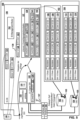
- FIG. 1 shows a block diagram of an embodiment of a data processing system 300 according to the invention.
- the data processing system 300 can be designed in particular as an end node of an IoT application, e.g. as a so-called "embedded system".
- the data processing system contains one or more input/output ports 308, via which the data processing system 300 can exchange data with one or more other data processing systems, for example a request unit 328, via a network 326.
- the network 326 can in particular be an Internet connection, which can be implemented, for example, via a mobile network or other telecommunications technologies.
- the DV system 300 can be used to continuously monitor the cooling water pump of a power plant and, if the pump performance deviates by more than a predefined permissible maximum deviation, send a warning to higher-level systems and/or independently correct the problem by generating and sending corresponding control commands to the pump.
- the data processing system 300 includes at least one microcontroller 302, on which one or more microprocessors 304, a working memory 306 and a non-volatile program memory 310 are located.
- the program memory includes at least one or more reference authorizations 312 in the form of numerical data values and a test program 316.
- the test program 316 is designed to check requests that the IT system 300 receives via a network 326 and to answer or not answer them depending on the test result.
- another data processing system 328 can send a request 322 for read access to a specific data record 106 of the data processing system 300 via the network 326 to the data processing system 300.
- the request includes an authorization proof 324 in the form of a numerical data value.
- the test program 316 is configured to initially perform only a first test in response to receiving the request 322.
- the first test consists of checking whether a numerical data value, referred to here as reference credential 312, is stored in the IT system 300 that is identical to the received credential 324.
- the reference credential 312 can be stored within an ID database 136 and the data record 106 to which the access request refers can be stored within a payload database 102. Both the ID database 136 and the payload database can be stored on the program memory 310 of the microcontroller 302.
- the IT system 300 does not respond to the request. In particular, it does not send an error message to the request unit 328, so that a potential attacker does not receive any information about the IT system 300 in response to a request.
- the test program 316 is configured to perform a further test only if the first test shows that the IT system 300 has stored a value identical to the authorization proof 324.
- the further test can be computationally much more complex and include a test to determine whether the request contains further data values that authorize the requesting system to perform the requested functionality or to perform the requested To read data or to change it by writing. Only if the further check shows that the requesting system has the corresponding rights does the IT system 300 execute the requested functionality 314.
- the functionality 314 can consist of reading the requested data record 106 and returning it to the requesting unit via the network.
- the performance figures (vibration parameter values, revolutions per minute, temperature, flow resistance, etc.) of the pump recorded continuously over a longer period of several years can be stored in the payload data database 102.
- the functionality 314 requested by the query unit in the query 322 can consist of the IT system 300 reading out and returning the performance figures of the pump recorded within a certain period of time, for example the performance figures of the last month, or only those performance figures that were outside a predetermined standard range.
- the functionality 314 can also consist in the data processing system 300 sending a control command to the pump, which causes the pump to stop or increase its activity.
- a control command to the pump, which causes the pump to stop or increase its activity.
- Such manipulations of important components of safety-critical infrastructure objects, such as power plants, must be securely protected against unauthorized access.
- Embodiments of the invention can be advantageous because they can offer a very complex and at the same time secure system and method to protect such components from unauthorized access.
- data processing systems according to embodiments of the invention can also be advantageous because they can offer reliable protection against DOS attacks.
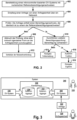
- Figure 2 shows a flow chart of an embodiment of a method according to the invention for operating a microcontroller-based data processing system, as described e.g. in Figure 1 is shown.
- the microcontroller-based DV system and optionally further DV systems are provided.
- the DV system can be an IoT end node that is connected to other IoT end nodes via a network. and is provided together with it.
- provision may include delivery of the IT system to a customer or installation at the customer's premises.
- the DV system 300 receives a request 322 from a request unit 328.
- the request unit can be a trustworthy DV system that was provided together with the DV system 300 and together with it forms an IoT. However, it can also be a device of an attacker whose goal is to penetrate the DV system or to put it out of operation using a DOS or DDOS attack.
- the IT system 300 performs a first check in step 806, which can be performed very quickly and with minimal computing load.
- the first check simply includes an analysis of whether the request contains a credential 324 in the form of a numerical data value that is identical to a reference credential stored in the IT system 300.
- the data processing system 300 aborts the check in step 808 without sending a response, error message or other message to the requesting unit.
- the network connection to the requesting unit is also interrupted, at least for a certain period of time. An attacker therefore receives no information about the data processing system 300; ultimately, he does not even know whether the data processing system 300 even exists.
- the IT system carries out a further check in step 810, which is more computationally intensive than the first check and includes, for example, checking additional features using cryptographic methods and/or certificate chain checking. If this check leads to the result that the requesting unit does not have the necessary rights to carry out the requested function, the IT system can return an error message in step 814. For example, the IT system can assume that the requesting unit is trustworthy in itself, since the request is after all contained the authorization proof. However, there may be a misconfiguration or the required additional rights may no longer be available due to the passage of time or due to an active withdrawal of rights. In this case, it may be useful to communicate the reason for the negative result of the further check to the requesting unit so that it can correct the error if necessary and, for example, have a new user certificate issued for the requesting unit.
- the IT system 300 enables a person or the requesting unit to carry out the requested function in step 816.
- the IT system can also carry out the function itself.
- the IT system returns the result of the function execution to the request unit.
- the function can include sending a control command to a machine or machine component and the returned result includes a message that the control command was issued and implemented.
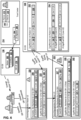
- Figure 3 shows a block diagram of a system 340 that includes a safety-critical infrastructure object, eg a hospital 330, and one or more data processing systems 336, 300.
- the data processing system(s) are designed to monitor and/or control components of the infrastructure object, wherein the data processing systems are networked with one another and exchange data by means of requests.
- a hospital building 330 contains several emergency power generators 334, 332, each of which is monitored and controlled by one of the networked data processing systems.
- the second 334 should only be activated if the first emergency power generator cannot be activated or fails.
- the two emergency power generators are each monitored by one of the data processing systems.
- the first emergency power generator 332 is activated first and only if the second emergency power generator 334 fails or cannot be activated, the first data processing system 300, which controls the first emergency power generator 332, continuously exchanges data with the second DV system 336, which controls the second unit 334.
- the first DV system can send requests to the second DV system 336 at regular intervals, eg once a second, whereby each request received by the second DV system 334 in a Figure 2 is classified as valid in the multi-stage test process shown, a "suppression function" is activated.
- a "normally" functioning first DV system 300 actively suppresses the activation of the second DV system 336 and thus also the activation of the second emergency power generator 334.
- the successful function call here therefore suppresses the activation of the second emergency power generator.
- the first DV system or the first emergency power generator 332 cannot be activated or fails during operation, the first DV system 300 can no longer send "suppression requests" to the second DV system 336.
- the second DV system is configured to send a control command to the second emergency power generator 334 via its control unit 344 if no suppression request is received for a certain minimum period of time. The control command leads to the activation of the generator 334.
- IoT end nodes can be particularly advantageous in the context of safety-critical infrastructure objects and emergency situations: if important components such as the normal power supply fail, central control of several components by a central computer may not be possible. Because the individual IT systems, which are preferably battery-operated and can therefore operate largely autonomously, communicate directly with each other, the entire system becomes considerably more robust. Using the multi-stage testing procedure described, embodiments of the invention can ensure that sensitive functions can only be triggered by authorized IT systems and/or that the interoperability of the IT systems does not come with the disadvantage of being an easy target for DoS attacks.
- FIG. 4 shows a block diagram of a distributed system 900 with several data processing systems 902.1, 902.2, 902.3, each of which is connected via a network, for example the Internet. are connected to each other.
- Each of the DV systems contains a microcontroller with one or more microprocessors 904.1, 904.2, 904.3.
- the DV systems can essentially be of the same or similar type.
- the DV systems can each be so-called “smart speakers” with a built-in microphone, represented here as sensor 916.1, 916.2, 916.3.
- Similar systems are commercially available from several manufacturers, for example Amazon's Alexa or Medion P61110.
- Virtual AI assistants or simpler software products that are limited to solving specific individual tasks can be installed on the smart speakers.
- each of the IT systems can contain a prediction program 906.1, 906.2, 906.3.
- Each of the prediction programs contains several modules and/or functions to perform different tasks.
- each prediction program contains a statistical model 919.1, 919.2, 919.3, which can be used to solve a specific prediction problem.
- the statistical model can in particular be a predictive model that has learned in the course of a training process on the basis of training data to recognize statistical relationships and correlations within the training data and to store the knowledge thus learned in the model so that the model is able to calculate a reliable prediction on the basis of new input data not contained in the training data set.
- the prediction programs 906.1, 906.2, 906.3 can therefore each contain different functions and in particular machine learning (ML) algorithms that can be used to train the model (also referred to as ML model) during the training phase.
- ML machine learning
- each of the prediction programs also includes a module or a function for continuously collecting and storing data that is used as training data 914.1, 914.2, 914.3 in the course of the training process of the ML models.
- the collected data can be voice inputs from different people 920, 922, 924 whereby the voice inputs are recorded by a microphone 916.1, 916.2, 916.3 of the respective IT system.
- each of the DV systems can be specifically assigned to a person.
- DV system 902.1 can be located in the home of person 920, DV systems 902.2 in the home of person 922, and DV system 902.3 in the home of person 924.
- the various DV systems will collect different training data depending on which speech inputs the individual people enter into their respective DV systems.
- the differences in the speech inputs can, for example, relate to the content, i.e. the semantics of the words and sentences, but also to differences in the emphasis, pitch, dialect or other characteristics of the pronunciation and voice of a particular person. Which of these features are evaluated during the training process and used to train the model depends on the respective model and the prediction task to be solved by it.
- the prediction problem may be the problem of calculating a correct translation of a natural language text input in a source language into a target language.
- each of the persons 920, 922, 924 may be translators who enter the source text in the source language via the microphone and/or read in recorded dictations in the source language as a file via an appropriate interface, for example USB.
- Each of the prediction programs can be a pre-trained, ML-based translation software that is used to translate the input text from the source language (for example German) into the target language (for example English).
- the translator then manually checks the translation calculated by the prediction program, makes corrections if necessary, and saves the correct translation of the input text in a data storage of the IT system so that the translation text is assigned to the source text.
- the stored data can be stored next to the source text and the correct translation may contain further data, for example assignments of individual words and word sequences of the source language to the corresponding words and word sequences of the target language, which were calculated by the respective prediction program during the automatic translation.
- the assignments can be saved, for example, in the form of one or more tables 912.1, 912.2, 912.3. These translation data and assignments obtained over time are each saved locally as training data 914.1, 914.2, 914.3.
- each of the data processing systems retrains its ML model 919.1, 919.2, 919.3 at regular intervals on the training data set expanded due to the newly added translation data.
- This can have the advantage that the quality of the ML model and thus the quality of the translations generated by it increases, because the more extensive the training data set, the higher the quality of a predictive model trained on it is in general.
- each of the prediction programs includes a module 908.1, 908.2, 908.3 for synchronizing the training data and/or the trained model with the other prediction programs.
- each of the data processing systems can be registered in the form of a virtual user with a corresponding account in an ID database of the other data processing system.
- each of the data processing systems can store the training data recorded locally by them in the form of one or more data records in a user data database. Each of these data records can include one or more access certificates.
- each of the DV systems sends a synchronization request to each of the other DV systems, whereby the DV system acting as the recipient of this request is configured to is to carry out a check of the request according to the embodiments of the invention described here.
- the synchronization request contains at least one access certificate which authorizes read and/or write access to a specific data record of the recipient IT system.
- the access certificate is a simple numerical value, for example "29347293892877172".
- the receiving DV system interrupts the network connection to the sending DV system at least for a certain period of time.
- the receiving IT system Only if a corresponding value is contained in the ID database does the receiving IT system carry out further check steps, which in particular include a complex check to determine whether the requesting IT system has the necessary rights to carry out the requested access action on the data record or database.
- a complex and computationally complex certificate chain check can be carried out as part of this further check.
- the request in addition to the authorization proof "29347293892877172", the request can contain a user certificate that was issued by a certification authority (CA) for the sending IT system.
- CA certification authority
- the recipient IT system can identify an access authorization chain object within the ID database that assigns the access certificate "29347293892877172" to this user certificate via a chain of several other user certificates, whereby the other user certificates represent users or IT systems that ultimately indirectly assigned the access right "29347293892877172" to the requesting IT system.
- the user certificates of these users or IT systems were, for example, issued by the same certification authority. issued.
- the certificate chain check allows the receiving system to reliably check whether the requesting IT system has actually received its access rights from users who are known to the receiving IT system and are considered trustworthy and who themselves had this access right. If the further check is also positive, the requesting IT system can synchronize the locally recorded training data and/or the locally trained and improved ML model with the local training data or the model of the receiving IT system.
- Figure 5 shows a block diagram of a data processing system 100 with several user data databases 102 DB1, 104 DB2 and an ID database 136.
- the data processing system includes an access management system in the form of access management software that is configured to control the access of several users U1, U2, U3, ..., to several data records 112, 114, 116.
- Each of the users U1, U2, U3 represents a data processing system, e.g. the present data processing system 100 and external data processing systems.
- a user certificate 134 is assigned to a first user U1.
- the user certificate 134 was issued by a certification authority 140 as a root certificate for the user U1.
- User U1 can, for example, represent the IT system 100, users U2, U3 could each represent external IT systems that can send requests to the IT system 100 to read or create user data in the user database or to trigger the execution of a functionality linked to a user data set.
- the other IT systems could also be assigned user certificates 132,124 that were issued by the certification authority as root certificates.
- the user certificates 134,132,124 can be checked by certificate chain checking up to the corresponding red certificate of the certification authority.
- the first user U1 could, for example, be the IT system 100 itself or a technical administrator for the user data databases DB1, DB2 of the IT system 100. Accordingly, the first user U1 can be assigned an owner certificate 128 for the first user data database DB1.
- the assignment also called The authorization chain object 139, also called a "link,” may be implemented, for example, in the form of an authorization chain object 139 and stored in an ID database 136.
- the access management system is therefore designed to link a first owner certificate, for example owner certificate 128 relating to DB1 or owner certificate 130 relating to DB2, to the first user U1.
- a first owner certificate for example owner certificate 128 relating to DB1 or owner certificate 130 relating to DB2, to the first user U1.
- This can be done by storing the owner certificate 128 and the user certificate 134 of the first user U1 in an ownership authorization chain object 139 or by storing the owner certificate 130 and the user certificate 134 of the first user U1 in an ownership authorization chain object 141.
- An owner certificate is a certificate that is assigned to one or more user data databases and grants each user to whom it is linked the right to create data records in this user data database.
- the owner certificate 128 grants any user to whom it is assigned (for example, through an ownership authorization chain object) the right to create one or more records in the database DB1.
- the IT system 100 includes a first interface 142 that allows the first user U1, to whom the owner certificate 128 for the database DB1 is assigned, to create a second owner certificate for the payload database DB1 and to link this second owner certificate to a second user U2.
- This link to the second owner certificate enables the second user to create data records in the payload database DB1.
- the second user can also use this first interface, provided that the second owner certificate is delegable according to its delegability parameter, to issue identical or modified copies of the owner certificate for the database DB1 to other users he trusts and to store these other users in the ID database in conjunction with a user certificate, for example in the form of other ownership authorization chain objects 139, 141.
- the IT system 100 includes a second interface 144 which enables the second user U2, who has created a data record 106, 108 in the user data database 102 (after having already been given an owner certificate by the first or another user for which DB1 was issued) enables at least one access certificate to be created and linked to the user certificate of a user who is to be granted access to this data record.
- the user who is to be granted access can be any other user (e.g. any other IT system) who is registered with the access management system and who is trusted by the second user (data record creator).
- the access certificates of the second user U2 can, for example, be a write access certificate Z.Zert_U2[W], a read access certificate Z.Zert_U2[R] and/or an index access certificate Z.Zert_U2[S].
- An access certificate can therefore specify a type of data record access to the data record created by the second user.
- the access management system checks the first user's access authorization to a data set 106, 108 created by the second user. The desired access is only granted to the first user if the access management system determines that the first user U1 is assigned both an owner certificate for the user data database 102 and an access certificate Z.Zert U2 [W] (or [R] or [S]) for accessing the data set.
- the individual data records 106, 108, 110, 112, 114, 116 only contain access certificates that the user who created the relevant data record assigns to these data records during the creation process.
- the IT system 100 can automatically check in the background which access rights are stored in the ID database for the user who is currently creating a data record. This can be particularly advantageous if each user is assigned a predefined set of access certificates (for example for read, write and index access rights) which should also be automatically assigned in full to each newly created data record.
- each user is assigned several different access certificates (of the same access type, for example read access) in the ID database and the user can manually select via a GUI during data set creation which of these access certificates should be assigned to the new data set.
- This can be advantageous because the user can assign the same set of access certificates to a large number of data sets that he has access to and that, for example, have similar content or a similar level of confidentiality during creation.
- the user manages, for example, ten different credit cards and stores the confidential credit card numbers in ten different data sets, the user also has the option of assigning a different access certificate to each of these data sets.
- the in Figure 5 The data records shown show that, for example, data records 106, 108, and 112 were created by user U2.
- Data record 110 was created by user U1.
- Data record 116 was created by user U3.
- the predefined access certificates of the respective creators were integrated into the data records. At least the creators have full access to their data records, provided they also have an owner certificate for the respective payload data database. However, it is quite possible that other users have access to individual data records. However, this information is not contained in the payload data database, but is stored in the form of access authorization chain objects 143 in the ID database.
- an access certificate of user U1 which specifies a read right
- creator U1 was assigned by creator U1 to user U2 by the user certificate 132 of this user U2 was linked within object 143 to the read access certificate of U1.
- user U2 transferred (passed on) this read right to another user U3 by linking user certificate 124 of user U3 within object 143 to the read access certificate of U1.
- a new access authorization chain object is created in the ID database by the access management system.
- the human user is preferably offered an intuitive GUI to transfer access or ownership rights to users and thereby to initialize the creation of further certificates or further links of access or ownership certificates with user certificates in the background.
- the access authorization chain object 143 therefore implies that both user U2 and user U3 (and of course also user U1) have read access to the records created by user U1, for example record 110.
- ownership authorization chain objects 139, 141 specify a chain of one or more users who have assigned owner certificates to other users and thereby transferred owner rights.
- object 139 indicates that user U1 has owner rights with respect to the payload database DB1, since user certificate 134 of user U1 in object 139 is assigned to owner certificate 128 of DB1.
- Object 141 specifies that user U1 has transferred the owner rights for database DB2 to another user U2.
- the access management system 100 checks whether the user from whom the request originates is assigned an owner certificate in the ID database. For example, this step could include an analysis of all ownership authorization chain objects that relate to this payload database 102. Only if the requesting user has these owner rights will he be granted the establishment of a database connection to the payload database 102 and, if this is requested, also the creation of new data records in this database. However, so that this user can also access individual data records for reading or writing or can use an index to find out whether a certain data record even exists, the corresponding rights must also be assigned to him (as is the case with a user certificate) in the ID database. The access management system therefore also checks whether the user has the necessary access rights before each access by a user with ownership rights.
- each record of a particular payload database has one or more additional fields for access certificates assigned to other users or functions (i.e. not specifically to the user who created the record).
- a payload database can be a database with sensor data recorded by one or more sensors of the data processing system.
- each record of the sensor measurement database can contain an additional field in which a sensor measurement type certificate is stored.
- the data processing system can contain several sensors of different types in order to record the current state of the data processing system, which can be a device or a component, for example.
- the sensors can include, for example, temperature sensors, vibration sensors, humidity sensors, turbine speed sensors, etc.
- each data record of the sensor measurement database can contain an additional field in which a sensor type certificate is stored.
- a large number of such fields can be contained per data record, and the access management system can automatically store the corresponding access certificates in the fields for certain types of user data databases when a new data record is created. For example, when a new sensor measurement data record is created by a temperature sensor, a temperature sensor certificate is automatically inserted into the corresponding field by the access management system.
- a user who wants to access such a data record must therefore have, in addition to the ownership rights regarding the sensor measurement database and in addition to the access authorization from the creator, or one of these authorized users can also prove that they have been assigned a temperature sensor certificate.
- all of the access certificates of a data set are linked together by one or more logical operators such as "AND” or “OR”, resulting in a complex, logically connected expression that specifies which access certificates must be assigned to a user in order for him to have access to a data set.
- the access certificates of a data set preferably contain a mixture of access certificates that are personally assigned to the creator of the data set and that must be personally assigned to other users in order to grant them access, and access certificates that are automatically or manually assigned by the access management system or a human user to each data set of a specific payload database upon creation (for example, sensor type-specific access certificate or control object-specific access certificate, where a control object is a hardware-based or software-based unit that is controlled by a functionality of the IT system).
- These access certificates are also referred to as "attribute certificates”.
- the individual authorization objects 139, 141, 143 can be signed with the private signature key 107 of the IT system 100 (which can be used, for example, as the signature key of the access management system instantiated thereon).
- authorization tokens that are dynamically created by the ID database for the requesting user in response to a user's access request (e.g. a request from the requesting entity) to a payload database can be signed (see description Fig. 6 ).
- Figure 6 illustrates the process of creating authorization tokens for two users U2, U3 according to a further embodiment of the method according to the invention.
- the user U2 can be, for example, the request unit and the user U3 can be another data processing system that can also send a request to the data processing system 100.
- the data processing system U2 and/or U3 can, for example, be designed essentially in the same way as the data processing system 300 according to Figure 1 that receives the request.
- a large number of users 202 are each assigned a user certificate 204.
- the user certificates are preferably issued by a certification authority 140 and signed with a private signing key 212 of the certification authority.
- the certification authority also provides a public signature verification key 210 (for example via corresponding public key directories that can be viewed on the Internet). This means that the ID database 136 can check the validity of a user certificate by certificate chain verification using the public signature verification key 210 of the certification authority.
- Identifiers 216 of several user data databases can be stored in the ID database, each of which can in turn be assigned one or more of its own certificates. Preferably, however, the ID database does not contain any user data or references to individual data records in user data databases.
- the data processing system 100 automatically generates an authorization request for this user U2 (who represents, for example, a request unit). and sent to the ID database.
- This analyzes a set of authorization chain objects 137 to determine which owner certificates and access certificates are assigned to the user certificate 132 of the user U2 and dynamically creates an authorization token 220 for the user U2 in response to this authorization request.
- This authorization proof shows that the user U2 is assigned an owner certificate 128 for the database DB1, i.e. the user is authorized to establish a database connection to DB1.
- the authorization token also shows that the user U2 is authorized to write access to all data records created by the user U1 (who represents the IT system 100 or 300, for example).
- the authorization token can be structured into a connectivity proof 206 for the user U2 with regard to the creation of a database connection to DB1 and into an access authorization proof with regard to a specific type of access and with regard to all data records created by a specific user.
- the authorization token 220 and/or the respective partial authorization tokens 206, 225 can contain a signature 237, 236 that was dynamically generated with the private signing key 107 of the ID database in response to the authorization request.
- Each of the payload data databases contains a public signature verification key 105 that forms an asymmetric cryptographic key pair with the private signing key 107.
- the ID database in response to an access request from user U3, the ID database generates and signs the authorization token 222, which indicates that user U3 is authorized to establish a connection to database DB1.
- the authorization tokens 226, 242 indicate that user U3 is authorized to read and write to the data records created by user U2. and may also perform an index query to find out whether a certain data record that the user has created actually exists.
- user U3 may perform a corresponding index query for data records that user U1 has created, but may not access them for reading or writing.
- Boxes 229 and 230 show that user U3 is not allowed to read or write to the data records of user U1. If a user in the ID database is not assigned access rights in the form of corresponding access certificates, the dynamically created authorization token 220 and 222 does not contain the corresponding rights either.
- the dynamically created authorization tokens 220, 222 do not contain the entire chain of user certificates of those users who have assigned corresponding owner certificates or access certificates to other users, but only the owner and access certificates assigned to the requesting user and optionally the user certificate of the requesting user. Documentation of the transmission chain of rights is not relevant for proving authorization. Because the authorization tokens are free of the user certificates of the transmission chain, the size of the authorization tokens can be reduced, the process accelerated and data traffic reduced.
- Figure 7 shows, by way of example, for four users 402, 420, 422, 438, each of which can represent a data processing system according to embodiments of the invention, a software, a device, another IoT end node or a natural person, which access certificates and user certificates can be assigned to these users in the ID database.
- a user certificate 412 is assigned to the user 402.
- the user is assigned three access certificates for different types of access to the data records created by this user, namely the access certificate 404 for read access, the access certificate 406 for write access and the access certificate 408 for accessing one or more indices of a payload database to find out whether and how many data records this user has created in the payload database.
- the other users 420, 422, 438 are also assigned corresponding user certificates and access certificates.
- Figure 7 also illustrates a possible sequence of transferring access rights across a chain of multiple users.
- the user 402 creates a data record 410 in a user data database DB1.
- a user data database DB1 a user data database DB1.
- the three access certificates 404, 406, and 408, which are assigned to the creating user 402 are automatically stored in the background in corresponding fields of the data record.
- the creator 402 transfers read rights to the record 410 (as well as to all other records that the user 402 has created with this special read access certificate 404) to another user 420 using a GUI or other suitable interface.
- the creator of the data set 410 can also grant access rights to another user.
- the user 402 grants another user 422 (user certificate 418) read and write rights for all data sets created by the user 402 that contain the certificates 404 and 406.
- the ID database or the authorization chain objects are supplemented by a new access authorization chain object for each access certificate 404, 406 that is to be assigned to the user certificate 418, which specify that the user 402 has assigned the access certificates 404 and 406 to the user 422.
- a copy of the assigned access certificate(s) can be stored, which at least with regard to on the value of a delegability parameter from the original access certificate.
- the user 418 can therefore pass these rights on to others, which is illustrated in the next step: the user 422 now assigns the access rights 404 and 406 assigned to him to the user 438.
- This assignment causes a new access authorization chain object to be created in the ID database for each of the access certificates 404, 406, in which the user certificate chain contained in them is extended by one link by adding another user certificate 436 of the user to whom the rights were assigned.
- only one new access authorization chain object is created per rights transfer to another user.
- certificates 404 and 406 would be stored in the same access authorization chain object, which also contains user certificates 418 and 436.
- the chain of user certificates documented in the authorization chain objects documents the transfer of ownership or access rights across a sequence of multiple users.
- the sequence can consist of a mere sequence of user certificates, with the position of the user certificates within the chain objects representing the chronological sequence of the transfers, for example.
- the chain of user certificates within an authorization chain object can be generated by the ID database using the private keys assigned to the individual user certificates in such a way that the last user certificate in the chain signs the new user certificate newly attached to it. so that a certificate chain check is also possible within the chain of user certificates of the individual authorization chain objects.
- Figure 8 shows an example of payload data 500 that can be part of a data set 106, 108.
- the payload data is specified in JSON format. However, any other data formats can also be used.
- Figure 9 two hierarchies generated dynamically and independently by several users, along which access rights on the one hand and owner rights on the other hand were assigned via a cascade of users.
- DV system H represents a turbine containing several sensors for temperature and several sensors for vibration states as well as a sensor for the current speed of the turbine.
- Each of these sensors, as well as the control board of the turbine itself, can be implemented as a DV system according to embodiments of the invention, which can exchange data with all other DV systems after appropriate proof of authorization.
- all sensors can write their measurement data to the user database of the controller board or DV system H after appropriate proof of write authorization, whereby the sensors each act as a request unit and must prove, on the basis of a method according to embodiments of the invention, that they have the necessary write authorization.
- the access right can include a right to write [W] as well as a right to read [R] and index access [S].
- the various access rights can be transferred to other IT systems, e.g. IT system H, using three different access certificates.
- IT system H For the initial authorization check, it is sufficient that at least one of the access certificates is present in the ID database of IT system H as a reference authorization. If this is the case, a further authorization check can be carried out to check whether there are any other access certificates in the request. are and for which types of access these certificates grant access rights.
- the IT system H has created a data set that contains three access certificates for the three access rights mentioned (in the user data database).
- the IT system H assigns these access rights to the IT systems B and P via the three access certificates, with the IT system P in turn passing these access rights to the data sets created by the IT system H on to the IT system D.
- the IT system D thus obtains its access rights to the data from the IT system H via the "intermediary system" "P".
- the in Figure 9B The hierarchy shown represents a cascade of owner rights to one or more user data databases DB1, DB2.
- the technical expert (maintenance user) responsible for maintaining the turbine (DV system H) and other turbines (DV system A) has, for example, owner certificates for both databases DB1 and DB2. He transfers these owner rights in such a way that DV system H is assigned an owner certificate for database DB1 and DV system A is assigned an owner certificate for database DB2.
- DV system H in turn transfers ownership rights for database DB1 to DV systems B, P and D.
- Each DV system that is assigned an owner certificate for e.g. DB1 is thereby authorized to establish a database connection to the corresponding user data database and to create its own data records in it.
- the IT system D has received ownership rights for the database DB1 from the maintenance user via the IT system H.
- the transfer of access rights via access certificates as in Figure 9A and the transfer of owner rights via owner certificates as in Figure 9B shown take place along a chain of trust that is dynamically defined between human users and/or IT systems.
- Figure 10 shows a flow chart of a further embodiment of a method according to the invention for access control to data records 106, 108, 110, 112, 114, 116 of several user data databases of an access management system 100.
- a first owner certificate 128, 13) associated with a user data database 102 is linked to a first IT system U1.
- An owner certificate is a certificate associated with one or more user data databases and grants each IT system to which it is linked the right to create records in this user data database.
- the linking can be made, for example, manually by a human user via a GUI of the access management system of a IT system 100, which includes the user data database and the ID database, or automatically and implicitly by the access management system of this IT system, for example when an external IT system creates a new user data database within the system 100.
- a first interface 142 is provided, which enables the first IT system U1 to create a second owner certificate for the payload data database 102 and to link this to a second IT system U2 in order to enable the latter to create data records in the payload data database 102.
- the first interface can be implemented, for example, in the form of a GUI, which has access to the ID database and stores the certificates created by the IT system and/or the assignment of owner certificates to other users created by a correspondingly authorized user in the form of owner and user certificate assignments in the ID database.
- a second interface 144 is provided which enables the second IT system U2, which has created a data record 106, 108 in the user data database 102, to create at least one access certificate Z.Zert_U2[W], Z.Zert_U2[R], Z.Zert_U2[S], which specifies a type of data record access to the data record created by the second IT system, and to link it to the user certificate of a IT system which is to be granted access to this data record.
- the second interface can also be implemented, for example, in the form of a GUI or part of the above-mentioned GUI.
- the access certificates and/or the assignment of access certificates to other IT systems created by a correspondingly authorized IT system in the form of access and user certificate assignments are stored in the ID database.
- the access management system checks in step 958 whether the first IT system has access authorization to a data record created by the second IT system, i.e. whether the first IT system has been assigned a corresponding access certificate by the second IT system for the data records created by the second IT system.
- the user data database only grants the first IT system access to the data records created by the second IT system if the first IT system is assigned both an owner certificate for the user data database 102 and an access certificate for accessing the data record in the ID database.
Landscapes
- Engineering & Computer Science (AREA)
- Computer Security & Cryptography (AREA)
- Computer Networks & Wireless Communication (AREA)
- Signal Processing (AREA)
- Computer Hardware Design (AREA)
- Computing Systems (AREA)
- General Engineering & Computer Science (AREA)
- Storage Device Security (AREA)
Claims (13)
- Système de traitement de données (300, 902.1, 902.2, 902.3), appelé dans la suite système DP :- au moins une unité de calcul, dans lequel l'unité de calcul est configurée en tant que
microprocesseur (304, 904.1, 904.2, 904.3) et/ou microcontrôleur ;- un support de stockage non volatil (310) avec un ou plusieurs éléments d'authentification de référence (312), dans lequel chaque élément d'authentification de référence est sous la forme d'une valeur de données numérique ;- une interface (308) destinée à recevoir des requêtes sur un réseau ;
dans lequel le système DP est configuré pour :• recevoir (804) une requête (322) par l'intermédiaire de l'interface à partir d'une unité de requête (328) ;• contrôler (806) si la requête contient un élément d'authentification (324) qui est identique à l'un des éléments d'authentification de référence par le biais de l'au moins une unité de calcul ;• si le contrôle démontre que la requête ne contient pas cet élément d'authentification, terminer (808) le contrôle sans renvoyer de réponse de quelque sorte que ce soit à l'unité de requête, et déconnecter (812) la connexion réseau à l'unité de requête par le système DP. - Système DP selon la revendication 1, dans lequel le système DP est un système embarqué.
- Système DP selon l'une quelconque des revendications précédentes, dans lequel le système DP comprend en outre :- une fonctionnalité à base logicielle ou matérielle (314) ;dans lequel le système DP est configuré pour :- uniquement si le contrôle démontre que la requête contient cet élément d'authentification, réaliser (810) un contrôle d'autorisation supplémentaire par le biais de l'au moins une unité de calcul et exécuter (816) la fonctionnalité uniquement si le contrôle d'autorisation supplémentaire démontre que l'unité de requête est autorisée à initier l'exécution de la fonctionnalité.
- Système DP selon la revendication 3, dans lequel le support de stockage du système DP inclut :- une première base de données de charges utiles (102, 104), dans lequel la base de données de charges utiles inclut une pluralité de dossiers de données (106, 108, 110, 112, 114, 116), dans lequel l'accès à l'au moins un des dossiers de données est exigé pour réaliser la fonction ;- une base de données d'ID (136), dans lequel une pluralité de certificats utilisateurs (412, 414, 418, 436, 412, 414) et une pluralité de certificats d'accès (404, 406, 408, 424, 426, 444) sont stockés dans la base de données d'ID,• dans lequel un certificat utilisateur est une valeur de données attribuée de manière unique à un utilisateur,• dans lequel un certificatd'accès (Z.Zert_U2[W], Z.Zert_U2[R],Z.Zert_U2[S] est une valeur de données numérique qui confère à un utilisateur un type spécifique d'accès à des dossiers de données dans la base de données de charges utiles en attribuant ce certificat d'accès au certificat utilisateur de l'utilisateur dans la base de données d'ID ;- dans lequel le contrôle d'autorisation supplémentaire comprend un contrôle visant à déterminer si la requête contient un certificat utilisateur auquel, dans la base de données d'ID, l'un des certificats d'accès qui autorise l'unité de requête à initier l'exécution de la fonctionnalité est attribué, dans lequel le système DP est configuré pour initier l'exécution de cette fonctionnalité uniquement si la requête contient un tel certificat utilisateur.
- Système DP selon la revendication 4, dans lequel chacun des éléments d'authentification de référence (312) est l'un des certificats d'accès de la base de données d'ID.
- Système DP selon la revendication 4 ou 5, dans lequel le certificat d'accès est choisi dans un groupe comprenant :- un certificat d'accès en lecture (Z.Zert_U2[R]), qui permet à un utilisateur d'envoyer un accès à l'au moins un dossier de données ;- un certificat d'accès en écriture (Z.Zert_U2[W]), qui permet à un utilisateur de modifier un accès à au moins un dossier de données ;- un certificat d'accès d'indexation (Z.Zert_U2[S]), qui permet à un utilisateur de connaître l'existence de l'au moins un dossier de données dans la base de données de charges utiles et d'accéder en lecture aux métadonnées de l'au moins un dossier de données.
- Système DP selon l'une quelconque des revendications 4 à 6,- dans lequel la requête inclut un certificat utilisateur, appelé dans la suite certificat utilisateur de requête,- dans lequel les dossiers de données de la base de données de charges utiles contiennent chacun le certificat d'accès de l'utilisateur qui a créé le dossier de données en tant que partie du dossier de données dans un champ séparé du dossier de données ;- dans lequel une pluralité d'objets de chaîne d'autorisation d'accès (143) sont stockés dans la base de données d'ID (136), dans lequel chaque objet de chaîne d'autorisation d'accès inclut l'un des certificats d'accès et un ou plusieurs des certificats utilisateurs, dans lequel l'ordre des certificats utilisateurs dans l'objet de chaîne d'autorisation d'accès reflète la séquence d'utilisateurs qui ont attribué ce certificat d'accès à un autre utilisateur respectif dont le certificat utilisateur est inclus dans l'objet de chaîne d'autorisation d'accès, dans lequel l'ordre des certificats utilisateurs dans l'objet de chaîne d'autorisation d'accès reflète la séquence de l'action de conférer le droit spécifié dans le certificat d'accès en commençant par l'utilisateur représenté par le premier certificat utilisateur dans l'objet de chaîne d'autorisation d'accès ;- dans lequel le contrôle d'autorisation supplémentaire comprend un contrôle visant à déterminer si, dans la base de données d'ID, il existe un objet de chaîne d'autorisation d'accès qui contient un certificat d'accès qui est identique à l'élément d'authentification contenu dans la requête, dans lequel cet objet de chaîne d'autorisation d'accès attribue ce certificat d'accès aux certificats utilisateurs de requête directement ou par l'intermédiaire d'une chaîne d'un ou de plusieurs certificats utilisateurs supplémentaires, dans lequel cette attribution confirme l'action de conférer le droit spécifié dans le certificat d'accès à l'utilisateur de requête représenté par le certificat utilisateur de requête,- dans lequel le contrôle d'autorisation supplémentaire démontre uniquement que l'unité de requête est autorisée pour initier l'exécution de la fonctionnalité si la base de données d'ID contient un tel objet de chaîne d'autorisation d'accès.
- Système DP selon l'une quelconque des revendications 4 à 7, dans lequel l'exécution de la fonctionnalité comprend une génération d'un ou de plusieurs nouveaux dossiers de données dans la base de données de charges utiles,- dans lequel un certificat propriétaire (128, 130) est attribué à la base de données de charges utiles,- dans lequel le certificat propriétaire est attribué à un certificat utilisateur d'un utilisateur (U1) dans la base de données d'ID ;- dans lequel un certificat propriétaire est un certificat qui est attribué à une ou plusieurs bases de données de charges utiles et confère à chaque utilisateur auquel il est attribué le droit de créer des dossiers de données dans cette base de données de charges utiles,- dans lequel le contrôle d'autorisation supplémentaire comprend un contrôle visant à déterminer si la requête contient un certificat utilisateur qui est attribué au certificat propriétaire de la base de données de charges utiles dans la base de données d'ID, dans lequel, uniquement si c'est le cas, le contrôle d'autorisation supplémentaire démontrera que l'unité de requête est autorisée à initier l'exécution de la fonctionnalité.
- Système DP selon la revendication 9,- dans lequel la base de données de charges utiles du système DP est exempte d'objets de chaîne d'autorisation d'accès et les dossiers de données de la base de données de charges utiles, en plus de la charge utile, contiennent uniquement les certificats d'accès qui confèrent à l'utilisateur qui a créé ce dossier de données l'accès à ce dossier de données.
- Système DP selon l'une quelconque des revendications 4 à 9 précédentes, dans lequel la requête comprend une requête d'accès d'un utilisateur de requête (U1) à un dossier de données (108) créé par un utilisateur créateur (U2) dans la base de données de charges utiles, dans lequel le système DP est configuré pour :- déterminer les certificats d'accès (Z.Zert_U2[W], Z.Zert_U2[R], Z.Zert_U2[S]) de l'utilisateur créateur, qui sont stockés dans la base de données de charges utiles en tant que partie du dossier de données (108) concerné, par le biais de la base de données de charges utiles ;- envoyer le certificat utilisateur de requête, qui est attribué à l'utilisateur de l'unité de requête, et les certificats d'accès déterminés à la base de données d'ID ;- en réponse à la réception du certificat utilisateur de requête et des certificats d'accès déterminés, générer un élément d'authentification (220, 222) par le biais de la base de données d'ID, dans lequel l'élément d'authentification indique si l'utilisateur de requête est attribué au dossier de données (108) concerné par le biais d'au moins l'un des objets de chaîne d'autorisation d'accès ;- transmettre l'élément d'authentification à partir de la base de données d'ID à la base de données de charges utiles ;- contrôler par le biais de la base de données de charges utiles, sur la base de l'élément d'authentification, si l'utilisateur de requête s'est vu attribuer les droits d'accès nécessaires sous la forme de certificats d'accès en lien avec le dossier de données (108) ;- dans lequel la base de données de charges utiles est configurée pour conférer l'accès au dossier de données concernées à l'utilisateur de requête uniquement dans la limite où les certificats d'accès attribués à l'utilisateur de requête dans l'élément d'authentification confèrent l'accès audit utilisateur.
- Système DP selon la revendication 10, dans lequel la base de données d'ID comprend une clé de signature privée (107), dans lequel la base de données de charges utiles (102, 104) comprend une clé de vérification de signatures publiques (105), qui est configurée pour vérifier les signatures créées avec la clé de signature, dans lequel le système DP est configuré pour :- signer l'élément d'authentification par le biais de la base de données d'ID avec la clé de signature, dans lequel l'élément d'authentification est transmis sous forme signée à la base de données de charges utiles ; et- contrôler par le biais de la base de données de charges utiles en utilisant la clé de vérification de signatures si la signature de l'élément d'authentification est valide, dans lequel l'établissement de la connexion à la base de données entre l'unité de requête et la base de données de charges utiles et l'accès au dossier de données est uniquement permis si la signature est valide.
- Procédé de fonctionnement d'un système de traitement de données (300, 902.1, 902.2, 902.3), appelé ici un système DP, ledit procédé comprenant les étapes consistant à- fournir le système DP, dans lequel le système DP comprend : au moins une unité de calcul (304, 904.1, 904.2, 904.3), dans lequel l'unité de calcul est configurée en tant que microcontrôleur et/ou microprocesseur, un support de stockage non volatil (310) avec un ou plusieurs éléments d'authentification de référence (312), dans lequel chaque élément d'authentification de référence est sous la forme d'une valeur de données numérique, et une interface (308) destinée à recevoir les requêtes sur un réseau ;- recevoir (804) une requête (322) par l'intermédiaire de l'interface à partir d'une unité de requête (328) par le biais du système DP ;- contrôler (806) si la requête contient un élément d'authentification (324) qui est identique à l'un des éléments d'authentification de référence par le biais de l'au moins une unité de calcul ;- si le contrôle démontre que la requête ne contient pas cet élément d'authentification, terminer (808) le contrôle par le système DP sans renvoyer de réponse de quelque sorte que ce soit à l'unité de requête, et déconnecter (812) la connexion réseau à l'unité de requête par le système DP.
- Procédé selon la revendication 12,- dans lequel le procédé est utilisé pour protéger le système DP contre les attaques par déni de service.
Applications Claiming Priority (2)
| Application Number | Priority Date | Filing Date | Title |
|---|---|---|---|
| DE102020110035.3A DE102020110035A1 (de) | 2020-04-09 | 2020-04-09 | Mikrocontroller- oder Mikroprozessor-basiertes System mit Berechtigungsprüfung für Anfragen |
| PCT/EP2021/059184 WO2021204945A1 (fr) | 2020-04-09 | 2021-04-08 | Système à base de microcontrôleur ou de microprocesseur, à contrôle d'autorisation pour des demandes |
Publications (2)
| Publication Number | Publication Date |
|---|---|
| EP4133768A1 EP4133768A1 (fr) | 2023-02-15 |
| EP4133768B1 true EP4133768B1 (fr) | 2025-01-15 |
Family
ID=75438792
Family Applications (1)
| Application Number | Title | Priority Date | Filing Date |
|---|---|---|---|
| EP21717435.8A Active EP4133768B1 (fr) | 2020-04-09 | 2021-04-08 | Système à base de microcontrôleur ou de microprocesseur, à contrôle d'autorisation pour des demandes |
Country Status (3)
| Country | Link |
|---|---|
| EP (1) | EP4133768B1 (fr) |
| DE (1) | DE102020110035A1 (fr) |
| WO (1) | WO2021204945A1 (fr) |
Families Citing this family (1)
| Publication number | Priority date | Publication date | Assignee | Title |
|---|---|---|---|---|
| CN119835094B (zh) * | 2025-03-19 | 2025-05-13 | 深圳市楠菲微电子有限公司 | DDoS攻击的检测验证系统及方法 |
Family Cites Families (9)
| Publication number | Priority date | Publication date | Assignee | Title |
|---|---|---|---|---|
| US6973496B2 (en) * | 2002-03-05 | 2005-12-06 | Archduke Holdings, Inc. | Concealing a network connected device |
| US7530113B2 (en) | 2004-07-29 | 2009-05-05 | Rockwell Automation Technologies, Inc. | Security system and method for an industrial automation system |
| US8627493B1 (en) | 2008-01-08 | 2014-01-07 | Juniper Networks, Inc. | Single sign-on for network applications |
| CN103097970B (zh) | 2010-08-19 | 2015-10-21 | Abb技术有限公司 | 用于对机器人控制器提供安全远程访问的系统和方法 |
| US20120297461A1 (en) | 2010-12-02 | 2012-11-22 | Stephen Pineau | System and method for reducing cyber crime in industrial control systems |
| US9729514B2 (en) | 2013-03-22 | 2017-08-08 | Robert K Lemaster | Method and system of a secure access gateway |
| US9489832B2 (en) | 2014-04-04 | 2016-11-08 | Rockwell Automation Technologies, Inc. | Industrial-enabled mobile device |
| US10382480B2 (en) * | 2016-10-13 | 2019-08-13 | Cisco Technology, Inc. | Distributed denial of service attack protection for internet of things devices |
| DE102016221959A1 (de) * | 2016-11-09 | 2018-05-09 | Bundesdruckerei Gmbh | System mit Zertifikat-basierter Zugriffskontrolle |
-
2020
- 2020-04-09 DE DE102020110035.3A patent/DE102020110035A1/de not_active Withdrawn
-
2021
- 2021-04-08 WO PCT/EP2021/059184 patent/WO2021204945A1/fr not_active Ceased
- 2021-04-08 EP EP21717435.8A patent/EP4133768B1/fr active Active
Also Published As
| Publication number | Publication date |
|---|---|
| WO2021204945A1 (fr) | 2021-10-14 |
| EP4133768A1 (fr) | 2023-02-15 |
| DE102020110035A1 (de) | 2021-10-14 |
Similar Documents
| Publication | Publication Date | Title |
|---|---|---|
| EP4133761B1 (fr) | Système de surveillance comprenant une vérification de demande à plusieurs étapes | |
| EP3655880B1 (fr) | Système matériel à chaîne de blocs | |
| EP2936259B1 (fr) | Actualisation d'un certificat d'appareil numérique d'un appareil d'automatisation | |
| DE102011077218B4 (de) | Zugriff auf in einer Cloud gespeicherte Daten | |
| EP3699791B1 (fr) | Contrôle d'accès comprenant un appareil radio mobile | |
| DE112022000340T5 (de) | Attributgestützte verschlüsselungsschlüssel als schlüsselmaterial zum authentifizieren und berechtigen von benutzern mit schlüssel-hash-nachrichtenauthentifizierungscode | |
| DE112012005033B4 (de) | Systemübergreifende sichere Anmeldung | |
| DE112017007393T5 (de) | System und verfahren für netzwerkvorrichtungssicherheits- und vertrauenswertbestimmung | |
| EP3876127A1 (fr) | Maintenance distante d'appareil basée sur la mémorisation distribuée de données | |
| DE10233297A1 (de) | Vorrichtung zur digitalen Signatur eines elektronischen Dokuments | |
| EP2272199B1 (fr) | Dispositif de stockage de données réparti | |
| DE112011103580T5 (de) | Verfahren, sichere Einheit, System und Computerprogrammprodukt für das sichere Verwalten des Benutzerzugriffs auf ein Dateisystem | |
| WO2015132403A1 (fr) | Système de sécurité à contrôle d'accès | |
| DE112011102224B4 (de) | Identitätsvermittlung zwischen Client- und Server-Anwendungen | |
| DE102020207034A1 (de) | Geteiltes widerrufsprotokoll für datenzugriffskontrolle | |
| DE112021005026T5 (de) | Persistente quellwerte für angenommene alternative identitäten | |
| EP3321832A1 (fr) | Distribution de lecture d'attributs à partir d'un jeton d'identification | |
| EP3539044B1 (fr) | Contrôles d'accès à des objets de données | |
| EP4133768B1 (fr) | Système à base de microcontrôleur ou de microprocesseur, à contrôle d'autorisation pour des demandes | |
| EP3588357B1 (fr) | Système avec contrôle d'accès au moyen de certificat | |
| CN100586123C (zh) | 基于角色管理的安全审计方法及系统 | |
| EP4430501B1 (fr) | Procédés et systèmes informatiques associés pour sécuriser l'intégrité de données | |
| DE202024100120U1 (de) | System für den sicheren Austausch von Gesundheitsdaten zwischen IoT-Medizingeräten mit Hilfe von Blockchain | |
| EP3244331B1 (fr) | Procédé de lecture d'attributs à partir d'un jeton d'identification | |
| EP3244332B1 (fr) | Procédé de lecture d'attributs à partir d'un jeton d'identification |
Legal Events
| Date | Code | Title | Description |
|---|---|---|---|
| STAA | Information on the status of an ep patent application or granted ep patent |
Free format text: STATUS: UNKNOWN |
|
| STAA | Information on the status of an ep patent application or granted ep patent |
Free format text: STATUS: THE INTERNATIONAL PUBLICATION HAS BEEN MADE |
|
| PUAI | Public reference made under article 153(3) epc to a published international application that has entered the european phase |
Free format text: ORIGINAL CODE: 0009012 |
|
| STAA | Information on the status of an ep patent application or granted ep patent |
Free format text: STATUS: REQUEST FOR EXAMINATION WAS MADE |
|
| 17P | Request for examination filed |
Effective date: 20221109 |
|
| AK | Designated contracting states |
Kind code of ref document: A1 Designated state(s): AL AT BE BG CH CY CZ DE DK EE ES FI FR GB GR HR HU IE IS IT LI LT LU LV MC MK MT NL NO PL PT RO RS SE SI SK SM TR |
|
| P01 | Opt-out of the competence of the unified patent court (upc) registered |
Effective date: 20230526 |
|
| DAV | Request for validation of the european patent (deleted) | ||
| DAX | Request for extension of the european patent (deleted) | ||
| STAA | Information on the status of an ep patent application or granted ep patent |
Free format text: STATUS: EXAMINATION IS IN PROGRESS |
|
| 17Q | First examination report despatched |
Effective date: 20231030 |
|
| REG | Reference to a national code |
Ref country code: DE Ref legal event code: R079 Free format text: PREVIOUS MAIN CLASS: H04W0012069000 Ipc: H04L0009400000 Ref country code: DE Ref legal event code: R079 Ref document number: 502021006438 Country of ref document: DE Free format text: PREVIOUS MAIN CLASS: H04W0012069000 Ipc: H04L0009400000 |
|
| GRAP | Despatch of communication of intention to grant a patent |
Free format text: ORIGINAL CODE: EPIDOSNIGR1 |
|
| STAA | Information on the status of an ep patent application or granted ep patent |
Free format text: STATUS: GRANT OF PATENT IS INTENDED |
|
| INTG | Intention to grant announced |
Effective date: 20240812 |
|
| RIC1 | Information provided on ipc code assigned before grant |
Ipc: H04W 12/125 20210101ALI20240802BHEP Ipc: H04W 12/069 20210101ALI20240802BHEP Ipc: H04L 9/40 20220101AFI20240802BHEP |
|
| GRAS | Grant fee paid |
Free format text: ORIGINAL CODE: EPIDOSNIGR3 |
|
| GRAA | (expected) grant |
Free format text: ORIGINAL CODE: 0009210 |
|
| STAA | Information on the status of an ep patent application or granted ep patent |
Free format text: STATUS: THE PATENT HAS BEEN GRANTED |
|
| AK | Designated contracting states |
Kind code of ref document: B1 Designated state(s): AL AT BE BG CH CY CZ DE DK EE ES FI FR GB GR HR HU IE IS IT LI LT LU LV MC MK MT NL NO PL PT RO RS SE SI SK SM TR |
|
| REG | Reference to a national code |
Ref country code: CH Ref legal event code: EP Ref country code: GB Ref legal event code: FG4D Free format text: NOT ENGLISH |
|
| REG | Reference to a national code |
Ref country code: DE Ref legal event code: R096 Ref document number: 502021006438 Country of ref document: DE |
|
| REG | Reference to a national code |
Ref country code: IE Ref legal event code: FG4D Free format text: LANGUAGE OF EP DOCUMENT: GERMAN |
|
| REG | Reference to a national code |
Ref country code: NL Ref legal event code: MP Effective date: 20250115 |
|
| PG25 | Lapsed in a contracting state [announced via postgrant information from national office to epo] |
Ref country code: NL Free format text: LAPSE BECAUSE OF FAILURE TO SUBMIT A TRANSLATION OF THE DESCRIPTION OR TO PAY THE FEE WITHIN THE PRESCRIBED TIME-LIMIT Effective date: 20250115 |
|
| PG25 | Lapsed in a contracting state [announced via postgrant information from national office to epo] |
Ref country code: RS Free format text: LAPSE BECAUSE OF FAILURE TO SUBMIT A TRANSLATION OF THE DESCRIPTION OR TO PAY THE FEE WITHIN THE PRESCRIBED TIME-LIMIT Effective date: 20250415 |
|
| PG25 | Lapsed in a contracting state [announced via postgrant information from national office to epo] |
Ref country code: FI Free format text: LAPSE BECAUSE OF FAILURE TO SUBMIT A TRANSLATION OF THE DESCRIPTION OR TO PAY THE FEE WITHIN THE PRESCRIBED TIME-LIMIT Effective date: 20250115 |
|
| PG25 | Lapsed in a contracting state [announced via postgrant information from national office to epo] |
Ref country code: PL Free format text: LAPSE BECAUSE OF FAILURE TO SUBMIT A TRANSLATION OF THE DESCRIPTION OR TO PAY THE FEE WITHIN THE PRESCRIBED TIME-LIMIT Effective date: 20250115 |
|
| PGFP | Annual fee paid to national office [announced via postgrant information from national office to epo] |
Ref country code: DE Payment date: 20250417 Year of fee payment: 5 |
|
| PG25 | Lapsed in a contracting state [announced via postgrant information from national office to epo] |
Ref country code: ES Free format text: LAPSE BECAUSE OF FAILURE TO SUBMIT A TRANSLATION OF THE DESCRIPTION OR TO PAY THE FEE WITHIN THE PRESCRIBED TIME-LIMIT Effective date: 20250115 |
|
| REG | Reference to a national code |
Ref country code: LT Ref legal event code: MG9D |
|
| PG25 | Lapsed in a contracting state [announced via postgrant information from national office to epo] |
Ref country code: NO Free format text: LAPSE BECAUSE OF FAILURE TO SUBMIT A TRANSLATION OF THE DESCRIPTION OR TO PAY THE FEE WITHIN THE PRESCRIBED TIME-LIMIT Effective date: 20250415 Ref country code: IS Free format text: LAPSE BECAUSE OF FAILURE TO SUBMIT A TRANSLATION OF THE DESCRIPTION OR TO PAY THE FEE WITHIN THE PRESCRIBED TIME-LIMIT Effective date: 20250515 |
|
| PG25 | Lapsed in a contracting state [announced via postgrant information from national office to epo] |
Ref country code: HR Free format text: LAPSE BECAUSE OF FAILURE TO SUBMIT A TRANSLATION OF THE DESCRIPTION OR TO PAY THE FEE WITHIN THE PRESCRIBED TIME-LIMIT Effective date: 20250115 |
|
| PG25 | Lapsed in a contracting state [announced via postgrant information from national office to epo] |
Ref country code: PT Free format text: LAPSE BECAUSE OF FAILURE TO SUBMIT A TRANSLATION OF THE DESCRIPTION OR TO PAY THE FEE WITHIN THE PRESCRIBED TIME-LIMIT Effective date: 20250515 Ref country code: LV Free format text: LAPSE BECAUSE OF FAILURE TO SUBMIT A TRANSLATION OF THE DESCRIPTION OR TO PAY THE FEE WITHIN THE PRESCRIBED TIME-LIMIT Effective date: 20250115 |
|
| PGFP | Annual fee paid to national office [announced via postgrant information from national office to epo] |
Ref country code: FR Payment date: 20250425 Year of fee payment: 5 |
|
| PG25 | Lapsed in a contracting state [announced via postgrant information from national office to epo] |
Ref country code: BG Free format text: LAPSE BECAUSE OF FAILURE TO SUBMIT A TRANSLATION OF THE DESCRIPTION OR TO PAY THE FEE WITHIN THE PRESCRIBED TIME-LIMIT Effective date: 20250115 Ref country code: GR Free format text: LAPSE BECAUSE OF FAILURE TO SUBMIT A TRANSLATION OF THE DESCRIPTION OR TO PAY THE FEE WITHIN THE PRESCRIBED TIME-LIMIT Effective date: 20250416 |
|
| PGFP | Annual fee paid to national office [announced via postgrant information from national office to epo] |
Ref country code: AT Payment date: 20250721 Year of fee payment: 5 |
|
| PG25 | Lapsed in a contracting state [announced via postgrant information from national office to epo] |
Ref country code: SE Free format text: LAPSE BECAUSE OF FAILURE TO SUBMIT A TRANSLATION OF THE DESCRIPTION OR TO PAY THE FEE WITHIN THE PRESCRIBED TIME-LIMIT Effective date: 20250115 |
|
| PG25 | Lapsed in a contracting state [announced via postgrant information from national office to epo] |
Ref country code: SM Free format text: LAPSE BECAUSE OF FAILURE TO SUBMIT A TRANSLATION OF THE DESCRIPTION OR TO PAY THE FEE WITHIN THE PRESCRIBED TIME-LIMIT Effective date: 20250115 |
|
| PG25 | Lapsed in a contracting state [announced via postgrant information from national office to epo] |
Ref country code: DK Free format text: LAPSE BECAUSE OF FAILURE TO SUBMIT A TRANSLATION OF THE DESCRIPTION OR TO PAY THE FEE WITHIN THE PRESCRIBED TIME-LIMIT Effective date: 20250115 |
|
| PG25 | Lapsed in a contracting state [announced via postgrant information from national office to epo] |
Ref country code: IT Free format text: LAPSE BECAUSE OF FAILURE TO SUBMIT A TRANSLATION OF THE DESCRIPTION OR TO PAY THE FEE WITHIN THE PRESCRIBED TIME-LIMIT Effective date: 20250115 |
|
| REG | Reference to a national code |
Ref country code: CH Ref legal event code: W10 Free format text: ST27 STATUS EVENT CODE: U-0-0-W10-W00 (AS PROVIDED BY THE NATIONAL OFFICE) Effective date: 20251015 |
|
| REG | Reference to a national code |
Ref country code: DE Ref legal event code: R097 Ref document number: 502021006438 Country of ref document: DE |
|
| PG25 | Lapsed in a contracting state [announced via postgrant information from national office to epo] |
Ref country code: CZ Free format text: LAPSE BECAUSE OF FAILURE TO SUBMIT A TRANSLATION OF THE DESCRIPTION OR TO PAY THE FEE WITHIN THE PRESCRIBED TIME-LIMIT Effective date: 20250115 Ref country code: EE Free format text: LAPSE BECAUSE OF FAILURE TO SUBMIT A TRANSLATION OF THE DESCRIPTION OR TO PAY THE FEE WITHIN THE PRESCRIBED TIME-LIMIT Effective date: 20250115 |
|
| PG25 | Lapsed in a contracting state [announced via postgrant information from national office to epo] |
Ref country code: RO Free format text: LAPSE BECAUSE OF FAILURE TO SUBMIT A TRANSLATION OF THE DESCRIPTION OR TO PAY THE FEE WITHIN THE PRESCRIBED TIME-LIMIT Effective date: 20250115 |
|
| PG25 | Lapsed in a contracting state [announced via postgrant information from national office to epo] |
Ref country code: SK Free format text: LAPSE BECAUSE OF FAILURE TO SUBMIT A TRANSLATION OF THE DESCRIPTION OR TO PAY THE FEE WITHIN THE PRESCRIBED TIME-LIMIT Effective date: 20250115 |
|
| RAP4 | Party data changed (patent owner data changed or rights of a patent transferred) |
Owner name: BUNDESDRUCKEREI GMBH |
|
| PLBE | No opposition filed within time limit |
Free format text: ORIGINAL CODE: 0009261 |
|
| STAA | Information on the status of an ep patent application or granted ep patent |
Free format text: STATUS: NO OPPOSITION FILED WITHIN TIME LIMIT |
|
| REG | Reference to a national code |
Ref country code: CH Ref legal event code: H13 Free format text: ST27 STATUS EVENT CODE: U-0-0-H10-H13 (AS PROVIDED BY THE NATIONAL OFFICE) Effective date: 20251125 |
|
| REG | Reference to a national code |
Ref country code: CH Ref legal event code: L10 Free format text: ST27 STATUS EVENT CODE: U-0-0-L10-L00 (AS PROVIDED BY THE NATIONAL OFFICE) Effective date: 20251126 |
|
| PG25 | Lapsed in a contracting state [announced via postgrant information from national office to epo] |
Ref country code: LU Free format text: LAPSE BECAUSE OF NON-PAYMENT OF DUE FEES Effective date: 20250408 |
|
| PG25 | Lapsed in a contracting state [announced via postgrant information from national office to epo] |
Ref country code: MC Free format text: LAPSE BECAUSE OF FAILURE TO SUBMIT A TRANSLATION OF THE DESCRIPTION OR TO PAY THE FEE WITHIN THE PRESCRIBED TIME-LIMIT Effective date: 20250115 |
|
| 26N | No opposition filed |
Effective date: 20251016 |
|
| REG | Reference to a national code |
Ref country code: BE Ref legal event code: MM Effective date: 20250430 |
|
| PG25 | Lapsed in a contracting state [announced via postgrant information from national office to epo] |
Ref country code: BE Free format text: LAPSE BECAUSE OF NON-PAYMENT OF DUE FEES Effective date: 20250430 |
|
| PG25 | Lapsed in a contracting state [announced via postgrant information from national office to epo] |
Ref country code: CH Free format text: LAPSE BECAUSE OF NON-PAYMENT OF DUE FEES Effective date: 20250430 |
|
| PGFP | Annual fee paid to national office [announced via postgrant information from national office to epo] |
Ref country code: GB Payment date: 20260324 Year of fee payment: 6 |
|
| PG25 | Lapsed in a contracting state [announced via postgrant information from national office to epo] |
Ref country code: IE Free format text: LAPSE BECAUSE OF NON-PAYMENT OF DUE FEES Effective date: 20250408 |