EP4143167B1 - Composés pesticides - Google Patents
Composés pesticides Download PDFInfo
- Publication number
- EP4143167B1 EP4143167B1 EP21720500.4A EP21720500A EP4143167B1 EP 4143167 B1 EP4143167 B1 EP 4143167B1 EP 21720500 A EP21720500 A EP 21720500A EP 4143167 B1 EP4143167 B1 EP 4143167B1
- Authority
- EP
- European Patent Office
- Prior art keywords
- formula
- compounds
- alkyl
- alkylene
- alkoxy
- Prior art date
- Legal status (The legal status is an assumption and is not a legal conclusion. Google has not performed a legal analysis and makes no representation as to the accuracy of the status listed.)
- Active
Links
Classifications
-
- A—HUMAN NECESSITIES
- A01—AGRICULTURE; FORESTRY; ANIMAL HUSBANDRY; HUNTING; TRAPPING; FISHING
- A01N—PRESERVATION OF BODIES OF HUMANS OR ANIMALS OR PLANTS OR PARTS THEREOF; BIOCIDES, e.g. AS DISINFECTANTS, AS PESTICIDES OR AS HERBICIDES; PEST REPELLANTS OR ATTRACTANTS; PLANT GROWTH REGULATORS
- A01N43/00—Biocides, pest repellants or attractants, or plant growth regulators containing heterocyclic compounds
- A01N43/34—Biocides, pest repellants or attractants, or plant growth regulators containing heterocyclic compounds having rings with one nitrogen atom as the only ring hetero atom
- A01N43/40—Biocides, pest repellants or attractants, or plant growth regulators containing heterocyclic compounds having rings with one nitrogen atom as the only ring hetero atom six-membered rings
-
- A—HUMAN NECESSITIES
- A01—AGRICULTURE; FORESTRY; ANIMAL HUSBANDRY; HUNTING; TRAPPING; FISHING
- A01N—PRESERVATION OF BODIES OF HUMANS OR ANIMALS OR PLANTS OR PARTS THEREOF; BIOCIDES, e.g. AS DISINFECTANTS, AS PESTICIDES OR AS HERBICIDES; PEST REPELLANTS OR ATTRACTANTS; PLANT GROWTH REGULATORS
- A01N43/00—Biocides, pest repellants or attractants, or plant growth regulators containing heterocyclic compounds
- A01N43/48—Biocides, pest repellants or attractants, or plant growth regulators containing heterocyclic compounds having rings with two nitrogen atoms as the only ring hetero atoms
- A01N43/54—1,3-Diazines; Hydrogenated 1,3-diazines
-
- A—HUMAN NECESSITIES
- A01—AGRICULTURE; FORESTRY; ANIMAL HUSBANDRY; HUNTING; TRAPPING; FISHING
- A01N—PRESERVATION OF BODIES OF HUMANS OR ANIMALS OR PLANTS OR PARTS THEREOF; BIOCIDES, e.g. AS DISINFECTANTS, AS PESTICIDES OR AS HERBICIDES; PEST REPELLANTS OR ATTRACTANTS; PLANT GROWTH REGULATORS
- A01N43/00—Biocides, pest repellants or attractants, or plant growth regulators containing heterocyclic compounds
- A01N43/48—Biocides, pest repellants or attractants, or plant growth regulators containing heterocyclic compounds having rings with two nitrogen atoms as the only ring hetero atoms
- A01N43/58—1,2-Diazines; Hydrogenated 1,2-diazines
-
- A—HUMAN NECESSITIES
- A01—AGRICULTURE; FORESTRY; ANIMAL HUSBANDRY; HUNTING; TRAPPING; FISHING
- A01N—PRESERVATION OF BODIES OF HUMANS OR ANIMALS OR PLANTS OR PARTS THEREOF; BIOCIDES, e.g. AS DISINFECTANTS, AS PESTICIDES OR AS HERBICIDES; PEST REPELLANTS OR ATTRACTANTS; PLANT GROWTH REGULATORS
- A01N43/00—Biocides, pest repellants or attractants, or plant growth regulators containing heterocyclic compounds
- A01N43/72—Biocides, pest repellants or attractants, or plant growth regulators containing heterocyclic compounds having rings with nitrogen atoms and oxygen or sulfur atoms as ring hetero atoms
- A01N43/74—Biocides, pest repellants or attractants, or plant growth regulators containing heterocyclic compounds having rings with nitrogen atoms and oxygen or sulfur atoms as ring hetero atoms five-membered rings with one nitrogen atom and either one oxygen atom or one sulfur atom in positions 1,3
- A01N43/78—1,3-Thiazoles; Hydrogenated 1,3-thiazoles
-
- A—HUMAN NECESSITIES
- A01—AGRICULTURE; FORESTRY; ANIMAL HUSBANDRY; HUNTING; TRAPPING; FISHING
- A01N—PRESERVATION OF BODIES OF HUMANS OR ANIMALS OR PLANTS OR PARTS THEREOF; BIOCIDES, e.g. AS DISINFECTANTS, AS PESTICIDES OR AS HERBICIDES; PEST REPELLANTS OR ATTRACTANTS; PLANT GROWTH REGULATORS
- A01N47/00—Biocides, pest repellants or attractants, or plant growth regulators containing organic compounds containing a carbon atom not being member of a ring and having no bond to a carbon or hydrogen atom, e.g. derivatives of carbonic acid
- A01N47/08—Biocides, pest repellants or attractants, or plant growth regulators containing organic compounds containing a carbon atom not being member of a ring and having no bond to a carbon or hydrogen atom, e.g. derivatives of carbonic acid the carbon atom having one or more single bonds to nitrogen atoms
- A01N47/28—Ureas or thioureas containing the groups >N—CO—N< or >N—CS—N<
- A01N47/34—Ureas or thioureas containing the groups >N—CO—N< or >N—CS—N< containing the groups, e.g. biuret; Thio analogues thereof; Urea-aldehyde condensation products
-
- C—CHEMISTRY; METALLURGY
- C07—ORGANIC CHEMISTRY
- C07D—HETEROCYCLIC COMPOUNDS
- C07D213/00—Heterocyclic compounds containing six-membered rings, not condensed with other rings, with one nitrogen atom as the only ring hetero atom and three or more double bonds between ring members or between ring members and non-ring members
- C07D213/02—Heterocyclic compounds containing six-membered rings, not condensed with other rings, with one nitrogen atom as the only ring hetero atom and three or more double bonds between ring members or between ring members and non-ring members having three double bonds between ring members or between ring members and non-ring members
- C07D213/04—Heterocyclic compounds containing six-membered rings, not condensed with other rings, with one nitrogen atom as the only ring hetero atom and three or more double bonds between ring members or between ring members and non-ring members having three double bonds between ring members or between ring members and non-ring members having no bond between the ring nitrogen atom and a non-ring member or having only hydrogen or carbon atoms directly attached to the ring nitrogen atom
- C07D213/60—Heterocyclic compounds containing six-membered rings, not condensed with other rings, with one nitrogen atom as the only ring hetero atom and three or more double bonds between ring members or between ring members and non-ring members having three double bonds between ring members or between ring members and non-ring members having no bond between the ring nitrogen atom and a non-ring member or having only hydrogen or carbon atoms directly attached to the ring nitrogen atom with hetero atoms or with carbon atoms having three bonds to hetero atoms with at the most one bond to halogen, e.g. ester or nitrile radicals, directly attached to ring carbon atoms
- C07D213/72—Nitrogen atoms
- C07D213/75—Amino or imino radicals, acylated by carboxylic or carbonic acids, or by sulfur or nitrogen analogues thereof, e.g. carbamates
-
- C—CHEMISTRY; METALLURGY
- C07—ORGANIC CHEMISTRY
- C07D—HETEROCYCLIC COMPOUNDS
- C07D239/00—Heterocyclic compounds containing 1,3-diazine or hydrogenated 1,3-diazine rings
- C07D239/02—Heterocyclic compounds containing 1,3-diazine or hydrogenated 1,3-diazine rings not condensed with other rings
- C07D239/24—Heterocyclic compounds containing 1,3-diazine or hydrogenated 1,3-diazine rings not condensed with other rings having three or more double bonds between ring members or between ring members and non-ring members
- C07D239/26—Heterocyclic compounds containing 1,3-diazine or hydrogenated 1,3-diazine rings not condensed with other rings having three or more double bonds between ring members or between ring members and non-ring members with only hydrogen atoms, hydrocarbon or substituted hydrocarbon radicals, directly attached to ring carbon atoms
-
- C—CHEMISTRY; METALLURGY
- C07—ORGANIC CHEMISTRY
- C07D—HETEROCYCLIC COMPOUNDS
- C07D239/00—Heterocyclic compounds containing 1,3-diazine or hydrogenated 1,3-diazine rings
- C07D239/02—Heterocyclic compounds containing 1,3-diazine or hydrogenated 1,3-diazine rings not condensed with other rings
- C07D239/24—Heterocyclic compounds containing 1,3-diazine or hydrogenated 1,3-diazine rings not condensed with other rings having three or more double bonds between ring members or between ring members and non-ring members
- C07D239/28—Heterocyclic compounds containing 1,3-diazine or hydrogenated 1,3-diazine rings not condensed with other rings having three or more double bonds between ring members or between ring members and non-ring members with hetero atoms or with carbon atoms having three bonds to hetero atoms with at the most one bond to halogen, directly attached to ring carbon atoms
-
- C—CHEMISTRY; METALLURGY
- C07—ORGANIC CHEMISTRY
- C07D—HETEROCYCLIC COMPOUNDS
- C07D239/00—Heterocyclic compounds containing 1,3-diazine or hydrogenated 1,3-diazine rings
- C07D239/02—Heterocyclic compounds containing 1,3-diazine or hydrogenated 1,3-diazine rings not condensed with other rings
- C07D239/24—Heterocyclic compounds containing 1,3-diazine or hydrogenated 1,3-diazine rings not condensed with other rings having three or more double bonds between ring members or between ring members and non-ring members
- C07D239/28—Heterocyclic compounds containing 1,3-diazine or hydrogenated 1,3-diazine rings not condensed with other rings having three or more double bonds between ring members or between ring members and non-ring members with hetero atoms or with carbon atoms having three bonds to hetero atoms with at the most one bond to halogen, directly attached to ring carbon atoms
- C07D239/32—One oxygen, sulfur or nitrogen atom
- C07D239/42—One nitrogen atom
-
- C—CHEMISTRY; METALLURGY
- C07—ORGANIC CHEMISTRY
- C07D—HETEROCYCLIC COMPOUNDS
- C07D417/00—Heterocyclic compounds containing two or more hetero rings, at least one ring having nitrogen and sulfur atoms as the only ring hetero atoms, not provided for by group C07D415/00
- C07D417/02—Heterocyclic compounds containing two or more hetero rings, at least one ring having nitrogen and sulfur atoms as the only ring hetero atoms, not provided for by group C07D415/00 containing two hetero rings
- C07D417/12—Heterocyclic compounds containing two or more hetero rings, at least one ring having nitrogen and sulfur atoms as the only ring hetero atoms, not provided for by group C07D415/00 containing two hetero rings linked by a chain containing hetero atoms as chain links
Definitions
- Invertebrate pests and in particular insects, arachnids and nematodes destroy growing and harvested crops and attack wooden dwelling and commercial structures, thereby causing large economic loss to the food supply and to property. Accordingly, there is an ongoing need for new agents for combating invertebrate pests.
- Carbamoylated and thiocarbamoylated oxime derivatives are known for pesticidal use, for example, in patent publications WO 2016/156076 , semi-carbazones and thiosemicarbazones derivatives are known for pesticidal use in patent publication WO 2016/116445 . Additional compounds with pesticidal properties are also disclosed in WO 2007/093599 .
- substituted bicyclic compounds of formula I as depicted and defined below, including their stereoisomers, their salts, in particular their agriculturally or veterinarily acceptable salts, their tautomers and their N-oxides.
- the present invention relates to the compounds of formula I, Wherein
- the present invention also relates to processes and intermediates for preparing compounds of formula I and to active compound combinations comprising them.
- the present invention relates to agricultural or veterinary compositions comprising the compounds of formula I, and to the use of the compounds of formula I or compositions comprising them for combating or controlling invertebrate pests and/or for protecting crops, plants, plant propagation material and/or growing plants from attack and/or infestation by invertebrate pests.
- the present invention also relates to methods of applying the compounds of formula I.
- the present invention also relates to method for protecting crops, plants, plant propagation material and/or growing plants from attack or infestation by invertebrate pests comprising contacting or treating the crops, plants, plant propagation material and growing plants, or soil, material, surface, space, area or water in which the crops, plants, plant propagation material is stored or the plant is growing, with a pesticidally effective amount of at least one compound of formula (I) as defined above or a composition comprising at least one compound of formula (I);
- the present invention relates to seed coated with or containing compounds of formula I.
- the compounds of formula I includes N-oxides, stereoisomers, tautomers and agriculturally or veterinarily acceptable salts thereof.
- the compounds of formula I can be prepared by procedures as given in below schemes.
- Compounds of the formula S1-2 can be prepared in amide coupling reactions between an aryl carboxylic acid (ArCOOH) and compounds of the formula S1-1 using a coupling reagent such as HATU as described by, for example, Tobinaga, et al WO 2018/021447 (Scheme 1).
- a coupling reagent such as HATU as described by, for example, Tobinaga, et al WO 2018/021447 (Scheme 1).
- an aryl carboxylic acid (ArCOOH) can be pre-activated as an acid chloride by reaction with, for example, SOCl 2 , prior to reaction with an amine (S1-1) in the presence of a base (e.g. Et 3 N) to form compounds of the formula S1-2.
- Compounds of the formula S1-3 can, in turn, be prepared by reaction of compounds of the formula S1-2 with a thionating reagent such at P 2 S 5 as described by, for example, Carroll et al, WO 2008/130953 .
- Compounds of the formula S1-4 can be synthesized by reaction of compounds of the formula S1-2 with a reducing agent such as BH 3 SMe 2 as described by, for example, Chen et al, WO 2009/135299 .
- Compounds of the formula S2-2 can be prepared from compounds of the formula S2-1 by reaction with, for example, hydroxylamine hydrochloride in the presence of a base (e.g. NaOH, pyridine, triethylamine, K 2 CO 3 , NaH) as described by, for example, Sanders et al, J. Am. Chem. Soc. 2011, 133, 949-957 (Scheme 2).
- a base e.g. NaOH, pyridine, triethylamine, K 2 CO 3 , NaH
- Compounds of the formula S2-3 can be prepared from compounds of the formula S2-2 by reaction with a chlorinating reagent (e.g. N-chlorosuccinimide, NaOCI, t-butylhypochlorite) as described by, for example, Sanders et al, J. Am. Chem. Soc.
- Compounds of the formula S2-4 can be prepared from compounds of the formula S2-3 by reaction with an amine nucleophile (ArNHR 2 ) as described by, for example, Altug et al, Tetrahedron Lett. 2009, 50, 7392-7394 .
- Compounds of the formula S2-5 can be prepared from compounds of the formula S2-4 by reaction with an electrophile (e.g. methyl iodide, cyanogen bromide, acetyl chloride etc.) in the presence of a base (e.g. NaOH, pyridine, triethylamine, K 2 CO- 3 , NaH) as described by, for example, Lui et al, Pest. Manag. Sci. 2009, 65, 229-234 .
- an electrophile e.g. methyl iodide, cyanogen bromide, acetyl chloride etc.
- a base e.g. NaOH, pyridine, triethyl
- Compounds of the formula S3-3 can be prepared from compounds of the formula S3-2 by reaction with an amine nucleophile (ArNHR 2 ) as described by, for example, Arnold et al, WO 2008/124849 .
- Compounds of the formula S4-2 can be prepared via compounds of the formula S4-1 by reaction of compounds of the formula S1-2 with a chlorinating agent (e.g. N-chlorosuccinimide, NaOCI, t-butylhypochlorite) followed by a hydrazine [H 2 NN(R 3 2 ] as described by, for example, Crimmin et al, Dalton Trans., 2011, 42, 514-522 (Scheme 4).
- Compounds of the formula S4-2 can also be prepared from compounds of the formula S1-3 by reaction with, for example, a hydrazine [H 2 NN(R 3 ) 2 ] as described by, for example, Burlison et al, WO 2009/158026 .
- Compounds of the formula S5-3 can be prepared by reaction of compounds of the formula S5-1 with a reducing agent, for example, LiAlH 4 .
- the resultant compounds of the formula S5-2 can then by reacted with aryl alcohol (ArOH) under Mitsonobu conditions to form compounds of the formula S5-3 (Scheme 5).
- Compounds for the formula S5-5 can be prepared by reaction of compounds of the formula S5-2 with a chlorinating reagent (e.g. SOCl 2 , POCl 3 ) as described by, for example, Miyahara et al, WO 2017/209155 .
- the resultant compounds of the formula S5-4 can then be converted into compounds of the formula S5-2 by reaction with an arylthiol (ArSH).
- Compounds of the formula of the formula S5-6 can, in turn, be prepared by reaction of compounds of the formula S5-5 with an oxidizing agent (e.g. MCPBA).
- Compounds of the formula S1-4 can also be prepared by reducing compounds of the formula of the formula S5-1 with, e.g. DIBAL.
- the resultant compounds of the formula S2-1 can then be reacted with an amine (ArNHR 2 ) in a reductive amination with, e.g. Na(CN)BH 3 to form compounds of the formula S1-4.
- Compounds of the formula S6-3 can be prepared by treating compounds of the formula S6-1 with a halogenating agent (e.g. POCl 3 , PBr 3 ) (Scheme 6).
- a halogenating agent e.g. POCl 3 , PBr 3
- the resultant compounds of the formula S6-2 can then be reacted with an amine (R 2 NH 2 ) in an S N Ar reaction or palladium-catalyzed amination as described by, for example, Ojida et al, WO 2018/084321 or Hatakeyama et al, WO 2018/110497 , respectively.
- the resultant compounds of the formula S6-3 can be acylated with an aryl acid (or chloride) to form compounds of the formula S6-4.
- Compounds of the formula S8-1 can be prepared in analogy to compounds of the formula S6-3 (Scheme 8).
- Compounds of the formula S8-2 can be prepared from compounds of the formula S6-2 by reaction with an alcohol [ArC(R 9 )(R 10 )OH] in an S N Ar reaction or copper-catalyzed ether formation reaction as described by, for example, Long et al, WO 2018/059534 or Gao et al WO 2016/150193 , respectively.
- Compounds of the formula S8-3 can be prepared from compounds of the formula S6-2 by reaction with a thiol [ArC(R 9 )(R 10 )SH] in an S N Ar reaction or palladium-catalyzed thioether formation reaction as described by, for example, Wang et al, WO 2017/198196 or Barrow et al, WO 2016/123577 .
- Compounds of the formula S9-3 can also be prepared by a Suzuki-type aryl coupling reaction as depicted in scheme 9, where X is halogen such as chlorine or bromine and Lg is a boron containing radical such as B(OH 2 ) or the corresponding di-C 1 -C 4 -alkyl ester.
- the reaction of the compound of formula S9-1 with the compound of formula S9-2 can be performed e.g. by analogy to the reaction described in WO 2014/007217 or in Org. Lett., 2009, 11(24), 5666-5669 (Scheme 9).
- compounds of the formula S10-3 can also be prepared by a Suzuki-type aryl coupling reaction as depicted in scheme 10, where X is halogen such as chlorine or bromine and Lg is a boron containing radical such as B(OH 2 ) or the corresponding di-C 1 -C 4 -alkyl ester.
- the reaction of the compound of formula S10-1 with the compound of formula S10-2 can be performed e.g. by analogy to the reaction described in WO 2014/007217 or in Org. Lett., 2009, 11(24), 5666-5669 (Scheme 10).
- Compounds of the formula S11-4 can, in turn, be prepared from Compounds of the formula S11-2 by, e.g. basic hydrolysis.
- Compounds of the formula S11-3 can also be prepared from compounds of the formula S11-2 by reduction with, e.g. DIBAL.
- Individual compounds of formula I can also be prepared by derivatisation of other compounds of formula I or the intermediates thereof.
- compound(s) according to the invention comprises the compound(s) as defined herein as well as a stereoisomer, salt, tautomer or N-oxide thereof.
- compound(s) of the present invention is to be understood as equivalent to the term “compound(s) according to the invention”, therefore also comprising a stereoisomer, salt, tautomer or N-oxide thereof.
- composition(s) according to the invention or “composition(s) of the present invention” encompasses composition(s) comprising at least one compound of formula I according to the invention as defined above.
- compositions of the invention are preferably agricultural or veterinary compositions.
- the compounds according to the invention may have one or more centers of chirality, in which case they are present as mixtures of enantiomers or diastereomers.
- the invention provides both the single pure enantiomers or pure diastereomers of the compounds according to the invention, and their mixtures and the use according to the invention of the pure enantiomers or pure diastereomers of the compounds according to the invention or their mixtures.
- Suitable compounds according to the invention also include all possible geometrical stereoisomers (cis/trans isomers) and mixtures thereof. Cis/trans isomers may be present with respect to an alkene, carbon-nitrogen double-bond or amide group.
- stereoisomer(s) encompasses both optical isomers, such as enantiomers or diastereomers, the latter existing due to more than one center of chirality in the molecule, as well as geometrical isomers (cis/trans isomers).
- the present invention relates to every possible stereoisomer of the compounds of formula I, i.e. to single enantiomers or diastereomers, as well as to mixtures thereof.
- the compounds according to the invention may be amorphous or may exist in one or more different crystalline states (polymorphs) which may have different macroscopic properties such as stability or show different biological properties such as activities.
- the present invention relates to amorphous and crystalline compounds according to the invention, mixtures of different crystalline states of the respective compounds according to the invention, as well as amorphous or crystalline salts thereof.
- tautomers encompasses isomers, which are derived from the compounds of formula I by the shift of an H-atom involving at least one H-atom located at a nitrogen, oxygen or sulphur atom.
- tautomeric forms are keto-enol forms, imine-enamine forms, urea-isourea forms, thiourea-isothiourea forms, (thio)amide-(thio)imidate forms etc.
- stereoisomers encompasses both optical isomers, such as enantiomers or diastereomers, the latter existing due to more than one center of chirality in the molecule, as well as geometrical isomers (cis/trans isomers).
- the compounds of the formula I may have one or more centers of chirality, in which case they are present as mixtures of enantiomers or diastereomers.
- One center of chirality is the carbon ring atom of the isothiazoline ring carrying radical R 1 .
- the invention provides both the pure enantiomers or diastereomers and their mixtures and the use according to the invention of the pure enantiomers or diastereomers of the compound I or its mixtures.
- Suitable compounds of the formula I also include all possible geometrical stereoisomers (cis/trans isomers) and mixtures thereof.
- N-oxides relates to a form of compounds I in which at least one nitrogen atom is present in oxidized form (as NO). To be more precise, it relates to any compound of the present invention which has at least one tertiary nitrogen atom that is oxidized to an N-oxide moiety.
- N-oxides of compounds I can in particular be prepared by oxidizing e.g. the ring nitrogen atom of an N-heterocycle, e.g. a pyridine or pyrimidine ring present in Ar or R 11 , or an imino-nitrogen present in central tricyclic core, with a suitable oxidizing agent, such as peroxo carboxylic acids or other peroxides.
- a suitable oxidizing agent such as peroxo carboxylic acids or other peroxides.
- Salts of the compounds of the formula I are preferably agriculturally and veterinarily acceptable salts. They can be formed in a customary method, e.g. by reacting the compound with an acid of the anion in question if the compound of formula I has a basic functionality or by reacting an acidic compound of formula I with a suitable base.
- Suitable agriculturally or veterinarily acceptable salts are especially the salts of those cations or the acid addition salts of those acids whose cations and anions, which are known and accepted in the art for the formation of salts for agricultural or veterinary use respectively, and do not have any adverse effect on the action of the compounds according to the present invention.
- Suitable cations are in particular the ions of the alkali metals, preferably lithium, sodium and potassium, of the alkaline earth metals, preferably calcium, magnesium and barium, and of the transition metals, preferably manganese, copper, zinc and iron, and also ammonium (NH 4+ ) and substituted ammonium in which one to four of the hydrogen atoms are replaced by C 1 -C 4 -alkyl, C 1 -C 4 -hydroxyalkyl, C 1 -C 4 -alkoxy, C 1 -C 4 -alkoxy-C 1 -C 4 -alkyl, hydroxy-C 1 -C 4 -alkoxy-C 1 -C 4 -alkyl, phenyl or -CH 2 -phenyl.
- substituted ammonium ions comprise methylammonium, isopropylammonium, dimethylammonium, diisopropylammonium, trimethylammonium, tetramethylammonium, tetraethylammonium, tetrabutylammonium, 2-hydroxyethylammonium, 2-(2-hydroxyethoxy)ethylammonium, bis(2-hydroxyethyl)ammonium, benzyltrimethylammonium and benzyl-triethylammonium, furthermore phosphonium ions, sulfonium ions, preferably tri(C 1 -C 4 -alkyl)sulfonium, and sulfoxonium ions, preferably tri(C 1 -C 4 -alkyl)sulfoxonium.
- Suitable acid addition veterinarily acceptable salts e.g. formed by compounds of formula I containing a basic nitrogen atom, e.g. an amino group
- Suitable acid addition veterinarily acceptable salts include salts with inorganic acids, for example hydrochlorides, sulphates, phosphates, and nitrates and salts of organic acids for example acetic acid, maleic acid, dimaleic acid, fumaric acid, difumaric acid, methane sulfenic acid, methane sulfonic acid, and succinic acid.
- Anions of useful acid addition salts are primarily chloride, bromide, fluoride, hydrogen sulfate, sulfate, dihydrogen phosphate, hydrogen phosphate, phosphate, nitrate, hydrogen carbonate, carbonate, hexafluorosilicate, hexafluorophosphate, benzoate, and the anions of C 1 -C 4 -alkanoic acids, preferably formate, acetate, propionate and butyrate. They can be formed by reacting a compound of formulae I with an acid of the corresponding anion, preferably of hydrochloric acid, hydrobromic acid, sulfuric acid, phosphoric acid or nitric acid.
- invertebrate pest encompasses animal populations, such as insects, arachnids and nematodes, which may attack plants, thereby causing substantial damage to the plants attacked, as well as ectoparasites which may infest animals, in particular warm blooded animals such as e.g. mammals or birds, or other higher animals such as reptiles, amphibians or fish, thereby causing substantial damage to the animals infested.
- plant propagation material is to be understood to denote all the generative parts of the plant such as seeds and vegetative plant material such as cuttings and tubers (e. g. potatoes), which can be used for the multiplication of the plant. This includes seeds, roots, fruits, tubers, bulbs, rhizomes, shoots, sprouts and other parts of plants, including seedlings and young plants, which are to be transplanted after germination or after emergence from soil.
- the plant propagation materials may be treated prophylactically with a plant protection compound either at or before planting or transplanting. Said young plants may also be protected before transplantation by a total or partial treatment by immersion or pouring.
- plants comprises any types of plants including “modified plants” and in particular "cultivated plants”.
- modified plants refers to any wild type species or related species or related genera of a cultivated plant.
- cultiva plants is to be understood as including plants which have been modified by breeding, mutagenesis or genetic engineering including but not limiting to agricultural biotech products on the market or in development (cf. http://www.bio.org/speeches/pubs/er/agri_products.asp).
- Genetically modified plants are plants, which genetic material has been so modified by the use of recombinant DNA techniques that under natural circumstances cannot readily be obtained by cross breeding, mutations or natural recombination.
- one or more genes have been integrated into the genetic material of a genetically modified plant in order to improve certain properties of the plant.
- Such genetic modifications also include but are not limited to targeted post-translational modification of protein(s), oligo- or polypeptides e. g. by glycosylation or polymer additions such as prenylated, acetylated or farnesylated moieties or PEG moieties.
- auxin herbicides such as
- herbicides e. bromoxynil or ioxynil herbicides as a result of conventional methods of breeding or genetic engineering. Furthermore, plants have been made resistant to multiple classes of herbicides through multiple genetic modifications, such as resistance to both glyphosate and glufosinate or to both glyphosate and a herbicide from another class such as ALS inhibitors, HPPD inhibitors, auxin herbicides, or ACCase inhibitors.
- These herbicide resistance technologies are e. g. described in Pest Managem. Sci. 61, 2005, 246 ; 61, 2005, 258; 61, 2005, 277; 61, 2005, 269; 61, 2005, 286; 64, 2008, 326; 64, 2008, 332; Weed Sci.
- cultivated plants have been rendered tolerant to herbicides by conventional methods of breeding (mutagenesis), e. g. Clearfield ® summer rape (Canola, BASF SE, Germany) being tolerant to imidazolinones, e. g. imazamox, or ExpressSun ® sunflowers (DuPont, USA) being tolerant to sulfonyl ureas, e. g. tribenuron.
- mutagenesis e. g. Clearfield ® summer rape (Canola, BASF SE, Germany) being tolerant to imidazolinones, e. g. imazamox, or ExpressSun ® sunflowers (DuPont, USA) being tolerant to sulfonyl ureas, e. g. tribenuron.
- plants are also covered that are by the use of recombinant DNA techniques capable to synthesize one or more insecticidal proteins, especially those known from the bacterial genus Bacillus, particularly from Bacillus thuringiensis, such as ⁇ -endotoxins, e. g. CrylA(b), CrylA(c), CrylF, CrylF(a2), CryllA(b), CrylllA, CryIlIB(b1) or Cry9c; vegetative insecticidal proteins (VIP), e. g. VIP1, VIP2, VIP3 or VIP3A; insecticidal proteins of bacteria colonizing nematodes, e. g. Photorhabdus spp.
- VIP1 vegetative insecticidal proteins
- toxins produced by animals such as scorpion toxins, arachnid toxins, wasp toxins, or other insect-specific neurotoxins
- toxins produced by fungi such Streptomycetes toxins, plant lectins, such as pea or barley lectins; agglutinins
- proteinase inhibitors such as trypsin inhibitors, serine protease inhibitors, patatin, cystatin or papain inhibitors
- ribosome-inactivating proteins (RIP) such as ricin, maize-RIP, abrin, luffin, saporin or bryodin
- steroid metabolism enzymes such as 3-hydroxysteroid oxidase, ecdysteroid-IDP-glycosyl-transferase, cholesterol oxidases, ecdysone inhibitors or HMG-CoA-reductase
- ion channel blockers such as blockers of sodium or calcium channels
- these insecticidal proteins or toxins are to be understood expressly also as pre-toxins, hybrid proteins, truncated or otherwise modified proteins.
- Hybrid proteins are characterized by a new combination of protein domains, (see, e. g. WO 02/015701 ).
- Further examples of such toxins or genetically modified plants capable of synthesizing such toxins are disclosed, e. g., in EP-A 374 753 , WO 93/007278 , WO 95/34656 , EP-A 427 529 , EP-A 451 878 , WO 03/18810 und WO 03/52073 .
- the methods for producing such genetically modified plants are generally known to the person skilled in the art and are described, e. g. in the publications mentioned above.
- These insecticidal proteins contained in the genetically modified plants impart to the plants producing these proteins tolerance to harmful pests from all taxonomic groups of athropods, especially to beetles (Coeloptera), two-winged insects (Diptera), and moths (Lepidoptera) and to nematodes (Nematoda).
- Genetically modified plants capable to synthesize one or more insecticidal proteins are, e.
- WO 03/018810 MON 863 from Monsanto Europe S.A., Belgium (corn cultivars producing the Cry3Bb1 toxin), IPC 531 from Monsanto Europe S.A., Belgium (cotton cultivars producing a modified version of the Cry1Ac toxin) and 1507 from Pioneer Overseas Corporation, Belgium (corn cultivars producing the Cry1F toxin and PAT enzyme).
- plants are also covered that are by the use of recombinant DNA techniques capable to synthesize one or more proteins to increase the resistance or tolerance of those plants to bacterial, viral or fungal pathogens.
- proteins are the so-called "pathogenesis-related proteins" (PR proteins, see, e. g. EP-A 392 225 ), plant disease resistance genes (e. g. potato cultivars, which express resistance genes acting against Phytophthora infestans derived from the mexican wild potato Solanum bulbocastanum ) or T4-lysozym (e. g. potato cultivars capable of synthesizing these proteins with increased resistance against bacteria such as Erwinia amylvora ).
- PR proteins pathogenesis-related proteins
- plant disease resistance genes e. g. potato cultivars, which express resistance genes acting against Phytophthora infestans derived from the mexican wild potato Solanum bulbocastanum
- T4-lysozym e. g
- plants are also covered that are by the use of recombinant DNA techniques capable to synthesize one or more proteins to increase the productivity (e. g. bio mass production, grain yield, starch content, oil content or protein content), tolerance to drought, salinity or other growth-limiting environmental factors or tolerance to pests and fungal, bacterial or viral pathogens of those plants.
- productivity e. g. bio mass production, grain yield, starch content, oil content or protein content
- plants are also covered that contain by the use of recombinant DNA techniques a modified amount of substances of content or new substances of content, specifically to improve human or animal nutrition, e. g. oil crops that produce health-promoting long-chain omega-3 fatty acids or unsaturated omega-9 fatty acids (e. g. Nexera ® rape, DOW Agro Sciences, Canada).
- plants are also covered that contain by the use of recombinant DNA techniques a modified amount of substances of content or new substances of content, specifically to improve raw material production, e. g. potatoes that produce increased amounts of amylopectin (e. g. Amflora ® potato, BASF SE, Germany).
- a modified amount of substances of content or new substances of content specifically to improve raw material production, e. g. potatoes that produce increased amounts of amylopectin (e. g. Amflora ® potato, BASF SE, Germany).
- the organic moieties mentioned in the above definitions of the variables are - like the term halogen - collective terms for individual listings of the individual members.
- the prefix C n -C m indicates in each case the possible number of carbon atoms in the group.
- halogen denotes in each case F, Br, Cl or I, in particular F, Cl or Br.
- alkyl as used herein and in the alkyl moieties of alkoxy, alkylthio, and the like refers to saturated straight-chain or branched hydrocarbon radicals having 1 to 2 (“C 1 -C 2 -alkyl"), 1 to 3 (“C 1 -C 3 -alkyl"),1 to 4 (“C 1 -C 4 -alkyl”) or 1 to 6 (“C 1 -C 6 -alkyl”) carbon atoms.
- C 1 -C 2 -Alkyl is CH 3 or C 2 H 5 .
- C 1 -C 3 -Alkyl is additionally propyl and isopropyl.
- C 1 -C 4 -Alkyl is additionally butyl, 1-methylpro p yl (sec-butyl), 2-methylpropyl (isobutyl) or 1,1-dimethylethyl (tert-butyl).
- C 1 -C 6 -Alkyl is additionally also, for example, pentyl, 1-methylbutyl, 2-methylbutyl, 3-methylbutyl, 2,2-dimethylpropyl, 1-ethylpropyl, 1,1-dimethylpropyl, 1,2-dimethylpropyl, hexyl, 1-methylpentyl, 2-methylpentyl, 3-methylpentyl, 4-methylpentyl, 1,1-dimethylbutyl, 1,2-dimethylbutyl, 1,3-dimethylbutyl, 2,2-dimethylbutyl, 2,3-dimethylbutyl, 3,3-dimethylbutyl, 1-ethylbutyl, 2-ethylbutyl, 1,1,2-trimethylpropyl, 1,2,2-trimethylpropyl, 1-ethyl-1-methylpropyl, or 1-ethyl-2-methylpropyl.
- haloalkyl refers to straight-chain or branched alkyl groups having 1 to 2 (“C 1 -C 2 -haloalkyl"), 1 to 3 (“C 1 -C 3 -haloalkyl”), 1 to 4 ("C 1 -C 4 -haloalkyl”) or 1 to 6 (“C 1 -C 6 -haloalkyl”) carbon atoms (as mentioned above), where some or all of the hydrogen atoms in these groups are replaced by halogen atoms as mentioned above: in particular C 1 -C 2 -haloalkyl, such as chloromethyl, bromomethyl, dichloromethyl, trichloromethyl, fluoromethyl, difluoromethyl, trifluoromethyl, chlorofluoromethyl, dichlorofluoromethyl, chlorodifluoromethyl, 1-chloroethyl, 1-bromoethy
- C 1 -C 3 -haloalkyl is additionally, for example, 1-fluoropropyl, 2-fluoropropyl, 3-fluoropropyl, 1,1-difluoropropyl, 2,2-difluoropropyl, 1,2-difluoropropyl, 3,3-difluoropropyl, 3,3,3-trifluoropropyl, heptafluoropropyl, 1,1,1-trifluoroprop-2-yl, 3-chloropropyl and the like.
- Examples for C 1 -C 4 -haloalkyl are, apart those mentioned for C 1 -C 3 -haloalkyl, 4-chlorobutyl and the like.
- alkylene (or alkanediyl) as used herein in each case denotes an alkyl radical as defined above, wherein one hydrogen atom at any position of the carbon backbone is replaced by one further binding site, thus forming a bivalent moiety.
- Alkylene has preferably 1 to 6 carbon atoms (C 1 -C 6 -alkylene), 2 to 6 carbon atoms (C 2 -C 6 -alkylene), in particular 1 to 4 carbon atoms (C 1 -C 4 -alkylene) or 2 to 4 carbon atoms (C 2 -C 4 -alkylene).
- alkylene examples include methylene (CH2), 1,1-ethandiyl, 1,2-ethandiyl, 1,3-propandiyl, 1,2-propandiyl, 2,2-propandiyl, 1,4-butandiyl, 1,2-butandiyl, 1,3-butandiyl, 2,3-butandiyl, 2,2-butandiyl, 1,5-pentandiyl, 2,2-dimethylpropan-1,3-diyl, 1,3-dimethyl-1,3-propandiyl, 1,6-hexandiyl etc.
- CH2 methylene
- 1,1-ethandiyl 1,2-ethandiyl
- 1,2-ethandiyl 1,3-propandiyl
- 1,2-propandiyl 1,2-propandiyl
- 2,2-propandiyl 1,4-butandiyl
- 1,2-butandiyl 1,3-butandiyl
- alkenyl refers to monounsaturated straight-chain or branched hydrocarbon radicals having 2 to 3 (“C 2 -C 3 -alkenyl"), 2 to 4 (“C 2 -C 4 -alkenyl") or 2 to 6 (“C 2 -C 6 -alkenyl) carbon atoms and a double bond in any position, for example C 2 -C 3 -alkenyl, such as ethenyl, 1-propenyl, 2-propenyl or 1-methylethenyl; C 2 -C 4 -alkenyl, such as ethenyl, 1-propenyl, 2-propenyl, 1-methylethenyl, 1-butenyl, 2-butenyl, 3-butenyl, 1-methyl-1-propenyl, 2-methyl-1-propenyl, 1-methyl-2-propenyl or 2-methyl-2-propenyl; C 2 -C 6 -alkenyl, such as e
- alkynyl refers to straight-chain or branched hydrocarbon groups having 2 to 3 (“C 2 -C 3 -alkynyl”), 2 to 4 (“C 2 -C 4 -alkynyl”) or 2 to 6 (“C 2 -C 6 -alkynyl”) carbon atoms and one or two triple bonds in any position, for example C 2 -C 3 -alkynyl, such as ethynyl, 1-propynyl or 2-propynyl; C 2 -C 4 -alkynyl, such as ethynyl, 1-propynyl, 2-propynyl, 1-butynyl, 2-butynyl, 3-butynyl, 1-methyl-2-propynyl and the like, C 2 -C 6 -alkynyl, such as ethynyl, 1-propynyl, 2-propynyl, 1-butynyl, 2-
- cycloalkyl refers to mono- or bi- or polycyclic saturated hydrocarbon radicals having in particular 3 to 6 (“C 3 -C 6 -cycloalkyl") or 3 to 5 (“C 3 -C 5 -cycloalkyl”) or 3 to 4 (“C 3 -C 4 -cycloalkyl”) carbon atoms.
- monocyclic radicals having 3 to 4 carbon atoms comprise cyclopropyl and cyclobutyl.
- monocyclic radicals having 3 to 5 carbon atoms comprise cyclopropyl, cyclobutyl and cyclopentyl.
- Examples of monocyclic radicals having 3 to 6 carbon atoms comprise cyclopropyl, cyclobutyl, cyclopentyl and cyclohexyl.
- Examples of monocyclic radicals having 3 to 8 carbon atoms comprise cyclopropyl, cyclobutyl, cyclopentyl, cyclohexyl, cycloheptyl and cyclooctyl.
- Examples of bicyclic radicals having 7 or 8 carbon atoms comprise bicyclo[2.2.1]heptyl, bicyclo[3.1.1]heptyl, bicyclo[2.2.2]octyl and bicyclo[3.2.1]octyl.
- the term cycloalkyl denotes a monocyclic saturated hydrocarbon radical.
- cycloalkoxy refers to a cycloalkyl radical, in particular a monocyclic cycloalkyl radical, as defined above having in particular 3 to 6 (“C 3 -C 6 -cycloalkoxy”) or 3 to 5 (“C 3 -C 5 -cycloalkoxy”) or 3 to 4 (“C 3 -C 4 -cycloalksoxy”) carbon atoms, which is bound via an oxygen atom to the remainder of the molecule.
- cycloalkyl-C 1 -C 4 -alkyl refers to a C 3 -C 8 -cycloalkyl ("C 3 -C 8 -cycloalkyl-C 1 -C 4 -alkyl”), preferably a C 3 -C 8 -cycloalkyl ("C 3 -C 6 -cycloalkyl-C 1 -C 4 -alkyl”), more preferably a C 3 -C 4 -cycloalkyl (“C 3 -C 4 -cycloalkyl-C 1 -C 4 -alkyl") as defined above (preferably a monocyclic cycloalkyl group) which is bound to the remainder of the molecule via a C 1 -C 4 -alkyl group, as defined above.
- Examples for C 3 -C 4 -cycloalkyl-C 1 -C 4 -alkyl are cyclopropylmethyl, cyclopropylethyl, cyclopropylpropyl, cyclobutylmethyl, cyclobutylethyl and cyclobutylpropyl
- Examples for C 3 -C 6 -cycloalkyl-C 1 -C 4 -alkyl, apart those mentioned for C 3 -C 4 -cycloalkyl-C 1 -C 4 -alkyl, are cyclopentylmethyl, cyclopentylethyl, cyclopentylpropyl, cyclohexylmethyl, cyclohexylethyl and cyclohexylpropyl.
- C 1 -C 2 -alkoxy is a C 1 -C 2 -alkyl group, as defined above, attached via an oxygen atom.
- C 1 -C 3 -alkoxy is a C 1 -C 3 -alkyl group, as defined above, attached via an oxygen atom.
- C 1 -C 4 -alkoxy is a C 1 -C 4 -alkyl group, as defined above, attached via an oxygen atom.
- C 1 -C 6 -alkoxy is a C 1 -C 6 -alkyl group, as defined above, attached via an oxygen atom.
- C 1 -C 10 -alkoxy is a C 1 -C 10 -alkyl group, as defined above, attached via an oxygen atom.
- C 1 -C 2 -Alkoxy is OCH 3 or OC 2 H 5 .
- C 1 -C 3 -Alkoxy is additionally, for example, n-propoxy and 1-methylethoxy (isopropoxy).
- C 1 -C 4 -Alkoxy is additionally, for example, butoxy, 1-methylpropoxy (sec-butoxy), 2-methylpropoxy (isobutoxy) or 1,1-dimethylethoxy (tert-butoxy).
- C 1 -C 6 -Alkoxy is additionally, for example, pentoxy, 1-methylbutoxy, 2-methylbutoxy, 3-methylbutoxy, 1,1-dimethylpropoxy, 1,2-dimethylpropoxy, 2,2-dimethylpropoxy, 1-ethylpropoxy, hexoxy, 1-methylpentoxy, 2-methylpentoxy, 3-methylpentoxy, 4-methylpentoxy, 1,1-dimethylbutoxy, 1,2-dimethylbutoxy, 1,3-dimethylbutoxy, 2,2-dimethylbutoxy, 2,3-dimethylbutoxy, 3,3-dimethylbutoxy, 1-ethylbutoxy, 2-ethylbutoxy, 1,1,2-trimethylpropoxy, 1,2,2-trimethylpropoxy, 1-ethyl-1-methylpropoxy or 1-ethyl-2-methylpropoxy.
- C 1 -C 8 -Alkoxy is additionally, for example, heptyloxy, octyloxy, 2-ethylhexyloxy and positional isomers thereof.
- C 1 -C 10 -Alkoxy is additionally, for example, nonyloxy, decyloxy and positional isomers thereof.
- C 1 -C 2 -haloalkoxy is a C 1 -C 2 -haloalkyl group, as defined above, attached via an oxygen atom.
- C 1 -C 3 -haloalkoxy is a C 1 -C 3 -haloalkyl group, as defined above, attached via an oxygen atom.
- C 1 -C 4 -haloalkoxy is a C 1 -C 4 -haloalkyl group, as defined above, attached via an oxygen atom.
- C 1 -C 6 -haloalkoxy is a C 1 -C 6 -haloalkyl group, as defined above, attached via an oxygen atom.
- C 1 -C 2 -Haloalkoxy is, for example, OCH 2 F, OCHF 2 , OCF 3 , OCH 2 Cl, OCHCl 2 , OCCl 3 , chlorofluoromethoxy, dichlorofluoromethoxy, chlorodifluoromethoxy, 2-fluoroethoxy, 2-chloroethoxy, 2-bromoethoxy, 2-iodoethoxy, 2,2-difluoroethoxy, 2,2,2-trifluoroethoxy, 2-chloro-2-fluoroethoxy, 2-chloro-2,2-difluoroethoxy, 2,2-dichloro-2-fluoroethoxy, 2,2,2-trichloroethoxy or OC 2 F 5 .
- C 1 -C 3 -Haloalkoxy is additionally, for example, 2-fluoropropoxy, 3-fluoropropoxy, 2,2-difluoropropoxy, 2,3-difluoropropoxy, 2-chloropropoxy, 3-chloropropoxy, 2,3-dichloropropoxy, 2-bromopropoxy, 3-bromopropoxy, 3,3,3-trifluoropropoxy, 3,3,3-trichloropropoxy, OCH 2 -C 2 F 5 , OCF 2 -C 2 F 5 , 1-(CH 2 F)-2-fluoroethoxy, 1-(CH 2 Cl)-2-chloroethoxy or 1-(CH 2 Br)-2-bromoethoxy.
- C 1 -C 4 -Haloalkoxy is additionally, for example, 4-fluorobutoxy, 4-chlorobutoxy, 4-bromobutoxy or nonafluorobutoxy.
- C 1 -C 8 -Haloalkoxy is additionally, for example, 5-fluoropentoxy, 5-chloropentoxy, 5-brompentoxy, 5-iodopentoxy, undecafluoropentoxy, 6-fluorohexoxy, 6-chlorohexoxy, 6-bromohexoxy, 6-iodohexoxy or dodecafluorohexoxy.
- C 1 -C 6 -alkoxy-C 1 -C 4 -alkyl refers to a straight-chain or branched alkyl having 1 to 4 carbon atoms, as defined above, where one hydrogen atom is replaced by a C 1 -C 6 -alkoxy group, as defined above.
- Examples are methoxymethyl, ethoxymethyl, propoxymethyl, isopropoxymethyl, n-butoxymethyl, sec-butoxymethyl, isobutoxymethyl, tert-butoxymethyl, 1-methoxyethyl, 1-ethoxyethyl, 1-propoxyethyl, 1-isopropoxyethyl, 1-n-butoxyethyl, 1-sec-butoxyethyl, 1-isobutoxyethyl, 1-tert-butoxyethyl, 2-methoxyethyl, 2-ethoxyethyl, 2-propoxyethyl, 2-isopropoxyethyl, 2-n-butoxyethyl, 2-sec-butoxyethyl, 2-isobutoxyethyl, 2-tert-butoxyethyl, 1-methoxypropyl, 1-ethoxypropyl, 1-propoxypropyl, 1-isopropoxypropyl, 1-n-butoxypropyl, 1-sec-butoxypropyl,
- alkoxyalkoxy refers to an alkoxyalkyl radical, in particular a C 1 -C 6 -alkoxy-C 1 -C 4 -alkyl radical, as defined above, which is bound via an oxygen atom to the remainder of the molecule.
- Examples thereof are OCH 2 -OCH 3 , OCH 2 -OC 2 H 5 , n-propoxymethoxy, OCH 2 -OCH(CH 3 ) 2 , n-butoxymethoxy, (1-methylpropoxy)methoxy, (2-methylpropoxy)methoxy, OCH 2 -OC(CH 3 ) 3 , 2-(methoxy)ethoxy, 2-(ethoxy)ethoxy, 2-(n-propoxy)ethoxy, 2-(1-methylethoxy)ethoxy, 2-(n-butoxy)ethoxy, 2-(1-methylpropoxy)ethoxy, 2-(2-methylpropoxy)ethoxy, 2-(1,1-dimethylethoxy)ethoxy, etc.
- aryl relates to phenyl and bi- or polycyclic carbocycles having at least one fused phenylene ring, which is bound to the remainder of the molecule.
- bi- or polycyclic carbocycles having at least one phenylene ring include naphthyl, tetrahydronaphthyl, indanyl, indenyl, anthracenyl, fluorenyl etc.
- aryl-C 1 -C 4 -alkyl relates to C 1 -C 4 -alkyl, as defined above, wherein one hydrogen atom has been replaced by an aryl radical, in particular a phenyl radical.
- aryl-C 1 -C 4 -alkyl include -CH 2 -phenyl, 1-phenethyl, 2-phenetyl, 1-phenylpropyl, 2-phenylpropyl, 3-phenyl-1-propyl and 2-phenyl-2-propyl.
- aryloxy-C 1 -C 4 -alkyl relates to C 1 -C 4 -alkyl, as defined above, wherein one hydrogen atom has been replaced by an aryloxy radical, in particular a phenoxy radical.
- aryloxy-C 1 -C 4 -alkyl include phenoxymethyl, 1-phenoxyethyl, 2-phenoxyetyl, 1-phenoxypropyl, 2-phenoxypropyl, 3-phenoxy-1-propyl and 2-phenoxy-2-propyl.
- aryl-C 1 -C 4 -carbonyl relates to aryl as defined above, , in particular a phenyl radical, which is bound by a carbonyl to the remainder of the molecule.
- arylcarbonyl include benzoyl, 1-naphthoyl and 2-naphthoyl.
- heteroaryl relates to aromatic heterocycles having either 5 or 6 ring atoms (5- or 6-membered hetaryl) and being monocyclic or 8, 9 or 10 ring atoms and bing bicyclic. Hetaryl will generally have at least one ring atom selected from O, S and N, which in case of N may be an imino-nitrogen or an amino-nitrogen, which carries hydrogen or a radical different from hydrogen. Hetaryl may have 1, 2, 3 or 4 further nitrogen atoms as ring members, which are imino nitrogens.
- Examples of 5- or 6-membered hetaryl include 2-furyl, 3-furyl, 2-thienyl, 3-thienyl, 1-pyrrolyl, 2-pyrrolyl, 3-pyrrolyl, 1-pyrazolyl, 3-pyrazolyl, 4-pyrazolyl, 5-pyrazolyl, 2-oxazolyl, 4-oxazolyl, 5-oxazolyl, 2-thiazolyl, 4-thiazolyl, 5-thiazolyl, 1-imidazolyl, 2-imidazolyl, 4-imidazolyl, 1,3,4-triazol-1-yl, 1,3,4-triazol-2-yl, 1,3,4-oxadiazolyl-2-yl, 1,3,4-thiadiazol-2-yl, 2-pyridinyl, 3-pyridinyl, 4-pyridinyl, 3-pyridazinyl, 4-pyridazinyl, 2-pyrimidinyl, 4-pyrimidinyl, 5-pyrimidinyl, 2-pyraziny
- Examples of 8-, 9- or 10-membered hetaryl include, for example, quinolinyl, isoquinolinyl, cinnolinyl, indolyl, indolizynyl, isoindolyl, indazolyl, benzofuryl, benzothienyl, benzo[b]thiazolyl, benzoxazolyl, benzthiazolyl, benzimidazolyl, imidazo[1,2-a]pyridine-2-yl, thieno[3,2-b]pyridine-5-yl, imidazo-[2,1-b]-thiazol-6-yl and 1,2,4-triazolo[1,5-a]pyridine-2-yl.
- N-bound 5-, 6-, 7 or 8-membered saturated heterocycles include: pyrrolidin-1-yl, pyrazolidin-1-yl, imidazolidin-1-yl, oxazolidin-3-yl, isoxazolidin-2-yl, thiazolidin-3-yl, isothiazolidin-2-yl, piperidin-1-yl, piperazin-1-yl, morpholin-4-yl, thiomorpholin-4-yl, 1-oxothiomorpholin-4-yl, 1,1-dioxothiomorpholin-4-yl, azepan-1-yl and the like.
- hetaryl-C 1 -C 4 -alkyl relates to C 1 -C 4 -alkyl, as defined above, wherein one hydrogen atom has been replaced by a hetaryl radical, in particular a pyridyl radical.
- hetaryl-C 1 -C 4 -alkyl include 2-pyridylmethyl, 3-pyridylmethyl, 4-pyridylmethyl, 1-(2-pyridyl)ethyl, 2-(2-pyridyl)ethyl, 1-(3-pyridyl)ethyl, 2-(3-pyridyl)ethyl, 1-(4-pyridyl)ethyl, 2-(4-pyridyl)ethyl etc.
- hetaryloxy-C 1 -C 4 -alkyl relates to C 1 -C 4 -alkyl, as defined above, wherein one hydrogen atom has been replaced by an hetaryloxy radical, in particular a pyridyloxy radical.
- hetaryloxy-C 1 -C 4 -alkyl include 2-pyridyloxymethyl, 3-pyridyloxymethyl, 4-pyridyloxymethyl, 1-(2-pyridyloxy)ethyl, 2-(2-pyridyloxy)ethyl, 1-(3-pyridyloxy)ethyl, 2-(3-pyridyloxy)ethyl, 1-(4-pyridyloxy)ethyl, 2-(4-pyridyloxy)ethyl etc.
- hetaryl-C 1 -C 4 -carbonyl relates to hetaryl as defined above, in particular a C-bound hetaryl radical, e.g. 2-, 3-or 4-pyridyl, 2- or 3-thienyl, 2- or 3-furyl, 1-, 2- or 3-pyrrolyl, 2- or 4-pyrimidinyl, pyridazinyl, 1-, 3- or 4-pyrazolyl, 1-, 2- or 4-imidazolyl radical, which is bound by a carbonyl to the remainder of the molecule.
- a C-bound hetaryl radical e.g. 2-, 3-or 4-pyridyl, 2- or 3-thienyl, 2- or 3-furyl, 1-, 2- or 3-pyrrolyl, 2- or 4-pyrimidinyl, pyridazinyl, 1-, 3- or 4-pyrazolyl, 1-, 2- or 4-imidazolyl radical, which is bound by a carbonyl to the remainder of the molecule.
- substituted if not specified otherwise refers to substituted with 1, 2, or maximum possible number of substituents. If substituents as defined in compounds of formula I are more than one then they are independently from each other are same or different if not mentioned otherwise.
- R A is H, Cl, Br, F, CH 3 , C 2 H 5 , n-C 3 H 7 , isopropyl, cyclopropyl, CH 2 F, CHF 2 , or CF 3 .
- R B1 , R B2 , R B3 , and R B4 independently of each other are H, halogen, or C 1 -C 6 -alkyl; In another preferred embodiment, R B1 , R B2 , R B3 , and R B4 independently of each other are H, Cl, Br, F, CH 3 , C 2 H 5 , n-C 3 H 7 , or isopropyl.
- Q is -C(R 4 R 5 )-O-, wherein C is bound to Ar.
- Q is -C(R 4 R 5 )-O-, wherein O is bound to Ar.
- Q is -N(R 2 )-C(R 9 R 10 )-, wherein N is bound to Ar.
- Q is -N(R 2 )-C(R 9 R 10 )-, wherein C is bound to Ar.
- Q is -N(R 2 )-, wherein N is bound to Ar.
- Q is -C(R 13 R 14 )-C(R 15 R 16 )-.
- Ar is 5- or 6-membered hetaryl, which is unsubstituted or substituted with R Ar .
- Ar is phenyl, pyrimidinyl, pyridazinyl, or pyridyl, which are unsubstituted or substituted with R Ar .
- R Ar is halogen, OH, CN, NO 2 , SCN, C 1 -C 6 -alkyl, C 1 -C 6 -haloalkyl, C 1 -C 6 -alkoxy, C 1 -C 6 -haloalkoxy, or S-R e .
- R Ar is F, Cl , Br, OH, CN, NO 2 , SCN, CH 3 , C 2 H 5 , n-C 3 H 7 , isopropyl, CH 2 F, CHF 2 , CF 3 , CH 2 CF 3 , CF 2 CHF 2 , C 2 F 5 , CH 2 CH 2 CF 3 , CH 2 CF 2 CHF 2 , CH 2 CF 2 CF 3 , OCH 3 , OC 2 H 5 , n-propyloxy, isopropyloxy, OCH 2 F, OCHF 2 , OCF 3 , OCH 2 CF 3 , OCF 2 CHF 2 , OC 2 F 5 , OCH 2 CH 2 CF 3 , OCH 2 CF 2 CHF 2 , OCH 2 CF 2 CF 3 , or S-R e , where R e is C 1 -C 6 -alkyl, in particular C 1 -C 3 -alkyl such as
- Table A Ar-1 Ar-2 Ar-3 Ar-4 Ar-5 Ar-6 Ar-7 Ar-8 Ar-9 Ar-10 Ar-11 Ar-12 Ar-13 Ar-14 Ar-15 Ar-16 Ar-17 Ar-18 Ar-19 Ar-20 Ar-21 Ar-22
- Ar-1 to Ar-20 Particularly preferred Ar is selected from Ar-1 to Ar-20;
- R 1 is Y-Z-T-R 11 .
- R 1 is Y-Z-T-R 12 .
- T is O.
- T is N-R T .
- T is N.
- R ya is H, halogen, C 1 -C 6 -alkyl, C 1 -C 6 -alkoxy, which are unsubstituted or substituted with halogen, phenyl, or -CH 2 -phenyl, wherein the phenyl rings are unsubstituted or substituted with R f .
- R ya is H, halogen, C 1 -C 6 -alkyl, C 1 -C 6 -alkoxy, which are unsubstituted or substituted with halogen, or phenyl which is unsubstituted or substituted with R f .
- R ya is H, F, Cl , Br, CH 3 , C 2 H 5 , n-C 3 H 7 , isopropyl, CH 2 F, CHF 2 , CF 3 , CH 2 CF 3 , CF 2 CHF 2 , C 2 F 5 , CH 2 CH 2 CF 3 , CH 2 CF 2 CHF 2 , CH 2 CF 2 CF 3 , OCH 3 , OC 2 H 5 , n-propyloxy, isopropyloxy, OCH 2 F, OCHF 2 , OCF 3 , OCH 2 CF 3 , OCF 2 CHF 2 , OC 2 F 5 , OCH 2 CH 2 CF 3 , OCH 2 CF 2 CHF 2 , OCH 2 CF 2 CF 3 , or phenyl which is unsubstituted or substituted with R f .
- R ya is H or CH 3 ;
- R yc , R zc are H, C 1 -C 6 -alkyl, C 3 -C 6 -cycloalkyl, which are unsubstituted or substiuted with halogen, phenyl, or -CH 2 -phenyl, wherein the rings are unsubstituted or substituted with R f .
- R yc and R zc are H, C 1 -C 6 -alkyl, C 1 -C 6 -haloalkyl, or phenyl which is unsubstituted or substituted with R f .
- R yc and R zc are H, CH 3 , C 2 H 5 , n-C 3 H 7 , isopropyl, CH 2 F, CHF 2 , CF 3 , CH 2 CF 3 , CF 2 CHF 2 , C 2 F 5 , CH 2 CH 2 CF 3 , CH 2 CF 2 CHF 2 , CH 2 CF 2 CF 3 , or phenyl which is unsubstituted or substituted with R f .
- R yc and R zc are H or CH 3 ;
- R T is H, C 1 -C 6 -alkyl, C 2 -C 6 -alkenyl, C 2 -C 6 -alkynyl, C 1 -C 4 -alkyl-C 1 -C 6 -alkoxy, which are unsubstituted or substituted with halogen.
- R T is H or C 1 -C 6 -alkyl.
- R zc together with R T if present forms C 1 -C 6 -alkylene or a linear C 2 -C 6 -alkenylene group, where in the linear C 1 -C 6 -alkylene and the linear C 2 -C 6 -alkenylene a CH 2 moiety is replaced by a carbonyl group.
- R zc together with R T if present forms C 1 -C 6 -alkylene or a linear C 2 -C 6 -alkenylene group, where in the linear C 1 -C 6 -alkylene and the linear C 2 -C 6 -alkenylene 1 or 2 CH 2 moieties are replaced by O or S and/or wherein the linear C 1 -C 6 -alkylene and the linear C 2 -C 6 -alkenylene may be unsubstituted or substituted with R h .
- R za together with R T if present, forms C 1 -C 6 -alkylene or a linear C 2 -C 6 -alkenylene group, where in the linear C 1 -C 6 -alkylene and the linear C 2 -C 6 -alkenylene a CH 2 moiety is replaced by a carbonyl group.
- R za together with R T if present forms C 1 -C 6 -alkylene or a linear C 2 -C 6 -alkenylene group, where in the linear C 1 -C 6 -alkylene and the linear C 2 -C 6 -alkenylene 1 or 2 CH 2 moieties are replaced by O or S and/or wherein the linear C 1 -C 6 -alkylene and the linear C 2 -C 6 -alkenylene may be unsubstituted or substituted with R h .
- R a , R b and R c are H, C 1 -C 6 -alkyl, C 2 -C 6 -alkenyl, C 2 -C 6 -alkynyl, which are unsubstituted or substituted with halogen, C 1 -C 6 -alkylene-CN, phenyl, or -CH 2 -phenyl, wherein the phenyl rings are unsubstituted or substituted with R f ;
- R a , R b and R c are H, C 1 -C 6 -alkyl, C 2 -C 6 -alkenyl, C 2 -C 6 -alkynyl, which are unsubstituted or substituted with halogen, phenyl, or -CH 2 -phenyl, wherein the phenyl rings are unsubstituted or substituted with R f .
- R d is H, C 1 -C 6 -alkyl, C 2 -C 6 -alkenyl, C 2 -C 6 -alkynyl, which are unsubstituted or substituted with halogen, phenyl, or -CH 2 -phenyl, wherein the phenyl rings are unsubstituted or substituted with R f .
- R d is H, C 1 -C 6 -alkyl, C 1 -C 6 -haloalkyl, or phenyl which is unsubstituted or substituted with R f .
- R e is C 1 -C 6 -alkyl, C 1 -C 6 -haloalkyl, C 3 -C 6 -cycloalkyl, C 3 -C 6 -halocycloalkyl, phenyl, or -CH 2 -phenyl, wherein the phenyl rings are unsubstituted or substituted with R f .
- Re is H, C 1 -C 6 -alkyl, C 1 -C 6 -haloalkyl, or phenyl unsubstituted or substituted with R f .
- m is 0.
- n 1
- n 2
- m is 0 or 1.
- n 1 or 2.
- R 1 are formulas Y-1 to Y-9 wherein denotes attachment to the remaining part of the compound, D is R 11 or R 12 and wherein R T , R 11 , R 12 , R ya , R yc , R za and R zc are as defined in compounds of formula I.
- R 1 are formulas Y-1 to Y-8 wherein denotes attachment to the remaining part of the compound , D is R 11 or R 12 and wherein R T , R 11 , R 12 , R ya , R yc , R za and R zc are as defined in compounds of formula I.
- R 1 are formulas Y-1, Y-5 or Y-6 wherein denotes attachment to the remaining part of the compound, D is R 11 or R 12 and wherein R T , R 11 , R 12 , R ya , R yc , R za and R zc are as defined in compounds of formula I.
- R 1 are below formulas YZT-1 to YZT-9, wherein denotes attachment to the remaining part of the compound and R 11 , R 12 , R T , R ya , R za and R zc are as defined in compounds of formula I.
- R 1 are formulas YZT-1 to YZT-8, wherein denotes attachment to the remaining part of the compound and R 11 , R 12 , R T , R ya , R za and R zc are as defined in compounds of formula I.
- R 1 are formulas Y-1A to Y-9A, wherein denotes attachment to the remaining part of the compound, D is R 11 or R 12 .
- R 1 are formulas Y-1A to Y-8B, wherein denotes attachment to the remaining part of the compound, D is R 11 or R 12 .
- R 11 is C 1 -C 6 -alkyl, C 2 -C 6 -alkenyl, C 2 -C 6 -alkynyl, C 1 -C 6 -alkoxy-C 1 -C 4 -alkyl, C 3 -C 6 -cycloalkyl, C 3 -C 6 -cycloalkyl-C 1 -C 4- alkyl, C 1 -C 4- alkyl-C 3 -C 6 -cycloalkoxy, which are unsubstituted or substituted with halogen, aryl, arylcarbonyl, aryl-C 1 -C 4 -alkyl, aryloxy-C 1 -C 4 -alkyl, hetaryl, carbonylhetaryl, C 1 -C 4 -alkyl-hetaryl and C 1 -C 4 -alkyl-hetaryloxy, wherein the aryl or hetaryl rings
- R 11 is C 1 -C 6 -alkyl, C 2 -C 6 -alkenyl, C 2 -C 6 -alkynyl, C 3 -C 6 -cycloalkyl, which are unsubstituted or substituted with halogen, aryl, arylcarbonyl, aryl-C 1 -C 4 -alkyl, aryloxy-C 1 -C 4 -alkyl, hetaryl, carbonylhetaryl, C 1 -C 4 -alkyl-hetaryl and C 1 -C 4 -alkyl-hetaryloxy, where the rings are unsubstituted or substituted with R g and wherein the hetaryl is a 5- or 6-membered monocyclic hetaryl or a 8-, 9- or 10-membered bicyclic hetaryl.
- R 11 is aryl, aryl-C 1 -C 4 -alkyl, hetaryl, or hetaryl-C 1 -C 4 -alkyl, wherein the rings are unsubstituted or substituted with R g and where hetaryl in hetaryl or hetaryl-C 1 -C 4 -alkyl, is preferably a 5- or 6-membered monocyclic hetaryl such as pyridyl, pyrimidinyl, pyridazinyl, pyrrolyl, pyrazolyl, imidazolyl, oxazolyl, thiazolyl, isoxazolyl or isothiazolyl which is unsubstituted or substituted with R g .
- R 11 are the radicals R 11 -1 to R 11 -29 summarized in Table A-1 below. Table A-1.
- R 11 -1 R 11 -2 R 11 -3 R 11 -4 R 11 -5 R 11 -6 R 11 -7 R 11 -8 R 11 -9 R 11 -10 R 11 -11 R 11 -12 R 11 -13 R 11 -14 R 11 -15 R 11 -16 R 11 -17 R 11 -18 R 11 -19 R 11 -20 R 11 -21 R 11 -22 R 11 -23 R 11 -24 R 11 -25 R 11 -26 R 11 -27 R 11 -28 R 11 -29
- R 11 is R 11 -1, R 11 -10, or R 11 -29;
- radicals R 12 are the following radicals A 11 -1, A 11 -1a, A 11 -1 b, A 11 -2, A 11 -2a, A 11 -2b, A 11 -3, A 11 -3a and A 11 -3b:
- compounds of formula I are selected from compounds of formula A.1 to A.36. wherein, Ar is phenyl or 5- or 6-membered hetaryl ring which is substituted with R Ar ;
- the compound of formula I are compounds of formula I.1 to I.48, wherein
- Particular compounds of formula I are the compounds of the formulae I.1 to I.48 that are compiled in the following tables 1 to 3888, wherein the combination of variables B 2 , B 3 , B 4 , Ar, and D for each compound of tables 1 to 3888 corresponds to each line of Table B.
- Each of the groups mentioned for a substituent in the tables is furthermore per se, independently of the combination in which it is mentioned, a particularly preferred aspect of the substituent in question.
- the term "compound(s) of the present invention” or “compound(s) according to the invention” refers to the compound(s) of formula (I) as defined above, which are also referred to as “compound(s) of formula I” or “compound(s) I” or “formula I compound(s)”, and includes their salts, tautomers, stereoisomers, and N-oxides.
- the invention also relates to a mixture of at least one compound of the invention with at least one mixing partner.
- Preferred are binary mixtures of one compound of the invention as component I with one mixing partner herein as component II.
- Preferred weight ratios for such binary mixtures are from 5000:1 to 1:5000, preferably from 1000: 1 to 1:1000, more preferably from 100:1 to 1:100, particularly from 10:1 to 1:10.
- components I and II may be used in equal amounts, or an excess of component I, or an excess of component II may be used.
- Mixing partners can be selected from pesticides, in particular insecticides, nematicides, and acaricides, fungicides, herbicides, plant growth regulators, fertilizers.
- Preferred mixing partners are insecticides, nematicides, and fungicides.
- fungicides described by common names, their preparation and their activity e.g. against harmful fungi is known (cf.: http://www.alanwood.net/pesticides/); these substances are commercially available.
- component 2 The active substances referred to as component 2, their preparation and their activity e.g. against harmful fungi is known (cf.: http://www.alanwood.net/pesticides/); these substances are commercially available.
- the compounds described by IUPAC nomenclature, their preparation and their pesticidal activity are also known (cf. Can. J. Plant Sci.
- Biopesticides have been defined as a form of pesticides based on micro-organisms (bacteria, fungi, viruses, nematodes, etc.) or natural products (compounds, e.g. metabolites, proteins, or extracts from biological or other natural sources) (U.S. Environmental Protection Agency: http://www.epa.gov/pesticides/biopesticides/). Biopesticides fall into two major classes, microbial and biochemical pesticides:
- the biopesticides from group L1) and/or L2) may also have insecticidal, acaricidal, molluscidal, pheromone, nematicidal, plant stress reducing, plant growth regulator, plant growth promoting and/or yield enhancing activity.
- the biopesticides from group L3) and/or L4) may also have fungicidal, bactericidal, viricidal, plant defense activator, plant stress reducing, plant growth regulator, plant growth promoting and/or yield enhancing activity.
- the biopesticides from group L5) may also have fungicidal, bactericidal, viricidal, plant defense activator, insecticidal, acaricidal, molluscidal, pheromone and/or nematicidal activity.
- B . velezensis FZB42 isolated from soil in Brandenburg, Germany (DSM 23117; J. Plant Dis. Prot. 105, 181-197, 1998 ; e.g. RhizoVital ® 42 from AbiTEP GmbH, Germany), B . a. ssp. plantarum or B . velezensis MBI600 isolated from faba bean in Sutton Bonington, Nottinghamshire, U.K. at least before 1988 (also called 1430; NRRL B-50595; US 2012/0149571 A1 ; e.g. Integral ® from BASF Corp., USA), B . a. ssp. plantarum or B .
- velezensis QST-713 isolated from peach orchard in 1995 in California, U.S.A. (NRRL B-21661; e.g. Serenade ® MAX from Bayer Crop Science LP, USA), B . a. ssp. plantarum or B . velezensis TJ1000 isolated in 1992 in South Dakoda, U.S.A. (also called 1BE; ATCC BAA-390; CA 2471555 A1 ; e.g. QuickRoots TM from TJ Technologies, Watertown, SD, USA); B .
- CNCM I-1582 a variant of parental strain EIP-N1 (CNCM I-1556) isolated from soil of central plain area of Israel ( WO 2009/126473 , US6,406,690 ; e.g. Votivo ® from Bayer CropScience LP, USA), B. pumilus GHA 180 isolated from apple tree rhizosphere in Mexico (IDAC 260707-01; e.g. PRO-MIX ® BX from Premier Horticulture, Quebec, Canada), B .
- B. simplex ABU 288 NRRL B-50304; US8,445,255
- B. subtilis FB17 also called UD 1022 or UD10-22 isolated from red beet roots in North America (ATCC PTA-11857; System. Appl. Microbiol. 27, 372-379, 2004 ; US2010/0260735 ; WO 2011/109395 );
- B. thuringiensis ssp. aizawai ABTS-1857 isolated from soil taken from a lawn in Ephraim, Wisconsin, U.S.A., in 1987 also called ABG-6346; ATCC SD-1372; e.g.
- tenebrionis NB-176-1 a mutant of strain NB-125, a wild type strain isolated in 1982 from a dead pupa of the beetle Tenebrio molitor (DSM 5480; EP 585 215 B1 ; e.g. Novodor ® from Valent BioSciences, Switzerland), Beauveria bassiana GHA (ATCC 74250; e.g. BotaniGard ® 22WGP from Laverlam Int. Corp., USA), B . bassiana JW-1 (ATCC 74040; e.g. Naturalis ® from CBC (Europe) S.r.l., Italy), B .
- bassiana PPRI 5339 isolated from the larva of the tortoise beetle Conchyloctenia punctata (NRRL 50757; e.g. BroadBand ® from BASF Agricultural Specialities (Pty) Ltd., South Africa), Bradyrhizobium elkanii strains SEMIA 5019 (also called 29W) isolated in Rio de Janeiro, Brazil and SEMIA 587 isolated in 1967 in the State of Rio Grande do Sul, from an area previously inoculated with a North American isolate, and used in commercial inoculants since 1968 ( Appl. Environ. Microbiol. 73(8), 2635, 2007 ; e.g. GELFIX 5 from BASF Agricultural Specialties Ltd., Brazil), B.
- NRRL 50757 e.g. BroadBand ® from BASF Agricultural Specialities (Pty) Ltd., South Africa
- SEMIA 5019 also called 29W
- SEMIA 587 isolated in 1967 in the State of Rio Grande do Sul, from an area
- japonicum 532c isolated from Wisconsin field in U.S.A. (Nitragin 61A152; Can. J. Plant. Sci. 70, 661-666, 1990 ; e.g. in Rhizoflo ® , Histick ® , Hicoat ® Super from BASF Agricultural Specialties Ltd., Canada), B . japonicum E-109 variant of strain USDA 138 (INTA E109, SEMIA 5085; Eur. J. Soil Biol. 45, 28-35, 2009 ; Biol. Fertil. Soils 47, 81-89, 2011 ); B. japonicum strains deposited at SEMIA known from Appl. Environ. Microbiol.
- SEMIA 5079 isolated from soil in Cerrados region, Brazil by Embrapa-Cerrados used in commercial inoculants since 1992 (CPAC 15; e.g. GELFIX 5 or ADHERE 60 from BASF Agricultural Specialties Ltd., Brazil), B . japonicum SEMIA 5080 obtained under lab condtions by Embrapa-Cerrados in Brazil and used in commercial inoculants since 1992, being a natural variant of SEMIA 586 (CB1809) originally isolated in U.S.A. (CPAC 7; e.g. GELFIX 5 or ADHERE 60 from BASF Agricultural Specialties Ltd., Brazil); Burkholderia sp.
- Invertebrate Pathol. 107, 112-126, 2011 e.g. Helicovex ® from Adermatt Biocontrol, Switzerland; Diplomata ® from Koppert, Brazil; Vivus ® Max from AgBiTech Pty Ltd., Queensland, Australia
- Helicoverpa zea single capsid nucleopolyhedrovirus (HzSNPV) (e.g. Gemstar ® from Certis LLC, USA), Helicoverpa zea nucleopolyhedrovirus ABA-NPV-U (e.g. Heligen ® from AgBiTech Pty Ltd., Queensland, Australia), Heterorhabditis bacteriophora (e.g.
- Met52 ® Novozymes Biologicals BioAg Group, Canada Metschnikowia fructicola 277 isolated from grapes in the central part of Israel ( US 6,994,849 ; NRRL Y-30752; e.g. formerly Shemer ® from Agrogreen, Israel), Paecilomyces ilacinus 251 isolated from infected nematode eggs in the Philippines (AGAL 89/030550; WO1991/02051 ; Crop Protection 27, 352-361, 2008 ; e.g.
- the solid material (dry matter) of the biopesticides (with the exception of oils e.g. Neem oil) are considered as active components (e.g. to be obtained after drying or evaporation of the extraction or suspension medium in case of liquid formulations of the microbial pesticides).
- the weight ratios and percentages used herein for a biological extract are based on the total weight of the dry content (solid material) of the respective extract(s).
- the total weight ratios of compositions comprising at least one microbial pesticide in the form of viable microbial cells including dormant forms can be determined using the amount of CFU of the respective microorganism to calclulate the total weight of the respective active component with the following equation that 1 ⁇ 10 10 CFU equals one gram of total weight of the respective active component.
- Colony forming unit is measure of viable microbial cells, in particular fungal and bacterial cells.
- CFU may also be understood as the number of (juvenile) individual nematodes in case of (entomopathogenic) nematode biopesticides, e.g. Steinernema feltiae.
- the application rates range from 1 ⁇ 10 6 to 5 ⁇ 10 16 (or more) CFU/ha, preferably from 1 ⁇ 10 8 to 1 ⁇ 10 13 CFU/ha, and even more preferably from 1 ⁇ 10 9 to 5 ⁇ 10 15 CFU/ha and in particular from 1 ⁇ 10 12 to 5 ⁇ 10 14 CFU/ha.
- the application rates regularly range from 1 ⁇ 10 5 to 1 ⁇ 10 12 (or more), preferably from 1 ⁇ 10 8 to 1 ⁇ 10 11 , more preferably from 5 ⁇ 10 8 to 1 ⁇ 10 10 individuals (e.g. in the form of eggs, juvenile or any other live stages, preferably in an infetive juvenile stage) per ha.
- the application rates generally range from 1 ⁇ 10 6 to 1 ⁇ 10 12 (or more) CFU/seed, preferably from 1 ⁇ 10 6 to 1 ⁇ 10 9 CFU/seed. Furthermore, the application rates with respect to seed treatment generally range from 1 ⁇ 10 7 to 1 ⁇ 10 14 (or more) CFU per 100 kg of seed, preferably from 1 ⁇ 10 9 to 1 ⁇ 10 12 CFU per 100 kg of seed.
- the invention also relates to agrochemical compositions comprising an auxiliary and at least one compound of the invention or a mixture thereof.
- An agrochemical composition comprises a pesticidally effective amount of a compound of the invention or a mixture thereof.
- compositions e.g. solutions, emulsions, suspensions, dusts, powders, pastes, granules, pressings, capsules, and mixtures thereof.
- composition types are suspensions (e.g. SC, OD, FS), emulsifiable concentrates (e.g. EC), emulsions (e.g. EW, EO, ES, ME), capsules (e.g. CS, ZC), pastes, pastilles, wettable powders or dusts (e.g. WP, SP, WS, DP, DS), pressings (e.g.
- compositions types are defined in the " Catalogue of pesticide formulation types and international coding system", Technical Monograph No. 2, 6th Ed. May 2008, CropLife International.
- compositions are prepared in a known manner, e.g. described by Mollet and Grube-mann, Formulation technology, Wiley VCH, Weinheim, 2001 ; or Knowles, New developments in crop protection product formulation, Agrow Reports DS243, T&F Informa, London, 2005 .
- auxiliaries are solvents, liquid carriers, solid carriers or fillers, surfac-tants, dispersants, emulsifiers, wetters, adjuvants, solubilizers, penetration enhancers, protec-tive colloids, adhesion agents, thickeners, humectants, repellents, attractants, feeding stimu-lants, compatibilizers, bactericides, anti-freezing agents, anti-foaming agents, colorants, tackifi-ers and binders.
- suitable auxiliaries are solvents, liquid carriers, solid carriers or fillers, surfac-tants, dispersants, emulsifiers, wetters, adjuvants, solubilizers, penetration enhancers, protec-tive colloids, adhesion agents, thickeners, humectants, repellents, attractants, feeding stimu-lants, compatibilizers, bactericides, anti-freezing agents, anti-foaming agents, colorants,
- Suitable solvents and liquid carriers are water and organic solvents, e.g. mineral oil fractions of medium to high boiling point, e.g. kerosene, diesel oil; oils of vegetable or animal origin; hydrocarbons, e.g. toluene, paraffin, tetrahydronaphthalene, alkylated naphthalenes; alcohols, e.g. ethanol, propanol, butanol, benzylalcohol, cyclohexanol; glycols; DMSO; ketones, e.g. cyclohexanone; esters, e.g.
- mineral oil fractions of medium to high boiling point e.g. kerosene, diesel oil
- oils of vegetable or animal origin oils of vegetable or animal origin
- hydrocarbons e.g. toluene, paraffin, tetrahydronaphthalene, alkylated naphthalenes
- alcohols e.g. ethanol,
- lactates carbonates, fatty acid esters, gamma-butyrolactone; fatty acids; phosphonates; amines; amides, e.g. N-methylpyrrolidone, fatty acid dimethylamides; and mixtures thereof.
- Suitable solid carriers or fillers are mineral earths, e.g. silicates, silica gels, talc, kaolins, limestone, lime, chalk, clays, dolomite, diatomaceous earth, bentonite, CaSO 4 , MgSO 4 , MgO; polysaccharide powders, e.g. cellulose, starch; fertilizers, e.g. (NH 4 ) 2 SO 4 , (NH 4 ) 3 PO 4 , NH 4 NO 3 , ureas; products of vegetable origin, e.g. cereal meal, tree bark meal, wood meal, nutshell meal, and mixtures thereof.
- mineral earths e.g. silicates, silica gels, talc, kaolins, limestone, lime, chalk, clays, dolomite, diatomaceous earth, bentonite, CaSO 4 , MgSO 4 , MgO
- polysaccharide powders e.g. cellulose, starch
- Suitable surfactants are surface-active compounds, e.g. anionic, cationic, nonionic and amphoteric surfactants, block polymers, polyelectrolytes, and mixtures thereof. Such surfactants can be used as emusifier, dispersant, solubilizer, wetter, penetration enhancer, protective colloid, or adjuvant. Examples of surfactants are listed in McCutcheon's, Vol.1: Emulsifiers & Detergents, McCutcheon's Directories, Glen Rock, USA, 2008 (International or North American Ed .).
- Suitable anionic surfactants are alkali, alkaline earth or ammonium salts of sulfonates, sulfates, phosphates, carboxylates, and mixtures thereof.
- sulfonates are alkylarylsulfonates, diphenylsulfonates, alpha-olefin sulfonates, lignine sulfonates, sulfonates of fatty acids and oils, sulfonates of ethoxylated alkylphenols, sulfonates of alkoxylated arylphenols, sulfonates of condensed naphthalenes, sulfonates of dodecyl- and tridecylbenzenes, sulfonates of naphthalenes and alkylnaphthalenes, sulfosuccinates or sulfosuccinamates.
- Examples of sulfates are sulfates of fatty acids and oils, of ethoxylated alkylphenols, of alcohols, of ethoxylated alcohols, or of fatty acid esters.
- Examples of phosphates are phosphate esters.
- Examples of carboxylates are alkyl carboxylates, and carboxylated alcohol or alkylphenol ethoxylates.
- Suitable nonionic surfactants are alkoxylates, N-subsituted fatty acid amides, amine oxides, esters, sugar-based surfactants, polymeric surfactants, and mixtures thereof.
- alkoxylates are compounds e.g. alcohols, alkylphenols, amines, amides, arylphenols, fatty acids or fatty acid esters which have been alkoxylated with 1 to 50 equivalents.
- Ethylene oxide and/or propylene oxide may be employed for the alkoxylation, preferably ethylene oxide.
- N-subsititued fatty acid amides are fatty acid glucamides or fatty acid alkanolamides.
- esters are fatty acid esters, glycerol esters or monoglycerides.
- sugar-based surfactants are sorbitans, ethoxylated sorbitans, sucrose and glucose esters or alkylpolyglucosides.
- polymeric surfactants are homo- or copolymers of vinylpyrrolidone, vinylalcohols, or vinylacetate.
- Suitable cationic surfactants are quaternary surfactants, e.g. quaternary ammonium compounds with one or two hydrophobic groups, or salts of long-chain primary amines.
- Suitable amphoteric surfactants are alkylbetains and imidazolines.
- Suitable block polymers are block polymers of the A-B or A-B-A type comprising blocks of polyethylene oxide and polypropylene oxide, or of the A-B-C type comprising alkanol, polyethylene oxide and polypropylene oxide.
- Suitable polyelectrolytes are polyacids or polybases. Examples of polyacids are alkali salts of polyacrylic acid or polyacid comb polymers. Examples of polybases are polyvinylamines or polyethyleneamines.
- Suitable adjuvants are compounds, which have a neglectable or even no pesticidal activity themselves, and which improve the biological performance of the compounds of the invention on the target.
- examples are surfactants, mineral or vegetable oils, and other auxilaries. Further examples are listed by Knowles, Adjuvants and additives, Agrow Reports DS256, T&F Informa UK, 2006, chapter 5 .
- Suitable thickeners are polysaccharides (e.g. xanthan gum, carboxymethylcellulose), anorganic clays (organically modified or unmodified), polycarboxylates, and silicates.
- Suitable bactericides are bronopol and isothiazolinone derivatives e.g. alkylisothiazoli-nones and benzisothiazolinones.
- Suitable anti-freezing agents are ethylene glycol, propylene glycol, urea and glycerin.
- Suitable anti-foaming agents are silicones, long chain alcohols, and salts of fatty acids.
- Suitable colorants e.g. in red, blue, or green
- Suitable colorants are pigments of low water solubility and water-soluble dyes. Examples are inorganic colorants (e.g. iron oxide, titan oxide, iron hexacyanoferrate) and organic colorants (e.g. alizarin-, azo-, and phthalocyanine colorants).
- Suitable tackifiers or binders are polyvinylpyrrolidons, polyvinylacetates, polyvinyl alcohols, polyacrylates, biological or synthetic waxes, and cellulose ethers.
- composition types and their preparation are:
- a compound I according to the invention 10-60 wt% of a compound I according to the invention and 5-15 wt% wetting agent (e.g. alcohol alkoxylates) are dissolved in water and/or in a water-soluble solvent (e.g. alcohols) up to 100 wt%.
- the active substance dissolves upon dilution with water.
- a compound I according to the invention 5-25 wt% of a compound I according to the invention and 1-10 wt% dispersant (e.g. polyvinylpyrrolidone) are dissolved in up to 100 wt% organic solvent (e.g. cyclohexanone). Dilution with water gives a dispersion.
- dispersant e.g. polyvinylpyrrolidone
- organic solvent e.g. cyclohexanone
- emulsifiers e.g. calcium dodecylbenzenesulfonate and castor oil ethoxylate
- water-insoluble organic solvent e.g. aromatic hydrocarbon
- Emulsions (EW, EO, ES)
- emulsifiers e.g. calcium dodecylbenzenesulfonate and castor oil ethoxylate
- 20-40 wt% water-insoluble organic solvent e.g. aromatic hydrocarbon
- a compound I according to the invention 20-60 wt% of a compound I according to the invention are comminuted with addition of 2-10 wt% dispersants and wetting agents (e.g. sodium lignosulfonate and alcohol ethoxylate), 0,1-2 wt% thickener (e.g. xanthan gum) and up to 100 wt% water to give a fine active substance suspension. Dilution with water gives a stable suspension of the active sub-stance.
- dispersants and wetting agents e.g. sodium lignosulfonate and alcohol ethoxylate
- 0,1-2 wt% thickener e.g. xanthan gum
- up to 100 wt% water 100 wt% water
- Dilution with water gives a stable suspension of the active sub-stance.
- binder e.g. polyvinylalcohol
- 50-80 wt% of a compound I according to the invention are ground finely with addition of up to 100 wt% dispersants and wetting agents (e.g. sodium lignosulfonate and alcohol ethoxylate) and prepared as water-dispersible or water-soluble granules by means of technical appliances (e.g. extrusion, spray tower, fluidized bed). Dilution with water gives a stable dispersion or solution of the active substance.
- dispersants and wetting agents e.g. sodium lignosulfonate and alcohol ethoxylate
- wt% of a compound I according to the invention are ground in a rotor-stator mill with addition of 1-5 wt% dispersants (e.g. sodium lignosulfonate), 1-3 wt% wetting agents (e.g. alcohol ethoxylate) and up to 100 wt% solid carrier, e.g. silica gel. Dilution with water gives a stable dispersion or solution of the active substance.
- dispersants e.g. sodium lignosulfonate
- wetting agents e.g. alcohol ethoxylate
- solid carrier e.g. silica gel
- a compound I according to the invention In an agitated ball mill, 5-25 wt% of a compound I according to the invention are comminuted with addition of 3-10 wt% dispersants (e.g. sodium lignosulfonate), 1-5 wt% thickener (e.g. carboxymethylcellulose) and up to 100 wt% water to give a fine suspension of the active sub-stance. Dilution with water gives a stable suspension of the active substance.
- dispersants e.g. sodium lignosulfonate
- 1-5 wt% thickener e.g. carboxymethylcellulose
- 5-20 wt% of a compound I according to the invention are added to 5-30 wt% organic solvent blend (e.g. fatty acid dimethylamide and cyclohexanone), 10-25 wt% surfactant blend (e.g. alkohol ethoxylate and arylphenol ethoxylate), and water up to 100 %. This mixture is stirred for 1 h to produce spontaneously a thermodynamically stable microemulsion.
- organic solvent blend e.g. fatty acid dimethylamide and cyclohexanone
- surfactant blend e.g. alkohol ethoxylate and arylphenol ethoxylate
- An oil phase comprising 5-50 wt% of a compound I according to the invention, 0-40 wt% water insoluble organic solvent (e.g. aromatic hydrocarbon), 2-15 wt% acrylic monomers (e.g. methylmethacrylate, methacrylic acid and a di- or triacrylate) are dispersed into an aqueous solution of a protective colloid (e.g. polyvinyl alcohol). Radical polymerization initiated by a radical initiator results in the formation of poly(meth)acrylate microcapsules.
- an oil phase comprising 5-50 wt% of a compound I according to the invention, 0-40 wt% water insoluble organic solvent (e.g.
- an isocyanate monomer e.g. diphenylmethene-4,4'-diisocyanatae
- a protective colloid e.g. polyvinyl alcohol
- the addition of a polyamine results in the formation of a polyurea microcapsule.
- the monomers amount to 1-10 wt%. The wt% relate to the total CS composition.
- Dustable powders (DP, DS)
- 1-10 wt% of a compound I according to the invention are ground finely and mixed intimately with up to 100 wt% solid carrier, e.g. finely divided kaolin.
- 0.5-30 wt% of a compound I according to the invention is ground finely and associated with up to 100 wt% solid carrier (e.g. silicate). Granulation is achieved by extrusion, spray-drying or the fluidized bed.
- solid carrier e.g. silicate
- 1-50 wt% of a compound I according to the invention are dissolved in up to 100 wt% organic solvent, e.g. aromatic hydrocarbon.
- organic solvent e.g. aromatic hydrocarbon.
- compositions types i) to xi) may optionally comprise further auxiliaries, e.g. 0.1-1 wt% bactericides, 5-15 wt% anti-freezing agents, 0.1-1 wt% anti-foaming agents, and 0.1-1 wt% colorants.
- auxiliaries e.g. 0.1-1 wt% bactericides, 5-15 wt% anti-freezing agents, 0.1-1 wt% anti-foaming agents, and 0.1-1 wt% colorants.
- the agrochemical compositions generally comprise between 0.01 and 95%, preferably between 0.1 and 90%, and most preferably between 0.5 and 75%, by weight of active substance.
- the active substances are employed in a purity of from 90% to 100%, preferably from 95% to 100% (according to NMR spectrum).
- oils, wetters, adjuvants, fertilizer, or micronutrients, and other pesticides may be added to the active substances or the compositions comprising them as premix or, if appropriate not until immediately prior to use (tank mix).
- pesticides e.g. herbicides, insecticides, fungicides, growth regulators, safeners
- These agents can be admixed with the compositions according to the invention in a weight ratio of 1:100 to 100:1, preferably 1:10 to 10:1.
- the user applies the composition according to the invention usually from a predosage device, a knapsack sprayer, a spray tank, a spray plane, or an irrigation system.
- the agrochemical composition is made up with water, buffer, and/or further auxiliaries to the desired application concentration and the ready-to-use spray liquor or the agrochemical composition according to the invention is thus obtained.
- 20 to 2000 liters, preferably 50 to 400 liters, of the ready-to-use spray liquor are applied per hectare of agricultural useful area.
- composition of the invention e.g. parts of a kit or parts of a binary or ternary mixture may be mixed by the user himself in a spray tank and further auxiliaries may be added, if appropriate.
- either individual components of the composition according to the invention or partially premixed components may be mixed by the user in a spray tank and further auxiliaries and additives may be added.
- either individual components of the composition according to the invention or partially premixed components e.g. components comprising compounds of the invention and/or mixing partners as defined above, can be applied jointly (e.g. after tank mix) or consecutively.
- the compounds of the invention are suitable for use in protecting crops, plants, plant propagation materials, e.g. seeds, or soil or water, in which the plants are growing, from attack or infestation by animal pests. Therefore, the invention also relates to a plant protection method, which comprises contacting crops, plants, plant propagation materials, e.g. seeds, or soil or water, in which the plants are growing, to be protected from attack or infestation by animal pests, with a pesticidally effective amount of a compound of the invention.
- the compounds of the invention are also suitable for use in combating or controlling animal pests. Therefore, the invention also relates to a method of combating or controlling animal pests, which comprises contacting the animal pests, their habitat, breeding ground, or food supply, or the crops, plants, plant propagation materials, e.g. seeds, or soil, or the area, material or environment in which the animal pests are growing or may grow, with a pesticidally effective amount of a compound of the invention.
- the compounds of the invention are effective through both contact and ingestion. Furthermore, the compounds of the invention can be applied to any and all developmental stages, e.g. egg, larva, pupa, and adult.
- the compounds of the invention can be applied as such or in form of compositions comprising them as defined above. Furthermore, the compounds of the invention can be applied together with a mixing partner or in form of compositions comprising said mixtures.
- the components of said mixture can be applied simultaneously, jointly or separately, or in succession, that is immediately one after another and thereby creating the mixture "in situ" on the desired location, e.g. the plant, the sequence, in the case of separate application, generally not having any effect on the result of the control measures.
- the application can be carried out both before and after the infestation of the crops, plants, plant propagation materials, e.g. seeds, soil, or the area, material or environment by the pests.
- Suitable application methods include i.a. soil treatment, seed treatment, in furrow application, and foliar application.
- Soil treatment methods include drenching the soil, drip irrigation (drip application onto the soil), dipping roots, tubers or bulbs, or soil injection.
- Seed treatment techniques include seed dressing, seed coating, seed dusting, seed soaking, and seed pelleting.
- furrow applications typically include the steps of making a furrow in cultivated land, seeding the furrow with seeds, applying the pesticidally active compound to the furrow, and closing the furrow.
- Foliar application refers to the application of the pesticidally active compound to plant foliage, e.g. through spray equipment.
- pheromones for specific crops and pests are known and publicly available from databases of pheromones and semiochemicals, e.g. http://www.pherobase.com.
- the term "contacting” includes both direct contact (applying the compounds/compositions directly on the animal pest or plant - typically to the foliage, stem or roots of the plant) and indirect contact (applying the compounds/compositions to the locus, i.e. habitat, breeding ground, plant, seed, soil, area, material, or environment in which a pest is growing or may grow, of the animal pest or plant).
- animal pest includes arthropods, gastropods, and nematodes.
- Preferred animal pests according to the invention are arthropods, preferably insects and arachnids, in particular insects.
- Insects, which are of particular relevance for crops, are typically referred to as crop insect pests.
- crop insect pests are typically referred to as crop insect pests.
- crop refers to both, growing and harvested crops.
- plant includes cereals, e.g. durum and other wheat, rye, barley, triticale, oats, rice, or maize (fodder maize and sugar maize / sweet and field corn); beet, e.g. sugar beet, or fodder beet; fruits, e.g. pomes, stone fruits, or soft fruits, e.g. apples, pears, plums, peaches, nectarines, almonds, cherries, papayas, strawberries, raspberries, blackberries or gooseberries; leguminous plants, e.g. beans, lentils, peas, alfalfa, or soybeans; oil plants, e.g.
- rapeseed (oilseed rape), turnip rape, mustard, olives, sunflowers, coconut, cocoa beans, castor oil plants, oil palms, ground nuts, or soybeans; cucurbits, e.g. squashes, pumpkins, cucumber or melons; fiber plants, e.g. cotton, flax, hemp, or jute; citrus fruit, e.g. oranges, lemons, grapefruits or mandarins; vegetables, e.g. eggplant, spinach, lettuce (e.g. iceberg lettuce), chicory, cabbage, asparagus, cabbages, carrots, onions, garlic, leeks, tomatoes, potatoes, cucurbits or sweet peppers; lauraceous plants, e.g.
- Preferred plants include potatoes sugar beets, tobacco, wheat, rye, barley, oats, rice, corn, cotton, soybeans, rapeseed, legumes, sunflowers, coffee, or sugar cane; fruits; vines; ornamentals; or vegetables, e.g. cucumbers, tomatoes, beans or squashes.
- cultiva plants is to be understood as including plants which have been modified by mutagenesis or genetic engineering in order to provide a new trait to a plant or to modify an already present trait.
- Mutagenesis includes techniques of random mutagenesis using X-rays or mutagenic chemicals, but also techniques of targeted mutagenesis, in order to create mutations at a specific locus of a plant genome.
- Targeted mutagenesis techniques frequently use oligonucleotides or proteins like CRISPR/Cas, zinc-finger nucleases, TALENs or meganucleases to achieve the targeting effect.
- Genetic engineering usually uses recombinant DNA techniques to create modifications in a plant genome which under natural circumstances cannot readily be obtained by cross breeding, mutagenesis or natural recombination.
- one or more genes are integrated into the genome of a plant in order to add a trait or improve a trait. These integrated genes are also referred to as transgenes in the art, while plant comprising such transgenes are referred to as transgenic plants.
- the process of plant transformation usually produces several transformation events, wich differ in the genomic locus in which a transgene has been integrated. Plants comprising a specific transgene on a specific genomic locus are usually described as comprising a specific "event", which is referred to by a specific event name. Traits which have been introduced in plants or have been modified include in particular herbicide tolerance, insect resistance, increased yield and tolerance to abiotic conditions, like drought.
- Herbicide tolerance has been created by using mutagenesis as well as using genetic engineering. Plants which have been rendered tolerant to ALS inhibitor herbicides by conventional methods of mutagenesis and breeding comprise plant varieties commercially available under the name Clearfield ® .
- Herbicide tolerance has been created to glyphosate, glufosinate, 2,4-D, dicamba, oxynil herbicides, like bromoxynil and ioxynil, sulfonylurea herbicides, ALS inhibitor herbicides and HPPD inhibitors, like isoxaflutole and mesotrione.
- Transgenes wich have been used to provide herbicide tolerance traits comprise: for tolerance to glyphosate: cp4 epsps, epsps grg23ace5, mepsps, 2mepsps, gat4601, gat4621 and goxv247, for tolerance to glufosinate: pat and bar, for tolerance to 2,4-D: aad-1 and aad-12, for tolerance to dicamba: dmo, for tolerance to oxynil herbicies: bxn, for tolerance to sulfonylurea herbicides: zm-hra, csr1-2, gm-hra, S4-HrA, for tolerance to ALS inhibitor herbicides: csr1-2, for tolerance to HPPD inhibitor herbicides: hppdPF, W336 and avhppd-03.
- Transgenic corn events comprising herbicide tolerance genes are e.g., but not excluding others, DAS40278, MON801, MON802, MON809, MON810, MON832, MON87411, MON87419, MON87427, MON88017, MON89034, NK603, GA21, MZHG0JG, HCEM485, VCO-01981-5, 676, 678, 680, 33121, 4114, 59122, 98140, Bt10, Bt176, CBH-351, DBT418, DLL25, MS3, MS6, MZIR098, T25, TC1507 and TC6275.
- Transgenic soybean events comprising herbicide tolerance genes are e.g., but not excluding others, GTS 40-3-2, MON87705, MON87708, MON87712, MON87769, MON89788, A2704-12, A2704-21, A5547-127, A5547-35, DP356043, DAS44406-6, DAS68416-4, DAS-81419-2, GU262, SYHT ⁇ H2, W62, W98, FG72 and CV127.
- Transgenic cotton events comprising herbicide tolerance genes are e.g., but not excluding others, 19-51a, 31707, 42317, 81910, 281-24-236, 3006-210-23, BXN10211, BXN10215, BXN10222, BXN10224, MON1445, MON1698, MON88701, MON88913, GHB119, GHB614, LLCotton25, T303-3 and T304-40.
- Transgenic canola events comprising herbicide tolerance genes are e.g., but not excluding others, MON88302, HCR-1, HCN10, HCN28, HCN92, MS1, MS8, PHY14, PHY23, PHY35, PHY36, RF1, RF2 and RF3.
- Insect resistance has mainly been created by transferring bacterial genes for insecticidal proteins to plants.
- Transgenes which have most frequently been used are toxin genes of Bacillus spec. and synthetic variants thereof, like cry1A, cry1ab, cry1Ab-Ac, cry1Ac, cry1A.105, cry1F, cry1Fa2, cry2Ab2, cry2Ae, mcry3A, ecry3.1Ab, cry3Bb1, cry34Ab1, cry35Ab1, cry9C, vip3A(a), vip3Aa20.
- genes of plant origin have been transferred to other plants.
- genes coding for protease inhibitors like CpTI and pinII.
- a further approach uses transgenes in order to produce double stranded RNA in plants to target and downregulate insect genes.
- An example for such a transgene is dvsnf7.
- Transgenic corn events comprising genes for insecticidal proteins or double stranded RNA are e.g., but not excluding others, Bt10, Bt11, Bt176, MON801, MON802, MON809, MON810, MON863, MON87411, MON88017, MON89034, 33121, 4114, 5307, 59122, TC1507, TC6275, CBH-351, MIR162, DBT418 and MZIR098.
- Transgenic soybean events comprising genes for insecticidal proteins are e.g., but not excluding others, MON87701, MON87751 and DAS-81419.
- Transgenic cotton events comprising genes for insecticidal proteins are e.g., but not excluding others, SGK321, MON531, MON757, MON1076, MON15985, 31707, 31803, 31807, 31808, 42317, BNLA-601, Event1, COT67B, COT102, T303-3, T304-40, GFM Cry1A, GK12, MLS 9124, 281-24-236, 3006-210-23, GHB119 and SGK321.
- Increased yield has been created by increasing ear biomass using the transgene athb17, being present in corn event MON87403, or by enhancing photosynthesis using the transgene bbx32, being present in the soybean event MON87712.
- Cultivated plants comprising a modified oil content have been created by using the transgenes: gm-fad2-1, Pj.D6D, Nc.Fad3, fad2-1A and fatb1-A. Soybean events comprising at least one of these genes are: 260-05, MON87705 and MON87769.
- Tolerance to abiotic conditions, in particular to tolerance to drought, has been created by using the transgene cspB, comprised by the corn event MON87460 and by using the transgene Hahb-4, comprised by soybean event IND- ⁇ 41 ⁇ -5.
- Traits are frequently combined by combining genes in a transformation event or by combining different events during the breeding process.
- Preferred combination of traits are herbicide tolerance to different groups of herbicides, insect tolerance to different kind of insects, in particular tolerance to lepidopteran and coleopteran insects, herbicide tolerance with one or several types of insect resistance, herbicide tolerance with increased yield as well as a combination of herbicide tolerance and tolerance to abiotic conditions.
- Plants comprising singular or stacked traits as well as the genes and events providing these traits are known (http://www.isaaa.org/gmapprovaldatabase) and ( http://cera-gmc.org/GMCropDatabase ).
- compositions according to the invention on cultivated plants may result in effects which are specific to a cultivated plant comprising a certain gene or event. These effects may comprise enhanced yield, enhanced resistance or tolerance to insects, nematodes, fungal, bacterial, mycoplasma, viral or viroid pathogens as well as early vigour, early or delayed ripening, cold or heat tolerance as well as changed amino acid or fatty acid spectrum or content.
- the pesticidal activity of the compounds of the invention may be enhanced by the insecticidal trait of a modified plant. Furthermore, it has been found that the compounds of the invention are suitable for preventing insects to become resistant to the insecticidal trait or for combating pests, which already have become resistant to the insecticidal trait of a modified plant. Moreover, the compounds of the invention are suitable for combating pests, against which the insecticidal trait is not effective, so that a complementary insecticidal activity can advantageously be used.
- plant propagation material refers to all the generative parts of the plant e.g. seeds and vegetative plant material e.g. cuttings and tubers (e.g. potatoes), which can be used for the multiplication of the plant. This includes seeds, roots, fruits, tubers, bulbs, rhizomes, shoots, sprouts and other parts of plants. Seedlings and young plants, which are to be transplanted after germination or after emergence from soil, may also be included. These plant propagation materials may be treated prophylactically with a plant protection compound either at or before planting or transplanting.
- seed embraces seeds and plant propagules of all kinds including but not limited to true seeds, seed pieces, suckers, corms, bulbs, fruit, tubers, grains, cuttings, cut shoots and the like, and means in a preferred embodiment true seeds.
- pesticidally effective amount means the amount of active ingredient needed to achieve an observable effect on growth, including the effects of necrosis, death, retardation, prevention, and removal, destruction, or otherwise diminishing the occurrence and activity of the target organism.
- the pesticidally effective amount can vary for the various compounds/compositions used in the invention.
- a pesticidally effective amount of the compositions will also vary according to the prevailing conditions e.g. desired pesticidal effect and duration, weather, target species, locus, mode of application.
- the quantity of active ingredient ranges from 0.0001 to 500 g per 100 m 2 , preferably from 0.001 to 20 g per 100 m 2 .
- the rate of application of the active ingredients of this invention may be in the range of 0.0001 g to 4000 g per hectare, e.g. from 1 g to 2 kg per hectare or from 1 g to 750 g per hectare, desirably from 1 g to 100 g per hectare, more desirably from 10 g to 50 g per hectare, e.g., 10 to 20 g per hectare, 20 to 30 g per hectare, 30 to 40 g per hectare, or 40 to 50 g per hectare.
- the compounds of the invention are particularly suitable for use in the treatment of seeds in order to protect the seeds from insect pests, in particular from soil-living insect pests, and the resulting seedling's roots and shoots against soil pests and foliar insects.
- the invention therefore also relates to a method for the protection of seeds from insects, in particular from soil insects, and of the seedling's roots and shoots from insects, in particular from soil and foliar insects, said method comprising treating the seeds before sowing and/or after pregermination with a compound of the invention.
- the protection of the seedling's roots and shoots is preferred. More preferred is the protection of seedling's shoots from piercing and sucking insects, chewing insects and nematodes.
- seed treatment comprises e.g. seed dressing, seed coating, seed dusting, seed soaking, seed pelleting, and in-furrow application methods.
- the seed treatment application of the active compound is carried out by spraying or by dusting the seeds before sowing of the plants and before emergence of the plants.
- the invention also comprises seeds coated with or containing the active compound.
- coated with and/or containing generally signifies that the active ingredient is for the most part on the surface of the propagation product at the time of application, although a greater or lesser part of the ingredient may penetrate into the propagation product, depending on the method of application. When the said propagation product is (re)planted, it may absorb the active ingredient.
- Suitable seed is e.g. seed of cereals, root crops, oil crops, vegetables, spices, ornamentals, e.g. seed of durum and other wheat, barley, oats, rye, maize (fodder maize and sugar maize / sweet and field corn), soybeans, oil crops, crucifers, cotton, sunflowers, bananas, rice, oilseed rape, turnip rape, sugarbeet, fodder beet, eggplants, potatoes, grass, lawn, turf, fodder grass, tomatoes, leeks, pumpkin/squash, cabbage, iceberg lettuce, pepper, cucumbers, melons, Brassica species, melons, beans, peas, garlic, onions, carrots, tuberous plants e.g. potatoes, sugar cane, tobacco, grapes, petunias, geranium/pelargoniums, pansies and impatiens.
- the active compound may also be used for the treatment of seeds from plants, which have been modified by mutagenisis or genetic engineering, and which e.g. tolerate the action of herbicides or fungicides or insecticides.
- Conventional seed treatment formulations include e.g. flowable concentrates FS, solutions LS, suspoemulsions (SE), powders for dry treatment DS, water dispersible powders for slurry treatment WS, water-soluble powders SS and emulsion ES and EC and gel formulation GF. These formulations can be applied to the seed diluted or undiluted. Application to the seeds is carried out before sowing, either directly on the seeds or after having pregerminated the latter. Preferably, the formulations are applied such that germination is not included.
- the active substance concentrations in ready-to-use formulations are preferably from 0.01 to 60% by weight, more preferably from 0.1 to 40% by weight.
- a FS formulation is used for seed treatment.
- a FS formulation may comprise 1-800 g/l of active ingredient, 1-200 g/l Surfactant, 0 to 200 g/l antifreezing agent, 0 to 400 g/l of binder, 0 to 200 g/l of a pigment and up to 1 liter of a solvent, preferably water.
- Especially preferred FS formulations of the compounds of the invention for seed treatment usually comprise from 0.1 to 80% by weight (1 to 800 g/l) of the active ingredient, from 0.1 to 20% by weight (1 to 200 g/l) of at least one surfactant, e.g. 0.05 to 5% by weight of a wetter and from 0.5 to 15% by weight of a dispersing agent, up to 20% by weight, e.g. from 5 to 20% of an antifreeze agent, from 0 to 15% by weight, e.g. 1 to 15% by weight of a pigment and/or a dye, from 0 to 40% by weight, e.g.
- a binder optionally up to 5% by weight, e.g. from 0.1 to 5% by weight of a thickener, optionally from 0.1 to 2% of an antifoam agent, and optionally a preservative e.g. a biocide, antioxidant or the like, e.g. in an amount from 0.01 to 1% by weight and a filler/vehicle up to 100% by weight.
- the application rates of the compounds of the invention are generally from 0.1 g to 10 kg per 100 kg of seed, preferably from 1 g to 5 kg per 100 kg of seed, more preferably from 1 g to 1000 g per 100 kg of seed and in particular from 1 g to 200 g per 100 kg of seed, e.g. from 1 g to 100 g or from 5 g to 100 g per 100 kg of seed.
- the invention therefore also relates to seed comprising a compound of the invention, or an agriculturally useful salt thereof, as defined herein.
- the amount of the compound of the invention or the agriculturally useful salt thereof will in general vary from 0.1 g to 10 kg per 100 kg of seed, preferably from 1 g to 5 kg per 100 kg of seed, in particular from 1 g to 1000 g per 100 kg of seed. For specific crops e.g. lettuce the rate can be higher.
- the compounds of the invention may also be used for improving the health of a plant. Therefore, the invention also relates to a method for improving plant health by treating a plant, plant propagation material and/or the locus where the plant is growing or is to grow with an effective and non-phytotoxic amount of a compound of the invention.
- an effective and non-phytotoxic amount means that the compound is used in a quantity which allows to obtain the desired effect but which does not give rise to any phytotoxic symptom on the treated plant or on the plant grown from the treated propagule or treated soil.
- Plant health is defined as a condition of the plant and/or its products which is determined by several aspects alone or in combination with each other e.g. yield (e.g. increased biomass and/or increased content of valuable ingredients), quality (e.g. improved content or composition of certain ingredients or shelf life), plant vigour (e.g. improved plant growth and/or greener leaves ("greening effect"), tolerance to abiotic (e.g. drought) and/or biotic stress (e.g. disease) and production efficiency (e.g., harvesting efficiency, processability).
- yield e.g. increased biomass and/or increased content of valuable ingredients
- quality e.g. improved content or composition of certain ingredients or shelf life
- plant vigour e.g. improved plant growth and/or greener leaves ("greening effect")
- tolerance to abiotic e.g. drought
- biotic stress e.g. disease
- production efficiency e.g., harvesting efficiency, processability
- the above identified indicators for the health condition of a plant may be interdependent and may result from each other.
- Each indicator is defined in the art and can be determined by methods known to a skilled person.
- the compounds of the invention are also suitable for use against non-crop insect pests.
- compounds of the invention can be used as bait composition, gel, general insect spray, aerosol, as ultra-low volume application and bed net (impregnated or surface applied).
- drenching and rodding methods can be used.
- non-crop insect pest refers to pests, which are particularly relevant for non-crop targets, e.g. ants, termites, wasps, flies, ticks, mosquitoes, bed bugs, crickets, or cockroaches.
- the bait can be a liquid, a solid or a semisolid preparation (e.g. a gel).
- the bait employed in the composition is a product, which is sufficiently attractive to incite insects e.g. ants, termites, wasps, flies, mosquitoes, crickets etc. or cockroaches to eat it.
- the attractiveness can be manipulated by using feeding stimulants or sex pheromones.
- Food stimulants are preferably chosen from animal and/or plant proteins (meat-, fish- or blood meal, insect parts, egg yolk), from fats and oils of animal and/or plant origin, or mono-, oligo- or polyorganosaccharides, especially from sucrose, lactose, fructose, dextrose, glucose, starch, pectin or even molasses or honey. Fresh or decaying parts of fruits, crops, plants, animals, insects or specific parts thereof can also serve as a feeding stimulant. Sex pheromones are known to be more insect specific. Specific pheromones are known (http://www.pherobase.com).
- the typical content of active ingredient is from 0.001 wt% to 15 wt%, desirably from 0.001 wt% to 5 wt% of active compound.
- Formulations of the compounds of the invention as aerosols are highly suitable for professional or non-professional users for controlling pests e.g. flies, fleas, ticks, bed bugs, mosquitoes or cockroaches.
- Aerosol recipes are preferably composed of the active compound, solvents, furthermore auxiliaries e.g. emulsifiers, perfume oils, if appropriate stabilizers, and, if required, propellants.
- the oil spray formulations differ from the aerosol recipes in that no propellants are used.
- the content of active ingredient is from 0.001 to 80 wt%, preferably from 0.01 to 50 wt% and most preferably from 0.01 to 15 wt%.
- the compounds of the invention and its respective compositions can also be used in mosquito and fumigating coils, smoke cartridges, vaporizer plates or long-term vaporizers and also in moth papers, moth pads or other heat-independent vaporizer systems.
- Methods to control infectious diseases transmitted by insects with compounds of the invention and its respective compositions also comprise treating surfaces of huts and houses, air spraying and impregnation of curtains, tents, clothing items, bed nets, tsetse-fly trap.
- Insecticidal compositions for application to fibers, fabric, knitgoods, nonwovens, netting material or foils and tarpaulins preferably comprise a mixture including the insecticide, optionally a repellent and at least one binder.
- the compounds of the invention and its compositions can be used for protecting wooden materials e.g. trees, board fences, sleepers, frames, artistic artifacts, etc. and buildings, but also construction materials, furniture, leathers, fibers, vinyl articles, electric wires and cables etc. from ants, termites and/or wood or textile destroying beetles, and for controlling ants and termites from doing harm to crops or human beings (e.g. when the pests invade into houses and public facilities or nest in yards, orchards or parks).
- wooden materials e.g. trees, board fences, sleepers, frames, artistic artifacts, etc. and buildings, but also construction materials, furniture, leathers, fibers, vinyl articles, electric wires and cables etc. from ants, termites and/or wood or textile destroying beetles, and for controlling ants and termites from doing harm to crops or human beings (e.g. when the pests invade into houses and public facilities or nest in yards, orchards or parks).
- Customary application rates in the protection of materials are, e.g., from 0.001 g to 2000 g or from 0.01 g to 1000 g of active compound per m 2 treated material, desirably from 0.1 g to 50 g per m 2 .
- Insecticidal compositions for use in the impregnation of materials typically contain from 0.001 to 95 wt%, preferably from 0.1 to 45 wt%, and more preferably from 1 to 25 wt% of at least one repellent and/or insecticide.
- the compounds of the invention are especially suitable for efficiently combating animal pests e.g. arthropods, gastropods and nematodes including:
- Further pest species which may be controlled by compounds I include: from the Phylum Mollusca, class Bivalvia, e.g., Dreissena spp.; class Gastropoda, e.g., Arion spp., Biomphalaria spp., Bulinus spp., Deroceras spp., Galba spp., Lymnaea spp., Oncomelania spp., Pomacea canaliclata, Succinea spp.
- helminths e.g., Ancylostoma duodenale, Ancylostoma ceylanicum, Acylostoma braziliensis, Ancylostoma spp., Ascaris lubricoides, Ascaris spp., Brugia malayi, Brugia timori, Bunostomum spp., Chabertia spp., Clonorchis spp., Cooperia spp., Dicrocoelium spp., Dictyocaulus filaria, Diphyllobothrium latum, Dracunculus medinensis, Echinococcus granulosus, Echinococcus multilocularis, Enterobius vermicularis, Faciola spp., Haemonchus spp.
- Haemonchus contortus Heterakis spp., Hymenolepis nana, Hyostrongulus spp., Loa Loa, Nematodirus spp., Oesophagostomum spp., Opisthorchis spp., Onchocerca volvulus, Ostertagia spp., Paragonimus spp., Schistosomen spp., Strongyloides fuelleborni, Strongyloides stercora lis, Stronyloides spp., Taenia saginata, Taenia solium, Trichinella spiralis, Trichinella nativa, Trichinella britovi, Trichinella nelsoni, Trichinella pseudopsiralis, Trichostrongulus spp., Trichuris trichuria, Wuchereria bancrofti.
- the compounds of the invention are particularly suitable for efficiently combating
- the compounds of the invention are suitable for use in treating or protecting animals against infestation or infection by parasites. Therefore, the invention also relates to the use of a compound of the invention for the manufacture of a medicament for the treatment or protection of animals against infestation or infection by parasites. Furthermore, the invention relates to a method of treating or protecting animals against infestation and infection by parasites, which comprises orally, topically or parenterally administering or applying to the animals a parasiticidally effective amount of a compound of the invention.
- the invention also relates to the non-therapeutic use of compounds of the invention for treating or protecting animals against infestation and infection by parasites. Moreover, the invention relates to a non-therapeutic method of treating or protecting animals against infestation and infection by parasites, which comprises applying to a locus a parasiticidally effective amount of a compound of the invention.
- the compounds of the invention are further suitable for use in combating or controlling parasites in and on animals. Furthermore, the invention relates to a method of combating or controlling parasites in and on animals, which comprises contacting the parasites with a parasitically effective amount of a compound of the invention.
- the invention also relates to the non-therapeutic use of compounds of the invention for controlling or combating parasites. Moreover, the invention relates to a non-therapeutic method of combating or controlling parasites, which comprises applying to a locus a parasiticidally effective amount of a compound of the invention.
- the compounds of the invention can be effective through both contact (via soil, glass, wall, bed net, carpet, blankets or animal parts) and ingestion (e.g. baits). Furthermore, the compounds of the invention can be applied to any and all developmental stages.
- the compounds of the invention can be applied as such or in form of compositions comprising the compounds of the invention.
- the compounds of the invention can also be applied together with a mixing partner, which acts against pathogenic parasites, e.g. with synthetic coccidiosis compounds, polyetherantibiotics e.g. Amprolium, Robenidin, Toltrazuril, Monensin, Salinomycin, Maduramicin, Lasalocid, Narasin or Semduramicin, or with other mixing partners as defined above, or in form of compositions comprising said mixtures.
- a mixing partner which acts against pathogenic parasites, e.g. with synthetic coccidiosis compounds, polyetherantibiotics e.g. Amprolium, Robenidin, Toltrazuril, Monensin, Salinomycin, Maduramicin, Lasalocid, Narasin or Semduramicin, or with other mixing partners as defined above, or in form of compositions comprising said mixtures.
- the compounds of the invention and compositions comprising them can be applied orally, parenterally or topically, e.g. dermally.
- the compounds of the invention can be systemically or non-systemically effective.
- the application can be carried out prophylactically, therapeutically or non-therapeutically. Furthermore, the application can be carried out preventively to places at which occurrence of the parasites is expected.
- the term "contacting" includes both direct contact (applying the compounds/compositions directly on the parasite, including the application directly on the animal or excluding the application directly on the animal, e.g. at it's locus for the latter) and indirect contact (applying the compounds/compositions to the locus of the parasite).
- the contact of the parasite through application to its locus is an example of a non-therapeutic use of the compounds of the invention.
- locus means the habitat, food supply, breeding ground, area, material or environment in which a parasite is growing or may grow outside of the animal.
- parasites includes endo- and ectoparasites. In some embodiments of the invention, endoparasites can be preferred. In other embodiments, ectoparasites can be preferred. Infestations in warm-blooded animals and fish include lice, biting lice, ticks, nasal bots, keds, biting flies, muscoid flies, flies, myiasitic fly larvae, chiggers, gnats, mosquitoes and fleas.
- the compounds of the invention are especially useful for combating parasites of the following orders and species, respectively: fleas (Siphonaptera), e.g. Ctenocephalides felis , C. canis, Xenopsylla cheopis , Pulex irritans , Tunga penetrans, and Nosopsyllus fasciatus; cockroaches (Blattaria - Blattodea), e.g. Blattella germanica , B . asahinae, Periplaneta americana, P. japonica, P. brunnea, P. fuligginosa, P.
- insects e.g. Aedes aegypti, A. albopictus, A . vexans, Anastrepha ludens, Anopheles maculipennis, A. crucians, A. albimanus, A. gambiae, A. freeborni, A. leucosphyrus, A. minimus, A. quadrimaculatus, Calliphora vicina, Chrysomya bezziana, C. hominivorax, C. macellaria, Chrysops discalis, C . silacea, C.
- tachinoides Haematobia irritans, Haplodiplosis equestris, Hippelates spp., Hypoderma lineata, Leptoconops torrens, Lucilia caprina, L. cuprina, L. sericata, Lycoria pectoralis, Mansonia spp., Musca domestica, M. stabulans, Oestrus ovis, Phlebotomus argentipes, Psorophora columbiae, P. discolor, Prosimulium mixtum, Sarcophaga spp., S. haemorrhoidalis, Simulium vittatum, Stomoxys calcitrans, Tabanus bovinus, T.
- insects e.g. Pediculus humanus capitis, P. humanus humanus, Pthiruspubis, Haematopinus eurysternus, H. suis, Linognathus vituli, Bovicola bovis, Menopon gallinae, Menacanthus stramineus, and Solenopotes capillatus; ticks and parasitic mites (Parasitiformes): ticks (Ixodida), e.g. Ixodes scapularis, I. holocyclus, I. pacificus, Rhiphicephalus sanguineus, Dermacentor andersoni, D.
- Ixodida ticks (Ixodida), e.g. Ixodes scapularis, I. holocyclus, I. pacificus, Rhiphicephalus sanguineus, Dermacentor andersoni, D.
- Trimenopon spp. Menopon spp., Trinoton spp., Bovicola spp., Werneckiella spp., Lepikentron spp., Trichodectes spp., and Felicola spp.; Roundworms Nematoda: Wipeworms and Trichinosis (Trichosyringida), e.g. Trichinellidae (Trichinella spp.), (Trichuridae) Trichuris spp., Capillaria spp.; Rhabditida, e.g.
- Rhabditis spp. Strongyloides spp., Helicephalobus spp.; Strongylida, e.g. Strongylus spp., Ancylostoma spp., Necator americanus, Bunostomum spp.
- Ascaris lumbricoides Ascaris suum, Ascaridia galli, Parascaris equorum, Enterobius vermicularis (Threadworm), Toxocara canis, Toxascaris leonine, Skrjabinema spp., and Oxyuris equi; Camallanida, e.g. Dracunculus medinensis (guinea worm); Spirurida, e.g.
- Faciola spp. Fascioloides magna, Paragonimus spp., Dicrocoelium spp., Fasciolopsis buski, Clonorchis sinensis, Schistosoma spp., Trichobilharzia spp., Alaria alata, Paragonimus spp., and Nanocyetes spp.; Cercomeromorpha, in particular Cestoda (Tapeworms), e.g.
- Diphyllobothrium spp. Diphyllobothrium spp., Tenia spp., Echinococcus spp., Dipylidium caninum, Multiceps spp., Hymenolepis spp., Mesocestoides spp., Vampirolepis spp., Moniezia spp., Anoplocephala spp., Sirometra spp., Anoplocephala spp., and Hymenolepis spp..
- animal includes warm-blooded animals (including humans) and fish.
- mammals e.g. cattle, sheep, swine, camels, deer, horses, pigs, poultry, rabbits, goats, dogs and cats, water buffalo, donkeys, fallow deer and reindeer, and also in fur-bearing animals e.g. mink, chinchilla and raccoon, birds e.g. hens, geese, turkeys and ducks and fish e.g. fresh- and saltwater fish e.g. trout, carp and eels.
- domestic animals e.g. dogs or cats.
- parasiticidally effective amount means the amount of active ingredient needed to achieve an observable effect on growth, including the effects of necrosis, death, retardation, prevention, and removal, destruction, or otherwise diminishing the occurrence and activity of the target organism.
- the parasiticidally effective amount can vary for the various compounds/compositions used in the invention.
- a parasiticidally effective amount of the compositions will also vary according to the prevailing conditions e.g. desired parasiticidal effect and duration, target species, mode of application.
- the compounds of the invention in total amounts of 0.5 mg/kg to 100 mg/kg per day, preferably 1 mg/kg to 50 mg/kg per day.
- the compounds I may be formulated as animal feeds, animal feed premixes, animal feed concentrates, pills, solutions, pastes, suspensions, drenches, gels, tablets, boluses and capsules.
- the compounds I may be administered to the animals in their drinking water.
- the dosage form chosen should provide the animal with 0.01 mg/kg to 100 mg/kg of animal body weight per day of the compounds I, preferably with 0.5 mg/kg to 100 mg/kg of animal body weight per day.
- the compounds I may be administered to animals parenterally, e.g., by intraruminal, intramuscular, intravenous or subcutaneous injection.
- the compounds I may be dispersed or dissolved in a physiologically acceptable carrier for subcutaneous injection.
- the compounds I may be formulated into an implant for subcutaneous administration.
- the compounds I may be transdermally administered to animals.
- the dosage form chosen should provide the animal with 0.01 mg/kg to 100 mg/kg of animal body weight per day of the compounds I.
- the compounds I may also be applied topically to the animals in the form of dips, dusts, powders, collars, medallions, sprays, shampoos, spot-on and pour-on formulations and in ointments or oil-in-water or water-in-oil emulsions.
- dips and sprays usually contain 0.5 ppm to 5,000 ppm and preferably 1 ppm to 3,000 ppm of the compounds I.
- the compounds I may be formulated as ear tags for animals, particularly quadrupeds e.g. cattle and sheep.
- Suitable preparations are:
- compositions suitable for injection are prepared by dissolving the active ingredient in a suitable solvent and optionally adding further auxiliaries e.g. acids, bases, buffer salts, preservatives, and solubilizers.
- auxiliaries for injection solutions are known in the art. The solutions are filtered and filled sterile.
- Oral solutions are administered directly. Concentrates are administered orally after prior dilution to the use concentration. Oral solutions and concentrates are prepared according to the state of the art and as described above for injection solutions, sterile procedures not being necessary.
- Solutions for use on the skin are trickled on, spread on, rubbed in, sprinkled on or sprayed on. Solutions for use on the skin are prepared according to the state of the art and according to what is described above for injection solutions, sterile procedures not being necessary.
- Gels are applied to or spread on the skin or introduced into body cavities. Gels are prepared by treating solutions which have been prepared as described in the case of the injection solutions with sufficient thickener that a clear material having an ointment-like consistency results. Suitable thickeners are known in the art.
- Pour-on formulations are poured or sprayed onto limited areas of the skin, the active compound penetrating the skin and acting systemically.
- Pour-on formulations are prepared by dissolving, suspending or
- Emulsions can be administered orally, dermally or as injections.
- Emulsions are either of the water-in-oil type or of the oil-in-water type. They are prepared by dissolving the active compound either in the hydrophobic or in the hydrophilic phase and homogenizing this with the solvent of the other phase with the aid of suitable emulsifiers and, if appropriate, other auxiliaries e.g. colorants, absorption-promoting substances, preservatives, antioxidants, light stabilizers, viscosity-enhancing substances.
- suitable hydrophobic phases (oils), suitable hydrophilic phases, suitable emulsifiers, and suitable further auxiliaries for emulsions are known in the art.
- Suspensions can be administered orally or topically/dermally. They are prepared by suspending the active compound in a suspending agent, if appropriate with addition of other auxiliaries e.g. wetting agents, colorants, bioabsorption-promoting substances, preservatives, antioxidants, light stabilizers. Suitable suspending agents, and suitable other auxiliaries for suspensions including wetting agents are known in the art.
- Semi-solid preparations can be administered orally or topically/dermally. They differ from the suspensions and emulsions described above only by their higher viscosity.
- the active compound is mixed with suitable excipients, if appropriate with addition of auxiliaries, and brought into the desired form.
- suitable auxiliaries for this purpose are known in the art.
- compositions which can be used in the invention can comprise generally from about 0.001 to 95% of the compound of the invention.
- Ready-to-use preparations contain the compounds acting against parasites, preferably ectoparasites, in concentrations of 10 ppm to 80% by weight, preferably from 0.1 to 65% by weight, more preferably from 1 to 50% by weight, most preferably from 5 to 40% by weight.
- Preparations which are diluted before use contain the compounds acting against ectoparasites in concentrations of 0.5 to 90% by weight, preferably of 1 to 50% by weight.
- the preparations comprise the compounds of formula I against endoparasites in concentrations of 10 ppm to 2% by weight, preferably of 0.05 to 0.9% by weight, very particularly preferably of 0.005 to 0.25% by weight.
- Topical application may be conducted with compound-containing shaped articles e.g. collars, medallions, ear tags, bands for fixing at body parts, and adhesive strips and foils.
- compound-containing shaped articles e.g. collars, medallions, ear tags, bands for fixing at body parts, and adhesive strips and foils.
- solid formulations which release compounds of the invention in total amounts of 10 mg/kg to 300 mg/kg, preferably 20 mg/kg to 200 mg/kg, most preferably 25 mg/kg to 160 mg/kg body weight of the treated animal in the course of three weeks.
- Compounds can be characterized e.g. by coupled High Performance Liquid Chromatography/ mass spectrometry (HPLC/MS), by 1 H-NMR and/or by their melting points.
- HPLC/MS High Performance Liquid Chromatography/ mass spectrometry
- Abbreviations used are: d for day(s), h for hour(s), min for minute(s), r.t./room temperature for 20 - 25 °C, Rt for retention time; DMSO for dimethyl sulfoxide, OAc for acetate, EtOAc for ethyl acetate.
- Step 3 Synthesis of N-[2-[4-[(E)-[(2-isopropyl-5-methylphenyl)carbamothioylhydrazono]methyl]phenyl]pyrimidin-4-yl]-4-(trifluoromethyl)benzamide
- N-[6-(4-formylphenyl)pyrimidin-4-yl]-4-(trifluoromethoxy)benzamide (0.100 g) and (2E)-3-amino-2-(2-isopropylphenyl)imino-thiazolidin-4-one (0.071 g) were dissolved in acetic acid (5.0 mL) and stirred for 16 h at room temperature. The mixture was extracted with EtOAc and water. The organic phase was dried over sodium sulfate, and the residue obtained was subjected to preparative HPLC (Method 4) to obtain the title compound as a solid (0.036 g).
- N-[6-(4-formylphenyl)pyrimidin-4-yl]-4-(trifluoromethoxy)benzamide (0.100 g) and O-[(2S,3R,4R,5S,6S)-3,4,5-trimethoxy-6-methyl-tetrahydropyran-2-yl]hydroxylamine (0.086 g) were dissolved in ethanol (5.0 mL) and stirred for 4 h at 80 °C and then 16 h at room temperature. The mixture was extracted with EtOAc and brine.
- test solutions are prepared as follows: The active compound is dissolved at the desired concentration in a mixture of 1:1 (vol:vol) distilled water : acetone. The test solution is prepared at the day of use.
- Test solutions are prepared in general at concentrations of 1000 ppm, 500 ppm, 300 ppm, 100 ppm and 30 ppm (wt/vol).
- test unit For evaluating control of boll weevil ( Anthonomus grandis ) the test unit consisted of 96-well-microtiter plates containing an insect diet and 5-10 A . grandis eggs.
- the compounds were formulated using a solution containing 75% v/v water and 25% v/v DMSO. Different concentrations of formulated compounds were sprayed onto the insect diet at 5 ⁇ l, using a custom built micro atomizer, at two replications.
- microtiter plates were incubated at about 25 ⁇ 1°C and about 75 ⁇ 5 % relative humidity for 5 days. Egg and larval mortality was then visually assessed.
- the active compound is dissolved at the desired concentration in a mixture of 1:1 (vol:vol) distilled water: acetone.
- Surfactant Alkamuls ® EL 620
- the test solution is prepared at the day of use.
- Leaves of cabbage were dipped in test solution and air-dried. Treated leaves were placed in petri dish enlined with moist filter paper and inoculated with ten 3 rd instar larvae. Mortality was recorded 72 hours after treatment. Feeding damages were also recorded using a scale of 0-100%.
- the active compounds were formulated in cyclohexanone as a 10,000 ppm solution supplied in tubes.
- the tubes were inserted into an automated electrostatic sprayer equipped with an atomizing nozzle and they served as stock solutions for which lower dilutions were made in 50% acetone:50% water (v/v).
- a non-ionic surfactant (Kinetic ® ) was included in the solution at a volume of 0.01% (v/v).
- Cotton plants at the cotyledon stage were sprayed by an automated electrostatic plant sprayer equipped with an atomizing spray nozzle. The plants were dried in the sprayer fume hood and then removed from the sprayer. Each pot was placed into a plastic cup and about 10 to 12 whitefly adults (approximately 3-5 days old) were introduced. The insects were collected using an aspirator and a nontoxic Tygon ® tubing connected to a barrier pipette tip. The tip, containing the collected insects, was then gently inserted into the soil containing the treated plant, allowing insects to crawl out of the tip to reach the foliage for feeding. Cups were covered with a reusable screened lid.
- Test plants were maintained in a growth room at about 25°C and about 20-40% relative humidity for 3 days, avoiding direct exposure to fluorescent light (24-hour photoperiod) to prevent trapping of heat inside the cup. Mortality was assessed 3 days after treatment, compared to untreated control plants.
- the active compounds were formulated in cyclohexanone as a 10,000 ppm solution supplied in tubes.
- the tubes were inserted into an automated electrostatic sprayer equipped with an atomizing nozzle and they served as stock solutions for which lower dilutions were made in 50% acetone:50% water (v/v).
- a nonionic surfactant (Kinetic ® ) was included in the solution at a volume of 0.01% (v/v).
- Lima bean plants (variety Sieva) were grown 2 plants to a pot and selected for treatment at the 1 st true leaf stage. Test solutions were sprayed onto the foliage by an automated electrostatic plant sprayer equipped with an atomizing spray nozzle. The plants were dried in the sprayer fume hood and then removed from the sprayer. Each pot was placed into perforated plastic bags with a zip closure. About 10 to 11 armyworm larvae were placed into the bag and the bags zipped closed. Test plants were maintained in a growth room at about 25°C and about 20-40% relative humidity for 4 days, avoiding direct exposure to fluorescent light (24 hour photoperiod) to prevent trapping of heat inside the bags. Mortality and reduced feeding were assessed 4 days after treatment, compared to untreated control plants.
- test unit For evaluating control of tobacco budworm ( Heliothis virescens ) the test unit consisted of 96-well-microtiter plates containing an insect diet and 15-25 H. virescens eggs.
- the compounds were formulated using a solution containing 75% v/v water and 25% v/v DMSO. Different concentrations of formulated compounds were sprayed onto the insect diet at 10 ⁇ l, using a custom built micro atomizer, at two replications.
- microtiter plates were incubated at about 28 ⁇ 1 °C and about 80 ⁇ 5 % relative humidity for 5 days. Egg and larval mortality was then visually assessed.
- test unit For evaluating control of yellow fever mosquito (Aedes aegypti) the test unit consisted of 96-well-microtiter plates containing 200 ⁇ l of tap water per well and 5-15 freshly hatched A . aegypti larvae.
- the active compounds were formulated using a solution containing 75% (v/v) water and 25% (v/v) DMSO. Different concentrations of formulated compounds or mixtures were sprayed onto the insect diet at 2.5 ⁇ l, using a custom built micro atomizer, at two replications.
- microtiter plates were incubated at 28 + 1°C, 80 + 5 % RH for 2 days. Larval mortality was then visually assessed.
- Dichromothrips corbetti adults used for bioassay were obtained from a colony maintained continuously under laboratory conditions.
- the test compound is diluted in a 1:1 mixture of acetone:water (vol:vol), plus Kinetic ® HV at a rate of 0.01% v/v.
- Thrips potency of each compound was evaluated by using a floral-immersion technique. All petals of individual, intact orchid flowers were dipped into treatment solution and allowed to dry in Petri dishes. Treated petals were placed into individual re-sealable plastic along with about 20 adult thrips. All test arenas were held under continuous light and a temperature of about 28°C for duration of the assay. After 3 days, the numbers of live thrips were counted on each petal. The percent mortality was recorded 72 hours after treatment.
- the active compounds were formulated by a Tecan liquid handler in 100% cyclohexanone as a 10,000 ppm solution supplied in tubes.
- the 10,000 ppm solution was serially diluted in 100% cyclohexanone to make interim solutions.
- These served as stock solutions for which final dilutions were made by the Tecan in 50% acetone:50% water (v/v) into 10or 20ml glass vials.
- a nonionic surfactant (Kinetic ® ) was included in the solution at a volume of 0.01% (v/v).
- the vials were then inserted into an automated electrostatic sprayer equipped with an atomizing nozzle for application to plants/insects.
- Thrips mortality is assessed at 2 DAT (days after treatment), counting all thrips both dead and alive. [The average absolute mortality is calculated for each treatment.]
Landscapes
- Life Sciences & Earth Sciences (AREA)
- Chemical & Material Sciences (AREA)
- Organic Chemistry (AREA)
- Dentistry (AREA)
- Wood Science & Technology (AREA)
- Plant Pathology (AREA)
- Health & Medical Sciences (AREA)
- Engineering & Computer Science (AREA)
- Agronomy & Crop Science (AREA)
- General Health & Medical Sciences (AREA)
- Pest Control & Pesticides (AREA)
- Zoology (AREA)
- Environmental Sciences (AREA)
- Pharmaceuticals Containing Other Organic And Inorganic Compounds (AREA)
- Plural Heterocyclic Compounds (AREA)
- Agricultural Chemicals And Associated Chemicals (AREA)
- Catching Or Destruction (AREA)
Claims (15)
- Composés de la formule I
 A étant N ou CRA ;B1 étant N ou CRB1 ;D étant N ou CRD ;E étant N ou CRE ;au moins l'un parmi les A, B1, E, et D étant N ; et lorsque A et D sont N, B1 étant CRB1 ;B2 étant N ou CRB2 ;B3 étant N ou CRB3 ;B4 étant N ou CRB4 ;à la condition qu'au moins l'un parmi les B2, B3, et B4 est différent de N ;RA, RD, RB1, et RE indépendamment les uns des autres étant H, halogène, N3, OH, CN, NO2, -SCN, -SF5, C1-C6-alkyle, C1-C6-alcoxy, C2-C6-alcényle, tri-C1-C6-alkylsilyle, C2-C6-alcynyle, C1-C6-alcoxy-C1-C4-alkyle, C1-C6-alcoxy-C1-C4-alcoxy, C3-C6-cycloalkyle, C3-C6-cycloalcoxy, C3-C6-cycloalkyl-C1-C4-alkyle, C1-C4-alkyl-C3-C6-cycloalcoxy, lesquels groupements étant non substitués ou substitués par halogène,C(=O)-ORa, NRbRc, C1-C6-alkylène-NRbRc, O-C1-C6-alkylène-NRbRc, C1-C6-alkylène-CN, NH-C1-C6-alkylène-NRbRc, C(=O)-NRbRc, C(=O)-Rd, SO2NRbRc, ou S(=O)mRe, phényle, phénoxy, phénylcarbonyle, phénylthio, ou -CH2-phényle, les cycles phényle étant non substitués ou substitués par Rf ;RB2, RB3, et RB4 indépendamment les uns des autres étant H, halogène, N3, OH, CN, NO2, -SCN, -SF5, C1-C6-alkyle, C1-C6-alcoxy, C2-C6-alcényle, tri-C1-C6-alkylsilyle, C2-C6-alcynyle, C1-C6-alcoxy-C1-C4-alkyle, C1-C6-alcoxy-C1-C4-alcoxy, C3-C6-cycloalkyle, C3-C6-cycloalcoxy, C3-C6-cycloalkyl-C1-C4-alkyle, C1-C4-alkyl-C3-C6-cycloalcoxy, lesquels groupements étant non substitués ou substitués par halogène,C(=O)-ORa, NRbRc, C1-C6-alkylène-NRbRc, O-C1-C6-alkylène-NRbRc, C1-C6-alkylène-CN, NH-C1-C6-alkylène-NRbRc, C(=O)-NRbRc, C(=O)-Rd, SO2NRbRc, ou S(=O)mRe, phényle, phénoxy, phénylcarbonyle, phénylthio, ou -CH2-phényle, les cycles phényle étant non substitués ou substitués par Rf ;Q étant -C(R4R5)-O-, -C(=O)-O-, -S(=O)m-C(R7R8)-, - N(R2)-S(=O)m-, -N(R2)-C(R9R10)-, -C(=O)-C(R19R20)-, -N(R2)-, -N(R2)-C(=O)-, -N(R2)-C(=S)-, -C(R13R14)-C(R15R16)-, - N=C (X) -, -N(R2)-C(=NR)-, ou -C(R17)=C(R18)- ; Ar étant lié à l'un ou l'autre côté de Q ;m étant 0, 1, ou 2 ;X étant H, halogène, SR7, OR8, ou N(R3)2 ;R étant H, CN, C1-C6-alkyle, C2-C6-alcényle, C2-C6-alcynyle, ou C3-C6-cycloalkyle, lesquels groupements étant non substitués ou substitués par halogène, OR8, N(R3)2 ;R3 étant H, C1-C6-alkyle, C1-C6-alcoxy-C1-C4-alkyle ;R2 étant H, C1-C6-alkyle, C2-C6-alcényle, C2-C6-alcynyle, C1-C6-alcoxy-C1-C4-alkyle, C3-C6-cycloalkyle, C3-C6-cycloalkyl-C1-C4-alkyle, C3-C6-cycloalcoxy-C1-C4-alkyle, lesquels groupements étant non substitués ou substitués par halogène,C(=O)-ORa, C1-C6-alkylène-NRbRc, C1-C6-alkylène-CN, C(=O)-NRbRc, C(=O)-Rd, SO2NRbRc, S(=O)mRe, phényle, ou -CH2-phényle, les cycles phényle étant non substitués ou substitués par Rf ;R4, R5, R7, R8, R9, R10, R13, R14, R15, R16, R17, R18, R19, R20 étant, identiques ou différents, H, halogène, C1-C6-alkyle, C2-C6-alcényle, C2-C6-alcynyle, C1-C6-alcoxy-C1-C4-alkyle, C3-C6-cycloalkyle, C3-C6-cycloalkyl-C1-C4-alkyle, C3-C6-cycloalcoxy-C1-C4-alkyle, lesquels groupements étant non substitués ou substitués par halogène, C(=O)-ORa, C1-C6-alkylène-NRbRc, C1-C6-alkylène-CN, C(=O)-NRbRc, C(=O)-Rd, SO2NRbRc, S(=O)mRe, phényle, ou -CH2-phényle, les cycles phényle étant non substitués ou substitués par Rf ;Ar étant phényle ou hétaryle à 5 ou 6 chaînons ou 1,3-benzodioxole, qui sont non substitués ou substitués par RAr,RAr étant halogène, N3, OH, CN, NO2, -SCN, -SF5, C1-C6-alkyle, C1-C6-alcoxy, C2-C6-alcényle, tri-C1-C6-alkylsilyle, C2-C6-alcynyle, C1-C6-alcoxy-C1-C4-alkyle, C1-C6-alcoxy-C1-C4-alcoxy, C3-C6-cycloalkyle, C3-C6-cycloalcoxy, C3-C6-cycloalkyl-C1-C4-alkyle, C3-C6-cycloalcoxy-C1-C4-alkyle, lesquels groupements étant non substitués ou substitués par halogène, C(=O)-ORa, NRbRc, C1-C6-alkylène-NRbRc, O-C1-C6-alkylène-NRbRc, C1-C6-alkylène-CN, NH-C1-C6-alkylène-NRbRc, C(=O)-NRbRc, C(=O)-Rd, SO2NRbRc, ou S(=O)mRe, phényle, phénoxy, phénylcarbonyle, phénylthio ou -CH2-phényle, les cycles phényle étant non substitués ou substitués par Rf ;R1 étant un groupement de formule Y-Z-T-R11 ou Y-Z-T-R12 ;Y étant -CRya=N-, le N étant lié à Z ;-NRyc-C(=O)-, C(=O) étant lié à Z ; ou-NRyc-C(=S)-, C(=S) étant lié à Z ;Z étant une simple liaison ;-NRzc-C(=O)-, C(=O) étant lié à T ;-NRzc-C(=S)-, C(=S) étant lié à T ;-N=C(S-Rza)-, T étant lié à l'atome de carbone ;-O-C(=O)-, T étant lié à l'atome de carbone ; ou-NRzc-C(S-Rza)=, T étant lié à l'atome de carbone ;à condition que lorsque Y est -NRyc-C(=O)- ou -NRyc-C(=S)-, alors Z est différent d'une simple liaison ;T étant O, N ou N-RT ;R11 étant C1-C6-alkyle, C2-C6-alcényle, C2-C6-alcynyle, C1-C6-alcoxy-C1-C4-alkyle, C3-C6-cycloalkyle, C3-C6-cycloalkyl-C1-C4-alkyle, C1-C4-alkyl-C3-C6-cycloalcoxy, lesquels groupements étant non substitués ou substitués par halogène,C1-C6-alkylène-NRbRc, C1-C6-alkylène-CN, C(=O)-NRbRc, C(=O)-Rd, aryle, arylcarbonyle, aryl-C1-C4-alkyle, aryloxy-C1-C4-alkyle, hétaryle, carbonyl-hétaryle, hétaryl-C1-C4-alkyle ou hétaryloxy-C1-C4-alkyle, les cycles phényle et hétaryle étant non substitués ou substitués par Rg et l'hétaryle étant un hétaryle monocyclique à 5 ou 6 chaînons ou un hétaryle bicyclique à 8, 9 ou 10 chaînons ;R12 étant un radical de la formule A1 ;
 # indiquant le point de fixation à T ;R121, R122, R123 étant, identiques ou différents, H, halogène, C1-C6-alkyle, C2-C6-alcényle, C2-C6-alcynyle, C1-C6-alcoxy-C1-C4-alkyle, C1-C6-alcoxy, C2-C6-alcényloxy, C2-C6-alcynyloxy, C1-C6-alcoxy-C1-C4-alcoxy, C1-C6-alkylcarbonlyoxy, C1-C6-alcénylcarbonlyoxy, C3-C6-cycloalkylcarbonlyoxy, lesquels groupements étant non substitués ou substitués par halogène, ou NRbRc, ou l'un parmi R121, R122, R123 pouvant également être oxo ;R124 étant H, C1-C6-alkyle, C1-C6-alcoxy-C1-C4-alkyle, C1-C6-alcoxy, ou C2-C6-alcényloxy, lesquels groupements étant non substitués ou substitués par halogène ;
etRya étant H, halogène, C1-C6-alkyle, C1-C6-alcoxy, C2-C6-alcényle, C2-C6-alcynyle, C1-C6-alcoxy-C1-C4-alkyle, C3-C6-cycloalkyle, C1-C4-alkyl-C3-C6-cycloalkyle, C1-C4-alkyl-C3-C6-cycloalcoxy, lesquels groupements étant non substitués ou substitués par halogène,C(=O)-ORa, C1-C6-alkylène-NRbRc, C1-C6-alkylène-CN, C(=O)-NRbRc, C(=O)-Rd, SO2NRbRc, S(=O)mRe, phényle, ou -CH2-phényle, les cycles phényle étant non substitués ou substitués par Rf ;Ryc, Rzc étant, identiques ou différents, H, C1-C6-alkyle, C2-C6-alcényle, C2-C6-alcynyle, C1-C4-alkyl-C1-C6-alcoxy, C3-C6-cycloalkyle, C1-C4-alkyl-C3-C6-cycloalkyle, ou C1-C4-alkyl-C3-C6-cycloalcoxy, lesquels groupements étant non substitués ou substitués par halogène ;RT étant H, C1-C6-alkyle, C2-C6-alcényle, C2-C6-alcynyle, C1-C4-alkyl-C1-C6-alcoxy, C3-C6-cycloalkyle, C3-C6-cycloalkyl-C1-C4-alkyle, C3-C6-cycloalcoxy-C1-C4-alkyle, lesquels groupements étant non substitués ou substitués par halogène, C(=O)-ORa, C1-C6-alkylène-NRbRc, C1-C6-alkylène-CN, C(=O)-NRbRc, C(=O)-Rd, SO2NRbRc, S(=O)mRe, phényle, ou -CH2-phényle, les cycles phényle étant non substitués ou substitués par Rf ;Rzc conjointement avec RT s'il est présent, pouvant former C1-C6-alkylène ou un groupe C2-C6-alcénylène linéaire, où dans le C1-C6-alkylène linéaire et le C2-C6-alcénylène linéaire, un groupement CH2 peut être remplacé par un carbonyle ou un C=N-R' et/ou 1 ou 2 groupements CH2 pouvant être remplacés par O ou S et/ou le C1-C6-alkylène linéaire et le C2-C6-alcénylène linéaire pouvant être non substitués ou substitués par Rh ;Rza étant H, C1-C6-alkyle, C1-C6-alcoxy, C2-C6-alcényle, tri-C1-C6-alkylsilyle, C2-C6-alcynyle, C1-C4-alkyl-C1-C6-alcoxy, C3-C6-cycloalkyle, C1-C4-alkyl-C3-C6-cycloalcoxy, C1-C4-alkyl-C3-C6-cycloalkyle, lesquels groupements étant non substitués ou substitués par halogène, C1-C6-alkylène-NRbRc, C1-C6-alkylène-CN, C(=O)-NRbRc, C(=O)-Rd, phényle, phénylcarbonyle, ou -CH2-phényle, les cycles phényle étant non substitués ou substitués par Rf ;Rza conjointement avec RT s'il est présent, pouvant former C1-C6-alkylène ou un groupe C2-C6-alcénylène linéaire, où dans le C1-C6-alkylène linéaire et le C2-C6-alcénylène linéaire, un groupement CH2 peut être remplacé par un carbonyle ou un C=N-R' et/ou 1 ou 2 groupements CH2 pouvant être remplacés par O ou S et/ou le C1-C6-alkylène linéaire et le C2-C6-alcénylène linéaire pouvant être non substitués ou substitués par Rh ;Ra, Rb et Rc étant, identiques ou différents, H, C1-C6-alkyle, C2-C6-alcényle, C2-C6-alcynyle, C1-C6-alcoxy-C1-C4-alkyle, C3-C6-cycloalkyle, C3-C6-cycloalkyl-C1-C4-alkyle, C3-C6-cycloalcoxy-C1-C4-alkyle, lesquels groupements étant non substitués ou substitués par halogène, C1-C6-alkylène-CN, phényle, ou -CH2-phényle, les cycles phényle étant non substitués ou substitués par Rf ;Rd étant H, C1-C6-alkyle, C2-C6-alcényle, C2-C6-alcynyle, C1-C6-alcoxy-C1-C4-alkyle, C3-C6-cycloalkyle, C3-C6-cycloalkyl-C1-C4-alkyle, C3-C6-cycloalcoxy-C1-C4-alkyle, lesquels groupements étant non substitués ou substitués par halogène,phényle, ou -CH2-phényle, les cycles phényle étant non substitués ou substitués par Rf ;Re étant C1-C6-alkyle, C3-C6-cycloalkyle, C3-C6-cycloalkyl-C1-C4-alkyle, lesquels groupements étant non substitués ou substitués par halogène,phényle et -CH2-phényle, les cycles phényle étant non substitués ou substitués par Rf ;Rf étant halogène, N3, OH, CN, NO2, -SCN, -SF5, C1-C6-alkyle, C1-C6-alcoxy, C2-C6-alcényle, tri-C1-C6-alkylsilyle, C2-C6-alcynyle, C1-C6-alcoxy-C1-C4-alkyle, C1-C6-alcoxy-C1-C4-alcoxy, C3-C6-cycloalkyle, C3-C6-cycloalcoxy, C3-C6-cycloalkyl-C1-C4-alkyle, C3-C6-cycloalcoxyx-C1-C4-alkyle, lesquels groupements étant non substitués ou substitués par halogène,C(=O)-ORa, NRbRc, C1-C6-alkylène-NRbRc, O-C1-C6-alkylène-NRbRc, C1-C6-alkylène-CN, NH-C1-C6-alkylène-NRbRc, C(=O)-NRbRc, C(=O)-Rd, SO2NRbRc, ou S(=O)mRe ;Rg étant halogène, N3, OH, CN, NO2, -SCN, -SF5, C1-C6-alkyle, C1-C6-alcoxy, C2-C6-alcényle, tri-C1-C6-alkylsilyle, C2-C6-alcynyle, C1-C6-alcoxy-C1-C4-alkyle, C1-C6-alcoxy-C1-C4-alcoxy, C3-C6-cycloalkyle, C3-C6-cycloalcoxy, C3-C6-cycloalkyl-C1-C4-alkyle, C3-C6-cycloalcoxy-C1-C4-alkyle, lesquels groupements étant non substitués ou substitués par halogène,C(=O)-ORa, NRbRc, C1-C6-alkylène-NRbRc, O-C1-C6-alkylène-NRbRc, C1-C6-alkylène-CN, NH-C1-C6-alkylène-NRbRc, C(=O)-NRbRc, C(=O)-Rd, SO2NRbRc, ou S(=O)mRe ;Rh étant halogène, OH, C1-C6-alkyle, C3-C6-cycloalkyle, ou CN ;et sels acceptables sur le plan agricole ou sur le plan vétérinaire et N-oxydes, stéréoisomères, formes tautomères correspondant(e)s. - Composés de formule I selon la revendication 1, A étant N.
- Composés de formule I selon la revendication 1, A et D étant N.
- Composés de formule I selon la revendication 1, B1 étant N.
- Composés de formule I selon la revendication 1, B1 et D étant N.
- Composés de formule I selon la revendication 1, E et D étant N.
- Composés de formule I selon l'une quelconque parmi la revendication 1 à la revendication 6, Q étant -C(R4R5)-O-, -N(R2)-C(R9R10)-, -N(R2)-, -N(R2)-C(=O)-, -N=C(X)-, or-N(R2)-C(=NR)- ; Ar étant lié à l'un ou l'autre côté de Q.
- Composés de formule I selon l'une quelconque parmi la revendication 1 à la revendication 7, R1 étant des formules YZT-1 à YZT-9,


- Composés de formule I selon l'une quelconque parmi la revendication 1 à la revendication 8, Ar étant des formules Ar-1 à Ar-22
Ar-1 
Ar-2 
Ar-3 
Ar-7 
Ar-8 
Ar-4 
Ar-5 
Ar- 6 
Ar-16 
Ar-9 
Ar-10 
Ar-11 
Ar-12 
Ar-13 
Ar-14 
Ar-15 
Ar-17 
Ar-18 
Ar-19 
Ar-20 
Ar-21 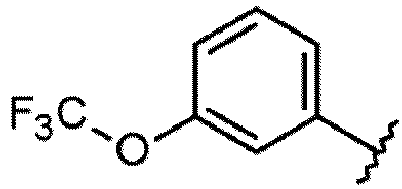
Ar-22 
- Composition, comprenant un composé de formule I selon l'une quelconque des revendications 1 à 9, un sel acceptable sur le plan agricole ou un N-oxyde correspondant, et une substance active supplémentaire.
- Procédé non thérapeutique pour la lutte contre ou la régulation d'organismes nuisibles invertébrés, lequel procédé comprend la mise en contact dudit organisme nuisible ou de son approvisionnement en nourriture, son habitat ou ses lieux de reproduction avec une quantité efficace sur le plan pesticide d'au moins un composé selon l'une quelconque des revendications 1 à 9 ou de la composition selon la revendication 10.
- Procédé de protection de végétaux en croissance contre une attaque ou une infestation par des organismes nuisibles invertébrés, lequel procédé comprenant la mise en contact d'un végétal, ou du sol ou de l'eau dans lequel/laquelle le végétal pousse, avec une quantité efficace sur le plan pesticide d'au moins un composé selon l'une quelconque des revendications 1 à 9 ou de la composition selon la revendication 10.
- Graines revêtues par ou contenant un composé selon l'une quelconque des revendications 1 à 9, ou les enantiomères, diastéréoisomères ou sels correspondants ou comprenant une composition selon la revendication 10, en une quantité allant de 0,1 g à 10 kg par 100 kg de graine.
- Utilisation d'un composé de la formule I selon l'une quelconque des revendications 1 à 9, et d'un sel acceptable sur le plan agricole correspondant ou des compositions selon la revendication 10, pour la protection de végétaux en croissance contre une attaque ou une infestation par des organismes nuisibles invertébrés.
- Composé de la formule I selon l'une quelconque des revendications 1 à 9, stéréoisomère correspondant et/ou au moins un sel acceptable sur le plan vétérinaire correspondant pour une utilisation dans le traitement ou la protection d'un animal contre une infestation ou une affection par des organismes nuisibles invertébrés.
Applications Claiming Priority (3)
| Application Number | Priority Date | Filing Date | Title |
|---|---|---|---|
| IN202021018239 | 2020-04-28 | ||
| EP20178893 | 2020-06-09 | ||
| PCT/EP2021/060686 WO2021219513A1 (fr) | 2020-04-28 | 2021-04-23 | Composés pesticides |
Publications (2)
| Publication Number | Publication Date |
|---|---|
| EP4143167A1 EP4143167A1 (fr) | 2023-03-08 |
| EP4143167B1 true EP4143167B1 (fr) | 2024-05-15 |
Family
ID=75625592
Family Applications (1)
| Application Number | Title | Priority Date | Filing Date |
|---|---|---|---|
| EP21720500.4A Active EP4143167B1 (fr) | 2020-04-28 | 2021-04-23 | Composés pesticides |
Country Status (5)
| Country | Link |
|---|---|
| US (1) | US12564191B2 (fr) |
| EP (1) | EP4143167B1 (fr) |
| CN (1) | CN115443267B (fr) |
| BR (1) | BR112022021631A2 (fr) |
| WO (1) | WO2021219513A1 (fr) |
Families Citing this family (3)
| Publication number | Priority date | Publication date | Assignee | Title |
|---|---|---|---|---|
| CN114342959B (zh) * | 2022-01-18 | 2023-06-09 | 山东省农业科学院 | 一种同时防治黄瓜瓜蚜及黄瓜细菌性角斑病的组合物 |
| US12600722B2 (en) | 2022-07-18 | 2026-04-14 | Incyte Corporation | Tetracyclic compounds as DGK inhibitors |
| US12600723B2 (en) | 2022-07-18 | 2026-04-14 | Incyte Corporation | Tetracyclic compounds as DGK inhibitors |
Family Cites Families (240)
| Publication number | Priority date | Publication date | Assignee | Title |
|---|---|---|---|---|
| US3325503A (en) | 1965-02-18 | 1967-06-13 | Diamond Alkali Co | Polychloro derivatives of mono- and dicyano pyridines and a method for their preparation |
| US3296272A (en) | 1965-04-01 | 1967-01-03 | Dow Chemical Co | Sulfinyl- and sulfonylpyridines |
| DE3338292A1 (de) | 1983-10-21 | 1985-05-02 | Basf Ag, 6700 Ludwigshafen | 7-amino-azolo(1,5-a)-pyrimidine und diese enthaltende fungizide |
| CA1249832A (fr) | 1984-02-03 | 1989-02-07 | Shionogi & Co., Ltd. | Derives d'azolylcycloalcanol, fongicides agricoles |
| BR8600161A (pt) | 1985-01-18 | 1986-09-23 | Plant Genetic Systems Nv | Gene quimerico,vetores de plasmidio hibrido,intermediario,processo para controlar insetos em agricultura ou horticultura,composicao inseticida,processo para transformar celulas de plantas para expressar uma toxina de polipeptideo produzida por bacillus thuringiensis,planta,semente de planta,cultura de celulas e plasmidio |
| DE3545319A1 (de) | 1985-12-20 | 1987-06-25 | Basf Ag | Acrylsaeureester und fungizide, die diese verbindungen enthalten |
| MY100846A (en) | 1986-05-02 | 1991-03-15 | Stauffer Chemical Co | Fungicidal pyridyl imidates |
| ATE82966T1 (de) | 1986-08-12 | 1992-12-15 | Mitsubishi Chem Ind | Pyridincarboxamid-derivate und ihre verwendung als fungizides mittel. |
| DE284236T1 (de) | 1987-03-17 | 1989-06-01 | Her Majesty In Right Of Canada As Represented By The Minister Of Agriculture Canada, Ottawa, Ontario | Verfahren und zusammensetzungen zur vergroesserung der fuer die aufnahme durch pflanzen vom boden verfuegbaren mengen von phosphor und/oder mikronaehrstoffen. |
| DE3731239A1 (de) | 1987-09-17 | 1989-03-30 | Basf Ag | Verfahren zur bekaempfung von pilzen |
| EP0374753A3 (fr) | 1988-12-19 | 1991-05-29 | American Cyanamid Company | Toxines insecticides, gènes les codant, anticorps les liant, ainsi que cellules végétales et plantes transgéniques exprimant ces toxines |
| DK0392225T3 (da) | 1989-03-24 | 2003-09-22 | Syngenta Participations Ag | Sygdomsresistente transgene planter |
| CA2059642C (fr) | 1989-08-03 | 1999-08-31 | Keith L. Williams | Myconematicide |
| EP0427529B1 (fr) | 1989-11-07 | 1995-04-19 | Pioneer Hi-Bred International, Inc. | Lectines larvicides, et résistance induite des plantes aux insectes |
| AU628229B2 (en) | 1989-11-10 | 1992-09-10 | Agro-Kanesho Co. Ltd. | Hexahydrotriazine compounds and insecticides |
| SK281286B6 (sk) | 1989-11-17 | 2001-02-12 | Novo Nordisk A/S | Mutant mikroorganizmu bacillus thuringiensis deponovaný ako subsp. tenebrionis dsm 5480, spôsob jeho prípravy a pesticídny prostriedok, ktorý ho obsahuje |
| US6395966B1 (en) | 1990-08-09 | 2002-05-28 | Dekalb Genetics Corp. | Fertile transgenic maize plants containing a gene encoding the pat protein |
| JP2828186B2 (ja) | 1991-09-13 | 1998-11-25 | 宇部興産株式会社 | アクリレート系化合物、その製法及び殺菌剤 |
| UA48104C2 (uk) | 1991-10-04 | 2002-08-15 | Новартіс Аг | Фрагмент днк, який містить послідовність,що кодує інсектицидний протеїн, оптимізовану для кукурудзи,фрагмент днк, який забезпечує направлену бажану для серцевини стебла експресію зв'язаного з нею структурного гена в рослині, фрагмент днк, який забезпечує специфічну для пилку експресію зв`язаного з нею структурного гена в рослині, рекомбінантна молекула днк, спосіб одержання оптимізованої для кукурудзи кодуючої послідовності інсектицидного протеїну, спосіб захисту рослин кукурудзи щонайменше від однієї комахи-шкідника |
| DE69333980T2 (de) | 1992-07-01 | 2006-10-05 | Cornell Research Foundation, Inc. | Auslöser von überempfindlichkeitsreaktionen in pflanzen |
| US5484464A (en) | 1993-12-29 | 1996-01-16 | Philom Bios, Inc.. | Methods and compositions for increasing the benefits of rhizobium inoculation to legume crop productivity |
| US5530195A (en) | 1994-06-10 | 1996-06-25 | Ciba-Geigy Corporation | Bacillus thuringiensis gene encoding a toxin active against insects |
| DE19502065C2 (de) | 1995-01-14 | 1996-05-02 | Prophyta Biolog Pflanzenschutz | Pilzisolat mit fungizider Wirkung |
| US6406690B1 (en) | 1995-04-17 | 2002-06-18 | Minrav Industries Ltd. | Bacillus firmus CNCM I-1582 or Bacillus cereus CNCM I-1562 for controlling nematodes |
| DE19650197A1 (de) | 1996-12-04 | 1998-06-10 | Bayer Ag | 3-Thiocarbamoylpyrazol-Derivate |
| DE69837916T2 (de) | 1997-04-03 | 2008-02-28 | DeKalb Genetics Corp., DeKalb | Verwendung von glyphosat-resistente maislinien |
| TW460476B (en) | 1997-04-14 | 2001-10-21 | American Cyanamid Co | Fungicidal trifluoromethylalkylamino-triazolopyrimidines |
| NZ503594A (en) | 1997-09-18 | 2001-08-31 | Basf Ag | (Phenyl, thienyl or pyrazolyl)-substituted and alkyl-substituted benzamidoxime derivatives, and benzonitrile intermediates, useful as fungicides |
| DE19750012A1 (de) | 1997-11-12 | 1999-05-20 | Bayer Ag | Isothiazolcarbonsäureamide |
| BR9813376A (pt) | 1997-12-04 | 2001-06-19 | Dow Agrosciences Llc | Composição fungicidas e métodos e compostos para a preparação das mesmas |
| US6333449B1 (en) | 1998-11-03 | 2001-12-25 | Plant Genetic Systems, N.V. | Glufosinate tolerant rice |
| WO2000026356A1 (fr) | 1998-11-03 | 2000-05-11 | Aventis Cropscience N. V. | Riz tolerant au glufosinate |
| CN1243002C (zh) | 1998-11-17 | 2006-02-22 | 组合化学工业株式会社 | 嘧啶基苯并咪唑和三嗪基苯并咪唑衍生物及农业/园艺杀菌剂 |
| IT1303800B1 (it) | 1998-11-30 | 2001-02-23 | Isagro Ricerca Srl | Composti dipeptidici aventi elevata attivita' fungicida e loroutilizzo agronomico. |
| JP3417862B2 (ja) | 1999-02-02 | 2003-06-16 | 新東工業株式会社 | 酸化チタン光触媒高担持シリカゲルおよびその製造方法 |
| AU770077B2 (en) | 1999-03-11 | 2004-02-12 | Dow Agrosciences Llc | Heterocyclic substituted isoxazolidines and their use as fungicides |
| US6586617B1 (en) | 1999-04-28 | 2003-07-01 | Sumitomo Chemical Takeda Agro Company, Limited | Sulfonamide derivatives |
| UA73307C2 (uk) | 1999-08-05 | 2005-07-15 | Куміаі Кемікал Індастрі Ко., Лтд. | Похідна карбамату і фунгіцид сільськогосподарського/садівницького призначення |
| US6509516B1 (en) | 1999-10-29 | 2003-01-21 | Plant Genetic Systems N.V. | Male-sterile brassica plants and methods for producing same |
| US6506963B1 (en) | 1999-12-08 | 2003-01-14 | Plant Genetic Systems, N.V. | Hybrid winter oilseed rape and methods for producing same |
| DE10021412A1 (de) | 1999-12-13 | 2001-06-21 | Bayer Ag | Fungizide Wirkstoffkombinationen |
| SK10822002A3 (sk) | 2000-01-25 | 2003-05-02 | Syngenta Participations Ag | Herbicídna kompozícia a jej použitie na kontrolu buriny |
| US6376548B1 (en) | 2000-01-28 | 2002-04-23 | Rohm And Haas Company | Enhanced propertied pesticides |
| IL167954A (en) | 2000-02-04 | 2007-10-31 | Sumitomo Chemical Co | History of pyrimidine |
| CN1114590C (zh) | 2000-02-24 | 2003-07-16 | 沈阳化工研究院 | 不饱和肟醚类杀菌剂 |
| BRPI0100752B1 (pt) | 2000-06-22 | 2015-10-13 | Monsanto Co | moléculas e pares de moléculas de dna, processos para detectar molécula de dna e para criar um traço tolerante a glifosato em plantas de milho, bem como kit de detecção de dna |
| WO2002000163A2 (fr) | 2000-06-28 | 2002-01-03 | Mafatlal Khamar Bakulesh | Procede de traitement de l'infection par le mycobacterium tuberculosis resistant aux medicaments |
| AU8590001A (en) | 2000-08-25 | 2002-03-04 | Syngenta Participations Ag | Novel insecticidal toxins derived from bacillus thuringiensis insecticidal crystal proteins |
| US6713259B2 (en) | 2000-09-13 | 2004-03-30 | Monsanto Technology Llc | Corn event MON810 and compositions and methods for detection thereof |
| MXPA03002338A (es) | 2000-09-18 | 2003-09-10 | Du Pont | Piridinilamidas y piridinilimidas para uso como fungicidas. |
| EP1366070A2 (fr) | 2000-10-25 | 2003-12-03 | Monsanto Technology LLC | Mecanisme biochimique de plant de coton pv-ghgt07(1445), compositions et techniques de detection de celui-ci |
| CA2425349C (fr) | 2000-10-30 | 2011-08-02 | Monsanto Technology Llc | Colza canola pv-bngt(rt73), compositions et procedes de detection correspondants |
| CN100438865C (zh) | 2000-11-17 | 2008-12-03 | 美国陶氏益农公司 | 有杀真菌活性的化合物及其制备和使用方法 |
| US6994849B2 (en) | 2001-03-14 | 2006-02-07 | State Of Israel, Ministry Of Agriculture, Agricultural Research Organization | Yeast Metschnikowia fructicola NRRL Y-30752 for inhibiting deleterious microorganisms on plants |
| JP5034142B2 (ja) | 2001-04-20 | 2012-09-26 | 住友化学株式会社 | 植物病害防除剤組成物 |
| EG26529A (en) | 2001-06-11 | 2014-01-27 | مونسانتو تكنولوجى ل ل سى | Prefixes for detection of DNA molecule in cotton plant MON15985 which gives resistance to damage caused by insect of squamous lepidoptera |
| DE10136065A1 (de) | 2001-07-25 | 2003-02-13 | Bayer Cropscience Ag | Pyrazolylcarboxanilide |
| AR037228A1 (es) | 2001-07-30 | 2004-11-03 | Dow Agrosciences Llc | Compuestos del acido 6-(aril o heteroaril)-4-aminopicolinico, composicion herbicida que los comprende y metodo para controlar vegetacion no deseada |
| FR2828196A1 (fr) | 2001-08-03 | 2003-02-07 | Aventis Cropscience Sa | Derives de chromone a action fongicide, procede de preparation et application dans le domaine de l'agriculture |
| US6818807B2 (en) | 2001-08-06 | 2004-11-16 | Bayer Bioscience N.V. | Herbicide tolerant cotton plants having event EE-GH1 |
| KR100879693B1 (ko) | 2001-08-17 | 2009-01-21 | 상꾜 아그로 가부시키가이샤 | 2-시클로프로필-6-메틸페놀 |
| US7183299B2 (en) | 2001-08-20 | 2007-02-27 | Nippon Soda Co., Ltd. | Tetrazoyl oxime derivative and agricultural chemical containing the same as active ingredient |
| US7230167B2 (en) | 2001-08-31 | 2007-06-12 | Syngenta Participations Ag | Modified Cry3A toxins and nucleic acid sequences coding therefor |
| WO2003052073A2 (fr) | 2001-12-17 | 2003-06-26 | Syngenta Participations Ag | Nouvel evenement du mais |
| WO2003053145A1 (fr) | 2001-12-21 | 2003-07-03 | Nissan Chemical Industries, Ltd. | Composition bactericide |
| TWI327462B (en) | 2002-01-18 | 2010-07-21 | Sumitomo Chemical Co | Condensed heterocyclic sulfonyl urea compound, a herbicide containing the same, and a method for weed control using the same |
| DE10204390A1 (de) | 2002-02-04 | 2003-08-14 | Bayer Cropscience Ag | Disubstituierte Thiazolylcarboxanilide |
| MXPA04008314A (es) | 2002-03-05 | 2004-11-26 | Syngenta Participations Ag | O-ciclopropil-carboxaniluros y su uso como funguicidas. |
| PL374995A1 (en) | 2002-07-29 | 2005-11-14 | Monsanto Technology, Llc | Corn event pv-zmir13 (mon863) plants and compositions and methods for detection thereof |
| GB0225129D0 (en) | 2002-10-29 | 2002-12-11 | Syngenta Participations Ag | Improvements in or relating to organic compounds |
| GB0227966D0 (en) | 2002-11-29 | 2003-01-08 | Syngenta Participations Ag | Organic Compounds |
| MXPA05008519A (es) | 2003-02-12 | 2005-10-20 | Monsanto Technology Llc | Forma de algodon mon 88913 y composiciones y metodos para detectarla. |
| CN102391988A (zh) | 2003-02-20 | 2012-03-28 | Kws萨特股份公司 | 草甘膦耐受性甜菜 |
| WO2004083193A1 (fr) | 2003-03-17 | 2004-09-30 | Sumitomo Chemical Company, Limited | Compose amide et composition bactericide contenant ledit compose |
| CN1201657C (zh) | 2003-03-25 | 2005-05-18 | 浙江省化工研究院 | 甲氧基丙烯酸甲酯类化合物杀菌剂 |
| PT1620571E (pt) | 2003-05-02 | 2015-09-03 | Du Pont | Milho do evento tc1507 e métodos para deteção deste |
| CA2545422C (fr) | 2003-12-03 | 2015-06-02 | Cytopia Research Pty Ltd | Inhibiteurs de la tubuline |
| US7157281B2 (en) | 2003-12-11 | 2007-01-02 | Monsanto Technology Llc | High lysine maize compositions and event LY038 maize plants |
| CA2547563C (fr) | 2003-12-15 | 2014-02-18 | Monsanto Technology Llc | Plant de mais mon88017, compositions et procedes de detection associes |
| TWI355894B (en) | 2003-12-19 | 2012-01-11 | Du Pont | Herbicidal pyrimidines |
| EP1725560B1 (fr) | 2004-03-10 | 2010-07-07 | Basf Se | 5,6-dialkyl-7-amino-triazolopyrimidines, procedes pour leur production, leur utilisation pour lutter contre des champignons nuisibles, ainsi qu'agents les contenant |
| DE502005009862D1 (de) | 2004-03-10 | 2010-08-19 | Basf Se | 5,6-dialkyl-7-aminotriazolopyrimidine, verfahren zu ihrer herstellung und ihre verwendung zur bekämpfung von schadpilzen sowie sie enthaltende mittel |
| JP2007530036A (ja) | 2004-03-25 | 2007-11-01 | シンジェンタ パーティシペーションズ アクチェンゲゼルシャフト | Mir604系統トウモロコシ |
| HUE047016T2 (hu) | 2004-03-26 | 2020-04-28 | Dow Agrosciences Llc | CRY1F és CRY1AC transzgenikus gyapotvonalak és eseményspecifikus azonosításuk |
| EP1750508A2 (fr) | 2004-06-03 | 2007-02-14 | E.I.Du pont de nemours and company | Melanges fongicides de composes d'amidinylphenyle |
| US20080108686A1 (en) | 2004-06-18 | 2008-05-08 | Basf Aktiengesellschaft | N-(Ortho-Phenyl)-1-Methyl-3-Difluoromethylpyrazole-4-Carboxanilides And Their Use As Fungicides |
| JP2008502625A (ja) | 2004-06-18 | 2008-01-31 | ビーエーエスエフ アクチェンゲゼルシャフト | N−(オルト−フェニル)−1−メチル−3−トリフルオロメチルピラゾール−4−カルボキシアニリドおよびそれらの殺菌剤としての使用 |
| CA2471555C (fr) | 2004-06-18 | 2011-05-17 | Thomas D. Johnson | Lutte contre les agents pathogenes de plantes a l'aide de combinaisons bacteriennes et fongiques antagonistes |
| US7709645B2 (en) | 2004-07-27 | 2010-05-04 | Sgx Pharmaceuticals, Inc. | Pyrrolo-pyridine kinase modulators |
| GB0418048D0 (en) | 2004-08-12 | 2004-09-15 | Syngenta Participations Ag | Method for protecting useful plants or plant propagation material |
| WO2006039376A2 (fr) | 2004-09-29 | 2006-04-13 | Pioneer Hi-Bred International, Inc. | Evenement de mais das-59122-7, et procedes de detection correspondants |
| WO2006043635A1 (fr) | 2004-10-20 | 2006-04-27 | Kumiai Chemical Industry Co., Ltd. | Dérivé de 3-triazolylphénylsulfide et insecticide/acaricide/nématicide incluant ledit dérivé au titre de principe actif |
| GB0428082D0 (en) | 2004-12-22 | 2005-01-26 | Welcome Trust The Ltd | Therapeutic compounds |
| DE102005007160A1 (de) | 2005-02-16 | 2006-08-24 | Basf Ag | Pyrazolcarbonsäureanilide, Verfahren zu ihrer Herstellung und sie enthaltende Mittel zur Bekämpfung von Schadpilzen |
| AU2006215624A1 (en) | 2005-02-16 | 2006-08-24 | Basf Aktiengesellschaft | 5-alkoxyalkyl-6-alkyl-7-amino-azolopyrimidines, method for their production, their use for controlling pathogenic fungi and agents containing said substances |
| DE102005008021A1 (de) | 2005-02-22 | 2006-08-24 | Bayer Cropscience Ag | Spiroketal-substituierte cyclische Ketoenole |
| DE102005009458A1 (de) | 2005-03-02 | 2006-09-07 | Bayer Cropscience Ag | Pyrazolylcarboxanilide |
| WO2006098952A2 (fr) | 2005-03-16 | 2006-09-21 | Syngenta Participations Ag | Mais 3272 et procedes pour le detecter |
| CA2603944C (fr) | 2005-04-08 | 2015-06-23 | Bayer Bioscience N.V. | Evenement elite a2704-12 comprenant l'integration du gene phosphinothri cine acetyltransferase dans le soya et procedes et trousses permettant d'identifier cet evenement dans des prelevements biologiques |
| CA2603949C (fr) | 2005-04-11 | 2014-12-09 | Bayer Bioscience N.V. | Evenement elite a5547-127 et procedes et trousses pour l'identification d'un tel evenement dans des echantillons biologiques |
| PT1885176T (pt) | 2005-05-27 | 2016-11-28 | Monsanto Technology Llc | Evento mon89788 de soja e métodos para a sua deteção |
| WO2006128573A2 (fr) | 2005-06-02 | 2006-12-07 | Syngenta Participations Ag | Coton insecticide ce43-67b |
| US8143292B2 (en) | 2005-07-07 | 2012-03-27 | Basf Se | N-Thio-anthranilamid compounds and their use as pesticides |
| CN1907024A (zh) | 2005-08-03 | 2007-02-07 | 浙江化工科技集团有限公司 | 取代甲氧基丙烯酸甲酯类化合物杀菌剂 |
| MX2008001839A (es) | 2005-08-08 | 2008-04-09 | Bayer Bioscience Nv | Plantas de algodon con tolerancia a herbicidas y metodos para identificar las mismas. |
| PT1937664E (pt) | 2005-10-14 | 2011-07-07 | Sumitomo Chemical Co | Composto de hidrazida e utilização pesticida do mesmo |
| EP2060566B1 (fr) | 2006-01-13 | 2016-06-08 | Dow AgroSciences LLC | Aryles poly-substitués |
| WO2007090624A2 (fr) | 2006-02-09 | 2007-08-16 | Syngenta Participations Ag | Procede de protection d'une matiere de propagation vegetale, d'un vegetal et/ou d'un organisme vegetal |
| WO2007093599A1 (fr) * | 2006-02-14 | 2007-08-23 | Basf Se | Composes pyridin-4-ylmethylamide destines a lutter contre les organismes nuisibles |
| DE102006015197A1 (de) | 2006-03-06 | 2007-09-13 | Bayer Cropscience Ag | Wirkstoffkombination mit insektiziden Eigenschaften |
| WO2007101369A1 (fr) | 2006-03-09 | 2007-09-13 | East China University Of Science And Technology | Méthode de préparation et utilisation de composés présentant une action biocide |
| US7714140B2 (en) | 2006-05-08 | 2010-05-11 | Kumiai Chemical Industry, Co. Ltd. | 1,2 Benzoisothiazole derivative, and agricultural or horticultural plant disease- controlling agent |
| SI2021476T1 (sl) | 2006-05-26 | 2014-10-30 | Monsanto Technology, Llc | Rastlina koruza in seme, ki ustrezata transgenemu dogodku MON89034, in postopki za detekcijo in uporabo le-teh |
| AU2007257230B2 (en) | 2006-06-03 | 2011-05-12 | Syngenta Crop Protection Ag | Corn event mir162 |
| US7951995B2 (en) | 2006-06-28 | 2011-05-31 | Pioneer Hi-Bred International, Inc. | Soybean event 3560.4.3.5 and compositions and methods for the identification and detection thereof |
| WO2008013622A2 (fr) | 2006-07-27 | 2008-01-31 | E. I. Du Pont De Nemours And Company | Amides azocycliques fongicides |
| US7928296B2 (en) | 2006-10-30 | 2011-04-19 | Pioneer Hi-Bred International, Inc. | Maize event DP-098140-6 and compositions and methods for the identification and/or detection thereof |
| BR122017006111B8 (pt) | 2006-10-31 | 2022-12-06 | Du Pont | Métodos para controlar ervas daninhas |
| DE102006057036A1 (de) | 2006-12-04 | 2008-06-05 | Bayer Cropscience Ag | Biphenylsubstituierte spirocyclische Ketoenole |
| ES2432406T3 (es) | 2007-04-05 | 2013-12-03 | Bayer Cropscience Nv | Plantas de algodón resistentes a los insectos y métodos para identificación de las mismas |
| US7872033B2 (en) | 2007-04-17 | 2011-01-18 | Abbott Laboratories | Compounds as cannabinoid receptor ligands |
| WO2008134969A1 (fr) | 2007-04-30 | 2008-11-13 | Sinochem Corporation | Composés benzamides et leurs applications |
| WO2008151780A1 (fr) | 2007-06-11 | 2008-12-18 | Bayer Bioscience N.V. | Cotonniers résistant aux insectes comprenant un événement élite ee-gh6 et leurs procédés d'identification |
| FR2921657A1 (fr) | 2007-09-28 | 2009-04-03 | Sanofi Aventis Sa | Derives de nicotinamide, leur preparation et leur application en therapeutique |
| WO2009064652A1 (fr) | 2007-11-15 | 2009-05-22 | Monsanto Technology Llc | Plante et graine de soja correspondant à l'événement transgénique mon87701 et procédés pour les détecter |
| EP2234489B1 (fr) | 2008-01-15 | 2017-04-12 | Bayer Intellectual Property GmbH | COMPOSITION PESTICIDE COMPRENANT UN DÉRIVÉ DE TÉTRAZOLYLOXIME ET UNE & xA;SUBSTANCE ACTIVE FONGICIDE OU INSECTICIDE |
| PT2562166E (pt) | 2008-01-22 | 2015-10-28 | Dow Agrosciences Llc | Derivados de 5-fluoro-pirimidina como fungicidas |
| CN101998963B (zh) | 2008-02-12 | 2014-09-24 | 陶氏益农公司 | 杀虫组合物 |
| CN104805115A (zh) | 2008-02-14 | 2015-07-29 | 先锋国际良种公司 | Spt事件侧翼的植物基因组dna及用于鉴定spt事件的方法 |
| MX2010008928A (es) | 2008-02-15 | 2010-09-09 | Monsanto Technology Llc | Planta de soya y semilla que corresponde al evento transgenico mon87769 y metodos para deteccion del mismo. |
| AP2967A (en) | 2008-02-29 | 2014-09-30 | Monsanto Technology Llc | Zea mays plant event MON87460 and compositions andmethods for detection thereof |
| PL2259685T3 (pl) | 2008-04-07 | 2015-12-31 | Bayer Ip Gmbh | Kombinacje środka kontroli biologicznej i insektycydów |
| CA2720739C (fr) | 2008-04-07 | 2020-04-21 | Bayer Cropscience Lp | Formulations aqueuses stables de spores renfermant un bacille firmus |
| CN102015682B (zh) | 2008-05-05 | 2014-07-16 | 埃科特莱茵药品有限公司 | 作为肾素抑制剂的3,4-取代的哌啶衍生物 |
| US8648071B2 (en) | 2008-06-27 | 2014-02-11 | Synta Pharmaceuticals Corp. | Hydrazonamide compounds that modulate Hsp90 activity |
| EP2586311B1 (fr) | 2008-07-17 | 2016-12-14 | Bayer CropScience AG | Liaisons hétérocycliques en tant que moyen de lutte contre les parasites |
| AR075549A1 (es) | 2008-09-29 | 2011-04-20 | Monsanto Technology Llc | Evento transgenico de soja mon87705 y metodos para detectar el mismo |
| CN101747276B (zh) | 2008-11-28 | 2011-09-07 | 中国中化股份有限公司 | 具有含氮五元杂环的醚类化合物及其应用 |
| UA110320C2 (xx) | 2008-12-16 | 2015-12-25 | Syngenta Participations Ag | Подія 5307 кукурудзи |
| GB0823002D0 (en) | 2008-12-17 | 2009-01-28 | Syngenta Participations Ag | Isoxazoles derivatives with plant growth regulating properties |
| BRPI1006074A2 (pt) | 2009-01-07 | 2017-03-21 | Basf Agrochemical Products Bv | método para controlar ervas daninhas, molécula de ácido nucleico, planta de soja, par isolado de iniciadores de ácidos nucleicos, kit para a identificação de um evento 127 da molécula de ácido nucleico, métodos para identificar um evento 127 na planta de soja, para identificar uma planta de soja tendo um evento 127 da molécula de ácido nucleico, para aumentar o rendimento em uma planta de soja, para a reprodução de uma planta de soja resistente ao herbicida inibidor de ahas, para detectar a presença de um evento 127 da molécula de ácido nucleico em uma amostra biológica, para o cultivo de uma planta de soja, para detectar um evento 127 do polipeptídeo de uma amostra, semente e dispositivo para uso na detenção de moléculas biológicas |
| JP5771154B2 (ja) | 2009-02-11 | 2015-08-26 | ダウ アグロサイエンシィズ エルエルシー | 殺虫剤組成物 |
| US8551919B2 (en) | 2009-04-13 | 2013-10-08 | University Of Delaware | Methods for promoting plant health |
| JP5823950B2 (ja) | 2009-05-06 | 2015-11-25 | シンジェンタ パーティシペーションズ アクチェンゲゼルシャフト | 害虫駆除における使用のための4‐シアノ‐3−ベンゾイルアミノ‐n‐フェニル‐ベンズアミド |
| CN101906075B (zh) | 2009-06-05 | 2012-11-07 | 中国中化股份有限公司 | 含取代苯胺基嘧啶基团的e-型苯基丙烯酸酯类化合物及其应用 |
| MX338249B (es) | 2009-08-19 | 2016-04-08 | Dow Agrosciences Llc | Evento das-40278-9 de ariloaxialcanoato dioxigenasa-1 lineas transgenicas de maiz relacionadas e identificacion de evento-especifico de las mismas. |
| CN102639502B (zh) | 2009-09-01 | 2014-07-16 | 陶氏益农公司 | 用于控制谷物中的真菌的含有5-氟嘧啶衍生物的协同增效的杀真菌组合物 |
| UA115761C2 (uk) | 2009-09-17 | 2017-12-26 | Монсанто Текнолоджи Ллс | Рекомбінантна молекула днк, яка вказує на присутність трансгенного об'єкта сої mon 87708 |
| BR112012012404B1 (pt) | 2009-11-23 | 2019-03-06 | Monsanto Technology Llc | "molécula de dna reconbinante de amplicon, sonda de dna, par de moléculas de dna mètodo para detectar a presença de uma molècula de dna e kit de detecçao de dna". |
| MX341974B (es) | 2009-11-24 | 2016-09-07 | Dow Agrosciences Llc | Evento 416 de ariloaxialcanoato dioxigenasa, lineas de soja transgenica relacionadas y su identificacion especifica del evento. |
| CN101715770B (zh) | 2009-12-08 | 2013-10-09 | 中国科学院南海海洋研究所 | 环(脯氨酸-苏氨酸)在海洋污损生物防除中的应用 |
| EP2512226B1 (fr) | 2009-12-17 | 2019-05-01 | Pioneer Hi-Bred International, Inc. | Evénement de transformation dp-004114-3 du maïs et son procédé de détection |
| PH12012501288A1 (en) | 2009-12-22 | 2013-01-07 | Mitsui Chemicals Crop & Life Solutions Inc | Plant disease control composition and method for controlling plant diseases by applying the same |
| CU24144B1 (es) | 2010-01-04 | 2016-01-29 | Nippon Soda Co | Compuesto heterocíclico conteniendo nitrógeno y fungicida para el uso en agricultura y jardinería |
| WO2011085575A1 (fr) | 2010-01-15 | 2011-07-21 | 江苏省农药研究所股份有限公司 | Composés de formanilide hétérocyclique, leurs procédés de synthèse et leur utilisation |
| CN102126994B (zh) | 2010-01-19 | 2014-07-09 | 中化蓝天集团有限公司 | 一种二苯酮腙衍生物、其制备方法和用途 |
| MX2012010043A (es) | 2010-03-01 | 2012-12-17 | Univ Delaware | Composiciones y metodos para aumentar biomasa, concentracion de hierro y tolerancia a patogenos en plantas. |
| MX337988B (es) | 2010-04-28 | 2016-03-30 | Sumitomo Chemical Co | Composicion para el control de enfermedades vegetales y su uso. |
| UA118535C2 (uk) | 2010-06-04 | 2019-02-11 | Монсанто Текнолоджи Ллс | Рекомбінантна молекула днк, що надає рослині brassica стійкості до гліфосату |
| AR083431A1 (es) | 2010-06-28 | 2013-02-27 | Bayer Cropscience Ag | Compuestos heterociclicos como pesticidas |
| CN101967139B (zh) | 2010-09-14 | 2013-06-05 | 中化蓝天集团有限公司 | 一种含一氟甲氧基吡唑的邻甲酰氨基苯甲酰胺类化合物、其合成方法及应用 |
| KR20130119438A (ko) | 2010-10-12 | 2013-10-31 | 몬산토 테크놀로지 엘엘씨 | 유전자도입 이벤트 mon87712에 상응하는 대두 식물과 종자, 그리고 이들의 검출을 위한 방법 |
| US8410107B2 (en) | 2010-10-15 | 2013-04-02 | Hoffmann-La Roche Inc. | N-pyridin-3-yl or N-pyrazin-2-yl carboxamides |
| WO2012063824A1 (fr) | 2010-11-10 | 2012-05-18 | クミアイ化学工業株式会社 | Composition agrochimique biologique |
| WO2012062844A1 (fr) * | 2010-11-12 | 2012-05-18 | Syngenta Participations Ag | Nouveaux microbiocides |
| EA201390851A1 (ru) | 2010-12-10 | 2014-01-30 | Оберн Юниверсити | Инокуляты, включающие бактерии bacillus для индукции продукции летучих органических соединений в растениях |
| TWI667347B (zh) | 2010-12-15 | 2019-08-01 | 瑞士商先正達合夥公司 | 大豆品種syht0h2及偵測其之組合物及方法 |
| IT1403275B1 (it) | 2010-12-20 | 2013-10-17 | Isagro Ricerca Srl | Indanilanilidi ad elevata attività fungicida e loro composizioni fitosanitarie |
| ES2656040T3 (es) | 2011-02-07 | 2018-02-22 | Dow Agrosciences Llc | Composiciones pesticidas y procedimientos relacionados con las mismas |
| KR101834362B1 (ko) | 2011-03-18 | 2018-03-05 | 바이엘 인텔렉쳐 프로퍼티 게엠베하 | N-(3-카바모일페닐)-1h-피라졸-5-카복사미드 유도체 및 동물 해충을 구제하기 위한 그의 용도 |
| TR201909940T4 (tr) | 2011-03-30 | 2019-07-22 | Monsanto Technology Llc | Pamuk transgeni̇k event mon 88701 ve kullanim yöntemleri̇ |
| EP2699563B3 (fr) | 2011-04-21 | 2024-06-12 | Basf Se | Nouveaux composés pesticides à base de pyrazole |
| TWI583308B (zh) | 2011-05-31 | 2017-05-21 | 組合化學工業股份有限公司 | 稻之病害防治方法 |
| EP2532233A1 (fr) | 2011-06-07 | 2012-12-12 | Bayer CropScience AG | Combinaisons de composés actifs |
| CN103857798B (zh) | 2011-06-30 | 2018-06-15 | 孟山都技术公司 | 对应于转基因事件kk179-2的苜蓿植物和种子及其检测方法 |
| WO2013003977A1 (fr) | 2011-07-01 | 2013-01-10 | 合肥星宇化学有限责任公司 | Composé de 3-nitroimino-1,2,4-triazoline 2,5-disubstituée et son procédé de préparation et son utilisation comme pesticide |
| CN103826452B (zh) | 2011-07-12 | 2017-02-01 | 陶氏益农公司 | 杀虫组合物及其相关方法 |
| PE20140826A1 (es) | 2011-07-13 | 2014-07-09 | Basf Se | Compuestos sustituidos fungicidas de 2-[2-halogenalquil-4-(fenoxi)-fenil]-1-[1,2,4]triazol-1-il-etanol |
| EP2731438B1 (fr) | 2011-07-15 | 2015-04-08 | Basf Se | Composés fongicides alkyl-substitués 2-[2-chloro-4-(4-chloro-phénoxy)-phényl]-1-[1,2,4]triazol-1 yl-éthanol |
| BR102012019434B1 (pt) | 2011-07-26 | 2021-11-09 | Dow Agrosciences Llc | Métodos de controle de pestes, de insetos, molécula e sequência de dna diagnóstica para o evento de soja 9582.814.19.1 |
| BR112014003186A2 (pt) | 2011-08-12 | 2017-04-04 | Basf Se | composto da fórmula geral (i), combinação pesticida, composição agrícola ou veterinária, método para combater ou controlar pragas invertebradas, método para a proteção de plantas e sementes, semente, uso de um composto e método para tratar um animal |
| ES2558166T3 (es) | 2011-08-12 | 2016-02-02 | Basf Se | Compuestos de N-tio-antranilamida y su uso como pesticidas |
| IN2014MN00242A (fr) | 2011-08-27 | 2015-09-25 | Marrone Bio Innovations Inc | |
| EP2754659A4 (fr) | 2011-09-05 | 2015-08-26 | Zhejiang Hisun Pharm Co Ltd | Dérivés 4-substitué-(3-substitué-1h-pyrazole-5-amino)-pyrimidines ayant une activité d'inhibition de protéine kinase et son utilisation |
| MX355228B (es) | 2011-09-26 | 2018-04-10 | Nippon Soda Co | Composicion fungicida agricola y horticola. |
| MY167697A (en) | 2011-09-29 | 2018-09-21 | Mitsui Chemicals Agro Inc | Method for producing 4,4-difluoro-3,4- dihydroisoquinoline derivatives |
| WO2013050317A1 (fr) | 2011-10-03 | 2013-04-11 | Syngenta Limited | Formes polymorphes d'un dérivé d'isoxazoline |
| CA2856954C (fr) | 2011-12-21 | 2020-09-22 | Basf Se | Utilisation de composes de type strobilurine pour combattre des champignons phytopathogenes resistants aux inhibiteurs du site qo |
| UY34588A (es) | 2012-01-23 | 2013-09-02 | Dow Agrosciences Llc | ALGODÓN TOLERANTE A HERBICIDAS EVENTO pDAB4468.19-10.3 |
| TWI568721B (zh) | 2012-02-01 | 2017-02-01 | 杜邦股份有限公司 | 殺真菌之吡唑混合物 |
| NZ627331A (en) | 2012-02-02 | 2016-03-31 | Dow Agrosciences Llc | Pesticidal compositions and processes related thereto |
| US8916183B2 (en) | 2012-02-02 | 2014-12-23 | Dow Agrosciences, Llc. | Pesticidal compositions and processes related thereto |
| MX360174B (es) | 2012-02-27 | 2018-10-12 | Bayer Ip Gmbh | Combinaciones de compuestos activos que contienen una tiazolilisoxazolina y un fungicida. |
| JP6107377B2 (ja) | 2012-04-27 | 2017-04-05 | 住友化学株式会社 | テトラゾリノン化合物及びその用途 |
| PY1319541A (es) | 2012-05-08 | 2016-06-01 | Monsanto Technology Llc | Evento de maiz mon 87411 |
| CN103387541B (zh) | 2012-05-10 | 2016-02-10 | 中国中化股份有限公司 | 一种取代吡唑醚类化合物的制备方法 |
| NO2868660T3 (fr) | 2012-07-02 | 2018-05-26 | ||
| WO2014011429A1 (fr) | 2012-07-09 | 2014-01-16 | Dow Agrosciences Llc | Compositions pesticides et procédés correspondants |
| BR112015003688B1 (pt) | 2012-08-22 | 2020-09-24 | Basf Se | Mistura, composição agroquímica, semente, uso da mistura e método para o controle de fungos nocivos fitopatogênicos |
| WO2014060177A1 (fr) | 2012-10-16 | 2014-04-24 | Syngenta Participations Ag | Compositions fongicides |
| US20150361446A1 (en) | 2013-01-25 | 2015-12-17 | Pioneer-Hi-Bred International and E.I. Dupont De Nemours & Company | Maize event dp-033121-3 and methods for detection thereof |
| US20150359220A1 (en) | 2013-02-11 | 2015-12-17 | Bayer Cropscience Lp | Compositions comprising gougerotin and a fungicide |
| US9873885B2 (en) | 2013-05-02 | 2018-01-23 | J.R. Simplot Company | Potato transformation vector pSIM1278 |
| EP3008187B1 (fr) | 2013-06-14 | 2021-03-31 | Monsanto Technology LLC | Événement transgénique de soja mon87751 et procédés de détection et d'utilisation de celui-ci |
| TWI652014B (zh) | 2013-09-13 | 2019-03-01 | 美商艾佛艾姆希公司 | 雜環取代之雙環唑殺蟲劑 |
| MX2016004595A (es) | 2013-10-09 | 2016-08-01 | Monsanto Technology Llc | Evento de maiz transgenico mon87403 y metodos para su deteccion. |
| WO2015059039A1 (fr) | 2013-10-24 | 2015-04-30 | Syngenta Participations Ag | Procédé de protection d'un matériel de propagation des végétaux |
| EP3062686B1 (fr) | 2013-10-28 | 2019-05-08 | Dexcom, Inc. | Dispositifs utilisés en relation avec une surveillance continue de substances à analyser pour fournir une ou plusieurs notifications à un utilisateur, et procédés associés |
| AU2015212838A1 (en) | 2014-01-31 | 2016-08-18 | Basf Se | Pyrazoles for controlling invertebrate pests |
| CN103814937B (zh) | 2014-02-11 | 2015-10-07 | 深圳诺普信农化股份有限公司 | 一种杀虫组合物 |
| EP2865265A1 (fr) | 2014-02-13 | 2015-04-29 | Bayer CropScience AG | Combinaisons de composés actifs comprenant des composés phénylamidine et agents de lutte biologique |
| MX365442B (es) | 2014-03-20 | 2019-06-03 | Monsanto Technology Llc | Evento de maiz transgenico mon 87419 y metodos para su uso. |
| WO2015169734A1 (fr) | 2014-05-05 | 2015-11-12 | Basf Se | Pyrazoles pour la lutte contre les invertébrés nuisibles |
| JPWO2015190316A1 (ja) | 2014-06-09 | 2017-04-20 | 住友化学株式会社 | ピリジン化合物の製造方法 |
| BR112017002182B1 (pt) | 2014-08-04 | 2022-07-12 | Basf Se | Método de controle, supressão de patógenos ou prevenção de infecção por patógenos, composição, material de propagação vegetal, uso de uma composição |
| JP6732761B2 (ja) * | 2015-01-23 | 2020-07-29 | シンジェンタ パーティシペーションズ アーゲー | 殺有害生物的に活性なセミカルバゾンおよびチオセミカルバゾン誘導体 |
| WO2016123577A1 (fr) | 2015-01-30 | 2016-08-04 | Lieber Institute For Brain Development | Procédés d'inhibition de la comt et compositions associées |
| CN104829520B (zh) | 2015-03-24 | 2017-10-24 | 吉林奥来德光电材料股份有限公司 | 有机电致发光材料及其使用这个有机电致发光材料制备的器件 |
| WO2016156076A1 (fr) | 2015-03-27 | 2016-10-06 | Syngenta Participations Ag | Dérivés d'oxime carbamoylée et thiocarbamoylée à activité pesticide |
| WO2016167795A1 (fr) | 2015-04-17 | 2016-10-20 | Southern Research Institute | Traitement du virus de l'hépatite b |
| EP2910126A1 (fr) | 2015-05-05 | 2015-08-26 | Bayer CropScience AG | Combinaisons de composés actifs à propriétés insecticides |
| CA2985369A1 (fr) | 2015-05-14 | 2016-11-17 | J.R. Simplot Company | Cultivar de pomme de terre v11 |
| CN106167482A (zh) | 2015-05-19 | 2016-11-30 | 重庆大学 | 一种抑制前列腺癌生长的化合物及其应用 |
| AU2016335859A1 (en) | 2015-10-08 | 2018-05-31 | J.R. Simplot Company | Potato cultivar x17 |
| JP2018529370A (ja) | 2015-10-08 | 2018-10-11 | ジェイ.アール.シンプロット カンパニー | ジャガイモ栽培品種y9 |
| CN106928216A (zh) | 2015-12-31 | 2017-07-07 | 中国科学院上海药物研究所 | 具有erk激酶抑制活性的化合物、其制备方法和用途 |
| WO2017198196A1 (fr) | 2016-05-18 | 2017-11-23 | 王子厚 | Dérivé de quinoléine ayant une activité antitumorale |
| PT3466934T (pt) | 2016-05-31 | 2024-04-30 | Taiho Pharmaceutical Co Ltd | Compostos de sulfonamida ou seus sais como inibidores da ribonucleótido-redutase para o tratamento de cancro |
| WO2017214269A1 (fr) | 2016-06-08 | 2017-12-14 | Infinity Pharmaceuticals, Inc. | Composés hétérocycliques et leurs utilisations |
| EP3495363B1 (fr) | 2016-07-28 | 2023-08-23 | Shionogi & Co., Ltd | Composés cycliques condensés contenant de l'azote ayant un effet antagoniste du récepteur de la dopamine d3 |
| WO2018052136A1 (fr) | 2016-09-15 | 2018-03-22 | 日産化学工業株式会社 | Composition d'agent de lutte contre des nuisibles et procédé de lutte contre des nuisibles |
| WO2018059534A1 (fr) | 2016-09-30 | 2018-04-05 | 广东众生药业股份有限公司 | Forme cristalline, forme de sel, et procédé de préparation d'inhibiteur de tyrosine kinase |
| JP2020023441A (ja) | 2016-11-02 | 2020-02-13 | 国立大学法人九州大学 | Egfr阻害及び腫瘍治療に有用な新規化合物 |
| CA3045224A1 (fr) | 2016-12-16 | 2018-06-21 | Basf Se | Composes pesticides |
| CN110049990B (zh) | 2016-12-16 | 2022-09-13 | 学校法人关西学院 | 多环芳香族氨基化合物、有机元件用材料、有机电场发光元件、显示装置以及照明装置 |
| CN110506038B (zh) * | 2017-03-28 | 2023-11-24 | 巴斯夫欧洲公司 | 杀害虫化合物 |
| KR102551432B1 (ko) | 2017-03-31 | 2023-07-05 | 바스프 에스이 | 동물 해충 퇴치를 위한 피리미디늄 화합물 및 이의 혼합물 |
| US20200163336A1 (en) | 2017-08-22 | 2020-05-28 | Nippon Soda Co., Ltd. | Cyclic amine compound and pest control agent |
| EP3643705A1 (fr) | 2018-10-24 | 2020-04-29 | Basf Se | Composés pesticides |
| WO2020109039A1 (fr) | 2018-11-28 | 2020-06-04 | Basf Se | Composés pesticides |
-
2021
- 2021-04-23 WO PCT/EP2021/060686 patent/WO2021219513A1/fr not_active Ceased
- 2021-04-23 CN CN202180029860.6A patent/CN115443267B/zh active Active
- 2021-04-23 EP EP21720500.4A patent/EP4143167B1/fr active Active
- 2021-04-23 BR BR112022021631A patent/BR112022021631A2/pt unknown
- 2021-04-23 US US17/920,786 patent/US12564191B2/en active Active
Also Published As
| Publication number | Publication date |
|---|---|
| CN115443267A (zh) | 2022-12-06 |
| BR112022021631A2 (pt) | 2022-12-06 |
| WO2021219513A1 (fr) | 2021-11-04 |
| US20230157287A1 (en) | 2023-05-25 |
| US12564191B2 (en) | 2026-03-03 |
| CN115443267B (zh) | 2025-09-05 |
| EP4143167A1 (fr) | 2023-03-08 |
Similar Documents
| Publication | Publication Date | Title |
|---|---|---|
| US12528800B2 (en) | Pesticidal compounds | |
| EP3999505B1 (fr) | Derives de pyrazole et triazole pesticides | |
| EP3601231B1 (fr) | Composés pesticides | |
| EP3728199B1 (fr) | Composes pesticides | |
| EP3696177A1 (fr) | Composés hétérocycliques destinés à la lutte contre les organismes nuisibles invertébrés | |
| EP4143167B1 (fr) | Composés pesticides | |
| US12459934B2 (en) | Pesticidal compounds | |
| EP3613736A1 (fr) | Dérivés de glutarimide substitués | |
| EP4198023A1 (fr) | Composés de thiosemicarbazone actifs sur le plan pesticide | |
| EP4467535A1 (fr) | Composés pesticides à base de lactame | |
| WO2024028243A1 (fr) | Composés pesticides pyrazolo | |
| EP4488273A1 (fr) | Composés triazoles pour la lutte contre les invertébrés nuisibles | |
| EP4389210A1 (fr) | Composés hétéroaryles pour la lutte contre les nuisibles invertébrés | |
| EP4455137A1 (fr) | Composés de pyrimidine pour la lutte contre les nuisibles invertébrés | |
| BR112021008491B1 (pt) | Composto de fórmula i, composição, método não terapêutico de combate ou controle de pragas invertebradas, método para proteção de plantas em crescimento, semente revestida, usos de um composto de fórmula i e método não terapêutico de tratamento ou proteção de animais |
Legal Events
| Date | Code | Title | Description |
|---|---|---|---|
| STAA | Information on the status of an ep patent application or granted ep patent |
Free format text: STATUS: UNKNOWN |
|
| STAA | Information on the status of an ep patent application or granted ep patent |
Free format text: STATUS: THE INTERNATIONAL PUBLICATION HAS BEEN MADE |
|
| PUAI | Public reference made under article 153(3) epc to a published international application that has entered the european phase |
Free format text: ORIGINAL CODE: 0009012 |
|
| STAA | Information on the status of an ep patent application or granted ep patent |
Free format text: STATUS: REQUEST FOR EXAMINATION WAS MADE |
|
| 17P | Request for examination filed |
Effective date: 20221128 |
|
| AK | Designated contracting states |
Kind code of ref document: A1 Designated state(s): AL AT BE BG CH CY CZ DE DK EE ES FI FR GB GR HR HU IE IS IT LI LT LU LV MC MK MT NL NO PL PT RO RS SE SI SK SM TR |
|
| DAV | Request for validation of the european patent (deleted) | ||
| DAX | Request for extension of the european patent (deleted) | ||
| STAA | Information on the status of an ep patent application or granted ep patent |
Free format text: STATUS: EXAMINATION IS IN PROGRESS |
|
| 17Q | First examination report despatched |
Effective date: 20230926 |
|
| GRAP | Despatch of communication of intention to grant a patent |
Free format text: ORIGINAL CODE: EPIDOSNIGR1 |
|
| STAA | Information on the status of an ep patent application or granted ep patent |
Free format text: STATUS: GRANT OF PATENT IS INTENDED |
|
| INTG | Intention to grant announced |
Effective date: 20240102 |
|
| P01 | Opt-out of the competence of the unified patent court (upc) registered |
Effective date: 20240110 |
|
| GRAS | Grant fee paid |
Free format text: ORIGINAL CODE: EPIDOSNIGR3 |
|
| GRAA | (expected) grant |
Free format text: ORIGINAL CODE: 0009210 |
|
| STAA | Information on the status of an ep patent application or granted ep patent |
Free format text: STATUS: THE PATENT HAS BEEN GRANTED |
|
| AK | Designated contracting states |
Kind code of ref document: B1 Designated state(s): AL AT BE BG CH CY CZ DE DK EE ES FI FR GB GR HR HU IE IS IT LI LT LU LV MC MK MT NL NO PL PT RO RS SE SI SK SM TR |
|
| REG | Reference to a national code |
Ref country code: CH Ref legal event code: EP |
|
| REG | Reference to a national code |
Ref country code: IE Ref legal event code: FG4D |
|
| REG | Reference to a national code |
Ref country code: DE Ref legal event code: R096 Ref document number: 602021013339 Country of ref document: DE |
|
| REG | Reference to a national code |
Ref country code: LT Ref legal event code: MG9D |
|
| REG | Reference to a national code |
Ref country code: NL Ref legal event code: MP Effective date: 20240515 |
|
| PG25 | Lapsed in a contracting state [announced via postgrant information from national office to epo] |
Ref country code: IS Free format text: LAPSE BECAUSE OF FAILURE TO SUBMIT A TRANSLATION OF THE DESCRIPTION OR TO PAY THE FEE WITHIN THE PRESCRIBED TIME-LIMIT Effective date: 20240915 |
|
| PG25 | Lapsed in a contracting state [announced via postgrant information from national office to epo] |
Ref country code: BG Free format text: LAPSE BECAUSE OF FAILURE TO SUBMIT A TRANSLATION OF THE DESCRIPTION OR TO PAY THE FEE WITHIN THE PRESCRIBED TIME-LIMIT Effective date: 20240515 |
|
| PG25 | Lapsed in a contracting state [announced via postgrant information from national office to epo] |
Ref country code: FI Free format text: LAPSE BECAUSE OF FAILURE TO SUBMIT A TRANSLATION OF THE DESCRIPTION OR TO PAY THE FEE WITHIN THE PRESCRIBED TIME-LIMIT Effective date: 20240515 Ref country code: HR Free format text: LAPSE BECAUSE OF FAILURE TO SUBMIT A TRANSLATION OF THE DESCRIPTION OR TO PAY THE FEE WITHIN THE PRESCRIBED TIME-LIMIT Effective date: 20240515 |
|
| PG25 | Lapsed in a contracting state [announced via postgrant information from national office to epo] |
Ref country code: GR Free format text: LAPSE BECAUSE OF FAILURE TO SUBMIT A TRANSLATION OF THE DESCRIPTION OR TO PAY THE FEE WITHIN THE PRESCRIBED TIME-LIMIT Effective date: 20240816 |
|
| PG25 | Lapsed in a contracting state [announced via postgrant information from national office to epo] |
Ref country code: PT Free format text: LAPSE BECAUSE OF FAILURE TO SUBMIT A TRANSLATION OF THE DESCRIPTION OR TO PAY THE FEE WITHIN THE PRESCRIBED TIME-LIMIT Effective date: 20240916 |
|
| REG | Reference to a national code |
Ref country code: AT Ref legal event code: MK05 Ref document number: 1686846 Country of ref document: AT Kind code of ref document: T Effective date: 20240515 |
|
| PG25 | Lapsed in a contracting state [announced via postgrant information from national office to epo] |
Ref country code: NL Free format text: LAPSE BECAUSE OF FAILURE TO SUBMIT A TRANSLATION OF THE DESCRIPTION OR TO PAY THE FEE WITHIN THE PRESCRIBED TIME-LIMIT Effective date: 20240515 |
|
| PG25 | Lapsed in a contracting state [announced via postgrant information from national office to epo] |
Ref country code: ES Free format text: LAPSE BECAUSE OF FAILURE TO SUBMIT A TRANSLATION OF THE DESCRIPTION OR TO PAY THE FEE WITHIN THE PRESCRIBED TIME-LIMIT Effective date: 20240515 |
|
| PG25 | Lapsed in a contracting state [announced via postgrant information from national office to epo] |
Ref country code: AT Free format text: LAPSE BECAUSE OF FAILURE TO SUBMIT A TRANSLATION OF THE DESCRIPTION OR TO PAY THE FEE WITHIN THE PRESCRIBED TIME-LIMIT Effective date: 20240515 |
|
| PG25 | Lapsed in a contracting state [announced via postgrant information from national office to epo] |
Ref country code: PL Free format text: LAPSE BECAUSE OF FAILURE TO SUBMIT A TRANSLATION OF THE DESCRIPTION OR TO PAY THE FEE WITHIN THE PRESCRIBED TIME-LIMIT Effective date: 20240515 |
|
| PG25 | Lapsed in a contracting state [announced via postgrant information from national office to epo] |
Ref country code: LV Free format text: LAPSE BECAUSE OF FAILURE TO SUBMIT A TRANSLATION OF THE DESCRIPTION OR TO PAY THE FEE WITHIN THE PRESCRIBED TIME-LIMIT Effective date: 20240515 |
|
| PG25 | Lapsed in a contracting state [announced via postgrant information from national office to epo] |
Ref country code: PT Free format text: LAPSE BECAUSE OF FAILURE TO SUBMIT A TRANSLATION OF THE DESCRIPTION OR TO PAY THE FEE WITHIN THE PRESCRIBED TIME-LIMIT Effective date: 20240916 Ref country code: PL Free format text: LAPSE BECAUSE OF FAILURE TO SUBMIT A TRANSLATION OF THE DESCRIPTION OR TO PAY THE FEE WITHIN THE PRESCRIBED TIME-LIMIT Effective date: 20240515 Ref country code: NO Free format text: LAPSE BECAUSE OF FAILURE TO SUBMIT A TRANSLATION OF THE DESCRIPTION OR TO PAY THE FEE WITHIN THE PRESCRIBED TIME-LIMIT Effective date: 20240815 Ref country code: NL Free format text: LAPSE BECAUSE OF FAILURE TO SUBMIT A TRANSLATION OF THE DESCRIPTION OR TO PAY THE FEE WITHIN THE PRESCRIBED TIME-LIMIT Effective date: 20240515 Ref country code: LV Free format text: LAPSE BECAUSE OF FAILURE TO SUBMIT A TRANSLATION OF THE DESCRIPTION OR TO PAY THE FEE WITHIN THE PRESCRIBED TIME-LIMIT Effective date: 20240515 Ref country code: IS Free format text: LAPSE BECAUSE OF FAILURE TO SUBMIT A TRANSLATION OF THE DESCRIPTION OR TO PAY THE FEE WITHIN THE PRESCRIBED TIME-LIMIT Effective date: 20240915 Ref country code: HR Free format text: LAPSE BECAUSE OF FAILURE TO SUBMIT A TRANSLATION OF THE DESCRIPTION OR TO PAY THE FEE WITHIN THE PRESCRIBED TIME-LIMIT Effective date: 20240515 Ref country code: GR Free format text: LAPSE BECAUSE OF FAILURE TO SUBMIT A TRANSLATION OF THE DESCRIPTION OR TO PAY THE FEE WITHIN THE PRESCRIBED TIME-LIMIT Effective date: 20240816 Ref country code: FI Free format text: LAPSE BECAUSE OF FAILURE TO SUBMIT A TRANSLATION OF THE DESCRIPTION OR TO PAY THE FEE WITHIN THE PRESCRIBED TIME-LIMIT Effective date: 20240515 Ref country code: ES Free format text: LAPSE BECAUSE OF FAILURE TO SUBMIT A TRANSLATION OF THE DESCRIPTION OR TO PAY THE FEE WITHIN THE PRESCRIBED TIME-LIMIT Effective date: 20240515 Ref country code: BG Free format text: LAPSE BECAUSE OF FAILURE TO SUBMIT A TRANSLATION OF THE DESCRIPTION OR TO PAY THE FEE WITHIN THE PRESCRIBED TIME-LIMIT Effective date: 20240515 Ref country code: AT Free format text: LAPSE BECAUSE OF FAILURE TO SUBMIT A TRANSLATION OF THE DESCRIPTION OR TO PAY THE FEE WITHIN THE PRESCRIBED TIME-LIMIT Effective date: 20240515 Ref country code: RS Free format text: LAPSE BECAUSE OF FAILURE TO SUBMIT A TRANSLATION OF THE DESCRIPTION OR TO PAY THE FEE WITHIN THE PRESCRIBED TIME-LIMIT Effective date: 20240815 |
|
| PG25 | Lapsed in a contracting state [announced via postgrant information from national office to epo] |
Ref country code: DK Free format text: LAPSE BECAUSE OF FAILURE TO SUBMIT A TRANSLATION OF THE DESCRIPTION OR TO PAY THE FEE WITHIN THE PRESCRIBED TIME-LIMIT Effective date: 20240515 |
|
| PG25 | Lapsed in a contracting state [announced via postgrant information from national office to epo] |
Ref country code: EE Free format text: LAPSE BECAUSE OF FAILURE TO SUBMIT A TRANSLATION OF THE DESCRIPTION OR TO PAY THE FEE WITHIN THE PRESCRIBED TIME-LIMIT Effective date: 20240515 |
|
| PG25 | Lapsed in a contracting state [announced via postgrant information from national office to epo] |
Ref country code: CZ Free format text: LAPSE BECAUSE OF FAILURE TO SUBMIT A TRANSLATION OF THE DESCRIPTION OR TO PAY THE FEE WITHIN THE PRESCRIBED TIME-LIMIT Effective date: 20240515 |
|
| PG25 | Lapsed in a contracting state [announced via postgrant information from national office to epo] |
Ref country code: RO Free format text: LAPSE BECAUSE OF FAILURE TO SUBMIT A TRANSLATION OF THE DESCRIPTION OR TO PAY THE FEE WITHIN THE PRESCRIBED TIME-LIMIT Effective date: 20240515 Ref country code: SK Free format text: LAPSE BECAUSE OF FAILURE TO SUBMIT A TRANSLATION OF THE DESCRIPTION OR TO PAY THE FEE WITHIN THE PRESCRIBED TIME-LIMIT Effective date: 20240515 |
|
| PG25 | Lapsed in a contracting state [announced via postgrant information from national office to epo] |
Ref country code: SM Free format text: LAPSE BECAUSE OF FAILURE TO SUBMIT A TRANSLATION OF THE DESCRIPTION OR TO PAY THE FEE WITHIN THE PRESCRIBED TIME-LIMIT Effective date: 20240515 |
|
| PG25 | Lapsed in a contracting state [announced via postgrant information from national office to epo] |
Ref country code: SM Free format text: LAPSE BECAUSE OF FAILURE TO SUBMIT A TRANSLATION OF THE DESCRIPTION OR TO PAY THE FEE WITHIN THE PRESCRIBED TIME-LIMIT Effective date: 20240515 Ref country code: SK Free format text: LAPSE BECAUSE OF FAILURE TO SUBMIT A TRANSLATION OF THE DESCRIPTION OR TO PAY THE FEE WITHIN THE PRESCRIBED TIME-LIMIT Effective date: 20240515 Ref country code: RO Free format text: LAPSE BECAUSE OF FAILURE TO SUBMIT A TRANSLATION OF THE DESCRIPTION OR TO PAY THE FEE WITHIN THE PRESCRIBED TIME-LIMIT Effective date: 20240515 Ref country code: EE Free format text: LAPSE BECAUSE OF FAILURE TO SUBMIT A TRANSLATION OF THE DESCRIPTION OR TO PAY THE FEE WITHIN THE PRESCRIBED TIME-LIMIT Effective date: 20240515 Ref country code: DK Free format text: LAPSE BECAUSE OF FAILURE TO SUBMIT A TRANSLATION OF THE DESCRIPTION OR TO PAY THE FEE WITHIN THE PRESCRIBED TIME-LIMIT Effective date: 20240515 Ref country code: CZ Free format text: LAPSE BECAUSE OF FAILURE TO SUBMIT A TRANSLATION OF THE DESCRIPTION OR TO PAY THE FEE WITHIN THE PRESCRIBED TIME-LIMIT Effective date: 20240515 |
|
| REG | Reference to a national code |
Ref country code: DE Ref legal event code: R097 Ref document number: 602021013339 Country of ref document: DE |
|
| PLBE | No opposition filed within time limit |
Free format text: ORIGINAL CODE: 0009261 |
|
| STAA | Information on the status of an ep patent application or granted ep patent |
Free format text: STATUS: NO OPPOSITION FILED WITHIN TIME LIMIT |
|
| 26N | No opposition filed |
Effective date: 20250218 |
|
| PG25 | Lapsed in a contracting state [announced via postgrant information from national office to epo] |
Ref country code: SI Free format text: LAPSE BECAUSE OF FAILURE TO SUBMIT A TRANSLATION OF THE DESCRIPTION OR TO PAY THE FEE WITHIN THE PRESCRIBED TIME-LIMIT Effective date: 20240515 |
|
| PGFP | Annual fee paid to national office [announced via postgrant information from national office to epo] |
Ref country code: IT Payment date: 20250422 Year of fee payment: 5 |
|
| PG25 | Lapsed in a contracting state [announced via postgrant information from national office to epo] |
Ref country code: SE Free format text: LAPSE BECAUSE OF FAILURE TO SUBMIT A TRANSLATION OF THE DESCRIPTION OR TO PAY THE FEE WITHIN THE PRESCRIBED TIME-LIMIT Effective date: 20240515 |
|
| REG | Reference to a national code |
Ref country code: DE Ref legal event code: R119 Ref document number: 602021013339 Country of ref document: DE |
|
| REG | Reference to a national code |
Ref country code: CH Ref legal event code: H13 Free format text: ST27 STATUS EVENT CODE: U-0-0-H10-H13 (AS PROVIDED BY THE NATIONAL OFFICE) Effective date: 20251125 |
|
| PG25 | Lapsed in a contracting state [announced via postgrant information from national office to epo] |
Ref country code: LU Free format text: LAPSE BECAUSE OF NON-PAYMENT OF DUE FEES Effective date: 20250423 |
|
| PG25 | Lapsed in a contracting state [announced via postgrant information from national office to epo] |
Ref country code: MC Free format text: LAPSE BECAUSE OF FAILURE TO SUBMIT A TRANSLATION OF THE DESCRIPTION OR TO PAY THE FEE WITHIN THE PRESCRIBED TIME-LIMIT Effective date: 20240515 |
|
| GBPC | Gb: european patent ceased through non-payment of renewal fee |
Effective date: 20250423 |
|
| REG | Reference to a national code |
Ref country code: BE Ref legal event code: MM Effective date: 20250430 |
|
| PG25 | Lapsed in a contracting state [announced via postgrant information from national office to epo] |
Ref country code: DE Free format text: LAPSE BECAUSE OF NON-PAYMENT OF DUE FEES Effective date: 20251104 |
|
| PG25 | Lapsed in a contracting state [announced via postgrant information from national office to epo] |
Ref country code: GB Free format text: LAPSE BECAUSE OF NON-PAYMENT OF DUE FEES Effective date: 20250423 |
|
| PG25 | Lapsed in a contracting state [announced via postgrant information from national office to epo] |
Ref country code: FR Free format text: LAPSE BECAUSE OF NON-PAYMENT OF DUE FEES Effective date: 20250430 |
|
| PG25 | Lapsed in a contracting state [announced via postgrant information from national office to epo] |
Ref country code: BE Free format text: LAPSE BECAUSE OF NON-PAYMENT OF DUE FEES Effective date: 20250430 |
|
| PG25 | Lapsed in a contracting state [announced via postgrant information from national office to epo] |
Ref country code: CH Free format text: LAPSE BECAUSE OF NON-PAYMENT OF DUE FEES Effective date: 20250430 |
|
| PG25 | Lapsed in a contracting state [announced via postgrant information from national office to epo] |
Ref country code: IE Free format text: LAPSE BECAUSE OF NON-PAYMENT OF DUE FEES Effective date: 20250423 |