EP4143246B1 - Résine d'hydrocarbure et son procédé de fabrication - Google Patents
Résine d'hydrocarbure et son procédé de fabrication Download PDFInfo
- Publication number
- EP4143246B1 EP4143246B1 EP21721938.5A EP21721938A EP4143246B1 EP 4143246 B1 EP4143246 B1 EP 4143246B1 EP 21721938 A EP21721938 A EP 21721938A EP 4143246 B1 EP4143246 B1 EP 4143246B1
- Authority
- EP
- European Patent Office
- Prior art keywords
- hydrocarbon resin
- mixture
- resin
- cyclic diolefin
- less
- Prior art date
- Legal status (The legal status is an assumption and is not a legal conclusion. Google has not performed a legal analysis and makes no representation as to the accuracy of the status listed.)
- Active
Links
Images
Classifications
-
- C—CHEMISTRY; METALLURGY
- C08—ORGANIC MACROMOLECULAR COMPOUNDS; THEIR PREPARATION OR CHEMICAL WORKING-UP; COMPOSITIONS BASED THEREON
- C08F—MACROMOLECULAR COMPOUNDS OBTAINED BY REACTIONS ONLY INVOLVING CARBON-TO-CARBON UNSATURATED BONDS
- C08F2/00—Processes of polymerisation
- C08F2/04—Polymerisation in solution
- C08F2/06—Organic solvent
-
- C—CHEMISTRY; METALLURGY
- C08—ORGANIC MACROMOLECULAR COMPOUNDS; THEIR PREPARATION OR CHEMICAL WORKING-UP; COMPOSITIONS BASED THEREON
- C08F—MACROMOLECULAR COMPOUNDS OBTAINED BY REACTIONS ONLY INVOLVING CARBON-TO-CARBON UNSATURATED BONDS
- C08F2/00—Processes of polymerisation
- C08F2/01—Processes of polymerisation characterised by special features of the polymerisation apparatus used
-
- C—CHEMISTRY; METALLURGY
- C08—ORGANIC MACROMOLECULAR COMPOUNDS; THEIR PREPARATION OR CHEMICAL WORKING-UP; COMPOSITIONS BASED THEREON
- C08F—MACROMOLECULAR COMPOUNDS OBTAINED BY REACTIONS ONLY INVOLVING CARBON-TO-CARBON UNSATURATED BONDS
- C08F212/00—Copolymers of compounds having one or more unsaturated aliphatic radicals, each having only one carbon-to-carbon double bond, and at least one being terminated by an aromatic carbocyclic ring
- C08F212/02—Monomers containing only one unsaturated aliphatic radical
- C08F212/04—Monomers containing only one unsaturated aliphatic radical containing one ring
- C08F212/06—Hydrocarbons
- C08F212/12—Monomers containing a branched unsaturated aliphatic radical or a ring substituted by an alkyl radical
-
- C—CHEMISTRY; METALLURGY
- C08—ORGANIC MACROMOLECULAR COMPOUNDS; THEIR PREPARATION OR CHEMICAL WORKING-UP; COMPOSITIONS BASED THEREON
- C08F—MACROMOLECULAR COMPOUNDS OBTAINED BY REACTIONS ONLY INVOLVING CARBON-TO-CARBON UNSATURATED BONDS
- C08F232/00—Copolymers of cyclic compounds containing no unsaturated aliphatic radicals in a side chain, and having one or more carbon-to-carbon double bonds in a carbocyclic ring system
- C08F232/08—Copolymers of cyclic compounds containing no unsaturated aliphatic radicals in a side chain, and having one or more carbon-to-carbon double bonds in a carbocyclic ring system having condensed rings
-
- C—CHEMISTRY; METALLURGY
- C08—ORGANIC MACROMOLECULAR COMPOUNDS; THEIR PREPARATION OR CHEMICAL WORKING-UP; COMPOSITIONS BASED THEREON
- C08F—MACROMOLECULAR COMPOUNDS OBTAINED BY REACTIONS ONLY INVOLVING CARBON-TO-CARBON UNSATURATED BONDS
- C08F240/00—Copolymers of hydrocarbons and mineral oils, e.g. petroleum resins
-
- C—CHEMISTRY; METALLURGY
- C08—ORGANIC MACROMOLECULAR COMPOUNDS; THEIR PREPARATION OR CHEMICAL WORKING-UP; COMPOSITIONS BASED THEREON
- C08F—MACROMOLECULAR COMPOUNDS OBTAINED BY REACTIONS ONLY INVOLVING CARBON-TO-CARBON UNSATURATED BONDS
- C08F6/00—Post-polymerisation treatments
- C08F6/001—Removal of residual monomers by physical means
-
- C—CHEMISTRY; METALLURGY
- C08—ORGANIC MACROMOLECULAR COMPOUNDS; THEIR PREPARATION OR CHEMICAL WORKING-UP; COMPOSITIONS BASED THEREON
- C08F—MACROMOLECULAR COMPOUNDS OBTAINED BY REACTIONS ONLY INVOLVING CARBON-TO-CARBON UNSATURATED BONDS
- C08F6/00—Post-polymerisation treatments
- C08F6/02—Neutralisation of the polymerisation mass, e.g. killing the catalyst also removal of catalyst residues
-
- C—CHEMISTRY; METALLURGY
- C08—ORGANIC MACROMOLECULAR COMPOUNDS; THEIR PREPARATION OR CHEMICAL WORKING-UP; COMPOSITIONS BASED THEREON
- C08F—MACROMOLECULAR COMPOUNDS OBTAINED BY REACTIONS ONLY INVOLVING CARBON-TO-CARBON UNSATURATED BONDS
- C08F8/00—Chemical modification by after-treatment
- C08F8/04—Reduction, e.g. hydrogenation
-
- C—CHEMISTRY; METALLURGY
- C09—DYES; PAINTS; POLISHES; NATURAL RESINS; ADHESIVES; COMPOSITIONS NOT OTHERWISE PROVIDED FOR; APPLICATIONS OF MATERIALS NOT OTHERWISE PROVIDED FOR
- C09J—ADHESIVES; NON-MECHANICAL ASPECTS OF ADHESIVE PROCESSES IN GENERAL; ADHESIVE PROCESSES NOT PROVIDED FOR ELSEWHERE; USE OF MATERIALS AS ADHESIVES
- C09J123/00—Adhesives based on homopolymers or copolymers of unsaturated aliphatic hydrocarbons having only one carbon-to-carbon double bond; Adhesives based on derivatives of such polymers
- C09J123/02—Adhesives based on homopolymers or copolymers of unsaturated aliphatic hydrocarbons having only one carbon-to-carbon double bond; Adhesives based on derivatives of such polymers not modified by chemical after-treatment
-
- C—CHEMISTRY; METALLURGY
- C09—DYES; PAINTS; POLISHES; NATURAL RESINS; ADHESIVES; COMPOSITIONS NOT OTHERWISE PROVIDED FOR; APPLICATIONS OF MATERIALS NOT OTHERWISE PROVIDED FOR
- C09J—ADHESIVES; NON-MECHANICAL ASPECTS OF ADHESIVE PROCESSES IN GENERAL; ADHESIVE PROCESSES NOT PROVIDED FOR ELSEWHERE; USE OF MATERIALS AS ADHESIVES
- C09J123/00—Adhesives based on homopolymers or copolymers of unsaturated aliphatic hydrocarbons having only one carbon-to-carbon double bond; Adhesives based on derivatives of such polymers
- C09J123/02—Adhesives based on homopolymers or copolymers of unsaturated aliphatic hydrocarbons having only one carbon-to-carbon double bond; Adhesives based on derivatives of such polymers not modified by chemical after-treatment
- C09J123/04—Homopolymers or copolymers of ethene
- C09J123/08—Copolymers of ethene
- C09J123/0846—Copolymers of ethene with unsaturated hydrocarbons containing other atoms than carbon or hydrogen atoms
- C09J123/0853—Vinylacetate
-
- C—CHEMISTRY; METALLURGY
- C09—DYES; PAINTS; POLISHES; NATURAL RESINS; ADHESIVES; COMPOSITIONS NOT OTHERWISE PROVIDED FOR; APPLICATIONS OF MATERIALS NOT OTHERWISE PROVIDED FOR
- C09J—ADHESIVES; NON-MECHANICAL ASPECTS OF ADHESIVE PROCESSES IN GENERAL; ADHESIVE PROCESSES NOT PROVIDED FOR ELSEWHERE; USE OF MATERIALS AS ADHESIVES
- C09J133/00—Adhesives based on homopolymers or copolymers of compounds having one or more unsaturated aliphatic radicals, each having only one carbon-to-carbon double bond, and at least one being terminated by only one carboxyl radical, or of salts, anhydrides, esters, amides, imides, or nitriles thereof; Adhesives based on derivatives of such polymers
- C09J133/24—Homopolymers or copolymers of amides or imides
- C09J133/26—Homopolymers or copolymers of acrylamide or methacrylamide
-
- C—CHEMISTRY; METALLURGY
- C09—DYES; PAINTS; POLISHES; NATURAL RESINS; ADHESIVES; COMPOSITIONS NOT OTHERWISE PROVIDED FOR; APPLICATIONS OF MATERIALS NOT OTHERWISE PROVIDED FOR
- C09J—ADHESIVES; NON-MECHANICAL ASPECTS OF ADHESIVE PROCESSES IN GENERAL; ADHESIVE PROCESSES NOT PROVIDED FOR ELSEWHERE; USE OF MATERIALS AS ADHESIVES
- C09J157/00—Adhesives based on unspecified polymers obtained by reactions only involving carbon-to-carbon unsaturated bonds
- C09J157/02—Copolymers of mineral oil hydrocarbons
-
- C—CHEMISTRY; METALLURGY
- C08—ORGANIC MACROMOLECULAR COMPOUNDS; THEIR PREPARATION OR CHEMICAL WORKING-UP; COMPOSITIONS BASED THEREON
- C08F—MACROMOLECULAR COMPOUNDS OBTAINED BY REACTIONS ONLY INVOLVING CARBON-TO-CARBON UNSATURATED BONDS
- C08F2800/00—Copolymer characterised by the proportions of the comonomers expressed
- C08F2800/10—Copolymer characterised by the proportions of the comonomers expressed as molar percentages
-
- C—CHEMISTRY; METALLURGY
- C08—ORGANIC MACROMOLECULAR COMPOUNDS; THEIR PREPARATION OR CHEMICAL WORKING-UP; COMPOSITIONS BASED THEREON
- C08F—MACROMOLECULAR COMPOUNDS OBTAINED BY REACTIONS ONLY INVOLVING CARBON-TO-CARBON UNSATURATED BONDS
- C08F2800/00—Copolymer characterised by the proportions of the comonomers expressed
- C08F2800/20—Copolymer characterised by the proportions of the comonomers expressed as weight or mass percentages
Definitions
- hot melt adhesives that are as light as possible and have good processing properties.
- a defined compatibility between the tackifier and the base polymer is essential for good processing properties of the hot melt adhesive.
- the tackifiers used are normally only compatible with one base polymer class such as mPO, APAO or EVAC, so a separate tackifier is required for each base polymer class if good compatibility is desired.
- the compatibility of the components of the hot melt adhesive can be assessed, for example, by determining the cloud point.
- the EP 0 936 229 B1 describes a process for preparing an aromatically modified aliphatic hydrocarbon resin wherein polymerization feeds containing olefins, aromatic monomers and (di)cyclodiolefins, are subjected to Friedel-Crafts polymerization.
- a disadvantage of the process of EP 0 936 229 B1 is the use of halogen-containing catalysts for the production of hydrocarbon resins.
- the EP 3 124 503 A1 a process for producing hydrocarbon resins in which, in order to improve compatibility at a reasonable cost increase, dicyclopentadiene is reacted with a vinyl aromatic compound in a preliminary reaction to form a phenylnorbornene derivative which serves as a starter in the subsequent polymerization reaction.
- the hydrocarbon resin thus obtained is then hydrogenated.
- the disadvantage of this process is that it contains an additional step with the preliminary reaction in which the temperature must also be kept within a narrow window in order to obtain the phenylnorbornene derivative with high selectivity.
- This object is achieved by a process for producing a hydrocarbon resin, in which a monomer mixture containing an aromatic component containing indene and/or C 1-4 -alkylindene and a cyclic diolefin component containing a cyclic diolefin compound is polymerized by heating to a polymerization temperature of at least 180°C in order to obtain a product stream containing hydrocarbon resin, wherein oligomers containing units originating from the cyclic diolefin compound and/or units originating from the aromatic component are separated from the product stream and fed back into the monomer mixture and wherein the hydrocarbon resin is heated in a tempering step for a period of heated to a temperature of 200°C to 300°C for 15 minutes to 60 hours, in particular from 15 minutes to 600 minutes.
- the invention further relates to a hydrocarbon resin obtainable by the process according to the invention.
- the invention also relates to a hydrogenated hydrocarbon resin obtainable by hydrogenation of the hydrocarbon resin according to the invention and/or by the preparation process according to the invention.
- the invention also relates to the use of a hydrocarbon resin according to the invention or a hydrogenated hydrocarbon resin according to the invention as a tackifier or tackifier in hot-melt adhesives, in particular in hot-melt adhesives based on metallocene polyolefin, ethylene-vinyl acetate copolymer, amorphous polyalphaolefins or styrene block copolymers, and/or in solvent-containing adhesives, in particular in solvent-containing styrene block copolymer adhesives.
- the invention further relates to the use of a hydrocarbon resin according to the invention as a modifier in rubber products, in particular for improving the mechanical and dynamic properties in rubber products, in bitumen, in particular as an additive and/or as a hydrophobizing agent in bitumen, in particular for asphalt, or as a modifier and/or hydrophobizing agent in printing inks.
- the invention relates to the use of a hydrogenated hydrocarbon resin according to the invention as an additive in paint, in plastic, in particular as a modifier in plastic, in rubber, in bitumen, in particular as a hydrophobic agent in bitumen, for example for roofing membranes, in polypropylene films, in particular as a modifier and/or hydrophobic agent in polypropylene films, in particular BOPP films, in cosmetics or as Tackifier in adhesive compositions, particularly for applications in the hygiene products industry and for use in food packaging.
- a hydrogenated hydrocarbon resin according to the invention as an additive in paint, in plastic, in particular as a modifier in plastic, in rubber, in bitumen, in particular as a hydrophobic agent in bitumen, for example for roofing membranes, in polypropylene films, in particular as a modifier and/or hydrophobic agent in polypropylene films, in particular BOPP films, in cosmetics or as Tackifier in adhesive compositions, particularly for applications in the hygiene products industry and for use in food packaging.
- the cyclic diolefin component contains a cyclic diolefin compound.
- the cyclic diolefin component contains 30 wt. % or more, preferably 35 wt. % or more, more preferably 50 wt. % or more, even more preferably 60 wt. % or more, even more preferably 70 wt. % or more, based on the total mass of the cyclic diolefin component, of the cyclic diolefin compound.
- the cyclic diolefin compound preferably contains a cycloalkene having at least two carbon-carbon double bonds, which may in particular be conjugated.
- the cyclic diolefin compound further preferably consists of one or more cycloalkenes having at least two carbon-carbon double bonds, which may in particular be conjugated.
- Cyclodialkenes in particular conjugated cyclodialkenes, preferably have 5 to 11, in particular 5 to 7, carbon atoms as monomer.
- conjugated cyclodialkenes are cyclopentadiene, cyclopentadiene derivatives such as methylcyclopentadiene, ethylcyclopentadiene, pentamethylcyclopentadiene and ethyltetramethylcyclopentadiene.
- Cyclodialkenes can dimerize. Cyclodialkenes, especially conjugated cyclodialkenes, can exist as a monomer, as a dimer or as a mixture of monomer and dimer. Dimerization is preferably reversible. For example, cyclopentadiene and cyclopentadiene derivatives tend to spontaneously dimerize at room temperature, with the monomers forming again in the reverse reaction when heated. If the cyclic diolefin compound contains a mixture of different cyclodialkenes, in particular conjugated cyclodialkenes, monomers, dimers and/or codimers may be present.
- the cyclic diolefin compound is selected from the group consisting of cyclopentadiene, cyclopentadiene derivatives such as methylcyclopentadiene, ethylcyclopentadiene, pentamethylcyclopentadiene, ethyltetramethylcyclopentadiene and mixtures thereof.
- the cyclic diolefin compound contains cyclopentadiene and methylcyclopentadiene.
- the cyclic diolefin component consists of the cyclic diolefin compound, and the cyclic diolefin compound is selected from the group consisting of cyclopentadiene, cyclopentadiene derivatives such as methylcyclopentadiene, ethylcyclopentadiene, pentamethylcyclopentadiene, ethyltetramethylcyclopentadiene, and mixtures thereof.
- the cyclic diolefin component consists of the cyclic diolefin compound
- the cyclic diolefin compound consists of a conjugated cyclodialkene selected from the group consisting of cyclopentadiene, methylcyclopentadiene, ethylcyclopentadiene, pentamethylcyclopentadiene, and ethyltetramethylcyclopentadiene.
- the cyclic diolefin component used in the process according to the invention is a hydrocarbon mixture, for example a petroleum fraction, with a content of conjugated cyclodialkenes as cyclic diolefin compound of at least 25% by weight, in particular from 30 to 60% by weight, based on the mass of the hydrocarbon mixture.
- the hydrocarbon mixture can also contain aromatic compounds, for example indene, C 1-4 alkylindene and/or ethylenically unsaturated aromatic compounds, each independently of one another having 8 to 15, preferably 8 to 13, carbon atoms, preferably in an amount of 10 to 20% by weight, based on the mass of the hydrocarbon mixture.
- the hydrocarbon mixture can also contain 20 to 40% by weight of non-reactive components, based on the mass of the hydrocarbon mixture.
- the monomer mixture further contains an aromatic component containing indene and/or C 1-4 -alkylindene.
- C 1-4 -alkylindene preferably means indene which is mono- or polysubstituted, in particular mono- or disubstituted, by C 1-4 -alkyl.
- Examples of C 1-4 -alkylindene are methylindene, dimethylindene and ethylindene.
- An important example of C 1-4 -alkylindene is methylindene.
- Methylindene includes all isomers of methylindene. Examples of isomers of methylindene are 1-methylindene and 3-methylindene. Different methylindene isomers can also be present simultaneously in the aromatic component.
- the aromatic component may consist of indene and/or C 1-4 -alkylindene.
- the aromatic component may also be an aromatic mixture comprising indene and/or C 1-4 -alkylindene and at least one, in particular at least two, ethylenically unsaturated aromatic compounds each independently containing 8 to 15, preferably 8 to 13, carbon atoms.
- a petroleum fraction or a component from tar processing containing at least 25% by weight of indene and/or C 1-4 -alkylindene and various ethylenically unsaturated aromatic compounds each having independently of one another 8 to 15, preferably 8 to 13, carbon atoms, based on the total mass of the petroleum fraction or on the total mass of the component from tar processing, is used as the aromatic component.
- a component from tar processing is particularly preferably used.
- the aromatic mixture contains indene and/or methylindene and at least two vinyl aromatics selected from the group consisting of styrene, ⁇ -methylstyrene, o-vinyltoluene, m-vinyltoluene, p-vinyltoluene or consists thereof.
- the aromatic mixture used is a mixture containing 50% by weight or less of vinylaromatics such as styrene, ⁇ -methylstyrene, o-vinyltoluene, m-vinyltoluene and p-vinyltoluene, 30% by weight or less of indene and 15% by weight or less of C 1-4 -alkylindene, based on the total mass of the mixture.
- vinylaromatics such as styrene, ⁇ -methylstyrene, o-vinyltoluene, m-vinyltoluene and p-vinyltoluene
- 30% by weight or less of indene and 15% by weight or less of C 1-4 -alkylindene
- the cyclic diolefin compound and the aromatic component are as defined above and the monomer mixture contains 50 to 95% by weight, preferably 60 to 95% by weight, or 65 to 90% by weight, or 65 to 85% by weight, or 65 to 80% by weight of the cyclic diolefin compound, based on the total mass of cyclic diolefin compounds, indene and/or C 1-4 alkylindene and ethylenically unsaturated aromatic compounds.
- the cyclic diolefin compound is selected from the group consisting of cyclopentadiene, cyclopentadiene derivatives such as methylcyclopentadiene, ethylcyclopentadiene, pentamethylcyclopentadiene, ethyltetramethylcyclopentadiene and mixtures thereof, and the aromatic component is an aromatic mixture, wherein the aromatic mixture is a mixture containing 50% by weight or less of vinyl aromatics such as styrene, ⁇ -methylstyrene, o -vinyltoluene, m -vinyltoluene and p -vinyltoluene, 25% by weight or less of indene and 10% by weight or less of C 1-4 -alkylindene, based on the total mass of the mixture, or a mixture containing 60% by weight or less of indene and/or C 1-4 -alkylindene, based on the total
- a mixture with a low content of cyclic diolefin compound is used as the cyclic diolefin component, for example a petroleum fraction
- a cyclic diolefin compound consisting of one or more conjugated cyclodialkenes for example cyclopentadiene, methylcyclopentadiene, pentamethylcyclopentadiene, ethylcyclopentadiene and ethyltetramethylcyclopentadiene, are added in order to adjust the monomer ratios given above.
- conjugated cyclodialkenes for example cyclopentadiene, methylcyclopentadiene, pentamethylcyclopentadiene, ethylcyclopentadiene and ethyltetramethylcyclopentadiene.
- aromatic component and indene and/or C 1-4 -alkylindene and the ethylenically unsaturated aromatic compounds having 8 to 15, preferably 8 to 13, carbon atom
- a C 8 isomer mixture can be used as solvent.
- the C 8 isomer mixture preferably comprises a mixture of o -xylene, m -xylene, p -xylene and ethylbenzene.
- the monomer mixture can contain non-polymerizable components in an amount of 0 to 40% by weight.
- the non-polymerizable solvent can be present in the monomer mixture in an amount of 0 to 40% by weight, based on the mass of the monomer mixture.
- the monomer mixture preferably contains 5 to 35% by weight, particularly preferably 5 to 30% by weight, for example about 30% by weight, of non-polymerizable solvent, in each case based on the mass of the monomer mixture.
- the monomer mixture contains non-polymerizable solvent and non-polymerizable components together in an amount of 0 to 40% by weight, preferably 5 to 35% by weight, more preferably 5 to 30% by weight, for example about 30% by weight, based on the mass of the monomer mixture.
- the monomer mixture contains non-polymerizable components in an amount of 0 to 40% by weight, preferably 5 to 35% by weight, more preferably 5 to 30% by weight, for example about 30% by weight, based on the mass of the monomer mixture.
- the process is carried out essentially in the absence of oxygen. This makes it possible to reduce the formation of by-products. In particular, the formation of acid and ester groups in the product can be avoided.
- This helps to achieve hydrogenated hydrocarbon resins that are as colorless as possible.
- the cyclic diolefin components and/or the aromatic components or the aromatic mixture, in particular their storage containers are inerted with a protective gas such as nitrogen.
- the hydrocarbon resin and/or the hydrogenated hydrocarbon resin, in particular the storage containers for the hydrocarbon resin and/or for the hydrogenated hydrocarbon resin are also inerted with a protective gas such as nitrogen.
- subsequent temperatures can also be set at heating rates other than those mentioned above. It was found that at the heating rates according to the invention the amount of by-products is low and low Mz values can be achieved at a given softening point.
- oligomers which contain units originating from the cyclic diolefin compound and/or units originating from the aromatic component are separated from the product stream and fed back into the monomer mixture.
- the oligomers and the optional non-polymerizable solvent are partially, preferably completely, removed from the product stream after the polymerization by batchwise or preferably continuous evaporation.
- the oligomers are partially or preferably completely separated from the optional non-polymerizable solvent after the evaporation by batchwise or preferably continuously by complete or preferably partial condensation.
- the oligomers are batchwise or preferably continuously fed back into the monomer mixture after the condensation for further polymerization.
- the oligomers can be prepared in particular at an absolute pressure of 100 mbar or less, in particular 50 mbar or less, preferably 30 mbar, and at a temperature of 80°C or more, preferably from 80°C to 120°C, more preferably from 90°C to 120°C, even more preferably from 100°C to 120°C.
- the oligomers particularly preferably boil at an absolute pressure of 50 mbar or less, preferably 30 mbar, and a temperature of 90°C to 120°C, in particular from 100°C to 120°C.
- the recycling of the aforementioned oligomers can be achieved by operating a partial condenser under the aforementioned conditions in which the oligomers are separated from lower-boiling components.
- the oligomers may preferably have a molecular weight of 100 to 600 g/mol, more preferably 130 to 600 g/mol, particularly preferably 150 to 600 g/mol.
- the polymerization can also be carried out at a constant temperature without the formation of poorly soluble products. Furthermore, this makes it possible to obtain hydrocarbon resins that exhibit little discoloration. Finally, the yield can be increased by recycling the oligomers.
- the recycled oligomers may also contain non-polymerizable components and/or solvents.
- the recycled oligomers may contain 20% by weight of non-polymerizable components and/or solvents, based on the total weight of the recycled oligomers.
- the process according to the invention can be carried out well by selectively separating oligomers which boil in the above-mentioned ranges or have the above-mentioned molecular weights.
- the process according to the invention can be carried out with good yields in stationary operation by selectively separating the oligomers.
- the raw material feed does not have to be adjusted.
- diluted raw materials such as petroleum fractions or components from tar processing can also be used.
- the polymerization of the monomer mixture to the hydrocarbon resin takes place via a combination of Diels-Alder reactions and radical linkages of these poly-Diels-Alder products.
- the process according to the invention contains a tempering step in which the hydrocarbon resin is heated to a temperature of 150°C to 300°C for a period of 15 minutes to 240 hours. It has been found that the softening point of the resin can be increased in particular by tempering the hydrocarbon resin. The molecular weights Mn, Mw and/or Mz can also be increased. The other resin properties, in particular the PDI and/or the Gardner color number, do not change or only change slightly. The product properties can thus be adapted well by a tempering step, in particular the softening point can be increased. Since the softening point is usually reached by a longer residence time in the reactor, it is also possible with the process according to the invention to increase the capacity of the reactor without the other resin properties being significantly impaired. This also makes it possible to decouple the reaction yield from the other product properties.
- the temperature at which the hydrocarbon resin is tempered has an influence on the softening point of the resin.
- the hydrocarbon resin is heated in the tempering step to a temperature of 200°C to 300°C, preferably from 210°C to 280°C, more preferably from 210°C to 270°C, even more preferably from 220°C to 255°C.
- the hydrocarbon resin is heated to a temperature of 150°C to 210°C, preferably from 170°C to 200°C, more preferably from 175°C to 195°C.
- the hydrocarbon resin is heated in the tempering step at a temperature of 200°C to 300°C, preferably from 210°C to 280°C, more preferably from 210°C to 270°C, even more preferably from 220°C to 255°C, for a period of 15 minutes to 600 minutes, preferably from 15 minutes to 500 minutes, more preferably from 15 minutes to 400 minutes, even more preferably from 20 to 300 minutes.
- the hydrocarbon resin is heated in the tempering step at a temperature of 220 to 255°C for a period of 15 minutes to 400 minutes, in particular from 20 minutes to 300 minutes.
- the tempering step is preferably carried out in a tempering vessel.
- Various tempering vessels can be used as the tempering vessel.
- the tempering step is preferably carried out in a tempering vessel in which the mixture can be tempered, in particular a tank, a vessel or a pipe.
- the tempering step can also be carried out in the sump of a device for removing monomers, oligomers, non-polymerizable solvent and/or non-polymerizable components.
- the hydrocarbon resin preferably contains indene and/or C 1-4 -alkylindene units. More preferably, the hydrocarbon resin contains repeat units derived from the cyclic diolefin compound and indene and/or C 1-4 -alkylindene units. In particular, the hydrocarbon resin can also contain further units derived from the aromatic component. For example, the hydrocarbon resin may also contain units derived from styrene, ⁇ -methylstyrene, o -vinyltoluene, m -vinyltoluene and/or p -vinyltoluene.
- the hydrocarbon resin preferably has a polydispersity index (PDI) of 3 or less, in particular from 1.6 to 3. More preferably, the hydrocarbon resin has a PDI of 3 or less, in particular from 1.6 to 3, and contains indene and/or C 1-4 alkylindene units.
- PDI polydispersity index
- the units designated by the variables q and r in the structural formula (I) are formed by Diels-Alder reactions of cyclic diolefin compounds with ethylenically unsaturated aromatic compounds or indene or C 1 -C 4 -alkylindene, with additional cyclic diolefin compounds optionally being incorporated by Diels-Alder reactions.
- the unit designated by the variable s in the structural formula (I) is a cyclic diolefin compound incorporated by radical linkage which has not undergone a Diels-Alder reaction.
- the unit designated by the variable t in the structural formula (I) is an indene or C 1-4 alkylindene unit incorporated by radical linkage which has not undergone a Diels-Alder reaction with a cyclic diolefin compound.
- the unit designated by the variable u in the structural formula (I) is a unit derived from the ethylenically unsaturated aromatic compound incorporated by radical linkage which has not undergone a Diels-Alder reaction with a cyclic diolefin compound.
- the sum of the variables p, q, r, s, t and u is at least 1, more preferably from 1 to 10, even more preferably from 1 to 8, particularly preferably from 1 to 6.
- the various units can be substituted.
- the aromatic units can be polysubstituted.
- the hydrocarbon resin preferably contains 5 to 25% by weight, preferably 10 to 25% by weight, further preferably 15 to 25 wt.% of indene and/or C 1-4 alkylindene units and units derived from ethylenically unsaturated aromatic compounds, based on the total mass of the hydrocarbon resin.
- the hydrocarbon resin can be hydrogenated to a residual aromatics content of less than 0.2%, preferably less than 0.15%, particularly preferably less than 0.09%. Low residual aromatics contents result in more stable hydrocarbon resins with regard to discoloration.
- the hydrocarbon resin can in particular be partially or completely hydrogenated.
- the hydrogenation preferably takes place in the presence of a catalyst.
- Various catalysts can be considered as catalysts.
- nickel-, palladium-, cobalt-, platinum- and rhodium-based catalysts can be used in the hydrogenation.
- Nickel is advantageously used as a catalyst.
- the aforementioned catalysts can be applied to a support such as aluminum oxide, silicon dioxide, zeolites, clay minerals such as montmorillonite and silicon carbide.
- the hydrogenation of the hydrocarbon resin is preferably carried out in the presence of a nickel catalyst.
- a nickel catalyst is used on an aluminum oxide/silicon oxide support. These catalysts are commercially available.
- the nickel catalyst can in particular be in heterogeneous form. This means that it can be easily removed by filtration after hydrogenation has been completed.
- the hydrogenation can be carried out in the presence of a solvent, in particular an aliphatic solvent.
- a solvent in particular an aliphatic solvent.
- a mixture of saturated hydrocarbons that are liquid at room temperature can be used, preferably with a boiling point between 155°C and 170°C, more preferably between 160°C and 165°C.
- Suitable solvents are, for example, refined petrol.
- Such mixtures are commercially available under the name D40, for example Exxsol D40 or Shellsol D40.
- the viscosity of the hydrocarbon resin can be reduced by adding the solvent.
- hydrogen can be saved by using an aliphatic solvent such as D40 compared to using an aromatic solvent.
- the hydrogenation is further preferably carried out at a temperature of 240°C or higher, in particular from 240°C to 300°C or from 250°C to 280°C. It has been found that at a hydrogenation temperature of below 240°C the hydrogenation proceeds slowly and at temperatures above 300°C increased by-products can form again.
- the hydrocarbon resin contains only 3% by weight or less, preferably 1% by weight or less, more preferably 0.5% by weight or less of solvent and/or unreacted monomer, in each case based on the mass of the hydrocarbon resin.
- the hydrogenated hydrocarbon resin preferably has a polydispersity index of 3 or less.
- the polydispersity index can be particularly related to the softening point.
- the hydrogenated hydrocarbon resin can have a larger PDI at a higher softening point.
- the invention also relates to the use of the hydrogenated hydrocarbon resin as an additive in paint, in plastic, in particular as a modifier in plastic, in rubber, in bitumen, in particular as a hydrophobic agent in bitumen, for example for roofing membranes, in polypropylene films, in particular as a modifier and/or hydrophobic agent in polypropylene films, in particular BOPP films, in cosmetics or as Tackifier in adhesive compositions, particularly for applications in the hygiene products industry and for use in food packaging.
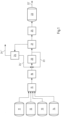
- the temperature of the monomer mixture is heated to 265°C, whereby the reaction products of the cyclic diolefin compound and the ethylenically unsaturated aromatics are formed by polymerization of the monomer mixture.
- the pressure in the tubular reactor 20 is 13 bar.
- the residence time in the tubular reactor 20 is 60 minutes unless otherwise stated (residence time for resin 3: 90 minutes).
- the residence time is kept the same in all examples given here except for resin 3 in order to demonstrate the advantage of the additional process step. However, it can be varied as desired, in particular in the range of 20-120 minutes.
- the monomer mixture is essentially a single-phase liquid.
- the color number refers to the Gardner color number according to ISO 4630; VOC - volatile organic compounds in % by weight based on the total weight of the hydrocarbon resin; Application - properties of the hydrocarbon resin used before tempering; EP - softening point according to ASTM D3461.
- the hydrogen flow and the heating oil are turned off.
- the reactor is filled with nitrogen again and cooled to about 70°C within about 1 hour.
- the resin solution containing hydrogenated hydrocarbon resin is then filtered and filled into a three-neck flask.
- the colour number (YI) indicates the yellowness index according to the standard ASTM D1209-05(2011); VOC - volatile organic compounds (volatile organic compounds) in % by weight based on the total weight of the hydrocarbon resin; EP - softening point according to ASTM D3461.
- the hydrogenated hydrocarbon resins show good compatibilities.
- the compatibility of the resins was determined by determining the cloud point according to the method described below.
- a mixture was prepared containing 3 g of a base polymer with 3 g of the respective resin.
- the mixture was then heated in a test tube with an inner diameter of 16 mm in an oil bath until a clear solution was obtained, heating to a maximum of 260°C. After heating, the test tube was removed from the oil bath and wiped clean on the outside.
- the mixture was then allowed to cool in the test tube, while the mixture was gently stirred with a thermometer with a red liquid end ball of 3 mm diameter. The red liquid end ball was in contact with the bottom of the test tube during stirring.
- the base polymer used for the cloud point determination mixture was a base polymer typically used in hot melt adhesives. This means that a metallocene polyolefin typically used in hot melt adhesives, or an ethylene vinyl acetate copolymer typically used in hot melt adhesives, or an amorphous polyalphaolefin typically used in hot melt adhesives were used.
- metallocene polyolefins include Affinity GA 1900 and Affinity GA 1950 from Dow Chemical Company.
- ethylene vinyl acetate copolymers include Evatane 18-500, Evatane 28-420 and Evatane 33-400 from Arkema.
- Evatane ethylene vinyl acetate copolymers the first two digits describe the average vinyl acetate content in percent by weight and the last three digits describe the average melt flow index at 190°C and 2.16 kg according to ISO 1133 or ASTM D1238.
- amorphous polyalphaolefins include Vestoplast 608, Vestoplast 703 and Vestoplast 750 from Evonik Industries.
Landscapes
- Chemical & Material Sciences (AREA)
- Organic Chemistry (AREA)
- Chemical Kinetics & Catalysis (AREA)
- Health & Medical Sciences (AREA)
- Medicinal Chemistry (AREA)
- Polymers & Plastics (AREA)
- General Chemical & Material Sciences (AREA)
- Oil, Petroleum & Natural Gas (AREA)
- Engineering & Computer Science (AREA)
- Addition Polymer Or Copolymer, Post-Treatments, Or Chemical Modifications (AREA)
Claims (17)
- Procédé pour la production d'une résine hydrocarbonée, dans lequel un mélange de monomères, lequel contient un constituant aromatique contenant de l'indène et/ou de l'alkylindène en C1-4 et un constituant dioléfinique cyclique contenant un composé dioléfinique cyclique, est soumis à une polymérisation par chauffage à une température de polymérisation d'au moins 180 °C, afin d'obtenir un flux de produits contenant une résine hydrocarbonée, dans lequel des oligomères qui contiennent des motifs provenant du composé dioléfinique cyclique et/ou des motifs provenant du constituant aromatique sont séparés du flux de produits et renvoyés au mélange de monomères, et dans lequel la résine hydrocarbonée est chauffée dans une étape de recuit à une température allant de 150 °C à 300 °C pendant une période allant de 15 minutes à 240 heures.
- Procédé selon la revendication 1, caractérisé en ce que le mélange de monomères est essentiellement liquide à une seule phase pendant le chauffage à la température de polymérisation et pendant la polymérisation, et/ou en ce que la température de polymérisation va de 200 °C à 300 °C, de préférence de 230 °C à 300 °C ou de 240 °C à 280 °C ou de 250 °C à 270 °C, et/ou en ce que la polymérisation est réalisée à une pression allant de 10 bar à 25 bar, de préférence de 10 bar à 20 bar ou de 13 bar à 18 bar, et/ou en ce que la polymérisation est réalisée en continu dans un réacteur tubulaire.
- Procédé selon l'une des revendications 1 ou 2, caractérisé en ce que le constituant dioléfinique cyclique contient 30 % en poids ou plus, de préférence 35 % en poids ou plus, plus préférablement 50 % en poids ou plus, encore plus préférablement 60 % en poids ou plus, encore plus préférablement 70 % en poids ou plus, par rapport à la masse totale du constituant dioléfinique cyclique, de composé dioléfinique cyclique, et/ou le composé dioléfinique cyclique contient un cyclodialcène conjugué et/ou est choisi dans le groupe constitué de cyclopentadiène, dérivés de cyclopentadiène tels que méthylcyclopentadiène, éthylcyclopentadiène, pentaméthylcyclopentadiène, éthyltétraméthylcyclopentadiène et des mélanges de ceux-ci, et/ou le constituant aromatique est un mélange d'aromatiques qui contient de l'indène et/ou de l'alkylindène en C1-4 et au moins un, en particulier au moins deux, composés aromatiques à insaturation éthylénique comportant respectivement, indépendamment l'un de l'autre, 8 à 15, de préférence 8 à 13 atomes de carbone, en particulier le mélange d'aromatiques est un mélange contenant 50 % en poids ou moins d'aromatiques vinyliques tels que styrène, α-méthylstyrène, o-vinyltoluène, m-vinyltoluène et p-vinyltoluène, 30 % en poids ou moins d'indène et 15 % en poids ou moins d'alkylindène en C1-4, par rapport à la masse totale du mélange, ou un mélange contenant 60 % en poids ou moins d'indène et/ou d'alkylindène en C1-4, par rapport à la masse totale du mélange.
- Procédé selon l'une des revendications 1 à 3, caractérisé en ce que le composé dioléfinique cyclique est défini selon la revendication 3 et le constituant aromatique est défini selon la revendication 3 et le mélange de monomères contient 50 à 95 % en poids, de préférence 60 à 95 % en poids, ou 65 à 90 % en poids ou 65 à 85 % en poids ou 65 à 80 % en poids du composé dioléfinique cyclique, par rapport à la masse totale du composé dioléfinique cyclique, de l'indène et/ou de l'alkylindène en C1-4 et des composés aromatiques à insaturation éthylénique.
- Procédé selon l'une des revendications 1 à 4, caractérisé en ce que le composé dioléfinique cyclique est défini selon la revendication 3 et le constituant aromatique est défini selon la revendication 3 et le mélange de monomères contient 5 à 40 % en poids, de préférence 10 à 35 % en poids ou 15 à 35 % en poids ou 25 à 35 % en poids d'indène et/ou d'alkylindène en C1-4 et de composés aromatiques à insaturation éthylénique, par rapport à la masse totale du composé dioléfinique cyclique, de l'indène et/ou de l'alkylindène en C1-4 et des composés aromatiques à insaturation éthylénique.
- Procédé selon l'une des revendications 1 à 5, caractérisé en ce que le mélange de monomères comprend un solvant non polymérisable, contenant de préférence des composés aromatiques à monosubstitution ou polysubstitution alkyle, en particulier à monosubstitution ou bisubstitution alkyle, comportant 7 à 10 atomes de carbone, par exemple le o-xylène, le m-xylène, le p-xylène et/ou l'éthylbenzène.
- Procédé selon l'une des revendications 1 à 6, caractérisé en ce que les oligomères bouillent à une pression absolue de 100 mbar ou moins, en particulier de 50 mbar ou moins, de préférence de 30 mbar, et à une température de 80 °C ou plus, de préférence de 80 °C à 120 °C, plus préférablement de 90 °C à 120 °C, encore plus préférablement de 100 °C à 120 °C, et/ou présentent une masse moléculaire allant de 100 à 600 g/mol, de préférence de 130 à 600 g/mol ou de 150 à 600 g/mol.
- Procédé selon l'une des revendications 1 à 7, caractérisé en ce que les oligomères et le solvant non polymérisable optionnel sont éliminés partiellement, de préférence complètement, du flux de produits après la polymérisation par évaporation intermittente ou de préférence continue, et/ou les oligomères sont séparés partiellement ou de préférence complètement du solvant non polymérisable après l'évaporation, par intermittence ou de préférence de manière continue, par condensation totale ou de préférence partielle et/ou sont renvoyés au mélange de monomères après la condensation, par intermittence ou de préférence de manière continue, pour une polymérisation supplémentaire.
- Procédé selon l'une des revendications 1 à 8, caractérisé en ce que la résine hydrocarbonée est chauffée dans l'étape de recuit pendant une période allant de 15 minutes à 600 minutes, de préférence de 15 minutes à 500 minutes, plus préférablement de 15 minutes à 400 minutes, encore plus préférablement de 20 à 300 minutes, ou pendant une période allant de 24 heures à 240 heures, de préférence de 24 heures à 168 heures, plus préférablement de 24 heures à 120 heures, encore plus préférablement de 24 heures à 72 heures.
- Procédé selon l'une des revendications 1 à 9, caractérisé en ce que, dans l'étape de recuit, la résine hydrocarbonée est chauffée à une température allant de 200 °C à 300 °C, de préférence de 210 °C à 280 °C, plus préférablement de 210 °C à 270 °C, encore plus préférablement de 220 °C à 255 °C, ou à une température allant de 150 °C à 210 °C, de préférence de 170 °C à 200 °C, plus préférablement de 175 °C à 195 °C.
- Procédé selon l'une des revendications 1 à 10, caractérisé en ce que l'étape de recuit est réalisée après l'élimination des oligomères et/ou en ce que l'étape de recuit est réalisée après l'élimination du solvant non polymérisable optionnel et/ou en ce que l'étape de recuit est réalisée dans un récipient de recuit dans lequel le mélange peut être recuit, en particulier un réservoir, une chaudière, ou un tube.
- Procédé selon l'une des revendications 1 à 11, caractérisé en ce que la résine hydrocarbonée est partiellement ou complètement hydrogénée dans une étape d'hydrogénation ultérieure pour obtenir une résine hydrocarbonée hydrogénée.
- Résine hydrocarbonée pouvant être obtenue par un procédé selon l'une des revendications 1 à 11.
- Résine hydrocarbonée hydrogénée pouvant être obtenue par hydrogénation d'une résine hydrocarbonée selon la revendication 13 et/ou par un procédé selon la revendication 12.
- Utilisation d'une résine hydrocarbonée selon la revendication 13 ou d'une résine hydrocarbonée hydrogénée selon la revendication 14 comme agent d'adhésivité ou tackifiant dans des adhésifs thermofusibles, en particulier dans des adhésifs thermofusibles à base de polyoléfine métallocène, de copolymère éthylène-acétate de vinyle, de polyalphaoléfines amorphes ou de copolymères séquencés styrène, et/ou dans des adhésifs contenant des solvants, en particulier dans des adhésifs à copolymères séquencés styrène contenant des solvants.
- Utilisation d'une résine hydrocarbonée selon la revendication 13 comme agent modificateur dans des produits en caoutchouc, en particulier pour l'amélioration des propriétés mécaniques et dynamiques dans des produits en caoutchouc, dans des bitumes, en particulier comme additif et/ou comme agent hydrophobe dans des bitumes, en particulier pour l'asphalte, ou comme agent modificateur et/ou hydrophobe dans des encres d'impression.
- Utilisation d'une résine hydrocarbonée hydrogénée selon la revendication 14 comme additif dans des peintures, dans des plastiques, en particulier comme agent modificateur dans des plastiques, dans des caoutchoucs, dans des bitumes, en particulier comme agent hydrophobe dans des bitumes, par exemple pour les membranes de toiture, dans des films de polypropylène, en particulier comme agent modificateur et/ou hydrophobe dans des films de polypropylène, en particulier des films BOPP, dans des cosmétiques ou comme agent d'adhésivité dans des compositions adhésives, en particulier pour des applications dans l'industrie des articles d'hygiène ainsi que pour l'utilisation dans les emballages alimentaires.
Applications Claiming Priority (2)
| Application Number | Priority Date | Filing Date | Title |
|---|---|---|---|
| EP20172289.9A EP3904410A1 (fr) | 2020-04-30 | 2020-04-30 | Résine d'hydrocarbure et son procédé de fabrication |
| PCT/EP2021/061340 WO2021219825A1 (fr) | 2020-04-30 | 2021-04-29 | Résine hydrocarbonée et son procédé de production |
Publications (3)
| Publication Number | Publication Date |
|---|---|
| EP4143246A1 EP4143246A1 (fr) | 2023-03-08 |
| EP4143246B1 true EP4143246B1 (fr) | 2024-07-03 |
| EP4143246C0 EP4143246C0 (fr) | 2024-07-03 |
Family
ID=70482311
Family Applications (2)
| Application Number | Title | Priority Date | Filing Date |
|---|---|---|---|
| EP20172289.9A Withdrawn EP3904410A1 (fr) | 2020-04-30 | 2020-04-30 | Résine d'hydrocarbure et son procédé de fabrication |
| EP21721938.5A Active EP4143246B1 (fr) | 2020-04-30 | 2021-04-29 | Résine d'hydrocarbure et son procédé de fabrication |
Family Applications Before (1)
| Application Number | Title | Priority Date | Filing Date |
|---|---|---|---|
| EP20172289.9A Withdrawn EP3904410A1 (fr) | 2020-04-30 | 2020-04-30 | Résine d'hydrocarbure et son procédé de fabrication |
Country Status (6)
| Country | Link |
|---|---|
| US (1) | US11932711B2 (fr) |
| EP (2) | EP3904410A1 (fr) |
| JP (1) | JP7737399B2 (fr) |
| KR (1) | KR102676282B1 (fr) |
| CN (1) | CN115734976B (fr) |
| WO (1) | WO2021219825A1 (fr) |
Family Cites Families (18)
| Publication number | Priority date | Publication date | Assignee | Title |
|---|---|---|---|---|
| JPS4832432B1 (fr) | 1970-03-23 | 1973-10-05 | ||
| JPS5153591A (en) * | 1974-11-05 | 1976-05-12 | Mitsui Petrochemical Ind | Tankasuisojushino seizohoho |
| GB1538057A (en) | 1975-08-13 | 1979-01-10 | Exxon Research Engineering Co | Petroleum resins |
| DE2932190A1 (de) * | 1978-08-09 | 1980-02-28 | Nippon Oil Co Ltd | Schmelzbare harzmasse |
| US4558107A (en) | 1982-06-11 | 1985-12-10 | Exxon Research & Engineering Co. | Aromatic high softening point petroleum resins and process for its preparation |
| US5077386A (en) * | 1988-05-09 | 1991-12-31 | Exxon Chemical Patents Inc. | Petroleum resins of improved color and process for making the same |
| US5171793A (en) * | 1990-02-22 | 1992-12-15 | Exxon Chemical Patents Inc. | Hydrogenated resins, adhesive formulations and process for production of resins |
| JP3173841B2 (ja) * | 1992-01-17 | 2001-06-04 | トーネックス株式会社 | 水添石油樹脂 |
| GB9205841D0 (en) | 1992-03-18 | 1992-04-29 | Exxon Chemical Patents Inc | Hydrocarbon resins,processes for their manufacture and adhesive compositions containing such resins |
| JP3640418B2 (ja) * | 1994-10-04 | 2005-04-20 | ソニー株式会社 | 電子機器 |
| US5502140A (en) * | 1994-10-19 | 1996-03-26 | Hercules Incorporated | Thermally polymerized dicyclopentadiene/vinyl aromatic resins |
| DE69513943T2 (de) * | 1995-02-03 | 2000-05-18 | Hercules Inc., Wilmington | Verfahren zur Hydrobehandlung von Harzen zur Farbverbesserung |
| EP0936229B1 (fr) | 1998-02-12 | 2004-04-28 | Eastman Chemical Resins, Inc. | Procédé de préparation de résines hydrocarbonées aliphatiques modifiées aromatiquement présentant un équilibre excellent entre les caractéristiques d'adhésion et cisaillement |
| US6825291B2 (en) | 2000-12-11 | 2004-11-30 | Eastman Chemical Resins, Inc. | Thermally polymerized copolymers made from styrene and dicyclopentadiene monomers |
| TWI669320B (zh) | 2014-03-26 | 2019-08-21 | 日商丸善石油化學股份有限公司 | Method for producing hydrogenated petroleum resin |
| KR102291384B1 (ko) | 2016-09-27 | 2021-08-20 | 코오롱인더스트리 주식회사 | 경화 가능한 변성 석유수지, 이의 제조방법 및 이의 용도 |
| KR101928079B1 (ko) * | 2016-12-12 | 2018-12-11 | 한화케미칼 주식회사 | 디시클로펜타디엔계 수지의 제조 방법 및 디시클로펜타디엔계 수지 |
| JP7133631B2 (ja) * | 2018-02-14 | 2022-09-08 | レイン カーボン ジャーマニー ゲーエムベーハー | 炭化水素樹脂およびその水素化生成物の製造方法 |
-
2020
- 2020-04-30 EP EP20172289.9A patent/EP3904410A1/fr not_active Withdrawn
-
2021
- 2021-04-29 EP EP21721938.5A patent/EP4143246B1/fr active Active
- 2021-04-29 WO PCT/EP2021/061340 patent/WO2021219825A1/fr not_active Ceased
- 2021-04-29 CN CN202180032136.9A patent/CN115734976B/zh active Active
- 2021-04-29 US US17/922,039 patent/US11932711B2/en active Active
- 2021-04-29 KR KR1020227041962A patent/KR102676282B1/ko active Active
- 2021-04-29 JP JP2022566095A patent/JP7737399B2/ja active Active
Also Published As
| Publication number | Publication date |
|---|---|
| BR112022022023A2 (pt) | 2023-04-25 |
| EP3904410A1 (fr) | 2021-11-03 |
| CN115734976A (zh) | 2023-03-03 |
| KR102676282B1 (ko) | 2024-06-18 |
| CN115734976B (zh) | 2024-04-05 |
| JP2023515715A (ja) | 2023-04-13 |
| WO2021219825A1 (fr) | 2021-11-04 |
| EP4143246C0 (fr) | 2024-07-03 |
| US11932711B2 (en) | 2024-03-19 |
| US20230183389A1 (en) | 2023-06-15 |
| KR20230022851A (ko) | 2023-02-16 |
| JP7737399B2 (ja) | 2025-09-10 |
| EP4143246A1 (fr) | 2023-03-08 |
Similar Documents
| Publication | Publication Date | Title |
|---|---|---|
| WO2019158638A1 (fr) | Procédé de préparation de résines hydrocarbonées et de leurs produits d'hydrogénation | |
| DE69926213T2 (de) | Verfahren zur Herstellung eines hydrierten C9-Petrolharzes und durch das Verfahren erhaltenes hydriertes C9-Petrolharz | |
| DE69605765T2 (de) | Aliphatische Harze auf Petroleumbasis, Verfahren zur Kontrolle von deren Erweichungspunkt und deren Molekulargewicht, und druckempfindliche Schmelzklebstoffe, die diese enthalten. | |
| DE69505812T2 (de) | Kontinuierliches verfahren für die herstellung von polycyclischen olefinpolymeren | |
| DE69413738T3 (de) | Verfahren zur Hydrobehandlung von Harzen in der Absicht, die Farbe zu verbesseren | |
| DE2028935B2 (de) | Polyalkenamere und Verfahren zu deren Herstellung | |
| DE10196200B4 (de) | Verfahren zur Herstellung eines Styrolharzes mit einem geringen Gehalt an niedermolekularen Komponenten | |
| DE60118384T2 (de) | Maleinisierte flüssige c5-kohlenwasserstoffharze | |
| DE2144255B2 (de) | Verfahren zur Herstellung von Erdölharzen | |
| EP4143246B1 (fr) | Résine d'hydrocarbure et son procédé de fabrication | |
| EP4103632B1 (fr) | Résine d'hydrocarbure et son procédé de fabrication | |
| DE2259972B2 (de) | Verfahren zur herstellung von erdoelharzen | |
| DE1945358B2 (de) | Niedermolekulare Polyalkenamere und Verfahren zu deren Herstellung | |
| DE69416552T2 (de) | Alkylierte Harze aus polycyclischen aromatischen Verbindungen | |
| DE69823480T2 (de) | Verfahren zur Herstellung aromatisch modifizierter aliphatischer Kohlenwasserstoffharze mit ausgezeichnetem Ausgleich zwischen Klebrigkeit und Scherfestigkeit | |
| DE3111540A1 (de) | Heisskleber-zusammensetzungen | |
| RU2790173C2 (ru) | Способ получения углеводородных смол и продуктов их гидрирования | |
| DE19523587A1 (de) | Verfahren zur anionischen Polymerisation von Vinylaromaten | |
| BR112022022023B1 (pt) | Resina de hidrocarboneto e processo para sua produção | |
| DE2414558C3 (de) | Verfahren zur Herstellung eines polare Gruppen und ungesättigte Bindungen enthaltenden thermoplastischen Harzes | |
| DE1231900B (de) | Verfahren zur Herstellung von partiell cyclisierten, niedermolekularen Butadienpolymerisaten |
Legal Events
| Date | Code | Title | Description |
|---|---|---|---|
| STAA | Information on the status of an ep patent application or granted ep patent |
Free format text: STATUS: UNKNOWN |
|
| STAA | Information on the status of an ep patent application or granted ep patent |
Free format text: STATUS: THE INTERNATIONAL PUBLICATION HAS BEEN MADE |
|
| PUAI | Public reference made under article 153(3) epc to a published international application that has entered the european phase |
Free format text: ORIGINAL CODE: 0009012 |
|
| STAA | Information on the status of an ep patent application or granted ep patent |
Free format text: STATUS: REQUEST FOR EXAMINATION WAS MADE |
|
| 17P | Request for examination filed |
Effective date: 20221129 |
|
| AK | Designated contracting states |
Kind code of ref document: A1 Designated state(s): AL AT BE BG CH CY CZ DE DK EE ES FI FR GB GR HR HU IE IS IT LI LT LU LV MC MK MT NL NO PL PT RO RS SE SI SK SM TR |
|
| DAV | Request for validation of the european patent (deleted) | ||
| DAX | Request for extension of the european patent (deleted) | ||
| GRAP | Despatch of communication of intention to grant a patent |
Free format text: ORIGINAL CODE: EPIDOSNIGR1 |
|
| STAA | Information on the status of an ep patent application or granted ep patent |
Free format text: STATUS: GRANT OF PATENT IS INTENDED |
|
| INTG | Intention to grant announced |
Effective date: 20240202 |
|
| GRAS | Grant fee paid |
Free format text: ORIGINAL CODE: EPIDOSNIGR3 |
|
| GRAA | (expected) grant |
Free format text: ORIGINAL CODE: 0009210 |
|
| STAA | Information on the status of an ep patent application or granted ep patent |
Free format text: STATUS: THE PATENT HAS BEEN GRANTED |
|
| AK | Designated contracting states |
Kind code of ref document: B1 Designated state(s): AL AT BE BG CH CY CZ DE DK EE ES FI FR GB GR HR HU IE IS IT LI LT LU LV MC MK MT NL NO PL PT RO RS SE SI SK SM TR |
|
| REG | Reference to a national code |
Ref country code: CH Ref legal event code: EP |
|
| REG | Reference to a national code |
Ref country code: DE Ref legal event code: R096 Ref document number: 502021004229 Country of ref document: DE |
|
| U01 | Request for unitary effect filed |
Effective date: 20240726 |
|
| U07 | Unitary effect registered |
Designated state(s): AT BE BG DE DK EE FI FR IT LT LU LV MT NL PT SE SI Effective date: 20240809 |
|
| PG25 | Lapsed in a contracting state [announced via postgrant information from national office to epo] |
Ref country code: NO Free format text: LAPSE BECAUSE OF FAILURE TO SUBMIT A TRANSLATION OF THE DESCRIPTION OR TO PAY THE FEE WITHIN THE PRESCRIBED TIME-LIMIT Effective date: 20241003 |
|
| PG25 | Lapsed in a contracting state [announced via postgrant information from national office to epo] |
Ref country code: GR Free format text: LAPSE BECAUSE OF FAILURE TO SUBMIT A TRANSLATION OF THE DESCRIPTION OR TO PAY THE FEE WITHIN THE PRESCRIBED TIME-LIMIT Effective date: 20241004 Ref country code: PL Free format text: LAPSE BECAUSE OF FAILURE TO SUBMIT A TRANSLATION OF THE DESCRIPTION OR TO PAY THE FEE WITHIN THE PRESCRIBED TIME-LIMIT Effective date: 20240703 |
|
| PG25 | Lapsed in a contracting state [announced via postgrant information from national office to epo] |
Ref country code: IS Free format text: LAPSE BECAUSE OF FAILURE TO SUBMIT A TRANSLATION OF THE DESCRIPTION OR TO PAY THE FEE WITHIN THE PRESCRIBED TIME-LIMIT Effective date: 20241103 |
|
| PG25 | Lapsed in a contracting state [announced via postgrant information from national office to epo] |
Ref country code: CZ Free format text: LAPSE BECAUSE OF FAILURE TO SUBMIT A TRANSLATION OF THE DESCRIPTION OR TO PAY THE FEE WITHIN THE PRESCRIBED TIME-LIMIT Effective date: 20240703 Ref country code: HR Free format text: LAPSE BECAUSE OF FAILURE TO SUBMIT A TRANSLATION OF THE DESCRIPTION OR TO PAY THE FEE WITHIN THE PRESCRIBED TIME-LIMIT Effective date: 20240703 |
|
| PG25 | Lapsed in a contracting state [announced via postgrant information from national office to epo] |
Ref country code: RS Free format text: LAPSE BECAUSE OF FAILURE TO SUBMIT A TRANSLATION OF THE DESCRIPTION OR TO PAY THE FEE WITHIN THE PRESCRIBED TIME-LIMIT Effective date: 20241003 Ref country code: ES Free format text: LAPSE BECAUSE OF FAILURE TO SUBMIT A TRANSLATION OF THE DESCRIPTION OR TO PAY THE FEE WITHIN THE PRESCRIBED TIME-LIMIT Effective date: 20240703 |
|
| PG25 | Lapsed in a contracting state [announced via postgrant information from national office to epo] |
Ref country code: RS Free format text: LAPSE BECAUSE OF FAILURE TO SUBMIT A TRANSLATION OF THE DESCRIPTION OR TO PAY THE FEE WITHIN THE PRESCRIBED TIME-LIMIT Effective date: 20241003 Ref country code: PL Free format text: LAPSE BECAUSE OF FAILURE TO SUBMIT A TRANSLATION OF THE DESCRIPTION OR TO PAY THE FEE WITHIN THE PRESCRIBED TIME-LIMIT Effective date: 20240703 Ref country code: NO Free format text: LAPSE BECAUSE OF FAILURE TO SUBMIT A TRANSLATION OF THE DESCRIPTION OR TO PAY THE FEE WITHIN THE PRESCRIBED TIME-LIMIT Effective date: 20241003 Ref country code: IS Free format text: LAPSE BECAUSE OF FAILURE TO SUBMIT A TRANSLATION OF THE DESCRIPTION OR TO PAY THE FEE WITHIN THE PRESCRIBED TIME-LIMIT Effective date: 20241103 Ref country code: HR Free format text: LAPSE BECAUSE OF FAILURE TO SUBMIT A TRANSLATION OF THE DESCRIPTION OR TO PAY THE FEE WITHIN THE PRESCRIBED TIME-LIMIT Effective date: 20240703 Ref country code: GR Free format text: LAPSE BECAUSE OF FAILURE TO SUBMIT A TRANSLATION OF THE DESCRIPTION OR TO PAY THE FEE WITHIN THE PRESCRIBED TIME-LIMIT Effective date: 20241004 Ref country code: ES Free format text: LAPSE BECAUSE OF FAILURE TO SUBMIT A TRANSLATION OF THE DESCRIPTION OR TO PAY THE FEE WITHIN THE PRESCRIBED TIME-LIMIT Effective date: 20240703 Ref country code: CZ Free format text: LAPSE BECAUSE OF FAILURE TO SUBMIT A TRANSLATION OF THE DESCRIPTION OR TO PAY THE FEE WITHIN THE PRESCRIBED TIME-LIMIT Effective date: 20240703 |
|
| PG25 | Lapsed in a contracting state [announced via postgrant information from national office to epo] |
Ref country code: SM Free format text: LAPSE BECAUSE OF FAILURE TO SUBMIT A TRANSLATION OF THE DESCRIPTION OR TO PAY THE FEE WITHIN THE PRESCRIBED TIME-LIMIT Effective date: 20240703 |
|
| PG25 | Lapsed in a contracting state [announced via postgrant information from national office to epo] |
Ref country code: SK Free format text: LAPSE BECAUSE OF FAILURE TO SUBMIT A TRANSLATION OF THE DESCRIPTION OR TO PAY THE FEE WITHIN THE PRESCRIBED TIME-LIMIT Effective date: 20240703 |
|
| PLBE | No opposition filed within time limit |
Free format text: ORIGINAL CODE: 0009261 |
|
| STAA | Information on the status of an ep patent application or granted ep patent |
Free format text: STATUS: NO OPPOSITION FILED WITHIN TIME LIMIT |
|
| U20 | Renewal fee for the european patent with unitary effect paid |
Year of fee payment: 5 Effective date: 20250424 |
|
| 26N | No opposition filed |
Effective date: 20250404 |
|
| REG | Reference to a national code |
Ref country code: CH Ref legal event code: H13 Free format text: ST27 STATUS EVENT CODE: U-0-0-H10-H13 (AS PROVIDED BY THE NATIONAL OFFICE) Effective date: 20251125 |
|
| PG25 | Lapsed in a contracting state [announced via postgrant information from national office to epo] |
Ref country code: MC Free format text: LAPSE BECAUSE OF FAILURE TO SUBMIT A TRANSLATION OF THE DESCRIPTION OR TO PAY THE FEE WITHIN THE PRESCRIBED TIME-LIMIT Effective date: 20240703 |
|
| GBPC | Gb: european patent ceased through non-payment of renewal fee |
Effective date: 20250429 |
|
| PG25 | Lapsed in a contracting state [announced via postgrant information from national office to epo] |
Ref country code: GB Free format text: LAPSE BECAUSE OF NON-PAYMENT OF DUE FEES Effective date: 20250429 |
|
| PG25 | Lapsed in a contracting state [announced via postgrant information from national office to epo] |
Ref country code: CH Free format text: LAPSE BECAUSE OF NON-PAYMENT OF DUE FEES Effective date: 20250430 |
|
| PG25 | Lapsed in a contracting state [announced via postgrant information from national office to epo] |
Ref country code: IE Free format text: LAPSE BECAUSE OF NON-PAYMENT OF DUE FEES Effective date: 20250429 |
|
| PG25 | Lapsed in a contracting state [announced via postgrant information from national office to epo] |
Ref country code: RO Free format text: LAPSE BECAUSE OF FAILURE TO SUBMIT A TRANSLATION OF THE DESCRIPTION OR TO PAY THE FEE WITHIN THE PRESCRIBED TIME-LIMIT Effective date: 20240703 |