EP4286517A2 - Utilisations thérapeutiques de l'édition de génome au moyen de systèmes crispr/cas - Google Patents
Utilisations thérapeutiques de l'édition de génome au moyen de systèmes crispr/cas Download PDFInfo
- Publication number
- EP4286517A2 EP4286517A2 EP23172496.4A EP23172496A EP4286517A2 EP 4286517 A2 EP4286517 A2 EP 4286517A2 EP 23172496 A EP23172496 A EP 23172496A EP 4286517 A2 EP4286517 A2 EP 4286517A2
- Authority
- EP
- European Patent Office
- Prior art keywords
- cell
- sequence
- target polynucleotide
- cells
- sequences
- Prior art date
- Legal status (The legal status is an assumption and is not a legal conclusion. Google has not performed a legal analysis and makes no representation as to the accuracy of the status listed.)
- Pending
Links
Images








Classifications
-
- C—CHEMISTRY; METALLURGY
- C12—BIOCHEMISTRY; BEER; SPIRITS; WINE; VINEGAR; MICROBIOLOGY; ENZYMOLOGY; MUTATION OR GENETIC ENGINEERING
- C12N—MICROORGANISMS OR ENZYMES; COMPOSITIONS THEREOF; PROPAGATING, PRESERVING, OR MAINTAINING MICROORGANISMS; MUTATION OR GENETIC ENGINEERING; CULTURE MEDIA
- C12N15/00—Mutation or genetic engineering; DNA or RNA concerning genetic engineering, vectors, e.g. plasmids, or their isolation, preparation or purification; Use of hosts therefor
- C12N15/09—Recombinant DNA-technology
- C12N15/63—Introduction of foreign genetic material using vectors; Vectors; Use of hosts therefor; Regulation of expression
-
- A—HUMAN NECESSITIES
- A61—MEDICAL OR VETERINARY SCIENCE; HYGIENE
- A61P—SPECIFIC THERAPEUTIC ACTIVITY OF CHEMICAL COMPOUNDS OR MEDICINAL PREPARATIONS
- A61P31/00—Antiinfectives, i.e. antibiotics, antiseptics, chemotherapeutics
-
- A—HUMAN NECESSITIES
- A61—MEDICAL OR VETERINARY SCIENCE; HYGIENE
- A61P—SPECIFIC THERAPEUTIC ACTIVITY OF CHEMICAL COMPOUNDS OR MEDICINAL PREPARATIONS
- A61P31/00—Antiinfectives, i.e. antibiotics, antiseptics, chemotherapeutics
- A61P31/12—Antivirals
- A61P31/14—Antivirals for RNA viruses
- A61P31/18—Antivirals for RNA viruses for HIV
-
- A—HUMAN NECESSITIES
- A61—MEDICAL OR VETERINARY SCIENCE; HYGIENE
- A61P—SPECIFIC THERAPEUTIC ACTIVITY OF CHEMICAL COMPOUNDS OR MEDICINAL PREPARATIONS
- A61P35/00—Antineoplastic agents
-
- A—HUMAN NECESSITIES
- A61—MEDICAL OR VETERINARY SCIENCE; HYGIENE
- A61P—SPECIFIC THERAPEUTIC ACTIVITY OF CHEMICAL COMPOUNDS OR MEDICINAL PREPARATIONS
- A61P43/00—Drugs for specific purposes, not provided for in groups A61P1/00-A61P41/00
-
- C—CHEMISTRY; METALLURGY
- C12—BIOCHEMISTRY; BEER; SPIRITS; WINE; VINEGAR; MICROBIOLOGY; ENZYMOLOGY; MUTATION OR GENETIC ENGINEERING
- C12N—MICROORGANISMS OR ENZYMES; COMPOSITIONS THEREOF; PROPAGATING, PRESERVING, OR MAINTAINING MICROORGANISMS; MUTATION OR GENETIC ENGINEERING; CULTURE MEDIA
- C12N15/00—Mutation or genetic engineering; DNA or RNA concerning genetic engineering, vectors, e.g. plasmids, or their isolation, preparation or purification; Use of hosts therefor
- C12N15/09—Recombinant DNA-technology
- C12N15/87—Introduction of foreign genetic material using processes not otherwise provided for, e.g. co-transformation
- C12N15/90—Stable introduction of foreign DNA into chromosome
- C12N15/902—Stable introduction of foreign DNA into chromosome using homologous recombination
- C12N15/907—Stable introduction of foreign DNA into chromosome using homologous recombination in mammalian cells
-
- C—CHEMISTRY; METALLURGY
- C12—BIOCHEMISTRY; BEER; SPIRITS; WINE; VINEGAR; MICROBIOLOGY; ENZYMOLOGY; MUTATION OR GENETIC ENGINEERING
- C12N—MICROORGANISMS OR ENZYMES; COMPOSITIONS THEREOF; PROPAGATING, PRESERVING, OR MAINTAINING MICROORGANISMS; MUTATION OR GENETIC ENGINEERING; CULTURE MEDIA
- C12N5/00—Undifferentiated human, animal or plant cells, e.g. cell lines; Tissues; Cultivation or maintenance thereof; Culture media therefor
- C12N5/06—Animal cells or tissues; Human cells or tissues
- C12N5/0602—Vertebrate cells
- C12N5/0603—Embryonic cells ; Embryoid bodies
- C12N5/0606—Pluripotent embryonic cells, e.g. embryonic stem cells [ES]
-
- A—HUMAN NECESSITIES
- A61—MEDICAL OR VETERINARY SCIENCE; HYGIENE
- A61K—PREPARATIONS FOR MEDICAL, DENTAL OR TOILETRY PURPOSES
- A61K48/00—Medicinal preparations containing genetic material which is inserted into cells of the living body to treat genetic diseases; Gene therapy
Definitions
- CRISPR Clustered regularly interspaced short palindromic repeats
- Cas CRISPR-associated systems
- Cas9 nuclease that is targeted to a genomic site by complexing with a synthetic guide RNA that hybridizes to a 20-nucleotide DNA sequence and immediately preceding an NGG motif recognized by Cas9 (thus, a (N) 20 NGG target DNA sequence). This results in a double-strand break three nucleotides upstream of the NGG motif.
- the double strand break instigates either non-homologous end-joining, which is error-prone and conducive to frameshift mutations that knock out gene alleles, or homology-directed repair, which can be exploited with the use of an exogenously introduced double-strand or single-strand DNA repair template to knock in or correct a mutation in the genome.
- CRISPR/Cas systems could be useful tools for therapeutic applications, but unfortunately prior published reports have demonstrated an efficiency of allele targeting of only 2%-4% in human stem cells ( Mali et al., Science 559:823-826 (2013 )).
- Work described herein demonstrates methods of allele targeting using CRISPR/Cas systems resulting in mutant cells with efficiencies of up to 80%.
- work described herein surprisingly and unexpectedly demonstrates that a multiple guide strategy (e.g., using two or more ribonucleic acids which guide Cas protein to and hybridize to a target polynucleotide sequence) efficiently and effectively deletes target polynucleotide sequences (e.g., B2M, HPRT, CCR5 and/or CXCR4) in primary somatic cells (e.g., human blood cells, e.g., CD34+ and T cells), in contrast to a single guide strategy which has been demonstrated by the inventors to efficiently delete target polynucleotide sequences in cell lines (e.g., 293T) but not in primary somatic cells.
- target polynucleotide sequences e.g., B2M, HPRT, CCR5 and/or CXCR4
- primary somatic cells e.g.
- CRISPR/Cas systems permit CRISPR/Cas systems to be utilized effectively for the first time for therapeutic purposes.
- Methods of delivery of CRISPR/Cas systems to human stem cells are provided.
- methods of specifically identifying useful RNA guide sequences are provided, along with particular guide sequences useful in targeting specific genes (e.g., B2M, HPRT, CCR5 and/or CXCR4).
- methods of treatment e.g., methods of treating HIV infection
- compositions and methods disclosed herein are provided.
- the present invention provides a method for altering a target polynucleotide sequence in a cell comprising contacting the polynucleotide sequence with a clustered regularly interspaced short palindromic repeats-associated (Cas) protein and from one to two ribonucleic acids, wherein the ribonucleic acids direct Cas protein to and hybridize to a target motif of the target polynucleotide sequence, wherein the target polynucleotide sequence is cleaved, and wherein the efficiency of alteration of cells that express Cas protein is from about 50% to about 80%.
- Cas clustered regularly interspaced short palindromic repeats-associated
- the present invention provides a method for treating or preventing a disorder associated with expression of a polynucleotide sequence in a subject, the method comprising (a) altering a target polynucleotide sequence in a cell ex vivo by contacting the polynucleotide sequence with a clustered regularly interspaced short palindromic repeats-associated (Cas) protein and from one to two ribonucleic acids, wherein the ribonucleic acids direct Cas protein to and hybridize to a target motif of the target polynucleotide sequence, wherein the target polynucleotide sequence is cleaved, and wherein the efficiency of alteration of cells that express Cas protein is from about 50% to about 80%, and (b) introducing the cell into the subject, thereby treating or preventing a disorder associated with expression of the polynucleotide sequence.
- Cas regularly interspaced short palindromic repeats-associated
- the present invention provides a method for simultaneously altering multiple target polynucleotide sequences in a cell comprising contacting the polynucleotide sequences with a clustered regularly interspaced short palindromic repeats-associated (Cas) protein and multiple ribonucleic acids, wherein the ribonucleic acids direct Cas protein to and hybridize to target motifs of the target polynucleotide sequences, wherein the target polynucleotide sequences are cleaved, and wherein the efficiency of alteration of cells that express Cas protein is from about 50% to about 80%.
- Cas clustered regularly interspaced short palindromic repeats-associated
- the present invention provides a method for treating or preventing a disorder associated with expression of polynucleotide sequences in a subject, the method comprising (a) altering target polynucleotide sequences in a cell ex vivo by contacting the polynucleotide sequences with a clustered regularly interspaced short palindromic repeats-associated (Cas) protein and multiple ribonucleic acids, wherein the ribonucleic acids direct Cas protein to and hybridize to target motifs of the target polynucleotide sequences, wherein the target polynucleotide sequences are cleaved, and wherein the efficiency of alteration of cells that express Cas protein is from about 50% to about 80%, and (b) introducing the cell into the subject, thereby treating or preventing a disorder associated with expression of the polynucleotide sequences.
- Cas palindromic repeats-associated
- the Cas protein is Streptococcus pyogenes Cas9 protein or a functional portion thereof.
- the functional portion comprises a combination of operably linked Cas9 protein functional domains selected from the group consisting of a DNA binding domain, at least one RNA binding domain, a helicase domain, and an endonuclease domain.
- the functional domains form a complex.
- the Cas protein is Cas9 protein from any bacterial species or functional portion thereof.
- the functional portion comprises a combination of operably linked Cas9 protein functional domains selected from the group consisting of a DNA binding domain, at least one RNA binding domain, a helicase domain, and an endonuclease domain.
- the functional domains form a complex.
- the Cas protein is complexed with the one to two ribonucleic acids. In some embodiments, the Cas protein is complexed with the multiple ribonucleic acids.
- the target motif is a 20-nucleotide DNA sequence. In some embodiments, each target motif is a 20-nucleotide DNA sequence. In some embodiments, the target motif is a 20-nucleotide DNA sequence beginning with G and immediately precedes an NGG motif recognized by the Cas protein. In some embodiments, each target motif is a 20-nucleotide DNA sequence beginning with G and immediately precedes an NGG motif recognized by the Cas protein. In some embodiments, the target motif is a 20-nucleotide DNA sequence and immediately precedes an NGG motif recognized by the Cas protein.
- each target motif is a 20-nucleotide DNA sequence and immediately precedes an NGG motif recognized by the Cas protein.
- the target motif is G(N) 19 NGG.
- each target motif is G(N) 19 NGG.
- the target motif is (N) 20 NGG.
- each target motif is (N) 20 NGG.
- the target polynucleotide sequence is cleaved such that a double-strand break results. In some embodiments, each target polynucleotide sequence is cleaved such that a double-strand break results. In some embodiments, the target polynucleotide sequence is cleaved such that a single-strand break results. In some embodiments, each target polynucleotide sequence is cleaved such that a single-strand break results.
- the alteration is an indel. In some embodiments, the alteration results in reduced expression of the target polynucleotide sequence. In some embodiments, the alteration results in reduced expression of the target polynucleotide sequences. In some embodiments, the alteration results in a knock out of the target polynucleotide sequence.
- the alteration results in a knock out of the target polynucleotide sequences. In some embodiments, the alteration results in correction of the target polynucleotide sequence from an undesired sequence to a desired sequence. In some embodiments, the alteration results in correction of the target polynucleotide sequences from undesired sequences to desired sequences. In some embodiments, the alteration is a homozygous alteration. In some embodiments, each alteration is a homozygous alteration.
- homology-directed repair occurs subsequent to cleavage of the target polynucleotide sequence.
- homology-directed repair is performed using an exogenously introduced DNA repair template.
- the exogenously introduced DNA repair template is single-stranded.
- the exogenously introduced DNA repair template is double-stranded.
- homology-directed repair occurs subsequent to cleavage of the target polynucleotide sequences.
- homology-directed repair is performed using an exogenously introduced DNA repair template.
- the exogenously introduced DNA repair template is single-stranded.
- the exogenously introduced DNA repair template is double-stranded.
- the cell is a peripheral blood cell. In some embodiments, the cell is a stem cell or a pluripotent cell. In some embodiments, the cell is a hematopoietic stem cell. In some embodiments, the cell is a CD34 + cell. In some embodiments, the cell is a CD34 + mobilized peripheral blood cell. In some embodiments, the cell is a CD34 + cord blood cell. In some embodiments, the cell is a CD34 + bone marrow cell. In some embodiments, the cell is a CD34 + CD38-Lineage-CD90 + CD45RA - cell. In some embodiments, the cell is a hepatocyte.
- the target polynucleotide sequence is CCR5.
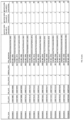
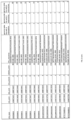
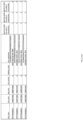
- at least one of the one to two ribonucleic acids comprises a sequence selected from the group consisting of the ribonucleic acid sequences of Fig. 1 .
- at least one of the one to two ribonucleic acids comprises a sequence with a single nucleotide mismatch to a sequence selected from the group consisting of the ribonucleic acid sequences of Fig. 1 .
- the target polynucleotide sequence is CXCR4.
- at least one of the one to two ribonucleic acids comprises a sequence selected from the group consisting of the ribonucleic acid sequences of Fig. 2 .
- at least one of the one to two ribonucleic acids comprises a sequence with a single nucleotide mismatch to a sequence selected from the group consisting of the ribonucleic acid sequences of Fig. 2 .
- the target polynucleotide sequences comprise multiple different portions of CCR5.
- each of the multiple ribonucleic acids comprises a different sequence selected from the group consisting of the ribonucleic acid sequences of Fig. 1 .
- each of the multiple ribonucleic acids comprises a sequence with a single nucleotide mismatch to a different sequence selected from the group consisting of the ribonucleic acid sequences of Fig. 1 .
- the target polynucleotide sequences comprise multiple different portions of CXCR4.
- each of the multiple ribonucleic acids comprises a different sequence selected from the group consisting of the ribonucleic acid sequences of Fig. 2 .
- each of the multiple ribonucleic acids comprises a sequence with a single nucleotide mismatch to a different sequence selected from the group consisting of the ribonucleic acid sequences of Fig. 2 .
- the target polynucleotide sequences comprise at least a portion of CCR5 and at least a portion of CXCR4.
- each of the multiple ribonucleic acids comprises a different sequence selected from the group consisting of the ribonucleic acid sequences of Fig. 1 and the ribonucleic acid sequences of Fig. 2 .
- each of the multiple ribonucleic acids comprises a sequence with a single nucleotide mismatch to a different sequence selected from the group consisting of the ribonucleic acid sequences of Fig. 1 and the ribonucleic acid sequences of Fig 2 .
- the disorder is a genetic disorder. In some embodiments, the disorder is a monogenic disorder. In some embodiments, the disorder is human immunodeficiency virus (HIV) infection. In some embodiments, the disorder is acquired immunodeficiency syndrome (AIDS).
- HIV human immunodeficiency virus
- AIDS acquired immunodeficiency syndrome
- the one to two ribonucleic acids are designed to hybridize to a target motif immediately adjacent to a deoxyribonucleic acid motif recognized by the Cas protein. In some embodiments, each of the one to two ribonucleic acids are designed to hybridize to target motifs immediately adjacent to deoxyribonucleic acid motifs recognized by the Cas protein which flank a mutant allele located between the target motifs. In some embodiments, the multiple ribonucleic acids are designed to hybridize to target motifs immediately adjacent to deoxyribonucleic acid motifs recognized by the Cas protein.
- the multiple ribonucleic acids are designed to hybridize to target motifs immediately adjacent to deoxyribonucleic acid motifs recognized by the Cas protein which flank mutant alleles located between the target motifs.
- the one to two ribonucleic acids are selected to minimize hybridization with nucleic acid sequences other than the target polynucleotide sequence.
- the multiple ribonucleic acids are selected to minimize hybridization with nucleic acid sequences other than the target polynucleotide sequence.
- the target motif is selected such that it contains at least two mismatches when compared with all other genomic nucleotide sequences in the cell. In some embodiments, each target motif is selected such that it contains at least two mismatches when compared with all other genomic nucleotide sequences in the cell. In some embodiments, the target motif is selected such that it contains at least one mismatch when compared with all other genomic nucleotide sequences in the cell.
- the target motif is selected such that it contains at least one mismatch when compared with all other genomic nucleotide sequences in the cell.
- the one to two ribonucleic acids hybridize to a target motif that it contains at least two mismatches when compared with all other genomic nucleotide sequences in the cell.
- each of the multiple ribonucleic acids hybridize to target motifs that contain at least two mismatches when compared with all other genomic nucleotide sequences in the cell. In some embodiments, the one to two ribonucleic acids hybridize to a target motif that contains at least one mismatch when compared with all other genomic nucleotide sequences in the cell. In some embodiments, each of the multiple ribonucleic acids hybridize to target motifs that contain at least one mismatch when compared with all other genomic nucleotide sequences in the cell.
- the efficiency of alteration at each loci is from about 50% to about 80%. In some embodiments, the efficiency of alteration is at least about 5%. In some embodiments, the efficiency of alteration is at least about 10%. In some embodiments, the efficiency of alteration is from about 50% to about 80%.
- the Cas protein is encoded by a modified nucleic acid.
- the modified nucleic acid comprises a ribonucleic acid containing at least one modified nucleotide selected from the group consisting of pseudouridine, 5-methylcytodine, 2-thio-uridine, 5-methyluridine-5'-triphosphate, 4-thiouridine-5'-triphosphate, 5,6-dihydrouridine-5'-triphosphate, and 5-azauridine-5'-triphosphate.
- At least one of the ribonucleic acids is a modified ribonucleic acid comprising one to two modified nucleotides selected from the group consisting of pseudouridine, 5-methylcytodine, 2-thio-uridine, 5-methyluridine-5'-triphosphate, 4-thiouridine-5'-triphosphate, 5,6-dihydrouridine-5'-triphosphate, and 5-azauridine-5'-triphosphate.
- any of the Cas protein or the ribonucleic acids are expressed from a plasmid.
- any of the Cas protein or the ribonucleic acids are expressed using a promoter optimized for increased expression in stem cells.
- the promoter is selected from the group consisting of a Cytomegalovirus (CMV) early enhancer element and a chicken beta-actin promoter, a chicken beta-actin promoter, an elongation factor-1 alpha promoter, and a ubiquitin promoter.
- CMV Cytomegalovirus
- the method further comprises selecting cells that express the Cas protein.
- selecting cells comprises FACS.
- FACs is used to select cells which co-express Cas and a fluorescent protein selected from the group consisting of green fluorescent protein and red fluorescent protein.
- the present invention provides a method for altering a target polynucleotide sequence in a cell comprising contacting the polynucleotide sequence in a cell selected from the group consisting of a human pluripotent cell, a primary human cell, and a non-transformed human cell, with a clustered regularly interspaced short palindromic repeats-associated (Cas) protein and from one to two ribonucleic acids, wherein the ribonucleic acids direct Cas protein to and hybridize to a target motif of the target polynucleotide sequence, wherein the target polynucleotide sequence is cleaved, and wherein the efficiency of alteration of cells that express Cas protein is from about 8% to about 80%.
- Cas regularly interspaced short palindromic repeats-associated
- the present invention provides a method for treating or preventing a disorder associated with expression of a polynucleotide sequence in a subject, the method comprising (a) altering a target polynucleotide sequence in a cell ex vivo by contacting the polynucleotide sequence in a cell selected from the group consisting of a human pluripotent cell, a primary human cell, and a non-transformed human cell, with a clustered regularly interspaced short palindromic repeats-associated (Cas) protein and from one to two ribonucleic acids, wherein the ribonucleic acids direct Cas protein to and hybridize to a target motif of the target polynucleotide sequence, wherein the target polynucleotide sequence is cleaved, and wherein the efficiency of alteration is from about 8% to about 80%, and (b) introducing the cell into the subject, thereby treating or preventing a disorder associated with expression of the polynucleo
- the present invention provides a method for simultaneously altering multiple target polynucleotide sequences in a cell comprising contacting the polynucleotide sequences in a cell selected from the group consisting of a human pluripotent cell, a primary human cell, and a non-transformed human cell, with a clustered regularly interspaced short palindromic repeats-associated (Cas) protein and multiple ribonucleic acids, wherein the ribonucleic acids direct Cas protein to and hybridize to target motifs of the target polynucleotide sequences, wherein the target polynucleotide sequences are cleaved, and wherein the efficiency of alteration of cells that express Cas protein is from about 8% to about 80%.
- Cas palindromic repeats-associated
- the present invention provides a method for treating or preventing a disorder associated with expression of polynucleotide sequences in a subject, the method comprising (a) altering target polynucleotide sequences in a cell ex vivo by contacting the polynucleotide sequences in a cell selected from the group consisting of a human pluripotent cell, a primary human cell, and a non-transformed human cell, with a clustered regularly interspaced short palindromic repeats-associated (Cas) protein and multiple ribonucleic acids, wherein the ribonucleic acids direct Cas protein to and hybridize to target motifs of the target polynucleotide sequences, wherein the target polynucleotide sequences are cleaved, and wherein the efficiency of alteration of cells that express Cas protein is from about 8% to about 80%, and (b) introducing the cell into the subject, thereby treating or preventing a disorder associated with expression of the poly
- the present invention provides a composition comprising at least one ribonucleic acid having a sequence selected from the group consisting of the ribonucleic acid sequences of Fig 1 .
- the present invention provides a composition comprising at least one ribonucleic acid comprising a sequence with a single nucleotide mismatch to a sequence selected from the group consisting of the ribonucleic acid sequences of Fig 1 .
- the present invention provides a composition comprising at least one ribonucleic acid having a sequence selected from the group consisting of the ribonucleic acid sequences of Fig 2 .
- the present invention provides a composition comprising at least one ribonucleic acid comprising a sequence with a single nucleotide mismatch to a sequence selected from the group consisting of the ribonucleic acid sequences of Fig 2 .
- the present invention provides a composition comprising at least one ribonucleic acid having a sequence selected from the group consisting of the ribonucleic acid sequences of Fig. 1 , the ribonucleic acid sequences of Fig. 2 , a sequence with a single nucleotide mismatch to a ribonucleic acid sequence of Fig. 1 , and a sequence with a single nucleotide mismatch to a ribonucleic acid sequences of Fig. 2 .
- the composition further comprises a nucleic acid sequence encoding a Cas protein. In some embodiments, the composition further comprises a nucleic acid sequence encoding a Cas9 protein or a functional portion thereof.
- the nucleic acid comprises a modified ribonucleic acid comprising at least one modified nucleotide selected from the group consisting of pseudouridine, 5-methylcytodine, 2-thio-uridine, 5-methyluridine-5'-triphosphate, 4-thiouridine-5'-triphosphate, 5,6-dihydrouridine-5'-triphosphate, and 5-azauridine-5'-triphosphate.
- the present invention provides a composition comprising a chimeric nucleic acid comprising a ribonucleic acid encoding a Cas protein and at least one additional ribonucleic acid having a sequence selected from the group consisting of the ribonucleic acid sequences of Fig. 1 .
- the present invention provides a composition comprising a chimeric nucleic acid comprising a ribonucleic acid encoding a Cas protein and at least one additional ribonucleic acid having a sequence selected from the group consisting of the ribonucleic acid sequences of Fig. 2 .
- the present invention provides a composition comprising a chimeric nucleic acid comprising a ribonucleic acid encoding a Cas protein and at least one additional ribonucleic acid sequence comprising a sequence with a single nucleotide mismatch to a sequence selected from the group consisting of the ribonucleic acid sequences of Fig 1 .
- the present invention provides a composition comprising a chimeric nucleic acid comprising a ribonucleic acid encoding a Cas protein and at least one additional ribonucleic acid sequence comprising a sequence with a single nucleotide mismatch to a sequence selected from the group consisting of the ribonucleic acid sequences of Fig 2 .
- the present invention provides a composition comprising a chimeric nucleic acid comprising a ribonucleic acid encoding a Cas protein and at least one additional ribonucleic acid having a sequence selected from the group consisting of the ribonucleic acid sequences of Fig. 1 , the ribonucleic acid sequences of Fig. 2 , a sequence with a single nucleotide mismatch to a ribonucleic acid sequence of Fig. 1 , and a sequence with a single nucleotide mismatch to a ribonucleic acid sequences of Fig. 2 .
- the composition further comprises a nucleic acid sequence encoding a fluorescent protein selected from the group consisting of green fluorescent protein and red fluorescent protein.
- the composition further comprises a promoter operably linked to the chimeric nucleic acid.
- the promoter is optimized for increased expression in human stem cells.
- the promoter is selected from the group consisting of a Cytomegalovirus (CMV) early enhancer element and a chicken beta-actin promoter, a chicken beta-actin promoter, an elongation factor-1 alpha promoter, and a ubiquitin promoter.
- CMV Cytomegalovirus
- the Cas protein comprises a Cas9 protein or a functional portion thereof.
- the present invention provides a kit for altering a target polynucleotide sequence in a cell comprising a Cas9 protein or a nucleic acid encoding the Cas9 protein, and at least one ribonucleic acid sequence selected from the group consisting of the ribonucleic acid sequences of Fig. 1 , the ribonucleic acid sequences of Fig. 2 , a sequence with a single nucleotide mismatch to a ribonucleic acid sequence of Fig. 1 , and a sequence with a single nucleotide mismatch to a ribonucleic acid sequences of Fig. 2 .
- the kit further comprises one or more cell lines, cultures, or populations selected from the group consisting of human pluripotent cells, primary human cells, and non-transformed cells.
- the kit further comprises a DNA repair template.
- the cell comprises a primary cell. In some embodiments, the cell comprises a primary somatic cell. In some embodiments, the cell comprises an autologous primary somatic cell. In some embodiments, the cell comprises an allogeneic primary somatic cell.
- the target polynucleotide sequence is B2M. In some embodiments, at least one of the one to two ribonucleic acids comprises a sequence optimized to target the B2M gene. In some embodiments, at least one of the one to two ribonucleic acids comprises a sequence with a single nucleotide mismatch to a sequence optimized to target the B2M gene. In some embodiments, the target polynucleotide sequences comprises multiple different portions of B2M.
- each of the multiple ribonucleic acids comprises a different sequence optimized to target the B2M gene. In some embodiments, each of the multiple ribonucleic acids comprises a sequence with a single nucleotide mismatch to a different sequence optimized to target the B2M gene. In some embodiments, the one to two ribonucleic acids comprise two guide ribonucleic acid sequences.
- the one to two ribonucleic acids comprise two guide ribonucleic acid sequences.
- the target polynucleotide sequence comprises CCR5.
- the cell comprises a primary CD34+ hematopoietic progenitor cell.
- the two guide ribonucleic acid sequences comprise any combination of two guide ribonucleic acid sequences which are complementary to a different sequence selected from the group consisting of SEQ ID NOs: 1-139.
- the two guide ribonucleic acid sequences comprise any combination of two guide ribonucleic acid sequences which are complementary to offset sequences selected from the group consisting of SEQ ID NOs: 1-139.
- the two guide ribonucleic acid sequences comprise any combination of two guide ribonucleic acid sequences which hybridize to and target Cas protein to offset target sites in CCR5 selected from the group consisting of SEQ ID NOs: 1-139. In some embodiments, the two guide ribonucleic acid sequences comprise any combination of two guide ribonucleic acid sequences from SEQ ID NOs: 298-303.
- the two guide ribonucleic acid sequences comprise a pair of guide ribonucleic acids selected from the group consisting of SEQ ID NOs: 299 and 303, SEQ ID NOs: 298 and 300, SEQ ID NOs: 299 and 300, SEQ ID NOs: 298 and 303, SEQ ID NOs: 299 and 301, SEQ ID NOs: 298 and 299, SEQ ID NOs: 301 and 303, SEQ ID NOs: 298 and 302, and SEQ ID NOs: 298 and 301.
- the two guide ribonucleic acid sequences comprise any combination of two guide ribonucleic acid sequences which are complementary to a different sequence selected from the group consisting of SEQ ID NOs: 304-333. In some embodiments, the two guide ribonucleic acid sequences comprise any combination of two guide ribonucleic acid sequences which are complementary to offset sequences selected from the group consisting of SEQ ID NOs: 304-333. In some embodiments, the two guide ribonucleic acid sequences comprise any combination of two guide ribonucleic acid sequences which hybridize to and target Cas protein to offset target sites in CCR5 selected from the group consisting of SEQ ID NOs: 304-333.
- the target polynucleotide sequence comprises CXCR4.
- the cell comprises a primary CD34+ hematopoietic progenitor cell.
- the two guide ribonucleic acid sequences comprise any combination of two guide ribonucleic acid sequences which are complementary to a different sequence selected from the group consisting of SEQ ID NOs: 140-297.
- the two guide ribonucleic acid sequences comprise any combination of two guide ribonucleic acid sequences which are complementary to offset sequences selected from the group consisting of SEQ ID NOs: 140-297.
- the two guide ribonucleic acid sequences comprise any combination of two guide ribonucleic acid sequences which hybridize to and target Cas protein to offset target sites in CXCR4 selected from the group consisting of SEQ ID NOs: 140-297.
- the target polynucleotide sequence comprises B2M.
- the cell comprises a primary cell.
- the two guide ribonucleic acid sequences comprise any combination of two guide ribonucleic acid sequences which are complementary to different sequences in the B2M gene.
- the two guide ribonucleic acid sequences comprise any combination of two guide ribonucleic acid sequences which are complementary to offset sequences in the B2M gene.
- the two guide ribonucleic acid sequences comprise any combination of two guide ribonucleic acid sequences which hybridize to and target Cas protein to offset target sites in B2M.
- the invention provides a method for altering a target polynucleotide sequence in a primary cell comprising contacting the polynucleotide sequence with a clustered regularly interspaced short palindromic repeats-associated (Cas) protein and at least two ribonucleic acids, wherein the at least two ribonucleic acids comprise guide ribonucleic acids which direct Cas protein to and hybridize to a target motif of the target polynucleotide sequence, wherein the target polynucleotide sequence is cleaved.
- the efficiency of alteration of cells that express Cas protein is from about 50% to about 80%.
- the invention provides a method for altering a target polynucleotide sequence in a primary cell comprising contacting the polynucleotide sequence with a clustered regularly interspaced short palindromic repeats-associated (Cas) protein and at least two ribonucleic acids, wherein the at least two ribonucleic acids comprise guide ribonucleic acids which direct Cas protein to and hybridize to a target motif of the target polynucleotide sequence, wherein the target polynucleotide sequence is cleaved, and wherein the efficiency of alteration of cells that express Cas protein is from about 50% to about 80%.
- Cas clustered regularly interspaced short palindromic repeats-associated
- the invention provides a method for treating or preventing a disorder associated with expression of a polynucleotide sequence in a subject, the method comprising (a) altering a target polynucleotide sequence in a primary cell ex vivo by contacting the polynucleotide sequence with a clustered regularly interspaced short palindromic repeats-associated (Cas) protein and at least two ribonucleic acids, wherein the at least two ribonucleic acids comprise guide ribonucleic acids which direct Cas protein to and hybridize to a target motif of the target polynucleotide sequence, wherein the target polynucleotide sequence is cleaved, and (b) introducing the cell into the subject, thereby treating or preventing a disorder associated with expression of the polynucleotide sequence.
- the efficiency of alteration of cells that express Cas protein is from about 50% to about 80%.
- the invention provides a method for treating or preventing a disorder associated with expression of a polynucleotide sequence in a subject, the method comprising (a) altering a target polynucleotide sequence in a primary cell ex vivo by contacting the polynucleotide sequence with a clustered regularly interspaced short palindromic repeats-associated (Cas) protein and at least two ribonucleic acids, wherein the at least two ribonucleic acids comprise guide ribonucleic acids which direct Cas protein to and hybridize to a target motif of the target polynucleotide sequence, wherein the target polynucleotide sequence is cleaved, and wherein the efficiency of alteration of cells that express Cas protein is from about 50% to about 80%, and (b) introducing the cell into the subject, thereby treating or preventing a disorder associated with expression of the polynucleotide sequence.
- Cas palindromic repeats-associated
- the invention provides, a method for simultaneously altering multiple target polynucleotide sequences in a primary cell comprising contacting the polynucleotide sequences with a clustered regularly interspaced short palindromic repeats-associated (Cas) protein and multiple ribonucleic acids, wherein the ribonucleic acids comprise guide ribonucleic acids which direct Cas protein to and hybridize to target motifs of the target polynucleotide sequences, wherein the target polynucleotide sequences are cleaved.
- the efficiency of alteration of cells that express Cas protein is from about 50% to about 80%.
- the invention provides, a method for simultaneously altering multiple target polynucleotide sequences in a primary cell comprising contacting the polynucleotide sequences with a clustered regularly interspaced short palindromic repeats-associated (Cas) protein and multiple ribonucleic acids, wherein the ribonucleic acids comprise guide ribonucleic acids which direct Cas protein to and hybridize to target motifs of the target polynucleotide sequences, wherein the target polynucleotide sequences are cleaved, and wherein the efficiency of alteration of cells that express Cas protein is from about 50% to about 80%.
- Cas palindromic repeats-associated
- the disclosure provides a method for treating or preventing a disorder associated with expression of polynucleotide sequences in a subject, the method comprising (a) altering target polynucleotide sequences in a primary cell ex vivo by contacting the polynucleotide sequences with a clustered regularly interspaced short palindromic repeats-associated (Cas) protein and multiple ribonucleic acids, wherein the ribonucleic acids comprise guide ribonucleic acids which direct Cas protein to and hybridize to target motifs of the target polynucleotide sequences, wherein the target polynucleotide sequences are cleaved, and (b) introducing the cell into the subject, thereby treating or preventing a disorder associated with expression of the polynucleotide sequences.
- the efficiency of alteration of cells that express Cas protein is from about 50% to about 80%.
- the disclosure provides a method for treating or preventing a disorder associated with expression of polynucleotide sequences in a subject, the method comprising (a) altering target polynucleotide sequences in a primary cell ex vivo by contacting the polynucleotide sequences with a clustered regularly interspaced short palindromic repeats-associated (Cas) protein and multiple ribonucleic acids, wherein the ribonucleic acids comprise guide ribonucleic acids which direct Cas protein to and hybridize to target motifs of the target polynucleotide sequences, wherein the target polynucleotide sequences are cleaved, and wherein the efficiency of alteration of cells that express Cas protein is from about 50% to about 80%, and (b) introducing the cell into the subject, thereby treating or preventing a disorder associated with expression of the polynucleotide sequences.
- Cas palindromic repeats-associated
- the Cas protein is Streptococcus pyogenes Cas9 protein or a functional portion thereof.
- the functional portion comprises a combination of operably linked Cas9 protein functional domains selected from the group consisting of a DNA binding domain, at least one RNA binding domain, a helicase domain, and an endonuclease domain.
- the functional domains form a complex.
- the Cas protein is Cas9 protein from any bacterial species or functional portion thereof.
- the functional portion comprises a combination of operably linked Cas9 protein functional domains selected from the group consisting of a DNA binding domain, at least one RNA binding domain, a helicase domain, and an endonuclease domain.
- the functional domains form a complex.
- the Cas protein is complexed with the one to two ribonucleic acids.
- the Cas protein is complexed with the multiple ribonucleic acids.
- the target motif is a 20-nucleotide DNA sequence. In some embodiments, each target motif is a 20-nucleotide DNA sequence. In some embodiments, the target motif is a 20-nucleotide DNA sequence beginning with G and immediately precedes an NGG motif recognized by the Cas protein. In some embodiments, each target motif is a 20-nucleotide DNA sequence beginning with G and immediately precedes an NGG motif recognized by the Cas protein. In some embodiments, the target motif is a 20-nucleotide DNA sequence and immediately precedes an NGG motif recognized by the Cas protein.
- each target motif is a 20-nucleotide DNA sequence and immediately precedes an NGG motif recognized by the Cas protein.
- the target motif is G(N) 19 NGG.
- each target motif is G(N) 19 NGG.
- the target motif is (N) 20 NGG.
- each target motif is (N) 20 NGG.
- the target motif comprises a sequence selected from the group consisting of SEQ ID NOs: 1-297 or 304-333.
- the target motif comprises a sequence selected from the group consisting of SEQ ID NOs: 1-297 or 304-333.
- the target polynucleotide sequence is cleaved such that a double-strand break results. In some embodiments, each target polynucleotide sequence is cleaved such that a double-strand break results. In some embodiments, the target polynucleotide sequence is cleaved such that a single-strand break results. In some embodiments, each target polynucleotide sequence is cleaved such that a single-strand break results. In some embodiments, the alteration is an indel. In some embodiments, the alteration results in reduced expression of the target polynucleotide sequence. In some embodiments, the alteration results in reduced expression of the target polynucleotide sequences.
- the alteration results in a knock out of the target polynucleotide sequence. In some embodiments, the alteration results in a knock out of the target polynucleotide sequences. In some embodiments, the alteration results in correction of the target polynucleotide sequence from an undesired sequence to a desired sequence. In some embodiments, the alteration results in correction of the target polynucleotide sequences from undesired sequences to desired sequences. In some embodiments, the alteration is a homozygous alteration.
- each alteration is a homozygous alteration.
- homology-directed repair occurs subsequent to cleavage of the target polynucleotide sequence.
- homology-directed repair is performed using an exogenously introduced DNA repair template.
- the exogenously introduced DNA repair template is single-stranded.
- the exogenously introduced DNA repair template is double-stranded.
- homology-directed repair occurs subsequent to cleavage of the target polynucleotide sequences.
- homology-directed repair occurs.
- homology-directed repair is performed using an exogenously introduced DNA repair template.
- the exogenously introduced DNA repair template is single-stranded.
- the exogenously introduced DNA repair template is double-stranded.
- the cell is a peripheral blood cell.
- the cell is a stem cell or a pluripotent cell.
- the cell is a hematopoietic stem cell.
- the cell is a CD34 + cell.
- the cell is a CD34 + mobilized peripheral blood cell.
- the cell is a CD34 + cord blood cell.
- the cell is a CD34 + bone marrow cell.
- the cell is a CD34 + CD38-Lineage-CD90 + CD45RA - cell.
- the cell is a hepatocyte.
- the cell is a primary cell.
- the target polynucleotide sequence is CCR5.
- the two ribonucleic acids comprise a different sequence selected from the group consisting of SEQ ID NOs: 298-303.
- the two guide ribonucleic acid sequences comprise a pair of guide ribonucleic acids selected from the group consisting of SEQ ID NOs: 299 and 303, SEQ ID NOs: 298 and 300, SEQ ID NOs: 299 and 300, SEQ ID NOs: 298 and 303, SEQ ID NOs: 299 and 301, SEQ ID NOs: 298 and 299, SEQ ID NOs: 301 and 303, SEQ ID NOs: 298 and 302, and SEQ ID NOs: 298 and 301.
- the two ribonucleic acids comprise sequences which are complementary to and/or hybridize to different sequences selected from the group consisting of SEQ ID NOs: 1-139 and 304-333. In some embodiments, the two ribonucleic acids comprise sequences which are complementary to and/or hybridize to different sequences with a single nucleotide mismatch to a sequence selected from the group consisting of SEQ ID NOs: 1-139 and 304-333. In some embodiments, the two ribonucleic acids comprise sequences which are complementary to and/or hybridizes to offset sequences selected from the group consisting of SEQ ID NOs: 1-139 and 304-333.
- the two ribonucleic acids comprise sequences which are complementary to and/or hybridize to offsets sequences with a single nucleotide mismatch to a sequence selected from the group consisting of SEQ ID NOs: 1-139 and 304-333.
- the target polynucleotide sequence is CXCR4.
- the two ribonucleic acids comprise sequences which are complementary to and/or hybridize to different sequences selected from the group consisting of SEQ ID NO: 140-297.
- the two ribonucleic acids comprise sequences which are complementary to and/or hybridize to different sequences with a single nucleotide mismatch to a sequence selected from the group consisting of SEQ ID NO: 140-297. In some embodiments, the two ribonucleic acids comprise sequences which are complementary to and/or hybridize to offset sequences selected from the group consisting of SEQ ID NO: 140-297. In some embodiments, the two ribonucleic acids comprise sequences which are complementary to and/or hybridize to offset sequences with a single nucleotide mismatch to a sequence selected from the group consisting of SEQ ID NO: 140-297. In some embodiments, the target polynucleotide sequences comprise multiple different portions of CCR5.
- each of the multiple ribonucleic acids comprises a sequence which is complementary to and/or hybridizes to a different sequence selected from the group consisting of SEQ ID NOs: 1-139 and 304-333. In some embodiments, each of the multiple ribonucleic acids comprises a sequence which is complementary to and/or hybridizes to an offset sequence selected from the group consisting of SEQ ID NOs: 1-139 and 304-333. In some embodiments, each of the multiple ribonucleic acids comprises a sequence which is complementary to and/or hybridizes to a sequence with a single nucleotide mismatch to a different sequence selected from the group consisting of SEQ ID NOs: 1-139 and 304-333.
- each of the multiple ribonucleic acids comprises a sequence which is complementary to and/or hybridizes to a sequence with a single nucleotide mismatch to an offset sequence selected from the group consisting of SEQ ID NOs: 1-139 and 304-333.
- the target polynucleotide sequences comprise multiple different portions of CXCR4.
- each of the multiple ribonucleic acids comprises a sequence which is complementary to and/or hybridizes to a different sequence selected from the group consisting of SEQ ID NOs: 140-297 and 304-333.
- each of the multiple ribonucleic acids comprises a sequence which is complementary to and/or hybridizes to an offset sequence selected from the group consisting of SEQ ID NOs: 140-297 and 304-333.
- each of the multiple ribonucleic acids comprises a sequence which is complementary to and/or hybridizes to a sequence with a single nucleotide mismatch to a different sequence selected from the group consisting of SEQ ID NOs: 140-297 and 304-333. In some embodiments, each of the multiple ribonucleic acids comprises a sequence which is complementary to and/or hybridizes to a sequence with a single nucleotide mismatch to an offset sequence selected from the group consisting of SEQ ID NOs: 140-297 and 304-333.
- the target polynucleotide sequences comprise at least a portion of CCR5 and at least a portion of CXCR4.
- each of the multiple ribonucleic acids comprises a sequence which is complementary to and/or hybridizes to a different sequence selected from the group consisting of SEQ ID NOs: 1-297 and 304-333.
- each of the multiple ribonucleic acids comprises a sequence which is complementary to and/or hybridizes to an offset sequence selected from the group consisting of SEQ ID NOs: 1-297 and 304-333.
- each of the multiple ribonucleic acids comprises a sequence which is complementary to and/or hybridizes to a sequence with a single nucleotide mismatch to a different sequence selected from the group consisting of SEQ ID NOs: 1-297 and 304-333. In some embodiments, each of the multiple ribonucleic acids comprises a sequence which is complementary to and/or hybridizes to a sequence with a single nucleotide mismatch to an offset sequence selected from the group consisting of SEQ ID NOs: 1-297 and 304-333.
- the multiple ribonucleic acids comprise at least two ribonucleic acid sequences which are complementary to and/or hybridize to offset sequences selected from the group consisting of SEQ ID NOs: 1-139 and 304-333, and at least two ribonucleic acid sequences which are complementary to and/or hybridize to offset sequences selected from the group consisting of SEQ ID NOs: 140-297.
- the multiple ribonucleic acids comprises at least two ribonucleic acid sequences which are complementary to and/or hybridize to different sequences with a single nucleotide mismatch to an offset sequence selected from the group consisting of SEQ ID NOs: 1-139 and 304-333, and at least two ribonucleic acid sequences which are complementary to and/or hybridize to different sequences with a single nucleotide mismatch to an offset sequence selected from the group consisting of SEQ ID NOs: 140-297.
- the disorder is a genetic disorder. In some embodiments, the disorder is a monogenic disorder. In some embodiments, the disorder is human immunodeficiency virus (HIV) infection. In some embodiments, the disorder is acquired immunodeficiency syndrome (AIDS).
- the two ribonucleic acids are designed to hybridize to a target motif immediately adjacent to a deoxyribonucleic acid motif recognized by the Cas protein. In some embodiments, each of the two ribonucleic acids are designed to hybridize to target motifs immediately adjacent to deoxyribonucleic acid motifs recognized by the Cas protein which flank a mutant allele located between the target motifs.
- the multiple ribonucleic acids are designed to hybridize to target motifs immediately adjacent to deoxyribonucleic acid motifs recognized by the Cas protein. In some embodiments, the multiple ribonucleic acids are designed to hybridize to target motifs immediately adj acent to deoxyribonucleic acid motifs recognized by the Cas protein which flank mutant alleles located between the target motifs. In some embodiments, the two ribonucleic acids are selected to minimize hybridization with nucleic acid sequences other than the target polynucleotide sequence. In some embodiments, the multiple ribonucleic acids are selected to minimize hybridization with nucleic acid sequences other than the target polynucleotide sequence.
- the target motif is selected such that it contains at least two mismatches when compared with all other genomic nucleotide sequences in the cell. In some embodiments, each target motif is selected such that it contains at least two mismatches when compared with all other genomic nucleotide sequences in the cell. In some embodiments, the target motif is selected such that it contains at least one mismatch when compared with all other genomic nucleotide sequences in the cell. In some embodiments, the target motif is selected such that it contains at least one mismatch when compared with all other genomic nucleotide sequences in the cell.
- the two ribonucleic acids hybridize to a target motif that contains at least two mismatches when compared with all other genomic nucleotide sequences in the cell. In some embodiments, each of the multiple ribonucleic acids hybridize to target motifs that contain at least two mismatches when compared with all other genomic nucleotide sequences in the cell.
- the two ribonucleic acids hybridize to a target motif that contains at least one mismatch when compared with all other genomic nucleotide sequences in the cell. In some embodiments, each of the multiple ribonucleic acids hybridize to target motifs that contain at least one mismatch when compared with all other genomic nucleotide sequences in the cell. In some embodiments, the efficiency of alteration at each loci is from about 50% to about 80%.
- the Cas protein is encoded by a modified nucleic acid.
- the modified nucleic acid comprises a ribonucleic acid containing at least one modified nucleotide selected from the group consisting of pseudouridine, 5-methylcytodine, 2-thio-uridine, 5-methyluridine-5'-triphosphate, 4-thiouridine-5'-triphosphate, 5,6-dihydrouridine-5'-triphosphate, and 5-azauridine-5'-triphosphate.
- At least one of the two ribonucleic acids is a modified ribonucleic acid comprising one to two modified nucleotides selected from the group consisting of pseudouridine, 5-methylcytodine, 2-thio-uridine, 5-methyluridine-5'-triphosphate, 4-thiouridine-5'-triphosphate, 5,6-dihydrouridine-5'-triphosphate, and 5-azauridine-5'-triphosphate.
- the two ribonucleic acids comprise modified ribonucleic acids comprising one to two modified nucleotides selected from the group consisting of pseudouridine, 5-methylcytodine, 2-thio-uridine, 5-methyluridine-5'-triphosphate, 4-thiouridine-5'-triphosphate, 5,6-dihydrouridine-5'-triphosphate, and 5-azauridine-5'-triphosphate.
- any of the Cas protein or the ribonucleic acids are expressed from a plasmid. In some embodiments, any of the Cas protein or the ribonucleic acids are expressed using a promoter optimized for increased expression in stem cells.
- the promoter is selected from the group consisting of a Cytomegalovirus (CMV) early enhancer element and a chicken beta-actin promoter, a chicken beta-actin promoter, an elongation factor-1 alpha promoter, and a ubiquitin promoter.
- the method comprises selecting cells that express the Cas protein. In some embodiments, selecting cells comprises FACS. In some embodiments, FACs is used to select cells which co-express Cas and a fluorescent protein.
- the invention provides a method for altering a target polynucleotide sequence in a cell comprising contacting the polynucleotide sequence in a cell selected from the group consisting of a human pluripotent cell, a primary human cell, and a non-transformed human cell, with a clustered regularly interspaced short palindromic repeats-associated (Cas) protein and two ribonucleic acids, wherein the ribonucleic acids direct Cas protein to and hybridize to a target motif of the target polynucleotide sequence, wherein the target polynucleotide sequence is cleaved.
- the efficiency of alteration of cells that express Cas protein is from about 8% to about 80%.
- the invention provides a method for altering a target polynucleotide sequence in a cell comprising contacting the polynucleotide sequence in a cell selected from the group consisting of a human pluripotent cell, a primary human cell, and a non-transformed human cell, with a clustered regularly interspaced short palindromic repeats-associated (Cas) protein and two ribonucleic acids, wherein the ribonucleic acids direct Cas protein to and hybridize to a target motif of the target polynucleotide sequence, wherein the target polynucleotide sequence is cleaved, and wherein the efficiency of alteration of cells that express Cas protein is from about 8% to about 80%.
- Cas palindromic repeats-associated
- the invention provides a method for treating or preventing a disorder associated with expression of a polynucleotide sequence in a subject, the method comprising (a) altering a target polynucleotide sequence in a cell ex vivo by contacting the polynucleotide sequence in a cell selected from the group consisting of a human pluripotent cell, a primary human cell, and a non-transformed human cell, with a clustered regularly interspaced short palindromic repeats-associated (Cas) protein and two ribonucleic acids, wherein the ribonucleic acids direct Cas protein to and hybridize to a target motif of the target polynucleotide sequence, wherein the target polynucleotide sequence is cleaved, and (b) introducing the cell into the subject, thereby treating or preventing a disorder associated with expression of the polynucleotide sequence.
- the efficiency of alteration is from about 8% to about
- the invention provides a method for treating or preventing a disorder associated with expression of a polynucleotide sequence in a subject, the method comprising (a) altering a target polynucleotide sequence in a cell ex vivo by contacting the polynucleotide sequence in a cell selected from the group consisting of a human pluripotent cell, a primary human cell, and a non-transformed human cell, with a clustered regularly interspaced short palindromic repeats-associated (Cas) protein and two ribonucleic acids, wherein the ribonucleic acids direct Cas protein to and hybridize to a target motif of the target polynucleotide sequence, wherein the target polynucleotide sequence is cleaved, and wherein the efficiency of alteration is from about 8% to about 80%, and (b) introducing the cell into the subject, thereby treating or preventing a disorder associated with expression of the polynucleotide sequence.
- the invention provides a method for simultaneously altering multiple target polynucleotide sequences in a cell comprising contacting the polynucleotide sequences in a cell selected from the group consisting of a human pluripotent cell, a primary human cell, and a non-transformed human cell, with a clustered regularly interspaced short palindromic repeats-associated (Cas) protein and multiple ribonucleic acids, wherein the ribonucleic acids direct Cas protein to and hybridize to target motifs of the target polynucleotide sequences, wherein the target polynucleotide sequences are cleaved.
- the efficiency of alteration of cells that express Cas protein is from about 8% to about 80%.
- the invention provides a method for simultaneously altering multiple target polynucleotide sequences in a cell comprising contacting the polynucleotide sequences in a cell selected from the group consisting of a human pluripotent cell, a primary human cell, and a non-transformed human cell, with a clustered regularly interspaced short palindromic repeats-associated (Cas) protein and multiple ribonucleic acids, wherein the ribonucleic acids direct Cas protein to and hybridize to target motifs of the target polynucleotide sequences, wherein the target polynucleotide sequences are cleaved, and wherein the efficiency of alteration of cells that express Cas protein is from about 8% to about 80%.
- Cas regularly interspaced short palindromic repeats-associated
- the invention provides a method for treating or preventing a disorder associated with expression of polynucleotide sequences in a subject, the method comprising (a) altering target polynucleotide sequences in a cell ex vivo by contacting the polynucleotide sequences in a cell selected from the group consisting of a human pluripotent cell, a primary human cell, and a non-transformed human cell, with a clustered regularly interspaced short palindromic repeats-associated (Cas) protein and multiple ribonucleic acids, wherein the ribonucleic acids direct Cas protein to and hybridize to target motifs of the target polynucleotide sequences, wherein the target polynucleotide sequences are cleaved, and (b) introducing the cell into the subject, thereby treating or preventing a disorder associated with expression of the polynucleotide sequences.
- the efficiency of alteration of cells that express Cas protein comprising (a) alter
- the invention provides a method for treating or preventing a disorder associated with expression of polynucleotide sequences in a subject, the method comprising (a) altering target polynucleotide sequences in a cell ex vivo by contacting the polynucleotide sequences in a cell selected from the group consisting of a human pluripotent cell, a primary human cell, and a non-transformed human cell, with a clustered regularly interspaced short palindromic repeats-associated (Cas) protein and multiple ribonucleic acids, wherein the ribonucleic acids direct Cas protein to and hybridize to target motifs of the target polynucleotide sequences, wherein the target polynucleotide sequences are cleaved, and wherein the efficiency of alteration of cells that express Cas protein is from about 8% to about 80%, and (b) introducing the cell into the subject, thereby treating or preventing a disorder associated with expression of the polyn
- the disclosure provides a composition comprising at least two ribonucleic acids each comprising a different sequence selected from the group consisting of SEQ ID NOs: 298-303.
- the disclosure provides a composition comprising at least two ribonucleic acids each comprising a sequence which is complementary to and/or hybridizes to a different sequence selected from the group consisting of SEQ ID NOs: 1-139 and 304-333.
- the disclosure provides a composition comprising at least two ribonucleic acids each comprising a sequence which is complementary to and/or hybridizes to a sequence with a single nucleotide mismatch to a sequence selected from the group consisting of SEQ ID NOs: 1-139 and 304-333.
- the disclosure provides a composition comprising at least two ribonucleic acids each comprising a sequence which is complementary to and/or hybridizes to a different sequence selected from the group consisting of SEQ ID NOs: 140-297.
- the disclosure provides a composition comprising at least two ribonucleic acids each comprising a sequence which is complementary to and/or hybridizes to a sequence with a single nucleotide mismatch to a sequence selected from the group consisting of SEQ ID NOs: 140-297.
- At least one of the two ribonucleic acids is a modified ribonucleic acid comprising one to two modified nucleotides selected from the group consisting of pseudouridine, 5-methylcytodine, 2-thio-uridine, 5-methyluridine-5'-triphosphate, 4-thiouridine-5'-triphosphate, 5,6-dihydrouridine-5'-triphosphate, and 5-azauridine-5'-triphosphate.
- the two ribonucleic acids comprise modified ribonucleic acids comprising one to two modified nucleotides selected from the group consisting of pseudouridine, 5-methylcytodine, 2-thio-uridine, 5-methyluridine-5'-triphosphate, 4-thiouridine-5'-triphosphate, 5,6-dihydrouridine-5'-triphosphate, and 5-azauridine-5'-triphosphate.
- the composition includes a nucleic acid sequence encoding a Cas protein.
- the composition includes a nucleic acid sequence encoding a Cas9 protein or a functional portion thereof.
- the nucleic acid comprises a modified ribonucleic acid comprising at least one modified nucleotide selected from the group consisting of pseudouridine, 5-methylcytodine, 2-thio-uridine, 5-methyluridine-5'-triphosphate, 4-thiouridine-5'-triphosphate, 5,6-dihydrouridine-5'-triphosphate, and 5-azauridine-5'-triphosphate.
- the invention provides a composition comprising a chimeric nucleic acid comprising a ribonucleic acid encoding a Cas protein and at least two additional ribonucleic acids each having a sequence selected from the group consisting of the ribonucleic acid sequences of SEQ ID NOs: 298-303.
- the invention provides a chimeric nucleic acid comprising a ribonucleic acid encoding a Cas protein and at least two additional ribonucleic acids each having a sequence which is complementary to and/or hybridizes to a different sequence selected from the group consisting of SEQ ID NOs: 1-139 and 304-333.
- the invention provides a composition comprising a chimeric nucleic acid comprising a ribonucleic acid encoding a Cas protein and at least two additional ribonucleic acids each having a sequence which is complementary to and/or hybridizes to a different sequence selected from the group consisting of SEQ ID NOs: 140-297.
- the invention provides a composition comprising a chimeric nucleic acid comprising a ribonucleic acid encoding a Cas protein and at least two additional ribonucleic acid sequences each comprising a sequence which is complementary to and/or hybridizes to a sequence with a single nucleotide mismatch to a sequence selected from the group consisting of SEQ ID NOs: 1-139 and 304-333.
- the invention provides a composition comprising a chimeric nucleic acid comprising a ribonucleic acid encoding a Cas protein and at least two additional ribonucleic acid sequences each comprising a sequence which is complementary to and/or hybridizes to a sequence with a single nucleotide mismatch to a sequence selected from the group consisting of SEQ ID NOs: 140-297.
- the composition includes a nucleic acid sequence encoding a detectable marker. In some embodiments, the composition includes a nucleic acid sequence encoding a fluorescent protein. In some embodiments, the composition includes a promoter operably linked to the chimeric nucleic acid. In some embodiments, the promoter is optimized for increased expression in human stem cells. In some embodiments, the promoter is selected from the group consisting of a Cytomegalovirus (CMV) early enhancer element and a chicken beta-actin promoter, a chicken beta-actin promoter, an elongation factor-1 alpha promoter, and a ubiquitin promoter.
- CMV Cytomegalovirus
- the chimeric nucleic acid comprises at least one modified nucleotide selected from the group consisting of pseudouridine, 5-methylcytodine, 2-thio-uridine, 5-methyluridine-5'-triphosphate, 4-thiouridine-5'-triphosphate, 5,6-dihydrouridine-5'-triphosphate, and 5-azauridine-5'-triphosphate.
- the Cas protein comprises a Cas9 protein or a functional portion thereof.
- the invention provides a kit for altering a target polynucleotide sequence in a cell comprising a Cas9 protein or a nucleic acid encoding the Cas9 protein, and at least two ribonucleic acids each comprising a different sequence selected from the group consisting of the ribonucleic acid sequences of SEQ ID NOs: 298-303.
- the invention provides a kit for altering a target polynucleotide sequence in a cell comprising a Cas9 protein or a nucleic acid encoding the Cas9 protein, and at least two ribonucleic acids each comprising a sequence which is complementary to and/or hybridizes to a different sequence selected from the group consisting of SEQ ID NOs: 1-139 and 304-333.
- the invention provides a kit for altering a target polynucleotide sequence in a cell comprising a Cas9 protein or a nucleic acid encoding the Cas9 protein, and at least two ribonucleic acids each comprising a sequence which is complementary to and/or hybridizes to a different sequence selected from the group consisting of SEQ ID NOs: 140-297.
- the kit includes one or more cell lines, cultures, or populations selected from the group consisting of human pluripotent cells, primary human cells, and non-transformed cells. In some aspects, the kit includes a DNA repair template.
- the invention provides a method of administering cells to a subject in need of such cells, the method comprising: (a) contacting a cell or population of cells ex vivo with a Cas protein and two ribonucleic acids which direct Cas protein to and hybridize to a target polynucleotide sequence encoding B2M in the cell or population of cells, wherein the target polynucleotide sequence is cleaved; and (b) administering the resulting cells from (a) to a subject in need of such cells.
- the invention provides a method of administering cells to a subject in need of such cells, the method comprising: (a) contacting a cell or population of cells ex vivo with (i) a Cas protein, (ii) at least two ribonucleic acids which direct Cas protein to and hybridize to a target polynucleotide sequence encoding B2M in the cell or population of cells, and (iii) at least two additional ribonucleic acids which direct Cas protein to and hybridize to a target polynucleotide sequence in the cell or population of cells, wherein the target polynucleotide sequences are cleaved; and (b) administering the resulting cell or cells from (a) to a subject in need of such cells.
- cleavage of the target polynucleotide sequence encoding B2M in the cell or population of cells reduces the likelihood that the resulting cell or cells will trigger a host immune response when the cells are administered to the subject.
- the target polynucleotide sequence comprises CCR5.
- the at least two ribonucleic acids comprise two different sequences selected from the group consisting of SEQ ID NOs: 298-303.
- the at least two ribonucleic acids each comprise sequences which are complementary to and/or hybridize to a different sequence selected from the group consisting of SEQ ID NOs: 1-139 and 304-333.
- the at least two ribonucleic acids each comprise sequences which are complementary to and/or hybridize to sequences comprising at least one nucleotide mismatch to different sequences selected from the group consisting of SEQ ID NOs: 1-139 and 304-333.
- the target polynucleotide sequence comprises CXCR4.
- the at least two ribonucleic acids each comprise sequences which are complementary to and/or hybridize to a different sequence selected from the group consisting of SEQ ID NOs: 140-297.
- the at least two ribonucleic acids each comprise sequences which are complementary to and/or hybridize to sequences comprising at least one nucleotide mismatch to different sequences selected from the group consisting of SEQ ID NOs: 140-297.
- the cell or population of cells comprises primary cells.
- the subject in need of administration of cells is suffering from a disorder.
- the disorder comprises a genetic disorder.
- the disorder comprises an infection.
- the disorder comprises HIV or AIDs.
- the disorder comprises cancer.
- the invention provides a method of reducing the likelihood that cells administered to a subject will trigger a host immune response in the subject, the method comprising: (a) contacting a cell or population of cells ex vivo with a Cas protein and two ribonucleic acids which direct Cas protein to and hybridize to a target polynucleotide sequence encoding B2M in the cell or population of cells, wherein the target polynucleotide sequence encoding B2M is cleaved, thereby reducing the likelihood that cells administered to the subject will trigger a host immune response in the subject; and (b) administering the resulting cells from (a) to a subject in need of such cells.
- the invention provides a method of reducing the likelihood that cells administered to a subject will trigger a host immune response in the subject, the method comprising: (a) contacting a cell or population of cells ex vivo with (i) a Cas protein, (ii) at least two ribonucleic acids which direct Cas protein to and hybridize to a target polynucleotide sequence encoding B2M in the cell or population of cells, wherein the target polynucleotide sequence encoding B2M in the cell or population of cells is cleaved, thereby reducing the likelihood that the cell or population of cells will trigger a host immune response in the subject, and (iii) at least two additional ribonucleic acids which direct Cas protein to and hybridize to a target polynucleotide sequence in the cell or population of cells, wherein the target polynucleotide sequence is cleaved; and (b) administering the resulting cell or cells from (a) to a subject in
- the target polynucleotide sequence comprises CCR5.
- the at least two ribonucleic acids comprise two different sequences selected from the group consisting of SEQ ID NOs: 298-303.
- the at least two ribonucleic acids each comprise sequences which are complementary to and/or hybridize to a different sequence selected from the group consisting of SEQ ID NOs: 1-139 and 304-333.
- the at least two ribonucleic acids each comprise sequences which are complementary to and/or hybridize to sequences comprising at least one nucleotide mismatch to different sequences selected from the group consisting of SEQ ID NOs: 1-139 and 304-333.
- the target polynucleotide sequence comprises CXCR4.
- the at least two ribonucleic acids each comprise sequences which are complementary to and/or hybridize to a different sequence selected from the group consisting of SEQ ID NOs: 140-297.
- the at least two ribonucleic acids each comprise sequences which are complementary to and/or hybridize to sequences comprising at least one nucleotide mismatch to different sequences selected from the group consisting of SEQ ID NOs: 140-297.
- the cell or population of cells comprises primary cells.
- the subject in need of administration of cells is suffering from a disorder.
- the disorder comprises a genetic disorder.
- the disorder comprises an infection.
- the disorder comprises HIV or AIDs.
- the disorder comprises cancer.
- Work described herein demonstrates methods of allele targeting using CRISPR/Cas systems resulting in mutant cells with efficiencies of up to 80%.
- work described herein surprisingly and unexpectedly demonstrates that a multiple guide strategy (e.g., using two or more ribonucleic acids which guide Cas protein to and hybridize to a target polynucleotide sequence) efficiently and effectively deletes target polynucleotide sequences (e.g., B2M, HPRT, CCR5 and/or CXCR4) in primary somatic cells (e.g., human blood cells, e.g., CD34+ and T cells), in contrast to a single guide strategy which has been demonstrated by the inventors to efficiently delete target polynucleotide sequences in cell lines (e.g., 293T) but not in primary somatic cells.
- target polynucleotide sequences e.g., B2M, HPRT, CCR5 and/or CXCR4
- primary somatic cells e.g.
- CRISPR/Cas systems are provided.
- methods of delivery of CRISPR/Cas systems to human stem cells are provided.
- methods of specifically identifying useful RNA guide sequences are provided, along with particular guide sequences useful in targeting specific genes (e.g., B2M, HPRT, CCR5 and/or CXCR4).
- methods of treatment e.g., methods of treating HIV infection
- methods of administering cells e.g., methods of administering a cell that has a reduced likelihood of triggering a host immune response
- compositions and methods disclosed herein are provided.
- the present invention provides a method for altering a target polynucleotide sequence in a cell.
- An exemplary method for altering a target polynucleotide sequence in a cell comprises contacting the polynucleotide sequence with a clustered regularly interspaced short palindromic repeats-associated (Cas) protein and from one to two ribonucleic acids, wherein the ribonucleic acids direct Cas protein to and hybridize to a target motif of the target polynucleotide sequence, wherein the target polynucleotide sequence is cleaved, and wherein the efficiency of alteration of cells that express Cas protein is from about 50% to about 80%.
- Cas clustered regularly interspaced short palindromic repeats-associated
- the term "contacting" i.e., contacting a polynucleotide sequence with a clustered regularly interspaced short palindromic repeats-associated (Cas) protein and/or ribonucleic acids
- contacting is intended to include incubating the Cas protein and/or the ribonucleic acids in the cell together in vitro (e.g., adding the Cas protein or nucleic acid encoding the Cas protein to cells in culture) or contacting a cell ex vivo.
- the step of contacting a target polynucleotide sequence with a Cas protein and/or ribonucleic acids as disclosed herein can be conducted in any suitable manner.
- the cells may be treated in adherent culture, or in suspension culture. It is understood that the cells contacted with a Cas protein and/or ribonucleic acids as disclosed herein can also be simultaneously or subsequently contacted with another agent, such as a growth factor or other differentiation agent or environments to stabilize the cells, or to differentiate the cells further.
- another agent such as a growth factor or other differentiation agent or environments to stabilize the cells, or to differentiate the cells further.
- the present invention provides a method for treating or preventing a disorder associated with expression of a polynucleotide sequence in a subj ect.
- treat as applied to an isolated cell, include subjecting the cell to any kind of process or condition or performing any kind of manipulation or procedure on the cell.
- the terms refer to providing a cell in which a target polynucleotide sequence has been altered ex vivo according to the methods described herein to an individual.
- the individual is usually ill or injured, or at increased risk of becoming ill relative to an average member of the population and in need of such attention, care, or management.
- beneficial or desired clinical results include, but are not limited to, alleviation of one or more symptoms, diminishment of extent of disease, stabilized (i.e., not worsening) state of disease, delay or slowing of disease progression, amelioration or palliation of the disease state, and remission (whether partial or total) , whether detectable or undetectable.
- Treating can refer to prolonging survival as compared to expected survival if not receiving treatment.
- a treatment may improve the disease condition, but may not be a complete cure for the disease.
- the term “treatment” includes prophylaxis.
- treatment is "effective” if the progression of a disease is reduced or halted.
- Treatment can also mean prolonging survival as compared to expected survival if not receiving treatment.
- Those in need of treatment include those already diagnosed with a disorder associated with expression of a polynucleotide sequence, as well as those likely to develop such a disorder due to genetic susceptibility or other factors.
- treatment delaying or preventing the onset of such a disease or disorder, reversing, alleviating, ameliorating, inhibiting, slowing down or stopping the progression, aggravation or deterioration the progression or severity of a condition associated with such a disease or disorder.
- the symptoms of a disease or disorder are alleviated by at least 5%, at least 10%, at least 20%, at least 30%, at least 40%, or at least 50%.
- An exemplary method for treating or preventing a disorder associated with expression of a polynucleotide sequence in a subject comprises (a) altering a target polynucleotide sequence in a cell ex vivo by contacting the polynucleotide sequence with a clustered regularly interspaced short palindromic repeats-associated (Cas) protein and from one to two ribonucleic acids, wherein the ribonucleic acids direct Cas protein to and hybridize to a target motif of the target polynucleotide sequence, wherein the target polynucleotide sequence is cleaved, and wherein the efficiency of alteration of cells that express Cas protein is from about 50% to about 80%, and (b) introducing the cell into the subject, thereby treating or preventing a disorder associated with expression of the polynucleotide sequence.
- Cas regularly interspaced short palindromic repeats-associated
- the present invention contemplates altering target polynucleotide sequences in any manner which is available to the skilled artisan utilizing a CRISPR/Cas system of the present invention.
- Any CRISPR/Cas system that is capable of altering a target polynucleotide sequence in a cell can be used.
- Such CRISPR-Cas systems can employ a variety of Cas proteins (Haft et al. PLoS Comput Biol. 2005; 1(6)e60).
- the molecular machinery of such Cas proteins that allows the CRISPR/Cas system to alter target polynucleotide sequences in cells include RNA binding proteins, endo- and exo-nucleases, helicases, and polymerases.
- the CRISPR/Cas system is a CRISPR type I system.
- the CRISPR/Cas system is a CRISPR type II system.
- the CRISPR/Cas systems of the present invention can be used to alter a target polynucleotide sequence in a cell.
- the present invention contemplates altering target polynucleotide sequences in a cell for any purpose.
- the target polynucleotide sequence in a cell is altered to produce a mutant cell.
- a "mutant cell” refers to a cell with a resulting genotype that differs from its original genotype.
- a "mutant cell” exhibits a mutant phenotype, for example when a normally functioning gene is altered using the CRISPR/Cas systems of the present invention.
- a "mutant cell” exhibits a wild-type phenotype, for example when a CRISPR/Cas system of the present invention is used to correct a mutant genotype.
- the target polynucleotide sequence in a cell is altered to correct or repair a genetic mutation (e.g., to restore a normal phenotype to the cell).
- the target polynucleotide sequence in a cell is altered to induce a genetic mutation (e.g., to disrupt the function of a gene or genomic element).
- the alteration is an indel.
- "indel” refers to a mutation resulting from an insertion, deletion, or a combination thereof.
- an indel in a coding region of a genomic sequence will result in a frameshift mutation, unless the length of the indel is a multiple of three.
- the alteration is a point mutation.
- point mutation refers to a substitution that replaces one of the nucleotides.
- a CRISPR/Cas system of the present invention can be used to induce an indel of any length or a point mutation in a target polynucleotide sequence.
- the alteration results in a knock out of the target polynucleotide sequence or a portion thereof.
- Knocking out a target polynucleotide sequence or a portion thereof using a CRISPR/Cas system of the present invention can be useful for a variety of applications. For example, knocking out a target polynucleotide sequence in a cell can be performed in vitro for research purposes.
- knocking out a target polynucleotide sequence in a cell can be useful for treating or preventing a disorder associated with expression of the target polynucleotide sequence (e.g., by knocking out a mutant allele in a cell ex vivo and introducing those cells comprising the knocked out mutant allele into a subject).
- knock out includes deleting all or a portion of the target polynucleotide sequence in a way that interferes with the function of the target polynucleotide sequence.
- a knock out can be achieved by altering a target polynucleotide sequence by inducing an indel in the target polynucleotide sequence in a functional domain of the target polynucleotide sequence (e.g., a DNA binding domain).
- a functional domain of the target polynucleotide sequence e.g., a DNA binding domain
- the alteration results in reduced expression of the target polynucleotide sequence.
- decrease means a decrease by at least 10% as compared to a reference level, for example a decrease by at least about 20%, or at least about 30%, or at least about 40%, or at least about 50%, or at least about 60%, or at least about 70%, or at least about 80%, or at least about 90% or up to and including a 100% decrease (i.e. absent level as compared to a reference sample), or any decrease between 10-100% as compared to a reference level.
- the terms “increased” ,”increase” or “enhance” or “activate” are all used herein to generally mean an increase by a statically significant amount; for the avoidance of any doubt, the terms “increased”, “increase” or “enhance” or “activate” means an increase of at least 10% as compared to a reference level, for example an increase of at least about 20%, or at least about 30%, or at least about 40%, or at least about 50%, or at least about 60%, or at least about 70%, or at least about 80%, or at least about 90% or up to and including a 100% increase or any increase between 10-100% as compared to a reference level, or at least about a 2-fold, or at least about a 3-fold, or at least about a 4-fold, or at least about a 5-fold or at least about a 10-fold increase, or any increase between 2-fold and 10-fold or greater as compared to a reference level.
- statically significant refers to statistical significance and generally means a two standard deviation (2SD) below normal, or lower, concentration of the marker.
- 2SD two standard deviation
- the term refers to statistical evidence that there is a difference. It is defined as the probability of making a decision to reject the null hypothesis when the null hypothesis is actually true. The decision is often made using the p-value.
- the alteration is a homozygous alteration. In some embodiments, the alteration is a heterozygous alteration.
- the alteration results in correction of the target polynucleotide sequence from an undesired sequence to a desired sequence.
- the CRISPR/Cas systems of the present invention can be used to correct any type of mutation or error in a target polynucleotide sequence.
- the CRISPR/Cas systems of the present invention can be used to insert a nucleotide sequence that is missing from a target polynucleotide sequence due to a deletion.
- the CRISPR/Cas systems of the present invention can also be used to delete or excise a nucleotide sequence from a target polynucleotide sequence due to an insertion mutation.
- the CRISPR/Cas systems of the present invention can be used to replace an incorrect nucleotide sequence with a correct nucleotide sequence (e.g., to restore function to a target polynucleotide sequence that is impaired due to a loss of function mutation, i.e., a SNP).
- a correct nucleotide sequence e.g., to restore function to a target polynucleotide sequence that is impaired due to a loss of function mutation, i.e., a SNP.
- the CRISPR/Cas systems of the present invention can alter target polynucleotides with surprisingly high efficiency as compared to conventional CRISPR/Cas systems.
- the efficiency of alteration is at least about 5%. In certain embodiments, the efficiency of alteration is at least about 10%. In certain embodiments, the efficiency of alteration is from about 10% to about 80%. In certain embodiments, the efficiency of alteration is from about 30% to about 80%. In certain embodiments, the efficiency of alteration is from about 50% to about 80%. In some embodiments, the efficiency of alteration is greater than or equal to about 80%.
- the CRISPR/Cas systems of the present invention can be used to alter any target polynucleotide sequence in a cell.
- desirable target polynucleotide sequences to be altered in any particular cell may correspond to any genomic sequence for which expression of the genomic sequence is associated with a disorder or otherwise facilitates entry of a pathogen into the cell.
- a desirable target polynucleotide sequence to alter in a cell may be a polynucleotide sequence corresponding to a genomic sequence which contains a disease associated single polynucleotide polymorphism.
- the CRISPR/Cas systems of the present invention can be used to correct the disease associated SNP in a cell by replacing it with a wild-type allele.
- a polynucleotide sequence of a target gene which is responsible for entry or proliferation of a pathogen into a cell may be a suitable target for deletion or insertion to disrupt the function of the target gene to prevent the pathogen from entering the cell or proliferating inside the cell.
- the target polynucleotide sequence is a genomic sequence. In some embodiments, the target polynucleotide sequence is a human genomic sequence. In some embodiments, the target polynucleotide sequence is a mammalian genomic sequence. In some embodiments, the target polynucleotide sequence is a vertebrate genomic sequence.
- a target polynucleotide sequence is a pathogenic genomic sequence.
- pathogenic genomic sequences include, but are not limited to a viral genomic sequence, a bacterial genomic sequence, a fungal genomic sequence, a toxin genomic sequence, or a parasitic genomic sequence.
- the CRISPR/Cas systems of the present invention can be used to disrupt the function of a pathogen (e.g., to treat or prevent an infection by the pathogen) by cleaving a genomic sequence of the pathogen (e.g., a genomic sequence that is critical for entry into a cell, or responsible for multiplication, growth or survival once the pathogen is inside a cell).
- the target polynucleotide sequence is beta-2-microglobulin (B2M; Gene ID: 567).
- B2M polynucleotide sequence encodes a serum protein associated with the heavy chain of the major histocompatibility complex (MHC) class I molecules which are expressed on the surface of virtually all nucleated cells.
- MHC major histocompatibility complex
- B2M protein comprises a beta-pleated sheet structure that has been found to form amyloid fibrils in certain pathological conditions.
- the B2M gene has 4 exons which span approximately 8 kb. B2M has been observed in the serum of normal individuals and in elevated amounts in urine from patients having Wilson disease, cadmium poisoning, and various conditions leading to renal tubular dysfunction.
- pathological conditions known to be associated with the B2M include, without limitation, a homozygous mutation (e.g., ala11pro) in the B2M gene has been reported in individuals having familial hypercatabolic hypoproteinemia, a heterozygous mutation (e.g., asp76asn) in the B2M gene has been reported in individuals having familial visceral amyloidosis
- the target polynucleotide sequence is a variant of B2M. In some embodiments, the target polynucleotide sequence is a homolog of B2M. In some embodiments, the target polynucleotide sequence is an ortholog of B2M.
- the target polynucleotide sequence is hypoxanthine phosphoribosyltransferase 1 (HPRT1; Gene ID: 3251).
- the target polynucleotide sequence is CCR5 (Gene ID: 1234, also known as CC-CKR-5, CCCKRS, CCR-5, CD195, CKR-5, CKR5, CMKBR5, and IDDM22).
- the target polynucleotide sequence is a variant of CCR5.
- the target polynucleotide sequence is a homolog of CCR5.
- the target polynucleotide sequence is an ortholog of CCR5.
- the target polynucleotide sequence is CXCR4 (Gene ID: 7852, also known as FB22; HM89; LAP3; LCR1; NPYR; WHIM; CD184; LESTR; NPY3R; NPYRL; HSY3RR; NPYY3R; and D2S201E).
- the target polynucleotide sequence is a variant of CXCR4.
- the target polynucleotide sequence is a homolog of CXCR4.
- the target polynucleotide sequence is an ortholog of CXCR4.It should be appreciated that the CRISPR/Cas systems of the present invention can cleave target polynucleotide sequences in a variety of ways. In some embodiments, the target polynucleotide sequence is cleaved such that a double-strand break results. In some embodiments, the target polynucleotide sequence is cleaved such that a single-strand break results.
- the methods of the present invention can be used to alter any target polynucleotide sequence in a cell, as long as the target polynucleotide sequence in the cell contains a suitable target motif that allows at least one ribonucleic acid of the CRISPR/Cas system to direct the Cas protein to and hybridize to the target motif.
- a suitable target motif that allows at least one ribonucleic acid of the CRISPR/Cas system to direct the Cas protein to and hybridize to the target motif.
- the target motif for targeting a particular polynucleotide depends on the CRISPR/Cas system being used, and the sequence of the polynucleotide to be targeted.
- the target motif is at least 20 bp in length. In some embodiments, the target motif is a 20-nucleotide DNA sequence. In some embodiments, the target motif is a 20-nucleotide DNA sequence beginning with G and immediately precedes an NGG motif recognized by the Cas protein. In some embodiments, the target motif is G(N) 19 NGG. In some embodiments, the target motif is a 20-nucleotide DNA sequence and immediately precedes an NGG motif recognized by the Cas protein. In some embodiments, the target motif is (N) 20 NGG.
- the target motifs of the present invention can be selected to minimize off-target effects of the CRISPR/Cas systems of the present invention.
- the target motif is selected such that it contains at least two mismatches when compared with all other genomic nucleotide sequences in the cell.
- the target motif is selected such that it contains at least one mismatch when compared with all other genomic nucleotide sequences in the cell.
- the target motif comprises a DNA sequence selected from the group consisting of SEQ ID NOs: 1-139. In some embodiments, the target motif comprises a DNA sequence comprising at least one nucleotide mismatch compared to a DNA sequence selected from the group consisting of SEQ ID NOs: 1-139. In some embodiments, the target motif comprises a DNA sequence comprising at least two nucleotide mismatches compared to a DNA sequence selected from the group consisting of SEQ ID NOs: 1-139. In some embodiments, the target motif comprises a DNA sequence selected from the group consisting of SEQ ID NOs: 140-297.
- the target motif comprises a DNA sequence comprising at least one nucleotide mismatch compared to a DNA sequence selected from the group consisting of SEQ ID NOs: 140-297. In some embodiments, the target motif comprises a DNA sequence comprising at least two nucleotide mismatches compared to a DNA sequence selected from the group consisting of SEQ ID NOs: 140-297. In some embodiments, the target motif comprises a DNA sequence selected from the group consisting of SEQ ID NOs: 304-333. In some embodiments, the target motif comprises a DNA sequence comprising at least one nucleotide mismatch compared to a DNA sequence selected from the group consisting of SEQ ID NOs: 304-333.
- the target motif comprises a DNA sequence comprising at least two nucleotide mismatches compared to a DNA sequence selected from the group consisting of SEQ ID NOs: 304-333.
- the CRISPR/Cas systems of the present invention utilize homology-directed repair to correct target polynucleotide sequences.
- homology-directed repair occurs subsequent to cleavage of the target polynucleotide sequence.
- homology-directed repair is performed using an exogenously introduced DNA repair template.
- the exogenously introduced DNA repair template can be single-stranded or double-stranded.
- the DNA repair template can be of any length.
- the DNA repair template can be designed to repair or replace any target polynucleotide sequence, particularly target polynucleotide sequences comprising disease associated polymorphisms (e.g., SNPs).
- target polynucleotide sequences comprising disease associated polymorphisms (e.g., SNPs).
- SNPs disease associated polymorphisms
- homology-directed repair of a mutant allele comprising such SNPs can be achieved with a CRISPR/Cas system by selecting two target motifs which flank the mutant allele, and an designing a DNA repair template to match the wild-type allele.
- a CRISPR/Cas system of the present invention includes a Cas protein and at least one to two one ribonucleic acids that are capable of directing the Cas protein to and hybridizing to a target motif of a target polynucleotide sequence.
- protein and “polypeptide” are used interchangeably to refer to a series of amino acid residues joined by peptide bonds (i.e., a polymer of amino acids) and include modified amino acids (e.g., phosphorylated, glycated, glycosolated, etc.) and amino acid analogs.
- modified amino acids e.g., phosphorylated, glycated, glycosolated, etc.
- exemplary polypeptides or proteins include gene products, naturally occurring proteins, homologs, paralogs, fragments and other equivalents, variants, and analogs of the above.
- a Cas protein comprises one or more amino acid substitutions or modifications.
- the one or more amino acid substitutions comprises a conservative amino acid substitution.
- substitutions and/or modifications can prevent or reduce proteolytic degradation and/or extend the half-life of the polypeptide in a cell.
- the Cas protein can comprise a peptide bond replacement (e.g., urea, thiourea, carbamate, sulfonyl urea, etc.).
- the Cas protein can comprise a naturally occurring amino acid.
- the Cas protein can comprise an alternative amino acid (e.g., D-amino acids, beta-amino acids, homocysteine, phosphoserine, etc.).
- a Cas protein can comprise a modification to include a moiety (e.g., PEGylation, glycosylation, lipidation, acetylation, end-capping, etc.).
- a Cas protein comprises a core Cas protein.
- Exemplary Cas core proteins include, but are not limited to Cas1, Cas2, Cas3, Cas4, Cas5, Cas6, Cas7, Cas8 and Cas9.
- a Cas protein comprises a Cas protein of an E. coli subtype (also known as CASS2).
- Exemplary Cas proteins of the E. Coli subtype include, but are not limited to Cse1, Cse2, Cse3, Cse4, and CasSe.
- a Cas protein comprises a Cas protein of the Ypest subtype (also known as CASS3).
- Exemplary Cas proteins of the Ypest subtype include, but are not limited to Csy1, Csy2, Csy3, and Csy4.
- a Cas protein comprises a Cas protein of the Nmeni subtype (also known as CASS4).
- Exemplary Cas proteins of the Nmeni subtype include, but are not limited to Csn1 and Csn2.
- a Cas protein comprises a Cas protein of the Dvulg subtype (also known as CASS1).
- Exemplary Cas proteins of the Dvulg subtype include Csd1, Csd2, and Cas5d.
- a Cas protein comprises a Cas protein of the Tneap subtype (also known as CASS7).
- Exemplary Cas proteins of the Tneap subtype include, but are not limited to, Cst1, Cst2, Cas5t.
- a Cas protein comprises a Cas protein of the Hmari subtype.
- Exemplary Cas proteins of the Hmari subtype include, but are not limited to Csh1, Csh2, and Cas5h.
- a Cas protein comprises a Cas protein of the Apern subtype (also known as CASS5).
- Exemplary Cas proteins of the Apern subtype include, but are not limited to Csa1, Csa2, Csa3, Csa4, Csa5, and Cas5a.
- a Cas protein comprises a Cas protein of the Mtube subtype (also known as CASS6).
- Exemplary Cas proteins of the Mtube subtype include, but are not limited to Csm1, Csm2, Csm3, Csm4, and CsmS.
- a Cas protein comprises a RAMP module Cas protein.
- Exemplary RAMP module Cas proteins include, but are not limited to, Cmr1, Cmr2, Cmr3, Cmr4, Cmr5, and Cmr6.
- the Cas protein is a Streptococcus pyogenes Cas9 protein or a functional portion thereof. In some embodiments, the Cas protein is Cas9 protein from any bacterial species or functional portion thereof.
- Cas9 protein is a member of the type II CRISPR systems which typically include a trans-coded small RNA (tracrRNA), endogenous ribonuclease 3 (rnc) and a Cas protein.
- Cas 9 protein also known as CRISPR-associated endonuclease Cas9/Csn1
- SEQ ID NO: 334 An exemplary amino acid sequence of a Cas9 protein (SEQ ID NO: 334) is shown in Figure 3 .
- Cas 9 contains 2 enconuclease domains, including an RuvC-like domain (residues 7-22, 759-766 and 982-989) which cleaves target DNA that is noncomplementary to crRNA, and an HNH nuclease domain (residues 810-872) which cleave target DNA complementary to crRNA.
- RuvC-like domain which cleaves target DNA that is noncomplementary to crRNA
- HNH nuclease domain (residues 810-872) which cleave target DNA complementary to crRNA.
- the RuvC-like domain is highlighted in yellow and the HNH nuclease domain is underlined.
- “functional portion” refers to a portion of a peptide which retains its ability to complex with at least one ribonucleic acid (e.g., guide RNA (gRNA)) and cleave a target polynucleotide sequence.
- the functional portion comprises a combination of operably linked Cas9 protein functional domains selected from the group consisting of a DNA binding domain, at least one RNA binding domain, a helicase domain, and an endonuclease domain.
- the functional domains form a complex.
- a functional portion of the Cas9 protein comprises a functional portion of a RuvC-like domain. In some embodiments, a functional portion of the Cas9 protein comprises a functional portion of the HNH nuclease domain.
- the present invention contemplates various of ways of contacting a target polynucleotide sequence with a Cas protein (e.g., Cas9).
- exogenous Cas protein can be introduced into the cell in polypeptide form.
- Cas proteins can be conjugated to or fused to a cell-penetrating polypeptide or cell-penetrating peptide.
- “cell-penetrating polypeptide” and “cell-penetrating peptide” refers to a polypeptide or peptide, respectively, which facilitates the uptake of molecule into a cell.
- the cell-penetrating polypeptides can contain a detectable label.
- Cas proteins can be conjugated to or fused to a charged protein (e.g., that carries a positive, negative or overall neutral electric charge). Such linkage may be covalent.
- the Cas protein can be fused to a superpositively charged GFP to significantly increase the ability of the Cas protein to penetrate a cell ( Cronican et al. ACS Chem Biol.2010;5(8):747-52 ).
- the Cas protein can be fused to a protein transduction domain (PTD) to facilitate its entry into a cell.
- PTDs include Tat, oligoarginine, and penetratin.
- the Cas9 protein comprises a Cas9 polypeptide fused to a cell-penetrating peptide. In some embodiments, the Cas9 protein comprises a Cas9 polypeptide fused to a PTD. In some embodiments, the Cas9 protein comprises a Cas9 polypeptide fused to a tat domain. In some embodiments, the Cas9 protein comprises a Cas9 polypeptide fused to an oligoarginine domain. In some embodiments, the Cas9 protein comprises a Cas9 polypeptide fused to a penetratin domain. In some embodiments, the Cas9 protein comprises a Cas9 polypeptide fused to a superpositively charged GFP.
- the Cas protein can be introduced into a cell containing the target polynucleotide sequence in the form of a nucleic acid encoding the Cas protein (e.g., Cas9).
- the process of introducing the nucleic acids into cells can be achieved by any suitable technique. Suitable techniques include calcium phosphate or lipid-mediated transfection, electroporation, and transduction or infection using a viral vector.
- the nucleic acid comprises DNA.
- the nucleic acid comprises a modified DNA, as described herein.
- the nucleic acid comprises mRNA.
- the nucleic acid comprises a modified mRNA, as described herein (e.g., a synthetic, modified mRNA).
- the Cas protein is complexed with the one to two ribonucleic acids. In some embodiments, the Cas protein is complexed with two ribonucleic acids. In some embodiments, the Cas protein is encoded by a modified nucleic acid, as described herein (e.g., a synthetic, modified mRNA).
- the methods of the present invention contemplate the use of any ribonucleic acid that is capable of directing a Cas protein to and hybridizing to a target motif of a target polynucleotide sequence.
- at least one of the ribonucleic acids comprises tracrRNA.
- at least one of the ribonucleic acids comprises CRISPR RNA (crRNA).
- at least one of the ribonucleic acids comprises a guide RNA that directs the Cas protein to and hybridizes to a target motif of the target polynucleotide sequence in a cell.
- both of the one to two ribonucleic acids comprise a guide RNA that directs the Cas protein to and hybridizes to a target motif of the target polynucleotide sequence in a cell.
- the ribonucleic acids of the present invention can be selected to hybridize to a variety of different target motifs, depending on the particular CRISPR/Cas system employed, and the sequence of the target polynucleotide, as will be appreciated by those skilled in the art.
- the one to two ribonucleic acids can also be selected to minimize hybridization with nucleic acid sequences other than the target polynucleotide sequence.
- the one to two ribonucleic acids hybridize to a target motif that contains at least two mismatches when compared with all other genomic nucleotide sequences in the cell. In some embodiments, the one to two ribonucleic acids hybridize to a target motif that contains at least one mismatch when compared with all other genomic nucleotide sequences in the cell. In some embodiments, the one to two ribonucleic acids are designed to hybridize to a target motif immediately adjacent to a deoxyribonucleic acid motif recognized by the Cas protein. In some embodiments, each of the one to two ribonucleic acids are designed to hybridize to target motifs immediately adjacent to deoxyribonucleic acid motifs recognized by the Cas protein which flank a mutant allele located between the target motifs.
- At least one of the one to two ribonucleic acids comprises a sequence selected from the group consisting of the ribonucleic acid sequences of Fig. 1 . In some embodiments, at least one of the one to two ribonucleic acids comprises a sequence with a single nucleotide mismatch to a sequence selected from the group consisting of the ribonucleic acid sequences of Fig. 1 .
- At least one of the one to two ribonucleic acids comprises a sequence selected from the group consisting of the ribonucleic acid sequences of Fig. 2 . In some embodiments, at least one of the one to two ribonucleic acids comprises a sequence with a single nucleotide mismatch to a sequence selected from the group consisting of the ribonucleic acid sequences of Fig. 2 .
- each of the one to two ribonucleic acids comprises guide RNAs that directs the Cas protein to and hybridizes to a target motif of the target polynucleotide sequence in a cell.
- the two guide RNA sequences comprise any combination of two guide ribonucleic acid sequences selected from the group consisting of SEQ ID NOs: 1-139.
- the two guide RNA sequences comprise any combination of two guide ribonucleic acid sequences comprising RNA sequences which are complementary to two different sequences selected from the group consisting of SEQ ID NOs: 1-139.
- the two guide RNA sequences comprise any combination of two guide ribonucleic acid sequences comprising RNA sequences which are complementary to two different offset sequences selected from the group consisting of SEQ ID NOs: 1-139. In some embodiments, the two guide RNA sequences comprise any combination of two guide ribonucleic acid sequences comprising RNA sequences which are complementary to two different sequences comprising at least one nucleotide mismatch compared to a sequence selected from the group consisting of SEQ ID NOs: 1-139.
- the two guide RNA sequences comprise any combination of two guide ribonucleic acid sequences comprising RNA sequences which are complementary to two different offset sequences comprising at least one nucleotide mismatch compared to a sequence selected from the group consisting of SEQ ID NOs: 1-139.
- the two guide RNA sequences comprise any combination of two guide ribonucleic acid sequences comprising RNA sequences which hybridize to two different sequences selected from the group consisting of SEQ ID NOs: 1-139.
- the two guide RNA sequences comprise any combination of two guide ribonucleic acid sequences comprising RNA sequences which hybridize to two different offset sequences selected from the group consisting of SEQ ID NOs: 1-139.
- the two guide RNA sequences comprise any combination of two guide ribonucleic acid sequences comprising RNA sequences which hybridize to two different sequences comprising at least one nucleotide mismatch compared to a sequence selected from the group consisting of SEQ ID NOs: 1-139. In some embodiments, the two guide RNA sequences comprise any combination of two guide ribonucleic acid sequences comprising RNA sequences which hybridize to two different offset sequences comprising at least one nucleotide mismatch compared to a sequence selected from the group consisting of SEQ ID NOs: 1-139.
- the two guide RNA sequences comprise any combination of two guide ribonucleic acid sequences selected from the group consisting of SEQ ID NOs: 140-297. In some embodiments, the two guide RNA sequences comprise any combination of two guide ribonucleic acid sequences comprising RNA sequences which are complementary to two different sequences selected from the group consisting of SEQ ID NOs: 140-297. In some embodiments, the two guide RNA sequences comprise any combination of two guide ribonucleic acid sequences comprising RNA sequences which are complementary to two different offset sequences selected from the group consisting of SEQ ID NOs: 140-297.
- the two guide RNA sequences comprise any combination of two guide ribonucleic acid sequences comprising RNA sequences which are complementary to two different sequences comprising at least one nucleotide mismatch compared to a sequence selected from the group consisting of SEQ ID NOs: 140-297. In some embodiments, the two guide RNA sequences comprise any combination of two guide ribonucleic acid sequences comprising RNA sequences which are complementary to two different offset sequences comprising at least one nucleotide mismatch compared to a sequence selected from the group consisting of SEQ ID NOs: 140-297.
- the two guide RNA sequences comprise any combination of two guide ribonucleic acid sequences comprising RNA sequences which hybridize to two different sequences selected from the group consisting of SEQ ID NOs: 140-297. In some embodiments, the two guide RNA sequences comprise any combination of two guide ribonucleic acid sequences comprising RNA sequences which hybridize to two different offset sequences selected from the group consisting of SEQ ID NOs: 140-297.
- the two guide RNA sequences comprise any combination of two guide ribonucleic acid sequences comprising RNA sequences which hybridize to two different sequences comprising at least one nucleotide mismatch compared to a sequence selected from the group consisting of SEQ ID NOs: 140-297. In some embodiments, the two guide RNA sequences comprise any combination of two guide ribonucleic acid sequences comprising RNA sequences which hybridize to two different offset sequences comprising at least one nucleotide mismatch compared to a sequence selected from the group consisting of SEQ ID NOs: 140-297.
- the two guide RNA sequences comprise any combination of two guide ribonucleic acid sequences selected from the group consisting of SEQ ID NOs: 298-303.
- the two guide ribonucleic acid sequences comprise a pair of guide ribonucleic acids selected from the group consisting of SEQ ID NOs: 299 and 303, SEQ ID NOs: 298 and 300, SEQ ID NOs: 299 and 300, SEQ ID NOs: 298 and 303, SEQ ID NOs: 299 and 301, SEQ ID NOs: 298 and 299, SEQ ID NOs: 301 and 303, SEQ ID NOs: 298 and 302, and SEQ ID NOs: 298 and 301.
- the two guide RNA sequences comprise any combination of two guide ribonucleic acid sequences comprising RNA sequences which are complementary to two different sequences selected from the group consisting of SEQ ID NOs: 304-333. In some embodiments, the two guide RNA sequences comprise any combination of two guide ribonucleic acid sequences comprising RNA sequences which are complementary to two different offset sequences selected from the group consisting of SEQ ID NOs: 304-333.
- the two guide RNA sequences comprise any combination of two guide ribonucleic acid sequences comprising RNA sequences which are complementary to two different sequences comprising at least one nucleotide mismatch compared to a sequence selected from the group consisting of SEQ ID NOs: 304-333. In some embodiments, the two guide RNA sequences comprise any combination of two guide ribonucleic acid sequences comprising RNA sequences which are complementary to two different offset sequences comprising at least one nucleotide mismatch compared to a sequence selected from the group consisting of SEQ ID NOs: 304-333.
- the two guide RNA sequences comprise any combination of two guide ribonucleic acid sequences comprising RNA sequences which hybridize to two different sequences selected from the group consisting of SEQ ID NOs: 304-333. In some embodiments, the two guide RNA sequences comprise any combination of two guide ribonucleic acid sequences comprising RNA sequences which hybridize to two different offset sequences selected from the group consisting of SEQ ID NOs: 304-333.
- the two guide RNA sequences comprise any combination of two guide ribonucleic acid sequences comprising RNA sequences which hybridize to two different sequences comprising at least one nucleotide mismatch compared to a sequence selected from the group consisting of SEQ ID NOs: 304-333. In some embodiments, the two guide RNA sequences comprise any combination of two guide ribonucleic acid sequences comprising RNA sequences which hybridize to two different offset sequences comprising at least one nucleotide mismatch compared to a sequence selected from the group consisting of SEQ ID NOs: 304-333.
- the two ribonucleic acids are complementary to and/or hybridize to sequences on the same strand of a target polynucleotide sequence. In some embodiments, the two ribonucleic acids (e.g., guide RNAs) are complementary to and/or hybridize to sequences on the opposite strands of a target polynucleotide sequence. In some embodiments, the two ribonucleic acids (e.g., guide RNAs) are not complementary to and/or do not hybrize to sequences on the opposite strands of a target polynucleotide sequence.
- the two ribonucleic acids are complementary to and/or hybridize to overlapping target motifs of a target polynucleotide sequence. In some embodiments, the two ribonucleic acids (e.g., guide RNAs) are complementary to and/or hybridize to offset target motifs of a target polynucleotide sequence.
- the present invention also contemplates multiplex genomic editing.
- genomic editing of a single gene is equally applicable to the multiplex genomic editing embodiments described below.
- the present invention provides a method for simultaneously altering multiple target polynucleotide sequences in a cell.
- An exemplary method for simultaneously altering multiple target polynucleotide sequences in a cell comprises contacting the polynucleotide sequences with a clustered regularly interspaced short palindromic repeats-associated (Cas) protein and multiple ribonucleic acids, wherein the ribonucleic acids direct Cas protein to and hybridize to target motifs of the target polynucleotide sequences, wherein the target polynucleotide sequences are cleaved, and wherein the efficiency of alteration of cells that express Cas protein is from about 50% to about 80%.
- Cas clustered regularly interspaced short palindromic repeats-associated
- the present invention provides a method for treating or preventing a disorder associated with expression of polynucleotide sequences in a subject.
- An exemplary method for treating or preventing a disorder associated with expression of polynucleotide sequences in a subject comprises (a) altering target polynucleotide sequences in a cell ex vivo by contacting the polynucleotide sequences with a clustered regularly interspaced short palindromic repeats-associated (Cas) protein and multiple ribonucleic acids, wherein the ribonucleic acids direct Cas protein to and hybridize to target motifs of the target polynucleotide sequences, wherein the target polynucleotide sequences are cleaved, and wherein the efficiency of alteration of cells that express Cas protein is from about 50% to about 80%, and (b) introducing the cell into the subject, thereby treating or preventing a disorder associated with expression of the polynucleotide sequences.
- Cas palindromic repeats-associated
- administering introducing
- transplanting are used interchangeably in the context of the placement of cells, e.g. cells described herein comprising a target polynucleotide sequence altered according to the methods of the invention into a subject, by a method or route which results in at least partial localization of the introduced cells at a desired site.
- the cells can be implanted directly to the desired site, or alternatively be administered by any appropriate route which results in delivery to a desired location in the subject where at least a portion of the implanted cells or components of the cells remain viable.
- the period of viability of the cells after administration to a subject can be as short as a few hours, e. g.
- the cells can also be administered a location other than the desired site, such as in the liver or subcutaneously, for example, in a capsule to maintain the implanted cells at the implant location and avoid migration of the implanted cells.
- cells can include autologous cells, i.e., a cell or cells taken from a subject who is in need of altering a target polynucleotide sequence in the cell or cells (i.e., the donor and recipient are the same individual).
- Autologous cells have the advantage of avoiding any immunologically-based rejection of the cells.
- the cells can be heterologous, e.g., taken from a donor.
- the second subject can be of the same or different species.
- the cells come from a donor they will be from a donor who is sufficiently immunologically compatible with the recipient, i.e., will not be subject to transplant rejection, to lessen or remove the need for immunosuppression.
- the cells are taken from a xenogeneic source, i.e., a non-human mammal that has been genetically engineered to be sufficiently immunologically compatible with the recipient, or the recipient's species.
- a xenogeneic source i.e., a non-human mammal that has been genetically engineered to be sufficiently immunologically compatible with the recipient, or the recipient's species.
- Methods for determining immunological compatibility are known in the art, and include tissue typing to assess donor-recipient compatibility for HLA and ABO determinants. See, e.g., Transplantation Immunology, Bach and Auchincloss, Eds. (Wiley, John & Sons, Incorporated 1994 ).
- Any suitable cell culture media can be used for ex vivo methods of the invention.
- subject and “individual” are used interchangeably herein, and refer to an animal, for example, a human from whom cells can be obtained and/or to whom treatment, including prophylactic treatment, with the cells as described herein, is provided.
- subject refers to that specific animal.
- non-human animals and “non-human mammals” as used interchangeably herein, includes mammals such as rats, mice, rabbits, sheep, cats, dogs, cows, pigs, and non-human primates.
- subject also encompasses any vertebrate including but not limited to mammals, reptiles, amphibians and fish.
- the subject is a mammal such as a human, or other mammals such as a domesticated mammal, e.g. dog, cat, horse, and the like, or production mammal, e.g. cow, sheep, pig, and the like.
- the alteration results in reduced expression of the target polynucleotide sequences. In some embodiments, the alteration results in a knock out of the target polynucleotide sequences. In some embodiments, the alteration results in correction of the target polynucleotide sequences from undesired sequences to desired sequences.
- each alteration is a homozygous alteration. In some embodiments, the efficiency of alteration at each loci is from about 5% to about 80%. In some embodiments, the efficiency of alteration at each loci is from about 10% to about 80%. In some embodiments, the efficiency of alteration at each loci is from about 30% to about 80%. In some embodiments, the efficiency of alteration at each loci is from about 50% to about 80%. In some embodiments, the efficiency of alteration at each loci is from greater than or equal to about 80%.
- each target polynucleotide sequence is cleaved such that a double-strand break results. In some embodiments, each target polynucleotide sequence is cleaved such that a single-strand break results.
- the target polynucleotide sequences comprise multiple different portions of B2M. In some embodiments, the target polynucleotide sequences comprise multiple different portions of CCR5. In some embodiments, the target polynucleotide sequences comprise multiple different portions of CXCR4. In some embodiments, the target polynucleotide sequences comprise at least a portion of CCR5 and at least a portion of CXCR4.
- each target motif is a 20-nucleotide DNA sequence. In some embodiments, each target motif is a 20-nucleotide DNA sequence beginning with G and immediately precedes an NGG motif recognized by the Cas protein. In some embodiments, each target motif is a 20-nucleotide DNA sequence and immediately precedes an NGG motif recognized by the Cas protein. In some embodiments, each target motif is G(N)19NGG. In some embodiments, each target motif is (N)20NGG. In some embodiments, each target motif is selected such that it contains at least two mismatches when compared with all other genomic nucleotide sequences in the cell. In some embodiments, each target motif is selected such that it contains at least two mismatches when compared with all other genomic nucleotide sequences in the cell.
- each target motif comprises a different DNA sequence selected from the group consisting of SEQ ID NOs: 1-139. In some embodiments, each target motif comprises a different DNA sequence comprising at least one nucleotide mismatch compared to a DNA sequence selected from the group consisting of SEQ ID NOs: 1-139. In some embodiments, each target motif comprises a DNA sequence comprising at least two nucleotide mismatches compared to a DNA sequence selected from the group consisting of SEQ ID NOs: 1-139. In some embodiments, each target motif comprises a different DNA sequence selected from the group consisting of SEQ ID NOs: 140-297.
- each target motif comprises a different DNA sequence comprising at least one nucleotide mismatch compared to a DNA sequence selected from the group consisting of SEQ ID NOs: 140-297. In some embodiments, each target motif comprises a different DNA sequence comprising at least two nucleotide mismatches compared to a DNA sequence selected from the group consisting of SEQ ID NOs: 140-297. In some embodiments, each target motif comprises a different DNA sequence selected from the group consisting of SEQ ID NOs: 304-333. In some embodiments, each target motif comprises a different DNA sequence comprising at least one nucleotide mismatch compared to a DNA sequence selected from the group consisting of SEQ ID NOs: 304-333. In some embodiments, each target motif comprises a different DNA sequence comprising at least two nucleotide mismatches compared to a DNA sequence selected from the group consisting of SEQ ID NOs: 304-333.
- homology-directed repair occurs subsequent to cleavage of the target polynucleotide sequences.
- homology-directed repair is performed using an exogenously introduced DNA repair template.
- exogenously introduced DNA repair template is single-stranded.
- exogenously introduced DNA repair template is double-stranded.
- the Cas protein (e.g., Cas9) is complexed with the multiple ribonucleic acids.
- the multiple ribonucleic acids are selected to minimize hybridization with nucleic acid sequences other than the target polynucleotide sequence (e.g., multiple alterations of a single target polynucleotide sequence).
- the multiple ribonucleic acids are selected to minimize hybridization with nucleic acid sequences other than the target polynucleotide sequences (e.g., one or more alterations of multiple target polynucleotide sequences).
- each of the multiple ribonucleic acids hybridize to target motifs that contain at least two mismatches when compared with all other genomic nucleotide sequences in the cell. In some embodiments, each of the multiple ribonucleic acids hybridize to target motifs that contain at least one mismatch when compared with all other genomic nucleotide sequences in the cell. In some embodiments, each of the multiple ribonucleic acids are designed to hybridize to target motifs immediately adjacent to deoxyribonucleic acid motifs recognized by the Cas protein. In some embodiments, each of the multiple ribonucleic acids are designed to hybridize to target motifs immediately adjacent to deoxyribonucleic acid motifs recognized by the Cas protein which flank mutant alleles located between the target motifs.
- each of the multiple ribonucleic acids comprises a different sequence selected from the group consisting of the ribonucleic acid sequences of Fig. 1 . In some embodiments, each of the multiple ribonucleic acids comprises a sequence with a single nucleotide mismatch to a different sequence selected from the group consisting of the ribonucleic acid sequences of Fig. 1 . In some embodiments, each of the multiple ribonucleic acids comprises a different sequence selected from the group consisting of the ribonucleic acid sequences of Fig. 2 .
- each of the multiple ribonucleic acids comprises a sequence with a single nucleotide mismatch to a different sequence selected from the group consisting of the ribonucleic acid sequences of Fig. 2 . In some embodiments, each of the multiple ribonucleic acids comprises a different sequence selected from the group consisting of the ribonucleic acid sequences of Fig. 1 and the ribonucleic acid sequences of Fig. 2 . In some embodiments, each of the multiple ribonucleic acids comprises a sequence with a single nucleotide mismatch to a different sequence selected from the group consisting of the ribonucleic acid sequences of Fig. 1 and the ribonucleic acid sequences of Fig 2 .
- each of the multiple ribonucleic acids comprises a different ribonucleic acid sequence which is complementary to and/or hybridizes to a sequence selected from the group consisting of SEQ ID NOs: 1-139 ( Fig. 1 ). In some embodiments, each of the multiple ribonucleic acids comprises a different ribonucleic acid sequence which is complementary to and/or hybridizes to a sequence with a single nucleotide mismatch to a sequence selected from the group consisting of SEQ ID NOs: 1-139 ( Fig. 1 ).
- each of the multiple ribonucleic acids comprises a different ribonucleic acid sequence which is complementary to and/or hybridizes to a sequence selected from the group consisting of SEQ ID NOs: 140-297 ( Fig. 2 ). In some embodiments, each of the multiple ribonucleic acids comprises a different ribonucleic acid sequence which is complementary to and/or hybridizes to a sequence with a single nucleotide mismatch to a sequence selected from the group consisting of SEQ ID NOs: 140-297 ( FIG. 2 ).
- each of the multiple ribonucleic acids comprises a different sequence selected from the group consisting of the ribonucleic acid sequences of SEQ ID NOs: 298-303. In some embodiments, each of the multiple ribonucleic acids comprises a different ribonucleic acid sequence which is complementary to and/or hybridizes to a sequence selected from the group consisting of SEQ ID NOs: 304-333. In some embodiments, each of the multiple ribonucleic acids comprises a different ribonucleic acid sequence which is complementary to and/or hybridizes to a sequence with a single nucleotide mismatch to a sequence selected from the group consisting of SEQ ID NOs: 304-333.
- any of the Cas protein or the ribonucleic acids can be expressed from a plasmid.
- any of the Cas protein or the ribonucleic acids are expressed using a promoter optimized for increased expression in stem cells (e.g., human stem cells).
- the promoter is selected from the group consisting of a Cytomegalovirus (CMV) early enhancer element and a chicken beta-actin promoter, a chicken beta-actin promoter, an elongation factor-1 alpha promoter, and a ubiquitin promoter.
- CMV Cytomegalovirus
- the methods of the present invention further comprise selecting cells that express the Cas protein.
- the present invention contemplates any suitable method for selecting cells.
- selecting cells comprises FACS.
- FACs is used to select cells which co-express Cas and a fluorescent protein selected from the group consisting of green fluorescent protein and red fluorescent protein.
- the present invention contemplates treating and/or preventing a variety of disorders which are associated with expression of a target polynucleotide sequences. It should be appreciated that the methods and compositions described herein can be used to treat or prevent disorders associated with increased expression of a target polynucleotide sequence, as well as decreased expression of a target polynucleotide sequence in a cell. Increased and decreased expression of a target polynucleotide sequence includes circumstances where the expression levels of the target polynucleotide sequence are increased or decreased, respectively, as well as circumstances in which the function and/or level of activity of an expression product of the target polynucleotide sequence increases or decreases, respectively, compared to normal expression and/or activity levels.
- treating or preventing a disorder associated with increased expression of a target polynucleotide sequence can be assessed by determining whether the levels and/or activity of the target polynucleotide sequence (or an expression product thereof) are decreased in a relevant cell after contacting a cell with a composition described herein.
- treating or preventing a disorder associated with decreased expression of a target polynucleotide sequence can be assessed by determining whether the levels and/or activity of the target polynucleotide sequence (or an expression product thereof) are increased in the relevant cell after contacting a cell with a composition described herein.
- the disorder is a genetic disorder. In some embodiments, the disorder is a monogenic disorder. In some embodiments, the disorder is a multigenic disorder. In some embodiments, the disorder is a disorder associated with one or more SNPs. Exemplary disorders associated with one or more SNPs include a complex disease described in U.S. Patent No. 7,627,436 , Alzheimer's disease as described in PCT International Application Publication No. WO/2009/112882 , inflammatory diseases as described in U.S. Patent Application Publication No. 2011/0039918 , polycystic ovary syndrome as described in U.S. Patent Application Publication No. 2012/0309642 , cardiovascular disease as described in U.S. Patent No.
- the disorder is human immunodeficiency virus (HIV) infection. In some embodiments, the disorder is acquired immunodeficiency syndrome (AIDS).
- HIV human immunodeficiency virus
- AIDS acquired immunodeficiency syndrome
- the methods of the present invention are capable of altering target polynucleotide sequences in a variety of different cells.
- the methods of the present invention are used to alter target polynucleotide sequences in cells ex vivo for subsequent introduction into a subject.
- the cell is a peripheral blood cell.
- the cell is a stem cell or a pluripotent cell.
- the cell is a hematopoietic stem cell.
- the cell is a CD34+ cell.
- the cell is a CD34+ mobilized peripheral blood cell.
- the cell is a CD34+ cord blood cell.
- the cell is a CD34+ bone marrow cell. In some embodiments, the cell is a CD34+CD38-Lineage-CD90+CD45RA- cell. In some embodiments, the cell is a CD4+ cell. In some embodiments, the cell is a CD4+ T cell. In some embodiments, the cell is a hepatocyte. In some embodiments, the cell is a human pluripotent cell. In some embodiments, the cell is a primary human cell. In some embodiments, the cell is a primary CD34+ cell. In some embodiments, the cell is a primary CD34+ hematopoietic progenitor cell (HPC). In some embodiments, the cell is a primary CD4+ cell.
- HPC hematopoietic progenitor cell
- the cell is a primary CD4+ T cell. In some embodiments, the cell is an autologous primary cell. In some embodiments, the cell is an autologous primary somatic cell. In some embodiments, the cell is an allogeneic primary cell. In some embodiments, the cell is an allogeneic primary somatic cell. In some embodiments, the cell is a nucleated cell. In some embodiments, the cell is a non-transformed cell. In some embodiments, the cell is not a cancer cell. In some embodiments, the cell is not a tumor cell. In some embodiments, the cell is not a transformed cell.
- the present invention provides a method for altering a target polynucleotide sequence in a cell comprising contacting the polynucleotide sequence in a cell selected from the group consisting of a human pluripotent cell, a primary human cell, and a non-transformed human cell, with a clustered regularly interspaced short palindromic repeats-associated (Cas) protein and from one to two ribonucleic acids, wherein the ribonucleic acids direct Cas protein to and hybridize to a target motif of the target polynucleotide sequence, wherein the target polynucleotide sequence is cleaved, and wherein the efficiency of alteration of cells that express Cas protein is from about 8% to about 80%.
- Cas regularly interspaced short palindromic repeats-associated
- the present invention provides a method for treating or preventing a disorder associated with expression of a polynucleotide sequence in a subject, the method comprising (a) altering a target polynucleotide sequence in a cell ex vivo by contacting the polynucleotide sequence in a cell selected from the group consisting of a human pluripotent cell, a primary human cell, and a non-transformed human cell, with a clustered regularly interspaced short palindromic repeats-associated (Cas) protein and from one to two ribonucleic acids, wherein the ribonucleic acids direct Cas protein to and hybridize to a target motif of the target polynucleotide sequence, wherein the target polynucleotide sequence is cleaved, and wherein the efficiency of alteration is from about 8% to about 80%, and (b) introducing the cell into the subject, thereby treating or preventing a disorder associated with expression of the polynucleo
- the present invention provides a method for simultaneously altering multiple target polynucleotide sequences in a cell comprising contacting the polynucleotide sequences in a cell selected from the group consisting of a human pluripotent cell, a primary human cell, and a non-transformed human cell, with a clustered regularly interspaced short palindromic repeats-associated (Cas) protein and multiple ribonucleic acids, wherein the ribonucleic acids direct Cas protein to and hybridize to target motifs of the target polynucleotide sequences, wherein the target polynucleotide sequences are cleaved, and wherein the efficiency of alteration of cells that express Cas protein is from about 8% to about 80%.
- Cas palindromic repeats-associated
- the present invention provides a method for treating or preventing a disorder associated with expression of polynucleotide sequences in a subject, the method comprising (a) altering target polynucleotide sequences in a cell ex vivo by contacting the polynucleotide sequences in a cell selected from the group consisting of a human pluripotent cell, a primary human cell, and a non-transformed human cell, with a clustered regularly interspaced short palindromic repeats-associated (Cas) protein and multiple ribonucleic acids, wherein the ribonucleic acids direct Cas protein to and hybridize to target motifs of the target polynucleotide sequences, wherein the target polynucleotide sequences are cleaved, and wherein the efficiency of alteration of cells that express Cas protein is from about 8% to about 80%, and (b) introducing the cell into the subject, thereby treating or preventing a disorder associated with expression of the poly
- the present invention also provides compositions comprising Cas proteins of the present invention or functional portions thereof, nucleic acids encoding the Cas proteins or functional portions thereof, and ribonucleic acid sequences which direct Cas proteins to and hybridize to target motifs of target polynucleotides in a cell.
- the present invention provides a composition comprising at least one ribonucleic acid having a sequence selected from the group consisting of the ribonucleic acid sequences of Fig 1 . In some aspects, the present invention provides a composition comprising at least one ribonucleic acid having a sequence which is complementary to and/or hybridizes to a sequence selected from the group consisting of SEQ ID NOs: 1-139 ( Fig. 1 ).
- the present invention provides a composition comprising at least one ribonucleic acid comprising a sequence with a single nucleotide mismatch to a sequence selected from the group consisting of the ribonucleic acid sequences of Fig 1 .
- the present invention provides a composition comprising at least one ribonucleic acid having a sequence which is complementary to and/or hybridizes to a sequence with a single nucleotide mismatch to a sequence selected from the group consisting of SEQ ID NOs: 1-139 ( Fig. 1 ).
- the present invention provides a composition comprising at least one ribonucleic acid having a sequence selected from the group consisting of the ribonucleic acid sequences of Fig 2 . In some aspects, the present invention provides a composition comprising at least one ribonucleic acid having a sequence which is complementary to and/or hybridizes to a sequence selected from the group consisting of SEQ ID NOs: 140-297 ( Fig. 2 ).
- the present invention provides a composition comprising at least one ribonucleic acid comprising a sequence with a single nucleotide mismatch to a sequence selected from the group consisting of the ribonucleic acid sequences of Fig 2 .
- the present invention provides a composition comprising at least one ribonucleic acid having a sequence which is complementary to and/or hybridizes to a sequence with a single nucleotide mismatch to a sequence selected from the group consisting of SEQ ID NOs: 140-297 ( Fig. 2 ).
- the present invention provides a composition comprising at least one ribonucleic acid having a sequence selected from the group consisting of the ribonucleic acid sequences of SEQ ID NOs: 298-303. In some aspects, the present invention provides a composition comprising at least one ribonucleic acid having a sequence which is complementary to and/or hybridizes to a sequence selected from the group consisting of SEQ ID NOs: 304-333. In some aspects, the present invention provides a composition comprising at least one ribonucleic acid having a sequence which is complementary to and/or hybridizes to a sequence comprising at least one nucleotide mismatch compared to a sequence selected from the group consisting of SEQ ID NOs: 304-333.
- the present invention provides a composition comprising at least one ribonucleic acid having a sequence selected from the group consisting of the ribonucleic acid sequences of Fig. 1 , the ribonucleic acid sequences of Fig. 2 , a sequence with a single nucleotide mismatch to a ribonucleic acid sequence of Fig. 1 , and a sequence with a single nucleotide mismatch to a ribonucleic acid sequences of Fig. 2 .
- At least one of the ribonucleic acids in the composition is a modified ribonucleic acid as described herein (e.g., a synthetic, modified ribonucleic acid, e.g., comprising one to two modified nucleotides selected from the group consisting of pseudouridine, 5-methylcytodine, 2-thio-uridine, 5-methyluridine-5'-triphosphate, 4-thiouridine-5'-triphosphate, 5,6-dihydrouridine-5'-triphosphate, and 5-azauridine-5'-triphosphate, or any other modified nucleotides or modifications described herein).
- a synthetic, modified ribonucleic acid e.g., comprising one to two modified nucleotides selected from the group consisting of pseudouridine, 5-methylcytodine, 2-thio-uridine, 5-methyluridine-5'-triphosphate, 4-thiouridine-5'-triphosphate, 5,6-dihydrouridine-5'-triphosphate, and 5-azauridine-5'-
- a composition of the present invention comprises a nucleic acid sequence encoding a Cas protein. In some embodiments, a composition of the present invention comprises nucleic acid sequence encoding Cas9 protein or a functional portion thereof.
- the nucleic acid encoding the Cas protein comprises a modified ribonucleic acid as described herein (e.g., a synthetic, modified mRNA described herein, e.g., comprising at least one modified nucleotide selected from the group consisting of pseudouridine, 5-methylcytodine, 2-thiouridine, 5-methyluridine-5'-triphosphate, 4-thiouridine-5'-triphosphate, 5,6-dihydrouridine-5'-triphosphate, and 5-azauridine-5'-triphosphate or any other modified nucleotides or modifications described herein).
- a modified ribonucleic acid as described herein e.g., a synthetic, modified mRNA described herein, e.g., comprising at least one modified nucleotide selected from the group consisting of pseudouridine, 5-methylcytodine, 2-thiouridine, 5-methyluridine-5'-triphosphate, 4-thiouridine-5'-triphosphate, 5,6-dihydrouridine-5'-tri
- the present invention provides a composition comprising a chimeric nucleic acid comprising a ribonucleic acid encoding a Cas protein and at least one additional ribonucleic acid having a sequence selected from the group consisting of the ribonucleic acid sequences of Fig. 1 .
- the present invention provides a composition comprising a chimeric nucleic acid comprising a ribonucleic acid encoding a Cas protein and at least one additional ribonucleic acid having a sequence which is complementary to and/or hybridizes to a sequence selected from the group consisting of SEQ ID NOs: 1-139 ( Fig. 1 ).
- the present invention provides a composition comprising a chimeric nucleic acid comprising a ribonucleic acid encoding a Cas protein and two additional ribonucleic acid each having a sequence which is complementary to and/or hybridizes to a different sequence selected from the group consisting of SEQ ID NOs: 1-139 ( Fig. 1 ).
- the present invention provides a composition comprising a chimeric nucleic acid comprising a ribonucleic acid encoding a Cas protein and two additional ribonucleic acid each having a sequence which is complementary to and/or hybridizes to an offset sequence selected from the group consisting of SEQ ID NOs: 1-139 ( Fig.
- the present invention provides a composition comprising a chimeric nucleic acid comprising a ribonucleic acid encoding a Cas protein and at least one additional ribonucleic acid having a sequence selected from the group consisting of the ribonucleic acid sequences of Fig. 2 .
- the present invention provides a composition comprising a chimeric nucleic acid comprising a ribonucleic acid encoding a Cas protein and at least one additional ribonucleic acid having a sequence which is complementary to and/or hybridizes to a sequence selected from the group consisting of SEQ ID NOs: 140-297 ( Fig. 2 ).
- the present invention provides a composition comprising a chimeric nucleic acid comprising a ribonucleic acid encoding a Cas protein and two additional ribonucleic acids each having a sequence which is complementary to and/or hybridizes to a different sequence selected from the group consisting of SEQ ID NOs: 140-297 ( Fig. 2 ).
- the present invention provides a composition comprising a chimeric nucleic acid comprising a ribonucleic acid encoding a Cas protein and two additional ribonucleic acids each having a sequence which is complementary to and/or hybridizes to an offset sequence selected from the group consisting of SEQ ID NOs: 140-297 ( Fig. 2 ).
- the present invention provides a composition comprising a chimeric nucleic acid comprising a ribonucleic acid encoding a Cas protein and at least one additional ribonucleic acid sequence comprising a sequence with a single nucleotide mismatch to a sequence selected from the group consisting of the ribonucleic acid sequences of Fig 1 .
- the present invention provides a composition comprising a chimeric nucleic acid comprising a ribonucleic acid encoding a Cas protein and at least one additional ribonucleic acid sequence which is complementary to and/or hybridizes to a sequence with a single nucleotide mismatch to a sequence selected from the group consisting of SEQ ID NOs: 1-139 ( Fig 1 ).
- the present invention provides a composition comprising a chimeric nucleic acid comprising a ribonucleic acid encoding a Cas protein and two additional ribonucleic acid sequences each of which are complementary to and/or hybridize to different sequences with single nucleotide mismatches to a sequence selected from the group consisting of SEQ ID NOs: 1-139 ( Fig 1 ).
- the present invention provides a composition comprising a chimeric nucleic acid comprising a ribonucleic acid encoding a Cas protein and two additional ribonucleic acid sequences each of which are complementary to and/or hybridize to offset sequences with single nucleotide mismatches to a sequence selected from the group consisting of SEQ ID NOs: 1-139 ( Fig 1 ).
- the present invention provides a composition comprising a chimeric nucleic acid comprising a ribonucleic acid encoding a Cas protein and at least one additional ribonucleic acid sequence comprising a sequence with a single nucleotide mismatch to a sequence selected from the group consisting of the ribonucleic acid sequences of Fig 2 .
- the present invention provides a composition comprising a chimeric nucleic acid comprising a ribonucleic acid encoding a Cas protein and at least one additional ribonucleic acid sequence which is complementary to and/or hybridizes to a sequence with a single nucleotide mismatch to a sequence selected from the group consisting of SEQ ID NOs: 140-297 ( Fig 1 ).
- the present invention provides a composition comprising a chimeric nucleic acid comprising a ribonucleic acid encoding a Cas protein and two additional ribonucleic acid sequences each of which is complementary to and/or hybridizes to a different sequence with a single nucleotide mismatch to a sequence selected from the group consisting of SEQ ID NOs: 140-297 ( Fig 1 ).
- the present invention provides a composition comprising a chimeric nucleic acid comprising a ribonucleic acid encoding a Cas protein and two additional ribonucleic acid sequences each of which is complementary to and/or hybridizes to an offset sequence with a single nucleotide mismatch to a sequence selected from the group consisting of SEQ ID NOs: 140-297 ( Fig 1 ).
- the present invention provides a composition comprising a chimeric nucleic acid comprising a ribonucleic acid encoding a Cas protein and at least one additional ribonucleic acid having a sequence selected from the group consisting of the ribonucleic acid sequences of SEQ ID NOs: 298-303.
- the present invention provides a composition comprising a chimeric nucleic acid comprising a ribonucleic acid encoding a Cas protein and at least two additional ribonucleic acid having a sequence selected from the group consisting of the ribonucleic acid sequences of SEQ ID NOs: 298-303.
- the present invention provides a composition comprising a chimeric nucleic acid comprising a ribonucleic acid encoding a Cas protein and two guide ribonucleic acids comprising SEQ ID NOs: 299 and 303. In some aspects, the present invention provides a composition comprising a chimeric nucleic acid comprising a ribonucleic acid encoding a Cas protein and two guide ribonucleic acids comprising SEQ ID NOs: 298 and 300.
- the present invention provides a composition comprising a chimeric nucleic acid comprising a ribonucleic acid encoding a Cas protein and two guide ribonucleic acids comprising SEQ ID NOs: 299 and 300. In some aspects, the present invention provides a composition comprising a chimeric nucleic acid comprising a ribonucleic acid encoding a Cas protein and two guide ribonucleic acids comprising SEQ ID NOs: 298 and 303.
- the present invention provides a composition comprising a chimeric nucleic acid comprising a ribonucleic acid encoding a Cas protein and two guide ribonucleic acids comprising SEQ ID NOs: 299 and 301. In some aspects, the present invention provides a composition comprising a chimeric nucleic acid comprising a ribonucleic acid encoding a Cas protein and two guide ribonucleic acids comprising SEQ ID NOs: 298 and 299.
- the present invention provides a composition comprising a chimeric nucleic acid comprising a ribonucleic acid encoding a Cas protein and two guide ribonucleic acids comprising SEQ ID NOs: 301 and 303. In some aspects, the present invention provides a composition comprising a chimeric nucleic acid comprising a ribonucleic acid encoding a Cas protein and two guide ribonucleic acids comprising SEQ ID NOs: 298 and 302.
- the present invention provides a composition comprising a chimeric nucleic acid comprising a ribonucleic acid encoding a Cas protein and two guide ribonucleic acids comprising SEQ ID NOs: 298 and 301.
- the present invention provides a composition comprising at least one ribonucleic acid having a sequence which is complementary to and/or hybridizes to a sequence selected from the group consisting of SEQ ID NOs: 304-333. In some aspects, the present invention provides a composition comprising at least two ribonucleic acids each having a sequence which is complementary to and/or hybridizes to a different sequence selected from the group consisting of SEQ ID NOs: 304-333. In some aspects, the present invention provides a composition comprising at least two ribonucleic acids each having a sequence which is complementary to and/or hybridizes to an offset sequence selected from the group consisting of SEQ ID NOs: 304-333.
- the present invention provides a composition comprising at least one ribonucleic acid having a sequence which is complementary to and/or hybridizes to a sequence comprising at least one nucleotide mismatch compared to a sequence selected from the group consisting of SEQ ID NOs: 304-333. In some aspects, the present invention provides a composition comprising at least two ribonucleic acids each having a sequence which is complementary to and/or hybridizes to a different sequence comprising at least one nucleotide mismatch compared to a sequence selected from the group consisting of SEQ ID NOs: 304-333.
- the present invention provides a composition comprising at least two ribonucleic acids each having a sequence which is complementary to and/or hybridizes to an offset sequence comprising at least one nucleotide mismatch compared to a sequence selected from the group consisting of SEQ ID NOs: 304-333.
- the present invention provides a composition comprising a chimeric nucleic acid comprising a ribonucleic acid encoding a Cas protein and at least one additional ribonucleic acid having a sequence selected from the group consisting of the ribonucleic acid sequences of Fig. 1 , the ribonucleic acid sequences of Fig. 2 , a sequence with a single nucleotide mismatch to a ribonucleic acid sequence of Fig. 1 , and a sequence with a single nucleotide mismatch to a ribonucleic acid sequences of Fig. 2 .
- a composition of the present invention comprises a nucleic acid sequence encoding a fluorescent protein selected from the group consisting of green fluorescent protein and red fluorescent protein.
- a composition of the present invention comprises a promoter operably linked to the chimeric nucleic acid.
- the promoter is optimized for increased expression in human stem cells.
- the promoter is optimized for increased expression in primary human cells.
- the promoter is selected from the group consisting of a Cytomegalovirus (CMV) early enhancer element and a chicken beta-actin promoter, a chicken beta-actin promoter, an elongation factor-1 alpha promoter, and a ubiquitin promoter.
- CMV Cytomegalovirus
- the Cas protein comprises a Cas9 protein or a functional portion thereof.
- kits for practicing any of the methods of the present invention as well as kits comprising the compositions of the present invention, and instructions for using the kits for altering target polynucleotide sequences in a cell.
- the present invention comprises a kit for altering a target polynucleotide sequence in a cell comprising a Cas9 protein or a nucleic acid encoding the Cas9 protein, and at least one ribonucleic acid sequence selected from the group consisting of the ribonucleic acid sequences of Fig. 1 , the ribonucleic acid sequences of Fig. 2 , a sequence with a single nucleotide mismatch to a ribonucleic acid sequence of Fig. 1 , and a sequence with a single nucleotide mismatch to a ribonucleic acid sequences of Fig. 2 .
- the present invention comprises a kit for altering a target polynucleotide sequence in a cell comprising a Cas9 protein or a nucleic acid encoding the Cas9 protein, and at least one ribonucleic acid sequence selected from the group consisting of the ribonucleic acid sequences of SEQ ID NO: 1-139 ( Fig. 1 ).
- the present invention comprises a kit for altering a target polynucleotide sequence in a cell comprising a Cas9 protein or a nucleic acid encoding the Cas9 protein, and at least one ribonucleic acid sequence which is complementary to and/or hybridizes to a sequence selected from the group consisting of SEQ ID NO: 1-139 ( Fig. 1 ).
- the present invention comprises a kit for altering a target polynucleotide sequence in a cell comprising a Cas9 protein or a nucleic acid encoding the Cas9 protein, and at least one ribonucleic acid sequence which is complementary to and/or hybridizes to a sequence comprising at least one nucleotide mismatch to a sequence selected from the group consisting of SEQ ID NO: 1-139 ( Fig. 1 ).
- the present invention comprises a kit for altering a target polynucleotide sequence in a cell comprising a Cas9 protein or a nucleic acid encoding the Cas9 protein, and at least two ribonucleic acid sequences selected from the group consisting of the ribonucleic acid sequences of SEQ ID NO: 1-139 ( Fig. 1 ).
- the present invention comprises a kit for altering a target polynucleotide sequence in a cell comprising a Cas9 protein or a nucleic acid encoding the Cas9 protein, and at least two ribonucleic acid sequences each of which is complementary to and/or hybridizes to a different sequence selected from the group consisting of SEQ ID NO: 1-139 ( Fig. 1 ).
- the present invention comprises a kit for altering a target polynucleotide sequence in a cell comprising a Cas9 protein or a nucleic acid encoding the Cas9 protein, and at least two ribonucleic acid sequences each of which is complementary to and/or hybridizes to an offset sequence selected from the group consisting of SEQ ID NO: 1-139 ( Fig. 1 ).
- the present invention comprises a kit for altering a target polynucleotide sequence in a cell comprising a Cas9 protein or a nucleic acid encoding the Cas9 protein, and at least two ribonucleic acid sequences each of which is complementary to and/or hybridizes to a different sequence comprising at least one nucleotide mismatch to a sequence selected from the group consisting of SEQ ID NO: 1-139 ( Fig. 1 ).
- the present invention comprises a kit for altering a target polynucleotide sequence in a cell comprising a Cas9 protein or a nucleic acid encoding the Cas9 protein, and at least two ribonucleic acid sequences each of which is complementary to and/or hybridizes to an offset sequence comprising at least one nucleotide mismatch to a sequence selected from the group consisting of SEQ ID NO: 1-139 ( Fig. 1 ).
- the present invention comprises a kit for altering a target polynucleotide sequence in a cell comprising a Cas9 protein or a nucleic acid encoding the Cas9 protein, and at least one ribonucleic acid sequence selected from the group consisting of the ribonucleic acid sequences of SEQ ID NO: 140-297 ( Fig. 2 ).
- the present invention comprises a kit for altering a target polynucleotide sequence in a cell comprising a Cas9 protein or a nucleic acid encoding the Cas9 protein, and at least one ribonucleic acid sequence which is complementary to and/or hybridizes to a sequence selected from the group consisting of SEQ ID NO: 140-297 ( Fig. 2 ).
- the present invention comprises a kit for altering a target polynucleotide sequence in a cell comprising a Cas9 protein or a nucleic acid encoding the Cas9 protein, and at least one ribonucleic acid sequence which is complementary to and/or hybridizes to a sequence comprising at least one nucleotide mismatch to a sequence selected from the group consisting of SEQ ID NO: 140-297 ( Fig. 2 ).
- the present invention comprises a kit for altering a target polynucleotide sequence in a cell comprising a Cas9 protein or a nucleic acid encoding the Cas9 protein, and at least two ribonucleic acid sequences selected from the group consisting of the ribonucleic acid sequences of SEQ ID NO: 140-297 ( Fig. 2 ).
- the present invention comprises a kit for altering a target polynucleotide sequence in a cell comprising a Cas9 protein or a nucleic acid encoding the Cas9 protein, and at least two ribonucleic acid sequences each of which is complementary to and/or hybridizes to a different sequence selected from the group consisting of SEQ ID NO: 140-297 ( Fig. 2 ).
- the present invention comprises a kit for altering a target polynucleotide sequence in a cell comprising a Cas9 protein or a nucleic acid encoding the Cas9 protein, and at least two ribonucleic acid sequences each of which is complementary to and/or hybridizes to an offset sequence selected from the group consisting of SEQ ID NO: 140-297 ( Fig. 2 ).
- the present invention comprises a kit for altering a target polynucleotide sequence in a cell comprising a Cas9 protein or a nucleic acid encoding the Cas9 protein, and at least two ribonucleic acid sequences each of which is complementary to and/or hybridizes to a different sequence comprising at least one nucleotide mismatch to a sequence selected from the group consisting of SEQ ID NO: 140-297 ( Fig. 2 ).
- the present invention comprises a kit for altering a target polynucleotide sequence in a cell comprising a Cas9 protein or a nucleic acid encoding the Cas9 protein, and at least two ribonucleic acid sequences each of which is complementary to and/or hybridizes to an offset sequence comprising at least one nucleotide mismatch to a sequence selected from the group consisting of SEQ ID NO: 140-297 ( Fig. 2 ).
- the present invention comprises a kit for altering a target polynucleotide sequence in a cell comprising a Cas9 protein or a nucleic acid encoding the Cas9 protein, and at least two ribonucleic acid sequences selected from the group consisting of the ribonucleic acid sequences of SEQ ID NO: 298-303.
- the at least two ribonucleic acid sequences of SEQ ID NO: 298-303 are complementary to and/or hybridize to offset target sequences.
- the present invention comprises a kit for altering a target polynucleotide sequence in a cell comprising a Cas9 protein or a nucleic acid encoding the Cas9 protein, and at least two ribonucleic acid sequences each of which is complementary to and/or hybridizes to a different sequence selected from the group consisting of SEQ ID NO: 304-333.
- the present invention comprises a kit for altering a target polynucleotide sequence in a cell comprising a Cas9 protein or a nucleic acid encoding the Cas9 protein, and at least two ribonucleic acid sequences each of which is complementary to and/or hybridizes to an offset sequence selected from the group consisting of SEQ ID NO: 304-333.
- the present invention comprises a kit for altering a target polynucleotide sequence in a cell comprising a Cas9 protein or a nucleic acid encoding the Cas9 protein, and at least two ribonucleic acid sequences each of which is complementary to and/or hybridizes to a different sequence comprising at least one nucleotide mismatch to a sequence selected from the group consisting of SEQ ID NO: 304-333.
- the present invention comprises a kit for altering a target polynucleotide sequence in a cell comprising a Cas9 protein or a nucleic acid encoding the Cas9 protein, and at least two ribonucleic acid sequences each of which is complementary to and/or hybridizes to an offset sequence comprising at least one nucleotide mismatch to a sequence selected from the group consisting of SEQ ID NO: 304-333.
- the kit comprises one or more cell lines, cultures, or populations selected from the group consisting of human pluripotent cells, primary human cells, and non-transformed cells. In some embodiments, the kit comprises a DNA repair template.
- the invention provides a method of administering cells to a subject in need of such cells, the method comprising: (a) contacting a cell or population of cells ex vivo with a Cas protein and two ribonucleic acids which direct Cas protein to and hybridize to a target polynucleotide sequence encoding B2M in the cell or population of cells, wherein the target polynucleotide sequence is cleaved; and (b) administering the resulting cells from (a) to a subject in need of such cells.
- the invention provides a method of administering cells to a subject in need of such cells, the method comprising: (a) contacting a cell or population of cells ex vivo with (i) a Cas protein, (ii) at least two ribonucleic acids which direct Cas protein to and hybridize to a target polynucleotide sequence encoding B2M in the cell or population of cells, and (iii) at least two additional ribonucleic acids which direct Cas protein to and hybridize to a target polynucleotide sequence in the cell or population of cells, wherein the target polynucleotide sequences are cleaved; and (b) administering the resulting cell or cells from (a) to a subject in need of such cells.
- B2M is an accessory chain of the MHC class I proteins which is necessary for the expression of MHC class I proteins on the surface of cells. It is believed that engineering cells (e.g., mutant cells) devoid of surface MHC class I may reduce the likelihood that the engineered cells will be detected by cytotoxic T cells when the engineered cells are administered to a host. Accordingly, in some embodiments, cleavage of the target polynucleotide sequence encoding B2M in the cell or population of cells reduces the likelihood that the resulting cell or cells will trigger a host immune response when the cells are administered to the subject.
- the invention provides a method of reducing the likelihood that cells administered to a subject will trigger a host immune response in the subject, the method comprising: (a) contacting a cell or population of cells ex vivo with a Cas protein and two ribonucleic acids which direct Cas protein to and hybridize to a target polynucleotide sequence encoding B2M in the cell or population of cells, wherein the target polynucleotide sequence encoding B2M is cleaved, thereby reducing the likelihood that cells administered to the subject will trigger a host immune response in the subject; and (b) administering the resulting cells from (a) to a subject in need of such cells.
- the invention provides a method of reducing the likelihood that cells administered to a subject will trigger a host immune response in the subject, the method comprising: (a) contacting a cell or population of cells ex vivo with (i) a Cas protein, (ii) at least two ribonucleic acids which direct Cas protein to and hybridize to a target polynucleotide sequence encoding B2M in the cell or population of cells, wherein the target polynucleotide sequence encoding B2M in the cell or population of cells is cleaved, thereby reducing the likelihood that the cell or population of cells will trigger a host immune response in the subject, and (iii) at least two additional ribonucleic acids which direct Cas protein to and hybridize to a target polynucleotide sequence in the cell or population of cells, wherein the target polynucleotide sequence is cleaved; and (b) administering the resulting cell or cells from (a) to a subject in
- the methods of administering cells can be adapted for any purpose in which administering such cells is desirable.
- the subject in need of administration of cells is suffering from a disorder.
- the subject may be suffering from a disorder in which the particular cells are decreased in function or number, and it may be desirable to administer functional cells obtained from a healthy or normal individual in which the particular cells are functioning properly and to administer an adequate number of those healthy cells to the individual to restore the function provided by those cells (e.g., hormone producing cells which have decreased in cell number or function, immune cells which have decreased in cell number or function, etc.).
- the healthy cells can be engineered to decrease the likelihood of host rejection of the healthy cells.
- the disorder comprises a genetic disorder.
- the disorder comprises an infection.
- the disorder comprises HIV or AIDs.
- the disorder comprises cancer.
- the invention provides a method of reducing the likelihood that cells administered to a subject will trigger a host immune response in the subject, the method comprising: (a) contacting a cell or population of cells ex vivo with a Cas protein and two ribonucleic acids which direct Cas protein to and hybridize to a target polynucleotide sequence encoding B2M in the cell or population of cells, wherein the target polynucleotide sequence encoding B2M is cleaved, thereby reducing the likelihood that cells administered to the subject will trigger a host immune response in the subject; and (b) administering the resulting cells from (a) to a subject in need of such cells.
- the invention provides a method of reducing the likelihood that cells administered to a subject will trigger a host immune response in the subject, the method comprising: (a) contacting a cell or population of cells ex vivo with (i) a Cas protein, (ii) at least two ribonucleic acids which direct Cas protein to and hybridize to a target polynucleotide sequence encoding B2M in the cell or population of cells, wherein the target polynucleotide sequence encoding B2M in the cell or population of cells is cleaved, thereby reducing the likelihood that the cell or population of cells will trigger a host immune response in the subject, and (iii) at least two additional ribonucleic acids which direct Cas protein to and hybridize to a target polynucleotide sequence in the cell or population of cells, wherein the target polynucleotide sequence is cleaved; and (b) administering the resulting cell or cells from (a) to a subject in
- nucleic acid in its broadest sense, includes any compound and/or substance that comprise a polymer of nucleotides linked via a phosphodiester bond.
- exemplary nucleic acids include ribonucleic acids (RNAs), deoxyribonucleic acids (DNAs), threose nucleic acids (TNAs), glycol nucleic acids (GNAs), peptide nucleic acids (PNAs), locked nucleic acids (LNAs) or hybrids thereof.
- the nucleic acid encoding the Cas protein is an mRNA.
- the Cas protein is encoded by a modified nucleic acid (e.g., a synthetic, modified mRNA described herein).
- nucleic acid modification available to the skilled artisan.
- the nucleic acids of the present invention can include any number of modifications.
- the nucleic acid comprises one or more modifications selected from the group consisting of pyridin-4-one ribonucleoside, 5-aza-uridine, 2-thio-5-aza-uridine, 2-thiouridine, 4-thio-pseudouridine, 2-thio-pseudouridine, 5-hydroxyuridine, 3-methyluridine, 5-carboxymethyl-uridine, 1-carboxymethyl-pseudouridine, 5-propynyl-uridine, 1-propynyl-pseudouridine, 5-taurinomethyluridine, 1-taurinomethyl-pseudouridine, 5-taurinomethyl-2-thio-uridine, 1-taurinomethyl-4-thio-uridine, 5-methyl-uridine, 1-methyl-pseudouridine, 4-thio-1
- modified nucleosides and nucleotides used in the manufacture or synthesis of modified RNAs of the present invention can involve the protection and deprotection of various chemical groups.
- the need for protection and deprotection, and the selection of appropriate protecting groups can be readily determined by one skilled in the art.
- Modified nucleosides and nucleotides can be prepared according to the synthetic methods described in Ogata et al. Journal of Organic Chemistry 74:2585-2588, 2009 ; Purmal et al. Nucleic Acids Research 22(1): 72-78, 1994 ; Fukuhara et al. Biochemistry 1(4): 563-568, 1962 ; and Xu et al. Tetrahedron 48(9): 1729-1740, 1992 , each of which are incorporated by reference in their entirety.
- Modified nucleic acids need not be uniformly modified along the entire length of the molecule.
- Different nucleotide modifications and/or backbone structures may exist at various positions in the nucleic acid.
- the nucleotide analogs or other modification(s) may be located at any position(s) of a nucleic acid such that the function of the nucleic acid is not substantially decreased.
- a modification may also be a 5' or 3' terminal modification.
- the nucleic acids may contain at a minimum one and at maximum 100% modified nucleotides, or any intervening percentage, such as at least 50% modified nucleotides, at least 80% modified nucleotides, or at least 90% modified nucleotides.
- At least one of the one to two ribonucleic acids is a modified ribonucleic acid. In some embodiments, each of the one to two ribonucleic acids is a modified ribonucleic acid. In some embodiments, at least one of the multiple ribonucleic acids is a modified ribonucleic acid. In some embodiments, a plurality of the multiple ribonucleic acids are modified. In some embodiments, each of the multiple ribonucleic acids are modified. Those skilled in the art will appreciate that the modified ribonucleic acids can include one or more of the nucleic acid modification described herein.
- the Cas protein comprises a synthetic, modified RNA molecule encoding a Cas protein. In some embodiments, the Cas protein comprises a synthetic, modified RNA molecule encoding a Cas9 protein.
- the synthetic, modified RNAs described herein include modifications to prevent rapid degradation by endo- and exo-nucleases and to avoid or reduce the cell's innate immune or interferon response to the RNA.
- Modifications include, but are not limited to, for example, (a) end modifications, e.g., 5' end modifications (phosphorylation dephosphorylation, conjugation, inverted linkages, etc.), 3' end modifications (conjugation, DNA nucleotides, inverted linkages, etc.), (b) base modifications, e.g., replacement with modified bases, stabilizing bases, destabilizing bases, or bases that base pair with an expanded repertoire of partners, or conjugated bases, (c) sugar modifications (e.g., at the 2' position or 4' position) or replacement of the sugar, as well as (d) internucleoside linkage modifications, including modification or replacement of the phosphodiester linkages.
- end modifications e.g., 5' end modifications (phosphorylation dephosphorylation, conjugation, inverted
- RNA molecules containing modified or non-natural internucleoside linkages examples include, but are not limited to, RNA molecules containing modified or non-natural internucleoside linkages.
- Synthetic, modified RNAs having modified internucleoside linkages include, among others, those that do not have a phosphorus atom in the internucleoside linkage.
- the synthetic, modified RNA has a phosphorus atom in its internucleoside linkage(s).
- Non-limiting examples of modified internucleoside linkages include phosphorothioates, chiral phosphorothioates, phosphorodithioates, phosphotriesters, aminoalkylphosphotriesters, methyl and other alkyl phosphonates including 3'-alkylene phosphonates and chiral phosphonates, phosphinates, phosphoramidates including 3'-amino phosphoramidate and aminoalkylphosphoramidates, thionophosphoramidates, thionoalkylphosphonates, thionoalkylphosphotriesters, and boranophosphates having normal 3'-5' linkages, 2'-5' linked analogs of these, and those) having inverted polarity wherein the adjacent pairs of nucleoside units are linked 3'-5' to 5'-3' or 2'-5' to 5'-2'.
- Various salts, mixed salts and free acid forms are also included.
- Modified internucleoside linkages that do not include a phosphorus atom therein have internucleoside linkages that are formed by short chain alkyl or cycloalkyl internucleoside linkages, mixed heteroatoms and alkyl or cycloalkyl internucleoside linkages, or one or more short chain heteroatomic or heterocyclic internucleoside linkages.
- morpholino linkages formed in part from the sugar portion of a nucleoside
- siloxane backbones sulfide, sulfoxide and sulfone backbones
- formacetyl and thioformacetyl backbones methylene formacetyl and thioformacetyl backbones
- alkene containing backbones sulfamate backbones
- sulfonate and sulfonamide backbones amide backbones; and others having mixed N, O, S and CH2 component parts.
- U.S. patents that teach the preparation of modified oligonucleosides include, but are not limited to, U.S. Pat. Nos. 5,034,506 ; 5,166,315 ; 5,185,444 ; 5,214,134 ; 5,216,141 ; 5,235,033 ; 5,64,562 ; 5,264,564 ; 5,405,938 ; 5,434,257 ; 5,466,677 ; 5,470,967 ; 5,489,677 ; 5,541,307 ; 5,561,225 ; 5,596,086 ; 5,602,240 ; 5,608,046 ; 5,610,289 ; 5,618,704 ; 5,623,070 ; 5,663,312 ; 5,633,360 ; 5,677,437 ; and 5,677,439 , each of which is herein incorporated by reference in its entirety.
- Some embodiments of the synthetic, modified RNAs described herein include nucleic acids with phosphorothioate internucleoside linkages and oligonucleosides with heteroatom internucleoside linkage, and in particular -CH2-NH-CH2-, -CH2-N(CH3)-O-CH2-[known as a methylene (methylimino) or MMI], -CH2-O-N(CH3)-CH2-, -CH2-N(CH3)-N(CH3)-CH2- and -N(CH3)-CH2-CH2- [wherein the native phosphodiester internucleoside linkage is represented as -O-P-O-CH2-] of the above-referenced U.S. Pat. No.
- nucleic acid sequences featured herein have morpholino backbone structures of the above-referenced U.S. Pat. No. 5,034,506 , herein incorporated by reference in its entirety.
- Synthetic, modified RNAs described herein can also contain one or more substituted sugar moieties.
- the nucleic acids featured herein can include one of the following at the 2' position: H (deoxyribose); OH (ribose); F; O-, S-, or N-alkyl; O-, S-, or N-alkenyl; O-, S- or N-alkynyl; or O-alkyl-O-alkyl, wherein the alkyl, alkenyl and alkynyl can be substituted or unsubstituted C1 to C10 alkyl or C2 to C10 alkenyl and alkynyl.
- Exemplary modifications include O[(CH2)nO]mCH3, O(CH2).nOCH3, O(CH2)nNH2, O(CH2)nCH3, O(CH2)nONH2, and O(CH2)nON[(CH2)nCH3)]2, where n and m are from 1 to about 10.
- synthetic, modified RNAs include one of the following at the 2' position: C1 to C10 lower alkyl, substituted lower alkyl, alkaryl, aralkyl, O-alkaryl or O-aralkyl, SH, SCH3, OCN, Cl, Br, CN, CF3, OCF3, SOCH3, SO2CH3, ONO2, NO2, N3, NH2, heterocycloalkyl, heterocycloalkaryl, aminoalkylamino, polyalkylamino, substituted silyl, a reporter group, an intercalator, a group for improving the pharmacokinetic properties of an RNA, or a group for improving the pharmacodynamic properties of a synthetic, modified RNA, and other substituents having similar properties.
- the modification includes a 2' methoxyethoxy (2'-O-CH2CH2OCH3, also known as 2'-O-(2-methoxyethyl) or 2'-MOE) ( Martin et al., Helv. Chim. Acta, 1995, 78:486-504 ) i.e., an alkoxy-alkoxy group.
- 2'-dimethylaminooxyethoxy i.e., a O(CH2)2ON(CH3)2 group, also known as 2'-DMAOE
- 2'-dimethylaminoethoxyethoxy also known in the art as 2'-O-dimethylaminoethoxyethyl or 2'-DMAEOE
- 2'-O-CH2-O-CH2-N(CH2)2 i.e., 2'-O-CH2-O-CH2-N(CH2)2.
- modifications include 2'-methoxy (2'-OCH3), 2'-aminopropoxy (2'-OCH2CH2CH2NH2) and 2'-fluoro (2'-F). Similar modifications can also be made at other positions on the nucleic acid sequence, particularly the 3' position of the sugar on the 3' terminal nucleotide or in 2'-5' linked nucleotides and the 5' position of 5' terminal nucleotide.
- a synthetic, modified RNA can also have sugar mimetics such as cyclobutyl moieties in place of the pentofuranosyl sugar.
- Representative U.S. patents that teach the preparation of such modified sugar structures include, but are not limited to, U.S. Pat. Nos.
- synthetic, modified RNAs described herein can include at least one modified nucleoside including a 2'-O-methyl modified nucleoside, a nucleoside comprising a 5' phosphorothioate group, a 2'-amino-modified nucleoside, 2'-alkyl-modified nucleoside, morpholino nucleoside, a phosphoramidate or a non-natural base comprising nucleoside, or any combination thereof.
- modified nucleoside including a 2'-O-methyl modified nucleoside, a nucleoside comprising a 5' phosphorothioate group, a 2'-amino-modified nucleoside, 2'-alkyl-modified nucleoside, morpholino nucleoside, a phosphoramidate or a non-natural base comprising nucleoside, or any combination thereof.
- the at least one modified nucleoside is selected from the group consisting of 5-methylcytidine (5mC), N6-methyladenosine (m6A), 3,2'-O-dimethyluridine (m4U), 2-thiouridine (s2U), 2' fluorouridine, pseudouridine, 2'-O-methyluridine (Um), 2' deoxyuridine (2' dU), 4-thiouridine (s4U), 5-methyluridine (m5U), 2'-O-methyladenosine (m6A), N6,2'-O-dimethyladenosine (m6Am), N6,N6,2'-O-trimethyladenosine (m62Am), 2'-O-methylcytidine (Cm), 7-methylguanosine (m7G), 2'-O-methylguanosine (Gm), N2,7-dimethylguanosine (m2,7G), N2,N2,7-
- a synthetic, modified RNA can comprise at least two modified nucleosides, at least 3, at least 4, at least 5, at least 6, at least 7, at least 8, at least 9, at least 10, at least 15, at least 20 or more, up to the entire length of the nucleotide.
- a synthetic, modified RNA molecule comprising at least one modified nucleoside comprises a single nucleoside with a modification as described herein. It is not necessary for all positions in a given synthetic, modified RNA to be uniformly modified, and in fact more than one of the aforementioned modifications can be incorporated in a single synthetic, modified RNA or even at a single nucleoside within a synthetic, modified RNA.
- each occurrence of a given nucleoside in a molecule is modified (e.g., each cytosine is a modified cytosine e.g., 5mC).
- each cytosine is a modified cytosine e.g., 5mC.
- different occurrences of the same nucleoside can be modified in a different way in a given synthetic, modified RNA molecule (e.g., some cytosines modified as 5mC, others modified as 2'-O-methylcytidine or other cytosine analog).
- the modifications need not be the same for each of a plurality of modified nucleosides in a synthetic, modified RNA.
- a synthetic, modified RNA comprises at least two different modified nucleosides.
- the at least two different modified nucleosides are 5-methylcytidine and pseudouridine.
- a synthetic, modified RNA can also contain a mixture of both modified and unmodified nucleosides.
- nucleosides or nucleobases include the purine bases adenine (A) and guanine (G), and the pyrimidine bases thymine (T), cytosine (C) and uracil (U).
- a synthetic, modified RNA comprises at least one nucleoside ("base") modification or substitution.
- Modified nucleosides include other synthetic and natural nucleobases such as inosine, xanthine, hypoxanthine, nubularine, isoguanisine, tubercidine, 2-(halo)adenine, 2-(alkyl)adenine, 2-(propyl)adenine, 2 (amino)adenine, 2-(aminoalkyl)adenine, 2 (aminopropyl)adenine, 2 (methylthio) N6 (isopentenyl)adenine, 6 (alkyl)adenine, 6 (methyl)adenine, 7 (deaza)adenine, 8 (alkenyl)adenine, 8-(alkyl)adenine, 8 (alkynyl)adenine, 8 (amino)adenine, 8-(halo)adenine, 8-(hydroxyl)adenine, 8 (thioalkyl)adenine, 8-(thiol)adenine, N6-
- Modified nucleosides also include natural bases that comprise conjugated moieties, e.g. a ligand.
- the RNA containing the modified nucleosides must be translatable in a host cell (i.e., does not prevent translation of the polypeptide encoded by the modified RNA).
- transcripts containing s2U and m6A are translated poorly in rabbit reticulocyte lysates, while pseudouridine, m5U, and m5C are compatible with efficient translation.
- 2'-fluoro-modified bases useful for increasing nuclease resistance of a transcript leads to very inefficient translation. Translation can be assayed by one of ordinary skill in the art using e.g., a rabbit reticulocyte lysate translation assay.
- nucleobases include those disclosed in U.S. Pat. No. 3,687,808 , those disclosed in Modified Nucleosides in Biochemistry, Biotechnology and Medicine, Herdewijn, P. ed. Wiley-VCH, 2008 ; those disclosed in Int. Appl. No. PCT/US09/038,425, filed Mar. 26, 2009 ; those disclosed in The Concise Encyclopedia Of Polymer Science And Engineering, pages 858-859, Kroschwitz, J. L, ed. John Wiley & Sons, 1990 , and those disclosed by Englisch et al., Angewandte Chemie, International Edition, 1991, 30, 613 .
- Another modification for use with the synthetic, modified RNAs described herein involves chemically linking to the RNA one or more ligands, moieties or conjugates that enhance the activity, cellular distribution or cellular uptake of the RNA.
- the synthetic, modified RNAs described herein can further comprise a 5' cap.
- the synthetic, modified RNAs comprise a 5' cap comprising a modified guanine nucleotide that is linked to the 5' end of an RNA molecule using a 5'-5' triphosphate linkage.
- 5' cap is also intended to encompass other 5' cap analogs including, e.g., 5' diguanosine cap, tetraphosphate cap analogs having a methylene-bis(phosphonate) moiety (see e.g., Rydzik, A M et al., (2009) Org Biomol Chem 7(22):4763-76 ), dinucleotide cap analogs having a phosphorothioate modification (see e.g., Kowalska, J. et al., (2008) RNA 14(6):1119-1131 ), cap analogs having a sulfur substitution for a non-bridging oxygen (see e.g., Grudzien-Nogalska, E.
- 5' diguanosine cap tetraphosphate cap analogs having a methylene-bis(phosphonate) moiety
- dinucleotide cap analogs having a phosphorothioate modification see e.g., Kowalska, J. et
- the 5' cap analog is a 5' diguanosine cap.
- the synthetic, modified RNA does not comprise a 5' triphosphate.
- the 5' cap is important for recognition and attachment of an mRNA to a ribosome to initiate translation.
- the 5' cap also protects the synthetic, modified RNA from 5' exonuclease mediated degradation. It is not an absolute requirement that a synthetic, modified RNA comprise a 5' cap, and thus in other embodiments the synthetic, modified RNAs lack a 5' cap. However, due to the longer half-life of synthetic, modified RNAs comprising a 5' cap and the increased efficiency of translation, synthetic, modified RNAs comprising a 5' cap are preferred herein.
- the synthetic, modified RNAs described herein can further comprise a 5' and/or 3' untranslated region (UTR).
- Untranslated regions are regions of the RNA before the start codon (5') and after the stop codon (3'), and are therefore not translated by the translation machinery. Modification of an RNA molecule with one or more untranslated regions can improve the stability of an mRNA, since the untranslated regions can interfere with ribonucleases and other proteins involved in RNA degradation. In addition, modification of an RNA with a 5' and/or 3' untranslated region can enhance translational efficiency by binding proteins that alter ribosome binding to an mRNA.
- Modification of an RNA with a 3' UTR can be used to maintain a cytoplasmic localization of the RNA, permitting translation to occur in the cytoplasm of the cell.
- the synthetic, modified RNAs described herein do not comprise a 5' or 3' UTR.
- the synthetic, modified RNAs comprise either a 5' or 3' UTR.
- the synthetic, modified RNAs described herein comprise both a 5' and a 3' UTR.
- the 5' and/or 3' UTR is selected from an mRNA known to have high stability in the cell (e.g., a murine alpha-globin 3' UTR).
- the 5' UTR, the 3' UTR, or both comprise one or more modified nucleosides.
- the synthetic, modified RNAs described herein further comprise a Kozak sequence.
- the "Kozak sequence” refers to a sequence on eukaryotic mRNA having the consensus (gcc)gccRccAUGG , where R is a purine (adenine or guanine) three bases upstream of the start codon (AUG), which is followed by another 'G'.
- the Kozak consensus sequence is recognized by the ribosome to initiate translation of a polypeptide. Typically, initiation occurs at the first AUG codon encountered by the translation machinery that is proximal to the 5' end of the transcript. However, in some cases, this AUG codon can be bypassed in a process called leaky scanning.
- the synthetic, modified RNAs described herein further comprise a Kozak consensus sequence at the desired site for initiation of translation to produce the correct length polypeptide.
- the Kozak sequence comprises one or more modified nucleosides.
- the synthetic, modified RNAs described herein further comprise a "poly (A) tail", which refers to a 3' homopolymeric tail of adenine nucleotides, which can vary in length (e.g., at least 5 adenine nucleotides) and can be up to several hundred adenine nucleotides).
- a poly (A) tail refers to a 3' homopolymeric tail of adenine nucleotides, which can vary in length (e.g., at least 5 adenine nucleotides) and can be up to several hundred adenine nucleotides).
- the inclusion of a 3' poly(A) tail can protect the synthetic, modified RNA from degradation in the cell, and also facilitates extra-nuclear localization to enhance translation efficiency.
- the poly(A) tail comprises between 1 and 500 adenine nucleotides; in other embodiments the poly(A) tail comprises at least 5, at least 10, at least 20, at least 30, at least 40, at least 50, at least 60, at least 70, at least 80, at least 90, at least 100, at least 110, at least 120, at least 130, at least 140, at least 150, at least 160, at least 170, at least 180, at least 190, at least 200, at least 225, at least 250, at least 275, at least 300, at least 325, at least 350, at least 375, at least 400, at least 425, at least 450, at least 475, at least 500 adenine nucleotides or more.
- the poly(A) tail comprises between 1 and 150 adenine nucleotides. In another embodiment, the poly(A) tail comprises between 90 and 120 adenine nucleotides. In some such embodiments, the poly(A) tail comprises one or more modified nucleosides.
- one or more modifications to the synthetic, modified RNAs described herein permit greater stability of the synthetic, modified RNA in a cell. To the extent that such modifications permit translation and either reduce or do not exacerbate a cell's innate immune or interferon response to the synthetic, modified RNA with the modification, such modifications are specifically contemplated for use herein.
- the greater the stability of a synthetic, modified RNA the more protein can be produced from that synthetic, modified RNA.
- the presence of AU-rich regions in mammalian mRNAs tend to destabilize transcripts, as cellular proteins are recruited to AU-rich regions to stimulate removal of the poly(A) tail of the transcript.
- a synthetic, modified RNA as described herein does not comprise an AU-rich region.
- the 3' UTR substantially lacks AUUUA sequence elements.
- a ligand alters the cellular uptake, intracellular targeting or half-life of a synthetic, modified RNA into which it is incorporated.
- a ligand provides an enhanced affinity for a selected target, e.g., molecule, cell or cell type, intracellular compartment, e.g., mitochondria, cytoplasm, peroxisome, lysosome, as, e.g., compared to a composition absent such a ligand.
- Preferred ligands do not interfere with expression of a polypeptide from the synthetic, modified RNA.
- the ligand can be a substance, e.g., a drug, which can increase the uptake of the synthetic, modified RNA or a composition thereof into the cell, for example, by disrupting the cell's cytoskeleton, e.g., by disrupting the cell's microtubules, microfilaments, and/or intermediate filaments.
- the drug can be, for example, taxol, vincristine, vinblastine, cytochalasin, nocodazole, japlakinolide, latrunculin A, phalloidin, swinholide A, indanocine, or myoservin.
- the ligand is a moiety, e.g., a vitamin, which is taken up by a host cell.
- exemplary vitamins include vitamin A, E, and K.
- Other exemplary vitamins include B vitamin, e.g., folic acid, B12, riboflavin, biotin, pyridoxal or other vitamins or nutrients taken up, for example, by cancer cells.
- the ligand is a cell-permeation agent, preferably a helical cell-permeation agent.
- the agent is amphipathic.
- An exemplary agent is a peptide such as tat or antennopedia. If the agent is a peptide, it can be modified, including a peptidylmimetic, invertomers, non-peptide or pseudo-peptide linkages, and use of D-amino acids.
- the helical agent is preferably an alpha-helical agent, which preferably has a lipophilic and a lipophobic phase.
- a "cell permeation peptide” is capable of permeating a cell, e.g., a microbial cell, such as a bacterial or fungal cell, or a mammalian cell, such as a human cell.
- a microbial cell-permeating peptide can be, for example, an ⁇ -helical linear peptide (e.g., LL-37 or Ceropin P1), a disulfide bond-containing peptide (e.g., ⁇ -defensin, ⁇ -defensin or bactenecin), or a peptide containing only one or two dominating amino acids (e.g., PR-39 or indolicidin).
- a cell permeation peptide can be a bipartite amphipathic peptide, such as MPG, which is derived from the fusion peptide domain of HIV-1 gp41 and the NLS of SV40 large T antigen ( Simeoni et al., Nucl. Acids Res. 31:2717-2724, 2003 ).
- MPG bipartite amphipathic peptide
- RNAs described herein can be synthesized and/or modified by methods well established in the art, such as those described in " Current Protocols in Nucleic Acid Chemistry,” Beaucage, S. L. et al. (Edrs.), John Wiley & Sons, Inc., New York, N.Y., USA , which is hereby incorporated herein by reference in its entirety. Transcription methods are described further herein in the Examples.
- a template for a synthetic, modified RNA is synthesized using "splint-mediated ligation," which allows for the rapid synthesis of DNA constructs by controlled concatenation of long oligos and/or dsDNA PCR products and without the need to introduce restriction sites at the joining regions. It can be used to add generic untranslated regions (UTRs) to the coding sequences of genes during T7 template generation. Splint mediated ligation can also be used to add nuclear localization sequences to an open reading frame, and to make dominant-negative constructs with point mutations starting from a wild-type open reading frame.
- single-stranded and/or denatured dsDNA components are annealed to splint oligos which bring the desired ends into conjunction, the ends are ligated by a thermostable DNA ligase and the desired constructs amplified by PCR.
- a synthetic, modified RNA is then synthesized from the template using an RNA polymerase in vitro. After synthesis of a synthetic, modified RNA is complete, the DNA template is removed from the transcription reaction prior to use with the methods described herein.
- the synthetic, modified RNAs are further treated with an alkaline phosphatase.
- the invention includes embodiments in which the endpoints are included, embodiments in which both endpoints are excluded, and embodiments in which one endpoint is included and the other is excluded. It should be assumed that both endpoints are included unless indicated otherwise. Furthermore, it is to be understood that unless otherwise indicated or otherwise evident from the context and understanding of one of ordinary skill in the art, values that are expressed as ranges can assume any specific value or subrange within the stated ranges in different embodiments of the invention, to the tenth of the unit of the lower limit of the range, unless the context clearly dictates otherwise.
- the invention includes embodiments that relate analogously to any intervening value or range defined by any two values in the series, and that the lowest value may be taken as a minimum and the greatest value may be taken as a maximum.
- Numerical values include values expressed as percentages. For any embodiment of the invention in which a numerical value is prefaced by "about” or “approximately”, the invention includes an embodiment in which the exact value is recited. For any embodiment of the invention in which a numerical value is not prefaced by "about” or “approximately”, the invention includes an embodiment in which the value is prefaced by "about” or “approximately”.
- a and/or B where A and B are different claim terms, generally means at least one of A, B, or both A and B.
- one sequence which is complementary to and/or hybridizes to another sequence includes (i) one sequence which is complementary to the other sequence even though the one sequence may not necessarily hybridize to the other sequence under all conditions, (ii) one sequence which hybridizes to the other sequence even if the one sequence is not perfectly complementary to the other sequence, and (iii) sequences which are both complementary to and hybridize to the other sequence.
- compositions, methods, and respective component(s) thereof are used in reference to compositions, methods, and respective component(s) thereof, that are essential to the invention, yet open to the inclusion of unspecified elements, whether essential or not.
- the term "consisting essentially of” refers to those elements required for a given embodiment. The term permits the presence of additional elements that do not materially affect the basic and novel or functional characteristic(s) of that embodiment of the invention.
- compositions, methods, and respective components thereof as described herein, which are exclusive of any element not recited in that description of the embodiment.
- TALENs Transcription activator-like effector nucleases bind as a pair around a genomic site, in which a double-strand break (DSB) is introduced by a dimer of FokI nuclease domains.
- DLB double-strand break
- hPSCs human pluripotent stem cells
- the relative efficacies of CRISPRs and TALENs targeting the same genomic sites in the same hPSC lines was assessed with the use of the same delivery platform described previously ( Ding et al., Cell Stem Cell 12:238-251 (2013 )).
- the CAG promoter was used to co-translate (via a viral 2A peptide) each TALEN with green fluorescent protein (GFP) or red fluorescent protein (RFP).
- GFP green fluorescent protein
- RFP red fluorescent protein
- a human codon-optimized Cas9 gene was subcloned with a C-terminal nuclear localization signal ( Mali et al., Science 339:823-826 (2013 )) into the same CAG expression plasmid with GFP, and the guide RNA (gRNA) was separately expressed from a plasmid with the human U6 polymerase III promoter ( Mali et al., Science 339:823-826 (2013 )).
- the 20-nucleotide protospacer sequence for each gRNA was introduced using polymerase chain reaction (PCR)-based methods.
- gRNAs were designed matching G(N)19NGG sequences in seven loci in six genes (AKT2, CELSR2, CIITA, GLUT4, LINC00116, and SORT1) previously successfully targeted with TALENs ( Ding et al., Cell Stem Cell 12:238-251 (2013 )) and one additional locus in LDLR.
- CRISPRs consistently and substantially outperformed TALENs across loci and hPSC lines (see Table S1).
- the TALENs yielded clones with at least one mutant allele at efficiencies of 0%-34%, but matched CRISPRs yielded mutant clones at efficiencies of 51%-79% (Table S1).
- CRISPRs produced a variety of indels of sizes ranging from one nucleotide to several dozen nucleotides in size, centered on the predicted cleavage sites, suggesting that non-homologous end-joining mutagenesis occurs in the same way regardless of whether CRISPRs or TALENs are used. Moreover, CRISPRs readily generated homozygous mutant clones (7%-25% of all clones; Table S1) as discerned by sequencing.
- G(N)19NGG target sequence somewhat limits site selection. Because either DNA strand can be targeted, a target sequence occurs on average every 32 basepairs. This is no barrier for gene knockout, where any coding sequence can be targeted, but it may present difficulties when trying to knock in or correct a mutation at a specific location.
- the requirement for a G at the start of the protospacer is dictated by the use of the U6 promoter to express the gRNA, and alternative CRISPR/Cas systems can relieve this requirement ( Cong et al., Science 339:819-823 (2013 )). This allows for the use of (N)20NGG target sequences, which are found on average every 8 basepairs.
- CRISPRs are easier to implement than TALENs.
- Each TALEN pair must be constructed de novo, whereas for CRISPRs the Cas9 component is fixed and the gRNA requires only swapping of the 20-nucleotide protospacer.
- CRISPRs appear to be a very powerful and broadly applicable tool for genome editing, particularly in a therapeutic context.
- Example 2 Efficient targeting of clinically relevant genes in primary somatic cells
- CRISPR/Cas9 system has become the gold standard in targeted genome editing technology, due to its flexibility and high efficacy.
- This system is constituted by the Cas9 nuclease from the microbial type II CRISPR/Cas system, which is targeted to specific genomic loci by a 20-nucleotide region in a synthetic guide RNA molecule.
- Cas9 induces double strand breaks (DSBs) that are repaired mainly by error-prone non-homologous end joining (NHEJ) (Cong et al., 2013; Jinek et al., 2013; Mali et al., 2013).
- NHEJ error-prone non-homologous end joining
- CRISPR/Cas9 technology can be used to edit the genome of clinically relevant primary somatic cells with high efficiency, an essential step for the full realization of the promise of genome editing for regenerative medicine and transplantation therapies.
- the inventors sought to test the amenability of the CRISPR/Cas9 system to edit clinically relevant genes in primary somatic cells. For this purpose the inventors chose to target two therapy-related genes: CCR5, a co-receptor for HIV, in CD34+ hematopoietic progenitor cells (HPCs), and B2M, the accessory chain of MHC class I molecules, in CD4+ T cells.
- CCR5 a co-receptor for HIV
- HPCs hematopoietic progenitor cells
- B2M the accessory chain of MHC class I molecules
- the inventors transfected HEK293T cells with Cas9 and a series of CRISPR guide RNAs targeting the B2M locus and measured cutting efficiency based on SURVEYOR assays ( Fig. 4 ), as well as flow cytometry, taking advantage of the fact that B2M is a surface antigen. These experiments were performed only 72h post-transfection, in order to account for the half-life of B2M on the cell membrane. Of note, B2M surface expression was abrogated in up to 60% of transfected HEK293T cells ( Fig. 4 ). In addition, the inventors observed a wide variation of efficiency between individual guide RNAs, even if targeting the same exon.
- HPCs hematopoietic progenitor cells
- CD4 + T cells isolated from peripheral blood.
- B2M in 293T cells, Fig. 4 the same guide RNAs that resulted in up to 60% cutting efficiency in a cell line (B2M in 293T cells, Fig. 4 ) revealed ineffective in somatic cells ( Fig. 4 ).
- the inventors sought to determine whether genome editing efficacy in clinically relevant primary cells using the CRISPR/Cas9 system could be improved, hoping to achieve targeting efficiencies high enough to be potentially used in therapy.
- the inventors devised a double guide strategy, where two CRISPR guide RNAs targeting the same locus were delivered to cells simultaneously.
- the target polynucleotide sequence comprises a HPRT gene sequence.
- FIGS. 4A-4E demonstrate that the single guide strategy achieves high efficiency genome editing in cell lines, but not in clinically relevant primary somatic cells. In the two systems we used, the double guide strategy consistently and substantially outperformed the traditional single guide strategy in primary somatic cells. These results are demonstrated in FIGS. 5A-5E , which show that the double guide strategy achieves genome editing with high efficiency in clinically relevant cells.
- B2M is an accessory chain of the MHC class I proteins, being necessary for their expression on the cells surface.
- Primary blood cell electroporation Primary CD4+ T cells were isolated from leukopacs (MGH) using RosetteSep CD4 T cell enrichment cocktail (Stem Cell Technologies) and electroporated with endotoxin-free DNA using Amaxa T cell nucleofection kit (Lonza).
- 6-TG selection for HPRT deficiency 5*10 ⁇ 6 cells were used per electroporation, with 25ugCas9 and 12.5ug of each gRNA.
- Cas9 control a non-cutting gRNA was used to keep the total DNA amount the same.
- FACS sorting ended up being relatively similar at 5-8% GFP 48 hours after EP. Cells were plated out at 40,000 per 10cm plate per sample, and grown until colonies could clearly be seen.
- 30 uM 6-Thioguanine (6-TG) in mTESR e.g., at a concentration of 30 ⁇ m
- Table 2 shows the results from Table 1 above ranked according to editing efficiency.
- Table 2 gRNA Percentage 3+11 0.63 11 0.52 1+5 0.51 3+5 0.50 1+11 0.45 5 0.45 3+7 0.44 1+3 0.42 7+11 0.41 3 0.41 1 0.29 1+9 0.27 1+7 0.18 9 0.06 7 0.05 Cas9 0.00
- gRNAs used in the experiments are shown below:
Landscapes
- Health & Medical Sciences (AREA)
- Life Sciences & Earth Sciences (AREA)
- Genetics & Genomics (AREA)
- Engineering & Computer Science (AREA)
- Organic Chemistry (AREA)
- Chemical & Material Sciences (AREA)
- Biomedical Technology (AREA)
- Bioinformatics & Cheminformatics (AREA)
- Biotechnology (AREA)
- Zoology (AREA)
- Wood Science & Technology (AREA)
- General Engineering & Computer Science (AREA)
- General Health & Medical Sciences (AREA)
- Molecular Biology (AREA)
- Microbiology (AREA)
- Biochemistry (AREA)
- Plant Pathology (AREA)
- Biophysics (AREA)
- Physics & Mathematics (AREA)
- General Chemical & Material Sciences (AREA)
- Medicinal Chemistry (AREA)
- Nuclear Medicine, Radiotherapy & Molecular Imaging (AREA)
- Pharmacology & Pharmacy (AREA)
- Animal Behavior & Ethology (AREA)
- Public Health (AREA)
- Veterinary Medicine (AREA)
- Chemical Kinetics & Catalysis (AREA)
- Cell Biology (AREA)
- Mycology (AREA)
- Gynecology & Obstetrics (AREA)
- Developmental Biology & Embryology (AREA)
- Reproductive Health (AREA)
- Communicable Diseases (AREA)
- Oncology (AREA)
- Virology (AREA)
- Tropical Medicine & Parasitology (AREA)
- AIDS & HIV (AREA)
- Micro-Organisms Or Cultivation Processes Thereof (AREA)
- Medicines Containing Material From Animals Or Micro-Organisms (AREA)
- Medicines That Contain Protein Lipid Enzymes And Other Medicines (AREA)
Applications Claiming Priority (3)
| Application Number | Priority Date | Filing Date | Title |
|---|---|---|---|
| US201361808594P | 2013-04-04 | 2013-04-04 | |
| PCT/US2014/033082 WO2014165825A2 (fr) | 2013-04-04 | 2014-04-04 | Utilisations thérapeutiques de l'édition de génome au moyen de systèmes crispr/cas |
| EP14779492.9A EP2981617B1 (fr) | 2013-04-04 | 2014-04-04 | Utilisations thérapeutiques de l'édition de génome au moyen de systèmes crispr/cas |
Related Parent Applications (2)
| Application Number | Title | Priority Date | Filing Date |
|---|---|---|---|
| EP14779492.9A Division EP2981617B1 (fr) | 2013-04-04 | 2014-04-04 | Utilisations thérapeutiques de l'édition de génome au moyen de systèmes crispr/cas |
| EP14779492.9A Division-Into EP2981617B1 (fr) | 2013-04-04 | 2014-04-04 | Utilisations thérapeutiques de l'édition de génome au moyen de systèmes crispr/cas |
Publications (2)
| Publication Number | Publication Date |
|---|---|
| EP4286517A2 true EP4286517A2 (fr) | 2023-12-06 |
| EP4286517A3 EP4286517A3 (fr) | 2024-03-13 |
Family
ID=51659363
Family Applications (2)
| Application Number | Title | Priority Date | Filing Date |
|---|---|---|---|
| EP14779492.9A Active EP2981617B1 (fr) | 2013-04-04 | 2014-04-04 | Utilisations thérapeutiques de l'édition de génome au moyen de systèmes crispr/cas |
| EP23172496.4A Pending EP4286517A3 (fr) | 2013-04-04 | 2014-04-04 | Utilisations thérapeutiques de l'édition de génome au moyen de systèmes crispr/cas |
Family Applications Before (1)
| Application Number | Title | Priority Date | Filing Date |
|---|---|---|---|
| EP14779492.9A Active EP2981617B1 (fr) | 2013-04-04 | 2014-04-04 | Utilisations thérapeutiques de l'édition de génome au moyen de systèmes crispr/cas |
Country Status (5)
| Country | Link |
|---|---|
| US (4) | US9822370B2 (fr) |
| EP (2) | EP2981617B1 (fr) |
| JP (1) | JP2016522679A (fr) |
| CN (2) | CN105518146B (fr) |
| WO (2) | WO2014165825A2 (fr) |
Families Citing this family (251)
| Publication number | Priority date | Publication date | Assignee | Title |
|---|---|---|---|---|
| WO2010099296A1 (fr) | 2009-02-26 | 2010-09-02 | Transposagen Biopharmaceuticals, Inc. | Transposases piggybac hyperactives |
| US9528124B2 (en) | 2013-08-27 | 2016-12-27 | Recombinetics, Inc. | Efficient non-meiotic allele introgression |
| US10920242B2 (en) | 2011-02-25 | 2021-02-16 | Recombinetics, Inc. | Non-meiotic allele introgression |
| MX2013010911A (es) | 2011-03-23 | 2015-03-03 | Pioneer Hi Bred Int | Metodos para producir un locus de rasgo transgenico complejo. |
| JP6261500B2 (ja) | 2011-07-22 | 2018-01-17 | プレジデント アンド フェローズ オブ ハーバード カレッジ | ヌクレアーゼ切断特異性の評価および改善 |
| WO2013119602A1 (fr) | 2012-02-06 | 2013-08-15 | President And Fellows Of Harvard College | Microvésicules médiées par arrdc1 (armm) et leurs utilisations |
| AU2013204327B2 (en) * | 2012-04-20 | 2016-09-01 | Aviagen | Cell transfection method |
| IN2014DN09261A (fr) | 2012-04-25 | 2015-07-10 | Regeneron Pharma | |
| EP3241902B1 (fr) | 2012-05-25 | 2018-02-28 | The Regents of The University of California | Procédés et compositions permettant la modification de l'adn cible dirigée par l'arn et la modulation de la transcription dirigée par l'arn |
| EP2906684B8 (fr) * | 2012-10-10 | 2020-09-02 | Sangamo Therapeutics, Inc. | Composés modifiant les lymphocytes t et leurs utilisations |
| EP3363902B1 (fr) | 2012-12-06 | 2019-11-27 | Sigma Aldrich Co. LLC | Modification et régulation de génome à base de crispr |
| EP2931899A1 (fr) | 2012-12-12 | 2015-10-21 | The Broad Institute, Inc. | Génomique fonctionnelle employant des systèmes crispr-cas, des compositions, des procédés, des banques d'inactivation et leurs applications |
| DK2931897T3 (en) | 2012-12-12 | 2018-02-05 | Broad Inst Inc | CONSTRUCTION, MODIFICATION AND OPTIMIZATION OF SYSTEMS, PROCEDURES AND COMPOSITIONS FOR SEQUENCE MANIPULATION AND THERAPEUTICAL APPLICATIONS |
| AU2013359262C1 (en) * | 2012-12-12 | 2021-05-13 | Massachusetts Institute Of Technology | CRISPR-Cas component systems, methods and compositions for sequence manipulation |
| EP2943060A4 (fr) * | 2013-01-14 | 2016-11-09 | Recombinetics Inc | Bétail sans corne |
| JP2016522679A (ja) | 2013-04-04 | 2016-08-04 | プレジデント アンド フェローズ オブ ハーバード カレッジ | CRISPR/Cas系を用いたゲノム編集の治療的使用 |
| SI2986729T1 (sl) | 2013-04-16 | 2019-02-28 | Regeneron Pharmaceuticals, Inc. | Ciljana sprememba genoma podgane |
| CN105683376A (zh) * | 2013-05-15 | 2016-06-15 | 桑格摩生物科学股份有限公司 | 用于治疗遗传病状的方法和组合物 |
| EP3011030B1 (fr) | 2013-06-17 | 2023-11-08 | The Broad Institute, Inc. | Systèmes, procédés et compositions à double nickase crispr-cas optimisés, pour la manipulation de séquences |
| MX2015017312A (es) | 2013-06-17 | 2017-04-10 | Broad Inst Inc | Suministro y uso de composiciones, vectores y sistemas crispr-cas para la modificación dirigida y terapia hepáticas. |
| EP3725885A1 (fr) | 2013-06-17 | 2020-10-21 | The Broad Institute, Inc. | Génomique fonctionnelle utilisant des systèmes crispr-cas, compositions, procédés, cribles et applications de ces systèmes |
| JP2016528890A (ja) | 2013-07-09 | 2016-09-23 | プレジデント アンド フェローズ オブ ハーバード カレッジ | CRISPR/Cas系を用いるゲノム編集の治療用の使用 |
| SMT202100691T1 (it) | 2013-07-11 | 2022-01-10 | Modernatx Inc | Composizioni 5 comprendenti polinucleotidi sintetici che codificano proteine correlate a crispr e sgrna sintetici e metodi d'uso |
| US9663782B2 (en) | 2013-07-19 | 2017-05-30 | Larix Bioscience Llc | Methods and compositions for producing double allele knock outs |
| US10563225B2 (en) | 2013-07-26 | 2020-02-18 | President And Fellows Of Harvard College | Genome engineering |
| US20150044192A1 (en) | 2013-08-09 | 2015-02-12 | President And Fellows Of Harvard College | Methods for identifying a target site of a cas9 nuclease |
| CA3109801C (fr) | 2013-08-22 | 2024-01-09 | Andrew Cigan | Modification du genome des plantes a l'aide de systemes d'arn de guida /endonuclease cas et leurs procedes d'utilisation |
| US9359599B2 (en) | 2013-08-22 | 2016-06-07 | President And Fellows Of Harvard College | Engineered transcription activator-like effector (TALE) domains and uses thereof |
| US9526784B2 (en) | 2013-09-06 | 2016-12-27 | President And Fellows Of Harvard College | Delivery system for functional nucleases |
| US9388430B2 (en) | 2013-09-06 | 2016-07-12 | President And Fellows Of Harvard College | Cas9-recombinase fusion proteins and uses thereof |
| US9340799B2 (en) | 2013-09-06 | 2016-05-17 | President And Fellows Of Harvard College | MRNA-sensing switchable gRNAs |
| EP3418379B1 (fr) | 2013-09-18 | 2020-12-09 | Kymab Limited | Procédés, cellules et organismes |
| AU2014346559B2 (en) | 2013-11-07 | 2020-07-09 | Editas Medicine,Inc. | CRISPR-related methods and compositions with governing gRNAs |
| EP3760719A1 (fr) * | 2013-11-18 | 2021-01-06 | CRISPR Therapeutics AG | Système crips-cas, matériels et procédés |
| US10787684B2 (en) | 2013-11-19 | 2020-09-29 | President And Fellows Of Harvard College | Large gene excision and insertion |
| US9546384B2 (en) | 2013-12-11 | 2017-01-17 | Regeneron Pharmaceuticals, Inc. | Methods and compositions for the targeted modification of a mouse genome |
| JP6793547B2 (ja) | 2013-12-12 | 2020-12-02 | ザ・ブロード・インスティテュート・インコーポレイテッド | 最適化機能CRISPR−Cas系による配列操作のための系、方法および組成物 |
| EP3080259B1 (fr) | 2013-12-12 | 2023-02-01 | The Broad Institute, Inc. | Ingénierie de systèmes, procédés et compositions guides optimisées avec de nouvelles architectures pour la manipulation de séquences |
| US20150165054A1 (en) | 2013-12-12 | 2015-06-18 | President And Fellows Of Harvard College | Methods for correcting caspase-9 point mutations |
| BR112016013207A2 (pt) | 2013-12-12 | 2017-09-26 | Massachusetts Inst Technology | administração, uso e aplicações terapêuticas dos sistemas crispr-cas e composições para o hbv e distúrbios e doenças virais |
| MX2016007325A (es) | 2013-12-12 | 2017-07-19 | Broad Inst Inc | Composiciones y metodos de uso de sistemas crispr-cas en desordenes debidos a repeticion de nucleotidos. |
| EP4063503A1 (fr) | 2014-02-11 | 2022-09-28 | The Regents of the University of Colorado, a body corporate | Ingénierie génomique multiplexe validée ayant recours au système crispr |
| MX373460B (es) * | 2014-03-11 | 2020-04-07 | Cellectis | Metodo para generar celulas t compatibles para el trasplante alogenico. |
| CA2943622A1 (fr) * | 2014-03-25 | 2015-10-01 | Editas Medicine Inc. | Procedes et compositions lies a crispr/cas pour traiter une infection par le vih et le sida |
| RS60359B1 (sr) | 2014-06-06 | 2020-07-31 | Regeneron Pharma | Postupci i kompozicije za modifikovanje ciljanog lokusa |
| HUE049405T2 (hu) | 2014-06-23 | 2020-09-28 | Regeneron Pharma | Nukleáz-közvetített DNS-összeállítás |
| KR102386101B1 (ko) | 2014-06-26 | 2022-04-14 | 리제너론 파마슈티칼스 인코포레이티드 | 표적화된 유전자 변형을 위한 방법 및 그 조성물, 및 사용 방법 |
| WO2016011428A1 (fr) | 2014-07-17 | 2016-01-21 | University Of Pittsburgh - Of The Commonwealth System Of Higher Education | Méthodes de traitement de cellules contenant des gènes de fusion |
| US11278572B2 (en) * | 2014-07-18 | 2022-03-22 | The United States Of America, As Represented By The Secretary, Department Of Health And Human Services | Reducing CXCR4 expression and/or function to enhance engraftment of hematopoietic stem cells |
| WO2016022363A2 (fr) | 2014-07-30 | 2016-02-11 | President And Fellows Of Harvard College | Protéines cas9 comprenant des intéines dépendant de ligands |
| ES2730378T3 (es) | 2014-08-27 | 2019-11-11 | Caribou Biosciences Inc | Procedimientos para incrementar la eficiencia de la modificación mediada por Cas9 |
| CN108064129A (zh) | 2014-09-12 | 2018-05-22 | 纳幕尔杜邦公司 | 玉米和大豆中复合性状基因座的位点特异性整合位点的产生和使用方法 |
| US10040048B1 (en) | 2014-09-25 | 2018-08-07 | Synthego Corporation | Automated modular system and method for production of biopolymers |
| EP3204496A1 (fr) | 2014-10-10 | 2017-08-16 | Editas Medicine, Inc. | Compositions et procédés pour activer une réparation dirigée par homologie |
| US9816080B2 (en) | 2014-10-31 | 2017-11-14 | President And Fellows Of Harvard College | Delivery of CAS9 via ARRDC1-mediated microvesicles (ARMMs) |
| WO2016073955A2 (fr) * | 2014-11-06 | 2016-05-12 | President And Fellows Of Harvard College | Cellules ne présentant pas d'expression en surface de b2m et procédés pour l'administration allogène de ces cellules |
| CN107406838A (zh) * | 2014-11-06 | 2017-11-28 | 纳幕尔杜邦公司 | Rna引导的内切核酸酶向细胞中的肽介导的递送 |
| CA2963820A1 (fr) | 2014-11-07 | 2016-05-12 | Editas Medicine, Inc. | Procedes pour ameliorer l'edition genomique mediee par crispr/cas |
| ES2731437T3 (es) | 2014-11-21 | 2019-11-15 | Regeneron Pharma | Métodos y composiciones para la modificación genética dirigida mediante el uso de pares de ARN guías |
| US20180334732A1 (en) * | 2014-11-25 | 2018-11-22 | Drexel University | Compositions and methods for hiv quasi-species excision from hiv-1-infected patients |
| GB201421096D0 (en) | 2014-11-27 | 2015-01-14 | Imp Innovations Ltd | Genome editing methods |
| US10900034B2 (en) | 2014-12-03 | 2021-01-26 | Agilent Technologies, Inc. | Guide RNA with chemical modifications |
| AU2015360502A1 (en) | 2014-12-10 | 2017-06-29 | Regents Of The University Of Minnesota | Genetically modified cells, tissues, and organs for treating disease |
| EP3889260A1 (fr) | 2014-12-12 | 2021-10-06 | The Broad Institute, Inc. | Arn guides protégés (pgrnas) |
| WO2016094880A1 (fr) * | 2014-12-12 | 2016-06-16 | The Broad Institute Inc. | Administration, utilisation et applications thérapeutiques de systèmes crispr et compositions pour l'édition de génome de cellules souches hématopoïétiques (hsc) |
| WO2016100857A1 (fr) | 2014-12-19 | 2016-06-23 | Regeneron Pharmaceuticals, Inc. | Cellules souches comme modèle du diabète de type 2 |
| WO2016106244A1 (fr) | 2014-12-24 | 2016-06-30 | The Broad Institute Inc. | Crispr présentant ou associé avec un domaine de déstabilisation |
| AU2016211671B2 (en) | 2015-01-26 | 2022-05-26 | Fate Therapeutics, Inc. | Methods and compositions for inducing hematopoietic cell differentiation |
| US20180195084A1 (en) * | 2015-03-12 | 2018-07-12 | Institute Of Genetics And Developmental Biology Chinese Academy Of Sciences | Method for increasing ability of a plant to resist an invading dna virus |
| EP3280803B1 (fr) | 2015-04-06 | 2021-05-26 | The Board of Trustees of the Leland Stanford Junior University | Arn guides chimiquement modifiés pour la régulation génétique médiée par crispr/cas |
| EP3294342A4 (fr) | 2015-05-08 | 2018-11-07 | President and Fellows of Harvard College | Cellules souches de donneur universel et procédés associés |
| AU2016261358B2 (en) | 2015-05-11 | 2021-09-16 | Editas Medicine, Inc. | Optimized CRISPR/Cas9 systems and methods for gene editing in stem cells |
| CA2985615A1 (fr) * | 2015-05-11 | 2016-11-17 | Editas Medicine, Inc. | Procedes lies a crispr/cas et compositions pour traiter une infection par le vih et le sida |
| EP3307887A1 (fr) * | 2015-06-09 | 2018-04-18 | Editas Medicine, Inc. | Procédés liés à crispr/cas et compositions d'amélioration de la transplantation |
| US11643668B2 (en) | 2015-06-17 | 2023-05-09 | The Uab Research Foundation | CRISPR/Cas9 complex for genomic editing |
| CA2989858A1 (fr) | 2015-06-17 | 2016-12-22 | The Uab Research Foundation | Complexe crispr/cas9 pour introduire un polypeptide fonctionnel dans des cellules de lignee cellulaire sanguine |
| TWI813532B (zh) | 2015-06-18 | 2023-09-01 | 美商博得學院股份有限公司 | 降低脱靶效應的crispr酶突變 |
| WO2016205759A1 (fr) | 2015-06-18 | 2016-12-22 | The Broad Institute Inc. | Modification et optimisation de systèmes, de méthodes, d'enzymes et d'échafaudages guides d'orthologues de cas9 et variant pour la manipulation de séquences |
| GB2592821B (en) | 2015-07-31 | 2022-01-12 | Univ Minnesota | Modified cells and methods of therapy |
| AU2016326711B2 (en) | 2015-09-24 | 2022-11-03 | Editas Medicine, Inc. | Use of exonucleases to improve CRISPR/Cas-mediated genome editing |
| WO2017053729A1 (fr) | 2015-09-25 | 2017-03-30 | The Board Of Trustees Of The Leland Stanford Junior University | Édition du génome à médiation par une nucléase de cellules primaires et leur enrichissement |
| CN105400779A (zh) * | 2015-10-15 | 2016-03-16 | 芜湖医诺生物技术有限公司 | 嗜热链球菌CRISPR-Cas9系统识别的人CCR5基因的靶序列和sgRNA及其应用 |
| CN105331607A (zh) * | 2015-10-19 | 2016-02-17 | 芜湖医诺生物技术有限公司 | 嗜热链球菌CRISPR-Cas9系统识别的人CCR5基因的靶序列和sgRNA及其应用 |
| CN105331608A (zh) * | 2015-10-20 | 2016-02-17 | 芜湖医诺生物技术有限公司 | 脑膜炎双球菌CRISPR-Cas9系统识别的人CXCR4基因的靶序列和sgRNA及其应用 |
| CN105331609A (zh) * | 2015-10-20 | 2016-02-17 | 芜湖医诺生物技术有限公司 | 脑膜炎双球菌CRISPR-Cas9系统识别的人CCR5基因的靶序列和sgRNA及其应用 |
| CN105316337A (zh) * | 2015-10-20 | 2016-02-10 | 芜湖医诺生物技术有限公司 | 嗜热链球菌CRISPR-Cas9系统识别的人CXCR4基因的靶序列和sgRNA及其应用 |
| CN105316324A (zh) * | 2015-10-20 | 2016-02-10 | 芜湖医诺生物技术有限公司 | 嗜热链球菌CRISPR-Cas9系统识别的人CXCR4基因的靶序列和sgRNA及其应用 |
| JP7109784B2 (ja) | 2015-10-23 | 2022-08-01 | プレジデント アンド フェローズ オブ ハーバード カレッジ | 遺伝子編集のための進化したCas9蛋白質 |
| JP6928604B2 (ja) * | 2015-11-04 | 2021-09-01 | フェイト セラピューティクス,インコーポレイテッド | 万能性細胞のゲノム改変 |
| CA3003152A1 (fr) | 2015-11-04 | 2017-05-11 | Fate Therapeutics, Inc. | Procedes et compositions pour induire la differenciation de cellules hematopoietiques |
| EA201891338A1 (ru) * | 2015-12-04 | 2018-12-28 | Новартис Аг | Композиции и способы для иммуноонкологии |
| CN105567738A (zh) * | 2016-01-18 | 2016-05-11 | 南开大学 | 使用基因组编辑技术CRISPR-Cas9诱导CCR5Δ32缺失的方法 |
| CN106995821B (zh) * | 2016-01-26 | 2021-05-14 | 深圳市儿童医院 | Jurkat-KI-R5细胞系及其构建方法和应用 |
| KR102438360B1 (ko) * | 2016-03-04 | 2022-08-31 | 에디타스 메디신, 인코포레이티드 | 암 면역요법을 위한 crispr-cpf1-관련 방법, 조성물 및 구성성분 |
| EP3433363A1 (fr) | 2016-03-25 | 2019-01-30 | Editas Medicine, Inc. | Systèmes d'édition de génome comprenant des molécules d'enzyme modulant la réparation et leurs procédés d'utilisation |
| US10918672B1 (en) * | 2016-04-07 | 2021-02-16 | The Administrators Of The Tulane Educational Fund | Small tissue CCR5−MSCs for treatment of HIV |
| WO2017180694A1 (fr) | 2016-04-13 | 2017-10-19 | Editas Medicine, Inc. | Systèmes d'édition de gènes de molécules de fusion cas9 et leurs procédés d'utilisation |
| IL323024A (en) * | 2016-05-20 | 2025-10-01 | Regeneron Pharma | Methods for breaking immunological tolerance using multiple guide RNAs |
| US10767175B2 (en) | 2016-06-08 | 2020-09-08 | Agilent Technologies, Inc. | High specificity genome editing using chemically modified guide RNAs |
| WO2017215619A1 (fr) * | 2016-06-15 | 2017-12-21 | 中国科学院上海生命科学研究院 | Protéine de fusion produisant une mutation ponctuelle dans une cellule, sa préparation et son utilisation |
| US11293021B1 (en) | 2016-06-23 | 2022-04-05 | Inscripta, Inc. | Automated cell processing methods, modules, instruments, and systems |
| US10017760B2 (en) | 2016-06-24 | 2018-07-10 | Inscripta, Inc. | Methods for generating barcoded combinatorial libraries |
| CN106148286B (zh) * | 2016-06-29 | 2019-10-29 | 牛刚 | 一种用于检测热原的细胞模型的构建方法和细胞模型及热原检测试剂盒 |
| JP2019523009A (ja) | 2016-07-29 | 2019-08-22 | リジェネロン・ファーマシューティカルズ・インコーポレイテッドRegeneron Pharmaceuticals, Inc. | C末端切断型フィブリリン−1の発現をもたらす変異を有するマウス |
| CA3029653A1 (fr) | 2016-08-02 | 2018-02-08 | Memorial Sloan-Kettering Cancer Center | Traitement d'un cancer metastatique et systemes modeles pour maladie metastatique |
| KR102547316B1 (ko) | 2016-08-03 | 2023-06-23 | 프레지던트 앤드 펠로우즈 오브 하바드 칼리지 | 아데노신 핵염기 편집제 및 그의 용도 |
| US11661590B2 (en) | 2016-08-09 | 2023-05-30 | President And Fellows Of Harvard College | Programmable CAS9-recombinase fusion proteins and uses thereof |
| MA46018A (fr) * | 2016-08-19 | 2019-06-26 | Bluebird Bio Inc | Activateurs d'édition du génome |
| US11542509B2 (en) | 2016-08-24 | 2023-01-03 | President And Fellows Of Harvard College | Incorporation of unnatural amino acids into proteins using base editing |
| US11730823B2 (en) | 2016-10-03 | 2023-08-22 | President And Fellows Of Harvard College | Delivery of therapeutic RNAs via ARRDC1-mediated microvesicles |
| EP3526320A1 (fr) | 2016-10-14 | 2019-08-21 | President and Fellows of Harvard College | Administration d'aav d'éditeurs de nucléobases |
| JP7181862B2 (ja) | 2016-10-18 | 2022-12-01 | リージェンツ オブ ザ ユニバーシティ オブ ミネソタ | 腫瘍浸潤リンパ球および治療の方法 |
| CN110168102A (zh) * | 2016-11-15 | 2019-08-23 | 基因组影像公司 | 利用分子梳理监测经修饰的核酸酶诱导的基因编辑事件的方法 |
| US11859207B2 (en) * | 2016-12-02 | 2024-01-02 | The Catholic Uiversity of Korea Industry-Academic Cooperation Foundation | Artificial antigen-presenting cell prepared from HLA-null cell line by using multiplex CRISPR-CAS9 system and use thereof |
| AU2017376450B2 (en) | 2016-12-13 | 2024-05-23 | University Of Pittsburgh - Of The Commonwealth System Of Higher Education | Methods of treating cells containing fusion genes by genomic targeting |
| CN107893074A (zh) * | 2016-12-13 | 2018-04-10 | 广东赤萌医疗科技有限公司 | 一种用于敲除CXCR4基因的gRNA、表达载体、敲除系统、试剂盒 |
| CN108277222A (zh) * | 2016-12-13 | 2018-07-13 | 广东赤萌医疗科技有限公司 | 一种用于敲除CCR5基因的gRNA、表达载体、敲除系统、试剂盒 |
| WO2018119010A1 (fr) | 2016-12-19 | 2018-06-28 | Editas Medicine, Inc. | Évaluation du clivage de nucléases |
| WO2018118587A1 (fr) * | 2016-12-22 | 2018-06-28 | Agenovir Corporation | Polynucléotides modifiés pour traitement antiviral |
| WO2018119359A1 (fr) | 2016-12-23 | 2018-06-28 | President And Fellows Of Harvard College | Édition du gène récepteur ccr5 pour protéger contre l'infection par le vih |
| EP3565907B1 (fr) | 2017-01-06 | 2022-05-04 | Editas Medicine, Inc. | Procédés d'évaluation de la coupure par les nucléases |
| US11519009B2 (en) | 2017-01-09 | 2022-12-06 | University Of Massachusetts | Complexes for gene deletion and editing |
| IL314915B1 (en) | 2017-01-23 | 2026-02-01 | Regeneron Pharma | Variants of 17-beta-hydroxysteroid dehydrogenase and their uses |
| CN106801056A (zh) * | 2017-01-24 | 2017-06-06 | 中国科学院广州生物医药与健康研究院 | 一种sgRNA及其构建的慢病毒载体和应用 |
| EP3592853A1 (fr) | 2017-03-09 | 2020-01-15 | President and Fellows of Harvard College | Suppression de la douleur par édition de gène |
| JP2020510038A (ja) | 2017-03-09 | 2020-04-02 | プレジデント アンド フェローズ オブ ハーバード カレッジ | がんワクチン |
| JP2020510439A (ja) | 2017-03-10 | 2020-04-09 | プレジデント アンド フェローズ オブ ハーバード カレッジ | シトシンからグアニンへの塩基編集因子 |
| WO2018175636A2 (fr) | 2017-03-22 | 2018-09-27 | Novartis Ag | Compositions et procédés d'immuno-oncologie |
| CA3057192A1 (fr) | 2017-03-23 | 2018-09-27 | President And Fellows Of Harvard College | Editeurs de nucleobase comprenant des proteines de liaison a l'adn programmable par acides nucleiques |
| US11767512B2 (en) | 2017-04-13 | 2023-09-26 | Cellectis | Sequence specific reagents targeting CCR5 in primary hematopoietic cells |
| US11913015B2 (en) | 2017-04-17 | 2024-02-27 | University Of Maryland, College Park | Embryonic cell cultures and methods of using the same |
| US11499151B2 (en) | 2017-04-28 | 2022-11-15 | Editas Medicine, Inc. | Methods and systems for analyzing guide RNA molecules |
| MX2019013514A (es) | 2017-05-12 | 2020-01-20 | Crispr Therapeutics Ag | Materiales y metodos para modificar celulas por ingenieria genetica y usos de los mismos en inmunooncologia. |
| WO2018209320A1 (fr) | 2017-05-12 | 2018-11-15 | President And Fellows Of Harvard College | Arn guides incorporés par aptazyme pour une utilisation avec crispr-cas9 dans l'édition du génome et l'activation transcriptionnelle |
| US11166985B2 (en) | 2017-05-12 | 2021-11-09 | Crispr Therapeutics Ag | Materials and methods for engineering cells and uses thereof in immuno-oncology |
| MX2019014661A (es) | 2017-06-05 | 2020-07-29 | Regeneron Pharma | Variantes de b4galt1 y usos de estas. |
| WO2018227114A1 (fr) | 2017-06-09 | 2018-12-13 | Editas Medicine, Inc. | Nucléases cas9 modifiées |
| KR20200018572A (ko) | 2017-06-20 | 2020-02-19 | 지앙수 헨그루이 메디슨 컴퍼니 리미티드 | 시험관 내에서 T 세포 내 표적 유전자를 녹아웃시키는 방법 및 그 방법에 이용되는 crRNA |
| US9982279B1 (en) | 2017-06-23 | 2018-05-29 | Inscripta, Inc. | Nucleic acid-guided nucleases |
| US10011849B1 (en) | 2017-06-23 | 2018-07-03 | Inscripta, Inc. | Nucleic acid-guided nucleases |
| MX2019015505A (es) | 2017-06-30 | 2020-07-28 | Inscripta Inc | Metodos, modulos, instrumentos y sistemas de procesamiento de celulas automatizados. |
| WO2019006418A2 (fr) | 2017-06-30 | 2019-01-03 | Intima Bioscience, Inc. | Vecteurs viraux adéno-associés destinés à la thérapie génique |
| US11866726B2 (en) | 2017-07-14 | 2024-01-09 | Editas Medicine, Inc. | Systems and methods for targeted integration and genome editing and detection thereof using integrated priming sites |
| WO2019023680A1 (fr) | 2017-07-28 | 2019-01-31 | President And Fellows Of Harvard College | Procédés et compositions pour l'évolution d'éditeurs de bases à l'aide d'une évolution continue assistée par phage (pace) |
| WO2019028032A1 (fr) | 2017-07-31 | 2019-02-07 | Regeneron Pharmaceuticals, Inc. | Cellules souches embryonnaires de souris transgéniques cas et souris et leurs utilisations |
| CN111182790A (zh) | 2017-07-31 | 2020-05-19 | 瑞泽恩制药公司 | Crispr报告体非人类动物及其用途 |
| CN110891419A (zh) | 2017-07-31 | 2020-03-17 | 瑞泽恩制药公司 | 评价crispr/cas-诱导的与外源供体核酸的体内重组 |
| US10738327B2 (en) | 2017-08-28 | 2020-08-11 | Inscripta, Inc. | Electroporation cuvettes for automation |
| EP3676376B1 (fr) | 2017-08-30 | 2025-01-15 | President and Fellows of Harvard College | Éditeurs de bases à haut rendement comprenant une gam |
| US20190076814A1 (en) | 2017-09-11 | 2019-03-14 | Synthego Corporation | Biopolymer synthesis system and method |
| BR112020005803A2 (pt) | 2017-09-25 | 2020-12-01 | Agrospheres, Inc. | composições e métodos para produção e administração moduláveis de produtos biológicos |
| MX394999B (es) | 2017-09-29 | 2025-03-24 | Regeneron Pharma | Animales no humanos que comprenden un locus ttr humanizado y metodos de uso |
| EP3687621A4 (fr) | 2017-09-30 | 2021-08-11 | Inscripta, Inc. | Instrumentation d'électroporation à flux continu |
| CN109402116A (zh) * | 2017-09-30 | 2019-03-01 | 广东赤萌医疗科技有限公司 | 一种用于敲除CCR5基因的gRNA、gRNA组合物和CRISPR-Cas9系统及其用途 |
| KR20250107288A (ko) | 2017-10-16 | 2025-07-11 | 더 브로드 인스티튜트, 인코퍼레이티드 | 아데노신 염기 편집제의 용도 |
| MX2020004811A (es) * | 2017-11-15 | 2020-10-07 | Weird Science Llc | Métodos y composiciones de reconstrucción no mieloablativa de médula ósea. |
| WO2019118949A1 (fr) | 2017-12-15 | 2019-06-20 | The Broad Institute, Inc. | Systèmes et procédés de prédiction des résultats de la réparation en ingénierie génétique |
| CN110055223A (zh) * | 2018-01-19 | 2019-07-26 | 北京百奥赛图基因生物技术有限公司 | 一种B2m基因改造的免疫缺陷动物的制备方法及其应用 |
| WO2019154313A1 (fr) | 2018-02-11 | 2019-08-15 | 江苏恒瑞医药股份有限公司 | Récepteur antigénique chimérique isolé, lymphocyte t modifié le comprenant et utilisation associée |
| KR20200124702A (ko) | 2018-02-23 | 2020-11-03 | 파이어니어 하이 부렛드 인터내쇼날 인코포레이팃드 | 신규한 cas9 오르소로그 |
| CN111885915B (zh) | 2018-03-19 | 2023-04-28 | 瑞泽恩制药公司 | 使用crispr/cas系统对动物进行转录调制 |
| WO2019190874A1 (fr) | 2018-03-29 | 2019-10-03 | Inscripta, Inc. | Régulation automatisée des taux de croissance cellulaire pour l'induction et la transformation |
| US10376889B1 (en) | 2018-04-13 | 2019-08-13 | Inscripta, Inc. | Automated cell processing instruments comprising reagent cartridges |
| US10508273B2 (en) | 2018-04-24 | 2019-12-17 | Inscripta, Inc. | Methods for identifying selective binding pairs |
| US10526598B2 (en) | 2018-04-24 | 2020-01-07 | Inscripta, Inc. | Methods for identifying T-cell receptor antigens |
| US10858761B2 (en) | 2018-04-24 | 2020-12-08 | Inscripta, Inc. | Nucleic acid-guided editing of exogenous polynucleotides in heterologous cells |
| US12227763B2 (en) | 2018-05-11 | 2025-02-18 | Crispr Therapeutics Ag | Methods and compositions for treating cancer |
| EP3797160A1 (fr) | 2018-05-23 | 2021-03-31 | The Broad Institute Inc. | Éditeurs de bases et leurs utilisations |
| WO2019241315A1 (fr) | 2018-06-12 | 2019-12-19 | Obsidian Therapeutics, Inc. | Constructions régulatrices dérivées de pde5 et procédés d'utilisation en immunothérapie |
| EP3823633A4 (fr) | 2018-06-29 | 2023-05-03 | Editas Medicine, Inc. | Molécules de guidage synthétiques, compositions et procédés associés |
| AU2019292919A1 (en) | 2018-06-30 | 2021-03-11 | Inscripta, Inc. | Instruments, modules, and methods for improved detection of edited sequences in live cells |
| US12522807B2 (en) | 2018-07-09 | 2026-01-13 | The Broad Institute, Inc. | RNA programmable epigenetic RNA modifiers and uses thereof |
| US11142740B2 (en) | 2018-08-14 | 2021-10-12 | Inscripta, Inc. | Detection of nuclease edited sequences in automated modules and instruments |
| US10532324B1 (en) | 2018-08-14 | 2020-01-14 | Inscripta, Inc. | Instruments, modules, and methods for improved detection of edited sequences in live cells |
| US10752874B2 (en) | 2018-08-14 | 2020-08-25 | Inscripta, Inc. | Instruments, modules, and methods for improved detection of edited sequences in live cells |
| US11965154B2 (en) | 2018-08-30 | 2024-04-23 | Inscripta, Inc. | Detection of nuclease edited sequences in automated modules and instruments |
| US11214781B2 (en) | 2018-10-22 | 2022-01-04 | Inscripta, Inc. | Engineered enzyme |
| AU2019368215B2 (en) | 2018-10-22 | 2023-05-18 | Inscripta, Inc. | Engineered enzymes |
| WO2020086742A1 (fr) | 2018-10-24 | 2020-04-30 | Obsidian Therapeutics, Inc. | Régulation de protéine accordable par er |
| WO2020087010A1 (fr) * | 2018-10-25 | 2020-04-30 | Ling Ming | Compositions et procédés pour la sélection dans l'édition de gènes biallélique |
| WO2020092453A1 (fr) | 2018-10-29 | 2020-05-07 | The Broad Institute, Inc. | Éditeurs de nucléobases comprenant geocas9 et utilisations associées |
| US12365888B2 (en) | 2018-12-14 | 2025-07-22 | Pioneer Hi-Bred International, Inc. | CRISPR-Cas systems for genome editing |
| CA3120799A1 (fr) | 2018-12-20 | 2020-06-25 | Regeneron Pharmaceuticals, Inc. | Expansion de repetition a mediation par nuclease |
| WO2020142676A1 (fr) * | 2019-01-04 | 2020-07-09 | The University Of Chicago | Systèmes et procédés de modulation d'arn |
| US12351837B2 (en) | 2019-01-23 | 2025-07-08 | The Broad Institute, Inc. | Supernegatively charged proteins and uses thereof |
| KR20210149251A (ko) | 2019-03-08 | 2021-12-08 | 옵시디안 테라퓨틱스, 인크. | 조율가능한 조절을 위한 인간 탄산 무수화효소 2 조성물 및 방법 |
| EP3768826B1 (fr) | 2019-03-18 | 2023-12-13 | Regeneron Pharmaceuticals, Inc. | Plate-forme de criblage crispr/cas pour identifier des modificateurs génétiques de l'ensemencement ou de l'agrégation de la protéine tau |
| CA3127814C (fr) | 2019-03-18 | 2024-05-14 | Regeneron Pharmaceuticals, Inc. | Plate-forme de criblage crispr/cas pour reveler des vulnerabilites genetiques associees a une agregation de tau |
| JP7657726B2 (ja) | 2019-03-19 | 2025-04-07 | ザ ブロード インスティテュート,インコーポレーテッド | 編集ヌクレオチド配列を編集するための方法および組成物 |
| US11001831B2 (en) | 2019-03-25 | 2021-05-11 | Inscripta, Inc. | Simultaneous multiplex genome editing in yeast |
| CN113631713A (zh) | 2019-03-25 | 2021-11-09 | 因思科瑞普特公司 | 酵母中的同时多重基因组编辑 |
| US12031149B2 (en) * | 2019-03-27 | 2024-07-09 | Emendobio Inc. | Compositions and methods for promoting gene editing of CXCR4 gene |
| WO2020206162A1 (fr) | 2019-04-03 | 2020-10-08 | Regeneron Pharmaceuticals, Inc. | Procédés et compositions pour l'insertion de séquences de codage d'anticorps dans un locus d'hébergement sûr |
| WO2020206134A1 (fr) | 2019-04-04 | 2020-10-08 | Regeneron Pharmaceuticals, Inc. | Procédés pour l'introduction sans cicatrice de modifications ciblées dans des vecteurs de ciblage |
| ES2966625T3 (es) | 2019-04-04 | 2024-04-23 | Regeneron Pharma | Roedores que comprenden un locus del factor de coagulación 12 humanizado |
| US12473543B2 (en) | 2019-04-17 | 2025-11-18 | The Broad Institute, Inc. | Adenine base editors with reduced off-target effects |
| US20220249558A1 (en) | 2019-04-30 | 2022-08-11 | Crispr Therapeutics Ag | Allogeneic cell therapy of b cell malignancies using genetically engineered t cells targeting cd19 |
| US11891618B2 (en) | 2019-06-04 | 2024-02-06 | Regeneron Pharmaceuticals, Inc. | Mouse comprising a humanized TTR locus with a beta-slip mutation and methods of use |
| AU2020288623A1 (en) | 2019-06-06 | 2022-01-06 | Inscripta, Inc. | Curing for recursive nucleic acid-guided cell editing |
| US11622547B2 (en) | 2019-06-07 | 2023-04-11 | Regeneran Pharmaceuticals, Inc. | Genetically modified mouse that expresses human albumin |
| US11845957B2 (en) | 2019-06-14 | 2023-12-19 | Regeneron Pharmaceuticals, Inc. | Models of tauopathy |
| US10907125B2 (en) | 2019-06-20 | 2021-02-02 | Inscripta, Inc. | Flow through electroporation modules and instrumentation |
| US10920189B2 (en) | 2019-06-21 | 2021-02-16 | Inscripta, Inc. | Genome-wide rationally-designed mutations leading to enhanced lysine production in E. coli |
| US10927385B2 (en) | 2019-06-25 | 2021-02-23 | Inscripta, Inc. | Increased nucleic-acid guided cell editing in yeast |
| CN110408616B (zh) * | 2019-07-09 | 2021-06-15 | 中南民族大学 | GLUT4基因敲除的sgRNA、A549细胞系及其构建方法 |
| WO2021046451A1 (fr) | 2019-09-06 | 2021-03-11 | Obsidian Therapeutics, Inc. | Compositions et méthodes de régulation de protéine accordable dhfr |
| CN114616002A (zh) | 2019-09-13 | 2022-06-10 | 瑞泽恩制药公司 | 使用由脂质纳米颗粒递送的crispr/cas系统在动物中进行的转录调控 |
| KR20220108036A (ko) | 2019-09-26 | 2022-08-02 | 프레지던트 앤드 펠로우즈 오브 하바드 칼리지 | 최소 아레스틴 도메인 함유 단백질 1 (arrdc1) 구축물 |
| US12435330B2 (en) | 2019-10-10 | 2025-10-07 | The Broad Institute, Inc. | Methods and compositions for prime editing RNA |
| US12521451B2 (en) | 2019-11-08 | 2026-01-13 | Regeneron Pharmaceuticals, Inc. | CRISPR and AAV strategies for x-linked juvenile retinoschisis therapy |
| US11203762B2 (en) | 2019-11-19 | 2021-12-21 | Inscripta, Inc. | Methods for increasing observed editing in bacteria |
| WO2021108363A1 (fr) | 2019-11-25 | 2021-06-03 | Regeneron Pharmaceuticals, Inc. | Régulation à la hausse médiée par crispr/cas d'un allèle ttr humanisé |
| KR102776469B1 (ko) | 2019-12-10 | 2025-03-05 | 인스크립타 인코포레이티드 | 신규 mad 뉴클레아제 |
| US10704033B1 (en) | 2019-12-13 | 2020-07-07 | Inscripta, Inc. | Nucleic acid-guided nucleases |
| US20230008217A1 (en) * | 2019-12-17 | 2023-01-12 | Agilent Technologies, Inc. | Ligation-based gene editing using crispr nickase |
| EP4069851A4 (fr) | 2019-12-18 | 2023-11-22 | Inscripta, Inc. | Dosages de complémentation en cascade/dcas3 pour la détection in vivo de cellules modifiées par une nucléase guidée par un acide nucléique |
| US10689669B1 (en) | 2020-01-11 | 2020-06-23 | Inscripta, Inc. | Automated multi-module cell processing methods, instruments, and systems |
| AU2021213705A1 (en) | 2020-01-27 | 2022-06-16 | Inscripta, Inc. | Electroporation modules and instrumentation |
| CN115485385A (zh) | 2020-03-04 | 2022-12-16 | 瑞泽恩制药公司 | 用于使肿瘤细胞对免疫疗法敏感的方法和组合物 |
| WO2021195079A1 (fr) | 2020-03-23 | 2021-09-30 | Regeneron Pharmaceuticals, Inc. | Animaux non humains comprenant un locus ttr humanisé affichant une mutation v30m et méthodes d'utilisation |
| US20210332388A1 (en) | 2020-04-24 | 2021-10-28 | Inscripta, Inc. | Compositions, methods, modules and instruments for automated nucleic acid-guided nuclease editing in mammalian cells |
| DE112021002672T5 (de) | 2020-05-08 | 2023-04-13 | President And Fellows Of Harvard College | Vefahren und zusammensetzungen zum gleichzeitigen editieren beider stränge einer doppelsträngigen nukleotid-zielsequenz |
| US12188060B2 (en) | 2020-05-15 | 2025-01-07 | Crispr Therapeutics Ag | Messenger RNA encoding Cas9 for use in genome-editing systems |
| US11787841B2 (en) | 2020-05-19 | 2023-10-17 | Inscripta, Inc. | Rationally-designed mutations to the thrA gene for enhanced lysine production in E. coli |
| US20230332146A1 (en) * | 2020-05-28 | 2023-10-19 | Emendobio Inc. | Differential knockout of a heterozygous allele of samd9 |
| WO2022060749A1 (fr) | 2020-09-15 | 2022-03-24 | Inscripta, Inc. | Édition par crispr pour incorporer des plaques d'amarrage d'acide nucléique dans des génomes de cellules vivantes |
| US11512297B2 (en) | 2020-11-09 | 2022-11-29 | Inscripta, Inc. | Affinity tag for recombination protein recruitment |
| US20240002839A1 (en) | 2020-12-02 | 2024-01-04 | Decibel Therapeutics, Inc. | Crispr sam biosensor cell lines and methods of use thereof |
| CA3200509A1 (fr) | 2020-12-31 | 2022-07-07 | Sonja SCHREPFER | Methodes et compositions pour moduler une activite de car-t |
| AU2021415461A1 (en) | 2021-01-04 | 2023-08-17 | Inscripta, Inc. | Mad nucleases |
| US20240376451A1 (en) | 2021-01-07 | 2024-11-14 | Inscripta, Inc. | Mad nucleases |
| EP4288541A1 (fr) | 2021-02-05 | 2023-12-13 | Christiana Care Gene Editing Institute, Inc. | Méthodes et compositions de réduction de l'expression et/ou de l'activité génique |
| US11884924B2 (en) | 2021-02-16 | 2024-01-30 | Inscripta, Inc. | Dual strand nucleic acid-guided nickase editing |
| US20240374761A1 (en) | 2021-05-05 | 2024-11-14 | Radius Pharmaceuticals, Inc. | Animal model having homologous recombination of mouse pth1 receptor |
| JP2024534945A (ja) | 2021-09-10 | 2024-09-26 | アジレント・テクノロジーズ・インク | 化学修飾を有するプライム編集のためのガイドrna |
| EP4423271A2 (fr) | 2021-10-28 | 2024-09-04 | Regeneron Pharmaceuticals, Inc. | Procédés et compositions associés à crispr/cas pour la désactivation de c5 |
| CN118632622A (zh) | 2021-12-08 | 2024-09-10 | 瑞泽恩制药公司 | 突变型肌纤蛋白疾病模型及其用途 |
| EP4473103A2 (fr) | 2022-02-02 | 2024-12-11 | Regeneron Pharmaceuticals, Inc. | Insertion d'anti-tfr:gaa et d'anti-cd63:gaa pour le traitement de la maladie de pompe |
| WO2023212677A2 (fr) | 2022-04-29 | 2023-11-02 | Regeneron Pharmaceuticals, Inc. | Identification de zones de sécurité extragéniques spécifiques de tissu pour des approches de thérapie génique |
| US20250302998A1 (en) | 2022-05-09 | 2025-10-02 | Regeneron Pharmaceuticals, Inc. | Vectors and methods for in vivo antibody production |
| WO2023235725A2 (fr) | 2022-05-31 | 2023-12-07 | Regeneron Pharmaceuticals, Inc. | Agents thérapeutiques à base de crispr pour une maladie d'expansion de répétition c9orf72 |
| CN119421951A (zh) | 2022-05-31 | 2025-02-11 | 瑞泽恩制药公司 | 用于c9orf72重复序列扩增疾病的crispr干扰疗法 |
| CN120265314A (zh) | 2022-09-28 | 2025-07-04 | 瑞泽恩制药公司 | 抗体抗性修饰受体以增强基于细胞的疗法 |
| AU2024309884A1 (en) | 2023-06-30 | 2025-12-18 | Regeneron Pharmaceuticals, Inc. | Methods and compositions for increasing homology-directed repair |
| US20250049896A1 (en) | 2023-07-28 | 2025-02-13 | Regeneron Pharmaceuticals, Inc. | Anti-tfr:acid sphingomyelinase for treatment of acid sphingomyelinase deficiency |
| AU2024315073A1 (en) | 2023-07-28 | 2026-01-22 | Regeneron Pharmaceuticals, Inc. | Use of bgh-sv40l tandem polya to enhance transgene expression during unidirectional gene insertion |
| WO2025049524A1 (fr) | 2023-08-28 | 2025-03-06 | Regeneron Pharmaceuticals, Inc. | Récepteurs modifiés résistants aux anticorps cxcr4 |
| WO2025184567A1 (fr) | 2024-03-01 | 2025-09-04 | Regeneron Pharmaceuticals, Inc. | Procédés et compositions pour redosage d'un aav à l'aide d'un anticorps antagoniste anti-cd40 pour supprimer une réponse d'anticorps anti-aav hôte |
| WO2025235388A1 (fr) | 2024-05-06 | 2025-11-13 | Regeneron Pharmaceuticals, Inc. | Identification génomique des transgènes par séquençage à longue lecture à l'aide de nucleases |
| WO2025265017A1 (fr) | 2024-06-20 | 2025-12-26 | Regeneron Pharmaceuticals, Inc. | Insertion de gène ass1 pour le traitement de la citrullinémie de type i |
| WO2026080515A2 (fr) | 2024-10-08 | 2026-04-16 | Regeneron Pharmaceuticals, Inc. | Cellules et lignées cellulaires de biocapteur sam crispr et leurs procédés d'utilisation |
Citations (129)
| Publication number | Priority date | Publication date | Assignee | Title |
|---|---|---|---|---|
| US3687808A (en) | 1969-08-14 | 1972-08-29 | Univ Leland Stanford Junior | Synthetic polynucleotides |
| US4469863A (en) | 1980-11-12 | 1984-09-04 | Ts O Paul O P | Nonionic nucleic acid alkyl and aryl phosphonates and processes for manufacture and use thereof |
| US4476301A (en) | 1982-04-29 | 1984-10-09 | Centre National De La Recherche Scientifique | Oligonucleotides, a process for preparing the same and their application as mediators of the action of interferon |
| US4845205A (en) | 1985-01-08 | 1989-07-04 | Institut Pasteur | 2,N6 -disubstituted and 2,N6 -trisubstituted adenosine-3'-phosphoramidites |
| US4981957A (en) | 1984-07-19 | 1991-01-01 | Centre National De La Recherche Scientifique | Oligonucleotides with modified phosphate and modified carbohydrate moieties at the respective chain termini |
| US5023243A (en) | 1981-10-23 | 1991-06-11 | Molecular Biosystems, Inc. | Oligonucleotide therapeutic agent and method of making same |
| US5034506A (en) | 1985-03-15 | 1991-07-23 | Anti-Gene Development Group | Uncharged morpholino-based polymers having achiral intersubunit linkages |
| US5118800A (en) | 1983-12-20 | 1992-06-02 | California Institute Of Technology | Oligonucleotides possessing a primary amino group in the terminal nucleotide |
| US5130300A (en) | 1986-03-07 | 1992-07-14 | Monsanto Company | Method for enhancing growth of mammary parenchyma |
| US5134066A (en) | 1989-08-29 | 1992-07-28 | Monsanto Company | Improved probes using nucleosides containing 3-dezauracil analogs |
| US5166315A (en) | 1989-12-20 | 1992-11-24 | Anti-Gene Development Group | Sequence-specific binding polymers for duplex nucleic acids |
| US5175273A (en) | 1988-07-01 | 1992-12-29 | Genentech, Inc. | Nucleic acid intercalating agents |
| US5177195A (en) | 1991-01-08 | 1993-01-05 | Imperial Chemical Industries Plc | Disazo dyes |
| US5185444A (en) | 1985-03-15 | 1993-02-09 | Anti-Gene Deveopment Group | Uncharged morpolino-based polymers having phosphorous containing chiral intersubunit linkages |
| US5188897A (en) | 1987-10-22 | 1993-02-23 | Temple University Of The Commonwealth System Of Higher Education | Encapsulated 2',5'-phosphorothioate oligoadenylates |
| US5214134A (en) | 1990-09-12 | 1993-05-25 | Sterling Winthrop Inc. | Process of linking nucleosides with a siloxane bridge |
| US5216141A (en) | 1988-06-06 | 1993-06-01 | Benner Steven A | Oligonucleotide analogs containing sulfur linkages |
| US5235033A (en) | 1985-03-15 | 1993-08-10 | Anti-Gene Development Group | Alpha-morpholino ribonucleoside derivatives and polymers thereof |
| US5264423A (en) | 1987-03-25 | 1993-11-23 | The United States Of America As Represented By The Department Of Health And Human Services | Inhibitors for replication of retroviruses and for the expression of oncogene products |
| US5264564A (en) | 1989-10-24 | 1993-11-23 | Gilead Sciences | Oligonucleotide analogs with novel linkages |
| US5276019A (en) | 1987-03-25 | 1994-01-04 | The United States Of America As Represented By The Department Of Health And Human Services | Inhibitors for replication of retroviruses and for the expression of oncogene products |
| US5278302A (en) | 1988-05-26 | 1994-01-11 | University Patents, Inc. | Polynucleotide phosphorodithioates |
| US5319080A (en) | 1991-10-17 | 1994-06-07 | Ciba-Geigy Corporation | Bicyclic nucleosides, oligonucleotides, process for their preparation and intermediates |
| US5321131A (en) | 1990-03-08 | 1994-06-14 | Hybridon, Inc. | Site-specific functionalization of oligodeoxynucleotides for non-radioactive labelling |
| US5359044A (en) | 1991-12-13 | 1994-10-25 | Isis Pharmaceuticals | Cyclobutyl oligonucleotide surrogates |
| US5367066A (en) | 1984-10-16 | 1994-11-22 | Chiron Corporation | Oligonucleotides with selectably cleavable and/or abasic sites |
| US5399676A (en) | 1989-10-23 | 1995-03-21 | Gilead Sciences | Oligonucleotides with inverted polarity |
| US5405939A (en) | 1987-10-22 | 1995-04-11 | Temple University Of The Commonwealth System Of Higher Education | 2',5'-phosphorothioate oligoadenylates and their covalent conjugates with polylysine |
| US5405938A (en) | 1989-12-20 | 1995-04-11 | Anti-Gene Development Group | Sequence-specific binding polymers for duplex nucleic acids |
| US5432272A (en) | 1990-10-09 | 1995-07-11 | Benner; Steven A. | Method for incorporating into a DNA or RNA oligonucleotide using nucleotides bearing heterocyclic bases |
| US5434257A (en) | 1992-06-01 | 1995-07-18 | Gilead Sciences, Inc. | Binding compentent oligomers containing unsaturated 3',5' and 2',5' linkages |
| US5446137A (en) | 1993-12-09 | 1995-08-29 | Syntex (U.S.A.) Inc. | Oligonucleotides containing 4'-substituted nucleotides |
| US5455233A (en) | 1989-11-30 | 1995-10-03 | University Of North Carolina | Oligoribonucleoside and oligodeoxyribonucleoside boranophosphates |
| US5457191A (en) | 1990-01-11 | 1995-10-10 | Isis Pharmaceuticals, Inc. | 3-deazapurines |
| US5457187A (en) | 1993-12-08 | 1995-10-10 | Board Of Regents University Of Nebraska | Oligonucleotides containing 5-fluorouracil |
| US5459255A (en) | 1990-01-11 | 1995-10-17 | Isis Pharmaceuticals, Inc. | N-2 substituted purines |
| US5466677A (en) | 1993-03-06 | 1995-11-14 | Ciba-Geigy Corporation | Dinucleoside phosphinates and their pharmaceutical compositions |
| US5466786A (en) | 1989-10-24 | 1995-11-14 | Gilead Sciences | 2'modified nucleoside and nucleotide compounds |
| US5470967A (en) | 1990-04-10 | 1995-11-28 | The Dupont Merck Pharmaceutical Company | Oligonucleotide analogs with sulfamate linkages |
| US5476925A (en) | 1993-02-01 | 1995-12-19 | Northwestern University | Oligodeoxyribonucleotides including 3'-aminonucleoside-phosphoramidate linkages and terminal 3'-amino groups |
| US5484908A (en) | 1991-11-26 | 1996-01-16 | Gilead Sciences, Inc. | Oligonucleotides containing 5-propynyl pyrimidines |
| US5489677A (en) | 1990-07-27 | 1996-02-06 | Isis Pharmaceuticals, Inc. | Oligonucleoside linkages containing adjacent oxygen and nitrogen atoms |
| US5502177A (en) | 1993-09-17 | 1996-03-26 | Gilead Sciences, Inc. | Pyrimidine derivatives for labeled binding partners |
| US5514785A (en) | 1990-05-11 | 1996-05-07 | Becton Dickinson And Company | Solid supports for nucleic acid hybridization assays |
| US5519126A (en) | 1988-03-25 | 1996-05-21 | University Of Virginia Alumni Patents Foundation | Oligonucleotide N-alkylphosphoramidates |
| US5519134A (en) | 1994-01-11 | 1996-05-21 | Isis Pharmaceuticals, Inc. | Pyrrolidine-containing monomers and oligomers |
| US5525711A (en) | 1994-05-18 | 1996-06-11 | The United States Of America As Represented By The Secretary Of The Department Of Health And Human Services | Pteridine nucleotide analogs as fluorescent DNA probes |
| US5541316A (en) | 1992-02-11 | 1996-07-30 | Henkel Kommanditgesellschaft Auf Aktien | Process for the production of polysaccharide-based polycarboxylates |
| US5541307A (en) | 1990-07-27 | 1996-07-30 | Isis Pharmaceuticals, Inc. | Backbone modified oligonucleotide analogs and solid phase synthesis thereof |
| US5550111A (en) | 1984-07-11 | 1996-08-27 | Temple University-Of The Commonwealth System Of Higher Education | Dual action 2',5'-oligoadenylate antiviral derivatives and uses thereof |
| US5552540A (en) | 1987-06-24 | 1996-09-03 | Howard Florey Institute Of Experimental Physiology And Medicine | Nucleoside derivatives |
| US5561225A (en) | 1990-09-19 | 1996-10-01 | Southern Research Institute | Polynucleotide analogs containing sulfonate and sulfonamide internucleoside linkages |
| US5567811A (en) | 1990-05-03 | 1996-10-22 | Amersham International Plc | Phosphoramidite derivatives, their preparation and the use thereof in the incorporation of reporter groups on synthetic oligonucleotides |
| US5571799A (en) | 1991-08-12 | 1996-11-05 | Basco, Ltd. | (2'-5') oligoadenylate analogues useful as inhibitors of host-v5.-graft response |
| US5576427A (en) | 1993-03-30 | 1996-11-19 | Sterling Winthrop, Inc. | Acyclic nucleoside analogs and oligonucleotide sequences containing them |
| US5587361A (en) | 1991-10-15 | 1996-12-24 | Isis Pharmaceuticals, Inc. | Oligonucleotides having phosphorothioate linkages of high chiral purity |
| US5591722A (en) | 1989-09-15 | 1997-01-07 | Southern Research Institute | 2'-deoxy-4'-thioribonucleosides and their antiviral activity |
| US5594121A (en) | 1991-11-07 | 1997-01-14 | Gilead Sciences, Inc. | Enhanced triple-helix and double-helix formation with oligomers containing modified purines |
| US5596086A (en) | 1990-09-20 | 1997-01-21 | Gilead Sciences, Inc. | Modified internucleoside linkages having one nitrogen and two carbon atoms |
| US5596091A (en) | 1994-03-18 | 1997-01-21 | The Regents Of The University Of California | Antisense oligonucleotides comprising 5-aminoalkyl pyrimidine nucleotides |
| US5597909A (en) | 1994-08-25 | 1997-01-28 | Chiron Corporation | Polynucleotide reagents containing modified deoxyribose moieties, and associated methods of synthesis and use |
| US5602240A (en) | 1990-07-27 | 1997-02-11 | Ciba Geigy Ag. | Backbone modified oligonucleotide analogs |
| US5608046A (en) | 1990-07-27 | 1997-03-04 | Isis Pharmaceuticals, Inc. | Conjugated 4'-desmethyl nucleoside analog compounds |
| US5610300A (en) | 1992-07-01 | 1997-03-11 | Ciba-Geigy Corporation | Carbocyclic nucleosides containing bicyclic rings, oligonucleotides therefrom, process for their preparation, their use and intermediates |
| US5610289A (en) | 1990-07-27 | 1997-03-11 | Isis Pharmaceuticals, Inc. | Backbone modified oligonucleotide analogues |
| US5614617A (en) | 1990-07-27 | 1997-03-25 | Isis Pharmaceuticals, Inc. | Nuclease resistant, pyrimidine modified oligonucleotides that detect and modulate gene expression |
| US5618704A (en) | 1990-07-27 | 1997-04-08 | Isis Pharmacueticals, Inc. | Backbone-modified oligonucleotide analogs and preparation thereof through radical coupling |
| US5623070A (en) | 1990-07-27 | 1997-04-22 | Isis Pharmaceuticals, Inc. | Heteroatomic oligonucleoside linkages |
| US5625050A (en) | 1994-03-31 | 1997-04-29 | Amgen Inc. | Modified oligonucleotides and intermediates useful in nucleic acid therapeutics |
| US5627053A (en) | 1994-03-29 | 1997-05-06 | Ribozyme Pharmaceuticals, Inc. | 2'deoxy-2'-alkylnucleotide containing nucleic acid |
| US5633360A (en) | 1992-04-14 | 1997-05-27 | Gilead Sciences, Inc. | Oligonucleotide analogs capable of passive cell membrane permeation |
| US5639873A (en) | 1992-02-05 | 1997-06-17 | Centre National De La Recherche Scientifique (Cnrs) | Oligothionucleotides |
| US5645620A (en) | 1995-05-25 | 1997-07-08 | Foster Wheeler Development Corp. | System for separating particulates and condensable species from a gas stream |
| US5646265A (en) | 1990-01-11 | 1997-07-08 | Isis Pharmceuticals, Inc. | Process for the preparation of 2'-O-alkyl purine phosphoramidites |
| US5658873A (en) | 1993-04-10 | 1997-08-19 | Degussa Aktiengesellschaft | Coated sodium percarbonate particles, a process for their production and detergent, cleaning and bleaching compositions containing them |
| US5663312A (en) | 1993-03-31 | 1997-09-02 | Sanofi | Oligonucleotide dimers with amide linkages replacing phosphodiester linkages |
| US5670633A (en) | 1990-01-11 | 1997-09-23 | Isis Pharmaceuticals, Inc. | Sugar modified oligonucleotides that detect and modulate gene expression |
| US5677437A (en) | 1990-07-27 | 1997-10-14 | Isis Pharmaceuticals, Inc. | Heteroatomic oligonucleoside linkages |
| US5677439A (en) | 1990-08-03 | 1997-10-14 | Sanofi | Oligonucleotide analogues containing phosphate diester linkage substitutes, compositions thereof, and precursor dinucleotide analogues |
| US5681941A (en) | 1990-01-11 | 1997-10-28 | Isis Pharmaceuticals, Inc. | Substituted purines and oligonucleotide cross-linking |
| US5750692A (en) | 1990-01-11 | 1998-05-12 | Isis Pharmaceuticals, Inc. | Synthesis of 3-deazapurines |
| US6015886A (en) | 1993-05-24 | 2000-01-18 | Chemgenes Corporation | Oligonucleotide phosphate esters |
| US6028188A (en) | 1993-11-16 | 2000-02-22 | Genta Incorporated | Synthetic oligomers having chirally pure phosphonate internucleosidyl linkages mixed with non-phosphonate internucleosidyl linkages |
| US6124445A (en) | 1994-11-23 | 2000-09-26 | Isis Pharmaceuticals, Inc. | Phosphotriester oligonucleotides, amidities and method of preparation |
| US6147200A (en) | 1999-08-19 | 2000-11-14 | Isis Pharmaceuticals, Inc. | 2'-O-acetamido modified monomers and oligomers |
| US6160109A (en) | 1995-10-20 | 2000-12-12 | Isis Pharmaceuticals, Inc. | Preparation of phosphorothioate and boranophosphate oligomers |
| US6166197A (en) | 1995-03-06 | 2000-12-26 | Isis Pharmaceuticals, Inc. | Oligomeric compounds having pyrimidine nucleotide (S) with 2'and 5 substitutions |
| US6169170B1 (en) | 1994-03-18 | 2001-01-02 | Lynx Therapeutics, Inc. | Oligonucleotide N3′→N5′Phosphoramidate Duplexes |
| US6172209B1 (en) | 1997-02-14 | 2001-01-09 | Isis Pharmaceuticals Inc. | Aminooxy-modified oligonucleotides and methods for making same |
| US6222025B1 (en) | 1995-03-06 | 2001-04-24 | Isis Pharmaceuticals, Inc. | Process for the synthesis of 2′-O-substituted pyrimidines and oligomeric compounds therefrom |
| US6235887B1 (en) | 1991-11-26 | 2001-05-22 | Isis Pharmaceuticals, Inc. | Enhanced triple-helix and double-helix formation directed by oligonucleotides containing modified pyrimidines |
| US6239265B1 (en) | 1990-01-11 | 2001-05-29 | Isis Pharmaceuticals, Inc. | Oligonucleotides having chiral phosphorus linkages |
| US6277603B1 (en) | 1991-12-24 | 2001-08-21 | Isis Pharmaceuticals, Inc. | PNA-DNA-PNA chimeric macromolecules |
| US6326199B1 (en) | 1991-12-24 | 2001-12-04 | Isis Pharmaceuticals, Inc. | Gapped 2′ modified oligonucleotides |
| US6346614B1 (en) | 1992-07-23 | 2002-02-12 | Hybridon, Inc. | Hybrid oligonucleotide phosphorothioates |
| US6444423B1 (en) | 1996-06-07 | 2002-09-03 | Molecular Dynamics, Inc. | Nucleosides comprising polydentate ligands |
| WO2003012143A1 (fr) | 2001-07-16 | 2003-02-13 | Price Foundation Limited | Genes et polymorphismes nucleotidiques simples associes a des troubles du comportement alimentaire |
| US6528640B1 (en) | 1997-11-05 | 2003-03-04 | Ribozyme Pharmaceuticals, Incorporated | Synthetic ribonucleic acids with RNAse activity |
| US6531590B1 (en) | 1998-04-24 | 2003-03-11 | Isis Pharmaceuticals, Inc. | Processes for the synthesis of oligonucleotide compounds |
| US6534639B1 (en) | 1999-07-07 | 2003-03-18 | Isis Pharmaceuticals, Inc. | Guanidinium functionalized oligonucleotides and method/synthesis |
| US6608035B1 (en) | 1994-10-25 | 2003-08-19 | Hybridon, Inc. | Method of down-regulating gene expression |
| US6617438B1 (en) | 1997-11-05 | 2003-09-09 | Sirna Therapeutics, Inc. | Oligoribonucleotides with enzymatic activity |
| US6639062B2 (en) | 1997-02-14 | 2003-10-28 | Isis Pharmaceuticals, Inc. | Aminooxy-modified nucleosidic compounds and oligomeric compounds prepared therefrom |
| US6858715B2 (en) | 1999-02-04 | 2005-02-22 | Isis Pharmaceuticals, Inc. | Process for the synthesis of oligomeric compounds |
| US6867294B1 (en) | 1998-07-14 | 2005-03-15 | Isis Pharmaceuticals, Inc. | Gapped oligomers having site specific chiral phosphorothioate internucleoside linkages |
| US6878805B2 (en) | 2002-08-16 | 2005-04-12 | Isis Pharmaceuticals, Inc. | Peptide-conjugated oligomeric compounds |
| WO2006023719A2 (fr) | 2004-08-20 | 2006-03-02 | Enh Research Institute | Mutation genetique indiquant un risque accru de schizophrenie, de trouble schizo-affectif et de trouble bipolaire et applications pour le diagnostic et le traitement de ces maladies |
| US7015315B1 (en) | 1991-12-24 | 2006-03-21 | Isis Pharmaceuticals, Inc. | Gapped oligonucleotides |
| US7045610B2 (en) | 1998-04-03 | 2006-05-16 | Epoch Biosciences, Inc. | Modified oligonucleotides for mismatch discrimination |
| US20060204969A1 (en) | 2005-01-14 | 2006-09-14 | Hoffman Eric P | Genetic variations (SNPs) adjacent to the AKT1 gene locus, and diagnostic and prognostic uses thereof |
| WO2006104370A1 (fr) | 2005-04-01 | 2006-10-05 | Samsung Electronics Co., Ltd. | Snp multiple pour diagnostiquer le cancer colorectal, micromatrice et trousse le comprenant, et procede de diagnostic du cancer colorectal l’utilisant |
| US7273933B1 (en) | 1998-02-26 | 2007-09-25 | Isis Pharmaceuticals, Inc. | Methods for synthesis of oligonucleotides |
| US20070269827A1 (en) | 2006-05-18 | 2007-11-22 | Oklahoma Medical Research Foundation | Predicting and Diagnosing Patients With Autoimmune Disease |
| US7321029B2 (en) | 2000-01-21 | 2008-01-22 | Geron Corporation | 2′-arabino-fluorooligonucleotide N3′→P5′ phosphoramidates: their synthesis and use |
| US7427672B2 (en) | 2003-08-28 | 2008-09-23 | Takeshi Imanishi | Artificial nucleic acids of n-o bond crosslinkage type |
| US7495088B1 (en) | 1989-12-04 | 2009-02-24 | Enzo Life Sciences, Inc. | Modified nucleotide compounds |
| WO2009112882A1 (fr) | 2008-03-14 | 2009-09-17 | Genoscreen | Biomarqueurs de snp pour la maladie d'alzheimer |
| US7627436B2 (en) | 2004-02-28 | 2009-12-01 | Samsung Electronics Co., Ltd. | Method of selecting optimized SNP marker sets from multiple SNP markers associated with a complex disease |
| US7732139B2 (en) | 2005-05-18 | 2010-06-08 | Samsung Electronics Co., Ltd. | Multiple SNP for diagnosing cardiovascular disease, microarray and kit comprising the same, and method of diagnosing cardiovascular disease using the same |
| US7790370B2 (en) | 2002-08-30 | 2010-09-07 | Cedars-Sinai Medical Center | Mutations in NOD2 are associated with fibrostenosing disease in patients with Crohn's disease |
| US20100292211A1 (en) | 2007-09-10 | 2010-11-18 | Christian Lavedan | Antipsychotic treatment based on snp genotype |
| US20110039918A1 (en) | 2009-08-11 | 2011-02-17 | Verschoor Chris P | Single Nucleotide Polymorphisms (SNPs) in Genes Associated with Inflammatory Diseases |
| US20110104674A1 (en) | 2006-10-10 | 2011-05-05 | The Board Of Trustees Of The Leland Stanford Junior University | Snp detection and other methods for characterizing and treating bipolar disorder and other ailments |
| US20110319288A1 (en) | 2009-03-03 | 2011-12-29 | Merck Serono S.A. | Bank1 related snps and sle and/or ms susceptibility |
| WO2012001613A1 (fr) | 2010-06-29 | 2012-01-05 | Fundació Institut De Recerca Hospital Universitari Vall D'hebron | Combinaison de six snp destinée à la détection de la prédisposition pour des maladies neurovasculaires |
| US8187811B2 (en) | 2009-11-30 | 2012-05-29 | 23Andme, Inc. | Polymorphisms associated with Parkinson's disease |
| US20120136039A1 (en) | 2009-04-08 | 2012-05-31 | University Of Massachusetts | Single nucleotide polymorphism (snp) targeting therapies for the treatment of huntington's disease |
| US20120309642A1 (en) | 2010-05-31 | 2012-12-06 | Zi-Jiang Chen | Snp markers associated with polycystic ovary syndrome |
| EP2535424A1 (fr) | 2011-06-16 | 2012-12-19 | Gendiag.exe, S.L. | SNPs associés à des maladies thromboemboliques |
Family Cites Families (59)
| Publication number | Priority date | Publication date | Assignee | Title |
|---|---|---|---|---|
| EP1199360A3 (fr) * | 1996-03-01 | 2002-05-02 | Euroscreen S.A. | Récepteurs actifs et inactifs de CC-chimiokine et molécules d'acide nucléique encodant celles-ci |
| EP1068357B2 (fr) | 1998-03-30 | 2014-12-10 | NorthWest Biotherapeutics, Inc. | Applications therapeutiques et diagnostiques basees sur le role du gene cxcr-4 dans l'oncogenese |
| US8013143B2 (en) | 2002-02-20 | 2011-09-06 | Merck Sharp & Dohme Corp. | RNA interference mediated inhibition of CXCR4 gene expression using short interfering nucleic acid (siNA) |
| US20060024819A1 (en) * | 2004-07-30 | 2006-02-02 | Finney Robert E | Integration vectors |
| EP3611266B1 (fr) | 2005-08-23 | 2022-11-09 | The Trustees of the University of Pennsylvania | Arn contenant des nucléosides modifiées et leurs procédés d'utilisation |
| ES2398918T3 (es) * | 2005-08-26 | 2013-03-22 | Dupont Nutrition Biosciences Aps | Un método y una ordenación para soportar verticalmente elementos de resistencia eléctrica pendientes |
| CA2639115A1 (fr) * | 2006-02-17 | 2007-08-23 | Rappaport Family Institute For Research In The Medical Sciences | Molecules et leurs procedes d'utilisation pour traiter des maladies associees au ccr5 et aux ligands du ccr5 |
| ES2465996T3 (es) * | 2006-05-25 | 2014-06-09 | Sangamo Biosciences, Inc. | Métodos y composiciones para la inactivación genética |
| DE102006051516A1 (de) * | 2006-10-31 | 2008-05-08 | Curevac Gmbh | (Basen-)modifizierte RNA zur Expressionssteigerung eines Proteins |
| US9217026B2 (en) * | 2006-11-13 | 2015-12-22 | Sangamo Biosciences, Inc. | Method of inactivating a glucocorticoid receptor gene in an isolated cell |
| WO2008102199A1 (fr) * | 2007-02-20 | 2008-08-28 | Cellectis | Variants de méganucléase clivant une séquence cible d'adn provenant du gène de la bêta-2-microglobuline et utilisations de ceux-ci |
| FR2925918A1 (fr) | 2007-12-28 | 2009-07-03 | Pasteur Institut | Typage et sous-typage moleculaire de salmonella par identification des sequences nucleotidiques variables des loci crispr |
| US20100076057A1 (en) * | 2008-09-23 | 2010-03-25 | Northwestern University | TARGET DNA INTERFERENCE WITH crRNA |
| EA036772B1 (ru) | 2008-10-20 | 2020-12-18 | Элнилэм Фармасьютикалз, Инк. | Композиции и способы для ингибирования экспрессии транстиретина |
| MX337838B (es) | 2008-11-07 | 2016-03-22 | Dupont Nutrition Biosci Aps | Secuencias de repetidos palindromicos cortos regularmente intercalados agrupados de bifidobacterias. |
| KR20100133319A (ko) * | 2009-06-11 | 2010-12-21 | 주식회사 툴젠 | 표적 특이적인 게놈의 재배열을 위한 표적 특이적 뉴클레아제 및 이의 용도 |
| US20120192298A1 (en) * | 2009-07-24 | 2012-07-26 | Sigma Aldrich Co. Llc | Method for genome editing |
| EP3594333B1 (fr) | 2010-02-08 | 2023-11-01 | Sangamo Therapeutics, Inc. | Demi-domaines de clivage techniques |
| WO2011133803A1 (fr) * | 2010-04-21 | 2011-10-27 | Helix Therapeutics, Inc. | Compositions et méthodes d'inactivation ciblée de récepteurs de surface cellulaire de vih |
| CN103261213A (zh) | 2010-10-20 | 2013-08-21 | 杜邦营养生物科学有限公司 | 乳球菌CRISPR-Cas序列 |
| EP2691101A2 (fr) | 2011-03-31 | 2014-02-05 | Moderna Therapeutics, Inc. | Administration et formulation d'acides nucléiques génétiquement modifiés |
| US9161995B2 (en) | 2011-07-25 | 2015-10-20 | Sangamo Biosciences, Inc. | Methods and compositions for alteration of a cystic fibrosis transmembrane conductance regulator (CFTR) gene |
| JP6188703B2 (ja) | 2011-10-27 | 2017-08-30 | サンガモ セラピューティクス, インコーポレイテッド | Hprt遺伝子座を修飾するための方法および組成物 |
| CN104114572A (zh) | 2011-12-16 | 2014-10-22 | 现代治疗公司 | 经修饰的核苷、核苷酸和核酸组合物 |
| RU2650811C2 (ru) | 2012-02-24 | 2018-04-17 | Фред Хатчинсон Кэнсер Рисерч Сентер | Композиции и способы лечения гемоглобинопатии |
| CN108285491B (zh) | 2012-02-29 | 2021-08-10 | 桑格摩生物科学股份有限公司 | 治疗亨廷顿氏病的方法和组合物 |
| WO2013177228A1 (fr) | 2012-05-22 | 2013-11-28 | Loma Linda University | Génération de cellules souches induites par intégration sans transgène |
| US9102936B2 (en) | 2012-06-11 | 2015-08-11 | Agilent Technologies, Inc. | Method of adaptor-dimer subtraction using a CRISPR CAS6 protein |
| HK1207111A1 (en) | 2012-08-03 | 2016-01-22 | 加利福尼亚大学董事会 | Methods and compositions for controlling gene expression by rna processing |
| SI2890780T1 (sl) | 2012-08-29 | 2020-11-30 | Sangamo Therapeutics, Inc. | Postopki in sestavki za zdravljenje genetskega stanja |
| EP4357457B1 (fr) | 2012-10-23 | 2024-10-16 | Toolgen Incorporated | Composition pour le clivage d'un adn cible comprenant un arn guide spécifique de l'adn cible et un acide nucléique codant pour la protéine cas ou la protéine cas, et leur utilisation |
| AU2013359262C1 (en) | 2012-12-12 | 2021-05-13 | Massachusetts Institute Of Technology | CRISPR-Cas component systems, methods and compositions for sequence manipulation |
| WO2014093694A1 (fr) | 2012-12-12 | 2014-06-19 | The Broad Institute, Inc. | Systèmes, procédés et compositions de crispr-nickase cas pour la manipulation de séquences dans les eucaryotes |
| DK2931897T3 (en) | 2012-12-12 | 2018-02-05 | Broad Inst Inc | CONSTRUCTION, MODIFICATION AND OPTIMIZATION OF SYSTEMS, PROCEDURES AND COMPOSITIONS FOR SEQUENCE MANIPULATION AND THERAPEUTICAL APPLICATIONS |
| CN105121648B (zh) | 2012-12-12 | 2021-05-07 | 布罗德研究所有限公司 | 用于序列操纵的系统、方法和优化的指导组合物的工程化 |
| EP2931899A1 (fr) | 2012-12-12 | 2015-10-21 | The Broad Institute, Inc. | Génomique fonctionnelle employant des systèmes crispr-cas, des compositions, des procédés, des banques d'inactivation et leurs applications |
| DK2931898T3 (en) | 2012-12-12 | 2016-06-20 | Massachusetts Inst Technology | CONSTRUCTION AND OPTIMIZATION OF SYSTEMS, PROCEDURES AND COMPOSITIONS FOR SEQUENCE MANIPULATION WITH FUNCTIONAL DOMAINS |
| WO2014093718A1 (fr) | 2012-12-12 | 2014-06-19 | The Broad Institute, Inc. | Procédés, systèmes et appareil pour identifier des séquences cibles pour les enzymes cas ou des systèmes crispr-cas pour des séquences cibles et transmettre les résultats associés |
| US8697359B1 (en) | 2012-12-12 | 2014-04-15 | The Broad Institute, Inc. | CRISPR-Cas systems and methods for altering expression of gene products |
| CA2894684A1 (fr) | 2012-12-12 | 2014-06-19 | The Broad Institute, Inc. | Conception et optimisation de systemes de crispr-cas ameliores, methodes et compositions d'enzyme pour la manipulation de sequence dans les eucaryotes |
| CA2895155C (fr) | 2012-12-17 | 2021-07-06 | President And Fellows Of Harvard College | Manipulation du genome humain guidee par l'arn |
| EP2970881A4 (fr) | 2013-03-14 | 2017-01-25 | Children's Medical Center Corporation | Compositions et procédés de reprogrammation de lignées de cellules souches hématopoïétiques |
| MX374090B (es) | 2013-03-14 | 2025-03-05 | Caribou Biosciences Inc | Composiciones y métodos de ácidos nucleicos dirigidos al ácido nucleico. |
| US10669547B2 (en) | 2013-03-15 | 2020-06-02 | Kambiz Shekdar | Genome editing using effector oligonucleotides for therapeutic treatment |
| AU2014227653B2 (en) | 2013-03-15 | 2017-04-20 | The General Hospital Corporation | Using RNA-guided foki nucleases (RFNs) to increase specificity for RNA-guided genome editing |
| US11332719B2 (en) | 2013-03-15 | 2022-05-17 | The Broad Institute, Inc. | Recombinant virus and preparations thereof |
| US20140273230A1 (en) | 2013-03-15 | 2014-09-18 | Sigma-Aldrich Co., Llc | Crispr-based genome modification and regulation |
| US9234213B2 (en) * | 2013-03-15 | 2016-01-12 | System Biosciences, Llc | Compositions and methods directed to CRISPR/Cas genomic engineering systems |
| US10760064B2 (en) | 2013-03-15 | 2020-09-01 | The General Hospital Corporation | RNA-guided targeting of genetic and epigenomic regulatory proteins to specific genomic loci |
| JP6346266B2 (ja) | 2013-03-21 | 2018-06-20 | サンガモ セラピューティクス, インコーポレイテッド | 操作されたジンクフィンガータンパク質ヌクレアーゼを使用するt細胞受容体遺伝子の標的化された破壊 |
| JP2016522679A (ja) * | 2013-04-04 | 2016-08-04 | プレジデント アンド フェローズ オブ ハーバード カレッジ | CRISPR/Cas系を用いたゲノム編集の治療的使用 |
| CN105683376A (zh) | 2013-05-15 | 2016-06-15 | 桑格摩生物科学股份有限公司 | 用于治疗遗传病状的方法和组合物 |
| EP3778899A1 (fr) | 2013-05-22 | 2021-02-17 | Northwestern University | Clivage de l'adn orienté vers arn et édition génétique par l'enzyme cas9 provenant de neisseria meningitidis |
| US20140356956A1 (en) | 2013-06-04 | 2014-12-04 | President And Fellows Of Harvard College | RNA-Guided Transcriptional Regulation |
| MX2015017312A (es) | 2013-06-17 | 2017-04-10 | Broad Inst Inc | Suministro y uso de composiciones, vectores y sistemas crispr-cas para la modificación dirigida y terapia hepáticas. |
| JP2016528890A (ja) | 2013-07-09 | 2016-09-23 | プレジデント アンド フェローズ オブ ハーバード カレッジ | CRISPR/Cas系を用いるゲノム編集の治療用の使用 |
| US10563225B2 (en) | 2013-07-26 | 2020-02-18 | President And Fellows Of Harvard College | Genome engineering |
| US20150044192A1 (en) | 2013-08-09 | 2015-02-12 | President And Fellows Of Harvard College | Methods for identifying a target site of a cas9 nuclease |
| US10354746B2 (en) * | 2014-01-27 | 2019-07-16 | Georgia Tech Research Corporation | Methods and systems for identifying CRISPR/Cas off-target sites |
-
2014
- 2014-04-04 JP JP2016506671A patent/JP2016522679A/ja active Pending
- 2014-04-04 WO PCT/US2014/033082 patent/WO2014165825A2/fr not_active Ceased
- 2014-04-04 CN CN201480031807.XA patent/CN105518146B/zh active Active
- 2014-04-04 CN CN202210383460.1A patent/CN115261411A/zh active Pending
- 2014-04-04 EP EP14779492.9A patent/EP2981617B1/fr active Active
- 2014-04-04 EP EP23172496.4A patent/EP4286517A3/fr active Pending
- 2014-09-12 US US14/485,288 patent/US9822370B2/en active Active
- 2014-10-08 US US14/509,787 patent/US20150176013A1/en not_active Abandoned
-
2015
- 2015-10-08 WO PCT/US2015/054747 patent/WO2016057821A2/fr not_active Ceased
-
2017
- 2017-11-20 US US15/818,710 patent/US20180291383A1/en active Pending
-
2022
- 2022-04-25 US US17/728,927 patent/US20220333119A1/en active Pending
Patent Citations (142)
| Publication number | Priority date | Publication date | Assignee | Title |
|---|---|---|---|---|
| US3687808A (en) | 1969-08-14 | 1972-08-29 | Univ Leland Stanford Junior | Synthetic polynucleotides |
| US4469863A (en) | 1980-11-12 | 1984-09-04 | Ts O Paul O P | Nonionic nucleic acid alkyl and aryl phosphonates and processes for manufacture and use thereof |
| US5023243A (en) | 1981-10-23 | 1991-06-11 | Molecular Biosystems, Inc. | Oligonucleotide therapeutic agent and method of making same |
| US4476301A (en) | 1982-04-29 | 1984-10-09 | Centre National De La Recherche Scientifique | Oligonucleotides, a process for preparing the same and their application as mediators of the action of interferon |
| US5118800A (en) | 1983-12-20 | 1992-06-02 | California Institute Of Technology | Oligonucleotides possessing a primary amino group in the terminal nucleotide |
| US5550111A (en) | 1984-07-11 | 1996-08-27 | Temple University-Of The Commonwealth System Of Higher Education | Dual action 2',5'-oligoadenylate antiviral derivatives and uses thereof |
| US4981957A (en) | 1984-07-19 | 1991-01-01 | Centre National De La Recherche Scientifique | Oligonucleotides with modified phosphate and modified carbohydrate moieties at the respective chain termini |
| US5367066A (en) | 1984-10-16 | 1994-11-22 | Chiron Corporation | Oligonucleotides with selectably cleavable and/or abasic sites |
| US4845205A (en) | 1985-01-08 | 1989-07-04 | Institut Pasteur | 2,N6 -disubstituted and 2,N6 -trisubstituted adenosine-3'-phosphoramidites |
| US5185444A (en) | 1985-03-15 | 1993-02-09 | Anti-Gene Deveopment Group | Uncharged morpolino-based polymers having phosphorous containing chiral intersubunit linkages |
| US5034506A (en) | 1985-03-15 | 1991-07-23 | Anti-Gene Development Group | Uncharged morpholino-based polymers having achiral intersubunit linkages |
| US5235033A (en) | 1985-03-15 | 1993-08-10 | Anti-Gene Development Group | Alpha-morpholino ribonucleoside derivatives and polymers thereof |
| US5130300A (en) | 1986-03-07 | 1992-07-14 | Monsanto Company | Method for enhancing growth of mammary parenchyma |
| US5286717A (en) | 1987-03-25 | 1994-02-15 | The United States Of America As Represented By The Department Of Health And Human Services | Inhibitors for replication of retroviruses and for the expression of oncogene products |
| US5276019A (en) | 1987-03-25 | 1994-01-04 | The United States Of America As Represented By The Department Of Health And Human Services | Inhibitors for replication of retroviruses and for the expression of oncogene products |
| US5264423A (en) | 1987-03-25 | 1993-11-23 | The United States Of America As Represented By The Department Of Health And Human Services | Inhibitors for replication of retroviruses and for the expression of oncogene products |
| US5552540A (en) | 1987-06-24 | 1996-09-03 | Howard Florey Institute Of Experimental Physiology And Medicine | Nucleoside derivatives |
| US5188897A (en) | 1987-10-22 | 1993-02-23 | Temple University Of The Commonwealth System Of Higher Education | Encapsulated 2',5'-phosphorothioate oligoadenylates |
| US5405939A (en) | 1987-10-22 | 1995-04-11 | Temple University Of The Commonwealth System Of Higher Education | 2',5'-phosphorothioate oligoadenylates and their covalent conjugates with polylysine |
| US5519126A (en) | 1988-03-25 | 1996-05-21 | University Of Virginia Alumni Patents Foundation | Oligonucleotide N-alkylphosphoramidates |
| US5278302A (en) | 1988-05-26 | 1994-01-11 | University Patents, Inc. | Polynucleotide phosphorodithioates |
| US5453496A (en) | 1988-05-26 | 1995-09-26 | University Patents, Inc. | Polynucleotide phosphorodithioate |
| US5216141A (en) | 1988-06-06 | 1993-06-01 | Benner Steven A | Oligonucleotide analogs containing sulfur linkages |
| US5175273A (en) | 1988-07-01 | 1992-12-29 | Genentech, Inc. | Nucleic acid intercalating agents |
| US5134066A (en) | 1989-08-29 | 1992-07-28 | Monsanto Company | Improved probes using nucleosides containing 3-dezauracil analogs |
| US5591722A (en) | 1989-09-15 | 1997-01-07 | Southern Research Institute | 2'-deoxy-4'-thioribonucleosides and their antiviral activity |
| US5399676A (en) | 1989-10-23 | 1995-03-21 | Gilead Sciences | Oligonucleotides with inverted polarity |
| US5466786A (en) | 1989-10-24 | 1995-11-14 | Gilead Sciences | 2'modified nucleoside and nucleotide compounds |
| US5264564A (en) | 1989-10-24 | 1993-11-23 | Gilead Sciences | Oligonucleotide analogs with novel linkages |
| US5466786B1 (en) | 1989-10-24 | 1998-04-07 | Gilead Sciences | 2' Modified nucleoside and nucleotide compounds |
| US5455233A (en) | 1989-11-30 | 1995-10-03 | University Of North Carolina | Oligoribonucleoside and oligodeoxyribonucleoside boranophosphates |
| US7495088B1 (en) | 1989-12-04 | 2009-02-24 | Enzo Life Sciences, Inc. | Modified nucleotide compounds |
| US5166315A (en) | 1989-12-20 | 1992-11-24 | Anti-Gene Development Group | Sequence-specific binding polymers for duplex nucleic acids |
| US5405938A (en) | 1989-12-20 | 1995-04-11 | Anti-Gene Development Group | Sequence-specific binding polymers for duplex nucleic acids |
| US5457191A (en) | 1990-01-11 | 1995-10-10 | Isis Pharmaceuticals, Inc. | 3-deazapurines |
| US5646265A (en) | 1990-01-11 | 1997-07-08 | Isis Pharmceuticals, Inc. | Process for the preparation of 2'-O-alkyl purine phosphoramidites |
| US6239265B1 (en) | 1990-01-11 | 2001-05-29 | Isis Pharmaceuticals, Inc. | Oligonucleotides having chiral phosphorus linkages |
| US5670633A (en) | 1990-01-11 | 1997-09-23 | Isis Pharmaceuticals, Inc. | Sugar modified oligonucleotides that detect and modulate gene expression |
| US5459255A (en) | 1990-01-11 | 1995-10-17 | Isis Pharmaceuticals, Inc. | N-2 substituted purines |
| US5587469A (en) | 1990-01-11 | 1996-12-24 | Isis Pharmaceuticals, Inc. | Oligonucleotides containing N-2 substituted purines |
| US5681941A (en) | 1990-01-11 | 1997-10-28 | Isis Pharmaceuticals, Inc. | Substituted purines and oligonucleotide cross-linking |
| US5750692A (en) | 1990-01-11 | 1998-05-12 | Isis Pharmaceuticals, Inc. | Synthesis of 3-deazapurines |
| US5321131A (en) | 1990-03-08 | 1994-06-14 | Hybridon, Inc. | Site-specific functionalization of oligodeoxynucleotides for non-radioactive labelling |
| US5563253A (en) | 1990-03-08 | 1996-10-08 | Worcester Foundation For Biomedical Research | Linear aminoalkylphosphoramidate oligonucleotide derivatives |
| US5536821A (en) | 1990-03-08 | 1996-07-16 | Worcester Foundation For Biomedical Research | Aminoalkylphosphorothioamidate oligonucleotide deratives |
| US5470967A (en) | 1990-04-10 | 1995-11-28 | The Dupont Merck Pharmaceutical Company | Oligonucleotide analogs with sulfamate linkages |
| US5567811A (en) | 1990-05-03 | 1996-10-22 | Amersham International Plc | Phosphoramidite derivatives, their preparation and the use thereof in the incorporation of reporter groups on synthetic oligonucleotides |
| US5514785A (en) | 1990-05-11 | 1996-05-07 | Becton Dickinson And Company | Solid supports for nucleic acid hybridization assays |
| US5614617A (en) | 1990-07-27 | 1997-03-25 | Isis Pharmaceuticals, Inc. | Nuclease resistant, pyrimidine modified oligonucleotides that detect and modulate gene expression |
| US5610289A (en) | 1990-07-27 | 1997-03-11 | Isis Pharmaceuticals, Inc. | Backbone modified oligonucleotide analogues |
| US5541307A (en) | 1990-07-27 | 1996-07-30 | Isis Pharmaceuticals, Inc. | Backbone modified oligonucleotide analogs and solid phase synthesis thereof |
| US5623070A (en) | 1990-07-27 | 1997-04-22 | Isis Pharmaceuticals, Inc. | Heteroatomic oligonucleoside linkages |
| US5489677A (en) | 1990-07-27 | 1996-02-06 | Isis Pharmaceuticals, Inc. | Oligonucleoside linkages containing adjacent oxygen and nitrogen atoms |
| US5608046A (en) | 1990-07-27 | 1997-03-04 | Isis Pharmaceuticals, Inc. | Conjugated 4'-desmethyl nucleoside analog compounds |
| US5602240A (en) | 1990-07-27 | 1997-02-11 | Ciba Geigy Ag. | Backbone modified oligonucleotide analogs |
| US5618704A (en) | 1990-07-27 | 1997-04-08 | Isis Pharmacueticals, Inc. | Backbone-modified oligonucleotide analogs and preparation thereof through radical coupling |
| US5677437A (en) | 1990-07-27 | 1997-10-14 | Isis Pharmaceuticals, Inc. | Heteroatomic oligonucleoside linkages |
| US5677439A (en) | 1990-08-03 | 1997-10-14 | Sanofi | Oligonucleotide analogues containing phosphate diester linkage substitutes, compositions thereof, and precursor dinucleotide analogues |
| US5214134A (en) | 1990-09-12 | 1993-05-25 | Sterling Winthrop Inc. | Process of linking nucleosides with a siloxane bridge |
| US5561225A (en) | 1990-09-19 | 1996-10-01 | Southern Research Institute | Polynucleotide analogs containing sulfonate and sulfonamide internucleoside linkages |
| US5596086A (en) | 1990-09-20 | 1997-01-21 | Gilead Sciences, Inc. | Modified internucleoside linkages having one nitrogen and two carbon atoms |
| US5432272A (en) | 1990-10-09 | 1995-07-11 | Benner; Steven A. | Method for incorporating into a DNA or RNA oligonucleotide using nucleotides bearing heterocyclic bases |
| US5177195A (en) | 1991-01-08 | 1993-01-05 | Imperial Chemical Industries Plc | Disazo dyes |
| US5571799A (en) | 1991-08-12 | 1996-11-05 | Basco, Ltd. | (2'-5') oligoadenylate analogues useful as inhibitors of host-v5.-graft response |
| US5587361A (en) | 1991-10-15 | 1996-12-24 | Isis Pharmaceuticals, Inc. | Oligonucleotides having phosphorothioate linkages of high chiral purity |
| US5393878A (en) | 1991-10-17 | 1995-02-28 | Ciba-Geigy Corporation | Bicyclic nucleosides, oligonucleotides, process for their preparation and intermediates |
| US5319080A (en) | 1991-10-17 | 1994-06-07 | Ciba-Geigy Corporation | Bicyclic nucleosides, oligonucleotides, process for their preparation and intermediates |
| US5594121A (en) | 1991-11-07 | 1997-01-14 | Gilead Sciences, Inc. | Enhanced triple-helix and double-helix formation with oligomers containing modified purines |
| US5484908A (en) | 1991-11-26 | 1996-01-16 | Gilead Sciences, Inc. | Oligonucleotides containing 5-propynyl pyrimidines |
| US6380368B1 (en) | 1991-11-26 | 2002-04-30 | Isis Pharmaceuticals, Inc. | Enhanced triple-helix and double-helix formation with oligomers containing modified pyrimidines |
| US6235887B1 (en) | 1991-11-26 | 2001-05-22 | Isis Pharmaceuticals, Inc. | Enhanced triple-helix and double-helix formation directed by oligonucleotides containing modified pyrimidines |
| US5359044A (en) | 1991-12-13 | 1994-10-25 | Isis Pharmaceuticals | Cyclobutyl oligonucleotide surrogates |
| US7015315B1 (en) | 1991-12-24 | 2006-03-21 | Isis Pharmaceuticals, Inc. | Gapped oligonucleotides |
| US6326199B1 (en) | 1991-12-24 | 2001-12-04 | Isis Pharmaceuticals, Inc. | Gapped 2′ modified oligonucleotides |
| US6277603B1 (en) | 1991-12-24 | 2001-08-21 | Isis Pharmaceuticals, Inc. | PNA-DNA-PNA chimeric macromolecules |
| US5639873A (en) | 1992-02-05 | 1997-06-17 | Centre National De La Recherche Scientifique (Cnrs) | Oligothionucleotides |
| US5541316A (en) | 1992-02-11 | 1996-07-30 | Henkel Kommanditgesellschaft Auf Aktien | Process for the production of polysaccharide-based polycarboxylates |
| US5633360A (en) | 1992-04-14 | 1997-05-27 | Gilead Sciences, Inc. | Oligonucleotide analogs capable of passive cell membrane permeation |
| US5434257A (en) | 1992-06-01 | 1995-07-18 | Gilead Sciences, Inc. | Binding compentent oligomers containing unsaturated 3',5' and 2',5' linkages |
| US5610300A (en) | 1992-07-01 | 1997-03-11 | Ciba-Geigy Corporation | Carbocyclic nucleosides containing bicyclic rings, oligonucleotides therefrom, process for their preparation, their use and intermediates |
| US5700920A (en) | 1992-07-01 | 1997-12-23 | Novartis Corporation | Carbocyclic nucleosides containing bicyclic rings, oligonucleotides therefrom, process for their preparation, their use and intermediates |
| US6346614B1 (en) | 1992-07-23 | 2002-02-12 | Hybridon, Inc. | Hybrid oligonucleotide phosphorothioates |
| US6683167B2 (en) | 1992-07-23 | 2004-01-27 | University Of Massachusetts Worcester | Hybrid oligonucleotide phosphorothioates |
| US5476925A (en) | 1993-02-01 | 1995-12-19 | Northwestern University | Oligodeoxyribonucleotides including 3'-aminonucleoside-phosphoramidate linkages and terminal 3'-amino groups |
| US5466677A (en) | 1993-03-06 | 1995-11-14 | Ciba-Geigy Corporation | Dinucleoside phosphinates and their pharmaceutical compositions |
| US5576427A (en) | 1993-03-30 | 1996-11-19 | Sterling Winthrop, Inc. | Acyclic nucleoside analogs and oligonucleotide sequences containing them |
| US5663312A (en) | 1993-03-31 | 1997-09-02 | Sanofi | Oligonucleotide dimers with amide linkages replacing phosphodiester linkages |
| US5658873A (en) | 1993-04-10 | 1997-08-19 | Degussa Aktiengesellschaft | Coated sodium percarbonate particles, a process for their production and detergent, cleaning and bleaching compositions containing them |
| US6015886A (en) | 1993-05-24 | 2000-01-18 | Chemgenes Corporation | Oligonucleotide phosphate esters |
| US5502177A (en) | 1993-09-17 | 1996-03-26 | Gilead Sciences, Inc. | Pyrimidine derivatives for labeled binding partners |
| US6028188A (en) | 1993-11-16 | 2000-02-22 | Genta Incorporated | Synthetic oligomers having chirally pure phosphonate internucleosidyl linkages mixed with non-phosphonate internucleosidyl linkages |
| US5457187A (en) | 1993-12-08 | 1995-10-10 | Board Of Regents University Of Nebraska | Oligonucleotides containing 5-fluorouracil |
| US5446137A (en) | 1993-12-09 | 1995-08-29 | Syntex (U.S.A.) Inc. | Oligonucleotides containing 4'-substituted nucleotides |
| US5446137B1 (en) | 1993-12-09 | 1998-10-06 | Behringwerke Ag | Oligonucleotides containing 4'-substituted nucleotides |
| US5519134A (en) | 1994-01-11 | 1996-05-21 | Isis Pharmaceuticals, Inc. | Pyrrolidine-containing monomers and oligomers |
| US6169170B1 (en) | 1994-03-18 | 2001-01-02 | Lynx Therapeutics, Inc. | Oligonucleotide N3′→N5′Phosphoramidate Duplexes |
| US5596091A (en) | 1994-03-18 | 1997-01-21 | The Regents Of The University Of California | Antisense oligonucleotides comprising 5-aminoalkyl pyrimidine nucleotides |
| US5627053A (en) | 1994-03-29 | 1997-05-06 | Ribozyme Pharmaceuticals, Inc. | 2'deoxy-2'-alkylnucleotide containing nucleic acid |
| US5625050A (en) | 1994-03-31 | 1997-04-29 | Amgen Inc. | Modified oligonucleotides and intermediates useful in nucleic acid therapeutics |
| US5525711A (en) | 1994-05-18 | 1996-06-11 | The United States Of America As Represented By The Secretary Of The Department Of Health And Human Services | Pteridine nucleotide analogs as fluorescent DNA probes |
| US5597909A (en) | 1994-08-25 | 1997-01-28 | Chiron Corporation | Polynucleotide reagents containing modified deoxyribose moieties, and associated methods of synthesis and use |
| US6608035B1 (en) | 1994-10-25 | 2003-08-19 | Hybridon, Inc. | Method of down-regulating gene expression |
| US6124445A (en) | 1994-11-23 | 2000-09-26 | Isis Pharmaceuticals, Inc. | Phosphotriester oligonucleotides, amidities and method of preparation |
| US6166197A (en) | 1995-03-06 | 2000-12-26 | Isis Pharmaceuticals, Inc. | Oligomeric compounds having pyrimidine nucleotide (S) with 2'and 5 substitutions |
| US6222025B1 (en) | 1995-03-06 | 2001-04-24 | Isis Pharmaceuticals, Inc. | Process for the synthesis of 2′-O-substituted pyrimidines and oligomeric compounds therefrom |
| US5645620A (en) | 1995-05-25 | 1997-07-08 | Foster Wheeler Development Corp. | System for separating particulates and condensable species from a gas stream |
| US6160109A (en) | 1995-10-20 | 2000-12-12 | Isis Pharmaceuticals, Inc. | Preparation of phosphorothioate and boranophosphate oligomers |
| US6444423B1 (en) | 1996-06-07 | 2002-09-03 | Molecular Dynamics, Inc. | Nucleosides comprising polydentate ligands |
| US6172209B1 (en) | 1997-02-14 | 2001-01-09 | Isis Pharmaceuticals Inc. | Aminooxy-modified oligonucleotides and methods for making same |
| US6639062B2 (en) | 1997-02-14 | 2003-10-28 | Isis Pharmaceuticals, Inc. | Aminooxy-modified nucleosidic compounds and oligomeric compounds prepared therefrom |
| US6617438B1 (en) | 1997-11-05 | 2003-09-09 | Sirna Therapeutics, Inc. | Oligoribonucleotides with enzymatic activity |
| US6528640B1 (en) | 1997-11-05 | 2003-03-04 | Ribozyme Pharmaceuticals, Incorporated | Synthetic ribonucleic acids with RNAse activity |
| US7273933B1 (en) | 1998-02-26 | 2007-09-25 | Isis Pharmaceuticals, Inc. | Methods for synthesis of oligonucleotides |
| US7045610B2 (en) | 1998-04-03 | 2006-05-16 | Epoch Biosciences, Inc. | Modified oligonucleotides for mismatch discrimination |
| US6531590B1 (en) | 1998-04-24 | 2003-03-11 | Isis Pharmaceuticals, Inc. | Processes for the synthesis of oligonucleotide compounds |
| USRE39464E1 (en) | 1998-07-14 | 2007-01-09 | Isis Pharmaceuticals Inc. | Oligonucleolotides having site specific chiral phosphorothioate internucleoside linkages |
| US6867294B1 (en) | 1998-07-14 | 2005-03-15 | Isis Pharmaceuticals, Inc. | Gapped oligomers having site specific chiral phosphorothioate internucleoside linkages |
| US6858715B2 (en) | 1999-02-04 | 2005-02-22 | Isis Pharmaceuticals, Inc. | Process for the synthesis of oligomeric compounds |
| US7041816B2 (en) | 1999-02-04 | 2006-05-09 | Isis Pharmaceuticals, Inc. | Process for the synthesis of oligomeric compounds |
| US6534639B1 (en) | 1999-07-07 | 2003-03-18 | Isis Pharmaceuticals, Inc. | Guanidinium functionalized oligonucleotides and method/synthesis |
| US6147200A (en) | 1999-08-19 | 2000-11-14 | Isis Pharmaceuticals, Inc. | 2'-O-acetamido modified monomers and oligomers |
| US7321029B2 (en) | 2000-01-21 | 2008-01-22 | Geron Corporation | 2′-arabino-fluorooligonucleotide N3′→P5′ phosphoramidates: their synthesis and use |
| WO2003012143A1 (fr) | 2001-07-16 | 2003-02-13 | Price Foundation Limited | Genes et polymorphismes nucleotidiques simples associes a des troubles du comportement alimentaire |
| US6878805B2 (en) | 2002-08-16 | 2005-04-12 | Isis Pharmaceuticals, Inc. | Peptide-conjugated oligomeric compounds |
| US7790370B2 (en) | 2002-08-30 | 2010-09-07 | Cedars-Sinai Medical Center | Mutations in NOD2 are associated with fibrostenosing disease in patients with Crohn's disease |
| US7427672B2 (en) | 2003-08-28 | 2008-09-23 | Takeshi Imanishi | Artificial nucleic acids of n-o bond crosslinkage type |
| US7627436B2 (en) | 2004-02-28 | 2009-12-01 | Samsung Electronics Co., Ltd. | Method of selecting optimized SNP marker sets from multiple SNP markers associated with a complex disease |
| WO2006023719A2 (fr) | 2004-08-20 | 2006-03-02 | Enh Research Institute | Mutation genetique indiquant un risque accru de schizophrenie, de trouble schizo-affectif et de trouble bipolaire et applications pour le diagnostic et le traitement de ces maladies |
| US20060204969A1 (en) | 2005-01-14 | 2006-09-14 | Hoffman Eric P | Genetic variations (SNPs) adjacent to the AKT1 gene locus, and diagnostic and prognostic uses thereof |
| WO2006104370A1 (fr) | 2005-04-01 | 2006-10-05 | Samsung Electronics Co., Ltd. | Snp multiple pour diagnostiquer le cancer colorectal, micromatrice et trousse le comprenant, et procede de diagnostic du cancer colorectal l’utilisant |
| US7732139B2 (en) | 2005-05-18 | 2010-06-08 | Samsung Electronics Co., Ltd. | Multiple SNP for diagnosing cardiovascular disease, microarray and kit comprising the same, and method of diagnosing cardiovascular disease using the same |
| US20070269827A1 (en) | 2006-05-18 | 2007-11-22 | Oklahoma Medical Research Foundation | Predicting and Diagnosing Patients With Autoimmune Disease |
| US20110104674A1 (en) | 2006-10-10 | 2011-05-05 | The Board Of Trustees Of The Leland Stanford Junior University | Snp detection and other methods for characterizing and treating bipolar disorder and other ailments |
| US20100292211A1 (en) | 2007-09-10 | 2010-11-18 | Christian Lavedan | Antipsychotic treatment based on snp genotype |
| WO2009112882A1 (fr) | 2008-03-14 | 2009-09-17 | Genoscreen | Biomarqueurs de snp pour la maladie d'alzheimer |
| US20110319288A1 (en) | 2009-03-03 | 2011-12-29 | Merck Serono S.A. | Bank1 related snps and sle and/or ms susceptibility |
| US20120136039A1 (en) | 2009-04-08 | 2012-05-31 | University Of Massachusetts | Single nucleotide polymorphism (snp) targeting therapies for the treatment of huntington's disease |
| US20110039918A1 (en) | 2009-08-11 | 2011-02-17 | Verschoor Chris P | Single Nucleotide Polymorphisms (SNPs) in Genes Associated with Inflammatory Diseases |
| US8187811B2 (en) | 2009-11-30 | 2012-05-29 | 23Andme, Inc. | Polymorphisms associated with Parkinson's disease |
| US20120309642A1 (en) | 2010-05-31 | 2012-12-06 | Zi-Jiang Chen | Snp markers associated with polycystic ovary syndrome |
| WO2012001613A1 (fr) | 2010-06-29 | 2012-01-05 | Fundació Institut De Recerca Hospital Universitari Vall D'hebron | Combinaison de six snp destinée à la détection de la prédisposition pour des maladies neurovasculaires |
| EP2535424A1 (fr) | 2011-06-16 | 2012-12-19 | Gendiag.exe, S.L. | SNPs associés à des maladies thromboemboliques |
Non-Patent Citations (24)
| Title |
|---|
| "The Concise Encyclopedia Of Polymer Science And Engineering", 1990, JOHN WILEY & SONS, pages: 858 - 859 |
| CONG, L. ET AL.: "Multiplex genome engineering using CRISPR/Cas systems", SCIENCE, vol. 339, 2013, pages 819 - 823, XP055400719, DOI: 10.1126/science.1231143 |
| DING, Q. ET AL.: "Enhanced efficiency of human pluripotent stem cell genome editing through replacing TALENs with CRISPRs", CELL STEM CELL, vol. 12, 2013, pages 393 - 251 |
| ENGLISCH ET AL., ANGEWANDTE CHEMIE, INTERNATIONAL EDITION, vol. 30, 1991, pages 613 |
| FUKUHARA ET AL., BIOCHEMISTRY, vol. 1, no. 4, 1962, pages 563 - 568 |
| GRUDZIEN, E ET AL., RNA, vol. 10, no. 9, 2004, pages 1479 - 1487 |
| GRUDZIEN-NOGALSKA, E ET AL., RNA, vol. 13, no. 10, 2007, pages 1745 - 1755 |
| HAFT ET AL., PLOS COMPUT BIOL., vol. 1, no. 6, 2005, pages e60 |
| JEMIELITY, J ET AL., RNA, vol. 9, no. 9, 2003, pages 1108 - 1122 |
| JINEK ET AL., SCIENCE, vol. 337, 2012, pages 816 - 821 |
| JINEK, M.: "RNA-programmed genome editing in human cells", ELIFE, vol. 2, 2013, pages e00471, XP002699851, DOI: 10.7554/eLife.00471 |
| KOWALSKA, J ET AL., RNA, vol. 14, no. 6, 2008, pages 1119 - 1131 |
| LI, D. ET AL.: "Heritable gene targeting in the mouse and rat using a CRISPR-Cas system", NAT BIOTECHNOL., vol. 31, 2013, pages 681 - 3, XP055372215, DOI: 10.1038/nbt.2661 |
| MALI, P: "RNA-guided human genome engineering via Cas9", SCIENCE, vol. 339, 2013, pages 823 - 6, XP055469277, DOI: 10.1126/science.1232033 |
| MARTIN ET AL., HELV. CHIM. ACTA, vol. 78, 1995, pages 486 - 504 |
| NIU, Y. ET AL.: "Generation of Gene-Modified Cynomolgus Monkey via Cas9/RNA-Mediated Gene Targeting in One-Cell Embryos", CELL, vol. 156, 2014, pages 836 - 43, XP055422516, DOI: 10.1016/j.cell.2014.01.027 |
| OGATA ET AL., JOURNAL OF ORGANIC CHEMISTRY, vol. 74, 2009, pages 2585 - 2588 |
| PURMAL ET AL., NUCLEIC ACIDS RESEARCH, vol. 22, no. 1, 1994, pages 72 - 78 |
| RAN, F. A. ET AL.: "Double nicking by RNA-guided CRISPR Cas9 for enhanced genome editing specificity", CELL, vol. 154, 2013, pages 1380 - 9, XP055299681, DOI: 10.1016/j.cell.2013.08.021 |
| RYDZIK, A M ET AL., ORG BIOMOL CHEM, vol. 7, no. 22, 2009, pages 4763 - 76 |
| SIMEONI ET AL., NUCL. ACIDS RES, vol. 31, 2003, pages 2717 - 2724 |
| STEPINSKI, J ET AL., RNA, vol. 7, no. 10, 2001, pages 1486 - 1495 |
| WANG, H. ET AL.: "One-step generation of mice carrying mutations in multiple genes by CRISPR/Cas-mediated genome engineering", CELL, vol. 153, 2013, pages 910 - 8, XP028538358, DOI: 10.1016/j.cell.2013.04.025 |
| XU ET AL., TETRAHEDRON, vol. 48, no. 9, 1992, pages 1729 - 1740 |
Also Published As
| Publication number | Publication date |
|---|---|
| CN105518146A (zh) | 2016-04-20 |
| JP2016522679A (ja) | 2016-08-04 |
| WO2014165825A2 (fr) | 2014-10-09 |
| WO2016057821A3 (fr) | 2016-06-23 |
| EP2981617B1 (fr) | 2023-07-05 |
| WO2014165825A3 (fr) | 2014-12-04 |
| EP2981617A2 (fr) | 2016-02-10 |
| US20180291383A1 (en) | 2018-10-11 |
| CN105518146B (zh) | 2022-07-15 |
| CN115261411A (zh) | 2022-11-01 |
| US20150071889A1 (en) | 2015-03-12 |
| US9822370B2 (en) | 2017-11-21 |
| US20220333119A1 (en) | 2022-10-20 |
| US20150176013A1 (en) | 2015-06-25 |
| EP4286517A3 (fr) | 2024-03-13 |
| EP2981617A4 (fr) | 2017-01-11 |
| WO2016057821A2 (fr) | 2016-04-14 |
Similar Documents
| Publication | Publication Date | Title |
|---|---|---|
| US20220333119A1 (en) | THERAPEUTIC USES OF GENOME EDITING WITH CRISPR/Cas SYSTEMS | |
| US20250333473A1 (en) | Cells lacking b2m surface expression and methods for allogeneic administration of such cells | |
| AU2022203963B2 (en) | Modified T cells and methods of making and using the same | |
| JP2023123561A (ja) | 移植を改善するためのcrispr/cas関連方法および組成物 | |
| US10208319B2 (en) | Therapeutic uses of genome editing with CRISPR/Cas systems | |
| WO2016154596A1 (fr) | Procédés, compositions et constituants liés à crispr/cas | |
| US20210274726A1 (en) | THERAPEUTIC USES OF GENOME EDITING WITH CRISPR/Cas SYSTEMS | |
| HK40101700A (en) | Therapeutic uses of genome editing with crispr/cas systems | |
| HK40102009A (en) | Modified t cells and methods of making and using the same | |
| HK1250481B (en) | Modified t cells and methods of making and using the same |
Legal Events
| Date | Code | Title | Description |
|---|---|---|---|
| PUAI | Public reference made under article 153(3) epc to a published international application that has entered the european phase |
Free format text: ORIGINAL CODE: 0009012 |
|
| STAA | Information on the status of an ep patent application or granted ep patent |
Free format text: STATUS: THE APPLICATION HAS BEEN PUBLISHED |
|
| AC | Divisional application: reference to earlier application |
Ref document number: 2981617 Country of ref document: EP Kind code of ref document: P |
|
| AK | Designated contracting states |
Kind code of ref document: A2 Designated state(s): AL AT BE BG CH CY CZ DE DK EE ES FI FR GB GR HR HU IE IS IT LI LT LU LV MC MK MT NL NO PL PT RO RS SE SI SK SM TR |
|
| REG | Reference to a national code |
Ref country code: DE Ref legal event code: R079 Free format text: PREVIOUS MAIN CLASS: C12N0015110000 Ipc: C12N0015870000 |
|
| PUAL | Search report despatched |
Free format text: ORIGINAL CODE: 0009013 |
|
| AK | Designated contracting states |
Kind code of ref document: A3 Designated state(s): AL AT BE BG CH CY CZ DE DK EE ES FI FR GB GR HR HU IE IS IT LI LT LU LV MC MK MT NL NO PL PT RO RS SE SI SK SM TR |
|
| RIC1 | Information provided on ipc code assigned before grant |
Ipc: C12N 15/11 20060101ALI20240208BHEP Ipc: C12N 15/00 20060101ALI20240208BHEP Ipc: C12N 15/87 20060101AFI20240208BHEP |
|
| REG | Reference to a national code |
Ref country code: HK Ref legal event code: DE Ref document number: 40101700 Country of ref document: HK |
|
| STAA | Information on the status of an ep patent application or granted ep patent |
Free format text: STATUS: REQUEST FOR EXAMINATION WAS MADE |
|
| 17P | Request for examination filed |
Effective date: 20240913 |
|
| RBV | Designated contracting states (corrected) |
Designated state(s): AL AT BE BG CH CY CZ DE DK EE ES FI FR GB GR HR HU IE IS IT LI LT LU LV MC MK MT NL NO PL PT RO RS SE SI SK SM TR |
|
| STAA | Information on the status of an ep patent application or granted ep patent |
Free format text: STATUS: EXAMINATION IS IN PROGRESS |
|
| 17Q | First examination report despatched |
Effective date: 20250207 |
|
| GRAP | Despatch of communication of intention to grant a patent |
Free format text: ORIGINAL CODE: EPIDOSNIGR1 |
|
| STAA | Information on the status of an ep patent application or granted ep patent |
Free format text: STATUS: GRANT OF PATENT IS INTENDED |