EP4331988B1 - Druckloser wassertank für den betrieb in einem flugzeug, flugzeugabschnitt und flugzeug mit wassertank - Google Patents
Druckloser wassertank für den betrieb in einem flugzeug, flugzeugabschnitt und flugzeug mit wassertank Download PDFInfo
- Publication number
- EP4331988B1 EP4331988B1 EP22193732.9A EP22193732A EP4331988B1 EP 4331988 B1 EP4331988 B1 EP 4331988B1 EP 22193732 A EP22193732 A EP 22193732A EP 4331988 B1 EP4331988 B1 EP 4331988B1
- Authority
- EP
- European Patent Office
- Prior art keywords
- tank
- open position
- tank shell
- water
- rigid
- Prior art date
- Legal status (The legal status is an assumption and is not a legal conclusion. Google has not performed a legal analysis and makes no representation as to the accuracy of the status listed.)
- Active
Links
Images

Classifications
-
- B—PERFORMING OPERATIONS; TRANSPORTING
- B64—AIRCRAFT; AVIATION; COSMONAUTICS
- B64D—EQUIPMENT FOR FITTING IN OR TO AIRCRAFT; FLIGHT SUITS; PARACHUTES; ARRANGEMENT OR MOUNTING OF POWER PLANTS OR PROPULSION TRANSMISSIONS IN AIRCRAFT
- B64D11/00—Passenger or crew accommodation; Flight-deck installations not otherwise provided for
-
- B—PERFORMING OPERATIONS; TRANSPORTING
- B65—CONVEYING; PACKING; STORING; HANDLING THIN OR FILAMENTARY MATERIAL
- B65D—CONTAINERS FOR STORAGE OR TRANSPORT OF ARTICLES OR MATERIALS, e.g. BAGS, BARRELS, BOTTLES, BOXES, CANS, CARTONS, CRATES, DRUMS, JARS, TANKS, HOPPERS, FORWARDING CONTAINERS; ACCESSORIES, CLOSURES, OR FITTINGS THEREFOR; PACKAGING ELEMENTS; PACKAGES
- B65D90/00—Component parts, details or accessories for large containers
- B65D90/22—Safety features
- B65D90/32—Arrangements for preventing, or minimising the effect of, excessive or insufficient pressure
-
- B—PERFORMING OPERATIONS; TRANSPORTING
- B64—AIRCRAFT; AVIATION; COSMONAUTICS
- B64D—EQUIPMENT FOR FITTING IN OR TO AIRCRAFT; FLIGHT SUITS; PARACHUTES; ARRANGEMENT OR MOUNTING OF POWER PLANTS OR PROPULSION TRANSMISSIONS IN AIRCRAFT
- B64D11/00—Passenger or crew accommodation; Flight-deck installations not otherwise provided for
- B64D11/0007—Devices specially adapted for food or beverage distribution services
-
- B—PERFORMING OPERATIONS; TRANSPORTING
- B64—AIRCRAFT; AVIATION; COSMONAUTICS
- B64D—EQUIPMENT FOR FITTING IN OR TO AIRCRAFT; FLIGHT SUITS; PARACHUTES; ARRANGEMENT OR MOUNTING OF POWER PLANTS OR PROPULSION TRANSMISSIONS IN AIRCRAFT
- B64D11/00—Passenger or crew accommodation; Flight-deck installations not otherwise provided for
- B64D11/02—Toilet fittings
-
- E—FIXED CONSTRUCTIONS
- E03—WATER SUPPLY; SEWERAGE
- E03B—INSTALLATIONS OR METHODS FOR OBTAINING, COLLECTING, OR DISTRIBUTING WATER
- E03B11/00—Arrangements or adaptations of tanks for water supply
- E03B11/02—Arrangements or adaptations of tanks for water supply for domestic or like local water supply
-
- E—FIXED CONSTRUCTIONS
- E03—WATER SUPPLY; SEWERAGE
- E03B—INSTALLATIONS OR METHODS FOR OBTAINING, COLLECTING, OR DISTRIBUTING WATER
- E03B11/00—Arrangements or adaptations of tanks for water supply
- E03B11/10—Arrangements or adaptations of tanks for water supply for public or like main water supply
-
- E—FIXED CONSTRUCTIONS
- E03—WATER SUPPLY; SEWERAGE
- E03B—INSTALLATIONS OR METHODS FOR OBTAINING, COLLECTING, OR DISTRIBUTING WATER
- E03B7/00—Water main or service pipe systems
- E03B7/07—Arrangement of devices, e.g. filters, flow controls, measuring devices, siphons or valves, in the pipe systems
- E03B7/075—Arrangement of devices for control of pressure or flow rate
-
- E—FIXED CONSTRUCTIONS
- E03—WATER SUPPLY; SEWERAGE
- E03B—INSTALLATIONS OR METHODS FOR OBTAINING, COLLECTING, OR DISTRIBUTING WATER
- E03B7/00—Water main or service pipe systems
- E03B7/07—Arrangement of devices, e.g. filters, flow controls, measuring devices, siphons or valves, in the pipe systems
- E03B7/078—Combined units with different devices; Arrangement of different devices with respect to each other
-
- E—FIXED CONSTRUCTIONS
- E03—WATER SUPPLY; SEWERAGE
- E03B—INSTALLATIONS OR METHODS FOR OBTAINING, COLLECTING, OR DISTRIBUTING WATER
- E03B7/00—Water main or service pipe systems
- E03B7/07—Arrangement of devices, e.g. filters, flow controls, measuring devices, siphons or valves, in the pipe systems
- E03B7/08—Arrangement of draining devices, e.g. manual shut-off valves
-
- F—MECHANICAL ENGINEERING; LIGHTING; HEATING; WEAPONS; BLASTING
- F16—ENGINEERING ELEMENTS AND UNITS; GENERAL MEASURES FOR PRODUCING AND MAINTAINING EFFECTIVE FUNCTIONING OF MACHINES OR INSTALLATIONS; THERMAL INSULATION IN GENERAL
- F16K—VALVES; TAPS; COCKS; ACTUATING-FLOATS; DEVICES FOR VENTING OR AERATING
- F16K17/00—Safety valves; Equalising valves, e.g. pressure relief valves
- F16K17/18—Safety valves; Equalising valves, e.g. pressure relief valves opening on surplus pressure on either side
- F16K17/19—Equalising valves predominantly for tanks
-
- F—MECHANICAL ENGINEERING; LIGHTING; HEATING; WEAPONS; BLASTING
- F16—ENGINEERING ELEMENTS AND UNITS; GENERAL MEASURES FOR PRODUCING AND MAINTAINING EFFECTIVE FUNCTIONING OF MACHINES OR INSTALLATIONS; THERMAL INSULATION IN GENERAL
- F16K—VALVES; TAPS; COCKS; ACTUATING-FLOATS; DEVICES FOR VENTING OR AERATING
- F16K2200/00—Details of valves
- F16K2200/20—Common housing having a single inlet, a single outlet and multiple valve members
- F16K2200/202—Common housing having a single inlet, a single outlet and multiple valve members one valve arranged inside of the valve member of a second valve, e.g. nested valve members
-
- F—MECHANICAL ENGINEERING; LIGHTING; HEATING; WEAPONS; BLASTING
- F16—ENGINEERING ELEMENTS AND UNITS; GENERAL MEASURES FOR PRODUCING AND MAINTAINING EFFECTIVE FUNCTIONING OF MACHINES OR INSTALLATIONS; THERMAL INSULATION IN GENERAL
- F16K—VALVES; TAPS; COCKS; ACTUATING-FLOATS; DEVICES FOR VENTING OR AERATING
- F16K3/00—Gate valves or sliding valves, i.e. cut-off apparatus with closing members having a sliding movement along the seat for opening and closing
- F16K3/02—Gate valves or sliding valves, i.e. cut-off apparatus with closing members having a sliding movement along the seat for opening and closing with flat sealing faces; Packings therefor
- F16K3/03—Gate valves or sliding valves, i.e. cut-off apparatus with closing members having a sliding movement along the seat for opening and closing with flat sealing faces; Packings therefor with a closure member in the form of an iris-diaphragm
Definitions
- the present disclosure generally relates to water tanks for operation in an aircraft.
- the present disclosure relates to a potable, waste or grey water tank having a pressure compensation mechanism equalising a pressure inside of the water tank with a surrounding environment, as well as an aircraft section and an aircraft having such water tank.
- potable water in an aircraft is transported in special tanks or containers.
- the interior of the tank is pressurised.
- bleed air from an aircraft engine or other compressed air is usually fed into the tank, so that the built-up pressure facilitates conveying the water towards the consumers through a distribution network for water (see e.g. document WO 00/19024 A1 ).
- the tank itself has to be designed and formed to withstand the pressure in the tank. This is usually achieved by providing a tank having a spherical form or a cylindrical form with spherical ends.
- This special form of the tank requires additional space in the aircraft, since the tank cannot be placed anywhere in the aircraft. For instance, special brackets surrounding such tank are required for transportation and installation of the tank.
- the shell of the tank is dimensioned relatively thick, in order to withstand the pressurisation.
- water storage in an aircraft requires a lot of space for storage, has a high weight, and has a negative influence on the energy consumption.
- a rigid tank shell is to be understood as a shell forming a tank that delimits a fixed internal volume for storing water. The size of the shell does not change (significantly) when the tank shell is empty or filled with water or another liquid. In other words, a rigid tank shell distinguishes over a flexible tank shell, such as a bladder.
- An environment of the tank or the rigid tank shell is to be understood as a direct environment surrounding the rigid tank shell, such as a storage or cargo area of a vehicle, in which the tank is installed.
- the environment of the tank can further mean a more general surrounding, such as an environment of the vehicle, in which the tank is installed.
- the water tank can be used for storage of potable water.
- the water tank can be used to store waste, such as toilet waste, or grey water, such as waste water from sinks in a lavatory or galley, that can be reused for other purposes.
- the water tank has a pressure compensation mechanism, the water, other liquid or waste is stored without being pressurised. This allows building the tank of a lighter and thinner material, since the tank shell does not have to withstand the interior pressure as with pressurised water tanks or a high exterior pressure acting on the tank. It is to be understood that the rigid tank shell can withstand a (positive and negative) pressure that may occur during normal operation of the tank.
- the maximum to-be-expected pressure built-up is during filling the tank from a pressurised source or in case of an unexpected pressure drop in an environment of the tank or inside of the tank (e.g., in case a drain port or the like has a defect).
- such pressure occurrence is of only short duration and with a reduced peak (compared to conventional tanks) due to the pressure compensation mechanism.
- any brackets as in conventional tanks may have a simplified structure, so that they are lighter, or can even be omitted entirely. This further allows building the tank in any desired form, irrespective of any pressure-optimized spherical or cylindrical shape.
- the shape of the rigid tank shell may at least in portions follow, surround or encase other components in the surrounding environment of the tank.
- the tank can be arranged in any desired place of the aircraft, such as between stringers, frames, ducts, tanks or other primary structure and secondary structure elements. This saves a significant amount of space in the aircraft, while storage space for water can even be increased.
- the pressure compensation mechanism comprises a shutoff member configured to move between a closed position, a first open position allowing air to enter the rigid tank shell and a second open position allowing air to leave the rigid tank shell.
- the pressure outside of the shell may decrease when the aircraft reaches a higher altitude.
- the shutoff member moving into the second open position allows a pressure equalisation of the interior of the shell with respect to the surrounding environment, so that no increased pressure builds up in the tank.
- the shutoff member moving into the second position or first position can be avoided by the shutoff member moving into the second position or first position, respectively.
- a pressure equalisation is easily achieved, which ensures that the rigid tank shell does not need to be built to withstand high pressures, be it a positive or negative pressure relative to the surrounding environment.
- the water tank can be built much lighter than conventional tanks.
- a high pressure means a pressure applied to a water tank in conventional tanks, where the interior of the tank is continuously pressurised to convey the water from the tank to a water consumer. It is to be understood, that the water tank of this disclosure is still designed to withstand critical cases with large pressure differences, such as during filling with an external pressure source or a sudden drop of pressure in the environment of the tank.
- the disclosed water tank is particularly valuable for bleedless aircrafts, i.e. aircrafts or aircraft engines designed to not provide bleed air.
- propeller engines or other (future) impellent may not have the capability of providing bleed air.
- the disclosed water tank can be employed with any type of engine.
- shutoff member also avoids spilling of water out of the tank shell, when in the closed position. In other words, the shutoff member shuts off (closes) any passage from the interior of the rigid tank shell to the surrounding environment.
- the shutoff member can move into opposite directions from the closed position when achieving the first open position and the second open position. Specifically, when starting in the closed position, the shutoff member moves in a first direction towards the first open position. Moreover, when starting in the closed position, the shutoff member moves in a second direction towards the second open position, wherein the first and second direction are opposite to one another.
- the shutoff member can be configured to move towards an interior of the rigid tank shell, where it reaches the first open position, and to move towards an exterior of the rigid tank shell where it reaches the second open position.
- the shutoff member can be configured to achieve a first degree of aperture in the first open position and to achieve a second degree of aperture in the second open position.
- a degree of aperture means the size of an opening evolving when the shutoff member moves from the closed position towards the first or second open position.
- the degree of aperture corresponds to the size of a cross-section of the opening or air passage way of the opened shutoff member.
- the first degree of aperture can be smaller than the second degree of aperture, so that in the second open position more air can stream through the opening in the rigid tank shell.
- the shutoff member can be a flap hinged on one side and configured to pivot in a first direction from the closed position towards the first open position and to pivot in a second direction from the closed position towards the second open position.
- the flap can be hinged to a portion of the rigid tank shell.
- the shutoff member can be a flap hinged on one side and configured to pivot from the closed position towards the first and second open position in the same direction, for example, towards an interior or an exterior of the tank.
- the flap can be hinged to a portion of the rigid tank shell.
- the flap may achieve different degrees of aperture in the first and second open position.
- the flap can be configured to close an opening in the rigid tank shell, when the shutoff member is in the closed position.
- the opening in the rigid tank shell may be a dedicated opening for pressure equalisation, i.e. for air moving inside or out of the rigid tank shell.
- the flap can be configured to move to the first open position and the second open position depending on the required degree of aperture, i.e. depending on a rapidness of the pressure compensation, wherein the second open position having the larger degree of aperture allows faster pressure compensation than the first open position.
- the flap can be configured to move in any direction (towards the interior or exterior of the rigid shell tank) depending on the direction of pressure compensation. In other words, if an increased pressure in the interior of the rigid tank shell has to be compensated, the flap can move towards the exterior of the rigid tank shell, and if a negative pressure in the interior of the rigid tank shell develops, the flap can move towards the interior of the rigid tank shell. This can be applied for the first and second open position, only for the first open position or only for the second open position.
- the shutoff member can be a diaphragm mechanism or membrane mechanism that is configured to open and close an opening in the rigid tank shell. When in the closed position, the diaphragm closes the opening in the rigid tank shell in an airtight manner.
- the first and second open positions can be positions of the diaphragm where it forms a smaller and a larger aperture, respectively.
- the opening in the rigid tank shell may be a dedicated opening for pressure equalisation, i.e. for air moving inside or out of the rigid tank shell.
- a flap with a diaphragm mechanism, for example, the diaphragm mechanism forming part of the flap and closing an opening in the flap.
- the diaphragm mechanism can open to achieve the first or second position, while the flap can open to achieve the other of the first or second position.
- opening the diaphragm allows air to enter the rigid tank shell, i.e. the shutoff member achieves the first open position.
- Opening the flap, for example, towards an exterior of the rigid tank shell allows air to leave the rigid tank shell, i.e. the shutoff member achieves the second open position.
- the flap can also move towards the interior of the rigid tank shell, in order to achieve the second open position.
- the shutoff member can comprise an axially movable plug, configured to move between the closed position and the first and second open position.
- the plug can constitute a valve having a valve seat and a valve disc configured to close an opening at the valve seat.
- the valve disc i.e., the movable block
- the valve disc can move from the closed position (contacting the valve seat) to the first open position achieving a first degree of aperture, and to also move to the second open position achieving a second degree of aperture.
- the movement to the first and second open position can be in the same direction or can be an opposite directions.
- the valve disc and valve seat may be configured in such a manner that the valve disc can move through the valve seat.
- the pressure compensation mechanism can comprise an air filter arranged to cover an opening evolving when the shutoff member moves from the closed position to the first open position.
- the air filter may be arranged in the opening in the rigid tank shell, through which air streams into and out of the rigid tank shell. Thus, any dust, particles or other elements are prevented from entering the interior of the rigid tank shell. This ensures hygienic requirements for the potable water storage.
- the air filter is connected to the shutoff member, such as the flap, and a portion of the rigid tank shell, so that the air filter spans between the shutoff member and the rigid tank shell, when the shutoff member moves into the first open position.
- the air filter may be mounted to the rigid tank shell in such a manner, that the shutoff member does not contact the air filter, when the flap moves into the second open position. This can be easily achieved if a movement of the shutoff member towards the second open position is in an opposite direction than when moving into the first open position. Likewise, if a movement of the shutoff member towards the second open position is in the same direction as when moving into the first open position, the shutoff member may move further from the first position, while the filter does not move (further).
- the air entering the interior of the rigid tank shell is filtered through the air filter, while air released from the interior of the rigid tank shell can move quickly in an opening next to the air filter, i.e., without being filtered, since there is no hygienic reason for filtering air leaving the tank.
- the shutoff member may be implemented as a double flap.
- the shutoff member can be formed as a flap configured to move to the second open position and comprises a further flap or other shutoff member configured to move to the first open position.
- the further flap can be smaller than the entire shutoff member (larger flap), wherein the further flap closes an opening in the shutoff member (larger flap), the opening comprising the air filter.
- the entire shutoff member the larger flap comprising the air filter covered by the further flap
- the air filter is moved out of the way and an opening covered by the shutoff member appears allowing the air leaving the rigid tank shell.
- the air filter may be arranged in such a manner, that an aperture of the diaphragm in the first open position is covered by the air filter, while an aperture of the diaphragm in the second open position is not covered by the air filter or is only partially covered by the air filter.
- the air filter may have a first size corresponding to the opening achieved by the diaphragm the first open position, while the diaphragm may achieve a larger opening in the second open position, so that a ring-shaped opening around the air filter allows air to leave the rigid tank shell unfiltered and, hence, in a fast manner.
- an opening or aperture of the shutoff member in the first open position and the second open position may have a different areal size, such as a different opening or aperture cross-section.
- the opening cross-section in the first open position is smaller than the open cross-section in the second open position.
- the pressure of the air inside of the tank rapidly increases compared to the drop of pressure in the surrounding of the tank, so that a fast removal of air out of the interior of the rigid tank shell is required.
- a larger opening cross-section helps removing the air from the inside of the tank in a fast manner, so that a fast pressure equalisation can be achieved.
- a fast pressure equalisation may be necessary, if a pressure in the interior of the rigid tank shell drops.
- a pressure in the interior of the rigid tank shell drops.
- a duct and valve arranged between the rigid tank shell and an exterior (skin) of the aircraft.
- the interior of the rigid tank shell may unintentionally be fluidly connected to the exterior of the aircraft, where a low-pressure may be present, such as during flying at a high altitude.
- the pressure compensation mechanism is then able, to equalise the pressure in the interior of the tank.
- the tank can further comprise a controller configured to receive a status signal from the pressure compensation mechanism.
- the status signal may comprise information and/or data about a pressure in the interior of the rigid tank shell (relative to a pressure outside of the rigid tank shell), a pressure outside of the rigid tank shell, a position of the shutoff member, an opening degree or opening cross-sectional area of the shutoff member, or the like.
- the pressure compensation mechanism can be configured to generate and transmit the status signal indicating the information about the shutoff member, such as a position of the shutoff member.
- the pressure compensation mechanism and the controller can be connected to one another via a data bus, a network or other data exchange infrastructure.
- the controller can be further configured to send a control signal to the pressure compensation mechanism.
- the pressure compensation mechanism can then be configured to receive the control signal and to move the shutoff member into a position corresponding to the control signal.
- the controller can control pressure equalisation by controlling the shutoff member, particularly by controlling an open or closed position thereof.
- controller may be connected to a more general aircraft controller, so that flight status and/or flight operation data and/or cabin-related data may be used by the controller to control the pressure compensation mechanism.
- the general aircraft controller may provide a signal indicating an increasing flight altitude and/or a decreasing cabin pressure, so that the controller may control the pressure compensation mechanism accordingly.
- the pressure compensation mechanism can further comprise a rupture disc configured to rupture, if a pressure difference between the inside and the surrounding environment of the rigid tank shell exceeds a threshold value.
- a rupture disc allows a rapid pressure equalisation. Rapid pressure equalisation may be necessary, in case of a lack of cabin pressure or other reasons leading to a relatively large (positive or negative) pressure difference between the interior and exterior of the rigid tank shell.
- the threshold value i.e. the relative pressure at which the rupture disc ruptures, can be chosen in such a manner that the rigid tank shell is not harmed due to the relative pressure difference between the interior and exterior of the shell.
- the rupture disc may comprise an electrical contact or a sensor, which induce a signal recognisable at the controller, such as the lack of an electrical connection or a signal generated at the rupture disc.
- the controller is informed of the rupture of the disc and, hence, the unusual pressure difference and pressure compensation.
- the controller may then inform a personal working in the aircraft accordingly.
- the tank can further comprise at least one water level sensor configured to measure a water level in the rigid tank shell and to transmit a water level signal.
- the water level signal can be sent to the controller.
- the at least one water level sensor may comprise a continuous water level sensor measuring a water level over the entire height of the rigid tank shell, i.e., from zero to maximum, and/or a maximum water level sensor configured to output a signal only if the maximum water level in the rigid tank shell is reached (such as an overflow warning signal).
- the tank can comprise a pump configured to pump water from the inside of the rigid tank shell to a water supply line.
- the water supply line may be connected to a water supply network or system connecting the water tank with one or more consumers of potable water.
- the water supply line hence, is connected with the interior of the rigid tank shell, preferably at a bottom or sump of the rigid tank shell.
- the tank can comprise an overflow port connected to an overflow line and configured to release water from the rigid tank shell, if a water level in the inside of the rigid tank shell exceeds a threshold.
- the threshold may be a maximum water line or fill level in the interior of the rigid tank shell.
- the overflow port may be used (activated) when the water filling process is not stopped in time.
- a hydraulically effective cross-section of the overflow port and overflow line should be larger than the hydraulically effective cross-section of the filling line/duct. This facilitates removing the air from the interior of the rigid tank shell, i.e. equalising the pressure in the interior of the rigid tank shell constantly and particularly in case of overfilling the tank.
- the overflow port can fluidly connect the overflow line with a housing of the pressure compensation mechanism.
- the pressure compensation mechanism having an opening in the rigid tank shell may also be used to drain excess water in the tank.
- the overflow port and overflow line i.e., an overflow duct or the like
- the overflow port can be configured to release air from the inside of the rigid tank shell, if the air inside the rigid tank shell exceeds a threshold pressure.
- the overflow port and/or overflow line can be used to remove excess air from the inside of the rigid tank shell, for example, when the shutoff member is in the first or second position.
- the overflow port and/or overflow line can be employed to guide water and/or air from the interior of the rigid tank shell to an exhaust port.
- the tank can further comprise at least one actuator configured to move the shutoff member between the closed position and the first open position and/or between the closed position and the second open position.
- the at least one actuator may be a spring-loaded actuator, a motor, a hydraulic or pneumatic actuator, a mechanically operated actuator (e.g. cable controlled actuator) or the like configured to be coupled to and move the shutoff member.
- a first actuator may be employed to move the shutoff member from its closed position to the first open position
- a second actuator different from the first actuator can be employed to move the shutoff member from its closed position to the second open position. It is to be understood that a single actuator may be used to move the shutoff member to any position.
- an aircraft section comprises at least one tank according to the first aspect or one of its variants.
- the aircraft section can also comprise a water consumer fluidly connected with the at least one tank and configured to receive water from the at least one tank. For instance, water can be pumped from the at least one tank to the water consumer and through a water pipe network.
- the aircraft section can further comprise a water connection configured to be connected to a water supply, and a fill valve configured to open and close a fluid connection between the water connection and the rigid tank shell.
- the water connection can be any connection in an interior space of the aircraft section and/or a connection that is accessible from an exterior of the aircraft section.
- the controller of the potable water tank can be employed to control the fill valve.
- the controller may receive a signal from the at least one water level sensor, and the controller then operates, on the basis of this signal, the fill valve, such as opening the fill valve to initiate the filling process and to close the fill valve and the filling process.
- the fill valve such as opening the fill valve to initiate the filling process and to close the fill valve and the filling process.
- an aircraft comprises at least one tank according to the first aspect or one of its variants.
- the aircraft can comprise at least one aircraft section according to the second aspect or one of its variants.
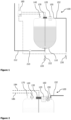
- FIG. 1 schematically illustrates a potable water tank 100 comprising a rigid tank shell 110 configured to store a particular amount of potable water (illustrated as a hashed area in the interior of the rigid tank shell 110).
- the tank further comprises a pressure compensation mechanism 120, which is exemplary illustrated as a valve. It is to be understood that the pressure compensation mechanism 120 can be implemented in any form fulfilling at least the here described capabilities.
- the pressure compensation mechanism 120 is configured to equalise the pressure inside of the rigid tank shell 110 with the environment surrounding the rigid tank shell 110.
- the environment surrounding the rigid tank shell 110 can be a cargo or storage compartment of a vehicle 1 ( Figure 6 ) or may refer to the environment surrounding the vehicle 1 as will be explained further below.
- the pressure compensation mechanism 120 may be configured to open and close a fluid connection between the interior and the exterior of the rigid tank shell 110.
- the pressure compensation mechanism 110 comprises a shutoff member 122, 123 (exemplary illustrated in Figures 4 and 5 ) configured to move between a closed position, a first open position and a second open position.
- the shutoff member 122, 123 allows air to enter the rigid tank shell, i.e. from the surrounding environment into the tank.
- the shutoff member 122, 123 allows air to leave the rigid tank shell 110, i.e. out of the interior of the rigid tank shell 110.
- FIGS 1 to 3 illustrates further features, which are each optional to the tank 100. Although each of Figures 1 to 3 illustrates one or more of these features, the present disclosure is not restricted to the illustrated combination of features. It is to be understood that the tank 100 can be equipped with one or more of the illustrated features irrespective of the particular drawing.
- the tank can comprise a controller 180 configured to receive a status signal from the pressure compensation mechanism 120.
- the controller 180 is connected with one or more or elements of the tank 100, that can generate and output a signal processable by the controller 180 or that can be controlled by the controller 180.
- Such signal lines to and from the controller 180 are illustrated in dashed lines in Figures 1 to 3 , while not all possible signal lines are drawn for legibility of the drawings.
- a signal line 182 between the controller 180 and the pressure compensation mechanism 120 is not illustrated in Figure 1 , but shown in Figure 3 .
- a water level sensor 130 configured to measure a water level in the rigid tank shell 110.
- the water level sensor 130 may be configured to continuously measure a water level inside of the tank from empty to full. Such water level sensor 130 may reach over the entire height of the rigid tank shell 110, in order to detect a current water level.
- an ultrasonic, radar or similar sensor may be employed at the top of the rigid tank shell 110 that is capable of determining the fill level of the tank 100.
- a water level sensor 140 may be employed that is configured to measure a maximum water level in the rigid tank shell 110. In other words, maximum water level sensor 140 only generates a corresponding signal once the maximum water level inside of the rigid tank shell 110 is reached. The maximum water level sensor 140 may also be contemplated as a backup to water level sensor 130 for security reasons.
- a water connection 220 and a fill valve 222 are optionally provided.
- the water connection 220 connects an interior of the rigid tank shell 110 with a water supply (not illustrated), while the fill valve 222 can be configured to open and close a fluid connection between the water connection 220 and the rigid tank shell 110.
- a fluid connection is provided between the fill valve 222 and a bottom or sump of the rigid tank shell 110 as one possible example.
- a water supply line 212 and a pump 210 can be provided.
- the water supply line 212 may be connected to the fluid connection between the fill valve 222 and the rigid tank shell 110.
- the water supply line 212 may be connected to the fill valve 222, which in this case can be a shut-off valve or a three-way valve.
- the pump 210 is arranged inside of the rigid tank shell 110.
- the pump 210 can be combined with the fill valve 222. This may allow to use the pump 210 also to fill water from the water connection 222 into the rigid tank shell 110.
- a further optional feature of the tank 100 can be an overflow port 150 configured to release water from the rigid tank shell 110, particularly if a water level in the interior of the rigid tank shell 110 exceeds a threshold level.
- the overflow port 150 can be connected to an overflow line 152, in order to remove the overflow water and to avoid flooding in the surrounding of the tank 100.
- the overflow line 152 may connect the overflow port 150 (and hence the interior of the rigid tank shell 110) with an ambient, such as an environment or ambient of a vehicle 1 ( Figure 6 ) where the tank 100 is installed.
- an overflow valve 230 may be installed in overflow line 152, in order to close overflow line 152, if required.
- the overflow valve 230 may be arranged at a border between an interior and exterior of a vehicle where the tank 100 is installed, so that the overflow line 152 can be blocked from the ambient.
- the overflow valve 230 shall be closed to avoid a pressure equalisation between the ambient atmosphere and the interior of the rigid tank shell 110, if it is not desired.
- the overflow valve 230 should be opened, for example, in case of filling water into the tank or when draining the tank, in order to allow ventilation (pressure equalisation).
- the overflow valve 230 can be opened in the event of overfilling the rigid tank shell 110, in order to allow draining of the excess water.
- the fill valve 222 may be mechanically connected to the overflow valve 230 (which mechanical connection is illustrated as a dashed line between both valves). For instance, if the fill valve 222 is opened, the overflow valve 230 is also opened. This allows filling the rigid tank shell 110, while equalising the pressure inside of the rigid tank shell 110 with an environment (ambient) of the vehicle 1, in which the tank 100 is installed.
- filling the tank 100 with water may begin with connecting a water supply to water connection 220 and opening the fill valve 222 (e.g., controlled by controller 180).
- the overflow port 150 regulates the air pressure inside of the rigid tank shell 110 by leaving the air out of the rigid tank shell 110.
- the at least one water level sensor 130, 140 sensor signal to the controller 180, which closes fill valve 222, if the intended fill level is reached.
- the pressure compensation mechanism 120 regulates the pressure inside of the rigid tank shell 110.
- the pressure compensation mechanism 120 may also send a signal to the controller 180 indicating a valve position or the like.
- Draining the tank 100 can also be controlled by controller 180, e.g., by controlling valve 222 to open and releasing water through water connection 220.
- overflow port 150 may be used to regulate the air pressure inside of the rigid tank shell 110, e.g. by allowing air to move into the rigid tank shell 110 through overflow line 152 and overflow port 150.
- the pressure compensation mechanism 120 regulates the pressure inside of the rigid tank shell 110.
- the pressure compensation mechanism 120 may also send a signal to the controller 180 indicating a valve position or the like.
- Supplying water from tank 100 to a water consumer can also be controlled by controller 180, e.g., by controlling pump 210 pumping water into water supply line 212.
- the pressure compensation mechanism 120 regulates the pressure inside of the rigid tank shell 110.
- the pressure compensation mechanism 120 may also send a signal to the controller 180 indicating a valve position or the like.
- the pressure compensation mechanism 120 regulates pressure compensation by allowing air to enter or leave the rigid tank shell 110.
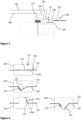
- Figure 2 illustrates details of a variant of the tank 100.
- the same features as in Figure 1 are indicated by the same reference numerals and their description will be omitted, in order to avoid redundant explanations. Any of the features described with respect to Figure 2 may also be employed in a tank as illustrated in Figure 1 and vice versa.
- the tank 100 can further comprise a floating valve 160 configured to allow air to enter and exit the interior of the rigid tank shell 110.
- a floating valve 160 configured to allow air to enter and exit the interior of the rigid tank shell 110.
- a predetermined level such as a water level close under or at the floating valve 160
- a floating element of the floating valve 160 will be pushed by the water against an opening in the floating valve 160, thereby blocking the air passageway through this opening.
- the floating valve 160 is a mechanical and non-controllable pressure compensation mechanism.
- the floating valve 160 can be integrated into the pressure compensation mechanism 120.
- the floating valve 160 can form the shutoff member of the pressure compensation mechanism 120 or can be arranged besides the shutoff member 122, 123 in order to complement the functionality of the shutoff member 122, 123.
- the floating valve 160 is a further safety measure, for example during filling of the tank 100. For example, in case the overflow port 150 is blocked or otherwise closed, air can leave the rigid tank shell 110 during the filling process.
- the tank 100 can comprise a check valve 170 configured to allow air to move out of or into the rigid tank shell 110, if a pressure difference between the interior and exterior of the rigid tank shell 110 exceeds a predetermined threshold.
- the check valve 170 may comprise a spring element (not illustrated), which closes the check valve 170. If the pressure difference acting on a valve element induces a force on the spring element exceeding the closing force of the spring element, the check valve 170 automatically opens in a pure mechanical manner. Thus, a rapidly occurring pressure difference may be compensated faster and in an easier manner than with the pressure compensation mechanism 120 alone.
- the check valve 170 may be a safety measure to allow air to enter the rigid tank shell 110. For instance, if the overflow port 150 is blocked or otherwise closed or in case the water drains faster than expected, the check valve 170 opens to allow air to enter the rigid tank shell 110.
- the check valve 170 may be employed to regulate the pressure inside of the rigid tank shell 110 during water supply, i.e. when pump 210 is activated.
- the pressure compensation mechanism 120 may be employed as a safety measure or as an additional pressure compensation measure.
- Figure 2 further illustrates signal lines 184 and 186 connecting the water level sensors 130, 140 with the controller 180, respectively. Such signal lines may be employed to facilitate communication between the controller and the water level sensors 130, 140.
- Figure 3 illustrates details of another variant of the tank 100.
- the same features as in Figures 1 and 2 are indicated by the same reference numerals and their description will be omitted, in order to avoid redundant explanations. Any of the features described with respect to Figure 3 may also be employed in a tank as illustrated in Figures 1 or 2 and vice versa.
- the pressure compensation mechanism 120 can comprise a rupture disc 160 configured to rupture if a pressure difference between the interior and surrounding environment of the rigid tank shell 110 exceeds a threshold value.
- the rupture disc 160 may simply break, i.e., rupture, under the threshold pressure. This pressure may act on the rupture disc 160 in either direction, i.e. into or out of the tank 100.
- a rapid pressure equalisation can be achieved, for example, in case of sudden pressure increase or decrease inside or outside of the rigid tank shell 110.
- the overflow port 150 is arranged at or in the housing 126 of the pressure compensation mechanism 120.
- the overflow port 150 can fluidly connect the overflow line 152 with an interior of the housing 126.
- the rupture disc 160 breaks or in case the pressure compensation mechanism 120 releases air (or in rare and unintended cases water) from the interior of the rigid tank shell 110, this air (and/or water) can be released via overflow line 152.
- the housing 126 can be equipped with an air release mechanism 127, in order to allow air to leave and/or enter the rigid tank shell 110, when the pressure compensation mechanism 120 is in the first or second open position.
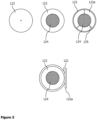
- the shutoff member 122 is in a closed position.
- the shutoff member 122 closes an opening in the rigid tank shell 110 in an airtight and watertight manner. This is particularly relevant to prevent water from unintentionally spreading out of the tank 100 through this opening, for example due to movement of the water in certain flight situations.
- the air release mechanism 127 is also schematically illustrated in the upper image in Figure 4 , but has been omitted in the other images of Figure 4 , for clarity reasons.
- the middle image of the shutoff member 122 in Figure 4 shows the shutoff member 122 in a first open position allowing air to enter the rigid tank shell 110.
- the first open position can exemplarily be achieved by moving the shutoff member 122 in a first direction, here towards an interior of the rigid tank shell 110.
- the middle image of Figure 4 additionally shows another optional feature, such as an actuator 128.
- This actuator 128, exemplarily illustrated as a spiral spring, can be configured to close the shutoff member 122, i.e., to move the shutoff member 122 into the closed position as illustrated in the upper image of Figure 4 .
- the shutoff member 122 can be pushed out of the way (i.e., out of the opening in the rigid tank shell 110) against the biasing force of the spring actuator 128. Once the pressure is equalised, spring actuator 128 brings the shutoff member 122 back into the closed position.
- a further optional feature illustrated in Figure 4 is an air filter 124 arranged to cover an opening evolving when the shutoff member 122 moves from the closed position to the first open position.
- the air filter 124 can be connected to the shutoff member 122 and/or the rigid tank shell 110, so that the air filter 124 covers the opening in the rigid tank shell 110. This allows air to enter the interior of the rigid tank shell 110, while any particles, dust or the like is prevented from reaching the water stored in tank 100.
- shutoff member 122 is illustrated in a second open position allowing air to leave the rigid tank shell 110.
- the flap-like shutoff member 122 is moved in an opposite direction from the closed position compared to the moving direction towards the first open position.
- the degree of opening of the shutoff member 122 may be larger in the second open position, so that the opening cross-section is also larger in the second open position than in the first open position. This may be particularly relevant, if a sudden pressure drop in the surrounding environment of the tank 100 occurs, or in case of a fast filling of the tank 100.
- the second open position of the shutoff member 122 allows a rapid pressure equalisation, thereby avoiding high stresses on the rigid tank shell 110 due to an internal pressure.
- FIG. 4 Another optional feature is illustrated in bottom image of Figure 4 in form of an actuator 129.
- the illustrated actuator 129 may be a motor, hydraulic or pneumatic actuator, a mechanical actuator (e.g., cable controlled actuator) or the like configured to control movement of the shutoff member 122.
- Figure 4 illustrates the actuator 129 to move the shutoff member 122 into the second open position, it is to be understood that the actuator 129 can also move the shutoff member 122 towards the first open position (middle image of Figure 4 ).
- the actuator 129 can be controlled by controller 180, so that a pressure equalisation/compensation can be actively controlled on the basis of any data available to controller 180.
- the pressure compensation mechanism 120 can comprise both actuators 128, 129, in order to facilitate uncontrolled and controlled movement of the shutoff member 122.
- the pressure compensation mechanism 120 may comprise only one or none of the actuators 128, 129.
- shutoff member 122 moves to the second open position in the same direction as when moving to the first open position.
- This direction exemplary can be to the interior of the rigid tank shell 110.
- the shutoff member 122 can move away from the air filter 124, so that not only a degree of aperture increases from the first open position to the second open position, but also an unhindered air passageway is achieved for a fast pressure compensation.
- the shutoff member 122 moves into a position, where the air filter 124 can be bypassed by air streaming during the pressure compensation.
- This particular second open position may be employed in case of a pressure drop in the environment of the tank 100, i.e., when air has to leave the rigid tank shell 110. Moreover, this particular second open position may also be employed in case of a pressure drop in the interior of the rigid tank shell 110, for example, if the fill valve 222 accidentally opens, although the aircraft 1 flies at a high altitude and the pressure in the ambient environment of the aircraft 1 is less than in the interior of the rigid tank shell 110.
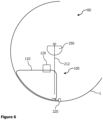
- Figure 5 schematically illustrates a further exemplary shutoff member 123 in the form of a diaphragm mechanism 123.
- the upper images of Figure 5 from left to right, show the diaphragm mechanism 123 in a closed position, a first open position and a second open position. Specifically, in the closed position, the shutoff member 123 is completely closed, so that an airtight and/or watertight closure is formed.
- Figure 5 illustrates the inner edge of the diaphragm mechanism 123 as a small circle, in order to schematically illustrate this edge, although there is no opening at this small circle due to the airtight and/or watertight closure.
- the shutoff member 123 is placed in the rigid tank shell 110, which is not illustrated explicitly, but which is arranged around the outer circumference of the shutoff member 123.
- the diaphragm mechanism 123 can be configured to open to a certain degree, i.e. to achieve a first degree of aperture.
- the upper middle image of Figure 5 additionally illustrates the optional air filter 124.
- a degree of aperture may be achieved that corresponds to (or is slightly smaller than) the size of the air filter 124. For example, air entering the rigid tank shell 110 is filtered, so that no particles or dust or the like enters the tank 100.
- the diaphragm mechanism 123 can move to a larger degree of aperture. This may expose the entire filter 124, which can, for example, be mounted to the shutoff member 123 and/or the rigid tank shell 110 via mounts 125. Thereby, an opening 123a of the shutoff member 123 is entirely opened. This allows air to leave or enter the rigid tank shell 110 in an easy manner. Specifically, since the air can bypass the air filter 124, and since the degree of aperture is larger than in the first open position, a larger flow of air can be achieved in the second open position.
- FIG 5 further illustrates, in the bottom image of Figure 5 , an exemplary shutoff member 122, 123 comprising a flap 122 and a diaphragm mechanism 123.
- the flap 122 can comprise a hinge 122a (as in Figure 4 ) pivoting the flap 122 between the closed position and, for example, the second open position.
- the flap 122 comprises the diaphragm mechanism 123, i.e. the diaphragm mechanism 123 is arranged in or on the flap 122 and moves together with the flap 122 around hinge 122a.
- the diaphragm mechanism 123 is illustrated in the first open position, corresponding to the upper middle image of Figure 5 .
- the flap 122 can also comprise the optional air filter 124, which is arranged in an opening in the flap 122.
- the diaphragm mechanism 123 can close the opening in the flap 122 when moving to the closed position (like in the upper left image of Figure 5 ). Furthermore, if the air filter 124 is not present, the diaphragm mechanism 123 in the first open position exposes an opening in the flap 122.
- FIG. 6 schematically illustrates an exemplary aircraft section 60, particularly a bottom section of a cross-section of an aircraft 1.
- the aircraft section 60 can comprise at least one tank 100, such as the tank 100 illustrated in one of Figures 1 to 5 .
- the shape of the tank 100, particularly the shape of the rigid tank shell 110 can be adapted to the shape and form of the aircraft section 60.
- the tank 100 can be positioned in the aircraft section 60 in a space-saving manner and/or a volume of the rigid tank shell 110 can be optimised.
- the aircraft section 60 may further comprise a water consumer, illustrated in Figure 5 as a water supply line 212 and a sink 250.
- the aircraft section 60 can comprise a water connection 220 configured to be connected to a water supply (not illustrated).
- the water connection 220 may be arranged at an outer skin of the aircraft 1, so that a water supply can be connected from an exterior of the aircraft 1 to the water connection 220.
- a fill valve 222 ( Figure 1 ) can be arranged and configured to open and close a fluid connection between the water connection 220 and the rigid tank shell 110.
- FIG. 7 schematically illustrates another exemplary aircraft section 60, particularly a bottom section of a cross-section of an aircraft 1.
- the aircraft section 60 can comprise at least one tank 100, such as the tank 100 illustrated in one of Figures 1 to 5 .
- the aircraft section 60 can further comprise a further tank 300, such as a waste water tank 300.
- This further water tank 300 may be designed to withstand a continuous positive or negative pressure, such as a conventional pressurised tank 300 having a cylindrical and/or spherical shape.
- the shape of the tank 100 can be adapted to the shape of the further water tank 300.
- the tank 100 of the present disclosure can be designed to at least partially surround the further water tank 300.
- the tank 100 can be adapted to the shape and form of the aircraft section 60.
- the tank 100 can be positioned in the aircraft section 60 and in the vicinity of other secondary structures of the aircraft 1 in a space-saving manner and/or a volume of the rigid tank shell 110 can be optimised to the installation space the tank 100.
- Figure 7 schematically illustrates a further optional feature, where the pressure compensation mechanism 120 is arranged at an outer skin of the aircraft 1. Specifically, the pressure compensation mechanism 120 penetrates the outer skin of the aircraft 1, so that pressure compensation can be achieved between the interior of the rigid tank shell 110 and the ambient environment of the aircraft 1.
- overflow port 150 may alternatively or additionally be provided for the overflow port 150. This would save weight and installation costs for an overflow line 152.
Landscapes
- Engineering & Computer Science (AREA)
- Health & Medical Sciences (AREA)
- Life Sciences & Earth Sciences (AREA)
- Hydrology & Water Resources (AREA)
- Public Health (AREA)
- Water Supply & Treatment (AREA)
- Aviation & Aerospace Engineering (AREA)
- Mechanical Engineering (AREA)
- Structural Engineering (AREA)
- Physics & Mathematics (AREA)
- Fluid Mechanics (AREA)
- Filling Or Discharging Of Gas Storage Vessels (AREA)
Claims (15)
- Wassertank (100), der für den Betrieb in einem Flugzeug (50) konfiguriert ist, wobei der Tank umfasst:eine starre Tankhülle (110); undeinen Druckausgleichsmechanismus (120), der dazu ausgebildet ist, einen Druck im Inneren der starren Tankhülle (110) mit einer Umgebung auszugleichen,dadurch gekennzeichnet, dassder Druckausgleichsmechanismus (120) ein Absperrelement (122, 123) umfasst, das so konfiguriert ist, dass es sich zwischen einer geschlossenen Position, einer ersten offenen Position, die Luft in die starre Tankhülle (110) eindringen lässt, und einer zweiten offenen Position, die Luft aus der starren Tankhülle (110) entweichen lässt, bewegt.
- Tank nach Anspruch 1,
wobei sich das Absperrelement (122, 123) beim Erreichen der ersten geöffneten Position und der zweiten geöffneten Position in entgegengesetzte Richtungen aus der geschlossenen Position bewegt, und/oder wobei das Absperrelement (122, 123) so konfiguriert ist, dass es in der ersten geöffneten Position einen ersten Öffnungsgrad erreicht und in der zweiten geöffneten Position einen zweiten Öffnungsgrad erreicht, wobei der erste Öffnungsgrad kleiner ist als der zweite Öffnungsgrad. - Tank nach Anspruch 1 oder 2,wobei das Absperrelement (122, 123) eine Klappe (122) umfasst, die an einer Seite angelenkt ist und so konfiguriert ist, dass sie in eine erste Richtung von der geschlossenen Position in die erste offene Position schwenkt und in eine zweite Richtung von der geschlossenen Position in die zweite offene Position schwenkt, oderwobei das Absperrelement (122, 123) einen Membranmechanismus (123) umfasst, der zum Öffnen und Schließen einer Öffnung (123a) in der starren Tankhülle (110) konfiguriert ist, wobei der Membranmechanismus (123) in der ersten offenen Position eine kleine Öffnung und in der zweiten offenen Position eine größere Öffnung bildet, oderwobei das Absperrelement (122, 123) eine Klappe (122) umfasst, die so konfiguriert ist, dass sie von der geschlossenen Position in die zweite offene Position schwenkt, und einen Membranmechanismus (123), der in oder an der Klappe (122) angeordnet ist und so konfiguriert ist, dass er sich zwischen der geschlossenen Position und der ersten offenen Position bewegt, in der eine Öffnung (123a) in der Klappe (122) geschlossen bzw. geöffnet ist.
- Tank gemäß einem der Ansprüche 1 bis 3,
wobei der Druckausgleichsmechanismus (120) einen Luftfilter (124) umfasst, der so angeordnet ist, dass er eine Öffnung abdeckt, die entsteht, wenn sich das Absperrelement (122) von der geschlossenen Position in die erste offene Position bewegt. - Tank nach einem der Ansprüche 1 bis 4, weiterhin umfassendeinen Controller (180), der dazu konfiguriert ist, ein Statussignal vom Druckausgleichsmechanismus (120) zu empfangen,wobei der Druckkompensationsmechanismus (120) dazu ausgebildet ist, das Statussignal zu erzeugen und zu übertragen, das eine Position des Absperrelements (122) anzeigt.
- Tank nach Anspruch 5,
wobei die Steuerung (180) ferner dazu konfiguriert ist, ein Steuersignal an den Druckausgleichsmechanismus (120) zu senden, wobei der Druckausgleichsmechanismus (120) dazu konfiguriert ist, das Steuersignal zu empfangen und das Absperrelement (122) in eine dem Steuersignal entsprechende Position zu bewegen. - Tank gemäß einem der Ansprüche 1 bis 6,
wobei der Druckausgleichsmechanismus (120) außerdem eine Berstscheibe (160) umfasst, die so konfiguriert ist, dass sie bricht, wenn ein Druckunterschied zwischen dem Inneren und einer Umgebung der starren Tankhülle (110) einen Schwellenwert überschreitet. - Tank gemäß einem der Ansprüche 1 bis 7, ferner umfassend:
mindestens einen Wasserstandssensor (130, 140), der dazu konfiguriert ist, einen Wasserstand in der starren Tankhülle (110) zu messen und ein Wasserstandssignal zu übertragen. - Tank gemäß einem der Ansprüche 1 bis 8, der außerdem umfasst:
eine Pumpe (210), die dazu konfiguriert ist, Wasser aus dem Inneren der starren Tankhülle (110) zu einer Wasserversorgungsleitung (212) zu pumpen. - Tank nach einem der Ansprüche 1 bis 9, weiterhin umfassend:einen Überlaufanschluss (150), der mit einer Überlaufleitung (152) verbunden ist und dazu ausgebildet ist, Wasser aus der starren Tankhülle (110) abzulassen, wenn ein Wasserstand im Inneren der starren Tankhülle (110) einen Schwellenwert überschreitet,wobei vorzugsweise der Überlaufanschluss (150) die Überlaufleitung (152) fluidisch mit einem Gehäuse (126) des Druckausgleichsmechanismus (120) verbindet.
- Tank nach Anspruch 10,
wobei die Überlauföffnung (150) dazu ausgebildet ist, Luft aus dem Inneren der starren Tankhülle (110) abzulassen, wenn die Luft im Inneren der starren Tankhülle (110) einen Schwellendruck überschreitet. - Tank gemäß einem der Ansprüche 1 bis 11,
ferner umfassend: mindestens einen Aktuator (128, 129), der dazu konfiguriert ist, das Absperrelement (122) zwischen der geschlossenen Position und der ersten offenen Position und/oder zwischen der geschlossenen Position und der zweiten offenen Position zu bewegen. - Flugzeugabschnitt (60), umfassend:mindestens einen Tank (100) nach einem der Ansprüche 1 bis 12; undeinen Wasserverbraucher (212), der mit dem mindestens einen Tank (100) strömungsmäßig verbunden ist und dazu konfiguriert ist, Wasser aus dem mindestens einen Tank (100) zu empfangen.
- Flugzeugabschnitt (60) nach Anspruch 13, ferner umfassend:einen Wasseranschluss (220), der zum Anschluss an eine Wasserversorgung konfiguriert ist; undein Füllventil (222), das zum Öffnen und Schließen einer Flüssigkeitsverbindung zwischen dem Wasseranschluss (220) und der starren Tankhülle (110) konfiguriert ist.
- Flugzeug (1), umfassend:mindestens einen Tank (100) nach einem der Ansprüche 1 bis 12; odermindestens eine Flugzeugsektion (60) gemäß Anspruch 13 oder 14.
Priority Applications (3)
| Application Number | Priority Date | Filing Date | Title |
|---|---|---|---|
| EP22193732.9A EP4331988B1 (de) | 2022-09-02 | 2022-09-02 | Druckloser wassertank für den betrieb in einem flugzeug, flugzeugabschnitt und flugzeug mit wassertank |
| US18/239,266 US12434906B2 (en) | 2022-09-02 | 2023-08-29 | Pressureless water tank for operation in an aircraft, aircraft section and aircraft having a water tank |
| CN202311128074.9A CN117644976A (zh) | 2022-09-02 | 2023-09-01 | 构造成用于在飞行器中操作的水箱、飞行器部段和飞行器 |
Applications Claiming Priority (1)
| Application Number | Priority Date | Filing Date | Title |
|---|---|---|---|
| EP22193732.9A EP4331988B1 (de) | 2022-09-02 | 2022-09-02 | Druckloser wassertank für den betrieb in einem flugzeug, flugzeugabschnitt und flugzeug mit wassertank |
Publications (2)
| Publication Number | Publication Date |
|---|---|
| EP4331988A1 EP4331988A1 (de) | 2024-03-06 |
| EP4331988B1 true EP4331988B1 (de) | 2025-03-26 |
Family
ID=83192173
Family Applications (1)
| Application Number | Title | Priority Date | Filing Date |
|---|---|---|---|
| EP22193732.9A Active EP4331988B1 (de) | 2022-09-02 | 2022-09-02 | Druckloser wassertank für den betrieb in einem flugzeug, flugzeugabschnitt und flugzeug mit wassertank |
Country Status (3)
| Country | Link |
|---|---|
| US (1) | US12434906B2 (de) |
| EP (1) | EP4331988B1 (de) |
| CN (1) | CN117644976A (de) |
Citations (15)
| Publication number | Priority date | Publication date | Assignee | Title |
|---|---|---|---|---|
| US2364605A (en) | 1942-07-02 | 1944-12-12 | Curtis Pump Co | Fuel system |
| GB668094A (en) | 1948-05-12 | 1952-03-12 | Muller Jacques | Automatic valve system for filling and emptying liquid tanks |
| US3150683A (en) | 1963-05-31 | 1964-09-29 | Puritan Compressed Gas Corp | Diaphragm operated pressure retaining valve |
| US4570657A (en) | 1984-07-16 | 1986-02-18 | Aeroquip Corporation | Tank vent valve |
| US6273286B1 (en) | 2000-04-12 | 2001-08-14 | Evergreen Custom Molding, Inc. | Ventilating system |
| US6305412B1 (en) | 2000-03-27 | 2001-10-23 | Dynamic Air Inc. | Double acting pressure relief valve with low pressure seal |
| US20040112437A1 (en) | 2001-01-25 | 2004-06-17 | Michel Hernandez | Valve for controlling a tank internal gas pressure |
| EP1930636A2 (de) | 2006-12-08 | 2008-06-11 | Honeywell International, Inc. | Bidirektionales Über-/Unterdruckventil |
| US20100006570A1 (en) | 2006-05-09 | 2010-01-14 | Ignacio Borras Llompart | Valve, container with valve and use of the valve |
| WO2010121242A1 (en) | 2009-04-17 | 2010-10-21 | Taylor Innovations, L.L.C. | Pressure equalization assembly for a liquid storage vessel |
| US7980513B2 (en) | 2005-09-21 | 2011-07-19 | Airbus Deutschland Gmbh | Water-wastewater module for aircraft |
| US9611627B2 (en) | 2011-08-10 | 2017-04-04 | Airbus Operations Gmbh | Pressure supply for a water system |
| US9995321B2 (en) | 2015-03-27 | 2018-06-12 | Other Lab, Llc | Poppet valve system and method |
| EP3385163A1 (de) | 2017-04-07 | 2018-10-10 | Airbus Operations GmbH | Flugzeug mit einem hochdruckwasserversorgungs- und -verteilungssystem |
| US10815007B2 (en) | 2017-10-27 | 2020-10-27 | International Water-Guard Industries Inc. | Methods and systems for supplying water to an aircraft |
Family Cites Families (4)
| Publication number | Priority date | Publication date | Assignee | Title |
|---|---|---|---|---|
| US6463956B2 (en) * | 1998-09-29 | 2002-10-15 | International Water-Guard Industries Inc. | Method of water distribution and apparatus therefor |
| US6874550B2 (en) * | 2003-04-24 | 2005-04-05 | Goodrich Corporation | Gravity fill line vent fitting and fill system |
| US9475582B2 (en) * | 2008-10-02 | 2016-10-25 | Goodrich Corporation | Aircraft potable-water system |
| EP3861895B1 (de) * | 2020-02-07 | 2024-04-24 | B/E Aerospace, Inc. | Differenzdruckdurchflussmesser für getränkebereiter |
-
2022
- 2022-09-02 EP EP22193732.9A patent/EP4331988B1/de active Active
-
2023
- 2023-08-29 US US18/239,266 patent/US12434906B2/en active Active
- 2023-09-01 CN CN202311128074.9A patent/CN117644976A/zh active Pending
Patent Citations (15)
| Publication number | Priority date | Publication date | Assignee | Title |
|---|---|---|---|---|
| US2364605A (en) | 1942-07-02 | 1944-12-12 | Curtis Pump Co | Fuel system |
| GB668094A (en) | 1948-05-12 | 1952-03-12 | Muller Jacques | Automatic valve system for filling and emptying liquid tanks |
| US3150683A (en) | 1963-05-31 | 1964-09-29 | Puritan Compressed Gas Corp | Diaphragm operated pressure retaining valve |
| US4570657A (en) | 1984-07-16 | 1986-02-18 | Aeroquip Corporation | Tank vent valve |
| US6305412B1 (en) | 2000-03-27 | 2001-10-23 | Dynamic Air Inc. | Double acting pressure relief valve with low pressure seal |
| US6273286B1 (en) | 2000-04-12 | 2001-08-14 | Evergreen Custom Molding, Inc. | Ventilating system |
| US20040112437A1 (en) | 2001-01-25 | 2004-06-17 | Michel Hernandez | Valve for controlling a tank internal gas pressure |
| US7980513B2 (en) | 2005-09-21 | 2011-07-19 | Airbus Deutschland Gmbh | Water-wastewater module for aircraft |
| US20100006570A1 (en) | 2006-05-09 | 2010-01-14 | Ignacio Borras Llompart | Valve, container with valve and use of the valve |
| EP1930636A2 (de) | 2006-12-08 | 2008-06-11 | Honeywell International, Inc. | Bidirektionales Über-/Unterdruckventil |
| WO2010121242A1 (en) | 2009-04-17 | 2010-10-21 | Taylor Innovations, L.L.C. | Pressure equalization assembly for a liquid storage vessel |
| US9611627B2 (en) | 2011-08-10 | 2017-04-04 | Airbus Operations Gmbh | Pressure supply for a water system |
| US9995321B2 (en) | 2015-03-27 | 2018-06-12 | Other Lab, Llc | Poppet valve system and method |
| EP3385163A1 (de) | 2017-04-07 | 2018-10-10 | Airbus Operations GmbH | Flugzeug mit einem hochdruckwasserversorgungs- und -verteilungssystem |
| US10815007B2 (en) | 2017-10-27 | 2020-10-27 | International Water-Guard Industries Inc. | Methods and systems for supplying water to an aircraft |
Non-Patent Citations (3)
| Title |
|---|
| ANONYMOUS: "Berstscheibe", WIKIPEDIA, 1 June 2020 (2020-06-01), pages 1 - 3, XP093350398, Retrieved from the Internet <URL:https://de.wikipedia.org/w/index.php?title=Berstscheibe&oldid=200536013> |
| ANONYMOUS: "Elektrischer Stellantrieb (Stellventil)", WIKIPEDIA, 28 March 2022 (2022-03-28), pages 1 - 6, XP093350395, Retrieved from the Internet <URL:https://de.wikipedia.org/w/index.php?title=Elektrischer_Stellantrieb_(Stellventil)&oldid=221566383> |
| BLOG-TEAM: "Ventilstellungsrückmeldung mit induktiven Doppelsensoren", PEPPERL FUCHS BLOG, PEPPERL FUCHS, 30 June 2022 (2022-06-30), pages 1 - 4, XP093350390, Retrieved from the Internet <URL:https://blog.pepperl-fuchs.com/de/2022/ventilstellungsrueckmeldung-mit-induktiven-doppelsensoren/> |
Also Published As
| Publication number | Publication date |
|---|---|
| US12434906B2 (en) | 2025-10-07 |
| EP4331988A1 (de) | 2024-03-06 |
| CN117644976A (zh) | 2024-03-05 |
| US20240076120A1 (en) | 2024-03-07 |
Similar Documents
| Publication | Publication Date | Title |
|---|---|---|
| US7857260B2 (en) | Fuel jettison system | |
| EP3219613B1 (de) | Druckbeaufschlagtes trinkwassersystem mit wasserspeichertank mit konformer form | |
| US9469190B2 (en) | Aircraft fuel tank system | |
| JP2006242225A (ja) | ガス容器用バルブアッセンブリ | |
| JP4546658B2 (ja) | タンクから内燃機関へ燃料を供給するための供給配管内の弁装置 | |
| CN110621928B (zh) | 具有可变质量流量的泄压装置 | |
| EP3173339B1 (de) | Flugzeugkraftstoffsystem | |
| US6659404B1 (en) | Overboard venting inflation system and control valve therefor | |
| CN102398672A (zh) | 一种轮船货舱污水井气压排水系统 | |
| CN103256411A (zh) | 船舱用阀装置 | |
| AU2013293424B2 (en) | Fuel transfer system controlled by float valves | |
| EP4331988A1 (de) | Druckloser wassertank für den betrieb in einem flugzeug, flugzeugabschnitt und flugzeug mit wassertank | |
| US8496021B2 (en) | Overpressure valve for an aircraft | |
| CN101643112B (zh) | 水下航行体人员出舱转换舱装置 | |
| KR101192720B1 (ko) | 원격제어가 가능한 폐쇄공기 시스템 | |
| WO2018073773A1 (en) | Waste water air stop valve | |
| EP2305555B1 (de) | Vorrichtung zur wiederherstellung eines aufrichtenden moments für ein schiff und damit ausgestattetes kraftfahrzeuge beförderndes schiff | |
| CN112797045A (zh) | 一种遥控阀的控制系统 | |
| US8087370B2 (en) | Ship stability recovery system and car carrier equipped with the same | |
| EP4242105B1 (de) | Ein wasserversorgungssystem für ein flugzeug, umfassend ein puffer zum speichern von flüssigkeit unter verbraucherdruck | |
| US5086722A (en) | Transient Damage Strategy | |
| EP2293982B1 (de) | Treibstoffablasssystem | |
| JP2005133900A (ja) | 船尾管の軸封装置 | |
| US8382035B2 (en) | Poppet valve for cabin pressure control systems | |
| US10017049B2 (en) | Vent valve, tank having vent valve, and method |
Legal Events
| Date | Code | Title | Description |
|---|---|---|---|
| PUAI | Public reference made under article 153(3) epc to a published international application that has entered the european phase |
Free format text: ORIGINAL CODE: 0009012 |
|
| STAA | Information on the status of an ep patent application or granted ep patent |
Free format text: STATUS: THE APPLICATION HAS BEEN PUBLISHED |
|
| AK | Designated contracting states |
Kind code of ref document: A1 Designated state(s): AL AT BE BG CH CY CZ DE DK EE ES FI FR GB GR HR HU IE IS IT LI LT LU LV MC MK MT NL NO PL PT RO RS SE SI SK SM TR |
|
| STAA | Information on the status of an ep patent application or granted ep patent |
Free format text: STATUS: REQUEST FOR EXAMINATION WAS MADE |
|
| GRAP | Despatch of communication of intention to grant a patent |
Free format text: ORIGINAL CODE: EPIDOSNIGR1 |
|
| STAA | Information on the status of an ep patent application or granted ep patent |
Free format text: STATUS: GRANT OF PATENT IS INTENDED |
|
| 17P | Request for examination filed |
Effective date: 20240906 |
|
| RBV | Designated contracting states (corrected) |
Designated state(s): AL AT BE BG CH CY CZ DE DK EE ES FI FR GB GR HR HU IE IS IT LI LT LU LV MC MK MT NL NO PL PT RO RS SE SI SK SM TR |
|
| RIC1 | Information provided on ipc code assigned before grant |
Ipc: B64D 11/00 20060101AFI20240926BHEP |
|
| INTG | Intention to grant announced |
Effective date: 20241014 |
|
| GRAS | Grant fee paid |
Free format text: ORIGINAL CODE: EPIDOSNIGR3 |
|
| GRAA | (expected) grant |
Free format text: ORIGINAL CODE: 0009210 |
|
| STAA | Information on the status of an ep patent application or granted ep patent |
Free format text: STATUS: THE PATENT HAS BEEN GRANTED |
|
| AK | Designated contracting states |
Kind code of ref document: B1 Designated state(s): AL AT BE BG CH CY CZ DE DK EE ES FI FR GB GR HR HU IE IS IT LI LT LU LV MC MK MT NL NO PL PT RO RS SE SI SK SM TR |
|
| REG | Reference to a national code |
Ref country code: GB Ref legal event code: FG4D |
|
| REG | Reference to a national code |
Ref country code: CH Ref legal event code: EP |
|
| REG | Reference to a national code |
Ref country code: DE Ref legal event code: R096 Ref document number: 602022012189 Country of ref document: DE |
|
| REG | Reference to a national code |
Ref country code: IE Ref legal event code: FG4D |
|
| PG25 | Lapsed in a contracting state [announced via postgrant information from national office to epo] |
Ref country code: RS Free format text: LAPSE BECAUSE OF FAILURE TO SUBMIT A TRANSLATION OF THE DESCRIPTION OR TO PAY THE FEE WITHIN THE PRESCRIBED TIME-LIMIT Effective date: 20250626 |
|
| PG25 | Lapsed in a contracting state [announced via postgrant information from national office to epo] |
Ref country code: FI Free format text: LAPSE BECAUSE OF FAILURE TO SUBMIT A TRANSLATION OF THE DESCRIPTION OR TO PAY THE FEE WITHIN THE PRESCRIBED TIME-LIMIT Effective date: 20250326 |
|
| REG | Reference to a national code |
Ref country code: LT Ref legal event code: MG9D |
|
| PG25 | Lapsed in a contracting state [announced via postgrant information from national office to epo] |
Ref country code: NO Free format text: LAPSE BECAUSE OF FAILURE TO SUBMIT A TRANSLATION OF THE DESCRIPTION OR TO PAY THE FEE WITHIN THE PRESCRIBED TIME-LIMIT Effective date: 20250626 |
|
| PG25 | Lapsed in a contracting state [announced via postgrant information from national office to epo] |
Ref country code: HR Free format text: LAPSE BECAUSE OF FAILURE TO SUBMIT A TRANSLATION OF THE DESCRIPTION OR TO PAY THE FEE WITHIN THE PRESCRIBED TIME-LIMIT Effective date: 20250326 |
|
| PG25 | Lapsed in a contracting state [announced via postgrant information from national office to epo] |
Ref country code: LV Free format text: LAPSE BECAUSE OF FAILURE TO SUBMIT A TRANSLATION OF THE DESCRIPTION OR TO PAY THE FEE WITHIN THE PRESCRIBED TIME-LIMIT Effective date: 20250326 |
|
| PG25 | Lapsed in a contracting state [announced via postgrant information from national office to epo] |
Ref country code: GR Free format text: LAPSE BECAUSE OF FAILURE TO SUBMIT A TRANSLATION OF THE DESCRIPTION OR TO PAY THE FEE WITHIN THE PRESCRIBED TIME-LIMIT Effective date: 20250627 Ref country code: BG Free format text: LAPSE BECAUSE OF FAILURE TO SUBMIT A TRANSLATION OF THE DESCRIPTION OR TO PAY THE FEE WITHIN THE PRESCRIBED TIME-LIMIT Effective date: 20250326 |
|
| REG | Reference to a national code |
Ref country code: NL Ref legal event code: MP Effective date: 20250326 |
|
| PG25 | Lapsed in a contracting state [announced via postgrant information from national office to epo] |
Ref country code: NL Free format text: LAPSE BECAUSE OF FAILURE TO SUBMIT A TRANSLATION OF THE DESCRIPTION OR TO PAY THE FEE WITHIN THE PRESCRIBED TIME-LIMIT Effective date: 20250326 |
|
| PG25 | Lapsed in a contracting state [announced via postgrant information from national office to epo] |
Ref country code: SE Free format text: LAPSE BECAUSE OF FAILURE TO SUBMIT A TRANSLATION OF THE DESCRIPTION OR TO PAY THE FEE WITHIN THE PRESCRIBED TIME-LIMIT Effective date: 20250326 |
|
| REG | Reference to a national code |
Ref country code: AT Ref legal event code: MK05 Ref document number: 1778842 Country of ref document: AT Kind code of ref document: T Effective date: 20250326 |
|
| PG25 | Lapsed in a contracting state [announced via postgrant information from national office to epo] |
Ref country code: SM Free format text: LAPSE BECAUSE OF FAILURE TO SUBMIT A TRANSLATION OF THE DESCRIPTION OR TO PAY THE FEE WITHIN THE PRESCRIBED TIME-LIMIT Effective date: 20250326 |
|
| PG25 | Lapsed in a contracting state [announced via postgrant information from national office to epo] |
Ref country code: ES Free format text: LAPSE BECAUSE OF FAILURE TO SUBMIT A TRANSLATION OF THE DESCRIPTION OR TO PAY THE FEE WITHIN THE PRESCRIBED TIME-LIMIT Effective date: 20250326 Ref country code: PT Free format text: LAPSE BECAUSE OF FAILURE TO SUBMIT A TRANSLATION OF THE DESCRIPTION OR TO PAY THE FEE WITHIN THE PRESCRIBED TIME-LIMIT Effective date: 20250728 |
|
| PGFP | Annual fee paid to national office [announced via postgrant information from national office to epo] |
Ref country code: DE Payment date: 20250919 Year of fee payment: 4 |
|
| PG25 | Lapsed in a contracting state [announced via postgrant information from national office to epo] |
Ref country code: PL Free format text: LAPSE BECAUSE OF FAILURE TO SUBMIT A TRANSLATION OF THE DESCRIPTION OR TO PAY THE FEE WITHIN THE PRESCRIBED TIME-LIMIT Effective date: 20250326 Ref country code: IT Free format text: LAPSE BECAUSE OF FAILURE TO SUBMIT A TRANSLATION OF THE DESCRIPTION OR TO PAY THE FEE WITHIN THE PRESCRIBED TIME-LIMIT Effective date: 20250326 |
|
| PG25 | Lapsed in a contracting state [announced via postgrant information from national office to epo] |
Ref country code: AT Free format text: LAPSE BECAUSE OF FAILURE TO SUBMIT A TRANSLATION OF THE DESCRIPTION OR TO PAY THE FEE WITHIN THE PRESCRIBED TIME-LIMIT Effective date: 20250326 |
|
| PGFP | Annual fee paid to national office [announced via postgrant information from national office to epo] |
Ref country code: FR Payment date: 20250922 Year of fee payment: 4 |
|
| PG25 | Lapsed in a contracting state [announced via postgrant information from national office to epo] |
Ref country code: EE Free format text: LAPSE BECAUSE OF FAILURE TO SUBMIT A TRANSLATION OF THE DESCRIPTION OR TO PAY THE FEE WITHIN THE PRESCRIBED TIME-LIMIT Effective date: 20250326 |
|
| PG25 | Lapsed in a contracting state [announced via postgrant information from national office to epo] |
Ref country code: RO Free format text: LAPSE BECAUSE OF FAILURE TO SUBMIT A TRANSLATION OF THE DESCRIPTION OR TO PAY THE FEE WITHIN THE PRESCRIBED TIME-LIMIT Effective date: 20250326 |
|
| PG25 | Lapsed in a contracting state [announced via postgrant information from national office to epo] |
Ref country code: SK Free format text: LAPSE BECAUSE OF FAILURE TO SUBMIT A TRANSLATION OF THE DESCRIPTION OR TO PAY THE FEE WITHIN THE PRESCRIBED TIME-LIMIT Effective date: 20250326 |
|
| PG25 | Lapsed in a contracting state [announced via postgrant information from national office to epo] |
Ref country code: IS Free format text: LAPSE BECAUSE OF FAILURE TO SUBMIT A TRANSLATION OF THE DESCRIPTION OR TO PAY THE FEE WITHIN THE PRESCRIBED TIME-LIMIT Effective date: 20250726 |
|
| REG | Reference to a national code |
Ref country code: DE Ref legal event code: R026 Ref document number: 602022012189 Country of ref document: DE |
|
| PLBI | Opposition filed |
Free format text: ORIGINAL CODE: 0009260 |
|
| REG | Reference to a national code |
Ref country code: CH Ref legal event code: L10 Free format text: ST27 STATUS EVENT CODE: U-0-0-L10-L00 (AS PROVIDED BY THE NATIONAL OFFICE) Effective date: 20251224 |
|
| PG25 | Lapsed in a contracting state [announced via postgrant information from national office to epo] |
Ref country code: DK Free format text: LAPSE BECAUSE OF FAILURE TO SUBMIT A TRANSLATION OF THE DESCRIPTION OR TO PAY THE FEE WITHIN THE PRESCRIBED TIME-LIMIT Effective date: 20250326 |
|
| PG25 | Lapsed in a contracting state [announced via postgrant information from national office to epo] |
Ref country code: CZ Free format text: LAPSE BECAUSE OF FAILURE TO SUBMIT A TRANSLATION OF THE DESCRIPTION OR TO PAY THE FEE WITHIN THE PRESCRIBED TIME-LIMIT Effective date: 20250326 |
|
| PLAX | Notice of opposition and request to file observation + time limit sent |
Free format text: ORIGINAL CODE: EPIDOSNOBS2 |
|
| 26 | Opposition filed |
Opponent name: DIEHL AVIATION GILCHING GMBH Effective date: 20251217 |
|
| REG | Reference to a national code |
Ref country code: CH Ref legal event code: H13 Free format text: ST27 STATUS EVENT CODE: U-0-0-H10-H13 (AS PROVIDED BY THE NATIONAL OFFICE) Effective date: 20260504 |