EP4369327A1 - Création modulaire de recettes de cuisine - Google Patents
Création modulaire de recettes de cuisine Download PDFInfo
- Publication number
- EP4369327A1 EP4369327A1 EP23201847.3A EP23201847A EP4369327A1 EP 4369327 A1 EP4369327 A1 EP 4369327A1 EP 23201847 A EP23201847 A EP 23201847A EP 4369327 A1 EP4369327 A1 EP 4369327A1
- Authority
- EP
- European Patent Office
- Prior art keywords
- building block
- variant
- template
- flavor
- dish
- Prior art date
- Legal status (The legal status is an assumption and is not a legal conclusion. Google has not performed a legal analysis and makes no representation as to the accuracy of the status listed.)
- Pending
Links
- 238000010411 cooking Methods 0.000 title claims abstract description 31
- 238000012545 processing Methods 0.000 claims abstract description 126
- 239000000796 flavoring agent Substances 0.000 claims abstract description 71
- 235000019634 flavors Nutrition 0.000 claims abstract description 71
- 239000004615 ingredient Substances 0.000 claims description 59
- 238000000034 method Methods 0.000 claims description 16
- 125000003118 aryl group Chemical group 0.000 claims description 9
- 230000015654 memory Effects 0.000 claims description 6
- 238000004519 manufacturing process Methods 0.000 claims description 4
- 230000008569 process Effects 0.000 claims description 4
- 238000013500 data storage Methods 0.000 description 17
- 230000009471 action Effects 0.000 description 13
- 235000012459 muffins Nutrition 0.000 description 11
- 238000002360 preparation method Methods 0.000 description 6
- 241000972773 Aulopiformes Species 0.000 description 5
- 240000006927 Foeniculum vulgare Species 0.000 description 5
- 235000004204 Foeniculum vulgare Nutrition 0.000 description 5
- 230000000694 effects Effects 0.000 description 5
- 235000013305 food Nutrition 0.000 description 5
- 238000002156 mixing Methods 0.000 description 5
- 235000019515 salmon Nutrition 0.000 description 5
- 239000000203 mixture Substances 0.000 description 4
- 235000016709 nutrition Nutrition 0.000 description 4
- 150000003839 salts Chemical class 0.000 description 4
- 235000015067 sauces Nutrition 0.000 description 4
- 235000002639 sodium chloride Nutrition 0.000 description 4
- 235000005135 Micromeria juliana Nutrition 0.000 description 3
- 240000002114 Satureja hortensis Species 0.000 description 3
- 235000007315 Satureja hortensis Nutrition 0.000 description 3
- 238000004891 communication Methods 0.000 description 3
- 238000005516 engineering process Methods 0.000 description 3
- 235000013372 meat Nutrition 0.000 description 3
- 239000000126 substance Substances 0.000 description 3
- 235000013311 vegetables Nutrition 0.000 description 3
- 235000001674 Agaricus brunnescens Nutrition 0.000 description 2
- 235000002767 Daucus carota Nutrition 0.000 description 2
- 244000000626 Daucus carota Species 0.000 description 2
- 235000010676 Ocimum basilicum Nutrition 0.000 description 2
- 240000007926 Ocimum gratissimum Species 0.000 description 2
- 244000178231 Rosmarinus officinalis Species 0.000 description 2
- UIIMBOGNXHQVGW-UHFFFAOYSA-M Sodium bicarbonate Chemical compound [Na+].OC([O-])=O UIIMBOGNXHQVGW-UHFFFAOYSA-M 0.000 description 2
- 235000007303 Thymus vulgaris Nutrition 0.000 description 2
- 240000002657 Thymus vulgaris Species 0.000 description 2
- 230000006399 behavior Effects 0.000 description 2
- 238000004590 computer program Methods 0.000 description 2
- 238000011161 development Methods 0.000 description 2
- 235000013312 flour Nutrition 0.000 description 2
- 230000003993 interaction Effects 0.000 description 2
- 235000019198 oils Nutrition 0.000 description 2
- 239000001585 thymus vulgaris Substances 0.000 description 2
- 238000012549 training Methods 0.000 description 2
- 235000013618 yogurt Nutrition 0.000 description 2
- FFRBMBIXVSCUFS-UHFFFAOYSA-N 2,4-dinitro-1-naphthol Chemical compound C1=CC=C2C(O)=C([N+]([O-])=O)C=C([N+]([O-])=O)C2=C1 FFRBMBIXVSCUFS-UHFFFAOYSA-N 0.000 description 1
- 244000291564 Allium cepa Species 0.000 description 1
- 235000002732 Allium cepa var. cepa Nutrition 0.000 description 1
- 244000191482 Cantharellus cibarius Species 0.000 description 1
- 235000015722 Cantharellus cibarius Nutrition 0.000 description 1
- 241000873224 Capparaceae Species 0.000 description 1
- 235000017336 Capparis spinosa Nutrition 0.000 description 1
- 244000045195 Cicer arietinum Species 0.000 description 1
- 235000010523 Cicer arietinum Nutrition 0.000 description 1
- 235000005979 Citrus limon Nutrition 0.000 description 1
- 244000131522 Citrus pyriformis Species 0.000 description 1
- 244000060011 Cocos nucifera Species 0.000 description 1
- 235000013162 Cocos nucifera Nutrition 0.000 description 1
- 241000219130 Cucurbita pepo subsp. pepo Species 0.000 description 1
- 235000003954 Cucurbita pepo var melopepo Nutrition 0.000 description 1
- 108010068370 Glutens Proteins 0.000 description 1
- 241000758791 Juglandaceae Species 0.000 description 1
- 240000008415 Lactuca sativa Species 0.000 description 1
- 241000408747 Lepomis gibbosus Species 0.000 description 1
- 235000007688 Lycopersicon esculentum Nutrition 0.000 description 1
- 235000011430 Malus pumila Nutrition 0.000 description 1
- 235000015103 Malus silvestris Nutrition 0.000 description 1
- 240000007817 Olea europaea Species 0.000 description 1
- 240000003768 Solanum lycopersicum Species 0.000 description 1
- 235000003953 Solanum lycopersicum var cerasiforme Nutrition 0.000 description 1
- 240000003040 Solanum lycopersicum var. cerasiforme Species 0.000 description 1
- 235000009337 Spinacia oleracea Nutrition 0.000 description 1
- 244000300264 Spinacia oleracea Species 0.000 description 1
- ATJFFYVFTNAWJD-UHFFFAOYSA-N Tin Chemical compound [Sn] ATJFFYVFTNAWJD-UHFFFAOYSA-N 0.000 description 1
- 235000021307 Triticum Nutrition 0.000 description 1
- 244000098338 Triticum aestivum Species 0.000 description 1
- 235000004240 Triticum spelta Nutrition 0.000 description 1
- 235000003095 Vaccinium corymbosum Nutrition 0.000 description 1
- 240000000851 Vaccinium corymbosum Species 0.000 description 1
- 235000017537 Vaccinium myrtillus Nutrition 0.000 description 1
- 230000006978 adaptation Effects 0.000 description 1
- 230000002730 additional effect Effects 0.000 description 1
- 230000002009 allergenic effect Effects 0.000 description 1
- 235000021425 apple cider vinegar Nutrition 0.000 description 1
- 229940088447 apple cider vinegar Drugs 0.000 description 1
- 235000015241 bacon Nutrition 0.000 description 1
- 235000021014 blueberries Nutrition 0.000 description 1
- 230000008859 change Effects 0.000 description 1
- 235000009508 confectionery Nutrition 0.000 description 1
- 235000015142 cultured sour cream Nutrition 0.000 description 1
- 230000001419 dependent effect Effects 0.000 description 1
- 235000021185 dessert Nutrition 0.000 description 1
- 235000005911 diet Nutrition 0.000 description 1
- 230000037213 diet Effects 0.000 description 1
- 235000013601 eggs Nutrition 0.000 description 1
- 235000011389 fruit/vegetable juice Nutrition 0.000 description 1
- 230000006870 function Effects 0.000 description 1
- 229940102465 ginger root Drugs 0.000 description 1
- 235000021312 gluten Nutrition 0.000 description 1
- 235000006171 gluten free diet Nutrition 0.000 description 1
- 235000020884 gluten-free diet Nutrition 0.000 description 1
- 235000012907 honey Nutrition 0.000 description 1
- 230000006872 improvement Effects 0.000 description 1
- 239000013067 intermediate product Substances 0.000 description 1
- 235000020035 kilju Nutrition 0.000 description 1
- 230000007774 longterm Effects 0.000 description 1
- 235000020855 low-carbohydrate diet Nutrition 0.000 description 1
- 235000021184 main course Nutrition 0.000 description 1
- 235000015205 orange juice Nutrition 0.000 description 1
- 235000021116 parmesan Nutrition 0.000 description 1
- 239000000843 powder Substances 0.000 description 1
- 235000020236 pumpkin seed Nutrition 0.000 description 1
- 235000012045 salad Nutrition 0.000 description 1
- 235000017557 sodium bicarbonate Nutrition 0.000 description 1
- 229910000030 sodium bicarbonate Inorganic materials 0.000 description 1
- 238000003756 stirring Methods 0.000 description 1
- 238000003860 storage Methods 0.000 description 1
- 239000013589 supplement Substances 0.000 description 1
- 230000009466 transformation Effects 0.000 description 1
- 235000021419 vinegar Nutrition 0.000 description 1
- 239000000052 vinegar Substances 0.000 description 1
- 235000020234 walnut Nutrition 0.000 description 1
- 235000020097 white wine Nutrition 0.000 description 1
- 239000001841 zingiber officinale Substances 0.000 description 1
Images


Classifications
-
- G—PHYSICS
- G09—EDUCATION; CRYPTOGRAPHY; DISPLAY; ADVERTISING; SEALS
- G09B—EDUCATIONAL OR DEMONSTRATION APPLIANCES; APPLIANCES FOR TEACHING, OR COMMUNICATING WITH, THE BLIND, DEAF OR MUTE; MODELS; PLANETARIA; GLOBES; MAPS; DIAGRAMS
- G09B19/00—Teaching not covered by other main groups of this subclass
- G09B19/0092—Nutrition
Definitions
- the present invention relates to the creation of cooking recipes.
- the invention relates to the automated creation of appealing cooking recipes and thus falls within the field of automated recipe technologies.
- a recipe usually includes a list of ingredients and processing steps so that a predetermined dish can be prepared.
- the processing steps and ingredients are coordinated so that the dish can be recreated by a user.
- a kitchen appliance in particular a food processor, a stove, an oven or another appliance, can be used to prepare the dish.
- a kitchen appliance can also combine several such appliances, such as a mixer, a slicer and a stove, and the recipe can be adapted to the combined appliance.
- the creation of recipes can require a high level of chemical and physical knowledge of the behavior of ingredients as well as considerable technical knowledge of the functioning of household appliances. Even in long-term training courses to become a professional chef, this knowledge is sometimes only passed on incompletely. With regard to the use of new technical capabilities of household appliances, the training courses mentioned can usually only ensure slow adaptation in the cooking profession.
- a dish be divided into components that are prepared independently of one another.
- the individual components are only combined immediately before consumption, for example by arranging them on a plate.
- Several variants can be predetermined for a component, allowing a user to replace one component with another.
- the lack of interaction of ingredients between the components severely limits both finesse and flexibility.
- only one of the components may have a flavour, while the other components are unflavoured. This is intended to prevent different flavours from colliding with each other in an unpleasant way. At the same time, however, it may also prevent a desired or interesting interaction of flavours.
- One object underlying the present invention is to provide a system or technology with which a large number of different recipes can be provided for a predetermined dish in an automated manner, without risking that individual recipes lead to inedible results. This object is achieved by the subject matter of the independent claims. Subclaims represent preferred embodiments.
- a system for creating recipes for a predetermined dish comprises a first data storage with a template for the dish, the template determining at least one basic building block and one flavor building block; a second data storage with basic building block variants for the at least one basic building block of the template; a third data storage with flavor building block variants for the flavor building block of the template; a user interface for capturing a selection of a basic building block variant for each basic building block and a flavor building block variant for the flavor building block of the template; and a processing device for determining a cooking recipe based on the template and the selected building block variants.
- the building blocks and the template are coordinated in such a way that different recipes for a dish can be created by freely combining the selectable variants for the building blocks. In this way, all permitted combinations of variants can lead to a recipe for the dish that can provide a tasty result.
- the system can make it possible to formalize the professional knowledge and skills of one or more professional chefs in such a way that appealing recipes for a predetermined dish can be created automatically.
- the recipe is created on the basis of exactly one flavor building block and one or more basic building blocks.
- a basic building block is assigned a large number of basic building block variants and a flavor building block is assigned a large number of flavor building block variants, whereby the variants each contain properties of the higher-level building block.
- a basic building block variant this is adopted as the realization of the assigned basic building block and by selecting an aroma building block variant, this is adopted as the realization of the aroma building block.
- the cooking recipe can then be provided on the basis of the selected variants.
- a basic building block and a flavor building block or a selected basic building block variant and a selected flavor building block variant each comprise at least one processing step that specifies an ingredient. All ingredients of the dish can be named in processing steps that are assigned to one of the selected building blocks. Properties of the dish with regard to an ingredient can thus be determined by choosing a variant for a building block.
- a first basic building block variant can comprise a processing step that includes meat as an ingredient and can therefore be used as the basis for a meat-containing variant of the dish.
- a second basic building block variant can manage without a processing step that includes meat as an ingredient and can therefore be used as the basis for a meat-free or vegetarian variant of the dish.
- a processing step can include other information, such as a kitchen appliance or food processor that can be used to process the ingredient, the shape, size or dimension that an ingredient or result should take, information about the order in which ingredients should be placed within a processing step and how much time they should take, an activity related to the ingredient, a general action, information about how and where the action should be carried out, or a container in which the ingredient is located.
- a processing step can also be specified that does not contain an ingredient; in this case, an ingredient that has already been added or an intermediate product can be further processed. All actions that must be carried out to prepare the dish can be determined by the processing steps of the selected building blocks. These can be processing steps defined in the template as well as building block variant-dependent (individual) processing steps.
- a basic building block and an aroma building block preferably differ in that at least one ingredient of an aroma building block or of a processing step associated with it is aromatic, while all ingredients of a basic building block or all processing steps assigned to it are unaromatic.
- a basic building block variant can be flavored by processing an ingredient of the flavor building block. For this purpose, it can be known for all ingredients used whether they are considered aromatic or unaromatic.
- all ingredients of a flavor building block are aromatic.
- the basic building block can determine a characteristic part of the dish, without which it would be a different dish.
- a flavor orientation cannot be influenced in the basic building block, but rather via the flavor building block.
- a dish contains a maximum of one single flavor building block, which can be realized using one of various flavor building block variants. Important variations of the dish, for example a sweet or savory orientation, can be determined by the choice of the flavor building block.
- the template determines a first basic building block to which a first basic building block variant is assigned, and a second basic building block to which a second basic building block variant is assigned; wherein a first ingredient is assigned to an aroma building block variant of the aroma building block of the first basic building block variant and a second ingredient is assigned to the aroma building block variant of the aroma building block of the second basic building block variant.
- an aroma building block variant can contribute aromatic ingredients to different basic building block variants during the preparation of the dish. In this way, very appealing and differentiated flavor compositions can be achieved.
- flavor building block variant Since only one flavor building block variant can be selected at a time, it is prevented that aromatic ingredients that do not harmonize with one another come together in one basic building block. Conversely, by distributing aromatic ingredients across different parts of the dish, there are expanded possibilities for producing an intended taste or aroma. In this way, a flavor building block variant can be coordinated with a basic building block in such a way that a harmonious and exciting overall experience of the dish is created in all basic building block variants.
- the sauce could be refined with orange juice, the fennel vegetables prepared with orange zest and the salmon seasoned with ground fennel seeds and topped with an orange slice.
- the sauce could be flavored with basil and capers, the fennel vegetables with thyme and rosemary, and the salmon could be cooked together with fresh tomatoes.
- the template is set up to bring processing steps that are assigned to the selected building block variants into a predetermined relationship.
- the template can include requirements for processing steps, where the requirements can be filled by processing steps of a building block variant.
- the template can thus define a sequence of required processing steps that is filled by suitable concrete processing steps depending on a selected building block variant.
- the template can allow requirements for processing steps to be defined that are mandatory or optional for the dish.
- a recipe for the dish can only be created if all mandatory requirements for processing steps are filled by a processing step of the basic or flavor building block variants.
- a basic building block includes at least one mandatory processing step.
- An optional step can be included in a basic building block or a flavor building block.
- An optional processing step can depend on a mandatory processing step or another optional processing step.
- mandatory and optional processing steps are defined at the building block level so that the overall concept of a dish works.
- Optional processing steps can be activated by the respective building block variants if required.
- Private processing steps are defined in the individual building block variants so that they can supplement the basic processing steps of a dish as flexibly as possible.
- a basic building block and a flavour building block may each comprise one or more optional processing steps.
- An optional processing step may depend on a mandatory processing step or on another optional processing step.
- a dependency typically requires the presence of a first processing step in order for a second one to be carried out. For example, an ingredient can only be processed in a second processing step if it was added in a first processing step.
- a basic building block variant or a flavor building block variant can each include one or more private processing steps, whereby a private processing step can depend on another processing step. However, no processing step in one building block variant can depend on a private processing step in another building block variant. In this way, it can be ensured that communication between the building blocks is still possible.
- the various building block variants can therefore contribute processing steps that are not provided for in the template. Such private processing steps can be very flexible and change the overall result of the dish within wide limits.
- the previously defined template can still ensure that all recipe variants meet the basic requirements of the defined dish.
- the template can only define mandatory and optional processing steps.
- a fourth data storage device is provided with attributes of ingredients from processing steps of building block variants of the dish.
- the processing device can be set up to determine a property of the dish with respect to one or more selectable building block variants. For example, it can be automatically determined how many kilocalories per portion the dish will have, whether it is vegetarian or contains gluten. Such information can be assigned as attributes or parameters to a provided recipe.
- attributes of the ingredients in the fourth data store can be used to preselect selectable building block variants with respect to a user-controlled specification of a property of the dish. For example, if a user only wants to select building block variants of a dish that are both vegan and gluten-free, a building block variant that violates one of the specifications cannot be selected. This makes it easy to meet very specific requirements regarding the court. If the requirements cannot be met by any permissible combination of the court's building block variants, a reason for this can be quickly determined and clearly stated.
- the automatic combinability of the building block variants and attributes that are assigned to the building block variants or the ingredients they contain makes it easy to determine precise and comprehensive information about all variants of the dish. It can be ensured that the determinations are exhaustive and that no variant exists for which a predetermined property is not known that is known for another variant. In this way, the full repertoire of variants of the dish that can be created can be made available to the user for selection.
- a recipe is dynamically generated based on a selection of building block variants.
- combinations of building block variants of a dish can be permuted to obtain a large number of recipes for the dish.
- the recipes provided in this way can then be loaded into a data store, where they can be viewed, searched or selected by a user.
- a recipe can be assigned attributes, parameters or properties that the user can use to guide the selection, for example what nutritional value the dish has according to the recipe, whether it is nut-free or meat-free.
- a system described herein is only described for providing recipes for a single dish. However, it is to be understood that the system can also be configured to provide recipes for a variety of different dishes by processing information for multiple dishes.
- a user-controlled preference for a property of the dish can result in a pre-selection of existing dishes. For example, a user can select whether to implement a salad, an appetizer, a main course or a dessert as a dish.
- a further restriction can be made in a selected category until a dish is selected, which can be configured as described herein.
- the user can also be guided interactively through a selection process for a dish or a variant of the dish.
- a domestic appliance system comprises an embodiment of the system described above and is designed to automatically execute a cooking recipe determined by the processing device.
- the domestic appliance system can be a kitchen appliance or a cooking appliance.
- Possible domestic appliance systems are known, for example, under the name Cooklt or Thermomix.
- a method for creating a cooking recipe for a predetermined dish comprises steps of providing a template associated with the dish, wherein the template determines at least one basic building block and one flavor building block; providing at least one basic building block variant for each basic building block of the template; providing at least one flavor building block variant for the flavor building block of the template; detecting a user-controlled selection of one basic building block variant for each basic building block of the template and one flavor building block variant for the flavor building block of the template; and determining a cooking recipe on the basis of the selected variants and the template.
- the method can be carried out partially or completely by means of a system described herein.
- the system can comprise an electronic processing device which, for example, comprises a programmable microcomputer or microcontroller.
- the method can be in the form of a computer program product with program code means.
- the computer program product can be stored on a computer-readable data carrier.
- the method can use elements prepared by one or more different people to create the recipe depending on a user selection. For example, a first cook can create a template for the dish, defining the basic processing steps for the basic building blocks and the flavor building block. A second cook can create a basic building block variant for a predetermined dish. A third cook can provide a flavor building block variant for the dish. Of course, several of the above-mentioned activities can also be carried out. by the same chef.
- the preparatory activities of the cooks lead to a combinability of building blocks, which ensures edible results in all permutations.
- the recipe is created completely automatically after a user has made a selection of the building blocks to be used.
- a manufacturing method for producing a predetermined dish comprises the above-mentioned method steps, wherein the manufacturing method comprises a step of automatically executing the specific cooking recipe, for example by means of the said household appliance system.
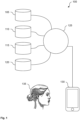
- Figure 1 shows a system 100 for providing cooking recipes.
- the system 100 comprises a first data storage 105, a second data storage 110, a third data storage 115 and a fourth data storage 120.
- the data storages 105 to 120 can also be formed by a common data storage.
- a data storage 105 to 120 can be designed, for example, as a file, as a database or any other form of information storage.
- the first data store 105 includes a template for the dish, the second data store 110 one or more basic building block variants for the dish, the third data store 115 one or more flavor building block variants for the dish and the fourth data store 120 attributes of ingredients that can be used in the dish.
- One or more further data stores can be provided, for example, to To hold vessels, kitchen utensils or kitchen tools.
- a processing device 125 is connected to the data storage devices 105 to 120.
- a user 135 can interact with the system 100 using a user interface 130.
- the user interface 130 is shown as a smartphone by way of example, but can also include any other device for inputting and outputting information between the system 100 and the user 135.
- the user interface 130 can be connected to the system 100 by cable or wirelessly.
- the system 100 is preferably set up to be operated by a plurality of users 135 via a plurality of user interfaces 130.
- the user interface 130 can also be used to create or organize information in the data stores 105 to 120.
- the system 100 can initially be provided with collections of ingredients, containers, kitchen machines and kitchen appliances. Then another person, in particular a chef, can combine elements from the collections to provide a template including basic building blocks and a flavor building block.
- another interface can also be provided for filling the data stores 105 to 120.
- FIG. 2 shows an exemplary network 200 of elements for providing a recipe 205 for a predetermined dish 210.
- the dish 210 relates, for example, to "savory muffins with dip".
- the dish 210 comprises, for example, a dough 215 and a dip 220. Both the dough 215 and the dip 220 are considered characteristic of the dish 210; if, for example, the dough 215 were replaced by a different mass, the resulting dish 210 would no longer meet the usual requirements for a muffin.
- Such requirements can be taken, for example, from the background knowledge of a preparer or from a collection of recipes for the dish 210. Preferably, these requirements are as unrestrictive as possible and only concern essential features.
- two different basic building block variants 230 are provided for the dough 215, which can be combined with two basic building block variants 232 for the dip 220.
- a first example basic building block variant 230 for the dough 215 describes the creation of a classic dough 215 based on wheat flour, eggs, oil, salt and baking powder.
- a second example basic building block variant 230 defines a vegan dough 215 based on spelt flour, apple sauce, oil, salt, baking soda and apple cider vinegar. Controlled by the template 225, the user 135 can decide on one of the basic building block variants 230 mentioned for the dough 215.
- Other possible basic building block variants 230 for the dough 215 could, for example, be suitable for a low-carbohydrate or gluten-free diet. Of course, an attribute such as gluten-free can apply to several offered doughs 215 or associated basic building block variants 230.
- a first example basic building block variant 232 includes yogurt, salt, lemon juice and honey
- a second example basic building block variant 232 includes quark, salt, sugar and white wine vinegar.
- Other possible basic building block variants 232 for the dip 220 can be based on sour cream, coconut with yogurt or chickpeas, for example.
- the dish 210 includes a flavor building block variant 235 that can influence the character of the dish 210.
- a flavor building block variant 235 that can influence the character of the dish 210.
- two flavor building block variants 235 are provided from which the user 135 can choose.
- a first example flavor building block variant 235 includes carrots, walnuts and ginger root.
- a second example flavor building block variant 235 includes mushrooms, thyme and feta.
- Other possible flavor building block variants 235 can be based on baby spinach with pumpkin seeds, bacon with mushrooms, carrots with feta, chanterelles with blueberries, cherry tomatoes with basil, parmesan with rosemary and olive or salmon with zucchini.
- the basic building block variants 230, 232 be provided in such a way that all combinations of one basic building block variant 230 for the dough 215 and one basic building block variant 232 for the dip 220 can be used as the basis for a useful recipe 205.
- the aroma building block variants 235 should be provided in such a way that they can be combined with all combinations of basic building block variants 230, 232 in order to form a recipe 205 for an appealing dish 210.
- the combination of building block variants 230, 232 and aroma building block variants 235 is essentially controlled by the template 225.
- the template 225 sets out requirements for processing steps that can be filled by processing steps of the basic building block variants 230, 232. Certain processing steps can be mandatory to ensure that characteristic elements of the present dish 210 are fulfilled. For the present example of a muffin, for example, it can be required that the dough 215 is a batter that is baked in a characteristic muffin tin. This results in certain processing steps, such as mixing the dough 215 in a bowl with a hand mixer, wherein the dough 215 is then placed in muffin tins and baked in an oven.
- the template 225 can also include optional processing steps that can be activated by a basic building block variant 230, 232 or a flavor building block variant 235 and used accordingly or not.
- a variant of a basic building block 230, 232 or a flavor building block 235 can also define private processing steps.
- One processing step can rely on another, for example by further processing an ingredient or an intermediate result of the other processing step.
- Any type of processing step can refer to a mandatory processing step because this is always implemented.
- a processing step of a first building block variant it is not possible for a processing step of a first building block variant to refer to an optional or private processing step of a second building block variant because the processing step referred to could not be implemented if the building block variant containing the processing step is not selected at all.
- a reference of one processing step to another within a building block variant can, however, between all types of processing steps, since its existence within a variant is always known.
- an optional processing step can include an action and a container.
- a mandatory or optional processing step can also optionally specify a kitchen appliance. The mandatory presence of certain attributes thus enables communication across building blocks.
- a processing step preferably includes a general action, an activity described for an ingredient, and a vessel in which the action or activity takes place.
- a processing step can include, for example, a kitchen appliance, a total duration, an ingredient, and optionally one or more attributes of the ingredient, an additional action, or the output of a time to the user 135.
- Additional information or options can be assigned to an element included in the processing step. For example, it can be specified for a kitchen appliance which accessory should be used or which program level it should run at. To generate this information, predetermined kitchen appliances can be known, whose options and program levels are stored. In this way, an accessory to be used can be generated automatically, regardless of a specific appliance type.
- a vessel can, for example, include a bowl, a mug, a pot, a pan, a baking tray or a casserole dish. Properties of the vessels can be stored to ensure, for example, that only a fireproof vessel is used in a processing step that includes cooking in an oven.
- a processing step always includes a main action that is superior to the processing step and can also include one or more accompanying actions that are to be carried out during the main action. The accompanying actions can be assigned to corresponding ingredients.
- a cooking step can include sprinkling an ingredient into a vessel as an accompanying action, with the main action being stirring. of a vessel content.
- a specific result to be achieved can be specified, for example a dough, and optionally a description of the state of the result, such as creamy or flaky.
- An estimated processing time can be provided to the user 135, or a result to be achieved can be specified. In the first case, for example, it can be required that onions are fried for about 5 minutes, in the second case that they are fried until they are golden yellow.
- the flavor building block variant 235 adds a flavor to a basic building block variant 230, 232, it itself typically does not include any mandatory processing steps, but preferably only optional or private processing steps.
- the template 225 can, for example, specify that all basic building block variants 230, 232 of the dough 215 for the muffins 210 have the following in common: ingredients are mixed in a large mixing bowl with a hand mixer at high speed and the dough is always put into greased muffin tins.
- Optional processing steps of template 225 can, for example, specify whether something should be folded into a dough mixture or whether the mixture should be baked in a baking process. Depending on the dough 215, it would also be possible to omit the baking step here, so that an unbaked muffin (“no-bake muffin”) could be created.
- a private processing step can be contributed by both a basic building block variant and a flavor building block variant.
- a basic building block variant can define a private processing step "blending" that affects an ingredient from the same processing step and a result of a processing step of the same building block.
- the basic structure of a dish 210 is the same for the mandatory processing steps, but individual preparation steps can vary depending on the selected building block variant 230, 232, 235 of a basic or flavor building block. Private processing steps of a building block variant 230, 232, 235 may not be used by processing steps of other building block variants 230, 232, 235, as this would affect the cross-component communication would be prevented.
- private processing steps preferably have no pre-settings regarding an action or procedure to be carried out, a vessel or kitchen appliance to be used. These can be freely selected in a building block variant depending on the preparation step required, as they are independent.
- Optional processing steps are required if a building block variant is to be able to continue working with the result of a preparation step.
- Private processing steps are used if results are not to be changed or supplemented across building blocks. This means that it can always be clearly defined which building block variant uses a processing step and which does not.
- the described division of mandatory, optional and private steps into the template 225, the basic building blocks 230, 232 and the aroma building blocks 235 ensures that there are no collisions between the processing steps. For example, it can always be clearly defined in which order the processing steps are to be carried out and at which point ingredients of an aroma building block variant are used in processing steps of a basic building block variant.
- the cooking recipe 205 can be automatically generated using the template 225.
- the finished cooking recipe 205 contains a number of processing steps that are taken from the selected building block variants 230, 232 and combined according to the specifications of the template 225.
- FIG 3 shows a flow chart of a method 300 for providing a cooking recipe 205 for a predetermined dish 210. To explain the execution, reference is made below to the system 100 of Figure 1 reference is made.
- the fourth data store 120 can be filled with possible ingredients and their attributes.
- An attribute can, for example, indicate whether the ingredient is aromatic or not, under which trade name it is available, whether it is vegetarian, vegan, kosher, halal or allergenic, what nutritional calorific value it has, which group of foods it belongs to, what consistencies are possible, etc. Such information can be taken from a relevant knowledge store.
- a basic building block variant 230, 232 can be provided in the second data memory 110.
- the basic building block variant 230, 232 can be created, for example, by a cook for a predetermined dish 210.
- a template 225 can be created in the first data storage 105.
- the template 225 can be created by another cook.
- the template 225 specifies which building blocks 230, 232, 235 a recipe for the dish includes.
- a building block 230, 232, 235 is implemented in each case by a building block variant, of which preferably several are available to choose from.
- a flavor building block variant 235 can be provided in the third data store 115.
- the creation of the flavor building block variant 235 can also be carried out by a cook.
- one or more basic building blocks 230, 232 can be taken into account, which can be used to form a recipe 205 for the dish 210.
- the flavor building block 235 can be created independently and has the option of referring to one or more mandatory processing steps of the basic building blocks defined in the template.
- the system 100 can Figure 1 into an operational state. It can then be used to provide a recipe 205 for a dish 210. It should be noted that the system 100 prepared in the manner described is designed to provide various Recipes 205 for just one dish 210 can be created. Of course, the steps mentioned can be repeated to create recipes 205 for another dish 210.
- a dish 210 consists of a large number of different recipe variants that result from the combination of the individual building block variants 230, 232, 235.
- a request from a user 135 may be determined that concerns a restriction within the dish 210.
- the request may concern the use or avoidance of a predetermined ingredient or ingredient attribute or the fulfillment of a predetermined nutritional property.
- a pre-selection of available modules 230, 232, 235 can be made automatically on the basis of the request. After that, only those modules 230, 232, 235 can be selected whose use allows the fulfillment of the user-controlled request.
- the selectable modules 230, 232, 235 can be presented to the user 135.
- a selection of the user 135 can be recorded. From the selected building blocks 230, 232, 235 and the template 225 assigned to the dish 210, a recipe 205 can then be determined in a step 345.
- the cooking recipe 205 can be provided to the user 135 in a step 350.
- the user can implement the information contained in the cooking recipe 205 in order to prepare the dish 210 accordingly.
- the novel recipe technology described here can significantly simplify the creation of recipes and thus the technical operation of household appliances and can reduce the complexity for users and developers.
- food chemistry and physics knowledge regarding the behavior of ingredients can be taken into account more easily.
- Technical knowledge about the functioning of household appliances can be reliably incorporated into the creation of recipes.
Landscapes
- Business, Economics & Management (AREA)
- Engineering & Computer Science (AREA)
- Health & Medical Sciences (AREA)
- General Health & Medical Sciences (AREA)
- Nutrition Science (AREA)
- Entrepreneurship & Innovation (AREA)
- Physics & Mathematics (AREA)
- Educational Administration (AREA)
- Educational Technology (AREA)
- General Physics & Mathematics (AREA)
- Theoretical Computer Science (AREA)
- Management, Administration, Business Operations System, And Electronic Commerce (AREA)
Applications Claiming Priority (1)
| Application Number | Priority Date | Filing Date | Title |
|---|---|---|---|
| DE102022211831.6A DE102022211831A1 (de) | 2022-11-09 | 2022-11-09 | Modulare Erstellung von Kochrezepten |
Publications (1)
| Publication Number | Publication Date |
|---|---|
| EP4369327A1 true EP4369327A1 (fr) | 2024-05-15 |
Family
ID=88295751
Family Applications (1)
| Application Number | Title | Priority Date | Filing Date |
|---|---|---|---|
| EP23201847.3A Pending EP4369327A1 (fr) | 2022-11-09 | 2023-10-05 | Création modulaire de recettes de cuisine |
Country Status (2)
| Country | Link |
|---|---|
| EP (1) | EP4369327A1 (fr) |
| DE (1) | DE102022211831A1 (fr) |
Citations (7)
| Publication number | Priority date | Publication date | Assignee | Title |
|---|---|---|---|---|
| US20140324607A1 (en) * | 2013-03-13 | 2014-10-30 | Momentum Machines Company | Method for delivering a custom sandwich to a patron |
| US20160059412A1 (en) * | 2014-09-02 | 2016-03-03 | Mark Oleynik | Robotic manipulation methods and systems for executing a domain-specific application in an instrumented environment with electronic minimanipulation libraries |
| US10480990B1 (en) * | 2017-06-16 | 2019-11-19 | Perfect Company | System and method for dynamic adjustment of recipe ingredients |
| US20190355465A1 (en) * | 2018-05-21 | 2019-11-21 | Under Armour, Inc. | Food knowledge graph for a health tracking system |
| US20200242680A1 (en) * | 2015-10-21 | 2020-07-30 | Vishnu Gurusamy Sundaram | Method and system for automatic end-to-end preparation and management of food |
| US11062620B1 (en) * | 2017-10-27 | 2021-07-13 | Perfect Company | System and method for processing simple ingredients in a recipe |
| US20220000309A1 (en) * | 2020-07-06 | 2022-01-06 | Kitchen Robotics Ltd | User-Programmable Automated Cooking Apparatus |
-
2022
- 2022-11-09 DE DE102022211831.6A patent/DE102022211831A1/de active Pending
-
2023
- 2023-10-05 EP EP23201847.3A patent/EP4369327A1/fr active Pending
Patent Citations (7)
| Publication number | Priority date | Publication date | Assignee | Title |
|---|---|---|---|---|
| US20140324607A1 (en) * | 2013-03-13 | 2014-10-30 | Momentum Machines Company | Method for delivering a custom sandwich to a patron |
| US20160059412A1 (en) * | 2014-09-02 | 2016-03-03 | Mark Oleynik | Robotic manipulation methods and systems for executing a domain-specific application in an instrumented environment with electronic minimanipulation libraries |
| US20200242680A1 (en) * | 2015-10-21 | 2020-07-30 | Vishnu Gurusamy Sundaram | Method and system for automatic end-to-end preparation and management of food |
| US10480990B1 (en) * | 2017-06-16 | 2019-11-19 | Perfect Company | System and method for dynamic adjustment of recipe ingredients |
| US11062620B1 (en) * | 2017-10-27 | 2021-07-13 | Perfect Company | System and method for processing simple ingredients in a recipe |
| US20190355465A1 (en) * | 2018-05-21 | 2019-11-21 | Under Armour, Inc. | Food knowledge graph for a health tracking system |
| US20220000309A1 (en) * | 2020-07-06 | 2022-01-06 | Kitchen Robotics Ltd | User-Programmable Automated Cooking Apparatus |
Also Published As
| Publication number | Publication date |
|---|---|
| DE102022211831A1 (de) | 2024-05-16 |
Similar Documents
| Publication | Publication Date | Title |
|---|---|---|
| CH712659A1 (de) | Generierung eines Garprozesses. | |
| EP3267859B1 (fr) | Procédé de fonctionnement d'un robot ménager entraîné par moteur électrique | |
| DE102014101079B4 (de) | Verfahren zum Betrieb einer Küchenmaschine und Küchenmaschine | |
| DE102018130667B4 (de) | System zum Zubereiten von Lebensmitteln und Verfahren zum Steuern eines Küchengeräts | |
| EP3163174A2 (fr) | Arrangement d'appareils de cuisson pour la préparation d'au moins deux produits à cuire | |
| EP3833229B1 (fr) | Système de préparation et de distribution d'aliments | |
| WO2016030367A1 (fr) | Transformation automatique d'un aliment | |
| EP3730015B1 (fr) | Appareil electromenager | |
| DE102010054382C5 (de) | Verfahren zur Steuerung eines Gargerätes und Gargerät mit Gerätesteuerung | |
| EP3909479B1 (fr) | Détermination et réalisation d'une recette de cuisine | |
| EP4003112A1 (fr) | Détermination d'une recette de cuisine | |
| EP4369327A1 (fr) | Création modulaire de recettes de cuisine | |
| DE19633087A1 (de) | Verfahren zur Herstellung eines fleischhaltigen Nahrungsmittels | |
| DE102018125726A1 (de) | Ofen zum Backen/zur Regeneration von Lebensmitteln mit dynamischem Mehrebenen-Back-/Regenerationssystem | |
| EP3858199A1 (fr) | Système pourvu de matériel de cuisine pour une cuisson coordonnée et procédé | |
| DE3602062A1 (de) | Herstellung eines kartoffelfladens mit belag | |
| DE102019205775A1 (de) | Anpassen eines Kochrezepts | |
| EP3799771A1 (fr) | Machine de cuisine permettant de commander un autre appareil électroménager | |
| DE102023210999A1 (de) | Benennung eines Zwischenprodukts bei der Zubereitung eines modularen Kochrezepts | |
| EP4391878A1 (fr) | Aide à un utilisateur dans la préparation d'un repas | |
| DE102010028326A1 (de) | Fleischroulade und Verfahren zu deren Herstellung | |
| DE60101038T2 (de) | Verfahren zur automatischen Herstellung von Bratspiessen | |
| EP4735797A1 (fr) | Fourniture d'une recommandation de cuisson pour un plat | |
| DE102024205132A1 (de) | Einstellen von Betriebsparametern eines Lebensmittelbehandlungsablaufs und Durchführen desselben | |
| EP3653091A1 (fr) | Système et procédé de préparation de denrées alimentaires |
Legal Events
| Date | Code | Title | Description |
|---|---|---|---|
| PUAI | Public reference made under article 153(3) epc to a published international application that has entered the european phase |
Free format text: ORIGINAL CODE: 0009012 |
|
| STAA | Information on the status of an ep patent application or granted ep patent |
Free format text: STATUS: THE APPLICATION HAS BEEN PUBLISHED |
|
| AK | Designated contracting states |
Kind code of ref document: A1 Designated state(s): AL AT BE BG CH CY CZ DE DK EE ES FI FR GB GR HR HU IE IS IT LI LT LU LV MC ME MK MT NL NO PL PT RO RS SE SI SK SM TR |
|
| STAA | Information on the status of an ep patent application or granted ep patent |
Free format text: STATUS: REQUEST FOR EXAMINATION WAS MADE |
|
| 17P | Request for examination filed |
Effective date: 20241115 |
|
| RBV | Designated contracting states (corrected) |
Designated state(s): AL AT BE BG CH CY CZ DE DK EE ES FI FR GB GR HR HU IE IS IT LI LT LU LV MC ME MK MT NL NO PL PT RO RS SE SI SK SM TR |