EP4538292A2 - Zusammensetzungen und verfahren zur behandlung des zytokinfreisetzungssyndroms - Google Patents
Zusammensetzungen und verfahren zur behandlung des zytokinfreisetzungssyndroms Download PDFInfo
- Publication number
- EP4538292A2 EP4538292A2 EP25158326.6A EP25158326A EP4538292A2 EP 4538292 A2 EP4538292 A2 EP 4538292A2 EP 25158326 A EP25158326 A EP 25158326A EP 4538292 A2 EP4538292 A2 EP 4538292A2
- Authority
- EP
- European Patent Office
- Prior art keywords
- antigen
- antibody
- antagonist
- bispecific
- cell
- Prior art date
- Legal status (The legal status is an assumption and is not a legal conclusion. Google has not performed a legal analysis and makes no representation as to the accuracy of the status listed.)
- Pending
Links
Images




Classifications
-
- A—HUMAN NECESSITIES
- A61—MEDICAL OR VETERINARY SCIENCE; HYGIENE
- A61K—PREPARATIONS FOR MEDICAL, DENTAL OR TOILETRY PURPOSES
- A61K39/00—Medicinal preparations containing antigens or antibodies
- A61K39/395—Antibodies; Immunoglobulins; Immune serum, e.g. antilymphocytic serum
- A61K39/39533—Antibodies; Immunoglobulins; Immune serum, e.g. antilymphocytic serum against materials from animals
- A61K39/3955—Antibodies; Immunoglobulins; Immune serum, e.g. antilymphocytic serum against materials from animals against proteinaceous materials, e.g. enzymes, hormones, lymphokines
-
- A—HUMAN NECESSITIES
- A61—MEDICAL OR VETERINARY SCIENCE; HYGIENE
- A61K—PREPARATIONS FOR MEDICAL, DENTAL OR TOILETRY PURPOSES
- A61K35/00—Medicinal preparations containing materials or reaction products thereof with undetermined constitution
- A61K35/12—Materials from mammals; Compositions comprising non-specified tissues or cells; Compositions comprising non-embryonic stem cells; Genetically modified cells
- A61K35/14—Blood; Artificial blood
- A61K35/17—Lymphocytes; B-cells; T-cells; Natural killer cells; Interferon-activated or cytokine-activated lymphocytes
-
- A—HUMAN NECESSITIES
- A61—MEDICAL OR VETERINARY SCIENCE; HYGIENE
- A61K—PREPARATIONS FOR MEDICAL, DENTAL OR TOILETRY PURPOSES
- A61K38/00—Medicinal preparations containing peptides
- A61K38/16—Peptides having more than 20 amino acids; Gastrins; Somatostatins; Melanotropins; Derivatives thereof
- A61K38/17—Peptides having more than 20 amino acids; Gastrins; Somatostatins; Melanotropins; Derivatives thereof from animals; from humans
- A61K38/177—Receptors; Cell surface antigens; Cell surface determinants
- A61K38/1774—Immunoglobulin superfamily (e.g. CD2, CD4, CD8, ICAM molecules, B7 molecules, Fc-receptors, MHC-molecules)
-
- A—HUMAN NECESSITIES
- A61—MEDICAL OR VETERINARY SCIENCE; HYGIENE
- A61K—PREPARATIONS FOR MEDICAL, DENTAL OR TOILETRY PURPOSES
- A61K39/00—Medicinal preparations containing antigens or antibodies
- A61K39/395—Antibodies; Immunoglobulins; Immune serum, e.g. antilymphocytic serum
- A61K39/39533—Antibodies; Immunoglobulins; Immune serum, e.g. antilymphocytic serum against materials from animals
- A61K39/39558—Antibodies; Immunoglobulins; Immune serum, e.g. antilymphocytic serum against materials from animals against tumor tissues, cells, antigens
-
- A—HUMAN NECESSITIES
- A61—MEDICAL OR VETERINARY SCIENCE; HYGIENE
- A61P—SPECIFIC THERAPEUTIC ACTIVITY OF CHEMICAL COMPOUNDS OR MEDICINAL PREPARATIONS
- A61P35/00—Antineoplastic agents
-
- A—HUMAN NECESSITIES
- A61—MEDICAL OR VETERINARY SCIENCE; HYGIENE
- A61P—SPECIFIC THERAPEUTIC ACTIVITY OF CHEMICAL COMPOUNDS OR MEDICINAL PREPARATIONS
- A61P37/00—Drugs for immunological or allergic disorders
- A61P37/02—Immunomodulators
-
- A—HUMAN NECESSITIES
- A61—MEDICAL OR VETERINARY SCIENCE; HYGIENE
- A61P—SPECIFIC THERAPEUTIC ACTIVITY OF CHEMICAL COMPOUNDS OR MEDICINAL PREPARATIONS
- A61P37/00—Drugs for immunological or allergic disorders
- A61P37/02—Immunomodulators
- A61P37/06—Immunosuppressants, e.g. drugs for graft rejection
-
- C—CHEMISTRY; METALLURGY
- C07—ORGANIC CHEMISTRY
- C07K—PEPTIDES
- C07K16/00—Immunoglobulins [IG], e.g. monoclonal or polyclonal antibodies
- C07K16/18—Immunoglobulins [IG], e.g. monoclonal or polyclonal antibodies against material from animals or humans
- C07K16/28—Immunoglobulins [IG], e.g. monoclonal or polyclonal antibodies against material from animals or humans against receptors, cell surface antigens or cell surface determinants
- C07K16/2803—Immunoglobulins [IG], e.g. monoclonal or polyclonal antibodies against material from animals or humans against receptors, cell surface antigens or cell surface determinants against the immunoglobulin superfamily
- C07K16/2809—Immunoglobulins [IG], e.g. monoclonal or polyclonal antibodies against material from animals or humans against receptors, cell surface antigens or cell surface determinants against the immunoglobulin superfamily against the T-cell receptor (TcR)-CD3 complex
-
- C—CHEMISTRY; METALLURGY
- C07—ORGANIC CHEMISTRY
- C07K—PEPTIDES
- C07K16/00—Immunoglobulins [IG], e.g. monoclonal or polyclonal antibodies
- C07K16/18—Immunoglobulins [IG], e.g. monoclonal or polyclonal antibodies against material from animals or humans
- C07K16/28—Immunoglobulins [IG], e.g. monoclonal or polyclonal antibodies against material from animals or humans against receptors, cell surface antigens or cell surface determinants
- C07K16/2878—Immunoglobulins [IG], e.g. monoclonal or polyclonal antibodies against material from animals or humans against receptors, cell surface antigens or cell surface determinants against the NGF-receptor/TNF-receptor superfamily, e.g. CD27, CD30, CD40, CD95
-
- C—CHEMISTRY; METALLURGY
- C07—ORGANIC CHEMISTRY
- C07K—PEPTIDES
- C07K16/00—Immunoglobulins [IG], e.g. monoclonal or polyclonal antibodies
- C07K16/18—Immunoglobulins [IG], e.g. monoclonal or polyclonal antibodies against material from animals or humans
- C07K16/28—Immunoglobulins [IG], e.g. monoclonal or polyclonal antibodies against material from animals or humans against receptors, cell surface antigens or cell surface determinants
- C07K16/30—Immunoglobulins [IG], e.g. monoclonal or polyclonal antibodies against material from animals or humans against receptors, cell surface antigens or cell surface determinants from tumour cells
-
- A—HUMAN NECESSITIES
- A61—MEDICAL OR VETERINARY SCIENCE; HYGIENE
- A61K—PREPARATIONS FOR MEDICAL, DENTAL OR TOILETRY PURPOSES
- A61K39/00—Medicinal preparations containing antigens or antibodies
- A61K2039/505—Medicinal preparations containing antigens or antibodies comprising antibodies
-
- C—CHEMISTRY; METALLURGY
- C07—ORGANIC CHEMISTRY
- C07K—PEPTIDES
- C07K2317/00—Immunoglobulins specific features
- C07K2317/30—Immunoglobulins specific features characterized by aspects of specificity or valency
- C07K2317/31—Immunoglobulins specific features characterized by aspects of specificity or valency multispecific
-
- C—CHEMISTRY; METALLURGY
- C07—ORGANIC CHEMISTRY
- C07K—PEPTIDES
- C07K2317/00—Immunoglobulins specific features
- C07K2317/70—Immunoglobulins specific features characterized by effect upon binding to a cell or to an antigen
- C07K2317/76—Antagonist effect on antigen, e.g. neutralization or inhibition of binding
Definitions
- Cytokine release syndrome is a systemic inflammatory response that can be triggered by a variety of factors, including certain drugs. When the symptoms associated with CRS occur less than six hours following the start of a therapeutic infusion they can be referred to as an infusion-related reaction (IRR).
- IRR infusion-related reaction
- kits for treating cancer and inhibiting CRS (including IRR) in a subject comprising conjointly administering to the subject (a) a multi-specific antigen binding molecule comprising a first antigen-binding domain that specifically binds CD3 and a second antigen-binding domain that specifically binds a tumor antigen; and (b) a CAR-T cell expressing a CD40 antagonist.
- the subject is a human. In some embodiments, the subject is a cancer patient. In some embodiments, the methods described herein further comprises identifying a subject that is susceptible to cytokine release syndrome or in need of reduction in cytokine release prior to administering to the subject a CD40 antagonist or a CAR-T cell expressing a CD40 antagonist.
- compositions comprising: a multi-specific antigen binding molecule comprising a first antigen-binding domain that specifically binds CD3 and a second antigen-binding domain that specifically binds a tumor antigen; and a CD40 antagonist.
- the pharmaceutical compositions described herein further comprise a pharmaceutically acceptable carrier.
- provided herein are methods of treating cancer and/or inhibiting CRS (including IRR) in a subject, comprising administering to the subject a pharmaceutical composition described herein.
- methods of treating cancer and/or inhibiting CRS (including IRR) in a subject comprising: identifying a subject that is susceptible for cytokine release syndrome or in need of reduction in cytokine release; and administering to the subject a pharmaceutical composition described herein.
- the cytokines are one or more cytokines selected from the group consisting of sTNFR2, IP10, sIL1R2, sTNFR1, MIG, VEGF, sIL1R1, TNF ⁇ , IFN ⁇ , GCSF, sRAGE, IL1, IL2, IL4, IL5, IL10, IL12, IL13, IL18, IL1R1, IFN ⁇ , IL6, IL8, sIL2R ⁇ , sgp130, sIL6R, MCP1, MIP1 ⁇ , MIP1 ⁇ , FLT-3L, fractalkine, and GM-CSF.
- the endothelial cell activation is detected by measuring the serum level of Ang-2 and/or von Willebrand factor.
- CD40 antagonists e.g., CD40 blocking antibodies
- CRS cytokine release syndrome
- IRR infusion-related reaction
- administration of CD40 antagonists can reduce the release of cytokines associated with CRS without affecting the T cell activation and cytotoxicity induced by administration of certain cancer immunotherapies (e .g., CD3 bispecific antibodies, CAR T cells).
- cancer immunotherapies e .g., CD3 bispecific antibodies, CAR T cells.
- the methods and compositions herein are able to mitigate the potentially life-threatening effects of CRS without negatively impacting the therapeutic efficacy of T cell activating cancer immunotherapies, including bispecific antibodies.
- an element means one element or more than one element.
- administering means providing a pharmaceutical agent or composition to a subject, and includes, but is not limited to, administering by a medical professional and self-administering.
- Such an agent can contain, for example, a CAR T cell provided herein.
- antibody may refer to both an intact antibody and an antigen binding fragment thereof.
- Intact antibodies are glycoproteins that include at least two heavy (H) chains and two light (L) chains inter-connected by disulfide bonds.
- Each heavy chain includes a heavy chain variable region (abbreviated herein as V H ) and a heavy chain constant region.
- Each light chain includes a light chain variable region (abbreviated herein as V L ) and a light chain constant region.
- the V H and V L regions can be further subdivided into regions of hypervariability, termed complementarity determining regions (CDR), interspersed with regions that are more conserved, termed framework regions (FR).
- CDR complementarity determining regions
- Each V H and V L is composed of three CDRs and four FRs, arranged from amino-terminus to carboxy-terminus in the following order: FR1, CDR1, FR2, CDR2, FR3, CDR3, FR4.
- the variable regions of the heavy and light chains contain a binding domain that interacts with an antigen.
- the term "antibody” includes, for example, monoclonal antibodies, polyclonal antibodies, chimeric antibodies, humanized antibodies, human antibodies, multispecific antibodies ( e.g., bispecific antibodies, trispecific antibodies), single-chain antibodies and antigen-binding antibody fragments.
- antigen binding fragment and "antigen-binding portion" of an antibody, as used herein, refer to one or more fragments of an antibody that retain the ability to bind to an antigen.
- antigen-binding fragments include: (i) Fab fragments; (ii) F(ab')2 fragments; (iii) Fd fragments; (iv) Fv fragments; (v) single-chain Fv (scFv) molecules; (vi) dAb fragments; and (vii) minimal recognition units consisting of the amino acid residues that mimic the hypervariable region of an antibody (e.g., an isolated complementarity determining region (CDR) such as a CDR3 peptide), or a constrained FR3-CDR3-FR4 peptide.
- CDR complementarity determining region
- engineered molecules such as domain-specific antibodies, single domain antibodies, domain-deleted antibodies, chimeric antibodies, CDR-grafted antibodies, diabodies, triabodies, tetrabodies, minibodies, nanobodies (e.g. monovalent nanobodies, bivalent nanobodies, etc.), small modular immunopharmaceuticals (SMIPs), and shark variable IgNAR domains, are also encompassed within the expression "antigen-binding fragment," as used herein.
- SMIPs small modular immunopharmaceuticals
- a costimulatory ligand can include but is not limited to CD7, B7-1 (CD80), B7-2 (CD86), PD-L1, PD-L2, 4-1BBL, OX40L, inducible costimulatory ligand (ICOS-L), intercellular adhesion molecule (ICAM), CD30L, CD40, CD70, CD83, HLA-G, MICA, M1CB, HVEM, lymphotoxin beta receptor, 3/TR6, ILT3, ILT4, an agonist or antibody that binds Toll ligand receptor and a ligand that specifically binds with B7-H3.
- costimulatory signal refers to a signal, which in combination with a primary signal, leads to T cell proliferation and/or upregulation or downregulation of key molecules.
- the phrase "pharmaceutically acceptable” refers to those agents, compounds, materials, compositions, and/or dosage forms which are, within the scope of sound medical judgment, suitable for use in contact with the tissues of human beings and animals without excessive toxicity, irritation, allergic response, or other problem or complication, commensurate with a reasonable benefit/risk ratio.
- the phrase "pharmaceutically-acceptable carrier” means a pharmaceutically-acceptable material, composition or vehicle, such as a liquid or solid filler, diluent, excipient, or solvent encapsulating material, involved in carrying or transporting an agent from one organ, or portion of the body, to another organ, or portion of the body.
- a pharmaceutically-acceptable material such as a liquid or solid filler, diluent, excipient, or solvent encapsulating material, involved in carrying or transporting an agent from one organ, or portion of the body, to another organ, or portion of the body.
- Each carrier must be “acceptable” in the sense of being compatible with the other ingredients of the formulation and not injurious to the patient.
- polynucleotides coding or non-coding regions of a gene or gene fragment, loci (locus) defined from linkage analysis, exons, introns, messenger RNA (mRNA), transfer RNA, ribosomal RNA, ribozymes, cDNA, recombinant polynucleotides, branched polynucleotides, plasmids, vectors, isolated DNA of any sequence, isolated RNA of any sequence, nucleic acid probes, and primers.
- a polynucleotide may comprise modified nucleotides, such as methylated nucleotides and nucleotide analogs.
- modifications to the nucleotide structure may be imparted before or after assembly of the polymer.
- a polynucleotide may be further modified, such as by conjugation with a labeling component.
- U nucleotides are interchangeable with T nucleotides.
- the polynucleotide is not necessarily associated with the cell in which the nucleic acid is found in nature, and/or operably linked to a polynucleotide to which it is linked in nature.
- a therapeutic that "prevents" a condition refers to a compound that, when administered to a statistical sample prior to the onset of the disorder or condition, reduces the occurrence of the disorder or condition in the treated sample relative to an untreated control sample, or delays the onset or reduces the severity of one or more symptoms of the disorder or condition relative to the untreated control sample.
- nucleic acid or fragment thereof indicates that, when optimally aligned with appropriate nucleotide insertions or deletions with another nucleic acid (or its complementary strand), there is nucleotide sequence identity in at least about 95%, and more preferably at least about 96%, 97%, 98% or 99% of the nucleotide bases, as measured by any well-known algorithm of sequence identity, such as FASTA, BLAST or Gap, as discussed below.
- a nucleic acid molecule having substantial identity to a reference nucleic acid molecule may, in certain instances, encode a polypeptide having the same or substantially similar amino acid sequence as the polypeptide encoded by the reference nucleic acid molecule.
- the term "substantial similarity" or “substantially similar” means that two peptide sequences, when optimally aligned, such as by the programs GAP or BESTFIT using default gap weights, share at least 95% sequence identity, even more preferably at least 98% or 99% sequence identity.
- residue positions which are not identical differ by conservative amino acid substitutions.
- a "conservative amino acid substitution” is one in which an amino acid residue is substituted by another amino acid residue having a side chain (R group) with similar chemical properties (e.g., charge or hydrophobicity). In general, a conservative amino acid substitution will not substantially change the functional properties of a protein.
- the percent sequence identity or degree of similarity may be adjusted upwards to correct for the conservative nature of the substitution. Means for making this adjustment are well-known to those of skill in the art. See, e.g., Pearson (1994) Methods Mol. Biol. 24: 307-331 , herein incorporated by reference.
- a first molecule that "specifically binds" a second molecule has an affinity constant (Ka) greater than about 10 5 M -1 ( e.g., 10 6 M -1 , 10 7 M -1 , 10 8 M -1 , 10 9 M -1 , 10 10 M -1 , 10 11 M -1 , and 10 12 M -1 or more) with that second molecule.
- Ka affinity constant
- a CAR specifically binds to its peptide/MHC with an affinity of at least a KD of about 10-4 M or less, and binds to the predetermined antigen/binding partner with an affinity (as expressed by KD) that is at least 10 fold less, at least 100 fold less or at least 1000 fold less than its affinity for binding to a non-specific and unrelated peptide/MHC complex (e.g., one comprising a BSA peptide or a casein peptide).
- MHC e.g., class I MHC or class II MHC
- a CAR specifically binds to its peptide/MHC with an affinity of at least a KD of about 10-4 M or less, and binds to the predetermined antigen/binding partner with an affinity (as expressed by KD) that is at least 10 fold less, at least 100 fold less or at least 1000 fold less than its affinity for binding to a non-specific and unrelated peptide/MHC complex (e.g., one comprising
- cytokine release syndrome CRS
- the symptoms associated with CRS can include infusion-related reaction (IRR) if they occur less than six hours following the start of a therapeutic infusion.
- IRR infusion-related reaction
- the methods and compositions provided herein can be useful in treating and/or preventing CRS and/or CRS symptoms, including, but not limited to, IRR.
- CRS is a potentially life-threatening cytokine-associated toxicity that can occur as a result of cancer immunotherapy, e.g., cancer antibody therapies (e.g., bispecific antibodies) and/or T cell immunotherapies (e.g., CAR T cells).
- cancer immunotherapy e.g., cancer antibody therapies (e.g., bispecific antibodies) and/or T cell immunotherapies (e.g., CAR T cells).
- CRS results from high-level immune activation when large numbers of lymphocytes and/or myeloid cells release inflammatory cytokines upon activation.
- the severity of CRS and the timing of onset of symptoms can vary depending on the magnitude of immune cell activation, the type of therapy administered, and/or the extent of tumor burden in a subject.
- CRS can be graded in severity from 1-5 as follows. Grades 1-3 are less than severe CRS. Grades 4-5 are severe CRS. For Grade 1 CRS, only symptomatic treatment is needed (e.g., nausea, fever, fatigue, myalgias, malaise, headache) and symptoms are not life threatening. For Grade 2 CRS, the symptoms require moderate intervention and generally respond to moderate intervention. Subjects having Grade 2 CRS develop hypotension that is responsive to either fluids or one low-dose vasopressor; or they develop grade 2 organ toxicity or mild respiratory symptoms that are responsive to low flow oxygen ( ⁇ 40% oxygen). In Grade 3 CRS subjects, hypotension generally cannot be reversed by fluid therapy or one low-dose vasopressor.
- the methods and/compositions provided herein treat and/or prevent grade 5 CRS. In certain embodiments, the methods and/compositions provided herein treat and/or prevent grade 4 CRS. In certain embodiments, the methods and/compositions provided herein treat and/or prevent grade 3 CRS. In certain embodiments, the methods and/compositions provided herein treat and/or prevent grade 2 CRS. In certain embodiments, the methods and/compositions provided herein treat and/or prevent grade 1 CRS.
- the methods provided herein include the treatment of a subject susceptible for CRS and/or in need of reduction in cytokine release. In some embodiments, the methods provided herein comprise identifying a subject susceptible for CRS and/or or in need of reduction in cytokine release.
- the exemplary cytokines include, but are not limited to, e.g. , sTNFR2, IP10, sIL1R2, sTNFR1, MIG, VEGF, sIL1R1, TNF ⁇ , IFN ⁇ , GCSF, sRAGE, IL1, IL2, IL4, IL5, IL10, IL12, IL13, IL18, IL1R1, IFN ⁇ , IL6, IL8, sIL2R ⁇ , sgp130, sIL6R, MCP1, MIP1 ⁇ , MIP1 ⁇ , FLT-3L, fractalkine, and GM-CSF.
- one or more cytokines in combination with a disease burden assessment is used to evaluate (e.g., diagnose or identify) a subject susceptible for CRS or in need of reduction in cytokine release.
- the methods provided herein include the treatment of a subject who has CRS.
- the methods provided herein include a step of determining whether a subject has CRS (e.g., severe CRS).
- the method includes acquiring a CRS risk status, e.g ., in response to an cancer immunotherapy, e.g ., a CD3 multispecific antibody, for the subject, wherein said CRS risk status includes a measure of one or more of the level or activity of one or more (e.g., 3, 4, 5, 10, 15, 20, or more) cytokines chosen from sTNFR2, IP10, sIL1R2, sTNFR1, MIG, VEGF, sIL1R1, TNF ⁇ , IFN ⁇ , GCSF, sRAGE, IL1, IL2, IL4, IL5, IL10, IL12, IL13, IL18, IL1R1, IFN ⁇ , IL6, IL8, sIL2R ⁇ , sg
- a LDH level of at least about 1,700, 2,000, 3,000, 4,000, 5,000, 6,000, 7,000, 8,000, 9,000, 10,000, 15,000, or 20,000 U/L, and optionally up to about 24,000 U/L, is indicative of CRS ( e.g., severe CRS).
- a LDH level of less than about 1,700, 1,500, 1,400, 1,300, 1,200, 1,100, 1,000, 900, 800, 700, 600, 500, 400, 300, or 200 U/L, and optionally greater than about 159 U/L, is indicative that the subject does not have CRS ( e.g., severe CRS).
- an AST level of at least about 150, 200, 250, 300, 350, 400, 450, 500, 550, 600, 650, 700, 750, 800, 980, 900, 950, 1000 U/L, and optionally up to about 1500 U/L, is indicative of CRS (e.g., severe CRS).
- an AST level of less than about 150, 140, 130, 120, 100, 90, 80, 70, 60, 50, 40, or 30 U/L, and optionally greater than about 15 U/L, is indicative that the subject does not have CRS (e.g., severe CRS).
- an antigen-binding fragment of an antibody may contain at least one variable domain covalently linked to at least one constant domain.
- variable and constant domains that may be found within an antigen-binding fragment of an antibody of the present invention include: (i) V H -C H 1; (ii) V H -C H 2; (iii) V H -C H 3; (iv) V H -C H 1-C H 2; (v) V H -C H 1-C H 2-C H 3; (vi) V H -C H 2-C H 3; (vii) V H -C L ; (viii) V L -C H 1; (ix) V L -C H 2; (x) V L -C H 3; (xi) V L -C H 1-C H 2; (xii) V L -C H 1-C H 2-C H 3; (xiii) V L -C H 2-C H 3; and (xiv) V L
- an antigen-binding fragment of an antibody of the present invention may comprise a homodimer or hetero-dimer (or other multimer) of any of the variable and constant domain configurations listed above in non-covalent association with one another and/or with one or more monomeric V H or V L domain ( e.g., by disulfide bond(s)).
- Such recombinant human antibodies have variable and constant regions derived from human germline immunoglobulin sequences. In certain embodiments, however, such recombinant human antibodies are subjected to in vitro mutagenesis (or, when an animal transgenic for human Ig sequences is used, in vivo somatic mutagenesis) and thus the amino acid sequences of the V H and V L regions of the recombinant antibodies are sequences that, while derived from and related to human germline V H and V L sequences, may not naturally exist within the human antibody germline repertoire in vivo.
- an immunoglobulin molecule comprises a stable four chain construct of approximately 150-160 kDa in which the dimers are held together by an interchain heavy chain disulfide bond.
- the dimers are not linked via interchain disulfide bonds and a molecule of about 75-80 kDa is formed composed of a covalently coupled light and heavy chain (half-antibody).
- the antibodies of the invention may be isolated antibodies.
- An "isolated antibody,” as used herein, means an antibody that has been identified and separated and/or recovered from at least one component of its natural environment. For example, an antibody that has been separated or removed from at least one component of an organism, or from a tissue or cell in which the antibody naturally exists or is naturally produced, is an “isolated antibody” for purposes of the present invention.
- An isolated antibody also includes an antibody in situ within a recombinant cell. Isolated antibodies are antibodies that have been subjected to at least one purification or isolation step. According to certain embodiments, an isolated antibody may be substantially free of other cellular material and/or chemicals.
- the methods and compositions provided herein include one-arm antibodies that bind CD40.
- a "one-arm antibody” means an antigen-binding molecule comprising a single antibody heavy chain and a single antibody light chain.
- the anti-CD40 antagonist antibodies or CD3 multispecific (e.g., bispecific or trispecific) antibodies provided herein comprise variants of any of the HCVR, LCVR, and/or CDR amino acid sequences disclosed herein having one or more conservative substitutions.
- the anti-CD40 antagonist antibodies or CD3 multispecific (e.g., bispecific or trispecific) antibodies provided herein have HCVR, LCVR, and/or CDR amino acid sequences with, e.g ., 10 or fewer, 8 or fewer, 6 or fewer, 4 or fewer, etc. conservative amino acid substitutions relative to any of the HCVR, LCVR, and/or CDR amino acid sequences disclosed herein.
- antibodies and multispecific antigen-binding molecules comprising an Fc domain comprising one or more mutations which enhance or diminish antibody binding to the FcRn receptor, e.g., at acidic pH as compared to neutral pH.
- the present invention includes antibodies comprising a mutation in the C H 2 or a C H 3 region of the Fc domain, wherein the mutation(s) increases the affinity of the Fc domain to FcRn in an acidic environment (e.g., in an endosome where pH ranges from about 5.5 to about 6.0).
- Such mutations may result in an increase in serum half-life of the antibody when administered to an animal.
- Fc modifications include, e.g.
- the modification comprises a 428L (e.g., M428L) and 434S (e.g., N434S) modification; a 428L, 259I (e.g., V259I), and 308F (e.g., V308F) modification; a 433K (e.g., H433K) and a 434 (e.g., 434Y) modification; a 252, 254, and 256 (e.g., 252Y, 254T, and 256E) modification; a 250Q and 428L modification ( e.g., T250Q and M428L); and a 307 and/or 308 modification ( e.g., 308F or 308P).
- a 428L e.g., M428L
- 434S e.g., N434S
- 428L, 259I e.g., V259I
- 308F e.g., V308F
- antigen-binding proteins will be considered equivalents or pharmaceutical alternatives if they are equivalent in the extent of their absorption but not in their rate of absorption and yet may be considered bioequivalent because such differences in the rate of absorption are intentional and are reflected in the labeling, are not essential to the attainment of effective body drug concentrations on, e.g., chronic use, and are considered medically insignificant for the particular drug product studied.
- two antigen-binding proteins are bioequivalent if a patient can be switched one or more times between the reference product and the biological product without an expected increase in the risk of adverse effects, including a clinically significant change in immunogenicity, or diminished effectiveness, as compared to continued therapy without such switching.
- two antigen-binding proteins are bioequivalent if they both act by a common mechanism or mechanisms of action for the condition or conditions of use, to the extent that such mechanisms are known.
- Bioequivalence may be demonstrated by in vivo and in vitro methods.
- Bioequivalence measures include, e.g. , (a) an in vivo test in humans or other mammals, in which the concentration of the antibody or its metabolites is measured in blood, plasma, serum, or other biological fluid as a function of time; (b) an in vitro test that has been correlated with and is reasonably predictive of human in vivo bioavailability data; (c) an in vivo test in humans or other mammals in which the appropriate acute pharmacological effect of the antibody (or its target) is measured as a function of time; and (d) in a well-controlled clinical trial that establishes safety, efficacy, or bioavailability or bioequivalence of an antigen-binding protein.
- Bioequivalent variants of the exemplary bispecific antigen-binding molecules set forth herein may be constructed by, for example, making various substitutions of residues or sequences or deleting terminal or internal residues or sequences not needed for biological activity.
- cysteine residues not essential for biological activity can be deleted or replaced with other amino acids to prevent formation of unnecessary or incorrect intramolecular disulfide bridges upon renaturation.
- bioequivalent antigen-binding proteins may include variants of the exemplary bispecific antigen-binding molecules set forth herein comprising amino acid changes which modify the glycosylation characteristics of the molecules, e.g., mutations which eliminate or remove glycosylation.
- binding in the context of the binding of an antibody, immunoglobulin, antibody-binding fragment, or Fc-containing protein to either, e.g., a predetermined antigen, such as a cell surface protein or fragment thereof, typically refers to an interaction or association between a minimum of two entities or molecular structures, such as an antibody-antigen interaction.
- K D refers to the dissociation equilibrium constant of a particular antibody-antigen interaction, or the dissociation equilibrium constant of an antibody or antibody-binding fragment binding to an antigen.
- K D binding affinity
- binding affinity there is an inverse relationship between K D and binding affinity, therefore the smaller the K D value, the higher, i.e. stronger, the affinity.
- the terms “higher affinity” or “stronger affinity” relate to a higher ability to form an interaction and therefore a smaller K D value
- the terms “lower affinity” or “weaker affinity” relate to a lower ability to form an interaction and therefore a larger K D value.
- a higher binding affinity (or K D ) of a particular molecule e.g.
- antibody to its interactive partner molecule (e.g. antigen X) compared to the binding affinity of the molecule (e.g. antibody) to another interactive partner molecule (e.g. antigen Y)
- a binding ratio determined by dividing the larger K D value (lower, or weaker, affinity) by the smaller K D (higher, or stronger, affinity), for example expressed as 5-fold or 10-fold greater binding affinity, as the case may be.
- k d (sec -1 or 1/s) refers to the dissociation rate constant of a particular antibody-antigen interaction, or the dissociation rate constant of an antibody or antibody-binding fragment. Said value is also referred to as the k off value.
- K A (M-1 or 1/M) refers to the association equilibrium constant of a particular antibody-antigen interaction, or the association equilibrium constant of an antibody or antibody-binding fragment.
- the association equilibrium constant is obtained by dividing the k a by the k d .
- EC50 refers to the half maximal effective concentration, which includes the concentration of an antibody which induces a response halfway between the baseline and maximum after a specified exposure time.
- the EC 50 essentially represents the concentration of an antibody where 50% of its maximal effect is observed.
- the EC 50 value equals the concentration of an antibody of the invention that gives half-maximal binding to cells expressing CD3 or tumor-associated antigen (e.g., CD123, STEAP2, CD20, PSMA, SSTR2, CD38, STEAP1, 5T4, ENPP3, MUC16, or BCMA), as determined by e.g. a FACS binding assay.
- CD3 or tumor-associated antigen e.g., CD123, STEAP2, CD20, PSMA, SSTR2, CD38, STEAP1, 5T4, ENPP3, MUC16, or BCMA
- the acidic/neutral K D ratio for an antibody or antigen-binding fragment of the present invention can be about 3.0, 3.5, 4.0, 4.5, 5.0, 5.5, 6.0, 6.5, 7.0, 7.5, 8.0, 8.5, 9.0, 9.5, 10.0, 10.5, 11.0, 11.5, 12.0, 12.5, 13.0, 13.5, 14.0, 14.5, 15.0, 20.0. 25.0, 30.0, 40.0, 50.0, 60.0, 70.0, 100.0 or greater.
- Fully human refers to an antibody, or antigen-binding fragment or immunoglobulin domain thereof, comprising an amino acid sequence encoded by a DNA derived from a human sequence over the entire length of each polypeptide of the antibody or antigen-binding fragment or immunoglobulin domain thereof.
- the fully human sequence is derived from a protein endogenous to a human.
- the fully human protein or protein sequence comprises a chimeric sequence wherein each component sequence is derived from human sequence. While not being bound by any one theory, chimeric proteins or chimeric sequences are generally designed to minimize the creation of immunogenic epitopes in the junctions of component sequences, e.g. compared to any wild-type human immunoglobulin regions or domains.
- Methods for measuring CD40 ligand binding specificity and antagonist activity of an anti-CD40 therapeutic agent for example, an anti-CD40 antibody
- an anti-CD40 therapeutic agent for example, an anti-CD40 antibody
- the anti-CD40 antibody acts as an antagonist of one or more B cell responses.
- the anti-CD40 antibody acts as an antagonist of at least one B cell response selected from the group consisting of B cell proliferation, B cell differentiation, antibody production, intercellular adhesion, B cell memory generation, isotype switching, up-regulation of cell-surface expression of MHC Class II and CD80/86, and secretion of pro-inflammatory cytokines such as IL-8, IL-12, and TNF.
- B cell proliferation B cell proliferation
- B cell differentiation antibody production
- intercellular adhesion B cell memory generation
- isotype switching up-regulation of cell-surface expression of MHC Class II and CD80/86
- pro-inflammatory cytokines such as IL-8, IL-12, and TNF.
- CD40 ligand includes any peptide, polypeptide, or protein that can bind to and activate one or more CD40 signaling pathways.
- CD40 ligands include, but are not limited to, full-length CD40 ligand proteins and variants and fragments thereof that retain sufficient activity to carry out the function of binding to and stimulating CD40 signaling on CD40-expressing cells. Modifications to a native CD40 ligand, for example, human CD40 ligand (CD40L; also known as CD154), include, but are not limited to, substitutions, deletions, truncations, extensions, fusion proteins, fragments, peptidomimetics, and the like.
- WO 2016/196314A1 BI 655064 disclosed in Visvannathan et al. (2016) Arthritis Rheumatol. 68:1588 ); bleselumab (also known as ASKP1240 or 341G2) disclosed in Anil et al. (2016) Biopharm. Drug Dispos. 39:245-255 , Harland et al. (2017) Am. J. Transplant. 17:159-171 , and U.S. Patent No. 8,716,451B2 ; ch5D12 disclosed in Kasran et al. (2005) Aliment. Pharmacol. Ther.
- the methods and compositions provided herein relate to immune effector cells (e.g., CAR-T cell) that are engineered to express a CD40 Antagonist (e.g., a CD40 antagonist provided herein).
- a CD40 Antagonist e.g., a CD40 antagonist provided herein.
- the CAR-T cell secretes the CD40 antagonist.
- the CD40 antagonist is a scFv or Fab.
- the CAR-T cell expresses the CD40 antagonist when it is activated.
- ITAMs are well defined signaling motifs found in the intracytoplasmic tail of a variety of receptors that serve as binding sites for syk/zap70 class tyrosine kinases.
- exemplary ITAMs include those derived from TCR ⁇ , FcR ⁇ , FcR ⁇ , FcR ⁇ , CD3 ⁇ , CD3 ⁇ , CD5, CD22, CD79a, CD79b and CD66d.
- Immune effector cells can be obtained from a number of sources, including peripheral blood mononuclear cells, bone marrow, lymph node tissue, cord blood, thymus tissue, tissue from a site of infection, ascites, pleural effusion, spleen tissue, and tumors.
- Immune effector cells can be obtained from blood collected from a subject using any number of techniques known to the skilled artisan, such as Ficoll TM separation. For example, cells from the circulating blood of an individual may be obtained by apheresis.
- the apheresis product typically contains lymphocytes, including T cells, monocytes, granulocyte, B cells, other nucleated white blood cells, red blood cells, and platelets.
- the cells collected by apheresis may be washed to remove the plasma fraction and to place the cells in an appropriate buffer or media for subsequent processing.
- the cells are washed with PBS.
- the washed solution lacks calcium, and may lack magnesium or may lack many, if not all, divalent cations.
- a washing step may be accomplished by methods known to those in the art, such as by using a semiautomated flowthrough centrifuge.
- the cells may be resuspended in a variety of biocompatible buffers or other saline solution with or without buffer.
- the undesirable components of the apheresis sample may be removed in the cell directly resuspended culture media.
- the immune effector cells comprise any leukocyte involved in defending the body against infectious disease and foreign materials.
- the immune effector cells can comprise lymphocytes, monocytes, macrophages, dendritic cells, mast cells, neutrophils, basophils, eosinophils, or any combinations thereof.
- the immune effector cells can comprise T lymphocytes, preferably cytotoxic T lymphocytes (CTLs).
- CTLs cytotoxic T lymphocytes
- Natural killer T (NKT) cells (not to be confused with natural killer (NK) cells) bridge the adaptive immune system with the innate immune system.
- NKT Natural killer T
- MHC major histocompatibility complex
- NKT cells recognize glycolipid antigen presented by a molecule called CD1d.
- the methods and compositions provided herein relate to CD3 antigen-binding molecules (i.e., antigen binding molecules that comprise at least one antigen binding domain that binds to CD3).
- the CD3 multispecific antigen-binding molecules provided herein further comprise an antigen binding domain that binds to a cancer antigen (i.e., an antigen expressed on a cancer cell).
- the CD3 multispecific antigen-binding molecules provided herein further comprise an antigen binding domain that binds to a costimulatory receptor (e.g. , CD28).
- an antibody that binds CD3 or an “anti-CD3 antibody” includes antibodies and antigen-binding fragments thereof that specifically recognize a single CD3 subunit (e.g. , epsilon, delta, gamma or zeta), as well as antibodies and antigen-binding fragments thereof that specifically recognize a dimeric complex of two CD3 subunits ( e.g. , gamma/epsilon, delta/epsilon, and zeta/zeta CD3 dimers).
- the antibodies and antigen-binding fragments of the present invention may bind soluble CD3 and/or cell surface expressed CD3.
- Soluble CD3 includes natural CD3 proteins as well as recombinant CD3 protein variants such as, e.g ., monomeric and dimeric CD3 constructs, that lack a transmembrane domain or are otherwise unassociated with a cell membrane.
- Cell surface-expressed CD3 also includes a CD3 chain (e.g ., CD3-epsilon, CD3-delta or CD3-gamma) that is expressed by itself, without other CD3 chain types, on the surface of a cell.
- a cell surface-expressed CD3 can comprise or consist of a CD3 protein expressed on the surface of a cell which normally expresses CD3 protein.
- cell surface-expressed CD3 can comprise or consist of CD3 protein expressed on the surface of a cell that normally does not express human CD3 on its surface but has been artificially engineered to express CD3 on its surface.
- the cancer antigen is include ADAM 17, BCMA, CA-IX, CD19, CD20, CD22, CD30, CD33, CD38, CD52, CD56, CD70, CD74, CD79b, CD123, CD138, CDH3, CEA, EphA2, EpCAM, ERBB2, ENPP3, EGFR, EGFR-vIII, FLT3, FOLR1, GD-2, glypican-3, gpA33, GPNMB, GPRC5D, HER2, HER3, LMP1, LMP2A, MUC16, Mesothelin, PSMA, PSCA, RON, ROR1, ROR2, STEAP1, STEAP2, SSTR2, SSTR5, 5T4, and Trop-2.
- the tumore antigen may be CD19, CD123, STEAP2, CD20, SSTR2, CD38, STEAP1, 5T4, ENPP3, PSMA, MUC16, GPRC5D, or BCMA.
- the CDRs of the first antigen-binding domain may be referred to herein as A1-HCDR1, A1-HCDR2, and A1-HCDR3; and the CDRs of the second antigen-binding domain may be referred to herein as A2-HCDR1, A2-HCDR2, and A2-HCDR3.
- the CDRs of the first antigen-binding domain may be referred to herein as A1-HCDR1, A1-HCDR2, and A1-HCDR3; the CDRs of the second antigen-binding domain may be referred to herein as A2-HCDR1, A2-HCDR2, and A2-HCDR3; and the CDRs of the third antigen-binding domain may be referred to herein as A3-HCDR1, A3-HCDR2, and A3-HCDR3.
- bispecific formats that can be used in the context of the present invention include, without limitation, e.g ., scFv-based or diabody bispecific formats, IgG-scFv fusions, dual variable domain (DVD)-Ig, Quadroma, knobs-into-holes, common light chain ( e.g ., common light chain with knobs-into-holes, etc.), CrossMab, CrossFab, (SEED)body, leucine zipper, Duobody, IgG1/IgG2, dual acting Fab (DAF)-IgG, and Mab 2 bispecific formats ( see, e.g., Klein et al. 2012, mAbs 4:6, 1-11 , and references cited therein, for a review of the foregoing formats).
- the bispecific antigen-binding molecule comprises a modification in a C H 2 or a C H 3 region, wherein the modification increases the affinity of the Fc domain to FcRn in an acidic environment (e.g ., in an endosome where pH ranges from about 5.5 to about 6.0).
- bispecific antigen-binding molecules comprising a first C H 3 domain and a second Ig C H 3 domain, wherein the first and second Ig C H 3 domains differ from one another by at least one amino acid, and wherein at least one amino acid difference reduces binding of the bispecific antibody to Protein A as compared to a bi-specific antibody lacking the amino acid difference.
- the first Ig C H 3 domain binds Protein A and the second Ig C H 3 domain contains a mutation that reduces or abolishes Protein A binding such as an H95R modification (by IMGT exon numbering; H435R by EU numbering).
- the second C H 3 may further comprise a Y96F modification (by IMGT; Y436F by EU).
- the CD3 multispecific (e.g ., bispecific or trispecific) antibodies disclosed herein may comprise one or more amino acid substitutions, insertions and/or deletions in the framework and/or CDR regions of the heavy and light chain variable domains as compared to the corresponding germline sequences from which the antibodies were derived. Such mutations can be readily ascertained by comparing the amino acid sequences disclosed herein to germline sequences available from, for example, public antibody sequence databases.
- the present invention includes antibodies, and antigen-binding fragments thereof, which are derived from any of the amino acid sequences disclosed herein, wherein one or more amino acids within one or more framework and/or CDR regions are mutated to the corresponding residue(s) of the germline sequence from which the antibody was derived, or to the corresponding residue(s) of another human germline sequence, or to a conservative amino acid substitution of the corresponding germline residue(s) (such sequence changes are referred to herein collectively as "germline mutations").
- Germline mutations A person of ordinary skill in the art, starting with the heavy and light chain variable region sequences disclosed herein, can easily produce numerous antibodies and antigen-binding fragments which comprise one or more individual germline mutations or combinations thereof.
- all of the framework and/or CDR residues within the V H and/or V L domains are mutated back to the residues found in the original germline sequence from which the antibody was derived.
- only certain residues are mutated back to the original germline sequence, e.g ., only the mutated residues found within the first 8 amino acids of FR1 or within the last 8 amino acids of FR4, or only the mutated residues found within CDR1, CDR2 or CDR3.
- one or more of the framework and/or CDR residue(s) are mutated to the corresponding residue(s) of a different germline sequence (i.e., a germline sequence that is different from the germline sequence from which the antibody was originally derived).
- the antibodies of the present invention may contain any combination of two or more germline mutations within the framework and/or CDR regions, e.g ., wherein certain individual residues are mutated to the corresponding residue of a particular germline sequence while certain other residues that differ from the original germline sequence are maintained or are mutated to the corresponding residue of a different germline sequence.
- Such molecules may be referred to herein as, e.g., "anti-CD3/anti-MUC16,” or “anti-CD3xMUC16” or “CD3xMUC16” bispecific molecules, or other similar terminology (e.g ., anti-MUC16/anti-CD3).
- Such bispecific antigen-binding molecules are constructed with a first antigen-binding arm that binds MUC16 and a second antigen-binding arm that binds CD3.
- the MUC16-binding arm can comprise any of the HCVR/LCVR or CDR amino acid sequences as set forth in Table 1 herein.
- the CD3-binding arm can comprise any of the HCVR/LCVR or CDR amino acid sequences as set forth in Tables 2-6 herein.
- the first antigen-binding domain that specifically binds human CD3 comprises three heavy chain complementarity determining regions (A1-HCDR1, A1-HCDR2 and A1-HCDR3) and three light chain complementarity determining regions (A1-LCDR1, A1-LCDR2 and A1-LCDR3), wherein A1-HCDR1 comprises an amino acid sequence selected from the group consisting of SEQ ID NOs: 1732, 1764, 1780, 1788, and 1868; A1-HCDR2 comprises an amino acid sequence selected from the group consisting of SEQ ID NOs: 1734, 1766, 1782, 1790, and 1870; A1-HCDR3 comprises an amino acid sequence selected from the group consisting of SEQ ID NOs: 1736, 1768, 1784, 1792, and 1872; A1-LCDR1 comprises an amino acid sequence of SEQ ID NO:28; A1-LCDR2 comprises an amino acid sequence of SEQ ID NO:30; and A1-LCDR3 comprises an amino acid
- Such molecules may be referred to herein as, e.g ., "anti-BCMA x anti-CD3" or “anti-CD3/anti-BCMA,” or “anti-CD3xBCMA” or “CD3xBCMA” bispecific molecules, or other similar terminology (e.g ., anti-BCMA/anti-CD3).
- the BCMA-binding arm can comprise any of the HCVR/LCVR or CDR amino acid sequences as set forth in Table 7 herein.
- the CD3-binding arm can comprise any of the HCVR/LCVR or CDR amino acid sequences as set forth in Table 8 herein, or the anti-CD3 antibodies disclosed in WO 2014/047231 or WO 2017/053856 .
- Table 7 sets forth the amino acid sequence identifiers of the heavy and light chain variable regions and CDRs of selected anti-BCMA antibodies of the invention.
- Table 8 sets forth the amino acid sequence identifiers of the heavy and light chain variable regions and CDRs of selected anti-CD3 antibodies.
- Other anti-CD3 antibodies for use in preparing bispecific antibodies in accordance with the present invention can be found in, e.g., WO 2014/047231 .
- the isolated anti-BCMA x anti-CD3 bispecific antigen-binding molecule comprises a second antigen-binding domain that comprises: (a) three heavy chain complementarity determining regions (HCDR1, HCDR2 and HCDR3) contained within a heavy chain variable region (HCVR) comprising the amino acid sequence of SEQ ID NO: 90 or SEQ ID NO: 98; and (b) three light chain complementarity determining regions (LCDR1, LCDR2 and LCDR3) contained within a light chain variable region (LCVR) comprising the amino acid sequence of SEQ ID NO:82.
- HCDR1, HCDR2 and HCDR3 contained within a heavy chain variable region (HCVR) comprising the amino acid sequence of SEQ ID NO: 90 or SEQ ID NO: 98
- LCDR1, LCDR2 and LCDR3 three light chain complementarity determining regions contained within a light chain variable region (LCVR) comprising the amino acid sequence of SEQ ID NO:82.
- the second antigen-binding domain comprises: (a) a HCVR comprising the amino acid sequence of SEQ ID NO: 90, and a LCVR comprising the amino acid sequence of SEQ ID NO: 82; or (b) a HCVR comprising the amino acid sequence of SEQ ID NO: 98, and a LCVR comprising the amino acid sequence of SEQ ID NO: 82.
- the above SEQ ID NOs. are in reference to the sequences of U.S. Patent Application Publication No. US 2020/0024356A1 , the content of which is hereby incorporated by reference in its entirety.
- the isolated bispecific antigen-binding molecule comprises: (a) a first antigen binding domain that comprises a HCVR comprising the amino acid sequence of SEQ ID NO: 66, and a LCVR comprising the amino acid sequence of SEQ ID NO: 82; and (b) a second antigen binding domain that comprises a HCVR comprising the amino acid sequence of SEQ ID NO: 98, and a LCVR comprising the amino acid sequence of SEQ ID NO: 82.
- the above SEQ ID NOs. are in reference to the sequences of U.S. Patent Application Publication No. US 2020/0024356A1 , the content of which is hereby incorporated by reference in its entirety.
- the first antigen-binding domain comprises the a HCVR/LCVR amino acid sequence pair selected from the group consisting of SEQ ID NOs: 2/10, 18/26, 34/42, 50/58, 66/74, 122/123, 124/125, 2/82, 18/82, 34/82, 50/82, 66/82, 122/82, and 124/82.
- the second antigen-binding domain comprises the CDRs of a HCVR/LCVR amino acid sequence pair selected from the group consisting of SEQ ID NOs: 90/82 and 98/82.
- SEQ ID NOs. are in reference to the sequences of U.S. Patent Application Publication No. US 2020/0024356A1 , the content of which is hereby incorporated by reference in its entirety.
- the isolated anti-BCMA x anti-CD3 bispecific antigen binding molecule competes for binding to human CD3, or binds to the same epitope on human CD3 as a reference antibody, wherein the reference antibody comprises a first antigen-binding domain comprising an HCVR/LCVR pair comprising the amino acid sequences of SEQ ID NOs: 66/82 and a second antigen-binding domain comprising an HCVR/LCVR pair comprising the amino acid sequences of either SEQ ID NOs: 90/82 or SEQ ID NOs: 98/82.
- the above SEQ ID NOs. are in reference to the sequences of U.S. Patent Application Publication No. US 2020/0024356A1 , the content of which is hereby incorporated by reference in its entirety.
- the first antigen-binding domain that specifically binds CD3 comprises a heavy chain variable region (HCVR) having an amino acid sequence selected from the group consisting of SEQ ID NOs: 1250, 1266, 1282, 1298, 1314 and 1329 or a substantially similar sequence thereof having at least 90%, at least 95%, at least 98% or at least 99% sequence identity.
- HCVR heavy chain variable region
- the first antigen-binding domain that specifically binds CD3 comprises HCDR1 -HCDR2-HCDR3-LCDR1-LCDR2-LCDR3 domains, respectively, having the amino acid sequences selected from the group consisting of: SEQ ID NOs: 1252-1254-1256-1260-1262-1264; 1268-1270-1272-1276-1278-1280; 1284-1286-1288-1292-1294-1296; 1300-1302-1304-1308-1310-1312; 1316-1318-1320-1324-1326-1328; and 1330-1331 -1332-1334-1335-1336.
- the second antigen-binding domain that specifically binds CD20 comprises a heavy chain variable region (HCVR) having the amino acid sequence of SEQ ID NO: 1242, or a substantially similar sequence thereof having at least 90%, at least 95%, at least 98% or at least 99% sequence identity.
- HCVR heavy chain variable region
- the second antigen-binding domain that specifically binds CD20 comprises HCDR1-HCDR2-HCDR3-LCDR1-LCDR2-LCDR3 domains, respectively, having the amino acid sequences selected from the group consisting of: SEQ ID NOs: 1244-1246-1248-1260-1262-1264; 1244-1246-1248-1276-1278-1280; 1244-1246-1248-1292-1294-1296; 1244-1246-1248-1308-1310-1312; 1244-1246-1248-1324-1326-1328; and 1244-1246-1248-1334-1335-1336.
- Additional exemplary CD3 multispecific antibodies that can be used in the compositions and methods of the present invention include but are not limited to, e.g., bispecific CD3xCD123 antibodies disclosed in U.S. Patent No. 10,787,521B2 , U.S. Patent Application Publication Nos. 2018/0222987A1 and US 2019/024165 7A1 , and International Application Publication Nos. WO 2016/036937A1 , WO 2017/210443A1 , WO 2019/050521A1 , WO 2019/210147A1 , WO 2019/232528A1 , and WO 2020/092404A1 ; bispecific CD3xSTEAP2 antibodies disclosed in International Application Publication Nos.
- WO 2018/058001A1 bispecific CD3xCD20 antibodies disclosed in WO 2014/047231A1 , WO 2015/143079A1 , WO 2016/081490A1 , WO 2017/112775A1 , WO 2017/210485A1 , WO 2018/114748A1 , WO 2018/093821A8 , WO 2018/223004A1 , WO 2018/188612A1 , WO 2019/155008A1 , WO 2019/228406A1 , WO 2020/088608A1 , WO 2020/156405A1 , and U.S. Patent Application Publication Nos.
- a pharmaceutical composition provided herein, e.g ., encapsulation in liposomes, microparticles, microcapsules, recombinant cells capable of expressing the mutant viruses, receptor mediated endocytosis (see, e.g., Wu et al., 1987, J. Biol. Chem. 262:4429-4432 ).
- Methods of introduction include, but are not limited to, intradermal, intramuscular, intraperitoneal, intravenous, subcutaneous, intranasal, epidural, and oral routes.
- a pharmaceutical composition provided herein can be delivered subcutaneously or intravenously with a standard needle and syringe.
- a pen delivery device readily has applications in delivering a pharmaceutical composition of the present invention.
- Such a pen delivery device can be reusable or disposable.
- a reusable pen delivery device generally utilizes a replaceable cartridge that contains a pharmaceutical composition. Once all of the pharmaceutical composition within the cartridge has been administered and the cartridge is empty, the empty cartridge can readily be discarded and replaced with a new cartridge that contains the pharmaceutical composition. The pen delivery device can then be reused.
- a disposable pen delivery device there is no replaceable cartridge. Rather, the disposable pen delivery device comes prefilled with the pharmaceutical composition held in a reservoir within the device. Once the reservoir is emptied of the pharmaceutical composition, the entire device is discarded.
- Numerous reusable pen and autoinjector delivery devices have applications in the subcutaneous delivery of a pharmaceutical composition of the present invention.
- Examples include, but are not limited to AUTOPEN TM (Owen Mumford, Inc., Woodstock, UK), DISETRONIC TM pen (Disetronic Medical Systems, Bergdorf, Switzerland), HUMALOG MIX 75/25 TM pen, HUMALOG TM pen, HUMALIN 70/30 TM pen (Eli Lilly and Co., Indianapolis, IN), NOVOPEN TM I, II and III (Novo Nordisk, Copenhagen, Denmark), NOVOPEN JUNIOR TM (Novo Nordisk, Copenhagen, Denmark), BD TM pen (Becton Dickinson, Franklin Lakes, NJ), OPTIPEN TM , OPTIPEN PRO TM , OPTIPEN STARLET TM , and OPTICLIK TM (sanofi-aventis, Frankfurt, Germany), to name only a few.
- AUTOPEN TM Owen Mumford, Inc., Woodstock
- Examples of disposable pen delivery devices having applications in subcutaneous delivery of a pharmaceutical composition of the present invention include, but are not limited to the SOLOSTAR TM pen (sanofi-aventis), the FLEXPEN TM (Novo Nordisk), and the KWIKPEN TM (Eli Lilly), the SURECLICK TM Autoinjector (Amgen, Thousand Oaks, CA), the PENLET TM (Haselmeier, Stuttgart, Germany), the EPIPEN (Dey, L.P.), and the HUMIRA TM Pen (Abbott Labs, Abbott Park IL), to name only a few.
- the pharmaceutical composition can be delivered in a controlled release system.
- a pump may be used (see Langer, supra; Sefton, 1987, CRC Crit. Ref. Biomed. Eng. 14:201 ).
- polymeric materials can be used; see, Medical Applications of Controlled Release, Langer and Wise (eds.), 1974, CRC Pres., Boca Raton, Florida .
- a controlled release system can be placed in proximity of the compositions target, thus requiring only a fraction of the systemic dose (see, e.g., Goodson, 1984, in Medical Applications of Controlled Release, supra, vol. 2, pp. 115-138). Other controlled release systems are discussed in the review by Langer, 1990, Science 249:1527-1533 .
- oily medium there are employed, e.g ., sesame oil, soybean oil, etc., which may be used in combination with a solubilizing agent such as benzyl benzoate, benzyl alcohol, etc.
- a solubilizing agent such as benzyl benzoate, benzyl alcohol, etc.
- compositions comprising a CAR-T cell expressing a CD40 antagonist (e.g ., a CD40 antagonist antibody, or an antigen binding fragment thereof) as described herein.
- a CD40 antagonist e.g ., a CD40 antagonist antibody, or an antigen binding fragment thereof
- the CD40 antagonist expressing CAR-T cell populations may be administered either alone, or as a pharmaceutical composition in combination with pharmaceutically or physiologically acceptable carriers, diluents, excipients and/or with other components or cell populations.
- Such compositions may comprise buffers such as neutral buffered saline, phosphate buffered saline and the like; carbohydrates such as glucose, mannose, sucrose or dextrans, mannitol; proteins; polypeptides or amino acids such as glycine; antioxidants; chelating agents such as EDTA or glutathione; adjuvants ( e.g ., aluminum hydroxide); and preservatives.
- Compositions disclosed herein may be formulated for intravenous administration.
- a subject in need thereof' means a human or non-human mammal that exhibits one or more symptoms or indications of cancer and/or CRS, and/or who has been diagnosed with cancer and/or CRS, and who needs treatment for the same.
- the term "subject” may be interchangeably used with the term "patient”.
- the CD3 multispecific antigen binding molecule used in the present compositions or methods is a bispecific anti-CD3 x anti-PSMA antibody.
- the compositions or methods are useful for treating a PSMA-expressing cancer including prostate cancer, kidney cancer, bladder cancer, colorectal cancer, and gastric cancer.
- the cancer is prostate cancer (e.g ., castrate-resistant prostate cancer).
- the CD3 multispecific antigen binding molecule used in the present compositions or methods is a bispecific anti-CD3 x anti-MUC16 antibody.
- the compositions or methods are useful for treating a MUC16-expressing cancer including ovarian cancer, breast cancer, pancreatic cancer, non-small-cell lung cancer, intrahepatic cholangiocarcinoma-mass forming type, adenocarcinoma of the uterine cervix, and adenocarcinoma of the gastric tract.
- the cancer is ovarian cancer.
- the subject treated, or the subject evaluated is a subject to be treated or who has been treated with a cancer immunotherapy, e.g ., a CD3 multispecific antigen binding molecule as described herein.
- a cancer immunotherapy e.g ., a CD3 multispecific antigen binding molecule as described herein.
- the subject is at risk (e.g., at high risk) for developing CRS (e.g., severe CRS). In embodiments, the subject is at low risk (e.g., not at risk) for developing CRS ( e.g ., severe CRS). In some embodiments, the subject has CRS grade 0, CRS grade 1, CRS grade 2, or CRS grade 3. In some embodiments, the risk of a subject for developing CRS ( e.g ., severe CRS) is determined using an evaluation or prediction methods described herein.
- the methods provided herein prevent, inhibit, alleviate, or treat CRS, e.g., by alleviating at least one symptom or indication associated with CRS, reducing CRS severity, or reducing cytokine release, etc. In some embodiments, the methods provided herein prevent, inhibit, alleviate, or treat CRS without negatively impacting the therapeutic benefits of the CD3 multispecific antigen binding molecule described herein.
- the methods of the present invention comprise administering to a subject in need thereof a therapeutically effective amount of a CD40 antagonist or a CAR-T cell expressing a CD40 antagonist in combination with a therapeutically effective amount of a CD3 multispecific antigen binding molecule, wherein administration of a CD40 antagonist or a CAR-T cell expressing a CD40 antagonist leads to inhibition of CRS (e.g. , inhibit or reduce at least one symptom, indication, or biomarker of CRS disclosed herein).
- CRS is inhibited by at least about 10%, about 20%, about 30%, about 40%, about 50%, about 60%, about 70% or about 80% as compared to a subject administered with a CD3 multispecific antigen binding molecule as monotherapy.
- the administration of a CD40 antagonist or a CAR-T cell expressing a CD40 antagonist does not affect T cell (e.g., CD8+ T cell) activation, expansion, and/or cytotoxicity induced by the CD3 multispecific antigen binding molecule.
- vasoactive medications include but are not limited to angiotensin-11, endothelin-1, alpha adrenergic agonists, rostanoids, phosphodiesterase inhibitors, endothelin antagonists, inotropes ( e.g ., adrenaline, dobutamine, isoprenaline, ephedrine), vasopressors ( e.g ., noradrenaline, vasopressin, metaraminol, vasopressin, methylene blue), inodilators ( e.g ., milrinone, levosimendan), and dopamine.
- inotropes e.g ., adrenaline, dobutamine, isoprenaline, ephedrine
- vasopressors e.g ., noradrenaline, vasopressin, metaraminol, vasopressin, methylene blue
- inodilators e.g .
- the additional therapeutically active component(s) may be administered just prior to, concurrent with, or shortly after the administration of an antigen-binding molecule of the present invention; (for purposes of the present disclosure, such administration regimens are considered the administration of an antigen-binding molecule "in combination with" an additional therapeutically active component).
- the present invention includes methods which comprise sequentially administering to the patient a single initial dose of a CD40 antagonist (e.g ., a CD40 antagonist antibody) or a CAR-T cell expressing a CD40 antagonist, followed by one or more secondary doses of the CD40 antagonist (e.g ., a CD40 antagonist antibody) or the CAR-T cell expressing a CD40 antagonist, and optionally followed by one or more tertiary doses of the CD40 antagonist (e.g ., a CD40 antagonist antibody) or the CAR-T cell expressing a CD40 antagonist.
- a CD40 antagonist e.g ., a CD40 antagonist antibody
- secondary doses of the CD40 antagonist e.g ., a CD40 antagonist antibody
- the CAR-T cell expressing a CD40 antagonist e.g a CD40 antagonist antibody
- the methods according to this aspect of the invention may comprise administering to a patient any number of secondary and/or tertiary doses of the theraputic agents described herein.
- any number of secondary and/or tertiary doses of the theraputic agents described herein may comprise administering to a patient any number of secondary and/or tertiary doses of the theraputic agents described herein.
- only a single secondary dose is administered to the patient.
- two or more (e.g., 2, 3, 4, 5, 6, 7, 8, or more) secondary doses are administered to the patient.
- only a single tertiary dose is administered to the patient.
- two or more (e.g., 2, 3, 4, 5, 6, 7, 8, or more) tertiary doses are administered to the patient.
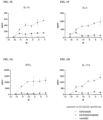
- CD40 blockade on cytokine release was assessed in the assay with human PBMC and AML cell line THP-1.
- Human PBMC were labeled with CFSE and THP-1 cells were labeled with Violet Cell trace. Labeled PBMC and THP-1 cells were plated in complete media at the ratio (10:1).
- CD123xCD3(G) or one-arm CD3 control were added to the well in 10-fold titrations starting at 1 ⁇ g/ml.
- Anti-CD40 antibody IgG1 mutant, REGN3794
- Cells were incubated 4 days at 37°C in complete media. Cytokines and T cell activations were assessed 4 days after the set-up.
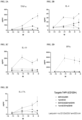
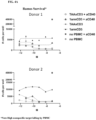
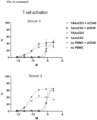
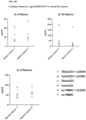
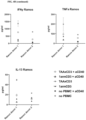
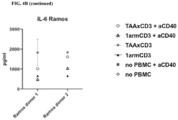
- CD40 blockade on cytokine release was assessed in the killing assay with human PBMC and NHL cell line Ramos.
- Ramos cells were labeled with CFSE and mixed with human PBMC in complete media at the ratio (1:10).
- CD20xCD3 (REGN1979) or one-arm CD3 control were added to the well in 10-fold titrations starting at 10 ⁇ g/ml.
- Anti-CD40 antibody (IgG1 mutant, REGN3794) was used at constant concentration of 5 ⁇ g/ml. Cells were incubated 4 days at 37°C in complete media. At the end of the culture, cytokine release, surviving target cells, and T cell activation were analyzed by flow cytometry.
- Cytokines were measured in the supernatants using LegendPlex human B cell panel (Biolegend Catalog #740527). For T cell activation and target cell killing assessment the cells were washed and stained with directly conjugated antibodies to CD2, CD4, CD8, CD16, CD25 and live/dead cell stain. T cell activation is reported as the percentage of live CD2+CD16-CD8+ cells expressing CD25. For the assessment of Ramos survival, absolute number of live Ramos cells per well was calculated using CountBright beads.
Landscapes
- Health & Medical Sciences (AREA)
- Chemical & Material Sciences (AREA)
- Life Sciences & Earth Sciences (AREA)
- Immunology (AREA)
- Medicinal Chemistry (AREA)
- General Health & Medical Sciences (AREA)
- Organic Chemistry (AREA)
- Engineering & Computer Science (AREA)
- Veterinary Medicine (AREA)
- Pharmacology & Pharmacy (AREA)
- Animal Behavior & Ethology (AREA)
- Public Health (AREA)
- Bioinformatics & Cheminformatics (AREA)
- Cell Biology (AREA)
- Epidemiology (AREA)
- Proteomics, Peptides & Aminoacids (AREA)
- Biochemistry (AREA)
- Molecular Biology (AREA)
- Genetics & Genomics (AREA)
- Biophysics (AREA)
- Chemical Kinetics & Catalysis (AREA)
- Nuclear Medicine, Radiotherapy & Molecular Imaging (AREA)
- General Chemical & Material Sciences (AREA)
- Biomedical Technology (AREA)
- Zoology (AREA)
- Microbiology (AREA)
- Mycology (AREA)
- Virology (AREA)
- Developmental Biology & Embryology (AREA)
- Biotechnology (AREA)
- Hematology (AREA)
- Oncology (AREA)
- Transplantation (AREA)
- Gastroenterology & Hepatology (AREA)
- Endocrinology (AREA)
- Medicines Containing Antibodies Or Antigens For Use As Internal Diagnostic Agents (AREA)
- Medicines That Contain Protein Lipid Enzymes And Other Medicines (AREA)
- Pharmaceuticals Containing Other Organic And Inorganic Compounds (AREA)
- Medicinal Preparation (AREA)
- Investigating Or Analysing Biological Materials (AREA)
Applications Claiming Priority (3)
| Application Number | Priority Date | Filing Date | Title |
|---|---|---|---|
| US202163142643P | 2021-01-28 | 2021-01-28 | |
| EP22704236.3A EP4284512B1 (de) | 2021-01-28 | 2022-01-28 | Zusammensetzungen und verfahren zur behandlung des zytokinfreisetzungssyndroms |
| PCT/US2022/014307 WO2022165171A1 (en) | 2021-01-28 | 2022-01-28 | Compositions and methods for treating cytokine release syndrome |
Related Parent Applications (2)
| Application Number | Title | Priority Date | Filing Date |
|---|---|---|---|
| EP22704236.3A Division-Into EP4284512B1 (de) | 2021-01-28 | 2022-01-28 | Zusammensetzungen und verfahren zur behandlung des zytokinfreisetzungssyndroms |
| EP22704236.3A Division EP4284512B1 (de) | 2021-01-28 | 2022-01-28 | Zusammensetzungen und verfahren zur behandlung des zytokinfreisetzungssyndroms |
Publications (2)
| Publication Number | Publication Date |
|---|---|
| EP4538292A2 true EP4538292A2 (de) | 2025-04-16 |
| EP4538292A3 EP4538292A3 (de) | 2025-07-16 |
Family
ID=80446903
Family Applications (2)
| Application Number | Title | Priority Date | Filing Date |
|---|---|---|---|
| EP22704236.3A Active EP4284512B1 (de) | 2021-01-28 | 2022-01-28 | Zusammensetzungen und verfahren zur behandlung des zytokinfreisetzungssyndroms |
| EP25158326.6A Pending EP4538292A3 (de) | 2021-01-28 | 2022-01-28 | Zusammensetzungen und verfahren zur behandlung des zytokinfreisetzungssyndroms |
Family Applications Before (1)
| Application Number | Title | Priority Date | Filing Date |
|---|---|---|---|
| EP22704236.3A Active EP4284512B1 (de) | 2021-01-28 | 2022-01-28 | Zusammensetzungen und verfahren zur behandlung des zytokinfreisetzungssyndroms |
Country Status (20)
| Country | Link |
|---|---|
| US (2) | US12274747B2 (de) |
| EP (2) | EP4284512B1 (de) |
| JP (1) | JP2024506831A (de) |
| KR (1) | KR20230157315A (de) |
| CN (1) | CN116963774A (de) |
| AU (1) | AU2022214319A1 (de) |
| CA (1) | CA3202891A1 (de) |
| DK (1) | DK4284512T3 (de) |
| ES (1) | ES3030523T3 (de) |
| FI (1) | FI4284512T3 (de) |
| HR (1) | HRP20250696T1 (de) |
| HU (1) | HUE071594T2 (de) |
| IL (1) | IL304502A (de) |
| LT (1) | LT4284512T (de) |
| MX (1) | MX2023008949A (de) |
| PL (1) | PL4284512T3 (de) |
| PT (1) | PT4284512T (de) |
| RS (1) | RS66868B1 (de) |
| SI (1) | SI4284512T1 (de) |
| WO (1) | WO2022165171A1 (de) |
Families Citing this family (4)
| Publication number | Priority date | Publication date | Assignee | Title |
|---|---|---|---|---|
| TW202135860A (zh) * | 2019-12-10 | 2021-10-01 | 美商再生元醫藥公司 | 含有抗cd20x抗cd3雙特異性抗體之穩定調配物 |
| CA3192204A1 (en) | 2020-08-19 | 2022-02-24 | Xencor, Inc. | Anti-cd28 and/or anti-b7h3 compositions |
| AU2022214319A1 (en) | 2021-01-28 | 2023-08-03 | Regeneron Pharmaceuticals, Inc. | Compositions and methods for treating cytokine release syndrome |
| US12365743B2 (en) | 2022-02-23 | 2025-07-22 | Xencor, Inc. | Anti-CD28 x anti-PSMA antibodies |
Citations (116)
| Publication number | Priority date | Publication date | Assignee | Title |
|---|---|---|---|---|
| US4708871A (en) | 1983-03-08 | 1987-11-24 | Commonwealth Serum Laboratories Commission | Antigenically active amino acid sequences |
| US5500362A (en) | 1987-01-08 | 1996-03-19 | Xoma Corporation | Chimeric antibody with specificity to human B cell surface antigen |
| US5674492A (en) | 1993-12-23 | 1997-10-07 | Immunex Corporation | Method of preventing or treating disease characterized by neoplastic cells expressing CD40 |
| US5821337A (en) | 1991-06-14 | 1998-10-13 | Genentech, Inc. | Immunoglobulin variants |
| US5827642A (en) | 1994-08-31 | 1998-10-27 | Fred Hutchinson Cancer Research Center | Rapid expansion method ("REM") for in vitro propagation of T lymphocytes |
| US6087329A (en) | 1991-10-25 | 2000-07-11 | Immunex Corporation | CD40 ligand polypeptide |
| WO2000075348A1 (en) | 1999-06-08 | 2000-12-14 | Seattle Genetics, Inc. | Recombinant anti-cd40 antibody and uses thereof |
| WO2001024823A1 (en) | 1999-10-04 | 2001-04-12 | Chiron Corporation | Cd40 antagonist for treating psoriasis |
| WO2002011763A1 (en) | 2000-04-19 | 2002-02-14 | Tanox, Inc. | Cd40 antagonists for use in treating psoriasis and other inflammatory skin conditions |
| WO2003028809A1 (en) | 2001-10-02 | 2003-04-10 | Chiron Corporation | Methods of therapy for b-cell malignancies |
| WO2003029296A1 (en) | 2001-10-02 | 2003-04-10 | Chiron Corporation | Human anti-cd40 antibodies |
| WO2003045978A2 (en) | 2001-11-26 | 2003-06-05 | Chiron Corporation | Antagonist anti-cd40 monoclonal antibody therapy for multiple sclerosis treatment |
| WO2002028481A9 (en) | 2000-10-02 | 2003-07-03 | Chiron Corp | Methods of therapy for b-cell malignancies using antagonist anti-cd40 antibodies |
| US6797514B2 (en) | 2000-02-24 | 2004-09-28 | Xcyte Therapies, Inc. | Simultaneous stimulation and concentration of cells |
| US6867041B2 (en) | 2000-02-24 | 2005-03-15 | Xcyte Therapies, Inc. | Simultaneous stimulation and concentration of cells |
| WO2005044854A2 (en) | 2003-11-04 | 2005-05-19 | Chiron Corporation | Antagonist anti-cd40 monoclonal antibodies and methods for their use |
| US6905874B2 (en) | 2000-02-24 | 2005-06-14 | Xcyte Therapies, Inc. | Simultaneous stimulation and concentration of cells |
| WO2006073443A2 (en) | 2004-04-27 | 2006-07-13 | Novartis Vaccines And Diagnostics, Inc. | Antagonist anti-cd40 monoclonal antibodies and methods for their use |
| WO2007124299A2 (en) | 2006-04-21 | 2007-11-01 | Novartis Ag | Antagonist anti-cd40 antibody pharmaceutical compositions |
| US20080057070A1 (en) | 2004-11-04 | 2008-03-06 | Chiron Corporation | Antagonist Anti-Cd40 Monoclonal Antibodies and Methods for Their Use |
| US7575923B2 (en) | 1998-04-21 | 2009-08-18 | Micromet Ag | CD19xCD3 specific polypeptides and uses thereof |
| US7635472B2 (en) | 2003-05-31 | 2009-12-22 | Micromet Ag | Pharmaceutical compositions comprising bispecific anti-cd3, anti-cd19 antibody constructs for the treatment of b-cell related disorders |
| US20110195454A1 (en) | 2010-02-08 | 2011-08-11 | Regeneron Pharmaceuticals, Inc. | Common Light Chain Mouse |
| WO2011123489A2 (en) | 2010-03-31 | 2011-10-06 | Boehringer Ingelheim International Gmbh | Anti-cd40 antibodies |
| WO2012055961A1 (en) | 2010-10-27 | 2012-05-03 | Micromet Gmbh | Means and methods for treating dlbcl |
| WO2012075111A1 (en) | 2010-11-30 | 2012-06-07 | Novartis Ag | Uses of anti-cd40 antibodies in combination therapy for b cell-related cancers |
| WO2012079000A1 (en) | 2010-12-09 | 2012-06-14 | The Trustees Of The University Of Pennsylvania | Use of chimeric antigen receptor-modified t cells to treat cancer |
| WO2012129514A1 (en) | 2011-03-23 | 2012-09-27 | Fred Hutchinson Cancer Research Center | Method and compositions for cellular immunotherapy |
| WO2013041687A1 (en) | 2011-09-23 | 2013-03-28 | Amgen Research (Munich) Gmbh | Bispecific binding molecules for 5t4 and cd3 |
| WO2013072406A1 (en) | 2011-11-15 | 2013-05-23 | Amgen Research (Munich) Gmbh | Binding molecules for bcma and cd3 |
| US20130273055A1 (en) | 2010-11-16 | 2013-10-17 | Eric Borges | Agents and methods for treating diseases that correlate with bcma expression |
| US8586713B2 (en) | 2009-06-26 | 2013-11-19 | Regeneron Pharmaceuticals, Inc. | Readily isolated bispecific antibodies with native immunoglobulin format |
| WO2014011984A1 (en) | 2012-07-13 | 2014-01-16 | The Trustees Of The University Of Pennsylvania | Toxicity management for anti-tumor activity of cars |
| US8669352B2 (en) | 2006-05-09 | 2014-03-11 | Fast Forward Pharmaceuticals B.V. | Antagonistic anti-human CD40 monoclonal antibody |
| WO2014047231A1 (en) | 2012-09-21 | 2014-03-27 | Regeneron Pharmaceuticals, Inc. | Anti-cd3 antibodies, bispecific antigen-binding molecules that bind cd3 and cd20, and uses thereof |
| US8716451B2 (en) | 2005-01-12 | 2014-05-06 | Kyowa Hakko Kirin Co., Ltd | Stabilized human IgG2 and IgG3 antibodies |
| US20140243504A1 (en) | 2013-02-01 | 2014-08-28 | Regeneron Pharmaceuticals, Inc. | Antibodies comprising chimeric constant domains |
| WO2014140248A1 (en) | 2013-03-15 | 2014-09-18 | Amgen Research (Munich) Gmbh | Binding molecules for bcma and cd3 |
| US9125893B2 (en) | 2011-02-17 | 2015-09-08 | Kyowa Hakko Kirin Co., Ltd. | Highly concentrated anti-CD40 antibody pharmaceutical preparation |
| WO2015143079A1 (en) | 2014-03-19 | 2015-09-24 | Regeneron Pharmaceuticals, Inc. | Antibody compositions for tumor treatment |
| WO2015149077A1 (en) | 2014-03-28 | 2015-10-01 | Xencor, Inc. | Bispecific antibodies that bind to cd38 and cd3 |
| WO2016036937A1 (en) | 2014-09-05 | 2016-03-10 | Janssen Pharmaceutica Nv | Cd123 binding agents and uses thereof |
| WO2016048938A1 (en) | 2014-09-26 | 2016-03-31 | Macrogenics, Inc. | Bi-specific monovalent diabodies that are capable of binding cd19 and cd3, and uses thereof |
| US9315567B2 (en) | 2012-08-14 | 2016-04-19 | Ibc Pharmaceuticals, Inc. | T-cell redirecting bispecific antibodies for treatment of disease |
| WO2016081490A1 (en) | 2014-11-17 | 2016-05-26 | Regeneron Pharmaceuticals, Inc. | Methods for tumor treatment using cd3xcd20 bispecific antibody |
| WO2016086189A2 (en) | 2014-11-26 | 2016-06-02 | Xencor, Inc. | Heterodimeric antibodies that bind cd3 and tumor antigens |
| WO2016105450A2 (en) | 2014-12-22 | 2016-06-30 | Xencor, Inc. | Trispecific antibodies |
| WO2016166629A1 (en) | 2015-04-13 | 2016-10-20 | Pfizer Inc. | Therapeutic antibodies and their uses |
| US20160326249A1 (en) | 2014-01-15 | 2016-11-10 | Zymeworks Inc. | Bi-specific cd3 and cd19 antigen-binding constructs |
| WO2016196314A1 (en) | 2015-05-29 | 2016-12-08 | Abbvie Inc. | Anti-cd40 antibodies and uses thereof |
| WO2017023761A1 (en) | 2015-07-31 | 2017-02-09 | Regeneron Pharmaceuticals, Inc. | Anti-psma antibodies, bispecific antigen-binding molecules that bind psma and cd3, and uses thereof |
| WO2017031104A1 (en) | 2015-08-17 | 2017-02-23 | Janssen Pharmaceutica Nv | Anti-bcma antibodies, bispecific antigen binding molecules that bind bcma and cd3, and uses thereof |
| WO2017040566A1 (en) | 2015-09-01 | 2017-03-09 | Boehringer Ingelheim International Gmbh | Use of anti-cd40 antibodies for treatment of lupus nephritis |
| US9598494B2 (en) | 2003-12-25 | 2017-03-21 | Kyowa Hakko Kirin Co., Ltd. | Anti-CD40 antibody mutants |
| WO2017053856A1 (en) | 2015-09-23 | 2017-03-30 | Regeneron Pharmaceuticals, Inc. | Optimized anti-cd3 bispecific antibodies and uses thereof |
| WO2017060242A1 (en) | 2015-10-05 | 2017-04-13 | Ucb Biopharma Sprl | Molecular signatures for use in diagnosis and response to treatment analysis of autoimmune diseases |
| WO2017087603A1 (en) | 2015-11-18 | 2017-05-26 | Sorrento Therapeutics, Inc. | Chemically-locked bispecific antibodies |
| US20170158771A1 (en) | 2014-03-24 | 2017-06-08 | University Of Southampton | Modified antibodies containing modified igg2 domains which elicit agonist or antagonistic properties and use thereof |
| WO2017096368A1 (en) | 2015-12-04 | 2017-06-08 | Macrogenics, Inc. | Bi-specific monovalent diabodies that are capable of binding cd19 and cd3, and uses thereof |
| WO2017095267A1 (ru) | 2015-12-01 | 2017-06-08 | Общество С Ограниченной Ответственностью "Международный Биотехнологический Центр "Генериум" (Ооо "Мбц "Генериум") | Биспецифические антитела против cd3*cd19 |
| WO2017112775A1 (en) | 2015-12-22 | 2017-06-29 | Regeneron Pharmaceuticals, Inc. | Combination of anti-pd-1 antibodies and bispecific anti-cd20/anti-cd3 antibodies to treat cancer |
| WO2017134134A1 (en) | 2016-02-03 | 2017-08-10 | Amgen Research (Munich) Gmbh | BCMA and CD3 Bispecific T Cell Engaging Antibody Constructs |
| US20170320947A1 (en) | 2015-12-07 | 2017-11-09 | Xencor, Inc. | Heterodimeric antibodies that bind cd3 and psma |
| US20170342160A1 (en) | 2014-12-19 | 2017-11-30 | Biotecnol Limited | Fusion Protein Comprising Three Binding Domains to 5T4 and CD3 |
| WO2017210485A1 (en) | 2016-06-01 | 2017-12-07 | Xencor, Inc. | Bispecific antibodies that bind cd20 and cd3 for use in the treatment of lymphoma |
| WO2017210443A1 (en) | 2016-06-01 | 2017-12-07 | Xencor, Inc. | Bispecific antibodies that bind cd123 and cd3 |
| WO2018005706A1 (en) | 2016-06-28 | 2018-01-04 | Xencor, Inc. | Heterodimeric antibodies that bind somatostatin receptor 2 |
| WO2018017786A2 (en) | 2016-07-20 | 2018-01-25 | Janssen Pharmaceutica Nv | Anti- gprc5d antibodies, bispecific antigen binding molecules that bind gprc5d and cd3, and uses thereof |
| WO2018058001A1 (en) | 2016-09-23 | 2018-03-29 | Regeneron Pharmaceuticals, Inc. | Anti-steap2 antibodies, antibody-drug conjugates, and bispecific antigen-binding molecules that bind steap2 and cd3, and uses thereof |
| WO2018067331A1 (en) | 2016-09-23 | 2018-04-12 | Regeneron Pharmaceuticals, Inc. | Bi specific anti-muc16-cd3 antibodies and nti-muc16 drug conjugates |
| WO2018093821A1 (en) | 2016-11-15 | 2018-05-24 | Genentech, Inc. | Dosing for treatment with anti-cd20/anti-cd3 bispecific antibodies |
| WO2018114748A1 (en) | 2016-12-20 | 2018-06-28 | F. Hoffmann-La Roche Ag | Combination therapy of anti-cd20/anti-cd3 bispecific antibodies and 4-1bb (cd137) agonists |
| US20180222987A1 (en) | 2015-01-23 | 2018-08-09 | Sanofi | Anti-cd3 antibodies, anti-cd123 antibodies and bispecific antibodies specifically binding to cd3 and/or cd123 |
| US20180252727A1 (en) | 2015-09-03 | 2018-09-06 | Mayo Foundation For Medical Education And Research | Biomarkers predictive of cytokine release syndrome |
| WO2018188612A1 (zh) | 2017-04-12 | 2018-10-18 | 鸿运华宁(杭州)生物医药有限公司 | 一种能与人cd19或cd20和人cd3结合的双特异性抗体及其应用 |
| US20180305465A1 (en) | 2015-11-25 | 2018-10-25 | Amgen Inc. | Heterodimeric antibodies that bind cd3 and cd38 |
| WO2018217976A1 (en) | 2017-05-25 | 2018-11-29 | Bristol-Myers Squibb Company | Antagonistic cd40 monoclonal antibodies and uses thereof |
| WO2018223004A1 (en) | 2017-06-01 | 2018-12-06 | Xencor, Inc. | Bispecific antibodies that bind cd20 and cd3 |
| WO2019050521A1 (en) | 2017-09-07 | 2019-03-14 | Macrogenics, Inc. | DOSAGE SCHEMES OF BISPECIFIC DIACORPS CD123 X CD3 IN THE TREATMENT OF HEMATOLOGICAL MALIGNANCIES |
| WO2019075359A1 (en) | 2017-10-13 | 2019-04-18 | Harpoon Therapeutics, Inc. | TRISPECIFIC PROTEINS AND METHODS OF USE |
| US20190241657A1 (en) | 2016-07-18 | 2019-08-08 | Sanofi | Bispecific antibody-like binding proteins specifically binding to cd3 and cd123 |
| WO2019155008A1 (en) | 2018-02-09 | 2019-08-15 | Genmab A/S | Pharmaceutical compositions comprising bispecific antibodies directed against cd3 and cd20 and their uses |
| WO2019156565A1 (en) | 2018-02-12 | 2019-08-15 | Fast Forward Pharmaceuticals B.V. | Improved antagonistic anti-human cd40 monoclonal antibodies |
| US20190263920A1 (en) | 2016-11-02 | 2019-08-29 | Engmab Sarl | Bispecific antibody against bcma and cd3 and an immunological drug for combined use in treating multiple myeloma |
| US20190284279A1 (en) | 2017-11-15 | 2019-09-19 | Beijing Luzhu Biotechnology Co., Ltd | Bispecific antibody binding to human cd19 and cd3 |
| WO2019191120A1 (en) | 2018-03-27 | 2019-10-03 | Systimmune, Inc. | Guidance and navigation control proteins and method of making and using thereof |
| WO2019210147A1 (en) | 2018-04-27 | 2019-10-31 | Xencor, Inc. | Dosing of a bispecific antibody that bind cd123 and cd3 |
| US20190336504A1 (en) | 2016-07-15 | 2019-11-07 | Novartis Ag | Treatment and prevention of cytokine release syndrome using a chimeric antigen receptor in combination with a kinase inhibitor |
| WO2019220369A2 (en) | 2018-05-16 | 2019-11-21 | Janssen Biotech, Inc. | Methods of treating cancers and enhancing efficacy of t cell redirecting therapeutics |
| WO2019226761A1 (en) | 2018-05-23 | 2019-11-28 | Celgene Corporation | Antiproliferative compounds and bispecific antibody against bcma and cd3 for combined use |
| WO2019232528A1 (en) | 2018-06-01 | 2019-12-05 | Xencor, Inc. | Dosing of a bispecific antibody that bind cd123 and cd3 |
| WO2019228406A1 (en) | 2018-05-29 | 2019-12-05 | Wuxi Biologics (Shanghai) Co., Ltd. | A novel anti-cd3/anti-cd20 bispecific antibody |
| WO2019237081A1 (en) | 2018-06-07 | 2019-12-12 | Cullinan Management, Inc. | Multi-specific binding proteins and methods of use thereof |
| WO2019246356A1 (en) | 2018-06-21 | 2019-12-26 | Regeneron Pharmaceuticals, Inc. | Methods for treating cancer with bispecific anti-cd3xmuc16 antibodies and anti-pd-1 antibodies |
| WO2020006347A1 (en) | 2018-06-29 | 2020-01-02 | Boehringer Ingelheim International Gmbh | Anti-cd40 antibodies for use in treating autoimmune disease |
| WO2020018556A1 (en) | 2018-07-16 | 2020-01-23 | Amgen Inc. | Method of treating multiple myeloma |
| WO2020018820A1 (en) | 2018-07-19 | 2020-01-23 | Regeneron Pharmaceuticals, Inc. | BISPECIFIC ANTI-BCMA x ANTI-CD3 ANTIBODIES AND USES THEREOF |
| WO2020025596A1 (en) | 2018-07-31 | 2020-02-06 | Amgen Research (Munich) Gmbh | Dosing regimen for bcma-cd3 bispecific antibodies |
| WO2020048525A1 (en) | 2018-09-07 | 2020-03-12 | Generon (Shanghai) Corporation Ltd. | Bispecific antigen binding proteins and uses thereof |
| US20200102403A1 (en) | 2013-11-04 | 2020-04-02 | Glenmark Pharmaceuticals S.A. | T cell retargeting hetero-dimeric immunoglobulins |
| US20200129617A1 (en) | 2018-08-31 | 2020-04-30 | Regeneron Pharmaceuticals, Inc. | Dosing Strategy that Mitigates Cytokine Release Syndrome for Therapeutic Antibodies |
| WO2020092404A1 (en) | 2018-10-30 | 2020-05-07 | Macrogenics, Inc. | Bispecific cd123 x cd3 diabodies for the treatment of hematologic malignancies |
| WO2020088608A1 (zh) | 2018-11-01 | 2020-05-07 | 安源医药科技(上海)有限公司 | 同源二聚体型双特异性抗体及其制备方法和用途 |
| US20200140552A1 (en) | 2018-10-09 | 2020-05-07 | Sanofi | Trispecific anti-cd38, anti-cd28, and anti-cd3 binding proteins and methods of use for treating viral infection |
| WO2020106620A1 (en) | 2018-11-19 | 2020-05-28 | Bristol-Myers Squibb Company | Antagonistic cd40 monoclonal antibodies and uses thereof |
| US20200172627A1 (en) | 2017-06-02 | 2020-06-04 | Hoffmann-La Roche Inc. | Type ii anti-cd20 antibody and anti-cd20/cd3 bispecific antibody for treatment of cancer |
| US20200199231A1 (en) | 2015-01-08 | 2020-06-25 | Genmab A/S | Bispecific antibodies against cd3 and cd20 |
| WO2020135335A1 (en) | 2018-12-24 | 2020-07-02 | Generon (Shanghai) Corporation Ltd. | Multispecific antigen binding proteins capable of binding cd19 and cd3, and use thereof |
| WO2020144605A1 (en) | 2019-01-11 | 2020-07-16 | Novartis Ag | Anti-cd40 antibodies for use in treatment of hidradenitis suppurativa |
| WO2020156405A1 (en) | 2019-01-28 | 2020-08-06 | Wuxi Biologics (Shanghai) Co. Ltd. | Novel bispecific cd3/cd20 polypeptide complexes |
| US20200277397A1 (en) | 2018-03-12 | 2020-09-03 | Genmab A/S | Antibodies |
| WO2020180726A1 (en) | 2019-03-01 | 2020-09-10 | Xencor, Inc. | Heterodimeric antibodies that bind enpp3 and cd3 |
| US20200283523A1 (en) | 2017-09-22 | 2020-09-10 | WuXi Biologics Ireland Limited | Novel bispecific cd3/cd19 polypeptide complexes |
| US20200291123A1 (en) | 2017-06-01 | 2020-09-17 | Seoul National University R&Db Foundation | Novel anti-cd40 antibodies and use thereof |
| WO2020191346A1 (en) | 2019-03-21 | 2020-09-24 | Regeneron Pharmaceuticals, Inc. | Combination of il-4/il-13 pathway inhibitors and plasma cell ablation for treating allergy |
| US10787521B2 (en) | 2013-08-23 | 2020-09-29 | Macrogenics, Inc. | Bi-specific monovalent diabodies that are capable of binding CD123 and CD3, and uses thereof |
Family Cites Families (8)
| Publication number | Priority date | Publication date | Assignee | Title |
|---|---|---|---|---|
| US8397220B1 (en) | 2007-02-12 | 2013-03-12 | Synopsys, Inc. | Simulation control techniques |
| KR101050791B1 (ko) | 2009-10-19 | 2011-07-20 | 주식회사 엘지화학 | 혼성 담지 메탈로센 촉매의 제조방법 및 이를 이용하여 제조된 혼성 담지 메탈로센 촉매 |
| AR083847A1 (es) * | 2010-11-15 | 2013-03-27 | Novartis Ag | Variantes de fc (fragmento constante) silenciosas de los anticuerpos anti-cd40 |
| IL313608A (en) * | 2015-12-09 | 2024-08-01 | Hoffmann La Roche | Antibody against CD20 type II to reduce the formation of antibodies against drugs |
| US11629340B2 (en) * | 2017-03-03 | 2023-04-18 | Obsidian Therapeutics, Inc. | DHFR tunable protein regulation |
| CN111788227B (zh) * | 2017-12-27 | 2025-02-25 | 百时美施贵宝公司 | 抗cd40抗体及其用途 |
| PE20211916A1 (es) * | 2018-05-24 | 2021-09-28 | Janssen Biotech Inc | Agentes aglutinantes del psma y usos de estos |
| AU2022214319A1 (en) | 2021-01-28 | 2023-08-03 | Regeneron Pharmaceuticals, Inc. | Compositions and methods for treating cytokine release syndrome |
-
2022
- 2022-01-28 AU AU2022214319A patent/AU2022214319A1/en active Pending
- 2022-01-28 WO PCT/US2022/014307 patent/WO2022165171A1/en not_active Ceased
- 2022-01-28 RS RS20250559A patent/RS66868B1/sr unknown
- 2022-01-28 MX MX2023008949A patent/MX2023008949A/es unknown
- 2022-01-28 PT PT227042363T patent/PT4284512T/pt unknown
- 2022-01-28 HR HRP20250696TT patent/HRP20250696T1/hr unknown
- 2022-01-28 LT LTEPPCT/US2022/014307T patent/LT4284512T/lt unknown
- 2022-01-28 EP EP22704236.3A patent/EP4284512B1/de active Active
- 2022-01-28 FI FIEP22704236.3T patent/FI4284512T3/fi active
- 2022-01-28 DK DK22704236.3T patent/DK4284512T3/da active
- 2022-01-28 HU HUE22704236A patent/HUE071594T2/hu unknown
- 2022-01-28 EP EP25158326.6A patent/EP4538292A3/de active Pending
- 2022-01-28 SI SI202230129T patent/SI4284512T1/sl unknown
- 2022-01-28 JP JP2023545849A patent/JP2024506831A/ja active Pending
- 2022-01-28 KR KR1020237028728A patent/KR20230157315A/ko active Pending
- 2022-01-28 CA CA3202891A patent/CA3202891A1/en active Pending
- 2022-01-28 CN CN202280017410.XA patent/CN116963774A/zh active Pending
- 2022-01-28 US US17/587,501 patent/US12274747B2/en active Active
- 2022-01-28 ES ES22704236T patent/ES3030523T3/es active Active
- 2022-01-28 PL PL22704236.3T patent/PL4284512T3/pl unknown
-
2023
- 2023-07-16 IL IL304502A patent/IL304502A/en unknown
-
2025
- 2025-03-12 US US19/077,873 patent/US20250302949A1/en active Pending
Patent Citations (122)
| Publication number | Priority date | Publication date | Assignee | Title |
|---|---|---|---|---|
| US4708871A (en) | 1983-03-08 | 1987-11-24 | Commonwealth Serum Laboratories Commission | Antigenically active amino acid sequences |
| US5500362A (en) | 1987-01-08 | 1996-03-19 | Xoma Corporation | Chimeric antibody with specificity to human B cell surface antigen |
| US5821337A (en) | 1991-06-14 | 1998-10-13 | Genentech, Inc. | Immunoglobulin variants |
| US6087329A (en) | 1991-10-25 | 2000-07-11 | Immunex Corporation | CD40 ligand polypeptide |
| US5674492A (en) | 1993-12-23 | 1997-10-07 | Immunex Corporation | Method of preventing or treating disease characterized by neoplastic cells expressing CD40 |
| US5827642A (en) | 1994-08-31 | 1998-10-27 | Fred Hutchinson Cancer Research Center | Rapid expansion method ("REM") for in vitro propagation of T lymphocytes |
| US6040177A (en) | 1994-08-31 | 2000-03-21 | Fred Hutchinson Cancer Research Center | High efficiency transduction of T lymphocytes using rapid expansion methods ("REM") |
| US7575923B2 (en) | 1998-04-21 | 2009-08-18 | Micromet Ag | CD19xCD3 specific polypeptides and uses thereof |
| WO2000075348A1 (en) | 1999-06-08 | 2000-12-14 | Seattle Genetics, Inc. | Recombinant anti-cd40 antibody and uses thereof |
| WO2001024823A1 (en) | 1999-10-04 | 2001-04-12 | Chiron Corporation | Cd40 antagonist for treating psoriasis |
| US6905874B2 (en) | 2000-02-24 | 2005-06-14 | Xcyte Therapies, Inc. | Simultaneous stimulation and concentration of cells |
| US6797514B2 (en) | 2000-02-24 | 2004-09-28 | Xcyte Therapies, Inc. | Simultaneous stimulation and concentration of cells |
| US6867041B2 (en) | 2000-02-24 | 2005-03-15 | Xcyte Therapies, Inc. | Simultaneous stimulation and concentration of cells |
| WO2002011763A1 (en) | 2000-04-19 | 2002-02-14 | Tanox, Inc. | Cd40 antagonists for use in treating psoriasis and other inflammatory skin conditions |
| WO2002028481A9 (en) | 2000-10-02 | 2003-07-03 | Chiron Corp | Methods of therapy for b-cell malignancies using antagonist anti-cd40 antibodies |
| WO2003028809A1 (en) | 2001-10-02 | 2003-04-10 | Chiron Corporation | Methods of therapy for b-cell malignancies |
| WO2003029296A1 (en) | 2001-10-02 | 2003-04-10 | Chiron Corporation | Human anti-cd40 antibodies |
| WO2003045978A2 (en) | 2001-11-26 | 2003-06-05 | Chiron Corporation | Antagonist anti-cd40 monoclonal antibody therapy for multiple sclerosis treatment |
| US7635472B2 (en) | 2003-05-31 | 2009-12-22 | Micromet Ag | Pharmaceutical compositions comprising bispecific anti-cd3, anti-cd19 antibody constructs for the treatment of b-cell related disorders |
| WO2005044854A2 (en) | 2003-11-04 | 2005-05-19 | Chiron Corporation | Antagonist anti-cd40 monoclonal antibodies and methods for their use |
| US9598494B2 (en) | 2003-12-25 | 2017-03-21 | Kyowa Hakko Kirin Co., Ltd. | Anti-CD40 antibody mutants |
| WO2006073443A2 (en) | 2004-04-27 | 2006-07-13 | Novartis Vaccines And Diagnostics, Inc. | Antagonist anti-cd40 monoclonal antibodies and methods for their use |
| US20080057070A1 (en) | 2004-11-04 | 2008-03-06 | Chiron Corporation | Antagonist Anti-Cd40 Monoclonal Antibodies and Methods for Their Use |
| US8716451B2 (en) | 2005-01-12 | 2014-05-06 | Kyowa Hakko Kirin Co., Ltd | Stabilized human IgG2 and IgG3 antibodies |
| WO2007124299A2 (en) | 2006-04-21 | 2007-11-01 | Novartis Ag | Antagonist anti-cd40 antibody pharmaceutical compositions |
| US8669352B2 (en) | 2006-05-09 | 2014-03-11 | Fast Forward Pharmaceuticals B.V. | Antagonistic anti-human CD40 monoclonal antibody |
| US8586713B2 (en) | 2009-06-26 | 2013-11-19 | Regeneron Pharmaceuticals, Inc. | Readily isolated bispecific antibodies with native immunoglobulin format |
| US20110195454A1 (en) | 2010-02-08 | 2011-08-11 | Regeneron Pharmaceuticals, Inc. | Common Light Chain Mouse |
| WO2011123489A2 (en) | 2010-03-31 | 2011-10-06 | Boehringer Ingelheim International Gmbh | Anti-cd40 antibodies |
| WO2012055961A1 (en) | 2010-10-27 | 2012-05-03 | Micromet Gmbh | Means and methods for treating dlbcl |
| US20130273055A1 (en) | 2010-11-16 | 2013-10-17 | Eric Borges | Agents and methods for treating diseases that correlate with bcma expression |
| WO2012075111A1 (en) | 2010-11-30 | 2012-06-07 | Novartis Ag | Uses of anti-cd40 antibodies in combination therapy for b cell-related cancers |
| WO2012079000A1 (en) | 2010-12-09 | 2012-06-14 | The Trustees Of The University Of Pennsylvania | Use of chimeric antigen receptor-modified t cells to treat cancer |
| US9125893B2 (en) | 2011-02-17 | 2015-09-08 | Kyowa Hakko Kirin Co., Ltd. | Highly concentrated anti-CD40 antibody pharmaceutical preparation |
| WO2012129514A1 (en) | 2011-03-23 | 2012-09-27 | Fred Hutchinson Cancer Research Center | Method and compositions for cellular immunotherapy |
| WO2013041687A1 (en) | 2011-09-23 | 2013-03-28 | Amgen Research (Munich) Gmbh | Bispecific binding molecules for 5t4 and cd3 |
| WO2013072406A1 (en) | 2011-11-15 | 2013-05-23 | Amgen Research (Munich) Gmbh | Binding molecules for bcma and cd3 |
| WO2014011984A1 (en) | 2012-07-13 | 2014-01-16 | The Trustees Of The University Of Pennsylvania | Toxicity management for anti-tumor activity of cars |
| US9315567B2 (en) | 2012-08-14 | 2016-04-19 | Ibc Pharmaceuticals, Inc. | T-cell redirecting bispecific antibodies for treatment of disease |
| WO2014047231A1 (en) | 2012-09-21 | 2014-03-27 | Regeneron Pharmaceuticals, Inc. | Anti-cd3 antibodies, bispecific antigen-binding molecules that bind cd3 and cd20, and uses thereof |
| US20140088295A1 (en) | 2012-09-21 | 2014-03-27 | Regeneron Pharmaceuticals, Inc. | Anti-cd3 antibodies, bispecific antigen-binding molecules that bind cd3 and cd20, and uses thereof |
| US9657102B2 (en) | 2012-09-21 | 2017-05-23 | Regeneron Pharmaceuticals, Inc. | Anti-CD3 antibodies, bispecific antigen-binding molecules that bind CD3 and CD20, and uses thereof |
| US20140243504A1 (en) | 2013-02-01 | 2014-08-28 | Regeneron Pharmaceuticals, Inc. | Antibodies comprising chimeric constant domains |
| WO2014140248A1 (en) | 2013-03-15 | 2014-09-18 | Amgen Research (Munich) Gmbh | Binding molecules for bcma and cd3 |
| US10787521B2 (en) | 2013-08-23 | 2020-09-29 | Macrogenics, Inc. | Bi-specific monovalent diabodies that are capable of binding CD123 and CD3, and uses thereof |
| US20200102403A1 (en) | 2013-11-04 | 2020-04-02 | Glenmark Pharmaceuticals S.A. | T cell retargeting hetero-dimeric immunoglobulins |
| US20160326249A1 (en) | 2014-01-15 | 2016-11-10 | Zymeworks Inc. | Bi-specific cd3 and cd19 antigen-binding constructs |
| WO2015143079A1 (en) | 2014-03-19 | 2015-09-24 | Regeneron Pharmaceuticals, Inc. | Antibody compositions for tumor treatment |
| US20170158771A1 (en) | 2014-03-24 | 2017-06-08 | University Of Southampton | Modified antibodies containing modified igg2 domains which elicit agonist or antagonistic properties and use thereof |
| WO2015149077A1 (en) | 2014-03-28 | 2015-10-01 | Xencor, Inc. | Bispecific antibodies that bind to cd38 and cd3 |
| WO2016036937A1 (en) | 2014-09-05 | 2016-03-10 | Janssen Pharmaceutica Nv | Cd123 binding agents and uses thereof |
| WO2016048938A1 (en) | 2014-09-26 | 2016-03-31 | Macrogenics, Inc. | Bi-specific monovalent diabodies that are capable of binding cd19 and cd3, and uses thereof |
| WO2016081490A1 (en) | 2014-11-17 | 2016-05-26 | Regeneron Pharmaceuticals, Inc. | Methods for tumor treatment using cd3xcd20 bispecific antibody |
| WO2016086189A2 (en) | 2014-11-26 | 2016-06-02 | Xencor, Inc. | Heterodimeric antibodies that bind cd3 and tumor antigens |
| US20170342160A1 (en) | 2014-12-19 | 2017-11-30 | Biotecnol Limited | Fusion Protein Comprising Three Binding Domains to 5T4 and CD3 |
| WO2016105450A2 (en) | 2014-12-22 | 2016-06-30 | Xencor, Inc. | Trispecific antibodies |
| US20200199231A1 (en) | 2015-01-08 | 2020-06-25 | Genmab A/S | Bispecific antibodies against cd3 and cd20 |
| US20180222987A1 (en) | 2015-01-23 | 2018-08-09 | Sanofi | Anti-cd3 antibodies, anti-cd123 antibodies and bispecific antibodies specifically binding to cd3 and/or cd123 |
| WO2016166629A1 (en) | 2015-04-13 | 2016-10-20 | Pfizer Inc. | Therapeutic antibodies and their uses |
| WO2016196314A1 (en) | 2015-05-29 | 2016-12-08 | Abbvie Inc. | Anti-cd40 antibodies and uses thereof |
| WO2017023761A1 (en) | 2015-07-31 | 2017-02-09 | Regeneron Pharmaceuticals, Inc. | Anti-psma antibodies, bispecific antigen-binding molecules that bind psma and cd3, and uses thereof |
| WO2017031104A1 (en) | 2015-08-17 | 2017-02-23 | Janssen Pharmaceutica Nv | Anti-bcma antibodies, bispecific antigen binding molecules that bind bcma and cd3, and uses thereof |
| WO2017040566A1 (en) | 2015-09-01 | 2017-03-09 | Boehringer Ingelheim International Gmbh | Use of anti-cd40 antibodies for treatment of lupus nephritis |
| US20180252727A1 (en) | 2015-09-03 | 2018-09-06 | Mayo Foundation For Medical Education And Research | Biomarkers predictive of cytokine release syndrome |
| WO2017053856A1 (en) | 2015-09-23 | 2017-03-30 | Regeneron Pharmaceuticals, Inc. | Optimized anti-cd3 bispecific antibodies and uses thereof |
| WO2017060242A1 (en) | 2015-10-05 | 2017-04-13 | Ucb Biopharma Sprl | Molecular signatures for use in diagnosis and response to treatment analysis of autoimmune diseases |
| WO2017087603A1 (en) | 2015-11-18 | 2017-05-26 | Sorrento Therapeutics, Inc. | Chemically-locked bispecific antibodies |
| US20180305465A1 (en) | 2015-11-25 | 2018-10-25 | Amgen Inc. | Heterodimeric antibodies that bind cd3 and cd38 |
| WO2017095267A1 (ru) | 2015-12-01 | 2017-06-08 | Общество С Ограниченной Ответственностью "Международный Биотехнологический Центр "Генериум" (Ооо "Мбц "Генериум") | Биспецифические антитела против cd3*cd19 |
| WO2017096368A1 (en) | 2015-12-04 | 2017-06-08 | Macrogenics, Inc. | Bi-specific monovalent diabodies that are capable of binding cd19 and cd3, and uses thereof |
| US20170320947A1 (en) | 2015-12-07 | 2017-11-09 | Xencor, Inc. | Heterodimeric antibodies that bind cd3 and psma |
| WO2017112775A1 (en) | 2015-12-22 | 2017-06-29 | Regeneron Pharmaceuticals, Inc. | Combination of anti-pd-1 antibodies and bispecific anti-cd20/anti-cd3 antibodies to treat cancer |
| WO2017134134A1 (en) | 2016-02-03 | 2017-08-10 | Amgen Research (Munich) Gmbh | BCMA and CD3 Bispecific T Cell Engaging Antibody Constructs |
| WO2017210443A1 (en) | 2016-06-01 | 2017-12-07 | Xencor, Inc. | Bispecific antibodies that bind cd123 and cd3 |
| WO2017210485A1 (en) | 2016-06-01 | 2017-12-07 | Xencor, Inc. | Bispecific antibodies that bind cd20 and cd3 for use in the treatment of lymphoma |
| WO2018005706A1 (en) | 2016-06-28 | 2018-01-04 | Xencor, Inc. | Heterodimeric antibodies that bind somatostatin receptor 2 |
| US20190336504A1 (en) | 2016-07-15 | 2019-11-07 | Novartis Ag | Treatment and prevention of cytokine release syndrome using a chimeric antigen receptor in combination with a kinase inhibitor |
| US20190241657A1 (en) | 2016-07-18 | 2019-08-08 | Sanofi | Bispecific antibody-like binding proteins specifically binding to cd3 and cd123 |
| WO2018017786A2 (en) | 2016-07-20 | 2018-01-25 | Janssen Pharmaceutica Nv | Anti- gprc5d antibodies, bispecific antigen binding molecules that bind gprc5d and cd3, and uses thereof |
| US20180118848A1 (en) | 2016-09-23 | 2018-05-03 | Regeneron Pharmaceuticals, Inc. | Anti-MUC16 Antibodies, Antibody-Drug Conjugates, and Bispecific Antigen-Binding Molecules that Bind MUC16 and CD3, and Uses Thereof |
| WO2018067331A9 (en) | 2016-09-23 | 2018-06-07 | Regeneron Pharmaceuticals, Inc. | Bi specific anti-muc16-cd3 antibodies and anti-muc16 drug conjugates |
| WO2018067331A1 (en) | 2016-09-23 | 2018-04-12 | Regeneron Pharmaceuticals, Inc. | Bi specific anti-muc16-cd3 antibodies and nti-muc16 drug conjugates |
| WO2018058001A1 (en) | 2016-09-23 | 2018-03-29 | Regeneron Pharmaceuticals, Inc. | Anti-steap2 antibodies, antibody-drug conjugates, and bispecific antigen-binding molecules that bind steap2 and cd3, and uses thereof |
| US20190263920A1 (en) | 2016-11-02 | 2019-08-29 | Engmab Sarl | Bispecific antibody against bcma and cd3 and an immunological drug for combined use in treating multiple myeloma |
| WO2018093821A1 (en) | 2016-11-15 | 2018-05-24 | Genentech, Inc. | Dosing for treatment with anti-cd20/anti-cd3 bispecific antibodies |
| WO2018114748A1 (en) | 2016-12-20 | 2018-06-28 | F. Hoffmann-La Roche Ag | Combination therapy of anti-cd20/anti-cd3 bispecific antibodies and 4-1bb (cd137) agonists |
| WO2018188612A1 (zh) | 2017-04-12 | 2018-10-18 | 鸿运华宁(杭州)生物医药有限公司 | 一种能与人cd19或cd20和人cd3结合的双特异性抗体及其应用 |
| WO2018217976A1 (en) | 2017-05-25 | 2018-11-29 | Bristol-Myers Squibb Company | Antagonistic cd40 monoclonal antibodies and uses thereof |
| WO2018223004A1 (en) | 2017-06-01 | 2018-12-06 | Xencor, Inc. | Bispecific antibodies that bind cd20 and cd3 |
| US20200291123A1 (en) | 2017-06-01 | 2020-09-17 | Seoul National University R&Db Foundation | Novel anti-cd40 antibodies and use thereof |
| US20200172627A1 (en) | 2017-06-02 | 2020-06-04 | Hoffmann-La Roche Inc. | Type ii anti-cd20 antibody and anti-cd20/cd3 bispecific antibody for treatment of cancer |
| WO2019050521A1 (en) | 2017-09-07 | 2019-03-14 | Macrogenics, Inc. | DOSAGE SCHEMES OF BISPECIFIC DIACORPS CD123 X CD3 IN THE TREATMENT OF HEMATOLOGICAL MALIGNANCIES |
| US20200283523A1 (en) | 2017-09-22 | 2020-09-10 | WuXi Biologics Ireland Limited | Novel bispecific cd3/cd19 polypeptide complexes |
| WO2019075359A1 (en) | 2017-10-13 | 2019-04-18 | Harpoon Therapeutics, Inc. | TRISPECIFIC PROTEINS AND METHODS OF USE |
| US20190284279A1 (en) | 2017-11-15 | 2019-09-19 | Beijing Luzhu Biotechnology Co., Ltd | Bispecific antibody binding to human cd19 and cd3 |
| WO2019155008A1 (en) | 2018-02-09 | 2019-08-15 | Genmab A/S | Pharmaceutical compositions comprising bispecific antibodies directed against cd3 and cd20 and their uses |
| WO2019156565A1 (en) | 2018-02-12 | 2019-08-15 | Fast Forward Pharmaceuticals B.V. | Improved antagonistic anti-human cd40 monoclonal antibodies |
| US20200277397A1 (en) | 2018-03-12 | 2020-09-03 | Genmab A/S | Antibodies |
| WO2019191120A1 (en) | 2018-03-27 | 2019-10-03 | Systimmune, Inc. | Guidance and navigation control proteins and method of making and using thereof |
| WO2019210147A1 (en) | 2018-04-27 | 2019-10-31 | Xencor, Inc. | Dosing of a bispecific antibody that bind cd123 and cd3 |
| WO2019220369A2 (en) | 2018-05-16 | 2019-11-21 | Janssen Biotech, Inc. | Methods of treating cancers and enhancing efficacy of t cell redirecting therapeutics |
| WO2019226761A1 (en) | 2018-05-23 | 2019-11-28 | Celgene Corporation | Antiproliferative compounds and bispecific antibody against bcma and cd3 for combined use |
| WO2019228406A1 (en) | 2018-05-29 | 2019-12-05 | Wuxi Biologics (Shanghai) Co., Ltd. | A novel anti-cd3/anti-cd20 bispecific antibody |
| WO2019232528A1 (en) | 2018-06-01 | 2019-12-05 | Xencor, Inc. | Dosing of a bispecific antibody that bind cd123 and cd3 |
| WO2019237081A1 (en) | 2018-06-07 | 2019-12-12 | Cullinan Management, Inc. | Multi-specific binding proteins and methods of use thereof |
| WO2019246356A1 (en) | 2018-06-21 | 2019-12-26 | Regeneron Pharmaceuticals, Inc. | Methods for treating cancer with bispecific anti-cd3xmuc16 antibodies and anti-pd-1 antibodies |
| WO2020006347A1 (en) | 2018-06-29 | 2020-01-02 | Boehringer Ingelheim International Gmbh | Anti-cd40 antibodies for use in treating autoimmune disease |
| WO2020018556A1 (en) | 2018-07-16 | 2020-01-23 | Amgen Inc. | Method of treating multiple myeloma |
| WO2020018820A1 (en) | 2018-07-19 | 2020-01-23 | Regeneron Pharmaceuticals, Inc. | BISPECIFIC ANTI-BCMA x ANTI-CD3 ANTIBODIES AND USES THEREOF |
| US20200024356A1 (en) | 2018-07-19 | 2020-01-23 | Regeneron Pharmaceuticals, Inc. | Bispecific Anti-BCMA x Anti-CD3 Antibodies and Uses Thereof |
| WO2020025596A1 (en) | 2018-07-31 | 2020-02-06 | Amgen Research (Munich) Gmbh | Dosing regimen for bcma-cd3 bispecific antibodies |
| US20200129617A1 (en) | 2018-08-31 | 2020-04-30 | Regeneron Pharmaceuticals, Inc. | Dosing Strategy that Mitigates Cytokine Release Syndrome for Therapeutic Antibodies |
| WO2020048525A1 (en) | 2018-09-07 | 2020-03-12 | Generon (Shanghai) Corporation Ltd. | Bispecific antigen binding proteins and uses thereof |
| US20200140552A1 (en) | 2018-10-09 | 2020-05-07 | Sanofi | Trispecific anti-cd38, anti-cd28, and anti-cd3 binding proteins and methods of use for treating viral infection |
| WO2020092404A1 (en) | 2018-10-30 | 2020-05-07 | Macrogenics, Inc. | Bispecific cd123 x cd3 diabodies for the treatment of hematologic malignancies |
| WO2020088608A1 (zh) | 2018-11-01 | 2020-05-07 | 安源医药科技(上海)有限公司 | 同源二聚体型双特异性抗体及其制备方法和用途 |
| WO2020106620A1 (en) | 2018-11-19 | 2020-05-28 | Bristol-Myers Squibb Company | Antagonistic cd40 monoclonal antibodies and uses thereof |
| WO2020135335A1 (en) | 2018-12-24 | 2020-07-02 | Generon (Shanghai) Corporation Ltd. | Multispecific antigen binding proteins capable of binding cd19 and cd3, and use thereof |
| WO2020144605A1 (en) | 2019-01-11 | 2020-07-16 | Novartis Ag | Anti-cd40 antibodies for use in treatment of hidradenitis suppurativa |
| WO2020156405A1 (en) | 2019-01-28 | 2020-08-06 | Wuxi Biologics (Shanghai) Co. Ltd. | Novel bispecific cd3/cd20 polypeptide complexes |
| WO2020180726A1 (en) | 2019-03-01 | 2020-09-10 | Xencor, Inc. | Heterodimeric antibodies that bind enpp3 and cd3 |
| WO2020191346A1 (en) | 2019-03-21 | 2020-09-24 | Regeneron Pharmaceuticals, Inc. | Combination of il-4/il-13 pathway inhibitors and plasma cell ablation for treating allergy |
Non-Patent Citations (42)
| Title |
|---|
| "GenBank", Database accession no. NP 001183.2 |
| "Medical Applications of Controlled Release", 1974, CRC PRES. |
| ANGAL ET AL., MOLECULAR IMMUNOLOGY, vol. 30, 1993, pages 105 |
| ANIL ET AL., BIOPHARM. DRUG DISPOS., vol. 39, 2018, pages 245 - 255 |
| BANKERT ET AL., J. IMMUNOL., vol. 194, 2015, pages 4319 - 4327 |
| BARCLAY ET AL.: "The Leucocyte Antigen Facts Book", 1997, ACADEMIC PRESS |
| BENEDICT, CA, J IMMUNOL METHODS., vol. 201, no. 2, 1997, pages 223 - 31 |
| BENSINGER ET AL., BRITISH J. HAEMATOLOGY, vol. 159, 2012, pages 58 - 66 |
| BYRD ET AL., LEUK. LYMPHOMA, 2012, pages 53 |
| CHOI ET AL., NATURE BIOTECHNOLOGY, vol. 37, 2019, pages 1049 - 1058 |
| CLARK, TISSUE ANTIGENS, vol. 36, 1990, pages 33 |
| CLYNES ET AL., PROC. NATL. ACAD. SCI., vol. 95, 1998, pages 652 - 656 |
| FARKASH ET AL., AM. J. TRANSPLANT., vol. 19, 2019, pages 632 |
| FISHER ET AL., ARTHRITIS RHEUMATOL., vol. 69, 2017, pages 1784 |
| GEUIJEN, CA ET AL., J IMMUNOL METHODS., vol. 302, no. 1-2, 2005, pages 68 - 77 |
| GODFREY J ET AL., LEUK LYMPHOMA, vol. 53, 2012, pages 1666 - 1676 |
| GONNET ET AL., SCIENCE, vol. 256, 1992, pages 1443 - 1445 |
| GOODSON, MEDICAL APPLICATIONS OF CONTROLLED RELEASE, vol. 2, 1984, pages 115 - 138 |
| HARLAND ET AL., AM. J. TRANSPLANT., vol. 17, 2017, pages 159 - 171 |
| KAHALY ET AL., J. ENDOCR. SCO., 2019, pages 3 |
| KASRAN ET AL., ALIMENT. PHARMACOL. THER., vol. 22, 2005, pages 111 - 122 |
| KLEIN ET AL., MABS, vol. 4, no. 6, 2012, pages 1 - 11 |
| KUFER ET AL., TRENDS BIOTECHNOL., vol. 22, 2004, pages 238 - 244 |
| LANGER, SCIENCE, vol. 249, 1990, pages 1527 - 1533 |
| LEE ET AL., BLOOD, vol. 124, 2014, pages 188 - 195 |
| MORGAN RA ET AL., MOL THER, vol. 18, 2010, pages 843 - 851 |
| MUSSELLI ET AL., 2017 ACR/ARHP ANNUAL MEETING ABSTRACT, 2017 |
| NARNI-MANCINELLI E ET AL., INT IMMUNOL, vol. 23, 2011, pages 427 - 431 |
| NEELAPU ET AL., NAT. REV. CLIN. ONCOL., vol. 15, 2018, pages 218 - 62 |
| PEARSON, METHODS MOL. BIOL., vol. 24, 1994, pages 307 - 331 |
| PERPER ET AL., J. IMMUNOL., vol. 203, 2019, pages 58 - 75 |
| PORTER DL ET AL., N ENGL J MED, vol. 365, 2011, pages 725 - 733 |
| PORTER ET AL., J. HEMATOL ONCOL., vol. 11, 2018, pages 35 |
| POWELL ET AL.: "ompendium of excipients for parenteral formulations", J PHARM SCI TECHNOL, vol. 52, 1998, pages 238 - 311, XP009119027 |
| SEFTON, CRC CRIT. REF. BIOMED. ENG., vol. 14, 1987, pages 201 |
| SHIMABUKARO-VORNHAGEN, JOURNAL FOR IMMUNOTHERAPY OF CANCER, vol. 6, 2018, pages 1 - 14 |
| STAMENKOVIC ET AL., EMBO, vol. 8, 1989, pages 1403 |
| TAYLOR ET AL., NUCL. ACIDS RES., vol. 20, 1992, pages 6287 - 6295 |
| TEACHEY ET AL., CANCER DISCOV., vol. 6, 2016, pages 664 - 679 |
| TUTT ET AL., J. IMMUNOL., vol. 147, 1991, pages 60 - 69 |
| VISVANNATHAN ET AL., ARTHRITIS RHEUMATOL., vol. 68, 2016, pages 1588 |
| WU ET AL., J. BIOL. CHEM., vol. 262, 1987, pages 4429 - 4432 |
Also Published As
| Publication number | Publication date |
|---|---|
| US20250302949A1 (en) | 2025-10-02 |
| DK4284512T3 (da) | 2025-05-26 |
| WO2022165171A1 (en) | 2022-08-04 |
| US12274747B2 (en) | 2025-04-15 |
| HRP20250696T1 (hr) | 2025-08-01 |
| CN116963774A (zh) | 2023-10-27 |
| LT4284512T (lt) | 2025-05-26 |
| FI4284512T3 (fi) | 2025-05-22 |
| PL4284512T3 (pl) | 2025-07-14 |
| AU2022214319A9 (en) | 2024-07-18 |
| KR20230157315A (ko) | 2023-11-16 |
| IL304502A (en) | 2023-09-01 |
| MX2023008949A (es) | 2023-10-23 |
| RS66868B1 (sr) | 2025-06-30 |
| EP4284512B1 (de) | 2025-03-26 |
| SI4284512T1 (sl) | 2025-06-30 |
| HUE071594T2 (hu) | 2025-09-28 |
| ES3030523T3 (en) | 2025-06-30 |
| JP2024506831A (ja) | 2024-02-15 |
| EP4538292A3 (de) | 2025-07-16 |
| AU2022214319A1 (en) | 2023-08-03 |
| CA3202891A1 (en) | 2022-08-04 |
| EP4284512A1 (de) | 2023-12-06 |
| PT4284512T (pt) | 2025-05-27 |
| US20220233690A1 (en) | 2022-07-28 |
Similar Documents
| Publication | Publication Date | Title |
|---|---|---|
| EP4284512B1 (de) | Zusammensetzungen und verfahren zur behandlung des zytokinfreisetzungssyndroms | |
| CN108780084B (zh) | 预测细胞因子释放综合征的生物标志物 | |
| TWI619729B (zh) | 抗-hla-b*27抗體及其用途 | |
| EP3774866A1 (de) | Heterodimere deaktivierbare chimäre antigenrezeptoren | |
| US12600783B2 (en) | Anti-New York esophageal squamous cell carcinoma 1 (NY-ESO-1) antigen-binding proteins and methods of use thereof | |
| EP3844192A1 (de) | Zusammensetzungen und verfahren zur tcr-reprogrammierung mithilfe von fusionsproteinen | |
| US20240277844A1 (en) | Induced nk cells responsive to cd3/taa bispecific antibodies | |
| US20230357446A1 (en) | Compositions and methods for universal tumor cell killing | |
| HK40125786A (en) | Compositions and methods for treating cytokine release syndrome | |
| HK40104245A (en) | Compositions and methods for treating cytokine release syndrome | |
| HK40104245B (en) | Compositions and methods for treating cytokine release syndrome | |
| HK40122651A (zh) | 用於通用肿瘤细胞杀伤的组合物和方法 | |
| EP4638484A2 (de) | Zusammensetzungen und verfahren zur verbesserung der immunologischen reaktionen in manipulierten immunologischen zellen |
Legal Events
| Date | Code | Title | Description |
|---|---|---|---|
| PUAI | Public reference made under article 153(3) epc to a published international application that has entered the european phase |
Free format text: ORIGINAL CODE: 0009012 |
|
| STAA | Information on the status of an ep patent application or granted ep patent |
Free format text: STATUS: THE APPLICATION HAS BEEN PUBLISHED |
|
| AC | Divisional application: reference to earlier application |
Ref document number: 4284512 Country of ref document: EP Kind code of ref document: P |
|
| AK | Designated contracting states |
Kind code of ref document: A2 Designated state(s): AL AT BE BG CH CY CZ DE DK EE ES FI FR GB GR HR HU IE IS IT LI LT LU LV MC MK MT NL NO PL PT RO RS SE SI SK SM TR |
|
| PUAL | Search report despatched |
Free format text: ORIGINAL CODE: 0009013 |
|
| AK | Designated contracting states |
Kind code of ref document: A3 Designated state(s): AL AT BE BG CH CY CZ DE DK EE ES FI FR GB GR HR HU IE IS IT LI LT LU LV MC MK MT NL NO PL PT RO RS SE SI SK SM TR |
|
| RIC1 | Information provided on ipc code assigned before grant |
Ipc: C07K 16/30 20060101AFI20250610BHEP |
|
| REG | Reference to a national code |
Ref country code: HK Ref legal event code: DE Ref document number: 40125786 Country of ref document: HK |
|
| STAA | Information on the status of an ep patent application or granted ep patent |
Free format text: STATUS: REQUEST FOR EXAMINATION WAS MADE |
|
| 17P | Request for examination filed |
Effective date: 20260106 |