EP4545573A1 - Wässrige organische peroxidemulsionen - Google Patents
Wässrige organische peroxidemulsionen Download PDFInfo
- Publication number
- EP4545573A1 EP4545573A1 EP24203348.8A EP24203348A EP4545573A1 EP 4545573 A1 EP4545573 A1 EP 4545573A1 EP 24203348 A EP24203348 A EP 24203348A EP 4545573 A1 EP4545573 A1 EP 4545573A1
- Authority
- EP
- European Patent Office
- Prior art keywords
- sadt
- emulsion
- organic peroxide
- peroxide
- emulsifier
- Prior art date
- Legal status (The legal status is an assumption and is not a legal conclusion. Google has not performed a legal analysis and makes no representation as to the accuracy of the status listed.)
- Pending
Links
Images
Classifications
-
- C—CHEMISTRY; METALLURGY
- C08—ORGANIC MACROMOLECULAR COMPOUNDS; THEIR PREPARATION OR CHEMICAL WORKING-UP; COMPOSITIONS BASED THEREON
- C08F—MACROMOLECULAR COMPOUNDS OBTAINED BY REACTIONS ONLY INVOLVING CARBON-TO-CARBON UNSATURATED BONDS
- C08F14/00—Homopolymers and copolymers of compounds having one or more unsaturated aliphatic radicals, each having only one carbon-to-carbon double bond, and at least one being terminated by a halogen
- C08F14/02—Monomers containing chlorine
- C08F14/04—Monomers containing two carbon atoms
- C08F14/06—Vinyl chloride
-
- C—CHEMISTRY; METALLURGY
- C08—ORGANIC MACROMOLECULAR COMPOUNDS; THEIR PREPARATION OR CHEMICAL WORKING-UP; COMPOSITIONS BASED THEREON
- C08F—MACROMOLECULAR COMPOUNDS OBTAINED BY REACTIONS ONLY INVOLVING CARBON-TO-CARBON UNSATURATED BONDS
- C08F2/00—Processes of polymerisation
- C08F2/12—Polymerisation in non-solvents
- C08F2/16—Aqueous medium
- C08F2/22—Emulsion polymerisation
-
- C—CHEMISTRY; METALLURGY
- C08—ORGANIC MACROMOLECULAR COMPOUNDS; THEIR PREPARATION OR CHEMICAL WORKING-UP; COMPOSITIONS BASED THEREON
- C08F—MACROMOLECULAR COMPOUNDS OBTAINED BY REACTIONS ONLY INVOLVING CARBON-TO-CARBON UNSATURATED BONDS
- C08F114/00—Homopolymers of compounds having one or more unsaturated aliphatic radicals, each having only one carbon-to-carbon double bond, and at least one being terminated by a halogen
- C08F114/02—Monomers containing chlorine
- C08F114/04—Monomers containing two carbon atoms
- C08F114/06—Vinyl chloride
-
- C—CHEMISTRY; METALLURGY
- C08—ORGANIC MACROMOLECULAR COMPOUNDS; THEIR PREPARATION OR CHEMICAL WORKING-UP; COMPOSITIONS BASED THEREON
- C08K—Use of inorganic or non-macromolecular organic substances as compounding ingredients
- C08K5/00—Use of organic ingredients
- C08K5/0008—Organic ingredients according to more than one of the "one dot" groups of C08K5/01 - C08K5/59
-
- C—CHEMISTRY; METALLURGY
- C08—ORGANIC MACROMOLECULAR COMPOUNDS; THEIR PREPARATION OR CHEMICAL WORKING-UP; COMPOSITIONS BASED THEREON
- C08K—Use of inorganic or non-macromolecular organic substances as compounding ingredients
- C08K5/00—Use of organic ingredients
- C08K5/04—Oxygen-containing compounds
- C08K5/14—Peroxides
-
- C—CHEMISTRY; METALLURGY
- C08—ORGANIC MACROMOLECULAR COMPOUNDS; THEIR PREPARATION OR CHEMICAL WORKING-UP; COMPOSITIONS BASED THEREON
- C08L—COMPOSITIONS OF MACROMOLECULAR COMPOUNDS
- C08L31/00—Compositions of homopolymers or copolymers of compounds having one or more unsaturated aliphatic radicals, each having only one carbon-to-carbon double bond, and at least one being terminated by an acyloxy radical of a saturated carboxylic acid, of carbonic acid or of a haloformic acid; Compositions of derivatives of such polymers
- C08L31/02—Homopolymers or copolymers of esters of monocarboxylic acids
- C08L31/04—Homopolymers or copolymers of vinyl acetate
-
- C—CHEMISTRY; METALLURGY
- C08—ORGANIC MACROMOLECULAR COMPOUNDS; THEIR PREPARATION OR CHEMICAL WORKING-UP; COMPOSITIONS BASED THEREON
- C08L—COMPOSITIONS OF MACROMOLECULAR COMPOUNDS
- C08L2201/00—Properties
- C08L2201/52—Aqueous emulsion or latex, e.g. containing polymers of a glass transition temperature (Tg) below 20°C
-
- C—CHEMISTRY; METALLURGY
- C08—ORGANIC MACROMOLECULAR COMPOUNDS; THEIR PREPARATION OR CHEMICAL WORKING-UP; COMPOSITIONS BASED THEREON
- C08L—COMPOSITIONS OF MACROMOLECULAR COMPOUNDS
- C08L2666/00—Composition of polymers characterized by a further compound in the blend, being organic macromolecular compounds, natural resins, waxes or and bituminous materials, non-macromolecular organic substances, inorganic substances or characterized by their function in the composition
- C08L2666/02—Organic macromolecular compounds, natural resins, waxes or and bituminous materials
- C08L2666/14—Macromolecular compounds according to C08L59/00 - C08L87/00; Derivatives thereof
- C08L2666/22—Macromolecular compounds not provided for in C08L2666/16 - C08L2666/20
Definitions
- the present invention relates to aqueous emulsions of organic peroxides that contain a reduced amount of emulsifier.
- the invention further relates to the use of such emulsions in vinyl chloride monomer (VCM) polymerization to prepare polyvinyl chloride (PVC) with improved drying characteristics.
- VCM vinyl chloride monomer
- Organic peroxides are known in the technical field to be effective initiators for the polymerization of VCM to produce PVC. Commercially, these peroxides are available as stable aqueous emulsions comprising a protective colloid, an emulsifier, and an anti-freeze agent.
- WO 03/095500 it is disclosed how a combination of di(2-ethylhexyl) peroxydicarbonate, protective colloid, non-ionic emulsifier and anti-freeze agent can result in stable aqueous emulsions having small peroxide droplet sizes and narrow droplet size distributions, which are advantageous when used in PVC production.
- an aqueous emulsion is made with 55 %w/w di(2-ethylhexyl) peroxydicarbonate, 0.8 %w/w 62-68% saponified polyvinyl acetate, 0.3 %w/w ethoxylated stearyl alcohol, water and methanol.
- the ethoxylated stearyl alcohol emulsifier is omitted in comparative Example A, the PVC polymer resulting from a standard suspension polymerisation of VCM is adversely affected.
- aqueous organic peroxide emulsion containing 40 wt.% diisobutyryl peroxide, 1.1 wt.% 62-68% hydrolyzed polyvinyl acetate, 0.3 wt.% ethoxylated stearyl alcohol, water and methanol, is shown to result in a stable aqueous emulsion having a small peroxide droplet size and a narrow droplet size distribution (with 99% of the dispersed phase volume well below 10 microns).
- the present disclosure is directed to the use of an aqueous organic peroxide emulsion comprising from 0 to 0.17 wt.% of at least one emulsifier, to prepare polyvinyl chloride with an increased rate of drying.
- aqueous emulsions have been prepared with small peroxide droplet sizes and narrow droplet size distributions that are beneficial to PVC production.
- the use of these emulsions in the polymerization of VCM has been found to produce high-quality PVC with unexpected improvements in drying properties (the drying rate of the resulting PVC polymer was substantially increased, thus shortening the drying time of the polymer, which is important for the industrial-scale production of PVC).
- the aqueous organic peroxide emulsion for use according to the first aspect of the invention comprises:
- the SADT is the lowest ambient temperature at which self-accelerating decomposition occurs with a product in the packaging as used for transport.
- the method for determining the SADT of an organic peroxide is set out in detail in the United Nations Manual of Tests and Criteria, Seventh Revised Edition (2019), Test Series H.4: Heat accumulation storage test, which said manual and test method is hereby incorporated by reference. This method determines the minimum constant air environment temperature at which thermally unstable substances undergo exothermic decomposition at conditions representative of the substance when packaged.
- the method is based on the Semenov theory of thermal explosion i.e., the main resistance to heat flow is considered to be at the vessel walls.
- the method can be used for the determination of the SADT of a substance in its packaging, including IBCs and small tanks (up to 2 m 3 ).
- the SADT values referred to herein are determined in accordance with the method set out in the above referenced UN Manual (Test Series H.4: Heat accumulation storage test) for organic peroxides in a high-density polyethylene (HDPE) packaging with a volume of 20-30 liters.
- the aqueous organic peroxide emulsions for use according to the first aspect of the invention preferably contain at least one organic peroxide having a low SADT (i.e., 25 °C or less), preferably 20 °C or less, preferably 15 °C or less, preferably 10 °C or less, preferably 5 °C or less, and may be about 0 °C or less.
- Preferred organic peroxides include peroxyesters, peroxydicarbonates and diacyl peroxides. Preferred are diacyl peroxides and peroxydicarbonates.
- Examples of preferred organic peroxides for use in accordance with the present invention are diisobutyryl peroxide (SADT 0°C), cumyl peroxyneodecanoate (SADT 10°C), 1,1,3,3-tetramethylbutyl peroxyneodecanoate (SADT 15°C), cumyl peroxy-neoheptanoate (SADT 10°C), tert-amyl peroxyneodecanoate (SADT 20°C), di-sec-butyl peroxydicarbonate (SADT 0°C), di(2-ethylhexyl) peroxydicarbonate (SADT 5°C), tert-butyl peroxyneodecanoate (SADT 20°C), 1,1,3,3-tetramethylbutyl peroxypivalate (SADT 20°C); tert-amyl peroxypivalate (SADT 25°C), tert-butyl peroxypivalate (SADT 25
- the aqueous organic peroxide emulsions for use according to the first aspect of the invention typically contain from 25 to 70 wt.% of organic peroxide, based on the total weight of the emulsion.
- the amount of organic peroxide in the emulsion is from 30 to 65 wt.%, more preferably 35 to 60 wt.%.
- the amount of water in the emulsion of the first aspect typically ranges from 20 to 60 wt.%, preferably from 25 to 50 wt.%, and more preferably from 25 to 40 wt.%, based on the total weight of the emulsion.
- the aqueous organic peroxide emulsions for use according to the first aspect of the invention preferably contain at least one protective colloid.
- Any conventional protective colloid can be used.
- suitable protective colloids are celluloses and partially hydrolyzed (or saponified) polyvinyl acetates.
- Partially hydrolyzed polyvinyl acetate (PVA) is the preferred protective colloid to be present in the aqueous emulsion.
- the PVA has a degree of hydrolysis of at least 50 mole%, more preferably at least 55 mole%, and most preferably at least 60 mole%, and preferably at most 90 mole%, more preferably at most 80 mole%, and most preferably at most 70 mole%.
- the PVA is randomly hydrolyzed, as opposed to blocky hydrolyzed.
- a blend of two or more PVAs can also be used.
- the blend can be seen as just one PVA of which the degree of hydrolysis is the weight average degree of hydrolysis of the PVA's.
- such a blend of PVAs does not comprise more than 0.2 % of a PVA with a degree of hydrolysis below 50 mole% or above 90 mole%.
- the emulsions for use in accordance with the first aspect of the present invention contain from 0 to 0.17 wt.%, preferably from 0 to 0.15 wt.%, preferably from 0 to 0.10 wt.%, preferably from 0 to 0.05 wt.%, and more preferably 0 wt.%, based on the total weight of the emulsion, of at least one conventional emulsifying agent.
- Conventional emulsifying agents are known to the person skilled in this art and they include non-ionic, anionic, cationic, and amphoteric surfactants, and mixtures thereof.
- surfactants that are typically used in aqueous organic peroxide emulsions include alkylene oxide block-copolymers, alkoxylated fatty alcohols (including ethoxylated and/or propoxylated C6-C22 fatty alcohols, such as ethoxylated stearyl alcohol, ethoxylated cetyl alcohol, and mixtures thereof), and alkoxylated fatty acids (including ethoxylated and/or propoxylated C6-C22 fatty acids).
- Additional examples include sorbitan fatty esters, ethoxylated sorbitan fatty esters, ethoxylated castor oil, and oxyalkylenated vegetable and animal oils (hydrogenated or not).
- a non-ionic surfactant preferably having an HLB value of 8 or higher, preferably 10 or higher, even more preferably 14 or higher.
- the HLB value stands for the hydrophilic-lipophilic balance, as described in " The Atlas HLB-System, a time saving guide to emulsifier selection", published by Atlas Chemical Industries Inc., 1963 .
- emulsifiers are preferably omitted from the emulsion. That is, the emulsions for use in accordance with the first aspect of the present invention are preferably substantially free of emulsifiers.
- the emulsions for use according to the first aspect of the invention preferably also contain at least one anti-freeze agent and may comprise a combination of two or more antifreeze agents.
- Any conventional anti-freeze agent can be used.
- use is made of methanol, ethanol, propanol, isopropanol, (ethylene) glycol, propanediol, glycerol, and mixtures thereof, more preferably, methanol, ethanol, propanediol, and mixtures thereof.
- methanol is used as the anti-freeze agent.
- the amount of anti-freeze is typically chosen such that the emulsion does not freeze at a temperature of -10 °C, preferably -15 °C, and most preferably -20 °C or -25 °C.
- the amount of freezing point suppressant to be used will depend on the type of anti-freeze, or mixture of anti-freezes, that is used.
- a mixture of the anti-freeze and water is made which contains a sufficient amount of the anti-freeze to be pourable at the indicated temperatures. This mixture can then be used in the further process to make the emulsions.
- a skilled person will have no difficulties in balancing the ratio of water to anti-freeze agent(s).
- the amount of anti-freeze agent used in the emulsion according to the present invention will be lower than the amount of water.
- the present disclosure is directed to an aqueous organic peroxide emulsion comprising:
- the aqueous organic peroxide emulsion of the second aspect of the invention contains from 30 to 45 wt.% of diisobutyryl peroxide ( CAS No. 3437-84-1 ), based on the total weight of the emulsion.
- the amount of diisobutyryl peroxide in the aqueous emulsion is from 35 to 42 wt.%.
- the amount of water in the aqueous organic peroxide emulsion of the second aspect typically ranges from 20 to 60 wt.%, preferably from 25 to 50 wt.%, and more preferably from 25 to 40 wt.%, based on the total weight of the emulsion.
- the aqueous organic peroxide emulsion of the second aspect of the invention contains at least one protective colloid in an amount of from 2.0 to 6.0 wt.%, preferably from 2.5 to 4.0 wt.%, and more preferably from 2.7 to 3.5 wt.%, based on the total weight of the emulsion.
- any conventional protective colloid can be used.
- suitable protective colloids are celluloses and partially hydrolyzed (or saponified) polyvinyl acetates. Partially hydrolyzed polyvinyl acetate (PVA) is the preferred protective colloid to be present in the aqueous emulsion.
- the PVA has a degree of hydrolysis of at least 50 mole%, more preferably at least 55 mole%, and most preferably at least 60 mole%, and preferably at most 90 mole%, more preferably at most 80 mole%, and most preferably at most 70 mole%.
- the PVA is randomly hydrolyzed, as opposed to blocky hydrolyzed.
- a blend of two or more PVAs can also be used.
- the blend can be seen as just one PVA of which the degree of hydrolysis is the weight average degree of hydrolysis of the PVA's.
- such a blend of PVAs does not comprise more than 0.2 % of a PVA with a degree of hydrolysis below 50 mole% or above 90 mole%.
- the aqueous organic peroxide emulsion in accordance with the second aspect of the invention contains from 0 to 0.17 wt.%, preferably from 0 to 0.15 wt.%, preferably from 0 to 0.10 wt.%, preferably from 0 to 0.05 wt.%, and more preferably 0 wt.%, based on the total weight of the emulsion, of at least one conventional emulsifying agent.
- Conventional emulsifying agents are known to the person skilled in this art and they include non-ionic, anionic, cationic, and amphoteric surfactants, and mixtures thereof.
- surfactants that are typically used in aqueous organic peroxide emulsions include alkylene oxide block-copolymers, alkoxylated fatty alcohols (including ethoxylated and/or propoxylated fatty alcohols), and alkoxylated fatty acids (including ethoxylated and/or propoxylated fatty acids).
- a non-ionic surfactant preferably having an HLB value of 10 or higher, even more preferably 14 or higher, is used.
- emulsifiers are preferably omitted from the emulsion. That is, the emulsions of the second aspect of the present invention are preferably substantially free of emulsifiers
- the aqueous organic peroxide emulsions according to the second aspect of the invention also contain at least one anti-freeze agent and may comprise a combination of two or more antifreeze agents.
- Any conventional anti-freeze agent can be used.
- use is made of methanol, ethanol, propanol, isopropanol, (ethylene) glycol, propanediol, glycerol, and mixtures thereof, more preferably, methanol, ethanol, propanediol, and mixtures thereof.
- methanol is used as the anti-freeze agent.
- the amount of anti-freeze is typically chosen such that the emulsion does not freeze at a temperature of -10 °C, preferably -15 °C, preferably -20 °C, and most preferably -25 °C.
- the amount of freezing point suppressant to be used will depend on the type of anti-freeze, or mixture of anti-freezes, that is used.
- a mixture of the anti-freeze and water is made which contains a sufficient amount of the anti-freeze to be pourable at the indicated temperatures. This mixture can then be used in the further process to make the emulsions.
- a skilled person will have no difficulties in balancing the ratio of water to anti-freeze agent(s).
- the amount of anti-freeze agent used in the emulsion according to the present invention will be lower than the amount of water.
- aqueous organic peroxide emulsions of the first and second aspects of the present invention optionally may also contain other additives including pH-adjusting agents such as phosphate and citrate buffers, sequestering agents, biocides, e.g., fungicides, antiozonants, antioxidants, anti-degradants, U.V. stabilizers, coagents, comonomers, antistatic agents, blowing agents, mould release agents, and process oils. These additives may be added in their usual amounts.
- pH-adjusting agents such as phosphate and citrate buffers, sequestering agents, biocides, e.g., fungicides, antiozonants, antioxidants, anti-degradants, U.V. stabilizers, coagents, comonomers, antistatic agents, blowing agents, mould release agents, and process oils.
- biocides e.g., fungicides, antiozonants, antioxidants, anti-degradants, U.V. stabilizers
- aqueous organic peroxide emulsions of the first and second aspects of the invention can be produced in a conventional manner.
- the ingredients of the emulsion are mixed and/or homogenized using well-known equipment, such as high-speed mixers, colloid mills, pearl mills, pressure homogenizers, fluidizers, and ultrasonic homogenizers. Because the peroxides may not be stable at higher temperatures, the mixing and/or homogenizing should be done well below the SADT of the organic peroxide.
- aqueous organic peroxide emulsions of the first and second aspects of the invention can also be produced continuously using an in-line emulsifier, by, first, cooling an organic peroxide-containing pre-emulsion mixture to a temperature of at least 12 °C lower than the SADT of the organic peroxide prior to being fed to an in-line emulsifier, followed by cooling the organic peroxide emulsion to a temperature of at least 12 °C lower than the SADT of the organic peroxide using a downstream heat exchanger.
- the organic peroxide may be introduced into the emulsification process in the form of a phlegmatized organic peroxide.
- any appropriate phlegmatizer may be used to dilute and/or dissolve the peroxide, such as inert phlegmatizing solvents.
- inert phlegmatizing solvents are well known in the art and include, for instance, isododecane and mineral oils.
- SADT 10°C 3-hydroxy-1 ,1-dimethylbutyl peroxyneodecanoate
- Trigonox ® 193-CH75 is commercially available in phlegmatized form from Nouryon ® as a 75% solution in odorless mineral spirits
- the present disclosure also relates to the use of the above-described aqueous diisobutyryl peroxide emulsions of the second aspect in polymerization processes, cross-linking reactions, the curing of unsaturated polyester resins, polymer modification processes, and other reactions involving free radicals, like the synthesis of certain chemicals.
- the diisobutyryl peroxide emulsions of the second aspect of the invention preferably are used in polymerization processes, more preferably, the polymerization of VCM and copolymerization of VCM with styrene or (meth)acrylate. Most preferred is the use of the emulsion in accordance with the present invention in a suspension polymerization process for preparing PVC.
- This polymerization process preferably includes the step of continuously and/or intermittently dosing the emulsion to the polymerization reactor at the polymerization temperature. Such processes are described in WO 2000/017245 .
- the improved drying characteristics of the resulting PVC polymer i.e., the increased rate of drying
- the present disclosure also relates to a process for preparing a polyvinyl chloride (PVC) polymer with a normalized drying rate of greater than 0.840 at time t* of 0.5 (as determined by the method set out in " Dehydration and drying poly(vinyl)chloride (PVC) porous grains: 2. Thermogravimetric analysis and numerical simulations", P. Agaciak et al. / Colloids and Surfaces A: Physicochem. Eng.
- PVC polyvinyl chloride
- the aqueous organic peroxide emulsion may be as defined above in the first aspect.
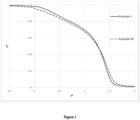
- Figure 1 shows the adimensional drying rates of water inside the pores of the PVC samples prepared in Example 2 and Comparative Example 2A.
- An oil phase containing 70 wt.% diisobutyryl peroxide in isododecane was added to the aqueous mixture with Ultra Turrax type S25N-25GM at low speed. 5.
- the oil phase was dispersed with maximum Ultra Turrax speed (2.5 minutes/kg of emulsion) while keeping the temperature below 0 °C. If needed to remain below this temperature, the Ultra Turrax action was temporally discontinued. 6.
- the emulsion was stored at -25 °C.
- Example 1A Example 1 (i) Diisobutyryl peroxide (wt.%) 40 40 (ii) PVA (wt.%) 1.3 3.0 (iii) Emulsifier (wt.%) 0.5 - (iv) Methanol (wt.%) 14.5 14.5
- the storage stability of the emulsions was determined by measuring the droplet volume distribution by means of a light scattering technique, using a Malvern type 3000 apparatus.
- d99 (expressed in ⁇ m) is 99 percentile of the droplet volume distribution of the organic peroxide in the emulsion
- d50 (expressed in ⁇ m) is 50 percentile of the droplet volume distribution of the organic peroxide in the emulsion.
- the emulsion samples were stored at -25 °C and the data was collected at room temperature.
- Vinyl chloride (VCM) polymerizations were carried out according to a standard suspension polymerization process, using a 10-liter Buchi reactor equipped with a baffle, one flat-blade stirrer, a pressure transducer, a VCM feed line, a nitrogen purge line, a peroxide feed line, and a peroxide injection point.
- the reactor was charged with 3480 g of demineralized water including 75.4 g of a 2% (w/w) solution of Alcotex ® B72 (polyvinylacetate/alcohol) and 11.6 g of a 2% (w/w) solution of Gohsenol GH23 (polyvinylacetate/alcohol).
- the reactor was then pressurized with nitrogen to 12 bar. If no leaks were observed, the reactor was depressurized to 75 mbar (while stirring) to remove the air and nitrogen. Subsequently, the reactor was charged with 2900 g of VCM. While charging the VCM, the reactor was heated to 52 °C in 30 minutes.
- PVC samples were produced according to the above polymerization process.
- Example 2 PVC prepared using the aqueous organic peroxide emulsion of Example 1 (diluted with cold water to 0.5% diisobutyryl peroxide for the relatively small-scale polymerization (10 liters) and stored in an ice bath under stirring during the polymerization).
- Comparative Example 2A PVC prepared using the aqueous organic peroxide emulsion of Comparative Example 1A (diluted with cold water to 0.5% diisobutyryl peroxide for the relatively small-scale polymerization (10 liters) and stored in an ice bath under stirring during the polymerization).
- An organic peroxide composition containing 98 wt.% di(2-ethylhexyl) peroxydicarbonate was added to the aqueous mixture with Ultra Turrax type S25N-25GM at low speed. 5.
- the organic peroxide composition was dispersed with maximum Ultra Turrax speed (2.5 minutes/kg of emulsion) while keeping the temperature below 0 °C. If needed to remain below this temperature, the Ultra Turrax action was temporally discontinued. 6.
- the emulsion was stored at -20 °C.
- Example 3 (i) Di(2-ethylhexyl) peroxydicarbonate (wt.%) 60 60 (ii) PVA (wt.%) 0.6 1.6 (iii) Emulsifier (wt.%) 0.3 - (iv) Methanol (wt.%) 12 13
- the storage stability of the emulsions was determined by measuring the droplet volume distribution by means of a light scattering technique, using a Malvern type 3000 apparatus.
- d99 (expressed in ⁇ m) is 99 percentile of the droplet volume distribution of the organic peroxide in the emulsion
- d50 (expressed in ⁇ m) is 50 percentile of the droplet volume distribution of the organic peroxide in the emulsion.
- the emulsion samples were stored at -20 °C and the data was collected at room temperature.
- Example 3 1 day - d50 / d99 1.1 / 2.4 1.3 / 2.6 1 week - d50 / d99 n.d. n.d.
Landscapes
- Chemical & Material Sciences (AREA)
- Health & Medical Sciences (AREA)
- Chemical Kinetics & Catalysis (AREA)
- Medicinal Chemistry (AREA)
- Polymers & Plastics (AREA)
- Organic Chemistry (AREA)
- Polymerisation Methods In General (AREA)
- Compositions Of Macromolecular Compounds (AREA)
- Processes Of Treating Macromolecular Substances (AREA)
- Polymerization Catalysts (AREA)
- Addition Polymer Or Copolymer, Post-Treatments, Or Chemical Modifications (AREA)
Applications Claiming Priority (1)
| Application Number | Priority Date | Filing Date | Title |
|---|---|---|---|
| EP23204976 | 2023-10-20 |
Publications (1)
| Publication Number | Publication Date |
|---|---|
| EP4545573A1 true EP4545573A1 (de) | 2025-04-30 |
Family
ID=88558460
Family Applications (1)
| Application Number | Title | Priority Date | Filing Date |
|---|---|---|---|
| EP24203348.8A Pending EP4545573A1 (de) | 2023-10-20 | 2024-09-27 | Wässrige organische peroxidemulsionen |
Country Status (5)
| Country | Link |
|---|---|
| US (1) | US20250129189A1 (de) |
| EP (1) | EP4545573A1 (de) |
| JP (1) | JP2025071014A (de) |
| CN (1) | CN119859203A (de) |
| MX (1) | MX2024012931A (de) |
Citations (3)
| Publication number | Priority date | Publication date | Assignee | Title |
|---|---|---|---|---|
| WO2000017245A1 (en) | 1998-09-21 | 2000-03-30 | Akzo Nobel N.V. | Continuous dosing of very fast initiators during polymerization reactions |
| WO2003095500A1 (en) | 2002-05-08 | 2003-11-20 | Akzo Nobel N.V. | Highly concentrated, stable, and safe diacyl peroxide and peroxydicarbonate emulsions with a low chemical oxygen demand value |
| WO2011015567A2 (en) | 2009-08-06 | 2011-02-10 | Akzo Nobel Chemicals International B.V. | Storage stable and safe peroxide emulsions with a high active oxygen content |
Family Cites Families (5)
| Publication number | Priority date | Publication date | Assignee | Title |
|---|---|---|---|---|
| JPH04293904A (ja) * | 1991-03-22 | 1992-10-19 | Nippon Oil & Fats Co Ltd | 塩化ビニル系不飽和単量体の懸濁重合方法 |
| JPH11171914A (ja) * | 1997-12-16 | 1999-06-29 | Kayaku Akzo Corp | 有機過酸化物のエマルション配合物 |
| JPH11209418A (ja) * | 1998-01-22 | 1999-08-03 | Nof Corp | 水エマルション化有機過酸化物の製造方法 |
| BR0208184A (pt) * | 2001-03-23 | 2004-03-02 | Akzo Nobel Nv | Emulsões aquosas de peróxido orgânico estáveis em estocagem |
| BR112018016894B1 (pt) * | 2016-03-18 | 2022-06-14 | Akzo Nobel Chemicals International B.V. | Emulsão aquosa, e uso da emulsão |
-
2024
- 2024-09-27 EP EP24203348.8A patent/EP4545573A1/de active Pending
- 2024-10-16 JP JP2024180824A patent/JP2025071014A/ja active Pending
- 2024-10-17 CN CN202411450325.XA patent/CN119859203A/zh active Pending
- 2024-10-18 US US18/919,613 patent/US20250129189A1/en active Pending
- 2024-10-18 MX MX2024012931A patent/MX2024012931A/es unknown
Patent Citations (3)
| Publication number | Priority date | Publication date | Assignee | Title |
|---|---|---|---|---|
| WO2000017245A1 (en) | 1998-09-21 | 2000-03-30 | Akzo Nobel N.V. | Continuous dosing of very fast initiators during polymerization reactions |
| WO2003095500A1 (en) | 2002-05-08 | 2003-11-20 | Akzo Nobel N.V. | Highly concentrated, stable, and safe diacyl peroxide and peroxydicarbonate emulsions with a low chemical oxygen demand value |
| WO2011015567A2 (en) | 2009-08-06 | 2011-02-10 | Akzo Nobel Chemicals International B.V. | Storage stable and safe peroxide emulsions with a high active oxygen content |
Non-Patent Citations (4)
| Title |
|---|
| "The Atlas HLB-System, a time saving guide to emulsifier selection", 1963, ATLAS CHEMICAL INDUSTRIES INC. |
| "United Nations Manual of Tests and Criteria", 2019 |
| AGACIAK PHILIPPE ET AL: "Dehydration and drying poly(vinyl)chloride (PVC) porous grains: 2. Thermogravimetric analysis and numerical simulations", COLLOIDS AND SURFACES A : PHYSIOCHEMICAL AND ENGINEERINGS ASPECTS, ELSEVIER, AMSTERDAM, NL, vol. 470, 21 January 2015 (2015-01-21), pages 120 - 129, XP029153961, ISSN: 0927-7757, DOI: 10.1016/J.COLSURFA.2015.01.020 * |
| P. AGACIAK ET AL.: "Colloids and Surfaces A: Physicochem. Eng. Aspects", vol. 470, 2015, article "Dehydration and drying poly(vinyl)chloride (PVC) porous grains: 2. Thermogravimetric analysis and numerical simulations", pages: 120 - 129 |
Also Published As
| Publication number | Publication date |
|---|---|
| US20250129189A1 (en) | 2025-04-24 |
| JP2025071014A (ja) | 2025-05-02 |
| MX2024012931A (es) | 2025-05-02 |
| CN119859203A (zh) | 2025-04-22 |
Similar Documents
| Publication | Publication Date | Title |
|---|---|---|
| US9410002B2 (en) | Aqueous emulsion composition of organic peroxide | |
| US11008410B2 (en) | Composition of organic peroxide without a colloid agent | |
| KR100984714B1 (ko) | 낮은 화학적 산소 요구량 값을 가지며 안정하고 안전한 고농도의 디아실 퍼옥시드와 퍼옥시디카르보네이트 유탁액 | |
| JP2025172790A (ja) | 有機過酸化物の水性エマルジョン | |
| JP2019512579A (ja) | 貯蔵安定性のある水性有機過酸化物エマルション | |
| KR100553788B1 (ko) | 퍼옥시에스테르의 유제 | |
| US20230183392A1 (en) | Organic peroxide emulsion with ethanol | |
| CN105367688B (zh) | 具有高活性氧含量的储存稳定且安全的过氧化物乳液 | |
| US20250129189A1 (en) | Aqueous organic peroxide emulsions | |
| BR102024021555A2 (pt) | Uso de uma emulsão aquosa de peróxido orgânico, emulsão aquosa de peróxido orgânico e processo para preparar um polímero de cloreto de polivinila | |
| US20230167054A1 (en) | Di-sec-butyl peroxydicarbonate emulsion | |
| US20240287215A1 (en) | Method for preparing a composition comprising at least the mixture of at least one peroxydicarbonate and at least one peroxyester | |
| CN120603862A (zh) | 包含至少一种有机过氧化物、至少一种乳化剂和至少一种盐的组合物 | |
| CS230056B1 (sk) | Sposob výroby stabilných emulzií iniciátorov |
Legal Events
| Date | Code | Title | Description |
|---|---|---|---|
| PUAI | Public reference made under article 153(3) epc to a published international application that has entered the european phase |
Free format text: ORIGINAL CODE: 0009012 |
|
| STAA | Information on the status of an ep patent application or granted ep patent |
Free format text: STATUS: REQUEST FOR EXAMINATION WAS MADE |
|
| 17P | Request for examination filed |
Effective date: 20240927 |
|
| AK | Designated contracting states |
Kind code of ref document: A1 Designated state(s): AL AT BE BG CH CY CZ DE DK EE ES FI FR GB GR HR HU IE IS IT LI LT LU LV MC ME MK MT NL NO PL PT RO RS SE SI SK SM TR |
|
| P01 | Opt-out of the competence of the unified patent court (upc) registered |
Free format text: CASE NUMBER: APP_31464/2025 Effective date: 20250630 |
|
| STAA | Information on the status of an ep patent application or granted ep patent |
Free format text: STATUS: EXAMINATION IS IN PROGRESS |
|
| 17Q | First examination report despatched |
Effective date: 20260218 |