EP4549421A1 - Procédé de chloration photochimique d'alcanes - Google Patents
Procédé de chloration photochimique d'alcanes Download PDFInfo
- Publication number
- EP4549421A1 EP4549421A1 EP23206622.5A EP23206622A EP4549421A1 EP 4549421 A1 EP4549421 A1 EP 4549421A1 EP 23206622 A EP23206622 A EP 23206622A EP 4549421 A1 EP4549421 A1 EP 4549421A1
- Authority
- EP
- European Patent Office
- Prior art keywords
- moities
- general formulae
- aryl
- alkyl
- ionic compound
- Prior art date
- Legal status (The legal status is an assumption and is not a legal conclusion. Google has not performed a legal analysis and makes no representation as to the accuracy of the status listed.)
- Pending
Links
Images

Classifications
-
- C—CHEMISTRY; METALLURGY
- C07—ORGANIC CHEMISTRY
- C07C—ACYCLIC OR CARBOCYCLIC COMPOUNDS
- C07C17/00—Preparation of halogenated hydrocarbons
- C07C17/093—Preparation of halogenated hydrocarbons by replacement by halogens
- C07C17/10—Preparation of halogenated hydrocarbons by replacement by halogens of hydrogen atoms
Definitions
- the present invention relates to a method for photochemical chlorination of alkanes.
- Chlorinated aliphatics are important basic chemicals in industry, produced on a scale of millions of tonnes per year.
- chlorinated alkanes are produced commercially, such as methyl chloride, methylene chloride, carbon tetrachloride, and ethyl chloride. These products have a large number of uses.
- the chlorine derivatives of methane are used as industrial solvents.
- the principal use of ethyl chloride is as an intermediate in the manufacture of tetraethyllead.
- All of the chlorinated alkanes can be produced by thermal chlorination of the corresponding alkanes, generally at temperatures above about 250-300 °C. and frequently up to about 600 °C. A thermal chlorination method is for example described in US 2,868,852 .
- This object has been solved by providing a chlorination reaction of alkanes involving or comprising a radical reaction. This may be achieved in a first aspect applying a photochemical reaction and a another, second aspect using a radical starter, like AIBN.
- a method for photochemical chlorination of alkanes comprising the following steps:
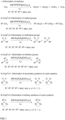
- the present method uses polychlorides according to formulae (I) as chlorination agents that can be activated with visible light, producing chlorine radicals.
- the chlorine radicals formed are able to chlorinate C(sp3)-H bonds radically.
- the polychloride [N-R 1 a R 2 b R 3 c R 4 d ] [Cl-(Cl 2 ) n ] is irridiated in the presence of an alkane, and optionally in the presence of a solvent (e.g. 1,2-dichlorobenzene, nitrobenzene, benzene) with visible light.
- a solvent e.g. 1,2-dichlorobenzene, nitrobenzene, benzene
- the corresponding chlorinated alkanes and the ionic liquid [N-R 1 a R 2 b R 3 c R 4 d ] [Cl-(HCl) m ] are formed as by-products.
- the present method allows for example the conversion of methane to the industrially important, chlorinated compounds CH 3 Cl, CH 2 Cl 2 , CHCl 3 and CCl 4 .
- the product ratio depends on the equivalents of the polychloride [N-R 1 a R 2 b R 3 c R 4 d ] [Cl-(Cl 2 ) n ] used and the chlorine loading of the polychloride.
- Methyl, methylene and methine carbons of open-chain and cyclic systems can be converted to the corresponding chlorinated aliphatics under the same reaction conditions, as well as chlorination of benzylic systems (aryl-CH 3 ) to the corresponding chlorinated compounds aryl-CH 2 Cl, aryl-CHCl 2 and aryl-CCl 3 .
- LED chips with an emission maximum at 420 nm were primarily used as the light source, although light sources with other frequency ranges can also be used.. This method eliminates the use of toxic and difficult-to-handle chlorine gas, which is associated with a significant safety hazard.
- the moities R 1 , R 2 , R 3 and R 4 of the polychloride according to general formulae (I) are selected from the following group: methyl, ethyl, n-propyl, isopropyl, n-butyl, isobutyl, and 2-methylpropyl, preferably methyl, ethyl or n-propyl.
- the ionic compound of general formula (I) may be selected from [NEt 3 Me][Cl(Cl 2 ) n ], [NEt 2 Me 2 ][Cl(Cl 2 ) n ], [NEtMe 3 ][Cl(Cl 2 ) n ], [NBuEt 2 Me][Cl(Cl 2 ) n ], [NPr 3 Me][Cl(Cl 2 ) n ], [NBu 2 Me 2 ][Cl(Cl 2 ) n ], with n being 1-6, preferably 1-4.
- the ionic compound of general formula (I) is selected from [NEt 3 Me][Cl(Cl 2 ) n ], [NEt 2 Me 2 ][Cl(Cl 2 ) n ], [NEtMe 3 ][Cl(Cl 2 ) n ], with n being 1-6, preferably 1-4.
- n can be >0 (i.e. any number that is larger 0). For example, if n is 0 ⁇ n ⁇ 1, then a mixture of [N-R 1 a R 2 b R 3 c R 4 d ] [Cl] and [N-R 1 a R 2 b R 3 c R 4 d ] [CI-CI2]is present in the storage medium. In such a case, n could be for example 0.8 as in [N-R 1 a R 2 b R 3 c R 4 d ] [Cl-(Cl 2 ) 0.8 ].
- the polychlorides of general formula (I) may contain (in the loaded state) at least 0.1 g of Cl 2 per g of ionic compound, preferably at least 0.2 g of Cl 2 per g of ionic compound, more preferably at least 0.3 g of Cl 2 per g of ionic compound, even more preferably at least 0.45 g of Cl 2 per g of ionic compound (at 1 bar, 25°C).
- polychlorides [N-R 1 a R 2 b R 3 c R 4 d ] [Cl-(Cl 2 ) n ] of general formulae (I) may be synthesized according to a method as described in WO 2019/215037 A1 .
- WO 2019/215037 A1 provides a method for separating and storing (loading) chlorine Cl 2 from Cl 2 containing gas, in particular Cl 2 containing process gas, wherein the Cl 2 containing gas is brought into contact with an ionic compound of the structure [NR 1 a R 2 b R 3 c R 4 d ] [Cl] to form [N-R 1 a R 2 b R 3 c R 4 d ] [Cl-(Cl 2 ) n ] of general formulae (I).
- WO 2019/215037 A1 describes the use of ionic compounds [NEt 3 Me]Cl and [NEt 2 Me 2 ]Cl for reversibly absorbing and storing chlorine from process gas, and which can release the chlorine gas by changing the ambient conditions. Said storage system can be reused after chlorine unloading.
- chlorine gas is added to [NEt 3 Me]Cl, the corresponding trichloride [NEt 3 Me][Cl 3 ] forms, which at room temperature is an ionic liquid: [NEt 3 Me]Cl + Cl 2 ⁇ [NEt 3 Me][Cl-(Cl) 2 ]
- m can be >0 (i.e. any number that is larger 0).
- the moities R 5 , R 6 , R 7 and R 8 of the at least one alkane according to general formulae (II) are
- the moities R 5 , R 6 , R 7 and R 8 of at least one alkane according to general formulae (II) are H, methyl, ethyl, n-propyl, iso-propyl, n-butyl, iso-butyl and sec-butyl, in particular preferably H, methyl, ethyl, n-propyl, n-butyl, and phenyl.
- two of the moities R 5 , R 6 , R 7 and R 8 may form a cyclohexane ring. It is imperative that at least one of the moities R 5 , R 6 , R 7 and R 8 has to be H.
- alkanes according to general formulae (II) are suitable for chlorination that can be grouped according to different substituion pattern.
- R 5 , R 6 , R 7 , R 8 are H and only one of R 5 , R 6 , R 7 , R 8 is an alkyl or aryl, then the alkane of general formulae (II) is an equivalent of a methyl group.
- An embodiment may be R 5 -CH 3 wherein R 6 , R 7 , R 8 are H and R 5 is one of methyl, ethyl, n-propyl, iso-propyl, n-butyl, iso-butyl and sec-butyl, in particular preferably methyl, ethyl, n-propyl, n-butyl, and phenyl. Specific examples of this group are ethane or toluene.
- R 5 , R 6 , R 7 , R 8 are H and two of R 5 , R 6 , R 7 , R 8 are an alkyl or aryl, then the alkane of general formulae (II) is an equivalent of a methylene group.
- An embodiment may be R 5 -CH 2 -R 6 wherein R 7 , R 8 are H and R 5 , R 6 are each or both one of methyl, ethyl, n-propyl, iso-propyl, n-butyl, iso-butyl and sec-butyl, in particular preferably methyl, ethyl, n-propyl, n-butyl, and phenyl.
- a specific example may be propane.
- R 5 , R 6 may also form or be part of a C5-C7 non-aromatic cyclic ring system, such as an C6 ring; in this case the alkane would be cyclohexane.
- R 5 , R 6 , R 7 , R 8 is H and three of R 5 , R 6 , R 7 , R 8 are an alkyl or aryl, then the alkane of general formulae (II) is an equivalent of a methin group.
- An embodiment may be CHR 5 R 6 R 7 wherein R 8 is H and with three of R 5 , R 6 , R 7 are each methyl, ethyl, n-propyl, iso-propyl, n-butyl, iso-butyl and sec-butyl, in particular preferably methyl, ethyl, n-propyl, n-butyl, and phenyl.
- R 8 is H and with three of R 5 , R 6 , R 7 are each methyl, ethyl, n-propyl, iso-propyl, n-butyl, iso-butyl and sec-butyl, in particular preferably methyl, ethyl, n-propyl, n-butyl, and phenyl.
- R 5 R 6 R 7 is methyl.
- R 5 , R 6 may also form or be part of a C5-C7 non-aromatic cyclic ring system, such as an C6 ring, in this case the alkane would be cyclohexane substituted with R 7 .
- substituted in particular in connection to alkyl, cycloalkyl, aryl relates to the substitution of one or more atoms, usually H-atoms, by one or more of the following substituents: C 1 -C 15 alkyl, C 3 -C 10 -cycloalkyl, aryl, heteroaryl, naphthyl, heterocyclic ring, imidazolyl, indolyl, pyrrolidinyl, C 1 -C 12 -alkoxy, C 1 -C 12 -acyl, C 1 -C 12 -acyloxy, carboxy, ester, , C 1 -C 12 -(per)fluoroalkyl and C 1 -C 10 -alkylsulfonyl.
- any of the moieties mentioned above can be non-substituted or substituted with C 1 -C 15 alkyl, C 3 -C 10 -cycloalkyl, aryl, heteroaryl, naphthyl, C 1 -C 12 -alkoxy.
- any of the moieties mentioned above can be non-substituted or substituted with hydroxy, C 1 -C 10 alkyl, such as methyl, ethyl or propyl, C 3 -C 10 -cycloalkyl, C 1 -C 12 -alkoxy.
- the substituted groups can be once or twice substituted with same or different substituents.
- At least one alkane according to general formulae (II) is converted to at least one chlorinated alkane according to general formulae (IV) (R 5 e R 6 f R 7 g R 8 h )CCl x
- the alkane of general formulae (II) may be chlorinated once or multiple times, preferably one, twice, three or four times.
- a methyl group according to R 5 -CH 3 may be chlorinated to R 5 -CH 2 Cl, R 5 -CHCl 2 and/or R 5 -CCl 3 .
- An example is the chlorination of toluene C 6 H 5 CH 3 to C 6 H 5 CH 2 Cl.
- chlorination also may occur at the moiety R 5 providing another chlorination pattern.
- R 5 is an alkyl moiety (e.g. a methyl moiety) chlorination may also occur at R 5 .
- An example is ethane C 2 H 6 that may undergo chlorination at both C-atoms providing CH 3 -CH 2 Cl, ClCH 2 CH 2 Cl and/or Cl 2 CH-CH 3 .
- a methylene group R 5 -CH 2 -R 6 may be chlorinated to R 5 -CHCl-R 6 and /or R 5 -CCl 2 -R 6 .
- a methine group CHR 5 R 6 R 7 may be chlorinated to CR 5 R 6 R 7 Cl.
- chlorination also may occur at any of the moieties R 5 , R 6 and/or R 7 providing another chlorination pattern.
- R 5 , R 6 and R 7 are an alkyl moiety (e.g. a methyl moiety) chlorination may also occur at R 5 , R 6 and/or R 7 .
- An example is isobutane iso-C 4 H 10 that may undergo chlorination at different C-atoms providing ClCH 2 -CH(CH 3 ) 2 , CH 3 -CCl(CH 3 ) 2 and/or ClCH 2 -CCl(CH 3 ) 2
- moieties R 5 , R 6 are part of a C5-C7 non-aromatic cyclic ring system, such as an C6 ring, then chlorination may not only occur at one methylene or methin group but at several different positions of the cyclic ring system.
- 0.2- 3.0 equiv, preferably 0.5-2.0 equiv, of the at least one polychloride according to general formulae (I) and 1.0 - 4.0 equiv, preferably 2.0-3.0 equiv, of the at least one at least one alkane according to general formulae (II) are provided in the reaction mixture.
- reaction is carried out in an organic solvent selected from the group of benzene, nitrobenzene, 1,2-dichlorobenzene (oDCB), fluorinated benzene, trifluorotoluene.
- organic solvent selected from the group of benzene, nitrobenzene, 1,2-dichlorobenzene (oDCB), fluorinated benzene, trifluorotoluene.
- oDCB 1,2-dichlorobenzene
- fluorinated benzene 1,2-dichlorobenzene
- trifluorotoluene trifluorotoluene.
- any electron deficient aromatic solvent would be suitable that is inert to chlorination and has no functional, reactive substituents
- the wavelength used for irradiation may be in the range between 350 nm and 1000 nm, preferably in the visable range between 400 nm and 800 nm, morepreferably between 420 nm and 780 nm, even more preferably between 420 nm and 600; such as 365 nm or 420 nm.
- a a suitable light source may be a LED light emitting light at a wavelength between 420 nm and 600 nm, preferably a blue LED light emitting light at a wavelength between 420 nm and 470 nm.
- other irradiation sources may also be suitable.
- the object of the invention may also be solved by using a radical starter, such as AIBN.
- a method for radical chlorination of alkanes comprises the steps of providing a mixture of
- a suitable radical starter may be Azobis(isobutyronitril) (AIBN).
- Other suitable radical starters may include peroxides, such as dibenzoylperoxide (DBPO).
- the radical starter may be added in an amount between 0.5 and 1.5 mol%, preferably between 0.8 and 1.2 mol%, such as 1 mol%.
- 1.0-mol% of AIBN was added to the reaction mixture as a radical starter and the reaction mixture was warmed to 100 °C for 30 min.
- reaction mixture was irradiated for 1-2 min with a blue (420 nm) LED light source.
- the progression of the reaction could be observed by the color loss of the ionic liquid.
- the reaction products were purified by distillation using two in-series connected cooling traps, the former one at -40 °C (for trapping oDCB) and the latter one at -140 °C (C 1 & C 2 entities) or -90°C (C 3 and C 4 entities).
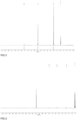
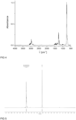
- the reaction products were characterized by gas phase IR and 1 H-NMR spectroscopy to determine the ratios between the different chlorinated products.
- Toluene (1.2 mol, 2.5 equiv., 125 mL) was loaded into a flask. The flask was irradiated with a blue (420 nm) LED light source and [NEt 3 Me][Cl(Cl 2 ) 1.7 ] (77 g, 0.48 mol Cl 2 , 1 equiv.) was slowly added yielding a two phase system. Irradiation was continued until the solution decolorized (ca. 1 h). Subsequently, the phases were separated, the organic phase was washed 2x with distilled water (100 mL) and the ionic phase was washed 2x with toluene (50 mL). The combined organic phases were dried over sodium sulfate. Fractional distillation at 100 mbar in static vacuum yielded pure benzyl chloride (0.29 mol, 62%) as a colorless liquid.
Landscapes
- Chemical & Material Sciences (AREA)
- Organic Chemistry (AREA)
- Organic Low-Molecular-Weight Compounds And Preparation Thereof (AREA)
Priority Applications (1)
| Application Number | Priority Date | Filing Date | Title |
|---|---|---|---|
| EP23206622.5A EP4549421A1 (fr) | 2023-10-30 | 2023-10-30 | Procédé de chloration photochimique d'alcanes |
Applications Claiming Priority (1)
| Application Number | Priority Date | Filing Date | Title |
|---|---|---|---|
| EP23206622.5A EP4549421A1 (fr) | 2023-10-30 | 2023-10-30 | Procédé de chloration photochimique d'alcanes |
Publications (1)
| Publication Number | Publication Date |
|---|---|
| EP4549421A1 true EP4549421A1 (fr) | 2025-05-07 |
Family
ID=88600228
Family Applications (1)
| Application Number | Title | Priority Date | Filing Date |
|---|---|---|---|
| EP23206622.5A Pending EP4549421A1 (fr) | 2023-10-30 | 2023-10-30 | Procédé de chloration photochimique d'alcanes |
Country Status (1)
| Country | Link |
|---|---|
| EP (1) | EP4549421A1 (fr) |
Citations (4)
| Publication number | Priority date | Publication date | Assignee | Title |
|---|---|---|---|---|
| US2868852A (en) | 1956-10-25 | 1959-01-13 | Ethyl Corp | Oil scrubber |
| US20160152533A1 (en) * | 2013-09-13 | 2016-06-02 | Shanghai Fanglun New Marerial Technology Co., Ltd. | Method for the preparation of trichloromethyl-group-substituted benzene |
| WO2019215037A1 (fr) | 2018-05-07 | 2019-11-14 | Covestro Deutschland Ag | Support de stockage et procédé de séparation, de stockage et de transport de chlore à partir de gaz contenant du chlore |
| US11578021B1 (en) | 2021-07-06 | 2023-02-14 | The Board Of Trustees Of The University Of Illinois | Room-temperature, catalyst-free alkane chlorination |
-
2023
- 2023-10-30 EP EP23206622.5A patent/EP4549421A1/fr active Pending
Patent Citations (5)
| Publication number | Priority date | Publication date | Assignee | Title |
|---|---|---|---|---|
| US2868852A (en) | 1956-10-25 | 1959-01-13 | Ethyl Corp | Oil scrubber |
| US20160152533A1 (en) * | 2013-09-13 | 2016-06-02 | Shanghai Fanglun New Marerial Technology Co., Ltd. | Method for the preparation of trichloromethyl-group-substituted benzene |
| WO2019215037A1 (fr) | 2018-05-07 | 2019-11-14 | Covestro Deutschland Ag | Support de stockage et procédé de séparation, de stockage et de transport de chlore à partir de gaz contenant du chlore |
| US20210087057A1 (en) * | 2018-05-07 | 2021-03-25 | Covestro Intellectual Property Gmbh & Co. Kg | Storage medium and method for separating, storing and transporting chlorine from chlorine-containing gases |
| US11578021B1 (en) | 2021-07-06 | 2023-02-14 | The Board Of Trustees Of The University Of Illinois | Room-temperature, catalyst-free alkane chlorination |
Similar Documents
| Publication | Publication Date | Title |
|---|---|---|
| EP2680967B1 (fr) | Complexes métalliques de molybdène et de tungstène et leur utilisation comme précatalyseurs pour la métathèse des oléfines | |
| DE112016001149T5 (de) | Heteroleptischer Iridiumkomplex, lichtemittierendes Material und organisches lichtemittierendes Element unter Verwendung eines Stoffes | |
| EP4549421A1 (fr) | Procédé de chloration photochimique d'alcanes | |
| Jimenez et al. | Synthesis of triaryls: hydroxy and amine dinaphthyl and diphenanthryl aryls by one-pot electron-transfer nucleophilic substitution reactions | |
| US7652178B2 (en) | Perfluoroparacyclophane and methods of synthesis and use thereof | |
| JPH07187627A (ja) | フレレン誘導体、それらの調製方法及びそれらの使用 | |
| Verkhozina et al. | Synthesis of polynuclear nonfused azoles | |
| Eiermann et al. | [2.2](2, 6)‐and [2.2](2, 5) Pyrazinophanes: Synthesis and Molecular Structure | |
| Becker et al. | Stannous chloride mediated formation of (9-anthryl) methyl dimers from (halogenomethyl) anthracenes. Ground-state and adiabatic excited-state reversibility of intramolecular [4+ 2] cycloadditions | |
| JP2021525712A (ja) | イオン性金属アルキリデン化合物及びオレフィンメタセシス反応におけるその使用 | |
| DE19824929A1 (de) | Verfahren zur Herstellung von Alkyl-, Alkenyl- und Alkinylchloriden | |
| US4889937A (en) | New indole derivatives and process for producing them | |
| Zapol’skii et al. | Chemistry of Polyhalogenated Nitrobutadienes, 2: Synthesis of N-Tetrachloroallylidene-N′-arylhydrazines by a Formal Synproportionation Reaction | |
| KR100484265B1 (ko) | 2-(2,4-디히드록시페닐)-4,6-비스(2,4-디메틸페닐)-s-트리아진의제조방법 | |
| Lai et al. | Reactions of fused dihydro‐1, 2, 4‐thiadiazoles with isoselenocyanates giving 6aλ4‐thia‐1, 3, 4, 6‐tetraazapentalene derivatives and 5, 10‐dihydro‐1, 2, 4‐thiaselenazolo [4, 5‐b][2, 4] benzodiazepines | |
| AU684921B2 (en) | Bisquaternary ammonium compounds of 2,2'-dimethyl-1,1'-binaphthyl and process for their preparation | |
| Chaubon et al. | Halogenogermenes: evidence for the formation of the chloro-or fluoro-germenes (Me 5 C 5)(X) Ge [double bond, length as m-dash] CR 2 (CR 2= fluorenylidene) | |
| NL8220049A (nl) | Kwaternaire piperidiniumhalogeniden. | |
| JPH0258253B2 (fr) | ||
| Tsuji et al. | Potassium 2-germanaphthalenide: an isolable polycyclic system of germanium-incorporated anionic benzenoid | |
| US3458573A (en) | Preparation of monochloroacetoacetamides | |
| JPH0710894A (ja) | ビニルエステルホスホニウム塩化合物およびその製造方法 | |
| JP7173911B2 (ja) | ヨウ化芳香族化合物の製造方法 | |
| KR100524336B1 (ko) | o-알킬플루오로벤젠의제조방법 | |
| HU189429B (en) | Process for manufacturing new substituted vinylidene chloride |
Legal Events
| Date | Code | Title | Description |
|---|---|---|---|
| PUAI | Public reference made under article 153(3) epc to a published international application that has entered the european phase |
Free format text: ORIGINAL CODE: 0009012 |
|
| STAA | Information on the status of an ep patent application or granted ep patent |
Free format text: STATUS: THE APPLICATION HAS BEEN PUBLISHED |
|
| AK | Designated contracting states |
Kind code of ref document: A1 Designated state(s): AL AT BE BG CH CY CZ DE DK EE ES FI FR GB GR HR HU IE IS IT LI LT LU LV MC ME MK MT NL NO PL PT RO RS SE SI SK SM TR |
|
| STAA | Information on the status of an ep patent application or granted ep patent |
Free format text: STATUS: REQUEST FOR EXAMINATION WAS MADE |
|
| 17P | Request for examination filed |
Effective date: 20251015 |
|
| GRAP | Despatch of communication of intention to grant a patent |
Free format text: ORIGINAL CODE: EPIDOSNIGR1 |
|
| STAA | Information on the status of an ep patent application or granted ep patent |
Free format text: STATUS: GRANT OF PATENT IS INTENDED |
|
| INTG | Intention to grant announced |
Effective date: 20260202 |