EP4553073A1 - Salz eines glp-1r-agonisten, herstellungsverfahren dafür und verwendung davon - Google Patents
Salz eines glp-1r-agonisten, herstellungsverfahren dafür und verwendung davon Download PDFInfo
- Publication number
- EP4553073A1 EP4553073A1 EP23834940.1A EP23834940A EP4553073A1 EP 4553073 A1 EP4553073 A1 EP 4553073A1 EP 23834940 A EP23834940 A EP 23834940A EP 4553073 A1 EP4553073 A1 EP 4553073A1
- Authority
- EP
- European Patent Office
- Prior art keywords
- salt
- crystal form
- compound
- ray powder
- powder diffraction
- Prior art date
- Legal status (The legal status is an assumption and is not a legal conclusion. Google has not performed a legal analysis and makes no representation as to the accuracy of the status listed.)
- Pending
Links
Images










Classifications
-
- A—HUMAN NECESSITIES
- A61—MEDICAL OR VETERINARY SCIENCE; HYGIENE
- A61P—SPECIFIC THERAPEUTIC ACTIVITY OF CHEMICAL COMPOUNDS OR MEDICINAL PREPARATIONS
- A61P1/00—Drugs for disorders of the alimentary tract or the digestive system
-
- A—HUMAN NECESSITIES
- A61—MEDICAL OR VETERINARY SCIENCE; HYGIENE
- A61K—PREPARATIONS FOR MEDICAL, DENTAL OR TOILETRY PURPOSES
- A61K31/00—Medicinal preparations containing organic active ingredients
- A61K31/33—Heterocyclic compounds
- A61K31/395—Heterocyclic compounds having nitrogen as a ring hetero atom, e.g. guanethidine or rifamycins
- A61K31/435—Heterocyclic compounds having nitrogen as a ring hetero atom, e.g. guanethidine or rifamycins having six-membered rings with one nitrogen as the only ring hetero atom
- A61K31/44—Non condensed pyridines; Hydrogenated derivatives thereof
- A61K31/445—Non condensed piperidines, e.g. piperocaine
- A61K31/4523—Non condensed piperidines, e.g. piperocaine containing further heterocyclic ring systems
- A61K31/4545—Non condensed piperidines, e.g. piperocaine containing further heterocyclic ring systems containing a six-membered ring with nitrogen as a ring hetero atom, e.g. pipamperone, anabasine
-
- A—HUMAN NECESSITIES
- A61—MEDICAL OR VETERINARY SCIENCE; HYGIENE
- A61P—SPECIFIC THERAPEUTIC ACTIVITY OF CHEMICAL COMPOUNDS OR MEDICINAL PREPARATIONS
- A61P1/00—Drugs for disorders of the alimentary tract or the digestive system
- A61P1/04—Drugs for disorders of the alimentary tract or the digestive system for ulcers, gastritis or reflux esophagitis, e.g. antacids, inhibitors of acid secretion, mucosal protectants
-
- A—HUMAN NECESSITIES
- A61—MEDICAL OR VETERINARY SCIENCE; HYGIENE
- A61P—SPECIFIC THERAPEUTIC ACTIVITY OF CHEMICAL COMPOUNDS OR MEDICINAL PREPARATIONS
- A61P11/00—Drugs for disorders of the respiratory system
-
- A—HUMAN NECESSITIES
- A61—MEDICAL OR VETERINARY SCIENCE; HYGIENE
- A61P—SPECIFIC THERAPEUTIC ACTIVITY OF CHEMICAL COMPOUNDS OR MEDICINAL PREPARATIONS
- A61P13/00—Drugs for disorders of the urinary system
- A61P13/12—Drugs for disorders of the urinary system of the kidneys
-
- A—HUMAN NECESSITIES
- A61—MEDICAL OR VETERINARY SCIENCE; HYGIENE
- A61P—SPECIFIC THERAPEUTIC ACTIVITY OF CHEMICAL COMPOUNDS OR MEDICINAL PREPARATIONS
- A61P15/00—Drugs for genital or sexual disorders; Contraceptives
-
- A—HUMAN NECESSITIES
- A61—MEDICAL OR VETERINARY SCIENCE; HYGIENE
- A61P—SPECIFIC THERAPEUTIC ACTIVITY OF CHEMICAL COMPOUNDS OR MEDICINAL PREPARATIONS
- A61P15/00—Drugs for genital or sexual disorders; Contraceptives
- A61P15/10—Drugs for genital or sexual disorders; Contraceptives for impotence
-
- A—HUMAN NECESSITIES
- A61—MEDICAL OR VETERINARY SCIENCE; HYGIENE
- A61P—SPECIFIC THERAPEUTIC ACTIVITY OF CHEMICAL COMPOUNDS OR MEDICINAL PREPARATIONS
- A61P17/00—Drugs for dermatological disorders
-
- A—HUMAN NECESSITIES
- A61—MEDICAL OR VETERINARY SCIENCE; HYGIENE
- A61P—SPECIFIC THERAPEUTIC ACTIVITY OF CHEMICAL COMPOUNDS OR MEDICINAL PREPARATIONS
- A61P17/00—Drugs for dermatological disorders
- A61P17/06—Antipsoriatics
-
- A—HUMAN NECESSITIES
- A61—MEDICAL OR VETERINARY SCIENCE; HYGIENE
- A61P—SPECIFIC THERAPEUTIC ACTIVITY OF CHEMICAL COMPOUNDS OR MEDICINAL PREPARATIONS
- A61P19/00—Drugs for skeletal disorders
- A61P19/02—Drugs for skeletal disorders for joint disorders, e.g. arthritis, arthrosis
-
- A—HUMAN NECESSITIES
- A61—MEDICAL OR VETERINARY SCIENCE; HYGIENE
- A61P—SPECIFIC THERAPEUTIC ACTIVITY OF CHEMICAL COMPOUNDS OR MEDICINAL PREPARATIONS
- A61P19/00—Drugs for skeletal disorders
- A61P19/06—Antigout agents, e.g. antihyperuricemic or uricosuric agents
-
- A—HUMAN NECESSITIES
- A61—MEDICAL OR VETERINARY SCIENCE; HYGIENE
- A61P—SPECIFIC THERAPEUTIC ACTIVITY OF CHEMICAL COMPOUNDS OR MEDICINAL PREPARATIONS
- A61P19/00—Drugs for skeletal disorders
- A61P19/08—Drugs for skeletal disorders for bone diseases, e.g. rachitism, Paget's disease
- A61P19/10—Drugs for skeletal disorders for bone diseases, e.g. rachitism, Paget's disease for osteoporosis
-
- A—HUMAN NECESSITIES
- A61—MEDICAL OR VETERINARY SCIENCE; HYGIENE
- A61P—SPECIFIC THERAPEUTIC ACTIVITY OF CHEMICAL COMPOUNDS OR MEDICINAL PREPARATIONS
- A61P25/00—Drugs for disorders of the nervous system
-
- A—HUMAN NECESSITIES
- A61—MEDICAL OR VETERINARY SCIENCE; HYGIENE
- A61P—SPECIFIC THERAPEUTIC ACTIVITY OF CHEMICAL COMPOUNDS OR MEDICINAL PREPARATIONS
- A61P25/00—Drugs for disorders of the nervous system
- A61P25/14—Drugs for disorders of the nervous system for treating abnormal movements, e.g. chorea, dyskinesia
- A61P25/16—Anti-Parkinson drugs
-
- A—HUMAN NECESSITIES
- A61—MEDICAL OR VETERINARY SCIENCE; HYGIENE
- A61P—SPECIFIC THERAPEUTIC ACTIVITY OF CHEMICAL COMPOUNDS OR MEDICINAL PREPARATIONS
- A61P25/00—Drugs for disorders of the nervous system
- A61P25/18—Antipsychotics, i.e. neuroleptics; Drugs for mania or schizophrenia
-
- A—HUMAN NECESSITIES
- A61—MEDICAL OR VETERINARY SCIENCE; HYGIENE
- A61P—SPECIFIC THERAPEUTIC ACTIVITY OF CHEMICAL COMPOUNDS OR MEDICINAL PREPARATIONS
- A61P25/00—Drugs for disorders of the nervous system
- A61P25/28—Drugs for disorders of the nervous system for treating neurodegenerative disorders of the central nervous system, e.g. nootropic agents, cognition enhancers, drugs for treating Alzheimer's disease or other forms of dementia
-
- A—HUMAN NECESSITIES
- A61—MEDICAL OR VETERINARY SCIENCE; HYGIENE
- A61P—SPECIFIC THERAPEUTIC ACTIVITY OF CHEMICAL COMPOUNDS OR MEDICINAL PREPARATIONS
- A61P25/00—Drugs for disorders of the nervous system
- A61P25/30—Drugs for disorders of the nervous system for treating abuse or dependence
-
- A—HUMAN NECESSITIES
- A61—MEDICAL OR VETERINARY SCIENCE; HYGIENE
- A61P—SPECIFIC THERAPEUTIC ACTIVITY OF CHEMICAL COMPOUNDS OR MEDICINAL PREPARATIONS
- A61P27/00—Drugs for disorders of the senses
- A61P27/02—Ophthalmic agents
-
- A—HUMAN NECESSITIES
- A61—MEDICAL OR VETERINARY SCIENCE; HYGIENE
- A61P—SPECIFIC THERAPEUTIC ACTIVITY OF CHEMICAL COMPOUNDS OR MEDICINAL PREPARATIONS
- A61P3/00—Drugs for disorders of the metabolism
-
- A—HUMAN NECESSITIES
- A61—MEDICAL OR VETERINARY SCIENCE; HYGIENE
- A61P—SPECIFIC THERAPEUTIC ACTIVITY OF CHEMICAL COMPOUNDS OR MEDICINAL PREPARATIONS
- A61P3/00—Drugs for disorders of the metabolism
- A61P3/04—Anorexiants; Antiobesity agents
-
- A—HUMAN NECESSITIES
- A61—MEDICAL OR VETERINARY SCIENCE; HYGIENE
- A61P—SPECIFIC THERAPEUTIC ACTIVITY OF CHEMICAL COMPOUNDS OR MEDICINAL PREPARATIONS
- A61P3/00—Drugs for disorders of the metabolism
- A61P3/06—Antihyperlipidemics
-
- A—HUMAN NECESSITIES
- A61—MEDICAL OR VETERINARY SCIENCE; HYGIENE
- A61P—SPECIFIC THERAPEUTIC ACTIVITY OF CHEMICAL COMPOUNDS OR MEDICINAL PREPARATIONS
- A61P3/00—Drugs for disorders of the metabolism
- A61P3/08—Drugs for disorders of the metabolism for glucose homeostasis
- A61P3/10—Drugs for disorders of the metabolism for glucose homeostasis for hyperglycaemia, e.g. antidiabetics
-
- A—HUMAN NECESSITIES
- A61—MEDICAL OR VETERINARY SCIENCE; HYGIENE
- A61P—SPECIFIC THERAPEUTIC ACTIVITY OF CHEMICAL COMPOUNDS OR MEDICINAL PREPARATIONS
- A61P35/00—Antineoplastic agents
-
- A—HUMAN NECESSITIES
- A61—MEDICAL OR VETERINARY SCIENCE; HYGIENE
- A61P—SPECIFIC THERAPEUTIC ACTIVITY OF CHEMICAL COMPOUNDS OR MEDICINAL PREPARATIONS
- A61P35/00—Antineoplastic agents
- A61P35/04—Antineoplastic agents specific for metastasis
-
- A—HUMAN NECESSITIES
- A61—MEDICAL OR VETERINARY SCIENCE; HYGIENE
- A61P—SPECIFIC THERAPEUTIC ACTIVITY OF CHEMICAL COMPOUNDS OR MEDICINAL PREPARATIONS
- A61P37/00—Drugs for immunological or allergic disorders
-
- A—HUMAN NECESSITIES
- A61—MEDICAL OR VETERINARY SCIENCE; HYGIENE
- A61P—SPECIFIC THERAPEUTIC ACTIVITY OF CHEMICAL COMPOUNDS OR MEDICINAL PREPARATIONS
- A61P37/00—Drugs for immunological or allergic disorders
- A61P37/02—Immunomodulators
- A61P37/06—Immunosuppressants, e.g. drugs for graft rejection
-
- A—HUMAN NECESSITIES
- A61—MEDICAL OR VETERINARY SCIENCE; HYGIENE
- A61P—SPECIFIC THERAPEUTIC ACTIVITY OF CHEMICAL COMPOUNDS OR MEDICINAL PREPARATIONS
- A61P5/00—Drugs for disorders of the endocrine system
- A61P5/48—Drugs for disorders of the endocrine system of the pancreatic hormones
- A61P5/50—Drugs for disorders of the endocrine system of the pancreatic hormones for increasing or potentiating the activity of insulin
-
- A—HUMAN NECESSITIES
- A61—MEDICAL OR VETERINARY SCIENCE; HYGIENE
- A61P—SPECIFIC THERAPEUTIC ACTIVITY OF CHEMICAL COMPOUNDS OR MEDICINAL PREPARATIONS
- A61P9/00—Drugs for disorders of the cardiovascular system
-
- A—HUMAN NECESSITIES
- A61—MEDICAL OR VETERINARY SCIENCE; HYGIENE
- A61P—SPECIFIC THERAPEUTIC ACTIVITY OF CHEMICAL COMPOUNDS OR MEDICINAL PREPARATIONS
- A61P9/00—Drugs for disorders of the cardiovascular system
- A61P9/10—Drugs for disorders of the cardiovascular system for treating ischaemic or atherosclerotic diseases, e.g. antianginal drugs, coronary vasodilators, drugs for myocardial infarction, retinopathy, cerebrovascula insufficiency, renal arteriosclerosis
-
- A—HUMAN NECESSITIES
- A61—MEDICAL OR VETERINARY SCIENCE; HYGIENE
- A61P—SPECIFIC THERAPEUTIC ACTIVITY OF CHEMICAL COMPOUNDS OR MEDICINAL PREPARATIONS
- A61P9/00—Drugs for disorders of the cardiovascular system
- A61P9/12—Antihypertensives
-
- C—CHEMISTRY; METALLURGY
- C07—ORGANIC CHEMISTRY
- C07D—HETEROCYCLIC COMPOUNDS
- C07D405/00—Heterocyclic compounds containing both one or more hetero rings having oxygen atoms as the only ring hetero atoms, and one or more rings having nitrogen as the only ring hetero atom
- C07D405/14—Heterocyclic compounds containing both one or more hetero rings having oxygen atoms as the only ring hetero atoms, and one or more rings having nitrogen as the only ring hetero atom containing three or more hetero rings
-
- C—CHEMISTRY; METALLURGY
- C07—ORGANIC CHEMISTRY
- C07B—GENERAL METHODS OF ORGANIC CHEMISTRY; APPARATUS THEREFOR
- C07B2200/00—Indexing scheme relating to specific properties of organic compounds
- C07B2200/13—Crystalline forms, e.g. polymorphs
Definitions
- the present disclosure pertains to the field of drug development and particularly relates to a salt of a GLP-1R agonist, a preparation method therefor, and use thereof.
- Diabetes is a chronic disease characterized by high blood glucose levels and is caused by (relatively or absolutely) insufficient insulin secretion or insulin action disorders.
- IDF International Diabetes Federation
- Insulin secretagogues including sulfonylureas, dipeptidyl peptidase IV (PP-IV) inhibitors, and glucagon-like peptide-1 receptor (GLP-1R) agonists, enhance insulin secretion by acting on pancreatic ⁇ cells.
- Sulfonylureas have limited efficacy and tolerability, cause weight gain, and often induce hypoglycemia.
- DP-IV inhibitors have limited efficacy.
- GLP-1R agonists are peptides that are administered by subcutaneous injection. Liraglutide is additionally approved for the treatment of obesity.
- Biguanides such as metformin, are believed to act mainly by reducing hepatic glucose production. Biguanides often cause gastrointestinal discomfort and lactic acidosis, which further limit their use.
- ⁇ -Glucosidase inhibitors such as acarbose
- acarbose can reduce intestinal glucose absorption. These medicaments often cause gastrointestinal discomfort.
- Thiazolidinediones act on specific receptors in the liver, muscle, and adipose tissue. They regulate lipid metabolism and subsequently enhance the responses of these tissues to insulin action. Frequent use of these drugs may cause weight gain and may induce edema and anemia.
- Insulin either alone or in combination with the medicaments described above, is used for more severe cases, and frequent use of insulin may also cause weight gain and involves a risk of hypoglycemia.
- Sodium-glucose cotransporter 2 (SGLT2) inhibitors such as dapagliflozin, empagliflozin, canagliflozin, and ertugliflozin, inhibit glucose reabsorption in the kidneys, thereby lowering blood glucose levels.
- This emerging drug may be associated with ketoacidosis and urinary tract infections.
- GLP-1 is a 30-amino-acid-long incretin hormone secreted by intestinal L cells in response to food intake. GLP-1 has been shown to stimulate insulin secretion in a physiological and glucose-dependent manner, reduce glucagon secretion, inhibit gastric emptying, reduce appetite, and stimulate ⁇ cell proliferation. In non-clinical trials, GLP-1 promotes continued ⁇ cell competence by stimulating transcription of genes important for glucose-dependent insulin secretion and by promoting ⁇ cell neogenesis ( Meier, et al., Biodrugs, 17(2):93-102, 2013 ).
- GLP-1 plays an important role in regulating postprandial blood glucose levels by stimulating glucose-dependent insulin secretion by the pancreas to increase peripheral glucose absorption. GLP-1 also inhibits glucagon secretion, resulting in reduced hepatic glucose output. In addition, GLP-1 delays gastric emptying and slows small bowel movements to delay food absorption. In people with T2DM, the normal postprandial rise in GLP-1 is absent or reduced ( Vilsbol1 et al., diabetes, 50: 609-613, 2001 ).
- GLP-1 The structure of GLP-1 has been correspondingly engineered and modified in scientific research to increase its half-life and thus prolong its in vivo biological effect.
- clinically used long-acting GLP-1 analogs such as liraglutide, exenatide, etc.
- GLP-1R agonists will be aimed at improving patient compliance, simplifying administration, and reducing side effects of drugs; these agonists have a wide clinical market prospect.
- compound I-1 is ( S )-2-(4-(6-(4-chloro-2-fluorophenoxy)methyl)pyridin-2-yl)oxy)piperidin-1-yl)methyl)-1-(oxetan-2-ylmethyl)-1 H- benzo[ d ]imidazole-6-carboxylic acid.
- compound I-2 is ( S )-2-(4-(6-(4-cyano-2-fluorophenoxy)methyl)pyridin-2-yl)oxy)piperidin-1-yl)methyl)-1-(oxetan-2-ylmethyl)-1 H -b enzo[ d ]imidazole-6-carboxylic acid.
- the present disclosure provides, in a first aspect, a pharmaceutically acceptable salt of a compound represented by formula (I), wherein R is selected from halogen and CN.
- the pharmaceutically acceptable salt refers to a pharmaceutically non-toxic acid addition salt or base addition salt.
- the acid addition salt is a salt formed by the compound represented by formula (I) with an inorganic or organic acid, including a hydrobromide, a hydrochloride, a sulfate, a bisulfate, a sulfite, a phosphate, a borate, an acetate, an oxalate, a valerate, a benzoate, a lactate, a toluate, a citrate, a malate, a maleate, a fumarate, a succinate, a tartrate, a methanesulfonate, a benzenesulfonate, and a p-toluenesulfonate; more preferably, the acid addition salt is a hydrochloride, an acetate, a citrate, a malate, a succinate, a tartrate, a fumarate, a maleate, or a methanesulfonate; particularly
- the base addition salt is a salt formed by the compound represented by formula (I) with an inorganic or organic base, including salts formed with alkali metals, such as a sodium salt, a lithium salt, a potassium salt, a calcium salt, a magnesium salt, and the like, and amine salts, including salts formed with ammonia (NH 3 ), primary amines, secondary amines, or tertiary amines, such as a tetramethylamine salt, a tetraethylamine salt, a methylamine salt, a dimethylamine salt, a trimethylamine salt, a triethylamine salt, an ethylamine salt, a meglumine salt, a choline salt, and a tromethamine salt; more preferably, the base addition salt is a sodium salt, a potassium salt, a calcium salt, a magnesium salt, a meglumine salt, a choline salt, or a tromethamine salt; more preferably,
- an acid addition salt of compound I-1 is a hydrochloride, a tartrate, a maleate, a methanesulfonate, or a citrate; and an acid addition salt of compound I-2 is a citrate, a tartrate, a malate (e.g., an L -malate), a fumarate, a methanesulfonate, or a maleate.
- a base addition salt of compound I-1 is a sodium salt, a potassium salt, a meglumine salt, or a tromethamine salt
- a base addition salt of compound I-2 is a sodium salt, a potassium salt, a calcium salt, a magnesium salt, a meglumine salt, or a tromethamine salt.
- the present disclosure provides a crystal form A of the citrate of compound I-1, wherein an X-ray powder diffraction (XRPD) pattern of the crystal form comprises peaks at diffraction angles (2 ⁇ ) of 19.77 ⁇ 0.2°, 16.59 ⁇ 0.2°, 22.47 ⁇ 0.2°, and 20.20 ⁇ 0.2°.
- XRPD X-ray powder diffraction
- the X-ray powder diffraction (XRPD) pattern of the crystal form A of the citrate of compound I-1 comprises peaks at diffraction angles (20) of 16.59 ⁇ 0.2°, 19.77 ⁇ 0.2°, 22.47 ⁇ 0.2°, 20.20 ⁇ 0.2°, 24.84 ⁇ 0.2°, and 17.51 ⁇ 0.2°.
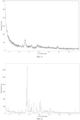
- the X-ray powder diffraction pattern of the crystal form A of the citrate has the diffraction angles (20) shown in Table 1, wherein the 2 ⁇ angles have a margin of error of ⁇ 0.20°: Table 1 2 ⁇ (°) Intensity% 2 ⁇ ( ° ) Intensity% 6.80 34.3 18.07 52.1 7.13 36.4 19.77 100.0 8.75 33.6 20.20 61.4 11.47 48.6 21.02 22.9 12.06 46.4 22.47 68.6 13.81 27.9 24.84 60.7 16.59 82.9 27.78 40.7 17.51 53.6
- the crystal form A of the citrate has the X-ray powder diffraction intensities shown in Table 1.
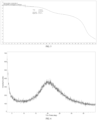
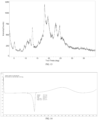
- the crystal form A of the citrate has an X-ray powder diffraction pattern substantially as shown in FIG. 3 .
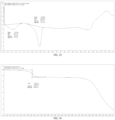
- the crystal form A of the citrate has a DSC thermogram with endothermic peaks at temperatures of about 107.80 °C and 130.63 °C.
- the crystal form A of the citrate has a DSC thermogram substantially as shown in FIG. 4 .
- the crystal form A of the citrate has a TGA curve substantially as shown in FIG. 5 .
- the present disclosure provides a crystal form A of the sodium salt of compound I-1, wherein an X-ray powder diffraction (XRPD) pattern of the crystal form comprises peaks at diffraction angles (20) of 19.24 ⁇ 0.2°, 20.68 ⁇ 0.2°, 6.81 ⁇ 0.2°, and 14.43 ⁇ 0.2°.
- XRPD X-ray powder diffraction
- the present disclosure provides a crystal form A of the sodium salt of compound I-1, wherein an X-ray powder diffraction (XRPD) pattern of the crystal form comprises peaks at diffraction angles (20) of 19.24 ⁇ 0.2°, 20.68 ⁇ 0.2°, 6.81 ⁇ 0.2°, 14.43 ⁇ 0.2°, 14.984+0.2°, and 6.40 ⁇ 0.2°.
- XRPD X-ray powder diffraction
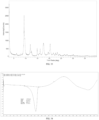
- the X-ray powder diffraction pattern of the crystal form A of the sodium salt has the diffraction angles (20) shown in Table 2, wherein the 20 angles have a margin of error of ⁇ 0.20°: Table 2 2 ⁇ ( ° ) Intensity% 2 ⁇ ( ° ) Intensity% 4.07 36.4 18.02 40.9 6.40 47.5 19.24 100.0 6.81 55.0 20.68 90.1 14.43 53.3 24.27 34.3 14.98 52.1 24.84 29.8 17.69 37.6 26.44 26.4
- the crystal form A of the sodium salt has the X-ray powder diffraction intensities shown in Table 2.
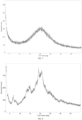
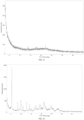
- the crystal form A of the sodium salt has an X-ray powder diffraction pattern substantially as shown in FIG. 8 .
- the crystal form A of the sodium salt has a DSC thermogram with endothermic peaks at temperatures of about 149.11 °C and 174.11 °C.
- the crystal form A of the sodium salt has a DSC thermogram substantially as shown in FIG. 9 .
- the crystal form A of the sodium salt has a TGA curve substantially as shown in FIG. 10 .
- the present disclosure provides a crystal form A of the potassium salt of compound I-1, wherein an X-ray powder diffraction (XRPD) pattern of the crystal form comprises peaks at diffraction angles (20) of 13.90 ⁇ 0.2°, 14.43 ⁇ 0.2°, 16.20 ⁇ 0.2°, and 11.67 ⁇ 0.2°.
- XRPD X-ray powder diffraction
- the present disclosure provides a crystal form A of the potassium salt of compound I-1, wherein an X-ray powder diffraction (XRPD) pattern of the crystal form comprises peaks at diffraction angles (20) of 13.90 ⁇ 0.2°, 14.43 ⁇ 0.2°, 16.20 ⁇ 0.2°, 11.67 ⁇ 0.2°, 20.99 ⁇ 0.2°, and 16.79 ⁇ 0.2°.
- XRPD X-ray powder diffraction
- the X-ray powder diffraction pattern of the crystal form A of the potassium salt has the diffraction angles (20) shown in Table 3, wherein the 20 angles have a margin of error of ⁇ 0.20°: Table 3 2 ⁇ ( ° ) Intensity% 2 ⁇ ( ° ) Intensity% 5.80 23.5 18.95 31.1 6.60 36.0 20.39 33.9 8.76 4.8 20.99 47.4 9.99 32.7 21.95 39.3 11.67 49.1 23.06 29.2 12.11 21.0 23.62 39.0 13.42 37.7 24.91 32.8 13.90 100.0 25.45 15.2 14.43 96.1 26.39 21.0 16.20 70.6 27.80 8.3 16.79 45.8 32.76 7.2 17.25 13.5
- the crystal form A of the potassium salt has the X-ray powder diffraction intensities shown in Table 3.
- the crystal form A of the potassium salt has an X-ray powder diffraction pattern substantially as shown in FIG. 11 .
- the present disclosure provides a crystal form B of the potassium salt of compound I-1, wherein an X-ray powder diffraction (XRPD) pattern of the crystal form comprises peaks at diffraction angles (20) of 5.92 ⁇ 0.2°, 14.10 ⁇ 0.2°, 17.62 ⁇ 0.2°, and 17.94 ⁇ 0.2°.
- XRPD X-ray powder diffraction
- the present disclosure provides a crystal form B of the potassium salt of compound I-1, wherein an X-ray powder diffraction (XRPD) pattern of the crystal form comprises peaks at diffraction angles (20) of 5.92 ⁇ 0.2°, 14.10 ⁇ 0.2°, 17.62 ⁇ 0.2°, 17.94 ⁇ 0.2°, 11.92 ⁇ 0.2°, and 7.01 ⁇ 0.2°.
- XRPD X-ray powder diffraction
- the X-ray powder diffraction pattern of the crystal form B of the potassium salt has the diffraction angles (20) shown in Table 4, wherein the 20 angles have a margin of error of ⁇ 0.20°: Table 4 2 ⁇ ( ° ) Intensity% 2 ⁇ (°) Intensity% 5.92 100.0 20.12 11.0 7.01 40.3 20.69 17.8 8.74 22.1 20.90 20.8 9.56 11.0 21.84 39.4 10.92 19.2 22.24 31.4 11.92 70.3 23.33 18.4 12.27 17.2 24.01 23.3 14.10 95.8 25.17 13.2 15.19 28.1 25.69 17.4 15.64 19.5 26.68 15.6 16.94 19.8 27.09 10.0 17.62 89.6 28.38 6.7 17.94 80.4 29.37 8.5 18.74 20.7 32.02 8.9
- the crystal form B of the potassium salt has the X-ray powder diffraction intensities shown in Table 4.
- the crystal form B of the potassium salt has an X-ray powder diffraction pattern substantially as shown in FIG. 12 .
- the present disclosure provides a crystal form A of the meglumine salt of compound I-1, wherein an X-ray powder diffraction (XRPD) pattern of the crystal form comprises peaks at diffraction angles (20) of 18.15 ⁇ 0.2°, 12.87 ⁇ 0.2°, 22.87 ⁇ 0.2°, and 24.66 ⁇ 0.2°.
- XRPD X-ray powder diffraction
- the present disclosure provides a crystal form A of the meglumine salt of compound I-1, wherein an X-ray powder diffraction (XRPD) pattern of the crystal form comprises peaks at diffraction angles (20) of 18.15 ⁇ 0.2°, 12.87 ⁇ 0.2°, 22.87 ⁇ 0.2°, 24.66 ⁇ 0.2°, 23.21 ⁇ 0.2°, and 19.57 ⁇ 0.2°.
- XRPD X-ray powder diffraction
- the X-ray powder diffraction pattern of the crystal form A of the meglumine salt has the diffraction angles (20) shown in Table 5, wherein the 20 angles have a margin of error of ⁇ 0.20°: Table 5 2 ⁇ ( ° ) Intensity% 2 ⁇ (°) Intensity% 5.221 28.9 17.26 15.5 7.57 9.0 18.15 100.0 9.42 16.1 19.57 43.7 10.23 10.0 21.39 21.9 10.71 20.6 22.87 55.0 11.84 21.6 23.21 44.4 12.87 68.1 24.66 49.5 15.48 16.0 25.77 13.4
- the crystal form A of the meglumine salt has the X-ray powder diffraction intensities shown in Table 5.
- the crystal form A of the meglumine salt has an X-ray powder diffraction pattern substantially as shown in FIG. 13 .
- the crystal form A of the meglumine salt has a DSC thermogram with an endothermic peak at a temperature of about 120.06 °C.
- the crystal form A of the meglumine salt has a DSC thermogram substantially as shown in FIG. 14 .
- the crystal form A of the meglumine salt has a TGA curve substantially as shown in FIG. 15 .
- the present disclosure provides a crystal form A of the tromethamine salt of compound I-1, wherein an X-ray powder diffraction (XRPD) pattern of the crystal form comprises peaks at diffraction angles (20) of 3.50 ⁇ 0.2°, 6.97 ⁇ 0.2°, 13.91 ⁇ 0.2°, and 22.19 ⁇ 0.2°.
- XRPD X-ray powder diffraction
- the present disclosure provides a crystal form A of the tromethamine salt of compound I-1, wherein an X-ray powder diffraction (XRPD) pattern of the crystal form comprises peaks at diffraction angles (20) of 3.50 ⁇ 0.2°, 6.97 ⁇ 0.2°, 13.91 ⁇ 0.2°, 22.19 ⁇ 0.2°, 31.61 ⁇ 0.2°, 18.11 ⁇ 0.2°, and 20.55 ⁇ 0.2°.
- XRPD X-ray powder diffraction
- the crystal form A of the tromethamine salt has the X-ray powder diffraction data shown in Table 6 below: Table 6 2 ⁇ (°) Intensity% 2 ⁇ ( ° ) Intensity% 3.505 100.0 20.553 14.0 6.972 98.6 20.864 9.0 10.168 6.1 22.190 28.8 11.067 5.1 23.433 2.9 11.490 2.8 23.885 6.0 13.910 35.2 24.275 3.5 14.417 5.2 26.026 8.2 14.924 2.3 27.098 6.1 15.762 11.9 27.481 4.0 16.365 8.7 27.994 5.3 16.911 3.9 28.520 11.0 17.185 6.5 30.271 5.1 17.805 4.8 31.617 18.4 18.118 17.3 33.113 3.4 18.974 13.9 35.165 9.7 19.714 3.9 38.801 2.5
- the crystal form A of the tromethamine salt has the X-ray powder diffraction intensities shown in Table 6.
- the crystal form A of the tromethamine salt has an X-ray powder diffraction pattern substantially as shown in FIG. 16 .
- the crystal form A of the tromethamine salt has a DSC thermogram with endothermic peaks at temperatures of about 109.95 °C and 166.02 °C.
- the crystal form A of the tromethamine salt has a DSC thermogram substantially as shown in FIG. 17 .
- the crystal form A of the tromethamine salt has a TGA curve substantially as shown in FIG. 18 .
- the crystal form A of the tromethamine salt is in the form of a N-methylpyrrolidone solvate.
- the present disclosure provides a crystal form A of the maleate of compound I-2, wherein an X-ray powder diffraction (XRPD) pattern of the crystal form comprises peaks at diffraction angles (2 ⁇ ) of 5.43 ⁇ 0.2°, 9.89 ⁇ 0.2°, 12.76 ⁇ 0.2°, and 8.30 ⁇ 0.2°.
- XRPD X-ray powder diffraction
- the present disclosure provides a crystal form A of the maleate of compound I-2, wherein an X-ray powder diffraction (XRPD) pattern of the crystal form comprises peaks at diffraction angles (2 ⁇ ) of 5.43 ⁇ 0.2°, 9.89 ⁇ 0.2°, 12.76 ⁇ 0.2°, 8.30 ⁇ 0.2°, 21.31 ⁇ 0.2°, and 14.24 ⁇ 0.2°.
- XRPD X-ray powder diffraction
- the X-ray powder diffraction pattern of the crystal form A of the maleate has the diffraction angles (20) shown in Table 7, wherein the 2 ⁇ angles have a margin of error of ⁇ 0.20°: Table 7 2 ⁇ ( ° ) Intensity% 2 ⁇ ( ° ) Intensity% 5.43 100.0 18.42 5.1 8.30 19.9 19.16 11.9 9.15 5.6 19.62 10.5 9.89 23.8 20.08 4.5 10.94 11.9 21.31 19.3 12.76 22.0 22.09 9.8 14.24 16.0 24.87 10.0 14.84 5.3 25.32 5.5 16.22 6.2 25.77 8.1 16.98 10.0 28.08 5.4 17.43 10.9 28.40 4.1
- the crystal form A of the maleate has the X-ray powder diffraction intensities shown in Table 7.
- the crystal form A of the maleate has an X-ray powder diffraction pattern substantially as shown in FIG. 24 .
- the crystal form A of the maleate has a DSC thermogram with an endothermic peak at a temperature of about 119.30 °C.
- the crystal form A of the maleate has a DSC thermogram substantially as shown in FIG. 25 .
- the crystal form A of the maleate has a TGA curve substantially as shown in FIG. 26 .
- the present disclosure provides a crystal form A of the potassium salt of compound I-2, wherein an X-ray powder diffraction (XRPD) pattern of the crystal form comprises peaks at diffraction angles (20) of 11.51 ⁇ 0.2°, 15.42 ⁇ 0.2°, 20.20 ⁇ 0.2°, and 9.52 ⁇ 0.2°.
- XRPD X-ray powder diffraction
- the present disclosure provides a crystal form A of the potassium salt of compound I-2, wherein an X-ray powder diffraction (XRPD) pattern of the crystal form comprises peaks at diffraction angles (20) of 11.51 ⁇ 0.2°, 15.42 ⁇ 0.2°, 20.20 ⁇ 0.2°, 9.52 ⁇ 0.2°, 5.06 ⁇ 0.2°, and 25.38 ⁇ 0.2°.
- XRPD X-ray powder diffraction
- the X-ray powder diffraction pattern of the crystal form A of the potassium salt has the diffraction angles (20) shown in Table 8, wherein the 20 angles have a margin of error of ⁇ 0.20°: Table 8 2 ⁇ ( ° ) Intensity% 2 ⁇ (°) Intensity% 5.06 14.2 17.41 6.1 7.67 11.2 19.14 3.1 9.52 15.5 20.20 25.1 11.51 100.0 21.45 4.8 13.86 4.0 25.38 12.0 15.42 59.8
- the crystal form A of the potassium salt has the X-ray powder diffraction intensities shown in Table 8.
- the crystal form A of the potassium salt has an X-ray powder diffraction pattern substantially as shown in FIG. 28 .
- the crystal form A of the potassium salt has a DSC thermogram with an endothermic peak at a temperature of about 118.44 °C.
- the crystal form A of the potassium salt has a DSC thermogram substantially as shown in FIG. 29 .
- the crystal form A of the potassium salt has a TGA curve substantially as shown in FIG. 30 .
- the present disclosure provides a crystal form A of the magnesium salt of compound I-2, wherein an X-ray powder diffraction (XRPD) pattern of the crystal form comprises peaks at diffraction angles (20) of 13.92 ⁇ 0.2°, 13.46 ⁇ 0.2°, 14.74 ⁇ 0.2°, and 20.43 ⁇ 0.2°.
- XRPD X-ray powder diffraction
- the present disclosure provides a crystal form A of the magnesium salt of compound I-2, wherein an X-ray powder diffraction (XRPD) pattern of the crystal form comprises peaks at diffraction angles (20) of 13.92 ⁇ 0.2°, 13.46 ⁇ 0.2°, 14.74 ⁇ 0.2°, 20.43 ⁇ 0.2°, 20.16 ⁇ 0.2°, and 17.21 ⁇ 0.2°.
- XRPD X-ray powder diffraction
- the X-ray powder diffraction pattern of the crystal form A of the magnesium salt has the diffraction angles (20) shown in Table 9, wherein the 20 angles have a margin of error of ⁇ 0.20°: Table 9 2 ⁇ ( ° ) Intensity% 2 ⁇ (°) Intensity% 4.55 9.6 15.84 17.8 6.65 4.5 16.10 10.5 7.14 4.7 17.21 23.0 7.87 4.2 18.76 8.7 9.83 5.5 20.16 23.7 11.04 5.7 20.43 26.3 11.63 6.0 20.92 11.3 12.97 7.6 22.29 6.3 13.46 54.8 22.63 5.9 13.92 100.0 24.21 4.5 14.74 28.7 25.26 11.1 15.37 5.9 25.89 6.6
- the crystal form A of the magnesium salt has the X-ray powder diffraction intensities shown in Table 9.
- the crystal form A of the magnesium salt has an X-ray powder diffraction pattern substantially as shown in FIG. 32 .
- the present disclosure provides a crystal form A of the meglumine salt of compound I-2, wherein an X-ray powder diffraction (XRPD) pattern of the crystal form comprises peaks at diffraction angles (20) of 3.05 ⁇ 0.2°, 9.38 ⁇ 0.2°, 17.62 ⁇ 0.2°, and 12.01 ⁇ 0.2°.
- XRPD X-ray powder diffraction
- the present disclosure provides a crystal form A of the meglumine salt of compound I-2, wherein an X-ray powder diffraction (XRPD) pattern of the crystal form comprises peaks at diffraction angles (20) of 3.05 ⁇ 0.2°, 9.38 ⁇ 0.2°, 17.62 ⁇ 0.2°, 12.01 ⁇ 0.2°, 20.39 ⁇ 0.2°, and 14.88 ⁇ 0.2°.
- XRPD X-ray powder diffraction
- the X-ray powder diffraction pattern of the crystal form A of the meglumine salt has the diffraction angles (20) shown in Table 10, wherein the 2 ⁇ angles have a margin of error of +0.20°: Table 10 2 ⁇ ( ° ) Intensity% 2 ⁇ (°) Intensity% 3.05 100.0 20.39 21.0 9.38 79.6 21.71 3.7 12.01 21.6 22.67 4.1 12.50 8.6 23.35 6.3 14.88 15.0 24.41 2.6 16.18 12.4 26.49 2.8 17.62 23.5 27.56 2.8 19.53 5.0 30.15 3.0
- the crystal form A of the meglumine salt has the X-ray powder diffraction intensities shown in Table 10.
- the crystal form A of the meglumine salt has an X-ray powder diffraction pattern substantially as shown in FIG. 33 .
- the crystal form A of the meglumine salt has a DSC thermogram with an endothermic peak at a temperature of about 123.07 °C.
- the crystal form A of the meglumine salt has a DSC thermogram substantially as shown in FIG. 34 .
- the crystal form A of the meglumine salt has a TGA curve substantially as shown in FIG. 35 .
- the present disclosure provides a crystal form A of the tromethamine salt of compound I-2, wherein an X-ray powder diffraction (XRPD) pattern of the crystal form comprises peaks at diffraction angles (20) of 3.68 ⁇ 0.2°, 7.48 ⁇ 0.2°, 17.21 ⁇ 0.2°, and 19.15 ⁇ 0.2°.
- XRPD X-ray powder diffraction
- the present disclosure provides a crystal form A of the tromethamine salt of compound I-2, wherein an X-ray powder diffraction (XRPD) pattern of the crystal form comprises peaks at diffraction angles (20) of 3.68 ⁇ 0.2°, 7.48 ⁇ 0.2°, 17.21 ⁇ 0.2°, 19.15 ⁇ 0.2°, 16.73 ⁇ 0.2°, and 15.74 ⁇ 0.2°.
- XRPD X-ray powder diffraction
- the X-ray powder diffraction pattern of the crystal form A of the tromethamine salt has the diffraction angles (20) shown in Table 11, wherein the 2 ⁇ angles have a margin of error of +0.20°: Table 11 2 ⁇ ( ° ) Intensity% 2 ⁇ (°) Intensity% 3.68 100.0 19.15 9.6 7.48 51.3 20.18 3.3 14.82 7.2 21.95 3.9 15.74 9.0 22.67 4.9 16.73 9.2 24.66 4.0 17.21 12.7 27.68 4.3
- the crystal form A of the tromethamine salt has the X-ray powder diffraction intensities shown in Table 11.
- the crystal form A of the tromethamine salt has an X-ray powder diffraction pattern substantially as shown in FIG. 36 .
- the crystal form A of the tromethamine salt has a DSC thermogram with an endothermic peak at a temperature of about 167.96 °C.
- the crystal form A of the tromethamine salt has a DSC thermogram substantially as shown in FIG. 37 .
- the crystal form A of the tromethamine salt has a TGA curve substantially as shown in FIG. 38 .
- the present disclosure provides, in a second aspect, a preparation method for a pharmaceutically acceptable salt of compound I-1 or compound I-2, the preparation method comprising reacting compound I-1 or compound I-2 with an acid or base in a solvent to give the pharmaceutically acceptable salt of compound I-1 or compound I-2.
- the acid is selected from an inorganic acid and an organic acid
- the inorganic acid may be selected from hydrobromic acid, hydrochloric acid, sulfuric acid, sulfurous acid, phosphoric acid, and boric acid
- the organic acid may be selected from acetic acid, oxalic acid, valeric acid, benzoic acid, lactic acid, toluic acid, citric acid, malic acid, maleic acid, fumaric acid, succinic acid, tartaric acid, methanesulfonic acid, benzenesulfonic acid, and p -toluenesulfonic acid.
- the base is selected from an inorganic base and an organic base
- the inorganic base may be selected from alkali metal hydroxides and alkaline earth metal hydroxides, such as sodium hydroxide, lithium hydroxide, potassium hydroxide, calcium hydroxide, and magnesium hydroxide
- the organic base may be selected from ammonia (NH 3 ), primary amines, secondary amines, and tertiary amines, such as tetramethylamine, tetraethylamine, methylamine, dimethylamine, trimethylamine, triethylamine, ethylamine, meglumine, choline, and tromethamine.
- the preparation method further comprises a step of, after the reaction is complete, creating a degree of supersaturation to precipitate a product, wherein the method for creating the degree of supersaturation comprises one or more of the following: adding a crystal seed, volatilizing the solvent, adding an antisolvent, or cooling to give an acid salt or base salt of compound I.
- the solvent may be selected from organic solvents of alcohols, chloroalkanes, ketones, ethers, cyclic ethers, esters, alkanes, cycloalkanes, benzenes, amides, sulfoxides, and nitriles, combinations of two or more of the solvents, and mixtures of the above solvents or combinations with water.
- the ketones may be selected from ketones having 3-10 carbon atoms, such as acetone, butanone, pentanone, methyl ethyl ketone, methyl isobutyl ketone, and 4-methyl-2-pentanone, and combinations thereof;
- the nitriles may be selected from acetonitrile;
- the alcohols may be selected from alcohols and halogenated alcohols having 1-8 carbon atoms, such as methanol, ethanol, n-propanol, isopropanol, n-butanol, neopentanol, and trifluoroethanol, and combinations thereof;
- the esters may be selected from organic formates, such as methyl formate, ethyl acetate, isobutyl formate, and isopropyl acetate, and combinations thereof;
- the ethers may be straight or branched alkyl ether or cyclic ether compounds, such as methyl tert -butyl
- the solvent is selected from methanol, ethanol, n-propanol, isopropanol, acetonitrile, acetone, methyl isobutyl ketone, 1,4-dioxane, tetrahydrofuran, N,N- dimethylformamide, ethyl acetate, isopropyl acetate, methyl tert -butyl ether, 2-methoxyethyl ether, acetonitrile, water, and mixtures thereof.
- a molar ratio of compound I-1 or I-2 to the acid or base may be 1:0.8-1:2, preferably 1:0.9-1:1.8, and more preferably 1:1.0-1:1.5.
- the reaction temperature may be selected within a relatively wide range, e.g., 20 °C-80 °C, preferably 25 °C-60 °C.
- the preparation method further comprises a step of, after the reaction is complete, filtering and/or drying to give the pharmaceutically acceptable salt of compound I-1 or compound I-2.
- the drying temperature may be selected within a relatively wide range, e.g., 20 °C-80 °C, preferably 30 °C-60 °C.
- the present disclosure further provides preparation methods for a pharmaceutically acceptable salt of compound I-1:
- the present disclosure further provides preparation methods for a pharmaceutically acceptable salt of compound I-2:
- the present disclosure provides, in a third aspect, a pharmaceutical composition comprising at least one of the aforementioned pharmaceutically acceptable salts of the compound represented by formula (I) and a pharmaceutically acceptable carrier.
- the present disclosure provides, in a fourth aspect, use of at least one of the aforementioned pharmaceutically acceptable salts of the compound represented by formula (I) for the manufacturing of a medicament for the treatment of a metabolic disease, a tumor, an autoimmune disease, or a metastatic disease.
- the present disclosure provides, in a fifth aspect, the aforementioned pharmaceutically acceptable salt of the compound represented by formula (I) for use as a medicament for the treatment of a metabolic disease, a tumor, an autoimmune disease, or a metastatic disease.
- the present disclosure provides, in a sixth aspect, the aforementioned pharmaceutically acceptable salt of the compound represented by formula (I) for use as a medicament for the prevention or treatment of T1D, T2DM, prediabetes, idiopathic T1D, LADA, EOD, YOAD, MODY, malnutrition-related diabetes, gestational diabetes, hyperglycemia, insulin resistance, hepatic insulin resistance, glucose intolerance, diabetic neuropathy, diabetic nephropathy, kidney disease, diabetic retinopathy, adipocyte dysfunction, visceral adipocyte accumulation, sleep apnea, obesity, eating disorders, weight gain caused by use of other medicaments, excessive sugar craving, dyslipidemia, hyperinsulinemia, NAFLD, NAS, fibrosis, cirrhosis, hepatocellular carcinoma, cardiovascular disease, atherosclerosis, coronary artery disease, peripheral vascular disease, hypertension, endothelial dysfunction, impaired vascular compliance, congestive heart failure, myocardial infar
- the aforementioned pharmaceutically acceptable salt of the compound represented by formula (I) is used as a medicament for the treatment of T1D, T2DM, prediabetes, idiopathic T1D, LADA, EOD, YOAD, MODY, malnutrition-related diabetes, gestational diabetes, hyperglycemia, insulin resistance, hepatic insulin resistance, glucose intolerance, diabetic neuropathy, diabetic nephropathy, obesity, eating disorders, weight gain caused by use of other medicaments, excessive sugar craving, dyslipidemia, and hyperinsulinemia.
- the present disclosure further provides a method of treatment of a disease, comprising administering to an individual in need thereof a therapeutically effective amount of at least one of the pharmaceutically acceptable salt of the compound represented by formula (I) described above or the pharmaceutical composition.
- the disease is selected from metabolic diseases, tumors, autoimmune diseases, and metastatic diseases.
- the disease is selected from T1D, T2DM, prediabetes, idiopathic T1D, LADA, EOD, YOAD, MODY, malnutrition-related diabetes, gestational diabetes, hyperglycemia, insulin resistance, hepatic insulin resistance, glucose intolerance, diabetic neuropathy, diabetic nephropathy, kidney disease, diabetic retinopathy, adipocyte dysfunction, visceral adipocyte accumulation, sleep apnea, obesity, eating disorders, weight gain caused by use of other medicaments, excessive sugar craving, dyslipidemia, hyperinsulinemia, NAFLD, NAS, fibrosis, cirrhosis, hepatocellular carcinoma, cardiovascular disease, atherosclerosis, coronary artery disease, peripheral vascular disease, hypertension, endothelial dysfunction, impaired vascular compliance, congestive heart failure, myocardial infarction, stroke, hemorrhagic stroke, ischemic stroke, traumatic brain injury, pulmonary hypertension,
- the inventors have studied a variety of acid or base salts of compound I.
- the salt form greatly improves the physicochemical properties of compound I such as solubility, hygroscopicity, and chemical stability.
- the salt-form compounds meet the requirements of industrial production, can meet the needs of the development of clinical pharmaceutical formulations, have very important clinical application value, and are expected to accelerate the development of a new-generation GLP-1R small-molecular agonist.
- “Pharmaceutical composition” refers to a mixture containing one or more of the compounds described herein or a physiologically/pharmaceutically acceptable salt or prodrug thereof and other chemical components, as well as other components such as physiological/pharmaceutically acceptable carriers and excipients.
- the purpose of the pharmaceutical composition is to facilitate administration to an organism, promote absorption of the active ingredient, and thereby exert biological activity.
- salt refers to a compound prepared by reacting an organic acid or base drug with a pharmaceutically acceptable inorganic or organic acid or base.
- the intermediate compounds of the present disclosure can be prepared by a variety of synthetic methods well known to those skilled in the art, including the specific embodiments listed below, embodiments formed by combinations thereof with other chemical synthetic methods, and equivalent substitutions thereof known to those skilled in the art. Preferred embodiments include but are not limited to the examples of the present disclosure.
- the structures of the compounds were determined by nuclear magnetic resonance (NMR).
- NMR nuclear magnetic resonance
- the NMR shifts ( ⁇ ) are given in parts per million (ppm).
- the NMR analyses were performed using a Bruker assemble-400MHz NMR spectrometer with deuterated dimethyl sulfoxide (DMSO-d6) or deuterated methanol (MeOD-d4) as the solvent and tetramethylsilane (TMS) as the internal standard, and the chemical shifts are expressed in 10 -6 ppm.
- DMSO-d6 deuterated dimethyl sulfoxide
- MeOD-d4 deuterated methanol
- TMS tetramethylsilane
- HPLC steps were performed using an Agilent 1260 high performance liquid chromatograph or an equivalent high performance liquid chromatograph (with a Sunfire C18 150 ⁇ 4.6 m chromatography column or an equivalent chromatography column).
- the crystal forms of the acid salts or the base salts of compound I were characterized by X-ray powder diffraction patterns.
- the X-ray powder diffraction patterns of the salts were collected on a Bruker D8 Advance powder diffractometer operating in reflection mode using Cu K ⁇ radiation.
- the instrument used Cu K ⁇ radiation (40 kV, 40 mA) and operated at room temperature using an SSD160-2 detector.
- the 2 ⁇ scan range was from 3° to 40°, and the scan speed was 0.1 s/step.
- the diffraction patterns were analyzed using DIFFRAC.MEA.CENTER software.
- XRPD samples were prepared by placing a sample on a monocrystal silicon wafer and pressing the sample powder with a glass slide or an equivalent to ensure that the sample had a flat surface and an appropriate height. The sample holder was then placed into the Bruker D8 Advance instrument, and the X-ray powder diffraction pattern was collected using the instrumental parameters described above. Measurement differences associated with such X-ray powder diffraction analysis results result from a variety of factors including: (a) errors in sample preparation (e.g., sample height), (b) instrument errors, (c) calibration errors, (d) operator errors (including those errors produced when determining the peak positions), and (e) the nature of the material (e.g., preferred orientation errors). Calibration errors and sample height errors often result in a shift of all the peaks in the same direction. In general, this correction factor will bring the measured peak positions into agreement with the expected peak positions and may be in the range of the expected 2 ⁇ value ⁇ 0.2°.
- the experimental method for characterizing a crystal form of an acid salt or a base salt of compound I by differential scanning calorimetry was as follows: A small amount of a powder of the acid salt or the base salt of compound I in the crystal form was taken and placed into an aluminum crucible that matches the instrument and can be sealed with a lid. After the sample was loaded, the crucible was sealed with an aluminum plate and then sent into the instrument for analysis.
- the instrument model used in the differential scanning calorimetry analysis was METTLER TOLEDO DSC 3, and scan parameters were set as follows: a nitrogen atmosphere was used, and the temperature ramp rate was 10.0 k/min.
- thermogravimetric analysis was as follows: A small amount of a powder of the acid salt or the base salt of compound I in the crystal form was taken and placed into an aluminum oxide crucible that matches the instrument. After the sample was loaded, the crucible was sent into the instrument for analysis.
- the instrument model used in the differential scanning calorimetry analysis was METTLER TOLEDO TGA 2, and scan parameters were set as follows: a nitrogen atmosphere was used, and the temperature ramp rate was 10.0 k/min.
- the experimental method for characterizing an acid salt or a base salt of compound I by dynamic vapor sorption (DVS) was as follows: A small amount of a powder of the acid salt or the base salt of compound I was taken and placed into a precise sample tray that matches the instrument. After the sample was loaded, the sample tray was sent into the instrument for analysis.
- Step 1 Synthesis of methyl ( S )-2-((4-((6-((4-chloro-2-fluorophenoxy)methyl)pyridin-2-yl)oxy)piperidin-1-yl)methyl)-1-(oxetan-2-ylmethyl)-1 H -benzo[ d ]imidazole-6-carboxylate
- Step 2 Synthesis of ( S )-2-((4-((6-((4-chloro-2-fluorophenoxy)methyl)pyridin-2-yl)oxy)piperidin-1-yl)methyl)-1-(oxetan-2-ylmethyl)-1 H -benzo[ d ]imidazole-6-carboxylic acid
- Lithium hydroxide (0.13 g, 5.4 mmol) was added to a mixed solution of methyl ( S )-2-((4-((6-((4-chloro-2-fluorophenoxy)methyl)pyridin-2-yl)oxy)piperidin-1-yl)methyl)-1-(oxetan-2-ylmethyl)-1 H -benzo[ d ]imidazole-6-carboxylate (1.0 g, 1.7 mmol) in tetrahydrofuran/water (20 mL/20 mL), and the mixture was stirred at room temperature for 16 h. The pH of the resulting mixture was adjusted to 5-6 with formic acid, and the solvent was removed in vacuo.
- Step 1 Synthesis of methyl ( S )-2-((4-((6-((4-cyano-2-fluorophenoxy)methyl)pyridin-2-yl)oxy)piperidin-1-yl)methyl)-1-(oxetan-2-ylmethyl)-1 H -benzo[ d ]imidazole-6-carboxylate
- Step 2 Synthesis of ( S )-2-((4-((6-((4-cyano-2-fluorophenoxy)methyl)pyridin-2-yl)oxy)piperidin-1-yl)methyl)-1-(oxetan-2-ylmethyl)-1 H -benzo[ d ]imidazole-6-carboxylic acid
- Lithium hydroxide (0.13 g, 5.4 mmol) was added to a mixed solution of methyl ( S )-2-((4-((6-((4-cyano-2-fluorophenoxy)methyl)pyridin-2-yl)oxy)piperidin-1-yl)methyl)-1-(oxetan-2-ylmethyl)-1 H -benzo[ d ]imidazole-6-carboxylate (1.1 g, 1.9 mmol) in tetrahydrofuran/water (20 mL/20 mL), and the mixture was stirred at room temperature for 16 h. The pH of the resulting mixture was adjusted to 5-6 with formic acid, and the solvent was removed in vacuo.
- FaSSGF fasted state simulated gastric fluid
- FaSSIF fasted state simulated intestinal fluid
- FeSSIF fed state simulated intestinal fluid
- the solids were suspended in corresponding buffers to formulate suspensions ( ⁇ 10 mg/mL), and the suspensions were stirred at 37 ⁇ 2 °C. After 24 h, samples of the suspensions were taken. The supernatant was filtered, and the concentration was determined.
- the hygroscopic behavior of a compound affects the production, storage, stability, and quality of the drug.
- the inventors assessed the stability risk of samples under varying humidity at 25°C using the dynamic vapor sorption method and conducted DVS tests on the representative salt forms of compound I-1 and compound I-2, the tromethamine salts, to evaluate the hygroscopicity of the salt forms of the compounds.
- the DVS plot of free form of compound I-1 is shown in FIG. 39 .
- the DVS plot of free form of compound I-2 is shown in FIG. 40 .
- the DVS plot of the tromethamine salt of compound I-1 is shown in FIG. 41 .
- the DVS plot of the tromethamine salt of compound I-2 is shown in FIG. 42 .
Landscapes
- Health & Medical Sciences (AREA)
- Chemical & Material Sciences (AREA)
- Organic Chemistry (AREA)
- Engineering & Computer Science (AREA)
- Bioinformatics & Cheminformatics (AREA)
- Life Sciences & Earth Sciences (AREA)
- Medicinal Chemistry (AREA)
- Pharmacology & Pharmacy (AREA)
- Veterinary Medicine (AREA)
- Animal Behavior & Ethology (AREA)
- General Health & Medical Sciences (AREA)
- Public Health (AREA)
- Chemical Kinetics & Catalysis (AREA)
- General Chemical & Material Sciences (AREA)
- Nuclear Medicine, Radiotherapy & Molecular Imaging (AREA)
- Diabetes (AREA)
- Neurosurgery (AREA)
- Biomedical Technology (AREA)
- Neurology (AREA)
- Physical Education & Sports Medicine (AREA)
- Obesity (AREA)
- Hematology (AREA)
- Immunology (AREA)
- Endocrinology (AREA)
- Rheumatology (AREA)
- Orthopedic Medicine & Surgery (AREA)
- Psychiatry (AREA)
- Heart & Thoracic Surgery (AREA)
- Cardiology (AREA)
- Reproductive Health (AREA)
- Dermatology (AREA)
- Urology & Nephrology (AREA)
- Pulmonology (AREA)
- Emergency Medicine (AREA)
- Psychology (AREA)
- Gynecology & Obstetrics (AREA)
- Pain & Pain Management (AREA)
- Vascular Medicine (AREA)
- Transplantation (AREA)
- Ophthalmology & Optometry (AREA)
Applications Claiming Priority (2)
| Application Number | Priority Date | Filing Date | Title |
|---|---|---|---|
| CN202210804212.XA CN117362282B (zh) | 2022-07-07 | 2022-07-07 | Glp-1r激动剂的盐及其制备方法和应用 |
| PCT/CN2023/106237 WO2024008174A1 (zh) | 2022-07-07 | 2023-07-07 | Glp-1r激动剂的盐及其制备方法和应用 |
Publications (2)
| Publication Number | Publication Date |
|---|---|
| EP4553073A1 true EP4553073A1 (de) | 2025-05-14 |
| EP4553073A4 EP4553073A4 (de) | 2025-12-24 |
Family
ID=89404753
Family Applications (1)
| Application Number | Title | Priority Date | Filing Date |
|---|---|---|---|
| EP23834940.1A Pending EP4553073A4 (de) | 2022-07-07 | 2023-07-07 | Salz eines glp-1r-agonisten, herstellungsverfahren dafür und verwendung davon |
Country Status (8)
| Country | Link |
|---|---|
| EP (1) | EP4553073A4 (de) |
| JP (1) | JP7818322B2 (de) |
| KR (1) | KR20250027761A (de) |
| CN (2) | CN117362282B (de) |
| AU (1) | AU2023303622A1 (de) |
| CA (1) | CA3261368A1 (de) |
| IL (1) | IL318207A (de) |
| WO (1) | WO2024008174A1 (de) |
Families Citing this family (7)
| Publication number | Priority date | Publication date | Assignee | Title |
|---|---|---|---|---|
| US20260028332A1 (en) * | 2022-07-18 | 2026-01-29 | Mindrank Therapeutics (Suzhou) New Drug Research And Development Co., Ltd | Polymorphic form of glp-1r agonist, preparation method therefor and use thereof |
| MX2025002598A (es) * | 2022-09-06 | 2025-05-02 | Mindrank Therapeutics Suzhou New Drug Res And Development Co Ltd | Polimorfo de compuesto agonista de glp-1r, método de preparación para el mismo, y uso de este |
| WO2024153041A1 (zh) * | 2023-01-19 | 2024-07-25 | 杭州德睿智药科技有限公司 | Glp-1r激动剂的制造方法与中间体及其用途 |
| CN120981457A (zh) | 2023-09-14 | 2025-11-18 | 歌礼制药(中国)有限公司 | Glp-1r激动剂及其治疗方法 |
| TW202521534A (zh) | 2023-11-24 | 2025-06-01 | 香港商歌禮製藥(中國)有限公司 | Glp-1r 激動劑及其治療方法 |
| WO2025128564A1 (en) * | 2023-12-11 | 2025-06-19 | Carmot Therapeutics, Inc. | Salt forms of a glp-1 receptor modulator |
| TW202600132A (zh) | 2024-03-08 | 2026-01-01 | 美商安尼波那生物公司 | 用於治療肥胖症及提高減重之方法 |
Family Cites Families (11)
| Publication number | Priority date | Publication date | Assignee | Title |
|---|---|---|---|---|
| MA54555A (fr) * | 2018-11-22 | 2021-09-29 | Qilu Regor Therapeutics Inc | Agonistes de glp-1r et leurs utilisations |
| EP3953344A4 (de) * | 2019-04-12 | 2023-08-09 | Qilu Regor Therapeutics Inc. | Glp-ir-agonisten und deren verwendungen |
| KR20210059584A (ko) * | 2019-11-15 | 2021-05-25 | 일동제약(주) | Glp-1 수용체 작용제 및 이의 용도 |
| KR20220112811A (ko) * | 2019-12-10 | 2022-08-11 | 화이자 인코포레이티드 | 2-((4-((S)-2-(5-클로로피리딘-2-일)-2-메틸벤조[d][1,3]디옥솔-4-일)피페리딘-1-일)메틸)-1-(((S)-옥세탄-2-일)메틸)-1H-벤조[d]이미다졸-6-카르복실산, 1,3-디히드록시-2-(히드록시메틸)프로판-2-아민 염의 고체 형태 |
| JP2023528726A (ja) * | 2020-04-01 | 2023-07-06 | ハンジョウ ジョンメイ フアドン ファーマシューティカル シーオー.,エルティーディー. | Glp1rアゴニスト遊離塩基の薬学的に許容される酸塩類およびその調製法 |
| JP7702973B2 (ja) * | 2020-05-27 | 2025-07-04 | キル・レガー・セラピューティクス・インコーポレーテッド | Glp-1rアゴニストの塩及び結晶形態、並びにそれらの使用 |
| EP4204415A4 (de) * | 2020-08-28 | 2025-03-26 | Gasherbrum Bio, Inc. | Heterocyclische glp-1-agonisten |
| CN116710446B (zh) * | 2020-10-14 | 2024-10-18 | 上海齐鲁锐格医药研发有限公司 | Glp-1r激动剂的晶型及其用途 |
| CR20230330A (es) * | 2021-01-28 | 2023-11-15 | Carmot Therapeutics Inc | Agonistas del receptor gpcr, composiciones farmaceuticas que los comprenden y métodos para su uso |
| EP4334304A1 (de) * | 2021-05-03 | 2024-03-13 | Carmot Therapeutics, Inc. | Benzimidazoyl-glp-1-rezeptoragonisten, pharmazeutische zusammensetzungen damit und verfahren zu deren verwendung |
| WO2023029380A1 (zh) * | 2021-08-30 | 2023-03-09 | 杭州德睿智药科技有限公司 | 作为glp1r激动剂的新型芳醚取代杂环类化合物 |
-
2022
- 2022-07-07 CN CN202210804212.XA patent/CN117362282B/zh active Active
-
2023
- 2023-07-07 WO PCT/CN2023/106237 patent/WO2024008174A1/zh not_active Ceased
- 2023-07-07 EP EP23834940.1A patent/EP4553073A4/de active Pending
- 2023-07-07 KR KR1020257002458A patent/KR20250027761A/ko active Pending
- 2023-07-07 IL IL318207A patent/IL318207A/en unknown
- 2023-07-07 AU AU2023303622A patent/AU2023303622A1/en active Pending
- 2023-07-07 CA CA3261368A patent/CA3261368A1/en active Pending
- 2023-07-07 CN CN202380052247.5A patent/CN119487023A/zh active Pending
- 2023-07-07 JP JP2025500324A patent/JP7818322B2/ja active Active
Also Published As
| Publication number | Publication date |
|---|---|
| EP4553073A4 (de) | 2025-12-24 |
| KR20250027761A (ko) | 2025-02-27 |
| IL318207A (en) | 2025-03-01 |
| CN117362282B (zh) | 2026-04-21 |
| AU2023303622A1 (en) | 2025-01-30 |
| WO2024008174A1 (zh) | 2024-01-11 |
| CA3261368A1 (en) | 2025-04-24 |
| CN117362282A (zh) | 2024-01-09 |
| JP2025522923A (ja) | 2025-07-17 |
| JP7818322B2 (ja) | 2026-02-20 |
| CN119487023A (zh) | 2025-02-18 |
Similar Documents
| Publication | Publication Date | Title |
|---|---|---|
| EP4553073A1 (de) | Salz eines glp-1r-agonisten, herstellungsverfahren dafür und verwendung davon | |
| JP2025507804A (ja) | ベンズイミダゾールまたはアザベンズイミダゾール化合物、その調製方法およびその使用 | |
| TW202200593A (zh) | Glp-1受體激動劑游離鹼的藥學上可接受的酸式鹽及其製備方法 | |
| CN117417330A (zh) | 一种glp-1r激动剂化合物的多晶型物及其制备方法与用途 | |
| JP2025525010A (ja) | N-ヘテロ環式gpcr受容体アゴニスト、それを含む医薬組成物、及びそれらの使用方法 | |
| EP4585593A1 (de) | Polymorph einer glp-1r-agonistenverbindung, herstellungsverfahren dafür und verwendung davon | |
| TW202345815A (zh) | Glp-1受體激動劑化合物之新穎鹽類、其製備方法以及包含其之醫藥組合物 | |
| CN117417329A (zh) | 一种glp-1r激动剂的多晶型物及其制备方法与用途 | |
| JP2025541238A (ja) | 塩型glp-1受容体アゴニスト、その結晶形、その調製方法、その医薬組成物およびその使用 | |
| EA007253B1 (ru) | Аналоги аденозина для лечения синдрома резистентности к инсулину и диабета | |
| US11773076B2 (en) | Crystalline forms of a somatostatin modulator | |
| US20260028332A1 (en) | Polymorphic form of glp-1r agonist, preparation method therefor and use thereof | |
| US20260125368A1 (en) | Salt of glp-1r agonist, preparation method therefor and use thereof | |
| TW202540085A (zh) | Sstr4激動劑及其鹽之製備方法 | |
| TW202408504A (zh) | 噻吩[2,3-d]咪唑類化合物的鹽及其晶型和在醫藥上的用途 | |
| HK40118695B (zh) | 一种glp-1r激动剂化合物的多晶型物及其制备方法与用途 | |
| HK40098886A (zh) | 一种glp-1r激动剂的多晶型物及其制备方法与用途 | |
| HK40118695A (zh) | 一种glp-1r激动剂化合物的多晶型物及其制备方法与用途 | |
| CA3266527A1 (en) | Polymorphic form of glp-1r agonist, preparation method therefor and use thereof |
Legal Events
| Date | Code | Title | Description |
|---|---|---|---|
| STAA | Information on the status of an ep patent application or granted ep patent |
Free format text: STATUS: THE INTERNATIONAL PUBLICATION HAS BEEN MADE |
|
| PUAI | Public reference made under article 153(3) epc to a published international application that has entered the european phase |
Free format text: ORIGINAL CODE: 0009012 |
|
| STAA | Information on the status of an ep patent application or granted ep patent |
Free format text: STATUS: REQUEST FOR EXAMINATION WAS MADE |
|
| 17P | Request for examination filed |
Effective date: 20250113 |
|
| AK | Designated contracting states |
Kind code of ref document: A1 Designated state(s): AL AT BE BG CH CY CZ DE DK EE ES FI FR GB GR HR HU IE IS IT LI LT LU LV MC ME MK MT NL NO PL PT RO RS SE SI SK SM TR |
|
| DAV | Request for validation of the european patent (deleted) | ||
| DAX | Request for extension of the european patent (deleted) | ||
| A4 | Supplementary search report drawn up and despatched |
Effective date: 20251126 |
|
| RIC1 | Information provided on ipc code assigned before grant |
Ipc: C07D 405/14 20060101AFI20251120BHEP Ipc: A61K 31/4427 20060101ALI20251120BHEP Ipc: A61P 3/00 20060101ALI20251120BHEP Ipc: A61P 25/00 20060101ALI20251120BHEP |