EP4570817A2 - Systèmes, procédés et compositions de composants crispr-cas pour la manipulation de séquences - Google Patents
Systèmes, procédés et compositions de composants crispr-cas pour la manipulation de séquences Download PDFInfo
- Publication number
- EP4570817A2 EP4570817A2 EP25158803.4A EP25158803A EP4570817A2 EP 4570817 A2 EP4570817 A2 EP 4570817A2 EP 25158803 A EP25158803 A EP 25158803A EP 4570817 A2 EP4570817 A2 EP 4570817A2
- Authority
- EP
- European Patent Office
- Prior art keywords
- sequence
- crispr
- cas9
- target
- cells
- Prior art date
- Legal status (The legal status is an assumption and is not a legal conclusion. Google has not performed a legal analysis and makes no representation as to the accuracy of the status listed.)
- Pending
Links
Images












































Classifications
-
- C—CHEMISTRY; METALLURGY
- C12—BIOCHEMISTRY; BEER; SPIRITS; WINE; VINEGAR; MICROBIOLOGY; ENZYMOLOGY; MUTATION OR GENETIC ENGINEERING
- C12N—MICROORGANISMS OR ENZYMES; COMPOSITIONS THEREOF; PROPAGATING, PRESERVING, OR MAINTAINING MICROORGANISMS; MUTATION OR GENETIC ENGINEERING; CULTURE MEDIA
- C12N15/00—Mutation or genetic engineering; DNA or RNA concerning genetic engineering, vectors, e.g. plasmids, or their isolation, preparation or purification; Use of hosts therefor
- C12N15/09—Recombinant DNA-technology
- C12N15/63—Introduction of foreign genetic material using vectors; Vectors; Use of hosts therefor; Regulation of expression
- C12N15/74—Vectors or expression systems specially adapted for prokaryotic hosts other than E. coli, e.g. Lactobacillus, Micromonospora
- C12N15/746—Vectors or expression systems specially adapted for prokaryotic hosts other than E. coli, e.g. Lactobacillus, Micromonospora for lactic acid bacteria (Streptococcus; Lactococcus; Lactobacillus; Pediococcus; Enterococcus; Leuconostoc; Propionibacterium; Bifidobacterium; Sporolactobacillus)
-
- C—CHEMISTRY; METALLURGY
- C12—BIOCHEMISTRY; BEER; SPIRITS; WINE; VINEGAR; MICROBIOLOGY; ENZYMOLOGY; MUTATION OR GENETIC ENGINEERING
- C12N—MICROORGANISMS OR ENZYMES; COMPOSITIONS THEREOF; PROPAGATING, PRESERVING, OR MAINTAINING MICROORGANISMS; MUTATION OR GENETIC ENGINEERING; CULTURE MEDIA
- C12N15/00—Mutation or genetic engineering; DNA or RNA concerning genetic engineering, vectors, e.g. plasmids, or their isolation, preparation or purification; Use of hosts therefor
- C12N15/09—Recombinant DNA-technology
- C12N15/11—DNA or RNA fragments; Modified forms thereof; Non-coding nucleic acids having a biological activity
- C12N15/113—Non-coding nucleic acids modulating the expression of genes, e.g. antisense oligonucleotides; Antisense DNA or RNA; Triplex- forming oligonucleotides; Catalytic nucleic acids, e.g. ribozymes; Nucleic acids used in co-suppression or gene silencing
-
- C—CHEMISTRY; METALLURGY
- C12—BIOCHEMISTRY; BEER; SPIRITS; WINE; VINEGAR; MICROBIOLOGY; ENZYMOLOGY; MUTATION OR GENETIC ENGINEERING
- C12N—MICROORGANISMS OR ENZYMES; COMPOSITIONS THEREOF; PROPAGATING, PRESERVING, OR MAINTAINING MICROORGANISMS; MUTATION OR GENETIC ENGINEERING; CULTURE MEDIA
- C12N15/00—Mutation or genetic engineering; DNA or RNA concerning genetic engineering, vectors, e.g. plasmids, or their isolation, preparation or purification; Use of hosts therefor
- C12N15/09—Recombinant DNA-technology
- C12N15/63—Introduction of foreign genetic material using vectors; Vectors; Use of hosts therefor; Regulation of expression
-
- C—CHEMISTRY; METALLURGY
- C12—BIOCHEMISTRY; BEER; SPIRITS; WINE; VINEGAR; MICROBIOLOGY; ENZYMOLOGY; MUTATION OR GENETIC ENGINEERING
- C12N—MICROORGANISMS OR ENZYMES; COMPOSITIONS THEREOF; PROPAGATING, PRESERVING, OR MAINTAINING MICROORGANISMS; MUTATION OR GENETIC ENGINEERING; CULTURE MEDIA
- C12N15/00—Mutation or genetic engineering; DNA or RNA concerning genetic engineering, vectors, e.g. plasmids, or their isolation, preparation or purification; Use of hosts therefor
- C12N15/09—Recombinant DNA-technology
- C12N15/63—Introduction of foreign genetic material using vectors; Vectors; Use of hosts therefor; Regulation of expression
- C12N15/70—Vectors or expression systems specially adapted for E. coli
-
- C—CHEMISTRY; METALLURGY
- C12—BIOCHEMISTRY; BEER; SPIRITS; WINE; VINEGAR; MICROBIOLOGY; ENZYMOLOGY; MUTATION OR GENETIC ENGINEERING
- C12N—MICROORGANISMS OR ENZYMES; COMPOSITIONS THEREOF; PROPAGATING, PRESERVING, OR MAINTAINING MICROORGANISMS; MUTATION OR GENETIC ENGINEERING; CULTURE MEDIA
- C12N15/00—Mutation or genetic engineering; DNA or RNA concerning genetic engineering, vectors, e.g. plasmids, or their isolation, preparation or purification; Use of hosts therefor
- C12N15/09—Recombinant DNA-technology
- C12N15/63—Introduction of foreign genetic material using vectors; Vectors; Use of hosts therefor; Regulation of expression
- C12N15/74—Vectors or expression systems specially adapted for prokaryotic hosts other than E. coli, e.g. Lactobacillus, Micromonospora
-
- C—CHEMISTRY; METALLURGY
- C12—BIOCHEMISTRY; BEER; SPIRITS; WINE; VINEGAR; MICROBIOLOGY; ENZYMOLOGY; MUTATION OR GENETIC ENGINEERING
- C12N—MICROORGANISMS OR ENZYMES; COMPOSITIONS THEREOF; PROPAGATING, PRESERVING, OR MAINTAINING MICROORGANISMS; MUTATION OR GENETIC ENGINEERING; CULTURE MEDIA
- C12N15/00—Mutation or genetic engineering; DNA or RNA concerning genetic engineering, vectors, e.g. plasmids, or their isolation, preparation or purification; Use of hosts therefor
- C12N15/09—Recombinant DNA-technology
- C12N15/63—Introduction of foreign genetic material using vectors; Vectors; Use of hosts therefor; Regulation of expression
- C12N15/79—Vectors or expression systems specially adapted for eukaryotic hosts
- C12N15/85—Vectors or expression systems specially adapted for eukaryotic hosts for animal cells
-
- C—CHEMISTRY; METALLURGY
- C12—BIOCHEMISTRY; BEER; SPIRITS; WINE; VINEGAR; MICROBIOLOGY; ENZYMOLOGY; MUTATION OR GENETIC ENGINEERING
- C12N—MICROORGANISMS OR ENZYMES; COMPOSITIONS THEREOF; PROPAGATING, PRESERVING, OR MAINTAINING MICROORGANISMS; MUTATION OR GENETIC ENGINEERING; CULTURE MEDIA
- C12N15/00—Mutation or genetic engineering; DNA or RNA concerning genetic engineering, vectors, e.g. plasmids, or their isolation, preparation or purification; Use of hosts therefor
- C12N15/09—Recombinant DNA-technology
- C12N15/63—Introduction of foreign genetic material using vectors; Vectors; Use of hosts therefor; Regulation of expression
- C12N15/79—Vectors or expression systems specially adapted for eukaryotic hosts
- C12N15/85—Vectors or expression systems specially adapted for eukaryotic hosts for animal cells
- C12N15/8509—Vectors or expression systems specially adapted for eukaryotic hosts for animal cells for producing genetically modified animals, e.g. transgenic
-
- C—CHEMISTRY; METALLURGY
- C12—BIOCHEMISTRY; BEER; SPIRITS; WINE; VINEGAR; MICROBIOLOGY; ENZYMOLOGY; MUTATION OR GENETIC ENGINEERING
- C12N—MICROORGANISMS OR ENZYMES; COMPOSITIONS THEREOF; PROPAGATING, PRESERVING, OR MAINTAINING MICROORGANISMS; MUTATION OR GENETIC ENGINEERING; CULTURE MEDIA
- C12N15/00—Mutation or genetic engineering; DNA or RNA concerning genetic engineering, vectors, e.g. plasmids, or their isolation, preparation or purification; Use of hosts therefor
- C12N15/09—Recombinant DNA-technology
- C12N15/87—Introduction of foreign genetic material using processes not otherwise provided for, e.g. co-transformation
- C12N15/90—Stable introduction of foreign DNA into chromosome
- C12N15/902—Stable introduction of foreign DNA into chromosome using homologous recombination
- C12N15/907—Stable introduction of foreign DNA into chromosome using homologous recombination in mammalian cells
-
- C—CHEMISTRY; METALLURGY
- C12—BIOCHEMISTRY; BEER; SPIRITS; WINE; VINEGAR; MICROBIOLOGY; ENZYMOLOGY; MUTATION OR GENETIC ENGINEERING
- C12N—MICROORGANISMS OR ENZYMES; COMPOSITIONS THEREOF; PROPAGATING, PRESERVING, OR MAINTAINING MICROORGANISMS; MUTATION OR GENETIC ENGINEERING; CULTURE MEDIA
- C12N9/00—Enzymes; Proenzymes; Compositions thereof; Processes for preparing, activating, inhibiting, separating or purifying enzymes
- C12N9/14—Hydrolases (3)
- C12N9/16—Hydrolases (3) acting on ester bonds (3.1)
- C12N9/22—Ribonucleases [RNase]; Deoxyribonucleases [DNase]
-
- G—PHYSICS
- G16—INFORMATION AND COMMUNICATION TECHNOLOGY [ICT] SPECIALLY ADAPTED FOR SPECIFIC APPLICATION FIELDS
- G16B—BIOINFORMATICS, i.e. INFORMATION AND COMMUNICATION TECHNOLOGY [ICT] SPECIALLY ADAPTED FOR GENETIC OR PROTEIN-RELATED DATA PROCESSING IN COMPUTATIONAL MOLECULAR BIOLOGY
- G16B20/00—ICT specially adapted for functional genomics or proteomics, e.g. genotype-phenotype associations
-
- G—PHYSICS
- G16—INFORMATION AND COMMUNICATION TECHNOLOGY [ICT] SPECIALLY ADAPTED FOR SPECIFIC APPLICATION FIELDS
- G16B—BIOINFORMATICS, i.e. INFORMATION AND COMMUNICATION TECHNOLOGY [ICT] SPECIALLY ADAPTED FOR GENETIC OR PROTEIN-RELATED DATA PROCESSING IN COMPUTATIONAL MOLECULAR BIOLOGY
- G16B20/00—ICT specially adapted for functional genomics or proteomics, e.g. genotype-phenotype associations
- G16B20/20—Allele or variant detection, e.g. single nucleotide polymorphism [SNP] detection
-
- G—PHYSICS
- G16—INFORMATION AND COMMUNICATION TECHNOLOGY [ICT] SPECIALLY ADAPTED FOR SPECIFIC APPLICATION FIELDS
- G16B—BIOINFORMATICS, i.e. INFORMATION AND COMMUNICATION TECHNOLOGY [ICT] SPECIALLY ADAPTED FOR GENETIC OR PROTEIN-RELATED DATA PROCESSING IN COMPUTATIONAL MOLECULAR BIOLOGY
- G16B20/00—ICT specially adapted for functional genomics or proteomics, e.g. genotype-phenotype associations
- G16B20/30—Detection of binding sites or motifs
-
- G—PHYSICS
- G16—INFORMATION AND COMMUNICATION TECHNOLOGY [ICT] SPECIALLY ADAPTED FOR SPECIFIC APPLICATION FIELDS
- G16B—BIOINFORMATICS, i.e. INFORMATION AND COMMUNICATION TECHNOLOGY [ICT] SPECIALLY ADAPTED FOR GENETIC OR PROTEIN-RELATED DATA PROCESSING IN COMPUTATIONAL MOLECULAR BIOLOGY
- G16B20/00—ICT specially adapted for functional genomics or proteomics, e.g. genotype-phenotype associations
- G16B20/50—Mutagenesis
-
- G—PHYSICS
- G16—INFORMATION AND COMMUNICATION TECHNOLOGY [ICT] SPECIALLY ADAPTED FOR SPECIFIC APPLICATION FIELDS
- G16B—BIOINFORMATICS, i.e. INFORMATION AND COMMUNICATION TECHNOLOGY [ICT] SPECIALLY ADAPTED FOR GENETIC OR PROTEIN-RELATED DATA PROCESSING IN COMPUTATIONAL MOLECULAR BIOLOGY
- G16B30/00—ICT specially adapted for sequence analysis involving nucleotides or amino acids
- G16B30/10—Sequence alignment; Homology search
-
- C—CHEMISTRY; METALLURGY
- C12—BIOCHEMISTRY; BEER; SPIRITS; WINE; VINEGAR; MICROBIOLOGY; ENZYMOLOGY; MUTATION OR GENETIC ENGINEERING
- C12N—MICROORGANISMS OR ENZYMES; COMPOSITIONS THEREOF; PROPAGATING, PRESERVING, OR MAINTAINING MICROORGANISMS; MUTATION OR GENETIC ENGINEERING; CULTURE MEDIA
- C12N15/00—Mutation or genetic engineering; DNA or RNA concerning genetic engineering, vectors, e.g. plasmids, or their isolation, preparation or purification; Use of hosts therefor
- C12N15/09—Recombinant DNA-technology
- C12N15/10—Processes for the isolation, preparation or purification of DNA or RNA
- C12N15/102—Mutagenizing nucleic acids
-
- C—CHEMISTRY; METALLURGY
- C12—BIOCHEMISTRY; BEER; SPIRITS; WINE; VINEGAR; MICROBIOLOGY; ENZYMOLOGY; MUTATION OR GENETIC ENGINEERING
- C12N—MICROORGANISMS OR ENZYMES; COMPOSITIONS THEREOF; PROPAGATING, PRESERVING, OR MAINTAINING MICROORGANISMS; MUTATION OR GENETIC ENGINEERING; CULTURE MEDIA
- C12N15/00—Mutation or genetic engineering; DNA or RNA concerning genetic engineering, vectors, e.g. plasmids, or their isolation, preparation or purification; Use of hosts therefor
- C12N15/09—Recombinant DNA-technology
- C12N15/10—Processes for the isolation, preparation or purification of DNA or RNA
- C12N15/1034—Isolating an individual clone by screening libraries
- C12N15/1082—Preparation or screening gene libraries by chromosomal integration of polynucleotide sequences, HR-, site-specific-recombination, transposons, viral vectors
-
- C—CHEMISTRY; METALLURGY
- C12—BIOCHEMISTRY; BEER; SPIRITS; WINE; VINEGAR; MICROBIOLOGY; ENZYMOLOGY; MUTATION OR GENETIC ENGINEERING
- C12N—MICROORGANISMS OR ENZYMES; COMPOSITIONS THEREOF; PROPAGATING, PRESERVING, OR MAINTAINING MICROORGANISMS; MUTATION OR GENETIC ENGINEERING; CULTURE MEDIA
- C12N15/00—Mutation or genetic engineering; DNA or RNA concerning genetic engineering, vectors, e.g. plasmids, or their isolation, preparation or purification; Use of hosts therefor
- C12N15/09—Recombinant DNA-technology
- C12N15/63—Introduction of foreign genetic material using vectors; Vectors; Use of hosts therefor; Regulation of expression
- C12N15/79—Vectors or expression systems specially adapted for eukaryotic hosts
-
- C—CHEMISTRY; METALLURGY
- C12—BIOCHEMISTRY; BEER; SPIRITS; WINE; VINEGAR; MICROBIOLOGY; ENZYMOLOGY; MUTATION OR GENETIC ENGINEERING
- C12N—MICROORGANISMS OR ENZYMES; COMPOSITIONS THEREOF; PROPAGATING, PRESERVING, OR MAINTAINING MICROORGANISMS; MUTATION OR GENETIC ENGINEERING; CULTURE MEDIA
- C12N2310/00—Structure or type of the nucleic acid
- C12N2310/10—Type of nucleic acid
-
- C—CHEMISTRY; METALLURGY
- C12—BIOCHEMISTRY; BEER; SPIRITS; WINE; VINEGAR; MICROBIOLOGY; ENZYMOLOGY; MUTATION OR GENETIC ENGINEERING
- C12N—MICROORGANISMS OR ENZYMES; COMPOSITIONS THEREOF; PROPAGATING, PRESERVING, OR MAINTAINING MICROORGANISMS; MUTATION OR GENETIC ENGINEERING; CULTURE MEDIA
- C12N2310/00—Structure or type of the nucleic acid
- C12N2310/10—Type of nucleic acid
- C12N2310/20—Type of nucleic acid involving clustered regularly interspaced short palindromic repeats [CRISPR]
-
- C—CHEMISTRY; METALLURGY
- C12—BIOCHEMISTRY; BEER; SPIRITS; WINE; VINEGAR; MICROBIOLOGY; ENZYMOLOGY; MUTATION OR GENETIC ENGINEERING
- C12N—MICROORGANISMS OR ENZYMES; COMPOSITIONS THEREOF; PROPAGATING, PRESERVING, OR MAINTAINING MICROORGANISMS; MUTATION OR GENETIC ENGINEERING; CULTURE MEDIA
- C12N2310/00—Structure or type of the nucleic acid
- C12N2310/30—Chemical structure
- C12N2310/35—Nature of the modification
- C12N2310/351—Conjugate
- C12N2310/3519—Fusion with another nucleic acid
-
- C—CHEMISTRY; METALLURGY
- C12—BIOCHEMISTRY; BEER; SPIRITS; WINE; VINEGAR; MICROBIOLOGY; ENZYMOLOGY; MUTATION OR GENETIC ENGINEERING
- C12N—MICROORGANISMS OR ENZYMES; COMPOSITIONS THEREOF; PROPAGATING, PRESERVING, OR MAINTAINING MICROORGANISMS; MUTATION OR GENETIC ENGINEERING; CULTURE MEDIA
- C12N2310/00—Structure or type of the nucleic acid
- C12N2310/50—Physical structure
- C12N2310/53—Physical structure partially self-complementary or closed
- C12N2310/531—Stem-loop; Hairpin
-
- C—CHEMISTRY; METALLURGY
- C12—BIOCHEMISTRY; BEER; SPIRITS; WINE; VINEGAR; MICROBIOLOGY; ENZYMOLOGY; MUTATION OR GENETIC ENGINEERING
- C12N—MICROORGANISMS OR ENZYMES; COMPOSITIONS THEREOF; PROPAGATING, PRESERVING, OR MAINTAINING MICROORGANISMS; MUTATION OR GENETIC ENGINEERING; CULTURE MEDIA
- C12N2320/00—Applications; Uses
- C12N2320/10—Applications; Uses in screening processes
- C12N2320/11—Applications; Uses in screening processes for the determination of target sites, i.e. of active nucleic acids
-
- C—CHEMISTRY; METALLURGY
- C12—BIOCHEMISTRY; BEER; SPIRITS; WINE; VINEGAR; MICROBIOLOGY; ENZYMOLOGY; MUTATION OR GENETIC ENGINEERING
- C12N—MICROORGANISMS OR ENZYMES; COMPOSITIONS THEREOF; PROPAGATING, PRESERVING, OR MAINTAINING MICROORGANISMS; MUTATION OR GENETIC ENGINEERING; CULTURE MEDIA
- C12N2320/00—Applications; Uses
- C12N2320/30—Special therapeutic applications
-
- C—CHEMISTRY; METALLURGY
- C12—BIOCHEMISTRY; BEER; SPIRITS; WINE; VINEGAR; MICROBIOLOGY; ENZYMOLOGY; MUTATION OR GENETIC ENGINEERING
- C12N—MICROORGANISMS OR ENZYMES; COMPOSITIONS THEREOF; PROPAGATING, PRESERVING, OR MAINTAINING MICROORGANISMS; MUTATION OR GENETIC ENGINEERING; CULTURE MEDIA
- C12N2750/00—MICROORGANISMS OR ENZYMES; COMPOSITIONS THEREOF; PROPAGATING, PRESERVING, OR MAINTAINING MICROORGANISMS; MUTATION OR GENETIC ENGINEERING; CULTURE MEDIA ssDNA viruses
- C12N2750/00011—Details
- C12N2750/14011—Parvoviridae
- C12N2750/14111—Dependovirus, e.g. adenoassociated viruses
- C12N2750/14141—Use of virus, viral particle or viral elements as a vector
- C12N2750/14143—Use of virus, viral particle or viral elements as a vector viral genome or elements thereof as genetic vector
-
- C—CHEMISTRY; METALLURGY
- C12—BIOCHEMISTRY; BEER; SPIRITS; WINE; VINEGAR; MICROBIOLOGY; ENZYMOLOGY; MUTATION OR GENETIC ENGINEERING
- C12N—MICROORGANISMS OR ENZYMES; COMPOSITIONS THEREOF; PROPAGATING, PRESERVING, OR MAINTAINING MICROORGANISMS; MUTATION OR GENETIC ENGINEERING; CULTURE MEDIA
- C12N2800/00—Nucleic acids vectors
- C12N2800/10—Plasmid DNA
- C12N2800/101—Plasmid DNA for bacteria
-
- G—PHYSICS
- G16—INFORMATION AND COMMUNICATION TECHNOLOGY [ICT] SPECIALLY ADAPTED FOR SPECIFIC APPLICATION FIELDS
- G16B—BIOINFORMATICS, i.e. INFORMATION AND COMMUNICATION TECHNOLOGY [ICT] SPECIALLY ADAPTED FOR GENETIC OR PROTEIN-RELATED DATA PROCESSING IN COMPUTATIONAL MOLECULAR BIOLOGY
- G16B30/00—ICT specially adapted for sequence analysis involving nucleotides or amino acids
Definitions
- the present invention generally relates to systems, methods and compositions used for the control of gene expression involving sequence targeting, such as genome perturbation or gene-editing, that may use vector systems related to Clustered Regularly Interspaced Short Palindromic Repeats (CRISPR) and components thereof.
- sequence targeting such as genome perturbation or gene-editing
- CRISPR Clustered Regularly Interspaced Short Palindromic Repeats
- the CRISPR/Cas or the CRISPR-Cas system does not require the generation of customized proteins to target specific sequences but rather a single Cas enzyme can be programmed by a short RNA molecule to recognize a specific DNA target, in other words the Cas enzyme can be recruited to a specific DNA target using said short RNA molecule.
- Adding the CRISPR-Cas system to the repertoire of genome sequencing techniques and analysis methods may significantly simplify the methodology and accelerate the ability to catalog and map genetic factors associated with a diverse range of biological functions and diseases.
- the invention provides a vector system comprising one or more vectors.
- the system comprises: (a) a first regulatory element operably linked to a tracr mate sequence and one or more insertion sites for inserting one or more guide sequences upstream of the tracr mate sequence, wherein when expressed, the guide sequence directs sequence-specific binding of a CRISPR complex to a target sequence in a eukaryotic cell, wherein the CRISPR complex comprises a CRISPR enzyme complexed with (1) the guide sequence that is hybridized to the target sequence, and (2) the tracr mate sequence that is hybridized to the tracr sequence; and (b) a second regulatory element operably linked to an enzyme-coding sequence encoding said CRISPR enzyme comprising a nuclear localization sequence; wherein components (a) and (b) are located on the same or different vectors of the system.
- component (a) further comprises the tracr sequence downstream of the tracr mate sequence under the control of the first regulatory element.
- component (a) further comprises two or more guide sequences operably linked to the first regulatory element, wherein when expressed, each of the two or more guide sequences direct sequence specific binding of a CRISPR complex to a different target sequence in a eukaryotic cell.
- the system comprises the tracr sequence under the control of a third regulatory element, such as a polymerase III promoter.
- the tracr sequence exhibits at least 50%, 60%, 70%, 80%, 90%, 95%, or 99% of sequence complementarity along the length of the tracr mate sequence when optimally aligned.
- the CRISPR complex comprises one or more nuclear localization sequences of sufficient strength to drive accumulation of said CRISPR complex in a detectable amount in the nucleus of a eukaryotic cell.
- a nuclear localization sequence is not necessary for CRISPR complex activity in eukaryotes, but that including such sequences enhances activity of the system, especially as to targeting nucleic acid molecules in the nucleus.
- the CRISPR enzyme is a type II CRISPR system enzyme. In some embodiments, the CRISPR enzyme is a Cas9 enzyme. In some embodiments, the Cas9 enzyme is S . pneumoniae, S. pyogenes, or S . thermophilus Cas9, and may include mutated Cas9 derived from these organisms. The enzyme may be a Cas9 homolog or ortholog. In some embodiments, the CRISPR enzyme is codon-optimized for expression in a eukaryotic cell. In some embodiments, the CRISPR enzyme directs cleavage of one or two strands at the location of the target sequence. In some embodiments, the CRISPR enzyme lacks DNA strand cleavage activity.
- the first regulatory element is a polymerase III promoter.
- the second regulatory element is a polymerase II promoter.
- the guide sequence is at least 15, 16, 17, 18, 19, 20, 25 nucleotides, or between 10-30, or between 15-25, or between 15-20 nucleotides in length.
- vector refers to a nucleic acid molecule capable of transporting another nucleic acid to which it has been linked. Vectors include, but are not limited to, nucleic acid molecules that are single-stranded, double-stranded, or partially double-stranded; nucleic acid molecules that comprise one or more free ends, no free ends (e.g.
- vectors refers to a circular double stranded DNA loop into which additional DNA segments can be inserted, such as by standard molecular cloning techniques.
- viral vector wherein virally-derived DNA or RNA sequences are present in the vector for packaging into a virus (e.g. retroviruses, replication defective retroviruses, adenoviruses, replication defective adenoviruses, and adeno-associated viruses).
- Viral vectors also include polynucleotides carried by a virus for transfection into a host cell.
- vectors are capable of autonomous replication in a host cell into which they are introduced (e.g. bacterial vectors having a bacterial origin of replication and episomal mammalian vectors). Other vectors (e.g., non-episomal mammalian vectors) are integrated into the genome of a host cell upon introduction into the host cell, and thereby are replicated along with the host genome. Moreover, certain vectors are capable of directing the expression of genes to which they are operatively-linked. Such vectors are referred to herein as "expression vectors.” Common expression vectors of utility in recombinant DNA techniques are often in the form of plasmids.
- Recombinant expression vectors can comprise a nucleic acid of the invention in a form suitable for expression of the nucleic acid in a host cell, which means that the recombinant expression vectors include one or more regulatory elements, which may be selected on the basis of the host cells to be used for expression, that is operatively-linked to the nucleic acid sequence to be expressed.
- "operably linked" is intended to mean that the nucleotide sequence of interest is linked to the regulatory element(s) in a manner that allows for expression of the nucleotide sequence (e.g. in an in vitro transcription/translation system or in a host cell when the vector is introduced into the host cell).
- regulatory element is intended to include promoters, enhancers, internal ribosomal entry sites (IRES), and other expression control elements (e.g. transcription termination signals, such as polyadenylation signals and poly-U sequences).
- regulatory elements are described, for example, in Goeddel, GENE EXPRESSION TECHNOLOGY: METHODS IN ENZYMOLOGY 185, Academic Press, San Diego, Calif. (1990 ).
- Regulatory elements include those that direct constitutive expression of a nucleotide sequence in many types of host cell and those that direct expression of the nucleotide sequence only in certain host cells (e.g., tissue-specific regulatory sequences).
- a tissue-specific promoter may direct expression primarily in a desired tissue of interest, such as muscle, neuron, bone, skin, blood, specific organs (e.g. liver, pancreas), or particular cell types (e.g. lymphocytes). Regulatory elements may also direct expression in a temporal-dependent manner, such as in a cell-cycle dependent or developmental stage-dependent manner, which may or may not also be tissue or cell-type specific.
- a vector comprises one or more pol III promoter (e.g. 1, 2, 3, 4, 5, or more pol III promoters), one or more pol II promoters (e.g. 1, 2, 3, 4, 5, or more pol II promoters), one or more pol I promoters (e.g.
- pol III promoters include, but are not limited to, U6 and H1 promoters.
- pol II promoters include, but are not limited to, the retroviral Rous sarcoma virus (RSV) LTR promoter (optionally with the RSV enhancer), the cytomegalovirus (CMV) promoter (optionally with the CMV enhancer) [see, e.g., Boshart et al, Cell, 41:521-530 (1985 )], the SV40 promoter, the dihydrofolate reductase promoter, the ⁇ -actin promoter, the phosphoglycerol kinase (PGK) promoter, and the EF1 ⁇ promoter.
- RSV Rous sarcoma virus
- CMV cytomegalovirus
- PGK phosphoglycerol kinase
- enhancer elements such as WPRE; CMV enhancers; the R-U5' segment in LTR of HTLV-I ( Mol. Cell. Biol., Vol. 8(1), p. 466-472, 1988 ); SV40 enhancer; and the intron sequence between exons 2 and 3 of rabbit ⁇ -globin ( Proc. Natl. Acad. Sci. USA., Vol. 78(3), p. 1527-31, 1981 ).
- WPRE WPRE
- CMV enhancers the R-U5' segment in LTR of HTLV-I
- SV40 enhancer SV40 enhancer
- the intron sequence between exons 2 and 3 of rabbit ⁇ -globin Proc. Natl. Acad. Sci. USA., Vol. 78(3), p. 1527-31, 1981 .
- the design of the expression vector can depend on such factors as the choice of the host cell to be transformed, the level of expression desired, etc.
- a vector can be introduced into host cells to thereby produce transcripts, proteins, or peptides, including fusion proteins or peptides, encoded by nucleic acids as described herein (e.g., clustered regularly interspersed short palindromic repeats (CRISPR) transcripts, proteins, enzymes, mutant forms thereof, fusion proteins thereof, etc.).
- CRISPR clustered regularly interspersed short palindromic repeats
- Advantageous vectors include lentiviruses and adeno-associated viruses, and types of such vectors can also be selected for targeting particular types of cells.
- the invention provides a vector comprising a regulatory element operably linked to an enzyme-coding sequence encoding a CRISPR enzyme comprising one or more nuclear localization sequences.
- said regulatory element drives transcription of the CRISPR enzyme in a eukaryotic cell such that said CRISPR enzyme accumulates in a detectable amount in the nucleus of the eukaryotic cell.
- the regulatory element is a polymerase II promoter.
- the CRISPR enzyme is a type II CRISPR system enzyme.
- the CRISPR enzyme is a Cas9 enzyme.
- the Cas9 enzyme is S . pneumoniae, S. pyogenes or S .
- thermophilus Cas9 and may include mutated Cas9 derived from these organisms.
- the CRISPR enzyme is codon-optimized for expression in a eukaryotic cell.
- the CRISPR enzyme directs cleavage of one or two strands at the location of the target sequence.
- the CRISPR enzyme lacks DNA strand cleavage activity.
- the invention provides a CRISPR enzyme comprising one or more nuclear localization sequences of sufficient strength to drive accumulation of said CRISPR enzyme in a detectable amount in the nucleus of a eukaryotic cell.
- the CRISPR enzyme is a type II CRISPR system enzyme.
- the CRISPR enzyme is a Cas9 enzyme.
- the Cas9 enzyme is S. pneumoniae, S. pyogenes or S. thermophilus Cas9, and may include mutated Cas9 derived from these organisms.
- the enzyme may be a Cas9 homolog or ortholog.
- the CRISPR enzyme lacks the ability to cleave one or more strands of a target sequence to which it binds.
- the invention provides a eukaryotic host cell comprising (a) a first regulatory element operably linked to a tracr mate sequence and one or more insertion sites for inserting one or more guide sequences upstream of the tracr mate sequence, wherein when expressed, the guide sequence directs sequence-specific binding of a CRISPR complex to a target sequence in a eukaryotic cell, wherein the CRISPR complex comprises a CRISPR enzyme complexed with (1) the guide sequence that is hybridized to the target sequence, and (2) the tracr mate sequence that is hybridized to the tracr sequence; and/or (b) a second regulatory element operably linked to an enzyme-coding sequence encoding said CRISPR enzyme comprising a nuclear localization sequence.
- the host cell comprises components (a) and (b).
- component (a), component (b), or components (a) and (b) are stably integrated into a genome of the host eukaryotic cell.
- component (a) further comprises the tracr sequence downstream of the tracr mate sequence under the control of the first regulatory element.
- component (a) further comprises two or more guide sequences operably linked to the first regulatory element, wherein when expressed, each of the two or more guide sequences direct sequence specific binding of a CRISPR complex to a different target sequence in a eukaryotic cell.
- the eukaryotic host cell further comprises a third regulatory element, such as a polymerase III promoter, operably linked to said tracr sequence.
- the tracr sequence exhibits at least 50%, 60%, 70%, 80%, 90%, 95%, or 99% of sequence complementarity along the length of the tracr mate sequence when optimally aligned.
- the CRISPR enzyme comprises one or more nuclear localization sequences of sufficient strength to drive accumulation of said CRISPR enzyme in a detectable amount in the nucleus of a eukaryotic cell.
- the CRISPR enzyme is a type II CRISPR system enzyme.
- the CRISPR enzyme is a Cas9 enzyme.
- the Cas9 enzyme is S . pneumoniae, S. pyogenes or S . thermophilus Cas9, and may include mutated Cas9 derived from these organisms.
- the enzyme may be a Cas9 homolog or ortholog.
- the CRISPR enzyme is codon-optimized for expression in a eukaryotic cell.
- the CRISPR enzyme directs cleavage of one or two strands at the location of the target sequence.
- the CRISPR enzyme lacks DNA strand cleavage activity.
- the first regulatory element is a polymerase III promoter.
- the second regulatory element is a polymerase II promoter.
- the guide sequence is at least 15, 16, 17, 18, 19, 20, 25 nucleotides, or between 10-30, or between 15-25, or between 15-20 nucleotides in length.
- the invention provides a non-human eukaryotic organism; preferably a multicellular eukaryotic organism, comprising a eukaryotic host cell according to any of the described embodiments.
- the invention provides a eukaryotic organism; preferably a multicellular eukaryotic organism, comprising a eukaryotic host cell according to any of the described embodiments.
- the organism in some embodiments of these aspects may be an animal; for example a mammal. Also, the organism may be an arthropod such as an insect. The organism also may be a plant. Further, the organism may be a fungus.
- the invention provides a kit comprising one or more of the components described herein.
- the kit comprises a vector system and instructions for using the kit.
- the vector system comprises (a) a first regulatory element operably linked to a tracr mate sequence and one or more insertion sites for inserting one or more guide sequences upstream of the tracr mate sequence, wherein when expressed, the guide sequence directs sequence-specific binding of a CRISPR complex to a target sequence in a eukaryotic cell, wherein the CRISPR complex comprises a CRISPR enzyme complexed with (1) the guide sequence that is hybridized to the target sequence, and (2) the tracr mate sequence that is hybridized to the tracr sequence; and/or (b) a second regulatory element operably linked to an enzyme-coding sequence encoding said CRISPR enzyme comprising a nuclear localization sequence.
- the kit comprises components (a) and (b) located on the same or different vectors of the system.
- component (a) further comprises the tracr sequence downstream of the tracr mate sequence under the control of the first regulatory element.
- component (a) further comprises two or more guide sequences operably linked to the first regulatory element, wherein when expressed, each of the two or more guide sequences direct sequence specific binding of a CRISPR complex to a different target sequence in a eukaryotic cell.
- the system further comprises a third regulatory element, such as a polymerase III promoter, operably linked to said tracr sequence.
- the tracr sequence exhibits at least 50%, 60%, 70%, 80%, 90%, 95%, or 99% of sequence complementarity along the length of the tracr mate sequence when optimally aligned.
- the CRISPR enzyme comprises one or more nuclear localization sequences of sufficient strength to drive accumulation of said CRISPR enzyme in a detectable amount in the nucleus of a eukaryotic cell.
- the CRISPR enzyme is a type 11 CRISPR system enzyme.
- the CRISPR enzyme is a Cas9 enzyme.
- the Cas9 enzyme is S . pneumoniae, S. pyogenes or S.
- thermophilus Cas9 and may include mutated Cas9 derived from these organisms.
- the enzyme may be a Cas9 homolog or ortholog.
- the CRISPR enzyme is codon-optimized for expression in a eukaryotic cell.
- the CRISPR enzyme directs cleavage of one or two strands at the location of the target sequence.
- the CRISPR enzyme lacks DNA strand cleavage activity.
- the first regulatory element is a polymerase III promoter.
- the second regulatory element is a polymerase II promoter.
- the guide sequence is at least 15, 16, 17, 18, 19, 20, 25 nucleotides, or between 10-30, or between 15-25, or between 15-20 nucleotides in length.
- the invention provides a method of modifying a target polynucleotide in a eukaryotic cell.
- the method comprises allowing a CRISPR complex to bind to the target polynucleotide to effect cleavage of said target polynucleotide thereby modifying the target polynucleotide, wherein the CRISPR complex comprises a CRISPR enzyme complexed with a guide sequence hybridized to a target sequence within said target polynucleotide, wherein said guide sequence is linked to a tracr mate sequence which in turn hybridizes to a tracr sequence.
- said cleavage comprises cleaving one or two strands at the location of the target sequence by said CRISPR enzyme. In some embodiments, said cleavage results in decreased transcription of a target gene. In some embodiments, the method further comprises repairing said cleaved target polynucleotide by homologous recombination with an exogenous template polynucleotide, wherein said repair results in a mutation comprising an insertion, deletion, or substitution of one or more nucleotides of said target polynucleotide. In some embodiments, said mutation results in one or more amino acid changes in a protein expressed from a gene comprising the target sequence.
- the method further comprises delivering one or more vectors to said eukaryotic cell, wherein the one or more vectors drive expression of one or more of: the CRISPR enzyme, the guide sequence linked to the tracr mate sequence, and the tracr sequence.
- said vectors are delivered to the eukaryotic cell in a subject.
- said modifying takes place in said eukaryotic cell in a cell culture.
- the method further comprises isolating said eukaryotic cell from a subject prior to said modifying.
- the method further comprises returning said eukaryotic cell and/or cells derived therefrom to said subject.
- the invention provides a method of modifying expression of a polynucleotide in a eukaryotic cell.
- the method comprises allowing a CRISPR complex to bind to the polynucleotide such that said binding results in increased or decreased expression of said polynucleotide; wherein the CRISPR complex comprises a CRISPR enzyme complexed with a guide sequence hybridized to a target sequence within said polynucleotide, wherein said guide sequence is linked to a tracr mate sequence which in turn hybridizes to a tracr sequence.
- the method further comprises delivering one or more vectors to said eukaryotic cells, wherein the one or more vectors drive expression of one or more of: the CRISPR enzyme, the guide sequence linked to the tracr mate sequence, and the tracr sequence.
- the invention provides a method of generating a model eukaryotic cell comprising a mutated disease gene.
- a disease gene is any gene associated an increase in the risk of having or developing a disease.
- the method comprises (a) introducing one or more vectors into a eukaryotic cell, wherein the one or more vectors drive expression of one or more of: a CRISPR enzyme, a guide sequence linked to a tracr mate sequence, and a tracr sequence; and (b) allowing a CRISPR complex to bind to a target polynucleotide to effect cleavage of the target polynucleotide within said disease gene, wherein the CRISPR complex comprises the CRISPR enzyme complexed with (1) the guide sequence that is hybridized to the target sequence within the target polynucleotide, and (2) the tracr mate sequence that is hybridized to the tracr sequence, thereby generating a model eukaryotic cell comprising
- said cleavage comprises cleaving one or two strands at the location of the target sequence by said CRISPR enzyme. In some embodiments, said cleavage results in decreased transcription of a target gene. In some embodiments, the method further comprises repairing said cleaved target polynucleotide by homologous recombination with an exogenous template polynucleotide, wherein said repair results in a mutation comprising an insertion, deletion, or substitution of one or more nucleotides of said target polynucleotide. In some embodiments, said mutation results in one or more amino acid changes in a protein expression from a gene comprising the target sequence.
- the invention provides a method for developing a biologically active agent that modulates a cell signaling event associated with a disease gene.
- a disease gene is any gene associated an increase in the risk of having or developing a disease.
- the method comprises (a) contacting a test compound with a model cell of any one of the described embodiments; and (b) detecting a change in a readout that is indicative of a reduction or an augmentation of a cell signaling event associated with said mutation in said disease gene, thereby developing said biologically active agent that modulates said cell signaling event associated with said disease gene.
- the invention provides a recombinant polynucleotide comprising a guide sequence upstream of a tracr mate sequence, wherein the guide sequence when expressed directs sequence-specific binding of a CRISPR complex to a corresponding target sequence present in a eukaryotic cell.
- the target sequence is a viral sequence present in a eukaryotic cell.
- the target sequence is a proto-oncogene or an oncogene.
- the invention provides for a method of selecting one or more prokaryotic cell(s) by introducing one or more mutations in a gene in the one or more prokaryotic cell (s), the method comprising: introducing one or more vectors into the prokaryotic cell (s), wherein the one or more vectors drive expression of one or more of: a CRISPR enzyme, a guide sequence linked to a tracr mate sequence, a tracr sequence, and a editing template; wherein the editing template comprises the one or more mutations that abolish CRISPR enzyme cleavage; allowing homologous recombination of the editing template with the target polynucleotide in the cell(s) to be selected; allowing a CRISPR complex to bind to a target polynucleotide to effect cleavage of the target polynucleotide within said gene, wherein the CRISPR complex comprises the CRISPR enzyme complexed with (1) the guide sequence that is hybridized to the target sequence within the target polynu
- the CRISPR enzyme is Cas9.
- the cell to be selected may be a eukaryotic cell. Aspects of the invention allow for selection of specific cells without requiring a selection marker or a two-step process that may include a counter-selection system.
- polynucleotide refers to a polymeric form of nucleotides of any length, either deoxyribonucleotides or ribonucleotides, or analogs thereof.
- Polynucleotides may have any three dimensional structure, and may perform any function, known or unknown.
- polynucleotides coding or non-coding regions of a gene or gene fragment, loci (locus) defined from linkage analysis, exons, introns, messenger RNA (mRNA), transfer RNA, ribosomal RNA, short interfering RNA (siRNA), short-hairpin RNA (shRNA), micro-RNA (miRNA), ribozymes, cDNA, recombinant polynucleotides, branched polynucleotides, plasmids, vectors, isolated DNA of any sequence, isolated RNA of any sequence, nucleic acid probes, and primers.
- loci locus defined from linkage analysis, exons, introns, messenger RNA (mRNA), transfer RNA, ribosomal RNA, short interfering RNA (siRNA), short-hairpin RNA (shRNA), micro-RNA (miRNA), ribozymes, cDNA, recombinant polynucleotides, branched poly
- a polynucleotide may comprise one or more modified nucleotides, such as methylated nucleotides and nucleotide analogs. If present, modifications to the nucleotide structure may be imparted before or after assembly of the polymer. The sequence of nucleotides may be interrupted by non-nucleotide components. A polynucleotide may be further modified after polymerization, such as by conjugation with a labeling component.
- chimeric RNA refers to the polynucleotide sequence comprising the guide sequence, the tracr sequence and the tracr mate sequence.
- guide sequence refers to the about 20bp sequence within the guide RNA that specifies the target site and may be used interchangeably with the terms “guide” or “spacer”.
- tracr mate sequence may also be used interchangeably with the term “direct repeat(s)”.
- wild type is a term of the art understood by skilled persons and means the typical form of an organism, strain, gene or characteristic as it occurs in nature as distinguished from mutant or variant forms.
- variable should be taken to mean the exhibition of qualities that have a pattern that deviates from what occurs in nature.
- nucleic acid molecules or polypeptides mean that the nucleic acid molecule or the polypeptide is at least substantially free from at least one other component with which they are naturally associated in nature and as found in nature.
- “Complementarity” refers to the ability of a nucleic acid to form hydrogen bond(s) with another nucleic acid sequence by either traditional Watson-Crick base pairing or other non-traditional types.
- a percent complementarity indicates the percentage of residues in a nucleic acid molecule which can form hydrogen bonds (e.g., Watson-Crick base pairing) with a second nucleic acid sequence (e.g., 5, 6, 7, 8, 9, 10 out of 10 being 50%, 60%, 70%, 80%, 90%, and 100% complementary).
- Perfectly complementary means that all the contiguous residues of a nucleic acid sequence will hydrogen bond with the same number of contiguous residues in a second nucleic acid sequence.
- Substantially complementary refers to a degree of complementarity that is at least 60%, 65%, 70%, 75%, 80%, 85%, 90%, 95%, 97%, 98%, 99%, or 100% over a region of 8, 9, 10, 11, 12, 13, 14, 15, 16, 17, 18, 19, 20, 21, 22, 23, 24, 25, 30, 35, 40, 45, 50, or more nucleotides, or refers to two nucleic acids that hybridize under stringent conditions.
- stringent conditions for hybridization refer to conditions under which a nucleic acid having complementarity to a target sequence predominantly hybridizes with the target sequence, and substantially does not hybridize to non-target sequences. Stringent conditions are generally sequence-dependent, and vary depending on a number of factors. In general, the longer the sequence, the higher the temperature at which the sequence specifically hybridizes to its target sequence. Non-limiting examples of stringent conditions are described in detail in Tijssen (1993), Laboratory Techniques In Biochemistry And Molecular Biology-Hybridization With Nucleic Acid Probes Part I, Second Chapter “Overview of principles of hybridization and the strategy of nucleic acid probe assay", Elsevier, N.Y.
- Hybridization refers to a reaction in which one or more polynucleotides react to form a complex that is stabilized via hydrogen bonding between the bases of the nucleotide residues.
- the hydrogen bonding may occur by Watson Crick base pairing, Hoogstein binding, or in any other sequence specific manner.
- the complex may comprise two strands forming a duplex structure, three or more strands forming a multi stranded complex, a single self hybridizing strand, or any combination of these.
- a hybridization reaction may constitute a step in a more extensive process, such as the initiation of PCR, or the cleavage of a polynucleotide by an enzyme.
- a sequence capable of hybridizing with a given sequence is referred to as the "complement" of the given sequence.
- expression refers to the process by which a polynucleotide is transcribed from a DNA template (such as into and mRNA or other RNA transcript) and/or the process by which a transcribed mRNA is subsequently translated into peptides, polypeptides, or proteins.
- Transcripts and encoded polypeptides may be collectively referred to as "gene product.” If the polynucleotide is derived from genomic DNA, expression may include splicing of the mRNA in a eukaryotic cell.
- polypeptide refers to polymers of amino acids of any length.
- the polymer may be linear or branched, it may comprise modified amino acids, and it may be interrupted by non amino acids.
- the terms also encompass an amino acid polymer that has been modified; for example, disulfide bond formation, glycosylation, lipidation, acetylation, phosphorylation, or any other manipulation, such as conjugation with a labeling component.
- amino acid includes natural and/or unnatural or synthetic amino acids, including glycine and both the D or L optical isomers, and amino acid analogs and peptidomimetics.
- subject means a vertebrate, preferably a mammal, more preferably a human.
- Mammals include, but are not limited to, murines, simians, humans, farm animals, sport animals, and pets. Tissues, cells and their progeny of a biological entity obtained in vivo or cultured in vitro are also encompassed.
- therapeutic agent refers to a molecule or compound that confers some beneficial effect upon administration to a subject.
- the beneficial effect includes enablement of diagnostic determinations; amelioration of a disease, symptom, disorder, or pathological condition; reducing or preventing the onset of a disease, symptom, disorder or condition; and generally counteracting a disease, symptom, disorder or pathological condition.
- treatment or “treating,” or “palliating” or “ameliorating” are used interchangeably. These terms refer to an approach for obtaining beneficial or desired results including but not limited to a therapeutic benefit and/or a prophylactic benefit.
- therapeutic benefit is meant any therapeutically relevant improvement in or effect on one or more diseases, conditions, or symptoms under treatment.
- the compositions may be administered to a subject at risk of developing a particular disease, condition, or symptom, or to a subject reporting one or more of the physiological symptoms of a disease, even though the disease, condition, or symptom may not have yet been manifested.
- the term "effective amount” or “therapeutically effective amount” refers to the amount of an agent that is sufficient to effect beneficial or desired results.
- the therapeutically effective amount may vary depending upon one or more of: the subject and disease condition being treated, the weight and age of the subject, the severity of the disease condition, the manner of administration and the like, which can readily be determined by one of ordinary skill in the art.
- the term also applies to a dose that will provide an image for detection by any one of the imaging methods described herein.
- the specific dose may vary depending on one or more of: the particular agent chosen, the dosing regimen to be followed, whether it is administered in combination with other compounds, timing of administration, the tissue to be imaged, and the physical delivery system in which it is carried.
- Vectors can be designed for expression of CRISPR transcripts (e.g. nucleic acid transcripts, proteins, or enzymes) in prokaryotic or eukaryotic cells.
- CRISPR transcripts e.g. nucleic acid transcripts, proteins, or enzymes
- CRISPR transcripts can be expressed in bacterial cells such as Escherichia coli, insect cells (using baculovirus expression vectors), yeast cells, or mammalian cells. Suitable host cells are discussed further in Goeddel, GENE EXPRESSION TECHNOLOGY: METHODS IN ENZYMOLOGY 185, Academic Press, San Diego, Calif. (1990 ).
- the recombinant expression vector can be transcribed and translated in vitro, for example using T7 promoter regulatory sequences and T7 polymerase.
- Vectors may be introduced and propagated in a prokaryote.
- a prokaryote is used to amplify copies of a vector to be introduced into a eukaryotic cell or as an intermediate vector in the production of a vector to be introduced into a eukaryotic cell (e.g. amplifying a plasmid as part of a viral vector packaging system).
- a prokaryote is used to amplify copies of a vector and express one or more nucleic acids, such as to provide a source of one or more proteins for delivery to a host cell or host organism.
- Fusion vectors add a number of amino acids to a protein encoded therein, such as to the amino terminus of the recombinant protein.
- Such fusion vectors may serve one or more purposes, such as: (i) to increase expression of recombinant protein; (ii) to increase the solubility of the recombinant protein; and (iii) to aid in the purification of the recombinant protein by acting as a ligand in affinity purification.
- a proteolytic cleavage site is introduced at the junction of the fusion moiety and the recombinant protein to enable separation of the recombinant protein from the fusion moiety subsequent to purification of the fusion protein.
- Such enzymes, and their cognate recognition sequences include Factor Xa, thrombin and enterokinase.
- Example fusion expression vectors include pGEX (Pharmacia Biotech Inc; Smith and Johnson, 1988.
- GST glutathione S-transferase
- E. coli expression vectors examples include pTrc ( Amrann et al., (1988) Gene 69:301-315 ) and pET 11d ( Studier et al., GENE EXPRESSION TECHNOLOGY: METHODS IN ENZYMOLOGY 185, Academic Press, San Diego, Calif. (1990) 60-89 ).
- a vector is a yeast expression vector.
- yeast Saccharomyces cerivisae examples include pYepSec1 ( Baldari, et al., 1987. EMBO J. 6: 229-234 ), pMFa ( Kuijan and Herskowitz, 1982. Cell 30: 933-943 ), pJRY88 ( Schultz et al., 1987. Gene 54: 113-123 ), pYES2 (Invitrogen Corporation, San Diego, Calif.), and picZ (InVitrogen Corp, San Diego, Calif.).
- a vector drives protein expression in insect cells using baculovirus expression vectors.
- Baculovirus vectors available for expression of proteins in cultured insect cells include the pAc series ( Smith, et al., 1983. Mol. Cell. Biol. 3: 2156-2165 ) and the pVL series ( Lucklow and Summers, 1989. Virology 170: 31-39 ).
- a vector is capable of driving expression of one or more sequences in mammalian cells using a mammalian expression vector.
- mammalian expression vectors include pCDM8 ( Seed, 1987. Nature 329: 840 ) and pMT2PC ( Kaufman, et al., 1987. EMBO J. 6: 187-195 ).
- the expression vector's control functions are typically provided by one or more regulatory elements.
- commonly used promoters are derived from polyoma, adenovirus 2, cytomegalovirus, simian virus 40, and others disclosed herein and known in the art.
- the recombinant mammalian expression vector is capable of directing expression of the nucleic acid preferentially in a particular cell type (e.g., tissue-specific regulatory elements are used to express the nucleic acid).
- tissue-specific regulatory elements are known in the art.
- suitable tissue-specific promoters include the albumin promoter (liver-specific; Pinkert, et al., 1987. Genes Dev. 1: 268-277 ), lymphoid-specific promoters ( Calame and Eaton, 1988. Adv. Immunol. 43: 235-275 ), in particular promoters of T cell receptors ( Winoto and Baltimore, 1989. EMBO J.
- promoters are also encompassed, e.g., the murine hox promoters ( Kessel and Gruss, 1990. Science 249: 374-379 ) and the ⁇ -fetoprotein promoter ( Campes and Tilghman, 1989. Genes Dev. 3: 537-546 ).
- a regulatory element is operably linked to one or more elements of a CRISPR system so as to drive expression of the one or more elements of the CRISPR system.
- CRISPRs Clustered Regularly Interspaced Short Palindromic Repeats
- SPIDRs Sacer Interspersed Direct Repeats
- the CRISPR locus comprises a distinct class of interspersed short sequence repeats (SSRs) that were recognized in E. coli ( Ishino et al., J. Bacteriol., 169:5429-5433 [1987 ]; and Nakata et al., J.
- the CRISPR loci typically differ from other SSRs by the structure of the repeats, which have been termed short regularly spaced repeats (SRSRs) ( Janssen et al., OMICS J. Integ. Biol., 6:23-33 [2002 ]; and Mojica et al., Mol. Microbiol., 36:244-246 [2000 ]).
- SRSRs short regularly spaced repeats
- the repeats are short elements that occur in clusters that are regularly spaced by unique intervening sequences with a substantially constant length (Mojica et al., [2000], supra).
- CRISPR loci have been identified in more than 40 prokaryotes (See e.g., Jansen et al., Mol.
- CRISPR system refers collectively to transcripts and other elements involved in the expression of or directing the activity of CRISPR-associated (“Cas”) genes, including sequences encoding a Cas gene, a tracr (trans-activating CRISPR) sequence (e.g. tracrRNA or an active partial tracrRNA), a tracr-mate sequence (encompassing a "direct repeat” and a tracrRNA-processed partial direct repeat in the context of an endogenous CRISPR system), a guide sequence (also referred to as a "spacer” in the context of an endogenous CRISPR system), or other sequences and transcripts from a CRISPR locus.
- a tracr trans-activating CRISPR
- tracr-mate sequence encompassing a "direct repeat” and a tracrRNA-processed partial direct repeat in the context of an endogenous CRISPR system
- guide sequence also referred to as a "spacer” in the context of an endogenous CRISPR system
- one or more elements of a CRISPR system is derived from a type I, type II, or type III CRISPR system. In some embodiments, one or more elements of a CRISPR system is derived from a particular organism comprising an endogenous CRISPR system, such as Streptococcus pyogenes. In general, a CRISPR system is characterized by elements that promote the formation of a CRISPR complex at the site of a target sequence (also referred to as a protospacer in the context of an endogenous CRISPR system).
- target sequence refers to a sequence to which a guide sequence is designed to have complementarity, where hybridization between a target sequence and a guide sequence promotes the formation of a CRISPR complex. Full complementarity is not necessarily required, provided there is sufficient complementarity to cause hybridization and promote formation of a CRISPR complex.
- a target sequence may comprise any polynucleotide, such as DNA or RNA polynucleotides.
- a target sequence is located in the nucleus or cytoplasm of a cell.
- the target sequence may be within an organelle of a eukaryotic cell, for example, mitochondrion or chloroplast.
- a sequence or template that may be used for recombination into the targeted locus comprising the target sequences is referred to as an "editing template” or “editing polynucleotide” or “editing sequence”.
- an exogenous template polynucleotide may be referred to as an editing template.
- the recombination is homologous recombination.
- a CRISPR complex comprising a guide sequence hybridized to a target sequence and complexed with one or more Cas proteins
- formation of a CRISPR complex results in cleavage of one or both strands in or near (e.g. within 1, 2, 3, 4, 5, 6, 7, 8, 9, 10, 20, 50, or more base pairs from) the target sequence.
- the tracr sequence which may comprise or consist of all or a portion of a wild-type tracr sequence (e.g.
- a wild-type tracr sequence may also form part of a CRISPR complex, such as by hybridization along at least a portion of the tracr sequence to all or a portion of a tracr mate sequence that is operably linked to the guide sequence.
- the tracr sequence has sufficient complementarity to a tracr mate sequence to hybridize and participate in formation of a CRISPR complex. As with the target sequence, it is believed that complete complementarity is not needed, provided there is sufficient to be functional.
- the tracr sequence has at least 50%, 60%, 70%, 80%, 90%, 95% or 99% of sequence complementarity along the length of the tracr mate sequence when optimally aligned.
- one or more vectors driving expression of one or more elements of a CRISPR system are introduced into a host cell such that expression of the elements of the CRISPR system direct formation of a CRISPR complex at one or more target sites.
- a Cas enzyme, a guide sequence linked to a tracr-mate sequence, and a tracr sequence could each be operably linked to separate regulatory elements on separate vectors.
- two or more of the elements expressed from the same or different regulatory elements may be combined in a single vector, with one or more additional vectors providing any components of the CRISPR system not included in the first vector.
- CRISPR system elements that are combined in a single vector may be arranged in any suitable orientation, such as one element located 5' with respect to ("upstream” of) or 3' with respect to ("downstream" of) a second element.
- the coding sequence of one element may be located on the same or opposite strand of the coding sequence of a second element, and oriented in the same or opposite direction.
- a single promoter drives expression of a transcript encoding a CRISPR enzyme and one or more of the guide sequence, tracr mate sequence (optionally operably linked to the guide sequence), and a tracr sequence embedded within one or more intron sequences (e.g. each in a different intron, two or more in at least one intron, or all in a single intron).
- the CRISPR enzyme, guide sequence, tracr mate sequence, and tracr sequence are operably linked to and expressed from the same promoter.
- a vector comprises one or more insertion sites, such as a restriction endonuclease recognition sequence (also referred to as a "cloning site").
- one or more insertion sites e.g. about or more than about 1, 2, 3, 4, 5, 6, 7, 8, 9, 10, or more insertion sites are located upstream and/or downstream of one or more sequence elements of one or more vectors.
- a vector comprises an insertion site upstream of a tracr mate sequence, and optionally downstream of a regulatory element operably linked to the tracr mate sequence, such that following insertion of a guide sequence into the insertion site and upon expression the guide sequence directs sequence-specific binding of a CRISPR complex to a target sequence in a eukaryotic cell.
- a vector comprises two or more insertion sites, each insertion site being located between two tracr mate sequences so as to allow insertion of a guide sequence at each site.
- the two or more guide sequences may comprise two or more copies of a single guide sequence, two or more different guide sequences, or combinations of these.
- a single expression construct may be used to target CRISPR activity to multiple different, corresponding target sequences within a cell.
- a single vector may comprise about or more than about 1, 2, 3, 4, 5, 6, 7, 8, 9, 10, 15, 20, or more guide sequences. In some embodiments, about or more than about 1, 2, 3, 4, 5, 6, 7, 8, 9, 10, or more such guide-sequence-containing vectors may be provided, and optionally delivered to a cell.
- a vector comprises a regulatory element operably linked to an enzyme-coding sequence encoding a CRISPR enzyme, such as a Cas protein.
- Cas proteins include Cas1, Cas1B, Cas2, Cas3, Cas4, Cas5, Cas6, Cas7, Cas8, Cas9 (also known as Csn1 and Csx12), Cas10, Csy1, Csy2, Csy3, Cse1, Cse2, Csc1, Csc2, Csa5, Csn2, Csm2, Csm3, Csm4, Csm5, Csm6, Cmr1, Cmr3, Cmr4, Cmr5, Cmr6, Csb1, Csb2, Csb3, Csx17, Csx14, Csx10, Csx16, CsaX, Csx3, Csx1, Csx15, Csf1, Csf2, Csf3, Csf4, homologs thereof, or modified versions thereof.
- the amino acid sequence of S . pyogenes Cas9 protein may be found in the SwissProt database under accession number Q99ZW2.
- the unmodified CRISPR enzyme has DNA cleavage activity, such as Cas9.
- the CRISPR enzyme is Cas9, and may be Cas9 from S. pyogenes or S. pneumoniae.
- the CRISPR enzyme directs cleavage of one or both strands at the location of a target sequence, such as within the target sequence and/or within the complement of the target sequence.
- the CRISPR enzyme directs cleavage of one or both strands within about 1, 2, 3, 4, 5, 6, 7, 8, 9, 10, 15, 20, 25, 50, 100, 200, 500, or more base pairs from the first or last nucleotide of a target sequence.
- a vector encodes a CRISPR enzyme that is mutated to with respect to a corresponding wild-type enzyme such that the mutated CRISPR enzyme lacks the ability to cleave one or both strands of a target polynucleotide containing a target sequence.
- D10A aspartate-to-alanine substitution
- pyogenes converts Cas9 from a nuclease that cleaves both strands to a nickase (cleaves a single strand).
- Other examples of mutations that render Cas9 a nickase include, without limitation, H840A, N854A, and N863A.
- a Cas9 nickase may be used in combination with guide sequenc(es), e.g., two guide sequences, which target respectively sense and antisense strands of the DNA target. This combination allows both strands to be nicked and used to induce NHEJ.
- Applicants have demonstrated (data not shown) the efficacy of two nickase targets (i.e., sgRNAs targeted at the same location but to different strands of DNA) in inducing mutagenic NHEJ.
- a single nickase (Cas9-D10A with a single sgRNA) is unable to induce NHEJ and create indels but Applicants have shown that double nickase (Cas9-D10A and two sgRNAs targeted to different strands at the same location) can do so in human embryonic stem cells (hESCs).
- the efficiency is about 50% of nuclease (i.e., regular Cas9 without D10 mutation) in hESCs.
- two or more catalytic domains of Cas9 may be mutated to produce a mutated Cas9 substantially lacking all DNA cleavage activity.
- a D10A mutation is combined with one or more of H840A, N854A, or N863A mutations to produce a Cas9 enzyme substantially lacking all DNA cleavage activity.
- a CRISPR enzyme is considered to substantially lack all DNA cleavage activity when the DNA cleavage activity of the mutated enzyme is less than about 25%, 10%, 5%, 1%, 0.1%, 0.01%, or lower with respect to its non-mutated form.
- Other mutations may be useful; where the Cas9 or other CRISPR enzyme is from a species other than S. pyogenes, mutations in corresponding amino acids may be made to achieve similar effects.
- an enzyme coding sequence encoding a CRISPR enzyme is codon optimized for expression in particular cells, such as eukaryotic cells.
- the eukaryotic cells may be those of or derived from a particular organism, such as a mammal, including but not limited to human, mouse, rat, rabbit, dog, or non-human primate.
- codon optimization refers to a process of modifying a nucleic acid sequence for enhanced expression in the host cells of interest by replacing at least one codon (e.g. about or more than about 1, 2, 3, 4, 5, 10, 15, 20, 25, 50, or more codons) of the native sequence with codons that are more frequently or most frequently used in the genes of that host cell while maintaining the native amino acid sequence.
- Codon bias differs in codon usage between organisms
- mRNA messenger RNA
- tRNA transfer RNA
- the predominance of selected tRNAs in a cell is generally a reflection of the codons used most frequently in peptide synthesis. Accordingly, genes can be tailored for optimal gene expression in a given organism based on codon optimization. Codon usage tables are readily available, for example, at the "Codon Usage Database", and these tables can be adapted in a number of ways. See Nakamura, Y., et al. "Codon usage tabulated from the international DNA sequence databases: status for the year 2000" Nucl. Acids Res. 28:292
- codon optimizing a particular sequence for expression in a particular host cell are also available, such as Gene Forge (Aptagen; Jacobus, PA), are also available.
- one or more codons e.g. 1, 2, 3, 4, 5, 10, 15, 20, 25, 50, or more, or all codons
- one or more codons in a sequence encoding a CRISPR enzyme correspond to the most frequently used codon for a particular amino acid.
- a vector encodes a CRISPR enzyme comprising one or more nuclear localization sequences (NLSs), such as about or more than about 1, 2, 3, 4, 5, 6, 7, 8, 9, 10, or more NLSs.
- the CRISPR enzyme comprises about or more than about 1, 2, 3, 4, 5, 6, 7, 8, 9, 10, or more NLSs at or near the amino-terminus, about or more than about 1, 2, 3, 4, 5, 6, 7, 8, 9, 10, or more NLSs at or near the carboxy-terminus, or a combination of these (e.g. one or more NLS at the amino-terminus and one or more NLS at the carboxy terminus).
- the CRISPR enzyme comprises at most 6 NLSs.
- an NLS is considered near the N- or C-terminus when the nearest amino acid of the NLS is within about 1, 2, 3, 4, 5, 10, 15, 20, 25, 30, 40, 50, or more amino acids along the polypeptide chain from the Nor C-terminus.
- an NLS consists of one or more short sequences of positively charged lysines or arginines exposed on the protein surface, but other types of NLS are known.
- Non-limiting examples of NLSs include an NLS sequence derived from: the NLS of the SV40 virus large T-antigen, having the amino acid sequence PKKKRKV; the NLS from nucleoplasmin (e.g. the nucleoplasmin bipartite NLS with the sequence KRPAATKKAGQAKKKK); the c-myc NLS having the amino acid sequence PAAKRVKLD or RQRRNELKRSP; the hRNPA1 M9 NLS having the sequence NQSSNFGPMKGGNFGGRSSGPYGGGGQYFAKPRNQGGY; the sequence RMRIZFKNKGKDTAELRRRRVEVSVELRKAKKDEQILKRRNV of the IBB domain from importin-alpha; the sequences VSRKRPRP and PPKKARED of the myoma T protein; the sequence POPKKKPL of human p53; the sequence SALIKKKKKMAP of mouse c-abl IV; the sequences DRLRR and PKQKKRK of the influenza
- the one or more NLSs are of sufficient strength to drive accumulation of the CRISPR enzyme in a detectable amount in the nucleus of a eukaryotic cell.
- strength of nuclear localization activity may derive from the number of NLSs in the CRISPR enzyme, the particular NLS(s) used, or a combination of these factors.
- Detection of accumulation in the nucleus may be performed by any suitable technique.
- a detectable marker may be fused to the CRISPR enzyme, such that location within a cell may be visualized, such as in combination with a means for detecting the location of the nucleus (e.g. a stain specific for the nucleus such as DAPI).
- detectable markers include fluorescent proteins (such as Green fluorescent proteins, or GFP; RFP; CFP), and epitope tags (HA tag, flag tag, SNAP tag).
- Cell nuclei may also be isolated from cells, the contents of which may then be analyzed by any suitable process for detecting protein, such as immunohistochemistry, Western blot, or enzyme activity assay. Accumulation in the nucleus may also be determined indirectly, such as by an assay for the effect of CRISPR complex formation (e.g.
- a guide sequence is any polynucleotide sequence having sufficient complementarity with a target polynucleotide sequence to hybridize with the target sequence and direct sequence-specific binding of a CRISPR complex to the target sequence.
- the degree of complementarity between a guide sequence and its corresponding target sequence, when optimally aligned using a suitable alignment algorithm is about or more than about 50%, 60%, 75%, 80%, 85%, 90%, 95%, 97.5%, 99%, or more.
- Optimal alignment may be determined with the use of any suitable algorithm for aligning sequences, non-limiting example of which include the Smith-Waterman algorithm, the Needleman-Wunsch algorithm, algorithms based on the Burrows-Wheeler Transform (e.g. the Burrows Wheeler Aligner), ClustalW, Clustal X, BLAT, Novoalign (Novocraft Technologies, ELAND (Illumina, San Diego, CA), SOAP (available at soap.genomics.org.cn), and Maq (available at maq.sourceforge.net).
- Burrows-Wheeler Transform e.g. the Burrows Wheeler Aligner
- ClustalW ClustalW
- Clustal X Clustal X
- BLAT Novoalign
- SOAP available at soap.genomics.org.cn
- Maq available at maq.sourceforge.net
- a guide sequence is about or more than about 5, 10, 11, 12, 13, 14, 15, 16, 17, 18, 19, 20, 21, 22, 23, 24, 25, 26, 27, 28, 29, 30, 35, 40, 45, 50, 75, or more nucleotides in length. In some embodiments, a guide sequence is less than about 75, 50, 45, 40, 35, 30, 25, 20, 15, 12, or fewer nucleotides in length. The ability of a guide sequence to direct sequence-specific binding of a CRISPR complex to a target sequence may be assessed by any suitable assay.
- the components of a CRISPR system sufficient to form a CRISPR complex may be provided to a host cell having the corresponding target sequence, such as by transfection with vectors encoding the components of the CRISPR sequence, followed by an assessment of preferential cleavage within the target sequence, such as by Surveyor assay as described herein.
- cleavage of a target polynucleotide sequence may be evaluated in a test tube by providing the target sequence, components of a CRISPR complex, including the guide sequence to be tested and a control guide sequence different from the test guide sequence, and comparing binding or rate of cleavage at the target sequence between the test and control guide sequence reactions.
- Other assays are possible, and will occur to those skilled in the art.
- a guide sequence may be selected to target any target sequence.
- the target sequence is a sequence within a genome of a cell.
- Exemplary target sequences include those that are unique in the target genome.
- a unique target sequence in a genome may include a Cas9 target site of the form MMMMMMMMNNNNNNNNNNNNXGG where NNNNNNNNNNXGG (N is A, G, T, or C; and X can be anything) has a single occurrence in the genome.
- a unique target sequence in a genome may include an S.
- a unique target sequence in a genome may include a Cas9 target site of the form MMMMMMMMNNNNNNNNNNNNXAGAAW where NNNNNNNNNNXXAGAAW (N is A, G, T, or C; X can be anything; and W is A or T) has a single occurrence in the genome.
- a unique target sequence in a genome may include an S .
- a unique target sequence in a genome may include a Cas9 target site of the form MMMMMMMMNNNNNNNNNNNNNNNNNNNNNNXGGXG where NNNNNNNNNNXGGXG (N is A, G, T, or C; and X can be anything) has a single occurrence in the genome.
- a unique target sequence in a genome may include an S .
- N is A, G, T, or C; and X can be anything
- M may be A, G, T, or C, and need not be considered in identifying a sequence as unique.
- a guide sequence is selected to reduce the degree of secondary structure within the guide sequence.
- Secondary structure may be determined by any suitable polynucleotide folding algorithm. Some programs are based on calculating the minimal Gibbs free energy. An example of one such algorithm is mFold, as described by Zuker and Stiegler (Nucleic Acids Res. 9 (1981), 133-148 ). Another example folding algorithm is the online webserver RNAfold, developed at Institute for Theoretical Chemistry at the University of Vienna, using the centroid structure prediction algorithm (see e.g. A.R. Gruber et al., 2008, Cell 106(1): 23-24 ; and PA Carr and GM Church, 2009, Nature Biotechnology 27(12): 1151-62 ). Further algorithms may be found in U.S. application Serial No. TBA (attorney docket 44790.11.2022; Broad Reference BI-2013/004A); incorporated herein by reference.
- a tracr mate sequence includes any sequence that has sufficient complementarity with a tracr sequence to promote one or more of: (1) excision of a guide sequence flanked by tracr mate sequences in a cell containing the corresponding tracr sequence; and (2) formation of a CRISPR complex at a target sequence, wherein the CRISPR complex comprises the tracr mate sequence hybridized to the tracr sequence.
- degree of complementarity is with reference to the optimal alignment of the tracr mate sequence and tracr sequence, along the length of the shorter of the two sequences.
- Optimal alignment may be determined by any suitable alignment algorithm, and may further account for secondary structures, such as self-complementarity within either the tracr sequence or tracr mate sequence.
- the degree of complementarity between the tracr sequence and tracr mate sequence along the length of the shorter of the two when optimally aligned is about or more than about 25%, 30%, 40%, 50%, 60%, 70%, 80%, 90%, 95%, 97.5%, 99%, or higher.
- Example illustrations of optimal alignment between a tracr sequence and a tracr mate sequence are provided in Figures 12B and 13B .
- the tracr sequence is about or more than about 5, 6, 7, 8, 9, 10, 11, 12, 13, 14, 15, 16, 17, 18, 19, 20, 25, 30, 40, 50, or more nucleotides in length.
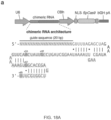
- the tracr sequence and tracr mate sequence are contained within a single transcript, such that hybridization between the two produces a transcript having a secondary structure, such as a hairpin.
- Preferred loop forming sequences for use in hairpin structures are four nucleotides in length, and most preferably have the sequence GAAA. However, longer or shorter loop sequences may be used, as may alternative sequences.
- the sequences preferably include a nucleotide triplet (for example, AAA), and an additional nucleotide (for example C or G). Examples of loop forming sequences include CAAA and AAAG.
- the transcript or transcribed polynucleotide sequence has at least two or more hairpins.
- the transcript has two, three, four or five hairpins. In a further embodiment of the invention, the transcript has at most five hairpins.
- the single transcript further includes a transcription termination sequence; preferably this is a polyT sequence, for example six T nucleotides. An example illustration of such a hairpin structure is provided in the lower portion of Figure 13B , where the portion of the sequence 5' of the final "N" and upstream of the loop corresponds to the tracr mate sequence, and the portion of the sequence 3' of the loop corresponds to the tracr sequence.
- single polynucleotides comprising a guide sequence, a tracr mate sequence, and a tracr sequence are as follows (listed 5' to 3'), where "N" represents a base of a guide sequence, the first block of lower case letters represent the tracr mate sequence, and the second block of lower case letters represent the tracr sequence, and the final poly-T sequence represents the transcription terminator: (1) NNNNNNNNNNNNNNNNNNNNNNNNNNNNNNNNNNNNNNNNNNNNNNNNNNNNNNNNNNNNNNNNgttttgtactctcaagatttaGAAAtaaatcttgcagaagctacaaagataggcett catgccgaaatcaacaccctgtcattttatggcagggtgttttcgttatttaaTTTTTTTT; (2) NNNNNNNNNNNNNNNNNNNNNNNNNNNNNNNNNNNNNNNNNNNNNNNNNNNNNNNNNNNNNNNN
- sequences (1) to (3) are used in combination with Cas9 from S . thermophilus CRISPR1.
- sequences (4) to (6) are used in combination with Cas9 from S. pyogenes.
- the tracr sequence is a separate transcript from a transcript comprising the tracr mate sequence (such as illustrated in the top portion of Figure 13B ).
- a recombination template is also provided.
- a recombination template may be a component of another vector as described herein, contained in a separate vector, or provided as a separate polynucleotide.
- a recombination template is designed to serve as a template in homologous recombination, such as within or near a target sequence nicked or cleaved by a CRISPR enzyme as a part of a CRISPR complex.
- a template polynucleotide may be of any suitable length, such as about or more than about 10, 15, 20, 25, 50, 75, 100, 150, 200, 500, 1000, or more nucleotides in length.
- the template polynucleotide is complementary to a portion of a polynucleotide comprising the target sequence.
- a template polynucleotide might overlap with one or more nucleotides of a target sequences (e.g. about or more than about 1, 5, 10, 15, 20, 25, 30, 35, 40, 45, 50, 60, 70, 80, 90, 100 or more nucleotides).
- the nearest nucleotide of the template polynucleotide is within about 1, 5, 10, 15, 20, 25, 50, 75, 100, 200, 300, 400, 500, 1000, 5000, 10000, or more nucleotides from the target sequence.
- the CRISPR enzyme is part of a fusion protein comprising one or more heterologous protein domains (e.g. about or more than about 1, 2, 3, 4, 5, 6, 7, 8, 9, 10, or more domains in addition to the CRISPR enzyme).
- a CRISPR enzyme fusion protein may comprise any additional protein sequence, and optionally a linker sequence between any two domains.
- protein domains that may be fused to a CRISPR enzyme include, without limitation, epitope tags, reporter gene sequences, and protein domains having one or more of the following activities: methylase activity, demethylase activity, transcription activation activity, transcription repression activity, transcription release factor activity, histone modification activity, RNA cleavage activity and nucleic acid binding activity.
- epitope tags include histidine (His) tags, V5 tags, FLAG tags, influenza hemagglutinin (HA) tags, Myc tags, VSV-G tags, and thioredoxin (Trx) tags.
- reporter genes include, but are not limited to, glutathione-S-transferase (GST), horseradish peroxidase (HRP), chloramphenicol acetyltransferase (CAT) beta-galactosidase, beta-glucuronidase, luciferase, green fluorescent protein (GFP), HcRed, DsRed, cyan fluorescent protein (CFP), yellow fluorescent protein (YFP), and autofluorescent proteins including blue fluorescent protein (BFP).
- GST glutathione-S-transferase
- HRP horseradish peroxidase
- CAT chloramphenicol acetyltransferase
- beta-galactosidase beta-galactosidase
- beta-glucuronidase beta-galactosidase
- luciferase green fluorescent protein
- GFP green fluorescent protein
- HcRed HcRed
- DsRed cyan fluorescent protein
- a CRISPR enzyme may be fused to a gene sequence encoding a protein or a fragment of a protein that bind DNA molecules or bind other cellular molecules, including but not limited to maltose binding protein (MBP), S-tag, Lex A DNA binding domain (DBD) fusions, GAL4 DNA binding domain fusions, and herpes simplex virus (HSV) BP16 protein fusions. Additional domains that may form part of a fusion protein comprising a CRISPR enzyme are described in US20110059502 , incorporated herein by reference. In some embodiments, a tagged CRISPR enzyme is used to identify the location of a target sequence.
- MBP maltose binding protein
- DBD Lex A DNA binding domain
- HSV herpes simplex virus
- the invention provides methods comprising delivering one or more polynucleotides, such as or one or more vectors as described herein, one or more transcripts thereof, and/or one or proteins transcribed therefrom, to a host cell.
- the invention further provides cells produced by such methods, and organisms (such as animals, plants, or fungi) comprising or produced from such cells.
- a CRISPR enzyme in combination with (and optionally complexed with) a guide sequence is delivered to a cell.
- Conventional viral and non-viral based gene transfer methods can be used to introduce nucleic acids in mammalian cells or target tissues.
- Non-viral vector delivery systems include DNA plasmids, RNA (e.g. a transcript of a vector described herein), naked nucleic acid, and nucleic acid complexed with a delivery vehicle, such as a liposome.
- Viral vector delivery systems include DNA and RNA viruses, which have either episomal or integrated genomes after delivery to the cell.
- Methods of non-viral delivery of nucleic acids include lipofection, nucleofection, microinjection, biolistics, virosomes, liposomes, immunoliposomes, polycation or lipid:nucleic acid conjugates, naked DNA, artificial virions, and agent-enhanced uptake of DNA.
- Lipofection is described in e.g., U.S. Pat. Nos. 5,049,386 , 4,946,787 ; and 4,897,355 ) and lipofection reagents are sold commercially (e.g., Transfectam TM and Lipofectin TM ).
- Cationic and neutral lipids that are suitable for efficient receptor-recognition lipofection of polynucleotides include those of Felgner, WO 91/17424 ; WO 91/16024 . Delivery can be to cells (e.g. in vitro or ex vivo administration) or target tissues (e.g. in vivo administration).
- lipid:nucleic acid complexes including targeted liposomes such as immunolipid complexes
- the preparation of lipid:nucleic acid complexes, including targeted liposomes such as immunolipid complexes is well known to one of skill in the art (see, e.g., Crystal, Science 270:404-410 (1995 ); Blaese et al., Cancer Gene Ther. 2:291-297 (1995 ); Behr et al., Bioconjugate Chem. 5:382-389 (1994 ); Remy et al., Bioconjugate Chem. 5:647-654 (1994 ); Gao et al., Gene Therapy 2:710-722 (1995 ); Ahmad et al., Cancer Res. 52:4817-4820 (1992 ); U.S. Pat. Nos.
- RNA or DNA viral based systems for the delivery of nucleic acids takes advantage of highly evolved processes for targeting a virus to specific cells in the body and trafficking the viral payload to the nucleus.
- Viral vectors can be administered directly to patients (in vivo) or they can be used to treat cells in vitro, and the modified cells may optionally be administered to patients (ex vivo).
- Conventional viral based systems could include retroviral, lentivirus, adenoviral, adeno-associated and herpes simplex virus vectors for gene transfer. Integration in the host genome is possible with the retrovirus, lentivirus, and adeno-associated virus gene transfer methods, often resulting in long term expression of the inserted transgene. Additionally, high transduction efficiencies have been observed in many different cell types and target tissues.
- Lentiviral vectors are retroviral vectors that are able to transduce or infect non-dividing cells and typically produce high viral titers. Selection of a retroviral gene transfer system would therefore depend on the target tissue. Retroviral vectors are comprised of cis-acting long terminal repeats with packaging capacity for up to 6-10 kb of foreign sequence. The minimum cis-acting LTRs are sufficient for replication and packaging of the vectors, which are then used to integrate the therapeutic gene into the target cell to provide permanent transgene expression.
- Widely used retroviral vectors include those based upon murine leukemia virus (MuLV), gibbon ape leukemia virus (GaLV), Simian Immuno deficiency virus (SIV), human immuno deficiency virus (HIV), and combinations thereof (see, e.g., Buchscher et al., J. Virol. 66:2731-2739 (1992 ); Johann et al., J. Virol. 66:1635-1640 (1992 ); Sommnerfelt et al., Virol. 176:58-59 (1990 ); Wilson et al., J. Virol. 63:2374-2378 (1989 ); Miller et al., J. Virol.
- MiLV murine leukemia virus
- GaLV gibbon ape leukemia virus
- SIV Simian Immuno deficiency virus
- HAV human immuno deficiency virus
- adenoviral based systems may be used.
- Adenoviral based vectors are capable of very high transduction efficiency in many cell types and do not require cell division. With such vectors, high titer and levels of expression have been obtained. This vector can be produced in large quantities in a relatively simple system.
- Adeno-associated virus vectors may also be used to transduce cells with target nucleic acids, e.g., in the in vitro production of nucleic acids and peptides, and for in vivo and ex vivo gene therapy procedures (see, e.g., West et al., Virology 160:38-47 (1987 ); U.S. Pat. No. 4,797,368 ; WO 93/24641 ; Kotin, Human Gene Therapy 5:793-801 (1994 ); Muzyczka, J. Clin. Invest. 94:1351
- Packaging cells are typically used to form virus particles that are capable of infecting a host cell. Such cells include 293 cells, which package adenovirus, and ⁇ 2 cells or PA317 cells, which package retrovirus.
- Viral vectors used in gene therapy are usually generated by producing a cell line that packages a nucleic acid vector into a viral particle. The vectors typically contain the minimal viral sequences required for packaging and subsequent integration into a host, other viral sequences being replaced by an expression cassette for the polynucleotide(s) to be expressed. The missing viral functions are typically supplied in trans by the packaging cell line. For example, AAV vectors used in gene therapy typically only possess ITR sequences from the AAV genome which are required for packaging and integration into the host genome.
- Viral DNA is packaged in a cell line, which contains a helper plasmid encoding the other AAV genes, namely rep and cap, but lacking ITR sequences.
- the cell line may also be infected with adenovirus as a helper.
- the helper virus promotes replication of the AAV vector and expression of AAV genes from the helper plasmid.
- the helper plasmid is not packaged in significant amounts due to a lack of ITR sequences. Contamination with adenovirus can be reduced by, e.g., heat treatment to which adenovirus is more sensitive than AAV. Additional methods for the delivery of nucleic acids to cells are known to those skilled in the art. See, for example, US20030087817 , incorporated herein by reference.
- a host cell is transiently or non-transiently transfected with one or more vectors described herein.
- a cell is transfected as it naturally occurs in a subject.
- a cell that is transfected is taken from a subject.
- the cell is derived from cells taken from a subject, such as a cell line. A wide variety of cell lines for tissue culture are known in the art.
- cell lines include, but are not limited to, C8161, CCRF-CEM, MOLT, mIMCD-3, NHDF, HeLa-S3, Huh1, Huh4, Huh7, HUVEC, HASMC, HEKn, HEKa, MiaPaCell, Pancl, PC-3, TF1, CTLL-2, C1R, Rat6, CV1, RPTE, A10, T24, J82, A375, ARH-77, Calu1, SW480, SW620, SKOV3, SK-UT, CaCo2, P388D1, SEM-K2, WEHI-231, HB56, TIB55, Jurkat, J45.01, LRMB, Bcl-1, BC-3, IC21, DLD2, Raw264.7, NRK, NRK-52E, MRC5, MEF, Hep G2, HeLa B, HeLa T4, COS, COS-1, COS-6, COS-M6A, BS-C-1 monkey kidney epithelial, BA
- a cell transfected with one or more vectors described herein is used to establish a new cell line comprising one or more vector-derived sequences.
- a cell transiently transfected with the components of a CRISPR system as described herein (such as by transient transfection of one or more vectors, or transfection with RNA), and modified through the activity of a CRISPR. complex, is used to establish a new cell line comprising cells containing the modification but lacking any other exogenous sequence.
- cells transiently or non-transiently transfected with one or more vectors described herein, or cell lines derived from such cells are used in assessing one or more test compounds.
- one or more vectors described herein are used to produce a non-human transgenic animal or transgenic plant.
- the transgenic animal is a mammal, such as a mouse, rat, or rabbit.
- the organism or subject is a plant.
- the organism or subject or plant is algae. Methods for producing transgenic plants and animals are known in the art, and generally begin with a method of cell transfection, such as described herein.
- the invention provides for methods of modifying a target polynucleotide in a eukaryotic cell.
- the method comprises allowing a CRISPR complex to bind to the target polynucleotide to effect cleavage of said target polynucleotide thereby modifying the target polynucleotide, wherein the CRISPR complex comprises a CRISPR enzyme complexed with a guide sequence hybridized to a target sequence within said target polynucleotide, wherein said guide sequence is linked to a tracr mate sequence which in turn hybridizes to a tracr sequence.
- the invention provides a method of modifying expression of a polynucleotide in a eukaryotic cell.
- the method comprises allowing a CRISPR complex to bind to the polynucleotide such that said binding results in increased or decreased expression of said polynucleotide; wherein the CRISPR complex comprises a CRISPR enzyme complexed with a guide sequence hybridized to a target sequence within said polynucleotide, wherein said guide sequence is linked to a tracr mate sequence which in turn hybridizes to a tracr sequence.
- the invention provides for methods of modifying a target polynucleotide in a eukaryotic cell, which may be in vivo, ex vivo or in vitro.
- the method comprises sampling a cell or population of cells from a human or non-human animal or plant (including micro-algae), and modifying the cell or cells. Culturing may occur at any stage ex vivo. The cell or cells may even be re-introduced into the non-human animal or plant (including micro-algae).
- pathogens are often host-specific.
- Fusarium oxysporum f . sp. lycopersici causes tomato wilt but attacks only tomato
- Plants have existing and induced defenses to resist most pathogens. Mutations and recombination events across plant generations lead to genetic variability that gives rise to susceptibility, especially as pathogens reproduce with more frequency than plants. In plants there can be non-host resistance, e.g., the host and pathogen are incompatible.
- Horizontal Resistance e.g., partial resistance against all races of a pathogen, typically controlled by many genes
- Vertical Resistance e.g., complete resistance to some races of a pathogen but not to other races, typically controlled by a few genes.
- Plant and pathogens evolve together, and the genetic changes in one balance changes in other. Accordingly, using Natural Variability, breeders combine most useful genes for Yield, Quality, Uniformity, Hardiness, Resistance.
- the sources of resistance genes include native or foreign Varieties, Heirloom Varieties, Wild Plant Relatives, and Induced Mutations, e.g., treating plant material with mutagenic agents.
- plant breeders are provided with a new tool to induce mutations. Accordingly, one skilled in the art can analyze the genome of sources of resistance genes, and in Varieties having desired characteristics or traits employ the present invention to induce the rise of resistance genes, with more precision than previous mutagenic agents and hence accelerate and improve plant breeding programs.
- the invention provides kits containing any one or more of the elements disclosed in the above methods and compositions.
- the kit comprises a vector system and instructions for using the kit.
- the vector system comprises (a) a first regulatory element operably linked to a tracr mate sequence and one or more insertion sites for inserting a guide sequence upstream of the tracr mate sequence, wherein when expressed, the guide sequence directs sequence-specific binding of a CRISPR complex to a target sequence in a eukaryotic cell, wherein the CRISPR complex comprises a CRISPR enzyme complexed with (1) the guide sequence that is hybridized to the target sequence, and (2) the tracr mate sequence that is hybridized to the tracr sequence; and/or (b) a second regulatory element operably linked to an enzyme-coding sequence encoding said CRISPR enzyme comprising a nuclear localization sequence.
- Elements may be provide individually or in combinations, and may be provided in any suitable container, such as a vial, a bottle, or
- a kit comprises one or more reagents for use in a process utilizing one or more of the elements described herein.
- Reagents may be provided in any suitable container.
- a kit may provide one or more reaction or storage buffers.
- Reagents may be provided in a form that is usable in a particular assay, or in a form that requires addition of one or more other components before use (e.g. in concentrate or lyophilized form).
- a buffer can be any buffer, including but not limited to a sodium carbonate buffer, a sodium bicarbonate buffer, a borate buffer, a Tris buffer, a MOPS buffer, a HEPES buffer, and combinations thereof.
- the buffer is alkaline.
- the buffer has a pH from about 7 to about 10.
- the kit comprises one or more oligonucleotides corresponding to a guide sequence for insertion into a vector so as to operably link the guide sequence and a regulatory element.
- the kit comprises a homologous recombination template polynucleotide.
- the invention provides methods for using one or more elements of a CRISPR system.
- the CRISPR complex of the invention provides an effective means for modifying a target polynucleotide.
- the CRISPR complex of the invention has a wide variety of utility including modifying (e.g., deleting, inserting, translocating, inactivating, activating) a target polynucleotide in a multiplicity of cell types.
- the CRISPR complex of the invention has a broad spectrum of applications in, e.g., gene therapy, drug screening, disease diagnosis, and prognosis.
- An exemplary CRISPR complex comprises a CRISPR enzyme complexed with a guide sequence hybridized to a target sequence within the target polynucleotide.
- the guide sequence is linked to a tracr mate sequence, which in turn hybridizes to a tracr sequence.
- the target polynucleotide of a CRISPR complex can be any polynucleotide endogenous or exogenous to the eukaryotic cell.
- the target polynucleotide can be a polynucleotide residing in the nucleus of the eukaryotic cell.
- the target polynucleotide can be a sequence coding a gene product (e.g., a protein) or a non-coding sequence (e.g., a regulatory polynucleotide or a junk DNA).
- a gene product e.g., a protein
- a non-coding sequence e.g., a regulatory polynucleotide or a junk DNA.
- PAM protospacer adjacent motif
- PAMs are typically 2-5 base pair sequences adjacent the protospacer (that is, the target sequence) Examples of PAM sequences are given in the examples section below, and the skilled person will be able to identify further PAM sequences for use with a given CRISPR enzyme.
- the target polynucleotide of a CRISPR complex may include a number of disease-associated genes and polynucleotides as well as signaling biochemical pathway-associated genes and polynucleotides as listed in US provisional patent applications 61/736,527 and 61/748,427 having Broad reference BI-2011/008/WSGR Docket No. 44063-701.101and BI-2011/008/WSGR Docket No. 44063-701.102 respectively, both entitled SYSTEMS METHODS AND COMPOSITIONS FOR SEQUENCE MANIPULATION filed on December 12, 2012 and January 2, 2013 , respectively, the contents of all of which are herein incorporated by reference in their entirety.
- target polynucleotides include a sequence associated with a signaling biochemical pathway, e.g., a signaling biochemical pathway-associated gene or polynucleotide.
- target polynucleotides include a disease associated gene or polynucleotide.
- a "disease-associated" gene or polynucleotide refers to any gene or polynucleotide which is yielding transcription or translation products at an abnormal level or in an abnormal form in cells derived from a disease-affected tissues compared with tissues or cells of a non disease control.
- a disease-associated gene also refers to a gene possessing mutation(s) or genetic variation that is directly responsible or is in linkage disequilibrium with a gene(s) that is responsible for the etiology of a disease.
- the transcribed or translated products may be known or unknown, and may be at a normal or abnormal level.
- disease-associated genes and polynucleotides are available from McKusick-Nathans Institute of Genetic Medicine, Johns Hopkins University (Baltimore, Md.) and National Center for Biotechnology Information, National Library of Medicine (Bethesda, Md.), available on the World Wide Web.
- Examples of disease-associated genes and polynucleotides are listed in Tables A and B. Disease specific information is available from McKusick-Nathans Institute of Genetic Medicine, Johns Hopkins University (Baltimore, Md.) and National Center for Biotechnology Information, National Library of Medicine (Bethesda, Md.), available on the World Wide Web. Examples of signaling biochemical pathway-associated genes and polynucleotides are listed in Table C.
- genes, diseases and proteins can result in production of improper proteins or proteins in improper amounts which affect function.
- genes, diseases and proteins are hereby incorporated by reference from US Provisional application 61/736,527 filed on December 12, 2012 and 61/748,427 filed on February 2, 2013 .
- Such genes, proteins and pathways may be the target polynucleotide of a CRISPR complex.
- B-cell non-Hodgkin lymphoma BCL7A, BCL7; Leukemia (TAL1, TCL5, SCL, TAL2, FLT3, NBS1, NBS, ZNFN1A1, IK1, LYF1, HOXD4, HOX4B, BCR, CML, PHL, ALL, ARNT, KRAS2, RASK2, GMPS, AF10, ARHGEF12, LARG, KIAA0382, CALM, CLTH, CEBPA, CEBP, CHIC2, BTL, FLT3, KIT, PBT, LPP, NPM1, NUP214, D9S46E, CAN, CAIN, RUNXI, CBFA2, AML1, WHSC1L1, NSD3, FLT3, AF1Q, NPM1, NUMA1, ZNF145, PLZF, PML, MYL, STAT5B, AF10, CALM, CLTH, ARL11, ARLTS1, P2RX7
- Inflammation and immune related diseases and disorders AIDS (KIR3DL1, NKAT3, NKB1, AMB11, KIR3DS1, IFNG, CXCL12, SDF1); Autoimmune lymphoproliferative syndrome (TNFRSF6, APT1, FAS, CD95, ALPSIA); Combined immunodeficiency, (IL2RG, SCIDX1, SCIDX, IMD4); HIV-1 (CCL5, SCYA5, D17S136E, TCP228), HIV susceptibility or infection (IL10, CSIF, CMKBR2, CCR2, CMKBRS, CCCKR5 (CCRS)); Immunodeficiencies (CD3E, CD3G, AICDA, AID, HIGM2, TNFRSF5, CD40, UNG, DGU, HIGM4, TNFSF5, CD40LG, HIGM1, IGM, FOXP3, IPEX, AIID, XPID, PIDX, TNFRSF14B, TACI); Inflammation (IL-10,
- Amyloid neuropathy TTR, PALB
- Amyloidosis APOA1, APP, AAA, CVAP, AD1, GSN, FGA, LYZ, TTR, PALB
- Cirrhosis KRT18, KRT8, CIRH1A, NAIC, TEX292, KIAA1988
- Cystic fibrosis CFTR, ABCC7, CF, MRP7
- Glycogen storage diseases SLC2A2, GLUT2, G6PC, G6PT, G6PT1, GAA, LAMP2, LAMPB, AGL, GDE, GBE1, GYS2, PYGL, PFKM
- Hepatic adenoma, 142330 TCFI, HNF1A, MODY3
- ALS Neurological and neuronal diseases and disorders ALS (SOD1, ALS2, STEX, FUS, TARDBP, VEGF (VEGF-a, VEGF-b, VEGF-c); Alzheimer disease (APP, AAA, CVAP, AD1, APOE, AD2, PSEN2, AD4, STM2, APBB2, FE65L1, NOS3, PLAU, URK, ACE, DCP1, ACE1, MPO, PACIP1, PAXIP1L, PTIP, A2M, BLMH, BMH, PSEN1, AD3); Autism (Mecp2, BZRAP1, MDGA2, Sema5A, Neurexin 1, GLO1, MECP2, RTT, PPMX, MRX16, MRX79, NLGN3, NLGN4, KIAA1260, AUTSX2); Fragile X Syndrome (FMR2, FXR1, FXR2, mGLUR5); Huntington's disease and disease like disorders (HD, IT15, PRNP, PRIP,
- Occular diseases and disorders Age-related macular degeneration (Aber, Ccl2, Cc2, cp (ceruloplasmin), Timp3, cathepsinD, Vldlr, Ccr2); Cataract (CRYAA, CRYA1, CRYBB2, CRYB2, PITX3, BFSP2, CP49, CP47, CRYAA, CRYA1, PAX6, AN2, MGDA, CRYBA1, CRYB1, CRYGC, CRYG3, CCL, LIM2, MP19, CRYGD, CRYG4, BFSP2, CP49, CP47, HSF4, CTM, HSF4, CTM, MIP, AQP0, CRYAB, CRYA2, CTPP2, CRYBB1, CRYGD, CRYG4, CRYBB2, CRYB2, CRYGC, CRYG3, CCL, CRYAA, CRYA1, GJA8, CX50, CAE1, GJA3, CX46, CZP3, CAE3, CCM1, CAM,
- Table C CELLULAR FUNCTION GENES PI3K/AKT Signaling PRKCE; ITGAM; ITGA5; IRAK1; PRKAA2; EIF2AK2; PTEN; EIF4E; PRKCZ; GRK6; MAPK1; TSC1; PLK1; AKT2; IKBKB; PIK3CA; CDK8; CDKN1B; NFKB2; BCL2; PIK3CB; PPP2RIA; MAPK8; BCL2L1; MAPK3; TSC2; ITGA1; KRAS; EIF4EBP1; RELA; PRKCD; NOS3; PRKAA 1; MAPK9; CDK2; PPP2CA; PIM1; ITGB7; YWHAZ; ILK; TP53; RAF1; IKBKG; RELB; DYRK1A; CDKN1A; ITGB1; MAP2K2; JAK1; AKT1; JAK2; PI
- Embodiments of the invention also relate to methods and compositions related to knocking out genes, amplifying genes and repairing particular mutations associated with DNA repeat instability and neurological disorders ( Robert D. Wells, Tetsuo Ashizawa, Genetic Instabilities and Neurological Diseases, Second Edition, Academic Press, Oct 13, 2011 - Medical). Specific aspects of tandem repeat sequences have been found to be responsible for more than twenty human diseases ( New insights into repeat instability: role of RNA•DNA hybrids. McIvor EI, Polak U, Napierala M. RNA Biol. 2010 Sep-Oct;7(5):551-8 ). The CRISPR-Cas system may be harnessed to correct these defects of genomic instability.
- a further aspect of the invention relates to utilizing the CRISPR-Cas system for correcting defects in the EMP2A and EMP2B genes that have been identified to be associated with Lafora disease.
- Lafora disease is an autosomal recessive condition which is characterized by progressive myoclonus epilepsy which may start as epileptic seizures in adolescence.
- a few cases of the disease may be caused by mutations in genes yet to be identified.
- the disease causes seizures, muscle spasms, difficulty walking, dementia, and eventually death. There is currently no therapy that has proven effective against disease progression.
- the CRISPR-Cas system may be used to correct ocular defects that arise from several genetic mutations further described in Genetic Diseases of the Eye, Second Edition, edited by Elias I. Traboulsi, Oxford University Press, 2012 .
- the genetic brain diseases may include but are not limited to Adrenoleukodystrophy, Agenesis of the Corpus Callosum, Aicardi Syndrome, Alpers' Disease, Alzheimer's Disease, Barth Syndrome, Batten Disease, CADASIL, Cerebellar Degeneration, Fabry's Disease, Gerstmann-Straussler-Scheinker Disease, Huntington's Disease and other Triplet Repeat Disorders, Leigh's Disease, Lesch-Nyhan Syndrome, Menkes Disease, Mitochondrial Myopathies and NINDS Colpocephaly. These diseases are further described on the website of the National Institutes of Health under the subsection Genetic Brain Disorders.
- the condition may be neoplasia. In some embodiments, where the condition is neoplasia, the genes to be targeted are any of those listed in Table A (in this case PTEN and so forth). In some embodiments, the condition may be Age-related Macular Degeneration. In some embodiments, the condition may be a Schizophrenic Disorder. In some embodiments, the condition may be a Trinucleotide Repeat Disorder. In some embodiments, the condition may be Fragile X Syndrome, In some embodiments, the condition may be a Secretase Related Disorder. In some embodiments, the condition may be a Prion - related disorder. In some embodiments, the condition may be ALS. In some embodiments, the condition may be a drug addiction. In some embodiments, the condition may be Autism. In some embodiments, the condition may be Alzheimer's Disease. In some embodiments, the condition may be inflammation. In some embodiments, the condition may be Parkinson's Disease.
- proteins associated with Parkinson's disease include but are not limited to ⁇ -synuclein, DJ-1, LRRK2, PINK1, Parkin, UCHL1, Synphilin-1, and NURR1.
- addiction-related proteins may include ABAT for example.
- inflammation-related proteins may include the monocyte chemoattractant protein-1 (MCP1) encoded by the Ccr2 gene, the C-C chemokine receptor type 5 (CCRS) encoded by the Ccr5 gene, the IgG receptor IIB (FCGR2b, also termed CD32) encoded by the Fcgr2b gene, or the Fc epsilon R1g (FCER1g) protein encoded by the Fcerlg gene, for example.
- MCP1 monocyte chemoattractant protein-1
- CCRS C-C chemokine receptor type 5
- FCGR2b also termed CD32
- FCER1g Fc epsilon R1g
- cardiovascular diseases associated proteins may include IL1B (interleukin 1, beta), XDH (xanthine dehydrogenase), TP53 (tumor protein p53), PTGIS (prostaglandin I2 (prostacyclin) synthase), MB (myoglobin), IL4 (interleukin 4), ANGPT1 (angiopoietin 1), ABCG8 (ATP-binding cassette, sub-family G (WHITE), member 8), or CTSK (cathepsin K), for example.
- IL1B interleukin 1, beta
- XDH xanthine dehydrogenase
- TP53 tumor protein p53
- PTGIS prostaglandin I2 (prostacyclin) synthase)
- MB myoglobin
- IL4 interleukin 4
- ANGPT1 angiopoietin 1
- ABCG8 ATP-binding cassette, sub-family G (WHITE), member 8
- Examples of Alzheimer's disease associated proteins may include the very low density lipoprotein receptor protein (VLDLR) encoded by the VLDLR gene, the ubiquitin-like modifier activating enzyme 1 (UBA1) encoded by the UBA1 gene, or the NEDD8-activating enzyme E1 catalytic subunit protein (UBE1C) encoded by the UBA3 gene, for example.
- VLDLR very low density lipoprotein receptor protein
- UBA1 ubiquitin-like modifier activating enzyme 1
- UBE1C NEDD8-activating enzyme E1 catalytic subunit protein
- proteins associated Autism Spectrum Disorder may include the benzodiazapine receptor (peripheral) associated protein 1 (BZRAP1) encoded by the BZRAPI gene, the AF4/FMR2 family member 2 protein (AFF2) encoded by the AFF2 gene (also termed MFR2), the fragile X mental retardation autosomal homolog 1 protein (FXR1) encoded by the FXR1 gene, or the fragile X mental retardation autosomal homolog 2 protein (FXR2) encoded by the FXR2 gene, for example.
- BZRAP1 benzodiazapine receptor (peripheral) associated protein 1
- AFF2 AF4/FMR2 family member 2 protein
- FXR1 fragile X mental retardation autosomal homolog 1 protein
- FXR2 fragile X mental retardation autosomal homolog 2 protein
- proteins associated Macular Degeneration may include the ATP-binding cassette, sub-family A (ABC1) member 4 protein (ABCA4) encoded by the ABCR gene, the apolipoprotein E protein (APOE) encoded by the APOE gene, or the chemokine (C-C motif) Ligand 2 protein (CCL2) encoded by the CCL2 gene, for example.
- ABC1 sub-family A
- APOE apolipoprotein E protein
- CCL2 Ligand 2 protein
- proteins associated Schizophrenia may include NRG1, ErbB4, CPLX1, TPH1, TPH2, NRXN1, GSK3A, BDNF, DISC1, GSK3B, and combinations thereof.
- proteins involved in tumor suppression may include ATM (ataxia telangiectasia mutated), ATR (ataxia telangiectasia and Rad3 related), EGFR (epidermal growth factor receptor), ERBB2 (v-erb-b2 erythroblastic leukemia viral oncogene homolog 2), ERBB3 (v-erb-b2 erythroblastic leukemia viral oncogene homolog 3), ERBB4 (v-erb-b2 erythroblastic leukemia viral oncogene homolog 4), Notch 1, Notch2, Notch 3, or Notch 4, for example.
- ATM ataxia telangiectasia mutated
- ATR ataxia telangiectasia and Rad3 related
- EGFR epidermatitise
- ERBB2 v-erb-b2 erythroblastic leukemia viral oncogene homolog 2
- ERBB3 v-erb-b2 erythroblastic leukemia viral on
- proteins associated with a secretase disorder may include PSENEN (presenilin enhancer 2 homolog (C. elegans)), CTSB (cathepsin B), PSEN1 (presenilin 1), APP (amyloid beta (A4) precursor protein), APH1B (anterior pharynx defective 1 homolog B (C. elegans)), PSEN2 (presenilin 2 (Alzheimer disease 4)), or BACE1 (beta-site APP-cleaving enzyme 1), for example.
- proteins associated with Amyotrophic Lateral Sclerosis may include SOD1 (superoxide dismutase 1), ALS2 (amyotrophic lateral sclerosis 2), FUS (fused in sarcoma), TARDBP (TAR DNA binding protein), VAGFA (vascular endothelial growth factor A), VAGFB (vascular endothelial growth factor B), and VAGFC (vascular endothelial growth factor C), and any combination thereof.
- SOD1 superoxide dismutase 1
- ALS2 amotrophic lateral sclerosis 2
- FUS fused in sarcoma
- TARDBP TAR DNA binding protein
- VAGFA vascular endothelial growth factor A
- VAGFB vascular endothelial growth factor B
- VAGFC vascular endothelial growth factor C
- proteins associated with prion diseases may include SOD1 (superoxide dismutase 1), ALS2 (amyotrophic lateral sclerosis 2), FUS (fused in sarcoma), TARDBP (TAR DNA binding protein), VAGFA (vascular endothelial growth factor A), VAGFB (vascular endothelial growth factor B), and VAGFC (vascular endothelial growth factor C), and any combination thereof.
- proteins related to neurodegenerative conditions in prion disorders may include A2M (Alpha-2-Macroglobulin), AATF (Apoptosis antagonizing transcription factor), ACPP (Acid phosphatase prostate), ACTA2 (Actin alpha 2 smooth muscle aorta), ADAM22 (ADAM metallopeptidase domain), ADORA3 (Adenosine A3 receptor), or ADRA1D (Alpha-1D adrenergic receptor for Alpha-1D adrenoreceptor), for example.
- A2M Alpha-2-Macroglobulin
- AATF Apoptosis antagonizing transcription factor
- ACPP Acid phosphatase prostate
- ACTA2 Actin alpha 2 smooth muscle aorta
- ADAM22 ADAM metallopeptidase domain
- ADORA3 Adosine A3 receptor
- ADRA1D Alpha-1D adrenergic receptor for Alpha-1D adrenoreceptor
- proteins associated with Immunodeficiency may include A2M [alpha-2-macroglobulin]; AANAT [arylalkylamine N-acetyltransferase]; ABCA1 [ATP-binding cassette, sub-family A (ABC1), member 1]; ABCA2 [ATP-binding cassette, sub-family A (ABC1), member 2]; or ABCA3 [ATP-binding cassette, sub-family A (ABC1), member 3]; for example.
- A2M alpha-2-macroglobulin
- AANAT arylalkylamine N-acetyltransferase
- ABCA1 ATP-binding cassette, sub-family A (ABC1), member 1]
- ABCA2 ATP-binding cassette, sub-family A (ABC1), member 2]
- ABCA3 ATP-binding cassette, sub-family A (ABC1), member 3]
- proteins associated with Trinucleotide Repeat Disorders include AR (androgen receptor), FMR1 (fragile X mental retardation 1), HTT (huntingtin), or DMPK (dystrophia myotonica-protein kinase), FXN (frataxin), ATXN2 (ataxin 2), for example.
- proteins associated with Neurotransmission Disorders include SST (somatostatin), NOS1 (nitric oxide synthase 1 (neuronal)), ADRA2A (adrenergic, alpha-2A-, receptor), ADRA2C (adrenergic, alpha-2C-, receptor), TACR1 (tachykinin receptor 1), or HTR2c (5-hydroxytryptamine (serotonin) receptor 2C), for example.
- neurodevelopmental-associated sequences include A2BP1 [ataxin 2-binding protein 1], AADAT [aminoadipate aminotransferase], AANAT [arylalkylamine N-acetyltransferase], ABAT [4-aminobutyrate aminotransferase], ABCA1 [ATP-binding cassette, sub-family A (ABC1), member 1], or ABCA13 [ATP-binding cassette, sub-family A (ABC1), member 13], for example.
- A2BP1 ataxin 2-binding protein 1
- AADAT aminoadipate aminotransferase
- AANAT arylalkylamine N-acetyltransferase
- ABAT 4-aminobutyrate aminotransferase
- ABCA1 ATP-binding cassette, sub-family A (ABC1), member 1
- ABCA13 ATP-binding cassette, sub-family A (ABC1), member 13
- preferred conditions treatable with the present system include may be selected from: Aicardi-Goutines Syndrome; Alexander Disease; Allan-Herndon-Dudley Syndrome; POLG-Related Disorders; Alpha-Mannosidosis (Type II and III); Alström Syndrome; Angelman; Syndrome; Ataxia-Telangiectasia; Neuronal Ceroid-Lipofuscinoses; Beta-Thalassemia; Bilateral Optic Atrophy and (Infantile) Optic Atrophy Type 1; Retinoblastoma (bilateral); Canavan Disease; Cerebrooculofacioskeletal Syndrome 1 [COFS1]; Cerebrotendinous Xanthomatosis; Cornelia de Lange Syndrome; MAPT-Related Disorders; Genetic Prion Diseases; Dravet Syndrome; Early-Onset Familial Alzheimer Disease; Friedreich Ataxia [FRDA]; Fryns Syndrome; Fucosidosis; Fukuyama Congenital Muscular Dystrophy; Galactosialidosis; Gau
- the present system can be used to target any polynucleotide sequence of interest.
- Some examples of conditions or diseases that might be usefully treated using the present system are included in the Tables above and examples of genes currently associated with those conditions are also provided there. However, the genes exemplified are not exhaustive.
- Example 1 CRISPR Complex Activity in the Nucleus of a Eukaryotic Cell
- An example type II CRISPR system is the type II CRISPR locus from Streptococcus pyogenes SF370, which contains a cluster of four genes Cas9, Cas1, Cas2, and Csn1, as well as two non-coding RNA elements, tracrRNA and a characteristic array of repetitive sequences (direct repeats) interspaced by short stretches of non-repetitive sequences (spacers, about 30bp each).
- DSB targeted DNA double-strand break
- Figure 2A First, two non-coding RNAs, the pre-crRNA array and tracrRNA, are transcribed from the CRISPR locus.
- tracrRNA hybridizes to the direct repeats of pre-crRNA, which is then processed into mature crRNAs containing individual spacer sequences.
- the mature crRNA:tracrRNA complex directs Cas9 to the DNA target consisting of the protospacer and the corresponding PAM via heteroduplex formation between the spacer region of the crRNA and the protospacer DNA.
- Cas9 mediates cleavage of target DNA upstream of PAM to create a DSB within the protospacer ( Figure 2A ).
- This example describes an example process for adapting this RNA-programmable nuclease system to direct CRISPR complex activity in the nuclei of eukaryotic cells.
- HEK cell line HEK 293FT Human embryonic kidney (HEK) cell line HEK 293FT (Life Technologies) was maintained in Dulbecco's modified Eagle's Medium (DMEM) supplemented with 10% fetal bovine serum (HyClone), 2mM GlutaMAX (Life Technologies), 100U/mL penicillin, and 100 ⁇ g/mL streptomycin at 37°C with 5% CO 2 incubation.
- DMEM Dulbecco's modified Eagle's Medium
- HyClone fetal bovine serum
- 2mM GlutaMAX Human neuro2A
- streptomycin 100U/mL
- streptomycin 100 ⁇ g/mL streptomycin at 37°C with 5% CO 2 incubation.
- HEK 293FT or N2A cells were seeded into 24-well plates (Corning) one day prior to transfection at a density of 200,000 cells per well. Cells were transfected using Lipofectamine 2000 (Life Technologies) following the manufacturer's recommended protocol. For each well of a 24-well plate a total of 800ng of plasmids were used.
- HEK 293FT or N2A cells were transfected with plasmid DNA as described above. After transfection, the cells were incubated at 37°C for 72 hours before genomic DNA extraction. Genomic DNA was extracted using the QuickExtract DNA extraction kit (Epicentre) following the manufacturer's protocol. Briefly, cells were resuspended in QuickExtract solution and incubated at 65°C for 15 minutes and 98°C for 10 minutes. Extracted genomic DNA was immediately processed or stored at -20°C.
- the genomic region surrounding a CRISPR target site for each gene was PCR amplified, and products were purified using QiaQuick Spin Column (Qiagen) following manufacturer's protocol.
- a total of 400ng of the purified PCR products were mixed with 2 ⁇ l 10X Taq polymerase PCR buffer (Enzymatics) and ultrapure water to a final volume of 20 ⁇ l, and subjected to a re-annealing process to enable heteroduplex formation: 95°C for 10min, 95°C to 85°C ramping at -- 2°C/s, 85°C to 25°C at - 0.25°C/s, and 25°C hold for 1 minute.
- HEK 293FT and N2A cells were transfected with plasmid DNA, and incubated at 37°C for 72 hours before genomic DNA extraction as described above.
- the target genomic region was PCR amplified using primers outside the homology arms of the homologous recombination (HR) template. PCR products were separated on a 1% agarose gel and extracted with MinElute GelExtraction Kit (Qiagen). Purified products were digested with HindIII (Fermentas) and analyzed on a 6% Novex TBE poly-acrylamide gel (Life Technologies).
- RNA secondary structure prediction was performed using the online webserver RNAfold developed at Institute for Theoretical Chemistry at the University of Vienna, using the centroid structure prediction algorithm (see e.g. A.R. Gruber et al., 2008, Cell 106(1): 23-24 ; and PA Carr and GM Church, 2009, Nature Biotechnology 27(12): 1151-62 ).
- pCRISPR locus 1 Elements of the S. pyogenes CRISPR locus 1 sufficient for CRISPR activity were reconstituted in E. coli using pCRISPR plasmid (schematically illustrated in Figure 10A ).
- pCRISPR contained tracrRNA, SpCas9, and a leader sequence driving the crRNA array.
- Spacers also referred to as "guide sequences” were inserted into the crRNA array between Bsal sites using annealed oligonucleotides, as illustrated.
- Challenge plasmids used in the interference assay were constructed by inserting the protospacer (also referred to as a "target sequence") sequence along with an adjacent CRISPR motif sequence (PAM) into pUC19 (see Figure 10B ).
- PAM CRISPR motif sequence
- FIG. 10C provides a schematic representation of the interference assay. Chemically competent E. coli strains already carrying pCRISPR and the appropriate spacer were transformed with the challenge plasmid containing the corresponding protospacer-PAM sequence. pUC19 was used to assess the transformation efficiency of each pCRISPR-carrying competent strain. CRISPR activity resulted in cleavage of the pPSP plasmid carrying the protospacer, precluding ampicillin resistance otherwise conferred by pUC19 lacking the protospacer.
- Figure 10D illustrates competence of each pCRISPR-carrying E. coli strain used in assays illustrated in Figure 4C .
- HEK 293FT cells were maintained and transfected as stated above. Cells were harvested by trypsinization followed by washing in phosphate buffered saline (PBS). Total cell RNA was extracted with TRI reagent (Sigma) following manufacturer's protocol. Extracted total RNA was quantified using Naonodrop (Thermo Scientific) and normalized to same concentration.
- RNAs were mixed with equal volumes of 2X loading buffer (Ambion), heated to 95°C for 5 min, chilled on ice for 1 min, and then loaded onto 8% denaturing polyacrylamide gels (SequaGel, National Diagnostics) after pre-running the gel for at least 30 minutes. The samples were electrophoresed for 1.5 hours at 40W limit. Afterwards, the RNA was transferred to Hybond N+ membrane (GE Healthcare) at 300 mA in a semi-dry transfer apparatus (Bio-rad) at room temperature for 1.5 hours. The RNA was crosslinked to the membrane using autocrosslink button on Stratagene UV Crosslinker the Stratalinker (Stratagene).
- the membrane was pre-hybridized in ULTRAhyb-Oligo Hybridization Buffer (Ambion) for 30 min with rotation at 42°C, and probes were then added and hybridized overnight. Probes were ordered from IDT and labeled with [gamma- 32 P] ATP (Perkin Elmer) with T4 polynucleotide kinase (New England Biolabs). The membrane was washed once with pre-warmed (42°C) 2xSSC, 0.5% SDS for 1 min followed by two 30 minute washes at 42°C. The membrane was exposed to a phosphor screen for one hour or overnight at room temperature and then scanned with a phosphorimager (Typhoon).
- CRISPR locus elements including tracrRNA, Cas9, and leader were PCR amplified from Streptococcus pyogenes SF370 genomic DNA with flanking homology arms for Gibson Assembly. Two Bsa I type IIS sites were introduced in between two direct repeats to facilitate easy insertion of spacers ( Figure 9 ). PCR products were cloned into EcoRV-digested pACYC184 downstream of the tet promoter using Gibson Assembly Master Mix (NEB). Other endogenous CRISPR system elements were omitted, with the exception of the last 50bp of Csn2.
- Oligos Integrated DNA Technology encoding spacers with complimentary overhangs were cloned into the Bsa I-digested vector pDC000 (NEB) and then ligated with T7 ligase (Enzymatics) to generate pCRISPR plasmids.
- Challenge plasmids containing spacers with PAM sequences also referred to herein as "CRISPR motif sequences" were created by ligating hybridized oligos carrying compatible overhangs (Integrated DNA Technology) into Bam HI-digested pUC19. Cloning for all constructs was performed in E. coli strain JM109 (Zymo Research).
- pCRISPR-carrying cells were made competent using the Z-Competent E. coli Transformation Kit and Buffer Set (Zymo Research, T3001) according to manufacturer's instructions.
- Z-Competent E. coli Transformation Kit and Buffer Set (Zymo Research, T3001) according to manufacturer's instructions.
- SOuL aliquots of competent cells carrying pCRISPR were thawed on ice and transformed with 1ng of spacer plasmid or pUC19 on ice for 30 minutes, followed by 45 second heat shock at 42°C and 2 minutes on ice.
- a version of SpCas9 with an NLS attached to both N- and C-termini (2xNLS-SpCas9) was also generated.
- Constructs containing NLS-fused SpCas9 and SpRNase III were transfected into 293FT human embryonic kidney (HEK) cells, and the relative positioning of the NLS to SpCas9 and SpRNase III was found to affect their nuclear localization efficiency. Whereas the C-terminal NLS was sufficient to target SpRNase III to the nucleus, attachment of a single copy of these particular NLS's to either the N- or C-terminus of SpCas9 was unable to achieve adequate nuclear localization in this system.
- the C-terminal NLS was that of nucleoplasmin (KRPAATKKAGQAKKKK), and the C-terminal NLS was that of the SV40 large T-antigen (PKKKRKV).
- KRPAATKKAGQAKKKK the C-terminal NLS was that of the SV40 large T-antigen (PKKKRKV).
- PKKRKV the SV40 large T-antigen
- the tracrRNA from the CRISPR locus of S. pyogenes SF370 has two transcriptional start sites, giving rise to two transcripts of 89-nucleotides (nt) and 171nt that are subsequently processed into identical 75nt mature tracrRNAs.
- the shorter 89nt tracrRNA was selected for expression in mammalian cells (expression constructs illustrated in Figure 7A , with functionality as determined by results of the Surveyor assay shown in Figure 7B ). Transcription start sites are marked as +1, and transcription terminator and the sequence probed by northern blot are also indicated. Expression of processed tracrRNA was also confirmed by Northern blot.
- Figure 7C shows results of a Northern blot analysis of total RNA extracted from 293FT cells transfected with U6 expression constructs carrying long or short tracrRNA, as well as SpCas9 and DR-EMX1(1)-DR.
- Left and right panels are from 293FT cells transfected without or with SpRNase III, respectively.
- U6 indicate loading control blotted with a probe targeting human U6 snRNA.
- Transfection of the short tracrRNA expression construct led to abundant levels of the processed form of tracrRNA ( ⁇ 75bp). Very low amounts of long tracrRNA are detected on the Northern blot.
- RNA polymerase III-based U6 promoter was selected to drive the expression of tracrRNA ( Figure 2C ).
- a U6 promoter-based construct was developed to express a pre-crRNA array consisting of a single spacer flanked by two direct repeats (DRs, also encompassed by the term "tracr-mate sequences"; Figure 2C ).
- the initial spacer was designed to target a 33-base-pair (bp) target site (30-bp protospacer plus a 3-bp CRISPR motif (PAM) sequence satisfying the NGG recognition motif of Cas9) in the human EMX1 locus ( Figure 2C ), a key gene in the development of the cerebral cortex.
- bp 33-base-pair
- PAM 3-bp CRISPR motif
- HEK 293FT cells were transfected with combinations of CRISPR components. Since DSBs in mammalian nuclei are partially repaired by the non-homologous end joining (NHEJ) pathway, which leads to the formation of indels, the Surveyor assay was used to detect potential cleavage activity at the target EMX1 locus ( Figure 8 ) (see e.g. Guschin et al., 2010, Methods Mol Biol 649: 247 ).
- NHEJ non-homologous end joining
- Figure 14 provides an additional Northern blot analysis of crRNA processing in mammalian cells.
- Figure 14A illustrates a schematic showing the expression vector for a single spacer flanked by two direct repeats (DR-EMX1(1)-DR). The 30bp spacer targeting the human EMX1 locus protospacer 1 (see Figure 6 ) and the direct repeat sequences are shown in the sequence beneath Figure 14A . The line indicates the region whose reverse-complement sequence was used to generate Northern blot probes for EMX1(1) crRNA detection.
- Figure 14B shows a Northern blot analysis of total RNA extracted from 293FT cells transfected with U6 expression constructs carrying DR-EMX1(1)-DR.
- DR-EMX1(1)-DR was processed into mature crRNAs only in the presence of SpCas9 and short tracrRNA and was not dependent on the presence of SpRNase III.
- the mature crRNA detected from transfected 293FT total RNA is ⁇ 33bp and is shorter than the 39-42bp mature crRNA from S. pyogenes.
- Figure 2 illustrates the bacterial CRISPR system described in this example.
- Figure 2A illustrates a schematic showing the CRISPR locus 1 from Streptococcus pyogenes SF370 and a proposed mechanism of CRISPR-mediated DNA cleavage by this system.
- Mature crRNA processed from the direct repeat-spacer array directs Cas9 to genomic targets consisting of complimentary protospacers and a protospacer-adjacent motif (PAM).
- PAM protospacer-adjacent motif
- Cas9 mediates a double-strand break in the target DNA.
- Figure 2B illustrates engineering of S.
- FIG. 2C illustrates mammalian expression of SpCas9 and SpRNase III driven by the constitutive EF1a promoter and tracrRNA and pre-crRNA array (DR-Spacer-DR) driven by the RNA Pol3 promoter U6 to promote precise transcription initiation and termination.
- DR-Spacer-DR pre-crRNA array
- FIG. 2D illustrates surveyor nuclease assay for SpCas9-mediated minor insertions and deletions.
- SpCas9 was expressed with and without SpRNase III, tracrRNA, and a pre-crRNA array carrying the EMX1- target spacer.
- Figure 2E illustrates a schematic representation of base pairing between target locus and EMX1 -targeting crRNA, as well as an example chromatogram showing a micro deletion adjacent to the SpCas9 cleavage site.
- a chimeric crRNA-tracrRNA hybrid design was adapted, where a mature crRNA (comprising a guide sequence) is fused to a partial tracrRNA via a stem-loop to mimic the natural crRNA:tracrRNA duplex ( Figure 3A ).
- a bicistronic expression vector was created to drive co-expression of a chimeric RNA and SpCas9 in transfected cells ( Figures 3A and 8 ).
- Figure 9 provides schematic illustrations of bicistronic expression vectors for pre-crRNA array ( Figure 9A ) or chimeric crRNA (represented by the short line downstream of the guide sequence insertion site and upstream of the EF1 ⁇ promoter in Figure 9B ) with hSpCas9, showing location of various elements and the point of guide sequence insertion.
- the expanded sequence around the location of the guide sequence insertion site in Figure 9B also shows a partial DR sequence (GTTTAGAGCTA) and a partial tracrRNA sequence (TAGCAAGTTAAAATAAGGCTAGTCCGTTTTT).
- Guide sequences can be inserted between BbsI sites using annealed oligonucleotides. Sequence design for the oligonucleotides are shown below the schematic illustrations in Figure 9 , with appropriate ligation adapters indicated.
- WPRE represents the Woodchuck hepatitis virus post-transcriptional regulatory element. The efficiency of chimeric RNA-mediated cleavage was tested by targeting the same EMX1 locus described above. Using both Surveyor assay and Sanger sequencing of amplicons, Applicants confirmed that the chimeric RNA design facilitates cleavage of human EMX1 locus with approximately a 4.7% modification rate ( Figure 4 ).
- FIG. 15 illustrates the selection of some additional targeted protospacers in human PVALB ( Figure 15A ) and mouse Th ( Figure 15B ) loci. Schematics of the gene loci and the location of three protospacers within the last exon of each are provided. The underlined sequences include 30bp of protospacer sequence and 3bp at the 3' end corresponding to the PAM sequences. Protospacers on the sense and anti-sense strands are indicated above and below the DNA sequences, respectively.
- Figure 13 provides a further illustration that SpCas9 can be reprogrammed to target multiple genomic loci in mammalian cells.
- Figure 13A provides a schematic of the human EMX1 locus showing the location of five protospacers, indicated by the underlined sequences.
- Figure 13B provides a schematic of the pre-crRNA/trcrRNA complex showing hybridization between the direct repeat region of the pre-crRNA and tracrRNA (top), and a schematic of a chimeric RNA design comprising a 20bp guide sequence, and tracr mate and tracr sequences consisting of partial direct repeat and tracrRNA sequences hybridized in a hairpin structure (bottom).
- RNA Since the secondary structure of RNA can be crucial for intermolecular interactions, a structure prediction algorithm based on minimum free energy and Boltzmann-weighted structure ensemble was used to compare the putative secondary structure of all guide sequences used in our genome targeting experiment ( Figure 3B ) (see e.g. Gruber et al ., 2008, Nucleic Acids Research, 36: W70). Analysis revealed that in most cases, the effective guide sequences in the chimeric crRNA context were substantially free of secondary structure motifs, whereas the ineffective guide sequences were more likely to form internal secondary structures that could prevent base pairing with the target protospacer DNA. It is thus possible that variability in the spacer secondary structure might impact the efficiency of CRISPR-mediated interference when using a chimeric crRNA.
- Figure 3 illustrates example expression vectors.
- Figure 3A provides a schematic of a bi-cistronic vector for driving the expression of a synthetic crRNA-tracrRNA chimera (chimeric RNA) as well as SpCas9.
- the chimeric guide RNA contains a 20-bp guide sequence corresponding to the protospacer in the genomic target site.
- the folding algorithm produced an output with each base colored according to its probability of assuming the predicted secondary structure, as indicated by a rainbow scale that is reproduced in Figure 3B in gray scale.
- FIG 44 Further vector designs for SpCas9 are shown in Figure 44 , which illustrates single expression vectors incorporating a U6 promoter linked to an insertion site for a guide oligo, and a Cbh promoter linked to SpCas9 coding sequence.
- the vector shown in Figure 44b includes a tracrRNA coding sequence linked to an H1 promoter.
- Figure 4A illustrates results of a Surveyor nuclease assay comparing the cleavage efficiency of Cas9 when paired with different mutant chimeric RNAs.
- Single-base mismatch up to 12-bp 5' of the PAM substantially abrogated genomic cleavage by SpCas9, whereas spacers with mutations at farther upstream positions retained activity against the original protospacer target ( Figure 4B ).
- SpCas9 has single-base specificity within the last 12-bp of the spacer. Furthermore, CRISPR is able to mediate genomic cleavage as efficiently as a pair of TALE nucleases (TALEN) targeting the same EMX1 protospacer.
- Figure 4C provides a schematic showing the design of TALENs targeting EMX1
- RNA to program sequence-specific DNA cleavage defines a new class of genome engineering tools for a variety of research and industrial applications.
- CRISPR system can be further improved to increase the efficiency and versatility of CRISPR targeting.
- Optimal Cas9 activity may depend on the availability of free Mg 2+ at levels higher than that present in the mammalian nucleus (see e.g. Jinek et al ., 2012, Science, 337:816), and the preference for an NGG motif immediately downstream of the protospacer restricts the ability to target on average every 12-bp in the human genome ( Figure 11 , evaluating both plus and minus strands of human chromosomal sequences).
- FIG. 12 illustrates adaptation of the Type II CRISPR system from CRISPR 1 of Streptococcus thermophilus LMD-9 for heterologous expression in mammalian cells to achieve CRISPR-mediated genome editing.
- Figure 12A provides a Schematic illustration of CRISPR 1 from S. thermophilus LMD-9.
- Figure 12B illustrates the design of an expression system for the S. thermophilus CRISPR system.
- Human codon-optimized hStCas9 is expressed using a constitutive EF1 ⁇ promoter. Mature versions of tracrRNA and crRNA are expressed using the U6 promoter to promote precise transcription initiation. Sequences from the mature crRNA and tracrRNA are illustrated. A single base indicated by the lower case "a" in the crRNA sequence is used to remove the polyU sequence, which serves as a RNA polIII transcriptional terminator.
- Figure 12C provides a schematic showing guide sequences targeting the human EMX1 locus as well as their predicted secondary structures. The modification efficiency at each target site is indicated below the RNA secondary structures.
- the algorithm generating the structures colors each base according to its probability of assuming the predicted secondary structure, which is indicated by a rainbow scale reproduced in Figure 12C in gray scale.
- Figure 12D shows the results of hStCas9-mediated cleavage in the target locus using the Surveyor assay.
- RNA guide spacers 1 and 2 induced 14% and 6.4%, respectively.
- Statistical analysis of cleavage activity across biological replica at these two protospacer sites is also provided in Figure 6 .
- Figure 16 provides a schematic of additional protospacer and corresponding PAM sequence targets of the S. thermophilus CRISPR system in the human EMX1 locus. Two protospacer sequences are highlighted and their corresponding PAM sequences satisfying NNAGAAW motif are indicated by underlining 3' with respect to the corresponding highlighted sequence. Both protospacers target the anti-sense strand.
- a software program is designed to identify candidate CRISPR target sequences on both strands of an input DNA sequence based on desired guide sequence length and a CRISPR motif sequence (PAM) for a specified CRISPR enzyme.
- PAM CRISPR motif sequence
- target sites for Cas9 from S. pyogenes, with PAM sequences NGG may be identified by searching for 5'-N x -NGG-3' both on the input sequence and on the reverse-complement of the input.
- target sites for Cas9 of S. thermophilus CRISPR1 with PAM sequence NNAGAAW, may be identified by searching for 5'-N x -NNAGAAW-3' both on the input sequence and on the reverse-complement of the input.
- target sites for Cas9 of S .
- thermophilus CRISPR3, with PAM sequence NGGNG may be identified by searching for 5'-N x -NGGNG-3' both on the input sequence and on the reverse-complement of the input.
- the value "x" in N x may be fixed by the program or specified by the user, such as 20.
- the program filters out sequences based on the number of times they appear in the relevant reference genome.
- the filtering step may be based on the seed sequence.
- results are filtered based on the number of occurrences of the seed:PAM sequence in the relevant genome.
- the user may be allowed to choose the length of the seed sequence.
- the user may also be allowed to specify the number of occurrences of the seed:PAM sequence in a genome for purposes of passing the filter.
- the default is to screen for unique sequences. Filtration level is altered by changing both the length of the seed sequence and the number of occurrences of the sequence in the genome.
- the program may in addition or alternatively provide the sequence of a guide sequence complementary to the reported target sequence(s) by providing the reverse complement of the identified target sequence(s).
- FIG. 18a illustrates a schematic of a bicistronic expression vector for chimeric RNA and Cas9. Cas9 is driven by the CBh promoter and the chimeric RNA is driven by a U6 promoter.
- the chimeric guide RNA consists of a 20bp guide sequence (Ns) joined to the tracr sequence (running from the first "U" of the lower strand to the end of the transcript), which is truncated at various positions as indicated.
- Protospacer IDs and their corresponding genomic target, protospacer sequence, PAM sequence, and strand location are provided in Table D. Guide sequences were designed to be complementary to the entire protospacer sequence in the case of separate transcripts in the hybrid system, or only to the underlined portion in the case of chimeric RNAs.
- Table D protospace r ID genomic target protospacer sequence (5' to 3') PAM stran d 1 EMX1 TGG + 2 EMX1 TGG - 3 EMX1 GGG + 4 PVALB AGG + 5 PVALB TGG +
- HEK cell line 293FT Human embryonic kidney (HEK) cell line 293FT (Life Technologies) was maintained in Dulbecco's modified Eagle's Medium (DMEM) supplemented with 10% fetal bovine serum (HyClone), 2mM GlutaMAX (Life Technologies), 100U/mL penicillin, and 100 ⁇ g/mL streptomycin at 37°C with 5% CO 2 incubation. 293FT cells were seeded onto 24-well plates (Coming) 24 hours prior to transfection at a density of 150,000 cells per well. Cells were transfected using Lipofectamine 2000 (Life Technologies) following the manufacturer's recommended protocol. For each well of a 24-well plate, a total of 500ng plasmid was used.
- DMEM Dulbecco's modified Eagle's Medium
- HyClone fetal bovine serum
- 2mM GlutaMAX 100U/mL penicillin
- streptomycin 100 ⁇ g/mL streptomycin
- 293FT cells were transfected with plasmid DNA as described above. Cells were incubated at 37°C for 72 hours post-transfection prior to genomic DNA extraction. Genomic DNA was extracted using the QuickExtract DNA Extraction Solution (Epicentre) following the manufacturer's protocol. Briefly, pelleted cells were resuspended in QuickExtract solution and incubated at 65°C for 15 minutes and 98°C for 10 minutes. The genomic region flanking the CRISPR target site for each gene was PCR amplified (primers listed in Table E), and products were purified using QiaQuick Spin Column (Qiagen) following the manufacturer's protocol.
- QuickExtract DNA Extraction Solution Epicentre
- 400ng total of the purified PCR products were mixed with 2 ⁇ l 10X Taq DNA Polymerase PCR buffer (Enzymatics) and ultrapure water to a final volume of 20 ⁇ l, and subjected to a re-annealing process to enable heteroduplex formation: 95°C for 10min, 95°C to 85°C ramping at - 2°C/s, 85°C to 25°C at - 0.25°C/s, and 25°C hold for 1 minute.
- products were treated with SURVEYOR nuclease and SURVEYOR enhancer S (Transgenomics) following the manufacturer's recommended protocol, and analyzed on 4-20% Novex TBE poly-acrylamide gels (Life Technologies).
- each SpCas9 target site was operationally defined as a 20bp sequence followed by an NGG protospacer adjacent motif (PAM) sequence, and we identified all sequences satisfying this 5'-N 20 -NGG-3' definition on all chromosomes.
- PAM NGG protospacer adjacent motif
- a 'seed' sequence which can be, for example, approximately 11-12bp sequence 5' from the PAM sequence
- 5'-NNNNNNNNNN-NGG-3' sequences were selected to be unique in the relevant genome. All genomic sequences were downloaded from the UCSC Genome Browser (Human genome hgl9, Mouse genome mm9, Rat genome rn5, Zebrafish genome danRer7, D. melanogaster genome dm4 and C. elegans genome cel0). The full search results are available to browse using UCSC Genome Browser information.
- An example visualization of some target sites in the human genome is provided in Figure 21 .
- chiRNA(+n) indicate that up to the +n nucleotide of wild-type tracrRNA is included in the chimeric RNA construct, with values of 48, 54, 67, and 85 used for n.
- Chimeric RNAs containing longer fragments of wild-type tracrRNA (chiRNA(+67) and chiRNA(+85)) mediated DNA cleavage at all three EMX1 target sites, with chiRNA(+85) in particular demonstrating significantly higher levels of DNA cleavage than the corresponding crRNA/tracrRNA hybrids that expressed guide and tracr sequences in separate transcripts ( Figures 18b and 19a ).
- Two sites in the PVALB locus that yielded no detectable cleavage using the hybrid system (guide sequence and tracr sequence expressed as separate transcripts) were also targeted using chiRNAs.
- chiRNA(+67) and chiRNA(+85) were able to mediate significant cleavage at the two PVALB protospacers ( Figures 18c and 19b ).
- the secondary structure formed by the 3' end of the tracrRNA may play a role in enhancing the rate of CRISPR complex formation.
- An illustration of predicted secondary structures for each of the chimeric RNAs used in this example is provided in Figure 21 .
- the secondary structure was predicted using RNAfold (http://rna.tbi.univie.ac.at/cgi-bin/RNAfold.cgi) using minimum free energy and partition function algorithm. Pseudocolor for each based (reproduced in grayscale) indicates the probability of pairing.
- chimeric RNA may be loaded onto Cas9 more efficiently than its native hybrid counterpart.
- all predicted unique target sites for the S. pyogenes Cas9 were computationally identified in the human, mouse, rat, zebra fish, C. elegans, and D. melanogaster genomes.
- Chimeric RNAs can be designed for Cas9 enzymes from other microbes to expand the target space of CRISPR RNA-programmable nucleases.
- Figure 22 illustrates an exemplary bicistronic expression vector for expression of chimeric RNA including up to the +85 nucleotide of wild-type tracr RNA sequence, and SpCas9 with nuclear localization sequences.
- SpCas9 is expressed from a CBh promoter and terminated with the bGH polyA signal (bGH pA).
- the expanded sequence illustrated immediately below the schematic corresponds to the region surrounding the guide sequence insertion site, and includes, from 5' to 3', 3'-portion of the U6 promoter (first shaded region), Bbsl cleavage sites (arrows), partial direct repeat (tracr mate sequence GTTTTAGAGCTA, underlined), loop sequence GAAA, and +85 tracr sequence (underlined sequence following loop sequence).
- An exemplary guide sequence insert is illustrated below the guide sequence insertion site, with nucleotides of the guide sequence for a selected target represented by an "N".
- Example 5 RNA-guided editing of bacterial genomes using CRISPR-Cas systems
- CRISPR-associated endonuclease Cas9 to introduce precise mutations in the genomes of Streptococcus pneumoniae and Escherichia coli.
- the approach relied on Cas9-directed cleavage at the targeted site to kill unmutated cells and circumvented the need for selectable markers or counter-selection systems.
- Cas9 specificity was reprogrammed by changing the sequence of short CRISPR RNA (crRNA) to make single- and multi-nucleotide changes carried on editing templates. Simultaneous use of two crRNAs enabled multiplex mutagenesis. In S .
- mutagenesis in eukaryotes is achieved by the use of sequence-specific nucleases that promote homologous recombination of a template DNA containing the mutation of interest.
- Zinc finger nucleases ZFNs
- TALENs transcription activator-like effector nucleases
- homing meganucleases can be programmed to cleave genomes in specific locations, but these approaches require engineering of new enzymes for each target sequence.
- mutagenesis methods either introduce a selection marker in the edited locus or require a two-step process that includes a counter-selection system.
- phage recombination proteins have been used for recombineering, a technique that promotes homologuous recombination of linear DNA or oligonucleotides.
- recombineering efficiency can be relatively low (0.1-10% for point mutations down to 10 -5 -10 -6 for larger modifications), in many cases requiring the screening of a large number of colonies. Therefore new technologies that are affordable, easy to use and efficient are still in need for the genetic engineering of both eukaryotic and prokaryotic organisms.
- CRISPR loci are composed of a series of repeats separated by 'spacer' sequences that match the genomes of bacteriophages and other mobile genetic elements.
- the repeat-spacer array is transcribed as a long precursor and processed within repeat sequences to generate small crRNA that specify the target sequences (also known as protospacers) cleaved by CRISPR systems.
- Cas9 is a dsDNA endonuclease that uses a crRNA guide to specify the site of cleavage. Loading of the crRNA guide onto Cas9 occurs during the processing of the crRNA precursor and requires a small RNA antisense to the precursor, the tracrRNA, and RNAse III. In contrast to genome editing with ZFNs or TALENs, changing Cas9 target specificity does not require protein engineering but only the design of the short crRNA guide.
- Applicants recently showed in S. pneumoniae that the introduction of a CRISPR system targeting a chromosomal locus leads to the killing of the transformed cells. It was observed that occasional survivors contained mutations in the target region, suggesting that Cas9 dsDNA endonuclease activity against endogenous targets could be used for genome editing. Applicants showed that marker-less mutations can be introduced through the transformation of a template DNA fragment that will recombine in the genome and eliminate Cas9 target recognition. Directing the specificity of Cas9 with several different crRNAs allows for the introduction of multiple mutations at the same time. Applicants also characterized in detail the sequence requirements for Cas9 targeting and show that the approach can be combined with recombineering for genome editing in E. coli.
- S. pneumoniae strain crR6 contains a Cas9-based CRISPR system that cleaves a target sequence present in the bacteriophage ⁇ 8232.5. This target was integrated into the srtA chromosomal locus of a second strain R6 8232.5 . An altered target sequence containing a mutation in the PAM region was integrated into the srtA locus of a third strain R6 370.1 , rendering this strain 'immune' to CRISPR cleavage ( Figure 28a ). Applicants transformed R6 8232.5 and R6 370.1 cells with genomic DNA from crR6 cells, expecting that successful transformation of R6 8232.5 cells should lead to cleavage of the target locus and cell death.
- Applicants modified the CRISPR locus in strain crR6 by deleting cas1, cas2 and csn2, genes which have been shown to be dispensable for CRISPR targeting, yielding strain crR6M ( Figure 28a ). This strain retained the same properties of crR6 ( Figure 28b ).
- Applicants co-transformed R6 8232.5 cells with PCR products of the wild-type srtA gene or the mutant R6 370.1 target, either of which should be resistant to cleavage by Cas9.
- NGG NGG (or CCN on the complementary strand) sequences are sufficient for Cas9 targeting and that NGG to NAG or NNGGN mutations in the editing template should be avoided.
- Another way to disrupt Cas9-mediated cleavage is to introduce mutations in the protospacer region of the editing template. It is known that point mutations within the 'seed sequence' (the 8 to 10 protospacer nucleotides immediately adjacent to the PAM) can abolish cleavage by CRISPR nucleases. However, the exact length of this region is not known, and it is unclear whether mutations to any nucleotide in the seed can disrupt Cas9 target recognition. Applicants followed the same deep sequencing approach described above to randomize the entire protospacer sequence involved in base pair contacts with the crRNA and to determine all sequences that disrupt targeting.
- Cas9-mediated genome editing in S . pneumonia To develop a rapid and efficient method for targeted genome editing, Applicants engineered strain crR6Rk, a strain in which spacers can be easily introduced by PCR ( Figure 33 ). Applicants decided to edit the ⁇ -galactosidase ( bgaA ) gene of S . pneumoniae, whose activity can be easily measured. Applicants introduced alanine substitutions of amino acids in the active site of this enzyme: R481A (R ⁇ A) and N563A,E564A (NE ⁇ AA) mutations. To illustrate different editing strategies, Applicants designed mutations of both the PAM sequence and the protospacer seed.
- the R ⁇ A editing template created a three-nucleotide mismatch on the protospacer seed sequence (CGT to GCA, also introducing a BtgZl restriction site).
- a synonymous mutation that created an inactive PAM (TGG to TTG) along with mutations that are 218 nt downstream of the protospacer region (AAT GAA to GCT GCA, also generating a TseI restriction site).
- Cas9-mediated editing can also be used to generate multiple mutations for the study of biological pathways. Applicants decided to illustrate this for the sortase-dependent pathway that anchors surface proteins to the envelope of Gram-positive bacteria. Applicants introduced a sortase deletion by co-transformation of a chloramphenicol-resistant targeting construct and a ⁇ srtA editing template ( Figure 33a,b ), followed by a ⁇ bgaA deletion using a kanamycin-resistant targeting construct that replaced the previous one. In S. pneumoniae, ⁇ -galactosidase is covalently linked to the cell wall by sortase.
- deletion of srtA results in the release of the surface protein into the supernatant, whereas the double deletion has no detectable ⁇ -galactosidase activity ( Figure 34c ).
- Such a sequential selection can be iterated as many times as required to generate multiple mutations.
- JEN53 was transformed with an editing template that restores the wild-type allele, together with either a kanamycin-resistant CRISPR construct targeting the ermAM(stop) allele (CRISPR::ermAM(stop)) or a control construct without a spacer (CRISPR:: ⁇ ) ( Figure 26a,b ).
- CRISPR::ermAM(stop) a kanamycin-resistant CRISPR construct targeting the ermAM(stop) allele
- CRISPR:: ⁇ control construct without a spacer
- This background frequency may be calculated as the ratio of CRISPR::ermAM(stop)/CRISPR:: ⁇ cfu, 2.6 ⁇ 10 -3 (7.1 ⁇ 10 1 /2.7 ⁇ 10 4 ) in this experiment, meaning that if the recombination frequency of the editing template is less than this value, CRISPR selection may not efficiently recover the desired mutants above the background.
- Genome editing with Cas9 in E. coli The activation of Cas9 targeting through the chromosomal integration of a CRISPR-Cas system is only possible in organisms that are highly recombinogenic. To develop a more general method that is applicable to other microbes, Applicants decided to perform genome editing in E. coli using a plasmid-based CRISPR-Cas system. Two plasmids were constructed: a pCas9 plasmid carrying the tracrRNA, Cas9 and a chloramphenicol resistance cassette ( Figure 36 ), and a pCRISPR kanamycin-resistant plasmid carrying the array of CRISPR spacers.
- Applicants sought to introduce an A to C transversion in the rpsL gene that confers streptomycin resistance.
- Applicants constructed a pCRISPR::rpsL plasmid harboring a spacer that would guide Cas9 cleavage of the wild-type, but not the mutant rpsL allele ( Figure 27b ).
- the pCas9 plasmid was first introduced into E. coli MG1655 and the resulting strain was co-transformed with the pCRISPR::rpsL plasmid and W542, an editing oligonucleotide containing the A to C mutation.
- Applicants applied their CRISPR system with recombineering, using Cas9-induced cell death to select for the desired mutations.
- the pCas9 plasmid was introduced into the recombineering strain HME63 (31), which contains the Gam, Exo and Beta functions of the ⁇ -red phage.
- the resulting strain was co-transformed with the pCRISPR::rpsL plasmid (or a pCRISPR:: ⁇ control) and the W542 oligonucleotide ( Figure 27a ).
- CRISPR-Cas systems may be used for targeted genome editing in bacteria by the co-introduction of a targeting construct that killed wild-type cells and an editing template that both eliminated CRISPR cleavage and introduced the desired mutations.
- Different types of mutations insertions, deletions or scar-less single-nucleotide substitutions
- Multiple mutations may be introduced at the same time.
- the specificity and versatility of editing using the CRISPR system relied on several unique properties of the Cas9 endonuclease: (i) its target specificity may be programmed with a small RNA, without the need for enzyme engineering, (ii) target specificity was very high, determined by a 20 bp RNA-DNA interaction with low probability of non-target recognition, (iii) almost any sequence may be targeted, the only requirement being the presence of an adjacent NGG sequence, (iv) almost any mutation in the NGG sequence, as well as mutations in the seed sequence of the protospacer, eliminates targeting.
- S. pneumoniae strain R6 was provided by Dr. Alexander Tomasz. Strain crR6 was generated in a previous study. Liquid cultures of S . pneumoniae were grown in THYE medium (30g/l Todd-Hewitt agar, 5 g/l yeast extract). Cells were plated on tryptic soy agar (TSA) supplemented with 5 % defibrinated sheep blood. When appropriate, antibiotics were added as followings: kanamycin (400 ⁇ g/ml), chloramphenicol (5 ⁇ g/ml), erythromycin (1 ⁇ g/ml) streptomycin (100 ⁇ g/ml) or spectinomycin (100 ⁇ g/ml). Measurements of ⁇ -galactosidase activity were made using the Miller assay as previously described.
- E. coli strains MG1655 and HME63 (derived from MG1655, ⁇ (argF-lac) U169 ⁇ cI857 ⁇ cro-bioA galK tyr 145 UAG mutS ⁇ >amp) (31) were provided by Jeff Roberts and Donald Court, respectively. Liquid cultures of E. coli were grown in LB medium (Difco). When appropriate, antibiotics were added as followings: chloramphenicol (25 ⁇ g/ml), kanamycin (25 ⁇ g/ml) and streptomycin (50 ⁇ g/ml).
- Competent cells were prepared as described previously (23). For all genome editing transformations, cells were gently thawed on ice and resuspended in 10 volumes of M2 medium supplemented with 100 ng/ml of competence-stimulating peptide CSP1(40), and followed by addition of editing constructs (editing constructs were added to cells at a final concentration between 0.7 ng/ ⁇ l to 2.5 ⁇ g/ul). Cells were incubated 20 min at 37°C before the addition of 2 ⁇ l of targeting constructs and then incubated 40 min at 37 °C. Serial dilutions of cells were plated on the appropriate medium to determine the colony forming units (cfu) count.
- E. coli Lambda-red recombineering E. coli Lambda-red recombineering.
- Strain HME63 was used for all recombineering experiments.
- Recombineering cells were prepared and handled according to a previously published protocol (6). Briefly, a 2 ml overnight culture (LB medium) inoculated from a single colony obtained from a plate was grown at 30 °C. The overnight culture was diluted 100-fold and grown at 30 °C with shaking (200rpm) until the OD 600 is from 0.4-0.5 (approximately 3 hrs). For Lambda-red induction, the culture was transferred to a 42 °C water bath to shake at 200rpm for 15 min.
- the culture was swirled in an ice-water slurry and chilled on ice for 5-10 min. Cells were then washed and aliquoted according to the protocol.
- 50 ⁇ l of cells were mixed with 1mM of salt-free oligos (IDT) or 100-150 ng of plasmid DNA (prepared by QIAprep Spin Miniprep Kit, Qiagen). Cells were electroporated using Imm Gene Pulser cuvette (Bio-rad) at 1.8kV and were immediately resuspended in 1 ml of room temperature LB medium. Cells were recovered at 30 °C for 1-2 hrs before being plated on LB agar with appropriate antibiotic resistance and incubated at 32 °C overnight.
- S. pneumoniae genomic DNA was extracted using the Wizard Genomic DNA Purification Kit, following instructions provided by the manufacturer (Promega).
- S. pneumoniae genomic DNA was extracted using the Wizard Genomic DNA Purification Kit, following instructions provided by the manufacturer (Promega).
- 700ul of overnight S. pneumoniae cultures were pelleted, resuspended in 60ul of lysozyme solution (2mg/ml) and incubated 30min at 37°C.
- the genomic DNA was extracted using QIAprep Spin Miniprep Kit (Qiagen).
- the resulting PCR product was transformed into competent S. pneumoniae crR6 cells and chloramphenicol-resistant transformants were selected.
- S. pneumoniae crR6M S. pneumoniae crR6 genomic DNA was amplified by PCR using primers L409/L488 and L448/L481, respectively. Each PCR product was gel-purified and they were fused by SOEing PCR with primers L409/L481.
- the resulting PCR product was transformed into competent S. pneumoniae LAM226 cells and kanamycin-resistant transformants were selected.
- S. pneumoniae crR6M genomic DNA was amplified by PCR using primers L430/W286, and S. pneumoniae LAM226 genomic DNA was amplified by PCR using primers W288/L481. Each PCR product was gel-purified and they were fused by SOEing PCR with primers L430/L481. The resulting PCR product was transformed into competent S. pneumoniae crR6M cells and chloramphenicol-resistant transformants were selected.
- S . pneumoniae crR6M genomic DNA was amplified by PCR using primers L430/W286 and W287/L481, respectively. Each PCR product was gel-purified and they were fused by SOEing PCR with primers L430/L481. The resulting PCR product was transformed into competent S. pneumoniae crR6Rc cells and kanamycin-resistant transformants were selected.
- S. pneumoniae crR6Rk genomic DNA was amplified by PCR using primers L430/W356 and W357/IA8.1, respectively. Each PCR product was gel-purified and they were fused by SOEing PCR with primers L430/L481. The resulting PCR product was transformed into competent S. pneumoniae crR6Rc cells and kanamycin-resistant transformants were selected.
- R6 genomic DNA was amplified using primers L422/L461 and L459/L426, respectively.
- the ermAM gene (specifying erythromycin resistance) was amplified from plasmid pFW15 43 using primers L457/L458.
- Each PCR product was gel-purified and all three were fused by SOEing PCR with primers L422/L426.
- the resulting PCR. product was transformed into competent S. pneumoniae crR6Rc cells and erythromycin-resistant transformants were selected.
- JEN53 was generated in two steps. First JEN43 was constructed as illustrated in Figure 33 . JEN53 was generated by transforming genomic DNA of JEN25 into competent JEN43 cells and selecting on both chloramphenicol and erythromycin.
- S. pneumoniae crR6Rk genomic DNA was amplified by PCR using primers W256/W365 and W366/L403, respectively. Each PCR product was purified and ligated by Gibson assembly. The assembly product was transformed into competent S. pneumoniae crR6Rc cells and kanamycin-resistant transformants were selected.
- pDB97 was constructed through phosphorylation and annealing of oligonucleotides B296/B297, followed by ligation in pLZ12spec digested by EcoRI/BamHI. Applicants fully sequenced pLZ12spec and deposited its sequence in genebank (accession: KCl 12384).
- pDB98 was obtained after cloning the CRISPR leader sequence was cloned together with a repeat-spacer-repeat unit into pLZ12spec. This was achieved through amplification of crR6Rc DNA with primers B298/B320 and B299/B321, followed by SOEing PCR of both products and cloning in pLZ12spec with restriction sites BamHI/EcoRI. In this way the spacer sequence in pDB98 was engineered to contain two BsaI restriction sites in opposite directions that allow for the scar-less cloning of new spacers.
- pDB99 to pDB108 were constructed by annealing of oligonucleotides B300/B301 (pDB99), B302/B303 (pDB100), B304/B305 (pDB101), B306/B307 (pDB102), B308/B309 (pDB103), B310/8311 (pDB104), B312/B313 (pDB105), B314/B315 (pDB106), B315/B317 (pDB107), B318/B319 (pDB108), followed by ligation in pDB98 cut by BsaI.
- the pCas9 plasmid was constructed as follow.
- Essential CRISPR elements were amplified from Streptococcos pyogenes SF370 genomic DNA with flanking homology arms for Gibson Assembly.
- the tracrRNA and Cas9 were amplified with oligos HC008 and HC010.
- the leader and CRISPR sequences were amplified HC011/HC014 and HC015/HC009, so that two Bsa I type IIS sites were introduced in between two direct repeats to facilitate easy insertion of spacers.
- pCRISPR was constructed by subcloning the pCas9 CRISPR array in pZE21-MCS1 through amplification with oligos B298+B299 and restriction with EcoRI and BamHI.
- the rpsL targeting spacer was cloned by annealing of oligos B352+B353 and cloning in the BsaI cut pCRISPR giving pCRISPR::rpsL.
- Targeting constructs used for genome editing were made by Gibson assembly of Left PCRs and Right PCRs (Table G). Editing constructs were made by SOEing PCR fusing PCR products A (PCR A), PCR products B (PCR B) and PCR products C (PCR C) when applicable (Table G).
- the CRISPR:: ⁇ and CRISPR::ermAM(stop) targeting constructs were generated by PCR amplification of JEN62 and crR6 genomic DNA respectively, with oligos L409 and L481.
- Targets with randomized PAM or protospacer sequences The 5 nucleotides following the spacer 1 target were randomized through amplification of R6 8232.5 genomic DNA with primers W377/ L426. This PCR product was then assembled with the cat gene and the srtA upstream region that were amplified from the same template with primers L422/W376. 80 ng of the assembled DNA was used to transform strains R6 and crR6. Samples for the randomized targets were prepared using the following primers: B280-B290/L426 to randomize bases 1-10 of the target and B269-B278/L426 to randomize bases 10-20.
- Primers 1422/B268 and L422/B279 were used to amplify the cat gene and srtA upstream region to be assembled with the first and last 10 PCR products respectively.
- the assembled constructs were pooled together and 30 ng was transformed in R6 and crR6. After transformation, cells were plated on chloramphenicol selection. For each sample more than 2 ⁇ 10 5 cells were pooled together in 1 ml of THYE and genomic DNA was extracted with the Promega Wizard kit.
- Primers B250/B251 were used to amplify the target region. PCR products were tagged and run on one Illumina MiSeq paired-end lane using 300 cycles.
- Randomized PAM For the randomized PAM experiment 3,429,406 reads were obtained for crR6 and 3,253,998 for R6. It is expected that only half of them will correspond to the PAM-target while the other half will sequence the other end of the PCR product. 1,623,008 of the crR6 reads and 1,537,131 of the R.6 reads carried an error-free target sequence. The occurrence of each possible PAM among these reads is shown in supplementary file. To estimate the functionality of a PAM, its relative proportion in the crR6 sample over the R6 sample was computed and is denoted r ijklm where I,j,k,l,m are one of the 4 possible bases.
- log r ijklm ⁇ + b 2 i + b 3 j + b 4 k + b 2 b 3 i , j + b 3 b 4 j , k + ⁇ ijklm , where ⁇ is the residual error, b2 is the effect of the 2 nd base of the PAM, b3 of the third, b4 of the fourth, b2b3 is the interaction between the second and third bases, b3b4 between the third and fourth bases.
- An analysis of variance was performed:
- NGGNN patterns are significantly different from all other patterns and carry the strongest effect (see table below).
- Model 1 ratio.log ⁇ 1
- Model 2 ratio.log ⁇ b1 + b4 + b5 Res.Df RSS Df Sum of Sq F Pr(>F) 1 63 14.579 2 54 11.295 9 3.2836 1.7443 0.1013
- NAGNN patterns are significantly different from all other patterns but carry a much smaller effect than NGGNN (see Tukey's honest significance test below).
- NTGGN and NCGGN patterns are similar and show significantly more CRISPR interference than NTGHN and NCGHN patterns (where H is A,T or C), as shown by a bonferroni adjusted pairwise student-test.
- NNGGN patterns in general produce either a complete interference in the case of NGGGN, or a partial interference in the case of NAGGN, NTGGN or NCGGN.
- Example 6 Optimization of the guide RNA for Streptococcus pyogenes Cas9 (referred to as SpCas9).
- Applicants mutated the tracrRNA and direct repeat sequences, or mutated the chimeric guide RNA to enhance the RNAs in cells.
- Optimized tracrRNA and corresponding optimized direct repeat are presented in pairs.
- Applicants also optimized the chimeric guideRNA for optimal activity in eukaryotic cells.
- Example 7 Optimization of Streptococcus thermophiles LMD-9 CRISPR1 Cas9 (referred to as St1Cas9).
- the St1Cas9 guide RNAs can undergo the same type of optimization as for SpCas9 guide RNAs, by breaking the stretches of poly thymines (Ts)
- the CRISPR-Cas system is an adaptive immune mechanism against invading exogenous DNA employed by diverse species across bacteria and archaea.
- the type II CRISPR-Cas9 system consists of a set of genes encoding proteins responsible for the "acquisition" of foreign DNA into the CRISPR locus, as well as a set of genes encoding the "execution” of the DNA cleavage mechanism; these include the DNA nuclease (Cas9), a non-coding transactivating cr-RNA (tracrRNA), and an array of foreign DNA-derived spacers flanked by direct repeats (crRNAs).
- the tracRNA and crRNA duplex guide the Cas9 nuclease to a target DNA sequence specified by the spacer guide sequences, and mediates double-stranded breaks in the DNA near a short sequence motif in the target DNA that is required for cleavage and specific to each CRISPR-Cas system.
- the type II CRISPR-Cas systems are found throughout the bacterial kingdom and highly diverse in in Cas9 protein sequence and size, tracrRNA and crRNA direct repeat sequence, genome organization of these elements, and the motif requirement for target cleavage.
- One species may have multiple distinct CRISPR-Cas systems.
- Applicants show that the following mutations can convert SpCas9 into a nicking enzyme: D10A, E762A, H840A, N854A, N863A, D986A.
- Applicants provide sequences showing where the mutation points are located within the SpCas9 gene ( Figure 41 ). Applicants also show that the nickases are still able to mediate homologous recombination (Assay indicated in Figure 2 ). Furthermore, Applicants show that SpCas9 with these mutations (individually) do not induce double strand break ( Figure 47 ).
- HEK cell line 293FT Human embryonic kidney (HEK) cell line 293FT (Life Technologies) was maintained in Dulbecco's modified Eagle's Medium (DMEM) supplemented with 10% fetal bovine serum (HyClone), 2mM GlutaMAX (Life Technologies), 100U/mL penicillin, and 100 ⁇ g/mL streptomycin at 37°C with 5% CO2 incubation.
- DMEM Dulbecco's modified Eagle's Medium
- HyClone fetal bovine serum
- 2mM GlutaMAX 100U/mL penicillin
- streptomycin 100 ⁇ g/mL streptomycin at 37°C with 5% CO2 incubation.
- 293FT cells were seeded either onto 6-well plates, 24-well plates, or 96-well plates (Corning) 24 hours prior to transfection.
- Cells were transfected using Lipofectamine 2000 (Life Technologies) at 80-90% confluence following the manufacturer's recommended protocol.
- a total of 1 ug of Cas9+sgRNA plasmid was used.
- a total of 500ng Cas9+sgRNA plasmid was used unless otherwise indicated.
- 65 ng of Cas9 plasmid was used at a 1:1 molar ratio to the U6-sgRNA PCR product.
- Human embryonic stem cell line HUES9 Human embryonic stem cell line HUES9 (Harvard Stem Cell Institute core) was maintained in feeder-free conditions on GelTrex (Life Technologies) in mTesR medium (Stemcell Technologies) supplemented with 100ug/ml Normocin (InvivoGen). HUES9 cells were transfected with Amaxa P3 Primary Cell 4-D Nucleofector Kit (Lonza) following the manufacturer's protocol.
- 293FT cells were transfected with plasmid DNA as described above. Cells were incubated at 37°C for 72 hours post-transfection prior to genomic DNA extraction. Genomic DNA was extracted using the QuickExtract DNA Extraction Solution (Epicentre) following the manufacturer's protocol. Briefly, pelleted cells were resuspended in QuickExtract solution and incubated at 65°C for 15 minutes and 98°C for 10 minutes.
- the genomic region flanking the CRISPR target site for each gene was PCR amplified (primers listed in Tables J and K), and products were purified using QiaQuick Spin Column (Qiagen) following the manufacturer's protocol. 400ng total of the purified PCR products were mixed with 2 ⁇ l 10X Taq DNA Polymerase PCR buffer (Enzymatics) and ultrapure water to a final volume of 20 ⁇ l, and subjected to a re-annealing process to enable heteroduplex formation: 95°C for 10min, 95°C to 85°C ramping at - 2°C/s, 85°C to 25°C at - 0.25°C/s, and 25°C hold for 1 minute.
- RNA samples were heated to 95°C for 5 min before loading on 8% denaturing polyacrylamide gels (SequaGel, National Diagnostics). Afterwards, RNA was transferred to a pre-hybridized Hybond N+ membrane (GE Healthcare) and crosslinked with Stratagene UV Crosslinker (Stratagene). Probes were labeled with [gamma-32P] ATP (Perkin Elmer) with T4 polynucleotide kinase (New England Biolabs). After washing, membrane was exposed to phosphor screen for one hour and scanned with phosphorimager (Typhoon).
- HEK 293FT cells were transfected with Cas9 as described above. Genomic DNA was isolated with the DNeasy Blood & Tissue Kit (Qiagen) and bisulfite converted with EZ DNA Methylation-Lightning Kit (Zymo Research). Bisulfite PCR was conducted using KAPA2G Robust HotStart DNA Polymerase (KAPA Biosystems) with primers designed using the Bisulfite Primer Seeker (Zymo Research, Tables J and K). Resulting PCR amplicons were gel-purified, digested with EcoRI and HindIII, and ligated into a pUC19 backbone prior to transformation. Individual clones were then Sanger sequenced to assess DNA methylation status.
- HEK 293FT cells were transfected with Cas9 as described above. Whole cell lysates were then prepared with a lysis buffer (20 mM HEPES, 100 mM KCl, 5 mM MgCl2, 1 mM DTT, 5% glycerol, 0.1% Triton X-100) supplemented with Protease Inhibitor Cocktail (Roche). T7-driven sgRNA was in vitro transcribed using custom oligos (Example 10) and HiScribe T7 In Vitro Transcription Kit (NEB), following the manufacturer's recommended protocol. To prepare methylated target sites, pUC19 plasmid was methylated by M.SssI and then linearized by NheI.
- the in vitro cleavage assay was performed as follows: for a 20 uL cleavage reaction, 10 uL of cell lysate with incubated with 2 uL cleavage buffer (100 mM HEPES, 500 mM KCl, 25 mM MgCl2, 5 mM DTT, 25% glycerol), the in vitro transcribed RNA, and 300 ng pUC19 plasmid DNA.
- 2 cleavage buffer 100 mM HEPES, 500 mM KCl, 25 mM MgCl2, 5 mM DTT, 25% glycerol
- HEK 293FT cells plated in 96-well plates were transfected with Cas9 plasmid DNA and single guide RNA (sgRNA) PCR cassette 72 hours prior to genomic DNA extraction ( Fig. 72 ).
- the genomic region flanking the CRISPR target site for each gene was amplified ( Fig. 74 , Fig. 80, (Example 10) by a fusion PCR method to attach the Illumina P5 adapters as well as unique sample-specific barcodes to the target amplicons (schematic described in Fig. 73 ).
- PCR products were purified using EconoSpin 96-well Filter Plates (Epoch Life Sciences) following the manufacturer's recommended protocol.
- MiSeq reads were filtered by requiring an average Phred quality (Q score) of at least 23, as well as perfect sequence matches to barcodes and amplicon forward primers.
- Reads from on- and off-target loci were analyzed by first performing Smith-Waterman alignments against amplicon sequences that included 50 nucleotides upstream and downstream of the target site (a total of 120 bp). Alignments, meanwhile, were analyzed for indels from 5 nucleotides upstream to 5 nucleotides downstream of the target site (a total of 30 bp). Analyzed target regions were discarded if part of their alignment fell outside the MiSeq read itself, or if matched base-pairs comprised less than 85% of their total length.
- a maximum-likelihood estimate for the fraction of reads having target-regions with true-indels, p was derived by applying a binomial error model, as follows.
- Wilson score intervals (2) were calculated for each sample, given the MLE-estimate for true-indel target-regions, Rp , and the number of reads R .
- z the standard score for the confidence required in normal distribution of variance 1, was set to 1.96, meaning a confidence of 95%.
- the maximum upper bounds and minimum lower bounds for each biological replicate are listed in Figs. 80-83.
- 293FT cells plated in 24-well plates were transfected as described above. 72 hours post-transfection, total RNA was harvested with miRNeasy Micro Kit (Qiagen). Reverse-strand synthesis for sgRNAs was performed with qScript Flex cDNA kit (VWR) and custom first-strand synthesis primers (Tables J and K). qPCR analysis was performed with Fast SYBR Green Master Mix (Life Technologies) and custom primers (Tables J and K), using GAPDH as an endogenous control. Relative quantification was calculated by the ⁇ CT method. Table I
- Target site ID genomic target Target site sequence (5' to 3') PAM strand 1 EMX1 GTCACCTCCAATGACTAGGG TGG + 2 EMX1 GACATCGATGTCCTCCCCAT TGG - 3 EMX1 GAGTCCGAGCAGAAGAAGAA GGG + 6 EMX1 GCGCCACCGGTTGATGTGAT GGG - 10 EMX1 GGGGCACAGATGAGAAACTC AGG - 11 EMX1 GTACAAACGGCAGAAGCTGG AGG + 12 EMX1 GGCAGAAGCTGGAGGAGGAA GGG + 13 EMX1 GGAGCCCTTCTTCTTCTGCT CGG - 14 EMX1 GGGCAACCACAAACCCACGA GGG + 15 EMX1 GCTCCCATCACATCAACCGG TGG + 16 EMX1 GTGGCGCATTGCCACGAAGC AGG + 17 EMX1
- primer name primer sequence (5' to 3') U6-Forward GCCTCTA GAGGTACCTGAGGGCCTATTTCCCATGATTCC I: sgRNA(DR +12, tracrRNA +85) II: sgRNA(DR +12, tracrRNA +85) mut2 III: sgRNA(DR +22, tracrRNA +85) IV: sgRNA(DR +22, tracrRNA +85) mut4 Table L
- Target site sequence (5' to 3') PAM AGGCCCCAGTGGCTGCTCT NAA ACATCAACCGGTGGCGCAT NAT AAGGTGTGGTTCCAGAACC NAC CCATCACATCAACCGGTGG NAG AAACGGCAGAAGCTGGAGG NTA GGCAGAAGCTGGAGGAGGA NTT GGTGTGGTTCCAGAACCGG NTC AACCGGAGGACAAAGTACA NTG TTCCAGAACCGGAGGACAA NCA GTGTGGTTCCAGAACCGGA NCT TCCAGAACCGGAGGACAAA NCC CAGAAGCTGGAGGAGGAAG NCG CATCAACCGGTGGCGCATT NGA GCAGAAGCTGGAGGAGGAA NGT CCTCCCTGGCCCAGG NGC TCATCTGTGCCCCTCCCTC NAA GGGAGGACATCGATGTCAC NAT CAAACGGCAGAAGCTGGAG NAC GGGTGGGCAACCACAAACC NAG GGTGGGCAACCACAAACCC NTA GGCTCCCATCACATCAACC N
- the oligo homologous recombination test is a comparison of efficiency across different Cas9 variants and different HR template (oligo vs. plasmid).
- the chimeric RNA target is the same EMX1 Protospacer Target 1 as in Examples 5, 9 and 10 and oligos synthesized by IDT using PAGE purification.
- Figure 44 depicts a design of the oligo DNA used as Homologous Recombination (HR) template in this experiment.
- Long oligos contain 100bp homology to the EMX1 locus and a HindIII restriction site.
- 293FT cells were co-transfected with: first, a plasmid containing a chimeric RNA targeting human EMX1 locus and wild-type cas9 protein, and second, the oligo DNA as HR template. Samples are from 293FT cells collected 96 hours post transfection with Lipofectamine 2000. All products were amplified with an EMX1 HR Primer, gel purified, followed by digestion with HindIII to detect the efficiency of integration of HR template into the human genome.
- Figures 45 and 46 depict a comparison of HR efficiency induced by different combination of Cas9 protein and HR template.
- the Cas9 construct used were either wild-type Cas9 or the nickase version of Cas9 (Cas9n).
- the HR template used were: antisense oligo DNA (Antisense-Oligo in above figure), or sense oligo DNA (Sense-Oligo in above figure), or plasmid HR template (HR template in above figure).
- the sense/anti-sense definition is that the actively-transcribed strand with sequence corresponding to the transcribed mRNA is defined as the sense strand of genome.
- HR Efficiency is shown as percentage of HindIII digestion band as against all genomic PCR amplified product (bottom numbers).
- Chromodomain helicase DNA binding protein 8 (CHD8) is a pivotal gene in involved in early vertebrate development and morphogenesis. Mice lacking CHD8 die during embryonic development. Mutations in the CHD8 gene have been associated with autism spectrum disorder in humans. This association was made in three different papers published simultaneously in Nature. The same three studies identified a plethora of genes associated with autism spectrum disorder. Applicants' aim was to create knockout mice for the four genes that were found in all papers, Chd8, Katnal2, Kctd13, and Scn2a. In addition, Applicants chose two other genes associated with autism spectrum disorder, schizophrenia, and ADHD, GIT1, CACNA1C, and CACNB2. And finally, as a positive control Applicants decide to target MeCP2.
- a knockout would occur after the hSpCas9 nuclease makes a double strand break and the error prone DNA repair pathway, non-homologous end joining, corrects the break, creating a mutation. The most likely result is a frameshift mutation that would knockout the gene.
- the targeting strategy involved finding proto-spacers in the exons of the gene that had a PAM sequence, NGG, and was unique in the genome. Preference was given to proto-spacers in the first exon, which would be most deleterious to the gene.
- Each gRNA was validated in the mouse cell line, Neuro-N2a, by liposomal transient co-transfection with hSpCas9. 72 hours post-transfection genomic DNA was purified using QuickExtract DNA from Epicentre. PCR was performed to amplify the locus of interest. Subsequently the SURVEYOR. Mutation Detection Kit from Transgenomics was followed. The SURVEYOR results for each gRNA and respective controls are shown in Figure A1. A positive SURVEYOR result is one large band corresponding to the genomic PCR and two smaller bands that are the product of the SURVEYOR nuclease making a double-strand break at the site of a mutation. The average cutting efficiency of each gRNA was also determined for each gRNA. The gRNA that was chosen for injection was the highest efficiency gRNA that was the most unique within the genome.
- RNA (hSpCas9+gRNA RNA) was injected into the pronucleus of a zygote and later transplanted into a foster mother. Mothers were allowed to go full term and pups were sampled by tail snip 10 days postnatal. DNA was extracted and used as a template for PCR, which was then processed by SURVEYOR. Additionally, PCR products were sent for sequencing. Animals that were detected as being positive in either the SURVEYOR assay or PCR sequencing would have their genomic PCR products cloned into a pUC19 vector and sequenced to determine putative mutations from each allele.
- mice pups from the Chd8 targeting experiment have been fully processed up to the point of allele sequencing.
- the Surveyor results for 38 live pups (lanes 1-38) 1 dead pup (lane 39) and 1 wild-type pup for comparison (lane 40) are shown in Figure A2.
- Pups 1-19 were injected with gRNA Chd8.2 and pups 20-38 were injected with gRNA Chd8.3.
- 13 were positive for a mutation.
- the one dead pup also had a mutation.
- Genomic PCR sequencing was consistent with the SURVEYOR assay findings.
- Figure 67 depicts a design of the CRISPR-TF (Transcription Factor) with transcriptional activation activity.
- the chimeric RNA is expressed by U6 promoter, while a human-codon-optimized, double-mutant version of the Cas9 protein (hSpCas9m), operably linked to triple NLS and a VP64 functional domain is expressed by a EF1a promoter.
- the double mutations, D10A and H840A renders the cas9 protein unable to introduce any cleavage but maintained its capacity to bind to target DNA when guided by the chimeric RNA.
- Figure 68 depicts transcriptional activation of the human SOX2 gene with CRISPR-TF system (Chimeric RNA and the Cas9-NLS-VP64 fusion protein).
- 293FT cells were transfected with plasmids bearing two components: (1) U6-driven different chimeric RNAs targeting 20-bp sequences within or around the human SOX2 genomic locus, and (2) EF1a-driven hSpCas9m (double mutant)-NLS-VP64 fusion protein. 96 hours post transfection, 293FT cells were harvested and the level of activation is measured by the induction of mRNA expression using a qRT-PCR assay.
- 293FT cells were transfected with plasmid containing two components: (1) EF1a promoter driving the expression of Cas9 (wild-type human-codon-optimized Sp Cas9) with different NLS designs (2) U6 promoter driving the same chimeric RNA targeting human EMX1 locus.
- Genomic PCR product were re-anneal and subjected to the Surveyor assay following manufacturer's protocol. The genomic cleavage efficiency of different constructs were measured using SDS-PAGE on a 4-12% TBE-PAGE gel (Life Technologies), analyzed and quantified with ImageLab (Bio-rad) software, all following manufacturer's protocol.
- Figure 69 depicts a design of different Cas9 NLS constructs. All Cas9 were the human-codon-optimized version of the Sp Cas9. NLS sequences are linked to the cas9 gene at either N-terminus or C-terminus. All Cas9 variants with different NLS designs were cloned into a backbone vector containing so it is driven by EF1a promoter. On the same vector there is a chimeric RNA targeting human EMX1 locus driven by U6 promoter, together forming a two-component system. Table M. Cas9 NLS Design Test Results. Quantification of genomic cleavage of different cas9-nls constructs by surveyor assay.
- Method 1 Applicants deliver Cas9 and guide RNA using a vector that expresses Cas9 under the control of a constitutive promoter such as Hsp70A-Rbc S2 or Beta2-tubulin.
- a constitutive promoter such as Hsp70A-Rbc S2 or Beta2-tubulin.
- Method 2 Applicants deliver Cas9 and T7 polymerase using vectors that expresses Cas9 and T7 polymerase under the control of a constitutive promoter such as Hsp70A-Rbc S2 or Beta2-tubulin.
- Guide RNA will be delivered using a vector containing T7 promoter driving the guide RNA.
- Method 3 Applicants deliver Cas9 mRNA and in vitro transcribed guide RNA to algae cells.
- RNA can be in vitro transcribed.
- Cas9 mRNA will consist of the coding region for Cas9 as well as 3'UTR from Cop1 to ensure stabilization of the Cas9 mRNA.
- Applicants provide an additional homology directed repair template.
- Chlamydomonas reinhardtii strain CC-124 and CC-125 from the Chlamydomonas Resource Center will be used for electroporation. Electroporation protocol follows standard recommended protocol from the GeneArt Chlamydomonas Engineering kit.
- Applicants generate a line of Chlamydomonas reinhardtii that expresses Cas9 constitutively. This can be done by using pChlamyl (linearized using PvuI) and selecting for hygromycin resistant colonies. Sequence for pChlamyl containing Cas9 is below. In this way to achieve gene knockout one simply needs to deliver RNA for the guideRNA. For homologous recombination Applicants deliver guideRNA as well as a linearized homologous recombination template. pChlamyl-Cas9:
- Example 16 Use of Cas9 as a transcriptional repressor in bacteria
- RNA-guided Cas9 protein as a programmable transcriptional repressor.
- GFP green fluorescence protein
- pDB127 green fluorescence protein reporter plasimd
- the promoter was designed to carry several NPP PAMs on both strands, to measure the effect of Cas9** binding at various positions.
- Applicants introduced the D10A-H840 mutations into pCas9, a plasmid described carrying the tracrRNA, cas9 and a minimal CRISPR array designed for the easy cloning of new spacers. Twenty-two different spacers were designed to target different regions of the gfpmut2 promoter and open reading frame.
- RNA from strains carrying either the T5, T10, B10 or a control construct that does not target pDB127 and subjected it to Northern blot analysis using either a probe binding before (B477) or after (B510) the B10 and T10 target sites. Consistent with Applicants' fluorescence methods, no gfpmut2 transcription was detected when Cas9** was directed to the promoter region (T5 target) and a transcription was observed after the targeting of the T10 region. Interestingly, a smaller transcript was observed with the B477 probe.
- This band corresponds to the expected size of a transcript that would be interrupted by Cas9**, and is a direct indication of a transcriptional termination caused by dgRNA::Cas9** binding to the coding strand.
- dgRNA::Cas9** binding to the coding strand was targeted (B10). Since Cas9** binding to the B10 region is unlikely to interfere with transcription initiation, this result suggests that the mRNA was degraded.
- DgRNA::Cas9 was shown to bind ssRNA in vitro. Applicants speculate that binding may trigger degradation of the mRNA by host nucleases. Indeed, ribosome stalling can induce cleavage on the translated mRNA in E. coli.
Landscapes
- Health & Medical Sciences (AREA)
- Life Sciences & Earth Sciences (AREA)
- Genetics & Genomics (AREA)
- Engineering & Computer Science (AREA)
- Bioinformatics & Cheminformatics (AREA)
- Chemical & Material Sciences (AREA)
- Biotechnology (AREA)
- Zoology (AREA)
- Organic Chemistry (AREA)
- Wood Science & Technology (AREA)
- Biomedical Technology (AREA)
- General Engineering & Computer Science (AREA)
- Molecular Biology (AREA)
- Physics & Mathematics (AREA)
- General Health & Medical Sciences (AREA)
- Biophysics (AREA)
- Biochemistry (AREA)
- Microbiology (AREA)
- Plant Pathology (AREA)
- Bioinformatics & Computational Biology (AREA)
- Analytical Chemistry (AREA)
- Theoretical Computer Science (AREA)
- Spectroscopy & Molecular Physics (AREA)
- Medical Informatics (AREA)
- Evolutionary Biology (AREA)
- Proteomics, Peptides & Aminoacids (AREA)
- Cell Biology (AREA)
- Medicinal Chemistry (AREA)
- Mycology (AREA)
- Veterinary Medicine (AREA)
- Crystallography & Structural Chemistry (AREA)
- Micro-Organisms Or Cultivation Processes Thereof (AREA)
- Enzymes And Modification Thereof (AREA)
- Medicines That Contain Protein Lipid Enzymes And Other Medicines (AREA)
- Measuring Or Testing Involving Enzymes Or Micro-Organisms (AREA)
- Peptides Or Proteins (AREA)
- Breeding Of Plants And Reproduction By Means Of Culturing (AREA)
- Virology (AREA)
Applications Claiming Priority (10)
| Application Number | Priority Date | Filing Date | Title |
|---|---|---|---|
| US201261736527P | 2012-12-12 | 2012-12-12 | |
| US201361748427P | 2013-01-02 | 2013-01-02 | |
| US201361757972P | 2013-01-29 | 2013-01-29 | |
| US201361768959P | 2013-02-25 | 2013-02-25 | |
| US201361791409P | 2013-03-15 | 2013-03-15 | |
| US201361835931P | 2013-06-17 | 2013-06-17 | |
| EP20198492.9A EP3825401A1 (fr) | 2012-12-12 | 2013-12-12 | Systèmes de composants crispr-cas, procédés et compositions pour la manipulation de séquence |
| PCT/US2013/074611 WO2014093595A1 (fr) | 2012-12-12 | 2013-12-12 | Systèmes de composants de crispr-cas, procédés et compositions pour la manipulation de séquences |
| EP17162030.5A EP3252160B1 (fr) | 2012-12-12 | 2013-12-12 | Systèmes de composants crispr-cas, procédés et compositions pour la manipulation de séquence |
| EP13812430.0A EP2825654B1 (fr) | 2012-12-12 | 2013-12-12 | Systèmes de composants de crispr-cas, procédés et compositions pour la manipulation de séquences |
Related Parent Applications (3)
| Application Number | Title | Priority Date | Filing Date |
|---|---|---|---|
| EP13812430.0A Division EP2825654B1 (fr) | 2012-12-12 | 2013-12-12 | Systèmes de composants de crispr-cas, procédés et compositions pour la manipulation de séquences |
| EP20198492.9A Division EP3825401A1 (fr) | 2012-12-12 | 2013-12-12 | Systèmes de composants crispr-cas, procédés et compositions pour la manipulation de séquence |
| EP17162030.5A Division EP3252160B1 (fr) | 2012-12-12 | 2013-12-12 | Systèmes de composants crispr-cas, procédés et compositions pour la manipulation de séquence |
Publications (2)
| Publication Number | Publication Date |
|---|---|
| EP4570817A2 true EP4570817A2 (fr) | 2025-06-18 |
| EP4570817A3 EP4570817A3 (fr) | 2025-09-24 |
Family
ID=49881125
Family Applications (9)
| Application Number | Title | Priority Date | Filing Date |
|---|---|---|---|
| EP13812430.0A Revoked EP2825654B1 (fr) | 2012-12-12 | 2013-12-12 | Systèmes de composants de crispr-cas, procédés et compositions pour la manipulation de séquences |
| EP23192949.8A Pending EP4286403A3 (fr) | 2012-12-12 | 2013-12-12 | Systèmes de composants crispr-cas, procédés et compositions pour la manipulation de séquence |
| EP23161559.2A Pending EP4234696A3 (fr) | 2012-12-12 | 2013-12-12 | Systèmes de composants crispr-cas, procédés et compositions pour la manipulation de séquence |
| EP25158803.4A Pending EP4570817A3 (fr) | 2012-12-12 | 2013-12-12 | Systèmes, procédés et compositions de composants crispr-cas pour la manipulation de séquences |
| EP17162030.5A Active EP3252160B1 (fr) | 2012-12-12 | 2013-12-12 | Systèmes de composants crispr-cas, procédés et compositions pour la manipulation de séquence |
| EP14188820.6A Active EP2840140B2 (fr) | 2012-12-12 | 2013-12-12 | Procédé utilisant de composants CRISPR-cas pour la mutation de cellules procaryotiques |
| EP20198492.9A Pending EP3825401A1 (fr) | 2012-12-12 | 2013-12-12 | Systèmes de composants crispr-cas, procédés et compositions pour la manipulation de séquence |
| EP23192260.0A Pending EP4286402A3 (fr) | 2012-12-12 | 2013-12-12 | Systèmes de composants crispr-cas, procédés et compositions pour la manipulation de séquence |
| EP23192951.4A Pending EP4286404A3 (fr) | 2012-12-12 | 2013-12-12 | Systèmes de composants crispr-cas, procédés et compositions pour la manipulation de séquence |
Family Applications Before (3)
| Application Number | Title | Priority Date | Filing Date |
|---|---|---|---|
| EP13812430.0A Revoked EP2825654B1 (fr) | 2012-12-12 | 2013-12-12 | Systèmes de composants de crispr-cas, procédés et compositions pour la manipulation de séquences |
| EP23192949.8A Pending EP4286403A3 (fr) | 2012-12-12 | 2013-12-12 | Systèmes de composants crispr-cas, procédés et compositions pour la manipulation de séquence |
| EP23161559.2A Pending EP4234696A3 (fr) | 2012-12-12 | 2013-12-12 | Systèmes de composants crispr-cas, procédés et compositions pour la manipulation de séquence |
Family Applications After (5)
| Application Number | Title | Priority Date | Filing Date |
|---|---|---|---|
| EP17162030.5A Active EP3252160B1 (fr) | 2012-12-12 | 2013-12-12 | Systèmes de composants crispr-cas, procédés et compositions pour la manipulation de séquence |
| EP14188820.6A Active EP2840140B2 (fr) | 2012-12-12 | 2013-12-12 | Procédé utilisant de composants CRISPR-cas pour la mutation de cellules procaryotiques |
| EP20198492.9A Pending EP3825401A1 (fr) | 2012-12-12 | 2013-12-12 | Systèmes de composants crispr-cas, procédés et compositions pour la manipulation de séquence |
| EP23192260.0A Pending EP4286402A3 (fr) | 2012-12-12 | 2013-12-12 | Systèmes de composants crispr-cas, procédés et compositions pour la manipulation de séquence |
| EP23192951.4A Pending EP4286404A3 (fr) | 2012-12-12 | 2013-12-12 | Systèmes de composants crispr-cas, procédés et compositions pour la manipulation de séquence |
Country Status (10)
| Country | Link |
|---|---|
| US (27) | US20140189896A1 (fr) |
| EP (9) | EP2825654B1 (fr) |
| JP (5) | JP2016505256A (fr) |
| KR (2) | KR102955556B1 (fr) |
| CN (3) | CN114634950A (fr) |
| AU (4) | AU2013359262C1 (fr) |
| BR (2) | BR112015013786B1 (fr) |
| CA (1) | CA2894668A1 (fr) |
| DK (1) | DK3252160T3 (fr) |
| WO (1) | WO2014093595A1 (fr) |
Families Citing this family (951)
| Publication number | Priority date | Publication date | Assignee | Title |
|---|---|---|---|---|
| EP2449112A1 (fr) | 2009-07-01 | 2012-05-09 | Transposagen Biopharmaceuticals, Inc. | Modèles de rats génétiquement modifiés pour l'immunodéficience combinée sévère |
| WO2011140441A2 (fr) | 2010-05-06 | 2011-11-10 | Children's Hospital Medical Center | Procédés et systèmes de conversion de cellules précurseurs en tissus intestinaux par différenciation dirigée |
| US9528124B2 (en) | 2013-08-27 | 2016-12-27 | Recombinetics, Inc. | Efficient non-meiotic allele introgression |
| US10920242B2 (en) | 2011-02-25 | 2021-02-16 | Recombinetics, Inc. | Non-meiotic allele introgression |
| EP2689019A2 (fr) | 2011-03-23 | 2014-01-29 | Pioneer Hi-Bred International Inc. | Procédés de production d'un locus complexe de caractéristique transgénique |
| WO2013066438A2 (fr) | 2011-07-22 | 2013-05-10 | President And Fellows Of Harvard College | Évaluation et amélioration de la spécificité de clivage des nucléases |
| EP3604555B1 (fr) | 2011-10-14 | 2024-12-25 | President and Fellows of Harvard College | Séquençage par assemblage de structure |
| WO2014163886A1 (fr) | 2013-03-12 | 2014-10-09 | President And Fellows Of Harvard College | Procédé de génération d'une matrice tridimensionnelle contenant des acides nucléiques |
| ES2991004T3 (es) | 2011-12-22 | 2024-12-02 | Harvard College | Métodos para la detección de analitos |
| GB201122458D0 (en) | 2011-12-30 | 2012-02-08 | Univ Wageningen | Modified cascade ribonucleoproteins and uses thereof |
| WO2013119602A1 (fr) | 2012-02-06 | 2013-08-15 | President And Fellows Of Harvard College | Microvésicules médiées par arrdc1 (armm) et leurs utilisations |
| US9637739B2 (en) | 2012-03-20 | 2017-05-02 | Vilnius University | RNA-directed DNA cleavage by the Cas9-crRNA complex |
| RU2645475C2 (ru) | 2012-04-25 | 2018-02-21 | Регенерон Фармасьютикалз, Инк. | Опосредованное нуклеазой нацеливание с большими нацеливающими векторами |
| WO2013163628A2 (fr) | 2012-04-27 | 2013-10-31 | Duke University | Correction génétique de gènes ayant subi une mutation |
| LT3401400T (lt) | 2012-05-25 | 2019-06-10 | The Regents Of The University Of California | Būdai ir kompozicijos, skirtos rnr molekulės nukreipiamai tikslinės dnr modifikacijai ir rnr molekulės nukreipiamam transkripcijos moduliavimui |
| US20150225734A1 (en) | 2012-06-19 | 2015-08-13 | Regents Of The University Of Minnesota | Gene targeting in plants using dna viruses |
| US10648001B2 (en) | 2012-07-11 | 2020-05-12 | Sangamo Therapeutics, Inc. | Method of treating mucopolysaccharidosis type I or II |
| CA2875618C (fr) | 2012-07-11 | 2021-04-27 | Sangamo Biosciences, Inc. | Methodes et compositions pour le traitement de maladies lysosomales |
| JP2015527889A (ja) * | 2012-07-25 | 2015-09-24 | ザ ブロード インスティテュート, インコーポレイテッド | 誘導可能なdna結合タンパク質およびゲノム撹乱ツール、ならびにそれらの適用 |
| PL4397760T3 (pl) * | 2012-10-23 | 2026-03-30 | Toolgen Incorporated | Kompozycja do rozszczepiania docelowego dna zawierająca prowadzące rna specyficzne dla docelowego dna i kwas nukleinowy kodujący białko cas lub białko cas oraz jej zastosowanie |
| WO2014071182A1 (fr) | 2012-11-01 | 2014-05-08 | Massachusetts Institute Of Technology | Évolution dirigée d'une batterie de gènes synthétiques |
| EP3135765A1 (fr) | 2012-12-06 | 2017-03-01 | Sigma-Aldrich Co. LLC | Modification et régulation de génome à base de crispr |
| WO2014093701A1 (fr) | 2012-12-12 | 2014-06-19 | The Broad Institute, Inc. | Génomique fonctionnelle employant des systèmes crispr-cas, des compositions, des procédés, des banques d'inactivation et leurs applications |
| IL239317B (en) | 2012-12-12 | 2022-07-01 | Broad Inst Inc | Providing, engineering and optimizing systems, methods and compositions for sequence manipulation and therapeutic applications |
| EP2896697B1 (fr) | 2012-12-12 | 2015-09-02 | The Broad Institute, Inc. | Ingénierie de systèmes, procédés et compositions de guidage optimisé pour manipulation de séquence |
| EP2931898B1 (fr) | 2012-12-12 | 2016-03-09 | The Broad Institute, Inc. | Fabrication et optimisation de systèmes, de procédés et de compositions pour la manipulation de séquence avec des domaines fonctionnels |
| US8697359B1 (en) | 2012-12-12 | 2014-04-15 | The Broad Institute, Inc. | CRISPR-Cas systems and methods for altering expression of gene products |
| CN114634950A (zh) | 2012-12-12 | 2022-06-17 | 布罗德研究所有限公司 | 用于序列操纵的crispr-cas组分系统、方法以及组合物 |
| ES2576126T3 (es) | 2012-12-12 | 2016-07-05 | The Broad Institute, Inc. | Modificación por tecnología genética y optimización de sistemas, métodos y composiciones enzimáticas mejorados para la manipulación de secuencias |
| EP3434776A1 (fr) | 2012-12-12 | 2019-01-30 | The Broad Institute, Inc. | Procédés, modèles, systèmes et appareil pour identifier des séquences cibles pour les enzymes cas ou des systèmes crispr-cas pour des séquences cibles et transmettre les résultats associés |
| SG10201912991WA (en) * | 2012-12-17 | 2020-03-30 | Harvard College | Rna-guided human genome engineering |
| EP3919505B1 (fr) | 2013-01-16 | 2023-08-30 | Emory University | Utilisations des complexes d'acide nucléique cas9 |
| US11135273B2 (en) | 2013-02-07 | 2021-10-05 | The Rockefeller University | Sequence specific antimicrobials |
| US10660943B2 (en) * | 2013-02-07 | 2020-05-26 | The Rockefeller University | Sequence specific antimicrobials |
| SG11201507378UA (en) | 2013-03-14 | 2015-10-29 | Caribou Biosciences Inc | Compositions and methods of nucleic acid-targeting nucleic acids |
| WO2014204578A1 (fr) | 2013-06-21 | 2014-12-24 | The General Hospital Corporation | Utilisation de nucléases foki à guidage arn (rfn) afin d'augmenter la spécificité pour l'édition de génome par guidage arn |
| US10378027B2 (en) | 2013-03-15 | 2019-08-13 | The General Hospital Corporation | RNA-guided targeting of genetic and epigenomic regulatory proteins to specific genomic loci |
| US10760064B2 (en) | 2013-03-15 | 2020-09-01 | The General Hospital Corporation | RNA-guided targeting of genetic and epigenomic regulatory proteins to specific genomic loci |
| US20140364333A1 (en) * | 2013-03-15 | 2014-12-11 | President And Fellows Of Harvard College | Methods for Live Imaging of Cells |
| US9234213B2 (en) | 2013-03-15 | 2016-01-12 | System Biosciences, Llc | Compositions and methods directed to CRISPR/Cas genomic engineering systems |
| US9828582B2 (en) | 2013-03-19 | 2017-11-28 | Duke University | Compositions and methods for the induction and tuning of gene expression |
| JP2016522679A (ja) | 2013-04-04 | 2016-08-04 | プレジデント アンド フェローズ オブ ハーバード カレッジ | CRISPR/Cas系を用いたゲノム編集の治療的使用 |
| DK2986729T3 (en) | 2013-04-16 | 2018-10-29 | Regeneron Pharma | TARGETED MODIFICATION OF ROOT THROUGH |
| ES2670531T3 (es) * | 2013-05-29 | 2018-05-30 | Cellectis S.A. | Un método para producir una escisión de ADN precisa utilizando la actividad nickasa de Cas9 |
| US11414695B2 (en) | 2013-05-29 | 2022-08-16 | Agilent Technologies, Inc. | Nucleic acid enrichment using Cas9 |
| SG10201710030QA (en) * | 2013-06-04 | 2018-01-30 | Harvard College | Rna-guided transcriptional regulation |
| US20140356956A1 (en) | 2013-06-04 | 2014-12-04 | President And Fellows Of Harvard College | RNA-Guided Transcriptional Regulation |
| ES3029138T3 (en) * | 2013-06-05 | 2025-06-23 | Univ Duke | Rna-guided gene editing and gene regulation |
| US9982277B2 (en) | 2013-06-11 | 2018-05-29 | The Regents Of The University Of California | Methods and compositions for target DNA modification |
| MX2015017312A (es) | 2013-06-17 | 2017-04-10 | Broad Inst Inc | Suministro y uso de composiciones, vectores y sistemas crispr-cas para la modificación dirigida y terapia hepáticas. |
| CN105793425B (zh) * | 2013-06-17 | 2021-10-26 | 布罗德研究所有限公司 | 使用病毒组分靶向障碍和疾病的crispr-cas系统和组合物的递送、用途和治疗应用 |
| WO2014204724A1 (fr) | 2013-06-17 | 2014-12-24 | The Broad Institute Inc. | Administration, modification et optimisation de systèmes guides tandems, méthodes et compositions pour la manipulation de séquence |
| JP6665088B2 (ja) | 2013-06-17 | 2020-03-13 | ザ・ブロード・インスティテュート・インコーポレイテッド | 配列操作のための最適化されたCRISPR−Cas二重ニッカーゼ系、方法および組成物 |
| EP3725885A1 (fr) | 2013-06-17 | 2020-10-21 | The Broad Institute, Inc. | Génomique fonctionnelle utilisant des systèmes crispr-cas, compositions, procédés, cribles et applications de ces systèmes |
| JP2016528890A (ja) | 2013-07-09 | 2016-09-23 | プレジデント アンド フェローズ オブ ハーバード カレッジ | CRISPR/Cas系を用いるゲノム編集の治療用の使用 |
| US20150044192A1 (en) | 2013-08-09 | 2015-02-12 | President And Fellows Of Harvard College | Methods for identifying a target site of a cas9 nuclease |
| US9359599B2 (en) | 2013-08-22 | 2016-06-07 | President And Fellows Of Harvard College | Engineered transcription activator-like effector (TALE) domains and uses thereof |
| CA3221516A1 (fr) | 2013-08-22 | 2015-02-26 | E. I. Du Pont De Nemours And Company | Modification du genome des plantes a l'aide de systemes d'arn de guida /endonuclease cas et leurs procedes d'utilisation |
| US10760065B2 (en) | 2013-09-05 | 2020-09-01 | Massachusetts Institute Of Technology | Tuning microbial populations with programmable nucleases |
| US9388430B2 (en) | 2013-09-06 | 2016-07-12 | President And Fellows Of Harvard College | Cas9-recombinase fusion proteins and uses thereof |
| US9526784B2 (en) | 2013-09-06 | 2016-12-27 | President And Fellows Of Harvard College | Delivery system for functional nucleases |
| US9340799B2 (en) | 2013-09-06 | 2016-05-17 | President And Fellows Of Harvard College | MRNA-sensing switchable gRNAs |
| ES2844174T3 (es) | 2013-09-18 | 2021-07-21 | Kymab Ltd | Métodos, células y organismos |
| WO2015054507A1 (fr) | 2013-10-10 | 2015-04-16 | Pronutria, Inc. | Systèmes de production de polypeptides nutritifs et procédés de production et d'utilisation de ceux-ci |
| WO2015065964A1 (fr) | 2013-10-28 | 2015-05-07 | The Broad Institute Inc. | Génomique fonctionnelle utilisant des systèmes crispr-cas, compositions, procédés, cribles et applications de ces systèmes |
| WO2015070062A1 (fr) | 2013-11-07 | 2015-05-14 | Massachusetts Institute Of Technology | Mémoire cumulative enregistrée, génomique à base cellulaire |
| CN106459995B (zh) | 2013-11-07 | 2020-02-21 | 爱迪塔斯医药有限公司 | 使用统治型gRNA的CRISPR相关方法和组合物 |
| WO2015088643A1 (fr) | 2013-12-11 | 2015-06-18 | Regeneron Pharmaceuticals, Inc. | Procédés et compositions pour la modification ciblée d'un génome |
| CN111206032B (zh) | 2013-12-12 | 2024-07-19 | 布罗德研究所有限公司 | 用于基因组编辑的crispr-cas系统和组合物的递送、用途和治疗应用 |
| RU2016128077A (ru) | 2013-12-12 | 2018-12-06 | Те Брод Инститьют Инк. | Доставка, применение и применения в терапии систем и композиций crispr-cas для лечения обусловленных hbv и вирусных заболеваний и нарушений |
| BR112016013547A2 (pt) | 2013-12-12 | 2017-10-03 | Broad Inst Inc | Composições e métodos de uso de sistemas crispr-cas em distúrbios de repetições de nucleotídeos |
| WO2015089473A1 (fr) | 2013-12-12 | 2015-06-18 | The Broad Institute Inc. | Ingénierie de systèmes, procédés et compositions guides optimisées avec de nouvelles architectures pour la manipulation de séquences |
| US20150166984A1 (en) | 2013-12-12 | 2015-06-18 | President And Fellows Of Harvard College | Methods for correcting alpha-antitrypsin point mutations |
| BR112016013213A2 (pt) | 2013-12-12 | 2017-12-05 | Massachusetts Inst Technology | administração, uso e aplicações terapêuticas dos sistemas crispr-cas e composições para visar distúrbios e doenças usando componentes de administração de partículas |
| EP3835419A1 (fr) | 2013-12-12 | 2021-06-16 | The Regents of The University of California | Procédés et compositions pour modifier un acide nucléique cible monobrin |
| WO2015089364A1 (fr) | 2013-12-12 | 2015-06-18 | The Broad Institute Inc. | Structure cristalline d'un système crispr-cas, et ses utilisations |
| WO2015089486A2 (fr) | 2013-12-12 | 2015-06-18 | The Broad Institute Inc. | Systèmes, procédés et compositions pour manipulation de séquences avec systèmes crispr-cas fonctionnels optimisés |
| CA2931684C (fr) | 2013-12-19 | 2024-02-20 | Novartis Ag | Recepteurs antigeniques chimeriques de la mesotheline humaine et leurs utilisations |
| WO2015103153A1 (fr) * | 2013-12-31 | 2015-07-09 | The Regents Of The University Of California | Cristaux de cas9 et procédés d'utilisation correspondants |
| EP4063503A1 (fr) | 2014-02-11 | 2022-09-28 | The Regents of the University of Colorado, a body corporate | Ingénierie génomique multiplexe validée ayant recours au système crispr |
| EP3107999A4 (fr) | 2014-02-18 | 2017-10-04 | Duke University | Compositions destinées à l'inactivation de la réplication d'un virus et leurs procédés de fabrication et d'utilisation |
| WO2015130968A2 (fr) | 2014-02-27 | 2015-09-03 | The Broad Institute Inc. | Expression de gènes d'équilibrage des lymphocytes t, compositions de substances et leurs procédés d'utilisation |
| EP3971283A1 (fr) | 2014-02-27 | 2022-03-23 | Monsanto Technology LLC | Compositions et procédés de modification génomique dirigée |
| US11028388B2 (en) | 2014-03-05 | 2021-06-08 | Editas Medicine, Inc. | CRISPR/Cas-related methods and compositions for treating Usher syndrome and retinitis pigmentosa |
| EP3115457B1 (fr) | 2014-03-05 | 2019-10-02 | National University Corporation Kobe University | Procédé de modification de séquence génomique permettant la conversion de façon spécifique de bases d'acide nucléique de séquences d'adn ciblées et complexe moléculaire destiné à être utilisée dans ce dernier |
| CA2948728A1 (fr) | 2014-03-10 | 2015-09-17 | Editas Medicine, Inc. | Methodes et compositions associees aux crispr/cas, utilisees dans le traitement de l'amaurose congenitale de leber 10 (lca10) |
| US11339437B2 (en) | 2014-03-10 | 2022-05-24 | Editas Medicine, Inc. | Compositions and methods for treating CEP290-associated disease |
| US11141493B2 (en) | 2014-03-10 | 2021-10-12 | Editas Medicine, Inc. | Compositions and methods for treating CEP290-associated disease |
| EP3593812A3 (fr) | 2014-03-15 | 2020-05-27 | Novartis AG | Traitement du cancer à l'aide d'un récepteur d'antigène chimérique |
| JP6815986B2 (ja) | 2014-03-26 | 2021-01-20 | ユニバーシティ オブ メリーランド, カレッジ パーク | 大型家畜の接合体における標的化ゲノム編集 |
| WO2015148863A2 (fr) | 2014-03-26 | 2015-10-01 | Editas Medicine, Inc. | Méthodes liées à crispr/cas et compositions pour le traitement de la drépanocytose |
| EP3126495A1 (fr) * | 2014-04-02 | 2017-02-08 | Editas Medicine, Inc. | Méthodes se rapportant à crispr/cas, et compositions pour traiter le glaucome à angle ouvert primaire |
| IL322264A (en) | 2014-04-07 | 2025-09-01 | Novartis Ag | Cancer treatment using chimeric antigen receptor (CAR) against CD19 |
| CN106536739B (zh) * | 2014-04-14 | 2021-08-03 | 内梅西斯生物有限公司 | 治疗剂 |
| GB201406968D0 (en) | 2014-04-17 | 2014-06-04 | Green Biologics Ltd | Deletion mutants |
| GB201406970D0 (en) | 2014-04-17 | 2014-06-04 | Green Biologics Ltd | Targeted mutations |
| US20160029604A1 (en) | 2014-04-28 | 2016-02-04 | Recombinetics, Inc. | Multiplex gene editing |
| EP3140403A4 (fr) | 2014-05-09 | 2017-12-20 | Université Laval | Prévention et traitement de la maladie d'alzheimer par édition du génome à l'aide du système crispr/cas |
| KR102149572B1 (ko) | 2014-05-19 | 2020-08-28 | 화이자 인코포레이티드 | 아시알로당단백질 수용체의 표적화제로서 치환된-6,8-다이옥사바이사이클로[3.2.1]옥탄-2,3-다이올 화합물 |
| EP3712254A1 (fr) | 2014-05-28 | 2020-09-23 | Children's Hospital Medical Center | Procédés et systèmes de conversion de cellules précurseurs dans des tissus gastriques à travers la différenciation dirigée |
| RU2704283C9 (ru) * | 2014-06-06 | 2020-02-07 | Регенерон Фармасьютикалз, Инк. | Способы и композиции для модификации целевого локуса |
| EP3154694B1 (fr) | 2014-06-13 | 2025-01-29 | Children's Medical Center Corporation | Produits et procédés pour isoler des mitochondries |
| EP3919621A1 (fr) | 2014-06-23 | 2021-12-08 | The General Hospital Corporation | Identification non biaisée, pangénomique, de dsb évaluée par séquençage (guide-seq) |
| WO2016007948A1 (fr) * | 2014-07-11 | 2016-01-14 | Pioneer Hi-Bred International, Inc. | Modification de caractère agronomique au moyen d'arn guide/endonucléase cas, systèmes et procédés d'utilisation |
| US10179932B2 (en) | 2014-07-11 | 2019-01-15 | President And Fellows Of Harvard College | Methods for high-throughput labelling and detection of biological features in situ using microscopy |
| CN106687594A (zh) | 2014-07-11 | 2017-05-17 | 纳幕尔杜邦公司 | 用于产生对草甘膦除草剂具有抗性的植物的组合物和方法 |
| WO2016011203A1 (fr) | 2014-07-15 | 2016-01-21 | Life Technologies Corporation | Compositions comprenant des agrégats lipidiques et procédés d'administration efficace de molécules dans des cellules |
| US11542488B2 (en) | 2014-07-21 | 2023-01-03 | Novartis Ag | Sortase synthesized chimeric antigen receptors |
| MY181834A (en) | 2014-07-21 | 2021-01-08 | Novartis Ag | Treatment of cancer using humanized anti-bcma chimeric antigen receptor |
| US9777061B2 (en) | 2014-07-21 | 2017-10-03 | Novartis Ag | Treatment of cancer using a CD33 chimeric antigen receptor |
| WO2016014530A1 (fr) | 2014-07-21 | 2016-01-28 | Novartis Ag | Combinaisons de faibles doses renforçant l'immunité d'inhibiteurs de mtor et car |
| WO2016022363A2 (fr) | 2014-07-30 | 2016-02-11 | President And Fellows Of Harvard College | Protéines cas9 comprenant des intéines dépendant de ligands |
| US20170209492A1 (en) | 2014-07-31 | 2017-07-27 | Novartis Ag | Subset-optimized chimeric antigen receptor-containing t-cells |
| US10513711B2 (en) | 2014-08-13 | 2019-12-24 | Dupont Us Holding, Llc | Genetic targeting in non-conventional yeast using an RNA-guided endonuclease |
| WO2016025880A1 (fr) | 2014-08-14 | 2016-02-18 | Novartis Ag | Traitement du cancer à l'aide du récepteur d'antigène chimérique gfr alpha-4 |
| DK3180426T3 (da) | 2014-08-17 | 2020-03-30 | Broad Inst Inc | Genomredigering ved anvendelse af cas9-nickaser |
| SG11201700770PA (en) | 2014-08-19 | 2017-03-30 | Novartis Ag | Anti-cd123 chimeric antigen receptor (car) for use in cancer treatment |
| CA2959070C (fr) * | 2014-08-27 | 2020-11-10 | Caribou Biosciences, Inc. | Procedes pour augmenter l'efficacite de l'ingenierie mediee par cas9 |
| US10450584B2 (en) | 2014-08-28 | 2019-10-22 | North Carolina State University | Cas9 proteins and guiding features for DNA targeting and genome editing |
| US10570418B2 (en) * | 2014-09-02 | 2020-02-25 | The Regents Of The University Of California | Methods and compositions for RNA-directed target DNA modification |
| BR112017003757A2 (pt) | 2014-09-12 | 2017-12-26 | Du Pont | ?plantas de milho, partes de planta de milho ou sementes de milho? |
| ES2891332T3 (es) | 2014-09-17 | 2022-01-27 | Novartis Ag | Direccionamiento a células citotóxicas con receptores quiméricos para la inmunoterapia adoptiva |
| US9616114B1 (en) | 2014-09-18 | 2017-04-11 | David Gordon Bermudes | Modified bacteria having improved pharmacokinetics and tumor colonization enhancing antitumor activity |
| AU2015320738B2 (en) | 2014-09-23 | 2021-12-02 | Acceligen, Inc. | Materials and methods for producing animals with short hair |
| WO2016049251A1 (fr) | 2014-09-24 | 2016-03-31 | The Broad Institute Inc. | Administration, utilisation et applications thérapeutiques de systèmes crispr-cas et compositions de modélisation de mutations dans des leucocytes |
| WO2016049163A2 (fr) | 2014-09-24 | 2016-03-31 | The Broad Institute Inc. | Utilisation et production d'animaux transgéniques chd8 +/- possédant des phénotypes de comportement caractéristiques d'un trouble du spectre autistique |
| WO2016049024A2 (fr) | 2014-09-24 | 2016-03-31 | The Broad Institute Inc. | Administration, utilisation et applications thérapeutiques des systèmes crispr-cas et compositions permettant de modéliser la concurrence de multiples mutations cancéreuses in vivo |
| US10040048B1 (en) | 2014-09-25 | 2018-08-07 | Synthego Corporation | Automated modular system and method for production of biopolymers |
| WO2016049258A2 (fr) | 2014-09-25 | 2016-03-31 | The Broad Institute Inc. | Criblage fonctionnel avec systèmes crisp-cas fonctionnels optimisés |
| AU2015330699B2 (en) | 2014-10-10 | 2021-12-02 | Editas Medicine, Inc. | Compositions and methods for promoting homology directed repair |
| WO2016061073A1 (fr) * | 2014-10-14 | 2016-04-21 | Memorial Sloan-Kettering Cancer Center | Composition et technique d'ingénierie in vivo pour réarrangements chromosomiques |
| CN105602935B (zh) * | 2014-10-20 | 2020-11-13 | 聂凌云 | 一种新型线粒体基因组编辑工具 |
| GB201418965D0 (fr) | 2014-10-24 | 2014-12-10 | Ospedale San Raffaele And Fond Telethon | |
| WO2016069591A2 (fr) | 2014-10-27 | 2016-05-06 | The Broad Institute Inc. | Compositions, procédés et utilisation de criblage létal synthétique |
| US9816080B2 (en) | 2014-10-31 | 2017-11-14 | President And Fellows Of Harvard College | Delivery of CAS9 via ARRDC1-mediated microvesicles (ARMMs) |
| EP3215623A4 (fr) | 2014-11-06 | 2018-09-26 | President and Fellows of Harvard College | Cellules ne présentant pas d'expression en surface de b2m et procédés pour l'administration allogène de ces cellules |
| JP6823593B2 (ja) | 2014-11-06 | 2021-02-03 | イー・アイ・デュポン・ドウ・ヌムール・アンド・カンパニーE.I.Du Pont De Nemours And Company | Rna誘導型エンドヌクレアーゼの細胞へのペプチド媒介輸送 |
| WO2016073990A2 (fr) | 2014-11-07 | 2016-05-12 | Editas Medicine, Inc. | Procédés pour améliorer l'édition génomique médiée par crispr/cas |
| CA2968440A1 (fr) | 2014-11-21 | 2016-05-26 | Regeneron Pharmaceuticals, Inc. | Procedes et compositions pour modification genetique ciblee utilisant des arn guides apparies |
| US11168369B2 (en) | 2014-11-25 | 2021-11-09 | The Brigham And Women's Hospital, Inc. | Method of identifying and treating a person having a predisposition to or afflicted with a cardiometabolic disease |
| EP3224362B1 (fr) | 2014-11-26 | 2024-09-25 | The Regents of The University of California | Compositions thérapeutiques comprenant des facteurs de transcription et leurs procédés de préparation et d'utilisation |
| WO2016082135A1 (fr) * | 2014-11-27 | 2016-06-02 | 中国农业科学院北京畜牧兽医研究所 | Procédé d'insertion spécifique du site h11 porcin faisant appel à un système de clivage spécifique de site |
| GB201421096D0 (en) | 2014-11-27 | 2015-01-14 | Imp Innovations Ltd | Genome editing methods |
| WO2016089433A1 (fr) | 2014-12-03 | 2016-06-09 | Agilent Technologies, Inc. | Arn guide comportant des modifications chimiques |
| EP3229586B1 (fr) | 2014-12-10 | 2025-07-30 | Regents of the University of Minnesota | Cellules, tissus et organes génétiquement modifiés pour le traitement d'une maladie |
| WO2016094874A1 (fr) | 2014-12-12 | 2016-06-16 | The Broad Institute Inc. | Guides escortés et fonctionnalisés pour systèmes crispr-cas |
| WO2016094880A1 (fr) | 2014-12-12 | 2016-06-16 | The Broad Institute Inc. | Administration, utilisation et applications thérapeutiques de systèmes crispr et compositions pour l'édition de génome de cellules souches hématopoïétiques (hsc) |
| EP3230451B1 (fr) | 2014-12-12 | 2021-04-07 | The Broad Institute, Inc. | Arn guides protégés (pgrnas) |
| WO2016094872A1 (fr) | 2014-12-12 | 2016-06-16 | The Broad Institute Inc. | Guides désactivés pour facteurs de transcription crispr |
| US20170327834A1 (en) | 2014-12-15 | 2017-11-16 | Syngenta Participations Ag | Pesticidal microrna carriers and use thereof |
| DK3234150T3 (da) * | 2014-12-16 | 2025-11-03 | Danisco Us Inc | Systemer til svampegenommodificering og fremgangsmåder til anvendelse deraf |
| JP6839082B2 (ja) * | 2014-12-17 | 2021-03-03 | イー・アイ・デュポン・ドウ・ヌムール・アンド・カンパニーE.I.Du Pont De Nemours And Company | 環状ポリヌクレオチド修飾鋳型と組み合わせてガイドrna/casエンドヌクレアーゼ系を用いるe.コリ(e.coli)での効率的な遺伝子編集のための組成物および方法 |
| US20190054117A1 (en) | 2014-12-19 | 2019-02-21 | Novartis Ag | Dimerization switches and uses thereof |
| WO2016100974A1 (fr) | 2014-12-19 | 2016-06-23 | The Broad Institute Inc. | Identification non biaisée de cassures bicaténaires et réarrangement génomique par séquençage de capture d'insert à l'échelle du génome |
| US10190106B2 (en) | 2014-12-22 | 2019-01-29 | Univesity Of Massachusetts | Cas9-DNA targeting unit chimeras |
| WO2016106236A1 (fr) | 2014-12-23 | 2016-06-30 | The Broad Institute Inc. | Système de ciblage d'arn |
| EP3237624B1 (fr) | 2014-12-23 | 2020-01-29 | Syngenta Participations AG | Procédés et compositions d'identification et d'enrichissement pour des cellules contenant des modifications génomiques spécifiques à un site |
| CA2970370A1 (fr) | 2014-12-24 | 2016-06-30 | Massachusetts Institute Of Technology | Crispr presentant ou associe avec un domaine de destabilisation |
| WO2016108926A1 (fr) | 2014-12-30 | 2016-07-07 | The Broad Institute Inc. | Modélisation et dépistage génétique in vivo, médiés par crispr, de la croissance tumorale et de métastases |
| CA2972454C (fr) | 2014-12-31 | 2024-09-10 | Phykion Inc. | Compositions et procedes pour une efficacite elevee de l'edition du genome in vivo |
| EP3245232B1 (fr) | 2015-01-12 | 2021-04-21 | The Regents of The University of California | Cas9 hétérodimère et procédés d'utilisation associés |
| US11180792B2 (en) | 2015-01-28 | 2021-11-23 | The Regents Of The University Of California | Methods and compositions for labeling a single-stranded target nucleic acid |
| SI3250691T1 (sl) | 2015-01-28 | 2023-10-30 | Caribou Biosciences, Inc. | Hibridni dna/rna-polinukleotidi crispr in postopki za uporabo |
| JP6929791B2 (ja) | 2015-02-09 | 2021-09-01 | デューク ユニバーシティ | エピゲノム編集のための組成物および方法 |
| WO2016138488A2 (fr) | 2015-02-26 | 2016-09-01 | The Broad Institute Inc. | Expression génique influant sur l'équilibre entre lymphocytes t, compositions de matières et leurs procédés d'utilisation |
| JP6871169B2 (ja) | 2015-03-02 | 2021-05-12 | シナイ ヘルス システム | 相同組換え因子 |
| JP6817215B2 (ja) | 2015-03-03 | 2021-01-20 | ザ ジェネラル ホスピタル コーポレイション | 変更PAM特異性を有する遺伝子操作CRISPR−Cas9ヌクレアーゼ |
| CN104673816A (zh) * | 2015-03-05 | 2015-06-03 | 广东医学院 | 一种pCr-NHEJ载体及其构建方法及其用于细菌基因定点敲除的应用 |
| EP3553178A1 (fr) | 2015-03-27 | 2019-10-16 | E. I. du Pont de Nemours and Company | Promoteurs de petit gène d'arn nucléaire u6 de graines de soja et leur utilisation dans l'expression de constitutive de petits gènes dans des plantes |
| KR102888521B1 (ko) | 2015-04-06 | 2025-11-19 | 더 보드 어브 트러스티스 어브 더 리랜드 스탠포드 주니어 유니버시티 | Crispr/cas-매개 유전자 조절을 위한 화학적으로 변형된 가이드 rna |
| WO2016168594A1 (fr) * | 2015-04-16 | 2016-10-20 | President And Fellows Of Harvard College | Systèmes capteurs pour ligands cibles et utilisations associées |
| GB201506509D0 (en) | 2015-04-16 | 2015-06-03 | Univ Wageningen | Nuclease-mediated genome editing |
| EP3286211A1 (fr) | 2015-04-23 | 2018-02-28 | Novartis AG | Traitement du cancer à l'aide de protéine récepteur antigénique chimérique et un inhibiteur de protéine kinase |
| EP3286571B1 (fr) | 2015-04-24 | 2021-08-18 | Editas Medicine, Inc. | Évaluation des complexes de cas9/guide rna |
| EP3289104B1 (fr) | 2015-04-29 | 2020-11-04 | New York University | Procédé pour le traitement de gliomes de haut grade |
| CN106191040B (zh) * | 2015-04-30 | 2021-09-14 | 杭州菁因康生物科技有限公司 | 基因打靶方法 |
| KR20200091499A (ko) | 2015-05-06 | 2020-07-30 | 스니프르 테크놀로지스 리미티드 | 미생물 개체군 변경 및 미생물군 변형 |
| CA2988854A1 (fr) | 2015-05-08 | 2016-11-17 | President And Fellows Of Harvard College | Cellules souches de donneur universel et procedes associes |
| WO2016182893A1 (fr) | 2015-05-08 | 2016-11-17 | Teh Broad Institute Inc. | Génomique fonctionnelle utilisant des systèmes crispr-cas pour la mutagenèse de saturation d'éléments non codants, compositions, procédés, bibliothèques et leurs applications |
| EP3294896A1 (fr) | 2015-05-11 | 2018-03-21 | Editas Medicine, Inc. | Systèmes crispr/cas9 optimisés et procédés d'édition de gènes dans des cellules souches |
| US10676723B2 (en) | 2015-05-11 | 2020-06-09 | David Gordon Bermudes | Chimeric protein toxins for expression by therapeutic bacteria |
| US20180291372A1 (en) * | 2015-05-14 | 2018-10-11 | Massachusetts Institute Of Technology | Self-targeting genome editing system |
| EP3294878A1 (fr) | 2015-05-15 | 2018-03-21 | Pioneer Hi-Bred International, Inc. | Systèmes arn guide/endonucléase cas |
| WO2016187904A1 (fr) * | 2015-05-22 | 2016-12-01 | 深圳市第二人民医院 | Procédé d'inactivation spécifique d'un gene cmah du porc au moyen de crispr-cas9 et d'arnsg qui cible spécifiquement un gène cmah |
| US20180148711A1 (en) * | 2015-05-28 | 2018-05-31 | Coda Biotherapeutics, Inc. | Genome editing vectors |
| WO2016196361A1 (fr) * | 2015-05-29 | 2016-12-08 | North Carolina State University | Procédés pour le criblage de bactéries, d'archées, d'algues et de levure à l'aide d'acides nucléiques crispr |
| EP3919622A1 (fr) | 2015-06-01 | 2021-12-08 | Temple University - Of The Commonwealth System of Higher Education | Méthodes et compositions pour le traitement guidé par arn de l'infection par le vih |
| EP3303634B1 (fr) | 2015-06-03 | 2023-08-30 | The Regents of The University of California | Variants de cas9 et procédés d'utilisation associés |
| EP3303585A4 (fr) | 2015-06-03 | 2018-10-31 | Board of Regents of the University of Nebraska | Traitement des données d'une séquence d'adn utilisant un adn monocaténaire |
| EP3302525A2 (fr) | 2015-06-05 | 2018-04-11 | Novartis AG | Méthodes et compositions permettant de diagnostiquer, traiter et surveiller le traitement de troubles associés à une déficience en shank3 |
| KR102796744B1 (ko) | 2015-06-09 | 2025-04-15 | 에디타스 메디신, 인코포레이티드 | 이식의 개선을 위한 crispr/cas-관련 방법 및 조성물 |
| WO2016198500A1 (fr) * | 2015-06-10 | 2016-12-15 | INSERM (Institut National de la Santé et de la Recherche Médicale) | Procédés et compositions pour le traitement guidé par arn d'une infection par le cytomégalovirus humain (hcmv) |
| IL256175B2 (en) | 2015-06-10 | 2024-10-01 | Univ Texas | Using exosomes to treat the disease |
| WO2016200263A1 (fr) * | 2015-06-12 | 2016-12-15 | Erasmus University Medical Center Rotterdam | Nouveaux dosages crispr |
| JP7051438B2 (ja) | 2015-06-15 | 2022-04-11 | ノース カロライナ ステート ユニバーシティ | 核酸およびrnaに基づく抗菌剤の効率的な送達のための方法および組成物 |
| WO2016205728A1 (fr) | 2015-06-17 | 2016-12-22 | Massachusetts Institute Of Technology | Enregistrement d'événements cellulaires médié par crispr |
| JP2018518182A (ja) | 2015-06-17 | 2018-07-12 | ザ ユーエービー リサーチ ファンデーション | ゲノム編集のためのcrispr/cas9複合体 |
| CA2989858A1 (fr) | 2015-06-17 | 2016-12-22 | The Uab Research Foundation | Complexe crispr/cas9 pour introduire un polypeptide fonctionnel dans des cellules de lignee cellulaire sanguine |
| US10648020B2 (en) | 2015-06-18 | 2020-05-12 | The Broad Institute, Inc. | CRISPR enzymes and systems |
| EP3436575A1 (fr) | 2015-06-18 | 2019-02-06 | The Broad Institute Inc. | Nouvelles enzymes crispr et systèmes associés |
| WO2016205759A1 (fr) | 2015-06-18 | 2016-12-22 | The Broad Institute Inc. | Modification et optimisation de systèmes, de méthodes, d'enzymes et d'échafaudages guides d'orthologues de cas9 et variant pour la manipulation de séquences |
| IL293323B2 (en) * | 2015-06-18 | 2024-01-01 | Massachusetts Inst Technology | Crispr enzyme mutations reducing off-target effects |
| AU2016279077A1 (en) | 2015-06-18 | 2019-03-28 | Omar O. Abudayyeh | Novel CRISPR enzymes and systems |
| US9790490B2 (en) | 2015-06-18 | 2017-10-17 | The Broad Institute Inc. | CRISPR enzymes and systems |
| WO2016205745A2 (fr) | 2015-06-18 | 2016-12-22 | The Broad Institute Inc. | Tri cellulaire |
| CA2990699A1 (fr) | 2015-06-29 | 2017-01-05 | Ionis Pharmaceuticals, Inc. | Arn crispr modifie et arn crispr simple modifie et utilisations correspondantes |
| KR102197507B1 (ko) | 2015-07-13 | 2020-12-31 | 피벗 바이오, 인크. | 식물 형질 개선을 위한 방법 및 조성물 |
| JP7044373B2 (ja) | 2015-07-15 | 2022-03-30 | ラトガース,ザ ステート ユニバーシティ オブ ニュージャージー | ヌクレアーゼ非依存的な標的化遺伝子編集プラットフォームおよびその用途 |
| WO2017015637A1 (fr) | 2015-07-22 | 2017-01-26 | Duke University | Criblage à haut rendement d'une fonction d'élément de régulation à l'aide de technologies d'édition de l'épigénome |
| GB2557123B (en) | 2015-07-31 | 2021-11-03 | Univ Minnesota | Modified cells and methods of therapy |
| US9580727B1 (en) | 2015-08-07 | 2017-02-28 | Caribou Biosciences, Inc. | Compositions and methods of engineered CRISPR-Cas9 systems using split-nexus Cas9-associated polynucleotides |
| US11667691B2 (en) | 2015-08-07 | 2023-06-06 | Novartis Ag | Treatment of cancer using chimeric CD3 receptor proteins |
| WO2017027810A2 (fr) | 2015-08-12 | 2017-02-16 | The General Hospital Corporation | Compositions et méthodes qui favorisent l'hypoxie ou la réponse hypoxique pour le traitement et la prévention d'un dysfonctionnement mitochondrial et de troubles du stress oxydatif |
| AU2016309948B2 (en) | 2015-08-14 | 2021-05-20 | The University Of Sydney | Connexin 45 inhibition for therapy |
| US11214800B2 (en) | 2015-08-18 | 2022-01-04 | The Broad Institute, Inc. | Methods and compositions for altering function and structure of chromatin loops and/or domains |
| WO2017035416A2 (fr) | 2015-08-25 | 2017-03-02 | Duke University | Compositions et procédés d'amélioration de la spécificité dans l'ingénierie génomique à l'aide d'endonucléases guidées par arn |
| AU2016316845B2 (en) | 2015-08-28 | 2022-03-10 | The General Hospital Corporation | Engineered CRISPR-Cas9 nucleases |
| US9926546B2 (en) | 2015-08-28 | 2018-03-27 | The General Hospital Corporation | Engineered CRISPR-Cas9 nucleases |
| US9512446B1 (en) | 2015-08-28 | 2016-12-06 | The General Hospital Corporation | Engineered CRISPR-Cas9 nucleases |
| DK3348638T3 (da) | 2015-09-09 | 2023-02-13 | Univ Kobe Nat Univ Corp | Fremgangsmåde til at konvertere genomsekvens fra gram-positiv bakterie ved specifikt at konvertere nukleinsyrebase i tilsigtet dna-sekvens, og molekylkompleks anvendt dertil |
| IL241462A0 (en) | 2015-09-10 | 2015-11-30 | Yeda Res & Dev | Heterologous engineering of betalain pigments in plants |
| CN108350453A (zh) | 2015-09-11 | 2018-07-31 | 通用医疗公司 | 核酸酶dsb的完全查询和测序(find-seq) |
| EP3353296B1 (fr) | 2015-09-24 | 2020-11-04 | Editas Medicine, Inc. | Utilisation d'exonucléases pour améliorer l'édition de génome à médiation par crispr/cas |
| JP2018529353A (ja) | 2015-09-30 | 2018-10-11 | ザ ジェネラル ホスピタル コーポレイション | 配列決定法による切断事象の包括的生体外報告(CIRCLE−seq) |
| WO2017062412A1 (fr) | 2015-10-05 | 2017-04-13 | Massachusetts Institute Of Technology | Fixation d'azote à l'aide d'agrégats nif remodelés |
| US12241053B2 (en) | 2015-10-09 | 2025-03-04 | The Brigham And Women's Hospital, Inc. | Modulation of novel immune checkpoint targets |
| FI4144844T3 (fi) | 2015-10-12 | 2025-11-24 | Dupont Us Holding Llc | Suojatut dna-templaatit geenimuokkaukseen ja homologisen rekombinaation lisäämiseen soluissa ja niiden käyttömenetelmät |
| EP4089175A1 (fr) | 2015-10-13 | 2022-11-16 | Duke University | Ingénierie génomique avec systèmes crispr de type i dans des cellules eucaryotes |
| US10947559B2 (en) | 2015-10-16 | 2021-03-16 | Astrazeneca Ab | Inducible modification of a cell genome |
| EP4636083A3 (fr) | 2015-10-20 | 2026-01-21 | Institut National de la Santé et de la Recherche Médicale (INSERM) | Procédés et produits pour génie génétique |
| WO2017068077A1 (fr) | 2015-10-20 | 2017-04-27 | Institut National De La Sante Et De La Recherche Medicale (Inserm) | Méthodes et produits pour génie génétique |
| CN108138155A (zh) | 2015-10-20 | 2018-06-08 | 先锋国际良种公司 | 经由指导cas系统恢复非功能性基因产物的功能及使用方法 |
| CN109153980B (zh) | 2015-10-22 | 2023-04-14 | 布罗德研究所有限公司 | Vi-b型crispr酶和系统 |
| EP3350327B1 (fr) | 2015-10-23 | 2018-09-26 | Caribou Biosciences, Inc. | Acides nucléiques ciblant les acides nucléiques crispr de classe 2 réticulés modifiés |
| SG10202104041PA (en) | 2015-10-23 | 2021-06-29 | Harvard College | Nucleobase editors and uses thereof |
| EP3368687B1 (fr) | 2015-10-27 | 2021-09-29 | The Broad Institute, Inc. | Compositions et procédés de ciblage de variations de séquences spécifiques du cancer |
| WO2017075465A1 (fr) | 2015-10-28 | 2017-05-04 | The Broad Institute Inc. | Compositions et procédés d'évaluation et de modulation des réponses immunitaires par détection et ciblage de gata3 |
| EP3368689B1 (fr) | 2015-10-28 | 2020-06-17 | The Broad Institute, Inc. | Compositions d'évaluation et de modulation des réponses immunitaires à l'aide de signatures génétiques de cellules immunitaires |
| WO2017075451A1 (fr) | 2015-10-28 | 2017-05-04 | The Broad Institute Inc. | Compositions et procédés d'évaluation et de modulation des réponses immunitaires par détection et ciblage de pou2af1 |
| WO2017075265A1 (fr) | 2015-10-28 | 2017-05-04 | The Broad Institute, Inc. | Analyse multiplexée de constituants unicellulaires |
| WO2017075294A1 (fr) | 2015-10-28 | 2017-05-04 | The Board Institute Inc. | Dosages utilisés pour le profilage de perturbation massivement combinatoire et la reconstruction de circuit cellulaire |
| WO2017079406A1 (fr) | 2015-11-03 | 2017-05-11 | President And Fellows Of Harvard College | Procédé et appareil pour imagerie volumétrique d'une matrice tridimensionnelle contenant des acides nucléiques |
| JP2018532415A (ja) * | 2015-11-06 | 2018-11-08 | ザ ジャクソン ラボラトリー | 大きなゲノムdnaノックインおよびその使用 |
| WO2017083368A1 (fr) * | 2015-11-12 | 2017-05-18 | Pfizer Inc. | Ingénierie génomique spécifique de tissus utilisant le crispr-cas9 |
| US11306308B2 (en) | 2015-11-13 | 2022-04-19 | Massachusetts Institute Of Technology | High-throughput CRISPR-based library screening |
| WO2017083852A1 (fr) | 2015-11-13 | 2017-05-18 | MOORE, Tara | Procédés pour le traitement de dystrophies cornéennes |
| EP3377042A4 (fr) | 2015-11-16 | 2019-05-29 | The Research Institute at Nationwide Children's Hospital | Substances et procédés de traitement de myopathies à base de titine et d'autres titinopathies |
| US11905521B2 (en) | 2015-11-17 | 2024-02-20 | The Chinese University Of Hong Kong | Methods and systems for targeted gene manipulation |
| CA3005878A1 (fr) | 2015-11-19 | 2017-05-26 | The Brigham And Women's Hospital, Inc. | Heterodimeres dans l'immunite de l'interleukine 12b (p40) de type antigene lymphocytaire cd5 (cd5l) |
| US12282014B2 (en) | 2015-11-19 | 2025-04-22 | Dana-Farber Cancer Institute, Inc. | Methods of identifying compounds that interfere with ERG-driven misguidance of BAF complexes in TMPRSS2-ERG driven prostate cancers |
| WO2017090761A1 (fr) * | 2015-11-27 | 2017-06-01 | 国立大学法人神戸大学 | Procédé de conversion de séquence de génome de monocotylédone convertissant spécifiquement une base d'acide nucléique d'une séquence adn ciblée, et complexe moléculaire mettant en œuvre celui-ci |
| WO2017095967A2 (fr) | 2015-11-30 | 2017-06-08 | Duke University | Cibles thérapeutiques pour la correction du gène de la dystrophine humaine par l'édition de gènes et procédés d'utilisation |
| EP3383411B1 (fr) | 2015-11-30 | 2025-07-09 | Sana Biotechnology, Inc. | Particules sub-mitochondriales pour utilisation dans le traitement des maladies métaboliques |
| CN105296518A (zh) * | 2015-12-01 | 2016-02-03 | 中国农业大学 | 一种用于CRISPR/Cas9技术的同源臂载体构建方法 |
| DK3371310T3 (da) | 2015-12-04 | 2019-08-05 | Caribou Biosciences Inc | Nucleinsyrekonstruerede targetnucleinsyrer |
| CA3007635A1 (fr) | 2015-12-07 | 2017-06-15 | Zymergen Inc. | Promoteurs de corynebacterium glutamicum |
| US11208649B2 (en) | 2015-12-07 | 2021-12-28 | Zymergen Inc. | HTP genomic engineering platform |
| US9988624B2 (en) | 2015-12-07 | 2018-06-05 | Zymergen Inc. | Microbial strain improvement by a HTP genomic engineering platform |
| DK3387134T3 (da) | 2015-12-11 | 2020-12-21 | Danisco Us Inc | Fremgangsmåder og sammensætninger til øget nukleasemedieret genommodifikation og reducerede virkninger uden for målstedet |
| US12110490B2 (en) | 2015-12-18 | 2024-10-08 | The Broad Institute, Inc. | CRISPR enzymes and systems |
| DK3390631T3 (da) | 2015-12-18 | 2020-07-13 | Danisco Us Inc | Fremgangsmåder og sammensætninger til t-rna-baseret guide-rna-ekspression |
| WO2017112620A1 (fr) | 2015-12-22 | 2017-06-29 | North Carolina State University | Méthodes et compositions pour l'administration d'agents antimicrobiens à base de crispr |
| BR112018013074A2 (en) | 2015-12-30 | 2018-12-11 | Novartis Ag | immune effector cell therapies with enhanced efficacy |
| IL304088A (en) | 2016-01-11 | 2023-08-01 | Univ Leland Stanford Junior | Systems containing chimeric proteins and their uses for controlling gene expression |
| MX2018008345A (es) | 2016-01-11 | 2018-12-06 | Univ Leland Stanford Junior | Proteínas quiméricas y métodos de inmunoterapia. |
| ES3057779T3 (en) | 2016-01-15 | 2026-03-04 | Childrens Medical Ct Corp | Therapeutic use of mitochondria and combined mitochondrial agents |
| BR112018015348A2 (pt) | 2016-01-26 | 2018-12-18 | Pioneer Hi Bred Int | método para obter uma planta de milho ceroso, planta, semente, polinucleotídeo-guia e método para produzir uma planta híbrida de milho ceroso |
| WO2017139309A1 (fr) | 2016-02-12 | 2017-08-17 | Ceres, Inc. | Procédés et matériels permettant un test à haut débit de combinaisons d'allèles mutagénisés |
| EP3417061B1 (fr) | 2016-02-18 | 2022-10-26 | The Regents of the University of California | Méthodes et compositions pour l'édition de gènes dans des cellules souches |
| US10973930B2 (en) | 2016-02-18 | 2021-04-13 | The Penn State Research Foundation | Generating GABAergic neurons in brains |
| EP3420102B1 (fr) | 2016-02-22 | 2024-04-03 | Massachusetts Institute of Technology | Procédés d'identification et de modulation de phénotypes immunitaires |
| WO2017151444A1 (fr) | 2016-02-29 | 2017-09-08 | Agilent Technologies, Inc. | Procédés et compositions pour le blocage d'acides nucléiques hors cible d'un clivage par des protéines à crispr |
| WO2017152023A1 (fr) | 2016-03-04 | 2017-09-08 | Indoor Biotechnologies Inc. | Inactivations de fel d 1 et compositions et procédés associés basés sur l'édition génomique de crispr-cas9 |
| WO2017155715A1 (fr) | 2016-03-11 | 2017-09-14 | Pioneer Hi-Bred International, Inc. | Nouveaux systèmes cas9 et procédés d'utilisation |
| EP3426780A1 (fr) | 2016-03-11 | 2019-01-16 | Pioneer Hi-Bred International, Inc. | Nouveaux systèmes cas9 et procédés d'utilisation |
| CA3010628A1 (fr) | 2016-03-11 | 2017-09-14 | Pioneer Hi-Bred International, Inc. | Nouveaux systemes cas9 et procedes d'utilisation |
| WO2017161043A1 (fr) | 2016-03-16 | 2017-09-21 | The J. David Gladstone Institutes | Procédés et compositions pour traiter l'obésité et/ou le diabète et pour identifier des agents de traitement candidats |
| US11427861B2 (en) | 2016-03-17 | 2022-08-30 | Massachusetts Institute Of Technology | Methods for identifying and modulating co-occurant cellular phenotypes |
| EP3219799A1 (fr) | 2016-03-17 | 2017-09-20 | IMBA-Institut für Molekulare Biotechnologie GmbH | Expression sgrna crispr conditionnelle |
| AU2017238512B2 (en) * | 2016-03-23 | 2022-12-08 | Dana-Farber Cancer Institute, Inc. | Methods for enhancing the efficiency of gene editing |
| US11597924B2 (en) | 2016-03-25 | 2023-03-07 | Editas Medicine, Inc. | Genome editing systems comprising repair-modulating enzyme molecules and methods of their use |
| WO2017165862A1 (fr) | 2016-03-25 | 2017-09-28 | Editas Medicine, Inc. | Systèmes et procédés pour traiter une déficience en alpha 1-antitrypsine (a1at) |
| EP3443081A4 (fr) | 2016-04-13 | 2019-10-30 | Duke University | Répresseurs à base de crispr/cas9 pour inactiver des cibles géniques in vivo et procédés d'utilisation |
| WO2017180694A1 (fr) | 2016-04-13 | 2017-10-19 | Editas Medicine, Inc. | Systèmes d'édition de gènes de molécules de fusion cas9 et leurs procédés d'utilisation |
| EP3443096B1 (fr) | 2016-04-15 | 2023-03-01 | Novartis AG | Compositions et méthodes pour l'expression sélective des récepteurs antigéniques chimériques |
| SG11201810179RA (en) | 2016-04-19 | 2018-12-28 | Broad Inst Inc | Novel crispr enzymes and systems |
| AU2017253107B2 (en) | 2016-04-19 | 2023-07-20 | Massachusetts Institute Of Technology | CPF1 complexes with reduced indel activity |
| CN105861485B (zh) * | 2016-04-20 | 2021-08-17 | 上海伊丽萨生物科技有限公司 | 一种提高基因置换效率的方法 |
| CN109641063B (zh) | 2016-04-20 | 2022-11-15 | 能源环境和技术研究中心O.A., M.P. | 用于增强pklr的基因表达的组合物和方法 |
| AU2017257624B2 (en) | 2016-04-25 | 2023-05-25 | President And Fellows Of Harvard College | Hybridization chain reaction methods for in situ molecular detection |
| WO2017201425A1 (fr) * | 2016-05-20 | 2017-11-23 | The Trustees Columbia University In The City Of New York | Activateurs anaboliques pour améliorer la neurodégénérescence |
| EP3463371B1 (fr) | 2016-05-24 | 2022-02-23 | Indiana University Research & Technology Corporation | Inhibiteurs de ku et leur utilisation |
| GB201609811D0 (en) | 2016-06-05 | 2016-07-20 | Snipr Technologies Ltd | Methods, cells, systems, arrays, RNA and kits |
| US10767175B2 (en) | 2016-06-08 | 2020-09-08 | Agilent Technologies, Inc. | High specificity genome editing using chemically modified guide RNAs |
| US11788083B2 (en) | 2016-06-17 | 2023-10-17 | The Broad Institute, Inc. | Type VI CRISPR orthologs and systems |
| US11202840B2 (en) | 2016-06-21 | 2021-12-21 | The Curators Of The University Of Missouri | Modified dystrophin proteins |
| ES2915562T3 (es) | 2016-06-24 | 2022-06-23 | Univ Colorado Regents | Métodos para generar bibliotecas combinatorias con código de barras |
| WO2018005445A1 (fr) | 2016-06-27 | 2018-01-04 | The Broad Institute, Inc. | Compositions et méthodes pour la détection et le traitement du diabète |
| US12595478B2 (en) | 2016-06-29 | 2026-04-07 | The Broad Institute, Inc. | Crispr-Cas systems having destabilization domain |
| WO2018005793A1 (fr) | 2016-06-30 | 2018-01-04 | Zymergen Inc. | Procédés de production d'une banque de glucose perméase et utilisations associées |
| JP2019519242A (ja) | 2016-06-30 | 2019-07-11 | ザイマージェン インコーポレイテッド | 細菌ヘモグロビンライブラリーを生成するための方法およびその使用 |
| US11359234B2 (en) * | 2016-07-01 | 2022-06-14 | Microsoft Technology Licensing, Llc | Barcoding sequences for identification of gene expression |
| EP3478852B1 (fr) | 2016-07-01 | 2020-08-12 | Microsoft Technology Licensing, LLC | Stockage par édition itérative d'adn |
| US20180004537A1 (en) | 2016-07-01 | 2018-01-04 | Microsoft Technology Licensing, Llc | Molecular State Machines |
| EP3484870B1 (fr) | 2016-07-13 | 2022-11-16 | Vertex Pharmaceuticals Incorporated | Procédés, compositions et kits pour augmenter l'efficacité d'édition du génome |
| SG11201900344YA (en) | 2016-07-15 | 2019-02-27 | Novartis Ag | Treatment and prevention of cytokine release syndrome using a chimeric antigen receptor in combination with a kinase inhibitor |
| EP4275747A3 (fr) | 2016-07-19 | 2024-01-24 | Duke University | Applications thérapeutiques de l'édition du génome fondée sur cpf1 |
| CA3032822A1 (fr) | 2016-08-02 | 2018-02-08 | Editas Medicine, Inc. | Compositions et procedes de traitement d'une maladie associee a cep290 |
| US11078481B1 (en) | 2016-08-03 | 2021-08-03 | KSQ Therapeutics, Inc. | Methods for screening for cancer targets |
| KR20250103795A (ko) | 2016-08-03 | 2025-07-07 | 프레지던트 앤드 펠로우즈 오브 하바드 칼리지 | 아데노신 핵염기 편집제 및 그의 용도 |
| US11661590B2 (en) | 2016-08-09 | 2023-05-30 | President And Fellows Of Harvard College | Programmable CAS9-recombinase fusion proteins and uses thereof |
| JP7215808B2 (ja) * | 2016-08-12 | 2023-01-31 | ツールゲン インコーポレイテッド | 操作された免疫調節エレメントおよび変更された免疫 |
| WO2018030874A1 (fr) * | 2016-08-12 | 2018-02-15 | 주식회사 툴젠 | Élément immunorégulateur manipulé et immunité ainsi modifiée |
| WO2018035387A1 (fr) | 2016-08-17 | 2018-02-22 | The Broad Institute, Inc. | Nouveaux systèmes et enzymes crispr |
| WO2018035364A1 (fr) | 2016-08-17 | 2018-02-22 | The Broad Institute Inc. | Produit et procédés utiles pour moduler et évaluer des réponses immunitaires |
| WO2018035388A1 (fr) | 2016-08-17 | 2018-02-22 | The Broad Institute, Inc. | Systèmes et nouvelles enzymes crispr et systèmes |
| US12431216B2 (en) | 2016-08-17 | 2025-09-30 | Broad Institute, Inc. | Methods for identifying class 2 crispr-cas systems |
| EP3500677A4 (fr) | 2016-08-20 | 2020-04-01 | Avellino Lab USA, Inc. | Arn guide unique, systèmes crispr/cas9 et leurs procédés d'utilisation |
| WO2020225754A1 (fr) | 2019-05-06 | 2020-11-12 | Mcmullen Tara | Édition de gènes crispr pour maladies autosomiques dominantes |
| WO2018039438A1 (fr) | 2016-08-24 | 2018-03-01 | President And Fellows Of Harvard College | Incorporation d'acides aminés non naturels dans des protéines au moyen de l'édition de bases |
| GB2569252A (en) | 2016-08-31 | 2019-06-12 | Harvard College | Methods of combining the detection of biomolecules into a single assay using fluorescent in situ sequencing |
| US11078483B1 (en) | 2016-09-02 | 2021-08-03 | KSQ Therapeutics, Inc. | Methods for measuring and improving CRISPR reagent function |
| JP7215994B2 (ja) | 2016-09-06 | 2023-01-31 | ザ チルドレンズ メディカル センター コーポレーション | 人工多能性幹細胞由来の免疫細胞 |
| WO2018049009A2 (fr) | 2016-09-07 | 2018-03-15 | Sangamo Therapeutics, Inc. | Modulation des gènes du foie |
| US20190262399A1 (en) | 2016-09-07 | 2019-08-29 | The Broad Institute, Inc. | Compositions and methods for evaluating and modulating immune responses |
| IL247752A0 (en) | 2016-09-11 | 2016-11-30 | Yeda Res & Dev | Compositions and methods for modulating gene expression for site-directed mutagenesis |
| US20190225974A1 (en) | 2016-09-23 | 2019-07-25 | BASF Agricultural Solutions Seed US LLC | Targeted genome optimization in plants |
| WO2018064387A1 (fr) | 2016-09-28 | 2018-04-05 | Novartis Ag | Système de distribution de macromolécules à base de membrane poreuse |
| WO2018064208A1 (fr) | 2016-09-28 | 2018-04-05 | The Broad Institute, Inc. | Criblage systématique et cartographie d'éléments régulateurs dans des régions non codantes du génome, ainsi que procédés, compositions et applications associés |
| JP2019532644A (ja) | 2016-09-30 | 2019-11-14 | ザ リージェンツ オブ ザ ユニバーシティ オブ カリフォルニア | Rna誘導型核酸修飾酵素及びその使用方法 |
| WO2018064352A1 (fr) | 2016-09-30 | 2018-04-05 | The Regents Of The University Of California | Enzymes de modification d'acide nucléique guidées par arn et procédés d'utilisation de celles-ci |
| WO2018067546A1 (fr) | 2016-10-03 | 2018-04-12 | President And Fellows Of Harvard College | Administration d'arn thérapeutiques par le biais de microvésicules à arrdc1 |
| US10669539B2 (en) | 2016-10-06 | 2020-06-02 | Pioneer Biolabs, Llc | Methods and compositions for generating CRISPR guide RNA libraries |
| WO2018067991A1 (fr) | 2016-10-07 | 2018-04-12 | The Brigham And Women's Hospital, Inc. | Modulation de nouvelles cibles de points de contrôle immunitaires |
| CA3037560A1 (fr) | 2016-10-13 | 2018-04-19 | Pioneer Hi-Bred International, Inc. | Generation de mais resistant a l'helminthosporiose du nord |
| SG11201903089RA (en) | 2016-10-14 | 2019-05-30 | Harvard College | Aav delivery of nucleobase editors |
| GB201617559D0 (en) | 2016-10-17 | 2016-11-30 | University Court Of The University Of Edinburgh The | Swine comprising modified cd163 and associated methods |
| GB2573406B (en) | 2016-10-18 | 2021-11-10 | Univ Minnesota | Tumor infiltrating lymphocytes and methods of therapy |
| US10738338B2 (en) | 2016-10-18 | 2020-08-11 | The Research Foundation for the State University | Method and composition for biocatalytic protein-oligonucleotide conjugation and protein-oligonucleotide conjugate |
| WO2018078134A1 (fr) * | 2016-10-28 | 2018-05-03 | Genethon | Compositions et procédés pour le traitement de la dystrophie myotonique |
| WO2018081531A2 (fr) | 2016-10-28 | 2018-05-03 | Ariad Pharmaceuticals, Inc. | Méthodess d'activation de lymphocytes t humains |
| WO2018076335A1 (fr) | 2016-10-31 | 2018-05-03 | Institute Of Genetics And Developmental Biology, Chinese Academy Of Sciences | Compositions et procédés pour améliorer la tolérance au stress abiotique |
| US20180245065A1 (en) | 2016-11-01 | 2018-08-30 | Novartis Ag | Methods and compositions for enhancing gene editing |
| SG11201903697WA (en) | 2016-11-04 | 2019-05-30 | Childrens Hospital Med Ct | Liver organoid compositions and methods of making and using same |
| CA3042259A1 (fr) | 2016-11-04 | 2018-05-11 | Flagship Pioneering Innovations V. Inc. | Nouvelles cellules vegetales, plantes et graines |
| WO2018089386A1 (fr) | 2016-11-11 | 2018-05-17 | The Broad Institute, Inc. | Modulation de la différenciation, du maintien et/ou de la fonction de cellules épithéliales intestinales par l'action des lymphocytes t |
| CN110168102A (zh) | 2016-11-15 | 2019-08-23 | 基因组影像公司 | 利用分子梳理监测经修饰的核酸酶诱导的基因编辑事件的方法 |
| WO2018100431A1 (fr) | 2016-11-29 | 2018-06-07 | Genomic Vision | Procédé de conception d'un ensemble de séquences polynucléotidiques destiné à l'analyse d'événements spécifiques dans une région génétique d'intérêt |
| US9816093B1 (en) | 2016-12-06 | 2017-11-14 | Caribou Biosciences, Inc. | Engineered nucleic acid-targeting nucleic acids |
| US11180535B1 (en) | 2016-12-07 | 2021-11-23 | David Gordon Bermudes | Saccharide binding, tumor penetration, and cytotoxic antitumor chimeric peptides from therapeutic bacteria |
| US11129906B1 (en) | 2016-12-07 | 2021-09-28 | David Gordon Bermudes | Chimeric protein toxins for expression by therapeutic bacteria |
| US12404514B2 (en) | 2016-12-09 | 2025-09-02 | The Broad Institute, Inc. | CRISPR-systems for modifying a trait of interest in a plant |
| US20180179553A1 (en) | 2016-12-14 | 2018-06-28 | Ligandal, Inc. | Compositions and methods for nucleic acid and/or protein payload delivery |
| WO2018119010A1 (fr) | 2016-12-19 | 2018-06-28 | Editas Medicine, Inc. | Évaluation du clivage de nucléases |
| CA3047163A1 (fr) | 2016-12-22 | 2018-06-28 | Monsanto Technology Llc | Genie genetique de cultures base sur l'edition genique et production de plantes brachytiques |
| WO2018119359A1 (fr) | 2016-12-23 | 2018-06-28 | President And Fellows Of Harvard College | Édition du gène récepteur ccr5 pour protéger contre l'infection par le vih |
| JP7219972B2 (ja) | 2017-01-05 | 2023-02-09 | ラトガース,ザ ステート ユニバーシティ オブ ニュー ジャージー | Dna二本鎖切断に非依存的な標的化遺伝子編集プラットフォームおよびその用途 |
| EP3346001A1 (fr) | 2017-01-06 | 2018-07-11 | TXCell | Population de cellules t régulatrices monospécifiques avec cytotoxicité pour cellules b |
| EP3565907B1 (fr) | 2017-01-06 | 2022-05-04 | Editas Medicine, Inc. | Procédés d'évaluation de la coupure par les nucléases |
| WO2018127585A1 (fr) | 2017-01-06 | 2018-07-12 | Txcell | Population de lymphocytes t régulateurs monospécifiques avec cytotoxicité pour les lymphocytes b |
| US11519009B2 (en) | 2017-01-09 | 2022-12-06 | University Of Massachusetts | Complexes for gene deletion and editing |
| UA129256C2 (uk) | 2017-01-12 | 2025-03-05 | Півот Байо, Інк. | Спосіб ідентифікації штаму мікроорганізму, який продукує азот, небобова рослина, колонізована таким штамом, спосіб збільшення фіксації азоту у небобових рослин та композиція для збільшення фіксації азоту у небобових рослин |
| EP3574005B1 (fr) | 2017-01-26 | 2021-12-15 | Novartis AG | Compositions de cd28 et procédés pour une thérapie à base de récepteur antigénique chimérique |
| SG11201906795SA (en) | 2017-01-28 | 2019-08-27 | Inari Agriculture Inc | Novel plant cells, plants, and seeds |
| JP2020506700A (ja) | 2017-01-31 | 2020-03-05 | ノバルティス アーゲー | 多重特異性を有するキメラt細胞受容体タンパク質を用いた癌の治療 |
| TW201839136A (zh) | 2017-02-06 | 2018-11-01 | 瑞士商諾華公司 | 治療血色素異常症之組合物及方法 |
| CA3049989A1 (fr) | 2017-02-10 | 2018-08-16 | Zymergen Inc. | Strategie de conception de plasmide universelle modulaire pour l'assemblage et l'edition de multiples constructions d'adn pour hotes multiples |
| US10828330B2 (en) | 2017-02-22 | 2020-11-10 | IO Bioscience, Inc. | Nucleic acid constructs comprising gene editing multi-sites and uses thereof |
| AU2018225180B2 (en) | 2017-02-22 | 2024-09-12 | Io Biosciences, Inc. | Nucleic acid constructs comprising gene editing multi-sites and uses thereof |
| US20200048359A1 (en) | 2017-02-28 | 2020-02-13 | Novartis Ag | Shp inhibitor compositions and uses for chimeric antigen receptor therapy |
| EP3592381A1 (fr) | 2017-03-09 | 2020-01-15 | President and Fellows of Harvard College | Vaccin contre le cancer |
| US11898179B2 (en) | 2017-03-09 | 2024-02-13 | President And Fellows Of Harvard College | Suppression of pain by gene editing |
| WO2018165629A1 (fr) | 2017-03-10 | 2018-09-13 | President And Fellows Of Harvard College | Éditeur de base cytosine à guanine |
| EP3596217A1 (fr) | 2017-03-14 | 2020-01-22 | Editas Medicine, Inc. | Systèmes et méthodes pour le traitement d'hémoglobinopathies |
| EP3596207B1 (fr) | 2017-03-15 | 2023-12-20 | The Broad Institute, Inc. | Nouvelles enzymes crispr orthologues cas13b et systèmes |
| US20180265887A1 (en) | 2017-03-16 | 2018-09-20 | Jacobs Farm Del Cabo | Basil Plants With High Tolerance to Downy Mildew |
| US12180546B2 (en) | 2017-03-17 | 2024-12-31 | Massachusetts Institute Of Technology | Methods for identifying and modulating co-occurant cellular phenotypes |
| WO2018176009A1 (fr) | 2017-03-23 | 2018-09-27 | President And Fellows Of Harvard College | Éditeurs de nucléobase comprenant des protéines de liaison à l'adn programmable par acides nucléiques |
| WO2018175924A1 (fr) | 2017-03-24 | 2018-09-27 | The Broad Institute, Inc. | Procédés et compositions pour réguler les réponses inflammatoires des cellules lymphoïdes innées |
| EP3601579B1 (fr) | 2017-03-31 | 2023-10-04 | Pioneer Hi-Bred International, Inc. | Éléments de modulation d'expression et leur utilisation |
| US11963966B2 (en) | 2017-03-31 | 2024-04-23 | Dana-Farber Cancer Institute, Inc. | Compositions and methods for treating ovarian tumors |
| US11913075B2 (en) | 2017-04-01 | 2024-02-27 | The Broad Institute, Inc. | Methods and compositions for detecting and modulating an immunotherapy resistance gene signature in cancer |
| WO2018191558A1 (fr) | 2017-04-12 | 2018-10-18 | The Broad Institute, Inc. | Modulation de la différenciation, de la maintenance et/ou de la fonction de cellules épithéliales par l'action de lymphocytes t, et marqueurs et méthodes d'utilisation associées |
| US20200071773A1 (en) | 2017-04-12 | 2020-03-05 | Massachusetts Eye And Ear Infirmary | Tumor signature for metastasis, compositions of matter methods of use thereof |
| WO2018191520A1 (fr) | 2017-04-12 | 2018-10-18 | The Broad Institute, Inc. | Ionocytes des glandes respiratoires et sudoripares |
| EP3610009A1 (fr) | 2017-04-12 | 2020-02-19 | The Broad Institute, Inc. | Nouveaux orthologues de crispr de type vi et systèmes associés |
| US12350368B2 (en) | 2017-04-14 | 2025-07-08 | The Broad Institute, Inc. | Delivery of large payloads |
| EP3609997A4 (fr) | 2017-04-14 | 2021-03-03 | Children's Hospital Medical Center | Compositions de cellules souches issues de multiples cellules donneuses et leurs procédés de préparation |
| EP3612629A1 (fr) | 2017-04-18 | 2020-02-26 | The Broad Institute, Inc. | Composition permettant de détecter une sécrétion et procédé d'utilisation |
| US11834670B2 (en) | 2017-04-19 | 2023-12-05 | Global Life Sciences Solutions Usa Llc | Site-specific DNA modification using a donor DNA repair template having tandem repeat sequences |
| EP3612023A4 (fr) | 2017-04-20 | 2021-05-12 | Egenesis, Inc. | Procédés de production d'animaux génétiquement modifiés |
| ES2992912T3 (en) | 2017-04-21 | 2024-12-19 | Massachusetts Gen Hospital | Variants of cpf1 (cas12a) with altered pam specificity |
| US12208140B2 (en) | 2017-04-21 | 2025-01-28 | The Broad Institute, Inc. | Targeted delivery to beta cells |
| US20200179511A1 (en) | 2017-04-28 | 2020-06-11 | Novartis Ag | Bcma-targeting agent, and combination therapy with a gamma secretase inhibitor |
| US20200055948A1 (en) | 2017-04-28 | 2020-02-20 | Novartis Ag | Cells expressing a bcma-targeting chimeric antigen receptor, and combination therapy with a gamma secretase inhibitor |
| US11499151B2 (en) | 2017-04-28 | 2022-11-15 | Editas Medicine, Inc. | Methods and systems for analyzing guide RNA molecules |
| WO2018204777A2 (fr) | 2017-05-05 | 2018-11-08 | The Broad Institute, Inc. | Procédés d'identification et de modification d'arninc associés à des génotypes et des phénotypes cibles |
| CN110914431B (zh) | 2017-05-08 | 2024-04-19 | 株式会社图尔金 | 经人工操纵的免疫细胞 |
| EP3622070A2 (fr) | 2017-05-10 | 2020-03-18 | Editas Medicine, Inc. | Crispr/arn-guidé systèmes et procédés nucléases transgéniques |
| WO2019103857A1 (fr) | 2017-11-22 | 2019-05-31 | Iovance Biotherapeutics, Inc. | Expansion de lymphocytes de sang périphérique (pbl) à partir de sang périphérique |
| WO2018209324A2 (fr) | 2017-05-11 | 2018-11-15 | The Broad Institute, Inc. | Procédés et compositions d'utilisation de sous-types de lymphocytes infiltrant les tumeurs cd8 + et leurs signatures géniques |
| WO2018209320A1 (fr) | 2017-05-12 | 2018-11-15 | President And Fellows Of Harvard College | Arn guides incorporés par aptazyme pour une utilisation avec crispr-cas9 dans l'édition du génome et l'activation transcriptionnelle |
| WO2018213708A1 (fr) | 2017-05-18 | 2018-11-22 | The Broad Institute, Inc. | Systèmes, procédés et compositions d'édition ciblée d'acides nucléiques |
| US12297436B2 (en) | 2017-05-18 | 2025-05-13 | The Broad Institute, Inc. | Systems, methods, and compositions for targeted nucleic acid editing |
| AU2018273986A1 (en) | 2017-05-25 | 2019-12-12 | The General Hospital Corporation | Bipartite base editor (BBE) architectures and type-II-C-Cas9 zinc finger editing |
| EP3409104A1 (fr) | 2017-05-31 | 2018-12-05 | Vilmorin et Cie | Plant de tomate résistant aux virus de la frisolée jaune de la tomate, l'oïdium et les nématodes |
| EP3409106A1 (fr) | 2017-06-01 | 2018-12-05 | Vilmorin et Cie | Tolérance chez les plantes de solanum lycopersicum au tobamovirus tbrfv (virus de fruit rugueux brun de la tomate) |
| WO2020249996A1 (fr) | 2019-06-14 | 2020-12-17 | Vilmorin & Cie | Résistance de plantes de solanum lycopersicum au tobamovirus dit virus du fruit rugueux brun de la tomate |
| US11603544B2 (en) | 2017-06-05 | 2023-03-14 | Fred Hutchinson Cancer Center | Genomic safe harbors for genetic therapies in human stem cells and engineered nanoparticles to provide targeted genetic therapies |
| AU2018280116B2 (en) | 2017-06-05 | 2025-03-27 | Research Institute At Nationwide Children's Hospital | Enhanced modified viral capsid proteins |
| KR20200026874A (ko) | 2017-06-06 | 2020-03-11 | 지머젠 인코포레이티드 | 대장균 개량을 위한 htp 게놈 공학 플랫폼 |
| KR20200026878A (ko) | 2017-06-06 | 2020-03-11 | 지머젠 인코포레이티드 | 균류 균주를 개량하기 위한 htp 게놈 공학 플랫폼 |
| FI3636753T3 (fi) | 2017-06-08 | 2024-05-03 | Univ Osaka | Menetelmä DNA-muokatun eukaryoottisen solun valmistamiseksi |
| EP3635119A4 (fr) | 2017-06-09 | 2021-04-14 | Vilmorin & Cie | Compositions et procédés pour l'édition génomique |
| JP7518620B2 (ja) | 2017-06-09 | 2024-07-18 | エディタス・メディシン,インコーポレイテッド | 操作されたcas9ヌクレアーゼ |
| IL271275B1 (en) | 2017-06-13 | 2026-04-01 | Flagship Pioneering Innovations V Inc | Preparations containing croons and their uses |
| WO2018232195A1 (fr) | 2017-06-14 | 2018-12-20 | The Broad Institute, Inc. | Compositions et procédés ciblant le composant 3 du complément pour inhiber la croissance tumorale |
| SG11201912179SA (en) | 2017-06-15 | 2020-01-30 | Univ California | Targeted non-viral dna insertions |
| US10011849B1 (en) | 2017-06-23 | 2018-07-03 | Inscripta, Inc. | Nucleic acid-guided nucleases |
| US9982279B1 (en) | 2017-06-23 | 2018-05-29 | Inscripta, Inc. | Nucleic acid-guided nucleases |
| CA3064601A1 (fr) | 2017-06-26 | 2019-01-03 | President And Fellows Of Harvard College | Compositions a base de crispr/cas-adenine desaminase, systemes et procedes d'edition ciblee d'acides nucleiques |
| US10392616B2 (en) | 2017-06-30 | 2019-08-27 | Arbor Biotechnologies, Inc. | CRISPR RNA targeting enzymes and systems and uses thereof |
| JP2020530307A (ja) | 2017-06-30 | 2020-10-22 | インティマ・バイオサイエンス,インコーポレーテッド | 遺伝子治療のためのアデノ随伴ウイルスベクター |
| EP3645721A1 (fr) | 2017-06-30 | 2020-05-06 | Novartis AG | Méthodes pour le traitement d'une maladie à l'aide de systèmes d'édition de gènes |
| WO2019014564A1 (fr) | 2017-07-14 | 2019-01-17 | Editas Medicine, Inc. | Systèmes et procédés d'intégration ciblée et d'édition du génome et détection de celle-ci à l'aide de sites d'amorçage intégrés |
| US12049643B2 (en) | 2017-07-14 | 2024-07-30 | The Broad Institute, Inc. | Methods and compositions for modulating cytotoxic lymphocyte activity |
| US12105089B2 (en) | 2017-07-17 | 2024-10-01 | The Broad Institute, Inc. | Cell atlas of the healthy and ulcerative colitis human colon |
| US10510743B2 (en) * | 2017-07-18 | 2019-12-17 | Hong Kong Applied Science and Technology Research Institute Company, Limited | Step fin field-effect-transistor (FinFET) with slim top of fin and thick bottom of fin for electro-static-discharge (ESD) or electrical over-stress (EOS) protection |
| DK3655532T3 (da) * | 2017-07-18 | 2021-11-08 | Genovie Ab | Tokomponent vektorbibliotek til hurtig sammensætning og diversificering af åbne t-cellereceptorlæserammer i fuld længde |
| US12239646B2 (en) | 2017-07-19 | 2025-03-04 | Dana-Farber Cancer Institute, Inc. | Cancer diagnostic and treatment |
| WO2019023291A2 (fr) | 2017-07-25 | 2019-01-31 | Dana-Farber Cancer Institute, Inc. | Compositions et procédés de production et de décodage de bibliothèques d'arn guide et utilisations associées |
| CN111801345A (zh) | 2017-07-28 | 2020-10-20 | 哈佛大学的校长及成员们 | 使用噬菌体辅助连续进化(pace)的进化碱基编辑器的方法和组合物 |
| WO2019030306A1 (fr) | 2017-08-08 | 2019-02-14 | Depixus | Isolement et enrichissement in vitro d'acides nucléiques à l'aide de nucléases spécifiques à un site |
| US10476825B2 (en) | 2017-08-22 | 2019-11-12 | Salk Institue for Biological Studies | RNA targeting methods and compositions |
| US11970720B2 (en) | 2017-08-22 | 2024-04-30 | Salk Institute For Biological Studies | RNA targeting methods and compositions |
| CA3073448A1 (fr) | 2017-08-23 | 2019-02-28 | The General Hospital Corporation | Nucleases crispr-cas9 genetiquement modifiees presentant une specificite pam modifiee |
| MX2020001790A (es) | 2017-08-25 | 2020-07-22 | Codiak Biosciences Inc | Preparacion de exosomas terapeuticos mediante el uso de proteinas de membrana. |
| EP3676376B1 (fr) | 2017-08-30 | 2025-01-15 | President and Fellows of Harvard College | Éditeurs de bases à haut rendement comprenant une gam |
| CN111315889A (zh) | 2017-09-08 | 2020-06-19 | 生命技术公司 | 提高同源重组的方法和其组合物 |
| US20190076814A1 (en) | 2017-09-11 | 2019-03-14 | Synthego Corporation | Biopolymer synthesis system and method |
| ES3050594T3 (en) | 2017-09-15 | 2025-12-22 | Covercress Inc | Low fiber pennycress meal and methods of making |
| WO2019056099A1 (fr) | 2017-09-19 | 2019-03-28 | The University Of British Columbia | Anticorps anti-hla-a2 et leurs procédés d'utilisation |
| JP7317023B2 (ja) | 2017-09-20 | 2023-07-28 | ザ・ユニバーシティ・オブ・ブリティッシュ・コロンビア | 新規抗hla-a2抗体、およびその使用 |
| CN109517820B (zh) | 2017-09-20 | 2021-09-24 | 北京宇繁生物科技有限公司 | 一种靶向HPK1的gRNA以及HPK1基因编辑方法 |
| US11917978B2 (en) | 2017-09-21 | 2024-03-05 | The Conard Pyle Company | Miniature rose plant named ‘meibenbino’ |
| US11252928B2 (en) | 2017-09-21 | 2022-02-22 | The Condard-Pyle Company | Miniature rose plant named ‘Meibenbino’ |
| AU2018338318B2 (en) | 2017-09-21 | 2022-12-22 | Massachusetts Institute Of Technology | Systems, methods, and compositions for targeted nucleic acid editing |
| WO2019060759A1 (fr) | 2017-09-21 | 2019-03-28 | Dana-Farber Cancer Institute, Inc. | Isolement, conservation, compositions et utilisations d'extraits de plantes justicia |
| BR112020005803A2 (pt) | 2017-09-25 | 2020-12-01 | Agrospheres, Inc. | composições e métodos para produção e administração moduláveis de produtos biológicos |
| WO2019070755A1 (fr) | 2017-10-02 | 2019-04-11 | The Broad Institute, Inc. | Procédés et compositions pour détecter et moduler une signature génétique de résistance à l'immunothérapie dans un cancer |
| WO2019071054A1 (fr) | 2017-10-04 | 2019-04-11 | The Broad Institute, Inc. | Procédés et compositions permettant de modifier la fonction et la structure de boucles et/ou de domaines de chromatine |
| US12297457B2 (en) | 2017-10-10 | 2025-05-13 | Children's Hospital Medical Center | Esophageal tissue and/or organoid compositions and methods of making same |
| WO2019075197A1 (fr) | 2017-10-11 | 2019-04-18 | The General Hospital Corporation | Procédés de détection de désamination génomique parasite et spécifique de site induite par des technologies d'édition de base |
| SG11202002263TA (en) | 2017-10-16 | 2020-04-29 | Centro De Investigaciones Energeticas Medioambientales Y Tecnologicas | Lentiviral vectors for delivery of pklr to treat pyruvate kinase deficiency |
| WO2019079362A1 (fr) | 2017-10-16 | 2019-04-25 | Massachusetts Institute Of Technology | Interaction hôte-pathogène de mycobacterium tuberculosis |
| US11795443B2 (en) | 2017-10-16 | 2023-10-24 | The Broad Institute, Inc. | Uses of adenosine base editors |
| SG11202003024WA (en) | 2017-10-20 | 2020-05-28 | Hutchinson Fred Cancer Res | Systems and methods to produce b cells genetically modified to express selected antibodies |
| WO2019135816A2 (fr) | 2017-10-23 | 2019-07-11 | The Broad Institute, Inc. | Nouveaux modificateurs d'acide nucléique |
| JP7420712B2 (ja) | 2017-10-25 | 2024-01-23 | ピボット バイオ, インコーポレイテッド | 窒素を固定する操作された微生物を改良するための方法および組成物 |
| US12151988B2 (en) | 2017-10-25 | 2024-11-26 | Pivot Bio, Inc. | Gene targets for nitrogen fixation targeting for improving plant traits |
| WO2019084552A1 (fr) | 2017-10-27 | 2019-05-02 | The Regents Of The University Of California | Remplacement ciblé de récepteurs de cellules t endogènes |
| WO2019089798A1 (fr) | 2017-10-31 | 2019-05-09 | Novartis Ag | Compositions anti-car et procédés |
| WO2019089803A1 (fr) | 2017-10-31 | 2019-05-09 | The Broad Institute, Inc. | Procédés et compositions pour l'étude de l'évolution cellulaire |
| AU2018358051B2 (en) | 2017-11-01 | 2025-01-09 | The Regents Of The University Of California | CasZ compositions and methods of use |
| US20210180053A1 (en) | 2017-11-01 | 2021-06-17 | Novartis Ag | Synthetic rnas and methods of use |
| US12227753B2 (en) | 2017-11-01 | 2025-02-18 | The Regents Of The University Of California | CasY compositions and methods of use |
| WO2019090173A1 (fr) | 2017-11-02 | 2019-05-09 | Arbor Biotechnologies, Inc. | Nouveaux constituants et systèmes de transposons associés à crispr |
| WO2019084958A1 (fr) | 2017-11-06 | 2019-05-09 | Shenzhen Cell Inspire Biotechnology Co., Ltd. | Nouvelles lignées de cellules souches pluripotentes induites humaines pour modéliser la maladie d'alzheimer et leur utilisation |
| WO2019094955A1 (fr) | 2017-11-13 | 2019-05-16 | The Broad Institute, Inc. | Méthodes et compositions pour cibler des programmes oncogènes et de développement dans les gliomes h3k27m |
| US12221720B2 (en) | 2017-11-13 | 2025-02-11 | The Broad Institute, Inc. | Methods for determining spatial and temporal gene expression dynamics during adult neurogenesis in single cells |
| EP3710039A4 (fr) | 2017-11-13 | 2021-08-04 | The Broad Institute, Inc. | Méthodes et compositions de traitement du cancer par ciblage de la voie clec2d-klrb1 |
| CN111601883B (zh) | 2017-11-17 | 2024-06-21 | 艾欧凡斯生物治疗公司 | 由细针抽吸物和小活检物扩增til |
| WO2019112982A1 (fr) * | 2017-12-05 | 2019-06-13 | Synthetic Genomics, Inc | Amélioration de la productivité des lipides algaux par modification génétique d'une protéine de signalisation |
| WO2019113506A1 (fr) | 2017-12-07 | 2019-06-13 | The Broad Institute, Inc. | Procédés et compositions pour multiplexer un séquençage de noyaux isolés et de cellules isolées |
| CA3082956A1 (fr) | 2017-12-08 | 2019-06-13 | Synthetic Genomics, Inc. | Amelioration de la productivite de lipides d'algues par modification genetique d'une proteine contenant un domaine tpr |
| WO2019118463A1 (fr) | 2017-12-15 | 2019-06-20 | Danisco Us Inc | Variants de cas9 et procédés d'utilisation |
| WO2019118949A1 (fr) | 2017-12-15 | 2019-06-20 | The Broad Institute, Inc. | Systèmes et procédés de prédiction des résultats de la réparation en ingénierie génétique |
| WO2019118893A1 (fr) | 2017-12-15 | 2019-06-20 | Dana-Farber Cancer Institute, Inc. | Dégradation de protéine ciblée médiée par un peptide stabilisé |
| EP3727394A4 (fr) | 2017-12-21 | 2021-09-08 | Children's Hospital Medical Center | Organoïdes humains numérisés et méthodes d'utilisation de ceux-ci |
| KR20200108275A (ko) | 2017-12-28 | 2020-09-17 | 코디악 바이오사이언시즈, 인크. | 면역-종양학 및 항-염증 요법을 위한 엑소좀 |
| WO2019133881A1 (fr) | 2017-12-29 | 2019-07-04 | Rubius Therapeutics, Inc. | Édition génique et modulation transcriptionnelle ciblée pour modifier des cellules érythroïdes |
| US11994512B2 (en) | 2018-01-04 | 2024-05-28 | Massachusetts Institute Of Technology | Single-cell genomic methods to generate ex vivo cell systems that recapitulate in vivo biology with improved fidelity |
| US20200362366A1 (en) | 2018-01-12 | 2020-11-19 | Basf Se | Gene underlying the number of spikelets per spike qtl in wheat on chromosome 7a |
| BR112020014140A2 (pt) | 2018-01-17 | 2020-12-01 | Vertex Pharmaceuticals Incorporated | inibidores de dna-pk |
| JP7391854B2 (ja) | 2018-01-17 | 2023-12-05 | バーテックス ファーマシューティカルズ インコーポレイテッド | Dna-pk阻害剤 |
| AU2019209292B2 (en) | 2018-01-17 | 2023-10-05 | Vertex Pharmaceuticals Incorporated | Quinoxalinone compounds, compositions, methods, and kits for increasing genome editing efficiency |
| US12509492B2 (en) | 2018-01-19 | 2025-12-30 | Duke University | Genome engineering with CRISPR-Cas systems in eukaryotes |
| EP3740061A4 (fr) | 2018-01-19 | 2022-06-29 | Covercress Inc. | Tourteau de thlaspi des champs à faible teneur en glucosinolate et procédés de préparation |
| WO2019147743A1 (fr) | 2018-01-26 | 2019-08-01 | Massachusetts Institute Of Technology | Modification chimique guidée par la structure d'un arn guide et ses applications |
| US11926835B1 (en) | 2018-01-29 | 2024-03-12 | Inari Agriculture Technology, Inc. | Methods for efficient tomato genome editing |
| US11497752B2 (en) | 2018-01-30 | 2022-11-15 | Foghorn Therapeutics Inc. | Compounds and uses thereof |
| KR102136132B1 (ko) * | 2018-01-31 | 2020-07-22 | 서울대학교 산학협력단 | CRISPR/Cas9 시스템을 통한 닭 백혈병 바이러스(Avian Leukosis Virus, ALV) 저항성 조류의 제조방법 |
| AR114350A1 (es) | 2018-01-31 | 2020-08-26 | Res Institute At Nationwide ChildrenS Hospital | Terapia genética para la distrofia muscular de cinturas del tipo 2c |
| WO2019157326A1 (fr) | 2018-02-08 | 2019-08-15 | Zymergen Inc. | Édition de génome à l'aide de crispr dans corynebacterium |
| JP7109547B2 (ja) * | 2018-02-15 | 2022-07-29 | シグマ-アルドリッチ・カンパニー・リミテッド・ライアビリティ・カンパニー | 真核ゲノム修飾のための操作されたCas9システム |
| EP3755792A4 (fr) | 2018-02-23 | 2021-12-08 | Pioneer Hi-Bred International, Inc. | Nouveaux orthologues de cas9 |
| WO2019173125A1 (fr) | 2018-03-09 | 2019-09-12 | Pioneer Hi-Bred International, Inc. | Compositions et procédés de modification d'acides gras du soja |
| KR102907245B1 (ko) | 2018-03-14 | 2026-01-05 | 에디타스 메디신, 인코포레이티드 | 혈색소병증 치료를 위한 시스템 및 방법 |
| AU2019236210B2 (en) | 2018-03-14 | 2025-07-03 | Arbor Biotechnologies, Inc. | Novel CRISPR DNA targeting enzymes and systems |
| PT3765616T (pt) | 2018-03-14 | 2023-08-28 | Arbor Biotechnologies Inc | Novas enzimas e sistemas de direcionamento de dna e rna crispr |
| US10760075B2 (en) | 2018-04-30 | 2020-09-01 | Snipr Biome Aps | Treating and preventing microbial infections |
| GB201805287D0 (en) | 2018-03-29 | 2018-05-16 | Univ Edinburgh | Haematoietic stem cell treatment |
| CN116536272A (zh) | 2018-04-06 | 2023-08-04 | 儿童医疗中心有限公司 | 用于体细胞重新编程和调整印记的组合物和方法 |
| JP7576754B2 (ja) | 2018-04-11 | 2024-11-01 | スペースクラフト セブン リミテッド ライアビリティ カンパニー | 幹細胞移植のための組成物および方法 |
| SG11202010116PA (en) | 2018-04-13 | 2020-11-27 | Sangamo Therapeutics France | Chimeric antigen receptor specific for interleukin-23 receptor |
| EP3781585A4 (fr) | 2018-04-17 | 2022-01-26 | The General Hospital Corporation | Dosages in vitro sensibles pour des préférences de substrat et de sites d'agents de liaison, de modification et de clivage d'acide nucléique |
| WO2019204585A1 (fr) | 2018-04-19 | 2019-10-24 | Massachusetts Institute Of Technology | Détection de rupture simple brin dans un adn double brin |
| GB2587970B (en) | 2018-04-19 | 2023-02-08 | Univ California | Compositions and methods for gene editing |
| DK3560330T3 (da) | 2018-04-24 | 2022-07-11 | Kws Saat Se & Co Kgaa | Planter med forbedret fordøjelighed og markørhaplotyper |
| US11957695B2 (en) | 2018-04-26 | 2024-04-16 | The Broad Institute, Inc. | Methods and compositions targeting glucocorticoid signaling for modulating immune responses |
| EP3784351A1 (fr) | 2018-04-27 | 2021-03-03 | Novartis AG | Thérapies reposant sur des cellules car-t présentant une efficacité améliorée |
| JP7568511B2 (ja) | 2018-04-27 | 2024-10-16 | ジーンエディット インコーポレイテッド | カチオン性ポリマーおよびその生体分子送達のための使用 |
| EP3784254A1 (fr) | 2018-04-27 | 2021-03-03 | Iovance Biotherapeutics, Inc. | Procédé en circuit fermé pour l'amplification et l'edition de gènes de lymphocytes d'infiltration des tumeurs et leurs utilisations en immunothérapie |
| WO2019210268A2 (fr) | 2018-04-27 | 2019-10-31 | The Broad Institute, Inc. | Protéomique basée sur le séquençage |
| WO2019213660A2 (fr) | 2018-05-04 | 2019-11-07 | The Broad Institute, Inc. | Compositions et procédés de modulation de la signalisation du cgrp pour réguler les réponses inflammatoires des cellules lymphoïdes innées |
| US12522812B2 (en) | 2018-05-16 | 2026-01-13 | Arbor Biotechnologies, Inc. | CRISPR-associated systems and components |
| EP3794130A4 (fr) | 2018-05-16 | 2022-07-27 | Synthego Corporation | Méthodes et systèmes de conception et d'utilisation d'arn guide |
| US12157760B2 (en) | 2018-05-23 | 2024-12-03 | The Broad Institute, Inc. | Base editors and uses thereof |
| AU2019274597B2 (en) | 2018-05-25 | 2025-11-13 | Pioneer Hi-Bred International, Inc. | Systems and methods for improved breeding by modulating recombination rates |
| CN108707628B (zh) * | 2018-05-28 | 2021-11-23 | 上海海洋大学 | 斑马鱼notch2基因突变体的制备方法 |
| US20210371932A1 (en) | 2018-06-01 | 2021-12-02 | Massachusetts Institute Of Technology | Methods and compositions for detecting and modulating microenvironment gene signatures from the csf of metastasis patients |
| US11866719B1 (en) | 2018-06-04 | 2024-01-09 | Inari Agriculture Technology, Inc. | Heterologous integration of regulatory elements to alter gene expression in wheat cells and wheat plants |
| EP3578658A1 (fr) * | 2018-06-08 | 2019-12-11 | Johann Wolfgang Goethe-Universität Frankfurt | Procédé pour générer un vecteur d'édition génique avec des paires d'arn de guidage fixe |
| US20220403001A1 (en) | 2018-06-12 | 2022-12-22 | Obsidian Therapeutics, Inc. | Pde5 derived regulatory constructs and methods of use in immunotherapy |
| AU2019284911B2 (en) | 2018-06-13 | 2026-04-09 | Novartis Ag | BCMA chimeric antigen receptors and uses thereof |
| US12036240B2 (en) | 2018-06-14 | 2024-07-16 | The Broad Institute, Inc. | Compositions and methods targeting complement component 3 for inhibiting tumor growth |
| CA3102264A1 (fr) | 2018-06-19 | 2019-12-26 | Lunella Biotech, Inc. | Cellules souches cancereuses « energetiques » (e-csc) : un nouveau phenotype de cellule tumorale hyper-metabolique et proliferative, mu par l'energie mitochondriale |
| EP3814527B1 (fr) | 2018-06-26 | 2023-02-22 | Massachusetts Institute of Technology | Procédés et systèmes d'amplification fondés sur un système effecteur crispr et diagnostics associés |
| BR112020025319A2 (pt) | 2018-06-26 | 2021-03-09 | The Broad Institute Inc. | Composições, sistemas e métodos de amplificação baseada em crispr/cas e transposase |
| EP3814302A4 (fr) | 2018-06-27 | 2022-06-29 | Pivot Bio, Inc. | Compositions agricoles comprenant des microbes de fixation d'azote remodelés |
| EP3813511A4 (fr) | 2018-06-27 | 2022-08-03 | Pivot Bio, Inc. | Remodelage microbien guidé, plate-forme pour l'amélioration rationnelle d'espèces microbiennes pour l'agriculture |
| WO2020006458A1 (fr) | 2018-06-29 | 2020-01-02 | Research Institute At Nationwide Children's Hospital | Produits de virus adéno-associés recombinants et méthodes de traitement de la dystrophie des ceintures 2a |
| AU2019291918B2 (en) | 2018-06-29 | 2025-06-12 | Editas Medicine, Inc. | Synthetic guide molecules, compositions and methods relating thereto |
| WO2020002579A1 (fr) | 2018-06-29 | 2020-01-02 | Stichting Het Nederlands Kanker Instituut - Antoni Van Leeuwenhoek Ziekenhuis | Agonistes du récepteur tweak destinés à être utilisés en combinaison avec une immunothérapie anticancéreuse |
| EP3820495A4 (fr) | 2018-07-09 | 2022-07-20 | The Broad Institute Inc. | Modificateurs d'arn épigénétiques programmables par arn et leurs utilisations |
| US12391624B2 (en) | 2018-07-11 | 2025-08-19 | Pivot Bio, Inc. | Temporally and spatially targeted dynamic nitrogen delivery by remodeled microbes |
| JP2021530212A (ja) | 2018-07-13 | 2021-11-11 | ザ リージェンツ オブ ザ ユニバーシティ オブ カリフォルニアThe Regents Of The University Of California | レトロトランスポゾンベースの送達媒体及びその使用方法 |
| WO2020018142A1 (fr) | 2018-07-16 | 2020-01-23 | Arbor Biotechnologies, Inc. | Nouveaux systèmes et enzymes de ciblage d'adn crispr |
| US12421500B2 (en) | 2018-07-26 | 2025-09-23 | Children's Hospital Medical Center | Hepato-biliary-pancreatic tissues and methods of making same |
| KR20210053898A (ko) | 2018-07-31 | 2021-05-12 | 더 브로드 인스티튜트, 인코퍼레이티드 | 신규 crispr 효소 및 시스템 |
| WO2020028729A1 (fr) | 2018-08-01 | 2020-02-06 | Mammoth Biosciences, Inc. | Compositions de nucléase programmable et leurs méthodes d'utilisation |
| WO2020033601A1 (fr) | 2018-08-07 | 2020-02-13 | The Broad Institute, Inc. | Nouveaux systèmes et enzymes cas12b |
| US20210292389A1 (en) | 2018-08-10 | 2021-09-23 | Sangamo Therapeutics France | New car constructs comprising tnfr2 domains |
| EP3607819A1 (fr) | 2018-08-10 | 2020-02-12 | Vilmorin et Cie | Résistance à xanthomonas campestris pv. campestris (xcc) chez le chou-fleur |
| EP3821020A4 (fr) | 2018-08-15 | 2022-05-04 | Zymergen Inc. | Applications de crispri dans l'ingénierie métabolique à haut rendement |
| US12421507B2 (en) | 2018-08-20 | 2025-09-23 | The Broad Institute, Inc. | Methods and compositions for optochemical control of CRISPR-CAS9 |
| US20210324357A1 (en) | 2018-08-20 | 2021-10-21 | The Brigham And Women's Hospital, Inc. | Degradation domain modifications for spatio-temporal control of rna-guided nucleases |
| EP3841205A4 (fr) | 2018-08-22 | 2022-08-17 | The Regents of The University of California | Polypeptides effecteurs crispr/cas v de type variant et méthodes d'utilisations associés |
| EP3841204A4 (fr) | 2018-08-23 | 2022-05-18 | Sangamo Therapeutics, Inc. | Éditeurs de bases spécifiques à la cible modifiés |
| KR102913044B1 (ko) | 2018-08-30 | 2026-01-16 | 더 유니버시티 오브 노쓰 캐롤라이나 엣 채플 힐 | 피드백이 가능한 합성 유전자, 표적 시드 매치 카세트, 및 그 용도 |
| US11459551B1 (en) | 2018-08-31 | 2022-10-04 | Inari Agriculture Technology, Inc. | Compositions, systems, and methods for genome editing |
| US12545910B2 (en) | 2018-08-31 | 2026-02-10 | Inari Agriculture Technology, Inc. | Compositions, systems, and methods for genome editing |
| US12534743B2 (en) | 2018-08-31 | 2026-01-27 | Inari Agriculture Technology, Inc. | Compositions, systems, and methods for genome editing |
| US20210317479A1 (en) | 2018-09-06 | 2021-10-14 | The Broad Institute, Inc. | Nucleic acid assemblies for use in targeted delivery |
| US12398402B2 (en) | 2018-09-12 | 2025-08-26 | Fred Hutchinson Cancer Center | Reducing CD33 expression to selectively protect therapeutic cells |
| JP2021535753A (ja) | 2018-09-12 | 2021-12-23 | チルドレンズ ホスピタル メディカル センター | 造血幹細胞およびその派生体の生成のためのオルガノイド組成物 |
| US20210403907A1 (en) | 2018-09-18 | 2021-12-30 | Vnv Newco Inc. | Arc-based capsids and uses thereof |
| EP3852813A4 (fr) | 2018-09-18 | 2022-06-22 | VNV Newco Inc. | Capsides à base d'arc et leurs utilisations |
| CN109265562B (zh) * | 2018-09-26 | 2021-03-30 | 北京市农林科学院 | 一种切刻酶及其在基因组碱基替换中的应用 |
| GB201815820D0 (en) | 2018-09-28 | 2018-11-14 | Univ Wageningen | Off-target activity inhibitors for guided endonucleases |
| WO2020072250A1 (fr) | 2018-10-01 | 2020-04-09 | North Carolina State University | Système crispr-cas de type i recombinant et utilisations de ce dernbier pour la modification du génome et la modification de l'expression |
| US10711267B2 (en) | 2018-10-01 | 2020-07-14 | North Carolina State University | Recombinant type I CRISPR-Cas system |
| WO2020072253A1 (fr) | 2018-10-01 | 2020-04-09 | North Carolina State University | Système crispr-cas de type i recombinant et ses utilisations pour le criblage de cellules variantes |
| US12264330B2 (en) | 2018-10-01 | 2025-04-01 | North Carolina State University | Recombinant type I CRISPR-Cas system and uses thereof for killing target cells |
| WO2020076976A1 (fr) | 2018-10-10 | 2020-04-16 | Readcoor, Inc. | Indexation moléculaire spatiale tridimensionnelle |
| US20220411783A1 (en) | 2018-10-12 | 2022-12-29 | The Broad Institute, Inc. | Method for extracting nuclei or whole cells from formalin-fixed paraffin-embedded tissues |
| US11851663B2 (en) | 2018-10-14 | 2023-12-26 | Snipr Biome Aps | Single-vector type I vectors |
| WO2020081730A2 (fr) | 2018-10-16 | 2020-04-23 | Massachusetts Institute Of Technology | Méthodes et compositions pour moduler un microenvironnement |
| WO2020081588A1 (fr) | 2018-10-17 | 2020-04-23 | Dana-Farber Cancer Institute, Inc. | Complexes de remodelage de la chromatine de la famille swi/snf et leurs utilisations |
| WO2020086742A1 (fr) | 2018-10-24 | 2020-04-30 | Obsidian Therapeutics, Inc. | Régulation de protéine accordable par er |
| US12116458B2 (en) | 2018-10-24 | 2024-10-15 | Genedit Inc. | Cationic polymer with alkyl side chains and use for biomolecule delivery |
| US11407995B1 (en) | 2018-10-26 | 2022-08-09 | Inari Agriculture Technology, Inc. | RNA-guided nucleases and DNA binding proteins |
| MX2021004898A (es) * | 2018-10-29 | 2021-06-18 | Univ China Agricultural | Enzima de crispr/cas12f y sistema novedosos. |
| WO2020092453A1 (fr) | 2018-10-29 | 2020-05-07 | The Broad Institute, Inc. | Éditeurs de nucléobases comprenant geocas9 et utilisations associées |
| SG11202104409YA (en) | 2018-10-31 | 2021-05-28 | Zymergen Inc | Multiplexed deterministic assembly of dna libraries |
| JP2022505671A (ja) | 2018-10-31 | 2022-01-14 | パイオニア ハイ-ブレッド インターナショナル, インコーポレイテッド | オクロバクトラム媒介遺伝子編集のための組成物及び方法 |
| WO2020093025A1 (fr) * | 2018-11-01 | 2020-05-07 | Synthego Corporation | Procédés d'inactivation d'une séquence cible par l'introduction d'un codon d'arrêt prématuré |
| US11434477B1 (en) | 2018-11-02 | 2022-09-06 | Inari Agriculture Technology, Inc. | RNA-guided nucleases and DNA binding proteins |
| CR20210295A (es) | 2018-11-05 | 2021-07-09 | Iovance Biotherapeutics Inc | Procesos para la producción de linfocitos infiltrantes de tumor y usos de estos en inmunoterapia |
| TW202039831A (zh) | 2018-11-05 | 2020-11-01 | 美商艾歐凡斯生物治療公司 | 對抗pd-1抗體呈現難治性之非小細胞肺癌(nsclc)病患之治療 |
| CA3118493A1 (fr) | 2018-11-05 | 2020-05-14 | Iovance Biotherapeutics, Inc. | Expansion de til utilisant des inhibiteurs de la voie akt |
| TW202039829A (zh) | 2018-11-05 | 2020-11-01 | 美商艾歐凡斯生物治療公司 | 改善之腫瘤反應性t細胞的選擇 |
| US12402610B2 (en) | 2018-11-09 | 2025-09-02 | The Broad Institute, Inc. | Methods and compositions for modulating innate lymphoid cell pathogenic effectors |
| EP3877517A4 (fr) | 2018-11-09 | 2022-09-07 | Inari Agriculture, Inc. | Nucléases guidées par arn et protéines de liaison à l'adn |
| US12165743B2 (en) | 2018-11-09 | 2024-12-10 | The Broad Institute, Inc. | Compressed sensing for screening and tissue imaging |
| WO2020102659A1 (fr) | 2018-11-15 | 2020-05-22 | The Broad Institute, Inc. | Éditeurs de base de g en t et leurs utilisations |
| JP7590968B2 (ja) | 2018-12-05 | 2024-11-27 | アビオナ・セラピュ―ティクス・インコーポレイテッド | 遺伝子送達のための組み換えアデノ随伴ウイルスベクター |
| US11166996B2 (en) | 2018-12-12 | 2021-11-09 | Flagship Pioneering Innovations V, Inc. | Anellovirus compositions and methods of use |
| CN113166744B (zh) | 2018-12-14 | 2025-02-07 | 先锋国际良种公司 | 用于基因组编辑的新颖crispr-cas系统 |
| AU2019406778A1 (en) | 2018-12-17 | 2021-07-22 | Massachusetts Institute Of Technology | Crispr-associated transposase systems and methods of use thereof |
| US20220062394A1 (en) | 2018-12-17 | 2022-03-03 | The Broad Institute, Inc. | Methods for identifying neoantigens |
| US12264323B2 (en) | 2018-12-17 | 2025-04-01 | The Broad Institute, Inc. | CRISPR CPF1 direct repeat variants |
| WO2020128618A2 (fr) | 2018-12-18 | 2020-06-25 | Braskem S.A. | Voie de co-production de dérivés de 3-hp et d'acétyl-coa à partir de semi-aldéhyde de malonate |
| CN113396326A (zh) | 2018-12-19 | 2021-09-14 | 核酸有限责任公司 | 用于分子诊断的设备和方法 |
| WO2020131547A1 (fr) | 2018-12-19 | 2020-06-25 | Iovance Biotherapeutics, Inc. | Procédés pour la multiplication de lymphocytes infiltrant les tumeurs à l'aide de paires de récepteurs de cytokines modifiés et leurs utilisations |
| US20220017911A1 (en) | 2018-12-21 | 2022-01-20 | Pivot Bio, Inc. | Methods, compositions, and media for improving plant traits |
| EP3880807A2 (fr) | 2018-12-28 | 2021-09-22 | Braskem S.A. | Modulation du flux de carbone à travers les voies du meg et de composés en c3 pour la production améliorée du monoéthylène glycol et de composés en c3 |
| WO2020141199A1 (fr) | 2019-01-03 | 2020-07-09 | INSERM (Institut National de la Santé et de la Recherche Médicale) | Méthodes et compositions pharmaceutiques pour améliorer les réponses immunitaires dépendantes des lymphocytes t cd8+ chez des sujets souffrant d'un cancer |
| EP3931313A2 (fr) | 2019-01-04 | 2022-01-05 | Mammoth Biosciences, Inc. | Améliorations de nucléase programmable ainsi que compositions et méthodes d'amplification et de détection d'acide nucléique |
| US11739156B2 (en) | 2019-01-06 | 2023-08-29 | The Broad Institute, Inc. Massachusetts Institute of Technology | Methods and compositions for overcoming immunosuppression |
| US12421519B2 (en) | 2019-01-07 | 2025-09-23 | Pivot Bio, Inc. | Plant colonization assays using natural microbial barcodes |
| EP3911746A1 (fr) | 2019-01-14 | 2021-11-24 | Institut National de la Santé et de la Recherche Médicale (INSERM) | Procédés et kits de génération et de sélection de variante de protéine de liaison avec une affinité et/ou une spécificité de liaison accrues |
| US12351837B2 (en) | 2019-01-23 | 2025-07-08 | The Broad Institute, Inc. | Supernegatively charged proteins and uses thereof |
| WO2020160196A1 (fr) | 2019-01-29 | 2020-08-06 | Foghorn Therapeutics Inc. | Composés et leurs utilisations |
| WO2020160100A1 (fr) | 2019-01-29 | 2020-08-06 | Foghorn Therapeutics Inc. | Composés et leurs utilisations |
| WO2020160371A1 (fr) | 2019-02-01 | 2020-08-06 | The University Of Hong Kong | Compositions d'organoïdes innervés et leurs procédés de fabrication |
| EP3921417A4 (fr) | 2019-02-04 | 2022-11-09 | The General Hospital Corporation | Variants d'éditeur de base d'adn adénine avec édition d'arn hors cible réduite |
| WO2020163528A1 (fr) * | 2019-02-06 | 2020-08-13 | TearClear Corp. | Systèmes et procédés d'élimination de conservateur de formulations ophtalmiques comprenant des agents complexants |
| US12180487B2 (en) | 2019-02-06 | 2024-12-31 | Fred Hutchinson Cancer Center | Minicircle producing bacteria engineered to differentially methylate nucleic acid molecules therein |
| WO2020163856A1 (fr) | 2019-02-10 | 2020-08-13 | The J. David Gladstone Institutes, A Testamentary Trust Established Under The Will Of J. David Gladstone | Mitochondrie modifiée et ses méthodes d'utilisation |
| CA3131390A1 (fr) | 2019-02-26 | 2020-09-03 | Research Institute Of Nationwide Children's Hospital | Administration de vecteur de virus adeno-associe de s-sarcoglycane et traitement de dystrophie musculaire |
| CN110177061B (zh) * | 2019-03-01 | 2023-04-07 | 致讯科技(天津)有限公司 | 一种异构网络中信号干扰的协调方法 |
| CN113748211A (zh) | 2019-03-01 | 2021-12-03 | 布拉斯科公司 | 用于4-羟甲基糠醛及其衍生物的体内合成的方法 |
| KR20210136050A (ko) | 2019-03-01 | 2021-11-16 | 이오반스 바이오테라퓨틱스, 인크. | 액상 종양으로부터의 종양 침윤 림프구의 확장 및 그의 치료 용도 |
| WO2020181193A1 (fr) | 2019-03-06 | 2020-09-10 | The Broad Institute, Inc. | Édition de bases t:a à a:t par méthylation de l'adénosine |
| WO2020181178A1 (fr) | 2019-03-06 | 2020-09-10 | The Broad Institute, Inc. | Édition de base t:a à a:t par alkylation de thymine |
| WO2020181195A1 (fr) | 2019-03-06 | 2020-09-10 | The Broad Institute, Inc. | Édition de base t : a à a : t par excision d'adénine |
| WO2020181180A1 (fr) | 2019-03-06 | 2020-09-10 | The Broad Institute, Inc. | Éditeurs de base a:t en c:g et leurs utilisations |
| WO2020181202A1 (fr) | 2019-03-06 | 2020-09-10 | The Broad Institute, Inc. | Édition de base a:t en t:a par déamination et oxydation d'adénine |
| EP4219700A1 (fr) | 2019-03-07 | 2023-08-02 | The Regents of the University of California | Polypeptides effecteurs crispr-cas et leurs procédés d'utilisation |
| US11053515B2 (en) | 2019-03-08 | 2021-07-06 | Zymergen Inc. | Pooled genome editing in microbes |
| KR20210149251A (ko) | 2019-03-08 | 2021-12-08 | 옵시디안 테라퓨틱스, 인크. | 조율가능한 조절을 위한 인간 탄산 무수화효소 2 조성물 및 방법 |
| CA3129871A1 (fr) | 2019-03-08 | 2020-09-17 | Zymergen Inc. | Edition genomique iterative dans des microbes |
| WO2020191102A1 (fr) | 2019-03-18 | 2020-09-24 | The Broad Institute, Inc. | Systèmes et protéines crispr de type vii |
| US11845931B2 (en) | 2019-03-18 | 2023-12-19 | Regeneron Pharmaceuticals, Inc. | CRISPR/Cas screening platform to identify genetic modifiers of tau seeding or aggregation |
| CA3127814C (fr) | 2019-03-18 | 2024-05-14 | Regeneron Pharmaceuticals, Inc. | Plate-forme de criblage crispr/cas pour reveler des vulnerabilites genetiques associees a une agregation de tau |
| WO2020190363A1 (fr) | 2019-03-19 | 2020-09-24 | Massachusetts Institute Of Technology | Contrôle de la fixation de l'azote dans les bactéries rhizobium s'associant à des céréales |
| EP3942043A2 (fr) | 2019-03-19 | 2022-01-26 | The Broad Institute, Inc. | Procédés et compositions pour l'édition de séquences nucléotidiques |
| US20220162649A1 (en) | 2019-04-01 | 2022-05-26 | The Broad Institute, Inc. | Novel nucleic acid modifiers |
| RU2710731C1 (ru) * | 2019-04-02 | 2020-01-10 | Общество с ограниченной ответственностью "Зеленые линии" | Система редактирования генома дрожжей debaryomyces hansenii на основе crispr/cas9 |
| JP7715636B2 (ja) | 2019-04-04 | 2025-07-30 | ブラスケム エス.エー. | 第二世代の糖から化学物質を生成するためのキシロースおよびグルコースの同時消費のための代謝工学 |
| WO2020208185A1 (fr) * | 2019-04-12 | 2020-10-15 | Astrazeneca Ab | Compositions et méthodes pour l'édition génétique améliorée |
| WO2020214842A1 (fr) | 2019-04-17 | 2020-10-22 | The Broad Institute, Inc. | Éditeurs de base d'adénine présentant des effets hors cible réduits |
| WO2020219776A1 (fr) | 2019-04-23 | 2020-10-29 | Genedit Inc. | Polymère cationique avec chaînes latérales alkyle |
| EP3959320A1 (fr) | 2019-04-24 | 2022-03-02 | Novartis AG | Compositions et procédés de dégradation sélective de protéines |
| CN114364788A (zh) | 2019-04-24 | 2022-04-15 | 皮沃特生物股份有限公司 | 用于靶向固氮以改良植物性状的基因靶标 |
| CN114008221A (zh) | 2019-04-25 | 2022-02-01 | 皮沃特生物股份有限公司 | 用于分离和表征由化学诱变产生的泌铵突变体库的高通量方法 |
| US12297440B2 (en) | 2019-05-10 | 2025-05-13 | Basf Se | Regulatory nucleic acid molecules for enhancing gene expression in plants |
| US11162079B2 (en) | 2019-05-10 | 2021-11-02 | The Regents Of The University Of California | Blood type O Rh-hypo-immunogenic pluripotent cells |
| US20220243287A1 (en) | 2019-05-13 | 2022-08-04 | KWS SAAT SE & Co. KGaA | Drought tolerance in corn |
| WO2020232029A1 (fr) | 2019-05-13 | 2020-11-19 | Iovance Biotherapeutics, Inc. | Procédés et compositions pour sélectionner des lymphocytes infiltrant les tumeurs et leurs utilisations en immunothérapie |
| US12116583B2 (en) | 2019-05-14 | 2024-10-15 | Yield10 Bioscience, Inc. | Modified plants comprising a polynucleotide comprising a non-cognate promoter operably linked to a coding sequence that encodes a transcription factor |
| WO2020236972A2 (fr) | 2019-05-20 | 2020-11-26 | The Broad Institute, Inc. | Systèmes de ciblage d'acides nucléiques à constituants multiples autres que de classe i |
| US20220235340A1 (en) | 2019-05-20 | 2022-07-28 | The Broad Institute, Inc. | Novel crispr-cas systems and uses thereof |
| EP3973054A1 (fr) | 2019-05-20 | 2022-03-30 | The Broad Institute Inc. | Administration d'aav d'éditeurs de nucléobases |
| JP2022533713A (ja) | 2019-05-21 | 2022-07-25 | サンガモ セラピューティクス, インコーポレイテッド | 調節性t細胞における制御された導入遺伝子発現 |
| AR118995A1 (es) | 2019-05-25 | 2021-11-17 | Kws Saat Se & Co Kgaa | Mejorador de la inducción de haploides |
| JP7805789B2 (ja) | 2019-05-28 | 2026-01-26 | ジーンエディット インコーポレイテッド | 生体分子送達のための複数の機能化側鎖を含むポリマー |
| MX2021014528A (es) | 2019-05-29 | 2022-01-06 | Monsanto Technology Llc | Metodos y composiciones para generar alelos dominantes usando edicion del genoma. |
| CA3141814A1 (fr) | 2019-05-31 | 2020-12-03 | Children's Hospital Medical Center | Compositions organoides faconnees et leurs procedes de fabrication |
| CN114174494A (zh) | 2019-05-31 | 2022-03-11 | 儿童医院医学中心 | 产生和扩增造血干细胞的方法 |
| US20220243178A1 (en) | 2019-05-31 | 2022-08-04 | The Broad Institute, Inc. | Methods for treating metabolic disorders by targeting adcy5 |
| CA3142425A1 (fr) * | 2019-06-01 | 2020-12-10 | Sivec Biotechnologies, Llc | Plate-forme bacterienne pour l'administration de systemes d'edition de genes a des cellules eucaryotes |
| WO2020244759A1 (fr) | 2019-06-05 | 2020-12-10 | Klemm & Sohn Gmbh & Co. Kg | Nouvelles plantes à phénotype de feuillage blanc |
| KR20220024053A (ko) | 2019-06-14 | 2022-03-03 | 리제너론 파마슈티칼스 인코포레이티드 | 타우병증의 모델 |
| WO2020254850A1 (fr) | 2019-06-21 | 2020-12-24 | Vilmorin & Cie | Amélioration de la qualité et du caractère permanent de la couleur verte de piments à maturité et au-delà de la maturité |
| AU2020308448B2 (en) | 2019-06-24 | 2026-04-30 | Promega Corporation | Modified polyamine polymers for delivery of biomolecules into cells |
| CN120665955A (zh) | 2019-06-25 | 2025-09-19 | 伊纳瑞农业技术有限公司 | 改善的同源依赖修复基因组编辑 |
| JP2022539248A (ja) | 2019-07-02 | 2022-09-07 | フレッド ハッチンソン キャンサー リサーチ センター | 組換えad35ベクター及び関連遺伝子治療改善 |
| GB201909597D0 (en) | 2019-07-03 | 2019-08-14 | Univ Wageningen | Crispr type v-u1 system from mycobacterium mucogenicum and uses thereof |
| JP7627255B2 (ja) | 2019-07-08 | 2025-02-05 | リサーチ インスティチュート アット ネイションワイド チルドレンズ ホスピタル | バイオフィルムを破壊するための抗体組成物 |
| CN110387405A (zh) * | 2019-07-17 | 2019-10-29 | 浙江善测禾骑士生物科技有限公司 | 一种快速检测核酸的(rt)raa-crispr系统 |
| CN110452966A (zh) * | 2019-07-17 | 2019-11-15 | 浙江善测禾骑士生物科技有限公司 | 一种利用raa-crispr蛋白酶系统快速检测方法 |
| WO2021009299A1 (fr) | 2019-07-17 | 2021-01-21 | INSERM (Institut National de la Santé et de la Recherche Médicale) | Protéines de fusion bcl-xl:fkbp12 appropriées pour le criblage d'agents capables de ralentir le processus de vieillissement |
| US11746354B2 (en) | 2019-07-19 | 2023-09-05 | Inari Agriculture Technology, Inc. | Homology dependent repair genome editing |
| WO2021019272A1 (fr) | 2019-07-31 | 2021-02-04 | Vilmorin & Cie | Tolérance au tolcndv du concombre |
| WO2021026294A1 (fr) | 2019-08-06 | 2021-02-11 | Children's Medical Center Corporation | Procédés et compositions pour la reconstitution de la microglie |
| EP3772542A1 (fr) | 2019-08-07 | 2021-02-10 | KWS SAAT SE & Co. KGaA | Modification de variation génétique dans des cultures par modulation de la protéine du point de contrôle de pachytène 2 |
| WO2021028359A1 (fr) | 2019-08-09 | 2021-02-18 | Sangamo Therapeutics France | Expression régulée de récepteurs d'antigènes chimériques dans des lymphocytes t |
| WO2021030666A1 (fr) | 2019-08-15 | 2021-02-18 | The Broad Institute, Inc. | Édition de bases par transglycosylation |
| US20220282284A1 (en) * | 2019-08-15 | 2022-09-08 | The Rockefeller University | Crispr genome editing with cell surface display to produce homozygously edited eukaryotic cells |
| EP4488287A3 (fr) | 2019-08-21 | 2025-03-05 | Research Institute at Nationwide Children's Hospital | Administration de vecteurs de virus adéno-associés d'alpha-sarcoglycane et traitement de dystrophie musculaire |
| WO2021041922A1 (fr) | 2019-08-30 | 2021-03-04 | The Broad Institute, Inc. | Systèmes de transposase mu associés à crispr |
| WO2021046451A1 (fr) | 2019-09-06 | 2021-03-11 | Obsidian Therapeutics, Inc. | Compositions et méthodes de régulation de protéine accordable dhfr |
| CA3150454A1 (fr) | 2019-09-09 | 2021-03-18 | Arbor Biotechnologies, Inc. | Nouveaux enzymes et systemes ciblant l'adn crispr |
| CN114729382A (zh) | 2019-09-12 | 2022-07-08 | 巴斯夫欧洲公司 | 增强植物中基因表达的调节性核酸分子 |
| CN110541001A (zh) * | 2019-09-20 | 2019-12-06 | 福建上源生物科学技术有限公司 | 精确大片段基因删除结合终止密码子插入的基因敲除法 |
| US20230025039A1 (en) | 2019-09-20 | 2023-01-26 | The Broad Institute, Inc. | Novel type vi crispr enzymes and systems |
| CN114391040A (zh) | 2019-09-23 | 2022-04-22 | 欧米茄治疗公司 | 用于调节载脂蛋白b(apob)基因表达的组合物和方法 |
| AU2020352552A1 (en) | 2019-09-23 | 2022-03-17 | Omega Therapeutics, Inc. | Compositions and methods for modulating hepatocyte nuclear factor 4-alpha (HNF4α) gene expression |
| JP2022550130A (ja) | 2019-09-26 | 2022-11-30 | プレジデント アンド フェローズ オブ ハーバード カレッジ | 最小アレスチンドメイン含有蛋白質1(arrdc1)コンストラクト |
| US11981922B2 (en) | 2019-10-03 | 2024-05-14 | Dana-Farber Cancer Institute, Inc. | Methods and compositions for the modulation of cell interactions and signaling in the tumor microenvironment |
| WO2021069387A1 (fr) | 2019-10-07 | 2021-04-15 | Basf Se | Molécules d'acide nucléique régulatrices pour améliorer l'expression génique dans des plantes |
| US12435330B2 (en) | 2019-10-10 | 2025-10-07 | The Broad Institute, Inc. | Methods and compositions for prime editing RNA |
| EP3808766A1 (fr) | 2019-10-15 | 2021-04-21 | Sangamo Therapeutics France | Récepteur d'antigène chimérique spécifique pour récepteur de l'interleukine 23 |
| WO2021074367A1 (fr) | 2019-10-17 | 2021-04-22 | KWS SAAT SE & Co. KGaA | Amélioration de la résistance aux maladies des cultures par la régulation à la baisse de gènes répresseurs |
| WO2021081378A1 (fr) | 2019-10-25 | 2021-04-29 | Iovance Biotherapeutics, Inc. | Édition génique de lymphocytes infiltrant les tumeurs et leurs utilisations en immunothérapie |
| WO2021094805A1 (fr) | 2019-11-14 | 2021-05-20 | Vilmorin & Cie | Résistance à acidovorax valianellae dans la mâche |
| WO2021102084A1 (fr) | 2019-11-22 | 2021-05-27 | President And Fellows Of Harvard College | Liquides ioniques pour l'administration de médicaments |
| US20230086199A1 (en) | 2019-11-26 | 2023-03-23 | The Broad Institute, Inc. | Systems and methods for evaluating cas9-independent off-target editing of nucleic acids |
| CN114945273B (zh) | 2019-11-29 | 2025-08-12 | 巴斯夫欧洲公司 | 增加植物对抗真菌感染的抗性 |
| WO2021111466A1 (fr) * | 2019-12-02 | 2021-06-10 | Council Of Scientific & Industrial Research | Procédé et kit de détection d'un polynucléotide |
| AU2020396138A1 (en) | 2019-12-03 | 2022-06-16 | Basf Se | Regulatory nucleic acid molecules for enhancing gene expression in plants |
| BR112022011372A2 (pt) | 2019-12-10 | 2022-08-23 | Univ Indiana Trustees | Inibidores de interação de proteína a de replicação (rpa)-dna |
| WO2021118990A1 (fr) | 2019-12-11 | 2021-06-17 | Iovance Biotherapeutics, Inc. | Procédés pour la production de lymphocytes infiltrant les tumeurs (til) et leurs procédés d'utilisation |
| EP4074821A4 (fr) | 2019-12-13 | 2024-01-17 | Chugai Seiyaku Kabushiki Kaisha | Système de détection de ligand de récepteur purinergique extracellulaire et animal non humain auquel ce dernier a été transféré |
| WO2021122687A1 (fr) | 2019-12-19 | 2021-06-24 | Basf Se | Augmentation du rendement spatio-temporel, de l'efficacité de conversion du carbone et de la flexibilité des substrat carbonés dans la production de produits chimiques fins |
| EP4706689A2 (fr) | 2019-12-19 | 2026-03-11 | Entrada Therapeutics, Inc. | Compositions pour administrer des composés antisens |
| CN115135762A (zh) | 2019-12-20 | 2022-09-30 | 巴斯夫欧洲公司 | 降低萜烯的毒性和增加微生物的生产潜力 |
| CN116234906A (zh) | 2020-01-13 | 2023-06-06 | 萨那生物技术股份有限公司 | 血型抗原的修饰 |
| WO2021221690A1 (fr) | 2020-05-01 | 2021-11-04 | Pivot Bio, Inc. | Souches bactériennes modifiées pour une fixation améliorée d'azote |
| IL294715A (en) | 2020-01-23 | 2022-09-01 | Childrens Medical Ct Corp | Stroma-free t cell differentiation from human pluripotent stem cells |
| WO2021151073A2 (fr) | 2020-01-24 | 2021-07-29 | The General Hospital Corporation | Ciblage de génome non contraint avec des variants de crispr-cas9 génétiquement modifiés presque sans pam |
| WO2021151085A2 (fr) | 2020-01-24 | 2021-07-29 | The General Hospital Corporation | Enzymes crispr-cas ayant une activité sur cible améliorée |
| CN115362264A (zh) | 2020-01-29 | 2022-11-18 | 10X基因组学有限公司 | 用于分析物检测的组合物和方法 |
| BR112022015004A2 (pt) | 2020-01-29 | 2022-09-20 | Foghorn Therapeutics Inc | Composto, composição farmacêutica, métodos para diminuir a atividade de um complexo baf, induzir apoptose, reduzir o crescimento tumoral, suprimir a progressão e a colonização metastática do câncer e reduzir o nível e/ou a atividade de brg1 e/ou brm em um câncer e métodos de tratamento e de inibição de brm e brg1 |
| EP4100519A2 (fr) | 2020-02-05 | 2022-12-14 | The Broad Institute, Inc. | Éditeurs de base d'adénine et leurs utilisations |
| US12116580B2 (en) | 2020-02-21 | 2024-10-15 | The Board Of Trustees Of The University Of Illinois | Genetic toolbox for metabolic engineering of non-conventional yeast |
| EP3872190A1 (fr) | 2020-02-26 | 2021-09-01 | Antibodies-Online GmbH | Procédé d'utilisation de protocoles cut&run ou cut&tag pour valider le ciblage crispr-cas |
| EP4118230A4 (fr) | 2020-03-09 | 2024-04-24 | Nuclein, LLC | Appareil et procédés de diagnostic moléculaire |
| WO2021183720A1 (fr) | 2020-03-11 | 2021-09-16 | Omega Therapeutics, Inc. | Compositions et procédés de modulation de l'expression génique de forkhead box p3 (foxp3) |
| AU2021237790A1 (en) | 2020-03-20 | 2022-10-13 | INSERM (Institut National de la Santé et de la Recherche Médicale) | Chimeric antigen receptor specific for human CD45RC and uses thereof |
| US12057197B2 (en) | 2020-04-03 | 2024-08-06 | Creyon Bio, Inc. | Oligonucleotide-based machine learning |
| US20230165909A1 (en) | 2020-04-21 | 2023-06-01 | Aspen Neuroscience, Inc. | Gene editing of lrrk2 in stem cells and method of use of cells differentiated therefrom |
| US20250263752A1 (en) | 2020-04-21 | 2025-08-21 | Aspen Neuroscience, Inc. | Gene editing of gba1 in stem cells and method of use of cells differentiated therefrom |
| WO2021217082A1 (fr) | 2020-04-23 | 2021-10-28 | Genedit Inc. | Polymère à chaînes latérales cationiques et hydrophobes |
| CA3172322A1 (fr) | 2020-05-01 | 2021-11-04 | Karsten TEMME | Souches bacteriennes modifiees pour une fixation d'azote amelioree |
| WO2021222643A1 (fr) | 2020-05-01 | 2021-11-04 | Pivot Bio, Inc. | Formulations liquides stables pour micro-organismes fixant l'azote |
| AU2020445067A1 (en) | 2020-05-01 | 2022-12-01 | Pivot Bio, Inc. | Measurement of nitrogen fixation and incorporation |
| CA3176826A1 (fr) | 2020-05-04 | 2021-11-11 | Iovance Biotherapeutics, Inc. | Procedes de production de lymphocytes infiltrant les tumeurs et leurs utilisations en immunotherapie |
| EP4146797A1 (fr) | 2020-05-06 | 2023-03-15 | Orchard Therapeutics (Europe) Limited | Traitement pour les maladies neurodégénératives |
| BR112022022603A2 (pt) | 2020-05-08 | 2023-01-17 | Broad Inst Inc | Métodos e composições para edição simultânea de ambas as fitas de sequência alvo de nucleotídeos de fita dupla |
| EP4149245A2 (fr) | 2020-05-13 | 2023-03-22 | Pivot Bio, Inc. | Dérépression de la fixation de l'azote dans des micro-organismes gram-positifs |
| US12383555B2 (en) | 2020-05-20 | 2025-08-12 | Foghorn Therapeutics Inc. | Methods of treating cancers |
| CN121884957A (zh) | 2020-05-22 | 2026-04-17 | 因斯特罗公司 | 使用机器学习模型预测疾病结果 |
| GB202007943D0 (en) | 2020-05-27 | 2020-07-08 | Snipr Biome Aps | Products & methods |
| WO2021239986A1 (fr) | 2020-05-29 | 2021-12-02 | KWS SAAT SE & Co. KGaA | Induction d'haploïdes végétaux |
| WO2021245435A1 (fr) | 2020-06-03 | 2021-12-09 | Vilmorin & Cie | Plants de melon résistants à la travelure, aux pucerons et à l'oïdium |
| EP4161552A1 (fr) | 2020-06-05 | 2023-04-12 | The Broad Institute, Inc. | Compositions et méthodes de traitement de la néoplasie |
| BR112022024738A2 (pt) | 2020-06-05 | 2023-03-07 | Vilmorin & Cie | Planta, célula de planta, cultura de tecidos de células, parte de planta, semente, uso de uma planta, métodos para detectar e/ou selecionar plantas, conferir resistência ao tobrfv, melhorar o rendimento de tomateiros e reduzir a perda na produção de tomate e usos de um marcador |
| CN116096862A (zh) | 2020-06-11 | 2023-05-09 | 诺华股份有限公司 | Zbtb32抑制剂及其用途 |
| WO2022008935A1 (fr) | 2020-07-10 | 2022-01-13 | Horizon Discovery Limited | Procédé de production de cellules génétiquement modifiées |
| US20230287458A1 (en) | 2020-07-14 | 2023-09-14 | Abeona Therapeutics Inc. | Recombinant adeno-associated viral vectors for multipartite gene delivery |
| EP4189071A1 (fr) | 2020-08-03 | 2023-06-07 | Institut National de la Santé et de la Recherche Médicale (INSERM) | Population de lymphocytes treg fonctionnellement engagés dans l'exercice d'une activité régulatrice et leur utilisation en thérapie adoptive |
| CN116096378A (zh) | 2020-08-10 | 2023-05-09 | 诺华股份有限公司 | 视网膜变性疾病的治疗 |
| US20220049303A1 (en) | 2020-08-17 | 2022-02-17 | Readcoor, Llc | Methods and systems for spatial mapping of genetic variants |
| US20220056470A1 (en) | 2020-08-18 | 2022-02-24 | Pioneer Hi-Bred International, Inc. | Multiple disease resistance genes and genomic stacks thereof |
| WO2022040454A1 (fr) | 2020-08-20 | 2022-02-24 | A2 Biotherapeutics, Inc. | Compositions et méthodes de traitement de cancers positifs à la mésothéline |
| EP4097486A4 (fr) | 2020-08-20 | 2023-09-06 | A2 Biotherapeutics, Inc. | Compositions et méthodes de traitement de cancers positifs à ceacam |
| EP4058474B1 (fr) | 2020-08-20 | 2024-05-08 | A2 Biotherapeutics, Inc. | Compositions et méthodes de traitement de cancers egfr positifs |
| CN112080587A (zh) * | 2020-08-31 | 2020-12-15 | 上海海关动植物与食品检验检疫技术中心 | 用于高效检测新型冠状病毒的raa-crispr扩增引物组、试剂盒及方法 |
| KR102424351B1 (ko) * | 2020-09-21 | 2022-08-05 | 한국과학기술원 | 파브알부민 유전자 발현 억제용 CRISPR/Cas9 시스템 및 이의 용도 |
| US11944063B2 (en) | 2020-09-30 | 2024-04-02 | Spring Meadow Nursery, Inc. | Hydrangea ‘SMNHPH’ |
| WO2022068912A1 (fr) | 2020-09-30 | 2022-04-07 | Huigene Therapeutics Co., Ltd. | Système crispr/cas13 modifié et ses utilisations |
| WO2022188039A1 (fr) | 2021-03-09 | 2022-09-15 | Huigene Therapeutics Co., Ltd. | Système crispr/cas13 modifié et ses utilisations |
| JP7830442B2 (ja) | 2020-10-02 | 2026-03-16 | ビルモラン エ コンパニー | 貯蔵寿命が延長されたメロン |
| EP4225330A1 (fr) | 2020-10-06 | 2023-08-16 | Iovance Biotherapeutics, Inc. | Traitement de patients souffrant de cpnpc avec des thérapies de lymphocytes infiltrant les tumeurs |
| WO2022076606A1 (fr) | 2020-10-06 | 2022-04-14 | Iovance Biotherapeutics, Inc. | Traitement de patients souffrant de cpnpc avec des thérapies de lymphocytes infiltrant les tumeurs |
| EP4321015A3 (fr) | 2020-10-16 | 2024-04-17 | Klemm & Sohn GmbH & Co. KG | Calibrachoa nain à fleurs doubles |
| US11155884B1 (en) | 2020-10-16 | 2021-10-26 | Klemm & Sohn Gmbh & Co. Kg | Double-flowering dwarf Calibrachoa |
| WO2022093977A1 (fr) | 2020-10-30 | 2022-05-05 | Fortiphyte, Inc. | Résistance aux agents pathogénes chez des plantes |
| MX2023005609A (es) | 2020-11-13 | 2023-05-29 | Novartis Ag | Terapias de combinacion con celulas que expresan receptores quimericos para el antigeno (car). |
| EP4001429A1 (fr) | 2020-11-16 | 2022-05-25 | Antibodies-Online GmbH | Analyse de sites de liaison crispr-cas et de clivage suivie d'un séquençage à haut débit (abc-seq) |
| EP4255172A1 (fr) | 2020-12-03 | 2023-10-11 | Vilmorin & Cie | Plants de tomate résistants au tobrfv, au tmv, au tomv et au tommv, et gènes de résistance correspondants |
| US20240123067A1 (en) | 2020-12-17 | 2024-04-18 | Iovance Biotherapeutics, Inc. | Treatment of cancers with tumor infiltrating lymphocyte therapies |
| CA3202483A1 (fr) | 2020-12-17 | 2022-06-23 | Maria Fardis | Traitement avec des therapies de lymphocytes infiltrant les tumeurs en combinaison avec des inhibiteurs de ctla-4 et de pd-1 |
| KR20230124682A (ko) | 2020-12-23 | 2023-08-25 | 플래그쉽 파이어니어링 이노베이션스 브이, 인크. | Rna를 봉입하는 아넬로바이러스 캡시드의 시험관 내어셈블리 |
| CA3207144A1 (fr) | 2021-01-05 | 2022-07-14 | Horizon Discovery Limited | Procede de production de cellules genetiquement modifiees |
| WO2022150776A1 (fr) * | 2021-01-11 | 2022-07-14 | Vedere Bio Ii, Inc. | Compositions optogénétiques comprenant une séquence de promoteur cbh et procédés d'utilisation |
| EP4277989A2 (fr) | 2021-01-12 | 2023-11-22 | March Therapeutics, Inc. | Désaminases spécifiques de l'adn à double brin dépendant du contexte et leurs utilisations |
| WO2022165260A1 (fr) | 2021-01-29 | 2022-08-04 | Iovance Biotherapeutics, Inc. | Procédés de fabrication de lymphocytes infiltrant les tumeurs modifiés et leur utilisation dans la thérapie cellulaire adoptive |
| US12171813B2 (en) | 2021-02-05 | 2024-12-24 | Christiana Care Gene Editing Institute, Inc. | Methods of and compositions for reducing gene expression and/or activity |
| WO2022177979A1 (fr) | 2021-02-16 | 2022-08-25 | A2 Biotherapeutics, Inc. | Compositions et méthodes de traitement de cancers her2 positifs |
| CN115427561B (zh) | 2021-03-09 | 2024-06-04 | 辉大(上海)生物科技有限公司 | 工程化CRISPR/Cas13系统及其用途 |
| JP2024509268A (ja) | 2021-03-09 | 2024-02-29 | フォグホーン セラピューティクス インコーポレイテッド | 結晶形、それらを含有する組成物、及びそれらの使用方法 |
| JP2024510505A (ja) | 2021-03-19 | 2024-03-07 | アイオバンス バイオセラピューティクス,インコーポレイテッド | Cd39/cd69選択に関連した腫瘍浸潤リンパ球(til)拡張及びtilにおける遺伝子ノックアウトのための方法 |
| WO2022204564A2 (fr) | 2021-03-25 | 2022-09-29 | Iovance Biotherapeutics, Inc. | Procédés et compositions pour dosages de puissance de coculture de lymphocytes t et utilisation avec des produits de thérapie cellulaire |
| US20250243244A1 (en) | 2021-03-31 | 2025-07-31 | Entrada Therapeutics, Inc. | Cyclic cell penetrating peptides |
| WO2022208489A1 (fr) | 2021-04-02 | 2022-10-06 | Vilmorin & Cie | Trait d'habitude de croissance semi-déterminé ou déterminé chez cucurbita |
| WO2022221699A1 (fr) | 2021-04-16 | 2022-10-20 | Beam Therapeutics, Inc. | Modification génétique d'hépatocytes |
| KR20240037185A (ko) | 2021-04-19 | 2024-03-21 | 이오반스 바이오테라퓨틱스, 인크. | 키메라 공동자극 수용체, 케모카인 수용체, 및 세포 면역치료에서의 이의 용도 |
| CA3217862A1 (fr) | 2021-05-05 | 2022-11-10 | Radius Pharmaceuticals, Inc. | Modele animal ayant une recombinaison homologue du recepteur pth1 de souris |
| AU2022271873A1 (en) | 2021-05-10 | 2024-01-04 | Entrada Therapeutics, Inc. | Compositions and methods for intracellular therapeutics |
| EP4337261A2 (fr) | 2021-05-10 | 2024-03-20 | Entrada Therapeutics, Inc. | Compositions et procédés de modulation de l'épissage d'arnm |
| WO2022240721A1 (fr) | 2021-05-10 | 2022-11-17 | Entrada Therapeutics, Inc. | Compositions et méthodes de modulation de l'activité du facteur 5 de régulation de l'interféron (irf-5) |
| US20240352456A1 (en) | 2021-05-13 | 2024-10-24 | The United States Of America, As Represented By The Secretary, Department Of Health & Human Services | Compositions and methods for treating sickle cell diseases |
| JP2024519029A (ja) | 2021-05-17 | 2024-05-08 | アイオバンス バイオセラピューティクス,インコーポレイテッド | Pd-1遺伝子編集された腫瘍浸潤リンパ球及び免疫療法におけるその使用 |
| WO2022256440A2 (fr) | 2021-06-01 | 2022-12-08 | Arbor Biotechnologies, Inc. | Systèmes d'édition de gènes comprenant une nucléase crispr et leurs utilisations |
| WO2022261509A1 (fr) | 2021-06-11 | 2022-12-15 | The Broad Institute, Inc. | Éditeurs de bases cytosine à guanine améliorés |
| EP4352131A1 (fr) | 2021-06-11 | 2024-04-17 | Genedit Inc. | Polymère biodégradable comprenant des chaînes latérales avec des groupes polyamine et oxyde de polyalkylène |
| US20240271212A1 (en) * | 2021-06-14 | 2024-08-15 | The University Of Chicago | Characterization and treatment of asthma |
| GEAP202416440A (en) | 2021-06-23 | 2024-04-25 | Entrada Therapeutics Inc | Antisense compounds and methods for targeting cug repeats |
| AU2022301301A1 (en) | 2021-07-02 | 2023-12-14 | Pivot Bio, Inc. | Genetically-engineered bacterial strains for improved fixation of nitrogen |
| WO2023283359A2 (fr) | 2021-07-07 | 2023-01-12 | Omega Therapeutics, Inc. | Compositions et procédés de modulation de l'expression génique de la protéine 1 du récepteur frizzled secrété (sfrp1) |
| JP2024526898A (ja) | 2021-07-22 | 2024-07-19 | アイオバンス バイオセラピューティクス,インコーポレイテッド | 固形腫瘍断片の凍結保存のための方法 |
| WO2023009716A1 (fr) | 2021-07-28 | 2023-02-02 | Iovance Biotherapeutics, Inc. | Traitement de patients atteints d'un cancer avec des thérapies de lymphocytes infiltrant les tumeurs en combinaison avec des inhibiteurs de kras |
| KR20250160365A (ko) | 2021-07-30 | 2025-11-12 | 헬라이나, 인크. | 단백질 합성 및 분비를 위한 방법 및 조성물 |
| CA3221517A1 (fr) | 2021-07-30 | 2023-02-02 | Monika KLOIBER-MAITZ | Plantes presentant une digestibilite et des haplotypes marqueurs ameliores |
| MX2024001624A (es) | 2021-08-06 | 2024-04-30 | Vilmorin & Cie | Resistencia a leveillula taurica en el pimiento. |
| EP4396357A1 (fr) | 2021-09-02 | 2024-07-10 | SESVanderHave NV | Procédés et compositions pour la tolérance à l'herbicide ppo |
| WO2023039586A1 (fr) | 2021-09-10 | 2023-03-16 | Agilent Technologies, Inc. | Arn guides avec modification chimique pour l'édition primaire |
| EP4596697A3 (fr) | 2021-09-28 | 2025-08-27 | Acrigen Biosciences | Compositions et procédés pour modifications d'acide nucléique |
| JP2024536223A (ja) | 2021-09-30 | 2024-10-04 | ザ ボード オブ リージェンツ オブ ザ ユニバーシティー オブ テキサス システム | Slc13a5遺伝子療法ベクターおよびその使用 |
| IL311885A (en) | 2021-10-08 | 2024-06-01 | Harvard College | Ionic liquids for drug delivery |
| IL311570A (en) | 2021-10-14 | 2024-05-01 | Arsenal Biosciences Inc | Immune cells with common expression chain and logic gate systems |
| US12285497B2 (en) | 2021-10-15 | 2025-04-29 | Research Institute At Nationwide Children's Hospital | Self-complementary adeno-associated virus vector and its use in treatment of muscular dystrophy |
| CA3235824A1 (fr) | 2021-10-27 | 2023-05-04 | Frederick G. Vogt | Systemes et methodes pour coordonner la fabrication de cellules pour l'immunotherapie specifique d'un patient |
| WO2023077148A1 (fr) | 2021-11-01 | 2023-05-04 | Tome Biosciences, Inc. | Plateforme de construction unique pour administration simultanée d'une machinerie d'édition de gène et d'une cargaison d'acide nucléique |
| EP4426832A1 (fr) | 2021-11-03 | 2024-09-11 | The J. David Gladstone Institutes, A Testamentary Trust Established under The Will of J. David Gladstone | Édition précise du génome à l'aide de rétrons |
| WO2023081762A2 (fr) * | 2021-11-03 | 2023-05-11 | The Regents Of The University Of California | Recombinases à sérine |
| US20250032618A1 (en) | 2021-11-10 | 2025-01-30 | Iovance Biotherapeutics, Inc. | Methods of expansion treatment utilizing cd8 tumor infiltrating lymphocytes |
| US20250011781A1 (en) * | 2021-11-22 | 2025-01-09 | The Texas A&M University System | Methods and compositions targeting nucleus accumbens-associated protein-1 for treatment of autoimmune disorders and cancers |
| EP4430199A2 (fr) | 2021-11-24 | 2024-09-18 | Research Institute at Nationwide Children's Hospital | Hsv chimère exprimant hil21 pour renforcer l'activité immunitaire antitumorale |
| US20240408236A1 (en) | 2021-11-26 | 2024-12-12 | Epigenic Therapeutics, Inc. | Method of modulating pcsk9 and uses thereof |
| WO2023102406A1 (fr) | 2021-12-01 | 2023-06-08 | The Board Of Regents Of The Univesity Of Texas System | Conception de génome de vecteur pour exprimer un transgène cln7 optimisé |
| WO2023102518A1 (fr) | 2021-12-03 | 2023-06-08 | The Board Of Regents Of The University Of Texas System | Vecteurs de thérapie génique gna01 et leurs utilisations |
| GB202118058D0 (en) | 2021-12-14 | 2022-01-26 | Univ Warwick | Methods to increase yields in crops |
| US20230279442A1 (en) | 2021-12-15 | 2023-09-07 | Versitech Limited | Engineered cas9-nucleases and method of use thereof |
| WO2023115041A1 (fr) | 2021-12-17 | 2023-06-22 | Sana Biotechnology, Inc. | Glycoprotéines de fixation de paramyxoviridae modifiées |
| US20250059239A1 (en) | 2021-12-17 | 2025-02-20 | Sana Biotechnology, Inc. | Modified paramyxoviridae fusion glycoproteins |
| WO2023122805A1 (fr) | 2021-12-20 | 2023-06-29 | Vestaron Corporation | Procédé de pression de sélection par sorbitol |
| EP4452335A1 (fr) | 2021-12-22 | 2024-10-30 | Tome Biosciences, Inc. | Co-administration d'une construction d'éditeur génique et d'un patron donneur |
| KR20240133725A (ko) | 2021-12-23 | 2024-09-04 | 유니버시티 오브 매사추세츠 | 취약 x 관련 장애의 치료용 치료제 |
| WO2023133595A2 (fr) | 2022-01-10 | 2023-07-13 | Sana Biotechnology, Inc. | Méthodes de dosage et d'administration ex vivo de particules lipidiques ou de vecteurs viraux ainsi que systèmes et utilisations associés |
| WO2023141602A2 (fr) | 2022-01-21 | 2023-07-27 | Renagade Therapeutics Management Inc. | Rétrons modifiés et méthodes d'utilisation |
| WO2023147488A1 (fr) | 2022-01-28 | 2023-08-03 | Iovance Biotherapeutics, Inc. | Compositions et procédés de lymphocytes infiltrant les tumeurs associés à la cytokine |
| EP4469582A1 (fr) | 2022-01-28 | 2024-12-04 | The Board Of Regents Of The University Of Texas System | Cassette transgénique conçue pour exprimer le gènehumain à codons optimisés |
| EP4472646A1 (fr) | 2022-02-01 | 2024-12-11 | Sana Biotechnology, Inc. | Vecteurs lentiviraux ciblant cd3 et leurs utilisations |
| WO2023150647A1 (fr) | 2022-02-02 | 2023-08-10 | Sana Biotechnology, Inc. | Procédés d'administration et de dosage répétés de particules lipidiques ou de vecteurs viraux et systèmes et utilisations connexes |
| EP4479143A1 (fr) | 2022-02-18 | 2024-12-25 | Institut National de la Santé et de la Recherche Médicale (INSERM) | Utilisation de treg car déficients en tcr en combinaison avec des anticorps monoclonaux complexes anti-tcr pour induire une tolérance durable |
| EP4504925A1 (fr) | 2022-04-04 | 2025-02-12 | The Broad Institute, Inc. | Variantes de cas9 ayant des spécificités pam non canoniques et leurs utilisations |
| EP4256950A1 (fr) | 2022-04-06 | 2023-10-11 | Vilmorin et Cie | Tolérance au cgmmv dans le concombre |
| CA3247638A1 (fr) | 2022-04-06 | 2023-10-12 | Maria Fardis | Traitement de patients souffrant de carcinome pulmonaire non à petites cellules (cpnpc) avec des thérapies lymphocytaires infiltrant les tumeurs |
| WO2023201369A1 (fr) | 2022-04-15 | 2023-10-19 | Iovance Biotherapeutics, Inc. | Processus d'expansion de til utilisant des combinaisons spécifiques de cytokine et/ou traitement akti |
| WO2023205744A1 (fr) | 2022-04-20 | 2023-10-26 | Tome Biosciences, Inc. | Compositions d'insertion de gènes programmable |
| CN120456933A (zh) | 2022-04-28 | 2025-08-08 | 布罗德研究所股份有限公司 | 编码碱基编辑器的aav载体及其用途 |
| WO2023215831A1 (fr) | 2022-05-04 | 2023-11-09 | Tome Biosciences, Inc. | Compositions d'arn guide pour insertion de gène programmable |
| EP4522203A1 (fr) | 2022-05-09 | 2025-03-19 | Synteny Therapeutics, Inc. | Érythroparvovirus à capside modifiée pour thérapie génique |
| WO2023219933A1 (fr) | 2022-05-09 | 2023-11-16 | Entrada Therapeutics, Inc. | Compositions et procédés d'administration d'agents thérapeutiques à base d'acides nucléiques |
| WO2023220035A1 (fr) | 2022-05-09 | 2023-11-16 | Synteny Therapeutics, Inc. | Compositions d'érythroparvovirus et méthodes de thérapie genique |
| EP4522210A1 (fr) | 2022-05-09 | 2025-03-19 | Synteny Therapeutics, Inc. | Érythroparvovirus à génome modifié pour thérapie génique |
| US20250281537A1 (en) | 2022-05-10 | 2025-09-11 | Iovance Biotherapeutics, Inc. | Treatment of cancer patients with tumor infiltrating lymphocyte therapies in combination with an il-15r agonist |
| WO2023225670A2 (fr) | 2022-05-20 | 2023-11-23 | Tome Biosciences, Inc. | Insertion de gène programmable ex vivo |
| EP4532768A2 (fr) | 2022-05-25 | 2025-04-09 | Flagship Pioneering Innovations VII, LLC | Compositions et procédés de modulation de facteurs de circulation |
| CN119563038A (zh) | 2022-05-25 | 2025-03-04 | 旗舰创业创新七公司 | 用于调节免疫应答的组合物和方法 |
| CA3254044A1 (fr) | 2022-05-25 | 2023-11-30 | Flagship Pioneering Innovations Vii, Llc | Compositions et procédés de modulation de suppresseurs de tumeur et d'oncogènes |
| WO2023230570A2 (fr) | 2022-05-25 | 2023-11-30 | Flagship Pioneering Innovations Vii, Llc | Compositions et procédés de modulation de pilotes génétiques |
| JP2025517967A (ja) | 2022-05-25 | 2025-06-12 | フラッグシップ パイオニアリング イノベーションズ セブン,エルエルシー | サイトカインを調節するための組成物及び方法 |
| KR20250044484A (ko) | 2022-06-24 | 2025-03-31 | 튠 쎄라퓨틱스, 인코포레이티드 | 표적 유전자 억제를 통해 저밀도 지단백질을 감소시키기 위한 조성물, 시스템, 및 방법 |
| GB202209518D0 (en) | 2022-06-29 | 2022-08-10 | Snipr Biome Aps | Treating & preventing E coli infections |
| WO2024005863A1 (fr) | 2022-06-30 | 2024-01-04 | Inari Agriculture Technology, Inc. | Compositions, systèmes et procédés d'édition génomique |
| EP4299733A1 (fr) | 2022-06-30 | 2024-01-03 | Inari Agriculture Technology, Inc. | Compositions, systèmes et procédés pour l'édition de génomes |
| GB2621813A (en) | 2022-06-30 | 2024-02-28 | Univ Newcastle | Preventing disease recurrence in Mitochondrial replacement therapy |
| EP4299739A1 (fr) | 2022-06-30 | 2024-01-03 | Inari Agriculture Technology, Inc. | Compositions, systèmes et procédés d'édition de génomes |
| WO2024005864A1 (fr) | 2022-06-30 | 2024-01-04 | Inari Agriculture Technology, Inc. | Compositions, systèmes et procédés d'édition génomique |
| EP4548351A1 (fr) | 2022-06-30 | 2025-05-07 | Pioneer Hi-Bred International, Inc. | Procédés et systèmes à médiation par intelligence artificielle pour édition génomique |
| CN120344660A (zh) | 2022-07-18 | 2025-07-18 | 雷纳嘉德医疗管理公司 | 基因编辑组分、系统和使用方法 |
| WO2024020587A2 (fr) | 2022-07-22 | 2024-01-25 | Tome Biosciences, Inc. | Insertion de gènes programmable par des cellules souches pléiopluripotentes |
| WO2024023578A1 (fr) | 2022-07-28 | 2024-02-01 | Institut Pasteur | Hsc70-4 utilisé dans le silençage génique induit par l'hôte et induit par pulvérisation |
| WO2024026406A2 (fr) | 2022-07-29 | 2024-02-01 | Vestaron Corporation | Peptides actx de nouvelle génération |
| WO2024036190A2 (fr) | 2022-08-09 | 2024-02-15 | Pioneer Hi-Bred International, Inc. | Multiplexage de polynucléotides de guidage |
| EP4573191A1 (fr) | 2022-08-16 | 2025-06-25 | The Broad Institute, Inc. | Cytosine désaminases évoluées et méthodes d'édition d'adn l'utilisant |
| US20260055426A1 (en) | 2022-08-19 | 2026-02-26 | Generation Bio Co. | CLEAVABLE CLOSED-ENDED DNA (ceDNA) AND METHODS OF USE THEREOF |
| US20260055146A1 (en) | 2022-08-24 | 2026-02-26 | Sana Biotechnology, Inc. | Delivery of heterologous proteins |
| WO2024044723A1 (fr) | 2022-08-25 | 2024-02-29 | Renagade Therapeutics Management Inc. | Rétrons modifiés et méthodes d'utilisation |
| US20250386788A1 (en) | 2022-08-26 | 2025-12-25 | KWS SAAT SE & Co. KGaA | Use of paired genes in hybrid breeding |
| CA3265262A1 (fr) | 2022-09-01 | 2024-03-07 | SESVanderHave NV | Procédés et compositions pour la tolérance à l'herbicide ppo |
| WO2024050544A2 (fr) | 2022-09-01 | 2024-03-07 | J.R. Simplot Company | Fréquence de knock-in ciblée améliorée dans des génomes hôtes par traitement d'exonucléase crispr |
| EP4583905A1 (fr) | 2022-09-06 | 2025-07-16 | Institut National de la Santé et de la Recherche Médicale | Nouvelles cellules car-t à double division destinées au traitement de malignités hématologiques cd38-positives |
| WO2024064824A2 (fr) | 2022-09-21 | 2024-03-28 | Yale University | Compositions et procédés d'identification de cibles membranaires pour l'amélioration d'une thérapie par cellules nk |
| WO2024064838A1 (fr) | 2022-09-21 | 2024-03-28 | Sana Biotechnology, Inc. | Particules lipidiques comprenant des glycoprotéines fixant des paramyxovirus variants et leurs utilisations |
| WO2024081820A1 (fr) | 2022-10-13 | 2024-04-18 | Sana Biotechnology, Inc. | Particules virales ciblant des cellules souches hématopoïétiques |
| JP7353602B1 (ja) | 2022-10-14 | 2023-10-02 | 株式会社インプランタイノベーションズ | ゲノム編集方法およびゲノム編集用組成物 |
| US20260125694A1 (en) | 2022-10-20 | 2026-05-07 | Base Se | Regulatory nucleic acid molecules for enhancing gene expression in plants |
| WO2024098024A1 (fr) | 2022-11-04 | 2024-05-10 | Iovance Biotherapeutics, Inc. | Expansion de lymphocytes infiltrant les tumeurs à partir de tumeurs liquides et leurs utilisations thérapeutiques |
| EP4612277A1 (fr) | 2022-11-04 | 2025-09-10 | Iovance Biotherapeutics, Inc. | Procédés d'expansion de lymphocytes infiltrant les tumeurs (til) liés à la sélection de cd39/cd103 |
| WO2024102434A1 (fr) | 2022-11-10 | 2024-05-16 | Senda Biosciences, Inc. | Compositions d'arn comprenant des nanoparticules lipidiques ou des packs de messagers naturels reconstitués en packs lipidiques |
| KR20250122544A (ko) | 2022-11-21 | 2025-08-13 | 이오반스 바이오테라퓨틱스, 인크. | 종양 침윤 림프구의 확장을 위한 2차원 공정 및 이를 통한 요법 |
| WO2024118836A1 (fr) | 2022-11-30 | 2024-06-06 | Iovance Biotherapeutics, Inc. | Procédés de production de lymphocytes infiltrant les tumeurs à étape rep raccourcie |
| WO2024119157A1 (fr) | 2022-12-02 | 2024-06-06 | Sana Biotechnology, Inc. | Particules lipidiques avec cofusogènes et leurs procédés de production et d'utilisation |
| WO2024123786A1 (fr) | 2022-12-06 | 2024-06-13 | Pioneer Hi-Bred International, Inc. | Procédés et compositions pour la co-administration d'adn-t exprimant de multiples polynucléotides guides dans des plantes |
| WO2024138194A1 (fr) | 2022-12-22 | 2024-06-27 | Tome Biosciences, Inc. | Plateformes, compositions et procédés d'insertion de gène programmable in vivo |
| WO2024137259A1 (fr) | 2022-12-23 | 2024-06-27 | Pivot Bio, Inc. | Combinaison de diverses bactéries fixant l'azote avec divers produits biologiques pour obtenir des effets synergiques |
| WO2024141599A1 (fr) | 2022-12-29 | 2024-07-04 | Vilmorin & Cie | Plants de tomate résistant à des souches de tswv à rupture de résistance et gènes de résistance correspondants |
| EP4652271A1 (fr) | 2023-01-18 | 2025-11-26 | The Broad Institute, Inc. | Lecture médiée par édition de base de codons de terminaison prématurée (bert) |
| EP4658061A1 (fr) | 2023-02-01 | 2025-12-10 | United Beet Seeds | Résistance au virus de la jaunisse des betteraves |
| WO2024168253A1 (fr) | 2023-02-10 | 2024-08-15 | Possible Medicines Llc | Distribution d'un système de recombinaison guidé par arn |
| WO2024168265A1 (fr) | 2023-02-10 | 2024-08-15 | Possible Medicines Llc | Distribution de virus adéno-associé d'un système de recombinaison guidé par arn |
| CN120712355A (zh) | 2023-02-15 | 2025-09-26 | 阿伯生物技术公司 | 用于抑制抑微管装配蛋白2(stmn2)转录物中的异常剪接的基因编辑方法 |
| JP2026510998A (ja) | 2023-03-20 | 2026-04-10 | パイオニア ハイ-ブレッド インターナショナル, インコーポレイテッド | 変更されたPAM認識を有するCasポリペプチド |
| US12383615B2 (en) | 2023-03-23 | 2025-08-12 | Carbon Biosciences, Inc. | Protoparvovirus compositions comprising a protoparvovirus variant VP1 capsid polypeptide and related methods |
| US12225874B2 (en) | 2023-03-27 | 2025-02-18 | Redsea Science And Technology Inc. | Tomato plant designated ‘X22-31’ |
| WO2024206687A1 (fr) * | 2023-03-29 | 2024-10-03 | William Marsh Rice University | Procédés et compositions pour une biogenèse mitochondriale modifiée |
| WO2024206911A2 (fr) | 2023-03-30 | 2024-10-03 | Children's Hospital Medical Center | Organoïdes de qualité clinique |
| WO2024211287A1 (fr) | 2023-04-03 | 2024-10-10 | Seagen Inc. | Lignées cellulaires de production à sites d'intégration ciblés |
| WO2024220560A1 (fr) | 2023-04-18 | 2024-10-24 | Sana Biotechnology, Inc. | Fusogènes de protéine g modifiés et particules lipidiques associées et procédés associés |
| WO2024220598A2 (fr) | 2023-04-18 | 2024-10-24 | Sana Biotechnology, Inc. | Vecteurs lentiviraux à deux génomes ou plus |
| WO2024220719A1 (fr) | 2023-04-18 | 2024-10-24 | Crystal Ronald G | Capsides de vaa modifiées pour l'administration de gènes |
| WO2024220574A1 (fr) | 2023-04-18 | 2024-10-24 | Sana Biotechnology, Inc. | Fusogènes de protéine g universelle et systèmes adaptateurs de ceux-ci et particules lipidiques et utilisations associées |
| TW202449159A (zh) | 2023-04-19 | 2024-12-16 | 美商旗艦先鋒創新有限責任(Vii)公司 | 用於產生文庫之組合物及方法 |
| CN121443140A (zh) | 2023-04-21 | 2026-01-30 | 非营利性组织佛兰芒综合大学生物技术研究所 | 用于作物产量提升的等位基因组合 |
| WO2024226499A1 (fr) | 2023-04-24 | 2024-10-31 | The Broad Institute, Inc. | Compositions et procédés pour modifier la fertilité |
| WO2024223900A1 (fr) | 2023-04-28 | 2024-10-31 | Vilmorin & Cie | Déterminants génétiques conférant une résistance améliorée au tobrfv |
| WO2024234006A1 (fr) | 2023-05-11 | 2024-11-14 | Tome Biosciences, Inc. | Systèmes, compositions et procédés de ciblage de cellules endothéliales sinusoïdales hépatiques (lsecs) |
| WO2024236547A1 (fr) | 2023-05-18 | 2024-11-21 | Inceptor Bio, Llc | Cellules phagocytaires modifiées exprimant des récepteurs antigéniques chimériques comprenant un domaine co-stimulateur de médiateur d'entrée du virus de l'herpès (hvem) et utilisations associées |
| EP4713433A2 (fr) | 2023-05-18 | 2026-03-25 | Children's Hospital Medical Center | Organoïdes hépatiques ayant des nerfs sympathiques intrahépatiques, et leurs méthodes d'utilisation |
| WO2024243438A2 (fr) | 2023-05-23 | 2024-11-28 | Omega Therapeutics, Inc. | Compositions et procédés de réduction de l'expression du gène cxcl9, cxcl10 et cxcl11 |
| AU2024274792A1 (en) | 2023-05-23 | 2025-10-23 | Sana Biotechnology, Inc. | Tandem fusogens and related lipid particles |
| EP4731750A2 (fr) | 2023-06-23 | 2026-04-29 | Children's Hospital Medical Center | Procédés de culture en suspension sans matrice |
| WO2025006419A1 (fr) | 2023-06-26 | 2025-01-02 | Flagship Pioneering Innovations Vii, Llc | Plasmodium modifié et procédés associés |
| EP4734755A1 (fr) | 2023-06-28 | 2026-05-06 | Vilmorin & Cie | Résistance du poivre à meloidogyne enterolobii |
| CN121548346A (zh) | 2023-07-24 | 2026-02-17 | 维尔莫林公司 | 甜瓜对cysdv的抗性 |
| CN121605117A (zh) | 2023-08-01 | 2026-03-03 | 巴斯夫植物科学有限公司 | 通过表达msbp1蛋白增加抗性 |
| WO2025027165A1 (fr) | 2023-08-01 | 2025-02-06 | Basf Plant Science Company Gmbh | Résistance accrue par expression d'une protéine ics |
| WO2025030048A2 (fr) | 2023-08-03 | 2025-02-06 | J.R. Simplot Company | Gènes de résistance aux fusarioses |
| US20250059551A1 (en) | 2023-08-14 | 2025-02-20 | The Texas A&M University System | Corn endotype-derived polypeptides capable of metabolizing fumonisin |
| WO2025046513A1 (fr) | 2023-08-29 | 2025-03-06 | Inceptor Bio, Llc | Procédés de fabrication de cellules d'origine myéloïde à partir de cellules souches hématopoïétiques et compositions et utilisations associées |
| WO2025050069A1 (fr) | 2023-09-01 | 2025-03-06 | Tome Biosciences, Inc. | Insertion de gène programmable à l'aide d'enzymes d'intégration modifiées |
| WO2025049959A2 (fr) | 2023-09-01 | 2025-03-06 | Renagade Therapeutics Management Inc. | Systèmes et compositions d'édition génique, et méthodes de traitement du syndrome vexas |
| WO2025054202A1 (fr) | 2023-09-05 | 2025-03-13 | Sana Biotechnology, Inc. | Procédé de criblage d'un échantillon contenant un transgène à l'aide d'un code à barres unique |
| WO2025054540A1 (fr) | 2023-09-08 | 2025-03-13 | Iovance Biotherapeutics, Inc. | Procédés d'édition génique à l'aide de nucléases programmables |
| WO2025064408A1 (fr) | 2023-09-18 | 2025-03-27 | The Broad Institute, Inc. | Compositions et méthodes de traitement d'une maladie cardiovasculaire |
| GB202314578D0 (en) | 2023-09-22 | 2023-11-08 | Univ Manchester | Methods of producing homoplasmic modified plants or parts thereof |
| WO2025072803A1 (fr) | 2023-09-29 | 2025-04-03 | Children's Hospital Medical Center | Lésion et réparation de capillaire alvéolaire médiées par signalisation ntrk2 |
| EP4554371A4 (fr) | 2023-10-03 | 2026-04-22 | Inari Agriculture Tech Inc | Administration virale de grna au greffon |
| AU2024357861A1 (en) | 2023-10-12 | 2026-04-23 | Renagade Therapeutics Management Inc. | Nickase-retron template-based precision editing system and methods of use |
| WO2025101484A1 (fr) | 2023-11-06 | 2025-05-15 | Iovance Biotherapeutics, Inc. | Traitement de cancers endométriaux avec des thérapies lymphocytaires infiltrant les tumeurs |
| TW202523695A (zh) | 2023-11-22 | 2025-06-16 | 美商旗艦先鋒創新有限責任(Vii)公司 | 用於治療非酒精性脂肪性肝病之方法及組成物 |
| WO2025151838A1 (fr) | 2024-01-12 | 2025-07-17 | Sana Biotechnology, Inc. | Commutateurs de sécurité pour réguler la prolifération in vitro et in vivo de produits de thérapie cellulaire |
| WO2025155753A2 (fr) | 2024-01-17 | 2025-07-24 | Renagade Therapeutics Management Inc. | Système, guides et procédés d'édition de gènes améliorés |
| WO2025155521A1 (fr) | 2024-01-18 | 2025-07-24 | Pivot Bio, Inc. | Cellules hôtes pour croissance de plantes améliorée |
| WO2025155518A1 (fr) | 2024-01-18 | 2025-07-24 | Pivot Bio, Inc. | Cellules hôtes pour croissance améliorée de plantes |
| WO2025158400A1 (fr) | 2024-01-24 | 2025-07-31 | Yale University | Compositions et procédés de renforcement de cellules tueuses naturelles pour l'amélioration d'une thérapie par cellules nk |
| WO2025162985A1 (fr) | 2024-01-30 | 2025-08-07 | Basf Plant Science Company Gmbh | Résistance accrue aux maladies des plantes par expression d'une protéine riche en glycine |
| WO2025168705A1 (fr) | 2024-02-08 | 2025-08-14 | Vib Vzw | Moyens et procédés pour la production de saponines ayant des propriétés d'amélioration de l'échappement endosomal |
| WO2025171210A1 (fr) | 2024-02-09 | 2025-08-14 | Arbor Biotechnologies, Inc. | Compositions et procédés d'édition de gènes par l'intermédiaire d'une jonction d'extrémité à médiation par homologie |
| WO2025174765A1 (fr) | 2024-02-12 | 2025-08-21 | Renagade Therapeutics Management Inc. | Nanoparticules lipidiques comprenant des molécules d'arn codant destinées à être utilisées dans l'édition génique et comme vaccins et agents thérapeutiques |
| WO2025184529A1 (fr) | 2024-03-01 | 2025-09-04 | Sana Biotechnology, Inc. | Particules virales à présentation fusogène et compositions et procédés associés |
| WO2025184759A1 (fr) | 2024-03-04 | 2025-09-12 | Pioneer Hi-Bred International, Inc. | Plantes de maïs présentant une résistance aux taches grises des feuilles, compositions et procédés de sélection et de production associés |
| WO2025186284A1 (fr) | 2024-03-05 | 2025-09-12 | Vilmorin & Cie | Production accrue du concombre |
| WO2025194019A1 (fr) | 2024-03-14 | 2025-09-18 | Flagship Pioneering Innovations Vii, Llc | Méthodes de traitement de la fibrose hépatique et de la stéatose hépatique non alcoolique |
| WO2025202473A1 (fr) | 2024-03-28 | 2025-10-02 | Revvity Discovery Limited | Déaminase d'acide nucleique, éditeur de bases et utilisations associées |
| WO2025212920A1 (fr) | 2024-04-03 | 2025-10-09 | Children's Hospital Medical Center | Organoïdes hépatiques à zones multiples |
| WO2025217202A1 (fr) | 2024-04-08 | 2025-10-16 | Children's Hospital Medical Center | Organoïde de canal biliaire |
| EP4677108A1 (fr) | 2024-04-22 | 2026-01-14 | Basecamp Research Ltd | Procédé et compositions pour détecter une édition hors cible |
| WO2025224182A2 (fr) | 2024-04-23 | 2025-10-30 | Basecamp Research Ltd | Plate-forme de construction unique pour l'administration simultanée d'une machinerie d'édition de gènes et d'une cargaison d'acide nucléique |
| WO2025232898A1 (fr) | 2024-05-10 | 2025-11-13 | Yoltech Therapeutics Co., Ltd | Composés lipidiques et compositions de nanoparticules lipidiques |
| WO2025240947A1 (fr) | 2024-05-17 | 2025-11-20 | University Of Massachusetts | Traitement thérapeutique d'un trouble lié à l'x fragile |
| WO2025245188A2 (fr) | 2024-05-21 | 2025-11-27 | Flagship Pioneering Innovations Vii, Llc | Méthodes de traitement de la stéatose hépatique et d'une stéatose hépatique non alcoolique |
| WO2025259554A1 (fr) | 2024-06-13 | 2025-12-18 | J.R. Simplot Company | Ingénierie de la floraison remontante chez des rosaceae |
| WO2026006542A2 (fr) | 2024-06-26 | 2026-01-02 | Yale University | Compositions et méthodes de réactivation basée sur crispr/cas9 du syndrome d'angelman humain |
| WO2026015523A1 (fr) | 2024-07-09 | 2026-01-15 | Pioneer Hi-Bred International, Inc. | Procédés et systèmes destinés à être utilisés dans la sélection de plantes |
| WO2026015829A2 (fr) | 2024-07-12 | 2026-01-15 | Arbor Biotechnologies, Inc. | Petites transcriptases inverses et systèmes d'édition de gènes les comprenant |
| WO2026015832A2 (fr) | 2024-07-12 | 2026-01-15 | Arbor Biotechnologies, Inc. | Transcriptases inverses et systèmes d'édition de gènes le comprenant |
| WO2026017833A1 (fr) | 2024-07-17 | 2026-01-22 | Vilmorin & Cie | Poivre résistant au tswv |
| WO2026036000A1 (fr) | 2024-08-08 | 2026-02-12 | Invaio Sciences, Inc. | Particules lipidiques d'origine naturelle destinées à être utilisées en agriculture |
| WO2026047626A1 (fr) | 2024-08-30 | 2026-03-05 | Inceptor Bio, Llc | Compositions et méthodes impliquant des cellules immunitaires modifiées pour se lier à des anticorps bispécifiques destinés à être utilisés en thérapie cellulaire |
| WO2026072421A2 (fr) | 2024-09-27 | 2026-04-02 | The Broad Institute, Inc. | Procédés d'édition de base et compositions pour l'édition de prnp dans le traitement d'une maladie à prions |
| WO2026096383A1 (fr) | 2024-10-28 | 2026-05-07 | The Broad Institute, Inc. | Compositions et méthodes d'induction de phagocytose |
| CN119601083A (zh) * | 2024-11-16 | 2025-03-11 | 大连易康生物科技有限公司 | 一种基因测序数据处理方法及系统 |
| CN119874861B (zh) * | 2025-01-10 | 2025-11-25 | 中国科学院遗传与发育生物学研究所 | SlABCG45基因在提高番茄的列当抗性和产量中的应用 |
Citations (24)
| Publication number | Priority date | Publication date | Assignee | Title |
|---|---|---|---|---|
| US4186183A (en) | 1978-03-29 | 1980-01-29 | The United States Of America As Represented By The Secretary Of The Army | Liposome carriers in chemotherapy of leishmaniasis |
| US4217344A (en) | 1976-06-23 | 1980-08-12 | L'oreal | Compositions containing aqueous dispersions of lipid spheres |
| US4235871A (en) | 1978-02-24 | 1980-11-25 | Papahadjopoulos Demetrios P | Method of encapsulating biologically active materials in lipid vesicles |
| US4261975A (en) | 1979-09-19 | 1981-04-14 | Merck & Co., Inc. | Viral liposome particle |
| US4485054A (en) | 1982-10-04 | 1984-11-27 | Lipoderm Pharmaceuticals Limited | Method of encapsulating biologically active materials in multilamellar lipid vesicles (MLV) |
| US4501728A (en) | 1983-01-06 | 1985-02-26 | Technology Unlimited, Inc. | Masking of liposomes from RES recognition |
| EP0264166A1 (fr) | 1986-04-09 | 1988-04-20 | Genzyme Corporation | Animaux transformés génétiquement sécrétant une protéine désirée dans le lait |
| US4774085A (en) | 1985-07-09 | 1988-09-27 | 501 Board of Regents, Univ. of Texas | Pharmaceutical administration systems containing a mixture of immunomodulators |
| US4797368A (en) | 1985-03-15 | 1989-01-10 | The United States Of America As Represented By The Department Of Health And Human Services | Adeno-associated virus as eukaryotic expression vector |
| US4837028A (en) | 1986-12-24 | 1989-06-06 | Liposome Technology, Inc. | Liposomes with enhanced circulation time |
| US4873316A (en) | 1987-06-23 | 1989-10-10 | Biogen, Inc. | Isolation of exogenous recombinant proteins from the milk of transgenic mammals |
| US4897355A (en) | 1985-01-07 | 1990-01-30 | Syntex (U.S.A.) Inc. | N[ω,(ω-1)-dialkyloxy]- and N-[ω,(ω-1)-dialkenyloxy]-alk-1-yl-N,N,N-tetrasubstituted ammonium lipids and uses therefor |
| US4946787A (en) | 1985-01-07 | 1990-08-07 | Syntex (U.S.A.) Inc. | N-(ω,(ω-1)-dialkyloxy)- and N-(ω,(ω-1)-dialkenyloxy)-alk-1-yl-N,N,N-tetrasubstituted ammonium lipids and uses therefor |
| US5049386A (en) | 1985-01-07 | 1991-09-17 | Syntex (U.S.A.) Inc. | N-ω,(ω-1)-dialkyloxy)- and N-(ω,(ω-1)-dialkenyloxy)Alk-1-YL-N,N,N-tetrasubstituted ammonium lipids and uses therefor |
| WO1991016024A1 (fr) | 1990-04-19 | 1991-10-31 | Vical, Inc. | Lipides cationiques servant a l'apport intracellulaire de molecules biologiquement actives |
| WO1991017424A1 (fr) | 1990-05-03 | 1991-11-14 | Vical, Inc. | Acheminement intracellulaire de substances biologiquement actives effectue a l'aide de complexes de lipides s'auto-assemblant |
| US5173414A (en) | 1990-10-30 | 1992-12-22 | Applied Immune Sciences, Inc. | Production of recombinant adeno-associated virus vectors |
| WO1993024641A2 (fr) | 1992-06-02 | 1993-12-09 | The United States Of America, As Represented By The Secretary, Department Of Health & Human Services | Virus adeno-associe a sequences terminales inversees utilisees comme promoteur |
| US20030087817A1 (en) | 1999-01-12 | 2003-05-08 | Sangamo Biosciences, Inc. | Regulation of endogenous gene expression in cells using zinc finger proteins |
| US6603061B1 (en) | 1999-07-29 | 2003-08-05 | Monsanto Company | Agrobacterium-mediated plant transformation method |
| US20090100536A1 (en) | 2001-12-04 | 2009-04-16 | Monsanto Company | Transgenic plants with enhanced agronomic traits |
| US7868149B2 (en) | 1999-07-20 | 2011-01-11 | Monsanto Technology Llc | Plant genome sequence and uses thereof |
| US20110059502A1 (en) | 2009-09-07 | 2011-03-10 | Chalasani Sreekanth H | Multiple domain proteins |
| US9405700B2 (en) | 2010-11-04 | 2016-08-02 | Sonics, Inc. | Methods and apparatus for virtualization in an integrated circuit |
Family Cites Families (59)
| Publication number | Priority date | Publication date | Assignee | Title |
|---|---|---|---|---|
| US44790A (en) | 1864-10-25 | Improvement in force-pumps | ||
| US2011A (en) | 1841-03-18 | Appabatxts for piling saws | ||
| US2011008A (en) | 1929-04-15 | 1935-08-13 | Rca Corp | Electric discharge tube |
| US7150982B2 (en) | 1991-09-09 | 2006-12-19 | Third Wave Technologies, Inc. | RNA detection assays |
| AU2003224897A1 (en) | 2002-04-09 | 2003-10-27 | Kenneth L. Beattie | Oligonucleotide probes for genosensor chips |
| WO2005070948A1 (fr) | 2004-01-23 | 2005-08-04 | Intronn, Inc. | Correction de defauts genetiques lies a l'alpha-1-antitrypsine par transepissage d'arn a mediation par spliceosome |
| US20050220796A1 (en) | 2004-03-31 | 2005-10-06 | Dynan William S | Compositions and methods for modulating DNA repair |
| CA2606002A1 (fr) | 2005-04-28 | 2006-11-02 | Benitec Limited | Cassettes d'expression d'arni multiples en vue de la delivrance simultanee d'agents d'arni associes a des motifs d'expression heterozygotes |
| US7892224B2 (en) | 2005-06-01 | 2011-02-22 | Brainlab Ag | Inverse catheter planning |
| WO2007014275A2 (fr) | 2005-07-26 | 2007-02-01 | Sangamo Biosciences, Inc. | Integration et expression ciblees de sequences d'acides nucleiques exogenes |
| US9677123B2 (en) | 2006-03-15 | 2017-06-13 | Siemens Healthcare Diagnostics Inc. | Degenerate nucleobase analogs |
| WO2008093152A1 (fr) * | 2007-02-01 | 2008-08-07 | Cellectis | Meganucleases heterodimeres obligatoires et leurs utilisations |
| PT2126130E (pt) | 2007-03-02 | 2015-08-03 | Dupont Nutrition Biosci Aps | Culturas com resistência melhorada a fagos |
| WO2009041832A2 (fr) * | 2007-09-25 | 2009-04-02 | Pastoral Greenhouse Gas Research Ltd | Vaccins et composants vaccinaux permettant d'inhiber des cellules microbiennes |
| WO2010011961A2 (fr) | 2008-07-25 | 2010-01-28 | University Of Georgia Research Foundation, Inc. | Système procaryote arni-like et ses procédés d'utilisation |
| US20100076057A1 (en) * | 2008-09-23 | 2010-03-25 | Northwestern University | TARGET DNA INTERFERENCE WITH crRNA |
| US9404098B2 (en) | 2008-11-06 | 2016-08-02 | University Of Georgia Research Foundation, Inc. | Method for cleaving a target RNA using a Cas6 polypeptide |
| US20110016540A1 (en) | 2008-12-04 | 2011-01-20 | Sigma-Aldrich Co. | Genome editing of genes associated with trinucleotide repeat expansion disorders in animals |
| AU2009322964B2 (en) | 2008-12-04 | 2014-10-09 | Sangamo Therapeutics, Inc. | Genome editing in rats using zinc-finger nucleases |
| WO2010075424A2 (fr) * | 2008-12-22 | 2010-07-01 | The Regents Of University Of California | Compositions et procédés de réduction de gènes procaryotes |
| US20110239315A1 (en) | 2009-01-12 | 2011-09-29 | Ulla Bonas | Modular dna-binding domains and methods of use |
| DE112010004582T5 (de) | 2009-11-27 | 2012-11-29 | Basf Plant Science Company Gmbh | Optimierte Endonukleasen und Anwendungen davon |
| US10087431B2 (en) | 2010-03-10 | 2018-10-02 | The Regents Of The University Of California | Methods of generating nucleic acid fragments |
| EA024121B9 (ru) | 2010-05-10 | 2017-01-30 | Дзе Реджентс Ов Дзе Юниверсити Ов Калифорния | Композиции эндорибонуклеаз и способы их использования |
| EP3156062A1 (fr) | 2010-05-17 | 2017-04-19 | Sangamo BioSciences, Inc. | Nouvelles protéines à liaison adn et leurs utilisations |
| WO2012014988A1 (fr) | 2010-07-29 | 2012-02-02 | タカラバイオ株式会社 | Procédé de fabrication d'une sonde contenant de l'arn pour détecter une base cible |
| US9081737B2 (en) | 2010-08-02 | 2015-07-14 | Integrated Dna Technologies, Inc. | Methods for predicting stability and melting temperatures of nucleic acid duplexes |
| WO2012149470A1 (fr) * | 2011-04-27 | 2012-11-01 | Amyris, Inc. | Procédés de modification génomique |
| WO2012164565A1 (fr) | 2011-06-01 | 2012-12-06 | Yeda Research And Development Co. Ltd. | Compositions et procédés pour la régulation à la baisse de gènes procaryotes |
| US8555733B2 (en) | 2011-09-23 | 2013-10-15 | Airgas, Inc. | System and method for analyzing a refrigerant sample |
| EP2591770B1 (fr) | 2011-11-14 | 2016-03-16 | Silenseed Ltd | Compositions pour administration de siRNA et procédés de fabrication et d'utilisation de celui-ci |
| US8450107B1 (en) | 2011-11-30 | 2013-05-28 | The Broad Institute Inc. | Nucleotide-specific recognition sequences for designer TAL effectors |
| GB201122458D0 (en) | 2011-12-30 | 2012-02-08 | Univ Wageningen | Modified cascade ribonucleoproteins and uses thereof |
| NZ629427A (en) | 2012-02-29 | 2016-04-29 | Sangamo Biosciences Inc | Methods and compositions for treating huntington’s disease |
| US9637739B2 (en) * | 2012-03-20 | 2017-05-02 | Vilnius University | RNA-directed DNA cleavage by the Cas9-crRNA complex |
| WO2013141680A1 (fr) * | 2012-03-20 | 2013-09-26 | Vilnius University | Clivage d'adn dirigé par arn par le complexe cas9-arncr |
| LT3401400T (lt) * | 2012-05-25 | 2019-06-10 | The Regents Of The University Of California | Būdai ir kompozicijos, skirtos rnr molekulės nukreipiamai tikslinės dnr modifikacijai ir rnr molekulės nukreipiamam transkripcijos moduliavimui |
| PL4397760T3 (pl) | 2012-10-23 | 2026-03-30 | Toolgen Incorporated | Kompozycja do rozszczepiania docelowego dna zawierająca prowadzące rna specyficzne dla docelowego dna i kwas nukleinowy kodujący białko cas lub białko cas oraz jej zastosowanie |
| EP3135765A1 (fr) | 2012-12-06 | 2017-03-01 | Sigma-Aldrich Co. LLC | Modification et régulation de génome à base de crispr |
| WO2014093479A1 (fr) | 2012-12-11 | 2014-06-19 | Montana State University | Contrôle de la régulation génétique guidé par arn crispr (répétitions palindromiques groupées, courtes régulièrement espacées ) |
| CN114634950A (zh) | 2012-12-12 | 2022-06-17 | 布罗德研究所有限公司 | 用于序列操纵的crispr-cas组分系统、方法以及组合物 |
| EP3434776A1 (fr) | 2012-12-12 | 2019-01-30 | The Broad Institute, Inc. | Procédés, modèles, systèmes et appareil pour identifier des séquences cibles pour les enzymes cas ou des systèmes crispr-cas pour des séquences cibles et transmettre les résultats associés |
| EP2931898B1 (fr) | 2012-12-12 | 2016-03-09 | The Broad Institute, Inc. | Fabrication et optimisation de systèmes, de procédés et de compositions pour la manipulation de séquence avec des domaines fonctionnels |
| JP2016504026A (ja) | 2012-12-12 | 2016-02-12 | ザ・ブロード・インスティテュート・インコーポレイテッド | 配列操作のための系、方法および最適化ガイド組成物のエンジニアリング |
| WO2014093701A1 (fr) | 2012-12-12 | 2014-06-19 | The Broad Institute, Inc. | Génomique fonctionnelle employant des systèmes crispr-cas, des compositions, des procédés, des banques d'inactivation et leurs applications |
| US20140310830A1 (en) | 2012-12-12 | 2014-10-16 | Feng Zhang | CRISPR-Cas Nickase Systems, Methods And Compositions For Sequence Manipulation in Eukaryotes |
| IL239317B (en) | 2012-12-12 | 2022-07-01 | Broad Inst Inc | Providing, engineering and optimizing systems, methods and compositions for sequence manipulation and therapeutic applications |
| ES2576126T3 (es) | 2012-12-12 | 2016-07-05 | The Broad Institute, Inc. | Modificación por tecnología genética y optimización de sistemas, métodos y composiciones enzimáticas mejorados para la manipulación de secuencias |
| US8697359B1 (en) | 2012-12-12 | 2014-04-15 | The Broad Institute, Inc. | CRISPR-Cas systems and methods for altering expression of gene products |
| EP2896697B1 (fr) | 2012-12-12 | 2015-09-02 | The Broad Institute, Inc. | Ingénierie de systèmes, procédés et compositions de guidage optimisé pour manipulation de séquence |
| SG10201912991WA (en) | 2012-12-17 | 2020-03-30 | Harvard College | Rna-guided human genome engineering |
| US11135273B2 (en) * | 2013-02-07 | 2021-10-05 | The Rockefeller University | Sequence specific antimicrobials |
| US10660943B2 (en) * | 2013-02-07 | 2020-05-26 | The Rockefeller University | Sequence specific antimicrobials |
| JP2016522679A (ja) * | 2013-04-04 | 2016-08-04 | プレジデント アンド フェローズ オブ ハーバード カレッジ | CRISPR/Cas系を用いたゲノム編集の治療的使用 |
| JP6665088B2 (ja) | 2013-06-17 | 2020-03-13 | ザ・ブロード・インスティテュート・インコーポレイテッド | 配列操作のための最適化されたCRISPR−Cas二重ニッカーゼ系、方法および組成物 |
| WO2014204724A1 (fr) | 2013-06-17 | 2014-12-24 | The Broad Institute Inc. | Administration, modification et optimisation de systèmes guides tandems, méthodes et compositions pour la manipulation de séquence |
| CN105793425B (zh) | 2013-06-17 | 2021-10-26 | 布罗德研究所有限公司 | 使用病毒组分靶向障碍和疾病的crispr-cas系统和组合物的递送、用途和治疗应用 |
| BR112016013213A2 (pt) | 2013-12-12 | 2017-12-05 | Massachusetts Inst Technology | administração, uso e aplicações terapêuticas dos sistemas crispr-cas e composições para visar distúrbios e doenças usando componentes de administração de partículas |
| EP3215623A4 (fr) * | 2014-11-06 | 2018-09-26 | President and Fellows of Harvard College | Cellules ne présentant pas d'expression en surface de b2m et procédés pour l'administration allogène de ces cellules |
-
2013
- 2013-12-12 CN CN202111233527.5A patent/CN114634950A/zh active Pending
- 2013-12-12 BR BR112015013786-5A patent/BR112015013786B1/pt active IP Right Grant
- 2013-12-12 EP EP13812430.0A patent/EP2825654B1/fr not_active Revoked
- 2013-12-12 EP EP23192949.8A patent/EP4286403A3/fr active Pending
- 2013-12-12 EP EP23161559.2A patent/EP4234696A3/fr active Pending
- 2013-12-12 CA CA2894668A patent/CA2894668A1/fr active Pending
- 2013-12-12 BR BR122021008308-8A patent/BR122021008308B1/pt active IP Right Grant
- 2013-12-12 EP EP25158803.4A patent/EP4570817A3/fr active Pending
- 2013-12-12 KR KR1020157018662A patent/KR102955556B1/ko active Active
- 2013-12-12 EP EP17162030.5A patent/EP3252160B1/fr active Active
- 2013-12-12 US US14/105,035 patent/US20140189896A1/en not_active Abandoned
- 2013-12-12 AU AU2013359262A patent/AU2013359262C1/en active Active
- 2013-12-12 EP EP14188820.6A patent/EP2840140B2/fr active Active
- 2013-12-12 EP EP20198492.9A patent/EP3825401A1/fr active Pending
- 2013-12-12 CN CN201380072868.6A patent/CN105658796B/zh active Active
- 2013-12-12 DK DK17162030.5T patent/DK3252160T3/da active
- 2013-12-12 EP EP23192260.0A patent/EP4286402A3/fr active Pending
- 2013-12-12 CN CN201910829026.XA patent/CN110982844B/zh active Active
- 2013-12-12 EP EP23192951.4A patent/EP4286404A3/fr active Pending
- 2013-12-12 KR KR1020267010790A patent/KR20260055511A/ko active Pending
- 2013-12-12 WO PCT/US2013/074611 patent/WO2014093595A1/fr not_active Ceased
- 2013-12-12 JP JP2015547530A patent/JP2016505256A/ja active Pending
-
2014
- 2014-02-18 US US14/183,486 patent/US8795965B2/en active Active
- 2014-04-23 US US14/259,420 patent/US8871445B2/en active Active
- 2014-09-26 US US14/497,627 patent/US20150031134A1/en not_active Abandoned
- 2014-10-24 US US14/523,799 patent/US9840713B2/en active Active
-
2016
- 2016-01-07 US US14/990,444 patent/US9822372B2/en active Active
- 2016-01-08 US US14/991,083 patent/US20160115489A1/en not_active Abandoned
- 2016-08-05 US US15/230,161 patent/US20180327756A1/en active Pending
-
2017
- 2017-12-11 US US15/838,064 patent/US20180305704A1/en not_active Abandoned
-
2018
- 2018-02-02 US US15/887,377 patent/US20180179547A1/en not_active Abandoned
- 2018-04-30 US US15/967,495 patent/US20190017058A1/en active Pending
- 2018-04-30 US US15/967,510 patent/US20190040399A1/en not_active Abandoned
- 2018-11-01 US US16/178,551 patent/US20190292550A1/en not_active Abandoned
-
2019
- 2019-04-22 JP JP2019080952A patent/JP6896786B2/ja active Active
- 2019-06-18 US US16/445,156 patent/US20200032278A1/en not_active Abandoned
- 2019-06-18 US US16/445,150 patent/US20200032277A1/en not_active Abandoned
- 2019-08-05 US US16/532,442 patent/US20200063147A1/en active Pending
- 2019-08-07 US US16/535,043 patent/US20200080094A1/en active Pending
- 2019-12-16 AU AU2019280394A patent/AU2019280394B2/en active Active
-
2020
- 2020-06-19 US US16/906,580 patent/US20200318123A1/en active Pending
- 2020-09-28 US US17/034,754 patent/US20210079407A1/en active Pending
-
2021
- 2021-06-09 JP JP2021096264A patent/JP7269990B2/ja active Active
- 2021-10-18 US US17/503,928 patent/US20220135985A1/en active Pending
-
2022
- 2022-06-01 AU AU2022203763A patent/AU2022203763B2/en active Active
-
2023
- 2023-02-14 US US18/109,550 patent/US20240182913A1/en active Pending
- 2023-03-29 US US18/128,122 patent/US20230340505A1/en active Pending
- 2023-04-13 US US18/134,317 patent/US20230374527A1/en active Pending
- 2023-04-24 JP JP2023070572A patent/JP7542681B2/ja active Active
- 2023-08-23 US US18/454,343 patent/US20240117365A1/en active Pending
-
2024
- 2024-08-20 JP JP2024138377A patent/JP7847620B2/ja active Active
-
2025
- 2025-01-17 US US19/028,841 patent/US20250250578A1/en active Pending
- 2025-01-17 US US19/028,666 patent/US20250304977A1/en active Pending
- 2025-05-22 AU AU2025203777A patent/AU2025203777A1/en active Pending
- 2025-09-29 US US19/342,889 patent/US20260022392A1/en active Pending
Patent Citations (24)
| Publication number | Priority date | Publication date | Assignee | Title |
|---|---|---|---|---|
| US4217344A (en) | 1976-06-23 | 1980-08-12 | L'oreal | Compositions containing aqueous dispersions of lipid spheres |
| US4235871A (en) | 1978-02-24 | 1980-11-25 | Papahadjopoulos Demetrios P | Method of encapsulating biologically active materials in lipid vesicles |
| US4186183A (en) | 1978-03-29 | 1980-01-29 | The United States Of America As Represented By The Secretary Of The Army | Liposome carriers in chemotherapy of leishmaniasis |
| US4261975A (en) | 1979-09-19 | 1981-04-14 | Merck & Co., Inc. | Viral liposome particle |
| US4485054A (en) | 1982-10-04 | 1984-11-27 | Lipoderm Pharmaceuticals Limited | Method of encapsulating biologically active materials in multilamellar lipid vesicles (MLV) |
| US4501728A (en) | 1983-01-06 | 1985-02-26 | Technology Unlimited, Inc. | Masking of liposomes from RES recognition |
| US4897355A (en) | 1985-01-07 | 1990-01-30 | Syntex (U.S.A.) Inc. | N[ω,(ω-1)-dialkyloxy]- and N-[ω,(ω-1)-dialkenyloxy]-alk-1-yl-N,N,N-tetrasubstituted ammonium lipids and uses therefor |
| US5049386A (en) | 1985-01-07 | 1991-09-17 | Syntex (U.S.A.) Inc. | N-ω,(ω-1)-dialkyloxy)- and N-(ω,(ω-1)-dialkenyloxy)Alk-1-YL-N,N,N-tetrasubstituted ammonium lipids and uses therefor |
| US4946787A (en) | 1985-01-07 | 1990-08-07 | Syntex (U.S.A.) Inc. | N-(ω,(ω-1)-dialkyloxy)- and N-(ω,(ω-1)-dialkenyloxy)-alk-1-yl-N,N,N-tetrasubstituted ammonium lipids and uses therefor |
| US4797368A (en) | 1985-03-15 | 1989-01-10 | The United States Of America As Represented By The Department Of Health And Human Services | Adeno-associated virus as eukaryotic expression vector |
| US4774085A (en) | 1985-07-09 | 1988-09-27 | 501 Board of Regents, Univ. of Texas | Pharmaceutical administration systems containing a mixture of immunomodulators |
| EP0264166A1 (fr) | 1986-04-09 | 1988-04-20 | Genzyme Corporation | Animaux transformés génétiquement sécrétant une protéine désirée dans le lait |
| US4837028A (en) | 1986-12-24 | 1989-06-06 | Liposome Technology, Inc. | Liposomes with enhanced circulation time |
| US4873316A (en) | 1987-06-23 | 1989-10-10 | Biogen, Inc. | Isolation of exogenous recombinant proteins from the milk of transgenic mammals |
| WO1991016024A1 (fr) | 1990-04-19 | 1991-10-31 | Vical, Inc. | Lipides cationiques servant a l'apport intracellulaire de molecules biologiquement actives |
| WO1991017424A1 (fr) | 1990-05-03 | 1991-11-14 | Vical, Inc. | Acheminement intracellulaire de substances biologiquement actives effectue a l'aide de complexes de lipides s'auto-assemblant |
| US5173414A (en) | 1990-10-30 | 1992-12-22 | Applied Immune Sciences, Inc. | Production of recombinant adeno-associated virus vectors |
| WO1993024641A2 (fr) | 1992-06-02 | 1993-12-09 | The United States Of America, As Represented By The Secretary, Department Of Health & Human Services | Virus adeno-associe a sequences terminales inversees utilisees comme promoteur |
| US20030087817A1 (en) | 1999-01-12 | 2003-05-08 | Sangamo Biosciences, Inc. | Regulation of endogenous gene expression in cells using zinc finger proteins |
| US7868149B2 (en) | 1999-07-20 | 2011-01-11 | Monsanto Technology Llc | Plant genome sequence and uses thereof |
| US6603061B1 (en) | 1999-07-29 | 2003-08-05 | Monsanto Company | Agrobacterium-mediated plant transformation method |
| US20090100536A1 (en) | 2001-12-04 | 2009-04-16 | Monsanto Company | Transgenic plants with enhanced agronomic traits |
| US20110059502A1 (en) | 2009-09-07 | 2011-03-10 | Chalasani Sreekanth H | Multiple domain proteins |
| US9405700B2 (en) | 2010-11-04 | 2016-08-02 | Sonics, Inc. | Methods and apparatus for virtualization in an integrated circuit |
Non-Patent Citations (106)
| Title |
|---|
| A.R. GRUBER ET AL., CELL, vol. 106, no. 1, 2008, pages 23 - 24 |
| AHMAD ET AL., CANCER RES., vol. 52, 1992, pages 4817 - 4820 |
| AMRANN ET AL., GENE, vol. 69, 1988, pages 301 - 315 |
| ANDERSON, SCIENCE, vol. 256, 1992, pages 808 - 813 |
| BAE, T.SCHNEEWIND, O.: "Allelic replacement in Staphylococcus aureus with inducible counter-selection", PLASMID, vol. 55, 2006, pages 58 - 63, XP024939950, DOI: 10.1016/j.plasmid.2005.05.005 |
| BARRANGOU, R.: "R_NA-mediated programmable DNA cleavage.", NAT. BIOTECHNOL., vol. 30, 2012, pages 836 - 838, XP055118675, DOI: 10.1038/nbt.2357 |
| BEHR ET AL., BIOCONJUGATE CHERN, vol. 5, 1994, pages 382 - 389 |
| BIKARD, D.HATOUM-ASLAN, A.MUCIDA, D.MARRAFFINI, L.A.: "CRISPR interference can prevent natural transformation and virulence acquisition during in vivo bacterial infection.", CELL HOST MICROBE, vol. 12, 2012, pages 177 - 186, XP028934538, DOI: 10.1016/j.chom.2012.06.003 |
| BLAESE ET AL., CANCER GENE THER, vol. 2, 1995, pages 291 - 297 |
| BOGDANOVE, A.J.VOYTAS, D.F.: "TAL effectors: customizable proteins for DNA targeting.", SCIENCE, vol. 333, 2011, pages 1843 - 1846, XP055093385, DOI: 10.1126/science.1204094 |
| BOSHART ET AL., CELL, vol. 41, 1985, pages 521 - 530 |
| BROUNS, S.: "J. Molecular biology. A Swiss army knife of immunity.", SCIENCE, vol. 337, 2012, pages 808 - 809 |
| BROUNS, S.J. ET AL.: "Small CRISPR RNAs guide antiviral defense in prokaryotes", SCIENCE, vol. 321, 2008, pages 960 - 964, XP055401088, DOI: 10.1126/science.1159689 |
| BYRNERUDDLE, PROC. NATL. ACAD. SCI. USA, vol. 86, 1989, pages 5473 - 5477 |
| CALAMEEATON, ADV. IMMUNOL., vol. 43, 1988, pages 235 - 275 |
| CARNPOSTILGHMAN, GENES DEV, vol. 3, 1989, pages 537 - 546 |
| CARROLL, D.: "A CRISPR Approach to Gene Targeting.", MOL. THER., vol. 20, 2012, pages 1658 - 1660, XP055106489, DOI: 10.1038/mt.2012.171 |
| CARTE, J.WANG, R.LI, H.TERNS, R.M.TERNS, M.P.: "Cas6 is an endoribonuclease that generates guide RNAs for invader defense in prokaryotes.", GENES DEV., vol. 22, 2008, pages 3489 - 3496, XP055054069, DOI: 10.1101/gad.1742908 |
| CONG, L. ET AL.: "Multiplex Genome Engineering Using CRISPR/Cas Systems.", SCIENCE IN PRESS, 2013 |
| COSTANTINO, N.COURT, 2.1: "Enhanced levels of lambda Red-mediated recombinants in mismatch repair mutants.", PROC. NATL. ACAD. SCI. U.S.A., vol. 100, 2003, pages 15748 - 15753, XP055316586, DOI: 10.1073/pnas.2434959100 |
| CRYSTAL, SCIENCE, vol. 270, 1995, pages 404 - 410 |
| DELTCHEVA, E. ET AL.: "CRISPR RNA maturation by trans-encoded small RNA and host factor RNase III.", NATURE, vol. 471, 2011, pages 602 - 607, XP055308803, DOI: 10.1038/nature09886 |
| DEVEAU, H. ET AL.: "Phage response to CRISPR-encoded resistance in Streptococcus thermophilus", J. BACTERIOL., vol. 190, 2008, pages 1390 - 1400, XP002679468, DOI: 10.1128/JB.01412-07 |
| DEVEAU, H.GARNEAU, J.E.MOINEAU, S.: "CRISPR/Cas system and its role in phage-bacteria interactions", ANNU. REV. MICROBIOL., vol. 64, 2010, pages 475 - 493, XP055067789, DOI: 10.1146/annurev.micro.112408.134123 |
| EDGAR, R.QIMRON, U.: "The Escherichia coli CRISPR. system protects from lambda lysogenization, lysogens, and prophage induction.", J. BACTERIOL., vol. 192, 2010, pages 6291 - 6294 |
| EDLUND ET AL., SCIENCE, vol. 230, 1985, pages 912 - 916 |
| FISCHER, S. ET AL.: "An archaeal immune system can detect multiple Protospacer Adjacent Motifs (PAMs) to target invader DNA.", J. BIOL. CHEM., vol. 287, 2012, pages 33351 - 33363 |
| GAO ET AL., GENE THERAPY, vol. 2, 1995, pages 710 - 722 |
| GASIUNAS, G.BARRANGOU, R.HORVATH, PSIKSNYS, V.: "Cas9-crRNA ribonucleoprotein complex mediates specific DNA cleavage for adaptive immunity in bacteria.", PROC. NATL. ACAD. SCI. U.S.A., 2012 |
| GIBSON, D.G. ET AL.: "Enzymatic assembly of DNA molecules up to several hundred kilobases.", NAT METHODS, vol. 6, 2009, pages 343 - 345, XP055224105, DOI: 10.1038/nmeth.1318 |
| GROENEN ET AL., MOL. MICROBIOL., vol. 10, 1993, pages 1057 - 1065 |
| GUDBERGSDOTTIR, S. ET AL.: "Dynamic properties of the Sulfolobus CRISPR/Cas and CRISPR/Cmr systems when challenged with vector-borne viral and plasmid genes and protospacers.", MOL. MICROBIOL., vol. 79, 2011, pages 35 - 49, XP055522487, DOI: 10.1111/j.1365-2958.2010.07452.x |
| HADDADA ET AL., CURRENT TOPICS IN MICROBIOLOGY AND IMMUNOLOGY |
| HATOUM-ASLAN, A.MANIV, 1.MARRAFFINI, L.A: "Mature clustered, regularly interspaced, short palindromic repeats RNA (crRNA) length is measured by a ruler mechanism anchored at the precursor processing site.", PROC. NATL. ACAD. SCI. U.S.A, vol. 108, 2011, pages 21218 - 21222, XP055250498, DOI: 10.1073/pnas.1112832108 |
| HAURWITZ, R.E.JINEK, M.WIEDENHEFT, B.ZHOU, K.DOUDNA, J.A.: "Sequence- and structure-specific RNA processing by a CRISPR endonuclease.", SCIENCE, vol. 329, 2010, pages 1355 - 1358, XP055244668, DOI: 10.1126/science.1192272 |
| HAVARSTEIN, L.S.COOMARASWAMY, G.MORRISON, D.A.: "An unmodified heptadecapeptide pheromone induces competence for genetic transformation in Streptococcus pneumoniae.", PROC. NATL. ACAD. SCI. U.S.A., vol. 92, 1995, pages 11140 - 11144, XP000892151, DOI: 10.1073/pnas.92.24.11140 |
| HERMONATMUZYCZKA, PNAS, vol. 81, 1984, pages 6466 - 6470 |
| HOE ET AL., EMERG. INFECT. DIS., vol. 5, 1999, pages 254 - 263 |
| HORINOUCHI, S.WEISBLUM, B.: "Nucleotide sequence and functional map of pC194, a plasmid that specifies inducible chloramphenicol resistance.", J. BACTERIOL., vol. 150, 1982, pages 815 - 825 |
| HORTON, R.M.: "In Vitro Recombination and Mutagenesis of DNA : SOEing Together Tailor-Made Genes.", METHODS MOL. BIOL., vol. 15, 1993, pages 251 - 261 |
| HORVATH, P.BARRANGOU, R.: "CRISPR/Cas, the immune system of bacteria and archaea.", SCIENCE, vol. 327, 2010, pages 167 - 170, XP055016971, DOI: 10.1126/science.1179555 |
| HOSAKA, T. ET AL.: "The novel mutation K87E in ribosomal protein S12 enhances protein synthesis activity during the late growth phase in Escherichia coli.", MOL, GENET. GENOMICS, vol. 271, 2004, pages 317 - 324 |
| HOSKINS, J. ET AL.: "Genome of the bacterium Streptococcus pneumoniae strain R6.", J. BACTERIAL., vol. 183, 2001, pages 5709 - 5717, XP002231307, DOI: 10.1128/JB.183.19.5709-5717.2001 |
| HUSMANN, LX.SCOTT, J.R.LINDAHL, G.STENBERG, L.: "Expression of the Arp protein, a member of the M protein family, is not sufficient to inhibit phagocytosis of Streptococcus pyogenes.", INFECTION AND IMMUNITY, vol. 63, 1995, pages 345 - 348 |
| ISHINO ET AL., J. BACTERIOL., vol. 169, 1987, pages 5429 - 5433 |
| JANSEN ET AL., MOL. MICROBIOL., vol. 43, 2002, pages 1565 - 1575 |
| JANSSEN ET AL., OMICS J. INTEG. BIOL., vol. 6, 2002, pages 23 - 33 |
| JINEK, M. ET AL.: "A programmable dual-RNA-guided DNA endonuclease in adaptive bacterial immunity", SCIENCE, vol. 337, 2012, pages 816 - 821, XP055229606, DOI: 10.1126/science.1225829 |
| KAUFMAN ET AL., EMBO J, vol. 6, 1987, pages 187 - 195 |
| KESSELGRUSS, SCIENCE, vol. 249, 1990, pages 374 - 379 |
| KOTIN, HUMAN GENE THERAPY, vol. 5, 1994, pages 793 - 801 |
| KREMERPERRICAUDET, BRITISH MEDICAL BULLETIN, vol. 51, no. 1, 1995, pages 31 - 44 |
| KUIJANHERSKOWITZ, CELL, vol. 30, 1982, pages 933 - 943 |
| LUCKLOWSUMMERS, VIROLOGY, vol. 170, 1989, pages 31 - 39 |
| MAKAROVA ET AL., NAT REV MICROBIOL, vol. 9, 2011, pages 467 |
| MAKAROVA, K.S.ARAVIND, L.WOLF, Y.I.KOONIN, E.V.: "Unification of Cas protein families and a simple scenario for the origin and evolution of CRISPR-Cas systems.", BIOL. DIRECT, vol. 6, 2011, pages 38 |
| MALI, P. ET AL.: "RNA-Guided Human Genome Engineering via Cas9", SCIENCE IN PRESS |
| MARRAFFINI, L.A.DEDENT, A.C.SCHNEEWIND, O: "Sortases and the art of anchoring proteins to the envelopes of gram-positive bacteria.", MICROBIOL. MOL. BIOL. REV., vol. 70, 2006, pages 192 - 221, XP002459580, DOI: 10.1128/MMBR.70.1.192-221.2006 |
| MARRAFFINI, L.A.SONTHEIMER, E.J: "Self versus non-self discrimination during CRISPR RNA-directed immunity.", NATURE, vol. 463, 2010, pages 568 - 571, XP055118462, DOI: 10.1038/nature08703 |
| MASEPOHL ET AL., BIOCHIM. BIOPHYS. ACTA, vol. 1307, 1996, pages 26 - 30 |
| MCIVOR EIPOLAK UNAPIERALA M, RNA BIOL, vol. 7, no. 5, September 2010 (2010-09-01), pages 551 - 8 |
| MILLER ET AL., J. VIROL, vol. 65, 1991, pages 2220 - 2224 |
| MILLER, NATURE, vol. 357, 1992, pages 455 - 460 |
| MITANICASKEY, TIBTECH, vol. 11, 1993, pages 167 - 175 |
| MOJICA ET AL., MOL. MICROBIOL., vol. 17, 1995, pages 85 - 93 |
| MOJICA ET AL., MOL. MICROBIOL., vol. 36, 2000, pages 244 - 246 |
| MOL. CELL. BIOL., vol. 8, no. 1, 1988, pages 466 - 472 |
| MORRELL ET AL.: "Crop genomics:advances and applications", NAT REV GENET, vol. 13, no. 2, 29 December 2011 (2011-12-29), pages 85 - 96 |
| MOTAMEDI, M.R.SZIGETY, S.KROSENBERG, S.M: "Double-strand-break repair recombination in Escherichia coli: physical evidence for a DNA replication mechanism in vivo", GENES DEV., vol. 13, 1999, pages 2889 - 2903 |
| MUZYCZKA, J. CLIN. INVEST, vol. 94, 1994, pages 1351 |
| NAKAMURA, Y. ET AL.: "Codon usage tabulated from the international DNA sequence databases: status for the year 2000", NUCL. ACIDS RES, vol. 28, 2000, pages 292, XP002941557, DOI: 10.1093/nar/28.1.292 |
| NAKATA ET AL., J. BACTERIOL., vol. 171, 1989, pages 3553 - 3556 |
| PA CARRGM CHURCH, NATURE BIOTECHNOLOGY, vol. 27, no. 12, 2009, pages 1151 - 62 |
| PINKERT ET AL., GENES DEV., vol. 1, 1987, pages 268 - 277 |
| PODBIELSKI, A.SPELLER ERG, B.WOISCHNIK, M.POHL, B.LUTTICKEN, R.: "Novel series of plasmid vectors for gene inactivation and expression analysis in group A streptococci (GAS", GENE, vol. 177, 1996, pages 137 - 147, XP004043388, DOI: 10.1016/0378-1119(96)84178-3 |
| PROC. NATL. ACAD. SCI. USA., vol. 78, no. 3, 1981, pages 1527 - 31 |
| QUEENBALTIMORE, CELL, vol. 33, 1983, pages 741 - 748 |
| REMY ET AL., BIOCONJUGATE CHEM., vol. 5, 1994, pages 647 - 654 |
| ROBERT D. WELLSTETSTIO ASHIZAWA: "Genetic Instabilities and Neurological Diseases", 13 October 2011, ACADEMIC PRESS |
| SAMBROOKFRITSCHMANIATIS, MOLECULAR CLONING: A LABORATORY MANUAL, 1989 |
| SAMULSKI ET AL., J. VIROL., vol. 63, 1989, pages 03822 - 3828 |
| SAPRANAUSKAS, R. ET AL.: "The Streptococcus thermophilus CRISPR/Cas system provides immunity in Escherichia coli.", NUCLEIC ACIDS RES., 2011 |
| SCHULTZ ET AL., GENE, vol. 354, 1987, pages 113 - 123 |
| SEED, NATURE, vol. 329, 1987, pages 840 |
| SEMENOVA, E. ET AL.: "Interference by clustered regularly interspaced short palindromic repeat (CRISPR) RNA is governed by a seed sequence.", PROC. NATL. ACAD. SCI. U.S.A., 2011 |
| SHARAN, S.K.THOMASON, L.C.KUZNETSOV, S.G.COURT, D.L: "Recombineering: a homologous recombination-based method of genetic engineering.", NAT. PROTOC., vol. 4, 2009, pages 206 - 223, XP001525689, DOI: 10.1038/nprot.2008.227 |
| SMITH ET AL., MOL. CELL. BIOL., vol. 3, 1983, pages 2156 - 2165 |
| SOMMNERFELT ET AL., VIROL, vol. 176, 1990, pages 58 - 59 |
| STODDARD, B.L.: "Homing endonuclease structure and function", Q. REV. BIOPHYS, vol. 38, 2005, pages 49 - 95, XP008065807, DOI: 10.1017/S0033583505004063 |
| SUNG, C.K.LI, H.CLAVERYS, J.PMORRISON, D.A.: "An rpsL cassette, janus, for gene replacement through negative selection in Streptococcus pneumoniae.", APPL. ENVIRON. MICROBIOL, vol. 67, 2001, pages 5190 - 5196 |
| TERNS, M.P.TERNS, R.M.: "CRISPR-based adaptive immune systems.", CURR. OPIN. MICROBIOL., vol. 14, 2011, pages 321 - 327, XP055097823, DOI: 10.1016/j.mib.2011.03.005 |
| TIJSSEN: "Laboratory Techniques In Biochemistry And Molecular Biology-Hybridization With Nucleic Acid Probes", 1993, ELSEVIER, article "Overview of principles of hybridization and the strategy of nucleic acid probe assay" |
| TRATSCHIN ET AL., MOL. CELL. BIOL., vol. 4, 1984, pages 2072 - 2081 |
| TRATSCHIN ET AL., MOL. CELL. BIOL., vol. 5, 1985, pages 3251 - 3260 |
| URNOV, F.D.REBAR, E.J.HOLMES, M.CZHANG, H.S.GREGORY, P.D.: "Genome editing with engineered zinc finger nucleases", NAT. REV. GENET., vol. 11, 2010, pages 636 - 646, XP055198280, DOI: 10.1038/nrg2842 |
| VAN BRUNT, BIOTECHNOLOGY, vol. 6, no. 10, 1988, pages 1149 - 1154 |
| VAN DER OOST, J.JORE, M.M.WESTRA, E.R.LUNDGREN, M.BROUNS, SJ: "CRISPR-based adaptive and heritable immunity in prokaryotes.", TRENDS. BIOCHEM. SCI., vol. 34, 2009, pages 401 - 407, XP002559963, DOI: 10.1016/j.tibs.2009.05.002 |
| VAN EMBDEN ET AL., J. BACTERIOL., vol. 182, 2000, pages 2393 - 2401 |
| VIGNE, RESTORATIVE NEUROLOGY AND NEUROSCIENCE, vol. 8, 1995, pages 35 - 36 |
| WANG, H.H. ET AL.: "Genome-scale promoter engineering by coselection MAGE.", NAT METHODS, vol. 9, 2012, pages 591 - 593 |
| WEST ET AL., VIROLOGY, vol. 160, 1987, pages 38 - 47 |
| WIEDENHEFT, B. ET AL.: "RNA-guided complex from a bacterial immune system enhances target recognition through seed sequence interactions.", PROC. NATL. ACAD. SCI. U.S.A., 2011 |
| WILSON ET AL., J. VIROL, vol. 63, 1989, pages 2374 - 2378 |
| WINOTOBALTIMORE, EMBO J., vol. 8, 1989, pages 729 - 733 |
| ZAHNER, D.HAKENBECK, R.: "The Streptococcus pneumoniae beta-galactosidase is a surface protein.", J. BACTERIAL., vol. 182, 2000, pages 5919 - 5921, XP002529681, DOI: 10.1128/JB.182.20.5919-5921.2000 |
| ZUKERSTIEGLER, NUCLEIC ACIDS RES., vol. 9, 1981, pages 133 - 148 |
Also Published As
Similar Documents
| Publication | Publication Date | Title |
|---|---|---|
| US20260022392A1 (en) | Crispr-cas component systems, methods and compositions for sequence manipulation | |
| EP2848690B1 (fr) | Systèmes de composants CRISPR-cas, procédés et compositions pour la manipulation de séquence | |
| US8932814B2 (en) | CRISPR-Cas nickase systems, methods and compositions for sequence manipulation in eukaryotes | |
| HK1247961B (en) | Crispr-cas component systems, methods and compositions for sequence manipulation | |
| HK1247961A1 (en) | Crispr-cas component systems, methods and compositions for sequence manipulation | |
| HK1208045B (en) | Crispr-cas component systems, methods and compositions for sequence manipulation | |
| HK1208056B (en) | Crispr-cas component systems, methods and compositions for sequence manipulation | |
| HK1206388B (en) | Crispr-cas component systems, methods and compositions for sequence manipulation |
Legal Events
| Date | Code | Title | Description |
|---|---|---|---|
| PUAI | Public reference made under article 153(3) epc to a published international application that has entered the european phase |
Free format text: ORIGINAL CODE: 0009012 |
|
| STAA | Information on the status of an ep patent application or granted ep patent |
Free format text: STATUS: THE APPLICATION HAS BEEN PUBLISHED |
|
| AC | Divisional application: reference to earlier application |
Ref document number: 2825654 Country of ref document: EP Kind code of ref document: P Ref document number: 3252160 Country of ref document: EP Kind code of ref document: P Ref document number: 3825401 Country of ref document: EP Kind code of ref document: P |
|
| AK | Designated contracting states |
Kind code of ref document: A2 Designated state(s): AL AT BE BG CH CY CZ DE DK EE ES FI FR GB GR HR HU IE IS IT LI LT LU LV MC MK MT NL NO PL PT RO RS SE SI SK SM TR |
|
| P01 | Opt-out of the competence of the unified patent court (upc) registered |
Free format text: CASE NUMBER: APP_30195/2025 Effective date: 20250624 |
|
| REG | Reference to a national code |
Ref country code: DE Ref legal event code: R079 Free format text: PREVIOUS MAIN CLASS: C07K0014440000 Ipc: C12N0015100000 |
|
| PUAL | Search report despatched |
Free format text: ORIGINAL CODE: 0009013 |
|
| AK | Designated contracting states |
Kind code of ref document: A3 Designated state(s): AL AT BE BG CH CY CZ DE DK EE ES FI FR GB GR HR HU IE IS IT LI LT LU LV MC MK MT NL NO PL PT RO RS SE SI SK SM TR |
|
| RIC1 | Information provided on ipc code assigned before grant |
Ipc: C12N 15/10 20060101AFI20250821BHEP Ipc: C07K 14/44 20060101ALI20250821BHEP Ipc: C12N 9/22 20060101ALI20250821BHEP |
|
| STAA | Information on the status of an ep patent application or granted ep patent |
Free format text: STATUS: REQUEST FOR EXAMINATION WAS MADE |
|
| 17P | Request for examination filed |
Effective date: 20260311 |