EP4574028A2 - Dispositif médical implantable à débit sanguin réglable - Google Patents
Dispositif médical implantable à débit sanguin réglable Download PDFInfo
- Publication number
- EP4574028A2 EP4574028A2 EP25175056.8A EP25175056A EP4574028A2 EP 4574028 A2 EP4574028 A2 EP 4574028A2 EP 25175056 A EP25175056 A EP 25175056A EP 4574028 A2 EP4574028 A2 EP 4574028A2
- Authority
- EP
- European Patent Office
- Prior art keywords
- medical device
- implantable medical
- fluid shunt
- heart
- lumen
- Prior art date
- Legal status (The legal status is an assumption and is not a legal conclusion. Google has not performed a legal analysis and makes no representation as to the accuracy of the status listed.)
- Pending
Links
Images






Classifications
-
- A—HUMAN NECESSITIES
- A61—MEDICAL OR VETERINARY SCIENCE; HYGIENE
- A61B—DIAGNOSIS; SURGERY; IDENTIFICATION
- A61B5/00—Measuring for diagnostic purposes; Identification of persons
- A61B5/02—Detecting, measuring or recording for evaluating the cardiovascular system, e.g. pulse, heart rate, blood pressure or blood flow
- A61B5/0205—Simultaneously evaluating both cardiovascular conditions and different types of body conditions, e.g. heart and respiratory condition
- A61B5/02055—Simultaneously evaluating both cardiovascular condition and temperature
-
- A—HUMAN NECESSITIES
- A61—MEDICAL OR VETERINARY SCIENCE; HYGIENE
- A61B—DIAGNOSIS; SURGERY; IDENTIFICATION
- A61B5/00—Measuring for diagnostic purposes; Identification of persons
- A61B5/0002—Remote monitoring of patients using telemetry, e.g. transmission of vital signals via a communication network
- A61B5/0031—Implanted circuitry
-
- A—HUMAN NECESSITIES
- A61—MEDICAL OR VETERINARY SCIENCE; HYGIENE
- A61B—DIAGNOSIS; SURGERY; IDENTIFICATION
- A61B5/00—Measuring for diagnostic purposes; Identification of persons
- A61B5/02—Detecting, measuring or recording for evaluating the cardiovascular system, e.g. pulse, heart rate, blood pressure or blood flow
- A61B5/0205—Simultaneously evaluating both cardiovascular conditions and different types of body conditions, e.g. heart and respiratory condition
-
- A—HUMAN NECESSITIES
- A61—MEDICAL OR VETERINARY SCIENCE; HYGIENE
- A61B—DIAGNOSIS; SURGERY; IDENTIFICATION
- A61B5/00—Measuring for diagnostic purposes; Identification of persons
- A61B5/02—Detecting, measuring or recording for evaluating the cardiovascular system, e.g. pulse, heart rate, blood pressure or blood flow
- A61B5/021—Measuring pressure in heart or blood vessels
-
- A—HUMAN NECESSITIES
- A61—MEDICAL OR VETERINARY SCIENCE; HYGIENE
- A61B—DIAGNOSIS; SURGERY; IDENTIFICATION
- A61B5/00—Measuring for diagnostic purposes; Identification of persons
- A61B5/07—Endoradiosondes
- A61B5/076—Permanent implantation
-
- A—HUMAN NECESSITIES
- A61—MEDICAL OR VETERINARY SCIENCE; HYGIENE
- A61B—DIAGNOSIS; SURGERY; IDENTIFICATION
- A61B5/00—Measuring for diagnostic purposes; Identification of persons
- A61B5/145—Measuring characteristics of blood in vivo, e.g. gas concentration or pH-value ; Measuring characteristics of body fluids or tissues, e.g. interstitial fluid or cerebral tissue
- A61B5/14542—Measuring characteristics of blood in vivo, e.g. gas concentration or pH-value ; Measuring characteristics of body fluids or tissues, e.g. interstitial fluid or cerebral tissue for measuring blood gases
-
- A—HUMAN NECESSITIES
- A61—MEDICAL OR VETERINARY SCIENCE; HYGIENE
- A61B—DIAGNOSIS; SURGERY; IDENTIFICATION
- A61B5/00—Measuring for diagnostic purposes; Identification of persons
- A61B5/145—Measuring characteristics of blood in vivo, e.g. gas concentration or pH-value ; Measuring characteristics of body fluids or tissues, e.g. interstitial fluid or cerebral tissue
- A61B5/1455—Measuring characteristics of blood in vivo, e.g. gas concentration or pH-value ; Measuring characteristics of body fluids or tissues, e.g. interstitial fluid or cerebral tissue using optical sensors, e.g. spectral photometrical oximeters
- A61B5/14551—Measuring characteristics of blood in vivo, e.g. gas concentration or pH-value ; Measuring characteristics of body fluids or tissues, e.g. interstitial fluid or cerebral tissue using optical sensors, e.g. spectral photometrical oximeters for measuring blood gases
- A61B5/14552—Details of sensors specially adapted therefor
-
- A—HUMAN NECESSITIES
- A61—MEDICAL OR VETERINARY SCIENCE; HYGIENE
- A61B—DIAGNOSIS; SURGERY; IDENTIFICATION
- A61B5/00—Measuring for diagnostic purposes; Identification of persons
- A61B5/20—Measuring for diagnostic purposes; Identification of persons for measuring urological functions restricted to the evaluation of the urinary system
- A61B5/201—Assessing renal or kidney functions
-
- A—HUMAN NECESSITIES
- A61—MEDICAL OR VETERINARY SCIENCE; HYGIENE
- A61B—DIAGNOSIS; SURGERY; IDENTIFICATION
- A61B5/00—Measuring for diagnostic purposes; Identification of persons
- A61B5/48—Other medical applications
- A61B5/4836—Diagnosis combined with treatment in closed-loop systems or methods
- A61B5/4839—Diagnosis combined with treatment in closed-loop systems or methods combined with drug delivery
-
- A—HUMAN NECESSITIES
- A61—MEDICAL OR VETERINARY SCIENCE; HYGIENE
- A61B—DIAGNOSIS; SURGERY; IDENTIFICATION
- A61B5/00—Measuring for diagnostic purposes; Identification of persons
- A61B5/48—Other medical applications
- A61B5/486—Biofeedback
-
- A—HUMAN NECESSITIES
- A61—MEDICAL OR VETERINARY SCIENCE; HYGIENE
- A61B—DIAGNOSIS; SURGERY; IDENTIFICATION
- A61B5/00—Measuring for diagnostic purposes; Identification of persons
- A61B5/68—Arrangements of detecting, measuring or recording means, e.g. sensors, in relation to patient
- A61B5/6846—Arrangements of detecting, measuring or recording means, e.g. sensors, in relation to patient specially adapted to be brought in contact with an internal body part, i.e. invasive
- A61B5/6847—Arrangements of detecting, measuring or recording means, e.g. sensors, in relation to patient specially adapted to be brought in contact with an internal body part, i.e. invasive mounted on an invasive device
-
- A—HUMAN NECESSITIES
- A61—MEDICAL OR VETERINARY SCIENCE; HYGIENE
- A61B—DIAGNOSIS; SURGERY; IDENTIFICATION
- A61B5/00—Measuring for diagnostic purposes; Identification of persons
- A61B5/68—Arrangements of detecting, measuring or recording means, e.g. sensors, in relation to patient
- A61B5/6846—Arrangements of detecting, measuring or recording means, e.g. sensors, in relation to patient specially adapted to be brought in contact with an internal body part, i.e. invasive
- A61B5/6867—Arrangements of detecting, measuring or recording means, e.g. sensors, in relation to patient specially adapted to be brought in contact with an internal body part, i.e. invasive specially adapted to be attached or implanted in a specific body part
- A61B5/6869—Heart
-
- A—HUMAN NECESSITIES
- A61—MEDICAL OR VETERINARY SCIENCE; HYGIENE
- A61B—DIAGNOSIS; SURGERY; IDENTIFICATION
- A61B5/00—Measuring for diagnostic purposes; Identification of persons
- A61B5/68—Arrangements of detecting, measuring or recording means, e.g. sensors, in relation to patient
- A61B5/6846—Arrangements of detecting, measuring or recording means, e.g. sensors, in relation to patient specially adapted to be brought in contact with an internal body part, i.e. invasive
- A61B5/6879—Means for maintaining contact with the body
- A61B5/6882—Anchoring means
-
- A—HUMAN NECESSITIES
- A61—MEDICAL OR VETERINARY SCIENCE; HYGIENE
- A61B—DIAGNOSIS; SURGERY; IDENTIFICATION
- A61B5/00—Measuring for diagnostic purposes; Identification of persons
- A61B5/72—Signal processing specially adapted for physiological signals or for diagnostic purposes
- A61B5/7271—Specific aspects of physiological measurement analysis
- A61B5/7275—Determining trends in physiological measurement data; Predicting development of a medical condition based on physiological measurements, e.g. determining a risk factor
-
- A—HUMAN NECESSITIES
- A61—MEDICAL OR VETERINARY SCIENCE; HYGIENE
- A61B—DIAGNOSIS; SURGERY; IDENTIFICATION
- A61B5/00—Measuring for diagnostic purposes; Identification of persons
- A61B5/74—Details of notification to user or communication with user or patient; User input means
- A61B5/742—Details of notification to user or communication with user or patient; User input means using visual displays
-
- A—HUMAN NECESSITIES
- A61—MEDICAL OR VETERINARY SCIENCE; HYGIENE
- A61F—FILTERS IMPLANTABLE INTO BLOOD VESSELS; PROSTHESES; DEVICES PROVIDING PATENCY TO, OR PREVENTING COLLAPSING OF, TUBULAR STRUCTURES OF THE BODY, e.g. STENTS; ORTHOPAEDIC, NURSING OR CONTRACEPTIVE DEVICES; FOMENTATION; TREATMENT OR PROTECTION OF EYES OR EARS; BANDAGES, DRESSINGS OR ABSORBENT PADS; FIRST-AID KITS
- A61F2/00—Filters implantable into blood vessels; Prostheses, i.e. artificial substitutes or replacements for parts of the body; Appliances for connecting them with the body; Devices providing patency to, or preventing collapsing of, tubular structures of the body, e.g. stents
- A61F2/02—Prostheses implantable into the body
- A61F2/24—Heart valves ; Vascular valves, e.g. venous valves; Heart implants, e.g. passive devices for improving the function of the native valve or the heart muscle; Transmyocardial revascularisation [TMR] devices; Valves implantable in the body
- A61F2/2478—Passive devices for improving the function of the heart muscle, i.e. devices for reshaping the external surface of the heart, e.g. bags, strips or bands
- A61F2/2487—Devices within the heart chamber, e.g. splints
-
- A—HUMAN NECESSITIES
- A61—MEDICAL OR VETERINARY SCIENCE; HYGIENE
- A61L—METHODS OR APPARATUS FOR STERILISING MATERIALS OR OBJECTS IN GENERAL; DISINFECTION, STERILISATION OR DEODORISATION OF AIR; CHEMICAL ASPECTS OF BANDAGES, DRESSINGS, ABSORBENT PADS OR SURGICAL ARTICLES; MATERIALS FOR BANDAGES, DRESSINGS, ABSORBENT PADS OR SURGICAL ARTICLES
- A61L31/00—Materials for other surgical articles, e.g. stents, stent-grafts, shunts, surgical drapes, guide wires, materials for adhesion prevention, occluding devices, surgical gloves, tissue fixation devices
- A61L31/08—Materials for coatings
- A61L31/10—Macromolecular materials
-
- A—HUMAN NECESSITIES
- A61—MEDICAL OR VETERINARY SCIENCE; HYGIENE
- A61M—DEVICES FOR INTRODUCING MEDIA INTO, OR ONTO, THE BODY; DEVICES FOR TRANSDUCING BODY MEDIA OR FOR TAKING MEDIA FROM THE BODY; DEVICES FOR PRODUCING OR ENDING SLEEP OR STUPOR
- A61M27/00—Drainage appliance for wounds or the like, i.e. wound drains, implanted drains
- A61M27/002—Implant devices for drainage of body fluids from one part of the body to another
-
- A—HUMAN NECESSITIES
- A61—MEDICAL OR VETERINARY SCIENCE; HYGIENE
- A61B—DIAGNOSIS; SURGERY; IDENTIFICATION
- A61B17/00—Surgical instruments, devices or methods
- A61B17/12—Surgical instruments, devices or methods for ligaturing or otherwise compressing tubular parts of the body, e.g. blood vessels or umbilical cord
- A61B17/12022—Occluding by internal devices, e.g. balloons or releasable wires
-
- A—HUMAN NECESSITIES
- A61—MEDICAL OR VETERINARY SCIENCE; HYGIENE
- A61B—DIAGNOSIS; SURGERY; IDENTIFICATION
- A61B2560/00—Constructional details of operational features of apparatus; Accessories for medical measuring apparatus
- A61B2560/02—Operational features
- A61B2560/0204—Operational features of power management
- A61B2560/0214—Operational features of power management of power generation or supply
- A61B2560/0219—Operational features of power management of power generation or supply of externally powered implanted units
-
- A—HUMAN NECESSITIES
- A61—MEDICAL OR VETERINARY SCIENCE; HYGIENE
- A61B—DIAGNOSIS; SURGERY; IDENTIFICATION
- A61B5/00—Measuring for diagnostic purposes; Identification of persons
- A61B5/02—Detecting, measuring or recording for evaluating the cardiovascular system, e.g. pulse, heart rate, blood pressure or blood flow
- A61B5/021—Measuring pressure in heart or blood vessels
- A61B5/0215—Measuring pressure in heart or blood vessels by means inserted into the body
-
- A—HUMAN NECESSITIES
- A61—MEDICAL OR VETERINARY SCIENCE; HYGIENE
- A61B—DIAGNOSIS; SURGERY; IDENTIFICATION
- A61B5/00—Measuring for diagnostic purposes; Identification of persons
- A61B5/02—Detecting, measuring or recording for evaluating the cardiovascular system, e.g. pulse, heart rate, blood pressure or blood flow
- A61B5/021—Measuring pressure in heart or blood vessels
- A61B5/0215—Measuring pressure in heart or blood vessels by means inserted into the body
- A61B5/02158—Measuring pressure in heart or blood vessels by means inserted into the body provided with two or more sensor elements
-
- A—HUMAN NECESSITIES
- A61—MEDICAL OR VETERINARY SCIENCE; HYGIENE
- A61F—FILTERS IMPLANTABLE INTO BLOOD VESSELS; PROSTHESES; DEVICES PROVIDING PATENCY TO, OR PREVENTING COLLAPSING OF, TUBULAR STRUCTURES OF THE BODY, e.g. STENTS; ORTHOPAEDIC, NURSING OR CONTRACEPTIVE DEVICES; FOMENTATION; TREATMENT OR PROTECTION OF EYES OR EARS; BANDAGES, DRESSINGS OR ABSORBENT PADS; FIRST-AID KITS
- A61F2250/00—Special features of prostheses classified in groups A61F2/00 - A61F2/26 or A61F2/82 or A61F9/00 or A61F11/00 or subgroups thereof
- A61F2250/0001—Means for transferring electromagnetic energy to implants
-
- A—HUMAN NECESSITIES
- A61—MEDICAL OR VETERINARY SCIENCE; HYGIENE
- A61F—FILTERS IMPLANTABLE INTO BLOOD VESSELS; PROSTHESES; DEVICES PROVIDING PATENCY TO, OR PREVENTING COLLAPSING OF, TUBULAR STRUCTURES OF THE BODY, e.g. STENTS; ORTHOPAEDIC, NURSING OR CONTRACEPTIVE DEVICES; FOMENTATION; TREATMENT OR PROTECTION OF EYES OR EARS; BANDAGES, DRESSINGS OR ABSORBENT PADS; FIRST-AID KITS
- A61F2250/00—Special features of prostheses classified in groups A61F2/00 - A61F2/26 or A61F2/82 or A61F9/00 or A61F11/00 or subgroups thereof
- A61F2250/0001—Means for transferring electromagnetic energy to implants
- A61F2250/0002—Means for transferring electromagnetic energy to implants for data transfer
-
- A—HUMAN NECESSITIES
- A61—MEDICAL OR VETERINARY SCIENCE; HYGIENE
- A61F—FILTERS IMPLANTABLE INTO BLOOD VESSELS; PROSTHESES; DEVICES PROVIDING PATENCY TO, OR PREVENTING COLLAPSING OF, TUBULAR STRUCTURES OF THE BODY, e.g. STENTS; ORTHOPAEDIC, NURSING OR CONTRACEPTIVE DEVICES; FOMENTATION; TREATMENT OR PROTECTION OF EYES OR EARS; BANDAGES, DRESSINGS OR ABSORBENT PADS; FIRST-AID KITS
- A61F2250/00—Special features of prostheses classified in groups A61F2/00 - A61F2/26 or A61F2/82 or A61F9/00 or A61F11/00 or subgroups thereof
- A61F2250/0058—Additional features; Implant or prostheses properties not otherwise provided for
- A61F2250/0069—Sealing means
-
- A—HUMAN NECESSITIES
- A61—MEDICAL OR VETERINARY SCIENCE; HYGIENE
- A61F—FILTERS IMPLANTABLE INTO BLOOD VESSELS; PROSTHESES; DEVICES PROVIDING PATENCY TO, OR PREVENTING COLLAPSING OF, TUBULAR STRUCTURES OF THE BODY, e.g. STENTS; ORTHOPAEDIC, NURSING OR CONTRACEPTIVE DEVICES; FOMENTATION; TREATMENT OR PROTECTION OF EYES OR EARS; BANDAGES, DRESSINGS OR ABSORBENT PADS; FIRST-AID KITS
- A61F2250/00—Special features of prostheses classified in groups A61F2/00 - A61F2/26 or A61F2/82 or A61F9/00 or A61F11/00 or subgroups thereof
- A61F2250/0058—Additional features; Implant or prostheses properties not otherwise provided for
- A61F2250/0093—Ultrasound system, e.g. for inducing coagulation during eye surgery
-
- A—HUMAN NECESSITIES
- A61—MEDICAL OR VETERINARY SCIENCE; HYGIENE
- A61L—METHODS OR APPARATUS FOR STERILISING MATERIALS OR OBJECTS IN GENERAL; DISINFECTION, STERILISATION OR DEODORISATION OF AIR; CHEMICAL ASPECTS OF BANDAGES, DRESSINGS, ABSORBENT PADS OR SURGICAL ARTICLES; MATERIALS FOR BANDAGES, DRESSINGS, ABSORBENT PADS OR SURGICAL ARTICLES
- A61L2300/00—Biologically active materials used in bandages, wound dressings, absorbent pads or medical devices
- A61L2300/20—Biologically active materials used in bandages, wound dressings, absorbent pads or medical devices containing or releasing organic materials
- A61L2300/23—Carbohydrates
- A61L2300/236—Glycosaminoglycans, e.g. heparin, hyaluronic acid, chondroitin
-
- A—HUMAN NECESSITIES
- A61—MEDICAL OR VETERINARY SCIENCE; HYGIENE
- A61L—METHODS OR APPARATUS FOR STERILISING MATERIALS OR OBJECTS IN GENERAL; DISINFECTION, STERILISATION OR DEODORISATION OF AIR; CHEMICAL ASPECTS OF BANDAGES, DRESSINGS, ABSORBENT PADS OR SURGICAL ARTICLES; MATERIALS FOR BANDAGES, DRESSINGS, ABSORBENT PADS OR SURGICAL ARTICLES
- A61L2300/00—Biologically active materials used in bandages, wound dressings, absorbent pads or medical devices
- A61L2300/40—Biologically active materials used in bandages, wound dressings, absorbent pads or medical devices characterised by a specific therapeutic activity or mode of action
- A61L2300/42—Anti-thrombotic agents, anticoagulants, anti-platelet agents
-
- A—HUMAN NECESSITIES
- A61—MEDICAL OR VETERINARY SCIENCE; HYGIENE
- A61L—METHODS OR APPARATUS FOR STERILISING MATERIALS OR OBJECTS IN GENERAL; DISINFECTION, STERILISATION OR DEODORISATION OF AIR; CHEMICAL ASPECTS OF BANDAGES, DRESSINGS, ABSORBENT PADS OR SURGICAL ARTICLES; MATERIALS FOR BANDAGES, DRESSINGS, ABSORBENT PADS OR SURGICAL ARTICLES
- A61L31/00—Materials for other surgical articles, e.g. stents, stent-grafts, shunts, surgical drapes, guide wires, materials for adhesion prevention, occluding devices, surgical gloves, tissue fixation devices
-
- A—HUMAN NECESSITIES
- A61—MEDICAL OR VETERINARY SCIENCE; HYGIENE
- A61L—METHODS OR APPARATUS FOR STERILISING MATERIALS OR OBJECTS IN GENERAL; DISINFECTION, STERILISATION OR DEODORISATION OF AIR; CHEMICAL ASPECTS OF BANDAGES, DRESSINGS, ABSORBENT PADS OR SURGICAL ARTICLES; MATERIALS FOR BANDAGES, DRESSINGS, ABSORBENT PADS OR SURGICAL ARTICLES
- A61L31/00—Materials for other surgical articles, e.g. stents, stent-grafts, shunts, surgical drapes, guide wires, materials for adhesion prevention, occluding devices, surgical gloves, tissue fixation devices
- A61L31/08—Materials for coatings
-
- A—HUMAN NECESSITIES
- A61—MEDICAL OR VETERINARY SCIENCE; HYGIENE
- A61M—DEVICES FOR INTRODUCING MEDIA INTO, OR ONTO, THE BODY; DEVICES FOR TRANSDUCING BODY MEDIA OR FOR TAKING MEDIA FROM THE BODY; DEVICES FOR PRODUCING OR ENDING SLEEP OR STUPOR
- A61M2205/00—General characteristics of the apparatus
- A61M2205/04—General characteristics of the apparatus implanted
-
- A—HUMAN NECESSITIES
- A61—MEDICAL OR VETERINARY SCIENCE; HYGIENE
- A61M—DEVICES FOR INTRODUCING MEDIA INTO, OR ONTO, THE BODY; DEVICES FOR TRANSDUCING BODY MEDIA OR FOR TAKING MEDIA FROM THE BODY; DEVICES FOR PRODUCING OR ENDING SLEEP OR STUPOR
- A61M2205/00—General characteristics of the apparatus
- A61M2205/33—Controlling, regulating or measuring
- A61M2205/3303—Using a biosensor
-
- A—HUMAN NECESSITIES
- A61—MEDICAL OR VETERINARY SCIENCE; HYGIENE
- A61M—DEVICES FOR INTRODUCING MEDIA INTO, OR ONTO, THE BODY; DEVICES FOR TRANSDUCING BODY MEDIA OR FOR TAKING MEDIA FROM THE BODY; DEVICES FOR PRODUCING OR ENDING SLEEP OR STUPOR
- A61M2205/00—General characteristics of the apparatus
- A61M2205/33—Controlling, regulating or measuring
- A61M2205/3331—Pressure; Flow
-
- A—HUMAN NECESSITIES
- A61—MEDICAL OR VETERINARY SCIENCE; HYGIENE
- A61M—DEVICES FOR INTRODUCING MEDIA INTO, OR ONTO, THE BODY; DEVICES FOR TRANSDUCING BODY MEDIA OR FOR TAKING MEDIA FROM THE BODY; DEVICES FOR PRODUCING OR ENDING SLEEP OR STUPOR
- A61M2205/00—General characteristics of the apparatus
- A61M2205/35—Communication
- A61M2205/3507—Communication with implanted devices, e.g. external control
Definitions
- Heart failure occurs when the heart cannot supply enough blood to the body.
- lower volume output leads to a higher filling pressure in the left heart to help compensate for the lack of output.
- Lower volume output also causes lower organ perfusion, including a reduction in kidney or renal perfusion. Reduced kidney perfusion can result in a retention of excess fluid.
- An acute decompensation episode is when fluid levels rise and/or vascular blood distribution declines to a state that causes the patient to experience fatigue and dyspnea (trouble breathing). If left untreated, this may result to serious complications and death.
- heart failure primarily initiates as a result of left-side heart issues.
- oxygenated blood is first carried from the pulmonary veins, through the left atrium, into the left ventricle, and into the aorta, after which the blood is carried throughout the body.
- deoxygenated blood is carried from the two vena cavae into the right atrium, through the right ventricle, and into the pulmonary arteries, which then carry the blood into the lungs for oxygenation.
- the pumping performance of the left ventricle can be affected by the thickening/thinning of the left ventricular wall or by the aortic/mitral valve damage, causing less blood to be pumped to the rest of the body.
- an implantable medical device includes: a fluid shunt adapted to extend through a wall separating a first cavity and a second cavity within the heart, the fluid shunt including a first portion adapted to extend into the first cavity within the heart, a second portion adapted to extend into the second cavity within the heart, and an intermediate portion interconnecting the first and second portions, the fluid shunt having a lumen extending between the first and second portions that is adapted to fluidly couple the first and second cavities within the heart; an occlusion assembly associated with the fluid shunt and adapted to selectively occlude flow through the lumen of the fluid shunt, the occlusion assembly being configured to be activated to adjust flow through the lumen of the fluid shunt; and at least one sensor assembly associated with the first portion of the fluid shunt such that the at least one sensor assembly is adapted to sense one or more physiologic parameters in the first cavity.
- the at least one sensor assembly comprises a first sensor assembly and a second sensor assembly associated with the second portion of the fluid shunt such that the second sensor assembly is adapted to sense one or more physiologic parameters in the second cavity.
- the implantable medical device includes a control unit in communication with the at least one sensor assembly.
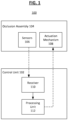
- the control unit includes: a receiver coupled to the at least one sensor assembly, the receiver configured to receive physiologic parameter information from the at least one sensor assembly; and a processing unit coupled to the receiver for analyzing the physiologic parameter information received by the receiver.
- the implantable medical device includes an actuation mechanism associated with the occlusion assembly, the control unit being operatively coupled to the actuation mechanism and configured to send a control signal to activate the actuation mechanism in response to the performed analysis.
- Example 5 further to Example 4, the at least one sensor assembly is operably coupled to the actuation mechanism of the occlusion assembly such that upon the at least one sensor assembly sensing a predetermined physiologic measurement, the actuation mechanism is adapted to increase flow through the lumen of the fluid shunt.
- At least one of the first and second portions of the fluid shunt includes a flange member for engaging the wall of the heart.
- the fluid shunt includes a support.
- the support includes a resilient framework.
- the fluid shunt includes a cover that is impermeable to blood under physiologic conditions.
- Example 10 further to Example 9, the cover includes a composite membrane material.
- the first cavity is a left atrium of the heart and the second cavity is a right atrium of the heart.
- the occlusion assembly is configured to be in a closed configuration such that the lumen of the fluid shunt is initially in a sealed state.
- the occlusion assembly includes a thermal actuation mechanism configured to be activated by heating to adjust flow through the lumen of the fluid shunt.
- Example 14 further to any one of Examples 9 to 12, wherein the cover is configured to be activated by being mechanically opened to adjust flow through the lumen of the fluid shunt.
- the cover is configured to be activated by being thermally opened to adjust flow through the lumen of the fluid shunt.
- the cover is configured to be selectively absorptive to ultrasound such that the membrane is configured to be thermally opened using an ultrasound source to adjust flow through the lumen of the fluid shunt.
- Example 17 further to any one of Examples 9 to 12, wherein the cover is configured to be selectively absorptive to laser energy such that the membrane is configured to be thermally opened using a laser source.
- the cover is configured to be selectively absorptive to radiofrequency energy such that the cover is configured to be thermally opened using a radiofrequency energy source.
- the cover is configured to be selectively electrolytically degradable using an electrical energy source.
- the occlusion assembly further includes at least one element operative to secure the cover in a closed configuration.
- the at least one element operative to secure the cover in the closed configuration is configured to be selectively electrolytically degradable using an electrical energy source.
- Example 22 further to Example 21, the electrical energy is supplied via magnetic induction.
- Example 23 further to any one of Examples 13 to 22, wherein the occlusion assembly comprises a thermoplastic polymer membrane.
- Example 24 further to any one of Examples 14 to 23, the cover is under radial tension to assist with opening of the membrane.
- Example 25 further to any one of Examples 14 to 24, the cover exhibits residual stress profile to assist with opening of the membrane.
- the device includes a secondary cover, and the secondary cover is configured to cover the second portion of the fluid shunt that is adapted to extend into the second cavity within the heart.
- the fluid shunt includes a membrane disposed in the lumen between the first and second portions that is impermeable to blood under physiologic conditions.
- the device is part of a system including at least one of an extracorporeal induction energy source, an internal induction energy receiver, an ultrasonic energy source, a laser energy source, an RF energy source or another type of energy source for activating the occlusion assembly.
- the device is configured to exhibit different resonant frequencies based upon a flow rate through the lumen of the fluid shunt.
- a method of treating a heart condition includes: sensing, by a first sensor assembly associated with a fluid shunt, one or more physiologic parameters in a first cavity within a heart, the fluid shunt being adapted to extend through a wall separating the first cavity within the heart and a second cavity within the heart; and adjusting flow through the fluid shunt by actuating an occlusion assembly associated with the fluid shunt.
- the method includes sensing, by a second sensor assembly associated with the fluid shunt, one or more physiologic parameters in the second cavity within the heart.
- the method includes: receiving, by a receiver coupled to at least the first sensor assembly, the physiologic parameters sensed by at least the first sensor assembly; performing, by a processing unit coupled to the receiver, analysis on the physiologic parameters received by the receiver to generate an actuation signal; and actuating the occlusion assembly according to the actuation signal.
- the method includes sending, by a controller, the actuation signal to the occlusion assembly.
- the controller is configured such that upon at least the first sensor assembly sensing a predetermined physiologic measurement, the controller sends the actuation signal to the occlusion assembly such that the occlusion assembly increases flow through the lumen of the fluid shunt.
- the method includes: passing the fluid shunt through the wall of the heart; and including engaging flange portions of first and second portions of the fluid shunt with the wall of the heart.
- the method includes: passing the fluid shunt through a wall of the heart separating the first cavity within the heart from the second cavity within the heart; and including engaging a support of the fluid shunt with the wall of the heart.
- the support includes a resilient framework.
- the fluid shunt includes a cover that is impermeable to blood under physiologic conditions.
- the cover includes a composite membrane material.
- the first cavity is a left atrium of the heart and the second cavity is a right atrium of the heart.
- a medical treatment system includes an implantable medical device and a deployment catheter.
- the implantable medical device includes: a fluid shunt adapted to extend through a wall separating a first cavity and a second cavity within the heart, the fluid shunt including a first portion adapted to extend into the first cavity within the heart, a second portion adapted to extend into the second cavity within the heart, and an intermediate portion interconnecting the first and second portions, the fluid shunt having a lumen extending between the first and second portions that is adapted to fluidly couple the first and second cavities within the heart; an occlusion assembly associated with the fluid shunt and adapted to selectively occlude flow through the lumen of the fluid shunt, the occlusion assembly being configured to be activated to adjust flow through the lumen of the fluid shunt; and at least one sensor assembly associated with the first portion of the fluid shunt such that the at least one sensor assembly is adapted to sense one or more physiologic parameters in the first cavity.
- the terms “about” and “approximately” may be used, interchangeably, to refer to a measurement that includes the stated measurement and that also includes any measurements that are reasonably close to the stated measurement. Measurements that are reasonably close to the stated measurement deviate from the stated measurement by a reasonably small amount as understood and readily ascertained by individuals having ordinary skill in the relevant arts. Such deviations may be attributable to measurement error or minor adjustments made to optimize performance, for example. In the event it is determined that individuals having ordinary skill in the relevant arts would not readily ascertain values for such reasonably small differences, the terms “about” and “approximately” can be understood to mean plus or minus 20% of the stated value.
- a heart failure management device that provides both titratable device-based therapy and hemodynamic monitoring.
- the heart failure management device includes a controllable cardiac shunt (e.g., intra-atrial shunt) and a sensor system for continuous noninvasive cardiac pressure measurement (e.g., LAP measurement), where flow through the shunt is controlled based upon cardiac pressure measurements from the sensor system.
- the heart failure management device operates initially in a monitoring mode, and if symptoms worsen, controllable cardiac shunt is operable to modify cardiac pressure.
- the processing unit 112 can be a central processing unit (CPU), a system-on-a-chip (SoC), or any suitable processor. In some examples, the processing unit 112 completes analysis of the physiologic parameter information and determines to send a control signal to the actuation mechanism 108 associated with the occlusion assembly 104 to control the physiologic parameter within the heart.
- CPU central processing unit
- SoC system-on-a-chip
- the purpose of the actuation mechanism 108 is to open the occlusion assembly 104 to allow for a flow of fluid therethrough.
- the actuation mechanism 108 is configured to activate when the sensor assemblies 106 detect certain conditions within the heart.
- the occlusion assembly 104 may be placed in a wall separating two chambers of the heart, such as the atrial wall.
- the actuation mechanism 108 may be activated in response to the elevated blood pressure differential to reduce the differential between the left and right atrium blood pressures.
- the sensor assemblies 106 detect a single physiological measurement.
- the sensor assemblies 106 detect a relative or absolute measurement.
- the pressure measurements taken by the sensor assemblies 106 can be converted into a ratio of LAP to RAP.
- an ideal ratio of LAP to RAP is 2:1 is desirable. Therefore, any ratio that is significantly smaller or larger than the desired ratio would pose a threat to the health of the heart, so the actuation mechanism 108 is activated to let some of the blood flow from one atrium to the other atrium, as appropriate, to bring the ratio closer to the desirable ratio.
- the threshold value may be determined by the physician who then decides under which conditions should the actuation mechanism 108 be activated.
- data from a single sensor assembly may be reported and this data used by a physician (or algorithm) to determine whether the actuation mechanism should be activated. It should be noted that other physiologic measurements may be used to make this decision, as explained below.
- control unit 102 is configured to be located external to the body, as shown in FIG. 8 for example.
- the receiver 110 is optionally configured to receive the information wirelessly and the processing unit 112 is optionally configured to send the control signal wirelessly.
- the actuation mechanism 108 may be activated in response to receiving the control signal, such as an activation signal transmitted by the processing unit 112.
- the actuation mechanism 108 may also be coupled to a receiver capable of receiving such signal from an external source.
- FIG. 2 shows an implantable medical device 200, according to some embodiments.
- the implantable medical device 200 includes a fluid shunt 202 adapted to extend through an organ wall 204 (e.g., a septum) separating a first cavity 206 (e.g., a first heart chamber) and a second cavity 208 (e.g., a second heart chamber) within a body of a patient.
- the cavities are the left and right atria or the left and right ventricles, for example.
- one or more of the cavities are an aorta, a vena cava, or other vascular structure.
- the fluid shunt 202 includes a first portion 210 adapted to extend into the first cavity 206, a second portion 212 adapted to extend into the second cavity 208, and an intermediate portion 214 interconnecting the first portion 210 and the second portion 212.
- the fluid shunt 202 also has a lumen 216 extending through the intermediate potion 214 between first portion 210 and the second portion 212.
- the lumen 216 is adapted to provide a fluid path between, or to fluidly couple, the first cavity 206 with the second cavity 208.
- the first portion 210 includes a first flange 224.
- the first flange 224 may be annular in shape, having a first aperture 225 and including a first flange support 221 and a first flange cover 223.
- the first flange support 221 can be a resilient framework including one or more frame elements, which may be wound, woven, braided, cut, or otherwise formed.
- the first flange support 221 is formed of a shape memory material, such as a shape memory alloy (e.g., a nickel-titanium alloy).
- the first flange cover 223 optionally includes a membrane material (e.g., an ePTFE membrane) or other biocompatible material as desired.
- the first flange cover 223 is configured to promote or inhibit tissue ingrowth and/or is biodegradable under physiologic conditions over time.
- FIGs. 3-5 show different embodiments and examples of the flanges as previously introduced.
- FIG. 3 shows the first flange 224 according to an embodiment where the first flange 224 engages with the organ wall 204 and is attached to an antenna 300.
- a sensor assembly 220 attaches to the antenna 300, and the antenna 300 is operative to send the physiologic measurement information provided by the sensor assembly 220.
- an occlusion assembly 218, as explained below, is also attached to the antenna 300.
- the antenna 300 is operative to receive the control signal sent to the occlusion assembly 218, or more specifically to the actuation mechanism 108 of the occlusion assembly 218.
- the implantable medical device 200 has a second flange 226 at the second portion 212 with a second flange cover 231 to prevent fluid flow between the lumen 216 and a second cavity 208.
- the first flange cover 223 and/or the second flange cover 231 include a composite membrane material, such as a polymer membrane.
- the polymer membrane is expanded polytetrafluoroethylene (ePTFE).
- the membrane can be any other suitable fluoropolymer, thermoplastic polymer, elastomer, biopolymer, fabric, textile, etc.
- the second flange 226 has a configuration that is similar, if not identical, to that of the first flange 224.
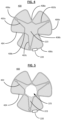
- FIGs. 4 and 5 show a first frame portion 400 according to an embodiment.
- the first frame portion 400 forms part of the first flange 224 of the implantable medical device 200.
- the first frame portion 400 may be covered by, or otherwise support flange cover 223 which may be configured to be impermeable to bodily fluids such as blood under physiologic conditions to act as a separator to help prevent fluid flow between the lumen 216 and the first cavity 206.
- the first lobe 406a is attached to the second lobe 406b at attachment point 408a
- the second lobe 406b is attached to the third lobe 406c at attachment point 408b
- the third lobe 406c is attached to the first lobe 406a at attachment point 408c.
- FIGs. 4 and 5 are described with reference to three lobes and three attachment points, the first frame portion 400 can have any number of lobes and respective attachment points as desired.
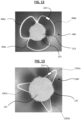
- FIG. 5 shows the first flange cover 223 after the actuation mechanism 108 creates a first aperture 225 in the cover 223 to allow for fluid flow through the lumen 216.
- the first aperture 225 is formed through mechanical or interventional procedures. In some embodiments, the first aperture 225 is formed through non-invasive procedures.
- the second portion 212 includes the second flange 226.
- the second flange 226 may be annular in shape, having a second aperture 227 and including a second flange support 229 and a second flange cover 231.
- the second flange support 229 can also be a resilient framework including one or more frame elements, which may be wound, woven, braided, cut, or otherwise formed.
- the second flange support 229 is formed of a shape memory material, such as a shape memory alloy (e.g., a nickel-titanium alloy).
- the second flange cover 231 optionally includes a membrane material (e.g., an ePTFE membrane) or other biocompatible material as desired.
- the second flange cover 226 is configured to promote or inhibit tissue ingrowth and/or is biodegradable under physiologic conditions over time.
- the intermediate portion 214 of the fluid shunt 202 includes a tubular member 215 and an intermediate support 213 configured to help maintain the shape of the tubular member 215 against compression and/or distortion forces exerted by the patient anatomy (e.g., the wall 204) and/or physiologic processes (e.g., blood pressure).
- the intermediate support 213 can also be a resilient framework including one or more frame elements, which may be wound, woven, braided, cut, or otherwise formed.
- the intermediate support 213 is formed of a shape memory material, such as a shape memory alloy (e.g., a nickel-titanium alloy).
- the tubular member 215 optionally includes a membrane material (e.g., an ePTFE membrane) or other biocompatible material as desired.
- a membrane material e.g., an ePTFE membrane
- the tubular member 215 is configured to promote or inhibit tissue ingrowth and/or is biodegradable under physiologic conditions over time.
- the implantable medical device 200 also includes the occlusion assembly 218, as mentioned above, associated with the fluid shunt 202.
- the occlusion assembly 218 is adapted to selectively occlude flow through the lumen 216 of the fluid shunt 202.
- the occlusion assembly 218 can be configured to be activated (via physical, manual intervention or via remote or automatic means) to adjust flow through the lumen 216 of the fluid shunt 202.
- the actuation mechanism 108 is configured to be actuated to permit fluid flow through the lumen 216, or to permit increased or decreased fluid flow through the lumen 216. In some examples, the actuation mechanism 108 is selectively activated to increase and decrease flow, for example by being actuatable to open or narrow the lumen 216.
- the actuation mechanism 108 is optionally positioned at the first portion 210, the second portion 212, and/or the intermediate portion 214.
- the actuation mechanism 108 may be "one-way" actuatable, in that the actuation mechanism 108 begins at a no-flow, or low-flow condition, and then can be opened (e.g., entirely or in stages), to increase flow. In other embodiments, the actuation mechanism 108 can both increase and decrease flow through the fluid shunt 202.
- the actuation mechanism 108 includes a needle or other suitable puncturing component to mechanically penetrate one or both of the flange covers 223 and 231.
- a needle is led to the location of the implantable medical device 200 by a catheter, and the needle is used to form the first aperture 225 by puncturing the first flange cover 223 and the second aperture 227 by puncturing the second flange cover 231.
- Other interventional procedures include mechanical, thermal, laser, ultrasound, and inductive methods.
- the actuation mechanism 218 is attached to the antenna 300.
- the membrane defining the first flange cover 223 is made of three flap elements 600, 602, and 604 that are under radial tension, with a wire 606 fixing the three flap elements together with a stitch 608 as shown to prevent the radial tension from causing the flap elements to move toward the outer edge of the first flange 224.
- the sensor assembly 220 is located on the antenna 300. Upon receiving the actuation signal from the control unit 102, the actuation mechanism 218 pulls the wire 606 to cause the flap elements 600, 602, and 604 to be pulled back toward the outer edge, thereby creating the first aperture 225 as shown in FIG. 7 .
- the wire 606 can be made of any suitable material.
- the wire 606 is a thread made of polymers such as nylon or PTFE.
- the wire 606 is made of a conductive material, such as stainless steel or nickel-titanium alloy, among others.
- the same actuation mechanism may also be attached to the second flange cover 231, with the second flange cover 231 also made of similar flap elements.
- the number of flap elements may be two. In other examples, the number of flap elements may be four or more.
- the wire 606 is conductive, and upon receiving the actuation signal from the control unit 102, the occlusion assembly 218 applies a voltage to the wire 606 to cause the wire 606 to undergo electrolytic degradation. After undergoing sufficient degradation, the wire 606 breaks or dissolves and can no longer hold the flap elements 600, 602, and 604 together. As such, the flap elements 600, 602, and 604 retract or open from the initial position shown in FIG. 6 , thereby creating the first aperture 225 as shown in FIG. 7 .
- the actuation mechanism 108 is external to the body, such as an extracorporeal energization unit 800.
- FIG. 8 illustrates the implantable medical device 100 or 200. Energy is inductively supplied to the implantable medical device using the extracorporeal energization unit 800 in a treatment system according to an embodiment.
- the energization unit 800 can include an extracorporeal induction energy source which supplies power to the implanted medical device so that electrical energy can electrolytically degrade an element 606 thereby forming the first aperture 225, converting the device to an open configuration.
- the control unit 102 is configured to be located external to the body and controls the extracorporeal energization unit 800.
- the treatment system which operates to control the first aperture 225 in the implantable medical device 200 includes one or more of: an internal induction energy receiver, an ultrasonic energy source, a laser energy source, a radiofrequency (RF) energy source, and/or another type of energy source for activating the occlusion assembly 104.
- the implantable medical device 200 when the first aperture 225 is formed and fluid flow is allowed within the lumen 216, the implantable medical device 200 exhibits different resonant frequencies based upon a flow rate through the lumen 216. The resonant frequency can be measured using one or both of the sensor assemblies 220 and 222 coupled to the implantable medical device 200.
- the resonant frequency measured by the receiver 110 is converted to a physiologic parameter such as the fluid flow rate by the processing unit 112.
- both of the sensor assemblies 220 and 222 are pressure sensors, so the flow rate of fluid through the lumen 216 is estimated based upon the lumen's dimensions, the pressure differential, and the known fluid dynamic characteristics of the fluid, which may be blood. Additional or alternative sensing features are contemplated.
- a shift in resonant frequency measured by the sensor assembly 220 or 222 provides verification that the lumen 216 is successfully opened to allow fluid flow therethrough.
- the wireless extracorporeal energization includes inductive energy transfer or ultrasound energy transfer, which are nonlimiting examples of the noninvasive procedures.
- a membrane of the flange cover 223 can be melted to form the aperture 225 after exposing the flange cover 223 to thermal or ultrasound energy, to produce a thermal activation mechanism.
- the size of the aperture 225 can be adjusted by varying the amount of thermal activation.
- the aperture 227 in the flange cover 231 may be formed using the same method/mechanism as any of those described in association with the flange cover 223, or by differing methods as desired.
- the flange cover 223 is made of at least one flap element which is controlled mechanically by the actuation mechanism 108, which is in turn controlled wirelessly by the control unit 102.
- mechanism control is accomplished by the actuation mechanism 108 pulling on the flap element to change the state of the flap element from a closed state to a more open state.
- the size of the aperture 225 can be adjusted by varying how much the flap element is to be displaced from the closed position.
- the actuation mechanism 108 can also control the flap element to decrease the size of the aperture 225 by returning the position of the flap element closer to the closed position.
- one or both of the covers 223 and 231 are under radial tension to assist with forming one or both of the apertures 225 and 227.
- the cover(s) 223 and 231 are stretched, even a small opening in the covers can be enlarged when the radial tension placed from the outer edge of the covers pull the cover material surrounding the opening away from the locations of the openings in a plurality of directions.
- the cover(s) exhibit residual stress profile to assist with forming the one or both of the apertures 225 and 227 in the cover.
- the cover(s) are selectively openable between a plurality of sizes for the one or both of the apertures 225 and 227 to modify flow through the lumen 216.
- FIG. 9 shows a sensor system 900 implemented in one embodiment of the implantable medical device 100.
- the sensor system 900 includes one or more sensor assemblies 106 and a sensor control unit 902 in communication with the one or more sensor assemblies 106.
- the one or more sensor assemblies 106 are active sensors that include transmitters that send out a signal and records the environmental response to the signal.
- the one or more sensor assemblies 106 are passive sensors that require external energy sources to perform physiological measurements, for example upon receipt of an input from the physical environment.
- the sensor control unit 902 includes a battery 904, a receiver 906, and a transmitter 908.
- the battery 904 provides power for the sensor assemblies 106 to continue taking physiological measurements as well as for the sensor control unit 902 to receive and transmit data of said measurements.
- the receiver 906 receives the measurement data from the sensor assemblies 106, and the transmitter 908 transmits the data, for example wirelessly, to the external control unit 102.
- the one or more sensor assemblies 106 include a first sensor assembly 220 associated with the first portion 210 of the fluid shunt 202 adapted to sense one or more physiologic parameters in the first cavity 206 and a second sensor 222 associated with the second portion 212 of the fluid shunt 214 adapted to sense one or more physiologic parameters in the second cavity 208 within the heart.
- a first sensor assembly 220 associated with the first portion 210 of the fluid shunt 202 adapted to sense one or more physiologic parameters in the first cavity 206
- a second sensor 222 associated with the second portion 212 of the fluid shunt 214 adapted to sense one or more physiologic parameters in the second cavity 208 within the heart.
- two sensor assemblies are shown and described, greater (e.g., three or more) or fewer (e.g., a single sensor) are contemplated.
- one or all of the sensor assemblies 106 are configured to sense a physiologic parameter including blood pressure levels in the respective cavities.
- one or more sensor assemblies 106 are configured to sense the rate at which blood flows in the designated cavity within the heart. In still further examples, one or more sensors are configured to sense temperature of the blood. In still other examples, one or more sensors are configured to sense oxygen saturation of the blood.
- suitable sensors capable of measuring fluid flow or pressure inside an organ include piezoelectric sensors, pressure switches, optical pressure transducers, Venturi meters, impedance monitors, and ultrasonic pressure sensors, as well as other types of electrophysiologic and hemodynamic sensors.
- FIG. 10 shows a method 1000 of operating the implantable medical device 200 according to one embodiment.
- the lumen 216 is extended through the wall 204 separating the first cavity 206 within the heart and the second cavity 208 within the heart.
- the fluid shunt 214 is passed through the wall 204 of the heart, including engaging flange portions, or anchors 224 and 226, of the first portion 210 and the second portion 212 of the fluid shunt 214 with the wall 204 of the heart.
- the first sensor assembly 220 senses one or more physiologic parameters in the first cavity 206.
- the flow through the fluid shunt 214 is adjusted by actuating the occlusion assembly 218 associated with the fluid shunt 214.
- FIG. 11 shows another method 1100 of operating the implantable medical device 200 according to some embodiments.
- the second sensor 222 senses one or more physiologic parameters in the second cavity 208 within the heart.
- the receiver 110 receives the physiologic parameters sensed by the first sensor assembly 220 and the second sensor 222.
- the processing unit 112 performs analysis on the physiologic parameters received by the receiver 110 to generate an actuation signal.
- the control unit 102 sends the actuation signal to the occlusion assembly 218.
- the flow through the fluid shunt 214 is adjusted by actuating the occlusion assembly 218 associated with the fluid shunt 214 according to the actuation signal provided by the processing unit 112 of the control unit 102.
- control unit 102 sends the actuation signal to the occlusion assembly 218 upon the first sensor assembly 220 and the second sensor 222 sensing a predetermined differential physiologic measurement such that the occlusion assembly 218 increases flow through the lumen 216 by performing one or more of the procedures as explained above.
- the conduit 1402 includes one or more structural elements (e.g., stent elements) made of a suitable material, such as shape memory alloy (e.g., a nickel-titanium alloy) or stainless steel, for example.
- the medical device 1400 includes a cover 1404, such as a flexible membrane of any suitable polymer material include but not limited to ePTFE.
- the cover 1404 is located or is otherwise configured to reside between the first flange 224 and the wall 204.
- the medical device 1400 includes one or more (e.g., three) locations to place one or more sensors to perform physiological measurements within the body.
- the central portion or the conduit 1402 of the device 1400 can be radially expanded or compressed/restricted to adjust the rate of fluid flow through the opening as desired.
- the deployment apparatus 1600 includes a catheter or a sheath.
- the conduit portion 1814 may be substantially free of frame components.
- the conduit portion 1814 may include, for example, a membrane 1816, such as an expanded polytetrafluoroethylene (ePTFE) membrane, connecting the first frame component 1802 and the second frame component 1804.
- ePTFE expanded polytetrafluoroethylene
- the membrane 1816 generally separates the first frame component 1802 and the second frame component 1804 by a suitable distance compatible with the patient's body.
- the membrane 1816 can separate the first frame component 1802 and the second frame component 1804 by a gap of from 0 to 15 mm depending on the desired treatment location within the patient's body.
- the membrane 1816 may be elastic to allow for expansion of the conduit portion 1814 and to allow for movement of portions of the first frame component 1802 and/or the second frame component 1804 (e.g., movement of the first set of elongate elements 1806 and/or the second set of elongate elements 1808).
- the membrane 1816 may span gaps between the first set of elongate elements 1806 and/or the second set of elongate elements 1808.
- the membrane 1816 in certain instances, is arranged on at least a tissue engaging side of the first frame component 1802 and a tissue engaging side the second frame component 1804. In these instances, the membrane 1816 is configured to lessens frame erosion potential of the first frame component 1802 and/or the second frame component 1804.
- the membrane 1816 and the arrangement of the first set of elongate elements 1806 and/or the second set of elongate elements 1808 may conform to the tissue surfaces surrounding the septum.
- the first set of elongate elements 1806 and/or the second set of elongate elements 1808 may lay flat against the tissue surfaces.
- each of the first set of elongate elements 1806 may be attached to one another via the membrane 1816 to form the first frame component 1802.
- the first frame component 1802 may form a substantially flat or 2-dimensional, disc-like shape, as shown.
- the second set of elongate elements 1808 may also be attached to one another via the membrane material 1816 to form the second frame component 1804.
- the second frame component 1804 may also form a substantially flat or 2-dimensional, disc-like shape such that the first and second frame components 1802, 1804 are substantially parallel to one another when the device 1800 is in a deployed configuration.
- the membrane 1816 may be configured to promote or inhibit tissue ingrowth over at least a portion of the membrane 1816, or at least a portion of the membrane 1816. In certain instances, the membrane 1816 is configured to promote or inhibit tissue ingrowth to cover at least a portion of the first and/or second frame components 1802, 1804, which may further promote compatibility and stability of the device 1800 within the patient's body.
- the membrane 1816 within the conduit portion 1814 may be configured to not allow tissue ingrowth leading to increased patency.
- the membrane 1816 is configured to promote endothelization without obstructive ingrowth within the conduit portion 1814. The membrane 1816 may promote endothelization without obstructive overgrowth of tissue into the conduit portion 1814.
- the device 1800 may be capable of delivering a drug to the desired treatment location within the patient's body.
- the device 1800 may be capable of eluting a drug configured to modulate tissue response.
- the device 1800 may be coated with a therapeutic coating, drug eluting material or other therapeutic material or a hydrophilic coating.
- the device 1800 can be coated with heparin to facilitate thromboresistance and patency of the device 1800.
- the device 1800 may include paclitaxel (to modulate tissue/cellular response).
- FIG. 19 is a perspective view of another example of an implantable medical device 1900 for regulating blood pressure in accordance with an embodiment.
- each of the first set of elongate elements 1806 may be discrete and separate from adjacent elongate elements.
- the membrane 1816 does not connect each of the first set of elongate elements 1806 together.
- each of the first set of elongate elements 1806 may move independently from one another and individually conform to the topography of the first side of the septum, thus providing a highly conformable first frame component 1802.
- Each of the second set of elongate elements 1808 may also be discrete and separate from adjacent elongate elements.
- each of the second set of elongate elements 1808 may move independently from one another and individually conform to the second side of the septum, much like the first set of elongate elements 1806 conforms to the first side of the septum.
- both the first and second frame components 1802, 1804 are highly conformable and may conform independently of one another based on the patient's anatomy.
- one of the first or second set of elongate elements 1806, 1808 of the first and second frame components 1802, 1804 may be attached to one another via the membrane 1816 while the other set of elongate elements are unattached (e.g., they are discrete and separate from adjacent elongate elements). In other instances, only some of the first or second set of elongate elements 1806, 1808 may be attached to one another, while other elongate elements of the first and second set of elongate elements 1806, 1808 are not attached.
- the device 1900 can be highly customizable to the patient depending on the desired treatment location within the patient, and size and/or shape of the defect, among other factors.
- the sensor assembly 220 is located on one or both of the first frame component 1802 and the second frame component 1804.
- the device 1900 is generally deployable or expandable from a delivery configuration to the deployed configuration.
- the first set of elongate elements 1806 and the second set of elongate elements 1808 may nest within one another when the device is in the delivery configuration. This allows the device 1900 to compress to a smaller size, for example, for delivery of the device 1900 to a wider variety of treatment locations (e.g., through small, narrow, or convoluted passageways).
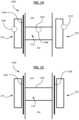
- FIG. 20 is a side view of the implantable medical device 1900 for regulating blood pressure, shown in FIG. 19 , in accordance with an embodiment.
- FIG. 20 shows the device 1900 in the deployed configuration.
- the first frame component 1802 including the first set of elongate elements 1806 and the second frame component 1804 including the second set of elongate elements 1808 are positioned radially outward with respect to a longitudinal axis L of the conduit portion 1814 when the device 1900 is in the deployed configuration.
- the first and second frame components 1802, 1804 are positioned at first and second angles 2000, 2002, respectively.
- the first and second angles 2000, 2002 may form approximately a 90° angle with respect to the longitudinal axis L when the device is in the deployed configuration.
- first and second frame components 1802, 1804 may be positioned parallel with and adjacent to the first and second sides of the septum.
- the first and second frame components 1802, 1804 may be positioned at any angle relative to the longitudinal axis L (for example, from about 0° to greater than 90° with respect to the longitudinal axis L) that allows for contact with the tissue surface of the first and second sides of the septum.
- the first and second elongate elements 1806, 1808 are configured to separate from one another when the device 1900 is in the deployed configuration. As shown in FIG. 20 , each of the first set of elongate elements 1806 are discrete and separate from one another when the device 1900 is in the deployed configuration such that each of the first set of elongate elements 1806 may move independently from adjacent elongate elements. Each of the second set of elongate elements 1808 may also be discrete and separate from one another when the device 1900 is in the deployed configuration such that each of the second set of elongate elements 1808 move independently from adjacent elongate elements.
- the sensor assembly 220 may be located on any one or more of the first set of elongate elements 1806, and the other sensor assembly 222 may be located on any one or more of the second set of elongate elements 1808.
- the first and second frame components 1802, 1804 may maintain a lumen through the conduit portion 1814 and facilitate deployment of the conduit portion 1814 by laterally forcing the conduit portion 1814 open.
- the lumen may be free or without the first and second frame components 1802, 1804.
- the conduit portion 1814 may facilitate re-crossing of the septum for addition procedures (e.g., left atrial appendage occluder implantation).
- the first and second frame components 1802, 1804 may be differently configured. For example, one of the first and second frame components 1802, 1804 may be flared while the other of the first and second frame components 1802, 1804 is flat. In other instances, both the first and second frame components 1802, 1804 may be flared.
- first and second frame components 1802, 1804 may be convex while the other of the first and second frame components 1802, 1804 is flat or concave or both the first and second frame components 1802, 1804 may be convex. Further, one of the first and second frame components 1802, 1804 may be concave while the other of the first and second frame components 1802, 1804 is flat or convex or both the first and second frame components 1802, 1804 may be concave. In addition, the first and second frame components 1802, 1804 may be different sizes.
- the first and second frame components 1802, 1804 may include a sensor integrated into the respective frame component, for example, for continuous monitoring of various hemodynamic parameters such as pressure, among other parameters, within the patient's body.
- a sensor integrated into the respective frame component, for example, for continuous monitoring of various hemodynamic parameters such as pressure, among other parameters, within the patient's body.
- an antenna or inductor may be wrapped around the perimeter of one of the first and second frame components 1802, 1804 and the sensor may be attached to the inductor.
- the sensor may be configured to, for example, sense physiologic properties, such as temperature, electrical signals of the heart, blood chemistry, blood pH level, hemodynamics, biomarkers, sound, pressure, and electrolytes that may be important in diagnosing, monitoring, and/or treating heart disease, heart failure, and/or other cardiovascular disease states
- the device 1900 can be any shape suitable to fit the anatomy of the patient.
- the first and second frame portions 1802, 1804 may be any of a variety of suitable shapes for anchoring the device 1900 within the patient's body.
- the first and second frame portions 1802, 1804 may be substantially circular, ovular, diamond-shaped, star-shaped, flower-shaped, or any other suitable shape as desired.
- at least one of the first and second set of elongate elements 1806, 1808 form a star shape.
- both the first and second set of elongate elements 1806, 1808 form a star shape.
Landscapes
- Health & Medical Sciences (AREA)
- Life Sciences & Earth Sciences (AREA)
- Engineering & Computer Science (AREA)
- Physics & Mathematics (AREA)
- Veterinary Medicine (AREA)
- Public Health (AREA)
- Heart & Thoracic Surgery (AREA)
- General Health & Medical Sciences (AREA)
- Animal Behavior & Ethology (AREA)
- Biomedical Technology (AREA)
- Surgery (AREA)
- Pathology (AREA)
- Biophysics (AREA)
- Medical Informatics (AREA)
- Molecular Biology (AREA)
- Cardiology (AREA)
- Physiology (AREA)
- Vascular Medicine (AREA)
- Pulmonology (AREA)
- Optics & Photonics (AREA)
- Computer Networks & Wireless Communication (AREA)
- Pharmacology & Pharmacy (AREA)
- Medicinal Chemistry (AREA)
- Chemical & Material Sciences (AREA)
- Bioinformatics & Cheminformatics (AREA)
- Epidemiology (AREA)
- Spectroscopy & Molecular Physics (AREA)
- Oral & Maxillofacial Surgery (AREA)
- Transplantation (AREA)
- Urology & Nephrology (AREA)
- Biodiversity & Conservation Biology (AREA)
- Artificial Intelligence (AREA)
- Computer Vision & Pattern Recognition (AREA)
- Psychiatry (AREA)
- Signal Processing (AREA)
- Otolaryngology (AREA)
- Ophthalmology & Optometry (AREA)
- Anesthesiology (AREA)
- Hematology (AREA)
- Measuring Pulse, Heart Rate, Blood Pressure Or Blood Flow (AREA)
Applications Claiming Priority (7)
| Application Number | Priority Date | Filing Date | Title |
|---|---|---|---|
| US201862783935P | 2018-12-21 | 2018-12-21 | |
| US201862783902P | 2018-12-21 | 2018-12-21 | |
| US201962845386P | 2019-05-09 | 2019-05-09 | |
| US201962894260P | 2019-08-30 | 2019-08-30 | |
| US201962901105P | 2019-09-16 | 2019-09-16 | |
| PCT/US2019/068282 WO2020132671A1 (fr) | 2018-12-21 | 2019-12-23 | Dispositif médical implantable à débit sanguin réglable |
| EP19842528.2A EP3897371B1 (fr) | 2018-12-21 | 2019-12-23 | Dispositif médical implantable à débit sanguin réglable |
Related Parent Applications (2)
| Application Number | Title | Priority Date | Filing Date |
|---|---|---|---|
| EP19842528.2A Division-Into EP3897371B1 (fr) | 2018-12-21 | 2019-12-23 | Dispositif médical implantable à débit sanguin réglable |
| EP19842528.2A Division EP3897371B1 (fr) | 2018-12-21 | 2019-12-23 | Dispositif médical implantable à débit sanguin réglable |
Publications (2)
| Publication Number | Publication Date |
|---|---|
| EP4574028A2 true EP4574028A2 (fr) | 2025-06-25 |
| EP4574028A3 EP4574028A3 (fr) | 2025-09-17 |
Family
ID=69185746
Family Applications (7)
| Application Number | Title | Priority Date | Filing Date |
|---|---|---|---|
| EP25174558.4A Pending EP4570171A3 (fr) | 2018-12-21 | 2019-12-23 | Système de traitement médical utilisant des données de mesure provenant de multiples capteurs |
| EP19842527.4A Active EP3897370B1 (fr) | 2018-12-21 | 2019-12-23 | Système de traitement médical utilisant des données de mesure provenant de multiples capteurs |
| EP25191682.1A Pending EP4613184A3 (fr) | 2018-12-21 | 2019-12-23 | Capteurs cardiaques implantables |
| EP25175056.8A Pending EP4574028A3 (fr) | 2018-12-21 | 2019-12-23 | Dispositif médical implantable à débit sanguin réglable |
| EP19839774.7A Active EP3897369B1 (fr) | 2018-12-21 | 2019-12-23 | Capteurs cardiaques implantables |
| EP19842528.2A Active EP3897371B1 (fr) | 2018-12-21 | 2019-12-23 | Dispositif médical implantable à débit sanguin réglable |
| EP19848954.4A Active EP3897372B1 (fr) | 2018-12-21 | 2019-12-23 | Capteurs cardiaques implantables |
Family Applications Before (3)
| Application Number | Title | Priority Date | Filing Date |
|---|---|---|---|
| EP25174558.4A Pending EP4570171A3 (fr) | 2018-12-21 | 2019-12-23 | Système de traitement médical utilisant des données de mesure provenant de multiples capteurs |
| EP19842527.4A Active EP3897370B1 (fr) | 2018-12-21 | 2019-12-23 | Système de traitement médical utilisant des données de mesure provenant de multiples capteurs |
| EP25191682.1A Pending EP4613184A3 (fr) | 2018-12-21 | 2019-12-23 | Capteurs cardiaques implantables |
Family Applications After (3)
| Application Number | Title | Priority Date | Filing Date |
|---|---|---|---|
| EP19839774.7A Active EP3897369B1 (fr) | 2018-12-21 | 2019-12-23 | Capteurs cardiaques implantables |
| EP19842528.2A Active EP3897371B1 (fr) | 2018-12-21 | 2019-12-23 | Dispositif médical implantable à débit sanguin réglable |
| EP19848954.4A Active EP3897372B1 (fr) | 2018-12-21 | 2019-12-23 | Capteurs cardiaques implantables |
Country Status (8)
| Country | Link |
|---|---|
| US (5) | US11911135B2 (fr) |
| EP (7) | EP4570171A3 (fr) |
| JP (5) | JP7377269B2 (fr) |
| CN (4) | CN113473903B (fr) |
| AU (5) | AU2019406218B2 (fr) |
| CA (4) | CA3123616A1 (fr) |
| ES (4) | ES2981314T3 (fr) |
| WO (4) | WO2020132669A1 (fr) |
Families Citing this family (68)
| Publication number | Priority date | Publication date | Assignee | Title |
|---|---|---|---|---|
| WO2005074367A2 (fr) | 2004-02-03 | 2005-08-18 | Atria Medical Inc. | Dispositif et procede de controle de la pression in vivo |
| US9681948B2 (en) | 2006-01-23 | 2017-06-20 | V-Wave Ltd. | Heart anchor device |
| EP2427143B1 (fr) | 2009-05-04 | 2017-08-02 | V-Wave Ltd. | Dispositif permettant de réguler la pression à l'intérieur d'une cavité cardiaque |
| US12453626B2 (en) | 2009-05-04 | 2025-10-28 | V-Wave Ltd. | Shunt for redistributing atrial blood volume |
| US9034034B2 (en) | 2010-12-22 | 2015-05-19 | V-Wave Ltd. | Devices for reducing left atrial pressure, and methods of making and using same |
| US12186176B2 (en) | 2009-05-04 | 2025-01-07 | V-Wave Ltd. | Shunt for redistributing atrial blood volume |
| US11135054B2 (en) | 2011-07-28 | 2021-10-05 | V-Wave Ltd. | Interatrial shunts having biodegradable material, and methods of making and using same |
| US9713696B2 (en) | 2013-05-21 | 2017-07-25 | V-Wave Ltd. | Apparatus and methods for delivering devices for reducing left atrial pressure |
| WO2018031714A1 (fr) | 2016-08-11 | 2018-02-15 | Foundry Innovation & Research 1, Ltd. | Systèmes et procédés de gestion des fluides chez un patient |
| US12465324B2 (en) | 2015-02-12 | 2025-11-11 | Foundry Innovation & Research 1, Ltd. | Patient fluid management systems and methods employing integrated fluid status sensing |
| WO2016178171A1 (fr) | 2015-05-07 | 2016-11-10 | The Medical Research Infrastructure And Health Services Fund Of The Tel-Aviv Medical Center | Shunts interauriculaires temporaires |
| WO2017024051A1 (fr) | 2015-08-03 | 2017-02-09 | Foundry Innovation & Research 1, Ltd. | Dispositifs et procédés de mesure de dimensions, de pression et de saturation en oxygène de veine cave |
| US20170340460A1 (en) | 2016-05-31 | 2017-11-30 | V-Wave Ltd. | Systems and methods for making encapsulated hourglass shaped stents |
| US10835394B2 (en) | 2016-05-31 | 2020-11-17 | V-Wave, Ltd. | Systems and methods for making encapsulated hourglass shaped stents |
| US11701018B2 (en) | 2016-08-11 | 2023-07-18 | Foundry Innovation & Research 1, Ltd. | Wireless resonant circuit and variable inductance vascular monitoring implants and anchoring structures therefore |
| US11206992B2 (en) | 2016-08-11 | 2021-12-28 | Foundry Innovation & Research 1, Ltd. | Wireless resonant circuit and variable inductance vascular monitoring implants and anchoring structures therefore |
| US11291807B2 (en) | 2017-03-03 | 2022-04-05 | V-Wave Ltd. | Asymmetric shunt for redistributing atrial blood volume |
| WO2018220146A1 (fr) | 2017-05-31 | 2018-12-06 | Foundry Innovation & Research 1, Ltd. | Capteurs implantables pour surveillance vasculaire |
| EP3629937B1 (fr) | 2017-05-31 | 2026-01-14 | Foundry Innovation & Research 1, Ltd. | Capteur vasculaire ultrasonore implantable |
| EP3740163A1 (fr) | 2018-01-20 | 2020-11-25 | V-Wave Ltd. | Dispositifs et procédés pour fournir un passage entre des chambres cardiaques |
| US11458287B2 (en) | 2018-01-20 | 2022-10-04 | V-Wave Ltd. | Devices with dimensions that can be reduced and increased in vivo, and methods of making and using the same |
| US10898698B1 (en) | 2020-05-04 | 2021-01-26 | V-Wave Ltd. | Devices with dimensions that can be reduced and increased in vivo, and methods of making and using the same |
| CA3105224A1 (fr) | 2018-07-18 | 2020-01-23 | W. L. Gore & Associates, Inc. | Systeme de deploiement de dispositif medical implantable |
| JP7377269B2 (ja) | 2018-12-21 | 2023-11-09 | ダブリュ.エル.ゴア アンド アソシエイツ,インコーポレイティド | インプラント可能な心臓センサ |
| EP3906085A4 (fr) | 2019-01-04 | 2022-09-28 | Shifamed Holdings, LLC | Systèmes de recharge interne et procédés d'utilisation |
| US12226602B2 (en) | 2019-04-03 | 2025-02-18 | V-Wave Ltd. | Systems for delivering implantable devices across an atrial septum |
| US11612385B2 (en) | 2019-04-03 | 2023-03-28 | V-Wave Ltd. | Systems and methods for delivering implantable devices across an atrial septum |
| WO2020234751A1 (fr) | 2019-05-20 | 2020-11-26 | V-Wave Ltd. | Systèmes et procédés de création de dérivation interauriculaire |
| US12533500B2 (en) | 2019-06-18 | 2026-01-27 | Shifamed Holdings, Llc | Adjustable interatrial shunts and associated systems and methods |
| WO2021050589A1 (fr) | 2019-09-09 | 2021-03-18 | Shifamed Holdings, Llc | Shunts ajustables et systèmes et méthodes associés |
| EP4090251A1 (fr) | 2020-01-17 | 2022-11-23 | W. L. Gore & Associates, Inc. | Implant médical comprenant deux éléments de cadre et des paires d'oeillets |
| EP4099898B1 (fr) * | 2020-02-05 | 2026-01-28 | Shifamed Holdings, LLC | Capteur de pression intracardiaque avec structure de pince |
| EP4138981A4 (fr) | 2020-04-23 | 2024-05-22 | Shifamed Holdings, LLC | Gestion d'énergie de shunts interauriculaires et systèmes et méthodes associés |
| EP4138649B1 (fr) | 2020-04-23 | 2025-09-24 | Shifamed Holdings, LLC | Capteurs intracardiaques dotés de configurations commutables et systèmes et procédés associés |
| EP4138978A4 (fr) | 2020-04-23 | 2024-05-01 | Shifamed Holdings, LLC | Systèmes et procédés de surveillance radiographique de shunts |
| US12599756B2 (en) | 2020-05-04 | 2026-04-14 | V-Wave Ltd. | Devices with dimensions that can be reduced and increased In Vivo |
| US11801369B2 (en) | 2020-08-25 | 2023-10-31 | Shifamed Holdings, Llc | Adjustable interatrial shunts and associated systems and methods |
| CN116648282A (zh) | 2020-10-16 | 2023-08-25 | 施菲姆德控股有限责任公司 | 用于植入式医疗装置的双用途电感器及相关联的系统和方法 |
| US12544010B2 (en) | 2020-10-28 | 2026-02-10 | Shifamed Holdings, Llc | Systems and methods for electrical monitoring of implantable devices |
| US20240016486A1 (en) * | 2020-11-02 | 2024-01-18 | Recross Cardio Inc. | Interseptal occluder device |
| US11857197B2 (en) | 2020-11-12 | 2024-01-02 | Shifamed Holdings, Llc | Adjustable implantable devices and associated methods |
| US11234702B1 (en) * | 2020-11-13 | 2022-02-01 | V-Wave Ltd. | Interatrial shunt having physiologic sensor |
| JP2023552725A (ja) * | 2020-11-24 | 2023-12-19 | ジョージア テック リサーチ コーポレイション | ウェアラブル心臓血管センサにより血行動態パラメータを測定するためのシステム及び方法 |
| US20220180991A1 (en) * | 2020-12-06 | 2022-06-09 | Acorai Ab | Systems and methods for creating personalized medicines for treating heart failure and heart disease |
| JP2024506875A (ja) * | 2021-02-05 | 2024-02-15 | エドワーズ ライフサイエンシーズ コーポレイション | シャントセンサ埋め込み装置 |
| WO2022192280A1 (fr) | 2021-03-09 | 2022-09-15 | Shifamed Holdings, Llc | Actionneurs à mémoire de forme pour systèmes de dérivation réglables et systèmes et procédés associés |
| JP2024513703A (ja) * | 2021-03-15 | 2024-03-27 | エドワーズ ライフサイエンシーズ コーポレイション | オフセットセンサアーム付きシャント埋め込み装置 |
| EP4280940B1 (fr) * | 2021-03-15 | 2025-02-19 | Edwards Lifesciences Corporation | Dispositifs d'implant de dérivation dotés de bras de capteur sur canal |
| NL2028193B1 (en) * | 2021-05-11 | 2022-12-02 | Amazec Photonics Ip B V | Obtaining cardiovascular and/or respiratory information from the mammal body |
| EP4340777A4 (fr) * | 2021-05-21 | 2025-04-30 | Shifamed Holdings, LLC | Dispositifs médicaux implantables ayant des boîtes enfermés dans des ancrages avec des cavités, et systèmes et procédés associés |
| US20230149694A1 (en) * | 2021-11-15 | 2023-05-18 | Medtronic, Inc. | Mechanical circulatory support device |
| CN113951854A (zh) * | 2021-11-22 | 2022-01-21 | 山东瑞安泰医疗技术有限公司 | 一种植入式肺动脉末端压力监控装置 |
| WO2023123428A1 (fr) * | 2021-12-31 | 2023-07-06 | 合源医疗器械(上海)有限公司 | Appareil shunt auriculaire et son procédé d'implantation, dispositif d'implantation auriculaire, système médical, procédé de collecte d'informations d'activité cardiaque et dispositif médical |
| CN116407771A (zh) * | 2021-12-31 | 2023-07-11 | 合源医疗器械(上海)有限公司 | 心房植入设备、医疗系统以及心脏信息采集方法 |
| EP4468949A4 (fr) * | 2022-01-28 | 2025-08-27 | Veris Health Inc | Dispositifs, systèmes et procédés de détection vasculaire |
| AU2023252664A1 (en) | 2022-04-14 | 2024-10-17 | V-Wave Ltd. | Interatrial shunt with expanded neck region |
| CA3255933A1 (fr) * | 2022-04-18 | 2023-10-26 | Edwards Lifesciences Corporation | Dispositif d'implant de capteur avec appendice de stabilisation |
| AU2023262477A1 (en) | 2022-04-29 | 2024-12-05 | Relief Cardiovascular, Inc. | Systems, devices, and methods for controllably and selectively occluding, restricting, and diverting flow within a patient's vasculature |
| US11883030B2 (en) | 2022-04-29 | 2024-01-30 | inQB8 Medical Technologies, LLC | Systems, devices, and methods for controllably and selectively occluding, restricting, and diverting flow within a patient's vasculature |
| WO2024023642A1 (fr) * | 2022-07-27 | 2024-02-01 | Medtronic, Inc. | Suivi de symptômes d'état de patient avec des données de température et d'impédance collectées au moyen d'un capteur implanté |
| EP4561673A1 (fr) | 2022-07-29 | 2025-06-04 | Foundry Innovation & Research 1, Ltd. | Conducteurs multibrins adaptés à des environnements dynamiques in vivo |
| CN115581542A (zh) * | 2022-09-23 | 2023-01-10 | 浙江智柔科技有限公司 | 用于瓣膜压差测量的压力传感器及可植入心脏瓣膜 |
| CN117982258B (zh) * | 2022-10-27 | 2025-07-25 | 合源医疗器械(上海)有限公司 | 医疗装置 |
| CN118680726A (zh) * | 2023-03-24 | 2024-09-24 | 合源医疗器械(上海)有限公司 | 心脏植入装置 |
| WO2024233931A2 (fr) * | 2023-05-10 | 2024-11-14 | Qura, Inc. | Système de capteur de pression implantable à des fins de mesure et de transmission sans fil de pressions internes |
| AU2024363044A1 (en) * | 2023-10-18 | 2026-04-16 | V-Wave Ltd. | Hybrid devices with dimensions that can be adjusted in vivo and methods of manufacturing thereof |
| WO2026000135A1 (fr) * | 2024-06-24 | 2026-01-02 | 中国医学科学院阜外医院 | Appareil de stimulation |
| WO2026050638A1 (fr) * | 2024-08-30 | 2026-03-05 | Edwards Lifesciences Corporation | Procédé et système de gestion de dosage de médicament |
Family Cites Families (145)
| Publication number | Priority date | Publication date | Assignee | Title |
|---|---|---|---|---|
| CA962021A (en) | 1970-05-21 | 1975-02-04 | Robert W. Gore | Porous products and process therefor |
| US3874388A (en) | 1973-02-12 | 1975-04-01 | Ochsner Med Found Alton | Shunt defect closure system |
| AR205110A1 (es) | 1974-04-02 | 1976-04-05 | Gore & Ass | Protesis vascular artificial |
| US4057857A (en) * | 1975-09-08 | 1977-11-15 | Shiley Laboratories, Inc. | Heart valve with arcuate occluder |
| US5276276A (en) | 1988-07-18 | 1994-01-04 | Gunn Dennis R | Coil transducer |
| WO1993013712A1 (fr) | 1992-01-21 | 1993-07-22 | Regents Of The University Of Minnesota | Dispositif de fermeture de malformation septale |
| US5683411A (en) | 1994-04-06 | 1997-11-04 | William Cook Europe A/S | Medical article for implantation into the vascular system of a patient |
| US5879366A (en) | 1996-12-20 | 1999-03-09 | W.L. Gore & Associates, Inc. | Self-expanding defect closure device and method of making and using |
| US6042605A (en) | 1995-12-14 | 2000-03-28 | Gore Enterprose Holdings, Inc. | Kink resistant stent-graft |
| US6042602A (en) | 1997-06-04 | 2000-03-28 | Wells; Charles A. | Apparatus for effecting traction on the spine and method of using the same |
| US20020120200A1 (en) * | 1997-10-14 | 2002-08-29 | Brian Brockway | Devices, systems and methods for endocardial pressure measurement |
| US5944738A (en) | 1998-02-06 | 1999-08-31 | Aga Medical Corporation | Percutaneous catheter directed constricting occlusion device |
| EP2138137A3 (fr) * | 1998-09-08 | 2013-06-12 | Kabushikikaisha Igaki Iryo Sekkei | Endoprothèse pour vaisseau |
| NO984143L (no) | 1998-09-09 | 2000-03-10 | Norsk Hydro As | Ny prosess for å fremstille overflatemodifiserende stoffer |
| US7128073B1 (en) * | 1998-11-06 | 2006-10-31 | Ev3 Endovascular, Inc. | Method and device for left atrial appendage occlusion |
| US7049380B1 (en) | 1999-01-19 | 2006-05-23 | Gore Enterprise Holdings, Inc. | Thermoplastic copolymer of tetrafluoroethylene and perfluoromethyl vinyl ether and medical devices employing the copolymer |
| AU5812299A (en) | 1999-09-07 | 2001-04-10 | Microvena Corporation | Retrievable septal defect closure device |
| US6328699B1 (en) | 2000-01-11 | 2001-12-11 | Cedars-Sinai Medical Center | Permanently implantable system and method for detecting, diagnosing and treating congestive heart failure |
| GB0005867D0 (en) * | 2000-03-10 | 2000-05-03 | Medinnova Sf | Method |
| US8690910B2 (en) | 2000-12-07 | 2014-04-08 | Integrated Vascular Systems, Inc. | Closure device and methods for making and using them |
| US6783499B2 (en) | 2000-12-18 | 2004-08-31 | Biosense, Inc. | Anchoring mechanism for implantable telemetric medical sensor |
| US6746404B2 (en) | 2000-12-18 | 2004-06-08 | Biosense, Inc. | Method for anchoring a medical device between tissue |
| US6824521B2 (en) | 2001-01-22 | 2004-11-30 | Integrated Sensing Systems, Inc. | Sensing catheter system and method of fabrication |
| US8091556B2 (en) | 2001-04-20 | 2012-01-10 | V-Wave Ltd. | Methods and apparatus for reducing localized circulatory system pressure |
| WO2005074367A2 (fr) * | 2004-02-03 | 2005-08-18 | Atria Medical Inc. | Dispositif et procede de controle de la pression in vivo |
| US7288105B2 (en) | 2001-08-01 | 2007-10-30 | Ev3 Endovascular, Inc. | Tissue opening occluder |
| US20030139819A1 (en) | 2002-01-18 | 2003-07-24 | Beer Nicholas De | Method and apparatus for closing septal defects |
| US7236821B2 (en) * | 2002-02-19 | 2007-06-26 | Cardiac Pacemakers, Inc. | Chronically-implanted device for sensing and therapy |
| US6638257B2 (en) | 2002-03-01 | 2003-10-28 | Aga Medical Corporation | Intravascular flow restrictor |
| WO2003082076A2 (fr) | 2002-03-25 | 2003-10-09 | Nmt Medical, Inc. | Pinces de fermeture de foramen ovale persistant (pfo) |
| US20030225439A1 (en) | 2002-05-31 | 2003-12-04 | Cook Alonzo D. | Implantable product with improved aqueous interface characteristics and method for making and using same |
| AU2003247526A1 (en) * | 2002-06-12 | 2003-12-31 | Mitral Interventions, Inc. | Method and apparatus for tissue connection |
| US7105175B2 (en) | 2002-06-19 | 2006-09-12 | Boston Scientific Scimed, Inc. | Implantable or insertable medical devices for controlled delivery of a therapeutic agent |
| US20040024448A1 (en) | 2002-08-05 | 2004-02-05 | Chang James W. | Thermoplastic fluoropolymer-coated medical devices |
| US20040063805A1 (en) | 2002-09-19 | 2004-04-01 | Pacetti Stephen D. | Coatings for implantable medical devices and methods for fabrication thereof |
| US7615010B1 (en) | 2002-10-03 | 2009-11-10 | Integrated Sensing Systems, Inc. | System for monitoring the physiologic parameters of patients with congestive heart failure |
| JP4528766B2 (ja) * | 2003-01-24 | 2010-08-18 | プロテウス バイオメディカル インコーポレイテッド | 遠隔血行力学的モニタリングのためのシステム |
| US7200439B2 (en) * | 2003-01-24 | 2007-04-03 | Proteus Biomedical, Inc. | Method and apparatus for enhancing cardiac pacing |
| US20040267306A1 (en) | 2003-04-11 | 2004-12-30 | Velocimed, L.L.C. | Closure devices, related delivery methods, and related methods of use |
| CN1819855A (zh) * | 2003-05-13 | 2006-08-16 | 萨瓦柯公司 | 检测、诊断和治疗心血管疾病的系统和方法 |
| US9861346B2 (en) | 2003-07-14 | 2018-01-09 | W. L. Gore & Associates, Inc. | Patent foramen ovale (PFO) closure device with linearly elongating petals |
| US20050038351A1 (en) | 2003-07-23 | 2005-02-17 | Starobin Joseph M. | Method and system for evaluating cardiac ischemia based on heart rate fluctuations |
| US8021331B2 (en) | 2003-09-15 | 2011-09-20 | Atrium Medical Corporation | Method of coating a folded medical device |
| US7789891B2 (en) * | 2003-09-23 | 2010-09-07 | Boston Scientific Scimed, Inc. | External activation of vaso-occlusive implants |
| ES2289478T3 (es) | 2004-02-04 | 2008-02-01 | Carag Ag | Implante para cerrar un paso corporal de un cuerpo humano. |
| US7713298B2 (en) * | 2004-06-29 | 2010-05-11 | Micardia Corporation | Methods for treating cardiac valves with adjustable implants |
| US8696564B2 (en) * | 2004-07-09 | 2014-04-15 | Cardiac Pacemakers, Inc. | Implantable sensor with biocompatible coating for controlling or inhibiting tissue growth |
| US20060079736A1 (en) * | 2004-10-13 | 2006-04-13 | Sing-Fatt Chin | Method and device for percutaneous left ventricular reconstruction |
| WO2006054343A1 (fr) | 2004-11-18 | 2006-05-26 | Japan Health Sciences Foundation | Systeme de traitement d’une maladie cardiaque |
| US20060116590A1 (en) | 2004-11-30 | 2006-06-01 | Pacesetter, Inc. | Endocardial pressure differential sensing systems and methods |
| US9545300B2 (en) | 2004-12-22 | 2017-01-17 | W. L. Gore & Associates, Inc. | Filament-wound implantable devices |
| EP1861007A2 (fr) * | 2005-01-18 | 2007-12-05 | Koninklijke Philips Electronics N.V. | Capsule a commande electronique pouvant etre ingeree pour l'echantillonnage de liquides dans le tractus alimentaire |
| CN101107038A (zh) * | 2005-01-18 | 2008-01-16 | 皇家飞利浦电子股份有限公司 | 电控胶囊 |
| US8900154B2 (en) | 2005-05-24 | 2014-12-02 | Cardiac Pacemakers, Inc. | Prediction of thoracic fluid accumulation |
| EP1933756B1 (fr) * | 2005-08-19 | 2016-07-20 | CHF Technologies Inc. | Implants cardiaques orientables excluant des lésions pour insuffisance cardiaque congestive |
| CA2872116C (fr) * | 2005-09-07 | 2017-02-28 | Medtentia International Ltd Oy | Dispositif et procede visant a ameliorer la fonction d'une valvule cardiaque |
| US7632308B2 (en) * | 2005-11-23 | 2009-12-15 | Didier Loulmet | Methods, devices, and kits for treating mitral valve prolapse |
| US7682313B2 (en) | 2005-11-23 | 2010-03-23 | Vital Sensors Holding Company, Inc. | Implantable pressure monitor |
| US9681948B2 (en) * | 2006-01-23 | 2017-06-20 | V-Wave Ltd. | Heart anchor device |
| JP4581050B2 (ja) | 2006-02-16 | 2010-11-17 | 財団法人ヒューマンサイエンス振興財団 | 心臓酸素消費量自動最小化システムおよびこれを用いた心疾患治療システム |
| US9114194B2 (en) | 2006-05-12 | 2015-08-25 | W. L. Gore & Associates, Inc. | Immobilized biologically active entities having high biological activity following mechanical manipulation |
| DE102006050385A1 (de) | 2006-10-05 | 2008-04-10 | pfm Produkte für die Medizin AG | Implantierbare Einrichtung |
| US8740962B2 (en) | 2006-11-07 | 2014-06-03 | Dc Devices, Inc. | Prosthesis for retrieval and deployment |
| CA2664557C (fr) | 2006-11-07 | 2015-05-26 | Corvia Medical, Inc. | Dispositifs et procedes pour le traitement d'une insuffisance cardiaque |
| US10413284B2 (en) * | 2006-11-07 | 2019-09-17 | Corvia Medical, Inc. | Atrial pressure regulation with control, sensing, monitoring and therapy delivery |
| US9232997B2 (en) | 2006-11-07 | 2016-01-12 | Corvia Medical, Inc. | Devices and methods for retrievable intra-atrial implants |
| WO2008061043A2 (fr) * | 2006-11-10 | 2008-05-22 | Glaukos Corporation | Dérivation uvéosclérale et procédés pour son implantation |
| WO2008094691A2 (fr) | 2007-02-01 | 2008-08-07 | Cook Incorporated | Dispositif de fermeture et procédé d'occlusion d'un passage corporel |
| WO2008112563A1 (fr) | 2007-03-09 | 2008-09-18 | Flowmedica, Inc. | Systèmes et procédés de traitement de lésion rénale aiguë |
| WO2008115456A1 (fr) * | 2007-03-15 | 2008-09-25 | Nunez Anthony I | Dispositif de surveillance transseptal |
| US9005242B2 (en) | 2007-04-05 | 2015-04-14 | W.L. Gore & Associates, Inc. | Septal closure device with centering mechanism |
| US20090024042A1 (en) * | 2007-07-03 | 2009-01-22 | Endotronix, Inc. | Method and system for monitoring ventricular function of a heart |
| US7890187B2 (en) * | 2007-07-24 | 2011-02-15 | Cardiac Pacemakers, Inc. | Lead assembly having a tethered sensor and methods related thereto |
| US20130165967A1 (en) | 2008-03-07 | 2013-06-27 | W.L. Gore & Associates, Inc. | Heart occlusion devices |
| US20110184439A1 (en) | 2008-05-09 | 2011-07-28 | University Of Pittsburgh-Of The Commonwealth System Of Higher Education | Biological Matrix for Cardiac Repair |
| US8652202B2 (en) | 2008-08-22 | 2014-02-18 | Edwards Lifesciences Corporation | Prosthetic heart valve and delivery apparatus |
| US20100056978A1 (en) * | 2008-08-27 | 2010-03-04 | Lindsay Machan | Externally adjustable blood flow valve |
| US8032212B2 (en) | 2008-09-15 | 2011-10-04 | Pacesetter, Inc. | System and method for monitoring thoracic fluid levels based on impedance using an implantable medical device |
| US7998189B2 (en) | 2008-10-10 | 2011-08-16 | Cook Medical Technologies Llc | Curvable stent-graft and apparatus and fitting method |
| US20100150920A1 (en) * | 2008-12-04 | 2010-06-17 | Bert Glaser | System and Method for Identifying Biomarkers in Ocular Fluid That Are Indicative of Ocular Disease |
| EG26158A (en) * | 2009-01-08 | 2013-03-31 | داود حنا ايهاب | Complete artificial heart (fixed inside the heart) for patients with myocardial infarction and weakness |
| WO2010111225A2 (fr) * | 2009-03-23 | 2010-09-30 | Ut-Battelle, Llc | Implant de valve actionné à distance |
| CA2778129C (fr) * | 2009-04-28 | 2014-09-02 | Dc Devices, Inc. | Dispositifs, systemes et procedes pour traiter une insuffisance cardiaque |
| US20120029556A1 (en) * | 2009-06-22 | 2012-02-02 | Masters Steven J | Sealing device and delivery system |
| US9636094B2 (en) | 2009-06-22 | 2017-05-02 | W. L. Gore & Associates, Inc. | Sealing device and delivery system |
| EP2445418B1 (fr) | 2009-06-26 | 2015-03-18 | Cook Medical Technologies LLC | Pinces linéaires pour anastomose |
| US9757107B2 (en) | 2009-09-04 | 2017-09-12 | Corvia Medical, Inc. | Methods and devices for intra-atrial shunts having adjustable sizes |
| EP2496148B1 (fr) | 2009-11-03 | 2013-11-20 | Cook Medical Technologies LLC | Clamps plans pour anastomose |
| KR101070122B1 (ko) * | 2009-11-06 | 2011-10-05 | 서울대학교산학협력단 | 심박변이도 측정 지표를 이용한 정신분열병 진단 장치 및 방법 |
| WO2011069154A2 (fr) * | 2009-12-05 | 2011-06-09 | Integrated Sensing Systems, Inc. | Système de pose, procédé, et ancrage pour la mise en place d'un implant médical |
| US8715300B2 (en) | 2009-12-05 | 2014-05-06 | Integrated Sensing Systems, Inc. | Delivery system, method, and anchor for medical implant placement |
| US8597225B2 (en) * | 2010-07-26 | 2013-12-03 | The Cleveland Clinic Foundation | Method for increasing blood flow in or about a cardiac or other vascular or prosthetic structure to prevent thrombosis |
| EP2618777A1 (fr) * | 2010-09-21 | 2013-07-31 | The Regents of the University of Colorado, a body corporate | Microdérivation d'humeur aqueuse |
| US9186152B2 (en) | 2010-11-12 | 2015-11-17 | W. L. Gore & Associates, Inc. | Left atrial appendage occlusive devices |
| US9545323B2 (en) | 2010-11-16 | 2017-01-17 | W. L. Gore & Associates, Inc. | Fenestration devices, systems, and methods |
| JP6067008B2 (ja) * | 2011-06-30 | 2017-01-25 | ユニヴァーシティ オヴ ピッツバーグ オヴ ザ コモンウェルス システム オヴ ハイアー エデュケーション | 心肺機能不全に対する易罹患性(susceptibility)を判断するシステム及び方法 |
| US9629715B2 (en) * | 2011-07-28 | 2017-04-25 | V-Wave Ltd. | Devices for reducing left atrial pressure having biodegradable constriction, and methods of making and using same |
| US8951223B2 (en) * | 2011-12-22 | 2015-02-10 | Dc Devices, Inc. | Methods and devices for intra-atrial shunts having adjustable sizes |
| EP3156006B1 (fr) | 2012-03-16 | 2022-05-18 | Terumo Corporation | Endoprothèse vasculaire et dispositif de mise en place d'une endoprothèse vasculaire |
| US10588611B2 (en) | 2012-04-19 | 2020-03-17 | Corvia Medical Inc. | Implant retention attachment and method of use |
| US10675012B2 (en) | 2012-11-16 | 2020-06-09 | W. L. Gore & Associates, Inc. | Joint assembly for medical devices |
| US9008769B2 (en) | 2012-12-21 | 2015-04-14 | Backbeat Medical, Inc. | Methods and systems for lowering blood pressure through reduction of ventricle filling |
| US20140200662A1 (en) * | 2013-01-16 | 2014-07-17 | Mvalve Technologies Ltd. | Anchoring elements for intracardiac devices |
| WO2014116502A1 (fr) | 2013-01-23 | 2014-07-31 | Rox Medical, Inc. | Méthodes, systèmes et dispositifs de traitement d'arythmies cardiaques |
| US20140222040A1 (en) | 2013-02-01 | 2014-08-07 | Jin S. Park | Method and Device for Connecting a Conduit to a Hollow Organ |
| JP6189043B2 (ja) | 2013-02-12 | 2017-08-30 | セイコーエプソン株式会社 | 左心房圧計測装置の作動方法および左心房圧計測装置 |
| US9649481B2 (en) | 2013-03-14 | 2017-05-16 | Siddharth Sadanand | Shunt flow monitor |
| CA2905283C (fr) | 2013-03-15 | 2021-03-02 | Corvia Medical, Inc. | Dispositifs et procedes pour implants intra-auriculaires extractibles |
| ES2908132T3 (es) | 2013-05-20 | 2022-04-27 | Edwards Lifesciences Corp | Aparato de suministro de válvula cardiaca protésica |
| US9713696B2 (en) | 2013-05-21 | 2017-07-25 | V-Wave Ltd. | Apparatus and methods for delivering devices for reducing left atrial pressure |
| CA2915073A1 (fr) * | 2013-06-14 | 2014-12-18 | Cardiosolutions, Inc. | Espaceur de valve mitrale et systeme et procede pour son implantation |
| CN104414692A (zh) | 2013-08-21 | 2015-03-18 | 赵菁 | 异形心脏室间隔封堵器 |
| CN104511060A (zh) | 2013-10-03 | 2015-04-15 | 北京精密机电控制设备研究所 | 血泵控制系统及血泵系统 |
| US9775591B2 (en) | 2013-11-21 | 2017-10-03 | Edwards Lifesciences Corporation | Sealing devices and related delivery apparatuses |
| US20180008830A1 (en) | 2014-01-14 | 2018-01-11 | CardioFlow Technologies, LLC | Apparatus and methods for optimizing intra-cardiac pressures for improved exercise capacity |
| US10617543B2 (en) | 2014-01-14 | 2020-04-14 | The Regents Of The University Of California | Delivery system for transcatheter detachment of a stent from the delivery device |
| GB2527075A (en) | 2014-03-17 | 2015-12-16 | Daassist As | Percutaneous system, devices and methods |
| US11712230B2 (en) | 2014-05-02 | 2023-08-01 | W. L. Gore & Associates, Inc. | Occluder and anastomosis devices |
| WO2016028583A1 (fr) * | 2014-08-18 | 2016-02-25 | St. Jude Medical, Cardiology Division, Inc. | Capteurs pour dispositifs de cœur prosthétique |
| JP6754354B2 (ja) | 2014-09-28 | 2020-09-16 | ポトレロ メディカル,インコーポレイテッド | 生理学的データを感知し、体液を排出しかつ分析するためのシステム、デバイス、および方法 |
| EP3253297A1 (fr) * | 2015-02-04 | 2017-12-13 | Boston Scientific Scimed, Inc. | Nouveau concept pour réduire la pression auriculaire gauche chez des patients atteints d'insuffisance cardiaque systolique ou diastolique afin de traiter un oedème pulmonaire et de réduire les taux d'hospitalisation |
| WO2016179425A1 (fr) * | 2015-05-05 | 2016-11-10 | The Johns Hopkins University | Dispositif et procédé de mesure de pression télédiastolique ventriculaire gauche non-invasive (lvedp) |
| WO2016178197A1 (fr) | 2015-05-07 | 2016-11-10 | Vectorious Medical Technologies Ltd | Déploiement et fixation d'un implant à travers une paroi d'organe |
| WO2016178171A1 (fr) * | 2015-05-07 | 2016-11-10 | The Medical Research Infrastructure And Health Services Fund Of The Tel-Aviv Medical Center | Shunts interauriculaires temporaires |
| AU2016262564B2 (en) | 2015-05-14 | 2020-11-05 | Cephea Valve Technologies, Inc. | Replacement mitral valves |
| US10350416B2 (en) * | 2015-07-28 | 2019-07-16 | Medtronic, Inc. | Intracardiac pacemaker with sensing extension in pulmonary artery |
| US20170035433A1 (en) * | 2015-08-06 | 2017-02-09 | Thomas J. Forbes | Left atrial appendage occluder device anchoring system, anchor, and method of attachment |
| US9789294B2 (en) | 2015-10-07 | 2017-10-17 | Edwards Lifesciences Corporation | Expandable cardiac shunt |
| US10555814B2 (en) * | 2015-11-17 | 2020-02-11 | Edwards Lifesciences Corporation | Ultrasound probe for cardiac treatment |
| WO2017087424A1 (fr) * | 2015-11-17 | 2017-05-26 | Millipede, Inc. | Dispositif implantable et système de mise en place pour remodeler un anneau de valve cardiaque |
| US20190015104A1 (en) | 2016-01-08 | 2019-01-17 | Nuheart As | Connector and method for coupling anatomical walls |
| US20170196673A1 (en) | 2016-01-12 | 2017-07-13 | W. L. Gore & Associates, Inc. | Implantable devices capable of selective degradation |
| US20170358942A1 (en) | 2016-06-13 | 2017-12-14 | Johnson & Johnson Vision Care, Inc. | Methods and apparatus for wireless biomedical device charging |
| EP3487551A4 (fr) * | 2016-07-20 | 2020-02-26 | Cardioflow Technologies, LLC | Appareil et méthodes d'optimisation de pressions intra-cardiaques pour une capacité d'exercice améliorée. |
| EP3311859B1 (fr) | 2016-10-19 | 2019-12-04 | Abiomed Europe GmbH | Commande de dispositif d'assistance ventriculaire |
| WO2018089311A1 (fr) | 2016-11-08 | 2018-05-17 | Cardiac Pacemakers, Inc | Dispositif médical implantable pour déploiement auriculaire |
| WO2018145055A1 (fr) * | 2017-02-06 | 2018-08-09 | Caisson Interventional Llc | Systèmes et méthodes pour thérapie de valvule cardiaque |
| EP3366224A1 (fr) * | 2017-02-23 | 2018-08-29 | Berlin Heart GmbH | Dispositif d'obstruction d'ouverture du coeur d'un patient |
| US11410757B2 (en) * | 2017-10-30 | 2022-08-09 | International Business Machines Corporation | Facilitating health intervention suggestion for disease mitigation and/or prevention |
| EP3764886B1 (fr) * | 2018-03-16 | 2024-01-10 | ZOLL Medical Corporation | Surveillance du statut physiologique sur la base d'une analyse de données de biovibration et de radiofréquence |
| CA3203550A1 (fr) | 2018-07-18 | 2020-01-23 | W. L. Gore & Associates, Inc. | Dispositifs medicaux pour derivations, dispositifs d'occlusion, fenestrage et systemes et procedes associes |
| CA3105224A1 (fr) | 2018-07-18 | 2020-01-23 | W. L. Gore & Associates, Inc. | Systeme de deploiement de dispositif medical implantable |
| US12390332B2 (en) * | 2018-08-28 | 2025-08-19 | Edwards Lifesciences Corporation | Methods and devices for ventricular reshaping and heart valve reshaping |
| US20200179663A1 (en) | 2018-12-11 | 2020-06-11 | W. L. Gore & Associates, Inc. | Medical devices for shunts, occluders, fenestrations and related systems and methods |
| JP7377269B2 (ja) | 2018-12-21 | 2023-11-09 | ダブリュ.エル.ゴア アンド アソシエイツ,インコーポレイティド | インプラント可能な心臓センサ |
-
2019
- 2019-12-23 JP JP2021536172A patent/JP7377269B2/ja active Active
- 2019-12-23 US US16/724,788 patent/US11911135B2/en active Active
- 2019-12-23 ES ES19839774T patent/ES2981314T3/es active Active
- 2019-12-23 JP JP2021536049A patent/JP7231742B2/ja active Active
- 2019-12-23 WO PCT/US2019/068277 patent/WO2020132669A1/fr not_active Ceased
- 2019-12-23 WO PCT/US2019/068282 patent/WO2020132671A1/fr not_active Ceased
- 2019-12-23 EP EP25174558.4A patent/EP4570171A3/fr active Pending
- 2019-12-23 CA CA3123616A patent/CA3123616A1/fr active Pending
- 2019-12-23 JP JP2021536176A patent/JP7248800B2/ja active Active
- 2019-12-23 ES ES19842528T patent/ES3042808T3/es active Active
- 2019-12-23 CA CA3123620A patent/CA3123620A1/fr active Pending
- 2019-12-23 CA CA3123614A patent/CA3123614C/fr active Active
- 2019-12-23 WO PCT/US2019/068280 patent/WO2020132670A1/fr not_active Ceased
- 2019-12-23 CN CN201980092841.0A patent/CN113473903B/zh active Active
- 2019-12-23 EP EP19842527.4A patent/EP3897370B1/fr active Active
- 2019-12-23 AU AU2019406218A patent/AU2019406218B2/en active Active
- 2019-12-23 EP EP25191682.1A patent/EP4613184A3/fr active Pending
- 2019-12-23 JP JP2021536171A patent/JP7499770B2/ja active Active
- 2019-12-23 CN CN201980092874.5A patent/CN113473905B/zh active Active
- 2019-12-23 WO PCT/US2019/068275 patent/WO2020132668A2/fr not_active Ceased
- 2019-12-23 CN CN201980092866.0A patent/CN113473904A/zh active Pending
- 2019-12-23 ES ES19848954T patent/ES3049402T3/es active Active
- 2019-12-23 CA CA3123613A patent/CA3123613A1/fr active Pending
- 2019-12-23 EP EP25175056.8A patent/EP4574028A3/fr active Pending
- 2019-12-23 US US16/724,797 patent/US20200196944A1/en not_active Abandoned
- 2019-12-23 US US16/724,791 patent/US20200196876A1/en active Pending
- 2019-12-23 AU AU2019404586A patent/AU2019404586B2/en active Active
- 2019-12-23 CN CN201980092882.XA patent/CN113490452A/zh not_active Withdrawn
- 2019-12-23 EP EP19839774.7A patent/EP3897369B1/fr active Active
- 2019-12-23 US US16/724,794 patent/US11540731B2/en active Active
- 2019-12-23 EP EP19842528.2A patent/EP3897371B1/fr active Active
- 2019-12-23 ES ES19842527T patent/ES3036274T3/es active Active
- 2019-12-23 AU AU2019403560A patent/AU2019403560B2/en active Active
- 2019-12-23 AU AU2019404588A patent/AU2019404588B2/en active Active
- 2019-12-23 EP EP19848954.4A patent/EP3897372B1/fr active Active
-
2023
- 2023-04-27 AU AU2023202557A patent/AU2023202557A1/en not_active Withdrawn
- 2023-06-14 JP JP2023097695A patent/JP2023126223A/ja active Pending
- 2023-12-28 US US18/398,962 patent/US20240130624A1/en active Pending
Also Published As
Similar Documents
| Publication | Publication Date | Title |
|---|---|---|
| EP3897371B1 (fr) | Dispositif médical implantable à débit sanguin réglable | |
| US20210401418A1 (en) | Occluder with self-powered sensors | |
| CA2697389C (fr) | Canule transseptale en deux morceaux, systeme d'administration et procede connexe | |
| US11253365B2 (en) | Pneumatic or hydraulic cardiac assist devices | |
| US20110178539A1 (en) | Left atrial appendage occlusion devices | |
| AU2021207646B2 (en) | Medical devices for shunts, occluders, fenestrations and related systems and methods | |
| US20260083563A1 (en) | Medical devices for shunts, occluders, fenestrations and related systems and methods | |
| AU2021425045B2 (en) | Inflow / outflow cannula | |
| US20240374377A1 (en) | Anchors for implantable medical devices |
Legal Events
| Date | Code | Title | Description |
|---|---|---|---|
| PUAI | Public reference made under article 153(3) epc to a published international application that has entered the european phase |
Free format text: ORIGINAL CODE: 0009012 |
|
| STAA | Information on the status of an ep patent application or granted ep patent |
Free format text: STATUS: REQUEST FOR EXAMINATION WAS MADE |
|
| 17P | Request for examination filed |
Effective date: 20250508 |
|
| AC | Divisional application: reference to earlier application |
Ref document number: 3897371 Country of ref document: EP Kind code of ref document: P |
|
| AK | Designated contracting states |
Kind code of ref document: A2 Designated state(s): AL AT BE BG CH CY CZ DE DK EE ES FI FR GB GR HR HU IE IS IT LI LT LU LV MC MK MT NL NO PL PT RO RS SE SI SK SM TR |
|
| PUAL | Search report despatched |
Free format text: ORIGINAL CODE: 0009013 |
|
| AK | Designated contracting states |
Kind code of ref document: A3 Designated state(s): AL AT BE BG CH CY CZ DE DK EE ES FI FR GB GR HR HU IE IS IT LI LT LU LV MC MK MT NL NO PL PT RO RS SE SI SK SM TR |
|
| RIC1 | Information provided on ipc code assigned before grant |
Ipc: A61B 5/0215 20060101AFI20250811BHEP Ipc: A61B 5/00 20060101ALI20250811BHEP Ipc: A61B 5/021 20060101ALI20250811BHEP |