JP2013209376A - 食欲を調節する方法 - Google Patents
食欲を調節する方法 Download PDFInfo
- Publication number
- JP2013209376A JP2013209376A JP2013086022A JP2013086022A JP2013209376A JP 2013209376 A JP2013209376 A JP 2013209376A JP 2013086022 A JP2013086022 A JP 2013086022A JP 2013086022 A JP2013086022 A JP 2013086022A JP 2013209376 A JP2013209376 A JP 2013209376A
- Authority
- JP
- Japan
- Prior art keywords
- mic
- subject
- agent
- appetite
- body weight
- Prior art date
- Legal status (The legal status is an assumption and is not a legal conclusion. Google has not performed a legal analysis and makes no representation as to the accuracy of the status listed.)
- Granted
Links
Images






Classifications
-
- C—CHEMISTRY; METALLURGY
- C07—ORGANIC CHEMISTRY
- C07K—PEPTIDES
- C07K16/00—Immunoglobulins [IG], e.g. monoclonal or polyclonal antibodies
- C07K16/18—Immunoglobulins [IG], e.g. monoclonal or polyclonal antibodies against material from animals or humans
- C07K16/24—Immunoglobulins [IG], e.g. monoclonal or polyclonal antibodies against material from animals or humans against cytokines, lymphokines or interferons
-
- A—HUMAN NECESSITIES
- A61—MEDICAL OR VETERINARY SCIENCE; HYGIENE
- A61K—PREPARATIONS FOR MEDICAL, DENTAL OR TOILETRY PURPOSES
- A61K38/00—Medicinal preparations containing peptides
- A61K38/16—Peptides having more than 20 amino acids; Gastrins; Somatostatins; Melanotropins; Derivatives thereof
- A61K38/17—Peptides having more than 20 amino acids; Gastrins; Somatostatins; Melanotropins; Derivatives thereof from animals; from humans
- A61K38/1703—Peptides having more than 20 amino acids; Gastrins; Somatostatins; Melanotropins; Derivatives thereof from animals; from humans from vertebrates
- A61K38/1709—Peptides having more than 20 amino acids; Gastrins; Somatostatins; Melanotropins; Derivatives thereof from animals; from humans from vertebrates from mammals
-
- A—HUMAN NECESSITIES
- A61—MEDICAL OR VETERINARY SCIENCE; HYGIENE
- A61P—SPECIFIC THERAPEUTIC ACTIVITY OF CHEMICAL COMPOUNDS OR MEDICINAL PREPARATIONS
- A61P1/00—Drugs for disorders of the alimentary tract or the digestive system
- A61P1/04—Drugs for disorders of the alimentary tract or the digestive system for ulcers, gastritis or reflux esophagitis, e.g. antacids, inhibitors of acid secretion, mucosal protectants
-
- A—HUMAN NECESSITIES
- A61—MEDICAL OR VETERINARY SCIENCE; HYGIENE
- A61P—SPECIFIC THERAPEUTIC ACTIVITY OF CHEMICAL COMPOUNDS OR MEDICINAL PREPARATIONS
- A61P1/00—Drugs for disorders of the alimentary tract or the digestive system
- A61P1/14—Prodigestives, e.g. acids, enzymes, appetite stimulants, antidyspeptics, tonics, antiflatulents
-
- A—HUMAN NECESSITIES
- A61—MEDICAL OR VETERINARY SCIENCE; HYGIENE
- A61P—SPECIFIC THERAPEUTIC ACTIVITY OF CHEMICAL COMPOUNDS OR MEDICINAL PREPARATIONS
- A61P3/00—Drugs for disorders of the metabolism
-
- A—HUMAN NECESSITIES
- A61—MEDICAL OR VETERINARY SCIENCE; HYGIENE
- A61P—SPECIFIC THERAPEUTIC ACTIVITY OF CHEMICAL COMPOUNDS OR MEDICINAL PREPARATIONS
- A61P3/00—Drugs for disorders of the metabolism
- A61P3/04—Anorexiants; Antiobesity agents
-
- A—HUMAN NECESSITIES
- A61—MEDICAL OR VETERINARY SCIENCE; HYGIENE
- A61P—SPECIFIC THERAPEUTIC ACTIVITY OF CHEMICAL COMPOUNDS OR MEDICINAL PREPARATIONS
- A61P43/00—Drugs for specific purposes, not provided for in groups A61P1/00-A61P41/00
-
- C—CHEMISTRY; METALLURGY
- C07—ORGANIC CHEMISTRY
- C07K—PEPTIDES
- C07K16/00—Immunoglobulins [IG], e.g. monoclonal or polyclonal antibodies
- C07K16/18—Immunoglobulins [IG], e.g. monoclonal or polyclonal antibodies against material from animals or humans
- C07K16/22—Immunoglobulins [IG], e.g. monoclonal or polyclonal antibodies against material from animals or humans against growth factors ; against growth regulators
-
- A—HUMAN NECESSITIES
- A61—MEDICAL OR VETERINARY SCIENCE; HYGIENE
- A61K—PREPARATIONS FOR MEDICAL, DENTAL OR TOILETRY PURPOSES
- A61K39/00—Medicinal preparations containing antigens or antibodies
- A61K2039/505—Medicinal preparations containing antigens or antibodies comprising antibodies
-
- A—HUMAN NECESSITIES
- A61—MEDICAL OR VETERINARY SCIENCE; HYGIENE
- A61K—PREPARATIONS FOR MEDICAL, DENTAL OR TOILETRY PURPOSES
- A61K38/00—Medicinal preparations containing peptides
- A61K38/16—Peptides having more than 20 amino acids; Gastrins; Somatostatins; Melanotropins; Derivatives thereof
- A61K38/17—Peptides having more than 20 amino acids; Gastrins; Somatostatins; Melanotropins; Derivatives thereof from animals; from humans
- A61K38/19—Cytokines; Lymphokines; Interferons
-
- C—CHEMISTRY; METALLURGY
- C07—ORGANIC CHEMISTRY
- C07K—PEPTIDES
- C07K2317/00—Immunoglobulins specific features
- C07K2317/20—Immunoglobulins specific features characterized by taxonomic origin
- C07K2317/24—Immunoglobulins specific features characterized by taxonomic origin containing regions, domains or residues from different species, e.g. chimeric, humanized or veneered
-
- C—CHEMISTRY; METALLURGY
- C07—ORGANIC CHEMISTRY
- C07K—PEPTIDES
- C07K2317/00—Immunoglobulins specific features
- C07K2317/70—Immunoglobulins specific features characterized by effect upon binding to a cell or to an antigen
- C07K2317/76—Antagonist effect on antigen, e.g. neutralization or inhibition of binding
-
- G—PHYSICS
- G01—MEASURING; TESTING
- G01N—INVESTIGATING OR ANALYSING MATERIALS BY DETERMINING THEIR CHEMICAL OR PHYSICAL PROPERTIES
- G01N2800/00—Detection or diagnosis of diseases
- G01N2800/02—Nutritional disorders
-
- G—PHYSICS
- G01—MEASURING; TESTING
- G01N—INVESTIGATING OR ANALYSING MATERIALS BY DETERMINING THEIR CHEMICAL OR PHYSICAL PROPERTIES
- G01N2800/00—Detection or diagnosis of diseases
- G01N2800/30—Psychoses; Psychiatry
- G01N2800/303—Eating disorders, e.g. anorexia, bulimia
Landscapes
- Health & Medical Sciences (AREA)
- Chemical & Material Sciences (AREA)
- Life Sciences & Earth Sciences (AREA)
- Organic Chemistry (AREA)
- General Health & Medical Sciences (AREA)
- Medicinal Chemistry (AREA)
- Bioinformatics & Cheminformatics (AREA)
- Engineering & Computer Science (AREA)
- Veterinary Medicine (AREA)
- Public Health (AREA)
- Pharmacology & Pharmacy (AREA)
- Animal Behavior & Ethology (AREA)
- Proteomics, Peptides & Aminoacids (AREA)
- Immunology (AREA)
- General Chemical & Material Sciences (AREA)
- Nuclear Medicine, Radiotherapy & Molecular Imaging (AREA)
- Chemical Kinetics & Catalysis (AREA)
- Genetics & Genomics (AREA)
- Biochemistry (AREA)
- Molecular Biology (AREA)
- Biophysics (AREA)
- Gastroenterology & Hepatology (AREA)
- Epidemiology (AREA)
- Zoology (AREA)
- Marine Sciences & Fisheries (AREA)
- Obesity (AREA)
- Hematology (AREA)
- Diabetes (AREA)
- Child & Adolescent Psychology (AREA)
- Nutrition Science (AREA)
- Medicines That Contain Protein Lipid Enzymes And Other Medicines (AREA)
- Peptides Or Proteins (AREA)
- Investigating Or Analysing Biological Materials (AREA)
- Medicines Containing Antibodies Or Antigens For Use As Internal Diagnostic Agents (AREA)
Abstract
【解決手段】対象の食欲及び/又は体重を調節する方法であって、有効な量のマクロファージ抑制性サイトカイン1(MIC−1)調節薬剤を対象に投与するステップを含み、前記薬剤は、前記対象に存在するMIC−1の量を増加又は減少させるか、或いは、前記対象に存在するMIC−1の生物活性を抑制又は増強する、前記方法。該薬剤は、抗MIC−1抗体又はその断片、MIC−1の遺伝子を標的とする触媒分子及び抑制分子、MIC−1の転写又は翻訳抑制物質、MIC−1受容体の可溶性の細胞質外受容体ドメイン、MIC−1に結合する可溶性の分子又はマトリックス結合タンパク質、その受容体へのMIC−1の結合のペプチド、ペプチドミメティック又は有機小分子抑制物質とからなる群から選択される。
【選択図】なし
Description
MIC−1は、タンパク質におけるTGF−βスーパーファミリーの他のメンバーと同様に、N末端プロペプチドと、C末端の成熟MIC−1ドメインとを含有する前駆体として合成される。この前駆体は、小胞体(ER)の中でジスルフィド結合による二量体化を行い、二量体化が完了すればゴルジ装置に向けてERを離れ、ゴルジ装置で、フリン(furin)様のコンバターゼが、保存されたRXXR部位(アミノ酸196)(配列番号1)でそれを切断する。この切断によってプロペプチドが成熟C末端側ドメインから分離され、それによって、ジスルフィド結合で連結された24.5kDの二量体として、MIC−1が放出される(1)(図1)。
DU145ヒト前立腺癌細胞系(17)は、内因性MIC−1を産生せず(主として、細胞が機能的なp53を産生しないため)、従って、様々なヒトMIC−1コンストラクトを発現するための媒体として有用である。DU145細胞系を用いて、真核細胞発現ベクター(IRES II EGFPベクター、Clontech社製)で恒久的に形質移入されたサブクローニング済みのDU145細胞系を作製した。これらの細胞系は、
(i)完全長ヒトproMIC−1(但し、天然のリーダーペプチドではなく、FSHリーダーペプチドを用いた)(1)、
(ii)成熟したヒトMIC−1(プロペプチドはもたないが、FSHリーダーを含有する)、
(iii)フリン様プロコンバターゼ部位(太字で示す)を含有するアミノ酸配列RGRRRAR(配列番号2)を欠失したヒトproMIC−1(FSHリーダーを含有する)であって、欠失により、プロセシングと、それに続く、成熟したMIC−1の、プロペプチドからの遊離が阻止されているヒトproMIC−1、並びに、
(iv)ベクターの陰性対照のみ(5)のいずれかをコードする配列を含有する。
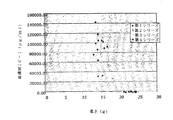
結果を図2及び3に示す。成熟したMIC−1を発現する腫瘍マウスのみが血清MIC−1レベルの劇的な上昇を示した。MIC−1のFURIN DEL変異体を発現するマウス腫瘍は、プロセシングを正常に行うことができず、従って、プロペプチドを含有するが、これらは、著しく低い血清MIC−1レベルを有していた。インビトロデータから推定すると、この結果は、FURIN DEL変異体がECMと強固に結合しているためと思われる。
この実施例で得られた結果は、組織と血液との間のMIC−1分布を調節するのに、MIC−1プロペプチドが重要であることを示す。従って、MIC−1プロペプチドに結合する物質(例えばヘパリン及びヘパラン硫酸)、又は、他の方法で、プロペプチド上のマトリックス結合部位と競合する物質(例えば精製された組換えプロペプチドそれ自体)のいかなるものも、血流中のMIC−1レベルを上昇させると予測されよう。その結果、食欲を含めた、血清MIC−1によって媒介される機能が調節されるであろう。
実施例1に記載した調査の過程で、異種移植モデルマウスのうち、MIC−1を過剰発現している腫瘍を有するものは、体重が減少したか、或いは対照マウスほど体重を増加させなかったことに気づいた。そのため、観察された、マウスの体重への影響の程度及び理由を決定するための研究を行った。
屠殺の直前にマウスの体重を測定し、体重/%体重減を血清MIC−1レベル(例えば、実施例1に記載のELISAによって測定したもの)と比較した。
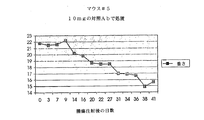
ヒツジ抗ヒトMIC−1 IgGを用いて行われた研究において、1mgのヒツジ抗ヒトMIC−1 IgGは、マウスの体重に相違をもたらさなかった(データは示されていない)が、10mgの抗MIC−1 IgG(図4Aを参照)は、それぞれの腫瘍保有ヌードマウスで、急速な体重増加を誘導した(図4Bに示す、10mgの対照IgGでの結果を参照のこと)ことが判明した。この体重増加は、抗体を投与した5から6日後にピークに達し、その後、それに続く7から10日間にわたって、マウスの体重が徐々に減少した。
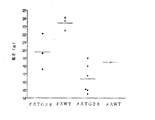
トランスジェニックマウス系統min 28及びmin 75の体重減評価の結果を図5から7に示す。これらの結果は、これらのマウスが、それらの野生型コンジェニック同腹仔より実質的に小さいことも示す。これらのマウスは、出生時体重が等しく、体重の相違は出生して最初の数週間の後に現れ始める。
観察された体重減は、一部のマウスでは極めて劇的であった。そして、それは、腫瘍由来のヒトMIC−1の血清レベルと関連していることが判明した。成熟したヒトMIC−1を過剰発現しているDU145クローンで形質移入されたマウスは、圧倒的に最も高いレベルの血清MIC−1を有し、これらのマウスは劇的な速度で体重を減少させた。動物行動の観察によって、このことの主原因が、これらのマウスによる飼料摂取の劇的な減少にあることが示された。ヒツジ抗MIC−1 IgGの投与によって(対照IgGでは効果がないが)、体重減を逆転できるであろうという新知見は、この体重減がMIC−1によることを実証するものである。これはトランスジェニックマウス系統min 28及びmin 75を用いた体重減評価によって実証された。これらのマウスでは、MIC−1発現がマクロファージ特異的であるにもかかわらず、血清MIC−1レベルが著しく上昇しており、野生型コンジェニックマウスと比較して、体重の有意な相違が観察された。トランスジェニックマウス系統及びそれらの野生型コンジェニック同腹仔は、両方とも出生時体重(すなわち、出生の24時間後に測定されたもの)が同じであったので、この体重減効果は出生後に起こったものである。
(結果及び考察)
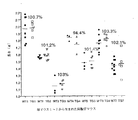
異種移植モデルをヌードマウスで確立した(上述の通り)。その際、ヌードマウスの側腹部に、成熟MIC−1を過剰発現するように遺伝子操作されたいずれかのDU145細胞を注射した。MIC−1を過剰発現しているDU145細胞を注射されたマウスは、急速に体重減を開始した。MIC−1に対するモノクローナル抗体(MAb26)を、11日目に0.1〜1mgの用量で単回投与したところ、それによって、体重の増加が引き起こされ、その程度、及びその期間は、MAb26の量を増加させるに従って、増大した(図8A〜C)。最も高い用量である約1mgでは、体重が異種移植前のレベルにまで上昇し、それから、抗体が最初に投与されたときと同じ体重にまで再び減少するのに約17日かかった。MAb26は、腫瘍の成長に影響を与えなかった(図8D〜F)。また、未処置のマウス(図8G)、及びリン酸緩衝生理食塩水(PBS)のみで処置されたマウス(図8H)は、実験期間中、急速且つ継続的に体重を減少させた。
(材料及び方法)
異種移植モデルをヌードマウスで確立した(上述の通り)。その際、ヌードマウスの側腹部に、成熟MIC−1を過剰発現するように遺伝子操作されたDU145細胞、又は対照プラスミドを有するDU145細胞のいずれかを注射した。MIC−1を過剰発現しているDU145細胞を注射した後の8日目に、飼料摂取を、3回の連続した24時間の測定時間について測定した。8日目の平均腫瘍量は56mm3、平均体重減は7%であった。マウスは、1ケージあたり5匹のグループで飼育した。タイムポイント0に、ホッパーに入れた飼料の重さ及び同腹仔の体重を計測した。ホッパーに入れた飼料から残余及びこぼれた量を引くことによって、24時間後に、消費された飼料を推定した。対照マウスの飼料摂取も同様に測定したが、測定は、平均腫瘍容積が70mm3に達したときである腫瘍注射後21日目に行った。
MIC−1を過剰発現しているDU145が注入されたマウスの飼料摂取は、対照マウスより、1、2、及び3日目(p=0.01、0.0001、及び0.02)に有意に少なかった(約30%)(図9)。これらのマウスの脂肪量を直接測定したところ、精巣上体、鼠径部、及び後腹膜の領域で、脂肪量の著しい減少がMIC−1過剰発現に伴った(図10)。その際、2種類の代表的な筋肉の量は減少しなかった。
(材料及び方法)
異種移植モデルをヌードマウスで確立した(上述の通り)。その際、ヌードマウスの側腹部に、MIC−1を過剰発現するように遺伝子操作されたDU145細胞、又は対照DU145細胞のいずれかを注射した。腫瘍容積が100〜200mm3に達したか、或いはマウスの体重が約18%低下したとき、すなわち、MIC−1を過剰発現しているDU145腫瘍細胞を注射した11〜16日後、そして、対照腫瘍を注射した21〜30日後に、マウスを屠殺した。以前の実験から、腫瘍に由来するヒトMIC−1の血清レベルは15〜58ng/mlであることが知られている。心臓穿刺によって血清を採集し、市販のイムノアッセイを用いて代謝マーカーをアッセイした。統計的比較は、スチューデントのT検定を用いて行った。
マウスにおける様々な代謝マーカーの測定によって、MIC−1を過剰発現する腫瘍マウスにおける、トリグリセリド及び遊離脂肪酸、そしてグルカゴン及びIGF−1の統計的に有意な減少が実証された(データは示されていない)。脂肪量の減少と一致した、レプチン濃度の減少もあった。これは、MIC−1によって減少した飼料摂取が、MIC−1によるレプチンの刺激によって媒介された可能性が非常に小さいことを示すものである。グルコースに関する相違は、p=0.053であり、僅差で統計的有意性を満たさなかった。これらの新知見は、飢餓及び脂肪の減失と概ね一致したものである。
(材料及び方法)
異種移植モデルをヌードマウスで確立した(上述の通り)。MIC−1を過剰発現するように遺伝子操作されたDU145細胞を20匹のマウスの側腹部に注射し、対照プラスミドで形質移入されたDU145細胞を20匹のマウスに注射した。腫瘍容積が100〜200mm3に達したか、或いはマウスの体重が約18%低下したとき、すなわち、MIC−1を過剰発現しているDU145腫瘍細胞を注射した11〜16日後、そして、対照腫瘍を注射した21〜30日後にマウスを屠殺した。肩甲骨間褐色脂肪組織、鼠径部、精巣上体、及び後腹膜の脂肪、並びに脛骨筋及び腓腹筋を慎重に解剖し、摘出して重さを量り、その重さを体重に関して補正した。
褐色脂肪は減少しなかったが、鼠径部脂肪、精巣上体脂肪、及び後腹膜脂肪における体脂肪の重さに顕著な減少があった(図10)。これら2つのグループの間では、マウスの筋肉の重さに有意な相違がなかった(図10)。しかし、PIXImusイメージャー(GE Lunar社製)を使用した、より感度の高い総除脂肪体重分析を用いたところ、除脂肪体重の全体的な減少があったことが示された。また、それは、総脂肪質量及び腹部脂肪質量がはるかに大きく減少していることを確認した。
(結果及び考察)
c−fmsプロモーターの制御下に、MIC−1を単球様細胞から過剰発現するように遺伝子操作して、トランスジェニックマウスを作製した。これらのマウスは、全身的にMIC−1レベルが上昇しており、健康な外見を有し、正常に繁殖した。それらは、野生型マウスから識別できないが、生後約3週間に始まり、成人期にまで至る有意な成長遅延を示す(図5〜7)。この効果は、min 75及びmin 28と呼ばれる2つの独立したトランスジェニック系統で観察された。
血清MIC−1が、すべての個体で平均濃度450pg/mlで存在することは、TGF−βスーパーファミリーに属する他の一部のサイトカインと同様に、MIC−1が1つ又は複数の血中調節因子に結合している可能性があることを示唆する。糖タンパク質であるフェチュインは、広範な細胞及び組織で発現され、血清中に存在する。MIC−1がこの糖タンパクと相互作用しているかどうかを決定するために以下の調査を行った。
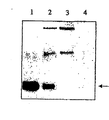
精製された組換えMIC−1及び成熟MIC−1(0.1%BSA中)を、フェチュインでコーティングされたアガロースビーズと共にインキュベートした。その後ビーズを洗浄し、結合した物質を、SDS−PAGEと、それに続く、抗MIC−1抗体を用いたウェスタンブロット法とによって分析した。その際、レーン1は、精製された組換えMIC−1、レーン2は、フェチュインビーズに結合したMIC−1、レーン3は、フェチュインビーズのみ、レーン4は、アガロースビーズのみと共にインキュベートされたMIC−1とした。
結果は、図13に示されており、これは、成熟したMIC−1がフェチュインと相互作用及び結合することを明確に示している。
MIC−1はフェチュインに結合するので、血清MIC−1によって媒介される機能を調節するために、MIC−1抗体の投与の代替手段を、フェチュインが提供する可能性がある。例えば、血清MIC−1が食欲に及ぼす抑制効果を調節するのに、「遊離」MIC−1のレベルが低下するように、フェチュインを適当な経路(例えば静脈内投与)で対象(例えば進行癌を患う対象)に投与することができよう。
(結果及び考察)
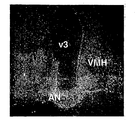
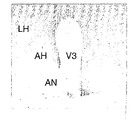
飼料摂取及び食欲は、一連の複雑な機構によって制御されており、その多くは中枢神経系の内部に局在する。神経系において、食欲や体温など、多数の基本的身体機能を制御する領域は、視床下部の領域の中に局在する。食欲の場合、この過程を調節する多数の複雑な因子は、視床下部の弓状核に局在し、ニューロペプチドYなどの介在因子及び介在因子の受容体の多くがこの領域に局在する。この領域の血液脳関門は、漏出が起こりやすい領域でもあり、これは、全身性分子が血液脳関門を通過して、脳に直接作用する可能性のある非常に限られた脳領域の1つである。この作用機序によって、MIC−1は、弓状核及び視床下部に直接的に作用を及ぼすことができると考えられている。しかし、MIC−1は、正常マウス脳のこの領域内部でも発現される(図14)。これは、インサイチュ(in situ)ハイブリダイゼーションの研究によって示した通り、血流中MIC−1の拡散を表すものではなく、インサイチュハイブリダイゼーションの研究は、MIC−1 mRNAと、弓状核、脳室周囲領域、及び室傍視床下部の領域のタンパク質との共局在を実証する。正常脳における、食欲制御などの機能と強く関連した領域にMIC−1が局在することは、この重要な機能を制御するのに、末梢循環からのMIC−1と、脳内で内因的に産生されたMIC−1との両方が、役割を果たしていることの強力な論拠を提供する。
1. Bootcov MR, Bauskin A, Valenzuela SM, Moore AG, Bansal M, He C, Zhang HP, Donnellan M, Mahler S, Pryor K, Walsh B, Nicholson R, Fairlie DF, Por SB, Robbins JM, Breit SN. MIC-I, a novel macrophage inhibitory cytokine, is a divergent member of the TGF-β superfamily cluster. Proc Natl Acad Sci USA 1997: 94:11514-11519.
2. Breit SN, Bootcov MR. "Novel TGF-beta like cytokine", International Patent Application No PCT/AU96/00386 (WO 97/00958).
3. Fairlie WD, Zhang H-P, Brown PK, Russell PK, Bauskin AR, Breit SN. Expression of a TGF-β superfamily protein, Macrophage Inhibitory Cytokine-1, in the yeast Pichia pastoris. Gene 2000: 254:67-76.
4. Moore AG, Brown DA, Fairlie WD, Bauskin AR, Brown PK, Munier MLC, Russell PK, Salamonsen LA, Wallace EM, Breit SN.TGF-β superfamily cytokine MIC-I is present in high concentrations in the serum of pregnant women. J Clin Endocrinol Metab 2000: 85:4781-88.
5. Fairlie WD, Russell PK, Moore AG, Zhang H-P, Brown PK, Breit SN. Epitope mapping of the Transforming Growth Factor- Q superfamily protein, MIC-I: Identification of at least five distinct epitope specificities. Biochemistry 2001: 40:65- 73
6. Breit SN et al. "Diagnostic assay and method of treatment involving macrophage inhibitory cytokine-1 (MIC-I)", International Patent Application No PCT/AUOl/00456 (WO 01/81928).
7. Fairlie WD, Moore AG, Bauskin AR, Russell PK, Zhang H-P, Breit SN. MIC-I is a novel TGF-β superfamily cytokine associated with macrophage activation. J Leukocyte Biol 1999; 65:2-5.
8. Koniaris LG. Induction of MIC-1/growth differentiation factor-15 following bile duct injury. J Gastrointest Surg 2003 Nov 7(7):901-5.
9. Welsh JB, HamptonGM. Analysis of Gene Expression Identifies Candidate Markers and Pharmacological Targets in Prostate Cancer. Cancer Res 2001: 61:5974-5978. 10. Buckhaults P. Vogelstein B, Kinzler KW. Secreted and cell surface genes expressed in benign and malignant colorectal tumors. Cancer Res 2001: 61:6996-7001.
11. Welsh JB, Sapinoso LM, Kern SG, Brown DA, Liu T, Bauskin AR, Ward RL, Hawkins NJ, Quinn DI, Russell PJ, Sutherland RL, Breit SN, Moskaluk CA, Frierson, HA Jr. and Hampton GM. Large-Scale Delineation of Secreted Protein Biomarkers Overexpressed in Cancer Tissue and Serum. Proc Natl Acad Sci USA 2003: 100:3410-3415.
12. Kannan K, Amariglio N, Rechavi G, Givol D. 2000 Profile of gene expression regulated by induced p53: connection to the TGF-beta family. I7EBS Lett 470:77-82.
13. Pei-Xiang Li, et al. Placental Transforming Growth Factor-b Is a Downstream Mediator of the Growth Arrest and Apoptotic Response of Tumour Cells to DNA Damage and p53 Overexpression. J Biol Chem 2000: 275:20127-20135.
14. Yang H, Filipovic Z, Brown D, Breit SN, Vassilev LT. Macrophage inhibitory cytokine- 1: a novel biomarker for p53 pathway activation. MoI Cancer Ther 2003: Oct 2(10): 1023-1029.
15. Albertoni M, Shaw PH, Nozaki M, Godard S, Tenan M, Hamou M-F, Fairlie DW, Breit SN, Paralkar VM, de Tribolet N, Van Meir EG, Hegi ME. Anoxia induces macrophage inhibitory cytokine-1 (MIC-I) in glioblastoma cells independently of p53 and HtF-I. Oncogene 2002: 27:4212-4219.
16. Brown DA, Bauskin AR, Fairlie WD, Smith MD, Liu T, Xu N and Breit SN. An antibody based approach to high volume genotyping for MIC-I polymorphism. Biotechniques 2002: 33(l):118-20, 122, 124 passim.
17. Liu T, Bauskin AR, Zaunders J, Brown DA, Pankurst S, Russell PJ, Breit SN. MIC-I reduces cell adhesion and induces apoptosis in prostate cancer cells. Cancer Res 2003: 63: 5034-5040.
18. Koopmann J, Buckhaults P, Brown DA, Zahurak ML, Sato N, Sokoll L, Chan DW, Yeo CJ, Hruban RH, Breit SN, Kinzler KW, Vogelstein B, Goggins M. Serum MIC- 1 as a Marker of Pancreatic and other Periampullary Cancers. Clin Cancer Res (in press).
19. Baek SJ et al. Cyclooxygenase inhibitors regulate the expression of a TGF-beta superfamily member that has proapoptotic and antitumorigenic activities. MoI Pharmacol 2001: 59:901-908.
20. Brown DA, Ward RL, Buckhaults P, Liu T, Romans KE, Hawkins NJ, Bauskin AR, Kinzler KW, Vogelstein B, Breit SN. MIC-I serum level and genotype: Associations with progress and prognosis of colorectal carcinoma. Clinical Cancer Research 2003: 9:2642-2650.
21. Lee DH, Yang Y, Lee SJ, Kim KY, Koo TH, Shin SM, Song KS, Lee YH et al. Macrophage inhibitory cytokine- 1 induces the invasiveness of gastric cancer cells by up-regulating the urokinase-type plasminogen activator system. Cancer Res 2003: Aug l; 63(15):4648-4655.
22. Pluckthun A, Antibody engineering: advances from the use of Escherichia coli expression systems. Bio/Technology 1991: 9: 545-551.
23. Vassilev LT, Vu BT, Graves B, Carvajal D, Podlaski F, Filipovic Z, Kong N, Kammlott U, Lukacs C, Klein C, Fotouhi N, Liu EA. In vivo activation of the p53 pathway by small-molecule antagonists of MDM2. Science 2004: Feb 6; 303(5659):844-848.
24. Bauskin AR, Brown DA, Junankar S, Rasiah KK, Eggleton S, Hunter M, Liu T, Smith D, Kuffner T, Pankhurst, GJ, Johnen, H, Russell PJ, Barret W, Strieker PD, Grygiel JJ, Kench JG, Henshall SM, Sutherland RL, Breit SN. The propeptide mediates formation of stromal stores of PROMIC-I: role in determining prostate cancer outcome. Cancer Res 2005: March 15; 65(6):2330-2336.
Claims (16)
- 対象の食欲及び/又は体重を調節する方法であって、有効な量のMIC−1調節薬剤を前記対象に投与するステップを含み、前記薬剤が、前記対象に存在するMIC−1の量を増加又は減少させるか、或いは、試料に存在するMIC−1の生物活性を抑制又は増強する、前記方法。
- 対象の食欲及び/又は体重を増加させる方法であって、有効な量のMIC−1抑制薬剤を前記対象に投与するステップを含み、前記薬剤が、薬学的に許容される担体及び/又は賦形剤と混合されていてもよい、前記方法。
- MIC−1抑制薬剤が、対象における内因性MIC−1の量を減少させる薬剤である、請求項2に記載の方法。
- 対象における内因性MIC−1の量を減少させる薬剤が、抗MIC−1抗体又はその断片と、MIC−1の遺伝子を標的とする触媒分子及び抑制分子と、MIC−1の転写又は翻訳抑制物質とからなる群から選択される、請求項3に記載の方法。
- MIC−1抑制薬剤が、対象における内因性MIC−1の活性を抑制する薬剤である、請求項2に記載の方法。
- 対象における内因性MIC−1の活性を抑制する薬剤が、抗MIC−1抗体又はその断片と、MIC−1受容体の可溶性の細胞質外受容体ドメインと、MIC−1に結合する可溶性の分子又はマトリックス結合タンパク質と、その受容体へのMIC−1の結合のペプチド、ペプチドミメティック又は有機小分子抑制物質とからなる群から選択される、請求項5に記載の方法。
- MIC−1抑制薬剤が、ヒト化されたモノクローナル抗MIC−1抗体である、請求項2から6のいずれかに記載の方法。
- 対象が、進行癌に伴う食欲減退及び/又は体重減に苦しんでいる、請求項2に記載の方法。
- 対象の食欲及び/又は体重を減少させる方法であって、有効な量のMIC−1増強薬剤を前記対象に投与するステップを含み、前記薬剤が、薬学的に許容される担体及び/又は賦形剤と混合されていてもよい、前記方法。
- MIC−1増強薬剤が、対象における内因性のMIC−1の量を増加させる薬剤である、請求項9に記載の方法。
- 対象における内因性のMIC−1の量を増加させる薬剤が、MIC−1と、MIC−1遺伝子の転写又は翻訳を増強する薬剤と、p53の発現又は活性を増強する薬剤とからなる群から選択される、請求項10に記載の方法。
- 対象が肥満を患っている、請求項9に記載の方法。
- 対象の食欲及び/又は体重への薬剤の影響を評価する方法であって、前記薬剤を前記対象又は適当なその動物モデルに投与するステップと、前記対象又は動物モデルにおけるMIC−1の量のいかなる増加又は減少も検出するステップとを含む、前記方法。
- 対象の食欲及び/又は体重への薬剤の影響を評価する方法であって、MIC−1又はその機能性断片若しくはミメティックと、MIC−1結合パートナーと、前記薬剤との間の混合物を形成するステップ、並びにMIC−1又はその機能性断片若しくはミメティックと、MIC−1結合パートナーとの間の結合のいかなる増強又は減弱も検出するステップを含む、前記方法。
- 対象の食欲及び/又は体重への薬剤の影響を評価する方法であって、MIC−1を発現する細胞を前記薬剤に曝露するステップと、前記MIC−1発現のレベルのいかなる上昇又は低下も検出するステップとを含む、前記方法。
- 対象の食欲を評価する方法であって、前記対象の血清中に存在するMIC−1の量を測定するステップを含む、前記方法。
Applications Claiming Priority (2)
| Application Number | Priority Date | Filing Date | Title |
|---|---|---|---|
| AU2004901957A AU2004901957A0 (en) | 2004-04-13 | Method for modulating appetite | |
| AU2004901957 | 2004-04-13 |
Related Parent Applications (1)
| Application Number | Title | Priority Date | Filing Date |
|---|---|---|---|
| JP2011086143A Division JP2011190262A (ja) | 2004-04-13 | 2011-04-08 | 食欲を調節する方法 |
Publications (2)
| Publication Number | Publication Date |
|---|---|
| JP2013209376A true JP2013209376A (ja) | 2013-10-10 |
| JP5767667B2 JP5767667B2 (ja) | 2015-08-19 |
Family
ID=35149777
Family Applications (4)
| Application Number | Title | Priority Date | Filing Date |
|---|---|---|---|
| JP2007507619A Expired - Lifetime JP5448338B2 (ja) | 2004-04-13 | 2005-04-13 | 食欲を調節する方法 |
| JP2011086143A Pending JP2011190262A (ja) | 2004-04-13 | 2011-04-08 | 食欲を調節する方法 |
| JP2013086022A Expired - Lifetime JP5767667B2 (ja) | 2004-04-13 | 2013-04-16 | 食欲を調節する方法 |
| JP2013219147A Expired - Lifetime JP5806275B2 (ja) | 2004-04-13 | 2013-10-22 | 食欲を調節する方法 |
Family Applications Before (2)
| Application Number | Title | Priority Date | Filing Date |
|---|---|---|---|
| JP2007507619A Expired - Lifetime JP5448338B2 (ja) | 2004-04-13 | 2005-04-13 | 食欲を調節する方法 |
| JP2011086143A Pending JP2011190262A (ja) | 2004-04-13 | 2011-04-08 | 食欲を調節する方法 |
Family Applications After (1)
| Application Number | Title | Priority Date | Filing Date |
|---|---|---|---|
| JP2013219147A Expired - Lifetime JP5806275B2 (ja) | 2004-04-13 | 2013-10-22 | 食欲を調節する方法 |
Country Status (11)
| Country | Link |
|---|---|
| US (7) | US8192735B2 (ja) |
| EP (4) | EP1734986B1 (ja) |
| JP (4) | JP5448338B2 (ja) |
| CA (2) | CA2905125C (ja) |
| CY (1) | CY1115731T1 (ja) |
| DK (2) | DK2441466T3 (ja) |
| ES (3) | ES2788868T3 (ja) |
| PL (2) | PL2929891T3 (ja) |
| PT (2) | PT2441466E (ja) |
| SI (1) | SI2441466T1 (ja) |
| WO (1) | WO2005099746A1 (ja) |
Families Citing this family (52)
| Publication number | Priority date | Publication date | Assignee | Title |
|---|---|---|---|---|
| EP1734986B1 (en) | 2004-04-13 | 2015-11-11 | St Vincent's Hospital Sydney Limited | Method for modulating appetite |
| ATE511656T1 (de) * | 2006-08-04 | 2011-06-15 | Hannover Med Hochschule | Verfahren zur risikobewertung von herzeingriffen auf gdf-15-basis |
| US20100278843A1 (en) | 2007-08-16 | 2010-11-04 | St. Vincent's Hospital Sydney Limited | Agents and methods for modulating macrophage inhibitory cytokine (mic-1) activity |
| US20100266707A1 (en) * | 2007-10-09 | 2010-10-21 | Samuel Norbert Breit | Method of treating cachexia with the removal or inactivation of macrophage inhibitory cytokine-1 |
| JP5444363B2 (ja) * | 2008-10-31 | 2014-03-19 | セントビンセンツ ホスピタル シドニー リミテッド | 慢性腎疾患における予後判定の方法 |
| CN103533951B (zh) * | 2011-04-08 | 2017-04-19 | 安姆根有限公司 | 使用生长分化因子15(gdf‑15)治疗或改善代谢障碍的方法 |
| JP2015506373A (ja) | 2012-01-26 | 2015-03-02 | アムジエン・インコーポレーテツド | 成長分化因子15(gdf−15)ポリペプチド |
| JP6254146B2 (ja) | 2012-03-27 | 2017-12-27 | エヌジーエム バイオファーマシューティカルス,インコーポレーテッド | 代謝障害を治療するための組成物および方法 |
| HRP20191326T1 (hr) | 2012-09-26 | 2019-11-01 | Univ Wuerzburg J Maximilians | Monoklonska antitijela za faktor rasta i diferencijacije 15 (gdf-15) |
| CA2896076C (en) * | 2012-12-21 | 2022-12-06 | Aveo Pharmaceuticals, Inc. | Anti-gdf15 antibodies |
| US9161966B2 (en) | 2013-01-30 | 2015-10-20 | Ngm Biopharmaceuticals, Inc. | GDF15 mutein polypeptides |
| CA2899170C (en) | 2013-01-30 | 2022-08-02 | Ngm Biopharmaceuticals, Inc. | Compositions and methods of use in treating metabolic disorders |
| TWI648401B (zh) | 2013-07-31 | 2019-01-21 | 安美基公司 | 生長分化因子15(gdf-15)構築體 |
| GB2524553C (en) * | 2014-03-26 | 2017-07-19 | Julius-Maximilians-Universitãt Würzburg | Monoclonal antibodies to growth and differentiation factor 15 (GDF-15), and uses thereof for treating cancer cachexia |
| GB2524552B (en) * | 2014-03-26 | 2017-07-12 | Julius-Maximilians-Universitãt Wurzburg | Monoclonal antibodies to growth and differentiation factor 15 (GDF-15), and use thereof for treating cancer |
| LT3653644T (lt) | 2014-03-26 | 2024-01-25 | Julius-Maximilians-Universität Würzburg | Monokloniniai antikūnai prieš augimo ir diferenciacijos faktorių 15 (gdf- 15), ir jų panaudojimas taikant vėžio kacheksijos ir vėžio gydymą |
| EP3157952B1 (en) * | 2014-06-20 | 2021-12-22 | Aveo Pharmaceuticals, Inc. | Treatment of congestive heart failure and other cardiac dysfunction using a gdf15 modulator |
| US20170137506A1 (en) * | 2014-06-20 | 2017-05-18 | Aveo Pharmaceuticals, Inc. | Treatment of chronic kidney disease and other renal dysfunction using a gdf15 modulator |
| US10588980B2 (en) | 2014-06-23 | 2020-03-17 | Novartis Ag | Fatty acids and their use in conjugation to biomolecules |
| EP3157942B1 (en) * | 2014-06-23 | 2020-06-17 | Novartis AG | Site specific protein modifications |
| EP3160496B1 (en) | 2014-06-24 | 2021-03-03 | Novo Nordisk As | Mic-1 fusion proteins and uses thereof |
| MX370115B (es) * | 2014-07-30 | 2019-12-02 | Ngm Biopharmaceuticals Inc | Dímeros que comprenden dos polipéptidos, útiles en el tratamiento de trastornos metabólicos. |
| EP3197493B1 (en) | 2014-09-25 | 2021-03-10 | Aveo Pharmaceuticals Inc. | Methods of reversing cachexia and prolonging survival comprising administering a gdf15 modulator and an anti-cancer agent |
| PL3212226T3 (pl) | 2014-10-31 | 2020-11-02 | Ngm Biopharmaceuticals, Inc. | Kompozycje i sposoby stosowania w leczeniu zaburzeń metabolicznych |
| CN107108754A (zh) * | 2014-12-22 | 2017-08-29 | 诺和诺德股份有限公司 | α‑1‑抗胰蛋白酶(A1AT)融合蛋白及其用途 |
| KR102621034B1 (ko) | 2015-10-02 | 2024-01-03 | 율리우스-막시밀리안스 우니버지태트 뷔르츠부르크 | 면역 체크포인트 차단제를 이용한 치료의 임상적인 경과를 예측하기 위한 진단 마커로서의 gdf-15 |
| CN108463246B (zh) | 2015-10-02 | 2025-02-28 | 尤利乌斯·马克西米利安维尔茨堡大学 | 使用人生长分化因子15(gdf-15)抑制剂和免疫检查点阻断剂的联合治疗 |
| GB201517528D0 (en) | 2015-10-02 | 2015-11-18 | Julius Maximillians Universitãt Würzburg | GDF-15 as a diagnosis marker for melanoma |
| WO2017121865A1 (en) | 2016-01-15 | 2017-07-20 | Novo Nordisk A/S | Mic-1 receptor and uses thereof |
| US11604194B2 (en) | 2016-02-29 | 2023-03-14 | Public University Corporation Yokohama City University | Method for detecting castration-resistant prostate cancer and detection reagent |
| PE20190126A1 (es) | 2016-03-31 | 2019-01-17 | Ngm Biopharmaceuticals Inc | Proteinas de union y metodos de uso de las mismas |
| WO2017189724A1 (en) | 2016-04-27 | 2017-11-02 | Novartis Ag | Antibodies against growth differentiation factor 15 and uses thereof |
| CN109414471A (zh) | 2016-05-24 | 2019-03-01 | 诺和诺德股份有限公司 | Mic-1化合物及其用途 |
| EP3526346A1 (en) * | 2016-10-12 | 2019-08-21 | Janssen Biotech, Inc. | Methods for screening for modulators of gdf15-like biological activity |
| EP3551214B1 (en) * | 2016-12-06 | 2024-03-13 | St Vincent's Hospital Sydney Limited | Treatment of obesity and eating disorders |
| GB201700567D0 (en) | 2017-01-12 | 2017-03-01 | Genagon Therapeutics Ab | Therapeutic agents |
| TWI710377B (zh) | 2017-05-23 | 2020-11-21 | 丹麥商諾佛 儂迪克股份有限公司 | Mic-1化合物及其用途 |
| WO2019004550A1 (ko) * | 2017-06-26 | 2019-01-03 | 강원대학교 산학협력단 | Mic-1 단백질에 특이적으로 결합하는 항체 및 이의 용도 |
| JP7127422B2 (ja) * | 2017-08-30 | 2022-08-30 | 東ソー株式会社 | 癌を検出する方法及び検出試薬 |
| CN111163795A (zh) | 2017-09-10 | 2020-05-15 | 诺沃挪第克公司 | 用于治疗肥胖症的mic-1和glp-1 |
| CR20200510A (es) | 2018-04-09 | 2020-11-26 | Amgen Inc | Protreínas de fusión del factor de diferenciación de crecimiento 15 |
| JP7155403B2 (ja) | 2018-08-20 | 2022-10-18 | ファイザー・インク | 抗gdf15抗体、組成物および使用の方法 |
| US20200152330A1 (en) | 2018-11-13 | 2020-05-14 | CurieAI, Inc. | Scalable Personalized Treatment Recommendation |
| US12544427B2 (en) | 2019-10-04 | 2026-02-10 | Amgen Inc. | Use of GDF15 for treating cardiometabolic syndrome and other conditions |
| BR112022010227A2 (pt) | 2019-11-26 | 2022-09-13 | Yuhan Corp | Proteína de fusão gdf15 de ação prolongada e composição farmacêutica compreendendo a mesma |
| KR20230107309A (ko) | 2020-11-10 | 2023-07-14 | 카탈임 게엠베하 | 항-gdf15 항체 및 암 치료용 투여 용법 |
| CA3215737A1 (en) | 2021-03-31 | 2022-10-06 | Cambridge Enterprise Limited | Therapeutic inhibitors of gdf15 signalling |
| AU2022278933A1 (en) | 2021-05-21 | 2023-12-07 | Yuhan Corporation | Composition for preventing or treating non-alcoholic fatty liver disease or non-alcoholic steatohepatitis comprising growth differentiation factor-15 variant |
| CA3219645A1 (en) | 2021-05-21 | 2022-11-24 | Yuhan Corporation | Composition for combination therapy comprising growth differentiation factor-15 variant and glucagon-like peptide-1 receptor agonist |
| WO2023018803A1 (en) | 2021-08-10 | 2023-02-16 | Byomass Inc. | Anti-gdf15 antibodies, compositions and uses thereof |
| US20250382359A1 (en) | 2021-12-22 | 2025-12-18 | Byomass Inc. | Targeting gdf15-gfral pathway |
| WO2023154953A1 (en) | 2022-02-14 | 2023-08-17 | Ngm Biopharmaceuticals, Inc. | Gdf15 polypeptides for treating and preventing autoimmune diseases |
Citations (1)
| Publication number | Priority date | Publication date | Assignee | Title |
|---|---|---|---|---|
| JP5448338B2 (ja) * | 2004-04-13 | 2014-03-19 | セントビンセンツ ホスピタル シドニー リミテッド | 食欲を調節する方法 |
Family Cites Families (9)
| Publication number | Priority date | Publication date | Assignee | Title |
|---|---|---|---|---|
| US5225539A (en) | 1986-03-27 | 1993-07-06 | Medical Research Council | Recombinant altered antibodies and methods of making altered antibodies |
| DE69637844D1 (de) | 1995-06-22 | 2009-04-09 | St Vincent S Hospital Sidney L | Neues tgf-beta-ahnliches cytokin |
| AU8591198A (en) * | 1997-07-31 | 1999-02-22 | Johns Hopkins University School Of Medicine, The | Growth differentiation factor-15 |
| JP3762222B2 (ja) | 1998-10-07 | 2006-04-05 | ストライカー・コーポレーション | 改変型TGF−βスーパーファミリータンパク質 |
| DE60142372D1 (de) | 2000-04-20 | 2010-07-22 | St Vincents Hosp Sydney | Diagnostischer Assay mit makrophagenhemmendem Zytokin-1 (MIC-1) |
| US7141661B2 (en) * | 2000-09-08 | 2006-11-28 | The United States Of America As Represented By The Department Of Health And Human Services | Non-steroidal anti-inflammatory drug activated gene with anti-tumorigenic properties |
| US7157235B2 (en) * | 2002-06-17 | 2007-01-02 | St. Vincent's Hospital Sydney Limited | Methods of diagnosis, prognosis and treatment of cardiovascular disease |
| DK1844337T3 (da) * | 2005-01-24 | 2013-09-30 | Pepscan Systems Bv | Bindingsforbindelser, immunogene forbindelser og peptidmimetika |
| WO2010093925A2 (en) | 2009-02-12 | 2010-08-19 | Stryker Corporation | PERIPHERAL ADMINISTRATION OF PROTEINS INCLUDING TGF-β SUPERFAMILY MEMBERS FOR TREATMENT OF SYSTEMIC DISORDERS AND DISEASE |
-
2005
- 2005-04-13 EP EP05729508.1A patent/EP1734986B1/en not_active Expired - Lifetime
- 2005-04-13 PT PT111838843T patent/PT2441466E/pt unknown
- 2005-04-13 ES ES15163748T patent/ES2788868T3/es not_active Expired - Lifetime
- 2005-04-13 ES ES05729508.1T patent/ES2555956T3/es not_active Expired - Lifetime
- 2005-04-13 DK DK11183884.3T patent/DK2441466T3/da active
- 2005-04-13 JP JP2007507619A patent/JP5448338B2/ja not_active Expired - Lifetime
- 2005-04-13 CA CA2905125A patent/CA2905125C/en not_active Expired - Lifetime
- 2005-04-13 PT PT151637485T patent/PT2929891T/pt unknown
- 2005-04-13 EP EP11183884.3A patent/EP2441466B1/en not_active Expired - Lifetime
- 2005-04-13 EP EP14171119.2A patent/EP2774620A1/en not_active Withdrawn
- 2005-04-13 ES ES11183884.3T patent/ES2518865T3/es not_active Expired - Lifetime
- 2005-04-13 EP EP15163748.5A patent/EP2929891B1/en not_active Expired - Lifetime
- 2005-04-13 DK DK15163748.5T patent/DK2929891T3/da active
- 2005-04-13 SI SI200531902T patent/SI2441466T1/sl unknown
- 2005-04-13 WO PCT/AU2005/000525 patent/WO2005099746A1/en not_active Ceased
- 2005-04-13 CA CA2561877A patent/CA2561877C/en not_active Expired - Lifetime
- 2005-04-13 PL PL15163748T patent/PL2929891T3/pl unknown
- 2005-04-13 US US11/547,675 patent/US8192735B2/en active Active
- 2005-04-13 PL PL11183884T patent/PL2441466T3/pl unknown
-
2010
- 2010-11-05 US US12/926,272 patent/US8946146B2/en not_active Expired - Lifetime
-
2011
- 2011-04-08 JP JP2011086143A patent/JP2011190262A/ja active Pending
-
2013
- 2013-04-16 JP JP2013086022A patent/JP5767667B2/ja not_active Expired - Lifetime
- 2013-10-22 JP JP2013219147A patent/JP5806275B2/ja not_active Expired - Lifetime
-
2014
- 2014-10-22 CY CY20141100862T patent/CY1115731T1/el unknown
- 2014-12-22 US US14/578,611 patent/US20150183861A1/en not_active Abandoned
-
2016
- 2016-06-02 US US15/171,693 patent/US20160289320A1/en not_active Abandoned
-
2018
- 2018-06-11 US US16/004,519 patent/US20180346560A1/en not_active Abandoned
-
2020
- 2020-12-15 US US17/247,515 patent/US20210340243A1/en not_active Abandoned
-
2024
- 2024-05-10 US US18/660,675 patent/US20250109192A1/en active Pending
Patent Citations (1)
| Publication number | Priority date | Publication date | Assignee | Title |
|---|---|---|---|---|
| JP5448338B2 (ja) * | 2004-04-13 | 2014-03-19 | セントビンセンツ ホスピタル シドニー リミテッド | 食欲を調節する方法 |
Non-Patent Citations (3)
| Title |
|---|
| JPN6011001509; Fairlie WD et al.: 'MIC-1 is a novel TGF-beta superfamily cytokine associated with macrophage activation' Journal of Leukocyte Biology Vol.65, 199901, pp.2-5 * |
| JPN6011001510; Zereu M et al.: 'p53 and bcl-2 protein expression and its relationship with prognosis in the patients with small cell' Proc Am Soc Clin Oncol Vol.22, 2002 * |
| JPN6014025375; Cancer Research Vol.63,No.16, 2003, p5034-5040 * |
Also Published As
Similar Documents
| Publication | Publication Date | Title |
|---|---|---|
| JP5806275B2 (ja) | 食欲を調節する方法 | |
| US20100266707A1 (en) | Method of treating cachexia with the removal or inactivation of macrophage inhibitory cytokine-1 | |
| DK2711023T3 (en) | osteogenesis | |
| US20140086915A1 (en) | Agents and methods for modulating macrophage inhibitory cytokine (mic-1) activity | |
| TWI359271B (en) | Pharmaceutical composition for insulin resistance | |
| AU2005232335B2 (en) | Method for modulating appetite | |
| HK1215932B (en) | Method for modulating appetite | |
| HK1168274B (en) | Mic-1 inhibiting agent | |
| Shoop | Targeting Cancer-and Chemotherapy-Induced Anorexia and Cachexia using the GDF15/GFRAL Signalling System |
Legal Events
| Date | Code | Title | Description |
|---|---|---|---|
| A131 | Notification of reasons for refusal |
Free format text: JAPANESE INTERMEDIATE CODE: A132 Effective date: 20140619 |
|
| A601 | Written request for extension of time |
Free format text: JAPANESE INTERMEDIATE CODE: A601 Effective date: 20140912 |
|
| A602 | Written permission of extension of time |
Free format text: JAPANESE INTERMEDIATE CODE: A602 Effective date: 20140918 |
|
| A601 | Written request for extension of time |
Free format text: JAPANESE INTERMEDIATE CODE: A601 Effective date: 20141014 |
|
| A602 | Written permission of extension of time |
Free format text: JAPANESE INTERMEDIATE CODE: A602 Effective date: 20141017 |
|
| A601 | Written request for extension of time |
Free format text: JAPANESE INTERMEDIATE CODE: A601 Effective date: 20141111 |
|
| A602 | Written permission of extension of time |
Free format text: JAPANESE INTERMEDIATE CODE: A602 Effective date: 20141114 |
|
| A521 | Request for written amendment filed |
Free format text: JAPANESE INTERMEDIATE CODE: A523 Effective date: 20141216 |
|
| TRDD | Decision of grant or rejection written | ||
| A01 | Written decision to grant a patent or to grant a registration (utility model) |
Free format text: JAPANESE INTERMEDIATE CODE: A01 Effective date: 20150601 |
|
| A61 | First payment of annual fees (during grant procedure) |
Free format text: JAPANESE INTERMEDIATE CODE: A61 Effective date: 20150619 |
|
| R150 | Certificate of patent or registration of utility model |
Ref document number: 5767667 Country of ref document: JP Free format text: JAPANESE INTERMEDIATE CODE: R150 |
|
| R250 | Receipt of annual fees |
Free format text: JAPANESE INTERMEDIATE CODE: R250 |
|
| R250 | Receipt of annual fees |
Free format text: JAPANESE INTERMEDIATE CODE: R250 |
|
| R250 | Receipt of annual fees |
Free format text: JAPANESE INTERMEDIATE CODE: R250 |
|
| R250 | Receipt of annual fees |
Free format text: JAPANESE INTERMEDIATE CODE: R250 |
|
| R250 | Receipt of annual fees |
Free format text: JAPANESE INTERMEDIATE CODE: R250 |
|
| R250 | Receipt of annual fees |
Free format text: JAPANESE INTERMEDIATE CODE: R250 |
|
| R250 | Receipt of annual fees |
Free format text: JAPANESE INTERMEDIATE CODE: R250 |
|
| EXPY | Cancellation because of completion of term |