US10020913B2 - Polar code encoding method and device - Google Patents
Polar code encoding method and device Download PDFInfo
- Publication number
- US10020913B2 US10020913B2 US15/151,320 US201615151320A US10020913B2 US 10020913 B2 US10020913 B2 US 10020913B2 US 201615151320 A US201615151320 A US 201615151320A US 10020913 B2 US10020913 B2 US 10020913B2
- Authority
- US
- United States
- Prior art keywords
- polar code
- polar
- bit index
- code
- code group
- Prior art date
- Legal status (The legal status is an assumption and is not a legal conclusion. Google has not performed a legal analysis and makes no representation as to the accuracy of the status listed.)
- Active, expires
Links
Images


Classifications
-
- H—ELECTRICITY
- H04—ELECTRIC COMMUNICATION TECHNIQUE
- H04L—TRANSMISSION OF DIGITAL INFORMATION, e.g. TELEGRAPHIC COMMUNICATION
- H04L1/00—Arrangements for detecting or preventing errors in the information received
- H04L1/004—Arrangements for detecting or preventing errors in the information received by using forward error control
- H04L1/0041—Arrangements at the transmitter end
-
- H—ELECTRICITY
- H03—ELECTRONIC CIRCUITRY
- H03M—CODING; DECODING; CODE CONVERSION IN GENERAL
- H03M13/00—Coding, decoding or code conversion, for error detection or error correction; Coding theory basic assumptions; Coding bounds; Error probability evaluation methods; Channel models; Simulation or testing of codes
- H03M13/03—Error detection or forward error correction by redundancy in data representation, i.e. code words containing more digits than the source words
- H03M13/05—Error detection or forward error correction by redundancy in data representation, i.e. code words containing more digits than the source words using block codes, i.e. a predetermined number of check bits joined to a predetermined number of information bits
-
- H—ELECTRICITY
- H03—ELECTRONIC CIRCUITRY
- H03M—CODING; DECODING; CODE CONVERSION IN GENERAL
- H03M13/00—Coding, decoding or code conversion, for error detection or error correction; Coding theory basic assumptions; Coding bounds; Error probability evaluation methods; Channel models; Simulation or testing of codes
- H03M13/03—Error detection or forward error correction by redundancy in data representation, i.e. code words containing more digits than the source words
- H03M13/05—Error detection or forward error correction by redundancy in data representation, i.e. code words containing more digits than the source words using block codes, i.e. a predetermined number of check bits joined to a predetermined number of information bits
- H03M13/13—Linear codes
-
- H—ELECTRICITY
- H03—ELECTRONIC CIRCUITRY
- H03M—CODING; DECODING; CODE CONVERSION IN GENERAL
- H03M13/00—Coding, decoding or code conversion, for error detection or error correction; Coding theory basic assumptions; Coding bounds; Error probability evaluation methods; Channel models; Simulation or testing of codes
- H03M13/61—Aspects and characteristics of methods and arrangements for error correction or error detection, not provided for otherwise
- H03M13/611—Specific encoding aspects, e.g. encoding by means of decoding
-
- H—ELECTRICITY
- H03—ELECTRONIC CIRCUITRY
- H03M—CODING; DECODING; CODE CONVERSION IN GENERAL
- H03M13/00—Coding, decoding or code conversion, for error detection or error correction; Coding theory basic assumptions; Coding bounds; Error probability evaluation methods; Channel models; Simulation or testing of codes
- H03M13/61—Aspects and characteristics of methods and arrangements for error correction or error detection, not provided for otherwise
- H03M13/618—Shortening and extension of codes
-
- H—ELECTRICITY
- H04—ELECTRIC COMMUNICATION TECHNIQUE
- H04L—TRANSMISSION OF DIGITAL INFORMATION, e.g. TELEGRAPHIC COMMUNICATION
- H04L1/00—Arrangements for detecting or preventing errors in the information received
- H04L1/004—Arrangements for detecting or preventing errors in the information received by using forward error control
- H04L1/0041—Arrangements at the transmitter end
- H04L1/0043—Realisations of complexity reduction techniques, e.g. use of look-up tables
Definitions
- the present disclosure relates to the field of communication, and particularly to a polar code encoding method and device.
- channel encoding is generally used to improve reliability of data transmission and ensure communication quality.
- a Polar code is a good code which can achieve Shannon capacity by theoretical proof and has a low encoding and decoding complexity. If the code length is short, the performance of conventional successive cancellation (abbreviated as SC) decoding is worse than performances of a low density parity check code (abbreviated as LDPC code) and a Turbo Code. In a case of decoding with list codes, the performance of the Polar code with medium code length is better than performances of the LDPC code or the Turbo Code.
- the Polar code is a linear block code, and the generator matrix thereof is G N .
- the code length N 2 n and n ⁇ 0.
- B N is a transposed matrix such as a bit reversal matrix. is a Kronecker power (Kronecker power) of F, which is defined as
- A is an information bit index set.
- G N (A) is a submatrix obtained from a row, which corresponds to the index in the set A, in G N .
- G N (A c ) is a submatrix obtained from a row, which corresponds to the index in the set A c , in G N .
- u A c is Frozen bits the number of which is (N ⁇ K), with N being the code length and K being the length of information bits.
- a Polar code with a code length being N and a code rate being R 1 is represented as (N, K 1 , A 1 )
- a second Polar code with a code length being N and a code rate being R 2 is represented as (N, K 2 , A 2 )
- a Polar code with a code length being N and a code rate being R 3 is represented as (N, K 3 ,A 3 ).
- Polar codes with a same code length and different code rates are represented differently.
- a first Polar code with the code length being 2048 and the number of information bits being 683 is represented as (2048, 683, A 1 ), where A 1 is a subset including 683 elements of a set ⁇ 0, 1, 2, . . .
- a second Polar code with the code length being 2048 and the number of information bits being 1024 is represented as (2048, 1024, A 2 ), where A 2 is a subset including 1024 elements of the set ⁇ 0, 1, 2, . . . , 2047 ⁇ .
- a 1 and A 2 include a large number of same elements.
- the first Polar code and the second Polar code need to be represented by A 1 and A 2 respectively, which causes a high overhead for representing the Polar code conventionally.
- a method and an apparatus for Polar code encoding are provided according to embodiments of the disclosure, in which encoding is performed according to representation of Polar codes with a same code length and different code rates based on groups, and the overhead for representing the Polar codes is greatly reduced.
- a method for Polar code encoding includes:
- information bit sets respectively corresponding to all Polar codes with different code rates in each Polar code group include at least one same element.
- the common information bit set corresponding to the Polar code group is a union of information bit sets respectively corresponding to all Polar codes with different code rates in the Polar code group, or is an information bit set corresponding to a Polar code with any code rate in the Polar code group.
- a method for Polar code encoding includes:
- Frozen bit sets respectively corresponding to all Polar codes with different code rates in each Polar code group include at least one same element.
- the common Frozen bit set corresponding to the Polar code group is a union of Frozen bit sets respectively corresponding to all Polar codes with different code rates in the Polar code group, or is a Frozen bit set corresponding to a Polar code with any code rate in the Polar code group.
- an apparatus for Polar code encoding which includes:
- a representing unit configured to represent each Polar code group in m Polar code groups by a common information bit set, where Polar codes in each Polar code group have a same code length and different code rates, and m is greater than or equal to 2;
- an obtaining unit configured to obtain an information bit set corresponding to each Polar code in the Polar code group based on the common information bit set corresponding to the Polar code group;
- an encoding unit configured to perform Polar code encoding on information to be encoded based on the information bit set corresponding to each Polar code in the Polar code group.
- the common information bit set corresponding to the Polar code group is a union of information bit sets respectively corresponding to all Polar codes with different code rates in the Polar code group, or is an information bit set corresponding to a Polar code with any code rate in the Polar code group.
- an apparatus for Polar code encoding which includes:
- a processor configured to represent each Polar code group in m Polar code groups by a common information bit set, where Polar codes in each Polar code group have a same code length and different code rates, and m is greater than or equal to 2;
- the common information bit set corresponding to the Polar code group is a union of information bit sets respectively corresponding to all Polar codes with different code rates in the Polar code group, or is an information bit set corresponding to a Polar code with any code rate in the Polar code group.
- an apparatus for Polar code encoding which includes:
- a representing unit configured to represent each Polar code group in m Polar code groups by a common Frozen bit set, where Polar codes in each Polar code group have a same code length and different code rates, and m is greater than or equal to 2;
- an obtaining unit configured to obtain an information bit set corresponding to each Polar code in the Polar code group based on the Frozen bit set corresponding to the Polar code group;
- an encoding unit configured to perform Polar code encoding on information to be encoded based on the Frozen bit set corresponding to each Polar code in the Polar code group.
- Frozen bit sets respectively corresponding to all Polar codes with different code rates in each Polar code group include at least one same element.
- the common Frozen bit set corresponding to the Polar code group is a union of Frozen bit sets respectively corresponding to all Polar codes with different code rates in the Polar code group, or is a Frozen bit set corresponding to a Polar code with any code rate in the Polar code group.
- an apparatus for Polar code encoding which includes:
- a processor configured to represent each Polar code group in m Polar code groups by a common Frozen bit set, where Polar codes in each Polar code group have a same code length and different code rates, and m is greater than or equal to 2;
- Frozen bit sets respectively corresponding to all Polar codes with different code rates in each Polar code group include at least one same element.
- the common Frozen bit set corresponding to the Polar code group is a union of Frozen bit sets respectively corresponding to all Polar codes with different code rates in the Polar code group, or is a Frozen bit set corresponding to a Polar code with any code rate in the Polar code group.
- each Polar code group in the m Polar code groups is represented by a common information bit set or a common Frozen bit set, where Polar codes in each Polar code group have a same code length and different code rates, and m is greater than or equal to 2; an information bit set or a Frozen bit set corresponding to each Polar code in the Polar code group is obtained based on the common information bit set or the common Frozen bit set corresponding to the Polar code group, and Polar code encoding is performed on information to be encoded based on the information bit set or the Frozen bit set corresponding to each Polar code in the Polar code group.
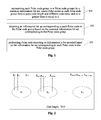
- FIG. 1 is a flow chart of a method for Polar code encoding according to an embodiment of the disclosure
- FIG. 2 is a schematic diagram of a common information bit set of each Polar code group according to an embodiment of the disclosure
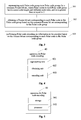
- FIG. 3 is a flow chart of another method for Polar code encoding according to an embodiment of the disclosure.
- FIG. 4 is a schematic diagram of an apparatus for Polar code encoding according to an embodiment of the disclosure.
- FIG. 5 is a schematic diagram of another apparatus for Polar code encoding according to an embodiment of the disclosure.
- FIG. 6 is a schematic diagram of another apparatus for Polar code encoding according to an embodiment of the disclosure.
- FIG. 7 is a schematic diagram of another apparatus for Polar code encoding according to an embodiment of the disclosure.
- a method for Polar code encoding is provided according to an embodiment of the disclosure. As shown in FIG. 1 , the method may include steps 101 to 103 .
- each Polar code group in m Polar code groups is represented by a common information bit set, where Polar codes in each Polar code group have a same code length and different code rates and m is greater than or equal to 2.
- multiple Polar codes with a same code length and different code rates may be divided into m Polar code groups, each Polar code group includes one or more Polar codes with different code rates, and information bit sets respectively corresponding to all Polar codes with different code rates in each Polar code group include at least one same element, where m is greater than or equal to 2.
- the code rate of any Polar code is different from each other.
- Polar codes are divided so that Polar codes with the code rates being close to each other are in a Polar code group.
- the Polar codes may also be divided by using other division methods, and the embodiment of the disclosure is not limited herein. It is only required that information bit indexes included in the information bit sets corresponding to the Polar codes with different code rates in each group include at least one same information bit index.
- the information bit set corresponding to the Polar code is an information bit index set that can be used by the Polar code, which may be determined by using the method described in the background, or may be determined by using other methods, and the embodiment of the disclosure is not limited therein.
- an information bit set corresponding to a Polar code with the code length being 2048 and the number of information bits being 683 may be A 1 , where A 1 is a subset including 683 elements of a set ⁇ 0, 1, 2, . . . , 2047 ⁇ ; an information bit set corresponding to a Polar code with the code length being 2048 and the number of information bits being 1024 may be A 2 where A 2 is a subset including 1024 elements of a set ⁇ 0, 1, 2, . . . , 2047 ⁇ .
- the Polar codes in each Polar code group may share an information bit set or a Frozen bit set assigned for the group.
- the common information bit set assigned for the i-th Polar code group is represented by A i , and
- K si , where
- Each Polar code in any Polar code group may be represented by a common information bit set of the group.
- the i-th Polar code group is taken as an example for illustration.
- Each Polar code in the Polar code group may be represented by (N, K t ), where N is the code length, and K t represents the first K t information bit indexes of the common information bit set A i of the Polar code group.
- the common information bit set A corresponding to the i-th Polar code group may be a union of information bit sets respectively corresponding to all Polar codes with different code rates in the i-th Polar code group, or may be an information bit set corresponding to a Polar code with a certain code rate in the i-th Polar code group, or may be obtained by using other methods, and the embodiment of the disclosure is not limited herein.
- the common information bit set of the i-th Polar code group may be an information bit set corresponding to a code length of 2048 and a code rate of 0.6.
- a recurrence relation is among common information bit sets corresponding to different Polar code groups in the m Polar code groups.
- the recurrence relation may be:
- a i A i - 1 ⁇ ⁇ ⁇ ⁇ A i ,
- the set A i is a common information bit set corresponding to the i-th Polar code group, and ⁇ A i is a difference set between the set A i and the set A i ⁇ 1 ;
- the set A i is a common information bit set corresponding to the i-th Polar code group
- the set A j is a common information bit set corresponding to a j-th Polar code group
- ⁇ A j is a difference set between the set A i and the set A j
- i is not equal to j.
- a 1 includes elements of K 1 , K 2 , . . . , K s1
- a 2 includes elements of K s1+1 , K s1+2 , . . . , K s1+s2
- a m includes elements of K sm ⁇ 1+1 , K sm ⁇ 1+2 , . . . , K sm ⁇ 1+sm , where a recurrence relation is among A 1 , A 2 , . . . , A m .
- the code length N 16, and A 1 , A 2 , A 3 correspond to common information bit sets of three Polar code groups respectively,
- ⁇ A 2 ⁇ 8, 13, 11, 10 ⁇
- ⁇ A 3 ⁇ 9, 7, 6, 4 ⁇
- an information bit set corresponding to each Polar code in the Polar code group is obtained based on the common information bit set corresponding to the Polar code group.
- the information bit set corresponding to any Polar code (N, K t ) in the i-th Polar code group includes the first K t information bit indexes of the common information bit set A i of the Polar code group represented by K t .
- Polar code encoding is performed on information to be encoded based on the information bit set corresponding to each Polar code in the Polar code group.
- the information to be encoded is encoded; if the bits of the information to be encoded are changed, there is a Polar code with another code length and another code rate that corresponds to the changed bits of information to be encoded, then the changed information to be encoded may be encoded.
- each Polar code group in the m Polar code groups is represented by a common information bit set, where Polar codes in each Polar code group have a same code length and different code rates, and m is greater than or equal to 2; an information bit set corresponding to each Polar code in the Polar code group is obtained based on the common information bit set corresponding to the Polar code group, and Polar code encoding is performed on the information to be encoded based on the information bit set corresponding to each Polar code in the Polar code group.
- the method may include steps 301 to 303 .
- each Polar code group in m Polar code groups is represented by a common Frozen bit set, where Polar codes in each Polar code group have a same code length and different code rates, and m is greater than or equal to 2.
- multiple Polar codes with a same code length and different code rates may be divided into m Polar code groups, each Polar code group includes one or more Polar codes with different code rates, and Frozen bit sets respectively corresponding to all Polar codes with different code rates in each Polar code group include at least one same element, where m is greater than or equal to 2.
- the code rate of any Polar code is different from each other.
- Polar codes are divided so that Polar codes with the code rates being close to each other are in a Polar code group.
- the Polar codes may also be divided by using other division methods, and the embodiment of the disclosure is not limited herein. It is only required that Frozen bit indexes included in the Frozen bit sets corresponding to the Polar codes with different code rates in each Polar code group include at least one same Frozen bit index.
- the information bit set corresponding to the Polar code is an information bit index set that can be used by the Polar code, which may be determined by using the method described in background, or may be determined by using other methods, and the embodiment of the disclosure is not limited herein.
- an information bit set corresponding to a Polar code with the code length being 2048 and the number of information bits being 683 may be A 1 , where A 1 is a subset including 683 elements of a set ⁇ 0, 1, 2, . . . , 2047 ⁇ ; an information bit set corresponding to a Polar code with the code length being 2048 and the number of information bits being 1024 may be A 2 where A 2 is a subset including 1024 elements of the set ⁇ 0, 1, 2, . . . , 2047 ⁇ .
- the Polar codes in each Polar code group may share a Frozen bit set assigned for the group.
- the common information bit set assigned for the i-th Polar code group is represented by A i c , and
- K si , where A
- Each Polar code may be represented based on a common Frozen bit set of the group.
- the i-th Polar code group is taken as an example for illustration.
- Each Polar code in the Polar code group may be represented by (N, K t ), where N is the code length, and K t represents the first (N ⁇ K t ) Frozen bit indexes of the common Frozen bit set A i c of the group included in the Frozen bit set corresponding to the Polar code.
- the information bit set A is complementary to the Frozen bit set A c .
- the common Frozen bit set A i c corresponding to the i-th Polar code group may be a union of Frozen bit sets respectively corresponding to all Polar codes with different code rates in the i-th Polar code group, or may be a Frozen bit set corresponding to a Polar code with a certain code rate in the i-th Polar code group, or may be obtained by using other methods, and the embodiment of the disclosure is not limited herein.
- the common Frozen bit set corresponding to the first Polar code group may be a Frozen bit set corresponding to a code length of 2048 and a code rate of 0.4.
- a recurrence relation is among common Frozen bit sets corresponding to the m Polar code groups.
- the recurrence relation may be:
- a i c A i - 1 c ⁇ ⁇ ⁇ ⁇ A i c
- a i c is the common Frozen bit set corresponding to the i-th Polar code group, and ⁇ A i c is a difference set between A i c and A i ⁇ 1 c ;
- a i c A j c ( A i c - ⁇ ⁇ ⁇ A j c ) ⁇ ⁇ ⁇ ⁇ A j c
- a i c is a common Frozen bit set corresponding to the i-th Polar code group
- a j c is a common Frozen bit set corresponding to a j-th Polar code group
- ⁇ A i c is a difference set between the set A i c and the set A j c
- i is not equal to j.
- a Frozen bit set corresponding to each Polar code in the Polar code group is obtained based on the common Frozen bit set corresponding to the Polar code group.
- the Frozen bit set corresponding to any Polar code (N, K t ) in the i-th Polar code group includes the first (N ⁇ K t ) Frozen bit indexes of the common Frozen bit set A i c of the group.
- Polar code encoding is performed on information to be encoded based on the Frozen bit set corresponding to each Polar code in the Polar code group.
- the information to be encoded is encoded; if the bits of the information to be encoded is changed, there is a Polar code with another code length and another code rate that corresponds to the changed bits of information to be encoded, then the changed information to be encoded may be encoded.
- each Polar code group in the m Polar code groups is represented by a common Frozen bit set, where the Polar codes in each Polar code group have a same code length and different code rates, and m is greater than or equal to 2; a Frozen bit set corresponding to each Polar code in the Polar code group is obtained based on the common Frozen bit set corresponding to the Polar code group, and Polar code encoding is performed on the information to be encoded based on the Frozen bit set corresponding to each Polar code in the Polar code group.
- an apparatus 40 for Polar code encoding is provided according to an embodiment of the disclosure.
- the apparatus 40 for Polar code encoding may be an independent apparatus, or may be located in an indoor baseband processing unit in a base station.
- the apparatus 40 for Polar code encoding includes a representing unit 401 , an obtaining unit 402 , and an encoding unit 403 .
- the representing unit 401 is configured to represent each Polar code group in m Polar code groups by a common information bit set, where Polar codes in each Polar code group have a same code length and different code rates, and m is greater than or equal to 2.
- the code rate of any Polar code is different from each other.
- Polar codes are divided so that Polar codes with the code rates being close to each other are in a Polar code group.
- the Polar codes may also be divided by using other division methods, and the embodiment of the disclosure is not limited herein. It is only required that information bit indexes included in the information bit sets corresponding to the Polar codes with different code rates in each group include at least one same information bit index.
- the information bit set corresponding to the Polar code is an information bit index set that can be used by the Polar code, which may be determined by using the method described in background, or may be determined by using other methods, and the embodiment of the disclosure is not limited therein.
- an information bit set corresponding to a Polar code with the code length being 2048 and the number of information bits being 683 may be A 1 , where A 1 is a subset including 683 elements of a set ⁇ 0, 1, 2, . . . , 2047 ⁇ ; an information bit set corresponding to a Polar code with the code length being 2048 and the number of information bits being 1024 may be A 2 where A 2 is a subset including 1024 elements of the set ⁇ 0, 1, 2, . . . , 2047 ⁇ .
- the Polar codes in each Polar code group may share an information bit set or a Frozen bit set assigned for the group.
- the common information bit set assigned for the i-th Polar code group is represented by A i , and
- K si , where
- Each Polar code in any Polar code group may be represented by a common information bit set of the group.
- the i-th Polar code group is taken as an example for illustration.
- Each Polar code in the Polar code group may be represented by (N, K t ), where N is the code length, and K t represents the first K t information bit indexes of the common information bit set A i of the Polar code group.
- the common information bit set A corresponding to the i-th Polar code group may be a union of information bit sets respectively corresponding to all Polar codes with different code rates in the i-th Polar code group, or may be an information bit set corresponding to a Polar code with a certain code rate in the i-th Polar code group, or may be obtained by using other methods, and the embodiment of the disclosure is not limited herein.
- the common information bit set of the i-th Polar code group may be an information bit set corresponding to a code length of 2048 and a code rate of 0.6.
- a recurrence relation is among common information bit sets corresponding to different Polar code groups in the m Polar code groups.
- the recurrence relation may be:
- a i A i - 1 ⁇ ⁇ ⁇ ⁇ A i ,
- the set A i is a common information bit set corresponding to the i-th Polar code group, and ⁇ A i is a difference set between the set A i and the set A i ⁇ 1 ;
- the set A i is a common information bit set corresponding to the i-th Polar code group
- the set A j is a common information bit set corresponding to a j-th Polar code group
- ⁇ A j is a difference set between the set A i and the set A j
- i is not equal to j.
- a 1 includes elements of K 1 , K 2 , . . . , K s1
- a 2 includes elements of K s1+1 , K s1+2 , . . . , K s1+s2
- a m includes elements of K sm ⁇ 1+1 , K sm ⁇ 1+2 , . . . , K sm ⁇ 1+sm , where a recurrence relation is among A 1 , A 2 , . . . , A m .
- the code length N 16, and A 1 , A 2 , A 3 correspond to common information bit sets of three Polar code groups respectively,
- ⁇ A 2 ⁇ 8, 13, 11, 10 ⁇
- ⁇ A 3 ⁇ 9, 7, 6, 4 ⁇
- the obtaining unit 402 is configured to obtain an information bit set corresponding to each Polar code in the Polar code group based on the common information bit set corresponding to the Polar code group.
- the information bit set corresponding to any Polar code (N, K t ) in the i-th Polar code group includes the first K t information bit indexes of the common information bit set A i of the Polar code group represented by K t .
- the encoding unit 403 is configured to perform Polar code encoding on information to be encoded based on the information bit set corresponding to each Polar code in the Polar code group.
- the number of bits of the information to be encoded is K, there is a Polar code with a certain code length and a certain code rate that corresponds to the bit of information to be encoded, and then the information to be encoded is encoded; if bits of the information to be encoded is changed, there is a Polar code with another code length and another code rate that corresponds to the changed bits of information to be encoded, and then the changed information to be encoded may be encoded.
- each Polar code group in the m Polar code groups is represented by a common information bit set, where the Polar codes in each Polar code group have a same code length and different code rates, and m is greater than or equal to 2; an information bit set corresponding to each Polar code in the Polar code group is obtained based on the common information bit set corresponding to the Polar code group, and Polar code encoding is performed on the information to be encoded based on the information bit set corresponding to each Polar code in the Polar code group.
- the apparatus 50 for Polar code encoding includes a storage 501 and a processor 502 .
- the storage 501 is configured to store Polar codes.
- the processor 502 is configured to represent each Polar code group in m Polar code groups by a common information bit set, where Polar codes in each Polar code group have a same code length and different code rates, and m is greater than or equal to 2;
- the code rate of any Polar code is different from each other.
- Polar codes are divided so that Polar codes with the code rates being close to each other are in a Polar code group.
- the Polar codes may also be divided by using other division methods, and the embodiment of the disclosure is not limited herein. It is only required that information bit indexes included in the information bit sets corresponding to the Polar codes with different code rates in each group include at least one same information bit index.
- the information bit set corresponding to the Polar code is an information bit index set that can be used by the Polar code, which may be determined by using the method described in background, or may be determined by using other methods, and the embodiment of the disclosure is not limited herein.
- an information bit set corresponding to a Polar code with the code length being 2048 and the number of information bits being 683 may be A 1 , where A 1 is a subset including 683 elements of a set ⁇ 0, 1, 2, . . . , 2047 ⁇ ; an information bit set corresponding to a Polar code with the code length being 2048 and the number of information bits being 1024 may be A 2 where A 2 is a subset including 1024 elements of the set ⁇ 0, 1, 2, . . . , 2047 ⁇ .
- the Polar codes in each Polar code group may share an information bit set or a Frozen bit set assigned for the group.
- the common information bit set assigned for the i-th Polar code group is represented by A i , and
- K si , where
- Each Polar code in any Polar code group may be represented by a common information bit set of the group.
- the i-th Polar code group is taken as an example for illustration.
- Each Polar code in the Polar code group may be represented by (N, K t ), where N is the code length, and K t represents the first K t information bit indexes of the common information bit set A i of the Polar code group.
- the common information bit set A corresponding to the i-th Polar code group may be a union of information bit sets respectively corresponding to all Polar codes with different code rates in the i-th Polar code group, or may be an information bit set corresponding to a Polar code with a certain code rate in the i-th Polar code group, or may be obtained by using other methods, and the embodiment of the disclosure is not limited herein.
- the common information bit set of the i-th Polar code group may be an information bit set corresponding to a code length of 2048 and a code rate of 0.6.
- a recurrence relation is among common information bit sets corresponding to different Polar code groups in the m Polar code groups.
- the recurrence relation may be:
- a i A i - 1 ⁇ ⁇ ⁇ ⁇ A i ,
- the set A i is a common information bit set corresponding to the i-th Polar code group, and ⁇ A i is a difference set between the set A i and the set A i ⁇ 1 ;
- the set A i is a common information bit set corresponding to the i-th Polar code group
- the set A j is a common information bit set corresponding to a j-th Polar code group
- ⁇ A j is a difference set between the set A i and the set A j
- i is not equal to j.
- a 1 includes elements of K 1 , K 2 , . . . , K s1
- a 2 includes elements of K s1+1 , K s1+2 , . . . , K s1+s2
- a m includes elements of K sm ⁇ 1+1 , K sm ⁇ 1+2 , . . . , K sm ⁇ 1+sm , where a recurrence relation is among A 1 , A 2 , . . . , A m .
- the code length N 16, and A 1 , A 2 , A 3 correspond to common information bit sets of three Polar code groups respectively,
- ⁇ A 2 ⁇ 8, 13, 11, 10 ⁇
- ⁇ A 3 ⁇ 9, 7, 6, 4 ⁇
- each Polar code group in the m Polar code groups is represented by a common information bit set, where the Polar codes in each Polar code group have a same code length and different code rates, and m is greater than or equal to 2; an information bit set corresponding to each Polar code in the Polar code group is obtained based on the common information bit set corresponding to the Polar code group, and Polar code encoding is performed on information to be encoded based on the information bit set corresponding to each Polar code in the Polar code group.
- an apparatus 60 for Polar code encoding is provided according to an embodiment of the disclosure.
- the apparatus 60 for Polar code encoding may be an independent apparatus, or may be located in an indoor baseband processing unit in a base station.
- the apparatus 60 for Polar code encoding includes a representing unit 601 , an obtaining unit 602 , and an encoding unit 603 .
- the representing unit 601 is configured to represent each Polar code group in m Polar code groups by a common Frozen bit set, where Polar codes in each Polar code group have a same code length and different code rates, and m is greater than or equal to 2.
- the code rate of any Polar code is different from each other.
- Polar code are divided so that Polar codes with the code rates being close to each other are in a Polar code group.
- the Polar codes may also be divided by using other division methods, and the embodiment of the disclosure is not limited herein. It is only required that Frozen bit indexes included in the Frozen bit sets corresponding to the Polar codes with different code rates in each group include at least one same Frozen bit index.
- the information bit set corresponding to the Polar code is an information bit index set that can be used by the Polar code, which may be determined by using the method described in background, or may be determined by using other methods, and the embodiment of the disclosure is not limited herein.
- an information bit set corresponding to a Polar code with the code length being 2048 and the number of information bits being 683 may be A 1 , where A 1 is a subset including 683 elements of a set ⁇ 0, 1, 2, . . . , 2047 ⁇ ; an information bit set corresponding to a Polar code with the code length being 2048 and the number of information bits being 1024 may be A 2 where A 2 is a subset including 1024 elements of the set ⁇ 0, 1, 2, . . . , 2047 ⁇ .
- the Polar codes in each Polar code group may share a Frozen bit set assigned for the group.
- the common information bit set assigned for the i-th Polar code group is represented by A i c , and
- K si , where A
- Each Polar code may be represented based on a common Frozen bit set of the group.
- the i-th Polar code group is taken as an example for illustration.
- Each Polar code in the Polar code group may be represented by (N, K t ), where N is the code length, and K t represents the first (N ⁇ K t ) Frozen bit indexes of the common Frozen bit set A i c of the group included in the Frozen bit set corresponding to the Polar code.
- the information bit set A is complementary to the Frozen bit set A c .
- the common Frozen bit set A i c corresponding to the i-th Polar code group may be a union of Frozen bit sets respectively corresponding to all Polar codes with different code rates in the i-th Polar code group, or may be a Frozen bit set corresponding to a Polar code with a certain code rate in the i-th Polar code group, or may be obtained by using other methods, and the embodiment of the disclosure is not limited herein.
- the common Frozen bit set corresponding to the first Polar code group may be a Frozen bit set corresponding to a code length of 2048 and a code rate of 0.4.
- a recurrence relation is among common Frozen bit sets respectively corresponding to the m Polar code groups.
- the recurrence relation may be:
- a i c A i - 1 c ⁇ ⁇ ⁇ ⁇ A i c
- a i c is the common Frozen bit set corresponding to the i-th Polar code group, and ⁇ A i c is a difference set between A i c and A i ⁇ 1 c ;
- a i c A j c ( A i c - ⁇ ⁇ ⁇ A j c ) ⁇ ⁇ ⁇ ⁇ A j c
- a i c is a common Frozen bit set corresponding to the i-th Polar code group
- a j c is a common Frozen bit set corresponding to a j-th Polar code group
- ⁇ A j c is a difference set between the set A i c and the set A j c
- i is not equal to j.
- the obtaining unit 602 is configured to obtain a Frozen bit set corresponding to each Polar code in the Polar code group based on the Frozen bit set corresponding to the Polar code group.
- the Frozen bit set corresponding to any Polar code (N, K t ) in the i-th Polar code group includes the first (N ⁇ K t ) Frozen bit indexes of the common Frozen bit set A i c of the group.
- the encoding unit 603 is configured to perform Polar code encoding on information to be encoded based on the Frozen bit set corresponding to each Polar code in the Polar code group.
- the number of bits of the information to be encoded is K, there is a Polar code with a certain code length and a certain code rate that corresponds to the bits of information to be encoded, and then the information to be encoded is encoded; if the bits of the information to be encoded is changed, there is a Polar code with another code length and another code rate that corresponds to the changed bits of information to be encoded, and then the changed information to be encoded may be encoded.
- each Polar code group in the m Polar code groups is represented by a common Frozen bit set, where the Polar codes in each Polar code group have a same code length and different code rates, and m is greater than or equal to 2; a Frozen bit set corresponding to each Polar code in the Polar code group is obtained based on the common Frozen bit set corresponding to the Polar code group, and Polar code encoding is performed on the information to be encoded based on the Frozen bit set corresponding to each Polar code in the Polar code group.
- the apparatus 70 for Polar code encoding includes a storage 701 and a processor 702 .
- the storage 701 is configured to store Polar codes.
- the processor 702 is configured to represent each Polar code group in m Polar code groups by a common Frozen bit set, where Polar codes in each Polar code group have a same code length and different code rates, and m is greater than or equal to 2;
- the code rate of any Polar code is different from each other.
- Polar codes are divided so that Polar codes with the code rates being close to each other are in a Polar code group.
- the Polar codes may also be divided by using other division methods, and the embodiment of the disclosure is not limited herein. It is only required that Frozen bit indexes included in the Frozen bit sets corresponding to the Polar codes with different code rates in each group include at least one same Frozen bit index.
- the information bit set corresponding to the Polar code is an information bit index set that can be used by the Polar code, which may be determined by using the method described in background, or may be determined by using other methods, and the embodiment of the disclosure is not limited herein.
- an information bit set corresponding to a Polar code with the code length being 2048 and the number of information bits being 683 may be A 1 , where A 1 is a subset including 683 elements of a set ⁇ 0, 1, 2, . . . , 2047 ⁇ ; an information bit set corresponding to a Polar code with the code length being 2048 and the number of information bits being 1024 may be A 2 where A 2 is a subset including 1024 elements of the set ⁇ 0, 1, 2, . . . , 2047 ⁇ .
- the Polar codes in each Polar code group may share a Frozen bit set assigned for the group.
- the common information bit set assigned for the i-th Polar code group is represented by A i c , and
- K si , where A
- Each Polar code may be represented based on a common Frozen bit set of the group.
- the i-th Polar code group is taken as an example for illustration.
- Each Polar code in the Polar code group may be represented by (N, K t ), where N is the code length, and K t represents the first (N ⁇ K t ) Frozen bit indexes of the common Frozen bit set A i c of the group included in the Frozen bit set corresponding to the Polar code.
- the information bit set A is complementary to the Frozen bit set A c .
- the common Frozen bit set A i c corresponding to the i-th Polar code group may be a union of Frozen bit sets corresponding to all Polar codes with different code rates in the i-th Polar code group, or may be a Frozen bit set corresponding to a Polar codes with a certain code rate in the i-th Polar code group, or may be obtained by using other methods, and the embodiment of the disclosure is not limited herein.
- the common Frozen bit set corresponding to the first Polar code group may be a Frozen bit set corresponding to a code length of 2048 and a code rate of 0.4.
- a recurrence relation is among common Frozen bit sets respectively corresponding to the m Polar code groups.
- the recurrence relation may be:
- a i c A i - 1 c ⁇ ⁇ ⁇ ⁇ A i c
- a i c is a common Frozen bit set corresponding to the i-th Polar code group, and ⁇ A i c is a difference set between A i c and A i ⁇ 1 c ;
- a i c A j c ( A i c - ⁇ ⁇ ⁇ A j c ) ⁇ ⁇ ⁇ ⁇ A j c
- a i c is a common Frozen bit set corresponding to the i-th Polar code group
- a j c is a common Frozen bit set corresponding to a j-th Polar code group
- ⁇ A j c is a difference set between the set A i c and the set A j c
- i is not equal to j.
- each Polar code group in the m Polar code groups is represented by a common Frozen bit set, where the Polar codes in each Polar code group have a same code length and different code rates, and m is greater than or equal to 2; a Frozen bit set corresponding to each Polar code in the Polar code group is obtained based on the common Frozen bit set corresponding to the Polar code group, and Polar code encoding is performed on the information to be encoded based on the Frozen bit set corresponding to each Polar code in the Polar code group.
- the disclosed systems, apparatuses and methods may be implemented in other ways.
- the device embodiments described above are just exemplary.
- the units are divided based on logical functions, and may also be divided in other ways in practical implementation. Multiple units or components may be combined or integrated into another system, or some features may be ignored or not executed.
- the displayed or discussed couplings, direct couplings or communication connections may be indirect couplings or communication connections through some interfaces, apparatuses or units, which may be electrical, mechanical or in other forms.
- the units described as separate components may be or may not be separated physically.
- the components shown as units may be or may not be physical units, i.e., the units may be located at one place or may be distributed onto multiple network units. All of or part of the units may be selected based on actual needs to achieve the purposes according to the embodiments of the disclosure.
- individual function units according to the embodiments of the disclosure may be integrated in one processing unit, or the units may exist separately, or two or more units may be integrated in one unit.
- the foregoing integrated units may be realized in a form of hardware, or realized in a form of combination of hardware and software functional units.
- the integrated unit implemented in the form of software function unit may be stored in a computer readable storage medium.
- the software function unit mentioned above is stored in a storage medium and includes several instructions for instructing a computer device (which may be a personal computer, a server, a network device or the like) to implement part of the steps of the methods according to the embodiments of the disclosure.
- the foregoing storage medium includes various media that can store program codes, for example, USB disk, mobile hard disk drive, read-only memory (abbreviated as ROM), random access memory (abbreviated as RAM), magnetic disk, optical disk and the like.
Landscapes
- Engineering & Computer Science (AREA)
- Physics & Mathematics (AREA)
- Probability & Statistics with Applications (AREA)
- Theoretical Computer Science (AREA)
- Computer Networks & Wireless Communication (AREA)
- Signal Processing (AREA)
- Compression Or Coding Systems Of Tv Signals (AREA)
- Compression, Expansion, Code Conversion, And Decoders (AREA)
Priority Applications (3)
| Application Number | Priority Date | Filing Date | Title |
|---|---|---|---|
| US16/007,966 US10505671B2 (en) | 2013-11-11 | 2018-06-13 | Polar code encoding method and device |
| US16/706,844 US10972216B2 (en) | 2013-11-11 | 2019-12-09 | Polar code encoding method and device |
| US17/221,436 US11509418B2 (en) | 2013-11-11 | 2021-04-02 | Polar code encoding method and device |
Applications Claiming Priority (1)
| Application Number | Priority Date | Filing Date | Title |
|---|---|---|---|
| PCT/CN2013/086871 WO2015066925A1 (fr) | 2013-11-11 | 2013-11-11 | Méthode et dispositif d'encodage par code polaire |
Related Parent Applications (1)
| Application Number | Title | Priority Date | Filing Date |
|---|---|---|---|
| PCT/CN2013/086871 Continuation WO2015066925A1 (fr) | 2013-11-11 | 2013-11-11 | Méthode et dispositif d'encodage par code polaire |
Related Child Applications (1)
| Application Number | Title | Priority Date | Filing Date |
|---|---|---|---|
| US16/007,966 Continuation US10505671B2 (en) | 2013-11-11 | 2018-06-13 | Polar code encoding method and device |
Publications (2)
| Publication Number | Publication Date |
|---|---|
| US20160254876A1 US20160254876A1 (en) | 2016-09-01 |
| US10020913B2 true US10020913B2 (en) | 2018-07-10 |
Family
ID=53040816
Family Applications (4)
| Application Number | Title | Priority Date | Filing Date |
|---|---|---|---|
| US15/151,320 Active 2034-02-26 US10020913B2 (en) | 2013-11-11 | 2016-05-10 | Polar code encoding method and device |
| US16/007,966 Active US10505671B2 (en) | 2013-11-11 | 2018-06-13 | Polar code encoding method and device |
| US16/706,844 Active US10972216B2 (en) | 2013-11-11 | 2019-12-09 | Polar code encoding method and device |
| US17/221,436 Active US11509418B2 (en) | 2013-11-11 | 2021-04-02 | Polar code encoding method and device |
Family Applications After (3)
| Application Number | Title | Priority Date | Filing Date |
|---|---|---|---|
| US16/007,966 Active US10505671B2 (en) | 2013-11-11 | 2018-06-13 | Polar code encoding method and device |
| US16/706,844 Active US10972216B2 (en) | 2013-11-11 | 2019-12-09 | Polar code encoding method and device |
| US17/221,436 Active US11509418B2 (en) | 2013-11-11 | 2021-04-02 | Polar code encoding method and device |
Country Status (6)
| Country | Link |
|---|---|
| US (4) | US10020913B2 (fr) |
| EP (2) | EP3054599B1 (fr) |
| CN (3) | CN109194337B (fr) |
| ES (1) | ES3035142T3 (fr) |
| RU (1) | RU2679223C2 (fr) |
| WO (1) | WO2015066925A1 (fr) |
Cited By (1)
| Publication number | Priority date | Publication date | Assignee | Title |
|---|---|---|---|---|
| US11108494B2 (en) * | 2017-02-09 | 2021-08-31 | Shanghai Langbo Communication Technology Company Limited | Encoding information bits using pilar code generated matrices |
Families Citing this family (25)
| Publication number | Priority date | Publication date | Assignee | Title |
|---|---|---|---|---|
| RU2679223C2 (ru) | 2013-11-11 | 2019-02-06 | Хуавэй Текнолоджиз Ко., Лтд. | Способ и устройство для полярного кодирования |
| US10231121B2 (en) * | 2015-06-24 | 2019-03-12 | Lg Electronics Inc. | Security communication using polar code scheme |
| CN106899379B (zh) * | 2015-12-18 | 2020-01-17 | 华为技术有限公司 | 用于处理极化码的方法和通信设备 |
| WO2017197358A1 (fr) * | 2016-05-13 | 2017-11-16 | Intel Corporation | Construction et codage de code polaire |
| US10291264B2 (en) | 2016-06-17 | 2019-05-14 | Huawei Technologies Co., Ltd. | Systems and methods for rate matching when using general polar codes |
| US10579452B2 (en) | 2016-06-17 | 2020-03-03 | Huawei Technologies Co., Ltd. | Systems and methods for rate matching via a heterogeneous kernel when using general polar codes |
| US10567011B2 (en) * | 2016-06-17 | 2020-02-18 | Huawei Technologies Co., Ltd. | Systems and methods for piece-wise rate matching when using polar codes |
| CN114884610B (zh) | 2016-08-11 | 2024-04-09 | 华为技术有限公司 | 用于极化编码的方法、装置和设备 |
| CN107800510B (zh) * | 2016-09-05 | 2020-11-17 | 华为技术有限公司 | 极化Polar码编码的方法及装置 |
| CN106685434B (zh) * | 2016-12-28 | 2019-10-18 | 北京航空航天大学 | 一种部分极化的polar码的构造方法 |
| WO2018119883A1 (fr) | 2016-12-29 | 2018-07-05 | Qualcomm Incorporated | Structure imbriquée pour construction de code polaire utilisant une évolution de densité |
| WO2018127504A1 (fr) * | 2017-01-04 | 2018-07-12 | Fraunhofer-Gesellschaft zur Förderung der angewandten Forschung e.V. | Codage polaire avec adaptation dynamique de la configuration binaire figée |
| CN107342843B (zh) * | 2017-01-05 | 2023-10-20 | 华为技术有限公司 | 速率匹配方法、编码装置和通信装置 |
| CN108288969B (zh) * | 2017-01-07 | 2021-12-21 | 华为技术有限公司 | 数据编码及译码的方法和装置 |
| CN115664583B (zh) * | 2017-01-09 | 2024-12-03 | 中兴通讯股份有限公司 | 一种数据处理方法和装置 |
| WO2018126496A1 (fr) | 2017-01-09 | 2018-07-12 | Qualcomm Incorporated | Attribution de bits pour codage et décodage |
| CN108574493B (zh) * | 2017-03-10 | 2021-12-24 | 华为技术有限公司 | 数据处理的方法和装置 |
| CN108809486B (zh) | 2017-05-03 | 2020-09-04 | 华为技术有限公司 | Polar码编译码方法及装置 |
| CN108880742B (zh) * | 2017-05-15 | 2020-08-25 | 华为技术有限公司 | 传输数据的方法、芯片、收发机和计算机可读存储介质 |
| US11039425B2 (en) * | 2017-06-23 | 2021-06-15 | Qualcomm Incorporated | Polar codes with a cross-referenceable nested structure for hierarchical signaling |
| CN111030707B (zh) | 2017-07-28 | 2020-10-27 | 华为技术有限公司 | 一种Polar码编码方法及装置 |
| TW201924294A (zh) * | 2017-11-16 | 2019-06-16 | 財團法人資訊工業策進會 | 基於正交分頻多工的基頻處理裝置與基頻處理方法 |
| CN112106302B (zh) | 2018-03-22 | 2024-04-23 | 交互数字专利控股公司 | 降低复杂度的极化编码和解码 |
| CN111447042B (zh) | 2019-01-17 | 2021-12-24 | 华为技术有限公司 | 一种极化编译码方法及装置 |
| US11265019B1 (en) * | 2020-12-01 | 2022-03-01 | Huawei Technologies Co., Ltd. | Parallel polar code with shared data and cooperative decoding |
Citations (6)
| Publication number | Priority date | Publication date | Assignee | Title |
|---|---|---|---|---|
| WO2012083086A1 (fr) | 2010-12-15 | 2012-06-21 | Analog Bits, Inc. | Codeur/décodeur pour la transmission équilibrée de variables sur un petit nombre des canaux à variables multiples |
| CN103023618A (zh) | 2013-01-11 | 2013-04-03 | 北京邮电大学 | 一种任意码长的极化编码方法 |
| CN103368583A (zh) | 2012-04-11 | 2013-10-23 | 华为技术有限公司 | 极性码的译码方法和译码装置 |
| US20150092886A1 (en) * | 2013-10-01 | 2015-04-02 | Texas Instruments Incorporated | Apparatus and method for supporting polar code designs |
| US20160182187A1 (en) * | 2013-08-20 | 2016-06-23 | Lg Electronics Inc. | Method for transmitting data by using polar coding in wireless access system |
| US20170047947A1 (en) * | 2015-08-12 | 2017-02-16 | Telefonaktiebolaget L M Ericsson (Publ) | Rate-compatible polar codes |
Family Cites Families (15)
| Publication number | Priority date | Publication date | Assignee | Title |
|---|---|---|---|---|
| US7346832B2 (en) | 2004-07-21 | 2008-03-18 | Qualcomm Incorporated | LDPC encoding methods and apparatus |
| CN101217337B (zh) * | 2007-01-01 | 2013-01-23 | 中兴通讯股份有限公司 | 一种支持递增冗余混合自动重传的低密度奇偶校验码编码装置和方法 |
| CN101577552B (zh) * | 2009-05-31 | 2011-04-27 | 清华大学 | 高码率重复累积码的低复杂度编码方法 |
| CN101577554B (zh) * | 2009-05-31 | 2011-04-27 | 清华大学 | 多码长多码率的低密度奇偶校验码的编码方法 |
| US8347186B1 (en) * | 2012-04-19 | 2013-01-01 | Polaran Yazilim Bilisim Danismanlik Ithalat Ihracat Sanayi Ticaret Limited Sirketi | Method and system for error correction in transmitting data using low complexity systematic encoder |
| US9955142B2 (en) * | 2013-07-05 | 2018-04-24 | Mediatek Inc. | On-line stereo camera calibration device and method for generating stereo camera parameters |
| RU2679223C2 (ru) | 2013-11-11 | 2019-02-06 | Хуавэй Текнолоджиз Ко., Лтд. | Способ и устройство для полярного кодирования |
| RU2571587C2 (ru) * | 2014-04-10 | 2015-12-20 | Самсунг Электроникс Ко., Лтд. | Способ и устройство кодирования и декодирования данных в скрученном полярном коде |
| EP3247042B1 (fr) * | 2016-05-13 | 2020-09-30 | Mediatek Inc. | Perforation de bits pour codes polaires |
| US9917675B2 (en) * | 2016-06-01 | 2018-03-13 | Qualcomm Incorporated | Enhanced polar code constructions by strategic placement of CRC bits |
| US9887805B2 (en) * | 2016-06-30 | 2018-02-06 | Tsofun Algorithm Ltd. | Device, system and method for efficient coset decoder by transform |
| WO2018170834A1 (fr) * | 2017-03-23 | 2018-09-27 | Qualcomm Incorporated | Attribution de canal de bit de parité pour codage polaire |
| DE102018113351A1 (de) * | 2017-06-08 | 2018-12-13 | Samsung Electronics Co., Ltd. | Polares Codieren und Decodieren unter Verwendung von vordefinierten Informationen |
| US10998922B2 (en) * | 2017-07-28 | 2021-05-04 | Mitsubishi Electric Research Laboratories, Inc. | Turbo product polar coding with hard decision cleaning |
| US11206045B1 (en) * | 2020-07-23 | 2021-12-21 | Xilinx, Inc. | Efficient determination of parity bit location for polar codes |
-
2013
- 2013-11-11 RU RU2017120495A patent/RU2679223C2/ru active
- 2013-11-11 CN CN201811042572.0A patent/CN109194337B/zh active Active
- 2013-11-11 ES ES20205110T patent/ES3035142T3/es active Active
- 2013-11-11 EP EP13897194.0A patent/EP3054599B1/fr active Active
- 2013-11-11 WO PCT/CN2013/086871 patent/WO2015066925A1/fr not_active Ceased
- 2013-11-11 EP EP20205110.8A patent/EP3843280B1/fr active Active
- 2013-11-11 CN CN201380080456.7A patent/CN105684316B/zh active Active
- 2013-11-11 CN CN202110403833.2A patent/CN113676190A/zh active Pending
-
2016
- 2016-05-10 US US15/151,320 patent/US10020913B2/en active Active
-
2018
- 2018-06-13 US US16/007,966 patent/US10505671B2/en active Active
-
2019
- 2019-12-09 US US16/706,844 patent/US10972216B2/en active Active
-
2021
- 2021-04-02 US US17/221,436 patent/US11509418B2/en active Active
Patent Citations (7)
| Publication number | Priority date | Publication date | Assignee | Title |
|---|---|---|---|---|
| WO2012083086A1 (fr) | 2010-12-15 | 2012-06-21 | Analog Bits, Inc. | Codeur/décodeur pour la transmission équilibrée de variables sur un petit nombre des canaux à variables multiples |
| CN103368583A (zh) | 2012-04-11 | 2013-10-23 | 华为技术有限公司 | 极性码的译码方法和译码装置 |
| US20150026543A1 (en) | 2012-04-11 | 2015-01-22 | Huawei Technologies Co., Ltd. | Method and device for decoding polar codes |
| CN103023618A (zh) | 2013-01-11 | 2013-04-03 | 北京邮电大学 | 一种任意码长的极化编码方法 |
| US20160182187A1 (en) * | 2013-08-20 | 2016-06-23 | Lg Electronics Inc. | Method for transmitting data by using polar coding in wireless access system |
| US20150092886A1 (en) * | 2013-10-01 | 2015-04-02 | Texas Instruments Incorporated | Apparatus and method for supporting polar code designs |
| US20170047947A1 (en) * | 2015-08-12 | 2017-02-16 | Telefonaktiebolaget L M Ericsson (Publ) | Rate-compatible polar codes |
Non-Patent Citations (3)
| Title |
|---|
| Cadambe et al., "Interference Alignment and Spatial Degrees of Freedom for the K User Interference Channel," IEEE International Conference on Communications, pp. 971-975, Institute of Electrical and Electronics Engineers, New York, New York (May 19-23, 2008). |
| Esalami et al., "A Practical Approach to Polar Codes," IEEE International Symposium on Information Theory Proceedings, pp. 16-20, Institute of Electronic and Electrical Engineers, New York, New York (Jul. 31-Aug. 5, 2011). |
| Zhang et al., "A Low-Complexity Rate-Compatible LPDC Decoder," Conference Record of the Forty-Third Asilomar Conference on Signals, Systems and Computers, p. 749- 753, Institute of Electronic and Electrical Engineers, New York, New York (Nov. 1-4, 2009). |
Cited By (1)
| Publication number | Priority date | Publication date | Assignee | Title |
|---|---|---|---|---|
| US11108494B2 (en) * | 2017-02-09 | 2021-08-31 | Shanghai Langbo Communication Technology Company Limited | Encoding information bits using pilar code generated matrices |
Also Published As
| Publication number | Publication date |
|---|---|
| RU2017120495A3 (fr) | 2018-12-13 |
| RU2679223C2 (ru) | 2019-02-06 |
| CN105684316A (zh) | 2016-06-15 |
| EP3054599A1 (fr) | 2016-08-10 |
| CN109194337B (zh) | 2019-08-27 |
| EP3843280B1 (fr) | 2025-04-23 |
| CN113676190A (zh) | 2021-11-19 |
| US11509418B2 (en) | 2022-11-22 |
| ES3035142T3 (en) | 2025-08-29 |
| US10972216B2 (en) | 2021-04-06 |
| US20200213037A1 (en) | 2020-07-02 |
| US20190007165A1 (en) | 2019-01-03 |
| US20210297179A1 (en) | 2021-09-23 |
| EP3054599A4 (fr) | 2016-12-07 |
| US20160254876A1 (en) | 2016-09-01 |
| WO2015066925A1 (fr) | 2015-05-14 |
| CN105684316B (zh) | 2021-04-20 |
| CN109194337A (zh) | 2019-01-11 |
| EP3843280A1 (fr) | 2021-06-30 |
| US10505671B2 (en) | 2019-12-10 |
| EP3054599B1 (fr) | 2020-11-04 |
| RU2017120495A (ru) | 2018-12-13 |
Similar Documents
| Publication | Publication Date | Title |
|---|---|---|
| US10972216B2 (en) | Polar code encoding method and device | |
| US11171741B2 (en) | Polar code transmission method and apparatus | |
| US10594439B2 (en) | Channel encoding method and apparatus in wireless communications to output a polar encoded bit sequence | |
| US20190372599A1 (en) | Data processing method and device | |
| US11245423B2 (en) | Interleaving method and apparatus | |
| EP4465539A2 (fr) | Procédé et appareil de traitement d'adaptation de débit de codes polaires | |
| WO2019029205A1 (fr) | Procédé et dispositif de codage | |
| US9954696B2 (en) | Method and apparatus for encoding uplink control information | |
| EP3446406B1 (fr) | Appareils et méthodes pour implémenter des codes polaires | |
| US12218682B2 (en) | Encoding method, decoding method, electronic device and storage medium | |
| CN107733554A (zh) | 极化码的速率匹配方法和装置 | |
| CN115811318B (zh) | polar码编码方法、装置、通信设备、存储介质 | |
| US10200152B2 (en) | Method and device for transmitting data using LDPC code | |
| EP3734873B1 (fr) | Procédé de codage de canal et dispositif de codage | |
| CN115833847B (zh) | Polar码译码方法、装置、通信设备和存储介质 | |
| CN119316096B (zh) | Crc校验码的生成方法、装置、电子设备及存储介质 | |
| US20170346503A1 (en) | Lossless Compression Method for Graph Traversal | |
| CN117200807A (zh) | 一种数据处理方法、装置、电子设备及存储介质 | |
| CN120165829A (zh) | 适用于ook调制的前导传输方法、设备、程序产品及介质 | |
| CN118714645A (zh) | 信息传输方法、装置、终端及可读存储介质 | |
| CN116707542A (zh) | 一种解码方法、装置、存储介质以及电子设备 | |
| KR20150111484A (ko) | 셀룰라 오토마타 기반의 일방향 해시 함수 생성 방법 및 그 장치 |
Legal Events
| Date | Code | Title | Description |
|---|---|---|---|
| AS | Assignment |
Owner name: HUAWEI TECHNOLOGIES CO., LTD., CHINA Free format text: ASSIGNMENT OF ASSIGNORS INTEREST;ASSIGNORS:SHEN, HUI;LI, BIN;CHEN, JUN;SIGNING DATES FROM 20160831 TO 20160901;REEL/FRAME:039769/0789 |
|
| STCF | Information on status: patent grant |
Free format text: PATENTED CASE |
|
| MAFP | Maintenance fee payment |
Free format text: PAYMENT OF MAINTENANCE FEE, 4TH YEAR, LARGE ENTITY (ORIGINAL EVENT CODE: M1551); ENTITY STATUS OF PATENT OWNER: LARGE ENTITY Year of fee payment: 4 |
|
| MAFP | Maintenance fee payment |
Free format text: PAYMENT OF MAINTENANCE FEE, 8TH YEAR, LARGE ENTITY (ORIGINAL EVENT CODE: M1552); ENTITY STATUS OF PATENT OWNER: LARGE ENTITY Year of fee payment: 8 |