US4938973A - Process for producing fermented milk products - Google Patents
Process for producing fermented milk products Download PDFInfo
- Publication number
- US4938973A US4938973A US07/276,814 US27681488A US4938973A US 4938973 A US4938973 A US 4938973A US 27681488 A US27681488 A US 27681488A US 4938973 A US4938973 A US 4938973A
- Authority
- US
- United States
- Prior art keywords
- process according
- product
- fermentation
- milk
- membrane
- Prior art date
- Legal status (The legal status is an assumption and is not a legal conclusion. Google has not performed a legal analysis and makes no representation as to the accuracy of the status listed.)
- Expired - Lifetime
Links
Images


Classifications
-
- C—CHEMISTRY; METALLURGY
- C12—BIOCHEMISTRY; BEER; SPIRITS; WINE; VINEGAR; MICROBIOLOGY; ENZYMOLOGY; MUTATION OR GENETIC ENGINEERING
- C12M—APPARATUS FOR ENZYMOLOGY OR MICROBIOLOGY; APPARATUS FOR CULTURING MICROORGANISMS FOR PRODUCING BIOMASS, FOR GROWING CELLS OR FOR OBTAINING FERMENTATION OR METABOLIC PRODUCTS, i.e. BIOREACTORS OR FERMENTERS
- C12M23/00—Constructional details, e.g. recesses, hinges
- C12M23/58—Reaction vessels connected in series or in parallel
-
- A—HUMAN NECESSITIES
- A23—FOODS OR FOODSTUFFS; TREATMENT THEREOF, NOT COVERED BY OTHER CLASSES
- A23C—DAIRY PRODUCTS, e.g. MILK, BUTTER OR CHEESE; MILK OR CHEESE SUBSTITUTES; PREPARATION THEREOF
- A23C9/00—Milk preparations; Milk powder or milk powder preparations
- A23C9/12—Fermented milk preparations; Treatment using microorganisms or enzymes
- A23C9/122—Apparatus for preparing or treating fermented milk products
-
- A—HUMAN NECESSITIES
- A23—FOODS OR FOODSTUFFS; TREATMENT THEREOF, NOT COVERED BY OTHER CLASSES
- A23C—DAIRY PRODUCTS, e.g. MILK, BUTTER OR CHEESE; MILK OR CHEESE SUBSTITUTES; PREPARATION THEREOF
- A23C9/00—Milk preparations; Milk powder or milk powder preparations
- A23C9/12—Fermented milk preparations; Treatment using microorganisms or enzymes
- A23C9/123—Fermented milk preparations; Treatment using microorganisms or enzymes using only microorganisms of the genus lactobacteriaceae; Yoghurt
- A23C9/1236—Fermented milk preparations; Treatment using microorganisms or enzymes using only microorganisms of the genus lactobacteriaceae; Yoghurt using Leuconostoc, Pediococcus or Streptococcus sp. other than Streptococcus Thermophilus; Artificial sour buttermilk in general
-
- C—CHEMISTRY; METALLURGY
- C12—BIOCHEMISTRY; BEER; SPIRITS; WINE; VINEGAR; MICROBIOLOGY; ENZYMOLOGY; MUTATION OR GENETIC ENGINEERING
- C12M—APPARATUS FOR ENZYMOLOGY OR MICROBIOLOGY; APPARATUS FOR CULTURING MICROORGANISMS FOR PRODUCING BIOMASS, FOR GROWING CELLS OR FOR OBTAINING FERMENTATION OR METABOLIC PRODUCTS, i.e. BIOREACTORS OR FERMENTERS
- C12M29/00—Means for introduction, extraction or recirculation of materials, e.g. pumps
- C12M29/04—Filters; Permeable or porous membranes or plates, e.g. dialysis
-
- C—CHEMISTRY; METALLURGY
- C12—BIOCHEMISTRY; BEER; SPIRITS; WINE; VINEGAR; MICROBIOLOGY; ENZYMOLOGY; MUTATION OR GENETIC ENGINEERING
- C12M—APPARATUS FOR ENZYMOLOGY OR MICROBIOLOGY; APPARATUS FOR CULTURING MICROORGANISMS FOR PRODUCING BIOMASS, FOR GROWING CELLS OR FOR OBTAINING FERMENTATION OR METABOLIC PRODUCTS, i.e. BIOREACTORS OR FERMENTERS
- C12M41/00—Means for regulation, monitoring, measurement or control, e.g. flow regulation
- C12M41/26—Means for regulation, monitoring, measurement or control, e.g. flow regulation of pH
-
- C—CHEMISTRY; METALLURGY
- C12—BIOCHEMISTRY; BEER; SPIRITS; WINE; VINEGAR; MICROBIOLOGY; ENZYMOLOGY; MUTATION OR GENETIC ENGINEERING
- C12M—APPARATUS FOR ENZYMOLOGY OR MICROBIOLOGY; APPARATUS FOR CULTURING MICROORGANISMS FOR PRODUCING BIOMASS, FOR GROWING CELLS OR FOR OBTAINING FERMENTATION OR METABOLIC PRODUCTS, i.e. BIOREACTORS OR FERMENTERS
- C12M47/00—Means for after-treatment of the produced biomass or of the fermentation or metabolic products, e.g. storage of biomass
- C12M47/10—Separation or concentration of fermentation products
-
- A—HUMAN NECESSITIES
- A23—FOODS OR FOODSTUFFS; TREATMENT THEREOF, NOT COVERED BY OTHER CLASSES
- A23C—DAIRY PRODUCTS, e.g. MILK, BUTTER OR CHEESE; MILK OR CHEESE SUBSTITUTES; PREPARATION THEREOF
- A23C2210/00—Physical treatment of dairy products
- A23C2210/20—Treatment using membranes, including sterile filtration
- A23C2210/204—Use of a membrane during fermentation of milk
Definitions
- the invention relates to a process for producing fermented milk products with the aid of two or more species of micro-organisms.
- Fermented milk products are understood to mean the products which are produced by incubating milk or a raw material derived therefrom with particular microorganisms.
- the raw material is often cows milk but the milk of other animals, such as buffalos, horses, sheep or goats can also be used, as can cream or whey.
- the milk may be whole milk, but also partially or completely skimmed milk; the dry substance content of the raw material is sometimes adjusted to the nature of the product to be produced.
- microorganisms used in the production of fermented milk products are often mixtures of lactic acid bacteria which are termed starters.
- single-strain starters which consist of bacteria of one particular strain
- multiple-strain starters which consist of a few particular strains
- mixed-strain starters which consist of an undefined number of different strains of different species of lactic acid bacteria.
- O starters consisting of strains of Streptococcus cremoris and Streptococcus lactis
- B starters consisting of strains of Streptococcus cremoris, Streptococcus lactis, Leuconostoc cremoris and Leuconostoc lactis;
- D starters consisting of strains of Streptococcus cremoris, Streptococcus lactis and Streptococcus diacetilactis (also described as Streptococcus lactis, var. diacetilactis);
- BD starters consisting of strains of Streptococcus cremoris, Streptococcus lactis, Streptococcus diacetilactis, Leuconostoc cremoris and Leuconostoc lactis.
- lactic acid bacteria species are of the mesophilic type, that is to say said bacteria are capable of growth at temperatures between approximately 18° C. and approximately 30° C.
- thermophilic species of bacteria are also used in the production of certain fermented milk products: bacteria which are capable of growing in the temperature range between approximately 30° and approximately 45° C.
- the nature of the product is determined to a considerable extent by the microorganisms used because, depending on the species or strain, they contribute to a greater or lesser extent to the formation of acid such as lactic acid, of other flavouring substances such as diacetyl or acetaldehyde, of gas such as carbon dioxide, and of structure-forming constituents such as polysaccharides.
- one particular species of bacteria such as L. acidophilus in the production of acidophilus milk, but usually the product acquires its characteristic properties as a consequence of the action of a mixture of species of microorganisms on the raw material.
- L. acidophilus in the production of acidophilus milk
- the product acquires its characteristic properties as a consequence of the action of a mixture of species of microorganisms on the raw material.
- a very complicated example is found in kefir: in the so-called kefir tubercles acetic acid bacteria and various yeasts are detected in addition to lactobacilli and streptococci.
- a problem in the case of fermented milk products is that a rapid deterioration of the taste of the product often occurs during the storage after production as a consequence of the presence of an organism used in the production.
- Buttermilk is at present generally produced by fermenting milk with B or BD starters.
- the Leuconostoc strains and possibly S. diacetilactis strains present in these starters are primarily of importance as a result of the production of diacetyl from citrate. It has been found (Cult. Dairy Prod. J.
- diacetyl reductase an enzyme which is present, inter alia, in bacteria of many strains of precisely those species of bacteria which are used as diacetyl producers in the production of buttermilk.
- yoghurt Another example of a product whose taste is adversely affected during storage by a microorganism which is used in the production is yoghurt.
- This product is produced in many forms, but use is always made of a mixture of S. thermophilus and L. bulgaricus.
- the streptococcus produces formic acid essential for the growth of the lactobacillus, while the lactobacillus releases some amino acids which are indispensible for the streptococcus, including threonine, which can be converted into the flavouring component acetaldehyde by the action of the streptococcus.
- the process according to the invention avoids the final product containing those organisms which may affect the quality adversely, while substances produced by said organisms are nevertheless able to permeate the culture liquid which is being converted into product.
- use may be made of a membrane fermenter.
- the raw material for the fermentation may be milk or a substance derived therefrom. Milk is preferably used.
- a membrane fermenter is a vessel in which microbiological processes can be allowed to proceed while the contents can be fed past a semipermeable membrane.
- a required reaction product can be taken up in water on the other side of the membrane from the fermentation mixture and, if required, isolated therefrom. It is also possible to remove via the membrane a metabolite which inhibits the growth of the organisms in the fermenter in order to increase the yield of microorganisms in this manner. If it is required for the action of the different microorganisms, a different temperature can be maintained on either side of the membrane.
- the membrane used in said fermenters is generally a membrane of the hollow fibre type.
- the molecular cut-off value is in general between 10 3 and 10 6 Dalton; in order to achieve an exchange of low-molecular weight compounds only, a less open membrane will be chosen than if it is required to retain only relatively large particles such as bacteria.
- a fermenter as shown diagrammatically in FIG. 1.
- the microorganisms to be kept apart from the product are kept in compartment B; there are facilities for stirring the contents of B, for adding substances via line E, and for causing the contents to circulate past the membrane D by means of pump C 1 .
- the raw material may be pumped with the aid of pump C 2 via line A past the membrane, via which membrane the culture liquid is able to take up the required substances produced by the microorganism in B.
- the product or, if the production process also involves subsequent stages, such as further acidification, the intermediate product, can be drained off at G.
- a fermenter as shown diagrammatically in FIG. 2 is suitable for a batchwise production of a fermented milk product.
- the microorganisms to be kept apart from the product are kept in compartment B; the product or the intermediate product is cultured in compartment A.
- Pump C 2 can be used to cause the contents of A to circulate past the membrane.
- This type can, however, also be used in a continuous process by continuously adding raw material to A and discharging excess culture liquid via tap G. The drained-off portion may then undergo, if necessary, a further treatment in a continuous process or per batch.
- the fermentation will generally be allowed to proceed until a particular pH value at which the production in B of the required substances is optimum is reached.
- the pH in the membrane fermenter should not, however, become less than approximately 5.0 because the proteins present in the fermentation raw material will otherwise coagulate and block up the membrane. If the pH approaches the critical value for the coagulation of the proteins and it is still required to continue the fermentation in order to improve the organoleptic properties of the product, the pH is consequently preferably kept at a value between 6.0 and 5.1. This can be done in a known manner by means of continuously or periodically adding neutralizing agent. Equipment for automatically maintaining the set pH value is known.
- unacidified raw material such as milk
- unacidified raw material such as milk
- neutralizing agent such as ammonium hydroxide, calcium hydroxide, sodium hydroxide, potassium hydroxide, sodium carbonate, calcium carbonate, phosphates and organic ammonium hydroxides
- the fermentation raw material is used for neutralizing.
- the product obtained in the production section of the membrane fermenter can be allowed to acidify further after discontinuing the exchange via the membrane or after removal from the fermenter.
- the principle of the fermenter shown in FIG. 2 is suitable, in particular, for carrying out the process according to the invention as a "fed-batch" system, for example in the production of buttermilk or yoghurt.
- the "fed-batch" system is a particular form of a chargewise production, which is preferred.
- the chosen pH value is maintained by adding milk, but no intermediate product is drained off. Once a required quantity of intermediate product containing sufficient substances which have diffused out of B through the membrane has been obtained, A is shut off from access to the membrane and the intermediate product in A is allowed to acidify further.
- the product which is still in compartment A, undergoes, if necessary, further operations such as stirring or aeration; finally, the finished product is drained off from A.
- a compartment A which is large compared with B is used.
- buttermilk can be produced by culturing, in the fermenter shown in FIG. 2, lactic acid bacteria in compartment A which do not contain any diacetyl reductase but do not produce any diacetyl either, and by keeping in B flavour producers which ferment citrate (Leuconostoc species and/or S. diacetilactis).
- the substrate in B may be milk, but also another source of citrate such as ultrafiltration permeate from cheese whey.
- the number of citrate-fermenting microorganisms should already be sufficiently high immediately after inoculation: sufficient material is used for inoculation that the number of citrate-fermenting bacteria is, for example, 10 8 to 10 9 per ml of culture liquid. If milk is used as the medium in B, an inoculation such that the abovementioned number is reached after a growth period of, for example, 15 hours may be adequate. If required, other substances such as citrate may be added. Adding citrate is primarily beneficial in the case of prolonged fermentation.
- Exchange of components of the media in the two compartments may take place when the culture liquids are each circulated past one side of the membrane if the size of said substances is below the molecular cut-off value of the membrane used. It is beneficial to maintain the pH of the culture liquid at a particular value before and during circulation, which value lies between limits which are determined, on the one hand, by possible contamination of the membrane by precipitated protein and, on the other hand, by the need for an adequate citrate conversion. Preferably, pH value is adjusted to between 5.2 and 5.6.
- the temperature of the culture liquid is kept at a constant value which, in the case of buttermilk production, is preferably between 17° C. and 26° C.
- Culturing can be carried out both batchwise and continuously.
- milk is used as neutralizing agent in compartment A, and the excess culturing liquid is drained off from A in a manner such that the volume of the liquid remaining in A remains on average the same during the production period.
- the drained-off portion is kept at the set culturing temperature until the pH reaches a value below 4.8, preferably a value of 4.6. Then the product may be considered to be ready; it is kept preferably at 7° C. until the moment of consumption.
- the diacetyl content of the product obtained with the aid of the fermenter decreases during storage. It is consequently beneficial to gas the finished product with oxygen or air: in that case, in contrast to the diacetyl content of the normal buttermilk gassed with oxygen, the diacetyl content of the product according to the invention remains stable during storage; it even exhibits the tendency to increase somewhat.
- a diacetyl content in the finished product of approximately 3 to 6 mg per kg is to be preferred organoleptically.
- thermophilic streptococci are cultured in milk in compartment A of the fermenter shown diagrammatically in FIG. 2, while L. bulgaricus is cultured in B.
- milk but also, for example, cheese whey ultrafiltration permeate enriched with milk protein, can be used as substrate for the lactobacillus.
- Culturing is carried out preferably at a temperature between 31° and 46° C., as is normal in the known methods of yoghurt production.
- the contents of A and those of B are circulated by pumping past the membrane.
- the pH is maintained at a value between 5.2 and 6.0.
- this yoghurt production can also be carried out batchwise or as a continuous process. If carried out as a continuous process, milk is added to A as a neutralizing agent and the excess culture liquid (intermediate product) is drained off via G. After being drained off, said intermediate product is kept at the culturing temperature until the pH has reached a value below 4.6; the finished product is kept at, for example, 7° C.
- the acetaldehyde content which is 1 to 2 mg/kg in the case of a completely acidified culture of S. thermophilus in milk, reaches values of 7 mg/kg or above in the final product of the process according to the invention.
- the yoghurt production can also be carried out as a "fedbatch" system.
- the invention is illustrated by means of the following examples.
- a membrane fermenter as shown diagrammatically in FIG. 2 was used.
- the membrane was composed of hollow cellulose acetate fibres, type C-DAK 90 SCE, molecular cut-off value 10,000 Dalton (CD-Medical Inc.). Both compartments were provided with an electrode, which is not shown in FIG. 2, which made automatic pH regulation possible.
- the entire system was kept under a slight overpressure of sterile nitrogen gas.
- gassing in the examples, it is meant that oxygen gas was passed through the liquid to be treated for a short time until the oxygen concentration was 9 mg per liter and the liquid was then kept at 20° C. for 1 hour.
- the bacteria strains Lactobacillus bulgaricus Ib and Streptococcus thermophilus Sts used in the examples have been deposited under numbers 903.87 and 904.87 respectively at the Centraal Bureau voor Schimmelcultures (Central Office for Mould Cultures) in Baarn.
- the cultures used in the examples, BD starter A, O starter Fr48Z1, D starter 4/25 and yoghurt starter I St are obtainable from the CSK (Cooperatieve Stremsel- en Kelleselfabriek) in Leeuwarden.
- a fermented milk product was produced in a membrane fermenter.
- the compartments A and B were each filled with 2 kg of milk which was heated beforehand at 85° C. for 5 minutes.
- the milk in A was inoculated with 1% (m/m) of the O starter Fr48Z1; the milk in B was inoculated with 1% (m/m) of the D starter 4/25. Both batches were circulated by pumping, in countercurrent, at 20° C.
- the pH of the milk had reached the value of 5.4, said value was then maintained by an addition, controlled by a pH meter, of 7M ammonia solution.
- Example II The production described in Example I was repeated, with the proviso that the milk was inoculated with the BD starter A in compartment A.
- the results of the diacetyl determination are shown in Table B.
- Buttermilk was prepared in a membrane fermenter as shown in FIG. 2.
- 2 kg of skimmed milk was introduced into compartment A which had been heated at 85° C. for 5 minutes beforehand.
- This milk was inoculated with 1% (m/m) of the O starter Fr48Z1 and then incubated at 20° C.
- the pH of the milk had reached a value of 5.4, this value was maintained by an addition, controlled by a pH meter, of pasteurized skimmed milk; the volume in A was kept constant by allowing the excess to drain off. There was no circulation by pumping.
- compartment B was provided with 2 kg of sterilized cheese whey ultrafiltration permeate (5% m/m dry substance); the pH of this permeate was brought to the value of 5.4 before sterilization with the aid of 7M NaOH solution and was kept at this value during the buttermilk production by an addition, controlled by a pH meter, of a Ca(OH) 2 suspension.
- the buttermilk production was started 16 hours after inoculating the milk by inoculating the permeate with a concentrate of D culture 4/25, and by starting the circulation by pumping milk and permeate past the membrane.
- the quantity of culture concentrate was chosen so that the number of bacilli in the permeate was approximately 10 ⁇ 10 7 CFU of S. diacetilactis per ml.
- the production was continued for 32 hours.
- the milk (the "intermediate product") flowed out of tap G at a virtually constant rate of approximately 0.7 kg.h-1; the intermediate product was collected in batches.
- the diacetyl content of the fresh intermediate product was determined at set times.
- the batches of intermediate product collected were further incubated at 20° C. until the pH thereof had reached the value of 4.6.
- the product thus obtained was then stored, in part without gassing and in part after gassing, for 10 days at 7° C., after which the diacetyl content was measured again.
- Table C The results of the diacetyl determinations are summarized in Table C.
- Example III The buttermilk production described in Example III was repeated, with the proviso that the pH value was kept at 5.2 during the circulation by pumping and the initial volume both of the milk and of the permeate was 1.7 kg. 0.5 kg of intermediate product flowed out of tap G per hour.
- Yoghurt was produced in a membrane fermenter as shown diagrammatically in FIG. 2.
- compartment A 1200 ml of skimmed milk (sterilized by heating for 2 s at 140° C. and degassed to less than 1 mg of oxygen per kg) was inoculated with 2.5% (m/m) of S. thermophilus strain Sts (CBS 904.87).
- CBS 904.87 S. thermophilus strain Sts
- compartment B 5 liters of sterilized skimmed milk were inoculated with 2.5% (m/m) of L. bulgaricus strain Ib (CBS 903.87). Culturing was carried out at 45° C. while stirring but without circulating by pumping, with the gas mixture also passed through compartment A being passed through; the pH value of 5.7 was maintained by adding 7M ammonium hydroxide.
- the culture liquid had been kept for 39 hours at pH 5.7 in A and B separately, the culturing was continued for 7 hours with pumps switched on so that the liquids were in contact with each other via the membrane for this period.
- the acetaldehyde content in A was found to increase from 1.5 to rather more than 6 mg/kg in this period. This content increased to 7 mg/kg when the liquid in A was subsequently incubated separately for a further 16 hours.
- thermophilus strain Sts was cultured in compartment A and L. bulgaricus strain Ib in compartment B, in sterilized (2 s; 140° C.), degassed skimmed milk at 45° C. with a mixture of N 2 and CO 2 (95:5, v/v) being passed through.
- the volume of skimmed milk before inoculation was 1000 ml in both compartments, the inoculation percentage was 2.5% (m/m) in both cases.
- Both liquids were circulated past the membrane by pumping from the instant of inoculation. Said circulation by pumping was discontinued after approximately 3 hours, when the pH had reached the value of 5.7. The fermentation mixture was then further incubated in A without contact with the membrane.
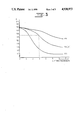
- the variation of the pH in the product compartment A is shown in FIG. 3 by the line Sts[Ib].
- the same figure shows the variation of the pH of a culture of Sts in skimmed milk (line Sts) and that of the pH of a culture of a normal yoghurt culture I St (line I St).
- the culturing temperature and the inoculation percentage were the same in the three cases.
Landscapes
- Life Sciences & Earth Sciences (AREA)
- Engineering & Computer Science (AREA)
- Chemical & Material Sciences (AREA)
- Health & Medical Sciences (AREA)
- Organic Chemistry (AREA)
- Zoology (AREA)
- Bioinformatics & Cheminformatics (AREA)
- Wood Science & Technology (AREA)
- Microbiology (AREA)
- Biotechnology (AREA)
- General Engineering & Computer Science (AREA)
- Sustainable Development (AREA)
- Biomedical Technology (AREA)
- Biochemistry (AREA)
- General Health & Medical Sciences (AREA)
- Genetics & Genomics (AREA)
- Polymers & Plastics (AREA)
- Food Science & Technology (AREA)
- Clinical Laboratory Science (AREA)
- Analytical Chemistry (AREA)
- Dairy Products (AREA)
Applications Claiming Priority (2)
| Application Number | Priority Date | Filing Date | Title |
|---|---|---|---|
| NL8703019A NL8703019A (nl) | 1987-12-14 | 1987-12-14 | Werkwijze voor de bereiding van gefermenteerde melkprodukten. |
| NL8703019 | 1987-12-14 |
Publications (1)
| Publication Number | Publication Date |
|---|---|
| US4938973A true US4938973A (en) | 1990-07-03 |
Family
ID=19851090
Family Applications (1)
| Application Number | Title | Priority Date | Filing Date |
|---|---|---|---|
| US07/276,814 Expired - Lifetime US4938973A (en) | 1987-12-14 | 1988-11-28 | Process for producing fermented milk products |
Country Status (7)
| Country | Link |
|---|---|
| US (1) | US4938973A (fr) |
| EP (1) | EP0322010B1 (fr) |
| DE (1) | DE3864997D1 (fr) |
| DK (1) | DK675888A (fr) |
| ES (1) | ES2026249T3 (fr) |
| IE (1) | IE61010B1 (fr) |
| NL (1) | NL8703019A (fr) |
Cited By (13)
| Publication number | Priority date | Publication date | Assignee | Title |
|---|---|---|---|---|
| US5409718A (en) * | 1990-02-21 | 1995-04-25 | Nederlands Instituut Voor Zuivelonderzoek | Method for the preparation of a fermented milk product |
| US5676985A (en) * | 1994-10-12 | 1997-10-14 | Hsc Research And Development Limited Partnership | Antifreeze polypeptide-expressing microorganisms useful in fermentation and freezing of foods |
| US5910329A (en) * | 1992-01-23 | 1999-06-08 | Rhodia Inc. | Process for producing frozen yogurt mix using S. thermophilus starter culture |
| US6413765B1 (en) * | 1998-04-21 | 2002-07-02 | Chr. Hanson A/S | Genetically modified lactic acid bacteria having modified diacetyl reductase activities |
| WO2008068893A1 (fr) | 2006-12-01 | 2008-06-12 | Meiji Dairies Corporation | Procédé de production de lait fermenté et lait fermenté |
| US20080292750A1 (en) * | 2004-03-19 | 2008-11-27 | Camoina Nederland Holding B.V. | Method of Preparing a Food Ingredient and Food Product Having Angiotensin-I-Converting Enzyme Inhibiting Properties and Products Thus Obtained |
| WO2010001580A1 (fr) | 2008-06-30 | 2010-01-07 | 明治乳業株式会社 | Procédé de production de lait fermenté et lait fermenté |
| WO2010098086A1 (fr) | 2009-02-25 | 2010-09-02 | 明治乳業株式会社 | Lait de culture à faible teneur en lactose et son procédé de fabrication |
| WO2012026384A1 (fr) | 2010-08-21 | 2012-03-01 | 株式会社 明治 | Lait fermenté à faible teneur en lactose et son procédé de production |
| WO2012121131A1 (fr) | 2011-03-04 | 2012-09-13 | 株式会社明治 | Lait fermenté avec un meilleur goût et méthode de production de celui-ci |
| US20140023749A1 (en) * | 2011-04-08 | 2014-01-23 | Chr. Hansen A/S | Flavor-enhancing lactobacillus rhamnosus |
| WO2015059402A1 (fr) * | 2013-10-24 | 2015-04-30 | Seb S.A. | Appareil pour la realisation de preparations fermentees a base de lait, notamment de preparations liquides |
| US10375972B2 (en) | 2012-08-22 | 2019-08-13 | Kraft Foods Group Brands Llc | Processed cheese with cultured dairy components and method of manufacturing |
Families Citing this family (5)
| Publication number | Priority date | Publication date | Assignee | Title |
|---|---|---|---|---|
| IT1244691B (it) * | 1991-01-29 | 1994-08-08 | Sitia Yomo Spa | Mousse lattea, suo impiego per preparare dessert e dessert cosi' ottenuti |
| FR2745297B1 (fr) * | 1996-02-26 | 1998-05-22 | Lesaffre Dev | Utilisation d'une souche bacterienne pour la fabrication de l'acide formique ou du formiate et procede de fermentation utilisant cette souche |
| HRP990136B1 (en) * | 1999-05-07 | 2005-06-30 | Cindri Marin | New process for the production of liquid fermented milk preparations |
| CN1735347A (zh) * | 2003-01-06 | 2006-02-15 | 荷兰联合利华有限公司 | 含有三肽vpp和/或ipp的发酵乳制品 |
| JP3666871B1 (ja) | 2004-06-14 | 2005-06-29 | 明治乳業株式会社 | 発酵乳の製造法及び発酵乳 |
Citations (1)
| Publication number | Priority date | Publication date | Assignee | Title |
|---|---|---|---|---|
| WO1985001064A1 (fr) * | 1983-08-25 | 1985-03-14 | Munir Cheryan | Procede de fermentation continue |
Family Cites Families (2)
| Publication number | Priority date | Publication date | Assignee | Title |
|---|---|---|---|---|
| DE269598C (fr) * | ||||
| DE705010C (de) * | 1938-11-01 | 1941-04-15 | Chem Fab Loewenberg Dr Warth & | Verfahren zum kontinuierlichen Abbau von Cellulose und cellulosehaltigen Rohstoffen |
-
1987
- 1987-12-14 NL NL8703019A patent/NL8703019A/nl not_active Application Discontinuation
-
1988
- 1988-11-28 US US07/276,814 patent/US4938973A/en not_active Expired - Lifetime
- 1988-11-29 ES ES198888202744T patent/ES2026249T3/es not_active Expired - Lifetime
- 1988-11-29 EP EP88202744A patent/EP0322010B1/fr not_active Expired
- 1988-11-29 DE DE8888202744T patent/DE3864997D1/de not_active Expired - Fee Related
- 1988-11-29 IE IE356488A patent/IE61010B1/en not_active IP Right Cessation
- 1988-12-02 DK DK675888A patent/DK675888A/da not_active Application Discontinuation
Patent Citations (1)
| Publication number | Priority date | Publication date | Assignee | Title |
|---|---|---|---|---|
| WO1985001064A1 (fr) * | 1983-08-25 | 1985-03-14 | Munir Cheryan | Procede de fermentation continue |
Non-Patent Citations (12)
| Title |
|---|
| "Controlled Fermentation of Buttermilk", Cultured Dairy Products Journal, Mar. 1982, by E. Lundstedt et al., pp. 6-8. |
| "Cultivation of Syntrophic Anaerobic Bacteria in Membrane-Separated Culture Devices", Chemical Abstracts, vol. 107, No. 9, Abstract No. 76063w, Aug. 1987, by M. Stieb et al., pages 561 and 562. |
| "How Yogurt Bacteria Co-operate During Their Growth", Netherlands Milk and Dairy Journal, vol. 37, No. 1/2, 1983, by F. Driessen et al., page 106. |
| "Improving the Flavor of Cultured Buttermilk", Cultured Dairy Products Journal, Aug., 1984, by Joseph F. Frank, pp. 6-9. |
| "Production of Lactobacillus Cells by Dialysis Continous Fermentation of Deproteinized Whey", Journal of Dairy Science, vol. 63, 1980, by R. Stieber et al., pp. 722-730. |
| "Yoghurt Made From Single Starter Organisms Using Heat- or Enzyme-Treated Milk or Milk to which Casein Hydrolysate or Sodium Formate is Added", Journal of Dairy Research, vol. 49, 1982, by V. Marshall et al., pp. 147-152. |
| Controlled Fermentation of Buttermilk , Cultured Dairy Products Journal , Mar. 1982, by E. Lundstedt et al., pp. 6 8. * |
| Cultivation of Syntrophic Anaerobic Bacteria in Membrane Separated Culture Devices , Chemical Abstracts , vol. 107, No. 9, Abstract No. 76063w, Aug. 1987, by M. Stieb et al., pages 561 and 562. * |
| How Yogurt Bacteria Co operate During Their Growth , Netherlands Milk and Dairy Journal , vol. 37, No. 1/2, 1983, by F. Driessen et al., page 106. * |
| Improving the Flavor of Cultured Buttermilk , Cultured Dairy Products Journal, Aug., 1984, by Joseph F. Frank, pp. 6 9. * |
| Production of Lactobacillus Cells by Dialysis Continous Fermentation of Deproteinized Whey , Journal of Dairy Science , vol. 63, 1980, by R. Stieber et al., pp. 722 730. * |
| Yoghurt Made From Single Starter Organisms Using Heat or Enzyme Treated Milk or Milk to which Casein Hydrolysate or Sodium Formate is Added , Journal of Dairy Research , vol. 49, 1982, by V. Marshall et al., pp. 147 152. * |
Cited By (20)
| Publication number | Priority date | Publication date | Assignee | Title |
|---|---|---|---|---|
| US5409718A (en) * | 1990-02-21 | 1995-04-25 | Nederlands Instituut Voor Zuivelonderzoek | Method for the preparation of a fermented milk product |
| US5910329A (en) * | 1992-01-23 | 1999-06-08 | Rhodia Inc. | Process for producing frozen yogurt mix using S. thermophilus starter culture |
| US5676985A (en) * | 1994-10-12 | 1997-10-14 | Hsc Research And Development Limited Partnership | Antifreeze polypeptide-expressing microorganisms useful in fermentation and freezing of foods |
| US6174550B1 (en) * | 1994-10-12 | 2001-01-16 | Seabright Corporation Limited | Antifreeze polypeptide-expressing microorganisms useful in fermentation and frozen storage of foods |
| US6413765B1 (en) * | 1998-04-21 | 2002-07-02 | Chr. Hanson A/S | Genetically modified lactic acid bacteria having modified diacetyl reductase activities |
| US20080292750A1 (en) * | 2004-03-19 | 2008-11-27 | Camoina Nederland Holding B.V. | Method of Preparing a Food Ingredient and Food Product Having Angiotensin-I-Converting Enzyme Inhibiting Properties and Products Thus Obtained |
| WO2008068893A1 (fr) | 2006-12-01 | 2008-06-12 | Meiji Dairies Corporation | Procédé de production de lait fermenté et lait fermenté |
| US20100062108A1 (en) * | 2006-12-01 | 2010-03-11 | Meiji Dairies Corporation | Process for production of fermented milk, and fermented milk |
| WO2010001580A1 (fr) | 2008-06-30 | 2010-01-07 | 明治乳業株式会社 | Procédé de production de lait fermenté et lait fermenté |
| WO2010098086A1 (fr) | 2009-02-25 | 2010-09-02 | 明治乳業株式会社 | Lait de culture à faible teneur en lactose et son procédé de fabrication |
| WO2012026384A1 (fr) | 2010-08-21 | 2012-03-01 | 株式会社 明治 | Lait fermenté à faible teneur en lactose et son procédé de production |
| WO2012121131A1 (fr) | 2011-03-04 | 2012-09-13 | 株式会社明治 | Lait fermenté avec un meilleur goût et méthode de production de celui-ci |
| US20140023749A1 (en) * | 2011-04-08 | 2014-01-23 | Chr. Hansen A/S | Flavor-enhancing lactobacillus rhamnosus |
| US10653161B2 (en) * | 2011-04-08 | 2020-05-19 | Chr. Hansen A/S | Flavor-enhancing Lactobacillus rhamnosus |
| US10375972B2 (en) | 2012-08-22 | 2019-08-13 | Kraft Foods Group Brands Llc | Processed cheese with cultured dairy components and method of manufacturing |
| US11464238B2 (en) | 2012-08-22 | 2022-10-11 | Kraft Foods Group Brands Llc | Processed cheese with cultured dairy components and method of manufacturing |
| US12108770B2 (en) | 2012-08-22 | 2024-10-08 | Kraft Foods Group Brands Llc | Processed cheese with cultured dairy components and method of manufacturing |
| WO2015059402A1 (fr) * | 2013-10-24 | 2015-04-30 | Seb S.A. | Appareil pour la realisation de preparations fermentees a base de lait, notamment de preparations liquides |
| FR3012311A1 (fr) * | 2013-10-24 | 2015-05-01 | Seb Sa | Appareil pour la realisation de preparations fermentees a base de lait, notamment de preparations liquides |
| RU169562U1 (ru) * | 2013-10-24 | 2017-03-22 | Себ С.А. | Устройство для изготовления ферментированных продуктов на основе молока, в частности жидких продуктов |
Also Published As
| Publication number | Publication date |
|---|---|
| IE883564L (en) | 1989-06-14 |
| NL8703019A (nl) | 1989-07-03 |
| DE3864997D1 (de) | 1991-10-24 |
| EP0322010A1 (fr) | 1989-06-28 |
| ES2026249T3 (es) | 1992-04-16 |
| EP0322010B1 (fr) | 1991-09-18 |
| DK675888A (da) | 1989-06-15 |
| DK675888D0 (da) | 1988-12-02 |
| IE61010B1 (en) | 1994-09-07 |
Similar Documents
| Publication | Publication Date | Title |
|---|---|---|
| EP0322010B1 (fr) | Procédé de préparation de produits laitiers fermentés | |
| RU2108043C1 (ru) | Способ получения сыра на основе молока, концентрированного ультрафильтрацией | |
| US5132122A (en) | Process for producing a lactic acid drink | |
| US3048490A (en) | Aroma process for dairy products and the resulting product | |
| US4725540A (en) | Process for the preparation of amine-oxidase containing material, so produced amine-oxidase containing material | |
| US4432997A (en) | Process for producing aroma-containing food products | |
| US4228189A (en) | Preparation of yogurt and quark | |
| US5409718A (en) | Method for the preparation of a fermented milk product | |
| US3963836A (en) | Preparation of yogurt and quark | |
| RU2266322C2 (ru) | Активатор закваски на основе молочнокислых бактерий, активированная закваска и способ получения молочного продукта | |
| US5006348A (en) | Method for manufacture of swiss cheese | |
| US5910329A (en) | Process for producing frozen yogurt mix using S. thermophilus starter culture | |
| EP0575010A1 (fr) | Procédé de préparation d'un lait fermenté | |
| US3348952A (en) | Enhancing flavour of foods using flavouring enzyme produced by a microorganism of the genus trametes | |
| JPS6188840A (ja) | 高固体チ−ズの製造方法 | |
| CA2274535A1 (fr) | Produit laitier fermente | |
| US1704458A (en) | Process for manufacturing cheese | |
| EP0626007B1 (fr) | Reacteur a membrane a fonctionnement continu et son application dans les processus biotechniques | |
| JPH0436146A (ja) | ケフィア様発酵製品の製造法 | |
| JPS6447338A (en) | Preparation of kefir-like dairy product | |
| JPH0632603B2 (ja) | 菌体付着異臭味成分の除去法 | |
| RU2020830C1 (ru) | Способ получения напитка на основе молочной сыворотки | |
| JPS62239947A (ja) | 発酵バタ−及びその製造法 | |
| RU2078811C1 (ru) | Способ получения гидролизата творога для приготовления питательных сред | |
| SU1386658A1 (ru) | Штамм бактерий SтRертососсUS асетоINIсUS,используемый дл производства кисломолочных продуктов |
Legal Events
| Date | Code | Title | Description |
|---|---|---|---|
| AS | Assignment |
Owner name: NEDERLANDS INSTITUUT VOOR ZUIVELONDERZOEK, P.O. BO Free format text: ASSIGNMENT OF ASSIGNORS INTEREST.;ASSIGNORS:KLAVER, FRANCISCUS A. M.;KINGMA, FEDDE;REEL/FRAME:004981/0183 Effective date: 19881121 Owner name: NEDERLANDS INSTITUUT VOOR ZUIVELONDERZOEK, A CORP. Free format text: ASSIGNMENT OF ASSIGNORS INTEREST;ASSIGNORS:KLAVER, FRANCISCUS A. M.;KINGMA, FEDDE;REEL/FRAME:004981/0183 Effective date: 19881121 |
|
| STCF | Information on status: patent grant |
Free format text: PATENTED CASE |
|
| FEPP | Fee payment procedure |
Free format text: PAYOR NUMBER ASSIGNED (ORIGINAL EVENT CODE: ASPN); ENTITY STATUS OF PATENT OWNER: LARGE ENTITY |
|
| FPAY | Fee payment |
Year of fee payment: 4 |
|
| FPAY | Fee payment |
Year of fee payment: 8 |
|
| FPAY | Fee payment |
Year of fee payment: 12 |
|
| SULP | Surcharge for late payment |
Year of fee payment: 11 |