US5030367A - Water-dispersion lubricant of graphite, particulate resin and high molecular weight polybasic acid salt - Google Patents
Water-dispersion lubricant of graphite, particulate resin and high molecular weight polybasic acid salt Download PDFInfo
- Publication number
- US5030367A US5030367A US07/400,918 US40091889A US5030367A US 5030367 A US5030367 A US 5030367A US 40091889 A US40091889 A US 40091889A US 5030367 A US5030367 A US 5030367A
- Authority
- US
- United States
- Prior art keywords
- lubricant
- water
- dispersion
- graphite
- uniform
- Prior art date
- Legal status (The legal status is an assumption and is not a legal conclusion. Google has not performed a legal analysis and makes no representation as to the accuracy of the status listed.)
- Expired - Fee Related
Links
Images

Classifications
-
- C—CHEMISTRY; METALLURGY
- C10—PETROLEUM, GAS OR COKE INDUSTRIES; TECHNICAL GASES CONTAINING CARBON MONOXIDE; FUELS; LUBRICANTS; PEAT
- C10M—LUBRICATING COMPOSITIONS; USE OF CHEMICAL SUBSTANCES EITHER ALONE OR AS LUBRICATING INGREDIENTS IN A LUBRICATING COMPOSITION
- C10M173/00—Lubricating compositions containing more than 10% water
- C10M173/02—Lubricating compositions containing more than 10% water not containing mineral or fatty oils
-
- C—CHEMISTRY; METALLURGY
- C10—PETROLEUM, GAS OR COKE INDUSTRIES; TECHNICAL GASES CONTAINING CARBON MONOXIDE; FUELS; LUBRICANTS; PEAT
- C10M—LUBRICATING COMPOSITIONS; USE OF CHEMICAL SUBSTANCES EITHER ALONE OR AS LUBRICATING INGREDIENTS IN A LUBRICATING COMPOSITION
- C10M3/00—Liquid compositions essentially based on lubricating components other than mineral lubricating oils or fatty oils and their use as lubricants; Use as lubricants of single liquid substances
-
- C—CHEMISTRY; METALLURGY
- C10—PETROLEUM, GAS OR COKE INDUSTRIES; TECHNICAL GASES CONTAINING CARBON MONOXIDE; FUELS; LUBRICANTS; PEAT
- C10M—LUBRICATING COMPOSITIONS; USE OF CHEMICAL SUBSTANCES EITHER ALONE OR AS LUBRICATING INGREDIENTS IN A LUBRICATING COMPOSITION
- C10M125/00—Lubricating compositions characterised by the additive being an inorganic material
- C10M125/02—Carbon; Graphite
-
- C—CHEMISTRY; METALLURGY
- C10—PETROLEUM, GAS OR COKE INDUSTRIES; TECHNICAL GASES CONTAINING CARBON MONOXIDE; FUELS; LUBRICANTS; PEAT
- C10M—LUBRICATING COMPOSITIONS; USE OF CHEMICAL SUBSTANCES EITHER ALONE OR AS LUBRICATING INGREDIENTS IN A LUBRICATING COMPOSITION
- C10M129/00—Lubricating compositions characterised by the additive being an organic non-macromolecular compound containing oxygen
- C10M129/02—Lubricating compositions characterised by the additive being an organic non-macromolecular compound containing oxygen having a carbon chain of less than 30 atoms
- C10M129/26—Carboxylic acids; Salts thereof
- C10M129/56—Acids of unknown or incompletely defined constitution
-
- C—CHEMISTRY; METALLURGY
- C10—PETROLEUM, GAS OR COKE INDUSTRIES; TECHNICAL GASES CONTAINING CARBON MONOXIDE; FUELS; LUBRICANTS; PEAT
- C10M—LUBRICATING COMPOSITIONS; USE OF CHEMICAL SUBSTANCES EITHER ALONE OR AS LUBRICATING INGREDIENTS IN A LUBRICATING COMPOSITION
- C10M135/00—Lubricating compositions characterised by the additive being an organic non-macromolecular compound containing sulfur, selenium or tellurium
- C10M135/08—Lubricating compositions characterised by the additive being an organic non-macromolecular compound containing sulfur, selenium or tellurium containing a sulfur-to-oxygen bond
- C10M135/10—Sulfonic acids or derivatives thereof
-
- C—CHEMISTRY; METALLURGY
- C10—PETROLEUM, GAS OR COKE INDUSTRIES; TECHNICAL GASES CONTAINING CARBON MONOXIDE; FUELS; LUBRICANTS; PEAT
- C10M—LUBRICATING COMPOSITIONS; USE OF CHEMICAL SUBSTANCES EITHER ALONE OR AS LUBRICATING INGREDIENTS IN A LUBRICATING COMPOSITION
- C10M143/00—Lubricating compositions characterised by the additive being a macromolecular hydrocarbon or such hydrocarbon modified by oxidation
-
- C—CHEMISTRY; METALLURGY
- C10—PETROLEUM, GAS OR COKE INDUSTRIES; TECHNICAL GASES CONTAINING CARBON MONOXIDE; FUELS; LUBRICANTS; PEAT
- C10M—LUBRICATING COMPOSITIONS; USE OF CHEMICAL SUBSTANCES EITHER ALONE OR AS LUBRICATING INGREDIENTS IN A LUBRICATING COMPOSITION
- C10M145/00—Lubricating compositions characterised by the additive being a macromolecular compound containing oxygen
-
- C—CHEMISTRY; METALLURGY
- C10—PETROLEUM, GAS OR COKE INDUSTRIES; TECHNICAL GASES CONTAINING CARBON MONOXIDE; FUELS; LUBRICANTS; PEAT
- C10M—LUBRICATING COMPOSITIONS; USE OF CHEMICAL SUBSTANCES EITHER ALONE OR AS LUBRICATING INGREDIENTS IN A LUBRICATING COMPOSITION
- C10M159/00—Lubricating compositions characterised by the additive being of unknown or incompletely defined constitution
- C10M159/02—Natural products
- C10M159/04—Petroleum fractions, e.g. tars, solvents
-
- C—CHEMISTRY; METALLURGY
- C10—PETROLEUM, GAS OR COKE INDUSTRIES; TECHNICAL GASES CONTAINING CARBON MONOXIDE; FUELS; LUBRICANTS; PEAT
- C10M—LUBRICATING COMPOSITIONS; USE OF CHEMICAL SUBSTANCES EITHER ALONE OR AS LUBRICATING INGREDIENTS IN A LUBRICATING COMPOSITION
- C10M2201/00—Inorganic compounds or elements as ingredients in lubricant compositions
- C10M2201/02—Water
-
- C—CHEMISTRY; METALLURGY
- C10—PETROLEUM, GAS OR COKE INDUSTRIES; TECHNICAL GASES CONTAINING CARBON MONOXIDE; FUELS; LUBRICANTS; PEAT
- C10M—LUBRICATING COMPOSITIONS; USE OF CHEMICAL SUBSTANCES EITHER ALONE OR AS LUBRICATING INGREDIENTS IN A LUBRICATING COMPOSITION
- C10M2201/00—Inorganic compounds or elements as ingredients in lubricant compositions
- C10M2201/04—Elements
- C10M2201/041—Carbon; Graphite; Carbon black
-
- C—CHEMISTRY; METALLURGY
- C10—PETROLEUM, GAS OR COKE INDUSTRIES; TECHNICAL GASES CONTAINING CARBON MONOXIDE; FUELS; LUBRICANTS; PEAT
- C10M—LUBRICATING COMPOSITIONS; USE OF CHEMICAL SUBSTANCES EITHER ALONE OR AS LUBRICATING INGREDIENTS IN A LUBRICATING COMPOSITION
- C10M2201/00—Inorganic compounds or elements as ingredients in lubricant compositions
- C10M2201/04—Elements
- C10M2201/041—Carbon; Graphite; Carbon black
- C10M2201/042—Carbon; Graphite; Carbon black halogenated, i.e. graphite fluoride
-
- C—CHEMISTRY; METALLURGY
- C10—PETROLEUM, GAS OR COKE INDUSTRIES; TECHNICAL GASES CONTAINING CARBON MONOXIDE; FUELS; LUBRICANTS; PEAT
- C10M—LUBRICATING COMPOSITIONS; USE OF CHEMICAL SUBSTANCES EITHER ALONE OR AS LUBRICATING INGREDIENTS IN A LUBRICATING COMPOSITION
- C10M2203/00—Organic non-macromolecular hydrocarbon compounds and hydrocarbon fractions as ingredients in lubricant compositions
- C10M2203/10—Petroleum or coal fractions, e.g. tars, solvents, bitumen
-
- C—CHEMISTRY; METALLURGY
- C10—PETROLEUM, GAS OR COKE INDUSTRIES; TECHNICAL GASES CONTAINING CARBON MONOXIDE; FUELS; LUBRICANTS; PEAT
- C10M—LUBRICATING COMPOSITIONS; USE OF CHEMICAL SUBSTANCES EITHER ALONE OR AS LUBRICATING INGREDIENTS IN A LUBRICATING COMPOSITION
- C10M2203/00—Organic non-macromolecular hydrocarbon compounds and hydrocarbon fractions as ingredients in lubricant compositions
- C10M2203/10—Petroleum or coal fractions, e.g. tars, solvents, bitumen
- C10M2203/102—Aliphatic fractions
-
- C—CHEMISTRY; METALLURGY
- C10—PETROLEUM, GAS OR COKE INDUSTRIES; TECHNICAL GASES CONTAINING CARBON MONOXIDE; FUELS; LUBRICANTS; PEAT
- C10M—LUBRICATING COMPOSITIONS; USE OF CHEMICAL SUBSTANCES EITHER ALONE OR AS LUBRICATING INGREDIENTS IN A LUBRICATING COMPOSITION
- C10M2203/00—Organic non-macromolecular hydrocarbon compounds and hydrocarbon fractions as ingredients in lubricant compositions
- C10M2203/10—Petroleum or coal fractions, e.g. tars, solvents, bitumen
- C10M2203/104—Aromatic fractions
-
- C—CHEMISTRY; METALLURGY
- C10—PETROLEUM, GAS OR COKE INDUSTRIES; TECHNICAL GASES CONTAINING CARBON MONOXIDE; FUELS; LUBRICANTS; PEAT
- C10M—LUBRICATING COMPOSITIONS; USE OF CHEMICAL SUBSTANCES EITHER ALONE OR AS LUBRICATING INGREDIENTS IN A LUBRICATING COMPOSITION
- C10M2203/00—Organic non-macromolecular hydrocarbon compounds and hydrocarbon fractions as ingredients in lubricant compositions
- C10M2203/10—Petroleum or coal fractions, e.g. tars, solvents, bitumen
- C10M2203/106—Naphthenic fractions
-
- C—CHEMISTRY; METALLURGY
- C10—PETROLEUM, GAS OR COKE INDUSTRIES; TECHNICAL GASES CONTAINING CARBON MONOXIDE; FUELS; LUBRICANTS; PEAT
- C10M—LUBRICATING COMPOSITIONS; USE OF CHEMICAL SUBSTANCES EITHER ALONE OR AS LUBRICATING INGREDIENTS IN A LUBRICATING COMPOSITION
- C10M2203/00—Organic non-macromolecular hydrocarbon compounds and hydrocarbon fractions as ingredients in lubricant compositions
- C10M2203/10—Petroleum or coal fractions, e.g. tars, solvents, bitumen
- C10M2203/108—Residual fractions, e.g. bright stocks
-
- C—CHEMISTRY; METALLURGY
- C10—PETROLEUM, GAS OR COKE INDUSTRIES; TECHNICAL GASES CONTAINING CARBON MONOXIDE; FUELS; LUBRICANTS; PEAT
- C10M—LUBRICATING COMPOSITIONS; USE OF CHEMICAL SUBSTANCES EITHER ALONE OR AS LUBRICATING INGREDIENTS IN A LUBRICATING COMPOSITION
- C10M2205/00—Organic macromolecular hydrocarbon compounds or fractions, whether or not modified by oxidation as ingredients in lubricant compositions
-
- C—CHEMISTRY; METALLURGY
- C10—PETROLEUM, GAS OR COKE INDUSTRIES; TECHNICAL GASES CONTAINING CARBON MONOXIDE; FUELS; LUBRICANTS; PEAT
- C10M—LUBRICATING COMPOSITIONS; USE OF CHEMICAL SUBSTANCES EITHER ALONE OR AS LUBRICATING INGREDIENTS IN A LUBRICATING COMPOSITION
- C10M2205/00—Organic macromolecular hydrocarbon compounds or fractions, whether or not modified by oxidation as ingredients in lubricant compositions
- C10M2205/02—Organic macromolecular hydrocarbon compounds or fractions, whether or not modified by oxidation as ingredients in lubricant compositions containing acyclic monomers
-
- C—CHEMISTRY; METALLURGY
- C10—PETROLEUM, GAS OR COKE INDUSTRIES; TECHNICAL GASES CONTAINING CARBON MONOXIDE; FUELS; LUBRICANTS; PEAT
- C10M—LUBRICATING COMPOSITIONS; USE OF CHEMICAL SUBSTANCES EITHER ALONE OR AS LUBRICATING INGREDIENTS IN A LUBRICATING COMPOSITION
- C10M2205/00—Organic macromolecular hydrocarbon compounds or fractions, whether or not modified by oxidation as ingredients in lubricant compositions
- C10M2205/02—Organic macromolecular hydrocarbon compounds or fractions, whether or not modified by oxidation as ingredients in lubricant compositions containing acyclic monomers
- C10M2205/022—Ethene
-
- C—CHEMISTRY; METALLURGY
- C10—PETROLEUM, GAS OR COKE INDUSTRIES; TECHNICAL GASES CONTAINING CARBON MONOXIDE; FUELS; LUBRICANTS; PEAT
- C10M—LUBRICATING COMPOSITIONS; USE OF CHEMICAL SUBSTANCES EITHER ALONE OR AS LUBRICATING INGREDIENTS IN A LUBRICATING COMPOSITION
- C10M2205/00—Organic macromolecular hydrocarbon compounds or fractions, whether or not modified by oxidation as ingredients in lubricant compositions
- C10M2205/04—Organic macromolecular hydrocarbon compounds or fractions, whether or not modified by oxidation as ingredients in lubricant compositions containing aromatic monomers, e.g. styrene
-
- C—CHEMISTRY; METALLURGY
- C10—PETROLEUM, GAS OR COKE INDUSTRIES; TECHNICAL GASES CONTAINING CARBON MONOXIDE; FUELS; LUBRICANTS; PEAT
- C10M—LUBRICATING COMPOSITIONS; USE OF CHEMICAL SUBSTANCES EITHER ALONE OR AS LUBRICATING INGREDIENTS IN A LUBRICATING COMPOSITION
- C10M2205/00—Organic macromolecular hydrocarbon compounds or fractions, whether or not modified by oxidation as ingredients in lubricant compositions
- C10M2205/14—Synthetic waxes, e.g. polythene waxes
-
- C—CHEMISTRY; METALLURGY
- C10—PETROLEUM, GAS OR COKE INDUSTRIES; TECHNICAL GASES CONTAINING CARBON MONOXIDE; FUELS; LUBRICANTS; PEAT
- C10M—LUBRICATING COMPOSITIONS; USE OF CHEMICAL SUBSTANCES EITHER ALONE OR AS LUBRICATING INGREDIENTS IN A LUBRICATING COMPOSITION
- C10M2207/00—Organic non-macromolecular hydrocarbon compounds containing hydrogen, carbon and oxygen as ingredients in lubricant compositions
- C10M2207/10—Carboxylix acids; Neutral salts thereof
-
- C—CHEMISTRY; METALLURGY
- C10—PETROLEUM, GAS OR COKE INDUSTRIES; TECHNICAL GASES CONTAINING CARBON MONOXIDE; FUELS; LUBRICANTS; PEAT
- C10M—LUBRICATING COMPOSITIONS; USE OF CHEMICAL SUBSTANCES EITHER ALONE OR AS LUBRICATING INGREDIENTS IN A LUBRICATING COMPOSITION
- C10M2207/00—Organic non-macromolecular hydrocarbon compounds containing hydrogen, carbon and oxygen as ingredients in lubricant compositions
- C10M2207/10—Carboxylix acids; Neutral salts thereof
- C10M2207/12—Carboxylix acids; Neutral salts thereof having carboxyl groups bound to acyclic or cycloaliphatic carbon atoms
- C10M2207/121—Carboxylix acids; Neutral salts thereof having carboxyl groups bound to acyclic or cycloaliphatic carbon atoms having hydrocarbon chains of seven or less carbon atoms
- C10M2207/123—Carboxylix acids; Neutral salts thereof having carboxyl groups bound to acyclic or cycloaliphatic carbon atoms having hydrocarbon chains of seven or less carbon atoms polycarboxylic
-
- C—CHEMISTRY; METALLURGY
- C10—PETROLEUM, GAS OR COKE INDUSTRIES; TECHNICAL GASES CONTAINING CARBON MONOXIDE; FUELS; LUBRICANTS; PEAT
- C10M—LUBRICATING COMPOSITIONS; USE OF CHEMICAL SUBSTANCES EITHER ALONE OR AS LUBRICATING INGREDIENTS IN A LUBRICATING COMPOSITION
- C10M2207/00—Organic non-macromolecular hydrocarbon compounds containing hydrogen, carbon and oxygen as ingredients in lubricant compositions
- C10M2207/10—Carboxylix acids; Neutral salts thereof
- C10M2207/12—Carboxylix acids; Neutral salts thereof having carboxyl groups bound to acyclic or cycloaliphatic carbon atoms
- C10M2207/129—Carboxylix acids; Neutral salts thereof having carboxyl groups bound to acyclic or cycloaliphatic carbon atoms having hydrocarbon chains of thirty or more carbon atoms
-
- C—CHEMISTRY; METALLURGY
- C10—PETROLEUM, GAS OR COKE INDUSTRIES; TECHNICAL GASES CONTAINING CARBON MONOXIDE; FUELS; LUBRICANTS; PEAT
- C10M—LUBRICATING COMPOSITIONS; USE OF CHEMICAL SUBSTANCES EITHER ALONE OR AS LUBRICATING INGREDIENTS IN A LUBRICATING COMPOSITION
- C10M2207/00—Organic non-macromolecular hydrocarbon compounds containing hydrogen, carbon and oxygen as ingredients in lubricant compositions
- C10M2207/10—Carboxylix acids; Neutral salts thereof
- C10M2207/22—Acids obtained from polymerised unsaturated acids
-
- C—CHEMISTRY; METALLURGY
- C10—PETROLEUM, GAS OR COKE INDUSTRIES; TECHNICAL GASES CONTAINING CARBON MONOXIDE; FUELS; LUBRICANTS; PEAT
- C10M—LUBRICATING COMPOSITIONS; USE OF CHEMICAL SUBSTANCES EITHER ALONE OR AS LUBRICATING INGREDIENTS IN A LUBRICATING COMPOSITION
- C10M2209/00—Organic macromolecular compounds containing oxygen as ingredients in lubricant compositions
-
- C—CHEMISTRY; METALLURGY
- C10—PETROLEUM, GAS OR COKE INDUSTRIES; TECHNICAL GASES CONTAINING CARBON MONOXIDE; FUELS; LUBRICANTS; PEAT
- C10M—LUBRICATING COMPOSITIONS; USE OF CHEMICAL SUBSTANCES EITHER ALONE OR AS LUBRICATING INGREDIENTS IN A LUBRICATING COMPOSITION
- C10M2209/00—Organic macromolecular compounds containing oxygen as ingredients in lubricant compositions
- C10M2209/02—Macromolecular compounds obtained by reactions only involving carbon-to-carbon unsaturated bonds
-
- C—CHEMISTRY; METALLURGY
- C10—PETROLEUM, GAS OR COKE INDUSTRIES; TECHNICAL GASES CONTAINING CARBON MONOXIDE; FUELS; LUBRICANTS; PEAT
- C10M—LUBRICATING COMPOSITIONS; USE OF CHEMICAL SUBSTANCES EITHER ALONE OR AS LUBRICATING INGREDIENTS IN A LUBRICATING COMPOSITION
- C10M2209/00—Organic macromolecular compounds containing oxygen as ingredients in lubricant compositions
- C10M2209/02—Macromolecular compounds obtained by reactions only involving carbon-to-carbon unsaturated bonds
- C10M2209/08—Macromolecular compounds obtained by reactions only involving carbon-to-carbon unsaturated bonds containing monomers having an unsaturated radical bound to a carboxyl radical, e.g. acrylate type
- C10M2209/082—Macromolecular compounds obtained by reactions only involving carbon-to-carbon unsaturated bonds containing monomers having an unsaturated radical bound to a carboxyl radical, e.g. acrylate type monocarboxylic
-
- C—CHEMISTRY; METALLURGY
- C10—PETROLEUM, GAS OR COKE INDUSTRIES; TECHNICAL GASES CONTAINING CARBON MONOXIDE; FUELS; LUBRICANTS; PEAT
- C10M—LUBRICATING COMPOSITIONS; USE OF CHEMICAL SUBSTANCES EITHER ALONE OR AS LUBRICATING INGREDIENTS IN A LUBRICATING COMPOSITION
- C10M2209/00—Organic macromolecular compounds containing oxygen as ingredients in lubricant compositions
- C10M2209/02—Macromolecular compounds obtained by reactions only involving carbon-to-carbon unsaturated bonds
- C10M2209/08—Macromolecular compounds obtained by reactions only involving carbon-to-carbon unsaturated bonds containing monomers having an unsaturated radical bound to a carboxyl radical, e.g. acrylate type
- C10M2209/084—Acrylate; Methacrylate
-
- C—CHEMISTRY; METALLURGY
- C10—PETROLEUM, GAS OR COKE INDUSTRIES; TECHNICAL GASES CONTAINING CARBON MONOXIDE; FUELS; LUBRICANTS; PEAT
- C10M—LUBRICATING COMPOSITIONS; USE OF CHEMICAL SUBSTANCES EITHER ALONE OR AS LUBRICATING INGREDIENTS IN A LUBRICATING COMPOSITION
- C10M2209/00—Organic macromolecular compounds containing oxygen as ingredients in lubricant compositions
- C10M2209/02—Macromolecular compounds obtained by reactions only involving carbon-to-carbon unsaturated bonds
- C10M2209/08—Macromolecular compounds obtained by reactions only involving carbon-to-carbon unsaturated bonds containing monomers having an unsaturated radical bound to a carboxyl radical, e.g. acrylate type
- C10M2209/086—Macromolecular compounds obtained by reactions only involving carbon-to-carbon unsaturated bonds containing monomers having an unsaturated radical bound to a carboxyl radical, e.g. acrylate type polycarboxylic, e.g. maleic acid
-
- C—CHEMISTRY; METALLURGY
- C10—PETROLEUM, GAS OR COKE INDUSTRIES; TECHNICAL GASES CONTAINING CARBON MONOXIDE; FUELS; LUBRICANTS; PEAT
- C10M—LUBRICATING COMPOSITIONS; USE OF CHEMICAL SUBSTANCES EITHER ALONE OR AS LUBRICATING INGREDIENTS IN A LUBRICATING COMPOSITION
- C10M2209/00—Organic macromolecular compounds containing oxygen as ingredients in lubricant compositions
- C10M2209/10—Macromolecular compoundss obtained otherwise than by reactions only involving carbon-to-carbon unsaturated bonds
-
- C—CHEMISTRY; METALLURGY
- C10—PETROLEUM, GAS OR COKE INDUSTRIES; TECHNICAL GASES CONTAINING CARBON MONOXIDE; FUELS; LUBRICANTS; PEAT
- C10M—LUBRICATING COMPOSITIONS; USE OF CHEMICAL SUBSTANCES EITHER ALONE OR AS LUBRICATING INGREDIENTS IN A LUBRICATING COMPOSITION
- C10M2217/00—Organic macromolecular compounds containing nitrogen as ingredients in lubricant compositions
- C10M2217/02—Macromolecular compounds obtained from nitrogen containing monomers by reactions only involving carbon-to-carbon unsaturated bonds
- C10M2217/024—Macromolecular compounds obtained from nitrogen containing monomers by reactions only involving carbon-to-carbon unsaturated bonds containing monomers having an unsaturated radical bound to an amido or imido group
-
- C—CHEMISTRY; METALLURGY
- C10—PETROLEUM, GAS OR COKE INDUSTRIES; TECHNICAL GASES CONTAINING CARBON MONOXIDE; FUELS; LUBRICANTS; PEAT
- C10M—LUBRICATING COMPOSITIONS; USE OF CHEMICAL SUBSTANCES EITHER ALONE OR AS LUBRICATING INGREDIENTS IN A LUBRICATING COMPOSITION
- C10M2217/00—Organic macromolecular compounds containing nitrogen as ingredients in lubricant compositions
- C10M2217/02—Macromolecular compounds obtained from nitrogen containing monomers by reactions only involving carbon-to-carbon unsaturated bonds
- C10M2217/026—Macromolecular compounds obtained from nitrogen containing monomers by reactions only involving carbon-to-carbon unsaturated bonds containing monomers having an unsaturated radical bound to a nitrile group
-
- C—CHEMISTRY; METALLURGY
- C10—PETROLEUM, GAS OR COKE INDUSTRIES; TECHNICAL GASES CONTAINING CARBON MONOXIDE; FUELS; LUBRICANTS; PEAT
- C10M—LUBRICATING COMPOSITIONS; USE OF CHEMICAL SUBSTANCES EITHER ALONE OR AS LUBRICATING INGREDIENTS IN A LUBRICATING COMPOSITION
- C10M2217/00—Organic macromolecular compounds containing nitrogen as ingredients in lubricant compositions
- C10M2217/06—Macromolecular compounds obtained by functionalisation op polymers with a nitrogen containing compound
-
- C—CHEMISTRY; METALLURGY
- C10—PETROLEUM, GAS OR COKE INDUSTRIES; TECHNICAL GASES CONTAINING CARBON MONOXIDE; FUELS; LUBRICANTS; PEAT
- C10M—LUBRICATING COMPOSITIONS; USE OF CHEMICAL SUBSTANCES EITHER ALONE OR AS LUBRICATING INGREDIENTS IN A LUBRICATING COMPOSITION
- C10M2219/00—Organic non-macromolecular compounds containing sulfur, selenium or tellurium as ingredients in lubricant compositions
- C10M2219/04—Organic non-macromolecular compounds containing sulfur, selenium or tellurium as ingredients in lubricant compositions containing sulfur-to-oxygen bonds, i.e. sulfones, sulfoxides
- C10M2219/044—Sulfonic acids, Derivatives thereof, e.g. neutral salts
-
- C—CHEMISTRY; METALLURGY
- C10—PETROLEUM, GAS OR COKE INDUSTRIES; TECHNICAL GASES CONTAINING CARBON MONOXIDE; FUELS; LUBRICANTS; PEAT
- C10N—INDEXING SCHEME ASSOCIATED WITH SUBCLASS C10M RELATING TO LUBRICATING COMPOSITIONS
- C10N2040/00—Specified use or application for which the lubricating composition is intended
- C10N2040/20—Metal working
- C10N2040/24—Metal working without essential removal of material, e.g. forming, gorging, drawing, pressing, stamping, rolling or extruding; Punching metal
-
- C—CHEMISTRY; METALLURGY
- C10—PETROLEUM, GAS OR COKE INDUSTRIES; TECHNICAL GASES CONTAINING CARBON MONOXIDE; FUELS; LUBRICANTS; PEAT
- C10N—INDEXING SCHEME ASSOCIATED WITH SUBCLASS C10M RELATING TO LUBRICATING COMPOSITIONS
- C10N2040/00—Specified use or application for which the lubricating composition is intended
- C10N2040/20—Metal working
- C10N2040/241—Manufacturing joint-less pipes
-
- C—CHEMISTRY; METALLURGY
- C10—PETROLEUM, GAS OR COKE INDUSTRIES; TECHNICAL GASES CONTAINING CARBON MONOXIDE; FUELS; LUBRICANTS; PEAT
- C10N—INDEXING SCHEME ASSOCIATED WITH SUBCLASS C10M RELATING TO LUBRICATING COMPOSITIONS
- C10N2040/00—Specified use or application for which the lubricating composition is intended
- C10N2040/20—Metal working
- C10N2040/242—Hot working
-
- C—CHEMISTRY; METALLURGY
- C10—PETROLEUM, GAS OR COKE INDUSTRIES; TECHNICAL GASES CONTAINING CARBON MONOXIDE; FUELS; LUBRICANTS; PEAT
- C10N—INDEXING SCHEME ASSOCIATED WITH SUBCLASS C10M RELATING TO LUBRICATING COMPOSITIONS
- C10N2040/00—Specified use or application for which the lubricating composition is intended
- C10N2040/20—Metal working
- C10N2040/243—Cold working
-
- C—CHEMISTRY; METALLURGY
- C10—PETROLEUM, GAS OR COKE INDUSTRIES; TECHNICAL GASES CONTAINING CARBON MONOXIDE; FUELS; LUBRICANTS; PEAT
- C10N—INDEXING SCHEME ASSOCIATED WITH SUBCLASS C10M RELATING TO LUBRICATING COMPOSITIONS
- C10N2040/00—Specified use or application for which the lubricating composition is intended
- C10N2040/20—Metal working
- C10N2040/244—Metal working of specific metals
-
- C—CHEMISTRY; METALLURGY
- C10—PETROLEUM, GAS OR COKE INDUSTRIES; TECHNICAL GASES CONTAINING CARBON MONOXIDE; FUELS; LUBRICANTS; PEAT
- C10N—INDEXING SCHEME ASSOCIATED WITH SUBCLASS C10M RELATING TO LUBRICATING COMPOSITIONS
- C10N2040/00—Specified use or application for which the lubricating composition is intended
- C10N2040/20—Metal working
- C10N2040/244—Metal working of specific metals
- C10N2040/245—Soft metals, e.g. aluminum
-
- C—CHEMISTRY; METALLURGY
- C10—PETROLEUM, GAS OR COKE INDUSTRIES; TECHNICAL GASES CONTAINING CARBON MONOXIDE; FUELS; LUBRICANTS; PEAT
- C10N—INDEXING SCHEME ASSOCIATED WITH SUBCLASS C10M RELATING TO LUBRICATING COMPOSITIONS
- C10N2040/00—Specified use or application for which the lubricating composition is intended
- C10N2040/20—Metal working
- C10N2040/244—Metal working of specific metals
- C10N2040/246—Iron or steel
-
- C—CHEMISTRY; METALLURGY
- C10—PETROLEUM, GAS OR COKE INDUSTRIES; TECHNICAL GASES CONTAINING CARBON MONOXIDE; FUELS; LUBRICANTS; PEAT
- C10N—INDEXING SCHEME ASSOCIATED WITH SUBCLASS C10M RELATING TO LUBRICATING COMPOSITIONS
- C10N2040/00—Specified use or application for which the lubricating composition is intended
- C10N2040/20—Metal working
- C10N2040/244—Metal working of specific metals
- C10N2040/247—Stainless steel
-
- C—CHEMISTRY; METALLURGY
- C10—PETROLEUM, GAS OR COKE INDUSTRIES; TECHNICAL GASES CONTAINING CARBON MONOXIDE; FUELS; LUBRICANTS; PEAT
- C10N—INDEXING SCHEME ASSOCIATED WITH SUBCLASS C10M RELATING TO LUBRICATING COMPOSITIONS
- C10N2050/00—Form in which the lubricant is applied to the material being lubricated
- C10N2050/01—Emulsions, colloids, or micelles
Definitions
- This invention relates to a water-dispersion-type hot-rolling lubricant for the production of seamless steel pipes, and especially to an improvement in a lubricant for a mandrel bar upon formation of pipes on a mandrel mill.
- the present invention is concerned with a lubricant for mandrel bars, which can form a uniform and thick film in a high temperature range (i.e., 100°-400° C.) when spray-coated and can provide a dry film having excellent water resistance and impact resistance and capable of exhibiting good lubrication.
- a lubricant for mandrel bars which can form a uniform and thick film in a high temperature range (i.e., 100°-400° C.) when spray-coated and can provide a dry film having excellent water resistance and impact resistance and capable of exhibiting good lubrication.
- this invention is useful in the lubricant industry and seamless steel pipe manufacturing industry.
- oil-type lubricants formed of an oil (for example, heavy oil, waste oil or the like) and graphite powder mixed therein and so-called water-dispersion-type lubricants formed of water and graphite powder dispersed therein.
- Oil-type lubricants give off a lot of smoke or flame, so that they deteriorate working environments and are fire hazards. To improve such problems of oil-type lubricants, water-dispersion-type lubricants have been developed.
- Water-dispersion-type lubricants reported so far include compositions in which graphite has been dispersed in water by means of a dispersant (Japanese Patent Publication No. 17639/1987), compositions making use of a synthetic resin as a binder for graphite (Japanese Patent Application Laid-Open No. 138795/1983, Japanese Patent Publication No. 37317/1984, and Japanese Patent Publication No. 34357/1987), and compositions in which gilsonite powder has been added to improve the adhesion of a film to the surface of a mandrel bar (U.S. Pat. No. 4,711,733, which corresponds to Japanese Patent Application Laid-Open No. 240796/1985, now, Japanese Patent Publication No. 34356/1987).
- water-dispersion-type lubricants are accompanied by the drawback that when spray-coated onto a mandrel bar having a surface temperature in the high temperature range (i.e., 100°-400° C.), they do not have adhesion high enough to provide a uniform and thick film and hence to exhibit sufficient lubrication effects.
- U.S. Pat. No. 4,001,125 discloses a lubricant comprising graphite and gilsonite.
- this lubricant however has low adhesion to the mandrel bar so that the resulting film has poor water resistance and cannot exhibit lubrication effects.
- the lubricant of Japanese Patent Application Laid-Open No. 185393/1982 comprises graphite, gilsonite and a synthetic resin. Its lubricity is however reduced when the temperature of a mandrel bar rises to or beyond 250° C.
- An object of this invention is to solve the drawbacks of the conventional water-dispersion-type lubricants and to provide a lubricant for the production of seamless steel pipes, said lubricant being capable of forming a uniform and thick film on the surface of a mandrel bar to show excellent hot-rolling lubrication performance even when the surface temperature of the mandrel bar is in the high temperature range of 100°-400° C.
- the present inventors have found that the above object can be attained by incorporating a salt of a specific polybasic high-molecular acid in a lubricant.
- the lubricant with the salt of the specific polybasic high-molecular acid incorporated therein has been found to form a uniform and thick lubrication film on the surface of a mandrel bar and to show excellent hot-rolling lubrication performance even when the surface temperature of the mandrel bar is in the high temperature range (i.e., 100°-400° C.). Therefore, the lubricant has been found to be extremely good as a lubricant for the production of seamless steel pipes.
- this invention provides an improved lubricant for the production of seamless steel pipes.
- the lubricant comprises fine graphite powder, a water-insoluble fine particulate synthetic resin and water as principal components.
- the lubricant further comprises a salt of a polybasic high molecular acid.
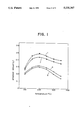
- FIG. 1 diagrammatically illustrates the adhesion of the lubricants of Invention Examples 1 and 5 and the lubricants of Comparative Examples A and B;
- FIG. 2 diagrammatically shows the adhesion of the lubricants of Invention Examples 6 and 10 and the lubricants of Comparative Examples C and D.
- Suitable examples of the salt of the polybasic high-molecular acid employed in this invention include the sodium, potassium, calcium, magnesium, ammonium and amine salts of humic, nitrohumic and lignin sulfonic acids.
- Alkanolamines such as monoisopropanolamine, diethanolamine, triethanolamine and triisopropanolamine may be mentioned as amines suitable for the formation of the amine salts.
- These salts may be used either singly or in combination. It is suitable to add one or more of these salts in an amount such that the total concentration falls within a range of 0.01-5 wt.% in the resulting water dispersion. Amounts smaller than 0.01 wt.% are too little to draw out the effects of the present invention.
- any fine graphite powder is usable in this invention whether it is of a natural origin or is a synthesized product or whether it is in a amorphous form or in a flake-like form.
- the average particle size is desirably not greater than 100 ⁇ m from the standpoint of the dispersion stability of graphite and the maintenance and control of a lubricant applicator.
- Fine gilsonite powder can also be used in this invention if desired.
- the use of other asphalt however results in reduced adhesion at the time of film formation, especially in extreme deteriorations of the adhered amount and adhesion strength when recoated.
- Fine gilsonite powder may desirably have an average particle size not greater than 100 ⁇ m in view of the dispersion stability of gilsonite and the maintenance and control of the lubricant applicator. Fine gilsonite powder may be added suitably in an amount such that its concentration ranges from 5 wt.% to 30 wt.% in a lubricant for the production of seamless steel pipes.
- fine particulate synthetic resin employed in this invention it is possible to use any one of fine particulate synthetic resins routinely used as lubricant components.
- Illustrative examples include polyacrylic resins, polyvinyl acetate resins, poly(modified vinyl acetate) resins, polystyrene resins, polyethylene resins, polyepoxy resins, etc.
- Suitable polyacrylic resins may be homopolymers and copolymers of lower alkanol esters of acrylic acid and methacrylic acid. Lower alkanols having 1-4 carbon atoms are appropriate as the lower alkanols for the esters.
- suitable copolymers of lower alkanol esters of acrylic acid or methacrylic acid may include copolymers of these esters and vinyl acetate, copolymers of these esters and styrene, copolymers of these esters and acrylonitrile, copolymers of these esters and acryloamide, and copolymers of these esters and acrylic acid.
- Suitable vinyl acetate resins may include homopolymer of vinyl acetate, copolymers of vinyl acetate and maleic acid, copolymers of vinyl acetate and fumaric acid, and copolymers of vinyl acetate and ethylene.
- the lubricant of this invention is basically of fine graphite powder, fine powder of a water-insoluble synthetic resin, water and a salt of a polybasic high-molecular acid. Fine gilsonite may also be added if necessary. It should however be noted that the effects of this invention will not be reduced by the addition of other component or components, for example, one or more of surfactants, polymer dispersants, pH adjustors, thickening agents, etc. It is therefore possible to optionally add one or more of surfactants, polymer dispersants, pH adjustors, thickening agents and the like as needed with a view toward converting the above basic components into a stable water dispersion.
- the lubricant of this invention can be use in a form diluted with water.
- the preferable degree of dilution varies depending on the processing conditions and coating conditions.
- the lubricant of this invention can be used by diluting it to such a degree that the total amount of its essential components, namely, fine graphite powder, fine powder of the water-insoluble synthetic resin and the salt of the polybasic high-molecular acid, plus fine gilsonite powder and auxiliary components if any may account for 30-70 wt.% of the resulting diluted coating formulation.
- the lubricant of this invention for the production of seamless steel pipes namely, the lubricant for the production of seamless steel pipes--said lubricant containing one or more salts selected, for example, from salts of humic acid, nitrohumic acid and lignin sulfonic acid--can form a uniform and thick dry film and can exhibit good rolling lubrication performance.
- the use of the lubricant of this invention therefore makes it possible to save the mill-driving power consumption and also to stabilize rolling operations.
- lubricants for the production of seamless steel pipes which contains graphite powder and a fine particulate synthetic resin as principal components or graphite powder, gilsonite and a fine particulate synthetic resin as principal components but do not contain any salt of polybasic high-molecular acid unlike the present invention, have poor adhesion when the surface temperature of a mandrel bar is high, especially, 150° C. or higher, whereby they cannot provide any uniform dry film.
- the coating a mandrel bar with each lubricant was conducted upon movement of the mandrel bar.
- the moving speed of the mandrel was 1-4 m/sec.
- an adhesion experiment was conducted under the following dynamic test conditions.
- Airless Pump 206T (trade name, manufactured by Graco Inc.), compression ratio: 10:1.
- Spray gun Automatic Gun 24AUA (trade name, manufactured by Spraying Systems Co.)
- Nozzle diameter 0.61 mm.
- Discharge pressure 40 kgf/cm 2 .
- Each sample lubricant was spray-coated as a 45 wt.% water dispersion.
- Adhered amount (g) Average of five runs.
- the above composition was added with water to form a dispersion.
- the concentration of the above composition in the dispersion was 45 wt.%.
- the dispersion was continuously applied during the hot-rolling of 200 seamless steel pipes on a mandrel mill.
- a mandrel bar which was moving at a speed of 2.0 m/sec was coated with the lubricant by means of the airless sprayer. During that time, the surface temperature of the mandrel bar ranged from 100° C. to 250° C.
- the resultant films of the lubricant were all uniform and adhered firmly. They had a thickness of from 30 ⁇ m to 40 ⁇ m. Compared with the conventional lubricant as Comparative Example A, more uniform and thicker films were formed.
- the coefficient of friction was as small as 80% or less compared with the comparative example, leading to improvements such that the mill-driving power consumption was reduced by about 15% and the rolling operation was stabilized.
- the above composition was added with water to form a dispersion.
- the concentration of the above composition in the dispersion was 45 wt.%.
- the dispersion was continuously applied during the hot-rolling of 300 seamless steel pipes on a mandrel mill.
- a mandrel bar which was moving at a speed of 2.0 m/sec was coated with the lubricant by means of the airless sprayer. During that time, the surface temperature of the mandrel bar ranged from 150° C. to 350° C.
- the resultant films of the lubricant were all uniform and adhered firmly. They had a thickness of from 40 ⁇ m to 50 ⁇ m. Compared with the conventional lubricant as Comparative Example B, more uniform and thicker films were formed.
- the coefficient of friction was as small as 75% or less compared with the comparative example, leading to improvements such that the mill-driving power consumption was reduced by about 20% and the rolling operation was stabilized.
- the above composition was added with water to form a dispersion.
- the concentration of the above composition in the dispersion was 45 wt.%.
- the dispersion was continuously applied during the hot-rolling of 400 seamless steel pipes on a mandrel mill.
- a mandrel bar which was moving at a speed of 2.0 m/sec was coated with the lubricant by means of the airless sprayer. During that time, the surface temperature of the mandrel bar ranged from 150° C. to 350° C.
- the resultant films of the lubricant were all uniform and adhered firmly. They had a thickness of from 40 ⁇ m to 55 ⁇ m. Compared with the conventional lubricant as Comparative Example B, more uniform and thicker films were formed.
- the coefficient of friction was as small as 75% or less compared with the comparative example, leading to improvements such that the mill-driving power consumption was reduced by about 20% and the rolling operation was stabilized.
- the above composition was added with water to form a dispersion.
- the concentration of the above composition in the dispersion was 45 wt.%.
- the dispersion was continuously applied during the hot-rolling of 350 seamless steel pipes on a mandrel mill.
- a mandrel bar which was moving at a speed of 2.0 m/sec was coated with the lubricant by means of the airless sprayer. During that time, the surface temperature of the mandrel bar ranged from 150° C. to 350° C.
- the resultant films of the lubricant were all uniform and adhered firmly They had a thickness of from 45 ⁇ m to 55 ⁇ m. Compared with the conventional lubricant as Comparative Example A, more uniform and thicker films were formed.
- the coefficient of friction was as small as 70% or less compared with the comparative example, leading to improvements such that the mill-driving power consumption was reduced by about 20% and the rolling operation was stabilized.
- the above composition was added with water to form a dispersion.
- the concentration of the above composition in the dispersion was 45 wt.%.
- the dispersion was continuously applied during the hot-rolling of 400 seamless steel pipes on a mandrel mill.
- a mandrel bar which was moving at a speed of 2.0 m/sec was coated with the lubricant by means of the airless sprayer. During that time, the surface temperature of the mandrel bar ranged from 150° C. to 350° C.
- the resultant films of the lubricant were all uniform and adhered firmly. They had a thickness of from 45 ⁇ m to 55 ⁇ m. Compared with the conventional lubricant as Comparative Example A, more uniform and thicker films were formed.
- the coefficient of friction was as small as 70% or less compared with the comparative example, leading to improvements such that the mill-driving power consumption was reduced by about 20% and the rolling operation was stabilized.
- a dispersion which had been prepared by adding water to the above composition to give a concentration of 45 wt.% was continuously applied during the hot-rolling of 200 seamless steel pipes on a mandrel mill.
- a mandrel bar which was moving at a speed of 2.0 m/sec was coated with the lubricant by means of the airless sprayer. During that time, the surface temperature of the mandrel bar ranged from 100° C. to 250° C.
- the resultant films of the lubricant were all uniform and adhered firmly. They had a thickness of from 30 ⁇ m to 40 ⁇ m.
- Comparative Example D more uniform and thicker films were formed.
- the coefficient of friction was as small as 80% or less compared with the comparative example, leading to improvements such that the mill-driving power consumption by about 15% and the rolling operation was stabilized.
- a dispersion which had been prepared by adding water to the above composition to give a concentration of 45 wt.% was continuously applied during the hot-rolling of 300 seamless steel pipes on a mandrel mill.
- a mandrel bar which was moving at a speed of 2.0 m/sec was coated with the lubricant by means of the airless sprayer.
- the surface temperature of the mandrel bar ranged from 150° C. to 350° C.
- the resultant films of the lubricant were all uniform and adhered firmly. They had a thickness of from 40 ⁇ m to 50 ⁇ m.
- the coefficient of friction was as small as 75% or less compared with the comparative example, leading to improvements such that the mill-driving power consumption by about 20% and the rolling operation was stabilized.
- a dispersion which had been prepared by adding water to the above composition to give a concentration of 45 wt.% was continuously applied during the hot-rolling of 400 seamless steel pipes on a mandrel mill.
- a mandrel bar which was moving at a speed of 2.0 m/sec was coated with the lubricant by means of the airless sprayer.
- the surface temperature of the mandrel bar ranged from 150° C. to 350° C.
- the resultant films of the lubricant were all uniform and adhered firmly. They had a thickness of from 40 ⁇ m to 55 ⁇ m.
- Comparative Example C more uniform and thicker films were formed.
- the coefficient of friction was as small as 75% or less compared with the comparative example, leading to improvements such that the mill-driving power consumption by about 20% and the rolling operation was stabilized.
- a dispersion which had been prepared by adding water to the above composition to give a concentration of 45 wt.% was continuously applied during the hot-rolling of 400 seamless steel pipes on a mandrel mill.
- a mandrel bar which was moving at a speed of 2.0 m/sec was coated with the lubricant by means of the airless sprayer. During the operation, the surface temperature of the mandrel bar ranged from 150° C. to 300° C.
- the resultant films of the lubricant were all uniform and adhered firmly. They had a thickness of from 45 ⁇ m to 55 ⁇ m.
- Comparative Example D more uniform and thicker films were formed.
- the coefficient of friction was as small as 70% or less compared with the comparative example, leading to improvements such that the mill-driving power consumption by about 20% and the rolling operation was stabilized.
- a dispersion which had been prepared by adding water to the above composition to give a concentration of 45 wt.% was continuously applied during the hot-rolling of 400 seamless steel pipes on a mandrel mill.
- a mandrel bar which was moving at a speed of 2.0 m/sec was coated with the lubricant by means of the airless sprayer. During the operation, the surface temperature of the mandrel bar ranged from 150° C. to 350° C.
- the resultant films of the lubricant were all uniform and adhered firmly. They had a thickness of from 45 ⁇ m to 55 ⁇ m.
- Comparative Example D more uniform and thicker films were formed.
- the coefficient of friction was as small as 70% or less compared with the comparative example, leading to improvements such that the mill-driving power consumption by about 20% and the rolling operation was stabilized.
Landscapes
- Chemical & Material Sciences (AREA)
- Oil, Petroleum & Natural Gas (AREA)
- Chemical Kinetics & Catalysis (AREA)
- General Chemical & Material Sciences (AREA)
- Organic Chemistry (AREA)
- Engineering & Computer Science (AREA)
- Inorganic Chemistry (AREA)
- Lubricants (AREA)
Applications Claiming Priority (4)
| Application Number | Priority Date | Filing Date | Title |
|---|---|---|---|
| JP63-213623 | 1988-08-30 | ||
| JP63-213622 | 1988-08-30 | ||
| JP21362388A JPH0264196A (ja) | 1988-08-30 | 1988-08-30 | 継目無し鋼管造管用潤滑剤 |
| JP21362288A JPH0264195A (ja) | 1988-08-30 | 1988-08-30 | 微粉末ギルソナイトを含有する継目無し鋼管造管用潤滑剤 |
Publications (1)
| Publication Number | Publication Date |
|---|---|
| US5030367A true US5030367A (en) | 1991-07-09 |
Family
ID=26519893
Family Applications (1)
| Application Number | Title | Priority Date | Filing Date |
|---|---|---|---|
| US07/400,918 Expired - Fee Related US5030367A (en) | 1988-08-30 | 1989-08-30 | Water-dispersion lubricant of graphite, particulate resin and high molecular weight polybasic acid salt |
Country Status (5)
| Country | Link |
|---|---|
| US (1) | US5030367A (fr) |
| EP (1) | EP0357508B1 (fr) |
| KR (1) | KR900003344A (fr) |
| CA (1) | CA1329802C (fr) |
| DE (1) | DE68910059T2 (fr) |
Cited By (8)
| Publication number | Priority date | Publication date | Assignee | Title |
|---|---|---|---|---|
| US5476580A (en) * | 1993-05-17 | 1995-12-19 | Electrochemicals Inc. | Processes for preparing a non-conductive substrate for electroplating |
| US5690805A (en) * | 1993-05-17 | 1997-11-25 | Electrochemicals Inc. | Direct metallization process |
| US5725807A (en) * | 1993-05-17 | 1998-03-10 | Electrochemicals Inc. | Carbon containing composition for electroplating |
| US6171468B1 (en) | 1993-05-17 | 2001-01-09 | Electrochemicals Inc. | Direct metallization process |
| US6303181B1 (en) | 1993-05-17 | 2001-10-16 | Electrochemicals Inc. | Direct metallization process employing a cationic conditioner and a binder |
| US6623787B2 (en) | 2001-07-26 | 2003-09-23 | Electrochemicals Inc. | Method to improve the stability of dispersions of carbon |
| US6710259B2 (en) | 1993-05-17 | 2004-03-23 | Electrochemicals, Inc. | Printed wiring boards and methods for making them |
| JP2023109325A (ja) * | 2022-01-27 | 2023-08-08 | 株式会社Adeka | 導電性組成物及びそれを含有するグリース |
Families Citing this family (3)
| Publication number | Priority date | Publication date | Assignee | Title |
|---|---|---|---|---|
| CA2220192A1 (fr) * | 1996-11-07 | 1998-05-07 | Masayasu Kojima | Tuyau d'acier a traitement de surface utilise en hydroformage |
| WO2005056740A1 (fr) | 2003-12-10 | 2005-06-23 | Sumitomo Metal Industries, Ltd. | Composition lubrifiante pour formage a chaud |
| DE102006047621A1 (de) | 2006-10-09 | 2008-04-10 | Chemische Fabrik Budenheim Kg | Graphithaltiger Hochtemperaturschmierstoff für Edel- und Kohlenstoffstähle |
Citations (15)
| Publication number | Priority date | Publication date | Assignee | Title |
|---|---|---|---|---|
| SU268584A1 (ru) * | С. Я. Вейлер , С. Ф. Фролов Институт физической химии СССР | Смазочно-охлаждающая жидкость для горячей обработки металлов | ||
| SU540906A1 (ru) * | 1975-11-17 | 1976-12-30 | Предприятие П/Я В-8739 | Смазка дл гор чей обработки металлов давлением |
| US4001125A (en) * | 1975-06-09 | 1977-01-04 | Grafo Colloids Corporation | Lubricant for mandrels, forging dies, molds and the like |
| US4052323A (en) * | 1974-05-08 | 1977-10-04 | Lonza, Ltd. | High-temperature lubricant for the hot-working of metals |
| SU586195A1 (ru) * | 1976-05-19 | 1977-12-30 | Институт Химии Высокомолекулярных Соединений Ан Украинской Сср | Смазка дл холодной обработки металлов давлением "спга-1 |
| JPS57185393A (en) * | 1981-05-11 | 1982-11-15 | Nippon Kokan Kk <Nkk> | Lubricating agent for hot plastic working of steel |
| JPS58138795A (ja) * | 1982-02-10 | 1983-08-17 | Nippon Kokuen Kogyo Kk | マンドレルバ−潤滑剤 |
| US4401579A (en) * | 1981-09-03 | 1983-08-30 | Acheson Industries, Inc. | Water-based metal forming lubricant composition and process |
| JPS5937317A (ja) * | 1982-08-27 | 1984-02-29 | Mitsubishi Heavy Ind Ltd | 分割軸受 |
| JPS60240796A (ja) * | 1984-05-15 | 1985-11-29 | Nippon Kokan Kk <Nkk> | 継目無し鋼管造管用潤滑剤 |
| JPS6217639A (ja) * | 1985-06-18 | 1987-01-26 | イ−コ−ル ア−ベ− | ガス分析装置 |
| JPS6234357A (ja) * | 1985-08-08 | 1987-02-14 | Pioneer Electronic Corp | マルチデイスクプレ−ヤ |
| JPS6234356A (ja) * | 1985-08-08 | 1987-02-14 | Pioneer Electronic Corp | マルチデイスクプレ−ヤ |
| US4735734A (en) * | 1985-10-02 | 1988-04-05 | Lonza Ltd. | Process for preparing suspensions of solid lubricants |
| US4808324A (en) * | 1986-04-04 | 1989-02-28 | Lonza Ltd. | Lubricant system for sheet and section rolling mills |
Family Cites Families (2)
| Publication number | Priority date | Publication date | Assignee | Title |
|---|---|---|---|---|
| US4003867A (en) * | 1974-06-12 | 1977-01-18 | Acheson Industries, Inc. | Glass mold coating dispersion of aluminum phosphate and resinous agent, pigment, stabilizer and dispersing agents |
| DE2849617A1 (de) * | 1978-11-15 | 1980-05-29 | Dow Corning Gmbh | Waessriges schmiermittel |
-
1989
- 1989-08-22 CA CA000608941A patent/CA1329802C/fr not_active Expired - Fee Related
- 1989-08-25 KR KR1019890012164A patent/KR900003344A/ko not_active Withdrawn
- 1989-08-30 DE DE89402368T patent/DE68910059T2/de not_active Expired - Fee Related
- 1989-08-30 EP EP89402368A patent/EP0357508B1/fr not_active Expired - Lifetime
- 1989-08-30 US US07/400,918 patent/US5030367A/en not_active Expired - Fee Related
Patent Citations (16)
| Publication number | Priority date | Publication date | Assignee | Title |
|---|---|---|---|---|
| SU268584A1 (ru) * | С. Я. Вейлер , С. Ф. Фролов Институт физической химии СССР | Смазочно-охлаждающая жидкость для горячей обработки металлов | ||
| US4052323A (en) * | 1974-05-08 | 1977-10-04 | Lonza, Ltd. | High-temperature lubricant for the hot-working of metals |
| US4001125A (en) * | 1975-06-09 | 1977-01-04 | Grafo Colloids Corporation | Lubricant for mandrels, forging dies, molds and the like |
| SU540906A1 (ru) * | 1975-11-17 | 1976-12-30 | Предприятие П/Я В-8739 | Смазка дл гор чей обработки металлов давлением |
| SU586195A1 (ru) * | 1976-05-19 | 1977-12-30 | Институт Химии Высокомолекулярных Соединений Ан Украинской Сср | Смазка дл холодной обработки металлов давлением "спга-1 |
| JPS57185393A (en) * | 1981-05-11 | 1982-11-15 | Nippon Kokan Kk <Nkk> | Lubricating agent for hot plastic working of steel |
| US4401579A (en) * | 1981-09-03 | 1983-08-30 | Acheson Industries, Inc. | Water-based metal forming lubricant composition and process |
| JPS58138795A (ja) * | 1982-02-10 | 1983-08-17 | Nippon Kokuen Kogyo Kk | マンドレルバ−潤滑剤 |
| JPS5937317A (ja) * | 1982-08-27 | 1984-02-29 | Mitsubishi Heavy Ind Ltd | 分割軸受 |
| JPS60240796A (ja) * | 1984-05-15 | 1985-11-29 | Nippon Kokan Kk <Nkk> | 継目無し鋼管造管用潤滑剤 |
| US4711733A (en) * | 1984-05-15 | 1987-12-08 | Nippon Kokan Kabushiki Kaisha | Lubricant for the production of seamless tubes |
| JPS6217639A (ja) * | 1985-06-18 | 1987-01-26 | イ−コ−ル ア−ベ− | ガス分析装置 |
| JPS6234357A (ja) * | 1985-08-08 | 1987-02-14 | Pioneer Electronic Corp | マルチデイスクプレ−ヤ |
| JPS6234356A (ja) * | 1985-08-08 | 1987-02-14 | Pioneer Electronic Corp | マルチデイスクプレ−ヤ |
| US4735734A (en) * | 1985-10-02 | 1988-04-05 | Lonza Ltd. | Process for preparing suspensions of solid lubricants |
| US4808324A (en) * | 1986-04-04 | 1989-02-28 | Lonza Ltd. | Lubricant system for sheet and section rolling mills |
Cited By (13)
| Publication number | Priority date | Publication date | Assignee | Title |
|---|---|---|---|---|
| US6710259B2 (en) | 1993-05-17 | 2004-03-23 | Electrochemicals, Inc. | Printed wiring boards and methods for making them |
| US5690805A (en) * | 1993-05-17 | 1997-11-25 | Electrochemicals Inc. | Direct metallization process |
| US5725807A (en) * | 1993-05-17 | 1998-03-10 | Electrochemicals Inc. | Carbon containing composition for electroplating |
| US6171468B1 (en) | 1993-05-17 | 2001-01-09 | Electrochemicals Inc. | Direct metallization process |
| US6303181B1 (en) | 1993-05-17 | 2001-10-16 | Electrochemicals Inc. | Direct metallization process employing a cationic conditioner and a binder |
| US5476580A (en) * | 1993-05-17 | 1995-12-19 | Electrochemicals Inc. | Processes for preparing a non-conductive substrate for electroplating |
| US20040084321A1 (en) * | 1993-05-17 | 2004-05-06 | Thorn Charles Edwin | Printed wiring boards and methods for making them |
| US7186923B2 (en) | 1993-05-17 | 2007-03-06 | Electrochemicals, Inc. | Printed wiring boards and methods for making them |
| US6623787B2 (en) | 2001-07-26 | 2003-09-23 | Electrochemicals Inc. | Method to improve the stability of dispersions of carbon |
| US20040077733A1 (en) * | 2001-07-26 | 2004-04-22 | Bowers Joseph S. | Methods to stabilize a viscosity-unstable aqueous dispersion of carbon |
| DE10297077B4 (de) * | 2001-07-26 | 2014-08-14 | OMG Electronic Chemicals, LLC. | Verfahren zur Verbesserung der Stabilität von Kohlenstoffdispersionen |
| JP2023109325A (ja) * | 2022-01-27 | 2023-08-08 | 株式会社Adeka | 導電性組成物及びそれを含有するグリース |
| JP7821553B2 (ja) | 2022-01-27 | 2026-02-27 | 株式会社Adeka | グリース |
Also Published As
| Publication number | Publication date |
|---|---|
| DE68910059T2 (de) | 1994-05-05 |
| CA1329802C (fr) | 1994-05-24 |
| EP0357508B1 (fr) | 1993-10-20 |
| EP0357508A1 (fr) | 1990-03-07 |
| KR900003344A (ko) | 1990-03-26 |
| DE68910059D1 (de) | 1993-11-25 |
Similar Documents
| Publication | Publication Date | Title |
|---|---|---|
| US5030367A (en) | Water-dispersion lubricant of graphite, particulate resin and high molecular weight polybasic acid salt | |
| US8507416B2 (en) | Water-based lubricant for plastic processing having excellent corrosion resistance and metal material having excellent plastic processability | |
| CA2284545C (fr) | Lubrifiant pour formage des metaux a base de lubrifiants solides specifiques | |
| US4826902A (en) | Coating composition with improved rust-preventing properties for use in preparing lubricated steel products | |
| US5442005A (en) | Multi-function protective coating for zinc coated steel surfaces and its alloys | |
| US4016087A (en) | Surface treating agent for processing of metals | |
| CN1197927C (zh) | 一种水基金属防锈保护剂 | |
| US5547595A (en) | Aqueous lubricant and process for cold forming metal, particularly pointing thick-walled metal tubes | |
| EP1038933A4 (fr) | Composition de revetement et feuilles metalliques lubrifiees | |
| US4711733A (en) | Lubricant for the production of seamless tubes | |
| US6706411B2 (en) | Rust-preventing lubricated steel materials and coating compositions therefor | |
| US6255260B1 (en) | Metal forming lubricant with differential solid lubricants | |
| EP0224522A1 (fr) | Procede de formage de metaux. | |
| US4636323A (en) | Lubricating oil composition for metal rolling | |
| US5348672A (en) | Water-soluble lubricants for hot plastic working | |
| JPH09296132A (ja) | 深絞り性、耐型かじり性および一時防錆性に優れた脱膜型潤滑塗料組成物 | |
| JPH0536479B2 (fr) | ||
| JPS58138795A (ja) | マンドレルバ−潤滑剤 | |
| JP4120165B2 (ja) | 防錆性に優れた潤滑処理鋼材とそのための被覆組成物 | |
| JPH0536478B2 (fr) | ||
| JPS6234356B2 (fr) | ||
| JPH03221598A (ja) | 継目無し鋼管造管用潤滑剤 | |
| JP2007176962A (ja) | 温間又は熱間塑性加工用水溶性潤滑剤組成物及びそれを用いた温間又は熱間塑性加工方法 | |
| JPH04331293A (ja) | 熱間加工用潤滑剤 | |
| JPH0513829B2 (fr) |
Legal Events
| Date | Code | Title | Description |
|---|---|---|---|
| AS | Assignment |
Owner name: YUSHIRO CHEMICAL INDUSTRY CO., LTD., JAPAN Free format text: ASSIGNMENT OF ASSIGNORS INTEREST.;ASSIGNORS:TANAKA, MEGUMU;SAKURA, KOJI;ODA, TATSUHARU;AND OTHERS;REEL/FRAME:005304/0600;SIGNING DATES FROM 19890825 TO 19890830 Owner name: NIPPON KOKAN KABUSHIKI KAISHA, JAPAN Free format text: ASSIGNMENT OF ASSIGNORS INTEREST.;ASSIGNORS:TANAKA, MEGUMU;SAKURA, KOJI;ODA, TATSUHARU;AND OTHERS;REEL/FRAME:005304/0600;SIGNING DATES FROM 19890825 TO 19890830 Owner name: NIPPON KOKAN KABUSHIKI KAISHA, JAPAN Free format text: ASSIGNMENT OF ASSIGNORS INTEREST.;ASSIGNORS:KANDA, NOBORU;HOSONO, HIROO;WAKABAYASHI, TOSHITAKA;AND OTHERS;REEL/FRAME:005304/0609 Effective date: 19890817 Owner name: YUSHIRO CHEMICAL INDUSTRY CO., LTD., JAPAN Free format text: ASSIGNMENT OF ASSIGNORS INTEREST.;ASSIGNORS:KANDA, NOBORU;HOSONO, HIROO;WAKABAYASHI, TOSHITAKA;AND OTHERS;REEL/FRAME:005304/0609 Effective date: 19890817 |
|
| FEPP | Fee payment procedure |
Free format text: PAYOR NUMBER ASSIGNED (ORIGINAL EVENT CODE: ASPN); ENTITY STATUS OF PATENT OWNER: LARGE ENTITY |
|
| FPAY | Fee payment |
Year of fee payment: 4 |
|
| REMI | Maintenance fee reminder mailed | ||
| LAPS | Lapse for failure to pay maintenance fees | ||
| FP | Lapsed due to failure to pay maintenance fee |
Effective date: 19990709 |
|
| STCH | Information on status: patent discontinuation |
Free format text: PATENT EXPIRED DUE TO NONPAYMENT OF MAINTENANCE FEES UNDER 37 CFR 1.362 |