US5723086A - Electrode membrane - Google Patents
Electrode membrane Download PDFInfo
- Publication number
- US5723086A US5723086A US08/448,567 US44856795A US5723086A US 5723086 A US5723086 A US 5723086A US 44856795 A US44856795 A US 44856795A US 5723086 A US5723086 A US 5723086A
- Authority
- US
- United States
- Prior art keywords
- electrode
- cooh
- substituted poly
- producing
- electrode layer
- Prior art date
- Legal status (The legal status is an assumption and is not a legal conclusion. Google has not performed a legal analysis and makes no representation as to the accuracy of the status listed.)
- Expired - Lifetime
Links
Images


Classifications
-
- H—ELECTRICITY
- H01—ELECTRIC ELEMENTS
- H01M—PROCESSES OR MEANS, e.g. BATTERIES, FOR THE DIRECT CONVERSION OF CHEMICAL ENERGY INTO ELECTRICAL ENERGY
- H01M8/00—Fuel cells; Manufacture thereof
- H01M8/10—Fuel cells with solid electrolytes
- H01M8/1004—Fuel cells with solid electrolytes characterised by membrane-electrode assemblies [MEA]
-
- C—CHEMISTRY; METALLURGY
- C25—ELECTROLYTIC OR ELECTROPHORETIC PROCESSES; APPARATUS THEREFOR
- C25B—ELECTROLYTIC OR ELECTROPHORETIC PROCESSES FOR THE PRODUCTION OF COMPOUNDS OR NON-METALS; APPARATUS THEREFOR
- C25B9/00—Cells or assemblies of cells; Constructional parts of cells; Assemblies of constructional parts, e.g. electrode-diaphragm assemblies; Process-related cell features
- C25B9/17—Cells comprising dimensionally-stable non-movable electrodes; Assemblies of constructional parts thereof
- C25B9/19—Cells comprising dimensionally-stable non-movable electrodes; Assemblies of constructional parts thereof with diaphragms
- C25B9/23—Cells comprising dimensionally-stable non-movable electrodes; Assemblies of constructional parts thereof with diaphragms comprising ion-exchange membranes in or on which electrode material is embedded
-
- H—ELECTRICITY
- H01—ELECTRIC ELEMENTS
- H01M—PROCESSES OR MEANS, e.g. BATTERIES, FOR THE DIRECT CONVERSION OF CHEMICAL ENERGY INTO ELECTRICAL ENERGY
- H01M8/00—Fuel cells; Manufacture thereof
- H01M8/10—Fuel cells with solid electrolytes
- H01M8/1016—Fuel cells with solid electrolytes characterised by the electrolyte material
- H01M8/1018—Polymeric electrolyte materials
- H01M8/102—Polymeric electrolyte materials characterised by the chemical structure of the main chain of the ion-conducting polymer
- H01M8/1023—Polymeric electrolyte materials characterised by the chemical structure of the main chain of the ion-conducting polymer having only carbon, e.g. polyarylenes, polystyrenes or polybutadiene-styrenes
-
- H—ELECTRICITY
- H01—ELECTRIC ELEMENTS
- H01M—PROCESSES OR MEANS, e.g. BATTERIES, FOR THE DIRECT CONVERSION OF CHEMICAL ENERGY INTO ELECTRICAL ENERGY
- H01M8/00—Fuel cells; Manufacture thereof
- H01M8/10—Fuel cells with solid electrolytes
- H01M8/1016—Fuel cells with solid electrolytes characterised by the electrolyte material
- H01M8/1018—Polymeric electrolyte materials
- H01M8/102—Polymeric electrolyte materials characterised by the chemical structure of the main chain of the ion-conducting polymer
- H01M8/1025—Polymeric electrolyte materials characterised by the chemical structure of the main chain of the ion-conducting polymer having only carbon and oxygen, e.g. polyethers, sulfonated polyetheretherketones [S-PEEK], sulfonated polysaccharides, sulfonated celluloses or sulfonated polyesters
-
- H—ELECTRICITY
- H01—ELECTRIC ELEMENTS
- H01M—PROCESSES OR MEANS, e.g. BATTERIES, FOR THE DIRECT CONVERSION OF CHEMICAL ENERGY INTO ELECTRICAL ENERGY
- H01M8/00—Fuel cells; Manufacture thereof
- H01M8/10—Fuel cells with solid electrolytes
- H01M8/1016—Fuel cells with solid electrolytes characterised by the electrolyte material
- H01M8/1018—Polymeric electrolyte materials
- H01M8/102—Polymeric electrolyte materials characterised by the chemical structure of the main chain of the ion-conducting polymer
- H01M8/1027—Polymeric electrolyte materials characterised by the chemical structure of the main chain of the ion-conducting polymer having carbon, oxygen and other atoms, e.g. sulfonated polyethersulfones [S-PES]
-
- H—ELECTRICITY
- H01—ELECTRIC ELEMENTS
- H01M—PROCESSES OR MEANS, e.g. BATTERIES, FOR THE DIRECT CONVERSION OF CHEMICAL ENERGY INTO ELECTRICAL ENERGY
- H01M8/00—Fuel cells; Manufacture thereof
- H01M8/10—Fuel cells with solid electrolytes
- H01M8/1016—Fuel cells with solid electrolytes characterised by the electrolyte material
- H01M8/1018—Polymeric electrolyte materials
- H01M8/102—Polymeric electrolyte materials characterised by the chemical structure of the main chain of the ion-conducting polymer
- H01M8/103—Polymeric electrolyte materials characterised by the chemical structure of the main chain of the ion-conducting polymer having nitrogen, e.g. sulfonated polybenzimidazoles [S-PBI], polybenzimidazoles with phosphoric acid, sulfonated polyamides [S-PA] or sulfonated polyphosphazenes [S-PPh]
-
- H—ELECTRICITY
- H01—ELECTRIC ELEMENTS
- H01M—PROCESSES OR MEANS, e.g. BATTERIES, FOR THE DIRECT CONVERSION OF CHEMICAL ENERGY INTO ELECTRICAL ENERGY
- H01M8/00—Fuel cells; Manufacture thereof
- H01M8/10—Fuel cells with solid electrolytes
- H01M8/1016—Fuel cells with solid electrolytes characterised by the electrolyte material
- H01M8/1018—Polymeric electrolyte materials
- H01M8/102—Polymeric electrolyte materials characterised by the chemical structure of the main chain of the ion-conducting polymer
- H01M8/1032—Polymeric electrolyte materials characterised by the chemical structure of the main chain of the ion-conducting polymer having sulfur, e.g. sulfonated-polyethersulfones [S-PES]
-
- H—ELECTRICITY
- H01—ELECTRIC ELEMENTS
- H01M—PROCESSES OR MEANS, e.g. BATTERIES, FOR THE DIRECT CONVERSION OF CHEMICAL ENERGY INTO ELECTRICAL ENERGY
- H01M8/00—Fuel cells; Manufacture thereof
- H01M8/10—Fuel cells with solid electrolytes
- H01M8/1016—Fuel cells with solid electrolytes characterised by the electrolyte material
- H01M8/1018—Polymeric electrolyte materials
- H01M8/102—Polymeric electrolyte materials characterised by the chemical structure of the main chain of the ion-conducting polymer
- H01M8/1037—Polymeric electrolyte materials characterised by the chemical structure of the main chain of the ion-conducting polymer having silicon, e.g. sulfonated crosslinked polydimethylsiloxanes
-
- H—ELECTRICITY
- H01—ELECTRIC ELEMENTS
- H01M—PROCESSES OR MEANS, e.g. BATTERIES, FOR THE DIRECT CONVERSION OF CHEMICAL ENERGY INTO ELECTRICAL ENERGY
- H01M8/00—Fuel cells; Manufacture thereof
- H01M8/10—Fuel cells with solid electrolytes
- H01M8/1016—Fuel cells with solid electrolytes characterised by the electrolyte material
- H01M8/1018—Polymeric electrolyte materials
- H01M8/1069—Polymeric electrolyte materials characterised by the manufacturing processes
- H01M8/1072—Polymeric electrolyte materials characterised by the manufacturing processes by chemical reactions, e.g. in situ polymerisation or in situ crosslinking
-
- Y—GENERAL TAGGING OF NEW TECHNOLOGICAL DEVELOPMENTS; GENERAL TAGGING OF CROSS-SECTIONAL TECHNOLOGIES SPANNING OVER SEVERAL SECTIONS OF THE IPC; TECHNICAL SUBJECTS COVERED BY FORMER USPC CROSS-REFERENCE ART COLLECTIONS [XRACs] AND DIGESTS
- Y02—TECHNOLOGIES OR APPLICATIONS FOR MITIGATION OR ADAPTATION AGAINST CLIMATE CHANGE
- Y02E—REDUCTION OF GREENHOUSE GAS [GHG] EMISSIONS, RELATED TO ENERGY GENERATION, TRANSMISSION OR DISTRIBUTION
- Y02E60/00—Enabling technologies; Technologies with a potential or indirect contribution to GHG emissions mitigation
- Y02E60/30—Hydrogen technology
- Y02E60/50—Fuel cells
-
- Y—GENERAL TAGGING OF NEW TECHNOLOGICAL DEVELOPMENTS; GENERAL TAGGING OF CROSS-SECTIONAL TECHNOLOGIES SPANNING OVER SEVERAL SECTIONS OF THE IPC; TECHNICAL SUBJECTS COVERED BY FORMER USPC CROSS-REFERENCE ART COLLECTIONS [XRACs] AND DIGESTS
- Y02—TECHNOLOGIES OR APPLICATIONS FOR MITIGATION OR ADAPTATION AGAINST CLIMATE CHANGE
- Y02P—CLIMATE CHANGE MITIGATION TECHNOLOGIES IN THE PRODUCTION OR PROCESSING OF GOODS
- Y02P70/00—Climate change mitigation technologies in the production process for final industrial or consumer products
- Y02P70/50—Manufacturing or production processes characterised by the final manufactured product
-
- Y—GENERAL TAGGING OF NEW TECHNOLOGICAL DEVELOPMENTS; GENERAL TAGGING OF CROSS-SECTIONAL TECHNOLOGIES SPANNING OVER SEVERAL SECTIONS OF THE IPC; TECHNICAL SUBJECTS COVERED BY FORMER USPC CROSS-REFERENCE ART COLLECTIONS [XRACs] AND DIGESTS
- Y10—TECHNICAL SUBJECTS COVERED BY FORMER USPC
- Y10T—TECHNICAL SUBJECTS COVERED BY FORMER US CLASSIFICATION
- Y10T156/00—Adhesive bonding and miscellaneous chemical manufacture
- Y10T156/10—Methods of surface bonding and/or assembly therefor
Definitions
- the invention relates to an electrode membrane comprising an ion exchange material forming a core zone and electrodes bonded on either side thereof, for fuel cells or electrolyser, and to a method of manufacturing these electrode membranes.
- Electrolysers and fuel cells are electrochemical systems which can convert electrical energy into chemical energy (principle of electrolysis) or chemical energy into electrical energy (fuel cell principle).
- a water electrolyzer with the aid of electrical energy produces hydrogen and oxygen, and conversely a hydrogen/oxygen fuel cell converts these gases into water, releasing electrical energy.
- these systems among other things require two catalytically active electrodes for electrochemical conversion of the chemical substances, and an ion-conducting electrolyte between the electrodes for charge transfer.
- the central purpose of these systems is the production of the membrane electrode unit with the smallest possible resistance, in order to minimize the excess voltages occurring.
- This initially means the realization of minimum electrical losses during the transition between electrode and ion-conductive membrane.
- an intensive bonding is necessary of the polymeric membrane to the catalyst, in order to ensure problem-free supply or derivation of the protons migrating through the membrane towards or from the catalyst, and the transfer of electrons between electrode and reactant.
- no direct contact exists, at least at many points, between the materials, which leads to an excess voltage.
- porous membrane and catalyst surfaces are desirable, in order to make a large area available, because of their roughness, for the three-phase contact of membrane/catalyst/liquid or gas.
- a low resistance of the electrode-membrane-electrode unit in addition means realization of a low resistance of the ion exchange membrane itself, in which case minimal thickness and high ion exchange capacity play an important part.
- insoluble and infusible ion exchange membranes are proposed for the polymeric solid electrolyte. These prefabricated membranes are subsequently brought into contact with the electrodes by means of wet chemical or hot pressing methods.
- the membrane is for example incorporated in a coating cell, so that the cell is divided by the membrane into two spaces separate from one another.
- One side contains hexachloroplatinic acid, the other for example hydrazine as a reduction agent, which diffuses through the membrane and precipitates platinum in the surface area of the membrane.
- the catalyst may be bonded by means of application of pressure.
- the outset material is the catalytically active powder, which is pressed on to the membrane.
- Electrode membranes for fuel cells or electrolyzers which ensure an integral connection of the electrode with the ion-conductive material. In this way low electrical losses in the transition between electrode and ion-conductive membrane are intended to be achieved. It should at the same time be possible to produce extremely thin ion-conductive layers, which may be provided with an additional degree of porosity in the surface area.
- the ion-conductive material of the core zone is formed by polymers which are soluble in solvent, at least a portion of the polymer having a residue which is dissociable in ions, because of the required ion-conductivity.
- a decisive factor in this respect is the solubility of the core membrane.
- the structure of the electrode membrane according to the invention is possible by its selection of polymers soluble in solvents. In this case the electrodes are integrated on both sides of the core zone into the surfaces of the core zone of the ion-conductive material.
- a further factor essential to the invention is that the external surface of the electrodes is free of ion-conductive material, and thus has a purely electronic conductivity, whereas the intermediate region, i.e.
- the electrode material has an intense, adhesive-like bond between catalyst and membrane. This means first of all the production of low electrical losses in the transition between electrode and ion-conductive membrane.
- the electrode membranes proposed according to the invention enable the production of extremely thin membranes (in the range from 10 to 500 ⁇ m), which secondly means the realization of a low resistance for the ion-exchange membrane itself.
- the electrode membrane is porous in the region of the ionically and electronically conductive intermediate zone and of the purely electronically conductive zone. Porous membrane and catalyst surfaces are advantageous, since because of their roughness, a large area is available for the three-phase contact membrane/catalyst/liquid or gas.
- a base material for production of the electrode membranes may be used as a base material for production of the electrode membranes homopolymers, copolymers or mixtures thereof, which may be obtained as viscous solutions with suitable solvents.
- suitable liquid monomers e.g. styrol.
- the following monomeric units may be contained for example in the homo/copolymers or mixtures thereof; at least one unit must contain a residue dissociable in ions, in order to ensure sufficient ionic conductivity.
- monomeric units are understood according to the invention the units which are necessary to build up the polymer. In particular structures are used which have sufficient chemical stability in fuel cell/electrolyzer operations, such as for example
- R 3 ⁇ --COOH, --COO(R 4 ), --CONH 2 , --CN, --OH, --O(R 4 ), --OC(O)(R 4 ), --C(O)(R 4 ), --Cl, --C 6 H 4 (R 5 )
- R 6 ⁇ --C 6 H 4 --, --C 6 H 3 (R 5 )--, --C 6 H 2 (CH 3 ) 2 --, --C 6 H(CH 3 ) 2 (R 5 )---
- R 14 ⁇ --C 6 H 4 --, --C 6 H 3 (R 5 )--, --C 6 H 2 (CH 3 ) 2 --, --C 6 H(CH 3 ) 2 (R 5 )--, --CH 2 --, --C 2 H 4 --, --C 3 H 6 --, --C 4 H 8 --
- R 11 ⁇ --F, --C 6 H 5 , --C 6 H 4 (R 5 ), --OC 6 H 4 (R 5 )
- the monomeric units are used at a degree of polymerization which still enables a solution or viscous solution of the polymers. Furthermore, structural elements may be contained which enable subsequent interlacing of the polymeric material in the electrode membrane. In this way the swelling properties of highly conductive ion exchange membranes may be favorably influenced. Ion exchange membranes generally possess a high degree of swelling, which considerably impairs the mechanical properties of the membrane. Interlacing of the membrane reduces the maximum degree of swelling and thus improves the profile of properties of the membrane. This interlacing may be effected thermally, chemically or photochemically.
- a portion of the sulfonic acid group in the activated form (sulfoazolide) in the residue R 5 may be converted with an added diamine into an interlacing sulfonamide.
- Activation of the sulfonic acid groups into sulfoazolide is effected by conversion with N,N'-carbonyldiimidazole.
- Accessible electrode materials are used for the electrode.
- electrode material substances or carrier-bound substances which represent electrochemical catalysts for the redoxreactions H 2 /H + and 0 2 /0 2- .
- metals, alloys, oxides, mixed oxides or mixtures thereof are particularly used. Underlying these substances are mostly elements of the VIII side group of the periodic table; in addition substances may be obtained with underlying elements from other groups of the periodic table.
- Materials without carriers, or materials applied on a carrier such as carbon, titanium, tantalum or similar may be employed.
- the electrode membranes according to the invention have a conductivity transfer which migrates from the core zone A towards the external side to a purely electronic conductivity.
- the transition may be in a step wise form, i.e. in layers, or also continuous.
- the invention further relates to a method for manufacturing the electrode membranes.
- the invention shows two basic ways of producing such an electrode membrane.
- the core zone A and to produce the electrode material in a separate process step, and then to etch either the electrode surface or the membrane side or both components by a solvent or by a polymer solution and then to combine the two components, i.e. the core zone and the two electrodes, by pressing them together.
- the second variant proposed according to the invention (claim 10) now proposes that the core zone be formed by respectively coating the electrode material on one side with the ion-conductive material and then, after wetting or etching the ion-conductive surface, forming the electrode material by pressing these two components together.
- the core zone thus in this case arises from the combination of the two coated semifinished membrane electrode units.
- Electrode material for the first variant i.e. for the combination of three components
- the "single" electrode produced in this way can have added thereto according to the invention during production as an additive or filler, a motive agent and/or water-repelling agent.
- Motive agents are used in order to prevent substances to be applied during subsequent preparation steps from filling the entire pore system and deactivating it.
- Water-repelling agents are necessary in order to obtain water-rejecting non-floodable electrodes for fuel cell operation.
- Activated electrodes may also be used according to the invention for producing the electrode membrane.
- Activated electrodes according to the invention are understood to be a single electrode produced as described above, which is additionally treated with a solution or emulsion of a defined concentration of an ion-conducting polymer.
- the ion-conducting polymer still in solution, can contain motive agents forming pores.
- the ion-conductive polymer may be applied by spraying under specific spray conditions, by painting on (paint brush, brush, etc.) or by impregnation.
- the monomer can be polymerized, polymerization being initiated by light, heat or by the decay of an initiator.
- an electrode which is partially wetted on the interior with polymer, and is superficially covered on one side with an extremely thin layer (0.1 to 5 um) of the polymer.
- a "single" or “activated” electrode like those described above is likewise produced.
- further polymer is applied to the surface of the activated electrode already thinly coated with polymer, by means of spraying, painting or pouring.
- this additional layer or polymerization of the monomers by means of this procedure a portion (maximum 50%) of the membrane necessary in an electrochemical cell as electrolyte has thus been directly applied to the electrode (this electrode is termed, according to the invention, a semifinished membrane/electrode unit).
- the desired structure of the electrode membrane in the transitional zone between pure ion-conduction and pure electronic conduction can be achieved by appropriate setting of the spraying parameters and/or by the use of motive agents.
- the point of the use of motive agents is the controlled release of gas which enables the build up of a non-sealed porous duct-like structure in the interior of the electrode.
- the motive agents may be contained either during the production of the "activated" electrode in the polymer solution, or may be integrated into the production of the "single” electrode.
- the motive agent is contained as a dissolved component in the polymer solution, physical motive agents (gas formation because of evaporation) or chemical motive agents (gas formation because of a thermally- or photochemically-initiated chemical reaction) are possible.
- physical motive agents gas formation because of evaporation
- chemical motive agents gas formation because of a thermally- or photochemically-initiated chemical reaction
- thermally-initiated chemical motive agents e.g.
- diphenylsulfon-3,3-disulfohyrazide (decay temperature 155° C.) or oxy-bis (benzolsulfonylsemicarbazide) (decay temperature 150° C.), and as photochemically-initiated motive agents azoinitiators such as azo-bis-(isobutyronitrile) (decay upon application of a wavelength of 350 nm). Gas release is effected during the production of the activated electrode after application of the polymer solution.
- Solid motive agents may be considered for the "single" electrode.
- the solid motive agents may be applied either as a mixture with the catalyst to the carrier structure or subsequently to the already applied catalyst.
- the solid motive agent may not be soluble in the polymer solution.
- nitrogen-releasing solid materials such as azoinitiators, which are thermally initiated, or compounds developing carbon dioxide such as carbonates (Na 2 Co 3 , K 2 CO 3 ), which are initiated by acid treatment. Initiation is effected either during production of the "activated” electrodes after application of the polymer solution or, if a "single” electrode is used, during production of the electrode membrane in the step where the core membrane is connected to the "single” electrodes.
- the "single" electrode may be impregnated with a physical liquid separating agent which is not miscible or miscible with difficulty with the polymer solution, such as for example as benzene or heptane.
- a physical liquid separating agent which is not miscible or miscible with difficulty with the polymer solution, such as for example as benzene or heptane.
- Electrode membrane may be effected in various ways from the “single” electrodes, the “activated” electrodes or the “semifinished membrane/electrode units" already described above.
- the first variant three components are processed.
- two "single" electrodes and a core membrane are used.
- the core membrane is a membrane with the polymers described according to the invention, which are soluble in suitable solvents.
- the sides of the core membrane, or the electrodes, or both are wetted with a solvent or with a polymer solution etching the core membrane, e.g. by spraying, painting or wiping.
- the components so pre-treated are further used either immediately or after a short drying time.
- Integration of the catalytically active structures is effected by pressing the core membrane together with the "single" electrodes at a pressure of 0-10 bar and at a temperature between 20° and 150° C., so that the electrode structure is directly impressed into the uppermost etched layer of the core membrane. The solvent is then allowed to evaporate, or the monomer is polymerized, so that a solid integral structure results and the carrier material separates from the original "single" electrode in appropriate solutions.
- the second variant only two components are processed. There serve as outset materials in this case two semifinished membrane/electrode units, so that in this case the use of a core membrane can be eliminated. Production of the electrode membrane is effected by etching one or both of the semifinished membrane/electrode units with a solvent or with a polymer solution and the subsequent combination of the two pieces.
- the invention relates finally to the use of an electrode membrane according to the invention for electrolyzers or fuel cells. Because of the design according to the invention of the electrode membrane, and its low internal transitional resistance, these electrode membranes are excellently suited for this purpose.
- FIG. 1 shows the schematic structure of the electrode membrane in layer form
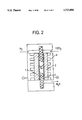
- FIG. 2 shows the functional principle of a hydrogen/oxygen fuel cell with polymeric ion-conductors as a solid electrolyte
- FIG. 3 shows the current-voltage characteristic of an electrode membrane produced according to example 1, which has been used at 26° C. in water electrolysis as a polymeric solid electrolyte.
- an electrode membrane according to the invention may be built up in layers in such a way that a layer B follows on either side upon a central layer of type A (core zone of ion-conducting material). Following this layer B there is respectively a layer of type C, so that the electrode membrane can be subdivided into five zones in all. According to the invention, however, a continuous alteration of the layer properties is possible in the transition from one layer to the next layer.
- the profile of properties of layers A, B and C is given in Table 1.
- Layer A corresponds to a sealed ion-exchange membrane. It has a purely ionic and not an electrical conductivity, and serves to transfer ions between the electrodes. It should have a low gas permeability, in order to prevent direct contact of various gases present on both sides, e.g. H 2 and 0 2 .
- Layer C corresponds to a porous electrical conductor. Due to the porous structure, the transport of materials from the exterior to the point of reaction or vice versa must take place; at the same time the electrically conductive surface serves as a contact for voltage supply or voltage derivation. The electrochemical reaction takes place in layer B.
- Undissolved and unmelted polymers such as are used in commercial coating processes, do not have any such mobile chains, and thus have restricted mobility of segments, so that the interaction of polymer and catalyst is restricted for lack of the accessibility of the chains for optimum interaction with the substrate.
- Technical process steps during the production of the electrode membrane which require critical parameters for the membrane (high temperatures, high pressure, metal precipitation which is difficult to control) are not necessary.
- the production of extremely thin membrane electrode units is simple from this viewpoint.
- porous structures may be obtained during consolidation of the polymeric solution (evaporation of the solvent or polymerization of the monomers) by means of the initiating gas development. There are no such opportunities when using insoluble and infusible polymers.
- FIG. 2 shows the functional principle of a hydrogen/oxygen fuel cell with polymeric ion conductors as solid electrolyte,
- the ionic-exchange membrane 1 is in this case incorporated as the central unit in the fuel cell,
- the catalyst 2 is directly connected to a porous distributor 3 and to a current collector 4. Operation of the fuel cell occurs in terms of the following reaction equation:
- FIG. 3 now shows a current/voltage characteristic of an electrode membrane produced according to Example 1, which has been used at 26° C. in water electrolysis as a polymeric solid electrolyte. Despite the extreme thinness of the membrane, a fully operative membrane electrode unit could be produced.
Landscapes
- Chemical & Material Sciences (AREA)
- Engineering & Computer Science (AREA)
- Chemical Kinetics & Catalysis (AREA)
- Electrochemistry (AREA)
- General Chemical & Material Sciences (AREA)
- Manufacturing & Machinery (AREA)
- Sustainable Development (AREA)
- Sustainable Energy (AREA)
- Life Sciences & Earth Sciences (AREA)
- Crystallography & Structural Chemistry (AREA)
- Organic Chemistry (AREA)
- Metallurgy (AREA)
- Materials Engineering (AREA)
- Inert Electrodes (AREA)
- Polyesters Or Polycarbonates (AREA)
- Electrodes For Compound Or Non-Metal Manufacture (AREA)
- Electrolytic Production Of Non-Metals, Compounds, Apparatuses Therefor (AREA)
- Compositions Of Macromolecular Compounds (AREA)
- Polyamides (AREA)
- Polymers With Sulfur, Phosphorus Or Metals In The Main Chain (AREA)
- Polyoxymethylene Polymers And Polymers With Carbon-To-Carbon Bonds (AREA)
- Polyurethanes Or Polyureas (AREA)
- Macromolecular Compounds Obtained By Forming Nitrogen-Containing Linkages In General (AREA)
- Addition Polymer Or Copolymer, Post-Treatments, Or Chemical Modifications (AREA)
- Fuel Cell (AREA)
- Polyethers (AREA)
Applications Claiming Priority (3)
| Application Number | Priority Date | Filing Date | Title |
|---|---|---|---|
| DE4241150A DE4241150C1 (de) | 1992-12-07 | 1992-12-07 | Elektrodenmembran-Verbund, Verfahren zu dessen Herstellung sowie dessen Verwendung |
| DE4241150.5 | 1992-12-07 | ||
| PCT/DE1993/001162 WO1994014203A1 (de) | 1992-12-07 | 1993-12-02 | Elektrodenmembran |
Publications (1)
| Publication Number | Publication Date |
|---|---|
| US5723086A true US5723086A (en) | 1998-03-03 |
Family
ID=6474591
Family Applications (1)
| Application Number | Title | Priority Date | Filing Date |
|---|---|---|---|
| US08/448,567 Expired - Lifetime US5723086A (en) | 1992-12-07 | 1993-12-02 | Electrode membrane |
Country Status (5)
| Country | Link |
|---|---|
| US (1) | US5723086A (ja) |
| EP (1) | EP0672305B1 (ja) |
| JP (1) | JPH08504293A (ja) |
| DE (2) | DE4241150C1 (ja) |
| WO (1) | WO1994014203A1 (ja) |
Cited By (30)
| Publication number | Priority date | Publication date | Assignee | Title |
|---|---|---|---|---|
| US6197147B1 (en) | 1995-12-22 | 2001-03-06 | Hoescht Research & Technology Deutschland Gmbh & Co. Kg | Process for continuous production of membrane-electrode composites |
| WO2000072395A3 (en) * | 1999-04-30 | 2001-05-10 | Univ Tulane | Sulfonated polyphosphazenes for proton-exchange membrane fuel cells |
| US6242122B1 (en) * | 1996-11-11 | 2001-06-05 | Forschungszentrum Julich Gmbh | Fuel cell electrode-electrolyte unit |
| US6248469B1 (en) | 1997-08-29 | 2001-06-19 | Foster-Miller, Inc. | Composite solid polymer electrolyte membranes |
| FR2805927A1 (fr) * | 2000-03-03 | 2001-09-07 | Commissariat Energie Atomique | Procede de preparation d'assemblages electrodes-membrane-et electrode-membraneelectrode, assemblage ainsi obtenus, et dispositif de pile combustible comprenant ces assemblages |
| WO2001071064A1 (en) * | 2000-03-21 | 2001-09-27 | Praxair Technology, Inc. | Ion conducting ceramic membrane and surface treatment |
| US20030022054A1 (en) * | 2000-03-03 | 2003-01-30 | Didier Marsacq | Method for preparing electrode-membrane assemblies, resulting assemblies and fuel cells comprising same |
| US20040062969A1 (en) * | 2000-11-13 | 2004-04-01 | Yoshimitsu Sakaguchi | Polybenzazole compound having sulfo group and/or phosphono group, resin composition containing the same, molded resin, slid polymer electrolyte film, solid electrolyte film/electrode catalyst layer composite, and process for producing the composite |
| US20040101730A1 (en) * | 2001-05-08 | 2004-05-27 | Tetsuji Hirano | Polymer electrolyte for solid polymer type fuel cell and fuel cell |
| US20040126666A1 (en) * | 2002-05-13 | 2004-07-01 | Shuguang Cao | Ion conductive block copolymers |
| US20040175598A1 (en) * | 2002-12-02 | 2004-09-09 | Bliven David C. | Fuel cell power supply for portable computing device and method for fuel cell power control |
| US20050031925A1 (en) * | 1999-03-03 | 2005-02-10 | Foster-Miller Inc. | Composite solid polymer electrolyte membranes |
| US20050181256A1 (en) * | 2002-05-13 | 2005-08-18 | Shuguang Cao | Ion conductive random copolymers |
| US20060029853A1 (en) * | 2004-08-06 | 2006-02-09 | Canon Kabushiki Kaisha | Polymer electrolyte membrane and polymer electrolyte fuel cell |
| US20060154127A1 (en) * | 2003-09-30 | 2006-07-13 | Canon Kabushiki Kaisha | Membrane electrode assembly, production method for the same, and proton-exchange membrane fuel cell |
| KR20060104163A (ko) * | 2005-03-29 | 2006-10-09 | 한국과학기술연구원 | 연료전지용 고분자 및 그 제조 방법 |
| US7202001B2 (en) | 2002-05-13 | 2007-04-10 | Polyfuel, Inc. | Sulfonated copolymer |
| US20080020253A1 (en) * | 2004-07-09 | 2008-01-24 | Ingo Neubert | Method for Producing a Membrane-Electrode Unit |
| US20090282982A1 (en) * | 2008-05-19 | 2009-11-19 | Iucf-Hyu (Industry-University Cooperation Foundation Hanyang University) | Hollow fiber, dope composition for forming hollow fiber, and method of preparing hollow fiber using the same |
| US20100099804A1 (en) * | 2008-10-10 | 2010-04-22 | Industry-University Cooperation Foundation, Hanyang University | Polymer compounds and a preparation method thereof |
| US20110065823A1 (en) * | 2008-02-28 | 2011-03-17 | Industry-University Cooperation Foundation, Hanyan g University | Polyimide-co-polybenzoxazole copolymer, preparation method thereof, and gas separation membrane comprising the same |
| US20110189581A1 (en) * | 2010-02-04 | 2011-08-04 | Samsung Electronics Co., Ltd. | Compound, cross-linked material thereof, double cross-linked polymer thereof, and electrolyte membrane, electrode for fuel cell and fuel cell including same |
| US20110195340A1 (en) * | 2010-02-05 | 2011-08-11 | Samsung Electronics Co. Ltd | Composition, polymer thereof, electrode and electrolyte membrane for fuel cell, and fuel cell including the same |
| US20110195338A1 (en) * | 2010-02-09 | 2011-08-11 | Samsung Electronics Co., Ltd. | Hyper-branched polymer, electrode and electrolyte membrane including the hyper-branched polymer, and fuel cell including at least one of the electrode and the electrolyte membrane |
| US20110218788A1 (en) * | 2010-03-04 | 2011-09-08 | Karlsruher Institut Fuer Technologie | Method and system for determining the solvent accessible surface area and its derivatives of a molecule |
| US20120068661A1 (en) * | 2009-05-21 | 2012-03-22 | Paolo Fracas | Transportable electricity generation unit and method for generating electricity using said unit |
| US8487064B2 (en) | 2008-10-10 | 2013-07-16 | Industry-University Cooperation Foundation, Hanyang University | Polymer compounds and a preparation method thereof |
| US8802318B2 (en) | 2010-05-14 | 2014-08-12 | Samsung Electronics Co., Ltd. | Compound and composition including compound, with fuel cell, fuel cell electrode and fuel cell electrolyte membrane using same |
| US9051433B2 (en) | 2010-02-04 | 2015-06-09 | Samsung Electronics Co., Ltd. | Polymer and cross-linked polymer composition, electrode and electrolyte membrane including cross-linked polymer, and fuel cell including electrode and electrolyte membrane |
| US9368803B2 (en) | 2010-03-03 | 2016-06-14 | Samsung Electronics Co., Ltd. | Composition, method of preparing the composition, electrode including the composition, and fuel cell including the electrode |
Families Citing this family (27)
| Publication number | Priority date | Publication date | Assignee | Title |
|---|---|---|---|---|
| DE4420095C1 (de) * | 1994-06-09 | 1995-10-19 | Daimler Benz Ag | Ionenleiter für elektrochemische Speicher und Verfahren zu dessen Herstellung |
| DE19507104A1 (de) * | 1995-03-01 | 1996-09-05 | Patrick Altmeier | Anionenaustauschende Formkörper und Verfahren zu deren Herstellung |
| DE19509748C2 (de) * | 1995-03-17 | 1997-01-23 | Deutsche Forsch Luft Raumfahrt | Verfahren zur Herstellung eines Verbundes aus Elektrodenmaterial, Katalysatormaterial und einer Festelektrolytmembran |
| DE19509749C2 (de) * | 1995-03-17 | 1997-01-23 | Deutsche Forsch Luft Raumfahrt | Verfahren zur Herstellung eines Verbundes aus Elektrodenmaterial, Katalysatormaterial und einer Festelektrolytmembran |
| DE19513292C1 (de) * | 1995-04-07 | 1996-08-22 | Siemens Ag | Brennstoffzelle |
| EP0745477A1 (de) * | 1995-05-31 | 1996-12-04 | Hoechst Aktiengesellschaft | Biaxial orientierte Polypropylenfolie mit verbessertem Migrationswiderstand |
| DE19548422A1 (de) * | 1995-12-22 | 1997-09-11 | Hoechst Ag | Materialverbunde und ihre kontinuierliche Herstellung |
| DE19606612A1 (de) * | 1996-02-22 | 1997-08-28 | Forschungszentrum Juelich Gmbh | Elektrolyt-Gasdiffusionselektroden-Einheit |
| DE19611510A1 (de) * | 1996-03-23 | 1997-09-25 | Degussa | Gasdiffusionselektrode für Membranbrennstoffzellen und Verfahren zu ihrer Herstellung |
| DE19616160A1 (de) * | 1996-04-24 | 1997-10-30 | Hoechst Ag | Verfahren zur Herstellung einer Kationenaustauschermembran |
| DE19646486A1 (de) * | 1996-11-11 | 1998-05-14 | Forschungszentrum Juelich Gmbh | Membran-Elektroden-Einheit für eine mit Wasserstoff als Arbeitsgas arbeitende Membranbrennstoffzelle |
| US5976345A (en) * | 1997-01-06 | 1999-11-02 | Boston University | Method and apparatus for metal extraction and sensor device related thereto |
| DE19709199A1 (de) * | 1997-03-06 | 1998-09-17 | Magnet Motor Gmbh | Gasdiffusionselektrode mit verringertem Diffusionsvermögen für Wasser und Verfahren zum Betreiben einer Polymerelektrolytmembran-Brennstoffzelle ohne Zuführung von Membranbefeuchtungswasser |
| DE19782271T1 (de) * | 1997-04-30 | 2000-04-27 | Dow Chemical Co | Elektrodenstruktur für elektrochemische Festkörpervorrichtungen |
| US6042959A (en) * | 1997-10-10 | 2000-03-28 | 3M Innovative Properties Company | Membrane electrode assembly and method of its manufacture |
| DE19801117C1 (de) * | 1998-01-15 | 1999-01-07 | Forschungszentrum Juelich Gmbh | Verfahren und Vorrichtung zur Prüfung der Qualität eines eine Membran umfassenden flächigen Elements |
| DE19803132C1 (de) * | 1998-01-28 | 1999-04-01 | Forschungszentrum Juelich Gmbh | Brennstoffzelle mit einem protonenleitfähigen Elektrolyten |
| DE19962686A1 (de) * | 1999-12-23 | 2001-07-26 | Siemens Ag | Membran-Elektroden-Einheit für eine Brennstoffzelle und Herstellungsverfahren dazu |
| JP4641612B2 (ja) * | 2000-09-14 | 2011-03-02 | 株式会社トクヤマ | ガス拡散電極用プロトン伝導性付与剤 |
| JP2003020415A (ja) * | 2001-07-09 | 2003-01-24 | Toyobo Co Ltd | ブレンドポリマー電解質、該電解質を主成分とする電解質膜、及び該電解質を用いた膜/電極接合体 |
| EP1523057A1 (en) * | 2003-09-26 | 2005-04-13 | Paul Scherer Institut | Membrane electrode assembly (MEA), method for its manufacturing and a method for preparing a membrane to be assembled in a MEA |
| US7648790B2 (en) | 2004-07-27 | 2010-01-19 | Samsung Sdi Co., Ltd. | Electrolyte for fuel cell and fuel cell employing the same |
| US7829209B2 (en) | 2004-10-22 | 2010-11-09 | Samsung Sdi Co., Ltd. | Solid polymer electrolyte for fuel cell and fuel cell containing the same |
| JP4828112B2 (ja) * | 2004-10-22 | 2011-11-30 | Necトーキン株式会社 | プロトン伝導性高分子材料並びにこれを用いた固体電解質膜、電気化学セル及び燃料電池 |
| DE102004058474B4 (de) | 2004-11-23 | 2018-03-22 | Deutsches Zentrum für Luft- und Raumfahrt e.V. | Verfahren zur Herstellung einer Elektroden-Elektrolyt-Struktur |
| US8227135B2 (en) * | 2005-03-29 | 2012-07-24 | Toyota Motor Corporation | Electrolytes to enhance oxygen reduction reaction (ORR) in the cathode layer of PEM fuel cell |
| DE102009013207A1 (de) | 2009-03-17 | 2010-09-23 | Rheinisch-Westfälische Technische Hochschule Aachen | Bipolare Membran |
Citations (17)
| Publication number | Priority date | Publication date | Assignee | Title |
|---|---|---|---|---|
| US3134697A (en) * | 1959-11-03 | 1964-05-26 | Gen Electric | Fuel cell |
| US3134696A (en) * | 1959-11-03 | 1964-05-26 | Gen Electric | Fuel battery |
| US3226361A (en) * | 1961-11-29 | 1965-12-28 | Gen Electric | Functional aromatic substituents in polyphenylene oxides |
| DE2844499A1 (de) * | 1977-12-09 | 1979-06-13 | Gen Electric | Verfahren zum kontinuierlichen herstellen von halogen durch elektrolyse von halogenwasserstoffen |
| DE3041844A1 (de) * | 1979-11-08 | 1981-05-27 | PPG Industries, Inc., 15222 Pittsburgh, Pa. | Elektrolysezelle und verwendung zum elektrolysieren von alkalihalogenidsole zur gewinnung von chlor |
| US4272353A (en) * | 1980-02-29 | 1981-06-09 | General Electric Company | Method of making solid polymer electrolyte catalytic electrodes and electrodes made thereby |
| US4302303A (en) * | 1978-07-31 | 1981-11-24 | Solvay And Cie | Permeable diaphragm for an electrochemical cell |
| JPS5754288A (en) * | 1980-09-17 | 1982-03-31 | Tokuyama Soda Co Ltd | Preparation of ion exchange membrane-electrode catalyst layer conjugate |
| DE3036066A1 (de) * | 1980-09-25 | 1982-05-06 | Hoechst Ag, 6000 Frankfurt | Verfahren zur herstellung eines elektroden-membran-verbundsystems |
| US4421579A (en) * | 1981-06-26 | 1983-12-20 | Diamond Shamrock Corporation | Method of making solid polymer electrolytes and electrode bonded with hydrophyllic fluorocopolymers |
| US4461682A (en) * | 1980-07-31 | 1984-07-24 | Asahi Glass Company Ltd. | Ion exchange membrane cell and electrolytic process using thereof |
| US4469579A (en) * | 1981-06-26 | 1984-09-04 | Diamond Shamrock Corporation | Solid polymer electrolytes and electrode bonded with hydrophylic fluorocopolymers |
| US4555453A (en) * | 1981-10-01 | 1985-11-26 | Electric Power Research, Inc. | Method for forming molten carbonate fuel cell component and structure |
| US4568441A (en) * | 1981-06-26 | 1986-02-04 | Eltech Systems Corporation | Solid polymer electrolyte membranes carrying gas-release particulates |
| US4828941A (en) * | 1986-06-04 | 1989-05-09 | Basf Aktiengesellschaft | Methanol/air fuel cells |
| US5443927A (en) * | 1991-10-09 | 1995-08-22 | Yuasa Corporation | Cathode composite |
| JPH0838934A (ja) * | 1994-07-27 | 1996-02-13 | Hiroshi Ko | 空気洗浄器 |
Family Cites Families (1)
| Publication number | Priority date | Publication date | Assignee | Title |
|---|---|---|---|---|
| US4209368A (en) * | 1978-08-07 | 1980-06-24 | General Electric Company | Production of halogens by electrolysis of alkali metal halides in a cell having catalytic electrodes bonded to the surface of a porous membrane/separator |
-
1992
- 1992-12-07 DE DE4241150A patent/DE4241150C1/de not_active Revoked
-
1993
- 1993-12-02 WO PCT/DE1993/001162 patent/WO1994014203A1/de not_active Ceased
- 1993-12-02 EP EP94900759A patent/EP0672305B1/de not_active Expired - Lifetime
- 1993-12-02 JP JP6513651A patent/JPH08504293A/ja not_active Ceased
- 1993-12-02 US US08/448,567 patent/US5723086A/en not_active Expired - Lifetime
- 1993-12-02 DE DE59306542T patent/DE59306542D1/de not_active Expired - Lifetime
Patent Citations (18)
| Publication number | Priority date | Publication date | Assignee | Title |
|---|---|---|---|---|
| US3134696A (en) * | 1959-11-03 | 1964-05-26 | Gen Electric | Fuel battery |
| US3134697A (en) * | 1959-11-03 | 1964-05-26 | Gen Electric | Fuel cell |
| US3226361A (en) * | 1961-11-29 | 1965-12-28 | Gen Electric | Functional aromatic substituents in polyphenylene oxides |
| DE2844499A1 (de) * | 1977-12-09 | 1979-06-13 | Gen Electric | Verfahren zum kontinuierlichen herstellen von halogen durch elektrolyse von halogenwasserstoffen |
| US4210501A (en) * | 1977-12-09 | 1980-07-01 | General Electric Company | Generation of halogens by electrolysis of hydrogen halides in a cell having catalytic electrodes bonded to a solid polymer electrolyte |
| US4302303A (en) * | 1978-07-31 | 1981-11-24 | Solvay And Cie | Permeable diaphragm for an electrochemical cell |
| DE3041844A1 (de) * | 1979-11-08 | 1981-05-27 | PPG Industries, Inc., 15222 Pittsburgh, Pa. | Elektrolysezelle und verwendung zum elektrolysieren von alkalihalogenidsole zur gewinnung von chlor |
| US4272353A (en) * | 1980-02-29 | 1981-06-09 | General Electric Company | Method of making solid polymer electrolyte catalytic electrodes and electrodes made thereby |
| US4461682A (en) * | 1980-07-31 | 1984-07-24 | Asahi Glass Company Ltd. | Ion exchange membrane cell and electrolytic process using thereof |
| JPS5754288A (en) * | 1980-09-17 | 1982-03-31 | Tokuyama Soda Co Ltd | Preparation of ion exchange membrane-electrode catalyst layer conjugate |
| DE3036066A1 (de) * | 1980-09-25 | 1982-05-06 | Hoechst Ag, 6000 Frankfurt | Verfahren zur herstellung eines elektroden-membran-verbundsystems |
| US4421579A (en) * | 1981-06-26 | 1983-12-20 | Diamond Shamrock Corporation | Method of making solid polymer electrolytes and electrode bonded with hydrophyllic fluorocopolymers |
| US4469579A (en) * | 1981-06-26 | 1984-09-04 | Diamond Shamrock Corporation | Solid polymer electrolytes and electrode bonded with hydrophylic fluorocopolymers |
| US4568441A (en) * | 1981-06-26 | 1986-02-04 | Eltech Systems Corporation | Solid polymer electrolyte membranes carrying gas-release particulates |
| US4555453A (en) * | 1981-10-01 | 1985-11-26 | Electric Power Research, Inc. | Method for forming molten carbonate fuel cell component and structure |
| US4828941A (en) * | 1986-06-04 | 1989-05-09 | Basf Aktiengesellschaft | Methanol/air fuel cells |
| US5443927A (en) * | 1991-10-09 | 1995-08-22 | Yuasa Corporation | Cathode composite |
| JPH0838934A (ja) * | 1994-07-27 | 1996-02-13 | Hiroshi Ko | 空気洗浄器 |
Non-Patent Citations (6)
| Title |
|---|
| A.J. Appleby and E.S. Yeager, Energy, vol. 11, p. 137, 1986, Oxford; No mh. |
| A.J. Appleby and E.S. Yeager, Energy, vol. 11, p. 137, 1986, Oxford; No month. * |
| M.S. Wilson and S. Gottesfeld, Journal of Applied Electrochemistry, vol. 22, pp. 1 7, 1992; No month. * |
| M.S. Wilson and S. Gottesfeld, Journal of Applied Electrochemistry, vol. 22, pp. 1-7, 1992; No month. |
| Patents Abstracts of Japan, vol. 10, No. 235, C 366; No date available. * |
| Patents Abstracts of Japan, vol. 10, No. 235, C-366; No date available. |
Cited By (51)
| Publication number | Priority date | Publication date | Assignee | Title |
|---|---|---|---|---|
| US6197147B1 (en) | 1995-12-22 | 2001-03-06 | Hoescht Research & Technology Deutschland Gmbh & Co. Kg | Process for continuous production of membrane-electrode composites |
| US6242122B1 (en) * | 1996-11-11 | 2001-06-05 | Forschungszentrum Julich Gmbh | Fuel cell electrode-electrolyte unit |
| US7052793B2 (en) | 1997-08-29 | 2006-05-30 | Foster-Miller, Inc. | Composite solid polymer electrolyte membranes |
| US6248469B1 (en) | 1997-08-29 | 2001-06-19 | Foster-Miller, Inc. | Composite solid polymer electrolyte membranes |
| US7550216B2 (en) | 1999-03-03 | 2009-06-23 | Foster-Miller, Inc. | Composite solid polymer electrolyte membranes |
| US20050031925A1 (en) * | 1999-03-03 | 2005-02-10 | Foster-Miller Inc. | Composite solid polymer electrolyte membranes |
| WO2000072395A3 (en) * | 1999-04-30 | 2001-05-10 | Univ Tulane | Sulfonated polyphosphazenes for proton-exchange membrane fuel cells |
| WO2001065623A1 (fr) * | 2000-03-03 | 2001-09-07 | Commissariat A L'energie Atomique | Procede de preparation d'assemblages electrode - membrane, assemblages ainsi obtenus et piles a combustible comprenant ces assemblages |
| US20030022054A1 (en) * | 2000-03-03 | 2003-01-30 | Didier Marsacq | Method for preparing electrode-membrane assemblies, resulting assemblies and fuel cells comprising same |
| FR2805927A1 (fr) * | 2000-03-03 | 2001-09-07 | Commissariat Energie Atomique | Procede de preparation d'assemblages electrodes-membrane-et electrode-membraneelectrode, assemblage ainsi obtenus, et dispositif de pile combustible comprenant ces assemblages |
| WO2001071064A1 (en) * | 2000-03-21 | 2001-09-27 | Praxair Technology, Inc. | Ion conducting ceramic membrane and surface treatment |
| US20040062969A1 (en) * | 2000-11-13 | 2004-04-01 | Yoshimitsu Sakaguchi | Polybenzazole compound having sulfo group and/or phosphono group, resin composition containing the same, molded resin, slid polymer electrolyte film, solid electrolyte film/electrode catalyst layer composite, and process for producing the composite |
| CN100358938C (zh) * | 2000-11-13 | 2008-01-02 | 东洋纺织株式会社 | 具有磺酸基和/或膦酸基的聚吲哚类化合物、固体电解质膜/电极催化剂层复合体及其制造方法 |
| US7288603B2 (en) * | 2000-11-13 | 2007-10-30 | Toyo Boseki Kabushiki Kaisha | Polybenzazole compound having sulfonic acid group and/or phosphonic acid group, resin composition containing the same, resin molding, solid polymer electrolyte membrane, solid polymer electrolyte membrane/electrode assembly and method of preparing assembly |
| EP1394879A4 (en) * | 2001-05-08 | 2005-01-26 | Ube Industries | POLYMER ELECTROLYTE FOR A FUEL POLYMER TYPE FUEL CELL AND FUEL CELL |
| US7258941B2 (en) | 2001-05-08 | 2007-08-21 | Ube Industries, Ltd. | Polymer electrolyte for solid polymer type fuel cell and fuel cell |
| US20040101730A1 (en) * | 2001-05-08 | 2004-05-27 | Tetsuji Hirano | Polymer electrolyte for solid polymer type fuel cell and fuel cell |
| US20040126666A1 (en) * | 2002-05-13 | 2004-07-01 | Shuguang Cao | Ion conductive block copolymers |
| US7094490B2 (en) | 2002-05-13 | 2006-08-22 | Polyfuel, Inc. | Ion conductive block copolymers |
| US7202001B2 (en) | 2002-05-13 | 2007-04-10 | Polyfuel, Inc. | Sulfonated copolymer |
| US7354679B2 (en) | 2002-05-13 | 2008-04-08 | Polyfuel, Inc. | Ion conductive random copolymers |
| US20050181256A1 (en) * | 2002-05-13 | 2005-08-18 | Shuguang Cao | Ion conductive random copolymers |
| US20040175598A1 (en) * | 2002-12-02 | 2004-09-09 | Bliven David C. | Fuel cell power supply for portable computing device and method for fuel cell power control |
| US20060154127A1 (en) * | 2003-09-30 | 2006-07-13 | Canon Kabushiki Kaisha | Membrane electrode assembly, production method for the same, and proton-exchange membrane fuel cell |
| US20080020253A1 (en) * | 2004-07-09 | 2008-01-24 | Ingo Neubert | Method for Producing a Membrane-Electrode Unit |
| EP1633012A3 (en) * | 2004-08-06 | 2006-06-07 | Canon Kabushiki Kaisha | Polymer electrolyte membrane and polymer electrolyte fuel cell |
| US20060029853A1 (en) * | 2004-08-06 | 2006-02-09 | Canon Kabushiki Kaisha | Polymer electrolyte membrane and polymer electrolyte fuel cell |
| KR20060104163A (ko) * | 2005-03-29 | 2006-10-09 | 한국과학기술연구원 | 연료전지용 고분자 및 그 제조 방법 |
| US8821617B2 (en) | 2008-02-28 | 2014-09-02 | Industry-University Cooperation Foundation, Hanyang University | Polyimide-co-polybenzoxazole copolymer, preparation method thereof, and gas separation membrane comprising the same |
| US20110065823A1 (en) * | 2008-02-28 | 2011-03-17 | Industry-University Cooperation Foundation, Hanyan g University | Polyimide-co-polybenzoxazole copolymer, preparation method thereof, and gas separation membrane comprising the same |
| US8163071B2 (en) | 2008-05-19 | 2012-04-24 | Iucf-Hyu (Industry-University Cooperation Foundation Hanyang University) | Hollow fiber, dope composition for forming hollow fiber, and method of preparing hollow fiber using the same |
| US20090282982A1 (en) * | 2008-05-19 | 2009-11-19 | Iucf-Hyu (Industry-University Cooperation Foundation Hanyang University) | Hollow fiber, dope composition for forming hollow fiber, and method of preparing hollow fiber using the same |
| US8232367B2 (en) * | 2008-10-10 | 2012-07-31 | Industry-University Cooperation Foundation, Hanyang University | Polymer compounds and a preparation method thereof |
| US8013103B2 (en) * | 2008-10-10 | 2011-09-06 | Industry-University Cooperation Foundation, Hanyang University | Polymer compounds and a preparation method thereof |
| US20110230605A1 (en) * | 2008-10-10 | 2011-09-22 | Industry-University Cooperation Foundation, Hanyang University | Polymer compounds and a preparation method thereof |
| US20100099804A1 (en) * | 2008-10-10 | 2010-04-22 | Industry-University Cooperation Foundation, Hanyang University | Polymer compounds and a preparation method thereof |
| US8487064B2 (en) | 2008-10-10 | 2013-07-16 | Industry-University Cooperation Foundation, Hanyang University | Polymer compounds and a preparation method thereof |
| US20120068661A1 (en) * | 2009-05-21 | 2012-03-22 | Paolo Fracas | Transportable electricity generation unit and method for generating electricity using said unit |
| US8896262B2 (en) * | 2009-05-21 | 2014-11-25 | Gemport S.r.l. | Transportable electricity generation unit and method for generating electricity using said unit |
| US20110189581A1 (en) * | 2010-02-04 | 2011-08-04 | Samsung Electronics Co., Ltd. | Compound, cross-linked material thereof, double cross-linked polymer thereof, and electrolyte membrane, electrode for fuel cell and fuel cell including same |
| US9051433B2 (en) | 2010-02-04 | 2015-06-09 | Samsung Electronics Co., Ltd. | Polymer and cross-linked polymer composition, electrode and electrolyte membrane including cross-linked polymer, and fuel cell including electrode and electrolyte membrane |
| US9112232B2 (en) * | 2010-02-05 | 2015-08-18 | Samsung Electronics Co., Ltd. | Composition, polymer thereof, electrode and electrolyte membrane for fuel cell, and fuel cell including the same |
| US20110195340A1 (en) * | 2010-02-05 | 2011-08-11 | Samsung Electronics Co. Ltd | Composition, polymer thereof, electrode and electrolyte membrane for fuel cell, and fuel cell including the same |
| US20150311537A1 (en) * | 2010-02-05 | 2015-10-29 | Samsung Electronics Co., Ltd. | Composition, polymer thereof, electrode and electrolyte membrane for fuel cell, and fuel cell including the same |
| US9680156B2 (en) * | 2010-02-05 | 2017-06-13 | Samsung Electronics Co., Ltd | Composition, polymer thereof, electrode and electrolyte membrane for fuel cell, and fuel cell including the same |
| US20110195338A1 (en) * | 2010-02-09 | 2011-08-11 | Samsung Electronics Co., Ltd. | Hyper-branched polymer, electrode and electrolyte membrane including the hyper-branched polymer, and fuel cell including at least one of the electrode and the electrolyte membrane |
| US9178218B2 (en) | 2010-02-09 | 2015-11-03 | Samsung Electronics Co., Ltd. | Hyper-branched polymer, electrode and electrolyte membrane including the hyper-branched polymer, and fuel cell including at least one of the electrode and the electrolyte membrane |
| US9368803B2 (en) | 2010-03-03 | 2016-06-14 | Samsung Electronics Co., Ltd. | Composition, method of preparing the composition, electrode including the composition, and fuel cell including the electrode |
| US10355284B2 (en) | 2010-03-03 | 2019-07-16 | Samsung Electronics Co., Ltd. | Composition, method of preparing the composition, electrode including the composition, and fuel cell including the electrode |
| US20110218788A1 (en) * | 2010-03-04 | 2011-09-08 | Karlsruher Institut Fuer Technologie | Method and system for determining the solvent accessible surface area and its derivatives of a molecule |
| US8802318B2 (en) | 2010-05-14 | 2014-08-12 | Samsung Electronics Co., Ltd. | Compound and composition including compound, with fuel cell, fuel cell electrode and fuel cell electrolyte membrane using same |
Also Published As
| Publication number | Publication date |
|---|---|
| EP0672305B1 (de) | 1997-05-21 |
| DE4241150C1 (de) | 1994-06-01 |
| JPH08504293A (ja) | 1996-05-07 |
| DE59306542D1 (de) | 1997-06-26 |
| WO1994014203A1 (de) | 1994-06-23 |
| EP0672305A1 (de) | 1995-09-20 |
Similar Documents
| Publication | Publication Date | Title |
|---|---|---|
| JPH08504293A (ja) | 電極膜 | |
| KR100300483B1 (ko) | 주위 조건하에서 전기화학 시스템에 사용하기 위한 비액체 양성자 전도체 | |
| Tricoli | Proton and methanol transport in poly (perfluorosulfonate) membranes containing Cs+ and H+ cations | |
| EP0603175B1 (en) | High utilization supported catalytic metal-containing gas-diffusion electrode, process for making it, and cells utilizing it | |
| US5346780A (en) | Fuel cell and method for producing an electrode used therefor | |
| US7923166B2 (en) | Separating membrane for fuel cell | |
| EP1085051B1 (en) | Composite polymer membrane and method for producing the same | |
| JP3965484B2 (ja) | 膜電極複合体(mea)の連続的製造法 | |
| EP0394392B1 (en) | Method for forming a gas permeable and ion-permeable membrane | |
| KR102780640B1 (ko) | 바이폴라 이오노머 막 | |
| JP4351557B2 (ja) | プロトン伝導体 | |
| KR101549525B1 (ko) | 레독스 흐름전지용 바나듐 이온 저투과성 양쪽성 이온 교환막 및 이를 포함하는 레독스 흐름전지 | |
| JP2003515894A (ja) | 循環電解質を有する直接メタノール電池 | |
| JP4036279B2 (ja) | プロトン伝導体及びこれを用いた燃料電池 | |
| JP4283125B2 (ja) | 高分子電解質、プロトン伝導膜および膜−電極構造体 | |
| TW200525805A (en) | Membrane electrode assembly, manufacturing process therefor and direct type fuel cell therewith | |
| JP4650835B2 (ja) | 燃料電池用の高分子電解質膜とその製造方法、膜電極接合体および燃料電池 | |
| US3196048A (en) | Cathode catalyst for fuel cells | |
| US3261716A (en) | Method of operating a fuel cell containing a sulfuric-nitric acid electrolyte | |
| KR100352563B1 (ko) | 고분자 전해질막 연료전지용 복합 고분자 전해질 막의제조방법 | |
| JP2002500806A (ja) | ゼオライト膜を有する燃料電池のような電解反応器 | |
| Shimizu et al. | Preparation and methanol permeability of polyaniline/Nafion composite membrane | |
| JP2002516472A (ja) | 燃料電池用膜電極ユニット | |
| KR100355392B1 (ko) | 다층 구조의 이온 전도성 고분자막을 채용한 연료전지 | |
| KR101019581B1 (ko) | 고분자 전해질 연료전지용 수용성 모노머에 의해 가교된 고분자 전해질 복합막 및 그 제조방법 |
Legal Events
| Date | Code | Title | Description |
|---|---|---|---|
| AS | Assignment |
Owner name: FRAUNHOFER-GESELLSCHAFT ZUR FORDERUNG DER ANGEWAND Free format text: ASSIGNMENT OF ASSIGNORS INTEREST;ASSIGNORS:LEDJEFF, KONSTANTIN;NOLTE, ROLAND;BAUER, MICHAEL;AND OTHERS;REEL/FRAME:008086/0286 Effective date: 19951229 |
|
| STCF | Information on status: patent grant |
Free format text: PATENTED CASE |
|
| FEPP | Fee payment procedure |
Free format text: PAYOR NUMBER ASSIGNED (ORIGINAL EVENT CODE: ASPN); ENTITY STATUS OF PATENT OWNER: LARGE ENTITY |
|
| FEPP | Fee payment procedure |
Free format text: PAT HOLDER NO LONGER CLAIMS SMALL ENTITY STATUS, ENTITY STATUS SET TO UNDISCOUNTED (ORIGINAL EVENT CODE: STOL); ENTITY STATUS OF PATENT OWNER: LARGE ENTITY |
|
| REFU | Refund |
Free format text: REFUND - PAYMENT OF MAINTENANCE FEE, 4TH YR, SMALL ENTITY (ORIGINAL EVENT CODE: R283); ENTITY STATUS OF PATENT OWNER: LARGE ENTITY |
|
| FPAY | Fee payment |
Year of fee payment: 4 |
|
| SULP | Surcharge for late payment | ||
| FPAY | Fee payment |
Year of fee payment: 8 |
|
| FPAY | Fee payment |
Year of fee payment: 12 |