US6149963A - Method for treating a liquid egg product - Google Patents
Method for treating a liquid egg product Download PDFInfo
- Publication number
- US6149963A US6149963A US08/715,094 US71509496A US6149963A US 6149963 A US6149963 A US 6149963A US 71509496 A US71509496 A US 71509496A US 6149963 A US6149963 A US 6149963A
- Authority
- US
- United States
- Prior art keywords
- egg product
- liquid egg
- less
- temperature
- heating
- Prior art date
- Legal status (The legal status is an assumption and is not a legal conclusion. Google has not performed a legal analysis and makes no representation as to the accuracy of the status listed.)
- Expired - Lifetime
Links
- 238000000034 method Methods 0.000 title claims abstract description 69
- 239000007788 liquid Substances 0.000 title claims abstract description 64
- 235000013601 eggs Nutrition 0.000 claims abstract description 178
- 238000001816 cooling Methods 0.000 claims abstract description 21
- 102000002322 Egg Proteins Human genes 0.000 claims abstract description 15
- 108010000912 Egg Proteins Proteins 0.000 claims abstract description 15
- QCVGEOXPDFCNHA-UHFFFAOYSA-N 5,5-dimethyl-2,4-dioxo-1,3-oxazolidine-3-carboxamide Chemical compound CC1(C)OC(=O)N(C(N)=O)C1=O QCVGEOXPDFCNHA-UHFFFAOYSA-N 0.000 claims abstract description 8
- 235000014103 egg white Nutrition 0.000 claims abstract description 8
- 210000000969 egg white Anatomy 0.000 claims abstract description 8
- 210000002969 egg yolk Anatomy 0.000 claims abstract description 7
- 235000013345 egg yolk Nutrition 0.000 claims abstract description 7
- 238000010438 heat treatment Methods 0.000 claims description 62
- 241000894006 Bacteria Species 0.000 claims description 27
- 238000003860 storage Methods 0.000 claims description 9
- 230000001580 bacterial effect Effects 0.000 claims description 4
- 239000000654 additive Substances 0.000 claims description 3
- 235000000346 sugar Nutrition 0.000 claims description 3
- 150000003839 salts Chemical class 0.000 claims description 2
- 150000008163 sugars Chemical class 0.000 claims description 2
- 239000000203 mixture Substances 0.000 claims 3
- 230000000996 additive effect Effects 0.000 claims 2
- 240000001817 Cereus hexagonus Species 0.000 claims 1
- 238000009928 pasteurization Methods 0.000 abstract description 18
- 230000007423 decrease Effects 0.000 abstract description 10
- 239000000047 product Substances 0.000 description 131
- 238000001802 infusion Methods 0.000 description 12
- XLYOFNOQVPJJNP-UHFFFAOYSA-N water Chemical compound O XLYOFNOQVPJJNP-UHFFFAOYSA-N 0.000 description 11
- 241000193755 Bacillus cereus Species 0.000 description 6
- 239000006260 foam Substances 0.000 description 4
- 230000002147 killing effect Effects 0.000 description 4
- 238000012545 processing Methods 0.000 description 4
- 241000607142 Salmonella Species 0.000 description 3
- 230000000694 effects Effects 0.000 description 3
- 238000005187 foaming Methods 0.000 description 3
- 235000013305 food Nutrition 0.000 description 3
- 239000007787 solid Substances 0.000 description 3
- 238000012360 testing method Methods 0.000 description 3
- 241000588724 Escherichia coli Species 0.000 description 2
- 241000233866 Fungi Species 0.000 description 2
- 241000191967 Staphylococcus aureus Species 0.000 description 2
- 210000004027 cell Anatomy 0.000 description 2
- 230000015271 coagulation Effects 0.000 description 2
- 238000005345 coagulation Methods 0.000 description 2
- 230000003292 diminished effect Effects 0.000 description 2
- 238000005516 engineering process Methods 0.000 description 2
- 238000001704 evaporation Methods 0.000 description 2
- 230000008020 evaporation Effects 0.000 description 2
- 239000005457 ice water Substances 0.000 description 2
- 239000012263 liquid product Substances 0.000 description 2
- 230000000704 physical effect Effects 0.000 description 2
- 241000186779 Listeria monocytogenes Species 0.000 description 1
- 230000002411 adverse Effects 0.000 description 1
- 238000009455 aseptic packaging Methods 0.000 description 1
- 239000002826 coolant Substances 0.000 description 1
- 230000003247 decreasing effect Effects 0.000 description 1
- 230000001419 dependent effect Effects 0.000 description 1
- 238000009826 distribution Methods 0.000 description 1
- 230000008030 elimination Effects 0.000 description 1
- 238000003379 elimination reaction Methods 0.000 description 1
- 239000012530 fluid Substances 0.000 description 1
- 238000009434 installation Methods 0.000 description 1
- 230000000670 limiting effect Effects 0.000 description 1
- 238000004519 manufacturing process Methods 0.000 description 1
- 238000005259 measurement Methods 0.000 description 1
- 235000013336 milk Nutrition 0.000 description 1
- 239000008267 milk Substances 0.000 description 1
- 210000004080 milk Anatomy 0.000 description 1
- 238000012986 modification Methods 0.000 description 1
- 230000004048 modification Effects 0.000 description 1
- 102000004169 proteins and genes Human genes 0.000 description 1
- 108090000623 proteins and genes Proteins 0.000 description 1
- 238000005086 pumping Methods 0.000 description 1
- 230000002829 reductive effect Effects 0.000 description 1
- 238000003303 reheating Methods 0.000 description 1
- 238000003756 stirring Methods 0.000 description 1
- 239000010409 thin film Substances 0.000 description 1
Images
Classifications
-
- A—HUMAN NECESSITIES
- A23—FOODS OR FOODSTUFFS; TREATMENT THEREOF, NOT COVERED BY OTHER CLASSES
- A23B—PRESERVATION OF FOODS, FOODSTUFFS OR NON-ALCOHOLIC BEVERAGES; CHEMICAL RIPENING OF FRUIT OR VEGETABLES
- A23B5/00—Preservation of eggs or egg products
- A23B5/005—Preserving by heating
- A23B5/0055—Preserving by heating without the shell
Definitions
- the invention relates to a method for treating a liquid egg product containing egg white and/or egg yolk in order to obtain an extended shelf life, where the egg product is subjected to rapid heating and to a pasteurization treatment, whereby the egg product is maintained at a temperature of more than approximately 60° C. for some time, for example a few minutes.
- a pasteurization treatment is a generally known method which is, for example, described in U.S. Pat. No. 4,808,425.
- an egg product is subjected to a temperature of 63-72° C. for a period of time ranging from a few seconds to more than three minutes.
- the egg product is heated to the desired temperature by means of a plate-type heat exchanger, and after having been maintained at that temperature for a sufficiently long period of time, the egg product is cooled down to a temperature below 10° C. and subsequently packed.
- a more intensive heat treatment will result in coagulation of the egg product, especially the loss of solubility of protein, which amounts to more than 15% and is unacceptable.
- the loss of functional properties of the egg product which is still acceptable according to this patent, imposes considerable limitations with regard to the applications of the pasteurized egg product, however.
- U.S. Pat. No. 4,957,760 teaches a method of ultrapasteurizing a liquid egg product by contacting the egg product to steam.
- the steam is held at not less than atmospheric pressure and the temperature of the product is not raised more than about 37° F. in this heating step.
- the steam heated product is subjected to a holding time sufficient to cause at least a 9 log cycle reduction of Salmonella bacteria in the product.
- the holding time is preferably at least 10 seconds long and is taught as reducing the operating problems inherent in processes in which a product is contacted with steam under a vacuum.
- U.S. Pat. No. 3,113,872 discloses a method of treating liquid egg products in which liquid egg is first heated by contact to a heated surface and then cooled, followed by a second heating step in which the egg product is contacted to steam followed by a second cooling step.
- the egg In the steam heating step, the egg is heated to a temperature between 155-165° F. (68.33-73.89° C.) for about 1 second under a vacuum.
- a portion of the liquid egg impinges on the walls of the chamber and runs to the bottom of the chamber through the steam atmosphere.
- a continuing problem in the treatment of liquid egg products is the necessity to pasteurize the egg product at a sufficiently high temperature to effect pasteurization and yet at a temperature low enough to prevent loss of physical and functional properties of the egg product.
- This problem is compounded by the necessity to kill a wide range of bacteria which may be present in the egg product and, specifically, bacteria which have demonstrated a resistance to pasteurization. Processing conditions which are insufficient to adequately pasteurize the egg product and achieve sufficient bacterial killing result in a packaged product with an unsatisfactorily short shelf life.
- the present invention solves the problem noted above by providing processing conditions which pasteurize the egg product in a way which maintains the functional and physical properties of the egg product and achieves high bacterial killing to provide a packaged egg product with long shelf life.
- One object of the invention is to provide a method for treating a liquid egg product wherein all the above requirements are met.
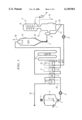
- FIG. 1 is a schematic illustration of an installation for carrying out the treatment
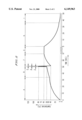
- FIG. 2 graphically illustrates a curve of the temperature of the egg product during one embodiment of the treatment of the invention.
- FIG. 1 only shows the main components, while further components which are generally known in the art, such as measurement and control apparatus, are not shown.
- the egg product of the invention may be the liquid portion of a whole egg, that is, both the egg white and the egg yolk, wherein any further additives, such as sugars or salt may be present.
- the egg product is subjected to a brief heat treatment at a temperature of a least 78° C., preferably about 80-90° C.
- the temperature during the brief heat treatment should not be so high as to coagulate the egg product.
- the brief heat treatment will be conducted at a temperature less than about 95° C.
- the brief heat treatment may last less than 1.5 seconds, preferably less than 1 second, and even more preferably less than 0.6 second.
- the method of the present invention is able to kill Bacillus cereus in egg products to a much greater extent than conventional pasteurization.
- the process of the invention therefore, produces an extended shelf life egg product having a higher bacteria kill, in particular, a lower Bacillus cereus bacteria count.
- the extended shelf life egg product of the invention is distinguishable from prior art egg products by having a very low bacteria count even after long storage.
- the extended shelf life egg product of the invention contains less than 1000, preferably less than 100, more preferably less than 10 live bacteria cells per gram of egg product after storage for 8 weeks at 4° C.
- bacteria which are relatively heat resistant such as Bacillus cereus are generally present only in an amount of less than 10 bacterial cells per gram of egg product after 8 weeks and after 10 weeks storage at 4° C. after processing by the method of the invention.
- the brief heat treatment may take place prior to, during or after the known pasteurization treatment, but in a preferred embodiment of the invention the brief heat treatment takes place prior to the pasteurization treatment. Exceptionally good results have been obtained therewith, as will be described in more detail below.
- the temperature increase required for the brief heat treatment takes place very quickly, as does the temperature decrease following the brief heat treatment, so that the treatment of the egg product substantially takes place at the desired, relatively high temperature and the egg product is only subjected for a brief period of time to the higher temperature, not enough however, that it may have an adverse effect on the egg product, for example coagulation thereof.
- At least a portion of the temperature increase, over at least a 30° C. range, preferably over more than a 40° C. range, for the brief heat treatment is preferably carried out in less than 1 second, preferably less than 0.6 second.
- a temperature decrease of more than 30° C., preferably more than 40° C., following the brief heat treatment may take place within 0.5 second, preferably 0.2 second.
- the brief heat treatment may be carried out by means of steam infusion, whereby the egg product is prevented from coming into contact with a hot surface of a piece of solid matter, as takes place in a conventional plate-type heat exchanger.
- the temperature decrease following the brief heat treatment may be carried out by expanding the egg product.
- Steam infusion is a technique which is known per se, for example from WO-93/12673 for treating milk, and uses a so-called downflow heater to provide very quick heating. Steam infusion can be used to heat the egg product to the desired temperature, which temperature can be adjusted with great accuracy, whereby temperature differences within the egg product are minimized. Moreover, any contact between the egg product and a solid, heated surface, which might interfere with the process, is avoided.
- the downflow heater of WO 93/12673 can be used during the brief heat treatment step of the present invention. Improved results are obtained by modifying the downflow heater by connecting a vacuum source to the steam infusion pressure chamber below the position at which the liquid egg product is supplied to the pressure chamber. More preferably, a vacuum line is connected to the pressure chamber above the bottom part of the pressure chamber which is cooled by means of a system of pipes provided therein. Application of a vacuum to the steam infusion pressure chamber facilitates flow of the liquid egg product from the supply pipe, through liquid distribution plates and through the plate channels into the steam infusion pressure chamber. Preferably, a vacuum of about 285-360 torr at a steam temperature of 75-80° C.
- the vacuum may be supplied by a conventional vacuum source, e.g. a vacuum pump.
- a vacuum source e.g. a vacuum pump.
- the application of a vacuum to the steam infusion pressure chamber does not substantially alter the heating profile of the egg product within the pressure chamber.
- flashing for the quick temperature decrease after the brief heat treatment, wherein the liquid expands while water vapor is being released, so that the desired temperature decrease takes place.
- the flash vessel may be routinely adjusted so that the desired temperature decrease takes place in such a manner that the amount of water which was added to the egg product during the steam infusion is extracted again from the egg product.
- the egg product is first heated to a temperature of 50-55° C. before the egg product is subjected to the brief heat treatment at the temperature of 78° C. or more.
- a good starting temperature may be obtained for quick heating during the steam infusion heating, which takes place in a downflow heater.
- the invention also relates to a device for heating a liquid egg product in order to obtain an extended shelf life, the device being provided with means for pasteurizing the egg product, by which means the egg product can be maintained at a temperature of more than about 60° C. for some time, for example a few minutes, e.g. up to about 10-20 minutes.
- the device according to the invention also has means for treating the egg product by steam infusion in order to heat the egg product briefly at an elevated temperature and has a flash vessel for expanding the briefly heated egg product.
- the means for carrying out the steam infusion is a downflow heater, having a height such that the egg product achieves a temperature which deviates less than 2° C. from the temperature of the steam. This small deviation makes it possible to set the desired temperature of the egg product with great accuracy and reliability, whereby the temperature can be achieved so quickly that a period of constant temperature commences while the egg product is falling.
- the egg product will travel through the steam in the downflow heater at a rate of about 2-4 m/sec and will have a residence time in the downflow heater of about 0.5 second.
- the wall of the steam infuser is cooled, preferably by means of ice water, at any location where the egg product may come into contact with the wall.
- cooling of the wall is preferred for treatment of the egg product.
- the liquid egg product is charged to tank 2 by means of pipe 1, in which tank the egg product is maintained at a temperature of about 2° C. until the egg product is discharged from tank 2 by operating cock 3.
- the egg product is mixed by stirring means 4, which is driven by motor 5, so that a homogeneous liquid is obtained.
- the egg product is carried to heat exchanger 7 and then to heat exchanger by means of pump 6.
- heat exchanger 7 a first heating of the egg product takes place, utilizing heat which is withdrawn during the cooling of the egg product at a later stage.
- heat exchanger 8 further heating to about 50-55° C. takes place by heat exchange with a pipe 9, through which hot water flows, for example.
- the egg product After exiting heat exchanger 8 the egg product, which now has a temperature of about 50-55° C., is carried to downflow heater 10, in which the egg product is very quickly heated to a temperature of 78° C. or more, preferably about 85° C. Steam is supplied to the downflow heater 10 via pip 28 for heating.
- a suitable downflow heater for use in the invention is disclosed in WO-93/12673 which designates the United States and which is incorporated herein by reference in its entirety.
- the egg product is heated to about 85° C. in 0.6 second, after which this temperature is maintained for 0.5 second while the egg product is falling in the downflow heater.
- both the temperature increase and the achieved temperature are uniformly spread over the egg product, which can be achieved by means of a properly adjusted downflow heater (10).
- the downflow heater (10) is double-walled near its bottom side, so that a space 29 is created, through which a coolant, for example ice water, may be passed in order to cool the wall at that location.
- a coolant for example ice water
- the discharge cock 11 of the downflow heater 10 is controlled in such a manner that after having stayed inside the downflow heater 10 for the required period of time the egg product is discharged to the flash vessel 12, which is provided with a first-chamber 13 and a second chamber 14.
- Cooling to about 40° C. takes place in 0.1 seconds, because the egg product present in chamber 13 will expand as a result of the pressure inside the flash vessel 12 being kept lower than the pressure inside the downflow heater 10.
- the pressure in the flash vessel is about 50 to about 280 torr, although the exact pressure not critical so long as the pressure in the flash vessel is less than the pressure in the downflow heater.
- the expansion process is controlled in such a manner that all the water added in the downflow heater is removed from the egg product again.
- any foam that has formed in the egg product is removed, on the one hand as a result of the egg product hitting the wall of the flash vessel 12, while on the other hand the evaporation process of the water causes the bubbles that are present to disintegrate.
- the water vapor being extracted is condensed in condenser 16, which is provided with a cooling spiral 17, for example a pipe through which cold water flows.
- the low pressure inside the flash vessel 12 is maintained by means of vacuum pump 18, while the condensed water is discharged through pipe 19.
- the egg product which has not exited from the flash chamber 13 via pipe 15 exits the flash vessel via chamber 14 and pipe 20.
- the egg product is pumped along by means of fluid pump 21, during which pumping the egg product has a temperature of about 40° C.
- the egg product is then carried to heat exchanger 22 in order to be heated to a temperature of 60-65° C., namely by means of hot water which flows through pipe 23. Subsequently the egg product flows into a well-insulated pipe 27, whose total capacity in relation to the flow rate, determines how long the egg product will be maintained at the said temperature of 60-65° C.
- This part of the treatment corresponds with the known and generally used pasteurization treatment of a liquid product.
- the egg product then flows to heat exchanger 7 and heat exchanger 24 respectively.
- heat exchanger 7 heat is exchanged with new untreated egg product, which must be heated from a holding temperature of 2° C., so that the amount of heat which is lost in the overall process is reduced.
- heat exchanger 24 further cooling to a temperature of 2° C. takes place by means of heat exchange with cold water flowing through pipe 25.
- the treated egg product is then carried, by means of pipe 26, to a machine which packs the egg product in desired quantities.
- the egg product treated and packed in this manner has a long shelf life and a very high quality.
- the treated egg product is preferably aseptically packed using conventional aseptic packaging techniques which are well known in the food processing art.
- FIG. 2 shows the temperature curve of the egg product during the treatment process according to a preferred embodiment.
- the temperature (in °C.) is shown on the vertical axis and the time (in seconds) is shown on the horizontal axis.
- the duration of the various treatment steps is indicated by the letters A-I.
- heat exchanger 7 After the egg product has exited tank 2 and is carried to heat exchanger 7 by means of pump 6, heating in heat exchanger 7 and heat exchanger 8 respectively starts at time 0.
- the capacity of heat exchanger 7 is such that the egg product stays there for 34 seconds (period A), while heat is being exchanged with the egg product, which is cooled during the latter stage of the treatment.
- the egg product is thereby heated to a temperature of 45° C.
- the egg product stays in heat exchanger 8 for 16 seconds (period B), where the egg product is further heated to 55° C. After 50 seconds (periods A and B) have lapsed from time 0, the egg product at 55° C. is charged to the downflow heater, where it is heated to a temperature of 85° C. in 0.6 second (period C). After being maintained at this temperature for 0.5 seconds (period D), the temperature of the egg product will decrease to 40° C. in 0.1 second (period E) as a result of being expanded in flash vessel 12. Following this, reheating of the egg product takes place in heat exchanger 22, where the egg product is heated to a temperature of 65° C. in 19 seconds (period F), which temperature is maintained or a few minutes.
- this period is 5 minutes (period G).
- the egg product flows through a well-insulated pipe 27, whose capacity is sufficient to realize the desired duration.
- the length and/or diameter of pip 27 can be increased or decreased to adjust the length of the time period for this pasteurization step.
- the process described in this embodiment provides an egg product of a very high quality, both with regard to taste and shelf life and with regard to all other functional properties. Furthermore the method used is very reliable, that is, relatively minor disruptions of the process appear to have hardly any effect on the quality of the treated egg product.
- a number of tests have been carried out with various time/temperature combinations, in accordance with the method of the invention.
- a batch of 5,000 kg egg product containing mixed egg white and egg yolk was treated with a flow rate of 2,000 liters per hour.
- the pasteurized product was packed antiseptically in a number of packages, which were stored at a temperature of about 3° C.
- the basic untreated product had a solid matter content of 23.2% by weight ( ⁇ 0.5), a whippability of 0.19 (i.e. the specific mass in g/cm 3 of 250 g whole egg plus 125 g sugar, whipped in a Hobart N50 mixer for 10 minutes at a temperature of approximately 22° C.) and a viscosity of 11 cps ( ⁇ 1).
- Further specifications include:
- Example 1 The process of Example 1 is repeated with the exception that the antiseptically packaged egg product is stored at a temperature of 20° C.
- the total bacteria count is found to be less than 1000 bacteria per gram of liquid product.
Landscapes
- Life Sciences & Earth Sciences (AREA)
- Engineering & Computer Science (AREA)
- Wood Science & Technology (AREA)
- Zoology (AREA)
- Chemical & Material Sciences (AREA)
- Food Science & Technology (AREA)
- Polymers & Plastics (AREA)
- Meat, Egg Or Seafood Products (AREA)
- Medicines Containing Material From Animals Or Micro-Organisms (AREA)
Applications Claiming Priority (2)
| Application Number | Priority Date | Filing Date | Title |
|---|---|---|---|
| NL1001250A NL1001250C2 (nl) | 1995-09-21 | 1995-09-21 | Werkwijze en inrichting voor het behandelen van een vloeibaar eiprodukt. |
| NL1001250 | 1995-09-21 |
Publications (1)
| Publication Number | Publication Date |
|---|---|
| US6149963A true US6149963A (en) | 2000-11-21 |
Family
ID=19761605
Family Applications (1)
| Application Number | Title | Priority Date | Filing Date |
|---|---|---|---|
| US08/715,094 Expired - Lifetime US6149963A (en) | 1995-09-21 | 1996-09-17 | Method for treating a liquid egg product |
Country Status (14)
| Country | Link |
|---|---|
| US (1) | US6149963A (de) |
| EP (1) | EP0863710B1 (de) |
| JP (1) | JP3660689B2 (de) |
| AT (1) | ATE209444T1 (de) |
| AU (1) | AU712549B2 (de) |
| BR (1) | BR9610488A (de) |
| CA (1) | CA2232368C (de) |
| DE (1) | DE69617452T2 (de) |
| DK (1) | DK0863710T3 (de) |
| ES (1) | ES2169268T3 (de) |
| NL (1) | NL1001250C2 (de) |
| NZ (1) | NZ319280A (de) |
| PT (1) | PT863710E (de) |
| WO (1) | WO1997010718A1 (de) |
Cited By (4)
| Publication number | Priority date | Publication date | Assignee | Title |
|---|---|---|---|---|
| US20040011784A1 (en) * | 2001-09-20 | 2004-01-22 | Dibbs Richard J. | Egg handling pasteurization apparatus and method |
| US20120258218A1 (en) * | 2009-06-23 | 2012-10-11 | Ismail Koyun | Method and device for treating eggs in shells |
| ITVR20130265A1 (it) * | 2013-12-02 | 2015-06-03 | Sanovo Technology Italia S R L | Modulo indipendente di trattamento termico di fluidi alimentari, per un impianto di pastorizzazione |
| RU2808105C1 (ru) * | 2022-12-21 | 2023-11-23 | Федеральное государственное бюджетное научное учреждение Федеральный научный центр "Всероссийский научно-исследовательский и технологический институт птицеводства" (ФНЦ "ВНИТИП") | Устройство для получения кальцинированного коагулированного меланжа |
Families Citing this family (3)
| Publication number | Priority date | Publication date | Assignee | Title |
|---|---|---|---|---|
| NL1001250C2 (nl) * | 1995-09-21 | 1997-03-25 | Hollander Eng Bv | Werkwijze en inrichting voor het behandelen van een vloeibaar eiprodukt. |
| ES2214131B1 (es) * | 2003-02-17 | 2005-11-01 | Jose Luis Rodriguez Vime | Procedimiento para el tratamiento de residuos de huevos. |
| US9289002B2 (en) * | 2010-06-02 | 2016-03-22 | National Pasteurized Eggs, Inc. | Shell egg pasteurization method |
Citations (19)
| Publication number | Priority date | Publication date | Assignee | Title |
|---|---|---|---|---|
| GB627339A (en) * | 1947-03-13 | 1949-08-08 | Johan Ernst Nyrop | Improvements in and relating to the production of dried eggs |
| GB818003A (en) * | 1956-08-13 | 1959-08-12 | Gerber Prod | Improvements in or relating to egg food product |
| FR1315134A (fr) * | 1961-12-05 | 1963-01-18 | Twin Peaks Milk Products | Procédé pour traiter des oeufs débarrassés de leur coquille |
| US3113872A (en) * | 1960-01-26 | 1963-12-10 | Prep Foods Inc | Method of treating shelled eggs |
| US3166424A (en) * | 1963-01-14 | 1965-01-19 | Gerber Prod | Egg yolk process |
| JPS58111663A (ja) * | 1981-12-24 | 1983-07-02 | Meiji Milk Prod Co Ltd | 鶏卵含有食品原料の製造法 |
| EP0179946A1 (de) * | 1984-11-02 | 1986-05-07 | Societe Des Produits Nestle S.A. | Verarbeitung von Eidotter |
| FR2609601A1 (fr) * | 1987-01-16 | 1988-07-22 | Valmont Sa | Procede pour la fabrication d'un entremet longue conservation a base de lait et d'oeufs |
| US4808425A (en) * | 1986-09-08 | 1989-02-28 | North Carolina State University | Method for the ultrapasteurization of liquid whole egg products |
| US4838154A (en) * | 1985-05-31 | 1989-06-13 | Maxwell Laboratories, Inc. | Apparatus for extending the shelf life of fluid food products |
| US4853238A (en) * | 1988-07-21 | 1989-08-01 | Worthington Foods, Inc. | Method of treating liquid egg and egg white with microwave energy to increase refrigerated shelf life |
| WO1990009109A1 (en) * | 1989-02-16 | 1990-08-23 | North Carolina State University | Ultrapasteurization of liquid whole egg products with direct heat |
| US5019407A (en) * | 1990-01-23 | 1991-05-28 | North Carolina State University | Method for pasteurizing liquid whole egg products |
| US5028448A (en) * | 1990-05-25 | 1991-07-02 | B.V. Nederlandse Industrie Van Eiprodukten | Process for preparing an egg concentrate |
| US5105724A (en) * | 1990-01-23 | 1992-04-21 | North Carolina State University | Apparatus for pasteurizing liquid whole egg products |
| WO1993012673A1 (en) * | 1991-12-24 | 1993-07-08 | Den Hollander Engineering B.V. | Downflow heater plant |
| US5290583A (en) * | 1992-04-02 | 1994-03-01 | David Reznik | Method of electroheating liquid egg and product thereof |
| WO1997010718A1 (en) * | 1995-09-21 | 1997-03-27 | Den Hollander Engineering B.V. | A method and a device for treating a liquid egg product |
| US5741539A (en) * | 1995-06-02 | 1998-04-21 | Knipper; Aloysius J. | Shelf-stable liquid egg |
-
1995
- 1995-09-21 NL NL1001250A patent/NL1001250C2/nl not_active IP Right Cessation
-
1996
- 1996-09-17 US US08/715,094 patent/US6149963A/en not_active Expired - Lifetime
- 1996-09-20 AT AT96932854T patent/ATE209444T1/de not_active IP Right Cessation
- 1996-09-20 NZ NZ319280A patent/NZ319280A/xx not_active IP Right Cessation
- 1996-09-20 AU AU71467/96A patent/AU712549B2/en not_active Ceased
- 1996-09-20 DE DE69617452T patent/DE69617452T2/de not_active Expired - Lifetime
- 1996-09-20 JP JP51261297A patent/JP3660689B2/ja not_active Expired - Fee Related
- 1996-09-20 DK DK96932854T patent/DK0863710T3/da active
- 1996-09-20 EP EP96932854A patent/EP0863710B1/de not_active Expired - Lifetime
- 1996-09-20 CA CA002232368A patent/CA2232368C/en not_active Expired - Fee Related
- 1996-09-20 WO PCT/NL1996/000368 patent/WO1997010718A1/en not_active Ceased
- 1996-09-20 ES ES96932854T patent/ES2169268T3/es not_active Expired - Lifetime
- 1996-09-20 PT PT96932854T patent/PT863710E/pt unknown
- 1996-09-20 BR BR9610488-0A patent/BR9610488A/pt not_active Application Discontinuation
Patent Citations (24)
| Publication number | Priority date | Publication date | Assignee | Title |
|---|---|---|---|---|
| GB627339A (en) * | 1947-03-13 | 1949-08-08 | Johan Ernst Nyrop | Improvements in and relating to the production of dried eggs |
| GB818003A (en) * | 1956-08-13 | 1959-08-12 | Gerber Prod | Improvements in or relating to egg food product |
| US3113872A (en) * | 1960-01-26 | 1963-12-10 | Prep Foods Inc | Method of treating shelled eggs |
| FR1315134A (fr) * | 1961-12-05 | 1963-01-18 | Twin Peaks Milk Products | Procédé pour traiter des oeufs débarrassés de leur coquille |
| US3166424A (en) * | 1963-01-14 | 1965-01-19 | Gerber Prod | Egg yolk process |
| JPS58111663A (ja) * | 1981-12-24 | 1983-07-02 | Meiji Milk Prod Co Ltd | 鶏卵含有食品原料の製造法 |
| EP0179946A1 (de) * | 1984-11-02 | 1986-05-07 | Societe Des Produits Nestle S.A. | Verarbeitung von Eidotter |
| US4675202A (en) * | 1984-11-02 | 1987-06-23 | Nestec S.A. | Processing of egg yolk |
| US4838154A (en) * | 1985-05-31 | 1989-06-13 | Maxwell Laboratories, Inc. | Apparatus for extending the shelf life of fluid food products |
| US4808425B1 (en) * | 1986-09-08 | 2000-05-30 | Univ North Carolina State | Method for the ultrapasteurization of liquid whole egg products |
| US4808425A (en) * | 1986-09-08 | 1989-02-28 | North Carolina State University | Method for the ultrapasteurization of liquid whole egg products |
| US4877625A (en) * | 1987-01-05 | 1989-10-31 | Valmont S.A. | Process for producing a sweet custard foodstuff with a long term shelf life based on milk and eggs |
| FR2609601A1 (fr) * | 1987-01-16 | 1988-07-22 | Valmont Sa | Procede pour la fabrication d'un entremet longue conservation a base de lait et d'oeufs |
| US4853238A (en) * | 1988-07-21 | 1989-08-01 | Worthington Foods, Inc. | Method of treating liquid egg and egg white with microwave energy to increase refrigerated shelf life |
| WO1990009109A1 (en) * | 1989-02-16 | 1990-08-23 | North Carolina State University | Ultrapasteurization of liquid whole egg products with direct heat |
| US4957760A (en) * | 1989-02-16 | 1990-09-18 | North Carolina State University | Ultrapasteurization of liquid whole egg products with direct heat |
| US5019407A (en) * | 1990-01-23 | 1991-05-28 | North Carolina State University | Method for pasteurizing liquid whole egg products |
| US5105724A (en) * | 1990-01-23 | 1992-04-21 | North Carolina State University | Apparatus for pasteurizing liquid whole egg products |
| US5028448A (en) * | 1990-05-25 | 1991-07-02 | B.V. Nederlandse Industrie Van Eiprodukten | Process for preparing an egg concentrate |
| WO1993012673A1 (en) * | 1991-12-24 | 1993-07-08 | Den Hollander Engineering B.V. | Downflow heater plant |
| US5290583A (en) * | 1992-04-02 | 1994-03-01 | David Reznik | Method of electroheating liquid egg and product thereof |
| US5533441A (en) * | 1992-04-02 | 1996-07-09 | Reznik; David | Apparatus for rapidly cooling liquid egg |
| US5741539A (en) * | 1995-06-02 | 1998-04-21 | Knipper; Aloysius J. | Shelf-stable liquid egg |
| WO1997010718A1 (en) * | 1995-09-21 | 1997-03-27 | Den Hollander Engineering B.V. | A method and a device for treating a liquid egg product |
Non-Patent Citations (4)
| Title |
|---|
| Kline et al, Food Technology, pp. 105 114, Nov. 1965. * |
| Kline et al, Food Technology, pp. 105-114, Nov. 1965. |
| Sugihara et al, Food Technology, pp. 100 107, Aug. 1966. * |
| Sugihara et al, Food Technology, pp. 100-107, Aug. 1966. |
Cited By (7)
| Publication number | Priority date | Publication date | Assignee | Title |
|---|---|---|---|---|
| US20040011784A1 (en) * | 2001-09-20 | 2004-01-22 | Dibbs Richard J. | Egg handling pasteurization apparatus and method |
| US20040013774A1 (en) * | 2001-09-20 | 2004-01-22 | Dibbs Richard J. | Egg handling pasteurization apparatus and method |
| US20120258218A1 (en) * | 2009-06-23 | 2012-10-11 | Ismail Koyun | Method and device for treating eggs in shells |
| US9314038B2 (en) * | 2009-06-23 | 2016-04-19 | Kobil Systems Gmbh | Method and device for treating eggs in shells |
| ITVR20130265A1 (it) * | 2013-12-02 | 2015-06-03 | Sanovo Technology Italia S R L | Modulo indipendente di trattamento termico di fluidi alimentari, per un impianto di pastorizzazione |
| EP2878207A1 (de) * | 2013-12-02 | 2015-06-03 | Sanovo Technology Italia S.R.L. | Unabhängiges modul für die thermische behandlung von flüssigen lebensmitteln, im rahmen eines pasteurisierungssytems |
| RU2808105C1 (ru) * | 2022-12-21 | 2023-11-23 | Федеральное государственное бюджетное научное учреждение Федеральный научный центр "Всероссийский научно-исследовательский и технологический институт птицеводства" (ФНЦ "ВНИТИП") | Устройство для получения кальцинированного коагулированного меланжа |
Also Published As
| Publication number | Publication date |
|---|---|
| JP3660689B2 (ja) | 2005-06-15 |
| EP0863710A1 (de) | 1998-09-16 |
| CA2232368C (en) | 2004-11-09 |
| NZ319280A (en) | 1999-06-29 |
| AU7146796A (en) | 1997-04-09 |
| NL1001250C2 (nl) | 1997-03-25 |
| EP0863710B1 (de) | 2001-11-28 |
| DK0863710T3 (da) | 2002-02-11 |
| JPH11512295A (ja) | 1999-10-26 |
| BR9610488A (pt) | 1999-11-09 |
| ES2169268T3 (es) | 2002-07-01 |
| DE69617452D1 (de) | 2002-01-10 |
| AU712549B2 (en) | 1999-11-11 |
| ATE209444T1 (de) | 2001-12-15 |
| PT863710E (pt) | 2002-05-31 |
| DE69617452T2 (de) | 2002-05-29 |
| CA2232368A1 (en) | 1997-03-27 |
| WO1997010718A1 (en) | 1997-03-27 |
Similar Documents
| Publication | Publication Date | Title |
|---|---|---|
| CA2119612C (en) | Method and arrangement for continuous sterilization of a liquid milk based product | |
| US5465655A (en) | Apparatus of producing extended refrigerated shelf life bakeable liquid egg | |
| JPH0555102B2 (de) | ||
| US4511589A (en) | Pasteurization of eggs | |
| US6149963A (en) | Method for treating a liquid egg product | |
| CA2067629C (en) | Process for the production of an evaporated milk product | |
| EP0540523A1 (de) | Verfahren und vorrichtung zur pasteurisierung von flüssigen volleierzeugnissen | |
| CN208909027U (zh) | 蒸汽浸入式超高温系统 | |
| EP0610410B1 (de) | Verfahren für die wärmebehandlung eines flüssigen milchproduktes | |
| US12439932B2 (en) | Method and a system for producing a UHT milk product by direct UHT heating | |
| EP0570953A2 (de) | Verfahren und Vorrichtung zur Sterilisierung und Verpackung von Hackpulpe aus Tomaten | |
| US4793072A (en) | Dehydration method and dehydration system | |
| US3060039A (en) | Process for preserving solutions of heat-sensitive material | |
| US2959485A (en) | Concentrated sweetened cream and process of producing same | |
| US12011012B2 (en) | Method and system for directly heating a protein-enriched milk product by introducing steam into said milk product | |
| US2930705A (en) | Processing egg yolks | |
| US2341769A (en) | Method of regenerating curing brine | |
| IL25958A (en) | Apparatus and process for pasteurizing egg products | |
| CN121817401A (zh) | 一种保持鲜榨椰汁特征风味的加工温度曲线控制方法 | |
| Van Den Berg | Evaporated and condensed milk | |
| US668161A (en) | Condensed milk and process of obtaining same. | |
| RU2146094C1 (ru) | Способ производства топленого молока |
Legal Events
| Date | Code | Title | Description |
|---|---|---|---|
| AS | Assignment |
Owner name: CUTLER EGG PRODUCTS, INC., PENNSYLVANIA Free format text: ASSIGNMENT OF ASSIGNORS INTEREST;ASSIGNORS:CUTLER, JOEL;DEN HOLLANDER, ADRIAAN GERRIT;ROS, ALBERT JACOBUS;REEL/FRAME:010537/0787;SIGNING DATES FROM 19960912 TO 19970114 Owner name: DEN HOLLANDER ENGINEERING B.V., NETHERLANDS Free format text: ASSIGNMENT OF ASSIGNORS INTEREST;ASSIGNORS:CUTLER, JOEL;DEN HOLLANDER, ADRIAAN GERRIT;ROS, ALBERT JACOBUS;REEL/FRAME:010537/0787;SIGNING DATES FROM 19960912 TO 19970114 |
|
| STCF | Information on status: patent grant |
Free format text: PATENTED CASE |
|
| AS | Assignment |
Owner name: CUTLER AT ABBEVILLE, L.L.C., MISSOURI Free format text: ASSIGNMENT OF ASSIGNORS INTEREST;ASSIGNOR:CUTLER EGG PRODUCTS, INC.;REEL/FRAME:011837/0281 Effective date: 20010418 |
|
| AS | Assignment |
Owner name: DEN HOLLANDER LICENTIES, B.V., NETHERLANDS Free format text: ASSIGNMENT OF ASSIGNORS INTEREST;ASSIGNOR:DEN HOLLANDER ENGINEERING, B.V.;REEL/FRAME:013110/0073 Effective date: 20020403 |
|
| FPAY | Fee payment |
Year of fee payment: 4 |
|
| AS | Assignment |
Owner name: GOLDEN OVAL EGGS, LLC, MINNESOTA Free format text: ASSIGNMENT OF ASSIGNORS INTEREST;ASSIGNOR:CUTLER AT ABBEVILLE, L.L.C.;REEL/FRAME:017996/0841 Effective date: 20060630 |
|
| FPAY | Fee payment |
Year of fee payment: 8 |
|
| AS | Assignment |
Owner name: REMBRANDT ENTERPRISES, INC., IOWA Free format text: ASSIGNMENT OF ASSIGNORS INTEREST;ASSIGNOR:GOLDEN OVAL EGGS, LLC;REEL/FRAME:022719/0080 Effective date: 20090330 Owner name: REMBRANDT ENTERPRISES, INC.,IOWA Free format text: ASSIGNMENT OF ASSIGNORS INTEREST;ASSIGNOR:GOLDEN OVAL EGGS, LLC;REEL/FRAME:022719/0080 Effective date: 20090330 |
|
| FPAY | Fee payment |
Year of fee payment: 12 |