US6284541B1 - Positive-negative selection for homologous recombination - Google Patents
Positive-negative selection for homologous recombination Download PDFInfo
- Publication number
- US6284541B1 US6284541B1 US09/509,560 US50956000A US6284541B1 US 6284541 B1 US6284541 B1 US 6284541B1 US 50956000 A US50956000 A US 50956000A US 6284541 B1 US6284541 B1 US 6284541B1
- Authority
- US
- United States
- Prior art keywords
- cell
- selection marker
- receptor
- flanking
- vector
- Prior art date
- Legal status (The legal status is an assumption and is not a legal conclusion. Google has not performed a legal analysis and makes no representation as to the accuracy of the status listed.)
- Expired - Lifetime
Links
Images


Classifications
-
- C—CHEMISTRY; METALLURGY
- C12—BIOCHEMISTRY; BEER; SPIRITS; WINE; VINEGAR; MICROBIOLOGY; ENZYMOLOGY; MUTATION OR GENETIC ENGINEERING
- C12N—MICROORGANISMS OR ENZYMES; COMPOSITIONS THEREOF; PROPAGATING, PRESERVING, OR MAINTAINING MICROORGANISMS; MUTATION OR GENETIC ENGINEERING; CULTURE MEDIA
- C12N15/00—Mutation or genetic engineering; DNA or RNA concerning genetic engineering, vectors, e.g. plasmids, or their isolation, preparation or purification; Use of hosts therefor
- C12N15/09—Recombinant DNA-technology
- C12N15/87—Introduction of foreign genetic material using processes not otherwise provided for, e.g. co-transformation
- C12N15/90—Stable introduction of foreign DNA into chromosome
-
- C—CHEMISTRY; METALLURGY
- C07—ORGANIC CHEMISTRY
- C07K—PEPTIDES
- C07K14/00—Peptides having more than 20 amino acids; Gastrins; Somatostatins; Melanotropins; Derivatives thereof
- C07K14/435—Peptides having more than 20 amino acids; Gastrins; Somatostatins; Melanotropins; Derivatives thereof from animals; from humans
- C07K14/705—Receptors; Cell surface antigens; Cell surface determinants
- C07K14/71—Receptors; Cell surface antigens; Cell surface determinants for growth factors; for growth regulators
-
- C—CHEMISTRY; METALLURGY
- C12—BIOCHEMISTRY; BEER; SPIRITS; WINE; VINEGAR; MICROBIOLOGY; ENZYMOLOGY; MUTATION OR GENETIC ENGINEERING
- C12N—MICROORGANISMS OR ENZYMES; COMPOSITIONS THEREOF; PROPAGATING, PRESERVING, OR MAINTAINING MICROORGANISMS; MUTATION OR GENETIC ENGINEERING; CULTURE MEDIA
- C12N15/00—Mutation or genetic engineering; DNA or RNA concerning genetic engineering, vectors, e.g. plasmids, or their isolation, preparation or purification; Use of hosts therefor
- C12N15/09—Recombinant DNA-technology
- C12N15/87—Introduction of foreign genetic material using processes not otherwise provided for, e.g. co-transformation
- C12N15/90—Stable introduction of foreign DNA into chromosome
- C12N15/902—Stable introduction of foreign DNA into chromosome using homologous recombination
- C12N15/907—Stable introduction of foreign DNA into chromosome using homologous recombination in mammalian cells
Definitions
- the invention concerns a method for introducing a foreign DNA into the genome of a target cell by homologous recombination as well as suitable DNA constructs for the homologous recombination.
- a starting cell is transfected with a DNA construct which contains at least one and preferably two DNA sequence sections that are homologous to regions of the genome of the cell to be transfected, a positive selection marker gene and optionally a negative selection marker gene.
- the DNA construct can contain a heterologous expression control sequence if it is intended to activate a gene which is normally silent in the transfected cell.
- the transfected cells are cultured under conditions in which a selection for the presence of the positive selection marker gene takes place which, on expression, leads to a selectable phenotype.
- a second selection step is usually carried out in order to distinguish between cells in which a homologous recombination has taken place and cells in which the vector has only been randomly integrated into the genome of the host cell.
- a negative selection marker gene is used such as the HSV thymidine kinase gene (HSV-TK) which, when present, leads to the destruction of cells in the presence of a selection agent e.g. ganciclovir.
- HSV-TK HSV thymidine kinase gene
- HSV-TK/ganciclovir which contain no functional thymidine kinase gene (e.g. CEM tk ⁇ from Ogden Bioservices Corp., Rockville Md., USA, Cat. No. 491).
- WO 95/06723 describes a method for labelling cells using a partially deleted cell surface receptor gene.
- a negative selection marker gene is used according to the invention which codes for a polypeptide located on the cell surface.
- the present invention concerns a method for introducing foreign DNA into a host cell by homologous recombination in which the host cell is transfected with a recombinant vector comprising two flanking nucleotide sequences which are homologous to a target sequence in the genome of the host cell and inside of which a nucleotide sequence coding for a positive selection marker is located, and a nucleotide sequence outside the flanking sequences which codes for a negative selection marker, each of the nucleotide sequences coding for the positive and the negative selection marker being operatively linked to an expression control sequence which is active in the host cell, wherein at least one nucleotide sequence coding for a polypeptide located on the cell surface is used as the negative selection marker gene so that after integration of the DNA construct into the genome of the cell by homologous recombination the negative selection marker gene is not expressed and after a random integration of the vector into the genome of the cell the negative selection marker gene is expressed and its gene product is presented on the cell surface
- a negative selection marker gene coding for a polypeptide located on the surface is used for the homologous recombination at an appropriate site in the vector to avoid using a negative selection method with a selection agent that is toxic for the cell.
- a negative selection marker gene is preferably used which codes for a polypeptide which does not normally occur in the host cell.
- a further advantage of the method according to the invention is that the number of transfected cells that have to be examined for expression of the target gene is considerably reduced.
- the host cell is preferably a eukaryotic cell, particularly preferably a mammalian cell and most preferably a human cell.
- a selection step is carried out according to the invention for the presence of the positive selection marker gene and a further selection step is carried out for the absence of the negative selection marker gene.
- the selection step for the presence of the positive selection marker gene can be carried out in a conventional manner.
- Any selection marker gene, and especially those suitable for eukaryotic cells, whose expression results in a selectable phenotype e.g. antibiotic resistance or auxotrophy can be used as the positive selection marker gene.
- Antibiotic resistance genes are preferably used e.g. the neomycin, kanamycin, geneticin or hygromycin resistance gene.
- a particularly preferred positive selection marker gene is the neomycin phosphotransferase gene.
- the negative selection marker gene used for the method according to the invention codes for a gene product which is presented on the surface of the host cell, preferably for a membrane-based polypeptide.
- membrane-based polypeptides are the LNGF, the CD24, the LDL or the trk receptor or a membrane-based receptor fragment containing the ligand binding domain of the respective receptor.
- Suitable receptor fragments in which the intracellular domain is completely or partially deleted or is modified in such a manner that the receptor presented on the surface cannot cause signal transduction are described in WO 95/06723.
- a particularly preferred example of such a receptor fragment is a deletion mutant of the LNGF receptor (dLNGFR) which is a fragment of the human low-affinity receptor of the nerve growth factor whose intracellular and signal transducing domains have been deleted (WO 95/06723).
- dLNGFR LNGF receptor
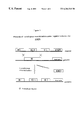
- FIG. 1 The principle of homologous recombination under negative selection by dLNGFR is shown schematically in FIG. 1 .
- This selection principle can of course be applied to other selection marker genes coding for surface-associated polypeptides.
- a plasmid is used as the recombinant vector which contains two flanking nucleic acid sections (HR1, HR2) homologous to the desired target sequence and between them the positive selection marker gene, the neomycin resistance gene (NeoR).
- a nucleotide sequence coding for dLNGFR is arranged on the plasmid outside the two flanking homologous nucleotide sequences.
- the regions HR1, NeoR and HR2 are integrated into the genome when a homologous recombination occurs with a region in the area of the target gene (HR).
- HR target gene
- the sequence coding for dLNGFR is not integrated into the genome.
- the dLNGFR gene is retained in a form capable of expression when the plasmid is randomly integrated into the genome of the host cell.
- the selection according to the invention for the absence of the negative selection marker gene in the transfected host cell preferably comprises the steps:
- binding molecules which can bind specifically and preferably with high affinity to the negative selection marker.
- binding molecules are used which do not have any interfering cross-reactivity with other surface components of the an host cell.
- binding molecules are antibodies e.g. polyclonal or monoclonal antibodies, antibody fragments etc. which are directed against the gene product of the negative selection marker gene. Suitable antibodies to dLNGFR are for example known from WO 95/06723.
- a receptor is used as a negative selection marker, a natural binding partner of the receptor, e.g. the receptor ligand or an analogue thereof, can of course also be used as a binding molecule.
- An example of such a receptor ligand is NGF as a ligand of LNGFR.
- the type of solid phase is generally uncritical for the method according to the invention and preferably those solid phases are used which enable an easy separation of the cells presenting the negative selection marker from unlabelled cells. Therefore the solid phase can be for example present in the form of a chromatographic column, but particulate solid phases such as microbeads, in particular magnetic microbeads, which enable a particularly simple separation are especially preferred.
- the transfected cells can also be contacted with free binding molecules.
- the free binding molecules preferably carry a marker or/and a solid phase binding group.
- suitable marker or/and solid phase binding groups are biotin, biotin derivatives, e.g. iminobiotin, aminobiotin or desthiobiotin, haptens, e.g. digoxigenin, fluorescein, enzymes e.g. peroxidase or alkaline phosphatase or dyes e.g. fluorescent dyes such as fluorescein, phycoerythrin, rhodamine, peridinine-chlorophyl protein, Texas red or derivatives thereof.
- a binding molecule which carries a solid phase binding group such as biotin, a biotin derivative or a hapten
- the cells labelled with the binding molecule can be coupled to a solid phase that can react with the solid phase binding group of the binding molecule.
- a binding molecule which carries a biotin group, one can for example identify the cells expressing the negative selection marker and separate them from unlabelled cells by binding to an avidin or streptavidin-coated solid phase.
- the cells expressing the negative selection marker can be identified after addition of an enzyme substrate by an enzyme catalysed color reaction and optionally separated from unlabelled cells. This identification can for example be carried out by putting the cells on a slide and subsequently analysing them microscopically.
- the cells expressing the negative selection marker can be identified by flow cytometric analysis and separated from unlabelled cells. This separation procedure is rapid and simple and can be carried out in conventional FACS instruments that enable the setting of fluorescence windows and cell sorting.
- a further subject matter of the present invention is a recombinant vector which is suitable for use as a transfection vector in the method according to the invention.
- This vector comprises:
- nucleotide sequence coding for a negative selection marker under the control of an expression control sequence that is active in the cell which is located outside the flanking homologous nucleotide sequences and whose expression product is a polypeptide located on the cell surface.
- This expression control sequence comprises a promoter and preferably further expression-improving sequences e.g. an enhancer.
- the promoter can be a regulatable or a constitutive promoter.
- the promoter is preferably a strong viral promoter e.g. an SV40 or a CMV promoter.
- the CMV promoter/enhancer is particularly preferred.
- the recombinant vector contains an amplification gene between the two flanking sequences.
- suitable amplification genes are dihydrofolate reductase, adenosine deaminase, ornithine decarboxylase etc.
- a particularly preferred amplification gene is the dihydrofolate reductase gene, in particular a gene coding for a dihydrofolate reductase arginine mutant which has a lower sensitivity towards the selective agent (methotrexate) than the wild type polypeptide (Simonsen et al., Proc. Natl. Acad. Sci. USA 80 (1983), 2495).
- the nucleotide sequence coding for the negative selection marker can—as elucidated above—preferably be selected from membrane-based receptors or membrane-based receptor fragments containing the ligand binding domain of the respective receptor.
- flanking nucleotide sequences that are homologous to a target sequence can be selected from any chromosomal regions of the genome of the cell to be transfected which is preferably a eukaryotic cell, particularly preferably a mammalian cell and most preferably a human cell.
- the flanking homologous nucleotide sequences are preferably derived from the region of genes for human factors e.g. EPO, tPA, G-CSF, GM-CSF, TPO, interleukins, interferons, growth factors, insulin, insulin-like growth factor etc.
- flanking homologous nucleotide sequences can include the coding region of the target gene or a part thereof. In this part they can be selected such that in a homologous recombination they cause a mutation in the coding region of the mature target polypeptide compared to the endogenous sequence present in the cell. This mutation can comprise substitutions, deletions and insertions of individual amino acids or whole amino acid sections.
- Yet a further subject matter of the present invention is the use of membrane-based surface receptors as negative selection markers in a method of homologous recombination.
- FIG. 1 shows a schematic representation of the principle of homologous recombination using a negative selection by dLNGFR according to the invention
- FIG. 2 shows the restriction map of the plasmid pSV-dLNGFR
- FIGS. 3 a and 3 b show results of an FACS analysis of dLNGFR-expressing and non-expressing cells
- FIG. 4 shows the restriction map of the plasmid p187-dLNGFR
- FIG. 5 shows the result of an FACS analysis to differentiate between dLNGFR negative and positive cells.
- the vector was present dissolved at a concentration of 1 ⁇ g/ ⁇ l double distilled water.
- the cells were transfected with the aid of electroporation (BioRad, GenepulserTM) under conditions that were-previously determined to be optimal (960 ⁇ F/260 MV/18-22 ⁇ S).
- the adherently growing human fibrosarcoma line HT1080 (ATCC CCL 121) was used as a suitable cell line at a concentration of 10 7 cells/0.8 ml. The cells were kept for ca. 10 min on ice before and after transfection in order to reconstitute the cell membrane.
- Transfected cells were sown in T-175 culture flasks and cultured in an incubator at 37° C. and 7% CO 2 . After 24 h selection pressure was applied by adding G418 (0.8 ⁇ g/ml).
- the staining steps were carried out on ice using 10 5 cells/preparation.
- the anti-dLNGFR antibody from the mouse used as the primary antibody was detected by adding a secondary antibody from the goat (a-mlgG-FITC, 1:25, Caltag).
- the cells were stained with the secondary antibody alone as a control for unspecific binding.
- Dead cells were detected by adding propidium iodide (10 ⁇ g/ml).
- the analyses were carried out on a FACS-Vantage (Becton Dickinson Co.) according to the manufacturer's instructions.
- the specific fluorescence of cells expressing dLNGFR was recorded in the FL-1 channel and the dead cells in the FL-3 channel.
- the gene for dLNGFR (WO 95/06723, Boehringer Mannheim GmbH) which comprises 965 bp was amplified with the aid of the PCR method.
- the primers used introduced cleavage sites for the enzymes EcoRI and SalI at both ends. After amplification the PCR fragments were cleaved with both enzymes.
- the vector pSV 1 which contains the early SV40 promotor and the SV40 polyA-signal (Okayama and Berg, Mol.Cell.Biol.3 (1983), 280-289; Muligan and Berg, Proc. Natl. Acad. Sci. USA 78 (1981), 2072-2076) was also cleaved with EcoRI and SalI.
- the isolated vector has a size of 3490 bp.
- the dLNGFR fragment is ligated into the vector pSV 1 .
- the gene for dLNGFR was under the expression control of the early SV40 promoter and the SV40 poly-signal.
- the entire expression cassette comprises 1900 bp.
- the resulting vector PSV-DLNGR is shown in FIG. 2 .
- FIG. 3 shows that dLNGFR-expressing and non-expressing cells can be distinguished by FACS analysis. It also shows that the reaction of the anti-dLNGFR antibody is specific for transfected cells.
- the dLNGFR expression cassette was isolated from pSV-DLNGFR using the restriction enzymes Notl and Pvull.
- the targeting vector ‘p187’ for the human EPO-gene (described in EP 97 112 649.5 and EP 97 112 640.5 see FIG. 4 b ) was cleaved with NotI and EcoRV.
- the 14551 bp large vector fragment was isolated and ligated with the dLNGFR expression cassette (FIG. 4 ).
- the resulting plasmid ‘p187-DLNGFR’ was transferred into E.coli and propagated therein.
- HT1080 cells were transfected with p187-DLNGFR and selected for stable integration i.e. G418 was added to the medium 24 hours after transfection.
- the first FACS analysis was carried out after ca. 3 weeks growth and namely after formation of the first foci whose cells were pooled.
- dLNGFR negative cells in this case 14% of the population, can at this time be distinguished from the dLNGFR-expressing cells by FACS analysis.
- this cell population also contains cells whose surface receptor density is too low and therefore are not recognized by the detection system.
- the number of clones which have to be subsequently tested for the expression of the target gene can be considerably reduced (in this case 14 of 100%).
Landscapes
- Health & Medical Sciences (AREA)
- Life Sciences & Earth Sciences (AREA)
- Genetics & Genomics (AREA)
- Chemical & Material Sciences (AREA)
- Organic Chemistry (AREA)
- Engineering & Computer Science (AREA)
- Zoology (AREA)
- Molecular Biology (AREA)
- Biomedical Technology (AREA)
- Biotechnology (AREA)
- General Engineering & Computer Science (AREA)
- Bioinformatics & Cheminformatics (AREA)
- Wood Science & Technology (AREA)
- Biophysics (AREA)
- Biochemistry (AREA)
- General Health & Medical Sciences (AREA)
- Cell Biology (AREA)
- Microbiology (AREA)
- Plant Pathology (AREA)
- Physics & Mathematics (AREA)
- Mycology (AREA)
- Immunology (AREA)
- Toxicology (AREA)
- Gastroenterology & Hepatology (AREA)
- Medicinal Chemistry (AREA)
- Proteomics, Peptides & Aminoacids (AREA)
- Micro-Organisms Or Cultivation Processes Thereof (AREA)
- Measuring Or Testing Involving Enzymes Or Micro-Organisms (AREA)
- Preparation Of Compounds By Using Micro-Organisms (AREA)
Applications Claiming Priority (3)
| Application Number | Priority Date | Filing Date | Title |
|---|---|---|---|
| EP97118175 | 1997-10-20 | ||
| EP97118175 | 1997-10-20 | ||
| PCT/EP1998/006616 WO1999020780A1 (de) | 1997-10-20 | 1998-10-20 | Positiv-negativ-selektion bei der homologen rekombination |
Publications (1)
| Publication Number | Publication Date |
|---|---|
| US6284541B1 true US6284541B1 (en) | 2001-09-04 |
Family
ID=8227499
Family Applications (1)
| Application Number | Title | Priority Date | Filing Date |
|---|---|---|---|
| US09/509,560 Expired - Lifetime US6284541B1 (en) | 1997-10-20 | 1998-10-20 | Positive-negative selection for homologous recombination |
Country Status (17)
| Country | Link |
|---|---|
| US (1) | US6284541B1 (de) |
| EP (1) | EP1025253B2 (de) |
| JP (1) | JP4417549B2 (de) |
| KR (1) | KR100566702B1 (de) |
| CN (1) | CN1146666C (de) |
| AR (1) | AR017368A1 (de) |
| AT (1) | ATE260982T1 (de) |
| AU (1) | AU730466B2 (de) |
| BR (1) | BR9813099B1 (de) |
| CA (1) | CA2306229C (de) |
| DE (1) | DE59810925D1 (de) |
| DK (1) | DK1025253T4 (de) |
| ES (1) | ES2213925T5 (de) |
| PT (1) | PT1025253E (de) |
| TR (1) | TR200001046T2 (de) |
| WO (1) | WO1999020780A1 (de) |
| ZA (1) | ZA989497B (de) |
Cited By (9)
| Publication number | Priority date | Publication date | Assignee | Title |
|---|---|---|---|---|
| US20040033596A1 (en) * | 2002-05-02 | 2004-02-19 | Threadgill David W. | In vitro mutagenesis, phenotyping, and gene mapping |
| US20050118648A1 (en) * | 2001-09-27 | 2005-06-02 | Limin Li | Methods and combinations for gene targeting by homologous recombination |
| US20070270290A1 (en) * | 2000-05-03 | 2007-11-22 | Nautilus, Inc. | Exercise device with body extension mechanism |
| WO2008136790A1 (en) | 2007-05-02 | 2008-11-13 | Merial Limited | Dna plasmids having improved expression and stability |
| WO2009130598A1 (en) * | 2008-04-21 | 2009-10-29 | Unitargeting Research As | Genetically modified eukaryotic cells |
| US9303272B2 (en) | 2011-12-13 | 2016-04-05 | Public University Corporation Yokohama City University | Gene targeting vector, and method for using same |
| EP3218491A1 (de) * | 2014-11-10 | 2017-09-20 | Eberhard Karls Universität Tübingen Medizinische Fakultät | Herstellung von rekombinanten expressionsvektoren |
| US11230697B2 (en) | 2006-09-01 | 2022-01-25 | Therapeutic Human Polyclonals Inc. | Enhanced expression of human or humanized immunoglobulin in non-human transgenic animals |
| US12584139B2 (en) | 2020-12-04 | 2026-03-24 | Kabushiki Kaisha Toshiba | Nucleic acid construct set, kit, detection method and method for predicting drug effect |
Families Citing this family (7)
| Publication number | Priority date | Publication date | Assignee | Title |
|---|---|---|---|---|
| AU2001289104A1 (en) | 2000-09-15 | 2002-03-26 | Deltagen, Inc. | Methods of producing cells and animals comprising targeted gene modifications |
| WO2002055687A2 (en) * | 2000-12-13 | 2002-07-18 | Deltagen Inc | Transgenic mice containing target gene disruptions |
| PT1652920E (pt) | 2001-10-01 | 2010-11-08 | Deutsches Krebsforsch | Processo para a produção de bibliotecas de proteínas e para a selecção de proteínas a partir da mesma |
| US20030135872A1 (en) * | 2001-12-04 | 2003-07-17 | Burgess Robert M. | Gene targeting methods and vectors |
| FR2860517B1 (fr) * | 2003-10-03 | 2006-02-10 | Evologic Sa | Procedes et outils pour la modification chromosomique de bacteries |
| EP2166100B1 (de) | 2005-03-08 | 2012-07-18 | BASF Plant Science GmbH | Expressionsverstärkende Intronsequenzen |
| CN102618453A (zh) * | 2011-10-31 | 2012-08-01 | 四川农业大学 | 猪传染性胸膜肺炎放线杆菌Apx I C基因缺失突变株、构建方法、疫苗及应用 |
Citations (9)
| Publication number | Priority date | Publication date | Assignee | Title |
|---|---|---|---|---|
| EP0455460A2 (de) | 1990-05-01 | 1991-11-06 | E.R. SQUIBB & SONS, INC. | Tyrosin-kinase-negative TRKB |
| WO1992009631A1 (en) | 1990-11-30 | 1992-06-11 | Abbott Laboratories | Immunoassay and monoclonal antibodies useful for detecting truncated nerve growth factor receptor |
| WO1994029436A1 (en) | 1993-06-04 | 1994-12-22 | The United States Of America Represented By The Secretary Of The Navy | Methods for selectively stimulating proliferation of t cells |
| WO1995006723A1 (en) | 1993-09-01 | 1995-03-09 | Boehringer Mannheim Gmbh | Method of marking eukaryotic cells by the use of a cell surface receptor as a marker |
| US5464764A (en) | 1989-08-22 | 1995-11-07 | University Of Utah Research Foundation | Positive-negative selection methods and vectors |
| WO1997008186A1 (en) | 1995-08-24 | 1997-03-06 | Invitrogen Corporation | Novel system for isolating and identifying eukaryotic cells transfected with genes and vectors |
| US5633161A (en) * | 1995-03-29 | 1997-05-27 | Millennium Pharmaceuticals, Inc. | Murine gene fomy030 coding for tumor progression inhibitor |
| US5641670A (en) * | 1991-11-05 | 1997-06-24 | Transkaryotic Therapies, Inc. | Protein production and protein delivery |
| US5721351A (en) * | 1995-03-03 | 1998-02-24 | Millennium Pharmaceuticals, Inc. | Compositions and methods for the treatment and diagnosis of immune disorders |
Family Cites Families (4)
| Publication number | Priority date | Publication date | Assignee | Title |
|---|---|---|---|---|
| JPH01203975A (ja) * | 1988-02-09 | 1989-08-16 | Konica Corp | 流体試料中の特定成分の測定方法 |
| DE3907679A1 (de) * | 1989-03-09 | 1990-09-13 | Max Planck Gesellschaft | Verfahren zur gezielten veraenderung eines gens |
| EP0945515A3 (de) † | 1989-11-06 | 2002-08-21 | Cell Genesys, Inc. | Herstellung von Proteinen mittels homologer Rekombination |
| PT101031B (pt) † | 1991-11-05 | 2002-07-31 | Transkaryotic Therapies Inc | Processo para o fornecimento de proteinas por terapia genetica |
-
1998
- 1998-10-19 ZA ZA9809497A patent/ZA989497B/xx unknown
- 1998-10-20 DE DE59810925T patent/DE59810925D1/de not_active Expired - Lifetime
- 1998-10-20 CN CNB98810394XA patent/CN1146666C/zh not_active Expired - Lifetime
- 1998-10-20 EP EP98955483A patent/EP1025253B2/de not_active Expired - Lifetime
- 1998-10-20 AU AU12293/99A patent/AU730466B2/en not_active Expired
- 1998-10-20 BR BRPI9813099-4A patent/BR9813099B1/pt not_active IP Right Cessation
- 1998-10-20 ES ES98955483T patent/ES2213925T5/es not_active Expired - Lifetime
- 1998-10-20 JP JP2000517100A patent/JP4417549B2/ja not_active Expired - Lifetime
- 1998-10-20 AR ARP980105211A patent/AR017368A1/es active IP Right Grant
- 1998-10-20 US US09/509,560 patent/US6284541B1/en not_active Expired - Lifetime
- 1998-10-20 WO PCT/EP1998/006616 patent/WO1999020780A1/de not_active Ceased
- 1998-10-20 DK DK98955483T patent/DK1025253T4/da active
- 1998-10-20 TR TR2000/01046T patent/TR200001046T2/xx unknown
- 1998-10-20 AT AT98955483T patent/ATE260982T1/de active
- 1998-10-20 KR KR1020007004264A patent/KR100566702B1/ko not_active Expired - Lifetime
- 1998-10-20 CA CA2306229A patent/CA2306229C/en not_active Expired - Lifetime
- 1998-10-20 PT PT98955483T patent/PT1025253E/pt unknown
Patent Citations (10)
| Publication number | Priority date | Publication date | Assignee | Title |
|---|---|---|---|---|
| US5464764A (en) | 1989-08-22 | 1995-11-07 | University Of Utah Research Foundation | Positive-negative selection methods and vectors |
| EP0455460A2 (de) | 1990-05-01 | 1991-11-06 | E.R. SQUIBB & SONS, INC. | Tyrosin-kinase-negative TRKB |
| WO1992009631A1 (en) | 1990-11-30 | 1992-06-11 | Abbott Laboratories | Immunoassay and monoclonal antibodies useful for detecting truncated nerve growth factor receptor |
| US5641670A (en) * | 1991-11-05 | 1997-06-24 | Transkaryotic Therapies, Inc. | Protein production and protein delivery |
| WO1994029436A1 (en) | 1993-06-04 | 1994-12-22 | The United States Of America Represented By The Secretary Of The Navy | Methods for selectively stimulating proliferation of t cells |
| WO1995006723A1 (en) | 1993-09-01 | 1995-03-09 | Boehringer Mannheim Gmbh | Method of marking eukaryotic cells by the use of a cell surface receptor as a marker |
| US6074836A (en) | 1993-09-01 | 2000-06-13 | Boehringer Mannheim Gmbh | Method of marking eukaryotic cells |
| US5721351A (en) * | 1995-03-03 | 1998-02-24 | Millennium Pharmaceuticals, Inc. | Compositions and methods for the treatment and diagnosis of immune disorders |
| US5633161A (en) * | 1995-03-29 | 1997-05-27 | Millennium Pharmaceuticals, Inc. | Murine gene fomy030 coding for tumor progression inhibitor |
| WO1997008186A1 (en) | 1995-08-24 | 1997-03-06 | Invitrogen Corporation | Novel system for isolating and identifying eukaryotic cells transfected with genes and vectors |
Non-Patent Citations (2)
| Title |
|---|
| Database WPI, Section Ch, Week 8939, Derwent Publications Ltd., London, GB, JP 01 203975. |
| Medin et al., "viral vectors for gene therapy of hematopoietic cells", Immunotechnology, vol. 3, Mar. 1997, pp. 3-19. |
Cited By (12)
| Publication number | Priority date | Publication date | Assignee | Title |
|---|---|---|---|---|
| US20070270290A1 (en) * | 2000-05-03 | 2007-11-22 | Nautilus, Inc. | Exercise device with body extension mechanism |
| US20050118648A1 (en) * | 2001-09-27 | 2005-06-02 | Limin Li | Methods and combinations for gene targeting by homologous recombination |
| US20040033596A1 (en) * | 2002-05-02 | 2004-02-19 | Threadgill David W. | In vitro mutagenesis, phenotyping, and gene mapping |
| US7208317B2 (en) | 2002-05-02 | 2007-04-24 | The University Of North Carolina At Chapel Hill | In Vitro mutagenesis, phenotyping, and gene mapping |
| US11230697B2 (en) | 2006-09-01 | 2022-01-25 | Therapeutic Human Polyclonals Inc. | Enhanced expression of human or humanized immunoglobulin in non-human transgenic animals |
| WO2008136790A1 (en) | 2007-05-02 | 2008-11-13 | Merial Limited | Dna plasmids having improved expression and stability |
| WO2009130598A1 (en) * | 2008-04-21 | 2009-10-29 | Unitargeting Research As | Genetically modified eukaryotic cells |
| US20110136236A1 (en) * | 2008-04-21 | 2011-06-09 | Unitargeting Research As | Genetically modified eukaryotic cells |
| US9303272B2 (en) | 2011-12-13 | 2016-04-05 | Public University Corporation Yokohama City University | Gene targeting vector, and method for using same |
| EP3218491A1 (de) * | 2014-11-10 | 2017-09-20 | Eberhard Karls Universität Tübingen Medizinische Fakultät | Herstellung von rekombinanten expressionsvektoren |
| US10655134B2 (en) * | 2014-11-10 | 2020-05-19 | Eberhard Karls Universitaet Tuebingen Medizinische Fakultaetgeschwister-Scholl-Platz | Production of recombinant expression vectors |
| US12584139B2 (en) | 2020-12-04 | 2026-03-24 | Kabushiki Kaisha Toshiba | Nucleic acid construct set, kit, detection method and method for predicting drug effect |
Also Published As
| Publication number | Publication date |
|---|---|
| AU730466B2 (en) | 2001-03-08 |
| TR200001046T2 (tr) | 2001-07-23 |
| PT1025253E (pt) | 2004-07-30 |
| CA2306229C (en) | 2011-03-22 |
| CA2306229A1 (en) | 1999-04-29 |
| AR017368A1 (es) | 2001-09-05 |
| WO1999020780A1 (de) | 1999-04-29 |
| EP1025253B1 (de) | 2004-03-03 |
| ES2213925T3 (es) | 2004-09-01 |
| DE59810925D1 (de) | 2004-04-08 |
| JP4417549B2 (ja) | 2010-02-17 |
| EP1025253B2 (de) | 2009-07-29 |
| BR9813099B1 (pt) | 2010-02-09 |
| KR100566702B1 (ko) | 2006-04-03 |
| DK1025253T3 (da) | 2004-07-12 |
| KR20010031277A (ko) | 2001-04-16 |
| JP2001523442A (ja) | 2001-11-27 |
| ATE260982T1 (de) | 2004-03-15 |
| ZA989497B (en) | 2000-04-19 |
| CN1146666C (zh) | 2004-04-21 |
| DK1025253T4 (da) | 2009-08-31 |
| BR9813099A (pt) | 2000-08-22 |
| AU1229399A (en) | 1999-05-10 |
| CN1276836A (zh) | 2000-12-13 |
| EP1025253A1 (de) | 2000-08-09 |
| ES2213925T5 (es) | 2009-11-11 |
Similar Documents
| Publication | Publication Date | Title |
|---|---|---|
| US6284541B1 (en) | Positive-negative selection for homologous recombination | |
| JP4489424B2 (ja) | 染色体に基くプラットホーム | |
| KR101202498B1 (ko) | 폴리펩티드 생성 세포 | |
| EP0873405B1 (de) | Expressionssteigernde sequenzelemente (ease) für eukaryontische expressionssysteme | |
| US5846722A (en) | System to detect small molecule/peptide interaction | |
| RU2233334C2 (ru) | Способ встраивания нужной днк в геном клетки млекопитающего и векторная система для его осуществления | |
| US5166059A (en) | Gene therapy using gene fusions for genetic or acquired disorders | |
| US6306605B1 (en) | Methods for making recombinant cells | |
| JPH04505104A (ja) | 相同組換え法を用いてのタンパク質の生成 | |
| CN104946687B (zh) | 哺乳动物双基因高效筛选表达载体及其构建方法 | |
| US5266490A (en) | Mammalian expression vector | |
| WO1989012109A1 (en) | Gene therapy using gene fusions for genetic or acquired disorders | |
| US11591383B2 (en) | Method for selecting polypeptide producing cells | |
| MXPA00003804A (es) | Seleccion positiva- negativa durante la recombinacion homologa | |
| EP4293040A1 (de) | Zelllinie für die entwicklung von zytokinrezeptoren | |
| US5807742A (en) | Neurokinin receptor cell lines | |
| US20030170619A1 (en) | Nucleic acid capable of promoting gene expression | |
| HK40008758A (en) | Improved method for selecting polypeptide producing cells | |
| HK40008758B (en) | Improved method for selecting polypeptide producing cells | |
| Wong | The isolation and identification of cDNA genes by their heterologous expression and function |
Legal Events
| Date | Code | Title | Description |
|---|---|---|---|
| AS | Assignment |
Owner name: ROCHE DIAGNOSTICS GMBH, GERMANY Free format text: ASSIGNMENT OF ASSIGNORS INTEREST;ASSIGNORS:AUER, JOHANNES;SPRENGER, RAIMUND;HONOLD, KONRAD;REEL/FRAME:010874/0001 Effective date: 20000427 |
|
| STCF | Information on status: patent grant |
Free format text: PATENTED CASE |
|
| FEPP | Fee payment procedure |
Free format text: PAYOR NUMBER ASSIGNED (ORIGINAL EVENT CODE: ASPN); ENTITY STATUS OF PATENT OWNER: LARGE ENTITY |
|
| FEPP | Fee payment procedure |
Free format text: PAYOR NUMBER ASSIGNED (ORIGINAL EVENT CODE: ASPN); ENTITY STATUS OF PATENT OWNER: LARGE ENTITY Free format text: PAYER NUMBER DE-ASSIGNED (ORIGINAL EVENT CODE: RMPN); ENTITY STATUS OF PATENT OWNER: LARGE ENTITY |
|
| FPAY | Fee payment |
Year of fee payment: 4 |
|
| FPAY | Fee payment |
Year of fee payment: 8 |
|
| FPAY | Fee payment |
Year of fee payment: 12 |