US7003236B2 - Liquid development apparatus, liquid development method, and image forming apparatus and image forming method using liquid development - Google Patents
Liquid development apparatus, liquid development method, and image forming apparatus and image forming method using liquid development Download PDFInfo
- Publication number
- US7003236B2 US7003236B2 US10/669,632 US66963203A US7003236B2 US 7003236 B2 US7003236 B2 US 7003236B2 US 66963203 A US66963203 A US 66963203A US 7003236 B2 US7003236 B2 US 7003236B2
- Authority
- US
- United States
- Prior art keywords
- liquid developer
- carrier
- liquid
- image
- toner
- Prior art date
- Legal status (The legal status is an assumption and is not a legal conclusion. Google has not performed a legal analysis and makes no representation as to the accuracy of the status listed.)
- Expired - Fee Related, expires
Links
Images




Classifications
-
- G—PHYSICS
- G03—PHOTOGRAPHY; CINEMATOGRAPHY; ANALOGOUS TECHNIQUES USING WAVES OTHER THAN OPTICAL WAVES; ELECTROGRAPHY; HOLOGRAPHY
- G03G—ELECTROGRAPHY; ELECTROPHOTOGRAPHY; MAGNETOGRAPHY
- G03G15/00—Apparatus for electrographic processes using a charge pattern
- G03G15/06—Apparatus for electrographic processes using a charge pattern for developing
- G03G15/10—Apparatus for electrographic processes using a charge pattern for developing using a liquid developer
- G03G15/11—Removing excess liquid developer, e.g. by heat
Definitions
- the present invention relates to an electrophotographic image forming technique such as a printer, a copier machine and a facsimile machine, and more particularly, to a liquid development technique which utilizes wet development as a development method and an image forming technique including such a liquid development technique.
- Such an electrophotographic image forming apparatus has been already commercialized in which exposure means exposes a charged photosensitive member (image carrier) to thereby form an electrostatic latent image on the photosensitive member, developing means makes toner adhere to the photosensitive member, visualizes the electrostatic latent image and accordingly forms a toner image, and the toner image is then transferred onto a transfer medium such as a transfer paper so that a predetermined image is obtained.
- a development type used by the developing means the liquid development is known which uses a liquid developer which is obtained by dispersing charged toner in a carrier liquid.
- H11-065300 of 1999 describes an apparatus which detects the viscosity of a liquid developer within a tank which holds the liquid developer which has been collected from developing means, and which adjusts the toner density in the liquid developer which is within the tank in accordance with a result of the detection.
- This apparatus comprises a liquid developer reservoir which holds the liquid developer which has been collected from a developing belt, separately from a liquid developer storage tank which holds the liquid developer which is to be supplied to the developing belt.
- a viscometer detects the viscosity of the liquid developer which is within the tank.
- the viscosity inside the tank is always kept within a tolerable range, as the liquid developer having a high or low density is supplied to the tank when a result of the detection goes outside the tolerable range and thus density-adjusted liquid developer is supplied to the liquid developer reservoir mentioned above from the tank.
- U.S. Pat. No. 5,596,396 describes an apparatus which increases the toner density in a liquid developer which is to be supplied to a liquid developer carrier. For simplification of the structure of the apparatus, this apparatus requires to increase the toner density as much as possible in preparation for supplying of the liquid developer to the liquid developer carrier. Further, Japanese Patent Application Laid-Open Gazette No. H10-339990 of 1998 describes an apparatus which turns a liquid developer layer having a high toner density into a thin layer on a liquid developer carrier.
- this apparatus requires to create on a developing belt a liquid developer layer which comprises a highly solid area having a high toner density and a surface layer portion having a thin toner density, thereafter remove the surface layer portion and accordingly leave the high-density liquid developer layer as a thin layer.
- the amount of a carrier liquid contained in a liquid developer which moves to a photosensitive member from a container largely changes depending on an image occupation ratio, and this change in turn leads to a change of the toner density in the liquid developer which remains within the container.
- the conventional apparatus described in Japanese Patent Application Laid-Open Gazette No. 2000-250319 merely comprises a structure which removes a constant amount of the carrier liquid off from a photosensitive member, and does not demand to adjust the amount of the carrier liquid to be removed from the photosensitive member in accordance with the amount of the carrier liquid which is on the photosensitive member. Hence, even when thus removed carrier liquid is returned back to the container, it is not possible to suppress a change in toner density in the liquid developer which is within the container.
- Japanese Patent Application Laid-Open Gazette No. H7-209922 of 1995 proposes an apparatus which requires to supply a high-viscosity and high-density liquid developer onto a developer roller and make the liquid developer contact with a photosensitive member to thereby supply the liquid developer onto a latent image surface of the photosensitive member.
- a bias is applied which will cause migration of charged toner toward the developer roller at the time of contacting of the liquid developer on the developer roller with the photosensitive member for instance, it is possible to prevent the charged toner from moving toward the photosensitive member.
- a second object of the present invention is to provide an image forming apparatus and an image forming method which make it possible to suppress a change in toner density in a liquid developer which is within a container.
- a third object of the present invention is to provide an image forming apparatus and an image forming method which make it possible to form an excellent toner image while preventing a wasteful consumption of a carrier liquid.
- a fourth object of the present invention is to provide an image forming apparatus and an image forming method which make it possible to prevent a wasteful consumption of a carrier liquid.
- an image forming apparatus comprising: exposure means which forms an electrostatic latent image on a surface of an image carrier; developing means which develops the electrostatic latent image by means of a liquid developer including charged toner dispersed in a carrier liquid and accordingly forms a toner image; and transfer means which transfers the toner image thus formed onto a transfer medium, wherein the developing means comprises a liquid developer carrier which transports the liquid developer toward a predetermined developing position while carrying the liquid developer on its surface, and density adjusting means which performs adjustment of a toner density in the liquid developer on the liquid developer carrier.
- an image forming apparatus comprising: an image carrier structured to carry an electrostatic latent image on its surface; a liquid developer carrier which transports a liquid developer including charged toner dispersed in a carrier liquid toward a predetermined developing position while carrying the liquid developer on its surface, brings the liquid developer into contact with the image carrier at the developing position, and accordingly supplies the liquid developer to the image carrier; and image forming means which makes toner contained in the liquid developer supplied to the image carrier from the liquid developer carrier adhere to the image carrier, visualizes the electrostatic latent image and accordingly forms a toner image, wherein a consumption amount of the carrier liquid which is consumed for formation of the toner image is adjusted.
- an image forming apparatus comprising: an image carrier structured to carry an electrostatic latent image on its surface; a liquid developer carrier which transports a liquid developer including charged toner dispersed in a carrier liquid toward a predetermined developing position while carrying the liquid developer on its surface, brings the liquid developer into contact with the image carrier at the developing position, and accordingly supplies the liquid developer to the image carrier; image forming means which makes toner contained in the liquid developer supplied to the image carrier from the liquid developer carrier adhere to the image carrier, visualizes the electrostatic latent image and accordingly forms a toner image; transfer means which transfers the toner image on the image carrier onto a transfer medium at a predetermined transfer position; and stripping means which strips off the carrier liquid from the liquid developer on the image carrier in a developed image carrying area which extends from the developing position to the transfer position, wherein a stripping amount of the carrier liquid which is stripped off by the stripping means is adjustable.
- an image forming apparatus in which developing means is positioned to a predetermined development-permitting position relative to a latent image carrier which moves in a predetermined travel direction while carrying an electrostatic latent image on its surface, a liquid developer including charged toner dispersed in a carrier liquid is accordingly supplied from the developing means to the latent image carrier, the electrostatic latent image is visualized and a toner image is formed
- the apparatus comprising: an image carrier structured to carry N toner images (where N is an integer equal to or larger than 2) in a direction which corresponds to the travel direction; and transfer means which transfers the toner image on the latent image carrier onto the image carrier, wherein the developing means is structured to move between the development-permitting position and a clear-off position which is off the latent image carrier and at which therefore the liquid developer does not contact the latent image carrier, and when the image carrier is to carry (N ⁇ 1) or fewer toner images, the developing means is positioned to the clear-off position so as to
- an image forming apparatus comprising: a latent image carrier structured to carry an electrostatic latent image on its surface; a liquid developer carrier which transports a liquid developer including charged toner dispersed in a carrier liquid toward a predetermined developing position while carrying the liquid developer on its surface, brings the liquid developer into contact with the latent image carrier at the developing position, and accordingly supplies the liquid developer to the latent image carrier; image forming means which makes toner contained in the liquid developer supplied to the latent image carrier from the liquid developer carrier adhere to the latent image carrier, visualizes the electrostatic latent image and accordingly forms a toner image; an image carrier structured to carry on its surface the toner image formed on the latent image carrier; and transfer means which transfers the toner image on the latent image carrier onto the surface of the image carrier at a predetermined transfer position, wherein the liquid developer carrier is structured to move between a development-permitting position, at which the liquid developer on the liquid developer carrier is brought into contact with the latent image carrier at the
- FIG. 1 is a drawing which shows an internal structure of a printer which is a first preferred embodiment of the present invention
- FIG. 2 is a block diagram which shows an electric structure of this printer
- FIG. 3 is a drawing which schematically shows structures of squeegee rollers and a developer roller;
- FIG. 4 is a circuitry diagram of a density adjustment bias generator
- FIG. 5 is a drawing for describing movement of a liquid developer between two rollers
- FIGS. 6A through 6D are drawings which show a liquid developer layer as it is in each area in FIG. 5 , owing to a positive bias power source part;
- FIGS. 7A through 7D are drawings which show a liquid developer layer as it is in each area in FIG. 5 , owing to a negative bias power source part;
- FIGS. 8A through 8D are drawings which show a liquid developer layer as it is in each area in FIG. 5 , owing to a short-circuit line part;
- FIGS. 9A through 9E are drawings which show a change of a liquid developer layer on a developer roller owing to a density adjustment function
- FIG. 10 is a flow chart which shows an example of a density adjustment process routine
- FIG. 11 is a flow chart which shows other example of the density adjustment process routine
- FIG. 12 is a flow chart which shows another example of the density adjustment process routine
- FIG. 13 is a drawing which shows a structure according to a second preferred embodiment of the present invention.
- FIG. 16 is a drawing which shows a structure according to a fourth preferred embodiment of the present invention.
- FIG. 18 is a flow chart of a density adjustment process routine according to the fifth preferred embodiment.
- FIG. 19 is a drawing which shows an internal structure of a printer which is a sixth preferred embodiment of the present invention.
- FIG. 22 is an explanatory view which shows a stripped amount of a carrier liquid which is removed by the squeegee rollers;
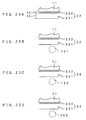
- FIGS. 23A through 23D are drawings for describing a relationship between an image occupation ratio and a stripped amount of a carrier liquid
- FIGS. 26A through 26D are drawings for describing a relationship between an image occupation ratio and a stripped amount of a carrier liquid
- FIG. 27 is a flow chart which shows an example of a collection amount adjustment process routine
- FIG. 28 is a flow chart which shows other example of the collection amount adjustment process routine
- FIG. 29 is a drawing which shows an internal structure of a printer which is a seventh preferred embodiment of the present invention.
- FIG. 30 is an expanded view of an essential section in FIG. 29 ;
- FIG. 31 is a block diagram which shows an electric structure of this printer
- FIG. 32 is a flow chart which shows an example of a collection amount control process routine
- FIG. 33 is a drawing which shows a structure of a printer which is an eighth preferred embodiment of the present invention.
- FIG. 34 is a block diagram which shows an electric structure of this printer
- FIG. 35 is a drawing which schematically shows structures of squeegee rollers and a developer roller
- FIG. 36 is a circuitry diagram of a carrier stripping bias generator
- FIG. 37 is a drawing for describing movement of a carrier liquid between two rollers
- FIGS. 38A through 38D are drawings which show a liquid developer layer as it is in each area in FIG. 37 ;
- FIGS. 39A through 39E are drawings which show a change of a liquid developer layer on a developer roller
- FIG. 40 is a drawing which shows a structure of a printer which is a ninth preferred embodiment of the present invention.
- FIG. 41 is a block diagram which shows an electric structure of this printer
- FIGS. 42A and 42B are development views of an intermediate transfer belt
- FIG. 43 is a flow chart which shows a consumption amount adjustment process routine according to the ninth preferred embodiment.
- FIG. 44 is a drawing which shows an internal structure of a printer which is a tenth preferred embodiment of the present invention.
- FIG. 45 is an expanded view of an essential section in FIG. 44 ;
- FIG. 46 is a block diagram which shows an electric structure of this printer.
- FIG. 47 is a flow chart which shows an example of a stripped amount adjustment process routine
- FIG. 48 is a flow chart which shows other example of the stripped amount adjustment process routine
- FIGS. 49A through 49D are drawings for describing a stripped amount of a carrier liquid according to a modification
- FIG. 50 is a drawing which shows an internal structure of a printer which is an eleventh preferred embodiment of the present invention.
- FIG. 51 is a block diagram which shows an electric structure of this printer
- FIGS. 52A and 52B are development views of an intermediate transfer belt
- FIG. 53 is a drawing for describing movement of a carrier liquid between two rollers
- FIG. 54 is a timing chart which shows an example of an operation sequence
- FIG. 55 is a flow chart which shows an example of a position control routine
- FIG. 56 is a drawing which shows an internal structure of a printer which is a twelfth preferred embodiment of the present invention.
- FIG. 57 is a timing chart which shows an operation sequence according to the twelfth preferred embodiment.
- an engine controller 110 controls respective portions of an engine part 1 in accordance with a control signal received from the main controller 100 , and images which correspond to the image signal mentioned above are printed on a transfer paper, a copy paper and other general paper (hereinafter referred to as a “transfer paper”) 4 conveyed from a paper cassette 3 which is disposed in a lower portion of an apparatus body 2 .
- the engine part 1 mentioned above comprises a photosensitive member unit 10 , an exposure unit 20 , a developer unit 30 , a transfer unit 40 , etc.
- the photosensitive member unit 10 comprises a photosensitive member 11 , a charger 12 , a static eliminator 13 and a cleaner 14 .
- the developer unit 30 comprises a developer roller 31 and the like.
- the transfer unit 40 comprises an intermediate transfer roller 41 and the like.
- the exposure unit 20 emits the light beam 21 , which is laser for instance, toward the outer circumferential surface of the photosensitive member 11 which is uniformly charged by the charger 12 .
- the exposure unit 20 exposes the photosensitive member 11 with the light beam 21 in accordance with a control instruction which is fed from an exposure controller 112 , so as to form an electrostatic latent image which corresponds to an image signal on the photosensitive member 11 .
- a control instruction which is fed from an exposure controller 112 , so as to form an electrostatic latent image which corresponds to an image signal on the photosensitive member 11 .
- the exposure unit 20 then irradiates the light beam 21 upon the photosensitive member 11 in accordance with the control instruction received from the exposure controller 112 , and an electrostatic latent image which corresponds to the image signal is formed on the photosensitive member 11 .
- the exposure unit 20 corresponds to “exposure means” of the present invention and the photosensitive member 11 corresponds to an “image carrier” of the present invention.
- the developer unit 30 comprises, in addition to the developer roller 31 , a tank 33 which holds a liquid developer 32 , a coating roller 34 which scoops up the liquid developer 32 stored in the tank 33 and supplies the liquid developer 32 to the developer roller 31 , a restricting blade 35 which restricts the thickness of a layer of the liquid developer on the coating roller 34 into uniform thickness, and a cleaning blade 36 which removes the liquid developer which remains on the developer roller 31 after the toner has been supplied to the photosensitive member 11 , a viscometer 37 , and a memory 38 ( FIG. 2 ) which will be described later.
- the developer roller 31 rotates approximately at the same circumferential speed as the photosensitive member 11 in a direction which follows the photosensitive member 11 (the anti-clockwise direction in FIG. 1 ).
- the coating roller 34 rotates approximately at double the circumferential speed in the same direction as the developer roller 31 (i.e., in the anti-clockwise direction in FIG. 1 ).
- the liquid developer 32 is obtained by dispersing, within a carrier liquid, toner which is formed by a color pigment, an adhesive agent such as an epoxy resin which bonds the color pigment, an electric charge control agent which gives a predetermined charge to the toner, a dispersing agent which uniformly disperses the color pigment, etc.
- silicon oil such as polydimethylsiloxane oil is used as the carrier liquid, and a toner density is 5 through 40 wt % which is a higher density than that of a low-density liquid developer which is often used in the liquid development process (and whose toner density is 1 through 2 wt %).
- the type of the carrier liquid is not limited to silicon oil, and the viscosity of the liquid developer 32 is determined by materials of the carrier liquid which are used and the toner, a toner density, etc. In this embodiment, the viscosity is 50 through 6000 mPa ⁇ s for example.
- a development nip distance (which is a distance along a circumferential direction over which the liquid developer layer contacts both the photosensitive member 11 and the developer roller 31 ) is set to 5 mm for instance in this embodiment.
- this embodiment which uses a high-density liquid developer allows to shorten the development gap. Since this in turn shortens a travel of toner which moves within the liquid developer because of electrophoresis and permits to develop a higher electric field even at the same developing bias, it is possible to improve the efficiency of development and develop at a high speed.
- the viscometer 37 is disposed within the tank 33 .
- the CPU 113 calculates a toner density based on the viscosity of the liquid developer 32 which is detected by the viscometer 37 .
- the viscometer 37 may be replaced with a density sensor which is formed by a transmission-type optical sensor for example, to thereby detect the toner density in the liquid developer 32 which is within the tank 33 .
- the developer unit 30 further comprises squeegee rollers 51 , 52 and 53 which are faced against the developer roller 31 between a coating position 34 a and a developing position 16 which are on the developer roller 31 .
- the squeegee rollers 51 , 52 and 53 are supported in such a manner that the squeegee rollers 51 , 52 and 53 can move in a direction closer to and away from the developer roller 31 .
- a contacting/clearing driver 118 FIG. 2
- an actuator 54 FIG. 2
- the squeegee rollers reciprocally move between adjacent positions on the developer roller 31 (denoted at the solid lines in FIG.
- the adjacent positions are such positions at which the squeegee rollers 51 , 52 and 53 contact the liquid developer which is carried on the developer roller 31 .
- the clear-off positions are such positions at which the squeegee rollers 51 , 52 and 53 are off from the adjacent positions and remain not in contact with the liquid developer.
- the squeegee rollers 51 , 52 and 53 rotate approximately at the same circumferential speed as the developer roller 31 in a direction which follows the developer roller 31 (the clockwise direction in FIG. 1 ).
- the squeegee rollers 51 , 52 and 53 are for adjustment of the toner density in the liquid developer 32 which is carried on the developer roller 31 . Operations of the squeegee rollers 51 , 52 and 53 will be described in detail later.
- the coating roller 34 scoops up the liquid developer 32 stored in the tank 33 and the restricting blade 35 restricts the thickness of the liquid developer layer on the coating roller 34 into uniform thickness.
- the uniform liquid developer 32 adheres to a surface of the developer roller 31 , and as the developer roller 31 rotates, the liquid developer 32 is transported to the developing position 16 which is faced with the photosensitive member 11 .
- Toner is charged positively for example, owing to a function of the electric charge control agent and the like.
- Vb developing bias
- the developer roller 31 thus corresponds to a “liquid developer carrier” of the present invention
- the coating position 34 a thus corresponds to a “carrying start position” of the present invention
- the tank 33 thus corresponds to a “container” of the present invention
- the developer unit 30 thus corresponds to “liquid development means” of the present invention
- the viscometer 37 thus corresponds to “toner density detecting means” of the present invention.
- Atoner image which is formed on the photosensitive member 11 in this fashion is transported to a primary transfer position 44 which faces the intermediate transfer roller 41 , as the photosensitive member 11 rotates.
- the intermediate transfer roller 41 rotates approximately at the same circumferential speed as the photosensitive member 11 in a direction which follows the photosensitive member 11 (the anti-clockwise direction in FIG. 1 ).
- a transfer bias generator 115 applies a primary transfer bias (which may be DC ⁇ 400 V for instance)
- the toner image on the photosensitive member 11 is primarily transferred onto the intermediate transfer roller 41 .
- the static eliminator 13 formed by an LED or the like removes an electric charge remaining on the photosensitive member 11 after the primary transfer, and the cleaner 14 removes the liquid developer which remains.
- a secondary transfer roller 42 is disposed to face with an appropriate portion of the intermediate transfer roller 41 (right below the intermediate transfer roller 41 in FIG. 1 ).
- the primarily transferred toner image which has been primarily transferred onto the intermediate transfer roller 41 is transported to a secondary transfer position 45 facing the secondary transfer roller 42 , as the intermediate transfer roller 41 rotates.
- the transfer paper 4 housed in the paper cassette 3 is transported to the secondary transfer position 45 by a transportation driver (not shown), in synchronization to the transportation of the primarily transferred toner image.
- the secondary transfer roller 42 rotates approximately at the same circumferential speed as the intermediate transfer roller 41 in a direction which follows the intermediate transfer roller 41 (the clockwise direction in FIG. 1 ).
- the transfer bias generator 115 applies a secondary transfer bias (which may be ⁇ 100 ⁇ A for example under constant current control) upon the secondary transfer roller 42 , the toner image on the intermediate transfer roller 41 is secondarily transferred onto the transfer paper 4 .
- a cleaner 43 removes the liquid developer which remains on the intermediate transfer roller 41 after the secondary transfer.
- the transfer paper 4 to which the toner image has been secondarily transferred in this manner is transported along a predetermined transfer paper transportation path 5 (denoted at the dashed line in FIG. 1 ), subjected to fixing of the toner image by a fixing unit 6 , and discharged into a discharge tray which is disposed in an upper portion of the apparatus body 2 .
- An operation display panel 7 comprising a liquid crystal display and a touch panel is disposed in a top surface of the apparatus body 2 .
- the operation display panel 7 accepts an operation instruction from a user, and shows predetermined information to inform the user of the information.
- the intermediate transfer roller 41 , the secondary transfer roller 42 and the transfer bias generator 115 thus correspond to “transfer means” of the present invention
- the transfer paper 4 corresponds to a “transfer medium” of the present invention.
- the main controller 100 comprises an image memory 103 which stores an image signal fed from an external apparatus via the interface 102 .
- the CPU 101 when receiving via the interface 102 a print instruction signal which contains an image signal from an external apparatus, converts the signal into job data which are in an appropriate format to instruct the engine part 1 to operate, and sends the data to the engine controller 110 .
- a memory 116 of the engine controller 110 is formed by a ROM which stores a control program for the CPU 113 containing preset fixed data, a RAM which temporarily stores control data for the engine part 1 , the result of a calculation performed by the CPU 113 and the like, etc.
- the CPU 113 stores within the memory 116 data regarding an image signal fed from an external apparatus via the CPU 101 .
- a memory 38 of the developer unit 30 is for storing data regarding a production lot of the developer unit 30 , a history of use, characteristics of toner inside, a remaining amount of the liquid developer 32 , a toner density, etc.
- the memory 38 is electrically connected with a communications part 39 which is attached to the tank 33 for example.
- the communications part 39 has such a structure that the communications part 39 comes faced with a communications part 17 of the engine controller 110 over a predetermined distance, which may be 10 mm for instance, or a shorter distance when the developer unit 30 is mounted to the apparatus body 2 and, is capable of sending data to and receiving data from the communications part 17 by a wireless communication such as one which uses an infrared ray while remaining not in contact with the communications part 17 .
- the CPU 113 thus manages various types of information such as management of consumables related to the developer unit 30 .
- This embodiment requires to electromagnetic means such as a wireless communication for the purpose of attaining non-contact data transmission.
- An alternative however is to dispose one connector to each of the apparatus body 2 and the developer unit 30 and to mechanically engage the two connectors with each other by mounting the developer unit 30 to the apparatus body 2 , whereby data transmission is realized between the apparatus body 2 and the developer unit 30 .
- the memory 38 is a non-volatile memory which can save data even when a power source is off or the developer unit 30 is off the apparatus body 2 .
- An EEPROM such as a flash memory, a ferroelectric memory, or the like may be used as such a non-volatile memory.
- FIG. 3 is a drawing which schematically shows structures of the squeegee rollers and the developer roller
- FIG. 4 is a circuitry diagram of a density adjustment bias generator.
- density adjustment bias generators 119 are connected between the developer roller 31 and the squeegee rollers 51 , 52 and 53 .
- the density adjustment bias generators 119 as shown in FIG. 4 , comprise positive bias power source parts 61 , negative bias power source parts 62 , short-circuit line parts 63 , and switches 64 which switch the connections of the respective parts 61 through 63 in response to a control signal received from the CPU 113 .
- a positive bias means a bias which solicits movement of positively charged toner from a lower roller (the developer roller 31 in the illustrated structure) toward an upper roller (the squeegee rollers 51 , 52 and 53 in the illustrated structure) which are connected with the density adjustment bias generators 119 in FIG. 4 .
- a negative bias means a bias which solicits movement of positively charged toner from the upper roller toward the lower roller.
- FIG. 5 is a drawing for describing movement of a liquid developer between two rollers (which are the squeegee roller 51 and the developer roller 31 in the illustrated structure).
- FIGS. 6A through 6D are drawings which show a liquid developer layer as it is in each area in FIG. 5 , with the positive bias power source parts 61 connected by means of the switches 64 .
- FIGS. 7A through 7D are drawings which show a liquid developer layer as it is in each area in FIG. 5 , with the negative bias power source parts 62 connected by means of the switches 64 .
- FIGS. 8A through 8D are drawings which show a liquid developer layer as it is in each area in FIG. 5 , with the short-circuit line parts 63 connected by means of the switches 64 .
- FIGS. 6A , 7 A and 8 A each correspond to an area A in FIG. 5
- FIGS. 6B , 7 B and 8 B each correspond to an area B in FIG. 5
- FIGS. 6C , 7 C and 8 C each correspond to an area C in FIG. 5
- FIGS. 6D , 7 D and 8 D each correspond to an area D in FIG. 5 .
- the liquid developer layer within the area A is in a state that the coating roller 34 has supplied the liquid developer 32 upon the developer roller 31 .
- the liquid developer layer within the area B is in a state that the liquid developer on the developer roller 31 is in contact with the squeegee roller 51 and accordingly nipped between the rollers 31 and 51 .
- the liquid developer layer nipped between the rollers 31 and 51 within the area B gets separated as the rollers 31 and 51 rotate, whereby the liquid developer layer within the area C on the roller 51 side and the liquid developer layer within the area D on the roller 31 side are created.
- the area B receives a bias voltage which makes positively charged toner move from the developer roller 31 toward the squeegee roller 51 .
- the toner density in a portion contacting the squeegee roller 51 is the highest, the toner density gradually decreases with a distance away from the squeegee roller 51 , and a carrier liquid layer 321 which does not contain toner is created in a portion which is in contact with the developer roller 31 .
- the carrier liquid layer 321 which does not contain toner has the lowest viscosity, the liquid developer 32 gets separated in such a carrier liquid layer 321 .
- the carrier liquid layer 321 within the area D has thickness of (T 0 ⁇ T 1 p ) and toner density of zero as shown in FIG. 6D , and therefore, the toner density in the liquid developer 32 carried on the developer roller 31 is zero.
- the area B receives a bias voltage which makes positively charged toner move from the squeegee roller 51 toward the developer roller 31 , which is opposite to where the positive bias power source part 61 is connected.
- the toner density in a portion contacting the developer roller 31 is the highest, the toner density gradually decreases with a distance away from the developer roller 31 , and the carrier liquid layer 321 which does not contain toner is created in a portion contacting the squeegee roller 51 .
- the liquid developer 32 gets separated in the carrier liquid layer 321 whose viscosity is the lowest. Assuming that the separation has occurred at a position denoted at the broken line in FIG. 7B therefore, the liquid developer 32 whose thickness is T 1 and toner density is zero moves toward the squeegee roller 51 within the area C as shown in FIG. 7C . Meanwhile, within the area D, as shown in FIG.
- the squeegee roller 51 seats a layer of the liquid developer 32 whose toner density remains D 0 which is the same as the original density but whose thickness has reduced to T 0 /2 which is half the original thickness, as shown in FIG. 8C .
- the developer roller 31 seats a layer of the liquid developer 32 whose toner density remains D 0 which is the same as the original density but whose thickness has reduced to T 0 /2 which is half the original thickness, as shown in FIG. 8D .
- the liquid developer gets separated and a portion of the liquid developer moves to the squeegee roller 51 from the developer roller 31 .
- the squeegee roller 51 strips off a portion of the liquid developer which is carried by the developer roller 31 .
- the density adjustment bias generator 119 controls the amount of toner which is contained in thus stripped portion of the liquid developer, the toner density in the liquid developer 32 which is carried on the developer roller 31 is adjusted.
- FIGS. 9A through 9E are drawings which show a change of a liquid developer layer on the developer roller 31 owing to the density adjustment function realized by the squeegee rollers 51 , 52 and 53 .
- a state within the area A in FIG. 3 is that the coating roller 34 has supplied the liquid developer 32 to the developer roller 31 , and as shown in FIG. 9A , toner is dispersed within the carrier liquid.
- the area B is applied with a bias voltage which makes positively charged toner move from the squeegee roller 51 toward the developer roller 31 , and as shown in FIG. 9B , a toner layer 322 is formed on the developer roller 31 side and the carrier liquid layer 321 is formed in a surface layer portion.
- the thickness of the carrier liquid layer 321 is about the half of the thickness shown in FIG. 9B .
- the squeegee roller 52 further takes away a portion of the carrier liquid layer 321 in a similar manner.
- the thickness of the carrier liquid layer 321 is about the half of the thickness shown in FIG. 9C .
- the squeegee roller 53 still further takes away a portion of the carrier liquid layer 321 in a similar manner.
- the thickness of the carrier liquid layer 321 is about the half of the thickness shown in FIG. 9D .
- the squeegee rollers 51 , 52 and 53 thus each take away a portion of the carrier liquid layer 321 which is in the surface layer portion. Therefore, the liquid developer 32 carried on the developer roller 31 , for every movement passed the squeegee rollers 51 , 52 and 53 , has a progressively higher toner density. As the positions of the squeegee rollers 51 through 53 are thus controlled or the polarity of the applied bias voltage is thus controlled, the amount of the carrier liquid which is stripped off for example is controlled and the toner density in the liquid developer 32 which is on the developer roller 31 is consequently changed.
- the squeegee rollers 51 through 53 thus correspond to a “stripping member” of the present invention and the density adjustment bias generators 119 thus correspond to “voltage applying means” of the present invention.
- the liquid developer taken away from the developer roller 31 by the squeegee rollers 51 , 52 and 53 is removed from the squeegee rollers 51 , 52 and 53 by cleaning blades 55 respectively as shown in FIG. 3 .
- the removed liquid developer returns to the tank 33 through a collection pipe 56 (denoted at the broken lines in FIG. 3 ).
- the removed liquid developer mentioned above returns to the tank 33 by its own weight.
- a pump may be disposed in the collection pipe 56 and driven to force the removed liquid developer back into the tank 33 .
- the fact that it is possible to adjust the toner density in the liquid developer 32 on the developer roller 31 by controlling the positions of the squeegee rollers 51 through 53 or the polarity of the applied bias voltage means that it is possible to adjust the toner density in the liquid developer which moves onto the squeegee rollers 51 through 53 . Since the liquid developer on the squeegee rollers 51 through 53 is returned back to the tank 33 , by adjusting the toner density in the liquid developer 32 on the developer roller 31 , the toner density inside the tank 33 can be controlled as described below with reference to FIG. 10 .
- FIG. 10 is a flow chart which shows an example of a density adjustment process routine.
- a density adjustment process program is stored in advance within the memory 116 of the engine controller 110 .
- the CPU 113 controls the respective portions of the apparatus in accordance with the program, the following density adjustment process is performed.
- the toner density in the liquid developer 32 which is inside the tank 33 is calculated based on a detection signal from the viscometer 37 (# 10 ). Whether the calculated toner density is lower than an initial value is determined (# 12 ). When the toner density is not lower (NO at # 12 ), whether the toner density is higher than the initial value is determined (# 14 ).
- a relationship between the viscosity of the liquid developer 32 detected by the viscometer 37 and the toner density in the liquid developer 32 is identified in advance as an arithmetic expression or table data.
- the program stored in the memory 116 contains this relationship and the initial value of the toner density in the liquid developer 32 .
- the process of calculating the toner density at # 10 based on the relationship mentioned above is executed and thus calculated toner density is compared with the initial value, whereby the judgments at # 12 and # 14 are made.
- the toner density on the developer roller 31 is reduced (# 16 ).
- the squeegee rollers 51 through 53 are moved to the adjacent positions and the positive bias power source parts 61 of the density adjustment bias generators 119 are connected. This makes toner move to the squeegee rollers 51 through 53 , the cleaning blades 55 remove thus moved toner and the toner accordingly returns back to the tank 33 via the collection pipe 56 , whereby the toner density within the tank 33 increases.
- the toner density is increased (# 18 ). That is, the squeegee rollers 51 through 53 are moved to the adjacent positions and the negative bias power source parts 62 of the density adjustment bias generators 119 are connected. This makes the carrier liquid move to the squeegee rollers 51 through 53 , the cleaning blades 55 remove thus moved carrier liquid and the carrier liquid accordingly returns back to the tank 33 via the collection pipe 56 , whereby the toner density within the tank 33 decreases.
- the toner density within the tank 33 is detected, the toner density in the liquid developer carried on the developer roller 31 is adjusted based on the detected value, and the liquid developer collected from the squeegee rollers 51 through 53 is returned back to the tank 33 .
- the toner density within the tank 33 is maintained at an initial value. This permits to use the liquid developer 32 held in the tank 33 to the very end without wasting, and minimizes the amount of a carrier liquid, toner or the like replenished from outside.
- an initial viscosity value of the liquid developer 32 which corresponds to an initial toner density value of the liquid developer 32 may be calculated and stored in the memory 116 in advance based on the relationship between the viscosity of the liquid developer 32 detected by the viscometer 37 and the toner density in the liquid developer 32 , and the detected viscosity may be compared directly with a corresponding initial value, to thereby make the judgments at # 12 and # 14 shown in FIG. 10 .
- an image occupation ratio is calculated which is a ratio of an image portion to an electrostatic latent image (# 20 ).
- the main controller 100 comprises a dot counter which counts an on-dot count which represents the number of pixels to which toner adheres among pixels which form an electrostatic latent image.
- a ratio of the on-dot count to a dot count of the entire image is calculated as the image occupation ratio mentioned above.
- the image occupation ratio is 100% when the image is a solid black image but is 0% when the image is a solid white image portion (a blank portion within the image), for example.
- Whether thus calculated image occupation ratio is high is determined (# 22 ).
- whether the image occupation ratio is low is determined (# 24 ).
- An upper limit value and a lower limit value of the image occupation ratio are determined in advance. The judgment at # 22 is made by comparing the calculated image occupation ratio with the upper limit value.
- the judgment at # 24 is made by comparing the calculated image occupation ratio with the lower limit value.
- the toner density on the developer roller 31 is reduced (# 26 ).
- the amount of the carrier liquid stripped off by the squeegee rollers 51 through 53 is reduced.
- the toner density in the liquid developer carried on the developer roller 31 is adjusted to a value which corresponds to the high image occupation ratio.
- the image occupation ratio is high, toner contained in the liquid developer is consumed in a greater amount, and therefore, the toner density within the tank 33 decreases.
- the squeegee rollers 51 through 53 may be positioned to the clear-off positions, to thereby maintain the toner density on the developer roller 31 as it is.
- the toner density on the developer roller 31 is adjusted in accordance with an image occupation ratio as described above, the toner density in the liquid developer which has moved to the photosensitive member 11 remains approximately constant. For example, when an image occupation ratio is low, the amount of toner which moves to the photosensitive member 11 from the developer roller 31 becomes small. Still, since the amount of the carrier liquid on the developer roller 31 decreases, the amount of the carrier liquid which moves to the photosensitive member 11 from the developer roller 31 , too, decreases. On the contrary, when an image occupation ratio is high, the amount of toner and the amount of the carrier liquid which move to the photosensitive member 11 from the developer roller 31 become large. Hence, it is possible to ensure that toner density in the liquid developer which moves to the photosensitive member 11 stays approximately the same regardless of an image occupation ratio.
- the toner density in the liquid developer carried on the developer roller 31 is adjusted based on an image occupation ratio, and the liquid developer collected from the squeegee rollers 51 through 53 is returned back to the tank 33 .
- the toner density detecting means, such as the viscometer 37 of the tank 33 is not necessary unlike in the example shown in FIG. 10 , the structure of the apparatus is simplified.
- the toner density in the tank 33 is maintained constant as an average value of the liquid developer which moves to the photosensitive member 11 without collected from the squeegee rollers 51 through 53 . It is therefore possible to maintain the toner density in the tank 33 as constant as possible.
- toner density in the liquid developer which moves to the photosensitive member 11 is constant, it is possible to execute primary transfer always in an excellent manner under the same transfer condition at the primary transfer position 44 regardless of whether an image occupation ratio is high or low. Further, when the liquid developer which remains on the developer roller 31 without moving to the photosensitive member 11 at the developing position 16 is returned back to the tank 33 , the toner density in the tank 33 is maintained constant even more accurately.
- the toner density may be adjusted in accordance with the density of a patch image as shown in FIG. 12 .
- FIG. 12 is a flow chart which shows another example of the density adjustment process routine.
- a density sensor 17 is used which is faced with the photosensitive member 11 of the engine part 1 and formed by a reflection-type optical sensor for instance.
- the optical density of a predetermined patch image formed on the photosensitive member 11 is detected (# 30 ).
- the optical density of the patch image is found in advance and stored in the memory 116 or the memory 38 . Whether the detected optical density is higher than the stored optical density is determined (# 32 ). When the detected optical density is not higher (NO at # 32 ), whether the detected optical density is lower is determined (# 34 ).
- the toner density on the developer roller 31 is reduced (# 36 ).
- the detected optical density being higher than the stored value means that the toner density within the tank 33 has increased. Therefore, decreasing the toner density on the developer roller 31 , an image having an appropriate optical density is obtained.
- the toner density on the developer roller 31 is increased (# 38 ).
- the detected optical density being lower than the stored value means that the toner density within the tank 33 has decreased. Therefore, increasing the toner density on the developer roller 31 , an image having an appropriate optical density is obtained.
- the optical density of the predetermined patch image is detected, and the toner density in the liquid developer carried on the developer roller 31 is adjusted based on the detected optical density. Hence, it is always possible to obtain an image having an appropriate optical density.
- the main controller 100 thus corresponds to a “calculating means” of the present invention
- the density sensor 17 thus corresponds to an “optical density detecting means” of the present invention.
- the positive bias power source parts 61 may be kept connected for a short period of time to thereby ensure that not all of toner will move to the squeegee roller 51 and a portion of toner will remain on the developer roller 31 .
- a bias voltage whose level corresponds to a difference between the image occupation ratio and the upper or lower limit value may be generated.
- a bias voltage whose level corresponds to a difference between the optical density and the stored value may be generated.
- squeegee rollers 51 through 53 instead of moving all of the squeegee rollers 51 through 53 to the adjacent positions, only one or two of the rollers may be moved to the adjacent positions. Fine adjustment of the toner density is possible in this case, too.
- the foregoing has described that there are three squeegee rollers 51 through 53 , this is not limiting. One or two squeegee rollers, or further alternatively, four or more squeegee rollers may be used.
- FIG. 13 is a drawing which shows a structure of a printer which is a second preferred embodiment of the image forming apparatus according to the present invention. Shown in FIG. 13 are only the photosensitive member 11 , the developer unit 30 and the density adjustment bias generator 119 , and other portions are omitted since the other portions are similar to those according to the first preferred embodiment. The same elements as those according to the first preferred embodiment are denoted at the same reference symbols.
- the developer unit 30 according to the second preferred embodiment does not comprise the squeegee rollers which are used in the first preferred embodiment. Instead, the density adjustment bias generator 119 is connected between the coating roller 34 and the developer roller 31 . As the coating roller 34 controls the amount of toner contained in the liquid developer carried on the developer roller 31 , the toner density in the liquid developer carried on the developer roller 31 is adjusted.
- the coating roller 34 according to the second preferred embodiment rotates in a direction which follows the developer roller 31 , as shown in FIG. 13 (the clockwise direction in FIG. 13 ).
- Density adjustment operations in the second preferred embodiment will now be described.
- the positive bias power source part 61 of the density adjustment bias generator 119 is connected, the liquid developer moves toward the developer roller 31 in the manner shown in FIG. 6 which has been described earlier.
- the amount of toner contained in the liquid developer which moves toward the developer roller 31 from the coating roller 34 increases, which realizes such adjustment that the toner density in the liquid developer carried on the developer roller 31 exceeds the toner density in the liquid developer 32 which is held within the tank 33 .
- the liquid developer moves toward the developer roller 31 in the manner shown in FIGS. 7A through 7D which has been described earlier. That is, the amount of toner contained in the liquid developer which moves toward the developer roller 31 from the coating roller 34 decreases, which realizes such adjustment that the toner density in the liquid developer carried on the developer roller 31 becomes smaller than the toner density in the liquid developer 32 which is held within the tank 33 .
- the coating roller 34 thus corresponds to a “coating member” and “liquid developer supplying means” of the present invention
- the density adjustment bias generator 119 corresponds to “coating voltage applying means” of the present invention.
- the density adjustment bias generator 119 which is connected between the coating roller 34 and the developer roller 31 applies a bias voltage between the coating roller 34 and the developer roller 31 , and the amount of toner contained in the liquid developer which moves toward the developer roller 31 from the coating roller 34 is controlled. Hence, it is possible to adjust the toner density in the liquid developer which is carried on the developer roller 31 .
- FIGS. 10 through 12 can be executed in the second preferred embodiment, too.
- the second preferred embodiment requires to connect the density adjustment bias generator 119 in the opposite manner to that according to the first preferred embodiment.
- the negative bias power source part 62 of the density adjustment bias generator 119 is connected, whereas when the toner density on the developer roller 31 is to be increased at the steps # 18 , # 28 and # 38 in the respective drawings, the positive bias power source part 61 of the density adjustment bias generator 119 is connected.
- FIG. 14 is a drawing which shows a structure of a printer which is a third preferred embodiment of the image forming apparatus according to the present invention. Shown in FIG. 14 are only the photosensitive member 11 , the developer unit 30 and the density adjustment bias generators 119 , and other portions are omitted since the other portions are similar to those according to the first preferred embodiment. The same elements as those according to the first preferred embodiment are denoted at the same reference symbols.
- the developer unit 30 comprises scoop-up rollers 71 and 72 which scoop up the liquid developer 32 which is held within the tank 33 , and a coating roller 73 which comes into contact with the liquid developer which has been scooped up by the scoop-up rollers 71 and 72 , takes away a portion of the liquid developer and carries the liquid developer.
- the coating roller 73 brings thus carried liquid developer into contact with the developer roller 31 so that the developer roller 31 will carry a portion of thus carried liquid developer.
- the developer unit 30 further comprises cleaning blades 74 which remove the liquid developer which remains on the rollers 71 , 72 and 73 .
- the coating roller 73 rotates approximately at the same circumferential speed as the developer roller 31 in a direction which follows the developer roller 31 (the clockwise direction in FIG. 14 ).
- the scoop-up rollers 71 and 72 each rotate approximately at the same circumferential speed as the coating roller 73 in a direction which follows the coating roller 73 (the anti-clockwise direction in FIG. 14 ).
- the scoop-up roller 71 and the coating roller 73 are electrically connected with each other by a short-circuit line part 75 and consequently held at the same bias with each other.
- another density adjustment bias generator 119 (which corresponds to the “coating voltage applying means” of the present invention) connected between the coating roller 73 and the developer roller 31 .
- FIG. 15A a situation as that shown in FIG. 15A is considered to be equivalent to a state that the roller 81 carries the liquid developer whose toner density is D and thickness is t as shown in FIG. 15B .
- Movement of the liquid developer between the scoop-up roller 72 and the coating roller 73 in FIG. 14 can be regarded to be similar to that shown in FIGS. 5 and 6A through 8 D which have been described earlier.
- the liquid developer 32 remains carried on the coating roller 73 without any toner density change as shown in FIGS. 8A through 8D which have been described earlier.
- the positive bias power source part 61 of the density adjustment bias generator 119 is connected between the scoop-up roller 72 and the coating roller 73 , the liquid developer moves toward the coating roller 73 as shown in FIGS. 6A through 6D which have been described earlier.
- the amount of toner contained in the liquid developer which moves toward the coating roller 73 from the scoop-up roller 72 increases, which realizes such adjustment that the toner density in the liquid developer carried on the coating roller 73 exceeds the toner density in the liquid developer 32 which is held within the tank 33 .
- the liquid developer moves toward the coating roller 73 as shown in FIGS. 7A through 7D which have been described earlier. That is, the amount of toner contained in the liquid developer which moves toward the coating roller 73 from the scoop-up roller 72 decreases, which realizes such adjustment that the toner density in the liquid developer carried on the coating roller 73 becomes smaller than the toner density in the liquid developer 32 which is held within the tank 33 .
- the scoop-up rollers 71 and 72 thus correspond to a “scoop-up member” of the present invention
- the coating roller 73 thus corresponds to a “coating member” of the present invention
- the scoop-up rollers 71 and 72 and the coating roller 73 thus correspond to the “liquid developer supplying means” of the present invention.
- the density adjustment bias generator 119 is connected between the coating roller 73 and the developer roller 31 , and a bias voltage applied between the coating roller 73 and the developer roller 31 is controlled. Hence, it is possible to control the amount of toner contained in the liquid developer which moves toward the developer roller 31 from the coating roller 73 , and therefore, adjust the toner density in the liquid developer carried on the developer roller 31 .
- returning of remaining liquid developer removed by the cleaning blades 74 back into the tank 33 in the third preferred embodiment would suppress a toner density change inside the tank 33 and maintain the toner density at a constant value as in the first preferred embodiment. This permits to use the liquid developer 32 held in the tank 33 to the very end without wasting, and minimizes the amount of a carrier liquid, toner or the like replenished from outside.
- the operations shown in FIGS. 10 through 12 can be executed in the third preferred embodiment, too.
- the third preferred embodiment requires to connect the density adjustment bias generators 119 in the opposite manner to that according to the first preferred embodiment, i.e., in a similar manner to that according to the second preferred embodiment.
- FIG. 16 is a drawing which shows a structure of a printer which is a fourth preferred embodiment of the image forming apparatus according to the present invention. Shown in FIG. 16 are only the developer unit 30 and the density adjustment bias generators 119 , and other portions are omitted since the other portions are similar to those according to the first preferred embodiment. The same elements as those according to the first preferred embodiment are denoted at the same reference symbols.
- the developer unit 30 comprises scoop-up rollers 91 a and 91 b which scoop up the liquid developer 32 which is held within the tank 33 , relay rollers 92 a and 92 b which carry the liquid developer thus scooped up by the scoop-up rollers 91 a and 91 b and coat the developer roller 31 with the liquid developer, and cleaning blades 93 which remove the liquid developer which remains on the respective rollers 91 a , 91 b , 92 a and 92 b.
- the relay rollers 92 a and 92 b rotate approximately at the same circumferential speed as the developer roller 31 in a direction which follows the developer roller 31 (the clockwise direction in FIG. 16 ).
- the scoop-up rollers 91 a and 91 b rotate approximately at the same circumferential speed as the relay rollers 92 a and 92 b in a direction which follows the relay rollers 92 a and 92 b (the anti-clockwise direction in FIG. 16 ).
- the density adjustment bias generators 119 (which correspond to the “scoop-up voltage applying means” of the present invention) are connected between the relay roller 92 a and the scoop-up roller 91 a and between the relay roller 92 b and the scoop-up roller 91 b . Further, the density adjustment bias generators 119 (which correspond to the “coating voltage applying means” of the present invention) are connected between the developer roller 31 and the relay roller 92 a and between the developer roller 31 and the relay roller 92 b.
- the layer of the liquid developer on the relay roller 92 a comes into contact with the developer roller 31 , as shown in FIG. 5 which has been described earlier, a portion of the liquid developer moves to the developer roller 31 and is carried on the surface of the developer roller 31 in a similar manner.
- the connection of the density adjustment bias generator 119 is changed at this stage, thereby controlling the amount of toner contained in the liquid developer which moves toward the developer roller 31 from the relay roller 92 a .
- the scoop-up roller 91 a and the relay roller 92 a thus correspond to the “liquid developer supplying means” of the present invention.
- the layer of the liquid developer on the relay roller 92 b comes into contact with the developer roller 31 , a situation as that shown in FIG. 15A which has been described earlier arises.
- the liquid developer having a predetermined toner density and predetermined thickness is eventually carried on the surface of the developer roller 31 .
- the connection of the density adjustment bias generator 119 is changed at this stage, thereby controlling the amount of toner contained in the liquid developer which moves toward the developer roller 31 from the relay roller 92 b .
- the scoop-up roller 91 b and the relay roller 92 b thus correspond to the “liquid developer supplying means” of the present invention.
- the developer unit 30 comprises the two structures which correspond to the “liquid developer supplying means.”
- the developer unit 30 comprises a first supply route which goes through the scoop-up roller 91 a and the relay roller 92 a and a second supply route which goes through the scoop-up roller 91 b and the relay roller 92 b.
- the amount of toner contained in the liquid developer is controlled at two points. That is, in the first supply route, the control is realized at two points, one during the movement of the liquid developer from the scoop-up roller 91 a to the relay roller 92 a and the other during the movement of the liquid developer from the relay roller 92 a to the developer roller 31 . Meanwhile, in the second supply route, the control is realized at two points, one during the movement of the liquid developer from the scoop-up roller 91 b to the relay roller 92 b and the other during the movement of the liquid developer from the relay roller 92 b to the developer roller 31 .
- the fourth preferred embodiment it is therefore possible to widely and finely adjust the toner density in the liquid developer which is carried on the developer roller 31 .
- the fourth preferred embodiment when modified to require that the remaining liquid developer removed from the respective rollers 91 a , 92 a , 91 b and 92 b by the cleaning blades 93 is returned back to the tank 33 , permits to suppress a toner density change inside the tank 33 and maintain the toner density at a constant value, like the first preferred embodiment. This allows to use the liquid developer 32 held in the tank 33 to the very end without wasting, and minimizes the amount of a carrier liquid, toner or the like replenished from outside.
- the operations shown in FIGS. 10 through 12 can be executed in the fourth preferred embodiment, too.
- the fourth preferred embodiment requires to connect the density adjustment bias generators 119 in the opposite manner to that according to the first preferred embodiment, i.e., in a similar manner to that according to the second preferred embodiment.
- the liquid developer may be supplied to the developer roller 31 directly from the scoop-up rollers 91 a and 91 b without using the relay rollers 92 a and 92 b . Even in this case, since there are the two routes for supplying the liquid developer to the developer roller 31 , it is possible to widely and finely adjust the toner density in the liquid developer which is carried on the developer roller 31 .
- FIG. 17 is a drawing which shows a structure of a printer which is a fifth preferred embodiment of the image forming apparatus according to the present invention. Shown in FIG. 17 are only the photosensitive member 11 , the developer unit 30 and the density adjustment bias generator 119 , and other portions are omitted since the other portions are similar to those according to the first preferred embodiment. The same elements as those according to the first preferred embodiment are denoted at the same reference symbols.
- the developer unit 30 comprises a squeegee roller 94 which is disposed facing an area on the developer roller 31 which is located between the developing position 16 and a cleaning position 36 a which is for cleaning by the cleaning blade 36 .
- the squeegee roller 94 is supported in such a manner that the squeegee roller 94 can move in a direction closer to and away from the developer roller 31 .
- the contacting/clearing driver 118 ( FIG. 2 ) drives the actuator 54 ( FIG. 2 ) which is formed by a solenoid, a motor or the like for instance, the squeegee roller 94 reciprocally moves between an adjacent position on the developer roller 31 (denoted at the solid line in FIG.
- the adjacent position is such a position at which the squeegee roller 94 contacts the liquid developer which remains on the developer roller 31 after development has completed, whereas the clear-off position is such a position at which the squeegee roller 94 is off from the adjacent position and remains not in contact with the liquid developer.
- the squeegee roller 94 rotates approximately at the same circumferential speed as the developer roller 31 in a direction which follows the developer roller 31 (the clockwise direction in FIG. 17 ).
- the density adjustment bias generator 119 is connected between the squeegee roller 94 and the developer roller 31 .
- a cleaning blade 95 removes the liquid developer which the squeegee roller 94 has taken away from the developer roller 31 , and the removed liquid developer is collected back to a waste solution tank (not shown) for instance.
- the cleaning blade 36 removes the liquid developer which remains on the developer roller 31 without being stripped off by the squeegee roller 94 , and the removed liquid developer returns by its own weight back to the tank 33 for example.
- the squeegee roller 94 corresponds to the “stripping member” of the present invention and the cleaning blade 36 corresponds to a “cleaning member” of the present invention.
- FIG. 18 is a flow chart of a density adjustment process routine according to the fifth preferred embodiment.
- steps # 40 , # 42 and # 44 are similar to the steps # 10 , # 12 and # 14 which are shown in FIG. 10 , and therefore, will not be described.
- the toner density within the tank 33 is low (YES at # 42 )
- the toner density is to be increased.
- the negative bias power source part 62 is connected, so that toner is rarely contained in the liquid developer which moves toward the squeegee roller 94 from the developer roller 31 and the carrier liquid alone is mostly stripped off.
- the cleaning blade 36 removes and returns thus remaining liquid developer to the tank 33 , and the toner density within the tank 33 increases.
- the toner density within the tank 33 is high (YES at # 44 ), the toner density is to be decreased (# 46 ). That is, the positive bias power source part 61 is connected, and the amount of toner contained in the liquid developer which moves toward the squeegee roller 94 from the developer roller 31 therefore increases. Hence, the toner density in the liquid developer which is on the developer roller 31 decreases. The cleaning blade 36 removes and returns thus remaining liquid developer to the tank 33 , and the toner density within the tank 33 decreases.
- the amount of toner contained in the liquid developer which moves toward the squeegee roller 94 from the developer roller 31 is controlled. It is thus possible to adjust the toner density in the liquid developer which remains on the developer roller 31 after the end of development.
- the remaining liquid developer is returned to the tank 33 , it is possible to suppress a toner density change inside the tank 33 and maintain the toner density at a constant value. This permits to use the liquid developer 32 held in the tank 33 to the very end without wasting, and minimizes the amount of a carrier liquid, toner or the like replenished from outside.
- An alternative in the fifth preferred embodiment is to strip the developer roller 31 of the liquid developer by means of the squeegee roller 94 and return the liquid developer removed by the cleaning blade 95 back to the tank 33 , so that the liquid developer which remains on the developer roller 31 without being stripped off by the squeegee roller 94 but which is then removed by the cleaning blade 36 will be returned to the waste solution tank.
- the present invention is not limited to the preferred embodiments above, but may be modified in various manners in addition to the preferred embodiments above, to the extent not deviating from the object of the invention. For instance, the following modifications (1) through (4) may be used.
- the actuator 54 may be formed by a motor for instance and the adjacent positions at which the squeegee rollers 51 through 53 and 94 contact the liquid developer on the developer roller 31 may be variable.
- Such an embodiment allows to control the amount of the liquid developer which moves toward the squeegee rollers 51 through 53 and 94 from the developer roller 31 , and hence, to more finely adjust a toner density.
- the rotation speed of the squeegee rollers 51 through 53 and 94 may be variable. This permits to control the amount of the liquid developer which moves toward the squeegee rollers 51 through 53 and 94 from the developer roller 31 , and hence, to more finely adjust a toner density.
- developer roller 31 which has a roller shape is used as the liquid developer carrier in the preferred embodiments described above, this is not limiting.
- a carrier shaped like a belt may be used instead, for example.
- squeegee rollers 51 through 53 and 94 which have a roller shape as the stripping member
- a stripping member shaped like a belt may be used instead, for instance.
- the present invention is not limited to this but is applicable to electrophotographic image forming apparatuses in general including copier machines, facsimile machines and the like.
- the preferred embodiments above are an application of the present invention to an image forming apparatus which prints in monochrome, applications of the present invention are not limited to this. Rather, the present invention is applicable also to an image forming apparatus which prints in colors, in which case the apparatus is capable of detecting and adjusting a toner density in each color.
- FIG. 19 is a drawing which shows an internal structure of a printer which is a sixth preferred embodiment of the image forming apparatus according to the present invention
- FIG. 20 is an expanded view of an essential section in FIG. 19
- FIG. 21 is a block diagram which shows an electric structure of this printer.
- the same elements as those according to the first preferred embodiment are denoted at the same reference symbols, and will not be described.
- the squeegee rollers 51 , 52 and 53 used in the first preferred embodiment are replaced with squeegee rollers 151 , 152 and 153 .
- disposed around the photosensitive member 11 are the charger 12 , the developer roller 31 , the squeegee rollers 151 , 152 and 153 , the intermediate transfer roller 41 , the static eliminator 13 and the cleaner 14 along the rotation direction 15 of the photosensitive member 11 .
- toner contained in the liquid developer is charged positively for example, owing to a function of the electric charge control agent and the like.
- the cleaning blade 36 scrapes off the liquid developer which remains on the developer roller 31 without adhering to the photosensitive member 11 , and the liquid developer returns by its own weight back to the tank 33 in the sixth preferred embodiment.
- the photosensitive member 11 thus corresponds to the “image carrier” of the present invention
- the developer roller 31 thus corresponds to the “liquid developer carrier”
- the tank 33 thus corresponds to the “container” of the present invention
- the transfer bias generator 115 thus corresponds to the “transfer means” of the present invention.
- the squeegee rollers 151 , 152 and 153 are disposed next to each other along the rotation direction (i.e., a direction in which the liquid developer is transported) 15 in such a manner that the squeegee rollers 151 , 152 and 153 are faced against an area on the photosensitive member 11 between the developing position 16 and the primary transfer position 44 , namely, a developed image carrying area in which a toner image is carried.
- the squeegee rollers 151 , 152 and 153 are supported in such a manner that the squeegee rollers 151 , 152 and 153 can move in a direction closer to and away from the photosensitive member 11 .
- a contacting/clearing driver 118 A ( FIG. 21 ) drives actuators 161 , 162 and 163 ( FIG. 21 ) which are formed by solenoids, motors or the like for instance
- the squeegee rollers 151 , 152 and 153 reciprocally move between contacting positions (denoted at the solid lines in FIG. 19 ) and clear-off positions (denoted at the broken lines in FIG. 19 ).
- the contacting positions are such positions at which the squeegee rollers 151 , 152 and 153 contact the liquid developer which is carried on the photosensitive member 11 .
- the clear-off positions are such positions at which the squeegee rollers 151 , 152 and 153 remain not in contact with the above-mentioned liquid developer.
- a motor driver 120 ( FIG. 21 ) drives roller driving motors 164 ( FIG. 21 ) into rotations at the contacting positions
- the squeegee rollers 151 , 152 and 153 rotate approximately at the same circumferential speed as the photosensitive member 11 in a direction which follows the photosensitive member 11 (the anti-clockwise direction in FIG. 19 ).
- the squeegee rollers 151 , 152 and 153 strip the photosensitive member 11 of the carrier liquid.
- cleaning blades 154 abut on the squeegee rollers 151 , 152 and 153 .
- the carrier liquid stripped off from the photosensitive member 11 by the squeegee rollers 151 , 152 and 153 is scraped off by the respective cleaning blades 154 and removed from the squeegee rollers 151 , 152 and 153 .
- An opening of the tank 33 stretches out toward below the positions at which the respective cleaning blades 154 abut on the squeegee rollers 151 , 152 and 153 .
- the carrier liquid removed from the squeegee rollers 151 through 153 by the cleaning blades 154 returns by its own weight to the tank 33 .
- the sixth preferred embodiment requires that the removed carrier liquid returns by its own weight to the tank 33 , this is not limiting.
- a pan which receives the removed carrier liquid and a collection pipe which links the pan to the tank 33 , and a pump may be disposed so that the carrier liquid will be forced back to the tank 33 when the pump is driven. Operations of stripping off the carrier liquid using the squeegee rollers 151 , 152 and 153 will be described in detail later.
- FIG. 22 is a drawing for describing an operation that the squeegee roller 151 strips the photosensitive member 11 of the carrier liquid.
- the liquid developer 32 is supplied from the developer roller 31 ( FIG. 19 ) and adheres to the photosensitive member 11 , toner 322 moves within a carrier liquid 321 owing to the developing bias Vb and adheres to the photosensitive member 11 , and a toner image (which is a solid black image in FIG. 22 ) is formed.
- the toner 322 has thickness of t 1
- the carrier liquid 321 has thickness of t 2 .
- the thickness of the liquid developer 32 on the photosensitive member 11 is (t 1 +t 2 ).
- the liquid developer 32 on the photosensitive member 11 is nipped between the squeegee roller 151 which is located at the contacting position and the photosensitive member 11 , and the carrier liquid 321 which is in the surface layer of the liquid developer 32 comes into contact with the squeegee roller 151 and adheres to the squeegee roller 151 .
- the carrier liquid 321 gets separated approximately at the center of the carrier liquid 321 . In other words, the thickness of the carrier liquid 321 which remains on the photosensitive member 11 and the thickness of the carrier liquid 321 which moves to the squeegee roller 151 each become about t 2 /2.
- the squeegee roller 151 takes away a portion of the carrier liquid 321 off from the photosensitive member 11 in this manner.
- This embodiment uses the three squeegee rollers 151 through 153 which can move to the contacting positions and the clear-off positions, and the CPU 113 controls the positions of the squeegee rollers 151 through 153 .
- the squeegee rollers 151 through 153 thus each correspond to the “stripping member” and “collecting means” of the present invention.
- FIGS. 23A through 26D are drawings for describing a relationship between an image occupation ratio and a stripped amount of the carrier liquid.
- FIGS. 23A , 24 A, 25 A and 26 A show toner images on the photosensitive member 11
- FIGS. 23B , 24 B, 25 B and 26 B show a position at which the squeegee roller 151 is located
- FIGS. 23C , 24 C, 25 C and 26 C show a position at which the squeegee roller 152 is located
- FIGS. 23D , 24 D, 25 D and 26 D show a position at which the squeegee roller 153 is located.
- FIGS. 23A , 24 A, 25 A and 26 A show toner images on the photosensitive member 11
- FIGS. 23B , 24 B, 25 B and 26 B show a position at which the squeegee roller 151 is located
- FIGS. 23C , 24 C, 25 C and 26 C show a position at which the squee
- the squeegee rollers at the contacting positions are denoted at the solid lines but those at the clear-off positions are denoted at the broken lines as in FIG. 19 .
- the photosensitive member 11 is shown as a flat plate for the convenience of illustration.
- An image occupation ratio is a ratio of an image portion to an electrostatic latent image.
- the main controller 100 ( FIG. 21 ) comprises a dot counter which counts an on-dot count which represents the number of pixels to which toner adheres among pixels which form an electrostatic latent image for example, and therefore, is equipped with a function of calculating, as an image occupation ratio, a ratio of an on-dot count to a dot count of an image as a whole.
- the image occupation ratio of a solid black image is 100% but is 0% in a solid white portion within an image (e.g., a blank portion within an image).
- the engine controller 110 ( FIG. 21 ) may comprise the dot counter.
- the liquid developer 32 held in the tank 33 is a high-density liquid developer whose density is in the range from 5 to 40 wt % in this embodiment as described earlier, the toner density in the liquid developer 32 is set to 20% by volume (an initial value of the toner density) for instance which is a value within the above-mentioned toner density range.
- the thickness to of the toner 322 which adheres to the photosensitive member 11 during development is 2 ⁇ m and the thickness t 2 of the carrier liquid 321 is 8 ⁇ m in FIG. 22 . That is, the thickness (t 1 +t 2 ) of the liquid developer 32 on the photosensitive member 11 is 10 ⁇ m.
- FIGS. 23A through 23D represent an example that an image occupation ratio is 100% (solid black image) as shown in FIG. 23A .
- the toner density in the liquid developer 32 which is on the photosensitive member 11 is 20% by volume (vol %) which is the same as the initial value of the toner density within the tank 33 .
- the squeegee rollers 151 through 153 are all moved to the clear-off positions as shown in FIGS. 23B through 23D , so as not to collect the carrier liquid 321 . In short, a collection amount of the carrier liquid 321 is zero.
- FIGS. 24A through 24D represent an example that an image occupation ratio is 50% as shown in FIG. 24A for instance.
- the toner density in the liquid developer 32 which is on the photosensitive member 11 is 10 vol %
- t 1 2 ⁇ m
- t 2 8 ⁇ m hold truth.
- the thickness of the toner 322 on the average is 1 ⁇ m
- the thickness of the carrier liquid 321 on the average is 9 ⁇ m. This means that more carrier liquid has moved to the photosensitive member 11 as compared with the example shown in FIGS. 23A through 23D .
- the squeegee roller 151 is moved to the contacting position as shown in FIG. 24B , thereby stripping off approximately half the carrier liquid 321 which is in the surface layer.
- the thickness of the carrier liquid 321 on the average which remains in an area B in FIG. 24B namely, the photosensitive member 11 is about 4.5 ⁇ m.
- the toner density in the liquid developer 32 within the area B is therefore about 18 vol % which is approximately equal to the toner density inside the tank 33 .
- FIGS. 25A through 25D represent an example that an image occupation ratio is 20% as shown in FIG. 25A .
- the thickness of the toner 322 on the average is 0.4 ⁇ m and the thickness of the carrier liquid 321 on the average is 9.6 ⁇ m. This means that more carrier liquid has moved to the photosensitive member 11 as compared with the example shown in FIGS. 24A through 24D .
- the squeegee roller 151 is moved to the contacting position as shown in FIG. 25B , thereby stripping off approximately half the carrier liquid 321 which is in the surface layer.
- the thickness of the carrier liquid 321 on the average which remains on the photosensitive member 11 within an area B in FIG. 25B is about 4.8 ⁇ m and the toner density in the liquid developer 32 which is within the area B is about 7.7 vol %.
- FIG. 25C when the squeegee roller 152 is moved to the contacting position, thereby stripping off approximately half the carrier liquid 321 which is in the surface layer. In consequence, the thickness of the carrier liquid 321 on the average which remains on the photosensitive member 11 within an area C in FIG.
- the toner density in the liquid developer 32 which is within the area C is about 14 vol %, thus becoming close to the toner density inside the tank 33 .
- the squeegee roller 153 however is located at the clear-off position as shown in FIG. 25D and therefore does not take away the carrier liquid 321 . This is because further stripping off of the carrier liquid 321 could adversely affect a toner image on the photosensitive member 11 .
- FIGS. 26A through 26D represent an example that an image occupation ratio is 0% (solid white image) as shown in FIG. 26A .
- the toner density in the liquid developer 32 which is on the photosensitive member 11 is 0 vol %
- the carrier liquid 321 alone is consumed and the toner density inside the tank 33 increases.
- the squeegee rollers 151 through 153 are all moved to the contacting positions, thereby collecting the carrier liquid 321 .
- the thickness within the area B after the stripping by the squeegee roller 151 is therefore about 5 ⁇ m
- the thickness within the area C after the stripping by the squeegee roller 152 is about 2.5 ⁇ m
- the thickness within the area D after the stripping by the squeegee roller 153 is about 1.25 ⁇ m.
- FIG. 27 is a flow chart which shows an example of a collection amount adjustment process routine.
- a collection amount adjustment process program is stored in advance in the memory 116 of the engine controller 110 .
- the CPU 113 controls the respective portions of the apparatus in accordance with the program, the following collection amount adjustment process is executed.
- this routine is terminated with the squeegee rollers 151 through 153 all kept at the clear-off positions.
- the squeegee roller 151 for example is moved to the contacting position (# 60 ) as described with reference to FIGS. 24A through 24D . Only one roller may be moved at this stage. Therefore, the squeegee roller 152 or 153 may be moved instead of the squeegee roller 151 .
- the squeegee rollers 151 and 152 for example are moved to the contacting positions (# 62 ). Since two rollers may be moved at this stage, the squeegee rollers 151 and 153 or the squeegee rollers 152 and 153 may be moved.
- the threshold values used to determine the level of the image occupation ratio at the steps # 52 , # 54 and # 56 are merely examples, and other values may be used instead.
- FIG. 28 is a flow chart which shows other example of the collection amount adjustment process routine.
- the developer unit 30 comprises the viscometer 37 as denoted at the broken lines in FIG. 21 .
- the viscometer 37 is disposed inside the tank 33 , and the CPU 113 calculates a toner density based on the viscosity of the liquid developer 32 which is detected by the viscometer 37 .
- a density sensor formed by a transmission-type optical sensor for example may be disposed inside the tank 33 and the sensor itself may detect the toner density in the liquid developer 32 which is within the tank 33 .
- the viscometer 37 thus corresponds to the “toner density detecting means” of the present invention.
- the toner density N (%) in the liquid developer 32 which is within the tank 33 is calculated based on a detection signal obtained by the viscometer 37 (# 70 ).
- a relationship between the viscosity of the liquid developer 32 which is detected by the viscometer 37 and the toner density in the liquid developer 32 is identified in the form of an arithmetic expression or table data in advance and contained in the program which is stored in the memory 116 .
- the processing of calculating the toner density at # 70 is executed based on the relationship described above.
- the squeegee rollers 151 and 152 are moved to the contacting positions (# 76 ) as described with reference to FIGS. 25A through 25D . Since two rollers may be moved at this stage, the squeegee rollers 151 and 153 or the squeegee rollers 152 and 153 may be moved to the contacting positions.
- the squeegee roller 151 for instance is moved to the contacting position (# 78 ) as described with reference to FIGS. 24A through 24D . Since only one roller may be moved at this stage, the squeegee roller 152 or 153 may be moved to the contacting position instead of the squeegee roller 151 .
- values of the viscosity of the liquid developer 32 which correspond to comparison values of the toner density in the liquid developer 32 may be identified and stored in the memory 116 in advance based on the relationship between the viscosity of the liquid developer 32 which is detected by the viscometer 37 and the toner density in the liquid developer 32 , and the detected viscosity may be compared with a corresponding value directly, to thereby make the judgments at the steps # 72 and # 74 in FIG. 28 .
- the sixth preferred embodiment uses the squeegee rollers 151 through 153 which can move to the contacting positions which are in contact with the liquid developer 32 which is on the photosensitive member 11 and the clear-off positions which are not in contact with the liquid developer 32 which is on the photosensitive member 11 , and a combination of the squeegee rollers 151 through 153 which are moved to the contacting positions is controlled. Hence, it is possible to control a stripped amount of the carrier liquid 321 which is stripped off from the photosensitive member 11 . This permits to adjust a collection amount of the carrier liquid 321 which is collected from the photosensitive member 11 .
- the opening of the tank 33 stretches out toward below the positions at which the respective cleaning blades 154 abut on the squeegee rollers 151 through 153 and the carrier liquid 321 scraped off from the squeegee rollers 151 through 153 by the cleaning blades 154 returns by its own weight to the tank 33 according to this embodiment.
- an image occupation ratio is calculated, a stripped amount of the carrier liquid 321 is controlled such that the toner density in the liquid developer 32 which remains on the photosensitive member 11 after collection will be close to the initial value of the toner density in the liquid developer 32 which is within the tank 33 , and the carrier liquid 321 taken away by the squeegee rollers 151 through 153 is all scraped off by the cleaning blades 154 and returned back to the tank 33 .
- the carrier liquid 321 taken away by the squeegee rollers 151 through 153 is all scraped off by the cleaning blades 154 and returned back to the tank 33 .
- the toner density inside the tank 33 is calculated based on a detection value obtained by the viscometer 37 , a stripped amount of the carrier liquid which has been stripped off from the photosensitive member 11 is controlled based on the detection value, and thus stripped carrier liquid is returned to the tank 33 .
- a stripped amount of the carrier liquid which has been stripped off from the photosensitive member 11 is controlled based on the detection value, and thus stripped carrier liquid is returned to the tank 33 .
- the present invention is not limited to the sixth preferred embodiment described above, but may be modified in various manners in addition to the sixth preferred embodiment described above, to the extent not deviating from the object of the invention. For instance, the following modifications (1) through (4) may be implemented.
- the carrier liquid 321 may be stripped off as much as possible to the extent that the stripped amount of the carrier liquid 321 remains constant, e.g., to the extent not adversely influencing a toner image, and the amount of the carrier liquid 321 which is returned to the tank 33 may be adjusted in accordance with an image occupation ratio ( FIG. 27 ), a toner density ( FIG. 28 ), etc.
- the squeegee rollers 151 through 153 are disposed facing the area on the photosensitive member 11 which is located between the developing position 16 and the primary transfer position 44 , namely, a developed image carrying area in which a toner image is carried according to the preferred embodiment described above, and the carrier liquid is stripped off from the photosensitive member 11 prior to primary transfer, this is not limiting.
- the squeegee rollers 151 through 153 may be disposed facing an area between the primary transfer position 44 for the photosensitive member 11 and the cleaner 14 to thereby strip the photosensitive member 11 of the carrier liquid after primary transfer.
- the squeegee rollers 151 through 153 may be disposed facing an area between the primary transfer position 44 for the intermediate transfer roller 41 and the secondary transfer position 45 to thereby strip a primarily transferred toner image on the intermediate transfer roller 41 of the carrier liquid for instance. Further, alternatively, the squeegee rollers 151 through 153 may be disposed facing an area between the secondary transfer position 45 for the intermediate transfer roller 41 and the cleaner 43 to thereby strip the intermediate transfer roller 41 of the carrier liquid after secondary transfer.
- positions at which the squeegee rollers 151 through 153 strip off the carrier liquid are not limited.
- the carrier liquid is separated approximately to half when moving from one roller to another, and the amount of the carrier liquid which can be stripped off decreases as the carrier liquid moves from one roller to another.
- the preferred embodiment described above therefore which requires to strip the photosensitive member 11 of the carrier liquid before primary transfer, it is possible to strip off the greatest amount of the carrier liquid.
- the preferred embodiment described above is most preferable in this aspect.
- step # 52 only one squeegee roller may be moved to the contacting position also when 55 ⁇ P holds truth. This allows to increase a collection amount of the carrier liquid 321 and increase the amount of the carrier liquid 321 which is returned back to the tank 33 , to suppress an increase in toner density within the tank 33 and maintain the toner density at the initial value as much as possible.
- the present invention is applicable also to an image forming apparatus which prints in colors, in which case it is possible to adjust the amount of the carrier liquid on the photosensitive member which is returned back to the tank for each color in the event that the apparatus is of the so-called tandem type for instance which requires to dispose a photosensitive member unit, an exposure unit and a developer unit for each color and sequentially transfer on an intermediate transfer belt.
- FIG. 29 is a drawing which shows an internal structure of a printer which is a seventh preferred embodiment of the image forming apparatus according to the present invention
- FIG. 30 is an expanded view of an essential section in FIG. 29
- FIG. 31 is a block diagram which shows an electric structure of this printer.
- the same elements as those according to the sixth preferred embodiment are denoted at the same reference symbols, and will not be described.
- the squeegee rollers 151 , 152 and 153 are disposed around the photosensitive member 11 as in the sixth preferred embodiment.
- An arrangement and structures of the squeegee rollers 151 , 152 and 153 are similar to those according to the sixth preferred embodiment which have been described with reference to FIGS. 19 and 20 .
- Operations of stripping the photosensitive member 11 of the carrier liquid by the squeegee rollers 151 through 153 are similar to those according to the sixth preferred embodiment which have been described with reference to FIG. 22 .
- a relationship between an image occupation ratio and a stripped amount of the carrier liquid is similar to that according to the sixth preferred embodiment which has been described with reference to FIGS. 23A through 26D .
- the cleaning blades 154 abut on the squeegee rollers 151 , 152 and 153 as shown in FIG. 30 , which is similar to that in the sixth preferred embodiment. Therefore, the respective cleaning blades 154 scrape off the carrier liquid stripped off from the photosensitive member 11 by the squeegee rollers 151 , 152 and 153 , and remove the carrier liquid from the squeegee rollers 151 , 152 and 153 .
- the opening of the tank 33 stretches out toward below the positions at which the respective cleaning blades 154 abut on the squeegee rollers 151 , 152 and 153 . Hence, the carrier liquid removed off from the squeegee rollers 151 through 153 by the cleaning blades 154 returns by its own weight to the tank 33 .
- toner contained in the liquid developer is charged positively for example, owing to a function of the electric charge control agent and the like.
- the cleaning blade 36 scrapes off the liquid developer which remains on the developer roller 31 without adhering to the photosensitive member 11 , and the liquid developer returns by its own weight back to the tank 33 .
- the photosensitive member 11 thus corresponds to the “image carrier” of the present invention
- the developer roller 31 thus corresponds to the “liquid developer carrier” of the present invention
- the tank 33 thus corresponds to the “container” of the present invention
- the transfer bias generator 115 thus corresponds to the “transfer means” of the present invention.
- FIG. 32 is a flow chart which shows an example of a collection amount control process routine.
- a collection amount control process program is stored in advance in the memory 116 of the engine controller 110 .
- the CPU 113 controls the respective portions of the apparatus in accordance with the program, the following collection amount control process is executed.
- this routine is terminated with the squeegee rollers 151 through 153 all kept at the clear-off positions.
- the squeegee roller 151 for example is moved to the contacting position (# 120 ) as described with reference to FIGS. 24A through 24D . Only one roller may be moved at this stage. Therefore, the squeegee roller 152 or 153 may be moved instead of the squeegee roller 151 .
- the squeegee rollers 151 and 152 for example are moved to the contacting positions (# 122 ). Since two rollers may be moved at this stage, the squeegee rollers 151 and 153 or the squeegee rollers 152 and 153 may be moved.
- the threshold values used to determine the level of the image occupation ratio at the steps # 82 , # 84 and # 86 are merely examples, and other values may be used instead.
- the seventh preferred embodiment uses the squeegee rollers 151 through 153 which can move between the contacting positions which are on the liquid developer 32 which is on the photosensitive member 11 and the clear-off positions which are off the liquid developer 32 which is on the photosensitive member 11 and a combination of the squeegee rollers 151 through 153 which are moved to the contacting positions is controlled.
- a stripped amount (collection amount) of the carrier liquid 321 which is stripped off from the photosensitive member 11 This permits to adjust the amount of the carrier liquid 321 which is consumed for formation of a toner image.
- the opening of the tank 33 stretches out toward below the positions at which the respective cleaning blades 154 abut on the squeegee rollers 151 through 153 and the carrier liquid 321 removed off from the squeegee rollers 151 through 153 by the cleaning blades 154 returns by its own weight to the tank 33 according to this embodiment.
- the squeegee rollers 151 through 153 are disposed facing the area on the photosensitive member 11 which is located between the developing position 16 and the primary transfer position 44 , namely, a developed image carrying area in which a toner image is carried.
- the photosensitive member 11 is therefore stripped of the carrier liquid 321 before primary transfer.
- An image occupation ratio is calculated, and a stripped amount of the carrier liquid is controlled so that the toner density in the liquid developer which remains on the photosensitive member 11 after collection will become close to a predetermined value (which is the initial value of the toner density within the tank 33 in the seventh preferred embodiment).
- a transfer condition for primary transfer i.e., the toner density in the liquid developer always stays approximately the same, which in turn favorably realizes primary transfer.
- FIG. 33 is a drawing which shows a structure of a printer which is an eighth preferred embodiment of the image forming apparatus according to the present invention
- FIG. 34 is a block diagram which shows an electric structure of this printer.
- the printer according to the eighth preferred embodiment comprises squeegee rollers 171 , 172 and 173 which are disposed facing the developer roller 31 , instead of the squeegee rollers which are disposed facing the photosensitive member 11 in the seventh preferred embodiment.
- the contacting positions are such positions at which the squeegee rollers 171 , 172 and 173 contact the liquid developer which is carried on the developer roller 31 .
- the clear-off positions are such positions at which the squeegee rollers 171 , 172 and 173 remain not in contact with the above-mentioned liquid developer.
- the squeegee rollers 171 , 172 and 173 rotate approximately at the same circumferential speed as the developer roller 31 in a direction which follows the developer roller 31 (the clockwise direction in FIG. 33 ).
- the squeegee rollers 171 , 172 and 173 strip off the carrier liquid 321 of the liquid developer 32 which is carried on the surface of the developer roller 31 .
- FIG. 35 is a drawing which schematically shows structures of squeegee rollers and a developer roller
- FIG. 36 is a circuitry diagram of a carrier stripping bias generator.
- carrier stripping bias generators 122 are connected between the developer roller 31 and the respective squeegee rollers 171 , 172 and 173 .
- the carrier stripping bias generators 122 comprise bias power source parts 123 and switches 124 which turn on and off the bias power source parts 123 in accordance with a control signal fed from the CPU 113 as shown in FIG. 36 .
- the bias power source part 123 is turned on, thereby applying a bias voltage which makes positively charged toner move from an upper roller connected with the carrier stripping bias generator 122 (i.e., the squeegee rollers 171 through 173 ) toward a lower roller (i.e., the developer roller 31 ) in FIG. 36 .
- a bias voltage which makes positively charged toner move from an upper roller connected with the carrier stripping bias generator 122 (i.e., the squeegee rollers 171 through 173 ) toward a lower roller (i.e., the developer roller 31 ) in FIG. 36 .
- a function that the squeegee rollers 171 through 173 strip off the carrier liquid will now be described with reference to FIGS. 37 and 38A through 38 D.
- FIG. 37 is a drawing for describing movement of the carrier liquid between two rollers (which are the squeegee roller 171 and the developer roller 31 ).
- FIGS. 38A through 38D are drawings which show a liquid developer layer as it is in each area in FIG. 37 upon turning on of the bias power source parts 123 by the switches 124 .
- FIGS. 38A , 38 B, 38 C and 38 D correspond respectively to areas A, B, C and D shown in FIG. 37 .
- the liquid developer layer in the area A is in such a state that the coating roller 34 has supplied the liquid developer 32 to the developer roller 31 .
- the area A carries the liquid developer 32 whose thickness is T 0 and toner density is D 0 for instance, as shown in FIG. 38A .
- the liquid developer layer in the area B is in such a state that the liquid developer on the developer roller 31 is in contact with the squeegee roller 171 and is nipped between the two rollers 31 and 171 .
- the layer of the liquid developer nipped between the two rollers 31 and 171 gets separated as the rollers 31 and 171 rotate, thereby creating a liquid developer layer within the area C on the roller 171 side and a liquid developer layer within the area D on the roller 31 side.
- the area B is applied with a bias voltage which makes positively charged toner move from the squeegee roller 171 toward the developer roller 31 as described above.
- a toner density in a portion contacting the developer roller 31 is the highest but the toner density decreases gradually with a distance away from the developer roller 31 .
- a layer of the carrier liquid 321 which does not contain toner is created in a portion contacting the squeegee roller 171 . It is considered that since a layer of the carrier liquid 321 which does not contain toner has the lowest viscosity, the liquid developer 32 is separated within this layer of the carrier liquid 321 . Assuming therefore that the separation has occurred at a position denoted at the broken line in FIG.
- FIGS. 39A through 39E are drawings which show a change of the liquid developer layer on the developer roller 31 due to the carrier liquid stripping function of the squeegee rollers 171 , 172 and 173 .
- the liquid developer 32 remains as it has been supplied to the developer roller 31 by the coating roller 34 , and as shown in FIG. 39A , toner is dispersed within the carrier liquid.
- a bias voltage which makes positively charged toner move from the squeegee roller 171 toward the developer roller 31 is applied, and as shown in FIG. 39B , a toner layer 322 is created on the developer roller 31 side and the carrier liquid layer 321 is created in a surface layer portion.
- the squeegee rollers 171 , 172 and 173 thus take away a portion of the liquid developer layer 321 which is in the surface layer portion one after another.
- cleaning blades 174 respectively remove the liquid developer 321 which has been stripped off from the developer roller 31 by the squeegee rollers 171 , 172 and 173 .
- the removed liquid developer 321 returns back to the tank 33 through a collection duct 175 (which is denoted at the broken line in FIG. 35 ).
- a pump may be disposed to the collection duct 175 and driven to force the liquid developer 321 back into the tank 33 .
- the coating position 34 a thus corresponds to a “carrying start position” of the present invention
- the squeegee rollers 171 through 173 thus correspond to the “stripping member” and the “collecting means” of the present invention
- the carrier stripping bias generators 122 thus correspond to the “voltage applying means” of the present invention.
- the eighth preferred embodiment uses the squeegee rollers 171 through 173 which come into contact with the liquid developer which is carried on the developer roller 31 and strip off a portion of the carrier liquid which is in the surface layer.
- the carrier stripping bias generators 122 apply bias voltages which make positively charged toner move from the squeegee rollers 171 through 173 to the developer roller 31 , and the squeegee rollers 171 through 173 strip off the carrier liquid 321 which is within the surface layer of the liquid developer 32 .
- the operations shown in FIG. 32 can be executed in the eighth preferred embodiment, too. That is, when one squeegee roller is to be moved to the contacting position at the step # 90 in FIG. 32 , any one of the squeegee rollers 171 through 173 is moved. When two squeegee rollers are to be moved to the contacting positions at the step # 92 in FIG. 32 , any two rollers among the squeegee rollers 171 through 173 are moved. In the event that toner is negatively charged, the polarity of the bias power source parts 123 of the carrier stripping bias generators 122 is reversed.
- FIG. 40 is a drawing which shows a structure of a printer which is a ninth preferred embodiment of the image forming apparatus according to the present invention
- FIG. 41 is a block diagram which shows an electric structure of this printer.
- the printer according to the ninth preferred embodiment comprises a developer roller 31 A instead of the developer roller 31 according to the seventh preferred embodiment ( FIG. 29 ), and an intermediate transfer belt 41 A instead of the intermediate transfer roller 41 ( FIG. 29 ).
- the developer roller 31 A is supported in such a manner that the developer roller 31 A can move in a direction closer to and away from the photosensitive member 11 .
- a contacting/clearing driver 118 C ( FIG. 41 ) drives an actuator 184 ( FIG. 41 ) which is formed by a solenoid, a motor or the like for instance, the developer roller 31 A reciprocally moves between the contacting position (denoted at the solid line in FIG. 40 ) and the clear-off position (denoted at the broken line in FIG. 40 ).
- the contacting position is such a position at which the photosensitive member 11 contacts the liquid developer which is carried on the developer roller 31 A, while the clear-off position is such a position at which the photosensitive member 11 stays not in contact with the above-mentioned liquid developer.
- the intermediate transfer belt 41 A runs around four rollers, and rotates approximately at the same circumferential speed as the photosensitive member 11 in a direction (a rotation/driving direction 46 ) which follows the photosensitive member 11 .
- FIGS. 42A and 42B are development views of the intermediate transfer belt 41 A.
- the intermediate transfer belt 41 A is an endless belt which is obtained by joining an approximately rectangular sheet at a splice 191 .
- denoted at the arrow 47 is a rotation axis direction.
- the intermediate transfer belt 41 A contains a transfer protection area 192 and a transfer area 193 .
- the transfer protection area 192 is defined across one edge and the other edge along the rotation axis direction 47 and within a predetermined range which stretches on the both sides to the splice 191 .
- the transfer area 193 is an area other than the transfer protection area 192 , and expands in a rectangular area except for a one edge portion and other edge portion along the rotation axis direction 47 .
- a toner image is primarily transferred onto the transfer area 193 .
- a toner image 194 whose size is that of an A3 paper as it is placed with the longer sides aligned along the rotation/driving direction 46 can be transferred onto the transfer area 193 .
- FIG. 42B as the transfer area 193 is split into two sub areas 193 A and 193 B, as the intermediate transfer belt 41 A rotates one round, it is possible to transfer two images having the size of an A4 paper with the shorter sides aligned along the rotation/driving direction 46 or a smaller size, e.g., the A4, A5 and B5 sizes.
- image formation control for transferring two toner images during one rotation of the intermediate transfer belt 41 A will be hereinafter referred to as “two-image transfer control.” Shown in FIG. 42B are toner images 195 of the A4 size.
- FIG. 43 is a flow chart which shows a consumption amount adjustment process routine according to the ninth preferred embodiment.
- a consumption amount adjustment process program for the carrier liquid is stored in advance in the memory 116 of the engine controller 110 .
- the CPU 113 controls the respective portions of the apparatus in accordance with the program, the following consumption amount adjustment process is executed.
- the apparatus waits until the end of transfer of the first image which is carried during the last rotation of the intermediate transfer belt 41 A (NO at # 104 ).
- the developer roller 31 A is moved to the clear-off position (# 106 ), and this routine is terminated.
- the carrier liquid 321 which is within the surface layer of the liquid developer 32 carried on the developer roller 31 A moves to the photosensitive member 11 when the developer roller 31 A is located at the contacting position, the carrier liquid 321 is consumed.
- the developer roller 31 A since the developer roller 31 A is used which can move between the contacting position and the clear-off position and the position of the developer roller 31 A is controlled in accordance with the state of toner image formation, the amount of the carrier liquid 321 which is consumed for formation of a toner image is adjusted.
- the second image is not to be formed during two-image transfer control in particular, since the developer roller 31 A is moved to the clear-off position, it is possible to avoid a wasteful consumption of the carrier liquid 321 .
- n (where n is an integer equal to or larger than 3) images can be transferred while the intermediate transfer belt rotates one round, at the time of transfer of (n ⁇ 1) or fewer images during the last rotation, the developer roller 31 A is moved to the clear-off position from the end of the transfer of the images until the end of the last rotation.
- the consumption amount adjustment process according to the ninth preferred embodiment is not limited to that shown in FIG. 43 .
- the photosensitive member 11 and the developer roller 31 A may be stopped rotating after moving the developer roller 31 A to the clear-off position.
- the developer roller 31 A may be moved to the contacting position after rotations of the photosensitive member 11 and the developer roller 31 A have become steady. Execution of such a consumption amount adjustment process for the carrier liquid makes it possible to reduce a wasteful consumption of the carrier liquid 321 as much as possible.
- the present invention is not limited to the preferred embodiments above, but may be modified in various manners in addition to the preferred embodiments above, to the extent not deviating from the object of the invention. For instance, the following modifications (1) and (2) may be implemented.
- the seventh preferred embodiment described above does not require to apply any particular bias upon the squeegee rollers 151 through 153 , such a bias which gives rise to electric force which separates toner from the squeegee rollers may be applied as in the case of the squeegee rollers according to the eighth preferred embodiment. This prevents toner from adhering to the squeegee rollers even when a stripped amount of the carrier liquid is large, thereby avoiding stripping off of toner by the squeegee rollers.
- the present invention is applicable also to an image forming apparatus which prints in colors, in which case it is possible to adjust a consumption amount of the carrier liquid for each color in the event that the apparatus is of the so-called tandem type for instance which requires to dispose a photosensitive member unit, an exposure unit and a developer unit for each color and sequentially transfer on an intermediate transfer belt.
- the squeegee rollers 151 , 152 and 153 are disposed around the photosensitive member 11 as in the sixth preferred embodiment.
- An arrangement and structures of the squeegee rollers 151 , 152 and 153 are similar to those according to the sixth preferred embodiment which have been described with reference to FIGS. 19 and 20 .
- Operations of stripping the photosensitive member 11 of the carrier liquid by the squeegee rollers 151 through 153 are similar to those according to the sixth preferred embodiment which have been described with reference to FIG. 22 .
- a relationship between an image occupation ratio and a stripped amount of the carrier liquid is similar to that according to the sixth preferred embodiment which has been described with reference to FIGS. 23A through 26D .
- the removed carrier liquid returns by its own weight to the tank 33 according to the tenth preferred embodiment, this is not limiting.
- a pan which receives the removed carrier liquid and a collection pipe which links the pan to the tank 33 , and a pump may be disposed so that the carrier liquid will be forced back to the tank 33 when the pump is driven.
- toner contained in the liquid developer is charged positively for example, owing to a function of the electric charge control agent and the like.
- the cleaning blade 36 scrapes off the liquid developer which remains on the developer roller 31 without adhering to the photosensitive member 11 , and the liquid developer returns by its own weight back to the tank 33 .
- the photosensitive member 11 thus corresponds to the “image carrier” of the present invention
- the developer roller 31 thus corresponds to the “liquid developer carrier” of the present invention
- the tank 33 thus corresponds to the “container” of the present invention
- the transfer bias generator 115 thus corresponds to the “transfer means” of the present invention.
- FIG. 47 is a flow chart which shows an example of a stripped amount adjustment process routine.
- a stripped amount adjustment process program is stored in advance in the memory 116 of the engine controller 110 .
- the CPU 113 controls the respective portions of the apparatus in accordance with the program, the following stripped amount adjustment process is executed.
- this routine is terminated with the squeegee rollers 151 through 153 all kept at the clear-off positions.
- the squeegee roller 151 for example is moved to the contacting position (# 120 ) as described with reference to FIGS. 24A through 24D . Only one roller may be moved at this stage. Therefore, the squeegee roller 152 or 153 may be moved instead of the squeegee roller 151 .
- the squeegee rollers 151 and 152 for example are moved to the contacting positions (# 122 ). Since two rollers may be moved at this stage, the squeegee rollers 151 and 153 or the squeegee rollers 152 and 153 may be moved.
- the threshold values used to determine the level of the image occupation ratio at the steps # 112 , # 114 and # 116 are merely examples, and other values may be used instead.
- FIG. 48 is a flow chart which shows other example of the stripped amount adjustment process routine.
- the developer unit 30 comprises the viscometer 37 .
- the viscometer 37 is disposed inside the tank 33 , and the CPU 113 calculates a toner density based on the viscosity of the liquid developer 32 which is detected by the viscometer 37 .
- a density sensor formed by a transmission-type optical sensor for example may be disposed inside the tank 33 and the sensor itself may detect the toner density in the liquid developer 32 which is within the tank 33 .
- the viscometer 37 corresponds to the “toner density detecting means” of the present invention.
- the toner density N (%) in the liquid developer 32 which is within the tank 33 is calculated based on a detection signal obtained by the viscometer 37 (# 130 ).
- a relationship between the viscosity of the liquid developer 32 which is detected by the viscometer 37 and the toner density in the liquid developer 32 is identified in the form of an arithmetic expression or table data in advance and contained in the program which is stored in the memory 116 .
- the processing of calculating a toner density at # 130 is executed based on the relationship described above.
- N 1 ⁇ N is determined (# 132 ).
- N 0 ⁇ N ⁇ N 1 is determined (# 134 ).
- N 0 is an initial value of the toner density in the liquid developer 32 which is within the tank 33
- N 1 is a value which is calculated through experiments or the like in advance and satisfies the relationship N 0 ⁇ N 1 .
- the squeegee rollers 151 and 152 are moved to the contacting positions (# 136 ) as described with reference to FIGS. 25A through 25D . Since two rollers may be moved at this stage, the squeegee rollers 151 and 153 or the squeegee rollers 152 and 153 may be moved to the contacting positions.
- the squeegee roller 151 for instance is moved to the contacting position (# 138 ) as described with reference to FIGS. 24A through 24D . Since only one roller may be moved at this stage, the squeegee roller 152 or 153 may be moved to the contacting position instead of the squeegee roller 151 .
- values of the viscosity of the liquid developer 32 which correspond to comparison values of the toner density in the liquid developer 32 may be identified and stored in the memory 116 in advance based on the relationship between the viscosity of the liquid developer 32 which is detected by the viscometer 37 and the toner density in the liquid developer 32 , and the detected viscosity may be compared with a corresponding value directly, to thereby make the judgments at the steps # 132 and # 134 in FIG. 48 .
- the tenth preferred embodiment uses the squeegee rollers 151 through 153 which can move between the contacting position which are on the liquid developer 32 which is on the photosensitive member 11 and the clear-off positions which are off the liquid developer 32 which is on the photosensitive member 11 and a combination of the squeegee rollers 151 through 153 which are moved to the contacting positions is controlled.
- a stripped amount of the carrier liquid 321 which is stripped off from the photosensitive member 11 This permits to adjust a stripping amount of the carrier liquid 321 which is stripped off from the photosensitive member 11 .
- the opening of the tank 33 stretches out toward below the positions at which the respective cleaning blades 154 abut on the squeegee rollers 151 through 153 and the carrier liquid 321 scraped off from the squeegee rollers 151 through 153 by the cleaning blades 154 returns by its own weight to the tank 33 according to the tenth preferred embodiment.
- as thus stripped carrier liquid 321 is returned back to the tank 33 , it is possible to make an effective use of the carrier liquid 321 and minimize the amount of the carrier liquid 321 which is replenished.
- the squeegee rollers 151 through 153 are disposed facing the developed image carrying area (which is the area on the photosensitive member 11 which is located between the developing position 16 and the primary transfer position 44 , i.e., an area which carries a toner image).
- the photosensitive member 11 is therefore stripped of the carrier liquid 321 before primary transfer, an image occupation ratio is calculated, and a stripped amount of the carrier liquid is controlled so that the toner density in the liquid developer which remains on the photosensitive member 11 after stripping will become close to a predetermined value (which is the initial value of the toner density within the tank 33 in the seventh preferred embodiment).
- a transfer condition for primary transfer i.e., the toner density in the liquid developer always stays approximately the same, which in turn favorably realizes primary transfer.
- the toner density inside the tank 33 is calculated based on a detection value obtained by the viscometer 37 , a stripped amount of the carrier liquid which has been stripped off from the photosensitive member 11 is controlled based on the detection value, and thus stripped carrier liquid is returned to the tank 33 .
- a stripped amount of the carrier liquid which has been stripped off from the photosensitive member 11 is controlled based on the detection value, and thus stripped carrier liquid is returned to the tank 33 .
- the present invention is not limited to the preferred embodiments described above, but may be modified in various manners in addition to the preferred embodiments described above, to the extent not deviating from the object of the invention. For instance, the following modifications (1) and (2) may be implemented.
- step # 112 only one squeegee roller may be moved to the contacting position also when 55 ⁇ P holds truth. This allows to increase a stripping amount of the carrier liquid 321 and increase the amount of the carrier liquid which is returned back to the tank 33 , to suppress an increase in toner density within the tank 33 and maintain the toner density at the initial value as much as possible.
- the present invention is applicable also to an image forming apparatus which prints in colors, in which case it is possible to adjust a stripping amount on the photosensitive member of the carrier liquid for each color in the event that the apparatus is of the so-called tandem type for instance which requires to dispose a photosensitive member unit, an exposure unit and a developer unit for each color and sequentially transfer on an intermediate transfer belt.
- the present invention is not limited to the preferred embodiments above, but may be modified in various manners in addition to the preferred embodiments above, to the extent not deviating from the object of the invention. For instance, the following modifications (1) through (8) may be implemented.
- an image occupation ratio is a value which corresponds to a development amount, that is, a migration amount of toner which moves to the photosensitive member 11 from the developer roller 31 .
- a current which flows to the photosensitive member 11 from the developer roller 31 may be detected as a developer current, a migration amount of toner (development amount) may be calculated based on the developer current, and thus calculated amount may be used as an image occupation ratio.
- the developer roller 31 which has a roller shape as the liquid developer carrier
- the liquid developer carrier shaped like a belt may be used instead, for instance.
- the squeegee rollers 151 through 153 and 171 through 173 which have a roller shape as the stripping member, this is not limiting.
- a stripping member shaped like a belt may be used instead, for example.
- the sixth, the seventh and the tenth preferred embodiments described above comprise three squeegee rollers 151 through 153 , this is not limiting. Two, four or more squeegee rollers may be used instead. To be more specific, where a plurality of squeegee rollers are disposed, with a combination of the squeegee rollers which are moved to the contacting positions controlled, it is possible to control a stripped amount of the carrier liquid 321 which is stripped off from the photosensitive member 11 .
- the eighth preferred embodiment is neither limited to use of the three squeegee rollers 171 through 173 , but may be implemented using two, four or more squeegee rollers, that is, a plurality of squeegee rollers, in which case it is possible to control a stripped amount of the carrier liquid 321 which is stripped off from the developer roller 31 by controlling a combination of the squeegee rollers which are moved to the contacting positions.
- FIGS. 49A through 49D are drawings for describing a stripped amount of the carrier liquid at each one of three contacting positions which are at different distances from the photosensitive member 11 and which are provided as contacting positions for the squeegee roller 151 in the sixth, the seventh and the tenth preferred embodiments described above.
- the photosensitive member 11 is shown as a flat plate for the convenience of illustration.
- FIGS. 49A through 49D show the squeegee roller 151 alone, FIGS. 49A through 49D similarly apply to the squeegee rollers 152 and 153 .
- the actuators 161 through 163 are formed by motors or the like and the squeegee rollers 151 through 153 can be moved to a plurality of contacting positions which are at different distances from the photosensitive member 11 according to this modification.
- the photosensitive member 11 seats a solid black image as shown in FIG. 49A .
- the toner 322 has the thickness ti and the carrier liquid 321 has the thickness t 2 as in the sixth, the seventh and the tenth preferred embodiments described above.
- the radius of the squeegee roller 151 is R.
- the contacting position is such a position at which the surface of the squeegee roller 151 barely contacts the liquid developer 32 which is on the photosensitive member 11 . That is, a distance L 1 between the center of the squeegee roller 151 and the surface of the liquid developer 32 is set to satisfy L 1 ⁇ R and L 1 ⁇ R. This ensures that the carrier liquid 321 which remains on the photosensitive member 11 has thickness t 3 and only a small amount of the carrier liquid 321 which is in the surface layer of the liquid developer 32 on the photosensitive member 11 is stripped away.
- the contacting position is such a position which is closer to the photosensitive member 11 than in FIG. 49B .
- a distance L 2 between the center of the squeegee roller 151 and the surface of the liquid developer 32 is set to satisfy L 2 ⁇ L 1 . This ensures that the carrier liquid 321 which remains on the photosensitive member 11 has thickness t 4 ( ⁇ t 3 ) and more carrier liquid 321 which is in the surface layer of the liquid developer 32 on the photosensitive member 11 is stripped away than in FIG. 49B .
- the contacting position is such a position which is even closer to the photosensitive member 11 than in FIG. 49C .
- a distance L 3 between the center of the squeegee roller 151 and the surface of the liquid developer 32 is set to satisfy L 3 ⁇ L 2 . This ensures that the carrier liquid 321 which remains on the photosensitive member 11 has thickness t 5 ( ⁇ t 4 ) and even more carrier liquid 321 which is in the surface layer of the liquid developer 32 on the photosensitive member 11 is stripped away than in FIG. 49C .
- the squeegee rollers 151 through 153 can be moved to a plurality of contacting positions which are at different distances from the photosensitive member 11 according to the modification which is shown in FIGS. 49A through 49D .
- the contacting positions for the squeegee rollers 151 through 153 changed therefore, a stripped amount of the carrier liquid 321 off from the photosensitive member 11 is controlled, thereby attaining a similar effect to those according to the sixth, the seventh and the tenth preferred embodiments described above.
- the contacting positions for the squeegee rollers 171 through 173 three contacting positions which are at different distances from the developer roller 31 may be provided. According to this modification, it is thus possible to control a stripped amount of the carrier liquid 321 off from the developer roller 31 by changing the contacting positions for the squeegee rollers 171 through 173 , and therefore, to achieve a similar effect to that according to the eighth preferred embodiment described above.
- the rotation speeds of the squeegee rollers 151 through 153 may be changed using the roller driving motors 164 to thereby change the relative velocities of the contact surfaces of the squeegee rollers 151 through 153 relative to the liquid developer which is transported by the photosensitive member 11 .
- Such a modification allows to increase or decrease a stripped amount of the carrier liquid 321 by increasing or decreasing the circumferential speeds of the squeegee rollers 151 through 153 relative to the circumferential speed of the photosensitive member 11 , and hence, to attain a similar effect to those according to the sixth, the seventh and the tenth preferred embodiments described above.
- the rotation speeds of the squeegee rollers 171 through 173 may be changed and the relative velocities of the contact surfaces of the squeegee rollers 171 through 173 relative to the liquid developer which is transported by the developer roller 31 may be changed.
- Such a modification allows to increase or decrease a stripped amount of the carrier liquid 321 by increasing or decreasing the circumferential speeds of the squeegee rollers 171 through 173 relative to the circumferential speed of the developer roller 31 . This achieves a similar effect to that according to the eighth preferred embodiment described above.
- the squeegee rollers 151 through 153 are all capable of moving between the contacting positions and the clear-off positions in the sixth, the seventh and the tenth preferred embodiments described above, this is not limiting. Instead, at least only one squeegee roller may be capable of thus moving. For instance, according to such a modification which requires that the squeegee roller 151 can thus move and the squeegee rollers 152 and 153 are fixed at the contacting positions, through control of the position of the squeegee roller 151 , it is possible to control a combination of the squeegee rollers which are moved to the contacting positions and hence control a stripped amount of the carrier liquid.
- At least only one squeegee roller may be capable of thus moving, in which case through control of the position of the squeegee roller 171 , it is possible to control a combination of the squeegee rollers which are moved to the contacting positions and hence control a stripped amount of the carrier liquid.
- the sixth, the seventh and the tenth preferred embodiments described above demand that the intermediate transfer roller 41 is disposed and the secondary transfer roller 42 realizes secondary transfer onto the transfer paper 4 at the secondary transfer position 45 after a toner image on the photosensitive member 11 has been primarily transferred onto the intermediate transfer roller 41 at the primary transfer position 44 , this is not limiting.
- the intermediate transfer roller 41 may be omitted and the secondary transfer roller 42 may be disposed at the primary transfer position 44 , so as to transfer a toner image on the photosensitive member 11 directly onto the transfer paper 4 (transfer medium).
- the transfer bias generator 115 and the secondary transfer roller 42 correspond to the “transfer means” of the present invention.
- a step of moving all of the three squeegee rollers 151 through 153 to the contacting positions may be added with one more comparison step, whereas maximum of two squeegee rollers may be moved to the contacting positions during the operations according to the sixth, the seventh and the tenth preferred embodiments described above (i.e., the operations shown in FIGS. 27 and 28 in the sixth preferred embodiment, the operations shown in FIG. 32 in the seventh preferred embodiment, and the operations shown in FIGS. 47 and 48 in the tenth preferred embodiment).
- the level of an image occupation ratio to be judged may be divided. That is, three squeegee rollers may be moved to the contacting positions when 0 ⁇ P ⁇ 20 holds truth, two squeegee rollers may be moved to the contacting positions when 20 ⁇ P ⁇ 35 holds truth, but one squeegee roller may be moved to the contacting position when 35 ⁇ P ⁇ 55 holds truth.
- FIG. 50 is a drawing which shows an internal structure of a printer which is an eleventh preferred embodiment of the image forming apparatus according to the present invention
- FIG. 51 is a block diagram which shows an electric structure of this printer
- FIGS. 52A and 52B are development views of an intermediate transfer belt.
- the same elements as those according to the first preferred embodiment are denoted at the same reference symbols.
- the transfer unit 40 comprises an intermediate transfer belt 141 instead of the intermediate transfer roller 41 of the first preferred embodiment. Disposed around the photosensitive member 11 are the charger 12 , the developer roller 31 , the intermediate transfer belt 141 , the static eliminator 13 and the cleaner 14 along the rotation direction 15 of the photosensitive member 11 .
- the developer roller 31 is supported in such a manner that the developer roller 31 can move in a direction closer to and away from the photosensitive member 11 .
- a contacting/clearing driver 118 D ( FIG. 51 ) drives an actuator 31 B ( FIG. 51 ) which is formed by a solenoid, a motor or the like for instance
- the developer roller 31 reciprocally moves between the contacting position (denoted at the solid line in FIG. 50 ) and the clear-off position (denoted at the broken line in FIG. 50 ).
- the contacting position is such a position at which the photosensitive member 11 contacts the liquid developer which is carried on the developer roller 31 and it is therefore possible to supply toner to the photosensitive member 11 .
- the clear-off position is such a position at which the photosensitive member 11 stays not in contact with the above-mentioned liquid developer. Position control of the developer roller 31 will be described in detail later.
- toner contained in the liquid developer is charged positively for example, owing to a function of the electric charge control agent and the like.
- the cleaning blade 36 scrapes off the liquid developer which remains on the developer roller 31 without adhering to the photosensitive member 11 , and the liquid developer returns by its own weight back to the tank 33 .
- a primary transfer bias (which may be DC ⁇ 400 V for instance) is applied from the transfer bias generator 115 , a toner image on the photosensitive member 11 is primarily transferred onto the intermediate transfer belt 141 .
- the static eliminator 13 formed by an LED or the like removes an electric charge remaining on the photosensitive member 11 after primary transfer, and the cleaner 14 removes the liquid developer which remains.
- the intermediate transfer belt 141 is an endless belt which is obtained by joining an approximately rectangular sheet at a splice 251 .
- denoted at the arrow 252 is a rotation/driving direction and denoted at the arrow 253 is a rotation axis direction.
- the intermediate transfer belt 141 comprises a projection 254 which is disposed to the one edge side along the rotation axis direction 253 (the upper side in FIGS. 52A and 52B ), and a transfer protection area 255 and a transfer area 256 .
- the transfer protection area 255 is defined across one edge and the other edge along the rotation axis direction 253 and within a predetermined range which stretches on the both sides to the splice 251 .
- the transfer area 256 is an area other than the transfer protection area 255 , and expands in a rectangular area except for a one edge portion and other edge portion along the rotation axis direction 253 .
- a toner image is primarily transferred onto the transfer area 256 .
- a toner image 257 whose size is that of an A3 paper as it is placed with the longer sides aligned along the rotation/driving direction 252 can be transferred onto the transfer area 256 .
- FIG. 52B as the transfer area 256 is split into two sub areas 256 A and 256 B, as the intermediate transfer belt 141 rotates one round, it is possible to transfer two images having the size of an A4 paper with the shorter sides aligned along the rotation/driving direction 252 or a smaller size (e.g., the A4 and B5 sizes).
- Image formation control for transferring two toner images during one rotation of the intermediate transfer belt 141 will be hereinafter referred to as “two-image transfer control.” Shown in FIG. 52B are toner images 258 of the A4 size.
- a vertical synchronization sensor 146 is formed by a photo-interrupter which comprises a light emitter (such as an LED) and a light receiver (such as a photo diode) which are disposed facing each other for instance.
- the vertical synchronization sensor 146 is disposed on the one edge side of the rotating intermediate transfer belt 141 along the rotation axis direction 253 .
- the vertical synchronization sensor 146 detects a passage of the projection 254 and outputs a detection signal.
- the detection signal outputted from the vertical synchronization sensor 146 is used as a vertical synchronizing signal Vsync which serves as the reference for image formation control performed by the engine controller 110 .
- the secondary transfer roller 42 is disposed facing an appropriate portion of the intermediate transfer belt 141 (right below the follower roller 141 C in FIG. 50 ), and as the intermediate transfer belt 141 rotates, a primarily transferred image which has been primarily transferred onto the intermediate transfer belt 141 is transported to the secondary transfer position 45 which is faced against the secondary transfer roller 42 .
- the transfer paper 4 housed in the paper cassette 3 is transported to the secondary transfer position 45 by a transportation driver (not shown), in synchronization to the transportation of the primarily transferred toner image.
- the secondary transfer roller 42 rotates approximately at the same circumferential speed as the intermediate transfer belt 141 in a direction which follows the intermediate transfer belt 141 (the clockwise direction in FIG. 50 ).
- the photosensitive member 11 thus corresponds a “latent image carrier” of the present invention
- the developer roller 31 thus corresponds to the “liquid developer carrier” of the present invention
- the developing bias generator 114 thus corresponds to “image forming means” of the present invention
- the transfer bias generator 115 thus corresponds to the “transfer means” of the present invention.
- FIG. 53 is a drawing for describing movement of the carrier liquid between two rollers (which are the photosensitive member 11 and the developer roller 31 in the illustrated example).
- a layer of the liquid developer within an area A is in a state that the coating roller 34 has supplied the liquid developer 32 to the developer roller 31 .
- toner 322 is dispersed within the carrier liquid 321 .
- a layer of the liquid developer within an area B is in a state that the liquid developer 32 on the developer roller 31 is in contact with the photosensitive member 11 and is nipped between the two rollers 31 and 11 .
- the layer of the liquid developer nipped between the two rollers 31 and 11 gets separated as the rollers 31 and 11 rotate, thereby creating a liquid developer layer within an area C on the photosensitive member 11 side and a liquid developer layer within an area D on the roller 31 side.
- the developer roller 31 retracts to the clear-off position when the liquid developer 32 is not needed, thereby making it possible to avoid a wasteful consumption of the carrier liquid 321 .
- FIG. 54 is a timing chart which shows an example of an operation sequence regarding the respective portions of the engine part 1 .
- the illustrated example assumes that a received print instruction signal demands to form three images under two-image transfer control.
- the engine controller 110 starts controlling the respective portions of the engine part 1 in accordance with a control signal received from the main controller 100 .
- the intermediate transfer belt 141 rotates approximately at a predetermined circumferential speed, whereby the vertical synchronizing signal Vsync is outputted periodically.
- An image request signal Vreq regarding the first image is outputted after a predetermined period of time T 1 from the falling edge t 1 of the vertical synchronizing signal Vsync.
- an image signal VK 1 representing the first image is outputted and formation of an electrostatic latent image is initiated.
- T 2 >T 1
- the image request signal Vreq regarding the second image is outputted.
- an image signal VK 2 representing the second image is outputted and formation of an electrostatic latent image is started.
- the developing bias is turned on after predetermined periods of time T 3 and T 4 from the time t 1 , and turned off after a predetermined period of time which is determined in advance in accordance with the size of the transfer paper.
- a toner image TK 1 is primarily transferred onto the sub area 256 A which is located on the downstream side within the transfer area 256 of the intermediate transfer belt 141 along the rotation/driving direction 252 and a toner image TK 2 is primarily transferred onto the sub area 256 B which is located on the upstream side within the transfer area 256 of the intermediate transfer belt 141 along the rotation/driving direction 252 .
- the secondary transfer bias is activated after a predetermined period of time from the time t 1 .
- the toner image TK 2 which has been primarily transferred onto the sub area 256 B, which is located on the upstream side within the transfer area 256 of the intermediate transfer belt 141 along the rotation/driving direction 252 , is secondarily transferred onto the second transfer paper 4 . Two images are thus formed.
- the first image (which is the third image as counted from the beginning) is formed in a similar manner. That is, the image request signal Vreq is outputted after the predetermined period of time T 1 from the time t 2 , and an image signal VK 3 is outputted in synchronization to falling of the image request signal Vreq.
- the developing bias is turned on after a predetermined period of time T 3 from the time t 2 , the ON-state is continued for a period determined in accordance with the transfer paper size, the first toner image TK 3 is formed, and the developing bias is then turned off.
- the image request signal Vreq regarding the second image will not be outputted after the predetermined period of time T 2 from the falling edge t 2 of the vertical synchronizing signal Vsync.
- the actuator 31 B is driven and the developer roller 31 retracts to the clear-off position from the contacting position.
- FIG. 55 is a flow chart which shows an example of a position control routine for the developer roller.
- a position control program is stored in advance in the memory 116 of the engine controller 110 .
- the CPU 113 controls the respective portions of the apparatus in accordance with the program, the following position control process is executed.
- the developer roller 31 is capable of moving between the contacting position and the clear-off position, and the position of the developer roller 31 is controlled depending on the state of toner image formation.
- the developer roller 31 retracts to the clear-off position during a period which corresponds to the second image (namely, a non-transfer area onto which no toner image will be transferred). This permits to avoid a wasteful consumption of the carrier liquid 321 .
- FIG. 56 is a drawing which shows an internal structure of a printer which is a twelfth preferred embodiment of the image forming apparatus according to the present invention.
- a large difference of the twelfth preferred embodiment from the eleventh preferred embodiment is that the twelfth preferred embodiment uses a developer unit for each one of black (K), cyan (C), magenta (M) and yellow (Y) colors for the purpose of forming a color image.
- Other structures are basically similar to those according to the eleventh preferred embodiment. Hence, the same elements are denoted at the same reference symbols and will not be described.
- the developer units 30 K, 30 C, 30 M and 30 Y are capable of moving between contacting positions and clear-off positions independently of each other each by the actuator 31 B ( FIG. 51 ).
- the contacting positions are development-permitting positions at which the liquid developer on developer rollers 31 K, 31 C, 31 M and 31 Y of the developer units 30 K, 30 C, 30 M and 30 Y contact the photosensitive member 11 .
- the clear-off positions are positions at which such liquid developer remains not in contact with the photosensitive member 11 .
- an electrostatic latent image which corresponds to the yellow color is formed on the photosensitive member 11 in accordance with job data received from the main controller 100 .
- the developer unit 30 Y is selectively moved to the contacting position, supplies the liquid developer to the photosensitive member 11 , develops the electrostatic latent image, and accordingly forms a toner image.
- the toner image is primarily transferred onto the surface of the intermediate transfer belt 141 at the primary transfer position 44 , whereby a primarily transferred toner image is obtained. This is exactly the same as for the other toner colors.
- toner images in the respective colors of black (K), cyan (C), magenta (M) and yellow (Y) are formed, and these toner images are superimposed one atop the other on the surface of the intermediate transfer belt 141 , so that a primarily transferred full-color toner image is formed.
- the secondary transfer roller 42 moves from a clear-off position (denoted at the broken line in FIG. 56 ) to a transfer-permitting position (denoted at the solid line in FIG. 56 ). The primarily transferred toner image is then transported to the secondary transfer position 45 .
- the transfer paper 4 housed in the paper cassette 3 is transported to the secondary transfer position 45 , and the primarily transferred toner image is secondarily transferred onto the transfer paper 4 in a similar manner to that according to the eleventh preferred embodiment.
- the developer units 30 K, 30 C, 30 M and 30 Y thus correspond to “developing means” of the present invention
- the developer rollers 31 K, 31 C, 31 M and 31 Y thus correspond to the “liquid developer carrier” of the present invention.
- FIG. 57 is a timing chart which shows an operation sequence according to the twelfth preferred embodiment.
- the illustrated example assumes that a received print instruction signal demands to form three images under two-image transfer control, which is similar to the eleventh preferred embodiment.
- the respective portions of the engine part 1 have already started operating by the time t 1 in FIG. 57 .
- the image request signal Vreq regarding the first image is outputted after the predetermined period of time T 1 from the falling edge t 1 of the vertical synchronizing signal Vsync.
- the image signal VK 1 representing the first black (K) image is outputted and formation of an electrostatic latent image is started.
- the image request signal Vreq regarding the second black (K) image is outputted, and in synchronization to falling of this image request signal Vreq, the image signal VK 2 representing the second image is outputted and formation of an electrostatic latent image is started.
- the developing bias for the first image is turned on after the predetermined period of time T 3 from the time t 1 , and turned off after a predetermined period of time which is determined in advance in accordance with the size of the transfer paper. Further, the developing bias for the second image is turned on after a predetermined period of time T 4 from the time t 1 , and turned off after a predetermined period of time. As a result, the toner images TK 1 and TK 2 are further superimposed, whereby a primarily transferred full-color toner image is formed.
- the transfer paper 4 is fed from the paper cassette 3 toward the secondary transfer position 45 in synchronization to the primary transfer of the toner image TK 1 , and application of a secondary transfer bias upon the secondary transfer roller 42 is activated after a predetermined period of time from the falling edge t 1 of the vertical synchronizing signal Vsync.
- the color toner image which has been primarily transferred onto the sub area 256 A, which is located on the downstream side within the transfer area 256 of the intermediate transfer belt 141 along the rotation/driving direction 252 , is secondarily transferred onto the first transfer paper 4 .
- the next transfer paper 4 is transported from the paper cassette 3 , timed with the next toner image TK 2 .
- the developer unit 30 K moves to the contacting position from the clear-off position after a predetermined period of time T 5 from the time t 1 , and retracts back to the clear-off position after a predetermined period of time T 6 which corresponds to the timing after the end of the application of the developing bias.
- the first toner image TY 3 (which is the third image as counted from the beginning) is formed in a similar manner to that described above.
- the image request signal Vreq is outputted after the predetermined period of time T 1 from the time t 2 , and an image signal VY 3 is outputted in synchronization to falling of this image request signal Vreq.
- the developing bias is turned on after the predetermined period of time T 3 from the time t 2 , the ON-state is continued for a period determined in accordance with the transfer paper size, the first toner image TY 3 is formed, and the developing bias is then turned off.
- the developer unit 30 Y moves to the contacting position from the clear-off position after the predetermined period of time T 5 from the time t 1 , develops the first image but does not develop the second image.
- the developer unit 30 Y therefore retracts back to the clear-off position after a predetermined period of time T 7 ( ⁇ T 6 ) which corresponds to the timing after the end of the application of the developing bias.
- First toner images TM 3 , TC 3 , and TK 3 are then formed in a similar fashion. That is, after the predetermined period of time T 1 from the time t 3 , t 4 and t 5 , the image request signals Vreq are respectively outputted. In synchronization to falling of the image request signals Vreq, image signals VM 3 , VC 3 and VK 3 are outputted.
- the developing bias is turned on after the predetermined period of time T 3 from the time t 3 , t 4 and t 5 , the ON-state is continued for a period determined in accordance with the transfer paper size, the first toner images TM 3 , TC 3 and TK 3 are formed, and the developing bias is then turned off.
- the developer units 30 M, 30 C and 30 K move to the contacting positions from the clear-off positions after the predetermined period of time T 5 from the time t 3 , t 4 and t 5 , develop the first images but do not develop the second images.
- the developer units 30 M, 30 C and 30 K therefore retract back to the clear-off positions after the predetermined period of time T 7 which corresponds to the timing after the end of the application of the developing bias.
- the developer units 30 K, 30 C, 30 M and 30 Y are capable of moving between contacting positions and clear-off positions, and the positions of the developer units 30 K, 30 C, 30 M and 30 Y are controlled depending on the state of toner image formation.
- the developer units 30 K, 30 C, 30 M and 30 Y retract to the clear-off positions during a period which corresponds to the second image. This permits to avoid a wasteful consumption of the carrier liquid 321 , as in the eleventh preferred embodiment.
- the present invention is not limited to the preferred embodiments described above, but may be modified in various manners in addition to the preferred embodiments described above, to the extent not deviating from the object of the invention.
- the eleventh and the twelfth preferred embodiments allow to transfer two images during one rotation of the intermediate transfer belt 141 , this is not limiting.
- n (where n is an integer equal to or larger than 3) images can be transferred while the intermediate transfer belt rotates one round, at the time of transfer of less than n images during the last rotation, the developer roller 31 is moved to the clear-off position only during a period of time which corresponds to a non-image transfer area and lasts from the end of the transfer of the images until the end of the last rotation.
- the developer roller 31 alone can move in the eleventh preferred embodiment described above, this is not limiting.
- An alternative is to make the entire developer unit 30 movable and to accordingly allow the developer roller 31 to move between the contacting position and the clear-off position.
- the developer unit 30 corresponds to the “developing means” of the present invention.
- the entire developer units 30 K, 30 C, 30 M and 30 Y can each move in the twelfth preferred embodiment described above, this is not limiting. Instead, the developer rollers 31 K, 31 C, 31 M and 31 Y alone may be made movable between the contacting positions and the clear-off positions.
- the present invention is not limited to this but is applicable to electrophotographic image forming apparatuses in general including copier machines, facsimile machines and the like.
Landscapes
- Physics & Mathematics (AREA)
- General Physics & Mathematics (AREA)
- Wet Developing In Electrophotography (AREA)
- Developing For Electrophotography (AREA)
Applications Claiming Priority (10)
| Application Number | Priority Date | Filing Date | Title |
|---|---|---|---|
| JP2002284299A JP4193457B2 (ja) | 2002-09-27 | 2002-09-27 | 液体現像装置および画像形成装置 |
| JP2002-284299 | 2002-09-27 | ||
| JP2002299626A JP2004133315A (ja) | 2002-10-11 | 2002-10-11 | 画像形成装置および方法 |
| JP2002-299625 | 2002-10-11 | ||
| JP2002299625A JP4168723B2 (ja) | 2002-10-11 | 2002-10-11 | 画像形成装置および方法 |
| JP2002299627A JP2004133316A (ja) | 2002-10-11 | 2002-10-11 | 画像形成装置および方法 |
| JP2002-299626 | 2002-10-11 | ||
| JP2002-299627 | 2002-10-11 | ||
| JP2002312390A JP4192555B2 (ja) | 2002-10-28 | 2002-10-28 | 画像形成装置 |
| JP2002-312390 | 2002-10-28 |
Publications (2)
| Publication Number | Publication Date |
|---|---|
| US20040131372A1 US20040131372A1 (en) | 2004-07-08 |
| US7003236B2 true US7003236B2 (en) | 2006-02-21 |
Family
ID=32330118
Family Applications (1)
| Application Number | Title | Priority Date | Filing Date |
|---|---|---|---|
| US10/669,632 Expired - Fee Related US7003236B2 (en) | 2002-09-27 | 2003-09-25 | Liquid development apparatus, liquid development method, and image forming apparatus and image forming method using liquid development |
Country Status (3)
| Country | Link |
|---|---|
| US (1) | US7003236B2 (fr) |
| EP (1) | EP1429205A3 (fr) |
| CN (1) | CN100380246C (fr) |
Cited By (4)
| Publication number | Priority date | Publication date | Assignee | Title |
|---|---|---|---|---|
| US20060232615A1 (en) * | 2003-07-29 | 2006-10-19 | Oce Printing Systems Gmbh | Device and method for electrophoretic liquid development |
| DE102012103340A1 (de) | 2012-04-17 | 2013-10-17 | Océ Printing Systems GmbH & Co. KG | Verfahren zum Betreiben eines Digitaldruckers mit Einstellung einer Trägerflüssigkeitsschichtdicke auf einer Transferwalze sowie zugehöriger Digitaldrucker |
| US10908538B2 (en) | 2016-06-06 | 2021-02-02 | Canon Kabushiki Kaisha | Image forming apparatus |
| WO2021211101A1 (fr) * | 2020-04-14 | 2021-10-21 | Hewlett-Packard Development Company, L.P. | Dispositif de réglage de force |
Families Citing this family (17)
| Publication number | Priority date | Publication date | Assignee | Title |
|---|---|---|---|---|
| KR100574467B1 (ko) * | 2004-11-24 | 2006-04-27 | 삼성전자주식회사 | 습식 전자사진방식 화상형성장치 및 그 제어방법 |
| US7792440B2 (en) * | 2005-12-02 | 2010-09-07 | Seiko Epson Corporation | Image forming apparatus and method that changes toner compression roller condition depending on toner density or recording medium type |
| JP2009244839A (ja) * | 2008-03-11 | 2009-10-22 | Seiko Epson Corp | 画像形成装置及び画像形成方法 |
| WO2010144076A1 (fr) | 2009-06-08 | 2010-12-16 | Hewlett-Packard Development Company, L.P. | Unité de révélateur et son procédé |
| US20110064429A1 (en) * | 2009-09-16 | 2011-03-17 | Kabushiki Kaisha Toshiba | Image forming apparatus and image forming method |
| US20120207508A1 (en) * | 2011-02-15 | 2012-08-16 | Seiko Epson Corporation | Image Forming Apparatus and Image Forming Method |
| CN102645876A (zh) * | 2011-02-22 | 2012-08-22 | 精工爱普生株式会社 | 图像形成装置、图像形成方法以及回收装置 |
| JP2013080115A (ja) * | 2011-10-04 | 2013-05-02 | Konica Minolta Business Technologies Inc | 湿式画像形成装置 |
| JP5459289B2 (ja) * | 2011-10-25 | 2014-04-02 | コニカミノルタ株式会社 | 湿式画像形成装置 |
| JP2013257501A (ja) | 2012-06-14 | 2013-12-26 | Konica Minolta Inc | 液体現像装置および湿式画像形成装置 |
| JP5969704B2 (ja) * | 2012-07-24 | 2016-08-17 | ヒューレット−パッカード・インデイゴ・ビー・ブイHewlett−Packard Indigo B.V. | 物質の濃縮方法およびそのための装置 |
| JP2014182172A (ja) * | 2013-03-18 | 2014-09-29 | Fuji Xerox Co Ltd | 画像形成装置 |
| JP5920298B2 (ja) * | 2013-09-13 | 2016-05-18 | コニカミノルタ株式会社 | 湿式画像形成装置 |
| DE102014108224B3 (de) * | 2014-06-12 | 2015-11-12 | Océ Printing Systems GmbH & Co. KG | Digitaldrucker zum Bedrucken eines Aufzeichnungsträgers |
| EP3338142B1 (fr) | 2015-08-19 | 2022-05-25 | Hp Indigo B.V. | Agents de développement d'encre |
| WO2017030581A1 (fr) | 2015-08-19 | 2017-02-23 | Hewlett-Packard Indigo B.V. | Tensions nulles de mouillage |
| EP3724724A4 (fr) * | 2018-01-08 | 2021-08-04 | Hewlett-Packard Development Company, L.P. | Séquence d'impression dans une imprimante électrophotographique |
Citations (9)
| Publication number | Priority date | Publication date | Assignee | Title |
|---|---|---|---|---|
| US5596396A (en) | 1991-07-09 | 1997-01-21 | Indigo N.V. | Latent image development apparatus |
| US5787320A (en) * | 1995-08-12 | 1998-07-28 | Samsung Electronics Co., Ltd. | Toner density adjusting method for an image recording apparatus |
| JPH10339990A (ja) | 1996-06-12 | 1998-12-22 | Ricoh Co Ltd | 画像形成装置、画像形成方法、及び、湿式現像装置 |
| JPH1165300A (ja) | 1997-08-20 | 1999-03-05 | Ricoh Co Ltd | 液体現像装置 |
| US6072972A (en) | 1996-10-07 | 2000-06-06 | Ricoh Company, Ltd. | Image forming apparatus having liquid developing device for forming compact developing layer |
| JP2000250319A (ja) | 1999-03-02 | 2000-09-14 | Pfu Ltd | 湿式電子写真装置 |
| USRE37859E1 (en) | 1991-07-09 | 2002-09-24 | Indigo N.V. | Development control system |
| US6600884B2 (en) * | 2001-11-26 | 2003-07-29 | Kabushiki Kaisha Toshiba | Method and apparatus for forming image |
| US6819888B2 (en) * | 2001-05-30 | 2004-11-16 | Ricoh Company, Limited | Liquid development apparatus and image formation apparatus |
Family Cites Families (7)
| Publication number | Priority date | Publication date | Assignee | Title |
|---|---|---|---|---|
| DE3213798A1 (de) * | 1982-04-15 | 1983-10-20 | Hoechst Ag, 6230 Frankfurt | Elektrofotografisches kopierverfahren zum abtragen von entwicklerfluessigkeit von einer fotoleiteroberflaeche |
| JPH04247472A (ja) * | 1991-02-01 | 1992-09-03 | Mitsubishi Heavy Ind Ltd | 電子写真印刷機 |
| US5515141A (en) * | 1995-02-02 | 1996-05-07 | Hewlett-Packard Company | In-line tubular mixing device for liquid electrophotographic purposes |
| JP3766960B2 (ja) * | 1995-05-29 | 2006-04-19 | リサーチ ラボラトリーズ オブ オーストラリアプロプライエタリイ リミテッド | 静電潜像の液体現像装置及び液体現像方法 |
| JP2001013793A (ja) * | 1999-06-29 | 2001-01-19 | Matsushita Electric Ind Co Ltd | 湿式現像装置 |
| JP2001290372A (ja) * | 2000-04-07 | 2001-10-19 | Nec Corp | 湿式現像装置および湿式画像形成装置 |
| JP4193457B2 (ja) * | 2002-09-27 | 2008-12-10 | セイコーエプソン株式会社 | 液体現像装置および画像形成装置 |
-
2003
- 2003-09-25 US US10/669,632 patent/US7003236B2/en not_active Expired - Fee Related
- 2003-09-25 EP EP03021629A patent/EP1429205A3/fr not_active Withdrawn
- 2003-09-27 CN CNB031600956A patent/CN100380246C/zh not_active Expired - Fee Related
Patent Citations (9)
| Publication number | Priority date | Publication date | Assignee | Title |
|---|---|---|---|---|
| US5596396A (en) | 1991-07-09 | 1997-01-21 | Indigo N.V. | Latent image development apparatus |
| USRE37859E1 (en) | 1991-07-09 | 2002-09-24 | Indigo N.V. | Development control system |
| US5787320A (en) * | 1995-08-12 | 1998-07-28 | Samsung Electronics Co., Ltd. | Toner density adjusting method for an image recording apparatus |
| JPH10339990A (ja) | 1996-06-12 | 1998-12-22 | Ricoh Co Ltd | 画像形成装置、画像形成方法、及び、湿式現像装置 |
| US6072972A (en) | 1996-10-07 | 2000-06-06 | Ricoh Company, Ltd. | Image forming apparatus having liquid developing device for forming compact developing layer |
| JPH1165300A (ja) | 1997-08-20 | 1999-03-05 | Ricoh Co Ltd | 液体現像装置 |
| JP2000250319A (ja) | 1999-03-02 | 2000-09-14 | Pfu Ltd | 湿式電子写真装置 |
| US6819888B2 (en) * | 2001-05-30 | 2004-11-16 | Ricoh Company, Limited | Liquid development apparatus and image formation apparatus |
| US6600884B2 (en) * | 2001-11-26 | 2003-07-29 | Kabushiki Kaisha Toshiba | Method and apparatus for forming image |
Cited By (6)
| Publication number | Priority date | Publication date | Assignee | Title |
|---|---|---|---|---|
| US20060232615A1 (en) * | 2003-07-29 | 2006-10-19 | Oce Printing Systems Gmbh | Device and method for electrophoretic liquid development |
| US7471907B2 (en) * | 2003-07-29 | 2008-12-30 | Oce Printing Systems Gmbh | Device and method for electrophoretic liquid development |
| DE102012103340A1 (de) | 2012-04-17 | 2013-10-17 | Océ Printing Systems GmbH & Co. KG | Verfahren zum Betreiben eines Digitaldruckers mit Einstellung einer Trägerflüssigkeitsschichtdicke auf einer Transferwalze sowie zugehöriger Digitaldrucker |
| US10908538B2 (en) | 2016-06-06 | 2021-02-02 | Canon Kabushiki Kaisha | Image forming apparatus |
| WO2021211101A1 (fr) * | 2020-04-14 | 2021-10-21 | Hewlett-Packard Development Company, L.P. | Dispositif de réglage de force |
| US12498653B2 (en) | 2020-04-14 | 2025-12-16 | Hewlett-Packard Development Company, L.P. | Force adjustment arrangement |
Also Published As
| Publication number | Publication date |
|---|---|
| CN100380246C (zh) | 2008-04-09 |
| EP1429205A2 (fr) | 2004-06-16 |
| US20040131372A1 (en) | 2004-07-08 |
| CN1493938A (zh) | 2004-05-05 |
| EP1429205A3 (fr) | 2011-04-27 |
Similar Documents
| Publication | Publication Date | Title |
|---|---|---|
| US7003236B2 (en) | Liquid development apparatus, liquid development method, and image forming apparatus and image forming method using liquid development | |
| US6904255B2 (en) | Color image forming method and color image forming device | |
| US20160170360A1 (en) | Image forming apparatus | |
| US7333754B2 (en) | Image forming apparatus and method using liquid development | |
| JP3599192B2 (ja) | 画像形成装置 | |
| US7877029B2 (en) | Image forming apparatus and fog control method | |
| US7149459B2 (en) | Application roller and image forming apparatus | |
| US20060034639A1 (en) | Apparatus for forming image using liquid development | |
| JP4193457B2 (ja) | 液体現像装置および画像形成装置 | |
| JP2004240369A (ja) | 画像形成装置 | |
| JP4277498B2 (ja) | 画像形成装置 | |
| US7991311B2 (en) | Image forming apparatus and method for controlling developing bias voltage | |
| JP4411943B2 (ja) | 画像形成装置 | |
| JP2002207357A (ja) | 画像形成装置 | |
| EP1416332A1 (fr) | Appareil de formation d'images utilisant toner liquide avec commande de densité d'image | |
| JPH11352758A (ja) | 画像形成装置 | |
| JP2008089740A (ja) | 画像形成方法及び画像形成装置 | |
| JP4269617B2 (ja) | 画像形成装置 | |
| JP5982784B2 (ja) | 画像形成装置 | |
| JP2006091324A (ja) | 画像形成装置 | |
| JP4207525B2 (ja) | 画像形成装置および画像形成方法 | |
| JP4403762B2 (ja) | 画像形成装置 | |
| JP4349051B2 (ja) | 画像形成装置 | |
| JP4168723B2 (ja) | 画像形成装置および方法 | |
| KR100465218B1 (ko) | 화상형성장치의 현상장치 |
Legal Events
| Date | Code | Title | Description |
|---|---|---|---|
| AS | Assignment |
Owner name: SEIKO EPSON CORPORATION, JAPAN Free format text: ASSIGNMENT OF ASSIGNORS INTEREST;ASSIGNORS:FUJITA, TORU;KOGA, YOSHIRO;KITAZAWA, ATSUNORI;AND OTHERS;REEL/FRAME:014998/0058;SIGNING DATES FROM 20031125 TO 20031216 |
|
| FEPP | Fee payment procedure |
Free format text: PAYOR NUMBER ASSIGNED (ORIGINAL EVENT CODE: ASPN); ENTITY STATUS OF PATENT OWNER: LARGE ENTITY |
|
| FPAY | Fee payment |
Year of fee payment: 4 |
|
| FPAY | Fee payment |
Year of fee payment: 8 |
|
| FEPP | Fee payment procedure |
Free format text: MAINTENANCE FEE REMINDER MAILED (ORIGINAL EVENT CODE: REM.) |
|
| LAPS | Lapse for failure to pay maintenance fees |
Free format text: PATENT EXPIRED FOR FAILURE TO PAY MAINTENANCE FEES (ORIGINAL EVENT CODE: EXP.) |
|
| STCH | Information on status: patent discontinuation |
Free format text: PATENT EXPIRED DUE TO NONPAYMENT OF MAINTENANCE FEES UNDER 37 CFR 1.362 |
|
| FP | Lapsed due to failure to pay maintenance fee |
Effective date: 20180221 |