US7615593B2 - Bifunctional-modified hydrogels - Google Patents
Bifunctional-modified hydrogels Download PDFInfo
- Publication number
- US7615593B2 US7615593B2 US10/128,198 US12819802A US7615593B2 US 7615593 B2 US7615593 B2 US 7615593B2 US 12819802 A US12819802 A US 12819802A US 7615593 B2 US7615593 B2 US 7615593B2
- Authority
- US
- United States
- Prior art keywords
- peg
- hydrogel
- polymer matrix
- alkyl
- gelatin
- Prior art date
- Legal status (The legal status is an assumption and is not a legal conclusion. Google has not performed a legal analysis and makes no representation as to the accuracy of the status listed.)
- Expired - Fee Related, expires
Links
- 0 C.C.C*COCC Chemical compound C.C.C*COCC 0.000 description 3
- IOAFTXYWDVFHEB-UHFFFAOYSA-N C(=NC1CCCCC1)=NC1CCCCC1.O=C(CCCC(=O)ON1C(=O)CCC1=O)OCCOCCO.O=C(O)CCCC(=O)OCCO.O=C1CCC(=O)N1O Chemical compound C(=NC1CCCCC1)=NC1CCCCC1.O=C(CCCC(=O)ON1C(=O)CCC1=O)OCCOCCO.O=C(O)CCCC(=O)OCCO.O=C1CCC(=O)N1O IOAFTXYWDVFHEB-UHFFFAOYSA-N 0.000 description 1
- SXQHWLKEOVFTAD-UHFFFAOYSA-N C=CC(=O)CCCOCCBr.C=CC(=O)OCCOCCC#N.C=CC(=O)OCCOCCN1C(=O)c2ccccc2C1=O.C=CC(=O)OCCOCCOC(=O)C=C.C=CC(=O)OCCOCCOC(=O)CCCC(=O)O.C=CC(=O)OCCOCCOC(=O)CCCC(=O)OC(=O)C=C.C=CC(=O)OCCOCCOC(=O)CC[Si](OCC)(OCC)OCC.C=CC(=O)OCCOCCOCC(=O)O.C=CC(=O)OCCOCCOCC(=O)OC(=O)C=C.C=CC(=O)OCCOCCOS(=O)(=O)c1ccc(C)cc1.[H]C(=O)COCCOC(=O)C=C Chemical compound C=CC(=O)CCCOCCBr.C=CC(=O)OCCOCCC#N.C=CC(=O)OCCOCCN1C(=O)c2ccccc2C1=O.C=CC(=O)OCCOCCOC(=O)C=C.C=CC(=O)OCCOCCOC(=O)CCCC(=O)O.C=CC(=O)OCCOCCOC(=O)CCCC(=O)OC(=O)C=C.C=CC(=O)OCCOCCOC(=O)CC[Si](OCC)(OCC)OCC.C=CC(=O)OCCOCCOCC(=O)O.C=CC(=O)OCCOCCOCC(=O)OC(=O)C=C.C=CC(=O)OCCOCCOS(=O)(=O)c1ccc(C)cc1.[H]C(=O)COCCOC(=O)C=C SXQHWLKEOVFTAD-UHFFFAOYSA-N 0.000 description 1
- ULLWLSCYICHXDL-UHFFFAOYSA-N C=CC(=O)CCCOCCOC(=O)CCCC(=O)NC(O)CC1=CNc2ccccc21.C=CC(=O)OCCOCCOC(=O)CCCC(=O)ON1C(=O)CCC1=O Chemical compound C=CC(=O)CCCOCCOC(=O)CCCC(=O)NC(O)CC1=CNc2ccccc21.C=CC(=O)OCCOCCOC(=O)CCCC(=O)ON1C(=O)CCC1=O ULLWLSCYICHXDL-UHFFFAOYSA-N 0.000 description 1
- YMMMAMWBYOHLPM-UHFFFAOYSA-N C=CC(=O)OCCOCCO.CCO[Si](CCC(=O)OCCOCCO)(OCC)OCC.Cc1ccc(S(=O)(=O)OCCOCCO)cc1.N#CCCOCCO.O=C(CCCC(=O)ON1C(=O)CCC1=O)OCCOCCO.O=C(O)CCCC(=O)OCCOCCO.O=C(O)COCCOCCO.O=C1c2ccccc2C(=O)N1CCOCCO.OCCOCCBr.OCCOCCO.[H]C(=O)COCCO Chemical compound C=CC(=O)OCCOCCO.CCO[Si](CCC(=O)OCCOCCO)(OCC)OCC.Cc1ccc(S(=O)(=O)OCCOCCO)cc1.N#CCCOCCO.O=C(CCCC(=O)ON1C(=O)CCC1=O)OCCOCCO.O=C(O)CCCC(=O)OCCOCCO.O=C(O)COCCOCCO.O=C1c2ccccc2C(=O)N1CCOCCO.OCCOCCBr.OCCOCCO.[H]C(=O)COCCO YMMMAMWBYOHLPM-UHFFFAOYSA-N 0.000 description 1
- HYJVVSZRBWNZIP-UHFFFAOYSA-N C=CC(=O)OCCOCCOC.CCO[Si](CCC(=O)OCCOCCOC)(OCC)OCC.COCCOCCBr.COCCOCCC=N.COCCOCCN1C(=O)c2ccccc2C1=O.COCCOCCO.COCCOCCOC(=O)CCCC(=O)O.COCCOCCOC(=O)CCCC(=O)ON1C(=O)CCC1=O.COCCOCCOCC(=O)O.COCCOCCOS(=O)(=O)c1ccc(C)cc1.[H]C(=O)COCCOC Chemical compound C=CC(=O)OCCOCCOC.CCO[Si](CCC(=O)OCCOCCOC)(OCC)OCC.COCCOCCBr.COCCOCCC=N.COCCOCCN1C(=O)c2ccccc2C1=O.COCCOCCO.COCCOCCOC(=O)CCCC(=O)O.COCCOCCOC(=O)CCCC(=O)ON1C(=O)CCC1=O.COCCOCCOCC(=O)O.COCCOCCOS(=O)(=O)c1ccc(C)cc1.[H]C(=O)COCCOC HYJVVSZRBWNZIP-UHFFFAOYSA-N 0.000 description 1
- HWGYNCJZXRGXHA-UHFFFAOYSA-N C=CC(C)=O.C=CC(O)OCCOCC(=O)CCCC(=O)N1C(=O)CCC1=O.O=C(CCCC(=O)ON1C(=O)CCC1=O)OCCOCCO Chemical compound C=CC(C)=O.C=CC(O)OCCOCC(=O)CCCC(=O)N1C(=O)CCC1=O.O=C(CCCC(=O)ON1C(=O)CCC1=O)OCCOCCO HWGYNCJZXRGXHA-UHFFFAOYSA-N 0.000 description 1
- ZXLYYQUMYFHCLQ-UHFFFAOYSA-N CN1C(=O)c2ccccc2C1=O Chemical compound CN1C(=O)c2ccccc2C1=O ZXLYYQUMYFHCLQ-UHFFFAOYSA-N 0.000 description 1
- OHGBBPFVTCBPQX-UHFFFAOYSA-N COCCOCCOC(=O)CCCC(=O)NC(O)CC1=CNc2ccccc21 Chemical compound COCCOCCOC(=O)CCCC(=O)NC(O)CC1=CNc2ccccc21 OHGBBPFVTCBPQX-UHFFFAOYSA-N 0.000 description 1
- URLKBWYHVLBVBO-UHFFFAOYSA-N Cc1ccc(C)cc1 Chemical compound Cc1ccc(C)cc1 URLKBWYHVLBVBO-UHFFFAOYSA-N 0.000 description 1
- VANNPISTIUFMLH-UHFFFAOYSA-N O=C(CCC1)OC1=O Chemical compound O=C(CCC1)OC1=O VANNPISTIUFMLH-UHFFFAOYSA-N 0.000 description 1
- BQCDDRUADHPMNP-UHFFFAOYSA-N O=C(CCCC(=O)OCCOCCO)NC(O)CC1=CNc2ccccc21 Chemical compound O=C(CCCC(=O)OCCOCCO)NC(O)CC1=CNc2ccccc21 BQCDDRUADHPMNP-UHFFFAOYSA-N 0.000 description 1
- CUQCHOIUUYCKOW-UHFFFAOYSA-N O=C(O)CCCC(=O)OCCO.O=C1CCCC(=O)O1.[H]OCCO[H] Chemical compound O=C(O)CCCC(=O)OCCO.O=C1CCCC(=O)O1.[H]OCCO[H] CUQCHOIUUYCKOW-UHFFFAOYSA-N 0.000 description 1
- YQQKKZRXJIKQIA-UHFFFAOYSA-N [H]C(=O)COCCOCC([H])=O.[H]OCCO[H] Chemical compound [H]C(=O)COCCOCC([H])=O.[H]OCCO[H] YQQKKZRXJIKQIA-UHFFFAOYSA-N 0.000 description 1
Images


Classifications
-
- C—CHEMISTRY; METALLURGY
- C08—ORGANIC MACROMOLECULAR COMPOUNDS; THEIR PREPARATION OR CHEMICAL WORKING-UP; COMPOSITIONS BASED THEREON
- C08L—COMPOSITIONS OF MACROMOLECULAR COMPOUNDS
- C08L101/00—Compositions of unspecified macromolecular compounds
- C08L101/12—Compositions of unspecified macromolecular compounds characterised by physical features, e.g. anisotropy, viscosity or electrical conductivity
- C08L101/14—Compositions of unspecified macromolecular compounds characterised by physical features, e.g. anisotropy, viscosity or electrical conductivity the macromolecular compounds being water soluble or water swellable, e.g. aqueous gels
-
- A—HUMAN NECESSITIES
- A61—MEDICAL OR VETERINARY SCIENCE; HYGIENE
- A61K—PREPARATIONS FOR MEDICAL, DENTAL OR TOILETRY PURPOSES
- A61K47/00—Medicinal preparations characterised by the non-active ingredients used, e.g. carriers or inert additives; Targeting or modifying agents chemically bound to the active ingredient
- A61K47/50—Medicinal preparations characterised by the non-active ingredients used, e.g. carriers or inert additives; Targeting or modifying agents chemically bound to the active ingredient the non-active ingredient being chemically bound to the active ingredient, e.g. polymer-drug conjugates
- A61K47/51—Medicinal preparations characterised by the non-active ingredients used, e.g. carriers or inert additives; Targeting or modifying agents chemically bound to the active ingredient the non-active ingredient being chemically bound to the active ingredient, e.g. polymer-drug conjugates the non-active ingredient being a modifying agent
- A61K47/56—Medicinal preparations characterised by the non-active ingredients used, e.g. carriers or inert additives; Targeting or modifying agents chemically bound to the active ingredient the non-active ingredient being chemically bound to the active ingredient, e.g. polymer-drug conjugates the non-active ingredient being a modifying agent the modifying agent being an organic macromolecular compound, e.g. an oligomeric, polymeric or dendrimeric molecule
- A61K47/59—Medicinal preparations characterised by the non-active ingredients used, e.g. carriers or inert additives; Targeting or modifying agents chemically bound to the active ingredient the non-active ingredient being chemically bound to the active ingredient, e.g. polymer-drug conjugates the non-active ingredient being a modifying agent the modifying agent being an organic macromolecular compound, e.g. an oligomeric, polymeric or dendrimeric molecule obtained otherwise than by reactions only involving carbon-to-carbon unsaturated bonds, e.g. polyureas or polyurethanes
- A61K47/60—Medicinal preparations characterised by the non-active ingredients used, e.g. carriers or inert additives; Targeting or modifying agents chemically bound to the active ingredient the non-active ingredient being chemically bound to the active ingredient, e.g. polymer-drug conjugates the non-active ingredient being a modifying agent the modifying agent being an organic macromolecular compound, e.g. an oligomeric, polymeric or dendrimeric molecule obtained otherwise than by reactions only involving carbon-to-carbon unsaturated bonds, e.g. polyureas or polyurethanes the organic macromolecular compound being a polyoxyalkylene oligomer, polymer or dendrimer, e.g. PEG, PPG, PEO or polyglycerol
-
- A—HUMAN NECESSITIES
- A61—MEDICAL OR VETERINARY SCIENCE; HYGIENE
- A61K—PREPARATIONS FOR MEDICAL, DENTAL OR TOILETRY PURPOSES
- A61K47/00—Medicinal preparations characterised by the non-active ingredients used, e.g. carriers or inert additives; Targeting or modifying agents chemically bound to the active ingredient
- A61K47/50—Medicinal preparations characterised by the non-active ingredients used, e.g. carriers or inert additives; Targeting or modifying agents chemically bound to the active ingredient the non-active ingredient being chemically bound to the active ingredient, e.g. polymer-drug conjugates
- A61K47/69—Medicinal preparations characterised by the non-active ingredients used, e.g. carriers or inert additives; Targeting or modifying agents chemically bound to the active ingredient the non-active ingredient being chemically bound to the active ingredient, e.g. polymer-drug conjugates the conjugate being characterised by physical or galenical forms, e.g. emulsion, particle, inclusion complex, stent or kit
- A61K47/6903—Medicinal preparations characterised by the non-active ingredients used, e.g. carriers or inert additives; Targeting or modifying agents chemically bound to the active ingredient the non-active ingredient being chemically bound to the active ingredient, e.g. polymer-drug conjugates the conjugate being characterised by physical or galenical forms, e.g. emulsion, particle, inclusion complex, stent or kit the form being semi-solid, e.g. an ointment, a gel, a hydrogel or a solidifying gel
-
- A—HUMAN NECESSITIES
- A61—MEDICAL OR VETERINARY SCIENCE; HYGIENE
- A61L—METHODS OR APPARATUS FOR STERILISING MATERIALS OR OBJECTS IN GENERAL; DISINFECTION, STERILISATION OR DEODORISATION OF AIR; CHEMICAL ASPECTS OF BANDAGES, DRESSINGS, ABSORBENT PADS OR SURGICAL ARTICLES; MATERIALS FOR BANDAGES, DRESSINGS, ABSORBENT PADS OR SURGICAL ARTICLES
- A61L15/00—Chemical aspects of, or use of materials for, bandages, dressings or absorbent pads
- A61L15/16—Bandages, dressings or absorbent pads for physiological fluids such as urine or blood, e.g. sanitary towels, tampons
- A61L15/22—Bandages, dressings or absorbent pads for physiological fluids such as urine or blood, e.g. sanitary towels, tampons containing macromolecular materials
- A61L15/225—Mixtures of macromolecular compounds
-
- A—HUMAN NECESSITIES
- A61—MEDICAL OR VETERINARY SCIENCE; HYGIENE
- A61L—METHODS OR APPARATUS FOR STERILISING MATERIALS OR OBJECTS IN GENERAL; DISINFECTION, STERILISATION OR DEODORISATION OF AIR; CHEMICAL ASPECTS OF BANDAGES, DRESSINGS, ABSORBENT PADS OR SURGICAL ARTICLES; MATERIALS FOR BANDAGES, DRESSINGS, ABSORBENT PADS OR SURGICAL ARTICLES
- A61L15/00—Chemical aspects of, or use of materials for, bandages, dressings or absorbent pads
- A61L15/16—Bandages, dressings or absorbent pads for physiological fluids such as urine or blood, e.g. sanitary towels, tampons
- A61L15/22—Bandages, dressings or absorbent pads for physiological fluids such as urine or blood, e.g. sanitary towels, tampons containing macromolecular materials
- A61L15/32—Proteins, polypeptides; Degradation products or derivatives thereof, e.g. albumin, collagen, fibrin, gelatin
-
- A—HUMAN NECESSITIES
- A61—MEDICAL OR VETERINARY SCIENCE; HYGIENE
- A61L—METHODS OR APPARATUS FOR STERILISING MATERIALS OR OBJECTS IN GENERAL; DISINFECTION, STERILISATION OR DEODORISATION OF AIR; CHEMICAL ASPECTS OF BANDAGES, DRESSINGS, ABSORBENT PADS OR SURGICAL ARTICLES; MATERIALS FOR BANDAGES, DRESSINGS, ABSORBENT PADS OR SURGICAL ARTICLES
- A61L15/00—Chemical aspects of, or use of materials for, bandages, dressings or absorbent pads
- A61L15/16—Bandages, dressings or absorbent pads for physiological fluids such as urine or blood, e.g. sanitary towels, tampons
- A61L15/22—Bandages, dressings or absorbent pads for physiological fluids such as urine or blood, e.g. sanitary towels, tampons containing macromolecular materials
- A61L15/32—Proteins, polypeptides; Degradation products or derivatives thereof, e.g. albumin, collagen, fibrin, gelatin
- A61L15/325—Collagen
-
- A—HUMAN NECESSITIES
- A61—MEDICAL OR VETERINARY SCIENCE; HYGIENE
- A61L—METHODS OR APPARATUS FOR STERILISING MATERIALS OR OBJECTS IN GENERAL; DISINFECTION, STERILISATION OR DEODORISATION OF AIR; CHEMICAL ASPECTS OF BANDAGES, DRESSINGS, ABSORBENT PADS OR SURGICAL ARTICLES; MATERIALS FOR BANDAGES, DRESSINGS, ABSORBENT PADS OR SURGICAL ARTICLES
- A61L15/00—Chemical aspects of, or use of materials for, bandages, dressings or absorbent pads
- A61L15/16—Bandages, dressings or absorbent pads for physiological fluids such as urine or blood, e.g. sanitary towels, tampons
- A61L15/42—Use of materials characterised by their function or physical properties
- A61L15/60—Liquid-swellable gel-forming materials, e.g. super-absorbents
-
- C—CHEMISTRY; METALLURGY
- C08—ORGANIC MACROMOLECULAR COMPOUNDS; THEIR PREPARATION OR CHEMICAL WORKING-UP; COMPOSITIONS BASED THEREON
- C08G—MACROMOLECULAR COMPOUNDS OBTAINED OTHERWISE THAN BY REACTIONS ONLY INVOLVING UNSATURATED CARBON-TO-CARBON BONDS
- C08G81/00—Macromolecular compounds obtained by interreacting polymers in the absence of monomers, e.g. block polymers
-
- Y—GENERAL TAGGING OF NEW TECHNOLOGICAL DEVELOPMENTS; GENERAL TAGGING OF CROSS-SECTIONAL TECHNOLOGIES SPANNING OVER SEVERAL SECTIONS OF THE IPC; TECHNICAL SUBJECTS COVERED BY FORMER USPC CROSS-REFERENCE ART COLLECTIONS [XRACs] AND DIGESTS
- Y10—TECHNICAL SUBJECTS COVERED BY FORMER USPC
- Y10S—TECHNICAL SUBJECTS COVERED BY FORMER USPC CROSS-REFERENCE ART COLLECTIONS [XRACs] AND DIGESTS
- Y10S530/00—Chemistry: natural resins or derivatives; peptides or proteins; lignins or reaction products thereof
- Y10S530/81—Carrier - bound or immobilized peptides or proteins and the preparation thereof, e.g. biological cell or cell fragment as carrier
- Y10S530/812—Peptides or proteins is immobilized on, or in, an organic carrier
- Y10S530/815—Carrier is a synthetic polymer
-
- Y—GENERAL TAGGING OF NEW TECHNOLOGICAL DEVELOPMENTS; GENERAL TAGGING OF CROSS-SECTIONAL TECHNOLOGIES SPANNING OVER SEVERAL SECTIONS OF THE IPC; TECHNICAL SUBJECTS COVERED BY FORMER USPC CROSS-REFERENCE ART COLLECTIONS [XRACs] AND DIGESTS
- Y10—TECHNICAL SUBJECTS COVERED BY FORMER USPC
- Y10S—TECHNICAL SUBJECTS COVERED BY FORMER USPC CROSS-REFERENCE ART COLLECTIONS [XRACs] AND DIGESTS
- Y10S530/00—Chemistry: natural resins or derivatives; peptides or proteins; lignins or reaction products thereof
- Y10S530/81—Carrier - bound or immobilized peptides or proteins and the preparation thereof, e.g. biological cell or cell fragment as carrier
- Y10S530/812—Peptides or proteins is immobilized on, or in, an organic carrier
- Y10S530/815—Carrier is a synthetic polymer
- Y10S530/817—Entrapped within the carrier, e.g. gel, hollow fibre
Definitions
- the invention is directed to hydrogels modified using bifunctional reagents, use of the hydrogels to deliver drugs or other biologically-active agents to a mammal in need thereof, compositions containing the hydrogels described herein, and devices, such as wound dressings, diapers, catamenial devices, etc., incorporating the hydrogels.
- Biomedical systems such as healing and embryonic development, operate under spatially- and temporally-controlled orchestration.
- a myriad of signals and cells all act, in space and time, to heal a cut, for example, or to surround and neutralize a foreign body.
- the efficacy of current materials used to construct biomedical devices is limited by a lack of multi-functional structures to complement the inherent dynamics of these biological systems.
- biodegradable polymers have been used in burn dressings, hemostatic patches, and the like. These biodegradable polymers provide a barrier and possibly a tissue scaffold for regrowth. However, these types of dressing have no therapeutic effect. While such types of dressings provide effective barriers to physical disturbance of the wound site, scarring is still extensive.
- An ideal functional wound dressing should have the following properties: It should be non-toxic, biocompatible, and permeable to moisture and gases to absorb wound exudate and toxins as well to maintain appropriate humidity and oxygen levels. It should be porous to prevent swelling of the wound bed and accumulation of the fluid between the wound site and the material. It should be flexible and durable and minimize local inflammation and infection, thereby promoting new vascularization, re-epithelialization, and normal healing.
- Hydrogels are three-dimensional networks capable of absorbing copious amounts of water. Hydrogels have been explored for many uses, including drug delivery devices, wound dressing materials, contact lenses, and cell transplantation matrices. Edible hydrogels, such as gelatin, find extensive use in various food-related applications, such as texture modification, gelling, clarification of beers and wines, and as medicine capsules.
- biofunctional agents i.e., pharmacologically-active agents
- ⁇ - or ⁇ -termini i.e., the free termini
- FIG. 4 A schematic representation of the preferred embodiment of the invention is shown in FIG. 4 .
- Any pharmacologically-active agent can be incorporated into the hydrogel, including (by way of illustration and not limitation) vulnerary agents, hemostatic agents, antibiotics, antithelmintics, anti-fungal agents, hormones, anti-inflammatory agents, proteins, polypeptides, oligonucleotides, cytokines, enzymes, etc.
- the hydrogels of the present invention find many uses, the preferred of which is as a functional wound dressing.
- the hydrogel contains as a pharmacologically-active agent a vulnerary agent covalently bonded to a biodegradable polymer matrix via a differentially-modified, ⁇ - and ⁇ -substituted PEG linker.
- hydrogels of the present invention may also be incorporated into bandages, surgical and dental wound packing material, diapers and catamenial devices, and the like.
- novel hydrogel constructs described herein are not physical blends, which are common in the formulation of current biomedical hydrogels; hence, the chemical and physical properties of the subject hydrogels are homogenous and can be tailored to suit a particular clinical end-point requirement. Furthermore, the hydrogel constructs are mechanically stable because the components are covalently bonded. In addition, the hydrophilicity and flexibility of the porous hydrogel accommodate the absorption of wound exudate and assist the final removal of the material from the wound site (if necessary or desired). The nature of gelatin and the porosity of the construct further facilitate the exchange of gases and allow healing. Most importantly, the presence of hPEG-conjugated bioactive compounds and the loading of other pharmaceutical compounds within the matrix allows for the temporally- and spatially-controlled delivery of bioactive signals to modulate and complement the dynamics of the host healing process.
- the present invention offers several key commercial advantages over existing products. For example, despite the extensive investigation in the development of novel wound dressing materials, very few materials are used clinically due to the multiple requirements necessary for a functional wound dressing.
- Ideal functional wound dressings must be nontoxic, biocompatible, permeable to moisture and gases to absorb wound exudate and toxins, as well as to maintain humidity and oxygen levels.
- the dressings should be porous to prevent swelling of the wound bed and to prevent accumulation of fluid between the wound site and the material. They should be flexible and durable. They should be biocompatible and minimize local inflammation and infection. They should promote neovascularization, re-epithelialization, and normal healing.
- the novel multi-functional hydrogels described herein can be made to address all of the above requirements for a clinically viable wound dressing material.
- the invention is directed to a hydrogel that comprises a polymer matrix.
- the preferred polymer matrix contains reactive amino groups.
- the most preferred polymer matrices are gelatin and collagen.
- the polymer matrix is modified using a bifunctional modifier comprising a poly(alkylene glycol) molecule having a substituted or unsubstituted ⁇ -terminus and a substituted or unsubstituted ⁇ -terminus. At least one of the ⁇ - or ⁇ -termini is covalently bonded to the polymer matrix.
- the other terminus projects into the interior of the hydrogel mass and modifies its physico-chemical properties. By controlling the nature of the ⁇ - and ⁇ -termini, the physical and chemical qualities of the resulting hydrogel can be altered.
- the ⁇ - and ⁇ -termini are different, and thus are differentially reactive. This enables, for example, one or more pharmacologically-active agents to be covalently bonded to one of the ⁇ - or ⁇ -termini that is not bonded to the polymer matrix. Alternatively (or simultaneously), one or more pharmacologically-active agents may also be entrained within the hydrogel.
- the polymer matrix of the hydrogel may be cross-linked with a cross-linking reagent such as glutaraldehyde.
- Cross-linking alters the absorption characteristics and material strength of the resulting gel.
- cross-linking may be desirable where increased mechanical strength of the gel is required.
- the ⁇ - and/or ⁇ -termini of the hydrogel may be substituted or unsubstituted.
- substitution is a moiety selected from the group consisting of halo, hydroxy, C 1 -C 24 -alkyl, C 1 -C 24 -alkenyl, C 1 -C 24 -alkynyl, C 1 -C 24 -alkoxy, C 1 -C 24 -heteroalkyl, C 1 -C 24 -heteroalkenyl, C 1 -C 24 -heteroalkynyl, cyano-C 1 -C 24 -alkyl, C 3 -C 10 -cycloalkyl, C 3 -C 10 -cycloalkenyl, C 3 -C 10 -cycloalkynyl, C 3 -C 10 -cycloheteroalkyl, C 3 -C 10 -cycloheteroalkenyl
- moieties on the ⁇ -terminus and the ⁇ -terminus when substituted bear a substituent selected from the group consisting of alkyl, aryl, acyl, halogen, hydroxy, amino, alkoxy, alkylamino, acylamino, thioamido, acyloxy, aryloxy, aryloxyalkyl, mercapto, thia, aza, oxo, saturated cyclic hydrocabon, unsaturated cyclic hydrocarbon, heterocycle, aryl, and heteroaryl.
- hydrogel comprising:
- a bifunctional modifier comprising a compound of formula:
- the interpenetrating hydrogels may further comprise a pharmacologically-active agent covalently bonded to one of the ⁇ - or ⁇ -termini that is not bonded to the first polymer matrix.
- all of the hydrogels according to the present invention may further comprise a pharmacologically-active agent or a living cell entrained within the hydrogel.
- a third embodiment of the invention is directed to a method of making a hydrogel as described hereinabove.
- the method comprises reacting a polymer matrix with a bifunctional modifier comprising a poly(alkylene glycol) molecule having a substituted or unsubstituted ⁇ -terminus and a substituted or unsubstituted ⁇ -terminus, whereby at least one of the ⁇ - or ⁇ -termini is covalently bonded to the polymer matrix.
- a fourth embodiment of the invention is directed to the method described in the previous paragraph, and further comprising contacting the first polymer matrix with a plurality of monomers and then polymerizing the monomers to yield a second polymer matrix, wherein the second polymer matrix interpenetrates with the first polymer matrix.
- This embodiment allows for the in situ formation of interpenetrating polymer networks.
- the hydrogels of the present invention can be used in any application where hydrogels are currently employed.
- the hydrogels of the present invention find use as wound dressings, diapers, catamenial devices, and the like.
- the hydrogels are used to administer a pharmacologically-active agent to a patient in need of the pharmacologically-active agent.
- the pharmacologically-active agent either is covalently bonded within the gel or entrained within the gel.
- the gel is then administered to the patient, as by packing it into a surgical or traumatic wound.
- the hydrogels of the present invention are also useful as scaffolds to support living cells.
- the hydrogels of the present invention can be used as biomechanical devices.
- the hydrogels will support living cells within the bulk of the gel, thereby providing a three-dimensional support network in which the cells can grow and proliferate.
- Hydrogels according to the present invention that contain cells can be implanted into a patient in need of such cells.
- FIG. 1 A summary of the chemical reactions and structure of critical intermediates and final products of M-PEG, CN-PEG, COOH-PEG, or PT-PEG.
- FIGS. 2A and 2B HPLC chromatogram of (2A) evaporative light scattering detector signals and (2B) UV signals at 254 nm for PEGdiols and various XPEGmA. Samples were analyzed with a reverse phase HPLC system (10% to 100% acetonitrile at a flow rate of 1 ml/min in 30 min with Jordi 500 A column on a Gilson system) coupled to UV/Vis (200 nm and 254 nm), photodiode array, and evaporative light scattering detectors.
- a reverse phase HPLC system (10% to 100% acetonitrile at a flow rate of 1 ml/min in 30 min with Jordi 500 A column on a Gilson system
- UV/Vis 200 nm and 254 nm
- photodiode array photodiode array
- evaporative light scattering detectors evaporative light scattering detectors
- FIGS. 3A and 3B Surface hydrophilicity of the XPEGmA-co-Ac-co-TMPTA network containing XPEGmA of various concentration, terminal moiety, and molecular weight.
- FIG. 4 A schematic representation of hydrogels according to the present invention.
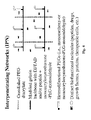
- FIG. 6 A schematic representation of an interpenetrating network hydrogel according to the present invention.
- Poly(alkylene glycols) such as poly(ethylene glycol) (PEG) are employed extensively in a number of medical and pharmaceutical fields due to their low toxicity, good biocompatibility, and excellent solubility (1-5) .
- PEG poly(ethylene glycol)
- the following description shall be limited to gels modified by bifunctional poly(ethylene glycol) molecules. The invention, however, will function with equal success using any poly(alkylene glycol).
- the bifunctional modifier comprise a poly(alkylene glycol) of the formula:
- m is an integer of from 2 to 8; “n” is an integer equal to or greater than 100; and “A” and “Z” are as described above.
- “m” equals 2 and “n” is sufficiently large to yield a PEG molecule having a molecular weight of roughly 100,000 Da.
- “n” is greater than 2,000.
- the “n” substituent may also be sufficiently large to yield a PEG molecule having a molecular weight greater than 1 ⁇ 10 6 Da, in which case “n” is greater than roughly 20,000.
- the present invention thus is drawn to novel hydrogels that use bifunctional PEGs and hetero-bifunctional PEGs (“hPEGs”) as covalent grafts to modify the physical and biological properties of hydrogels.
- hPEGs bifunctional PEGs and hetero-bifunctional PEGs
- These bifunctional PEGS having improved reactivity and physicochemical properties can thus be used to modify polymer matrices in general, and proteinaceous matrices in particular, to yield novel hydrogels.
- These novel hydrogels are useful in wide array of biomaterial and biopharmaceutical compositions and devices that include a hydrogel component, including time-release vehicles, wound dressings and packing, bandages, burn dressings, catamenial devices, diapers, etc.
- hPEGs are classified into two general categories: 1) statistical terminal modification of PEG precursors; and 2) ethylene oxide polymerization methods using special initiators. (6-9) Although various hPEGs are currently available commercially (e.g., from Shearwater Corporation, Huntsville, Ala.), their high cost and limited quantity greatly restricts the extensive utilization of such materials by laboratories in developing novel biomaterials for various applications. In developing the present invention, a number of synthetic schemes were developed to produce a library of HPEG compounds based on the statistical terminal modification method.
- PEG-diol is available in a host of different molecular weights, and from a large number of international suppliers (including Shearwater Corporation).
- polymer networks having diverse physicochemical and surface properties were developed. These networks can be used to study cell-material interaction. (10-13)
- hPEGs were utilized to modify a polymer matrix to yield novel hydrogels.
- HPEG concentration, molecular weight, and terminal chemical functionality on the surface hydrophobicity and cell interaction with the hydrogels was investigated and is presented in the Examples.
- Multiple heterogeneous PEG modifications e.g., carboxylic acids of the poly-acrylic acid backbone and the functional group at the dangling terminus of hPEG grafted at the pendent chain configuration
- biofunctional molecules such as peptides and pharmaceutics to the hydrogel.
- the polymer matrix is a modified gelatin.
- the use of gelatin is not incidental.
- Gelatin is a well-characterized, FDA approved, biodegradable biomaterial.
- hydrogels made from modified gelatin are likely to pass regulatory muster due to the known safety of gelatin.
- the hydrophilicity and porosity of gelatin was modified using ampholytic moieties such as ethylenediaminetetracetic dianhydride (EDTAD).
- EDTAD ethylenediaminetetracetic dianhydride
- the resulting polymer backbone can be cross-linked with small amounts of glutaraldehyde and subsequently loaded with pharmaceutical agents such as antibiotic drugs.
- the water-uptake, swelling, degradation, and drug release kinetics of the resulting hydrogel can be controlled by varying the amount of cross-linking and the extent of EDTAD modification.
- hydrogel was then grafted with various hPEGs, as described hereinbelow.
- hPEGs hPEG-modified gelatin hydrogels
- synthetic polymer networks containing human white blood cells and fibroblasts were examined, both in vitro and in vivo.
- the terminal group of the hPEGs has also been used to link bioactive peptides to the hydrogel matrix, thereby to control the interaction of host cells such as white blood cells and to enhance favorable biological interactions. It has been demonstrated in the Examples that the molecular interaction of several bioactive oligopeptides in modulating white blood cell behavior and host interaction in vitro and in vivo can thus be modified.
- the resulting hydrogels can be used a functional wound dressings, bandages, and the like. These functional wound dressings are suitable for use both internally and externally.
- the gelatin-hPEG hydrogels of the present invention have been tested in a subcutaneous caged implant model.
- hydrogels of the present invention are not physical blends.
- the present hydrogels are chemically and physically homogenous and can be tailored to suit a particular clinical endpoint requirement.
- the hydrogel is mechanically stable because the components are covalently bonded together. Additionally, the hydrophilicity and flexibility of the porous hydrogel accommodates the absorption of wound exudate, blood, etc., and assists in the final removal of material from the wound site.
- gelatin and the porosity of the construct also facilitates the exchange of gases and promotes rapid healing.
- the presence of hPEG-conjugated bioactive compounds within the hydrogel matrix itself adds qualitative value and control to the wound healing process.
- hPEGs heterobifunctional PEGs
- the hPEGs were then used to make modified polymer hydrogels having various surface and physicochemical properties.
- Extensive NMR and HPLC analyses confirmed the chemical structure of hPEG.
- the hydrophilicity of the polymer network was predominantly dependent on the hPEG concentration, with the molecular weight of the starting, unmodified PEG and the terminal functional groups also playing roles.
- Adherent human fibroblast density on the hydrogels remained constant with increasing hPEG concentration in the gel formulation but decreased rapidly on hydrogels containing 0.8 to 1.25 g/ml of hPEGs. This trend was independent of the hPEG terminal moiety and molecular weight. No adherent cells were observed on all sample gels containing 2.5 g/ml or more of hPEGs.
- ETAD ethylene diaminetetracetic dianhydride
- IPN interpenetrating network hydrogel
- TMPTA trimethylolpropane triacrylate (i.e., 2-ethyl-2-(hydroxymethyl)-1,3-propanediol triacrylate, CAS No. 15625-89-5)
- XPEGmA hPEG with acrylate ⁇ -terminal and ⁇ -terminal of different moiety
- alkyl by itself or as part of another substituent, means, unless otherwise stated, a fully saturated, straight, branched chain, or cyclic hydrocarbon radical, or combination thereof, and can include di- and multi-valent radicals, having the number of carbon atoms designated (e.g., C 1 -C 10 means from one to ten carbon atoms, inclusive).
- alkyl groups include, without limitation, methyl, ethyl, n-propyl, isopropyl, n-butyl, t-butyl, isobutyl, sec-butyl, cyclohexyl, (cyclohexyl)ethyl, cyclopropylmethyl, and homologs and isomers thereof, for example, n-pentyl, n-hexyl, n-heptyl, n-octyl, and the like.
- alkyl unless otherwise noted, also includes those derivatives of alkyl defined in more detail below as “heteroalkyl” and “cycloalkyl.”
- alkenyl means an alkyl group as defined above containing one or more double bonds.
- alkenyl groups include vinyl, 2-propenyl, crotyl, 2-isopentenyl, 2-(butadienyl), 2,4-pentadienyl, 3-(1,4-pentadienyl), etc., and the higher homologs and isomers.
- alkynyl means an alkyl or alkenyl group as defined above containing one or more triple bonds.
- alkynyl groups include ethynyl, 1- and 3-propynyl, 3-butynyl, and the like, including the higher homologs and isomers.
- alkylene alkenylene
- alkynylene alone or as part of another substituent means a divalent radical derived from an alkyl, alkenyl, or alkynyl group, respectively, as exemplified by —CH 2 CH 2 CH 2 CH 2 —.
- alkyl, alkenyl, alkynyl, alkylene, alkenylene, and alkynylene groups will have from 1 to 24 carbon atoms. Those groups having 10 or fewer carbon atoms are preferred in the present invention.
- “Substituted” refers to a chemical group as described herein that further includes one or more substituents, such as lower alkyl, aryl, acyl, halogen (e.g., alkylhalo such as CF 3 ), hydroxy, amino, alkoxy, alkylamino, acylamino, thioamido, acyloxy, aryloxy, aryloxyalkyl, mercapto, thia, aza, oxo, both saturated and unsaturated cyclic hydrocarbons, heterocycles and the like.
- substituents such as lower alkyl, aryl, acyl, halogen (e.g., alkylhalo such as CF 3 ), hydroxy, amino, alkoxy, alkylamino, acylamino, thioamido, acyloxy, aryloxy, aryloxyalkyl, mercapto, thia, aza, oxo, both saturated and
- These groups may be attached to any carbon or substituent of the alkyl, alkenyl, alkynyl, alkylene, alkenylene, and alkynylene moieties. Additionally, these groups may be pendent from, or integral to, the carbon chain itself.
- heteroalkyl by itself or in combination with another term, means, unless otherwise stated, a stable, saturated or unsaturated, straight, branched chain, or cyclic hydrocarbon radical, or combinations thereof, consisting of the stated number of carbon atoms and from one to three heteroatoms selected from the group consisting of O, N, Si, and S, and wherein the nitrogen and sulfur atoms may optionally be oxidized and the nitrogen heteroatom(s) may optionally be quaternized.
- the heteroatom(s) O, N and S may be placed at any interior position of the heteroalkyl group.
- the heteroatom Si may be placed at any position of the heteroalkyl group, including the position at which the alkyl group is attached to the remainder of the molecule.
- Examples include —CH 2 —CH 2 —O—CH 3 , —CH 2 —CH 2 —NH—CH 3 , —CH 2 —CH 2 —N(CH 3 )—CH 3 , —CH 2 —S—CH 2 —CH 3 , —CH 2 —CH 2 —S(O)—CH 3 , —CH 2 —CH 2 —S(O) 2 —CH 3 , —CH ⁇ CH—O—CH 3 , —Si(CH 3 ) 3 , —CH 2 —CH ⁇ N—OCH 3 , and —CH ⁇ CH—N(CH 3 )—CH 3 .
- heteroalkyl Up to two heteroatoms may be consecutive, such as in —CH 2 —NH—O—CH 3 and —CH 2 —O—Si(CH 2 ) 3 .
- heteroalkyl Explicitly included within the term “heteroalkyl” are those radicals that could also be described as “heteroalkylene” (i.e., a divalent radical, see next paragraph), and “heterocycloalkyl” (i.e., containing a cyclic group).
- heteroalkyl also explicitly includes unsaturated groups (i.e., heteroalkenyls and heteroalkynyls).
- heteroalkylene by itself or as part of another substituent means a divalent radical derived from heteroalkyl, as exemplified by —CH 2 —CH 2 —S—CH 2 CH 2 — and —CH 2 —S—CH 2 —CH 2 —NH—CH 2 —.
- heteroalkylene groups heteroatoms can also occupy either or both of the chain termini. Still further, for alkylene and heteroalkylene linking groups, no orientation of the linking group is implied.
- aryl is used herein to refer to an aromatic substituent, which may be a single aromatic ring or multiple aromatic rings which are fused together, linked covalently, or linked to a common group such as a diazo, methylene or ethylene moiety.
- the common linking group may also be a carbonyl as in benzophenone.
- the aromatic ring(s) may include, for example phenyl, naphthyl, biphenyl, diphenylmethyl and benzophenone, among others.
- aryl encompasses “arylalkyl” and “substituted aryl.”
- the aryl ring may be mono-, di-, tri-, tetra-, or penta-substituted. Larger rings may be unsubstituted or bear one or more substituents.
- “Substituted aryl” refers to aryl as just described including one or more functional groups such as lower alkyl, acyl, halogen, alkylhalo (e.g., CF 3 ), hydroxy, amino, alkoxy, alkylamino, acylamino, acyloxy, phenoxy, mercapto, and both saturated and unsaturated cyclic hydrocarbons which are fused to the aromatic ring(s), linked covalently or linked to a common group such as a diazo, methylene, or ethylene moiety.
- the linking group may also be a carbonyl such as in cyclohexyl phenyl ketone.
- substituted aryl encompasses “substituted arylalkyl.”
- acyl is used to describe a ketone substituent, —C(O)R, where R is substituted or unsubstituted alkyl, alkenyl, alkynyl, or aryl as defined herein.
- carbonyl is used to describe an aldehyde substituent.
- carboxy refers to an ester substituent or carboxylic acid, i.e., —C(O)O— or —C(O)—OH.
- halogen or “halo” is used herein to refer to fluorine, bromine, chlorine and iodine atoms.
- hydroxy is used herein to refer to the group —OH.
- amino is used to designate NRR′, wherein R and R′ are independently H, alkyl, alkenyl, alkynyl, aryl or substituted analogs thereof.
- Amino encompasses “alkylamino,” denoting secondary and tertiary amines, and “acylamino” describing the group RC(O)NR′.
- alkoxy is used herein to refer to the —OR group, where R is alkyl, alkenyl, or alkynyl, or a substituted analog thereof. Suitable alkoxy radicals include, for example, methoxy, ethoxy, t-butoxy, etc.
- alkoxyalkyl refers to ether substituents, monovalent or divalent, e.g. —CH 2 —O—CH 3 and —CH 2 —O—CH 2 —.
- gelatin as used herein means any and all kinds of gelatin, of any type (e.g., Type A from pork, with an isoelectric point between about 7.0 and 9.0, and Type B from beef with an isoelectric point of approximately 5.0), from any source, of any bloom value, acid- or alkaline-treated, etc., without limitation.
- the “bloom strength” of a gelatin is defined as the force required for a plunger of defined shape and size to make a 4 mm depression in a gel that has been prepared at 6.67% w/w concentration and chilled at 10° C. in a bloom jar for 16-18 hours. The force is recorded in grams.
- gelatin is available from a host of commercial suppliers.
- gelatin is generally available with bloom strengths ranging from about 50-300 bloom.
- Such gelatins are available from, for example, Leiner Davis Gelatin, a wholly-owned subsidiary of Goodman Fielder Ingredients of Sydney, Australia. Gelatins having bloom values outside this range are also available as specialty chemicals and are included within the scope of the term “gelatin.” For example a zero bloom (non-gelling) gelatin is available from Great Lakes Gelatin Co., Grayslake, Ill.
- collagen as used herein means any and all kinds of collagen, of any type, from any source, without limitation.
- polymer matrix encompasses any type of polymer matrix that can function as a hydrogel, including, without limitation, gelatin, calcium alginate, calcium/sodium alginate, collagen, oxidized regenerated cellulose, carboxymethylcellulose, amino-modified celluloses, such as 6-deoxy-6-(4-aminophenyl)-amino-2(3)-O-tosylcellulose, whey protein gels, and the like.
- photopolymerizable acrylate refers to any acrylate-containing molecule capable of being photopolymerized, without limitation.
- bis-diacrylate-PEGs i.e., poly(alkylene glycol) molecules having an ⁇ -acrylate moiety and an ⁇ -acrylate moiety.
- TMPTA is also a photopolymerizable acrylate.
- PEG-diols can be purchased essentially as a commodity item, in large amounts and at relatively inexpensive prices.
- the first step in modifying the ⁇ - and ⁇ -termini of the PEG-diols is to convert them in aldehyde groups. This is very easily accomplished by treating the PEG-diol with acetic anhydride:
- the molecule can be further modified using any of the routes shown in FIG. 1 , among many others.
- the PEG-diol can be converted into an ⁇ -hydroxy- ⁇ -carboxy-PEG, which can then be converted into an ⁇ -acrylate- ⁇ -carboxy-PEG.
- the PEG-diol can be converted into a ⁇ -hydroxy- ⁇ -cyanoethyl-PEG, which can then, in turn, be converted into a ⁇ -acrylate- ⁇ -cyanoethyl-PEG.
- the PEG-diol can be directly converted, by simple halogenation of the hydroxy group to ⁇ -hydroxy- ⁇ -halo-PEG.
- the PEG diol can also be tosylated and acrylated to thereby yield ⁇ -acrylate- ⁇ -tosylated-PEG.
- the tosyl group can be exchanged for a succinimidyl or phthalimidyl or other nitrogen-containing heterocycle group.
- ⁇ -Hydroxy- ⁇ -methoxy-PEG can be converted directly into ⁇ -acrylate- ⁇ -methoxy-PEG. See FIG. 1 . (See also Hem & Hubbell,(1998) J. Biomed. Mater. Res. 39:266-276; Morpurgo et al. (1996) App. Biochem. Biotech. 56:59-72; and Abuchowski et al. (1984) Cancer Biochem. Biophys. 7:175-186.)
- ⁇ -hydroxy- ⁇ -glutarate-PEG can be synthesized by treating a PEG-diol with glutaric anhydride and glutaric acid in THF with gentle heating:
- the glutaric anhydride and the glutaric acid are added and the solution gently heated to 55° C.
- the solution is maintained at that temperature, with stirring, for one day.
- the solution is then cooled to room temperature and filtered.
- the filtrate is then precipitated in cold hexane, the resulting precipitate is then removed by filtration, and dried in a vacuum to yield the desired product, generally a mixture of PEG-bis-glutarate and ⁇ -hydroxy- ⁇ -glutarate-PEG.
- the two can be separated chromatographically (see the Examples).
- the glutarate group can be further reacted to add a nitrogen-containing heterocycle, such as a succinimidyl group by reacting the ⁇ -hydroxy- ⁇ -glutarate-PEG with N-hydroxy-succinimide in the presence of a water-soluble carbodiimide:
- a nitrogen-containing heterocycle such as a succinimidyl group
- the N-hydroxy-succinimide is added and the solution cooled to 0° C.
- the dicyclohexylcarbodiimide (DCC) is added dropwise and the solution stirred for one day and filtered.
- the filtrate is precipitated by adding cold hexane.
- the resulting precipitate is filtered and dried in a vacuum.
- This yields the desired product generally a mixture of PEG-bis-N-succinimidylglutarate and ⁇ -glutarate- ⁇ -succinimidylglutarate-PEG (or ⁇ -hydroxy- ⁇ -succinimidylglutarate-PEG, depending upon the starting material chosen).
- the two can be separated chromatographically (see the Examples).
- the ⁇ -hydroxy- ⁇ -succinimidylglutarate can be further reacted to yield ⁇ -acrylate- ⁇ -succinimidylglutarates by reacting the ⁇ -hydroxy- ⁇ -succinimidylglutarate with acrylic acid in the presence of TEA.
- the PEG molecules may also be modified to introduce other amide bonds into the molecule.
- the formation of an amide bond is, of course, extremely useful in modifying the PEG molecule to contain an amino acid, peptide, or protein terminus.
- ⁇ -succinimidylglutarate- ⁇ -tryptophanylglutarate PEG can be synthesized by dissolving the peptide or amino acid in 0.1 M 2-(N-morpholino)-ethanesulfonic acid (MES) at 0° C.
- MES 2-(N-morpholino)-ethanesulfonic acid
- ⁇ , ⁇ -Bis-N-succinimidylglutarate-PEG is added dropwise to the solution with constant stirring. The reaction is allowed to continue at 0° C.
- reaction solution is then dialyzed against 50 volumes of deionized water and the resulting solution lyophilized. This yields the desired ⁇ -N-succinimidylglutarate- ⁇ -tryptophanylglutarate in rougly 40% yield.
- the modified PEGs can be attached to a polymer matrix containing amino-reactive groups using the same procedure as in the previous paragraph, thereby grafting the modified PEG to the amino-reactive groups of the polymer matrix. See also the Examples.
- the mono- or dialdehyde-PEG is first dissolved in water.
- a separate aqueous solution of NaCNBH 3 is also prepared.
- the two solutions are then added simultaneously to a dilute (5%) solution of gelatin in water.
- the reaction is allowed to proceed overnight with gentle heating (50 to 60° C.).
- the modified gelatin is then separated by filtration.
- ⁇ -Methoxy, ⁇ -hydroxy-PEG is commercially available (Shearwater).
- Modified PEGS wherein the ⁇ and the ⁇ termini have the same functional groups can also be fabricated using the same approach.
- bis-acrylate, bis-tosylate, bis-phthalimidyl, bis-cyanoalkyl, bis-carboxylate, bis-acryloylcarboxylate, bis-glutarate, bis-acryloylglutarate, bis-trialkoxysilane, bis-aldehyde, bis-N-succinimidyl, and bis-tryptophanylglutarate derivatives can be fabricated.
- a polymer matrix preferably gelatin
- the PEG molecule may be bis-modified, using the same type of moiety.
- the ⁇ -terminus of the PEG may have a different moiety than the ⁇ -terminus.
- IPNs Interpenetrating Network Hydrogels
- the above described PEG-modified hydrogels can also be used as a first polymer matrix in an interpenetrating network of two distinct polymer matrices.
- the PEG-modified hydrogels as described above are admixed with a polymerizable mixture of monomers. A polymerization reaction is then initiated, whereby the mixture of monomers polymerizes in situ, thereby forming a second polymer matrix that interpenetrates with the first polymer matrix.
- the plurality of monomers that forms the second polymer matrix is polymerizable by a means other than chemical initiation.
- Chemically polymerizable monomers are, however, within the scope of the invention.
- the monomers are photopolymerizable.
- the monomers are admixed with the first polymer matrix.
- the mixture is then exposed to a suitable wavelength of radiation (e.g., infrared, visible, or ultraviolet) that will result in a photo-initiated polymerization reaction.
- the source for the radiation can be any source that generates radiation of the required wavelength, such as lamps (incandescent, fluorescent, ion discharge, etc.), lasers (CO 2 , Ne—Ne, etc.), and light-emitting diodes.
- the preferred photopolymerizable monomers are acrylates, diacrylates, and poly(acrylates) (including PEG-acrylates, PEG-diacrylates, and TMPTA), acrylic acid, and acryloyl halides, such as acryloyl chloride, and mixtures thereof.
- the polymerization reaction will, of course, result in the second polymer matrix being a co-polymer.
- the second polymer matrix may comprise a homo-polymer matrix or a co-polymer matrix of any description (e.g., alternating, block, or graft co-polymers).
- FIG. 6 is a schematic representation of interpenetrating network hydrogels according to the present invention.
- the gels can contain living cells or pharmcalogically-active agents, or both.
- M-PEG ⁇ -methyl- ⁇ -acrylate PEGs
- monomethoxy PEGs (2 kDa or 5 kDa, purchased from Fluka, a division of Sigma-Aldrich) were dissolved in dry tetrahydrofuran (THF) solution followed by the addition of triethylamine (TEA, 2 eq.) and acryloyl chloride (AC, 4 eq.) (14) at room temperature under Ar for 10 min, filtered, dried by rotary evaporation, re-dissolved in CH 2 Cl 2 , and precipitated in cold hexane. The final product was filtered, dried, and stored in vacuo at room temperature.
- THF dry tetrahydrofuran
- AC acryloyl chloride
- PEG-diols (2 kDa or 5 kDa) (1 eq.) were dissolved in dry CH 2 Cl 2 solution followed by the addition of TEA (4 eq.) and p-toluenesulfonyl chloride (2 eq.) (19) and stirred under Ar for 8 hr at room temperature. Solvent was removed by rotary evaporation to obtain yellowish white solids.
- the solid product (mainly ⁇ -tosyl- ⁇ -acrylate-PEG) was filtered, dried in vacuo, dissolved (1 eq.) in CH 2 Cl 2 , followed by the addition of potassium phthalimide (3 eq.) (20) and refluxed for 18 hr.
- the solution was filtered, dried via rotary evaporation to remove solvents, re-dissolved into CH 2 Cl 2 , precipitated in cold hexane, filtered, dried, and stored in vacuo at room temperature.
- heterobifunctional PEGs were employed as a component in the formation of hydrogels to investigate the influence of hPEG concentration, molecular weight, and terminal moiety on the surface hydrophilicity and cell interaction.
- the hPEGs were utilized in the hydrogel formulation following procedures described hereinabove. See also references (10-13).
- the network thus formed is a random copolymer of Ac, TMPTA, and hPEG, with, for example, an acrylate ⁇ -terminal and an ⁇ -terminal of a different chemical moiety (XPEGmA).
- XPEGmAs were grafted to a gelatin polymer matrix with various dangling terminal functional groups and incorporated throughout the polymer matrix by copolymerizing the acrylate terminal into a randomly polymerized network of Ac and TMPTA.
- This type of polymer network containing M-PEG is nonionic, low swelling, glassy when dry, optically transparent, and colorless.
- 10-13) In spite of the relatively high mass fraction of M-PEGs present, minimal swelling was observed for the polymer due to the highly cross-linked and hydrophobic nature of the TMPTA network. Differential scanning calorimetry analysis showed that these materials are completely amorphous and the M-PEG component is completely phase-mixed in the cross-linked TMPTA matrix. (10)
- the surface hydrophilicity of XPEGmA-co-Ac-co-TMPTA networks was quantified with an underwater air bubble captive system.
- the hydrogel was completely suspended in water that was maintained at a physiologically-relevant temperature of 37.5° C.
- the gels so formed were then evaluated for their interaction with cultured cells.
- Human neonatal dermal fibroblasts at a concentration of 75,000 per 1 ml of Fibroblast Basal Medium with human fibroblast growth factor-b (0.5 mg/ml), insulin (0.5 mg/ml), and 5% fetal bovine serum (Clonetics, San Diego, Calif.) were incubated with the XPEGmA-co-Ac-co-TMPTA network.
- adherent cell morphology and density were manually quantified using a computer-assisted video analysis system coupled to an inverted light microscope.
- PT-PEG showed an approximate 65% conversion with about 5% of the final product containing another acrylate side-product (e.g., ⁇ -tosyl- ⁇ -acrylate-PEG).
- COOH-PEG showed an approximate 60% conversion with an additional 10% of other acrylated side-products (e.g., ⁇ -hydroxyl- ⁇ -acrylate-PEG and bis-acrylate-PEG).
- heterobifunctional intermediates and final products of XPEGmA are stable under storage in vacuo at room temperature and can be modified further by a broad range of chemical methods for various applications.
- the phthalimide group is a good protecting group that can be hydrolyzed to form
- a previously developed polymer network formulation was adopted to elucidate the effect of the PEG chemistry on the surface characteristics of the resulting hydrogels.
- Polymer networks containing various XPEGmAs at several concentrations and different molecular weights were transparent or translucent.
- the network surface hydrophilicity was quantified using an under water contact angle system and was found to be dependent of three factors: the molecular weight of the starting material PEG, the dangling terminal functional group, and the concentration of the XPEGmA in the network (see Table 3 and FIGS. 3A and 3B ).
- the different terminal moiety of XPEGmA showed a variable effect on the surface hydrophilicity when compared with that of M-PEG of given molecular weight and concentration.
- the XPEGmA concentration in the network formulation showed various correlations with hydrophilicity. Because XPEGmA was employed in the network formation without further purification, the potential effect of differential percent conversion of acrylated hPEG on surface hydrophilicity must be addressed. M-PEG showed a 100% conversion and the network containing M-PEG demonstrated no changes in surface hydrophilicity with increasing M-PEG concentration. Whereas for other XPEGmAs, various correlations among hydrophilicity and the type, percent conversion (ca. 60 to 100%), and concentration were observed. Hence, it was concluded that the percent conversion of XPEGmA within 60 to 100% did not affect the dependency of XPEGmA concentrations on hydrophilicity. These analyses determined that the network surface hydrophilicity was predominately influenced by the XPEGmA concentration in the network formulation with the molecular weight and the terminal moiety playing lesser roles.
- XPEGmA-co-Ac-co-TMPTA networks containing various XPEGmAs at several concentrations were employed to determine the effect of surface characteristics of the gel on human fibroblast adhesion. All adherent cells showed extensive pseudopodial extension and cytoplasmic spreading, with some cells exhibiting polar cell body morphology. The results (see Table 4) showed that adherent cell density was primarily dependent on the XPEGmA concentration in the network formulation. Specifically, adherent cell density decreased with increasing XPEGmA concentration at all culture time. No adherent cell was observed on networks containing XPEGmA concentration between 1.25 to 2.5 g/ml at all culture times.
- the results of this Example show that the presence of two distinct chemical moieties (i.e., carboxylic acids of the poly-acrylic acid backbone and the distinct functional group at the dangling terminus of XPEGmA grafted at the pendent chain configuration) within the hydrogels can be employed to bind (covalently) two or more distinct types of biofunctional molecules such as peptides and pharmaceutics by employing distinct chemical methodologies.
- the high content of PEGs in this system reduced protein adsorption and effectively eliminated nonspecific cell adhesion that would occur as a result, thus permitting the modulating of cellular function mediated uniquely by the multiple immobilized biofunctional agent (10-13).
- the invention thus provides multi-functional hydrogels that can be used, for example, to study complex biological systems and to deliver therapeutic agents locally and systemically.
- This Example explores the swelling and drug release kinetics of various gelatin-based hydrogels.
- the hydrogels were cross-linked by various means, and contained various modifications of the gelatin backbone.
- the effect of pH on the drug release kinetics of these gels was also investigated.
- cross-linking gelatin produces a hydrogel of high molecular weight and reduces or prevents gelatin dissolution.
- the cross-linking agents used in this Example were: 0.1%, 0.01%, and 0.001% (v/v) glutaraldehyde aqueous solutions, and self-cross-linking via liquid nitrogen immersion followed by baking.
- the backbone modifications to the gelatin were the addition of polyethylene glycol (PEG) or ethylenediaminetetraacetic dianhydride (EDTAD) or both.
- PEG polyethylene glycol
- EDTAD ethylenediaminetetraacetic dianhydride
- PEG diol Aldrich, M n 2 kD
- PEG dialdehyde PEGdial
- the composition of PEG dialdehyde was confirmed using the reverse-phase HPLC system and parameters as described in Example 1. This reaction produces a mixed product of PEG monoaldehyde and PEG dialdehyde.
- PEG dialdehyde had an elution time of approximately 11.5 min. and was approximately 80 wt % of the final product.
- the lysyl amino groups of gelatin samples (Sigma, St. Louis, Mo.; Type A, from porcine skin, 300 bloom, cell culture tested) were modified by PEGdial to form PEG-modified gelatin (PG).
- Gelatin samples were also modified using EDTAD (Aldrich) to form EDTAD-modified gelatin (EG).
- Still further gelatin samples were modified with PEGdial and EDTAD to yield PEG-modified-EDTAD-modified gelatin (P/EG).
- PG or P/EG was created by adding PEGdial dissolved in 10 ml of H 2 O (Milli-Q synthesis, 18.2 M ⁇ -cm, Millipore) and NaCNBH 3 dissolved in 10 ml of H 2 O separately and simultaneously to a 5% (w.v) gelatin or EG solution at 50 to 60° C. for 24 hours in a wt ratio of gelatin/EG: PEGdial: NaCNBH 3 of (1:0.66:0.186).
- the theoretical maximum percent modification using this method is 100% modification of gelatin lysyl residues, based on an average 300 bloom gelatin molecular weight and average lysine content of the gelatin. See, e.g., Merck Index, 12 th Ed.
- hydrogels 10% (w/v in H 2 O) solutions of gelatin (G), 10% PG, 40% EG and 60% P/EG were heated to approximately 70° C. and poured into petri dishes (60 ⁇ 15 mm, Cole-Parmer) to a thickness of 6 mm and allowed to set at room temperature overnight. Hydrogels were cut into 1 cm diameter circular discs or into 0.5 ⁇ 0.5 cm squares, and cross-linked with 0.1, 0.01 or 0.001% (v/v in H 2 O) gluteraldehyde (Electron Microscopy Sciences, EM grade, 10% (v/v) aqueous solution) for 6 hours with gentle shaking. Cross-linked hydrogels were washed with H 2 O ten times for 3-5 min.
- Washed hydrogels were left overnight in H 2 O for continued leaching of the gluteraldehyde. Hydrogels were then dried at room temperature in ambient air for 48 hours and weighed. Separately, hydrogels of 10% by wt gelatin were dried in ambient air for 48 hours, frozen in liquid nitrogen for 30 seconds to 1 minute and then baked at 130-135° C. for 8.5 hours (self-cross linked; LN 2 -baked G). Not all hydrogel formulations withstood the cross-linking, washing and drying steps, mainly due to hydrolysis.
- the hydrogel formulations that were included in the swelling/degradation and in vitro drug release studies were the 0.1% glutaraldehyde cross-linked G, PG, EG, and P/EG gels; the 0.01% glutaraldehyde cross-linked G, PG, and EG gels; the 0.001% glutaraldehyde cross-linked G and PG gels; and the self-cross linked LN 2 -baked G. Swelling study results for P/EG hydrogels and in vitro and in vivo drug release studies are ongoing and results are not included here.
- each hydrogel was loaded with chlorhexidine digluconate (CHD; Sigma, 20% (w/v) aqueous solution) using the same drug loading density used for dexamethasone in the in vivo studies (150 ⁇ g/kg/day, dosage of 21 d). Assuming a rat weight of 0.2 kg, this loading density is equivalent to 630 ⁇ g/hydrogel. Based on the maximum swelling weight ratios from the swelling studies, each hydrogel was loaded with 35 ⁇ L of CHD (18 mg/ml), a volume well below the maximum volume the hydrogel could absorb. Hydrogels (0.5 ⁇ 0.5 ⁇ 0.6 cm) were placed into individual wells in a 48-well tissue culture plate. CHD was added to each well, and the hydrogels were allowed to absorb the drug solution overnight (approximately 15 hours) with gentle shaking.
- CHD chlorhexidine digluconate
- hydrogels were placed in 5 ml of aqueous solutions of pH 4.5, pH 7.0 or pH 7.4 in a water bath at 37° C. Aqueous solutions were created by adjusting the pH of H 2 O with dilute HCl and NaOH. Hydrogels were transferred to fresh aqueous solutions at approximately 3 and 6 wks. Swollen hydrogels were weighed at 2, 4, and 6 hours, 1, 2, 3, 4, and 5 days, and 1, 2, 3, 4, 5, 6, 7, and 8 weeks to characterize the swelling/degradation kinetics. Extreme care was taken to preserve the integrity of the hydrogels at every step in the weighing process.
- the swelling weight ratio at each time point for each hydrogel was calculated as: (W s ⁇ W d )/W d , where W s is the weight of the swollen gel and W d is the weight of the dry gel (in grams).
- the maximum swelling weight ratio that occurred over 8 weeks and the time it occurred was also calculated (R max & T max , respectively).
- the last attainable swelling weight ratio (due to hydrogel dissolution) and the time it occurred was also calculated (R fail & T fail , respectively).
- Statistical analysis was performed using ANOVA and Tukey multiple comparisons tests (p ⁇ 0.05).
- the inflammatory exudates that collected in the cages were withdrawn and analyzed for the quantitative evaluation of cellular and humoral response to implantation using standard hematology techniques.
- the distributions of lymphocyte, monocyte, and polymorphonuclear leukocyte (PMN) subpopulations in the exudates were determined.
- the implanted materials were retrieved for analysis of changes in the sample physiochemical composition (e.g., percent mass loss).
- Percent modification of the lysyl residues in gelatin by PEG and/or EDTAD was quantified using the TNBS method: The PG was found to be 10% modified, the EG 40% modified, and the P/EG 60% modified. All results reported here incorporate materials from the same batch of modified gelatin (i.e. 8% PG, 42% EG).
- the host inflammatory reaction is a normal response to injury and the presence of foreign objects.
- the magnitude and duration of the inflammatory process have a direct impact on biomaterial biostability and biocompatability.
- this Example investigates the performance of gels fabricated according to the present invention that include fibronectin-derived biomimetic oligopeptides.
- Fibronectin in known to adsorb on a variety of biomaterials and play an important role in the host-foreign body reaction.
- the RGD (SEQ. ID. NO: 1) and PHSRN (SEQ. ID. NO: 2) amino acid sequences are particularly interesting because these sequences are present on adjacent loops of two connecting FIII modules and bind synergistically to a host of integrins.
- Oligopeptides were designed based on the primary and tertiary structure of human plasma fibronectin to study the structure-functional relationship of RGD and PHSRN regions of fibronectin in regulating the host inflammatory response and macrophage behavior in vivo.
- Peptides included RGD and PHSRN sequences alone or in combination.
- the tertiary structure of fibronectin was utilized as a guide in the formulation of peptides.
- the distance between the PHSRN sequence and the RGD sequence within the natural fibronectin molecule in solution was approximated using the structural coordinates archived in the SwissProt Databases® (sequence FINC_HUMAN P02751).
- a hexamer of glycine (G 6 ) of approximately the same length was used to link the two bioactive sequences in both possible orientations.
- a terminal trimeric glycine domain (G 3 ) was employed as a spacer in all peptides.
- Oligopeptides were synthesized using solid-resin methods on an automated peptide synthesizer (Milipore) using conventional 9-fluorenylmethyloxycarbonyl chemistry without further purification and with a final coupling efficiency of approximately ⁇ 85% purity.
- Peptides were characterized and analyzed using mass spectroscopy and reverse phase HPLC coupled to photodiode array, evaporative light scatter, and UV/Vis detectors.
- G 3 RGDG SEQ. ID. NO: 3
- G 3 PHSRNG SEQ. ID. NO: 4
- G 3 RGDG 6 PHSRNG SEQ. ID. NO: 5
- G 3 PHSRNG 6 RGDG SEQ. ID. NO: 6
- G 3 RDGG SEQ. ID. NO: 7
- the gels used in this Example were random co-polymers of monomethoxy polyethyeneglycol monoacrylate (mPEGmA), acrylic acid (Ac), trimethylolpropane triacrylate (TMPTA). As noted above, these gels are hydrophilic, nonionic, low swelling, glassy, optically transparent, and colorless. Differential scanning calorimetry analysis showed that these materials are completely amorphous and the mPEGmA component is completely phase-mixed in the cross-linked TMPTA matrix. The bioactive oligopeptides were grafted onto mPEGmA-co-Ac-co-TMPTA hydrogels and the resulting gels mediated cell adhesion in a receptor-peptide specific manner.
- mPEGmA monomethoxy polyethyeneglycol monoacrylate
- Ac acrylic acid
- TMPTA trimethylolpropane triacrylate
- the peptide surface density was found to be dependent on the number of amino acids per peptide. For example pentapeptides were grafted at 66 ⁇ 6 pmol/cm 2 surface density; whereas, peptides containing 30 residues were grafted at approximately one-fifth of that surface density.
- oligopeptides containing one bioreactive region i.e., G 3 RGDG, G3PHSRNG, and G 3 RDGG
- mPEGmA-co-Ac-co-TMPTA networks grafted with or without fibronectin-derived peptides were placed in sterile water for at least 48 hours to remove low molecular weight leachable residual molecules from the polymerization process and to achieve hydration equilibrium.
- the polymer samples were then inserted under sterile conditions into an autoclaved cylindrical cage measured 3.5 cm long, 1 cm in diameter, and constructed from medical grade stainless steel wire mesh. Cages containing various polymer samples were subcutaneously implanted at the back of 3-month old female Sprague-Dawley rats.
- the inflammatory exudate that collects in the cage was withdrawn at 4, 7, 10, 14, and 21 days post-implantation and analyzed for the quantitative evaluation of cellular and humoral response to the test material using standard and conventional hematology techniques. Specifically, the distribution of lymphocyte, monocyte, and PMN subpopulations in the exudate was determined. The presence of a high concentration of PMNs in the inflammatory exudate indicates an acute inflammatory response, which occurs from the onset of implantation and attenuates with time. This is followed by the chronic inflammatory response, which is characterized by the presence of a high concentration of monocytes and lymphocytes in the exudate.
- the cage implant system allows the host inflammatory reaction to the test sample to be observed as a function of time and material property.
- a drop of each exudate sample was also cultured on brain-heart infusion agar plates to check for incidence of infection. No infection was observed at any retrieval time for any sample.
- test polymer samples were retrieved and the adherent cell morphology and density were quantified using a video analysis system coupled to a light microscope.
- N x p ax ⁇ 3 (1 ⁇ p)
- p the probability of cell fusion or the ratio of the number of cell fusion to the initial adherent macrophage density
- a is a constant relating to the number of nuclei per FBGC to the cell area (FBGC/mm 2 ) and has been found to be constant for various clinically relevant biomaterials under different mechanical stress conditions. See Kao et al. (1994) J. Biomed. Mater. Res. 28:73-79; Kao et al. (1995) J.
- d 0 is the calculated density of adherent macrophages that participate in the FBGC formation process (macrophages/mm 2 ), d f the measured adherent macrophage density at 4 days post-implantation (macrophages 1 mm ⁇ 2 ), t the implantation time (week), and k the inverse rate constant of cell fusion (mm 2 cell ⁇ 1 week ⁇ 1 ).
- mPEGmA-co-Ac-co-TMPTA gels within the cage showed a constant total leukocyte concentration from 4 to 21 days of implantation.
- the presence of the gels increased monocyte concentration and lowered lymphocyte concentration at days 4 and 7 when compared with that of empty cage controls, suggesting a comparable level of chronic inflammatory response that turned toward resolution but with an altered leukocyte sob-population distribution.
- Adherent macrophage density on implanted mPEGmA-co-AC-co-TMPTA networks grafted with or without fibronectin-derived oligopeptides was quantified at different retrieval times. In general, adherent macrophages on all surfaces decreased with increasing implantation time (see Table 8). Adherent macrophage densities for all samples were comparable and were higher than respective values of G 3 RDGG or “no grafted peptide” controls at each retrieval time up to 14 days post-implantation. Adherent macrophage density on all samples was comparable from 21 to 70 days post-implantation. Adherent macrophages on all surfaces showed an extensive spread morphology with pseudopodial extension. These results indicate that peptides containing RGD and/or PHSRN motifs do not affect adherent macrophage density.
- FBGC density increased with increasing implantation time for all samples except that on surfaces grafted with G 3 RGDG or G 3 PHSRNG 6 RGDG at which the adherent FBGC density remained constant with increasing implantation time (data not shown).
- the average FBGC size increased with increasing implantation time for all samples (data not shown).
- This Example shows that the hydrogels of the present invention can be used to support peptide, proteins, and the like, within a modified, three-dimentional hydrogel matrix.
- b Represents p ⁇ 0.05 vs. respective values of “empty cage” controls.
- c Represents p ⁇ 0.05 vs. respective values of “no grafted peptide” controls.
- d Represents p ⁇ 0.05 vs. respective values at day 4 of the same sample type.
- Adherent macrophage density on cage-implanted mPEGmA-co-AC-co-TMPTA networks grafted with various fibronectin-derived oligopeptides a Adherent macrophage density ( ⁇ 10 macrophages/mm 2 ) at various post-implantation time (days) Peptide 4 7 14 21 35 70 G 3 RGDG 138 ⁇ 22 b 85 ⁇ 12 b,c 33 ⁇ 12 b,c 15 ⁇ 3 c 14 ⁇ 2 c 4 ⁇ 2 c G 3 PHSRNG 124 ⁇ 12 b 57 ⁇ 10 b,c 31 ⁇ 11 b,c 10 ⁇ 0 c 9 ⁇ 1 c 4 ⁇ 2 c G 3 EGDG 6 PHSRNG 126 ⁇ 8 b 58 ⁇ 12 b,c 23 ⁇ 4 b,c 14 ⁇ 4 c 6 ⁇ 5 c 0 ⁇ 0 c G 3 PHSRNG 6 RGDG 183 ⁇ 27
- Interpenetrating networks are hydrogels synthesized by reacting a first polymer around a second material to form an intermeshing structure.
- IPNs are free of cross-linkers used to create other biomedical hydrogels.
- photopolymerization has the advantages that the desired amount of drug can be easily loaded into the matrix, and the cross-linking density, which can affect the drug release rate, can be controlled.
- IPNs can be formed in situ and used in places less suitable for prefabricated materials.
- the focus of this Example was to investigate the swelling and drug release kinetics of gelatin-based IPNs of varying gelating backbone modification, weight percent of gelatin, pH, and the molecular weight of polyethylene glycol diacrylate (PEGdA). Based on our results, these IPNs are quite suitable for tissue scaffolds and drug release vehicles.
- PEGdA polyethylene glycol diacrylate
- PEG Polyethyleneglycol
- Aldrich 2, 4.6, and 8 kDa
- acrylolyl chloride Aldrich
- TEA Aldrich
- the final PEGdA product purity was checked with the same reverse phase HPLC system as used in Example 1.
- the elution time of the PEGdA was approximately 13.2 minutes with a purity of approximately 100 wt % PEGdA.
- mPEG Monomethoxypolyethyleneglycol
- Aldrich acetic anhydride
- DMSO DMSO
- the reaction takes 8 to 24 hours and was monitored periodically with HPLC.
- the mPmA had an elution time of approximately 11.9 minutes and a purity close to 75 wt % mPmA.
- the compositions of PEGdA and mPEGmonoaldehyde were also confirmed with 1 H-NMR.
- mPmA sodium cyanoborohydride
- the percent of the gelatin lysyl residues modified by EDTAD and/or mPmA was determined using the trinitrobenzene sulfonic acid spectrophotometric method.
- the IPNs used in this study were prepared from the same modified gelatins.
- IPNs were created using modified and unmodified gelatin, PEGdA (2, 4.6, or 8 kDa molecular weight), initiator (2,2-dimethoxy-2-phenylacetophenone, DMPA), and a long wavelength UV source.
- Gelatin was dissolved in deionized water with heat (80° C.) to form a 20 wt % gelatin solution.
- PEGdA was dissolved in deionized water, without heat, in an aluminum foil wrapped glass vial to form a 100 wt % PEGdA solution. The gelatin solution was then added to the PEGdA solution and the mixture was agitated thoroughly.
- DMPA was then added to the gelatin/PEGdA mixture and this final mixture was again agitated and then heated (80° C.) throughout the rest of the procedure.
- IPNs were created through injection molding.
- the final gelatin/PEGdA/DMPA mixture was injected with a Pasteur pipette into a Teflon mold that was clamped between 2 glass slides.
- the mold has the approximate dimensions of 20 mm long by 10 mm wide by 1.6 mm thick.
- the mold/IPN mixture was then irradiated with Uw light from the top and bottom for approximately 3 minutes. During this time, the UV light initiates the cross-linking G of PEGdA, entrapping the gelatin within the PEGdA cross-links.
- the mold/IPN was allowed to cool before the IPN was removed from the mold.
- IPNs were named based on the weight percent of gelatin, the type of gelatin, the weight percent of PEGdA, and the molecular weight of the PEGdA used to synthesize the IPN.
- 4G6P2k indicates 40 wt % gelatin, 60 wt % PEGdA, 2 kDa PEGdA.
- the following key describes the code used to identify IPN formulations.
- Each formulation is identified by a code of the formula “XYZk”, where X is the wt % gelatin, Y is the type of gelatin, Z is the wt % PEGdA, and k is the molecular weight of the PEGdA:
- the swelling/degradation kinetics of the IPNs were characterized by weighing swollen IPNs at predetermined times (up to 8 weeks).
- the IPNs were added to test tubes containing 5 ml deionized water with environmental pHs of 4.5, 7.0, and 7.4.
- the test tubes were then placed in water baths at 37° C.
- the samples were removed with extreme caution from the test tubes using a bent spatula, blotted dry, weighed, and then placed back in the same test tube. This was done until the sample had degraded completely or until the sample had degraded into too many pieces and they could no longer be removed from the test tube.
- the swelling weight ratio at each time point for each IPN was calculated as: (W s ⁇ W o /W o ), where W s is the weight of the swollen IPN and W o is the original weight of the IPN.
- the maximum swelling weight ratio that occurred over 8 weeks and the time it occurred was calculated (R max , T max ).
- the last attainable swelling weight ratio (due to IPN degradation) and the time it occurred was also calculated (R fail , T fail ).
- the level of host biocompatibility and inflammatory reaction of the IPNs was determined via the in vivo subcutaneous cage implant system described in the previous Examples. IPNs were placed inside cylindrical (1 cm diameter by 3.5 cm long) medical grade stainless steel wire mesh cages. These cages along with empty cages, controls, were implanted subcutaneously at the back of 3-month old female Sprague-Dawley rats. Inflammatory exudates that collected in the cages were withdrawn at 4, 7, 14, and 21 days post-implantation and analyzed for the quantitative evaluation of cellular and humoral response to the IPN samples using standard hematology techniques. Using these techniques the distributions of polymorphonuclear leukocyte (PMN), lymphocyte, and monocyte subpopulations in the exudates were determined. In addition to the host response, the degradation of the IPNs was determined as percent weight lost ((final IPN weight/initial IPN weight) ⁇ 100).
- PMN polymorphonuclear leukocyte
- lymphocyte lymphocyte
- the IPNs fabricated as described hereinabove were opaque, flexible, rubbery, and slightly tacky.
- the opacity increased with decreasing gelatin concentration and with increasing PEGdA molecular weight.
- Increasing the gelatin concentration increased the flexibility and the tackiness of the IPN.
- the flexibility of the IPNs also seemed to increase with increasing PEGdA molecular weight.
- the mechanical properties of the IPNs were tested using ASTM testing standards.
- the IPNs for mechanical testing were made in a similar fashion as stated above, however the molds used were made of polydimethylsiloxane and the IPN final dimensions were 280 mm thick, 11 mm gauge length, and 2 mm neck width (the dimensions required for ASTM D38-98 type IV specimens).
- the IPNs were subjected to tensile testing per ASTM D638-98 standards, using an Instron Model 5548 testing machine.
- T fail The time to reach R fail (T fail ) was not affected by increasing the molecular weight of PEGdA or by modifying the gelatin.
- IPNs 40 wt % gelatin, 60 wt % PEGdA 2 kDa (4G6P2K) IPNs were used in a preliminary in vivo study.
- Acute inflammation is followed by a high concentration of monocytes and lymphocytes in the exudates, chronic inflammation.
- the study showed that there was a statistically higher inflammatory response to the IPNs after 4, 7, and 14 days of implantation compared to the empty cage controls.
- the study also revealed that almost 70% of the sample mass was lost after 4 days, and decreased another 10% after 21 days.
- the Example illustrates that IPNs made according to the present invention can serve as tissue scaffolds and drug delivery vehicles.
Landscapes
- Health & Medical Sciences (AREA)
- Chemical & Material Sciences (AREA)
- Engineering & Computer Science (AREA)
- Epidemiology (AREA)
- Life Sciences & Earth Sciences (AREA)
- Animal Behavior & Ethology (AREA)
- General Health & Medical Sciences (AREA)
- Public Health (AREA)
- Veterinary Medicine (AREA)
- Hematology (AREA)
- Materials Engineering (AREA)
- Medicinal Chemistry (AREA)
- Pharmacology & Pharmacy (AREA)
- Bioinformatics & Cheminformatics (AREA)
- Chemical Kinetics & Catalysis (AREA)
- Polymers & Plastics (AREA)
- Organic Chemistry (AREA)
- Dispersion Chemistry (AREA)
- Medicinal Preparation (AREA)
- Materials For Medical Uses (AREA)
- Other Resins Obtained By Reactions Not Involving Carbon-To-Carbon Unsaturated Bonds (AREA)
- Macromonomer-Based Addition Polymer (AREA)
Priority Applications (4)
| Application Number | Priority Date | Filing Date | Title |
|---|---|---|---|
| US10/128,198 US7615593B2 (en) | 2001-04-23 | 2002-04-23 | Bifunctional-modified hydrogels |
| US11/093,531 US20050276858A1 (en) | 2001-04-23 | 2005-03-30 | Bifunctional-modified hydrogels |
| US11/273,393 US20060100369A1 (en) | 2001-04-23 | 2005-11-14 | Bifunctional-modified hydrogels |
| US12/615,859 US8025901B2 (en) | 2001-04-23 | 2009-11-10 | Bifunctional-modified hydrogels |
Applications Claiming Priority (2)
| Application Number | Priority Date | Filing Date | Title |
|---|---|---|---|
| US28578201P | 2001-04-23 | 2001-04-23 | |
| US10/128,198 US7615593B2 (en) | 2001-04-23 | 2002-04-23 | Bifunctional-modified hydrogels |
Related Child Applications (3)
| Application Number | Title | Priority Date | Filing Date |
|---|---|---|---|
| US11/093,531 Continuation-In-Part US20050276858A1 (en) | 2001-04-23 | 2005-03-30 | Bifunctional-modified hydrogels |
| US11/273,393 Division US20060100369A1 (en) | 2001-04-23 | 2005-11-14 | Bifunctional-modified hydrogels |
| US12/615,859 Continuation US8025901B2 (en) | 2001-04-23 | 2009-11-10 | Bifunctional-modified hydrogels |
Publications (2)
| Publication Number | Publication Date |
|---|---|
| US20030083389A1 US20030083389A1 (en) | 2003-05-01 |
| US7615593B2 true US7615593B2 (en) | 2009-11-10 |
Family
ID=23095662
Family Applications (3)
| Application Number | Title | Priority Date | Filing Date |
|---|---|---|---|
| US10/128,198 Expired - Fee Related US7615593B2 (en) | 2001-04-23 | 2002-04-23 | Bifunctional-modified hydrogels |
| US11/273,393 Abandoned US20060100369A1 (en) | 2001-04-23 | 2005-11-14 | Bifunctional-modified hydrogels |
| US12/615,859 Expired - Fee Related US8025901B2 (en) | 2001-04-23 | 2009-11-10 | Bifunctional-modified hydrogels |
Family Applications After (2)
| Application Number | Title | Priority Date | Filing Date |
|---|---|---|---|
| US11/273,393 Abandoned US20060100369A1 (en) | 2001-04-23 | 2005-11-14 | Bifunctional-modified hydrogels |
| US12/615,859 Expired - Fee Related US8025901B2 (en) | 2001-04-23 | 2009-11-10 | Bifunctional-modified hydrogels |
Country Status (6)
| Country | Link |
|---|---|
| US (3) | US7615593B2 (fr) |
| EP (1) | EP1423093A4 (fr) |
| JP (1) | JP4340067B2 (fr) |
| AU (1) | AU2002258913A1 (fr) |
| CA (1) | CA2444880C (fr) |
| WO (1) | WO2002085419A2 (fr) |
Cited By (9)
| Publication number | Priority date | Publication date | Assignee | Title |
|---|---|---|---|---|
| US20090191626A1 (en) * | 2008-01-30 | 2009-07-30 | Christopher Bankole Shogbon | Synthetic Surfaces for Culturing Stem Cell Derived Oligodendrocyte Progenitor Cells |
| US20100248366A1 (en) * | 2008-01-30 | 2010-09-30 | Geron Corporation | Synthetic Surfaces for Differentiating Stem Cells into Cardiomyocytes |
| WO2011014605A1 (fr) | 2009-07-29 | 2011-02-03 | Corning Incorporated | Peptides fonctionnalisés se liant à des cellules et articles pour culture cellulaire |
| WO2011014594A1 (fr) | 2009-07-29 | 2011-02-03 | Corning Incorporated | Articles peptidiques polymères de culture cellulaire et leurs procédés de fabrication |
| US8025901B2 (en) | 2001-04-23 | 2011-09-27 | Wisconsin Alumni Research Foundation | Bifunctional-modified hydrogels |
| US8563312B2 (en) | 2008-01-30 | 2013-10-22 | Geron Corporation | Synthetic surfaces for culturing stem cell derived cardiomyocytes |
| US8795727B2 (en) | 2009-11-09 | 2014-08-05 | Spotlight Technology Partners Llc | Fragmented hydrogels |
| US9700650B2 (en) | 2009-11-09 | 2017-07-11 | Spotlight Technology Partners Llc | Polysaccharide based hydrogels |
| US9758558B2 (en) | 2010-04-01 | 2017-09-12 | Board Of Supervisors Of Louisiana State University And Agriculture And Mechanical College | Whey protein isolate hydrogels and their uses |
Families Citing this family (78)
| Publication number | Priority date | Publication date | Assignee | Title |
|---|---|---|---|---|
| US6969367B2 (en) * | 2000-02-02 | 2005-11-29 | Xepmed, Inc. | Extracorporeal pathogen reduction system |
| US20050276858A1 (en) * | 2001-04-23 | 2005-12-15 | Kao Weiyuan J | Bifunctional-modified hydrogels |
| ATE376020T1 (de) * | 2001-08-22 | 2007-11-15 | Bioartificial Gel Technologies Inc | Verfahren zu herstellung von aktivierten polyethylenglykolen |
| US7605231B2 (en) * | 2002-04-26 | 2009-10-20 | Yasuhiko Tabata | Gelatin derivatives and high-molecular micelle comprising the derivatives |
| PL1656410T3 (pl) * | 2003-07-22 | 2010-08-31 | Nektar Therapeutics | Sposób wytwarzania sfunkcjonalizowanych polimerów z polimerycznych alkoholi |
| US7815561B2 (en) | 2003-09-25 | 2010-10-19 | Xoft, Inc. | Brachytherapy applicator |
| US20050214376A1 (en) * | 2003-10-21 | 2005-09-29 | Marie-Pierre Faure | Hydrogel-containing medical articles and methods of using and making the same |
| EP2335650B1 (fr) | 2003-12-11 | 2012-10-03 | Isto Technologies Inc. | Système chondral particulier |
| US7351787B2 (en) * | 2004-03-05 | 2008-04-01 | Bioartificial Gel Technologies, Inc. | Process for the preparation of activated polyethylene glycols |
| US20050281866A1 (en) * | 2004-05-24 | 2005-12-22 | Genzyme Corporation | Adherent polymeric compositions |
| US9561309B2 (en) | 2004-05-27 | 2017-02-07 | Advanced Cardiovascular Systems, Inc. | Antifouling heparin coatings |
| JP4709956B2 (ja) * | 2004-06-18 | 2011-06-29 | 国立大学法人北海道大学 | 人工半月板 |
| US8329958B2 (en) * | 2004-07-02 | 2012-12-11 | Biocon Limited | Combinatorial synthesis of PEG oligomer libraries |
| US7968085B2 (en) | 2004-07-05 | 2011-06-28 | Ascendis Pharma A/S | Hydrogel formulations |
| US20070207209A1 (en) * | 2004-08-27 | 2007-09-06 | Murphy Christopher J | Trophic factor combinations for nervous system treatment |
| US20060074182A1 (en) * | 2004-09-30 | 2006-04-06 | Depuy Products, Inc. | Hydrogel composition and methods for making the same |
| US8821583B2 (en) | 2004-10-05 | 2014-09-02 | The Board Of Trustees Of The Leland Stanford Junior University | Interpenetrating polymer network hydrogel |
| US20090088846A1 (en) * | 2007-04-17 | 2009-04-02 | David Myung | Hydrogel arthroplasty device |
| US8609131B2 (en) * | 2005-01-25 | 2013-12-17 | 3M Innovative Properties Company | Absorbent dressing comprising hydrophilic polymer prepared via Michael reaction |
| US20080107703A1 (en) * | 2005-02-14 | 2008-05-08 | Yasuhiko Tabata | Hydrogel For Medical Use |
| WO2006127865A2 (fr) * | 2005-05-24 | 2006-11-30 | Georgia Tech Research Corporation | Hydrogels biosensibles |
| WO2007005754A2 (fr) * | 2005-07-01 | 2007-01-11 | Alza Corporation | Vehicule d'administration de medicaments hydrophobes par liposomes |
| US8591457B2 (en) | 2005-08-10 | 2013-11-26 | Alza Corporation | Method for making a needle-free jet injection drug delivery device |
| GB0516846D0 (en) * | 2005-08-17 | 2005-09-21 | Knight David P | Meniscal repair device |
| JP5292533B2 (ja) | 2005-08-26 | 2013-09-18 | ジンマー・インコーポレイテッド | インプラントおよび関節疾患の治療、置換および治療方法 |
| DE602006005686D1 (de) * | 2005-08-26 | 2009-04-23 | Novo Nordisk As | Verfahren zur modifizierung eines makromolekularen systems |
| JP5021649B2 (ja) * | 2005-08-26 | 2012-09-12 | ノヴォ ノルディスク アクティーゼルスカブ | 高分子システムを変性する方法 |
| EP1764117A1 (fr) * | 2005-09-20 | 2007-03-21 | Zimmer GmbH | Implant pour la réparation de défauts cartilagineux et son procédé de préparation |
| US20110166247A1 (en) * | 2006-12-07 | 2011-07-07 | David Myung | Interpenetrating polymer network hydrogel contact lenses |
| ITRM20060682A1 (it) * | 2006-12-19 | 2008-06-20 | Sicit Chemitech S P A | Nuovi derivati polimerici biodegradabili |
| US8163549B2 (en) | 2006-12-20 | 2012-04-24 | Zimmer Orthobiologics, Inc. | Method of obtaining viable small tissue particles and use for tissue repair |
| CN101220090B (zh) * | 2007-01-09 | 2010-10-13 | 上海百瑞吉生物医药有限公司 | 明胶多重改性衍生物及其交联材料 |
| WO2008097616A1 (fr) * | 2007-02-06 | 2008-08-14 | The Board Of Trustees Of The Leland Stanford Junior University | Ensemble hydrogel-métal |
| WO2008100617A1 (fr) * | 2007-02-16 | 2008-08-21 | The Board Of Trustees Of The Leland Stanford Junior University | Hydrogel à réseau polymère interpénétré durci à froid |
| EP2134297B1 (fr) | 2007-04-12 | 2017-03-08 | Zimmer, Inc. | Dispositif de réparation de tissu |
| US20080287633A1 (en) * | 2007-05-18 | 2008-11-20 | Drumheller Paul D | Hydrogel Materials |
| ITMI20071236A1 (it) * | 2007-06-20 | 2008-12-21 | Sicit Chemitech Spa | Produzione di cuoio e tessuto da materiali contenenti idrolizzati proteici e gelatine |
| US8329469B2 (en) * | 2008-01-30 | 2012-12-11 | Geron Corporation | Swellable (meth)acrylate surfaces for culturing cells in chemically defined media |
| WO2009099539A2 (fr) * | 2008-01-30 | 2009-08-13 | Corning Incorporated | Surfaces de (méth)acrylate de culture cellulaire, et procédé de fabrication et d'utilisation desdites surfaces |
| US20100280147A1 (en) * | 2008-02-15 | 2010-11-04 | Laura Hartmann | High refractive index interpenetrating networks for ophthalmic applications |
| WO2009108760A2 (fr) | 2008-02-26 | 2009-09-03 | Board Of Regents, The University Of Texas System | Hydrogels macroporeux dendritiques préparés par une matrice à cristaux |
| US20090220578A1 (en) * | 2008-02-28 | 2009-09-03 | Depuy Products, Inc. | Hydrogel composition and method for making the same |
| CA2718718A1 (fr) * | 2008-03-21 | 2009-09-24 | Biomimedica, Inc | Procedes, dispositifs et compositions permettant de faire adherer des implants polymeres hydrates sur un os |
| WO2009134414A2 (fr) * | 2008-04-30 | 2009-11-05 | The Board Of Trustees Of The Leland Stanford Junior University | Dispositifs destinés au traitement des plaies et procédés et nécessaires associés |
| KR100967833B1 (ko) * | 2008-05-20 | 2010-07-05 | 아이디비켐(주) | 고순도의 폴리에틸렌글리콜 알데하이드 유도체의 제조방법 |
| US20120209396A1 (en) | 2008-07-07 | 2012-08-16 | David Myung | Orthopedic implants having gradient polymer alloys |
| WO2010005992A1 (fr) * | 2008-07-07 | 2010-01-14 | Biomimedica, Inc. | Alliage ipn hydrophile issu de polymères hydrophobes |
| WO2010017282A1 (fr) * | 2008-08-05 | 2010-02-11 | Biomimedica, Inc. | Hydrogels greffés au polyuréthane |
| US8999378B2 (en) * | 2008-09-24 | 2015-04-07 | President And Fellows Of Harvard College | Porous electroactive hydrogels and uses thereof |
| US20130146788A1 (en) * | 2009-04-14 | 2013-06-13 | The Regents Of The University Of California | Method of creating colored materials by fixing ordered structures of magnetite nanoparticles within a solid media |
| US8362144B2 (en) * | 2009-05-21 | 2013-01-29 | Corning Incorporated | Monomers for making polymeric cell culture surface |
| DK2459171T3 (en) | 2009-07-31 | 2017-09-25 | Sanofi Aventis Deutschland | Long-acting insulin composition |
| KR20120089843A (ko) | 2009-07-31 | 2012-08-14 | 사노피-아벤티스 도이칠란트 게엠베하 | 인슐린 링커 접합체를 포함한 프로드럭 |
| CN102933615B (zh) | 2010-06-08 | 2015-08-12 | 陶氏环球技术有限责任公司 | 制备粒状可逆交联的聚合物材料的方法 |
| US20120003192A1 (en) * | 2010-07-02 | 2012-01-05 | Zimmer Orthobiologics, Inc. | Hydrogel-forming composition comprising protein and non-protein segments |
| US20130217829A1 (en) | 2010-08-27 | 2013-08-22 | David Myung | "hydrophobic and hydrophilic interpenetrating polymer networks derived from hydrophobic polymers and methods of preparing the same" |
| EP2438930A1 (fr) | 2010-09-17 | 2012-04-11 | Sanofi-Aventis Deutschland GmbH | Promédicaments comprenant un conjugué de liaison d'exendine |
| US8946194B2 (en) | 2010-10-08 | 2015-02-03 | Board Of Regents, University Of Texas System | One-step processing of hydrogels for mechanically robust and chemically desired features |
| US9095558B2 (en) | 2010-10-08 | 2015-08-04 | Board Of Regents, The University Of Texas System | Anti-adhesive barrier membrane using alginate and hyaluronic acid for biomedical applications |
| WO2012148953A1 (fr) * | 2011-04-25 | 2012-11-01 | Stc.Unm | Compositions solides pour applications pharmaceutiques |
| US20130103157A1 (en) | 2011-10-03 | 2013-04-25 | Lampros Kourtis | Polymeric adhesive for anchoring compliant materials to another surface |
| AU2012340699A1 (en) | 2011-11-21 | 2014-06-19 | Biomimedica, Inc. | Systems, devices, and methods for anchoring orthopaedic implants to bone |
| KR101269423B1 (ko) * | 2011-12-22 | 2013-05-30 | 오스템임플란트 주식회사 | 체내 분해 속도 조절이 가능한 수화젤 및 그 제조 방법 |
| US20140178343A1 (en) | 2012-12-21 | 2014-06-26 | Jian Q. Yao | Supports and methods for promoting integration of cartilage tissue explants |
| WO2016204258A1 (fr) * | 2015-06-19 | 2016-12-22 | 日産化学工業株式会社 | Polymère pour formation de gel et matériau adhésif dermatologique |
| US11077228B2 (en) | 2015-08-10 | 2021-08-03 | Hyalex Orthopaedics, Inc. | Interpenetrating polymer networks |
| KR102117335B1 (ko) * | 2016-10-03 | 2020-06-01 | 디아이씨 가부시끼가이샤 | 세미 ipn형 복합체의 제조 방법 |
| IT201600108137A1 (it) | 2016-10-26 | 2018-04-26 | Sicit Chemitech S P A | Derivati polimerici biodegradabili |
| US11980700B2 (en) | 2017-03-08 | 2024-05-14 | Alafair Biosciences, Inc. | Hydrogel medium for the storage and preservation of tissue |
| CZ308284B6 (cs) * | 2018-03-15 | 2020-04-15 | Ústav makromolekulární chemie AV ČR, v. v. i. | Přípravek na bázi interpenetrujících polymerních sítí pro hojení ran |
| US10869950B2 (en) | 2018-07-17 | 2020-12-22 | Hyalex Orthopaedics, Inc. | Ionic polymer compositions |
| CN109078391B (zh) * | 2018-08-03 | 2024-07-26 | 闽江学院 | 一种水凝胶填充多孔滤材制备的复合滤芯 |
| CN109481730B (zh) * | 2018-11-27 | 2021-10-26 | 五邑大学 | 海藻酸钙/聚乙二醇(二醇)二丙烯酸酯三维纤维网络凝胶及其制备方法和应用 |
| CA3133172A1 (fr) * | 2019-03-13 | 2020-09-17 | Susmita Bose | Hydrogel degradable par enzyme pour l'apport d'une charge utile |
| CN113398321B (zh) * | 2020-03-17 | 2022-04-12 | 天津大学 | 一种具有高吸液率和高回弹性的多孔止血海绵及其制备方法和应用 |
| CN112007210A (zh) * | 2020-08-24 | 2020-12-01 | 上海颐盏生物科技有限公司 | 一种光引发聚乙二醇基水凝胶敷料及其制备方法 |
| CN112870432B (zh) * | 2021-01-14 | 2021-12-10 | 东华大学 | 可光修复纳米纤维水凝胶敷料及其制备方法 |
| CA3249616A1 (fr) * | 2022-04-22 | 2023-10-26 | The University Of Vermont And State Agricultural College | Hydrogels polymères/protéines de lait, échafaudages cellulaires et produits carnés cultivés fabriqués avec ceux-ci, et procédés associés |
Citations (23)
| Publication number | Priority date | Publication date | Assignee | Title |
|---|---|---|---|---|
| US4390519A (en) | 1978-05-19 | 1983-06-28 | Sawyer Philip Nicholas | Bandage with hemostatic agent and methods for preparing and employing the same |
| WO1990005755A1 (fr) | 1988-11-21 | 1990-05-31 | Collagen Corporation | Conjugues de collagene-polymere |
| US5153265A (en) | 1988-01-20 | 1992-10-06 | Cetus Corporation | Conjugation of polymer to colony stimulating factor-1 |
| WO1993000890A1 (fr) | 1991-07-09 | 1993-01-21 | Vitaphore Corporation | Compose de liberation controlee d'un medicament a base de collagene |
| JPH08231435A (ja) | 1995-02-27 | 1996-09-10 | Res Dev Corp Of Japan | 生体内分解性高分子ヒドロゲル |
| EP0747066A2 (fr) | 1995-06-07 | 1996-12-11 | Collagen Corporation | Préparations adhésives biocompatibles |
| WO1996040304A1 (fr) | 1995-06-07 | 1996-12-19 | Reprogenesis, Inc. | Compositions d'hydrogels injectables |
| WO1996040817A1 (fr) | 1995-06-07 | 1996-12-19 | Wisconsin Alumni Research Foundation | Hydrogel de proteines superabsorbant modifie par du carboxyle |
| WO1997003106A1 (fr) | 1995-07-07 | 1997-01-30 | Shearwater Polymers, Inc. | Polyethylene glycol et polymeres similaires monosubstitues avec l'acide propionique ou l'acide butanoique et derives fonctionnels de ceux-ci, destines a des applications biotechniques |
| WO1997022371A1 (fr) | 1995-12-18 | 1997-06-26 | Collagen Corporation | Composition a base de polymeres reticules et leur procede d'utilisation |
| JPH1085318A (ja) | 1996-09-18 | 1998-04-07 | Terumo Corp | 医療用材料および皮膚潰瘍補填修復材料 |
| WO1998028364A1 (fr) | 1996-12-20 | 1998-07-02 | The Chinese University Of Hong Kong | Nouvelle composition de gel polymere et leurs utilisations |
| WO1998046287A2 (fr) | 1997-04-15 | 1998-10-22 | Uroteq Inc. | Administration de medicaments par l'intermediaire d'hydrogels therapeutiques |
| US5863984A (en) * | 1995-12-01 | 1999-01-26 | Universite Laval, Cite Universitaire | Biostable porous material comprising composite biopolymers |
| WO1999022770A1 (fr) | 1997-11-05 | 1999-05-14 | Shearwater Polymers, Inc. | Administration de molecules conjuguees a du polyethylene glycol a partir d'hydrogels degradables |
| US5904927A (en) | 1997-03-14 | 1999-05-18 | Northeastern University | Drug delivery using pH-sensitive semi-interpenetrating network hydrogels |
| US6043328A (en) | 1995-05-19 | 2000-03-28 | Novartis Ag | Polysiloxane-polyol macromers, their preparation and their use |
| WO2000078846A1 (fr) | 1999-06-22 | 2000-12-28 | Access Pharmaceuticals, Inc. | Agents de reticulation biodegradables et formation de polymeres reticules |
| WO2001005443A1 (fr) | 1999-07-21 | 2001-01-25 | Imedex Biomateriaux | Mousse proteique adhesive a usage chirurgical et/ou therapeutique |
| US6310105B1 (en) * | 2000-02-15 | 2001-10-30 | Wisconsin Alumni Research Foundation | Carboxyl-modified superabsorbent protein hydrogel |
| WO2002085419A2 (fr) | 2001-04-23 | 2002-10-31 | Wisconsin Alumni Research Foundation | Hydrogels modifies bifonctionnels |
| US6818018B1 (en) * | 1998-08-14 | 2004-11-16 | Incept Llc | In situ polymerizable hydrogels |
| US20050276858A1 (en) | 2001-04-23 | 2005-12-15 | Kao Weiyuan J | Bifunctional-modified hydrogels |
Family Cites Families (6)
| Publication number | Priority date | Publication date | Assignee | Title |
|---|---|---|---|---|
| JPH04500799A (ja) * | 1988-10-26 | 1992-02-13 | ソロキン,アナトリ ヤコフレビチ | グルタルアルデヒドにより架橋したビニルアセテートとビニルアルコールのコポリマー、その製造方法及びそれをベースとする医薬品 |
| IT1260154B (it) * | 1992-07-03 | 1996-03-28 | Lanfranco Callegaro | Acido ialuronico e suoi derivati in polimeri interpenetranti (ipn) |
| US5906997A (en) * | 1997-06-17 | 1999-05-25 | Fzio Med, Inc. | Bioresorbable compositions of carboxypolysaccharide polyether intermacromolecular complexes and methods for their use in reducing surgical adhesions |
| EP1124587A1 (fr) * | 1999-08-27 | 2001-08-22 | Department of National Defence | Pansement aux hydrogels, contenant un agent therapeutique encapsule dans des liposomes |
| US6348558B1 (en) * | 1999-12-10 | 2002-02-19 | Shearwater Corporation | Hydrolytically degradable polymers and hydrogels made therefrom |
| US20020010150A1 (en) * | 2000-04-28 | 2002-01-24 | Cortese Stephanie M. | Homostatic compositions of polyacids and polyalkylene oxides and methods for their use |
-
2002
- 2002-04-23 CA CA002444880A patent/CA2444880C/fr not_active Expired - Fee Related
- 2002-04-23 JP JP2002582992A patent/JP4340067B2/ja not_active Expired - Fee Related
- 2002-04-23 WO PCT/US2002/012621 patent/WO2002085419A2/fr not_active Ceased
- 2002-04-23 US US10/128,198 patent/US7615593B2/en not_active Expired - Fee Related
- 2002-04-23 AU AU2002258913A patent/AU2002258913A1/en not_active Abandoned
- 2002-04-23 EP EP02728891A patent/EP1423093A4/fr not_active Withdrawn
-
2005
- 2005-11-14 US US11/273,393 patent/US20060100369A1/en not_active Abandoned
-
2009
- 2009-11-10 US US12/615,859 patent/US8025901B2/en not_active Expired - Fee Related
Patent Citations (33)
| Publication number | Priority date | Publication date | Assignee | Title |
|---|---|---|---|---|
| US4390519A (en) | 1978-05-19 | 1983-06-28 | Sawyer Philip Nicholas | Bandage with hemostatic agent and methods for preparing and employing the same |
| US5153265A (en) | 1988-01-20 | 1992-10-06 | Cetus Corporation | Conjugation of polymer to colony stimulating factor-1 |
| WO1990005755A1 (fr) | 1988-11-21 | 1990-05-31 | Collagen Corporation | Conjugues de collagene-polymere |
| WO1993000890A1 (fr) | 1991-07-09 | 1993-01-21 | Vitaphore Corporation | Compose de liberation controlee d'un medicament a base de collagene |
| JPH06503840A (ja) | 1991-07-09 | 1994-04-28 | ヴィタフォア コーポレイション | 制御された薬剤放出のためのコラーゲン複合材料 |
| JPH08231435A (ja) | 1995-02-27 | 1996-09-10 | Res Dev Corp Of Japan | 生体内分解性高分子ヒドロゲル |
| US6043328A (en) | 1995-05-19 | 2000-03-28 | Novartis Ag | Polysiloxane-polyol macromers, their preparation and their use |
| US5847089A (en) * | 1995-06-07 | 1998-12-08 | Wisconsin Alumni Research Foundation | Carboxyl-modified superabsorbent protein hydrogel |
| WO1996040304A1 (fr) | 1995-06-07 | 1996-12-19 | Reprogenesis, Inc. | Compositions d'hydrogels injectables |
| JPH0999052A (ja) | 1995-06-07 | 1997-04-15 | Collagn Corp | 生体適合性の粘着剤組成物 |
| EP0747066A2 (fr) | 1995-06-07 | 1996-12-11 | Collagen Corporation | Préparations adhésives biocompatibles |
| US6129761A (en) * | 1995-06-07 | 2000-10-10 | Reprogenesis, Inc. | Injectable hydrogel compositions |
| WO1996040817A1 (fr) | 1995-06-07 | 1996-12-19 | Wisconsin Alumni Research Foundation | Hydrogel de proteines superabsorbant modifie par du carboxyle |
| WO1997003106A1 (fr) | 1995-07-07 | 1997-01-30 | Shearwater Polymers, Inc. | Polyethylene glycol et polymeres similaires monosubstitues avec l'acide propionique ou l'acide butanoique et derives fonctionnels de ceux-ci, destines a des applications biotechniques |
| US5672662A (en) * | 1995-07-07 | 1997-09-30 | Shearwater Polymers, Inc. | Poly(ethylene glycol) and related polymers monosubstituted with propionic or butanoic acids and functional derivatives thereof for biotechnical applications |
| US6323278B2 (en) * | 1995-10-05 | 2001-11-27 | Cohesion Technologies, Inc. | Method of making crosslinked polymer matrices in tissue treatment applications |
| US5863984A (en) * | 1995-12-01 | 1999-01-26 | Universite Laval, Cite Universitaire | Biostable porous material comprising composite biopolymers |
| WO1997022371A1 (fr) | 1995-12-18 | 1997-06-26 | Collagen Corporation | Composition a base de polymeres reticules et leur procede d'utilisation |
| US6132765A (en) | 1996-04-12 | 2000-10-17 | Uroteq Inc. | Drug delivery via therapeutic hydrogels |
| JPH1085318A (ja) | 1996-09-18 | 1998-04-07 | Terumo Corp | 医療用材料および皮膚潰瘍補填修復材料 |
| US6258351B1 (en) | 1996-11-06 | 2001-07-10 | Shearwater Corporation | Delivery of poly(ethylene glycol)-modified molecules from degradable hydrogels |
| WO1998028364A1 (fr) | 1996-12-20 | 1998-07-02 | The Chinese University Of Hong Kong | Nouvelle composition de gel polymere et leurs utilisations |
| US5904927A (en) | 1997-03-14 | 1999-05-18 | Northeastern University | Drug delivery using pH-sensitive semi-interpenetrating network hydrogels |
| WO1998046287A2 (fr) | 1997-04-15 | 1998-10-22 | Uroteq Inc. | Administration de medicaments par l'intermediaire d'hydrogels therapeutiques |
| WO1999022770A1 (fr) | 1997-11-05 | 1999-05-14 | Shearwater Polymers, Inc. | Administration de molecules conjuguees a du polyethylene glycol a partir d'hydrogels degradables |
| US6818018B1 (en) * | 1998-08-14 | 2004-11-16 | Incept Llc | In situ polymerizable hydrogels |
| WO2000078846A1 (fr) | 1999-06-22 | 2000-12-28 | Access Pharmaceuticals, Inc. | Agents de reticulation biodegradables et formation de polymeres reticules |
| WO2001005443A1 (fr) | 1999-07-21 | 2001-01-25 | Imedex Biomateriaux | Mousse proteique adhesive a usage chirurgical et/ou therapeutique |
| US6730299B1 (en) * | 1999-07-21 | 2004-05-04 | Imedex Biomateriaux | Adhesive protein foam for surgical and/or therapeutic uses |
| US6310105B1 (en) * | 2000-02-15 | 2001-10-30 | Wisconsin Alumni Research Foundation | Carboxyl-modified superabsorbent protein hydrogel |
| WO2002085419A2 (fr) | 2001-04-23 | 2002-10-31 | Wisconsin Alumni Research Foundation | Hydrogels modifies bifonctionnels |
| US20050276858A1 (en) | 2001-04-23 | 2005-12-15 | Kao Weiyuan J | Bifunctional-modified hydrogels |
| US20060100369A1 (en) | 2001-04-23 | 2006-05-11 | Kao Weiyuan J | Bifunctional-modified hydrogels |
Non-Patent Citations (38)
| Title |
|---|
| Abuchowski et al., "Cancer therapy with chemically modified enzymes. I. Antitumor properties of polyethylene glycol-asparaginase conjugates," Cancer Biochem. Biophys. (1984) 7:175-186. |
| Andreopoulos, F.M. et al., "Photoimmobilization of organophosphorus hydrolase within a PEG-based hydrogel," Biotechnol. Bioeng. (1999) 65:579-588. |
| Brown et al., the Structure of Propadienone, J. Am. Chem. Soc., 107:4109 (1985). |
| Bruson, Cyanoethylation, Organic Reactions, 5:79 (1949). |
| Buckmann et al., Functionalization of Poly(ethylene glycol) and Monomethoxy-Poly(ethylene glycol), Makromol. Chem., 182:1379-1384 (1981). |
| Burmania et al., Protein-based Interpenetrating networks (IPN) for tissue scaffolds/drug release, May 2, 2002. |
| Delgado et al., The Uses and Properties of PEG-Linked Proteins, Crit. Rev. Ther. Drug Carrier Syst. 9:249 (1992). |
| Drumheller et al., Densely crosslinked polymer networks of poly(ethylene glycol) in trimethylolpropane triacrylate for cell-adhesion-resistant surfaces, J. Biomed. Mater. Res. 29:207 (1995). |
| D'Urso, E.M. et al., "Albumin-poly(ethylene glycol) hydrogel as matrix for enzyme immobilization: biochemical characterization of crosslinked acid phosphatase," Enz, Micro. Tech. (1996) 18:482-488. |
| Einerson et al., Synthesis and Physiochemical analysis of Gelatin-based hydrogels for cell/drug carrier matrices, May 2, 2002. |
| Fortier, New Polyethylene Glycols for Biomedical Applications, Biotechnol. Genet. Eng. Rev. 12:329 (1994). |
| Harris et al., "Poly(ethylene glycol) Chemistry and Biological Applications," American Chemical Society, Washington, D.C. (1997). |
| Harris et al., Introduction to Chemistry and Biological Applications of Poly(ethylene glycol) Am. Chem. Soc., Polymer Preprints, 30:356 (1989). |
| Hern et al., "Incorporation of adhesion peptides into nonadhesive hydrogels useful for tissue resurfacing," J. Biomed. Mater. Res. (1998) 39:2666-2676. |
| Inada et al., Biomedical and biotechnological applications of PEG- and PM-modified proteins, Trends Biotechnol. 13:86 (1995). |
| Kao et al., "Role for interleukin-4 in foreign-body giant cell formation on a poly(etherurethane urea) in vivo," J. Biomed. Mater. Res. (1995) 29(10):1267-1275. |
| Kao et al., "Theoretical analysis of in vivo macrophage adhesion and foreign body giant cell formation on polydimethylsiloxane, low density polyethylene and polytheruretanes," J. Biomed. Mater. Res. (1994) 28:73-79. |
| Kao et al., "Theoretical analysis of in vivo macrophage and foreign body giant cell formation on strained poly(etherurethane urea) elastomers," J. Biomed. Mater. Res. (1994) 2:819-829. |
| Kao et al., Biotech. Bioengrn., Murine Macrophage Behavior on Peptide-grafted Polyehtylenegoycol-containing Networks, 59:2 (1998). |
| Kao et al., Engineering endogenous inflammatory cells as delivery vehicles, Journal of Controlled Release, 78:219-233 (2002). |
| Kao et al., Evaluation of protein-modulated macrophage behavior on biomaterials, designing biomimetic materials for cellular engineering, Biomaterials, 20:2213-2221 (1999). |
| Kao et al., Fibronectin modulates macrophage adhesion and FBGC formation: The role of RGD, PHSRN, and PRRARV domains, 2000, published online Jan. 4, 2001. |
| Kao et al., Handbook of Biomaterial Evaluation, 2nd Edition, Taylor & Frances Publishing, Philadelphia, PA (1999) 659-669. |
| Kao et al., In vivo modulation of host response and macrophage behavior by polymer networks grafted with fibronectin-derived biomimetic oligopeptides: the role of RGD and PHSRN domains, Biomaterials, 22:2901-2909 (2001). |
| Kao et al., Utilizing Biomimetic Oligopeptides to probe fibronectin-integrin Binding and Signaling in regulating macrophage function in vitro and in vivo, Frontiers in Biosciences 6, D992-999 (2001). |
| Kao et al.,Preparation of heterodifunctional polyethyleneglycols: Network formation, characterization, and cell culture analysis, J. Biomataer, Sci. Polymer Edn, 12(6) 599-611 (2001). |
| Liu et al., Human macrophage adhesion on fibronectin: The role of substratum and intracellular signalling kinases, Cellular Signalling, 14:145-152 (2002). |
| Llanos, G.R. et al., "Heparin-poly(ethylene glycol)-poly(vinyl alcohol) hydrogel: preparation and assessment of thrombogenicity," Biomaterials (1992) 13(7):421-424. |
| Llanos, Gerard R., et al., (1991), Immobilization of Poly(ethylene glycol) onto a Poly(vinyl alcohol) Hydrogel. 1. Synthesis and Characterization, Macromolecules, vol. 24, 6065-6072. |
| Llanos, Gerard R., et al., (1993), Immobilization of Poly(ethylene glycol) onto a Poly(vinyl alcohol) Hydrogel: 2. Evaluation of thrombogenicity, Journal of Biomedical Research, vol. 27, 1383-1381. |
| Mehvar, R., Modulation of the Pharmacokinetics and Pharmacodynamics of Proteins by Polyehtylene Glycol Conjugation, J. Pharm. Pharm. Sci. 3:125-136 (2000). |
| Morpurgo et al., "Covalent modification of mushroom tyrosinase with different amphibic polymers for pharmaceutical and biocatalysis applications," App. Biochem. Biotech. (1996) 56:59-72. |
| Nagasaki et al., Synthesis of Heterotelechelic Poly(ethylene glycol) Macromonomers. Preparatio of Poly(ethylene glycol) Possessing a methacryloyl Group at One End and a Formyl Group at the Other End, Macromolecules, 30:6489-6493 (1997). |
| Nakamura et al., Synthesis of Heterobifunctinal Poly(ethylene glycol) with a Reducing Monosaccharide Residue at One End, Bioconjugate Chem. 9:300-303 (1998). |
| Offner et al., "Chemical and swelling evaluations of amino group crosslinking in gelatin and modified gelatin matrices," Pharm. Res. (1996) 13:1821-1827. |
| Yokoyama et al., Synthesis of Poly(ethylene oxide) with Heterobifunctional Reactive Groups at Its Terminals by an Anionic Intitiator, Bioconjugate Chem. 3:275-276 (1992). |
| Zalipsky et al., Facile synthesis of alpha-Hydroxy-omega-Carboxymethylpolyethylene Oxide, J. Bioact. Biocompatible Polym. 5:227-231 (1990). |
| Zalipsky, Samuel Functionalized Poly(ethylene glycol) for Preparation of Biologically Relevant Conjugates, Bioconjugate Chem., 1995, 6, 150-165. * |
Cited By (17)
| Publication number | Priority date | Publication date | Assignee | Title |
|---|---|---|---|---|
| US8025901B2 (en) | 2001-04-23 | 2011-09-27 | Wisconsin Alumni Research Foundation | Bifunctional-modified hydrogels |
| US8563312B2 (en) | 2008-01-30 | 2013-10-22 | Geron Corporation | Synthetic surfaces for culturing stem cell derived cardiomyocytes |
| US20100248366A1 (en) * | 2008-01-30 | 2010-09-30 | Geron Corporation | Synthetic Surfaces for Differentiating Stem Cells into Cardiomyocytes |
| US10221390B2 (en) | 2008-01-30 | 2019-03-05 | Asterias Biotherapeutics, Inc. | Synthetic surfaces for culturing stem cell derived oligodendrocyte progenitor cells |
| US9745550B2 (en) | 2008-01-30 | 2017-08-29 | Asterias Biotherapeutics, Inc. | Synthetic surfaces for culturing stem cell derived cardiomyocytes |
| US20090191626A1 (en) * | 2008-01-30 | 2009-07-30 | Christopher Bankole Shogbon | Synthetic Surfaces for Culturing Stem Cell Derived Oligodendrocyte Progenitor Cells |
| US8513009B2 (en) | 2008-01-30 | 2013-08-20 | Geron Corporation | Synthetic surfaces for culturing stem cell derived oligodendrocyte progenitor cells |
| US20110183418A1 (en) * | 2009-07-29 | 2011-07-28 | Arthur Winston Martin | Peptide-Polymer Cell Culture Articles and Methods of Making |
| WO2011014594A1 (fr) | 2009-07-29 | 2011-02-03 | Corning Incorporated | Articles peptidiques polymères de culture cellulaire et leurs procédés de fabrication |
| WO2011014605A1 (fr) | 2009-07-29 | 2011-02-03 | Corning Incorporated | Peptides fonctionnalisés se liant à des cellules et articles pour culture cellulaire |
| US8795727B2 (en) | 2009-11-09 | 2014-08-05 | Spotlight Technology Partners Llc | Fragmented hydrogels |
| US9289449B2 (en) | 2009-11-09 | 2016-03-22 | Spotlight Technology Partners Llc | Hydrogel compositions |
| US9592299B2 (en) | 2009-11-09 | 2017-03-14 | Spotlight Technology Partners Llc | Hydrogel compositions |
| US9700650B2 (en) | 2009-11-09 | 2017-07-11 | Spotlight Technology Partners Llc | Polysaccharide based hydrogels |
| US9861701B2 (en) | 2009-11-09 | 2018-01-09 | Spotlight Technology Partners Llc | Hydrogel compositions |
| US10159742B2 (en) | 2009-11-09 | 2018-12-25 | Spotlight Technology Partners Llc | Hydrogel compositions |
| US9758558B2 (en) | 2010-04-01 | 2017-09-12 | Board Of Supervisors Of Louisiana State University And Agriculture And Mechanical College | Whey protein isolate hydrogels and their uses |
Also Published As
| Publication number | Publication date |
|---|---|
| WO2002085419A2 (fr) | 2002-10-31 |
| WO2002085419A3 (fr) | 2004-03-18 |
| US20060100369A1 (en) | 2006-05-11 |
| US8025901B2 (en) | 2011-09-27 |
| CA2444880A1 (fr) | 2002-10-31 |
| EP1423093A4 (fr) | 2005-11-30 |
| CA2444880C (fr) | 2009-11-24 |
| JP2004534111A (ja) | 2004-11-11 |
| US20030083389A1 (en) | 2003-05-01 |
| EP1423093A2 (fr) | 2004-06-02 |
| US20100209509A1 (en) | 2010-08-19 |
| AU2002258913A1 (en) | 2002-11-05 |
| JP4340067B2 (ja) | 2009-10-07 |
Similar Documents
| Publication | Publication Date | Title |
|---|---|---|
| US8025901B2 (en) | Bifunctional-modified hydrogels | |
| CN1328319C (zh) | 用于控制细胞向内生长和组织再生的合成基质 | |
| EP0359996B1 (fr) | Copolymères greffés renfermant des acides amino et/ou peptides synthétiques | |
| Zhu et al. | pH sensitive methacrylated chitosan hydrogels with tunable physical and chemical properties | |
| US5446091A (en) | Collagen-polymer conjugates containing an ether linkage | |
| US5565519A (en) | Clear, chemically modified collagen-synthetic polymer conjugates for ophthalmic applications | |
| Atienza-Roca et al. | Visible light mediated PVA-tyramine hydrogels for covalent incorporation and tailorable release of functional growth factors | |
| US20070264227A1 (en) | Synthetic Matrix for Controlled Cell Ingrowth and Tissue Regeneration | |
| AU2002363343A1 (en) | Synthetic matrix for controlled cell ingrowth and tissue regeneration | |
| MXPA02007938A (es) | Sistema de suministro, composiciones y metodos, que utilizan un polimero biodegradable preformado. | |
| JP2009102383A (ja) | 組織操作のための成長因子改変タンパク質マトリクス | |
| US20020192182A1 (en) | Polysaccharide-based polymerizable hydrogels | |
| US20050276858A1 (en) | Bifunctional-modified hydrogels | |
| AU6029198A (en) | Delivery of poly(ethylene glycol)-conjugated molecules from degradable hydrogels | |
| EP1231950B1 (fr) | Hydrogels pour reparation orthopedique | |
| EP4172190B1 (fr) | Gélatines modifiées | |
| Trujillo et al. | Cytocompatibility evaluation of PEG-methylsulfone hydrogels | |
| Lok et al. | c12) United States Patent | |
| Xu | Gellan gum based thiol-ene hydrogels with tunable properties for use as tissue engineering scaffolds | |
| CN119931329A (zh) | 一种组合物及其制备方法和应用 |
Legal Events
| Date | Code | Title | Description |
|---|---|---|---|
| AS | Assignment |
Owner name: WISCONSIN ALUMNI RESEARCH FOUNDATION, WISCONSIN Free format text: ASSIGNMENT OF ASSIGNORS INTEREST;ASSIGNORS:KAO, WEIYUAN JOHN;LI, JING,;LOK, DAVID;REEL/FRAME:012952/0061 Effective date: 20020503 |
|
| AS | Assignment |
Owner name: WISCONSIN ALUMNI RESEARCH FOUNDATION, WISCONSIN Free format text: ASSIGNMENT OF ASSIGNORS INTEREST;ASSIGNOR:GUNDLOORI, RATHNA;REEL/FRAME:015575/0072 Effective date: 20040621 |
|
| STCF | Information on status: patent grant |
Free format text: PATENTED CASE |
|
| FEPP | Fee payment procedure |
Free format text: PAYER NUMBER DE-ASSIGNED (ORIGINAL EVENT CODE: RMPN); ENTITY STATUS OF PATENT OWNER: SMALL ENTITY Free format text: PAYOR NUMBER ASSIGNED (ORIGINAL EVENT CODE: ASPN); ENTITY STATUS OF PATENT OWNER: SMALL ENTITY |
|
| AS | Assignment |
Owner name: NATIONAL INSTITUTES OF HEALTH (NIH), U.S. DEPT. OF Free format text: CONFIRMATORY LICENSE;ASSIGNOR:WISCONSIN ALUMNI RESEARCH FOUNDATION;REEL/FRAME:023891/0483 Effective date: 20100202 |
|
| CC | Certificate of correction | ||
| FPAY | Fee payment |
Year of fee payment: 4 |
|
| FPAY | Fee payment |
Year of fee payment: 8 |
|
| FEPP | Fee payment procedure |
Free format text: MAINTENANCE FEE REMINDER MAILED (ORIGINAL EVENT CODE: REM.); ENTITY STATUS OF PATENT OWNER: SMALL ENTITY |
|
| LAPS | Lapse for failure to pay maintenance fees |
Free format text: PATENT EXPIRED FOR FAILURE TO PAY MAINTENANCE FEES (ORIGINAL EVENT CODE: EXP.); ENTITY STATUS OF PATENT OWNER: SMALL ENTITY |
|
| STCH | Information on status: patent discontinuation |
Free format text: PATENT EXPIRED DUE TO NONPAYMENT OF MAINTENANCE FEES UNDER 37 CFR 1.362 |
|
| FP | Lapsed due to failure to pay maintenance fee |
Effective date: 20211110 |