US9115347B2 - Methods and compositions for increasing toxin production - Google Patents
Methods and compositions for increasing toxin production Download PDFInfo
- Publication number
- US9115347B2 US9115347B2 US13/120,510 US200913120510A US9115347B2 US 9115347 B2 US9115347 B2 US 9115347B2 US 200913120510 A US200913120510 A US 200913120510A US 9115347 B2 US9115347 B2 US 9115347B2
- Authority
- US
- United States
- Prior art keywords
- toxin
- concentration
- medium
- stage
- sorbitol
- Prior art date
- Legal status (The legal status is an assumption and is not a legal conclusion. Google has not performed a legal analysis and makes no representation as to the accuracy of the status listed.)
- Expired - Fee Related, expires
Links
Images




Classifications
-
- C—CHEMISTRY; METALLURGY
- C12—BIOCHEMISTRY; BEER; SPIRITS; WINE; VINEGAR; MICROBIOLOGY; ENZYMOLOGY; MUTATION OR GENETIC ENGINEERING
- C12N—MICROORGANISMS OR ENZYMES; COMPOSITIONS THEREOF; PROPAGATING, PRESERVING, OR MAINTAINING MICROORGANISMS; MUTATION OR GENETIC ENGINEERING; CULTURE MEDIA
- C12N1/00—Microorganisms; Compositions thereof; Processes of propagating, maintaining or preserving microorganisms or compositions thereof; Processes of preparing or isolating a composition containing a microorganism; Culture media therefor
- C12N1/20—Bacteria; Culture media therefor
-
- C—CHEMISTRY; METALLURGY
- C12—BIOCHEMISTRY; BEER; SPIRITS; WINE; VINEGAR; MICROBIOLOGY; ENZYMOLOGY; MUTATION OR GENETIC ENGINEERING
- C12N—MICROORGANISMS OR ENZYMES; COMPOSITIONS THEREOF; PROPAGATING, PRESERVING, OR MAINTAINING MICROORGANISMS; MUTATION OR GENETIC ENGINEERING; CULTURE MEDIA
- C12N1/00—Microorganisms; Compositions thereof; Processes of propagating, maintaining or preserving microorganisms or compositions thereof; Processes of preparing or isolating a composition containing a microorganism; Culture media therefor
- C12N1/20—Bacteria; Culture media therefor
- C12N1/205—Bacterial isolates
-
- C—CHEMISTRY; METALLURGY
- C12—BIOCHEMISTRY; BEER; SPIRITS; WINE; VINEGAR; MICROBIOLOGY; ENZYMOLOGY; MUTATION OR GENETIC ENGINEERING
- C12P—FERMENTATION OR ENZYME-USING PROCESSES TO SYNTHESISE A DESIRED CHEMICAL COMPOUND OR COMPOSITION OR TO SEPARATE OPTICAL ISOMERS FROM A RACEMIC MIXTURE
- C12P21/00—Preparation of peptides or proteins
- C12P21/02—Preparation of peptides or proteins having a known sequence of two or more amino acids, e.g. glutathione
-
- C—CHEMISTRY; METALLURGY
- C12—BIOCHEMISTRY; BEER; SPIRITS; WINE; VINEGAR; MICROBIOLOGY; ENZYMOLOGY; MUTATION OR GENETIC ENGINEERING
- C12R—INDEXING SCHEME ASSOCIATED WITH SUBCLASSES C12C - C12Q, RELATING TO MICROORGANISMS
- C12R2001/00—Microorganisms ; Processes using microorganisms
- C12R2001/01—Bacteria or Actinomycetales ; using bacteria or Actinomycetales
- C12R2001/145—Clostridium
Definitions
- Clostridium difficile ( C. difficile ) Toxins A and B are responsible for C. difficile -associated disease (CDAD), which manifests itself as nosocomial diarrhea and pseudomembranous colitis (Kuijper et al., Clinical Microbiology and Infection 12(Suppl. 6):2-18, 2006; Drudy et al., International Journal of Infectious Diseases 11(1):5-10, 2007; Warny et al., Lancet 366(9491):1079-1084, 2005; Dove et al., Infection and Immunity 58(2):480-488, 1990; Barroso et al., Nucleic Acids Research 18(13):4004, 1990).
- CDAD C. difficile -associated disease
- Toxins A and B are encoded by two separate but closely linked (and highly homologous) genes. Toxins A and B are produced simultaneously in C. difficile strain VPI 10463 (ATCC 43255), and the ratio of the produced toxins is usually 3:1, respectively (Karlsson et al., Microbiology 145:1683-1693, 1999). The toxins begin to be formed during the exponential growth phase, and are usually released from the bacteria between 36 and 72 hours of culture. Toxins present within the bacteria can be released earlier by sonication or by use of a French pressure cell.
- Toxoids A and B Treatment of the toxins with formaldehyde results in the corresponding Toxoids A and B, which are completely inactivated and retain at least partial immunogenicity (Torres et al., Infection and Immunity 63(12):4619-4627, 1995).
- Both the A and B toxoids are thus candidates for vaccine development. Greater production efficiency of Toxins A and B is desired to facilitate vaccine production.
- the invention features a culture medium (e.g., for culturing a Clostridium difficile bacterium) at a pH of between 6.35 and 7.45 (e.g., 6.5, 7.28, or between 6.35 and 6.65) including peptone (e.g., soy peptone), a yeast extract (e.g., Difco Bacto Yeast extract), a buffering agent (e.g., NaHCO 3 ), and a phosphate buffer (e.g., sodium phosphate, dibasic and potassium phosphate, monobasic).
- a culture medium e.g., for culturing a Clostridium difficile bacterium
- a pH of between 6.35 and 7.45 e.g., 6.5, 7.28, or between 6.35 and 6.65
- peptone e.g., soy peptone
- yeast extract e.g., Difco Bacto Yeast extract
- a buffering agent e.g., NaHCO
- This culture medium can also include at least one additive (e.g., 2, 3, or more additives) selected from the group consisting of chromium trioxide, clindamycin, ascorbic acid, butyric acid, D(+)xylose, D-sorbitol, sucrose, and a combination of azaserine, adenosine, and biotin.
- at least one additive e.g., 2, 3, or more additives
- additives selected from the group consisting of chromium trioxide, clindamycin, ascorbic acid, butyric acid, D(+)xylose, D-sorbitol, sucrose, and a combination of azaserine, adenosine, and biotin.
- the invention features a bacterial culture including Clostridium difficile and culture medium including at least one additive (e.g., 2, 3, or more additives) selected from the group consisting of chromium trioxide, clindamycin, ascorbic acid, butyric acid, D(+)xylose, D-sorbitol, sucrose, and a combination of azaserine, adenosine, and biotin.
- additives e.g., 2, 3, or more additives selected from the group consisting of chromium trioxide, clindamycin, ascorbic acid, butyric acid, D(+)xylose, D-sorbitol, sucrose, and a combination of azaserine, adenosine, and biotin.
- This medium can also include peptone (e.g., soy peptone), yeast extract (e.g., Difco Bacto Yeast extract), sodium phosphate, dibasic, potassium phosphate, monobasic, and NaHCO 3 , and the culture medium can be at a pH of between 6.35 and 7.45 (e.g., 6.5, 7.28, or between 6.35 and 6.65).
- the invention features a method of culturing Clostridium difficile including inoculating culture medium with Clostridium difficile , with the medium including at least one additive (e.g., 2, 3, or more additives) selected from the group consisting of chromium trioxide, clindamycin, ascorbic acid, butyric acid, D(+)xylose, D-sorbitol, sucrose, and a combination of azaserine, adenosine, and biotin.
- additive e.g., 2, 3, or more additives
- This medium can also include peptone (e.g., soy peptone), yeast extract (e.g., Difco Bacto Yeast extract), sodium phosphate, dibasic, potassium phosphate, monobasic, and NaHCO 3 , and the culture medium can be at a pH of between 6.35 and 7.45 (7.28 or between 6.35 and 6.65). Preferably the culture medium is at a pH of 6.5.
- peptone e.g., soy peptone
- yeast extract e.g., Difco Bacto Yeast extract
- sodium phosphate dibasic
- potassium phosphate e.g., monobasic, and NaHCO 3
- the culture medium can be at a pH of between 6.35 and 7.45 (7.28 or between 6.35 and 6.65).
- the culture medium is at a pH of 6.5.
- the invention features a method for obtaining or preparing one or more C. difficile toxins including by preparing an aqueous growth medium including soy peptone, inoculating the medium with a C. difficile bacterium (e.g., using an aqueous C. difficile culture), culturing the inoculated medium (e.g., at a pH of 6.5, 7.28, between 6.35 and 7.45, or between 6.35 and 6.65)) under conditions which facilitate growth of bacterium and toxin production (e.g., at a temperature between 37° C. to 41° C.), and isolating the one or more C. difficile toxins from growth medium (e.g., by removing from the growth medium viable C.
- a C. difficile bacterium e.g., using an aqueous C. difficile culture
- culturing the inoculated medium e.g., at a pH of 6.5, 7.28, between 6.35 and 7.45, or between 6.35 and 6.65
- This culture medium can also include yeast extract, NaHCO 3 , sodium phosphate, dibasic, potassium phosphate, monobasic, and D-sorbitol. This culturing can be carried out, e.g., under anaerobic conditions.
- the steps of inoculating the medium with a C. difficile bacterium e.g., using an aqueous C. difficile culture
- culturing the inoculated medium can be repeated more than once, with inoculation into fresh growth medium with each repeat.
- This method can also include detoxifying the isolated one or more C. difficile toxins to prepare one or more toxoids (e.g., by reacting the one or more toxins by the addition of formaldehyde).
- the invention features a method of enhancing the production of Toxin B from a C. difficile culture by preparing an aqueous growth medium including soy peptone, inoculating the medium with a C. difficile bacterium, culturing the inoculated medium at 37° C. to 41° C. and at a pH between pH 6.35 and pH 6.65 (e.g., at 37° C. and at a pH of 6.5).
- the pH and/or temperature can be held constant or vary during the culturing.
- the growth media can further include yeast extract, NaHCO 3 ; sodium phosphate, dibasic, potassium phosphate, monobasic, and D-sorbitol.
- Toxin B production can be enhanced relative to Toxin A production, producing, e.g., ratios of Toxin A relative to Toxin B of less than 3:1, 2:1, 1.5:1, or less.
- yeast extract can be between 10 and 30 g/L
- the NaHCO 3 can be between 2 and 5 g/L
- the sodium phosphate, dibasic can be between 1 and 10 g/L
- the potassium phosphate, monobasic can be between 1 and 10 g/L.
- the adenosine can be present at a concentration of between 0.8 and 1.2 mM (e.g., 1 mM), the biotin at a concentration of between 40 and 60 nM (e.g., 50 nM), and the azaserine at a concentration between 15 and 50 ⁇ M (e.g., 50 ⁇ M).
- the concentration of D-sorbitol can be between 6 g/L and 20 g/L or between 8 g/L and 18 g/L (e.g., 12 g/L).
- the chromium trioxide can be present at a concentration of between 40 and 60 mg/L (e.g., 50 mg/L).
- the clindamycin can be present at a concentration between 0.4 and 0.6 mg/L (e.g., 0.5 mg/L).
- the ascorbic acid can be present at a concentration between 2.5 g/L and 10 g/L (e.g., 2.5 g/L and 10 g/L).
- the butyric acid can be present at a concentration between 30 mM and 60 mM (e.g., 30 mM and 60 mM).
- the D(+)xylose can be at a concentration between 6 g/L and 10 g/L (e.g., 6 g/L).
- the invention provides several advantages.
- the media and the methods of the invention allow increased production of Clostridium difficile toxins, which leads to increased efficiency and decreased costs in the production of toxin-based products such as vaccines.
- Other features and advantages of the invention will be apparent from the following Detailed Description, the Drawings, and the Claims.
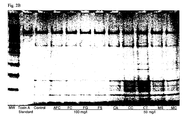
- FIGS. 1A-G are graphs showing the amount of production of the indicated toxin in cultures containing the indicated additive at the indicated concentration.
- FIG. 2A is an SDS PAGE gel showing the amount of Toxin A produced in cells cultured with the indicated compounds at 12 hours.
- FIG. 2B is an SDS PAGE gel showing the amount of Toxin A produced in cells cultured with the indicated compounds at 24 hours.
- FIG. 3A is an SDS PAGE gel showing the amount of Toxin A produced in cells cultured with the indicated compounds at 12 hours.
- FIG. 3B is an SDS PAGE gel showing the amount of Toxin A produced in cells cultured with the indicated compounds at 24 hours.
- FIG. 4A is an SDS PAGE gel showing the amount of Toxin A produced in cells cultured with the indicated compounds at 12 hours.
- the lanes were loaded with samples from cultures including the following compounds: Control; #1 Arginine (50 mM); #2 Cysteine (0.33 mM); #3 Cysteine (3.3 mM); #4 Cysteine (33 mM); #5 Tyrosine (50 mg/L); #6 Ascorbic acid (2.5 g/L); #7 Ascorbic acid (10 g/L); #8 Butyric acid (30 mM); #9 Butyric acid (60 mM).
- FIG. 4B is an SDS PAGE gel showing the amount of Toxin A produced in cells cultured with the indicated compounds at 24 hours.
- the lanes were loaded with samples from cultures including the following compounds: #1 Arginine (50 mM); #2 Cysteine (0.33 mM); #3 Cysteine (3.3 mM); #4 Cysteine (33 mM); #5 Tyrosine (50 mg/L); #6 Ascorbic acid (2.5 g/L); #7 Ascorbic acid (10 g/L); #8 Butyric acid (30 mM); #9 Butyric acid (60 mM).
- FIG. 5A is an SDS PAGE gel showing the amount of Toxin A produced in cells cultured with the indicated compounds at 12 hours.
- the lanes were loaded with samples from cultures including the following compounds: #1 D( ⁇ )Fructose (6 g/L); #2-D(+)Galactose (6 g/L); #3 Mannose (6 g/L); #4 Maltose Monohydrate (6 g/L); #5 Sucrose (6 g/L); #6 ⁇ -Lactose (6 g/L); #7 D(+)Xylose (6 g/L); #8 D-Sorbitol (6 g/L); #9 myo-Inositol (6 g/L).
- FIG. 5B is an SDS PAGE gel showing the amount of Toxin A produced in cells cultured with the indicated compounds at 24 hours.
- the lanes were loaded with samples from cultures including the following compounds: #1-D( ⁇ )Fructose (6 g/L); #2 D(+)Galactose (6 g/L); #3 Mannose (6 g/L); #4 Maltose Monohydrate (6 g/L); #5 Sucrose (6 g/L); #6 ⁇ -Lactose (6 g/L); #7 D(+)Xylose (6 g/L); #8 D-Sorbitol (6 g/L); #9 myo-Inositol (6 g/L).
- FIG. 6A is a graph showing the amount of Toxin A produced (ng/ml) in cultures subject to the indicated pH control.
- FIG. 6B is a graph showing the amount of Toxin B produced (ng/ml) in cultures subject to the indicated pH control.
- FIG. 7A is a graph showing the amount of Toxin A produced (ng/ml) in cultures subject to the indicated pH control.
- FIG. 7B is a graph showing the amount of Toxin B produced (ng/ml) in cultures subject to the indicated pH control.
- FIG. 7C is a graph showing specific Toxin A productivity produced (ng/ml per OD unit) in the cultures subject to the indicated pH control.
- FIG. 7D is a graph showing specific Toxin B productivity produced (ng/ml per OD unit) in the cultures subject to the indicated pH control.
- FIG. 7E is a graph comparing the specific Toxin A and Toxin B produced (ng/ml) in cultures subject to the indicated pH control in Examples 6 and 7.
- FIG. 8A is a graph showing the amount of Toxin A produced (ng/ml) in cultures subject to the indicated pH control and the indicated amount of sodium bicarbonate.
- FIG. 8B is a graph showing the amount of Toxin B produced (ng/ml) in cultures subject to the indicated pH control and the indicated amount of sodium bicarbonate.
- FIG. 9A is a graph showing the amounts of Toxin A and B produced (ng/ml) in 18 hour cultures subject to the indicated pH control in comparison to cell growth (OD600).
- FIG. 9B is a graph showing the amounts of Toxin A and B produced (ng/ml) in 22 hour cultures subject to the indicated pH control in comparison to cell growth (OD600).
- FIG. 10A is a graph showing the amount of Toxin A produced (ng/ml) in cultures subject to the indicated temperature.
- FIG. 10B is a graph showing the amount of Toxin B produced (ng/ml) in cultures subject to the indicated temperature.
- FIG. 10C is a graph showing specific Toxin A productivity produced (ng/ml per OD unit) in the cultures subject to the indicated temperature.
- FIG. 10D is a graph showing specific Toxin B productivity produced (ng/ml per OD unit) in the cultures subject to the indicated temperature.
- FIG. 11 is a graph showing the amount of Toxin A and Toxin B produced (ng/ml) in comparison to cell growth (OD600) in cultures subject to the indicated pH condition and inoculated with the indicated % of inoculum.
- the invention features methods and compositions (such as for example, culture media) for culturing C. difficile and producing the C. difficile Toxins A and B. These two toxins can be used individually or in combination, in the preparation of toxoids.
- compositions and methods of the invention feature the use of a basal medium in conjunction with certain medium additives.
- the basal medium is comprised of peptone (e.g., 20-40 g/L), yeast extract (e.g., 10-30 g/L), a phosphate buffer (such as for example, potassium phosphate monobasic (e.g., 0.5-1.5 g/L) and sodium phosphate dibasic (e.g., 1-10 g/L)) and a buffering agent (such as for example, sodium bicarbonate (e.g., 1-10 g/L)).
- the peptone used may be soy-based or animal-derived (such as for example, tryptone).
- the basal medium is SYS media.
- SYS medium contains the ingredients listed in Table 1A at the indicated concentrations.
- the basal medium may be titrated to a pH of between 6.35 and 7.45 (for example, 6.5, 7.28, or between 6.35 and 6.65). Exemplary ranges of concentrations for each of the indicated ingredients are also indicated.
- Table 1B sets forth an alternative basal media useful in the compositions and methods of the invention, named TYS.
- any peptone e.g., any soy peptone
- soy peptones that can be used in the basal media (and their sources) include the following:
- any yeast extract can also be used in the basal media.
- suitable yeast extracts and their sources are readily known to those skilled the art.
- the suitability of a particular peptone or yeast extract for use in the invention can be determined using the experimental methods described herein.
- the invention also includes use of other bacterial growth media, in combination with the additives described below.
- additives with a basal media (e.g., SYS media).
- a basal media e.g., SYS media
- Exemplary additives of the invention are set forth in Table 2, which also includes the exemplary concentration ranges for the indicated additives, as well as a single exemplary concentration.
- Additives include:
- Chromium trioxide Chromium(VI) oxide CrO 3 ). Chromium trioxide is the acid anhydride of chromic acid. Chromium trioxide is a strong oxidant, highly toxic, corrosive, and carcinogenic compound.
- Clindamycin (C 18 H 33 ClN 2 O 5 S). Clindamycin is a lincosamide antibiotic and is indicated for Clostridium difficile -associated diarrhea (the most frequent cause of pseudomembranous colitis). Clindamycin has a bacteriostatic effect. It interferes with bacterial protein synthesis by binding preferentially to the 50S subunit of the bacterial ribosome.
- Azaserine (C 5 H 7 N 3 O 4 ).
- Azaserine is a naturally occurring serine derivative diazo compound and is a known carcinogen.
- Azaserine is a glutamine analogue that irreversibly inhibits glutamine phosphoribosyl amidotransferase, which is involved in the biosynthesis of inosine monophosphate (IMP).
- IMP is an important precursor to the purine nucleotides which include adenosine monophosphate (AMP) and guanosine monophosphate (GMP).
- Ascorbic acid (C 6 H 8 O 6 ). Ascorbic acid is a sugar acid with antioxidant properties. L-Ascorbic acid is also known as vitamin C.
- Butyric acid (C 4 H 8 O 2 ). Butyric acid is a carboxylic acid and a short chain fatty acid. Butyric acid has been associated with the ability to inhibit the function of histone deacetylase enzymes, thereby favoring an acetylated state of histones in the cell.
- Xylose C 5 H 10 O 5 .
- Xylose wood sugar
- Xylose can be metabolized into useful products by a variety of organisms, e.g., Clostridium difficile.
- Sorbitol (C 6 H 14 O 6 ). Sorbitol, also known as glucitol, is a sugar alcohol. Sorbitol also is an osmotic stress agent (osmotic shock is induced by 0.5 M sorbitol).
- Growth of C. difficile according to the methods of the invention proceeds in at least two phases: seed growth and fermentation.
- the seed growth phase as described further below, may proceed in one or more seed culture stages (e.g, two stages or three stages).
- a seed culture is first grown by inoculating seed medium with a sample from a stock culture (e.g., a working cell bank (WCB)).
- a sample of this seed culture is used either to inoculate a second seed culture or to inoculate a relatively large fermentation culture.
- Such seed cultures are typically carried out to allow the quantity of the microorganism from a stored culture (e.g., WCB) to be exponentially increased (scaled-up). Seed cultures can also be used to rejuvenate relatively dormant microbes in stored cultures.
- more than one seed culture e.g., two or three cultures or stages
- the number of seed cultures (or stages) used depends on, for example, the size and volume of the fermentation step.
- the culture process may involve two seed cultures: a first seed culture is grown from an inoculation of a WCB (stage one seed culture), a sample of this seed culture is used to inoculate a second seed culture (stage two seed culture), and a sample from this second culture is used to inoculate a fermentation culture (fermentation stage).
- the first and second seed cultures are grown in SYS media.
- stage one a culture of C. difficile is suspended in seed medium and is incubated at a temperature between 30-40° C., preferably at 37 ⁇ 1° C., for 18 hours in an anaerobic environment.
- stage two a sample of the stage one seed medium is used to inoculate a stage two seed medium for further growth. After inoculation, the stage two medium is incubated at a temperature between 30-40° C., preferably at 37 ⁇ 1° C., for approximately 10 hours, also in an anaerobic environment.
- growth in seed media at any stage does not result in cell lysis before inoculation of fermentation media. Additional growth in a third (fourth, etc.) stage seed culture can also be carried out.
- an appropriate concentration of seed culture which can range from, e.g., 0.1-10%, is used to inoculate the fermentation media.
- concentrations of 1.0% or 5.0% can be used.
- concentrations of 10% are used.
- Fermentation is preferably carried out in an anaerobic chamber at approximately 35° C. to 45° C. and preferably at a temperature between 37° C. to 41° C. (e.g., 37° C.).
- the pH of the fermentation may be controlled at a pH between pH 6.35 to 7.45 (e.g., between 6.35 to 6.65, and preferably, at pH 6.5).
- the pH of the culture media is uncontrolled and is allowed to decrease naturally during the fermentation process.
- C. difficile can be cultivated by fermentation with continuous exposure to a suitable gas or gas mixture (such as, for example, 80% nitrogen/10% CO 2 /10% hydrogen, 100% CO 2 , or 100% nitrogen). Such gases or gas mixtures may also be sparged (i.e., bubbled) through the medium during fermentation.
- a gas mixture e.g., 80% nitrogen/10% CO 2 /10% hydrogen
- a gas e.g., CO 2 or nitrogen
- the fermentation culture is preferably sparged prior to inoculation with either a mixture of 80% nitrogen/10% CO 2 /10% hydrogen, 100% CO 2 or 100% nitrogen to remove any residual oxygen in the medium.
- the culture may be sparged periodically.
- an overlay of a gas mixture or a gas may be applied to the culture.
- Fermentation proceeds for approximately 16 to 24 hours (e.g., 18 to 21 hours).
- agitation e.g., 100 rpm
- Growth can be monitored by measuring the optical density (O.D.) of the medium.
- C. difficile toxins can be isolated and purified from fermentation cultures using purification methods well known in the art such as for example, Kotloff et al., Infect. Immun 2001; 69:988-995, Coligan et al., “Current Protocols in Protein Science,” Wiley & Sons; Ozutsumi et al., Appl. Environ. Microbiol. 49:939-943, 1985; and Kim et al., Infection and Immunity 55:2984-2992, 1987; which are incorporated herein by reference.
- the purified toxins can then, for example, be inactivated by chemical treatments known in the art (e.g., formaldehyde treatment).
- the basal media and additives of the invention were used to culture Clostridium difficile and produce Clostridium difficile Toxins A and B.
- Tables 3 and 4 (and FIGS. 1A-1G ) summarize the amount of toxin produced by Clostridium difficile cells cultured in SYS media with the indicated additive at the indicated concentration after the indicated amount of time.
- Clostridium difficile ATCC No. 43255, ATCC Lot# 2888434, was cultured.
- Control (CD-2284) 5974 6809 2436 2645 Chromium trioxide 3880 8080 2188 4773 (50 mg/L) Increase (%) 18.67 80.45 Control (CD-2304) 10083 10475 3392 3469 Clindamycin (0.5 mg/L) 611 13358 189 6737 Increase (%) 27.52 94.21 Control (CD-2353) 9649 10554 3159 3529 50 ⁇ M Azaserine, 10391 19000 6198 11940 1 mM Adenosine, 50 nM Biotin Increase (%) 7.69 80.03 96.20 238.34 Control (CD-2380) 10822 11515 3825 3992 Ascorbic acid (2.5 g/L) 10789 12050 4026 4967 Increase (%) 4.65 5.26 24.42 Ascorbic acid (10 g/L) 9957 11708 4534 5955 Increase (%) 1.68 18.54 49.17 Butyric acid 12315 12674 5110 6425 (30 mM 2.75
- This Example includes data on the amount of toxin produced when Clostridium difficile is cultured in SYS basal media in the absence and presence of various metallic ions.
- Example 1 test compounds The following are the Example 1 test compounds, along with the compound formula and source.
- the following table indicates the natural pH of the indicated compound in solution at the indicated concentration.
- Chromium trioxide when added to the SYS medium at 50 mg/L, caused increases in production of Toxin A (20%) and Toxin B (80%) after 24 hours in fermentation broth, but not after 12 hours in fermentation broth.
- This example includes data on the amount of toxin produced when Clostridium difficile is cultured in SYS basal media in the absence and presence of various antibiotics.
- antibiotics along with the compound formula and source, which were tested in this example.
- Ciprofloxacin (2 mg/L and 10 mg/L), Clindamycin (0.5 mg/L and 2.5 mg/L), Vancomycin (0.1 mg/L and 0.5 mg/L), and Penicillin G (0.1 mg/L and 0.5 mg/L).
- Ethylenediaminetetraacetic acid Ferric Sodium Salt was tested at a concentration of 100 mg/L.
- Ciprofloxacin 2 mg/L 1 4 5 100 ⁇ g/50 mL
- Ciprofloxacin 10 mg/L 5 0 5 500 ⁇ g/50 mL
- Clindamycin 2.5 mg/L 5 0 5 125 ⁇ g/50 mL
- Seed-1 Seed-2 2.32 2.82
- Clindamycin when added to SYS medium at 0.5 mg/L, caused increases in Toxin A (28%) and Toxin B (94%) after 24 hours in fermentation broth, but not after 12 hours in fermentation broth.
- This Example includes data on the amount of toxin produced when Clostridium difficile is cultured in SYS basal media in the absence and presence of various vitamins and antibiotics
- Example 3 test compounds The following are the Example 3 test compounds, along with the compound formula and source.
- Seed-1 Seed-2 2.53 2.49
- This Example includes data on the amount of toxin produced when Clostridium difficile is cultured in SYS basal media in the absence and presence of various amino acids and organic compounds.
- Example 4 test compounds The following are the Example 4 test compounds, along with the compound formula and source.
- L-Cysteine (0.33 mM, 10 mM, and 33 mM).
- Ascorbic acid (2.5 g/L and 10 g/L).
- Butyric acid (30 mM and 60 mM).
- Ascorbic acid when added to SYS medium at 10 g/L, caused increases in Toxin B of 19% after 12 hours and 49% after 24 hours of incubation in fermentation broth.
- Butyric Acid when added to SYS medium at 30 mM, caused increases in Toxin A of 14% and Toxin B of 34% after 12 hours of incubation in fermentation broth. It caused increases in Toxin A of 16% and Toxin B of 61% after 24 hours of incubation in fermentation broth. Butyric Acid, when added to SYS medium at 60 mM, caused increases in Toxin B of 89% after 24 hours of incubation in fermentation broth.
- This Example includes data on the amount of toxin produced when Clostridium difficile is cultured in SYS basal media in the absence and presence of various concentrations of carbohydrates.
- Example 5 test compounds The following are the Example 5 test compounds, along with the compound formula and source.
- D(+)Maltose Monohydrate (contained ⁇ 0.3% glucose), C 12 hrs.22 O 11 .H 2 O, FW 360.3, Sigma M9171 Lot#80K10101 soluble in water
- D-Sorbitol C 6 H 14 O 6 , FW 182.2, Sigma 53889, Lot#042K01355 soluble in water.
- myo-Inositol C 6 H 12 O 6 , FW 180.16, Sigma 17508, Lot# soluble in water (50 mg/mL)
- D(+)Xylose when added to SYS medium at 6 g/L, slightly increased cell growth and Toxin A production.
- D(+)Xylose increased Toxin B production 9% after 12 hours of incubation in fermentation broth and 46% after 24 hours of incubation in fermentation broth.
- D-Sorbitol when added to SYS medium at 6 g/L, markedly increased cell growth and toxins production.
- Cell growth was increased 44% after 12 hours of incubation in fermentation broth.
- Toxin A production was increased 49% after 12 hours of incubation in fermentation broth and 86% after 24 hours of incubation in fermentation broth.
- Toxin B production was increased 68% after 12 hours of incubation in fermentation broth and 153% after 24 hours of incubation in fermentation broth.
- This example includes data on the amount of toxin produced when Clostridium difficile is cultured in SYS basal media supplemented with D-Sorbitol (12 g/L) under pH controlled conditions.
- a Biostat B Plus Fermentation System (Sartorius) was used for the first stage seed culture and second stage seed culture, using 2 ⁇ 2 L fermenters (Sartorius), one for each seed culture seed.
- a Biostat Q Plus Fermentation System (Sartorius) was used for the third stage seed culture using 4 ⁇ 1 L fermenters (Sartorius).
- a peristalitic pump (Masterflex) was used to transfer media for both systems.
- Media composition for the seed stages were as follows:
- the following table shows total cell growth (OD 600 nm) and the amount of Toxin A produced (ng/ml) and Toxin B produced (ng/ml) in the cultures subject to the indicated pH control ( FIGS. 6A , 6 B).
- Toxin A Toxin B Sample OD@600 nm (ng/ml) (ng/ml) 1 stage @18 hrs 1.96 N/A N/A 2 nd stage @10 hrs 2.71 N/A N/A Control @14.5 hrs 4.02 27006 11296 Control @16.25 hrs 4.37 29141 11916 Control @18 hrs 4.32 32247 14522 pH 6.5 @14.5 hrs 3.08 32144 14400 pH 6.5 @16.25 hrs 3.32 34301 13731 pH 6.5 @18 hrs 3.56 36511 15578 pH 7.2 @14.5 hrs 5.17 16447 6258 pH 7.2 @16.25 hrs 5.12 17739 6609 pH 7.2 @18 hrs 5.12 21214 7368 pH 8.0 @14.5 hrs 4.56 1095 191* pH 8.0 @16.25 hrs 4.38 1451 318* pH 8.0 @18 hrs 3.61 1500 281* *Below LOQ at dilution tested Conclusions
- SDS-Page gels showed similar bands and intensities for the control and pH 6.5, with the only differences being in the intensity of a band in the 100 kDa range.
- This example includes data on the amount of toxin produced when Clostridium difficile is cultured under pH controlled conditions in SYS basal media having a reduced sodium bicarbonate concentration of 2 g/L and supplemented with D-Sorbitol (12 g/L).
- SYS media+Sorbitol included 2 g/L NaHCO 3 (reduced from 5 g/L used in Example 6)
- the uncontrolled pH condition in this experiment had at least equivalent total Toxin B production and slightly higher total Toxin A production than the pH 6.5 condition. Specific toxin production was similar for the uncontrolled and pH 6.5 conditions.
- FIG. 7E depicts a comparison of the results from this experiment and that set out in Example 6.
- FIG. 7E shows total toxin concentration at 18 h for various conditions over the 2 experiments. A clear drop-off in toxin production is seen in cultures at pH 6.5 to pH 6.0 and a more gradual decline in toxin production in the higher pH conditions. The optimal pH is slightly higher than 6.5.
- This example includes data on the effect of different concentrations of sodium bicarbonate (i.e., 0 g/L, 2 g/L, and 5 g/L) and carbon dioxide sparing on the pH of SYS basal media supplemented with D-Sorbitol (12 g/L).
- the Biostat Q Plus Fermentation System (Sartorius) was used for the first, second, and third stage cultures, using three 1 L fermenters (Sartorius).
- the composition of the SYS media supplemented with D-Sorbitol (SYS media+Sorbitol) was as described in Example 6, except that no NaHC0 3 was added to the initial 4 L batch prepared.
- a lower final pH can be achieved in SYS medium with a lower sodium bicarbonate concentration when gassing with CO 2 .
- Using 2 g/L bicarb can lower the pH by 0.12 units with CO 2 sparge alone compared to 5 g/L.
- This example includes data on the amount of toxin produced when Clostridium difficile is cultured in SYS basal media supplemented with D-Sorbitol (12 g/L) with different concentrations of sodium bicarbonate (i.e., 0 g/L, 2 g/L, and 5 g/L) and spared with carbon dioxide or an anaerobic gas mix (80% N 2 /10% CO 2 /10% H 2 ).
- composition of the SYS media for the first stage seed cultures was as described in Example 6.
- an SYS media supplemented with Sorbitol was prepared having the following composition and using RODI-water:
- Toxin A Toxin B Sample OD@600 nm (ng/ml) (ng/ml) 1 st stage 18 h 0.76 N/A N/A 2 nd stage 10 h 2.27 N/A N/A QB2- pH 6.5 CO 2 16 h 2.82 18519 10519 QB3- pH 6.5 gas mix 16 h 2.71 22109 11051 QA1- 0 g/L bicarb 16 h 2.73 22898 10217 QA2- 2 g/L bicarb 16 h 3.22 29048 15099 QA3- 5 g/L bicarb 16 h 4.02 25579 12087 QB2- pH 6.5 CO2 18 h 2.98 22820 13695 QB3- pH 6.5 gas mix 18 h 2.97 25185 14463 QA1- 0 g/L bicarb 18 h 3.15 25688 11576 QA2- 2 g/L bicarb 18 h 3.5 34927 18500 QA3- 5 g/
- CO 2 for degassing the media is an option when controlling pH at 6.5 because of the comparable toxin yields to the anaerobic gas mix degassed fermentation.
- This example includes data on the amount of toxin produced when Clostridium difficile is cultured under a range of temperatures (37-41° C. with a midpoint of 39° C.) and a range of pH (6.35 to 6.65 with a midpoint of 6.5) in SYS basal media supplemented with D-Sorbitol (12 g/L).
- composition of the SYS media for the first stage seed cultures was as described in Example 6.
- an SYS media supplemented with Sorbitol was prepared having the following composition and using RODI-water:
- Toxin A Toxin B Sample OD@600 nm (ng/ml) (ng/ml) 1 st stage 18 h 0.84 N/A N/A 2 nd stage 10 h 1.92 N/A N/A QA1 39° C. uncontrolled 18 h 3.23 29892 18321 QA2 39° C. pH 6.5 18 h 3.24 32565 18445 QA3 37° C. pH 6.35 18 h 2.83 21827 9173 QB1 37° C. pH 6.65 18 h 3.32 33149 18508 QB2 41° C. pH 6.35 18 h 2.43 21537 13522 QB3 41° C. pH 6.65 18 h 3.14 25924 16784 QA1 39° C.
- Optimal conditions for production of Toxin A and B are different. Since Toxin B availability is a limiting factor for the production of a vaccine product comprising Toxoids A and B (e.g., in a ratio of 3:2), conditions which favor Toxin B production may be preferred. Higher temperature (41° C.) and higher controlled pH (6.65) are the best conditions for Toxin B production. While these conditions are not the most optimal for Toxin A yields, Toxin A is produced and at a level above other conditions.
- This example includes data on the amount of toxin produced when Clostridium difficile is cultured in SYS basal media supplemented with D-Sorbitol (12 g/L) under a controlled a pH 6.5, and at various temperatures (33, 35, 37, 39, 41, 43° C.) and 2 g/L sodium bicarbonate.
- composition of the SYS media for the first stage seed cultures was as described in Example 6.
- an SYS media supplemented with Sorbitol was prepared having the following composition and using RODI-water:
- Toxin A Toxin B Sample OD@600 nm (ng/ml) (ng/ml) 1 st stage 18 h 1.31 N/A N/A 2 nd stage 10 h 1.90 N/A N/A QA1 19 h 2.40 10956 5853 QA2 19 h 2.42 15409 9487 QA3 19 h 2.95 19723 13736 QB1 19 h 2.12 18425 16929 QB2 19 h 2.53 18465 18184 QB3 19 h 1.71 9981 9110 QA1 22 h 2.57 12200 8218 QA2 22 h 2.73 16895 10681 QA3 22 h 2.74 29124 22679 QB1 22 h 2.20 17686 16658 QB2 22 h 2.46 18730 22104 QB3 22 h 1.76 10160 9091
- Culturing C. difficile at 37-41° C. is optimal for both Toxin A and B production.
- Culturing C. difficile at temperatures at the higher end of the 37-41° C. range favors increased Toxin B production.
- This example includes data on the amount of toxin produced when Clostridium difficile is cultured in SYS basal media supplemented with D-Sorbitol (12 g/L) using different inoculum concentrations (1%, 5%, and 10% of initial bioreactor volume) and under different pH conditions (controlled pH 6.5 and controlled at pH 6.5 with base-only).
- composition of the SYS media for the first stage seed cultures was as described in Example 6.
- an SYS media supplemented with Sorbitol was prepared having the following composition and using RODI-water:
- the following table shows total cell growth (OD 600 nm) and the amount of Toxin A produced (ng/ml) and Toxin B produced (ng/ml) in the cultures subject to the indicated temperature and the indicated pH control ( FIG. 11 ).
- a 10 L vessel (Sartorius) was also utilized.
- the vessel was autoclaved and connected to the Biostat system and the following conditions were set: 37° C. and agitation (stirring) at 100 rpm. Culture pH was not controlled.
- the vessel was filled with 9 L of the SYS media also utilized in filling the 1 L fermenters (i.e., SYS media with 12 g/L sorbitol and 2 g/L Na 2 HCO 3 ).
- the vessel was then de-gassed using Nitrogen gas and inoculated with 1 L of the Seed Bioreactor 2 culture.
- Toxin production and cell growth (OD) was measured following an 18 hour incubation: Toxin A (24533 ng/ml); Toxin B (14837 ng/ml); 2.94 OD(600 nm).
- a 10 L vessel was also included in two of the experiments set out above (i.e., Examples 10 and 11) and was prepared, inoculated, and cultured similarly (except de-gassing was done with gas mix 80% N 2 /10% CO 2 /10% H 2 and agitation was set at 75 rpm).
- the measured toxin production and cell growth following an 18 hour incubation was as follows: in Example 10, Toxin A (29605 ng/ml); Toxin B (10732 ng/ml); 2.95 OD(600 nm); in Example 11, Toxin A (25681 ng/ml); Toxin B (24898 ng/ml); 3.17 OD (600 nm).
- toxin production and cell growth in a 10 L culture with SYS media (with 12 g/L sorbitol and 2 g/L Na 2 HCO 3 ) under similar conditions (i.e., a 10% inoculum concentration, culture temperature of 37° C. and 50 rpm agitation) was similar: Toxin A (21090 ng/ml); Toxin B (12228 ng/ml) and 3.02 OD (600 nm).
- Similar toxin yields may be achieved by using inoculum rates lower than 10% although the culture duration may need to be increased. Inoculations of 1% and 5% achieved toxin yields >30 ⁇ g/ml for toxin A and >15 ⁇ g/ml of toxin B after 20 hours.
Landscapes
- Life Sciences & Earth Sciences (AREA)
- Chemical & Material Sciences (AREA)
- Health & Medical Sciences (AREA)
- Engineering & Computer Science (AREA)
- Organic Chemistry (AREA)
- Wood Science & Technology (AREA)
- Zoology (AREA)
- Biotechnology (AREA)
- Bioinformatics & Cheminformatics (AREA)
- Genetics & Genomics (AREA)
- Biochemistry (AREA)
- General Health & Medical Sciences (AREA)
- General Engineering & Computer Science (AREA)
- Microbiology (AREA)
- Tropical Medicine & Parasitology (AREA)
- Biomedical Technology (AREA)
- Virology (AREA)
- Medicinal Chemistry (AREA)
- Proteomics, Peptides & Aminoacids (AREA)
- Molecular Biology (AREA)
- Chemical Kinetics & Catalysis (AREA)
- General Chemical & Material Sciences (AREA)
- Micro-Organisms Or Cultivation Processes Thereof (AREA)
- Preparation Of Compounds By Using Micro-Organisms (AREA)
Priority Applications (1)
| Application Number | Priority Date | Filing Date | Title |
|---|---|---|---|
| US13/120,510 US9115347B2 (en) | 2008-09-24 | 2009-09-24 | Methods and compositions for increasing toxin production |
Applications Claiming Priority (3)
| Application Number | Priority Date | Filing Date | Title |
|---|---|---|---|
| US9975908P | 2008-09-24 | 2008-09-24 | |
| PCT/US2009/058268 WO2010036826A1 (fr) | 2008-09-24 | 2009-09-24 | Procédés et compositions pour augmenter la production de toxines |
| US13/120,510 US9115347B2 (en) | 2008-09-24 | 2009-09-24 | Methods and compositions for increasing toxin production |
Related Parent Applications (1)
| Application Number | Title | Priority Date | Filing Date |
|---|---|---|---|
| PCT/US2009/058268 A-371-Of-International WO2010036826A1 (fr) | 2008-09-24 | 2009-09-24 | Procédés et compositions pour augmenter la production de toxines |
Related Child Applications (1)
| Application Number | Title | Priority Date | Filing Date |
|---|---|---|---|
| US14/833,787 Division US20160053221A1 (en) | 2008-09-24 | 2015-08-24 | Methods and compositions for increasing toxin production |
Publications (2)
| Publication Number | Publication Date |
|---|---|
| US20110256606A1 US20110256606A1 (en) | 2011-10-20 |
| US9115347B2 true US9115347B2 (en) | 2015-08-25 |
Family
ID=42060092
Family Applications (2)
| Application Number | Title | Priority Date | Filing Date |
|---|---|---|---|
| US13/120,510 Expired - Fee Related US9115347B2 (en) | 2008-09-24 | 2009-09-24 | Methods and compositions for increasing toxin production |
| US14/833,787 Abandoned US20160053221A1 (en) | 2008-09-24 | 2015-08-24 | Methods and compositions for increasing toxin production |
Family Applications After (1)
| Application Number | Title | Priority Date | Filing Date |
|---|---|---|---|
| US14/833,787 Abandoned US20160053221A1 (en) | 2008-09-24 | 2015-08-24 | Methods and compositions for increasing toxin production |
Country Status (4)
| Country | Link |
|---|---|
| US (2) | US9115347B2 (fr) |
| EP (2) | EP2329029B1 (fr) |
| CA (1) | CA2738248A1 (fr) |
| WO (1) | WO2010036826A1 (fr) |
Cited By (3)
| Publication number | Priority date | Publication date | Assignee | Title |
|---|---|---|---|---|
| US20150291940A1 (en) * | 2012-10-21 | 2015-10-15 | Pfizer Inc. | Compositions and methods relating to a mutant clostridium difficile toxin |
| US10774117B2 (en) | 2011-04-22 | 2020-09-15 | Wyeth Llc | Compositions relating to a mutant clostridium difficile toxin and methods thereof |
| US12569547B2 (en) | 2020-06-19 | 2026-03-10 | Pfizer Inc. | Immunogenic compositions against Clostridioides (Clostridium) difficile and methods thereof |
Families Citing this family (2)
| Publication number | Priority date | Publication date | Assignee | Title |
|---|---|---|---|---|
| JP6810518B2 (ja) * | 2015-12-18 | 2021-01-06 | 関東化学株式会社 | 偏性嫌気性菌または微好気性菌を好気環境下で培養するための長期保存性培地および同培地を用いた偏性嫌気性菌または微好気性菌の検出方法 |
| CN107099481B (zh) * | 2017-06-15 | 2018-04-13 | 广西华银医学检验所有限公司 | 一种适用于艰难梭菌的培养基及其制备方法 |
Citations (3)
| Publication number | Priority date | Publication date | Assignee | Title |
|---|---|---|---|---|
| US20040235139A1 (en) * | 2002-12-23 | 2004-11-25 | Demain Arnold L. | Clostridium difficile culture and toxin production methods |
| US20070207531A1 (en) * | 2004-06-04 | 2007-09-06 | Mongi Ferchichi | Methods and bacterial strains for producing hydrogen from biomass |
| US20070231336A1 (en) | 1997-10-20 | 2007-10-04 | Acambis Inc. | Immunization Against Clostridium Difficile Disease |
Family Cites Families (5)
| Publication number | Priority date | Publication date | Assignee | Title |
|---|---|---|---|---|
| GB8712410D0 (en) * | 1987-05-27 | 1987-07-01 | Elsworth Biotech Ltd | Thermophilic ethanol production |
| US5424202A (en) * | 1988-08-31 | 1995-06-13 | The University Of Florida | Ethanol production by recombinant hosts |
| CA2022108A1 (fr) * | 1989-07-31 | 1991-02-01 | Cheryl A. Schulman | Augmentation de la multiplication et de l'expression de proteines heterologues dans un hote recombinant contenant des mutations dans la bioxynthese de la paroi cellulaire et (ou) de la membrane plasmatique |
| CA2022109A1 (fr) * | 1989-07-31 | 1991-02-01 | Cheryl A. Schulman | Augmentation de l'expression de proteines heterologues dans des hotes recombinants dans un milieu qui n'est pas un milieu de culture |
| WO2001083798A1 (fr) * | 2000-05-04 | 2001-11-08 | Archer-Daniels-Midland Company | Souches bacteriennes et procedes de fermentation utilises pour produire de l'acide 2-ceto-l-gulonique |
-
2009
- 2009-09-24 EP EP09816870.1A patent/EP2329029B1/fr not_active Not-in-force
- 2009-09-24 CA CA2738248A patent/CA2738248A1/fr active Pending
- 2009-09-24 WO PCT/US2009/058268 patent/WO2010036826A1/fr not_active Ceased
- 2009-09-24 EP EP16152792.4A patent/EP3067426A3/fr not_active Withdrawn
- 2009-09-24 US US13/120,510 patent/US9115347B2/en not_active Expired - Fee Related
-
2015
- 2015-08-24 US US14/833,787 patent/US20160053221A1/en not_active Abandoned
Patent Citations (3)
| Publication number | Priority date | Publication date | Assignee | Title |
|---|---|---|---|---|
| US20070231336A1 (en) | 1997-10-20 | 2007-10-04 | Acambis Inc. | Immunization Against Clostridium Difficile Disease |
| US20040235139A1 (en) * | 2002-12-23 | 2004-11-25 | Demain Arnold L. | Clostridium difficile culture and toxin production methods |
| US20070207531A1 (en) * | 2004-06-04 | 2007-09-06 | Mongi Ferchichi | Methods and bacterial strains for producing hydrogen from biomass |
Non-Patent Citations (20)
| Title |
|---|
| Benno et al., "Comparison of Fecal Microflora of Elderly Persons in Rural and Urban Areas of Japan," Applied Environ. Microbiol. 55:1100-1105, 1989. |
| Demain (SIM Annual Meeting and Exhibition. Jul. 29-Aug. 2, 2007. Thursday, Aug. 2, 2007-9:00am). * |
| Drummond et al., "Effects of Sub-MIC Concentrations of Antibiotics on Growth of and Toxin Production by Clostridium difficile," J. Med. Microbiol. 52:1033-1038, 2003. |
| Extended European Search Report from European Patent Application No. 09816870.1 dated Jul. 3, 2012 (date of mailing of report) and Jun. 19, 2012 (date of completion of search). |
| Hafiz et al., "Clostridium difficile: Isolation and Characteristics," J. Med. Microbiol. 9:129-137, 1976. |
| Hussain et al., "Development and Evaluation of a Cocultural Technique for Identification of Anaerobic Organisms," J. Clin. Microbiol. 19:215-217, 1984. |
| International Preliminary Report on Patentability from International Application No. PCT/US2009/058268, dated Mar. 29, 2011. |
| International Search Report from International Application No. PCT/US2009/058268, dated Nov. 8, 2009 (date of completion of report) and Dec. 9, 2009 (date of mailing of report). |
| Karlsson et al., "Induction of Toxins in Clostridium difficile is Associated with Dramatic Changes of its Metabolism," Microbiol. 154:3430-3436, 2008. |
| Karlsson et al., "Toxin, Butyric Acid, and Other Short-Chain Fatty Acids are Coordinately Expressed and Down-Regulated by Cysteine in Clostridium difficile," Infection and Immunity 68:5881-5888, 2000. |
| Luli et al., "Hexavalent Chromium-Resistant Bacteria Isolated from River Sediments," App. Environ. Microbiol. 46:846-854, 1983. |
| Maegawa et al., "Linkage Between Toxin Production and Purine Biosynthesis in Clostridium difficile," J. Med. Microbiol. 51:34-41, 2002. |
| Maegawa et al., (J. Med. Microbiol. 2002. vol. 51: 34-41). * |
| Marler et al., "Comparison of Five Cultural Procedures for Isolation of Clostridium difficile from Stools," J. Clin. Microbiol. 30:514-516, 1992. |
| Moore et al., "Identification of Intrinsic High-Level Resistance to Rare-Earth Oxides and Oxyanions in Members of the Class Proteobacteria: Characterization of Tellurite, Selenite, and Rhodium Sesquioxide Reduction in Rhodobacter sphaeroides," J. Bacteriology 174:1505-1514, 1992. |
| Nakamura et al., (Microbio. Immunol. 1981. vol. 25(9):863-70). * |
| Onderdonk et al., "Effect of Environmental Stress on Clostridium difficile Toxin Levels During Continuous Cultivation," Applied Environ. Microbiol. 38:637-641, 1979. |
| Onderdonk et al., (Applied and Environ. Microbio. 1979. vol. 38(4): 637-641). * |
| Written Opinion from International Application No. PCT/US2009/058268, dated Nov. 8, 2009 (date of completion of opinion) and Dec. 9, 2009 (date of mailing of opinion). |
| Yamakawa et al., (J. Med Microbiol. 1996. vol. 44:111-114). * |
Cited By (8)
| Publication number | Priority date | Publication date | Assignee | Title |
|---|---|---|---|---|
| US10774117B2 (en) | 2011-04-22 | 2020-09-15 | Wyeth Llc | Compositions relating to a mutant clostridium difficile toxin and methods thereof |
| US11535652B2 (en) | 2011-04-22 | 2022-12-27 | Wyeth Llc | Compositions relating to a mutant clostridium difficile toxin and methods thereof |
| US20150291940A1 (en) * | 2012-10-21 | 2015-10-15 | Pfizer Inc. | Compositions and methods relating to a mutant clostridium difficile toxin |
| US10787652B2 (en) * | 2012-10-21 | 2020-09-29 | Pfizer Inc. | Compositions and methods relating to a mutant clostridium difficile toxin |
| US10982198B2 (en) | 2012-10-21 | 2021-04-20 | Pfizer Inc. | Compositions and methods relating to a mutant Clostridium difficile toxin |
| US11208633B2 (en) | 2012-10-21 | 2021-12-28 | Pfizer Inc. | Compositions and methods relating to a mutant Clostridium difficile toxin |
| US11952597B2 (en) | 2012-10-21 | 2024-04-09 | Pfizer Inc. | Compositions and methods relating to a mutant Clostridium difficile toxin |
| US12569547B2 (en) | 2020-06-19 | 2026-03-10 | Pfizer Inc. | Immunogenic compositions against Clostridioides (Clostridium) difficile and methods thereof |
Also Published As
| Publication number | Publication date |
|---|---|
| EP3067426A2 (fr) | 2016-09-14 |
| US20110256606A1 (en) | 2011-10-20 |
| US20160053221A1 (en) | 2016-02-25 |
| EP2329029B1 (fr) | 2016-06-08 |
| EP2329029A1 (fr) | 2011-06-08 |
| EP2329029A4 (fr) | 2012-08-01 |
| CA2738248A1 (fr) | 2010-04-01 |
| EP3067426A3 (fr) | 2016-12-07 |
| WO2010036826A1 (fr) | 2010-04-01 |
Similar Documents
| Publication | Publication Date | Title |
|---|---|---|
| US20160053221A1 (en) | Methods and compositions for increasing toxin production | |
| CZ562189A3 (en) | Bacteria cultivation method | |
| JP3434820B2 (ja) | ストレプトコッカス ニューモニエ(Streptococcus pneumoniae)のクローンの培養法 | |
| US20080274515A1 (en) | Animal component free meningococcal polysaccharide fermentation and seedbank development | |
| CN103060405B (zh) | 一种a40926的发酵工艺 | |
| JPS59102390A (ja) | クロストリジウム・アセトブチリクムの改良菌株およびその調製方法 | |
| JP2017012117A (ja) | 3−ヒドロキシ酪酸又はその塩の好気的生産方法 | |
| JP2026004314A (ja) | 発酵方法 | |
| TW201734198A (zh) | 生產l-組胺酸之麩胺酸棒狀桿菌變異株與使用其生產l-組胺酸之方法 | |
| EP2952586A1 (fr) | Amélioration du rendement de polysaccharide capsulaire bactérien par addition d'agents antimousse | |
| CN109402017B (zh) | 一株盐单胞菌100-16-2及盐单胞菌100-16-2制备聚3-羟基丁酸酯的方法 | |
| CN102605009B (zh) | 提高厌氧发酵产丁二酸强度和浓度的方法 | |
| Hottle et al. | Growth and survival of Mycoplasma neurolyticum in liquid media | |
| RU2388489C1 (ru) | Способ изготовления вакцины ассоциированной против псевдомоноза и энтерококковой инфекции нутрий | |
| RU2008146193A (ru) | Способ получения грамицидина с при глубинном выращивании культуры - продуцента bacillus brevis | |
| CN112795487B (zh) | 一种生产夫西地酸的发酵培养基及发酵方法 | |
| CN101528939B (zh) | 使用改良的培养基从破囊壶菌目菌群生产ω-3脂肪酸 | |
| CN104745554A (zh) | 芽孢杆菌产蛋白酶和芽孢的发酵培养基及发酵方法 | |
| CN103667107A (zh) | 一种产l-乳酸的屎肠球菌菌株 | |
| CN107849592A (zh) | 使用耐热性芽孢杆菌属细菌发酵来生产乳酸或其盐的方法 | |
| SI9600120A (en) | New and improved fermentative procedure for the production of clavulanic acid and its salts | |
| Al-Jumaily et al. | Optimal conditions for acidocin production from Lactobacillus acidophilus isolate | |
| RU2507267C2 (ru) | СПОСОБ ПОЛУЧЕНИЯ ТОКСИНОВ ACTINOBACILLUS PLEUROPNEUMONIAE ApxI ИЛИ ApxIII В ЖИДКОЙ КУЛЬТУРАЛЬНОЙ СРЕДЕ, ДОПОЛНЕННОЙ ВОЗДУХОМ, ОБОГАЩЕННЫМ УГЛЕКИСЛЫМ ГАЗОМ | |
| RU2310685C1 (ru) | Штамм бактерий serratia marcescens, продуцирующий липолитические ферменты, для получения препарата для очистки сточных вод от жиров | |
| RU2726653C2 (ru) | Штамм бактерий Lactobacillus salivarius - продуцент ингибитора цитокинов интерлейкина-6 и интерлейкина-17 |
Legal Events
| Date | Code | Title | Description |
|---|---|---|---|
| AS | Assignment |
Owner name: SANOFI PASTEUR BIOLOGICS, LLC, MASSACHUSETTS Free format text: ASSIGNMENT OF ASSIGNORS INTEREST;ASSIGNORS:FANG, AIQI;WHITE, ANDREW JAMES;TUMMALA, SESHU;SIGNING DATES FROM 20150606 TO 20150609;REEL/FRAME:036055/0978 Owner name: SANOFI PASTEUR BIOLOGICS CO., MASSACHUSETTS Free format text: ASSIGNMENT OF ASSIGNORS INTEREST;ASSIGNOR:WILSON, LEE;REEL/FRAME:036056/0209 Effective date: 20090923 Owner name: SANOFI PASTEUR BIOLOGICS, LLC, MASSACHUSETTS Free format text: CHANGE OF NAME;ASSIGNOR:SANOFI PASTEUR BIOLOGICS CO.;REEL/FRAME:036092/0479 Effective date: 20120125 |
|
| STCF | Information on status: patent grant |
Free format text: PATENTED CASE |
|
| CC | Certificate of correction | ||
| FEPP | Fee payment procedure |
Free format text: MAINTENANCE FEE REMINDER MAILED (ORIGINAL EVENT CODE: REM.); ENTITY STATUS OF PATENT OWNER: LARGE ENTITY |
|
| LAPS | Lapse for failure to pay maintenance fees |
Free format text: PATENT EXPIRED FOR FAILURE TO PAY MAINTENANCE FEES (ORIGINAL EVENT CODE: EXP.); ENTITY STATUS OF PATENT OWNER: LARGE ENTITY |
|
| STCH | Information on status: patent discontinuation |
Free format text: PATENT EXPIRED DUE TO NONPAYMENT OF MAINTENANCE FEES UNDER 37 CFR 1.362 |
|
| FP | Expired due to failure to pay maintenance fee |
Effective date: 20190825 |