WO1997045463A1 - Crystalline polypropylene, process for preparing the same, polypropylene composition, and thermoformed article - Google Patents
Crystalline polypropylene, process for preparing the same, polypropylene composition, and thermoformed article Download PDFInfo
- Publication number
- WO1997045463A1 WO1997045463A1 PCT/JP1997/001790 JP9701790W WO9745463A1 WO 1997045463 A1 WO1997045463 A1 WO 1997045463A1 JP 9701790 W JP9701790 W JP 9701790W WO 9745463 A1 WO9745463 A1 WO 9745463A1
- Authority
- WO
- WIPO (PCT)
- Prior art keywords
- polypropylene
- decane
- crystalline polypropylene
- component
- crystalline
- Prior art date
- Legal status (The legal status is an assumption and is not a legal conclusion. Google has not performed a legal analysis and makes no representation as to the accuracy of the status listed.)
- Ceased
Links
Classifications
-
- C—CHEMISTRY; METALLURGY
- C08—ORGANIC MACROMOLECULAR COMPOUNDS; THEIR PREPARATION OR CHEMICAL WORKING-UP; COMPOSITIONS BASED THEREON
- C08F—MACROMOLECULAR COMPOUNDS OBTAINED BY REACTIONS ONLY INVOLVING CARBON-TO-CARBON UNSATURATED BONDS
- C08F110/00—Homopolymers of unsaturated aliphatic hydrocarbons having only one carbon-to-carbon double bond
- C08F110/04—Monomers containing three or four carbon atoms
- C08F110/06—Propene
-
- C—CHEMISTRY; METALLURGY
- C08—ORGANIC MACROMOLECULAR COMPOUNDS; THEIR PREPARATION OR CHEMICAL WORKING-UP; COMPOSITIONS BASED THEREON
- C08F—MACROMOLECULAR COMPOUNDS OBTAINED BY REACTIONS ONLY INVOLVING CARBON-TO-CARBON UNSATURATED BONDS
- C08F10/00—Homopolymers and copolymers of unsaturated aliphatic hydrocarbons having only one carbon-to-carbon double bond
- C08F10/04—Monomers containing three or four carbon atoms
- C08F10/06—Propene
-
- C—CHEMISTRY; METALLURGY
- C08—ORGANIC MACROMOLECULAR COMPOUNDS; THEIR PREPARATION OR CHEMICAL WORKING-UP; COMPOSITIONS BASED THEREON
- C08F—MACROMOLECULAR COMPOUNDS OBTAINED BY REACTIONS ONLY INVOLVING CARBON-TO-CARBON UNSATURATED BONDS
- C08F4/00—Polymerisation catalysts
- C08F4/42—Metals; Metal hydrides; Metallo-organic compounds; Use thereof as catalyst precursors
- C08F4/44—Metals; Metal hydrides; Metallo-organic compounds; Use thereof as catalyst precursors selected from light metals, zinc, cadmium, mercury, copper, silver, gold, boron, gallium, indium, thallium, rare earths or actinides
- C08F4/60—Metals; Metal hydrides; Metallo-organic compounds; Use thereof as catalyst precursors selected from light metals, zinc, cadmium, mercury, copper, silver, gold, boron, gallium, indium, thallium, rare earths or actinides together with refractory metals, iron group metals, platinum group metals, manganese, rhenium technetium or compounds thereof
- C08F4/62—Refractory metals or compounds thereof
- C08F4/64—Titanium, zirconium, hafnium or compounds thereof
- C08F4/646—Catalysts comprising at least two different metals, in metallic form or as compounds thereof, in addition to the component covered by group C08F4/64
- C08F4/6465—Catalysts comprising at least two different metals, in metallic form or as compounds thereof, in addition to the component covered by group C08F4/64 containing silicium
-
- C—CHEMISTRY; METALLURGY
- C08—ORGANIC MACROMOLECULAR COMPOUNDS; THEIR PREPARATION OR CHEMICAL WORKING-UP; COMPOSITIONS BASED THEREON
- C08F—MACROMOLECULAR COMPOUNDS OBTAINED BY REACTIONS ONLY INVOLVING CARBON-TO-CARBON UNSATURATED BONDS
- C08F4/00—Polymerisation catalysts
- C08F4/42—Metals; Metal hydrides; Metallo-organic compounds; Use thereof as catalyst precursors
- C08F4/44—Metals; Metal hydrides; Metallo-organic compounds; Use thereof as catalyst precursors selected from light metals, zinc, cadmium, mercury, copper, silver, gold, boron, gallium, indium, thallium, rare earths or actinides
- C08F4/60—Metals; Metal hydrides; Metallo-organic compounds; Use thereof as catalyst precursors selected from light metals, zinc, cadmium, mercury, copper, silver, gold, boron, gallium, indium, thallium, rare earths or actinides together with refractory metals, iron group metals, platinum group metals, manganese, rhenium technetium or compounds thereof
- C08F4/62—Refractory metals or compounds thereof
- C08F4/64—Titanium, zirconium, hafnium or compounds thereof
- C08F4/65—Pretreating the metal or compound covered by group C08F4/64 before the final contacting with the metal or compound covered by group C08F4/44
- C08F4/651—Pretreating with non-metals or metal-free compounds
-
- C—CHEMISTRY; METALLURGY
- C08—ORGANIC MACROMOLECULAR COMPOUNDS; THEIR PREPARATION OR CHEMICAL WORKING-UP; COMPOSITIONS BASED THEREON
- C08F—MACROMOLECULAR COMPOUNDS OBTAINED BY REACTIONS ONLY INVOLVING CARBON-TO-CARBON UNSATURATED BONDS
- C08F4/00—Polymerisation catalysts
- C08F4/42—Metals; Metal hydrides; Metallo-organic compounds; Use thereof as catalyst precursors
- C08F4/44—Metals; Metal hydrides; Metallo-organic compounds; Use thereof as catalyst precursors selected from light metals, zinc, cadmium, mercury, copper, silver, gold, boron, gallium, indium, thallium, rare earths or actinides
- C08F4/60—Metals; Metal hydrides; Metallo-organic compounds; Use thereof as catalyst precursors selected from light metals, zinc, cadmium, mercury, copper, silver, gold, boron, gallium, indium, thallium, rare earths or actinides together with refractory metals, iron group metals, platinum group metals, manganese, rhenium technetium or compounds thereof
- C08F4/62—Refractory metals or compounds thereof
- C08F4/64—Titanium, zirconium, hafnium or compounds thereof
- C08F4/65—Pretreating the metal or compound covered by group C08F4/64 before the final contacting with the metal or compound covered by group C08F4/44
- C08F4/652—Pretreating with metals or metal-containing compounds
- C08F4/654—Pretreating with metals or metal-containing compounds with magnesium or compounds thereof
- C08F4/6543—Pretreating with metals or metal-containing compounds with magnesium or compounds thereof halides of magnesium
-
- C—CHEMISTRY; METALLURGY
- C08—ORGANIC MACROMOLECULAR COMPOUNDS; THEIR PREPARATION OR CHEMICAL WORKING-UP; COMPOSITIONS BASED THEREON
- C08L—COMPOSITIONS OF MACROMOLECULAR COMPOUNDS
- C08L23/00—Compositions of homopolymers or copolymers of unsaturated aliphatic hydrocarbons having only one carbon-to-carbon double bond; Compositions of derivatives of such polymers
- C08L23/02—Compositions of homopolymers or copolymers of unsaturated aliphatic hydrocarbons having only one carbon-to-carbon double bond; Compositions of derivatives of such polymers not modified by chemical after-treatment
- C08L23/10—Homopolymers or copolymers of propene
Definitions
- the present invention relates to a crystalline polypropylene having excellent hardness and rigidity, high melt tension and excellent moldability, a method for producing the same, a polypropylene composition and a thermoformed article.
- Crystalline polypropylene is excellent in hardness, rigidity, heat resistance, surface gloss, etc., and has been used for various applications.However, it is particularly used for applications such as automotive bumpers that require high rigidity. I have.
- the crystalline polypropylene is used in combination with various modifiers depending on the application, but generally, an impact modifier such as, for example, polyethylene or a rubber-like substance is compounded.
- an inorganic filler such as talc is added to compensate for the rigidity that is reduced by the addition of an impact resistance modifier.
- the rigidity of polypropylene can be improved by increasing its crystallinity (stereoregularity).
- the rigidity of polypropylene is determined by the crystalline component (64 ° C deca. It is considered that the wider the molecular weight distribution (Mw / Mn) of the non-soluble components, the better.
- the present inventor has also conducted extensive research to improve the rigidity of polypropylene. As a result, even if the molecular weight distribution (MwZMn) of the 64 e C decane-insoluble component contained in crystalline polypropylene is broad as in the past, the molecular weight distribution was still low. It has been found that polypropylene having a wide distribution on both the high molecular weight side and the low molecular weight side is not sufficiently excellent in rigidity, elongation and toughness.
- Mw / Mn molecular weight distribution
- MzZMw molecular weight distribution obtained from the Z-average molecular weight and the weight-average molecular weight of the decane-insoluble component
- the pentad isotacticity is 98%.
- a crystalline polypropylene or a polypropylene composition containing a crystalline component (64 ° C decane-insoluble component) such that the frequency-dependent value D of the viscoelastic loss tangent under a constant strain is 4.0 or more is: They discovered that they had extremely high rigidity and completed this invention.
- polypropylene having a wide molecular weight distribution has been proposed.
- a polypropylene having a Mw / Mn of 6 to 20 is produced
- JP-A-4-1370103 discloses that MFR is produced at the stage of producing the highest molecular weight component in multistage polymerization.
- polypropylenes disclosed in these publications all have a broad distribution in both high molecular weight and low molecular weight, and such polypropylene has sufficient rigidity, elongation, and toughness as described above. Not very good.
- Japanese Patent Publication No. 7-56668 discloses that the MFR is 0.1 to 200 g / 10 minutes, and that the MFR value and the 997 cnr 1 and 973 cm- 1 in the IR spectrum are different.
- the absorbance ratio (997 cm- 1 / 973 cm- 1 ) satisfies a specific relationship, and when polypropylene is dissolved in xylene, 2 to 3 wt.
- a highly crystalline polypropylene having an IR absorbance ratio of 0.97 or more and having a ratio of Mw of the precipitated component / Mw of all PPs of 3 or more is disclosed.
- the crystalline polypropylene according to the present invention is characterized by containing a 64-density insoluble component satisfying the following properties (1;) to (4).
- MzZMw molecular weight distribution
- the number average molecular weight ⁇ of the decane-insoluble component at 64 ° C. is desirably 2500 or more.
- the crystalline polybutene pyrene according to the present invention desirably contains the above-mentioned 64 and decane-insoluble components in an amount of 60% by weight or more.
- the crystalline polypropylene preferably contains a prepolymer as a nucleating agent.
- the crystalline polypropylene as described above is specifically homopolypropylene. Or a propylene block copolymer.
- the crystalline polypropylene as described above can be produced by multi-stage polymerization of ⁇ -pyrene with other monomers as needed in the presence of a catalyst for producing highly stereoregular polypropylene.
- the multi-stage polymerization is performed in three stages
- crystalline polypropylene having an intrinsic viscosity [ ⁇ ?] Of 8 to 2 O Zg is produced in an amount of 0.5 to 15% by weight in the finally obtained crystalline polypropylene,
- crystalline polypropylene having an intrinsic viscosity [ ⁇ ?] Of 3 to 1 O ⁇ Zg is produced in an amount of 0.5 to 30 weight in the finally obtained crystalline polypropylene,
- the third step it is possible to produce crystalline polypropylene having an intrinsic viscosity [ ⁇ ?] Of 0.8 to 4. O Zg in an amount of 99 to 55% by weight in the finally obtained crystalline polypropylene. preferable.
- the multi-stage polymerization is performed in two stages,
- crystalline polypropylene having an intrinsic viscosity [7?] Of 8 to 2 O / g is produced in an amount of 0.5 to 15% by weight in the finally obtained crystalline polypropylene,
- the above-mentioned crystalline polypropylene can be obtained by blending two or more kinds of crystalline polypropylenes having different intrinsic viscosities [7?].
- the intrinsic viscosity [??] is 8 to 2 OZg. 0.5 to 15% by weight of crystalline polypropylene with intrinsic viscosity [7?] Force 0.8 to 4.0 / g crystalline polypropylene
- the polypropylene composition according to the present invention can be obtained by blending 99.5 to 85% by weight of pyrene with a decane-soluble component at 140 and a decane-insoluble component at 140 ° C if necessary. It is a crystalline polypropylene which is a decane-soluble component at 140 ° C. and whose dewater-insoluble component satisfies the above properties (1) to (4).
- This polypropylene composition contains a component soluble in 140 ° C. decane in an amount of 70% by weight or more, and the component insoluble in decane at 64 ° C. Preferably, it is contained in the component in an amount of 60% by weight or more.
- the polypropylene composition according to the present invention preferably contains a nucleating agent.
- the 140-decane-soluble component and the decane-soluble component at 64 ° C. are ethylene-hydrocarbon copolymers or styrene-based copolymers.
- the decane-insoluble component at 140 ° C. is preferably an inorganic filler selected from silver, glass fiber, potassium titanate, and barium sulfate.
- thermoformed article according to the present invention comprises the above-mentioned crystalline polypropylene or polypropylene composition.
- the present invention provides crystalline polypropylene (hereinafter, also simply referred to as polypropylene) and a polypropylene composition containing such a crystalline polypropylene.
- polypropylene also simply referred to as polypropylene
- crystalline polypropylene will be described below.
- polymerization may be used to mean not only homopolymerization but also copolymerization, and the term “polymer” refers to not only homopolymer but also copolymer. May be used with inclusive meaning.
- the crystalline polypropylene according to the present invention contains the following decane-insoluble component in an amount of 60% by weight or more, preferably 65 to 100% by weight, more preferably 70 to 100% by weight. Desirably, it is contained in an amount of 100% by weight.
- the 64 ° C decane-insoluble component is regarded as a crystalline component in polypropylene, and in this specification, the 64 ° C decane-insoluble component may be referred to as a crystalline component.
- the 64 ° C decane-insoluble component of the crystalline polypropylene (polymer) is a component that is dissolved at 140 ° C decane and then precipitated at 64 ° C.
- the 64 ° C decane-soluble component is obtained by pouring the rapa solution obtained by hot filtration at 64 ° C into methanol 1-2 and further adding acetone 2-2 ⁇ to precipitate.
- the decane-insoluble component (crystalline component) at 64 ° C obtained by fractionating decane from crystalline polypropylene satisfies all of the following properties (1) to (4).
- the intrinsic viscosity [] (in 135 ° C decalin) of the 64 decane-insoluble component is 0.5-1 O / g, preferably 1.0-8.O / g, particularly preferably 1.2-5. OttfZg.
- Mz / Mw The molecular weight distribution (Mz / Mw) determined by gel permeation chromatography (GPC; 0-chlorobenzene solvent, measurement temperature: 140 ° C) of decane-insoluble components at 64 ° C is 5 or more, and is preferable. Is from 5.5 to 30, particularly preferably from 6.0 to 20.
- the 1 ⁇ 2/11 ⁇ value of the decane-insoluble component is 5 or more, and contains a large amount of high molecular weight components.
- the molecular weight distribution (MwZMn) of the 64 decane-insoluble component is preferably 5.0 or more, particularly preferably 6.0 to 20.
- the number average molecular weight Mn of the 64 e C decane-insoluble component is 2500 or more, preferably 2800 or more, and more preferably 30000 or more.
- the 64 ° C decane-insoluble component of polypropylene is a crystalline component, but in particular, the 64 ° C decane-insoluble component of the crystalline polypropylene according to the present invention is highly crystalline and has a crystalline component.
- the stereoregularity index value pentad isotacticity (mmmm fraction) is 98% or more, preferably 98.2 to 100%, and more preferably 98.2 to 9.5%.
- This pentad isotacticity is obtained as a peak intensity ratio [Pmmmm] / [Pw] in a 13 C-NMR spectrum of a decane-insoluble component.
- [Pmmmm] is the methyl group peak intensity of the third unit in the pentaisotactic bond chain of propylene units
- [Pw] is the methyl group peak intensity of all propylene units.
- the 64 ° C decane-insoluble component of the crystalline polypropylene or polypropylene according to the present invention exhibits the following specific viscoelastic properties.
- Loss tangent tan (5 ... 5 and tan) measured at a frequency of 05 rad / sec and a frequency of 10 rad / sec by a melt viscoelasticity measurement device at a temperature of 230 and a constant strain for decane-insoluble components at 64 ° C. 5, the D value obtained by the following equation (1) is 4.0 or more, preferably 4.2 or more, more preferably 4.5 or more, and further preferably 5.0 to 30. Particularly preferred is 5.5 to 20. log (0.05)-log (10)
- the crystalline polypropylene according to the present invention which contains a 64-density insoluble component satisfying the above properties (1) to (4), is particularly excellent in hardness and rigidity, high in melt tension and excellent in moldability.
- the crystalline polypropylene according to the present invention has a large Z-average molecular weight and a weight-average molecular weight and a required molecular weight distribution (MzZMw) of 5 or more, a pentad isocyclicity of 98% or more, and at the same time, a D value. It contains a 64 ° C decane-insoluble component (crystalline component) with a configuration elasticity of 4.0 or more, and polypropylene containing such a crystalline component exhibits extremely high rigidity. Further, when the number-average molecular weight Mn of the decane-insoluble component at 64 ° C. is 25,000 or more, excellent toughness is exhibited.
- MzZMw required molecular weight distribution
- the conventionally known polypropylene has a molecular weight distribution (MzZMw) of 5 or more when evaluated with a decane-insoluble component having 64 ° C. equivalent to that of the present invention, and is specified by a D value.
- MzZMw molecular weight distribution
- the viscoelastic properties of 4.0 or more and the pentad isotacticity of 98% or more were not simultaneously satisfied.
- the decane-insoluble component (crystalline component) having 64 ° C having the above-mentioned characteristics is usually composed of only units derived from propylene. If necessary, a unit derived from a very small amount of another monomer may be contained as long as the purpose is not impaired.
- monomers include, for example, ethylene, tributene, tripentene, 1-hexene, 4-methyl-1-pentene, 3-methyl-1-pentene, 1-heptene, 1-octene, trinonene, 1-decene
- Monomers include, for example, ethylene, tributene, tripentene, 1-hexene, 4-methyl-1-pentene, 3-methyl-1-pentene, 1-heptene, 1-octene, trinonene, 1-decene
- Non-propylene conformations such as, 1-dodecene,
- Vinyl compounds such as styrene, vinylcyclopentene, vinylcyclohexane, and vinylnorbornane; vinyl esters such as vinyl diester; unsaturated organic acids or derivatives thereof such as maleic anhydride; conjugated gens; dicyclopentanedene; -Non-conjugated polyenes such as hexadiene, dicyclooctadiene, methylene norbornene, and 5-ethylidene-2-norbornene.
- ethylene, ⁇ -olefin having 4 to 10 carbon atoms, and the like are preferable. Two or more of these may be copolymerized.
- the crystalline polypropylene according to the present invention is not particularly limited except that the decane-insoluble component at 64 ° C. is a decane-insoluble component at 64 that satisfies the characteristics as described above.
- the component may be an atactic polypropylene component or a copolymer rubber component as described above.
- an olefin rubber component or a conjugated diene rubber component may be contained.
- the crystalline polypropylene may be a homopolypropylene or a propylene block copolymer.
- the crystalline polypropylene contains a large amount of a rubber component such as EPR (ethylene-propylene copolymer) as a decane-soluble component in 64 together with the decane-insoluble component at 64 ° C. Shows excellent rigidity.
- a polypropylene is a propylene block copolymer, it has excellent rigidity and impact resistance.
- a propylene block copolymer having a rubber part having a limiting degree [ ⁇ ?] Of 0.5 to 1 Qdi / g is preferable.
- the crystalline polypropylene according to the present invention may comprise branched olefins, for example, 3-methyl-1-butene, 3,3-dimethyl-1-butene, 3-methyl-1-pentene, 3-ethyl-1-pentene.
- the prepolymer derived from such branched orifices acts as a crystallization nucleating agent for polypropylene.
- the melt polypropylene mouth rate (MFR: ASTM D1238-65T, 230 ° C, under a load of 2.16 kg) of the crystalline polypropylene according to the present invention as described above is usually 0.1.
- the content is 1 to 200 g ZIO, preferably 0.5 to 100 g ZIO.
- melt flow rate is in such a range, moldability is good.
- the production method of the crystalline polypropylene according to the present invention is not particularly limited as long as it can be prepared so as to contain the above-mentioned 64 ° C. decane-insoluble component.
- propylene can be formed by performing multi-stage polymerization, for example, in the presence of the polymer obtained in the first stage, and then performing polymerization in the second or more stages by changing the polymerization conditions.
- a catalyst for producing polypropylene having high stereoregularity when producing a polypropylene containing the above-mentioned crystalline component.
- a catalyst comprising an organic gay compound (c-1) represented by the following formula (i) or a compound (C-2) having two or more ether bonds existing through a plurality of atoms, and be able to.
- n 1, 2 or 3
- R ′ is a secondary or tertiary hydrocarbon group
- R b may be a hydrocarbon group having 1 to 4 carbon atoms
- R b may be the same or different.
- the solid titanium catalyst component (a) can be prepared by contacting a magnesium compound, a titanium compound and an electron donor.
- Examples of the magnesium compound include a magnesium compound having a reducing ability and a magnesium compound having no reducing ability.
- Examples of the magnesium compound having a reducing ability include a magnesium compound having a magnesium-carbon bond or a magnesium-hydrogen bond. Specifically, dimethylmagnesium, getylmagnesium, dipropylmagnesium, dipropylmagnesium, dibutylmagnesium, diamil Magnesium, dihexyl magnesium, didecyl magnesium, ethyl magnesium chloride, propyl magnesium chloride, butyl magnesium chloride, hexyl chloride Examples include magnesium, amyl magnesium chloride, butyl ethoxy magnesium, ethyl butyl magnesium, and butyl magnesium hydride.
- magnesium compounds having no reducing ability include magnesium halides such as magnesium chloride, magnesium bromide, magnesium iodide, and magnesium fluoride, magnesium methoxychloride, magnesium ethoxychloride, magnesium isopropoxychloride, and butkin chloride.
- Alkoxy magnesium halides such as magnesium and octoxy magnesium chloride, aryloxy magnesium halides such as phenoxy magnesium chloride and methyl phenoxy magnesium chloride, ethoxyquin magnesium, isopropoxy magnesium, butkin magnesium, n-octoxy magnesium, Alkoxymagnesium such as 2-ethylhexoxymagnesium, phenoxymagnesium, dimethylphenoxymagnesium, etc.
- Rirokishimagu Neshiumu magnesium laurate, such as carboxylic acid salts of Ma Guneshiumu such as magnesium stearic phosphate can be mentioned.
- the magnesium compound having no reducing ability may be a compound derived from a magnesium compound having reducing ability or a compound derived at the time of preparing the catalyst component.
- a magnesium compound having a reducing ability is converted into a polysiloxane compound, a halogen-containing silane compound, a halogen-containing aluminum compound, an ester, an alcohol, It may be brought into contact with a compound having an active carbon-oxygen bond, such as a halogen-containing compound or a ketone.
- Magnesium compounds can also be derived from metallic magnesium during catalyst preparation. Magnesium compounds can be used in combination of two or more.
- the magnesium compound as described above may form a complex compound with other metals such as aluminum, zinc, boron, beryllium, sodium, and potassium, or a complex compound, or may be a mixture with another metal compound. May be used.
- the finally obtained solid titanium catalyst component (a) be in the form of a halogen-containing magnesium compound, and thus contains a halogen.
- a magnesium compound it is preferable to carry out a contact reaction with a halogen-containing compound in the process of preparing the catalyst component.
- the magnesium compound when preparing the catalyst component, is preferably used in a liquid state.
- the magnesium compound when the magnesium compound is a solid among the above magnesium compounds, the magnesium compound is used in a liquid state using an electron donor. Can be used.
- the magnesium compound When the magnesium compound is a solid among the above magnesium compounds, it can be made into a liquid state by using an electron donor (liquefying agent).
- Examples of the liquefaction agent include alcohols, phenols, ketones, aldehydes, ethers, amines, pyridines, and the like, as described below, as electron donors, and tetraethoxyquintitanium, tetra-n-propoxy. Titanium, tetra-i-propoxytitanium, tetrabutoxytitanium, tetrahexoxytitanium, tetrabutoxyzirconium, tetraethoxyzirconium, etc. Metal acid esters and the like can also be used.
- alcohols and metal acid esters are particularly preferably used.
- the liquefaction reaction of the solid magnesium compound is generally performed by bringing the solid magnesium compound into contact with the above-mentioned liquefying agent and heating as necessary. This contact is usually carried out at a temperature of 0 to 200 ° C, preferably 20 to 180 ° C, more preferably 50 to 150 ° C.
- a hydrocarbon solvent or the like may be allowed to coexist, for example, pentane, hexane, heptane, octane, decane, dodecane, tetradecane, aliphatic hydrocarbons such as kerosene, cyclopentane, methylcyclopentane Alicyclic hydrocarbons such as cyclohexane, methylcyclohexane, cyclooctane, and cyclohexene; halogenated hydrocarbons such as dichloroethane, dichloropropane, trichloroethylene, and benzene benzene; benzene, toluene, and kylene during the preparation of such aromatic hydrocarbons are used c solid titanium catalyst component (a), it is preferable to use tetravalent titanium compounds represented by the following formula if example Tato as titanium compound.
- R is a hydrocarbon group
- X is a halogen atom
- a titanium tetrahalide such as TiCl 4 , TiBr 4 Til 4 ,
- a dihalogenated dialkoxytitanium such as Ti (OCH 3 ) 2 Cl 2 , Ti (OC 2 H 6) 2 Cl 2 , Ti (OnC 4 H 9 ) 2 Ch h Ti (OC 2 H B ) 2 Br 2 ,
- a halogen-containing titanium compound is preferable, a titanium tetrahalide is more preferable, and titanium tetrachloride is particularly preferable.
- These titanium compounds can be used in combination of two or more. Further, the titanium compound can be used by diluting it with a hydrocarbon compound or a halogenated hydrocarbon compound.
- Examples of the electron donor used in the preparation of the solid titanium catalyst component (a) include alcohols, phenols, ketones, aldehydes, esters of organic or inorganic acids, organic acid halides, ethers, acid amides, and the like. Examples thereof include acid anhydride, ammonia, amine, nitrile, isocyanate, nitrogen-containing cyclic compound, and oxygen-containing cyclic compound. More specifically,
- Phenols having 6 to 20 carbon atoms which may have a lower alkyl group such as phenol, cresol, xylenol, ethylphenol, propylphenol, nonylphenol, cumylphenol, and naphthol;
- Ketones having 3 to 15 carbon atoms such as acetone, methyl ethyl ketone, methyl isobutyl ketone, acetophenone, benzophenone, acetylacetone, benzoquinone, Aldehydes having 2 to 15 carbon atoms, such as acetoaldehyde, propionaldehyde, octylaldehyde, benzaldehyde, tolualdehyde, and naphthaldehyde;
- Methyl formate methyl acetate, ethyl acetate, vinyl acetate, propyl acetate, g-octyl butyrate, cyclohexyl diformate, ethyl propionate, methyl butyrate, ethyl valerate, methyl chloroacetate, ethyl ethyl dichloroacetate, methyl methacrylate Methyl, ethyl crotonate, ethyl cyclohexanecarboxylate, methyl benzoate, ethyl benzoate, propyl benzoate, butyl benzoate, octyl benzoate, cyclohexyl benzoate, phenyl benzoate, benzyl benzoate , Methyl toluate, ethyl toluate, amyl toluate, ethyl ethyl benzoate, methyl anilate, n-buty
- Acid halides having 2 to 15 carbon atoms such as acetyl chloride, benzoyl chloride, toluic acid chloride, and anisic acid chloride;
- Ethers having 2 to 20 carbon atoms such as methyl ether, ethyl ether, isopropyl ether, butyl ether, amyl ether, anitool, diphenyl ether epoxy- ⁇ -methane,
- Acid amides such as acetic acid amide, benzoic acid amide and toluic acid acid; acid anhydrides such as acetic anhydride, phthalic anhydride and benzoic anhydride;
- Nitrils such as acetonitrile, benzonitrile, and tolunitrile; pyrroles such as pyrrole, methylpyrrol, and dimethylvirol; pyrroline; pyrrolidine; indole; pyridine; methylpyridine; ethylpyridine; propylpyridine; dimethyl Nitrogen-containing cyclic compounds such as pyridines such as pyridine, ethylmethylpyridine, trimethylpyridine, phenylpyridine, benzylpyridin, and pyridyl chloride; and pyridines, quinolines, and isoquinolines.
- Cyclic oxygenated compounds such as tetrahydrofuran, 1,4-cineole, 1,8-cineole, pinolfuran, methylfuran, dimethylfuran, diphenylfuran, benzofuran, coumaran, phthalane, tetrahydropyran, pyran, dihydropyran, etc. Can be mentioned.
- organic acid ester a polycarboxylic acid ester having a skeleton represented by the following general formula can be mentioned as a particularly preferred example.
- R 1 is a substituted or unsubstituted hydrocarbon group
- R 2 , R 5 , and Re are hydrogen or a substituted or unsubstituted hydrocarbon group
- R 3 and R 4 are hydrogen or substituted or unsubstituted And at least one of them is a substituted or unsubstituted hydrocarbon group.
- R 3 and R 4 may be connected to each other to form a cyclic structure.
- Substituent when the hydrocarbon group R 'to R 6 is substituted include heteroatoms such as N, 0, S, for example, C one hundred and one C, COOR, C0_rei_H, 0H, S_ ⁇ 3 It has groups such as H, C 1 N—C 1 and NH 2 .
- polycarboxylic acid ester examples include dimethyl succinate, dibutyl succinate, getyl methyl succinate, diisobutyl hexyl-methylglutarate, getyl methylmalonate, getyl ethylmalonate, getyl isopropylmalonate, Jethyl butylmalonate, Jethyl phenylmalonate, Jethyl ethylmalonate, Jethyl dibutylmalonate, Monooctyl maleate, Dioctyl maleate, Dibutyl maleate, Dibutyl butyl maleate, Jethyl butyl maleate, / S-Methylgluate Diisopropyl maleate, Aliphatic polycarboxylic acid esters such as diallyl ethyl succinate, di-2-ethylhexyl fumarate, getyl itaconate, and dioctyl citraconic acid
- Aliphatic polycarboxylic acid esters such as getyl 1,2-cyclohexanecarboxylate, diisobutyl 1,2-cyclohexanecarboxylate, getyl tetrahydrofluorate, and getyl nadic acid;
- Heterocyclic boronic acid esters such as 3,4-furandicarboxylic acid.
- polycarboxylic acid esters examples include getyl adipate, diisobutyl adipate, diisopropyl sebacate, di-n-butyl sebacate, Long chain dicarboxylate esters such as di-n-octyl bacate and di-2-ethylhexyl sebacate can also be mentioned.
- an organic gayne compound or a polyether compound as described later as the electron donor (c), water, or an anionic, ionic or nonionic surfactant may be used. it can.
- a carboxylic acid ester it is preferable to use a carboxylic acid ester, and it is particularly preferable to use a polyvalent carboxylic acid ester, particularly a fluoric acid ester.
- Two or more of these electron donors can be used in combination.
- the solid titanium catalyst component (a) can also be prepared.
- Such carriers A 1 2 0 3, S i 0 2, B 2 0 3, M g O, Ca ⁇ , T i 0 2, ZnO, S n0 2, Ba_ ⁇ , ThO, styrene one Jibiniruben Zen Resins such as copolymers are exemplified. Among them, A 1 2 0 3, S I_ ⁇ 2, styrene-divinylbenzene copolymer are preferably used.
- the solid titanium catalyst component (a) is a force that can be prepared by any method including a known method, and is briefly described below with several examples.
- a method comprising bringing a complex comprising a magnesium compound and an electron donor into contact with and reacting with an organometallic compound, followed by a contact reaction with a titanium compound.
- the contacted product may be brought into contact with a halogen-containing compound and / or an organometallic compound in advance.
- a carrier carrying a magnesium compound is obtained from a mixture of a magnesium compound solution containing a liquefying agent and, in some cases, a hydrocarbon solvent, an electron donor, and a carrier, and then a titanium compound is contacted.
- a method of contacting a carrier containing a solution containing a magnesium compound, a titanium compound, an electron donor, and optionally a hydrocarbon solvent A method of contacting a carrier containing a solution containing a magnesium compound, a titanium compound, an electron donor, and optionally a hydrocarbon solvent.
- a method comprising bringing a complex comprising an alkoxy group-containing magnesium compound and an electron donor into contact with an organometallic compound and then reacting with a titanium compound.
- each component may be pre-treated with a reaction aid such as an electron donor, an organometallic compound, or a halogen-containing gayne compound.
- a reaction aid such as an electron donor, an organometallic compound, or a halogen-containing gayne compound.
- a liquid magnesium compound having no reducing ability is reacted with a liquid titanium compound in the presence of an electron donor to form a solid magnesium-titanium complex.
- a method in which a solid obtained by pulverizing a magnesium compound, an electron donor, and a titanium compound is treated with any of halogen, a halogen compound, or an aromatic hydrocarbon may include a step of pulverizing only the magnesium compound, a complex compound composed of the magnesium compound and the electron donor, or a magnesium compound and a titanium compound. Further, after pulverization, pretreatment with a reaction aid may be performed, followed by treatment with halogen or the like. As the reaction aid, an organometallic compound or a halogen-containing gay compound is used.
- (21) A method of reacting a liquid magnesium compound having no reducing ability with an organometallic compound to precipitate a solid magnesium-metal (aluminum) complex, and then reacting the electron donor with a titanium compound .
- the amount of each component used for the contact varies depending on the preparation method and cannot be specified unconditionally.
- the amount of the electron donor is preferably from 0.01 to 10 mol, preferably from 0.1 to 5 mol, per mol of the magnesium compound. It is desirable that the titanium compound is used in an amount of 0.01 to 100 mol, preferably 0.1 to 200 mol.
- the solid titanium catalyst component (a) thus obtained contains magnesium, titanium, halogen and an electron donor.
- halogen / titanium (atomic ratio) Is about 2 to 200, preferably about 4 to 100
- the electron donor / titanium (molar ratio) is about 0.01 to 100, preferably about 0.02 to 10
- the magnesium Z titanium (atomic ratio) is about 1 to 100, preferably about 2 to 50.
- an organometallic compound (b) is used together with the solid titanium catalyst component (a) as described above.
- organometallic compound a compound containing a metal selected from Groups I to 1 [1] of the periodic table is preferable, and specifically, an organic aluminum compound as shown below, and a Group I metal and aluminum oxide Examples of such compounds include complex alkyl compounds and organometallic compounds of Group 11 metals.
- organoaluminum compound belonging to (b-1) examples include, for example,
- R 1 is the same as described above, X is a halogen, and m is preferably 0 ⁇ m ⁇ 3.
- the aluminum compound belonging to (b-1) includes trialkyl aluminum such as triethyl aluminum and tributyl aluminum, and trialkenyl aluminum such as triisoprenyl aluminum.
- trialkyl aluminum such as triethyl aluminum and tributyl aluminum
- trialkenyl aluminum such as triisoprenyl aluminum.
- Room, Dialkylaluminum alkoxides such as getylaluminum ethoxide, dibutylaluminum butoxide,
- Alkyl aluminum sesqui alkoxides such as ethyl aluminum sesqui ethoxide and butyl aluminum sesqui butoxide;
- Dialkylaluminum halides such as getylaluminum chloride, dibutylaluminum chloride, and getylaluminum bromide
- alkylaluminum sesquihalides such as ethylaluminum sesquichloride, butylaluminum sesquichloride, and ethylethyl sesquibromide
- Alkyl aluminum dihalides such as alkyl aluminum dihalides, such as ethyl aluminum dichloride, propyl aluminum dichloride, butyl aluminum dibutide,
- Dialkyl aluminum hydrides such as getyl aluminum hydride and dibutyl aluminum hydride;
- alkyl aluminum dihydrides such as ethyl aluminum dihydride and propyl aluminum dihydride
- Partially alkoxylated and halogenated alkylaluminums such as ethylaluminum ethoxychloride, butylaluminum butoxychloride, and ethylaluminum ethoxybromide can be mentioned.
- Examples of the compound similar to (b-1) include an organic aluminum compound in which two or more aluminum atoms are bonded via an oxygen atom or a nitrogen atom.
- LiA 1 (C 7 H 15 ) and the like can be mentioned.
- organoaluminum compounds particularly trialkylaluminum, are preferably used.
- the organometallic compound (b) can be used in combination of two or more kinds.
- a compound (C-2) having two or more ether bonds existing through the compound (I) is used.
- the (c-1) organic gay compound used in the present invention is represented by the following formula.
- n is 1, 2 or 3, when n is 1, R e is a secondary or tertiary hydrocarbon group, and when n is 2 or 3, at least one of R a is secondary or Is a tertiary hydrocarbon group, and may be the same or different, and R b is a hydrocarbon group having 1 to 4 carbon atoms, and when 4-n is 2 or 3, R b may be the same or different.
- the organic gay compound (c-1) represented by the formula (i) as the secondary or tertiary hydrocarbon group, those having a cyclopentyl group, a cyclopentenyl group, a cyclopentenyl group, and a substituent Or a hydrocarbon group in which the carbon adjacent to S 1 is secondary or 3 ⁇ .
- the substituted cyclopentyl group include a 2-methylcyclopentyl group, a 3-methylcyclopentyl group, a 2-ethylcyclopentyl group, and a 2-n-butylcyclopentyl group.
- Examples of the substituted cyclopentenyl group include a 2-methylcyclopentenyl group, a 3-methylcyclopentenyl group, a 2-ethylcyclopentenyl group, a 2-pentylcyclopentenyl group, a 2,3-dimethylcyclopentenyl group, and a 2,3-dimethylcyclopentenyl group.
- cyclopentenyl 4-dimethylcyclopentenyl, 2,5-dimethylcyclopentenyl, 2,3.4-trimethylcyclopentenyl, 2,3,5-trimethylcyclopentenyl, 2,3,4-triethylcyclopentenyl And a cyclopentenyl group having an alkyl group such as a tetramethylcyclopentenyl group and a tetraethylcyclopentenyl group.
- Examples of the substituted cyclopentenyl group include a 2-methylcyclopentagenenyl group, a 3-methylcyclopentagenenyl group, a 2-ethylcyclopentenyl group, a 2-n-butylcyclopentenyl group, and a 2,3-dimethylcyclopentagenenyl group.
- 2,4-dimethylcyclopentenyl 2,5-dimethylcyclopentenyl, 2,3-dimethylcyclopentenyl, 2,3,4-trimethylcyclopentenyl , 2,3,5-trimethylcyclopentene genenyl group, 2,3,4-triethylcyclopentene genenyl group, 2,3.4,5-tetramethylcyclopentene genenyl group, 2,3,4 Alkyl groups such as 5-tetraethylcyclopentenyl group, 1,2,3,4,5-pentamethylcyclopentenyl group and 1,2,3,4,5-pentaethylcyclopentenyl group A cyclopentenyl group having Gerare Ru.
- Examples of the hydrocarbon group in which the carbon adjacent to Si is a secondary carbon include i-propyl, S-butyl, s-amyl, and -methylbenzyl.
- Examples of the hydrocarbon group in which the adjacent carbon is a tertiary carbon include a t-butyl group, a t-amyl group, a, '-dimethylpentyl group, an admantyl group, and the like.
- a dimethoxy compound represented by the following formula (ii) is exemplified.
- R a and R e are each independently a cyclopentyl group, a substituted consequent A pentyl group, a cyclopentenyl group, a substituted cyclopentenyl group, a cyclopentenyl group, a substituted cyclopentenyl group, or a hydrocarbon group in which the carbon adjacent to Si is a secondary or tertiary carbon.
- dimethoxy compound represented by the formula (ii) examples include, for example, dicyclopentyldimethoxysilane,
- Isopropyl-S-butyldimethoxysilane and the like can be mentioned.
- Tricyclopentylmethoxysilane tricyclopentylethoxysilane, dicyclopentylmethylmethoxysilane, dicyclopentylmethylethoxysilane, dicyclopentylmethylethoxyquinsilane, cyclopentyldimethylmethyoxysilane, cyclopentylethylethylmethoxane, cyclopentyldimethylethoxysilane And other monoalkoxysilanes.
- dimethoxysilanes particularly the dimethoxysilane represented by the formula (ii), are preferred.
- di (3-methylcyclopentyl) dimethoxysilane, di-t-amyldimethoxysilane and the like are preferable.
- the above organic gay compound (c-1) can be used in combination of two or more kinds.
- the compound having two or more ether bonds present through a plurality of atoms used in the present invention (hereinafter sometimes referred to as a polyether compound) (c-2)
- the atoms present between these ether bonds are It is one or more selected from carbon, gay, oxygen, sulfur, phosphorus, and boron, and has two or more atoms.
- a relatively bulky substituent at the atom between the ether bonds specifically having 2 or more carbon atoms, preferably 3 or more, and having a linear, branched or cyclic structure To which a substituent having a branched or cyclic structure is bonded.
- a compound in which a plurality of, preferably 3 to 20, more preferably 3 to 10 and particularly preferably 3 to 7 carbon atoms are contained in an atom existing between two or more ether bonds is preferable.
- polyester compound examples include a compound represented by the following formula.
- n is an integer of 2 ⁇ n ⁇ 10
- R 1 to R 26 are at least one element selected from carbon, hydrogen, oxygen, halogen, nitrogen, sulfur, phosphorus, boron and silicon.
- R 1 to R 26 preferably R ′ to R 2n may be combined to form a ring other than a benzene ring, and the main chain contains an atom other than carbon. May be.
- 1,3-diethers are preferably used, and in particular, 2,2-diisobutyl-1,3-dimethoxypropane, 2-isopropyl-2-isopentyl-1,3-dimethoxypropane, 2-Dicyclohexyl-1,3-dimethoxypropane and 2,2-bis (cyclohexylmethyl) -1,3-dimethoxypropane are preferably used.
- polyether compounds (C-2) Two or more of these polyether compounds (C-2) can be used in combination.
- the above organic gay compound (c-1) and the polyether compound (C-2) can be used in combination as the electron donor (c).
- organic gayne compound represented by the following formula can be used in combination.
- R and R ′ are hydrocarbon groups, and 0 ⁇ n ⁇ 4.
- the organic gay compound represented by the above formula (i) ( c-1) is not included.
- a crystalline polypropylene is produced using the above-mentioned catalyst comprising (a) a solid titanium catalyst component, (b) an organic metal compound, and (c) an electron donor, a prepolymerization is carried out in advance. Can also be performed.
- a solid titanium catalyst component (b) an organometallic compound, and, if necessary, (c) an olefin is polymerized in the presence of an electron donor.
- the prepolymerized olefin includes ethylene and propylene. , Tobutene, 1-year-old octene, 1-hexadecene, 1-eicosene, etc.
- branched olefins such as 3-methyl-1-butene, 3-methyl-1-pentene, 3-ethylhexene, vinylcyclohexane, aryltrimethylsilane, dimethylstyrene, and the like. Is particularly preferably used.
- a catalyst in which 3-methyl-1-butene is prepolymerized because the rigidity of the produced polypropylene is high.
- the prepolymerization is desirably carried out so as to produce a polymer of about 0.1 to 100 g, preferably about 0.3 to 500 g per 1 g of the solid titanium catalyst component (a).
- the prepolymerization amount is too large, the (co) polymer production efficiency in the main polymerization may decrease, and fish eyes are likely to occur when a film or the like is formed from the (co) polymer obtained. There is.
- the catalyst can be used at a much higher concentration than the catalyst concentration in the system in the main polymerization.
- the solid titanium catalyst component (a) is usually used at a concentration of about 0.01 to 200 millimol, preferably about 0.05 to 100 millimol, in terms of titanium atom per polymerization volume. Is desirable.
- the organometallic compound (b) is used in an amount of usually about 0.1 to 100 millimoles, preferably about 0.5 to 50 millimoles per mole of titanium atom in the solid titanium catalyst component (a). It is desirable.
- the electron donor (c) may or may not be used during the prepolymerization. However, the electron donor (c) may be used in an amount of 0.1 to 50 mol, preferably 0.5 to 50 mol per mol of titanium atom in the solid titanium catalyst component (a). It can be used in an amount of 30 mol, more preferably 1 to 10 mol.
- the prepolymerization is preferably performed under mild conditions by adding the prepolymerized olefin and the above catalyst component to an inert hydrocarbon medium.
- Inert hydrocarbon media include, for example, aliphatic hydrocarbons such as propane, butane, pentane, hexane, heptane, octane, decane, dodecane, kerosene, cyclopentane, cyclohexane, methylcyclopentane, etc.
- Alicyclic hydrocarbons, aromatic hydrocarbons such as benzene, toluene and xylene, halogenated hydrocarbons such as ethylene chloride and chlorobenzene, and mixtures thereof can be used.
- the prepolymerization temperature may be a temperature at which the produced prepolymer does not substantially dissolve in the inert hydrocarbon medium, and is usually from 10 to 110 ° C, preferably from ⁇ 20 to 180 ° C. ° C, more preferably about 0 to 140 ° C.
- the prepolymerization can be performed in a batch system, a continuous system, or the like.
- the molecular weight can be adjusted using hydrogen or the like.
- the solid titanium catalyst component (a) (or the prepolymerized catalyst) is converted to titanium atoms per 1 ⁇ of polymerization volume, preferably from about 0.001 to 50 millimoles. Is preferably used in an amount of about 0.001 to 10 millimoles.
- the organometallic compound (b) is preferably used in an amount of about 1 to 200 mol, preferably about 2 to 500 mol, per 1 mol of titanium atom in the polymerization system.
- the electron donor (c) should be used in an amount of about 0.01 to 50 moles, preferably about 0.01 to 20 moles, per mole of the metal atom of the organometallic compound (b). Is desirable.
- propylene and other monomers as described above may be used at any stage or all stages as long as the object of the present invention is not impaired. It may be polymerized.
- propylene polymerization is preferably performed in multiple stages, and it is preferable to produce crystalline polypropylene having a different molecular weight in each stage.
- the first stage has an intrinsic viscosity [7, t ] force of 8 to 20 / g, preferably 8.5 to 15
- the polypropylene is produced in an amount of 0.5 to 15% by weight in the finally obtained crystalline polypropylene, and then, in the second stage, the crystalline polypropylene having an intrinsic viscosity [7 to 2nd ] of 0.8 to 4.0 g is prepared. It can be produced in an amount of 99.5 to 85% by weight in the finally obtained crystalline polypropylene.
- crystalline polypropylene having an intrinsic viscosity [7? Lst ] of 8 to 2 Oc ⁇ / g, preferably 8.5 to 1 SdfZg is finally obtained. It is produced in an amount of 0.5 to 15% by weight in the obtained crystalline polypropylene, and then, in the second stage, the intrinsic viscosity [7 to 2 pestJ is 3 to 1 O / g, preferably 4 to 9 dl / g.
- the crystalline polypropylene is produced in an amount of 0.5 to 30% by weight in the finally obtained crystalline polypropylene, and the third stage has an intrinsic viscosity [?? 3rd ] force of 0.8 to 4. O / g. Preferably, 0.8 to 3.
- OctfZg of crystalline polypropylene is produced in an amount of 99 to 55 weight parts in the finally obtained crystalline polypropylene.
- propylene is homopolymerized or propylene and other monomers are copolymerized to produce crystalline polypropylene.
- 90 mol% of units derived from propylene are used. It is desirable to produce a crystalline polypropylene containing in an amount exceeding 95%, preferably in an amount of 95 to 100 mol%.
- the order of the above stages is not particularly limited, and may be performed in a different order from the above, but the above order is preferable.
- the molecular weight of the crystalline polypropylene in each stage is, for example, supplied to the polymerization system It can be adjusted by changing the amount of hydrogen.
- the high molecular weight component of the crystalline polypropylene obtained by the above-mentioned polymerization can be taken out and used as crystalline polypropylene.
- the high molecular weight component of the crystalline polypropylene is, for example, a component insoluble in decane at 85 ° C to 125 ° C of the crystalline propylene obtained by polymerization, specifically, 85 to It can be obtained as a component precipitated at 125 ° C. by hot filtration or the like.
- a chip contact method using a seed polymer (chip) may be used. In the chip contact method, the deposition temperature of the high molecular weight component does not necessarily have to be in the above temperature range.
- a propylene / ethylene copolymer rubber component is formed by further performing a copolymerization step of propylene and ethylene to form a propylene block.
- the polymerization may be carried out by a gas phase polymerization method or a liquid phase polymerization method such as a solution polymerization method or a suspension polymerization method.
- the steps may be performed in different ways. The process may be performed in any of a batch system, a semi-continuous system, and a continuous system, and each of the above stages may be divided into a plurality of polymerization units, for example, 2 to 10 polymerization units. Inert hydrocarbons may be used as the polymerization medium, and liquid propylene may be used as the polymerization medium.
- the polymerization conditions in each stage are such that the polymerization temperature is in the range of about ⁇ 50 to 200 ° C., preferably about 20 to 100 ° C., and the polymerization pressure is normal pressure to 100 kg / cm 2. Preferably, it is appropriately selected within a range of about 2 to 50 kg / cm 2 .
- the solid titanium catalyst component (a) (or prepolymerized catalyst) as described above is converted to titanium atoms in an amount of about 0. Desirably, it is used in an amount of from 0.001 to 50 millimoles, preferably from about 0.001 to 10 millimoles.
- the organometallic compound (b) is used in an amount of about 2 to 200 moles, preferably about 2 to 500 moles, per 1 mole of titanium atoms in the polymerization system.
- the electron donor (c) is used in an amount of about 0.01 to 50 mol, preferably about 0.01 to 20 mol, per 1 mol of the metal atom of the organometallic compound (b). Is desirable.
- a solid titanium catalyst component (a) and an organometallic compound (b) can be newly added as necessary.
- the organometallic compound (b) at the time of the pre-polymerization and the time of the main polymerization may be the same or different.
- the electron donor (c) is always used once in either the pre-polymerization or the main polymerization, and is used only in the main polymerization or is used in both the pre-polymerization and the main polymerization.
- the electron donor (c) in the pre-polymerization and the main polymerization may be the same or different.
- Each of the catalyst components as described above does not need to be newly added in the subsequent subsequent steps, but may be appropriately added.
- polypropylene can be produced in a high yield per unit amount of the solid titanium catalyst component, the amount of catalyst in polypropylene, particularly the halogen content, can be relatively reduced. Therefore, the operation of removing the catalyst in the polypropylene can be omitted, and the molding is hardly caused when the molded article is molded using the obtained polypropylene.
- the crystalline polypropylene according to the present invention can be obtained by blending two or more types of crystalline polypropylenes having different intrinsic viscosities [??] produced using the catalyst for producing a high stereoregularity polypropylene as described above.
- Ooig of crystalline polypropylene It can also be obtained by blending with 99.5 to 85% by weight.
- the polypropylene composition according to the present invention comprises a 140 ° C decane-soluble component and, if necessary, a 140 ° C decane-insoluble component.
- ° C is crystalline polypropylene whose decane-insoluble component satisfies the above properties (1 :) to (4).
- the polypropylene composition according to the present invention only needs to contain the above-mentioned crystalline polypropylene, and the components other than the crystalline polypropylene are not particularly limited.
- the decane-insoluble component in the polypropylene composition at 140 ° C and the decane-insoluble component at 64 ° C are components obtained by removing the 140 ° C decane-insoluble component such as an inorganic filler from the polypropylene composition, That is, the decane-soluble component is separated at 140 by decane in the same manner as the above-mentioned crystalline polypropylene, and is a component that precipitates at 64 ° C.
- Removal of the 140 ° C decane-insoluble component from the polypropylene composition is performed as follows.
- the decane solution in the beaker from which the 140 ° C decane-insoluble component has been removed in this manner, and the washing solution obtained by adding decane 15 to the flask and washing the flask together, are combined with the 140 ° C-soluble component. Sort.
- the polypropylene composition according to the present invention desirably contains a component soluble in decane at 140 ° C. in an amount of 70% by weight or more.
- the above-mentioned crystalline polypropylene (a component insoluble in decane at 64 ° C.) is contained in an amount of 60% by weight or more, preferably 65 to 100% by weight, in the component soluble in 140 e C decane. Is desirable.
- Such a polypropylene composition can specifically contain, as well as the crystalline polypropylene as described above, other components such as a rubber component, an additive, another polymer, and an inorganic filler. .
- the inorganic compound such as the inorganic filler is usually a 140 ° C decane-insoluble component of the polypropylene composition
- the organic compound is usually the 140 ° C decane of the polypropylene composition. It is a soluble component.
- the polypropylene composition according to the present invention may contain a rubber component for improving the impact strength, and the rubber component is an ethylene 'olefin copolymer and a Z or styrene copolymer. It is desirable.
- Such a rubber component is a decane soluble component in 64 of the 140 ° C. decane soluble component of the polypropylene composition.
- the decane-soluble component at 64 ° C usually contains the decane-soluble component (64 ° C) of the crystalline polypropylene itself.
- a polypropylene component and / or a copolymer rubber component The ethylene'-olefin copolymer is a random copolymer of ethylene and an -olefin having 3 to 20 carbon atoms, and is desirably an elastomer.
- Ethylene-horrefin copolymers contain 25 to 90 mol% of units derived from ethylene and 10 to 75 mol% of units derived from a 3-olefin carbon atom. It is desirable to contain it in an amount.
- olefins examples include propylene, 1-butene, 1-pentene, trihexene, triheptene, 1-octene, 1-decene, 1-dodecene, 1-hexadedecene, and 4-methyl-1- Penten and the like.
- hyorefin having 4 to 10 carbon atoms is preferable.
- the ethylene / one-year-old olefin copolymer may contain a unit derived from another polymerizable monomer, if necessary, as long as the properties of the present invention are not impaired.
- Such other polymerizable monomers include, for example, vinyl compounds such as styrene, vinylcyclopentene, vinylcyclohexane, and vinylnorbornane; vinyl esters such as vinyl acetate; unsaturated organic acids such as maleic anhydride or derivatives thereof; Conjugated gens, 1,4-hexadiene, 1,6-octadiene, 2-methyl_1,5-hexadiene, 6-methyl-1,5-hexadiene, 7-methyl-1,6-octadiene , Dicyclopentadiene, cyclohexadiene, dicyclooctadiene, methylene norbornene, 5-vinyl norbornene, 5-ethylidene-2-norbornene, 5-methylene-2-norbornene, 5-isopropylidene-2-norbornene, 6 -Chloromethyl-5-isopropenyl-2-norporene, 2,3-diisoprop
- the ethylene / 1-year-old olefin copolymer contains units derived from such other polymerizable monomers in an amount of 10 mol% or less, preferably 5 mol% or less, more preferably 3 mol or less. Is also good.
- Ethylene's one-year-old olefin copolymer may contain two or more types of units derived from a haloolefin having 3 to 20 carbon atoms, or two or more types of units derived from other polymerizable monomers. It may be contained.
- the density of such an ethylene-horrefin copolymer be 0.850 to 0.895 g / cm 3 and 0.855 to 0.890 g / cm 3 .
- the melt flow rate (MFR: ASTD 1238; 190 ° C, under a load of 2.16 kg) of the ethylene / hydroolefin copolymer is 0.01 to 100 gZlO, preferably 0.05 Desirably, 5050 g / 10 minutes.
- the intrinsic viscosity [7?] (Measured at 135 ° C. in decalin) of the ethylene • —olefin copolymer is preferably 1 to 5 Zg. Further preferably has a glass transition temperature Tg is less than one 5 0 e C, density is preferably 0.8 5 0 ⁇ 0.90 0 g / cm 3 .
- ethylene-horo-refin copolymer examples include ethylene ⁇ propylene random copolymer, ethylene 'butbutene random copolymer, ethylene' propylene ⁇ 1-butene random copolymer, and ethylene ' Examples include propylene / ethylidene norbornene random copolymer, ethylene / hexene random copolymer, and ethylene / octene random copolymer. Of these, ethylene / propylene random copolymer ethylene ' Particularly preferred are a butene random copolymer and an ethylene-octene random copolymer.
- the ethylene-one-olefin olefin copolymer can be produced by a conventionally known method using a vanadium-based catalyst, a titanium-based catalyst, a meta-acene catalyst, or the like.
- the ethylene / one-year-old olefin copolymer as described above is excellent in compatibility with the above-mentioned polypropylene, and is excellent in rigidity, impact resistance, and fluidity from these components.
- a composition can be formed.
- the styrene-based copolymer is preferably a styrene-based block copolymer composed of a block polymerization unit derived from aromatic vinyl and a block polymerization unit derived from conjugated gen.
- aromatic vinyl forming the styrene copolymer examples include styrene, monomethylstyrene, 3-methylstyrene, p-methylstyrene, 4-propylstyrene, 4-dodecylstyrene, and 4-cyclohexyl. styrene,
- Examples include 2-ethyl-4-benzylstyrene, 4- (phenylbutyl) styrene, 1-vinylnaphthalene, and 2-vinylnaphthylene. Of these, styrene is preferred.
- the styrenic copolymer used in the present invention desirably contains aromatic vinyl polymer units in an amount of 5 to 80% by weight, preferably 8 to 80% by weight.
- the content of the aromatic vinyl unit can be measured by a conventional method such as infrared spectroscopy and NMR spectroscopy.
- the conjugated diene block polymerization unit is formed from butadiene and isoprene
- the unit derived from isoprene is used in an amount of 40 mol% or more. It is preferred to contain.
- the conjugated gene block polymerized unit composed of butadiene-isoprene copolymerized unit may be any of a random copolymerized unit of butadiene and isoprene, a block copolymerized unit or a tapered copolymerized unit.
- a part or all of the carbon-carbon double bond in the conjugated diene block polymerization unit may be hydrogenated.
- the hydrogenation rate is determined according to the desired heat resistance, weather resistance and the like, but may be 50% or more, preferably 70% or more.
- the hydrogenation ratio is preferably set to 80% or more.
- the form of the styrenic block copolymer composed of the aromatic vinyl block polymer unit (X) and the conjugated gen block polymer unit (Y) is, for example, X (YX) jokeor (XY) n [n And an integer of 1 or more.
- X (YX) possibly especially the form of X—Y—X is preferable, and specifically, polystyrene-polyisoprene (or isoprene / butadiene) -polystyrene block copolymer Is preferred.
- the aromatic vinyl block unit (X) which is a hard segment, exists as a bridge point of the conjugated diene rubber block unit (Y) to form a physical crosslink (domain).
- the conjugated diene rubber block unit (Y) existing between the aromatic vinyl block units (X) is a soft segment and has rubber elasticity.
- copolymerized gen units of the styrene block copolymer thus obtained are hydrogenated by a known method as necessary.
- Styrene-isoprene-styrene block copolymer SIS
- SEPS hydrogenated product
- SBS styrene / butadiene / styrene block copolymer
- SEBS hydrogenated product
- HYBRAR Kerray ( Co., Ltd.), Kraton (product name, manufactured by Sil Kagaku Co., Ltd.), Kyariflex TR (manufactured by Shidaru Kagaku Co., Ltd.), Sorprene (manufactured by Phillip Spectro Rifam), Europrene SOLT (aniche ), Tufprene (made by Asahi Kasei Corporation), Sorprene-I T (manufactured by Nippon Elastomer Co., Ltd.), JSRTR (manufactured by Nippon Synthetic Rubber Co., Ltd.), Electrification STR (manufactured by Denki Kagaku), Quintak (manufactured by Zeon Corporation) ), Clayton G (manufactured by Shell Chemical Co., Ltd.), and Tuftec (manufactured by Asahi Kasei Corporation) (all trade names).
- the melt flow rate of the styrenic copolymer used in the present invention is usually 0.1 to 150 gZlO,
- the intrinsic viscosity [] (135.C in decalin) is preferably from 0.01 to 1 O / g, more preferably from 0.08 to ⁇ / g.
- the degree of crystallinity measured by the X-ray diffraction method is 0 to 10%, preferably 0 to 7%, and more preferably 0 to 5%.
- the density is desirably 0.88 to 0.94 g / cm 3 .
- the above styrene copolymers may be used in combination of two or more. Further, in the present invention, an ethylene 'one-year-old olefin copolymer and a styrene-based copolymer may be used in combination.
- the above-mentioned ethylene / na-olefin copolymer and / or styrene-based copolymer is added in an amount of 0 to 100 parts by weight of crystalline polypropylene. It can be used in an amount of 70 parts by weight, preferably 0 to 50 parts by weight.
- Additives that may be included in the polypropylene composition according to the present invention include a nucleating agent, an antioxidant, a hydrochloric acid absorber, a heat stabilizer, a weather stabilizer, a light stabilizer, an ultraviolet absorber, and a slip.
- Agents, anti-blocking agents, anti-violent agents, lubricants, anti-static agents, flame retardants, pigments, dyes, dispersants, copper inhibitors, neutralizing agents, foaming agents, plasticizers, anti-foaming agents, mulberry agents examples include flowability improvers such as oxides, weld strength improvers, natural oils, synthetic oils, and waxes.
- the polypropylene composition according to the present invention preferably contains a nucleating agent, and the nucleating agent may be a prepolymer contained in polypropylene as described above. Other nucleating agents may be contained, or both may be contained. By containing the nucleating agent in this manner, the crystal grains are refined, and the crystallization speed is improved, thereby enabling high-speed molding.
- nucleating agent other than the prepolymer various conventionally known nucleating agents can be used without any particular limitation. Among them, the following nucleating agents can be preferably used.
- R 1 is oxygen, sulfur or a hydrocarbon group having 1 to 10 carbon atoms
- R 2 and R 3 are hydrogen or a hydrocarbon group having 1 to 10 carbon atoms
- R 2 and R 3 may be heterologous be same type
- R 2 to each other may have a ring by bonding R 3 s or R 2 and R 3
- M is a monovalent to trivalent metal atom
- n is an integer of 1 to 3.
- sodium-2,2'-methylene-bis. (4,6-di-t-butylphenyl) phosphate is particularly preferred.
- R 4 is hydrogen or a hydrocarbon group having 1 to 10 carbon atoms, M is a monovalent to trivalent metal atom, and n is an integer of 1 to 3.
- (4-Ethylphenyl) phosphate sodium-bis (4-propylphenyl) phosphate, sodium-bis (4-1-octylphenyl) phosphate, potassium-bis (4-1-butylphenyl) phosphate, calcium-bis (4-t-butylphenyl) phosphate, magnesium-bis (4-t-butylphenyl) phosphate, lithium-bis (4-1-butylphenyl) phosphate, aluminum-bis (4-1-butylphenyl) phosphate And mixtures of two or more thereof.
- sodium-bis (4-t-butylphenyl) phosphate is preferred.
- R 6 is hydrogen or a hydrocarbon group having 1 to 10 carbon atoms.
- R 6 is hydrogen or a hydrocarbon group having 1 to 10 carbon atoms.
- examples of the nucleating agent include metal salts of aromatic carboxylic acids or aliphatic carboxylic acids, such as aluminum benzoate, aluminum pt-butylbenzoate, sodium adipate, sodium thiophene carboxylate, and pillow. And sodium recarboxylate.
- an inorganic compound such as talc described below can also be used as a nucleating agent.
- the nucleating agent is added in an amount of 0.001 to 10 parts by weight, preferably 0.01 to 5 parts by weight, more preferably 0.01 to 5 parts by weight, based on 100 parts by weight of the crystalline polypropylene. It is desirable to use it in an amount of about 0.1 to 3 parts by weight.
- antioxidant a phenol-based antioxidant, a sulfur-based antioxidant, a phosphorus-based antioxidant, and the like can be used.
- sulfur-based antioxidants examples include dilauryl, dimyristyl, distearyl, and other dialkylthiodipropionates; And esters of trimethylolpropane, pentaerythritol and trishydroquinethyl isocyanurate (for example, pentaerythritol tetralauryl thiopropionate).
- phosphorus antioxidants include trioctyl phosphite, trilauryl phosphite, tridecyl phosphite, octyl-diphenyl phosphite, tris (2,4-di-tert-butylphenyl) phosphite, Refenyl phosphite, tris (butoxyshethyl) phosphite, tris (nonylphenyl) phosphite, distearyl pentyl erythritol diphosphite, tetra (tridecyl) -1,1,3-tris (2-methyl-5-tert) - butyl - 4-arsenide Dorokishifuweniru) butane diphosphite phi DOO, tetra (C I 2 ⁇ C, 6 mixed alkyl) -4, 4 '-.
- antioxidants include 6-hydroxycycloman derivatives such as various tocopherols of ⁇ , ⁇ , ⁇ or a mixture thereof, 2- (4-methyl-pent-3-enyl) -6-hydroxy. 2,5-dimethyl substituted, 2.5,8-trimethyl substituted, 2,5,7,8-tetramethyl substituted cycloman, 2,2,7-trimethyl-5-tert-butyl-6-hydroxychromane , 2,2,5-trimethyl-7-tert-butyl-6-hydroxychroman, 2,2,5-trimethyl-6-tert-butyl-6-hydroxychroman, 2,2-dimethyl-5-tert- Butyl-6-hydroquinchroman can also be used.
- M is Mg, Ca or Zn
- A is an anion other than a hydroxyl group
- x, y, and z are positive numbers
- a is 0 or a positive number
- Mg 6 A 1 2 (OH) 16 S0 3 - 4H 2 0 or the like may be a contained for example as the hydrochloride absorber.
- light stabilizers examples include 2-hydroxy-4-methoxybenzophenone, 2-hydroxy-4-n-octoxybenzophenone-2,2'-di-hydroxyquin-4-methoxybenzo.
- Hydroxybenzophenones such as phenone and 2,4-dihydroxybenzophenone; 2- (2'-hydroxy-3'-tert-butyl-5'-methylphenyl) -5-chlorobenzotriazole; 2 -(2'-Hydroxy-3 ', 5'-di-tert-butylphenyl) -5-chlorobenzototriazole, 2- (2'-hydroquin-5'-methylphenyl) benzotripur, 2- ( 2'-Hydroquin-3 ', 5'-di-tert-amylphenyl) Benzotriazoles such as benzotriazole, phenyl salicylate, p-tert-butylphenyl salicylate, 2,4-di-
- Lubricants include, for example, aliphatic hydrocarbons such as paraffin wax, polyethylene wax, and polypropylene wax, power purines, lauric acid, myristic acid, balmitic acid, margaric acid, stearic acid, arachidic acid, behenic acid, etc.
- Fatty acids and their metal salts eg, lithium salt, calcium salt, sodium salt, magnesium salt, potassium salt
- aliphatic alcohols such as palmityl alcohol, cetyl alcohol, and stearyl alcohol
- Caprylic acid amide, cubic acid amide, lauric acid amide, myristic acid amide,, Lipoprotective amides such as luminic acid amide and stearic acid amide
- esters of aliphatic and alcohol fluorinated compounds such as fluoroalkyl carboxylic acid or its metal salt, and fluoroalkyl sulfonic acid metal salt Is mentioned.
- Such additives can be used in an amount of 0.0001 to 10 parts by weight based on 100 parts by weight of the crystalline polypropylene.
- polypropylene composition according to the present invention may contain an inorganic filler in an amount of 30% by weight or less.
- inorganic fillers specifically, fine powder talc, force oli- nite, calcined Natural silicic acid or silicates such as virophilite, sericite, wollasite, sedimentable calcium carbonate, heavy calcium carbonate, carbonates such as magnesium carbonate, water such as aluminum hydroxide and magnesium hydroxide Oxides, oxides such as zinc oxide, zinc oxide, magnesium oxide, etc., barium sulfate, hydrous calcium silicate, hydrated aluminum silicate, hydrated silicic acid, etc. Flake filler,
- Fibers such as glass fiber, basic magnesium sulfate powder, calcium titanate powder, aluminum borate whiskers, sepiolite, PMF (Processed Mineral Fiber), zonolite, potassium titanate, errestadite, etc. Burial material,
- Balun-like fillers such as glass balun and fly ash balun can be used.
- talc, calcium carbonate, glass fiber, potassium titanate, barium sulfate and the like are preferably used among these, and fine powder talc having an average particle diameter of 0.01 to 10 m is particularly preferably used.
- the average particle size of the talc, c also inorganic charge ⁇ especially talc used in the present invention may be by connexion measured in the liquid phase precipitation method, even untreated may be pre Me surface treatment .
- this surface treatment include chemical or physical treatment using a silane coupling agent, a higher fatty acid, a fatty acid metal salt, an unsaturated organic acid, an organic titanate, a resin acid, or a polyethylene glycol. Processing.
- an organic filler such as high styrenes, lignin, and recycled rubber can be used.
- the polypropylene composition according to the present invention contains the above additives, a nucleating agent, a rubber component, a filler, and the like to provide a balance of physical properties, durability, paintability, printability, scratch resistance and molding. A molded article with further improved workability and the like can be formed.
- the above-mentioned components such as polypropylene, additives, rubber components, and inorganic fillers are kneaded using a known method to produce a polypropylene composition.
- polypropylene The crystalline polypropylene or polypropylene composition according to the present invention as described above (hereinafter simply referred to as “polypropylene”) can be widely used for conventionally known polyolefin applications. It can be used after being molded into unstretched or stretched films, filaments, and other various shapes.
- the molded article is formed by a known thermoforming method such as extrusion molding, injection molding, inflation molding, blow molding, extrusion blow molding, injection blow molding, breath molding, vacuum molding, force render molding, foam molding and the like.
- a known thermoforming method such as extrusion molding, injection molding, inflation molding, blow molding, extrusion blow molding, injection blow molding, breath molding, vacuum molding, force render molding, foam molding and the like.
- the obtained molded body is exemplified.
- the molded product will be described below with reference to several examples.
- the molded article according to the present invention is, for example, an extruded molded article
- its shape and product type are not particularly limited, and examples thereof include a sheet, a film (unstretched), a pipe, a hose, an electric wire coating, and a filament.
- a film, a filament and the like are not particularly limited, and examples thereof include a sheet, a film (unstretched), a pipe, a hose, an electric wire coating, and a filament. , A film, a filament and the like.
- extruding polypropylene When extruding polypropylene, conventionally known extrusion equipment and molding conditions can be used, such as a single screw extruder, a kneading extruder, and the like.
- the molten polypropylene can be extruded from a T-die or the like using a ram extruder or gear extruder to form a sheet or film (unstretched).
- the stretched film may be obtained by extruding the above-mentioned extruded sheet or extruded film (unstretched) by a known stretching method such as, for example, the tenth method (longitudinal and transverse stretching, transverse and longitudinal stretching), the simultaneous biaxial stretching method, and the uniaxial stretching method. It can be obtained by stretching.
- a known stretching method such as, for example, the tenth method (longitudinal and transverse stretching, transverse and longitudinal stretching), the simultaneous biaxial stretching method, and the uniaxial stretching method. It can be obtained by stretching.
- the stretching ratio at the time of stretching the sheet or unstretched film is usually about 20 to 70 times for biaxial stretching, and usually about 2 to 10 times for uniaxial stretching. It is desirable to obtain a stretched film having a thickness of about 5 to 200 / m by stretching.
- an inflation film can be produced as a film-shaped molded body. Drawdown is less likely to occur during inflation molding.
- the above-mentioned sheet and film molded article made of polypropylene according to the present invention are hard to be charged, have rigidity such as tensile elasticity, heat resistance, impact resistance, aging resistance, transparency, transparency, and the like. Excels in gloss, rigidity, moisture resistance and gas barrier properties, and can be widely used as packaging films. Particularly excellent in moisture resistance, it is suitably used for press-through packs used for packaging tablets and capsules of chemicals.
- the filament molded article can be produced, for example, by extruding molten polypropylene through a spinneret.
- the filament thus obtained may be further stretched. This stretching may be performed to such an extent that at least one axis of the filament is molecularly oriented, and is preferably performed at a magnification of usually about 5 to 10 times.
- the filament made of the polypropylene according to the present invention is hardly charged, and is excellent in rigidity, heat resistance and impact resistance.
- the injection molded article can be produced by injection molding polypropylene into various shapes using a conventionally known injection molding apparatus under known conditions.
- the injection molded article made of polypropylene according to the present invention is hard to be charged, and has excellent rigidity, heat resistance, impact resistance, surface gloss, chemical resistance, abrasion resistance, etc. It can be used widely for exterior materials for automobiles, housings and containers for home appliances.
- the blow molded article can be manufactured by blow molding polypropylene using a conventionally known blow molding apparatus under known conditions.
- the above polypropylene is extruded from a die in a molten state of TC at a resin temperature of 10 ° C. to 30 ° C. to form a tubular parison, and then the parison is held in a mold having a desired shape.
- a hollow molded article can be manufactured by blowing air and mounting the resin at a resin temperature of 130 ° C. to 300 ° C.
- the stretching (blow) magnification is 1.5 to 150 mm in the horizontal direction. Desirably about 5 times.
- the above polypropylene is injected into a parison mold at a resin temperature of 100 to 300 ° C. to form a parison, and then the parison is held in a mold having a desired shape. After-blowing air is blown, and the resin is mounted on a mold at a resin temperature of 120 ° C. to 300 ° C., whereby a hollow molded body can be manufactured. Then, a hollow molded product is obtained.
- the stretching (blow) magnification is desirably 1.1 to 1.8 times in the vertical direction and 1.3 to 2.5 times in the horizontal direction.
- the blow molded article made of polypropylene according to the present invention has excellent rigidity, heat resistance and impact resistance, and also has excellent moisture proof properties.
- the press-formed body examples include a mold stamping-formed body.
- the base material and the skin material are simultaneously press-formed to form a composite integrated molding (mold stamping molding) of the base material according to the present invention.
- mold stamping molding a composite integrated molding
- Specific examples of such a mold stamping molded body include automotive interior materials such as door trim, rear package trim, seat back garnish, instrument panel, and the like.
- the polypropylene according to the present invention exhibits high rigidity.
- this polypropylene exhibits sufficiently high rigidity even if it contains a rubber component, so that it can be used for various applications requiring high rigidity.
- it can be suitably used particularly for interior and exterior materials of automobiles, housing of houses, various containers, and the like.
- the press-formed body made of the polypropylene according to the present invention is hard to be charged, and is excellent in rigidity, heat resistance, impact resistance, aging resistance, surface gloss, chemical resistance, abrasion resistance and the like.
- the crystalline polypropylene or polypropylene composition according to the present invention contains a crystalline high-molecular-weight polypropylene component, contains a crystalline component having specific physical properties, and has extremely high rigidity. Further, the crystalline polypropylene or polypropylene composition according to the present invention is excellent in hardness and rigidity, excellent in melt tension and fluidity, and excellent in moldability.
- Such a crystalline polypropylene or polypropylene composition according to the present invention can be used for a wide range of applications requiring high rigidity, such as home appliances such as housings and washing tubs, uniaxially stretched films, and biaxially oriented films.
- Film materials such as stretched films and inflation films; sheet materials by calendering and extrusion molding; container materials such as bags and retort containers; automotive interior materials such as trim, instrument panels and column covers; fenders, bumpers, side moldings, etc. It can be suitably used for automotive exterior materials such as pine gears and mirror covers, and general goods.
- the frequency-dependent loss tangent of the polypropylene insoluble in decane at 64 ° C was measured using RDS-11 manufactured by Rheometrics.
- melt viscoelasticity index D value represented by the above equation was determined.
- test piece injection-molded under predetermined conditions Using a test piece injection-molded under predetermined conditions, the measurement was performed under the conditions of a test temperature of 23, a span of 51 bunches, and a bending speed of 20 bunches in accordance with ASTM D790.
- the solid portion was again collected by hot filtration, and washed with decane and hexane at 110 ° C until no titanium compound was detected in the washing solution.
- the solid titanium catalyst component (a) prepared as described above is stored as a hexane slurry, a part of which was dried to examine the catalyst composition.
- the solid titanium catalyst component (a) contains 2.5% by weight of titanium and 58% of chlorine. %, 18% by weight of magnesium and 13.8% by weight of DIBP.
- the inside of the reactor was replaced with nitrogen, and a washing operation including removal of the supernatant and addition of a hexane was performed three times, and then the obtained prepolymerized catalyst (B) -1 was purified. Resuspend in xane and transfer all to catalyst bottle.
- a prepolymerized catalyst containing 10.4 g of poly (3-methyl-tobutene) per 1 g of the solid titanium catalyst component (a) was obtained.
- the vent valve was closed, 3 kg of propylene and 0.7 in of hydrogen were introduced, the temperature was raised to 70 ° C, and the temperature was maintained for 5 minutes to carry out polymerization. Next, the vent valve was opened, and unreacted propylene was purged through the integrating flow meter. (End of second stage propylene homopolymerization) After purging, the vent valve was closed, 3 kg of propylene and 8.5 pounds of hydrogen were charged, and the temperature was raised to 7 (the temperature was raised to TC and held for 60 minutes. Polymerization was performed by adding a small amount of ethanol. After stopping the reaction, the unreacted gas in the polymerization vessel was purged through an integrating flow meter (the third stage propylene homopolymerization was completed).
- the intrinsic viscosity of this polypropylene is 2. ld /.
- the bulk specific gravity is 0.48 g / m
- the intrinsic viscosity of each stage was determined as follows.
- the intrinsic viscosity [ 7.1 ST ] of the polymer obtained in the first stage was measured by sampling a part of the polymer after the first stage.
- the intrinsic viscosity [ 7-2nd ] of the polymer obtained in the second stage and the intrinsic viscosity [r- 3rd ] of the polymer obtained in the third stage were obtained from the following equations (1) and (2). .
- x, x 2 , and x 3 are the polymerization amount ratios of the respective stages
- Sodium-2,2'-methylene-bis (4,6-di-t-butylphenyl) phosphate was compounded in an amount of 0.2 part by weight, and the mixture was extruded using a twin-screw extruder (manufactured by Haake). The homopolypropylene was pelletized by melt-kneading at a resin temperature of 230.
- a test piece was prepared from the obtained sample using an IS55 injection molding machine manufactured by Toshiba Machine Co., Ltd. under predetermined conditions. Table 2 shows the test results.
- the intrinsic viscosity [] of this polypropylene is 2. Odi / g, and the bulk specific gravity is 0.48 g / mL.
- the intrinsic viscosity [7?] Of this polypropylene is 2.2 / g, and the bulk specific gravity is 0.47 g / n.
- Table 1 shows [? 2 nd] and [7? 3 rd].
- the unreacted gas in the polymerization vessel was purged via an integrating flow meter.
- the first-stage propylene homopolymerization, the second-stage propylene homopolymerization, and the third-stage propylene homopolymerization were performed in the same manner as in Example 2, and the unreacted gas after completion of the third-stage pyrene homopolymerization was added without adding ethanol. Purged.
- ethylene was supplied to the polymerization reactor in an amount of 800 hours
- propylene was supplied in an amount of 1200 Z hours
- hydrogen was supplied to the polymerization reactor in an amount of 30 hours.
- the polymerization amount of the rubber stage is 11% by weight in polypropylene, and the intrinsic viscosity [??] is 3.
- ethylene content was 4 Omol%.
- the pellet was formed in the same manner as in Example 1 except that the propylene block copolymer (PP-4) obtained above was used instead of PP-1.
- the polymerization amount of the rubber stage is 10% by weight in polypropylene, and the intrinsic viscosity [] is 3.
- ethylene content was 4 Omol%.
- the intrinsic viscosity [] of this polypropylene is 2.9 d / g
- the bulk specific gravity is 0.47 g / r
- the intrinsic viscosity of each stage was determined as follows.
- the intrinsic viscosity [? Lst ] of the polymer obtained in the first stage was measured by sampling a part of the polymer obtained in the first stage.
- the intrinsic viscosity [7? 2nd ] of the polymer obtained in the second step was obtained from the following equation (1). [ [] + X 2 / (Xi + X 2 ) [7? 2 n d] '' (1) Production example 2
- the intrinsic viscosity [] of this polypropylene is 2.7 / g
- the bulk specific gravity is 0.47 g / ⁇
- the polymerization ratio of each stage calculated from the integrating flow meter is 1st stage ( ⁇
- Table 3 shows the intrinsic viscosities [7? Lst ] and [7? 2nd ] of the polymer obtained in each stage and [??] of polypropylene (PP-7).
- the intrinsic viscosity [??] of this polypropylene (PP-9) is 1.4 d / g.
- polypropylene (PP c 3)
- the hydrogen was 20 ON charged, temperature was raised to 7 0 ° C, tri-E chill aluminum 2 50 Mi Rimoru, a dicyclopentyl dimethanol Tokishishiran 25 0 mmol and the solid titanium catalyst component (a) obtained in Example 1 were charged in an amount of 5 mmol.
- the polymerization was carried out while maintaining the temperature at 70 C and the pressure at 5.7 kgZcm 2 G for 4 hours. Next, the vent valve was opened, and unreacted propylene was purged through the integrating flow meter.
- the intrinsic viscosity [??] of this polypropylene was 2.7 / g, and the bulk specific gravity was 0.47 g /.
- the intrinsic viscosity [] of this polypropylene was 1.3 c ⁇ g, and the bulk specific gravity was 0.47 g / m.
- Table 3 shows the intrinsic viscosities [7? Lst ] and [7? 2nd ] of the polymer obtained in each stage and [??] of polypropylene ( PPc5 ).
- vent valve was opened, and unreacted propylene was purged via the integrating flow meter.
- (1st stage propylene homopolymerization completed) After purging, the vent valve was closed, 13 Okg of propylene and 85 ON of hydrogen were introduced, the temperature was raised to 70 ° C, and the temperature was maintained for 3 hours to carry out polymerization.
- the vent valve was opened, and unreacted propylene was purged via the integrating flow meter. (2nd stage propylene homopolymerization completed)
- the intrinsic viscosity [] of this polypropylene is 2.6 / g, and the bulk specific gravity is 0.47 g / m.
- Table 3 shows the intrinsic viscosities [7? Lit ] and [7? 2nd ] of the polymer obtained in each stage and [??] of polypropylene (PPc6).
- the intrinsic viscosity [] of this polypropylene was 1.2 / g, and the bulk specific gravity was 0.47 g / mt.
- the intrinsic viscosity [ ⁇ ?] Of this polypropylene is 2.2 Zg, the bulk specific gravity is 0.47 gZm.
- the amount of decane-insoluble component at 64 ° C * (weight) shown in each table is the amount in the decane-soluble component of 140 ° C.
- the gate is a side gate and is located 35 mm from the longitudinal end. The appearance was visually determined according to the following criteria.
- the mixture was melt-kneaded at a resin temperature of 230 ° C using a twin-screw extruder (manufactured by Haake) to pelletize polypropylene.
- Sodium-2,2'-methylene-bis (4,6-di-t-butylphenyl) phosphate was compounded in an amount of 0.2 part by weight, and the resin was mixed using a twin-screw extruder (manufactured by Haake). The mixture was melt-kneaded at a temperature of 230 ° C. and pelletized.
- a pellet was prepared in the same manner as in Example 5, except that the polypropylene PP-11 obtained in Reference Production Example was used in place of the polybutane 13-pyrene PP-5. Table 5 shows the results.
- Styrene block unit content 30.4% by weight
- E- 2 Ethylene / octene copolymer
- the kneading was performed at 200 to 230 ° C. using an extruder of 30 mm ⁇ .
- the obtained composition was heated at a cylinder temperature using an injection molding machine manufactured by Toshiba Machine Co., Ltd.
- a polypropylene composition was prepared in the same manner as in Example 10, except that in Example 10, polypropylene was replaced with PPc4 obtained in Comparative Production Example. Table 6 shows the results.
- a polypropylene composition was prepared in the same manner as in Example 10 except that the polypropylene in Example 15 was replaced with PPc4 obtained in Comparative Production Example. Table 6 shows the results.
- a polypropylene composition was prepared in the same manner as in Example 17 except that the polypropylene PP-9 in Example 17 was replaced with PPc4 obtained in Comparative Production Example. Table 7 shows the results.
- a polypropylene composition was prepared in the same manner as in Example 17 except that polypropylene PP-10 was replaced with PPc7 obtained in Comparative Production Example. Table 7 shows the results.
- the obtained polypropylene mixture was pelletized according to the pelletizing method of Example 5.
- Table 8 shows the results.
- a polypropylene composition was prepared in the same manner as in Example 24 except that a polypropylene mixture as shown in Table 8 was used in Example 24. Table 8 shows the results.
- a polypropylene composition was prepared in the same manner as in Example 24 except that a polypropylene mixture as shown in Table 8 was used in Example 24. Table 8 shows the results.
- Example 24 The polypropylene mixture obtained in Example 24 was pelletized according to the pelletizing method of Example 1 to obtain a polypropylene composition. Table 9 shows the results.
- Example 25 a polypropylene composition was obtained in the same manner as in Example 25 except that a boropropylene mixture as shown in Table 9 was used. Table 9 shows the results.
- a polypropylene composition was obtained in the same manner as in Example 25 except that a polypropylene mixture as shown in Table 9 was used in Example 25. Table 9 shows the results.
Landscapes
- Chemical & Material Sciences (AREA)
- Health & Medical Sciences (AREA)
- Chemical Kinetics & Catalysis (AREA)
- Medicinal Chemistry (AREA)
- Polymers & Plastics (AREA)
- Organic Chemistry (AREA)
- Engineering & Computer Science (AREA)
- Materials Engineering (AREA)
- Addition Polymer Or Copolymer, Post-Treatments, Or Chemical Modifications (AREA)
- Compositions Of Macromolecular Compounds (AREA)
- Transition And Organic Metals Composition Catalysts For Addition Polymerization (AREA)
Description

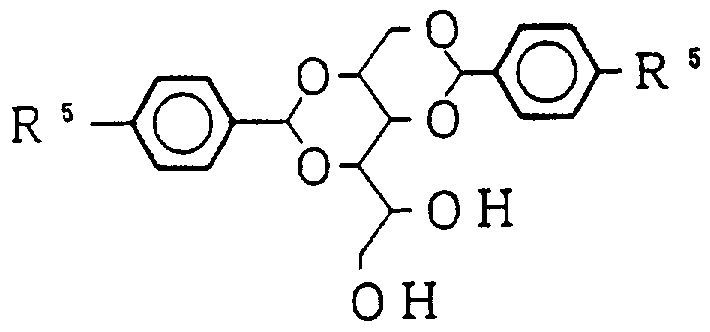


Claims
Priority Applications (6)
| Application Number | Priority Date | Filing Date | Title |
|---|---|---|---|
| JP54202497A JP3749547B2 (ja) | 1996-05-27 | 1997-05-27 | 結晶性ポリプロピレン、その製法、ポリプロピレン組成物および熱成形体 |
| KR1019980709630A KR100289227B1 (ko) | 1996-05-27 | 1997-05-27 | 결정성 폴리프로필렌, 그 제조방법, 폴리프로필렌 조성물, 및 열성형체 |
| EP97922195A EP0903356B1 (en) | 1996-05-27 | 1997-05-27 | Crystalline polypropylene, process for preparing the same, polypropylene composition, and thermoformed article |
| CA002256707A CA2256707C (en) | 1996-05-27 | 1997-05-27 | Crystalline polypropylene, process for preparing the same, polypropylene composition, and thermoformed article |
| US09/194,363 US6403708B2 (en) | 1996-05-27 | 1997-05-27 | Crystalline polypropylenes, process for preparing thereof, polypropylene compositions, and thermoformed products |
| DE69734156T DE69734156T2 (de) | 1996-05-27 | 1997-05-27 | Kristallines polypropen, verfahren zu desse herstellung, zusammensetzung und artikel damit |
Applications Claiming Priority (2)
| Application Number | Priority Date | Filing Date | Title |
|---|---|---|---|
| JP8/131741 | 1996-05-27 | ||
| JP13174196 | 1996-05-27 |
Publications (1)
| Publication Number | Publication Date |
|---|---|
| WO1997045463A1 true WO1997045463A1 (en) | 1997-12-04 |
Family
ID=15065115
Family Applications (1)
| Application Number | Title | Priority Date | Filing Date |
|---|---|---|---|
| PCT/JP1997/001790 Ceased WO1997045463A1 (en) | 1996-05-27 | 1997-05-27 | Crystalline polypropylene, process for preparing the same, polypropylene composition, and thermoformed article |
Country Status (7)
| Country | Link |
|---|---|
| EP (1) | EP0903356B1 (ja) |
| JP (1) | JP3749547B2 (ja) |
| KR (1) | KR100289227B1 (ja) |
| CN (1) | CN1154670C (ja) |
| CA (1) | CA2256707C (ja) |
| DE (1) | DE69734156T2 (ja) |
| WO (1) | WO1997045463A1 (ja) |
Cited By (20)
| Publication number | Priority date | Publication date | Assignee | Title |
|---|---|---|---|---|
| JP2001106844A (ja) * | 1999-10-13 | 2001-04-17 | Asahi Kasei Corp | プロピレン系樹脂組成物 |
| JP2001302852A (ja) * | 2000-04-21 | 2001-10-31 | Asahi Denka Kogyo Kk | 繊維用ポリオレフィン樹脂組成物 |
| JP2002294010A (ja) * | 2001-03-30 | 2002-10-09 | Sumitomo Chem Co Ltd | 延伸フィルム用ポリプロピレン系樹脂組成物および延伸フィルム |
| JP2004323545A (ja) * | 2003-04-21 | 2004-11-18 | Mitsui Chemicals Inc | 自動車内装用ポリプロピレン樹脂組成物 |
| JP2004323546A (ja) * | 2003-04-21 | 2004-11-18 | Mitsui Chemicals Inc | 自動車内装用ポリプロピレン樹脂組成物 |
| JP2006111668A (ja) * | 2004-10-12 | 2006-04-27 | Nippon Polyethylene Kk | 電線被覆用又は絶縁用樹脂組成物 |
| JP2008184560A (ja) * | 2007-01-30 | 2008-08-14 | Sunallomer Ltd | ポリプロピレン系樹脂組成物およびシート |
| JP2008542460A (ja) * | 2005-05-27 | 2008-11-27 | バーゼル・ポリオレフィン・イタリア・ソチエタ・ア・レスポンサビリタ・リミタータ | 良好な白化抵抗を有するポリオレフィン性組成物 |
| JP2009029900A (ja) * | 2007-07-26 | 2009-02-12 | Furukawa Electric Co Ltd:The | ポリプロピレン系樹脂発泡体 |
| JP2009046691A (ja) * | 2008-11-17 | 2009-03-05 | Prime Polymer:Kk | 自動車内装用ポリプロピレン樹脂組成物 |
| JP2010024454A (ja) * | 2008-07-23 | 2010-02-04 | Samsung Total Petrochemicals Co Ltd | 高光沢性のポリプロピレン系樹脂 |
| JP2010248532A (ja) * | 2010-08-10 | 2010-11-04 | Asahi Kasei Chemicals Corp | プロピレン系樹脂組成物 |
| JP2012512277A (ja) * | 2008-12-15 | 2012-05-31 | クレイトン・ポリマーズ・ユー・エス・エル・エル・シー | ポリプロピレンと水素化スチレンブロック共重合体のブレンド |
| WO2014065331A1 (ja) * | 2012-10-25 | 2014-05-01 | 株式会社プライムポリマー | 微多孔フィルム用ポリプロピレン |
| WO2015012310A1 (ja) * | 2013-07-23 | 2015-01-29 | 東洋紡株式会社 | 空洞含有ポリプロピレンフィルム |
| JP2015511640A (ja) * | 2012-02-27 | 2015-04-20 | ボレアリス・アクチェンゲゼルシャフトBorealis Ag | 低灰分ポリプロピレンの製造方法 |
| WO2016158982A1 (ja) * | 2015-03-31 | 2016-10-06 | 株式会社プライムポリマー | 表面保護フィルム及び表面保護フィルム用プロピレン共重合体組成物 |
| JP2019044122A (ja) * | 2017-09-06 | 2019-03-22 | サンアロマー株式会社 | ポリプロピレン組成物 |
| JP2020105484A (ja) * | 2018-12-27 | 2020-07-09 | 住友化学株式会社 | オレフィン重合体、及び、オレフィン重合体の製造方法 |
| WO2021025143A1 (ja) * | 2019-08-08 | 2021-02-11 | 株式会社プライムポリマー | 非発泡シートおよび容器 |
Families Citing this family (27)
| Publication number | Priority date | Publication date | Assignee | Title |
|---|---|---|---|---|
| DE69941036D1 (de) * | 1998-06-25 | 2009-08-06 | Idemitsu Kosan Co | Propylenpolymer und Zusammensetzung damit, Formobjekt und Laminat damit sowie Verfahren zur Herstellung von Propylenpolymer und einer Zusammensetzung damit |
| WO2002008304A1 (en) * | 2000-07-24 | 2002-01-31 | Idemitsu Petrochemical Co., Ltd. | Propylene homopolymer and propylene copolymer |
| GB0026055D0 (en) | 2000-10-25 | 2000-12-13 | Ucb Sa | Films,compositions and processes |
| EP1361250B1 (en) * | 2000-11-10 | 2006-10-04 | Japan Polychem Corporation | Moldability modifier for polypropylene resin and polypropylene resin composition containing the same |
| EP1498434B1 (en) * | 2002-04-12 | 2013-10-09 | Idemitsu Kosan Co., Ltd. | Process for production of modified propylene polymers and modified propylene polymers produced by the process |
| WO2004033509A1 (en) * | 2002-10-07 | 2004-04-22 | Dow Global Technologies Inc. | Highly crystalline polypropylene with low xylene solubles |
| US7563836B2 (en) | 2003-10-07 | 2009-07-21 | Dow Global Technologies, Inc. | Polypropylene composition for air quenched blown films |
| CA2567756C (en) * | 2004-05-26 | 2012-05-15 | David J. Frankowski | Coaxial cable with foamed insulation |
| CN101084268B (zh) | 2004-12-23 | 2011-09-14 | 巴塞尔聚烯烃意大利有限责任公司 | 具有优良抗发白性能的聚烯烃组合物 |
| EP1726602A1 (en) * | 2005-05-27 | 2006-11-29 | Borealis Technology Oy | Propylene polymer with high crystallinity |
| EP1726603A1 (en) * | 2005-05-27 | 2006-11-29 | Borealis Technology Oy | Propylene polymer with high crystallinity |
| EP1780225A1 (en) * | 2005-11-01 | 2007-05-02 | Borealis Technology Oy | Ziegler-Natta catalyst and its use to prepare multimodal polyolefin |
| KR100648644B1 (ko) | 2005-11-28 | 2006-11-23 | 정보화 | 외장패널용 조성물 및 이를 이용한 외장패널의 제조방법 |
| JP5394231B2 (ja) * | 2006-04-24 | 2014-01-22 | トタル リサーチ アンド テクノロジー フエリユイ | 高い溶融流動性を有するプロピレンの単独重合体またはランダム共重合体の製造でのチーグラー‐ナッタ触媒の使用 |
| EP1857475A1 (en) * | 2006-04-24 | 2007-11-21 | Total Petrochemicals Research Feluy | Use of Ziegler-Natta catalyst to make a polypropylene homopolymer or random copolymer having a high melt flow rate |
| EP1923200A1 (en) * | 2006-11-20 | 2008-05-21 | Borealis Technology Oy | Article |
| ES2354383T5 (es) | 2007-08-10 | 2021-06-21 | Borealis Tech Oy | Artículo que comprende una composición de polipropileno |
| EP2067799A1 (en) | 2007-12-05 | 2009-06-10 | Borealis Technology OY | Polymer |
| KR101007763B1 (ko) * | 2008-12-29 | 2011-01-14 | 삼성토탈 주식회사 | 발포 사출성형용 폴리프로필렌 수지 조성물 및 그를 이용하여 제조되는 발포체 |
| CN102050905B (zh) * | 2009-10-27 | 2013-12-04 | 中国石油化工股份有限公司 | 用于烯烃聚合反应的催化剂预聚物及其烯烃聚合方法 |
| EP2354183B1 (en) | 2010-01-29 | 2012-08-22 | Borealis AG | Moulding composition |
| EP2354184B1 (en) | 2010-01-29 | 2012-08-22 | Borealis AG | Polyethylene moulding composition with improved stress crack/stiffness relationship and impact resistance |
| WO2017206009A1 (en) * | 2016-05-30 | 2017-12-07 | Dow Global Technologies Llc | Ethylene/alpha-olefin/diene interpolymers compositions |
| JP7466661B2 (ja) | 2020-08-26 | 2024-04-12 | 三井化学株式会社 | 固体状チタン触媒成分、オレフィン重合用触媒、オレフィンの重合方法およびプロピレン重合体 |
| KR102795387B1 (ko) * | 2021-11-29 | 2025-04-11 | 롯데케미칼 주식회사 | 열안정성 및 강성이 우수한 폴리프로필렌 수지 조성물 및 이를 포함하는 용기 |
| CN118574887A (zh) * | 2022-01-24 | 2024-08-30 | 住友化学株式会社 | 丙烯类聚合物组合物、双轴拉伸膜和包装袋 |
| CN121516891B (zh) * | 2026-01-16 | 2026-04-21 | 营口东腾新材料有限公司 | 基于气相法制备氢氧化镁阻燃剂用反应装置及其制备方法 |
Citations (4)
| Publication number | Priority date | Publication date | Assignee | Title |
|---|---|---|---|---|
| JPH04356511A (ja) * | 1991-06-03 | 1992-12-10 | Sumitomo Chem Co Ltd | 高剛性ポリプロピレン |
| JPH05239149A (ja) * | 1992-11-24 | 1993-09-17 | Mitsui Toatsu Chem Inc | 高流動性射出成形用ポリプロピレン樹脂の製造方法 |
| JPH0693034A (ja) * | 1992-05-29 | 1994-04-05 | Himont Inc | 溶融状態における加工性を改良したプロピレンの結晶性重合体およびその製造方法 |
| JPH06263823A (ja) * | 1993-03-15 | 1994-09-20 | Chisso Corp | 高溶融張力を有するポリプロピレン、その製造方法および成形品 |
Family Cites Families (4)
| Publication number | Priority date | Publication date | Assignee | Title |
|---|---|---|---|---|
| CA2018829C (en) * | 1989-06-19 | 1996-06-11 | Jun Saito | Process for producing a high-stiffness polypropylene and a highly stereoregular polypropylene |
| TW354792B (en) * | 1993-08-13 | 1999-03-21 | Mitsui Petrochemical Ind | Olefin polymerization catalyst and process for preparing polypropylene and propylene block copolymer |
| EP0657477B1 (en) * | 1993-12-07 | 2001-03-14 | Sumitomo Chemical Company Limited | Process for producing olefin polymers for biaxially oriented film and olefin-polymerizing catalyst |
| CN1100069C (zh) * | 1994-05-12 | 2003-01-29 | 昭和电工株式会社 | 丙烯系聚合物及其制法 |
-
1997
- 1997-05-27 WO PCT/JP1997/001790 patent/WO1997045463A1/ja not_active Ceased
- 1997-05-27 EP EP97922195A patent/EP0903356B1/en not_active Expired - Lifetime
- 1997-05-27 CA CA002256707A patent/CA2256707C/en not_active Expired - Lifetime
- 1997-05-27 CN CNB971949956A patent/CN1154670C/zh not_active Expired - Lifetime
- 1997-05-27 DE DE69734156T patent/DE69734156T2/de not_active Expired - Lifetime
- 1997-05-27 JP JP54202497A patent/JP3749547B2/ja not_active Expired - Lifetime
- 1997-05-27 KR KR1019980709630A patent/KR100289227B1/ko not_active Expired - Lifetime
Patent Citations (4)
| Publication number | Priority date | Publication date | Assignee | Title |
|---|---|---|---|---|
| JPH04356511A (ja) * | 1991-06-03 | 1992-12-10 | Sumitomo Chem Co Ltd | 高剛性ポリプロピレン |
| JPH0693034A (ja) * | 1992-05-29 | 1994-04-05 | Himont Inc | 溶融状態における加工性を改良したプロピレンの結晶性重合体およびその製造方法 |
| JPH05239149A (ja) * | 1992-11-24 | 1993-09-17 | Mitsui Toatsu Chem Inc | 高流動性射出成形用ポリプロピレン樹脂の製造方法 |
| JPH06263823A (ja) * | 1993-03-15 | 1994-09-20 | Chisso Corp | 高溶融張力を有するポリプロピレン、その製造方法および成形品 |
Non-Patent Citations (1)
| Title |
|---|
| See also references of EP0903356A4 * |
Cited By (24)
| Publication number | Priority date | Publication date | Assignee | Title |
|---|---|---|---|---|
| JP2001106844A (ja) * | 1999-10-13 | 2001-04-17 | Asahi Kasei Corp | プロピレン系樹脂組成物 |
| JP2001302852A (ja) * | 2000-04-21 | 2001-10-31 | Asahi Denka Kogyo Kk | 繊維用ポリオレフィン樹脂組成物 |
| JP2002294010A (ja) * | 2001-03-30 | 2002-10-09 | Sumitomo Chem Co Ltd | 延伸フィルム用ポリプロピレン系樹脂組成物および延伸フィルム |
| JP2004323545A (ja) * | 2003-04-21 | 2004-11-18 | Mitsui Chemicals Inc | 自動車内装用ポリプロピレン樹脂組成物 |
| JP2004323546A (ja) * | 2003-04-21 | 2004-11-18 | Mitsui Chemicals Inc | 自動車内装用ポリプロピレン樹脂組成物 |
| JP2006111668A (ja) * | 2004-10-12 | 2006-04-27 | Nippon Polyethylene Kk | 電線被覆用又は絶縁用樹脂組成物 |
| JP2008542460A (ja) * | 2005-05-27 | 2008-11-27 | バーゼル・ポリオレフィン・イタリア・ソチエタ・ア・レスポンサビリタ・リミタータ | 良好な白化抵抗を有するポリオレフィン性組成物 |
| JP2008184560A (ja) * | 2007-01-30 | 2008-08-14 | Sunallomer Ltd | ポリプロピレン系樹脂組成物およびシート |
| JP2009029900A (ja) * | 2007-07-26 | 2009-02-12 | Furukawa Electric Co Ltd:The | ポリプロピレン系樹脂発泡体 |
| JP2010024454A (ja) * | 2008-07-23 | 2010-02-04 | Samsung Total Petrochemicals Co Ltd | 高光沢性のポリプロピレン系樹脂 |
| JP2009046691A (ja) * | 2008-11-17 | 2009-03-05 | Prime Polymer:Kk | 自動車内装用ポリプロピレン樹脂組成物 |
| JP2012512277A (ja) * | 2008-12-15 | 2012-05-31 | クレイトン・ポリマーズ・ユー・エス・エル・エル・シー | ポリプロピレンと水素化スチレンブロック共重合体のブレンド |
| JP2010248532A (ja) * | 2010-08-10 | 2010-11-04 | Asahi Kasei Chemicals Corp | プロピレン系樹脂組成物 |
| JP2015511640A (ja) * | 2012-02-27 | 2015-04-20 | ボレアリス・アクチェンゲゼルシャフトBorealis Ag | 低灰分ポリプロピレンの製造方法 |
| WO2014065331A1 (ja) * | 2012-10-25 | 2014-05-01 | 株式会社プライムポリマー | 微多孔フィルム用ポリプロピレン |
| JPWO2014065331A1 (ja) * | 2012-10-25 | 2016-09-08 | 株式会社プライムポリマー | 微多孔フィルム用ポリプロピレン |
| US10011693B2 (en) | 2012-10-25 | 2018-07-03 | Prime Polymer Co., Ltd. | Polypropylene for microporous film |
| WO2015012310A1 (ja) * | 2013-07-23 | 2015-01-29 | 東洋紡株式会社 | 空洞含有ポリプロピレンフィルム |
| JPWO2015012310A1 (ja) * | 2013-07-23 | 2017-03-02 | 東洋紡株式会社 | 空洞含有ポリプロピレンフィルム |
| WO2016158982A1 (ja) * | 2015-03-31 | 2016-10-06 | 株式会社プライムポリマー | 表面保護フィルム及び表面保護フィルム用プロピレン共重合体組成物 |
| JPWO2016158982A1 (ja) * | 2015-03-31 | 2018-01-25 | 株式会社プライムポリマー | 表面保護フィルム及び表面保護フィルム用プロピレン共重合体組成物 |
| JP2019044122A (ja) * | 2017-09-06 | 2019-03-22 | サンアロマー株式会社 | ポリプロピレン組成物 |
| JP2020105484A (ja) * | 2018-12-27 | 2020-07-09 | 住友化学株式会社 | オレフィン重合体、及び、オレフィン重合体の製造方法 |
| WO2021025143A1 (ja) * | 2019-08-08 | 2021-02-11 | 株式会社プライムポリマー | 非発泡シートおよび容器 |
Also Published As
| Publication number | Publication date |
|---|---|
| CN1154670C (zh) | 2004-06-23 |
| EP0903356B1 (en) | 2005-09-07 |
| CA2256707C (en) | 2004-12-21 |
| KR20000016063A (ko) | 2000-03-25 |
| CA2256707A1 (en) | 1997-12-04 |
| EP0903356A4 (en) | 2001-03-07 |
| KR100289227B1 (ko) | 2001-05-02 |
| DE69734156D1 (de) | 2005-10-13 |
| JP3749547B2 (ja) | 2006-03-01 |
| DE69734156T2 (de) | 2006-07-06 |
| EP0903356A1 (en) | 1999-03-24 |
| CN1219941A (zh) | 1999-06-16 |
Similar Documents
| Publication | Publication Date | Title |
|---|---|---|
| WO1997045463A1 (en) | Crystalline polypropylene, process for preparing the same, polypropylene composition, and thermoformed article | |
| JPWO1997045463A1 (ja) | 結晶性ポリプロピレン、その製法、ポリプロピレン組成物および熱成形体 | |
| US6403708B2 (en) | Crystalline polypropylenes, process for preparing thereof, polypropylene compositions, and thermoformed products | |
| US6320009B1 (en) | Polypropylene resin composition and injection-molded article | |
| KR100532528B1 (ko) | 폴리프로필렌 수지 조성물 및 사출 성형품 | |
| JP3690767B2 (ja) | ポリプロピレン系樹脂組成物 | |
| JPWO1998047959A1 (ja) | 結晶性ポリプロピレン樹脂組成物 | |
| JP3088164B2 (ja) | プロピレン系ブロック共重合体の製造方法 | |
| JP2007084806A (ja) | プロピレン系樹脂組成物 | |
| JP2000191851A (ja) | プロピレン系重合体組成物 | |
| JP2909201B2 (ja) | ポリプロピレンの製造方法、ポリプロピレン、ポリプロピレン組成物、およびそれらの用途 | |
| JP3836202B2 (ja) | プロピレン系重合体組成物およびその成形品 | |
| JP4206645B2 (ja) | 結晶性ポリプロピレン樹脂組成物およびそれから製造されるシート | |
| JP3993011B2 (ja) | ポリプロピレン組成物 | |
| JP2984363B2 (ja) | ポリプロピレンの製造方法、ポリプロピレン、ポリプロピレン組成物、およびそれらの用途 | |
| JP2953779B2 (ja) | プロピレン系共重合体の製造方法、プロピレン系共重合体、プロピレン系共重合体組成物、およびそれらの用途 | |
| JP2000191859A (ja) | ポリプロピレン系樹脂組成物 | |
| JPH1142664A (ja) | 射出成形用ポリプロピレン樹脂組成物および射出成形品 | |
| JPH08283490A (ja) | プロピレン系ランダム共重合体組成物およびその用途 | |
| JP2984364B2 (ja) | プロピレン系共重合体の製造方法、プロピレン系共重合体、プロピレン系共重合体組成物、およびそれらの用途 | |
| JPH0725946A (ja) | プロピレン重合体 | |
| KR0149150B1 (ko) | 프로필렌중합체 조성물 | |
| JP4712311B2 (ja) | ポリプロピレン系樹脂組成物 | |
| JPH09328598A (ja) | プロピレン系重合体組成物および用途 | |
| JPWO1998054233A1 (ja) | ポリプロピレン樹脂組成物および射出成形品 |
Legal Events
| Date | Code | Title | Description |
|---|---|---|---|
| WWE | Wipo information: entry into national phase |
Ref document number: 97194995.6 Country of ref document: CN |
|
| AK | Designated states |
Kind code of ref document: A1 Designated state(s): CA CN JP KR SG US |
|
| AL | Designated countries for regional patents |
Kind code of ref document: A1 Designated state(s): DE FR GB IT NL |
|
| DFPE | Request for preliminary examination filed prior to expiration of 19th month from priority date (pct application filed before 20040101) | ||
| 121 | Ep: the epo has been informed by wipo that ep was designated in this application | ||
| WWE | Wipo information: entry into national phase |
Ref document number: 09194363 Country of ref document: US |
|
| ENP | Entry into the national phase |
Ref document number: 2256707 Country of ref document: CA Ref document number: 2256707 Country of ref document: CA Kind code of ref document: A |
|
| WWE | Wipo information: entry into national phase |
Ref document number: 1019980709630 Country of ref document: KR |
|
| WWE | Wipo information: entry into national phase |
Ref document number: 1997922195 Country of ref document: EP |
|
| WWP | Wipo information: published in national office |
Ref document number: 1997922195 Country of ref document: EP |
|
| WWP | Wipo information: published in national office |
Ref document number: 1019980709630 Country of ref document: KR |
|
| WWG | Wipo information: grant in national office |
Ref document number: 1019980709630 Country of ref document: KR |
|
| WWG | Wipo information: grant in national office |
Ref document number: 1997922195 Country of ref document: EP |