WO2002096884A2 - Substituierte benzoylketone als herbizide wirkstoffe zur verwendung asl pflanzenbehandlungsmittel - Google Patents
Substituierte benzoylketone als herbizide wirkstoffe zur verwendung asl pflanzenbehandlungsmittel Download PDFInfo
- Publication number
- WO2002096884A2 WO2002096884A2 PCT/EP2002/005210 EP0205210W WO02096884A2 WO 2002096884 A2 WO2002096884 A2 WO 2002096884A2 EP 0205210 W EP0205210 W EP 0205210W WO 02096884 A2 WO02096884 A2 WO 02096884A2
- Authority
- WO
- WIPO (PCT)
- Prior art keywords
- cyano
- alkyl
- chlorine
- methyl
- fluorine
- Prior art date
- Legal status (The legal status is an assumption and is not a legal conclusion. Google has not performed a legal analysis and makes no representation as to the accuracy of the status listed.)
- Ceased
Links
- 0 CCN(C(*)=O)C1=CCC(C(O)=O)C(Br)=C1 Chemical compound CCN(C(*)=O)C1=CCC(C(O)=O)C(Br)=C1 0.000 description 2
Classifications
-
- C—CHEMISTRY; METALLURGY
- C07—ORGANIC CHEMISTRY
- C07D—HETEROCYCLIC COMPOUNDS
- C07D239/00—Heterocyclic compounds containing 1,3-diazine or hydrogenated 1,3-diazine rings
- C07D239/02—Heterocyclic compounds containing 1,3-diazine or hydrogenated 1,3-diazine rings not condensed with other rings
- C07D239/06—Heterocyclic compounds containing 1,3-diazine or hydrogenated 1,3-diazine rings not condensed with other rings having one double bond between ring members or between a ring member and a non-ring member
- C07D239/08—Heterocyclic compounds containing 1,3-diazine or hydrogenated 1,3-diazine rings not condensed with other rings having one double bond between ring members or between a ring member and a non-ring member with hetero atoms directly attached in position 2
- C07D239/10—Oxygen or sulfur atoms
-
- A—HUMAN NECESSITIES
- A01—AGRICULTURE; FORESTRY; ANIMAL HUSBANDRY; HUNTING; TRAPPING; FISHING
- A01N—PRESERVATION OF BODIES OF HUMANS OR ANIMALS OR PLANTS OR PARTS THEREOF; BIOCIDES, e.g. AS DISINFECTANTS, AS PESTICIDES OR AS HERBICIDES; PEST REPELLANTS OR ATTRACTANTS; PLANT GROWTH REGULATORS
- A01N47/00—Biocides, pest repellants or attractants, or plant growth regulators containing organic compounds containing a carbon atom not being member of a ring and having no bond to a carbon or hydrogen atom, e.g. derivatives of carbonic acid
- A01N47/08—Biocides, pest repellants or attractants, or plant growth regulators containing organic compounds containing a carbon atom not being member of a ring and having no bond to a carbon or hydrogen atom, e.g. derivatives of carbonic acid the carbon atom having one or more single bonds to nitrogen atoms
- A01N47/28—Ureas or thioureas containing the groups >N—CO—N< or >N—CS—N<
- A01N47/38—Ureas or thioureas containing the groups >N—CO—N< or >N—CS—N< containing the group >N—CO—N< where at least one nitrogen atom is part of a heterocyclic ring; Thio analogues thereof
-
- C—CHEMISTRY; METALLURGY
- C07—ORGANIC CHEMISTRY
- C07C—ACYCLIC OR CARBOCYCLIC COMPOUNDS
- C07C275/00—Derivatives of urea, i.e. compounds containing any of the groups, the nitrogen atoms not being part of nitro or nitroso groups
- C07C275/28—Derivatives of urea, i.e. compounds containing any of the groups, the nitrogen atoms not being part of nitro or nitroso groups having nitrogen atoms of urea groups bound to carbon atoms of six-membered aromatic rings of a carbon skeleton
- C07C275/42—Derivatives of urea, i.e. compounds containing any of the groups, the nitrogen atoms not being part of nitro or nitroso groups having nitrogen atoms of urea groups bound to carbon atoms of six-membered aromatic rings of a carbon skeleton being further substituted by carboxyl groups
-
- C—CHEMISTRY; METALLURGY
- C07—ORGANIC CHEMISTRY
- C07C—ACYCLIC OR CARBOCYCLIC COMPOUNDS
- C07C275/00—Derivatives of urea, i.e. compounds containing any of the groups, the nitrogen atoms not being part of nitro or nitroso groups
- C07C275/64—Derivatives of urea, i.e. compounds containing any of the groups, the nitrogen atoms not being part of nitro or nitroso groups having nitrogen atoms of urea groups singly-bound to oxygen atoms
-
- C—CHEMISTRY; METALLURGY
- C07—ORGANIC CHEMISTRY
- C07C—ACYCLIC OR CARBOCYCLIC COMPOUNDS
- C07C281/00—Derivatives of carbonic acid containing functional groups covered by groups C07C269/00 - C07C279/00 in which at least one nitrogen atom of these functional groups is further bound to another nitrogen atom not being part of a nitro or nitroso group
- C07C281/06—Compounds containing any of the groups, e.g. semicarbazides
-
- C—CHEMISTRY; METALLURGY
- C07—ORGANIC CHEMISTRY
- C07C—ACYCLIC OR CARBOCYCLIC COMPOUNDS
- C07C317/00—Sulfones; Sulfoxides
- C07C317/44—Sulfones; Sulfoxides having sulfone or sulfoxide groups and carboxyl groups bound to the same carbon skeleton
- C07C317/48—Sulfones; Sulfoxides having sulfone or sulfoxide groups and carboxyl groups bound to the same carbon skeleton the carbon skeleton being further substituted by singly-bound nitrogen atoms, not being part of nitro or nitroso groups
- C07C317/50—Sulfones; Sulfoxides having sulfone or sulfoxide groups and carboxyl groups bound to the same carbon skeleton the carbon skeleton being further substituted by singly-bound nitrogen atoms, not being part of nitro or nitroso groups at least one of the nitrogen atoms being part of any of the groups, X being a hetero atom, Y being any atom
-
- C—CHEMISTRY; METALLURGY
- C07—ORGANIC CHEMISTRY
- C07C—ACYCLIC OR CARBOCYCLIC COMPOUNDS
- C07C333/00—Derivatives of thiocarbamic acids, i.e. compounds containing any of the groups, the nitrogen atom not being part of nitro or nitroso groups
- C07C333/02—Monothiocarbamic acids; Derivatives thereof
- C07C333/08—Monothiocarbamic acids; Derivatives thereof having nitrogen atoms of thiocarbamic groups bound to carbon atoms of six-membered aromatic rings
-
- C—CHEMISTRY; METALLURGY
- C07—ORGANIC CHEMISTRY
- C07D—HETEROCYCLIC COMPOUNDS
- C07D233/00—Heterocyclic compounds containing 1,3-diazole or hydrogenated 1,3-diazole rings, not condensed with other rings
- C07D233/04—Heterocyclic compounds containing 1,3-diazole or hydrogenated 1,3-diazole rings, not condensed with other rings having one double bond between ring members or between a ring member and a non-ring member
- C07D233/28—Heterocyclic compounds containing 1,3-diazole or hydrogenated 1,3-diazole rings, not condensed with other rings having one double bond between ring members or between a ring member and a non-ring member with hetero atoms or with carbon atoms having three bonds to hetero atoms with at the most one bond to halogen, e.g. ester or nitrile radicals, directly attached to ring carbon atoms
- C07D233/30—Oxygen or sulfur atoms
- C07D233/32—One oxygen atom
- C07D233/38—One oxygen atom with acyl radicals or hetero atoms directly attached to ring nitrogen atoms
-
- C—CHEMISTRY; METALLURGY
- C07—ORGANIC CHEMISTRY
- C07D—HETEROCYCLIC COMPOUNDS
- C07D233/00—Heterocyclic compounds containing 1,3-diazole or hydrogenated 1,3-diazole rings, not condensed with other rings
- C07D233/54—Heterocyclic compounds containing 1,3-diazole or hydrogenated 1,3-diazole rings, not condensed with other rings having two double bonds between ring members or between ring members and non-ring members
- C07D233/66—Heterocyclic compounds containing 1,3-diazole or hydrogenated 1,3-diazole rings, not condensed with other rings having two double bonds between ring members or between ring members and non-ring members with hetero atoms or with carbon atoms having three bonds to hetero atoms with at the most one bond to halogen, e.g. ester or nitrile radicals, directly attached to ring carbon atoms
- C07D233/70—One oxygen atom
-
- C—CHEMISTRY; METALLURGY
- C07—ORGANIC CHEMISTRY
- C07D—HETEROCYCLIC COMPOUNDS
- C07D249/00—Heterocyclic compounds containing five-membered rings having three nitrogen atoms as the only ring hetero atoms
- C07D249/02—Heterocyclic compounds containing five-membered rings having three nitrogen atoms as the only ring hetero atoms not condensed with other rings
- C07D249/08—1,2,4-Triazoles; Hydrogenated 1,2,4-triazoles
- C07D249/10—1,2,4-Triazoles; Hydrogenated 1,2,4-triazoles with hetero atoms or with carbon atoms having three bonds to hetero atoms with at the most one bond to halogen, e.g. ester or nitrile radicals, directly attached to ring carbon atoms
- C07D249/12—Oxygen or sulfur atoms
-
- C—CHEMISTRY; METALLURGY
- C07—ORGANIC CHEMISTRY
- C07D—HETEROCYCLIC COMPOUNDS
- C07D261/00—Heterocyclic compounds containing 1,2-oxazole or hydrogenated 1,2-oxazole rings
- C07D261/02—Heterocyclic compounds containing 1,2-oxazole or hydrogenated 1,2-oxazole rings not condensed with other rings
- C07D261/06—Heterocyclic compounds containing 1,2-oxazole or hydrogenated 1,2-oxazole rings not condensed with other rings having two or more double bonds between ring members or between ring members and non-ring members
- C07D261/10—Heterocyclic compounds containing 1,2-oxazole or hydrogenated 1,2-oxazole rings not condensed with other rings having two or more double bonds between ring members or between ring members and non-ring members with hetero atoms or with carbon atoms having three bonds to hetero atoms with at the most one bond to halogen, e.g. ester or nitrile radicals, directly attached to ring carbon atoms
- C07D261/14—Nitrogen atoms
-
- C—CHEMISTRY; METALLURGY
- C07—ORGANIC CHEMISTRY
- C07D—HETEROCYCLIC COMPOUNDS
- C07D271/00—Heterocyclic compounds containing five-membered rings having two nitrogen atoms and one oxygen atom as the only ring hetero atoms
- C07D271/02—Heterocyclic compounds containing five-membered rings having two nitrogen atoms and one oxygen atom as the only ring hetero atoms not condensed with other rings
- C07D271/10—1,3,4-Oxadiazoles; Hydrogenated 1,3,4-oxadiazoles
- C07D271/113—1,3,4-Oxadiazoles; Hydrogenated 1,3,4-oxadiazoles with oxygen, sulfur or nitrogen atoms, directly attached to ring carbon atoms, the nitrogen atoms not forming part of a nitro radical
-
- C—CHEMISTRY; METALLURGY
- C07—ORGANIC CHEMISTRY
- C07D—HETEROCYCLIC COMPOUNDS
- C07D277/00—Heterocyclic compounds containing 1,3-thiazole or hydrogenated 1,3-thiazole rings
- C07D277/02—Heterocyclic compounds containing 1,3-thiazole or hydrogenated 1,3-thiazole rings not condensed with other rings
- C07D277/08—Heterocyclic compounds containing 1,3-thiazole or hydrogenated 1,3-thiazole rings not condensed with other rings having one double bond between ring members or between a ring member and a non-ring member
- C07D277/12—Heterocyclic compounds containing 1,3-thiazole or hydrogenated 1,3-thiazole rings not condensed with other rings having one double bond between ring members or between a ring member and a non-ring member with hetero atoms or with carbon atoms having three bonds to hetero atoms with at the most one bond to halogen, e.g. ester or nitrile radicals, directly attached to ring carbon atoms
- C07D277/16—Sulfur atoms
-
- C—CHEMISTRY; METALLURGY
- C07—ORGANIC CHEMISTRY
- C07D—HETEROCYCLIC COMPOUNDS
- C07D277/00—Heterocyclic compounds containing 1,3-thiazole or hydrogenated 1,3-thiazole rings
- C07D277/02—Heterocyclic compounds containing 1,3-thiazole or hydrogenated 1,3-thiazole rings not condensed with other rings
- C07D277/08—Heterocyclic compounds containing 1,3-thiazole or hydrogenated 1,3-thiazole rings not condensed with other rings having one double bond between ring members or between a ring member and a non-ring member
- C07D277/12—Heterocyclic compounds containing 1,3-thiazole or hydrogenated 1,3-thiazole rings not condensed with other rings having one double bond between ring members or between a ring member and a non-ring member with hetero atoms or with carbon atoms having three bonds to hetero atoms with at the most one bond to halogen, e.g. ester or nitrile radicals, directly attached to ring carbon atoms
- C07D277/18—Nitrogen atoms
-
- C—CHEMISTRY; METALLURGY
- C07—ORGANIC CHEMISTRY
- C07D—HETEROCYCLIC COMPOUNDS
- C07D277/00—Heterocyclic compounds containing 1,3-thiazole or hydrogenated 1,3-thiazole rings
- C07D277/02—Heterocyclic compounds containing 1,3-thiazole or hydrogenated 1,3-thiazole rings not condensed with other rings
- C07D277/20—Heterocyclic compounds containing 1,3-thiazole or hydrogenated 1,3-thiazole rings not condensed with other rings having two or three double bonds between ring members or between ring members and non-ring members
- C07D277/32—Heterocyclic compounds containing 1,3-thiazole or hydrogenated 1,3-thiazole rings not condensed with other rings having two or three double bonds between ring members or between ring members and non-ring members with hetero atoms or with carbon atoms having three bonds to hetero atoms with at the most one bond to halogen, e.g. ester or nitrile radicals, directly attached to ring carbon atoms
- C07D277/38—Nitrogen atoms
- C07D277/44—Acylated amino or imino radicals
- C07D277/46—Acylated amino or imino radicals by carboxylic acids, or sulfur or nitrogen analogues thereof
-
- C—CHEMISTRY; METALLURGY
- C07—ORGANIC CHEMISTRY
- C07D—HETEROCYCLIC COMPOUNDS
- C07D285/00—Heterocyclic compounds containing rings having nitrogen and sulfur atoms as the only ring hetero atoms, not provided for by groups C07D275/00 - C07D283/00
- C07D285/01—Five-membered rings
- C07D285/02—Thiadiazoles; Hydrogenated thiadiazoles
- C07D285/04—Thiadiazoles; Hydrogenated thiadiazoles not condensed with other rings
- C07D285/12—1,3,4-Thiadiazoles; Hydrogenated 1,3,4-thiadiazoles
- C07D285/125—1,3,4-Thiadiazoles; Hydrogenated 1,3,4-thiadiazoles with oxygen, sulfur or nitrogen atoms, directly attached to ring carbon atoms, the nitrogen atoms not forming part of a nitro radical
- C07D285/135—Nitrogen atoms
-
- C—CHEMISTRY; METALLURGY
- C07—ORGANIC CHEMISTRY
- C07D—HETEROCYCLIC COMPOUNDS
- C07D295/00—Heterocyclic compounds containing polymethylene-imine rings with at least five ring members, 3-azabicyclo [3.2.2] nonane, piperazine, morpholine or thiomorpholine rings, having only hydrogen atoms directly attached to the ring carbon atoms
- C07D295/22—Heterocyclic compounds containing polymethylene-imine rings with at least five ring members, 3-azabicyclo [3.2.2] nonane, piperazine, morpholine or thiomorpholine rings, having only hydrogen atoms directly attached to the ring carbon atoms with hetero atoms directly attached to ring nitrogen atoms
- C07D295/28—Nitrogen atoms
- C07D295/32—Nitrogen atoms acylated with carboxylic or carbonic acids, or their nitrogen or sulfur analogues
-
- C—CHEMISTRY; METALLURGY
- C07—ORGANIC CHEMISTRY
- C07D—HETEROCYCLIC COMPOUNDS
- C07D307/00—Heterocyclic compounds containing five-membered rings having one oxygen atom as the only ring hetero atom
- C07D307/02—Heterocyclic compounds containing five-membered rings having one oxygen atom as the only ring hetero atom not condensed with other rings
- C07D307/04—Heterocyclic compounds containing five-membered rings having one oxygen atom as the only ring hetero atom not condensed with other rings having no double bonds between ring members or between ring members and non-ring members
- C07D307/10—Heterocyclic compounds containing five-membered rings having one oxygen atom as the only ring hetero atom not condensed with other rings having no double bonds between ring members or between ring members and non-ring members with substituted hydrocarbon radicals attached to ring carbon atoms
- C07D307/14—Radicals substituted by nitrogen atoms not forming part of a nitro radical
-
- C—CHEMISTRY; METALLURGY
- C07—ORGANIC CHEMISTRY
- C07D—HETEROCYCLIC COMPOUNDS
- C07D317/00—Heterocyclic compounds containing five-membered rings having two oxygen atoms as the only ring hetero atoms
- C07D317/08—Heterocyclic compounds containing five-membered rings having two oxygen atoms as the only ring hetero atoms having the hetero atoms in positions 1 and 3
- C07D317/10—Heterocyclic compounds containing five-membered rings having two oxygen atoms as the only ring hetero atoms having the hetero atoms in positions 1 and 3 not condensed with other rings
- C07D317/14—Heterocyclic compounds containing five-membered rings having two oxygen atoms as the only ring hetero atoms having the hetero atoms in positions 1 and 3 not condensed with other rings with substituted hydrocarbon radicals attached to ring carbon atoms
- C07D317/28—Radicals substituted by nitrogen atoms
-
- C—CHEMISTRY; METALLURGY
- C07—ORGANIC CHEMISTRY
- C07C—ACYCLIC OR CARBOCYCLIC COMPOUNDS
- C07C2601/00—Systems containing only non-condensed rings
- C07C2601/02—Systems containing only non-condensed rings with a three-membered ring
-
- C—CHEMISTRY; METALLURGY
- C07—ORGANIC CHEMISTRY
- C07C—ACYCLIC OR CARBOCYCLIC COMPOUNDS
- C07C2601/00—Systems containing only non-condensed rings
- C07C2601/06—Systems containing only non-condensed rings with a five-membered ring
- C07C2601/08—Systems containing only non-condensed rings with a five-membered ring the ring being saturated
-
- C—CHEMISTRY; METALLURGY
- C07—ORGANIC CHEMISTRY
- C07C—ACYCLIC OR CARBOCYCLIC COMPOUNDS
- C07C2601/00—Systems containing only non-condensed rings
- C07C2601/12—Systems containing only non-condensed rings with a six-membered ring
- C07C2601/14—The ring being saturated
Definitions
- the invention relates to new substituted benzoyl ketones, ner processes for their preparation and their use as plant treatment agents, in particular as herbicides.
- Q represents O (oxygen) or S (sulfur),
- R 1 stands for hydrogen or for optionally substituted alkyl or cycloalkyl
- R 2 represents hydrogen, cyano, carbamoyl, halogen, or optionally substituted alkyl, alkoxy, alkoxycarbonyl, alkylthio, alkylsulfinyl or alkylsulfonyl
- R 3 represents hydrogen, nitro, cyano, carboxy, carbamoyl, thiocarbamoyl, halogen, or in each case optionally substituted alkyl, alkoxy, alkylthio, alkylsulfinyl, alkylsulfonyl, alkylamino, dialkylamino, dialkylaminocarbonyl or dialkylaminosulfonyl,
- R 4 represents hydrogen, nitro, cyano, carboxy, carbamoyl, thiocarbamoyl, halogen, or in each case optionally substituted alkyl, alkoxy, alkylthio, alkylsulfinyl, alkylsulfonyl, alkylamino, dialkylamino, dialkylaminocarbonyl or dialkylaminosulfonyl,
- R 5 stands for hydrogen or optionally substituted alkyl, alkoxy, alkylthio, alkylsulfinyl, alkylsulfonyl, alkenyl, alkynyl, cycloalkyl, cycloalkylalkyl, aryl, arylthio, arylsulfinyl, arylsulfonyl, arylalkyl, or for the grouping -C (Q) -Z, and
- Z for hydrogen, amino, cyanoamino, nitroamino, hydroxyamino, hydrazino, or for each optionally substituted alkyl, alkylcarbonyl, alkoxy, alkoxycarbonyl, alkylthio, alkylamino, alkoxyamino, alkylhydrazino, alkylcarbonylhydrazino, alkoxycarbonylhydrazino, alkylsulfonylhydrazino, N, dialkylam -Alkyl-alkoxyamino, dialkylhydrazino, alkenyl,
- hydrocarbon chains such as alkyl or alkanediyl - also in combination with heteroatoms, such as in alkoxy - are each straight-chain or branched.
- R preferably represents hydrogen, represents optionally cyano, carboxyl, carbamoyl, halogen, C ⁇ -C 4 alkoxy, C 1 -C 4 alkylthio, C ⁇ -C - alkylsulphinyl or C ⁇ -C 4 - alkylsulfonyl-substituted alkyl having 1 to 6 Carbon atoms, or for cycloalkyl with 3 to 6 carbon atoms optionally substituted by cyano, carboxy, carbamoyl, halogen, C 1 -C 4 -alkyl or Cr -alkoxy-carbonyl.
- R 2 preferably represents hydrogen, cyano, carbamoyl, halogen, alkyl, alkoxy or alkoxycarbonyl, each optionally substituted by cyano, carbamoyl, halogen or C 1 -C alkoxy, each having up to 6 carbon atoms, or alkylthio optionally substituted by halogen, Alkylsulfinyl or alkylsulfonyl each having 1 to 6 carbon atoms.
- R 3 preferably represents hydrogen, nitro, cyano, carboxy, carbamoyl, thiocarbamoyl, halogen, for each alkyl optionally substituted by halogen, C1-C4-alkoxy, -C-C4-alkylthio, C1-C4-alkylsulfinyl or C ⁇ -C4-alkylsulfonyl , Alkoxy, alkylthio, alkylsulfinyl or alkylsulfonyl each having up to 4 carbon atoms in the alkyl groups, or for alkyl amino, dialkylamino, dialkylaminocarbonyl or dialkylaminosulfonyl each having up to 4 carbon atoms in the alkyl groups.
- R 4 preferably represents hydrogen, nitro, cyano, carboxy, carbamoyl, thiocarbamoyl, halogen, each optionally by halogen, C1-C4-
- R 5 preferably represents hydrogen, in each case optionally substituted by cyano, halogen or -CC 4 -alkoxy alkyl, alkoxy, alkylthio, alkylsulfinyl or alkylsulfonyl each having 1 to 6 carbon atoms in the alkyl groups, for alkenyl optionally substituted by cyano or halogen or alkynyl, each having 3 to 6 carbon atoms in the alkenyl or alkynyl groups, for cycloalkyl or cycloalkylalkyl, each optionally substituted by cyano, halogen or C 1 -C 4 alkyl, each having 3 to 6 carbon atoms in the cycloalkyl groups and, if appropriate 1 to 4 carbon atoms in the alkyl part, or for each optionally by nitro, cyano, Ct-C alkyl, -C-C haloalkyl, -C-C 4 alkoxy, C1-C
- Z preferably represents hydrogen, amino, cyanoamino, nitroamino, hydroxy amino, hydrazino, for C ⁇ -C 4 -alkyl-carbonyl, C 1 -C 4 -alkoxy-carbonyl, represents in each case optionally cyano-, halogen, C 1 - C4-alkoxy, -CC 4 - alkyl thio, C 1 -C 4 -alkylsulfinyl or C 1 -C 4 -alkylsulfonyl substituted alkyl, alkoxy, alkylthio, alkylamino, alkoxyamino, alkylhydrazino, alkylcarbonylhydrazino, alkoxycarbonylhydrazino or alkylsulfonylhydrazino each having 1 to 6 carbon atoms in the alkyl groups, for dialkylamino Alkyl-alkoxyamino or dialkylhydrazino, each with 1 to
- Q particularly preferably represents O (oxygen
- R 1 particularly preferably represents hydrogen, in each case optionally by cyano, carboxy, carbamoyl, fluorine, chlorine, methoxy, ethoxy, n- or i-propoxy, methylthio, ethylthio, n- or i-propylthio, methylsulfmyl, ethylsulfinyl, n- or i-propylsulfinyl, methylsulfonyl, ethylsulfonyl, n- or i-propylsulfonyl-substituted methyl, ethyl, n- or i-propyl, n-, i-, s- or t-butyl, or for each optionally by cyano, carboxy, carbamoyl , Fluorine, chlorine, methyl, ethyl, methoxycarbonyl or ethoxycarbonyl-substituted cycl
- R 2 particularly preferably represents hydrogen, cyano, carbamoyl, fluorine, chlorine, bromine, and in each case methyl, ethyl, n- or i-propyl, methoxy, ethoxy, n optionally substituted by cyano, carbamoyl, fluorine, chlorine, methoxy or ethoxy - or i-propoxy, methoxycarbonyl, ethoxycarbonyl, n- or i-
- Propoxycarbonyl or for methylthio, ethylthio, n- or i-propylthio, methylsulfmyl, ethylsulfinyl, n- or i-propylsulfinyl, methylsulfonyl, ethylsulfonyl, n- or i-propylsulfonyl, each optionally substituted by fluorine and / or chlorine.
- R 3 particularly preferably represents hydrogen, nitro, cyano, carboxy, carbamoyl, thiocarbamoyl, fluorine, chlorine, bromine, iodine, each optionally substituted by fluorine, chlorine, methoxy, ethoxy, methylthio, ethylthio, methylsulfmyl, ethylsulfinyl, methylsulfonyl or ethylsulfonyl Methyl, ethyl, n- or i-propyl, n-, i-, s- or t-butyl, methoxy, ethoxy, n- or i-propoxy, n-, i-, s- or t-butoxy, methylthio, Ethylthio, n- or i-propylthio, n-, i-, s- or t-butylthio, methylsulfmyl
- R particularly preferably represents hydrogen, nitro, cyano, carboxy, carbamoyl, thiocarbamoyl, fluorine, chlorine, bromine, iodine, each optionally by fluorine, chlorine, methoxy, ethoxy, methylthio, ethylthio, methylsulfinyl, ethylsulfinyl, methylsulfonyl or ethylsulfonyl substituted
- R 5 particularly preferably represents hydrogen, in each case methyl, ethyl, n- or i-propyl, n-, i-, s- which is optionally substituted by cyano, fluorine, chlorine, bromine, methoxy, ethoxy, n- or i-propoxy.
- n-, i-, s- or t-pentyl methoxy, ethoxy, n- or i-propoxy, n-, i-, s- or t-butoxy, methylthio, ethylthio, n- or i -Propylthio, n-, i-, s- or t-butylthio, methylsulfinyl, ethylsulfinyl, n- or i-propylsulfinyl, methylsulfonyl, ethylsulfonyl, methylamino, ethylamino, n- or i-propylamino, n-, i-, s- or t-butylamino, for
- Dimethylamino or diethylamino for ethenyl, propenyl, butenyl, pentenyl, ethynyl, propynyl, butynyl or pentynyl, each optionally substituted by fluorine, chlorine and / or bromine, for cyclopropyl, each optionally substituted by cyano, fluorine, chlorine, bromine, methyl or ethyl, Cyclobutyl, cyclopentyl, cyclohexyl, cyclopropylmethyl, cyclobutylmethyl,
- Cyclopentylmethyl or cyclohexylmethyl or for each optionally by nitro, cyano, fluorine, chlorine, bromine, methyl, ethyl, n- or i-propyl, n-, i-, s- or t-butyl, trifluoromethyl, methoxy, ethoxy, n - or i-Propoxy, difluoromethoxy or trifluoromethoxy substituted phenyl, phenylthio, phenylsulfinyl, phenylsulfonyl, naphthyl, phenylmethyl, phenylethyl, naphthylmethyl or naphthylethyl or for grouping -C (Q) -Z.
- cyanoamino particularly preferably represents hydrogen, amino, cyanoamino, nitroamino, hydroxyamino, hydrazino, each optionally by cyano, fluorine, chlorine, methoxy, ethoxy, n- or i-propoxy, methylthio, ethylthio, n- or i-propylthio, methylsulfmyl, Ethylsulfinyl, n- or i-propylsulfinyl, methylsulfonyl or ethylsulfonyl substituted methyl, ethyl, n- or i-propyl, n-, i-, s- or t-butyl, n-, i-, s- or t-pentyl, Methoxy, ethoxy, n- or i-propoxy, n-, i-, s- or t-butoxy, methyl
- i-, s- or t-butoxyamino methylhydrazino, ethylhydrazino, n- or i- propylhydrazino, n-, i-, s- or t-butylhydrazino, for dimethylamino, diethylamino, N-methyl-methoxyamino or dimethylhydrazino, for each optionally substituted by fluorine, chlorine and / or bromine, ethenyl, propenyl, butenyl, pentenyl, propenyloxy, butenyloxy, pentenyloxy, propenylthio, butenylthio, pentenylthio, propenylamino, butenylamino, pentenylamino, propenyloxyamino, butenyloxyamino, ethylenyloxyamino, pentenyl Butynyl, pentynyl, pent
- Naphthylmethylamino or Naphthylethylamino or for each optionally by nitro, cyano, fluorine, chlorine, bromine, methyl, ethyl, n- or i-propyl, n-, i-, s- or t-butyl, difluoromethyl, trifluoromethyl, dichloromethyl, trichlor - methyl, chlorodifluoromethyl, fluorodichloromethyl, methoxy, ethoxy, n- or i-propoxy, n-, i-, s- or t-butoxy, difluoromethoxy, trifluoromethoxy, methylthio, ethylthio, n- or i-propylthio, n-, i -, s- or t-butylthio, difluoromethyl-thio, trifluoromethylthio, methoxycarbonyl, ethoxycarbon
- Oxotetrazolinyl dioxanyl, dioxanylmethyl, dioxanylmethoxy, dioxanyl methylamino, dithianyl, dithianylmethyl, dithianylmethoxy, dithianylmethylamino, piperidinyl, piperidinylamino, oxopiperidinyl, 2-oxo-l, 3-diaza-cyclohexyl, 2-oxo-l-aza-cycloheptyl, 2-oxoza-l; 3-diaza-1; cycloheptyl, morpholinyl, morpholinylamino, piperazinyl, pyridinyl, pyridi ⁇ yloxy, pyridinylthio, pyridinylamino, pyridinylmethyl, pyridinylmethoxy, pyrimidinyl,
- Q very particularly preferably represents O (oxygen) or S (sulfur).
- R 1 very particularly preferably represents in each case optionally by cyano, fluorine, chlorine, methoxy, ethoxy, n- or i-propoxy, methylthio, ethylthio, n- or i-propylthio, methylsulfmyl, ethylsulfinyl, n- or i-propylsulfinyl, methylsulfonyl , Ethylsulfonyl, n- or i-propylsulfonyl substituted methyl, ethyl, n- or i-propyl, or for each optionally substituted by cyano, fluorine, chlorine, methoxy, ethoxy, n- or i-propoxy, methylthio, ethylthio, n- or i-propylthio, methylsulfmyl, ethylsulfinyl, n- or i-
- Chlorine methyl or ethyl substituted cyclopropyl, cyclobutyl, cyclopentyl or cyclohexyl.
- R 2 very particularly preferably represents hydrogen, cyano, carbamoyl, fluorine, chlorine, bromine, in each case optionally by cyano, carbamoyl, fluorine,
- Chlorine methoxy or ethoxy substituted methyl, ethyl, n- or i-propyl, or for methylthio, ethylthio, n- or i-propylthio, methyl- sulfyl, ethylsulfinyl, n- or i-propylsulfinyl, each optionally substituted by fluorine and / or chlorine, Methylsulfonyl, ethylsulfonyl, n- or i-propylsulfonyl.
- R 3 very particularly preferably represents hydrogen, nitro, cyano, fluorine, chlorine, bromine, iodine, methyl, ethyl, n- or i-propyl, difluoromethyl, trifluoromethyl, dichloromethyl, trichloromethyl, methoxymethyl, methylthiomethyl, methylsulfinylmethyl, methylsulfonylmethyl, Methoxy, ethoxy, difluorometh ⁇ xy, trifluoromethoxy, methylthio, ethylthio, methylsulfmyl, ethylsulfinyl,
- R 4 very particularly preferably represents hydrogen, nitro, cyano, fluorine, chlorine, bromine, iodine, methyl, ethyl, n- or i-propyl, difluoromethyl, trifluoromethyl, dichloromethyl, trichloromethyl, methoxymethyl, methylthiomethyl, methylsulfinylmethyl, methylsulfonylmethyl, Methoxy, ethoxy, difluoromethoxy,
- R 5 very particularly preferably represents hydrogen, in each case methyl, ethyl, n- or i-propyl, n- or i-butyl which is optionally substituted by cyano, fluorine, chlorine, methoxy or ethoxy, and methoxy, ethoxy, n- or i -Propoxy, methylthio, ethylthio, n- or i-propylthio, methylsulfinyl, ethylsulfinyl, n- or i-propylsulfinyl, methylsulfonyl, ethylsulfonyl, methylamino, ethylamino, n- or i-propylamino or dimethylamino, for each optionally by fluorine and / or chlorine-substituted propenyl, butenyl, propynyl or butynyl, for cycloprop
- Z very particularly preferably represents amino, cyanoamino, hydrazino, in each case optionally by cyano, fluorine, chlorine, methoxy, ethoxy, n- or i-propoxy, methylthio, ethylthio, n- or i-propylthio, methylsulfinyl, ethylsulfinyl, n- or i-propylsulfinyl, methylsulfonyl or ethylsulfonyl substituted methyl, ethyl, n- or i-propyl, n-, i-, s- or t-butyl, methoxy, ethoxy, n- or i-propoxy, methylthio, ethylthio, n- or i-propylthio, methylamino,
- Q most preferably represents O (oxygen).
- R 1 most preferably represents cyclopropyl.
- R 2 most preferably represents cyano.
- R 3 most preferably represents fluorine, chlorine, bromine, methylsulfonyl or
- R 4 most preferably represents fluorine, chlorine, bromine, methylsulfonyl or
- R 5 most preferably represents hydrogen, methyl or ethyl.
- Z most preferably represents either one of the following radicals:
- a very particularly preferred group are those compounds of the general formula (I) in which
- R 1 represents in each case optionally substituted by fluorine, chlorine, methoxy, ethoxy, methylthio, ethylthio, methylsulfinyl, ethylsulfinyl, methylsulfonyl or ethylsulfonyl, methyl, ethyl, n- or i-propyl, or represents in each case optionally substituted by fluorine, chlorine or methyl cyclopropyl .
- R 2 represents hydrogen, cyano, carbamoyl, fluorine, chlorine, bromine, or methyl, ethyl, n- or i-propyl which is optionally substituted by fluorine, chlorine, methoxy or ethoxy,
- R 3 represents hydrogen, nitro, cyano, fluorine, chlorine, bromine, iodine, methyl, ethyl, n- or i-propyl, difluoromethyl, trifluoromethyl, dichloromethyl, trichloromethyl;
- R 4 for hydrogen, nitro, cyano, fluorine, chlorine, bromine, iodine, methyl, ethyl, n- or i-propyl, difluoromethyl, trifluoromethyl, dichloromethyl, trichloromethyl,
- R 5 for hydrogen, for each methyl, ethyl, n- or i-propyl, n- or i-butyl optionally substituted by cyano, fluorine, chlorine, methoxy or ethoxy, for methoxy, ethoxy, n- or i-propoxy, methylthio , Ethylthio, n- or i-propylthio, methylsulfinyl, ethylsulfinyl, n- or i-propylsulfinyl, methylsulfonyl, ethylsulfonyl, methylamino, ethylamino, n- or i-propylamino or dimethylamino, each optionally substituted by fluorine and / or chlorine Propenyl, butenyl, propynyl or butynyl, for each cyclopropyl, cyclobutyl, cyclopen
- R 1 , R 2 , R 3 , R 4 , R 5 and Z each have the meanings given above as being particularly preferred.
- the new substituted benzoyl ketones of the general formula (I) are notable for strong and selective herbicidal activity.
- R 1 and R 2 have the meanings given above,
- ketones to be used as starting materials in process (a) according to the invention for the preparation of compounds of the general formula (I) are: Formula (II) generally defined.
- R 1 and R 2 preferably have those meanings which are preferred, particularly preferred, very particularly preferred or most preferred in connection with the description of the compounds of the general formula (I) according to the invention for R 1 and R 2 have been specified.
- the starting materials of the general formula (II) are known and / or can be prepared by processes known per se (cf. the preparation examples).
- Formula (T), furthermore substituted benzoic acids to be used as starting materials, are generally defined by formula (III).
- n, A, R3, R4 and Z preferably have those meanings which have already been mentioned above in connection with the description of the compounds of the formula (I) according to the invention as preferred, particularly preferred, very particularly preferred or most preferred for n, A, R ⁇ , R4 and Z were specified.
- the starting materials of the general formula (111) are known and / or can be prepared by processes which are known per se (cf. JP-A-11292849, production examples).
- R represents alkyl, in particular methyl, ethyl, n- or i-propyl, n-, i-, s- or t-butyl, or benzyl,
- a hydrolysis aid e.g. Sodium hydroxide solution, or with trifluoroacetic acid, or with hydrogen in the presence of a catalyst, and optionally in the presence of a diluent, e.g. Tetrahydrofuran, at temperatures between 0 ° C and 100 ° C (see. The preparation examples).
- benzoic acid esters of the general formula (purple) required as precursors are known and / or can be prepared by processes known per se (cf. JP-A-11292849, preparation examples).
- R represents alkyl, in particular methyl, ethyl, n- or i-propyl, n-, i-, s- or t-butyl, or benzyl,
- X represents halogen, in particular fluorine, chlorine or bromine
- an acid acceptor e.g. Potassium carbonate or triethylamine
- a diluent such as e.g. Methyl isobutyl ketone or acetonitrile
- R for alkyl in particular for methyl, ethyl, n- or i-propyl, n-, i-, s- or t-
- reaction auxiliary e.g. Triethylamine
- a diluent e.g. Acetonitrile or toluene
- Formula (IV) provides a general definition of the benzoylisoxazoles to be used as starting materials in process (b) according to the invention for the preparation of compounds of the general formula (I).
- general formula (TV) Q,
- R 1 , R 2 , R 3 , R 4 , R 5 and Z preferably or in particular those meanings which have already been mentioned above in connection with the description of the compounds of the general formula (I) according to the invention preferably or as particularly preferred for Q, R 1 , R 2 , R 3 , R 4 , R 5 and Z have been specified.
- the starting materials of the general formula (IV) are known and / or can be prepared by processes known per se (cf. WO-A-95/16678 / US-A-5658858).
- Process (a) according to the invention for the preparation of the new substituted benzoyl ketones of the general formula (I) is optionally carried out using one or more reaction auxiliaries.
- Examples include sodium cyanide, potassium cyanide, acetone cyanohydrin, phosphoric acid cyanide diethyl ester, 2-cyano-2- (trimethylsilyloxy) pyran, carbonyl bisimidazole, trimethylsilyl cyanide, propanephosphonic anhydride and dicyclohexyl carbodiimide.
- Dicyclohexylcarbodiimide, propanephosphonic anhydride, phosphoric acid cyanide diethyl ester and trimethylsilyl cyanide may be mentioned as particularly suitable reaction auxiliaries.
- Processes (a) and (b) according to the invention for the preparation of the new substituted benzoyl ketones of the general formula (T) are optionally carried out using a (further) reaction auxiliary.
- Basic organic nitrogen compounds such as, for example, trimemylamine, triethylamine, generally come as (further) reaction auxiliaries for the processes according to the invention.
- Inert organic solvents are particularly suitable as diluents for carrying out processes (a) and (b) according to the invention.
- These include in particular aliphatic, alicyclic or aromatic, optionally halogenated hydrocarbons, such as, for example, gasoline, benzene, toluene, xylene, chlorobenzene, dichlorobenzene, petroleum ether, hexane, cyclohexane, dichloromethane, chloroform, carbon tetrachloride or 1,2-dichloroethane; Ethers such as diethyl ether, diisopropyl ether, dioxane, tetrahydrofuran, ethylene glycol dimethyl or diethyl ether; Ketones like
- reaction temperatures can be varied within a substantial range when carrying out processes (a) and (b) according to the invention. In general, temperatures between 0 ° C and 150 ° C, preferably between 10 ° C and 120 ° C.
- Processes (a) and (b) according to the invention are generally carried out under normal pressure. However, it is also possible to carry out the processes according to the invention under elevated or reduced pressure - generally between 0.1 bar and 10 bar.
- the starting materials are generally used in approximately equimolar amounts. However, it is also possible to use one of the components in a larger excess.
- the reaction is generally carried out in a suitable diluent in the presence of a dehydrating agent and the reaction mixture is generally stirred at the required temperature for several hours. Working up is carried out according to customary methods (cf. the production examples).
- the active compounds according to the invention can be used as defoliants, desiccants, haulm killers and in particular as weed killers. Weeds in the broadest sense are all plants that grow in places where they are undesirable. Whether the substances according to the invention act as total or selective herbicides depends essentially on the amount used.
- the active compounds according to the invention can e.g. can be used in the following plants:
- the active compounds according to the invention are suitable for combating total weeds, for example on industrial and rail tracks and on paths and squares with and without tree growth.
- the active compounds according to the invention for weed control in permanent crops for example forests, ornamental trees, fruit, wine, citrus, nut, banana, coffee, tea, rubber, oil palm, cocoa, berry fruit and hop plants , on ornamental and sports turf and pasture land as well as for selective weed control in annual crops.
- the compounds of formula (I) according to the invention show strong herbicidal activity and a broad spectrum of activity when used on the soil and on above-ground parts of plants. To a certain extent, they are also suitable for the selective control of monocotyledon and dicotyledon weeds in monocotyledon and dicotyledon crops, both in the pre-emergence and in the post-emergence process.
- the active compounds according to the invention can also be used to control animal pests and fungal or bacterial plant diseases. If appropriate, they can also be used as intermediates or precursors for the synthesis of further active compounds.
- plants and parts of plants can be treated.
- Plants are understood here to mean all plants and plant populations, such as desired and undesirable wild plants or crop plants (including naturally occurring crop plants).
- Cultivated plants can be plants which can be obtained by conventional breeding and optimization methods or by biotechnological and genetic engineering methods or combinations of these methods, including the transgenic plants and including the plant cultivars which can or cannot be protected by plant breeders' rights.
- Plant parts are to be understood to mean all above-ground and underground parts and organs of plants, such as shoots, leaves, flowers and roots, examples being leaves, needles, stems, stems, flowers, fruiting bodies, fruits and seeds as well as roots, tubers and rhizomes.
- the plant parts also include crops and vegetative and generative propagation material, for example cuttings, tubers, rhizomes, offshoots and seeds.
- Storage room according to the usual treatment methods, e.g. by dipping, spraying, Evaporation, nebulization, scattering, spreading and, in the case of propagation material, in particular seeds, furthermore by means of single or multi-layer coating.
- the active compounds can be converted into the customary formulations, such as solutions, emulsions, wettable powders, suspensions, powders, dusts, pastes, soluble powders, granules, suspension emulsion concentrates, active substance-impregnated natural and synthetic substances and very fine encapsulations in polymeric substances.
- formulations are prepared in a known manner, e.g. B. by mixing the active ingredients with extenders, ie liquid solvents and / or solid carriers, optionally using surface-active agents, ie emulsifiers and / or dispersants and / or foam-generating agents.
- organic solvents can also be used as auxiliary solvents.
- auxiliary solvents e.g. organic solvents
- aromatics such as xylene, toluene, or alkylnaphthalenes
- chlorinated aromatics and chlorinated aliphatic hydrocarbons such as chlorobenzenes, chlorethylenes or methylene chloride
- aliphatic hydrocarbons such as cyclohexane or paraffins, e.g.
- Petroleum fractions mineral and vegetable oils, alcohols such as butanol or glycol and their ethers and esters, ketones such as acetone, methyl ethyl ketone, methyl isobutyl ketone or cyclohexanone, strongly polar solvents such as dimethylformamide and dimethyl sulfoxide, and water.
- alcohols such as butanol or glycol and their ethers and esters
- ketones such as acetone, methyl ethyl ketone, methyl isobutyl ketone or cyclohexanone
- strongly polar solvents such as dimethylformamide and dimethyl sulfoxide, and water.
- Possible solid carriers are: e.g. Ammonium salts and natural rock powders, such as kaolins, clays, talc, chalk, quartz, attapulgite, montmorillonite or diatomaceous earth and synthetic rock powders, such as highly disperse silica, aluminum oxide and silicates, are suitable as solid carriers for granules: e.g. broken and fractionated natural rocks such as calcite,
- suitable emulsifiers and / or foam-generating agents are: for example nonionic and anionic emulsifiers, such as polyoxyethylene fatty acid esters, polyoxyethylene fatty alcohol ethers, for example alkylaryl polyglycol ethers, alkyl sulfonates, alkyl sulfates, aryl sulfonates and protein hydrolyzates;
- Possible dispersing agents are, for example, lignin sulfite waste liquor and methyl cellulose.
- Adhesives such as carboxymethyl cellulose, natural and synthetic powdery, granular or latex-shaped polymers, such as gum arabic, polyvinyl alcohol, polyvinyl acetate, and natural phospholipids such as cephalins and lecithins and synthetic phospholipids can be used in the formulations.
- Other additives can be mineral and vegetable oils.
- Dyes such as inorganic pigments, e.g. Iron oxide, titanium oxide, ferrocyan blue and organic dyes such as alizarin, azo and metal phthalocyanine dyes and trace nutrients such as salts of iron, manganese, boron, copper, cobalt, molybdenum and zinc can be used.
- the formulations generally contain between 0.1 and 95 percent by weight
- Active ingredient preferably between 0.5 and 90%.
- the active compounds according to the invention can also be used in a mixture with known herbicides and / or with substances which improve crop plant tolerance (“safeners”) for weed control, finished formulations or tank mixes being possible mixtures with weed control compositions which contain one or more known herbicides and a safener are also possible.
- safeners for weed control
- finished formulations or tank mixes being possible mixtures with weed control compositions which contain one or more known herbicides and a safener are also possible.
- herbicides are suitable for the mixtures, for example Acetochlor, Acifluorfen (-sodium), Aclonifen, Alachlor, AUoxydim (-sodium), Ametryne, Amicarbazone, Amidochlor, Amidosulfuron, Anilofos, Asulam, Atrazine, Azafenidin, Azimsulfuron, Beflubutamid, Benazolin (-ethyl), Benulfureson -methyl), bentazone, benzfendizone, benzobicyclone, benzofenap, benzoylprop (-ethyl), bialaphos, bifenox, bispyribac (-sodium), bromobutide, bromofenoxime,
- the active compounds can be used as such, in the form of their formulations or in the use forms prepared therefrom by further dilution, such as ready-to-use solutions, suspensions, emulsions, powders, pastes and granules. They are used in the usual way, e.g. by pouring, spraying,
- the active compounds according to the invention can be applied both before and after emergence of the plants. They can also be worked into the soil before sowing.
- the amount of active ingredient used can vary over a wide range. It essentially depends on the type of effect desired. In general, the application rates are between 1 g and 10 kg of active ingredient per hectare of soil, preferably between 5 g and 5 kg per ha.
- plants and their parts can be treated according to the invention.
- plant species and plant cultivars and their parts occurring wildly or obtained by conventional organic breeding methods, such as crossing or protoplast fusion are treated.
- transgenic plants and plant cultivars which have been obtained by genetic engineering methods, if appropriate in combination with conventional methods (genetic modified organisms) and their parts are treated.
- the term "parts” or “parts of plants” or “plant parts” was explained above.
- Plants of the plant varieties which are in each case commercially available or in use are particularly preferably treated according to the invention.
- Plant cultivars are understood to mean plants with certain properties (“traits”) which have been obtained both by conventional breeding, by mutagenesis or by recombinant DNA techniques. These can be varieties, bio and genotypes.
- the treatment according to the invention can also cause superadditive (“synergistic") effects. For example, reduced application rates and / or extensions of the
- Spectrum of activity and / or an enhancement of the effect of the invention usable substances and agents - also in combination with other agrochemical active ingredients - better plant growth of the crop plants, increased tolerance of the crop plants to high or low temperatures, increased tolerance of the crop plants to dryness or to water or soil salt content, increased flowering performance, easier harvesting, acceleration the ripeness, higher crop yields, higher quality and / or higher nutritional value of the harvested products, higher shelf life and / or workability of the harvested products, which go beyond the effects that are actually to be expected.
- the preferred transgenic plants or plant cultivars to be treated according to the invention include all plants which have received genetic material through the genetic engineering modification, which gives these plants particularly advantageous, valuable properties (“traits”). Examples of such properties are better plant growth, increased tolerance to high or low temperatures, increased tolerance to drought or to
- Water or soil salt content increased flowering capacity, easier harvesting, acceleration of ripening, higher harvest yields, higher quality and / or higher nutritional value of the harvested products, higher storage life and / or workability of the harvested products. Further and particularly highlighted examples of such properties are an increased defense of the plants against animal and microbial
- Pests such as insects, mites, phytopathogenic fungi, bacteria and / or viruses, and an increased tolerance of the plants to certain herbicidal active ingredients.
- transgenic plants are the important crop plants, such as cereals (wheat, rice), corn, soybeans, potatoes, cotton, rapeseed and fruit plants (with the fruits apples, pears, citrus fruits and grapes), with corn, soybeans, potatoes , Cotton and rapeseed are highlighted.
- the traits are particularly emphasized as the increased defense of the plants against insects by toxins which arise in the plants, in particular those which are caused by the genetic material from Bacillus thuringiensis (for example by the genes Cry ⁇ A (a), Cry ⁇ A (b), Cry ⁇ A (c), CryllA, CrylllA, CryIIIB2, Cry9c Cry2Ab,
- Cry3Bb and CrylF and their combinations are generated in the plants (in following "Bt plants”).
- the properties also particularly emphasize the increased defense of plants against fungi, bacteria and viruses by systemic acquired resistance (SAR), systemin, phytoalexins, elicitors and resistance genes and correspondingly expressed proteins and toxins.
- SAR systemic acquired resistance
- the traits that are particularly emphasized are the increased tolerance of the plants to certain herbicidal active compounds, for example imidazolinones, sulfonylureas, glyphosate or phosphinotricin (for example the “PAT” gene).
- the genes imparting the desired properties (“traits”) can also occur in combinations with one another in the transgenic plants.
- Bt plants are corn varieties, cotton varieties, soy varieties and potato varieties that are marketed under the trade names YflELD GARD ® (e.g. corn, cotton, soy), KnockOut ® (e.g. corn), StarLink ® (e.g. corn), Bollgard ® ( Cotton), Nucotn ® (cotton) and NewLeaf ® (potato).
- herbicide-tolerant plants are maize varieties, cotton varieties and soy varieties which are marketed under the trade names Roundup Ready ® (tolerance to glyphosate e.g. corn, cotton, soy), Liberty Link ® (tolerance to phosphinotricin, e.g.
- rapeseed rapeseed
- Evfl ® tolerance to Imidazolinone
- STS ® tolerance to sulfonylureas such as maize
- Herbicide-resistant plants (bred conventionally for herbicide tolerance) plants also sold under the name Clearfield ® varieties (eg maize) are mentioned. Of course, these statements also apply to plant varieties developed in the future or coming onto the market in the future with these or future-developed genetic properties ("traits").
- the calibration was carried out with unbranched alkan-2-ones (with 3 to 16 carbon atoms) whose logP values are known (determination of the logP values using the
- the lambda max values were determined using the UV spectra from 200 nm to 400 nm in the maxima of the chromatographic signals.
- Example (III-1) for example, the compounds of the general formula (III) listed in Table 2 below can also be prepared.
- Example (IIIa-1) Analogously to Example (IIIa-1), it is also possible, for example, to prepare the compounds of the general formula (III) listed in Table 3 below.
- Emulsifier 1 part by weight of alkylaryl polyglycol ether
- active compound 1 part by weight of active compound is mixed with the stated amount of solvent, the stated amount of emulsifier is added and the concentrate is diluted with water to the desired concentration.
- Seeds of the test plants are sown in normal soil. After 24 hours, the soil is sprayed with the active ingredient preparation in such a way that the desired amount of active ingredient is applied per unit area.
- the active ingredient concentration in the spray liquor is chosen so that the desired amount of active ingredient is applied in 1000 liters of water per hectare.
- Emulsifier 1 part by weight of alkylaryl polyglycol ether
- Seeds of the test plants are sown in normal soil. After approximately 24 hours, the soil is sprayed with the active ingredient preparation in such a way that the desired amounts of active ingredient are applied per unit area.
- the concentration of the spray liquor is chosen so that the desired amounts of active compound are applied in 1000 liters of water / ha.
- the compounds of preparation examples 2 and 3 show good tolerance to crop plants, such as e.g. Maize and rapeseed, strong to very strong action against weeds.
Landscapes
- Chemical & Material Sciences (AREA)
- Organic Chemistry (AREA)
- Life Sciences & Earth Sciences (AREA)
- Agronomy & Crop Science (AREA)
- Pest Control & Pesticides (AREA)
- Plant Pathology (AREA)
- Health & Medical Sciences (AREA)
- Engineering & Computer Science (AREA)
- Dentistry (AREA)
- General Health & Medical Sciences (AREA)
- Wood Science & Technology (AREA)
- Zoology (AREA)
- Environmental Sciences (AREA)
- Plural Heterocyclic Compounds (AREA)
- Organic Low-Molecular-Weight Compounds And Preparation Thereof (AREA)
- Agricultural Chemicals And Associated Chemicals (AREA)
Abstract
Description


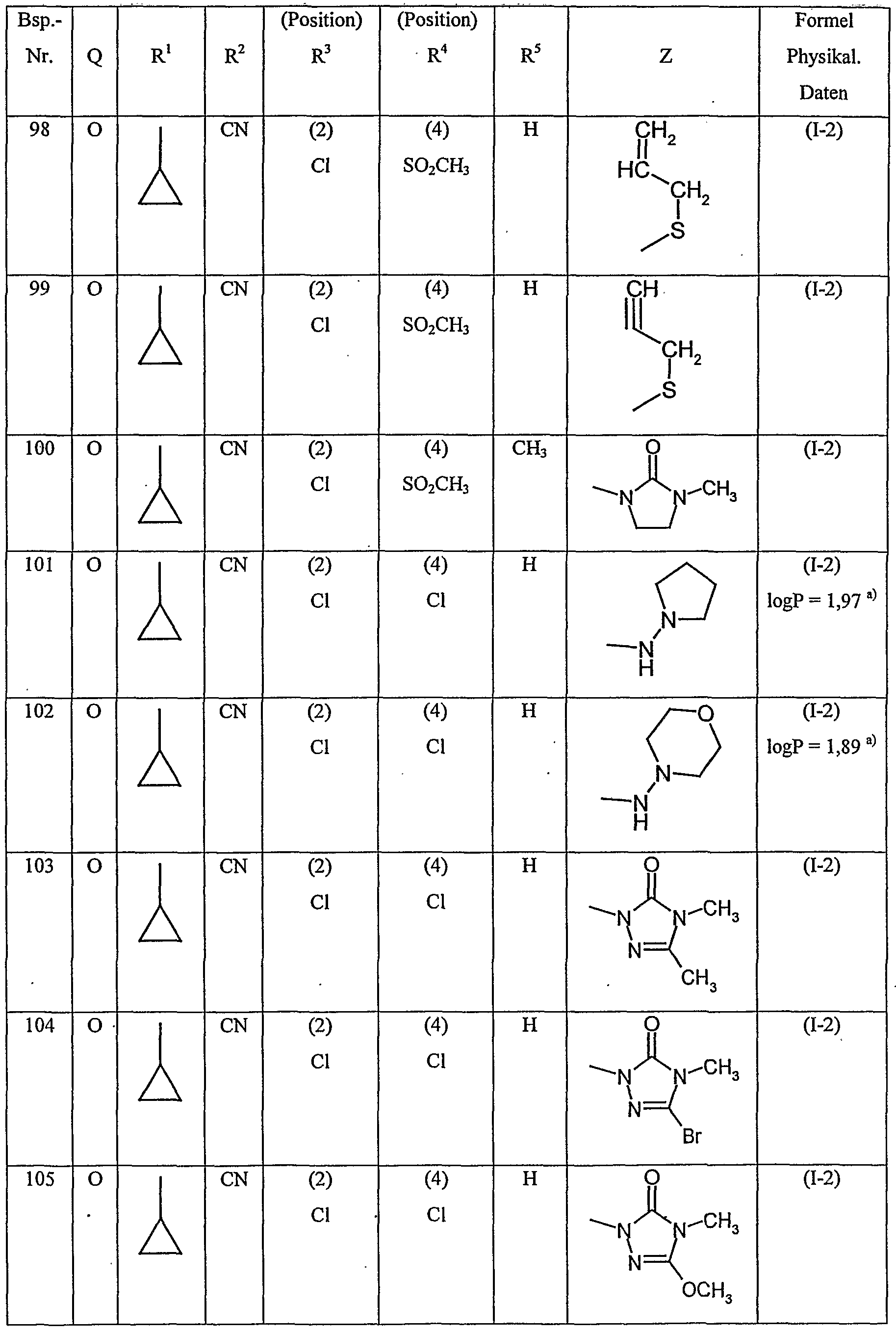


Claims


Priority Applications (1)
| Application Number | Priority Date | Filing Date | Title |
|---|---|---|---|
| AU2002319169A AU2002319169A1 (en) | 2001-05-25 | 2002-05-13 | Substituted benzoylketones as herbicidal agents for use as plant treatment agent |
Applications Claiming Priority (2)
| Application Number | Priority Date | Filing Date | Title |
|---|---|---|---|
| DE10125432A DE10125432A1 (de) | 2001-05-25 | 2001-05-25 | Substituierte Benzoylketone |
| DE10125432.6 | 2001-05-25 |
Publications (2)
| Publication Number | Publication Date |
|---|---|
| WO2002096884A2 true WO2002096884A2 (de) | 2002-12-05 |
| WO2002096884A3 WO2002096884A3 (de) | 2003-02-27 |
Family
ID=7686051
Family Applications (1)
| Application Number | Title | Priority Date | Filing Date |
|---|---|---|---|
| PCT/EP2002/005210 Ceased WO2002096884A2 (de) | 2001-05-25 | 2002-05-13 | Substituierte benzoylketone als herbizide wirkstoffe zur verwendung asl pflanzenbehandlungsmittel |
Country Status (3)
| Country | Link |
|---|---|
| AU (1) | AU2002319169A1 (de) |
| DE (1) | DE10125432A1 (de) |
| WO (1) | WO2002096884A2 (de) |
Cited By (5)
| Publication number | Priority date | Publication date | Assignee | Title |
|---|---|---|---|---|
| WO2010069802A1 (de) * | 2008-12-18 | 2010-06-24 | Basf Se | Heterozyklische diketon-derivate mit herbizider wirkung |
| WO2011064188A1 (en) * | 2009-11-27 | 2011-06-03 | Basf Se | Insecticidal methods using nitrogen-containing heteroaromatic compounds |
| EP2409704A3 (de) * | 2003-09-26 | 2013-02-13 | Exelixis Inc. | c-Met-Modulatoren und Verwendungsverfahren |
| US9809549B2 (en) | 2009-01-16 | 2017-11-07 | Exelixis, Inc. | Malate salt of N-(4-{[6,7-bis(methyloxy)quinolin-4-yl]oxy}phenyl)-N′(4-fluorophenyl)cyclopropane-1,1-dicarboxamide, and crystalline forms therof for the treatment of cancer |
| US10736886B2 (en) | 2009-08-07 | 2020-08-11 | Exelixis, Inc. | Methods of using c-Met modulators |
Family Cites Families (11)
| Publication number | Priority date | Publication date | Assignee | Title |
|---|---|---|---|---|
| ZA6706969B (de) * | 1966-12-02 | |||
| JPS58126529A (ja) * | 1981-12-24 | 1983-07-28 | Konishiroku Photo Ind Co Ltd | 写真要素 |
| JPS58206569A (ja) * | 1982-05-26 | 1983-12-01 | Otsuka Chem Co Ltd | イミダゾリジン−2−オン誘導体 |
| FR2577220B1 (fr) * | 1985-02-08 | 1987-05-29 | Rhone Poulenc Spec Chim | Procede d'acetoacetylation de composes aromatiques |
| DE3586541T2 (de) * | 1985-05-31 | 1993-01-14 | Banyu Pharma Co Ltd | 1,3-dithiol-2-ylidenderivate. |
| DK0625505T3 (da) * | 1993-05-18 | 1999-07-05 | Rhone Poulenc Agriculture | 2- Cyano-1,3-dion-derivater samt deres anvendelse som herbicider |
| GB9325618D0 (en) * | 1993-12-15 | 1994-02-16 | Rhone Poulenc Agriculture | New herbicides |
| DE4426757A1 (de) * | 1994-07-28 | 1996-02-01 | Bayer Ag | 2-Imidazolidinon-Derivate |
| CA2211436A1 (en) * | 1995-02-24 | 1996-08-29 | Basf Aktiengesellschaft | Phenyldiketone derivatives |
| JPH111326A (ja) * | 1997-06-11 | 1999-01-06 | Mitsubishi Chem Corp | 無機ガラスの製造方法及び無機ガラス |
| DE19921424A1 (de) * | 1999-05-08 | 2000-11-09 | Bayer Ag | Substituierte Benzoylketone |
-
2001
- 2001-05-25 DE DE10125432A patent/DE10125432A1/de not_active Withdrawn
-
2002
- 2002-05-13 AU AU2002319169A patent/AU2002319169A1/en not_active Abandoned
- 2002-05-13 WO PCT/EP2002/005210 patent/WO2002096884A2/de not_active Ceased
Cited By (15)
| Publication number | Priority date | Publication date | Assignee | Title |
|---|---|---|---|---|
| EP3329918A3 (de) * | 2003-09-26 | 2018-08-15 | Exelixis, Inc. | C-met-modulatoren und verfahren zur verwendung |
| US11124482B2 (en) | 2003-09-26 | 2021-09-21 | Exelixis, Inc. | C-met modulators and methods of use |
| EP2409704A3 (de) * | 2003-09-26 | 2013-02-13 | Exelixis Inc. | c-Met-Modulatoren und Verwendungsverfahren |
| EP2609919A3 (de) * | 2003-09-26 | 2014-02-26 | Exelixis, Inc. | c-Met-Modulatoren und Verwendungsverfahren |
| US20110251063A1 (en) * | 2008-12-18 | 2011-10-13 | Dschun Song | Heterocyclic diketone derivatives with herbicidal action |
| CN102256945A (zh) * | 2008-12-18 | 2011-11-23 | 巴斯夫欧洲公司 | 具有除草作用的杂环二酮衍生物 |
| WO2010069802A1 (de) * | 2008-12-18 | 2010-06-24 | Basf Se | Heterozyklische diketon-derivate mit herbizider wirkung |
| US9809549B2 (en) | 2009-01-16 | 2017-11-07 | Exelixis, Inc. | Malate salt of N-(4-{[6,7-bis(methyloxy)quinolin-4-yl]oxy}phenyl)-N′(4-fluorophenyl)cyclopropane-1,1-dicarboxamide, and crystalline forms therof for the treatment of cancer |
| US11091440B2 (en) | 2009-01-16 | 2021-08-17 | Exelixis, Inc. | Malate salt of N-(4-{[6,7-bis(methyloxy) quinolin-4-yl]oxy}phenyl)- N′-(4-fluorophenyl)cyclopropane-1,1 -dicarboxamide, and crystalline forms thereof for the treatment of cancer |
| US11091439B2 (en) | 2009-01-16 | 2021-08-17 | Exelixis, Inc. | Malate salt of N-(4-{[6,7-bis(methyloxy) quinolin-4-yl]oxy}phenyl)-N′-(4-fluorophenyl)cyclopropane-1,1-dicarboxamide, and crystalline forms therof for the treatment of cancer |
| US11098015B2 (en) | 2009-01-16 | 2021-08-24 | Exelixis, Inc. | Malate salt of N-(4-{[6,7-bis(methyloxy) quinolin-4-yl]oxy}phenyl)-N′-(4-fluorophenyl)cyclopropane-1,1-dicarboxamide, and crystalline forms thereof for the treatment of cancer |
| US12275706B2 (en) | 2009-01-16 | 2025-04-15 | Exelixis, Inc. | Malate salt of N-(4-{[6,7-bis(methyloxy) quinolin-4-yl]oxy}phenyl)-N′-(4-fluorophenyl)cyclopropane-1,1-dicarboxamide, and crystalline forms thereof for the treatment of cancer |
| US10736886B2 (en) | 2009-08-07 | 2020-08-11 | Exelixis, Inc. | Methods of using c-Met modulators |
| US11433064B2 (en) | 2009-08-07 | 2022-09-06 | Exelixis, Inc. | Methods of using c-Met modulators |
| WO2011064188A1 (en) * | 2009-11-27 | 2011-06-03 | Basf Se | Insecticidal methods using nitrogen-containing heteroaromatic compounds |
Also Published As
| Publication number | Publication date |
|---|---|
| DE10125432A1 (de) | 2002-11-28 |
| AU2002319169A1 (en) | 2002-12-09 |
| WO2002096884A3 (de) | 2003-02-27 |
Similar Documents
| Publication | Publication Date | Title |
|---|---|---|
| DE10219435A1 (de) | Substituierte Pyrazolo-pyrimidin-4-one | |
| WO2002081473A1 (de) | Substituierte azoloazin(thi)one | |
| WO2002006244A1 (de) | Heterozyklisch substituierte herbizide sulfonsäureanilide | |
| WO2004067518A1 (de) | Substituierte pyrimidine | |
| DE10034800A1 (de) | Substituierte Benzostickstoffheterocyclen | |
| US7642221B2 (en) | Substituted thien-3-yl-sulphonylamino(thio)carbonyl-triazoline(ethi)ones | |
| EP1387831A1 (de) | Substituierte arylketone | |
| WO2001090102A2 (de) | 6-heterocyclyl-3-oxo-3,4-dihydro-chinoxaline | |
| EP1208098A2 (de) | Substituierte heterocyclyl-2h-chromene | |
| EP1330443A1 (de) | Substituierte phenyluracile | |
| DE10125432A1 (de) | Substituierte Benzoylketone | |
| EP1395565A1 (de) | Herbizidwirksame substituierte benzoylpyrazole | |
| EP1480944A2 (de) | Substituierte arylketone | |
| WO2004048348A1 (de) | Substituierte 2-aryl-1,2,4-triazin-3,5-di(thi)one als herbizide | |
| DE10206792A1 (de) | Substituierte Arylketone | |
| WO2002020487A1 (de) | Substituierte 1-aryl-pyridin-2-(thi)one | |
| DE10219434A1 (de) | Substituierte (Thioxo)carbonylaminophenyl-uracile | |
| EP1379512A1 (de) | Substituierte fluoralkoxyphenylsulfonylamino(thio)carbonyl- triazolin(thi)one | |
| EP1392660B1 (de) | Substituierte benzoylzyklohexenone und deren verwendung als herbizide mittel | |
| DE10138576A1 (de) | Substituierte Benzoylcyclohexenone | |
| WO2003056922A1 (de) | Substituierte thiazolylsulfonylharnstoffe | |
| WO2001010862A2 (de) | Substituierte heterocyclylbenzofurane | |
| EP1776012A1 (de) | Aminocarbonyl-substituierte thiensulfonylamino(thio)carbonyl-triazolin(thi)one, verfahren zu deren herstellung und deren verwendung | |
| DE10219036A1 (de) | Substituierte Pyridylketone | |
| DE10055499A1 (de) | 6-Heterocyclyl-3-oxo-3,4-dihydro-chinoxaline |
Legal Events
| Date | Code | Title | Description |
|---|---|---|---|
| AK | Designated states |
Kind code of ref document: A2 Designated state(s): AE AG AL AM AT AU AZ BA BB BG BR BY BZ CA CH CN CO CR CU CZ DE DK DM DZ EC EE ES FI GB GD GE GH GM HR HU ID IL IN IS JP KE KG KP KR KZ LC LK LR LS LT LU LV MA MD MG MK MN MW MX MZ NO NZ OM PH PL PT RO RU SD SE SG SI SK SL TJ TM TN TR TT TZ UA UG US UZ VN YU ZA ZM ZW |
|
| AL | Designated countries for regional patents |
Kind code of ref document: A2 Designated state(s): GH GM KE LS MW MZ SD SL SZ TZ UG ZM ZW AM AZ BY KG KZ MD RU TJ TM AT BE CH CY DE DK ES FI FR GB GR IE IT LU MC NL PT SE TR BF BJ CF CG CI CM GA GN GQ GW ML MR NE SN TD TG |
|
| DFPE | Request for preliminary examination filed prior to expiration of 19th month from priority date (pct application filed before 20040101) | ||
| 121 | Ep: the epo has been informed by wipo that ep was designated in this application | ||
| AK | Designated states |
Kind code of ref document: A3 Designated state(s): AE AG AL AM AT AU AZ BA BB BG BR BY BZ CA CH CN CO CR CU CZ DE DK DM DZ EC EE ES FI GB GD GE GH GM HR HU ID IL IN IS JP KE KG KP KR KZ LC LK LR LS LT LU LV MA MD MG MK MN MW MX MZ NO NZ OM PH PL PT RO RU SD SE SG SI SK SL TJ TM TN TR TT TZ UA UG US UZ VN YU ZA ZM ZW |
|
| AL | Designated countries for regional patents |
Kind code of ref document: A3 Designated state(s): GH GM KE LS MW MZ SD SL SZ TZ UG ZM ZW AM AZ BY KG KZ MD RU TJ TM AT BE CH CY DE DK ES FI FR GB GR IE IT LU MC NL PT SE TR BF BJ CF CG CI CM GA GN GQ GW ML MR NE SN TD TG |
|
| REG | Reference to national code |
Ref country code: DE Ref legal event code: 8642 |
|
| 122 | Ep: pct application non-entry in european phase | ||
| NENP | Non-entry into the national phase |
Ref country code: JP |
|
| WWW | Wipo information: withdrawn in national office |
Country of ref document: JP |