WO2010032731A1 - Composé benzimidazole sous forme cristalline et un sel de celui-ci - Google Patents
Composé benzimidazole sous forme cristalline et un sel de celui-ci Download PDFInfo
- Publication number
- WO2010032731A1 WO2010032731A1 PCT/JP2009/066116 JP2009066116W WO2010032731A1 WO 2010032731 A1 WO2010032731 A1 WO 2010032731A1 JP 2009066116 W JP2009066116 W JP 2009066116W WO 2010032731 A1 WO2010032731 A1 WO 2010032731A1
- Authority
- WO
- WIPO (PCT)
- Prior art keywords
- salt
- compound
- acenaphthen
- piperidin
- dihydro
- Prior art date
- Legal status (The legal status is an assumption and is not a legal conclusion. Google has not performed a legal analysis and makes no representation as to the accuracy of the status listed.)
- Ceased
Links
Images










Classifications
-
- A—HUMAN NECESSITIES
- A61—MEDICAL OR VETERINARY SCIENCE; HYGIENE
- A61K—PREPARATIONS FOR MEDICAL, DENTAL OR TOILETRY PURPOSES
- A61K31/00—Medicinal preparations containing organic active ingredients
- A61K31/33—Heterocyclic compounds
- A61K31/395—Heterocyclic compounds having nitrogen as a ring hetero atom, e.g. guanethidine or rifamycins
- A61K31/435—Heterocyclic compounds having nitrogen as a ring hetero atom, e.g. guanethidine or rifamycins having six-membered rings with one nitrogen as the only ring hetero atom
- A61K31/44—Non condensed pyridines; Hydrogenated derivatives thereof
- A61K31/445—Non condensed piperidines, e.g. piperocaine
- A61K31/4523—Non condensed piperidines, e.g. piperocaine containing further heterocyclic ring systems
- A61K31/454—Non condensed piperidines, e.g. piperocaine containing further heterocyclic ring systems containing a five-membered ring with nitrogen as a ring hetero atom, e.g. pimozide, domperidone
-
- A—HUMAN NECESSITIES
- A61—MEDICAL OR VETERINARY SCIENCE; HYGIENE
- A61P—SPECIFIC THERAPEUTIC ACTIVITY OF CHEMICAL COMPOUNDS OR MEDICINAL PREPARATIONS
- A61P25/00—Drugs for disorders of the nervous system
-
- A—HUMAN NECESSITIES
- A61—MEDICAL OR VETERINARY SCIENCE; HYGIENE
- A61P—SPECIFIC THERAPEUTIC ACTIVITY OF CHEMICAL COMPOUNDS OR MEDICINAL PREPARATIONS
- A61P25/00—Drugs for disorders of the nervous system
- A61P25/18—Antipsychotics, i.e. neuroleptics; Drugs for mania or schizophrenia
-
- A—HUMAN NECESSITIES
- A61—MEDICAL OR VETERINARY SCIENCE; HYGIENE
- A61P—SPECIFIC THERAPEUTIC ACTIVITY OF CHEMICAL COMPOUNDS OR MEDICINAL PREPARATIONS
- A61P25/00—Drugs for disorders of the nervous system
- A61P25/20—Hypnotics; Sedatives
-
- A—HUMAN NECESSITIES
- A61—MEDICAL OR VETERINARY SCIENCE; HYGIENE
- A61P—SPECIFIC THERAPEUTIC ACTIVITY OF CHEMICAL COMPOUNDS OR MEDICINAL PREPARATIONS
- A61P25/00—Drugs for disorders of the nervous system
- A61P25/22—Anxiolytics
-
- A—HUMAN NECESSITIES
- A61—MEDICAL OR VETERINARY SCIENCE; HYGIENE
- A61P—SPECIFIC THERAPEUTIC ACTIVITY OF CHEMICAL COMPOUNDS OR MEDICINAL PREPARATIONS
- A61P25/00—Drugs for disorders of the nervous system
- A61P25/30—Drugs for disorders of the nervous system for treating abuse or dependence
-
- A—HUMAN NECESSITIES
- A61—MEDICAL OR VETERINARY SCIENCE; HYGIENE
- A61P—SPECIFIC THERAPEUTIC ACTIVITY OF CHEMICAL COMPOUNDS OR MEDICINAL PREPARATIONS
- A61P25/00—Drugs for disorders of the nervous system
- A61P25/30—Drugs for disorders of the nervous system for treating abuse or dependence
- A61P25/32—Alcohol-abuse
-
- A—HUMAN NECESSITIES
- A61—MEDICAL OR VETERINARY SCIENCE; HYGIENE
- A61P—SPECIFIC THERAPEUTIC ACTIVITY OF CHEMICAL COMPOUNDS OR MEDICINAL PREPARATIONS
- A61P25/00—Drugs for disorders of the nervous system
- A61P25/30—Drugs for disorders of the nervous system for treating abuse or dependence
- A61P25/36—Opioid-abuse
-
- A—HUMAN NECESSITIES
- A61—MEDICAL OR VETERINARY SCIENCE; HYGIENE
- A61P—SPECIFIC THERAPEUTIC ACTIVITY OF CHEMICAL COMPOUNDS OR MEDICINAL PREPARATIONS
- A61P43/00—Drugs for specific purposes, not provided for in groups A61P1/00-A61P41/00
-
- C—CHEMISTRY; METALLURGY
- C07—ORGANIC CHEMISTRY
- C07D—HETEROCYCLIC COMPOUNDS
- C07D401/00—Heterocyclic compounds containing two or more hetero rings, having nitrogen atoms as the only ring hetero atoms, at least one ring being a six-membered ring with only one nitrogen atom
- C07D401/02—Heterocyclic compounds containing two or more hetero rings, having nitrogen atoms as the only ring hetero atoms, at least one ring being a six-membered ring with only one nitrogen atom containing two hetero rings
- C07D401/04—Heterocyclic compounds containing two or more hetero rings, having nitrogen atoms as the only ring hetero atoms, at least one ring being a six-membered ring with only one nitrogen atom containing two hetero rings directly linked by a ring-member-to-ring-member bond
Definitions
- the present invention provides a crystalline embodiment of (R) -2- ⁇ 3- [1- (acenaphthen-1-yl) piperidin-4-yl] -2,3-dihydro-2-oxo-benzimidazol-1-yl ⁇ It relates to —N-methylacetamide (hereinafter referred to as the present compound) or a salt thereof.
- This compound is a compound represented by the following structural formula and exhibiting ORL-1 (opioid receptor-like 1) receptor agonist activity (Patent Document 1). This compound is produced in Example 18 of Patent Document 1.
- Compounds with ORL-1 receptor agonist activity are useful for the treatment of psychiatric, neurological and physiological disorders, especially anxiety and stress disorders, depression, traumatic disorders, memory loss due to Alzheimer's disease or other dementia, epilepsy and Symptoms of convulsions, acute and / or chronic pain symptoms, remission of drug withdrawal symptoms including withdrawal symptoms that occur during withdrawal of abused drugs, alcohol abuse, control of water balance, Na + excretion, arterial blood pressure disorder, obesity and anorexia Therefore, the present compound is also useful for the prevention and / or treatment of the above-mentioned diseases.
- An object of the present invention is to provide a stable form of the present compound which has no problems such as moisture adsorption and exhibits excellent water solubility.
- the present inventors have found that the present crystalline compound or a salt thereof is in a stable form with almost no change in weight due to moisture adsorption, and the salt of the present compound. was found to have excellent water solubility, and the present invention was completed. That is, the present invention is as follows. [1] (R) -2- ⁇ 3- [1- (Acenaphthen-1-yl) piperidin-4-yl] -2,3-dihydro-2-oxo-benzoimidazol-1-yl ⁇ -in crystalline form N-methylacetamide salt.
- a pharmaceutical composition comprising the salt or crystal according to any one of [1] to [14] as an active ingredient.
- the pharmaceutical composition according to [16] which is used for prevention and / or treatment of a disease associated with the ORL-1 receptor.
- the pharmaceutical composition according to [16] which is used for the prevention and / or treatment of a central nervous system disease involving the ORL-1 receptor.
- a method for preventing and / or treating a disease associated with the ORL-1 receptor comprising administering an effective amount of the salt or crystal according to any one of [1] to [14] to a subject.
- a method for preventing and / or treating a central nervous system disease involving ORL-1 receptor comprising administering an effective amount of the salt or crystal according to any one of [1] to [14] to a subject .
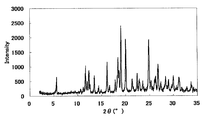
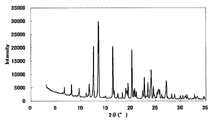
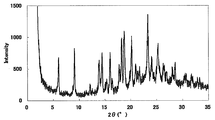
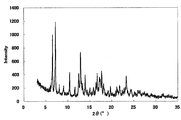
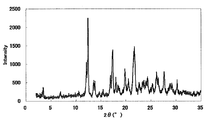
- FIG. 1 is a diagram showing an XRD pattern of a monohydrochloride monohydrate of the present compound of Example 1.
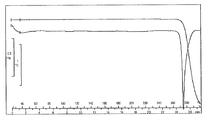
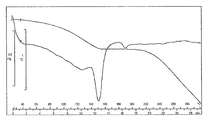
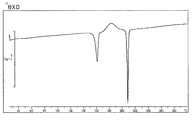
- FIG. 1 is a diagram showing a TG / DTA curve of monohydrochloride monohydrate of the present compound of Example 1.
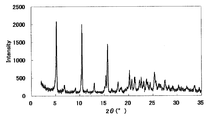
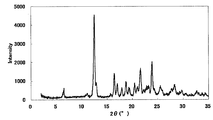
- FIG. 2 is a diagram showing an XRD pattern of a monohydrochloride salt of the present compound of Example 2.
- FIG. 4 is a diagram showing a TG / DTA curve of monohydrochloride of the present compound of Example 2.
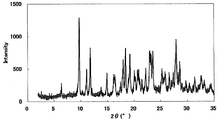
- FIG. 3 is a diagram showing an XRD pattern of a monohydrochloride ⁇ 2-3 trihydrate of the present compound of Example 3.
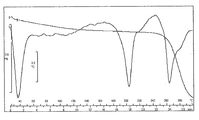
- FIG. 3 is a diagram showing a TG / DTA curve of monohydrochloride ⁇ 2-3 trihydrate of the present compound of Example 3.
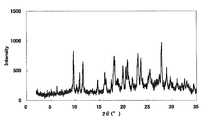
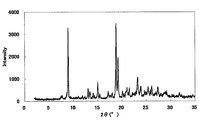
- FIG. 4 is a diagram showing an XRD pattern of a type I crystal of monohydrochloride / 1acetate solvate of the present compound of Example 4.
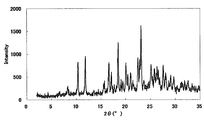
- FIG. 6 is a diagram showing an XRD pattern of a type II crystal of monohydrochloride / 1acetate solvate of the present compound of Example 5.
- FIG. 4 is a diagram showing an XRD pattern of 1 methanesulfonate of the present compound of Example 6.
- FIG. 2 is a diagram showing a TG / DTA curve of 1 methanesulfonate of the present compound of Example 6.
- FIG. FIG. 4 is a diagram showing an XRD pattern of 1 methanesulfonate ⁇ 1/2 to 1 hydrate of the present compound of Example 7.
- FIG. 3 is a graph showing a TG / DTA curve of 1 methanesulfonate ⁇ 1/2 to 1 hydrate of the present compound of Example 7.
- FIG. 4 is a diagram showing an XRD pattern of monomethanesulfonate trihydrate of the present compound of Example 8.
- 4 is a diagram showing an XRD pattern of a monomethanesulfonate dihydrate of the present compound of Example 9.
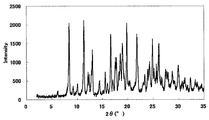
- FIG. 1 is a diagram showing an XRD pattern of a 1 ⁇ 2 fumarate salt / 3/2 hydrate of the present compound of Example 10.
- FIG. FIG. 3 is a diagram showing a TG / DTA curve of 1/2 fumarate salt / 3/2 hydrate of the present compound of Example 10.
- FIG. 3 is a diagram showing an XRD pattern of a monofumarate salt of the present compound of Example 11 and 1 to 2 hydrate.
- 2 is a diagram showing an XRD pattern of a monohydrobromide salt of the present compound of Example 12.
- FIG. 4 shows an XRD pattern of 1/2 citrate of the present compound of Example 13.
- FIG. 4 shows an XRD pattern of 1 citrate of the present compound of Example 14.
- FIG. 4 is a diagram showing an XRD pattern of 1/2 tartrate salt 1/2 hydrate of the present compound of Example 15.
- FIG. 4 is a diagram showing an XRD pattern of a crystal of the present compound of Example 16.
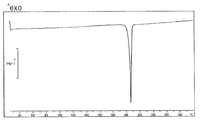
- FIG. 4 shows a DSC curve of the crystal of the present compound of Example 16.
- FIG. 4 is a diagram showing an XRD pattern of crystals of the present compound of Example 17.
- 2 is a diagram showing a DSC curve of a crystal of the present compound of Example 17.
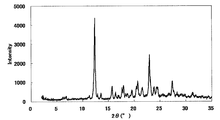
- FIG. 2 is a diagram showing an XRD pattern of crystals of the present compound of Example 18.
- FIG. 2 is a diagram showing a DSC curve of a crystal of the present compound of Example 18.
- FIG. 4 shows an XRD pattern of the monohydrate of the present compound of Example 19.
- 2 is a diagram showing an XRD pattern of crystals of the present compound of Example 20.
- FIG. FIG. 4 is a diagram showing a DSC curve of the crystal of the present compound of Example 20.
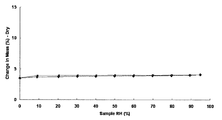
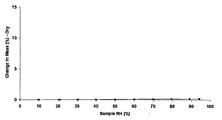
- 2 is a graph showing the results of moisture adsorption measurement of the monohydrochloride monohydrate of the present compound of Example 1.
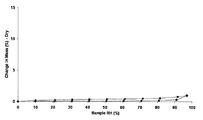
- FIG. 2 is a graph showing the results of water adsorption measurement of monohydrochloride of the present compound of Example 2.
- FIG. It is a figure which shows the result of the water
- FIG. 1 is a graph showing the results of water adsorption measurement of monohydrochloride of the present compound of Example 2.
- Examples of the salt of the present compound in the crystalline form include hydrochloride, methanesulfonate, fumarate, hydrobromide, tartrate, citrate and the like. These salts can exist in both unsolvated and solvated forms.
- solvates such as water, methanol, ethanol, isopropyl alcohol, acetone, acetonitrile, and ethyl acetate can be mentioned. preferable.
- solvates such as hemi-, mono-, di-, tri-, tetra-, penta- and hexa- can be obtained depending on the number of solvents for the present compound.
- a hydrate it is preferably a hydrate of 3 or less, more preferably a monohydrate or a dihydrate.
- the salt of the present compound in the form of crystals include hydrochloride salt, monohydrate, hydrochloride salt, anhydrous salt, hydrochloride salt, 2- to 3-hydrate salt, hydrochloride salt, monoacetonitrile, type I crystal, II Type crystals, methanesulfonate / anhydride, methanesulfonate / trihydrate, methanesulfonate / dihydrate, methanesulfonate / 1/2 to 1 hydrate, 1/2 fumaric acid Salt, 3/2 hydrate, 1 fumarate, 1-2 hydrate, hydrobromide, 1/2 citrate, 1 citrate, 1/2 DL-tartaric acid, 1/2 hydrate Thing etc.
- hydrochloride / monohydrate hydrochloride / anhydride, methanesulfonate / anhydride
- hydrochloride / monohydrate preferred is hydrochloride / monohydrate.
- the salt of the present compound in crystalline form has a markedly superior effect of being stable and having very high water solubility.
- hydrochloride / monohydrate, hydrochloride / anhydride, and methanesulfonate / anhydride have no problems such as moisture adsorption, no chargeability, good fluidity, and high bioactivity when administered orally. It also has an excellent effect of having availability (biological utilization rate).
- the salt of this compound in crystalline form is mixed with an excess of an organic acid or inorganic acid such as hydrochloric acid, methanesulfonic acid, fumaric acid, hydrobromic acid, tartaric acid, citric acid and the like in an equivalent amount to form a salt. It can be obtained by crystallization.
- an organic acid or inorganic acid such as hydrochloric acid, methanesulfonic acid, fumaric acid, hydrobromic acid, tartaric acid, citric acid and the like in an equivalent amount to form a salt.
- an organic acid or inorganic acid such as hydrochloric acid, methanesulfonic acid, fumaric acid, hydrobromic acid, tartaric acid, citric acid and the like in an equivalent amount to form a salt.
- any solvent can be used as the solvent used to form the salt, it is preferable to select a solvent that can be used as a solvent used for subsequent crystallization.
- solvent examples include water, alcohol (methanol, ethanol, 1-propanol, isopropyl alcohol, butanol, etc.), ketone (acetone, methyl ethyl ketone, etc.), nitrile (acetonitrile, propionitrile, etc.), ester (ethyl formate, acetic acid, etc.).
- alcohol methanol, ethanol, 1-propanol, isopropyl alcohol, butanol, etc.
- ketone acetone, methyl ethyl ketone, etc.
- nitrile acetonitrile, propionitrile, etc.
- ester ethyl formate, acetic acid, etc.
- hydrochloride monohydrate for example, hydrochloride is formed in a mixed solvent of water and an organic solvent such as alcohol (methanol, ethanol, 1-propanol, isopropyl alcohol, etc.), ketone (acetone, methyl ethyl ketone, etc.), etc. And can be produced by crystallization. During crystallization, esters (ethyl formate, ethyl acetate, isopropyl acetate, etc.) may be added, thereby improving the yield.
- alcohol methanol, ethanol, 1-propanol, isopropyl alcohol, etc.
- ketone acetone, methyl ethyl ketone, etc.
- esters ethyl formate, ethyl acetate, isopropyl acetate, etc.
- a hydrochloride is formed in an organic solvent such as alcohol (methanol, ethanol, 1-propanol, isopropyl alcohol, etc.) and a ketone (acetone, methyl ethyl ketone, etc.) that does not contain moisture, It can be manufactured by crystallization.
- alcohol methanol, ethanol, 1-propanol, isopropyl alcohol, etc.
- ketone acetone, methyl ethyl ketone, etc.
- it can be crystallized under anhydrous conditions using azeotropic dehydration, a dehydrating agent, or the like.
- methanesulfonate / anhydride for example, methanesulfonate is used in an organic solvent such as alcohol (methanol, ethanol, 1-propanol, isopropyl alcohol, etc.) and ketone (acetone, methyl ethyl ketone, etc.) that does not contain moisture. It can be produced by crystallization and crystallization. Moreover, after producing
- alcohol methanol, ethanol, 1-propanol, isopropyl alcohol, etc.
- ketone acetone, methyl ethyl ketone, etc.
- Examples of the present crystalline compound include type I crystals, type II crystals, type III crystals, type IV (monohydrate) crystals, and type V crystals. Preferable examples include type I crystals and type II crystals.
- the compound can be crystallized by, for example, heating to dissolve the compound and then cooling to crystallize, or adding a poor solvent to the solution of the compound. Solvents used include water, alcohol (methanol, ethanol, 1-propanol, isopropyl alcohol, butanol, etc.), ketones (acetone, methyl ethyl ketone, etc.), nitriles (acetonitrile, propionitrile, etc.), esters (ethyl formate, ethyl acetate).
- Particularly preferable solvents include water, a mixed solvent of water and alcohol (methanol, ethanol, 1-propanol, isopropyl alcohol, etc.), a mixed solvent of water and ketone (acetone, methyl ethyl ketone, etc.), or an ester thereof (ethyl formate). , Ethyl acetate, isopropyl acetate, etc.).
- the prophylactic and / or therapeutic agent for example, involved in ORL-1 receptor
- ORL-1 receptor the prophylactic and / or therapeutic agent
- the pharmaceutical preparation for the prevention and / or treatment of diseases (especially central nervous system diseases), particularly for sleep disorders, alcoholism, drug addiction, anxiety, stress disorders Can do.
- diseases especially central nervous system diseases
- the pharmaceutical preparation include pharmaceutical preparations described in WO03 / 082333 and WO2008 / 050698, which are manufactured and administered according to the method described in the publication.
- Dosage should take into account age, weight, general health, sex, diet, time of administration, method of administration, excretion rate, combination of drugs, degree of medical condition being treated at the time of the patient, and other factors It is decided.
- the daily dose is, for example, 0.01 to 1000 mg / kg body weight / day orally, and is administered once to several times a day, or about 0.01 to 100 mg / kg parenterally. It is preferable to administer kg body weight / day in 1 to several times a day.
- the preventive drug is a drug administered to a healthy person who has not developed a disease, for example, a drug administered for the purpose of preventing the onset of the disease.
- a therapeutic drug is a drug administered to a person (patient) diagnosed as having developed a disease by a doctor. For example, it is administered for the purpose of alleviating the disease or symptoms, or restoring health. It is a medicine. Moreover, even if the purpose of administration is prevention of worsening of diseases and symptoms, or prevention of seizures, it is a therapeutic agent if administered to a patient.
- This compound was synthesized according to the method described in WO03 / 082333.
- Powder X-ray diffraction (XRD) was performed using Cu K ⁇ 1 as an X-ray tube at room temperature using a powder X-ray diffractometer RINT2200 / Ultima + (Rigaku) or X'Pert Pro MPD (PANallytical).
- a diffraction angle (2 ⁇ ) range of ⁇ 35 ° was measured.
- the measurement conditions using each diffraction device are as follows.
- Tube current 40 mA, tube voltage: 40 kV, scanning speed: 4 ° / min
- Diffraction device X'Pert Pro MPD (PANallytical)
- Tube current 40 mA, tube voltage: 45 kV, scanning speed: 40.1 ° / min.
- Tube current 30 mA, tube voltage: 40 kV, scanning speed: 12.3 ° / min. In general, a variation of about ⁇ 0.2 ° is observed, but a larger error may occur depending on the measurement conditions.
- Thermal analysis was performed in a stream of 40 mL of dry nitrogen gas per minute using a differential thermogravimetric simultaneous measurement device TG / SDTA851e (TG / DTA) or a differential scanning calorimetry device DSC821e (DSC) manufactured by METTLER TOLEDO, It measured on the temperature increase rate conditions of 10 degree-C / min.
- TG / DTA differential thermogravimetric simultaneous measurement device
- DSC821e DSC821e
- Example 1 Monohydrochloride monohydrate of this compound Monohydrochloride monohydrate was obtained according to the following (1) to (4).
- a hydrogen chloride solution (7 ml of a solution of 10 ml of 4M hydrochloric acid-ethyl acetate solution diluted with 30 ml of acetonitrile) was added dropwise with stirring at 40 ° C. The mixture was further stirred at 40 ° C. for 10 minutes and allowed to stand for 6 hours when it became a homogeneous solution. Then, 2.6 g of precipitated I-hydrochloride monoacetate crystals of this compound were collected by filtration.
- the obtained homogeneous solution was concentrated under reduced pressure to about half at 55 ° C., and then 5 ml of isopropyl acetate was added dropwise in 30 minutes.
- the obtained suspension was stirred at 55 ° C. for 1.5 hours and at room temperature for 3 hours, and then the precipitated crystals were collected by filtration and dried at 60 ° C. under vacuum to give 1.0 g of the title compound as white crystals. Obtained.
- Example 2 Monohydrochloride / anhydride of this compound To a suspension of 2.64 g of this compound and 29 ml of isopropyl alcohol, 1.04 ml (1.05 equivalents) of 6M hydrochloric acid was added at room temperature with stirring. After heating, insoluble matters were filtered, 32 ml of isopropyl alcohol was added to the filtrate, and stirring was continued at room temperature. After 35 ml of the solvent was distilled off by atmospheric distillation (removal of water by azeotropic distillation), seed crystals were added, 15 ml of the solvent was distilled off, and “25 ml of isopropyl alcohol and 25 ml of solvent were distilled off” were repeated twice.
- Example 3 Monohydrochloride ⁇ 2-3 hydrate of this compound 15 mL of water was added to 500 mg of the monohydrochloride ⁇ monohydrate of Example 1, and the mixture was heated to about 75 ° C. and cooled again to around room temperature. Seed crystals were added to this suspension, and the mixture was stirred and washed at room temperature for 1 week under light shielding. The precipitated crystals were collected by filtration to give the title compound as a crystalline white powder. [XRD (diffractometer: RINT2200 / Ultima +)] The XRD pattern is shown in FIG.
- Characteristic peaks are 6.4 °, 9.7 °, 11.8 °, 14.9 °, 18.4 °, and 19.2 ° (each ⁇ 0.2 °) as diffraction angles (2 ⁇ ). It was near.
- [TG / DTA] From around 40 ° C., a weight loss due to desorption of crystal water (about 7 to 11%, which varies depending on the environmental humidity at the time of measurement), and an endothermic peak due to it were observed. In this measurement method, the temperature at which the weight loss due to desorption of crystallization water and the endothermic peak resulting from it decrease and the range thereof may vary depending on the crystal particle size, crystal habit, and the like of the title compound. Further, an endothermic peak having a peak top around 215 ° C. was observed, and then a significant weight reduction due to decomposition was observed. The obtained TG / DTA curve is shown in FIG.
- Example 4 Form 1 crystals of monohydrochloride and monoacetonitrile solvate of this compound
- 1.1 mL of 90% acetonitrile solution was added and heated to 65 ° C. While stirring this suspension, an ethanol solution of hydrochloric acid corresponding to 1.2 equivalents was added and dissolved completely, and then slowly cooled to 25 ° C. Seed crystals were added thereto, and the mixture was stirred at room temperature for 1 day, and the precipitated crystals were collected by filtration to obtain 361 mg of the title compound as a crystalline white powder.
- XRD diffractometer: RINT2200 / Ultima +
- the XRD pattern is shown in FIG. Characteristic peaks were around 9.7 °, 18.1 °, 21.9 °, 25.6 °, and 27.8 ° (each ⁇ 0.2 °) as diffraction angles (2 ⁇ ).
- Example 5 Type II crystals of monohydrochloride monoacetate solvate of this compound 2.2 mL of acetonitrile was added to 5 mg monohydrochloride monohydrate of Example 1, and dissolved by heating to 60 ° C. After hot filtration, the filtrate was allowed to stand overnight at 20 ° C. to obtain a crystalline white solid.
- XRD X'Pert Pro MPD [Condition 2]
- the XRD pattern is shown in FIG. The characteristic peaks were around 12.6 °, 13.6 °, 16.5 °, 20.3 ° and 24.1 ° (each ⁇ 0.2 °) as diffraction angles (2 ⁇ ).
- Example 6 1 Methanesulfonate / anhydride of this compound According to the following (1) and (2), 1methanesulfonate / anhydride was obtained.
- 1M-methanesulfonic acid ethanol solution 5.4 ml 1.2 equivalents
- Characteristic peaks are 7.6 °, 11.5 °, 17.6 °, 18.4 °, 19.9 °, and 23.5 ° ( ⁇ 0.2 ° respectively) as diffraction angles (2 ⁇ ). It was near.
- [TG / DTA] Melting and / or decomposition peaks were observed at 271 ° C. (extrapolated onset temperature) and significant weight loss due to decomposition was observed. The obtained TG / DTA curve is shown in FIG.
- Example 7 1 Methanesulfonic acid salt of this compound ⁇ 1/2 to 1 hydrate 0.1 mL of 90% toluene / methanol solution was added to 15 mg of 1methanesulfonic acid salt ⁇ anhydride of this compound. The mixture was capped and stirred for about 1 month at room temperature under light shielding to gradually evaporate the solvent, and the title compound was obtained as a crystalline white powder.
- XRD diffractometer: RINT2200 / Ultima +
- the XRD pattern is shown in FIG. The characteristic peaks were around 10.7 °, 11.4 °, 16.9 °, 21.4 ° and 25.5 ° (each ⁇ 0.2 °) as diffraction angles (2 ⁇ ).
- Example 8 1 Methanesulfonic acid salt / trihydrate of this compound 2 mL of water was added to 200 mg of 1methanesulfonic acid salt / anhydride of this compound. After heating and dissolving at 80 ° C., the mixture was cooled to room temperature, and a small amount of seed crystals was added thereto, followed by stirring at room temperature. This was covered and aged at room temperature for 4 days in the dark, and the precipitate was filtered and placed in a sealed container to give the title compound as a crystalline white solid. [XRD (diffractometer: RINT2200 / Ultima +)] The XRD pattern is shown in FIG. The characteristic peaks were around 8.9 °, 15.0 °, 18.8 ° and 19.2 ° (each ⁇ 0.2 °) as diffraction angles (2 ⁇ ).
- Example 9 Monomethanesulfonate dihydrate of this compound Monomethanesulfonate trihydrate of this compound of Example 8 was dried under reduced pressure at room temperature for about 30 minutes to obtain the title compound as a crystalline white powder. It was. [XRD (diffractometer: RINT2200 / Ultima +)] The XRD pattern is shown in FIG. The characteristic peaks were around 9.4 °, 10.6 °, 16.1 °, 18.1 °, and 19.8 ° (each ⁇ 0.2 °) as diffraction angles (2 ⁇ ).
- Example 10 1 ⁇ 2 fumarate salt of this compound , 3/2 hydrate
- a suspension of 2 g of this compound and 20 ml of aqueous ethanol (18 ml of ethanol + 2 ml of water) 10.8 ml (1. 2 equivalents) was added dropwise with stirring at 70 ° C. After complete dissolution, the mixture was cooled to room temperature and stirred as it was overnight. The precipitated crystals were collected by filtration and dried under vacuum at 40 ° C. for 2 hours to obtain 1.52 g of the title compound as white crystals.
- XRD Powder X-ray diffraction
- Characteristic peaks are around 8.4 °, 11.2 °, 18.0 °, 19.2 °, 21.1 ° and 23.1 ° (each ⁇ 0.2 °) as diffraction angles (2 ⁇ ).
- Met. [TG / DTA] From about 50 ° C., a weight loss of 5.5% accompanying the desorption of water of crystallization was gradually observed, and a gentle endothermic peak was observed. In this measurement method, the temperature at which the weight loss due to desorption of crystallization water and the endothermic peak resulting from it decrease and the range thereof may vary depending on the crystal particle size, crystal habit, and the like of the title compound. Further, an endothermic peak having a peak top was observed around 150 ° C., and a significant weight reduction due to decomposition was observed from around 220 ° C. The obtained TG / DTA curve is shown in FIG.
- Example 11 1 fumarate salt of this compound, 1 to 2 hydrate 2 mL of methanol was added to 200 mg of this compound, and 2.4 equivalent of a fumaric acid ethanol solution was added dropwise at 60 ° C. with heating and stirring. A small amount of precipitate was observed when 0.9 mL of methanol was added and completely dissolved while stirring at a temperature of 65 ° C. and then slowly cooled to room temperature. The crystals were aged by stirring at room temperature for about 4 days, and the precipitated crystals were collected by filtration. Drying at 40 ° C. under vacuum for 1 hour gave 116 mg of the title compound as a crystalline white powder.
- Example 12 Monohydrobromide salt of this compound 0.5 mL of 90% ethanol solution was added to 50 mg of this compound and heated to 60 ° C. While stirring this suspension, an ethanol solution of hydrobromic acid equivalent to 1.2 equivalents was added and completely dissolved, and then slowly cooled to room temperature. Seed crystals were added thereto, and the mixture was stirred at room temperature for one day and night. The precipitated crystals were collected by filtration and air-dried for 10 minutes to obtain 35 mg of the title compound as a crystalline white powder.
- XRD diffractometer: RINT2200 / Ultima +
- the XRD pattern is shown in FIG. Characteristic peaks were around 8.3 °, 10.4 °, 11.9 °, 18.5 ° and 23.2 ° (each ⁇ 0.2 °) as diffraction angles (2 ⁇ ).
- Example 13 1/2 citrate of this compound 2 mL of 80 mM citric acid aqueous solution was added to 150 mg of this compound, followed by shaking at 200 ° C. for about 24 hours (200 rpm). This was allowed to stand at room temperature for 5 days, and the solid component was collected by filtration to obtain 139 mg of the title compound as a crystalline white powder.
- XRD diffractometer: RINT2200 / Ultima +
- the XRD pattern is shown in FIG. Characteristic peaks are around 8.4 °, 11.3 °, 13.0 °, 16.6 °, 19.8 °, and 21.8 ° (each ⁇ 0.2 °) as diffraction angles (2 ⁇ ). Met.
- Example 14 Citrate of this compound 1 mL of 1.7 M citric acid aqueous solution was added to 100 mg of 1/2 citrate of this compound, and the mixture was shaken (200 rpm) at 37 ° C. for about 24 hours. The solid component was collected by filtration to give the title compound as a crystalline white powder.
- XRD diffractometer: RINT2200 / Ultima +
- Characteristic peaks were around 8.0 °, 9.1 °, 16.0 °, 18.2 °, and 24.4 ° (each ⁇ 0.2 °) as diffraction angles (2 ⁇ ).
- Example 15 1 / 2DL-tartrate 1/2 hydrate of this compound A suspension of 440 mg of this compound and 20 ml of methanol was heated and stirred at 80 ° C., and 10 m of methanol was added. After complete dissolution, 2.4 ml (2.4 equivalents) of 1M-DL-ethanolic tartrate solution was added dropwise with stirring at 80 ° C. The mixture was cooled to room temperature and stirred as it was for 3 hours. The precipitated crystals were collected by filtration and dried under vacuum at 60 ° C. for 2 hours to obtain 274.3 mg of the title compound as white crystals.
- Example 16 150 g of ethanol was added to 42 g of this compound of type I crystals of this compound, and the mixture was heated and stirred at 70 ° C. After complete dissolution, 600 ml of ethyl acetate was added, cooled to room temperature, and stirred as it was for a whole day and night. The precipitated crystals were collected by filtration and dried at 60 ° C. under reduced pressure for 10 hours to obtain 31 g of the title compound as slightly pink crystals. [XRD (diffractometer: RINT2200 / Ultima +)] The XRD pattern is shown in FIG.
- Example 17 Type II crystals of this compound To 2 g of the compound obtained in Example 1, 400 ml of ethyl acetate was added and heated to reflux. After completely dissolving, it was cooled to room temperature and left as it was for a whole day and night. The precipitated crystals were collected by filtration and dried at 60 ° C. under reduced pressure for 5 hours to obtain 0.3 g of the title compound as white crystals.
- XRD diffractometer: RINT2200 / Ultima +
- the XRD pattern is shown in FIG. Characteristic peaks are 6.3 °, 12.6 °, 13.7 °, 14.4 °, 16.7 °, 20.9 °, and 23.5 ° ( ⁇ each) as diffraction angles (2 ⁇ ). 0.2 °).
- [DSC] A melting point (extrapolated onset temperature) was observed around 204 ° C. The DSC curve is shown in FIG.
- Example 18 Type III crystals of this compound 200 ml of ethanol was added to 25 g of this compound, and the mixture was heated and stirred at 70 ° C. After complete dissolution, the solution was concentrated under reduced pressure until a solid precipitated. It was cooled to room temperature and left as it is for a whole day and night. The precipitated crystals were collected by filtration and dried at 60 ° C. under reduced pressure for 8 hours to obtain 20 g of the title compound as slightly yellow crystals.
- XRD diffractometer: RINT2200 / Ultima +
- the characteristic peaks are 6.2 °, 6.4 °, 6.8 °, 12.3 °, 15.7 °, and 23.0 ° (each ⁇ 0.2 °) as diffraction angles (2 ⁇ ). It was near.
- [DSC] A melting point (extrapolated onset temperature) was observed around 191 ° C. In addition, following the melting peak, an exothermic peak was observed so as to overlap, and then a second endothermic peak was observed around about 204 ° C. (extrapolation start temperature). The DSC curve is shown in FIG.
- Example 19 Form IV (monohydrate) crystals of this compound According to the following (1) to (2), type IV (monohydrate) crystals were obtained.
- a suspension obtained by adding 3 mL of sodium phosphate buffer (pH 6.8) to about 15 mg of the hydrochloride monohydrate of Example 1 was shaken at 37 ° C. for 24 hours. The solid component of the suspension was quickly filtered and stored in a sealed container to give the title compound as white crystals.
- Example 20 V-type crystals of this compound Several mg of the compound of Example 19 was dried (for example, dried at 40 ° C. under reduced pressure for 1 hour) to give the title compound as white crystals.
- XRD diffractometer: RINT2200 / Ultima +
- the XRD pattern is shown in FIG. Characteristic peaks are around 3.4 °, 6.9 °, 12.1 °, 12.4 °, 17.4 ° and 21.7 ° (each ⁇ 0.2 °) as diffraction angles (2 ⁇ ). Met.
- [DSC] A melting point (extrapolated onset temperature) was observed around 157 ° C. Following the melting peak, an exothermic peak was observed near about 172 ° C. (extrapolation start temperature), and then a second endothermic peak was observed near about 207 ° C. (extrapolation start temperature).
- the DSC curve is shown in FIG.
- Test example 1 Moisture adsorption measurement
- Moisture adsorption measurement which is an index of hygroscopicity
- the relative humidity was varied in the range from 0% to 95% relative humidity.
- the change in weight was recorded for each set relative humidity, and converted into a change (%) based on the weight at 0% relative humidity.
- the monohydrochloride monohydrate of Example 1 is a hydrate with very stable water of crystallization, and the weight loss does not become 0 even when left at a relative humidity of 0% RH for 15 hours. It was.
- the 1/2 fumarate salt 3/2 hydrate of Example 10 and the 1 methanesulfonic acid trihydrate of Example 8 were 1.3% and 2.0% by weight absorption, respectively. Showed an increase.
- monohydrochloride ⁇ 2-3 hydrate of Example 3 monomethanesulfonate ⁇ 1 / 2–1 hydrate of Example 7, monofumarate of Example 11, 1–2 hydrate
- the citrate salt of Example 13, the citrate salt of Example 13, the citrate salt of Example 14, and the 1 ⁇ 2 tartrate salt 1 ⁇ 2 hydrate of Example 15 are all increased in weight by absorption of 4% or more. was there.
- Test example 2 Solubility in water
- HPLC high performance liquid chromatography
- Example 16 0.01 mg / ml
- Example 17 0.01 mg / ml
- Example 6 > 2 mg / ml
- Example 1 > 2 mg / ml
- Example 10 0.3 mg / ml
Landscapes
- Health & Medical Sciences (AREA)
- Chemical & Material Sciences (AREA)
- Organic Chemistry (AREA)
- General Health & Medical Sciences (AREA)
- Veterinary Medicine (AREA)
- Public Health (AREA)
- Medicinal Chemistry (AREA)
- Animal Behavior & Ethology (AREA)
- Life Sciences & Earth Sciences (AREA)
- Pharmacology & Pharmacy (AREA)
- Bioinformatics & Cheminformatics (AREA)
- Engineering & Computer Science (AREA)
- Nuclear Medicine, Radiotherapy & Molecular Imaging (AREA)
- General Chemical & Material Sciences (AREA)
- Chemical Kinetics & Catalysis (AREA)
- Neurosurgery (AREA)
- Biomedical Technology (AREA)
- Neurology (AREA)
- Addiction (AREA)
- Psychiatry (AREA)
- Epidemiology (AREA)
- Anesthesiology (AREA)
- Pharmaceuticals Containing Other Organic And Inorganic Compounds (AREA)
- Plural Heterocyclic Compounds (AREA)
Abstract
Priority Applications (4)
| Application Number | Priority Date | Filing Date | Title |
|---|---|---|---|
| CN200980136325XA CN102159565A (zh) | 2008-09-16 | 2009-09-16 | 晶体形式的苯并咪唑化合物及其盐 |
| US13/119,242 US8471032B2 (en) | 2008-09-16 | 2009-09-16 | Benzimidazole compound in crystal form and salt thereof |
| JP2010529765A JPWO2010032731A1 (ja) | 2008-09-16 | 2009-09-16 | 結晶態様のベンゾイミダゾール化合物又はその塩 |
| EP09814576A EP2345649A4 (fr) | 2008-09-16 | 2009-09-16 | Composé benzimidazole sous forme cristalline et un sel de celui-ci |
Applications Claiming Priority (2)
| Application Number | Priority Date | Filing Date | Title |
|---|---|---|---|
| JP2008235846 | 2008-09-16 | ||
| JP2008-235846 | 2008-09-16 |
Publications (1)
| Publication Number | Publication Date |
|---|---|
| WO2010032731A1 true WO2010032731A1 (fr) | 2010-03-25 |
Family
ID=42039555
Family Applications (1)
| Application Number | Title | Priority Date | Filing Date |
|---|---|---|---|
| PCT/JP2009/066116 Ceased WO2010032731A1 (fr) | 2008-09-16 | 2009-09-16 | Composé benzimidazole sous forme cristalline et un sel de celui-ci |
Country Status (6)
| Country | Link |
|---|---|
| US (1) | US8471032B2 (fr) |
| EP (1) | EP2345649A4 (fr) |
| JP (1) | JPWO2010032731A1 (fr) |
| CN (1) | CN102159565A (fr) |
| TW (1) | TW201016675A (fr) |
| WO (1) | WO2010032731A1 (fr) |
Families Citing this family (2)
| Publication number | Priority date | Publication date | Assignee | Title |
|---|---|---|---|---|
| JP5089687B2 (ja) * | 2006-10-16 | 2012-12-05 | 田辺三菱製薬株式会社 | アルコール依存症または薬物依存症の予防または治療剤 |
| CN112225732B (zh) * | 2019-07-15 | 2024-01-09 | 四川科瑞德制药股份有限公司 | 一种盐酸哌罗匹隆水合物晶型及其制备方法 |
Citations (4)
| Publication number | Priority date | Publication date | Assignee | Title |
|---|---|---|---|---|
| WO2003082333A1 (fr) * | 2002-03-29 | 2003-10-09 | Mitsubishi Pharma Corporation | Remede contre les troubles du sommeil |
| JP2006508909A (ja) * | 2002-08-06 | 2006-03-16 | テバ ファーマシューティカル インダストリーズ リミティド | ガチフロキサシンの新規な結晶形 |
| JP2006199700A (ja) * | 2005-01-21 | 2006-08-03 | Pfizer Ltd | 結晶形態 |
| JP2008534436A (ja) * | 2005-04-07 | 2008-08-28 | 帝人ファーマ株式会社 | アミノピロリジン誘導体の結晶及びその製造方法 |
Family Cites Families (14)
| Publication number | Priority date | Publication date | Assignee | Title |
|---|---|---|---|---|
| CA2226058C (fr) | 1997-01-30 | 2008-01-29 | F. Hoffmann-La Roche Ag | Derives de substitution en 8 de 1,3,8-triazaspiro[4.5]decan-4-one |
| ES2226129T3 (es) | 1997-05-30 | 2005-03-16 | Banyu Pharmaceutical Co., Ltd. | Derivados de 2-0x0imidazol. |
| ATE212635T1 (de) | 1997-12-05 | 2002-02-15 | 1,3,8-triazaspiro(4,5)decan-4-on-derivate | |
| AU1679099A (en) | 1998-01-19 | 1999-08-02 | Pfizer Inc. | 4-(2-keto-1-benzimidazolinyl)piperidine compounds as orl1-receptor agonists |
| PT963985E (pt) | 1998-06-12 | 2003-06-30 | Hoffmann La Roche | Derivados de di- ou triaza-espiro(4,5)decano |
| ID29137A (id) | 1998-07-27 | 2001-08-02 | Schering Corp | Ligan-ligan afinitas tinggi untuk reseptor nosiseptin orl-1 |
| US20020009486A1 (en) | 1999-11-30 | 2002-01-24 | 3M Innovative Properties Company | Therapeutic agent delivery incorporating reflective optical film |
| AU1816901A (en) | 1999-12-06 | 2001-06-12 | Euro-Celtique S.A. | Benzimidazole compounds having nociceptin receptor affinity |
| EP1248869A2 (fr) * | 2000-01-07 | 2002-10-16 | Transform Pharmaceuticals, Inc. | Formation, identification et analyse a productivites elevees de formes solides diverses |
| US7423153B2 (en) | 2002-05-10 | 2008-09-09 | Teva Pharmaceutical Industries Ltd. | Crystalline forms of gatifloxacin |
| AR045939A1 (es) | 2003-09-25 | 2005-11-16 | Solvay Pharm Bv | Derivados de bencimidazolona y quinazolinona como agonistas de los receptores orl 1 humanos |
| JP5089687B2 (ja) * | 2006-10-16 | 2012-12-05 | 田辺三菱製薬株式会社 | アルコール依存症または薬物依存症の予防または治療剤 |
| JPWO2008102859A1 (ja) * | 2007-02-22 | 2010-05-27 | 田辺三菱製薬株式会社 | 不安障害の予防および/または治療薬 |
| BRPI0808025A2 (pt) | 2007-03-01 | 2014-06-24 | Mitsubishi Tanabe Pharma Corp | Composto de benzimidazol e uso farmacêutico do mesmo |
-
2009
- 2009-09-15 TW TW098131012A patent/TW201016675A/zh unknown
- 2009-09-16 WO PCT/JP2009/066116 patent/WO2010032731A1/fr not_active Ceased
- 2009-09-16 CN CN200980136325XA patent/CN102159565A/zh active Pending
- 2009-09-16 US US13/119,242 patent/US8471032B2/en not_active Expired - Fee Related
- 2009-09-16 JP JP2010529765A patent/JPWO2010032731A1/ja active Pending
- 2009-09-16 EP EP09814576A patent/EP2345649A4/fr not_active Withdrawn
Patent Citations (4)
| Publication number | Priority date | Publication date | Assignee | Title |
|---|---|---|---|---|
| WO2003082333A1 (fr) * | 2002-03-29 | 2003-10-09 | Mitsubishi Pharma Corporation | Remede contre les troubles du sommeil |
| JP2006508909A (ja) * | 2002-08-06 | 2006-03-16 | テバ ファーマシューティカル インダストリーズ リミティド | ガチフロキサシンの新規な結晶形 |
| JP2006199700A (ja) * | 2005-01-21 | 2006-08-03 | Pfizer Ltd | 結晶形態 |
| JP2008534436A (ja) * | 2005-04-07 | 2008-08-28 | 帝人ファーマ株式会社 | アミノピロリジン誘導体の結晶及びその製造方法 |
Also Published As
| Publication number | Publication date |
|---|---|
| EP2345649A1 (fr) | 2011-07-20 |
| JPWO2010032731A1 (ja) | 2012-02-09 |
| CN102159565A (zh) | 2011-08-17 |
| EP2345649A4 (fr) | 2012-07-04 |
| US20110178128A1 (en) | 2011-07-21 |
| TW201016675A (en) | 2010-05-01 |
| US8471032B2 (en) | 2013-06-25 |
Similar Documents
| Publication | Publication Date | Title |
|---|---|---|
| TWI548630B (zh) | 1-(3-氰基-1-異丙基-吲哚-5-基)吡唑-4-羧酸結晶型及其製造方法 | |
| AU2016253550B2 (en) | A crystalline form of (R)-7-chloro-N-(quinuclidin-3-yl)benzo[b]thiophene-2- carboxamide hydrochloride monohydrate | |
| EP2875016B1 (fr) | Dérivés de carbamate/urée | |
| CA2728541A1 (fr) | Formes cristallines de thiazolidinedione et methode pour leur production | |
| JP2022504943A (ja) | アミノピリミジン誘導体又はその塩を含む経口投与用医薬組成物 | |
| CN104010636A (zh) | 三环化合物、包含它们的组合物及其用途 | |
| CN118843624A (zh) | 结晶的咪唑并[4,5-b]吡啶化合物、药物组合物以及它们在治疗医学病况中的应用 | |
| JP6610793B2 (ja) | 環状アミン誘導体の結晶及びその医薬用途 | |
| WO2010032731A1 (fr) | Composé benzimidazole sous forme cristalline et un sel de celui-ci | |
| WO2026036924A1 (fr) | Sel pharmaceutiquement acceptable d'inhibiteur de tyrosine kinase, cristal, procédé de préparation et utilisation | |
| WO2008080290A1 (fr) | Antagoniste selectif du recepteur m4 et utilisation medicale associee | |
| WO2025067477A1 (fr) | Cyclopeptide d'acinetobacter baumannii et son utilisation | |
| WO2010111951A1 (fr) | Cristaux de bromhydrate de prasugrel | |
| JP5888612B2 (ja) | 縮合ピリジン化合物塩の結晶 | |
| US9981912B2 (en) | Cocrystal of lorcaserin, preparation methods, pharmaceutical compositions and uses thereof | |
| CN112851640B (zh) | 嘧啶苯甲酰胺化合物的硫酸盐及其用途 | |
| CN119403807A (zh) | 5H-吡咯并[2,3-d]嘧啶-6(7H)-酮及其盐体的结晶 | |
| JP4435090B2 (ja) | スルホンアミド含有インドール化合物の結晶およびその製造方法 | |
| HK40063249B (zh) | [2-(3-氟-5-甲磺酰基苯氧基)乙基](丙基)胺的药学上可接受的盐及其用途 | |
| CN103382177A (zh) | 罗氟司特n-氧化物的多晶型物、制备方法和药物组合物 | |
| TW201904972A (zh) | 一種咪唑并異吲哚類衍生物游離鹼的晶型及其製備方法 | |
| WO2013103004A1 (fr) | Forme cristalline de formule(2e)-3-(1h-indazole-3-yl)-n-(3-méthoxyphényle)-n-[3-(méthylsulfonyle)propyle]but-2-énamide |
Legal Events
| Date | Code | Title | Description |
|---|---|---|---|
| WWE | Wipo information: entry into national phase |
Ref document number: 200980136325.X Country of ref document: CN |
|
| 121 | Ep: the epo has been informed by wipo that ep was designated in this application |
Ref document number: 09814576 Country of ref document: EP Kind code of ref document: A1 |
|
| WWE | Wipo information: entry into national phase |
Ref document number: 2010529765 Country of ref document: JP |
|
| WWE | Wipo information: entry into national phase |
Ref document number: 13119242 Country of ref document: US |
|
| NENP | Non-entry into the national phase |
Ref country code: DE |
|
| WWE | Wipo information: entry into national phase |
Ref document number: 2009814576 Country of ref document: EP |