WO2012161484A2 - Alliage à base de magnésium obtenu à l'aide d'un composé de silicium et son procédé de production - Google Patents
Alliage à base de magnésium obtenu à l'aide d'un composé de silicium et son procédé de production Download PDFInfo
- Publication number
- WO2012161484A2 WO2012161484A2 PCT/KR2012/003964 KR2012003964W WO2012161484A2 WO 2012161484 A2 WO2012161484 A2 WO 2012161484A2 KR 2012003964 W KR2012003964 W KR 2012003964W WO 2012161484 A2 WO2012161484 A2 WO 2012161484A2
- Authority
- WO
- WIPO (PCT)
- Prior art keywords
- magnesium
- silicon compound
- molten metal
- alloy
- silicon
- Prior art date
- Legal status (The legal status is an assumption and is not a legal conclusion. Google has not performed a legal analysis and makes no representation as to the accuracy of the status listed.)
- Ceased
Links
Images




Classifications
-
- C—CHEMISTRY; METALLURGY
- C22—METALLURGY; FERROUS OR NON-FERROUS ALLOYS; TREATMENT OF ALLOYS OR NON-FERROUS METALS
- C22B—PRODUCTION AND REFINING OF METALS; PRETREATMENT OF RAW MATERIALS
- C22B26/00—Obtaining alkali, alkaline earth metals or magnesium
- C22B26/20—Obtaining alkaline earth metals or magnesium
- C22B26/22—Obtaining magnesium
-
- B—PERFORMING OPERATIONS; TRANSPORTING
- B22—CASTING; POWDER METALLURGY
- B22D—CASTING OF METALS; CASTING OF OTHER SUBSTANCES BY THE SAME PROCESSES OR DEVICES
- B22D21/00—Casting non-ferrous metals or metallic compounds so far as their metallurgical properties are of importance for the casting procedure; Selection of compositions therefor
- B22D21/02—Casting exceedingly oxidisable non-ferrous metals, e.g. in inert atmosphere
- B22D21/04—Casting aluminium or magnesium
-
- C—CHEMISTRY; METALLURGY
- C22—METALLURGY; FERROUS OR NON-FERROUS ALLOYS; TREATMENT OF ALLOYS OR NON-FERROUS METALS
- C22B—PRODUCTION AND REFINING OF METALS; PRETREATMENT OF RAW MATERIALS
- C22B9/00—General processes of refining or remelting of metals; Apparatus for electroslag or arc remelting of metals
- C22B9/10—General processes of refining or remelting of metals; Apparatus for electroslag or arc remelting of metals with refining or fluxing agents; Use of materials therefor, e.g. slagging or scorifying agents
-
- C—CHEMISTRY; METALLURGY
- C22—METALLURGY; FERROUS OR NON-FERROUS ALLOYS; TREATMENT OF ALLOYS OR NON-FERROUS METALS
- C22C—ALLOYS
- C22C23/00—Alloys based on magnesium
Definitions
- the present invention relates to a magnesium-based alloy prepared by directly adding a silicon compound instead of silicon to a molten magnesium or magnesium alloy, and a method of manufacturing the same. More specifically, a magnesium alloy in which a silicon compound is introduced into a molten magnesium or a magnesium alloy to induce a reduction reaction of the silicon compound in the molten metal, and the silicon produced by the reduction reaction is compounded in the molten metal and a method for preparing the same. will be.
- magnesium or magnesium alloy is the lightest metal among practical metals, and is expected to be a lightweight structural material because of its excellent strength and specific strength.
- magnesium alloys are alloyed by adding alloying elements other than compounds to magnesium or magnesium alloys.
- An object of the present invention is to provide a magnesium-based alloy prepared by a new method and a method for producing the same by adding a silicon compound to the magnesium or magnesium alloy molten metal.
- Another object of the present invention is to reduce the manufacturing cost of the alloy by using a relatively low-cost silicon compound (SiO 2 ) instead of silicon (Si) added to the existing magnesium or magnesium alloy.
- Yet another object of the present invention is to maximize the effect of the additive alloy element by minimizing the solid solution of silicon by indirectly adding a silicon compound, instead of adding silicon directly.
- Still another object of the present invention is to maximize the amount of silicon compound produced in magnesium or magnesium alloy to increase the physical properties of the magnesium alloy.
- Magnesium-based alloy manufacturing method of the present invention for achieving the above object is a step of dissolving magnesium or magnesium alloy in the liquid phase, adding a silicon compound to the molten magnesium or magnesium alloy is dissolved, the molten silicon and the added silicon Reacting at least a portion of the silicon compound in the magnesium or magnesium alloy through reaction of a compound, and reacting at least a portion of the silicon resulting from the exhaustion in the magnesium or magnesium alloy.
- Magnesium-based alloy manufacturing method of the present invention dissolving the magnesium or magnesium alloy in the liquid phase, adding a silicon compound to the molten magnesium or magnesium alloy is dissolved, the sufficient reaction of the molten metal and the added silicon compound Through this, exhausting the silicon compound so that it does not substantially remain in the magnesium alloy, and reacting the silicon resulting from the exhaustion so as not to substantially remain in the magnesium or magnesium alloy.
- the method may further include spreading the silicon compound evenly on the surface of the molten metal so as not to be mixed into the molten metal.
- the oxygen element of the silicon compound may be removed in the form of oxygen gas or in the form of a dross through a combination of magnesium and / or alloying elements of magnesium in the molten metal.
- reaction between the molten metal and the added silicon compound is characterized in that by promoting the stirring of the molten metal.
- the silicon produced as a result of exhaustion forms a compound with at least one of magnesium in the magnesium alloy and other alloying elements, and is substantially free of residual silicon.
- the silicon compound is characterized in that the powder state to promote the reaction with the magnesium or magnesium alloy.
- the silicon compound is sufficiently reacted with the molten metal of the magnesium or magnesium alloy is exhausted and characterized in that it is added to the amount that can not remain as the silicon compound in the molten metal.
- the stirring is performed by electromagnetic stirring of the molten metal or by mechanically stirring the molten metal.
- the stirring is characterized in that the molten surface is performed in the state exposed to the atmosphere, the compound is Mg 2 Si.
- the silicon compound is characterized in that the particle size of 0.1 to 200 ⁇ m, the addition amount of the silicon compound is 0.001% by weight to 30% by weight.
- Magnesium-based alloy manufacturing method of the present invention comprises the steps of dissolving the magnesium or magnesium alloy in the liquid phase, adding a silicon compound to the molten magnesium or magnesium alloy is dissolved, through the reduction reaction of the molten metal and the added silicon compound Removing the oxygen element of the silicon compound, and compounding the silicon produced by the reduction reaction in the molten metal.
- Magnesium-based alloy of the present invention for achieving the above object is formed through the manufacturing method as described above.
- the present invention can solve the problems caused by the direct addition of silicon as a new magnesium-based alloy by adding a silicon compound to the magnesium or magnesium alloy molten metal.
- a silicon compound to be added can be purchased at a lower cost than silicon in the manufacturing process of a magnesium-based alloy, thereby reducing the production cost of the magnesium alloy.
- silicon produced by the reduction reaction from the added silicon compound is not dissolved in the magnesium alloy, but directly forms a phase of the compound (typically Mg 2 Si).
- the amount of silicon in the silicon compound can be used to predict the amount of silicon to be included as an image formation in the magnesium alloy.
- the structure of the magnesium alloy due to the phase formation of the compound is refined to improve the mechanical properties.
- the silicon element supplied to the molten metal through the reduction reaction of the silicon compound is combined with the magnesium element of the molten metal or other alloying elements to form a high temperature stable compound.
- the compound thus produced helps to improve the properties of the magnesium alloy.
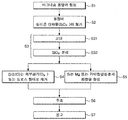
- FIG. 1 is a flowchart illustrating a method of manufacturing a magnesium alloy according to the present invention.
- FIG. 2 is a flowchart illustrating dissociation of silicon oxide added to the molten magnesium in the present invention.
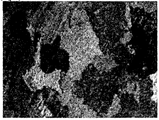
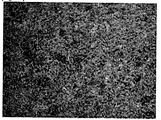
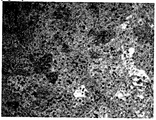
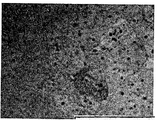
- FIG 3 is a structure photograph ( ⁇ 50) of a magnesium alloy prepared by adding 0.5 wt% SiO 2 to Mg according to the present invention.
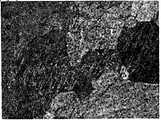
- FIG 4 is a structure photograph ( ⁇ 100) of a magnesium alloy prepared by adding 0.5 wt% SiO 2 to Mg according to the present invention.
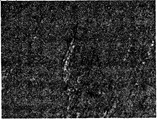
- FIG 5 is a structure photograph ( ⁇ 200) of a magnesium alloy prepared by adding 0.5 wt% SiO 2 to Mg according to the present invention.
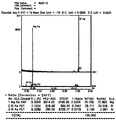
- FIG. 6 is a graph showing point analysis of EPMA of magnesium alloy prepared by adding 0.5 wt% SiO 2 to Mg according to the present invention.
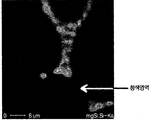
- FIG. 9 is a photograph showing mapping analysis of silicon (Si) of a magnesium alloy prepared by adding 0.5 wt% SiO 2 to Mg according to the present invention.
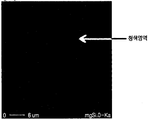
- FIG 10 is a photograph showing a mapping analysis for oxygen (O) of the magnesium alloy prepared by adding 0.5wt% SiO 2 to Mg according to the present invention.
- FIG 11 is a structure photograph ( ⁇ 50) of a magnesium alloy prepared by adding 0.5 wt% SiO 2 to an Mg alloy (AM60) according to the present invention.
- FIG. 12 is a structure photograph ( ⁇ 100) of a magnesium alloy prepared by adding 0.5 wt% SiO 2 to an Mg alloy (AM60) according to the present invention.
- FIG. 13 is a structure photograph ( ⁇ 200) of a magnesium alloy prepared by adding 0.5 wt% SiO 2 to an Mg alloy (AM60) according to the present invention.
- FIG. 14 is a graph showing a point analysis of EPMA of a magnesium alloy prepared by adding 0.5 wt% SiO 2 to an Mg alloy (AM60) according to the present invention.
- Mg magnesium
- AM60 Mg alloy
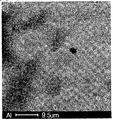
- FIG. 16 is a photograph showing mapping analysis of aluminum (Al) of a magnesium alloy prepared by adding 0.5 wt% SiO 2 to an Mg alloy (AM60) according to the present invention.
- FIG. 17 is a photograph showing mapping analysis of silicon (Si) of a magnesium alloy prepared by adding 0.5 wt% SiO 2 to an Mg alloy (AM60) according to the present invention.
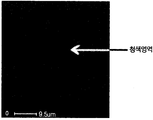
- FIG. 18 is a photograph showing mapping analysis of oxygen (O) of a magnesium alloy prepared by adding 0.5 wt% SiO 2 to an Mg alloy (AM60) according to the present invention.
- the present invention relates to a method for producing a new alloy by adding a silicon compound to a molten magnesium or magnesium alloy, and an alloy thereof.
- FIG. 1 is a flowchart illustrating a method of manufacturing a magnesium-based alloy according to the present invention.
- a method of manufacturing a magnesium-based alloy according to the present invention includes forming a molten magnesium (S1), adding a silicon compound (S2), stirring (S3), and exhausting a silicon compound ( S4), a reaction step (S5) of the molten metal and the silicon, a casting step (S6), and a solidification step (S7).
- the exhausting step (S4) of the silicon compound and the reaction step (S5) of the melt and the produced silicon are separated into separate steps for convenience of description, but the two processes (S4, S5) occur almost simultaneously.
- S4 and S5 may occur substantially before the stirring step of S3.
- S4 and S5 may occur simultaneously with the addition of the silicon compound.
- magnesium or a magnesium alloy is placed in a crucible and provided with a temperature of 400 to 800 ° C. in a protective gas atmosphere. Then, the magnesium alloy in the crucible is dissolved to form a magnesium molten metal.
- the temperature for dissolving the magnesium or magnesium alloy means the temperature at which the pure magnesium metal melts and the temperature at which the magnesium alloy melts.
- the melting temperature may vary depending on the type of alloy.
- silicon compound is added while magnesium or magnesium alloy is completely dissolved.
- the melting temperature of magnesium or magnesium alloy is sufficient to be a temperature at which the solid phase is sufficiently melted and is present in a complete liquid phase.
- the silicon compound may be heated to a predetermined temperature and added to the molten metal.
- the temperature is less than 400 °C magnesium alloy molten metal is difficult to form, if the temperature exceeds 800 °C there is a risk that the magnesium-based molten metal is ignited.
- the melting point is often lowered.
- Magnesium used in the magnesium-based molten metal forming step may be any one selected from pure magnesium, magnesium alloy, and equivalents thereof.
- magnesium alloys are AZ91D, AM20, AM30, AM50, AM60, AZ31, AS41, AS31, AS21X, AE42, AE44, AX51, AX52, AJ50X, AJ52X, AJ62X, MRI153, MRI230, AM-HP2,
- Magnesium-Al, Magnesium It may be any one selected from -Al-Re, magnesium-Al-Sn, magnesium-Zn-Sn, magnesium-Si, magnesium-Zn-Y and equivalents thereof.
- any magnesium alloy used in the industry can be used.
- a silicon compound in powder form is added to the magnesium molten metal.
- the silicon compound is preferably in a powder state in order to promote the reaction with the magnesium alloy.
- the silicon compound added for the reaction may be added in any form. It is preferable to add powder in order to increase the reaction surface area for efficient reaction. However, if it is too fine, less than 0.1 ⁇ m it is difficult to be injected into the furnace is scattered by the evaporated magnesium or hot air. Then, they coagulate with each other and become agglomerated without easily mixing with the molten metal in the liquid phase. If too thick, it is not preferable from the viewpoint of increasing the surface area. It is preferable that the particle size of an ideal powder shall be 500 micrometers or less. More preferably, it is 200 micrometers or less.
- SiO 2 As the silicon compound added to the molten metal, SiO 2 may be typically used. However, the silicon compound of any kind may be used without being limited to SiO 2 .
- the amount of silicon compound used in the step of adding the silicon compound depends on the amount of magnesium or magnesium molten metal.
- the amount of silicon compound that can be added by reaction in the molten metal can be added up to the amount that the silicon compound is exhausted and does not remain as a silicon compound in the final magnesium alloy.
- the silicon compound may be added to an amount that does not remain in the molten metal of the magnesium or magnesium alloy. If an excessive amount of silicon compound is added, it is removed together with the dross of the molten metal or after the tapping. Through experiments, it was confirmed that the silicon compound was easily reduced in the molten metal when added to 30 wt% of the molten metal. The addition of less than 0.001 silicon compound by weight was weak to obtain the effect of alloying.
- the input amount of the silicon compound is determined according to the final target alloy composition desired.
- the amount of silicon compound can be determined by inversely calculating the amount of silicon alloyed in the magnesium alloy.
- stirring step (S3) is stirred for 1 second to 60 minutes per 0.1wt% of the silicon compound added to the magnesium or magnesium alloy molten metal.
- the stirring time is less than 1 second per 0.1 wt%, the compound does not sufficiently react to the magnesium molten metal. If the stirring time exceeds 60 minutes per 0.1 wt%, the stirring time of the magnesium molten metal may be unnecessarily longer. In general, the time for stirring depends on the size of the molten metal and the amount of silicon compound introduced.
- the addition of the required amount of the compound powder may be performed at a time, the method may be used. However, in order to accelerate the reaction and lower the possibility of aggregation of the powder, it is also preferable to sequentially add the compound powder again or by dividing it in an appropriate amount with a time difference. This can lead to reactions occurring mainly on the surface.
- Stirring is preferred for efficient reduction of the magnesium or magnesium alloy of the invention with the silicon compound.
- a device capable of applying an electromagnetic field around the furnace containing the molten metal may generate an electromagnetic field to induce convection of the molten metal.
- artificial stirring mechanical stirring
- the silicon compound powder to be introduced may be appropriately stirred so as not to agglomerate. The ultimate purpose of the agitation is to adequately induce the reaction of the melt with the injected powder.
- the time for the stirring may be different depending on the temperature of the molten metal and the state of the silicon compound powder (preheated state).
- the stirring is performed until no silicon compound powder is visible on the surface of the molten metal. It is preferable to stir until the molten metal and the silicon compound cause a sufficient reaction.
- sufficient reaction means a state in which the silicon compound is exhausted by substantially all reduction reactions with the molten metal.
- the specific gravity of the silicon compound is greater than that of magnesium or magnesium alloy.
- the silicon compound sinks into the molten magnesium or magnesium alloy.
- the viscosity of the molten metal is larger than the influence of the specific gravity of the powder, so that it is more likely to float on the surface of the molten metal without falling below the molten metal.
- the compound in the form of a powder is used, it can be said that the agitation of the compound is performed in the upper portion. In the case of the compound remaining precipitated by the specific gravity difference can be removed by adjusting the alloy during tapping.
- the silicon compound to be added to the surface of the molten metal may promote the reaction through stirring. That is, the reaction in the molten metal as well as the reaction in the molten metal can be induced to maximize the reduction of the silicon compound.
- the present invention it is important to create a reaction environment so that the compound reacts on the surface of the melt rather than reacting in the melt. To do this, it is important not to force the compound suspended on the surface of the melt into the melt. That is, when the injected silicon compound is mixed into the molten metal without floating in the upper portion of the molten metal, a reduction reaction in which oxygen is separated from the silicon compound does not easily occur. It is important to simply spread the compound on the surface so that it spreads evenly across the surface of the melt.
- the reaction was better to do the reaction rather than to agitate, and it was better to stir on the outer surface (upper surface) than on the inside of the molten metal. That is, the outer surface (top surface) reacted better with the atmosphere and the exposed powder.
- the contact of the molten metal in the air was better for the reduction reaction.
- the silicon compound has many opportunities for reaction on the surface of the molten metal by adding an appropriate amount sequentially in consideration of the surface area of the molten metal rather than adding excessive amounts of the silicon compound at the same time.
- Oxygen components of the silicon compound are substantially removed over the surface of the molten metal by stirring the upper layer of the molten metal.
- the agitation may be performed at an upper layer of about 20% of the total depth of the molten metal from the molten surface. At a depth of 20% or more, the surface reactions presented as preferred examples in the present invention are difficult to occur. More preferably, the stirring is performed at the upper layer part of about 10% of the total depth of the molten metal from the molten surface. This could minimize the disturbance of the molten metal by inducing the floating silicon compound to actually be located 10% above the depth of the molten metal.
- the silicon compound (S4) In the exhausting of the silicon compound (S4), the silicon compound is exhausted so as not to remain at least partly or substantially in the magnesium alloy through the reaction of the molten metal and the added silicon compound.
- the silicon compound introduced in the present invention is preferably exhausted by the reduction reaction. However, it is effective even if it does not affect the physical properties even if it remains in the alloy without partially reacting.
- the oxygen component may be removed in the form of oxygen (O 2 ) gas, or may be removed in the form of dross or sludge through bonding with magnesium or an alloy component of the molten metal.
- the silicon produced as a result of the exhaustion of the silicon compound is reacted so as not to remain at least partially or substantially in the magnesium alloy.
- the silicon produced as a result of exhaustion is compounded with at least one of magnesium in the magnesium alloy and other alloy elements (components) in the molten metal so as not to remain substantially.
- the silicon compound here acts as a source of silicon.
- the added silicon compound is at least partially or substantially eliminated by reaction with the magnesium alloy, which is a molten metal, and at least partially or substantially disappeared, and the silicon with oxygen removed is magnesium in the magnesium alloy and other alloying elements in the molten metal. It is compounded with at least one so that it does not remain at least partially or substantially in the magnesium alloy.
- FIGS. 1 and 2. Figure 2 is a flow chart of the dissociation of the silicon compound used in addition to the molten magnesium in the present invention.
- the magnesium molten metal is cast in a mold at room temperature or preheated state.
- the mold may use any one selected from a mold, a ceramic mold, a graphite mold, and an equivalent thereof.
- the casting method may be gravity casting, continuous casting and the equivalent method.
- the magnesium alloy ingot is removed from the mold.
- the magnesium alloy prepared by the above method will be described below, but will have a form including at least one of magnesium, aluminum, and other alloy elements in the molten metal in the magnesium-based alloy.
- the magnesium component in the molten metal reacts with silicon to form a magnesium (silicon) compound.
- silicon compound is SiO 2
- Mg 2 Si is formed.
- Oxygen, which constituted SiO 2 becomes O 2 and is discharged out of the molten metal, or combined with Mg to form MgO and is discharged in the form of dross (see Scheme 1 below).
- magnesium alloy molten metal the magnesium component in the molten metal reacts with silicon to form a magnesium (silicon) compound.
- alloying elements together with magnesium and aluminum form compounds with silicon.
- the silicon compound is SiO 2
- Mg 2 Si or (Mg, Al, other alloying elements) Si is formed. Oxygen constituting SiO 2 is discharged out of the molten metal as O 2 , as in the case of pure magnesium, or combined with Mg to form MgO and discharged in the form of dross (see Scheme 2 below).
- the present invention is a manufacturing method of magnesium alloy more economically than the conventional production method of magnesium alloy. It is relatively easy to alloy by adding silicon compound to magnesium or magnesium alloy instead of silicon. By adding a chemically stable silicon compound without directly adding silicon, it is possible to directly form a phase of a compound of Mg 2 Si or Mg / Al and Si which is ultimately important for the properties of the alloy. This makes the structure of the magnesium alloy finer and the strength is improved.
- the magnesium-based alloy prepared in the present invention is a casting alloy, a rutten alloy, a creep alloy, a damping alloy, a degradable bio alloy and a powder metal. It can be used with at least one selected from powder metallurgy.
- Magnesium-based alloy prepared by the manufacturing method of the present invention may have a hardness (HRF) of 40 to 80. However, since these hardness values vary according to processing methods and heat treatments, the hardness values do not limit the magnesium alloy according to the present invention.
- Table 1 is a table showing the hardness at room temperature of the magnesium alloy prepared in the present invention. The hardness of the magnesium alloy prepared by adding 0.5 wt% SiO 2 in a weight ratio of silicon oxide to pure magnesium was measured.
- Table 2 is a table showing the hardness at room temperature of the magnesium alloy prepared in the present invention. The hardness of the magnesium alloy prepared by adding 0.5 wt% SiO 2 in a weight ratio of silicon oxide to AM60, a magnesium alloy, was measured.
- the magnesium alloy produced in the present invention appeared higher than the hardness of the same magnesium alloy. This is because the silicon produced by the reduction reaction forms compounds with Mg and / or other alloying elements in magnesium or magnesium alloys.
- the resulting Mg 2 Si has a high hardness and low coefficient of thermal expansion, and has a high melting point (1085 °C) to improve the mechanical properties of the magnesium alloy.
- tissue photographs ( ⁇ 50, ⁇ 100, ⁇ 200) of magnesium alloys prepared by adding 0.5 wt% SiO 2 to commercial magnesium (AM60) according to the present invention.
- AM60 commercial magnesium
- the structure was refined by adding SiO 2 to the molten magnesium or magnesium alloy. This is because the compound produced by phase formation with silicon, magnesium and other alloying elements produced by the reduction reaction inhibited the grain growth of the microstructure.
- the magnesium alloy prepared by adding SiO 2 in the present invention the size of the crystal grains was significantly reduced compared to the pure Mg alloy, it was confirmed that the microstructure.
- FIG. 6 is a graph showing point analysis of magnesium alloy EPMA prepared by adding 0.5 wt% SiO 2 to Mg according to the present invention.
- the point component analysis results of the phase-forming compound can confirm that the silicon-silicon compound was formed by directly adding silicon oxide (SiO 2 ) to the magnesium molten metal.
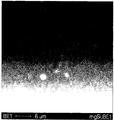
- FIG. 7 is a SEM photograph of a specimen in which a surface of Mg alloy prepared by adding 0.5 wt% SiO 2 to pure magnesium molten metal was polished for EPMA mapping. You can see the grain boundaries faintly in the picture.
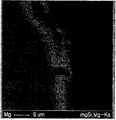
- FIG. 8 is an EPMA (Electron Probe Micro Analyzer) Mapping photograph of an Mg alloy prepared by adding 0.5 wt% SiO 2 to pure magnesium molten metal. It can be seen that magnesium is present over all regions of the specimen.
- EPMA Electro Probe Micro Analyzer
- FIG. 9 is an EPMA Mapping photograph of a silicon element, and it can be seen that a silicon element exists along a grain boundary. The blue area in the picture is the part without the corresponding element. It can be seen from FIG. 7 and FIG. 8 that the Si existing region overlaps with the Mg existing region. This indirectly suggests that Mg and Si constitute a compound. This is because Si separated from SiO 2 forms a phase with Mg (other alloying elements) without being dissolved in Mg base.
- FIG 14 is a graph showing point analysis of EPMA when 0.5 wt% SiO 2 is added to a magnesium alloy (AM60) prepared according to the present invention.
- the point component analysis of the phase-forming compound shows that the magnesium-aluminum-silicon compound was formed by directly adding SiO 2 to the magnesium alloy melt.
- Table 4 below shows the ratio of Mg, Al, and Si counted at each point (1, 2, 3).
- FIG. 15 is a graph illustrating a mapping analysis of a magnesium alloy prepared by adding 0.5 wt% SiO 2 to a commercial magnesium alloy (AM60) according to the present invention. As a photograph of magnesium, it can be seen that magnesium exists in all regions.
- FIG. 16 is a photograph showing a mapping analysis of aluminum (Al) of a magnesium alloy prepared by adding 0.5 wt% SiO 2 to an Mg alloy (AM60) according to the present invention. It can be seen that it is present along the grain boundaries as a photograph of the aluminum element.
- FIG. 17 is a photograph showing mapping analysis of silicon (Si) of a magnesium alloy prepared by adding 0.5 wt% SiO 2 to an Mg alloy (AM60) according to the present invention.
- Si silicon
- AM60 Mg alloy
- blue is the part without the corresponding element.
- Mg, Si, and Al form a compound. This is because Si separated from SiO 2 forms a phase with Mg and other alloying elements Al without being dissolved in the Mg base.
- FIG. 18 is a photograph showing mapping analysis of oxygen (O) of a magnesium alloy prepared by adding 0.5 wt% SiO 2 to an Mg alloy (AM60) according to the present invention. 18, it can be seen that no oxygen component is present in the alloy. This shows that oxygen is separated from SiO 2 added to the Mg alloy and disappears in the form of O 2 gas in the molten state, or is removed in the alloy by dross in the form of MgO (or a compound of Al or other alloying elements).
- O oxygen
- the present invention can solve the problems caused by the direct addition of silicon as a new magnesium-based alloy by adding a silicon compound to the magnesium or magnesium alloy molten metal.
- the silicon produced by the reduction reaction from the added silicon compound is not dissolved in the magnesium alloy, but directly forms a phase of the compound (typically Mg 2 Si). Due to the phase formation of the compound, the structure of the magnesium alloy is refined to improve mechanical properties.
- a phase of the compound typically Mg 2 Si
- the silicon element supplied to the molten metal through the reduction reaction of the silicon compound is combined with the magnesium element of the molten metal or other alloying elements to form a high temperature stable compound.
- the compound thus produced helps to improve the properties of the magnesium alloy.
Landscapes
- Chemical & Material Sciences (AREA)
- Engineering & Computer Science (AREA)
- Mechanical Engineering (AREA)
- Materials Engineering (AREA)
- Metallurgy (AREA)
- Organic Chemistry (AREA)
- Manufacturing & Machinery (AREA)
- Life Sciences & Earth Sciences (AREA)
- General Life Sciences & Earth Sciences (AREA)
- Geology (AREA)
- Environmental & Geological Engineering (AREA)
- Silicon Compounds (AREA)
- Manufacture And Refinement Of Metals (AREA)
Abstract
Cette invention concerne un alliage à base de magnésium, et son procédé de production, ledit procédé comprenant les étapes suivantes : fusion d'un alliage de magnésium jusqu'à obtention d'un état liquide ; ajout d'un composé de silicium audit alliage de magnésium à l'état fondu ; épuisement du composé de silicium par réaction jusqu'à achèvement entre ledit alliage de magnésium à l'état fondu et ledit composé de silicium ajouté de façon que le composé de silicium ne subsiste sensiblement pas dans l'alliage de magnésium ; et épuisement du silicium produit à l'issue dudit épuisement de l'étape précédente de façon que le silicium ne puisse sensiblement pas subsister dans ledit alliage de magnésium.
Priority Applications (1)
| Application Number | Priority Date | Filing Date | Title |
|---|---|---|---|
| US14/117,574 US9447482B2 (en) | 2011-05-20 | 2012-05-18 | Magnesium-based alloy produced using a silicon compound and method for producing same |
Applications Claiming Priority (2)
| Application Number | Priority Date | Filing Date | Title |
|---|---|---|---|
| KR10-2011-0048099 | 2011-05-20 | ||
| KR1020110048099A KR101335010B1 (ko) | 2011-05-20 | 2011-05-20 | 실리콘화합물을 이용하여 제조된 마그네슘계 합금 및 그 제조 방법 |
Publications (2)
| Publication Number | Publication Date |
|---|---|
| WO2012161484A2 true WO2012161484A2 (fr) | 2012-11-29 |
| WO2012161484A3 WO2012161484A3 (fr) | 2013-01-17 |
Family
ID=47217879
Family Applications (1)
| Application Number | Title | Priority Date | Filing Date |
|---|---|---|---|
| PCT/KR2012/003964 Ceased WO2012161484A2 (fr) | 2011-05-20 | 2012-05-18 | Alliage à base de magnésium obtenu à l'aide d'un composé de silicium et son procédé de production |
Country Status (3)
| Country | Link |
|---|---|
| US (1) | US9447482B2 (fr) |
| KR (1) | KR101335010B1 (fr) |
| WO (1) | WO2012161484A2 (fr) |
Families Citing this family (8)
| Publication number | Priority date | Publication date | Assignee | Title |
|---|---|---|---|---|
| US20170268088A1 (en) | 2014-02-21 | 2017-09-21 | Terves Inc. | High Conductivity Magnesium Alloy |
| US10689740B2 (en) | 2014-04-18 | 2020-06-23 | Terves, LLCq | Galvanically-active in situ formed particles for controlled rate dissolving tools |
| WO2015127174A1 (fr) | 2014-02-21 | 2015-08-27 | Terves, Inc. | Système métallique de désintégration à activation par fluide |
| US9757796B2 (en) | 2014-02-21 | 2017-09-12 | Terves, Inc. | Manufacture of controlled rate dissolving materials |
| US10865465B2 (en) | 2017-07-27 | 2020-12-15 | Terves, Llc | Degradable metal matrix composite |
| US11167343B2 (en) | 2014-02-21 | 2021-11-09 | Terves, Llc | Galvanically-active in situ formed particles for controlled rate dissolving tools |
| US10758974B2 (en) | 2014-02-21 | 2020-09-01 | Terves, Llc | Self-actuating device for centralizing an object |
| WO2015161171A1 (fr) | 2014-04-18 | 2015-10-22 | Terves Inc. | Particules formées in situ galvaniquement actives pour outils de dissolution à vitesse contrôlée |
Family Cites Families (12)
| Publication number | Priority date | Publication date | Assignee | Title |
|---|---|---|---|---|
| JPH05148564A (ja) * | 1991-11-22 | 1993-06-15 | Suzuki Motor Corp | MgまたはMg合金へのSi添加方法 |
| JPH0841564A (ja) * | 1994-08-01 | 1996-02-13 | Suzuki Motor Corp | Mg基複合材と、その製造方法 |
| JP4736222B2 (ja) | 2001-04-10 | 2011-07-27 | トヨタ自動車株式会社 | マグネシウム合金の製造方法 |
| JP2003183747A (ja) | 2001-12-12 | 2003-07-03 | Toyota Motor Corp | マグネシウム合金の製造方法およびマグネシウム合金の浄化剤 |
| KR100681539B1 (ko) | 2005-02-25 | 2007-02-12 | 한국생산기술연구원 | 산화칼슘이 첨가된 마그네슘 합금 및 그의 제조방법 |
| CA2721761C (fr) * | 2009-11-20 | 2016-04-19 | Korea Institute Of Industrial Technology | Alliage d'aluminium et procede de fabrication connexe |
| KR101367892B1 (ko) * | 2010-12-27 | 2014-02-26 | 한국생산기술연구원 | 고온용 마그네슘 합금 및 그 제조 방법 |
| KR101367894B1 (ko) * | 2011-01-06 | 2014-02-26 | 한국생산기술연구원 | 상온용 마그네슘 합금 |
| RU2564370C2 (ru) * | 2010-03-29 | 2015-09-27 | Корейский Институт Промышленных Технологий | Сплав на магниевой основе с повышенной текучестью и устойчивостью к горячим надрывам и способ его получения |
| KR101341091B1 (ko) * | 2011-05-20 | 2014-01-02 | 한국생산기술연구원 | 알루미늄 합금 및 그 제조방법 |
| KR101402897B1 (ko) * | 2011-05-20 | 2014-06-02 | 한국생산기술연구원 | 합금제조방법 및 이에 의해 제조된 합금 |
| KR101340292B1 (ko) * | 2011-05-20 | 2013-12-11 | 한국생산기술연구원 | 알루미늄 합금 및 그 제조방법 |
-
2011
- 2011-05-20 KR KR1020110048099A patent/KR101335010B1/ko active Active
-
2012
- 2012-05-18 WO PCT/KR2012/003964 patent/WO2012161484A2/fr not_active Ceased
- 2012-05-18 US US14/117,574 patent/US9447482B2/en active Active
Also Published As
| Publication number | Publication date |
|---|---|
| WO2012161484A3 (fr) | 2013-01-17 |
| KR101335010B1 (ko) | 2013-12-02 |
| KR20120130025A (ko) | 2012-11-28 |
| US20140202284A1 (en) | 2014-07-24 |
| US9447482B2 (en) | 2016-09-20 |
Similar Documents
| Publication | Publication Date | Title |
|---|---|---|
| WO2011122785A2 (fr) | Alliage à base de magnésium pour haute température, et procédé de fabrication correspondant | |
| WO2011122784A2 (fr) | Alliage de magnésium pour température ambiante, et procédé de fabrication correspondant | |
| WO2011122786A2 (fr) | Alliage à base de magnésium à fluidité élevée et résistance aux criques de solidification, et procédé de fabrication correspondant | |
| WO2016137211A1 (fr) | Alliage de magnésium à déformation plastique ayant d'excellentes conductivité thermique et ininflammabilité et procédé de préparation associé | |
| KR101335010B1 (ko) | 실리콘화합물을 이용하여 제조된 마그네슘계 합금 및 그 제조 방법 | |
| WO2020122472A2 (fr) | Matériau d'alliage de magnésium et son procédé de production | |
| WO2016137210A1 (fr) | Alliage de magnésium à déformation plastique ayant d'excellentes conductivité thermique et ininflammabilité et procédé de préparation associé | |
| WO2021230392A1 (fr) | Alliage à entropie élevée et procédé de fabrication d'un tel alliage | |
| WO2012161463A2 (fr) | Procédé de fabrication d'un alliage et alliage fabriqué au moyen dudit procédé | |
| WO2015126054A1 (fr) | Panneau en alliage de magnésium et son procédé de préparation | |
| WO2020067704A1 (fr) | Tôle d'alliage de magnésium et procédé de fabrication associé | |
| CN107447144A (zh) | 一种耐热稀土铝合金及其制备方法 | |
| WO2018117713A1 (fr) | Alliage de magnésium de résistance élevée présentant une excellente ininflammabilité, et son procédé de production | |
| WO2022235053A1 (fr) | Alliage d'aluminium à haute résistance pour impression 3d, et son procédé de fabrication | |
| WO2012134243A2 (fr) | Alliage maître à base de mg-al-ca pour des alliages de mg, et procédé de production de celui-ci | |
| CN1109115C (zh) | 耐热阻燃压铸镁合金及其熔炼铸造工艺 | |
| WO2012161485A2 (fr) | Alliage à base de magnésium obtenu à l'aide d'un composé de silicium et d'un composé de calcium et son procédé de production | |
| WO2022220534A1 (fr) | Alliages d'aluminium | |
| WO2014077653A1 (fr) | Alliage de zinc et procédé de préparation s'y rapportant | |
| WO2013055074A2 (fr) | Alliage al-mg-fe-si à conductivité thermique élevée pour coulée sous pression | |
| WO2011122776A2 (fr) | Procédé de fusion de métal à base de magnésium et alliage de magnésium fabriqué en utilisant celui-ci | |
| WO2012161459A2 (fr) | Alliage d'aluminium et son procédé de fabrication | |
| WO2013157903A1 (fr) | Alliage d'aluminium et procédé de fabrication de ce dernier | |
| CN112626392B (zh) | 一种铸造铝硅合金及其制备方法 | |
| WO2018117762A1 (fr) | Matériau en plaque d'alliage de magnésium doté d'une excellente résistance à la corrosion, et procédé de production d'un tel matériau en plaque d'alliage de magnésium |
Legal Events
| Date | Code | Title | Description |
|---|---|---|---|
| 121 | Ep: the epo has been informed by wipo that ep was designated in this application |
Ref document number: 12789614 Country of ref document: EP Kind code of ref document: A2 |
|
| WWE | Wipo information: entry into national phase |
Ref document number: 14117574 Country of ref document: US |
|
| NENP | Non-entry into the national phase |
Ref country code: DE |
|
| 122 | Ep: pct application non-entry in european phase |
Ref document number: 12789614 Country of ref document: EP Kind code of ref document: A2 |