WO2012165228A1 - 新規オルガノポリシロキサンエラストマー及びその利用 - Google Patents
新規オルガノポリシロキサンエラストマー及びその利用 Download PDFInfo
- Publication number
- WO2012165228A1 WO2012165228A1 PCT/JP2012/063074 JP2012063074W WO2012165228A1 WO 2012165228 A1 WO2012165228 A1 WO 2012165228A1 JP 2012063074 W JP2012063074 W JP 2012063074W WO 2012165228 A1 WO2012165228 A1 WO 2012165228A1
- Authority
- WO
- WIPO (PCT)
- Prior art keywords
- group
- organopolysiloxane elastomer
- represented
- hydrophilic
- reaction
- Prior art date
- Legal status (The legal status is an assumption and is not a legal conclusion. Google has not performed a legal analysis and makes no representation as to the accuracy of the status listed.)
- Ceased
Links
Classifications
-
- A—HUMAN NECESSITIES
- A61—MEDICAL OR VETERINARY SCIENCE; HYGIENE
- A61K—PREPARATIONS FOR MEDICAL, DENTAL OR TOILETRY PURPOSES
- A61K8/00—Cosmetics or similar toiletry preparations
- A61K8/18—Cosmetics or similar toiletry preparations characterised by the composition
- A61K8/72—Cosmetics or similar toiletry preparations characterised by the composition containing organic macromolecular compounds
- A61K8/84—Cosmetics or similar toiletry preparations characterised by the composition containing organic macromolecular compounds obtained by reactions otherwise than those involving only carbon-carbon unsaturated bonds
- A61K8/89—Polysiloxanes
- A61K8/891—Polysiloxanes saturated, e.g. dimethicone, phenyl trimethicone, C24-C28 methicone or stearyl dimethicone
- A61K8/892—Polysiloxanes saturated, e.g. dimethicone, phenyl trimethicone, C24-C28 methicone or stearyl dimethicone modified by a hydroxy group, e.g. dimethiconol
-
- C—CHEMISTRY; METALLURGY
- C08—ORGANIC MACROMOLECULAR COMPOUNDS; THEIR PREPARATION OR CHEMICAL WORKING-UP; COMPOSITIONS BASED THEREON
- C08G—MACROMOLECULAR COMPOUNDS OBTAINED OTHERWISE THAN BY REACTIONS ONLY INVOLVING UNSATURATED CARBON-TO-CARBON BONDS
- C08G77/00—Macromolecular compounds obtained by reactions forming a linkage containing silicon with or without sulfur, nitrogen, oxygen or carbon in the main chain of the macromolecule
- C08G77/48—Macromolecular compounds obtained by reactions forming a linkage containing silicon with or without sulfur, nitrogen, oxygen or carbon in the main chain of the macromolecule in which at least two but not all the silicon atoms are connected by linkages other than oxygen atoms
-
- A—HUMAN NECESSITIES
- A61—MEDICAL OR VETERINARY SCIENCE; HYGIENE
- A61K—PREPARATIONS FOR MEDICAL, DENTAL OR TOILETRY PURPOSES
- A61K47/00—Medicinal preparations characterised by the non-active ingredients used, e.g. carriers or inert additives; Targeting or modifying agents chemically bound to the active ingredient
- A61K47/30—Macromolecular organic or inorganic compounds, e.g. inorganic polyphosphates
- A61K47/34—Macromolecular compounds obtained otherwise than by reactions only involving carbon-to-carbon unsaturated bonds, e.g. polyesters, polyamino acids, polysiloxanes, polyphosphazines, copolymers of polyalkylene glycol or poloxamers
-
- A—HUMAN NECESSITIES
- A61—MEDICAL OR VETERINARY SCIENCE; HYGIENE
- A61K—PREPARATIONS FOR MEDICAL, DENTAL OR TOILETRY PURPOSES
- A61K8/00—Cosmetics or similar toiletry preparations
- A61K8/02—Cosmetics or similar toiletry preparations characterised by special physical form
- A61K8/0241—Containing particulates characterized by their shape and/or structure
-
- A—HUMAN NECESSITIES
- A61—MEDICAL OR VETERINARY SCIENCE; HYGIENE
- A61K—PREPARATIONS FOR MEDICAL, DENTAL OR TOILETRY PURPOSES
- A61K8/00—Cosmetics or similar toiletry preparations
- A61K8/18—Cosmetics or similar toiletry preparations characterised by the composition
- A61K8/72—Cosmetics or similar toiletry preparations characterised by the composition containing organic macromolecular compounds
- A61K8/84—Cosmetics or similar toiletry preparations characterised by the composition containing organic macromolecular compounds obtained by reactions otherwise than those involving only carbon-carbon unsaturated bonds
- A61K8/89—Polysiloxanes
- A61K8/891—Polysiloxanes saturated, e.g. dimethicone, phenyl trimethicone, C24-C28 methicone or stearyl dimethicone
- A61K8/893—Polysiloxanes saturated, e.g. dimethicone, phenyl trimethicone, C24-C28 methicone or stearyl dimethicone modified by an alkoxy or aryloxy group, e.g. behenoxy dimethicone or stearoxy dimethicone
-
- A—HUMAN NECESSITIES
- A61—MEDICAL OR VETERINARY SCIENCE; HYGIENE
- A61K—PREPARATIONS FOR MEDICAL, DENTAL OR TOILETRY PURPOSES
- A61K8/00—Cosmetics or similar toiletry preparations
- A61K8/18—Cosmetics or similar toiletry preparations characterised by the composition
- A61K8/72—Cosmetics or similar toiletry preparations characterised by the composition containing organic macromolecular compounds
- A61K8/84—Cosmetics or similar toiletry preparations characterised by the composition containing organic macromolecular compounds obtained by reactions otherwise than those involving only carbon-carbon unsaturated bonds
- A61K8/89—Polysiloxanes
- A61K8/895—Polysiloxanes containing silicon bound to unsaturated aliphatic groups, e.g. vinyl dimethicone
-
- A—HUMAN NECESSITIES
- A61—MEDICAL OR VETERINARY SCIENCE; HYGIENE
- A61K—PREPARATIONS FOR MEDICAL, DENTAL OR TOILETRY PURPOSES
- A61K9/00—Medicinal preparations characterised by special physical form
- A61K9/0012—Galenical forms characterised by the site of application
- A61K9/0014—Skin, i.e. galenical aspects of topical compositions
-
- A—HUMAN NECESSITIES
- A61—MEDICAL OR VETERINARY SCIENCE; HYGIENE
- A61K—PREPARATIONS FOR MEDICAL, DENTAL OR TOILETRY PURPOSES
- A61K9/00—Medicinal preparations characterised by special physical form
- A61K9/10—Dispersions; Emulsions
- A61K9/107—Emulsions ; Emulsion preconcentrates; Micelles
-
- A—HUMAN NECESSITIES
- A61—MEDICAL OR VETERINARY SCIENCE; HYGIENE
- A61Q—SPECIFIC USE OF COSMETICS OR SIMILAR TOILETRY PREPARATIONS
- A61Q1/00—Make-up preparations; Body powders; Preparations for removing make-up
-
- A—HUMAN NECESSITIES
- A61—MEDICAL OR VETERINARY SCIENCE; HYGIENE
- A61Q—SPECIFIC USE OF COSMETICS OR SIMILAR TOILETRY PREPARATIONS
- A61Q1/00—Make-up preparations; Body powders; Preparations for removing make-up
- A61Q1/12—Face or body powders for grooming, adorning or absorbing
-
- A—HUMAN NECESSITIES
- A61—MEDICAL OR VETERINARY SCIENCE; HYGIENE
- A61Q—SPECIFIC USE OF COSMETICS OR SIMILAR TOILETRY PREPARATIONS
- A61Q15/00—Anti-perspirants or body deodorants
-
- A—HUMAN NECESSITIES
- A61—MEDICAL OR VETERINARY SCIENCE; HYGIENE
- A61Q—SPECIFIC USE OF COSMETICS OR SIMILAR TOILETRY PREPARATIONS
- A61Q17/00—Barrier preparations; Preparations brought into direct contact with the skin for affording protection against external influences, e.g. sunlight, X-rays or other harmful rays, corrosive materials, bacteria or insect stings
- A61Q17/04—Topical preparations for affording protection against sunlight or other radiation; Topical sun tanning preparations
-
- A—HUMAN NECESSITIES
- A61—MEDICAL OR VETERINARY SCIENCE; HYGIENE
- A61Q—SPECIFIC USE OF COSMETICS OR SIMILAR TOILETRY PREPARATIONS
- A61Q19/00—Preparations for care of the skin
-
- A—HUMAN NECESSITIES
- A61—MEDICAL OR VETERINARY SCIENCE; HYGIENE
- A61Q—SPECIFIC USE OF COSMETICS OR SIMILAR TOILETRY PREPARATIONS
- A61Q19/00—Preparations for care of the skin
- A61Q19/007—Preparations for dry skin
-
- A—HUMAN NECESSITIES
- A61—MEDICAL OR VETERINARY SCIENCE; HYGIENE
- A61Q—SPECIFIC USE OF COSMETICS OR SIMILAR TOILETRY PREPARATIONS
- A61Q19/00—Preparations for care of the skin
- A61Q19/08—Anti-ageing preparations
-
- A—HUMAN NECESSITIES
- A61—MEDICAL OR VETERINARY SCIENCE; HYGIENE
- A61Q—SPECIFIC USE OF COSMETICS OR SIMILAR TOILETRY PREPARATIONS
- A61Q5/00—Preparations for care of the hair
-
- C—CHEMISTRY; METALLURGY
- C08—ORGANIC MACROMOLECULAR COMPOUNDS; THEIR PREPARATION OR CHEMICAL WORKING-UP; COMPOSITIONS BASED THEREON
- C08G—MACROMOLECULAR COMPOUNDS OBTAINED OTHERWISE THAN BY REACTIONS ONLY INVOLVING UNSATURATED CARBON-TO-CARBON BONDS
- C08G77/00—Macromolecular compounds obtained by reactions forming a linkage containing silicon with or without sulfur, nitrogen, oxygen or carbon in the main chain of the macromolecule
- C08G77/42—Block-or graft-polymers containing polysiloxane sequences
- C08G77/46—Block-or graft-polymers containing polysiloxane sequences containing polyether sequences
-
- C—CHEMISTRY; METALLURGY
- C08—ORGANIC MACROMOLECULAR COMPOUNDS; THEIR PREPARATION OR CHEMICAL WORKING-UP; COMPOSITIONS BASED THEREON
- C08G—MACROMOLECULAR COMPOUNDS OBTAINED OTHERWISE THAN BY REACTIONS ONLY INVOLVING UNSATURATED CARBON-TO-CARBON BONDS
- C08G77/00—Macromolecular compounds obtained by reactions forming a linkage containing silicon with or without sulfur, nitrogen, oxygen or carbon in the main chain of the macromolecule
- C08G77/48—Macromolecular compounds obtained by reactions forming a linkage containing silicon with or without sulfur, nitrogen, oxygen or carbon in the main chain of the macromolecule in which at least two but not all the silicon atoms are connected by linkages other than oxygen atoms
- C08G77/50—Macromolecular compounds obtained by reactions forming a linkage containing silicon with or without sulfur, nitrogen, oxygen or carbon in the main chain of the macromolecule in which at least two but not all the silicon atoms are connected by linkages other than oxygen atoms by carbon linkages
-
- C—CHEMISTRY; METALLURGY
- C08—ORGANIC MACROMOLECULAR COMPOUNDS; THEIR PREPARATION OR CHEMICAL WORKING-UP; COMPOSITIONS BASED THEREON
- C08K—Use of inorganic or non-macromolecular organic substances as compounding ingredients
- C08K5/00—Use of organic ingredients
-
- C—CHEMISTRY; METALLURGY
- C08—ORGANIC MACROMOLECULAR COMPOUNDS; THEIR PREPARATION OR CHEMICAL WORKING-UP; COMPOSITIONS BASED THEREON
- C08L—COMPOSITIONS OF MACROMOLECULAR COMPOUNDS
- C08L83/00—Compositions of macromolecular compounds obtained by reactions forming in the main chain of the macromolecule a linkage containing silicon with or without sulfur, nitrogen, oxygen or carbon only; Compositions of derivatives of such polymers
- C08L83/10—Block- or graft-copolymers containing polysiloxane sequences
- C08L83/12—Block- or graft-copolymers containing polysiloxane sequences containing polyether sequences
-
- C—CHEMISTRY; METALLURGY
- C08—ORGANIC MACROMOLECULAR COMPOUNDS; THEIR PREPARATION OR CHEMICAL WORKING-UP; COMPOSITIONS BASED THEREON
- C08L—COMPOSITIONS OF MACROMOLECULAR COMPOUNDS
- C08L83/00—Compositions of macromolecular compounds obtained by reactions forming in the main chain of the macromolecule a linkage containing silicon with or without sulfur, nitrogen, oxygen or carbon only; Compositions of derivatives of such polymers
- C08L83/14—Compositions of macromolecular compounds obtained by reactions forming in the main chain of the macromolecule a linkage containing silicon with or without sulfur, nitrogen, oxygen or carbon only; Compositions of derivatives of such polymers in which at least two but not all the silicon atoms are connected by linkages other than oxygen atoms
-
- A—HUMAN NECESSITIES
- A61—MEDICAL OR VETERINARY SCIENCE; HYGIENE
- A61K—PREPARATIONS FOR MEDICAL, DENTAL OR TOILETRY PURPOSES
- A61K2800/00—Properties of cosmetic compositions or active ingredients thereof or formulation aids used therein and process related aspects
- A61K2800/10—General cosmetic use
-
- C—CHEMISTRY; METALLURGY
- C08—ORGANIC MACROMOLECULAR COMPOUNDS; THEIR PREPARATION OR CHEMICAL WORKING-UP; COMPOSITIONS BASED THEREON
- C08G—MACROMOLECULAR COMPOUNDS OBTAINED OTHERWISE THAN BY REACTIONS ONLY INVOLVING UNSATURATED CARBON-TO-CARBON BONDS
- C08G77/00—Macromolecular compounds obtained by reactions forming a linkage containing silicon with or without sulfur, nitrogen, oxygen or carbon in the main chain of the macromolecule
- C08G77/04—Polysiloxanes
- C08G77/12—Polysiloxanes containing silicon bound to hydrogen
-
- Y—GENERAL TAGGING OF NEW TECHNOLOGICAL DEVELOPMENTS; GENERAL TAGGING OF CROSS-SECTIONAL TECHNOLOGIES SPANNING OVER SEVERAL SECTIONS OF THE IPC; TECHNICAL SUBJECTS COVERED BY FORMER USPC CROSS-REFERENCE ART COLLECTIONS [XRACs] AND DIGESTS
- Y10—TECHNICAL SUBJECTS COVERED BY FORMER USPC
- Y10T—TECHNICAL SUBJECTS COVERED BY FORMER US CLASSIFICATION
- Y10T428/00—Stock material or miscellaneous articles
- Y10T428/29—Coated or structually defined flake, particle, cell, strand, strand portion, rod, filament, macroscopic fiber or mass thereof
- Y10T428/2982—Particulate matter [e.g., sphere, flake, etc.]
Definitions
- the present invention relates to a novel organopolysiloxane elastomer having a crosslinked structure and use thereof.
- the use and background art of the novel organopolysiloxane elastomer according to the present invention are disclosed in other patent applications claiming priority based on Japanese Patent Application No. 2011-121097 filed on the same day as the present application (sugar alcohol modified).
- organopolysiloxane elastomers and mono- / di-glycerin-modified organopolysiloxane elastomers the contents of which are hereby incorporated by reference.
- organopolysiloxane elastomers having no hydrophilic group Patent Documents 3 to 6 and the like.
- an organopolysiloxane elastomer having a branched structure with a silylalkyl group having a siloxane dendron structure has not been reported so far, and its effect and application to cosmetics and external preparations have not been known.
- JP-A-4-272932 Japanese Patent Laid-Open No. 5-104320 JP-A-1-207354 JP-A-2-042633 International Publication No. 2007/109240 International Publication No. 2009/006091
- organopolysiloxane elastomer having no hydrophilic group particularly an organopolysiloxane elastomer having a branched structure with a silylalkyl group having a siloxane dendron structure in cosmetic applications.
- PEG-FREE prescription For example, in Germany, a product containing polyethylene glycol (PEG) was triggered by the fact that negative recognition of safety was obtained through inspection by a consumer information magazine for consumers. There is a growing demand for replacing non-polyether raw materials. In Korea, formalin can be generated by oxidative degradation of PEG, so there is concern about non-polyether silicone surfactants due to concerns that products containing this may have skin irritation. It is growing.
- the present invention has been made to solve the above-mentioned problems, has an affinity with various oil agents, has excellent structure characteristics and gelling characteristics, and has excellent tactile sensation, particularly velvet.
- a novel organo that maintains a smooth and smooth tone and gives an excellent tactile sensation that does not cause stickiness from the beginning of application to after drying, and also provides excellent cosmetic effects such as a wrinkle hiding effect (masking effect). It is a first object to provide a polysiloxane elastomer and a method for producing the same.
- the present invention has a silicone oil (low polarity oil) that is easy to deal with in terms of stable emulsification for silicone surfactants, having excellent moisturizing effect and emulsification characteristics while having all of the above characteristics.
- Stable emulsions can be formed not only for ester oils (medium to highly polar oils) but also for hydrocarbon oils (nonpolar oils) that were difficult to handle with conventional non-polyether silicone surfactants. Therefore, it is a second object to provide a novel glycerin derivative-modified organopolysiloxane elastomer and a method for producing the same, which makes it possible to widen the range of formulation according to the purpose of cosmetics, external preparations and the like.
- the present invention includes a gelling agent, a structuring agent, a thickening agent, a touch-improving agent, a moisturizing agent, a masking agent, a surfactant, an emulsifier containing the organopolysiloxane elastomer and / or the glycerin derivative-modified organopolysiloxane elastomer.
- It is a third object to provide an external preparation such as a powder dispersion stabilizer or a raw material for cosmetics, and a cosmetic or external preparation containing the organopolysiloxane elastomer.
- the present invention uses an external preparation or cosmetic material containing the organopolysiloxane elastomer and / or the glycerin derivative-modified organopolysiloxane elastomer to form a PEG as a whole in the configuration of the final consumer product such as cosmetics.
- a fourth object is to provide an external preparation or cosmetic characterized by not containing a compound containing a polyoxyethylene moiety, which is in line with the global trend of improving to a FREE formulation.
- the present invention provides an organopolysiloxane elastomer and / or a glycerin derivative-modified organopolysiloxane elastomer with reduced odor, an external preparation or cosmetic material containing them, and an external preparation or cosmetic containing them. Is the fifth object.
- the first object of the present invention is to provide an organo group having a group having a siloxane dendron structure represented by L 1 and bonded to a silicon atom, and having a crosslinked structure containing a carbon-silicon bond in the crosslinked portion. This can be achieved with polysiloxane elastomers.
- L 1 is preferably a functional group represented by the following general formula (2-1) or general formula (2-2).
- the second object of the present invention is to provide a group having a siloxane dendron structure represented by L 1 and bonded to the silicon atom, and a hydrophilic group represented by Q bonded to a silicon atom different from the silicon atom.
- This can be achieved by an organopolysiloxane elastomer having a group (hereinafter sometimes referred to as a “glycerin derivative group” for convenience) and having a crosslinked structure containing a carbon-silicon bond in the crosslinked portion. .
- Q is bonded to the silicon atom via a divalent or higher linking group, and the following structural formulas (3-1) to (3-4) —C r H 2r —O— (3-1) (Wherein r is a number in the range of 1-6) (Wherein W represents a hydrogen atom or an alkyl group having 1 to 20 carbon atoms) (Wherein W represents the same group as described above)
- Q is a linear hydrophilic segment formed by linearly bonding a plurality of hydrophilic units, or the plurality of hydrophilic units are represented by the following structural formulas (3-5) to (3-7): It is preferable to have a branched hydrophilic segment formed by bonding in a branched manner via at least one or more types of branch units selected from the group represented by:
- Q is more preferably a hydrophilic group represented by any one of the following general formulas (4-1) to (4-4).
- the organopolysiloxane elastomer of the present invention is (A) organohydrogenpolysiloxane, (B) a siloxane dendron having one reactive unsaturated group per molecule, and (C) (C1) an organic compound having an average number of reactive unsaturated groups greater than 1 in one molecule, and (C2 ) It can be obtained by reacting at least one organic compound selected from the group consisting of organic compounds having one or more reactive unsaturated groups and one or more epoxy groups in one molecule.
- the preferred organopolysiloxane elastomer of the present invention is (A) organohydrogenpolysiloxane, (B) Siloxane dendron having one reactive unsaturated group in one molecule (C) (C1) Organic compound having an average number of reactive unsaturated groups in one molecule, and (C2) One or more organic compounds selected from the group consisting of organic compounds having one or more reactive unsaturated groups and one or more epoxy groups in one molecule ⁇ however, the following (D) is 1 on average in one molecule (C) is optional if it has a larger number of reactive unsaturated groups ⁇ , and (D) A hydrophilic group comprising a reactive unsaturated group and at least one hydrophilic unit selected from the hydrophilic units represented by the structural formulas (3-1) to (3-4). It can be obtained by reacting at least a hydrophilic derivative having
- the average value of the number of silicon-bonded hydrogen atoms per molecule of the component (A) that reacts with the unsaturated group of the component (C) and / or the component (D) constituting the cross-linked portion is 0.1 The above is preferable.
- the component (A) is an average composition formula (1): R 5 a H b SiO (4-ab) / 2 (1) (Where R 5 independently represents a monovalent organic group and is preferably represented by 1.0 ⁇ a ⁇ 3.0 and 0.001 ⁇ b ⁇ 1.5.
- a j is a number in the range of 0 to 3
- Z ′ is a divalent organic group
- R 6 is preferably a compound having a siloxane dendron structure having one carbon-carbon double bond at the molecular chain end, represented by a hydrogen atom or a methyl group.
- the component (C) includes the following (C1-1) to (C1-5) and (C2-1) to (C2-2) (C1-1)
- C1-2 General formula (5-2): CH ⁇ C (CH 2 ) x C ⁇ CH (5-2) ⁇ , ⁇ -diyne represented by (wherein 1 ⁇ x ⁇ 20), (C1-3)
- General formula (5-3): CH 2 CH (CH 2 ) x C ⁇ CH (5-3) (Wherein 1 ⁇ x ⁇ 20), ⁇ , ⁇ -en-in, (C1-4)
- the monovalent organic group represented by R 5 includes the following (E1) to (E9): (E1) a substituted or unsubstituted, linear or branched monovalent hydrocarbon group having 1 to 60 carbon atoms, (E2) -R 13 O (AO) z R 14 (wherein AO represents an oxyalkylene group having 2 to 4 carbon atoms, and R 13 represents a substituted or unsubstituted group having 3 to 5 carbon atoms.
- the organopolysiloxane elastomer of the present invention is preferably in the form of particles, more preferably in the form of particles having a volume average particle diameter in the range of 20 to 1000 ⁇ m.
- the organopolysiloxane elastomer of the present invention can swell by containing an oil agent in an amount higher than its own weight.
- the first object of the present invention is to (A) organohydrogenpolysiloxane, (B) a siloxane dendron having one reactive unsaturated group per molecule, and (C) (C1) an organic compound having an average number of reactive unsaturated groups greater than 1 in one molecule, and (C2) one or more reactive unsaturated groups and one or more epoxy groups in one molecule
- a method for producing an organopolysiloxane elastomer which includes a step of reacting at least one or more kinds of organic compounds selected from the group consisting of:
- the (A) and (B) are reacted first, and then (C) is added to perform a crosslinking reaction.
- the optional component (Q) shown is reacted with (A) before the reaction of (A)-(B), further reacted after the reaction of (A)-(B), or (A)-(B) They can be reacted simultaneously during the reaction or further reacted after crosslinking according to (C).
- Q Compound having one unsaturated group in one molecule (except for the compound (C2))
- the reaction of (A) and (C) leading to the cross-linked portion is performed first, and then (B) is added and reacted.
- the optional component (Q) shown below is reacted with (A) before the reaction of (A)-(C), further reacted after the reaction of (A)-(C), or (B Further reaction can be carried out after the reaction of).
- the second object of the present invention is to (A) organohydrogenpolysiloxane, (B) a siloxane dendron having one reactive unsaturated group per molecule; (C) (C1) an organic compound having an average number of reactive unsaturated groups greater than 1 in one molecule, and (C2) one or more reactive unsaturated groups and one or more epoxy groups in one molecule
- part or all of the reaction may be carried out in the presence of one or more solvents selected from the group represented by the following (P-1) to (P-2). preferable.
- P-1) Organic compound
- P-2) Compound containing silicon atom
- (B) and (D) with respect to the (A) are limited to those in the order given, and then (C) is added to carry out a crosslinking reaction.
- the optional component (Q) shown below is represented by (A)-( Whether to react with (A) before the reaction of B) or before the reaction of (A)-(D), or after the reaction of (A)-(B) or after the reaction of (A)-(D) , (A)-(B) or (A)-(D) can be reacted at the same time, or further after the crosslinking by (C).
- the reaction of (A) and (C) leading to the cross-linked portion is performed first, and then (B) and (D) ⁇ however, (D) is limited to those having one reactive unsaturated group in one molecule ⁇ in any order, and is allowed to react sequentially.
- the following optional component (Q) Is reacted with (A) before the reaction of (A)-(C), further reacted after the reaction of (A)-(C), or further reacted after the reaction of (B) and (D) be able to.
- Q Compound having one unsaturated group in one molecule (except for the compound (C2))
- the third and / or fourth object of the present invention is to provide at least one external preparation raw material or cosmetic raw material or external preparation or cosmetic containing the organopolysiloxane elastomer, and the organopolysiloxane elastomer. It can be achieved by a composition containing the above oil agent, and a raw material for external preparation or a raw material for cosmetic, or an external preparation or cosmetic containing the composition.
- the composition may be in the form of an emulsion or paste.
- the external preparation raw material or cosmetic raw material can be a gelling agent, a structurant, a thickener, a touch improver, a moisturizer, a masking agent, a surfactant, an emulsifier, and a powder dispersion stabilizer. .
- a fourth object of the present invention is an external preparation or cosmetic containing the organopolysiloxane elastomer, preferably containing the organopolysiloxane elastomer, but having a hydrophilic group as an oxyalkylene unit. It can be suitably achieved by an external preparation or cosmetic that does not contain a compound having an oxyalkylene structure having an average number of repetitions of 2 or more, particularly a compound containing a polyoxyethylene group or a polyoxyethylene moiety.
- the fifth object of the present invention is to provide one or more organopolysiloxane elastomers obtained in the above-mentioned method for producing organopolysiloxane elastomers or a composition containing at least one oil agent in addition to the above organopolysiloxane elastomers.
- the present invention has an affinity with various oil agents, is excellent in thickening properties and gelation properties, and more particularly has a smooth velvet-like thickness and an initial coating stage. It is possible to provide a novel organically modified organopolysiloxane elastomer which gives an excellent tactile sensation characterized by the non-stickiness from to after drying and which continuously provides such an excellent tactile sensation.
- the organically modified organopolysiloxane elastomer of the present invention can provide excellent cosmetic effects such as a wrinkle hiding effect and a moisturizing effect.
- the organically modified organopolysiloxane elastomer of the present invention has excellent emulsifying properties, and is suitable not only for low polarity silicone oils and medium to high polarity ester oils but also for nonpolar hydrocarbon oils. It is possible to exhibit excellent emulsification performance. Therefore, it is possible to design external preparations and cosmetics of various formulations by blending the organic modified organopolysiloxane elastomer of the present invention into the external preparation or cosmetic. Note that the external preparation or cosmetic of the present invention does not need to contain a compound having a polyoxyethylene group or a polyoxyethylene moiety, for example, a polyether-modified silicone, and the structure of the final consumer product such as cosmetics as a whole is PEG.
- the organopolysiloxane elastomer of the present invention prepares water-in-oil emulsion cosmetics and the like having sufficient stability without using other nonionic surfactants such as hydrophilic silicone emulsifiers having other PEG structures.
- the cosmetics industry has developed a highly environmentally compatible business strategy that is in line with the global trend of improving the overall consumer product structure to a PEG-FREE formulation. Can be executed.
- composition containing the organically modified organopolysiloxane elastomer of the present invention can have a contradictory property that the feel is very soft while having a high viscosity property that can ensure stability. This effect is significant when the organically modified organopolysiloxane elastomer is in the form of particles.
- the organically modified organopolysiloxane elastomer of the present invention is excellent in the effect of maintaining the dispersed state of the powder dispersed in the medium, and can particularly improve the storage stability of the composition containing the powder.
- the organically modified organopolysiloxane elastomer of the present invention has a thickening agent, a gelling agent, a structuring agent, a feel-improving agent, a moisturizer, a masking agent, a surfactant, an emulsifier, and a powder dispersion stability because of its function. It can be suitably used as an external preparation such as an agent or a raw material for cosmetics, and can be appropriately blended in cosmetics or external preparations.
- a non-aqueous emulsion composition with excellent stability that can be used as a drug delivery system can be provided, and a water-in-oil or oil-in-water emulsion composition with excellent stability can also be provided. it can.
- the organic modified organopolysiloxane elastomer of the present invention can be uniformly mixed with a wide variety of oil agents, it can be used as a composition with various oil agents. Furthermore, the composition containing the organic modified organopolysiloxane elastomer of the present invention together with an oil agent is excellent in storage stability.
- the odor of the organically modified organopolysiloxane elastomer can be reduced.
- the organically modified organopolysiloxane elastomer of the present invention with reduced odor is particularly suitable as a raw material for external preparations or cosmetics and as a component of external preparations or cosmetics.
- an organically modified organopolysiloxane elastomer or a composition containing the same, which is substantially odorless and suppresses the generation of odor at high temperature or over time, is provided by a simple process of acid treatment. be able to.
- the odor reducing effect of the organically modified organopolysiloxane elastomer according to the present invention is extremely high, and the odor reducing effect as obtained in the present invention cannot be obtained even if other modified organopolysiloxane elastomers are acid-treated as in the present invention.
- An advantage of the present invention is that it is advantageous for implementation on an industrial scale, and can provide an organically modified organopolysiloxane elastomer or a composition containing the same, which is simple and low-cost, and is non-brominated. .
- the organically modified organopolysiloxane elastomer of the present invention with reduced odor does not require masking of odor when blended into an external preparation or cosmetic, and has a high degree of freedom in designing the formulation of the external preparation or cosmetic. . This is particularly advantageous in cosmetics where functionality including odor is important.
- the first aspect of the present invention is an organo group having a crosslinked three-dimensional network structure having a group having a siloxane dendron structure bonded to a silicon atom and represented by L 1 and having a carbon-silicon bond in the crosslinked portion.
- Polysiloxane elastomer is an organo group having a crosslinked three-dimensional network structure having a group having a siloxane dendron structure bonded to a silicon atom and represented by L 1 and having a carbon-silicon bond in the crosslinked portion.
- the silylalkyl group having a siloxane dendron structure includes a structure in which carbosiloxane units spread in a dendrimer shape, is a functional group exhibiting high water repellency, and has an excellent balance in combination with a hydrophilic group.
- the silylalkyl group having a siloxane dendron structure is a functional group imparting an advantageous characteristic that it can be used in combination with a wide range of cosmetic ingredients since it is chemically stable.
- Examples of the substituted or unsubstituted, linear or branched monovalent hydrocarbon group represented by R 1 in the general formula (2) include, for example, a methyl group, an ethyl group, Alkyl groups such as propyl group, butyl group, pentyl group, hexyl group, heptyl group and octyl group; cycloalkyl groups such as cyclopentyl group and cyclohexyl group; alkenyl groups such as vinyl group, allyl group and butenyl group; phenyl group and tolyl Aryl groups such as groups; aralkyl groups such as benzyl groups; and hydrogen atoms bonded to carbon atoms of these groups are at least partially halogen atoms such as fluorine, or epoxy groups, glycidyl groups, acyl groups, carboxyl groups , Groups substituted with an organic group including an amino group, a methacryl group, a mercapto group and
- examples of the alkyl group having 1 to 6 carbon atoms include methyl, ethyl, n-propyl, i- Examples include linear, branched or cyclic alkyl groups such as propyl, n-butyl, i-butyl, s-butyl, pentyl, neopentyl, cyclopentyl, hexyl and the like.
- R 2 is preferably a methyl group or a phenyl group.
- the number of hierarchies k is industrially preferably an integer of 1 to 3, more preferably 1 or 2.
- the group represented by L 1 is represented as follows.
- R 1 , R 2 and Z are the same groups as described above.
- L 1 is represented by the following general formula (2-1).
- L 1 is represented by the following general formula (2-2).
- L 1 is represented by the following general formula (2-3).
- a 1 , a 2 and a 3 are each independently a number in the range of 0 to 3. These a i are particularly preferably numbers in the range of 0 to 1, and a i is particularly preferably 0.
- Z is each independently a divalent organic group, specifically, a silicon-bonded hydrogen atom, an alkenyl group, an acryloxy group
- Examples include divalent organic groups formed by addition reaction of a functional group having an unsaturated hydrocarbon group such as a methacryloxy group at the end.
- the functional group is not limited to this, and can be selected as appropriate.
- each Z is independently represented by the general formula: —R 22 —, —R 22 —CO—, —R 22 —COO—, —R 22 —CONH—, —R 22 —CO—R 23.
- -R 22 -R 23 - is preferably a group selected from divalent organic groups represented by.
- Z in L 1 is preferably a divalent organic group represented by —R 22 — introduced by the reaction of a silicon-bonded hydrogen atom and an alkenyl group.
- Z is preferably a divalent organic group represented by —R 22 —COO—R 23 — introduced by reaction of a silicon-bonded hydrogen atom with an unsaturated carboxylic acid ester group.
- k is 2 or more
- the silylalkyl group represented by L is a 2 ⁇ L k L i
- Z is preferably an alkylene group having 2 to 10 carbon atoms, an ethylene group, a propylene group , A methylethylene group or a hexylene group is particularly preferable, and an ethylene group is most preferable.
- each R 22 is independently a linear or branched alkylene group having 2 to 22 carbon atoms, an alkenylene group or an arylene having 6 to 22 carbon atoms, which may have a substituent. It is a group. More specifically, R 22 is a linear alkylene group such as ethylene group, propylene group, butylene group, hexylene group; methylmethylene group, methylethylene group, 1-methylpentylene group, 1,4-dimethylbutylene group. is exemplified branched alkylene group such as, R 22 is an ethylene group, a propylene group is preferably a group selected from methyl ethylene group or a hexylene group.
- R 23 is a group selected from divalent organic groups represented by the following formula.
- the organopolysiloxane elastomer of the present invention is preferably an elastic body having a relatively high crosslinking density, and is preferably a gel-like, rubber-like or powder-like solid insoluble in a solvent or the like.
- the organopolysiloxane elastomer of the present invention preferably has no fluidity at 25 ° C. (non-liquid). “No fluidity at 25 ° C.” means that an organopolysiloxane elastomer is introduced into a predetermined container and the surface thereof is leveled using a tool such as a trowel, and then the container is inclined for 24 hours. Later, it means that the surface does not become horizontal again.
- “horizontal” means forming a plane that intersects at right angles to the direction of action of gravity.
- the organopolysiloxane elastomer of the present invention is preferably provided with a crosslinked portion containing a carbon-silicon bond and has a crosslinked three-dimensional network structure.
- the crosslinked part may contain a polysiloxane chain.
- the organopolysiloxane elastomer of the present invention preferably has a highly crosslinked molecular structure in which polysiloxane chains are relatively densely crosslinked in a three-dimensional network. Therefore, the organopolysiloxane is preferably a gel-like, rubber-like or powder-like solid insoluble in a solvent or the like.
- the organopolysiloxane elastomer of the present invention can swell by containing an oil agent in an amount equal to or higher than its own weight (its own mass).
- the organopolysiloxane elastomer of the present invention including an oil agent can exist in a paste form.
- the type of the oil agent is as described later, but silicone oil is preferable.
- the organopolysiloxane elastomer of the present invention has a hydrophilic group represented by Q bonded to a silicon atom different from the silicon atom bonded to the group having a siloxane dendron structure represented by L 1 (particularly a glycerin derivative group). It is preferable.
- Q constitutes a hydrophilic portion of the organopolysiloxane elastomer of the present invention.
- the structure of Q is not limited as long as it has a hydrophilic part, particularly a glycerin derivative part. Bonding is preferred.
- the glycerin derivative residue is a hydrophilic group having a (poly) glycerin structure, and is a hydrophilic group having a monoglycerin, diglycerin, triglycerin, tetraglycerin or pentamer or more polyglycerin structure. Moreover, a part of the terminal hydroxyl group may be blocked with an alkyl group. Furthermore, the (poly) glycerin structure may be linear or branched, or may be a structure branched in a dendritic manner.
- Q is bonded to a silicon atom via a divalent or higher linking group, and Q is at least one selected from hydrophilic units represented by the following structural formulas (3-1) to (3-4)
- a hydrophilic group containing a hydrophilic unit is preferred.
- —C r H 2r —O— (3-1) (Wherein r is a number in the range of 1-6) (Wherein W represents a hydrogen atom or an alkyl group having 1 to 20 carbon atoms) (Wherein W represents the same group as described above)
- W is preferably a hydrogen atom.
- W is a hydrogen atom, it is difficult to be oxidized in the air, and it is difficult to produce aldehydes such as formaldehyde and allergenic compounds such as formates over time during storage. There is.
- the hydrophilic units represented by the structural formulas (3-2) to (3-4) include polyhydric alcohols mainly containing glycerin, polyglycerins (also referred to as polyglycerols), polyglycidyl ethers, or terminals thereof. It is a hydrophilic unit contained in a hydrophilic group derived from a hydrophilic compound selected from a compound in which a hydroxyl group is partially blocked with a hydrocarbon group.
- a PEG-FREE formulation a formulation not containing a compound having a polyoxyethylene (PEG) structure
- the organopolysiloxane elastomer of the present invention has the above structure. It is preferable that one molecule does not have a group in which two or more hydrophilic units represented by the formula (3-1) are linked.
- the glycerol derivative group represented by the structural formulas (3-2) to (3-4) may be a hydrophilic group having no branched structure such as a monoglycerol-modified group or a diglycerol-modified group. It may be a hydrophilic group having a branched structure in a part of the functional group, such as a group or a polyglycidyl ether group.
- Q is bonded to a silicon atom via a divalent or higher valent linking group, and is at least 1 selected from the hydrophilic units represented by the structural formulas (3-1) to (3-4). It may be a hydrophilic segment in which a plurality of hydrophilic units of seeds or more are connected in a straight chain.
- the glycerin derivative group is bonded to a silicon atom via a divalent or higher linking group, and at least selected from the hydrophilic units represented by the structural formulas (3-1) to (3-4).
- two oxygen atoms are independently selected from the hydrophilic units represented by the general formulas (3-1) to (3-4). At least one or more hydrophilic units are bonded.
- the hydrophilic unit may be further bonded to a branch unit selected from the groups represented by structural formulas (3-5) to (3-7), and the hydrophilic unit is branched in multiple layers.
- a dendritic polyether structure, a polyglycerol structure, or a polyglycidyl ether structure may be formed.
- the structure of a glycerin derivative group having one branch unit represented by the structural formula (3-5) and two branch units represented by the structural formula (3-7) and branched in a dendritic manner is shown below.
- the dendritic polyglycerol structure is not limited to this.
- m1 is a number in the range of 0 to 50, but not all m1 are 0.
- the divalent or higher linking group is a bonding site to a silicon atom contained in the glycerin derivative group, and its structure is not particularly limited, but an ethylene group, a propylene group, a butylene group, a hexylene group, etc.
- the number of ether bonds in the divalent or higher linking group is preferably 0 to 3, more preferably 0 or 1.
- Q is preferably a hydrophilic group represented by the following structural formulas (4-1) to (4-4).
- Formula (4-1) —R 3 (—O—X 1 m —R 4 ) p (4-1) ⁇
- R 3 is a (p + 1) -valent organic group
- p is a number in the range of 1-3
- X 1 is each independently at least one or more hydrophilic units selected from the hydrophilic units represented by the general formulas (3-1) to (3-4)
- m is a number in the range of 1-100
- R 4 is a group selected from the group consisting of a hydrogen atom, an alkyl group having 1 to 20 carbon atoms, an acyl group, and a glycidyl group ⁇
- Formula (4-2) —R 3 (—O—X 2 ) p (4-2) ⁇ Where, R 3 is the same group as described above, p is the same number as above, X 2 represents the following structural formula (4-2-1); (In the formula, at least one hydrophilic unit selected from the hydrophilic units represented by the general formulas (3-1) to (3-4) is bonded to the two oxygen atoms. Is a hydrophilic group represented by
- Formula (4-3) —R 3 (—O—X 3 ) p (4-3) ⁇ Where, R 3 is the same group as described above, p is the same number as above, X 3 represents the following structural formula (4-3-1); (In the formula, at least one hydrophilic unit selected from the hydrophilic units represented by the general formulas (3-1) to (3-4) is bonded to the two oxygen atoms. Is a hydrophilic group represented by
- Formula (4-4) —R 3 (—O—X 4 ) p (4-4) ⁇ Where, R 3 is the same group as described above, p is the same number as above, X 4 represents the following structural formula (4-4-1); (In the formula, at least one hydrophilic unit selected from the hydrophilic units represented by the general formulas (3-1) to (3-4) is bonded to the two oxygen atoms. Is a hydrophilic group represented by
- R 3 examples include the same groups as the divalent or higher valent linking group.
- each R 30 independently represents an optionally substituted linear or branched alkylene group having 2 to 22 carbon atoms, an alkenylene group, or an arylene group having 6 to 22 carbon atoms. .
- Q is more preferably a hydrophilic group represented by the following structural formulas (6-1) to (6-4), which are generally glycerin derivative groups derived from polyglycerin compounds. .
- R 28 is a (p1 + 1) valent organic group, and p1 is a number of 1 or more and 3 or less. Examples of R 28 include the same groups as the divalent or higher linking group.
- R 28 examples include groups selected from divalent organic groups represented by the above general formula.
- X 1 is each independently at least one hydrophilic unit selected from hydrophilic units represented by the following general formulas (4-1-1) to (4-3-1), and m2 is The number is in the range of 1 to 5, particularly preferably 1 to 4.
- X 2 is an arbitrary oxyalkylene unit that may contain a glycerin derivative group, and q 2 is a number in the range of 0-50.
- the number of q2 is preferably a number in the range of 0 to 30, and is preferably 0.
- X 2 is preferably an oxyethylene unit or an oxypropylene unit.
- a polyoxyalkylene unit represented by — (C 2 H 4 O) t1 (C 3 H 6 O) t2 ⁇ (wherein t1 and t2 is a number of 0 or more, and (t1 + t2) is a number in the range of 0 to 50, preferably a number in the range of 0 to 30). You can also.
- the PEG-FREE formulation is realized as the overall formulation of cosmetics or external preparations, it is preferable that the molecule does not have an oxyalkylene structure having an average number of repeating oxyalkylene units of 2 or more.
- the form of the bond between X 1 and X 2 may be block or random. That is, the glycerin derivative group includes a hydrophilic segment formed by binding hydrophilic units represented by the above general formulas (4-1-1) to (4-3-1) in a block shape, and a polyoxyalkylene unit.
- bonds together may be sufficient, and the hydrophilic group which the unit which comprises these couple
- a bond form such as- (X 2 ) m1 -X 1- (X 2 ) m2 -X 1- can be exemplified.
- R 29 is a group selected from the group consisting of a hydrogen atom, an alkyl group having 1 to 20 carbon atoms, an acyl group, and a glycidyl group.
- a particularly preferred glycerin derivative group is derived from (poly) glycerin represented by the following structural formula (6-1-1) from the viewpoint of the affinity of the organopolysiloxane elastomer of the present invention to an oil agent and emulsifying properties. It is a hydrophilic group.
- R 28 ′ is a divalent organic group, and examples thereof include the same groups as described above.
- X 1 and R 29 are the same groups as described above, m2 is a number in the range of 1 to 5)
- the glycerin derivative group is a hydrophilic group derived from a (poly) glycerin compound, and is most preferably a hydrophilic group derived from (poly) glycerin.
- (poly) glycerin monoallyl ether (poly) glyceryl eugenol, which is preferably a hydrophilic group derived from a glycerin compound having a monoglycerin, diglycerin, triglycerin or tetraglycerin structure. is there.
- the glycerin derivative group is particularly preferably a diglycerin derivative group from the viewpoint of the affinity for the oil and the emulsifying properties capable of realizing the PEG-FREE formulation.
- the glycerin derivative group has an average value of the number of repeating hydrophilic units represented by the structural formulas (4-1-1) to (4-3-1) in the range of 1.1 to 2.9.
- the average number of repetitions is in the range of 1.5 to 2.4, more preferably in the range of 1.8 to 2.2, and most preferably 2.
- the repeating number of glycerin units may be an average value, and the diglycerin derivative group having a repeating number of glycerin units of 2 may be an amount exceeding 30% by mass with respect to other glycerin derivative groups. Preferably, it is more preferably 50% by mass or more, and particularly preferably 80% by mass or more. Most preferred is a pure product having a diglycerin derivative group purity exceeding 98% by mass.
- the functional group does not have an oxyalkylene structure having an average number of repeating oxyalkylene units of 2 or more.
- the glycerin derivative group is more preferably the following structural formula (9): —R—O—X m3 —H (9) It is a glycerin derivative group represented by.
- R is a divalent organic group, and examples thereof include the same groups as the above divalent linking groups.
- R is a divalent linking group containing no oxyalkylene structure having an average number of repeating oxyalkylene units of 2 or more.
- X is at least one glycerin unit selected from the hydrophilic units represented by the structural formulas (4-1-1) to (4-3-1).
- m3 is the number of repeating glycerin units, and is an average number in the range of 1.5 to 2.4.
- the suitable range of the repeating number of each glycerol unit is the same as the above.
- the glycerin derivative group has the following general formula (9-1): (Wherein R represents a divalent organic group) or the following general formula (9-2): (Wherein R is as described above).
- the diglycerin derivative group-containing organic group is preferably a hydrophilic group derived from diglycerin monoallyl ether, diglyceryl eugenol, or the like.
- the organopolysiloxane elastomer of the present invention is (A) organohydrogenpolysiloxane, (B) a siloxane dendron having one reactive unsaturated group per molecule, and (C) (C1) an organic compound having an average number of reactive unsaturated groups greater than 1 in one molecule, and (C2) one or more reactive unsaturated groups and one or more epoxy groups in one molecule It can manufacture by making at least 1 type of organic compound selected from the group which consists of an organic compound which has these react.
- the organopolysiloxane elastomer of the present invention having a hydrophilic group, preferably a glycerin derivative group, (A) organohydrogenpolysiloxane, (B) a siloxane dendron having one reactive unsaturated group per molecule; (C) (C1) an organic compound having an average number of reactive unsaturated groups greater than 1 in one molecule, and (C2) one or more reactive unsaturated groups and one or more epoxy groups in one molecule
- the (A) organohydrogenpolysiloxane is not particularly limited as long as it has a silicon atom hydrogen atom, but on average more than one, preferably 1.01 to 100, more preferably Preferred are those having silicon-bonded hydrogen atoms of 1.1 to 50, more preferably 1.2 to 25, particularly preferably 1.3 to 10, and linear, branched or network organopolysiloxanes. Can be used. There is no restriction
- one type of organohydrogenpolysiloxane may be used, or two or more types of organohydrogenpolysiloxane may be used.
- component (A) examples include 1,1,3,3-tetramethyldisiloxane, 1,3,5,7-tetramethylcyclotetrasiloxane, trimethylsiloxy group-blocked methylhydrogenpolysiloxane at both ends, and both ends.
- Trimethylsiloxy-blocked dimethylsiloxane / methylhydrogensiloxane copolymer dimethylhydrogensiloxy-blocked dimethylsiloxane at both ends, dimethylhydrogensiloxy-blocked dimethylpolysiloxane at both ends, dimethylhydrogensiloxy-blocked dimethylsiloxane / methyl at both ends
- Hydrogensiloxane copolymer trimethylsiloxy group-capped methylhydrogensiloxane / diphenylsiloxane copolymer, both ends trimethylsiloxy group-capped methylhydrogensiloxane / diphenylsilo San dimethylsiloxane copolymer, (CH 3) a copolymer consisting of 2 HSiO 1/2 units and SiO 4/2 units, and (CH 3) 2 HSiO 1/2 units and SiO 4/2 units (C Examples are copolymers comprising 6 H 5 ) SiO 3/2 units.
- (A) component is average composition formula (1): R 5 a H b SiO (4-ab) / 2 (1) (Where R 5 independently represents a monovalent organic group and is preferably represented by 1.0 ⁇ a ⁇ 3.0 and 0.001 ⁇ b ⁇ 1.5.
- the molecular structure of the organohydrogenpolysiloxane is not limited, and examples thereof include linear, partially branched linear, branched, cyclic, and dendritic, preferably linear.
- the molecular weight is not specifically limited, From a low molecular weight body to a high molecular weight body can be used.
- the number average molecular weight is preferably in the range of 1 to 1,000,000, more preferably in the range of 300 to 500,000.
- Organohydrogenpolysiloxanes are (i) a side chain only, (ii) one end of a side chain or molecular chain, and (iii) a straight chain having silicon-bonded hydrogen atoms at both ends of the side chain or molecular chain.
- Organohydrogenpolysiloxane Organohydrogenpolysiloxane.
- the monovalent organic group is not particularly limited, but the following (E1) to (E9) (E1) a substituted or unsubstituted, linear or branched monovalent hydrocarbon group having 1 to 60 carbon atoms, (E2) -R 13 O (AO) z R 14 (wherein AO represents an oxyalkylene group having 2 to 4 carbon atoms, and R 13 represents a substituted or unsubstituted group having 3 to 5 carbon atoms.
- a substituted alkyl group (E8) The following general formula (7) (Wherein R 20 represents a substituted or unsubstituted, linear or branched divalent hydrocarbon group having 2 to 20 carbon atoms), (E9) The following general formula (8) (Wherein R 21 represents a substituted or unsubstituted, linear or branched divalent hydrocarbon group having 2 to 20 carbon atoms, and R 11 and R 12 are as defined above). It is preferably selected from the represented alicyclic epoxy groups.
- (E1-1) a substituted or unsubstituted, straight-chain or branched monovalent hydrocarbon group having 9 to 60 carbon atoms
- (E8) a chain polypolyester represented by the above general formula (6)
- An alkyl group substituted with a siloxane structure It is preferable to further have at least one monovalent organic group selected from the group consisting of, and these are introduced into the molecule of the organopolysiloxane elastomer according to the present invention by reacting the corresponding component (C) with the component (A).
- Examples of the substituted or unsubstituted linear or branched monovalent hydrocarbon group in (E1), (E2) and (E5) to (E7) include, for example, methyl group, ethyl group, propyl group, butyl Group, pentyl group, hexyl group, heptyl group, octyl group and other alkyl groups; cyclopentyl group, cyclohexyl group and other cycloalkyl groups; vinyl group, allyl group, butenyl group and other alkenyl groups; phenyl group, tolyl group and other aryl groups An aralkyl group such as a benzyl group; and a hydrogen atom bonded to a carbon atom of these groups is at least partially a halogen atom such as fluorine, or an epoxy group, a glycidyl group, an acyl group, a carboxyl group, an amino group, And a group substituted with an organic group
- Examples of the substituted or unsubstituted, linear or branched alkoxy group in (E3) include lower alkoxy groups such as methoxy group, ethoxy group, isopropoxy group, butoxy group, lauryl alkoxy group, myristyl alkoxy group, pal Examples include higher alkoxy groups such as a mitylalkoxy group, an oleylalkoxy group, a stearylalkoxy group, and a behenylalkoxy group.
- the component (B) is not particularly limited as long as it has one or more unsaturated bonds and a siloxane dendron structure.
- the component represented by the following general formula (2 ′) has one carbon- A compound having a siloxane dendron structure having a carbon double bond is preferred.
- R 2 and Z are as described above, and examples of the divalent organic group for Z ′ include the same as the divalent organic group for Z.
- the component (C) is an average of more than one, preferably 1.01 to 10, more preferably 1.2 to 8, even more preferably 1.5 to 6, particularly preferably in one molecule.
- the organic compound organopolysiloxane or unsaturated aliphatic hydrocarbon is preferable.
- the position of the unsaturated bond on the organic compound preferably organopolysiloxane or unsaturated aliphatic hydrocarbon, and it may be located either on the main chain or at the end.
- the reactive unsaturated group is preferably present in the unsaturated aliphatic hydrocarbon group.
- the unsaturated aliphatic hydrocarbon group preferably has 2 to 30 carbon atoms, and more preferably has 2 to 20 carbon atoms.
- Examples of the monovalent unsaturated aliphatic hydrocarbon group having 2 to 30 carbon atoms include vinyl, 1-propenyl, allyl, isopropenyl, 1-butenyl, 2-butenyl, pentenyl, and hexenyl.
- a linear or branched alkenyl group such as a group; a cycloalkenyl group such as a cyclopentenyl group or a cyclohexenyl group; a cycloalkenylalkyl group such as a cyclopentenylethyl group, a cyclohexenylethyl group or a cyclohexenylpropyl group; and an ethynyl group And alkynyl groups such as propargyl group.
- Alkenyl groups are preferred, with vinyl and hexenyl groups being particularly preferred.
- the unsaturated aliphatic hydrocarbon group containing a reactive unsaturated group is preferably bonded to a silicon atom.
- the group bonded to the silicon atom other than the unsaturated aliphatic hydrocarbon has a substituted or unsubstituted monovalent hydrocarbon group or a reactive functional group. It can be a monovalent organic group.
- the substituted or unsubstituted monovalent hydrocarbon group is typically a substituted or unsubstituted, linear or branched, 1 to 30 carbon atoms, preferably 1 to 10 carbon atoms, more preferably A monovalent saturated hydrocarbon group having 1 to 4 carbon atoms and a monovalent aromatic hydrocarbon group having 6 to 30 carbon atoms, more preferably 6 to 12 carbon atoms.
- the component (C1) may have a C 1-12 alkoxy group such as a hydroxyl group, a methoxy group, an ethoxy group, a propoxy group, or a butoxy group as a monovalent organic group.
- Examples of the monovalent saturated hydrocarbon group having 1 to 30 carbon atoms include a methyl group, an ethyl group, an n-propyl group, an isopropyl group, an n-butyl group, an isobutyl group, a sec-butyl group, and a tert-butyl group.
- a linear or branched alkyl group such as a pentyl group, a hexyl group, a heptyl group, an octyl group, a nonyl group and a decyl group, and a cycloalkyl group such as a cyclopentyl group, a cyclohexyl group, a cycloheptyl group and a cyclooctyl group.
- a cycloalkyl group such as a cyclopentyl group, a cyclohexyl group, a cycloheptyl group and a cyclooctyl group.
- Examples of the monovalent aromatic hydrocarbon group having 6 to 30 carbon atoms include aryl groups such as phenyl, tolyl, xylyl, and mesityl groups.
- a phenyl group is preferred.
- the aromatic hydrocarbon group includes a group in which an aromatic hydrocarbon and an aliphatic saturated hydrocarbon are combined in addition to a group consisting of only an aromatic hydrocarbon.
- Examples of the group in which an aromatic hydrocarbon and a saturated hydrocarbon are combined include an aralkyl group such as a benzyl group or a phenethyl group.
- the hydrogen atom on the monovalent hydrocarbon group may be substituted with one or more substituents, and examples of the substituent include a halogen atom (a fluorine atom, a chlorine atom, a bromine atom and an iodine atom), a hydroxyl group , An amide group, an ester group, a carboxyl group, and an isocyanate group.
- a monovalent saturated or aromatic hydrocarbon group having at least one substituent is preferred.
- Examples of the monovalent organic group having a reactive functional group include a reactive functional group selected from the group consisting of a hydroxyl group, a mercapto group, an epoxy group, an amino group, an amide group, an ester group, a carboxyl group, and an isocyanate group. And monovalent saturated or aromatic hydrocarbon groups. There may be one or more reactive functional groups present in the monovalent organic group.
- Preferred R 1 is a monovalent saturated or aromatic hydrocarbon group having at least one reactive functional group as described above. Specific examples of the reactive functional group include 3-hydroxypropyl group, 3- (2-hydroxyethoxy) propyl group, 3-mercaptopropyl group, 2,3-epoxypropyl group, and 3,4-epoxybutyl group.
- the linear component (C1) a linear or branched polysiloxane is preferable.
- the linear component (C1) is preferably a polymer containing a diorganosiloxane unit and a triorganosiloxy unit.
- the branched (C1) component is particularly preferably a polymer containing a diorganosiloxane unit, an organosilsesquioxane unit, and a triorganosiloxy unit.
- silicon-bonded organic groups in these units include alkyl groups such as methyl, ethyl, and propyl; alkenyl groups such as vinyl, allyl, butenyl, and hexenyl; and aryls such as phenyl and tolyl.
- a monovalent hydrocarbon group such as a halogenated alkyl group such as a 3,3,3-trifluoropropyl group, and may have a very small amount of a hydroxyl group, and further an alkoxy group such as a methoxy group
- the at least two silicon-bonded organic groups in the polymer must be unsaturated aliphatic hydrocarbon groups, especially alkenyl groups.
- the ratio of these units is not limited, but in this polymer, the amount of diorganosiloxane units is in the range of 80.00 to 99.65 mol%, and the organosilsesquioxane units are 0.10 to Preferably the amount is in the range of 10.00 mol% and the remaining mol% is triorganosiloxy units.
- component (C1) for example, an average composition formula (5-5): R 7 c R 8 d SiO (4-cd) / 2 (5-5) (Where R 7 may be independent of each other but represents a monovalent organic group different from R 8 , R 8 independently represents a monovalent unsaturated aliphatic hydrocarbon group having 2 to 30 carbon atoms, and 1.0 ⁇ c ⁇ 2.5 and 0.001 ⁇ d ⁇ 1.5.
- the monovalent organic group as R 7 is not particularly limited, but the following (F1) to (F6):
- (F1) A substituted or unsubstituted, straight-chain or branched monovalent hydrocarbon group having 1 to 60 carbon atoms (however, a monovalent hydrocarbon having 2 to 20 carbon atoms having an aliphatic unsaturated group) (Excluding groups)
- (F2) a hydroxyl group (F3) -R 15 -COOR 16 (wherein, R 15 and R 16 are as defined above) an ester group (F4) -R 17 -OCOR 18 (wherein represented by, R 17 And R 18 is as described above)
- (F5) -R 24 -NR 25 COR 26 (wherein R 24 is a substituted or unsubstituted, straight chain having 2 to 20 carbon atoms) Represents a linear or branched divalent hydrocarbon group, R 25 represents a hydrogen atom or a substituted or unsubstituted, straight or branched monovalent
- R 25 and R 27 each independently represent a hydrogen atom or a substituted or unsubstituted linear or branched group having 1 to 20 carbon atoms.
- the definition, type, etc. of the substituted or unsubstituted linear or branched monovalent hydrocarbon group or divalent hydrocarbon group are as described above.
- the component (C1) may be an unsaturated aliphatic hydrocarbon.
- the unsaturated aliphatic hydrocarbon include those having two or more unsaturated bonds such as diene, diyne, and enyne. Diene, diyne, and enyne are preferable in terms of crosslinking. Diene, diyne, and enyne are a group of compounds having a structure in which at least two unsaturated bonds are separated by one or more, preferably two or more single bonds in the molecule. These unsaturated aliphatic hydrocarbon groups may exist at the end of the molecular chain or may exist as a pendant group in the middle of the molecular chain.
- Examples of the unsaturated aliphatic hydrocarbon as the component (C1) include ⁇ , ⁇ -unsaturated alkenes and alkynes having 2 to 30 carbon atoms.
- the unsaturated aliphatic hydrocarbon as the component (C1) include 1,4-pentadiene, 1,5-hexadiene, 1,6-heptadiene, 1,7-octadiene, 1,8-nonadiene, Examples include 1,9-decadiene, 1,11-dodecadiene, 1,13-tetradecadiene, 1,19-eicosadiene, 1,3-butadiene, 1,5-hexadiyne, 1-hexene-5-in and the like.
- the component (C1) can be used alone, or two or more components having different structures can be used in combination. That is, the component (C1) may be a mixture of one or more types of organopolysiloxane and one or more types of unsaturated aliphatic hydrocarbons. Therefore, “having an average number of unsaturated bonds greater than 1” here means that when two or more organopolysiloxanes and / or unsaturated aliphatic hydrocarbons are used, the average is 1 It means having more than one unsaturated bond per molecule.
- (C2) Component (C2) As an organic compound having one or more unsaturated bonds and one or more epoxy groups in one molecule, a total of two or more, preferably 2 to 10, more preferably in one molecule There is no structural limitation as long as it has 2 to 7, more preferably 2 to 5, particularly preferably 2 to 4 unsaturated bonds and an epoxy group, and a linear, branched or network-like organic compound is used. Can be used.
- organopolysiloxane or unsaturated aliphatic hydrocarbon is preferable.
- the position of the unsaturated bond on the organic compound preferably organopolysiloxane or unsaturated aliphatic hydrocarbon, and it may be located either on the main chain or at the end.
- the unsaturated bond is preferably present in the unsaturated aliphatic hydrocarbon group.
- examples of the unsaturated aliphatic hydrocarbon group include those described above.
- component (C2) is an organopolysiloxane
- the unsaturated aliphatic hydrocarbon group and / or epoxy group containing an unsaturated bond are preferably bonded to a silicon atom.
- the group bonded to the silicon atom other than the unsaturated aliphatic hydrocarbon or epoxy group is the above-described substituted or unsubstituted monovalent hydrocarbon group, or , A monovalent organic group having a reactive functional group.
- an epoxy group-containing unsaturated aliphatic hydrocarbon having at least one epoxy group is preferable.
- the unsaturated aliphatic hydrocarbon include the compounds having an unsaturated aliphatic hydrocarbon group described above. A compound having a monounsaturated aliphatic hydrocarbon group is preferred.
- Examples of the component (C2) include general formula (5-6): Wherein R 9 has one unsaturated bond and represents a substituted or unsubstituted, linear or branched, monovalent hydrocarbon group having 2 to 20 carbon atoms.
- the definitions, types, and the like of the unsaturated bond and the substituted or unsubstituted linear or branched monovalent hydrocarbon group in the above general formula are as described above.
- epoxy group-containing unsaturated aliphatic hydrocarbon as the component (C2) include allyl glycidyl ether, methallyl glycidyl ether, 1-methyl-4-isopropenyl cyclohexene oxide, and 1,4-dimethylcyclohexene oxide.
- 4-vinylcyclohexene oxide, vinyl norbornene monoxide, dicyclopentadiene monooxide, butadiene monoxide, 1,2-epoxy-5-hexene, 1,2-epoxy-9-decene, 2,6-dimethyl-2, 3-epoxy-7-octene is exemplified.
- 4-vinylcyclohexene oxide is preferable.
- the component (C2) can be used alone, or two or more components having different structures can be used in combination.
- hydrophilic group comprising a reactive unsaturated group and at least one hydrophilic unit selected from the hydrophilic units represented by the structural formulas (3-1) to (3-4).
- hydrophilic derivative There are no particular limitations on the hydrophilic derivative as long as it has one or more unsaturated bonds and a hydrophilic group, but preferably a glycerin derivative having a carbon-carbon double bond at the end of the molecular chain. is there.
- (poly) glycerin derivatives having a reactive functional group such as an alkenyl group at the molecular chain end such as allyl (poly) glycerol, allyl polyglycidyl ether, and (poly) glyceryl monoallyl ether, which are synthesized by known methods. can do.
- the component (B) is specifically (poly) glycerin monoallyl ether, (poly) glyceryl eugenol, and has a monoglycerin, diglycerin, triglycerin or tetraglycerin structure (poly) glycerin system A compound.
- the preferred structure of the glycerin residue part of the glycerin derivative group, the structure of the compound giving the preferred derivative group, and the like are as described above.
- the reaction for producing the organopolysiloxane elastomer of the present invention can be carried out according to a known method in the presence or absence of a reaction solvent.
- the reaction between the unsaturated group and the Si—H group is a hydrosilylation reaction.
- both self-ring-opening polymerization of epoxy groups (cationic polymerization reaction that occurs in the presence of a SiH group and a platinum catalyst) generates an ether bond, and a crosslink is formed.
- irradiation with high energy rays such as ultraviolet rays or a general catalyst for cationic polymerization can be further added.
- the reaction solvent is not particularly limited as long as it is non-reactive, but alcohol solvents such as ethanol and isopropyl alcohol; aromatic hydrocarbon solvents such as toluene and xylene; ether solvents such as dioxane and THF An aliphatic hydrocarbon solvent such as n-hexane, cyclohexane, n-heptane, cycloheptane, and methylcyclohexane; and a chlorinated hydrocarbon organic solvent such as carbon tetrachloride. You may use the oil agent mentioned later as a reaction solvent.
- a composition comprising an organopolysiloxane and an oil agent can be directly obtained after the hydrosilylation reaction (crosslinking), and this is pulverized with mechanical force to form a particulate form.
- a composition comprising an organopolysiloxane elastomer and an oil agent, preferably a paste-like composition, can be easily obtained.
- the hydrosilylation reaction may be performed in the absence of a catalyst, but is preferably performed in the presence of a catalyst because the reaction proceeds at a low temperature in a short time.
- the hydrosilylation reaction catalyst include compounds such as platinum, ruthenium, rhodium, palladium, osmium, iridium and the like, and platinum compounds are particularly effective because of their high catalytic activity.
- platinum compounds include: chloroplatinic acid; metal platinum; a metal platinum supported on a carrier such as alumina, silica, carbon black; platinum-vinylsiloxane complex, platinum-phosphine complex, platinum-phosphite complex And platinum complexes such as platinum alcoholate catalysts.
- the amount of the catalyst used is about 0.5 to 1000 ppm as platinum metal when using a platinum catalyst.
- the reaction temperature of the hydrosilylation reaction is usually 30 to 120 ° C., and the reaction time is usually 10 minutes to 24 hours, preferably 1 to 10 hours.
- the (A) component is crosslinked by the (C) component, and the polysiloxane chain derived from the (A) component includes a carbon-silicon bond derived from the (C) component.
- (A) component is equipped with the siloxane dendron structure derived from (B) component.
- the glycerol derivative group derived from (D) component is also provided.
- the component (D) may have more than one reactive unsaturated group in one molecule.
- the component (D) can also serve as the component (C) as a crosslinking component. Therefore, the component (C) is not always necessary.
- the organopolysiloxane elastomer of the present invention typically has a structure connected by a crosslinked part containing a carbon-silicon bond derived from the component (C), but partly due to a Si-OC bond. You may have a bridge
- the structure can be formed when the components (A) to (C) have functional groups capable of condensation reaction such as silanol groups and alkoxy groups, and when the crosslinking conditions are severe, in addition to being formed between polysiloxane chains. This is because the hydroxyl group in the glycerin derivative group derived from the component (D) partially reacts with the Si—H group of the component (A) and can be formed as a secondary.
- the component (C) and / or the component (D) may be further reacted with the component (A) after the reaction between the component (A) and the component (B).
- the component (B) may be further reacted with the component (A) after the reaction of the component (A) with the component (C) and / or the component (D).
- the average value of the number of silicon atom-bonded hydrogen atoms per molecule of the component (A) that reacts with is preferably from 0.1 to less than 2. That is, the number of silicon-bonded hydrogen atoms per molecule in the component (A) that constitutes the cross-linking part and reacts with the unsaturated bond in the component (C) and / or the component (D) is on average. 1.0 or more, preferably in the range of 0.2 to 1.5, particularly preferably in the range of 0.6 to 1.3.
- the organopolysiloxane elastomer may be subjected to a hydrogenation treatment for the purpose of improving the odor after the reaction due to the residual unsaturated compound.
- the hydrogenation treatment includes a method using pressurized hydrogen gas and a method using a hydrogenation agent such as a metal hydride.
- the hydrogenation treatment includes a homogeneous reaction and a heterogeneous reaction. One of these can be performed alone, or a combination of these can also be performed. However, considering the advantage that the used catalyst does not remain in the product, the heterogeneous catalytic hydrogenation reaction using a solid catalyst is most preferable.
- a general noble metal catalyst such as a platinum catalyst and a palladium catalyst, and a nickel catalyst
- nickel, barium, platinum, rhodium, cobalt and the like alone and a combination of a plurality of metals such as platinum-palladium, nickel-copper-chromium, nickel-copper-zinc, nickel-copper tungsten and nickel-molybdenum are combined.
- the catalyst can be illustrated.
- the catalyst carrier used arbitrarily include activated carbon, silica, silica alumina, alumina, zeolite and the like.
- copper-containing hydrogenation catalysts such as Cu—Cr, Cu—Zn, Cu—Si, Cu—Fe—Al, and Cu—Zn—Ti are listed.
- the form of the hydrogenation catalyst varies depending on the type of the reactor and cannot be determined unconditionally. However, it can be appropriately selected from powders, granules, tablets and the like.
- the platinum catalyst used in the synthesis step hydrosilylation reaction
- These hydrogenation catalysts can be used alone or in combination of two or more.
- the hydrogenation treatment can also be used to purify a crude product of an organopolysiloxane elastomer obtained by the hydrosilylation reaction described above.
- an external preparation that can be purified by debromination by hydrogenation in a solvent or in the absence of a solvent in the presence of a hydrogenation catalyst, and is required to reduce odor and to be compatible with other components.
- such a refined product is preferably used for cosmetics.
- stripping treatment for distilling off light substances by bringing nitrogen gas into contact with a crude product or hydrogenated product of an organopolysiloxane elastomer under reduced pressure may be performed. preferable.
- the organopolysiloxane elastomer of the present invention in addition to the component (A), the component (B) and the component (C) and / or the component (D), (Q) one unsaturated bond per molecule.
- the organic compound having (except for the component (C2)) may be further reacted.
- One type of (Q) component may be used, or two or more types of (Q) component may be used.
- the reaction can be carried out sequentially, preferably in the presence of a hydrosilylation reaction catalyst.
- the definition, type, etc. of the unsaturated bond in the component (Q) are as described above.
- component (Q) may be further reacted with component (A).
- the (A) component and the (C) component and / or The component (Q) is reacted with the component (A) before the reaction with the component (D), or the component (Q) is reacted with the component (A) after reacting the component (A) with the component (C) and / or the component (D).
- the component (Q) may be reacted with the component (A) or the component (Q) may be further reacted with the component (A).
- component (Q) examples include a hydrocarbon compound having one reactive unsaturated group in one molecule or a chain organopolysiloxane having one reactive unsaturated group in one molecule.
- the hydrocarbon compound having one reactive unsaturated group per molecule is preferably a monounsaturated hydrocarbon having 9 to 30 carbon atoms, more preferably 1-alkene.
- 1-alkene include 1-nonene, 1-decene, 1-undecene, 1-dodecene, 1-tridecene, 1-tetradecene and the like.
- chain organopolysiloxane having one reactive unsaturated group per molecule include one-end vinyl group-capped dimethylpolysiloxane and one-end vinyl group-capped methylphenyl polysiloxane.
- the organopolysiloxane elastomer of the present invention it is obtained by a hydrosilylation reaction of the component (A), the component (B), the component (C) and / or the component (D), and optionally the component (Q). It is preferable to further perform an acid treatment step of treating the organopolysiloxane elastomer of the present invention with at least one acidic substance. Thereby, low bromination of the organopolysiloxane elastomer can be achieved.
- the acidic substance is not particularly limited, and may meet any definition of Lewis acid, Bronsted acid, or Arrhenius acid.
- the acidic substance used in the present invention is preferably a water-soluble acid. Therefore, the acidic substance used in the present invention is preferably Arrhenius acid that releases protons in an aqueous solution.
- An acidic substance may be used individually by 1 type, and may use 2 or more types. In the present invention, by using such an acidic substance, the organopolysiloxane elastomer is substantially non-brominated without causing breakage of carbon-oxygen bond or silicon-oxygen bond, and odor generation with time is almost completely eliminated. Can be suppressed.
- the acidic substance may be selected from the group consisting of inorganic acids, organic acids, acidic inorganic salts, and acidic platinum catalysts.
- the inorganic acid is not particularly limited, and examples thereof include hydrochloric acid, sulfuric acid, nitric acid, phosphoric acid, carbonic acid, boric acid, sulfonic acid, and sulfinic acid.
- what contains organic groups, such as benzenesulfonic acid, is not preferable as an inorganic acid.
- the organic acid is not particularly limited, but monocarboxylic acid (including monohydroxymonocarboxylic acid and dihydroxymonocarboxylic acid), dicarboxylic acid (including monohydroxydicarboxylic acid and dihydroxydicarboxylic acid), polycarboxylic acid, and the like.
- Linear saturated aliphatic monocarboxylic acids such as formic acid, acetic acid, trifluoroacetic acid, propionic acid, butyric acid, valeric acid, caproic acid, enanthic acid, caprylic acid, pelargonic acid, capric acid, undecanoic acid;
- Branched saturated aliphatic monocarboxylic acids such as 2-methylpropanoic acid, 2-methylbutanoic acid, trimethylpropanoic acid, 2-methylpentanoic acid, trimethylacetic acid
- Unsaturated aliphatic monocarboxylic acids alkenoic acids
- Unsaturated aliphatic monocarboxylic acids alkenoic acids
- dihydroxy saturated aliphatic dicarboxylic acids such as tartaric acid
- Unsaturated aliphatic dicarboxylic acids such as maleic acid and fumaric acid
- Aromatic monocarboxylic acids such as benzoic acid
- Aromatic dicarboxylic acids such as phthalic acid
- Amino acids such as glycine, alanine, valine, leucine, glutamic acid, aspartic acid, PL-pyrrolidone carboxylic acid
- Examples thereof include polycarboxylic acids such as gallic acid.
- organic acid alkyl sulfuric acid, alkyl phosphoric acid, phenol and the like can be used. Higher fatty acids or salts thereof are not preferred as organic acids.
- the acidic inorganic salt is not limited, but is preferably water-soluble.
- the pH at 25 ° C. of the aqueous solution when it is solid at 25 ° C. and 50 g is dissolved in 1 L of ion-exchanged water is 4
- a water-soluble acidic inorganic salt that is preferably 3.5 or less, more preferably 2.0 or less is preferable.
- the acidic inorganic salt is solid at room temperature (25 ° C.), it can be easily removed by filtration, if necessary. Further, when the acidic inorganic salt is water-soluble, it can be easily washed away with water as necessary.
- the value of pH in this invention is the value which measured the sample aqueous solution using the pH meter provided with the glass electrode at room temperature (25 degreeC).
- an acidic inorganic salt for example, an acidic inorganic salt in which at least a monovalent hydrogen atom of a divalent or higher-valent inorganic acid is neutralized with a base can be used.
- the divalent or higher inorganic acid include sulfuric acid and sulfurous acid.
- the base include alkali metals and ammonia.
- the acidic inorganic salt is one or more acidic inorganic salts composed of hydrogen sulfate ion (HSO 4 ⁇ ) or hydrogen sulfite ion (HSO 3 ⁇ ) and a monovalent cation (M + ).
- HSO 4 ⁇ hydrogen sulfate ion
- HSO 3 ⁇ hydrogen sulfite ion
- M + monovalent cation
- examples of the monovalent cation (M + ) include alkali metal ions and ammonium ions.
- one or more monovalent cations selected from the group consisting of sodium ion, potassium ion and ammonium ion are preferred.
- acidic inorganic salts include lithium hydrogen sulfate, sodium hydrogen sulfate, potassium hydrogen sulfate, rubidium hydrogen sulfate, cesium hydrogen sulfate, ammonium hydrogen sulfate, sodium hydrogen sulfite, or hydrates thereof, and AlCl 3 , FeCl. 3 , Lewis acids such as TiCl 4 and BF 3 .Et 2 O are specifically exemplified.
- the pH of the aqueous solution when 50 g of some acidic inorganic salts are dissolved in 1 L of ion exchange water is as illustrated in the table below.
- one or more acidic inorganic salts selected from the group consisting of sodium hydrogen sulfate, potassium hydrogen sulfate and ammonium hydrogen sulfate are used as water-soluble acidic inorganic salts having a pH of 2.0 or less. Use is most preferred.
- Examples of the acidic platinum catalyst that can be used include chloroplatinic acid, alcohol-modified chloroplatinic acid, chloroplatinic acid olefin complexes, chloroplatinic acid ketone complexes, chloroplatinic acid vinylsiloxane complexes, and platinum tetrachloride. . Chloroplatinic acid is preferred.
- the acid treatment step can be performed by bringing the organopolysiloxane elastomer into contact with the acidic substance in any manner.
- the acid treatment step includes, for example, at least one kind of the acid in a reaction system containing the organopolysiloxane elastomer (for example, a reaction vessel such as a flask, a kneading and pulverizing vessel, or an emulsifier). It can be carried out by adding a substance and, optionally, an organic solvent such as water and alcohol, heating and stirring, kneading and pulverizing, or repeating these operations.
- a reaction system containing the organopolysiloxane elastomer for example, a reaction vessel such as a flask, a kneading and pulverizing vessel, or an emulsifier.
- the organopolysiloxane elastomer or a composition containing the organopolysiloxane elastomer and an oil agent at least one kind of the acidic substance and optionally an organic solvent such as water and alcohol are added, and the mixture is heated and stirred. It can implement more suitably by performing operation of these.
- the acid treatment step can be carried out by selecting an arbitrary temperature and treatment time.
- the temperature is 0 to 200 ° C., more preferably 50 to 100 ° C., and 0.5 to 24 hours, more preferably 1 to 10 hours. It is possible to carry out with a reaction time of the order. Further, this treatment is preferably carried out in the presence of a solvent such as a lower monohydric alcohol.
- the amount of the acidic substance used can be appropriately selected according to the acid strength, the processing apparatus and the processing time, and the processing temperature.
- the range of 100 to 1000 ppm is preferable with respect to the organopolysiloxane elastomer according to the present invention, and the range of 150 to 500 ppm is more preferable.
- the range is preferably from 1 to 100 ppm relative to the organopolysiloxane elastomer.
- the organopolysiloxane is used. The range of 1000 to 10000 ppm relative to the elastomer is preferred.
- the method for producing an organopolysiloxane elastomer of the present invention it is preferable to include a step of heating and / or decompressing (stripping step) after the acid treatment step.
- a step of heating and / or decompressing stripping step
- low boiling point components that are odor-causing substances can be removed (stripped).
- more odor-causing substances can be removed by performing the acid treatment step again after stripping.
- the acid treatment step and the stripping step can be repeated twice or more for the purpose of increasing the degree of low bromide.
- Low boiling point components distilled off in the stripping process include carbonyl compounds such as propionaldehyde considered to be odor-causing substances, as well as volatile components such as reaction solvents used in the synthesis of the organopolysiloxane elastomer. It is.
- the stripping step may be performed before the acid treatment step.
- the stripping method known reaction conditions can be adopted, but stripping under normal pressure or reduced pressure is preferable, and it is preferably performed at 120 ° C. or lower. In order to perform stripping efficiently, it is preferable to carry out under reduced pressure or under an inert gas injection such as nitrogen gas.
- an example of the operation of distilling off the low-boiling components is as follows. Organopolysiloxane elastomer containing the low-boiling components or the composition thereof, or the hydrogenated product thereof is added to the reflux condenser, the nitrogen inlet, etc. The prepared flask is charged, the inside is decompressed while supplying nitrogen gas, the temperature is raised, and the pressure and temperature are kept constant to distill off the light matter. In general, the decompression condition is 0.1 to 10.0 KPa, the heating temperature is 50 to 120 ° C., and the treatment time is 10 minutes to 24 hours.
- the organopolysiloxane elastomer may be neutralized with a basic substance after the acid treatment step.
- a basic substance may be used individually by 1 type, and may use 2 or more types.
- Basic substances include sodium hydroxide, potassium hydroxide, calcium hydroxide, barium hydroxide, aqueous ammonia, sodium hydrogen carbonate and other inorganic bases, trisodium phosphate, tripotassium phosphate, trisodium citrate, sodium acetate And an organic base such as a basic amino acid, amine, and pyridine.
- the amount of the basic substance is preferably an amount that neutralizes the reaction system containing the organopolysiloxane elastomer, but the amount added can be adjusted to be weakly acidic or weakly alkaline as necessary.
- the organopolysiloxane elastomer of the present invention is preferably in the form of particles, and more preferably in the form of solid particles.
- Such a particulate organopolysiloxane can be obtained simply by pulverizing the cured organopolysiloxane elastomer using mechanical force, and by adjusting the pulverization conditions using a known method, It is possible to obtain solid particles of an organopolysiloxane elastomer having a particle size of In the pulverization, the organopolysiloxane elastomer before or after the primary pulverization is mixed with the oil agent, and then the organopolysiloxane elastomer dispersed or swollen in the oil agent is subjected to primary pulverization or further finely divided by mechanical force. You may grind
- the mechanical means for pulverizing the organopolysiloxane elastomer or the composition is not particularly limited, but may be pulverized by at least one method selected from shear, kneading, and means for passing the orifice under pressure. preferable.
- the raw material composition of the organopolysiloxane elastomer before curing is emulsified and dispersed in water, and then subjected to a crosslinking reaction to obtain an aqueous dispersion of organopolysiloxane elastomer particles, and water is removed from the aqueous dispersion. It is also possible to obtain dried organopolysiloxane elastomer particles.
- the particle size of the organopolysiloxane elastomer particles can be selected according to the application and feel, and is not particularly limited. However, from the viewpoint of preparing a composition with an oil agent described later, microscopic observation or particle size distribution measurement
- the volume average particle diameter measured using an apparatus is preferably in the range of 20 to 1000 ⁇ m, more preferably in the range of 25 to 300 ⁇ m.
- composition containing organopolysiloxane elastomer The present invention also relates to a composition comprising the organopolysiloxane elastomer.
- the compounding amount of the organopolysiloxane elastomer in the composition is not particularly limited. For example, it is 5 to 80% by weight (mass) based on the total weight (mass) of the composition, preferably 10 to 60%. Weight (mass)%, more preferably 15 to 50 weight (mass)%, even more preferably 20 to 40 weight (mass)%, even more preferably 25 to 35 weight (mass)%. .
- the composition of the present invention may contain at least one oil agent in addition to the organopolysiloxane elastomer.
- the oil agent is not particularly limited, and any of solid, semi-solid, and liquid can be used. Specifically, one or two or more types selected from silicone oil, hydrocarbon oil, ester oil, vegetable oils and fats, animal fats and oils, fatty acids, higher alcohols, triglycerides, artificial sebum, and fluorine-based oils are exemplified. it can. Specific examples of these are as described in another patent application claiming priority based on Japanese Patent Application 2011-121097 (related to sugar alcohol-modified silicone elastomer), the contents of which are incorporated herein by reference.
- the organopolysiloxane elastomer of the present invention can stably maintain various powders dispersed in an oil phase containing these silicone oils, and the aqueous phase is stable in an oil phase containing these silicone oils. Can be emulsified and dispersed. Further, from the viewpoint of improving the environmental compatibility by improving the composition of cosmetics or external preparations to a PEG-FREE formulation as a whole, it is preferable to select an oil agent having a non-POE (polyoxyethylene) structure.
- the blending amount of the oil agent in the composition of the present invention is not particularly limited. For example, it is 20 to 95% by weight (mass) based on the total weight (mass) of the composition, preferably 40 to 90% by weight. It can be in the range of (mass)%, more preferably 50 to 85 weight (mass)%, still more preferably 60 to 80 weight (mass)%, still more preferably 65 to 75 weight (mass)%.
- the organopolysiloxane elastomer of the present invention has a hydrophilic group represented by a hydrophobic silicone chain and a glycerin derivative group, it functions as a surfactant or an emulsifier.
- the composition comprising the organopolysiloxane elastomer of the present invention and at least one oil agent can be in the form of an emulsion.
- the emulsion form is not particularly limited, but an aqueous-oil emulsion composition such as an oil-in-water emulsion or a water-in-oil emulsion; any oil-in-oil emulsion, alcohol-in-oil (eg, polyol) -type emulsion, etc. It can be in form.
- an aqueous-oil emulsion composition such as an oil-in-water emulsion or a water-in-oil emulsion; any oil-in-oil emulsion, alcohol-in-oil (eg, polyol) -type emulsion, etc. It can be in form.
- the average particle diameter of the emulsion particles emulsified with the organopolysiloxane elastomer of the present invention can be measured by a known measuring apparatus using a laser diffraction / scattering method or the like.
- the emulsion composition according to the present invention is preferably a polar solvent-in-oil emulsion, but may be in the form of a polar solvent-in-oil emulsion. Further, it may be a transparent microemulsion having an average particle diameter of 0.1 ⁇ m or less, or may be any white emulsion having a large particle diameter exceeding 10.0 ⁇ m.
- the emulsion particles can be made fine for the purpose of improving the stability of the emulsion and the transparency of the appearance.
- an emulsion having a particle size of 0.5 to 20 ⁇ m can be selected for the purpose of improving the adhesion characteristics to the hair and skin and the feeling of use.
- the above-mentioned emulsion and the like include the organopolysiloxane elastomer of the present invention or a composition containing the same, a homomixer, a paddle mixer, a Henschel mixer, a homodisper, a colloid mill, a propeller stirrer, a homogenizer, an inline continuous emulsifier, You may manufacture by mixing with water using apparatuses, such as an ultrasonic emulsifier and a vacuum kneader.
- the amount of water used and the mixing ratio are as described above, and in the range of 1 to 99% by weight (mass)% of the whole emulsion composition depending on the form of the emulsion and its use. It is preferable to select appropriately.
- composition of the present invention comprising at least one oil agent in addition to the organopolysiloxane elastomer may be in the form of a paste.
- the organopolysiloxane elastomer compounded in the composition of the present invention is preferably in the form of particles.
- the mixing ratio (weight (mass) ratio) with the oil agent is arbitrary, but from the viewpoint of obtaining a paste-like composition composed of homogeneous and fine particles without a foreign substance feeling, a range of 5/95 to 50/50 is preferable.
- the ratio is particularly preferably 10/90 to 40/60, and most preferably 15/85 to 30/70.
- a preferably paste-like composition swollen using an oil agent of its own weight or more can be easily prepared.
- composition containing the particulate organopolysiloxane elastomer and the oil agent is prepared by pulverizing the organopolysiloxane elastomer using mechanical force and then mixing with the oil agent, or mixing the organopolysiloxane elastomer and oil agent with mechanical force. It can obtain by grind
- the composition of the present invention can contain water.
- the amount of water in the composition of the present invention is not particularly limited. For example, it is 1 to 90% by weight (mass) based on the total weight (mass) of the composition, preferably 5 to 80% by weight. It can be in the range of (mass)%, more preferably 10 to 70 wt (mass)%, even more preferably 20 to 60 wt (mass)%, and even more preferably 30 to 50 wt (mass)%.
- the composition of the present invention may comprise at least one alcohol.
- the alcohol those miscible with water are preferable, and lower alcohols and polyhydric alcohols are more preferable. Specific examples and amounts used thereof are as described in other patent applications claiming priority based on Japanese Patent Application No. 2011-121097 (related to sugar alcohol-modified silicone elastomer), the contents of which are hereby incorporated by reference. Incorporated. From the viewpoint of improving the environmental compatibility by improving the composition of cosmetics or external preparations to a PEG-FREE formulation as a whole, it is preferable to select a polyhydric alcohol and / or a lower monohydric alcohol having a non-polyether structure.
- the blending amount of the alcohol in the composition of the present invention is not particularly limited. For example, it is 0.1 to 50% by weight (mass) based on the total weight (mass) of the composition, preferably 1 to The amount is in the range of 40% by weight, more preferably 2 to 30% by weight, still more preferably 3 to 20% by weight, and still more preferably 4 to 10% by weight. it can.
- the organopolysiloxane elastomer of the present invention or a composition containing the same is essentially less prone to oxidization and alteration by oxygen in the air. Therefore, it is not essential to add an antioxidant such as phenols, hydroquinones, benzoquinones, aromatic amines, or vitamins to increase oxidative stability in order to prevent oxidative degradation.
- an antioxidant such as phenols, hydroquinones, benzoquinones, aromatic amines, or vitamins to increase oxidative stability in order to prevent oxidative degradation.
- antioxidants such as BHT (2,6-di-t-butyl-p-cresol), vitamin C, vitamin E and the like further improves the stability.
- the addition amount of the antioxidant used is in the range of 10 to 1000 ppm, preferably 50 to 500 ppm, based on the weight (mass) of the organopolysiloxane elastomer.
- the organopolysiloxane elastomer of the present invention or a composition containing the same can be suitably used as a raw material for external preparations and a raw material for cosmetics used in the human body.
- the paste-like composition containing the particulate organopolysiloxane elastomer and oil according to the present invention can be used as a raw material for external preparations and a raw material for cosmetics.
- the proportion of the organopolysiloxane elastomer or the composition containing it in the raw materials for external preparations and cosmetics is preferably 10 to 50% by weight (mass) based on the total weight (mass) of the raw materials. 15 to 40% by weight (mass)% is more preferable, and 20 to 30% by weight (mass)% is even more preferable.
- the ratio of the raw material blended in the external preparation or cosmetic is not particularly limited. For example, 0.1 to 90% by weight (mass)% based on the total weight (mass) of the external preparation or cosmetic. It is preferably used in the range of 1 to 80% by weight (mass), more preferably 2 to 70% by weight (mass), and even more preferably 5 to 50% by weight (mass).
- raw materials for external preparations and cosmetics include, for example, oil phase gelling agents, oil phase structurants, oil phase thickeners, feel improvers, moisturizers, and wrinkle masking agents.
- masking agents such as surfactants, emulsifiers, and powder dispersion stabilizers.
- the organopolysiloxane elastomer of the present invention or a composition containing the same, or the external preparation and the cosmetic material containing the organopolysiloxane elastomer or the composition containing the organopolysiloxane elastomer are preferably blended in the external preparation or the cosmetic.
- the external preparation or cosmetic of the present invention can be constituted. And it is preferable that the external preparation or cosmetics of this invention are accommodated in the container created from the thermoplastic substance, or the container created from the non-thermoplastic substance. Further, the container can define at least one compartment, and can constitute a cosmetic unit or an external preparation unit comprising the container and the cosmetic or external preparation according to the present invention.
- the external preparation or cosmetic of the present invention is applied to keratinous substances such as skin and hair as a non-therapeutic beauty method mainly for makeup (make-up) or care (for example, care for dry skin). Can be used.
- An external preparation is applied to human skin, nails, hair, and the like.
- a pharmaceutical active ingredient can be blended and used for treatment of various diseases.
- Cosmetics are also applied to human skin, nails, hair, etc., but are used for cosmetic purposes.
- external preparations or cosmetics for example, skin external preparations or skin cosmetics, skin care cosmetics, sun care cosmetics, antiperspirants, foundations, color cosmetics, or hair external preparations or hair cosmetics are preferable.
- the skin external preparation or skin cosmetic according to the present invention contains the organopolysiloxane elastomer of the present invention or a composition containing the same, and the form thereof is not particularly limited, but is in the form of a solution, cream, solid, semi-solid. It may be any of solid, paste, gel, powder, multilayer, mousse, and spray.
- a skin external preparation or skin cosmetic according to the present invention lotion, emulsion, cream, sunscreen emulsion, sunscreen cream, hand cream, cleansing, massage agent, cleaning agent, antiperspirant, deodorant Basic cosmetics such as agents; makeup cosmetics such as foundation, makeup base, blusher, lipstick, eye shadow, eyeliner, mascara, nail enamel, etc.
- the hair external preparation or hair cosmetic according to the present invention contains the organopolysiloxane elastomer of the present invention or a composition containing the same, and can be used in various forms. For example, they may be used by dissolving or dispersing them in alcohols, hydrocarbons, volatile cyclic silicones, etc., or by dispersing them in water using an emulsifier and using them in the form of an emulsion.
- a propellant such as propane, butane, trichloromonofluoromethane, dichlorodifluoromethane, dichlorotetrafluoroethane, carbon dioxide gas or nitrogen gas can be used as a spray.
- Examples of other forms include emulsions, creams, solids, semi-solids, pastes, gels, powders, multilayers, mousses, and the like. These various forms can be used as shampoos, rinses, conditioning agents, set lotions, hair sprays, permanent wave agents, mousses, hair dyes and the like.
- the external preparation or cosmetic of the present invention is a component, water, powder or colorant, alcohol, water-soluble polymer, film formation, which is used in ordinary external preparations or cosmetics as long as the effects of the present invention are not hindered.
- Agent oil agent, oil-soluble gelling agent, organically modified clay mineral, surfactant, resin, cosmetically acceptable medium, fatty phase, film-forming polymer, fiber, UV light shielding system, UV absorption Agent, moisturizer, antiseptic, antibacterial agent, fragrance, salt, antioxidant, pH adjuster, chelating agent, refreshing agent, anti-inflammatory agent, skin beautifying agent (whitening agent, cell activator, rough skin improver, blood circulation promotion Agents, skin astringents, antiseborrheic agents, etc.), vitamins, amino acids, nucleic acids, hormones, clathrate compounds, physiologically active substances, active pharmaceutical ingredients, and fragrances can be added, and these are particularly limited It is not a thing.
- the organopolysiloxane elastomer of the present invention or a composition containing the same is preferably used in combination with an organic ultraviolet absorber. Since organic ultraviolet absorbers are generally highly polar and hardly soluble, it has been difficult to stably add a desired amount in a water-in-oil (W / O) emulsified cosmetic stably. However, if the organopolysiloxane elastomer of the present invention is used as an emulsifier and a medium polar oil such as ester oil is used as a binder, the oil phase contains a low polarity oil such as silicone oil or hydrocarbon oil.
- the sun care effect is more efficient and excellent.
- the monoglycerin and / or diglycerin of the present invention using the xylitol-modified silicone having a siloxane dendron structure and a long-chain alkyl group or the diglycerin-modified silicone having a siloxane dendron structure and a long-chain alkyl group as the second emulsifier. It is also preferable to use a derivative-modified organopolysiloxane elastomer in combination.
- the blending amount is preferably 0.1 to 10% by mass of the organic ultraviolet absorber and 0.005 to 5% by mass of the binder.
- the external preparation or cosmetic according to the present invention further includes a solid silicone resin, a crosslinkable organopolysiloxane (excluding the organopolysiloxane elastomer of the present invention), an acrylic silicone dendrimer copolymer, depending on the dosage form and formulation.
- Silicone raw rubber silicone gum
- polyamide-modified silicone alkyl-modified silicone wax
- alkyl-modified silicone resin wax can be blended.
- the organopolysiloxane elastomer of the present invention has a main chain composed of a polysiloxane chain or the like, a group having a siloxane dendron structure as a modifying group, and further a hydrophilic group or a long chain alkyl group mainly composed of a glycerin derivative. Therefore, there is an advantage that it is excellent in blending stability with these silicone-based compounds and can design cosmetics taking advantage of the characteristic feel of these silicone-based cosmetic raw materials.
- a formulation that selects a combination with a silicone-based cosmetic raw material that does not contain a polyether structure is preferable.
- an antiperspirant active ingredient and a deodorant agent can be mix
- Deodorant agents can include deodorants, fragrances, and substances that prevent or remove odors from sweat.
- deodorant agents are antibacterial agents (bactericides or fungicides), bacteriostatic agents, odor adsorbents, deodorants, fragrances, etc., for the purpose of preventing body odor such as foul odor, sweat odor and foot odor. Blended.
- these deodorant agents are useful in cosmetics and external preparations other than antiperspirants, and can be suitably blended in the external preparations or cosmetics of the present invention.
- the degree of odor of the organopolysiloxane elastomer of the present invention or a composition containing the same is selected from at least one of an organopolysiloxane elastomer or a composition containing the organopolysiloxane elastomer and 2,4-dinitrophenylhydrazine (2,4-DNPH). It can be determined by the carbonyl value measured from the absorbance of the reaction solution obtained by reacting in a reaction medium containing a monovalent lower alcohol having 1 to 4 carbon atoms.
- carbonyl compound is not a compound having a carbonyl group such as aldehydes and ketones, but also has no carbonyl group such as acetal or propenyl ether, but decomposes under certain conditions to generate a carbonyl group. Such potential carbonyl compounds are also included.
- the organopolysiloxane elastomer containing the carbonyl compound or the composition containing the organopolysiloxane elastomer and 2,4-dinitrophenyl The carbonyl number of the organopolysiloxane elastomer or a composition containing the same is measured from the absorbance of the reaction solution obtained by reacting hydrazine in a reaction medium containing at least one monovalent lower alcohol having 1 to 4 carbon atoms. be able to.
- the detailed and specific measurement method is as described in another patent application claiming priority based on Japanese Patent Application 2011-121097 (related to sugar alcohol-modified silicone elastomer), the contents of which are referred to here. Incorporated as.
- the “carbonyl value” here is an index value of the carbonyl content, and the absorbance of the reaction solution obtained by reacting 2,4-DNPH with the sample (absorbance at 430 nm or 460 nm) per 1 g of sample. It means a value obtained by conversion.
- the measurement of the carbonyl value has an advantage that the carbonyl compound can be accurately and easily quantified and can be suitably used for odor evaluation of products for external use or cosmetics.
- the carbonyl value measured by the above method is preferably 2.5 Abs / g or less, more preferably 1.6 Abs / g or less, Even more preferably, it is 1.2 Abs / g or less.
- the organopolysiloxane elastomer of the present invention or a composition containing the same can be suitably used as a raw material for external preparations or a raw material for cosmetics.
- the organopolysiloxane elastomer of the present invention produced through the acid treatment step and the composition of the present invention containing the organopolysiloxane elastomer have reduced odor, so they are suitably blended in external preparations or cosmetics. can do.
- Me 3 SiO group (or Me 3 Si group) is “M”
- Me 2 SiO group is “D”
- Me 2 HSiO group is “M H ”.
- the MeHSiO group represented by "D H” units have been modified by any substituent methyl group in M and D is denoted by M R and D R.
- Example 1 ⁇ Silicone Compound No. Production of 1>
- the following average composition formula: Of 3-methacryloxypropyl (tris (trimethylsiloxy) silylethyldimethylsiloxy) silane and 30.7 g of hexadecene ( ⁇ olefin purity 91.7%) were charged at 30 ° C. with stirring under a nitrogen stream. Until warmed.
- D OR is a structural unit generated by a dehydrogenation reaction between DH and an alcoholic hydroxyl group or moisture, and is a Me (OR) SiO group containing a Si—O—C bond or a Si—O—H bond.
- R * 11 -C 16 H 33
- caprylyl methicone koji which is also a diluent and crosslinking reaction solvent, was added and mixed with the reaction solution, and then the pressure was reduced to distill off IPA.
- the temperature of the reaction mixture at this time was 40 to 55 ° C.
- the above composition was taken out of the reactor and divided into three parts, charged in a high shear mixer at a ratio of 326 g of caprylyl methicone to 150 g of the composition, and subjected to shearing and grinding for 30 minutes. A homogenous paste-like composition having no odor was obtained. This operation was similarly performed on the remaining unground composition (150 g ⁇ 2 batches) to obtain a similar homogeneous paste-like composition.
- Example 2 ⁇ Silicone compound no. Production of 2> 74.3 g of methylhydrogenpolysiloxane represented by MD 43.4 DH 7.4 M, average composition formula: Of 2-methacryloxypropyl (tris (trimethylsiloxy) silylethyldimethylsiloxy) silane and 20.6 g of hexadecene ( ⁇ olefin purity 91.7%) were charged at 20 ° C. with stirring under nitrogen flow. Until warmed.
- the above composition is taken out from the reactor, charged in a high shear mixer at a ratio of 199 g of caprylyl methicone to 199 g of the composition, and subjected to shearing and pulverization for 30 minutes. 385 g of a homogeneous paste-like composition containing a novel organopolysiloxane elastomer modified with no siloxane dendron structure and long-chain alkyl groups was obtained. (Elastomer concentration 25%).
- Example 3 ⁇ Silicone Compound No. Production of 3>
- Trimethylsiloxysilane (5.1 g) was charged and heated to 70 ° C. with stirring under a nitrogen stream.
- R * 32 is as follows.
- R * 32 —C 2 H 4 —Si (OSiMe 3 ) 3
- caprylyl methicone which is also a diluent and cross-linking reaction solvent
- 99 g of caprylyl methicone was added and mixed with the reaction solution, and then 3.50 g of 1,5-hexadiene was added at a temperature of 40 to 50 ° C. and stirring was continued. Elastomerization occurred after 50 minutes, and the reaction mixture turned into a transparent soft lump of grease.
- the Vi / H molar ratio at the time of crosslinking was 1.27.
- the reaction was continued for another 5.5 hours in this state. As a result, the hardness increased and a dry disintegrating grease to powdery mass was formed. Subsequently, the mixture was heated at 40 to 70 ° C. under reduced pressure to distill off the low boiling point.
- the third and fourth 1-dodecenes were added and reacted in the same manner. Thereafter, the reaction was carried out at 90 to 100 ° C. for 1 hour, and then a small amount of the reaction solution was collected, and it was confirmed that the reaction rate reached the target by the alkali decomposition gas generation method. Subsequently, the mixture was heated under reduced pressure to remove low boiling components such as unreacted dodecene.
- the third and fourth 1-dodecenes were added and reacted in the same manner. Thereafter, the reaction was carried out at 90 to 100 ° C. for 1 hour, and then a small amount of the reaction solution was collected, and it was confirmed that the reaction rate reached the target by the alkali decomposition gas generation method. Subsequently, the mixture was heated under reduced pressure to remove low boiling components such as unreacted dodecene.
- the average composition formula CH 2 ⁇ CH—CH 2 O— (C 3 H 6 O 2 ) 3 —CH 2 —CH ⁇ CH 2 bisallyltriglycerin (or triglyceryl diallyl ether) 20.
- 9g, 0.025g of natural vitamin E, 138g of toluene, and 0.10g of the above platinum catalyst were added and reacted at 80 ° C for 2 hours. Changed to a jam.
- the Vi / H molar ratio at the time of crosslinking was 1.2.
- the reaction was continued for 2 hours in this state.
- the hardness increased and a disintegrating grease with a dry feeling was obtained.
- toluene was removed by heating under reduced pressure.
- Example 4 Comparative Examples 3 to 4
- the feeling of use (feel of use in a non-aqueous system) of the mixture (dispersion) of the paste-like composition obtained in Example 1 and Comparative Examples 1 and 2 and isododecane was evaluated.
- the results are also shown in Table 2.
- “part” means “weight (mass)”.
- ⁇ From the initial application to the second half of the application, and further after drying, the smoothness unique to the elastomer persists almost unchanged.
- ⁇ Although there is a change in feel from the initial application to the latter half of the application and further after drying, there is little unpleasant feel. Or it has not reached an unpleasant level.
- X The feeling is greatly deteriorated during the period from the initial application to the second half of the application and further after the drying.
- Example 5 Comparative Examples 5 to 6
- feeling of use feeling of use in a non-aqueous system
- the mixture (dispersion) of the paste-like composition obtained in Example 1 and Comparative Examples 1 and 2 and mineral oil was evaluated.
- the results are also shown in Table 3.
- “part” means “weight (mass)”.
- the purpose of the tests in Examples 4 to 5 and Comparative Examples 3 to 6 is to show how much the performance is compared with the comparative product by adding the organopolysiloxane elastomer of the present invention to the organic oil which is inferior in touch to the silicone oil.
- the present invention product and the comparative product are elastomers having silicone as the main skeleton, the compatibility with silicone oil is naturally good, and even if it is tested in a combination system with a silicone oil that is originally good in touch, it is also effective. There was a possibility that the difference was difficult. Therefore, the difference in the effect was confirmed with respect to the mixed system with the non-silicone oil which is considered to cause a difference in feel due to the elastomer.
- the organopolysiloxane elastomer of the present invention (type containing a hydrophilic group) is excellent in affinity with not only silicone oil but also various organic oils, and is characteristic of a smooth and thick powdery elastomer. It has been clarified that the initial feeling of use is maintained not only at the initial stage of coating but also surprisingly until the latter half of coating and further after drying. Such a performance is a feature of the product of the present invention that has not been achieved by the conventional hydrophilic silicone elastomer, and is apparent from the results of Comparative Examples 3 to 6. In addition, the mixture of the product of the present invention and the oil agent consistently provided a natural skin texture with little shine from the initial application to after drying.
- Examples 6 to 9, Comparative Examples 7 to 14 Using the paste-like compositions obtained in Example 1 and Comparative Examples 1 and 2, water-in-oil emulsion compositions having the compositions shown in Tables 4 to 5 were prepared by the following procedure, and the viscosity was measured. It was. Furthermore, the following evaluation criteria evaluated functionality (feel / feel), static stability (appearance and form), stability against stress, stability of emulsified particle diameter, and odor over time. The results are also shown in Tables 4 to 5. In the table, “part” means “weight (mass)”.
- the sawtooth of the homodisper was immersed in the oil phase A, the container was fixed, and the water phase B was poured into the oil phase A at a substantially constant speed over about 45 seconds while stirring at 1000 rpm. 5.
- the number of revolutions of the homodisper was increased to 3500 rpm, and stirring was continued for 2 minutes so that the whole became homogeneous. 6).
- Stirring was stopped, oil and the like adhering to the inner wall of the container were scraped off with a spatula, and mixed with the produced emulsion. 7.
- Stirring was performed for 3 minutes so that the whole was homogeneous at a rotation speed of 3500 rpm of the homodisper.
- Tactile feeling Initial application-during application
- A Water feel is obtained, and it lasts with a characteristic thick smoothness. Good oil balance.
- ⁇ A very watery feel is obtained in the initial stage, but it has a slightly thick and slippery feeling.
- ⁇ Water feel is obtained, but the thickness is not so smooth.
- X Slightly smooth and smooth, but other than that, it is a normal cream application feeling and the water feel is not so much.
- the organopolysiloxane elastomer of the present invention (type containing a hydrophilic group) is a silicone oil in a water-in-oil emulsion dosage form containing water, even though it is a silicone elastomer containing no polyether group. It has become clear that it exhibits an affinity with various organic oils and gives an emulsion having excellent stability to a wide variety of oil types. It is apparent from the results of Comparative Examples 9 to 10 and 13 to 14 that this is an achievement that could not be achieved at all by the conventional polyglycerin-modified silicone elastomer (composition of Comparative Example 2).
- the water-in-oil emulsion containing the organopolysiloxane elastomer (type containing a hydrophilic group) of the present invention has excellent moisture retention because it feels water when it is applied to the skin, and it lasts. At the same time, it was able to retain a moderate amount of oil and consistently provide a natural skin texture with little shine from the beginning of application to after drying. This demonstrates the advantage that the performance characteristics of the organopolysiloxane elastomer of the present invention can be suitably sustained in the compounding formulation.
- the initial feeling of use unique to a smooth, thick and slightly powdery elastomer is surprising not only at the initial stage of application, but also surprisingly. It was confirmed that it remained almost unchanged until the latter half of the coating and even after drying. Such a performance is another feature of the product of the present invention that has not been achieved by the conventional hydrophilic silicone elastomer, which is clear when Examples 6 to 7 are compared with Comparative Examples 7 to 8. Furthermore, it was also confirmed that the water-in-oil emulsion composition of the present invention has an excellent moisturizing effect. Therefore, when this is used as an external preparation or cosmetic, transepidermal water loss is effectively suppressed, and thereby skin protection and nutritional effects on the skin can be expected.
- the organopolysiloxane elastomer of the present invention (a type containing a hydrophilic group), which is a hydrophilic polymer, a surfactant, and an emulsifier, has all the excellent effects described above. This is the fact that it exhibited an enormous performance that did not cause any stickiness even during and after drying after applying the emulsion. It is not certain why these trade-off relationships have been eliminated all at once by the present invention, but the water-in-oil emulsion composition according to the present invention is in the form of a cream to gel that does not move.
- the fact that it was a soft touch and its measured viscosity was much lower than that of a water-in-oil emulsion composition obtained by a comparative product exhibiting the same properties was the fact that the product of the present invention was It is thought that it reflects the absence of any stickiness that is a feature.
- the excellent stability of the emulsion according to the present invention which is an invention that overturns conventional common sense, and the use of the present invention provides a degree of freedom in the formulation of cosmetics and external preparations and convenience during formulation design. Not only can it increase dramatically, it can achieve substantial improvements in the performance and effectiveness of cosmetics and external preparations. Therefore, the contribution of the present invention to social development is extremely large.
- Example 10 Comparative Examples 15 to 16
- a mixture of the paste-like composition obtained in Example 1 and Comparative Examples 1 and 2 and an oil agent was prepared according to the composition shown in Table 5 (elastomer concentration: 16%).
- the viscosity of the obtained composition was measured, and the thickening / gelling / structuring effect of the oil agent by the organopolysiloxane elastomer of the present invention was confirmed.
- the results are also shown in Table 5.
- “part” means “weight (mass)”.
- the organopolysiloxane elastomer of the present invention (a type that does not contain a hydrophilic group) will be described. Since the organopolysiloxane elastomer is typically composed only of lipophilic groups or hydrophobic groups, it does not have surface activity or emulsification ability, and is a kind of non-emulsifiable silicone elastomer. However, since the organopolysiloxane elastomer of the present invention (type that does not contain a hydrophilic group) contains a siloxane dendron structure as its feature, it has slipperiness compared to conventional non-emulsifiable silicone elastomers while having a unique feel to the elastomer.
- the organopolysiloxane elastomer of the present invention (a type that does not contain a hydrophilic group) can be used in the same applications as conventional non-emulsifying type crosslinkable organopolysiloxane, and can provide a better feeling of use. .
- the organopolysiloxane elastomer of the present invention (type not containing a hydrophilic group) is monoglycerin as a hydrophilic group among co-modified organopolysiloxanes having a siloxane dendron structure reported by the present inventors in International Publication No. 2011/049248.
- a derivative-containing composition in a water-in-oil emulsion composition By combining with a derivative-containing composition in a water-in-oil emulsion composition, the characteristic performance of the paste-like composition obtained in Comparative Example 2 can be more easily exhibited at low cost. .
- the silicone elastomer according to Comparative Example 2 cannot stand alone as an emulsifier, but is known to have a unique effect as a temporary feel improver of a water-in-oil emulsion. Yes.
- the emulsion obtained using the silicone elastomer according to Comparative Example 2 is very weak against stress, when the emulsion is applied to the skin, it has a property of instantly breaking and generating large water droplets. Gives a temporary but very watery feel. Although it has been thought that there is no other technology that achieves both this property and the smooth and smooth feel unique to the elastomer, the present invention has revealed that the same effect can be realized at a lower cost.
- an example is given and it demonstrates.
- the sawtooth of the homodisper was immersed in the oil phase A, the container was fixed, and the water phase B was poured into the oil phase A at a substantially constant speed over about 45 seconds while stirring at 1000 rpm. 5.
- the number of revolutions of the homodisper was increased to 3500 rpm, and stirring was continued for 2 minutes so that the whole became homogeneous. 6).
- Stirring was stopped, oil and the like adhering to the inner wall of the container were scraped off with a spatula, and mixed with the produced emulsion. 7.
- Stirring was performed for 3 minutes so that the whole was homogeneous at a rotation speed of 3500 rpm of the homodisper.
- Tactile feeling Initial application-during application
- A A very fresh feel is obtained in the initial stage, and there is a powdery smoothness peculiar to elastomers.
- ⁇ A very watery feel is obtained in the initial stage, but it has a slightly thick and slippery feeling.
- ⁇ Water feel is obtained, but the thickness is not so smooth.
- X Slightly smooth and smooth, but other than that, it is a normal cream application feeling and the water feel is not so much.
- R * 13 -C 10 H 21
- R * 22 —C 3 H 6 OCH 2 CH (OH) CH 2 OH
- R * 32 —C 2 H 4 Si (OSiMe 3 ) 3
- the hydrophilic silicone elastomer according to Comparative Example 2 is the most important material responsible for the stability of the oil-water coexistence system and the maintenance of the emulsion viscosity, that is, it cannot sufficiently fulfill the role of an emulsifier.
- the production requires a complicated process and the use of a reaction solvent, and an expensive polyglycerin derivative needs to be used as a raw material. Therefore, the production is less attractive in terms of cost effectiveness.
- the organopolysiloxane elastomer of the present invention according to Examples 2 and 3 does not require a reaction solvent and the process is relatively simple.
- the above material having monoglycerin as a hydrophilic group can also be produced in one pot, and glycerin monoester which is a hydrophilic raw material. Since allyl ether is also commercially available at a relatively low cost, it can be produced at a much lower cost than an elastomer type material. From the above, the new combination of the two materials found here is an invention that more economically improves the feeling of use of water-in-oil emulsion compositions or cosmetics, and contributes greatly to society. is there.
- the novel polyorganosiloxane disclosed in Japanese Patent Application No. 2011-286976 was used by utilizing the organopolysiloxane elastomer of the present invention (type not containing a hydrophilic group) as shown in Examples 2 and 3 as an oil phase structurant.
- the novel liquid organopolysiloxane disclosed in Japanese Patent Application No. 2011-121095 is used as an emulsifier
- the organopolysiloxane elastomer of the present invention (type containing a hydrophilic group) as shown in Example 1 is used alone.
- the same excellent effect as the case where it did is demonstrated.
- the former is a technique in which two different roles of structuring and emulsification are assigned to different materials, and the latter is a technique in which two roles are played by one material.
- the organopolysiloxane elastomer of the present invention is a gelling agent, structurant, thickener, feel improver, moisturizer, masking agent (wrinkle masking agent), surfactant, emulsifier, film agent, powder. It is extremely useful as a body dispersion stabilizer and the like, and its performance exceeds conventional techniques.
- the organopolysiloxane elastomer of the present invention (type containing a hydrophilic group) can stand alone as an emulsifier for a water-in-oil emulsion without necessarily having a polyether group in its structure, and is also unique to the elastomer. It is a material that can provide an excellent feeling of use.
- the pulverized particles of the organopolysiloxane elastomer of the present invention can be used not only in a much more versatile manner than the conventional hydrophilic silicone elastomer used in the comparative example, but also the value of the external preparation or the entire cosmetic. We were able to confirm that it greatly increased.
- the emulsion obtained here has an excellent feature that generation of off-flavor due to aging and temperature is extremely small, and it has been proved that it is extremely useful as a raw material for external preparations or cosmetics.
- the cosmetics and external preparations according to the present invention are formulated in Japanese patent applications (related to sugar alcohol-modified silicone elastomers) claiming the priority of Japanese Patent Application No. 2011-121097 filed on the same day as the present application.
- the “paste-like composition of Example ⁇ ” can be obtained by replacing the paste-like composition according to the present invention.
- the organopolysiloxane elastomer according to the present invention can be used in specific cosmetic formulations 1 to 47 shown in the following table.
Landscapes
- Health & Medical Sciences (AREA)
- Life Sciences & Earth Sciences (AREA)
- Chemical & Material Sciences (AREA)
- Public Health (AREA)
- Veterinary Medicine (AREA)
- Animal Behavior & Ethology (AREA)
- General Health & Medical Sciences (AREA)
- Medicinal Chemistry (AREA)
- Epidemiology (AREA)
- Organic Chemistry (AREA)
- Polymers & Plastics (AREA)
- Chemical Kinetics & Catalysis (AREA)
- Dermatology (AREA)
- Birds (AREA)
- Pharmacology & Pharmacy (AREA)
- Inorganic Chemistry (AREA)
- Proteomics, Peptides & Aminoacids (AREA)
- Dispersion Chemistry (AREA)
- Gerontology & Geriatric Medicine (AREA)
- Cosmetics (AREA)
- Silicon Polymers (AREA)
- Compositions Of Macromolecular Compounds (AREA)
- Processes Of Treating Macromolecular Substances (AREA)
Abstract
本発明は、ケイ素原子に結合したシロキサンデンドロン構造を有する基を有し、且つ、架橋部に炭素-ケイ素結合を含む架橋構造を有するオルガノポリシロキサンエラストマー、及び、ケイ素原子に結合したシロキサンデンドロン構造を有する基及び前記ケイ素原子とは異なるケイ素原子に結合した親水基とを有し、且つ、架橋部に炭素-ケイ素結合を含む架橋構造を有するグリセリン誘導体変性オルガノポリシロキサンエラストマーに関する。本発明のオルガノポリシロキサンエラストマーは、例えば、様々な油剤との親和性を有しており、また、構造化特性、ゲル化特性に優れており、更に、優れた触感、特にベルベット調の厚みのある滑らかさが持続し、しかも塗布初期から乾燥後まで全くべとつきを生じない優れた触感を与え、更に、しわ隠し効果(マスキング効果)等の優れた美容効果をもたらす。
Description
本出願は、2011年5月30日に日本国に出願された特願2011-121097号に基づく優先権を主張しており、その内容はここに参照として組み込まれる。本発明は、架橋構造を有する新規オルガノポリシロキサンエラストマー及びその利用に関する。なお、本発明に係る新規オルガノポリシロキサンエラストマーの用途および背景技術は、本出願と同日に出願された、日本国特許出願2011-121097号に基づく優先権を主張する他の特許出願(糖アルコール変性オルガノポリシロキサンエラストマー、及び、モノ―/ジ-グリセリン変性オルガノポリシロキサンエラストマーに関するもの)において対応する開示内容と共通しており、これらの内容はここに参照として組み込まれる。
親水性基を有するオルガノポリシロキサンエラストマーとして、シリコ-ン油に対し膨潤性であるシリコ-ン重合体及びこれを用いて製造した、水を安定にかつ均一に分散させることのできるペ-スト状シリコ-ン組成物が報告されている(例えば、特許文献1、2等)。しかしながら、これらのペースト状シリコーン組成物の乳化性能、特に非シリコーン油に対する乳化性能は十分満足できるものではなく、また、化粧品の感触改善効果も不十分であった。
一方、親水基を有しないオルガノポリシロキサンエラストマーに関する技術として、数多くの技術が報告されている(特許文献3~6等)。しかしながら、シロキサンデンドロン構造を有するシリルアルキル基による分岐構造を持ったオルガノポリシロキサンエラストマーは、これまで報告されておらず、その効果や化粧料・外用剤への応用についても知られていなかった。
したがって、美容用途において、親水基を有しないオルガノポリシロキサンエラストマー、特に、シロキサンデンドロン構造を有するシリルアルキル基による分岐構造を有するオルガノポリシロキサンエラストマーへのニーズが存在しうる。
ところで、近年、「PEG-FREE処方」への要請が高まっている。例えば、ドイツでは、ポリエチレングリコール(PEG)を含有する商品に関して、消費者向けの情報提供雑誌社による検査によって安全性に否定的な認識が得られたことがきっかけとなり、ポリエーテル基を含有する原料を非ポリエーテル原料に置き換える需要が高まっている。また韓国では、PEGの酸化劣化によってホルマリンが生成し得ることから、これを含有する商品は皮膚刺激性を有する可能性があるとの懸念により、非ポリエーテル系のシリコーン界面活性剤への関心が高まっている。
このような背景により、化粧品等の最終消費者向け商品の構成を全体としてPEG-FREE処方に改良するという世界的な潮流が想定され、それに呼応してシリコーン系界面活性剤の分野においても従来のポリエーテル変性シリコーン乃至ポリエーテル変性シリコーンエラストマーから、非ポリエーテル系親水性シリコーン乃至非ポリエーテル系親水性シリコーンエラストマーへと技術を進化させる市場ニーズが予想される。そして、グリセリン変性シリコーン乃至グリセリン変性シリコーンエラストマーは、ポリエーテル変性シリコーン乃至ポリエーテル変性シリコーンエラストマーに比べて酸化安定性に優れると考えられることから、そのような非ポリエーテル系親水性シリコーン乃至非ポリエーテル系親水性シリコーンエラストマーとして有望である。
しかしながら、従来のグリセリン変性シリコーン乃至グリセリン変性シリコーンエラストマーは、コストが高く、また、これ以外にも、大きな問題点を有している。すなわち、これらを乳化剤として使用したくとも、乳化能力が低いために化粧料の実処方での使用に耐えない。従って、より信頼のおける乳化剤であるポリエーテル変性シリコーン乃至ポリエーテル変性シリコーンエラストマーを当該グリセリン変性シリコーン乃至グリセリン変性シリコーンエラストマーと併用せざるを得ず、化粧料を全体としてPEG-FREE処方に改めることは困難であった。
本発明は上記課題を解決すべくなされたものであり、様々な油剤との親和性を有しており、また、構造化特性、ゲル化特性に優れており、更に、優れた触感、特にベルベット調の厚みのある滑らかさが持続し、しかも塗布初期から乾燥後まで全くべとつきを生じない優れた触感を与え、更に、しわ隠し効果(マスキング効果)等の優れた美容効果をもたらす、新規なオルガノポリシロキサンエラストマー及びその製法を提供することを第1の目的とする。
本発明は、上記の特性を全て備えながら、更に、優れた保湿効果及び乳化特性をも有し、シリコーン系界面活性剤にとって安定な乳化という点で対処の容易なシリコーン油(低極性油)やエステル油(中~高極性油)だけでなく、特に従来の非ポリエーテル型シリコーン系界面活性剤では対応困難であった炭化水素油(非極性油)に対しても、安定なエマルションを形成できるため、化粧料や外用剤等の目的に応じて処方の幅を広げることを可能にする、新規なグリセリン誘導体変性オルガノポリシロキサンエラストマー及びその製法を提供することを第2の目的とする。
本発明は、上記オルガノポリシロキサンエラストマー及び/又は上記グリセリン誘導体変性オルガノポリシロキサンエラストマーを含むゲル化剤、構造化剤、増粘剤、感触改良剤、保湿剤、マスキング剤、界面活性剤、乳化剤、粉体の分散安定剤等の外用剤又は化粧料用の原料、並びに、当該オルガノポリシロキサンエラストマー等を含む化粧料又は外用剤を提供することを第3の目的とする。
本発明は、上記オルガノポリシロキサンエラストマー及び/又は上記グリセリン誘導体変性オルガノポリシロキサンエラストマーを含有する外用剤又は化粧料用の原料を利用することにより、化粧品等最終消費者向け商品の構成を全体としてPEG-FREE処方に改良するという世界的な潮流に合致した、ポリオキシエチレン部位を含有する化合物を含まないことを特徴とする外用剤ないしは化粧料を提供することを第4の目的とする。
本発明は、臭気が低減されたオルガノポリシロキサンエラストマー及び/又はグリセリン誘導体変性オルガノポリシロキサンエラストマー、それらを含む外用剤又は化粧料用の原料、及び、それらを含む外用剤又は化粧料を提供することを第5の目的とする。
本発明者らは上記目的を達成するため鋭意検討した結果、本発明に到達した。すなわち、本発明の第1の目的は、ケイ素原子に結合した、L1で表される、シロキサンデンドロン構造を有する基を有し、且つ、架橋部に炭素-ケイ素結合を含む架橋構造を有するオルガノポリシロキサンエラストマーによって達成することができる。ここで、L1はi=1のときの下記一般式(2):

(式中、
R1は、炭素原子数1~30の、置換若しくは非置換の、直鎖状若しくは分岐状の一価炭化水素基を表し、
R2は、それぞれ独立して、炭素原子数1~6のアルキル基又はフェニル基を表し、
Zは二価有機基を表し、
iはLiで示されるシリルアルキル基の階層を示し、該シリルアルキル基の繰り返し数である階層数がkのとき1~kの整数であり、階層数kは1~10の整数であり、Li+1はiがk未満のときは該シリルアルキル基であり、i=kのときはR2であり、aiは0~3の範囲の数である)
で示される、シロキサンデンドロン構造を有するシリルアルキル基である。
R1は、炭素原子数1~30の、置換若しくは非置換の、直鎖状若しくは分岐状の一価炭化水素基を表し、
R2は、それぞれ独立して、炭素原子数1~6のアルキル基又はフェニル基を表し、
Zは二価有機基を表し、
iはLiで示されるシリルアルキル基の階層を示し、該シリルアルキル基の繰り返し数である階層数がkのとき1~kの整数であり、階層数kは1~10の整数であり、Li+1はiがk未満のときは該シリルアルキル基であり、i=kのときはR2であり、aiは0~3の範囲の数である)
で示される、シロキサンデンドロン構造を有するシリルアルキル基である。
前記一般式(2)において、L1が下記一般式(2-1)又は一般式(2-2)で表される官能基であることが好ましい。
一般式(2-1):

一般式(2-2):

(式中、R1、R2及びZは前記のとおりであり、a1及びa2は各々独立に0~3の範囲の数である)
本発明の第2の目的は、前記ケイ素原子に結合した、L1で表される、シロキサンデンドロン構造を有する基、及び、前記ケイ素原子とは異なるケイ素原子に結合した、Qで表される親水基(以下、場合によっては、便宜上、「グリセリン誘導体基」と称することがある)を有し、且つ、架橋部に炭素-ケイ素結合を含む架橋構造を有するオルガノポリシロキサンエラストマーによって達成することができる。ここで、Qは、二価以上の連結基を介してケイ素原子に結合し、かつ下記構造式(3―1)~(3-4)
-CrH2r-O- (3-1)
(式中、rは1~6の範囲の数である)

(式中、Wは水素原子又は炭素原子数1~20のアルキル基を表す)
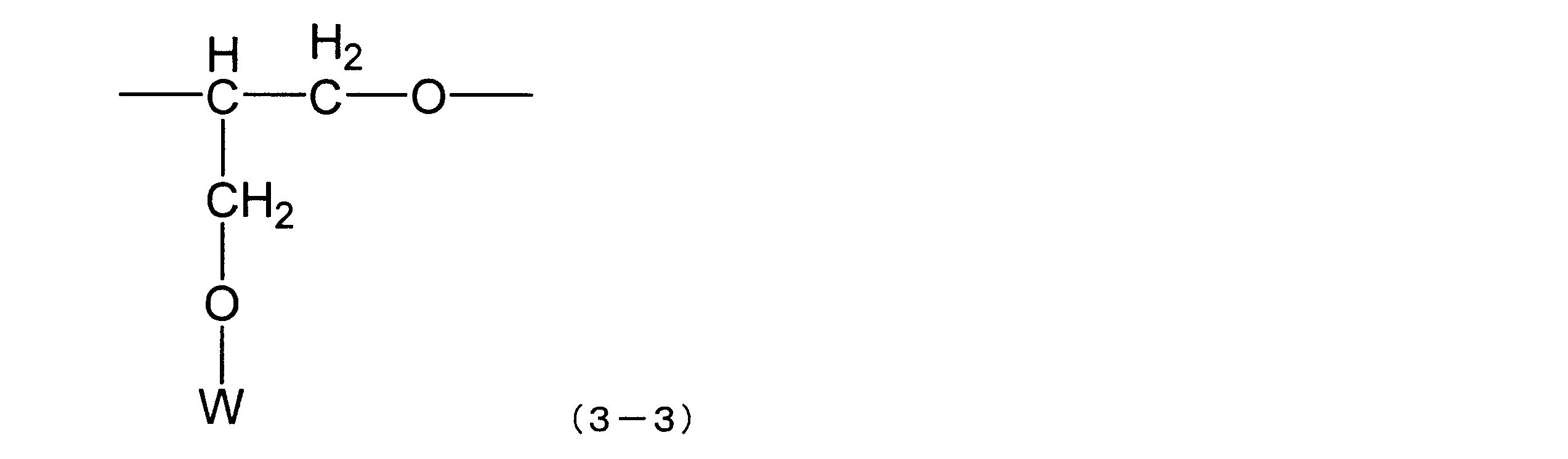
(式中、Wは前記と同様の基を表す)

で表される親水性単位から選択される少なくとも1種以上の親水性単位を含有してなる親水性基である。
-CrH2r-O- (3-1)
(式中、rは1~6の範囲の数である)
また、Qは、複数の親水性単位が直鎖状に結合してなる直鎖状親水性セグメント、又は、複数の前記親水性単位が下記構造式(3-5)~(3-7)


で表される基から選択される少なくとも1種以上の分岐単位を介して分岐状に結合してなる分岐状親水性セグメントを有することが好ましい。
Qは、下記一般式(4-1)~(4-4)のいずれかで表される親水性基であることがより好ましい。
一般式(4-1):
-R3(-O-X1 m-R4)p (4-1)
(式中、
R3は、(p+1)価の有機基であり、
pは、1~3の範囲の数であり、
X1は、各々独立に、上記一般式(3-1)~(3-4)で表される親水性単位から選択される少なくとも1種以上の親水性単位であり、
mは、1~100の範囲の数であり、
R4は、水素原子、炭素原子数1~20のアルキル基、アシル基及びグリシジル基からなる群から選択される基である)
一般式(4-2):
-R3(-O-X2)p (4-2)
{式中、
R3は、前記と同様の基であり、
pは、前記と同様の数であり、
X2は、下記構造式(4-2-1);

(式中、2つの酸素原子には、各々独立に、上記一般式(3-1)~(3-4)で表される親水性単位から選択される少なくとも1種以上の親水性単位が結合する)で表される親水性基である}
一般式(4-3):
-R3(-O-X3)p (4-3)
{式中、
R3は、前記と同様の基であり、
pは、前記と同様の数であり、
X3は、下記構造式(4-3-1);

(式中、2つの酸素原子には、各々独立に、上記一般式(3-1)~(3-4)で表される親水性単位から選択される少なくとも1種以上の親水性単位が結合する)で表される親水性基である}
一般式(4-4):
-R3(-O-X4)p (4-4)
{式中、
R3は、前記と同様の基であり、
pは、前記と同様の数であり、
X4は、下記構造式(4-4-1);

(式中、2つの酸素原子には、各々独立に、上記一般式(3-1)~(3-4)で表される親水性単位から選択される少なくとも1種以上の親水性単位が結合する)で表される親水性基である}
-R3(-O-X1 m-R4)p (4-1)
(式中、
R3は、(p+1)価の有機基であり、
pは、1~3の範囲の数であり、
X1は、各々独立に、上記一般式(3-1)~(3-4)で表される親水性単位から選択される少なくとも1種以上の親水性単位であり、
mは、1~100の範囲の数であり、
R4は、水素原子、炭素原子数1~20のアルキル基、アシル基及びグリシジル基からなる群から選択される基である)
一般式(4-2):
-R3(-O-X2)p (4-2)
{式中、
R3は、前記と同様の基であり、
pは、前記と同様の数であり、
X2は、下記構造式(4-2-1);
一般式(4-3):
-R3(-O-X3)p (4-3)
{式中、
R3は、前記と同様の基であり、
pは、前記と同様の数であり、
X3は、下記構造式(4-3-1);
一般式(4-4):
-R3(-O-X4)p (4-4)
{式中、
R3は、前記と同様の基であり、
pは、前記と同様の数であり、
X4は、下記構造式(4-4-1);
本発明のオルガノポリシロキサンエラストマーは、
(A)オルガノハイドロジェンポリシロキサン、
(B)反応性不飽和基を1分子中に1つ有するシロキサンデンドロン 並びに
(C)(C1)1分子中に平均で1より大きい数の反応性不飽和基を有する有機化合物、及び、(C2)1分子中に1以上の反応性不飽和基及び1以上のエポキシ基を有する有機化合物からなる群から選択される1種類以上の有機化合物
を少なくとも反応させることにより得ることができる。
(A)オルガノハイドロジェンポリシロキサン、
(B)反応性不飽和基を1分子中に1つ有するシロキサンデンドロン 並びに
(C)(C1)1分子中に平均で1より大きい数の反応性不飽和基を有する有機化合物、及び、(C2)1分子中に1以上の反応性不飽和基及び1以上のエポキシ基を有する有機化合物からなる群から選択される1種類以上の有機化合物
を少なくとも反応させることにより得ることができる。
また、本発明の好ましいオルガノポリシロキサンエラストマーは、
(A)オルガノハイドロジェンポリシロキサン、
(B)反応性不飽和基を1分子中に1つ有するシロキサンデンドロン
(C)(C1)1分子中に平均で1より大きい数の反応性不飽和基を有する有機化合物、及び、(C2)1分子中に1以上の反応性不飽和基及び1以上のエポキシ基を有する有機化合物からなる群から選択される1種類以上の有機化合物{但し、下記(D)が1分子中に平均で1より大きい数の反応性不飽和基を有する場合には(C)は任意である}、並びに、
(D)反応性不飽和基及び上記構造式(3―1)~(3-4)で表される親水性単位から選択される少なくとも1種以上の親水性単位を含有してなる親水性基を有する親水性誘導体
を少なくとも反応させることにより得ることができる。
(A)オルガノハイドロジェンポリシロキサン、
(B)反応性不飽和基を1分子中に1つ有するシロキサンデンドロン
(C)(C1)1分子中に平均で1より大きい数の反応性不飽和基を有する有機化合物、及び、(C2)1分子中に1以上の反応性不飽和基及び1以上のエポキシ基を有する有機化合物からなる群から選択される1種類以上の有機化合物{但し、下記(D)が1分子中に平均で1より大きい数の反応性不飽和基を有する場合には(C)は任意である}、並びに、
(D)反応性不飽和基及び上記構造式(3―1)~(3-4)で表される親水性単位から選択される少なくとも1種以上の親水性単位を含有してなる親水性基を有する親水性誘導体
を少なくとも反応させることにより得ることができる。
前記架橋部を構成する前記(C)成分及び/又は前記(D)成分の不飽和基と反応する前記(A)成分の1分子当たりのケイ素原子結合水素原子数の平均値は、0.1以上であることが好ましい。
前記(A)成分は、平均組成式(1):
R5 aHbSiO(4-a-b)/2 (1)
(式中、
R5は、互いに独立して、一価有機基を表し、1.0≦a≦3.0、及び、0.001≦b≦1.5である)で表されるものが好ましい。
R5 aHbSiO(4-a-b)/2 (1)
(式中、
R5は、互いに独立して、一価有機基を表し、1.0≦a≦3.0、及び、0.001≦b≦1.5である)で表されるものが好ましい。
前記(B)成分は、下記一般式(2’):

{式中、
L´1は、炭素原子数1~6のアルキル基若しくはフェニル基、又は、j=1のときの下記一般式(2”);

(式中、
R2は、炭素原子数1~6のアルキル基又はフェニル基であり、
Zは、二価の有機基であり、
jは、Ljで示されるシリルアルキル基の階層を示し、該シリルアルキル基の繰り返し数である階層数がk’のとき1~k’の整数であり、階層数k’は1~10の整数であり、Lj+1はjがk’未満のときは該シリルアルキル基であり、j=k’のときはR2であり、
ajは、0~3の範囲の数である)で示されるシリルアルキル基であり、
Z´は、二価有機基であり、
R6は、水素原子又はメチル基である}で表される、分子鎖末端に1個の炭素-炭素二重結合を有するシロキサンデンドロン構造を有する化合物であることが好ましい。
L´1は、炭素原子数1~6のアルキル基若しくはフェニル基、又は、j=1のときの下記一般式(2”);
R2は、炭素原子数1~6のアルキル基又はフェニル基であり、
Zは、二価の有機基であり、
jは、Ljで示されるシリルアルキル基の階層を示し、該シリルアルキル基の繰り返し数である階層数がk’のとき1~k’の整数であり、階層数k’は1~10の整数であり、Lj+1はjがk’未満のときは該シリルアルキル基であり、j=k’のときはR2であり、
ajは、0~3の範囲の数である)で示されるシリルアルキル基であり、
Z´は、二価有機基であり、
R6は、水素原子又はメチル基である}で表される、分子鎖末端に1個の炭素-炭素二重結合を有するシロキサンデンドロン構造を有する化合物であることが好ましい。
前記(C)成分は、下記(C1-1)~(C1-5)及び(C2-1)~(C2~2)
(C1-1) 一般式(5-1):
CH2=CH(CH2)xCH=CH2 (5-1)
(式中、1≦x≦20である)で表されるα,ω-ジエン、
(C1-2) 一般式(5-2):
CH≡C(CH2)xC≡CH (5-2)
(式中、1≦x≦20である)で表されるα,ω-ジイン、
(C1-3) 一般式(5-3):
CH2=CH(CH2)xC≡CH (5-3)
(式中、1≦x≦20である)で表されるα,ω-エン-イン、
(C1-4) 一般式(5-4):
CqH2q-1O(CnH2nO)yCqH2q-1 (5-4)
(式中、2≦q≦20、2≦n≦4、yはオキシエチレン単位、オキシプロピレン単位、オキシブチレン単位の繰返し数の合計値であり、1≦y≦180である)で表されるビスアルケニルポリエーテル化合物、
(C1-5) 平均組成式(5-5):
R7 cR8 dSiO(4-c-d)/2 (5-5)
(式中、R7は、互いに独立してもよいがR8とは異なる一価有機基を表し、
R3は、互いに独立して、炭素原子数2~30の一価の不飽和脂肪族炭化水素基を表し、1.0≦c≦2.5、及び、0.001≦d≦1.5である)で表される不飽和基含有シリコーン化合物、
(C2-1) 一般式 (5-6):

(式中、R9は、1つの不飽和結合を有しており、置換若しくは非置換の、直鎖状若しくは分岐状の、炭素原子数2~20の一価炭化水素基を表す)で表される不飽和エポキシ化合物、
(C2-2) 一般式(5-7):

(式中、R10は、1つの不飽和結合を有しており、置換若しくは非置換の、直鎖状若しくは分岐状の、炭素原子数2~20の一価炭化水素基を表し、
R11は、水素原子又はメチル基を表し、
R12は水素原子又はメチル基を表す)で表される、不飽和基含有脂環式エポキシ化合物
から選ばれる1種類以上の有機化合物であることが好ましい。
(C1-1) 一般式(5-1):
CH2=CH(CH2)xCH=CH2 (5-1)
(式中、1≦x≦20である)で表されるα,ω-ジエン、
(C1-2) 一般式(5-2):
CH≡C(CH2)xC≡CH (5-2)
(式中、1≦x≦20である)で表されるα,ω-ジイン、
(C1-3) 一般式(5-3):
CH2=CH(CH2)xC≡CH (5-3)
(式中、1≦x≦20である)で表されるα,ω-エン-イン、
(C1-4) 一般式(5-4):
CqH2q-1O(CnH2nO)yCqH2q-1 (5-4)
(式中、2≦q≦20、2≦n≦4、yはオキシエチレン単位、オキシプロピレン単位、オキシブチレン単位の繰返し数の合計値であり、1≦y≦180である)で表されるビスアルケニルポリエーテル化合物、
(C1-5) 平均組成式(5-5):
R7 cR8 dSiO(4-c-d)/2 (5-5)
(式中、R7は、互いに独立してもよいがR8とは異なる一価有機基を表し、
R3は、互いに独立して、炭素原子数2~30の一価の不飽和脂肪族炭化水素基を表し、1.0≦c≦2.5、及び、0.001≦d≦1.5である)で表される不飽和基含有シリコーン化合物、
(C2-1) 一般式 (5-6):
(C2-2) 一般式(5-7):
R11は、水素原子又はメチル基を表し、
R12は水素原子又はメチル基を表す)で表される、不飽和基含有脂環式エポキシ化合物
から選ばれる1種類以上の有機化合物であることが好ましい。
前記平均組成式(1)において、R5である一価有機基は、以下の(E1)~(E9)
(E1)炭素原子数1~60の、置換若しくは非置換の、直鎖状若しくは分岐状の一価炭化水素基、
(E2)-R13O(AO)zR14 (式中、AOは、炭素原子数2~4のオキシアルキレン基を表し、R13は、炭素原子数3~5の、置換若しくは非置換の、直鎖状若しくは分岐状の二価炭化水素基を表し、R14は、水素原子、炭素原子数1~24の、置換若しくは非置換の、直鎖状若しくは分岐状の一価炭化水素基、又は、炭素原子数2~24の、置換若しくは非置換の、直鎖状若しくは分岐状のアシル基を表し、z=1~100である)で表されるポリオキシアルキレン基、
(E3)炭素原子数1~30の、置換若しくは非置換の、直鎖状若しくは分岐状のアルコキシ基、
(E4)水酸基、
(E5)-R15-COOR16(式中、R15は、炭素原子数2~20の、置換若しくは非置換の、直鎖状若しくは分岐状の二価炭化水素基を表し、R16は、炭素原子数1~30の、置換若しくは非置換の、直鎖状若しくは分岐状の一価炭化水素基を表す)で表されるエステル基、
(E6)-R17-OCOR18(式中、R17は、炭素原子数2~20の、置換若しくは非置換の、直鎖状若しくは分岐状の二価炭化水素基を表し、R18は、炭素原子数1~30の、置換若しくは非置換の、直鎖状若しくは分岐状の一価炭化水素基を表す)で表されるエステル基
(E7)下記一般式(6)

(式中、R19は、それぞれ独立して、置換若しくは非置換の、直鎖状若しくは分岐状の、炭素原子数1~30の一価炭化水素基、水酸基又は水素原子であり、R19のうち少なくとも一つは前記一価炭化水素基である。tは、2~10の範囲の数であり、rは、1~100の範囲の数である)で表される、鎖状ポリシロキサン構造で置換されたアルキル基、
(E8)下記一般式(7)

(式中、R20は、置換若しくは非置換の、直鎖状若しくは分岐状の、炭素原子数2~20の二価炭化水素基を表す)で表される、エポキシ基、
(E9)下記一般式(8)

(式中、R21は、置換若しくは非置換の、直鎖状若しくは分岐状の、炭素原子数2~20の二価炭化水素基を表し、R11及びR12は前記の通りである)で表される、脂環式エポキシ基
から選ばれるものが好ましい。
(E1)炭素原子数1~60の、置換若しくは非置換の、直鎖状若しくは分岐状の一価炭化水素基、
(E2)-R13O(AO)zR14 (式中、AOは、炭素原子数2~4のオキシアルキレン基を表し、R13は、炭素原子数3~5の、置換若しくは非置換の、直鎖状若しくは分岐状の二価炭化水素基を表し、R14は、水素原子、炭素原子数1~24の、置換若しくは非置換の、直鎖状若しくは分岐状の一価炭化水素基、又は、炭素原子数2~24の、置換若しくは非置換の、直鎖状若しくは分岐状のアシル基を表し、z=1~100である)で表されるポリオキシアルキレン基、
(E3)炭素原子数1~30の、置換若しくは非置換の、直鎖状若しくは分岐状のアルコキシ基、
(E4)水酸基、
(E5)-R15-COOR16(式中、R15は、炭素原子数2~20の、置換若しくは非置換の、直鎖状若しくは分岐状の二価炭化水素基を表し、R16は、炭素原子数1~30の、置換若しくは非置換の、直鎖状若しくは分岐状の一価炭化水素基を表す)で表されるエステル基、
(E6)-R17-OCOR18(式中、R17は、炭素原子数2~20の、置換若しくは非置換の、直鎖状若しくは分岐状の二価炭化水素基を表し、R18は、炭素原子数1~30の、置換若しくは非置換の、直鎖状若しくは分岐状の一価炭化水素基を表す)で表されるエステル基
(E7)下記一般式(6)
(E8)下記一般式(7)
(E9)下記一般式(8)
から選ばれるものが好ましい。
本発明のオルガノポリシロキサンエラストマーは、粒子の形態にあることが好ましく、体積平均粒子径が20~1000μmの範囲内にある粒子の形態であることがより好ましい。
本発明のオルガノポリシロキサンエラストマーは自重以上の量の油剤を含んで膨潤しうることが好ましい。
更に、本発明の第1の目的は、
(A)オルガノハイドロジェンポリシロキサン、
(B)反応性不飽和基を1分子中に1つ有するシロキサンデンドロン、並びに、
(C)(C1)1分子中に平均で1より大きい数の反応性不飽和基を有する有機化合物、及び、(C2)1分子中に1以上の反応性不飽和基及び1以上のエポキシ基を有する有機化合物からなる群から選択される1種類以上の有機化合物
を少なくとも反応させる工程を含む、オルガノポリシロキサンエラストマーの製造方法によっても達成することができる。
(A)オルガノハイドロジェンポリシロキサン、
(B)反応性不飽和基を1分子中に1つ有するシロキサンデンドロン、並びに、
(C)(C1)1分子中に平均で1より大きい数の反応性不飽和基を有する有機化合物、及び、(C2)1分子中に1以上の反応性不飽和基及び1以上のエポキシ基を有する有機化合物からなる群から選択される1種類以上の有機化合物
を少なくとも反応させる工程を含む、オルガノポリシロキサンエラストマーの製造方法によっても達成することができる。
上記オルガノポリシロキサンエラストマーの製造方法では、反応の一部又は全部が、以下の(P-1)~(P-2)に示される群から選ばれる1以上の溶媒の存在下、又は、溶媒の不存在下で行われることが好ましい。
(P-1): 有機化合物
(P-2): ケイ素原子を含有する化合物
(P-1): 有機化合物
(P-2): ケイ素原子を含有する化合物
前記オルガノポリシロキサンエラストマーの製造方法の一態様では、前記(A)と(B)とを先に反応させ、しかる後に(C)を添加して架橋反応を行うことを特徴としているが、以下に示す任意成分(Q)を、(A)-(B)の反応前に(A)と反応させるか、(A)-(B)の反応後に更に反応させるか、(A)-(B)の反応時に同時に反応させるか、又は(C)による架橋後に更に反応させることができる。
(Q): 1分子中に1の不飽和基を有する化合物(ただし、前記(C2)であるものを除く)
(Q): 1分子中に1の不飽和基を有する化合物(ただし、前記(C2)であるものを除く)
前記オルガノポリシロキサンエラストマーの製造方法の他の一態様では、架橋部を導く前記(A)と(C)との反応を先に行い、しかる後に(B)を添加して反応させることを特徴としているが、以下に示す任意成分(Q)を、(A)-(C)の反応前に(A)と反応させるか、(A)-(C)の反応後に更に反応させるか、又は(B)の反応後に更に反応させることができる。
(Q): 1分子中に1の不飽和基を有する化合物(ただし、前記(C2)であるものを除く)
(Q): 1分子中に1の不飽和基を有する化合物(ただし、前記(C2)であるものを除く)
更に、本発明の本発明の第2の目的は、
(A)オルガノハイドロジェンポリシロキサン、
(B)反応性不飽和基を1分子中に1つ有するシロキサンデンドロン、
(C)(C1)1分子中に平均で1より大きい数の反応性不飽和基を有する有機化合物、及び、(C2)1分子中に1以上の反応性不飽和基及び1以上のエポキシ基を有する有機化合物からなる群から選択される1種類以上の有機化合物{但し、下記(D)が1分子中に平均で1より大きい数の反応性不飽和基を有する場合には(C)は任意である}、並びに、
(D)反応性不飽和基及び上記構造式(3―1)~(3-4)で表される親水性単位から選択される少なくとも1種以上の親水性単位を含有してなる親水性基を有する親水性誘導体
を少なくとも反応させる工程を含む、オルガノポリシロキサンエラストマーの製造方法によっても達成することができる。
(A)オルガノハイドロジェンポリシロキサン、
(B)反応性不飽和基を1分子中に1つ有するシロキサンデンドロン、
(C)(C1)1分子中に平均で1より大きい数の反応性不飽和基を有する有機化合物、及び、(C2)1分子中に1以上の反応性不飽和基及び1以上のエポキシ基を有する有機化合物からなる群から選択される1種類以上の有機化合物{但し、下記(D)が1分子中に平均で1より大きい数の反応性不飽和基を有する場合には(C)は任意である}、並びに、
(D)反応性不飽和基及び上記構造式(3―1)~(3-4)で表される親水性単位から選択される少なくとも1種以上の親水性単位を含有してなる親水性基を有する親水性誘導体
を少なくとも反応させる工程を含む、オルガノポリシロキサンエラストマーの製造方法によっても達成することができる。
上記オルガノポリシロキサンエラストマーの製造方法では、反応の一部又は全部が、以下の(P-1)~(P-2)に示される群から選ばれる1以上の溶媒の存在下で行われることが好ましい。
(P-1): 有機化合物
(P-2): ケイ素原子を含有する化合物
(P-1): 有機化合物
(P-2): ケイ素原子を含有する化合物
前記オルガノポリシロキサンエラストマーの製造方法の一態様では、前記(A)に対して(B)及び(D){但し、ここでの(D)は1分子中に1の反応性不飽和基を有するものに限る}を任意の順番で逐次的に反応させ、しかる後に(C)を添加して架橋反応を行うことを特徴としているが、以下に示す任意成分(Q)を、(A)-(B)の反応前又は(A)-(D)の反応前に(A)と反応させるか、(A)-(B)の反応後又は(A)-(D)の反応後に更に反応させるか、(A)-(B)の反応時又は(A)-(D)の反応時に同時に反応させるか、又は(C)による架橋後に更に反応させることができる。
(Q): 1分子中に1の不飽和基を有する化合物(ただし、前記(C2)であるものを除く)
(Q): 1分子中に1の不飽和基を有する化合物(ただし、前記(C2)であるものを除く)
前記オルガノポリシロキサンエラストマーの製造方法の他の一態様では、架橋部を導く前記(A)と(C)との反応を先に行い、しかる後に、(B)及び(D){但し、ここでの(D)は1分子中に1の反応性不飽和基を有するものに限る}を任意の順番で添加して逐次的に反応させることを特徴としているが、以下に示す任意成分(Q)を、(A)-(C)の反応前に(A)と反応させるか、(A)-(C)の反応後に更に反応させるか、又は(B)及び(D)の反応後に更に反応させることができる。
(Q): 1分子中に1の不飽和基を有する化合物(ただし、前記(C2)であるものを除く)
(Q): 1分子中に1の不飽和基を有する化合物(ただし、前記(C2)であるものを除く)
本発明の第3及び/又は第4の目的は、上記オルガノポリシロキサンエラストマーを含有する外用剤原料若しくは化粧料用原料又は外用剤若しくは化粧料、並びに、上記オルガノポリシロキサンエラストマーに加えて少なくとも1種の油剤を含む組成物、及び、当該組成物を含有する外用剤用原料若しくは化粧料用原料又は外用剤若しくは化粧料によって達成することができる。前記組成物はエマルション又はペーストの形態であってよい。
前記外用剤原料又は化粧料用原料は、ゲル化剤、構造化剤、増粘剤、感触改良剤、保湿剤、マスキング剤、界面活性剤、乳化剤、粉体の分散安定剤であることができる。
特に、本発明の第4の目的は、上記オルガノポリシロキサンエラストマーを含有する外用剤若しくは化粧料であって、好ましくは、上記オルガノポリシロキサンエラストマーを含有する一方で、親水性基として、オキシアルキレン単位の繰り返し数の平均値が2以上のオキシアルキレン構造を有する化合物、特に、ポリオキシエチレン基又はポリオキシエチレン部を含有する化合物、を含まない外用剤若しくは化粧料によって好適に達成することができる。
本発明の第5の目的は、上記オルガノポリシロキサンエラストマーの製造方法において得られたオルガノポリシロキサンエラストマー、又は、上記オルガノポリシロキサンエラストマーに加えて少なくとも1種の油剤を含む組成物に、1種類以上の酸性物質を加えて処理した後、加熱又は減圧によって揮発成分を除去してなる当該オルガノポリシロキサンエラストマー又はその組成物、これらを含有する外用剤原料若しくは化粧料用原料又は外用剤若しくは化粧料によって達成することができる。
本発明によれば、様々な油剤との親和性を有しており、また、増粘特性、ゲル化特性に優れており、更に、特に、ベルベット調の厚みのある滑らかさ、及び、塗布初期から乾燥後までのべとつきの無さに特長づけられる優れた触感を与え、また、このような優れた触感を持続的にもたらす、新規な有機変性オルガノポリシロキサンエラストマーを提供することができる。
また、本発明の有機変性オルガノポリシロキサンエラストマーは、しわ隠し効果、保湿効果等の優れた美容効果をもたらすことができる。
そして、本発明の有機変性オルガノポリシロキサンエラストマーは、優れた乳化特性を有しており、低極性のシリコーン油、中~高極性のエステル油だけでなく、非極性の炭化水素油に対しても優れた乳化性能を発揮することが可能である。したがって、本発明の有機変性オルガノポリシロキサンエラストマーを外用剤又は化粧料に配合することにより、様々な処方の外用剤又は化粧料を設計することが可能である。なお、本発明の外用剤又は化粧料はポリオキシエチレン基又はポリオキシエチレン部位を有する化合物、例えば、ポリエーテル変性シリコーンを含む必要がなく、化粧品等の最終消費者向け商品の構成を全体としてPEG-FREE処方に改良するという世界的な潮流に合致した、ポリオキシエチレン部位を含有する化合物を含まないことを特徴とする外用剤ないしは化粧料とすることができる。本発明のオルガノポリシロキサンエラストマーは、他のPEG構造を有する親水性シリコーン乳化剤等の非イオン性の界面活性剤を併用しなくとも、十分な安定性を有する油中水型エマルション化粧料等を調製することができ、化粧料又は外用剤の処方全体としてPEG-FREE処方(=親水性基として、ポリオキシエチレン(PEG)構造を有する化合物を含有しない処方)に改めることができる。すなわち、本発明のオルガノポリシロキサンエラストマーの使用により、化粧品業界は最終消費者向け商品の構成を全体としてPEG-FREE処方に改良するという世界的な潮流に合致した、環境適合性の高いビジネス戦略を実行することができる。
また、本発明の有機変性オルガノポリシロキサンエラストマーを配合した組成物は、安定性を担保できる高粘度の性状でありながら、その触感は非常に柔らかいという、相反する特性を併せ持つことができる。この効果は有機変性オルガノポリシロキサンエラストマーが粒子の形態にある場合に顕著である。
更に、本発明の有機変性オルガノポリシロキサンエラストマーは媒体中に分散された粉体の分散状態を保持する効果に優れており、粉体を含む組成物の保存安定性を特に向上することができる。
本発明の有機変性オルガノポリシロキサンエラストマーは、その機能のために、増粘剤、ゲル化剤、構造化剤、感触改良剤、保湿剤、マスキング剤、界面活性剤、乳化剤、粉体の分散安定剤等の外用剤又は化粧料用の原料として好適に使用することができ、また、化粧料又は外用剤に適宜配合することができる。特に、ドラッグデリバリーシステムとして利用できる安定性に優れた非水系のエマルション組成物を提供することもできるし、同様に安定性に優れた油中水型又は水中油型エマルション組成物を提供することもできる。
また、本発明の有機変性オルガノポリシロキサンエラストマーは幅広い種類の油剤と均一に混合可能なため、各種油剤との組成物として使用することができる。更に、油剤と共に本発明の有機変性オルガノポリシロキサンエラストマーを含む組成物は保存安定性にも優れている。
本発明では有機変性オルガノポリシロキサンエラストマーの臭気を低減することができる。臭気が低減された本発明の有機変性オルガノポリシロキサンエラストマーは外用剤又は化粧料用の原料として、外用剤又は化粧料の成分として特に好適である。特に、本発明では、実質的に無臭であり、また、高温下若しくは経時での臭気発生が抑制された、有機変性オルガノポリシロキサンエラストマー又はそれを含む組成物を酸処理という簡便な工程によって提供することができる。
本発明による有機変性オルガノポリシロキサンエラストマーの臭気低減効果は極めて高く、他の変性オルガノポリシロキサンエラストマーを本発明と同様に酸処理しても本発明において得られるような臭気低減効果を得ることはできない。本発明の特長は工業規模での実施に有利であり、しかも、簡便に、且つ、低コストで無臭化された有機変性オルガノポリシロキサンエラストマー又はそれを含む組成物を提供することができる点にある。
また、臭気が低減された本発明の有機変性オルガノポリシロキサンエラストマーは、外用剤又は化粧料に配合するにあたって、臭気をマスクする必要がなく、外用剤又は化粧料の処方の設計の自由度が高い。これは、臭気を含む官能性が重視される化粧料において特に有利である。
(オルガノポリシロキサンエラストマー及びその製造方法)
本発明の第1の態様は、L1で表される、ケイ素原子に結合したシロキサンデンドロン構造を有する基を有し、且つ、架橋部に炭素-ケイ素結合を含む架橋三次元網状構造を有するオルガノポリシロキサンエラストマーである。
本発明の第1の態様は、L1で表される、ケイ素原子に結合したシロキサンデンドロン構造を有する基を有し、且つ、架橋部に炭素-ケイ素結合を含む架橋三次元網状構造を有するオルガノポリシロキサンエラストマーである。
L1で表される基は、シロキサンデンドロン構造を有する基であり、i=1のときの下記一般式(2):

(式中、
R1は、炭素原子数1~30の、置換若しくは非置換の、直鎖状若しくは分岐状の一価炭化水素基を表し、
R2は、それぞれ独立して、炭素原子数1~6のアルキル基又はフェニル基を表し、
Zは二価有機基を表し、
iはLiで示されるシリルアルキル基の階層を示し、該シリルアルキル基の繰り返し数である階層数がkのとき1~kの整数であり、階層数kは1~10の整数であり、Li+1はiがk未満のときは該シリルアルキル基であり、i=kのときはR2であり、aiは0~3の範囲の数である)
で示されるシリルアルキル基として定義される。
R1は、炭素原子数1~30の、置換若しくは非置換の、直鎖状若しくは分岐状の一価炭化水素基を表し、
R2は、それぞれ独立して、炭素原子数1~6のアルキル基又はフェニル基を表し、
Zは二価有機基を表し、
iはLiで示されるシリルアルキル基の階層を示し、該シリルアルキル基の繰り返し数である階層数がkのとき1~kの整数であり、階層数kは1~10の整数であり、Li+1はiがk未満のときは該シリルアルキル基であり、i=kのときはR2であり、aiは0~3の範囲の数である)
で示されるシリルアルキル基として定義される。
前記シロキサンデンドロン構造を有するシリルアルキル基は、カルボシロキサン単位がデンドリマー状に広がった構造を包含し、高撥水性を呈する官能基であり、親水性基との組み合わせのバランスに優れている。また、前記シロキサンデンドロン構造を有するシリルアルキル基は、化学的に安定であるために幅広い化粧料配合成分と組み合わせて使用することができるという有利な特性を付与する官能基である。
一般式(2)のR1で表される、炭素原子数1~30の、置換若しくは非置換の、直鎖状若しくは分岐状の一価炭化水素基としては、例えば、メチル基、エチル基、プロピル基、ブチル基、ペンチル基、ヘキシル基、ヘプチル基、オクチル基等のアルキル基;シクロペンチル基、シクロヘキシル基等のシクロアルキル基;ビニル基、アリル基、ブテニル基等のアルケニル基;フェニル基、トリル基等のアリール基;ベンジル基等のアラルキル基;及び、これらの基の炭素原子に結合した水素原子が少なくとも部分的にフッ素等のハロゲン原子、又は、エポキシ基、グリシジル基、アシル基、カルボキシル基、アミノ基、メタクリル基、メルカプト基等を含む有機基で置換された基(但し、総炭素原子数は1~30)が挙げられる。
一般式(2)のR2で表される、炭素原子数1~6のアルキル基又はフェニル基のうち、炭素原子数1~6のアルキル基としては、メチル、エチル、n-プロピル、i-プロピル、n-ブチル、i-ブチル、s-ブチル、ペンチル、ネオペンチル、シクロペンチル、ヘキシル等の直鎖状、分岐状或いは環状のアルキル基が挙げられる。
一般式(2)において、i=kのとき、R2はメチル基又はフェニル基であることが好ましい。特に、i=kのときはメチル基であることが好ましい。
階層数kは、工業的には1~3の整数であることが好適であり、より好適には、1又は2である。各階層数において、L1で示される基は以下のように表される。式中、R1、R2及びZは前記同様の基である。
階層数k=1である場合、L1は下記一般式(2-1)で表される。
一般式(2-1):

(式中、R1、R2及びZは前記のとおりであり、a1は0~3の範囲の数である)
一般式(2-1):
階層数k=2である場合、L1は下記一般式(2-2)で表される。
一般式(2-2):

(式中、R1、R2及びZは前記のとおりであり、a1及びa2は各々独立に0~3の範囲の数である)
一般式(2-2):
階層数k=3である場合、L1は下記一般式(2-3)で表される。
一般式(2-3):

(式中、R1、R2及びZは前記のとおりであり、a1、a2及びa2は各々独立に0~3の範囲の数である)
一般式(2-3):
階層数が1~3の場合における式(2-1)~(2-3)で示される構造において、a1、a2及びa3は各々独立に0~3の範囲の数である。これらのaiは特に0~1の範囲の数であることが好ましく、aiが0であることが特に好ましい。
一般式(2)、(2-1)~(2-3)において、Zは、各々独立に2価の有機基であり、具体的には、ケイ素結合水素原子と、アルケニル基、アクリロキシ基、メタクリロキシ基等の不飽和炭化水素基を末端に有する官能基を付加反応させることにより形成される2価の有機基が挙げられるが、シロキサンデンドロン構造を有するシリルアルキル基の導入法に応じて、これらの官能基に限らず、適宜選択することができる。より具体的には、Zは、各々独立に、一般式:-R22-、-R22-CO-、-R22-COO-、-R22-CONH-、-R22-CO-R23-、-R22-COO-R23-、-R22-CONH-R23-、-CO-R22-、-COO-R22-、-CONH-R22-、-R23-CO-R22-、-R23-COO-R22-、-R23-CONH-R22-、及び、-R22-R23-で示される2価の有機基から選ばれる基であることが好ましい。特に、L1におけるZは、好適には、ケイ素結合水素原子と、アルケニル基の反応により導入される-R22-で示される2価の有機基である。同様に、Zはケイ素結合水素原子と、不飽和カルボン酸エステル基との反応により導入される-R22-COO-R23-で示される2価の有機基が好適である。一方、階層数kが2以上であり、L2~LkであるLiで示されるシリルアルキル基において、Zは炭素原子数2~10のアルキレン基であることが好ましく、エチレン基,プロピレン基,メチルエチレン基又はヘキシレン基から選択される基であることが特に好ましく、エチレン基であることが最も好ましい。
上記一般式中、R22は、各々独立に、置換基を有していてもよい、炭素数2~22の直鎖状若しくは分岐鎖状のアルキレン基、アルケニレン基又は炭素数6~22のアリーレン基である。より具体的には、R22はエチレン基,プロピレン基,ブチレン基,ヘキシレン基などの直鎖状アルキレン基;メチルメチレン基,メチルエチレン基,1-メチルペンチレン基,1,4-ジメチルブチレン基などの分岐状アルキレン基が例示され、R22がエチレン基,プロピレン基,メチルエチレン基又はヘキシレン基から選択される基であることが好ましい。
上記一般式中、R23は、下記式で示される二価の有機基から選択される基である。

本発明のオルガノポリシロキサンエラストマーは、架橋密度が比較的高い弾性体であることが好ましく、溶剤等には不溶のゲル状又はゴム状又はパウダー状固体であることが好ましい。本発明のオルガノポリシロキサンエラストマーは25℃で流動性を有しないこと(非液状)が好ましい。「25℃において流動性を有しない」とは、所定の容器内にオルガノポリシロキサンエラストマーを導入してその表面をこて等の器具を用いて水平とした後、当該容器を傾斜させ、24時間後に、当該表面が再度水平とならないことを意味する。ここで、「水平」とは、重力の作用方向に対して直角に交差する平面を形成することを意味する。
また、本発明のオルガノポリシロキサンエラストマーは炭素-ケイ素結合を含む架橋部を備えており、架橋三次元網状構造を有することが好ましい。前記架橋部は、ポリシロキサン鎖を含んでいてもよい。但し、本発明のオルガノポリシロキサンエラストマーはポリシロキサン鎖が比較的密に三次元網目状に架橋した高架橋分子構造を有することが好ましい。したがって、前記オルガノポリシロキサンは溶剤等には不溶のゲル状又はゴム状又はパウダー状固体であることが好ましい。
本発明のオルガノポリシロキサンエラストマーは自重(自らの質量)以上の量の油剤を含んで膨潤しうることが好ましい。油剤を包含した本発明のオルガノポリシロキサンエラストマーはペースト状で存在することができる。油剤の種類等は後述するとおりであるが、シリコーン油が好ましい。
本発明のオルガノポリシロキサンエラストマーは、L1で表されるシロキサンデンドロン構造を有する基が結合したケイ素原子とは異なるケイ素原子に結合したQで表される親水基(特に、グリセリン誘導体基)を有することが好ましい。Qは、本発明のオルガノポリシロキサンエラストマーの親水性部位を構成する。Qの構造は、親水性部位、特にグリセリン誘導体部位を有する限り、限定されるものではないが、二価以上の有機基、好ましくは二価有機基、を介してグリセリン誘導体残基がケイ素原子に結合することが好ましい。
前記グリセリン誘導体残基は、(ポリ)グリセリン構造を有する親水基であり、モノグリセリン、ジグリセリン、トリグリセリン、テトラグリセリン及び5量体以上のポリグリセリン構造を有する親水基である。また、その末端水酸基の一部がアルキル基により封鎖されていてもよい。更に、(ポリ)グリセリン構造は、直鎖状でも分岐状でもよく、樹状に分岐した構造であってもよい。
Qは、二価以上の連結基を介してケイ素原子に結合し、かつ、下記構造式(3―1)~(3-4)で表される親水性単位から選択される少なくとも1種以上の親水性単位を含有してなる親水性基であることが好ましい。
-CrH2r-O- (3-1)
(式中、rは1~6の範囲の数である)

(式中、Wは、水素原子又は炭素原子数1~20のアルキル基を表す)

(式中、Wは、前記と同様の基を表す)

-CrH2r-O- (3-1)
(式中、rは1~6の範囲の数である)
上記構造式(3―2)~(3-4)中、Wは水素原子であることが好ましい。特に、Wが水素原子である場合、空気下で酸化され難く、保存中にホルムアルデヒド等のアルデヒド類、ギ酸エステル類等のアレルギー抗原性化合物を経時的に生成し難いので環境適合性が高いという利点がある。
上記構造式(3―2)~(3-4)で示される親水性単位は、主としてグリセリンを含む多価アルコール類、ポリグリセリン類(ポリグリセロール類ともいう)、ポリグリシジルエーテル類又はこれらの末端水酸基を部分的に炭化水素基により封鎖した化合物から選択される親水性化合物から誘導される親水性基に含まれる親水性単位である。なお、化粧料又は外用剤の処方全体としてPEG-FREE処方(=ポリオキシエチレン(PEG)構造を有する化合物を含有しない処方)を実現する場合には、本発明のオルガノポリシロキサンエラストマーは、上記構造式(3-1)で表される親水性単位が2個以上連結した基を1分子中に有しないことが好ましい。
上記構造式(3―2)~(3-4)で示されるグリセリン誘導体基は、モノグリセリン変性基、ジグリセリン変性基等の分岐構造を有しない親水性基であってもよいが、ポリグリセロール基、ポリグリシジルエーテル基等の、当該官能基中の一部に分岐構造を有する親水性基であってもよい。
より詳細には、Qは、二価以上の連結基を介してケイ素原子に結合し、上記構造式(3―1)~(3-4)で表される親水性単位から選択される少なくとも1種以上の親水性単位の複数が直鎖状に連結してなる親水性セグメントであってもよい。同様に、前記グリセリン誘導体基は二価以上の連結基を介してケイ素原子に結合し、かつ上記構造式(3―1)~(3-4)で表される親水性単位から選択される少なくとも1種以上の親水性単位の複数が、下記構造式(3-5)~(3-7)で表される基から選択される分岐単位を介して分岐状に結合してなる親水性セグメントでもよい。


上記構造式(3-5)~(3-7)中、2つの酸素原子には、各々独立に、上記一般式(3―1)~(3-4)で表される親水性単位から選択される、少なくとも1種以上の親水性単位が結合する。当該親水性単位は、更に、構造式(3-5)~(3-7)で表される基から選択される分岐単位に結合してもよく、親水性単位が多階層に分岐してなる樹状のポリエーテル構造、ポリグリセロール構造又はポリグリシジルエーテル構造を形成していてもよい。一例として、構造式(3-5)で示される一つの分岐単位及び構造式(3-7)で示される二つの分岐単位を有し、樹状に分岐してなるグリセリン誘導体基の構造を以下に示すが、樹状のポリグリセロール構造がこれに限定されるものではないことは言うまでもない。

二価以上の連結基は、グリセリン誘導体基に含まれる、ケイ素原子への結合部位であって、その構造は特に限定されるものではないが、エチレン基、プロピレン基、ブチレン基、ヘキシレン基等のアルキレン基;エチレンフェニレン基、プロピレンフェニレン基等のアルキレンフェニレン基、エチレンベンジレン基等のアルキレンアラルキレン基;エチレノキシフェニレン基、プロピレノキシフェニレン基等のアルキレノキシフェニレン基;メチレノキシベンジレン基、エチレノキシベンジレン基、プロピレノキシベンジレン基等のアルキレノキシベンジレン基、更には以下に示される基が例示される。なお、二価以上の連結基中のエーテル結合は、0~3個までが好ましく、0又は1個がより好ましい。

Qは、好適には、下記構造式(4-1)~(4-4)で示される親水性基である。
一般式(4-1):
-R3(-O-X1 m-R4)p (4-1)
{式中、
R3は、(p+1)価の有機基であり、
pは、1~3の範囲の数であり、
X1は、各々独立に、上記一般式(3-1)~(3-4)で表される親水性単位から選択される少なくとも1種以上の親水性単位であり、
mは、1~100の範囲の数であり、
R4は、水素原子、炭素原子数1~20のアルキル基、アシル基及びグリシジル基からなる群から選択される基である}
-R3(-O-X1 m-R4)p (4-1)
{式中、
R3は、(p+1)価の有機基であり、
pは、1~3の範囲の数であり、
X1は、各々独立に、上記一般式(3-1)~(3-4)で表される親水性単位から選択される少なくとも1種以上の親水性単位であり、
mは、1~100の範囲の数であり、
R4は、水素原子、炭素原子数1~20のアルキル基、アシル基及びグリシジル基からなる群から選択される基である}
一般式(4-2):
-R3(-O-X2)p (4-2)
{式中、
R3は、前記と同様の基であり、
pは、前記と同様の数であり、
X2は、下記構造式(4-2-1);

(式中、2つの酸素原子には、各々独立に、上記一般式(3-1)~(3-4)で表される親水性単位から選択される少なくとも1種以上の親水性単位が結合する)で表される親水性基である}
-R3(-O-X2)p (4-2)
{式中、
R3は、前記と同様の基であり、
pは、前記と同様の数であり、
X2は、下記構造式(4-2-1);
一般式(4-3):
-R3(-O-X3)p (4-3)
{式中、
R3は、前記と同様の基であり、
pは、前記と同様の数であり、
X3は、下記構造式(4-3-1);

(式中、2つの酸素原子には、各々独立に、上記一般式(3-1)~(3-4)で表される親水性単位から選択される少なくとも1種以上の親水性単位が結合する)で表される親水性基である}
-R3(-O-X3)p (4-3)
{式中、
R3は、前記と同様の基であり、
pは、前記と同様の数であり、
X3は、下記構造式(4-3-1);
一般式(4-4):
-R3(-O-X4)p (4-4)
{式中、
R3は、前記と同様の基であり、
pは、前記と同様の数であり、
X4は、下記構造式(4-4-1);

(式中、2つの酸素原子には、各々独立に、上記一般式(3-1)~(3-4)で表される親水性単位から選択される少なくとも1種以上の親水性単位が結合する)で表される親水性基である}
-R3(-O-X4)p (4-4)
{式中、
R3は、前記と同様の基であり、
pは、前記と同様の数であり、
X4は、下記構造式(4-4-1);
R3として、前記の二価以上の連結基と同一の基を例示することができる。
特に好適には、p1は1であり、好適なR3としては、下記一般式で示される2価の有機基から選択される基が例示できる。

(式中、R30は、各々独立に、置換基を有していてもよい、炭素数2~22の直鎖状若しくは分岐鎖状のアルキレン基、アルケニレン基又は炭素数6~22のアリーレン基である。)
Qは、より好適には、下記構造式(6-1)~(6-4)で示される親水性基であり、これらは一般に、ポリグリセリン系の化合物から誘導されてなるグリセリン誘導体基である。

式(6-1)~(6-4)において、R28は(p1+1)価の有機基であり、p1は1以上3以下の数である。かかるR28として、前記の二価以上の連結基と同一の基を例示することができる。
特に好適には、p1は1であり、好適なR28として上記一般式で示される2価の有機基から選択される基が例示できる。
X1は、各々独立に、下記一般式(4-1-1)~(4-3-1)で表される親水性単位から選択される少なくとも1種以上の親水性単位であり、m2は1~5の範囲の数であり、特に好適には1~4である。

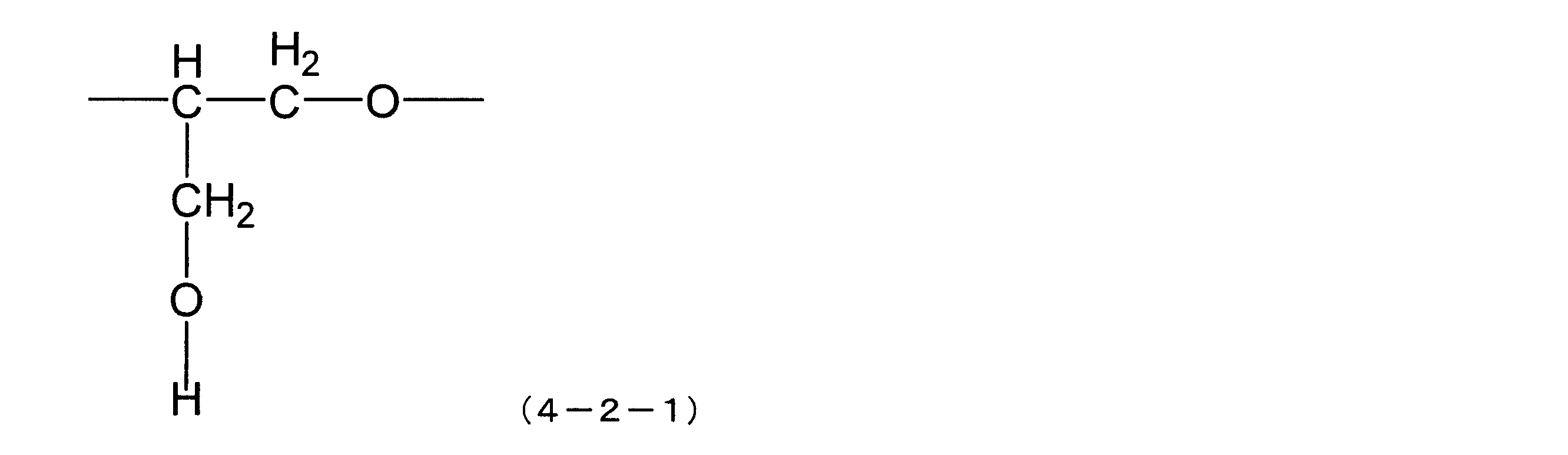

X2は、グリセリン誘導体基を含有してもよい任意のオキシアルキレン単位であり、q2は0~50の範囲の数である。q2の数は0~30の範囲の数であることが好ましく、0であることが好ましい。
なお、X2がオキシエチレン単位又はオキシプロピレン単位であることが好ましい。また、X2が連続して結合しているしている場合には、-(C2H4O)t1(C3H6O)t2- で示されるポリオキシアルキレン単位(式中、t1及びt2は各々0以上の数であり、(t1+t2)は0~50の範囲の数であり、好ましくは0~30の範囲の数である。)としてグリセリン誘導体基に1種以上含まれることもできる。ただし、化粧料又は外用剤の処方全体としてPEG-FREE処方を実現する場合には、オキシアルキレン単位の繰り返し数の平均値が2以上のオキシアルキレン構造を分子中に有しないことが好ましい。
なお、X2がオキシエチレン単位又はオキシプロピレン単位であることが好ましい。また、X2が連続して結合しているしている場合には、-(C2H4O)t1(C3H6O)t2- で示されるポリオキシアルキレン単位(式中、t1及びt2は各々0以上の数であり、(t1+t2)は0~50の範囲の数であり、好ましくは0~30の範囲の数である。)としてグリセリン誘導体基に1種以上含まれることもできる。ただし、化粧料又は外用剤の処方全体としてPEG-FREE処方を実現する場合には、オキシアルキレン単位の繰り返し数の平均値が2以上のオキシアルキレン構造を分子中に有しないことが好ましい。
ここで、X1及びX2の結合の形式は、ブロック状であってもランダム状であってもよい。すなわち、グリセリン誘導体基は、上記一般式(4-1-1)~(4-3-1)で表される親水性単位がブロック状に結合してなる親水性セグメントと、ポリオキシアルキレン単位からなる親水性セグメントが結合してなる親水性基であってもよく、これらを構成する単位がランダムに結合してなる親水性基であってもよい。例えば、-(X2)m1-X1-(X2)m2-X1-のような結合形式が例示できる。
R29は水素原子、炭素原子数1~20のアルキル基、アシル基及びグリシジル基からなる群から選択される基である。
本発明のオルガノポリシロキサンエラストマーの油剤に対する親和性及び乳化特性の点から、特に好適なグリセリン誘導体基は、下記構造式(6-1-1)で表される(ポリ)グリセリンから誘導されてなる親水性基である。

(式中、R28’は2価の有機基であり、前記と同様の基が例示でき、
X1及びR29は前記と同様の基であり、
m2は1~5の範囲の数である)
X1及びR29は前記と同様の基であり、
m2は1~5の範囲の数である)
本発明のオルガノポリシロキサンエラストマーにおいて、油剤に対する親和性及び乳化特性、各種処理剤(界面活性剤又は表面処理剤)としての使用、特に粉体処理剤としての使用及び化粧料原料としての使用の観点から、グリセリン誘導体基は、(ポリ)グリセリン系化合物から誘導されてなる親水性基であり、(ポリ)グリセリンから誘導されてなる親水性基であることが最も好ましい。具体的には、(ポリ)グリセリンモノアリルエーテル,(ポリ)グリセリルオイゲノールであって、モノグリセリン、ジグリセリン、トリグリセリン又はテトラグリセリン構造を有するグリセリン系化合物から誘導されてなる親水性基が好適である。
本発明に係るオルガノポリシロキサンエラストマーにおいて、油剤に対する親和性及びPEG-FREE処方を実現可能な乳化特性の見地から、グリセリン誘導体基は、ジグリセリン誘導体基であることが特に好ましい。
グリセリン誘導体基は、上記構造式(4-1―1)~(4-3-1)で表される親水性単位の繰り返し数の平均値が1.1~2.9の範囲にあり、好適には繰り返し数の平均値が1.5~2.4の範囲であり、より好適には、1.8~2.2の範囲であり、最も好適には平均2である。親水性単位の繰り返し数の平均値が前期範囲にあると、長期間に亘って安定なエマルション組成物を得ることができる利点がある。
グリセリン単位の繰り返し数は、平均値であってよく、グリセリン単位の繰り返し数が2であるジグリセリン誘導体基が、他のグリセリン誘導体基に対して、全体の30質量%を超える量であることが好ましく、50質量%以上であることがより好ましく、80質量%以上であることが特に好ましい。最も好ましいものは、ジグリセリン誘導体基の純度が98質量%を超える純品である。また、PEG-FREE処方を目的とする場合、同官能基中にオキシアルキレン単位の繰り返し数の平均値が2以上のオキシアルキレン構造を有しないことが必要である。
グリセリン誘導体基は、より好適には、下記構造式(9):
-R-O-Xm3-H (9)
で表わされるグリセリン誘導体基である。式中、Rは二価有機基であり、上記の2価の連結基と同様の基が例示される。好適には、Rはオキシアルキレン単位の繰り返し数の平均値が2以上のオキシアルキレン構造を含有しない2価の連結基である。Xは上記構造式(4―1-1)~(4-3-1)で表される親水性単位から選択される少なくとも1種以上のグリセリン単位である。m3はグリセリン単位の繰り返し数であり、平均して1.5~2.4の範囲の数である。なお、各グリセリン単位の繰り返し数の好適範囲は、前記と同様である。
-R-O-Xm3-H (9)
で表わされるグリセリン誘導体基である。式中、Rは二価有機基であり、上記の2価の連結基と同様の基が例示される。好適には、Rはオキシアルキレン単位の繰り返し数の平均値が2以上のオキシアルキレン構造を含有しない2価の連結基である。Xは上記構造式(4―1-1)~(4-3-1)で表される親水性単位から選択される少なくとも1種以上のグリセリン単位である。m3はグリセリン単位の繰り返し数であり、平均して1.5~2.4の範囲の数である。なお、各グリセリン単位の繰り返し数の好適範囲は、前記と同様である。
最も好適には、グリセリン誘導体基は、下記一般式(9-1):

(式中、Rは二価有機基を表す)、又は、下記一般式(9-2):

(式中、Rは上記のとおりである)で表わされるジグリセリン誘導体基である。
本発明のオルガノポリシロキサンエラストマーにおいて、ジグリセリン誘導体基含有有機基は、ジグリセリンモノアリルエーテル、ジグリセリルオイゲノール等から誘導されてなる親水性基が好適である。
本発明のオルガノポリシロキサンエラストマーは、
(A)オルガノハイドロジェンポリシロキサン、
(B)反応性不飽和基を1分子中に1つ有するシロキサンデンドロン、並びに、
(C)(C1)1分子中に平均で1より大きい数の反応性不飽和基を有する有機化合物、及び、(C2)1分子中に1以上の反応性不飽和基及び1以上のエポキシ基を有する有機化合物からなる群から選択される1種類以上の有機化合物
を少なくとも反応させることにより製造することができる。
(A)オルガノハイドロジェンポリシロキサン、
(B)反応性不飽和基を1分子中に1つ有するシロキサンデンドロン、並びに、
(C)(C1)1分子中に平均で1より大きい数の反応性不飽和基を有する有機化合物、及び、(C2)1分子中に1以上の反応性不飽和基及び1以上のエポキシ基を有する有機化合物からなる群から選択される1種類以上の有機化合物
を少なくとも反応させることにより製造することができる。
特に、親水性基、好ましくはグリセリン誘導体基、を有する本発明のオルガノポリシロキサンエラストマーは、
(A)オルガノハイドロジェンポリシロキサン、
(B)反応性不飽和基を1分子中に1つ有するシロキサンデンドロン、
(C)(C1)1分子中に平均で1より大きい数の反応性不飽和基を有する有機化合物、及び、(C2)1分子中に1以上の反応性不飽和基及び1以上のエポキシ基を有する有機化合物からなる群から選択される1種類以上の有機化合物{但し、下記(D)が1分子中に平均で1より大きい数の反応性不飽和基を有する場合には(C)は任意である}、並びに、
(D)反応性不飽和基及び上記構造式(3―1)~(3-4)で表される親水性単位から選択される少なくとも1種以上の親水性単位を含有してなる親水性基を有する親水性誘導体
を少なくとも反応させることにより製造することができる。
(A)オルガノハイドロジェンポリシロキサン、
(B)反応性不飽和基を1分子中に1つ有するシロキサンデンドロン、
(C)(C1)1分子中に平均で1より大きい数の反応性不飽和基を有する有機化合物、及び、(C2)1分子中に1以上の反応性不飽和基及び1以上のエポキシ基を有する有機化合物からなる群から選択される1種類以上の有機化合物{但し、下記(D)が1分子中に平均で1より大きい数の反応性不飽和基を有する場合には(C)は任意である}、並びに、
(D)反応性不飽和基及び上記構造式(3―1)~(3-4)で表される親水性単位から選択される少なくとも1種以上の親水性単位を含有してなる親水性基を有する親水性誘導体
を少なくとも反応させることにより製造することができる。
(A)オルガノハイドロジェンポリシロキサンは、ケイ素原子水素原子を有する限り、特に限定されるものではないが、1分子中に平均で1個より多くの、好ましくは1.01~100、より好ましくは1.1~50、更により好ましくは1.2~25の、特に好ましくは1.3~10のケイ素原子結合水素原子を有するものが好ましく、直鎖状、分岐状又は網状のオルガノポリシロキサンを使用することができる。オルガノハイドロジェンポリシロキサン上のケイ素原子結合水素原子の位置についても制限はなく、主鎖上、又は、末端のいずれに位置してもかまわない。(A)成分としては1種類のオルガノハイドロジェンポリシロキサンを使用してもよく、2種類以上のオルガノハイドロジェンポリシロキサンを使用してもよい。
(A)成分としては、例えば、1,1,3,3-テトラメチルジシロキサン、1,3,5,7-テトラメチルシクロテトラシロキサン、両末端トリメチルシロキシ基封鎖メチルハイドロジェンポリシロキサン、両末端トリメチルシロキシ基封鎖ジメチルシロキサン・メチルハイドロジェンシロキサン共重合体、両末端ジメチルハイドロジェンシロキシ基封鎖ジメチルシロキサン、両末端ジメチルハイドロジェンシロキシ基封鎖ジメチルポリシロキサン、両末端ジメチルハイドロジェンシロキシ基封鎖ジメチルシロキサン・メチルハイドロジェンシロキサン共重合体、両末端トリメチルシロキシ基封鎖メチルハイドロジェンシロキサン・ジフェニルシロキサン共重合体、両末端トリメチルシロキシ基封鎖メチルハイドロジェンシロキサン・ジフェニルシロキサン・ジメチルシロキサン共重合体、(CH3)2HSiO1/2単位とSiO4/2単位とからなる共重合体、(CH3)2HSiO1/2単位とSiO4/2単位と(C6H5)SiO3/2単位とからなる共重合体が例示される。
(A)成分は、平均組成式(1):
R5 aHbSiO(4-a-b)/2 (1)
(式中、
R5は、互いに独立して、一価有機基を表し、1.0≦a≦3.0、及び、0.001≦b≦1.5である)で表されるものが好ましい。
R5 aHbSiO(4-a-b)/2 (1)
(式中、
R5は、互いに独立して、一価有機基を表し、1.0≦a≦3.0、及び、0.001≦b≦1.5である)で表されるものが好ましい。
(A)オルガノハイドロジェンポリシロキサンの分子構造は限定されず、直鎖状、一部分岐状を有する直鎖状、分岐鎖状、環状、樹枝状が例示され、好ましくは直鎖状である。またその分子量は特に限定されず、低分子量体から高分子量体まで使用できる。具体的には、数平均分子量が100~100万の範囲であることが好ましく、300~50万の範囲がより好ましい。
このようなオルガノハイドロジェンポリシロキサンとしては、下記構造式
(i)R1 3SiO(R1 2SiO)v(R1SiHO)wSiR1 3
(ii)HR1 2SiO(R1 2SiO)v(R1SiHO)z1SiR1 3
(iii)HR1 2SiO(R1 2SiO)v(R1SiHO)z1SiR1 2H
(式中、R1は上記のとおりであり、vは0又は正の整数であり、wは正の整数であり、z1は0又は正の整数である)で表されるオルガノハイドロジェンポリシロキサンが例示される。これらのオルガノハイドロジェンポリシロキサンは、(i)側鎖のみ、(ii)側鎖又は分子鎖の片末端、(iii)側鎖又は分子鎖の両末端にケイ素原子結合水素原子を有する直鎖状オルガノハイドロジェンポリシロキサンである。
(i)R1 3SiO(R1 2SiO)v(R1SiHO)wSiR1 3
(ii)HR1 2SiO(R1 2SiO)v(R1SiHO)z1SiR1 3
(iii)HR1 2SiO(R1 2SiO)v(R1SiHO)z1SiR1 2H
(式中、R1は上記のとおりであり、vは0又は正の整数であり、wは正の整数であり、z1は0又は正の整数である)で表されるオルガノハイドロジェンポリシロキサンが例示される。これらのオルガノハイドロジェンポリシロキサンは、(i)側鎖のみ、(ii)側鎖又は分子鎖の片末端、(iii)側鎖又は分子鎖の両末端にケイ素原子結合水素原子を有する直鎖状オルガノハイドロジェンポリシロキサンである。
一価有機基は、特に限定されるものではないが、以下の(E1)~(E9)
(E1)炭素原子数1~60の、置換若しくは非置換の、直鎖状若しくは分岐状の一価炭化水素基、
(E2)-R13O(AO)zR14 (式中、AOは、炭素原子数2~4のオキシアルキレン基を表し、R13は、炭素原子数3~5の、置換若しくは非置換の、直鎖状若しくは分岐状の二価炭化水素基を表し、R14は、水素原子、炭素原子数1~24の、置換若しくは非置換の、直鎖状若しくは分岐状の一価炭化水素基、又は、炭素原子数2~24の、置換若しくは非置換の、直鎖状若しくは分岐状のアシル基を表し、z=1~100である)で表されるポリオキシアルキレン基、
(E3)炭素原子数1~30の、置換若しくは非置換の、直鎖状若しくは分岐状のアルコキシ基、
(E4)水酸基、
(E5)-R15-COOR16(式中、R15は、炭素原子数2~20の、置換若しくは非置換の、直鎖状若しくは分岐状の二価炭化水素基を表し、R16は、炭素原子数1~30の、置換若しくは非置換の、直鎖状若しくは分岐状の一価炭化水素基を表す)で表されるエステル基、
(E6)-R17-OCOR18(式中、R17は、炭素原子数2~20の、置換若しくは非置換の、直鎖状若しくは分岐状の二価炭化水素基を表し、R18は、炭素原子数1~30の、置換若しくは非置換の、直鎖状若しくは分岐状の一価炭化水素基を表す)で表されるエステル基
(E7)下記一般式(6)

(式中、R19は、それぞれ独立して、置換若しくは非置換の、直鎖状若しくは分岐状の、炭素原子数1~30の一価炭化水素基、水酸基又は水素原子であり、R19のうち少なくとも一つは前記一価炭化水素基である。tは、2~10の範囲の数であり、rは1~100の範囲の数である)で表される、鎖状ポリシロキサン構造で置換されたアルキル基、
(E8)下記一般式(7)

(式中、R20は、置換若しくは非置換の、直鎖状若しくは分岐状の、炭素原子数2~20の二価炭化水素基を表す)で表される、エポキシ基、
(E9)下記一般式(8)
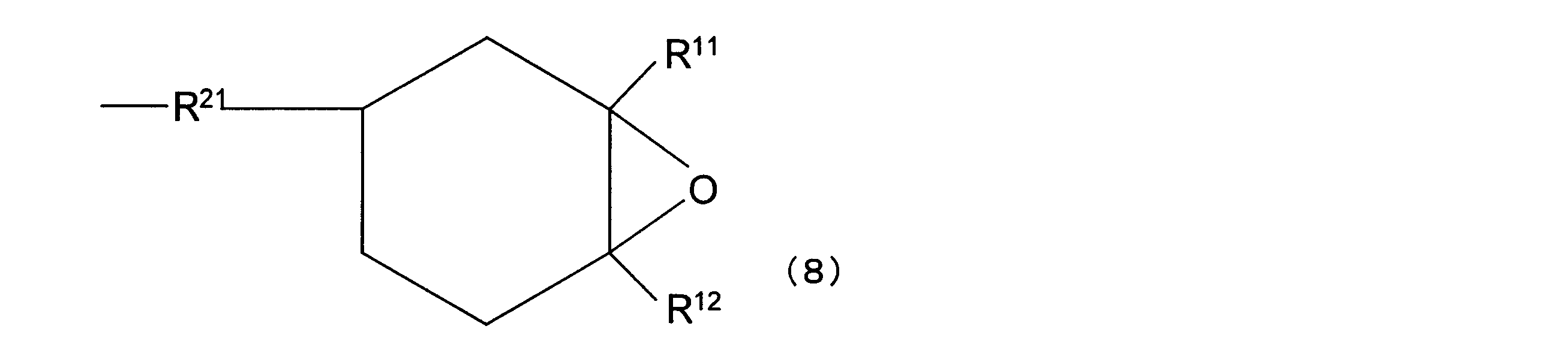
(式中、R21は、置換若しくは非置換の、直鎖状若しくは分岐状の、炭素原子数2~20の二価炭化水素基を表し、R11及びR12は前記の通りである)で表される、脂環式エポキシ基
から選ばれることが好ましい。
(E1)炭素原子数1~60の、置換若しくは非置換の、直鎖状若しくは分岐状の一価炭化水素基、
(E2)-R13O(AO)zR14 (式中、AOは、炭素原子数2~4のオキシアルキレン基を表し、R13は、炭素原子数3~5の、置換若しくは非置換の、直鎖状若しくは分岐状の二価炭化水素基を表し、R14は、水素原子、炭素原子数1~24の、置換若しくは非置換の、直鎖状若しくは分岐状の一価炭化水素基、又は、炭素原子数2~24の、置換若しくは非置換の、直鎖状若しくは分岐状のアシル基を表し、z=1~100である)で表されるポリオキシアルキレン基、
(E3)炭素原子数1~30の、置換若しくは非置換の、直鎖状若しくは分岐状のアルコキシ基、
(E4)水酸基、
(E5)-R15-COOR16(式中、R15は、炭素原子数2~20の、置換若しくは非置換の、直鎖状若しくは分岐状の二価炭化水素基を表し、R16は、炭素原子数1~30の、置換若しくは非置換の、直鎖状若しくは分岐状の一価炭化水素基を表す)で表されるエステル基、
(E6)-R17-OCOR18(式中、R17は、炭素原子数2~20の、置換若しくは非置換の、直鎖状若しくは分岐状の二価炭化水素基を表し、R18は、炭素原子数1~30の、置換若しくは非置換の、直鎖状若しくは分岐状の一価炭化水素基を表す)で表されるエステル基
(E7)下記一般式(6)
(E8)下記一般式(7)
(E9)下記一般式(8)
から選ばれることが好ましい。
本発明に係るオルガノポリシロキサンエラストマーにおいて、油剤に対する親和性及びPEG-FREE処方を実現可能な乳化特性の見地から、分子中に、
(E1-1)炭素原子数9~60の、置換若しくは非置換の、直鎖状若しくは分岐状の一価炭化水素基、及び
(E8)上記一般式(6)で表される、鎖状ポリシロキサン構造で置換されたアルキル基、
から選ばれる少なくとも1つの一価有機基を更に有することが好ましく、これらは、対応する(C)成分を(A)成分と反応させることにより、本発明に係るオルガノポリシロキサンエラストマーの分子中に導入される。これらの官能基は、疎水性が高く、油剤との親和性に優れるため、前記のグリセリン誘導体基と共に用いることで、本発明に係るオルガノポリシロキサンエラストマーの乳化特性(幅広い油剤種への対応力)を更に改善できる利点がある。これらの官能基は、2種以上を分子内に導入することができ、かつ好ましい。
(E1-1)炭素原子数9~60の、置換若しくは非置換の、直鎖状若しくは分岐状の一価炭化水素基、及び
(E8)上記一般式(6)で表される、鎖状ポリシロキサン構造で置換されたアルキル基、
から選ばれる少なくとも1つの一価有機基を更に有することが好ましく、これらは、対応する(C)成分を(A)成分と反応させることにより、本発明に係るオルガノポリシロキサンエラストマーの分子中に導入される。これらの官能基は、疎水性が高く、油剤との親和性に優れるため、前記のグリセリン誘導体基と共に用いることで、本発明に係るオルガノポリシロキサンエラストマーの乳化特性(幅広い油剤種への対応力)を更に改善できる利点がある。これらの官能基は、2種以上を分子内に導入することができ、かつ好ましい。
(E1)、(E2)及び(E5)~(E7)における、置換若しくは非置換の、直鎖状若しくは分岐状の一価炭化水素基としては、例えば、メチル基、エチル基、プロピル基、ブチル基、ペンチル基、ヘキシル基、ヘプチル基、オクチル基等のアルキル基;シクロペンチル基、シクロヘキシル基等のシクロアルキル基;ビニル基、アリル基、ブテニル基等のアルケニル基;フェニル基、トリル基等のアリール基;ベンジル基等のアラルキル基;及び、これらの基の炭素原子に結合した水素原子が少なくとも部分的にフッ素等のハロゲン原子、又は、エポキシ基、グリシジル基、アシル基、カルボキシル基、アミノ基、メタクリル基、メルカプト基等を含む有機基で置換された基が挙げられる。一価炭化水素基は、アルケニル基以外の基であることが好ましく、メチル基、エチル基、又は、フェニル基が特に好ましい。
(E2)、(E5)、(E6)、(E8)及び(E9)における、置換若しくは非置換の、直鎖状若しくは分岐状の二価炭化水素基は既述のとおりである。
(E3)における、置換若しくは非置換の、直鎖状若しくは分岐状のアルコキシ基としては、メトキシ基、エトキシ基、イソプロポキシ基、ブトキシ基等低級アルコキシ基や、ラウリルアルコキシ基、ミリスチルアルコキシ基、パルミチルアルコキシ基、オレイルアルコキシ基、ステアリルアルコキシ基、ベへニルアルコキシ基等高級アルコキシ基等が例示される。
(B)成分としては、1以上の不飽和結合及びシロキサンデンドロン構造を有する限り特に限定されるものではないが、下記一般式(2’)で表される、分子鎖末端に1個の炭素-炭素二重結合を有するシロキサンデンドロン構造を有する化合物が好ましい。
一般式(2’):

{式中、
L´1は、炭素原子数1~6のアルキル基若しくはフェニル基、又は、j=1のときの下記一般式(2”);

(式中、
R2は、炭素原子数1~6のアルキル基又はフェニル基であり、
Zは、二価有機基であり、
jは、Ljで示されるシリルアルキル基の階層を示し、該シリルアルキル基の繰り返し数である階層数がk’のとき1~k’の整数であり、階層数k’は1~10の整数であり、Lj+1はjがk’未満のときは該シリルアルキル基であり、j=k’のときはR2であり、
ajは、0~3の範囲の数である)で示されるシリルアルキル基であり、
Z´は、二価有機基であり、
R6は、水素原子又はメチル基である}
一般式(2’):
L´1は、炭素原子数1~6のアルキル基若しくはフェニル基、又は、j=1のときの下記一般式(2”);
R2は、炭素原子数1~6のアルキル基又はフェニル基であり、
Zは、二価有機基であり、
jは、Ljで示されるシリルアルキル基の階層を示し、該シリルアルキル基の繰り返し数である階層数がk’のとき1~k’の整数であり、階層数k’は1~10の整数であり、Lj+1はjがk’未満のときは該シリルアルキル基であり、j=k’のときはR2であり、
ajは、0~3の範囲の数である)で示されるシリルアルキル基であり、
Z´は、二価有機基であり、
R6は、水素原子又はメチル基である}
R2及びZの具体例は上記のとおりであり、Z´の二価有機基としては、Zの二価有機基と同様のものが挙げられる。
前記(C)成分としては、1分子中に平均で1個より多くの、好ましくは1.01~10、より好ましくは1.2~8、更により好ましくは1.5~6の、特に好ましくは2.0~4.5の不飽和結合、好ましくは炭素-炭素二重結合、を有する限り構造上の制限はなく、直鎖状、分岐状又は網状の、有機化合物を使用することができる。有機化合物としては、オルガノポリシロキサン又は不飽和脂肪族炭化水素が好ましい。有機化合物、好ましくはオルガノポリシロキサン又は不飽和脂肪族炭化水素、上の不飽和結合の位置についても制限はなく、主鎖上、又は、末端のいずれに位置してもかまわない。但し、架橋密度コントロールの容易さの点からは、一分子中に2つの不飽和基を有し、たとえばそれらが両末端に位置する高純度の化合物を用いることが好ましい。
反応性不飽和基は不飽和脂肪族炭化水素基中に存在することが好ましい。不飽和脂肪族炭化水素基としては、炭素原子数2~30のものが好ましく、2~20のものがより好ましい。炭素原子数2~30の一価の不飽和脂肪族炭化水素基としては、例えば、ビニル基、1-プロペニル基、アリル基、イソプロペニル基、1-ブテニル、2-ブテニル基、ペンテニル基、ヘキセニル基等の直鎖又は分岐状のアルケニル基;シクロペンテニル基、シクロヘキセニル基等のシクロアルケニル基;シクロペンテニルエチル基、シクロヘキセニルエチル基、シクロヘキセニルプロピル基等のシクロアルケニルアルキル基;及び、エチニル基、プロパルギル基等のアルキニル基が挙げられる。アルケニル基が好ましく、ビニル基及びヘキセニル基が特に好ましい。
(C1)成分がオルガノポリシロキサンである場合は、反応性不飽和基を含む不飽和脂肪族炭化水素基はケイ素原子に結合することが好ましい。また、(C1)成分がオルガノポリシロキサンである場合は、不飽和脂肪族炭化水素以外のケイ素原子に結合する基は、置換若しくは非置換の一価炭化水素基、又は、反応性官能基を有する一価有機基とすることができる。
置換若しくは非置換の一価炭化水素基は、典型的には、置換若しくは非置換の、直鎖状若しくは分岐状の、炭素原子数1~30、好ましくは炭素原子数1~10、より好ましくは炭素原子数1~4の一価の飽和炭化水素基、炭素原子数6~30、より好ましくは炭素原子数6~12の一価の芳香族炭化水素基である。なお、(C1)成分は、一価有機基として水酸基やメトキシ基、エトキシ基、プロポキシ基、ブトキシ基等の炭素原子数1~12のアルコキシ基を有していてもよい。
炭素原子数1~30の一価の飽和炭化水素基としては、例えば、メチル基、エチル基、n-プロピル基、イソプロピル基、n-ブチル基、イソブチル基、sec-ブチル基、tert-ブチル基、ペンチル基、ヘキシル基、ヘプチル基、オクチル基、ノニル基、デシル基等の直鎖又は分岐状のアルキル基、並びに、シクロペンチル基、シクロヘキシル基、シクロヘプチル基、シクロオクチル基等のシクロアルキル基が挙げられる。
炭素原子数6~30の一価の芳香族炭化水素基としては、例えば、フェニル基、トリル基、キシリル基、メシチル基等のアリール基が挙げられる。フェニル基が好ましい。なお、本明細書において芳香族炭化水素基とは、芳香族炭化水素のみからなる基以外に、芳香族炭化水素と脂肪族飽和炭化水素が複合した基をも含む。芳香族炭化水素と飽和炭化水素が複合した基の例としては、例えば、ベンジル基、フェネチル基等のアラルキル基が挙げられる。
上記の一価炭化水素基上の水素原子は、1以上の置換基によって置換されていてもよく、当該置換基は、例えば、ハロゲン原子(フッ素原子、塩素原子、臭素原子及びヨウ素原子)、水酸基、アミド基、エステル基、カルボキシル基、及び、イソシアネート基からなる群から選択される。上記置換基を少なくとも1つ有する一価飽和若しくは芳香族炭化水素基が好ましい。具体的には、3,3,3-トリフロロプロピル基、3―クロロプロピル基、3-ヒドロキシプロピル基、3-(2-ヒドロキシエトキシ)プロピル基、3-カルボキシプロピル基、10-カルボキシデシル基、3-イソシアネートプロピル基等を挙げることができる。
反応性官能基を有する一価有機基としては、例えば、水酸基、メルカプト基、エポキシ基、アミノ基、アミド基、エステル基、カルボキシル基、及び、イソシアネート基からなる群から選択される反応性官能基を有する一価飽和若しくは芳香族炭化水素基が挙げられる。一価有機基に存在する反応性官能基は1つであっても、複数であってもよい。好ましいR1は、上記の反応性官能性基を少なくとも1つ有する一価飽和若しくは芳香族炭化水素基である。反応性官能基としては、具体的には、3-ヒドロキシプロピル基、3-(2-ヒドロキシエトキシ)プロピル基、3-メルカプトプロピル基、2,3-エポキシプロピル基、3,4-エポキシブチル基、4,5-エポキシペンチル基、2-グリシドキシエチル基、3-グリシドキシプロピル基、4-グリシドキシブチル基、2-(3,4-エポキシシクロヘキシル)エチル基、3-(3,4-エポキシシクロヘキシル)プロピル基、アミノプロピル基、N-メチルアミノプロピル基、N-ブチルアミノプロピル基、N,N-ジブチルアミノプロピル基、3-(2-アミノエトキシ)プロピル基、3-(2-アミノエチルアミノ)プロピル基、3-カルボキシプロピル基、10-カルボキシデシル基、3-イソシアネートプロピル基等を挙げることができる。
(C1)成分としては、直鎖状若しくは分岐状のポリシロキサンが好ましい。直鎖状の(C1)成分としては、ジオルガノシロキサン単位及びトリオルガノシロキシ単位を含む重合体であることが好ましく、例えば、分子鎖両末端ジメチルビニルシロキシ基封鎖ジメチルポリシロキサン、分子鎖両末端ジメチルビニルシロキシ基封鎖ジメチルシロキサン・メチルフェニルシロキサン共重合体、分子鎖両末端ジメチルビニルシロキシ基封鎖ジメチルシロキサン・メチルビニルシロキサン共重合体、分子鎖両末端トリメチルシロキシ基封鎖ジメチルシロキサン・メチルビニルシロキサン共重合体、分子鎖両末端トリメチルシロキシ基封鎖ジメチルシロキサン・メチルビニルシロキサン・メチルフェニルシロキサン共重合体、分子鎖両末端シラノール基封鎖ジメチルシロキサン・メチルビニルシロキサン共重合体、これらの重合体のメチル基の一部がエチル基、プロピル基等のメチル基以外のアルキル基や3,3,3-トリフロロプロピル基等のハロゲン化アルキル基で置換された重合体、及び、これらの重合体の2種以上の混合物が例示され、特に、分子鎖両末端のみに不飽和脂肪族炭化水素基、特にアルケニル基を有する直鎖状のジオルガノポリシロキサンであることが好ましい。
分枝鎖状の(C1)成分としては、特に、ジオルガノシロキサン単位、オルガノシルセスキオキサン単位、及びトリオルガノシロキシ単位を含む重合体であることが好ましい。これらの単位中のケイ素原子結合有機基としては、メチル基、エチル基、プロピル基等のアルキル基;ビニル基、アリル基、ブテニル基、ヘキセニル基等のアルケニル基;フェニル基、トリル基等のアリール基;3,3,3-トリフロロプロピル基等のハロゲン化アルキル基等の一価炭化水素基が好ましく、極少量の水酸基、更にはメトキシ基等のアルコキシ基を有していてもよいが、この重合体中の少なくとも2個のケイ素原子結合有機基は不飽和脂肪族炭化水素基、特にアルケニル基であることが必要である。また、これらの単位の比率は限定されないが、この重合体において、ジオルガノシロキサン単位が80.00~99.65モル%の範囲内の量であり、オルガノシルセスキオキサン単位が0.10~10.00モル%の範囲内の量であり、及び残りのモル%がトリオルガノシロキシ単位であることが好ましい。
(C1)成分としては、例えば、平均組成式(5-5):
R7 cR8 dSiO(4-c-d)/2 (5-5)
(式中、
R7は、互いに独立してもよいがR8とは異なる一価有機基を表し、
R8は、互いに独立して、炭素原子数2~30の一価の不飽和脂肪族炭化水素基を表し、1.0≦c≦2.5、及び、0.001≦d≦1.5である)で表される(C1-5)不飽和基含有シリコーン化合物が挙げられる。炭素原子数2~30の一価の不飽和脂肪族炭化水素基は既述のとおりである。
R7 cR8 dSiO(4-c-d)/2 (5-5)
(式中、
R7は、互いに独立してもよいがR8とは異なる一価有機基を表し、
R8は、互いに独立して、炭素原子数2~30の一価の不飽和脂肪族炭化水素基を表し、1.0≦c≦2.5、及び、0.001≦d≦1.5である)で表される(C1-5)不飽和基含有シリコーン化合物が挙げられる。炭素原子数2~30の一価の不飽和脂肪族炭化水素基は既述のとおりである。
平均組成式(5-5)において、R7である一価有機基は特に限定されるものではないが、以下の(F1)~(F6):
(F1)炭素原子数1~60の、置換若しくは非置換の、直鎖状若しくは分岐状の一価炭化水素基(但し、脂肪族不飽和基を有する炭素原子数2~20の一価炭化水素基を除く)
(F2)水酸基
(F3)-R15-COOR16(式中、R15及びR16は上記の通りである)で表されるエステル基
(F4)-R17-OCOR18(式中、R17及びR18は上記の通りである)で表されるエステル基
(F5)-R24-NR25COR26(式中、R24は炭素原子数2~20の、置換若しくは非置換の、直鎖状若しくは分岐状の二価炭化水素基を表し、R25は水素原子又は炭素原子数1~20の置換若しくは非置換の、直鎖状若しくは分岐状の一価炭化水素基を表し、R26は炭素原子数1~30の置換若しくは非置換の、直鎖状若しくは分岐状の一価炭化水素基を表す)で表されるアミド基
(F6)-R24-CONR25R27(式中、R24は炭素原子数2~20の、置換若しくは非置換の、直鎖状若しくは分岐状の二価炭化水素基を表し、R25及びR27は、各々独立に、水素原子又は炭素原子数1~20の置換若しくは非置換の、直鎖状若しくは分岐状の一価炭化水素基を表す)で表されるアミド基
から選ばれるものが好ましい。置換若しくは非置換の、直鎖状若しくは分岐状の一価炭化水素基又は二価炭化水素基の定義、種類等は既述のとおりである。
(F1)炭素原子数1~60の、置換若しくは非置換の、直鎖状若しくは分岐状の一価炭化水素基(但し、脂肪族不飽和基を有する炭素原子数2~20の一価炭化水素基を除く)
(F2)水酸基
(F3)-R15-COOR16(式中、R15及びR16は上記の通りである)で表されるエステル基
(F4)-R17-OCOR18(式中、R17及びR18は上記の通りである)で表されるエステル基
(F5)-R24-NR25COR26(式中、R24は炭素原子数2~20の、置換若しくは非置換の、直鎖状若しくは分岐状の二価炭化水素基を表し、R25は水素原子又は炭素原子数1~20の置換若しくは非置換の、直鎖状若しくは分岐状の一価炭化水素基を表し、R26は炭素原子数1~30の置換若しくは非置換の、直鎖状若しくは分岐状の一価炭化水素基を表す)で表されるアミド基
(F6)-R24-CONR25R27(式中、R24は炭素原子数2~20の、置換若しくは非置換の、直鎖状若しくは分岐状の二価炭化水素基を表し、R25及びR27は、各々独立に、水素原子又は炭素原子数1~20の置換若しくは非置換の、直鎖状若しくは分岐状の一価炭化水素基を表す)で表されるアミド基
から選ばれるものが好ましい。置換若しくは非置換の、直鎖状若しくは分岐状の一価炭化水素基又は二価炭化水素基の定義、種類等は既述のとおりである。
一方、(C1)成分は、不飽和脂肪族炭化水素であってもよい。不飽和脂肪族炭化水素としては、例えば、各種の、ジエン、ジイン、エンイン等の2以上の不飽和結合を有するが挙げられる。架橋の点ではジエン、ジイン、及び エンインが好ましい。ジエン、ジイン、及び、エンインは、少なくとも2つの不飽和結合が分子内で1以上、好ましくは2以上、の単結合によって隔てられた構造を有する化合物群である。これらの不飽和脂肪族炭化水素基は分子鎖末端に存在してもよく、分子鎖途中にペンダント基として存在してもよい。
(C1)成分としての不飽和脂肪族炭化水素としては、例えば、炭素原子数2~30のα,ω-不飽和アルケン及びアルキンが挙げられる。(C1)成分としては、例えば、一般式(5-1):
CH2=CH(CH2)xCH=CH2 (5-1)
(式中、1≦x≦20である)で表される(C1-1)α,ω-ジエン、一般式(5-2):
CH≡C(CH2)xC≡CH (5-2)
(式中、1≦x≦20である)で表されるα,ω-ジイン(C1-2)、一般式(5-3):
CH2=CH(CH2)xC≡CH (5-3)
(式中、1≦x≦20である)で表される(C1-3) α,ω-エン-イン、一般式(5-4):
CqH2q-1O(CnH2nO)yCqH2q-1 (5-4)
(式中、2≦q≦20、2≦n≦4、yはオキシエチレン単位、オキシプロピレン単位、オキシブチレン単位の繰返し数の合計値であり、1≦y≦180である)で表される(C1-4)ビスアルケニルポリエーテル化合物が挙げられる。
CH2=CH(CH2)xCH=CH2 (5-1)
(式中、1≦x≦20である)で表される(C1-1)α,ω-ジエン、一般式(5-2):
CH≡C(CH2)xC≡CH (5-2)
(式中、1≦x≦20である)で表されるα,ω-ジイン(C1-2)、一般式(5-3):
CH2=CH(CH2)xC≡CH (5-3)
(式中、1≦x≦20である)で表される(C1-3) α,ω-エン-イン、一般式(5-4):
CqH2q-1O(CnH2nO)yCqH2q-1 (5-4)
(式中、2≦q≦20、2≦n≦4、yはオキシエチレン単位、オキシプロピレン単位、オキシブチレン単位の繰返し数の合計値であり、1≦y≦180である)で表される(C1-4)ビスアルケニルポリエーテル化合物が挙げられる。
(C1)成分としての不飽和脂肪族炭化水素としては、具体的には、1,4-ペンタジエン、1,5-ヘキサジエン、1,6-ヘプタジエン、1,7-オクタジエン、1,8-ノナジエン、1,9-デカジエン、1,11-ドデカジエン、1,13-テトラデカジエン、1,19-エイコサジエン、1,3-ブタジエン、1,5-ヘキサジイン、1-ヘキセン-5-イン等が挙げられる。
(C1)成分は単独で使用することもできるし、構造の異なる2種以上の成分を併用することも可能である。すなわち、(C1)成分は、1種類以上のオルガノポリシロキサン及び1種類以上の不飽和脂肪族炭化水素の混合物であってもよい。したがって、ここでの「平均で1より大きい数の不飽和結合を有する」とは、2種以上のオルガノポリシロキサン及び/又は不飽和脂肪族炭化水素を使用した場合には、平均して、1分子当たり1個より多くの不飽和結合を有するという意味である。
(C)成分としての(C2)1分子中に1以上の不飽和結合及び1以上のエポキシ基を有する有機化合物としては、1分子中に合計で2以上の、好ましくは2~10、より好ましくは2~7、更により好ましくは2~5の、特に好ましくは2~4の不飽和結合及びエポキシ基を有する限り構造上の制限はなく、直鎖状、分岐状又は網状の、有機化合物を使用することができる。有機化合物としては、オルガノポリシロキサン又は不飽和脂肪族炭化水素が好ましい。有機化合物、好ましくはオルガノポリシロキサン又は不飽和脂肪族炭化水素、上の不飽和結合の位置についても制限はなく、主鎖上、又は、末端のいずれに位置してもかまわない。但し、架橋密度コントロールの容易さの点からは、一分子中の不飽和基とエポキシ基の合計が2である、高純度の化合物を用いることが好ましい。
不飽和結合は不飽和脂肪族炭化水素基中に存在することが好ましい。不飽和脂肪族炭化水素基としては既述したものを挙げることができる。
(C2)成分がオルガノポリシロキサンである場合は、不飽和結合を含む不飽和脂肪族炭化水素基及び/又はエポキシ基はケイ素原子に結合することが好ましい。また、(C2)成分がオルガノポリシロキサンである場合は、不飽和脂肪族炭化水素又はエポキシ基以外のケイ素原子に結合する基は、既述の、置換若しくは非置換の一価炭化水素基、又は、反応性官能基を有する一価有機基とすることができる。
(C2)成分としては、少なくとも1つのエポキシ基を有するエポキシ基含有不飽和脂肪族炭化水素が好ましい。不飽和脂肪族炭化水素としては、例えば、既述した、不飽和脂肪族炭化水素基を有する化合物が挙げられる。一価不飽和脂肪族炭化水素基を有する化合物が好ましい。
(C2)成分としては、例えば、一般式 (5-6):

(式中、R9は、1つの不飽和結合を有しており、置換若しくは非置換の、直鎖状若しくは分岐状の、炭素原子数2~20の一価炭化水素基を表す)で表される(C2-1)不飽和エポキシ化合物、
一般式(5-7):
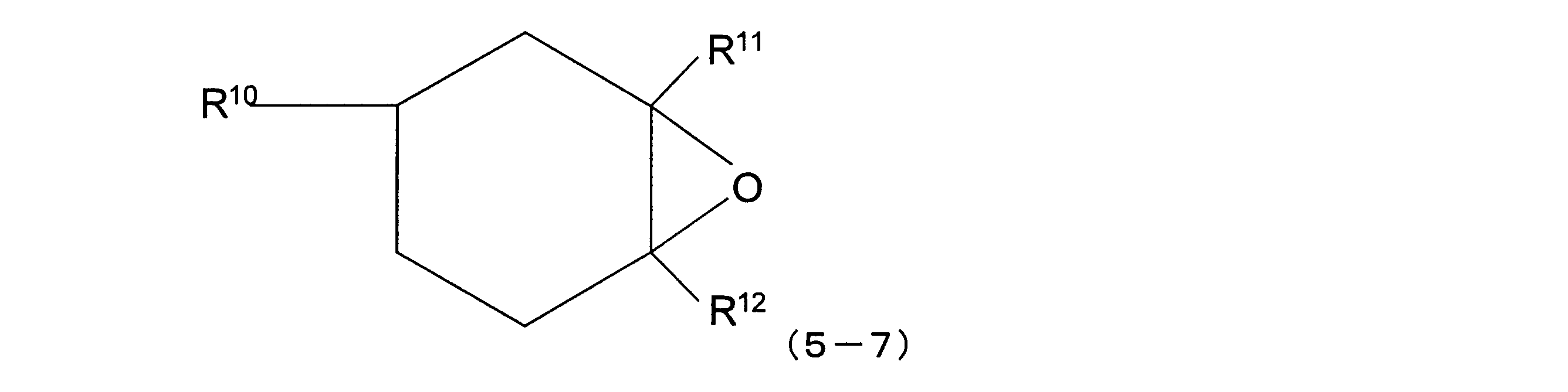
(式中、R10は、1つの不飽和結合を有しており、置換若しくは非置換の、直鎖状若しくは分岐状の、炭素原子数2~20の一価炭化水素基を表し、
R11は、水素原子又はメチル基を表し、
R12は水素原子又はメチル基を表す)で表される、(C2-2)不飽和基含有脂環式エポキシ化合物が挙げられる。上記一般式における不飽和結合、及び、置換若しくは非置換の、直鎖状若しくは分岐状の一価炭化水素基の定義、種類等は既述のとおりである。
一般式(5-7):
R11は、水素原子又はメチル基を表し、
R12は水素原子又はメチル基を表す)で表される、(C2-2)不飽和基含有脂環式エポキシ化合物が挙げられる。上記一般式における不飽和結合、及び、置換若しくは非置換の、直鎖状若しくは分岐状の一価炭化水素基の定義、種類等は既述のとおりである。
(C2)成分としてのエポキシ基含有不飽和脂肪族炭化水素としては、具体的には、アリルグリシジルエーテル、メタリルグリシジルエーテル、1-メチル-4-イソプロペニルシクロヘキセンオキシド、1,4-ジメチルシクロヘキセンオキシド、4-ビニルシクロヘキセンオキシド、ビニルノルボルネンモノオキシド、ジシクロペンタジエンモノオキシド、ブタジエンモノオキシド、1,2-エポキシ-5-ヘキセン、1,2-エポキシ-9-デセン、2,6-ジメチル-2,3-エポキシ-7-オクテンが例示される。これらの中でも、4-ビニルシクロヘキセンオキシドが好ましい。
(C2)成分は単独で使用することもできるし、構造の異なる2種以上の成分を併用することも可能である。
(D)反応性不飽和基及び上記構造式(3―1)~(3-4)で表される親水性単位から選択される少なくとも1種以上の親水性単位を含有してなる親水性基を有する親水性誘導体としては、1以上の不飽和結合及び親水性基を有する限り特に限定されるものではないが、好適には、分子鎖の末端に炭素-炭素二重結合を有するグリセリン誘導体である。これらは、アリル(ポリ)グリセロール、アリルポリグリシジルエーテル、(ポリ)グリセリンモノアリルエーテル等の分子鎖末端にアルケニル基等の反応性官能基を有する(ポリ)グリセリン誘導体であり、公知の方法により合成することができる。
本発明に係るオルガノポリシロキサンエラストマーにおいて、油剤に対する親和性及び乳化特性、各種処理剤(界面活性剤又は表面処理剤)としての使用、特に粉体処理剤としての使用及び化粧料原料としての使用の観点から、(B)成分は、具体的には、(ポリ)グリセリンモノアリルエーテル,(ポリ)グリセリルオイゲノールであって、モノグリセリン、ジグリセリン、トリグリセリン又はテトラグリセリン構造を有する(ポリ)グリセリン系化合物である。グリセリン誘導体基のグリセリン残基部分の好適な構造及び、好適な誘導体基を与える化合物の構造等は、前記の通りである。
本発明のオルガノポリシロキサンエラストマーを製造するための反応は、反応溶媒の存在下又は不存在下、公知の方法に従って行うことができる。本発明における不飽和基とSi-H基との反応はヒドロシリル化反応である。また、(C2)1分子中に1以上の不飽和結合及び1以上のエポキシ基を有する有機化合物エポキシドを利用して架橋を行う場合には、不飽和基とSi-H基との反応による結合と、エポキシ基同士の自己開環重合(SiH基と白金触媒の存在下で生じるカチオン性の重合反応)によるエーテル結合生成の両方が起こり、架橋が形成される。この反応を促進するため、紫外線等高エネルギー線の照射や一般的なカチオン重合用触媒を更に追加することもできる。
反応溶媒としては、非反応性であれば特に限定されるものではないが、エタノール、イソプロピルアルコール等のアルコール系溶剤;トルエン、キシレン等の芳香族炭化水素系溶剤;ジオキサン、THF等のエーテル系溶剤;n-ヘキサン、シクロヘキサン、n-ヘプタン、シクロヘプタン、メチルシクロヘキサン等の脂肪族炭化水素系溶剤;四塩化炭素等の塩素化炭化水素系の有機溶剤を挙げることができる。後述する油剤を反応溶媒として使用してもよい。反応溶媒として油剤を用いた場合、ヒドロシリル化反応(架橋)後に、オルガノポリシロキサン及び油剤からなる組成物を直接得ることができ、また、これを機械力を用いて粉砕することにより、粒子状のオルガノポリシロキサンエラストマー及び油剤からなる組成物、好適にはペースト状組成物を容易に得ることができる。
ヒドロシリル化反応は、触媒の不存在下で行ってもよいが、触媒の存在下に行うことにより低温で、短時間に反応が進行するので好ましい。ヒドロシリル化反応触媒としては、例えば、白金、ルテニウム、ロジウム、パラジウム、オスミウム、イリジウム等の化合物を挙げることができ、その触媒活性が高いことから白金化合物が特に有効である。白金化合物の例としては、塩化白金酸;金属白金;アルミナ、シリカ、カーボンブラック等の坦体に金属白金を坦持させたもの;白金-ビニルシロキサン錯体、白金-ホスフイン錯体、白金-ホスファイト錯体、白金アルコラート触媒等の白金錯体を挙げることができる。触媒の使用量は、白金触媒を使用する場合、金属白金として0.5~1000ppm程度である。
ヒドロシリル化反応の反応温度としては、通常30~120℃であり、反応時間は、通常10分間~24時間、好ましくは1~10時間である。
ヒドロシリル化反応又はエポキシ基のカチオン性重合反応により、(A)成分は(C)成分によって架橋され、(A)成分由来のポリシロキサン鎖が(C)成分由来の炭素-ケイ素結合を含む架橋部によって連結される。また、(A)成分は(B)成分由来のシロキサンデンドロン構造を備える。そして、(D)成分を使用する場合は、(D)成分由来のグリセリン誘導体基をも備える。このようにして、本発明のオルガノポリシロキサンエラストマーを得ることができる。但し、(D)成分が1分子中に1を超える反応性不飽和基を有していてもよく、この場合には(D)成分が架橋成分として(C)成分の働きを兼ねることもできるので、(C)成分は必ずしも必要ではない。
なお、本発明のオルガノポリシロキサンエラストマーは、典型的には(C)成分由来の炭素-ケイ素結合を含む架橋部により連結されてなる構造を有するものであるが、一部にSi-O-C結合による架橋部を有していてもよい。当該構造は、(A)~(C)成分がシラノール基、アルコキシ基等の縮合反応可能な官能基を有する場合に、ポリシロキサン鎖間に形成されうる他、架橋条件がシビアである場合に、(D)成分由来のグリセリン誘導体基中の水酸基が(A)成分のSi-H基と一部反応して、副次的に形成されうるためである。
本発明のオルガノポリシロキサンエラストマーの製造にあたっては、(A)成分と(B)成分の反応後に、(C)成分及び/又は(D)成分を(A)成分と更に反応させてもよいし、(A)成分と(C)成分及び/又は(D)成分の反応後に(B)成分を(A)成分と更に反応させてもよい。
(A)成分と(B)成分の反応後に、(C)成分及び/又は(D)成分を(A)成分と更に反応させる場合、(C)成分及び/又は(D)成分の不飽和結合と反応する(A)成分の1分子当たりのケイ素原子結合水素原子数の平均値は0.1以上2未満が好ましい。すなわち、架橋部を構成し、(C)成分及び/又は(D)成分中の不飽和結合と反応する、(A)成分中の1分子あたりのケイ素原子結合水素原子の数は、平均して、1.0以上であり、0.2~1.5の範囲であることが好ましく、0.6~1.3の範囲が特に好ましい。
更に、前記オルガノポリシロキサンエラストマーは、不飽和化合物の残存による反応後の臭気改善を目的として、水素添加処理を行ってもよい。水素添加処理には、加圧水素ガスを使用する方法と金属水素化物等の水素添加剤による方法とがあり、更に、該水素添加処理には均一反応と不均一反応がある。これらの一方を単独で行うこともできるが、これらを組合せて行うことも可能である。しかし、使用した触媒が製品に残存しないという利点を考慮すると、固体触媒を用いた不均一接触水素添加反応が最も好ましい。
固体触媒(水素化触媒)としては、一般的な白金系触媒及びパラジウム系触媒等の貴金属系触媒、並びにニッケル系触媒を用いることができる。より具体的には、ニッケル、バラジウム、白金、ロジウム、コバルト等の単体並びに白金-パラジウム、ニッケル-銅-クロム、ニッケル-銅-亜鉛、ニッケル-夕ングステン及びニッケル-モリブデン等の複数の金属を組み合わせた触媒を例示することができる。任意に使用される触媒担体としては、活性炭、シリカ、シリカアルミナ、アルミナ、ゼオライト等を挙げることができる。また、Cu-Cr 、Cu-Zn 、Cu-Si 、Cu-Fe-Al、Cu-Zn-Ti等の銅含有水素化触媒等があげられる。前記水素化触媒の形態は、反応器の種類によって異なるので一概には決定することができないが、通常、粉末、顆粒、錠剤等の形態から適宜選択することができる。また、合成工程(ヒドロシリル化反応)で使用した白金触媒をそのまま使用することもできる。これらの水素化触媒は、単独で又は2種以上を組み合わせて使用することができる。
水素添加処理は、上記したヒドロシリル化反応により得られたオルガノポリシロキサンエラストマーの粗製品を精製するためにも使用することができる。具体的には、水素化触媒の存在下、溶媒中若しくは無溶媒中で水素添加処理による無臭化を行って精製することができ、臭気の低減及び他の成分との相溶性が求められる外用剤又は化粧料用途ではかかる精製品が好ましく用いられる。また、前記無臭化の前工程又は後工程として、オルガノポリシロキサンエラストマーの粗製品又は水素添加物に対して、減圧下に窒素ガスを接触させて軽質物を留去するストリッピング処理を行うことが好ましい。
本発明のオルガノポリシロキサンエラストマーの製造にあたっては、(A)成分、(B)成分並びに(C)成分及び/又は(D)成分に加えて、(Q)1分子中に1つの不飽和結合を有する有機化合物(但し、成分(C2)を除く)を更に反応させてもよい。1種類の(Q)成分を使用してもよく、2種類以上の(Q)成分を使用してもよい。前記反応は、好ましくはヒドロシリル化反応触媒の存在下に、逐次的に実施することができる。なお、(Q)成分における不飽和結合の定義、種類等は既述のとおりである。
例えば、(A)成分と(B)成分との反応後に(C)成分及び/又は(D)成分を(A)成分と更に反応させる場合は、(A)成分と(B)成分との反応前に(Q)成分を(A)成分と反応させるか、(A)成分と(B)成分との反応後に(Q)成分を(A)成分と反応させるか、又は、(C)成分及び/又は(D)成分の反応後に更に(Q)成分を(A)成分と反応させてもよい。
また、(A)成分と(C)成分及び/又は(D)成分との反応後に(B)成分を(A)成分と更に反応させる場合は、(A)成分と(C)成分及び/又は(D)成分との反応前に(Q)成分を(A)成分と反応させるか、(A)成分と(C)成分及び/又は(D)成分との反応後に(Q)成分を(A)成分と反応させるか、又は、(B)の反応後に更に(Q)成分を(A)成分と反応させてもよい。
(Q)成分としては、例えば、反応性不飽和基を1分子中に1つ有する炭化水素化合物又は反応性不飽和基を1分子中に1つ有する鎖状オルガノポリシロキサン等が挙げられる。
反応性不飽和基を1分子中に1つ有する炭化水素化合物としては、炭素原子数9~30のモノ不飽和炭化水素が好ましく、1-アルケンがより好ましい。1-アルケンとしては、1-ノネン、1-デセン、1-ウンデセン、1-ドデセン、1-トリデセン、1-テトラデセン等が例示される。反応性不飽和基を1分子中に1つ有する鎖状オルガノポリシロキサンとしては、片末端ビニル基封鎖ジメチルポリシロキサン、片末端ビニル基封鎖メチルフェニルポリシロキサン等が例示される。
本発明のオルガノポリシロキサンエラストマーの製造にあたっては、(A)成分、(B)成分、(C)成分及び/又は(D)成分、並びに、任意に(Q)成分、のヒドロシリル化反応によって得られた本発明のオルガノポリシロキサンエラストマーを少なくとも1種の酸性物質で処理する酸処理行程を更に実施することが好ましい。これにより、前記オルガノポリシロキサンエラストマーの低臭化を図ることができる。
酸性物質は特に限定されるものではなく、ルイス酸、ブレンステッド酸、又は、アレニウス酸のいずれの定義に合致するものであってよい。本発明で使用される酸性物質は水溶性酸であることが好ましい。したがって、本発明で使用される酸性物質は水溶液中でプロトンを放出するアレニウス酸であることが好ましい。酸性物質は1種類を単独で使用してもよく、また、2種類以上を使用してもよい。本発明では、そのような酸性物質を用いることにより、炭素-酸素結合やケイ素-酸素結合の切断を生じることなく、オルガノポリシロキサンエラストマーを実質的に無臭化し、経時での臭気生成をほぼ完全に抑制することができる。
前記酸性物質は、無機酸、有機酸、酸性無機塩、及び、酸性白金触媒からなる群から選択されることができる。
無機酸は特に限定されるものではないが、例えば、塩酸、硫酸、硝酸、リン酸、炭酸、ホウ酸、スルホン酸、スルフィン酸等が挙げられる。なお、ベンゼンスルホン酸等の有機基を含むものは無機酸としては好ましくない。
有機酸も特に限定されるものではないが、モノカルボン酸(モノヒドロキシモノカルボン酸、ジヒドロキシモノカルボン酸を含む)、ジカルボン酸(モノヒドロキシジカルボン酸、ジヒドロキシジカルボン酸を含む)、ポリカルボン酸等を使用することが可能であり、例えば、
蟻酸、酢酸、トリフルオロ酢酸、プロピオン酸、酪酸、吉草酸、カプロン酸、エナント酸、カプリル酸、ペラルゴン酸、カプリン酸、ウンデカン酸等の直鎖飽和脂肪族モノカルボン酸(アルカン酸);
2-メチルプロパン酸、2-メチルブタン酸、トリメチルプロパン酸、2-メチルペンタン酸、トリメチル酢酸等の分岐飽和脂肪族モノカルボン酸(アルカン酸);
アクリル酸、メタクリル酸、クロトン酸、イソクロトン酸、アセトビニル酸、アセトアリル酸、ヘキセン酸、ヘプテン酸、オクテン酸等の不飽和脂肪族モノカルボン酸(アルケン酸);
プロピオール酸、テトロル酸、アリル酢酸、ヘキシン酸、オクチン酸等の不飽和脂肪族モノカルボン酸(アルキン酸);
ペンタジエン酸、ソルビン酸等の多価不飽和脂肪族モノカルボン酸;
クエン酸、乳酸、グリコール酸、α-オキシ酪酸等のα-ヒドロキシモノカルボン酸;
2-ヒドロキシ吉草酸、2-ヒドロキシカプロン酸、β-オキシ酪酸等のβ-ヒドロキシモノカルボン酸;
γ-オキシ酪酸等のγ-ヒドロキシモノカルボン酸;
グリセリン酸等のジヒドロキシモノカルボン酸;
ヒドロキシ(メタ)アクリル酸等のその他のヒドロキシモノカルボン酸;
シュウ酸、マロン酸、琥珀酸、グルタル酸、アジピン酸等の飽和脂肪族ジカルボン酸;
タルトロン酸、リンゴ酸等のモノヒドロキシ飽和脂肪族ジカルボン酸
酒石酸等のジヒドロキシ飽和脂肪族ジカルボン酸;
マレイン酸、フマル酸等の不飽和脂肪族ジカルボン酸;
安息香酸等の芳香族モノカルボン酸;
フタル酸等の芳香族ジカルボン酸;
グリシン、アラニン、バリン、ロイシン、グルタミン酸、アスパラギン酸、PL-ピロリドンカルボン酸等のアミノ酸;
没食子酸等のポリカルボン酸が挙げられる。
蟻酸、酢酸、トリフルオロ酢酸、プロピオン酸、酪酸、吉草酸、カプロン酸、エナント酸、カプリル酸、ペラルゴン酸、カプリン酸、ウンデカン酸等の直鎖飽和脂肪族モノカルボン酸(アルカン酸);
2-メチルプロパン酸、2-メチルブタン酸、トリメチルプロパン酸、2-メチルペンタン酸、トリメチル酢酸等の分岐飽和脂肪族モノカルボン酸(アルカン酸);
アクリル酸、メタクリル酸、クロトン酸、イソクロトン酸、アセトビニル酸、アセトアリル酸、ヘキセン酸、ヘプテン酸、オクテン酸等の不飽和脂肪族モノカルボン酸(アルケン酸);
プロピオール酸、テトロル酸、アリル酢酸、ヘキシン酸、オクチン酸等の不飽和脂肪族モノカルボン酸(アルキン酸);
ペンタジエン酸、ソルビン酸等の多価不飽和脂肪族モノカルボン酸;
クエン酸、乳酸、グリコール酸、α-オキシ酪酸等のα-ヒドロキシモノカルボン酸;
2-ヒドロキシ吉草酸、2-ヒドロキシカプロン酸、β-オキシ酪酸等のβ-ヒドロキシモノカルボン酸;
γ-オキシ酪酸等のγ-ヒドロキシモノカルボン酸;
グリセリン酸等のジヒドロキシモノカルボン酸;
ヒドロキシ(メタ)アクリル酸等のその他のヒドロキシモノカルボン酸;
シュウ酸、マロン酸、琥珀酸、グルタル酸、アジピン酸等の飽和脂肪族ジカルボン酸;
タルトロン酸、リンゴ酸等のモノヒドロキシ飽和脂肪族ジカルボン酸
酒石酸等のジヒドロキシ飽和脂肪族ジカルボン酸;
マレイン酸、フマル酸等の不飽和脂肪族ジカルボン酸;
安息香酸等の芳香族モノカルボン酸;
フタル酸等の芳香族ジカルボン酸;
グリシン、アラニン、バリン、ロイシン、グルタミン酸、アスパラギン酸、PL-ピロリドンカルボン酸等のアミノ酸;
没食子酸等のポリカルボン酸が挙げられる。
また、有機酸として、アルキル硫酸、アルキルリン酸、フェノール等も使用可能である。なお、高級脂肪酸又はその塩は有機酸としては好ましくない。
酸性無機塩も限定されるものではないが、水溶性のものが好ましく、特に、25℃で固体であり、かつ、50gをイオン交換水1Lに溶解させたときの水溶液の25℃におけるpHが4以下、好ましくは3.5以下、より好ましくは2.0以下である水溶性の酸性無機塩が好ましい。酸性無機塩が室温(25℃)で固体である場合には、必要に応じて、ろ過により容易に除去することができる。また、酸性無機塩が水溶性の場合には、必要に応じて、水で容易に洗い流すことができる。なお、本発明におけるpHの値は、室温(25℃)下、試料水溶液を、ガラス電極を備えたpH計を用いて測定した値である。
酸性無機塩として、例えば、二価以上の無機酸の少なくとも一価の水素原子が塩基により中和された酸性無機塩を用いることができる。二価以上の無機酸としては例えば、硫酸、亜硫酸等が挙げられる。塩基としては、アルカリ金属、アンモニア等が挙げられる。
酸性無機塩は、より具体的には、硫酸水素イオン(HSO4
-)又は亜硫酸水素イオン(HSO3
-)及び1価の陽イオン(M+)からなる1種以上の酸性無機塩であることが好適であり、1価の陽イオン(M+)として、アルカリ金属イオン又はアンモニウムイオンが例示される。特に好適には、ナトリウムイオン、カリウムイオン及びアンモニウムイオンからなる群から選択される1種類以上の1価の陽イオンが好ましい。
酸性無機塩としては、例えば、硫酸水素リチウム、硫酸水素ナトリウム、硫酸水素カリウム、硫酸水素ルビジウム、硫酸水素セシウム、硫酸水素アンモニウム、亜硫酸水素ナトリウム、又は、これらの水和物、並びに、AlCl3、FeCl3、TiCl4、BF3・Et2O等のルイス酸が具体的に例示される。幾つかの酸性無機塩50gをイオン交換水1Lに溶解させたときの水溶液のpHは下表に例示する通りである。低臭化という技術的効果から、pHが2.0以下の水溶性の酸性無機塩として、硫酸水素ナトリウム、硫酸水素カリウム及び硫酸水素アンモニウムからなる群から選択される1種以上の酸性無機塩の使用がもっとも好適である。

酸性白金触媒としては、例えば、塩化白金酸、アルコール変性塩化白金酸、塩化白金酸のオレフィン錯体、塩化白金酸のケトン錯体、塩化白金酸のビニルシロキサン錯体、四塩化白金等を使用することができる。塩化白金酸が好ましい。
前記酸処理工程は、前記オルガノポリシロキサンエラストマーを前記酸性物質と任意の態様で接触させることによって実施することができる。
具体的には、前記酸処理工程は、例えば、前記オルガノポリシロキサンエラストマーを含む反応系(例えば、フラスコ等の反応容器や混練粉砕容器、乳化機等でもよい)中に、少なくとも1種の前記酸性物質、並びに、任意に水、アルコール等の有機溶媒を添加して加熱撹拌、混練、粉砕する等の操作又はこれらを繰り返すことによって実施することができる。或いは、前記オルガノポリシロキサンエラストマー又はこれと油剤とを含む組成物を予め粉砕処理した後に、少なくとも1種の前記酸性物質、並びに、任意に水、アルコール等の有機溶媒を添加して、加熱撹拌等の操作を行うことによって、より好適に実施することができる。
酸処理工程は任意の温度、処理時間を選択して行うことができ、0~200℃、より好ましくは50~100℃の温度条件で、0.5~24時間、より好ましくは1~10時間程度の反応時間で行うことが可能である。また、低級一価アルコール等の溶媒の共存化でこの処理を行うことが好ましい。酸性物質の使用量は、酸強度、処理装置及び処理時間、処理温度に応じて適宜選択することができるが、例えば硫酸水素ナトリウムや硫酸水素カリウム、硫酸水素アンモニウム、クエン酸、グリコール酸、リン酸等中程度の酸強度を持つ酸性物質の場合には、本発明に係るオルガノポリシロキサンエラストマーに対して100~1000ppmの範囲が好ましく、150~500ppmの範囲がより好ましい。また、塩酸や硫酸等酸強度のより大きな酸性物質の場合には、当該オルガノポリシロキサンエラストマーに対して1~100ppmの範囲が好ましく、酸強度の小さい弱酸性物質の場合には、当該オルガノポリシロキサンエラストマーに対して1000~10000ppmの範囲が好ましい。
本発明のオルガノポリシロキサンエラストマーの製造方法では、前記酸処理工程後に、加熱及び/又は減圧する工程(ストリッピング工程)を含むことが好ましい。前記加熱及び/又は減圧によって、臭気原因物質である低沸点成分を除去(ストリッピング)することができる。また、ストリッピング後に、再び酸処理工程を行うことでより多くの臭気原因物質を除去することができる。このとき、反応系に酸性物質が残存している場合には、新たに酸性物質を追加する必要はなく、水のみを添加すればよいという利点がある。すなわち、上記の酸処理工程及びストリッピング工程は、低臭化の程度を高める目的等でそれぞれ2回以上繰り返し行うことができる。
ストリッピング工程によって留去される「低沸点成分」には、臭気原因物質と考えられるプロピオンアルデヒド等のカルボニル化合物の他、前記オルガノポリシロキサンエラストマーの合成等に使用した反応溶媒等の揮発成分が含まれる。
なお、ストリッピング工程は、前記酸処理工程の前に実施してもよい。
ストリッピング方法としては、公知の反応条件を採用することが可能であるが、常圧下又は減圧下でのストリッピングが好ましく、120℃以下で行うことが好ましい。効率よくストリッピングするためには、減圧下で行うか、例えば窒素ガスのような不活性ガス注入下で行うことが好ましい。低沸点成分の留去操作の一例を具体的に示せば、低沸点成分が含まれているオルガノポリシロキサンエラストマー若しくはその組成物、又は、その水素添加物を、還流冷却管、窒素挿入口等を備えたフラスコに仕込み、窒素ガスを供給しながら内部を減圧して昇温し、圧力と温度を一定に保持することにより軽質物を留去させる。ここに減圧条件としては、0.1~10.0KPaとされ、加熱温度としては50~120℃とされ、処理時間としては10分間~24時間とすることが一般的である。
本発明では、前記酸処理工程後に、塩基性物質によってオルガノポリシロキサンエラストマーを中和処理してもよい。塩基性物質は1種類を単独で使用してもよく、また、2種類以上を使用してもよい。塩基性物質としては、水酸化ナトリウム、水酸化カリウム、水酸化カルシウム、水酸化バリウム、アンモニア水、炭酸水素ナトリウム等の無機塩基、リン酸3ナトリウム、リン酸3カリウム、クエン酸3ナトリウム、酢酸ナトリウム等の塩基性緩衝剤、塩基性アミノ酸、アミン、ピリジン等の有機塩基等を挙げることができる。塩基性物質の量はオルガノポリシロキサンエラストマーを含む反応系を中和する量が好ましいが、必要に応じて、弱酸性又は弱アルカリ性となるよう添加量を加減することもできる。
本発明のオルガノポリシロキサンエラストマーは粒子状であることが好ましく、固体粒子の形態にあることがより好ましい。
かかる粒子状オルガノポリシロキサンは、簡便には、硬化後のオルガノポリシロキサンエラストマーを、機械力を用いて粉砕することにより得ることができ、粉砕条件を公知の方法を用いて調整することにより、所望とする粒子径のオルガノポリシロキサンエラストマーの固体粒子を得ることができる。なお、粉砕は、一次粉砕前或いは一次粉砕後のオルガノポリシロキサンエラストマーを油剤と混合した後に、該油剤に分散或いは膨潤した状態のオルガノポリシロキサンエラストマーを、機械力を用いて一次粉砕或いは更に細かく二次粉砕しても良い。
オルガノポリシロキサンエラストマー乃至は組成物を粉砕する機械的手段は特に限定されるものではないが、せん断、混練、圧力下でオリフィスを通過させる手段、から選ばれる少なくとも1つの方法により粉砕されることが好ましい。
一方、硬化前のオルガノポリシロキサンエラストマーの原料組成物を水中に乳化分散し、しかる後に架橋反応させてオルガノポリシロキサンエラストマー粒子の水系ディスパージョンを得ること、及び該水系ディスパージョンから水を除去して、乾燥したオルガノポリシロキサンエラストマー粒子を得ることもできる。
オルガノポリシロキサンエラストマー粒子の粒子径は、用途・感触に応じて選択することができ、特に限定されるものではないが、後述する油剤との組成物の調製の見地から、顕微鏡観察或いは粒度分布測定装置を用いて測定される体積平均粒子径が20~1000μmの範囲内であることが好ましく、25~300μmの範囲内であることがより好ましい。
(オルガノポリシロキサンエラストマーを含む組成物)
本発明は、上記オルガノポリシロキサンエラストマーを含む組成物にも関する。前記組成物中のオルガノポリシロキサンエラストマーの配合量は特に限定されるものではないが、例えば、組成物の全重量(質量)を基準にして5~80重量(質量)%、好ましくは10~60重量(質量)%、より好ましくは15~50重量(質量)%、更により好ましくは20~40重量(質量)%、更により好ましくは25~35重量(質量)%の範囲とすることができる。
本発明は、上記オルガノポリシロキサンエラストマーを含む組成物にも関する。前記組成物中のオルガノポリシロキサンエラストマーの配合量は特に限定されるものではないが、例えば、組成物の全重量(質量)を基準にして5~80重量(質量)%、好ましくは10~60重量(質量)%、より好ましくは15~50重量(質量)%、更により好ましくは20~40重量(質量)%、更により好ましくは25~35重量(質量)%の範囲とすることができる。
本発明の組成物は、前記オルガノポリシロキサンエラストマーに加えて少なくとも1種の油剤を含むことができる。油剤としては、特に限定されるものではなく、固体、半固体、液状のいずれのものも使用することができる。具体的には、シリコーンオイル、炭化水素油、エステル油、植物性油脂類、動物性油脂類、脂肪酸、高級アルコール、トリグリセライド、人工皮脂、フッ素系油剤から選択される1種類又は2種類以上が例示できる。これらの具体例は、日本国特許出願2011-121097に基づく優先権を主張する他の特許出願(糖アルコール変性シリコーンエラストマーに関するもの)に記載のとおりであり、その内容はここに参照として組み込まれる。本発明のオルガノポリシロキサンエラストマーは、これらのシリコーンオイル等を含む油相中に分散した各種粉体を安定に維持することができ、また水相をこれらのシリコーンオイル等を含む油相中に安定に乳化分散できる。また、化粧料又は外用剤の構成を全体としてPEG-FREE処方に改良し環境適合性を高めるという観点からは、非POE(ポリオキシエチレン)構造の油剤を選択することが好ましい。
本発明の組成物中の油剤の配合量は特に限定されるものではないが、例えば、組成物の全重量(質量)を基準にして20~95重量(質量)%、好ましくは40~90重量(質量)%、より好ましくは50~85重量(質量)%、更により好ましくは60~80重量(質量)%、更により好ましくは65~75重量(質量)%の範囲とすることができる。
本発明のオルガノポリシロキサンエラストマーは疎水性のシリコーン鎖とグリセリン誘導体基に代表される親水性基を備えているために、界面活性剤又は乳化剤として機能する。したがって、本発明のオルガノポリシロキサンエラストマー、及び、少なくとも1種の油剤を含む組成物は、エマルションの形態であることができる。エマルション形態は特に限定されるものではないが、水中油型エマルション、油中水型エマルション等の水系-油系エマルション組成物;アルコール中油型エマルション、油中アルコール(例えばポリオール)型エマルション等の任意の形態でありうる。
本発明のオルガノポリシロキサンエラストマーにより乳化されてなるエマルション粒子の平均粒子径は、レーザー回折・散乱法等を用いた公知の測定装置により測定することができる。本発明に係るエマルション組成物は、油中極性溶媒型エマルションであることが好ましいが、極性溶媒中型エマルションの形態であっても良い。また、測定される平均粒子径が0.1μm以下の透明なマイクロエマルジョンであってもよく、平均粒子径が10.0μmを超える大粒子径の白濁エマルジョンのいずれであっても良い。更に、エマルジョンの安定性や外観の透明性を改善する目的で、エマルジョン粒子を微細化することができる。特に、毛髪や皮膚への付着特性や使用感を改善する目的で、粒子径が0.5~20μmのエマルジョンを選択することもできる。
上記のエマルション等は、本発明のオルガノポリシロキサンエラストマー又はそれを含有してなる組成物を、ホモミキサー、パドルミキサー、ヘンシェルミキサー、ホモディスパー、コロイドミル、プロペラ攪拌機、ホモジナイザー、インライン式連続乳化機、超音波乳化機、真空式練合機等の装置により、機械力を用いて水と混合することにより製造しても良い。また、エマルション組成物の製造方法において、水の使用量・配合比は前記の通りであり、エマルションの形態及びその用途に応じて、エマルション組成物全体の1~99重量(質量)%の範囲で適宜選択することが好ましい。
前記オルガノポリシロキサンエラストマーに加えて少なくとも1種の油剤を含む本発明の組成物はペーストの形態であることができる。
本発明の組成物に配合されるオルガノポリシロキサンエラストマーは、粒子状であることが好ましい。油剤との混合比(重量(質量)比)は任意であるが、異物感の無い均質で細かい粒子からなるペースト状組成物を得る見地からは、5/95~50/50の範囲が好ましく、10/90~40/60であることが特に好ましく、15/85~30/70が最も好適である。特に、前記オルガノポリシロキサンエラストマーが、自己の質量と同量以上の油剤により膨潤しうる場合は、自重以上の油剤を用いて膨潤させた好ましくはペースト状の組成物を容易に調製できる。
粒子状の前記オルガノポリシロキサンエラストマーと油剤を含む組成物は、前記オルガノポリシロキサンエラストマーを、機械力を用いて粉砕した後に油剤と混合するか、前記オルガノポリシロキサンエラストマーと油剤の混合物を、機械力を用いて粉砕することにより得ることができる。
本発明の組成物は水を含むことができる。本発明の組成物中の水の配合量は特に限定されるものではないが、例えば、組成物の全重量(質量)を基準にして1~90重量(質量)%、好ましくは5~80重量(質量)%、より好ましくは10~70重量(質量)%、更により好ましくは20~60重量(質量)%、更により好ましくは30~50重量(質量)%の範囲とすることができる。
本発明の組成物は、少なくとも1種のアルコールを含むことができる。アルコールとしては、水混和性のものが好ましく、低級アルコール、及び、多価アルコールがより好ましい。これらの具体例および使用量は、日本国特許出願2011-121097に基づく優先権を主張する他の特許出願(糖アルコール変性シリコーンエラストマーに関するもの)に記載のとおりであり、その内容はここに参照として組み込まれる。化粧料又は外用剤の構成を全体としてPEG-FREE処方に改良し環境適合性を高めるという観点からは、非ポリエーテル構造の多価アルコール及び/又は低級一価アルコールを選択することが好ましい。
本発明の組成物中のアルコールの配合量は特に限定されるものではないが、例えば、組成物の全重量(質量)を基準にして0.1~50重量(質量)%、好ましくは1~40重量(質量)%、より好ましくは2~30重量(質量)%、更により好ましくは3~20重量(質量)%、更により好ましくは4~10重量(質量)%の範囲とすることができる。
本発明のオルガノポリシロキサンエラストマー又はそれを含む組成物は、空気中の酸素により酸化されて変質する傾向が本質的に少ない。従って、酸化劣化を防止するためフェノール類、ヒドロキノン類、ベンゾキノン類、芳香族アミン類、又はビタミン類等の酸化防止剤を入れ、酸化安定性を増加させる操作は必須ではない。しかしながら、このような酸化防止剤、例えば、BHT(2,6-ジ-t-ブチル-p-クレゾール)、ビタミンC、ビタミンE等を添加すると更に安定性が向上する。このとき、使用する酸化防止剤の添加量は、その重量(質量)においてオルガノポリシロキサンエラストマーに対し10~1000ppm、好ましくは50~500ppmとなる範囲である。
(外用剤用原料又は化粧料用原料)
本発明のオルガノポリシロキサンエラストマー又はそれを含む組成物は、人体に使用される外用剤用の原料及び化粧料用の原料として好適に利用することができる。特に、本発明に係る粒子状のオルガノポリシロキサンエラストマーと油剤とを含むペースト状の組成物は、このまま外用剤用の原料及び化粧料用の原料として用いることができる。
本発明のオルガノポリシロキサンエラストマー又はそれを含む組成物は、人体に使用される外用剤用の原料及び化粧料用の原料として好適に利用することができる。特に、本発明に係る粒子状のオルガノポリシロキサンエラストマーと油剤とを含むペースト状の組成物は、このまま外用剤用の原料及び化粧料用の原料として用いることができる。
外用剤用の原料及び化粧料用の原料中に占めるオルガノポリシロキサンエラストマー又はそれを含む組成物の割合は、原料の全重量(質量)を基準にして、10~50重量(質量)%が好ましく、15~40重量(質量)%がより好ましく、20~30重量(質量)%が更により好ましい。外用剤又は化粧料に配合される原料の割合は特に限定されるものではないが、例えば、外用剤又は化粧料の全重量(質量)を基準にして、0.1~90重量(質量)%、好ましくは1~80重量(質量)%、より好ましくは2~70重量(質量)%、更により好ましくは5~50重量(質量)%の範囲で使用することができる。
本発明の外用剤用の原料及び化粧料用の原料としては、例えば、油相のゲル化剤、油相の構造化剤、油相の増粘剤、感触改良剤、保湿剤、しわ隠し剤等のマスキング剤、界面活性剤、乳化剤又は粉体の分散安定剤が挙げられる。
(外用剤・化粧料)
本発明のオルガノポリシロキサンエラストマー若しくはそれを含む組成物、又は、前記オルガノポリシロキサンエラストマー若しくはそれを含む組成物を含む外用剤及び化粧料用の原料は、外用剤又は化粧料に好適に配合することができ、本発明の外用剤又は化粧料を構成することができる。そして、本発明の外用剤又は化粧料は熱可塑性物質から作成されている容器又は非熱可塑性物質から作成されている容器に収容されることが好ましい。また、その容器は少なくとも1の区画部を定めていることができ、該容器と本発明に係る化粧料又は外用剤とからなる化粧品用ユニットないしは外用剤用ユニットを構成することができる。そして、本発明の外用剤又は化粧料は、主として化粧(メイクアップ)又はケア(例えば、乾燥皮膚の手入れ)を行うための非治療的な美容方法として、皮膚や毛髪等のケラチン性物質に適用して使用することができる。
本発明のオルガノポリシロキサンエラストマー若しくはそれを含む組成物、又は、前記オルガノポリシロキサンエラストマー若しくはそれを含む組成物を含む外用剤及び化粧料用の原料は、外用剤又は化粧料に好適に配合することができ、本発明の外用剤又は化粧料を構成することができる。そして、本発明の外用剤又は化粧料は熱可塑性物質から作成されている容器又は非熱可塑性物質から作成されている容器に収容されることが好ましい。また、その容器は少なくとも1の区画部を定めていることができ、該容器と本発明に係る化粧料又は外用剤とからなる化粧品用ユニットないしは外用剤用ユニットを構成することができる。そして、本発明の外用剤又は化粧料は、主として化粧(メイクアップ)又はケア(例えば、乾燥皮膚の手入れ)を行うための非治療的な美容方法として、皮膚や毛髪等のケラチン性物質に適用して使用することができる。
外用剤は人体の皮膚、爪、毛髪等に適用されるものであり、例えば、医薬有効成分を配合して各種疾患の治療に使用することができる。化粧料も人体の皮膚、爪、毛髪等に適用されるものであるが、美容目的で使用されるものである。外用剤又は化粧料としては、例えば、皮膚外用剤若しくは皮膚化粧料、スキンケア化粧料、サンケア化粧料、制汗剤、ファンデーション、カラーコスメティックス又は、毛髪外用剤又は毛髪化粧料が好ましい。
本発明に係る皮膚外用剤又は皮膚化粧料は、本発明のオルガノポリシロキサンエラストマー若しくはそれを含む組成物を含有しており、その形態は特に限定されないが、溶液状、クリーム状、固形状、半固形状、ペースト状、ゲル状、粉末状、多層状、ムース状、スプレー状のいずれであってもよい。具体的には、本発明に係る皮膚外用剤又は皮膚化粧料として、化粧水、乳液、クリーム、日焼止め乳液、日焼け止めクリーム、ハンドクリーム、クレンジング、マッサージ料、洗浄剤、制汗剤、脱臭剤等の基礎化粧品;ファンデーション、メークアップ下地、頬紅、口紅、アイシャドー、アイライナー、マスカラ、ネールエナメル等のメーキャップ化粧品等が例示される。
同様に、本発明に係る毛髪外用剤又は毛髪化粧料は、本発明のオルガノポリシロキサンエラストマー若しくはそれを含む組成物を含有しており、様々な形態で使用できる。例えば、それらをアルコール類、炭化水素類、揮発性環状シリコーン類等に溶解又は分散させて用いてもよいし、更には乳化剤を用いて水に分散させてエマルションの形態で用いることもできる。また、プロパン、ブタン、トリクロルモノフルオロメタン、ジクロルジフルオロメタン、ジクロルテトラフルオロエタン、炭酸ガス、窒素ガス等の噴射剤を併用してスプレーとして用いることもできる。この他の形態としては、乳液状、クリーム状、固形状、半固形状、ペースト状、ゲル状、粉末状、多層状、ムース状等が例示される。これらの様々な形態で、シャンプー剤、リンス剤、コンディショニング剤、セットローション剤、ヘアスプレー剤、パーマネントウエーブ剤、ムース剤、染毛剤等として使用できる。
本発明の外用剤又は化粧料は、本発明の効果を妨げない範囲で通常の外用剤又は化粧料に使用される成分、水、粉体又は着色剤、アルコール類、水溶性高分子、皮膜形成剤、油剤、油溶性ゲル化剤、有機変性粘土鉱物、界面活性剤、樹脂、化粧品的に許容可能な媒体、脂肪相、皮膜形成ポリマー、繊維、UV線を遮蔽可能な光保護システム、紫外線吸収剤、保湿剤、防腐剤、抗菌剤、香料、塩類、酸化防止剤、pH調整剤、キレート剤、清涼剤、抗炎症剤、美肌用成分(美白剤、細胞賦活剤、肌荒れ改善剤、血行促進剤、皮膚収斂剤、抗脂漏剤等)、ビタミン類、アミノ酸類、核酸、ホルモン、包接化合物等、生理活性物質、医薬有効成分、香料を添加することができ、これらは特に限定されるものではない。これらの化粧料成分の具体例、使用方法、配合目的および使用量は、日本国特許出願2011-121097に基づく優先権を主張する他の特許出願(糖アルコール変性シリコーンエラストマーに関するもの)に記載のとおりであり、その内容はここに参照として組み込まれる。また、化粧料又は外用剤の構成を全体としてPEG-FREE処方に改良し環境適合性を高めるという観点からは、非ポリエーテル構造の水溶性高分子や界面活性剤、乳化剤、皮膜形成剤、保湿剤等の化粧料原料を選択する処方が好ましい。
特に、本発明のオルガノポリシロキサンエラストマー若しくはそれを含む組成物は、有機系紫外線吸収剤と併用することが好ましい。有機系紫外線吸収剤は一般に高極性であり、難溶性である事から、従来は希望する配合量を油中水型(W/O)乳化化粧料に安定に高配合する事は難しかった。しかし、本発明のオルガノポリシロキサンエラストマーを乳化剤として使用し、かつエステル油等中極性油をつなぎ剤として併用すれば、油相がシリコーン油や炭化水素油等の低極性油を含んでいる場合であっても安定な、紫外線吸収剤配合W/O乳化化粧料を得ることができ、紫外線吸収剤を安定に処方中に微分散させることができるため、サンケア効果もより効率的で優れたものとなる。このとき、シロキサンデンドロン構造と長鎖アルキル基とを有するキシリトール変性シリコーン又はシロキサンデンドロン構造と長鎖アルキル基とを有するジグリセリン変性シリコーンを第2の乳化剤として、本発明のモノグリセリン及び/又はジグリセリン誘導体変性オルガノポリシロキサンエラストマー併用することも好ましい。この場合の配合量の目安としては、有機系紫外線吸収剤0.1~10質量%、つなぎ剤を0.005~5質量%とすることが好ましい。
[その他のシリコーン系化粧料原料との組み合わせ]
本発明に係る外用剤又は化粧料には、更に、その剤形及び処方に応じて、固形状シリコーン樹脂、架橋性オルガノポリシロキサン(本発明のオルガノポリシロキサンエラストマーを除く)、アクリルシリコーンデンドリマーコポリマー、シリコーン生ゴム(シリコーンガム)、ポリアミド変性シリコーン、アルキル変性シリコーンワックス、アルキル変性シリコーンレジンワックスを配合することができる。本発明のオルガノポリシロキサンエラストマーは、主鎖がポリシロキサン鎖等から構成され、変性基としてシロキサンデンドロン構造を有する基を有し、更に、主としてグリセリン誘導体からなる親水性基や長鎖アルキル基等を有してもよいため、これらのシリコーン系の化合物との配合安定性に優れ、これらのシリコーン系化粧料原料の特徴的な感触を活かした化粧料を設計できる利点がある。
本発明に係る外用剤又は化粧料には、更に、その剤形及び処方に応じて、固形状シリコーン樹脂、架橋性オルガノポリシロキサン(本発明のオルガノポリシロキサンエラストマーを除く)、アクリルシリコーンデンドリマーコポリマー、シリコーン生ゴム(シリコーンガム)、ポリアミド変性シリコーン、アルキル変性シリコーンワックス、アルキル変性シリコーンレジンワックスを配合することができる。本発明のオルガノポリシロキサンエラストマーは、主鎖がポリシロキサン鎖等から構成され、変性基としてシロキサンデンドロン構造を有する基を有し、更に、主としてグリセリン誘導体からなる親水性基や長鎖アルキル基等を有してもよいため、これらのシリコーン系の化合物との配合安定性に優れ、これらのシリコーン系化粧料原料の特徴的な感触を活かした化粧料を設計できる利点がある。
これらのシリコーン系化粧料原料の具体例、使用方法、配合目的および使用量は、日本国特許出願2011-121097に基づく優先権を主張する他の特許出願(糖アルコール変性シリコーンエラストマーに関するもの)に記載のとおりであり、その内容はここに参照として組み込まれる。同様に、本発明のオルガノポリシロキサンエラストマーと、これらのシリコーン系化粧料原料を組み合わせた場合に得られる有利な効果も、日本国特許出願2011-121097に基づく優先権を主張する他の特許出願(糖アルコール変性シリコーンエラストマーに関するもの)に記載のとおりであり、その内容はここに参照として組み込まれる。また、化粧料又は外用剤の構成を全体としてPEG-FREE処方に改良し環境適合性を高めるという観点からは、ポリエーテル構造を含まないシリコーン系化粧料原料との組み合わせを選択する処方が好ましい。
また、本発明に係る外用剤又は化粧料が制汗剤である場合、或いは、その目的に応じて、制汗活性成分、デオドラント剤を配合することができる。デオドラント剤は、消臭剤、香料、汗による臭いを防止又は除去する物質を挙げることができる。このようなデオドラント剤は、抗菌剤(殺菌剤又は防かび剤)、静菌剤、臭い吸着物質、消臭剤、香料等であり、腋臭、汗臭、足臭のような体臭防止の目的で配合される。なお、これらのデオドラント剤は、制汗剤以外の化粧料や外用剤においても有用であり、本発明の外用剤又は化粧料に好適に配合しうることは言うまでもない。
これらの制汗活性成分、デオドラント剤等の具体例、使用方法、配合目的および使用量は、日本国特許出願2011-121097に基づく優先権を主張する他の特許出願(糖アルコール変性シリコーンエラストマーに関するもの)に記載のとおりであり、その内容はここに参照として組み込まれる。
(カルボニル価測定方法)
本発明のオルガノポリシロキサンエラストマー若しくはそれを含む組成物の臭気の程度は、オルガノポリシロキサンエラストマー若しくはそれを含む組成物及び、2,4-ジニトロフェニルヒドラジン(2,4-DNPH)を少なくとも1種の炭素原子数1~4の一価低級アルコールを含む反応媒体中で反応させて得られる反応液の吸光度から測定されるカルボニル価によって決定することができる。なお、「カルボニル化合物」には、アルデヒド類やケトン類のようにカルボニル基を有する化合物のほか、アセタールやプロペニルエーテル等、カルボニル基を有していないが、ある条件で分解してカルボニル基を生じるような潜在的なカルボニル化合物も含まれる。
本発明のオルガノポリシロキサンエラストマー若しくはそれを含む組成物の臭気の程度は、オルガノポリシロキサンエラストマー若しくはそれを含む組成物及び、2,4-ジニトロフェニルヒドラジン(2,4-DNPH)を少なくとも1種の炭素原子数1~4の一価低級アルコールを含む反応媒体中で反応させて得られる反応液の吸光度から測定されるカルボニル価によって決定することができる。なお、「カルボニル化合物」には、アルデヒド類やケトン類のようにカルボニル基を有する化合物のほか、アセタールやプロペニルエーテル等、カルボニル基を有していないが、ある条件で分解してカルボニル基を生じるような潜在的なカルボニル化合物も含まれる。
したがって、本発明のオルガノポリシロキサンエラストマー若しくはそれを含む組成物の臭気の程度を定量するために、カルボニル化合物を含むオルガノポリシロキサンエラストマー又は該オルガノポリシロキサンエラストマーを含む組成物及び2,4-ジニトロフェニルヒドラジンを少なくとも1種の炭素原子数1~4の一価低級アルコールを含む反応媒体中で反応させて得られる反応液の吸光度から該オルガノポリシロキサンエラストマー又はそれを含む組成物のカルボニル価を測定することができる。その詳細かつ具体的な測定方法は、日本国特許出願2011-121097に基づく優先権を主張する他の特許出願(糖アルコール変性シリコーンエラストマーに関するもの)に記載のとおりであり、その内容はここに参照として組み込まれる。なお、ここでいう「カルボニル価」とは、カルボニル含有量の指標値であって、2,4-DNPHを試料に反応させてなる反応液の吸光度(430nm又は460nmの吸光度)を試料1gあたりに換算することにより求められる値を意味する。なお、上記カルボニル価の測定は、カルボニル化合物を正確に、また、簡便に定量することができるので、外用剤又は化粧料の製品の臭気評価に好適に使用することができる利点がある。
本発明のオルガノポリシロキサンエラストマー又はそれを含む組成物は、上記方法により測定されたカルボニル価が、2.5Abs/g以下であることが好ましく、1.6Abs/g以下であることがより好ましく、1.2Abs/g以下であることが更により好ましい。
本発明のオルガノポリシロキサンエラストマー又はそれを含む組成物は外用剤用の原料又は化粧料用の原料として好適に使用することができる。特に、酸処理工程を経て製造された本発明のオルガノポリシロキサンエラストマー、並びに、当該オルガノポリシロキサンエラストマーを含む本発明の組成物は臭気が低減されているので、外用剤又は化粧料に好適に配合することができる。
以下に、本発明に関して実施例を挙げて説明するが、本発明は、これらによって限定されるものではない。なお、下記組成式において、Me3SiO基(又は、Me3Si基)を「M」、Me2SiO基を「D」、Me2HSiO基(又は、Me2HSi基)を「MH」、MeHSiO基を「DH」と表記し、M及びD中のメチル基をいずれかの置換基によって変性した単位をMR及びDRと表記する。
なお、以下の実施例、比較例においては「シリコーン化合物No.Xの製造」等と便宜的に記述しているが、得られた生成物は、主成分の他に少量の未反応原料や希釈剤等をも含有する混合物の形態となっている。
[実施例1] <シリコーン化合物No.1の製造>
反応器に平均組成式:MD43.2DH 8.2Mで表されるメチルハイドロジェンポリシロキサン 170.1g、下記平均組成式:

で表される3-メタクリロキシプロピル(トリス(トリメチルシロキシ)シリルエチルジメチルシロキシ)シラン 6.0g、ヘキサデセン(αオレフィン純度91.7%) 30.7g を仕込み、窒素流通下で攪拌しながら30℃まで加温した。白金-1,3-ジビニル-1,1,3,3-テトラメチルジシロキサン錯体のヘキサメチルジシロキサン溶液(Pt濃度0.45wt%) 0.10mlを添加し、55℃に加温して1時間の反応を行なった。反応液を少量採取し、アルカリ分解ガス発生法(残存したSi-H基をKOHのエタノール/水溶液によって分解し、発生した水素ガスの体積から反応率を計算する)により反応率を計算したところ、MD43.2DR*31
0.1DR*11
3.1DH
4.7DOR
0.3Mで表される変性シリコーン中間体が生成していることが分かった。次いで、反応混合物にジグリセリンモノアリルエーテル 19.7g、天然ビタミンE 0.02g、イソプロピルアルコール(IPA) 138g からなる溶液を添加し、更に上記白金触媒 0.20mlを添加し、50~60℃で5.5時間反応を行った後、同様の方法で反応率を確認したところ、平均組成式 MD43.2DR*31
0.1DR*21
1.84DR*11
3.1DH
2.86DOR
0.3Mで表される変性シリコーン中間体が生成していることが分かった。ここで、R*11、R*21及びR*31は下記のとおりである。また、DORはDHとアルコール性水酸基又は水分との脱水素反応により生成した構造単位であり、Si-O-C 結合又はSi-O-H結合を含むMe(OR)SiO基である。
R*11= -C16H33
R*21= -C3H6O-X (X=ジグリセリン部分)

反応器に平均組成式:MD43.2DH 8.2Mで表されるメチルハイドロジェンポリシロキサン 170.1g、下記平均組成式:
R*11= -C16H33
R*21= -C3H6O-X (X=ジグリセリン部分)
ここで、希釈剤兼架橋反応溶媒でもあるカプリリルメチコン 230gを投入して反応液と混合した後、減圧してIPAを溜去した。このときの反応混合物の温度は40~55℃であった。
一旦、50℃まで冷却し、ここに 1,5-ヘキサジエン 5.93g、上記白金触媒 0.25mlを添加して、50℃で70分間の撹拌を行ったところ、半透明均一な反応液の粘性がやや上昇した。なお、架橋反応のVi/Hモル比は1.20であった。
更に、50~60℃に加温して、撹拌なしで更に2時間熟成反応を継続し、本発明に係るオルガノポリシロキサンエラストマーの製造(本発明に係るオルガノポリシロキサンエラストマーとカプリリルメチコンとを含む組成物450g、エラストマー濃度=50%、の製造)を終了した。
次いで、上記組成物を反応器から取り出して3分割し、当該組成物150gに対してカプリリルメチコン326gの割合でハイシェアミキサーに仕込み、せん断及び粉砕処理を30分間実施したところ、触って異物感の全くない均質なペースト状組成物が得られた。この操作を、残っている未粉砕組成物(150g×2バッチ分)に対しても同様に行い、同様の均質なペースト状組成物を得た。
上記の均質なペースト状組成物1418gを別の反応器に仕込み、これに硫酸水素ナトリウム一水和物を0.03g、精製水 3.6g、IPA 92gを添加して、70~80℃で1時間の撹拌混合処理を行ったのち減圧して低沸分を溜去した(酸処理1回目)。再度、精製水 3.6gとIPA 92gを添加して同様の処理を行った後、減圧して低沸分を溜去した(酸処理2回目)。これと同じ操作をもう一度繰り返した(酸処理3回目)のち、0.1%重曹水を23g添加して混合し、中和を行った。引き続き、70~105℃、減圧下で加熱して低沸分を溜去することによって、シロキサンデンドロン構造及び親水性基及び長鎖アルキル基で変性された新規なオルガノポリシロキサンエラストマーを含有する均質なペースト状組成物を得た。 (エラストマー濃度16%)。
実施例1で得られたオルガノポリシロキサンエラストマーの平均的構造式(模式図)を以下に示す。
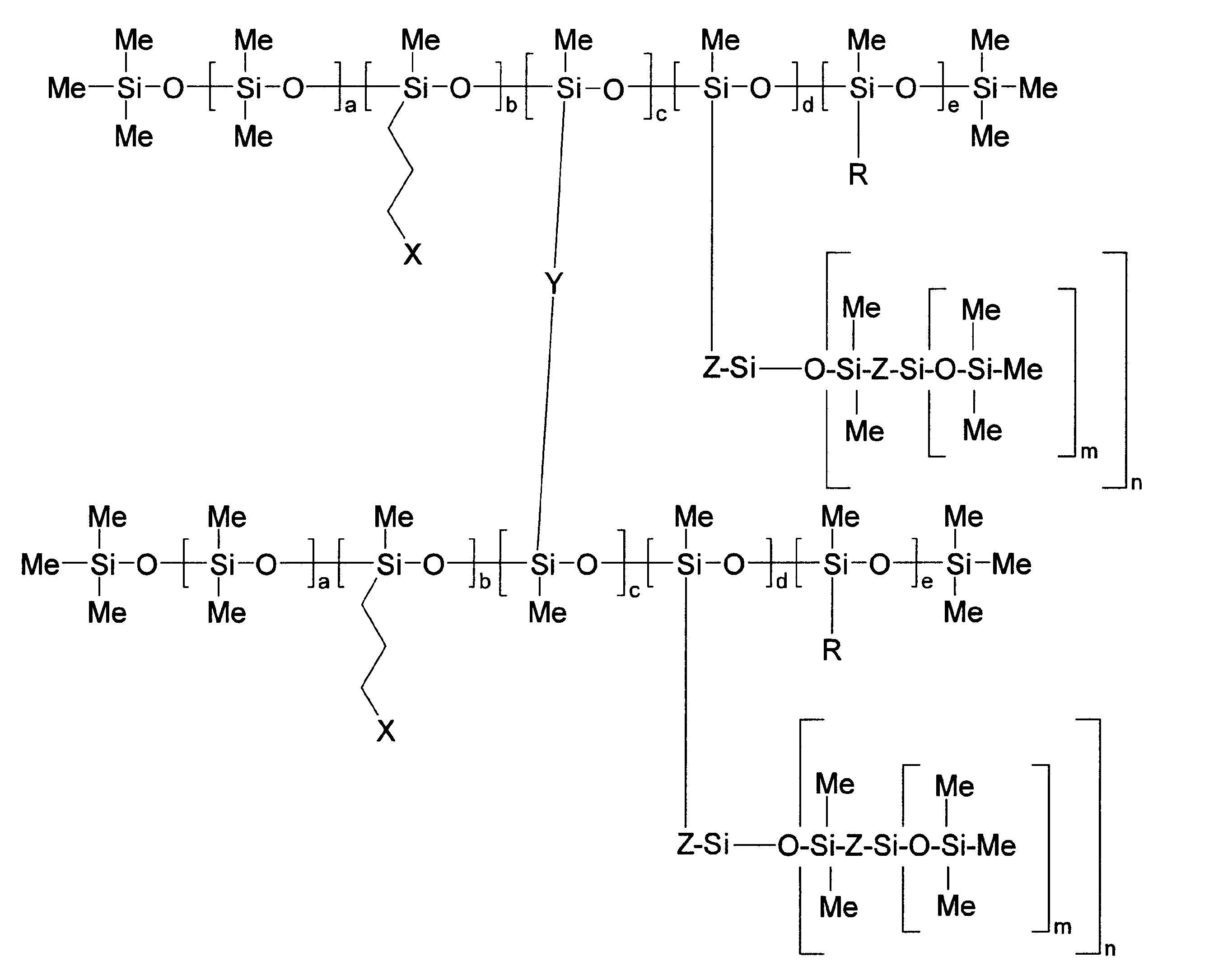
(式中、Me=メチル基、[]n中のZ=-CH2CH2-、[]n外のZ=-C3H6-COO-C3H6-、R=-C16H33、Y=-C6H12-、X=(C3H6O2)2H、a=43.2、b=1.84、 c=2.86、d=0.1、e=3.1、m=3、n=3である)
[実施例2] <シリコーン化合物No.2の製造>
反応器に平均組成式:MD43.4DH 7.4Mで表されるメチルハイドロジェンポリシロキサン 74.3g、下記平均組成式:
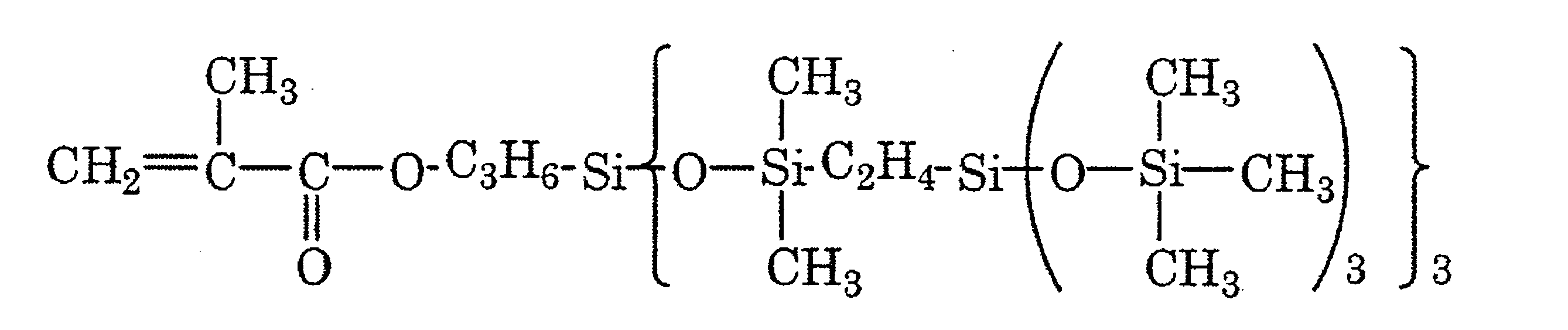
で表される3-メタクリロキシプロピル(トリス(トリメチルシロキシ)シリルエチルジメチルシロキシ)シラン 2.6g、ヘキサデセン(αオレフィン純度91.7%) 20.6g を仕込み、窒素流通下で攪拌しながら20℃まで加温した。白金-1,3-ジビニル-1,1,3,3-テトラメチルジシロキサン錯体のヘキサメチルジシロキサン溶液(Pt濃度0.45wt%) 0.10mlを添加したところ、発熱が生じて48℃まで温度上昇した。その後50~60℃に加温して1時間の反応を行なった。反応液を少量採取し、アルカリ分解ガス発生法により反応率を計算したところ、MD43.4DR*31
0.1DR*11
4.7DH
2.6Mで表される変性シリコーン中間体が生成していることが分かった。ここで、R*11及びR*31は下記のとおりである。
R*11= -C16H33

反応器に平均組成式:MD43.4DH 7.4Mで表されるメチルハイドロジェンポリシロキサン 74.3g、下記平均組成式:
R*11= -C16H33
ここで、希釈剤兼架橋反応溶媒でもあるカプリリルメチコン 100gを投入して反応液と混合した後、40~50℃の温度で1,5-ヘキサジエン 2.44g、上記白金触媒 0.15mlを添加して、40~50℃で撹拌を継続したところ、2時間後にエラストマー化が起こり、反応混合物は透明感のある柔らかいグリース塊状に変化した。ここで、架橋時のVi/Hモル比は1.2であった。架橋を進めるため、この状態で更に2時間反応を継続したのち、引き続き40~70℃、減圧下で加熱して低沸分を溜去した。
次いで、上記組成物を反応器から取り出して、当該組成物199gに対してカプリリルメチコン199gの割合でハイシェアミキサーに仕込み、せん断及び粉砕処理を30分間実施することにより、触って異物感の全くない、シロキサンデンドロン構造及び長鎖アルキル基で変性された新規なオルガノポリシロキサンエラストマーを含有する均質なペースト状組成物385gを得た。 (エラストマー濃度25%)。
[実施例3] <シリコーン化合物No.3の製造>
反応器に平均組成式:MD46.1DH 3.15Mで表されるメチルハイドロジェンポリシロキサン 91.9g、平均組成式CH2=CH-Si(OSiMe3)3で表されるビニルトリストリメチルシロキシシラン 5.1g を仕込み、窒素流通下で攪拌しながら70℃まで加温した。白金-1,3-ジビニル-1,1,3,3-テトラメチルジシロキサン錯体のヘキサメチルジシロキサン溶液(Pt濃度0.45wt%) 0.70mlを添加して70~80℃で5時間の反応を行なった。反応液を少量採取し、アルカリ分解ガス発生法により反応率を計算したところ、MD46.1DR*32 0.38DH 2.77Mで表される変性シリコーン中間体が生成していることが分かった。ここで、R*32は下記のとおりである。
R*32 =-C2H4-Si(OSiMe3)3
反応器に平均組成式:MD46.1DH 3.15Mで表されるメチルハイドロジェンポリシロキサン 91.9g、平均組成式CH2=CH-Si(OSiMe3)3で表されるビニルトリストリメチルシロキシシラン 5.1g を仕込み、窒素流通下で攪拌しながら70℃まで加温した。白金-1,3-ジビニル-1,1,3,3-テトラメチルジシロキサン錯体のヘキサメチルジシロキサン溶液(Pt濃度0.45wt%) 0.70mlを添加して70~80℃で5時間の反応を行なった。反応液を少量採取し、アルカリ分解ガス発生法により反応率を計算したところ、MD46.1DR*32 0.38DH 2.77Mで表される変性シリコーン中間体が生成していることが分かった。ここで、R*32は下記のとおりである。
R*32 =-C2H4-Si(OSiMe3)3
ここで、希釈剤兼架橋反応溶媒でもあるカプリリルメチコン 99gを投入して反応液と混合した後、40~50℃の温度で1,5-ヘキサジエン 3.50gを添加して撹拌を継続したところ、50分後にエラストマー化が起こり、反応混合物は透明感のある柔らかいグリース塊状に変化した。ここで、架橋時のVi/Hモル比は1.27であった。架橋を進めるため、この状態で更に5.5時間反応を継続した結果、硬度が増してドライ感ある崩壊性のグリース~粉塊状となった。引き続き、40~70℃、減圧下で加熱して低沸分を溜去した。
次いで、上記組成物を反応器から取り出して、当該組成物198gに対してカプリリルメチコン198gの割合でハイシェアミキサーに仕込み、せん断及び粉砕処理を30分間実施することにより、触って異物感の全くない、シロキサンデンドロン構造で変性された新規なオルガノポリシロキサンエラストマーを含有する均質なペースト状組成物386gを得た。 (エラストマー濃度25%)。
[比較例1] <シリコーン化合物No.RE-1の製造>
反応器に平均組成式:MD40DH 15Mで表されるメチルハイドロジェンポリシロキサン 110.1g、1-ドデセン 12.1g(1-ドデセンの総仕込み量の1/4相当)を仕込み、窒素流通下で攪拌しながら50℃まで昇温し、塩化白金酸のエタノール溶液(Pt濃度3wt%) 0.10gを添加した。反応熱により80℃まで温度上昇が起こり、その後自然に温度が降下したのを確認後、2回目の1-ドデセン 12.1gを添加して反応させた。更に同様の方法で、3回目、4回目の1-ドデセンを添加して反応させた。この後、90~100℃で1時間反応を行なった後、反応液を少量採取し、アルカリ分解ガス発生法により反応率が目標に達したことを確認した。次いで、減圧下で加熱して未反応のドデセン等低沸分を取り除いた。
反応器に平均組成式:MD40DH 15Mで表されるメチルハイドロジェンポリシロキサン 110.1g、1-ドデセン 12.1g(1-ドデセンの総仕込み量の1/4相当)を仕込み、窒素流通下で攪拌しながら50℃まで昇温し、塩化白金酸のエタノール溶液(Pt濃度3wt%) 0.10gを添加した。反応熱により80℃まで温度上昇が起こり、その後自然に温度が降下したのを確認後、2回目の1-ドデセン 12.1gを添加して反応させた。更に同様の方法で、3回目、4回目の1-ドデセンを添加して反応させた。この後、90~100℃で1時間反応を行なった後、反応液を少量採取し、アルカリ分解ガス発生法により反応率が目標に達したことを確認した。次いで、減圧下で加熱して未反応のドデセン等低沸分を取り除いた。
次いで、反応混合物に平均組成式:ViMD6Mで表されるビニルメチルポリシロキサン 25.4g、上記の白金触媒 0.10gを添加し、90-100℃で2時間反応を行った後、同様の方法で反応率が目標に達したことを確認した。反応率を計算した結果、平均組成式:MD40DR*41
1.5DR*12
10DH
3.5Mで表される変性シリコーン中間体が生成していることが分かった。ここで、R*12及びR*41は下記のとおりである。
R*12= ―C12H25
R*41= -C2H4SiMe2(OSiMe2)6OSiMe3
R*12= ―C12H25
R*41= -C2H4SiMe2(OSiMe2)6OSiMe3
ここに、平均組成式:CH2=CH-CH2-(OCH2CH2)15-O-CH2-CH=CH2で表されるビスアリルポリエーテル 46.4g、天然ビタミンE 0.025g、トルエン 138g、上記の白金触媒 0.10gを添加して90℃で2時間反応を行ったところエラストマー化が起こり、反応混合物は半透明感のある柔らかい餅状乃至はジャム状に変化した。ここで、架橋時のVi/Hモル比は1.2であった。架橋を進めるため、この状態で更に2時間反応を継続した結果、硬度が増してドライ感ある崩壊性のグリース状となった。次いで、減圧下で加熱してトルエンを取り除いた。
次いで、2%クエン酸水溶液 25.3gを添加して80℃で2時間の処理を行った後、2%重曹水を添加して1時間の中和処理を行なった。減圧下で加熱して低沸分を溜去することによって、ポリエーテル基/C12アルキル基/リニアポリシロキサン構造を有する基で変性されたオルガノポリシロキサンエラストマーを得た。この後、上記エラストマーをホバートミキサーに移し、3時間の混練粉砕処理を実施して、均質化された白色のグリース状組成物を得た。その後、希釈剤であるイソドデカン 680gを3時間かけてゆっくり投入しながら混練を行い、半透明~白色の柔らかいペースト状組成物を得た(エラストマー濃度25%)。
[比較例2] <シリコーン化合物No.RE-2の製造>
反応器に平均組成式:MD40DH 15Mで表されるメチルハイドロジェンポリシロキサン 125.3g、1-ドデセン 13.7g(1-ドデセンの総仕込み量の1/4相当)仕込み、窒素流通下で攪拌しながら50℃まで昇温し、塩化白金酸のエタノール溶液(Pt濃度3wt%) 0.10gを添加した。反応熱により85℃まで温度上昇が起こり、その後自然に温度が降下したのを確認後、2回目の1-ドデセン 13.7gを添加して反応させた。更に同様の方法で、3回目、4回目の1-ドデセンを添加して反応させた。この後、90~100℃で1時間反応を行なった後、反応液を少量採取し、アルカリ分解ガス発生法により反応率が目標に達したことを確認した。次いで、減圧下で加熱して未反応のドデセン等低沸分を取り除いた。
反応器に平均組成式:MD40DH 15Mで表されるメチルハイドロジェンポリシロキサン 125.3g、1-ドデセン 13.7g(1-ドデセンの総仕込み量の1/4相当)仕込み、窒素流通下で攪拌しながら50℃まで昇温し、塩化白金酸のエタノール溶液(Pt濃度3wt%) 0.10gを添加した。反応熱により85℃まで温度上昇が起こり、その後自然に温度が降下したのを確認後、2回目の1-ドデセン 13.7gを添加して反応させた。更に同様の方法で、3回目、4回目の1-ドデセンを添加して反応させた。この後、90~100℃で1時間反応を行なった後、反応液を少量採取し、アルカリ分解ガス発生法により反応率が目標に達したことを確認した。次いで、減圧下で加熱して未反応のドデセン等低沸分を取り除いた。
次いで、反応混合物に平均組成式:ViMD6Mで表されるビニルメチルポリシロキサン 28.9g、上記の白金触媒 0.10gを添加し、90-100℃で2時間反応を行った後、同様の方法で反応率が目標に達したことを確認した。反応率を計算した結果、平均組成式:MD40DR*41
1.5DR*12
10DH
3.5Mで表される変性シリコーン中間体が生成していることが分かった。ここで、R*12及びR*41は前記と同様である。
ここに、平均組成式:CH2=CH-CH2O-(C3H6O2)3-CH2-CH=CH2で表されるビスアリルトリグリセリン(又はトリグリセリンジアリルエーテル) 20.9g、天然ビタミンE 0.025g、トルエン 138g、上記の白金触媒 0.10gを添加して80℃で2時間反応を行ったところエラストマー化が起こり、反応混合物は半透明感のある柔らかい餅状乃至はジャム状に変化した。ここで、架橋時のVi/Hモル比は1.2であった。架橋を進めるため、この状態で更に2時間反応を継続した結果、硬度が増してドライ感ある崩壊性のグリース状となった。次いで、減圧下で加熱してトルエンを取り除いた。
次いで、2%クエン酸水溶液 25.3gを添加して80℃で2時間の処理を行った後、2%重曹水を添加して1時間の中和処理を行なった。減圧下で加熱して低沸分を溜去することによって、トリグリセリン基/C12アルキル基/リニアポリシロキサン構造を有する基で変性されたオルガノポリシロキサンエラストマーを得た。この後、上記エラストマーをホバートミキサーに移し、3時間の混練粉砕処理を実施して、均質化された白色のグリース状組成物を得た。その後、希釈剤であるイソドデカン 680gを3時間かけてゆっくり投入しながら混練を行い、半透明~白色の柔らかいペースト状組成物を得た(エラストマー濃度25%)。
[実施例4、比較例3~4]
以下の手順及び評価基準に従って、実施例1及び比較例1~2で得られたペースト状組成物とイソドデカンとの混合物(分散体)の使用感(非水系での使用感)を評価した。結果を表2に併せて示す。なお、表中、部は重量(質量)部を示す。
以下の手順及び評価基準に従って、実施例1及び比較例1~2で得られたペースト状組成物とイソドデカンとの混合物(分散体)の使用感(非水系での使用感)を評価した。結果を表2に併せて示す。なお、表中、部は重量(質量)部を示す。
[官能性評価(使用感)の方法]
1.混合物を0.10g スポイトで取り、手の甲に載せて指で塗り広げた。
2.この時、塗布初期~後半の触感、肌の印象及び乾燥後(塗布15分後)の後肌感を評価した。
3.エラストマー特有の優れた感触の持続性について、上記の結果を元に判定した。
1.混合物を0.10g スポイトで取り、手の甲に載せて指で塗り広げた。
2.この時、塗布初期~後半の触感、肌の印象及び乾燥後(塗布15分後)の後肌感を評価した。
3.エラストマー特有の優れた感触の持続性について、上記の結果を元に判定した。
[官能性評価の基準:油剤=イソドデカン]
「触感: 塗布初期~後期」
◎: エラストマー的なベルベット調の厚みのあるなめかさが特長的であり、滑らかに伸び広がる。○: すべりや伸び広がり性に優れているが、少しヌルっとした感触があり、エラストマー特有の厚み感も少ない。
△: すべりや伸び広がり性は良好であるが、エラストマーに特有の厚み感はほとんど感じない。
×: すべり感が不足し、伸び広がりが重く油っぽい感触である。また、エラストマーに特有の厚み感も無い。
「触感: 塗布初期~後期」
◎: エラストマー的なベルベット調の厚みのあるなめかさが特長的であり、滑らかに伸び広がる。○: すべりや伸び広がり性に優れているが、少しヌルっとした感触があり、エラストマー特有の厚み感も少ない。
△: すべりや伸び広がり性は良好であるが、エラストマーに特有の厚み感はほとんど感じない。
×: すべり感が不足し、伸び広がりが重く油っぽい感触である。また、エラストマーに特有の厚み感も無い。
「肌の印象: 塗布後期」
○: 肌なじみが良く、油性感が抑えられマット感のある自然な印象を肌に与える。
△: 良くも悪くもない。テカリ光沢は少ない。
×: 油っぽいテカリ(光沢)が強く、長く続く。
○: 肌なじみが良く、油性感が抑えられマット感のある自然な印象を肌に与える。
△: 良くも悪くもない。テカリ光沢は少ない。
×: 油っぽいテカリ(光沢)が強く、長く続く。
「後肌感: 乾燥後」
◎: エラストマー特有のなめらかさが依然良好に持続しており、しかも全くべとつき感がない。
○: エラストマー特有の厚みのある滑らかさがあるが、若干の抵抗感が感じられる。
△: すべりは持続しているがエラストマー特有の厚み感は無く、少しべとつき感が出てきた。
×: べたつき感が強く、しかも全くすべり感が無い。
◎: エラストマー特有のなめらかさが依然良好に持続しており、しかも全くべとつき感がない。
○: エラストマー特有の厚みのある滑らかさがあるが、若干の抵抗感が感じられる。
△: すべりは持続しているがエラストマー特有の厚み感は無く、少しべとつき感が出てきた。
×: べたつき感が強く、しかも全くすべり感が無い。
「感触の持続性」
○: 塗布初期から塗布後半、更には乾燥後まで、エラストマー特有の厚みのあるなめかさがほとんど変わらずに持続している。
△: 塗布初期から塗布後半、更に乾燥後までの間に感触の変化はあるが、不快な感触は少ない。又は不快なレベルまでは至っていない。
×: 塗布初期から塗布後半、更に乾燥後までの間に大きく感触が劣化する。
○: 塗布初期から塗布後半、更には乾燥後まで、エラストマー特有の厚みのあるなめかさがほとんど変わらずに持続している。
△: 塗布初期から塗布後半、更に乾燥後までの間に感触の変化はあるが、不快な感触は少ない。又は不快なレベルまでは至っていない。
×: 塗布初期から塗布後半、更に乾燥後までの間に大きく感触が劣化する。

[実施例5、比較例5~6]
以下の手順及び評価基準に従って、実施例1及び比較例1~2で得られたペースト状組成物とミネラルオイルとの混合物(分散体)の使用感(非水系での使用感)を評価した。結果を表3に併せて示す。なお、表中、部は重量(質量)部を示す。
以下の手順及び評価基準に従って、実施例1及び比較例1~2で得られたペースト状組成物とミネラルオイルとの混合物(分散体)の使用感(非水系での使用感)を評価した。結果を表3に併せて示す。なお、表中、部は重量(質量)部を示す。
[官能性評価(使用感)の方法]
1.混合物を0.10g スポイトで取り、手の甲に載せて指で塗り広げた。
2.この時、塗布初期~後半の触感、肌の印象及び乾燥後(塗布15分後)の後肌感を評価した。
3.エラストマー特有の優れた感触の持続性について、上記の結果を元に判定した。
1.混合物を0.10g スポイトで取り、手の甲に載せて指で塗り広げた。
2.この時、塗布初期~後半の触感、肌の印象及び乾燥後(塗布15分後)の後肌感を評価した。
3.エラストマー特有の優れた感触の持続性について、上記の結果を元に判定した。
[官能性評価の基準:油剤=ミネラルオイル]
「触感: 塗布初期~後期」
◎: エラストマーパウダー特有の面白いすべり感があり、軽くて伸びも良好である。しかもこれらの感触が持続する。
○: エラストマー特有の厚みのあるすべり感はあるが、少しヌルっとした感触がある。
×: すべりは普通で、エラストマーに特有の感触はほとんどなく、感触も油っぽい。
「触感: 塗布初期~後期」
◎: エラストマーパウダー特有の面白いすべり感があり、軽くて伸びも良好である。しかもこれらの感触が持続する。
○: エラストマー特有の厚みのあるすべり感はあるが、少しヌルっとした感触がある。
×: すべりは普通で、エラストマーに特有の感触はほとんどなく、感触も油っぽい。
「肌の印象: 塗布後期」
○: 肌なじみが良く、油性感が抑えられている。テカリ光沢は少ない。
△: 良くも悪くもない。テカリ光沢は中程度である。
×: 油っぽいテカリ(光沢)が強く、長く続く。
○: 肌なじみが良く、油性感が抑えられている。テカリ光沢は少ない。
△: 良くも悪くもない。テカリ光沢は中程度である。
×: 油っぽいテカリ(光沢)が強く、長く続く。
「後肌感: 乾燥後」
◎: エラストマーパウダー特有の面白いすべり感が変わらず良好に持続しており、しかも全くべとつき感が生じていない。
○: エラストマー特有の厚みのあるすべり感が持続しているが、少し抵抗感を感じる。
△: べとつき感が生じてきたうえ、すべり性も低下して抵抗感がはっきり認められる。
×: べたつき感が強く、しかも全くすべり感が無い。
◎: エラストマーパウダー特有の面白いすべり感が変わらず良好に持続しており、しかも全くべとつき感が生じていない。
○: エラストマー特有の厚みのあるすべり感が持続しているが、少し抵抗感を感じる。
△: べとつき感が生じてきたうえ、すべり性も低下して抵抗感がはっきり認められる。
×: べたつき感が強く、しかも全くすべり感が無い。
「感触の持続性」
◎: 塗布初期から塗布後半、更には乾燥後まで、エラストマーパウダー特有の面白いすべり感が全く変わらずに持続している。
△: 塗布初期から塗布後半、更に乾燥後までの間に感触の変化はあるが、不快な感触は少ない。又は不快なレベルまでは至っていない。
×: 塗布初期から塗布後半、更に乾燥後までの間に大きく感触が劣化する。
◎: 塗布初期から塗布後半、更には乾燥後まで、エラストマーパウダー特有の面白いすべり感が全く変わらずに持続している。
△: 塗布初期から塗布後半、更に乾燥後までの間に感触の変化はあるが、不快な感触は少ない。又は不快なレベルまでは至っていない。
×: 塗布初期から塗布後半、更に乾燥後までの間に大きく感触が劣化する。

実施例4~5、比較例3~6の試験目的は、シリコーン油に比べ感触面で劣る有機油に本発明のオルガノポリシロキサンエラストマーを添加することによって、比較品の場合と比べてどの程度劇的に有機油主体の非水系の触感が改善されるのか、また塗布後の肌の質感等がどの様に改善されるのか、効果の持続性はどうなのかを知ることにあった。すなわち、本発明品も比較品もシリコーンを主骨格としたエラストマーであるため、シリコーン油との親和性は当然ながら良好であり、元々感触のよいシリコーン油との併用系で試験をしても効果の差が出にくい可能性があった。そのため、エラストマーによる感触の差が出やすいと考えられる非シリコーン油との混合系に対して、効果の差を確認したものである。
以上より、本発明のオルガノポリシロキサンエラストマー(親水基を含有したタイプ)は、シリコーン油のみならず様々な有機油との親和性にも優れていると共に、なめらかで厚みのあるややパウダリーなエラストマー特有の初期使用感を、塗布初期のみならず驚くべきことに塗布後半まで、更には乾燥後までもほとんど変わらずに持続させることが明らかとなった。この様な性能は、従来の親水性シリコーンエラストマーでは達成されたことのない本発明品の特長であり、それは比較例3~6の結果を見ても明らかである。また、本発明品と油剤との混合物は、塗布初期から乾燥後まで一貫してテカリの少ない自然な肌の質感を与えた。この点についても、比較例のシリコーンエラストマー(エラストマーにもかかわらず、テカリ光沢が大きく、肌が油っぽくぎらついた印象となる)とは対照的であった。イソドデカンは代表的な揮発性油剤であるが、こうした油剤の揮発性によって配合処方の使用感がほとんど影響されない(負の影響を受けない)ということは珍しく、本発明品の利用により化粧料や外用剤の処方の自由度や処方設計時の利便性が劇的に増大する可能性を示す結果である。
[実施例6~9、比較例7~14]
実施例1、比較例1~2で得られたペースト状組成物を用いて、以下の手順により表4~表5に示す組成の油中水型エマルション組成物を調製し、粘度の測定を行った。更に、以下の評価基準により官能性(感触・使用感)、静置安定性(外観と形態)、応力に対する安定性、乳化粒子径の安定性、経時着臭を評価した。結果を表4~表5に併せて示す。なお、表中、部は重量(質量)部を示す。
実施例1、比較例1~2で得られたペースト状組成物を用いて、以下の手順により表4~表5に示す組成の油中水型エマルション組成物を調製し、粘度の測定を行った。更に、以下の評価基準により官能性(感触・使用感)、静置安定性(外観と形態)、応力に対する安定性、乳化粒子径の安定性、経時着臭を評価した。結果を表4~表5に併せて示す。なお、表中、部は重量(質量)部を示す。
[油中水型エマルション組成物の調製方法]
1.200ml容器に、油剤及び界面活性剤(乳化剤)としてのペースト状組成物を仕込んだ。
2.撹拌を行い、ペースト状組成物を油剤中に均一分散させた(油相乃至は油中粉体分散相A)。
3.別の容器に食塩とイオン交換水とを仕込み、スパチュラで混合して溶解させた。更に、1,3-ブチレングリコールを混合して溶解させた(水相B)。
4.ホモディスパーの鋸歯を油相Aに浸し、容器を固定したのち1000rpmで攪拌しながら、水相Bをほぼ定速で約45秒かけて油相A中に注ぎ込んだ。
5.ホモディスパーの回転数を3500rpmまで上げ、全体が均質になるよう攪拌を2分間継続した。
6.撹拌を止め、容器の内壁に付着した油分等をへらで掻き落とし、生成しているエマルションと混合した。
7.ホモディスパーの回転数3500rpmで全体が均質になるよう3分間の攪拌を行った。
1.200ml容器に、油剤及び界面活性剤(乳化剤)としてのペースト状組成物を仕込んだ。
2.撹拌を行い、ペースト状組成物を油剤中に均一分散させた(油相乃至は油中粉体分散相A)。
3.別の容器に食塩とイオン交換水とを仕込み、スパチュラで混合して溶解させた。更に、1,3-ブチレングリコールを混合して溶解させた(水相B)。
4.ホモディスパーの鋸歯を油相Aに浸し、容器を固定したのち1000rpmで攪拌しながら、水相Bをほぼ定速で約45秒かけて油相A中に注ぎ込んだ。
5.ホモディスパーの回転数を3500rpmまで上げ、全体が均質になるよう攪拌を2分間継続した。
6.撹拌を止め、容器の内壁に付着した油分等をへらで掻き落とし、生成しているエマルションと混合した。
7.ホモディスパーの回転数3500rpmで全体が均質になるよう3分間の攪拌を行った。
[エマルションの粘度及び性状]
1.上記の方法により得られた油中水型エマルション組成物の性状を記録する。
2.25℃の条件下で、当該エマルション組成物の粘度測定をE型粘度計により行った。このとき、粘度計のコーンローターの回転数は0.5rpmとして測定を実施した。
1.上記の方法により得られた油中水型エマルション組成物の性状を記録する。
2.25℃の条件下で、当該エマルション組成物の粘度測定をE型粘度計により行った。このとき、粘度計のコーンローターの回転数は0.5rpmとして測定を実施した。
[官能性評価(感触及び使用感)]
各油中水型エマルション組成物を化粧料として使用した場合の塗布初期~塗布中、塗布後半の使用感触及び乾燥後の後肌感を評価した。実施例と比較例のペースト状組成物全てが乳化できた油剤は2csとミネラルオイルのみであったため、官能性評価はこれらの処方でのみ実施した。ここで、全サンプルとも伸び広がり性と単純なすべりの良さ、柔らかい触感、しわ隠し効果に関しては優れたレベルにあったため、以下の点に着目して評価を行った。具体的には、
1.油中水型エマルション組成物を0.10g 指に取り、手の甲に載せて塗り広げた。
2.この時、塗布初期~塗布中、塗布後半、乾燥後について、水の感触とエラストマー特有の厚みある滑らかさやパウダリー感、並びに、塗布後の保湿感の付与、乾き際のべとつき感の少なさ等について、以下の基準により評価した。
各油中水型エマルション組成物を化粧料として使用した場合の塗布初期~塗布中、塗布後半の使用感触及び乾燥後の後肌感を評価した。実施例と比較例のペースト状組成物全てが乳化できた油剤は2csとミネラルオイルのみであったため、官能性評価はこれらの処方でのみ実施した。ここで、全サンプルとも伸び広がり性と単純なすべりの良さ、柔らかい触感、しわ隠し効果に関しては優れたレベルにあったため、以下の点に着目して評価を行った。具体的には、
1.油中水型エマルション組成物を0.10g 指に取り、手の甲に載せて塗り広げた。
2.この時、塗布初期~塗布中、塗布後半、乾燥後について、水の感触とエラストマー特有の厚みある滑らかさやパウダリー感、並びに、塗布後の保湿感の付与、乾き際のべとつき感の少なさ等について、以下の基準により評価した。
「触感: 塗布初期~塗布中」
◎: 水の感触が得られ、特有の厚みのある滑らかさとともに持続する。油分のバランスも良好。
○: 初期に非常に水々しい感触が得られるが、やや厚みとヌルツキのあるすべり感である。
△: 水の感触が得られるが、滑らかさに厚みがあまり感じられない。
×: 若干、厚みのある滑らかさを感じるが、それ以外は普通のクリームの塗布感であり水の感触はあまり感じられない。
◎: 水の感触が得られ、特有の厚みのある滑らかさとともに持続する。油分のバランスも良好。
○: 初期に非常に水々しい感触が得られるが、やや厚みとヌルツキのあるすべり感である。
△: 水の感触が得られるが、滑らかさに厚みがあまり感じられない。
×: 若干、厚みのある滑らかさを感じるが、それ以外は普通のクリームの塗布感であり水の感触はあまり感じられない。
「保湿感と肌の質感: 塗布後半」
◎: 肌なじみが良く、良好な保湿感が得られる上に肌上での油分と水分のバランスがちょうど良い。テカリが目立たず、外観上も感覚的にも自然な肌の質感が得られる。
○: 保湿感は良好であるが、やや油っぽいテカリが見られる。
△: 保湿感はあまり感じないが、マットで自然な肌の質感には優れる。
×: 保湿感がなく、油っぽいヌルツキ及びテカリが強い。
◎: 肌なじみが良く、良好な保湿感が得られる上に肌上での油分と水分のバランスがちょうど良い。テカリが目立たず、外観上も感覚的にも自然な肌の質感が得られる。
○: 保湿感は良好であるが、やや油っぽいテカリが見られる。
△: 保湿感はあまり感じないが、マットで自然な肌の質感には優れる。
×: 保湿感がなく、油っぽいヌルツキ及びテカリが強い。
「後肌感: 乾燥後」
◎: パウダリー感がありしかもベルベット調の特有の厚みのあるすべり感が変わらず良好に持続しており、しかも全くべとつき感が生じていない。
△: 若干ベルベット調の厚みある滑らかさが残っているが、すべり性が低下して抵抗感が増した。
×: べたつき感が強く、しかも全くすべり感が無い。又は油っぽいヌルツキが強い。
◎: パウダリー感がありしかもベルベット調の特有の厚みのあるすべり感が変わらず良好に持続しており、しかも全くべとつき感が生じていない。
△: 若干ベルベット調の厚みある滑らかさが残っているが、すべり性が低下して抵抗感が増した。
×: べたつき感が強く、しかも全くすべり感が無い。又は油っぽいヌルツキが強い。
「感触の持続性」
◎: 塗布初期から塗布後半、更には乾燥後まで、エラストマー特有の優れた感触がほとんど変わらずに持続している。
△: 塗布初期から塗布後半、更に乾燥後までの間に感触の変化はあるが、不快な感触は少ない。又は不快なレベルまでは至っていない。
×: 塗布初期から塗布後半、更に乾燥後までの間に大きく感触が劣化する。
◎: 塗布初期から塗布後半、更には乾燥後まで、エラストマー特有の優れた感触がほとんど変わらずに持続している。
△: 塗布初期から塗布後半、更に乾燥後までの間に感触の変化はあるが、不快な感触は少ない。又は不快なレベルまでは至っていない。
×: 塗布初期から塗布後半、更に乾燥後までの間に大きく感触が劣化する。
[エマルションの静置安定性:外観と形態]
各油中水型エマルション組成物を調製した当日、及びこのエマルション組成物(28gを35mlガラス瓶に秤取して密栓したもの)を50℃で1ヶ月静置後に、外観と形態を観察し、以下の基準により評価した。
◎: 経時後も全体が均一でマット感のあるクリーム~ゲル状の形態を有している。
○: 経時後もほぼ大部分が均一で、マット感のあるクリーム~ゲル状の形態を有している。僅かな析出物があるかもしれない。
△: 経時後は、乳化物の表面粗さが容易に見え、不均一さ、析出物の量が若干多い。
×: 初期から乳化自体ができておらず相分離が起こっている。
各油中水型エマルション組成物を調製した当日、及びこのエマルション組成物(28gを35mlガラス瓶に秤取して密栓したもの)を50℃で1ヶ月静置後に、外観と形態を観察し、以下の基準により評価した。
◎: 経時後も全体が均一でマット感のあるクリーム~ゲル状の形態を有している。
○: 経時後もほぼ大部分が均一で、マット感のあるクリーム~ゲル状の形態を有している。僅かな析出物があるかもしれない。
△: 経時後は、乳化物の表面粗さが容易に見え、不均一さ、析出物の量が若干多い。
×: 初期から乳化自体ができておらず相分離が起こっている。
[エマルションの応力に対する安定性]
◎: 指にとって手の甲に塗布したとき、クリームをやや強く皮膚に押し付けて指で伸ばしても、全く水滴が発生することがない。
△: クリームを指にとって手の甲に置いただけでは水滴は発生しないが、クリームを指で伸ばしているうちに少しずつ水滴が発生してくる。
×: クリームを指に取っただけでクリームが壊れて水滴が発生する。手の甲に塗ろうと、指でごく軽く伸ばしただけで、あっという間に大きな水滴が現れる(即座にエマルションが壊れてしまう)。
◎: 指にとって手の甲に塗布したとき、クリームをやや強く皮膚に押し付けて指で伸ばしても、全く水滴が発生することがない。
△: クリームを指にとって手の甲に置いただけでは水滴は発生しないが、クリームを指で伸ばしているうちに少しずつ水滴が発生してくる。
×: クリームを指に取っただけでクリームが壊れて水滴が発生する。手の甲に塗ろうと、指でごく軽く伸ばしただけで、あっという間に大きな水滴が現れる(即座にエマルションが壊れてしまう)。
[乳化粒子径の測定と安定性評価]
各油中水型エマルション組成物を調製した翌日、及びこのエマルション組成物(前述した、28gを35mlガラス瓶に秤取して密栓したもの)を50℃で1ヶ月静置した後に、光学顕微鏡で観察(1000倍)及び写真撮影を行い、粒子径の分布範囲を目視により求めた。これにより、初期と経時での乳化粒子径の安定性を評価した。
なお、粒子合一が認められた場合には、その旨を表中に記載した。
◎: 乳化粒子径の変化が少なく、合一の兆侯も認められない。
○: 乳化粒子径が若干増大している可能性があるが、はっきりした合一は認められない。又は、乳化粒子径の増大があっても全体的に粒子サイズが小さく、乳化系は保持されている。
△: 一部で粒子合一があったと考えられ、乳化粒子径が明確に増大している。
×: 多くの粒子で合一が生じており、乳化が壊れつつある。又は、最初からひどい合一がある。
各油中水型エマルション組成物を調製した翌日、及びこのエマルション組成物(前述した、28gを35mlガラス瓶に秤取して密栓したもの)を50℃で1ヶ月静置した後に、光学顕微鏡で観察(1000倍)及び写真撮影を行い、粒子径の分布範囲を目視により求めた。これにより、初期と経時での乳化粒子径の安定性を評価した。
なお、粒子合一が認められた場合には、その旨を表中に記載した。
◎: 乳化粒子径の変化が少なく、合一の兆侯も認められない。
○: 乳化粒子径が若干増大している可能性があるが、はっきりした合一は認められない。又は、乳化粒子径の増大があっても全体的に粒子サイズが小さく、乳化系は保持されている。
△: 一部で粒子合一があったと考えられ、乳化粒子径が明確に増大している。
×: 多くの粒子で合一が生じており、乳化が壊れつつある。又は、最初からひどい合一がある。
[乳化物の経時着臭の評価]
各油中水型エマルション組成物(前述した、28gを35mlガラス瓶に秤取して密栓したもの)を50℃で1ヶ月静置したのち、取り出して室温に戻した。その翌日に開封して、発生した臭気を以下の基準により評価した。但し、油剤が共通のグループ内で、相対比較を行った。
◎:ほとんど着臭が知覚できないレベル。
○:少しの着臭(甘い溶剤様の特異臭)が感じられる。
△:中程度の着臭(甘い溶剤様の特異臭)が認められる。
×:強い着臭(甘い溶剤様の特異臭)がある。
各油中水型エマルション組成物(前述した、28gを35mlガラス瓶に秤取して密栓したもの)を50℃で1ヶ月静置したのち、取り出して室温に戻した。その翌日に開封して、発生した臭気を以下の基準により評価した。但し、油剤が共通のグループ内で、相対比較を行った。
◎:ほとんど着臭が知覚できないレベル。
○:少しの着臭(甘い溶剤様の特異臭)が感じられる。
△:中程度の着臭(甘い溶剤様の特異臭)が認められる。
×:強い着臭(甘い溶剤様の特異臭)がある。


以上より、本発明のオルガノポリシロキサンエラストマー(親水基を含有したタイプ)は、ポリエーテル基を全く含有しないシリコーンエラストマーであるにもかかわらず、水を含む油中水型エマルションの剤型においてシリコーン油のみならず様々な有機油との親和性を発揮し、幅広い油剤種に対して安定性に優れた乳化物を与えることが明らかとなった。これは、従来技術によるポリグリセリン変性シリコーンエラストマー(比較例2の組成物)によっては全くなし得なかった達成であることは、比較例9~10及び13~14の結果を見れば明らかである。
更に、本発明のオルガノポリシロキサンエラストマー(親水基を含有したタイプ)を含む油中水型エマルションは、皮膚に塗布したときに水の感触が生き、それが持続するために保湿性にも優れ、同時に適度な油分をも保持し、塗布初期から乾燥後まで一貫してテカリの少ない自然な肌の質感を与えることができた。これは、本発明のオルガノポリシロキサンエラストマーの性能上の特長が、配合処方中で好適に持続されることができるという利点を実証したものである。加えて、本発明のオルガノポリシロキサンエラストマー(親水基を含有したタイプ)を含む油中水型エマルションにおいては、なめらかで厚みのあるややパウダリーなエラストマー特有の初期使用感が、塗布初期のみならず驚くべきことに塗布後半まで、更には乾燥後までもほとんど変わらずに持続することも確認された。この様な性能は、従来の親水性シリコーンエラストマーでは達成されたことのない本発明品のもう一つの特長であり、それは実施例6~7と比較例7~8を対比すれば明らかである。更に、本発明の油中水型エマルション組成物が優れた保湿効果の持続性を有することも確認された。従って、これを外用剤ないしは化粧料として用いれば、経表皮水分喪失が有効に抑制され、それにより皮膚保護や皮膚への栄養付与の効果も期待できる。
しかしながら、本発明の最大の発見かつ達成は、親水性高分子であり界面活性剤であり乳化剤でもある本発明のオルガノポリシロキサンエラストマー(親水基を含有したタイプ)が、上記した全ての優れた効果を発揮しながらも、乳化物を塗布した後乾燥するまでの間及び乾燥後においてすら、一切のべとつき感を生じさせないという信じ難い性能を発揮したという事実である。何故こうしたいくつものトレードオフの関係が本発明により一括して解消されたのかは定かではないが、本発明による油中水型エマルション組成物が性状としては動きのないクリーム~ゲル状であるにもかかわらず、柔らかい感触であり、その実測粘度は同じ性状を呈している比較品により得られた油中水型エマルション組成物と比較して格段に低い数値を示したという事実が、本発明品の特長である一切のべとつきの無さを反映しているものと考えられる。それに加えての本発明品によるエマルションの優れた安定性、これらは従来の常識を覆す発明であり、本発明品の利用により化粧料や外用剤の処方の自由度や処方設計時の利便性が劇的に増大するのみならず、化粧料や外用剤の実質的な性能・効果の向上を成し遂げることができる。よって、本発明の社会発展への貢献は極めて大である。
[実施例10、比較例15~16]
以下の手順に従って、実施例1、比較例1~2で得られたペースト状組成物及び油剤との混合物を、表5(エラストマー濃度16%)の組成のとおり調製した。また、得られた組成物の粘度を測定し、本発明のオルガノポリシロキサンエラストマーによる、油剤の増粘・ゲル化・構造化効果を確認した。結果を表5に併せて示す。なお、表中、部は重量(質量)部を示す。
以下の手順に従って、実施例1、比較例1~2で得られたペースト状組成物及び油剤との混合物を、表5(エラストマー濃度16%)の組成のとおり調製した。また、得られた組成物の粘度を測定し、本発明のオルガノポリシロキサンエラストマーによる、油剤の増粘・ゲル化・構造化効果を確認した。結果を表5に併せて示す。なお、表中、部は重量(質量)部を示す。
[油剤との混合液の調製方法]
1.ペースト状組成物をホバートミキサーに仕込み、混合しながら油剤を5分かけて滴下投入し、均一な組成物(油中粉体分散体)とした。
2.25℃の条件下で、混合物の粘度測定をE型粘度計により行った。また、性状を記録した。このとき、粘度計のコーンローターの回転数を10rpm、0.5rpmの2通りに変えて粘度測定を行った。
3.以下の数式により、分散体のチクソトロピー指数TIを計算した。
TI = 0.5rpmにおける粘度測定値/10rpmにおける粘度測定値
1.ペースト状組成物をホバートミキサーに仕込み、混合しながら油剤を5分かけて滴下投入し、均一な組成物(油中粉体分散体)とした。
2.25℃の条件下で、混合物の粘度測定をE型粘度計により行った。また、性状を記録した。このとき、粘度計のコーンローターの回転数を10rpm、0.5rpmの2通りに変えて粘度測定を行った。
3.以下の数式により、分散体のチクソトロピー指数TIを計算した。
TI = 0.5rpmにおける粘度測定値/10rpmにおける粘度測定値

以上より、本発明のオルガノポリシロキサンエラストマー(親水基を含有したタイプ)と従来技術による親水性シリコーンエラストマーを同じ濃度で比較した場合、油剤の増粘化能力、ゲル化能力、乃至は構造化能力において前者のほうが明らかに優れていることが分かった。加えて、本発明品は油剤に対してより大きなチクソトロピー性を付与する効果があることも確認された。これに対して、後者の比較品2点は、油の構造化剤として明確な効果を発揮するためには多量のエラストマーの配合が必要であり、増粘・ゲル化・構造化の効率性の点で課題を有するものであった。
次に、本発明のオルガノポリシロキサンエラストマー(親水基を含まないタイプ)について説明する。当該オルガノポリシロキサンエラストマーは、典型的には親油基乃至は疎水基のみから構成されるため、界面活性能や乳化能は有せず、非乳化性シリコーンエラストマーの一種である。しかしながら、本発明のオルガノポリシロキサンエラストマー(親水基を含まないタイプ)は、その特徴としてシロキサンデンドロン構造を含有するため、エラストマー特有の触感は持ちながら、従来技術による非乳化性シリコーンエラストマーよりもすべり性に優れ、べとつきのより少ない~べとつきの無い使用感を化粧料や外用剤に対して付与することができる。従って、本発明のオルガノポリシロキサンエラストマー(親水基を含まないタイプ)は、従来の非乳化型架橋性オルガノポリシロキサンと同様の用途に使用することができ、より優れた使用感をもたらすことができる。
本発明のオルガノポリシロキサンエラストマー(親水基を含まないタイプ)は、本発明者らが国際公開第2011/049248号公報において報告したシロキサンデンドロン構造を有する共変性オルガノポリシロキサンのうち親水基としてモノグリセリン誘導体を有するものと併用して、油中水型エマルション組成物に配合することにより、比較例2で得られたペースト状組成物に特徴的な性能をより簡単に低コストで発揮させることができる。比較例2に係るシリコーンエラストマーは既述のとおり乳化剤としては単独で立つことのできないものではあるが、油中水型エマルションの一時的な感触改良剤としては独特の効果を有することが知られている。
より具体的に説明すると、比較例2に係るシリコーンエラストマーを用いて得られるエマルションは応力に対して非常に弱いため、エマルションを皮膚に塗布すると瞬時に壊れて大きな水滴を発生する性質があり、これにより一時的ではあるが非常に水々しい感触が得られる。この性質とエラストマー特有の厚みのある滑らかな使用感を両立した技術は他には無いと考えられていたが、本発明によって、より低コストで同じ効果を実現できることが明らかになった。以下、実施例を挙げてそれを説明する。
[実施例11~12、比較例9]
実施例2~3、比較例2で得られたペースト状組成物を用いて、以下の手順により表6に示す組成の油中水型エマルション組成物を調製し、以下の評価基準により官能性(感触・使用感)を評価した。結果を表6に併せて示す。なお、表中、部は重量(質量)部を示す。
実施例2~3、比較例2で得られたペースト状組成物を用いて、以下の手順により表6に示す組成の油中水型エマルション組成物を調製し、以下の評価基準により官能性(感触・使用感)を評価した。結果を表6に併せて示す。なお、表中、部は重量(質量)部を示す。
[油中水型エマルション組成物の調製方法]
1.200ml容器に、油剤、界面活性剤(乳化剤)、ペースト状組成物を仕込んだ。なお、比較例2のペースト状組成物は界面活性剤を兼ねている。
2.撹拌を行い、ペースト状組成物を油剤中に均一分散させた(油相乃至は油中粉体分散相A)。
3.別の容器に食塩とイオン交換水とを仕込み、スパチュラで混合して溶解させた。更に、1,3-ブチレングリコールを混合して溶解させた(水相B)。
4.ホモディスパーの鋸歯を油相Aに浸し、容器を固定したのち1000rpmで攪拌しながら、水相Bをほぼ定速で約45秒かけて油相A中に注ぎ込んだ。
5.ホモディスパーの回転数を3500rpmまで上げ、全体が均質になるよう攪拌を2分間継続した。
6.撹拌を止め、容器の内壁に付着した油分等をへらで掻き落とし、生成しているエマルションと混合した。
7.ホモディスパーの回転数3500rpmで全体が均質になるよう3分間の攪拌を行った。
1.200ml容器に、油剤、界面活性剤(乳化剤)、ペースト状組成物を仕込んだ。なお、比較例2のペースト状組成物は界面活性剤を兼ねている。
2.撹拌を行い、ペースト状組成物を油剤中に均一分散させた(油相乃至は油中粉体分散相A)。
3.別の容器に食塩とイオン交換水とを仕込み、スパチュラで混合して溶解させた。更に、1,3-ブチレングリコールを混合して溶解させた(水相B)。
4.ホモディスパーの鋸歯を油相Aに浸し、容器を固定したのち1000rpmで攪拌しながら、水相Bをほぼ定速で約45秒かけて油相A中に注ぎ込んだ。
5.ホモディスパーの回転数を3500rpmまで上げ、全体が均質になるよう攪拌を2分間継続した。
6.撹拌を止め、容器の内壁に付着した油分等をへらで掻き落とし、生成しているエマルションと混合した。
7.ホモディスパーの回転数3500rpmで全体が均質になるよう3分間の攪拌を行った。
[官能性評価(感触及び使用感)]
各油中水型エマルション組成物を化粧料として使用した場合の塗布初期~塗布中、塗布後半の使用感触及び乾燥後の後肌感を評価した。ここで、全サンプルとも伸び広がり性と単純なすべりの良さ、柔らかい触感、しわ隠し効果に関しては優れたレベルにあったため、特に、塗布初期の非常に水々しい感触(エマルションが応力で破壊されることにより生じる)、塗布初期~後半までのエラストマー特有の厚みある滑らかさやパウダリー感に着目して評価を行った。具体的には、
1.油中水型エマルション組成物を0.10g 指に取り、手の甲に載せて塗り広げた。
2.この時、塗布初期~塗布中、塗布後半、乾燥後について、前記した使用感、塗布後の保湿感の付与、乾き際のべとつき感の少なさ等について、以下の基準により評価した。
各油中水型エマルション組成物を化粧料として使用した場合の塗布初期~塗布中、塗布後半の使用感触及び乾燥後の後肌感を評価した。ここで、全サンプルとも伸び広がり性と単純なすべりの良さ、柔らかい触感、しわ隠し効果に関しては優れたレベルにあったため、特に、塗布初期の非常に水々しい感触(エマルションが応力で破壊されることにより生じる)、塗布初期~後半までのエラストマー特有の厚みある滑らかさやパウダリー感に着目して評価を行った。具体的には、
1.油中水型エマルション組成物を0.10g 指に取り、手の甲に載せて塗り広げた。
2.この時、塗布初期~塗布中、塗布後半、乾燥後について、前記した使用感、塗布後の保湿感の付与、乾き際のべとつき感の少なさ等について、以下の基準により評価した。
「触感: 塗布初期~塗布中」
◎: 初期に非常に水々しい感触が得られ、エラストマー特有のパウダリーな滑らかさがある。
○: 初期に非常に水々しい感触が得られるが、やや厚みとヌルツキのあるすべり感である。
△: 水の感触が得られるが、滑らかさに厚みがあまり感じられない。
×: 若干、厚みのある滑らかさを感じるが、それ以外は普通のクリームの塗布感であり水の感触はあまり感じられない。
◎: 初期に非常に水々しい感触が得られ、エラストマー特有のパウダリーな滑らかさがある。
○: 初期に非常に水々しい感触が得られるが、やや厚みとヌルツキのあるすべり感である。
△: 水の感触が得られるが、滑らかさに厚みがあまり感じられない。
×: 若干、厚みのある滑らかさを感じるが、それ以外は普通のクリームの塗布感であり水の感触はあまり感じられない。
「保湿感と肌の質感: 塗布後半」
◎: 肌なじみが良く、良好な保湿感が得られる上に肌上での油分と水分のバランスがちょうど良い。テカリが目立たず、外観上も感覚的にも自然な肌の質感が得られる。
○: 保湿感が少し感じられ、マットで自然な肌の質感に優れる。
△: 保湿感はあまり感じないが、マットで自然な肌の質感には優れる。
×: 保湿感がなく、油っぽいヌルツキ及びテカリが強い。
◎: 肌なじみが良く、良好な保湿感が得られる上に肌上での油分と水分のバランスがちょうど良い。テカリが目立たず、外観上も感覚的にも自然な肌の質感が得られる。
○: 保湿感が少し感じられ、マットで自然な肌の質感に優れる。
△: 保湿感はあまり感じないが、マットで自然な肌の質感には優れる。
×: 保湿感がなく、油っぽいヌルツキ及びテカリが強い。
「後肌感: 乾燥後」
○: パウダリー感がありしかもベルベット調の特有の厚みのあるすべり感が変わらず良好に持続しており、しかもべとつき感は少ない。
△: 若干ベルベット調の厚みある滑らかさが残っているが、すべり性が低下して抵抗感が増した。
×: べたつき感が強く、しかも全くすべり感が無い。又は油っぽいヌルツキが強い。
○: パウダリー感がありしかもベルベット調の特有の厚みのあるすべり感が変わらず良好に持続しており、しかもべとつき感は少ない。
△: 若干ベルベット調の厚みある滑らかさが残っているが、すべり性が低下して抵抗感が増した。
×: べたつき感が強く、しかも全くすべり感が無い。又は油っぽいヌルツキが強い。
「感触の持続性」
○: 塗布初期から塗布後半、更には乾燥後まで、エラストマー特有の優れた感触がほとんど変わらずに持続している。
△: 塗布初期から塗布後半、更に乾燥後までの間に感触の変化はあるが、許容できるレベルである。
×: 塗布初期から塗布後半、更に乾燥後までの間に大きく感触が劣化する。
○: 塗布初期から塗布後半、更には乾燥後まで、エラストマー特有の優れた感触がほとんど変わらずに持続している。
△: 塗布初期から塗布後半、更に乾燥後までの間に感触の変化はあるが、許容できるレベルである。
×: 塗布初期から塗布後半、更に乾燥後までの間に大きく感触が劣化する。

式中、R*13、R*22、R*32は下記を示す。
R*13= -C10H21
R*22= ―C3H6OCH2CH(OH)CH2OH
R*32= ―C2H4Si(OSiMe3)3
比較例2に係る親水性シリコーンエラストマーは、油-水共存系の安定性やエマルション粘度の維持等に対する責任を負う最も重要な位置づけの材料、すなわち乳化剤という役割を十分に果たすことはできない割りには、その製造は複雑な工程や反応溶媒の使用を必要とし、しかも高価なポリグリセリン誘導体を原料として用いる必要があることから、費用対効果の面で魅力の少ない材料であった。一方、実施例2、3に係る本発明のオルガノポリシロキサンエラストマー(親水基を含まないタイプ)は反応溶媒を必要とせず工程も比較的単純である。また、国際公開第2011/049248号公報において報告したシロキサンデンドロン構造を有する共変性オルガノポリシロキサンのうち親水基としてモノグリセリンを有する上記材料はワンポットで製造も可能であり、親水性原料であるグリセリンモノアリルエーテルも比較的安価に市販されていることから、エラストマータイプの材料よりもずっと低コストで製造が可能なものである。以上より、ここで見出された前記2材料の新たな組み合わせは、より経済的に油中水型エマルション組成物ないしは化粧料等の使用感を向上させる発明であり、社会への貢献が大である。
なお、実施例2、3で示したような本発明のオルガノポリシロキサンエラストマー(親水基を含まないタイプ)を油相の構造化剤として利用し、同時に特願2011-286976で開示した新規液状オルガノポリシロキサン及び/又は特願2011-121095で開示した新規液状オルガノポリシロキサンを乳化剤として利用すると、実施例1で示したような本発明のオルガノポリシロキサンエラストマー(親水基を含むタイプ)を単独で使用した場合と同様の優れた効果が発揮される。前者は、構造化と乳化という2つの異なる役割を別々の材料に担わせる手法であり、後者は、1つの材料でその2つの役割を果たさせる技術である。
以上示した通り、本発明のオルガノポリシロキサンエラストマーはゲル化剤、構造化剤、増粘剤、感触改良剤、保湿剤、マスキング剤(しわ隠し剤)、界面活性剤、乳化剤、皮膜剤、粉体の分散安定剤等として極めて有用であり、その性能は従来技術を超越したものである。本発明のオルガノポリシロキサンエラストマー(親水基を含有したタイプ)は、必ずしもその構造中にポリエーテル基を有さなくとも、油中水型エマルション用乳化剤として単独で立つことができ、しかもエラストマー特有の優れた使用感をもたらすことのできる材料である。従って、特に本発明のオルガノポリシロキサンエラストマーのうち親水基としてグリセリン誘導体を含有しポリオキシエチレン構造を含まない構造のものは、他のPEG構造を有する親水性シリコーン乳化剤等の非イオン性の界面活性剤と併用する必要がなく、十分な安定性を有する油中水型エマルション化粧料等を調製できるため、化粧料又は外用剤の処方全体としてPEG-FREE処方(=ポリオキシエチレン(PEG)構造を有する化合物を含有しない処方)に改めることができる。すなわち、本発明のオルガノポリシロキサンエラストマーの使用により、化粧品業界は最終消費者向け商品の構成を全体としてPEG-FREE処方に改良することができる。
すなわち、本発明のオルガノポリシロキサンエラストマーの粉砕粒子は、比較例で用いた従来の親水性シリコーンエラストマーよりも遥かに多面的な利用が可能であるのみならず、外用剤又は化粧料全体の価値を大きく高めることを確認できた。
更に、ここで得られた乳化物は経時や温度による異臭の発生が極めて少ないという優れた特長を有しており、外用剤又は化粧料の原料として極めて有用であることが実証された。
本発明に係る化粧料及び外用剤は、本出願と同日に出願された、日本国特許出願2011-121097号の優先権を主張する日本国特許出願(糖アルコール変性シリコーンエラストマーに関するもの)における各処方例において、「実施例○のペースト状組成物」を、上記の本発明に係るペースト状組成物で置き換えることで得ることができる。更に、本発明に係るオルガノポリシロキサンエラストマーは、下表に示す具体的な化粧料の処方1~47に用いることができる。

なお、これらの処方例の具体的な内容は、本出願と同日に、本出願人により、日本国に出願された本願の対応特許出願(日本国特許出願2011-121097号に基づく優先権主張を伴う日本国特許出願)及びその優先権主張の基礎となる日本国特許出願(特願2011-121097号)に詳細かつ完全に開示されており、これらの内容は、ここに参照として組み込まれる。
Claims (31)
- ケイ素原子に結合したL1で表されるシロキサンデンドロン構造を有する基を有し、且つ、架橋部に炭素-ケイ素結合を含む架橋構造を有するオルガノポリシロキサンエラストマー。
{ここで、L1はi=1のときの下記一般式(2):

R1は、炭素原子数1~30の、置換若しくは非置換の、直鎖状若しくは分岐状の一価炭化水素基を表し、
R2は、それぞれ独立して、炭素原子数1~6のアルキル基又はフェニル基を表し、
Zは二価有機基を表し、
iはLiで示されるシリルアルキル基の階層を示し、該シリルアルキル基の繰り返し数である階層数がkのとき1~kの整数であり、階層数kは1~10の整数であり、Li+1はiがk未満のときは該シリルアルキル基であり、i=kのときはR2であり、aiは0~3の範囲の数である)で示される、シロキサンデンドロン構造を有するシリルアルキル基である} - 一般式(2)において、L1が下記一般式(2-1)又は一般式(2-2)で表される官能基である、請求項1に記載のオルガノポリシロキサンエラストマー。
一般式(2-1):


- 前記ケイ素原子に結合したL1で表されるシロキサンデンドロン構造を有する基、及び、前記ケイ素原子とは異なるケイ素原子に結合したQで表される親水基とを有し、且つ、架橋部に炭素-ケイ素結合を含む架橋構造を有する請求項1又は2記載のオルガノポリシロキサンエラストマー。
{ここでQは、二価以上の連結基を介してケイ素原子に結合し、かつ下記構造式(3―1)~(3-4)
-CrH2r-O- (3-1)
(式中、rは1~6の範囲の数である)


- 前記Qが、
複数の前記親水性単位が直鎖状に結合してなる直鎖状親水性セグメント、又は、
複数の前記親水性単位が下記構造式(3-5)~(3-7):



- 前記Qが下記一般式(4-1)~(4-4):
一般式(4-1):
-R3(-O-X1 m-R4)p (4-1)
{式中、
R3は、(p+1)価の有機基であり、
pは、1~3の範囲の数であり、
X1は、各々独立に、上記一般式(3-1)~(3-4)で表される親水性単位から選択される少なくとも1種以上の親水性単位であり、
mは、1~100の範囲の数であり、
R4は、水素原子、炭素原子数1~20のアルキル基、アシル基及びグリシジル基からなる群から選択される基である}
一般式(4-2):
-R3(-O-X2)p (4-2)
{式中、
R3は、前記と同様の基であり、
pは、前記と同様の数であり、
X2は、下記構造式(4-2-1);

一般式(4-3):
-R3(-O-X3)p (4-3)
{式中、
R3は、前記と同様の基であり、
pは、前記と同様の数であり、
X3は、下記構造式(4-3-1);

一般式(4-4):
-R3(-O-X4)p (4-4)
{式中、
R3は、前記と同様の基であり、
pは、前記と同様の数であり、
X4は、下記構造式(4-4-1);

のいずれかで表される親水性基である、請求項3又は4記載のオルガノポリシロキサンエラストマー。 - (A)オルガノハイドロジェンポリシロキサン、
(B)反応性不飽和基を1分子中に1つ有するシロキサンデンドロン、並びに、
(C)(C1)1分子中に平均で1より大きい数の反応性不飽和基を有する有機化合物、及び、(C2)1分子中に1以上の反応性不飽和基及び1以上のエポキシ基を有する有機化合物からなる群から選択される1種類以上の有機化合物
を少なくとも反応させることにより得られる、請求項1又は2記載のオルガノポリシロキサンエラストマー。 - (A)オルガノハイドロジェンポリシロキサン、
(B)反応性不飽和基を1分子中に1つ有するシロキサンデンドロン、
(C)(C1)1分子中に平均で1より大きい数の反応性不飽和基を有する有機化合物、及び、(C2)1分子中に1以上の反応性不飽和基及び1以上のエポキシ基を有する有機化合物からなる群から選択される1種類以上の有機化合物{但し、下記(D)が1分子中に平均で1より大きい数の反応性不飽和基を有する場合には(C)は任意である}、並びに、
(D)反応性不飽和基及び上記構造式(3―1)~(3-4)で表される親水性単位から選択される少なくとも1種以上の親水性単位を含有してなる親水性基を有する親水性誘導体
を少なくとも反応させることにより得られる、請求項1乃至5のいずれかに記載のオルガノポリシロキサンエラストマー。 - 前記(C)成分及び/又は前記(D)成分の不飽和結合と反応する前記(A)成分の1分子当たりのケイ素原子結合水素原子数の平均値が0.1以上である、請求項6又は7記載のオルガノポリシロキサンエラストマー。
- 前記(A)成分が、平均組成式(1):
R5 aHbSiO(4-a-b)/2 (1)
(式中、
R5は、互いに独立して、一価有機基を表し、1.0≦a≦3.0、及び、0.001≦b≦1.5である)で表される、請求項6乃至8のいずれかに記載のオルガノポリシロキサンエラストマー。 - 前記(B)成分が、下記一般式(2’)で表される分子鎖末端に1個の炭素-炭素二重結合を有するシロキサンデンドロン構造を有する化合物である、請求項6乃至9のいずれかに記載のオルガノポリシロキサンエラストマー。
一般式(2’):
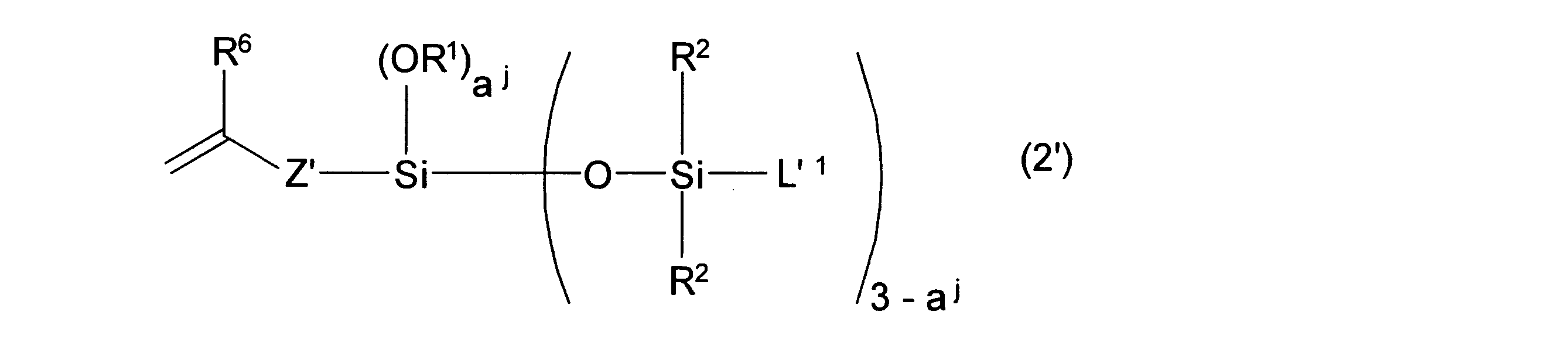
L´1は、炭素原子数1~6のアルキル基若しくはフェニル基、又は、j=1のときの下記一般式(2”);

R2は、炭素原子数1~6のアルキル基又はフェニル基であり、
Zは、二価有機基であり、
jは、Ljで示されるシリルアルキル基の階層を示し、該シリルアルキル基の繰り返し数である階層数がk’のとき1~k’の整数であり、階層数k’は1~10の整数であり、Lj+1はjがk’未満のときは該シリルアルキル基であり、j=k’のときはR2であり、
ajは、0~3の範囲の数である)で示されるシリルアルキル基であり、
Z´は、二価有機基であり、
R6は、水素原子又はメチル基である} - 前記(C)成分が下記(C1-1)~(C1-5)及び(C2-1)~(C2~2)
(C1-1) 一般式(5-1):
CH2=CH(CH2)xCH=CH2 (5-1)
(式中、1≦x≦20である)で表されるα,ω-ジエン、
(C1-2) 一般式(5-2):
CH≡C(CH2)xC≡CH (5-2)
(式中、1≦x≦20である)で表されるα,ω-ジイン、
(C1-3) 一般式(5-3):
CH2=CH(CH2)xC≡CH (5-3)
(式中、1≦x≦20である)で表されるα,ω-エン-イン、
(C1-4) 一般式(5-4):
CqH2q-1O(CnH2nO)yCqH2q-1 (5-4)
(式中、2≦q≦20、2≦n≦4、yはオキシエチレン単位、オキシプロピレン単位、オキシブチレン単位の繰返し数の合計値であり、1≦y≦180である)で表されるビスアルケニルポリエーテル化合物、
(C1-5) 平均組成式(5-5):
R7 cR8 dSiO(4-c-d)/2 (5-5)
(式中、R7は、互いに独立してもよいがR8とは異なる一価有機基を表し、
R3は、互いに独立して、炭素原子数2~30の一価の不飽和脂肪族炭化水素基を表し、1.0≦c≦2.5、及び、0.001≦d≦1.5である)で表される不飽和基含有シリコーン化合物、
(C2-1) 一般式 (5-6):

(C2-2) 一般式(5-7):
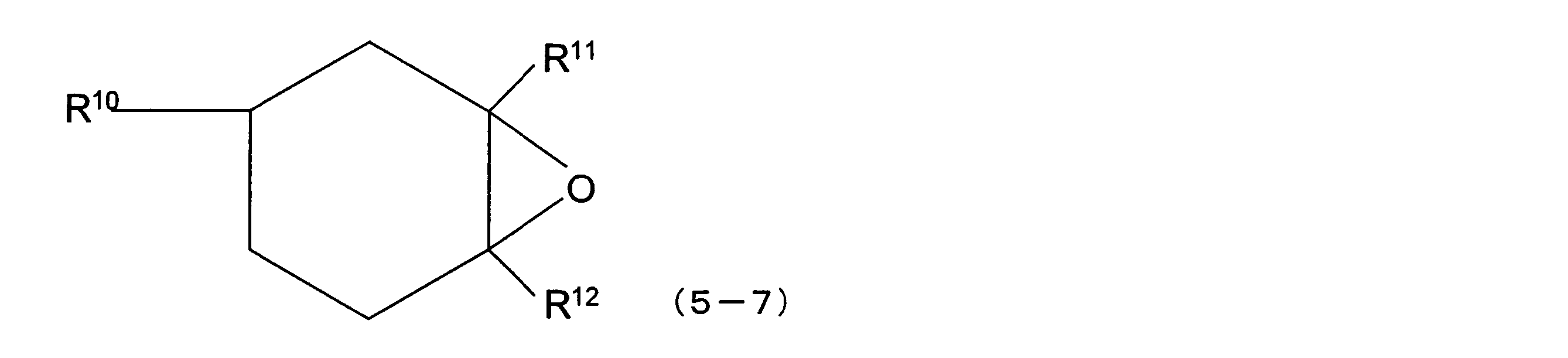
R11は、水素原子又はメチル基を表し、
R12は水素原子又はメチル基を表す)で表される、不飽和基含有脂環式エポキシ化合物
から選ばれる1種類以上の有機化合物である、請求項6乃至10のいずれかに記載のオルガノポリシロキサンエラストマー。 - 平均組成式(1)において、R5である一価有機基が、以下の(E1)~(E9)
(E1)炭素原子数1~60の、置換若しくは非置換の、直鎖状若しくは分岐状の一価炭化水素基、
(E2)-R13O(AO)zR14 (式中、AOは、炭素原子数2~4のオキシアルキレン基を表し、R13は、炭素原子数3~5の、置換若しくは非置換の、直鎖状若しくは分岐状の二価炭化水素基を表し、R14は、水素原子、炭素原子数1~24の、置換若しくは非置換の、直鎖状若しくは分岐状の一価炭化水素基、又は、炭素原子数2~24の、置換若しくは非置換の、直鎖状若しくは分岐状のアシル基を表し、z=1~100である)で表されるポリオキシアルキレン基、
(E3)炭素原子数1~30の、置換若しくは非置換の、直鎖状若しくは分岐状のアルコキシ基、
(E4)水酸基、
(E5)-R15-COOR16(式中、R15は、炭素原子数2~20の、置換若しくは非置換の、直鎖状若しくは分岐状の二価炭化水素基を表し、R16は、炭素原子数1~30の、置換若しくは非置換の、直鎖状若しくは分岐状の一価炭化水素基を表す)で表されるエステル基、
(E6)-R17-OCOR18(式中、R17は、炭素原子数2~20の、置換若しくは非置換の、直鎖状若しくは分岐状の二価炭化水素基を表し、R18は、炭素原子数1~30の、置換若しくは非置換の、直鎖状若しくは分岐状の一価炭化水素基を表す)で表されるエステル基
(E7)下記一般式(6)

(E8)下記一般式(7)

(E9)下記一般式(8)

から選ばれる、請求項9乃至11のいずれかに記載のオルガノポリシロキサンエラストマー。 - 粒子の形態である、請求項1乃至12のいずれかに記載のオルガノポリシロキサンエラストマー。
- 体積平均粒子径が20~1000μmの範囲内にある粒子の形態である、請求項13記載のオルガノポリシロキサンエラストマー。
- 自重以上の量の油剤を含んで膨潤しうる、請求項1乃至14のいずれかに記載のオルガノポリシロキサンエラストマー。
- 請求項1乃至15のいずれかに記載のオルガノポリシロキサンエラストマー、及び、少なくとも1種の油剤を含む組成物。
- ペーストの形態である、請求項16記載の組成物。
- 請求項1乃至15のいずれかに記載のオルガノポリシロキサンエラストマーを、機械力を用いて粉砕した後に、少なくとも1種の油剤と混合するか、前記オルガノポリシロキサンエラストマーと少なくとも1種の油剤との混合物を、機械力を用いて粉砕することにより得られる、請求項16又は17記載の組成物。
- 請求項1乃至15のいずれかに記載のオルガノポリシロキサンエラストマー又は請求項16乃至18のいずれかに記載の組成物に、1種類以上の酸性物質を加えて処理した後、加熱又は減圧によって揮発成分を除去してなる、オルガノポリシロキサンエラストマー又はその組成物。
- エマルジョン組成物である、請求項16乃至19のいずれかに記載の組成物。
- 請求項1乃至15及び19のいずれかに記載のオルガノポリシロキサンエラストマー又は請求項16乃至20のいずれかに記載の組成物を含有する外用剤用原料又は化粧料用原料。
- ゲル化剤、構造化剤、増粘剤、感触改良剤、保湿剤、マスキング剤、界面活性剤、乳化剤、又は、粉体の分散安定剤である、請求項21記載の外用剤用原料又は化粧料用原料。
- 請求項1乃至15及び19のいずれかに記載のオルガノポリシロキサンエラストマー又は請求項16乃至20のいずれかに記載の組成物を含有する外用剤又は化粧料。
- (A)オルガノハイドロジェンポリシロキサン、
(B)反応性不飽和基を1分子中に1つ有するシロキサンデンドロン、並びに、
(C)(C1)1分子中に平均で1より大きい数の反応性不飽和基を有する有機化合物、及び、(C2)1分子中に1以上の反応性不飽和基及び1以上のエポキシ基を有する有機化合物からなる群から選択される1種類以上の有機化合物
を少なくとも反応させる工程を含む、オルガノポリシロキサンエラストマーの製造方法。 - 反応の一部又は全部が、以下の(P-1)~(P-2)に示される群から選ばれる1以上の溶媒の存在下、又は、溶媒の不存在下で行われる、請求項24記載のオルガノポリシロキサンエラストマーの製造方法。
(P-1): 有機化合物
(P-2): ケイ素原子を含有する化合物 - (A)と(B)とを先に反応させ、しかる後に(C)を添加して架橋反応を行うことを特徴とすると共に、以下に示す任意成分(Q)を、(A)-(B)の反応前に(A)と反応させるか、(A)-(B)の反応後に更に反応させるか、(A)-(B)の反応時に同時に反応させるか、又は(C)による架橋後に更に反応させてもよい、請求項24又は25記載のオルガノポリシロキサンエラストマーの製造方法。
(Q): 1分子中に1の不飽和基を有する化合物(ただし、前記(C2)であるものを除く) - 架橋部を導く(A)と(C)との反応を先に行い、しかる後に(B)を添加して反応させることを特徴とすると共に、以下に示す任意成分(Q)を、(A)-(C)の反応前に(A)と反応させるか、(A)-(C)の反応後に更に反応させるか、又は(B)の反応後に更に反応させてもよい、請求項24又は25記載のオルガノポリシロキサンエラストマーの製造方法。
(Q): 1分子中に1の不飽和基を有する化合物(ただし、前記(C2)であるものを除く) - (A)オルガノハイドロジェンポリシロキサン、
(B)反応性不飽和基を1分子中に1つ有するシロキサンデンドロン、
(C)(C1)1分子中に平均で1より大きい数の反応性不飽和基を有する有機化合物、及び、(C2)1分子中に1以上の反応性不飽和基及び1以上のエポキシ基を有する有機化合物からなる群から選択される1種類以上の有機化合物{但し、下記(D)が1分子中に平均で1より大きい数の反応性不飽和基を有する場合には(C)は任意である}、並びに、
(D)反応性不飽和基及び上記構造式(3―1)~(3-4)で表される親水性単位から選択される少なくとも1種以上の親水性単位を含有してなる親水性基を有する親水性誘導体
を少なくとも反応させる工程を含む、オルガノポリシロキサンエラストマーの製造方法。 - 反応の一部又は全部が、以下の(P-1)~(P-2)に示される群から選ばれる1以上の溶媒の存在下、又は、溶媒の不存在下で行われる、請求項28に記載のオルガノポリシロキサンエラストマーの製造方法。
(P-1): 有機化合物
(P-2): ケイ素原子を含有する化合物 - (A)と(B)及び(D){但し、ここでの(D)は1分子中に1の反応性不飽和基を有するものに限る}を任意の順番で逐次的に反応させ、しかる後に(C)を添加して架橋反応を行うことを特徴とすると共に、以下に示す任意成分(Q)を、(A)-(B)の反応前又は(A)-(D)の反応前に(A)と反応させるか、(A)-(B)の反応後又は(A)-(D)の反応後に更に反応させるか、(A)-(B)の反応時又は(A)-(D)の反応時に同時に反応させるか、又は(C)による架橋後に更に反応させてもよい、請求項28又は29記載のオルガノポリシロキサンエラストマーの製造方法。
(Q): 1分子中に1の不飽和基を有する化合物(ただし、前記(C2)であるものを除く) - 架橋部を導く(A)と(C)との反応を先に行い、しかる後に、(B)及び(D){但し、ここでの(D)は1分子中に1の反応性不飽和基を有するものに限る}を任意の順番で添加して逐次的に反応させることを特徴とすると共に、以下に示す任意成分(Q)を、(A)-(C)の反応前に(A)と反応させるか、(A)-(C)の反応後に更に反応させるか、又は(B)及び(D)の反応後に更に反応させてもよい、請求項28又は29記載のオルガノポリシロキサンエラストマーの製造方法。
(Q): 1分子中に1の不飽和基を有する化合物(ただし、前記(C2)であるものを除く)
Priority Applications (4)
| Application Number | Priority Date | Filing Date | Title |
|---|---|---|---|
| EP12793968.4A EP2716688A4 (en) | 2011-05-30 | 2012-05-22 | NEW ORGANOPOLYSILOXANELASTOMER AND USE THEREOF |
| KR1020137034081A KR101889696B1 (ko) | 2011-05-30 | 2012-05-22 | 신규한 오르가노폴리실록산 엘라스토머 및 그 이용 |
| CN201280030360.5A CN103619916A (zh) | 2011-05-30 | 2012-05-22 | 新型有机聚硅氧烷弹性体及其应用 |
| US14/122,689 US9301913B2 (en) | 2011-05-30 | 2012-05-22 | Organo polysiloxane elastomer and use therefor |
Applications Claiming Priority (2)
| Application Number | Priority Date | Filing Date | Title |
|---|---|---|---|
| JP2011121097 | 2011-05-30 | ||
| JP2011-121097 | 2011-05-30 |
Publications (1)
| Publication Number | Publication Date |
|---|---|
| WO2012165228A1 true WO2012165228A1 (ja) | 2012-12-06 |
Family
ID=47259089
Family Applications (3)
| Application Number | Title | Priority Date | Filing Date |
|---|---|---|---|
| PCT/JP2012/063093 Ceased WO2012165237A1 (ja) | 2011-05-30 | 2012-05-22 | モノ-又はジ-グリセリン誘導体変性オルガノポリシロキサンエラストマー及びその利用 |
| PCT/JP2012/063074 Ceased WO2012165228A1 (ja) | 2011-05-30 | 2012-05-22 | 新規オルガノポリシロキサンエラストマー及びその利用 |
| PCT/JP2012/063089 Ceased WO2012165235A1 (ja) | 2011-05-30 | 2012-05-22 | 新規オルガノポリシロキサンエラストマー及びその利用 |
Family Applications Before (1)
| Application Number | Title | Priority Date | Filing Date |
|---|---|---|---|
| PCT/JP2012/063093 Ceased WO2012165237A1 (ja) | 2011-05-30 | 2012-05-22 | モノ-又はジ-グリセリン誘導体変性オルガノポリシロキサンエラストマー及びその利用 |
Family Applications After (1)
| Application Number | Title | Priority Date | Filing Date |
|---|---|---|---|
| PCT/JP2012/063089 Ceased WO2012165235A1 (ja) | 2011-05-30 | 2012-05-22 | 新規オルガノポリシロキサンエラストマー及びその利用 |
Country Status (6)
| Country | Link |
|---|---|
| US (3) | US9585832B2 (ja) |
| EP (3) | EP2716687A4 (ja) |
| JP (3) | JP6000640B2 (ja) |
| KR (3) | KR101864579B1 (ja) |
| CN (3) | CN103619915B (ja) |
| WO (3) | WO2012165237A1 (ja) |
Cited By (4)
| Publication number | Priority date | Publication date | Assignee | Title |
|---|---|---|---|---|
| CN104140684A (zh) * | 2013-05-09 | 2014-11-12 | 信越化学工业株式会社 | 硅酮弹性体粒子、含有该硅酮弹性体粒子的水分散液及其制造方法、以及化妆料 |
| KR20160021226A (ko) * | 2013-06-13 | 2016-02-24 | 다우 코닝 도레이 캄파니 리미티드 | 장쇄 탄화수소기 함유 다이글리세린 유도체 변성 실리콘 및 그 이용 |
| JPWO2014104258A1 (ja) * | 2012-12-28 | 2017-01-19 | 東レ・ダウコーニング株式会社 | 透明乃至半透明の液状のグリセリン誘導体変性シリコーン組成物の製造方法 |
| US9585832B2 (en) | 2011-05-30 | 2017-03-07 | Dow Corning Toray Co., Ltd. | Organopolysiloxane elastomer modified with mono-/diglycerin derivative, and use therefor |
Families Citing this family (47)
| Publication number | Priority date | Publication date | Assignee | Title |
|---|---|---|---|---|
| JP6369888B2 (ja) * | 2011-12-27 | 2018-08-08 | 東レ・ダウコーニング株式会社 | 新規液状オルガノポリシロキサン及びその利用 |
| JP6313540B2 (ja) * | 2011-12-27 | 2018-04-18 | 東レ・ダウコーニング株式会社 | ジグリセリン誘導体変性シリコーン、それを含有してなる油中水型エマルション用乳化剤、外用剤および化粧料 |
| JP6017910B2 (ja) * | 2012-09-28 | 2016-11-02 | 株式会社マンダム | デオドラント剤 |
| FR3007952B1 (fr) * | 2013-07-04 | 2015-07-24 | Oreal | Aerosol contenant un deodorant en emulsion equipe d'une tete de distribution creuse |
| FR3007951B1 (fr) * | 2013-07-04 | 2015-07-24 | Oreal | Aerosol deodorant anhydre equipe d'une tete de distribution creuse |
| CN106414557A (zh) * | 2014-04-21 | 2017-02-15 | 道康宁东丽株式会社 | 液态高纯度多元醇衍生物改性的有机硅或其组合物的制造方法 |
| JP5732165B1 (ja) * | 2014-05-14 | 2015-06-10 | 株式会社 資生堂 | うるおい補給用スティック状化粧料 |
| JP5817085B1 (ja) * | 2015-01-09 | 2015-11-18 | 学校法人神奈川大学 | 染毛剤組成物 |
| JP6387885B2 (ja) * | 2015-04-06 | 2018-09-12 | 信越化学工業株式会社 | 剥離紙又は剥離フィルム用オルガノポリシロキサンエマルション組成物及びその製造方法、並びに剥離紙及び剥離フィルム |
| CN104825346A (zh) * | 2015-05-04 | 2015-08-12 | 上海彤颜实业有限公司 | 一种含硅树脂的油包水bb霜 |
| KR101771140B1 (ko) | 2015-10-29 | 2017-08-24 | 충남대학교산학협력단 | 자외선 경화형 코팅 조성물 및 이를 포함하는 고경도 코팅막 |
| GB201603566D0 (en) | 2016-03-01 | 2016-04-13 | Mips Ab | Helmet |
| US10470513B2 (en) | 2016-03-01 | 2019-11-12 | Mips Ab | Helmet |
| JP6058201B2 (ja) * | 2016-09-28 | 2017-01-11 | 株式会社マンダム | デオドラント剤 |
| JP6359601B2 (ja) * | 2016-09-28 | 2018-07-18 | 株式会社マンダム | デオドラント剤 |
| JP6058200B2 (ja) * | 2016-09-28 | 2017-01-11 | 株式会社マンダム | デオドラント剤 |
| KR102003982B1 (ko) * | 2016-10-04 | 2019-07-25 | (주)셀트리온 | 금속산화물을 포함하는 유중폴리올 제형의 화장료 조성물 |
| WO2018216672A1 (ja) * | 2017-05-23 | 2018-11-29 | 味の素株式会社 | 組成物 |
| CN107459044B (zh) * | 2017-07-25 | 2018-08-10 | 佛山市南海大田化学有限公司 | 一种用于白炭黑的处理剂及其制备方法 |
| CN107653702B (zh) * | 2017-11-14 | 2019-04-09 | 广州市矽博化工科技有限公司 | 有机硅合成革及其制备方法 |
| WO2019099047A1 (en) * | 2017-11-20 | 2019-05-23 | Wacker Chemie Ag | Silicone elastomer gels incorporating natural oils |
| CN111372974A (zh) * | 2017-12-20 | 2020-07-03 | 陶氏东丽株式会社 | 硅酮树脂包覆硅酮弹性体粒子及有机树脂添加剂等用途 |
| EP3732229A4 (en) * | 2017-12-30 | 2021-12-29 | Saint-Gobain Performance Plastics Corporation | Heterochain polymer composition |
| US11495776B2 (en) * | 2018-04-16 | 2022-11-08 | Shin-Etsu Chemical Co., Ltd. | Transparent desiccant for organic EL, and method for using same |
| CN112165928A (zh) * | 2018-05-29 | 2021-01-01 | 株式会社资生堂 | 温感化妆品 |
| KR101989749B1 (ko) * | 2018-09-05 | 2019-06-14 | 주식회사 코디 | 유수분 흡수 및 악취 제거 기능을 가지는 화장품 조성물 |
| US10632066B1 (en) | 2019-02-01 | 2020-04-28 | The Population Council, Inc. | Method of providing birth control |
| US11603435B2 (en) | 2019-02-18 | 2023-03-14 | Dow Silicones Corporation | Hydrophilic polysiloxane elastomer |
| CN110028793B (zh) * | 2019-04-19 | 2020-08-18 | 浙江新安化工集团股份有限公司 | 一种有机硅弹性体、其制备方法及包含其的有机硅弹性体凝胶 |
| US10918649B2 (en) * | 2019-06-21 | 2021-02-16 | The Population Council, Inc. | System for providing birth control |
| US11529308B2 (en) | 2019-06-21 | 2022-12-20 | The Population Council, Inc. | System for providing birth control |
| JP2021024785A (ja) * | 2019-07-31 | 2021-02-22 | エア・ウォーター・ゾル株式会社 | 油中水型乳化組成物 |
| JP7628080B2 (ja) * | 2019-09-05 | 2025-02-07 | 株式会社 資生堂 | 油中水型組成物 |
| KR102832934B1 (ko) * | 2019-11-14 | 2025-07-10 | 카오카부시키가이샤 | 유중수형 유화 화장료 |
| CN110946714B (zh) * | 2019-12-09 | 2021-06-15 | 福建恒安集团有限公司 | 一种添加乳木果油的一次性吸收用品的制备方法 |
| FR3104958B1 (fr) * | 2019-12-19 | 2025-03-07 | Lvmh Rech | Fond de Teint ultra-haute tenue |
| TWI859401B (zh) * | 2020-01-27 | 2024-10-21 | 新加坡商科萊博新加坡私人有限公司 | 光化可交聯的聚矽氧烷-聚甘油嵌段共聚物及其製造和使用方法 |
| FR3112484B1 (fr) * | 2020-07-17 | 2023-10-20 | Lvmh Rech | Composition cosmétique de maquillage pour les lèvres |
| JP7448169B2 (ja) * | 2020-08-07 | 2024-03-12 | 大東化成工業株式会社 | 化粧料用粉末材料の製造方法 |
| JP7778337B2 (ja) * | 2020-12-25 | 2025-12-02 | 株式会社希松 | 水中油滴型乳化物 |
| CN114381130B (zh) * | 2021-04-16 | 2023-04-28 | 南京聚隆科技股份有限公司 | 一种环保型低硬度高回弹的热塑性弹性体及其制备方法 |
| CN113789610B (zh) * | 2021-09-13 | 2022-09-23 | 山东贝润防水材料有限公司 | 一种高增韧聚酯胎及其制备方法 |
| US12201715B2 (en) | 2022-08-17 | 2025-01-21 | Momentive Performance Materials Inc. | Personal care composition containing spherical silicone elastomer fine particles |
| JP2024103074A (ja) * | 2023-01-20 | 2024-08-01 | 株式会社ナリス化粧品 | 水中油型日焼け止め化粧料 |
| CN116478407B (zh) * | 2023-04-27 | 2024-04-12 | 重庆工商大学 | 一种聚硅酯弹性体及其制备方法和应用 |
| KR102727930B1 (ko) * | 2024-02-20 | 2024-11-11 | 한국콜마주식회사 | 수용성 성분을 안정하게 담지하는 실리콘 엘라스토머 겔을 이용한 유분산 화장료 조성물 |
| WO2026079856A1 (ko) * | 2024-10-08 | 2026-04-16 | 주식회사 케이씨씨실리콘 | 실리카 혼합 실리콘 엘라스토머 페이스트 조성물의 제조 방법 및 실리카 혼합 실리콘 엘라스토머 페이스트 조성물 |
Citations (4)
| Publication number | Priority date | Publication date | Assignee | Title |
|---|---|---|---|---|
| JP2007504312A (ja) * | 2003-09-04 | 2007-03-01 | スリーエム イーエスピーイー アーゲー | アリルシラン含有組成物 |
| JP2008115358A (ja) * | 2007-06-18 | 2008-05-22 | Shin Etsu Chem Co Ltd | オルガノポリシロキサン及びその製法ならびに該オルガノポリシロキサンを含む化粧料組成物 |
| WO2011049248A1 (ja) * | 2009-10-23 | 2011-04-28 | 東レ・ダウコーニング株式会社 | 新規な共変性オルガノポリシロキサン |
| WO2011049246A1 (ja) * | 2009-10-23 | 2011-04-28 | 東レ・ダウコーニング株式会社 | 新規オルガノポリシロキサン共重合体 |
Family Cites Families (93)
| Publication number | Priority date | Publication date | Assignee | Title |
|---|---|---|---|---|
| JPS5541210B2 (ja) | 1974-01-29 | 1980-10-22 | ||
| US4222952A (en) | 1979-06-25 | 1980-09-16 | Union Carbide Corporation | Siloxane bond rearrangement effected by solid perfluorinated polymers containing pendant sulfonic acid groups |
| JPS6018525A (ja) | 1983-07-11 | 1985-01-30 | Toshiba Silicone Co Ltd | ポリオルガノシロキサンの着臭防止方法 |
| JPS6268820A (ja) | 1985-09-19 | 1987-03-28 | Kao Corp | 糖残基を含有するオルガノポリシロキサンの製造法 |
| JPS63139106A (ja) | 1986-12-02 | 1988-06-10 | Kao Corp | 化粧料 |
| JPH0790126B2 (ja) | 1987-04-01 | 1995-10-04 | サンド株式会社 | 消泡剤 |
| US4853474A (en) | 1987-07-08 | 1989-08-01 | Dow Corning Corporation | Cross-linked organopolysiloxanes and emulsions based thereon |
| JP2582275B2 (ja) | 1987-10-15 | 1997-02-19 | 株式会社コーセー | シリコーンゲル組成物並びにこれを含有する化粧料 |
| FR2622201B1 (fr) * | 1987-10-23 | 1990-03-23 | Essilor Int | Elastomere de silicones mouillable convenant a la fabrication de lentilles de contact |
| JPH0655897B2 (ja) | 1988-04-22 | 1994-07-27 | 信越化学工業株式会社 | シリコーン組成物の製造方法 |
| GB8902179D0 (en) | 1989-02-01 | 1989-03-22 | Dow Corning | Conditioning compositions |
| US5136068A (en) | 1989-04-26 | 1992-08-04 | Dow Corning Corporation | Cross-linked organopolysiloxanes and emulsions based thereon |
| JPH0791389B2 (ja) | 1989-05-17 | 1995-10-04 | 信越化学工業株式会社 | 精製されたポリエーテルシリコーン及びその製造方法 |
| JP2631772B2 (ja) | 1991-02-27 | 1997-07-16 | 信越化学工業株式会社 | 新規なシリコーン重合体及びそれを用いた水分散能を有するペースト状シリコーン組成物 |
| DE4116419C1 (ja) | 1991-05-18 | 1992-08-06 | Th. Goldschmidt Ag, 4300 Essen, De | |
| US5387417A (en) * | 1991-08-22 | 1995-02-07 | Dow Corning Corporation | Non-greasy petrolatum emulsion |
| JPH0818179B2 (ja) | 1991-10-08 | 1996-02-28 | ハイメカ株式会社 | リ−ドフレ−ムのダムバリ除去方法および除去装置 |
| JP3242156B2 (ja) | 1992-07-16 | 2001-12-25 | 株式会社コーセー | 油中水型化粧料 |
| JP3242155B2 (ja) | 1992-07-16 | 2001-12-25 | 株式会社コーセー | 油中水型化粧料 |
| JPH05140320A (ja) | 1991-11-21 | 1993-06-08 | Shin Etsu Chem Co Ltd | シリコ−ン重合体およびペ−スト状シリコ−ン組成物 |
| JP3172787B2 (ja) | 1992-01-14 | 2001-06-04 | 日本精化株式会社 | 糖残基を有するオルガノシロキサン誘導体およびその製造方法 |
| JPH0741417A (ja) | 1993-07-28 | 1995-02-10 | Shiseido Co Ltd | 毛髪処理用組成物 |
| US5397367A (en) | 1993-11-19 | 1995-03-14 | Dow Corning Corporation | Middle distillate hydrocarbon foam control agents from cross-linked organopolysiloxane-polyoxyalkyenes |
| JP3428709B2 (ja) | 1993-12-28 | 2003-07-22 | ダウ コーニング アジア株式会社 | シリコーン消泡剤組成物 |
| DE4411079A1 (de) | 1994-03-30 | 1995-10-05 | Bayer Ag | Neuartige Copolymere auf verzweigter Polysiloxan-Polyether-Basis, ein Verfahren zu ihrer Herstellung und ihre Verwendung |
| JPH07330907A (ja) | 1994-04-12 | 1995-12-19 | Nippon Unicar Co Ltd | 精製されたポリエーテル変性ポリシロキサン組成物およびその製造法 |
| JP2587797B2 (ja) * | 1994-12-21 | 1997-03-05 | 花王株式会社 | 化粧料 |
| JP3513682B2 (ja) | 1995-09-08 | 2004-03-31 | 株式会社コーセー | 油性化粧料 |
| JP2995154B2 (ja) | 1995-10-09 | 1999-12-27 | 日本ユニカー株式会社 | 精製されたポリエーテル変性ポリシロキサン組成物を含有する皮膚化粧料 |
| JP2999959B2 (ja) | 1995-10-12 | 2000-01-17 | 日本ユニカー株式会社 | 精製されたポリエーテル変性ポリシロキサン組成物を含有する毛髪化粧料 |
| US5654362A (en) | 1996-03-20 | 1997-08-05 | Dow Corning Corporation | Silicone oils and solvents thickened by silicone elastomers |
| US5811487A (en) | 1996-12-16 | 1998-09-22 | Dow Corning Corporation | Thickening silicones with elastomeric silicone polyethers |
| DE19711314A1 (de) | 1997-03-18 | 1998-09-24 | Wacker Chemie Gmbh | Lagerstabile, permanent wasserbenetzbare Vulkanisate ergebende Polysiloxanmasse |
| JPH10316536A (ja) | 1997-05-19 | 1998-12-02 | Kose Corp | 改質粉体及びそれを配合した化粧料 |
| US5889108A (en) | 1997-06-02 | 1999-03-30 | Dow Corning Corporation | Thickening solvents with elastomeric silicone polyethers |
| US6051216A (en) | 1997-08-01 | 2000-04-18 | Colgate-Palmolive Company | Cosmetic composition containing siloxane based polyamides as thickening agents |
| JP4383555B2 (ja) * | 1998-05-29 | 2009-12-16 | 東レ・ダウコーニング株式会社 | カルボシロキサンデンドリマー |
| JP4009382B2 (ja) | 1998-06-12 | 2007-11-14 | 東レ・ダウコーニング株式会社 | 化粧品原料、化粧品および化粧品の製造方法 |
| US5981680A (en) | 1998-07-13 | 1999-11-09 | Dow Corning Corporation | Method of making siloxane-based polyamides |
| FR2784108A1 (fr) | 1998-09-11 | 2000-04-07 | Inst Francais Du Petrole | Nouveaux polymeres reticules a base de derives bis-silanes, bis-thioethers, bis-sulfoxydes, bis-sulfones et butane di-yl de polysaccharides et d'oligosaccharides, et leur mise en forme en materiaux supports |
| US6200581B1 (en) | 1999-04-28 | 2001-03-13 | Dow Corning Corporation | Elastomeric silicone terpolymer |
| US6238657B1 (en) | 1999-07-12 | 2001-05-29 | Dow Corning Corporation | Oil-in-oil and three-phase emulsions |
| DE19936289A1 (de) | 1999-08-02 | 2001-02-15 | Wacker Chemie Gmbh | Entschäumerformulierung |
| WO2001014458A1 (en) | 1999-08-25 | 2001-03-01 | General Electric Company | Polar solvent compatible polyethersiloxane elastomers |
| US6080394A (en) | 1999-11-08 | 2000-06-27 | Dow Corning Corporation | Polar solvent-in-oil emulsions and multiple emulsions |
| US6221979B1 (en) | 1999-11-08 | 2001-04-24 | Dow Corning Corporation | Mixtures of silicone elastomers |
| FR2806733B1 (fr) * | 2000-03-21 | 2002-05-10 | Oreal | Composition sous forme d'emulsion eau-dans-huile et ses utilisations cosmetiques |
| JP4768902B2 (ja) | 2000-04-17 | 2011-09-07 | 東レ・ダウコーニング株式会社 | オルガノポリシロキサン組成物およびその製造方法 |
| EP1164171A3 (en) | 2000-06-12 | 2002-04-24 | General Electric Company | Silicone compositions |
| JP2002119840A (ja) | 2000-10-16 | 2002-04-23 | Asahi Kasei Corp | 有機ケイ素系界面活性剤 |
| JP3976226B2 (ja) | 2000-12-08 | 2007-09-12 | 信越化学工業株式会社 | 多価アルコール変性シリコーン及びそれを含有する化粧料 |
| US7001971B2 (en) | 2000-12-08 | 2006-02-21 | Shin-Etsu Chemical Co., Ltd. | Polyhydric alcohol-modified silicone and cosmetic material containing same |
| US6784271B2 (en) | 2001-01-10 | 2004-08-31 | Shin-Etsu Chemical Co., Ltd. | Odorless modified silicone compound, cosmetic preparation containing the same, and method of purifying modified silicone compound having branch polymer comprising hydrophilic group |
| DE60211532T2 (de) | 2001-09-04 | 2007-05-10 | Shin-Etsu Chemical Co., Ltd. | Pastöse zusammensetzung und diese enthaltende kosmetika |
| JP4043764B2 (ja) | 2001-11-13 | 2008-02-06 | 東レ・ダウコーニング株式会社 | 糖残基を有するオルガノポリカルボシロキサンおよびその製造方法 |
| DE10163281A1 (de) * | 2001-12-21 | 2003-07-03 | Cognis Deutschland Gmbh | Wasch- und reinigungsaktive Zubereitungen, enthaltend feste granuläre nichtion ische Tenside |
| EP1499661B1 (en) | 2002-05-01 | 2007-05-30 | Dow Corning Corporation | Organohydrogensilicon compounds |
| AU2003231175A1 (en) | 2002-05-01 | 2003-11-17 | Dow Corning Corporation | Compositions having improved bath life |
| KR101018568B1 (ko) * | 2002-09-12 | 2011-03-03 | 신에쓰 가가꾸 고교 가부시끼가이샤 | 신규 오가노폴리실록산 중합물, 페이스트상 조성물 및 이조성물을 이용한 화장료 |
| JP2004169015A (ja) * | 2002-11-01 | 2004-06-17 | Shin Etsu Chem Co Ltd | 粉体組成物及び油中粉体分散物.並びにそれらを有する化粧料 |
| WO2004046226A1 (ja) | 2002-11-18 | 2004-06-03 | Nippon Unicar Company Limited | 無臭化ポリエーテル変性ポリシロキサン組成物、その製造方法、及びそれを含有する化粧料 |
| DE10255649A1 (de) | 2002-11-28 | 2004-06-17 | Wacker-Chemie Gmbh | Entschäumerformulierungen |
| US7432338B2 (en) | 2002-12-20 | 2008-10-07 | Dow Corning Corporation | Branched polymers from organohydrogensilicon compounds |
| ATE396220T1 (de) | 2002-12-20 | 2008-06-15 | Dow Corning | Verzweigte polymere aus organohydrogensilicon- zusammensetzungen |
| JP4548703B2 (ja) | 2003-10-20 | 2010-09-22 | 東レ・ダウコーニング株式会社 | ポリエーテル変性ポリシロキサン組成物およびその製造方法、並びにポリエーテル変性ポリシロキサン組成物中のカルボニル総量の測定方法 |
| CN100532432C (zh) | 2004-04-12 | 2009-08-26 | 陶氏康宁公司 | 倍半硅氧烷树脂蜡 |
| EP1833918B1 (en) | 2004-12-23 | 2011-09-28 | Dow Corning Corporation | Crosslinkable saccharide-siloxane compositions, and networks, coatings and articles formed therefrom |
| WO2006090478A1 (ja) | 2005-02-22 | 2006-08-31 | Dow Corning Toray Co., Ltd. | ポリエーテル変性ポリシロキサン組成物およびその製造方法、並びにポリエーテル変性ポリシロキサン組成物中のカルボニル総量の測定方法 |
| DE102005025450A1 (de) | 2005-06-02 | 2006-12-07 | Wacker Chemie Ag | Entschäumerformulierungen |
| JP2007126359A (ja) | 2005-10-31 | 2007-05-24 | Dow Corning Toray Co Ltd | 皮膚化粧料 |
| US7863361B2 (en) | 2005-11-15 | 2011-01-04 | Momentive Performance Materials Inc. | Swollen silicone composition, process of producing same and products thereof |
| JP5424866B2 (ja) | 2006-03-21 | 2014-02-26 | ダウ・コーニング・コーポレイション | シリコーンポリエーテルエラストマーゲル |
| US7960465B2 (en) * | 2006-06-30 | 2011-06-14 | Johnson & Johnson Vision Care, Inc. | Antimicrobial lenses, processes to prepare them and methods of their use |
| US8288498B2 (en) | 2007-03-30 | 2012-10-16 | Nof Corporation | Sugar-alcohol-modified organopolysiloxane compound and processes for producing the same |
| US20100330011A1 (en) | 2007-06-29 | 2010-12-30 | John Joseph Kennan | Silicone-Organic Gels with Polyalkyloxylene Crosslinked Silicone Elastomers |
| US7723456B2 (en) | 2007-12-27 | 2010-05-25 | Surfatech Corporation | Crosslinked silicone polymers based upon spider esters |
| US8691248B2 (en) | 2008-03-11 | 2014-04-08 | Mary Kay Inc. | Stable three-phased emulsions |
| JP5402063B2 (ja) | 2008-03-13 | 2014-01-29 | 信越化学工業株式会社 | 化粧料 |
| JP5551341B2 (ja) | 2008-03-19 | 2014-07-16 | 東レ・ダウコーニング株式会社 | 水中油型オルガノポリシロキサンエマルジョン組成物、それからなる化粧料原料およびそれを用いた頭髪化粧料の製造方法 |
| JP5428056B2 (ja) | 2008-04-25 | 2014-02-26 | サンノプコ株式会社 | 界面活性剤 |
| JP5368068B2 (ja) | 2008-11-21 | 2013-12-18 | 花王株式会社 | 油中水型乳化組成物 |
| JP5583906B2 (ja) | 2008-12-22 | 2014-09-03 | 東レ・ダウコーニング株式会社 | 部分炭化水素基封鎖(ポリ)グリセロール変性ポリシロキサン、その製造方法、及び、当該ポリシロキサンを含む化粧料 |
| JP2011049248A (ja) | 2009-08-25 | 2011-03-10 | Oki Semiconductor Co Ltd | エッチング検査方法 |
| WO2011028765A1 (en) | 2009-09-03 | 2011-03-10 | Dow Corning Corporation | Personal care compositions with pituitous silicone fluids |
| KR20120059599A (ko) | 2009-09-03 | 2012-06-08 | 다우 코닝 코포레이션 | 점액성 실리콘 유체 |
| CN102648264B (zh) | 2009-10-23 | 2015-08-19 | 道康宁东丽株式会社 | 用于基于油的原料的增稠剂或胶凝剂 |
| JP5316888B2 (ja) | 2009-12-11 | 2013-10-16 | 新東工業株式会社 | 鋳型砂中の有害物質の処理方法および処理システム |
| JP5282728B2 (ja) | 2009-12-11 | 2013-09-04 | 新日鐵住金株式会社 | 潤滑用ガラス成形材、および熱間押出製管用ビレットの製造方法 |
| CN102906161B (zh) | 2010-04-30 | 2014-10-22 | 道康宁东丽株式会社 | 有机聚硅氧烷、包含有机聚硅氧烷的表面活性剂、乳液组合物、粉末处理剂、油基原料的增稠剂、胶凝剂、凝胶组合物和化妆品原料、以及包含它们的外用配制品和化妆品 |
| JP5541210B2 (ja) | 2011-03-29 | 2014-07-09 | 株式会社デンソー | 電力分配装置 |
| JP5756344B2 (ja) * | 2011-05-30 | 2015-07-29 | 東レ・ダウコーニング株式会社 | 新規液状オルガノポリシロキサン及びその利用 |
| KR101864579B1 (ko) | 2011-05-30 | 2018-06-07 | 다우 코닝 도레이 캄파니 리미티드 | 모노- 또는 디-글리세린 유도체 변성 오르가노폴리실록산 엘라스토머 및 그 이용 |
| JP6369888B2 (ja) * | 2011-12-27 | 2018-08-08 | 東レ・ダウコーニング株式会社 | 新規液状オルガノポリシロキサン及びその利用 |
-
2012
- 2012-05-22 KR KR1020137034078A patent/KR101864579B1/ko not_active Expired - Fee Related
- 2012-05-22 WO PCT/JP2012/063093 patent/WO2012165237A1/ja not_active Ceased
- 2012-05-22 EP EP12793365.3A patent/EP2716687A4/en not_active Withdrawn
- 2012-05-22 US US14/122,692 patent/US9585832B2/en not_active Expired - Fee Related
- 2012-05-22 US US14/122,688 patent/US20140193353A1/en not_active Abandoned
- 2012-05-22 JP JP2012116560A patent/JP6000640B2/ja active Active
- 2012-05-22 JP JP2012116561A patent/JP6043091B2/ja not_active Expired - Fee Related
- 2012-05-22 WO PCT/JP2012/063074 patent/WO2012165228A1/ja not_active Ceased
- 2012-05-22 CN CN201280030131.3A patent/CN103619915B/zh not_active Expired - Fee Related
- 2012-05-22 WO PCT/JP2012/063089 patent/WO2012165235A1/ja not_active Ceased
- 2012-05-22 CN CN201280030388.9A patent/CN103619914B/zh not_active Expired - Fee Related
- 2012-05-22 CN CN201280030360.5A patent/CN103619916A/zh active Pending
- 2012-05-22 EP EP12793193.9A patent/EP2716686A4/en not_active Withdrawn
- 2012-05-22 US US14/122,689 patent/US9301913B2/en active Active
- 2012-05-22 JP JP2012116562A patent/JP5952640B2/ja not_active Expired - Fee Related
- 2012-05-22 KR KR1020137034080A patent/KR20140035432A/ko not_active Withdrawn
- 2012-05-22 KR KR1020137034081A patent/KR101889696B1/ko active Active
- 2012-05-22 EP EP12793968.4A patent/EP2716688A4/en active Pending
Patent Citations (4)
| Publication number | Priority date | Publication date | Assignee | Title |
|---|---|---|---|---|
| JP2007504312A (ja) * | 2003-09-04 | 2007-03-01 | スリーエム イーエスピーイー アーゲー | アリルシラン含有組成物 |
| JP2008115358A (ja) * | 2007-06-18 | 2008-05-22 | Shin Etsu Chem Co Ltd | オルガノポリシロキサン及びその製法ならびに該オルガノポリシロキサンを含む化粧料組成物 |
| WO2011049248A1 (ja) * | 2009-10-23 | 2011-04-28 | 東レ・ダウコーニング株式会社 | 新規な共変性オルガノポリシロキサン |
| WO2011049246A1 (ja) * | 2009-10-23 | 2011-04-28 | 東レ・ダウコーニング株式会社 | 新規オルガノポリシロキサン共重合体 |
Non-Patent Citations (1)
| Title |
|---|
| See also references of EP2716688A4 * |
Cited By (13)
| Publication number | Priority date | Publication date | Assignee | Title |
|---|---|---|---|---|
| US9585832B2 (en) | 2011-05-30 | 2017-03-07 | Dow Corning Toray Co., Ltd. | Organopolysiloxane elastomer modified with mono-/diglycerin derivative, and use therefor |
| JPWO2014104258A1 (ja) * | 2012-12-28 | 2017-01-19 | 東レ・ダウコーニング株式会社 | 透明乃至半透明の液状のグリセリン誘導体変性シリコーン組成物の製造方法 |
| US10406092B2 (en) | 2012-12-28 | 2019-09-10 | Dow Silicones Corporation | Method for producing transparent or semi-transparent liquid glycerin-derivative-modified silicone composition |
| CN104140684B (zh) * | 2013-05-09 | 2018-07-03 | 信越化学工业株式会社 | 硅酮弹性体粒子、含有该硅酮弹性体粒子的水分散液及其制造方法、以及化妆料 |
| CN104140684A (zh) * | 2013-05-09 | 2014-11-12 | 信越化学工业株式会社 | 硅酮弹性体粒子、含有该硅酮弹性体粒子的水分散液及其制造方法、以及化妆料 |
| US20160177038A1 (en) * | 2013-06-13 | 2016-06-23 | Dow Corning Toray Co., Ltd. | Silicone modified by long-chain hydrocarbon group-containing diglycerin derivative, and use thereof |
| JPWO2014200111A1 (ja) * | 2013-06-13 | 2017-02-23 | 東レ・ダウコーニング株式会社 | 長鎖炭化水素基含有ジグリセリン誘導体変性シリコーン及びその利用 |
| EP3009466A4 (en) * | 2013-06-13 | 2016-12-14 | Dow Corning Toray Co Ltd | SILICONE MODIFIED BY A DIGLYCERINE DERIVATIVE WITH A LOW-CHAINED HYDROCARBON GROUP AND USE THEREOF |
| US9783643B2 (en) * | 2013-06-13 | 2017-10-10 | Dow Corning Toray Co., Ltd. | Silicone modified by long-chain hydrocarbon group-containing diglycerin derivative, and use thereof |
| CN105452342A (zh) * | 2013-06-13 | 2016-03-30 | 道康宁东丽株式会社 | 含长链烃基的双甘油衍生物改性有机硅及其应用 |
| CN105452342B (zh) * | 2013-06-13 | 2018-10-12 | 道康宁东丽株式会社 | 含长链烃基的双甘油衍生物改性有机硅及其应用 |
| KR20160021226A (ko) * | 2013-06-13 | 2016-02-24 | 다우 코닝 도레이 캄파니 리미티드 | 장쇄 탄화수소기 함유 다이글리세린 유도체 변성 실리콘 및 그 이용 |
| KR102270897B1 (ko) * | 2013-06-13 | 2021-07-01 | 듀폰 도레이 스페셜티 머티리얼즈 가부시키가이샤 | 장쇄 탄화수소기 함유 다이글리세린 유도체 변성 실리콘 및 그 이용 |
Also Published As
| Publication number | Publication date |
|---|---|
| EP2716687A4 (en) | 2015-02-25 |
| KR101889696B1 (ko) | 2018-08-21 |
| EP2716688A1 (en) | 2014-04-09 |
| KR20140035432A (ko) | 2014-03-21 |
| WO2012165235A1 (ja) | 2012-12-06 |
| US9585832B2 (en) | 2017-03-07 |
| KR20140035430A (ko) | 2014-03-21 |
| CN103619916A (zh) | 2014-03-05 |
| EP2716686A1 (en) | 2014-04-09 |
| WO2012165237A1 (ja) | 2012-12-06 |
| CN103619914B (zh) | 2016-09-07 |
| KR20140035433A (ko) | 2014-03-21 |
| JP6043091B2 (ja) | 2016-12-14 |
| JP5952640B2 (ja) | 2016-07-13 |
| CN103619915A (zh) | 2014-03-05 |
| JP2013010935A (ja) | 2013-01-17 |
| US20140161758A1 (en) | 2014-06-12 |
| EP2716687A1 (en) | 2014-04-09 |
| US9301913B2 (en) | 2016-04-05 |
| US20140194532A1 (en) | 2014-07-10 |
| KR101864579B1 (ko) | 2018-06-07 |
| CN103619915B (zh) | 2015-12-23 |
| JP2013010744A (ja) | 2013-01-17 |
| EP2716686A4 (en) | 2015-02-25 |
| US20140193353A1 (en) | 2014-07-10 |
| EP2716688A4 (en) | 2014-10-29 |
| JP2013010934A (ja) | 2013-01-17 |
| CN103619914A (zh) | 2014-03-05 |
| JP6000640B2 (ja) | 2016-10-05 |
Similar Documents
| Publication | Publication Date | Title |
|---|---|---|
| KR101889696B1 (ko) | 신규한 오르가노폴리실록산 엘라스토머 및 그 이용 | |
| JP6313540B2 (ja) | ジグリセリン誘導体変性シリコーン、それを含有してなる油中水型エマルション用乳化剤、外用剤および化粧料 | |
| JP6105920B2 (ja) | 共変性オルガノポリシロキサン、それを含有してなる油中水型エマルション用乳化剤、外用剤および化粧料 | |
| JP6355224B2 (ja) | 低臭性グリセリン誘導体変性シリコーンまたはそれを含む組成物の製造方法 | |
| JP6566476B2 (ja) | 長鎖炭化水素基含有ジグリセリン誘導体変性シリコーン及びその利用 | |
| CN101808611A (zh) | 来自有机基聚硅氧烷树脂的硅氧烷有机弹性体凝胶 | |
| JP2013151660A (ja) | 新規液状オルガノポリシロキサン及びその利用 | |
| KR20190003601A (ko) | 신규 오가노폴리실록산 또는 그의 산 중화 염, 및 그것들의 용도 | |
| JP6436480B2 (ja) | 高純度有機ケイ素化合物の製造方法 | |
| JP6392669B2 (ja) | 透明乃至半透明の液状のグリセリン誘導体変性シリコーン組成物の製造方法 | |
| CN105189430B (zh) | 高纯度含单烯基甘油衍生物及其制造方法 | |
| JP2014129476A (ja) | 透明乃至半透明の液状のグリセリン誘導体変性架橋シリコーン組成物の製造方法 | |
| WO2015162907A1 (ja) | 透明乃至半透明の液状の糖誘導体変性シリコーン組成物の製造方法 |
Legal Events
| Date | Code | Title | Description |
|---|---|---|---|
| 121 | Ep: the epo has been informed by wipo that ep was designated in this application |
Ref document number: 12793968 Country of ref document: EP Kind code of ref document: A1 |
|
| NENP | Non-entry into the national phase |
Ref country code: DE |
|
| ENP | Entry into the national phase |
Ref document number: 20137034081 Country of ref document: KR Kind code of ref document: A |
|
| WWE | Wipo information: entry into national phase |
Ref document number: 14122689 Country of ref document: US |