WO2012165468A1 - Procédé de préparation d'une composition cristalline liquide contenant un composé lipophile à une concentration élevée, et composition cristalline liquide préparée par ledit procédé - Google Patents
Procédé de préparation d'une composition cristalline liquide contenant un composé lipophile à une concentration élevée, et composition cristalline liquide préparée par ledit procédé Download PDFInfo
- Publication number
- WO2012165468A1 WO2012165468A1 PCT/JP2012/063903 JP2012063903W WO2012165468A1 WO 2012165468 A1 WO2012165468 A1 WO 2012165468A1 JP 2012063903 W JP2012063903 W JP 2012063903W WO 2012165468 A1 WO2012165468 A1 WO 2012165468A1
- Authority
- WO
- WIPO (PCT)
- Prior art keywords
- lipophilic compound
- liquid crystal
- group
- fatty acid
- acid
- Prior art date
- Legal status (The legal status is an assumption and is not a legal conclusion. Google has not performed a legal analysis and makes no representation as to the accuracy of the status listed.)
- Ceased
Links
Images
Classifications
-
- A—HUMAN NECESSITIES
- A61—MEDICAL OR VETERINARY SCIENCE; HYGIENE
- A61K—PREPARATIONS FOR MEDICAL, DENTAL OR TOILETRY PURPOSES
- A61K8/00—Cosmetics or similar toiletry preparations
- A61K8/18—Cosmetics or similar toiletry preparations characterised by the composition
- A61K8/30—Cosmetics or similar toiletry preparations characterised by the composition containing organic compounds
- A61K8/33—Cosmetics or similar toiletry preparations characterised by the composition containing organic compounds containing oxygen
- A61K8/36—Carboxylic acids; Salts or anhydrides thereof
-
- A—HUMAN NECESSITIES
- A61—MEDICAL OR VETERINARY SCIENCE; HYGIENE
- A61K—PREPARATIONS FOR MEDICAL, DENTAL OR TOILETRY PURPOSES
- A61K8/00—Cosmetics or similar toiletry preparations
- A61K8/02—Cosmetics or similar toiletry preparations characterised by special physical form
- A61K8/0295—Liquid crystals
-
- A—HUMAN NECESSITIES
- A61—MEDICAL OR VETERINARY SCIENCE; HYGIENE
- A61K—PREPARATIONS FOR MEDICAL, DENTAL OR TOILETRY PURPOSES
- A61K8/00—Cosmetics or similar toiletry preparations
- A61K8/18—Cosmetics or similar toiletry preparations characterised by the composition
- A61K8/30—Cosmetics or similar toiletry preparations characterised by the composition containing organic compounds
- A61K8/33—Cosmetics or similar toiletry preparations characterised by the composition containing organic compounds containing oxygen
- A61K8/39—Derivatives containing from 2 to 10 oxyalkylene groups
-
- A—HUMAN NECESSITIES
- A61—MEDICAL OR VETERINARY SCIENCE; HYGIENE
- A61K—PREPARATIONS FOR MEDICAL, DENTAL OR TOILETRY PURPOSES
- A61K8/00—Cosmetics or similar toiletry preparations
- A61K8/18—Cosmetics or similar toiletry preparations characterised by the composition
- A61K8/30—Cosmetics or similar toiletry preparations characterised by the composition containing organic compounds
- A61K8/40—Cosmetics or similar toiletry preparations characterised by the composition containing organic compounds containing nitrogen
- A61K8/42—Amides
-
- A—HUMAN NECESSITIES
- A61—MEDICAL OR VETERINARY SCIENCE; HYGIENE
- A61K—PREPARATIONS FOR MEDICAL, DENTAL OR TOILETRY PURPOSES
- A61K8/00—Cosmetics or similar toiletry preparations
- A61K8/18—Cosmetics or similar toiletry preparations characterised by the composition
- A61K8/30—Cosmetics or similar toiletry preparations characterised by the composition containing organic compounds
- A61K8/63—Steroids; Derivatives thereof
-
- A—HUMAN NECESSITIES
- A61—MEDICAL OR VETERINARY SCIENCE; HYGIENE
- A61P—SPECIFIC THERAPEUTIC ACTIVITY OF CHEMICAL COMPOUNDS OR MEDICINAL PREPARATIONS
- A61P17/00—Drugs for dermatological disorders
-
- A—HUMAN NECESSITIES
- A61—MEDICAL OR VETERINARY SCIENCE; HYGIENE
- A61Q—SPECIFIC USE OF COSMETICS OR SIMILAR TOILETRY PREPARATIONS
- A61Q19/00—Preparations for care of the skin
-
- A—HUMAN NECESSITIES
- A61—MEDICAL OR VETERINARY SCIENCE; HYGIENE
- A61K—PREPARATIONS FOR MEDICAL, DENTAL OR TOILETRY PURPOSES
- A61K2800/00—Properties of cosmetic compositions or active ingredients thereof or formulation aids used therein and process related aspects
- A61K2800/10—General cosmetic use
-
- A—HUMAN NECESSITIES
- A61—MEDICAL OR VETERINARY SCIENCE; HYGIENE
- A61K—PREPARATIONS FOR MEDICAL, DENTAL OR TOILETRY PURPOSES
- A61K9/00—Medicinal preparations characterised by special physical form
- A61K9/0012—Galenical forms characterised by the site of application
- A61K9/0014—Skin, i.e. galenical aspects of topical compositions
Definitions
- the present invention relates to a method for producing a liquid crystal composition containing a lipophilic compound at a high concentration, and a liquid crystal composition produced by the method.
- the lyotropic liquid crystal is in an intermediate state between a solid and a liquid that maintain fluidity and regularity of molecular arrangement with surfactants and water as main components.
- Lyotropic liquid crystals are used as emulsion stabilizers, solubilizers, and the like in various industrial fields such as pharmaceuticals, cosmetics, cleaning agents, paints, inks, fat products, and synthetic rubbers (for example, Patent Document 1). .
- the lyotropic liquid crystal can be formed, for example, by adjusting an appropriate amphiphilic molecule (for example, a surfactant), a water-soluble component, and an oil-soluble component at appropriate concentrations.
- an appropriate amphiphilic molecule for example, a surfactant
- a water-soluble component for example, a water-soluble component
- an oil-soluble component at appropriate concentrations.
- a compound such as a drug is included in the lyotropic liquid crystal, there is an upper limit of the compound concentration that does not impair the structure of the liquid crystal, and in particular, there is a problem that the lipophilic compound cannot be included at a high concentration.
- an object of the present invention is to provide a liquid crystal composition containing a lipophilic compound in which the content of the lipophilic compound is increased.
- the inventors of the present invention have made extensive studies in order to solve the above-mentioned problems.
- the lipophilic compound or the lipophilic compound and the interface are used as the amphiphilic molecule.
- a liquid crystal composition containing a lipophilic compound at a high concentration by adding / mixing a combination of activators and then reacting the lipophilic compound with an alkali metal or alkaline earth metal hydroxide or phosphorous oxide was found to be prepared.
- a method for producing a liquid crystal composition containing a lipophilic compound, which has an ionic dissociation group as an amphiphilic molecule in a liquid crystal preparation process including adding and mixing an amphiphilic molecule and water Adding and mixing a lipophilic compound or a combination of the lipophilic compound and a surfactant, wherein the lipophilic compound is added and mixed in the form of an alkali metal salt or an alkaline earth metal salt.
- a process comprising reacting the lipophilic compound with an alkali metal or alkaline earth metal hydroxide or phosphorous oxide.
- the ionic dissociation group is selected from the group consisting of a carboxylic acid group, a sulfonic acid group, a sulfenic acid group, and a hydroperoxide group.
- the lipophilic compound having an ionic dissociation group is selected from the group consisting of ⁇ -lipoic acid, ferulic acid, glycyrrhetinic acid, naproxen, mefenamic acid, docosahexaenoic acid, eicosapentaenoic acid, tamibarotene, chlorogenic acid, and cholesteryl sulfate The method according to (1) above.
- Nonionic surfactants include polyoxyethylene hydrogenated castor oil, polyoxyethylene alkyl ether, polyoxyethylene sorbitan fatty acid ester, polyoxyethylene polyoxypropylene alkyl ether, polyglycerin fatty acid ester, sucrose fatty acid esters, The method according to (6) above, which is at least one selected from the group consisting of propylene glycol fatty acid ester, monoglycerin fatty acid ester, diglycerin fatty acid ester, sorbitan fatty acid ester, and polyoxyethylene fatty acid ester.
- liquid crystal preparation step further includes mixing a polyhydric alcohol.
- liquid crystal composition containing a lipophilic compound in which the content of the lipophilic compound is increased.
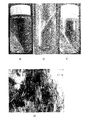
- FIG. 1 is a photographic diagram showing the appearance of the compositions of Example 1 (A), Example 3 (B), Example 4 (C), and Example 5 (D) prepared in Preparation Examples 1 to 4. is there.
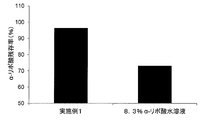
- FIG. 2 is a histogram showing the residual ratio of ⁇ -lipoic acid in the composition of Example 1 after storage at 50 ° C. for 30 days.
- lipophilic compound used in the present invention refers to any organic compound that is more easily soluble in an oil solvent than an aqueous solvent. Therefore, the lipophilic compound used in the present invention has both a lipophilic group and a hydrophilic group (that is, strictly amphiphilic), but has solubility in an oil solvent in an aqueous solvent. Contains higher organic compounds.
- composition of the present invention a method for producing a liquid crystal composition containing a lipophilic compound (hereinafter also referred to as “method of the present invention”), and a liquid crystal composition produced by the method (hereinafter also referred to as “composition of the present invention”).
- method of the present invention a method for producing a liquid crystal composition containing a lipophilic compound
- composition of the present invention a liquid crystal composition produced by the method
- the method of the present invention comprises a lipophilic drug having an ionic dissociation group as an amphiphilic molecule or a lipophilic drug and a surfactant in a liquid crystal preparation process including adding and mixing an amphiphilic molecule and water. And adding and mixing the combinations.
- liquid crystal preparation process appropriately refers to amphiphilic molecules and water necessary for forming a liquid crystal and other optional components (eg, polyhydric alcohol, oil, co-surfactant).
- the terms “in the liquid crystal formation process” or “in the liquid crystal formation process” refer to any stage of the process of preparing the lyotropic liquid crystal.
- the lipophilic compound that can be used in the present invention has an ionic dissociation group necessary for salt formation with an alkali metal or alkaline earth metal.
- ionic dissociation groups include, but are not limited to, carboxylic acid groups, sulfonic acid groups, sulfenic acid groups, hydroperoxide groups, and the like, and lipophilic compounds having these dissociation groups. Any of them is suitable for the present invention.
- the ionic dissociation group is a carboxylic acid group.
- lipophilic compounds examples include, but are not limited to, ⁇ -lipoic acid, ferulic acid, retinoic acid, indomethacin, glycyrrhizic acid, glycyrrhetinic acid, naproxen, mefenamic acid, docosahexaenoic acid, Examples include icosapentaenoic acid, tamibarotene, chlorogenic acid, cholesteryl sulfate, and the like.
- the present inventors formed an alkali metal or alkaline earth metal salt into the amphiphilic molecule constituting the lyotropic liquid crystal in the lipophilic compound. It has been found that a liquid crystal composition containing a highly lipophilic compound can be prepared, which can impart similar physical properties and has all or part of the amphiphilic molecules constituting the liquid crystal as a lipophilic compound.
- the method of the present invention adds a lipophilic compound in the form of an alkali metal salt or an alkaline earth metal salt in a liquid crystal preparation process including adding and mixing an amphiphilic molecule containing a lipophilic compound and water. Or a treatment of reacting a lipophilic compound with an alkali metal or alkaline earth metal hydroxide or phosphorous oxide.
- the alkali metal or alkaline earth metal that can be used in the present invention is not particularly limited as long as it belongs to these, but sodium is preferable.
- alkali metal or alkaline earth metal hydroxide or phosphorus oxide examples include, but are not limited to, potassium hydroxide, sodium hydroxide, calcium hydroxide, magnesium hydroxide, phosphorus Examples include potassium phosphate, sodium phosphate, calcium phosphate, and magnesium phosphate. Preferably, sodium hydroxide is used.
- a combination of a lipophilic compound and a surfactant is used as an amphiphilic molecule. It is preferable to use it. This is because by using the surfactant, the contact probability between the lipophilic compounds can be reduced, and the stability of the lipophilic compound in the liquid crystal composition can be significantly increased.
- a surfactant is desired.
- concentration of the lipophilic compound can be adjusted to a low level.
- the surfactant that can be used in the present invention is not particularly limited as long as it can form a liquid crystal in combination with water and, if necessary, an oil component, a polyhydric alcohol, and an auxiliary surfactant, a nonionic surfactant, Either a cationic surfactant or an anionic surfactant may be used.
- a nonionic surfactant is used.
- an ionic surfactant is used as the surfactant, for example, when an alkali metal or alkaline earth metal hydroxide or phosphorous oxide is added, there is an ionic interaction between the surfactant and the lipophilic compound. As a result, the formation of desired liquid crystals may be hindered.
- the nonionic surfactant used in the present invention may be any of an ester type, an ether type, an ester / ether type, and an amino acid type nonionic surfactant.
- an ester type an ether type, an ester / ether type, and an amino acid type nonionic surfactant.
- polyoxyethylene hydrogenated castor oil polyoxyethylene alkyl ether, polyoxyethylene sorbitan fatty acid ester, polyoxyethylene polyoxypropylene alkyl ether, polyglycerin fatty acid ester, sucrose fatty acid ester , Propylene glycol fatty acid ester, monoglycerin fatty acid ester, diglycerin fatty acid ester, sorbitan fatty acid ester, polyoxyethylene fatty acid ester and the like.
- the polyoxyethylene hydrogenated castor oil used in the present invention can have any average degree of polymerization of ethylene oxide.
- the lower limit of the average degree of polymerization of ethylene oxide is about 5 or more
- the upper limit of the average degree of polymerization of ethylene oxide is about 200 or less.
- preferred polyoxyethylene hydrogenated castor oil include polyoxyethylene hydrogenated castor oil 40, polyoxyethylene hydrogenated castor oil 60, and polyoxyethylene hydrogenated castor oil 80.
- this number represents the average degree of polymerization of ethylene oxide.
- the polyoxyethylene hydrogenated castor oil 40 indicates that the average degree of polymerization of ethylene oxide is 40.
- the polyoxyethylene alkyl ether used in the present invention can have any average degree of polymerization of ethylene oxide.
- the lower limit of the average degree of polymerization of ethylene oxide is about 5 or more, and the upper limit of the average degree of polymerization of ethylene oxide is about 30 or less.
- polyoxyethylene alkyl ethers examples include polyoxyethylene cetyl ether, polyoxyethylene stearyl ether (also referred to as POE stearyl ether), polyoxyethylene oleyl ether (also referred to as POE oleyl ether), polyoxyethylene octyldodecyl ether ( And POE octyldodecyl ether) and polyoxyethylene isostearyl ether (also referred to as POE isostearyl ether).
- polyoxyethylene cetyl ether examples include polyoxyethylene cetyl ether, polyoxyethylene stearyl ether (also referred to as POE stearyl ether), polyoxyethylene oleyl ether (also referred to as POE oleyl ether), polyoxyethylene octyldodecyl ether ( And POE octyldodecyl ether) and polyoxyethylene isostearyl ether (also referred to as PO
- the polyoxyethylene sorbitan fatty acid ester used in the present invention can have any average degree of polymerization of ethylene oxide.
- the lower limit of the average degree of polymerization of ethylene oxide is about 5 or more, and the upper limit of the average degree of polymerization of ethylene oxide is about 30 or less.
- polyoxyethylene sorbitan acid esters examples include polyoxyethylene sorbitan monooleate (also referred to as POE sorbitan monooleate), polyoxyethylene sorbitan monolaurate (also referred to as POE sorbitan monolaurate), polyoxyethylene sorbitan Examples include monostearate (also referred to as POE sorbitan monostearate), polyoxyethylene sorbitan monopalmitate (also referred to as POE sorbitan monopalmitate) and polyoxyethylene sorbitan trioleate (also referred to as POE sorbitan trioleate).
- polyoxyethylene sorbitan monooleate also referred to as POE sorbitan monooleate
- polyoxyethylene sorbitan monolaurate also referred to as POE sorbitan monolaurate
- polyoxyethylene sorbitan examples include monostearate (also referred to as POE sorbitan monostearate), polyoxyethylene sorbitan monopalmitate (also
- the polyoxyethylene polyoxypropylene alkyl ether used in the present invention can have any average degree of polymerization of ethylene oxide.
- the lower limit of the average degree of polymerization of the polyoxyethylene portion is about 5 or more, and the upper limit of the average degree of polymerization of the polyoxyethylene portion is about 30 or less.
- the lower limit of the average degree of polymerization of the polyoxypropylene part is about 4 or more, and the upper limit of the average degree of polymerization of the polyoxypropylene part is about 8 or less.
- polyoxyethylene polyoxypropylene alkyl ethers examples include polyoxyethylene polyoxypropylene cetyl ether, polyoxyethylene polyoxypropylene cetyl ether, polyoxyethylene polyoxypropylene cetyl ether, polyoxyethylene polyoxypropylene decyl tetradecyl Examples include ether and polyoxyethylene isostearyl ether.
- polyglycerol fatty acid ester used in the present invention examples include decaglycerol monolaurate, decaglycerol monomyristate, decaglycerol monooleate and decaglycerol monostearate.
- sucrose fatty acid esters used in the present invention include sucrose stearate, sucrose oleate, sucrose palmitate, sucrose myristic ester, and sucrose laurate.
- the amino acid surfactant used in the present invention is not limited to this, but for example, lauroylglutamate dioctyldecesses-2, lauroylglutamate dioctyldecesses-5, lauroylglutamate disteales-2, lauroylglutamic acid Select from the group consisting of Disteales-5, PCA isostearic acid PEG-30 hydrogenated castor oil, PCA isostearic acid PEG-40 hydrogenated castor oil, PCA isostearic acid PEG-60 hydrogenated castor oil, PCA isostearic acid glyceres-25. Can do.
- the nonionic surfactant used in the present invention is preferably one having an HLB value of about 5 or more.
- the HLB value is 0 when the amount of hydrophilic groups in the molecule is 0%, and 20 when the amount is 100%.
- the HLB value represents the size and strength of hydrophilic and hydrophobic groups that form a surfactant molecule in a surfactant, and a surfactant having a high hydrophobicity has a small HLB value and a high hydrophilicity. Has a large HLB value.
- Nonionic surfactants may be used alone or in combination of two or more.
- preferred nonionic surfactants include, for example, polyoxyethylene stearyl ether, polyoxyethylene cetyl ether, polyoxyethylene octyldodecyl ether and the like.
- the cationic surfactant that can be used in the present invention may be any cationic surfactant of amine salt type, alkyl quaternary ammonium salt type, or cyclic quaternary ammonium salt type. Specific examples include, but are not limited to, diethylaminoethylamide stearate, lauryltrimethylammonium chloride, lauryltrimethylammonium bromide, dialkyldimethylammonium chloride, and benzalkonium chloride.
- Anionic surfactants that can be used in the present invention include fatty acid salt type, alkyl ether carboxylate type, acyl lactate type, N-acyl sarcosinate type, N-acyl glutamate type, N-acyl methyl type Alanine salt type, N-acylmethyl taurate salt type, alkane sulfonate salt type, ⁇ -olefin sulfonate salt type, alkyl sulfosuccinate salt type, acyl isethionate salt type, alkyl sulfate ester salt type, alkyl ether sulfate ester salt type, Any of fatty acid alkanolamide sulfate salt type, monoacylglycerol sulfate ester salt type, and polyoxyethylene alkyl ether phosphate ester salt type may be used.
- the amount of the amphiphilic molecule (ie, lipophilic compound and optional surfactant) to be blended may vary depending on the type of amphiphilic molecule used and the combination thereof.
- the total weight of the composition may be 15 to 70% by weight, preferably 20 to 60% by weight, for example 40% by weight.
- the mixing ratio of the lipophilic compound and the surfactant is not particularly limited.
- ⁇ -lipoic acid or the like is stable depending on the concentration.
- the amount of the surfactant is preferably an amount that does not fall below the amount of the lipophilic compound.
- the blending ratio of lipophilic compound and surfactant is in the range of 1: 1 to 1:10, for example 1: 3.
- the amount of alkali metal or alkaline earth metal hydroxide or phosphorous oxide added is Depending on the concentration of the oleophilic compound added, the amount is such that all of the oleophilic compound added forms an alkali metal salt or alkaline earth metal salt. Specifically, it may be added in a range of 0.25 to 1.5 times the molar amount of the ionic dissociation group of the lipophilic compound to be added.
- the water used for liquid crystal preparation can be any water known to those skilled in the art.
- tap water distilled water
- ion exchange water sterilizing water, etc.
- sterilizing water etc.
- the amount of water blended can be appropriately determined by those skilled in the art according to the type and presence of other components used, such as the type of amphiphilic molecules and combinations thereof.
- An exemplary range of such amounts is 3 to 85% by weight of the total weight of the composition of the present invention.
- the method of the present invention may further include adding a polyhydric alcohol during the liquid crystal preparation process.
- a polyhydric alcohol By adding a polyhydric alcohol, it may be useful in terms of facilitating the formation of liquid crystal (e.g. expansion of phase region) and stabilization.
- the polyhydric alcohol that can be used in the present invention include, but are not limited to, polyalkylene glycols such as polymethylene glycol and polyethylene glycol, glycerin, propylene glycol, 1,3-propanediol, 2- Butene-1,4-diol, pentane-1,5-diol, 2,2-dimethylpropane-1,3-diol, 3-methylpentane-1,5-diol, pentane-1,2-diol, 2, Examples include 2,4-trimethylpentane-1,3-diol, 2-methylpropane-1,3-diol, hexylene glycol, 1,3-butylene glyco
- the amount of polyhydric alcohol added is 70% by weight or less, preferably 50% by weight or less.
- the method of the present invention may further include adding an oil during the liquid crystal preparation process.
- an oil such as wheat germ oil, corn oil, sunflower oil, and soybean oil
- silicone oils eg, isopropylmyristate, cetyl ethylhexanoate, glyceryl trioctanoate, Diethylene glycol monopropylene pentaerythritol ether, pentaerythrityl tetraoctanoate, etc.
- squalane squalene
- liquid paraffin for example, vitamin D, vitamin E
- vitamins for example, vitamin D, vitamin E
- vitamins for example, vitamin D, vitamin E
- One oil may be used alone, or a plurality of oils may be used in combination.
- the blending amount may vary depending on the type of the amphiphilic molecule and the lipophilic compound, but is preferably 0. 0 of the total weight of the composition of the present invention. It is in the range of 01 to 30% by weight.
- the method of the present invention may further include adding an auxiliary surfactant during the liquid crystal preparation process.
- an auxiliary surfactant By adding an auxiliary surfactant, it may be useful in that the interface film curvature can be reduced to facilitate the formation of a stable lyotropic liquid crystal.
- auxiliary surfactants that can be used in the present invention include, but are not limited to, cholesterol, phytosterols, higher alcohols, and the like.
- the blending amount of the auxiliary surfactant is not particularly limited as long as the formation of the lyotropic liquid crystal is not hindered.
- the co-surfactant can be added in the range of 0.1 to 10% by weight, preferably 1 to 5% by weight, based on the total weight of the composition of the present invention.
- the method of the present invention includes adding an aqueous or oily additional component generally used in cosmetics, pharmaceuticals, and industrial products in the liquid crystal preparation process as long as the liquid crystal structure is not impaired.
- additional ingredients include, but are not limited to, humectants, preservatives, antioxidants, UV absorbers, cosmetic ingredients, vitamins (eg, vitamin B 1 , vitamin C), flavors , Flavoring agents, thickeners, color pigments, glitter pigments, organic powders, metal oxides, tar dyes, and the like.
- the addition / blending component may be appropriately heated in the liquid crystal preparation process.
- the order of addition and mixing of the above components is not particularly limited.
- the liquid crystal composition of the present invention may be prepared by preparing a mixture of all components except the lipophilic compound and adding and mixing the lipophilic compound to the mixture, or adding and mixing all the components simultaneously. May be.
- a liquid crystal composition containing a lipophilic compound can be produced in the range of 0.01 to 70% by weight of the total weight.
- composition of the present invention thus produced also has pharmacological effects based on lipophilic compounds in addition to the physical properties inherent in liquid crystals (for example, the ability to stabilize emulsions and the ability to solubilize components). Therefore, it can be used as an external preparation for skin, for example, cosmetics, pharmaceuticals, or raw materials thereof.
- the above-mentioned additional components can be included, it can also be used as an industrial product, for example, paint, ink, oil / fat product, synthetic rubber, or a raw material thereof.
- ⁇ -lipoic acid product name: ⁇ -lipoic acid: manufactured by Tateyama Kasei Co., Ltd.
- polyoxyethylene alkyl ether product name: NIKKOL BS-20: manufactured by Nikko Chemicals Co., Ltd.
- polyoxyethylene alkyl ether (2.98 g) was added to a mixed solution of pure water (1.39 g) and glycerin (3.09 g), and heated and mixed until uniform. Subsequently, ⁇ -lipoic acid (0.83 g) was added and dispersed and dissolved while heating to 50 to 55 ° C. Next, 2.5 mol / L sodium hydroxide (1.61 g) was gradually added and stirred to obtain a transparent solution. To this solution, gradually add cetyl ethylhexanoate (0.1 g) or vitamin E (0.1 g), and heat and mix at about 80 ° C. to prepare a transparent gel composition (Examples 1 and 2). did.
- Example 1A A photograph of the composition of Example 1 prepared according to this Preparation Example is shown in FIG. 1A.
- Preparation Example 2 In this preparation example, ferulic acid (product name: ferulic acid: manufactured by Tsukino Food Industry Co., Ltd.) as a lipophilic compound, polyoxyethylene alkyl ether (product name: NIKKOL BS-20: manufactured by Nikko Chemicals) as a nonionic surfactant, The example which prepared the liquid crystal of this invention using glycerin (product name concentrated glycerin: Kao company make) as a polyhydric alcohol is shown.
- glycerin product name concentrated glycerin: Kao company make
- polyoxyethylene alkyl ether (3.01 g) was added to a mixed solution of pure water (1.37 g) and glycerin (3.05 g), and heated and mixed until uniform.
- ferulic acid (0.84 g) was added and dispersed and dissolved while heating to about 50 ° C. 2.5 mol / L sodium hydroxide (1.73 g) was gradually added, and the mixture was heated and mixed to prepare a transparent gel composition (Example 3).
- Example 3 prepared according to this Preparation Example is shown in FIG. 1B.
- polyoxyethylene alkyl ether (3.26 g) was added to a mixed solution of pure water (1.44 g) and glycerin (3.21 g), and heated and mixed until uniform.
- glycyrrhetinic acid (0.72 g) was added and dispersed and dissolved while heating to about 50 ° C.
- 2.5 mol / L sodium hydroxide (0.68 g) was gradually added and stirred to obtain a transparent solution.
- Cetyl ethylhexanoate (0.69 g) was gradually added to this solution, and heated and mixed at about 80 ° C. to prepare a transparent gel composition (Example 4).
- Example 4 prepared according to this Preparation Example is shown in FIG. 1C.
- This preparation example shows an example in which the liquid crystal of the present invention was prepared using ⁇ -lipoic acid (product name ⁇ -lipoic acid: manufactured by Tateyama Kasei Co., Ltd.) as the lipophilic compound.
- ⁇ -lipoic acid product name ⁇ -lipoic acid: manufactured by Tateyama Kasei Co., Ltd.
- ⁇ -lipoic acid (10 g) was completely dissolved in 0.26 mol / L sodium hydroxide (193.9 g), and this solution was freeze-dried for 24 to 48 hours to produce powdered ⁇ -lipoic acid sodium salt. did.
- the obtained sodium ⁇ -lipoate (0.5 g) and purified water (0.5 g) were accurately weighed and heated and mixed at about 80 ° C. to prepare a transparent gel composition (Example 5). .
- Table 1 shows the composition (w / w%) of each component of Examples 1 to 5 prepared in Preparation Examples 1 to 4.
- Test example In this test example, the stability of ⁇ -lipoic acid in the composition of Example 1 was evaluated.
- Example 1 The composition of Example 1 was stored in a constant temperature bath at 50 ° C. for one month, and the lipoic acid-containing concentration on the 30th day after storage was quantified using HPLC, and the residual ratio relative to ⁇ -lipoic acid at the time of preparation was calculated. did.
- an aqueous solution containing an equal concentration of ⁇ -lipoic acid was used as a control. The result is shown in FIG.
- liquid crystal composition containing a lipophilic compound in which the content of the lipophilic compound is increased.
- the liquid crystal composition of the present invention has a pharmacological effect based on a lipophilic compound in addition to the physical properties inherent in the liquid crystal (for example, the ability to stabilize emulsification and the ability to solubilize components).
- a lipophilic compound for example, the ability to stabilize emulsification and the ability to solubilize components.
- it can be used as a cosmetic, a pharmaceutical product, or a raw material thereof.
Landscapes
- Health & Medical Sciences (AREA)
- Life Sciences & Earth Sciences (AREA)
- Animal Behavior & Ethology (AREA)
- General Health & Medical Sciences (AREA)
- Public Health (AREA)
- Veterinary Medicine (AREA)
- Birds (AREA)
- Epidemiology (AREA)
- Dermatology (AREA)
- Emergency Medicine (AREA)
- Chemical & Material Sciences (AREA)
- Crystallography & Structural Chemistry (AREA)
- Bioinformatics & Cheminformatics (AREA)
- Engineering & Computer Science (AREA)
- Chemical Kinetics & Catalysis (AREA)
- General Chemical & Material Sciences (AREA)
- Medicinal Chemistry (AREA)
- Nuclear Medicine, Radiotherapy & Molecular Imaging (AREA)
- Organic Chemistry (AREA)
- Pharmacology & Pharmacy (AREA)
- Cosmetics (AREA)
- Medicinal Preparation (AREA)
Abstract
Cette invention concerne : un procédé de préparation d'une composition cristalline liquide qui contient un composé lipophile, ladite composition ayant une teneur améliorée en composé lipophile ; et une composition cristalline liquide préparée par ce procédé, ledit procédé comprenant une étape de préparation d'un cristal liquide consistant à ajouter et à mélanger des molécules amphiphiles et de l'eau et étant caractérisé en ce que : soit un composé lipophile ayant un groupe ioniquement dissociable, soit une combinaison du composé lipophile avec un tensioactif est ajoutée et mélangée à titre des molécules amphiphiles ; et le composé lipophile est ajouté et mélangé sous la forme d'un sel de métal alcalin ou d'un sel de métal alcalino-terreux ou soumis à une réaction ultérieure avec un hydroxyde de métal alcalin ou alcalino-terreux ou d'un phosphate de celui-ci.
Priority Applications (1)
| Application Number | Priority Date | Filing Date | Title |
|---|---|---|---|
| JP2013518120A JP6054291B2 (ja) | 2011-05-31 | 2012-05-30 | 親油性化合物を高濃度で含有する液晶組成物の製造方法及びその方法によって製造された液晶組成物 |
Applications Claiming Priority (2)
| Application Number | Priority Date | Filing Date | Title |
|---|---|---|---|
| JP2011121820 | 2011-05-31 | ||
| JP2011-121820 | 2011-05-31 |
Publications (1)
| Publication Number | Publication Date |
|---|---|
| WO2012165468A1 true WO2012165468A1 (fr) | 2012-12-06 |
Family
ID=47259320
Family Applications (1)
| Application Number | Title | Priority Date | Filing Date |
|---|---|---|---|
| PCT/JP2012/063903 Ceased WO2012165468A1 (fr) | 2011-05-31 | 2012-05-30 | Procédé de préparation d'une composition cristalline liquide contenant un composé lipophile à une concentration élevée, et composition cristalline liquide préparée par ledit procédé |
Country Status (2)
| Country | Link |
|---|---|
| JP (1) | JP6054291B2 (fr) |
| WO (1) | WO2012165468A1 (fr) |
Cited By (3)
| Publication number | Priority date | Publication date | Assignee | Title |
|---|---|---|---|---|
| JP2016504353A (ja) * | 2012-12-28 | 2016-02-12 | チョン クン ダン ファーマシューティカル コーポレーション | GnRH誘導体の徐放性脂質初期製剤およびこれを含む薬剤学的組成物 |
| US9526787B2 (en) | 2011-08-30 | 2016-12-27 | Chong Kun Dang Pharmaceutical Corp. | Sustained-release lipid pre-concentrate of pharmacologically active substance and pharmaceutical composition comprising the same |
| US11318215B2 (en) | 2013-02-28 | 2022-05-03 | Chong Kun Dang Pharmaceutical Corp. | Composition for gene delivery comprising chitosan and liquid crystal formation material |
Citations (13)
| Publication number | Priority date | Publication date | Assignee | Title |
|---|---|---|---|---|
| JPS63150221A (ja) * | 1986-12-15 | 1988-06-22 | Shiseido Co Ltd | 結晶性薬物含有乳化組成物 |
| JPH10231229A (ja) * | 1997-02-19 | 1998-09-02 | Nippon Fine Chem Co Ltd | 化粧料 |
| JPH11500456A (ja) * | 1996-11-04 | 1999-01-12 | ザ、プロクター、エンド、ギャンブル、カンパニー | 皮膚美白組成物 |
| JP2001158788A (ja) * | 1999-10-12 | 2001-06-12 | Basf Ag | キラル化合物及びコレステリック液晶性組成物の製造のためのキラル供与物質としての該キラル化合物の使用 |
| JP2001247452A (ja) * | 2000-02-19 | 2001-09-11 | Goldschmidt Ag | 化粧用および医薬用水中油型エマルション |
| JP2002145736A (ja) * | 2000-08-31 | 2002-05-22 | L'oreal Sa | 脂性の皮膚をトリートメントするための起泡性化粧品クリーム |
| JP2002145751A (ja) * | 2000-11-02 | 2002-05-22 | Yakult Honsha Co Ltd | アスコルビン酸類を含む皮膚外用剤 |
| JP2005529949A (ja) * | 2002-06-13 | 2005-10-06 | リオトロピック セラピュティックス アイエヌシー. | 被覆粒子、製造方法および使用 |
| WO2006043705A1 (fr) * | 2004-10-19 | 2006-04-27 | National Institute Of Advanced Industrial Scienceand Technology | Formule de cristaux liquides cubiques de type ii |
| WO2006134890A1 (fr) * | 2005-06-14 | 2006-12-21 | Asahi Kasei Chemicals Corporation | Composition pour protéger la surface d’un corps |
| JP2009502966A (ja) * | 2005-07-28 | 2009-01-29 | ダウ アグロサイエンシィズ エルエルシー | 層状の液晶コーティングでコーティングされた油状小球に基づく水中油型エマルジョンを含む農業的組成物 |
| JP2009029740A (ja) * | 2007-07-26 | 2009-02-12 | Nippon Fine Chem Co Ltd | フィトステロールエステル含有液晶組成物及びこれを含有する化粧料又は皮膚外用剤 |
| JP2009536948A (ja) * | 2006-05-11 | 2009-10-22 | イーストマン ケミカル カンパニー | スルホポリエステルおよびリン酸エステル界面活性剤を有する耐水性サンスクリーン配合物 |
Family Cites Families (6)
| Publication number | Priority date | Publication date | Assignee | Title |
|---|---|---|---|---|
| DE10159245A1 (de) * | 2001-12-03 | 2003-06-18 | Degussa | Stabile, saure, wässrige Lösung enthaltend alpha-Liponsäure(-Derivate), Verfahren zu deren Herstellung sowie ihre Verwendung |
| WO2006118245A1 (fr) * | 2005-04-28 | 2006-11-09 | Japan Science And Technology Agency | Activateur de regeneration de la peau |
| WO2006118246A1 (fr) * | 2005-04-28 | 2006-11-09 | Japan Science And Technology Agency | Accelerateur d’absorption transdermique |
| JP4951226B2 (ja) * | 2005-09-08 | 2012-06-13 | 立山化成株式会社 | α−リポ酸アルカリ塩の製法 |
| CN101945654B (zh) * | 2007-12-14 | 2012-06-27 | 江崎格力高株式会社 | α-硫辛酸纳米颗粒及其制备方法 |
| JP2009179570A (ja) * | 2008-01-29 | 2009-08-13 | Nano Egg:Kk | 皮膚外用組成物および色素沈着抑制剤 |
-
2012
- 2012-05-30 WO PCT/JP2012/063903 patent/WO2012165468A1/fr not_active Ceased
- 2012-05-30 JP JP2013518120A patent/JP6054291B2/ja active Active
Patent Citations (13)
| Publication number | Priority date | Publication date | Assignee | Title |
|---|---|---|---|---|
| JPS63150221A (ja) * | 1986-12-15 | 1988-06-22 | Shiseido Co Ltd | 結晶性薬物含有乳化組成物 |
| JPH11500456A (ja) * | 1996-11-04 | 1999-01-12 | ザ、プロクター、エンド、ギャンブル、カンパニー | 皮膚美白組成物 |
| JPH10231229A (ja) * | 1997-02-19 | 1998-09-02 | Nippon Fine Chem Co Ltd | 化粧料 |
| JP2001158788A (ja) * | 1999-10-12 | 2001-06-12 | Basf Ag | キラル化合物及びコレステリック液晶性組成物の製造のためのキラル供与物質としての該キラル化合物の使用 |
| JP2001247452A (ja) * | 2000-02-19 | 2001-09-11 | Goldschmidt Ag | 化粧用および医薬用水中油型エマルション |
| JP2002145736A (ja) * | 2000-08-31 | 2002-05-22 | L'oreal Sa | 脂性の皮膚をトリートメントするための起泡性化粧品クリーム |
| JP2002145751A (ja) * | 2000-11-02 | 2002-05-22 | Yakult Honsha Co Ltd | アスコルビン酸類を含む皮膚外用剤 |
| JP2005529949A (ja) * | 2002-06-13 | 2005-10-06 | リオトロピック セラピュティックス アイエヌシー. | 被覆粒子、製造方法および使用 |
| WO2006043705A1 (fr) * | 2004-10-19 | 2006-04-27 | National Institute Of Advanced Industrial Scienceand Technology | Formule de cristaux liquides cubiques de type ii |
| WO2006134890A1 (fr) * | 2005-06-14 | 2006-12-21 | Asahi Kasei Chemicals Corporation | Composition pour protéger la surface d’un corps |
| JP2009502966A (ja) * | 2005-07-28 | 2009-01-29 | ダウ アグロサイエンシィズ エルエルシー | 層状の液晶コーティングでコーティングされた油状小球に基づく水中油型エマルジョンを含む農業的組成物 |
| JP2009536948A (ja) * | 2006-05-11 | 2009-10-22 | イーストマン ケミカル カンパニー | スルホポリエステルおよびリン酸エステル界面活性剤を有する耐水性サンスクリーン配合物 |
| JP2009029740A (ja) * | 2007-07-26 | 2009-02-12 | Nippon Fine Chem Co Ltd | フィトステロールエステル含有液晶組成物及びこれを含有する化粧料又は皮膚外用剤 |
Cited By (3)
| Publication number | Priority date | Publication date | Assignee | Title |
|---|---|---|---|---|
| US9526787B2 (en) | 2011-08-30 | 2016-12-27 | Chong Kun Dang Pharmaceutical Corp. | Sustained-release lipid pre-concentrate of pharmacologically active substance and pharmaceutical composition comprising the same |
| JP2016504353A (ja) * | 2012-12-28 | 2016-02-12 | チョン クン ダン ファーマシューティカル コーポレーション | GnRH誘導体の徐放性脂質初期製剤およびこれを含む薬剤学的組成物 |
| US11318215B2 (en) | 2013-02-28 | 2022-05-03 | Chong Kun Dang Pharmaceutical Corp. | Composition for gene delivery comprising chitosan and liquid crystal formation material |
Also Published As
| Publication number | Publication date |
|---|---|
| JPWO2012165468A1 (ja) | 2015-02-23 |
| JP6054291B2 (ja) | 2016-12-27 |
Similar Documents
| Publication | Publication Date | Title |
|---|---|---|
| JP5083993B2 (ja) | 水中油型乳化組成物 | |
| JP2023520661A (ja) | ラムノリピッドとアルキルポリグリコシドとアシルラクチレートとを含む組成物 | |
| JP2013006790A (ja) | O/w型エマルジョン | |
| JP2001081024A (ja) | 乳白状水中油型乳化組成物及びその製造方法 | |
| JP6226843B2 (ja) | 白濁化粧料 | |
| JPWO2015163284A1 (ja) | 液体口腔用組成物及びその凍結復元性向上方法 | |
| JP2010280628A (ja) | 乳化製剤 | |
| JP6054291B2 (ja) | 親油性化合物を高濃度で含有する液晶組成物の製造方法及びその方法によって製造された液晶組成物 | |
| CN1933810A (zh) | 基于偏甘油酯和季戊四醇酯的蜡混合物 | |
| JP2015174840A (ja) | セラミド分散組成物 | |
| JP2011001289A (ja) | 乳化液の製造方法及び化粧料の製造方法 | |
| JP2017114781A (ja) | 水中油型乳化組成物 | |
| JP4810129B2 (ja) | 非水乳化型組成物 | |
| JP5865622B2 (ja) | 皮膚外用剤およびその製造方法 | |
| JP6480839B2 (ja) | セラミド分散組成物 | |
| JP6411050B2 (ja) | リポソーム及びそれを含有する化粧料 | |
| KR20140101660A (ko) | 칸데릴라 왁스 분산 조성물 | |
| JP6019024B2 (ja) | 高濃度エマルション | |
| JPH09151112A (ja) | 微細エマルション組成物 | |
| JP2017109975A (ja) | 水中油型乳化組成物 | |
| CN118591370A (zh) | 被赋予防腐效果的纳米乳液 | |
| JP5662750B2 (ja) | 油中水型乳化組成物 | |
| US10596189B2 (en) | Emulsion and method for the manufacture thereof | |
| JP2017109977A (ja) | 水中油型乳化組成物 | |
| JP4403783B2 (ja) | 低アルコール飲料用の乳化ないし可溶化剤、これを含有する乳化ないし可溶化製剤および低アルコール飲料 |
Legal Events
| Date | Code | Title | Description |
|---|---|---|---|
| 121 | Ep: the epo has been informed by wipo that ep was designated in this application |
Ref document number: 12792924 Country of ref document: EP Kind code of ref document: A1 |
|
| ENP | Entry into the national phase |
Ref document number: 2013518120 Country of ref document: JP Kind code of ref document: A |
|
| NENP | Non-entry into the national phase |
Ref country code: DE |
|
| 122 | Ep: pct application non-entry in european phase |
Ref document number: 12792924 Country of ref document: EP Kind code of ref document: A1 |