WO2012165510A1 - Récupération de tétroxyde d'osmium réutilisable - Google Patents
Récupération de tétroxyde d'osmium réutilisable Download PDFInfo
- Publication number
- WO2012165510A1 WO2012165510A1 PCT/JP2012/063998 JP2012063998W WO2012165510A1 WO 2012165510 A1 WO2012165510 A1 WO 2012165510A1 JP 2012063998 W JP2012063998 W JP 2012063998W WO 2012165510 A1 WO2012165510 A1 WO 2012165510A1
- Authority
- WO
- WIPO (PCT)
- Prior art keywords
- osmium
- viii
- liquid
- ozone
- gas
- Prior art date
- Legal status (The legal status is an assumption and is not a legal conclusion. Google has not performed a legal analysis and makes no representation as to the accuracy of the status listed.)
- Ceased
Links
Images





Classifications
-
- C—CHEMISTRY; METALLURGY
- C22—METALLURGY; FERROUS OR NON-FERROUS ALLOYS; TREATMENT OF ALLOYS OR NON-FERROUS METALS
- C22B—PRODUCTION AND REFINING OF METALS; PRETREATMENT OF RAW MATERIALS
- C22B11/00—Obtaining noble metals
- C22B11/04—Obtaining noble metals by wet processes
- C22B11/042—Recovery of noble metals from waste materials
-
- C—CHEMISTRY; METALLURGY
- C01—INORGANIC CHEMISTRY
- C01G—COMPOUNDS CONTAINING METALS NOT COVERED BY SUBCLASSES C01D OR C01F
- C01G55/00—Compounds of ruthenium, rhodium, palladium, osmium, iridium, or platinum
- C01G55/004—Oxides; Hydroxides
-
- C—CHEMISTRY; METALLURGY
- C02—TREATMENT OF WATER, WASTE WATER, SEWAGE, OR SLUDGE
- C02F—TREATMENT OF WATER, WASTE WATER, SEWAGE, OR SLUDGE
- C02F1/00—Treatment of water, waste water, or sewage
- C02F1/72—Treatment of water, waste water, or sewage by oxidation
- C02F1/78—Treatment of water, waste water, or sewage by oxidation with ozone
-
- C—CHEMISTRY; METALLURGY
- C02—TREATMENT OF WATER, WASTE WATER, SEWAGE, OR SLUDGE
- C02F—TREATMENT OF WATER, WASTE WATER, SEWAGE, OR SLUDGE
- C02F2101/00—Nature of the contaminant
- C02F2101/10—Inorganic compounds
- C02F2101/20—Heavy metals or heavy metal compounds
Definitions
- the present invention relates to a method for producing an oxidizing gas such as ozone from a liquid (such as a waste liquid) containing osmium and an osmium (VIII) solution, an osmium (VIII) -containing solid or an osmium (VIII) crystal using the gas. It relates to a method of manufacturing.
- an oxidizing gas such as ozone from a liquid (such as a waste liquid) containing osmium and an osmium (VIII) solution, an osmium (VIII) -containing solid or an osmium (VIII) crystal using the gas. It relates to a method of manufacturing.
- Osmium like gold and silver, is a rare element that contains only about 4 ppb on the earth (Non-Patent Document 1). Moreover, it has become unevenly distributed (nonpatent literature 2). Osmium oxide (VIII), which is an oxide, is used as an oxidizing agent in organic synthesis and for fixing and staining when preparing an electron microscope sample, but is quite expensive (Non-patent Document 3).
- the waste liquid containing osmium discharged by electron microscope sample preparation is difficult to settle the contained osmium oxide (IV), contains organic matter such as living tissue, and the allowable concentration is 0.002 mg during waste liquid treatment.
- Non-Patent Document 4 has a method of solidifying and storing with tannic acid
- Non-Patent Document 5 has a method of reducing and precipitating as metal osmium (0). It is being considered. However, both require complicated operations for solidification of osmium, and even if it is treated, osmium is not reused and must be stored as solid waste.
- Non-patent Document 6 describes that osmium (IV) extracted from waste liquid with carbon tetrachloride is strongly adsorbed on the glass wall and peeled off, and the osmium (IV) is dissolved in water at the time of use.
- a method is described in which hydrogen peroxide is added to oxidize osmium oxide (IV) and reuse it as osmium oxide (VIII).
- this method requires the use of harmful substances, and requires complicated operations for solidification and use after solidification.
- Non-Patent Document 7 discloses that 1% osmium oxide is obtained by reducing osmium waste liquor and centrifuging osmium (0), dissolving the precipitate in a hydrogen peroxide solution, adding potassium peroxodisulfate, and heating and oxidatively distilling.
- VIII A method of making a solution is described. However, a large amount of chemicals are used, such as adding 54 g of potassium peroxodisulfate as an oxidizing agent to 450 ml of waste liquid, and complicated operations such as reduction to oxidative distillation are required.
- osmium VIII is a very important and rare substance in many fields, but it is generally solidified after use and stored. Not established.
- ozone is widely used for sterilization and disinfection of wastewater treatment and deodorization of exhaust gas because of its strong oxidizing power.
- Patent Document 1 ruthenium, ruthenium oxide, or osmium, by supplying an oxygen donating gas such as ozone to the surface of a solid containing osmium oxide, a ruthenium compound or osmium compound having a high vapor pressure is generated. A method for treating a solid surface to be etched is described. However, this document does not describe at all about recovering osmium (VIII) oxide.
- Patent Document 2 published after the priority date of the present application is a method for producing a magnetic nanoparticle-fixed osmium (VI) acid salt, which can be recovered and reused by bringing a magnet close to the reaction after completion of the reaction. It is described as being useful as a catalyst, and there is no description about recovering osmium (VIII) oxide itself.
- the object of the present invention is to first provide a method for rationally producing osmium oxide (VIII). Accordingly, it is an object of the present invention to provide a method for easily and safely recovering and reusing osmium oxide (VIII), which is difficult to recover and reuse.
- the present inventor has conducted extensive research to solve the above-mentioned problems, and by oxidizing the liquid containing osmium with ozone and recovering the generated osmium oxide (VIII) gas, it is possible to prepare an electron microscope sample again.
- the present inventors have found that an expensive osmium oxide (VIII) solution that can be used can be produced with the same performance as that sold as a reagent, and have completed the present invention.
- the present invention relates to the following.
- a method for producing an osmium (VIII) gas comprising a step of oxidizing a liquid containing osmium using an oxidizing gas.
- the oxidizing gas is ozone.
- the method according to (1) or (2), wherein the temperature of the oxidation treatment is first set to 10 ° C. to 30 ° C. and then set to 70 ° C. to 80 ° C.
- a method for producing an osmium oxide (VIII) solution further comprising a step of taking the gas produced by the method according to any one of (1) to (4) into a recovered solution.
- the method according to (5) wherein the recovered liquid is alkaline and the temperature of the recovered liquid is room temperature or lower.
- An osmium (VIII) solution prepared by the method according to (5) or (6) and having a pH of 7 to 10.
- the osmium (VIII) solution according to (7) which is used for electron microscope sample preparation, catalyst, organic synthesis, or fingerprint detection.
- a method for producing an osmium oxide (VIII) crystal further comprising a step of crystallizing the gas produced by the method according to any one of (1) to (4).
- the apparatus comprising: an oxidizing gas supply unit that supplies gas; and a recovery unit that recovers osmium (VIII) gas generated in the oxidation processing unit.
- the method of the present invention can produce or regenerate useful VIII-valent osmium oxide from a liquid containing osmium, for example, a liquid containing osmium discharged by electron microscope sample preparation or the like, with a simple apparatus.
- the produced osmium (VIII) solution can be used again with the same performance as that sold as a reagent for electron microscope sample preparation, catalyst, organic synthesis, fingerprint detection and the like.
- ozone is used as an oxidizing agent, ozone is naturally decomposed, so that no harmful waste such as chemical oxidation is discharged after the treatment, and no further post-treatment is necessary. In addition, only the reaction is monitored except at the time of setting and at the end, and no complicated operation is required.
- osmium waste liquid in research institutions such as universities, but to reuse osmium oxide (VIII) for electron microscope sample preparation, as well as osmium oxide produced by the method of the present invention.
- VIII osmium oxide
- the solution can be sold as a reagent used for catalysts, organic synthesis, fingerprint detection, etc., and can be applied to the extraction and purification of osmium from ores, contributing greatly to the recycling and recovery technology of rare metals. To do.
- FIG. 1 is a diagram showing an estimation of the state of osmium.
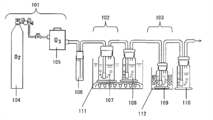
- FIG. 2 is a schematic view of an osmium (VIII) production apparatus (regeneration system) in a preferred embodiment of the present invention.
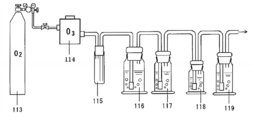
- FIG. 3 is a schematic view of an osmium (VIII) production apparatus (regeneration system) according to an aspect of the present invention.
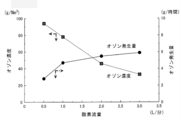
- FIG. 4 is a diagram showing the performance of the ozone generator.
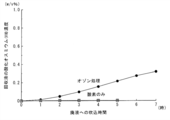
- FIG. 5 is a diagram showing the effect of ozone treatment of osmium waste liquid.
- FIG. 6 is a diagram illustrating the influence of the temperature of the waste liquid.
- FIG. 7 is a diagram showing the influence of the temperature after waste liquid clarification.
- FIG. 1 is a diagram showing an estimation of the state of osmium.
- FIG. 2 is a schematic view of an osmium (VIII) production apparatus (regeneration system) in a preferred embodiment of the present invention.
- FIG. 3 is a schematic view of an
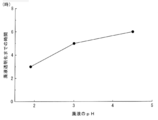
- FIG. 8 is a diagram showing the pH of the waste liquid and the osmium concentration of the recovered liquid.
- FIG. 9 is a diagram showing the pH of the waste liquid and the time until clearing.
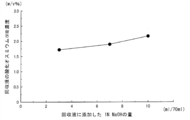
- FIG. 10 is a diagram showing the influence of the sodium hydroxide concentration of the recovered liquid.
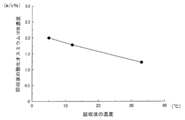
- FIG. 11 is a diagram showing the influence of the temperature of the recovered liquid.
- FIG. 12 is a diagram showing the influence of the concentration method.
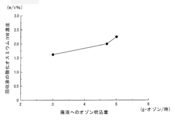
- FIG. 13 is a diagram showing the influence of the ozone blowing amount.
- FIG. 14 is a diagram illustrating the influence of the osmium concentration of the waste liquid.
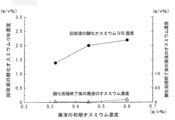
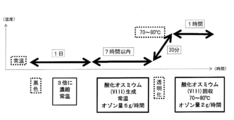
- FIG. 15 is a flowchart of the steps of Example 11.
- FIG. 16 is a diagram showing electron microscope image results when the osmium (VIII) composition produced in the present invention is used and when a commercially available osmium (VIII) solution is used.
- the present invention relates to a method for producing osmium oxide (VIII) gas, the method comprising oxidizing a liquid containing osmium using an oxidizing gas, particularly an oxidizing gas such as ozone. .
- the method of producing the osmium (VIII) solution by taking the osmium oxide (VIII) gas into the recovery liquid, or the solid containing the osmium oxide (VIII) by taking the same gas into the recovery solid Or a method of crystallizing the same gas to produce an osmium (VIII) crystal.
- the liquid containing osmium is not particularly limited as long as it contains osmium, and may be any waste liquid generated after use of osmium.
- the liquid containing osmium include a waste liquid generated by preparing an electron microscope sample of a polymer material or a biological sample, a waste liquid or solution generated by organic synthesis using osmium as a catalyst, a waste liquid or solution of ore containing osmium, and the like.
- the liquid containing osmium further includes a liquid diluted with water or the like.
- the oxidizing agent may be any that can oxidize osmium, and is a first class substance (oxidizing solid) prescribed in the Fire Service Law, for example, permanganates, chromates, dichromates, Chlorates, perchlorates, chlorites, nitrates, Group 6 substances (oxidizing liquids) stipulated in the Fire Service Law, such as nitric acid, hydrogen peroxide, and other oxidizing liquid hypochlorous acid Any oxidizing reagent such as a salt may be mentioned. When adding an oxidizing reagent, it is desirable to supply air or oxygen separately. As the oxidizing gas, ozone, chlorine, nitrogen oxide, hydroxy gas and the like can be raised. In this case, it is only necessary to supply the oxidizing gas to the liquid containing osmium.
- oxidizing solid prescribed in the Fire Service Law
- oxidizing liquids stipulated in the Fire Service Law, such as nitric acid, hydrogen peroxide, and other oxidizing liquid hypochlorous acid
- Potassium permanganate, potassium chromate, etc. can be used as oxidizing agents, but when these are added to oxidize, about 1 g of chemical is required for 100 ml of waste liquid, including oxidation treatment of organic substances contained in waste liquid. It is.
- potassium chromate and potassium dichromate are used, a large amount of waste liquid containing toxic chromium is generated, and after removing osmium, it is necessary to treat waste with a water content of 90% and about 10v / v%. become.
- potassium peroxodisulfate when potassium peroxodisulfate is used, about 10 g of chemicals are required for 100 ml of waste liquid.
- nitrogen oxides or chlorine may be generated.
- ozone When ozone is used as the oxidizing agent, it is only necessary to blow in ozone, and since ozone decomposes in about one hour at room temperature, no post-treatment is required. Therefore, ozone is particularly preferable from the viewpoint of easy operation and reduction of environmental load.
- ozone can decompose organic matter first, even if there are several percent of organic matter such as tissue, aldehyde, ethanol, etc. that can be contained in the waste liquid, it is only necessary to increase the ozone blowing time, There is an advantage that pre-adjustment is not required, the amount of liquid does not increase, and the amount of ozone can be adjusted during the treatment in the state of oxidation treatment.
- the present invention can be applied through a system that generates ozone from oxygen, a system that generates ozone from air, a system that uses chlorine or another oxidizing gas, and the like.
- systems that generate ozone from the air and systems that use an oxidizing gas such as chlorine may contain nitric acid or chlorine in the manufactured osmium oxide (VIII) solution. When used for production, it may have an effect.
- the produced osmium (VIII) solution is used for electron microscope sample preparation, it is preferable to use a system that generates ozone from oxygen.
- the concentration of osmium (VIII) in the recovered liquid is about 0.3 w / v%.
- concentration of osmium (VIII) in the recovered liquid is about 0.3 w / v%.
- osmium (VIII) solution typically, 50% of a pH buffer solution is put into an osmium (VIII) solution immediately before use, and 1 w / v% osmium (VIII) adjusted to pH 7.4. Prepare and use the solution. Therefore, in this case, it is desirable to produce a 2 w / v% osmium (VIII) solution.
- an ozone generator is a device that generates a large amount of oxygen or air, which is a raw material gas, to generate ozone in the raw material gas.
- typically ozone supply such as ozone blowing is performed using ozone.
- the present invention is not limited to this.
- the flow rate of the gas containing ozone can be appropriately set depending on the capacity and shape of the components such as the reactor and the recovery container, the amount of liquid put in the container, and the like. Increasing the amount of ozone blown increases the osmium (VIII) concentration that can be recovered.
- the amount of ozone is preferably 0.1 g / hour or more, more preferably 1 g / hour or more, and further preferably 2 g / hour or more.
- the amount of ozone generated and the flow rate of the gas containing ozone differ depending on the ozone generator. However, when the flow rate of the gas is considerably increased, the liquid is significantly bubbled and flowed as droplets. For example, when collecting with the recovered liquid, the recovered liquid is contaminated.
- An example of a preferable flow rate of the gas containing ozone is not limited to this, but is 0.2 to 3.0 L / min (amount of ozone 1 g / hour to 6 g / hour), more preferably 0.5 to 2.L. It is 0 L / min (ozone amount 2 g / hour to 5.5 g / hour), more preferably 0.5 to 1.0 L / min (ozone amount 2 g / hour to 5 g / hour).
- the production of the osmium (VIII) solution can improve the yield by visually observing the oxidation state of the liquid containing osmium and adjusting the temperature appropriately.
- the waste liquid containing osmium floats as osmium (IV) oxide and exhibits a black color as a whole.
- the oxidation proceeds, it becomes osmium oxide (VIII) and the solution becomes transparent.
- transparent means a state in which the solution is less black and light yellow and the background is visible from the container.
- the reaction temperature is not particularly limited, but it is not necessary to boil.
- ozone ozone is easily decomposed at a high temperature of 60 ° C. or higher, and therefore typical reaction temperatures include 10 ° C. to 60 ° C.
- the reaction temperature is preferably 10 ° C. to 60 ° C., more preferably 10 ° C. to 40 ° C., and even more preferably 10 ° C. to 30 ° C. It is very advantageous from the viewpoint of simplicity and energy.
- the temperature may be normal temperature, but it is preferably 50 ° C. to 100 ° C., preferably 60 ° C. to 100 ° C., more preferably 70 ° C. to 80 ° C. from the viewpoint of safety.
- the reaction temperature of the liquid containing osmium is first 10 to 30 ° C., and the color of the liquid containing osmium is 70 to 80 ° C. after the color changes from black to transparent.
- the reason why the yield decreases when the temperature until it becomes transparent is that ozone is easily decomposed at a high temperature of 60 ° C. or higher, and the low temperature of 40 ° C. or lower is more stable. It is assumed that this is because.
- the reason why the yield increases as the temperature increases after clarification is that the osmium in the liquid after becoming transparent is in the state of osmium oxide (VIII), and the higher the temperature, the easier it is to volatilize. Guessed. Further, when heated, osmium oxide (IV) and osmium oxide (VIII) are decomposed to produce osmium (0) which is easily precipitated.
- the ozone is easily decomposed when the temperature after the transparency is set to 60 ° C. or higher. However, by continuously blowing, the generation of osmium (0) can be suppressed.
- the time for performing the clearing can be appropriately set according to the reaction conditions such as the liquid amount, the ozone flow rate, etc., but if the ozone is blown for a long time after the liquid is transparent, the osmium oxide that is not recovered with the blown
- the amount of (VIII) increases and the recoverable osmium oxide (VIII) concentration decreases.
- the time required for clearing is preferably 4 to 10 hours, more preferably 4 to 7 hours.
- the treatment time after clearing is preferably 1 to 3 hours, more preferably 1 to 2 hours.
- the pH of the liquid containing osmium is adjusted to acidic before the oxidation treatment step with ozone, the recovery rate tends to decrease, but the time to clearing becomes faster. Therefore, from the viewpoint of shortening the ozone treatment time, the pH is preferably 1 to 3, and more preferably 2 or less, but it can be appropriately set in consideration of the balance between yield and shortening of time.
- the osmium concentration of the waste liquid containing osmium discharged from electron microscope sample preparation is generally 0.2 w / v% or less, it is regenerated in a system that creates a 2 w / v% osmium (VIII) solution.
- concentration rate is considered to be about 3 times, it is preferable to concentrate the liquid to an osmium concentration of about 0.5 w / v% before the oxidation treatment step with ozone.
- concentration method it is desirable to evaporate and concentrate the water without heating.
- the heat-concentrated liquid does not become transparent even when oxidized with ozone.
- osmium (IV) oxide is dominant and has a black color.
- osmium (IV) oxide which is the main component in the waste liquid, is not volatile, water can be evaporated at room temperature by placing the liquid in a shallow container with a shallow bottom. Moreover, if it does not heat, it can respond also by vacuum concentration.
- osmium oxide (VIII) gas is recovered by a method of incorporating osmium oxide (VIII) gas into the recovered liquid, a method of incorporating osmium oxide (VIII) gas into the solid for recovery, or osmium oxide (VIII) gas. It can be performed by a crystallization method.
- the recovered liquid in the present invention typically contains water. Water is particularly preferred for applications such as electron microscope sample preparation.
- optional components such as pH adjusting components, other oxidizing agents such as chlorine, diluents, and solvents can be added as appropriate.
- the solid material for recovery in the present invention is not limited to this, and examples thereof include absorbents such as silica gel, alumina, activated carbon and the like.
- absorbents such as silica gel, alumina, activated carbon and the like.
- an empty recovery container is cooled to about 0 ° C., preferably below 0 ° C. with dry ice or the like, and osmium oxide (VIII) crystal is precipitated in the container. The method of making it etc. are mentioned.
- the pH of the recovered solution is preferably 9 to 14, and more preferably 10 to 13, since the higher the alkalinity, the higher the yield.
- the pH may be appropriately set according to the use of the osmium (VIII) solution to be produced. it can.
- pH adjusting components include alkali components such as, but not limited to, alkali metal hydroxides such as sodium hydroxide, potassium hydroxide and lithium hydroxide, and alkaline earth metals such as calcium hydroxide. Examples thereof include hydroxide and aqueous ammonia.
- sodium hydroxide, potassium hydroxide and the like are preferable from the viewpoint of preventing precipitation and not reacting with osmium (VIII) oxide.
- acidic components include, but are not limited to, acids such as carbon dioxide, sulfuric acid, and hydrochloric acid.
- acids such as carbon dioxide, sulfuric acid, and hydrochloric acid.
- phosphate buffer pH 7.4 it is conceivable to use the phosphate buffer pH 7.4 that is added to the collected liquid at the time of preparation of the electron microscope sample as it is, if the application is for preparation of the electron microscope sample, osmium (VIII) and phosphorus will be used in the long term. Since an acid reacts, it is not preferable for long-term storage.
- the alkalinity is not high. Therefore, after the end of the oxidation treatment with ozone, even if the pH of the recovered solution is lowered by osmium oxide (VIII) gas or carbon dioxide gas generated during the reaction, the pH is preferably 4 to 11, more preferably 5 to 10, More preferably, it is 7-10. That is, for example, in the case of sodium hydroxide, it is preferable to add the recovered liquid to a concentration of about 0.01 N to 1 N before the process.
- the pH of the recovered solution is preferably not changed even when 50% of phosphate buffer solution 7.4 is added, and the pH of the osmium (VIII) solution after the completion of the process is preferably 7 to 10. .
- the pH of the osmium (VIII) solution after the completion of the process is preferably 7 to 10. .
- the pH of the produced osmium oxide (VIII) solution is out of the range of 7 to 10, it is a dilute aqueous solution of inorganic acids such as sulfuric acid and hydrochloric acid when it is alkaline, and inorganic alkali such as sodium hydroxide and potassium hydroxide when it is acidic.
- the pH is adjusted to 7-10 with a dilute aqueous solution.
- the temperature of the recovered liquid can be appropriately set by those skilled in the art, and typical temperatures include 0 ° C. to 40 ° C., but the lower the temperature, the higher the yield of osmium oxide (VIII). It is 0 ° C to 30 ° C, more preferably 0 ° C to 20 ° C, still more preferably 0 ° C to 10 ° C. As a preferred embodiment of the present invention, the recovered liquid is cooled to 10 ° C. or below at room temperature or below.
- the method for producing an osmium oxide (VIII) solution of the present invention is a step of adjusting the pH, concentrating and diluting, adding an optional component, and further purifying after the step of producing the osmium oxide (VIII) solution. Etc. may be included.
- Etc. may be included.
- water and a phosphate buffer are added to produce an osmium (VIII) composition having a desired concentration and pH. can do.
- the oxidation treatment itself is preferably performed in a draft chamber together with measures against exhaust ozone. Care must be taken when opening each gas cleaning bottle at the end of the oxidation process.
- a pH adjuster or the like may be added to the collected liquid in order to improve the recovery rate of osmium oxide (VIII). Therefore, it may contain components not included in the commercially available osmium (VIII) reagent.
- ozone is used as the oxidizing agent and sodium hydroxide is added as the pH adjusting agent to the recovered liquid, carbon dioxide generated by the oxidation treatment of the organic substances in the liquid reacts with sodium hydroxide, so that the sodium carbonate is Generate.
- the amount of sodium carbonate produced depends on the amount of sodium hydroxide added, so when using about 0.1N sodium hydroxide, about 0.1N sodium carbonate (about 0.5w / v%) is considered to be included. It is done.
- alkali metal carbonate such as sodium carbonate does not affect the electron microscope sample preparation.
- alkali metal carbonates include alkaline earth metal hydroxides such as sodium carbonate, sodium hydrogen carbonate, potassium carbonate, potassium hydrogen carbonate, and lithium carbonate corresponding to alkali metal hydroxides added as pH adjusting components.
- Corresponding examples include calcium carbonate.
- An osmium (VIII) solution, an osmium (VIII) -containing solid or an osmium (VIII) crystal production apparatus, and the osmium-containing liquid is a waste liquid containing osmium. Relates to the playback system.
- the oxidation treatment unit has a reactor for containing a liquid containing osmium.
- the reactor is not particularly limited, and may be a container made of various materials, such as a gas cleaning bottle or trap made of plastic or metal that is not deteriorated by commonly used glass or osmium (VIII) oxide.
- the solution may be in contact.
- the capacity of the reactor and the amount of liquid to be treated can be appropriately set according to the scale of the production apparatus.
- the volume is preferably 100 ml to 2 L, more preferably 100 ml to 1 L, and even more preferably 200 ml to 1 L.
- the reactor volume can be appropriately set according to the liquid, but liquid splash prevention is possible. From this viewpoint, the volume of the reactor is preferably about twice the liquid volume. For example, when the liquid volume is 100 ml to 500 ml, the volume of the reactor is preferably 200 ml to 1 L.
- the oxidizing gas supply unit may include a system that directly supplies oxidizing gas using a cylinder or the like, or a system that generates oxidizing gas such as ozone.
- the recovery unit has a recovery container for recovering osmium (VIII) gas.
- the collection container is not particularly limited and may be a container made of various materials, such as a commonly used glass gas cleaning bottle, a plastic or metal gas cleaning bottle or trap that does not deteriorate with osmium oxide (VIII), etc.
- the gas may be in contact with the solution or the solid for collection.
- FIG. 2 shows a schematic view of an apparatus (regeneration system) for producing an osmium (VIII) solution according to a preferred embodiment of the present invention.
- the production apparatus includes an oxidizing gas supply unit having an oxygen cylinder and an ozone generator, a backflow prevention container, an oxidation treatment unit having a reactor, a cleaning unit A, a recovery unit, and a cleaning unit B. .
- the backflow prevention container is not particularly limited, and may be a commercially available backflow prevention bottle.
- the container used in the cleaning section A is not particularly limited, and may be a container made of various materials.
- a solution such as a cleaning bottle or a trap may come into contact with the solution.
- the oxidation treatment unit and the cleaning unit A can be heated.
- the heating system is not particularly limited as long as the oxidation treatment unit and the cleaning unit A can be heated. For example, a thermostat, a water bath, a heater with temperature adjustment, and the like can be given.
- the cleaning part A contains an acid gas such as acetic acid that can be generated from the liquid, and a chemical that is considered to have a function of removing nitrogen-containing components (nitrogen oxide: nitric acid) generated from the biological sample contained in the liquid.
- the drug may be water or an absorbent with an equivalent effect.
- the collection unit provides a temperature control system, and the temperature control system is not particularly limited.
- the recovery container can be cooled with ice or dry ice, or the recovery container can be installed in a cooling device such as a low-temperature thermostatic bath, a cooling water circulation device, or a heat pump.
- the container used for the cleaning section B after the recovery section is not particularly limited, and may be a container made of various materials, and is made of a plastic that does not deteriorate with a commonly used glass cleaning bottle or osmium oxide (VIII). Alternatively, the gas may come into contact with the solution such as a metal gas cleaning bottle or trap. In the cleaning part B, a chemical having a function of absorbing osmium (VIII) gas or ozone gas that cannot be absorbed by the recovery part is put.
- the drug may be a liquid absorbent such as water, or may be a solid absorbent such as activated carbon.
- Each unit may be an independent device or an integrated device. Therefore, the manufacturing apparatus or the reproduction system of the present invention means a combination of parts and an integrated apparatus.
- each component can be replaced with any component that can exhibit the same function, or any component can be added.
- the amount of osmium was commonly measured by the method described in Non-Patent Document 5. That is, the sample was oxidized with potassium dichromate under sulfuric acid, distilled, colored with sulfuric acid thiourea, and the absorbance was measured at 480 nm. Since this acidic thiourea sulfate only develops color with osmium oxide (VIII) in osmium, when measuring only osmium oxide (VIII), it was directly developed with sulfuric acid thiourea without distillation.
- FIG. 1 A schematic diagram of an osmium (VIII) production apparatus used in Examples 1 to 10 is shown in FIG.
- the following implementation conditions are common unless otherwise specified.
- the waste liquid the osmium waste liquid discharged in the preparation of the electron microscope sample was used as it was, 300 ml of the waste liquid was put into the reactor, and 70 ml of water was put into the collection container as the collected liquid. Washing part A and washing part B were filled with 150 ml of water.
- the oxidizing gas supply unit used an oxygen cylinder and a high-performance ozone generator manufactured by HAMUNETSU CORPORATION. Since the ozone generator cools the heat of the device itself with the raw material gas, it is difficult to generate ozone at a low flow rate.
- a highly functional ozone generator that generates 2 g / hour of ozone even at a low oxygen flow rate of 0.5 L / min was used as the osmium (VIII) production apparatus.
- the ozone amount was set to 5 g / hour (oxygen flow rate 1 L / min).
- Example 1 Effect of Ozone as Oxidant
- ozone treatment when ozone containing oxygen was created and blown with an ozone generator (hereinafter referred to as “ozone treatment”), without using an ozone generator, The case where only oxygen was blown was compared.
- FIG. 5 shows the concentration of osmium (VIII) in the recovered liquid with respect to the lapse of the blowing time.
- the concentration of osmium (VIII) increased with the passage of time into the waste liquid, and it was confirmed that osmium (VIII) was recovered by ozone treatment. It turned out that waste liquid became transparent from black and osmium decreased.
- Example 2 Waste Liquid Temperature Under the conditions of Example 1, the waste liquid was kept at 20 ° C., 40 ° C., and 60 ° C., and each was treated with ozone to regenerate osmium oxide (VIII).
- FIG. 6 shows the concentration of osmium (VIII) in the recovered liquid with respect to the time of ozone blowing into the waste liquid. The higher the temperature of the waste liquid, the lower the concentration of osmium oxide (VIII) in the recovered liquid. Also, when the temperature of the waste liquid is 20 ° C. and 7 hours have passed, there is a tendency that the amount of osmium oxide (VIII) in the recovered liquid decreases. It was recognized that there was.
- Example 3 Temperature after Clarification of Waste Liquid After clarifying by ozone treatment within 20 hours at 7 ° C. under the conditions of Example 2, the waste liquid was kept at 40 ° C., 60 ° C., and 80 ° C. for 30 minutes, respectively.
- the osmium oxide (VIII) concentration of the recovered liquid is shown in FIG. After clarification, the higher the temperature of the waste liquid, the higher the concentration of osmium (VIII) in the recovered liquid.
- Example 4 pH of waste liquid Under the conditions of Example 3, the waste solution was acidified with sulfuric acid and the pH was changed. Waste liquid is 20 ° C, oxygen flow rate is 1L / min (ozone amount 5g / hour), clears by ozone treatment within 7 hours, oxygen flow rate is reduced to 0.5L / min (ozone amount 2g / hour), 70 It was heated for 1 hour or more.
- the osmium (VIII) concentration of the recovered liquid with respect to the pH of the waste liquid and the time until the waste liquid became transparent with respect to the pH of the waste liquid are shown in FIGS. 8 and 9, respectively. When acidified, the concentration of osmium oxide (VIII) was lowered, but it was observed that transparency became faster.
- Example 5 Alkali Concentration of Collected Liquid Under the conditions of Example 4, the waste liquid was adjusted to pH 2, and the recovered liquid was subjected to ozone treatment by changing the alkali concentration with the amount of 1N sodium hydroxide added.
- FIG. 10 shows the osmium oxide concentration (VIII) in the recovered liquid with respect to the amount of 1N sodium hydroxide added. From FIG. 10, it was recognized that the concentration of osmium (VIII) in the recovered liquid increased with increasing sodium hydroxide concentration.
- Example 6 pH of recovered liquid Under the conditions of Example 5, when osmium (VIII) is regenerated, the pH of the recovered solution becomes 7 to 10 after the completion of the process. Even if 50% of the phosphate buffer solution 7.4 is added, the pH is 7 No change from 4
- Example 7 Temperature of recovered liquid 0.1N sodium hydroxide was added to the recovered liquid, the temperature of the recovered liquid was changed, the waste liquid was adjusted to pH 2, 20 ° C., oxygen flow rate 1 L / min (ozone amount 5 g / hour), within 7 hours Then, the oxygen flow rate was reduced to 0.5 L / min (ozone amount 2 g / hour) and heated at 70 ° C. or higher for 1 hour or longer. The temperature of the recovered liquid was changed. The osmium oxide concentration (VIII) in the recovered liquid with respect to the temperature of the recovered liquid is shown in FIG. The lower the temperature of the recovered liquid, the higher the osmium (VIII) concentration in the recovered liquid.
- VIII osmium oxide concentration
- Example 8 Concentration method of waste liquid The waste liquid was heated or at room temperature to evaporate water and concentrate the waste liquid about 3 times by ozone treatment. As a method of concentrating the waste liquid at room temperature, it was put in a container having a shallow bottom and a wide dish, and water was evaporated at room temperature with the wind force in a draft chamber. 10L of waste liquid was reduced to about 3L after 5 days. Under the above operating conditions, waste liquid concentrated at normal temperature and waste liquid concentrated by heating were used. Put 0.1N sodium hydroxide into the recovered solution, ice-cool to 5 ° C or less, adjust the waste solution to pH 2, clarify at 20 ° C, oxygen flow rate 1L / min (ozone amount 5g / hour), and ozone treatment within 7 hours.
- the oxygen flow rate was reduced to 0.5 L / min (ozone amount 2 g / hour) and heated at 70 ° C. or higher for 1 hour or longer.
- the osmium oxide (VIII) concentration of the recovered liquid is shown in FIG.
- the waste liquid did not become transparent even after ozone treatment, and the osmium oxide (VIII) concentration in the recovered liquid was less than 1 w / v%.
- the concentrated osmium (VIII) concentration exceeded 1 w / v% even after ozone treatment.
- the waste liquid was precipitated with a polymer flocculant, the precipitate was dissolved with water, and ozone treatment was the same as in the case of heat concentration.
- Example 9 Amount of ozone blown Using a waste liquid concentrated at room temperature, 0.1N sodium hydroxide was added to the recovered liquid, ice-cooled to 5 ° C. or less, the waste liquid was adjusted to pH 2, 20 ° C., and an oxygen flow rate of 0.6 to 1 After changing to 5 L / min (ozone amount 3 to 5.1 g / hour) and clearing with ozone within 7 hours, the oxygen flow rate was reduced to 0.5 L / min (ozone amount 2 g / hour). 70 ° C. or higher, and heated for 1 hour or longer.
- the osmium (VIII) concentration of the recovered liquid is shown in FIG. It was confirmed that the concentration of osmium oxide (VIII) in the recovered liquid increases as the amount of ozone blown is increased.
- Example 10 Concentration of waste liquid The osmium concentration of the waste liquid put into the reaction vessel was changed. Put 0.1N sodium hydroxide into the recovered solution, ice-cool to 5 ° C or less, adjust the waste solution to pH 2, clarify at 20 ° C, oxygen flow rate 1L / min (ozone amount 5g / hour), and ozone treatment within 7 hours. After that, the oxygen flow rate was reduced to 0.5 L / min (ozone amount 2 g / hour) and heated at 70 ° C. or higher for 1 hour or longer.
- FIG. 14 shows the osmium concentration in the waste liquid and the osmium (VIII) concentration in the recovered liquid.
- the osmium oxide (VIII) concentration in the recovered liquid also increases.
- the osmium concentration in the waste liquid exceeds 0.5 w / v%, the amount of osmium remaining in the waste liquid after the process is increased.
- Example 11 Regeneration of Osmium (VIII) Solution According to a Preferred Embodiment of the Invention
- the regeneration system shown in FIG. 2 was used.
- the waste liquid containing osmium was evaporated and concentrated about three times at room temperature, and 300 ml was put into a 500 ml gas washing bottle, and the pH was adjusted to 2 with sulfuric acid.
- As a collected liquid 70 ml of about 0.1N sodium hydroxide solution was put in a 125 ml gas washing bottle and cooled on ice at 5 ° C. or lower. Water was put into the cleaning part A and the cleaning part B.
- the osmium (VIII) concentration of the recovered liquid exceeded 2 w / v%, and the recovery rate as osmium was 90%. Further, the osmium concentration remaining in the waste liquid was 0.05 w / v% (500 mg / L) or less. If it is this concentration, it is possible to perform the treatment by coagulation precipitation that is usually used for the waste liquid treatment, and it is considered that the volatilization of osmium oxide (VIII) during the treatment is small.
- Example 12 Reuse of Recovery Solution 50% of phosphate buffer pH 7.4 was added to the 2 w / v% osmium oxide (VIII) solution recovered in Example 11 and used for fixation and staining of liver tissue samples of normal mice. .
- the results taken with a transmission electron microscope are shown in FIG.
- the evaluation criteria of the image are that the image of the film has a contrast, there is no cut portion, and there are no missing portions in the organ image.
- the cells are stained, which is equivalent to the results obtained using the osmium oxide (VIII) solution prepared from a commercially available reagent and the osmium oxide (VIII) solution of the present invention, and the contrast is also observed. It was enough.
Landscapes
- Chemical & Material Sciences (AREA)
- Organic Chemistry (AREA)
- Engineering & Computer Science (AREA)
- Inorganic Chemistry (AREA)
- Manufacturing & Machinery (AREA)
- Materials Engineering (AREA)
- Mechanical Engineering (AREA)
- Metallurgy (AREA)
- Treatment Of Water By Oxidation Or Reduction (AREA)
- Inorganic Compounds Of Heavy Metals (AREA)
Abstract
Priority Applications (3)
| Application Number | Priority Date | Filing Date | Title |
|---|---|---|---|
| US14/122,266 US9284623B2 (en) | 2011-05-31 | 2012-05-30 | Recovery of reusable osmium tetroxide |
| EP12792622.8A EP2762452B1 (fr) | 2011-05-31 | 2012-05-30 | Récupération de tétroxyde d'osmium réutilisable |
| JP2013518140A JP5886845B2 (ja) | 2011-05-31 | 2012-05-30 | 再利用可能な酸化オスミウム(viii)の回収 |
Applications Claiming Priority (2)
| Application Number | Priority Date | Filing Date | Title |
|---|---|---|---|
| JP2011-122388 | 2011-05-31 | ||
| JP2011122388 | 2011-05-31 |
Publications (1)
| Publication Number | Publication Date |
|---|---|
| WO2012165510A1 true WO2012165510A1 (fr) | 2012-12-06 |
Family
ID=47259362
Family Applications (1)
| Application Number | Title | Priority Date | Filing Date |
|---|---|---|---|
| PCT/JP2012/063998 Ceased WO2012165510A1 (fr) | 2011-05-31 | 2012-05-30 | Récupération de tétroxyde d'osmium réutilisable |
Country Status (4)
| Country | Link |
|---|---|
| US (1) | US9284623B2 (fr) |
| EP (1) | EP2762452B1 (fr) |
| JP (1) | JP5886845B2 (fr) |
| WO (1) | WO2012165510A1 (fr) |
Cited By (1)
| Publication number | Priority date | Publication date | Assignee | Title |
|---|---|---|---|---|
| JP2019519454A (ja) * | 2016-07-06 | 2019-07-11 | チェック−キャップ リミテッド | 官腔内撮像カプセル用の放射線源 |
Families Citing this family (2)
| Publication number | Priority date | Publication date | Assignee | Title |
|---|---|---|---|---|
| CN110157921A (zh) * | 2019-05-29 | 2019-08-23 | 金川集团股份有限公司 | 一种含锇物料中快速提取锇的方法 |
| CN111983005B (zh) * | 2020-07-29 | 2022-01-28 | 中国科学院地质与地球物理研究所 | Os元素二次氧化蒸馏分离装置和分离方法及其应用 |
Citations (2)
| Publication number | Priority date | Publication date | Assignee | Title |
|---|---|---|---|---|
| JPS6456831A (en) * | 1987-08-28 | 1989-03-03 | Tanaka Precious Metal Ind | Method for removing osmium contained in ruthenium |
| JP2005239441A (ja) * | 2004-02-24 | 2005-09-08 | Tanaka Kikinzoku Kogyo Kk | 塩酸酸性溶液からのルテニウムの回収方法 |
Family Cites Families (14)
| Publication number | Priority date | Publication date | Assignee | Title |
|---|---|---|---|---|
| US3317592A (en) * | 1962-02-09 | 1967-05-02 | Celanese Corp | Catalyzed oxidation reactions |
| US3413114A (en) * | 1965-01-07 | 1968-11-26 | Int Nickel Co | Process for recovering osmium |
| US3536479A (en) | 1967-02-21 | 1970-10-27 | Int Nickel Co | Method for the production of high purity osmium |
| US3927168A (en) * | 1972-12-18 | 1975-12-16 | Atlantic Richfield Co | Osmium recovery from glycol solutions |
| FR2360348A1 (fr) * | 1976-08-04 | 1978-03-03 | Anvar | Catalyseur a base d'osmium et procede pour sa preparation |
| US4217291A (en) * | 1978-12-26 | 1980-08-12 | Gulf Research & Development Company | Method of oxidizing osmium (III) and osmium (IV) to a higher valency state |
| DE3935798A1 (de) | 1989-10-27 | 1991-05-02 | Basf Ag | Verfahren zur gewinnung von rutheniumtetroxid durch oxidation von waessrigen loesungen von alkaliruthenaten |
| JPH10273327A (ja) * | 1997-03-27 | 1998-10-13 | Mitsubishi Gas Chem Co Inc | 四酸化ルテニウムの製造方法 |
| JPH10283327A (ja) | 1997-04-07 | 1998-10-23 | Michio Okubo | 外国通貨換算電卓 |
| RU2148095C1 (ru) * | 1999-05-24 | 2000-04-27 | Санкт-Петербургский государственный горный институт им.Г.В.Плеханова (технический университет) | Способ попутного извлечения осмия из хромитов химического типа |
| US6458183B1 (en) * | 1999-09-07 | 2002-10-01 | Colonial Metals, Inc. | Method for purifying ruthenium and related processes |
| JP3658269B2 (ja) | 2000-03-29 | 2005-06-08 | 株式会社ルネサステクノロジ | 固体表面及び半導体製造装置の処理方法並びにそれを用いた半導体装置の製造方法 |
| DE102008006797B4 (de) * | 2008-01-30 | 2014-05-22 | Heraeus Precious Metals Gmbh & Co. Kg | Verfahren und Vorrichtungen zum Entfernen von Ruthenium durch Destillation als RuO4 aus ruthenathaltigen Lösungen |
| JP5704320B2 (ja) | 2010-03-04 | 2015-04-22 | 独立行政法人産業技術総合研究所 | 磁性ナノ粒子固定型オスミウム(vi)酸塩 |
-
2012
- 2012-05-30 US US14/122,266 patent/US9284623B2/en not_active Expired - Fee Related
- 2012-05-30 WO PCT/JP2012/063998 patent/WO2012165510A1/fr not_active Ceased
- 2012-05-30 JP JP2013518140A patent/JP5886845B2/ja not_active Expired - Fee Related
- 2012-05-30 EP EP12792622.8A patent/EP2762452B1/fr not_active Not-in-force
Patent Citations (2)
| Publication number | Priority date | Publication date | Assignee | Title |
|---|---|---|---|---|
| JPS6456831A (en) * | 1987-08-28 | 1989-03-03 | Tanaka Precious Metal Ind | Method for removing osmium contained in ruthenium |
| JP2005239441A (ja) * | 2004-02-24 | 2005-09-08 | Tanaka Kikinzoku Kogyo Kk | 塩酸酸性溶液からのルテニウムの回収方法 |
Cited By (1)
| Publication number | Priority date | Publication date | Assignee | Title |
|---|---|---|---|---|
| JP2019519454A (ja) * | 2016-07-06 | 2019-07-11 | チェック−キャップ リミテッド | 官腔内撮像カプセル用の放射線源 |
Also Published As
| Publication number | Publication date |
|---|---|
| EP2762452A4 (fr) | 2014-12-10 |
| EP2762452A1 (fr) | 2014-08-06 |
| US9284623B2 (en) | 2016-03-15 |
| EP2762452B1 (fr) | 2019-02-20 |
| US20140154156A1 (en) | 2014-06-05 |
| JP5886845B2 (ja) | 2016-03-16 |
| JPWO2012165510A1 (ja) | 2015-02-23 |
Similar Documents
| Publication | Publication Date | Title |
|---|---|---|
| JP5189322B2 (ja) | ヨウ化水素酸の製造方法 | |
| JP2003514666A (ja) | ブラインをリサイクルしてポリカーボネートを製造する方法と装置 | |
| JP6904525B2 (ja) | 水中の塩化物を除去する方法 | |
| CN104355443A (zh) | 一种含偏二甲肼的废水的处理方法 | |
| JP5886845B2 (ja) | 再利用可能な酸化オスミウム(viii)の回収 | |
| WO2012033077A1 (fr) | Procédé de traitement de liquide résiduaire de gravure de cuivre | |
| JP2007181833A (ja) | テトラアルキルアンモニウムイオン含有液の処理方法 | |
| KR101233776B1 (ko) | 배수 처리 방법 | |
| JP2002192168A (ja) | ニッケル、亜鉛含有排水あるいはスラッジからのニッケル、亜鉛の分離回収方法 | |
| CN110467303A (zh) | 一种苯乙腈类产品生产废水的处理方法 | |
| TWI499562B (zh) | Wastewater treatment process of semiconductor manufacturing method | |
| CN104925997A (zh) | 一种催化剂可循环使用的高盐废水资源化处理方法 | |
| Zhang et al. | The influence of chemically enhanced backwash by-products (CEBBPs) on water quality in the coagulation–ultrafiltration process | |
| FR2471951A1 (fr) | Procede de recuperation d'acide borique d'un concentre d'effluent aqueux d'une centrale nucleaire | |
| CN114772836B (zh) | 一种废乳化液的处理方法 | |
| JP2541800B2 (ja) | 有機物含有水の処理方法 | |
| JP2000061470A (ja) | 電解生成液含有注射用水 | |
| JP5211320B2 (ja) | セレン含有排水処理方法 | |
| US20040050716A1 (en) | Electrochemical oxidation of matter | |
| CN109368936B (zh) | 铜蚀刻废液的处理方法 | |
| EP0759889A1 (fr) | Procede de valorisation d'un effluent liquide acide contenant des metaux lourds | |
| KR880004500A (ko) | 오염된 인산수용액의 처리방법 | |
| JP3085271B2 (ja) | 過酸化水素含有廃水の処理方法及び装置 | |
| CN113526771B (zh) | 一种烯丙基胺生产工艺中废水的处理方法及其在烯丙基胺生产工艺中的应用 | |
| CN206940520U (zh) | 酸性含铜废液中的双氧水快速分解装置 |
Legal Events
| Date | Code | Title | Description |
|---|---|---|---|
| 121 | Ep: the epo has been informed by wipo that ep was designated in this application |
Ref document number: 12792622 Country of ref document: EP Kind code of ref document: A1 |
|
| DPE2 | Request for preliminary examination filed before expiration of 19th month from priority date (pct application filed from 20040101) | ||
| ENP | Entry into the national phase |
Ref document number: 2013518140 Country of ref document: JP Kind code of ref document: A |
|
| NENP | Non-entry into the national phase |
Ref country code: DE |
|
| WWE | Wipo information: entry into national phase |
Ref document number: 2012792622 Country of ref document: EP |
|
| WWE | Wipo information: entry into national phase |
Ref document number: 14122266 Country of ref document: US |