WO2013065704A1 - フェノールスルホン酸アリールエステル、顕色剤および感熱記録材料 - Google Patents
フェノールスルホン酸アリールエステル、顕色剤および感熱記録材料 Download PDFInfo
- Publication number
- WO2013065704A1 WO2013065704A1 PCT/JP2012/078096 JP2012078096W WO2013065704A1 WO 2013065704 A1 WO2013065704 A1 WO 2013065704A1 JP 2012078096 W JP2012078096 W JP 2012078096W WO 2013065704 A1 WO2013065704 A1 WO 2013065704A1
- Authority
- WO
- WIPO (PCT)
- Prior art keywords
- group
- compound
- heat
- recording material
- sensitive recording
- Prior art date
- Legal status (The legal status is an assumption and is not a legal conclusion. Google has not performed a legal analysis and makes no representation as to the accuracy of the status listed.)
- Ceased
Links
Classifications
-
- B—PERFORMING OPERATIONS; TRANSPORTING
- B41—PRINTING; LINING MACHINES; TYPEWRITERS; STAMPS
- B41M—PRINTING, DUPLICATING, MARKING, OR COPYING PROCESSES; COLOUR PRINTING
- B41M5/00—Duplicating or marking methods; Sheet materials for use therein
- B41M5/26—Thermography ; Marking by high energetic means, e.g. laser otherwise than by burning, and characterised by the material used
- B41M5/30—Thermography ; Marking by high energetic means, e.g. laser otherwise than by burning, and characterised by the material used using chemical colour formers
- B41M5/333—Colour developing components therefor, e.g. acidic compounds
- B41M5/3333—Non-macromolecular compounds
- B41M5/3335—Compounds containing phenolic or carboxylic acid groups or metal salts thereof
- B41M5/3336—Sulfur compounds, e.g. sulfones, sulfides, sulfonamides
-
- B—PERFORMING OPERATIONS; TRANSPORTING
- B41—PRINTING; LINING MACHINES; TYPEWRITERS; STAMPS
- B41M—PRINTING, DUPLICATING, MARKING, OR COPYING PROCESSES; COLOUR PRINTING
- B41M5/00—Duplicating or marking methods; Sheet materials for use therein
- B41M5/26—Thermography ; Marking by high energetic means, e.g. laser otherwise than by burning, and characterised by the material used
- B41M5/30—Thermography ; Marking by high energetic means, e.g. laser otherwise than by burning, and characterised by the material used using chemical colour formers
- B41M5/337—Additives; Binders
- B41M5/3375—Non-macromolecular compounds
-
- C—CHEMISTRY; METALLURGY
- C07—ORGANIC CHEMISTRY
- C07C—ACYCLIC OR CARBOCYCLIC COMPOUNDS
- C07C309/00—Sulfonic acids; Halides, esters, or anhydrides thereof
- C07C309/63—Esters of sulfonic acids
- C07C309/72—Esters of sulfonic acids having sulfur atoms of esterified sulfo groups bound to carbon atoms of six-membered aromatic rings of a carbon skeleton
- C07C309/75—Esters of sulfonic acids having sulfur atoms of esterified sulfo groups bound to carbon atoms of six-membered aromatic rings of a carbon skeleton containing singly-bound oxygen atoms bound to the carbon skeleton
-
- C—CHEMISTRY; METALLURGY
- C07—ORGANIC CHEMISTRY
- C07C—ACYCLIC OR CARBOCYCLIC COMPOUNDS
- C07C309/00—Sulfonic acids; Halides, esters, or anhydrides thereof
- C07C309/63—Esters of sulfonic acids
- C07C309/72—Esters of sulfonic acids having sulfur atoms of esterified sulfo groups bound to carbon atoms of six-membered aromatic rings of a carbon skeleton
- C07C309/77—Esters of sulfonic acids having sulfur atoms of esterified sulfo groups bound to carbon atoms of six-membered aromatic rings of a carbon skeleton containing carboxyl groups bound to the carbon skeleton
Definitions
- the present invention relates to a phenolsulfonic acid aryl ester useful as a developer.
- the present invention further relates to a color developer and a heat-sensitive recording material containing the phenolsulfonic acid aryl ester.
- a colorless or light-colored basic (electron-donating) leuco dye hereinafter may be abbreviated as “dye”
- developer an electron-accepting developer
- Thermally-sensitive recording materials having a thermal-sensitive recording layer mainly composed of “which may be abbreviated as“) are widely put into practical use.
- a thermal printer or the like with a built-in thermal head is used. This thermal recording system is (a) no noise during recording, (b) no need for development and fixing, (c) maintenance-free, and (d) equipment compared to other recording systems that have been put to practical use.
- the factor that greatly affects the color development sensitivity is the selection of the dye and developer (particularly the developer) constituting the heat-sensitive recording layer.
- Various developers have been studied so far. For example, benzyl p-hydroxybenzoate, which has been expected as a high-sensitivity developer for a period of time, is no longer used because of its extremely low image storage stability.
- bisphenol A ie, 4,4'-isopropylidene diphenol
- image storability such as plasticizer resistance and heat resistance is not satisfactory.
- bisphenol A is suspected of environmental hormone activity, there is a growing tendency to ban use worldwide. Some countries have actually banned the use of thermosensitive recording materials using bisphenol A.
- bisphenol S ie, 4,4'-dihydroxydiphenyl sulfone
- bisphenol S has the disadvantages that it has a high melting point and low color development sensitivity.
- Patent Document 1 describes the use of an aryloxysulfonyl group-containing phenol derivative which may have a substituent as an electron-accepting compound (developer). Atoms, alkyl groups and the like are mentioned. However, Patent Document 1 does not describe an alkoxycarbonyl group or a carboxy group as a substituent of the aryl group. Further, as described in Patent Document 1, an aryloxysulfonyl group-containing phenol derivative having a chlorine atom or an alkyl group as a substituent of an aryl group has good color development sensitivity, but has poor background fogging, and has a blank paper portion. And the recording part have a disadvantage that the contrast becomes indistinct.
- the present invention has been made paying attention to the above-described circumstances, and an object thereof is to provide a developer excellent in balance of color development sensitivity at low energy, background fogging and image storage stability. .
- the phenolsulfonic acid aryl ester having a specific structure represented by the formula (1) is a developer excellent in the balance of color development sensitivity at low energy, background fogging and image storage stability. I found out.
- the present invention based on this finding is as follows.
- R 1 represents a hydrogen atom, an alkyl group, an alkenyl group, an aryl group or an aralkyl group
- m R 2 s independently represent an alkyl group, an alkenyl group, an aryl group, an aralkyl group, an alkoxy group, a halogen atom, a hydroxy group, a cyano group, a nitro group, a carboxy group, or an amino group
- n R 3 s independently represent an alkyl group, an alkenyl group, an aryl group, an aralkyl group, an alkoxy group, a halogen atom, a hydroxy group, a cyano group, a nitro group, a carboxy group, or an amino group
- m and n each independently represents an integer of 0 to 4.
- thermosensitive recording material [5] The heat-sensitive recording material according to [4], wherein the heat-sensitive recording layer contains a second developer different from the compound according to [1] or [2].
- the second developer is at least one selected from the group consisting of a bisphenol sulfone compound, a bisphenol compound, a urea compound, and a novolac phenol compound.
- the thermosensitive recording layer is selected from the group consisting of 1,2-di (3-methylphenoxy) ethane, C10-21 fatty acid amide, ⁇ -benzyloxynaphthalene, diphenylsulfone and p-toluenesulfonamide.
- the hindered phenol compound is at least one selected from the group consisting of a compound represented by formula (2), a compound represented by formula (3), and a compound represented by formula (4).
- R 5 , R 8 and R 11 each independently represents an alkyl group
- R 6 , R 7 , R 9 , R 10 , R 12 and R 13 each independently represent a hydrogen atom or an alkyl group.
- the compound (1) (phenol sulfonic acid aryl ester) of the present invention as a color developer, it is excellent in the balance of color development sensitivity at low energy, background fogging and image preservability (heat resistance, plasticizer resistance, etc.).
- a heat-sensitive recording material can be obtained.
- R 1 in the formula (1) represents a hydrogen atom, an alkyl group, an alkenyl group, an aryl group or an aralkyl group.
- the number of carbon atoms of the alkyl group represented by R 1 is preferably 1 to 8, more preferably 1 to 6, and still more preferably 1 to 4.
- the alkyl group for R 1 may be linear, branched or cyclic.
- the alkyl group for R 1 is preferably linear or branched. Examples of the alkyl group include a methyl group, an ethyl group, a propyl group, an isopropyl group, a butyl group, an isobutyl group, a sec-butyl group, a tert-butyl group, a pentyl group, an isopentyl group, a sec-pentyl group, and a tert-pentyl group.
- the carbon number of the alkenyl group of R 1 is preferably 2 to 8, more preferably 2 to 6, and further preferably 2 to 4.
- the alkenyl group for R 1 may be linear, branched or cyclic.
- the alkenyl group for R 1 is preferably linear or branched.
- Examples of the alkenyl group include vinyl group, allyl group, isopropenyl group, 1-propenyl group, 2-butenyl group, 3-butenyl group, 1,3-butanedienyl group, 2-methyl-2-propenyl group and the like. Among these, a vinyl group and an allyl group are preferable.
- the aryl group may be a single ring or a condensed ring.
- the carbon number of the aryl group of R 1 is preferably 6 to 14, more preferably 6 to 10.
- Examples of the aryl group include a phenyl group, a naphthyl group, an anthryl group, and a phenanthryl group, and among these, a phenyl group is preferable.
- the aryl group may have 1 type or 2 or more types of substituent. Examples of the substituent for the aryl group include an alkyl group, an aryl group, a hydroxy group, a halogen atom, a nitro group, a carboxy group, and an amino group.
- the carbon number of the aralkyl group of R 1 is preferably 7 to 15, more preferably 7 to 8.
- Aralkyl groups include, for example, phenylmethyl (benzyl), phenylethyl (phenethyl), diphenylmethyl, 3-phenylpropyl, 2-phenylpropyl, 4-phenylbutyl, biphenylmethyl, naphthyl A methyl group etc. are mentioned, Among these, a benzyl group and a phenethyl group are preferable.
- R 2 and R 3 in formula (1) are each independently an alkyl group, alkenyl group, aryl group, aralkyl group, alkoxy group, halogen atom, hydroxy group, cyano group, nitro group, carboxy group or amino group Indicates.
- the description of the alkyl group, alkenyl group, aryl group, and aralkyl group of R 2 and R 3 is the same as described above.
- the number of carbon atoms of the alkoxy group of R 2 and R 3 is preferably 1 to 8, more preferably 1 to 4.
- the alkoxy group may be linear or branched.
- Examples of alkoxy groups include methoxy, ethoxy, propoxy, isopropoxy, butoxy, isobutoxy, tert-butoxy, pentoxy, isopentoxy, neopentoxy, tert-pentoxy, hexyloxy, iso
- a hexyloxy group is exemplified, and among these, a methoxy group, an ethoxy group, a propoxy group, an isopropoxy group, and a tert-butoxy group are preferable.
- halogen atom examples include a chlorine atom, a bromine atom, a fluorine atom, and an iodine atom.
- a chlorine atom and a bromine atom are preferable.
- M and n in the formula (1) each independently represents an integer of 0 to 4.
- m and n being 0 means that R 2 and R 3 do not exist, respectively.
- the m R 2 s may be the same as or different from each other.
- the n R 3 s may be the same as or different from each other.
- m is preferably 0 or 1, more preferably 0.
- n is preferably an integer of 0 to 2, more preferably 0 or 1, and still more preferably 0.
- R 1 is a hydrogen atom, an alkyl group having 1 to 6 carbon atoms or an aralkyl group having 7 to 8 carbon atoms
- m R 2 s are each independently an alkyl group having 1 to 6 carbon atoms, an alkoxy group having 1 to 4 carbon atoms, or a carboxy group
- n R 3 s are each independently an alkyl group having 1 to 6 carbon atoms, an alkoxy group having 1 to 4 carbon atoms, or a carboxy group
- a combination in which m and n are each independently an integer of 0 to 2 is preferred;
- R 1 is a hydrogen atom, an alkyl group having 1 to 6 carbon atoms or an aralkyl group having 7 to 8 carbon atoms
- R 2 is an alkyl group having 1 to 6 carbon atoms, an alkoxy group having 1 to 4 carbon atoms, or a carboxy group
- n R 3 s are each independently an alkyl
- Position of -CO-OR 1 group in the formula (1) when the 1-position carbon atom of group in the benzene ring with a -CO-OR 1 group (-O-) is bonded, preferably Is the 2nd or 4th position, more preferably the 2nd position.
- the position of R 2 in formula (1) is not particularly limited.
- the position of the —OH group in the formula (1) is preferably the 4-position when the carbon atom to which the sulfonyl group (—SO 2 —) in the benzene ring having the —OH group is bonded is the 1-position.
- the position of R 3 is preferably the 3rd position or the 3rd position and the 5th position.
- R 1 is an alkyl group having 1 to 6 carbon atoms
- R 2 is an alkyl group having 1 to 6 carbon atoms
- n R 3 s are each independently an alkyl group or carboxy group having 1 to 6 carbon atoms
- m is an integer of 0 or 1
- n is an integer from 0 to 2
- the carbon atom to which the oxy group (—O—) in the benzene ring having a —CO—OR 1 group is bonded is the 1st position
- the position of the —CO—OR 1 group is the 2nd position or the 4th position
- a compound in which the position of the OH group is the 4-position when the carbon atom to which the sulfonyl group (—SO 2 —) in the benzene ring having the —OH group is bonded is the first position
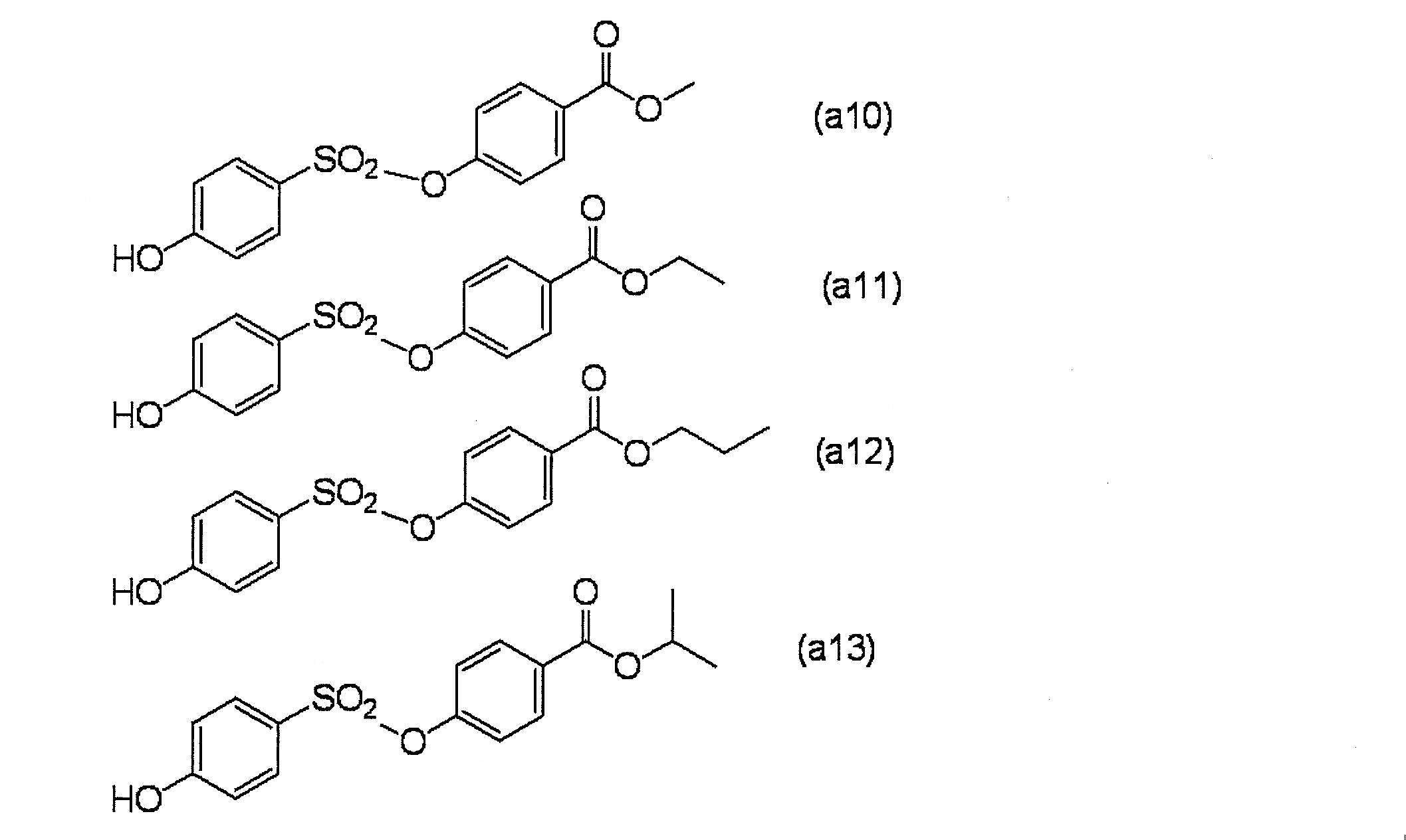
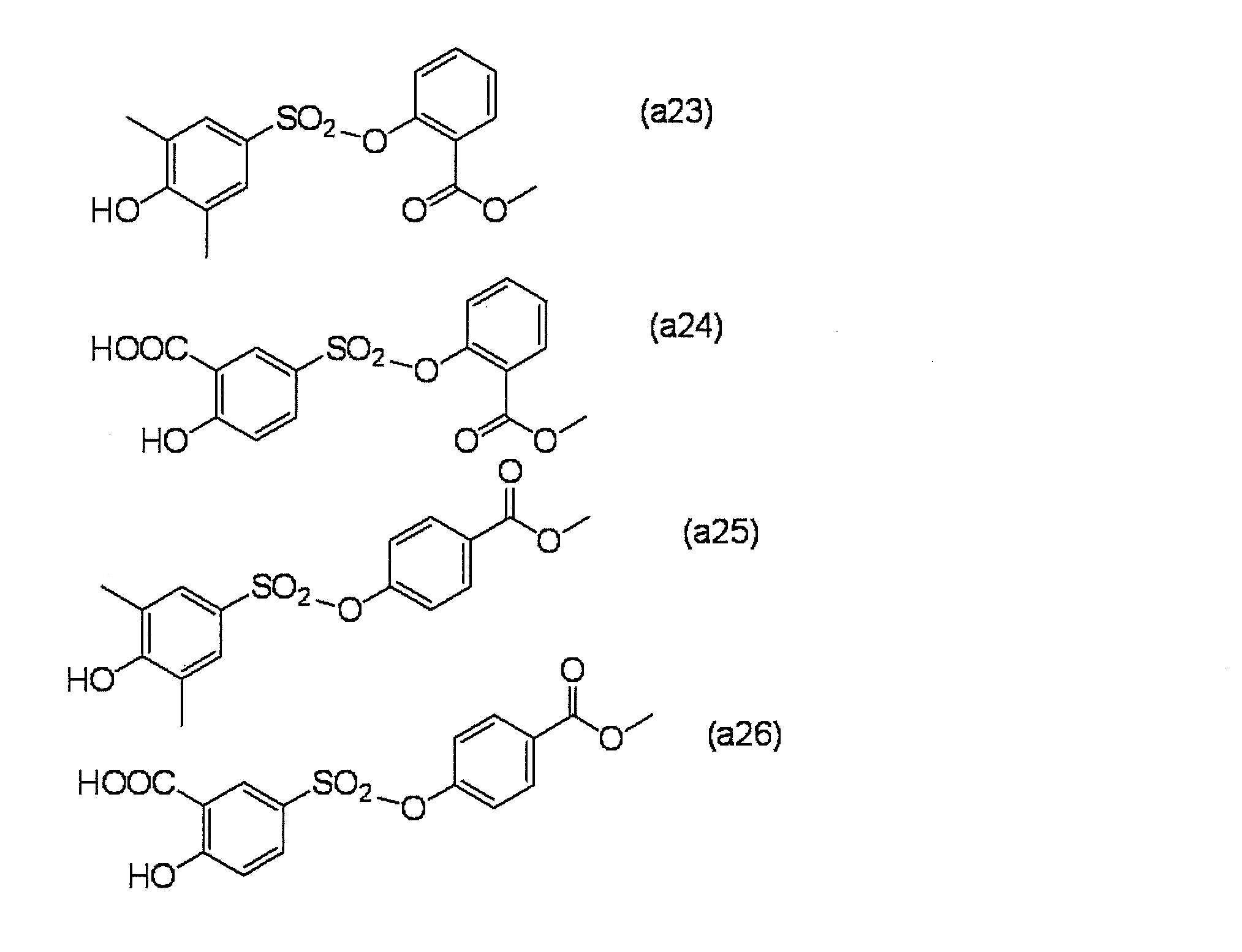
- Compounds represented by the following formulas (a1) to (a26) are more preferable.
- compounds (a1) to (a5) and (a10) are more preferred from the viewpoint of color development sensitivity, background fogging and image storage stability, and compounds (a1) to (a3) and compound ( a5) is particularly preferred.
- the purity of the compound (1) is usually 80 area% or more, preferably 90 area% or more, more preferably 94 area% or more.
- area% means “area%” in the results of high performance liquid chromatography analysis.
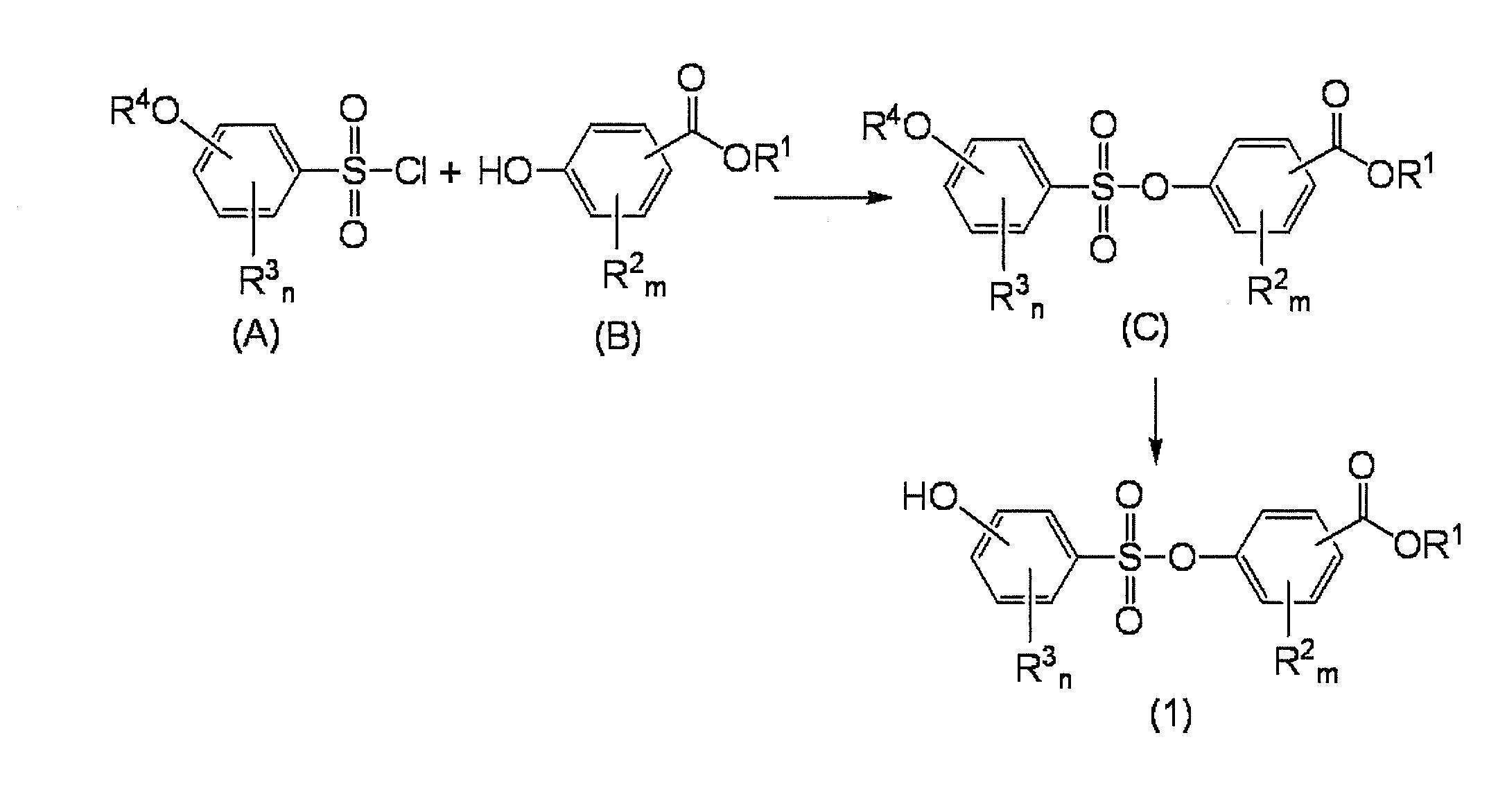
- the compound (1) of the present invention is obtained by reacting a compound represented by the formula (A) with a compound represented by the formula (B), for example, as shown below. It can be prepared by making (esterification) and then removing the R 4 group (deprotection).
- the esterification of the compound (A) and the compound (B) can be performed according to a known method (for example, a method described in JP-A-2010-53128).
- R 4 is a protecting group for a hydroxy group, and examples thereof include an acetyl group.
- Deprotection of compound (C) can also be performed according to a known method.
- the present invention also provides a developer for a heat-sensitive recording material containing the compound (1) (hereinafter sometimes abbreviated as “the developer of the present invention”). Only 1 type may be used for a compound (1) and it may use 2 or more types together.
- the developer of the present invention may contain a developer other than the compound (1) (for example, a second developer described later).
- the content of the compound (1) in the developer of the present invention is preferably 50% by weight or more, more preferably 60% by weight or more, and further preferably 70% by weight or more.
- the present invention also provides a thermosensitive recording material having a support and a thermosensitive recording layer (thermosensitive coloring layer) provided on the support.
- the heat-sensitive recording layer contains a colorless or light-colored basic (electron-donating) leuco dye and a developer for coloring the basic leuco dye, Contains compound (1).
- compound (1) may be used alone or in combination of two or more.
- the content of the compound (1) in the heat-sensitive recording layer is usually 0.1 to 10 parts by weight, preferably 0.5 to 8 parts by weight, particularly preferably 1 to 5 parts per 1 part by weight of the basic leuco dye. Parts by weight.
- components other than the compound (1) (second developer, basic leuco dye, sensitizer, stabilizer, binder, cross-linking agent, pigment, lubricant, which can be used to form a heat-sensitive recording layer, Other additives) will be described in order.
- components other than compound (1) all may use only 1 type and may use 2 or more types together.
- the binder, the crosslinking agent, the pigment and the like can be used not only in the heat-sensitive recording layer but also in a layer other than the heat-sensitive recording layer (for example, a protective layer described later) that the heat-sensitive recording material of the present invention may have. .
- the heat-sensitive recording layer may contain a second developer (preferably an electron-accepting developer) different from the compound (1) of the present invention as long as the effects of the present invention are not impaired.
- a second developer preferably an electron-accepting developer
- Any known developer in the field of conventional pressure-sensitive or thermal recording paper can be used as the second developer, and is not particularly limited. Only 1 type may be used for a 2nd color developer and it may use 2 or more types together.
- the amount used is preferably 0.005 to 1 part by weight, more preferably 0.01 part by weight to 0.8 part by weight per 1 part by weight of the compound (1). Parts, more preferably 0.02 to 0.7 parts by weight.
- thermosensitive recording material that maintains high color development sensitivity and further improves heat resistance, moisture resistance, and water-resistant image storage stability.
- a bisphenol sulfone compound As the second developer of the present invention, a bisphenol sulfone compound, a bisphenol compound, a urea compound, and a novolac type phenol compound are preferable. Specific examples of typical developers are shown below.
- ⁇ Bisphenolsulfone compound > 4,4′-dihydroxydiphenylsulfone, 2,4′-dihydroxydiphenylsulfone, 4-hydroxy-4′-propoxydiphenylsulfone, 4-hydroxy-4′-isopropoxydiphenylsulfone, 4-hydroxy-4′-allyloxy Diphenylsulfone, bis (3-allyl-4-hydroxyphenyl) sulfone, 4-hydroxyphenyl-4′-benzyloxyphenylsulfone, 3,4-dihydroxyphenyl-4′-methylphenylsulfone, described in Japanese Patent No. 3913820 Bisphenol sulfone derivative, a bisphenol sulfone derivative described in Japanese Patent No. 4004289.
- ⁇ Bisphenol compounds > 4,4'-isopropylidenediphenol, 2,2'-bis (4-hydroxy-3-methylphenyl) propane, 1,1-bis (4-hydroxyphenyl) cyclohexane, 2,2-bis (4-hydroxy) Phenyl) -4-methylpentane, 1,1-bis (4-hydroxyphenyl) -1-phenylethane, 4,4′-dihydroxydiphenyl sulfide, di (4-hydroxy-3-methyl) described in Japanese Patent No. 4216325 Phenyl) sulfide, 2,2′-thiobis (3-tert-octylphenol), 2,2′-thiobis (4-tert-octylphenol).
- ⁇ Urea compounds > 4,4′-bis (3- (phenoxycarbonylamino) methylphenylureido) diphenylsulfone, N- (p-toluenesulfonyl) -N ′-(3-p-toluenesulfonyloxyphenyl) described in Japanese Patent No. 4601174 Urea and its derivatives, 4,4′-bis (p-toluenesulfonylaminocarbonylamino) diphenylmethane.
- thiourea compounds such as N, N′-di-m-chlorophenylthiourea, p-chlorobenzoic acid, stearyl gallate, zinc bis [4- (octyloxycarbonylamino) salicylate] dihydrate 4- [2- (p-methoxyphenoxy) ethyloxy] salicylic acid, 4- [3- (p-tolylsulfonyl) propyloxy] salicylic acid, 5- [p- (2-p-methoxyphenoxyethoxy) cumyl] salicylic acid
- Aromatic carboxylic acids, and salts of these aromatic carboxylic acids with polyvalent metal salts such as zinc, magnesium, aluminum, calcium, titanium, manganese, tin, nickel, and further antipyrine complexes of zinc thiocyanate, terephthalaldehyde Complex zinc salt of acid and other aromatic carboxylic acid, JP-A-10-25857 Metal chelate complexes such as higher fatty acid metal
- ⁇ Basic leuco dye> As the colorless or light-colored basic (electron-donating) leuco dye, any of those known in the field of conventional pressure-sensitive or heat-sensitive recording paper can be used and is not particularly limited. Dyes, fluoran leuco dyes, fluorene leuco dyes, divinyl leuco dyes and the like are preferable. Specific examples of typical colorless or light-colored dyes (dye precursors) are shown below. Moreover, these dyes (dye precursor) may use only 1 type, and may use 2 or more types together.
- Triphenylmethane leuco dye 3,3-bis (p-dimethylaminophenyl) -6-dimethylaminophthalide [also known as crystal violet lactone]; 3,3-bis (p-dimethylaminophenyl) phthalide [also known as malachite green lactone]
- a known sensitizer may be used.
- the sensitizer is not particularly limited.
- 1,2-di (3-methylphenoxy) ethane, ⁇ -benzyloxynaphthalene, fatty acid amides having 10 to 21 carbon atoms (for example, stearic acid amide, palmitic acid amide, etc.), diphenyl sulfone, p-toluene Sulfonamides are preferred, 1,2-di (3-methylphenoxy) ethane, diphenylsulfone and p-toluenesulfonamide are more preferred, and 1,2-di (3-methylphenoxy) ethane showing high color development sensitivity even at low energy Is particularly preferred.
- These sensitizers may use only 1 type and may use 2 or more types together.
- the plasticizer resistance and heat resistance are further improved.
- the amount used is usually 0.1 to 10 parts by weight, preferably 0.5 to 8 parts by weight, particularly preferably 1 to 5 parts by weight per 1 part by weight of the basic leuco dye. Part.
- a stabilizer may be used to improve the image storage stability of the heat-sensitive recording material.
- a stabilizer means an agent that has the effect of improving the storage stability of an image.
- the stabilizer include hindered phenol compounds, ultraviolet absorbers (for example, benzophenone compounds and triazole compounds), and antioxidants.
- the hindered phenolic compound improves the image storage stability (heat resistance, moisture resistance, water resistance, plasticizer resistance, etc.) of the recording area, and fading of the recording area (that is, over time due to long-term storage). This is preferable in terms of improving (decoloring).
- the hindered phenol compound will be described.
- the hindered phenol compound is a compound having usually 1 or more and 15 or less, preferably 2 or more and 6 or less hydroxyphenyl groups in one molecule.
- the molecular weight of the hindered phenol compound is usually 200 or more and 2000 or less, preferably 250 or more and 1800 or less, more preferably 300 or more and 1500 or less.
- the melting point of the hindered phenol compound is preferably 100 ° C. or higher and 300 ° C. or lower.
- hindered phenol compounds examples include tris (hydroxyphenyl) alkanes and 1,1,3-tris substituted butane compounds described in JP-B-39-4469 or JP-A-56-40629. .
- examples of the hindered phenol compound include a compound represented by the formula (2).
- R 5 , R 8 and R 11 each independently represents an alkyl group
- R 6 , R 7 , R 9 , R 10 , R 12 and R 13 each independently represent a hydrogen atom or an alkyl group.
- the alkyl group of R 5 to R 13 may be any of linear, branched or cyclic. Specific examples of the alkyl group for R 5 to R 13 are the same as the specific examples of the alkyl group for R 1 .
- the number of carbon atoms of the alkyl group of R 5 to R 13 is preferably 1 to 8. More preferably, the alkyl group of R 5 , R 8 and R 11 has 1 to 6 carbon atoms.
- the number of carbon atoms of the alkyl group of R 6 , R 7 , R 9 , R 10 , R 12 and R 13 is more preferably 1-5.
- R 6 , R 7 , R 9 , R 10 , R 12 and R 13 are each independently a hydrogen atom or an alkyl group having 1 to 5 carbon atoms is preferred.
- R 6 , R 9 and R 12 are each a hydrogen atom or an alkyl group having 1 to 5 carbon atoms, and at least one of R 7 , R 10 and R 13 is a hydrogen atom is more preferable.
- R 5 , R 8 and R 11 are the same, R 6 , R 9 and R 12 are the same, or R 7 , R 10 and R 13 are the same. More preferably, R 5 , R 8 and R 11 are the same, R 6 , R 9 and R 12 are the same, and R 7 , R 10 and R 13 are the same. R 5 , R 8 and R 11 are tert-butyl groups or cyclohexyl groups, R 6 , R 9 and R 12 are methyl groups, and R 7 , R 10 and R 13 are hydrogen atoms. Further preferred.
- R 5 , R 8 and R 11 are tert-butyl groups, R 6 , R 9 and R 12 are methyl groups, and R 7 , R 10 and R 13 are hydrogen atoms
- Adeka Tab AO-30 (trade name) manufactured by Adeka and OS-930 (trade name) manufactured by Osaka Shinyaku Co., Ltd. are commercially available.
- Adeka Arcles DH-43 (trade name) manufactured by Adeka is commercially available.
- these commercially available products can be particularly preferably used.
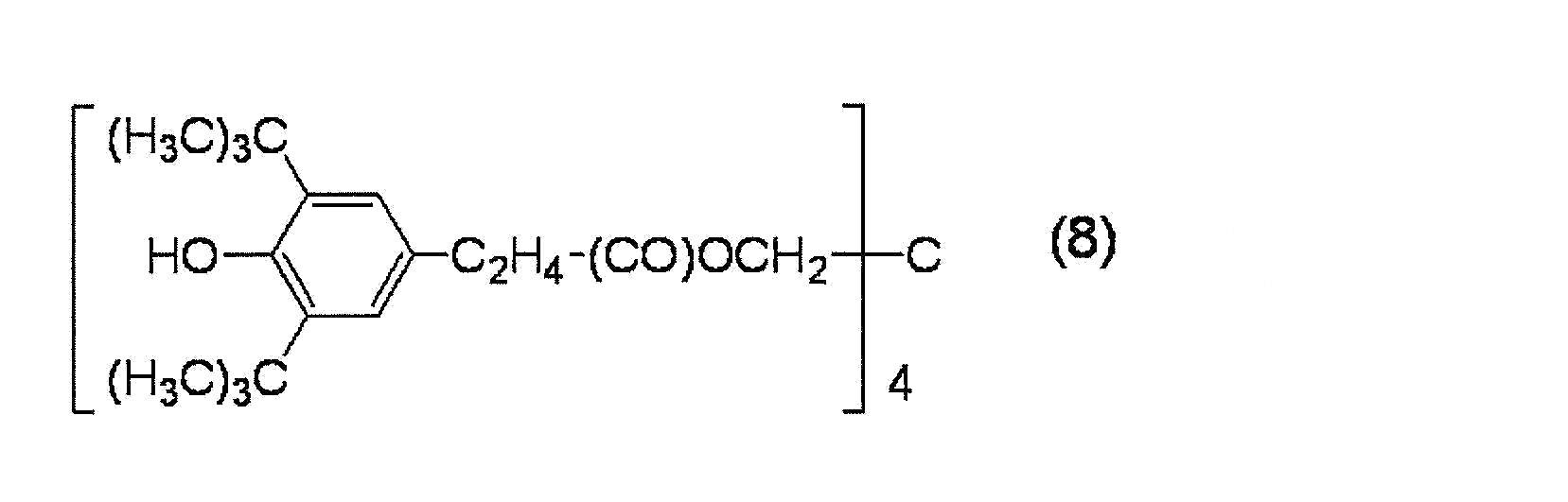
- examples of the hindered phenol compound include compounds represented by the following formulas (3) to (9).
- the compound (2) (in particular, R 5 , R 8 and R 11 are tert-butyl groups or cyclohexyl groups, and R 6 , R 9 and R 12 are methyl groups) , R 7 , R 10 and R 13 are hydrogen atoms (compound (2)), compound (3) and compound (4) are preferred.
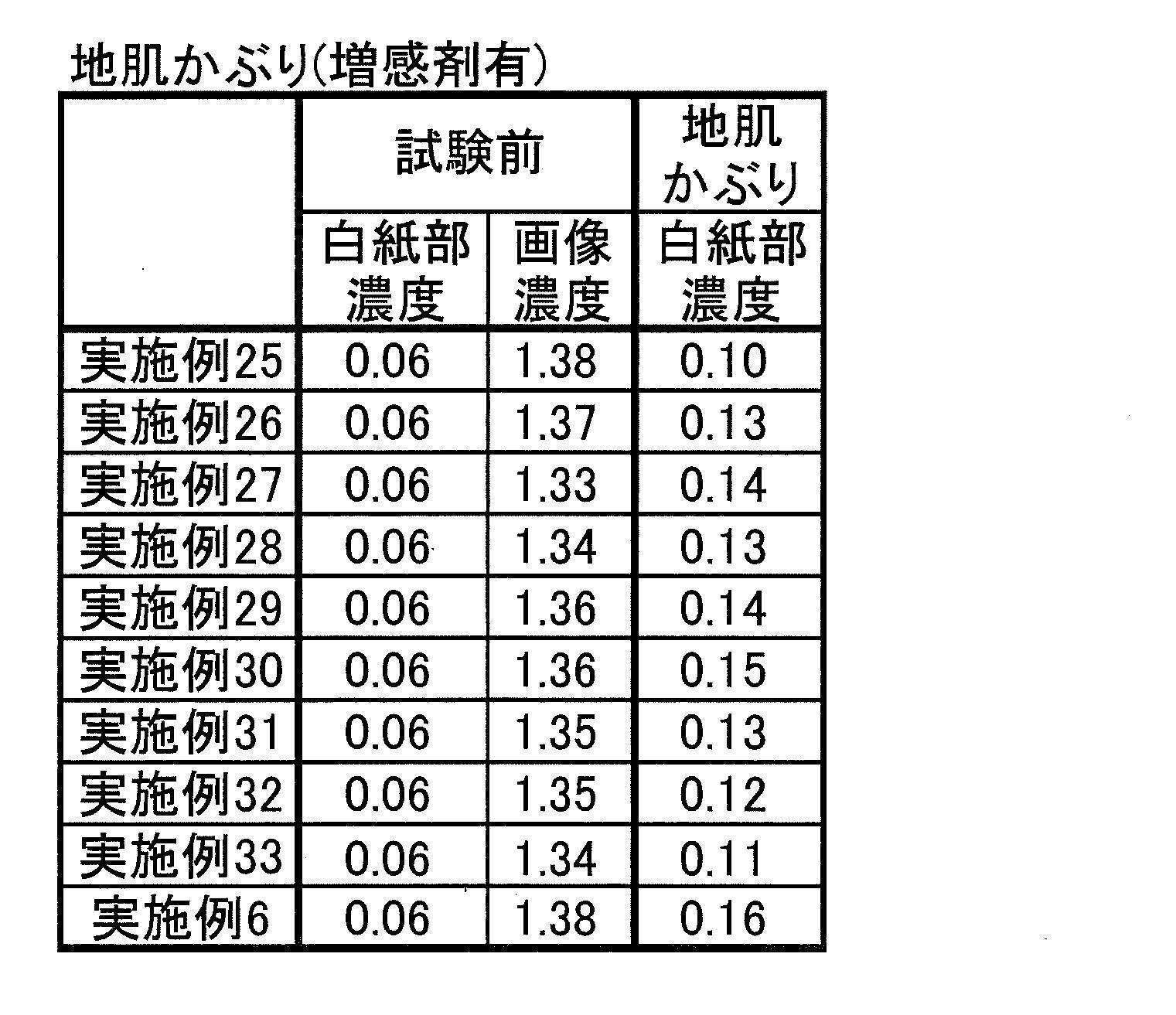
- the background fog can be improved.
- the improvement of background fogging means that unintentional coloring of the blank paper portion due to heating or the like is suppressed.
- hindered phenol compound Only one type of hindered phenol compound may be used, or two or more types may be used in combination.
- the content thereof is preferably 0.001 to 2 parts by weight, more preferably 0.005 to 1 with respect to 1 part by weight of the compound (1). Part by weight, more preferably 0.01 to 0.5 part by weight. If the content of the hindered phenolic compound is less than this range, the moisture resistance, water resistance, and heat resistance of the recording area may decrease, the recording area may fade due to changes over time, and the color of the blank area due to heating May not be suppressed. On the other hand, when the amount is larger than the above range, there is a possibility that the coloring sensitivity is lowered and the plasticizer resistance of the recording portion is lowered.
- a binder In order to form a heat-sensitive recording layer, it is preferable to use a binder.
- the binder include fully saponified polyvinyl alcohol, partially saponified polyvinyl alcohol, acetoacetylated polyvinyl alcohol, carboxy modified polyvinyl alcohol, amide modified polyvinyl alcohol, sulfonic acid modified polyvinyl alcohol, butyral modified polyvinyl alcohol, olefin modified polyvinyl alcohol, Nitrile modified polyvinyl alcohol, pyrrolidone modified polyvinyl alcohol, silicone modified polyvinyl alcohol, other modified polyvinyl alcohol, hydroxyethyl cellulose, methyl cellulose, ethyl cellulose, carboxymethyl cellulose, polystyrene, styrene-maleic anhydride copolymer, styrene-butadiene copolymer, etc.
- Styrene copolymer ethyl cellulose and acetyl Cellulose derivatives such as cellulose, casein, arabic gum, oxidized starch, etherified starch, dialdehyde starch, esterified starch, polyvinyl chloride, polyvinyl acetate, polyacrylamide, polyacrylate, polyvinyl butyral, polyamide resin, silicone resin, Examples include petroleum resins, terpene resins, ketone resins, coumarone resins, and the like.
- the amount of the binder used is suitably about 5 to 25% by weight in the solid content of the heat-sensitive recording layer.
- Binders are generally used as solutions, emulsions, dispersions, pastes or combinations thereof.
- Examples of the solvent of the solution, emulsion or dispersion, or the paste medium include water, alcohols, ketones, esters, and hydrocarbons.
- Crosslinking agent examples include glyoxal, methylol melamine, melamine formaldehyde resin, melamine urea resin, polyamine epichlorohydrin resin, polyamide epichlorohydrin resin, potassium persulfate, ammonium persulfate, sodium persulfate, ferric chloride, Examples include magnesium chloride, borax, boric acid, alum, and ammonium chloride.
- the amount used is preferably 0.01 to 10 parts by weight with respect to 1 part by weight of the basic leuco dye.
- the pigment examples include inorganic or organic pigments such as silica (excluding colloidal silica), calcium carbonate, kaolin, calcined kaolin, diatomaceous earth, talc, titanium oxide, and aluminum hydroxide.
- silica excluding colloidal silica
- the amount used is usually 0.1 to 20 parts by weight, preferably 0.5 to 10 parts by weight with respect to 1 part by weight of the basic leuco dye.
- lubricant examples include fatty acid metal salts such as zinc stearate and calcium stearate, waxes, and silicone resins.
- the amount used is preferably 0.01 to 10 parts by weight with respect to 1 part by weight of the basic leuco dye.
- additives examples include a dispersant, an antifoaming agent, and a fluorescent dye.
- the amount used is preferably 0.01 to 10 parts by weight with respect to 1 part by weight of the basic leuco dye.
- ⁇ Support> There is no restriction
- the shape of the support include a sheet shape, a roll shape, and a flat plate shape.
- the support may have a single layer structure or a laminated structure.
- the size of the support can be appropriately selected according to the intended use of the heat-sensitive recording material.
- the thickness of the support is not particularly limited and may be appropriately selected depending on the purpose. It is preferably 30 to 2,000 ⁇ m, and more preferably 50 to 1,000 ⁇ m.
- a protective layer may be provided on the heat-sensitive recording layer.
- a protective layer is provided on the heat-sensitive recording layer to improve the image storage stability of the heat-sensitive recording material, the color development sensitivity at low energy is lowered.
- the thermosensitive recording material of the present invention since the compound (1) is used as a developer, the color sensitivity at low energy is good even when a protective layer is provided on the thermosensitive recording layer.
- the types and amounts of various components used in the protective layer are determined according to the required performance and recordability, and are not particularly limited.
- an under layer mainly composed of a pigment and a binder can be provided between the support and the heat-sensitive recording layer for the purpose of further enhancing the color development sensitivity.
- a back layer may be provided on the surface of the support opposite to the heat-sensitive recording layer.
- an intermediate layer may be formed between the support and the under layer, between the thermosensitive recording layer and the protective layer, and between the support and the back layer.
- the heat-sensitive recording material of the present invention comprises a coating solution containing a basic leuco dye and compound (1) and, if necessary, a second developer, a hindered phenol compound, a sensitizer, etc. at least on the support. It can be manufactured by coating and drying on one side to form a heat-sensitive recording layer.
- This coating solution can be applied in accordance with a well-known conventional technique.
- the application means for example, an off-machine coating machine or an on-machine coating machine equipped with various coaters such as an air knife coater, rod blade coater, vent blade coater, bevel blade coater, roll coater, curtain coater, etc. Can be used.
- the coating liquid for forming the heat-sensitive recording layer may be, for example, a basic leuco dye, compound (1), and, if necessary, a second developer, a hindered phenol compound, a sensitizer, It can be formed by atomizing to a particle size of several microns or less by a pulverizer such as an attritor or a sand glider or a suitable emulsifying device, and then adding a binder or the like to them. Water, alcohols, etc. can be used as a solvent used for this coating liquid.
- the solid content of the coating liquid is usually about 20 to 40% by weight.
- the coating amount of the heat-sensitive recording layer can be appropriately selected depending on the composition and use of the heat-sensitive recording material, but is usually in the range of 1 to 20 g / m 2 , preferably 2 to 12 g / m 2 in terms of dry weight. .
- the protective layer, the under layer, the back layer, and the intermediate layer can be formed by applying and drying a coating liquid containing the constituent components in the same manner as the heat-sensitive recording layer described above.
- the heat-sensitive recording material of the present invention in which each layer is formed may be subjected to a process known in the field (for example, a smoothing process using a super calendar or the like).
- thermosensitive coloring layer thermosensitive coloring layer
- parts and % represent “parts by weight” and “% by weight”, respectively, unless otherwise specified.
- the smoothness of the heat-sensitive recording material was measured according to JIS P8119 (Beck method). The higher the smoothness (second), the smoother the surface.
- ⁇ Coating solution for thermal recording layer The following liquids A to E were separately wet ground with a sand grinder until the average particle diameter of each component became 0.5 ⁇ m.
- the average particle diameter is an average diameter in a volume-based distribution, and was measured with a laser diffraction / scattering type particle size distribution measuring apparatus.
- ⁇ Liquid A developer dispersion> Compound (a1): 6.0 parts Polyvinyl alcohol (10% aqueous solution): 18.8 parts Water: 11.2 parts ⁇ Liquid B (colorless basic leuco dye dispersion)> 3-Dibutylamino-6-methyl-7-anilinofluorane (manufactured by Yamamoto Kasei Co., Ltd., trade name “ODB-2”): 2.0 parts Polyvinyl alcohol (10% aqueous solution): 4.6 parts Water : 2.6 parts ⁇ Liquid C (sensitizer dispersion)> 1,2-di (3-methylphenoxy) ethane (trade name “KS-232” manufactured by Sanko Co., Ltd.): 6.0 parts Polyvinyl alcohol (10% aqueous solution): 18.8 parts Water: 11.2 Part ⁇ Liquid D (second developer dispersion)> Bis (3-allyl-4-hydroxyphenyl) sulfone (manufactured by N
- Example 1 Each liquid was mixed in the following ratio to prepare a coating liquid 1 for a heat-sensitive recording layer.
- Liquid A developer dispersion
- Liquid B colorless basic leuco dye dispersion
- Silica manufactured by Mizusawa Chemical Co., Ltd., trade name “P537”, 25% dispersion
- Polyvinyl alcohol (10% aqueous solution) 25.0 parts
- the under layer coating liquid was applied with a Meyer bar on one side of a high-quality paper (47 g / m 2 base paper) as a support so that the dry weight of the under layer was 10 g / m 2 and dried ( An under layer was formed by blowing and drying at 60 ° C. for 2 minutes.
- the thermal recording layer coating liquid 1 was applied and dried (blow dryer, 60 ° C., 2 minutes) so that the dry weight of the thermal recording layer was 3.5 g / m 2 , and the thermal recording was performed.
- a recording layer was formed.
- the support on which the under layer and the heat-sensitive recording layer were formed was processed with a super calender so that the smoothness was 500 to 1000 seconds to obtain a heat-sensitive recording material.
- thermosensitive recording material was produced in the same manner as in Example 1 except that the compound (a1) in the liquid A was changed to the compound (a2).
- thermosensitive recording material was produced in the same manner as in Example 1 except that the compound (a1) in the liquid A was changed to the compound (a3).
- thermosensitive recording material was produced in the same manner as in Example 1 except that the compound (a1) in the liquid A was changed to the compound (a5).
- thermosensitive recording material was produced in the same manner as in Example 1 except that the compound (a1) in the liquid A was changed to the compound (a10).
- thermosensitive recording material was produced in the same manner as in Example 1 except that the compound (a1) in the liquid A was changed to bisphenol A (ie, 4,4′-isopropylidenediphenol).
- thermosensitive recording material was produced in the same manner as in Example 1 except that the compound (a1) in the liquid A was changed to 4-hydroxy-4′-isopropoxydiphenylsulfone.
- thermosensitive recording material was produced in the same manner as in Example 1 except that the compound (a1) in the liquid A was changed to bisphenol S (that is, 4,4′-dihydroxydiphenyl sulfone).
- thermosensitive recording material was produced in the same manner as in Example 1 except that the compound (a1) in the liquid A was changed to 4-hydroxy-4′-allyloxydiphenylsulfone.
- thermosensitive recording material was produced in the same manner as in Example 1 except that the compound (a1) in the liquid A was changed to 4-hydroxybenzenesulfonic acid 4′-methylphenyl.
- thermosensitive recording material was produced in the same manner as in Example 1 except that the compound (a1) in the liquid A was changed to 4-hydroxybenzenesulfonic acid 4′-tert-butylphenyl.
- thermosensitive recording material was produced in the same manner as in Example 1 except that the compound (a1) in the liquid A was changed to 4-hydroxybenzenesulfonic acid 4′-chlorophenyl.
- Example 6 The respective liquids were mixed at the following ratio to prepare a thermal recording layer coating solution 2.
- Liquid A developer dispersion: 36.0 parts
- Liquid B colorless basic leuco dye dispersion: 18.0 parts
- Liquid C sensitizer dispersion: 36.0 parts
- Silica Made by Mizusawa Chemical Co., Ltd., trade name “P537”, 25% dispersion
- the under layer coating liquid was applied with a Meyer bar on one side of a high-quality paper (47 g / m 2 base paper) as a support so that the dry weight of the under layer was 10 g / m 2 and dried ( An under layer was formed by blowing and drying at 60 ° C. for 2 minutes.
- the thermal recording layer coating liquid 2 was applied and dried (blow dryer, 60 ° C., 2 minutes) so that the dry weight of the thermal recording layer was 3.5 g / m 2 , and the thermal recording layer was heated.
- a recording layer was formed.
- the support on which the under layer and the heat-sensitive recording layer were formed was processed with a super calender so that the smoothness was 500 to 1000 seconds to obtain a heat-sensitive recording material.
- thermosensitive recording material was produced in the same manner as in Example 6 except that 1,2-di (3-methylphenoxy) ethane in liquid C was changed to ⁇ -benzyloxynaphthalene.
- thermosensitive recording material was produced in the same manner as in Example 6 except that 1,2-di (3-methylphenoxy) ethane in liquid C was changed to diphenylsulfone.
- thermosensitive recording material was produced in the same manner as in Example 6 except that 1,2-di (3-methylphenoxy) ethane in liquid C was changed to stearamide.
- thermosensitive recording material was produced in the same manner as in Example 6 except that the compound (a1) in the liquid A was changed to 4-hydroxy-4′-allyloxydiphenylsulfone obtained by the method described in Japanese Patent No. 2500532. .
- thermosensitive recording material was produced in the same manner as in Example 6 except that ethane was changed to p-toluenesulfonamide.
- Example 10 The liquids were mixed at the following ratios to prepare a thermal recording layer coating solution 3.
- Liquid A developer dispersion: 25.2 parts
- Liquid B colorless basic leuco dye dispersion: 18.0 parts
- Liquid C sensitizer dispersion: 36.0 parts
- Liquid D Silicone (manufactured by Mizusawa Chemical, trade name “P537”, 25% dispersion): 40.0 parts
- the under layer coating liquid was applied with a Meyer bar on one side of a high-quality paper (47 g / m 2 base paper) as a support so that the dry weight of the under layer was 10 g / m 2 and dried ( An under layer was formed by blowing and drying at 60 ° C. for 2 minutes.
- the thermal recording layer coating liquid 3 was applied and dried (blow dryer, 60 ° C., 2 minutes) so that the dry weight of the thermal recording layer was 3.5 g / m 2 , and the thermal recording was performed.
- a recording layer was formed.
- the support on which the under layer and the heat-sensitive recording layer were formed was processed with a super calender so that the smoothness was 500 to 1000 seconds to obtain a heat-sensitive recording material.
- Example 11 Except that bis (3-allyl-4-hydroxyphenyl) sulfone in solution D was changed to 4-hydroxy-4′-allyloxydiphenylsulfone obtained by the method described in Japanese Patent No. 2500532, the same procedure as in Example 10 was performed. Thus, a heat-sensitive recording material was produced.
- Example 12 Example 10 except that bis (3-allyl-4-hydroxyphenyl) sulfone in solution D was changed to 4-hydroxy-4′-propoxydiphenylsulfone (trade name “Tomilac KN” manufactured by API Corporation). In the same manner, a heat-sensitive recording material was produced.
- thermosensitive recording material was produced in the same manner as in Example 10 except that bis (3-allyl-4-hydroxyphenyl) sulfone in the liquid D was changed to bisphenol S (4,4′-dihydroxydiphenylsulfone).
- Example 14 Except that bis (3-allyl-4-hydroxyphenyl) sulfone in the liquid D was changed to bisphenol C (2,2′-bis (4-hydroxy-3-methylphenyl) propane), the same as in Example 10. Thus, a heat-sensitive recording material was produced.
- thermosensitive recording material was produced in the same manner as in Example 10 except that bis (3-allyl-4-hydroxyphenyl) sulfone in the liquid D was changed to bisphenol A (4,4′-isopropylidenediphenol). .
- Example 16 The bis (3-allyl-4-hydroxyphenyl) sulfone in the liquid D was changed to a phenol-formalin condensate described in International Publication No. 02/098767 (trade name “Tomilac 224” manufactured by API Corporation). A thermosensitive recording material was produced in the same manner as in Example 10 except that.
- Example 17 Example 10 except that bis (3-allyl-4-hydroxyphenyl) sulfone in the liquid D was changed to a diphenylsulfone compound described in Japanese Patent No. 4004289 (trade name “Tomilac 214” manufactured by API Corporation). In the same manner, a heat-sensitive recording material was produced.
- Example 18 The amount of liquid A was changed to 36.0 parts, and bis (3-allyl-4-hydroxyphenyl) sulfone in liquid D was converted to a diphenylsulfone compound described in Japanese Patent No. 4004289 (trade name “Tomilac” manufactured by API Corporation).
- a thermosensitive recording material was produced in the same manner as in Example 10 except that the change was made to 214 ").
- Example 19 The amount of liquid A was changed to 32.4 parts, and bis (3-allyl-4-hydroxyphenyl) sulfone in liquid D was converted to a diphenylsulfone compound described in Japanese Patent No. 4004289 (trade name “Tomilac” manufactured by API Corporation). 214 ”), and a heat-sensitive recording material was produced in the same manner as in Example 10 except that the amount of liquid D was changed to 3.6 parts.
- Example 20 Implemented except that bis (3-allyl-4-hydroxyphenyl) sulfone in Liquid D was changed to the diphenylsulfone cross-linked compound described in Japanese Patent No. 3913820 (trade name “D-90” manufactured by Nippon Soda Co., Ltd.) In the same manner as in Example 10, a thermosensitive recording material was produced.
- Example 21 The amount of liquid A was changed to 36.0 parts, and bis (3-allyl-4-hydroxyphenyl) sulfone in liquid D was converted to a diphenylsulfone crosslinked compound described in Japanese Patent No. 3913820 (manufactured by Nippon Soda Co., Ltd. A thermosensitive recording material was produced in the same manner as in Example 10 except that the change was made to D-90 ").
- Example 22 The amount of liquid A was changed to 32.4 parts, and bis (3-allyl-4-hydroxyphenyl) sulfone in liquid D was converted to a diphenylsulfone bridged compound described in Japanese Patent No. 3913820 (trade name “Nippon Soda Co., Ltd. D-90 "), and a thermosensitive recording material was produced in the same manner as in Example 10 except that the amount of liquid D was changed to 3.6 parts.
- Example 23 The amount of liquid A was changed to 36.0 parts, and bis (3-allyl-4-hydroxyphenyl) sulfone in liquid D was changed to 4,4′-bis (3- (phenoxycarbonylamino) methylphenylureido) diphenylsulfone.
- a heat-sensitive recording material was produced in the same manner as in Example 10 except that the change was made.
- Example 24 The amount of liquid A was changed to 36.0 parts, and bis (3-allyl-4-hydroxyphenyl) sulfone in liquid D was converted to N- (p-toluenesulfonyl) -N ′-( A thermosensitive recording material was produced in the same manner as in Example 10 except that 3-p-toluenesulfonyloxyphenyl) urea was used.
- Example 25 The respective liquids were mixed at the following ratios to prepare a thermal recording layer coating liquid 4.
- Liquid A developer dispersion: 36.0 parts
- Liquid B colorless basic leuco dye dispersion: 18.0 parts
- Liquid C sensitizer dispersion: 36.0 parts
- Liquid E Dission of hindered phenolic compound: 3.6 parts
- Silica manufactured by Mizusawa Chemical Co., Ltd., trade name “P537”, 25% dispersion
- the under layer coating liquid was applied with a Meyer bar on one side of a high-quality paper (47 g / m 2 base paper) as a support so that the dry weight of the under layer was 10 g / m 2 and dried ( An under layer was formed by blowing and drying at 60 ° C. for 2 minutes.
- the thermal recording layer coating liquid 4 was applied and dried (blow dryer, 60 ° C., 2 minutes) so that the dry weight of the thermal recording layer was 3.5 g / m 2 , and the thermal recording was performed.
- a recording layer was formed.
- the support on which the under layer and the heat-sensitive recording layer were formed was processed with a super calender so that the smoothness was 500 to 1000 seconds to obtain a heat-sensitive recording material.
- Example 27 1,1,3-Tris (2-methyl-4-hydroxy-5-tert-butylphenyl) butane in solution E is converted to 4,4′-butylidenebis (6-tert-butyl-3-methylphenol) (AP A thermal recording material was produced in the same manner as in Example 25 except that the product name was changed to “Yoshinox BB” manufactured by Corporation.
- thermosensitive recording material was produced in the same manner as in Example 25 except that.
- Example 29 A heat-sensitive recording material was produced in the same manner as in Example 25 except that the amount of liquid E was changed to 1.8 parts.
- thermosensitive recording material was produced in the same manner as in Example 25 except that the amount of liquid A was changed to 35.64 parts and the amount of liquid E was changed to 0.36 parts.
- thermosensitive recording material was produced in the same manner as in Example 25 except that the amount of liquid A was changed to 34.92 parts and the amount of liquid E was changed to 1.08 parts.
- thermosensitive recording material was produced in the same manner as in Example 25 except that the amount of liquid A was changed to 34.2 parts and the amount of liquid E was changed to 1.8 parts.
- thermosensitive recording material was produced in the same manner as in Example 25 except that the amount of liquid A was changed to 33.48 parts and the amount of liquid E was changed to 2.52 parts.
- Example 34 The respective liquids were mixed at the following ratio to prepare a thermal recording layer coating liquid 5.
- Liquid A developer dispersion: 36.0 parts
- Liquid B colorless basic leuco dye dispersion: 18.0 parts
- Liquid C sensitizer dispersion: 18.0 parts
- Liquid E Hindered phenol compound dispersion: 1.8 parts
- F liquid second sensitizer dispersion: 18.0 parts
- Silica manufactured by Mizusawa Chemical, trade name “P537”, 25% dispersion
- the under layer coating liquid was applied with a Meyer bar on one side of a high-quality paper (47 g / m 2 base paper) as a support so that the dry weight of the under layer was 10 g / m 2 and dried ( An under layer was formed by blowing and drying at 60 ° C. for 2 minutes.
- the thermal recording layer coating liquid 5 was applied and dried (fan dryer, 60 ° C., 2 minutes) so that the dry weight of the thermal recording layer was 3.5 g / m 2 , and the thermal recording layer was heated.
- a recording layer was formed.
- the support on which the under layer and the heat-sensitive recording layer were formed was processed with a super calender so that the smoothness was 500 to 1000 seconds to obtain a heat-sensitive recording material.
- thermosensitive recording material was produced in the same manner as in Example 34 except that 1,2-di (3-methylphenoxy) ethane in the liquid C was changed to diphenylsulfone.
- thermosensitive recording material was produced in the same manner as in Example 34 except that p-toluenesulfonamide in the liquid F was changed to diphenylsulfone.
- the heat-sensitive recording materials obtained in the examples and comparative examples were evaluated as follows.
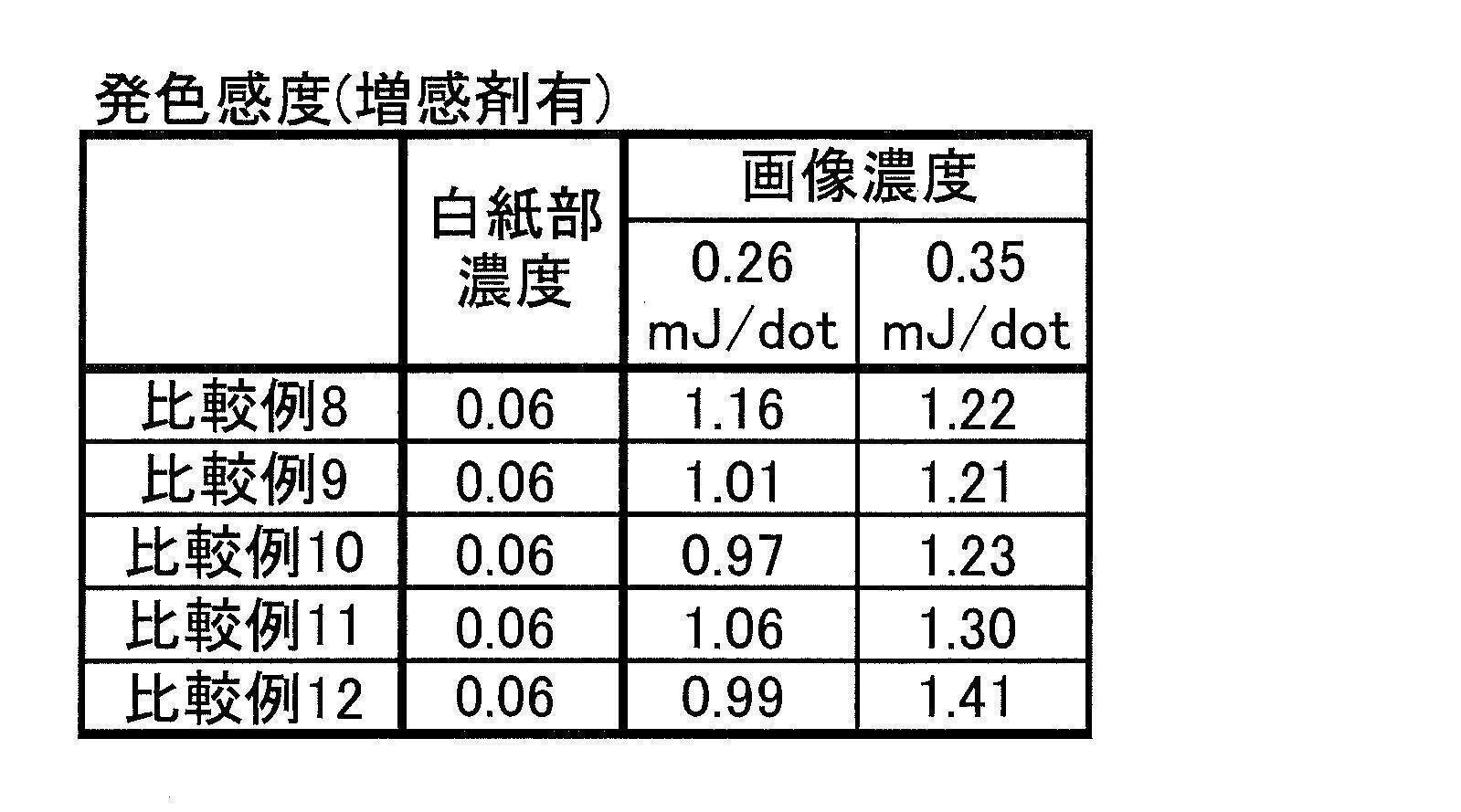
- ⁇ Color development sensitivity> A gradation pattern is printed using a thermal printer (TH-PMD) manufactured by Okura Electric Co., Ltd., and the Macbeth densitometer (image density and white paper density at applied energy of 0.26 mJ / dot and 0.35 mJ / dot) is measured. RD-914 using an amber filter). The results are shown in Tables 1 and 3-5.
- Examples 1 to 5 using the compound (1) of the present invention as the developer are aryloxysulfonyl having an alkyl group or a chlorine atom instead of the —CO—OR 1 group.
- Comparative Examples 5 to 7 using a group-containing phenol derivative corresponding to the developer described in Patent Document 1
- the background fog was good and the contrast between the blank paper portion and the recording portion was clear.
- Examples 1 to 8 had a higher image remaining ratio than Comparative Examples 5 to 7, and were excellent in durability against the plasticizer.
- Examples 6 to 36 using the compound (1) of the present invention as a developer are also known in the case of heat-sensitive recording materials using a sensitizer. Compared with Comparative Examples 8 to 12 using the agent, the color development sensitivity at a low energy (applied energy of 0.26 mJ / dot) was high.
- Examples 6 to 9 using a sensitizer in addition to the compound (1) of the present invention are also excellent in plasticizer resistance as compared with Comparative Examples 5 to 7. It was.
- Examples 10 to 24 using a second developer, Examples 25 to 33 using a hindered phenol compound, and two sensitizers were used.
- the used Examples 34 to 36 were further excellent in heat resistance, moisture resistance and water resistance.
- Examples 34 to 36 were particularly excellent in heat resistance and plasticizer resistance.
- the compound (1) of the present invention is a developer excellent in the balance of low energy color development sensitivity, background fogging and image storability (heat resistance, plasticizer resistance, moisture resistance, water resistance). In addition, it is possible to provide a heat-sensitive recording material which is excellent in suppressing fading of the recording portion.
Landscapes
- Chemical & Material Sciences (AREA)
- Organic Chemistry (AREA)
- Chemical Kinetics & Catalysis (AREA)
- General Chemical & Material Sciences (AREA)
- Physics & Mathematics (AREA)
- Optics & Photonics (AREA)
- Heat Sensitive Colour Forming Recording (AREA)
- Organic Low-Molecular-Weight Compounds And Preparation Thereof (AREA)
Abstract
Description
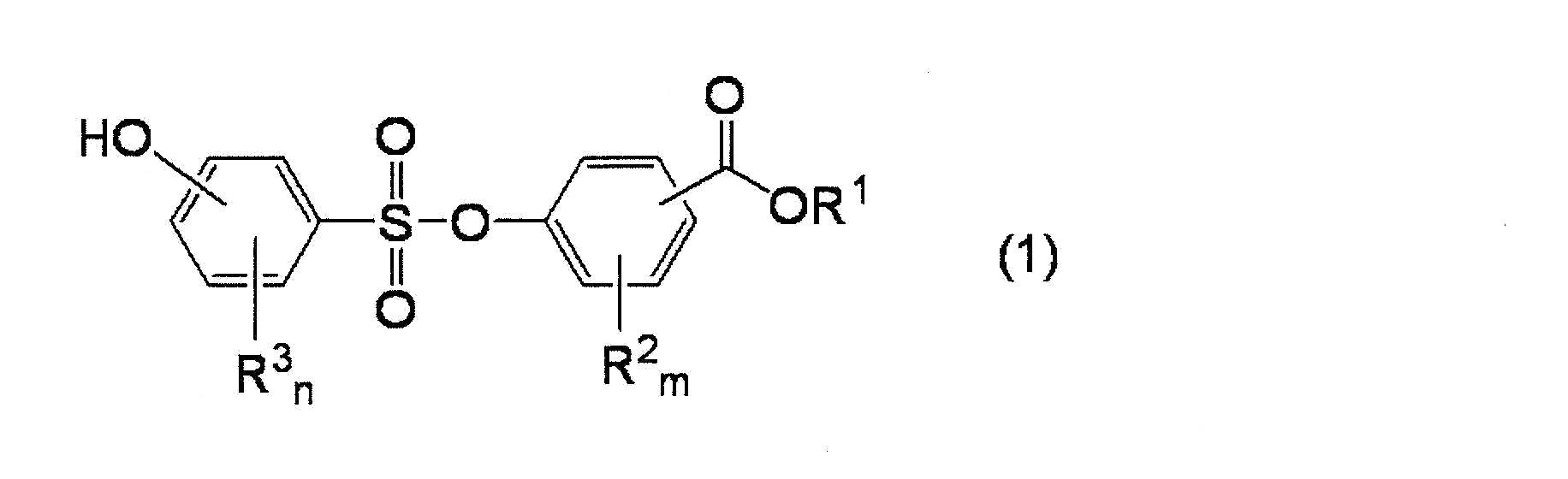
m個のR2は、それぞれ独立して、アルキル基、アルケニル基、アリール基、アラルキル基、アルコキシ基、ハロゲン原子、ヒドロキシ基、シアノ基、ニトロ基、カルボキシ基またはアミノ基を示し、
n個のR3は、それぞれ独立して、アルキル基、アルケニル基、アリール基、アラルキル基、アルコキシ基、ハロゲン原子、ヒドロキシ基、シアノ基、ニトロ基、カルボキシ基またはアミノ基を示し、
mおよびnは、それぞれ独立して、0~4の整数を示す。]
[2] -CO-OR1基が、ベンゼン環の2位または4位の炭素原子と結合している上記[1]に記載の化合物。
[3] 上記[1]または[2]に記載の化合物を含有する感熱記録材料用の顕色剤。
[4] 支持体、および支持体上に設けられた感熱記録層を有する感熱記録材料であって、
感熱記録層が、無色または淡色の塩基性ロイコ染料と、塩基性ロイコ染料を発色させるための顕色剤とを含有し、
顕色剤が、上記[1]または[2]に記載の化合物を含有する感熱記録材料。
[5] 感熱記録層が、上記[1]または[2]に記載の化合物とは別の第2の顕色剤を含有する上記[4]に記載の感熱記録材料。
[6] 第2の顕色剤が、ビスフェノールスルホン系化合物、ビスフェノール系化合物、ウレア系化合物およびノボラック型フェノール系化合物からなる群より選ばれる少なくとも一つである上記[5]に記載の感熱記録材料。
[7] 感熱記録層が、1,2-ジ(3-メチルフェノキシ)エタン、炭素数10~21の脂肪酸アミド、β-ベンジルオキシナフタレン、ジフェニルスルホンおよびp-トルエンスルホンアミドからなる群より選ばれる少なくとも一つの増感剤を含有する上記[4]~[6]のいずれか一つに記載の感熱記録材料。
[8] 感熱記録層が、ヒンダードフェノール系化合物を含有する上記[4]~[7]のいずれか一つに記載の感熱記録材料。
[9] ヒンダードフェノール系化合物が、式(2)で表される化合物、式(3)で表される化合物および式(4)で表される化合物からなる群より選ばれる少なくとも一つである上記[8]に記載の感熱記録材料。
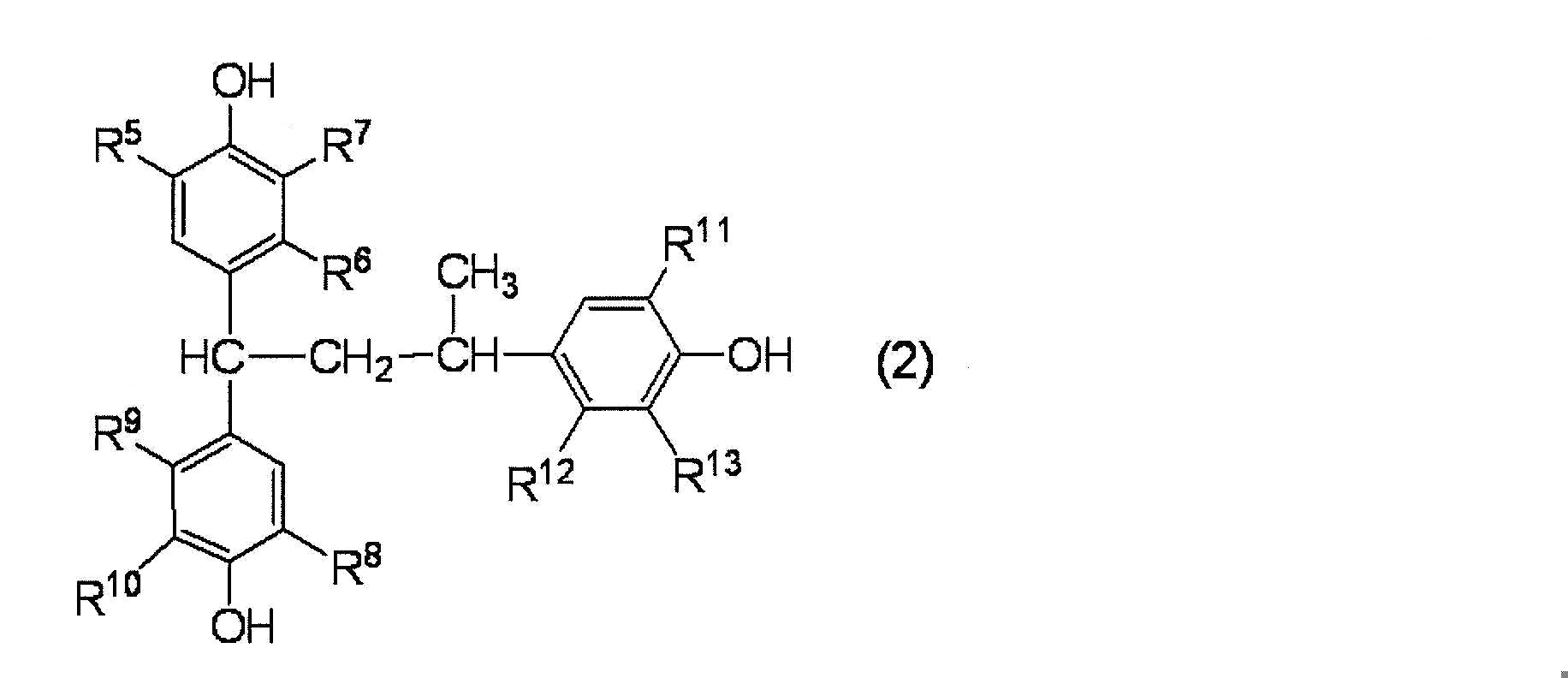
R6、R7、R9、R10、R12およびR13は、それぞれ独立して、水素原子またはアルキル基を示す。]


[10] R5、R8およびR11がtert-ブチル基またはシクロヘキシル基であり、R6、R9およびR12がメチル基であり、R7、R10およびR13が水素原子である上記[9]に記載の感熱記録材料。
まず本発明の化合物(1)から説明する。式(1)中のR1は、水素原子、アルキル基、アルケニル基、アリール基またはアラルキル基を示す。
R1が、水素原子、炭素数1~6のアルキル基または炭素数7~8のアラルキル基であり、
m個のR2が、それぞれ独立して、炭素数1~6のアルキル基、炭素数1~4のアルコキシ基またはカルボキシ基であり、
n個のR3が、それぞれ独立して、炭素数1~6のアルキル基、炭素数1~4のアルコキシ基またはカルボキシ基であり、
mおよびnが、それぞれ独立して、0~2の整数である
組合せが好ましく;
R1が、水素原子、炭素数1~6のアルキル基または炭素数7~8のアラルキル基であり、
R2が、炭素数1~6のアルキル基、炭素数1~4のアルコキシ基またはカルボキシ基であり、
n個のR3が、それぞれ独立して、炭素数1~6のアルキル基、炭素数1~4のアルコキシ基またはカルボキシ基であり、
mが、0または1であり、
nが、0~2の整数である
組合せがより好ましく;
R1が、炭素数1~6のアルキル基であり、
R2が、炭素数1~6のアルキル基であり、
R3が、炭素数1~6のアルキル基またはカルボキシ基であり、
mおよびnが、それぞれ独立して、0または1である
組合せがさらに好ましく;
R1が、炭素数1~6のアルキル基であり、
mおよびnが、0である
組合せが特に好ましい。
R1が、炭素数1~6のアルキル基であり、
R2が、炭素数1~6のアルキル基であり、
n個のR3が、それぞれ独立して、炭素数1~6のアルキル基またはカルボキシ基であり、
mが、0または1の整数であり、
nが、0~2の整数であり、
-CO-OR1基を有するベンゼン環中のオキシ基(-O-)が結合している炭素原子を1位とした場合、-CO-OR1基の位置が2位または4位であり、
-OH基を有するベンゼン環中のスルホニル基(-SO2-)が結合している炭素原子を1位とした場合、OH基の位置が4位である
化合物が好ましく;
以下の式(a1)~(a26)で表される化合物がより好ましい。




本発明の化合物(1)は、例えば以下に示すように、式(A)で表される化合物と式(B)で表される化合物とを反応させて式(C)で表される化合物を製造し(エステル化)、次いでR4基を除去することによって(脱保護)、製造することができる。
本発明は、化合物(1)を含有する感熱記録材料用の顕色剤(以下「本発明の顕色剤」と略称することがある)も提供する。化合物(1)は、1種のみを使用してもよく、2種以上を併用してもよい。本発明の顕色剤は、化合物(1)以外の顕色剤(例えば、後述する第2の顕色剤)を含有してもよい。本発明の顕色剤中の化合物(1)の含有量は、好ましくは50重量%以上、より好ましくは60重量%以上、さらに好ましくは70重量%以上である。
本発明は、支持体、および支持体上に設けられた感熱記録層(感熱発色層)を有する感熱記録材料も提供する。本発明の感熱記録材料では、感熱記録層が、無色または淡色の塩基性(電子供与性)ロイコ染料と、塩基性ロイコ染料を発色させるための顕色剤とを含有し、顕色剤が、化合物(1)を含有する。本発明の感熱記録材料において、化合物(1)は、1種のみを使用してもよく、2種以上を併用してもよい。感熱記録層中の化合物(1)の含有量は、塩基性ロイコ染料1重量部に対して、通常0.1~10重量部、好ましくは0.5~8重量部、特に好ましくは1~5重量部である。
感熱記録層は、本発明の効果を阻害しない範囲で、本発明の化合物(1)とは別の第2の顕色剤(好ましくは電子受容性顕色剤)を含有していてもよい。第2の顕色剤としては、従来の感圧または感熱記録紙の分野で公知のものはすべて使用可能であり、特に制限されるものではない。第2の顕色剤は、1種のみを使用してもよく、2種以上を併用してもよい。第2の顕色剤を使用する場合、その使用量は、化合物(1)1重量部に対して、好ましくは0.005~1重量部、より好ましくは0.01重量部~0.8重量部、さらに好ましくは0.02重量部~0.7重量部である。
4,4’-ジヒドロキシジフェニルスルホン、2,4’-ジヒドロキシジフェニルスルホン、4-ヒドロキシ-4’-プロポキシジフェニルスルホン、4-ヒドロキシ-4’-イソプロポキシジフェニルスルホン、4-ヒドロキシ-4’-アリルオキシジフェニルスルホン、ビス(3-アリル-4-ヒドロキシフェニル)スルホン、4-ヒドロキシフェニル-4’-ベンジルオキシフェニルスルホン、3,4-ジヒドロキシフェニル-4’-メチルフェニルスルホン、特許第3913820号に記載のビスフェノールスルホン架橋型化合物、特許第4004289号に記載のビスフェノールスルホン誘導体。
4,4’-イソプロピリデンジフェノール、2,2’-ビス(4-ヒドロキシ-3-メチルフェニル)プロパン、1,1-ビス(4-ヒドロキシフェニル)シクロヘキサン、2,2-ビス(4-ヒドロキシフェニル)-4-メチルペンタン、特許第4216325号に記載の1,1-ビス(4-ヒドロキシフェニル)-1-フェニルエタン、4,4’-ジヒドロキシジフェニルスルフィド、ジ(4-ヒドロキシ-3-メチルフェニル)スルフィド、2,2’-チオビス(3-tert-オクチルフェノール)、2,2’-チオビス(4-tert-オクチルフェノール)。
4,4’-ビス(3-(フェノキシカルボニルアミノ)メチルフェニルウレイド)ジフェニルスルホン、特許第4601174号に記載のN-(p-トルエンスルホニル)-N’-(3-p-トルエンスルホニルオキシフェニル)ウレアおよびその誘導体、4,4’-ビス(p-トルエンスルホニルアミノカルボニルアミノ)ジフェニルメタン。
国際公開第02/098674号に記載のフェノール-ホルマリン縮合物。
活性白土、アタパルジャイト、コロイダルシリカ、珪酸アルミニウム等の無機酸性物質、ヒドロキノンモノベンジルエーテル、4-ヒドロキシ安息香酸ベンジル、特開平8-59603号に記載のアミノベンゼンスルホンアミド誘導体、ビス(4-ヒドロキシフェニルチオエトキシ)メタン、1,5-ジ(4-ヒドロキシフェニルチオ)-3-オキサペンタン、ビス(p-ヒドロキシフェニル)酢酸ブチル、ビス(p-ヒドロキシフェニル)酢酸メチル、1,1-ビス(4-ヒドロキシフェニル)-1-フェニルエタン、1,4-ビス[α-メチル-α-(4’-ヒドロキシフェニル)エチル]ベンゼン、1,3-ビス[α-メチル-α-(4’-ヒドロキシフェニル)エチル]ベンゼン、国際公開第02/081229号または特開2002-301873号に記載の化合物、N,N’-ジ-m-クロロフェニルチオウレア等のチオ尿素化合物、p-クロロ安息香酸、没食子酸ステアリル、ビス[4-(オクチルオキシカルボニルアミノ)サリチル酸亜鉛]2水和物、4-[2-(p-メトキシフェノキシ)エチルオキシ]サリチル酸、4-[3-(p-トリルスルホニル)プロピルオキシ]サリチル酸、5-[p-(2-p-メトキシフェノキシエトキシ)クミル]サリチル酸の芳香族カルボン酸、およびこれらの芳香族カルボン酸の亜鉛、マグネシウム、アルミニウム、カルシウム、チタン、マンガン、スズ、ニッケル等の多価金属塩との塩、さらにはチオシアン酸亜鉛のアンチピリン錯体、テレフタルアルデヒド酸と他の芳香族カルボン酸との複合亜鉛塩、特開平10-258577号に記載の高級脂肪酸金属複塩および多価ヒドロキシ芳香族化合物などの金属キレート錯体等。
無色ないし淡色の塩基性(電子供与性)ロイコ染料としては、従来の感圧または感熱記録紙分野で公知のものは全て使用可能であり、特に制限されるものではないが、トリフェニルメタン系ロイコ染料、フルオラン系ロイコ染料、フルオレン系ロイコ染料、ジビニル系ロイコ染料などが好ましい。以下に代表的な無色ないし淡色の染料(染料前駆体)の具体例を示す。また、これらの染料(染料前駆体)は、1種のみを使用してもよく、2種以上を併用してもよい。
3,3-ビス(p-ジメチルアミノフェニル)-6-ジメチルアミノフタリド[別名クリスタルバイオレットラクトン];3,3-ビス(p-ジメチルアミノフェニル)フタリド[別名マラカイトグリーンラクトン]
3-ジエチルアミノ-6-メチルフルオラン;3-ジエチルアミノ-6-メチル-7-アニリノフルオラン;3-ジエチルアミノ-6-メチル-7-(o,p-ジメチルアニリノ)フルオラン;3-ジエチルアミノ-6-メチル-7-クロロフルオラン;3-ジエチルアミノ-6-メチル-7-(m-トリフルオロメチルアニリノ)フルオラン;3-ジエチルアミノ-6-メチル-7-(o-クロロアニリノ)フルオラン;3-ジエチルアミノ-6-メチル-7-(p-クロロアニリノ)フルオラン;3-ジエチルアミノ-6-メチル-7-(o-フルオロアニリノ)フルオラン;3-ジエチルアミノ-6-メチル-7-(m-メチルアニリノ)フルオラン;3-ジエチルアミノ-6-メチル-7-オクチルアニリノフルオラン;3-ジエチルアミノ-6-メチル-7-オクチルアミノフルオラン;3-ジエチルアミノ-6-メチル-7-ベンジルアミノフルオラン;3-ジエチルアミノ-6-メチル-7-ジベンジルアミノフルオラン;
3,6,6’-トリス(ジメチルアミノ)スピロ[フルオレン-9,3’-フタリド];3,6,6’-トリス(ジエチルアミノ)スピロ[フルオレン-9,3’-フタリド]
3,3-ビス[2-(p-ジメチルアミノフェニル)-2-(p-メトキシフェニル)エテニル]-4,5,6,7-テトラブロモフタリド;3,3-ビス[2-(p-ジメチルアミノフェニル)-2-(p-メトキシフェニル)エテニル]-4,5,6,7-テトラクロロフタリド;3,3-ビス[1,1-ビス(4-ピロリジノフェニル)エチレン-2-イル]-4,5,6,7-テトラブロモフタリド;3,3-ビス[1-(4-メトキシフェニル)-1-(4-ピロリジノフェニル)エチレン-2-イル]-4,5,6,7-テトラクロロフタリド
3-(4-ジエチルアミノ-2-エトキシフェニル)-3-(1-エチル-2-メチルインドール-3-イル)-4-アザフタリド;3-(4-ジエチルアミノ-2-エトキシフェニル)-3-(1-オクチル-2-メチルインドール-3-イル)-4-アザフタリド;3-(4-シクロヘキシルエチルアミノ-2-メトキシフェニル)-3-(1-エチル-2-メチルインドール-3-イル)-4-アザフタリド;3,3-ビス(1-エチル-2-メチルインドール-3-イル)フタリド;3,6-ビス(ジエチルアミノ)フルオラン-γ-(3’-ニトロ)アニリノラクタム;3,6-ビス(ジエチルアミノ)フルオラン-γ-(4’-ニトロ)アニリノラクタム;1,1-ビス[2’,2’,2”,2”-テトラキス(p-ジメチルアミノフェニル)-エテニル]-2,2-ジニトリルエタン;1,1-ビス[2’,2’,2”,2”-テトラキス(p-ジメチルアミノフェニル)-エテニル]-2-β-ナフトイルエタン;1,1-ビス[2’,2’,2”,2”-テトラキス(p-ジメチルアミノフェニル)エテニル]-2,2-ジアセチルエタン;ビス[2,2,2’,2’-テトラキス(p-ジメチルアミノフェニル)エテニル]-メチルマロン酸ジメチルエステル。
本発明では、公知の増感剤を使用してもよい。増感剤には、特に限定は無いが、例えば、1,2-ジ(3-メチルフェノキシ)エタン、β-ベンジルオキシナフタレン、炭素数10~21の脂肪酸アミド(例えば、ステアリン酸アミド、パルミチン酸アミド等)、芳香族スルホンアミド(例えば、ベンゼンスルホンアミド、メタトルエンスルホンアミド、o-トルエンスルホンアミド、p-トルエンスルホンアミド、2-エチルベンゼンスルホンアミド、3-エチルベンゼンスルホンアミド、4-エチルベンゼンスルホンアミド、2-プロピルベンゼンスルホンアミド、3-プロピルベンゼンスルホンアミド、4-プロピルベンゼンスルホンアミド、2-イソプロピルベンゼンスルホンアミド、3-イソプロピルベンゼンスルホンアミド、4-イソプロピルベンゼンスルホンアミド、2-クロロベンゼンスルホンアミド、3-クロロベンゼンスルホンアミド、4-クロロベンゼンスルホンアミド、2-ブロモベンゼンスルホンアミド、3-ブロモベンゼンスルホンアミド、4-ブロモベンゼンスルホンアミド、2-メトキシベンゼンスルホンアミド、3-メトキシベンゼンスルホンアミド、4-メトキシベンゼンスルホンアミド、2-エトキシベンゼンスルホンアミド、3-エトキシベンゼンスルホンアミド、4-エトキシベンゼンスルホンアミド、2,3-ジクロロベンゼンスルホンアミド、3,4-ジクロロベンゼンスルホンアミド、2,5-ジクロロベンゼンスルホンアミド、4-ブロモ-2-メトキシベンゼンスルホンアミド、5-ブロモ-2-メトキシベンゼンスルホンアミド等)、エチレンビスアミド、モンタン酸ワックス、ポリエチレンワックス、p-ベンジルビフェニル、ジフェニルスルホン、4-ビフェニル-p-トリルエーテル、m-ターフェニル、1,2-ジフェノキシエタン、シュウ酸ジベンジル、シュウ酸ジ(p-クロロベンジル)、シュウ酸ジ(p-メチルベンジル)、テレフタル酸ジベンジル、p-ベンジルオキシ安息香酸ベンジル、ジ-p-トリルカーボネート、フェニル-α-ナフチルカーボネート、1,4-ジエトキシナフタレン、1-ヒドロキシ-2-ナフトエ酸フェニルエステル、o-キシレン-ビス(フェニルエーテル)、4-(m-メチルフェノキシメチル)ビフェニル、4,4’-エチレンジオキシ-ビス-安息香酸ジベンジルエステル、ジベンゾイルオキシメタン、1,2-ジ(3-メチルフェノキシ)エチレン、ビス[2-(4-メトキシ-フェノキシ)エチル]エーテル、p-ニトロ安息香酸メチル、p-トルエンスルホン酸フェニルなどを使用することができる。これらの中でも、1,2-ジ(3-メチルフェノキシ)エタン、β-ベンジルオキシナフタレン、炭素数10~21の脂肪酸アミド(例えば、ステアリン酸アミド、パルミチン酸アミド等)、ジフェニルスルホン、p-トルエンスルホンアミドが好ましく、1,2-ジ(3-メチルフェノキシ)エタン、ジフェニルスルホンおよびp-トルエンスルホンアミドがより好ましく、低エネルギーでも高い発色感度を示す1,2-ジ(3-メチルフェノキシ)エタンが特に好ましい。これらの増感剤は、1種のみを使用してもよく、2種以上を併用してもよい。特に、1,2-ジ(3-メチルフェノキシ)エタンと、p-トルエンスルホンアミドまたはジフェニルスルホンを併用すると、さらに耐可塑剤性、耐熱性が向上する。増感剤を使用する場合、その使用量は、塩基性ロイコ染料1重量部に対して、通常0.1~10重量部、好ましくは0.5~8重量部、特に好ましくは1~5重量部である。
本発明において感熱記録材料の画像保存性を向上させるために、安定剤を使用してもよい。安定剤とは、画像の保存性を向上させる効果があるものをいう。安定剤としては、例えば、ヒンダードフェノール系化合物、紫外線吸収剤(例えば、ベンゾフェノン系化合物、トリアゾール系化合物)、酸化防止剤等が挙げられる。これらの中でもヒンダードフェノール系化合物が、記録部の画像保存性(耐熱性、耐湿性、耐水性、耐可塑剤性等)を向上させる点および記録部の退色(即ち、長期保管による経時的な消色)を改善させる点で好ましい。以下、ヒンダードフェノール系化合物について説明する。
ヒンダードフェノール系化合物は、1分子中に、通常1個以上、15個以下、好ましくは2個以上、6個以下のヒドロキシフェニル基を有する化合物である。ヒンダードフェノール系化合物の分子量は、通常200以上、2000以下、好ましくは250以上、1800以下、より好ましくは300以上、1500以下である。ヒンダードフェノール系化合物の融点は、好ましくは100℃以上、300℃以下である。

R6、R7、R9、R10、R12およびR13は、それぞれ独立して、水素原子またはアルキル基を示す。]



感熱記録層を形成するために、バインダーを使用することが好ましい。バインダーとしては、例えば、完全ケン化ポリビニルアルコール、部分ケン化ポリビニルアルコール、アセトアセチル化ポリビニルアルコール、カルボキシ変性ポリビニルアルコール、アミド変性ポリビニルアルコール、スルホン酸変性ポリビニルアルコール、ブチラール変性ポリビニルアルコール、オレフィン変性ポリビニルアルコール、ニトリル変性ポリビニルアルコール、ピロリドン変性ポリビニルアルコール、シリコーン変性ポリビニルアルコール、その他の変性ポリビニルアルコール、ヒドロキシエチルセルロース、メチルセルロース、エチルセルロース、カルボキシメチルセルロース、ポリスチレン、スチレン-無水マレイン酸共重合体、スチレン-ブタジエン共重合体などのスチレン共重合体、エチルセルロールおよびアセチルセルロースなどのセルロース誘導体、カゼイン、アラビヤゴム、酸化澱粉、エーテル化澱粉、ジアルデヒド澱粉、エステル化澱粉、ポリ塩化ビニル、ポリ酢酸ビニル、ポリアクリルアミド、ポリアクリル酸エステル、ポリビニルブチラール、ポリアミド樹脂、シリコーン樹脂、石油樹脂、テルペン樹脂、ケトン樹脂、クマロン樹脂等が挙げられる。バインダーの使用量は、感熱記録層の固形分中、5~25重量%程度が適当である。
架橋剤としては、例えば、グリオキザール、メチロールメラミン、メラミンホルムアルデヒド樹脂、メラミン尿素樹脂、ポリアミンエピクロロヒドリン樹脂、ポリアミドエピクロロヒドリン樹脂、過硫酸カリウム、過硫酸アンモニウム、過硫酸ソーダ、塩化第二鉄、塩化マグネシウム、ホウ砂、ホウ酸、ミョウバン、塩化アンモニウムなどが挙げられる。架橋剤を使用する場合、その使用量は、塩基性ロイコ染料1重量部に対して、好ましくは0.01~10重量部である。
顔料としては、例えば、シリカ(コロイダルシリカを除く)、炭酸カルシウム、カオリン、焼成カオリン、ケイソウ土、タルク、酸化チタン、水酸化アルミニウムなどの無機または有機顔料などが挙げられる。顔料を使用する場合、その使用量は、塩基性ロイコ染料1重量部に対して、通常0.1~20重量部、好ましくは0.5~10重量部である。
滑剤としては、例えば、ステアリン酸亜鉛、ステアリン酸カルシウム等の脂肪酸金属塩、ワックス類、シリコーン樹脂類などが挙げられる。滑剤を使用する場合、その使用量は、塩基性ロイコ染料1重量部に対して、好ましくは0.01~10重量部である。
その他の添加剤としては、例えば、分散剤、消泡剤、蛍光染料等が挙げられる。その他の添加剤を使用する場合、その使用量は、塩基性ロイコ染料1重量部に対して、好ましくは0.01~10重量部である。
本発明の感熱記録材料で使用する支持体の形状、構造、大きさ、材料等については、特に制限はなく、目的に応じて適宜選択することができる。支持体の形状としては、シート状、ロール状、平板状などが挙げられる。支持体は、単層構造であっても、積層構造であってもよい。支持体の大きさは、目的とする感熱記録材料の用途等に応じて適宜選択することができる。支持体の材料としては、例えば、プラスチックフィルム、合成紙、上質紙、古紙パルプ、再生紙、片艶紙、耐油紙、コート紙、アート紙、キャストコート紙、微塗工紙、樹脂ラミネート紙、剥離紙などが挙げられる。またこれらを組み合わせた複合シートを支持体として使用してもよい。
本発明の感熱記録材料において、感熱記録層上に、保護層を設けてもよい。一般に、感熱記録層上に保護層を設けて、感熱記録材料の画像保存性を向上させると、低エネルギーでの発色感度が低下する。しかしながら、本発明の感熱記録材料では、化合物(1)を顕色剤として使用するため、感熱記録層上に保護層を設けても、低エネルギーでの発色感度が良好である。保護層に使用する各種成分の種類および量は、要求される性能および記録適性に従って決定され、特に限定されるものではない。
本発明の感熱記録材料においては、発色感度をさらに高める目的で、主に顔料およびバインダーから構成されるアンダー層を、支持体と感熱記録層との間に設けることもできる。また本発明の感熱記録材料のカールの矯正を図るために、支持体の感熱記録層とは反対側の面に、バック層を設けてもよい。さらに、支持体と前記アンダー層との間、感熱記録層と前記保護層との間、支持体と前記バック層との間に、中間層を形成してもよい。
本発明の感熱記録材料は、塩基性ロイコ染料および化合物(1)、並びに必要に応じて第2の顕色剤、ヒンダードフェノール系化合物、増感剤等を含有する塗液を支持体の少なくとも片面上に塗布および乾燥して感熱記録層を形成することによって、製造することができる。この塗液は、周知慣用技術に従って塗布することができる。塗布手段に特に限定はなく、例えば、エアーナイフコーター、ロッドブレードコーター、ベントブレードコーター、ベベルブレードコーター、ロールコーター、カーテンコーターなどの各種コーターを備えたオフマシン塗工機またはオンマシン塗工機を使用することができる。
4-アセトキシベンゼンスルホニルクロライド10g、サリチル酸メチル6.2gおよびトルエン50gを100mL四つ口フラスコに入れ、これらに、撹拌下でトリエチルアミン5.2gを滴下し、室温で3時間反応を行った。反応終了後、反応液に、2N塩酸を加えて中和し、その後、有機層を数回水洗した。この有機層にメタノール30gを加え、塩化チオニル10gを滴下して、30℃で1時間撹拌し、脱アセチル化反応を行った。反応終了後、反応液を炭酸水素ナトリウム水溶液で中和し、その後有機層を数回水洗し、有機層のトルエンを留去し、得られた残渣を再結晶法により精製して、目的とする化合物(a1)の白色結晶を得た。
カラム:ジーエルサイエンス株式会社製 Inertsil ODS-2
粒径:5μm
内径×長さ:内径4.6mm×長さ75mm
溶離液:アセトニトリル/0.05vol%リン酸水溶液=63/37
流速:0.8mL/min
波長:220nm
注入量:1μL
カラム温度:40℃
分析時間:30min
サンプル濃度:約10ppm
<融点>
135℃(JIS K 0064に準じて測定。以下、同じ)
<IRスペクトル(ATR)>
3385cm-1(νO-H),1712cm-1(νC=O),1294,1135cm-1(νCO-O-)
<1H-NMRスペクトル(270MHz,DMSO-d6)>
10.9ppm(1H,s),7.78ppm(1H,dd),7.63ppm(1H,ddd),7.56ppm(2H,d),7.45ppm(1H,ddd),7.11ppm(1H,dd),6.94ppm(2H,d),3.72ppm(3H,s)
<LC-MS(APCI/Negative)>
m/z=307(M-H)-
4-アセトキシベンゼンスルホニルクロライド10g、サリチル酸エチル6.7gおよびトルエン50gを100mL四つ口フラスコに入れ、これらに、撹拌下でトリエチルアミン5.2gを滴下し、室温で3時間反応を行った。その後は、合成例1に準じて処理を行い、目的とする化合物(a2)の白色結晶を得た。HPLC分析の結果、化合物(a2)の純度は98面積%であった。また、得られた化合物(a2)の物性は、以下の通りである。
<融点>
114℃
<IRスペクトル(ATR)>
3371cm-1(νO-H),1697cm-1(νC=O),1288,1140cm-1(νCO-O-)
<1H-NMRスペクトル(270MHz,DMSO-d6)>
10.9ppm(1H,s),7.77ppm(1H,dd),7.58ppm(3H,m),7.43ppm(1H,ddd),7.04ppm(1H,dd),6.93ppm(2H,d),4.18ppm(2H,q),1.26ppm(3H,s)
<LC-MS(APCI/Negative)>
m/z=321(M-H)-
4-アセトキシベンゼンスルホニルクロライド10g、サリチル酸プロピル7.3gおよびトルエン50gを100mL四つ口フラスコに入れ、これらに、撹拌下でトリエチルアミン5.2gを滴下し、室温で3時間反応を行った。その後は、合成例1に準じて処理を行い、目的とする化合物(a3)の白色結晶を得た。HPLC分析の結果、化合物(a3)の純度は99面積%であった。また、得られた化合物(a3)の物性は、以下の通りである。
<融点>
121℃
<IRスペクトル(ATR)>
3347cm-1(νO-H),1699cm-1(νC=O),1283,1169cm-1(νCO-O-)
<1H-NMRスペクトル(270MHz,DMSO-d6)>
10.9ppm(1H,s),7.77ppm(1H,dd),7.59ppm(3H,m),7.44ppm(1H,ddd),7.06ppm(1H,dd),6.93ppm(2H,d),4.08ppm(2H,t),1.66ppm(2H,sextet),0.94ppm(3H,t)
<LC-MS(APCI/Negative)>
m/z=335(M-H)-
4-アセトキシベンゼンスルホニルクロライド10g、サリチル酸ブチル7.9gおよびトルエン50gを100mL四つ口フラスコに入れ、これらに、撹拌下でトリエチルアミン5.2gを滴下し、室温で3時間反応を行った。その後は、合成例1に準じて処理を行い、目的とする化合物(a5)の白色結晶を得た。HPLC分析の結果、化合物(a5)の純度は99面積%であった。また、得られた化合物(a5)の物性は、以下の通りである。
<融点>
110℃
<IRスペクトル(ATR)>
3364cm-1(νO-H),1698cm-1(νC=O),1286,1169cm-1(νCO-O-)
<1H-NMRスペクトル(270MHz,DMSO-d6)>
10.9ppm(1H,s),7.77ppm(1H,dd),7.62,7.56ppm(3H,m),7.44ppm(1H,td),7.06ppm(1H,dd),6.94ppm(2H,ddd),4.12ppm(2H,t),1.62ppm(2H,m),1.39ppm(2H,m),0.92ppm(3H,t)
<LC-MS(APCI/Negative)>
m/z=349(M-H)-
4-アセトキシベンゼンスルホニルクロライド10g、p-ヒドロキシベンゼンカルボン酸メチル6.2gおよびトルエン50gを100mL四つ口フラスコに入れ、これらに撹拌下でトリエチルアミン5.2gを滴下し、室温で3時間反応を行った。その後は、合成例1に準じて処理を行い、目的とする化合物(a10)の白色結晶を得た。HPLC分析の結果、化合物(a10)の純度は99面積%であった。また、得られた化合物(a10)の物性は、以下の通りである。
<融点>
131℃
<IRスペクトル(ATR)>
3392cm-1(νO-H),1717cm-1(νC=O),1284,1193cm-1(νCO-O-)
<1H-NMRスペクトル(270MHz,DMSO-d6)>
10.9ppm(1H,s),7.96ppm(2H,d),7.67ppm(2H,d),7.17ppm(2H,d),6.95ppm(2H,d),3.84ppm(3H,s)
<LC-MS(APCI/Negative)>
m/z=307(M-H)-
・焼成カオリン(BASF社製アンシレックス90):100.0部
・スチレン-ブタジエン共重合体ラテックス(固形分50%):30.0部
・水:170.0部
上記組成の混合物を混合攪拌してアンダー層の塗液を調製した。
下記のA液~E液を、それぞれ別々に、各成分の平均粒子径が0.5μmになるまで、サンドグラインダーで湿式磨砕を行った。なお、ここでの平均粒子径は、体積基準分布での平均径であり、レーザ回折/散乱式粒度分布測定装置で測定した。
<A液(顕色剤の分散液)>
・化合物(a1):6.0部
・ポリビニルアルコール(10%水溶液):18.8部
・水:11.2部
<B液(無色の塩基性ロイコ染料の分散液)>
・3-ジブチルアミノ-6-メチル-7-アニリノフルオラン(山本化成社製、商品名「ODB-2」):2.0部
・ポリビニルアルコール(10%水溶液):4.6部
・水:2.6部
<C液(増感剤の分散液)>
・1,2-ジ(3-メチルフェノキシ)エタン(三光社製、商品名「KS-232」):6.0部
・ポリビニルアルコール(10%水溶液):18.8部
・水:11.2部
<D液(第2の顕色剤の分散液)>
・ビス(3-アリル-4-ヒドロキシフェニル)スルホン(日本化薬社製、商品名「TGSA」):6.0部
・ポリビニルアルコール(10%水溶液):18.8部
・水:11.2部
<E液(ヒンダードフェノール系化合物の分散液)>
・1,1,3-トリス(2-メチル-4-ヒドロキシ-5-t-ブチルフェニル)ブタン(大阪新薬社製、商品名「OS-930」):6.0部
・ポリビニルアルコール(10%水溶液):18.8部
・水:11.2部
<F液(第2の増感剤の分散液)>
・p-トルエンスルホンアミド:6.0部
・ポリビニルアルコール(10%水溶液):18.8部
・水:11.2部
下記の割合で各液を混合して、感熱記録層の塗液1を調製した。
A液(顕色剤の分散液):36.0部
B液(無色の塩基性ロイコ染料の分散液):18.0部
シリカ(水澤化学社製、商品名「P537」、25%分散液):40.0部
ポリビニルアルコール(10%水溶液):25.0部
A液中の化合物(a1)を化合物(a2)に変更したこと以外は実施例1と同様にして、感熱記録材料を製造した。
A液中の化合物(a1)を化合物(a3)に変更したこと以外は実施例1と同様にして、感熱記録材料を製造した。
A液中の化合物(a1)を化合物(a5)に変更したこと以外は実施例1と同様にして、感熱記録材料を製造した。
A液中の化合物(a1)を化合物(a10)に変更したこと以外は実施例1と同様にして、感熱記録材料を製造した。
A液中の化合物(a1)をビスフェノールA(即ち、4,4’-イソプロピリデンジフェノール)に変更したこと以外は実施例1と同様にして、感熱記録材料を製造した。
A液中の化合物(a1)を4-ヒドロキシ-4’-イソプロポキシジフェニルスルホンに変更したこと以外は実施例1と同様にして、感熱記録材料を製造した。
A液中の化合物(a1)をビスフェノールS(即ち、4,4’-ジヒドロキシジフェニルスルホン)に変更したこと以外は実施例1と同様にして、感熱記録材料を製造した。
A液中の化合物(a1)を4-ヒドロキシ-4’-アリルオキシジフェニルスルホンに変更したこと以外は実施例1と同様にして、感熱記録材料を製造した。
A液中の化合物(a1)を4-ヒドロキシベンゼンスルホン酸4’-メチルフェニルに変更したこと以外は実施例1と同様にして、感熱記録材料を製造した。
A液中の化合物(a1)を4-ヒドロキシベンゼンスルホン酸4’-tert-ブチルフェニルに変更したこと以外は実施例1と同様にして、感熱記録材料を製造した。
A液中の化合物(a1)を4-ヒドロキシベンゼンスルホン酸4’-クロロフェニルに変更したこと以外は実施例1と同様にして、感熱記録材料を製造した。
下記の割合で各液を混合して、感熱記録層の塗液2を調製した。
A液(顕色剤の分散液):36.0部
B液(無色の塩基性ロイコ染料の分散液):18.0部
C液(増感剤の分散液):36.0部
シリカ(水澤化学社製、商品名「P537」、25%分散液):40.0部
ポリビニルアルコール(10%水溶液):25.0部
C液中の1,2-ジ(3-メチルフェノキシ)エタンをβ-ベンジルオキシナフタレンに変更したこと以外は実施例6と同様にして、感熱記録材料を製造した。
C液中の1,2-ジ(3-メチルフェノキシ)エタンをジフェニルスルホンに変更したこと以外は実施例6と同様にして、感熱記録材料を製造した。
C液中の1,2-ジ(3-メチルフェノキシ)エタンをステアリン酸アミドに変更したこと以外は実施例6と同様にして、感熱記録材料を製造した。
A液中の化合物(a1)を4-ヒドロキシ-4’-イソプロポキシジフェニルスルホン(日本曹達社製、商品名「D-8」)に変更したこと以外は実施例7と同様にして、感熱記録材料を製造した。
A液中の化合物(a1)を4-ヒドロキシ-4’-イソプロポキシジフェニルスルホン(日本曹達社製、商品名「D-8」)に変更したこと以外は実施例8と同様にして、感熱記録材料を製造した。
A液中の化合物(a1)を4-ヒドロキシ-4’-イソプロポキシジフェニルスルホン(日本曹達社製、商品名「D-8」)に変更したこと以外は実施例9と同様にして、感熱記録材料を製造した。
A液中の化合物(a1)を特許第2500532号記載の方法で得た4-ヒドロキシ-4’-アリルオキシジフェニルスルホンに変更したこと以外は実施例6と同様にして、感熱記録材料を製造した。
A液中の化合物(a1)を4-ヒドロキシ-4’-イソプロポキシジフェニルスルホン(日本曹達社製、商品名「D-8」)、C液中の1,2-ジ(3-メチルフェノキシ)エタンをp-トルエンスルホンアミドに変更したこと以外は実施例6と同様にして、感熱記録材料を製造した。
下記の割合で各液を混合して、感熱記録層の塗液3を調製した。
A液(顕色剤の分散液):25.2部
B液(無色の塩基性ロイコ染料の分散液):18.0部
C液(増感剤の分散液):36.0部
D液(第2の顕色剤の分散液):10.8部
シリカ(水澤化学社製、商品名「P537」、25%分散液):40.0部
ポリビニルアルコール(10%水溶液):25.0部
D液中のビス(3-アリル-4-ヒドロキシフェニル)スルホンを特許第2500532号記載の方法で得た4-ヒドロキシ-4’-アリルオキシジフェニルスルホンに変更したこと以外は実施例10と同様にして、感熱記録材料を製造した。
D液中のビス(3-アリル-4-ヒドロキシフェニル)スルホンを4-ヒドロキシ-4’-プロポキシジフェニルスルホン(エーピーアイコーポレーション社製、商品名「トミラックKN」)に変更したこと以外は実施例10と同様にして、感熱記録材料を製造した。
D液中のビス(3-アリル-4-ヒドロキシフェニル)スルホンをビスフェノールS(4,4’-ジヒドロキシジフェニルスルホン)に変更したこと以外は実施例10と同様にして、感熱記録材料を製造した。
D液中のビス(3-アリル-4-ヒドロキシフェニル)スルホンをビスフェノールC(2,2’-ビス(4-ヒドロキシ-3-メチルフェニル)プロパン)に変更したこと以外は実施例10と同様にして、感熱記録材料を製造した。
D液中のビス(3-アリル-4-ヒドロキシフェニル)スルホンをビスフェノールA(4,4’-イソプロピリデンジフェノール)に変更したこと以外は実施例10と同様にして、感熱記録材料を製造した。
D液中のビス(3-アリル-4-ヒドロキシフェニル)スルホンを国際公開第02/098674号に記載のフェノール-ホルマリン縮合物(エーピーアイコーポレーション社製、商品名「トミラック224」)に変更したこと以外は実施例10と同様にして、感熱記録材料を製造した。
D液中のビス(3-アリル-4-ヒドロキシフェニル)スルホンを特許第4004289号に記載のジフェニルスルホン化合物(エーピーアイコーポレーション社製、商品名「トミラック214」)に変更したこと以外は実施例10と同様にして、感熱記録材料を製造した。
A液量を36.0部に変更し、D液中のビス(3-アリル-4-ヒドロキシフェニル)スルホンを特許第4004289号に記載のジフェニルスルホン化合物(エーピーアイコーポレーション社製、商品名「トミラック214」)に変更したこと以外は実施例10と同様にして、感熱記録材料を製造した。
A液量を32.4部に変更し、D液中のビス(3-アリル-4-ヒドロキシフェニル)スルホンを特許第4004289号に記載のジフェニルスルホン化合物(エーピーアイコーポレーション社製、商品名「トミラック214」)に変更し、D液量を3.6部に変更したこと以外は実施例10と同様にして、感熱記録材料を製造した。
D液中のビス(3-アリル-4-ヒドロキシフェニル)スルホンを特許第3913820号に記載のジフェニルスルホン架橋型化合物(日本曹達社製、商品名「D-90」)に変更したこと以外は実施例10と同様にして、感熱記録材料を製造した。
A液量を36.0部に変更し、D液中のビス(3-アリル-4-ヒドロキシフェニル)スルホンを特許第3913820号に記載のジフェニルスルホン架橋型化合物(日本曹達社製、商品名「D-90」)に変更したこと以外は実施例10と同様にして、感熱記録材料を製造した。
A液量を32.4部に変更し、D液中のビス(3-アリル-4-ヒドロキシフェニル)スルホンを特許第3913820号に記載のジフェニルスルホン架橋型化合物(日本曹達社製、商品名「D-90」)に変更し、D液量を3.6部に変更したこと以外は実施例10と同様にして、感熱記録材料を製造した。
A液量を36.0部に変更し、D液中のビス(3-アリル-4-ヒドロキシフェニル)スルホンを4,4’-ビス(3-(フェノキシカルボニルアミノ)メチルフェニルウレイド)ジフェニルスルホンに変更したこと以外は実施例10と同様にして、感熱記録材料を製造した。
A液量を36.0部に変更し、D液中のビス(3-アリル-4-ヒドロキシフェニル)スルホンを特許第4601174号に記載されたN-(p-トルエンスルホニル)-N’-(3-p-トルエンスルホニルオキシフェニル)ウレアに変更したこと以外は実施例10と同様にして、感熱記録材料を製造した。
下記の割合で各液を混合して、感熱記録層の塗液4を調製した。
A液(顕色剤の分散液):36.0部
B液(無色の塩基性ロイコ染料の分散液):18.0部
C液(増感剤の分散液):36.0部
E液(ヒンダードフェノール系化合物の分散液):3.6部
シリカ(水澤化学社製、商品名「P537」、25%分散液):40.0部
ポリビニルアルコール(10%水溶液):25.0部
E液中の1,1,3-トリス(2-メチル-4-ヒドロキシ-5-t-ブチルフェニル)ブタンを1,1,3-トリス(2-メチル-4-ヒドロキシ-5-シクロヘキシルフェニル)ブタン(アデカ社製、商品名「DH-43」)に変更したこと以外は実施例25と同様にして、感熱記録材料を製造した。
E液中の1,1,3-トリス(2-メチル-4-ヒドロキシ-5-t-ブチルフェニル)ブタンを4,4’-ブチリデンビスー(6-t-ブチル-3-メチルフェノール)(エーピーアイコーポレーション社製、商品名「ヨシノックスBB」)に変更したこと以外は実施例25と同様にして、感熱記録材料を製造した。
E液中の1,1,3-トリス(2-メチル-4-ヒドロキシ-5-t-ブチルフェニル)ブタンをオリゴマー型ヒンダードフェノール(ELIOCHEM社製、商品名「WINGSTAY L」)に変更したこと以外は実施例25と同様にして、感熱記録材料を製造した。
E液量を1.8部に変更したこと以外は実施例25と同様にして、感熱記録材料を製造した。
A液量を35.64部に変更し、E液量を0.36部に変更したこと以外は実施例25と同様にして、感熱記録材料を製造した。
A液量を34.92部に変更し、E液量を1.08部に変更したこと以外は実施例25と同様にして、感熱記録材料を製造した。
A液量を34.2部に変更し、E液量を1.8部に変更したこと以外は実施例25と同様にして、感熱記録材料を製造した。
A液量を33.48部に変更し、E液量を2.52部に変更したこと以外は実施例25と同様にして、感熱記録材料を製造した。
下記の割合で各液を混合して、感熱記録層の塗液5を調製した。
A液(顕色剤の分散液):36.0部
B液(無色の塩基性ロイコ染料の分散液):18.0部
C液(増感剤の分散液):18.0部
E液(ヒンダードフェノール系化合物の分散液):1.8部
F液(第2の増感剤の分散液):18.0部
シリカ(水澤化学社製、商品名「P537」、25%分散液):40.0部
ポリビニルアルコール(10%水溶液):25.0部
C液中の1,2-ジ(3-メチルフェノキシ)エタンをジフェニルスルホンに変更したこと以外は実施例34と同様にして、感熱記録材料を製造した。
F液中のp-トルエンスルホンアミドをジフェニルスルホンに変更したこと以外は実施例34と同様にして、感熱記録材料を製造した。
大倉電機社製の感熱プリンタ(TH-PMD)を使用して階調パターンの印字を行ない、印加エネルギー0.26mJ/dotおよび0.35mJ/dotでの画像濃度および白紙部濃度をマクベス濃度計(RD-914、アンバーフィルター使用)で測定した。結果を表1および3~5に示す。
大倉電機社製の感熱プリンタ(TH-PMD)を使用して印加エネルギー0.35mJ/dotで市松模様(べた印字部の一辺が0.8cm)に印字した感熱記録材料を、60℃で24時間放置した後、画像濃度をマクベス濃度計(RD-914、アンバーフィルター使用)で測定した。表2には画像濃度および下記式にて算出した画像残存率を示し、表6および7には画像残存率を示す。
画像残存率(%)=100×(試験後の画像濃度)/(試験前の画像濃度)
大倉電機社製の感熱プリンタ(TH-PMD)を使用して印加エネルギー0.35mJ/dotで市松模様(べた印字部の一辺が0.8cm)に印字した感熱記録材料を、60℃で24時間放置した後、白紙部濃度をマクベス濃度計(RD-914、アンバーフィルター使用)で測定した。結果を表2および8に示す。
大倉電機社製の感熱プリンタ(TH-PMD)を使用して印加エネルギー0.35mJ/dotで市松模様(べた印字部の一辺が0.8cm)に印字した感熱記録材料の表裏に、三菱樹脂社製のダイアラップを接触させて23℃で2時間放置した後、画像濃度および白紙部濃度をマクベス濃度計(RD-914、アンバーフィルター使用)で測定した。表2には白紙部濃度および画像濃度並びに下記式にて算出した画像残存率を示し、表6および7には画像残存率を示す。
画像残存率(%)=100×(試験後の画像濃度)/(試験前の画像濃度)
大倉電機社製の感熱プリンタ(TH-PMD)を使用して印加エネルギー0.35mJ/dotで市松模様(べた印字部の一辺が0.8cm)に印字した感熱記録材料を温度40℃および湿度90%の環境下で24時間放置した後、画像濃度をマクベス濃度計で測定した。表6および7に、下記式にて算出した画像残存率を示す。
画像残存率(%)=100×(試験後の画像濃度)/(試験前の画像濃度)
大倉電機社製の感熱プリンタ(TH-PMD)を使用して印加エネルギー0.35mJ/dotで市松模様(べた印字部の一辺が0.8cm)に印字した感熱記録材料を温度20℃で水道水へ漬け、24時間放置した後、画像濃度をマクベス濃度計で測定した。表6および7に、下記式にて算出した画像残存率を示す。
画像残存率(%)=100×(試験後の画像濃度)/(試験前の画像濃度)
大倉電機社製の感熱プリンタ(TH-PMD)を使用して印加エネルギー0.26mJ/dotで印字した感熱記録材料を、温度20℃、1~2ヶ月放置した後、画像濃度をマクベス濃度計(RD-914、アンバーフィルター使用)で測定した。表9に下記式にて算出した画像残存率を示す。
画像残存率(%)=100×(試験後の画像濃度)/(試験前の画像濃度)





Claims (10)
- 式(1)で表される化合物。

[式中、R1は、水素原子、アルキル基、アルケニル基、アリール基またはアラルキル基を示し、
m個のR2は、それぞれ独立して、アルキル基、アルケニル基、アリール基、アラルキル基、アルコキシ基、ハロゲン原子、ヒドロキシ基、シアノ基、ニトロ基、カルボキシ基またはアミノ基を示し、
n個のR3は、それぞれ独立して、アルキル基、アルケニル基、アリール基、アラルキル基、アルコキシ基、ハロゲン原子、ヒドロキシ基、シアノ基、ニトロ基、カルボキシ基またはアミノ基を示し、
mおよびnは、それぞれ独立して、0~4の整数を示す。] - -CO-OR1基が、ベンゼン環の2位または4位の炭素原子と結合している請求項1に記載の化合物。
- 請求項1または2に記載の化合物を含有する感熱記録材料用の顕色剤。
- 支持体、および支持体上に設けられた感熱記録層を有する感熱記録材料であって、
感熱記録層が、無色または淡色の塩基性ロイコ染料と、塩基性ロイコ染料を発色させるための顕色剤とを含有し、
顕色剤が、請求項1または2に記載の化合物を含有する感熱記録材料。 - 感熱記録層が、請求項1または2に記載の化合物とは別の第2の顕色剤を含有する請求項4に記載の感熱記録材料。
- 第2の顕色剤が、ビスフェノールスルホン系化合物、ビスフェノール系化合物、ウレア系化合物およびノボラック型フェノール系化合物からなる群より選ばれる少なくとも一つである請求項5に記載の感熱記録材料。
- 感熱記録層が、1,2-ジ(3-メチルフェノキシ)エタン、炭素数10~21の脂肪酸アミド、β-ベンジルオキシナフタレン、ジフェニルスルホンおよびp-トルエンスルホンアミドからなる群より選ばれる少なくとも一つの増感剤を含有する請求項4~6のいずれか一項に記載の感熱記録材料。
- 感熱記録層が、ヒンダードフェノール系化合物を含有する請求項4~7のいずれか一項に記載の感熱記録材料。
- ヒンダードフェノール系化合物が、式(2)で表される化合物、式(3)で表される化合物および式(4)で表される化合物からなる群より選ばれる少なくとも一つである請求項8に記載の感熱記録材料。

[式中、R5、R8およびR11は、それぞれ独立して、アルキル基を示し、
R6、R7、R9、R10、R12およびR13は、それぞれ独立して、水素原子またはアルキル基を示す。]


[式中、pは1または2を示す。] - R5、R8およびR11がtert-ブチル基またはシクロヘキシル基であり、R6、R9およびR12がメチル基であり、R7、R10およびR13が水素原子である請求項9に記載の感熱記録材料。
Priority Applications (7)
| Application Number | Priority Date | Filing Date | Title |
|---|---|---|---|
| CN201280053323.6A CN104024220B (zh) | 2011-10-31 | 2012-10-31 | 酚磺酸芳基酯、显色剂及热敏记录材料 |
| KR1020147014350A KR101668231B1 (ko) | 2011-10-31 | 2012-10-31 | 페놀술폰산 아릴 에스테르, 현색제 및 감열 기록 재료 |
| JP2013541796A JP6184325B2 (ja) | 2011-10-31 | 2012-10-31 | フェノールスルホン酸アリールエステル、顕色剤および感熱記録材料 |
| EP12846070.6A EP2774916B1 (en) | 2011-10-31 | 2012-10-31 | Phenolsulfonic acid aryl ester, developing agent, and heat-sensitive recording material |
| US14/355,118 US9073376B2 (en) | 2011-10-31 | 2012-10-31 | Phenolsulfonic acid aryl ester, developing agent, and heat-sensitive recording material |
| BR112014010513A BR112014010513B1 (pt) | 2011-10-31 | 2012-10-31 | composto, revelador para um material de gravação térmico e material de gravação térmico |
| IN3483DEN2014 IN2014DN03483A (ja) | 2011-10-31 | 2012-10-31 |
Applications Claiming Priority (2)
| Application Number | Priority Date | Filing Date | Title |
|---|---|---|---|
| JP2011-239763 | 2011-10-31 | ||
| JP2011239763 | 2011-10-31 |
Publications (1)
| Publication Number | Publication Date |
|---|---|
| WO2013065704A1 true WO2013065704A1 (ja) | 2013-05-10 |
Family
ID=48192049
Family Applications (1)
| Application Number | Title | Priority Date | Filing Date |
|---|---|---|---|
| PCT/JP2012/078096 Ceased WO2013065704A1 (ja) | 2011-10-31 | 2012-10-31 | フェノールスルホン酸アリールエステル、顕色剤および感熱記録材料 |
Country Status (9)
| Country | Link |
|---|---|
| US (1) | US9073376B2 (ja) |
| EP (1) | EP2774916B1 (ja) |
| JP (1) | JP6184325B2 (ja) |
| KR (1) | KR101668231B1 (ja) |
| CN (1) | CN104024220B (ja) |
| BR (1) | BR112014010513B1 (ja) |
| IN (1) | IN2014DN03483A (ja) |
| TW (1) | TWI568715B (ja) |
| WO (1) | WO2013065704A1 (ja) |
Cited By (9)
| Publication number | Priority date | Publication date | Assignee | Title |
|---|---|---|---|---|
| JP2013188987A (ja) * | 2012-03-15 | 2013-09-26 | Nippon Paper Industries Co Ltd | 感熱記録材料 |
| JP2014233970A (ja) * | 2013-06-05 | 2014-12-15 | 北越紀州製紙株式会社 | 感熱記録体 |
| JP2018199663A (ja) * | 2016-09-14 | 2018-12-20 | 三菱ケミカル株式会社 | 多価フェノール化合物およびその製造方法 |
| WO2019031525A1 (ja) * | 2017-08-09 | 2019-02-14 | 三菱ケミカル株式会社 | 感熱記録材料及び積層体 |
| WO2019031526A1 (ja) * | 2017-08-09 | 2019-02-14 | 三菱ケミカル株式会社 | 感熱記録材料及び積層体 |
| JP2019534189A (ja) * | 2016-10-07 | 2019-11-28 | ミツビシ ハイテク ペイパー ユーロップ ゲー・エム・ベー・ハーMitsubishi HiTec Paper Europe GmbH | 感熱記録材料 |
| JP2019534190A (ja) * | 2016-10-07 | 2019-11-28 | ミツビシ ハイテク ペイパー ユーロップ ゲー・エム・ベー・ハーMitsubishi HiTec Paper Europe GmbH | 感熱記録材料 |
| JP7072130B1 (ja) * | 2020-07-27 | 2022-05-19 | 日本製紙株式会社 | 感熱記録体 |
| JP2023067796A (ja) * | 2021-10-29 | 2023-05-16 | 三光株式会社 | 新規な置換ヒドロキシ安息香酸エステル誘導体及びそれを用いた感熱記録材料 |
Families Citing this family (7)
| Publication number | Priority date | Publication date | Assignee | Title |
|---|---|---|---|---|
| DE202015009476U1 (de) * | 2015-06-24 | 2017-12-07 | Mitsubishi Hitec Paper Europe Gmbh | Wärmeempfindliches Aufzeichnungsmaterial |
| KR20170069335A (ko) * | 2015-12-10 | 2017-06-21 | 안정옥 | 감열기록재료 |
| CN105498623B (zh) * | 2015-12-15 | 2017-05-24 | 宁德师范学院 | 一种利用阴离子双子表面活性剂16‑s‑16为原料制得的粘弹溶液及其制备方法和应用 |
| BR112019014949B1 (pt) * | 2017-01-30 | 2023-11-07 | Nippon Soda Co., Ltd | Material de registro, e, folha de registro |
| FI3677569T3 (fi) * | 2017-08-31 | 2025-07-04 | Sanko Co Ltd | N,n'-diaryyliureajohdannainen, menetelmä sen valmistamiseksi ja sitä käyttävä lämpöherkkä tallennusmateriaali |
| JP7552614B2 (ja) * | 2019-11-28 | 2024-09-18 | 三菱ケミカル株式会社 | 顕色剤及び感熱記録材料 |
| JP7491181B2 (ja) | 2020-10-20 | 2024-05-28 | 王子ホールディングス株式会社 | 感熱記録体 |
Citations (16)
| Publication number | Priority date | Publication date | Assignee | Title |
|---|---|---|---|---|
| JPS5640629A (en) | 1979-09-10 | 1981-04-16 | Yoshitomi Pharmaceut Ind Ltd | Trisphenol hydrate |
| JPS5882788A (ja) * | 1981-11-11 | 1983-05-18 | Fuji Photo Film Co Ltd | 感熱記録材料 |
| JPS6054884A (ja) | 1983-09-05 | 1985-03-29 | Fuji Photo Film Co Ltd | 記録材料 |
| JPH04210955A (ja) * | 1990-01-29 | 1992-08-03 | Yoshitomi Pharmaceut Ind Ltd | ジフェニルスルホン化合物の製造法 |
| JPH0859603A (ja) | 1994-08-19 | 1996-03-05 | Nippon Paper Ind Co Ltd | 新規なアミノベンゼンスルホンアミド誘導体及びそれらを使用した記録体 |
| WO1996008483A1 (fr) * | 1994-09-16 | 1996-03-21 | Roussel Uclaf | Derives de l'acide gallique, leur procede de preparation et leur application a titre de medicaments |
| JPH10258577A (ja) | 1997-03-19 | 1998-09-29 | Nippon Paper Ind Co Ltd | 感熱記録体 |
| JP2002301873A (ja) | 2001-04-04 | 2002-10-15 | Nippon Soda Co Ltd | 記録材料及び記録シート |
| WO2002081229A1 (en) | 2001-04-04 | 2002-10-17 | Nippon Soda Co., Ltd. | Recording material and recording sheet |
| WO2002098674A1 (en) | 2001-06-01 | 2002-12-12 | Api Corporation | Developers for thermal recording materials and thermal recording materials |
| JP3913820B2 (ja) | 1995-10-31 | 2007-05-09 | 日本曹達株式会社 | ジフェニルスルホン架橋型化合物及びそれを用いた記録材料 |
| JP4004289B2 (ja) | 2002-01-11 | 2007-11-07 | 株式会社エーピーアイ コーポレーション | 感熱記録材料およびそれを含有する感熱記録体 |
| JP4216325B2 (ja) | 2006-07-19 | 2009-01-28 | 日本化薬株式会社 | 1,1−ビス(4−ヒドロキシフェニル)−1−フェニルエタン及びそれを用いた感熱記録材料 |
| JP2010053128A (ja) | 2008-07-30 | 2010-03-11 | Nippon Paper Industries Co Ltd | フェノールスルホン酸エステル、顕色剤及び感熱記録材料 |
| JP4601174B2 (ja) | 1998-12-16 | 2010-12-22 | チバ ホールディング インコーポレーテッド | 熱感受性記録材料 |
| WO2012036267A1 (ja) * | 2010-09-16 | 2012-03-22 | 株式会社エーピーアイ コーポレーション | 新規なフェノールスルホン酸アリールエステル誘導体及びそれを用いた感熱記録材料 |
Family Cites Families (10)
| Publication number | Priority date | Publication date | Assignee | Title |
|---|---|---|---|---|
| JPS53143223A (en) * | 1977-05-19 | 1978-12-13 | Konishiroku Photo Ind Co Ltd | Silver halide photographic material |
| US4531139A (en) * | 1983-10-02 | 1985-07-23 | The Standard Register Company | Color developers for pressure-sensitive or heat-sensitive recording papers |
| JPS60176794A (ja) | 1984-02-23 | 1985-09-10 | Jujo Paper Co Ltd | 感熱記録紙 |
| JPH05246145A (ja) * | 1991-05-24 | 1993-09-24 | Daito Kagaku Kk | 記録材料 |
| JPH0654884A (ja) * | 1992-08-11 | 1994-03-01 | Sanyo Electric Co Ltd | いす式マッサージ装置 |
| JP3358056B2 (ja) * | 1998-10-16 | 2002-12-16 | 日本製紙株式会社 | 感熱記録体 |
| JP2002200847A (ja) * | 2000-10-24 | 2002-07-16 | Oji Paper Co Ltd | 感熱記録体 |
| JP4161778B2 (ja) * | 2002-04-09 | 2008-10-08 | 王子製紙株式会社 | 感熱記録体 |
| JP2004114366A (ja) * | 2002-09-24 | 2004-04-15 | Konishi Kagaku Ind Co Ltd | 顕色剤およびこれを含む感熱記録材料 |
| JP4856784B2 (ja) * | 2009-04-03 | 2012-01-18 | 日本製紙株式会社 | 感熱発色層用塗工液及び感熱記録材料 |
-
2012
- 2012-10-31 KR KR1020147014350A patent/KR101668231B1/ko not_active Expired - Fee Related
- 2012-10-31 IN IN3483DEN2014 patent/IN2014DN03483A/en unknown
- 2012-10-31 WO PCT/JP2012/078096 patent/WO2013065704A1/ja not_active Ceased
- 2012-10-31 JP JP2013541796A patent/JP6184325B2/ja active Active
- 2012-10-31 CN CN201280053323.6A patent/CN104024220B/zh not_active Expired - Fee Related
- 2012-10-31 US US14/355,118 patent/US9073376B2/en active Active
- 2012-10-31 BR BR112014010513A patent/BR112014010513B1/pt active IP Right Grant
- 2012-10-31 TW TW101140242A patent/TWI568715B/zh not_active IP Right Cessation
- 2012-10-31 EP EP12846070.6A patent/EP2774916B1/en not_active Not-in-force
Patent Citations (17)
| Publication number | Priority date | Publication date | Assignee | Title |
|---|---|---|---|---|
| JPS5640629A (en) | 1979-09-10 | 1981-04-16 | Yoshitomi Pharmaceut Ind Ltd | Trisphenol hydrate |
| JPS5882788A (ja) * | 1981-11-11 | 1983-05-18 | Fuji Photo Film Co Ltd | 感熱記録材料 |
| JPS6054884A (ja) | 1983-09-05 | 1985-03-29 | Fuji Photo Film Co Ltd | 記録材料 |
| JPH04210955A (ja) * | 1990-01-29 | 1992-08-03 | Yoshitomi Pharmaceut Ind Ltd | ジフェニルスルホン化合物の製造法 |
| JP2500532B2 (ja) | 1990-01-29 | 1996-05-29 | 吉富製薬株式会社 | ジフェニルスルホン化合物の製造法 |
| JPH0859603A (ja) | 1994-08-19 | 1996-03-05 | Nippon Paper Ind Co Ltd | 新規なアミノベンゼンスルホンアミド誘導体及びそれらを使用した記録体 |
| WO1996008483A1 (fr) * | 1994-09-16 | 1996-03-21 | Roussel Uclaf | Derives de l'acide gallique, leur procede de preparation et leur application a titre de medicaments |
| JP3913820B2 (ja) | 1995-10-31 | 2007-05-09 | 日本曹達株式会社 | ジフェニルスルホン架橋型化合物及びそれを用いた記録材料 |
| JPH10258577A (ja) | 1997-03-19 | 1998-09-29 | Nippon Paper Ind Co Ltd | 感熱記録体 |
| JP4601174B2 (ja) | 1998-12-16 | 2010-12-22 | チバ ホールディング インコーポレーテッド | 熱感受性記録材料 |
| JP2002301873A (ja) | 2001-04-04 | 2002-10-15 | Nippon Soda Co Ltd | 記録材料及び記録シート |
| WO2002081229A1 (en) | 2001-04-04 | 2002-10-17 | Nippon Soda Co., Ltd. | Recording material and recording sheet |
| WO2002098674A1 (en) | 2001-06-01 | 2002-12-12 | Api Corporation | Developers for thermal recording materials and thermal recording materials |
| JP4004289B2 (ja) | 2002-01-11 | 2007-11-07 | 株式会社エーピーアイ コーポレーション | 感熱記録材料およびそれを含有する感熱記録体 |
| JP4216325B2 (ja) | 2006-07-19 | 2009-01-28 | 日本化薬株式会社 | 1,1−ビス(4−ヒドロキシフェニル)−1−フェニルエタン及びそれを用いた感熱記録材料 |
| JP2010053128A (ja) | 2008-07-30 | 2010-03-11 | Nippon Paper Industries Co Ltd | フェノールスルホン酸エステル、顕色剤及び感熱記録材料 |
| WO2012036267A1 (ja) * | 2010-09-16 | 2012-03-22 | 株式会社エーピーアイ コーポレーション | 新規なフェノールスルホン酸アリールエステル誘導体及びそれを用いた感熱記録材料 |
Non-Patent Citations (1)
| Title |
|---|
| See also references of EP2774916A4 * |
Cited By (12)
| Publication number | Priority date | Publication date | Assignee | Title |
|---|---|---|---|---|
| JP2013188987A (ja) * | 2012-03-15 | 2013-09-26 | Nippon Paper Industries Co Ltd | 感熱記録材料 |
| JP2014233970A (ja) * | 2013-06-05 | 2014-12-15 | 北越紀州製紙株式会社 | 感熱記録体 |
| JP2018199663A (ja) * | 2016-09-14 | 2018-12-20 | 三菱ケミカル株式会社 | 多価フェノール化合物およびその製造方法 |
| JP2019534189A (ja) * | 2016-10-07 | 2019-11-28 | ミツビシ ハイテク ペイパー ユーロップ ゲー・エム・ベー・ハーMitsubishi HiTec Paper Europe GmbH | 感熱記録材料 |
| JP2019534190A (ja) * | 2016-10-07 | 2019-11-28 | ミツビシ ハイテク ペイパー ユーロップ ゲー・エム・ベー・ハーMitsubishi HiTec Paper Europe GmbH | 感熱記録材料 |
| WO2019031525A1 (ja) * | 2017-08-09 | 2019-02-14 | 三菱ケミカル株式会社 | 感熱記録材料及び積層体 |
| WO2019031526A1 (ja) * | 2017-08-09 | 2019-02-14 | 三菱ケミカル株式会社 | 感熱記録材料及び積層体 |
| JPWO2019031525A1 (ja) * | 2017-08-09 | 2020-08-20 | 三菱ケミカル株式会社 | 感熱記録材料及び積層体 |
| JP7067559B2 (ja) | 2017-08-09 | 2022-05-16 | 三菱ケミカル株式会社 | 感熱記録材料及び積層体 |
| JP7072130B1 (ja) * | 2020-07-27 | 2022-05-19 | 日本製紙株式会社 | 感熱記録体 |
| JP2023067796A (ja) * | 2021-10-29 | 2023-05-16 | 三光株式会社 | 新規な置換ヒドロキシ安息香酸エステル誘導体及びそれを用いた感熱記録材料 |
| JP7321600B2 (ja) | 2021-10-29 | 2023-08-07 | 三光株式会社 | 新規な置換ヒドロキシ安息香酸エステル誘導体及びそれを用いた感熱記録材料 |
Also Published As
| Publication number | Publication date |
|---|---|
| KR20140080557A (ko) | 2014-06-30 |
| EP2774916A4 (en) | 2015-05-06 |
| TWI568715B (zh) | 2017-02-01 |
| BR112014010513B1 (pt) | 2020-02-04 |
| CN104024220A (zh) | 2014-09-03 |
| EP2774916A1 (en) | 2014-09-10 |
| EP2774916B1 (en) | 2016-05-25 |
| IN2014DN03483A (ja) | 2015-06-05 |
| KR101668231B1 (ko) | 2016-10-21 |
| BR112014010513A2 (ja) | 2017-06-13 |
| CN104024220B (zh) | 2016-03-16 |
| JP6184325B2 (ja) | 2017-08-23 |
| US20140315713A1 (en) | 2014-10-23 |
| US9073376B2 (en) | 2015-07-07 |
| TW201323385A (zh) | 2013-06-16 |
| JPWO2013065704A1 (ja) | 2015-04-02 |
Similar Documents
| Publication | Publication Date | Title |
|---|---|---|
| JP6184325B2 (ja) | フェノールスルホン酸アリールエステル、顕色剤および感熱記録材料 | |
| KR101548182B1 (ko) | 신규 페놀술폰산 아릴 에스테르 유도체 및 그것을 사용한 감열 기록 재료 | |
| JP4856784B2 (ja) | 感熱発色層用塗工液及び感熱記録材料 | |
| JP5185126B2 (ja) | 感熱記録材料 | |
| JP7552614B2 (ja) | 顕色剤及び感熱記録材料 | |
| JP5485608B2 (ja) | フェノールスルホン酸エステル、顕色剤及び感熱記録材料 | |
| JP7803172B2 (ja) | 顕色剤及び感熱記録材料 | |
| JP5808279B2 (ja) | 感熱記録材料 | |
| JP5352106B2 (ja) | 新規ジフェニルスルホン誘導体及びその用途 | |
| JP2016055619A (ja) | 感熱記録塗布液及び感熱記録材料 | |
| JP2019142056A (ja) | 顕色剤及び感熱記録材料 | |
| JP5676960B2 (ja) | 感熱記録材料 | |
| WO2025187766A1 (ja) | 顕色剤及び感熱記録材料 | |
| JP2025136009A (ja) | 顕色剤及び感熱記録材料 | |
| WO2025187765A1 (ja) | 顕色剤及び感熱記録材料 | |
| JP2022183803A (ja) | 顕色剤及び感熱記録材料 | |
| JP2012076300A (ja) | 感熱記録材料 |
Legal Events
| Date | Code | Title | Description |
|---|---|---|---|
| WWE | Wipo information: entry into national phase |
Ref document number: 201280053323.6 Country of ref document: CN |
|
| 121 | Ep: the epo has been informed by wipo that ep was designated in this application |
Ref document number: 12846070 Country of ref document: EP Kind code of ref document: A1 |
|
| ENP | Entry into the national phase |
Ref document number: 2013541796 Country of ref document: JP Kind code of ref document: A |
|
| WWE | Wipo information: entry into national phase |
Ref document number: 14355118 Country of ref document: US |
|
| NENP | Non-entry into the national phase |
Ref country code: DE |
|
| WWE | Wipo information: entry into national phase |
Ref document number: IDP00201402546 Country of ref document: ID |
|
| WWE | Wipo information: entry into national phase |
Ref document number: 2012846070 Country of ref document: EP |
|
| ENP | Entry into the national phase |
Ref document number: 20147014350 Country of ref document: KR Kind code of ref document: A |
|
| REG | Reference to national code |
Ref country code: BR Ref legal event code: B01A Ref document number: 112014010513 Country of ref document: BR |
|
| ENP | Entry into the national phase |
Ref document number: 112014010513 Country of ref document: BR Kind code of ref document: A2 Effective date: 20140430 |
|
| REG | Reference to national code |
Ref country code: BR Ref legal event code: B01E Ref document number: 112014010513 Country of ref document: BR Kind code of ref document: A2 Free format text: APRESENTE TRADUCAO DA CERTIDAO DE DEPOSITO DA PRIORIDADE NO PAIS DE ORIGEM OU DECLARACAO ASSINADA, AMBAS CONTENDO TODOS OS DADOS IDENTIFICADORES DA PRIORIDADE. |
|
| ENP | Entry into the national phase |
Ref document number: 112014010513 Country of ref document: BR Kind code of ref document: A2 Effective date: 20140430 |