WO2013128595A1 - Procédé pour la fabrication de composite de métal-résine et composite de métal-résine - Google Patents
Procédé pour la fabrication de composite de métal-résine et composite de métal-résine Download PDFInfo
- Publication number
- WO2013128595A1 WO2013128595A1 PCT/JP2012/055089 JP2012055089W WO2013128595A1 WO 2013128595 A1 WO2013128595 A1 WO 2013128595A1 JP 2012055089 W JP2012055089 W JP 2012055089W WO 2013128595 A1 WO2013128595 A1 WO 2013128595A1
- Authority
- WO
- WIPO (PCT)
- Prior art keywords
- metal
- metal member
- resin composite
- resin
- concavo
- Prior art date
- Legal status (The legal status is an assumption and is not a legal conclusion. Google has not performed a legal analysis and makes no representation as to the accuracy of the status listed.)
- Ceased
Links
Images





Classifications
-
- B—PERFORMING OPERATIONS; TRANSPORTING
- B29—WORKING OF PLASTICS; WORKING OF SUBSTANCES IN A PLASTIC STATE IN GENERAL
- B29C—SHAPING OR JOINING OF PLASTICS; SHAPING OF MATERIAL IN A PLASTIC STATE, NOT OTHERWISE PROVIDED FOR; AFTER-TREATMENT OF THE SHAPED PRODUCTS, e.g. REPAIRING
- B29C45/00—Injection moulding, i.e. forcing the required volume of moulding material through a nozzle into a closed mould; Apparatus therefor
- B29C45/14—Injection moulding, i.e. forcing the required volume of moulding material through a nozzle into a closed mould; Apparatus therefor incorporating preformed parts or layers, e.g. injection moulding around inserts or for coating articles
- B29C45/14311—Injection moulding, i.e. forcing the required volume of moulding material through a nozzle into a closed mould; Apparatus therefor incorporating preformed parts or layers, e.g. injection moulding around inserts or for coating articles using means for bonding the coating to the articles
-
- C—CHEMISTRY; METALLURGY
- C23—COATING METALLIC MATERIAL; COATING MATERIAL WITH METALLIC MATERIAL; CHEMICAL SURFACE TREATMENT; DIFFUSION TREATMENT OF METALLIC MATERIAL; COATING BY VACUUM EVAPORATION, BY SPUTTERING, BY ION IMPLANTATION OR BY CHEMICAL VAPOUR DEPOSITION, IN GENERAL; INHIBITING CORROSION OF METALLIC MATERIAL OR INCRUSTATION IN GENERAL
- C23F—NON-MECHANICAL REMOVAL OF METALLIC MATERIAL FROM SURFACE; INHIBITING CORROSION OF METALLIC MATERIAL OR INCRUSTATION IN GENERAL; MULTI-STEP PROCESSES FOR SURFACE TREATMENT OF METALLIC MATERIAL INVOLVING AT LEAST ONE PROCESS PROVIDED FOR IN CLASS C23 AND AT LEAST ONE PROCESS COVERED BY SUBCLASS C21D OR C22F OR CLASS C25
- C23F1/00—Etching metallic material by chemical means
-
- C—CHEMISTRY; METALLURGY
- C23—COATING METALLIC MATERIAL; COATING MATERIAL WITH METALLIC MATERIAL; CHEMICAL SURFACE TREATMENT; DIFFUSION TREATMENT OF METALLIC MATERIAL; COATING BY VACUUM EVAPORATION, BY SPUTTERING, BY ION IMPLANTATION OR BY CHEMICAL VAPOUR DEPOSITION, IN GENERAL; INHIBITING CORROSION OF METALLIC MATERIAL OR INCRUSTATION IN GENERAL
- C23F—NON-MECHANICAL REMOVAL OF METALLIC MATERIAL FROM SURFACE; INHIBITING CORROSION OF METALLIC MATERIAL OR INCRUSTATION IN GENERAL; MULTI-STEP PROCESSES FOR SURFACE TREATMENT OF METALLIC MATERIAL INVOLVING AT LEAST ONE PROCESS PROVIDED FOR IN CLASS C23 AND AT LEAST ONE PROCESS COVERED BY SUBCLASS C21D OR C22F OR CLASS C25
- C23F1/00—Etching metallic material by chemical means
- C23F1/10—Etching compositions
- C23F1/14—Aqueous compositions
- C23F1/16—Acidic compositions
- C23F1/20—Acidic compositions for etching aluminium or alloys thereof
-
- C—CHEMISTRY; METALLURGY
- C23—COATING METALLIC MATERIAL; COATING MATERIAL WITH METALLIC MATERIAL; CHEMICAL SURFACE TREATMENT; DIFFUSION TREATMENT OF METALLIC MATERIAL; COATING BY VACUUM EVAPORATION, BY SPUTTERING, BY ION IMPLANTATION OR BY CHEMICAL VAPOUR DEPOSITION, IN GENERAL; INHIBITING CORROSION OF METALLIC MATERIAL OR INCRUSTATION IN GENERAL
- C23F—NON-MECHANICAL REMOVAL OF METALLIC MATERIAL FROM SURFACE; INHIBITING CORROSION OF METALLIC MATERIAL OR INCRUSTATION IN GENERAL; MULTI-STEP PROCESSES FOR SURFACE TREATMENT OF METALLIC MATERIAL INVOLVING AT LEAST ONE PROCESS PROVIDED FOR IN CLASS C23 AND AT LEAST ONE PROCESS COVERED BY SUBCLASS C21D OR C22F OR CLASS C25
- C23F1/00—Etching metallic material by chemical means
- C23F1/10—Etching compositions
- C23F1/14—Aqueous compositions
- C23F1/32—Alkaline compositions
- C23F1/36—Alkaline compositions for etching aluminium or alloys thereof
-
- B—PERFORMING OPERATIONS; TRANSPORTING
- B29—WORKING OF PLASTICS; WORKING OF SUBSTANCES IN A PLASTIC STATE IN GENERAL
- B29C—SHAPING OR JOINING OF PLASTICS; SHAPING OF MATERIAL IN A PLASTIC STATE, NOT OTHERWISE PROVIDED FOR; AFTER-TREATMENT OF THE SHAPED PRODUCTS, e.g. REPAIRING
- B29C45/00—Injection moulding, i.e. forcing the required volume of moulding material through a nozzle into a closed mould; Apparatus therefor
- B29C45/14—Injection moulding, i.e. forcing the required volume of moulding material through a nozzle into a closed mould; Apparatus therefor incorporating preformed parts or layers, e.g. injection moulding around inserts or for coating articles
- B29C2045/1486—Details, accessories and auxiliary operations
- B29C2045/14868—Pretreatment of the insert, e.g. etching, cleaning
-
- B—PERFORMING OPERATIONS; TRANSPORTING
- B29—WORKING OF PLASTICS; WORKING OF SUBSTANCES IN A PLASTIC STATE IN GENERAL
- B29K—INDEXING SCHEME ASSOCIATED WITH SUBCLASSES B29B, B29C OR B29D, RELATING TO MOULDING MATERIALS OR TO MATERIALS FOR MOULDS, REINFORCEMENTS, FILLERS OR PREFORMED PARTS, e.g. INSERTS
- B29K2705/00—Use of metals, their alloys or their compounds, for preformed parts, e.g. for inserts
- B29K2705/02—Aluminium
Definitions
- the present invention relates to a method for producing a metal / resin composite and a metal / resin composite.
- Metal / resin composites in which metal members and resins are integrated are widely used in the fields of automobile parts, home appliances, portable electronic devices, industrial equipment parts, interior members, exterior members, and the like.
- the metal / resin has been directly integrated with the metal member and resin without using screws that complicate the assembly process and adhesives that deteriorate over time. Complexes have been developed (see, for example, Patent Documents 1 to 3).
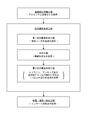
- FIG. 12 is a flowchart shown for explaining the metal / resin composite manufacturing method described in Patent Document 1.
- FIG. 13 is a flowchart for explaining the method for producing the metal / resin composite described in Patent Document 2.
- FIG. 14 and FIG. 15 are flowcharts for explaining the metal / resin composite manufacturing method described in Patent Document 3.
- the metal member preparing step for preparing the metal member, and all or one of the surfaces of the metal member are prepared.
- the metal / resin composite manufacturing method described in Patent Document 1 includes a steel material, an aluminum alloy, a magnesium alloy, a copper alloy, a titanium alloy, stainless steel, and the like in the metal member preparation step.
- a metal member is prepared.
- a fine concavo-convex structure forming step for forming a micro concavo-convex structure (first concavo-convex structure) on the surface of the metal member by etching using a caustic soda solution.
- a neutralization step for removing black smut of fine particles composed of copper, silicon, etc.
- the method for producing a metal / resin composite described in Patent Document 2 includes any metal of aluminum, aluminum alloy, magnesium, magnesium alloy, copper, or copper alloy in the metal member preparation step. Are preparing. Further, in the uneven structure forming process, after performing a pretreatment process including an etching process using caustic soda and a neutralization process (smut removal process), it is immersed in warm water for 5 minutes to form a microporous material on the metal surface. The hot water process which forms the hydroxyl-containing film of this is implemented. In the metal member / resin integration step, the metal member and the resin are integrated using an insert molding method.
- the metal / resin composite manufacturing method described in Patent Document 3 uses a metal member produced from an AlSi alloy by die casting as shown in FIG. 14. .
- the uneven structure forming step after performing the first uneven structure forming step of roughening the surface of the metal member by blasting, an etching process using an etching solution prepared by adding aluminum chloride to a hydrochloric acid solution.
- the second concavo-convex structure forming step is performed in which the concavo-convex structure is formed on the surface of the metal member in which the convex portion in which the silicon crystal protrudes and precipitates is formed inside the concave portion.
- the metal member / resin integration step the metal member and the resin are integrated using an insert molding method.
- Patent Document 3 also describes that the second uneven structure forming step may be performed without performing the first uneven structure forming step (see FIG. 15).
- the uneven structure forming step includes three steps of a first uneven structure forming step, a neutralizing step, and a second uneven structure forming step. There is also a problem that the process is long.
- the metal member and the resin are integrated with a high bonding force without using an aqueous solution containing any one or more of hydrazine, ammonia, and a water-soluble amine compound or performing a blasting treatment.
- An object of the present invention is to provide a method for producing a metal / resin composite capable of producing a metal / resin composite.
- the present invention also relates to a metal / resin composite in which a metal member and a resin are integrated with a high bonding force, using an aqueous solution containing at least one of hydrazine, ammonia and a water-soluble amine compound, or blasting.
- the object is to provide a metal / resin composite that can be produced without any treatment.
- a method for producing a metal / resin composite according to the present invention includes a metal member preparation step for preparing a metal member, and formation of a concavo-convex structure for forming a complicated concavo-convex structure on all or part of the surface of the metal member.
- a metal for producing a metal / resin composite having a process and a metal member / resin integration step for integrating the metal member and the resin, wherein the metal member and the resin are integrated -A method for producing a resin composite, wherein the metal member prepared in the metal member preparation step is a metal member produced by die-casting from an AlSi alloy containing 6 to 18% by weight of Si.
- the concavo-convex structure forming step includes a first concavo-convex structure forming step of forming a first concavo-convex structure on the surface of the metal member by an etching process using a strongly basic solution, and the first concavo-convex structure in the first concavo-convex structure.
- the second concavo-convex structure forming step is performed by an etching process using a solution containing nitric acid and hydrofluoric acid.
- the second concavo-convex structure forming step is performed by etching using sulfuric acid and nitric acid.
- the second concavo-convex structure forming step is performed without using an aqueous solution containing any one or more of hydrazine, ammonia, and a water-soluble amine compound. It is preferable to form a recess.
- the first recess is formed without performing a blasting process in the first uneven structure forming step.
- the metal member and the resin are preferably integrated using an insert molding method.
- the metal / resin composite of the present invention is a metal / resin composite having a structure in which a metal member and a resin are integrated, and the metal member contains 6 wt% to 18 wt% of Si.
- a complicated concavo-convex structure is formed on all or part of the surface of a metal member produced from a contained AlSi alloy using a die casting method, and a complicated concavo-convex structure is formed in the metal member.
- EDX energy dispersive X-ray spectroscopy
- the content is preferably 4% by weight or less.
- the metal member has a structure composed of a dendritic crystal of primary crystal Al solid solution and an Al—Si eutectic, and the metal member is complicated.
- the surface on which the concavo-convex structure is formed is observed with an SEM (scanning electron microscope), it preferably has a structure in which all or part of the Si particles in the Al—Si eutectic are removed.
- Si particles having a particle size of 1 ⁇ m or more are observed. Preferably it is not present.
- the metal member and the resin can be integrated with a high bonding force, as can be seen from test examples described later.
- the reason is as follows. That is, in the method for producing a metal / resin composite according to the present invention, a metal member produced from an AlSi alloy containing 6 wt% to 18 wt% Si by die casting is used.
- the AlSi alloy before the structure forming step has a structure composed of dendritic crystals of primary Al solid solution and Al—Si eutectic. Therefore, a plurality of fine Si particles are exposed on the surface of the metal member (particularly the inner surface of the first recess) after the surface of the metal member is roughened by the first uneven structure forming step.
- the method for producing a metal / resin composite of the present invention in the second concavo-convex structure forming step, all or part of the Si particles exposed on the inner surface of the first concave portion is selectively removed by etching. Since the recess is formed, it is not necessary to use an aqueous solution containing at least one of hydrazine, ammonia, and a water-soluble amine compound. Further, according to the method for producing a metal / resin composite of the present invention, in the first concavo-convex structure forming step, the first concavo-convex structure is formed by etching treatment using a strongly basic solution. There is no need to implement.
- the method for producing a metal / resin composite according to the present invention uses a metal member and a resin without using an aqueous solution containing any one or more of hydrazine, ammonia, and a water-soluble amine compound or performing a blast treatment.
- This is a method for producing a metal / resin composite capable of producing a metal / resin composite integrated with a high bonding force.
- the second concavo-convex structure forming step is performed by etching using a solution containing nitric acid and hydrofluoric acid.
- the second concavo-convex structure forming step can also be performed by etching using sulfuric acid and nitric acid.
- the metal / resin composite of the present invention is a metal / resin composite in which a metal member and a resin are integrated with a high bonding force, as can be seen from test examples described later. Moreover, since the metal / resin composite of the present invention can be produced by the production method of the metal / resin composite of the present invention, as can be seen from each embodiment described later and test examples described later, hydrazine and ammonia And an aqueous solution containing any one or more of the water-soluble amine compounds can be produced without performing a blast treatment.
- the metal / resin composite of the present invention is a metal / resin composite in which a metal member and a resin are integrated with a high bonding force, and any one or more of hydrazine, ammonia, and a water-soluble amine compound. It becomes a metal / resin composite that can be manufactured without using an aqueous solution containing selenium or performing a blasting treatment.
- FIG. 3 is a flowchart shown for explaining a method for producing a metal / resin composite according to Embodiment 1. It is a figure shown in order to demonstrate a metal member preparation process. It is a figure shown in order to demonstrate an uneven
- FIG. It is a figure which shows the analysis result of the metal member in Example 2.
- FIG. It is a figure which shows the analysis result of the metal member in the comparative example 1.
- 3 is a flowchart shown for explaining a method for producing a metal / resin composite described in Patent Document 1.
- 5 is a flowchart shown for explaining a method for producing a metal / resin composite described in Patent Document 2.
- 10 is a flowchart shown for explaining a method for producing a metal / resin composite described in Patent Document 3.
- 10 is a flowchart shown for explaining a method for producing a metal / resin composite described in Patent Document 3.
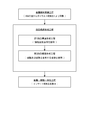
- FIG. 1 is a flowchart shown for explaining a method for producing a metal / resin composite according to the first embodiment.
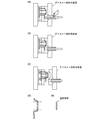
- FIG. 2 is a figure shown in order to demonstrate a metal member preparation process.
- 2A to 2E are process diagrams.
- FIG. 3 is a diagram for explaining the uneven structure forming step.
- FIG. 3A is a diagram illustrating the surface state of the metal member before the concavo-convex structure forming step is performed
- FIG. 3B is a diagram illustrating the surface state of the metal member after the concavo-convex structure forming step is performed.
- Yes FIG. 3 (c) is an enlarged view of FIG. 3 (b), and FIG.
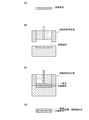
- FIG. 4 is a diagram for explaining the metal member / resin integration step.
- 4A to 4D are process diagrams.
- the method for producing a metal / resin composite according to Embodiment 1 is a method for producing a metal / resin composite for producing a metal / resin composite having a structure in which a metal member and a resin are integrated.
- a metal member preparing step for preparing a metal member, a concavo-convex structure forming step for forming a complicated concavo-convex structure on all or part of the surface of the metal member, and the metal member and the resin are integrated.
- a metal member / resin integration step is demonstrates in order of a process.
- Metal member preparation step In the metal member preparation step, a metal member prepared from an AlSi alloy containing 6 wt% to 18 wt% of Si by die casting is prepared.
- the metal member preparation step is performed, for example, as follows. First, as shown in FIG. 2A, hot water made of an AlSi alloy containing 6 wt% to 18 wt% of Si is supplied to the pouring gate portion of the die casting mold. Next, as shown in FIG. 2 (b), hot water is injected into the cavity of the die casting mold and then cooled to solidify the hot water. Next, as shown in FIGS. 2C and 2D, after the die casting mold is opened, the solidified AlSi alloy is removed from the die casting mold. Finally, as shown in FIG. 2E, the solidified Al alloy is shaped into a metal member.
- the Si content is set in the range of 6 to 18% by weight when the Si content is less than 6% by weight. This is because the formation ratio of the second recess is too small, and it may be difficult to integrate the metal member and the resin with a high bonding force, and the Si content exceeds 18% by weight. This is because the formation ratio of the second recess formed in the second uneven structure forming process described above becomes too large, and it may be difficult to integrate the metal member and the resin with a high bonding force. is there.
- the metal member produced from the AlSi alloy by using the die casting method is prepared because the metal member produced from the AlSi alloy by using the die casting method is primary Al Since it has a structure composed of a solid solution dendrite crystal and an Al—Si eutectic, the concavo-convex structure is complicated on all or part of the surface of the metal member by performing the concavo-convex structure forming step of the subsequent step. It is because it becomes possible to form.
- the shape, size, structure, etc. of the metal member to be prepared are not particularly limited, and metal materials having various shapes, sizes, structures can be used.
- a metal member manufactured using a die casting method may be used, or a metal member manufactured using a die casting method may be purchased from the outside.
- general die casting conditions (cooling rate of 50 ° C./cooling rate) such that a metal member having a structure composed of a dendritic crystal of primary Al solid solution and an Al—Si eutectic is prepared. Die casting is preferably performed at a second to 800 ° C./second).
- Concave and convex structure forming step is a step of forming a complicated concave and convex structure on all or part of the surface of the metal member, and the first concave and convex structure forming the first concave and convex structure on the surface of the metal member.
- the resin enters the concave portion of the “complex uneven structure” formed on the surface of the metal member, so that the metal member and the resin are high. It becomes possible to integrate with the joining force.
- the concavo-convex structure forming step it is necessary to form a complicated concavo-convex structure at least in a portion to be a joint surface with the resin, and even if a complicated concavo-convex structure is formed on the entire surface of the metal member Alternatively, a complicated uneven structure may be formed on a part of the surface of the metal member.
- First concavo-convex structure forming step is a step of roughening the surface of the metal member, and the first concavo-convex structure is formed on the surface of the metal member by etching using a strongly basic solution. It is a process to do.
- the strong basic solution is not particularly limited, but for example, a caustic soda aqueous solution and a caustic potash aqueous solution can be suitably used.
- the temperature of the strongly basic solution and the treatment time are not particularly limited.
- Second concavo-convex structure forming step The second concavo-convex structure forming step selectively etches and removes all or a part of the Si particles exposed on the inner surface of the first concavo-convex structure in the first concavo-convex structure, thereby forming the first concavo-convex structure in the first concavo-convex structure. This is a step of forming a second recess that is finer than the first recess on the inner surface.
- the second concavo-convex structure forming step is performed by an etching process using a solution containing nitric acid and hydrofluoric acid. As a result, it is possible to selectively etch away all or part of the Si particles exposed on the inner surface of the first recess in the first uneven structure.
- the concentration of the solution containing nitric acid and hydrofluoric acid and the mixing ratio of nitric acid and hydrofluoric acid are not particularly limited.
- the temperature and treatment time of the solution containing nitric acid and hydrofluoric acid are not particularly limited.
- Metal member / resin integration step is a step of integrating the metal member and the resin.
- the metal member and the resin are integrated using an insert molding method. I am going to let you.
- the insert molding method is performed as follows, for example. First, as shown in FIGS. 4 (a) and 4 (b), a metal member having a concavo-convex structure complicated at least at a portion to be a joint surface with a resin at a predetermined position inside the resin molding die. Place. Next, as shown in FIG. 4C, after the resin molding die is closed, the molten resin is injected into the cavity of the resin molding die and then cooled to solidify the resin. Next, as shown in FIG. 4D, after the resin molding die is opened, the integrated metal / resin composite is taken out from the resin molding die. Finally, the metal / resin composite taken out is subjected to a necessary shaping process to obtain the metal / resin composite according to Embodiment 1.
- the metal / resin composite according to Embodiment 1 can be manufactured.
- the method for producing a metal / resin composite according to Embodiment 1 it is possible to integrate the metal member and the resin with a high bonding force, as can be seen from the test examples described later.
- the reason is as follows. That is, in the method for producing a metal / resin composite according to Embodiment 1, a metal member produced from an AlSi alloy containing 6 wt% to 18 wt% of Si using a die casting method is used.
- the AlSi alloy before the step of forming the concavo-convex structure has a structure composed of dendritic crystals of primary Al solid solution and Al—Si eutectic.
- the method for manufacturing the metal / resin composite according to Embodiment 1 in the second concavo-convex structure forming step, all or part of the Si particles exposed on the inner surface of the first concave portion is selectively etched away. Since the second recess is formed, it is not necessary to use an aqueous solution containing one or more of hydrazine, ammonia, and a water-soluble amine compound.
- the metal / resin composite manufacturing method according to the first embodiment in the first concavo-convex structure forming step, the first concavo-convex structure is formed by etching using a strongly basic solution. There is no need to perform processing.
- the method for producing a metal / resin composite according to Embodiment 1 uses a metal member without using an aqueous solution containing any one or more of hydrazine, ammonia, and a water-soluble amine compound, or performing a blast treatment.
- This is a method for producing a metal / resin composite capable of producing a metal / resin composite in which a resin and a resin are integrated with a high bonding force.
- the second concavo-convex structure forming step is performed without using an aqueous solution containing any one or more of hydrazine, ammonia, and a water-soluble amine compound. Since it becomes possible to form 2 recessed parts, the problem that the manufacturing method of the metal / resin composite described in Patent Document 1 is not preferable in terms of safety environment can be solved.
- the hydrofluoric acid used in the method for manufacturing the metal / resin composite according to Embodiment 1 is a toxic chemical similar to hydrazine, but is generally used in the manufacturing process of semiconductor devices and liquid crystal display devices. Since the handling method has been established at an industrial level, the safety and environmental problems are small compared to hydrazine.
- the metal / resin composite manufacturing method in the second concavo-convex structure forming step, all or part of the Si particles are selectively removed by etching to form the second recess. Therefore, all or part of the Si particles can be removed by etching without performing ultrasonic irradiation.
- the entire surface of the metal member is complicated in all or part of the first uneven structure forming process and the second uneven structure forming process. Therefore, the process can be made shorter than in the case of the method for producing a metal / resin composite described in Patent Document 1.
- the first recess is formed without performing the blasting process. This eliminates the problem that the metal / resin composite manufacturing method does not have a rough textured surface on the metal member and limits the industrially applicable range of the metal / resin composite. be able to.
- the metal / resin composite according to Embodiment 1 is a metal / resin composite in which the metal member and the resin are integrated with a high bonding force, as can be seen from test examples described later.
- the metal / resin composite according to Embodiment 1 is manufactured by the method for manufacturing a metal / resin composite according to Embodiment 1, it is natural that any of hydrazine, ammonia, and a water-soluble amine compound is used. It can be manufactured without using an aqueous solution containing one or more of them and without performing a blast treatment.
- the metal / resin composite according to Embodiment 1 is a metal / resin composite in which a metal member and a resin are integrated with a high bonding force, and is any one of hydrazine, ammonia, and a water-soluble amine compound. It becomes a metal / resin composite that can be produced without using an aqueous solution containing two or more or performing blasting.
- FIG. 5 is a flowchart for explaining the method for producing the metal / resin composite according to the second embodiment.
- the manufacturing method of the metal / resin composite according to the second embodiment basically includes the same steps as the manufacturing method of the metal / resin composite according to the first embodiment. However, as shown in FIG.
- the content of the concavo-convex structure forming step is different from that of the metal / resin composite manufacturing method according to the first embodiment. That is, in the method for producing a metal / resin composite according to the second embodiment, the second concavo-convex structure forming step is performed by an etching process using a solution containing sulfuric acid and nitric acid.
- the metal / resin composite manufacturing method according to the second embodiment is different from the metal / resin composite manufacturing method according to the first embodiment in the content of the second uneven structure forming process, but a metal member is prepared.
- an etching process in which an etching process using a sulfuric acid aqueous solution and an etching process using a nitric acid aqueous solution are sequentially performed.
- the second concavo-convex structure forming step may be performed.
- Test example is “without using an aqueous solution containing one or more of hydrazine, ammonia and a water-soluble amine compound or performing a blast treatment according to the method for producing a metal / resin composite of the present invention. It is possible to manufacture a metal / resin composite in which a metal member and a resin are integrated with a high bonding force.
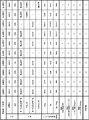
- FIG. 6 is a chart showing conditions and results of test examples.
- FIG. 7 is a diagram for explaining the tensile test.
- FIG. 7A is a plan view of a metal / resin composite (test piece) manufactured according to a test example and a view showing a joint surface of the metal member in the test piece with a resin, and FIG. It is a figure which shows the mode at the time of performing the tension test about a piece.
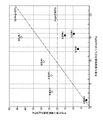
- FIG. 8 is a graph showing the tensile strength at break.
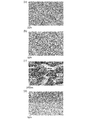
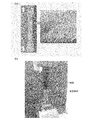
- FIG. 9 is a diagram illustrating the analysis result of the metal member in Example 1.
- FIG. 10 is a diagram illustrating the analysis result of the metal member in Example 4.
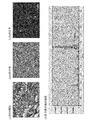
- FIG. 11 is a diagram showing the analysis result of the metal member in Comparative Example 1.
- Example 1 The metal / resin composite according to Example 1 was manufactured basically by the same method as the method for manufacturing the metal / resin composite according to Embodiment 1. Specifically, it is as follows (see FIG. 6).
- a metal member having a shape as shown in FIG. 7A was produced using a die casting method.
- the shape of the surface to be bonded to the resin in the metal member was a rectangle having a width of 1.5 mm, a length of 12.5 mm, and an area of 18.75 mm 2 (referring to a test piece of JIS-Z2201313).
- As the AlSi alloy ADC12 (AlSi alloy, Si content was 11% by weight) was used.
- the first uneven structure forming step was performed by immersing the metal member in a water bath of a strongly basic solution composed of a 5% by weight aqueous caustic soda solution (50 ° C) (FIG. 6). Medium, labeled as base treatment.) Next, the metal member is immersed in an etching solution in which nitric acid (67.5% nitric acid) and hydrofluoric acid (55% hydrofluoric acid) are blended so that the volume ratio is 9: 1 for 20 seconds. Thus, the second concavo-convex structure forming step was performed (indicated as acid treatment 1 in FIG. 6).
- PPS polyphenylene sulfide
- Example 2 Basically, the metal / resin composite according to Example 2 was manufactured by the same method as the method for manufacturing the metal / resin composite according to Example 1. However, as shown in FIG. 6, HT-1 (AlSi alloy, Si content: 13 wt%) was used as the metal member.
- Example 3 Basically, the metal / resin composite according to Example 3 was manufactured by the same method as the method for manufacturing the metal / resin composite according to Example 1. However, as shown in FIG. 6, the metal member is immersed for 40 seconds in an etching solution in which nitric acid (67.5% nitric acid) and sulfuric acid (98% sulfuric acid) are mixed at a volume ratio of 9: 1. Thus, the second concavo-convex structure forming step was performed (displayed as acid treatment 2 in FIG. 6).
- Example 4 Basically, the metal / resin composite according to Example 4 was manufactured by the same method as the method for manufacturing the metal / resin composite according to Example 1. However, as shown in FIG. 6, PA (polyamide) was used as the resin.
- Comparative Example 1 Basically, the metal / resin composite according to Comparative Example 1 was manufactured by the same method as the method for manufacturing the metal / resin composite according to Example 1. However, as shown in FIG. 6, the second uneven structure forming step was omitted.
- Comparative Example 2 Basically, the metal / resin composite according to Comparative Example 2 was manufactured by the same method as the method for manufacturing the metal / resin composite according to Example 1. However, as shown in FIG. 6, A5052 (aluminum alloy) was used as a metal member.
- Comparative Example 3 Basically, the metal / resin composite according to Comparative Example 3 was manufactured by the same method as the method for manufacturing the metal / resin composite according to Example 1. However, as shown in FIG. 6, DMS4 (AlSi alloy, Si content is 1% by weight) was used as the metal member.
- Comparative Example 4 Basically, the metal / resin composite according to Comparative Example 4 was manufactured by the same method as the method for manufacturing the metal / resin composite according to Example 1. However, as shown in FIG. 6, the first uneven structure forming step was omitted. Further, following Patent Document 3, the second concavo-convex structure forming step was performed by immersing the metal member in an etching solution containing hydrochloric acid and aluminum chloride hexahydrate for 15 minutes (in FIG. 6, acid treatment 3 and display.).
- Comparative Example 5 Basically, the metal / resin composite according to Comparative Example 5 was manufactured by the same method as the method for manufacturing the metal / resin composite according to Example 1. However, as shown in FIG. 6, after carrying out the first concavo-convex structure forming step, the metal member is immersed in a 3% by weight nitric acid aqueous solution for 1 minute to perform a neutralization treatment step (smut removal step, neutralization in FIG. (Process 1 is displayed.) And the second concavo-convex structure forming step is omitted.
- Comparative Example 6 Basically, the metal / resin composite according to Comparative Example 6 was manufactured by the same method as the method for manufacturing the metal / resin composite according to Example 1. However, as shown in FIG. 6, A5052 (aluminum alloy) was used as a metal member. In addition, after the first concavo-convex structure forming step, the metal member was mixed with an etching solution in which nitric acid (67.5% nitric acid) and sulfuric acid (98% sulfuric acid) were blended so that the volume ratio was 9: 1. A neutralization treatment step (smut removal step, indicated as neutralization treatment 2 in FIG. 6) is carried out by dipping for 2 seconds, and then the metal member is heated to 70 ° C. without carrying out the second uneven structure forming step. A hot water treatment step of immersing in warm water for 5 minutes was performed.
- a neutralization treatment step smut removal step, indicated as neutralization treatment 2 in FIG. 6
- Evaluation item 1 Tensile breaking strength of each metal / resin composite (10 pieces for each example) obtained by the above method was measured using a metal material tensile tester (manufactured by Shimadzu Corporation / precision universal testing machine AGS-X) at a tension of 1 mm / min. It was measured by measuring the stress at break while applying a static vertical tensile load at a speed. Thereafter, the average tensile rupture strength (Avg) was calculated from the tensile rupture strength of each metal / resin composite (10 pieces for each example) obtained by the above method.
- Avg average tensile rupture strength
- the metal members obtained in Examples 1 and 3 and Comparative Example 1 are composed of dendritic crystals of primary Al solid solution and Al—Si eutectic. It was found to have a structured structure. It was also found that the metal members obtained in Examples 1 and 3 had a structure in which all or a part of the Si particles in the Al—Si eutectic were removed.
- the metal members obtained in Examples 1 and 3 were found to have no Si particles having a particle size of 1 ⁇ m or more.
- ADC12 and HT-1 are used as the AlSi alloy, but the present invention is not limited to this.
- the AlSi alloy an AlSi alloy containing 6 to 18% by weight of Si can be used.
- the metal member to be produced has a structure composed of a dendritic crystal of primary Al solid solution and an Al-Si eutectic. It becomes.
- a plurality of fine Si particles are exposed on the surface of the metal member (particularly the inner surface of the first recess) after the surface of the metal member is roughened by the first uneven structure forming step. It will be.
- PPS polyphenylene sulfide
- PA polyamide
Landscapes
- Chemical & Material Sciences (AREA)
- Engineering & Computer Science (AREA)
- Mechanical Engineering (AREA)
- Chemical Kinetics & Catalysis (AREA)
- General Chemical & Material Sciences (AREA)
- Materials Engineering (AREA)
- Metallurgy (AREA)
- Organic Chemistry (AREA)
- Manufacturing & Machinery (AREA)
- Injection Moulding Of Plastics Or The Like (AREA)
- ing And Chemical Polishing (AREA)
Priority Applications (2)
| Application Number | Priority Date | Filing Date | Title |
|---|---|---|---|
| JP2012521888A JP5082023B1 (ja) | 2012-02-29 | 2012-02-29 | 金属・樹脂複合体の製造方法及び金属・樹脂複合体 |
| PCT/JP2012/055089 WO2013128595A1 (fr) | 2012-02-29 | 2012-02-29 | Procédé pour la fabrication de composite de métal-résine et composite de métal-résine |
Applications Claiming Priority (1)
| Application Number | Priority Date | Filing Date | Title |
|---|---|---|---|
| PCT/JP2012/055089 WO2013128595A1 (fr) | 2012-02-29 | 2012-02-29 | Procédé pour la fabrication de composite de métal-résine et composite de métal-résine |
Publications (1)
| Publication Number | Publication Date |
|---|---|
| WO2013128595A1 true WO2013128595A1 (fr) | 2013-09-06 |
Family
ID=47435547
Family Applications (1)
| Application Number | Title | Priority Date | Filing Date |
|---|---|---|---|
| PCT/JP2012/055089 Ceased WO2013128595A1 (fr) | 2012-02-29 | 2012-02-29 | Procédé pour la fabrication de composite de métal-résine et composite de métal-résine |
Country Status (2)
| Country | Link |
|---|---|
| JP (1) | JP5082023B1 (fr) |
| WO (1) | WO2013128595A1 (fr) |
Cited By (6)
| Publication number | Priority date | Publication date | Assignee | Title |
|---|---|---|---|---|
| JP2016056443A (ja) * | 2014-09-04 | 2016-04-21 | イルクワンポリマー シーオー., エルティーディー.Ilkwangpolymer Co., Ltd. | アルミニウム‐樹脂複合体の製造方法 |
| WO2019198610A1 (fr) | 2018-04-10 | 2019-10-17 | Dic株式会社 | Structure composite et son procédé de fabrication |
| IT201800007189A1 (it) * | 2018-07-13 | 2020-01-13 | Guida lineare e processo di produzione di una guida lineare | |
| WO2020158820A1 (fr) * | 2019-01-29 | 2020-08-06 | 三井化学株式会社 | Structure composite métal-résine à base d'aluminium, élément métallique à base d'aluminium, procédé de fabrication d'un élément métallique à base d'aluminium, et procédé de fabrication de structure composite métal-résine à base d'aluminium |
| CN112203843A (zh) * | 2018-05-28 | 2021-01-08 | 三星电子株式会社 | 不锈钢和树脂的复合物、用于制造所述复合物的方法 |
| US12291605B2 (en) | 2019-12-27 | 2025-05-06 | Dic Corporation | Composite structure and manufacturing method thereof |
Citations (4)
| Publication number | Priority date | Publication date | Assignee | Title |
|---|---|---|---|---|
| JPS6152376A (ja) * | 1984-08-20 | 1986-03-15 | Tokico Ltd | アルミニウムの表面処理法 |
| JPH0324945A (ja) * | 1989-06-22 | 1991-02-01 | Showa Alum Corp | 弗素樹脂塗膜形成用基材の製造方法 |
| JP2009006721A (ja) * | 2002-11-08 | 2009-01-15 | Taisei Plas Co Ltd | アルミニウム合金と樹脂の複合体とその製造方法 |
| JP2010174372A (ja) * | 2008-12-29 | 2010-08-12 | Nippon Light Metal Co Ltd | 樹脂接合性に優れたアルミニウム合金部材及びその製造方法 |
-
2012
- 2012-02-29 WO PCT/JP2012/055089 patent/WO2013128595A1/fr not_active Ceased
- 2012-02-29 JP JP2012521888A patent/JP5082023B1/ja active Active
Patent Citations (4)
| Publication number | Priority date | Publication date | Assignee | Title |
|---|---|---|---|---|
| JPS6152376A (ja) * | 1984-08-20 | 1986-03-15 | Tokico Ltd | アルミニウムの表面処理法 |
| JPH0324945A (ja) * | 1989-06-22 | 1991-02-01 | Showa Alum Corp | 弗素樹脂塗膜形成用基材の製造方法 |
| JP2009006721A (ja) * | 2002-11-08 | 2009-01-15 | Taisei Plas Co Ltd | アルミニウム合金と樹脂の複合体とその製造方法 |
| JP2010174372A (ja) * | 2008-12-29 | 2010-08-12 | Nippon Light Metal Co Ltd | 樹脂接合性に優れたアルミニウム合金部材及びその製造方法 |
Cited By (14)
| Publication number | Priority date | Publication date | Assignee | Title |
|---|---|---|---|---|
| JP2016056443A (ja) * | 2014-09-04 | 2016-04-21 | イルクワンポリマー シーオー., エルティーディー.Ilkwangpolymer Co., Ltd. | アルミニウム‐樹脂複合体の製造方法 |
| WO2019198610A1 (fr) | 2018-04-10 | 2019-10-17 | Dic株式会社 | Structure composite et son procédé de fabrication |
| US11999112B2 (en) | 2018-04-10 | 2024-06-04 | Dic Corporation | Composite structure and manufacturing method therefor |
| CN112203843A (zh) * | 2018-05-28 | 2021-01-08 | 三星电子株式会社 | 不锈钢和树脂的复合物、用于制造所述复合物的方法 |
| IT201800007189A1 (it) * | 2018-07-13 | 2020-01-13 | Guida lineare e processo di produzione di una guida lineare | |
| EP3594515A1 (fr) * | 2018-07-13 | 2020-01-15 | Jofa S.R.L. | Guide lineaire et procédé de fabrication d'un tel guide linéaire |
| CN113396243A (zh) * | 2019-01-29 | 2021-09-14 | 三井化学株式会社 | 铝系金属树脂复合结构体、铝系金属构件、铝系金属构件的制造方法及铝系金属树脂复合结构体的制造方法 |
| JPWO2020158820A1 (ja) * | 2019-01-29 | 2021-10-14 | 三井化学株式会社 | アルミニウム系金属樹脂複合構造体、アルミニウム系金属部材、アルミニウム系金属部材の製造方法およびアルミニウム系金属樹脂複合構造体の製造方法 |
| JP7225269B2 (ja) | 2019-01-29 | 2023-02-20 | 三井化学株式会社 | アルミニウム系金属樹脂複合構造体、アルミニウム系金属部材、アルミニウム系金属部材の製造方法およびアルミニウム系金属樹脂複合構造体の製造方法 |
| JP2023024979A (ja) * | 2019-01-29 | 2023-02-21 | 三井化学株式会社 | アルミニウム系金属樹脂複合構造体、アルミニウム系金属部材、アルミニウム系金属部材の製造方法およびアルミニウム系金属樹脂複合構造体の製造方法 |
| CN113396243B (zh) * | 2019-01-29 | 2024-03-01 | 三井化学株式会社 | 铝系金属树脂复合结构体、铝系金属构件、铝系金属构件的制造方法及铝系金属树脂复合结构体的制造方法 |
| WO2020158820A1 (fr) * | 2019-01-29 | 2020-08-06 | 三井化学株式会社 | Structure composite métal-résine à base d'aluminium, élément métallique à base d'aluminium, procédé de fabrication d'un élément métallique à base d'aluminium, et procédé de fabrication de structure composite métal-résine à base d'aluminium |
| JP7585274B2 (ja) | 2019-01-29 | 2024-11-18 | 三井化学株式会社 | アルミニウム系金属樹脂複合構造体、アルミニウム系金属部材、アルミニウム系金属部材の製造方法およびアルミニウム系金属樹脂複合構造体の製造方法 |
| US12291605B2 (en) | 2019-12-27 | 2025-05-06 | Dic Corporation | Composite structure and manufacturing method thereof |
Also Published As
| Publication number | Publication date |
|---|---|
| JP5082023B1 (ja) | 2012-11-28 |
| JPWO2013128595A1 (ja) | 2015-07-30 |
Similar Documents
| Publication | Publication Date | Title |
|---|---|---|
| JP5082023B1 (ja) | 金属・樹脂複合体の製造方法及び金属・樹脂複合体 | |
| JP5577707B2 (ja) | アルミニウム合金板と樹脂部材とのレーザー接合方法 | |
| JP4965347B2 (ja) | 管状複合体とその製造方法 | |
| CN102848517B (zh) | 金属和树脂的复合体 | |
| US9573345B2 (en) | Composite of metal and resin and method for manufacturing same | |
| CN107010998B (zh) | 陶瓷的表面处理方法、陶瓷制品及陶瓷塑料复合体 | |
| US10307861B2 (en) | Bonded aluminum-dissimilar metal structure and method of making same | |
| JP2006027018A (ja) | 金属と樹脂の複合体およびその製造方法 | |
| CN101528437A (zh) | 金属与树脂的复合体及其制造方法 | |
| CN109514174A (zh) | 激光纹理化和阳极化表面处理 | |
| WO2018019850A1 (fr) | Procédé de fabrication d'un composant et composant fabriqué selon le procédé | |
| KR20170114877A (ko) | 휴대용 전자기기용 금속프레임의 제조방법 및 휴대용 전자기기용 금속프레임 | |
| US20220055346A1 (en) | Method for manufacturing a composite of aluminum alloy | |
| WO2010016485A1 (fr) | Composite d'alliage métallique avec composition de résine polyamide et son procédé de fabrication | |
| CN104661811A (zh) | 金属合金-陶瓷树脂复合物及其制造方法 | |
| KR101568991B1 (ko) | 알루미늄-수지 금속 복합체 및 이의 제조방법 | |
| CN105755469A (zh) | 铝-树脂复合体及其制造方法 | |
| TWI418284B (zh) | 電子裝置機殼結構及其製造方法 | |
| KR101052517B1 (ko) | 고강도 알루미늄합금 주물 | |
| CN110066996B (zh) | 一种镁合金微蚀剂及纳米注塑前表面处理工艺 | |
| CN103978191A (zh) | 一种掺杂纳米颗粒的细晶镁合金制备方法 | |
| CN105986271A (zh) | 制备铝-树脂复合物的方法 | |
| CN110091462A (zh) | 一种高气密性金属树脂复合体及其金属表面纳米处理方法 | |
| KR20140011520A (ko) | 알루미늄 다이캐스팅 소재 표면 처리 솔루션 및 이를 이용한 표면처리 방법 | |
| CN204936373U (zh) | 金属和树脂的复合体及应用该复合体的壳体 |
Legal Events
| Date | Code | Title | Description |
|---|---|---|---|
| ENP | Entry into the national phase |
Ref document number: 2012521888 Country of ref document: JP Kind code of ref document: A |
|
| 121 | Ep: the epo has been informed by wipo that ep was designated in this application |
Ref document number: 12870315 Country of ref document: EP Kind code of ref document: A1 |
|
| NENP | Non-entry into the national phase |
Ref country code: DE |
|
| 122 | Ep: pct application non-entry in european phase |
Ref document number: 12870315 Country of ref document: EP Kind code of ref document: A1 |