WO2014069510A1 - 新規アミン誘導体またはその塩 - Google Patents
新規アミン誘導体またはその塩 Download PDFInfo
- Publication number
- WO2014069510A1 WO2014069510A1 PCT/JP2013/079364 JP2013079364W WO2014069510A1 WO 2014069510 A1 WO2014069510 A1 WO 2014069510A1 JP 2013079364 W JP2013079364 W JP 2013079364W WO 2014069510 A1 WO2014069510 A1 WO 2014069510A1
- Authority
- WO
- WIPO (PCT)
- Prior art keywords
- group
- optionally substituted
- alkyl group
- amino
- cycloalkyl
- Prior art date
- Legal status (The legal status is an assumption and is not a legal conclusion. Google has not performed a legal analysis and makes no representation as to the accuracy of the status listed.)
- Ceased
Links
- 0 C*C1*=*N(*)*1 Chemical compound C*C1*=*N(*)*1 0.000 description 14
- PIPXUSINHYLREH-UHFFFAOYSA-N C[n](cc1)c(c(Br)c2)c1cc2Nc(ncc(C1CC1)c1)c1C(O)=O Chemical compound C[n](cc1)c(c(Br)c2)c1cc2Nc(ncc(C1CC1)c1)c1C(O)=O PIPXUSINHYLREH-UHFFFAOYSA-N 0.000 description 3
- ZIKXWBOFVFYBRO-UHFFFAOYSA-N COC(c(cc(cc1)Cl)c1Nc(cc1)cc2c1[nH]cc2)=O Chemical compound COC(c(cc(cc1)Cl)c1Nc(cc1)cc2c1[nH]cc2)=O ZIKXWBOFVFYBRO-UHFFFAOYSA-N 0.000 description 2
- RRQJUJOHHSFORS-UHFFFAOYSA-N COC(c1c(Nc2ccc3[nH]ccc3c2)ncc(C2CC2)c1)=O Chemical compound COC(c1c(Nc2ccc3[nH]ccc3c2)ncc(C2CC2)c1)=O RRQJUJOHHSFORS-UHFFFAOYSA-N 0.000 description 2
- NLHDUFSIMDYGHG-UHFFFAOYSA-N Brc1cccc2c1cc[n]2Cc1ccccc1 Chemical compound Brc1cccc2c1cc[n]2Cc1ccccc1 NLHDUFSIMDYGHG-UHFFFAOYSA-N 0.000 description 1
- GIRASWCIFRABHP-UHFFFAOYSA-N Brc1ccnc2c1cc[n]2Cc1ccccc1 Chemical compound Brc1ccnc2c1cc[n]2Cc1ccccc1 GIRASWCIFRABHP-UHFFFAOYSA-N 0.000 description 1
- GANYJHDXJYNNFM-UHFFFAOYSA-N C=CCOC(c(cc(C1CC1)cc1)c1Nc(cc1cc2)ccc1[n]2C(c1ccccc1)=O)=O Chemical compound C=CCOC(c(cc(C1CC1)cc1)c1Nc(cc1cc2)ccc1[n]2C(c1ccccc1)=O)=O GANYJHDXJYNNFM-UHFFFAOYSA-N 0.000 description 1
- DKWQXZKIVQNGQY-UHFFFAOYSA-N C=CCOC(c(cc(C1CC1)cc1)c1Nc1ccc2[nH]ccc2c1)=O Chemical compound C=CCOC(c(cc(C1CC1)cc1)c1Nc1ccc2[nH]ccc2c1)=O DKWQXZKIVQNGQY-UHFFFAOYSA-N 0.000 description 1
- IOMLVVYOKKDOIN-UHFFFAOYSA-N C=CCOC(c1c(Nc(cc2cc3)ccc2[n]3C(c2ccccc2)=O)ncc(C2CC2)c1)=O Chemical compound C=CCOC(c1c(Nc(cc2cc3)ccc2[n]3C(c2ccccc2)=O)ncc(C2CC2)c1)=O IOMLVVYOKKDOIN-UHFFFAOYSA-N 0.000 description 1
- MZTWXGKYSGJRCH-UHFFFAOYSA-N C=CCOC(c1c(Nc2ccc3[nH]ccc3c2)ncc(C2CC2)c1)=O Chemical compound C=CCOC(c1c(Nc2ccc3[nH]ccc3c2)ncc(C2CC2)c1)=O MZTWXGKYSGJRCH-UHFFFAOYSA-N 0.000 description 1
- NQUDIEZAENVEFO-UHFFFAOYSA-N CC(C)(C)OC(c(cc(cc1)Cl)c1Nc(cc1)cc(N=C2)c1N(Cc1ccccc1)/C2=[O]/C[ClH]c(cc1)cc(C(O)=O)c1Nc(cc1N=C2)ccc1N(Cc1ccccc1)C2=O)=O Chemical compound CC(C)(C)OC(c(cc(cc1)Cl)c1Nc(cc1)cc(N=C2)c1N(Cc1ccccc1)/C2=[O]/C[ClH]c(cc1)cc(C(O)=O)c1Nc(cc1N=C2)ccc1N(Cc1ccccc1)C2=O)=O NQUDIEZAENVEFO-UHFFFAOYSA-N 0.000 description 1
- AQJODXHTNDBVEN-UHFFFAOYSA-N CC(C)CN(C1CC2)C(C(O)OC(C)(C)CCC(C3)C3C3C=C(C(OC)=O)C(NC4C=C(C=C(C(O)=O)N5CC(C)C)C5=CC4)=NC3)=CC1=CC2Nc(ncc(C1CC1)c1)c1C(OC)=O Chemical compound CC(C)CN(C1CC2)C(C(O)OC(C)(C)CCC(C3)C3C3C=C(C(OC)=O)C(NC4C=C(C=C(C(O)=O)N5CC(C)C)C5=CC4)=NC3)=CC1=CC2Nc(ncc(C1CC1)c1)c1C(OC)=O AQJODXHTNDBVEN-UHFFFAOYSA-N 0.000 description 1
- MDBXZBSYNJVMMY-UHFFFAOYSA-N CC(C)C[n](c(C(OCC(C)C)=O)cc1c2)c1ccc2[N+]([O-])=O Chemical compound CC(C)C[n](c(C(OCC(C)C)=O)cc1c2)c1ccc2[N+]([O-])=O MDBXZBSYNJVMMY-UHFFFAOYSA-N 0.000 description 1
- CTDKKNFNOKPEPD-UHFFFAOYSA-N CC(C)C[n](cc(C)c1c2)c1ccc2N Chemical compound CC(C)C[n](cc(C)c1c2)c1ccc2N CTDKKNFNOKPEPD-UHFFFAOYSA-N 0.000 description 1
- AHUJIZJGOQCNBH-UHFFFAOYSA-N CC(C)C[n](cc(C)c1c2)c1ccc2Nc(ncc(C1CC1)c1)c1C(OC)=O Chemical compound CC(C)C[n](cc(C)c1c2)c1ccc2Nc(ncc(C1CC1)c1)c1C(OC)=O AHUJIZJGOQCNBH-UHFFFAOYSA-N 0.000 description 1
- SXMZYUYSJQFQTQ-UHFFFAOYSA-N CC(C)C[n]1c2cc(Nc(ncc(C3CC3)c3)c3C(O)=O)ccc2cc1 Chemical compound CC(C)C[n]1c2cc(Nc(ncc(C3CC3)c3)c3C(O)=O)ccc2cc1 SXMZYUYSJQFQTQ-UHFFFAOYSA-N 0.000 description 1
- XQLICWZAKSCCRE-UHFFFAOYSA-N CC(C)C[n]1c2cc(Nc(ncc(C3CC3)c3)c3C(OC)=O)ccc2cc1 Chemical compound CC(C)C[n]1c2cc(Nc(ncc(C3CC3)c3)c3C(OC)=O)ccc2cc1 XQLICWZAKSCCRE-UHFFFAOYSA-N 0.000 description 1
- KOTSNSOZDLEYLF-UHFFFAOYSA-N CC(C)[n](ccc1c2)c1ccc2N Chemical compound CC(C)[n](ccc1c2)c1ccc2N KOTSNSOZDLEYLF-UHFFFAOYSA-N 0.000 description 1
- FXQCTHYIMNXEEJ-UHFFFAOYSA-N CC(C)[n](ccc1c2)c1ccc2Nc(ncc(C1CC1)c1)c1C(OC)=O Chemical compound CC(C)[n](ccc1c2)c1ccc2Nc(ncc(C1CC1)c1)c1C(OC)=O FXQCTHYIMNXEEJ-UHFFFAOYSA-N 0.000 description 1
- BSHBPMRTQAPWGD-UHFFFAOYSA-N CC(C)c1cc(N)cc2c1[n](C)cc2 Chemical compound CC(C)c1cc(N)cc2c1[n](C)cc2 BSHBPMRTQAPWGD-UHFFFAOYSA-N 0.000 description 1
- DZUBFKHJCAYECJ-UHFFFAOYSA-N CC(C)c1cc(Nc(ncc(C2CC2)c2)c2C(OC)=O)cc2c1[n](C)cc2 Chemical compound CC(C)c1cc(Nc(ncc(C2CC2)c2)c2C(OC)=O)cc2c1[n](C)cc2 DZUBFKHJCAYECJ-UHFFFAOYSA-N 0.000 description 1
- GFUXGEGVKPEWBB-WHQPAHRZSA-N CC/C=C(\C(\Nc1ccc2[n](Cc3ccccc3)ccc2c1)=N/Cc1cc(CN(C(C)C2(C)N)C=CC2=C)ccc1)/C(OC)=O Chemical compound CC/C=C(\C(\Nc1ccc2[n](Cc3ccccc3)ccc2c1)=N/Cc1cc(CN(C(C)C2(C)N)C=CC2=C)ccc1)/C(OC)=O GFUXGEGVKPEWBB-WHQPAHRZSA-N 0.000 description 1
- CEYSLNBIWVQUPS-UHFFFAOYSA-N CC1N(Cc2ccccc2)C=Cc2cc(N)cc(C)c12 Chemical compound CC1N(Cc2ccccc2)C=Cc2cc(N)cc(C)c12 CEYSLNBIWVQUPS-UHFFFAOYSA-N 0.000 description 1
- MTDRSSGCPTZLFG-UHFFFAOYSA-N CCCCCCN(C1)C=Cc2c1ccc(Nc(c(C)cc(C1CC1)c1)c1C(O)=O)c2 Chemical compound CCCCCCN(C1)C=Cc2c1ccc(Nc(c(C)cc(C1CC1)c1)c1C(O)=O)c2 MTDRSSGCPTZLFG-UHFFFAOYSA-N 0.000 description 1
- YXOSPJFELAVMRE-WGOVTJLKSA-N CCCCOC(/C(/C=C(/C1CC1)\C=C/C)=C(/N)\Nc1ccc(CN(Cc(cc2)ccc2OC)C=C2)c2c1)=O Chemical compound CCCCOC(/C(/C=C(/C1CC1)\C=C/C)=C(/N)\Nc1ccc(CN(Cc(cc2)ccc2OC)C=C2)c2c1)=O YXOSPJFELAVMRE-WGOVTJLKSA-N 0.000 description 1
- PQNOLFMDCLQLQJ-UHFFFAOYSA-N CCCCOC(c1c(CCNc2ccc3[nH]ccc3c2)ncc(C2CC2)c1)=O Chemical compound CCCCOC(c1c(CCNc2ccc3[nH]ccc3c2)ncc(C2CC2)c1)=O PQNOLFMDCLQLQJ-UHFFFAOYSA-N 0.000 description 1
- PHUWEAZUOVRCAD-UHFFFAOYSA-N CCCCOC(c1c(Nc(cc2cc3)ccc2[n]3C(OC(C)(C)C)=O)ncc(C2CC2)c1)=O Chemical compound CCCCOC(c1c(Nc(cc2cc3)ccc2[n]3C(OC(C)(C)C)=O)ncc(C2CC2)c1)=O PHUWEAZUOVRCAD-UHFFFAOYSA-N 0.000 description 1
- JCWGKHHVSUBNRQ-UHFFFAOYSA-N CCCCOC(c1c(Nc2ccc3[nH]ccc3c2)ncc(C2CC2)c1)=O Chemical compound CCCCOC(c1c(Nc2ccc3[nH]ccc3c2)ncc(C2CC2)c1)=O JCWGKHHVSUBNRQ-UHFFFAOYSA-N 0.000 description 1
- UPIGNRAACOVBIB-UHFFFAOYSA-N CCC[n]1c2cc(Nc(ncc(C3CC3)c3)c3C(OC)=O)ccc2cc1 Chemical compound CCC[n]1c2cc(Nc(ncc(C3CC3)c3)c3C(OC)=O)ccc2cc1 UPIGNRAACOVBIB-UHFFFAOYSA-N 0.000 description 1
- RRRBXNJXMBVPNO-UHFFFAOYSA-N CC[n](cc(c1c2)-c3ccccc3)c1ccc2Nc(ncc(C1CC1)c1)c1C(O)=O Chemical compound CC[n](cc(c1c2)-c3ccccc3)c1ccc2Nc(ncc(C1CC1)c1)c1C(O)=O RRRBXNJXMBVPNO-UHFFFAOYSA-N 0.000 description 1
- FIOZWJLLDDTOKE-UHFFFAOYSA-N CC[n](cc(c1c2)-c3ccccc3)c1ccc2Nc(ncc(C1CC1)c1)c1C(OC)=O Chemical compound CC[n](cc(c1c2)-c3ccccc3)c1ccc2Nc(ncc(C1CC1)c1)c1C(OC)=O FIOZWJLLDDTOKE-UHFFFAOYSA-N 0.000 description 1
- GTWQEYIZERFDHW-UHFFFAOYSA-N CCc1cc(C(O)=O)c(Nc2ccc3[n](Cc4ccccc4)ccc3c2)nc1 Chemical compound CCc1cc(C(O)=O)c(Nc2ccc3[n](Cc4ccccc4)ccc3c2)nc1 GTWQEYIZERFDHW-UHFFFAOYSA-N 0.000 description 1
- SKDUYDIDCHOKKJ-UHFFFAOYSA-N CCc1cc(C(OC)=O)c(Nc2ccc3[n](Cc4ccccc4)ccc3c2)nc1 Chemical compound CCc1cc(C(OC)=O)c(Nc2ccc3[n](Cc4ccccc4)ccc3c2)nc1 SKDUYDIDCHOKKJ-UHFFFAOYSA-N 0.000 description 1
- SOKOPEFXQYUWEQ-UHFFFAOYSA-N COC(c(cc(C1CC1)cc1)c1Br)=O Chemical compound COC(c(cc(C1CC1)cc1)c1Br)=O SOKOPEFXQYUWEQ-UHFFFAOYSA-N 0.000 description 1
- CRDXCWPXVFOHEG-UHFFFAOYSA-N COC(c(cc(C1CC1)cc1)c1Nc(cc1)cc([N+]([O-])=O)c1F)=O Chemical compound COC(c(cc(C1CC1)cc1)c1Nc(cc1)cc([N+]([O-])=O)c1F)=O CRDXCWPXVFOHEG-UHFFFAOYSA-N 0.000 description 1
- OJPAZUKYOAKZNL-UHFFFAOYSA-N COC(c(cc(C1CC1)cc1)c1Nc(cc1cc2)ccc1[n]2-c1cnccc1)=O Chemical compound COC(c(cc(C1CC1)cc1)c1Nc(cc1cc2)ccc1[n]2-c1cnccc1)=O OJPAZUKYOAKZNL-UHFFFAOYSA-N 0.000 description 1
- FURFINSOCCILBJ-UHFFFAOYSA-N COC(c(cc(C1CC1)cc1)c1Nc1ccc2[n](Cc(cc3)ccc3I)ccc2c1)=O Chemical compound COC(c(cc(C1CC1)cc1)c1Nc1ccc2[n](Cc(cc3)ccc3I)ccc2c1)=O FURFINSOCCILBJ-UHFFFAOYSA-N 0.000 description 1
- NCCSEZDYGUZMIZ-UHFFFAOYSA-N COC(c(cc(C1CC1)cc1)c1Nc1ccc2[n](Cc(cc3)ccc3N3CCCCC3)ccc2c1)=O Chemical compound COC(c(cc(C1CC1)cc1)c1Nc1ccc2[n](Cc(cc3)ccc3N3CCCCC3)ccc2c1)=O NCCSEZDYGUZMIZ-UHFFFAOYSA-N 0.000 description 1
- MKNXHKMCQGTUMG-UHFFFAOYSA-N COC(c(cc(C1CC1)cc1)c1Nc1cccc(N2c3ccccc3)c1C=CC2=O)=O Chemical compound COC(c(cc(C1CC1)cc1)c1Nc1cccc(N2c3ccccc3)c1C=CC2=O)=O MKNXHKMCQGTUMG-UHFFFAOYSA-N 0.000 description 1
- FKKUCSRFDIUMSP-UHFFFAOYSA-N COC(c(cc(C1CCCC1)cc1)c1Nc1ccc2[n](Cc3ccccc3)ccc2c1)=O Chemical compound COC(c(cc(C1CCCC1)cc1)c1Nc1ccc2[n](Cc3ccccc3)ccc2c1)=O FKKUCSRFDIUMSP-UHFFFAOYSA-N 0.000 description 1
- NKWCYBXLWJVCJK-UHFFFAOYSA-N COC(c(cc(C1CCCCC1)cc1)c1N)=O Chemical compound COC(c(cc(C1CCCCC1)cc1)c1N)=O NKWCYBXLWJVCJK-UHFFFAOYSA-N 0.000 description 1
- MVMAZVYEJGXLLK-UHFFFAOYSA-N COC(c(cc(C1CCCCC1)cc1)c1Nc(cc1)cc2c1[n](Cc1ccccc1)cc2)=O Chemical compound COC(c(cc(C1CCCCC1)cc1)c1Nc(cc1)cc2c1[n](Cc1ccccc1)cc2)=O MVMAZVYEJGXLLK-UHFFFAOYSA-N 0.000 description 1
- LOEMXCSMRRXLGI-UHFFFAOYSA-N COC(c(cc(cc1)Cl)c1Nc(cc1)cc(CN2c3ccccc3)c1C2=O)=O Chemical compound COC(c(cc(cc1)Cl)c1Nc(cc1)cc(CN2c3ccccc3)c1C2=O)=O LOEMXCSMRRXLGI-UHFFFAOYSA-N 0.000 description 1
- XNRZVDQMIGWXBM-UHFFFAOYSA-N COC(c(cc(cc1)Cl)c1Nc(cc1)cc2c1[n](Cc1cccc(OCCN3CCOCC3)c1)cc2)=O Chemical compound COC(c(cc(cc1)Cl)c1Nc(cc1)cc2c1[n](Cc1cccc(OCCN3CCOCC3)c1)cc2)=O XNRZVDQMIGWXBM-UHFFFAOYSA-N 0.000 description 1
- RJRCLUKLWYFNDH-UHFFFAOYSA-N COC(c(cc(cc1)Cl)c1Nc(cc1C=C2)ccc1N(Cc1ccccc1)C2=O)=O Chemical compound COC(c(cc(cc1)Cl)c1Nc(cc1C=C2)ccc1N(Cc1ccccc1)C2=O)=O RJRCLUKLWYFNDH-UHFFFAOYSA-N 0.000 description 1
- JOJXILUQMIWCRB-UHFFFAOYSA-N COC(c(cc(cc1)Cl)c1Nc(cc1cc2)ccc1[n]2-c(cccc1)c1F)=O Chemical compound COC(c(cc(cc1)Cl)c1Nc(cc1cc2)ccc1[n]2-c(cccc1)c1F)=O JOJXILUQMIWCRB-UHFFFAOYSA-N 0.000 description 1
- VSQXRPDEXYBVOE-UHFFFAOYSA-N COC(c(cc(cc1)Cl)c1Nc(cc1cc2)ccc1[n]2-c1c[s]cn1)=O Chemical compound COC(c(cc(cc1)Cl)c1Nc(cc1cc2)ccc1[n]2-c1c[s]cn1)=O VSQXRPDEXYBVOE-UHFFFAOYSA-N 0.000 description 1
- VVNWHKIXOIXRQT-UHFFFAOYSA-N COC(c(cc(cc1)Cl)c1Nc(cc1cc2)ccc1[n]2-c1ccncc1)=O Chemical compound COC(c(cc(cc1)Cl)c1Nc(cc1cc2)ccc1[n]2-c1ccncc1)=O VVNWHKIXOIXRQT-UHFFFAOYSA-N 0.000 description 1
- OQEZHARDIYWRCI-UHFFFAOYSA-N COC(c(cc(cc1)Cl)c1Nc1ccc2[n](CC3CCCCC3)ccc2c1)=O Chemical compound COC(c(cc(cc1)Cl)c1Nc1ccc2[n](CC3CCCCC3)ccc2c1)=O OQEZHARDIYWRCI-UHFFFAOYSA-N 0.000 description 1
- ZIWCXXNLUVRYAX-UHFFFAOYSA-N COC(c(cc(cc1)Cl)c1Nc1ccc2[n](Cc(cc3)ccc3S(C)(=O)=O)ccc2c1)=O Chemical compound COC(c(cc(cc1)Cl)c1Nc1ccc2[n](Cc(cc3)ccc3S(C)(=O)=O)ccc2c1)=O ZIWCXXNLUVRYAX-UHFFFAOYSA-N 0.000 description 1
- OCEPMTKMLPMGLU-UHFFFAOYSA-N COC(c(cc(cc1)Cl)c1Nc1ccc2[n](Cc3cccc(OC(F)(F)F)c3)ccc2c1)=O Chemical compound COC(c(cc(cc1)Cl)c1Nc1ccc2[n](Cc3cccc(OC(F)(F)F)c3)ccc2c1)=O OCEPMTKMLPMGLU-UHFFFAOYSA-N 0.000 description 1
- XEPRIHPUFBBVND-UHFFFAOYSA-N COC(c(cc(cc1)Cl)c1Nc1ccc2[n](Cc3ccccc3)cc(Cc3ccccc3)c2c1)=O Chemical compound COC(c(cc(cc1)Cl)c1Nc1ccc2[n](Cc3ccccc3)cc(Cc3ccccc3)c2c1)=O XEPRIHPUFBBVND-UHFFFAOYSA-N 0.000 description 1
- AIMGXFWNTMKGHB-UHFFFAOYSA-N COC(c(cc(cc1)Cl)c1Nc1cccc2c1C(Cc1ccccc1)CN2Cc1ccccc1)=O Chemical compound COC(c(cc(cc1)Cl)c1Nc1cccc2c1C(Cc1ccccc1)CN2Cc1ccccc1)=O AIMGXFWNTMKGHB-UHFFFAOYSA-N 0.000 description 1
- GFECEHDBKMRCQJ-UHFFFAOYSA-N COC(c(cc(cc1)Cl)c1Nc1cccc2c1c(C(c1ccccc1)=O)c[n]2Cc1ccccc1)=O Chemical compound COC(c(cc(cc1)Cl)c1Nc1cccc2c1c(C(c1ccccc1)=O)c[n]2Cc1ccccc1)=O GFECEHDBKMRCQJ-UHFFFAOYSA-N 0.000 description 1
- DIMPMIQGYSSHNU-UHFFFAOYSA-N COC(c(cc(cc1)Cl)c1Nc1ccnc2c1cc[n]2Cc1ccccc1)=O Chemical compound COC(c(cc(cc1)Cl)c1Nc1ccnc2c1cc[n]2Cc1ccccc1)=O DIMPMIQGYSSHNU-UHFFFAOYSA-N 0.000 description 1
- HXYDRRVXZIQQCT-UHFFFAOYSA-N COC(c(cc(cc1)Oc2ccccc2)c1Nc1cccc2c1cc[n]2Cc1ccccc1)=O Chemical compound COC(c(cc(cc1)Oc2ccccc2)c1Nc1cccc2c1cc[n]2Cc1ccccc1)=O HXYDRRVXZIQQCT-UHFFFAOYSA-N 0.000 description 1
- MYZJIEWTRJTWCD-UHFFFAOYSA-N COC(c(nc(nc1)SC)c1Br)=O Chemical compound COC(c(nc(nc1)SC)c1Br)=O MYZJIEWTRJTWCD-UHFFFAOYSA-N 0.000 description 1
- GOBFCCGFUCOJFP-UHFFFAOYSA-N COC(c1c(N(C(C(F)(F)F)=O)c2ccc3[nH]ccc3c2)ncc(C2CC2)c1)=O Chemical compound COC(c1c(N(C(C(F)(F)F)=O)c2ccc3[nH]ccc3c2)ncc(C2CC2)c1)=O GOBFCCGFUCOJFP-UHFFFAOYSA-N 0.000 description 1
- GDLPILMNAQZSEM-UHFFFAOYSA-N COC(c1c(NC(CC2C=C3)=CC=C2C=C3c2ccccc2)ncc(C2CC2)c1)=O Chemical compound COC(c1c(NC(CC2C=C3)=CC=C2C=C3c2ccccc2)ncc(C2CC2)c1)=O GDLPILMNAQZSEM-UHFFFAOYSA-N 0.000 description 1
- CZBCQLULHHEBBG-UHFFFAOYSA-N COC(c1c(Nc(cc2)cc(S3)c2N(CC2CCCCC2)C3=O)ncc(C2CC2)c1)=O Chemical compound COC(c1c(Nc(cc2)cc(S3)c2N(CC2CCCCC2)C3=O)ncc(C2CC2)c1)=O CZBCQLULHHEBBG-UHFFFAOYSA-N 0.000 description 1
- NDHZINWFVIVWIJ-UHFFFAOYSA-N COC(c1c(Nc(cc2)cc3c2[nH]cc3Br)ncc(C2CC2)c1)=O Chemical compound COC(c1c(Nc(cc2)cc3c2[nH]cc3Br)ncc(C2CC2)c1)=O NDHZINWFVIVWIJ-UHFFFAOYSA-N 0.000 description 1
- YPAUHDMEEFDOIP-UHFFFAOYSA-N COC(c1c(Nc(cc2-c3ccccc3)cc3c2[nH]cc3)ncc(C2CC2)c1)=O Chemical compound COC(c1c(Nc(cc2-c3ccccc3)cc3c2[nH]cc3)ncc(C2CC2)c1)=O YPAUHDMEEFDOIP-UHFFFAOYSA-N 0.000 description 1
- OJUKKLSZEFQRPD-UHFFFAOYSA-N COC(c1c(Nc(cc2CCC3)ccc2N3c2ccccc2)ncc(C2CC2)c1)=O Chemical compound COC(c1c(Nc(cc2CCC3)ccc2N3c2ccccc2)ncc(C2CC2)c1)=O OJUKKLSZEFQRPD-UHFFFAOYSA-N 0.000 description 1
- HXJPCDOPLQIDOA-UHFFFAOYSA-N COC(c1c(Nc2ccc(cc[n]3-c4ccccc4)c3c2)ncc(C2CC2)c1)=O Chemical compound COC(c1c(Nc2ccc(cc[n]3-c4ccccc4)c3c2)ncc(C2CC2)c1)=O HXJPCDOPLQIDOA-UHFFFAOYSA-N 0.000 description 1
- NOOGZSOUXNECMJ-UHFFFAOYSA-N COC(c1c(Nc2ccc3[n](Cc4cc(OC(F)(F)F)ccc4)ccc3c2)ncc(Cl)c1)=O Chemical compound COC(c1c(Nc2ccc3[n](Cc4cc(OC(F)(F)F)ccc4)ccc3c2)ncc(Cl)c1)=O NOOGZSOUXNECMJ-UHFFFAOYSA-N 0.000 description 1
- ACAYNRDOIDSEJQ-UHFFFAOYSA-N COC(c1c(Nc2ccc3[n](Cc4ccccc4)ncc3c2)ncc(C2CC2)c1)=O Chemical compound COC(c1c(Nc2ccc3[n](Cc4ccccc4)ncc3c2)ncc(C2CC2)c1)=O ACAYNRDOIDSEJQ-UHFFFAOYSA-N 0.000 description 1
- ADRBSZKXBLIDMY-UHFFFAOYSA-N COC(c1c(Nc2cnc3[n](CC4CCCCC4)ccc3c2)ncc(C2CC2)c1)=O Chemical compound COC(c1c(Nc2cnc3[n](CC4CCCCC4)ccc3c2)ncc(C2CC2)c1)=O ADRBSZKXBLIDMY-UHFFFAOYSA-N 0.000 description 1
- IQWZBNJLMHWXFN-UHFFFAOYSA-N COC(c1nc(SC)ncc1Nc1ccc2[nH]ccc2c1)=O Chemical compound COC(c1nc(SC)ncc1Nc1ccc2[nH]ccc2c1)=O IQWZBNJLMHWXFN-UHFFFAOYSA-N 0.000 description 1
- OKCTYWDFCGZCNE-UHFFFAOYSA-N COCCOc1cc(C[n](ccc2c3)c2ccc3Nc(ncc(C2CC2)c2)c2C(O)=O)ccc1 Chemical compound COCCOc1cc(C[n](ccc2c3)c2ccc3Nc(ncc(C2CC2)c2)c2C(O)=O)ccc1 OKCTYWDFCGZCNE-UHFFFAOYSA-N 0.000 description 1
- KLTXKHIETMYMNT-UHFFFAOYSA-N CS(c1ccc(C[n](ccc2c3)c2ccc3Nc(ccc(Cl)c2)c2C(O)=O)cc1)(=O)=O Chemical compound CS(c1ccc(C[n](ccc2c3)c2ccc3Nc(ccc(Cl)c2)c2C(O)=O)cc1)(=O)=O KLTXKHIETMYMNT-UHFFFAOYSA-N 0.000 description 1
- RHJRVUVHUJDQKJ-UHFFFAOYSA-N C[n](cc(c1c2)-c3cccc(OC)c3)c1ccc2Nc(ncc(C1CC1)c1)c1C(OC)=O Chemical compound C[n](cc(c1c2)-c3cccc(OC)c3)c1ccc2Nc(ncc(C1CC1)c1)c1C(OC)=O RHJRVUVHUJDQKJ-UHFFFAOYSA-N 0.000 description 1
- GCHVSALZCMCWCU-UHFFFAOYSA-N C[n](cc1)c(c(-c(cccc2)c2OC(F)(F)F)c2)c1cc2Nc(ncc(C1CC1)c1)c1C(O)=O Chemical compound C[n](cc1)c(c(-c(cccc2)c2OC(F)(F)F)c2)c1cc2Nc(ncc(C1CC1)c1)c1C(O)=O GCHVSALZCMCWCU-UHFFFAOYSA-N 0.000 description 1
- CJYRCPZZEPXJCH-UHFFFAOYSA-N C[n](cc1)c(c(-c2ccccc2Cl)c2)c1cc2Nc(ncc(C1C(Cc2cc3cc(Nc(ncc(C4CC4)c4)c4C(O)=O)cc(Br)c3[n]2C)C1)c1)c1C(O)=O Chemical compound C[n](cc1)c(c(-c2ccccc2Cl)c2)c1cc2Nc(ncc(C1C(Cc2cc3cc(Nc(ncc(C4CC4)c4)c4C(O)=O)cc(Br)c3[n]2C)C1)c1)c1C(O)=O CJYRCPZZEPXJCH-UHFFFAOYSA-N 0.000 description 1
- YDNFQLLKOCRWLM-LZDHLTRGSA-N C[n](cc1)c(c(-c2ncccc2)c2)c1cc2Nc(ncc(C1[C@H](Cc2cc3cc(Nc(ncc(C4CC4)c4)c4C(O)=O)cc(Br)c3[n]2C)C1)c1)c1C(O)=O Chemical compound C[n](cc1)c(c(-c2ncccc2)c2)c1cc2Nc(ncc(C1[C@H](Cc2cc3cc(Nc(ncc(C4CC4)c4)c4C(O)=O)cc(Br)c3[n]2C)C1)c1)c1C(O)=O YDNFQLLKOCRWLM-LZDHLTRGSA-N 0.000 description 1
- UMROVERGTOXASV-UHFFFAOYSA-N C[n](cc1)c2c1ccc(Nc(ncc(C1CC1)c1)c1C(OC)=O)c2 Chemical compound C[n](cc1)c2c1ccc(Nc(ncc(C1CC1)c1)c1C(OC)=O)c2 UMROVERGTOXASV-UHFFFAOYSA-N 0.000 description 1
- UVSFXDAOCVZQPS-ONEGZZNKSA-N C[n](ccc1c2)c1c(/C=C/COC)cc2Nc(ncc(C1CC1)c1)c1C(O)=O Chemical compound C[n](ccc1c2)c1c(/C=C/COC)cc2Nc(ncc(C1CC1)c1)c1C(O)=O UVSFXDAOCVZQPS-ONEGZZNKSA-N 0.000 description 1
- LIRHKXBECVLRSW-UHFFFAOYSA-N C[n]1c(ccc(Nc(ncc(C2CC2)c2)c2C(O)=O)c2)c2c(-c2cccc(OC)c2)c1 Chemical compound C[n]1c(ccc(Nc(ncc(C2CC2)c2)c2C(O)=O)c2)c2c(-c2cccc(OC)c2)c1 LIRHKXBECVLRSW-UHFFFAOYSA-N 0.000 description 1
- MTZOSTDWLSSPHA-UHFFFAOYSA-N C[n]1c2cc(N)ccc2cc1 Chemical compound C[n]1c2cc(N)ccc2cc1 MTZOSTDWLSSPHA-UHFFFAOYSA-N 0.000 description 1
- VPRWIYCMLDGZRT-UHFFFAOYSA-N Cc(cc(c(C1=O)c2)NC1=O)c2[N+]([O-])=O Chemical compound Cc(cc(c(C1=O)c2)NC1=O)c2[N+]([O-])=O VPRWIYCMLDGZRT-UHFFFAOYSA-N 0.000 description 1
- PHONGQPDJSYCHK-UHFFFAOYSA-N Cc(cc1)ccc1-c1cc(Nc(ncc(C2CC2)c2)c2C(O)=O)cc2c1[n](C)cc2 Chemical compound Cc(cc1)ccc1-c1cc(Nc(ncc(C2CC2)c2)c2C(O)=O)cc2c1[n](C)cc2 PHONGQPDJSYCHK-UHFFFAOYSA-N 0.000 description 1
- QFYZRVODMHFKKF-UHFFFAOYSA-N Cc(cc1[nH]ccc1c1)c1[N+]([O-])=O Chemical compound Cc(cc1[nH]ccc1c1)c1[N+]([O-])=O QFYZRVODMHFKKF-UHFFFAOYSA-N 0.000 description 1
- VNZPNSIRRWCIGP-UHFFFAOYSA-N Cc1ccccc1-c(c1c2)c[n](C)c1ccc2Nc(ncc(C1CC1)c1)c1C(O)=O Chemical compound Cc1ccccc1-c(c1c2)c[n](C)c1ccc2Nc(ncc(C1CC1)c1)c1C(O)=O VNZPNSIRRWCIGP-UHFFFAOYSA-N 0.000 description 1
- NUZVSIOBEKCATI-UHFFFAOYSA-N Cc1ccccc1-c(c1c2)c[n](C)c1ccc2Nc(ncc(C1CC1)c1)c1C(OC)=O Chemical compound Cc1ccccc1-c(c1c2)c[n](C)c1ccc2Nc(ncc(C1CC1)c1)c1C(OC)=O NUZVSIOBEKCATI-UHFFFAOYSA-N 0.000 description 1
- LHFQKWAKPPKAGD-UHFFFAOYSA-N N#Cc1ccc(C[n](ccc2c3)c2ccc3Nc(ncc(C2CC2)c2)c2C(O)=O)cc1 Chemical compound N#Cc1ccc(C[n](ccc2c3)c2ccc3Nc(ncc(C2CC2)c2)c2C(O)=O)cc1 LHFQKWAKPPKAGD-UHFFFAOYSA-N 0.000 description 1
- YHEVJJUDPWUTCB-UHFFFAOYSA-N Nc(cc1)cc(cc2)c1cc2-c1ccccc1 Chemical compound Nc(cc1)cc(cc2)c1cc2-c1ccccc1 YHEVJJUDPWUTCB-UHFFFAOYSA-N 0.000 description 1
- YDPGNPQMWWYKJC-UHFFFAOYSA-N Nc(cc1CCC2)ccc1N2c1ccccc1 Chemical compound Nc(cc1CCC2)ccc1N2c1ccccc1 YDPGNPQMWWYKJC-UHFFFAOYSA-N 0.000 description 1
- CNEOTSCMWAMVJX-UHFFFAOYSA-N Nc1c(C=CC(N2c3ccccc3)=O)c2ccc1 Chemical compound Nc1c(C=CC(N2c3ccccc3)=O)c2ccc1 CNEOTSCMWAMVJX-UHFFFAOYSA-N 0.000 description 1
- ZJMBNWAUVFXOLJ-UHFFFAOYSA-N Nc1cc(cc(cc2)-c3ccccc3)c2cc1 Chemical compound Nc1cc(cc(cc2)-c3ccccc3)c2cc1 ZJMBNWAUVFXOLJ-UHFFFAOYSA-N 0.000 description 1
- FGARBLLZQQFGSG-UHFFFAOYSA-N Nc1ccc(cc[n]2-c3ccccc3)c2c1 Chemical compound Nc1ccc(cc[n]2-c3ccccc3)c2c1 FGARBLLZQQFGSG-UHFFFAOYSA-N 0.000 description 1
- MHBYLMVLCLJJNG-UHFFFAOYSA-N O=C(c1c(Nc2ccc(c(-c3ccccc3)c[n]3CC4CC4)c3c2)ncc(C2CC2)c1)OCC1CC1 Chemical compound O=C(c1c(Nc2ccc(c(-c3ccccc3)c[n]3CC4CC4)c3c2)ncc(C2CC2)c1)OCC1CC1 MHBYLMVLCLJJNG-UHFFFAOYSA-N 0.000 description 1
- FCEIVMUOZOTDRL-UHFFFAOYSA-N OC(c(cc(C1CC1)cc1)c1Nc(cc1)cc2c1[nH]cc2)=O Chemical compound OC(c(cc(C1CC1)cc1)c1Nc(cc1)cc2c1[nH]cc2)=O FCEIVMUOZOTDRL-UHFFFAOYSA-N 0.000 description 1
- SZQRTDSSXAGPEM-UHFFFAOYSA-N OC(c(cc(C1CC1)cc1)c1Nc(cc1cc2)ccc1[n]2-c1cccnc1)=O Chemical compound OC(c(cc(C1CC1)cc1)c1Nc(cc1cc2)ccc1[n]2-c1cccnc1)=O SZQRTDSSXAGPEM-UHFFFAOYSA-N 0.000 description 1
- LKXFTBNIUBVFIG-UHFFFAOYSA-N OC(c(cc(C1CC1)cc1)c1Nc(cc1cc2)ccc1[n]2C(c1ccccc1)=O)=O Chemical compound OC(c(cc(C1CC1)cc1)c1Nc(cc1cc2)ccc1[n]2C(c1ccccc1)=O)=O LKXFTBNIUBVFIG-UHFFFAOYSA-N 0.000 description 1
- IXSHPANUTBQPSI-UHFFFAOYSA-N OC(c(cc(C1CCCC1)cc1)c1Nc1ccc2[n](Cc3ccccc3)ccc2c1)=O Chemical compound OC(c(cc(C1CCCC1)cc1)c1Nc1ccc2[n](Cc3ccccc3)ccc2c1)=O IXSHPANUTBQPSI-UHFFFAOYSA-N 0.000 description 1
- KAVXKWRPEOKJCL-UHFFFAOYSA-N OC(c(cc(cc1)Cl)c1Nc(cc1)cc(CN2c3ccccc3)c1C2=O)=O Chemical compound OC(c(cc(cc1)Cl)c1Nc(cc1)cc(CN2c3ccccc3)c1C2=O)=O KAVXKWRPEOKJCL-UHFFFAOYSA-N 0.000 description 1
- JKDWVRWGDIQBBB-UHFFFAOYSA-N OC(c(cc(cc1)Cl)c1Nc(cc1)cc2c1[n](CC1CCCCC1)cc2)=O Chemical compound OC(c(cc(cc1)Cl)c1Nc(cc1)cc2c1[n](CC1CCCCC1)cc2)=O JKDWVRWGDIQBBB-UHFFFAOYSA-N 0.000 description 1
- AROXUDJMCAYMQJ-UHFFFAOYSA-N OC(c(cc(cc1)Cl)c1Nc(cc1)cc2c1[n](Cc1cccc(OC(F)(F)F)c1)cc2)=O Chemical compound OC(c(cc(cc1)Cl)c1Nc(cc1)cc2c1[n](Cc1cccc(OC(F)(F)F)c1)cc2)=O AROXUDJMCAYMQJ-UHFFFAOYSA-N 0.000 description 1
- SDXFXZWZGZSXSQ-UHFFFAOYSA-N OC(c(cc(cc1)Cl)c1Nc(cc1C=C2)ccc1N(Cc1ccccc1)C2=O)=O Chemical compound OC(c(cc(cc1)Cl)c1Nc(cc1C=C2)ccc1N(Cc1ccccc1)C2=O)=O SDXFXZWZGZSXSQ-UHFFFAOYSA-N 0.000 description 1
- XWQLLMKJUCLADK-UHFFFAOYSA-N OC(c(cc(cc1)Cl)c1Nc(cc1cc2)ccc1[n]2-c1ccccc1F)=O Chemical compound OC(c(cc(cc1)Cl)c1Nc(cc1cc2)ccc1[n]2-c1ccccc1F)=O XWQLLMKJUCLADK-UHFFFAOYSA-N 0.000 description 1
- LKVOPSFYSBWVAT-UHFFFAOYSA-N OC(c(cc(cc1)Cl)c1Nc1ccc2[n](Cc3cccc(OCCN4CCOCC4)c3)ccc2c1)=O Chemical compound OC(c(cc(cc1)Cl)c1Nc1ccc2[n](Cc3cccc(OCCN4CCOCC4)c3)ccc2c1)=O LKVOPSFYSBWVAT-UHFFFAOYSA-N 0.000 description 1
- PLWZOAGLLSUJIX-UHFFFAOYSA-N OC(c(cc(cc1)Cl)c1Nc1ccc2[n](Cc3ccccc3)cc(Cc3ccccc3)c2c1)=O Chemical compound OC(c(cc(cc1)Cl)c1Nc1ccc2[n](Cc3ccccc3)cc(Cc3ccccc3)c2c1)=O PLWZOAGLLSUJIX-UHFFFAOYSA-N 0.000 description 1
- RDRNTBMXCOKTQP-UHFFFAOYSA-N OC(c1c(Nc(cc2-c3ccccc3)cc3c2[nH]cc3)ncc(C2CC2)c1)=O Chemical compound OC(c1c(Nc(cc2-c3ccccc3)cc3c2[nH]cc3)ncc(C2CC2)c1)=O RDRNTBMXCOKTQP-UHFFFAOYSA-N 0.000 description 1
- ATVVJFWVDAQUOX-UHFFFAOYSA-N OC(c1c(Nc2cc(cc[n]3CC4CCCCC4)c3nc2)ncc(C2CC2)c1)=O Chemical compound OC(c1c(Nc2cc(cc[n]3CC4CCCCC4)c3nc2)ncc(C2CC2)c1)=O ATVVJFWVDAQUOX-UHFFFAOYSA-N 0.000 description 1
- XSIPDDGNUHFWAV-UHFFFAOYSA-N OC(c1c(Nc2ccc3[n](CC4CCCCC4)ccc3c2)ncc(C2CC2)c1)=O Chemical compound OC(c1c(Nc2ccc3[n](CC4CCCCC4)ccc3c2)ncc(C2CC2)c1)=O XSIPDDGNUHFWAV-UHFFFAOYSA-N 0.000 description 1
- OACFMGZXYXWHSQ-UHFFFAOYSA-N OC(c1c(Nc2ccc3[n](Cc4cc(O)ccc4)ccc3c2)ncc(C2CC2)c1)=O Chemical compound OC(c1c(Nc2ccc3[n](Cc4cc(O)ccc4)ccc3c2)ncc(C2CC2)c1)=O OACFMGZXYXWHSQ-UHFFFAOYSA-N 0.000 description 1
- KPXPFKKAFOMSQV-UHFFFAOYSA-N OC(c1c(Nc2ccc3[n](Cc4cccc(OC(F)(F)F)c4)ccc3c2)ncc(Cl)c1)=O Chemical compound OC(c1c(Nc2ccc3[n](Cc4cccc(OC(F)(F)F)c4)ccc3c2)ncc(Cl)c1)=O KPXPFKKAFOMSQV-UHFFFAOYSA-N 0.000 description 1
- CBPSMPJGSWUKOG-UHFFFAOYSA-N OC(c1c(Nc2ccc3[n](Cc4ccccc4)ncc3c2)ncc(C2CC2)c1)=O Chemical compound OC(c1c(Nc2ccc3[n](Cc4ccccc4)ncc3c2)ncc(C2CC2)c1)=O CBPSMPJGSWUKOG-UHFFFAOYSA-N 0.000 description 1
- TXPCKPLFTGGJLA-UHFFFAOYSA-N OC(c1cc(C2CC2)cnc1Nc(cc1)cc(S2)c1N(CC1CCCCC1)C2=O)=O Chemical compound OC(c1cc(C2CC2)cnc1Nc(cc1)cc(S2)c1N(CC1CCCCC1)C2=O)=O TXPCKPLFTGGJLA-UHFFFAOYSA-N 0.000 description 1
- VOKJSWFPWHKDEO-UHFFFAOYSA-N Oc1cc2c(-c3ccccc3)ncnc2cc1 Chemical compound Oc1cc2c(-c3ccccc3)ncnc2cc1 VOKJSWFPWHKDEO-UHFFFAOYSA-N 0.000 description 1
- GTFNNXAOQUPETG-UHFFFAOYSA-N [O-][N+](c(cc1)cc(S2)c1N(CC1CCCCC1)C2=O)=O Chemical compound [O-][N+](c(cc1)cc(S2)c1N(CC1CCCCC1)C2=O)=O GTFNNXAOQUPETG-UHFFFAOYSA-N 0.000 description 1
- QITPMSSAFSZYOP-UHFFFAOYSA-N [O-][N+](c(cc1)cc(S2)c1NC2=O)=O Chemical compound [O-][N+](c(cc1)cc(S2)c1NC2=O)=O QITPMSSAFSZYOP-UHFFFAOYSA-N 0.000 description 1
- LHFOJSCXLFKDIR-UHFFFAOYSA-N [O-][N+](c(cc1)cc2c1[nH]c(C(O)=O)c2)=O Chemical compound [O-][N+](c(cc1)cc2c1[nH]c(C(O)=O)c2)=O LHFOJSCXLFKDIR-UHFFFAOYSA-N 0.000 description 1
- NCYSVFXICJPJDY-UHFFFAOYSA-N [O-][N+](c1cc(C(C2CCCC2)=CNCC2)c2cc1)=O Chemical compound [O-][N+](c1cc(C(C2CCCC2)=CNCC2)c2cc1)=O NCYSVFXICJPJDY-UHFFFAOYSA-N 0.000 description 1
- DBQZOHDHJGOYRS-UHFFFAOYSA-N [O-][N+](c1cc(C=CNC2)c2cc1)=O Chemical compound [O-][N+](c1cc(C=CNC2)c2cc1)=O DBQZOHDHJGOYRS-UHFFFAOYSA-N 0.000 description 1
- VEFDQCSIVBIYFQ-UHFFFAOYSA-N c(cc1)ccc1-c1c(cccc2)c2ncn1 Chemical compound c(cc1)ccc1-c1c(cccc2)c2ncn1 VEFDQCSIVBIYFQ-UHFFFAOYSA-N 0.000 description 1
Classifications
-
- A—HUMAN NECESSITIES
- A61—MEDICAL OR VETERINARY SCIENCE; HYGIENE
- A61K—PREPARATIONS FOR MEDICAL, DENTAL OR TOILETRY PURPOSES
- A61K31/00—Medicinal preparations containing organic active ingredients
- A61K31/33—Heterocyclic compounds
- A61K31/395—Heterocyclic compounds having nitrogen as a ring hetero atom, e.g. guanethidine or rifamycins
- A61K31/40—Heterocyclic compounds having nitrogen as a ring hetero atom, e.g. guanethidine or rifamycins having five-membered rings with one nitrogen as the only ring hetero atom, e.g. sulpiride, succinimide, tolmetin, buflomedil
- A61K31/403—Heterocyclic compounds having nitrogen as a ring hetero atom, e.g. guanethidine or rifamycins having five-membered rings with one nitrogen as the only ring hetero atom, e.g. sulpiride, succinimide, tolmetin, buflomedil condensed with carbocyclic rings, e.g. carbazole
- A61K31/4035—Isoindoles, e.g. phthalimide
-
- A—HUMAN NECESSITIES
- A61—MEDICAL OR VETERINARY SCIENCE; HYGIENE
- A61K—PREPARATIONS FOR MEDICAL, DENTAL OR TOILETRY PURPOSES
- A61K31/00—Medicinal preparations containing organic active ingredients
- A61K31/33—Heterocyclic compounds
- A61K31/395—Heterocyclic compounds having nitrogen as a ring hetero atom, e.g. guanethidine or rifamycins
- A61K31/40—Heterocyclic compounds having nitrogen as a ring hetero atom, e.g. guanethidine or rifamycins having five-membered rings with one nitrogen as the only ring hetero atom, e.g. sulpiride, succinimide, tolmetin, buflomedil
- A61K31/403—Heterocyclic compounds having nitrogen as a ring hetero atom, e.g. guanethidine or rifamycins having five-membered rings with one nitrogen as the only ring hetero atom, e.g. sulpiride, succinimide, tolmetin, buflomedil condensed with carbocyclic rings, e.g. carbazole
- A61K31/404—Indoles, e.g. pindolol
-
- A—HUMAN NECESSITIES
- A61—MEDICAL OR VETERINARY SCIENCE; HYGIENE
- A61K—PREPARATIONS FOR MEDICAL, DENTAL OR TOILETRY PURPOSES
- A61K31/00—Medicinal preparations containing organic active ingredients
- A61K31/33—Heterocyclic compounds
- A61K31/395—Heterocyclic compounds having nitrogen as a ring hetero atom, e.g. guanethidine or rifamycins
- A61K31/41—Heterocyclic compounds having nitrogen as a ring hetero atom, e.g. guanethidine or rifamycins having five-membered rings with two or more ring hetero atoms, at least one of which being nitrogen, e.g. tetrazole
- A61K31/415—1,2-Diazoles
- A61K31/416—1,2-Diazoles condensed with carbocyclic ring systems, e.g. indazole
-
- A—HUMAN NECESSITIES
- A61—MEDICAL OR VETERINARY SCIENCE; HYGIENE
- A61K—PREPARATIONS FOR MEDICAL, DENTAL OR TOILETRY PURPOSES
- A61K31/00—Medicinal preparations containing organic active ingredients
- A61K31/33—Heterocyclic compounds
- A61K31/395—Heterocyclic compounds having nitrogen as a ring hetero atom, e.g. guanethidine or rifamycins
- A61K31/41—Heterocyclic compounds having nitrogen as a ring hetero atom, e.g. guanethidine or rifamycins having five-membered rings with two or more ring hetero atoms, at least one of which being nitrogen, e.g. tetrazole
- A61K31/4164—1,3-Diazoles
- A61K31/4184—1,3-Diazoles condensed with carbocyclic rings, e.g. benzimidazoles
-
- A—HUMAN NECESSITIES
- A61—MEDICAL OR VETERINARY SCIENCE; HYGIENE
- A61K—PREPARATIONS FOR MEDICAL, DENTAL OR TOILETRY PURPOSES
- A61K31/00—Medicinal preparations containing organic active ingredients
- A61K31/33—Heterocyclic compounds
- A61K31/395—Heterocyclic compounds having nitrogen as a ring hetero atom, e.g. guanethidine or rifamycins
- A61K31/41—Heterocyclic compounds having nitrogen as a ring hetero atom, e.g. guanethidine or rifamycins having five-membered rings with two or more ring hetero atoms, at least one of which being nitrogen, e.g. tetrazole
- A61K31/42—Oxazoles
- A61K31/423—Oxazoles condensed with carbocyclic rings
-
- A—HUMAN NECESSITIES
- A61—MEDICAL OR VETERINARY SCIENCE; HYGIENE
- A61K—PREPARATIONS FOR MEDICAL, DENTAL OR TOILETRY PURPOSES
- A61K31/00—Medicinal preparations containing organic active ingredients
- A61K31/33—Heterocyclic compounds
- A61K31/395—Heterocyclic compounds having nitrogen as a ring hetero atom, e.g. guanethidine or rifamycins
- A61K31/41—Heterocyclic compounds having nitrogen as a ring hetero atom, e.g. guanethidine or rifamycins having five-membered rings with two or more ring hetero atoms, at least one of which being nitrogen, e.g. tetrazole
- A61K31/425—Thiazoles
- A61K31/427—Thiazoles not condensed and containing further heterocyclic rings
-
- A—HUMAN NECESSITIES
- A61—MEDICAL OR VETERINARY SCIENCE; HYGIENE
- A61K—PREPARATIONS FOR MEDICAL, DENTAL OR TOILETRY PURPOSES
- A61K31/00—Medicinal preparations containing organic active ingredients
- A61K31/33—Heterocyclic compounds
- A61K31/395—Heterocyclic compounds having nitrogen as a ring hetero atom, e.g. guanethidine or rifamycins
- A61K31/41—Heterocyclic compounds having nitrogen as a ring hetero atom, e.g. guanethidine or rifamycins having five-membered rings with two or more ring hetero atoms, at least one of which being nitrogen, e.g. tetrazole
- A61K31/425—Thiazoles
- A61K31/428—Thiazoles condensed with carbocyclic rings
-
- A—HUMAN NECESSITIES
- A61—MEDICAL OR VETERINARY SCIENCE; HYGIENE
- A61K—PREPARATIONS FOR MEDICAL, DENTAL OR TOILETRY PURPOSES
- A61K31/00—Medicinal preparations containing organic active ingredients
- A61K31/33—Heterocyclic compounds
- A61K31/395—Heterocyclic compounds having nitrogen as a ring hetero atom, e.g. guanethidine or rifamycins
- A61K31/435—Heterocyclic compounds having nitrogen as a ring hetero atom, e.g. guanethidine or rifamycins having six-membered rings with one nitrogen as the only ring hetero atom
- A61K31/4353—Heterocyclic compounds having nitrogen as a ring hetero atom, e.g. guanethidine or rifamycins having six-membered rings with one nitrogen as the only ring hetero atom ortho- or peri-condensed with heterocyclic ring systems
- A61K31/437—Heterocyclic compounds having nitrogen as a ring hetero atom, e.g. guanethidine or rifamycins having six-membered rings with one nitrogen as the only ring hetero atom ortho- or peri-condensed with heterocyclic ring systems the heterocyclic ring system containing a five-membered ring having nitrogen as a ring hetero atom, e.g. indolizine, beta-carboline
-
- A—HUMAN NECESSITIES
- A61—MEDICAL OR VETERINARY SCIENCE; HYGIENE
- A61K—PREPARATIONS FOR MEDICAL, DENTAL OR TOILETRY PURPOSES
- A61K31/00—Medicinal preparations containing organic active ingredients
- A61K31/33—Heterocyclic compounds
- A61K31/395—Heterocyclic compounds having nitrogen as a ring hetero atom, e.g. guanethidine or rifamycins
- A61K31/435—Heterocyclic compounds having nitrogen as a ring hetero atom, e.g. guanethidine or rifamycins having six-membered rings with one nitrogen as the only ring hetero atom
- A61K31/44—Non condensed pyridines; Hydrogenated derivatives thereof
- A61K31/4427—Non condensed pyridines; Hydrogenated derivatives thereof containing further heterocyclic ring systems
- A61K31/4439—Non condensed pyridines; Hydrogenated derivatives thereof containing further heterocyclic ring systems containing a five-membered ring with nitrogen as a ring hetero atom, e.g. omeprazole
-
- A—HUMAN NECESSITIES
- A61—MEDICAL OR VETERINARY SCIENCE; HYGIENE
- A61K—PREPARATIONS FOR MEDICAL, DENTAL OR TOILETRY PURPOSES
- A61K31/00—Medicinal preparations containing organic active ingredients
- A61K31/33—Heterocyclic compounds
- A61K31/395—Heterocyclic compounds having nitrogen as a ring hetero atom, e.g. guanethidine or rifamycins
- A61K31/435—Heterocyclic compounds having nitrogen as a ring hetero atom, e.g. guanethidine or rifamycins having six-membered rings with one nitrogen as the only ring hetero atom
- A61K31/44—Non condensed pyridines; Hydrogenated derivatives thereof
- A61K31/445—Non condensed piperidines, e.g. piperocaine
- A61K31/4523—Non condensed piperidines, e.g. piperocaine containing further heterocyclic ring systems
- A61K31/454—Non condensed piperidines, e.g. piperocaine containing further heterocyclic ring systems containing a five-membered ring with nitrogen as a ring hetero atom, e.g. pimozide, domperidone
-
- A—HUMAN NECESSITIES
- A61—MEDICAL OR VETERINARY SCIENCE; HYGIENE
- A61K—PREPARATIONS FOR MEDICAL, DENTAL OR TOILETRY PURPOSES
- A61K31/00—Medicinal preparations containing organic active ingredients
- A61K31/33—Heterocyclic compounds
- A61K31/395—Heterocyclic compounds having nitrogen as a ring hetero atom, e.g. guanethidine or rifamycins
- A61K31/435—Heterocyclic compounds having nitrogen as a ring hetero atom, e.g. guanethidine or rifamycins having six-membered rings with one nitrogen as the only ring hetero atom
- A61K31/44—Non condensed pyridines; Hydrogenated derivatives thereof
- A61K31/455—Nicotinic acids, e.g. niacin; Derivatives thereof, e.g. esters, amides
-
- A—HUMAN NECESSITIES
- A61—MEDICAL OR VETERINARY SCIENCE; HYGIENE
- A61K—PREPARATIONS FOR MEDICAL, DENTAL OR TOILETRY PURPOSES
- A61K31/00—Medicinal preparations containing organic active ingredients
- A61K31/33—Heterocyclic compounds
- A61K31/395—Heterocyclic compounds having nitrogen as a ring hetero atom, e.g. guanethidine or rifamycins
- A61K31/435—Heterocyclic compounds having nitrogen as a ring hetero atom, e.g. guanethidine or rifamycins having six-membered rings with one nitrogen as the only ring hetero atom
- A61K31/47—Quinolines; Isoquinolines
- A61K31/4709—Non-condensed quinolines and containing further heterocyclic rings
-
- A—HUMAN NECESSITIES
- A61—MEDICAL OR VETERINARY SCIENCE; HYGIENE
- A61K—PREPARATIONS FOR MEDICAL, DENTAL OR TOILETRY PURPOSES
- A61K31/00—Medicinal preparations containing organic active ingredients
- A61K31/33—Heterocyclic compounds
- A61K31/395—Heterocyclic compounds having nitrogen as a ring hetero atom, e.g. guanethidine or rifamycins
- A61K31/435—Heterocyclic compounds having nitrogen as a ring hetero atom, e.g. guanethidine or rifamycins having six-membered rings with one nitrogen as the only ring hetero atom
- A61K31/47—Quinolines; Isoquinolines
- A61K31/472—Non-condensed isoquinolines, e.g. papaverine
- A61K31/4725—Non-condensed isoquinolines, e.g. papaverine containing further heterocyclic rings
-
- A—HUMAN NECESSITIES
- A61—MEDICAL OR VETERINARY SCIENCE; HYGIENE
- A61K—PREPARATIONS FOR MEDICAL, DENTAL OR TOILETRY PURPOSES
- A61K31/00—Medicinal preparations containing organic active ingredients
- A61K31/33—Heterocyclic compounds
- A61K31/395—Heterocyclic compounds having nitrogen as a ring hetero atom, e.g. guanethidine or rifamycins
- A61K31/495—Heterocyclic compounds having nitrogen as a ring hetero atom, e.g. guanethidine or rifamycins having six-membered rings with two or more nitrogen atoms as the only ring heteroatoms, e.g. piperazine or tetrazines
- A61K31/4965—Non-condensed pyrazines
- A61K31/497—Non-condensed pyrazines containing further heterocyclic rings
-
- A—HUMAN NECESSITIES
- A61—MEDICAL OR VETERINARY SCIENCE; HYGIENE
- A61K—PREPARATIONS FOR MEDICAL, DENTAL OR TOILETRY PURPOSES
- A61K31/00—Medicinal preparations containing organic active ingredients
- A61K31/33—Heterocyclic compounds
- A61K31/395—Heterocyclic compounds having nitrogen as a ring hetero atom, e.g. guanethidine or rifamycins
- A61K31/495—Heterocyclic compounds having nitrogen as a ring hetero atom, e.g. guanethidine or rifamycins having six-membered rings with two or more nitrogen atoms as the only ring heteroatoms, e.g. piperazine or tetrazines
- A61K31/498—Pyrazines or piperazines ortho- and peri-condensed with carbocyclic ring systems, e.g. quinoxaline, phenazine
-
- A—HUMAN NECESSITIES
- A61—MEDICAL OR VETERINARY SCIENCE; HYGIENE
- A61K—PREPARATIONS FOR MEDICAL, DENTAL OR TOILETRY PURPOSES
- A61K31/00—Medicinal preparations containing organic active ingredients
- A61K31/33—Heterocyclic compounds
- A61K31/395—Heterocyclic compounds having nitrogen as a ring hetero atom, e.g. guanethidine or rifamycins
- A61K31/495—Heterocyclic compounds having nitrogen as a ring hetero atom, e.g. guanethidine or rifamycins having six-membered rings with two or more nitrogen atoms as the only ring heteroatoms, e.g. piperazine or tetrazines
- A61K31/50—Pyridazines; Hydrogenated pyridazines
- A61K31/501—Pyridazines; Hydrogenated pyridazines not condensed and containing further heterocyclic rings
-
- A—HUMAN NECESSITIES
- A61—MEDICAL OR VETERINARY SCIENCE; HYGIENE
- A61K—PREPARATIONS FOR MEDICAL, DENTAL OR TOILETRY PURPOSES
- A61K31/00—Medicinal preparations containing organic active ingredients
- A61K31/33—Heterocyclic compounds
- A61K31/395—Heterocyclic compounds having nitrogen as a ring hetero atom, e.g. guanethidine or rifamycins
- A61K31/495—Heterocyclic compounds having nitrogen as a ring hetero atom, e.g. guanethidine or rifamycins having six-membered rings with two or more nitrogen atoms as the only ring heteroatoms, e.g. piperazine or tetrazines
- A61K31/505—Pyrimidines; Hydrogenated pyrimidines, e.g. trimethoprim
- A61K31/506—Pyrimidines; Hydrogenated pyrimidines, e.g. trimethoprim not condensed and containing further heterocyclic rings
-
- A—HUMAN NECESSITIES
- A61—MEDICAL OR VETERINARY SCIENCE; HYGIENE
- A61K—PREPARATIONS FOR MEDICAL, DENTAL OR TOILETRY PURPOSES
- A61K31/00—Medicinal preparations containing organic active ingredients
- A61K31/33—Heterocyclic compounds
- A61K31/395—Heterocyclic compounds having nitrogen as a ring hetero atom, e.g. guanethidine or rifamycins
- A61K31/495—Heterocyclic compounds having nitrogen as a ring hetero atom, e.g. guanethidine or rifamycins having six-membered rings with two or more nitrogen atoms as the only ring heteroatoms, e.g. piperazine or tetrazines
- A61K31/505—Pyrimidines; Hydrogenated pyrimidines, e.g. trimethoprim
- A61K31/517—Pyrimidines; Hydrogenated pyrimidines, e.g. trimethoprim ortho- or peri-condensed with carbocyclic ring systems, e.g. quinazoline, perimidine
-
- A—HUMAN NECESSITIES
- A61—MEDICAL OR VETERINARY SCIENCE; HYGIENE
- A61K—PREPARATIONS FOR MEDICAL, DENTAL OR TOILETRY PURPOSES
- A61K31/00—Medicinal preparations containing organic active ingredients
- A61K31/33—Heterocyclic compounds
- A61K31/395—Heterocyclic compounds having nitrogen as a ring hetero atom, e.g. guanethidine or rifamycins
- A61K31/535—Heterocyclic compounds having nitrogen as a ring hetero atom, e.g. guanethidine or rifamycins having six-membered rings with at least one nitrogen and one oxygen as the ring hetero atoms, e.g. 1,2-oxazines
- A61K31/5375—1,4-Oxazines, e.g. morpholine
- A61K31/5377—1,4-Oxazines, e.g. morpholine not condensed and containing further heterocyclic rings, e.g. timolol
-
- A—HUMAN NECESSITIES
- A61—MEDICAL OR VETERINARY SCIENCE; HYGIENE
- A61K—PREPARATIONS FOR MEDICAL, DENTAL OR TOILETRY PURPOSES
- A61K31/00—Medicinal preparations containing organic active ingredients
- A61K31/33—Heterocyclic compounds
- A61K31/395—Heterocyclic compounds having nitrogen as a ring hetero atom, e.g. guanethidine or rifamycins
- A61K31/535—Heterocyclic compounds having nitrogen as a ring hetero atom, e.g. guanethidine or rifamycins having six-membered rings with at least one nitrogen and one oxygen as the ring hetero atoms, e.g. 1,2-oxazines
- A61K31/5375—1,4-Oxazines, e.g. morpholine
- A61K31/538—1,4-Oxazines, e.g. morpholine ortho- or peri-condensed with carbocyclic ring systems
-
- A—HUMAN NECESSITIES
- A61—MEDICAL OR VETERINARY SCIENCE; HYGIENE
- A61P—SPECIFIC THERAPEUTIC ACTIVITY OF CHEMICAL COMPOUNDS OR MEDICINAL PREPARATIONS
- A61P1/00—Drugs for disorders of the alimentary tract or the digestive system
- A61P1/04—Drugs for disorders of the alimentary tract or the digestive system for ulcers, gastritis or reflux esophagitis, e.g. antacids, inhibitors of acid secretion, mucosal protectants
-
- A—HUMAN NECESSITIES
- A61—MEDICAL OR VETERINARY SCIENCE; HYGIENE
- A61P—SPECIFIC THERAPEUTIC ACTIVITY OF CHEMICAL COMPOUNDS OR MEDICINAL PREPARATIONS
- A61P1/00—Drugs for disorders of the alimentary tract or the digestive system
- A61P1/16—Drugs for disorders of the alimentary tract or the digestive system for liver or gallbladder disorders, e.g. hepatoprotective agents, cholagogues, litholytics
-
- A—HUMAN NECESSITIES
- A61—MEDICAL OR VETERINARY SCIENCE; HYGIENE
- A61P—SPECIFIC THERAPEUTIC ACTIVITY OF CHEMICAL COMPOUNDS OR MEDICINAL PREPARATIONS
- A61P17/00—Drugs for dermatological disorders
-
- A—HUMAN NECESSITIES
- A61—MEDICAL OR VETERINARY SCIENCE; HYGIENE
- A61P—SPECIFIC THERAPEUTIC ACTIVITY OF CHEMICAL COMPOUNDS OR MEDICINAL PREPARATIONS
- A61P17/00—Drugs for dermatological disorders
- A61P17/02—Drugs for dermatological disorders for treating wounds, ulcers, burns, scars, keloids, or the like
-
- A—HUMAN NECESSITIES
- A61—MEDICAL OR VETERINARY SCIENCE; HYGIENE
- A61P—SPECIFIC THERAPEUTIC ACTIVITY OF CHEMICAL COMPOUNDS OR MEDICINAL PREPARATIONS
- A61P17/00—Drugs for dermatological disorders
- A61P17/06—Antipsoriatics
-
- A—HUMAN NECESSITIES
- A61—MEDICAL OR VETERINARY SCIENCE; HYGIENE
- A61P—SPECIFIC THERAPEUTIC ACTIVITY OF CHEMICAL COMPOUNDS OR MEDICINAL PREPARATIONS
- A61P19/00—Drugs for skeletal disorders
- A61P19/02—Drugs for skeletal disorders for joint disorders, e.g. arthritis, arthrosis
-
- A—HUMAN NECESSITIES
- A61—MEDICAL OR VETERINARY SCIENCE; HYGIENE
- A61P—SPECIFIC THERAPEUTIC ACTIVITY OF CHEMICAL COMPOUNDS OR MEDICINAL PREPARATIONS
- A61P25/00—Drugs for disorders of the nervous system
-
- A—HUMAN NECESSITIES
- A61—MEDICAL OR VETERINARY SCIENCE; HYGIENE
- A61P—SPECIFIC THERAPEUTIC ACTIVITY OF CHEMICAL COMPOUNDS OR MEDICINAL PREPARATIONS
- A61P29/00—Non-central analgesic, antipyretic or antiinflammatory agents, e.g. antirheumatic agents; Non-steroidal antiinflammatory drugs [NSAID]
-
- A—HUMAN NECESSITIES
- A61—MEDICAL OR VETERINARY SCIENCE; HYGIENE
- A61P—SPECIFIC THERAPEUTIC ACTIVITY OF CHEMICAL COMPOUNDS OR MEDICINAL PREPARATIONS
- A61P3/00—Drugs for disorders of the metabolism
- A61P3/08—Drugs for disorders of the metabolism for glucose homeostasis
- A61P3/10—Drugs for disorders of the metabolism for glucose homeostasis for hyperglycaemia, e.g. antidiabetics
-
- A—HUMAN NECESSITIES
- A61—MEDICAL OR VETERINARY SCIENCE; HYGIENE
- A61P—SPECIFIC THERAPEUTIC ACTIVITY OF CHEMICAL COMPOUNDS OR MEDICINAL PREPARATIONS
- A61P31/00—Antiinfectives, i.e. antibiotics, antiseptics, chemotherapeutics
- A61P31/12—Antivirals
-
- A—HUMAN NECESSITIES
- A61—MEDICAL OR VETERINARY SCIENCE; HYGIENE
- A61P—SPECIFIC THERAPEUTIC ACTIVITY OF CHEMICAL COMPOUNDS OR MEDICINAL PREPARATIONS
- A61P31/00—Antiinfectives, i.e. antibiotics, antiseptics, chemotherapeutics
- A61P31/12—Antivirals
- A61P31/14—Antivirals for RNA viruses
- A61P31/18—Antivirals for RNA viruses for HIV
-
- A—HUMAN NECESSITIES
- A61—MEDICAL OR VETERINARY SCIENCE; HYGIENE
- A61P—SPECIFIC THERAPEUTIC ACTIVITY OF CHEMICAL COMPOUNDS OR MEDICINAL PREPARATIONS
- A61P35/00—Antineoplastic agents
-
- A—HUMAN NECESSITIES
- A61—MEDICAL OR VETERINARY SCIENCE; HYGIENE
- A61P—SPECIFIC THERAPEUTIC ACTIVITY OF CHEMICAL COMPOUNDS OR MEDICINAL PREPARATIONS
- A61P37/00—Drugs for immunological or allergic disorders
- A61P37/02—Immunomodulators
-
- A—HUMAN NECESSITIES
- A61—MEDICAL OR VETERINARY SCIENCE; HYGIENE
- A61P—SPECIFIC THERAPEUTIC ACTIVITY OF CHEMICAL COMPOUNDS OR MEDICINAL PREPARATIONS
- A61P37/00—Drugs for immunological or allergic disorders
- A61P37/02—Immunomodulators
- A61P37/06—Immunosuppressants, e.g. drugs for graft rejection
-
- A—HUMAN NECESSITIES
- A61—MEDICAL OR VETERINARY SCIENCE; HYGIENE
- A61P—SPECIFIC THERAPEUTIC ACTIVITY OF CHEMICAL COMPOUNDS OR MEDICINAL PREPARATIONS
- A61P37/00—Drugs for immunological or allergic disorders
- A61P37/08—Antiallergic agents
-
- A—HUMAN NECESSITIES
- A61—MEDICAL OR VETERINARY SCIENCE; HYGIENE
- A61P—SPECIFIC THERAPEUTIC ACTIVITY OF CHEMICAL COMPOUNDS OR MEDICINAL PREPARATIONS
- A61P43/00—Drugs for specific purposes, not provided for in groups A61P1/00-A61P41/00
-
- A—HUMAN NECESSITIES
- A61—MEDICAL OR VETERINARY SCIENCE; HYGIENE
- A61P—SPECIFIC THERAPEUTIC ACTIVITY OF CHEMICAL COMPOUNDS OR MEDICINAL PREPARATIONS
- A61P9/00—Drugs for disorders of the cardiovascular system
- A61P9/10—Drugs for disorders of the cardiovascular system for treating ischaemic or atherosclerotic diseases, e.g. antianginal drugs, coronary vasodilators, drugs for myocardial infarction, retinopathy, cerebrovascula insufficiency, renal arteriosclerosis
-
- C—CHEMISTRY; METALLURGY
- C07—ORGANIC CHEMISTRY
- C07C—ACYCLIC OR CARBOCYCLIC COMPOUNDS
- C07C211/00—Compounds containing amino groups bound to a carbon skeleton
- C07C211/43—Compounds containing amino groups bound to a carbon skeleton having amino groups bound to carbon atoms of six-membered aromatic rings of the carbon skeleton
- C07C211/44—Compounds containing amino groups bound to a carbon skeleton having amino groups bound to carbon atoms of six-membered aromatic rings of the carbon skeleton having amino groups bound to only one six-membered aromatic ring
- C07C211/45—Monoamines
-
- C—CHEMISTRY; METALLURGY
- C07—ORGANIC CHEMISTRY
- C07D—HETEROCYCLIC COMPOUNDS
- C07D209/00—Heterocyclic compounds containing five-membered rings, condensed with other rings, with one nitrogen atom as the only ring hetero atom
- C07D209/02—Heterocyclic compounds containing five-membered rings, condensed with other rings, with one nitrogen atom as the only ring hetero atom condensed with one carbocyclic ring
- C07D209/04—Indoles; Hydrogenated indoles
-
- C—CHEMISTRY; METALLURGY
- C07—ORGANIC CHEMISTRY
- C07D—HETEROCYCLIC COMPOUNDS
- C07D209/00—Heterocyclic compounds containing five-membered rings, condensed with other rings, with one nitrogen atom as the only ring hetero atom
- C07D209/02—Heterocyclic compounds containing five-membered rings, condensed with other rings, with one nitrogen atom as the only ring hetero atom condensed with one carbocyclic ring
- C07D209/04—Indoles; Hydrogenated indoles
- C07D209/08—Indoles; Hydrogenated indoles with only hydrogen atoms or radicals containing only hydrogen and carbon atoms, directly attached to carbon atoms of the hetero ring
-
- C—CHEMISTRY; METALLURGY
- C07—ORGANIC CHEMISTRY
- C07D—HETEROCYCLIC COMPOUNDS
- C07D209/00—Heterocyclic compounds containing five-membered rings, condensed with other rings, with one nitrogen atom as the only ring hetero atom
- C07D209/02—Heterocyclic compounds containing five-membered rings, condensed with other rings, with one nitrogen atom as the only ring hetero atom condensed with one carbocyclic ring
- C07D209/04—Indoles; Hydrogenated indoles
- C07D209/10—Indoles; Hydrogenated indoles with substituted hydrocarbon radicals attached to carbon atoms of the hetero ring
- C07D209/12—Radicals substituted by oxygen atoms
-
- C—CHEMISTRY; METALLURGY
- C07—ORGANIC CHEMISTRY
- C07D—HETEROCYCLIC COMPOUNDS
- C07D209/00—Heterocyclic compounds containing five-membered rings, condensed with other rings, with one nitrogen atom as the only ring hetero atom
- C07D209/02—Heterocyclic compounds containing five-membered rings, condensed with other rings, with one nitrogen atom as the only ring hetero atom condensed with one carbocyclic ring
- C07D209/04—Indoles; Hydrogenated indoles
- C07D209/30—Indoles; Hydrogenated indoles with hetero atoms or with carbon atoms having three bonds to hetero atoms with at the most one bond to halogen, directly attached to carbon atoms of the hetero ring
- C07D209/32—Oxygen atoms
- C07D209/34—Oxygen atoms in position 2
-
- C—CHEMISTRY; METALLURGY
- C07—ORGANIC CHEMISTRY
- C07D—HETEROCYCLIC COMPOUNDS
- C07D209/00—Heterocyclic compounds containing five-membered rings, condensed with other rings, with one nitrogen atom as the only ring hetero atom
- C07D209/02—Heterocyclic compounds containing five-membered rings, condensed with other rings, with one nitrogen atom as the only ring hetero atom condensed with one carbocyclic ring
- C07D209/04—Indoles; Hydrogenated indoles
- C07D209/30—Indoles; Hydrogenated indoles with hetero atoms or with carbon atoms having three bonds to hetero atoms with at the most one bond to halogen, directly attached to carbon atoms of the hetero ring
- C07D209/32—Oxygen atoms
- C07D209/38—Oxygen atoms in positions 2 and 3, e.g. isatin
-
- C—CHEMISTRY; METALLURGY
- C07—ORGANIC CHEMISTRY
- C07D—HETEROCYCLIC COMPOUNDS
- C07D209/00—Heterocyclic compounds containing five-membered rings, condensed with other rings, with one nitrogen atom as the only ring hetero atom
- C07D209/02—Heterocyclic compounds containing five-membered rings, condensed with other rings, with one nitrogen atom as the only ring hetero atom condensed with one carbocyclic ring
- C07D209/04—Indoles; Hydrogenated indoles
- C07D209/30—Indoles; Hydrogenated indoles with hetero atoms or with carbon atoms having three bonds to hetero atoms with at the most one bond to halogen, directly attached to carbon atoms of the hetero ring
- C07D209/42—Carbon atoms having three bonds to hetero atoms with at the most one bond to halogen, e.g. ester or nitrile radicals
-
- C—CHEMISTRY; METALLURGY
- C07—ORGANIC CHEMISTRY
- C07D—HETEROCYCLIC COMPOUNDS
- C07D209/00—Heterocyclic compounds containing five-membered rings, condensed with other rings, with one nitrogen atom as the only ring hetero atom
- C07D209/02—Heterocyclic compounds containing five-membered rings, condensed with other rings, with one nitrogen atom as the only ring hetero atom condensed with one carbocyclic ring
- C07D209/44—Iso-indoles; Hydrogenated iso-indoles
- C07D209/46—Iso-indoles; Hydrogenated iso-indoles with an oxygen atom in position 1
-
- C—CHEMISTRY; METALLURGY
- C07—ORGANIC CHEMISTRY
- C07D—HETEROCYCLIC COMPOUNDS
- C07D209/00—Heterocyclic compounds containing five-membered rings, condensed with other rings, with one nitrogen atom as the only ring hetero atom
- C07D209/02—Heterocyclic compounds containing five-membered rings, condensed with other rings, with one nitrogen atom as the only ring hetero atom condensed with one carbocyclic ring
- C07D209/44—Iso-indoles; Hydrogenated iso-indoles
- C07D209/48—Iso-indoles; Hydrogenated iso-indoles with oxygen atoms in positions 1 and 3, e.g. phthalimide
-
- C—CHEMISTRY; METALLURGY
- C07—ORGANIC CHEMISTRY
- C07D—HETEROCYCLIC COMPOUNDS
- C07D213/00—Heterocyclic compounds containing six-membered rings, not condensed with other rings, with one nitrogen atom as the only ring hetero atom and three or more double bonds between ring members or between ring members and non-ring members
- C07D213/02—Heterocyclic compounds containing six-membered rings, not condensed with other rings, with one nitrogen atom as the only ring hetero atom and three or more double bonds between ring members or between ring members and non-ring members having three double bonds between ring members or between ring members and non-ring members
- C07D213/04—Heterocyclic compounds containing six-membered rings, not condensed with other rings, with one nitrogen atom as the only ring hetero atom and three or more double bonds between ring members or between ring members and non-ring members having three double bonds between ring members or between ring members and non-ring members having no bond between the ring nitrogen atom and a non-ring member or having only hydrogen or carbon atoms directly attached to the ring nitrogen atom
- C07D213/60—Heterocyclic compounds containing six-membered rings, not condensed with other rings, with one nitrogen atom as the only ring hetero atom and three or more double bonds between ring members or between ring members and non-ring members having three double bonds between ring members or between ring members and non-ring members having no bond between the ring nitrogen atom and a non-ring member or having only hydrogen or carbon atoms directly attached to the ring nitrogen atom with hetero atoms or with carbon atoms having three bonds to hetero atoms with at the most one bond to halogen, e.g. ester or nitrile radicals, directly attached to ring carbon atoms
- C07D213/78—Carbon atoms having three bonds to hetero atoms, with at the most one bond to halogen, e.g. ester or nitrile radicals
- C07D213/79—Acids; Esters
- C07D213/80—Acids; Esters in position 3
-
- C—CHEMISTRY; METALLURGY
- C07—ORGANIC CHEMISTRY
- C07D—HETEROCYCLIC COMPOUNDS
- C07D215/00—Heterocyclic compounds containing quinoline or hydrogenated quinoline ring systems
- C07D215/02—Heterocyclic compounds containing quinoline or hydrogenated quinoline ring systems having no bond between the ring nitrogen atom and a non-ring member or having only hydrogen atoms or carbon atoms directly attached to the ring nitrogen atom
- C07D215/16—Heterocyclic compounds containing quinoline or hydrogenated quinoline ring systems having no bond between the ring nitrogen atom and a non-ring member or having only hydrogen atoms or carbon atoms directly attached to the ring nitrogen atom with hetero atoms or with carbon atoms having three bonds to hetero atoms with at the most one bond to halogen, e.g. ester or nitrile radicals, directly attached to ring carbon atoms
- C07D215/20—Oxygen atoms
- C07D215/22—Oxygen atoms attached in position 2 or 4
- C07D215/227—Oxygen atoms attached in position 2 or 4 only one oxygen atom which is attached in position 2
-
- C—CHEMISTRY; METALLURGY
- C07—ORGANIC CHEMISTRY
- C07D—HETEROCYCLIC COMPOUNDS
- C07D215/00—Heterocyclic compounds containing quinoline or hydrogenated quinoline ring systems
- C07D215/02—Heterocyclic compounds containing quinoline or hydrogenated quinoline ring systems having no bond between the ring nitrogen atom and a non-ring member or having only hydrogen atoms or carbon atoms directly attached to the ring nitrogen atom
- C07D215/16—Heterocyclic compounds containing quinoline or hydrogenated quinoline ring systems having no bond between the ring nitrogen atom and a non-ring member or having only hydrogen atoms or carbon atoms directly attached to the ring nitrogen atom with hetero atoms or with carbon atoms having three bonds to hetero atoms with at the most one bond to halogen, e.g. ester or nitrile radicals, directly attached to ring carbon atoms
- C07D215/38—Nitrogen atoms
-
- C—CHEMISTRY; METALLURGY
- C07—ORGANIC CHEMISTRY
- C07D—HETEROCYCLIC COMPOUNDS
- C07D217/00—Heterocyclic compounds containing isoquinoline or hydrogenated isoquinoline ring systems
- C07D217/22—Heterocyclic compounds containing isoquinoline or hydrogenated isoquinoline ring systems with hetero atoms or with carbon atoms having three bonds to hetero atoms with at the most one bond to halogen, e.g. ester or nitrile radicals, directly attached to carbon atoms of the nitrogen-containing ring
- C07D217/24—Oxygen atoms
-
- C—CHEMISTRY; METALLURGY
- C07—ORGANIC CHEMISTRY
- C07D—HETEROCYCLIC COMPOUNDS
- C07D231/00—Heterocyclic compounds containing 1,2-diazole or hydrogenated 1,2-diazole rings
- C07D231/54—Heterocyclic compounds containing 1,2-diazole or hydrogenated 1,2-diazole rings condensed with carbocyclic rings or ring systems
- C07D231/56—Benzopyrazoles; Hydrogenated benzopyrazoles
-
- C—CHEMISTRY; METALLURGY
- C07—ORGANIC CHEMISTRY
- C07D—HETEROCYCLIC COMPOUNDS
- C07D235/00—Heterocyclic compounds containing 1,3-diazole or hydrogenated 1,3-diazole rings, condensed with other rings
- C07D235/02—Heterocyclic compounds containing 1,3-diazole or hydrogenated 1,3-diazole rings, condensed with other rings condensed with carbocyclic rings or ring systems
- C07D235/04—Benzimidazoles; Hydrogenated benzimidazoles
- C07D235/06—Benzimidazoles; Hydrogenated benzimidazoles with only hydrogen atoms, hydrocarbon or substituted hydrocarbon radicals, directly attached in position 2
- C07D235/08—Radicals containing only hydrogen and carbon atoms
-
- C—CHEMISTRY; METALLURGY
- C07—ORGANIC CHEMISTRY
- C07D—HETEROCYCLIC COMPOUNDS
- C07D235/00—Heterocyclic compounds containing 1,3-diazole or hydrogenated 1,3-diazole rings, condensed with other rings
- C07D235/02—Heterocyclic compounds containing 1,3-diazole or hydrogenated 1,3-diazole rings, condensed with other rings condensed with carbocyclic rings or ring systems
- C07D235/04—Benzimidazoles; Hydrogenated benzimidazoles
- C07D235/24—Benzimidazoles; Hydrogenated benzimidazoles with hetero atoms or with carbon atoms having three bonds to hetero atoms with at the most one bond to halogen, e.g. ester or nitrile radicals, directly attached in position 2
- C07D235/26—Oxygen atoms
-
- C—CHEMISTRY; METALLURGY
- C07—ORGANIC CHEMISTRY
- C07D—HETEROCYCLIC COMPOUNDS
- C07D239/00—Heterocyclic compounds containing 1,3-diazine or hydrogenated 1,3-diazine rings
- C07D239/70—Heterocyclic compounds containing 1,3-diazine or hydrogenated 1,3-diazine rings condensed with carbocyclic rings or ring systems
- C07D239/72—Quinazolines; Hydrogenated quinazolines
- C07D239/86—Quinazolines; Hydrogenated quinazolines with hetero atoms directly attached in position 4
- C07D239/88—Oxygen atoms
-
- C—CHEMISTRY; METALLURGY
- C07—ORGANIC CHEMISTRY
- C07D—HETEROCYCLIC COMPOUNDS
- C07D241/00—Heterocyclic compounds containing 1,4-diazine or hydrogenated 1,4-diazine rings
- C07D241/36—Heterocyclic compounds containing 1,4-diazine or hydrogenated 1,4-diazine rings condensed with carbocyclic rings or ring systems
- C07D241/38—Heterocyclic compounds containing 1,4-diazine or hydrogenated 1,4-diazine rings condensed with carbocyclic rings or ring systems with only hydrogen or carbon atoms directly attached to the ring nitrogen atoms
- C07D241/40—Benzopyrazines
- C07D241/44—Benzopyrazines with hetero atoms or with carbon atoms having three bonds to hetero atoms with at the most one bond to halogen, e.g. ester or nitrile radicals, directly attached to carbon atoms of the hetero ring
-
- C—CHEMISTRY; METALLURGY
- C07—ORGANIC CHEMISTRY
- C07D—HETEROCYCLIC COMPOUNDS
- C07D263/00—Heterocyclic compounds containing 1,3-oxazole or hydrogenated 1,3-oxazole rings
- C07D263/52—Heterocyclic compounds containing 1,3-oxazole or hydrogenated 1,3-oxazole rings condensed with carbocyclic rings or ring systems
- C07D263/54—Benzoxazoles; Hydrogenated benzoxazoles
- C07D263/58—Benzoxazoles; Hydrogenated benzoxazoles with hetero atoms or with carbon atoms having three bonds to hetero atoms with at the most one bond to halogen, e.g. ester or nitrile radicals, directly attached in position 2
-
- C—CHEMISTRY; METALLURGY
- C07—ORGANIC CHEMISTRY
- C07D—HETEROCYCLIC COMPOUNDS
- C07D265/00—Heterocyclic compounds containing six-membered rings having one nitrogen atom and one oxygen atom as the only ring hetero atoms
- C07D265/28—1,4-Oxazines; Hydrogenated 1,4-oxazines
- C07D265/34—1,4-Oxazines; Hydrogenated 1,4-oxazines condensed with carbocyclic rings
- C07D265/36—1,4-Oxazines; Hydrogenated 1,4-oxazines condensed with carbocyclic rings condensed with one six-membered ring
-
- C—CHEMISTRY; METALLURGY
- C07—ORGANIC CHEMISTRY
- C07D—HETEROCYCLIC COMPOUNDS
- C07D277/00—Heterocyclic compounds containing 1,3-thiazole or hydrogenated 1,3-thiazole rings
- C07D277/60—Heterocyclic compounds containing 1,3-thiazole or hydrogenated 1,3-thiazole rings condensed with carbocyclic rings or ring systems
- C07D277/62—Benzothiazoles
- C07D277/68—Benzothiazoles with hetero atoms or with carbon atoms having three bonds to hetero atoms with at the most one bond to halogen, e.g. ester or nitrile radicals, directly attached in position 2
-
- C—CHEMISTRY; METALLURGY
- C07—ORGANIC CHEMISTRY
- C07D—HETEROCYCLIC COMPOUNDS
- C07D401/00—Heterocyclic compounds containing two or more hetero rings, having nitrogen atoms as the only ring hetero atoms, at least one ring being a six-membered ring with only one nitrogen atom
- C07D401/02—Heterocyclic compounds containing two or more hetero rings, having nitrogen atoms as the only ring hetero atoms, at least one ring being a six-membered ring with only one nitrogen atom containing two hetero rings
- C07D401/04—Heterocyclic compounds containing two or more hetero rings, having nitrogen atoms as the only ring hetero atoms, at least one ring being a six-membered ring with only one nitrogen atom containing two hetero rings directly linked by a ring-member-to-ring-member bond
-
- C—CHEMISTRY; METALLURGY
- C07—ORGANIC CHEMISTRY
- C07D—HETEROCYCLIC COMPOUNDS
- C07D401/00—Heterocyclic compounds containing two or more hetero rings, having nitrogen atoms as the only ring hetero atoms, at least one ring being a six-membered ring with only one nitrogen atom
- C07D401/02—Heterocyclic compounds containing two or more hetero rings, having nitrogen atoms as the only ring hetero atoms, at least one ring being a six-membered ring with only one nitrogen atom containing two hetero rings
- C07D401/06—Heterocyclic compounds containing two or more hetero rings, having nitrogen atoms as the only ring hetero atoms, at least one ring being a six-membered ring with only one nitrogen atom containing two hetero rings linked by a carbon chain containing only aliphatic carbon atoms
-
- C—CHEMISTRY; METALLURGY
- C07—ORGANIC CHEMISTRY
- C07D—HETEROCYCLIC COMPOUNDS
- C07D401/00—Heterocyclic compounds containing two or more hetero rings, having nitrogen atoms as the only ring hetero atoms, at least one ring being a six-membered ring with only one nitrogen atom
- C07D401/02—Heterocyclic compounds containing two or more hetero rings, having nitrogen atoms as the only ring hetero atoms, at least one ring being a six-membered ring with only one nitrogen atom containing two hetero rings
- C07D401/10—Heterocyclic compounds containing two or more hetero rings, having nitrogen atoms as the only ring hetero atoms, at least one ring being a six-membered ring with only one nitrogen atom containing two hetero rings linked by a carbon chain containing aromatic rings
-
- C—CHEMISTRY; METALLURGY
- C07—ORGANIC CHEMISTRY
- C07D—HETEROCYCLIC COMPOUNDS
- C07D401/00—Heterocyclic compounds containing two or more hetero rings, having nitrogen atoms as the only ring hetero atoms, at least one ring being a six-membered ring with only one nitrogen atom
- C07D401/02—Heterocyclic compounds containing two or more hetero rings, having nitrogen atoms as the only ring hetero atoms, at least one ring being a six-membered ring with only one nitrogen atom containing two hetero rings
- C07D401/12—Heterocyclic compounds containing two or more hetero rings, having nitrogen atoms as the only ring hetero atoms, at least one ring being a six-membered ring with only one nitrogen atom containing two hetero rings linked by a chain containing hetero atoms as chain links
-
- C—CHEMISTRY; METALLURGY
- C07—ORGANIC CHEMISTRY
- C07D—HETEROCYCLIC COMPOUNDS
- C07D401/00—Heterocyclic compounds containing two or more hetero rings, having nitrogen atoms as the only ring hetero atoms, at least one ring being a six-membered ring with only one nitrogen atom
- C07D401/14—Heterocyclic compounds containing two or more hetero rings, having nitrogen atoms as the only ring hetero atoms, at least one ring being a six-membered ring with only one nitrogen atom containing three or more hetero rings
-
- C—CHEMISTRY; METALLURGY
- C07—ORGANIC CHEMISTRY
- C07D—HETEROCYCLIC COMPOUNDS
- C07D403/00—Heterocyclic compounds containing two or more hetero rings, having nitrogen atoms as the only ring hetero atoms, not provided for by group C07D401/00
- C07D403/02—Heterocyclic compounds containing two or more hetero rings, having nitrogen atoms as the only ring hetero atoms, not provided for by group C07D401/00 containing two hetero rings
- C07D403/04—Heterocyclic compounds containing two or more hetero rings, having nitrogen atoms as the only ring hetero atoms, not provided for by group C07D401/00 containing two hetero rings directly linked by a ring-member-to-ring-member bond
-
- C—CHEMISTRY; METALLURGY
- C07—ORGANIC CHEMISTRY
- C07D—HETEROCYCLIC COMPOUNDS
- C07D403/00—Heterocyclic compounds containing two or more hetero rings, having nitrogen atoms as the only ring hetero atoms, not provided for by group C07D401/00
- C07D403/02—Heterocyclic compounds containing two or more hetero rings, having nitrogen atoms as the only ring hetero atoms, not provided for by group C07D401/00 containing two hetero rings
- C07D403/12—Heterocyclic compounds containing two or more hetero rings, having nitrogen atoms as the only ring hetero atoms, not provided for by group C07D401/00 containing two hetero rings linked by a chain containing hetero atoms as chain links
-
- C—CHEMISTRY; METALLURGY
- C07—ORGANIC CHEMISTRY
- C07D—HETEROCYCLIC COMPOUNDS
- C07D405/00—Heterocyclic compounds containing both one or more hetero rings having oxygen atoms as the only ring hetero atoms, and one or more rings having nitrogen as the only ring hetero atom
- C07D405/14—Heterocyclic compounds containing both one or more hetero rings having oxygen atoms as the only ring hetero atoms, and one or more rings having nitrogen as the only ring hetero atom containing three or more hetero rings
-
- C—CHEMISTRY; METALLURGY
- C07—ORGANIC CHEMISTRY
- C07D—HETEROCYCLIC COMPOUNDS
- C07D407/00—Heterocyclic compounds containing two or more hetero rings, at least one ring having oxygen atoms as the only ring hetero atoms, not provided for by group C07D405/00
- C07D407/14—Heterocyclic compounds containing two or more hetero rings, at least one ring having oxygen atoms as the only ring hetero atoms, not provided for by group C07D405/00 containing three or more hetero rings
-
- C—CHEMISTRY; METALLURGY
- C07—ORGANIC CHEMISTRY
- C07D—HETEROCYCLIC COMPOUNDS
- C07D413/00—Heterocyclic compounds containing two or more hetero rings, at least one ring having nitrogen and oxygen atoms as the only ring hetero atoms
- C07D413/02—Heterocyclic compounds containing two or more hetero rings, at least one ring having nitrogen and oxygen atoms as the only ring hetero atoms containing two hetero rings
- C07D413/06—Heterocyclic compounds containing two or more hetero rings, at least one ring having nitrogen and oxygen atoms as the only ring hetero atoms containing two hetero rings linked by a carbon chain containing only aliphatic carbon atoms
-
- C—CHEMISTRY; METALLURGY
- C07—ORGANIC CHEMISTRY
- C07D—HETEROCYCLIC COMPOUNDS
- C07D413/00—Heterocyclic compounds containing two or more hetero rings, at least one ring having nitrogen and oxygen atoms as the only ring hetero atoms
- C07D413/02—Heterocyclic compounds containing two or more hetero rings, at least one ring having nitrogen and oxygen atoms as the only ring hetero atoms containing two hetero rings
- C07D413/10—Heterocyclic compounds containing two or more hetero rings, at least one ring having nitrogen and oxygen atoms as the only ring hetero atoms containing two hetero rings linked by a carbon chain containing aromatic rings
-
- C—CHEMISTRY; METALLURGY
- C07—ORGANIC CHEMISTRY
- C07D—HETEROCYCLIC COMPOUNDS
- C07D413/00—Heterocyclic compounds containing two or more hetero rings, at least one ring having nitrogen and oxygen atoms as the only ring hetero atoms
- C07D413/02—Heterocyclic compounds containing two or more hetero rings, at least one ring having nitrogen and oxygen atoms as the only ring hetero atoms containing two hetero rings
- C07D413/12—Heterocyclic compounds containing two or more hetero rings, at least one ring having nitrogen and oxygen atoms as the only ring hetero atoms containing two hetero rings linked by a chain containing hetero atoms as chain links
-
- C—CHEMISTRY; METALLURGY
- C07—ORGANIC CHEMISTRY
- C07D—HETEROCYCLIC COMPOUNDS
- C07D413/00—Heterocyclic compounds containing two or more hetero rings, at least one ring having nitrogen and oxygen atoms as the only ring hetero atoms
- C07D413/14—Heterocyclic compounds containing two or more hetero rings, at least one ring having nitrogen and oxygen atoms as the only ring hetero atoms containing three or more hetero rings
-
- C—CHEMISTRY; METALLURGY
- C07—ORGANIC CHEMISTRY
- C07D—HETEROCYCLIC COMPOUNDS
- C07D417/00—Heterocyclic compounds containing two or more hetero rings, at least one ring having nitrogen and sulfur atoms as the only ring hetero atoms, not provided for by group C07D415/00
- C07D417/02—Heterocyclic compounds containing two or more hetero rings, at least one ring having nitrogen and sulfur atoms as the only ring hetero atoms, not provided for by group C07D415/00 containing two hetero rings
- C07D417/04—Heterocyclic compounds containing two or more hetero rings, at least one ring having nitrogen and sulfur atoms as the only ring hetero atoms, not provided for by group C07D415/00 containing two hetero rings directly linked by a ring-member-to-ring-member bond
-
- C—CHEMISTRY; METALLURGY
- C07—ORGANIC CHEMISTRY
- C07D—HETEROCYCLIC COMPOUNDS
- C07D417/00—Heterocyclic compounds containing two or more hetero rings, at least one ring having nitrogen and sulfur atoms as the only ring hetero atoms, not provided for by group C07D415/00
- C07D417/02—Heterocyclic compounds containing two or more hetero rings, at least one ring having nitrogen and sulfur atoms as the only ring hetero atoms, not provided for by group C07D415/00 containing two hetero rings
- C07D417/06—Heterocyclic compounds containing two or more hetero rings, at least one ring having nitrogen and sulfur atoms as the only ring hetero atoms, not provided for by group C07D415/00 containing two hetero rings linked by a carbon chain containing only aliphatic carbon atoms
-
- C—CHEMISTRY; METALLURGY
- C07—ORGANIC CHEMISTRY
- C07D—HETEROCYCLIC COMPOUNDS
- C07D417/00—Heterocyclic compounds containing two or more hetero rings, at least one ring having nitrogen and sulfur atoms as the only ring hetero atoms, not provided for by group C07D415/00
- C07D417/02—Heterocyclic compounds containing two or more hetero rings, at least one ring having nitrogen and sulfur atoms as the only ring hetero atoms, not provided for by group C07D415/00 containing two hetero rings
- C07D417/12—Heterocyclic compounds containing two or more hetero rings, at least one ring having nitrogen and sulfur atoms as the only ring hetero atoms, not provided for by group C07D415/00 containing two hetero rings linked by a chain containing hetero atoms as chain links
-
- C—CHEMISTRY; METALLURGY
- C07—ORGANIC CHEMISTRY
- C07D—HETEROCYCLIC COMPOUNDS
- C07D471/00—Heterocyclic compounds containing nitrogen atoms as the only ring hetero atoms in the condensed system, at least one ring being a six-membered ring with one nitrogen atom, not provided for by groups C07D451/00 - C07D463/00
- C07D471/02—Heterocyclic compounds containing nitrogen atoms as the only ring hetero atoms in the condensed system, at least one ring being a six-membered ring with one nitrogen atom, not provided for by groups C07D451/00 - C07D463/00 in which the condensed system contains two hetero rings
- C07D471/04—Ortho-condensed systems
-
- Y—GENERAL TAGGING OF NEW TECHNOLOGICAL DEVELOPMENTS; GENERAL TAGGING OF CROSS-SECTIONAL TECHNOLOGIES SPANNING OVER SEVERAL SECTIONS OF THE IPC; TECHNICAL SUBJECTS COVERED BY FORMER USPC CROSS-REFERENCE ART COLLECTIONS [XRACs] AND DIGESTS
- Y02—TECHNOLOGIES OR APPLICATIONS FOR MITIGATION OR ADAPTATION AGAINST CLIMATE CHANGE
- Y02P—CLIMATE CHANGE MITIGATION TECHNOLOGIES IN THE PRODUCTION OR PROCESSING OF GOODS
- Y02P20/00—Technologies relating to chemical industry
- Y02P20/50—Improvements relating to the production of bulk chemicals
- Y02P20/55—Design of synthesis routes, e.g. reducing the use of auxiliary or protecting groups
Definitions
- the present invention relates to a novel amine derivative or a salt thereof.
- the skin epidermis plays a role of protecting the inside of the skin from bacteria, viruses, ultraviolet rays and chemical substances.
- the stratum corneum is formed through keratinization and cell death while keratinocytes repeat proliferation and differentiation. After that, the stratum corneum becomes exfoliated and peels off the epidermis. This cycle (turnover) is usually repeated over about 28 days.
- skin diseases such as skin cancer, psoriasis, immune / allergic skin diseases, and chronic wounds, keratinocyte cell growth control mechanisms have failed, and skin thickening due to abnormal growth of skin epithelial cells is observed (non- Patent Document 1).
- steroid preparations have been used for the treatment of psoriasis.
- a steroid preparation has an action of suppressing inflammation and an action of suppressing immunity, and its therapeutic effect is also excellent.
- daily use of steroid preparations causes various side effects such as skin atrophy and skin thinning.
- Patent Documents 1 and 2 and Non-Patent Document 2 have been reported that active vitamin D3 or a derivative thereof suppresses keratinocyte proliferation and is effective for psoriasis and keratosis.
- active vitamin D3 or a derivative thereof suppresses keratinocyte proliferation and is effective for psoriasis and keratosis.
- Patent Document 3 Zearalenones
- Patent Document 4 azasugar derivatives
- Patent Document 5 hydroxamic acid derivatives
- Patent Document 6 phosphoric acid diester compounds of ascorbic acid and tocopherol
- DHODH inhibitors have been reported as compounds that suppress the growth of other keratinocytes (Patent Documents 7 and 8).
- a treatment method for diseases related to cell proliferation of the skin epidermis As a treatment method for diseases related to cell proliferation of the skin epidermis, a treatment method targeting molecules related to cell proliferation is known, but the effect is not satisfactory, and a more effective therapeutic drug is available. It is desired.
- the present inventors have found that the compound represented by the general formula (1) or a salt thereof has an excellent keratinocyte proliferation inhibitory effect, and is associated with excessive proliferation of keratinocytes. It was found useful for treatment such as prevention or treatment of disease.
- the compound represented by the general formula (1) of the present invention or a salt thereof has an excellent TNF ⁇ production inhibitory effect, and is useful for treatments such as prevention or treatment of diseases involving excessive production of TNF ⁇ . The present invention was completed.
- R 1 Is a chlorine atom, bromine atom, iodine atom, C which may be substituted 1-6 Alkyl group, optionally substituted C 3-8 A cycloalkyl group, an optionally substituted aryl group, an optionally substituted C 1-6 An alkoxy group, an optionally substituted aryloxy group, an optionally substituted C 1-6 An alkylthio group, an optionally substituted arylthio group, an optionally substituted C 1-6 An alkylamino group, an optionally substituted di (C 1-6 Alkyl) amino group or an optionally substituted heterocyclic group; R 2 Is -COOR 5 (Wherein R 5 Is a hydrogen atom or a carboxyl protecting group.
- R 6 Is a hydrogen atom or an imino protecting group
- R 7 Is optionally substituted C 1-6 An alkyl group or optionally substituted C 3-8 A cycloalkyl group
- R 3 Is a hydrogen atom or an imino protecting group
- R 4 Is an optionally substituted bicyclic fused hydrocarbon ring group, an optionally substituted tricyclic fused hydrocarbon ring group, an optionally substituted bicyclic heterocyclic group or an optionally substituted tricyclic It is a heterocyclic group.
- R 4 Is an optionally substituted bicyclic condensed hydrocarbon ring group, G 3 Is a nitrogen atom; (2) G 1 Is CH and G 2 Is CH and G 3 Is CH and R 1 Is chlorine atom, bromine atom, iodine atom, C 1-4 An alkyl group, a trifluoromethyl group, a dibutylamino group, a methoxy group or a substituted phenyloxy group, and R 2 Is —COOH and R 3 R is a hydrogen atom, R 4 Are general formulas (2-1) to (2-4) (Where X 1aa , X 1ba , X 1ca , X 1da And X 1e Are the same or different and CR 9a (Wherein R 9a Is a hydrogen atom, a halogen atom, or an optionally substituted C 1-6 Alkyl group, optionally substituted C 3-8 A cycloalkyl group or an aryl group which may be
- X 2 Is CR 10 (Wherein R 10 Is a hydrogen atom, an optionally protected carboxyl group, an optionally substituted carbamoyl group, an optionally substituted C 1-6 An alkyl group or an aryl group which may be substituted. ) Or a nitrogen atom;
- X 3 Is CR 11 (Wherein R 11 Is a hydrogen atom, optionally substituted C 1-6 Alkyl group, optionally substituted C 3-8 A cycloalkyl group, an optionally substituted aryl group, an optionally substituted al-C 1-6 An alkyl group or an optionally substituted acyl group.
- X 4 Is CH 2 , CH 2 -CH 2 C ⁇ O, an oxygen atom or a sulfur atom
- R 8a Is optionally substituted C 3-6 Alkyl group, optionally substituted C 3-8 A cycloalkyl group, optionally substituted C 3-8 Cycloalkyl C 1-6 An alkyl group, an optionally substituted aryl group, an optionally substituted al-C 1-6 An alkyl group, an optionally substituted acyl group, an optionally substituted heterocyclic group or an optionally substituted heterocyclic ring C; 1-6 It is an alkyl group. ) It is group represented by these.
- R 1 Is a chlorine atom, bromine atom, C which may be substituted 1-6 Alkyl group, optionally substituted C 3-8 A cycloalkyl group, an optionally substituted aryl group, an optionally substituted aryloxy group, an optionally substituted C 1-6
- the compound or a salt thereof according to [1] which is an alkylthio group or an optionally substituted heterocyclic group.
- R 1 Is chlorine atom, bromine atom, C 1-6 Alkyl group, C 3-8 A cycloalkyl group, an aryl group, an aryloxy group optionally substituted by a methylsulfonyl group, C 1-6
- R 2 The compound or a salt thereof according to any one of [1] to [3], wherein is —COOH.
- R 3 The compound or a salt thereof according to any one of [1] to [4], wherein is a hydrogen atom.
- R 4 The compound or a salt thereof according to any one of [1] to [5], wherein is a bicyclic heterocyclic group which may be substituted.
- R 1 Is a chlorine atom or C 3-8 The compound or a salt thereof according to any one of [1] to [6], which is a cycloalkyl group.
- R 4 are represented by the general formulas (3-1 ′) to (3-3 ′) (Where X 1a , X 1b , X 1c And X 1d Are the same or different and CR 9 ' (Wherein R 9 ' Is a hydrogen atom, a halogen atom, or an optionally substituted C 1-6 Alkyl group, optionally substituted C 2-6 Alkenyl group, C which may be substituted 3-8 A cycloalkyl group, optionally substituted C 4-8 Cycloalkenyl group, C which may be substituted 3-8 Cycloalkyl C 1-6 An alkyl group, an optionally substituted aryl group or an optionally substituted heterocyclic group.
- X 2 Is CR 10 (Wherein R 10 Is a hydrogen atom, an optionally protected carboxyl group, an optionally substituted carbamoyl group, an optionally substituted C 1-6 An alkyl group or an aryl group which may be substituted. ) Or a nitrogen atom;
- X 3 Is CR 11 (Wherein R 11 Is a hydrogen atom, optionally substituted C 1-6 Alkyl group, optionally substituted C 3-8 A cycloalkyl group, an optionally substituted aryl group, an optionally substituted al-C 1-6 An alkyl group or an optionally substituted acyl group.
- R 8 ' Is a hydrogen atom, optionally substituted C 1-12 Alkyl group, optionally substituted C 3-8 A cycloalkyl group, optionally substituted C 3-8 Cycloalkyl C 1-6 An alkyl group, an optionally substituted aryl group, an optionally substituted al-C 1-6 An alkyl group, an optionally substituted acyl group, an optionally substituted heterocyclic group or an optionally substituted heterocyclic ring C; 1-6 It is an alkyl group.
- R 4 Are the general formulas (3-1a) to (3-3a) (Where X 1aa , X 1ba , X 1ca And X 1da Are the same or different and CR 9a (Wherein R 9a Is a hydrogen atom, a halogen atom, or an optionally substituted C 1-6 Alkyl group, optionally substituted C 3-8 A cycloalkyl group or an aryl group which may be substituted.
- X 2 Is CR 10 (Wherein R 10 Is a hydrogen atom, an optionally protected carboxyl group, an optionally substituted carbamoyl group, an optionally substituted C 1-6 An alkyl group or an aryl group which may be substituted. ) Or a nitrogen atom;
- X 3 Is CR 11 (Wherein R 11 Is a hydrogen atom, optionally substituted C 1-6 Alkyl group, optionally substituted C 3-8 A cycloalkyl group, an optionally substituted aryl group, an optionally substituted al-C 1-6 An alkyl group or an optionally substituted acyl group.
- R 12 Is a hydrogen atom, an imino protecting group, an optionally substituted C 1-6 Alkyl group, optionally substituted C 3-8 A cycloalkyl group or an optionally substituted C 3-8 Cycloalkyl C 1-6 It is an alkyl group.
- R 4 are represented by the general formulas (3-1) to (3-3) (Where X 1a , X 1b , X 1c And X 1d Are the same or different and CR 9 (Wherein R 9 Is a hydrogen atom, a halogen atom, or an optionally substituted C 1-6 Alkyl group, optionally substituted C 2-6 Alkenyl group, C which may be substituted 3-8 A cycloalkyl group, optionally substituted C 4-8 Cycloalkenyl group, C which may be substituted 3-8 Cycloalkyl C 1-6 An alkyl group or an aryl group which may be substituted.
- X 2 Is CR 10 (Wherein R 10 Is a hydrogen atom, an optionally protected carboxyl group, an optionally substituted carbamoyl group, an optionally substituted C 1-6 An alkyl group or an aryl group which may be substituted. ) Or a nitrogen atom;
- X 3 Is CR 11 (Wherein R 11 Is a hydrogen atom, optionally substituted C 1-6 Alkyl group, optionally substituted C 3-8 A cycloalkyl group, an optionally substituted aryl group, an optionally substituted al-C 1-6 An alkyl group or an optionally substituted acyl group.
- R 8 Is a hydrogen atom, optionally substituted C 1-6 Alkyl group, optionally substituted C 3-8 A cycloalkyl group, optionally substituted C 3-8 Cycloalkyl C 1-6 An alkyl group, an optionally substituted aryl group, an optionally substituted al-C 1-6 An alkyl group, an optionally substituted acyl group, an optionally substituted heterocyclic group or an optionally substituted heterocyclic ring C; 1-6 It is an alkyl group.
- R 4 Are the general formulas (3-1a) to (3-3a) (Where X 1aa , X 1ba , X 1ca And X 1da Are the same or different and CR 9a (Wherein R 9a Is a hydrogen atom, a halogen atom, or an optionally substituted C 1-6 Alkyl group, optionally substituted C 3-8 A cycloalkyl group or an aryl group which may be substituted.
- X 2 Is CR 10 (Wherein R 10 Is a hydrogen atom, an optionally protected carboxyl group, an optionally substituted carbamoyl group, an optionally substituted C 1-6 An alkyl group or an aryl group which may be substituted. ) Or a nitrogen atom;
- X 3 Is CR 11 (Wherein R 11 Is a hydrogen atom, optionally substituted C 1-6 Alkyl group, optionally substituted C 3-8 A cycloalkyl group, an optionally substituted aryl group, an optionally substituted al-C 1-6 An alkyl group or an optionally substituted acyl group.
- R 12 Is a hydrogen atom, an imino protecting group, an optionally substituted C 1-6 Alkyl group, optionally substituted C 3-8 A cycloalkyl group or an optionally substituted C 3-8 Cycloalkyl C 1-6 It is an alkyl group.
- R 4 Is represented by the general formula (4-1) or (4-2) (Where X 2 Is CR 10 (Wherein R 10 Is a hydrogen atom, an optionally protected carboxyl group, an optionally substituted carbamoyl group, an optionally substituted C 1-6 An alkyl group or an aryl group which may be substituted. ) Or a nitrogen atom; X 6a Is CH 2 , C O, NR 12 (Wherein R 12 Is a hydrogen atom, an imino protecting group, an optionally substituted C 1-6 Alkyl group, optionally substituted C 3-8 A cycloalkyl group or an optionally substituted C 3-8 Cycloalkyl C 1-6 It is an alkyl group.
- R 8 Is a hydrogen atom, optionally substituted C 1-6 Alkyl group, optionally substituted C 3-8 A cycloalkyl group, optionally substituted C 3-8 Cycloalkyl C 1-6 An alkyl group, an optionally substituted aryl group, an optionally substituted al-C 1-6 An alkyl group, an optionally substituted acyl group, an optionally substituted heterocyclic group or an optionally substituted heterocyclic ring C; 1-6 An alkyl group; R 9 Is a hydrogen atom, a halogen atom, or an optionally substituted C 1-6 Alkyl group, optionally substituted C 2-6 Alkenyl group, C which may be substituted 3-8 A cycloalkyl group, optionally substituted C 4-8 Cycloalkenyl group, C which may be substituted 3-8 Cycloalkyl C 1-6 An alkyl group or an optionally substituted aryl group; R 11 Is a hydrogen atom, optionally substituted C 1-6 Alkyl
- G 1 And G 2 Is CH; G 3 Is a nitrogen atom; R 4 Is represented by the general formula (5-1) (Where R 8b Is optionally substituted C 1-6 Alkyl group, optionally substituted C 3-8 A cycloalkyl group, optionally substituted C 3-8 Cycloalkyl C 1-6 An alkyl group, an optionally substituted aryl group or an optionally substituted al-C 1-6 An alkyl group; R 9 Is a hydrogen atom, a halogen atom, or an optionally substituted C 1-6 Alkyl group, optionally substituted C 2-6 Alkenyl group, C which may be substituted 3-8 A cycloalkyl group, optionally substituted C 4-8 Cycloalkenyl group, C which may be substituted 3-8 Cycloalkyl C 1-6 An alkyl group or an optionally substituted aryl group; R 10 Is a hydrogen atom, an alkyl group or an optionally substituted aryl group; R 10 Is a
- the compound or a salt thereof according to any one of [1] to [10], which is a group represented by: [14]
- the compound is 5-cyclopropyl-2-((1- (3-fluorobenzyl) -1H-indol-5-yl) amino) nicotinic acid, 5-cyclopropyl-2-((1- (2 -Fluorobenzyl) -1H-indol-5-yl) amino) nicotinic acid, 5-cyclopropyl-2- (1-methyl-3-phenyl-1H-indol-5-yl) amino) nicotinic acid, 5-cyclo Propyl-2-((1-methyl-7-phenyl-1H-indol-5-yl) amino) nicotinic acid, 2-((7- (2-cyanophenyl) -1-methyl-1H-indole-5 Yl) amino) -5-cyclopropylnicotinic acid, 2-((1
- the compound is 5-cyclopropyl-2-((1- (3-methoxybenzyl) -1H-indol-5-yl) amino) nicotinic acid, 2-((1- (3-cyanobenzyl) -1H-indol-5-yl) amino) -5-cyclopropylnicotinic acid, 5-cyclopropyl-2-((1- (2-methylbenzyl) -1H-indol-5-yl) amino) nicotinic acid, 5-cyclopropyl-2-((1- (3-methylbenzyl) -1H-indol-5-yl) amino) nicotinic acid, 5-cyclopropyl-2-((1- (4-methylbenzyl) -1H -Indol-5-yl) amino) nicotinic acid, 2-((1- (3-chlorobenzyl) -1H-indol-5-yl) amino) -5-cycl
- a pharmaceutical composition comprising the compound according to any one of [1] to [14] or a salt thereof.
- a keratinocyte growth inhibitor containing the compound or salt thereof according to any one of [1] to [14].
- a therapeutic agent for a disease associated with keratinocyte hyperproliferation comprising the compound according to any one of [1] to [14] or a salt thereof.
- a TNF ⁇ production inhibitor comprising the compound according to any one of [1] to [14] or a salt thereof.
- a therapeutic agent for a disease associated with overproduction of TNF ⁇ comprising the compound according to any one of [1] to [14] or a salt thereof.
- a medicament comprising the compound or salt thereof according to any one of [1] to [14].
- a method for inhibiting keratinocyte proliferation comprising a step of administering the compound or salt thereof according to any one of [1] to [14] to a subject.
- a method for treating a disease associated with keratinocyte hyperproliferation comprising a step of administering the compound or salt thereof according to any one of [1] to [14] to a subject.
- a method for inhibiting TNF ⁇ production comprising a step of administering the compound or salt thereof according to any one of [1] to [14] to a subject.
- a method for treating a disease associated with overproduction of TNF ⁇ comprising a step of administering to a subject the compound or a salt thereof according to any one of [1] to [14].
- the novel amine derivative or salt thereof of the present invention has an excellent keratinocyte growth-inhibiting effect and is excellent in safety and dynamics. It is useful for treatment such as prevention or treatment of diseases involving hyperproliferation of keratinocytes such as diseases. Moreover, since the novel amine derivative or its salt of the present invention also has an excellent TNF ⁇ production inhibitory effect, it is useful for treatment such as prevention or treatment of diseases involving excessive production of TNF ⁇ .
- a halogen atom means a fluorine atom, a chlorine atom, a bromine atom or an iodine atom.
- C 1-3 alkyl group means a methyl, ethyl, propyl or isopropyl group.
- AC 1-4 alkyl group means a methyl, ethyl, propyl, isopropyl, butyl, sec-butyl, isobutyl or tert-butyl group.
- the C 1-6 alkyl group is a linear or branched C 1-6 such as methyl, ethyl, propyl, isopropyl, butyl, sec-butyl, isobutyl, tert-butyl, pentyl, isopentyl and hexyl groups.
- An alkyl group is meant.
- the C 1-12 alkyl group is a linear or branched chain such as methyl, ethyl, propyl, isopropyl, butyl, sec-butyl, isobutyl, tert-butyl, pentyl, isopentyl, hexyl, heptyl and octyl groups.
- C 3-6 alkyl group means a linear or branched C 3-6 alkyl group such as propyl, isopropyl, butyl, sec-butyl, isobutyl, tert-butyl, pentyl, isopentyl and hexyl groups To do.
- the C 2-6 alkenyl group is a linear or branched C 2-6 alkenyl group such as vinyl, allyl, propenyl, isopropenyl, butenyl, isobutenyl, 1,3-butadienyl, pentenyl and hexenyl groups.
- C 3-6 cycloalkyl group means a cyclopropyl, cyclobutyl, cyclopentyl or cyclohexyl group.
- C 3-8 cycloalkyl group means a C 3-8 cycloalkyl group such as cyclopropyl, cyclobutyl, cyclopentyl and cyclohexyl groups.
- Cycloalkyl C 1-6 alkyl group cyclopropylmethyl, 2- (cyclopropyl) ethyl, cyclobutylmethyl, 2- (cyclobutyl) ethyl, C 3-8, such as cyclopentylmethyl and cyclohexylmethyl groups
- C 4-8 cycloalkenyl group means a C 4-8 cycloalkenyl group such as cyclobutenyl, cyclopentenyl, cyclohexenyl and cyclohexanedienyl groups.
- the bicyclic condensed hydrocarbon ring group means a bicyclic condensed hydrocarbon ring in which a part such as pentalenyl, indanyl, indenyl and naphthyl groups may be hydrogenated.
- the tricyclic fused hydrocarbon ring group means a tricyclic fused hydrocarbon ring in which a part such as biphenylenyl, acenaphthenyl, acenaphthylenyl, fluorenyl, phenalenyl, phenanthrenyl and anthracenyl groups may be hydrogenated.
- An aryl group means a phenyl group, a bicyclic condensed hydrocarbon ring group, or a tricyclic condensed hydrocarbon ring group.
- An ar C 1-6 alkyl group means an aryl C 1-6 alkyl group such as benzyl, diphenylmethyl, trityl, phenethyl and naphthylmethyl groups.
- the C 1-3 alkoxy group means a methoxy, ethoxy, propoxy or isopropoxy group.
- the C 1-6 alkoxy group means a linear or branched C 1 -1 group such as methoxy, ethoxy, propoxy, isopropoxy, butoxy, isobutoxy, sec-butoxy, tert-butoxy, pentyloxy and hexyloxy groups.
- 6 means an alkyloxy group.
- the C 1-6 alkoxy C 1-6 alkyl group means a C 1-6 alkyloxy C 1-6 alkyl group such as methoxymethyl and 1-ethoxyethyl group.
- Al C 1-6 alkoxy C 1-6 alkyl group means an al C 1-6 alkyloxy C 1-6 alkyl group such as benzyloxymethyl and phenethyloxymethyl groups.
- An aryloxy group means an aryloxy group such as phenoxy and naphthyloxy groups.
- the C 1-3 alkylthio group means a methylthio, ethylthio, propylthio or isopropylthio group.
- the C 1-6 alkylthio group means a C 1-6 alkylthio group such as methylthio, ethylthio, propylthio and butylthio groups.
- An arylthio group means an arylthio group such as phenylthio and naphthylthio groups.
- the C 1-6 alkylsulfonyl group means a C 1-6 alkylsulfonyl group such as methylsulfonyl, ethylsulfonyl and propylsulfonyl groups.
- An arylsulfonyl group means an arylsulfonyl group such as benzenesulfonyl, p-toluenesulfonyl and naphthalenesulfonyl groups.
- the C 1-3 alkylamino group means a methylamino, ethylamino, propylamino or isopropylamino group.
- the C 1-6 alkylamino group is a linear or branched chain such as methylamino, ethylamino, propylamino, isopropylamino, butylamino, sec-butylamino, tert-butylamino, pentylamino and hexylamino groups.
- -Like C 1-6 alkylamino group is a linear or branched chain such as methylamino, ethylamino, propylamino, isopropylamino, butylamino, sec-butylamino, tert-butylamino, pentylamino and hexylamino groups.
- the di (C 1-3 alkyl) amino group is a linear or branched chain such as dimethylamino, diethylamino, dipropylamino, diisopropylamino, (ethyl) (methyl) amino and (methyl) (propyl) amino groups
- a di (C 1-3 alkyl) amino group in the form of a ring is a linear or branched chain such as dimethylamino, diethylamino, dipropylamino, diisopropylamino, (ethyl) (methyl) amino and (methyl) (propyl) amino groups
- Di (C 1-6 alkyl) amino group means dimethylamino, diethylamino, dipropylamino, diisopropylamino, dibutylamino, di (tert-butyl) amino, dipentylamino, dihexylamino, (ethyl) (methyl) amino and A linear or branched di (C 1-6 alkyl) amino group such as a (methyl) (propyl) amino group is meant.
- the C 2-12 alkanoyl group means a linear or branched C 2-12 alkanoyl group such as acetyl, propionyl, valeryl, isovaleryl and pivaloyl groups.
- An aroyl group means a benzoyl or naphthoyl group.
- the heterocyclic carbonyl group means nicotinoyl, thenoyl, pyrrolidinocarbonyl or furoyl group.
- the ( ⁇ -substituted) aminoacetyl group is an amino acid (glycine, alanine, valine, leucine, isoleucine, serine, threonine, cysteine, methionine, aspartic acid, glutamic acid, asparagine, glutamine, arginine, lysine, histidine, hydroxylysine, phenylalanine. , Tyrosine, tryptophan, proline and hydroxyproline, etc.) means the N-terminus derived from ( ⁇ -substituted) aminoacetyl groups which may be protected.
- amino acid glycine, alanine, valine, leucine, isoleucine, serine, threonine, cysteine, methionine, aspartic acid, glutamic acid, asparagine, glutamine, arginine, lysine, histidine, hydroxylysine, phenylalanine. , Tyrosine, try
- Acyl group means formyl group, succinyl group, glutaryl group, maleoyl group, phthaloyl group, C 2-12 alkanoyl group, aroyl group, heterocyclic carbonyl group or ( ⁇ -substituted) aminoacetyl group.
- An acyl C 1-6 alkyl group means an acetylmethyl, benzoylmethyl or 1-benzoylethyl group.
- the acyloxy C 1-6 alkyl group means an acetoxymethyl, propionyloxymethyl, pivaloyloxymethyl, benzoyloxymethyl or 1- (benzoyloxy) ethyl group.
- the C 1-6 alkoxycarbonyl group is a linear or branched C 1-6 alkyloxy group such as methoxycarbonyl, ethoxycarbonyl, isopropoxycarbonyl, tert-butoxycarbonyl, and 1,1-dimethylpropoxycarbonyl group. Means a carbonyl group.
- Al C 1-6 alkoxycarbonyl group means an aryl C 1-6 alkoxycarbonyl group such as benzyloxycarbonyl and phenethyloxycarbonyl groups.
- An aryloxycarbonyl group means an aryloxycarbonyl group such as phenyloxycarbonyl and naphthyloxycarbonyl groups.
- Monocyclic nitrogen-containing heterocyclic groups include azetidinyl, pyrrolidinyl, pyrrolinyl, pyrrolyl, piperidyl, tetrahydropyridyl, pyridyl, homopiperidinyl, octahydroazosinyl, imidazolidinyl, imidazolinyl, imidazolyl, pyrazolidinyl, pyrazolinyl, pyrazolyl, piperazinyl, pyrazinyl, pyrazinyl, pyrazinyl , Pyrimidinyl, homopiperazinyl, triazolyl and tetrazolyl groups, and the like means a monocyclic nitrogen-containing heterocyclic group containing only a nitrogen atom as a hetero atom forming the ring.
- the monocyclic oxygen-containing heterocyclic group means a tetrahydrofuranyl, furanyl, tetrahydropyranyl, dihydropyranyl or pyranyl group.
- the monocyclic sulfur-containing heterocyclic group means a thienyl group.
- the monocyclic nitrogen-containing / oxygen heterocyclic group is a monocyclic nitrogen-containing / oxygen heterocyclic group containing only a nitrogen atom and an oxygen atom as the hetero atoms forming the ring, such as oxazolyl, isoxazolyl, oxadiazolyl and morpholinyl groups. Means.
- the monocyclic nitrogen-containing / sulfur heterocyclic group is a hetero atom forming the ring such as thiazolyl, isothiazolyl, thiadiazolyl, thiomorpholinyl, 1-oxidethiomorpholinyl and 1,1-dioxidethiomorpholinyl groups.
- the monocyclic heterocyclic group is a monocyclic nitrogen-containing heterocyclic group, a monocyclic oxygen-containing heterocyclic group, a monocyclic sulfur-containing heterocyclic group, a monocyclic nitrogen-containing / oxygen heterocyclic group, or a monocyclic heterocyclic group. This means a nitrogen-containing / sulfur heterocyclic group.
- Bicyclic nitrogen-containing heterocyclic groups are indolinyl, indolyl, isoindolinyl, isoindolyl, pyrrolopyridinyl, indazolyl, benzimidazolyl, benzotriazolyl, tetrahydroquinolinyl, dihydroquinolinyl, quinolinyl, tetrahydroquinolinyl, tetrahydroisoxyl.
- Bicycles containing only nitrogen atoms as heterogeneous atoms forming the ring such as nolinyl, isoquinolinyl, dihydroquinazolinyl, cinnolinyl, phthalazinyl, quinazolinyl, dihydroquinoxalinyl, quinoxalinyl, naphthyridinyl, purinyl, pteridinyl and quinuclidinyl groups
- the nitrogen-containing heterocyclic group of the formula is meant.
- Bicyclic oxygen-containing heterocyclic groups include 2,3-dihydrobenzofuranyl, benzofuranyl, isobenzofuranyl, chromanyl, chromanyl, isochromanyl, 1,3-benzodioxolyl, 1,3-benzodioxanyl And a bicyclic oxygen-containing heterocyclic group containing only an oxygen atom as a hetero atom forming the ring, such as a 1,4-benzodioxanyl group.
- the bicyclic sulfur-containing heterocyclic group means a bicyclic sulfur-containing heterocyclic group containing only a sulfur atom as a hetero atom forming the ring, such as 2,3-dihydrobenzothienyl and benzothienyl groups. .
- Bicyclic nitrogen-containing / oxygen heterocyclic groups include dihydrobenzoxazolyl, benzoxazolyl, benzisoxazolyl, benzoxdiazolyl, benzomorpholinyl, dihydropyranopyridyl, dihydrodioxynopyridyl and It means a bicyclic nitrogen-containing / oxygen heterocyclic group containing only a nitrogen atom and an oxygen atom as the hetero atoms forming the ring, such as a dihydropyridoxazinyl group.
- Bicyclic nitrogen-containing / sulfur heterocyclic groups include dihydrobenzothiazolyl, benzothiazolyl, benzisothiazolyl and benzothiadiazolyl groups containing nitrogen and sulfur atoms as heterogeneous atoms forming the ring. This means a cyclic nitrogen-containing / sulfur heterocyclic group.
- Bicyclic heterocyclic groups are bicyclic nitrogen-containing heterocyclic groups, bicyclic oxygen-containing heterocyclic groups, bicyclic sulfur-containing heterocyclic groups, bicyclic nitrogen-containing and oxygen heterocyclic groups. Or, it means a bicyclic nitrogen-containing / sulfur heterocyclic group.
- the tricyclic nitrogen-containing heterocyclic group means a tricyclic nitrogen-containing heterocyclic group containing a nitrogen atom as a hetero atom forming the ring, such as tetrahydrocarbazolyl, carbazolyl, acridinyl and phenanthridinyl groups.
- the tricyclic oxygen-containing heterocyclic group means a tricyclic oxygen-containing heterocyclic group containing an oxygen atom as a hetero atom forming the ring, such as a xanthenyl group.
- the tricyclic sulfur-containing heterocyclic group means a tricyclic sulfur-containing heterocyclic group containing a sulfur atom as a hetero atom forming the ring, such as a thiantenyl group.
- the tricyclic nitrogen-containing / oxygen heterocyclic group means a tricyclic nitrogen-containing / oxygen heterocyclic group containing a nitrogen atom and an oxygen atom as hetero atoms forming the ring, such as a phenoxazinyl group.
- the tricyclic nitrogen-containing / sulfur heterocyclic group means a tricyclic nitrogen-containing / sulfur heterocyclic group containing a nitrogen atom and a sulfur atom as the hetero atoms forming the ring, such as a phenothiazinyl group.
- the tricyclic heterocyclic group is a tricyclic nitrogen-containing heterocyclic group, a tricyclic oxygen-containing heterocyclic group, a tricyclic sulfur-containing heterocyclic group, a tricyclic nitrogen-containing / oxygen heterocyclic group, or a tricyclic This means a nitrogen-containing / sulfur heterocyclic group.
- the heterocyclic group means a monocyclic heterocyclic group, a bicyclic heterocyclic group or a tricyclic heterocyclic group.
- Heterocyclic C 1-6 alkyl group means azetidinylmethyl, azetidinylethyl, pyrrolidinylmethyl, pyrrolidinylethyl, piperidylmethyl, piperidylethyl, pyridylmethyl, pyridylethyl, imidazolylmethyl, imidazolylethyl, pipepe Monocyclic nitrogen-containing heterocyclic C 1-6 alkyl groups such as radinylmethyl and piperazinylethyl groups; monocyclic oxygen-containing heterocyclic C 1-6 alkyl groups such as tetrahydrofuranylmethyl and tetrahydropyranylmethyl; thienyl Monocyclic sulfur-containing heterocyclic C 1-6 alkyl group such as methyl group; oxazolylmethyl, oxazolylethyl, isoxazolylmethyl, isoxazolylethyl, morpholinylmethyl and morpholiny
- the silyl group means trimethylsilyl, triethylsilyl, tributylsilyl group or tert-butyldimethylsilyl group.
- Amino protecting groups include all groups that can be used as protecting groups for ordinary amino groups. W. Greene et al., Protective Groups in Organic Synthesis, 4th edition, pages 696-926, 2007, John Wiley & Sons (John Wiley & Sons, INC.). Specifically, for example, an al C 1-6 alkyl group, a C 1-6 alkoxy C 1-6 alkyl group, an acyl group, a C 1-6 alkoxycarbonyl group, an al C 1-6 alkoxycarbonyl group, an aryloxycarbonyl Group, C 1-6 alkylsulfonyl group, arylsulfonyl group or silyl group.
- the imino protecting group includes all groups that can be used as protecting groups for ordinary imino groups.
- Hydroxyl protecting groups include all groups that can be used as protecting groups for conventional hydroxyl groups. W. Greene et al., Protective Groups in Organic Synthesis, 4th edition, pages 16-366, 2007, John Wiley & Sons (John Wiley & Sons, INC.).
- a C 1-6 alkyl group a C 2-6 alkenyl group, an ar C 1-6 alkyl group, a C 1-6 alkoxy C 1-6 alkyl group, an ar C 1-6 alkoxy C 1- 1 6 alkyl group, acyl group, C 1-6 alkoxycarbonyl group, al C 1-6 alkoxycarbonyl group, C 1-6 alkylsulfonyl group, arylsulfonyl group, silyl group, tetrahydrofuranyl group or tetrahydropyranyl group .
- the carboxyl protecting group includes all groups that can be used as protecting groups for ordinary carboxyl groups. W. Greene et al., Protective Groups in Organic Synthesis, 4th edition, pp. 533-646, 2007, John Wiley & Sons (John Wiley & Sons, INC.). Specifically, for example, C 1-6 alkyl group, C 2-6 alkenyl group, aryl group, al C 1-6 alkyl group, C 1-6 alkoxy C 1-6 alkyl group, al C 1-6 alkoxy Examples thereof include a C 1-6 alkyl group, an acyl C 1-6 alkyl group, an acyloxy C 1-6 alkyl group, and a silyl group.
- Examples of the leaving group include a halogen atom, a C 1-6 alkylsulfonyloxy group, or an arylsulfonyloxy group.
- the C 1-6 alkylsulfonyloxy group and arylsulfonyloxy group may be substituted.
- Aliphatic hydrocarbons include pentane, hexane or cyclohexane.
- halogenated hydrocarbons include methylene chloride, chloroform or dichloroethane.
- Alcohols include methanol, ethanol, propanol, 2-propanol, butanol or 2-methyl-2-propanol.
- glycols include ethylene glycol, propylene glycol, and diethylene glycol.
- ethers include diethyl ether, diisopropyl ether, dioxane, tetrahydrofuran, anisole, ethylene glycol dimethyl ether, diethylene glycol dimethyl ether, and diethylene glycol diethyl ether.
- Ketones include acetone, 2-butanone or 4-methyl-2-pentanone.
- Esters include methyl acetate, ethyl acetate, propyl acetate or butyl acetate.
- amides include N, N-dimethylformamide, N, N-dimethylacetamide, and 1-methyl-2-pyrrolidone.
- Nitriles include acetonitrile or propionitrile.
- the sulfoxides include dimethyl sulfoxide.
- Aromatic hydrocarbons include benzene, toluene or xylene.
- inorganic acids include hydrochloric acid, nitric acid, phosphoric acid, sulfuric acid, boric acid, and hydrofluoric acid.
- organic acids include formic acid, acetic acid, trifluoroacetic acid, phthalic acid, fumaric acid, oxalic acid, tartaric acid, maleic acid, citric acid, succinic acid, malic acid, methanesulfonic acid, benzenesulfonic acid, and p-toluenesulfonic acid Is mentioned.
- An acid means an inorganic acid or an organic acid.
- Examples of the inorganic base include sodium hydroxide, potassium hydroxide, sodium hydrogen carbonate, sodium carbonate, potassium carbonate, cesium carbonate, tripotassium phosphate, tert-butoxy potassium or sodium hydride.
- Examples of the organic base include triethylamine, diisopropylethylamine, pyridine, 4-dimethylaminopyridine and N-methylmorpholine.
- the base means an inorganic base or an organic base.
- Palladium catalysts include palladium-carbon and metal black such as palladium black; inorganic palladium salts such as palladium chloride; organic palladium salts such as palladium acetate; tetrakis (triphenylphosphine) palladium (0), bis (triphenylphosphine) palladium.
- (E) -di Organic palladium complexes such as ( ⁇ -acetate) bis (o- (di-o-tolylphosphino) benzyl) dipalladium (II) and tris (dibenzylideneacetone) dipalladium (0) and polymer supported bis (acetate) triphenylphosphine
- polymer-supported organic palladium complexes such as dipalladium (II) and polymer-supported di (acetate) dicyclohexylphenylphosphine palladium (II).
- Examples of the copper catalyst include copper (I) bromide, copper (I) iodide, and copper (II) acetate.
- Examples of the metal catalyst include palladium metal such as palladium-carbon and palladium black; palladium salts such as palladium oxide and palladium hydroxide; nickel metals such as Raney nickel and platinum salts such as platinum oxide.
- the ligand examples include trialkylphosphines such as trimethylphosphine and tri-tert-butylphosphine; alkylbiscycloalkylphosphines such as butylbis (1-adamantyl) phosphine; tricycloalkylphosphines such as tricyclohexylphosphine; And triarylphosphines such as tritolylphosphine; trialkyl phosphites such as trimethyl phosphite, triethyl phosphite and tributyl phosphite; tricycloalkyl phosphites such as tricyclohexyl phosphite; tria such as triphenyl phosphite Lille phosphites; imidazoliums such as 1,3-bis (2,4,6-trimethylphenyl) imidazolium chloride Diketones such as acetylacetone and octa
- Examples of the salt of the compound of the general formula (1) include a salt in a basic group such as a commonly known amino group or an acidic group such as a phenolic hydroxyl group or a carboxyl group.
- salts in basic groups include salts with mineral acids such as hydrochloric acid, hydrobromic acid, nitric acid and sulfuric acid; formic acid, acetic acid, citric acid, oxalic acid, fumaric acid, maleic acid, succinic acid, malic acid, Salts with organic carboxylic acids such as tartaric acid, aspartic acid, trichloroacetic acid and trifluoroacetic acid; and salts with sulfonic acids such as methanesulfonic acid, benzenesulfonic acid, p-toluenesulfonic acid, mesitylenesulfonic acid and naphthalenesulfonic acid. Can be mentioned.
- mineral acids such as hydrochloric acid, hydrobromic acid, nitric acid and sulfuric acid
- formic acid acetic acid, citric acid, oxalic acid, fumaric acid, maleic acid, succinic acid, malic acid
- Salts with organic carboxylic acids
- salts in the acidic group include salts with alkali metals such as sodium and potassium; salts with alkaline earth metals such as calcium and magnesium; ammonium salts; and trimethylamine, triethylamine, tributylamine, pyridine, N, N— Nitrogen-containing organic bases such as dimethylaniline, N-methylpiperidine, N-methylmorpholine, diethylamine, dicyclohexylamine, procaine, dibenzylamine, N-benzyl- ⁇ -phenethylamine, 1-ephenamine and N, N′-dibenzylethylenediamine And a salt thereof.
- alkali metals such as sodium and potassium
- salts with alkaline earth metals such as calcium and magnesium
- ammonium salts and trimethylamine, triethylamine, tributylamine, pyridine, N, N— Nitrogen-containing organic bases such as dimethylaniline, N-methylpiperidine, N-methylmorpholine, diethy
- Examples of the disease involving hyperproliferation of keratinocytes include skin cancer, psoriasis, immune / allergic skin diseases and skin diseases such as chronic wounds. Skin cancer or psoriasis is preferable, and psoriasis is more preferable.
- Examples of the disease involving excessive production of TNF ⁇ include septic shock, systemic lupus erythematosus, rheumatoid arthritis, psoriasis, inflammatory bowel disease, multiple sclerosis, ankylosing spondylitis, allergic disease, arteriosclerosis, insulin-resistant diabetes Infectious diseases such as graft-versus-host disease, viral hepatitis or HIV infection, rheumatoid arthritis, psoriasis, inflammatory bowel disease and multiple sclerosis are preferred, and psoriasis is more preferred.
- Diseases involving cell proliferation include, for example, cancer, atherosclerosis, vascular restenosis, angiogenesis, diabetic retinopathy, psoriasis and endometriosis, with cancer and psoriasis being preferred and psoriasis being more preferable.
- the term “medicament” includes a medicine for humans and a medicine for non-human animals (animal medicine).
- Treatment includes prophylaxis or therapy.
- Prevention includes inhibition of onset, reduction of risk of onset, delay of onset.
- Treatment includes amelioration of the subject disease or condition or inhibition (maintenance or delay) of progression.
- the subject of treatment includes human or non-human animals in need of such treatment.
- the “medicine”, “agent” or “pharmaceutical composition” as used in the present invention is a formulation such as excipients, carriers and diluents used for formulation in addition to the compound of the present invention or a salt thereof as an active ingredient. It can be set as the composition which mixed the adjuvant suitably.
- the “medicament”, “agent” or “pharmaceutical composition” may contain other active ingredients, and can be used together with a medicine containing other active ingredients.
- the following compounds are preferable.
- R 1 represents a chlorine atom, a bromine atom, an optionally substituted C 1-6 alkyl group, an optionally substituted C 3-8 cycloalkyl group, an optionally substituted aryl group, an optionally substituted aryloxy Group, an optionally substituted C 1-6 alkylthio group or an optionally substituted heterocyclic group, preferably a chlorine atom, a bromine atom, a C 1-6 alkyl group, a C 3-8 cycloalkyl group, an aryl More preferably an aryloxy group optionally substituted with a methylsulfonyl group, a C 1-6 alkylthio group or a heterocyclic group, and further preferably a chlorine atom or a C 3-8 cycloalkyl group.
- R 1 C 1-6 alkyl group, C 3-8 cycloalkyl group, aryl group, C 1-6 alkoxy group, aryloxy group, C 1-6 alkylthio group, arylthio group, C 1-6 alkylamino group,
- substituent for the di (C 1-6 alkyl) amino group and the heterocyclic group include at least one group selected from the substituent group ⁇ .
- the C 1-6 alkyl group for R 1 is preferably a C 1-4 alkyl group, and more preferably a methyl, ethyl, or isopropyl group.
- the C 3-8 cycloalkyl group for R 1 is preferably a C 3-6 cycloalkyl group, and more preferably a cyclopropyl group.
- the aryl group for R 1 is preferably a phenyl group.
- the C 1-6 alkoxy group for R 1 is preferably a C 1-3 alkoxy group, and more preferably a methoxy group.
- the aryloxy group for R 1 is preferably a phenyloxy group.
- the C 1-6 alkylthio group for R 1 is preferably a C 1-3 alkylthio group, and more preferably a methylthio group.
- the arylthio group for R 1 is preferably a phenylthio group.
- the C 1-6 alkylamino group for R 1 is preferably a C 1-3 alkylamino group, and more preferably a methylamino group.
- the di (C 1-6 alkyl) amino group for R 1 is preferably a di (C 1-3 alkyl) amino group, and more preferably a dimethylamino group.
- the heterocyclic group for R 1 is preferably a monocyclic heterocyclic group, and more preferably a monocyclic nitrogen-containing heterocyclic group.
- R 2 is preferably —COOR 5 .
- R 5 is preferably a hydrogen atom.
- R 6 is preferably a hydrogen atom.
- R 7 is preferably a C 1-3 alkyl group which may be substituted or a C 3-6 cycloalkyl group which may be substituted, and a C 1-3 alkyl group or C which may be substituted with a halogen atom A 3-6 cycloalkyl group is more preferable, and a methyl, trifluoromethyl, or cyclopropyl group is further preferable.
- Examples of the substituent for the C 1-6 alkyl group and the C 3-8 cycloalkyl group represented by R 7 include at least one group selected from substituent group ⁇ .
- R 3 is preferably a hydrogen atom.
- R 4 is preferably an optionally substituted bicyclic fused hydrocarbon ring group or an optionally substituted bicyclic heterocyclic group.
- G 3 is a nitrogen atom.
- G 1 is CH
- G 2 is CH
- G 3 is CH
- R 1 is a chlorine atom, a bromine atom, an iodine atom, a C 1-4 alkyl group, a trifluoromethyl group, a dibutylamino group.
- R 2 is —COOH
- R 3 is a hydrogen atom
- R 4 is represented by the general formulas (2-1) to (2-4) ( Wherein , X 1aa , X 1ba , X 1ca , X 1da , X 1e , X 2 , X 3 , X 4 , X 5 , X 6 and R 8a have the same definitions as above).
- R 4 is more preferably an optionally substituted bicyclic heterocyclic group, and is represented by the general formulas (3-1) to (3-3) (Wherein, X 1a , X 1b , X 1c , X 1d , X 2 , X 3 , X 4a , X 5 , X 6 and R 8 have the same definitions as above). More preferably, it is represented by formula (4-1) or (4-2) (Wherein, X 2 , X 6a , R 8 , R 9 and R 11 have the same definitions as above) are even more preferable.
- X 1a , X 1b , X 1c and X 1d are preferably CR 9 .
- R 9 is a hydrogen atom, an optionally substituted C 1-6 alkyl group, optionally substituted C 3-8 cycloalkyl group, optionally substituted C 3-8 cycloalkyl C 1-6 alkyl group or preferably is an optionally substituted aryl group, a hydrogen atom, an optionally substituted C 1-6 alkyl group, optionally substituted C 3-8 cycloalkyl C 1-6 alkyl group or optionally substituted It is more preferably a good aryl group, and further preferably a hydrogen atom or an optionally substituted aryl group.
- R 4 is a group represented by the general formula (3-1)
- X 1a , X 1b and X 1c are preferably CH, and X 1d is preferably CR 9 .
- X 2 is preferably CR 10 .
- R 10 is preferably a hydrogen atom or an optionally substituted C 1-6 alkyl group, and more preferably a hydrogen atom. Examples of the substituent for the carbamoyl group, the C 1-6 alkyl group, and the aryl group represented by R 10 include at least one group selected from the substituent group ⁇ .
- X 3 is preferably CR 11 .
- R 11 is preferably a hydrogen atom or an optionally substituted aryl group, and more preferably a hydrogen atom.
- the substituent for the C 1-6 alkyl group, the C 3-8 cycloalkyl group, the aryl group, the ar C 1-6 alkyl group, and the acyl group represented by R 11 is at least one group selected from the substituent group ⁇ . Is mentioned.
- R 4 is a group represented by the general formula (3-2)
- X 1a , X 1b , X 1c and X 1d are preferably CH.
- X 4a is preferably CH 2 .
- R 4 is a group represented by the general formula (3-3)
- X 1a , X 1b , X 1c and X 1d are preferably CH.
- X 5 is preferably C ⁇ O.
- X 6 is preferably CH 2 , C ⁇ O, an oxygen atom, a sulfur atom or NR 12 .
- R 12 is preferably an optionally substituted C 1-6 alkyl group or an optionally substituted C 3-8 cycloalkyl group.
- the substituent for the C 1-6 alkyl group, the C 3-8 cycloalkyl group and the C 3-8 cycloalkyl C 1-6 alkyl group represented by R 12 includes at least one group selected from the substituent group ⁇ . Can be mentioned.
- R 8 ′ is a hydrogen atom, an optionally substituted C 1-6 alkyl group, an optionally substituted C 3-8 cycloalkyl group, an optionally substituted C 3-8 cycloalkyl C 1-6 alkyl group
- An alkyl group is preferred.
- R 8 ′ C 1-12 alkyl group, C 3-8 cycloalkyl group, C 3-8 cycloalkyl C 1-6 alkyl group, aryl group, al C 1-6 alkyl group, acyl group, heterocyclic group and Examples of the substituent of the heterocyclic C 1-6 alkyl group include at least one group selected from the substituent group ⁇ .
- R 8 is an optionally substituted C 1-6 alkyl group, an optionally substituted C 3-8 cycloalkyl group, an optionally substituted C 3-8 cycloalkyl C 1-6 alkyl group, It is preferably an aryl group which may be substituted or an alkyl C 1-6 alkyl group which may be substituted.
- R 8 C 1-6 alkyl group, C 3-8 cycloalkyl group, C 3-8 cycloalkyl C 1-6 alkyl group, aryl group, al C 1-6 alkyl group, acyl group, heterocyclic group and heterocycle
- substituent of the ring C 1-6 alkyl group include at least one group selected from substituent group ⁇ .
- R 11 is preferably a hydrogen atom or an optionally substituted aryl group.
- the substituent for the C 1-6 alkyl group, the C 3-8 cycloalkyl group, the aryl group, the ar C 1-6 alkyl group, and the acyl group represented by R 11 is at least one group selected from the substituent group ⁇ . Is mentioned.
- G 1 and G 2 are CH, G 3 is a nitrogen atom, and R 4 is a group represented by the general formula (5-1) (Wherein, R 8b , R 9 , R 10 and R 11 have the same definitions as those described above) are even more preferable.
- R 8b is preferably an optionally substituted aryl group or an optionally substituted ar C 1-6 alkyl group.
- a substituent group There may be mentioned at least one group selected from ⁇ .
- R 9 ′ is a hydrogen atom, a halogen atom, an optionally substituted C 1-6 alkyl group, an optionally substituted C 2-6 alkenyl group, an optionally substituted C 3-8 cycloalkyl group, a substituted It is preferably an optionally substituted C 4-8 cycloalkenyl group, an optionally substituted C 3-8 cycloalkyl C 1-6 alkyl group or an optionally substituted aryl group.
- R 9 ′ C 1-6 alkyl group, C 2-6 alkenyl group, C 3-8 cycloalkyl group, C 4-8 cycloalkenyl group, C 3-8 cycloalkyl C 1-6 alkyl group, aryl group and Examples of the substituent of the heterocyclic group include at least one group selected from the substituent group ⁇ .
- R 9 is a hydrogen atom, an optionally substituted C 3-6 alkyl group, an optionally substituted C 3-8 cycloalkyl group, an optionally substituted C 3-8 cycloalkyl C 1-6 alkyl group or An aryl group that may be substituted is preferable, and a hydrogen atom or an aryl group that is substituted is more preferable.
- R 9 C 1-6 alkyl group, C 2-6 alkenyl group, C 3-8 cycloalkyl group, C 4-8 cycloalkenyl group, C 3-8 cycloalkyl C 1-6 alkyl group, and aryl group
- substituent include at least one group selected from the substituent group ⁇ .
- R 10 is preferably a hydrogen atom or an optionally substituted C 1-6 alkyl group, and more preferably a hydrogen atom.
- substituent for the carbamoyl group, the C 1-6 alkyl group, and the aryl group represented by R 10 include at least one group selected from the substituent group ⁇ .
- R 11 is preferably a hydrogen atom or an optionally substituted aryl group.
- the substituent for the C 1-6 alkyl group, the C 3-8 cycloalkyl group, the aryl group, the ar C 1-6 alkyl group, and the acyl group represented by R 11 is at least one group selected from the substituent group ⁇ . Is mentioned.
- G 1 and G 2 are CH, G 3 is a nitrogen atom, and R 4 is a group represented by the general formula (5-1a) In the formula, R 8b is particularly preferably a group represented by the same definition as described above.
- R 8b is optionally substituted C 1-6 alkyl group, it is optionally substituted C 3-8 be cycloalkyl C 1-6 alkyl group or optionally substituted aralkyl C 1-6 alkyl group preferable.
- a substituent group There may be mentioned at least one group selected from ⁇ .
- G 1 and G 2 are CH, G 3 is a nitrogen atom, and R 4 is a group represented by the general formula (5-1b) (Wherein, R 8c and R 9b have the same definitions as above) are particularly preferred.
- R 8c is preferably an optionally substituted C 1-6 alkyl group.
- Examples of the substituent for the C 1-3 alkyl group of R 8c include at least one group selected from substituent group ⁇ .
- R 9b is an optionally substituted C 1-6 alkyl group, optionally substituted C 3-8 cycloalkyl C 1-6 alkyl group or an optionally substituted aryl group are preferable.
- the substituent for the C 1-6 alkyl group, C 3-8 cycloalkyl group, C 3-8 cycloalkyl C 1-6 alkyl group and aryl group of R 9b is at least one selected from the substituent group ⁇ . The group of is mentioned.
- G 1 and G 2 are CH, G 3 is a nitrogen atom, and R 4 is a group represented by the general formula (5-1c) In the formula, R 8c and R 11a are particularly preferably a group represented by the same definition as described above.
- R 8c is preferably an optionally substituted C 1-6 alkyl group.
- Examples of the substituent for the C 1-6 alkyl group represented by R 8c include at least one group selected from substituent group ⁇ .
- R 11a is preferably an optionally substituted aryl group. Examples of the substituent for the aryl group of R 11a include at least one group selected from substituent group ⁇ .
- the novel amine derivative of the present invention or a salt thereof includes 5-cyclopropyl-2-((1- (3-fluorobenzyl) -1H-indol-5-yl) amino) nicotinic acid, 5-cyclopropyl-2- ((1- (2-Fluorobenzyl) -1H-indol-5-yl) amino) nicotinic acid, 5-cyclopropyl-2- (1-methyl-3-phenyl-1H-indol-5-yl) amino) Nicotinic acid, 5-cyclopropyl-2-((1-methyl-7-phenyl-1H-indol-5-yl) amino) nicotinic acid, 2-((7- (2-cyanophenyl) -1-methyl- 1H-indol-5-yl) amino) -5-cyclopropylnicotinic acid, 2-((1-benzyl-1H-indol-5-yl) amino) -5-cycl
- the novel amine derivative of the present invention or a salt thereof is 5-cyclopropyl-2-((1- (3-methoxybenzyl) -1H-indol-5-yl) amino) nicotinic acid, 2-((1- (3-cyanobenzyl) -1H-indol-5-yl) amino) -5-cyclopropylnicotinic acid, 5-cyclopropyl-2-((1- (2-methylbenzyl) -1H -Indol-5-yl) amino) nicotinic acid, 5-cyclopropyl-2-((1- (3-methylbenzyl) -1H-indol-5-yl) amino) nicotinic acid, 5-cyclopropyl-2- ((1- (4-Methylbenzyl) -1H-indol-5-yl) amino) nicotinic acid, 2-((1- (3-chlorobenzyl)
- Substituent group ⁇ at least one selected from a halogen atom, a hydroxyl group that may be protected, a carboxyl group that may be protected, an amino group that may be protected, a nitro group, a cyano group, and a substituent group ⁇
- Substituent group ⁇ halogen atom, hydroxyl group which may be protected, carboxyl group which may be protected, amino group which may be protected, carbamoyl group, C 1-6 alkyl group which may be substituted with halogen atom, halogen An optionally substituted C 1-6 alkoxy group, a C 1-6 alkylamino group, a di (C 1-6 alkyl) amino group, a heterocyclic group, an oxo group;
- novel amine derivative or salt thereof of the present invention is preferably used for treatment such as prevention or treatment of skin cancer and psoriasis, and more preferably used for treatment such as prevention or treatment of psoriasis.
- the present invention when there are isomers (for example, optical isomers, geometric isomers, tautomers, etc.), the present invention Is included.
- isomers for example, optical isomers, geometric isomers, tautomers, etc.
- the present invention when solvates, hydrates and crystals of various shapes are present, the present invention includes those solvates, hydrates and crystals of various shapes.
- the compound of the present invention is produced by combining methods known per se, and can be produced, for example, according to the production method shown below.
- methyl 2-bromo-5-chlorobenzoate
- methyl 2-bromo-5- (trifluoromethyl) benzoate
- methyl 2-chloro-5-cyclopropylnicoti Naruto
- compounds of the general formula [B] for example, 1-benzyl-1H-indole-5-amine and 1-benzyl-1H-indazole-5-amine are known.
- the compound of the general formula [C] or a salt thereof is added to the compound of the general formula [A] or a salt thereof in the presence or absence of a base, in the presence of a palladium catalyst, in the presence or absence of a ligand. It can be produced by reacting the compound [B] or a salt thereof.
- the solvent used in this reaction is not particularly limited as long as it does not adversely affect the reaction, but aliphatic hydrocarbons, halogenated hydrocarbons, alcohols, glycols, ethers, ketones, esters Amides, nitriles, sulfoxides, aromatic hydrocarbons, water, and the like, and these may be used as a mixture.
- Preferred solvents include ethers, esters and aromatic hydrocarbons.
- the amount of the solvent used is not particularly limited, but is preferably 1 to 100 times (v / w), more preferably 1 to 10 times (v / w) the compound of general formula [A] or a salt thereof. An amount of 1 to 5 times (v / w) is more preferable.
- Examples of the base used in this reaction include inorganic bases and organic bases.
- Preferred bases include inorganic bases such as sodium bicarbonate, sodium carbonate, potassium carbonate, cesium carbonate and tripotassium phosphate and organic bases such as pyridine, 4- (dimethylamino) pyridine, triethylamine and diisopropylethylamine.
- the amount of the base used is preferably 1 to 10 times mol, more preferably 1 to 5 times mol, and further preferably 1 to 2 times mol based on the compound of the general formula [A] or a salt thereof.
- Preferred palladium catalysts used in this reaction include palladium acetate, tetrakis (triphenylphosphine) palladium (0) and tris (dibenzylideneacetone) dipalladium (0), which may be used in combination. Good.
- the amount of the palladium catalyst used is preferably 0.00001 to 1-fold mol, more preferably 0.001 to 0.2-fold mol based on the compound of the general formula [A] or a salt thereof.
- Preferred ligands used in this reaction include triphenylphosphine, tolylphosphine, tri-tert-butylphosphine, tricyclohexylphosphine, 2,2′-bis (diphenylphosphino) -1,1′-binaphthyl, 2 -Dicyclohexylphosphino-2 ', 6'-dimethoxybiphenyl, 2-dicyclohexylphosphino-2', 4 ', 6'-triisopropylbiphenyl, 2- (di-tert-butylphosphino) -2', 4 ' , 6'-triisopropylbiphenyl, 2- (di-tert-butylphosphino) biphenyl, 4,5'-bis (diphenylphosphino) -9,9'-dimethylxanthene and 2- (dicyclohexylphosphino) -3
- the amount of the compound of the general formula [B] or a salt thereof used is preferably 1 to 50 times mol, more preferably 1 to 2 times mol for the compound of the general formula [A] or salt thereof.
- This reaction is preferably carried out at 40 to 170 ° C. for 1 minute to 24 hours in an inert gas (eg, nitrogen, argon) atmosphere. This reaction may be performed under microwave irradiation.
- compounds of general formula [E] for example, 1-benzyl-5-bromo-1H-indole and 1-benzyl-4-bromo-1H-indole are known.
- the compound of the general formula [C] or a salt thereof is added to the compound of the general formula [D] or a salt thereof in the presence or absence of a base, in the presence of a palladium catalyst, in the presence or absence of a ligand. It can be produced by reacting the compound [E] or a salt thereof. This method may be performed according to the production method [1].
- L 3 is a leaving group
- R 2a is —COOR 5a (R 5a is a carboxyl protecting group) or —C (O) N (R 6a ) SO 2 R 7 (R 6a Is an imino protecting group; R 7 is as defined above.)
- G 1 , G 2 , G 3 , R 1 , R 3 , R 8 , X 1a , X 1b , X 1c , X 1d , X 2 and X 3 are as defined above.
- the compound of the general formula [G] for example, benzyl bromide, 1-bromobutane, 1- (bromomethyl) -3- (2,2,2-trifluoroethoxy) benzene and the like are known.
- the compound of general formula [H] or a salt thereof can be produced by reacting a compound of general formula [F] or a salt thereof with a compound of general formula [G] or a salt thereof in the presence of a base.
- the solvent used in this reaction is not particularly limited as long as it does not adversely affect the reaction, but aliphatic hydrocarbons, halogenated hydrocarbons, alcohols, glycols, ethers, ketones, esters Amides, nitriles, sulfoxides, aromatic hydrocarbons, water and the like, and these may be used as a mixture.
- the amount of the solvent used is not particularly limited, but is preferably 1 to 100 times (v / w), more preferably 1 to 10 times (v / w) the compound of general formula [F] or a salt thereof. The amount is preferably 1 to 5 times (v / w).
- Examples of the base used in this reaction include inorganic bases and organic bases.
- the amount of the base used is preferably 1 to 5 times mol, more preferably 1 to 2 times mol, of the compound of the general formula [F] or a salt thereof.
- the reaction may be performed in the presence of an additive.
- the additive used in this reaction include 4- (dimethylamino) pyridine.
- the amount of the additive used is preferably 0.01 to 1-fold mol, more preferably 0.1 to 0.5-fold mol based on the compound of the general formula [F] or a salt thereof.
- the amount of the compound of general formula [G] or a salt thereof used in this reaction is preferably 1 to 5 times mol, more preferably 1 to 1.5 times mol, of the compound of general formula [F] or salt thereof. .
- This reaction is usually carried out at 0 to 200 ° C., preferably 0 to 100 ° C., for 10 minutes to 24 hours.
- the compound of general formula [J] or a salt thereof can be produced by reacting a compound of general formula [I] or a salt thereof with a compound of general formula [G] or a salt thereof in the presence of a base. This method may be performed according to the production method [3].
- the compound of general formula [H] or a salt thereof is the same as the compound of general formula [F] or a salt thereof in the presence or absence of a base, in the presence of a palladium catalyst or a copper catalyst, in the presence or absence of a ligand. Or a compound of the general formula [G] or a salt thereof.
- the solvent used in this reaction is not particularly limited as long as it does not adversely affect the reaction, but aliphatic hydrocarbons, halogenated hydrocarbons, alcohols, glycols, ethers, ketones, esters Amides, nitriles, sulfoxides, aromatic hydrocarbons, water, and the like, and these may be used as a mixture.
- Preferred solvents include ethers, esters, aromatic hydrocarbons and amides.
- the amount of the solvent used is not particularly limited, but is preferably 1 to 100 times (v / w), more preferably 1 to 10 times (v / w) the compound of general formula [F] or a salt thereof. The amount is preferably 1 to 5 times (v / w).
- Examples of the base used in this reaction include inorganic bases and organic bases.
- Preferred bases include inorganic bases such as sodium bicarbonate, sodium carbonate, potassium carbonate, cesium carbonate and tripotassium phosphate and organic bases such as pyridine, 4- (dimethylamino) pyridine, triethylamine and diisopropylethylamine.
- the amount of the base used is preferably 1 to 10 times mol, more preferably 1 to 5 times mol, and further preferably 1 to 1.5 times mol based on the compound of the formula [F] or a salt thereof.
- Preferred palladium catalysts used in this reaction include palladium acetate, tetrakis (triphenylphosphine) palladium (0) and tris (dibenzylideneacetone) dipalladium (0), which may be used in combination. Good.
- the amount of the palladium catalyst used is preferably 0.00001 to 1-fold mol, more preferably 0.001 to 0.2-fold mol based on the compound of the general formula [F] or a salt thereof.
- preferred ligands used in this reaction include 2-dicyclohexylphosphino-2 ′, 4 ′, 6′-triisopropylbiphenyl, 2- (di-tert-butylphosphino) -2 ', 4', 6'-Triisopropylbiphenyl, 2- (di-tert-butylphosphino) biphenyl, 4,5'-bis (diphenylphosphino) -9,9'-dimethylxanthene and 2- (dicyclohexylphosphine) (Fino) -3,6-dimethoxy-2 ′, 4 ′, 6′-triisopropyl-1,1′-biphenyl and the like, and these may be used in combination.
- the amount of the ligand used is preferably 0.00001 to 1-fold mol, more preferably 0.001 to 0.4-fold mol based on the compound of the general formula [F
- Examples of the copper catalyst used in this reaction include copper powder and copper iodide, and these may be used in combination.
- the amount of the copper catalyst used is preferably 0.00001 to 1-fold mol, more preferably 0.01 to 0.5-fold mol based on the compound of the general formula [F] or a salt thereof.
- preferred ligands used in this reaction include 1,10-phenanthroline, trans-1,2-cyclohexanediamine and trans-N, N′-dimethylcyclohexane-1,2-diamine. These may be used in combination.
- the amount of the ligand used is preferably 0.00001 to 1-fold mol, more preferably 0.001 to 0.4-fold mol based on the compound of the general formula [F] or a salt thereof.
- the amount of the compound of general formula [G] or a salt thereof used is preferably 1 to 50 times mol, more preferably 1 to 2 times mol, of the compound of general formula [F] or a salt thereof.
- This reaction is preferably carried out at 40 to 170 ° C. for 1 minute to 24 hours in an inert gas (eg, nitrogen, argon) atmosphere. This reaction may be performed under microwave irradiation.
- the compound of general formula [L] or a salt thereof can be produced by deprotecting the compound of general formula [K] or a salt thereof.
- This reaction is described, for example, in W.W. W. Greene et al., Protective Groups in Organic Synthesis 4th Edition, pp. 533-646, 2007, John Wiley & Sons (John Wiley & Sons, INC.) Or a method similar thereto.
- Examples of the deprotection reaction include a hydrolysis reaction using an acid or a base, a dealkylation reaction using a salt, and a reductive dealkylation reaction including a metal catalyst hydrogenation reaction.
- the solvent used in these reactions is not particularly limited as long as it does not adversely affect the reaction, but aliphatic hydrocarbons, halogenated hydrocarbons, alcohols, glycols, ethers, ketones, Examples include esters, amides, nitriles, sulfoxides, aromatic hydrocarbons and water, and these may be used as a mixture.
- the amount of the solvent used is not particularly limited, but it is preferably 1 to 100 times (v / w), more preferably 1 to 10 times (v / w) of the compound of general formula [K] or a salt thereof. The amount is preferably 1 to 5 times (v / w).
- examples of the acid used include formic acid, hydrochloric acid, sulfuric acid, hydrobromic acid, trifluoroacetic acid, aluminum chloride, and trimethylsilane iodide.
- the amount of the acid used is preferably 1 to 100000 times mol and more preferably 1 to 1000 times mol for the compound of general formula [K] or a salt thereof.
- examples of the base used include inorganic bases such as sodium hydroxide, potassium hydroxide and lithium hydroxide; organic bases such as sodium methoxide, sodium ethoxide and potassium tert-butoxide; Examples thereof include carbonates such as potassium carbonate and sodium carbonate, and tetrabutylammonium fluoride.
- the amount of the base used is preferably 1 to 1000 times mol, more preferably 1 to 50 times mol, of the compound of general formula [K] or a salt thereof.
- examples of the salt used include lithium iodide and sodium chloride.
- the amount of the salt used is preferably 1 to 100 times mol, more preferably 1 to 10 times mol, of the compound of the general formula [K] or a salt thereof.
- Examples of the metal catalyst used in the reductive dealkylation reaction including a metal catalyst hydrogenation reaction include palladium metal such as palladium-carbon and palladium black; palladium salts such as palladium oxide and palladium hydroxide; Raney nickel and the like. Examples thereof include nickel metal and platinum salts such as platinum oxide.
- the amount of the metal catalyst used is preferably 0.001 to 5 times (W / W), more preferably 0.01 to 1 times (W / W) based on the compound of the general formula [K] or a salt thereof.
- Examples of the reducing agent include hydrogen; formic acid; formate salts such as sodium formate, ammonium formate and triethylammonium formate; cyclohexene and cyclohexadiene.
- the amount of the reducing agent to be used is preferably 2 to 100 times mol, more preferably 2 to 10 times mol, of the compound of general formula [K] or a salt thereof. This reaction may be carried out at 0 to 200 ° C., preferably 0 to 100 ° C. for 1 minute to 24 hours.
- a compound of the general formula [M] for example, 5-bromo-2-chloronicotinic acid is known.
- compound of the general formula [B] for example, 1-benzyl-1H-indole-5-amine and the like are known.
- the compound of general formula [L] or a salt thereof can be produced by reacting a compound of general formula [M] or a salt thereof with a compound of general formula [B] or a salt thereof in the presence of an acid or a base. .
- the solvent used in this reaction is not particularly limited as long as it does not adversely affect the reaction, but aliphatic hydrocarbons, halogenated hydrocarbons, alcohols, glycols, ethers, ketones, esters Amides, nitriles, sulfoxides, aromatic hydrocarbons, water, acetic acid, and the like, and these may be used as a mixture.
- the amount of the solvent used is not particularly limited, but is preferably 1 to 100 times (v / w), more preferably 1 to 10 times (v / w) the compound of general formula [M] or a salt thereof. The amount is preferably 1 to 5 times (v / w).
- Examples of the base used in this reaction include inorganic bases and organic bases.
- Preferred bases include inorganic bases such as sodium bicarbonate, sodium carbonate, potassium carbonate, cesium carbonate and tripotassium phosphate, and pyridine, 4- (dimethylamino) pyridine, triethylamine, diisopropylethylamine and 1,8-diazabicyclo (5,5).
- organic bases such as 4,0) undec-7-ene.
- the amount of the base to be used is preferably 1 to 20 times mol, more preferably 1 to 5 times mol, of the compound of the general formula [M] or a salt thereof.
- Examples of the acid used in this reaction include hydrochloric acid, sulfuric acid, hydrobromic acid, acetic acid and p-toluenesulfonic acid.
- the amount of the acid used is preferably 1 to 100000 times mol and more preferably 1 to 1000 times mol for the compound of general formula [M] or a salt thereof.
- the amount of the acid used is preferably 1 to 20 times mol, more preferably 1 to 5 times mol, of the compound of general formula [M] or a salt thereof.
- the amount of the compound of general formula [B] or a salt thereof used in this reaction is preferably 1 to 20 times mol, more preferably 1 to 5 times mol, of the compound of general formula [M] or a salt thereof. .
- This reaction is usually carried out at 0 to 200 ° C., preferably 100 to 170 ° C. for 10 minutes to 24 hours. This reaction may be performed under microwave irradiation.
- a compound of general formula [N] for example, methanesulfonamide and the like are known.
- the compound of general formula [O] or a salt thereof can be produced by reacting a compound of general formula [L] or a salt thereof with a compound of general formula [N] in the presence of a condensing agent and in the presence of a base. it can.
- the solvent used in this reaction is not particularly limited as long as it does not adversely affect the reaction.
- aliphatic hydrocarbons, halogenated hydrocarbons, alcohols, glycols, ethers, ketones , Esters, amides, nitriles, sulfoxides, aromatic hydrocarbons, water and the like may be used as a mixture.
- Preferred solvents include ethers and amides.
- the amount of the solvent used is not particularly limited, but is preferably 1 to 100 times (v / w), more preferably 1 to 10 times (v / w) the compound of general formula [L] or a salt thereof. An amount of 1 to 5 times (v / w) is more preferable.
- carbodiimides such as N, N′-dicyclohexylcarbodiimide and N-ethyl-N ′-(3-di
- Examples of the base used in this reaction include inorganic bases and organic bases.
- Preferred bases include inorganic bases such as sodium bicarbonate, sodium carbonate, potassium carbonate, cesium carbonate and tripotassium phosphate, and pyridine, 4- (dimethylamino) pyridine, triethylamine, diisopropylethylamine and 1,8-diazabicyclo (5,5).
- organic bases such as 4,0) undec-7-ene.
- the amount of the base used is preferably 1 to 20-fold mol, more preferably 1 to 5-fold mol based on the compound of the general formula [L] or a salt thereof.
- the amount of the condensing agent and the base used is preferably 1 mol or more, more preferably 1 to 5 mol per mol of the compound of the general formula [L] or a salt thereof. This reaction may be carried out at ⁇ 20 to 150 ° C., preferably 0 to 100 ° C., for 1 minute to 24 hours.
- R 8e represents a hydrogen atom or an imino protecting group
- G 1 , G 2 , G 3 , L 1 , R 1 , R 2 , R 3 , X 1a , X 1b , X 1c , X 1d , X 2 and X 3 are as defined above.
- the compound of the general formula [Q] or a salt thereof is added to the compound of the general formula [A] or a salt thereof in the presence or absence of a base, in the presence of a palladium catalyst, in the presence or absence of a ligand. It can be produced by reacting the compound of [P] or a salt thereof. This method may be performed according to the production method [1].
- R 8d is an imino protecting group
- G 1 , G 2 , G 3 , R 1 , R 2 , R 3 , X 1a , X 1b , X 1c , X 1d , X 2 and X 3 are (It is the same definition as above.)
- the compound of general formula [F] or a salt thereof can be produced by deprotecting the compound of general formula [R] or a salt thereof. This reaction is described, for example, by M.M. M. Wuts, W. W. Greene, “Protective Groups in Organic Synthesis”, 4th edition, John Wiley & Sons, INC., 2006 The method described in the year, p.696-926, or the like may be used.
- the compounds of the general formulas [C], [F], [H], [J], [L], [O] and [Q] thus obtained or their salts are, for example, condensed, added, Derived to other compounds of general formula [1] or salts thereof by subjecting them to known reactions such as oxidation, reduction, rearrangement, substitution, halogenation, dehydration or hydrolysis, or by appropriately combining these reactions can do.
- isomers for example, optical isomers, geometric isomers, tautomers, etc.
- these isomers can also be used, and solvates. Hydrates and crystals of various shapes can also be used.
- L 4 is a leaving group
- R a is a hydrogen atom or an optionally substituted C 1-6 alkyl group
- G 1 , G 2 , G 3 , L 1 , R 1 and R 2 Is the same definition as above.
- methyl 5-bromo-2-chloronicotinate
- examples of the compound of the general formula [T 1 ] include cyclopropylboric acid.
- the compound of the general formula [A] or a salt thereof is added to the compound of the general formula [S] or a salt thereof in the presence or absence of a base, in the presence of a palladium catalyst, in the presence or absence of a ligand. It can be produced by reacting the compound of [T] or a salt thereof.
- the solvent used in this reaction is not particularly limited as long as it does not adversely affect the reaction, but aliphatic hydrocarbons, halogenated hydrocarbons, alcohols, glycols, ethers, ketones, esters Amides, nitriles, sulfoxides, aromatic hydrocarbons, water, and the like, and these may be used as a mixture.
- Preferred solvents include ethers, aromatic hydrocarbons and water.
- the amount of the solvent used is not particularly limited, but is preferably 1 to 100 times (v / w), more preferably 1 to 10 times (v / w) the compound of general formula [S] or a salt thereof. An amount of 1 to 5 times (v / w) is more preferable.
- Examples of the base used in this reaction include inorganic bases and organic bases.
- Preferred bases include inorganic bases such as sodium bicarbonate, sodium carbonate, potassium carbonate, cesium carbonate and tripotassium phosphate.
- the amount of the base used is preferably 1 to 10 times mol, more preferably 1 to 5 times mol, and further preferably 1 to 1.5 times mol based on the compound of the general formula [S] or a salt thereof.
- Preferred palladium catalysts used in this reaction include palladium acetate, tetrakis (triphenylphosphine) palladium (0), tris (dibenzylideneacetone) dipalladium (0) and bis (di-tert-butyl (4-dimethylamino). Phenyl) phosphine) dichloropalladium (II) and the like, and these may be used in combination.
- the amount of the palladium catalyst used is preferably 0.00001 to 1-fold mol, more preferably 0.001 to 0.2-fold mol based on the compound of the general formula [S] or a salt thereof.
- Preferred ligands used in this reaction include triphenylphosphine, tolylphosphine, tri-tert-butylphosphine, tricyclohexylphosphine, 2,2′-bis (diphenylphosphino) -1,1′-binaphthyl, 2 -Dicyclohexylphosphino-2 ', 6'-dimethoxybiphenyl, 2-dicyclohexylphosphino-2', 4 ', 6'-triisopropylbiphenyl, 2- (di-tert-butylphosphino) -2', 4 ' , 6'-triisopropylbiphenyl, 2- (di-tert-butylphosphino) biphenyl, 4,5'-bis (diphenylphosphino) -9,9'-dimethylxanthene and 2- (dicyclohexylphosphino) -3
- the amount of the compound of general formula [T] or a salt thereof used is preferably 1 to 50 times mol, more preferably 1 to 2 times mol, of the compound of general formula [S] or salt thereof.
- This reaction is preferably carried out at 40 to 170 ° C. for 1 minute to 24 hours in an inert gas (eg, nitrogen, argon) atmosphere. This reaction may be performed under microwave irradiation.
- compounds of the general formula [V] for example, cyclopentene and cyclohexene are known.
- the compound of the general formula [W] or a salt thereof is added to the compound of the general formula [U] or a salt thereof in the presence or absence of a base, in the presence of a palladium catalyst, in the presence or absence of a ligand. It can manufacture by making the compound of [V] react.
- the solvent used in this reaction is not particularly limited as long as it does not adversely affect the reaction, but aliphatic hydrocarbons, halogenated hydrocarbons, alcohols, glycols, ethers, ketones, esters Amides, nitriles, sulfoxides, aromatic hydrocarbons, water, and the like, and these may be used as a mixture.
- Preferred solvents include ethers, aromatic hydrocarbons and amides.
- the amount of the solvent used is not particularly limited, but is preferably 1 to 100 times (v / w), more preferably 1 to 10 times (v / w) the compound of general formula [U] or a salt thereof. The amount is preferably 1 to 5 times (v / w).
- Examples of the base used in this reaction include inorganic bases and organic bases.
- Preferred bases include inorganic bases such as sodium bicarbonate, sodium carbonate, potassium carbonate, cesium carbonate and tripotassium phosphate and organic bases such as pyridine, 4- (dimethylamino) pyridine, triethylamine and diisopropylethylamine.
- the amount of the base used is preferably 1 to 10 times mol, more preferably 1 to 5 times mol, and further preferably 1 to 1.5 times mol based on the compound of the general formula [U] or a salt thereof.
- Preferred palladium catalysts used in this reaction include palladium acetate, tetrakis (triphenylphosphine) palladium (0) and tris (dibenzylideneacetone) dipalladium (0), which may be used in combination. Good.
- the amount of the palladium catalyst used is preferably 0.00001 to 1-fold mol, more preferably 0.001 to 0.2-fold mol based on the compound of the general formula [U] or a salt thereof.
- Preferred ligands used in this reaction include triphenylphosphine, tolylphosphine, tri-tert-butylphosphine, tricyclohexylphosphine, 2,2′-bis (diphenylphosphino) -1,1′-binaphthyl, 2 -Dicyclohexylphosphino-2 ', 6'-dimethoxybiphenyl, 2-dicyclohexylphosphino-2', 4 ', 6'-triisopropylbiphenyl, 2- (di-tert-butylphosphino) -2', 4 ' , 6'-triisopropylbiphenyl, 2- (di-tert-butylphosphino) biphenyl, 4,5'-bis (diphenylphosphino) -9,9'-dimethylxanthene and 2- (dicyclohexylphosphino) -3
- the amount of the compound of the general formula [V] or a salt thereof used is preferably 1 to 50 times mol, more preferably 1 to 2 times the mol of the compound of the general formula [U] or a salt thereof.
- This reaction is preferably carried out at 40 to 170 ° C. for 1 minute to 24 hours in an inert gas (eg, nitrogen, argon) atmosphere. This reaction may be performed under microwave irradiation.
- the compound of general formula [X] or a salt thereof can be produced by reducing the compound of general formula [W].
- Examples of the reduction reaction include a catalytic hydrogenation reaction using a metal catalyst.
- the solvent used in this reaction is not particularly limited as long as it does not adversely affect the reaction, but aliphatic hydrocarbons, halogenated hydrocarbons, alcohols, glycols, ethers, ketones, esters Amides, nitriles, sulfoxides, aromatic hydrocarbons, water, and the like, and these may be used as a mixture.
- Preferred solvents include ethers, esters, alcohols and amides.
- the amount of the solvent used is not particularly limited, but is preferably 1 to 100 times (v / w), more preferably 1 to 10 times (v / w) the compound of general formula [W] or a salt thereof. An amount of 1 to 5 times (v / w) is more preferable.
- Examples of the metal catalyst used in this reaction include palladium metal such as palladium-carbon and palladium black; palladium salts such as palladium oxide and palladium hydroxide; nickel metals such as Raney nickel and platinum salts such as platinum oxide. It is done.
- the amount of the metal catalyst used is preferably 0.001 to 5 times (W / W), more preferably 0.01 to 1 times (W / W) based on the compound of the general formula [W] or a salt thereof.
- Examples of the reducing agent include hydrogen; formic acid; formate salts such as sodium formate, ammonium formate and triethylammonium formate; cyclohexene and cyclohexadiene.
- the amount of the reducing agent used is preferably 2 to 100 times mol, more preferably 2 to 10 times mol, of the compound of the general formula [W] or a salt thereof. This reaction may be carried out at 0 to 200 ° C., preferably 0 to 100 ° C. for 1 minute to 24 hours.
- R d is a halogen atom, a nitro group or an amino group which may be protected;
- L 3 , R 8 , X 1a , X 1b , X 1c , X 1d , X 2 and X 3 are (Same definition)
- the compound of general formula [Z] or a salt thereof can be produced by reacting a compound of general formula [Y] or a salt thereof with a compound of general formula [G] or a salt thereof in the presence of a base. This method may be performed according to the production method [3].
- the compound of general formula [b] or a salt thereof can be produced by reducing the compound of general formula [a] or a salt thereof.
- This reaction was performed by Richard C. Richard C. Larock et al., Comprehensive Organic Transformations, 2nd edition, pages 823-827, 1999, John Wiley & Sons , INC.) Or a method similar thereto.
- Specific examples include a catalytic hydrogenation reaction using a metal catalyst and a reduction reaction using a metal such as iron or zinc in the presence or absence of an acid, in the presence or absence of a salt.
- the solvent used is not particularly limited as long as it does not adversely affect the reaction, but aliphatic hydrocarbons, halogenated carbonization Examples thereof include hydrogens, alcohols, glycols, ethers, ketones, esters, amides, nitriles, sulfoxides, aromatic hydrocarbons and water, and these may be used as a mixture.
- Preferable solvents include alcohols and water.
- the amount of the solvent used is not particularly limited, but it is preferably 1 to 100 times (v / w), more preferably 1 to 10 times (v / w) relative to the compound of general formula [a] or a salt thereof. The amount is preferably 1 to 5 times (v / w).
- Examples of the metal used in this reaction include iron, zinc, tin, and tin (II) chloride.
- the amount of the metal used is preferably 1 to 50 times mol, more preferably 1 to 10 times mol, of the compound of the general formula [a] or a salt thereof.
- Examples of the acid used in this reaction include hydrogen chloride, hydrogen bromide, and acetic acid.
- the amount of the acid used is preferably 0.001 to 100 times (W / V), more preferably 0.01 to 20 times (W / V), relative to the compound of the general formula [a] or a salt thereof.
- Examples of the salt used in this reaction include ammonium chloride.
- the amount of the salt used is preferably 0.01 to 10-fold mol, more preferably 0.1 to 5-fold mol based on the compound of the general formula [a] or a salt thereof.
- This reaction may be carried out at 0 to 200 ° C., preferably 0 to 100 ° C. for 1 minute to 24 hours.
- the compound of general formula [d] or a salt thereof can be produced by reacting a compound of general formula [c] or a salt thereof with a compound of general formula [G] or a salt thereof in the presence of a base. This method may be performed according to the production method [3].
- the compound of general formula [f] or a salt thereof can be produced by reducing the compound of general formula [e] or a salt thereof. This method may be performed according to the production method [D].
- the compound of the general formula [Z] or a salt thereof is the same as the compound of the general formula [Y] or a salt thereof in the presence or absence of a base, in the presence of a palladium catalyst or a copper catalyst, in the presence or absence of a ligand. Or a compound of the general formula [G] or a salt thereof.
- the compound of the general formula [h] or a salt thereof is added to the compound of the general formula [A] or a salt thereof in the presence or absence of a base, in the presence of a palladium catalyst, in the presence or absence of a ligand. It can be produced by reacting the compound [g] or a salt thereof. This method may be performed according to the production method [1].
- the compound of general formula [j] or a salt thereof can be produced by reacting the compound of general formula [h] or a salt thereof with the compound of general formula [i] or a salt thereof in the presence of a base. This method may be performed according to the production method [3].
- the compound of general formula [k] or a salt thereof can be produced by reducing the compound of general formula [j] or a salt thereof. This method may be performed according to the production method [D].
- the compound of general formula [l] or a salt thereof can be produced by reacting the compound of general formula [k] or a salt thereof with carbonyldiimidazole in the presence or absence of a base.
- the solvent used in this reaction is not particularly limited as long as it does not adversely affect the reaction.
- aliphatic hydrocarbons, halogenated hydrocarbons, alcohols, glycols, ethers, ketones , Esters, amides, nitriles, sulfoxides, aromatic hydrocarbons, water and the like and these may be used as a mixture.
- Preferred solvents include ethers and amides.
- the amount of solvent used is not particularly limited, but is preferably 1 to 100 times (v / w), more preferably 1 to 10 times (v / w) of the compound of general formula [k] or a salt thereof. The amount is preferably 1 to 5 times (v / w).
- Examples of the base used in this reaction include inorganic bases and organic bases.
- Preferred bases include inorganic bases such as sodium bicarbonate, sodium carbonate, potassium carbonate, cesium carbonate and tripotassium phosphate, and pyridine, 4- (dimethylamino) pyridine, triethylamine, diisopropylethylamine and 1,8-diazabicyclo (5,5).
- organic bases such as 4,0) undec-7-ene.
- the amount of the base to be used is preferably 1 to 20 times mol, more preferably 1 to 5 times mol, of the compound of the general formula [k] or a salt thereof.
- the amount of carbonyldiimidazole used is preferably at least 1 mol, more preferably 1 to 2 mol, per mol of the compound of general formula [k] or a salt thereof. This reaction may be carried out at ⁇ 20 to 150 ° C., preferably 0 to 100 ° C., for 1 minute to 24 hours.
- the compound of the general formula [n] or a salt thereof is added to the compound of the general formula [D] or a salt thereof in the presence or absence of a base, in the presence of a palladium catalyst, in the presence or absence of a ligand. It can manufacture by making the compound of [m] react. This method may be performed according to the production method [1].
- the compound of general formula [o] or a salt thereof can be produced by reducing the compound of general formula [n] or a salt thereof. This method may be performed according to the production method [D].
- the compound of general formula [p] or a salt thereof can be produced by reacting a compound of general formula [o] or a salt thereof with a compound of general formula [G] or a salt thereof in the presence of a base. This method may be performed according to the production method [3].
- the compound of the general formula [r] or a salt thereof can be produced by deprotecting the compound of the general formula [q] or a salt thereof, and then ring-closing reaction.
- the deprotection reaction include a hydrolysis reaction using an acid or a base, a dealkylation reaction using a salt, and a reductive dealkylation reaction including a metal catalyst hydrogenation reaction.
- the cyclization reaction include a cyclization reaction using an acid, and examples thereof include hydrochloric acid and trifluoroacetic acid. This method may be performed according to the production method [6].
- a microwave synthesizer can be used.
- the compound obtained by the above production method is subjected to a reaction known per se such as condensation, addition, oxidation, reduction, rearrangement, substitution, halogenation, dehydration or hydrolysis, or a combination of these reactions as appropriate. Can lead to other compounds.
- the reaction when an amino, hydroxyl or carboxyl group is present, the reaction can be carried out by appropriately combining those protecting groups. Moreover, when there are two or more protecting groups, they can be selectively deprotected by subjecting them to a reaction known per se.
- a compound that can take the form of a salt can also be used as a salt.
- the salts include the same salts as the salts of the compound represented by the general formula (1) which is the compound of the present invention described above.
- formulation adjuvants such as excipients, carriers, and diluents that are usually used for formulation may be mixed as appropriate.
- the additive include an excipient, a disintegrant, a binder, a lubricant, a corrigent, a coloring agent, a flavoring agent, a surfactant, a coating agent, and a plasticizer.
- excipient examples include sugar alcohols such as erythritol, mannitol, xylitol and sorbitol; sugars such as sucrose, powdered sugar, lactose and glucose; ⁇ -cyclodextrin, ⁇ -cyclodextrin, ⁇ -cyclodextrin, hydroxypropyl Cyclodextrins such as ⁇ -cyclodextrin and sulfobutyl ether ⁇ -cyclodextrin sodium; celluloses such as crystalline cellulose and microcrystalline cellulose; and starches such as corn starch, potato starch and pregelatinized starch.
- sugar alcohols such as erythritol, mannitol, xylitol and sorbitol
- sugars such as sucrose, powdered sugar, lactose and glucose
- Examples of the disintegrant include carmellose, carmellose calcium, croscarmellose sodium, carboxymethyl starch sodium, crospovidone, low-substituted hydroxypropylcellulose, and partially pregelatinized starch.
- Examples of the binder include hydroxypropylcellulose, carmellose sodium and methylcellulose.
- Examples of the lubricant include stearic acid, magnesium stearate, calcium stearate, talc, hydrous silicon dioxide, light anhydrous silicic acid, and sucrose fatty acid ester.
- Examples of the corrigent include aspartame, saccharin, stevia, thaumatin and acesulfame potassium.
- Examples of the colorant include titanium dioxide, iron sesquioxide, yellow iron sesquioxide, black iron oxide, food red No. 102, food yellow No. 4, and food yellow No. 5.
- Flavoring agents include, for example, essential oils such as orange oil, lemon oil, peppermint oil and pine oil; essences such as orange essence and peppermint essence; flavors such as cherry flavor, vanilla flavor and fruit flavor; apple micron, banana micron, Powder fragrances such as peach micron, strawberry micron and orange micron; vanillin; and ethyl vanillin.
- Examples of the surfactant include sodium lauryl sulfate, dioctyl sodium sulfosuccinate, polysorbate and polyoxyethylene hydrogenated castor oil.
- the coating agent examples include hydroxypropyl methylcellulose, aminoalkyl methacrylate copolymer E, aminoalkyl methacrylate copolymer RS, ethyl cellulose, cellulose acetate phthalate, hydroxypropyl methylcellulose phthalate, methacrylic acid copolymer L, methacrylic acid copolymer LD, and methacrylic acid copolymer S.
- the plasticizer include triethyl citrate, macrogol, triacetin, and propylene glycol. These additives may be used alone or in combination of two or more.
- the blending amount is not particularly limited, and may be blended appropriately so that the effect is sufficiently exhibited according to each purpose.
- the administration method, the dose, and the number of administrations can be appropriately selected according to the age, weight and symptoms of the patient. In general, for adults, 0.01 to 1000 mg / kg may be divided into 1 to several times a day by oral or parenteral administration.
- purification by column chromatography can be performed by using an automatic purifier ISOLERERA (manufactured by Biotage) or a medium pressure liquid chromatograph YFLC-Wprep2XY. N (Yamazen Co., Ltd.) was used.
- the carrier in silica gel column chromatography is SNAP.
- KP-Sil Cartridge manufactured by Biotage
- Hi-Flash column W001, W002, W003, W004 or W005 Yamazen Co., Ltd.
- the carrier for basic silica gel column chromatography is SNAP KP-NH Cartridge (manufactured by Biotage). used.
- PLC glass plate silica gel F 60 manufactured by Merck & Co., Inc. was used.
- the mixing ratio in the eluent is a volume ratio.
- As the microwave synthesizer Initiator Sixty (manufactured by Biotage) was used.
- the MS spectrum is ACQUITY SQD LC / MS System (Waters, ionization method: ESI (Electro Spray Ionization) method), M-8000 type (Hitachi, ionization method: ESI method), LCMS-2010EV ( Shimadzu Corporation, ionization method: ESI and APCI (Atmospheric Pressure Chemical Ionization), or JMS-T100LP (DART) (JEOL, ionization method: DART (Direct Analysis in Real Time, Real Realization) Direct analysis) method).
- NMR spectra were measured using Bruker AV300 (manufactured by Bruker) or JNM-AL400 (manufactured by JEOL) using tetramethylsilane as an internal standard, and all ⁇ values were shown in ppm.
- Abbreviations in NMR measurement have the following meanings. s: singlet brs: broad singlet d: doublet dd: double doublet t: triplet q: quartet quin: quintet sext: sectet sep: septette m: multiplet DMSO-d 6 : heavy dimethyl sulfoxide
- the reaction mixture was cooled to room temperature and water and ethyl acetate were added.
- the organic layer was separated and dried over anhydrous sodium sulfate, and the solvent was distilled off under reduced pressure.
- the obtained residue was purified by silica gel column chromatography (hexane: ethyl acetate) to obtain 0.181 g of an oil.
- a hydrogenation reaction (room temperature, normal pressure, flow rate 1.5 mL / min, 10% Pd / C) was performed on a 10 mL methanol solution of 0.170 g of the obtained oily substance using a flow-type hydrogenation reactor.
- the obtained residue was purified by silica gel column chromatography (hexane: ethyl acetate) to obtain 0.379 g of an oil.
- a hydrogenation reaction room temperature, normal pressure, flow rate 1.5 mL / min, 10% Pd / C
- the solvent of the obtained reaction solution was distilled off under reduced pressure to obtain 0.349 g of white solid methyl-2-amino-5-cyclopentylbenzoate.
- Methyl 5-chloro-2-((4-fluoro-3-nitrophenyl) amino) benzoate (100 mg) in N, N-dimethylformamide (1.0 mL) solution at room temperature under nitrogen atmosphere and diisopropylethylamine (79.6 ⁇ L) and benzylamine (50.5) ⁇ L was added and stirred at an external temperature of 50 ° C. for 30 minutes and at 70 ° C. for 25 minutes. The reaction mixture was allowed to stand at room temperature overnight, and then ethyl acetate and water were added. The organic layer was separated and dried over anhydrous sodium sulfate, and the solvent was distilled off under reduced pressure.
- Methyl 5-cyclopropyl-2-((4-fluoro-3-nitrophenyl) amino) benzoate 0.385 g of N, N-dimethylformamide in 3.4 mL solution at room temperature under nitrogen atmosphere and 0.597 mL of diisopropylethylamine and aniline 0.213 mL was added, and the mixture was stirred at an external temperature of 80 ° C. for 19 hours. After the reaction mixture was cooled to room temperature, ethyl acetate and water were added. The organic layer was separated and dried over anhydrous sodium sulfate, and the solvent was distilled off under reduced pressure.
- Methyl 6-bromo-3-chloropicolinate 225 mg, cyclopropyl borate monohydrate 140 mg, palladium acetate 10 mg, tricyclohexylphosphine 25 mg, tripotassium phosphate 401 mg, toluene 10 mL and water 1 mL under a nitrogen atmosphere And heated to reflux for 7 hours. After the reaction mixture was cooled to room temperature, ethyl acetate and water were added. The organic layer was separated and dried over anhydrous magnesium sulfate, and the solvent was distilled off under reduced pressure.
- the organic layer was separated, washed successively with water, saturated aqueous sodium hydrogen carbonate solution and saturated aqueous sodium chloride solution, dried over anhydrous magnesium sulfate, and the solvent was distilled off under reduced pressure. Chloroform was added to the obtained residue, insolubles were removed by filtration, and the filter cake was washed with chloroform. The filtrate and washings were combined and the solvent was distilled off under reduced pressure.
- 15 mL of methanol and 2 mL of 6 mol / L hydrochloric acid were added, and the mixture was stirred at room temperature for 10 minutes.
- a 2 mol / L aqueous sodium hydroxide solution was added to adjust the pH to 6.5.
- Ethyl acetate was added, the organic layer was separated, and the aqueous layer was extracted with ethyl acetate.
- Potassium tert-butoxide (0.18 g) and 1-iodo-2-methylpropane (0.16 mL) were added, and the mixture was stirred at 60 ° C. for 1 hour and 20 minutes.
- Potassium tert-butoxide 0.36 g and 1-iodo-2-methylpropane 0.31 mL were added, and the mixture was stirred at 60 ° C. for 2 hours.
- Potassium tert-butoxide 0.18 g and 1-iodo-2-methylpropane 0.16 mL were added, and the mixture was stirred at 90 ° C. for 1 hour.
- Example 1 1-benzyl-5-bromo-1H-indole 1.0 g, methyl 2-amino-5-chlorobenzoate 0.65 g, palladium acetate 39.2 mg, 4,5′-bis (diphenylphosphino) -9,9′- A mixture of 202 mg of dimethylxanthene, 2.27 g of cesium carbonate and 10 mL of toluene was heated to reflux for 4 hours under a nitrogen atmosphere. After the reaction mixture was cooled to room temperature, ethyl acetate and water were added.
- Example 3 1-Benzyl-6-bromo-1H-indole 0.3 g, methyl 2-amino-5-chlorobenzoate 0.2 g, palladium acetate 7 mg, 4,5′-bis (diphenylphosphino) -9,9′-dimethyl
- xanthene 30.4 mg
- cesium carbonate 0.68 g
- toluene 5 mL
- the reaction mixture was cooled to room temperature and then allowed to stand overnight at room temperature.
- 7 mg of palladium acetate was added, and the mixture was heated to reflux for 3 hours under a nitrogen atmosphere.
- Example 5 0.2 g of 1-benzyl-4-bromo-1H-indole, 0.13 g of methyl-2-amino-5-chlorobenzoate, 7.9 mg of palladium acetate, 4,5′-bis (diphenylphosphino) -9,9′- A mixture of 41 mg of dimethylxanthene, 0.46 g of cesium carbonate and 3 mL of toluene was heated to reflux for 3 hours under a nitrogen atmosphere. After the reaction mixture was cooled to room temperature, ethyl acetate and water were added.
- Example 8 0.3 g of 1-benzyl-4-bromo-1H-pyrrolo (2,3-b) pyridine, 0.19 g of methyl-2-amino-5-chlorobenzoate, 11.7 mg of palladium acetate, 4,5′-bis (diphenylphos (Fino) -9,9′-dimethylxanthene (60 mg), cesium carbonate (0.68 g) and toluene (3 mL) were heated to reflux for 4 hours under a nitrogen atmosphere. After the reaction mixture was cooled to room temperature, ethyl acetate and water were added.
- Example 10 0.2 g of 1-benzyl-5-bromo-1H-pyrrolo (2,3-b) pyridine, 0.13 g of methyl-2-amino-5-chlorobenzoate, 7.8 mg of palladium acetate, 4,5′-bis (diphenylphos Fino) -9,9′-dimethylxanthene 40 mg, cesium carbonate 0.45 g and toluene 2 mL were heated to reflux for 5 hours under a nitrogen atmosphere. After the reaction mixture was cooled to room temperature, ethyl acetate and water were added.
- Methyl 2-((1-benzyl-1H-pyrrolo (2,3-b) pyridin-5-yl) amino) -5-chlorobenzoate in a solution of 1.0 mg ethanol and 1.0 mL tetrahydrofuran at room temperature
- 36 L of an aqueous sodium hydroxide solution was added and stirred at room temperature for 1 hour.
- 36 ⁇ L of 5 mol / L sodium hydroxide aqueous solution was added at room temperature, and stirred at an external temperature of 40 ° C. for 1 hour.
- the reaction mixture was cooled to room temperature, water was added, and the pH was adjusted to 3.0 with 2 mol / L hydrochloric acid.
- Methyl 2 ((1H-indol-5-yl) amino) -5-chlorobenzoate 100 mg of N, N-dimethylacetamide 1 mL solution was added with ice-cooled potassium tert-butoxide 41 mg and stirred for 15 minutes. did. Under ice-cooling, 92 mg of 1-bromo-3- (bromomethyl) benzene was added to the reaction mixture, and the mixture was stirred for 1 hour under ice-cooling. Ethyl acetate and water were added to the reaction mixture, and the pH was adjusted to 2.0 with 2 mol / L hydrochloric acid.
- Methyl 2 ((1- (3-bromobenzyl) -1H-indol-5-yl) amino) -5-chlorobenzoate 0.12 g in a toluene 2 mL solution was added 22.3 ⁇ L of morpholine, 2.9 mg of palladium acetate, 4, 14.8 mg of 5′-bis (diphenylphosphino) -9,9′-dimethylxanthene and 166 mg of cesium carbonate were added, and the mixture was heated to reflux for 4 hours under a nitrogen atmosphere.
- Methyl 5-chloro-2-((1- (3-morpholinobenzyl) -1H-indol-5-yl) amino) benzoate 10 mg in ethanol 0.5 mL and tetrahydrofuran 0.5 mL solution at room temperature with 5 mol / L hydroxylation 16.8 ⁇ L of an aqueous sodium solution was added and stirred at room temperature for 4 hours. Water was added to the reaction mixture, and the pH was adjusted to 3.0 with 2 mol / L hydrochloric acid.
- Example 15 To a solution of 0.4 g of methyl-2-((1H-indol-5-yl) amino) -5-chlorobenzoate in 3 mL of N, N-dimethylacetamide was added 164 mg of potassium tert-butoxide under ice-cooling, and 10 minutes Stir. Under ice cooling, a solution of 0.4 g of (3- (bromomethyl) phenoxy) (tert-butyl) dimethylsilane in 1 mL of N, N-dimethylacetamide was added to the reaction mixture, and the mixture was stirred for 35 minutes under ice cooling.
- Example 16 To a solution of methyl 2-((1- (3-((tert-butyldimethylsilyl) oxy) benzyl) -1H-indol-5-yl) amino) -5-chlorobenzoate in 0.5 mL of tetrahydrofuran at room temperature 48 ⁇ L of 1.0 mol / L tetrabutylammonium fluoride / tetrahydrofuran solution was added and stirred at room temperature for 30 minutes. Water and ethyl acetate were added to the reaction mixture.
- Methyl 5-chloro-2-((1- (3-hydroxybenzyl) -1H-indol-5-yl) amino) benzoate (20 mg) in ethanol (1.0 mL) was added with 5 mol / L sodium hydroxide aqueous solution (39 ⁇ L) at room temperature. In addition, the mixture was stirred at an external temperature of 40 ° C. for 15 minutes. 39 ⁇ L of 5 mol / L sodium hydroxide aqueous solution was added and stirred at an external temperature of 50 ° C. for 1 hour. The reaction mixture was cooled to room temperature, water was added, and the pH was adjusted to 2.0 with 2 mol / L hydrochloric acid.
- Methyl 5-chloro-2-((1- (3-hydroxybenzyl) -1H-indol-5-yl) amino) benzoate (100 mg) in N, N-dimethylacetamide (1 mL) solution was added potassium carbonate (85 mg) and 2- ( Chloromethyl) pyridine hydrochloride (48.4 mg) was added, and the mixture was stirred at an external temperature of 60 to 80 ° C. for 1 hour and at an external temperature of 100 to 110 ° C. for 3 hours. After the reaction mixture was cooled to room temperature, ethyl acetate and water were added. The organic layer was separated and the aqueous layer was extracted with ethyl acetate.
- Methyl 5-chloro-2-((1- (3- (pyridin-2-ylmethoxy) benzyl) -1H-indol-5-yl) amino) benzoate 80 mg in ethanol 2.0 mL and tetrahydrofuran 0.5 mL in room temperature Then, 64 ⁇ L of 5 mol / L sodium hydroxide aqueous solution was added and stirred at room temperature for 1 hour. 64 ⁇ L of 5 mol / L sodium hydroxide aqueous solution was added and stirred at an external temperature of 45-50 ° C. for 4 hours.
- reaction mixture was cooled to room temperature, water was added, and the pH was adjusted to 2.8 with 2 mol / L hydrochloric acid.
- the solid substance was collected by filtration to obtain 70 mg of 5-chloro-2-((1- (3- (pyridin-2-ylmethoxy) benzyl) -1H-indol-5-yl) amino) benzoic acid as a yellow solid.
- Example 20 1-Benzyl-1H-indazole-5-amine 179 mg, methyl 2-bromo-5-chlorobenzoate 200 mg, tris (dibenzylideneacetone) dipalladium (0) 36.6 mg, 4,5′-bis (diphenylphosphino) )
- a mixture of -9,9'-dimethylxanthene (46.3 mg), cesium carbonate (0.52 g) and toluene (2 mL) was stirred at an external temperature of 110 to 120 ° C. for 3 hours and 30 minutes in a nitrogen atmosphere. After the reaction mixture was cooled to room temperature, ethyl acetate and water were added.
- Example 21 To a solution of methyl 2-((1-benzyl-1H-indazol-5-yl) amino) -5-chlorobenzoate 124 mg in 1 mL of ethanol and 1 mL of tetrahydrofuran was added 127 ⁇ L of a 5 mol / L aqueous sodium hydroxide solution at room temperature. For 7 hours. Water was added to the reaction mixture, and the pH was adjusted to 2.0 with 2 mol / L hydrochloric acid.
- tert-Butyl 1-benzyl-5-((4-chloro-2- (methoxycarbonyl) phenyl) amino) -1H-indole-2-carboxylate 0.51 g in 2 mL of methylene chloride and 2 mL of trifluoroacetic acid at room temperature And stirred at room temperature for 2 hours. The solvent was distilled off under reduced pressure, and ethyl acetate and cyclohexane were added to the obtained residue.
- Example 24 To a solution of 60 mg of 1-benzyl-5-((4-chloro-2- (methoxycarbonyl) phenyl) amino) -1H-indole-2-carboxylic acid in 2 mL of tetrahydrofuran was added 21 ⁇ L of triethylamine and 20 ⁇ L of isobutyl chloroformate under ice cooling. Added and stirred for 30 minutes. Under ice cooling, 5.2 mg of sodium borohydride was added to the reaction mixture and stirred for 30 minutes. Under ice cooling, 10.4 mg of sodium borohydride and several drops of water were added to the reaction mixture, and the mixture was stirred for 30 minutes.
- Example 25 In the same manner as in Example 6, methyl 2-((1-benzyl-2- (hydroxymethyl) -1H-indol-5-yl) amino) -5-chlorobenzoate was converted to 2-((1-benzyl -2- (Hydroxymethyl) -1H-indol-5-yl) amino) -5-chlorobenzoic acid was obtained.
- Example 27 5 mol of methyl 2-((1-benzyl-1H-pyrrolo (2,3-b) pyridin-5-yl) amino) -5-cyclopropylbenzoate in 34 mL of ethanol and 0.5 mL of tetrahydrofuran at room temperature / L Sodium hydroxide aqueous solution 34 ⁇ L was added and stirred at an external temperature of 40-50 ° C. for 4 hours. The reaction mixture was cooled to room temperature, water was added, the pH was adjusted to 3.0 with 2 mol / L hydrochloric acid, and ethyl acetate was added.
- Example 29 To a solution of methyl 2-((1-benzyl-1H-indazol-5-yl) amino) -5-cyclopropylbenzoate 220 mg in 1 mL of ethanol and 1 mL of tetrahydrofuran was added 222 ⁇ L of a 5 mol / L aqueous sodium hydroxide solution at room temperature, The mixture was stirred at an external temperature of 40-50 ° C. for 4 hours. The reaction mixture was cooled to room temperature, water was added, pH was adjusted to 2.0 with 2 mol / L hydrochloric acid, and ethyl acetate was added.
- Example 30 To a solution of 200 mg of 5-bromo-2-chloronicotinic acid in 2 mL of acetic acid, 176 mg of 1-phenyl-1H-indole-5-amine was added, and the mixture was stirred at an external temperature of 140 to 150 ° C. for 4 hours in a sealed tube. After the reaction mixture was cooled to room temperature, ethyl acetate and cyclohexane were added. Insoluble materials were removed by filtration, and ethyl acetate and water were added to the filtrate. The organic layer was separated, washed successively with water and saturated aqueous sodium chloride solution, dried over anhydrous magnesium sulfate, and the solvent was distilled off under reduced pressure.
- Example 33 1H-indole-5-amine 1.45 g, methyl 2-bromo-5-cyclopropylbenzoate 2.8 g, palladium acetate 123 mg, 4,5′-bis (diphenylphosphino) -9,9′-dimethylxanthene 0.64 g Then, a mixture of 7.19 g of cesium carbonate and 25 mL of toluene was heated to reflux for 5 hours under a nitrogen atmosphere. 504 mg of tris (dibenzylideneacetone) dipalladium (0) was added to the reaction mixture, and the mixture was heated to reflux for 2 hours under a nitrogen atmosphere.
- Methyl 5-cyclopropyl-2-((1- (3- (2,2,2-trifluoroethoxy) benzyl) -1H-indol-5-yl) amino) benzoate 100 mg in 1 mL ethanol and 1 mL tetrahydrofuran Then, 81 ⁇ L of 5 mol / L sodium hydroxide aqueous solution was added at room temperature and stirred at an external temperature of 40-50 ° C. for 2 hours. 162 ⁇ L of 5 mol / L sodium hydroxide aqueous solution was added to the reaction mixture, and the mixture was stirred at an external temperature of 40 to 50 ° C. for 3 hours.
- the reaction mixture was cooled to room temperature, ethyl acetate and water were added, and the pH was adjusted to 2.0 with 2 mol / L hydrochloric acid.
- the organic layer was separated, washed successively with water and saturated aqueous sodium chloride solution, dried over anhydrous magnesium sulfate, and the solvent was distilled off under reduced pressure.
- Example 36 1-benzyl-1H-indole-5-amine 105 mg, methyl 2-chloro-5-cyclopropylnicotinate 100 mg, tris (dibenzylideneacetone) dipalladium (0) 21.7 mg, 4,5′-bis (diphenylphos (Fino) -9,9′-dimethylxanthene (27.3 mg), cesium carbonate (308 mg) and toluene (2 mL) were stirred in a sealed tube at an external temperature of 120 to 130 ° C. for 3 hours under a nitrogen atmosphere. After the reaction mixture was cooled to room temperature, ethyl acetate and water were added.
- Example 37 To a solution of methyl 2-((1-benzyl-1H-indol-5-yl) amino) -5-cyclopropylnicotinate 120 mg in ethanol 1.0 mL and tetrahydrofuran 1.0 mL, 120 ⁇ L of 5 mol / L sodium hydroxide aqueous solution at room temperature was added. In addition, the mixture was stirred at an external temperature of 50 to 60 ° C. for 2 hours. The reaction mixture was cooled to room temperature, water was added, pH was adjusted to 3.0 with 2 mol / L hydrochloric acid, and ethyl acetate and water were added.
- Example 38 1-phenyl-1H-indole-5-amine 99 mg, methyl 2-chloro-5-cyclopropylnicotinate 100 mg, tris (dibenzylideneacetone) dipalladium (0) 21.7 mg, 4,5′-bis (diphenylphosphine (Fino) -9,9′-dimethylxanthene (27.3 mg), cesium carbonate (308 mg) and toluene (2 mL) were stirred in a sealed tube at an external temperature of 120 to 130 ° C. for 3 hours under a nitrogen atmosphere. After the reaction mixture was cooled to room temperature, ethyl acetate and water were added.
- Methyl 5-cyclopropyl-2-((1-phenyl-1H-indol-5-yl) amino) nicotinate (112 mg) in ethanol (1.0 mL) and tetrahydrofuran (1.0 mL) suspension at room temperature with 5 mol / L sodium hydroxide aqueous solution (117 ⁇ L) And stirred at an external temperature of 40 to 50 ° C. for 1 hour and 30 minutes. The reaction mixture was cooled to room temperature, water was added, and the pH was adjusted to 3.0 with 2 mol / L hydrochloric acid.
- Example 40 1-methyl-3-phenyl-1H-indole-6-amine 100 mg, methyl 2-chloro-5-cyclopropylnicotinate 95 mg, tris (dibenzylideneacetone) dipalladium (0) 20.6 mg, 4,5′- A mixture of bis (diphenylphosphino) -9,9′-dimethylxanthene (26 mg), cesium carbonate (0.29 g) and butyl acetate (2 mL) was heated to reflux for 4 hours under a nitrogen atmosphere.
- Methyl 5-cyclopropyl-2-((1-methyl-3-phenyl-1H-indol-6-yl) amino) nicotinate 120 mg in ethanol 1.0 mL and tetrahydrofuran 1.0 mL in 5 mol / L sodium hydroxide at room temperature 121 ⁇ L of an aqueous solution was added, and the mixture was stirred at an external temperature of 50 to 60 ° C. for 1 hour. The reaction mixture was cooled to room temperature, water was added, and the pH was adjusted to 2.7 with 2 mol / L hydrochloric acid.
- Butyl 5-cyclopropyl-2-((3-phenyl-1H-indol-6-yl) amino) nicotinate
- 30 mg of ethanol and 1.0 mL of tetrahydrofuran were added at room temperature with 28 ⁇ L of 5 mol / L sodium hydroxide aqueous solution.
- the mixture was stirred at an external temperature of 40 to 50 ° C. for 2 hours.
- the reaction mixture was cooled to room temperature, water was added, and the pH was adjusted to 3.0 with 2 mol / L hydrochloric acid.
- Cyclopropylmethyl 5-cyclopropyl-2-((1- (cyclopropylmethyl) -3-phenyl-1H-indol-6-yl) amino) nicotinate 53 mg in 1.0 mL ethanol and 1.0 mL tetrahydrofuran at room temperature 44 ⁇ L of 5 mol / L aqueous sodium hydroxide solution was added, and the mixture was stirred at an external temperature of 40 to 50 ° C. for 2 hours. The reaction mixture was cooled to room temperature, water was added, and the pH was adjusted to 2.7 with 2 mol / L hydrochloric acid.
- the solid was collected by filtration to obtain 40 mg of 5-cyclopropyl-2-((1- (cyclopropylmethyl) -3-phenyl-1H-indol-6-yl) amino) nicotinic acid as a light brown solid.
- Methyl 2 ((1H-indol-5-yl) amino) -5-chlorobenzoate 50 mg, 4-bromochlorobenzene 38.1 mg, palladium acetate 1.9 mg, 4,5′-bis (diphenylphosphino) -9,
- a reaction mixture of 9.6 mg of 9′-dimethylxanthene, 108 mg of cesium carbonate and 0.58 mL of toluene was heated to reflux for 3 hours under a nitrogen atmosphere. After the reaction mixture was cooled to room temperature, water and ethyl acetate were added. The organic layer was separated and dried over anhydrous sodium sulfate, and the solvent was distilled off under reduced pressure.
- Methyl 5-chloro-2-((1- (4-chlorophenyl) -1H-indol-5-yl) amino) benzoate 40.5 mg in ethanol 0.5 mL solution at room temperature 5 mol / L sodium hydroxide aqueous solution 78.8 ⁇ L And stirred at an external temperature of 80 ° C. for 10 minutes. After the reaction mixture was cooled to room temperature, water and 3 mol / L hydrochloric acid were added. The solid was collected by filtration to obtain 35.5 mg of 5-chloro-2-((1- (4-chlorophenyl) -1H-indol-5-yl) amino) benzoic acid as a yellow solid.
- Methyl 5-chloro-2-((1- (pyridin-3-yl) -1H-indol-5-yl) amino) benzoate (16 mg) in ethanol (0.2 mL) was added at room temperature to a 5 mol / L aqueous sodium hydroxide solution (16.9). ⁇ L was added and stirred at an external temperature of 80 ° C. for 10 minutes.
- reaction mixture was cooled to room temperature, water and 3 mol / L hydrochloric acid were added, the solid was collected by filtration, and a yellow solid of 5-chloro-2-((1- (pyridin-3-yl) -1H-indole- 14.9 mg of 5-yl) amino) benzoic acid was obtained.
- Example 50 To a 0.5 mL solution of 2-((1-benzyl-1H-indol-5-yl) amino) -5-chlorobenzoic acid in 0.5 mL of tetrahydrofuran was added 50.4 mg of 1,1′-carbonyldiimidazole under ice cooling, and For 30 minutes. Under ice-cooling, 46.6 ⁇ L of 1,8-diazabicyclo [5,4,0] undec-7-ene and 29.6 mg of methanesulfonamide were added to the reaction mixture, and the mixture was stirred at room temperature for 2.5 hours.
- Example 51 Mixture of methyl 2-((1H-indol-5-yl) amino) -5-chlorobenzoate 46.2 mg, 2-fluorophenyl (methyl) sulfone 26.8 mg, cesium carbonate 100 mg and N, N-dimethylacetamide 0.5 mL was stirred at an external temperature of 80 ° C. for 2.5 hours. The reaction mixture was cooled to room temperature and allowed to stand overnight. The reaction mixture was stirred at 80 ° C. for 2 hours, and water, 2 mol / L hydrochloric acid and ethyl acetate were added. The organic layer was separated and dried over anhydrous sodium sulfate, and the solvent was distilled off under reduced pressure.
- Example 52 Ethyl 2-amino-5-hydroxybenzoate 0.500 g, 1-benzyl-5-bromo-1H-indole 0.856 g, palladium acetate 0.137 g, 4,5′-bis (diphenylphosphino) -9,9′- A mixture of 0.174 g of dimethylxanthene, 1.95 g of cesium carbonate and 5.0 mL of toluene was heated to reflux for 1 hour under a nitrogen atmosphere. After the reaction mixture was cooled to room temperature, water and ethyl acetate were added. The organic layer was separated and dried over anhydrous sodium sulfate, and the solvent was distilled off under reduced pressure.
- Example 53 Ethyl 2-((1-benzyl-1H-indol-5-yl) amino) -5-hydroxybenzoate 44.3 mg of N, N-dimethylacetamide in 0.5 mL solution under ice-cooling potassium tert-butoxide 14.3 mg was added. After stirring for 10 minutes under ice-cooling, 22.1 mg of 2-fluorophenyl (methyl) sulfone was added, and the mixture was stirred at an external temperature of 80 ° C. for 4 hours. The reaction mixture was cooled to room temperature and allowed to stand overnight, after which 74.9 mg of cesium carbonate was added and stirred at 80 ° C. for 1.5 hours.
- Example 54 tert-butyl 2-amino-5-chlorobenzoate 0.226 g, 5-bromo-2-phenylisoindoline-1,3-dione 0.300 g, tris (dibenzylideneacetone) dipalladium (0) 54.6 mg, 4, A mixture of 6 ′ mg of 5′-bis (diphenylphosphino) -9,9′-dimethylxanthene, 0.648 g of cesium carbonate and 2.3 mL of toluene was stirred at an external temperature of 80 ° C. for 3 hours under a nitrogen atmosphere. The reaction mixture was cooled to room temperature and allowed to stand for 64.5 hours.
- Example 57 To a solution of methyl 2-((1-benzyl-1H-indol-5-yl) amino) -5-cyclohexylbenzoate 3.5 mg in ethanol 0.5 mL was added 0.1 mL of 5 mol / L sodium hydroxide aqueous solution at room temperature. The mixture was stirred at a temperature of 80 ° C. for 20 minutes. After the reaction mixture was cooled to room temperature, 2 mol / L hydrochloric acid and ethyl acetate were added. The organic layer was separated and dried over anhydrous sodium sulfate, and the solvent was distilled off under reduced pressure.
- Example 62 To a solution of methyl 2-((3-amino-4- (benzylamino) phenyl) amino) -5-chlorobenzoate 31.3 mg in tetrahydrofuran 0.6 mL was added 19.9 mg of 1,1′-carbonyldiimidazole at room temperature, Stir at room temperature for 1 hour and 10 minutes. 1,1′-Carbonyldiimidazole (19.9 mg) was added, and the mixture was stirred at room temperature for 55 minutes. Water and ethyl acetate were added to the reaction mixture. The organic layer was separated and dried over anhydrous sodium sulfate, and the solvent was distilled off under reduced pressure.
- Example 63 To a solution of methyl 2-((1-benzyl-2-oxo-2,3-dihydro-1H-benzo [d] imidazol-5-yl) amino) -5-chlorobenzoate 3.0 mg in ethanol at room temperature Then, 50 ⁇ L of 5 mol / L sodium hydroxide aqueous solution was added and stirred at an external temperature of 50 ° C. for 20 minutes.
- Example 64 To a solution of methyl 2-((1-benzyl-2-oxo-2,3-dihydro-1H-benzo [d] imidazol-5-yl) amino) -5-chlorobenzoate 18 mg in tetrahydrofuran 0.4 mL at room temperature 5.5 ⁇ L of iodomethane and 12.2 mg of potassium carbonate were added, and the mixture was stirred at 40 ° C. for 30 minutes. 5.5 ⁇ L of iodomethane was added and stirred at an external temperature of 40 ° C. for 15 minutes. The reaction mixture was cooled to room temperature and water and ethyl acetate were added.
- Example 70 1-benzyl-1H-indole-5-amine 260 mg, methyl 3-bromo-6-cyclopropylpyrazine-2-carboxylate 0.3 g, tris (dibenzylideneacetone) dipalladium (0) 54 mg, 4,5′- A mixture of 68 mg of bis (diphenylphosphino) -9,9′-dimethylxanthene, 0.76 g of cesium carbonate and 3 mL of toluene was stirred for 50 minutes at 150 ° C. under a nitrogen atmosphere using a microwave apparatus. After the reaction mixture was cooled to room temperature, ethyl acetate and water were added.
- Methyl 3-((1-benzyl-1H-indol-5-yl) amino) -6-cyclopropylpyrazine-2-carboxylate 0.15 g in ethanol 1.0 mL and tetrahydrofuran 1.0 mL in 5 mol / L water at room temperature A 0.15 mL aqueous sodium oxide solution was added, and the temperature was raised to an external temperature of 40-50 ° C. Ethanol (5.0 mL) and water (5.0 mL) were added to the reaction mixture, and the mixture was stirred at an external temperature of 40 to 50 ° C. for 1 hour.
- the reaction mixture was cooled to room temperature, water was added, and the pH was adjusted to 2.8 with 2 mol / L hydrochloric acid.
- Example 75 5 mol of methyl 2-((3-benzyl-2-oxo-2,3-dihydrobenzo [d] thiazol-6-yl) amino) -5-cyclopropylnicotinate in 23.4 mg of ethanol at room temperature 21.6 ⁇ L of an aqueous / L sodium hydroxide solution was added, and the mixture was stirred at an external temperature of 50 ° C. for 1 hour. After the reaction mixture was cooled to room temperature, water, 1 mol / L hydrochloric acid and ethyl acetate were added. The organic layer was separated and dried over anhydrous sodium sulfate, and the solvent was distilled off under reduced pressure.
- Example 76 To a solution of methyl 2-((3-amino-4- (phenylamino) phenyl) amino) -5-cyclopropylbenzoate obtained in Reference Example 29 in 1.7 mL of N, N-dimethylformamide, 137 mg of 1′-carbonyldiimidazole was added and stirred at room temperature for 30 minutes. Water and ethyl acetate were added to the reaction mixture. The organic layer was separated and dried over anhydrous sodium sulfate, and the solvent was distilled off under reduced pressure.
- Methyl 5-cyclopropyl-2-((2-oxo-1-phenyl-2,3-dihydro-1H-benzo [d] imidazol-5-yl) amino) benzoate 10 mg N, N-dimethylformamide 0.2
- 7.8 ⁇ L of iodomethane and 16.4 mg of cesium carbonate were added at room temperature, and the mixture was stirred at room temperature for 30 minutes.
- Water and ethyl acetate were added to the reaction mixture.
- the organic layer was separated and dried over anhydrous sodium sulfate, and the solvent was distilled off under reduced pressure.
- Methyl 5-cyclopropyl-2-((2-oxo-1-phenyl-3- (2,2,2-trifluoroethyl) -2,3-dihydro-1H-benzo [d] imidazol-5-yl 1)
- Amino) benzoate 11.3 mg of ethanol in 0.2 mL was added at room temperature with 18.8 ⁇ L of 5 mol / L sodium hydroxide aqueous solution and stirred at room temperature for 15 hours.
- Methyl 5-chloro-2-((1- (3-hydroxybenzyl) -1H-indol-5-yl) amino) benzoate (80 mg) in N, N-dimethylformamide (0.8 mL) solution at room temperature with 30 mg potassium carbonate In addition, it was stirred for 10 minutes in the sealed tube. To the reaction mixture, 21 ⁇ L of 1,1,1-trifluoro-2-iodoethane was added and stirred at an external temperature of 50 ° C. for 1 hour and 55 minutes. To the reaction mixture, 21 ⁇ L of 1,1,1-trifluoro-2-iodoethane was added and stirred at an external temperature of 80 ° C. for 3 hours and 50 minutes.
- Example 85 In a manner similar to that in Example 20, methyl (2-((3-amino-1-benzyl-1H-indol-3-yl) (phenyl) methanone) -Benzoyl-1-benzyl-1H-indol-5-yl) amino) -5-chlorobenzoate was obtained.
- 1 H-NMR (DMSO-d 6 ) ⁇ : 3.88 (3H, s), 5.56 (2H, s), 7.04 (1H, d, J 8.6Hz), 7.14-7.20 (1H, m), 7.23-7.86 (13H, m), 8.12-8.17 (1H, m), 8.30 (1H, s), 9.31 (1H, s).
- Example 86 In the same manner as in Example 37, methyl 2-((3-benzoyl-1-benzyl-1H-indol-5-yl) amino) -5-chlorobenzoate was converted to 2-((3-benzoyl-1- Benzyl-1H-indol-5-yl) amino) -5-chlorobenzoic acid was obtained.
- Example 90 To a solution of methyl 2-((1-benzyl-1H-indol-5-yl) amino) -5-chloronicotinate 45 mg in ethanol 1.0 mL and tetrahydrofuran 2.0 mL, 46 ⁇ L of 5 mol / L sodium hydroxide aqueous solution was added at room temperature. The mixture was stirred at an external temperature of 40 to 60 ° C. for 2 hours. The reaction mixture was cooled to room temperature, water was added, and the pH was adjusted to 2.0 with 2 mol / L hydrochloric acid.
- Example 92 In the same manner as in Example 37, methyl 2-((1-benzyl-1H-indol-5-yl) amino) -5- (pyridin-3-yl) benzoate was converted to 2-((1-benzyl- 1H-Indol-5-yl) amino) -5- (pyridin-3-yl) benzoic acid was obtained.
- Example 93 1-benzyl-1H-indole-5-amine 245 mg, methyl 2-bromo-5-cyclopropylbenzoate 0.28 g, tris (dibenzylideneacetone) dipalladium (0) 50 mg, 4,5′-bis (diphenylphos (Fino) -9,9′-dimethylxanthene (64 mg), cesium carbonate (0.72 g) and toluene (3 mL) were heated to reflux in a sealed tube for 3 hours under a nitrogen atmosphere. After the reaction mixture was cooled to room temperature, ethyl acetate and water were added.
- Example 94 To a solution of methyl 2-((1-benzyl-1H-indol-5-yl) amino) -5-cyclopropylbenzoate 0.3 g in ethanol 2.0 mL and tetrahydrofuran 2.0 mL, a 5 mol / L sodium hydroxide aqueous solution 0.3 at room temperature was added. mL was added, and the mixture was stirred at an external temperature of 50 to 60 ° C. for 2 hours. The reaction mixture was cooled to room temperature, water was added, pH was adjusted to 2.0 with 2 mol / L hydrochloric acid, and ethyl acetate was added.
- Methyl 5-chloro-2-((1- (cyclopropylmethyl) -1H-indol-5-yl) amino) benzoate 79 mg of ethanol 0.8 mL and tetrahydrofuran 0.4 mL mixed with 5 mol / L sodium hydroxide at room temperature 90 ⁇ L of an aqueous solution was added and heated to reflux for 30 minutes. After cooling the reaction mixture to room temperature, the solvent was distilled off under reduced pressure.
- Methyl 2 ((1H-indol-5-yl) amino) -5-chlorobenzoate 90 mg of 1,2-dichloroethane in 3 mL solution of cyclopropyl boric acid 52 mg, sodium carbonate 64 mg, pyridine 24 ⁇ L and copper (II) acetate 60 mg was added, and the mixture was refluxed for 3 hours and 10 minutes under a nitrogen atmosphere.
- reaction mixture was heated to reflux for 8 hours and 10 minutes, 52 mg of cyclopropylboric acid, 64 mg of sodium carbonate, 24 ⁇ L of pyridine and 60 mg of copper (II) acetate were added, and the mixture was heated to reflux for 1 hour and 15 minutes.
- the reaction mixture was cooled to room temperature, ethyl acetate and an aqueous ammonium chloride solution were added, and the insoluble material was removed by filtration. Water and ethyl acetate were added to the filtrate, the organic layer was separated, and the aqueous layer was extracted with ethyl acetate.
- Example 101 Methyl-2-((1H-indol-5-yl) amino) -5-cyclopropylbenzoate 100 mg, 3-iodo-6-methylpyridazine 92 mg, copper (I) iodide 6 mg, tripotassium phosphate 210 mg, trans
- a mixture of —N, N′-dimethylcyclohexane-1,2-diamine (13 ⁇ L) and toluene (3 mL) was heated to reflux for 6 hours and 45 minutes under a nitrogen atmosphere. After standing overnight, the mixture was heated to reflux for 12 hours and 20 minutes. The reaction mixture was filtered through a membrane filter, and the solvent was distilled off under reduced pressure.
- Example 103 To a solution of methyl 2-((1H-indol-5-yl) amino) -5-cyclopropylbenzoate in 100 mL of N, N-dimethylformamide was added 40 mg of potassium tert-butoxide under ice-cooling for 5 minutes. Stir. After adding 35 ⁇ L of 1- (bromomethyl) cyclopropane under ice cooling, the mixture was warmed to room temperature and stirred for 30 minutes. Water and ethyl acetate were added to the reaction mixture. The organic layer was separated, washed with water, dried over anhydrous magnesium sulfate, and the solvent was distilled off under reduced pressure.
- Methyl 5-cyclopropyl-2-((1- (cyclopropylmethyl) -1H-indol-5-yl) amino) benzoate 135 mg, 5 mol / L aqueous sodium hydroxide solution 0.5 mL, ethanol 2 mL and tetrahydrofuran 2 mL was heated to reflux for 3 hours. After the reaction mixture was cooled to room temperature, 6 mol / L hydrochloric acid and water were added, and the solvent was distilled off under reduced pressure.
- Methyl 2 ((1H-indol-5-yl) amino) -5-cyclopropylbenzoate 50 mg of toluene in 2 mL of toluene, 37 mg of 4-iodobenzonitrile, 7 mg of tris (dibenzylideneacetone) dipalladium (0), 2 -Dicyclohexylphosphino-2 ', 4', 6'-triisopropylbiphenyl (8 mg) and tripotassium phosphate (68 mg) were added, and the mixture was heated to reflux for 1 hour and 20 minutes in a nitrogen atmosphere.
- Methyl 2 ((1- (4-cyanophenyl) -1H-indol-5-yl) amino) -5-cyclopropylbenzoate 20 mg, 5 mol / L aqueous sodium hydroxide solution 150 ⁇ L, tetrahydrofuran 2 mL and ethanol 2 mL Was heated to reflux for 1 hour 45 minutes. 6 mol / L hydrochloric acid and water were added to the reaction mixture. The solid was collected by filtration and purified by preparative thin layer chromatography to give 2-((1- (4-cyanophenyl) -1H-indol-5-yl) amino) -5-cyclopropylbenzoic acid 6.2 mg.
- Example 109 2- (tert-butyl) -1H-indole-5-amine 100 mg, methyl-2-bromo-5-cyclopropylbenzoate 142 mg, tris (dibenzylideneacetone) dipalladium (0) 24 mg, 4,5′-bis A mixture of (diphenylphosphino) -9,9'-dimethylxanthene (31 mg), cesium carbonate (346 mg) and toluene (2 mL) was heated to reflux for 15 hours and 30 minutes under a nitrogen atmosphere. The insoluble material was removed by filtration, and the solvent was distilled off under reduced pressure.
- Example 110 In the same manner as in Example 96, methyl 2-((2- (tert-butyl) -1H-indol-5-yl) amino) -5-cyclopropylbenzoate was converted to 2-((2- (tert- Butyl) -1H-indol-5-yl) amino) -5-cyclopropylbenzoic acid was obtained.
- Example 111 5-bromo-1-isopropyl-1H-indole 100 mg, methyl-2-amino-5-cyclopropylbenzoate 84 mg, tris (dibenzylideneacetone) dipalladium (0) 19 mg, 2-dicyclohexylphosphino-2 ′, 4
- a mixture of 20 mg of ', 6'-triisopropylbiphenyl, 178 mg of tripotassium phosphate and 2 mL of toluene was heated to reflux for 15 hours and 30 minutes under a nitrogen atmosphere. The insoluble material was removed by filtration, and the solvent was distilled off under reduced pressure.
- Example 113 1-benzyl-1H-indole-5-amine 80 mg, methyl 2-iodo-5-isopropylbenzoate 100 mg, tris (dibenzylideneacetone) dipalladium (0) 15 mg, 4,5′-bis (diphenylphosphino)
- Example 114 In a manner similar to Example 96, methyl 2-((1-benzyl-1H-indol-5-yl) amino) -5-isopropylbenzoate was converted to 2-((1-benzyl-1H-indole-5- Yl) amino) -5-isopropylbenzoic acid was obtained.
- Example 115 1-benzyl-1H-indole-5-amine 97 mg, methyl 2-chloro-5- (trifluoromethyl) nicotinate 100 mg, tris (dibenzylideneacetone) dipalladium (0) 19 mg, 4,5′-bis (diphenyl)
- the organic layer was separated, washed with a saturated aqueous sodium chloride solution, dried over anhydrous sodium sulfate, and the solvent was distilled off under reduced pressure.
- tert-butyl 5-amino-1H-indole-1-carboxylate 3.96 g, methyl-2-chloro-5-cyclopropylnicotinate 3.50 g, tris (dibenzylideneacetone) dipalladium (0) 0.76 g, 4, A mixture of 0.95 g of 5′-bis (diphenylphosphino) -9,9′-dimethylxanthene, 13.5 g of cesium carbonate and 50 mL of butyl acetate was heated under reflux for 2 hours under a nitrogen atmosphere, and then allowed to stand overnight.
- Example 122 1-isopropyl-1H-indole-5-amine 91 mg, methyl 2-chloro-5-cyclopropylnicotinate 100 mg, tris (dibenzylideneacetone) dipalladium (0) 22 mg, 4,5′-bis (diphenylphosphino) )
- a mixture of 27 mg of 9,9′-dimethylxanthene, 308 mg of cesium carbonate and 1 mL of butyl acetate was heated to reflux for 3 hours under a nitrogen atmosphere. The reaction mixture was cooled to room temperature, then allowed to stand overnight, and ethyl acetate and water were added.
- Example 124 1-benzyl-1H-indole-5-amine 118 mg, methyl 2-chloro-5-methylnicotinate 100 mg, tris (dibenzylideneacetone) dipalladium (0) 25 mg, 4,5′-bis (diphenylphosphino)
- a mixture of -9,9'-dimethylxanthene (31 mg), cesium carbonate (352 mg) and toluene (5 mL) was heated to reflux for 5 hours and 30 minutes under a nitrogen atmosphere. After the reaction mixture was cooled to room temperature, ethyl acetate and water were added.
- Example 125 In the same manner as in Example 116, methyl 2-((1-benzyl-1H-indol-5-yl) amino) -5-methylnicotinate was converted to 2-((1-benzyl-1H-indole-5- Yl) amino) -5-methylnicotinic acid was obtained.
- Example 127 1-benzyl-1H-indole-5-amine 100 mg, methyl 2-chloro-5-cyclopentylnicotinate 103 mg, tris (dibenzylideneacetone) dipalladium (0) 20 mg, 4,5′-bis (diphenylphosphino)
- Example 132 2-((1-Benzyl-1H-indol-5-yl) amino) -5-bromonicotinic acid 80 mg, copper (I) bromide 35 mg, 5 mol / L sodium methoxide-methanol solution 760 ⁇ L and N, N-dimethyl A mixture of 760 ⁇ L of acetamide was stirred at an external temperature of 140 ° C. for 20 minutes under a nitrogen atmosphere. After the reaction mixture was cooled to room temperature, 760 ⁇ L of 5 mol / L hydrochloric acid and water were added to make it acidic. Ethyl acetate and water were added.
- the organic layer was separated, washed with a saturated aqueous sodium chloride solution, dried over anhydrous sodium sulfate, and the solvent was distilled off under reduced pressure.
- Example 133 Methyl 2-((1H-indol-5-yl) amino) -5-cyclopropylnicotinate 100 mg in a 2 mL solution of N, N-dimethylacetamide was added with ice-cooled potassium tert-butoxide 135 mg and (bromomethyl) cyclobutane. 109 ⁇ L was added and stirred for 3 hours and 35 minutes. Under ice-cooling, 90 mg of potassium tert-butoxide and 73 ⁇ L of (bromomethyl) cyclobutane were added, and the mixture was stirred for 1 hour and 25 minutes.
- Example 134 90 mg of methyl-2-((1H-indol-5-yl) amino) -5-cyclopropylnicotinate, 89 mg of potassium tert-butoxide, 89 mg of 2- (bromomethyl) pyridine hydrobromide and N, N-dimethyl
- acetamide 89 mg of 2- (bromomethyl) pyridine hydrobromide and N, N-dimethyl
- Ethyl acetate and water were added to the reaction mixture, and the organic layer was separated, washed with a saturated aqueous sodium chloride solution, dried over anhydrous sodium sulfate, and the solvent was distilled off under reduced pressure.
- Methyl 2 ((1H-indol-5-yl) amino) -5-cyclopropylnicotinate
- 45 mg of potassium tert-butoxide and 50 mg of (bromomethyl) cyclopentane were added under ice cooling, and the mixture was stirred for 12 hours.
- Methyl 5-cyclopropyl-2-((1-ethyl-2-phenyl-1H-indol-5-yl) amino) nicotinate 69 mg, 5 mol / L aqueous sodium hydroxide solution 100 ⁇ L, tetrahydrofuran 4 mL and methanol 1 mL The mixture was stirred at a temperature of 50 ° C for 5 hours and 45 minutes. The reaction mixture was cooled to room temperature, 100 ⁇ L of 5 mol / L hydrochloric acid was added, and ethyl acetate and water were added.
- a mixture of '-bis (diphenylphosphino) -9,9'-dimethylxanthene (930 mg), cesium carbonate (13.1 g) and butyl acetate (50 mL) was stirred at an external temperature of 90 ° C. for 3 hours under a nitrogen atmosphere and then heated for 4 hours and 20 minutes. Refluxed.
- Example 145 A mixture of butyl 2-((1H-indol-5-yl) amino) -5-cyclopropylnicotinate 60 mg, potassium tert-butoxide 29 mg, (bromomethyl) cyclopropane 50 ⁇ L and N, N-dimethylacetamide 1 mL The mixture was stirred for 1 hour and 20 minutes under ice cooling. Ethyl acetate and water were added to the reaction mixture. The organic layer was separated, washed with a saturated aqueous sodium chloride solution, dried over anhydrous sodium sulfate, and the solvent was distilled off under reduced pressure.
- Butyl 5-cyclopropyl-2-((1- (cyclopropylmethyl) -1H-indol-5-yl) amino) nicotinate 57 mg, 5 mol / L aqueous sodium hydroxide solution 85 ⁇ L, tetrahydrofuran 2 mL and methanol 1 mL The mixture was stirred at a temperature of 40 ° C for 4 hours and 10 minutes. The reaction mixture was acidified with 85 mol of 5 mol / L hydrochloric acid and water, and then the solvent was distilled off under reduced pressure.
Landscapes
- Chemical & Material Sciences (AREA)
- Organic Chemistry (AREA)
- Health & Medical Sciences (AREA)
- Life Sciences & Earth Sciences (AREA)
- Veterinary Medicine (AREA)
- Public Health (AREA)
- Pharmacology & Pharmacy (AREA)
- Medicinal Chemistry (AREA)
- Animal Behavior & Ethology (AREA)
- General Health & Medical Sciences (AREA)
- Epidemiology (AREA)
- General Chemical & Material Sciences (AREA)
- Nuclear Medicine, Radiotherapy & Molecular Imaging (AREA)
- Chemical Kinetics & Catalysis (AREA)
- Engineering & Computer Science (AREA)
- Bioinformatics & Cheminformatics (AREA)
- Immunology (AREA)
- Virology (AREA)
- Diabetes (AREA)
- Dermatology (AREA)
- Oncology (AREA)
- Communicable Diseases (AREA)
- Rheumatology (AREA)
- Urology & Nephrology (AREA)
- Physical Education & Sports Medicine (AREA)
- AIDS & HIV (AREA)
- Tropical Medicine & Parasitology (AREA)
- Molecular Biology (AREA)
- Hematology (AREA)
- Vascular Medicine (AREA)
- Cardiology (AREA)
- Heart & Thoracic Surgery (AREA)
- Transplantation (AREA)
- Pain & Pain Management (AREA)
- Endocrinology (AREA)
- Biomedical Technology (AREA)
- Neurology (AREA)
- Neurosurgery (AREA)
- Emergency Medicine (AREA)
- Orthopedic Medicine & Surgery (AREA)
Abstract
Description
[1]一般式(1)で表される化合物またはその塩。

G1、G2およびG3は、同一または異なって、CHまたは窒素原子であり;
R1は、塩素原子、臭素原子、ヨウ素原子、置換されてもよいC1-6アルキル基、置換されてもよいC3-8シクロアルキル基、置換されてもよいアリール基、置換されてもよいC1-6アルコキシ基、置換されてもよいアリールオキシ基、置換されてもよいC1-6アルキルチオ基、置換されてもよいアリールチオ基、置換されてもよいC1-6アルキルアミノ基、置換されてもよいジ(C1-6アルキル)アミノ基または置換されてもよい複素環基であり;
R2は、-COOR5(式中、R5は、水素原子またはカルボキシル保護基である。)または-C(O)N(R6)SO2R7(式中、R6は、水素原子またはイミノ保護基であり;R7は、置換されてもよいC1-6アルキル基または置換されてもよいC3-8シクロアルキル基である。)であり;
R3は、水素原子またはイミノ保護基であり;
R4は、置換されてもよい二環式縮合炭化水素環基、置換されてもよい三環式縮合炭化水素環基、置換されてもよい二環式複素環基または置換されてもよい三環式複素環基である。
ただし、
(1)R4が置換されてもよい二環式縮合炭化水素環基の場合、G3は窒素原子であり;
(2)G1がCHであり、G2がCHであり、G3がCHであり、R1が塩素原子、臭素原子、ヨウ素原子、C1-4アルキル基、トリフルオロメチル基、ジブチルアミノ基、メトキシ基または置換されているフェニルオキシ基であり、R2が-COOHであり、R3が水素原子の場合、R4は一般式(2-1)~(2-4)

X1aa、X1ba、X1ca、X1daおよびX1eは、同一または異なって、CR9a(式中、R9aは、水素原子、ハロゲン原子、置換されてもよいC1-6アルキル基、置換されてもよいC3-8シクロアルキル基または置換されてもよいアリール基である。)または窒素原子であり;
X2は、CR10(式中、R10は、水素原子、保護されてもよいカルボキシル基、置換されてもよいカルバモイル基、置換されてもよいC1-6アルキル基または置換されてもよいアリール基である。)または窒素原子であり;
X3は、CR11(式中、R11は、水素原子、置換されてもよいC1-6アルキル基、置換されてもよいC3-8シクロアルキル基、置換されてもよいアリール基、置換されてもよいアルC1-6アルキル基または置換されてもよいアシル基である。)または窒素原子であり;
X4は、CH2、CH2-CH2、C=O、酸素原子または硫黄原子であり;
X5は、CH2またはC=Oであり;
X6は、CH2、CH2-CH2、C=O、NR12(式中、R12は、水素原子、イミノ保護基、置換されてもよいC1-6アルキル基、置換されてもよいC3-8シクロアルキル基または置換されてもよいC3-8シクロアルキルC1-6アルキル基である。)、酸素原子または硫黄原子であり;
R8aは、置換されてもよいC3-6アルキル基、置換されてもよいC3-8シクロアルキル基、置換されてもよいC3-8シクロアルキルC1-6アルキル基、置換されてもよいアリール基、置換されてもよいアルC1-6アルキル基、置換されてもよいアシル基、置換されてもよい複素環基または置換されてもよい複素環C1-6アルキル基である。)
で表される基である。)
[2]R1が、塩素原子、臭素原子、置換されてもよいC1-6アルキル基、置換されてもよいC3-8シクロアルキル基、置換されてもよいアリール基、置換されてもよいアリールオキシ基、置換されてもよいC1-6アルキルチオ基または置換されてもよい複素環基である、[1]に記載の化合物またはその塩。
[3]R1が、塩素原子、臭素原子、C1-6アルキル基、C3-8シクロアルキル基、アリール基、メチルスルホニル基で置換されてもよいアリールオキシ基、C1-6アルキルチオ基または複素環基である、[1]または[2]に記載の化合物またはその塩。
[4]R2が-COOHである、[1]~[3]のいずれかに記載の化合物またはその塩。
[5]R3が水素原子である、[1]~[4]のいずれかに記載の化合物またはその塩。
[6]R4が置換されてもよい二環式複素環基である、[1]~[5]のいずれかに記載の化合物またはその塩。
[7]R1が、塩素原子またはC3-8シクロアルキル基である、[1]~[6]のいずれかに記載の化合物またはその塩。
[8’]R4が、一般式(3-1’)~(3-3’)
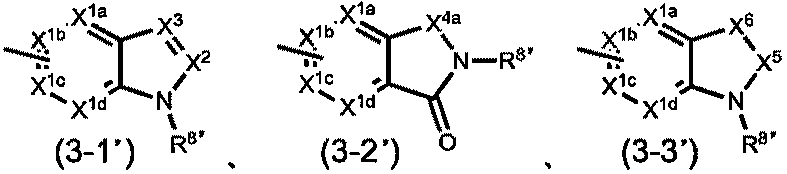
X1a、X1b、X1cおよびX1dは、同一または異なって、CR9’(式中、R9’は、水素原子、ハロゲン原子、置換されてもよいC1-6アルキル基、置換されてもよいC2-6アルケニル基、置換されてもよいC3-8シクロアルキル基、置換されてもよいC4-8シクロアルケニル基、置換されてもよいC3-8シクロアルキルC1-6アルキル基、置換されてもよいアリール基または置換されてもよい複素環基である。)または窒素原子であり;
X2は、CR10(式中、R10は、水素原子、保護されてもよいカルボキシル基、置換されてもよいカルバモイル基、置換されてもよいC1-6アルキル基または置換されてもよいアリール基である。)または窒素原子であり;
X3は、CR11(式中、R11は、水素原子、置換されてもよいC1-6アルキル基、置換されてもよいC3-8シクロアルキル基、置換されてもよいアリール基、置換されてもよいアルC1-6アルキル基または置換されてもよいアシル基である。)または窒素原子であり;
X4aは、CH2、CH2-CH2またはC=Oであり;
X5は、CH2またはC=Oであり;
X6は、CH2、CH2-CH2、C=O、NR12(式中、R12は、水素原子、イミノ保護基、置換されてもよいC1-6アルキル基、置換されてもよいC3-8シクロアルキル基または置換されてもよいC3-8シクロアルキルC1-6アルキル基である。)、酸素原子または硫黄原子であり;
R8’は、水素原子、置換されてもよいC1-12アルキル基、置換されてもよいC3-8シクロアルキル基、置換されてもよいC3-8シクロアルキルC1-6アルキル基、置換されてもよいアリール基、置換されてもよいアルC1-6アルキル基、置換されてもよいアシル基、置換されてもよい複素環基または置換されてもよい複素環C1-6アルキル基である。
ただし、G1がCHであり、G2がCHであり、G3がCHであり、R1が塩素原子、臭素原子、ヨウ素原子、C1-4アルキル基、トリフルオロメチル基、ジブチルアミノ基、メトキシ基または置換されているフェニルオキシ基であり、R2が-COOHであり、R3が水素原子の場合、R4は、一般式(3-1a)~(3-3a)

X1aa、X1ba、X1caおよびX1daは、同一または異なって、CR9a(式中、R9aは、水素原子、ハロゲン原子、置換されてもよいC1-6アルキル基、置換されてもよいC3-8シクロアルキル基または置換されてもよいアリール基である。)または窒素原子であり;
X2は、CR10(式中、R10は、水素原子、保護されてもよいカルボキシル基、置換されてもよいカルバモイル基、置換されてもよいC1-6アルキル基または置換されてもよいアリール基である。)または窒素原子であり;
X3は、CR11(式中、R11は、水素原子、置換されてもよいC1-6アルキル基、置換されてもよいC3-8シクロアルキル基、置換されてもよいアリール基、置換されてもよいアルC1-6アルキル基または置換されてもよいアシル基である。)または窒素原子であり;
X5は、CH2またはC=Oであり;
X6は、CH2、CH2-CH2、C=O、NR12(式中、R12は、水素原子、イミノ保護基、置換されてもよいC1-6アルキル基、置換されてもよいC3-8シクロアルキル基または置換されてもよいC3-8シクロアルキルC1-6アルキル基である。)、酸素原子または硫黄原子であり;
R8aは、置換されてもよいC3-6アルキル基、置換されてもよいC3-8シクロアルキル基、置換されてもよいC3-8シクロアルキルC1-6アルキル基、置換されてもよいアリール基、置換されてもよいアルC1-6アルキル基、置換されてもよいアシル基、置換されてもよい複素環基または置換されてもよい複素環C1-6アルキル基であり;
X4aは、前記と同様の定義である。)で表される基である。)で表される基である、[1]~[7]のいずれかに記載の化合物またはその塩。
[8]R4が、一般式(3-1)~(3-3)
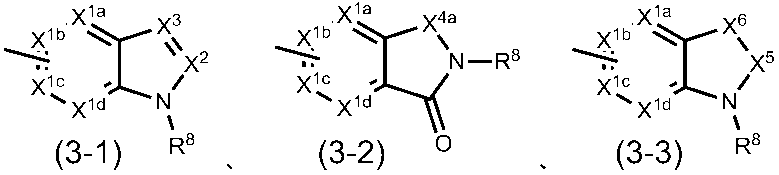
X1a、X1b、X1cおよびX1dは、同一または異なって、CR9(式中、R9は、水素原子、ハロゲン原子、置換されてもよいC1-6アルキル基、置換されてもよいC2-6アルケニル基、置換されてもよいC3-8シクロアルキル基、置換されてもよいC4-8シクロアルケニル基、置換されてもよいC3-8シクロアルキルC1-6アルキル基または置換されてもよいアリール基である。)または窒素原子であり;
X2は、CR10(式中、R10は、水素原子、保護されてもよいカルボキシル基、置換されてもよいカルバモイル基、置換されてもよいC1-6アルキル基または置換されてもよいアリール基である。)または窒素原子であり;
X3は、CR11(式中、R11は、水素原子、置換されてもよいC1-6アルキル基、置換されてもよいC3-8シクロアルキル基、置換されてもよいアリール基、置換されてもよいアルC1-6アルキル基または置換されてもよいアシル基である。)または窒素原子であり;
X4aは、CH2、CH2-CH2またはC=Oであり;
X5は、CH2またはC=Oであり;
X6は、CH2、CH2-CH2、C=O、NR12(式中、R12は、水素原子、イミノ保護基、置換されてもよいC1-6アルキル基、置換されてもよいC3-8シクロアルキル基または置換されてもよいC3-8シクロアルキルC1-6アルキル基である。)、酸素原子または硫黄原子であり;
R8は、水素原子、置換されてもよいC1-6アルキル基、置換されてもよいC3-8シクロアルキル基、置換されてもよいC3-8シクロアルキルC1-6アルキル基、置換されてもよいアリール基、置換されてもよいアルC1-6アルキル基、置換されてもよいアシル基、置換されてもよい複素環基または置換されてもよい複素環C1-6アルキル基である。
ただし、G1がCHであり、G2がCHであり、G3がCHであり、R1が塩素原子、臭素原子、ヨウ素原子、C1-4アルキル基、トリフルオロメチル基、ジブチルアミノ基、メトキシ基または置換されているフェニルオキシ基であり、R2が-COOHであり、R3が水素原子の場合、R4は、一般式(3-1a)~(3-3a)

X1aa、X1ba、X1caおよびX1daは、同一または異なって、CR9a(式中、R9aは、水素原子、ハロゲン原子、置換されてもよいC1-6アルキル基、置換されてもよいC3-8シクロアルキル基または置換されてもよいアリール基である。)または窒素原子であり;
X2は、CR10(式中、R10は、水素原子、保護されてもよいカルボキシル基、置換されてもよいカルバモイル基、置換されてもよいC1-6アルキル基または置換されてもよいアリール基である。)または窒素原子であり;
X3は、CR11(式中、R11は、水素原子、置換されてもよいC1-6アルキル基、置換されてもよいC3-8シクロアルキル基、置換されてもよいアリール基、置換されてもよいアルC1-6アルキル基または置換されてもよいアシル基である。)または窒素原子であり;
X5は、CH2またはC=Oであり;
X6は、CH2、CH2-CH2、C=O、NR12(式中、R12は、水素原子、イミノ保護基、置換されてもよいC1-6アルキル基、置換されてもよいC3-8シクロアルキル基または置換されてもよいC3-8シクロアルキルC1-6アルキル基である。)、酸素原子または硫黄原子であり;
R8aは、置換されてもよいC3-6アルキル基、置換されてもよいC3-8シクロアルキル基、置換されてもよいC3-8シクロアルキルC1-6アルキル基、置換されてもよいアリール基、置換されてもよいアルC1-6アルキル基、置換されてもよいアシル基、置換されてもよい複素環基または置換されてもよい複素環C1-6アルキル基であり;
X4aは、前記と同様の定義である。)で表される基である。)で表される基である、[1]~[7]のいずれかに記載の化合物またはその塩。
[9]R4が、一般式(4-1)または(4-2)

X2は、CR10(式中、R10は、水素原子、保護されてもよいカルボキシル基、置換されてもよいカルバモイル基、置換されてもよいC1-6アルキル基または置換されてもよいアリール基である。)または窒素原子であり;
X6aは、CH2、C=O、NR12(式中、R12は、水素原子、イミノ保護基、置換されてもよいC1-6アルキル基、置換されてもよいC3-8シクロアルキル基または置換されてもよいC3-8シクロアルキルC1-6アルキル基である。)、酸素原子または硫黄原子であり;
R8は、水素原子、置換されてもよいC1-6アルキル基、置換されてもよいC3-8シクロアルキル基、置換されてもよいC3-8シクロアルキルC1-6アルキル基、置換されてもよいアリール基、置換されてもよいアルC1-6アルキル基、置換されてもよいアシル基、置換されてもよい複素環基または置換されてもよい複素環C1-6アルキル基であり;
R9は、水素原子、ハロゲン原子、置換されてもよいC1-6アルキル基、置換されてもよいC2-6アルケニル基、置換されてもよいC3-8シクロアルキル基、置換されてもよいC4-8シクロアルケニル基、置換されてもよいC3-8シクロアルキルC1-6アルキル基または置換されてもよいアリール基であり;
R11は、水素原子、置換されてもよいC1-6アルキル基、置換されてもよいC3-8シクロアルキル基、置換されてもよいアリール基、置換されてもよいアルC1-6アルキル基または置換されてもよいアシル基である。
ただし、G1がCHであり、G2がCHであり、G3がCHであり、R1が塩素原子、臭素原子、ヨウ素原子、C1-4アルキル基、トリフルオロメチル基、ジブチルアミノ基、メトキシ基または置換されているフェニルオキシ基であり、R2が-COOHであり、R3が水素原子の場合、R4は、一般式(4-1a)または(4-2a)

R8aは、置換されてもよいC3-6アルキル基、置換されてもよいC3-8シクロアルキル基、置換されてもよいC3-8シクロアルキルC1-6アルキル基、置換されてもよいアリール基、置換されてもよいアルC1-6アルキル基、置換されてもよいアシル基、置換されてもよい複素環基または置換されてもよい複素環C1-6アルキル基であり;
R9aは、水素原子、ハロゲン原子、置換されてもよいC1-6アルキル基、置換されてもよいC3-8シクロアルキル基または置換されてもよいアリール基であり;
R11、X2、X4aおよびX6aは、前記と同様の定義である。)で表される基である。)で表される基である、[1]~[8]のいずれかに記載の化合物またはその塩。
[10]G1およびG2がCHであり;G3が窒素原子であり;
R4が、一般式(5-1)
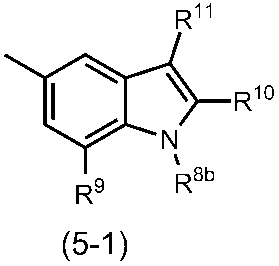
R8bは、置換されてもよいC1-6アルキル基、置換されてもよいC3-8シクロアルキル基、置換されてもよいC3-8シクロアルキルC1-6アルキル基、置換されてもよいアリール基または置換されてもよいアルC1-6アルキル基であり;
R9は、水素原子、ハロゲン原子、置換されてもよいC1-6アルキル基、置換されてもよいC2-6アルケニル基、置換されてもよいC3-8シクロアルキル基、置換されてもよいC4-8シクロアルケニル基、置換されてもよいC3-8シクロアルキルC1-6アルキル基または置換されてもよいアリール基であり;
R10は、水素原子、保護されていてもよいカルボキシル基、置換されていてもよいカルバモイル基、置換されてもよいC1-6アルキル基または置換されていてもよいアリール基であり;
R11は、水素原子、置換されてもよいC1-6アルキル基、置換されてもよいC3-8シクロアルキル基、置換されてもよいアリール基、置換されてもよいアルC1-6アルキル基または置換されてもよいアシル基である。)
で表される基である、[1]~[9]のいずれかに記載の化合物またはその塩。
[11]G1およびG2がCHであり;G3が窒素原子であり;
R4が、一般式(5-1a)

R8bは、置換されてもよいC1-6アルキル基、置換されてもよいC3-8シクロアルキル基、置換されてもよいC3-8シクロアルキルC1-6アルキル基、置換されてもよいアルC1-6アルキル基または置換されてもよいアリール基である。)
で表される基である、[1]~[10]のいずれかに記載の化合物またはその塩。
[12]G1およびG2がCHであり;G3が窒素原子であり;
R4が、一般式(5-1b)

R8cは、置換されてもよいC1-6アルキル基であり;
R9bは、置換されてもよいC1-6アルキル基、置換されてもよいC3-8シクロアルキル基、置換されてもよいC3-8シクロアルキルC1-6アルキル基または置換されてもよいアリール基である。)
で表される基である、[1]~[10]のいずれかに記載の化合物またはその塩。
[13]G1およびG2がCHであり;G3が窒素原子であり;
R4が、一般式(5-1c)

R8cは、置換されてもよいC1-6アルキル基であり;
R11aは、置換されてもよいアリール基である。)
で表される基である、[1]~[10]のいずれかに記載の化合物またはその塩。
[14]化合物が、5-シクロプロピル-2-((1-(3-フルオロベンジル)-1H-インドール-5-イル)アミノ)ニコチン酸、5-シクロプロピル-2-((1-(2-フルオロベンジル)-1H-インドール-5-イル)アミノ)ニコチン酸、5-シクロプロピル-2-(1-メチル-3-フェニル-1H-インドール-5-イル)アミノ)ニコチン酸、5-シクロプロピル-2-((1-メチル-7-フェニル-1H-インドール-5-イル)アミノ)ニコチン酸、2-((7-(2-シアノフェニル)-1-メチル-1H-インドール-5-イル)アミノ)-5-シクロプロピルニコチン酸、2-((1-ベンジル-1H-インドール-5-イル)アミノ)-5-シクロプロピルニコチン酸、5-シクロプロピル-2-((1-エチル-2-フェニル-1H-インドール-5-イル)アミノ)ニコチン酸、5-シクロプロピル-2-(1-イソペンチル-1H-インドール-5-イルアミノ)ニコチン酸、2-((1-(シクロヘキシルメチル)-1H-インドール-5-イル)アミノ)-5-シクロプロピルニコチン酸、2-((1-(シクロブチルメチル)-1H-インドール-5-イル)アミノ)-5-シクロプロピルニコチン酸、2-((7-(4-シアノフェニル)-1-メチル-1H-インドール-5-イル)アミノ)-5-シクロプロピルニコチン酸、5-シクロプロピル-2-((7-(2-メトキシフェニル)-1-メチル-1H-インドール-5-イル)アミノ)ニコチン酸、5-シクロプロピル-2-((1-フェニル-1H-インドール-5-イル)アミノ)ニコチン酸、2-((1-(シクロペンチルメチル)-1H-インドール-5-イル)アミノ)-5-シクロプロピルニコチン酸、5-シクロプロピル-2-((1-(4-フルオロベンジル)-1H-インドール-5-イル)アミノ)ニコチン酸、5-シクロプロピル-2-((1-(3-(トリフルオロメチル)ベンジル)-1H-インドール-5-イル)アミノ)ニコチン酸、2-((1-(シクロヘキシルメチル)-1H-インダゾール-5-イル)アミノ)-5-シクロプロピルニコチン酸、5-シクロプロピル-2-((1-(4-フルオロフェニル)-1H-インドール-5-イル)アミノ)ニコチン酸、2-((1-ベンジル-1H-インドール-5-イル)アミノ)-5-シクロプロピル安息香酸、3-((1-ベンジル-1H-インドール-5-イル)アミノ)-6-シクロプロピルピラジン-2-カルボン酸、5-シクロプロピル-2-((3-(2-フルオロフェニル)-1-メチル-1H-インドール-5-イル)アミノ)ニコチン酸、5-シクロプロピル-2-((7-(4-フルオロフェニル)-1-メチル-1H-インドール-5-イル)アミノ)ニコチン酸、2-((1-イソブチル-1H-インドール-5-イル)アミノ)-5-シクロプロピルニコチン酸、5-シクロプロピル-2-((7-(2-フルオロフェニル)-1-メチル-1H-インドール-5-イル)アミノ)ニコチン酸、5-シクロプロピル-2-((7-(3-メトキシプロピル)-1-メチル-1H-インドール-5-イル)アミノ)ニコチン酸、5-シクロプロピル-2-((7-(2-シクロプロピルエチル)-1-メチル-1H-インドール-5-イル)アミノ)ニコチン酸、5-シクロプロピル-2-((7-イソプロピル-1-メチル-1H-インドール-5-イル)アミノ)ニコチン酸、2-((1-ベンジル-1H-インドール-5-イル)アミノ)-5-シクロプロピル-N-(メチルスルホニル)ニコチンアミド、2-((3-ベンジル-2-オキソ-2,3-ジヒドロベンゾ[d]チアゾール-6-イル)アミノ)-5-シクロプロピルニコチン酸および2-((1-(シクロブチルメチル)-1H-インドール-4-イル)アミノ)-5-シクロプロピルニコチン酸からなる群より選択される少なくとも1種である、[1]に記載の化合物またはその塩。
[14’]化合物が、5-シクロプロピル-2-((1-(3-メトキシベンジル)-1H-インドール-5-イル)アミノ)ニコチン酸、2-((1-(3-シアノベンジル)-1H-インドール-5-イル)アミノ)-5-シクロプロピルニコチン酸、5-シクロプロピル-2-((1-(2-メチルベンジル)-1H-インドール-5-イル)アミノ)ニコチン酸、5-シクロプロピル-2-((1-(3-メチルベンジル)-1H-インドール-5-イル)アミノ)ニコチン酸、5-シクロプロピル-2-((1-(4-メチルベンジル)-1H-インドール-5-イル)アミノ)ニコチン酸、2-((1-(3-クロロベンジル)-1H-インドール-5-イル)アミノ)-5-シクロプロピルニコチン酸、2-((1-ベンジル-6-メチル-1H-インドール-5-イル)アミノ)-5-シクロプロピルニコチン酸、5-シクロプロピル-2-((1-(2-フェニルエチル)-1H-インドール-5-イル)アミノ)ニコチン酸、5-シクロプロピル-2-((1-(3-フルオロベンジル)-7-メチル-1H-インドール-5-イル)アミノ)ニコチン酸、2-((1-ベンジル-7-メチル-1H-インドール-5-イル)アミノ)-5-シクロプロピルニコチン酸、5-シクロプロピル-2-((1-(2-エチルブチル)-1H-インドール-5-イル)アミノ)ニコチン酸、5-シクロプロピル-2-((1-(3,4-ジフルオロベンジル)-1H-インドール-5-イル)アミノ)ニコチン酸、2-((1-ブチル-1H-インドール-5-イル)アミノ)-5-シクロプロピルニコチン酸、5-シクロプロピル-2-((1-(2,5-ジフルオロベンジル)-1H-インドール-5-イル)アミノ)ニコチン酸および5-シクロプロピル-2-((1-(2,3-ジフルオロベンジル)-1H-インドール-5-イル)アミノ)ニコチン酸からなる群より選択される少なくとも1種である、[1]に記載の化合物またはその塩。
[15][1]~[14]のいずれかに記載の化合物またはその塩を含有する、医薬用組成物。
[16][1]~[14]のいずれかに記載の化合物またはその塩を含有する、ケラチノサイト増殖抑制剤。
[17][1]~[14]のいずれかに記載の化合物またはその塩を含有する、ケラチノサイトの過剰増殖が関与する疾患の処置剤。
[18][1]~[14]のいずれかに記載の化合物またはその塩を含有する、TNFα産生阻害剤。
[19][1]~[14]のいずれかに記載の化合物またはその塩を含有する、TNFαの過剰産生が関与する疾患の処置剤。
[20][1]~[14]のいずれかに記載の化合物またはその塩を含有する、医薬。
[21][1]~[14]のいずれかに記載の化合物またはその塩を対象に投与する工程を含む、ケラチノサイト増殖抑制方法。
[22][1]~[14]のいずれかに記載の化合物またはその塩を対象に投与する工程を含む、ケラチノサイトの過剰増殖が関与する疾患の処置方法。
[23][1]~[14]のいずれかに記載の化合物またはその塩を対象に投与する工程を含む、TNFα産生阻害方法。
[24][1]~[14]のいずれかに記載の化合物またはその塩を対象に投与する工程を含む、TNFαの過剰産生が関与する疾患の処置方法。
[25]ケラチノサイト増殖抑制方法において使用するための、[1]~[14]のいずれかに記載の化合物またはその塩。
[26]ケラチノサイトの過剰増殖が関与する疾患の処置方法において使用するための、[1]~[14]のいずれかに記載の化合物またはその塩。
[27]TNFα産生阻害方法において使用するための、[1]~[14]のいずれかに記載の化合物またはその塩。
[28]TNFαの過剰産生が関与する疾患の処置方法において使用するための、[1]~[14]のいずれかに記載の化合物またはその塩。
[29][1]~[14]のいずれかに記載の化合物またはその塩の、ケラチノサイト増殖抑制剤の製造における、使用。
[30][1]~[14]のいずれかに記載の化合物またはその塩の、ケラチノサイトの過剰増殖が関与する疾患の処置のための医薬の製造における、使用。
[31][1]~[14]のいずれかに記載の化合物またはその塩の、TNFα産生阻害剤の製造における、使用。
[32][1]~[14]のいずれかに記載の化合物またはその塩の、TNFαの過剰産生が関与する疾患の処置のための医薬の製造における、使用。
また、本発明の新規なアミン誘導体またはその塩は、優れたTNFα産生抑制効果も有するため、TNFαの過剰産生が関与する疾患の予防または治療などの処置に有用である。
本明細書において、特にことわらない限り、各用語は以下の意味を有する。
ハロゲン原子とは、フッ素原子、塩素原子、臭素原子またはヨウ素原子を意味する。
C1-3アルキル基とは、メチル、エチル、プロピルまたはイソプロピル基を意味する。
C1-4アルキル基とは、メチル、エチル、プロピル、イソプロピル、ブチル、sec-ブチル、イソブチルまたはtert-ブチル基を意味する。
C1-6アルキル基とは、メチル、エチル、プロピル、イソプロピル、ブチル、sec-ブチル、イソブチル、tert-ブチル、ペンチル、イソペンチルおよびヘキシル基などの直鎖状または分枝鎖状のC1-6アルキル基を意味する。
C1-12アルキル基とは、メチル、エチル、プロピル、イソプロピル、ブチル、sec-ブチル、イソブチル、tert-ブチル、ペンチル、イソペンチル、ヘキシル、ヘプチルおよびオクチル基などの直鎖状または分枝鎖状のC1-12アルキル基を意味する。
C3-6アルキル基とは、プロピル、イソプロピル、ブチル、sec-ブチル、イソブチル、tert-ブチル、ペンチル、イソペンチルおよびヘキシル基などの直鎖状または分枝鎖状のC3-6アルキル基を意味する。
C2-6アルケニル基とは、ビニル、アリル、プロペニル、イソプロペニル、ブテニル、イソブテニル、1,3-ブタジエニル、ペンテニルおよびヘキセニル基などの直鎖状または分枝鎖状のC2-6アルケニル基を意味する。
C3-6シクロアルキル基とは、シクロプロピル、シクロブチル、シクロペンチルまたはシクロヘキシル基を意味する。
C3-8シクロアルキル基とは、シクロプロピル、シクロブチル、シクロペンチルおよびシクロヘキシル基などのC3-8シクロアルキル基を意味する。
C3-8シクロアルキルC1-6アルキル基とは、シクロプロピルメチル、2-(シクロプロピル)エチル、シクロブチルメチル、2-(シクロブチル)エチル、シクロペンチルメチルおよびシクロヘキシルメチル基などのC3-8シクロアルキルC1-6アルキル基を意味する。
C4-8シクロアルケニル基とは、シクロブテニル、シクロペンテニル、シクロヘキセニルおよびシクロヘキサンジエニル基などのC4-8シクロアルケニル基を意味する。
三環式縮合炭化水素環基とは、ビフェニレニル、アセナフテニル、アセナフチレニル、フルオレニル、フェナレニル、フェナントレニルおよびアントラセニル基などの一部分が水素化されてもよい3環の縮合炭化水素環を意味する。
アリール基とは、フェニル基、二環式縮合炭化水素環基または三環式縮合炭化水素環基を意味する。
アルC1-6アルキル基とは、ベンジル、ジフェニルメチル、トリチル、フェネチルおよびナフチルメチル基などのアリールC1-6アルキル基を意味する。
C1-6アルコキシ基とは、メトキシ、エトキシ、プロポキシ、イソプロポキシ、ブトキシ、イソブトキシ、sec-ブトキシ、tert-ブトキシ、ペンチルオキシおよびヘキシルオキシ基などの直鎖状または分枝鎖状のC1-6アルキルオキシ基を意味する。
C1-6アルコキシC1-6アルキル基とは、メトキシメチルおよび1-エトキシエチル基などのC1-6アルキルオキシC1-6アルキル基を意味する。
アルC1-6アルコキシC1-6アルキル基とは、ベンジルオキシメチルおよびフェネチルオキシメチル基などのアルC1-6アルキルオキシC1-6アルキル基を意味する。
アリールオキシ基とは、フェノキシおよびナフチルオキシ基などのアリールオキシ基を意味する。
C1-6アルキルチオ基とは、メチルチオ、エチルチオ、プロピルチオおよびブチルチオ基などのC1-6アルキルチオ基を意味する。
アリールチオ基とは、フェニルチオおよびナフチルチオ基などのアリールチオ基を意味する。
C1-6アルキルスルホニル基とは、メチルスルホニル、エチルスルホニルおよびプロピルスルホニル基などのC1-6アルキルスルホニル基を意味する。
アリールスルホニル基とは、ベンゼンスルホニル、p-トルエンスルホニルおよびナフタレンスルホニル基などのアリールスルホニル基を意味する。
C1-6アルキルアミノ基とは、メチルアミノ、エチルアミノ、プロピルアミノ、イソプロピルアミノ、ブチルアミノ、sec-ブチルアミノ、tert-ブチルアミノ、ペンチルアミノおよびヘキシルアミノ基などの直鎖状または分枝鎖状のC1-6アルキルアミノ基を意味する。
ジ(C1-3アルキル)アミノ基とは、ジメチルアミノ、ジエチルアミノ、ジプロピルアミノ、ジイソプロピルアミノ、(エチル)(メチル)アミノおよび(メチル)(プロピル)アミノ基などの直鎖状または分枝鎖状のジ(C1-3アルキル)アミノ基を意味する。
ジ(C1-6アルキル)アミノ基とは、ジメチルアミノ、ジエチルアミノ、ジプロピルアミノ、ジイソプロピルアミノ、ジブチルアミノ、ジ(tert-ブチル)アミノ、ジペンチルアミノ、ジヘキシルアミノ、(エチル)(メチル)アミノおよび(メチル)(プロピル)アミノ基などの直鎖状または分枝鎖状のジ(C1-6アルキル)アミノ基を意味する。
アロイル基とは、ベンゾイルまたはナフトイル基を意味する。
複素環カルボニル基とは、ニコチノイル、テノイル、ピロリジノカルボニルまたはフロイル基を意味する。
(α-置換)アミノアセチル基とは、アミノ酸(グリシン、アラニン、バリン、ロイシン、イソロイシン、セリン、トレオニン、システイン、メチオニン、アスパラギン酸、グルタミン酸、アスパラギン、グルタミン、アルギニン、リジン、ヒスチジン、ヒドロキシリジン、フェニルアラニン、チロシン、トリプトファン、プロリンおよびヒドロキシプロリンなどのアミノ酸が挙げられる。)から誘導されるN末端が保護されてもよい(α-置換)アミノアセチル基を意味する。
アシル基とは、ホルミル基、スクシニル基、グルタリル基、マレオイル基、フタロイル基、C2-12アルカノイル基、アロイル基、複素環カルボニル基または(α-置換)アミノアセチル基を意味する。
アシルオキシC1-6アルキル基とは、アセトキシメチル、プロピオニルオキシメチル、ピバロイルオキシメチル、ベンゾイルオキシメチルまたは1-(ベンゾイルオキシ)エチル基などを意味する。
C1-6アルコキシカルボニル基とは、メトキシカルボニル、エトキシカルボニル、イソプロポキシカルボニル、tert-ブトキシカルボニルおよび1,1-ジメチルプロポキシカルボニル基などの直鎖状または分枝鎖状のC1-6アルキルオキシカルボニル基を意味する。
アルC1-6アルコキシカルボニル基とは、ベンジルオキシカルボニルおよびフェネチルオキシカルボニル基などのアリールC1-6アルコキシカルボニル基を意味する。
アリールオキシカルボニル基とは、フェニルオキシカルボニルおよびナフチルオキシカルボニル基などのアリールオキシカルボニル基を意味する。
単環の含酸素複素環基とは、テトラヒドロフラニル、フラニル、テトラヒドロピラニル、ジヒドロピラニルまたはピラニル基を意味する。
単環の含硫黄複素環基とは、チエニル基を意味する。
単環の含窒素・酸素複素環基とは、オキサゾリル、イソオキサゾリル、オキサジアゾリルおよびモルホリニル基などの該環を形成する異項原子として窒素原子および酸素原子のみを含む単環の含窒素・酸素複素環基を意味する。
単環の含窒素・硫黄複素環基とは、チアゾリル、イソチアゾリル、チアジアゾリル、チオモルホリニル、1-オキシドチオモルホリニルおよび1,1-ジオキシドチオモルホリニル基などの該環を形成する異項原子として窒素原子および硫黄原子のみを含む単環の含窒素・硫黄複素環基を意味する。
単環の複素環基とは、単環の含窒素複素環基、単環の含酸素複素環基、単環の含硫黄複素環基、単環の含窒素・酸素複素環基または単環の含窒素・硫黄複素環基を意味する。
二環式含酸素複素環基とは、2,3-ジヒドロベンゾフラニル、ベンゾフラニル、イソベンゾフラニル、クロマニル、クロメニル、イソクロマニル、1,3-ベンゾジオキソリル、1,3-ベンゾジオキサニルおよび1,4-ベンゾジオキサニル基などの該環を形成する異項原子として酸素原子のみを含む二環式の含酸素複素環基を意味する。
二環式含硫黄複素環基とは、2,3-ジヒドロベンゾチエニルおよびベンゾチエニル基などの該環を形成する異項原子として硫黄原子のみを含む二環式の含硫黄複素環基を意味する。
二環式含窒素・酸素複素環基とは、ジヒドロベンゾオキサゾリル、ベンゾオキサゾリル、ベンゾイソオキサゾリル、ベンゾオキサジアゾリル、ベンゾモルホリニル、ジヒドロピラノピリジル、ジヒドロジオキシノピリジルおよびジヒドロピリドオキサジニル基などの該環を形成する異項原子として窒素原子および酸素原子のみを含む二環式の含窒素・酸素複素環基を意味する。
二環式含窒素・硫黄複素環基とは、ジヒドロベンゾチアゾリル、ベンゾチアゾリル、ベンゾイソチアゾリルおよびベンゾチアジアゾリル基などの該環を形成する異項原子として窒素原子および硫黄原子を含む二環式の含窒素・硫黄複素環基を意味する。
二環式複素環基とは、二環式の含窒素複素環基、二環式の含酸素複素環基、二環式の含硫黄複素環基、二環式の含窒素・酸素複素環基または二環式の含窒素・硫黄複素環基を意味する。
三環式含酸素複素環基とは、キサンテニル基などの該環を形成する異項原子として酸素原子を含む三環式含酸素複素環基を意味する。
三環式含硫黄複素環基とは、チアントレニル基などの該環を形成する異項原子として硫黄原子を含む三環式含硫黄複素環基を意味する。
三環式含窒素・酸素複素環基とは、フェノキサジニル基などの該環を形成する異項原子として窒素原子および酸素原子を含む三環式含窒素・酸素複素環基を意味する。
三環式含窒素・硫黄複素環基とは、フェノチアジニル基などの該環を形成する異項原子として窒素原子および硫黄原子を含む三環式含窒素・硫黄複素環基を意味する。
三環式複素環基とは、三環式含窒素複素環基、三環式含酸素複素環基、三環式含硫黄複素環基、三環式含窒素・酸素複素環基または三環式含窒素・硫黄複素環基を意味する。
ハロゲン化炭化水素類としては、塩化メチレン、クロロホルムまたはジクロロエタンが挙げられる。
アルコール類としては、メタノール、エタノール、プロパノール、2-プロパノール、ブタノールまたは2-メチル-2-プロパノールが挙げられる。
グリコール類としては、エチレングリコール、プロピレングリコールまたはジエチレングリコールが挙げられる。
エーテル類としては、ジエチルエーテル、ジイソプロピルエーテル、ジオキサン、テトラヒドロフラン、アニソール、エチレングリコールジメチルエーテル、ジエチレングリコールジメチルエーテルまたはジエチレングリコールジエチルエーテルが挙げられる。
ケトン類としては、アセトン、2-ブタノンまたは4-メチル-2-ペンタノンが挙げられる。
エステル類としては、酢酸メチル、酢酸エチル、酢酸プロピルまたは酢酸ブチルが挙げられる。
アミド類としては、N,N-ジメチルホルムアミド、N,N-ジメチルアセトアミドまたは1-メチル-2-ピロリドンが挙げられる。
ニトリル類としては、アセトニトリルまたはプロピオニトリルが挙げられる。
スルホキシド類としては、ジメチルスルホキシドが挙げられる。
芳香族炭化水素類としては、ベンゼン、トルエンまたはキシレンが挙げられる。
有機酸としては、ギ酸、酢酸、トリフルオロ酢酸、フタル酸、フマル酸、シュウ酸、酒石酸、マレイン酸、クエン酸、コハク酸、リンゴ酸、メタンスルホン酸、ベンゼンスルホン酸またはp-トルエンスルホン酸などが挙げられる。
酸とは、無機酸または有機酸を意味する。
有機塩基としては、トリエチルアミン、ジイソプロピルエチルアミン、ピリジン、4-ジメチルアミノピリジンまたはN-メチルモルホリンなどが挙げられる。
塩基とは、無機塩基または有機塩基を意味する。
金属触媒としては、パラジウム-炭素およびパラジウム黒などの金属パラジウム;酸化パラジウムおよび水酸化パラジウムなどのパラジウム塩;ラネーニッケルなどのニッケル金属ならびに酸化白金などの白金塩が挙げられる。
TNFαの過剰産生が関与する疾患としては、たとえば、敗血症ショック、全身性エリテマトーデス、関節リウマチ、乾癬、炎症性腸疾患、多発性硬化症、硬直性脊椎炎、アレルギー疾患、動脈硬化、インスリン抵抗性糖尿病、移植片対宿主病、ウイルス肝炎またはHIV感染などの感染症などが挙げられ、関節リウマチ、乾癬、炎症性腸疾患および多発性硬化症が好ましく、乾癬がより好ましい。
細胞増殖が関与する疾患としては、たとえば、癌、アテローム性動脈硬化症、血管再狭窄、血管新生、糖尿病性網膜症、乾癬および子宮内膜症が挙げられ、癌および乾癬が好ましく、乾癬がより好ましい。
R1のC1-6アルキル基、C3-8シクロアルキル基、アリール基、C1-6アルコキシ基、アリールオキシ基、C1-6アルキルチオ基、アリールチオ基、C1-6アルキルアミノ基、ジ(C1-6アルキル)アミノ基および複素環基の置換基としては、置換基群αから選択される少なくとも1種の基が挙げられる。
R1のC3-8シクロアルキル基としては、C3-6シクロアルキル基が好ましく、シクロプロピル基がより好ましい。
R1のアリール基としては、フェニル基が好ましい。
R1のC1-6アルコキシ基としては、C1-3アルコキシ基が好ましく、メトキシ基がより好ましい。
R1のアリールオキシ基としては、フェニルオキシ基が好ましい。
R1のC1-6アルキルチオ基としては、C1-3アルキルチオ基が好ましく、メチルチオ基がより好ましい。
R1のアリールチオ基としては、フェニルチオ基が好ましい。
R1のC1-6アルキルアミノ基としては、C1-3アルキルアミノ基が好ましく、メチルアミノ基がより好ましい。
R1のジ(C1-6アルキル)アミノ基としては、ジ(C1-3アルキル)アミノ基が好ましく、ジメチルアミノ基がより好ましい。
R1の複素環基としては、単環の複素環基が好ましく、単環の含窒素複素環基がより好ましい。
R5が、水素原子であることが好ましい。
R6が、水素原子であることが好ましい。
R7が、置換されてもよいC1-3アルキル基または置換されてもよいC3-6シクロアルキル基であることが好ましく、ハロゲン原子で置換されてもよいC1-3アルキル基またはC3-6シクロアルキル基であることがより好ましく、メチル、トリフルオロメチルまたはシクロプロピル基であることがさらに好ましい。
R7のC1-6アルキル基およびC3-8シクロアルキル基の置換基としては、置換基群αから選択される少なくとも1種の基が挙げられる。
ただし、R4が置換されてもよい二環式縮合炭化水素環基の場合、G3は窒素原子である。
また、G1がCHであり、G2がCHであり、G3がCHであり、R1が塩素原子、臭素原子、ヨウ素原子、C1-4アルキル基、トリフルオロメチル基、ジブチルアミノ基、メトキシ基または置換されているフェニルオキシ基であり、R2が-COOHであり、R3が水素原子の場合、R4は一般式(2-1)~(2-4)


R9が、水素原子、置換されてもよいC1-6アルキル基、置換されてもよいC3-8シクロアルキル基、置換されてもよいC3-8シクロアルキルC1-6アルキル基または置換されてもよいアリール基であることが好ましく、水素原子、置換されてもよいC1-6アルキル基、置換されてもよいC3-8シクロアルキルC1-6アルキル基または置換されてもよいアリール基であることがより好ましく、水素原子または置換されてもよいアリール基であることがさらに好ましい。
R9のC1-6アルキル基、C2-6アルケニル基、C3-8シクロアルキル基、C4-8シクロアルケニル基、C3-8シクロアルキルC1-6アルキル基およびアリール基の置換基としては、置換基群αから選択される少なくとも1種の基が挙げられる。
R4が、一般式(3-1)で表される基の場合、X2が、CR10であることが好ましい。
R10が、水素原子または置換されてもよいC1-6アルキル基であることが好ましく、水素原子であることがより好ましい。
R10のカルバモイル基、C1-6アルキル基およびアリール基の置換基としては、置換基群αから選択される少なくとも1種の基が挙げられる。
R4が、一般式(3-1)で表される基の場合、X3が、CR11であることが好ましい。
R11が、水素原子または置換されていてもよいアリール基であることが好ましく、水素原子であることがより好ましい。
R11のC1-6アルキル基、C3-8シクロアルキル基、アリール基、アルC1-6アルキル基およびアシル基の置換基としては、置換基群αから選択される少なくとも1種の基が挙げられる。
R4が、一般式(3-2)で表される基の場合、X4aがCH2であることが好ましい。
R4が、一般式(3-3)で表される基の場合、X5がC=Oであることが好ましい。
R4が、一般式(3-3)で表される基の場合、X6がCH2、C=O、酸素原子、硫黄原子またはNR12であることが好ましい。
R12が、置換されてもよいC1-6アルキル基または置換されてもよいC3-8シクロアルキル基であることが好ましい。
R12のC1-6アルキル基、C3-8シクロアルキル基およびC3-8シクロアルキルC1-6アルキル基の置換基としては、置換基群αより選択される少なくとも1種の基が挙げられる。
R8’のC1-12アルキル基、C3-8シクロアルキル基、C3-8シクロアルキルC1-6アルキル基、アリール基、アルC1-6アルキル基、アシル基、複素環基および複素環C1-6アルキル基の置換基としては、置換基群αより選択される少なくとも1種の基が挙げられる。
R8が、置換されてもよいC1-6アルキル基、置換されてもよいC3-8シクロアルキル基、置換されてもよいC3-8シクロアルキルC1-6アルキル基、置換されてもよいアリール基または置換されてもよいアルC1-6アルキル基であることが好ましい。
R8のC1-6アルキル基、C3-8シクロアルキル基、C3-8シクロアルキルC1-6アルキル基、アリール基、アルC1-6アルキル基、アシル基、複素環基および複素環C1-6アルキル基の置換基としては、置換基群αより選択される少なくとも1種の基が挙げられる。
R11のC1-6アルキル基、C3-8シクロアルキル基、アリール基、アルC1-6アルキル基およびアシル基の置換基としては、置換基群αから選択される少なくとも1種の基が挙げられる。

R8bのC1-6アルキル基、C3-8シクロアルキル基、C3-8シクロアルキルC1-6アルキル基、アリール基およびアルC1-6アルキル基の置換基としては、置換基群αより選択される少なくとも1種の基が挙げられる。
R9’が、水素原子、ハロゲン原子、置換されてもよいC1-6アルキル基、置換されてもよいC2-6アルケニル基、置換されてもよいC3-8シクロアルキル基、置換されてもよいC4-8シクロアルケニル基、置換されてもよいC3-8シクロアルキルC1-6アルキル基または置換されてもよいアリール基であることが好ましい。
R9’のC1-6アルキル基、C2-6アルケニル基、C3-8シクロアルキル基、C4-8シクロアルケニル基、C3-8シクロアルキルC1-6アルキル基、アリール基および複素環基の置換基としては、置換基群αより選択される少なくとも1種の基が挙げられる。
R9が、水素原子、置換されてもよいC3-6アルキル基、置換されてもよいC3-8シクロアルキル基、置換されてもよいC3-8シクロアルキルC1-6アルキル基または置換されてもよいアリール基であることが好ましく、水素原子または置換されてもよりアリール基であることがより好ましい。
R9のC1-6アルキル基、C2-6アルケニル基、C3-8シクロアルキル基、C4-8シクロアルケニル基、C3-8シクロアルキルC1-6アルキル基、およびアリール基の置換基としては、置換基群αより選択される少なくとも1種の基が挙げられる。
R10のカルバモイル基、C1-6アルキル基およびアリール基の置換基としては、置換基群αから選択される少なくとも1種の基が挙げられる。
R11のC1-6アルキル基、C3-8シクロアルキル基、アリール基、アルC1-6アルキル基およびアシル基の置換基としては、置換基群αから選択される少なくとも1種の基が挙げられる。

R8bのC1-6アルキル基、C3-8シクロアルキル基、C3-8シクロアルキルC1-6アルキル基、アリール基およびアルC1-6アルキル基の置換基としては、置換基群αから選択される少なくとも1種の基が挙げられる。

R8cのC1-3アルキル基の置換基としては、置換基群αから選択される少なくとも1種の基が挙げられる。
R9bが、置換されてもよいC1-6アルキル基、置換されてもよいC3-8シクロアルキルC1-6アルキル基または置換されてもよいアリール基が好ましい。
R9bのC1-6アルキル基、C3-8シクロアルキル基、C3-8シクロアルキルC1-6アルキル基およびアリール基の置換基としては、置換基群αから選択される少なくとも1種の基が挙げられる。
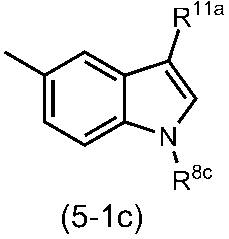
R8cのC1-6アルキル基の置換基としては、置換基群αから選択される少なくとも1種の基が挙げられる。
R11aが、置換されてもよいアリール基であることが好ましい。
R11aのアリール基の置換基としては、置換基群αから選択される少なくとも1種の基が挙げられる。
また、別の態様として、本発明の新規なアミン誘導体またはその塩は、5-シクロプロピル-2-((1-(3-メトキシベンジル)-1H-インドール-5-イル)アミノ)ニコチン酸、2-((1-(3-シアノベンジル)-1H-インドール-5-イル)アミノ)-5-シクロプロピルニコチン酸、5-シクロプロピル-2-((1-(2-メチルベンジル)-1H-インドール-5-イル)アミノ)ニコチン酸、5-シクロプロピル-2-((1-(3-メチルベンジル)-1H-インドール-5-イル)アミノ)ニコチン酸、5-シクロプロピル-2-((1-(4-メチルベンジル)-1H-インドール-5-イル)アミノ)ニコチン酸、2-((1-(3-クロロベンジル)-1H-インドール-5-イル)アミノ)-5-シクロプロピルニコチン酸、2-((1-ベンジル-6-メチル-1H-インドール-5-イル)アミノ)-5-シクロプロピルニコチン酸、5-シクロプロピル-2-((1-(2-フェニルエチル)-1H-インドール-5-イル)アミノ)ニコチン酸、5-シクロプロピル-2-((1-(3-フルオロベンジル)-7-メチル-1H-インドール-5-イル)アミノ)ニコチン酸、2-((1-ベンジル-7-メチル-1H-インドール-5-イル)アミノ)-5-シクロプロピルニコチン酸、5-シクロプロピル-2-((1-(2-エチルブチル)-1H-インドール-5-イル)アミノ)ニコチン酸、5-シクロプロピル-2-((1-(3,4-ジフルオロベンジル)-1H-インドール-5-イル)アミノ)ニコチン酸、2-((1-ブチル-1H-インドール-5-イル)アミノ)-5-シクロプロピルニコチン酸、5-シクロプロピル-2-((1-(2,5-ジフルオロベンジル)-1H-インドール-5-イル)アミノ)ニコチン酸および5-シクロプロピル-2-((1-(2,3-ジフルオロベンジル)-1H-インドール-5-イル)アミノ)ニコチン酸から選択される少なくとも1種の化合物またはその塩であることが好ましい。
本発明の化合物は、自体公知の方法を組み合わせることにより製造されるが、たとえば、次に示す製造法にしたがって製造することができる。
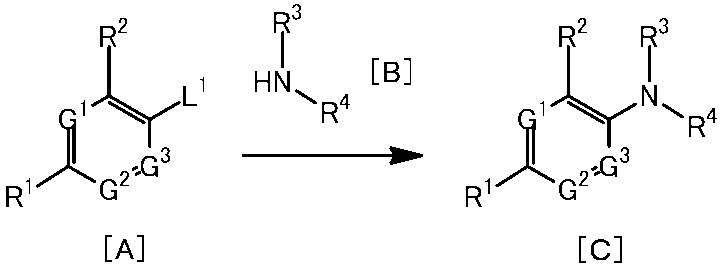
一般式[B]の化合物として、たとえば、1-ベンジル-1H-インドール-5-アミンおよび1-ベンジル-1H-インダゾール-5-アミンなどが知られている。
一般式[C]の化合物またはその塩は、一般式[A]の化合物またはその塩に、塩基の存在下または不存在下、パラジウム触媒の存在下、リガンドの存在下または不存在下、一般式[B]の化合物またはその塩を反応させることで製造することができる。
好ましい溶媒としては、エーテル類、エステル類および芳香族炭化水素類などが挙げられる。
溶媒の使用量は、特に限定されないが、一般式[A]の化合物またはその塩に対して、1~100倍量(v/w)が好ましく、1~10倍量(v/w)がより好ましく、1~5倍量(v/w)がさらに好ましい。
好ましい塩基としては、炭酸水素ナトリウム、炭酸ナトリウム、炭酸カリウム、炭酸セシウムおよびリン酸三カリウムなどの無機塩基ならびにピリジン、4-(ジメチルアミノ)ピリジン、トリエチルアミンおよびジイソプロピルエチルアミンなどの有機塩基が挙げられる。
塩基の使用量は、一般式[A]の化合物またはその塩に対して、1~10倍モルが好ましく、1~5倍モルがより好ましく、1~2倍モルがさらに好ましい。
パラジウム触媒の使用量は、一般式[A]の化合物またはその塩に対して、0.00001~1倍モルが好ましく、0.001~0.2倍モルがより好ましい。
リガンドの使用量は、一般式[A]の化合物またはその塩に対して、0.00001~1倍モルが好ましく、0.001~0.4倍モルがより好ましい。
この反応は、好ましくは、不活性気体(たとえば、窒素、アルゴン)雰囲気下、40~170℃で、1分間~24時間実施すればよい。
この反応はマイクロウェーブ照射下で行ってもよい。
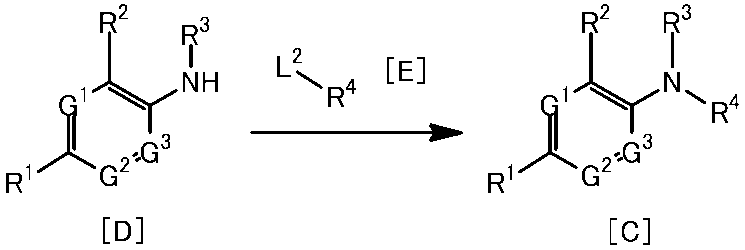
一般式[E]の化合物として、たとえば、1-ベンジル-5-ブロモ-1H-インドールおよび1-ベンジル-4-ブロモ-1H-インドールなどが知られている。
一般式[C]の化合物またはその塩は、一般式[D]の化合物またはその塩に、塩基の存在下または不存在下、パラジウム触媒の存在下、リガンドの存在下または不存在下、一般式[E]の化合物またはその塩を反応させることで製造することができる。
この方法は、製造法[1]に準じて行えばよい。

一般式[H]の化合物またはその塩は、塩基の存在下、一般式[F]の化合物またはその塩を一般式[G]の化合物またはその塩と反応させることにより製造することができる。
溶媒の使用量は、特に限定されないが、一般式[F]の化合物またはその塩に対して、1~100倍量(v/w)が好ましく、1~10倍量(v/w)がより好ましく、1~5倍量(v/w)がさらに好ましい。
好ましい塩基としては、炭酸水素ナトリウム、炭酸ナトリウム、炭酸カリウム、水素化ナトリウムおよびカリウム=tert-ブトキシドなどの無機塩基ならびに1,8-ジアザビシクロ(5,4,0)ウンデカ-7-エンなどの有機塩基が挙げられる。
塩基の使用量は、一般式[F]の化合物またはその塩に対して、1~5倍モルが好ましく、1~2倍モルがより好ましい。
この反応で使用される添加剤としては、4-(ジメチルアミノ)ピリジンなどが挙げられる。
添加剤の使用量は、一般式[F]の化合物またはその塩に対して、0.01~1倍モルが好ましく、0.1~0.5倍モルがより好ましい。
この反応は、通常、0~200℃、好ましくは、0~100℃で、10分間~24時間実施すればよい。

この方法は、製造法[3]に準じて行えばよい。

好ましい溶媒としては、エーテル類、エステル類、芳香族炭化水素類およびアミド類などが挙げられる。
溶媒の使用量は、特に限定されないが、一般式[F]の化合物またはその塩に対して、1~100倍量(v/w)が好ましく、1~10倍量(v/w)がより好ましく、1~5倍量(v/w)がさらに好ましい。
好ましい塩基としては、炭酸水素ナトリウム、炭酸ナトリウム、炭酸カリウム、炭酸セシウムおよびリン酸三カリウムなどの無機塩基ならびにピリジン、4-(ジメチルアミノ)ピリジン、トリエチルアミンおよびジイソプロピルエチルアミンなどの有機塩基が挙げられる。
塩基の使用量は、式[F]の化合物またはその塩に対して、1~10倍モルが好ましく、1~5倍モルがより好ましく、1~1.5倍モルがさらに好ましい。
パラジウム触媒の使用量は、一般式[F]の化合物またはその塩に対して、0.00001~1倍モルが好ましく、0.001~0.2倍モルがより好ましい。
リガンドの使用量は、一般式[F]の化合物またはその塩に対して0.00001~1倍モルが好ましく、0.001~0.4倍モルがより好ましい。
銅触媒の使用量は、一般式[F]の化合物またはその塩に対して、0.00001~1倍モルが好ましく、0.01~0.5倍モルがより好ましい。
リガンドの使用量は、一般式[F]の化合物またはその塩に対して0.00001~1倍モルが好ましく、0.001~0.4倍モルがより好ましい。
この反応は、好ましくは、不活性気体(たとえば、窒素、アルゴン)雰囲気下、40~170℃で、1分間~24時間実施すればよい。
この反応はマイクロウェーブ照射下で行ってもよい。

この反応は、たとえば、W.グリーン(W.Greene)ら、プロテクティブ・グループス・イン・オーガニック・シンセシス(Protective Groups in Organic Synthesis)第4版、第533~646頁、2007年、ジョン・ウィリイ・アンド・サンズ社(John Wiley & Sons,INC.)に記載されていた方法またはそれに準じた方法で行えばよい。
脱保護反応としては、たとえば、酸または塩基を用いる加水分解反応、塩を用いた脱アルキル化反応および金属触媒水素添加反応を含む還元的脱アルキル化反応などが挙げられる。
溶媒の使用量は、特に限定されないが、一般式[K]の化合物またはその塩に対して、1~100倍量(v/w)が好ましく、1~10倍量(v/w)がより好ましく、1~5倍量(v/w)がさらに好ましい。
酸の使用量は、一般式[K]の化合物またはその塩に対して、1~100000倍モルが好ましく、1~1000倍モルがより好ましい。
塩基の使用量は、一般式[K]の化合物またはその塩に対して、1~1000倍モルが好ましく、1~50倍モルがより好ましい。
塩の使用量は、一般式[K]の化合物またはその塩に対して、1~100倍モルが好ましく、1~10倍モルがより好ましい。
金属触媒の使用量は、一般式[K]の化合物またはその塩に対して、0.001~5倍量(W/W)が好ましく、0.01~1倍量(W/W)がより好ましい。
還元剤としては、たとえば、水素;ギ酸;ギ酸ナトリウム、ギ酸アンモニウムおよびギ酸トリエチルアンモニウムなどのギ酸塩;シクロヘキセンならびにシクロヘキサジエンなどが挙げられる。
還元剤の使用量は、一般式[K]の化合物またはその塩に対して、2~100倍モルが好ましく、2~10倍モルがより好ましい。
この反応は、0~200℃、好ましくは、0~100℃で1分間~24時間実施すればよい。
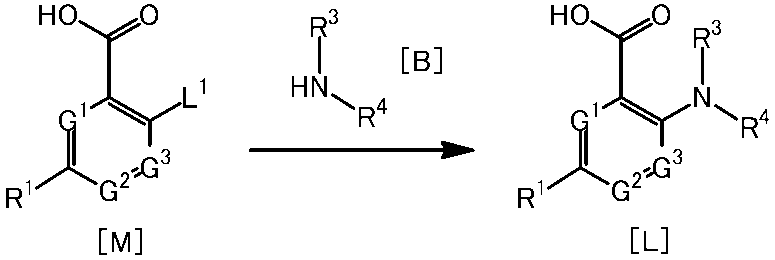
一般式[B]の化合物として、たとえば、1-ベンジル-1H-インドール-5-アミンなどが知られている。
一般式[L]の化合物またはその塩は、酸または塩基の存在下、一般式[M]の化合物またはその塩を一般式[B]の化合物またはその塩と反応させることにより製造することができる。
溶媒の使用量は、特に限定されないが、一般式[M]の化合物またはその塩に対して、1~100倍量(v/w)が好ましく、1~10倍量(v/w)がより好ましく、1~5倍量(v/w)がさらに好ましい。
好ましい塩基としては、炭酸水素ナトリウム、炭酸ナトリウム、炭酸カリウム、炭酸セシウムおよびリン酸三カリウムなどの無機塩基ならびにピリジン、4-(ジメチルアミノ)ピリジン、トリエチルアミン、ジイソプロピルエチルアミンおよび1,8-ジアザビシクロ(5,4,0)ウンデカ-7-エンなどの有機塩基が挙げられる。
塩基の使用量は、一般式[M]の化合物またはその塩に対して、1~20倍モルが好ましく、1~5倍モルがより好ましい。
酸の使用量は、一般式[M]の化合物またはその塩に対して、1~100000倍モルが好ましく、1~1000倍モルがより好ましい。
酸の使用量は、一般式[M]の化合物またはその塩に対して、1~20倍モルが好ましく、1~5倍モルがより好ましい。
この反応は、通常、0~200℃、好ましくは、100~170℃で10分間~24時間実施すればよい。
この反応はマイクロウェーブ照射下で行ってもよい。

一般式[O]の化合物またはその塩は、縮合剤の存在下、塩基の存在下、一般式[L]の化合物またはその塩を一般式[N]の化合物と反応させることにより製造することができる。
好ましい溶媒としては、エーテル類およびアミド類などが挙げられる。
溶媒の使用量は、特に限定されないが、一般式[L]の化合物またはその塩に対して、1~100倍量(v/w)が好ましく、1~10倍量(v/w)がより好ましく、1~5倍量(v/w)がさらに好ましい。
好ましい塩基としては、炭酸水素ナトリウム、炭酸ナトリウム、炭酸カリウム、炭酸セシウムおよびリン酸三カリウムなどの無機塩基ならびにピリジン、4-(ジメチルアミノ)ピリジン、トリエチルアミン、ジイソプロピルエチルアミンおよび1,8-ジアザビシクロ(5,4,0)ウンデカ-7-エンなどの有機塩基が挙げられる。
塩基の使用量は、一般式[L]の化合物またはその塩に対して、1~20倍モルが好ましく、1~5倍モルがより好ましい。
この反応は、-20~150℃、好ましくは0~100℃で、1分間~24時間実施すればよい。

この方法は、製造法[1]に準じて行えばよい。

この反応は、たとえば、M.ウッツ(M.Wuts)、W.グリーン(W.Greene)、「プロテクティブ・グループス・イン・オーガニック・シンセシス(Protective Groups in Organic Synthesis)」、第4版、ジョン・ウィリイ・アンド・サンズ社(John Wiley & Sons, INC.)、2006年、p.696~926などに記載された方法またはそれに準じた方法で行えばよい。
また、上記した製造法における化合物において、異性体(たとえば、光学異性体、幾何異性体および互変異性体など)が存在する場合、これらの異性体も使用することができ、また、溶媒和物、水和物および種々の形状の結晶も使用することができる。

一般式[T1]の化合物として、たとえば、シクロプロピルホウ酸などが挙げられる。
一般式[T2]の化合物として、たとえば、カリウム=シクロブチルトリフルオロボラートなどが挙げられる。
一般式[A]の化合物またはその塩は、一般式[S]の化合物またはその塩に、塩基の存在下または不存在下、パラジウム触媒の存在下、リガンドの存在下または不存在下、一般式[T]の化合物またはその塩を反応させることで製造することができる。
好ましい溶媒としては、エーテル類、芳香族炭化水素類および水などが挙げられる。
溶媒の使用量は、特に限定されないが、一般式[S]の化合物またはその塩に対して、1~100倍量(v/w)が好ましく、1~10倍量(v/w)がより好ましく、1~5倍量(v/w)がさらに好ましい。
好ましい塩基としては、炭酸水素ナトリウム、炭酸ナトリウム、炭酸カリウム、炭酸セシウムおよびリン酸三カリウムなどの無機塩基が挙げられる。
塩基の使用量は、一般式[S]の化合物またはその塩に対して、1~10倍モルが好ましく、1~5倍モルがより好ましく、1~1.5倍モルがさらに好ましい。
パラジウム触媒の使用量は、一般式[S]の化合物またはその塩に対して、0.00001~1倍モルが好ましく、0.001~0.2倍モルがより好ましい。
リガンドの使用量は、一般式[S]の化合物またはその塩に対して、0.00001~1倍モルが好ましく、0.001~0.4倍モルがより好ましい。
この反応は、好ましくは、不活性気体(たとえば、窒素、アルゴン)雰囲気下、40~170℃で、1分間~24時間実施すればよい。
この反応はマイクロウェーブ照射下で行ってもよい。

一般式[U]の化合物として、たとえば、メチル=5-ブロモ-2-クロロニコチナートなどが知られている。
一般式[V]の化合物として、たとえば、シクロペンテンおよびシクロヘキセンなどが知られている。
一般式[W]の化合物またはその塩は、一般式[U]の化合物またはその塩に、塩基の存在下または不存在下、パラジウム触媒の存在下、リガンドの存在下または不存在下、一般式[V]の化合物を反応させることで製造することができる。
好ましい溶媒としては、エーテル類、芳香族炭化水素類およびアミド類などが挙げられる。
溶媒の使用量は、特に限定されないが、一般式[U]の化合物またはその塩に対して、1~100倍量(v/w)が好ましく、1~10倍量(v/w)がより好ましく、1~5倍量(v/w)がさらに好ましい。
好ましい塩基としては、炭酸水素ナトリウム、炭酸ナトリウム、炭酸カリウム、炭酸セシウムおよびリン酸三カリウムなどの無機塩基ならびにピリジン、4-(ジメチルアミノ)ピリジン、トリエチルアミンおよびジイソプロピルエチルアミンなどの有機塩基が挙げられる。
塩基の使用量は、一般式[U]の化合物またはその塩に対して、1~10倍モルが好ましく、1~5倍モルがより好ましく、1~1.5倍モルがさらに好ましい。
パラジウム触媒の使用量は、一般式[U]の化合物またはその塩に対して、0.00001~1倍モルが好ましく、0.001~0.2倍モルがより好ましい。
リガンドの使用量は、一般式[U]の化合物またはその塩に対して、0.00001~1倍モルが好ましく、0.001~0.4倍モルがより好ましい。
この反応は、好ましくは、不活性気体(たとえば、窒素、アルゴン)雰囲気下、40~170℃で、1分間~24時間実施すればよい。
この反応はマイクロウェーブ照射下で行ってもよい。
一般式[X]の化合物またはその塩は、一般式[W]の化合物を還元することにより製造することができる。
還元反応としては、たとえば、金属触媒を用いる接触水素添加反応が挙げられる。
好ましい溶媒としては、エーテル類、エステル類、アルコール類およびアミド類などが挙げられる。
溶媒の使用量は、特に限定されないが、一般式[W]の化合物またはその塩に対して、1~100倍量(v/w)が好ましく、1~10倍量(v/w)がより好ましく、1~5倍量(v/w)がさらに好ましい。
金属触媒の使用量は、一般式[W]の化合物またはその塩に対して、0.001~5倍量(W/W)が好ましく、0.01~1倍量(W/W)がより好ましい。
還元剤としては、たとえば、水素;ギ酸;ギ酸ナトリウム、ギ酸アンモニウムおよびギ酸トリエチルアンモニウムなどのギ酸塩;シクロヘキセンならびにシクロヘキサジエンなどが挙げられる。
還元剤の使用量は、一般式[W]の化合物またはその塩に対して、2~100倍モルが好ましく、2~10倍モルがより好ましい。
この反応は、0~200℃、好ましくは、0~100℃で1分間~24時間実施すればよい。

この方法は、製造法[3]に準じて行えばよい。
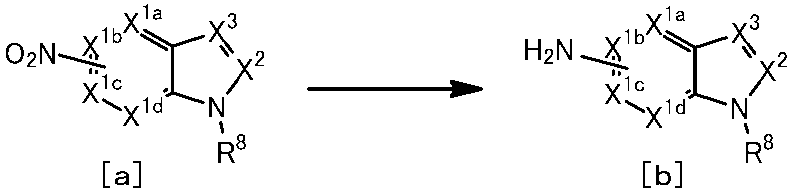
この反応は、リチャード C.ラロック(Richard C. Larock)ら、コンプレヘンシブ・オーガニック・トランスフォーメーションズ(Comprehensive Organic Transformations)、第2版、第823~827頁、1999年、ジョン・ウィリイ・アンド・サンズ社(John Wiley & Sons,INC.)に記載された方法またはそれに準じた方法で行えばよい。
具体的には、金属触媒を用いる接触水素添加反応ならびに酸の存在下または不存在下、塩の存在下または不存在下、鉄または亜鉛などの金属を用いる還元反応などが挙げられる。
好ましい溶媒としては、アルコール類および水などが挙げられる。
溶媒の使用量は、特に限定されないが、一般式[a]の化合物またはその塩に対して、1~100倍量(v/w)が好ましく、1~10倍量(v/w)がより好ましく、1~5倍量(v/w)がさらに好ましい。
金属の使用量は、一般式[a]の化合物またはその塩に対して、1~50倍モルが好ましく、1~10倍モルがより好ましい。
酸の使用量は、一般式[a]の化合物またはその塩に対して、0.001~100倍量(W/V)が好ましく、0.01~20倍量(W/V)がより好ましい。
塩の使用量は、一般式[a]の化合物またはその塩に対して、0.01~10倍モルが好ましく、0.1~5倍モルがより好ましい。
この反応は、0~200℃、好ましくは、0~100℃で1分間~24時間実施すればよい。
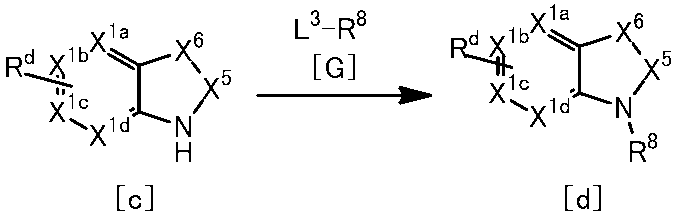
この方法は、製造法[3]に準じて行えばよい。

この方法は、製造法[D]に準じて行えばよい。
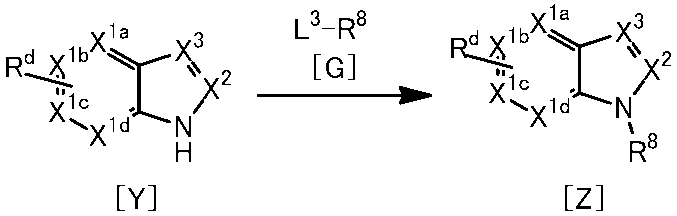
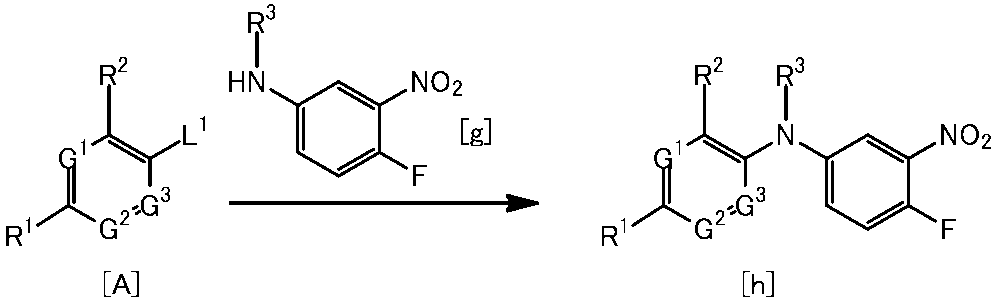
この方法は、製造法[1]に準じて行えばよい。

この方法は、製造法[3]に準じて行えばよい。

この方法は、製造法[D]に準じて行えばよい。

好ましい溶媒としては、エーテル類およびアミド類などが挙げられる。
溶媒の使用量は、特に限定されないが、一般式[k]の化合物またはその塩に対して、1~100倍量(v/w)が好ましく、1~10倍量(v/w)がより好ましく、1~5倍量(v/w)がさらに好ましい。
好ましい塩基としては、炭酸水素ナトリウム、炭酸ナトリウム、炭酸カリウム、炭酸セシウムおよびリン酸三カリウムなどの無機塩基ならびにピリジン、4-(ジメチルアミノ)ピリジン、トリエチルアミン、ジイソプロピルエチルアミンおよび1,8-ジアザビシクロ(5,4,0)ウンデカ-7-エンなどの有機塩基が挙げられる。
塩基の使用量は、一般式[k]の化合物またはその塩に対して、1~20倍モルが好ましく、1~5倍モルがより好ましい。
この反応は、-20~150℃、好ましくは0~100℃で、1分間~24時間実施すればよい。

この方法は、製造法[1]に準じて行えばよい。

この方法は、製造法[D]に準じて行えばよい。
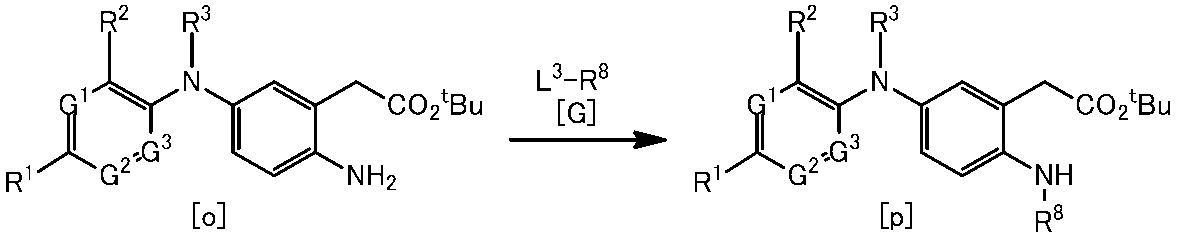
この方法は、製造法[3]に準じて行えばよい。

脱保護反応としては、たとえば、酸または塩基を用いる加水分解反応、塩を用いた脱アルキル化反応および金属触媒水素添加反応を含む還元的脱アルキル化反応などが挙げられる。
閉環反応としては、酸を用いる閉環反応などが挙げられ、たとえば、塩酸およびトリフルオロ酢酸などが挙げられる。
この方法は、製造法[6]に準じて行えばよい。
添加物としては、たとえば、賦形剤、崩壊剤、結合剤、滑沢剤、矯味剤、着色剤、着香剤、界面活性剤、コーティング剤および可塑剤が挙げられる。
賦形剤としては、たとえば、エリスリトール、マンニトール、キシリトールおよびソルビトールなどの糖アルコール類;白糖、粉糖、乳糖およびブドウ糖などの糖類;α-シクロデキストリン、β-シクロデキストリン、γ-シクロデキストリン、ヒドロキシプロピルβ-シクロデキストリンおよびスルホブチルエーテルβ-シクロデキストリンナトリウムなどのシクロデキストリン類;結晶セルロースおよび微結晶セルロースなどのセルロース類;ならびにトウモロコシデンプン、バレイショデンプンおよびアルファー化デンプンなどのでんぷん類が挙げられる。
崩壊剤としては、たとえば、カルメロース、カルメロースカルシウム、クロスカルメロースナトリウム、カルボキシメチルスターチナトリウム、クロスポピドン、低置換度ヒドロキシプロピルセルロースおよび部分α化デンプンが挙げられる。
結合剤としては、たとえば、ヒドロキシプロピルセルロース、カルメロースナトリウムおよびメチルセルロースが挙げられる。
滑沢剤としては、たとえば、ステアリン酸、ステアリン酸マグネシウム、ステアリン酸カルシウム、タルク、含水二酸化ケイ素、軽質無水ケイ酸およびショ糖脂肪酸エステルが挙げられる。
矯味剤としては、たとえば、アスパルテーム、サッカリン、ステビア、ソーマチンおよびアセスルファムカリウムが挙げられる。
着色剤としては、たとえば、二酸化チタン、三二酸化鉄、黄色三二酸化鉄、黒酸化鉄、食用赤色102号、食用黄色4号および食用黄色5号が挙げられる。
着香剤としては、たとえば、オレンジ油、レモン油、ハッカ油およびパインオイルなどの精油;オレンジエッセンスおよびペパーミントエッセンスなどのエッセンス;チェリーフレーバー、バニラフレーバーおよびフルーツフレーバーなどのフレーバー;アップルミクロン、バナナミクロン、ピーチミクロン、ストロベリーミクロンおよびオレンジミクロンなどの粉末香料;バニリン;ならびにエチルバニリンが挙げられる。
界面活性剤としては、たとえば、ラウリル硫酸ナトリウム、スルホコハク酸ジオクチルナトリウム、ポリソルベートおよびポリオキシエチレン硬化ヒマシ油が挙げられる。
コーティング剤としては、たとえば、ヒドロキシプロピルメチルセルロース、アミノアルキルメタクリレートコポリマーE、アミノアルキルメタクリレートコポリマーRS、エチルセルロース、酢酸フタル酸セルロース、ヒドロキシプロピルメチルセルロースフタレート、メタクリル酸コポリマーL、メタクリル酸コポリマーLDおよびメタクリル酸コポリマーSが挙げられる。
可塑剤としては、たとえば、クエン酸トリエチル、マクロゴール、トリアセチンおよびプロピレングリコールが挙げられる。
これらの添加物は、いずれか一種または二種以上を組み合わせて用いてもよい。
配合量は、特に限定されず、それぞれの目的に応じ、その効果が充分に発現されるよう適宜配合すればよい。
これらは、常法にしたがって、錠剤、カプセル剤、散剤、シロップ剤、課粒剤、丸剤、懸濁剤、乳剤、液剤、紛体製剤、坐剤、点眼剤、点鼻剤、点耳剤、貼付剤、軟膏剤または注射剤などの形態で、経口または非経口で投与することができる。また、投与方法、投与量および投与回数は、患者の年齢、体重および症状に応じて適宜選択することができる。通常、成人に対しては、経口または非経口投与により、1日、0.01~1000mg/kgを1回から数回に分割して投与すればよい。
特に記載のない場合、カラムクロマトグラフィーによる精製は、自動精製装置ISOLERA(Biotage社製)または中圧液体クロマトグラフYFLC-Wprep2XY.N(山善株式会社)を使用した。
特に記載のない場合、シリカゲルカラムクロマトグラフィーにおける担体は、SNAP
KP-Sil Cartridge(Biotage社製)、ハイフラッシュカラムW001、W002、W003、W004またはW005(山善株式会社)を、塩基性シリカゲルカラムクロマトグラフィーにおける担体は、SNAP KP-NH Cartridge(Biotage社製)を使用した。
分取用薄層クロマトグラフィーは、PLCガラスプレートシリカゲルF60(メルク株式会社製)を使用した。
溶離液における混合比は、容量比である。たとえば、「ヘキサン:酢酸エチルの勾配溶離=100:0-50:50」は、100%ヘキサン/0%酢酸エチルの溶離液を最終的に50%ヘキサン/50%酢酸エチルの溶離液へ変化させたことを意味する。
マイクロウェーブ合成装置は、Initiator Sixty(Biotage社製)を使用した。
フロー式水素化反応装置は、H-Cube(ThalesNano社製)を使用した。
MSスペクトルは、ACQUITY SQD LC/MS System(Waters社製、イオン化法:ESI(ElectroSpray Ionization、エレクトロスプレーイオン化)法)、M-8000型(日立製作所製、イオン化法:ESI法)、LCMS-2010EV(島津製作所製、イオン化法:ESIとAPCI(Atomospheric Pressure ChemicalIonization、大気圧化学イオン化)を同時に行うイオン化法)またはJMS-T100LP(DART)(JEOL社製、イオン化法:DART(Direct Analysis in Real Time、リアルタイム直接分析)法)を用いて測定した。
NMRスペクトルは、内部基準としてテトラメチルシランを用い、Bruker AV300(Bruker社製)またはJNM-AL400型(JEOL社製)を用いて測定し、全δ値をppmで示した。
NMR測定における略号は、以下の意味を有する。
s:シングレット
brs:ブロードシングレット
d:ダブレット
dd:ダブルダブレット
t:トリプレット
q:クアルテット
quin:クインテット
sext:セクテット
sep:セプテット
m:マルチプレット
DMSO-d6:重ジメチルスルホキシド
Boc:tert-ブトキシカルボニル
Bu:ブチル
Et:エチル
Me:メチル
Tf:トリフルオロメチルスルホニル
TBS:tert-ブチルジメチルシリル
tBu:tert-ブチル
Ph:フェニル
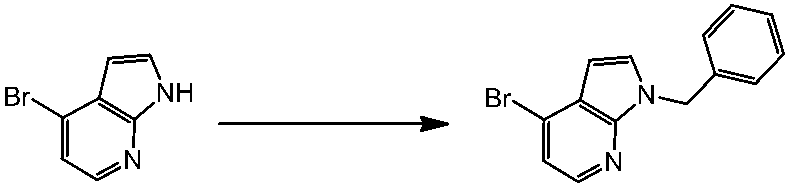
1H-NMR(DMSO-d6)δ:5.50(2H,s),6.50(1H,d,J=3.3Hz),7.20-7.37(5H,m),7.40(1H,d,J=5.3Hz),7.79(1H,d,J=3.3Hz),8.15(1H,d,J=5.3Hz).

1H-NMR(DMSO-d6)δ:5.48(2H,s),6.52(1H,d,J=3.3Hz),7.19-7.34(5H,m),7.71(1H,d,J=3.3Hz),8.24(1H,d,J=2.6Hz),8.33(1H,d,J=2.0Hz).

1H-NMR(DMSO-d6)δ:3.88(3H,s),6.40-6.44(1H,m),6.89(1H,d,J=9.2Hz),6.97(1H,dd,J=8.6,2.0Hz),7.33(1H,dd,J=9.2,2.6Hz),7.37-7.47(3H,m),7.80(1H,d,J=2.6Hz),9.24(1H,s),11.17(1H,s).

1H-NMR(DMSO-d6)δ:3.87(3H,s),6.51(1H,dd,J=9.2,1.3Hz),7.06(1H,d,J=9.2Hz),7.33(1H,d,J=8.6Hz),7.38-7.45(2H,m),7.58(1H,d,J=2.0Hz),7.83(1H,d,J=2.6Hz),7.87(1H,d,J=9.9Hz),9.24(1H,s),11.77(1H,s).

MS(ESI,m/z):316(M+H)+.

1H-NMR(DMSO-d6)δ:2.66-2.75(2H,m),2.91-3.00(2H,m),5.13(2H,s),6.84(1H,d,J=8.6Hz),7.16-7.25(3H,m),7.26-7.35(3H,m),7.45(1H,d,J=2.0Hz).

1H-NMR(DMSO-d6)δ:3.90(3H,s),6.24-6.29(1H,m),6.98(1H,d,J=7.3Hz),7.06-7.15(2H,m),7.25(1H,d,J=7.9Hz),7.34(1H,t,J=2.6Hz),7.41(1H,dd,J=8.9,3.0Hz),7.86(1H,d,J=2.6Hz),9.59(1H,s),11.28(1H,s).

1H-NMR(CDCl3)δ:0.54-0.62(2H,m),0.81-0.90(2H,m),1.75-1.86(1H,m),3.86(3H,s),5.55(2H,brs),6.59(1H,d,J=8.6Hz),7.03(1H,dd,J=8.6,2.6Hz),7.59(1H,d,J=2.0Hz).
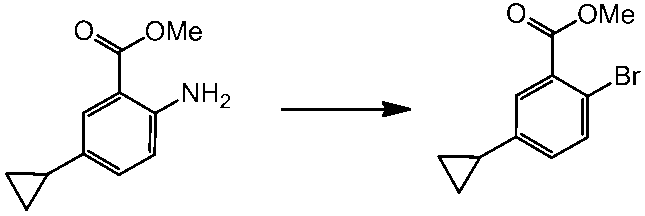
1H-NMR(CDCl3)δ:0.66-0.74(2H,m),0.96-1.05(2H,m),1.82-1.95(1H,m),3.92(3H,s),7.02(1H,dd,J=8.3,2.3Hz),7.48(1H,d,J=2.6Hz),7.51(1H,d,J=7.9Hz).

1H-NMR(CDCl3)δ:0.72-0.80(2H,m),1.05-1.15(2H,m),1.87-1.99(1H,m),3.95(3H,s),7.75(1H,d,J=2.6Hz),8.31(1H,d,J=2.6Hz).

1H-NMR(DMSO-d6)δ:5.54(2H,s),6.81(1H,d,J=3.3Hz),7.18-7.35(5H,m),7.69(1H,d,J=9.2Hz),7.78(1H,d,J=3.3Hz),8.00(1H,dd,J=9.2,2.0Hz),8.59(1H,d,J=2.0Hz).

1H-NMR(DMSO-d6)δ:4.47(2H,s),5.27(2H,s),6.17(1H,d,J=2.6Hz),6.47(1H,dd,J=8.6,2.0Hz),6.68(1H,d,J=2.0Hz),7.08(1H,d,J=8.6Hz),7.12-7.17(2H,m),7.21-7.32(4H,m).

1H-NMR(CDCl3)δ:3.55(2H,brs),6.50(1H,d,J=3.3Hz),6.68(1H,dd,J=8.9,2.3Hz),6.97(1H,d,J=2.6Hz),7.24-7.36(2H,m),7.39(1H,d,J=8.6Hz),7.45-7.53(4H,m).

1H-NMR(CDCl3)δ:3.96(3H,s),7.30-7.38(1H,m),7.43-7.53(3H,m),7.58-7.65(2H,m),7.95(1H,d,J=9.2Hz),8.08(1H,dd,J=8.6,2.0Hz),8.36(1H,d,J=2.0Hz).

1H-NMR(DMSO-d6)δ:3.65(3H,s),4.90(2H,s),6.48-6.56(2H,m),7.13-7.21(1H,m),7.32(1H,s),7.33-7.42(2H,m),7.53(1H,d,J=8.6Hz),7.56-7.62(2H,m).

1H-NMR(DMSO-d6)δ:7.27-7.35(1H,m),7.44-7.52(2H,m),7.69-7.75(2H,m),7.97(1H,dd,J=8.6,2.0Hz),8.03(1H,d,J=9.2Hz),8.15(1H,d,J=2.6Hz),8.40(1H,d,J=2.0Hz),12.14(1H,brs).

1H-NMR(DMSO-d6)δ:4.80(2H,s),6.47(1H,dd,J=8.6,2.0Hz),6.59(1H,d,J=2.0Hz),7.12-7.20(1H,m),7.30-7.42(3H,m),7.52(1H,d,J=8.6Hz),7.58-7.66(2H,m),10.72(1H,s).

得られた反応溶液の溶媒を減圧下で留去し、白色固体のメチル=2-アミノ-5-シクロヘキシルベンゾアート0.125gを得た。
1H-NMR(CDCl3)δ:1.11-1.94(10H,m),2.31-2.48(1H,m),3.87(3H,s),5.56(2H,s),6.62(1H,d,J=7.9Hz),7.15(1H,dd,J=8.3,2.3Hz),7.68(1H,d,J=2.0Hz).

1H-NMR(CDCl3)δ:1.42-1.88(6H,m),1.94-2.09(2H,m),2.78-2.96(1H,m),3.87(3H,s),6.62(1H,d,J=7.9Hz),7.18(1H,dd,J=8.3,2.3Hz),7.71(1H,d,J=2.0Hz).

1H-NMR(CDCl3)δ:4.99(2H,s),6.55-6.92(1H,m),6.98-7.98(7H,m).
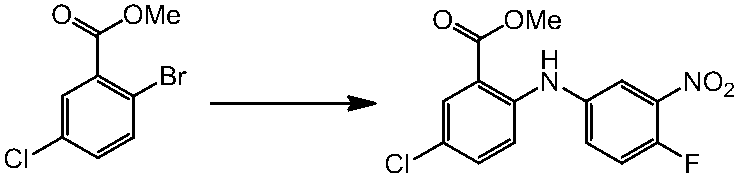
1H-NMR(DMSO-d6)δ:3.86(3H,s),7.28(1H,d,J=8.6Hz),7.46-7.61(2H,m),7.62-7.71(1H,m),7.86(1H,d,J=2.6Hz),7.96(1H,dd,J=6.6,3.3Hz),9.22(1H,s).

1H-NMR(DMSO-d6)δ:3.85(3H,s),4.66(2H,d,J=5.9Hz),6.89(1H,d,J=9.2Hz),6.98(1H,d,J=9.2Hz),7.20-7.50(7H,m),7.80(1H,d,J=2.6Hz),7.94(1H,d,J=2.6Hz),8.71(1H,t,J=6.3Hz),9.03(1H,s).

1H-NMR(CDCl3)δ:3.89(3H,s),4.32(2H,s),5.47(1H,s),6.60-6.70(3H,m),6.93(1H,d,J=9.2Hz),7.04-7.54(7H,m),7.66-7.76(1H,m),7.87(1H,d,J=2.0Hz),9.12(1H,s).

1H-NMR(CDCl3)δ:5.21(2H,s),7.06(1H,d,J=8.6Hz),7.24-7.41(5H,m),8.15(1H,dd,J=8.9,2.3Hz),8.37(1H,d,J=2.6Hz).

1H-NMR(DMSO-d6)δ:5.00-5.10(4H,m),6.52(1H,dd,J=8.6,2.0Hz),6.79(1H,d,J=2.6Hz),6.93(1H,d,J=8.6Hz),7.21-7.39(5H,m).

1H-NMR(DMSO-d6)δ:5.47(2H,s),7.20-7.38(5H,m),7.41(1H,d,J=9.2Hz),7.73(1H,dd,J=8.9,2.3Hz),8.06(1H,d,J=2.6Hz),8.39(1H,s).
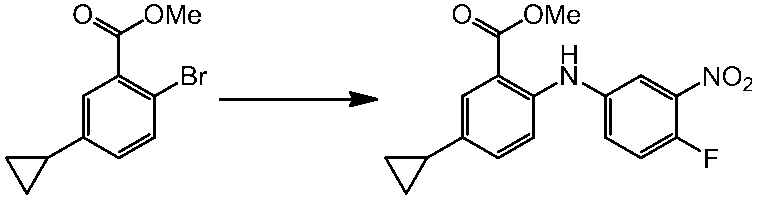
1H-NMR(CDCl3)δ:0.60-0.71(2H,m),0.85-1.01(2H,m),1.80-1.93(1H,m),3.91(3H,s),7.02-7.84(5H,m),7.88(1H,dd,J=6.6,2.6Hz),9.41(1H,s).

1H-NMR(CDCl3)δ:0.58-0.68(2H,m),0.83-0.97(2H,m),1.78-1.91(1H,m),3.90(3H,s),7.00(1H,d,J=8.6Hz),7.09(1H,dd,J=8.6,2.6Hz),7.13-7.47(7H,m),7.70(1H,d,J=2.0Hz),8.08(1H,s),9.21(1H,s),9.40(1H,s).
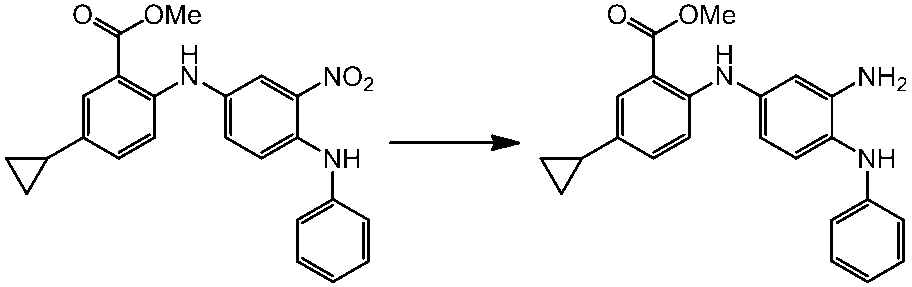
MS(ESI,m/z):374(M+H)+.

1H-NMR(CDCl3)δ:0.65-0.71(2H,m),0.94-1.00(2H,m),1.46(9H,s),1.85-1.94(1H,m),3.89(2H,s),3.91(3H,s),6.96(1H,d,J=2.0Hz),7.15(1H,dd,J=9.2,2.6Hz),7.20(1H,dd,J=8.6,2.0Hz),7.42(1H,d,J=8.6Hz),7.74(1H,d,J=2.6Hz),8.15(1H,d,J=9.2Hz),9.59(1H,s).
MS(ESI,m/z):425(M-H)-.
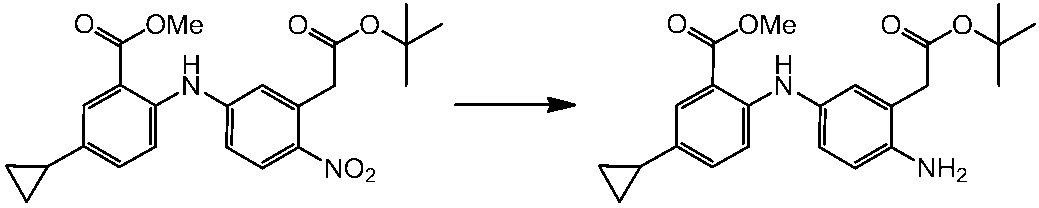
MS(ESI,m/z):397(M+H)+.
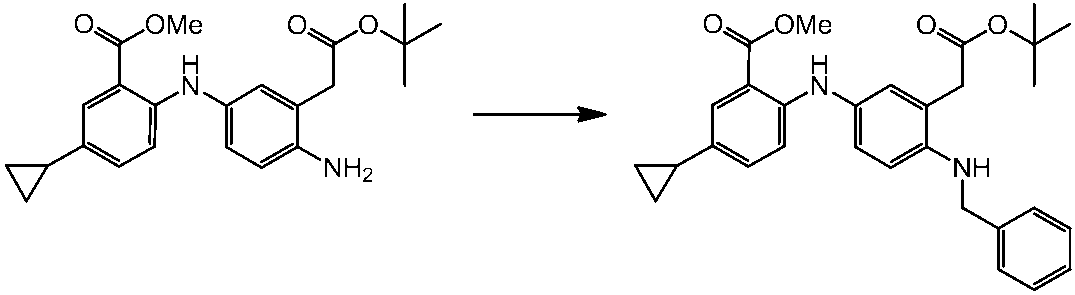
MS(ESI,m/z):488(M+H)+.
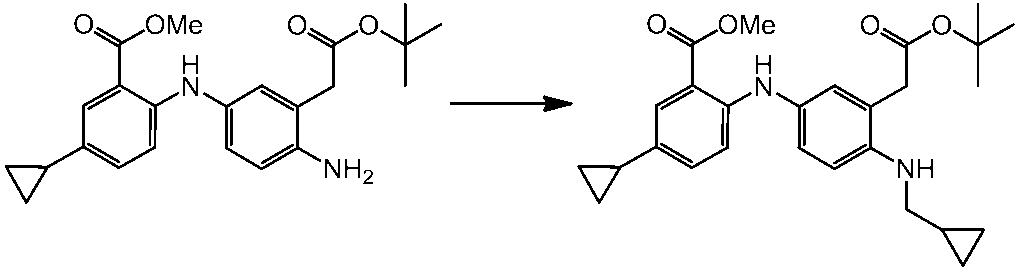
MS(ESI,m/z):451(M+H)+.

MS(ESI,m/z):209(M+H)+.

MS(ESI,m/z):240(M+H)+.

1H-NMR(DMSO-d6)δ:2.15(3H,s),3.90(3H,s),5.32(1H,s),5.67(1H,s),8.30(1H,d,J=2.0Hz),8.74(1H,d,J=2.0Hz).

1H-NMR(DMSO-d6)δ:1.23(6H,d,J=7.3Hz),3.03(1H,sep,J=6.6Hz),3.89(3H,s),8.12(1H,d,J=2.6Hz),8.51(1H,d,J=2.6Hz).
MS(ESI,m/z):214(M+H)+.
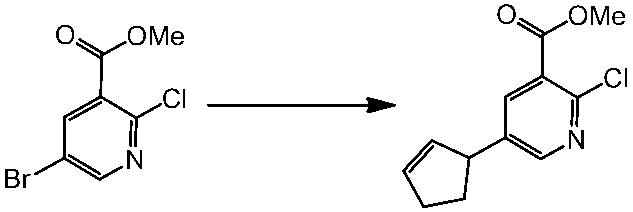
1H-NMR(DMSO-d6)δ:1.60-1.70(1H,m),2.34-2.48(3H,m),3.88(3H,s),3.98-4.03(1H,m),5.77-5.82(1H,m),6.01-6.06(1H,m),7.98(1H,d,J=2.6Hz),8.43(1H,d,J=2.6Hz).
MS(ESI,m/z):238(M+H)+.
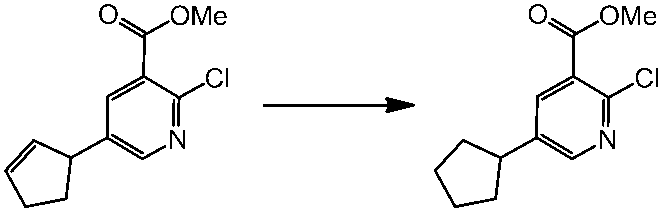
1H-NMR(DMSO-d6)δ:1.48-1.82(6H,m),2.01-2.10(2H,m),3.02-3.14(1H,m),3.88(3H,s),8.10(1H,d,J=2.6Hz),8.50(1H,d,J=2.6Hz).
MS(ESI,m/z):240(M+H)+.

MS(ESI,m/z):226(M+H)+.

MS(ESI,m/z):319(M+H)+.

1H-NMR(DMSO-d6)δ:0.81(6H,d,J=6.6Hz),2.03-2.17(1H,m),4.50(2H,d,J=7.3Hz),7.54(1H,s),7.87(1H,d,J=9.2Hz),8.14(1H,dd,J=9.2,2.6Hz),8.74(1H,d,J=2.0Hz).
MS(ESI,m/z):263(M+H)+,261(M-H)-.

MS(ESI,m/z):319(M+H)+.

MS(ESI,m/z):289(M+H)+.
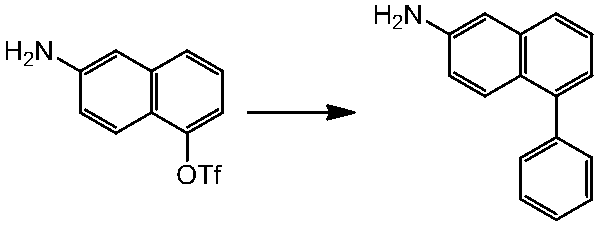
MS(ESI,m/z):220(M+H)+.

MS(ESI,m/z):351(M-H)-.

MS(ESI,m/z):220(M+H)+.
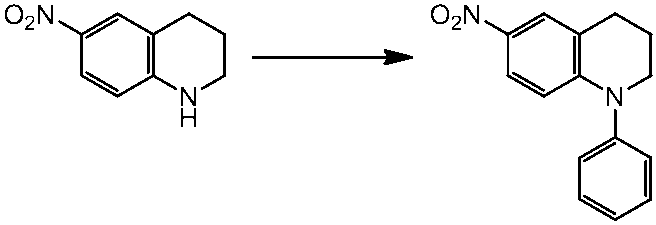
MS(ESI,m/z):255(M+H)+.
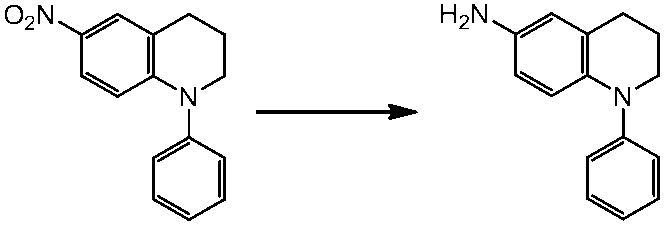
MS(ESI,m/z):225(M+H)+.
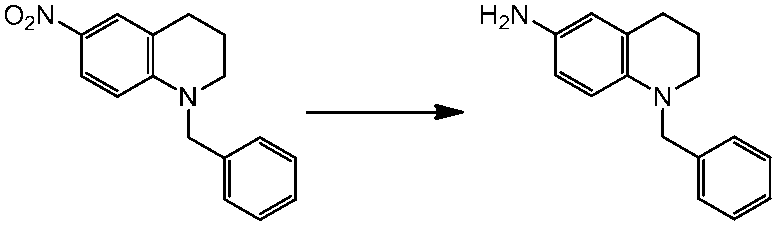
MS(ESI,m/z):239(M+H)+.
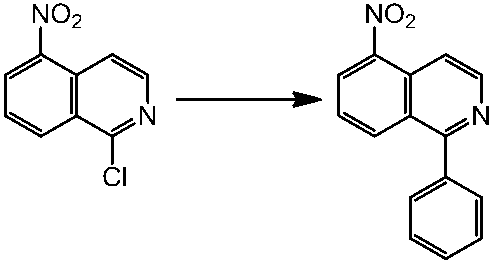
MS(ESI,m/z):251(M+H)+.
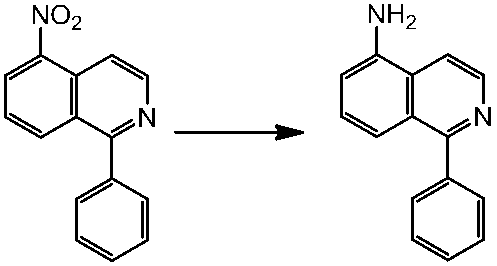
MS(ESI,m/z):221(M+H)+.
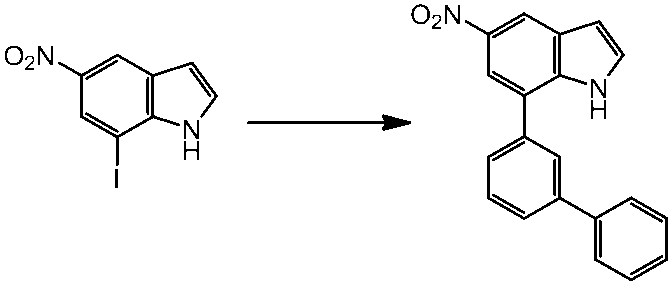
MS(ESI,m/z):315(M+H)+.

MS(ESI,m/z):329(M+H)+.
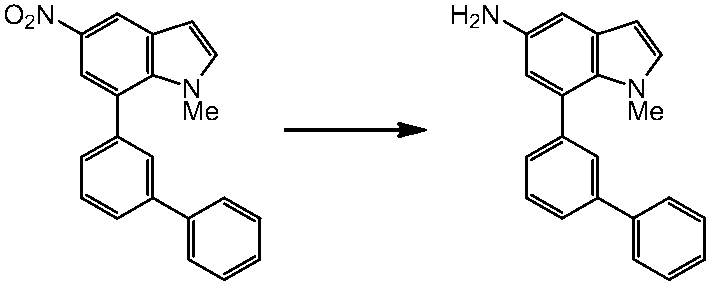
MS(ESI,m/z):299(M+H)+.

MS(ESI,m/z):313(M-H)-.

MS(ESI,m/z):329(M+H)+.
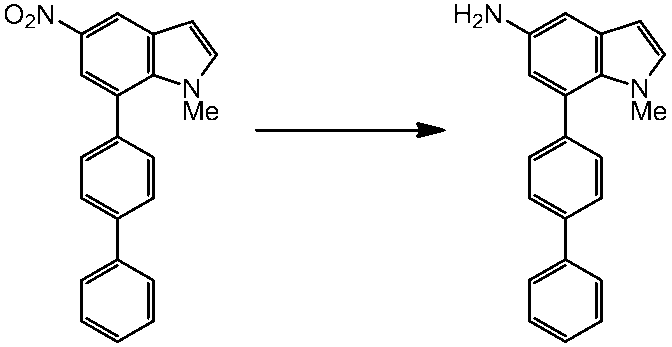
MS(ESI,m/z):299(M+H)+.
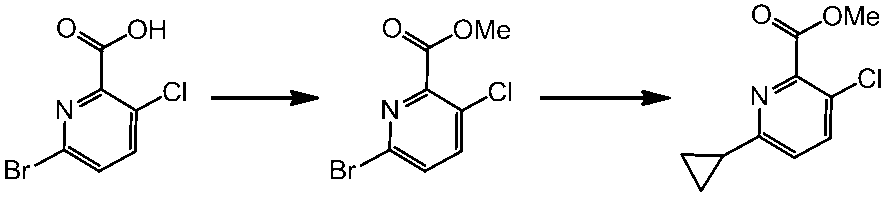
メチル=6-ブロモ-3-クロロピコリナート225mg、シクロプロピルホウ酸一水和物140mg、酢酸パラジウム10mg、トリシクロヘキシルホスフィン25mg、リン酸三カリウム401mg、トルエン10mLおよび水1mLの混合物を、窒素雰囲気下、7時間加熱還流した。反応混合物を室温まで冷却した後、酢酸エチルおよび水を加えた。有機層を分取し、無水硫酸マグネシウムで乾燥させ、減圧下で溶媒を留去した。得られた残留物をシリカゲルカラムクロマトグラフィー(ヘキサン:酢酸エチルの勾配溶離=95:5-80:20)で精製し、無色油状物のメチル=3-クロロ-6-シクロプロピルピコリナート221mgを得た。
MS(ESI,m/z):212(M+H)+.

MS(ESI,m/z):292(M+H)+.

MS(ESI,m/z):220(M+H)+.
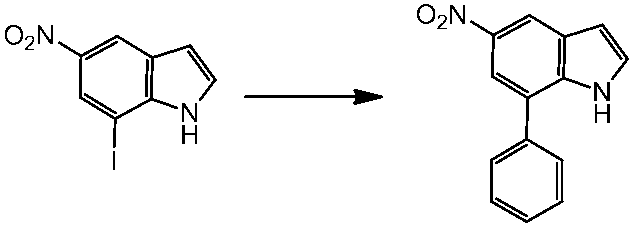
MS(ESI,m/z):237(M-H)-.

MS(ESI,m/z):253(M+H)+.
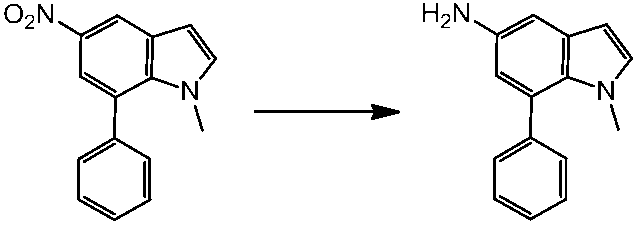
MS(ESI,m/z):223(M+H)+.

MS(ESI,m/z):295(M+H)+.

MS(ESI,m/z):265(M+H)+.

MS(ESI,m/z):339(M+H)+.

MS(ESI,m/z):309(M+H)+.
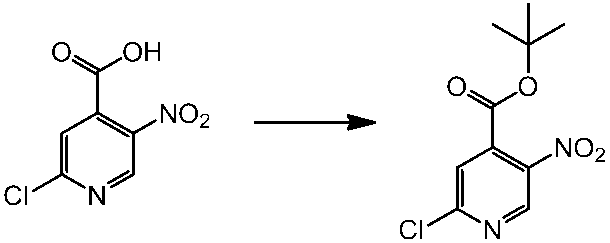

MS(ESI,m/z):229(M+H)+.

MS(ESI,m/z):294(M+H)+.

1H-NMR(DMSO-d6)δ:5.77(2H,s),7.22-7.39(5H,m),7.96(1H,d,J=9.2Hz),8.23(1H,dd,J=9.2,2.0Hz),8.45(1H,s),8.85(1H,d,J=2.0Hz).

1H-NMR(DMSO-d6)δ:4.80(2H,s),5.51(2H,s),6.72-6.81(2H,m),7.13-7.38(6H,m),7.74(1H,s).
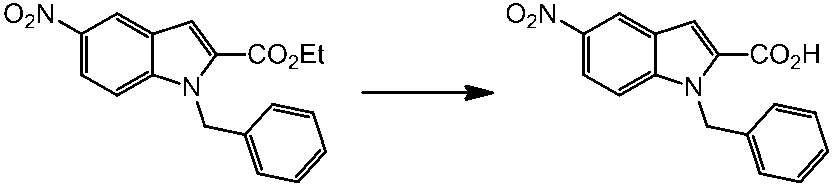
1H-NMR(DMSO-d6)δ:5.96(2H,s),7.00-7.07(2H,m),7.18-7.33(3H,m),7.62(1H,s),7.79(1H,d,J=9.2Hz),8.14(1H,dd,J=9.2,2.0Hz),8.77(1H,d,J=2.0Hz).

1H-NMR(DMSO-d6)δ:1.50(9H,s),5.91(2H,s),6.97-7.04(2H,m),7.18-7.33(3H,m),7.57(1H,s),7.81(1H,d,J=9.2Hz),8.15(1H,dd,J=9.2,2.6Hz),8.76(1H,d,J=2.6Hz).

1H-NMR(DMSO-d6)δ:1.47(9H,s),4.73(2H,s),5.70(2H,s),6.65-6.76(2H,m),6.92-7.02(3H,m),7.13-7.31(4H,m).

1H-NMR(CDCl3)δ:1.09-1.30(2H,m),1.44(9H,s),1.48-1.60(2H,m),1.89-2.04(1H,m),2.52-2.68(2H,m),3.92(2H,d,J=7.3Hz),4.00-4.20(2H,m),6.29(1H,d,J=2.6Hz),6.68(1H,dd,J=8.6,2.0Hz),6.93(1H,d,J=2.0Hz),6.96(1H,d,J=3.3Hz),7.12(1H,d,J=8.6Hz).
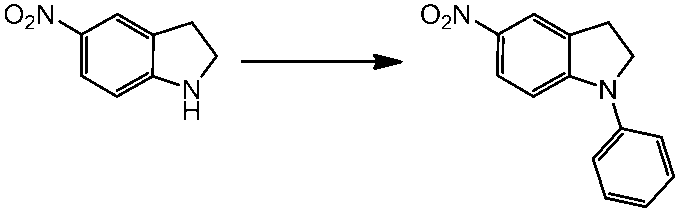
1H-NMR(CDCl3)δ:3.22(2H,t,J=8.3Hz),4.15(2H,t,J=8.6Hz),6.93(1H,d,J=8.6Hz),7.11-7.19(1H,m),7.24-7.32(2H,m),7.37-7.46(2H,m),7.98-8.07(2H,m).

1H-NMR(CDCl3)δ:3.05(2H,t,J=8.3Hz),3.38(2H,brs),3.89(2H,t,J=8.3Hz),6.46(1H,d,J=8.6Hz),6.60-6.65(1H,m),6.88(1H,t,J=7.3Hz),7.01(1H,d,J=8.6Hz),7.12-7.18(2H,d,J=7.9Hz),7.27-7.35(2H,m).

1H-NMR(DMSO-d6)δ:5.59(2H,s),6.83(1H,d,J=2.6Hz),7.34(1H,dd,J=7.3,4.6Hz),7.57-7.64(1H,m),7.76(1H,d,J=9.2Hz),7.83(1H,d,J=3.3Hz),8.02(1H,dd,J=8.9,2.3Hz),8.48(1H,dd,J=5.0,1.7Hz),8.57(1H,d,J=2.0Hz),8.59(1H,d,J=2.0Hz).

1H-NMR(DMSO-d6)δ:4.49(2H,s),5.32(2H,s),6.18(1H,d,J=4.0Hz),6.49(1H,dd,J=8.6,2.0Hz),6.68(1H,d,J=2.0Hz),7.14(1H,d,J=8.6Hz),7.27-7.34(2H,m),7.48-4-7.55(1H,m),8.41-8.47(2H,m).
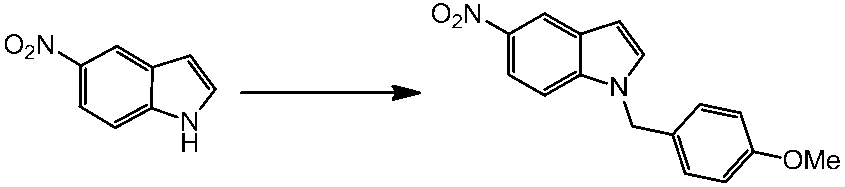
1H-NMR(DMSO-d6)δ:3.70(3H,s),5.44(2H,s),6.78(1H,d,J=3.3Hz),6.84-6.91(2H,m),7.18-7.25(2H,m),7.71(1H,d,J=9.2Hz),7.76(1H,d,J=3.3Hz),8.00(1H,dd,J=9.2,2.0Hz),8.57(1H,d,J=2.6Hz).

1H-NMR(DMSO-d6)δ:3.69(3H,s),4.45(2H,s),5.18(2H,s),6.14(1H,d,J=2.6Hz),6.47(1H,dd,J=8.6,2.0Hz),6.67(1H,d,J=2.0Hz),6.80-6.86(2H,m),7.07-7.16(3H,m),7.24(1H,d,J=3.3Hz).
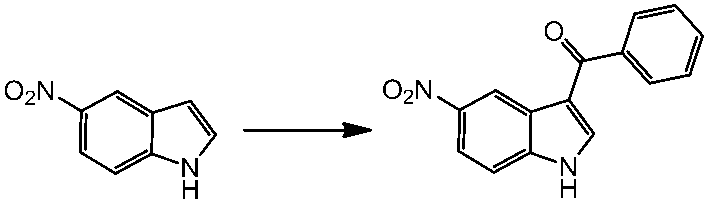
1H-NMR(DMSO-d6)δ:7.49-8.02(6H,m),8.18(1H,dd,J=8.9,2.3Hz),8.27(1H,d,J=3.3Hz),9.14(1H,d,J=2.0Hz),12.68(1H,brs).

1H-NMR(DMSO-d6)δ:5.66(2H,s),7.20-7.40(5H,m),7.53-7.73(3H,m),7.80(1H,d,J=8.6Hz),7.84-7.94(2H,m),8.12-8.20(1H,m),8.58(1H,s),9.15(1H,s).
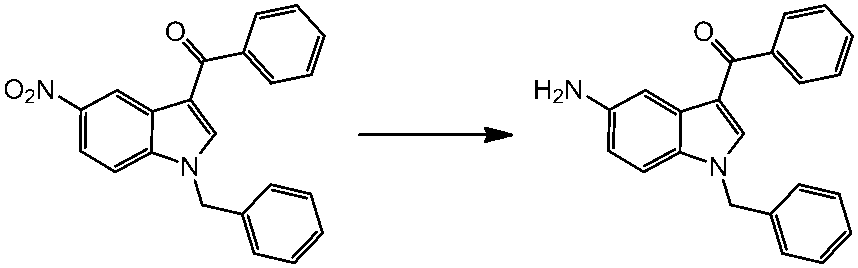
1H-NMR(DMSO-d6)δ:4.89(2H,s),5.41(2H,s),6.54-6.6(1H,m),7.17(1H,d,J=8.6Hz),7.21-7.36(5H,m),7.48-7.62(4H,m),7.71-7.78(2H,m),7.97(1H,s).

1H-NMR(DMSO-d6)δ:7.17(1H,t,J=7.9Hz),7.38(1H,d,J=6.6Hz),7.49-7.68(4H,m),7.79-7.87(3H,m),12.17(1H,brs).
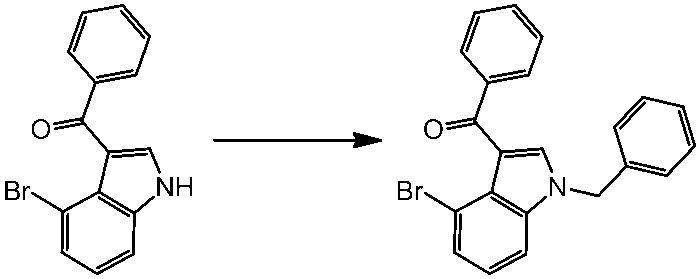
1H-NMR(DMSO-d6)δ:5.54(2H,s),7.17(1H,t,J=7.9Hz),7.22-7.44(6H,m),7.50-7.71(4H,m),7.81-7.90(2H,m),8.13(1H,s).

MS(ESI,m/z):250(M+H)+.

MS(ESI,m/z):220(M+H)+.

MS(ESI,m/z):268(M+H)+.
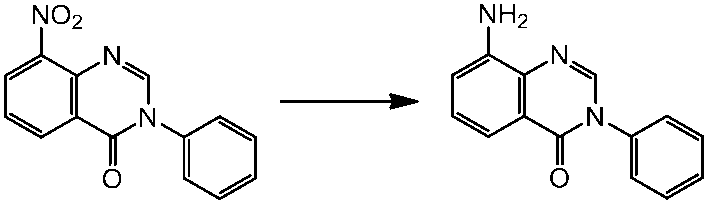
MS(ESI,m/z):238(M+H)+.

MS(ESI,m/z):268(M+H)+.

MS(ESI,m/z):238(M+H)+.

MS(ESI,m/z):271(M+H)+.
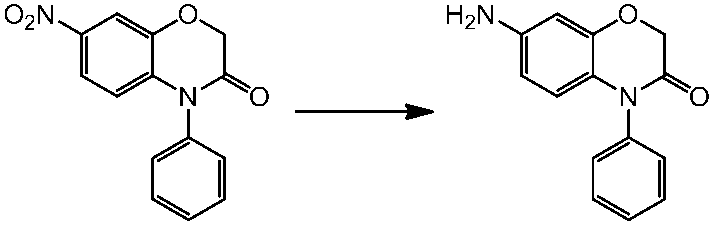
MS(ESI,m/z):241(M+H)+.

MS(ESI,m/z):267(M+H)+.

MS(ESI,m/z):237(M+H)+.

MS(ESI,m/z):191(M+H)+.

MS(ESI,m/z):161(M+H)+.

MS(ESI,m/z):201(M-H)-.

MS(ESI,m/z):217(M+H)+.
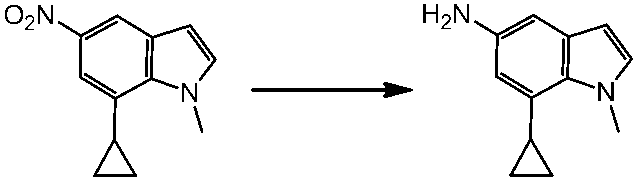
MS(ESI,m/z):187(M+H)+.

MS(ESI,m/z):201(M-H)-.

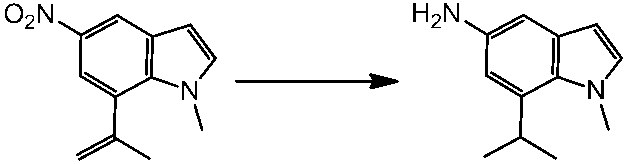
MS(ESI,m/z):189(M+H)+.

MS(ESI,m/z):187(M-H)-.


MS(ESI,m/z):189(M+H)+.

MS(ESI,m/z):254(M+H)+.

MS(ESI,m/z):257(M+H)+.
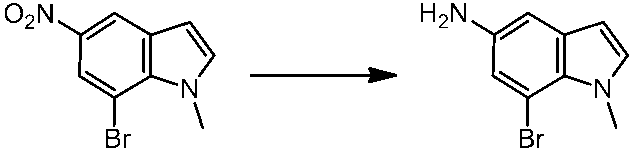
MS(ESI,m/z):225,227(M+H)+.

MS(ESI,m/z):258(M+H)+.

MS(ESI,m/z):228(M+H)+.
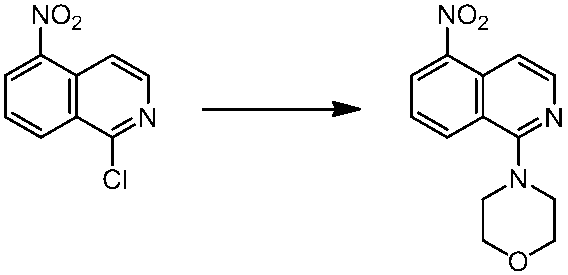
MS(ESI,m/z):260(M+H)+.
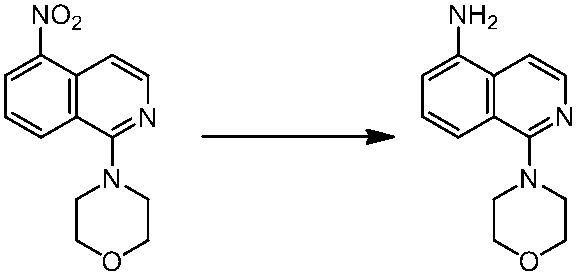
MS(ESI,m/z):230(M+H)+.



MS(ESI,m/z):191(M+H)+.

MS(ESI,m/z):161(M+H)+.

MS(ESI,m/z):205(M+H)+.
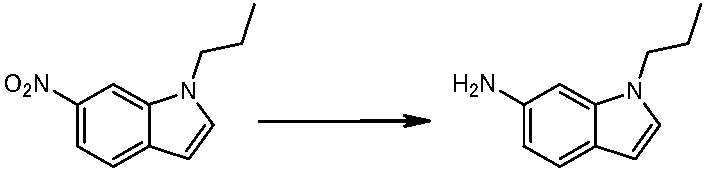
MS(ESI,m/z):175(M+H)+.

MS(ESI,m/z):205(M+H)+.

MS(ESI,m/z):175(M+H)+.
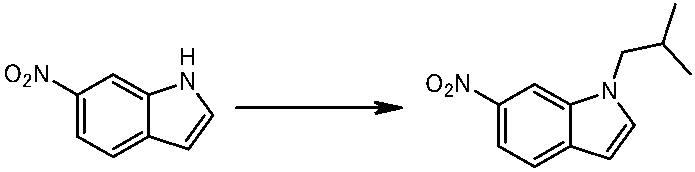
MS(ESI,m/z):219(M+H)+.

MS(ESI,m/z):189(M+H)+.

MS(ESI,m/z):259(M+H)+.
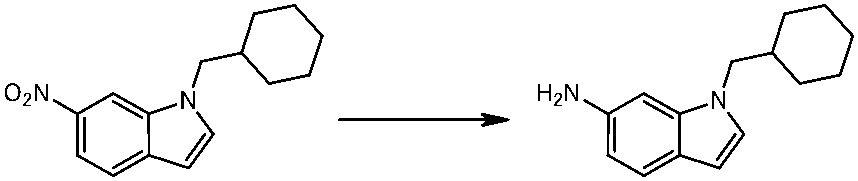
MS(ESI,m/z):229(M+H)+.


MS(ESI,m/z):209(M+H)+.

MS(ESI,m/z):222(M+H)+.
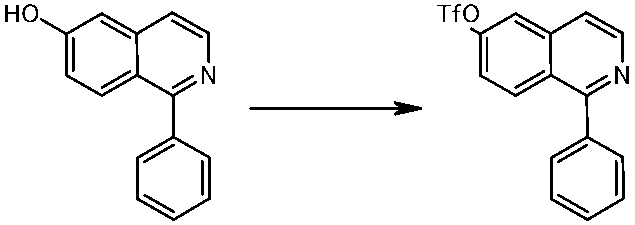
MS(ESI,m/z):354(M+H)+.
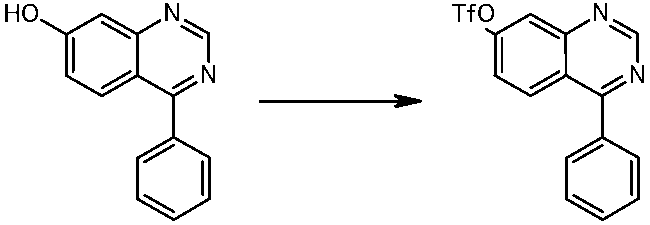
MS(ESI,m/z):355(M+H)+.

MS(ESI,m/z):221(M-H)-.
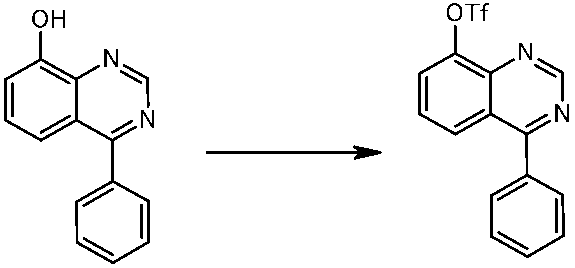
MS(ESI,m/z):355(M+H)+.

MS(ESI,m/z):223(M+H)+.

MS(ESI,m/z):355(M+H)+.

MS(ESI,m/z):344(M+H)+.
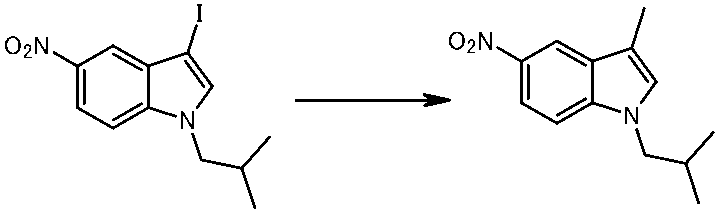
MS(ESI,m/z):233(M+H)+.

MS(ESI,m/z):203(M+H)+.

1H-NMR(DMSO-d6)δ:0.86(6H,d,J=6.6Hz),2.24(1H,sep,J=6.6Hz),4.32(2H,d,J=7.3Hz),7.93(1H,d,J=9.9Hz),8.22(1H,dd,J=9.2,2.6Hz),8.42(1H,s),8.84(1H,d,J=2.0Hz).
MS(ESI,m/z):220(M+H)+.

MS(ESI,m/z):190(M+H)+.

1H-NMR(DMSO-d6)δ:0.94-1.22(5H,m),1.42-1.51(2H,m),1.55-1.70(3H,m),1.83-1.99(1H,m),4.34(2H,d,J=7.3Hz),7.92(1H,d,J=9.9Hz),8.21(1H,dd,J=9.2,2.0Hz),8.41(1H,s),8.83(1H,d,J=2.0Hz).
MS(ESI,m/z):260(M+H)+.
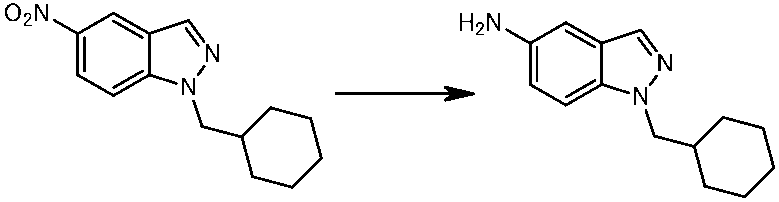
MS(ESI,m/z):230(M+H)+.

MS(ESI,m/z):254(M+H)+.

1H-NMR(DMSO-d6)δ:4.72(2H,s),5.35(2H,s),6.21(1H,d,J=3.3Hz),7.10(1H,d,J=2.6Hz),7.15-7.32(5H,m),7.39(1H,d,J=3.3Hz),7.74(1H,d,J=2.6Hz).
MS(ESI,m/z):224(M+H)+.

MS(ESI,m/z):220(M+H)+.

MS(ESI,m/z):190(M+H)+.

MS(ESI,m/z):260(M+H)+.

MS(ESI,m/z):230(M+H)+.

1H-NMR(DMSO-d6)δ:6.71(1H,s),7.47(1H,d,J=11.9Hz),7.60(1H,s),8.48(1H,d,J=7.3Hz),11.82(1H,s).
MS(ESI,m/z):179(M-H)-.
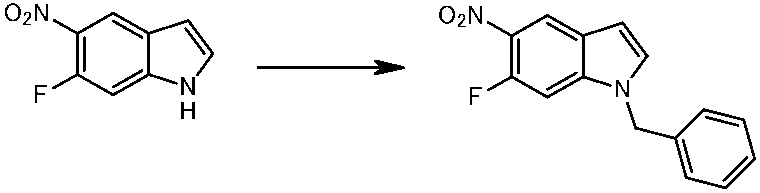
1H-NMR(DMSO-d6)δ:5.49(2H,s),6.78(1H,d,J=3.3Hz),7.23-7.38(5H,m),7.73-7.80(2H,m),8.49(1H,d,J=7.9Hz)
MS(ESI,m/z):271(M+H)+.

MS(ESI,m/z):241(M+H)+.
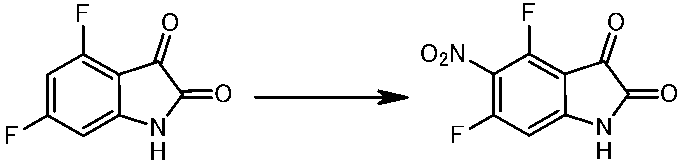
1H-NMR(DMSO-d6)δ:6.95(1H,d,J=10.6Hz),11.95(1H,s)
MS(ESI,m/z):227(M-H)-.

1H-NMR(DMSO-d6)δ:6.74-6.78(1H,m),7.42(1H,d,J=11.1Hz),7.61-7.64(1H,m),12.08(1H,brs)
MS(ESI,m/z):197(M-H)-.

MS(ESI,m/z):291(M+H)+.

MS(ESI,m/z):259(M+H)+.
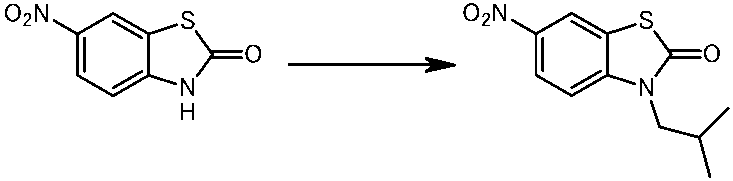
MS(ESI,m/z):253(M+H)+.


MS(ESI,m/z):293(M+H)+.
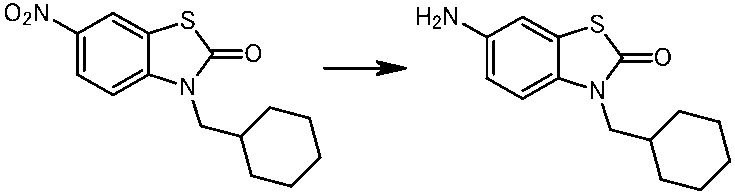
MS(ESI,m/z):263(M+H)+.

1H-NMR(DMSO-d6)δ:2.72(3H,s),6.91(1H,d,J=8.6Hz),8.25(1H,d,J=8.6Hz),11.55(1H,brs).
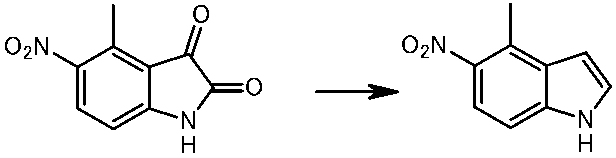
1H-NMR(DMSO-d6)δ:2.76(3H,s),6.78-6.82(1H.m),7.39(1H,d,J=9.2Hz),7.54-7.59(1H,m),7.81(1H,d,J=8.6Hz),11.73(1H,brs).
MS(ESI,m/z):175(M-H)-.

MS(ESI,m/z):267(M+H)+.

MS(ESI,m/z):237(M+H)+.
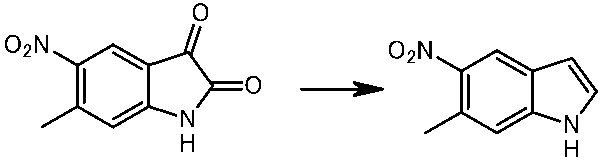
1H-NMR(DMSO-d6)δ:2.62(3H,s),6.61-6.65(1H,m),7.39(1H,s),7.50-7.54(1H,m),8.37(1H,s),11.59(1H,brs).
MS(ESI,m/z):175(M-H)-.

MS(ESI,m/z):267(M+H)+.

MS(ESI,m/z):237(M+H)+.

1H-NMR(CDCl3)δ:1.51(3H,t,J=7.2Hz),4.65(2H,q,J=7.2Hz),6.71(1H,d,J=3.4Hz),7.25(1H,d,J=3.2Hz),8.30(1H,d,J=2.2Hz),8.50(1H,d,J=2.2Hz).

1H-NMR(DMSO-d6)δ:0.91(3H,t,J=7.1Hz),3.76(2H,q,J=7.1Hz),6.89(1H,d,J=3.4Hz),7.50-7.55(5H,m),7.66(1H,d,J=3.2Hz),7.72(1H,d,J=2.4Hz),8.61(1H,d,J=2.4Hz).

1H-NMR(DMSO-d6)δ:0.79(3H,t,J=7.1Hz),3.58(2H,q,J=7.1Hz),4.55(2H,s),6.22(1H,d,J=3.2Hz),6.30(1H,d,J=2.2Hz),6.69(1H,d,J=2.2Hz),7.12(1H,d,J=2.9Hz),7.36-7.48(5H,m).
MS(ESI,m/z):237(M+H)+.

1H-NMR(DMSO-d6)δ:1.37(3H,t,J=7.1Hz),3.36(3H,s),4.16(2H,dd,J=5.4,1.7Hz),4.42(2H,q,J=7.3Hz),6.31(1H,dt,J=15.4,5.4Hz),6.78(1H,d,J=3.2Hz),7.31(1H,d,J=15.6Hz),7.63(1H,d,J=3.2Hz),7.90(1H,d,J=2.2Hz),8.49(1H,d,J=2.4Hz).

1H-NMR(DMSO-d6)δ:1.25(3H,t,J=7.1Hz),1.75-1.86(2H,m),2.80-2.88(2H,m),3.26(3H,s),3.36-3.42(2H,m),4.19(2H,q,J=7.1Hz),4.41(2H,s),6.11(1H,d,J=2.9Hz),6.30(1H,d,J=2.2Hz),6.51(1H,d,J=2.2Hz),7.08(1H,d,J=3.2Hz).
MS(ESI,m/z):233(M+H)+.

1H-NMR(DMSO-d6)δ:4.06(3H,s),4.17-4.24(2H,m),5.01(1H,t,J=5.6Hz),6.32(1H,dt,J=15.4,4.6Hz),6.73(1H,d,J=3.2Hz),7.39(1H,d,J=15.6Hz),7.53(1H,d,J=3.4Hz),7.90(1H,d,J=2.3Hz),8.46(1H,d,J=2.2Hz).

1H-NMR(DMSO-d6)δ:1.18(3H,t,J=7.1Hz),3.54(2H,q,J=6.8Hz),4.05(3H,s),4.18(2H,dd,J=5.6,1.7Hz),6.29(1H,dt,J=15.6,5.4Hz),6.74(1H,d,J=3.2Hz),7.45(1H,d,J=15.6Hz),7.54(1H,d,J=3.4Hz),7.92(1H,d,J=2.2Hz),8.47(1H,d,J=2.2Hz).

1H-NMR(DMSO-d6)δ:1.13(3H,t,J=7.1Hz),1.80-1.92(2H,m),2.94-3.01(2H,m),3.36-3.53(4H,m),3.87(3H,s),4.45-4.50(2H,m),6.05(1H,d,J=3.2Hz),6.29(1H,d,J=2.0Hz),6.49(1H,d,J=2.2Hz),6.98(1H,d,J=3.2Hz).
MS(ESI,m/z):233(M+H)+.
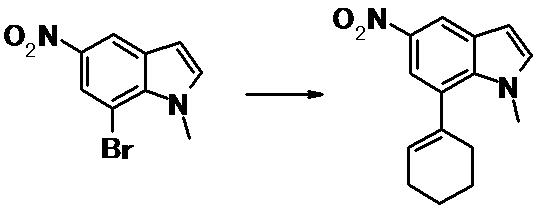
1H-NMR(DMSO-d6)δ:1.65-1.84(4H,m),2.16-2.26(2H,m),2.29-2.37(2H,m),3.88(3H,s),5.73-5.78(1H,m),6.76(1H,d,J=3.2Hz),7.55(1H,d,J=3.2Hz),7.64(1H,d,J=2.2Hz),8.46(1H,d,J=2.4Hz).
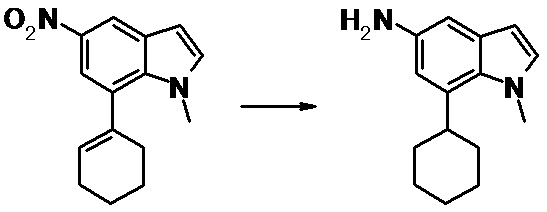
1H-NMR(DMSO-d6)δ:1.38-1.53(5H,m),1.71-1.91(6H,m),3.88(3H,s),4.34-4.44(2H,m),6.05(1H,d,J=2.9Hz),6.41(1H,d,J=2.2Hz),6.47(1H,d,J=2.0Hz),6.97(1H,d,J=2.9Hz).
MS(ESI,m/z):229(M+H)+.
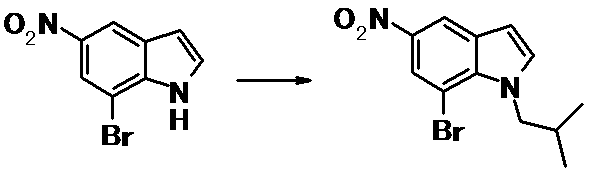
1H-NMR(DMSO-d6)δ:0.86(6H,d,J=6.8Hz),2.14(1H,sep,J=6.8Hz),4.39(2H,d,J=7.6Hz),6.86(1H,d,J=3.2Hz),7.71(1H,d,J=3.2Hz),8.17(1H,d,J=2.2Hz),8.61(1H,d,J=2.2Hz).

1H-NMR(DMSO-d6)δ:0.84(6H,d,J=6.6Hz),1.94-2.06(1H,m),3.36(3H,s),4.15(2H,dd,J=5.1,1.4Hz),4.18(2H,d,J=7.3Hz),6.31(1H,dt,J=15.6,5.1Hz),6.76(1H,d,J=3.2Hz),7.29(1H,d,J=15.4Hz),7.58(1H,d,J=3.4Hz),7.91(1H,d,J=2.2Hz),8.49(1H,d,J=2.2Hz).

1H-NMR(DMSO-d6)δ:0.80(6H,d,J=6.6Hz),1.72-1.82(2H,m),1.89(1H,sep,J=6.6Hz),2.77-2.85(2H,m),3.27(3H,s),3.37-3.42(2H,m),3.92(2H,d,J=7.3Hz),4.40(2H,s),6.07(1H,d,J=2.9Hz),6.30(1H,d,J=2.2Hz),6.51(1H,d,J=1.9Hz),7.04(1H,d,J=3.2Hz).
MS(ESI,m/z):261(M+H)+.

1H-NMR(DMSO-d6)δ:0.40-0.54(4H,m),1.28-1.40(1H,m),4.49(2H,d,J=7.1Hz),6.87(1H,d,J=3.2Hz),7.77(1H,d,J=3.2Hz),8.17(1H,d,J=2.2Hz),8.60(1H,d,J=2.2Hz).

1H-NMR(DMSO-d6)δ:0.35-0.41(2H,m),0.48-0.54(2H,m),1.18-1.28(1H,m),3.36(3H,s),4.16(2H,dd,J=5.4,1.7Hz),4.27(2H,d,J=6.8Hz),6.31(1H,dt,J=15.4,5.4Hz),6.78(1H,d,J=3.2Hz),7.38(1H,d,J=15.6Hz),7.66(1H,d,J=3.4Hz),7.91(1H,d,J=2.2Hz),8.50(1H,d,J=2.2Hz).

1H-NMR(DMSO-d6)δ:0.25-0.32(2H,m),0.41-0.50(2H,m),1.09-1.18(1H,m),1.76-1.86(2H,m),2.86-2.94(2H,m),3.27(3H,s),3.36-3.42(2H,m),4.05(2H,d,J=6.6Hz),4.43(2H,s),6.10(1H,d,J=3.2Hz),6.30(1H,d,J=2.0Hz),6.51(1H,d,J=2.0Hz),7.13(1H,d,J=2.9Hz).
MS(ESI,m/z):259(M+H)+.

1H-NMR(DMSO-d6)δ:0.82-0.89(3H,m),1.20-1.37(4H,m),1.73-1.85(2H,m),4.53-4.61(2H,m),6.85(1H,d,J=3.2Hz),7.73(1H,d,J=3.2Hz),8.16(1H,d,J=2.2Hz),8.60(1H,d,J=2.2Hz).

1H-NMR(DMSO-d6)δ:0.82-0.88(3H,m),1.21-1.34(4H,m),1.68-1.78(2H,m),3.36(3H,s),4.15(2H,dd,J=5.4,1.7Hz),4.35(2H,t,J=7.3Hz),6.31(1H,dt,J=15.6,5.1Hz),6.76(1H,d,J=3.4Hz),7.29(1H,d,J=15.6Hz),7.61(1H,d,J=3.2Hz),7.90(1H,d,J=2.2Hz),8.48(1H,d,J=2.4Hz).

1H-NMR(DMSO-d6)δ:0.85(3H,t,J=6.8Hz),1.16-1.33(4H,m),1.57-1.66(2H,m),1.74-1.84(2H,m),2.78-2.87(2H,m),3.27(3H,s),3.39(2H,t,J=6.4Hz),4.12(2H,t,J=7.1Hz),4.33-4.44(2H,m),6.08(1H,d,J=3.2Hz),6.29(1H,d,J=2.2Hz),6.50(1H,d,J=2.2Hz),7.06(1H,d,J=3.2Hz).
MS(ESI,m/z):275(M+H)+.

1H-NMR(DMSO-d6)δ:1.20-1.34(1H,m),1.38-1.54(4H,m),1.70-1.86(3H,m),1.94-2.03(2H,m),2.82-2.93(1H,m),7.36(1H,d,J=2.2Hz),7.50(1H,d,J=9.0Hz),7.97(1H,dd,J=8.9,2.3Hz),8.52(1H,d,J=2.2Hz),11.56(1H,brs).
MS(ESI,m/z):243(M-H)-.
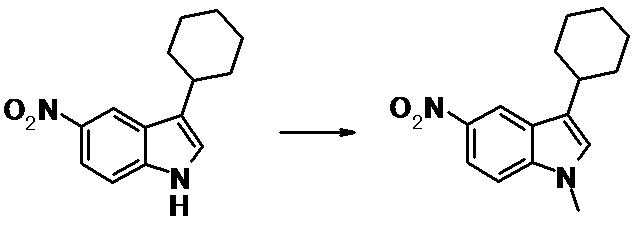
1H-NMR(DMSO-d6)δ:1.20-1.32(1H,m),1.35-1.54(4H,m),1.69-1.85(3H,m),1.93-2.04(2H,m),2.82-2.94(1H,m),3.82(3H,s),7.35(1H,s),7.58(1H,d,J=9.0Hz),8.02(1H,dd,J=9.0,2.2Hz),8.53(1H,d,J=2.2Hz).

1H-NMR(DMSO-d6)δ:1.20-1.29(1H,m),1.30-1.46(4H,m),1.67-1.83(3H,m),1.91-1.98(2H,m),2.55-2.65(1H,m),3.56(3H,s),4.45(2H,s),6.50(1H,dd,J=8.6,2.0Hz),6.70(1H,d,J=2.2Hz),6.81(1H,s),7.03(1H,d,J=8.5Hz).
MS(ESI,m/z):229(M+H)+.
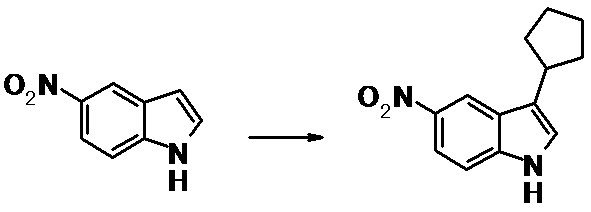
1H-NMR(DMSO-d6)δ:1.57-1.83(6H,m),2.04-2.19(2H,m),3.20-3.40(1H,m),7.36-7.42(1H,m),7.50(1H,d,J=8.8Hz),7.98(1H,dd,J=9.0,2.4Hz),8.51(1H,d,J=2.2Hz),11.55(1H,brs).
MS(ESI,m/z):229(M-H)-.
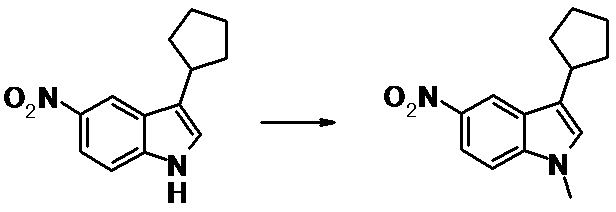
1H-NMR(DMSO-d6)δ:1.53-1.83(6H,m),2.06-2.18(2H,m),3.25-3.30(1H,m),3.81(3H,s),7.40(1H,s),7.59(1H,d,J=9.0Hz),8.03(1H,dd,J=9.0,2.2Hz),8.51(1H,d,J=2.2Hz).

1H-NMR(DMSO-d6)δ:1.51-1.79(6H,m),1.95-2.15(2H,m),2.99-3.10(1H,m),3.59(3H,s),4.45(2H,s),6.51(1H,dd,J=8.5,2.2Hz),6.70(1H,d,J=1.7Hz),6.85(1H,s),7.03(1H,d,J=8.5Hz).
MS(ESI,m/z):215(M+H)+.

1H-NMR(DMSO-d6)δ:3.09(2H,t,J=7.2Hz),4.52(2H,t,J=7.2Hz),6.71(1H,d,J=3.2Hz),7.14-7.27(5H,m),7.57(1H,d,J=3.2Hz),7.65(1H,d,J=9.0Hz),7.97(1H,dd,J=9.0,2.4Hz),8.54(1H,d,J=2.2Hz).

1H-NMR(DMSO-d6)δ:3.00(2H,t,J=7.6Hz),4.26(2H,t,J=7.3Hz),4.45(2H,s),6.06(1H,d,J=2.9Hz),6.52(1H,dd,J=8.6,2.2Hz),6.66(1H,d,J=2.0Hz),7.05(1H,d,J=3.0Hz),7.15-7.29(6H,m).
MS(ESI,m/z):237(M+H)+.

1H-NMR(DMSO-d6)δ:5.93(2H,s),6.74(1H,d,J=7.8Hz),6.82(1H,d,J=10.2Hz),6.98(1H,d,J=3.2Hz),7.06-7.14(1H,m),7.31-7.40(1H,m),7.86(1H,d,J=3.2Hz),8.15(1H,d,J=2.2Hz),8.66(1H,d,J=2.2Hz).

1H-NMR(DMSO-d6)δ:2.53(3H,s),5.76(2H,s),6.65-6.76(2H,m),6.86(1H,d,J=3.2Hz),7.06-7.15(1H,m),7.33-7.41(1H,m),7.70(1H,d,J=3.2Hz),7.76(1H,d,J=1.5Hz),8.46(1H,d,J=2.4Hz).
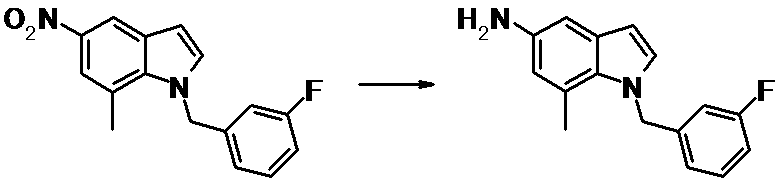
1H-NMR(DMSO-d6)δ:2.27(3H,s),4.42(2H,s),5.52(2H,s),6.18-6.23(2H,m),6.51-6.61(2H,m),6.66-6.72(1H,m),7.00-7.08(1H,m),7.18-7.23(1H,m),7.28-7.37(1H,m).
MS(ESI,m/z):255(M+H)+.

1H-NMR(DMSO-d6)δ:5.91(2H,s),6.93-7.01(3H,m),7.21-7.36(3H,m),7.84(1H,d,J=3.2Hz),8.14(1H,d,J=2.2Hz),8.65(1H,d,J=2.2Hz).

1H-NMR(DMSO-d6)δ:2.53(3H,s),5.74(2H,s),6.85(1H,d,J=3.2Hz),6.86-6.92(2H,m),7.20-7.36(3H,m),7.69(1H,d,J=3.2Hz),7.72-7.76(1H,m),8.46(1H,d,J=2.2Hz).

1H-NMR(DMSO-d6)δ:2.28(3H,s),4.40(2H,s),5.49(2H,s),6.16-6.20(2H,m),6.51-6.55(1H,m),6.81-6.87(2H,m),7.17-7.23(2H,m),7.23-7.30(2H,m).
MS(ESI,m/z):237(M+H)+.

1H-NMR(DMSO-D6)δ:5.56(2H,s),6.83(1H,dd,J=3.2,0.7Hz),7.01-7.14(3H,m),7.33-7.41(1H,m),7.71(1H,d,J=9.3Hz),7.81(1H,d,J=3.2Hz),8.02(1H,dd,J=9.0,2.4Hz),8.60(1H,d,J=2.4Hz).

1H-NMR(CDCl3)δ:3.48(2H,brs),5.24(2H,s),6.37(1H,dd,J=3.0,0.9Hz),6.63(1H,dd,J=8.5,2.2Hz),6.73-6.79(1H,m),6.84-6.89(1H,m),6.90-6.97(2H,m),7.02(1H,d,J=8.5Hz),7.04(1H,d,J=3.2Hz),7.20-7.28(1H,m).

1H-NMR(DMSO-d6)δ:3.87(3H,s),5.43(2H,s),6.47(1H,d,J=3.3Hz),6.90(1H,d,J=9.2Hz),6.99(1H,dd,J=8.6,2.0Hz),7.19-7.36(6H,m),7.44(1H,d,J=2.0Hz),7.49(1H,d,J=9.2Hz),7.56(1H,d,J=3.3Hz),7.80(1H,d,J=2.6Hz),9.22(1H,s).

1H-NMR(DMSO-d6)δ:5.43(2H,s),6.47(1H,d,J=3.3Hz),6.90(1H,d,J=8.6Hz),6.98(1H,dd,J=8.6,2.0Hz),7.18-7.36(6H,m),7.43(1H,d,J=2.0Hz),7.48(1H,d,J=8.6Hz),7.55(1H,d,J=2.6Hz),7.78(1H,d,J=2.6Hz),9.51(1H,brs).
MS(ESI,m/z):377(M+H)+,375(M-H)-.

1H-NMR(DMSO-d6)δ:3.86(3H,s),5.40(2H,s),6.49(1H,d,J=2.6Hz),6.91(1H,dd,J=8.3,1.7Hz),6.95(1H,d,J=8.6Hz),7.16-7.37(7H,m),7.50(1H,d,J=3.3Hz),7.57(1H,d,J=7.9Hz),7.81(1H,d,J=2.6Hz),9.30(1H,s).

1H-NMR(DMSO-d6)δ:5.40(2H,s),6.48(1H,d,J=2.6Hz),6.91(1H,dd,J=8.3,1.7Hz),6.95(1H,d,J=9.2Hz),7.16-7.37(7H,m),7.49(1H,d,J=3.3Hz),7.56(1H,d,J=8.6Hz),7.80(1H,d,J=2.6Hz),9.58(1H,s).
MS(ESI,m/z):377(M+H)+,375(M-H)-.

1H-NMR(DMSO-d6)δ:3.90(3H,s),5.44(2H,s),6.35(1H,d,J=2.6Hz),7.01(1H,d,J=7.3Hz),7.10(1H,d,J=7.9Hz),7.16(1H,d,J=9.2Hz),7.19-7.36(6H,m),7.42(1H,dd,J=9.2,2.6Hz),7.52(1H,d,J=3.3Hz),7.87(1H,d,J=2.6Hz),9.60(1H,s).

1H-NMR(DMSO-d6)δ:5.44(2H,s),6.35(1H,d,J=3.3Hz),7.02(1H,d,J=7.3Hz),7.06-7.36(8H,m),7.40(1H,dd,J=9.2,2.6Hz),7.51(1H,d,J=3.3Hz),7.86(1H,d,J=2.6Hz),9.93(1H,s).
MS(ESI,m/z):377(M+H)+.

1H-NMR(DMSO-d6)δ:5.45(2H,s),6.42(1H,d,J=3.3Hz),7.04-7.38(10H,m),7.39-7.47(2H,m),7.52(1H,d,J=3.3Hz),7.58-7.65(2H,m),7.73(1H,dd,J=8.9,2.3Hz),8.21(1H,d,J=2.6Hz),10.06(1H,s).
MS(ESI/APCI,m/z):419(M+H)+,417(M-H)-.

1H-NMR(DMSO-d6)δ:3.87(3H,s),5.46(2H,s),6.48(1H,d,J=3.3Hz),6.98(1H,d,J=5.9Hz),7.20-7.35(5H,m),7.51(1H,d,J=3.3Hz),7.58-7.64(2H,m),7.90-7.94(1H,m),8.11(1H,d,J=5.9Hz),9.71(1H,s).

1H-NMR(DMSO-d6)δ:5.47(2H,s),6.47(1H,d,J=3.3Hz),7.04(1H,d,J=5.3Hz),7.20-7.35(5H,m),7.52(1H,d,J=4.0Hz),7.55-7.66(2H,m),7.93(1H,d,J=2.0Hz),8.12(1H,d,J=5.9Hz),10.24(1H,s).
MS(ESI/APCI,m/z):378(M+H)+,376(M-H)-.

1H-NMR(DMSO-d6)δ:3.88(3H,s),5.49(2H,s),6.51(1H,d,J=3.3Hz),6.81(1H,d,J=9.2Hz),7.21-7.38(6H,m),7.69(1H,d,J=4.0Hz),7.82(1H,d,J=2.6Hz),7.92(1H,d,J=2.6Hz),8.18(1H,d,J=2.6Hz),9.21(1H,s).

1H-NMR(DMSO-d6)δ:5.49(2H,s),6.51(1H,d,J=3.3Hz),6.82(1H,d,J=8.6Hz),7.22-7.40(6H,m),7.68(1H,d,J=3.3Hz),7.82(1H,d,J=2.6Hz),7.92(1H,d,J=2.6Hz),8.18(1H,d,J=2.6Hz),9.48(1H,s).
MS(ESI/APCI,m/z):378(M+H)+,376(M-H)-
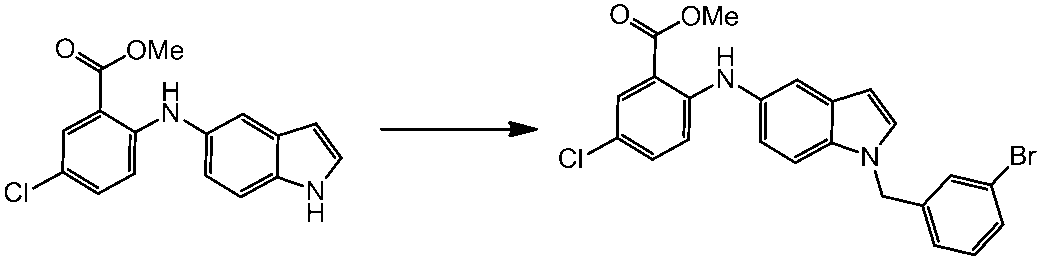
1H-NMR(DMSO-d6)δ:3.87(3H,s),5.45(2H,s),6.49(1H,d,J=3.3Hz),6.91(1H,d,J=9.2Hz),7.00(1H,dd,J=9.2,2.0Hz),7.18-7.36(3H,m),7.42-7.53(4H,m),7.58(1H,d,J=3.3Hz),7.80(1H,d,J=2.6Hz),9.23(1H,s).

1H-NMR(CDCl3)δ:3.06-3.13(4H,m),3.79-3.86(4H,m),3.90(3H,s),5.28(2H,s),6.50(1H,d,J=2.6Hz),6.61-6.70(2H,m),6.82(1H,dd,J=8.3,2.3Hz),6.91(1H,d,J=9.2Hz),7.02(1H,dd,J=8.6,2.0Hz),7.11-7.30(4H,m),7.48(1H,d,J=2.0Hz),7.90(1H,d,J=2.6Hz),9.32(1H,s).

1H-NMR(DMSO-d6)δ:3.02-3.10(4H,m),3.67-3.76(4H,m),5.34(2H,s),6.45(1H,d,J=2.6Hz),6.62(1H,d,J=7.3Hz),6.82(1H,dd,J=8.3,2.3Hz),6.86-6.95(2H,m),6.98(1H,dd,J=8.9,2.3Hz),7.15(1H,t,J=7.9Hz),7.28(1H,dd,J=9.2,2.6Hz),7.42(1H,d,J=2.0Hz),7.49(1H,d,J=9.2Hz),7.54(1H,d,J=2.6Hz),7.78(1H,d,J=2.6Hz)
MS(ESI/APCI,m/z):460(M-H)-.
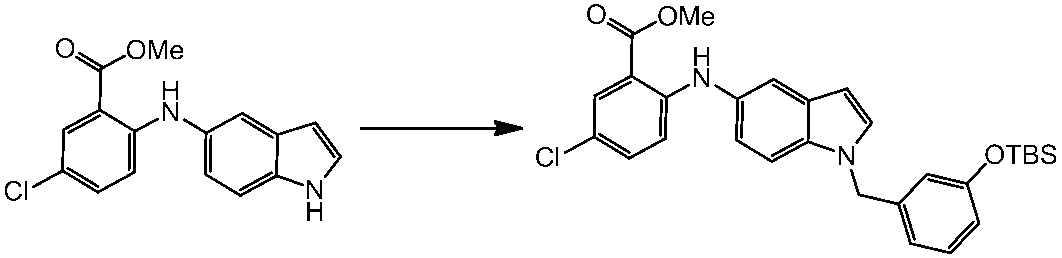
1H-NMR(DMSO-d6)δ:0.07(6H,s),0.87(9H,s),3.87(3H,s),5.40(2H,s),6.48(1H,d,J=3.3Hz),6.53-6.57(1H,m),6.71(1H,dd,J=7.9,2.0Hz),6.82-6.91(2H,m),6.98(1H,dd,J=8.6,2.0Hz),7.19(1H,t,J=7.9Hz),7.31(1H,dd,J=9.2,2.6Hz),7.42-7.48(2H,m),7.54(1H,d,J=2.6Hz),7.80(1H,d,J=2.6Hz),9.23(1H,s).
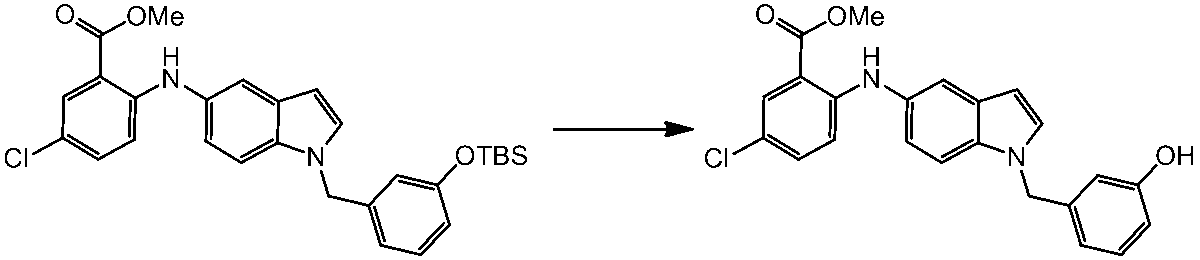
1H-NMR(CDCl3)δ:3.90(3H,s),5.25(2H,s),6.49(1H,d,J=2.6Hz),6.53-6.57(1H,m),6.68-6.78(2H,m),6.92(1H,d,J=9.2Hz),7.01(1H,dd,J=8.6,2.0Hz),7.10-7.24(4H,m),7.47(1H,d,J=2.0Hz),7.89(1H,d,J=2.6Hz),9.31(1H,s).

1H-NMR(DMSO-d6)δ:5.34(2H,s),6.46(1H,d,J=3.3Hz),6.52-6.57(1H,m),6.60-6.70(2H,m),6.91(1H,d,J=9.2Hz),6.99(1H,dd,J=8.6,2.0Hz),7.11(1H,t,J=7.6Hz),7.30(1H,dd,J=8.6,2.6Hz),7.40-7.47(2H,m),7.51(1H,d,J=3.3Hz),7.79(1H,d,J=2.6Hz),9.38(1H,s),9.51(1H,brs)
MS(ESI/APCI,m/z):393(M+H)+,391(M-H)-.

1H-NMR(DMSO-d6)δ:3.87(3H,s),5.12(2H,s),5.39(2H,s),6.47(1H,d,J=2.6Hz),6.81(1H,d,J=7.9Hz),6.87-6.95(3H,m),6.98(1H,dd,J=8.6,2.0Hz),7.19-7.28(1H,m),7.29-7.36(2H,m),7.41-7.50(3H,m),7.55(1H,d,J=3.3Hz),7.76-7.84(2H,m),8.53-8.58(1H,m),9.22(1H,s).

1H-NMR(DMSO-d6)δ:5.12(2H,s),5.39(2H,s),6.46(1H,d,J=3.3Hz),6.81(1H,d,J=7.3Hz),6.87-6.95(3H,m),6.97(1H,dd,J=8.6,2.0Hz),7.18-7.36(3H,m),7.41-7.49(3H,m),7.53(1H,d,J=3.3Hz),7.75-7.85(2H,m),8.55(1H,d,J=4.0Hz),9.48(1H,s).
MS(ESI/APCI,m/z):484(M+H)+,482(M-H)-.

1H-NMR(DMSO-d6)δ:3.87(3H,s),5.67(2H,s),6.96(1H,d,J=9.2Hz),7.22-7.40(7H,m),7.65(1H,d,J=2.0Hz),7.74(1H,d,J=9.2Hz),7.82(1H,d,J=2.6Hz),8.07(1H,s),9.26(1H,s).

1H-NMR(DMSO-d6)δ:5.66(2H,s),6.97(1H,d,J=9.2Hz),7.21-7.38(7H,m),7.64(1H,d,J=1.3Hz),7.73(1H,d,J=9.2Hz),7.81(1H,d,J=2.6Hz),8.06(1H,s),9.55(1H,s).
MS(ESI/APCI,m/z):378(M+H)+,376(M-H)-.

1H-NMR(DMSO-d6)δ:1.50(9H,s),3.87(3H,s),5.84(2H,s),6.97(1H,d,J=9.2Hz),7.01-7.07(2H,m),7.17-7.33(5H,m),7.36(1H,dd,J=9.2,2.6Hz),7.57-7.63(2H,m),7.82(1H,d,J=2.6Hz),9.27(1H,s).

1H-NMR(DMSO-d6)δ:3.87(3H,s),5.89(2H,s),6.97(1H,d,J=9.2Hz),7.03-7.09(2H,m),7.15-7.32(5H,m),7.37(1H,dd,J=9.2,2.6Hz),7.55-7.62(2H,m),7.81(1H,d,J=2.6Hz),9.25(1H,s).
MS(ESI/APCI,m/z):435(M+H)+,433(M-H)-.
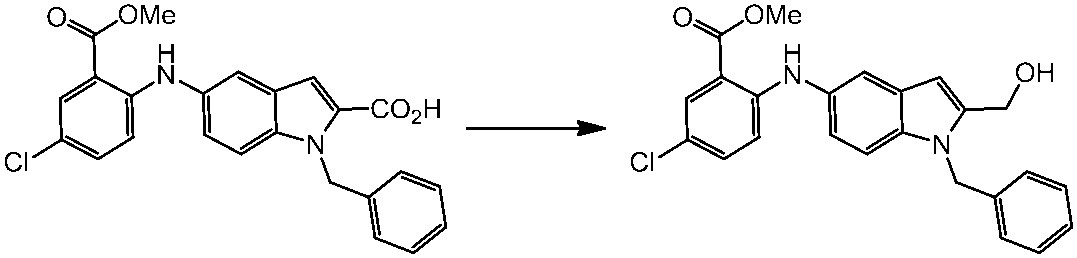
1H-NMR(DMSO-d6)δ:3.87(3H,s),4.60(2H,d,J=5.3Hz),5.36(1H,t,J=5.3Hz),5.49(2H,s),6.45(1H,s),6.90(1H,d,J=9.2Hz),6.95(1H,dd,J=8.6,2.0Hz),7.05-7.11(2H,m),7.19-7.39(5H,m),7.41(1H,d,J=1.3Hz),7.80(1H,d,J=2.6Hz),9.22(1H,s).

1H-NMR(DMSO-d6)δ:4.60(2H,d,J=5.3Hz),5.36(1H,t,J=5.6Hz),5.48(2H,s),6.44(1H,s),6.91(1H,d,J=9.2Hz),6.95(1H,dd,J=8.6,2.0Hz),7.04-7.11(2H,m),7.19-7.38(5H,m),7.41(1H,d,J=1.3Hz),7.78(1H,d,J=2.6Hz),9.49(1H,s).

1H-NMR(DMSO-d6)δ:0.50-0.58(2H,m),0.82-0.90(2H,m),1.80-1.91(1H,m),3.86(3H,s),5.48(2H,s),6.49(1H,d,J=4.0Hz),6.78(1H,d,J=8.6Hz),7.07(1H,dd,J=8.9,2.3Hz),7.21-7.36(5H,m),7.62(1H,d,J=2.6Hz),7.66(1H,d,J=3.3Hz),7.87(1H,d,J=2.0Hz),8.15(1H,d,J=2.0Hz),9.07(1H,s).
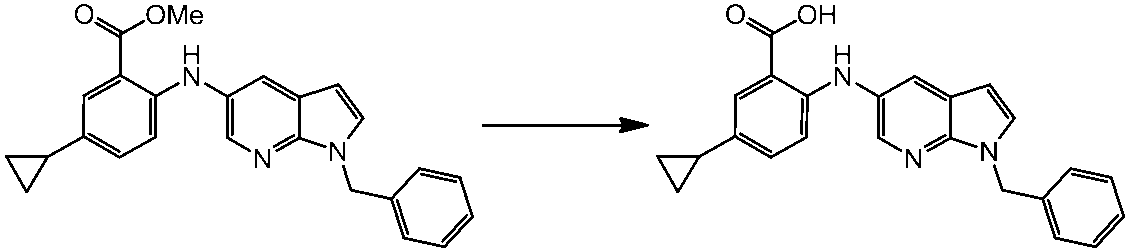
1H-NMR(DMSO-d6)δ:0.50-0.58(2H,m),0.81-0.90(2H,m),1.79-1.90(1H,m),5.48(2H,s),6.48(1H,d,J=3.3Hz),6.78(1H,d,J=8.6Hz),7.05(1H,dd,J=8.9,2.3Hz),7.21-7.36(5H,m),7.62(1H,d,J=2.0Hz),7.65(1H,d,J=3.3Hz),7.87(1H,d,J=2.6Hz),8.15(1H,d,J=2.0Hz),9.33(1H,s),12.96(1H,brs).

1H-NMR(CDCl3)δ:0.56-0.64(2H,m),0.83-0.92(2H,m),1.76-1.88(1H,m),3.90(3H,s),5.59(2H,s),6.94-7.06(2H,m),7.18-7.36(7H,m),7.54-7.57(1H,m),7.70(1H,d,J=2.0Hz),7.97(1H,s),9.25(1H,s).

1H-NMR(DMSO-d6)δ:0.50-0.59(2H,m),0.81-0.91(2H,m),1.79-1.91(1H,m),5.65(2H,s),6.96(1H,d,J=8.6Hz),7.07(1H,dd,J=8.6,2.0Hz),7.20-7.36(6H,m),7.58(1H,d,J=1.3Hz),7.62(1H,d,J=2.0Hz),7.69(1H,d,J=9.2Hz),8.03(1H,s),9.40(1H,s),12.97(1H,brs).

1H-NMR(DMSO-d6)δ:6.68(1H,d,J=3.3Hz),7.28(1H,dd,J=8.6,2.0Hz),7.36-7.44(1H,m),7.51-7.64(5H,m),7.66(1H,d,J=3.3Hz),8.06(1H,d,J=2.0Hz),8.28(1H,d,J=2.6Hz),8.45(1H,d,J=2.6Hz),10.35(1H,s).

1H-NMR(DMSO-d6)δ:3.90(3H,s),5.45(2H,s),6.50(1H,d,J=2.6Hz),6.96(1H,d,J=8.6Hz),7.03(1H,dd,J=8.6,2.0Hz),7.20-7.37(5H,m),7.47-7.62(4H,m),8.08-8.13(1H,m),9.60(1H,s).

1H-NMR(DMSO-d6)δ:5.45(2H,s),6.49(1H,d,J=3.3Hz),6.96(1H,d,J=8.6Hz),7.03(1H,dd,J=8.9,2.3Hz),7.21-7.37(5H,m),7.47-7.60(4H,m),8.10(1H,d,J=2.0Hz),9.88(1H,s).

1H-NMR(DMSO-d6)δ:0.50-0.57(2H,m),0.80-0.89(2H,m),1.78-1.90(1H,m),3.85(3H,s),6.37-6.41(1H,m),6.87(1H,d,J=8.6Hz),6.94(1H,dd,J=8.6,2.0Hz),7.05(1H,dd,J=8.9,2.3Hz),7.33-7.43(3H,m),7.61(1H,d,J=2.6Hz),9.09(1H,s),11.11(1H,s).

1H-NMR(CDCl3)δ:0.55-0.63(2H,m),0.81-0.90(2H,m),1.75-1.82(1H,m),3.90(3H,s),4.28(2H,q,J=8.1Hz),5.29(2H,s),6.50(1H,d,J=3.3Hz),6.69-6.74(1H,m),6.79-6.87(2H,m),6.92-7.07(3H,m),7.13(1H,d,J=3.3Hz),7.18-7.31(2H,m),7.50(1H,d,J=2.0Hz),7.68(1H,d,J=2.0Hz),9.20(1H,s).

1H-NMR(DMSO-d6)δ:0.48-0.56(2H,m),0.79-0.88(2H,m),1.76-1.88(1H,m),4.73(2H,q,J=8.8Hz),5.38(2H,s),6.43(1H,d,J=2.6Hz),6.82-7.03(6H,m),7.23-7.32(1H,m),7.38(1H,d,J=2.0Hz),7.44(1H,d,J=9.2Hz),7.52(1H,d,J=3.3Hz),7.60(1H,d,J=2.6Hz).

1H-NMR(CDCl3)δ:0.58-0.66(2H,m),0.87-0.95(2H,m),1.75-1.87(1H,m),3.92(3H,s),5.31(2H,s),6.51(1H,d,J=3.3Hz),7.07-7.14(3H,m),7.19-7.33(5H,m),7.89(1H,d,J=2.0Hz),7.91(1H,d,J=2.6Hz),8.19(1H,d,J=2.6Hz),9.83(1H,s).
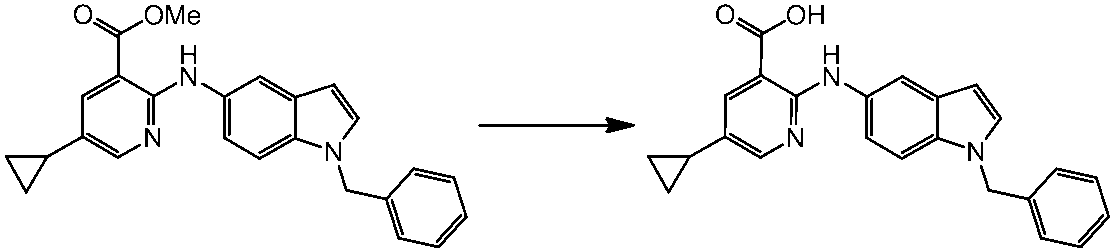
1H-NMR(DMSO-d6)δ:0.58-0.68(2H,m),0.85-0.96(2H,m),1.82-1.95(1H,m),5.40(2H,s),6.43(1H,d,J=2.6Hz),7.11-7.40(7H,m),7.47(1H,d,J=2.6Hz),7.86(1H,d,J=2.0Hz),7.93-7.99(1H,m),8.18(1H,d,J=2.0Hz),10.11(1H,s).
MS(ESI,m/z):384(M+H)+,382(M-H)-.

1H-NMR(DMSO-d6)δ:0.62-0.71(2H,m),0.88-0.97(2H,m),1.87-2.00(1H,m),3.90(3H,s),6.67(1H,d,J=3.3Hz),7.28(1H,dd,J=8.6,2.0Hz),7.35-7.43(1H,m),7.49-7.63(5H,m),7.65(1H,d,J=3.3Hz),7.91(1H,d,J=2.6Hz),8.12(1H,d,J=2.0Hz),8.26(1H,d,J=2.6Hz),9.93(1H,s).

1H-NMR(DMSO-d6)δ:0.62-0.71(2H,m),0.87-0.97(2H,m),1.86-1.98(1H,m),6.67(1H,d,J=3.3Hz),7.27(1H,dd,J=8.6,2.0Hz),7.35-7.44(1H,m),7.49-7.63(5H,m),7.65(1H,d,J=3.3Hz),7.91(1H,d,J=2.6Hz),8.13(1H,d,J=2.0Hz),8.21(1H,d,J=2.0Hz),10.25(1H,s).

1H-NMR(DMSO-d6)δ:0.65-0.72(2H,m),0.89-0.98(2H,m),1.89-2.00(1H,m),3.81(3H,s),3.92(3H,s),7.21(1H,d,J=7.3Hz),7.26(1H,dd,J=8.9,1.7Hz),7.38-7.47(2H,m),7.61(1H,s),7.67(2H,d,J=7.9Hz),7.80(1H,d,J=8.6Hz),7.93(1H,d,J=2.6Hz),8.05(1H,d,J=2.0Hz),8.30(1H,d,J=2.6Hz),10.09(1H,s).

1H-NMR(DMSO-d6)δ:0.64-0.72(2H,m),0.88-0.98(2H,m),1.87-2.00(1H,m),3.81(3H,s),7.17-7.27(2H,m),7.37-7.47(2H,m),7.61(1H,s),7.63-7.69(2H,m),7.79(1H,d,J=8.6Hz),7.92(1H,d,J=2.6Hz),8.08(1H,d,J=1.3Hz),8.27(1H,d,J=2.6Hz),10.38(1H,s).
MS(ESI,m/z):384(M+H)+,382(M-H)-.

1H-NMR(CDCl3)δ:0.60-0.69(2H,m),0.85-1.05(5H,m),1.50(2H,sext,J=7.6Hz),1.73-1.91(3H,m),4.35(2H,t,J=6.6Hz),7.14(1H,dd,J=8.6,2.0Hz),7.22-7.31(3H,m),7.38-7.47(2H,m),7.67(1H,d,J=6.6Hz),7.84(1H,d,J=8.6Hz),7.94(1H,d,J=2.0Hz),8.15-8.28(2H,m),10.14(1H,s).

1H-NMR(DMSO-d6)δ:0.63-0.70(2H,m),0.89-0.97(2H,m),1.88-2.00(1H,m),7.03(1H,dd,J=8.9,1.7Hz),7.21(1H,t,J=7.6Hz),7.38-7.46(2H,m),7.59(1H,d,J=2.6Hz),7.65-7.71(2H,m),7.77(1H,d,J=8.6Hz),7.90(1H,d,J=2.6Hz),8.22-8.28(2H,m),10.56(1H,brs),11.23(1H,s).
MS(ESI,m/z):370(M+H)+,368(M-H)-.

1H-NMR(CDCl3)δ:0.36-0.48(4H,m),0.62-0.72(6H,m),0.89-1.00(2H,m),1.24-1.39(2H,m),1.81-1.93(1H,m),4.01(2H,d,J=6.6Hz),4.18(2H,d,J=7.3Hz),7.21(1H,dd,J=8.6,2.0Hz),7.24-7.29(1H,m),7.34(1H,s),7.38-7.47(2H,m),7.64-7.71(2H,m),7.85(1H,d,J=8.6Hz),7.99(1H,d,J=2.6Hz),8.05(1H,d,J=2.0Hz),8.25(1H,d,J=2.6Hz),10.12(1H,s).

1H-NMR(DMSO-d6)δ:0.43-0.61(4H,m),0.63-0.72(2H,m),0.88-0.99(2H,m),1.22-1.39(1H,m),1.88-2.00(1H,m),4.05(2H,d,J=7.3Hz),7.17-7.27(2H,m),7.39-7.47(2H,m),7.63-7.72(3H,m),7.79(1H,d,J=8.6Hz),7.91(1H,d,J=2.0Hz),8.17(1H,d,J=1.3Hz),8.27(1H,d,J=2.0Hz),10.35(1H,s).
MS(ESI,m/z):424(M+H)+.

1H-NMR(CDCl3)δ:3.92(3H,s),6.65(1H,d,J=3.3Hz),6.96(1H,d,J=9.2Hz),7.09(1H,dd,J=8.6,2.0Hz),7.17(1H,dd,J=8.9,2.3Hz),7.32(1H,d,J=3.3Hz),7.40-7.56(6H,m),7.92(1H,d,J=2.6Hz),9.37(1H,brs).

1H-NMR(DMSO-d6)δ:6.68(1H,d,J=3.3Hz),7.02(1H,d,J=9.2Hz),7.06(1H,dd,J=8.9,2.3Hz),7.24(1H,dd,J=9.2,2.6Hz),7.50(1H,d,J=2.0Hz),7.56(1H,d,J=8.6Hz),7.59-7.66(4H,m),7.67(1H,d,J=3.3Hz),7.82(1H,d,J=2.6Hz).
MS(ESI,m/z):395(M-H)-.

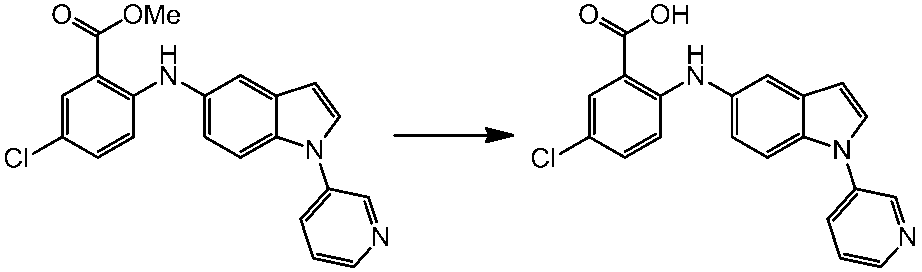
1H-NMR(DMSO-d6)δ:6.74(1H,d,J=3.3Hz),7.01(1H,d,J=9.2Hz),7.12(1H,dd,J=8.6,2.0Hz),7.30-7.39(1H,m),7.53-7.67(3H,m),7.75-7.84(2H,m),8.06-8.15(1H,m),8.62(1H,d,J=4.6Hz),8.88(1H,d,J=2.6Hz),9.50-9.76(1H,m).
MS(ESI,m/z):362(M-H)-.

1H-NMR(DMSO-d6)δ:2.90(3H,s),5.40(2H,s),6.43(1H,d,J=3.3Hz),6.88-6.95(2H,m),7.09(1H,dd,J=9.2,2.6Hz),7.19-7.36(6H,m),7.42(1H,d,J=8.6Hz),7.49(1H,d,J=3.3Hz),7.92(1H,d,J=3.3Hz),10.85(1H,brs).
MS(ESI,m/z):454(M+H)+,452(M-H)-.

1H-NMR(DMSO-d6)δ:2.74(3H,s),6.67(1H,d,J=3.3Hz),6.95-7.01(2H,m),7.04(1H,d,J=9.2Hz),7.15-7.25(1H,m),7.44-7.54(2H,m),7.58(1H,dd,J=7.9,1.3Hz),7.78-7.95(3H,m),8.21(1H,dd,J=7.9,2.0Hz).
MS(ESI,m/z):441(M+H)+,439(M-H)-.

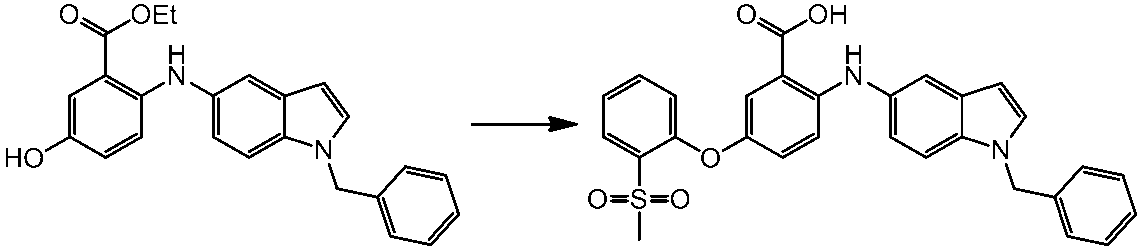
1H-NMR(DMSO-d6)δ:3.36(3H,s),5.43(2H,s),6.47(1H,d,J=2.6Hz),6.90-7.06(3H,m),7.15-7.37(7H,m),7.43-7.52(2H,m),7.54(1H,d,J=2.6Hz),7.57-7.69(2H,m),7.89(1H,dd,J=7.6,1.7Hz),9.49(1H,s).
MS(ESI,m/z):513(M+H)+,511(M-H)-.


1H-NMR(DMSO-d6)δ:7.39-7.47(3H,m),7.48-7.65(6H,m),7.85(1H,d,J=8.6Hz),7.91(1H,d,J=2.6Hz),9.80(1H,s).
MS(ESI,m/z):393(M+H)+,391(M-H)-.
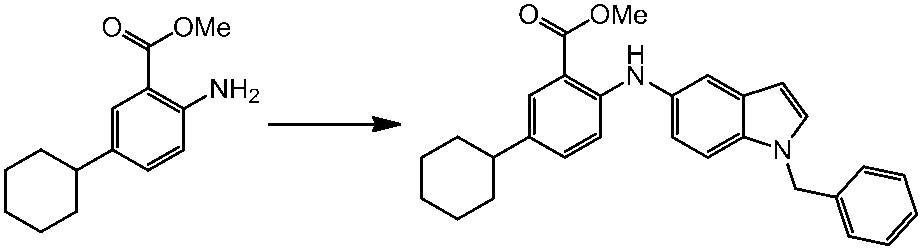
1H-NMR(CDCl3)δ:1.13-2.11(10H,m),2.28-2.60(1H,m),3.91(3H,s),5.33(2H,s),6.43-6.66(1H,m),6.88-7.67(11H,m),7.70-7.95(1H,m),9.23(1H,s).

1H-NMR(DMSO-d6)δ:1.13-1.44(5H,m),1.61-1.86(5H,m),2.30-2.45(1H,m),5.41(2H,s),6.44(1H,d,J=3.3Hz),6.89(1H,d,J=8.6Hz),6.95(1H,dd,J=8.6,2.0Hz),7.08-7.47(8H,m),7.51(1H,d,J=2.6Hz),7.69(1H,d,J=2.0Hz).
MS(ESI/APCI,m/z):425(M+H)+,423(M-H)-.

1H-NMR(CDCl3)δ:0.54-0.72(2H,m),0.79-1.02(2H,m),1.75-1.89(1H,m),3.91(3H,s),6.58-6.73(1H,m),6.94-7.18(3H,m),7.30-7.44(2H,m),7.46-7.65(6H,m),7.66-7.76(1H,m),9.25(1H,s).
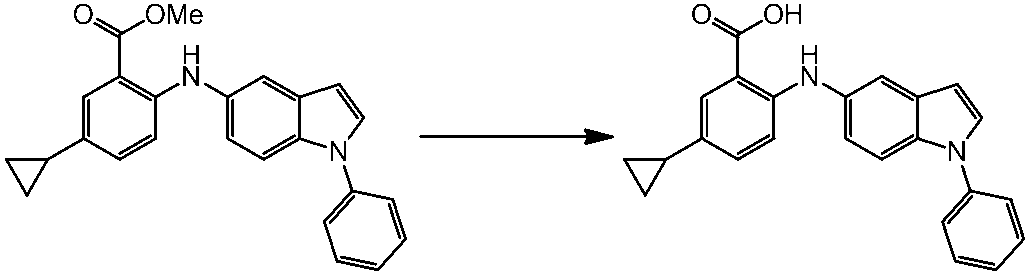
1H-NMR(DMSO-d6)δ:0.49-0.61(2H,m),0.79-0.92(2H,m),1.77-1.91(1H,m),6.66(1H,d,J=2.6Hz),6.92-7.13(3H,m),7.33-7.73(9H,m),9.41(1H,brs),12.92(1H,brs).
MS(ESI,m/z):369(M+H)+,367(M-H)-.

1H-NMR(CDCl3)δ:1.60(9H,s),5.00(2H,s),6.77(1H,d,J=8.6Hz),6.90-7.00(2H,m),7.13(1H,d,J=2.0Hz),7.19(1H,dd,J=9.2,2.6Hz),7.28-7.41(5H,m),7.84(1H,d,J=2.6Hz),9.45(1H,s).

1H-NMR(DMSO-d6)δ:5.05(2H,s),7.03(1H,d,J=9.2Hz),7.08(1H,dd,J=8.6,2.0Hz),7.20(1H,d,J=8.6Hz),7.27-7.46(7H,m),7.80(1H,s),9.50(1H,s).
MS(ESI/APCI,m/z):395(M+H)+,393(M-H)-.

1H-NMR(CDCl3)δ:3.90(3H,s),5.07(2H,s),6.78-6.98(4H,m),7.18(1H,dd,J=8.9,2.3Hz),7.23-7.39(5H,m),7.90(1H,d,J=2.6Hz),8.32(1H,s),9.29(1H,s).

1H-NMR(DMSO-d6)δ:5.00(2H,s),6.81-6.92(2H,m),6.95(1H,d,J=8.6Hz),7.03(1H,d,J=7.9Hz),7.22-7.39(6H,m),7.78(1H,d,J=2.6Hz),9.44(1H,brs),11.01(1H,s).
MS(ESI/APCI,m/z):394(M+H)+,392(M-H)-.


1H-NMR(DMSO-d6)δ:3.36(3H,s),5.06(2H,s),6.91(1H,dd,J=8.6,2.0Hz),6.98(1H,d,J=9.2Hz),7.06-7.17(2H,m),7.22-7.41(6H,m),7.80(1H,d,J=2.6Hz),9.51(1H,s).
MS(ESI/APCI,m/z):406(M-H)-.

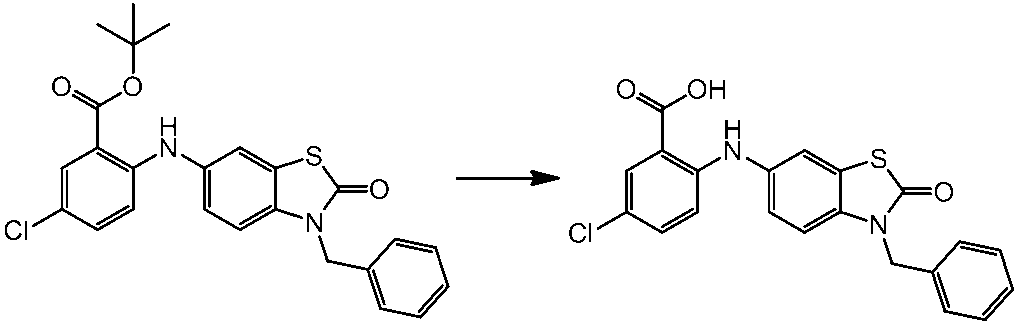
1H-NMR(DMSO-d6)δ:5.19(2H,s),7.04(1H,d,J=8.6Hz),7.16-7.42(8H,m),7.66(1H,d,J=2.0Hz),7.81(1H,d,J=2.6Hz),9.54(1H,s).
MS(ESI/APCI,m/z):409(M-H)-.

1H-NMR(CDCl3)δ:1.60(9H,s),5.49(2H,s),7.07-7.41(9H,m),7.75(1H,d,J=2.6Hz),7.87(1H,d,J=2.6Hz),8.41(1H,s),9.61(1H,s).

1H-NMR(DMSO-d6)δ:5.49(2H,s),7.18(1H,d,J=9.2Hz),7.23-7.42(6H,m),7.43-7.50(2H,m),7.69(1H,s),7.84(1H,d,J=2.6Hz),8.36(1H,s).
MS(ESI/APCI,m/z):404(M-H)-.

1H-NMR(DMSO-d6)δ:0.80-0.99(4H,m),2.05-2.17(1H,m),3.90(3H,s),5.41(2H,s),6.45(1H,d,J=3.3Hz),7.14(1H,dd,J=8.6,2.0Hz),7.17-7.35(5H,m),7.39(1H,d,J=8.6Hz),7.50(1H,d,J=3.3Hz),7.87(1H,d,J=2.0Hz),8.33(1H,s),9.71(1H,s).
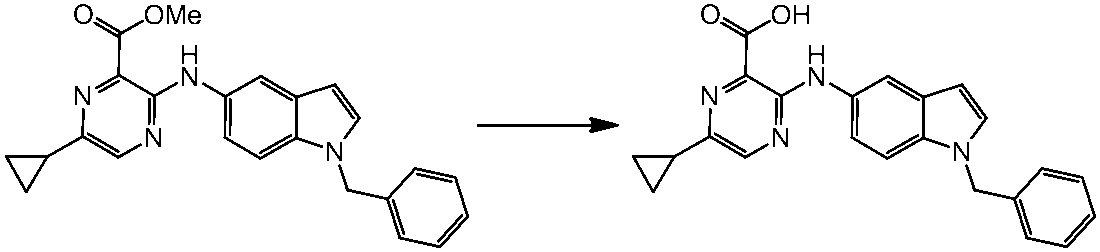
1H-NMR(DMSO-d6)δ:0.86-0.96(4H,m),2.03-2.16(1H,m),5.41(2H,s),6.45(1H,d,J=2.6Hz),7.14(1H,dd,J=8.6,2.0Hz),7.17-7.35(5H,m),7.39(1H,d,J=9.2Hz),7.49(1H,d,J=3.3Hz),7.90(1H,d,J=2.0Hz),8.31(1H,s),10.11(1H,s).
MS(ESI,m/z):385(M+H)+,383(M-H)-.
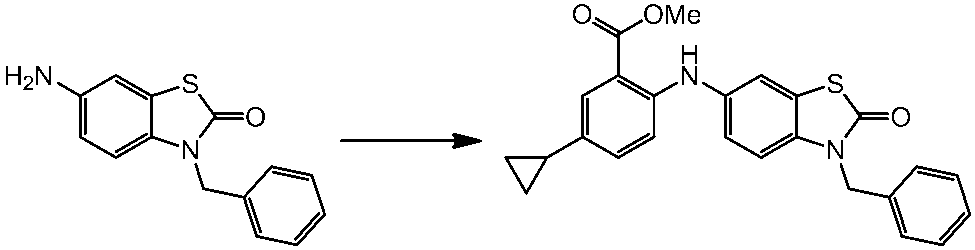
1H-NMR(CDCl3)δ:0.56-0.66(2H,m),0.81-0.95(2H,m),1.77-1.89(1H,m),3.89(3H,s),5.14(2H,s),6.90(1H,d,J=8.6Hz),6.97-7.14(3H,m),7.23-7.45(6H,m),7.68(1H,d,J=2.0Hz),9.22(1H,s).

1H-NMR(DMSO-d6)δ:0.51-0.59(2H,m),0.82-0.91(2H,m),1.80-1.92(1H,m),5.17(2H,s),7.02(1H,d,J=8.6Hz),7.08(1H,dd,J=8.6,2.0Hz),7.15(1H,dd,J=8.9,2.3Hz),7.19-7.41(6H,m),7.56-7.64(2H,m),9.42(1H,brs),13.04(1H,brs).
MS(ESI/APCI,m/z):415(M-H)-.

1H-NMR(CDCl3)δ:0.59-0.68(2H,m),0.90-0.99(2H,m),1.77-1.89(1H,m),3.92(3H,s),5.14(2H,s),6.89(1H,d,J=9.3Hz),7.19-7.38(6H,m),7.90(1H,d,J=2.6Hz),8.04(1H,d,J=2.0Hz),8.19(1H,d,J=2.6Hz),9.97(1H,s).

1H-NMR(DMSO-d6)δ:0.60-0.70(2H,m),0.88-0.97(2H,m),1.84-1.97(1H,m),5.17(2H,s),7.21(1H,d,J=9.2Hz),7.24-7.40(5H,m),7.47(1H,dd,J=8.6,2.0Hz),7.89(1H,d,J=2.0Hz),8.15(1H,d,J=2.0Hz),8.21(1H,d,J=2.6Hz),10.22(1H,s),13.57(1H,s).
MS(ESI/APCI,m/z):418(M+H)+,416(M-H)-.

1H-NMR(DMSO-d6)δ:0.52-0.61(2H,m),0.83-0.92(2H,m),1.81-1.93(1H,m),3.85(3H,d,J=2.6Hz),6.86(1H,dd,J=8.6,2.0Hz),6.91-7.06(3H,m),7.12(1H,dd,J=8.6,2.0Hz),7.37-7.48(1H,m),7.51-7.65(5H,m),9.06(1H,s),11.14(1H,s).

1H-NMR(CDCl3)δ:0.58-0.67(2H,m),0.81-0.98(2H,m),1.77-1.90(1H,m),3.46(3H,s),3.92(3H,s),6.89-6.99(2H,m),7.00-7.12(3H,m),7.35-7.45(1H,m),7.46-7.60(4H,m),7.71(1H,s),9.27(1H,s).

1H-NMR(DMSO-d6)δ:0.52-0.61(2H,m),0.81-0.92(2H,m),1.81-1.92(1H,m),3.39(3H,s),6.92(1H,dd,J=8.6,2.0Hz),6.98-7.14(3H,m),7.18(1H,d,J=2.0Hz),7.39-7.50(1H,m),7.51-7.66(5H,m),9.44(1H,brs),12.99(1H,brs).
MS(ESI/APCI,m/z):400(M+H)+,398(M-H)-.
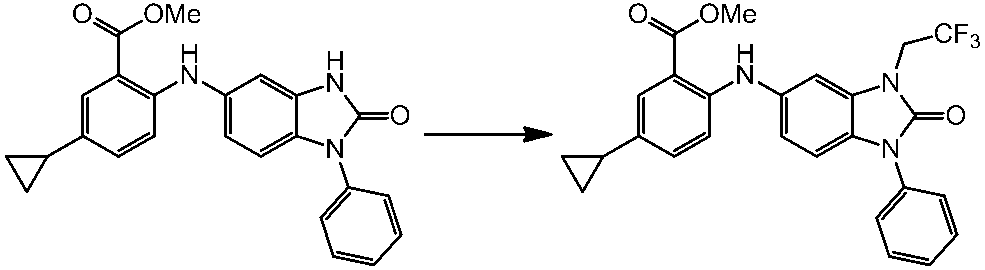
1H-NMR(CDCl3)δ:0.58-0.67(2H,m),0.82-0.96(2H,m),1.78-1.90(1H,m),3.92(3H,s),4.50(2H,q,J=8.6Hz),6.97(1H,dd,J=8.6,2.0Hz),7.01-7.12(4H,m),7.37-7.48(1H,m),7.50-7.60(4H,m),7.71(1H,s),9.31(1H,s).

1H-NMR(DMSO-d6)δ:0.53-0.61(2H,m),0.83-0.92(2H,m),1.80-1.93(1H,m),4.88(2H,q,J=9.5Hz),6.94-7.13(4H,m),7.34-7.53(2H,m),7.55-7.65(5H,m),9.51(1H,s).
MS(ESI/APCI,m/z):468(M+H)+,466(M-H)-.

1H-NMR(CDCl3)δ:0.42-0.50(2H,m),0.54-0.66(4H,m),0.83-0.95(2H,m),1.20-1.33(1H,m),1.78-1.89(1H,m),3.79(2H,d,J=6.6Hz),3.92(3H,d,J=2.0Hz),6.92(1H,dd,J=8.6,2.0Hz),6.99-7.10(4H,m),7.35-7.43(1H,m),7.49-7.61(4H,m),7.71(1H,s),9.28(1H,s).

1H-NMR(DMSO-d6)δ:0.36-0.61(6H,m),0.82-0.93(2H,m),1.18-1.32(1H,m),1.81-1.92(1H,m),3.80(2H,d,J=6.6Hz),6.92(1H,dd,J=8.3,1.7Hz),6.99-7.14(3H,m),7.29(1H,d,J=2.0Hz),7.40-7.50(1H,m),7.52-7.65(5H,m),9.42(1H,s).
MS(ESI/APCI,m/z):440(M+H)+,438(M-H)-.
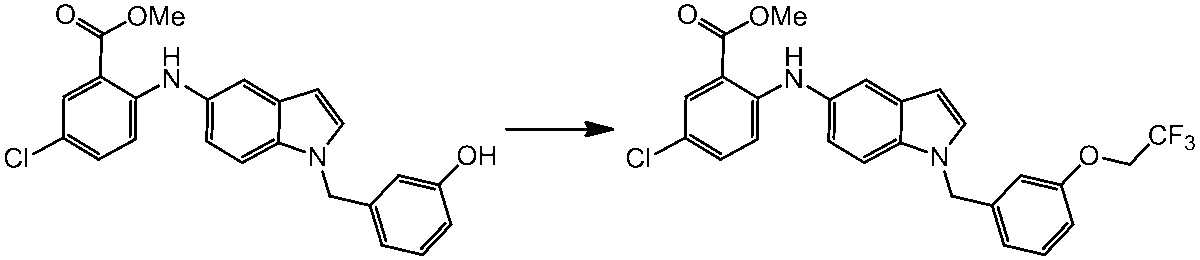
1H-NMR(CDCl3)δ:3.90(3H,s),4.28(2H,q,J=8.1Hz),5.29(2H,s),6.52(1H,d,J=2.6Hz),6.69-6.74(1H,m),6.78-6.86(2H,m),6.92(1H,d,J=9.2Hz),7.02(1H,dd,J=8.6,2.0Hz),7.10-7.17(2H,m),7.20-7.31(2H,m),7.49(1H,d,J=2.0Hz),7.90(1H,d,J=2.6Hz),9.33(1H,s).

1H-NMR(DMSO-d6)δ:4.73(2H,q,J=9.0Hz),5.40(2H,s),6.47(1H,d,J=3.3Hz),6.84-7.02(5H,m),7.23-7.34(2H,m),7.43(1H,d,J=2.0Hz),7.49(1H,d,J=8.6Hz),7.56(1H,d,J=3.3Hz),7.78(1H,d,J=2.6Hz),9.50(1H,brs).
MS(ESI/APCI,m/z):473(M-H)-.

1H-NMR(DMSO-d6)δ:3.88(3H,s),5.56(2H,s),7.04(1H,d,J=8.6Hz),7.14-7.20(1H,m),7.23-7.86(13H,m),8.12-8.17(1H,m),8.30(1H,s),9.31(1H,s).

1H-NMR(DMSO-d6)δ:5.56(2H,s),7.05(1H,d,J=9.2Hz),7.17(1H,dd,J=8.6,2.0Hz),7.24-7.41(6H,m),7.52-7.66(4H,m),7.77-7.86(3H,m),8.14(1H,d,J=2.0Hz),8.29(1H,s),9.63(1H,brs).
MS(ESI/APCI,m/z):479(M-H)-.

1H-NMR(CDCl3)δ:3.89(3H,s),4.07(2H,s),5.26(2H,s),6.82-7.37(16H,m),7.88(1H,d,J=2.6Hz),9.30(1H,s).

1H-NMR(DMSO-d6)δ:4.03(2H,s),5.37(2H,s),6.81(1H,d,J=9.2Hz),6.93-6.99(1H,m),7.11-7.38(13H,m),7.43(1H,d,J=8.6Hz),7.77(1H,d,J=2.6Hz),9.48(1H,brs).
MS(ESI/APCI,m/z):465(M-H)-.
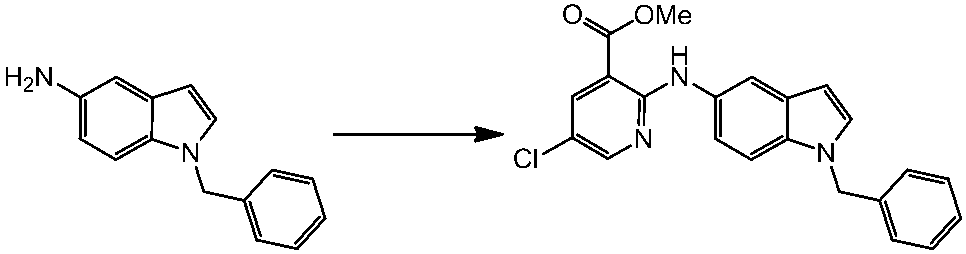
1H-NMR(DMSO-d6)δ:3.90(3H,s),5.41(2H,s),6.46(1H,d,J=2.6Hz),7.12-7.55(8H,m),7.87(1H,d,J=2.0Hz),8.18(1H,d,J=3.3Hz),8.37(1H,d,J=2.6Hz),9.89(1H,s).
MS(ESI,m/z):392(M+H)+.
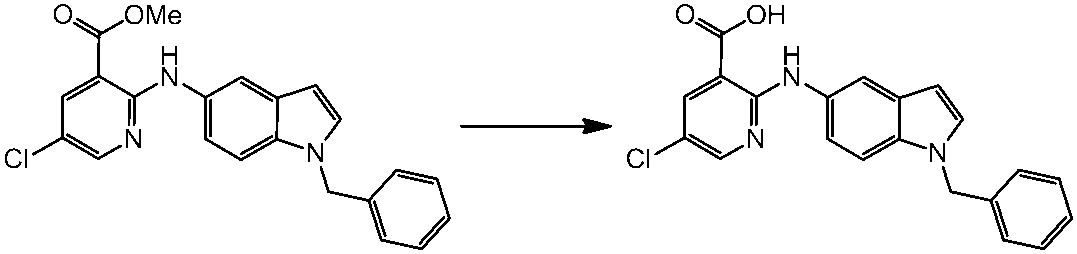
1H-NMR(DMSO-d6)δ:5.41(2H,s),6.45(1H,d,J=2.6Hz),7.12-7.35(6H,m),7.39(1H,d,J=8.6Hz),7.50(1H,d,J=2.6Hz),7.89(1H,d,J=2.0Hz),8.15(1H,d,J=2.6Hz),8.34(1H,d,J=2.6Hz),10.20(1H,s).
MS(ESI,m/z):378(M+H)+,376(M-H)-.

1H-NMR(DMSO-d6)δ:3.90(3H,s),5.45(2H,s),6.49(1H,d,J=3.3Hz),6.99-7.08(2H,m),7.20-7.60(9H,m),7.72(1H,dd,J=9.2,2.0Hz),7.94-8.02(1H,m),8.18(1H,d,J=2.0Hz),8.46-8.52(1H,m),8.77-8.83(1H,m),9.37(1H,s).
MS(ESI,m/z):434(M+H)+.

1H-NMR(DMSO-d6)δ:5.44(2H,s),6.48(1H,d,J=2.6Hz),7.03(2H,d,J=9.2Hz),7.20-7.37(5H,m),7.39-7.53(3H,m),7.56(1H,d,J=3.3Hz),7.70(1H,dd,J=8.9,2.3Hz),7.95-8.02(1H,m),8.17(1H,d,J=2.6Hz),8.49(1H,d,J=4.0Hz),8.78-8.83(1H,s),9.63(1H,s),13.15(1H,brs).
MS(ESI,m/z):420(M+H)+,418(M-H)-.

1H-NMR(CDCl3)δ:0.55-0.63(2H,m),0.81-0.90(2H,m),1.75-1.86(1H,m),3.90(3H,s),5.32(2H,s),6.49(1H,d,J=3.3Hz),6.92-7.07(3H,m),7.10-7.17(3H,m),7.21-7.36(4H,m),7.49(1H,d,J=2.0Hz),7.68(1H,d,J=2.0Hz),9.20(1H,s).

1H-NMR(DMSO-d6)δ:0.49-0.56(2H,m),0.79-0.89(2H,m),1.77-1.88(1H,m),5.41(2H,s),6.44(1H,d,J=3.3Hz),6.88(1H,d,J=8.6Hz),6.95(1H,dd,J=8.6,2.0Hz),7.02(1H,dd,J=8.6,2.0Hz),7.19-7.36(5H,m),7.39(1H,d,J=2.0Hz),7.44(1H,d,J=8.6Hz),7.52(1H,d,J=3.3Hz),7.60(1H,d,J=2.0Hz),9.33(1H,brs),12.86(1H,brs).
MS(ESI,m/z):383(M+H)+.

1H-NMR(CDCl3)δ:0.34-0.40(2H,m),0.61-0.67(2H,m)1.23-1.32(1H,m),3.90(3H,s),3.97(2H,d,J=6.6Hz),6.46(1H,d,J=3.3Hz),6.91(1H,d,J=9.2Hz),7.05(1H,dd,J=8.6,2.0Hz),7.13(1H,dd,J=9.2,2.6Hz),7.24(1H,d,J=2.6Hz),7.34(1H,d,J=8.6Hz),7.47(1H,d,J=2.0Hz),7.90(1H,d,J=2.6Hz),9.33(1H,s).

1H-NMR(CDCl3)δ:0.36-0.42(2H,m),0.63-0.69(2H,m),1.27-1.36(1H,m),4.00(2H,d,J=6.6Hz),6.48(1H,d,J=3.3Hz),6.91(1H,d,J=9.2Hz),7.07(1H,dd,J=8.6,2.0Hz),7.18(1H,dd,J=8.9,2.3Hz),7.27(1H,d,J=2.6Hz),7.38(1H,d,J=8.6Hz),7.49(1H,d,J=2.0Hz),7.95(1H,d,J=2.6Hz),9.23(1H,brs)
MS(ESI,m/z):341(M+H)+,339(M-H)-.
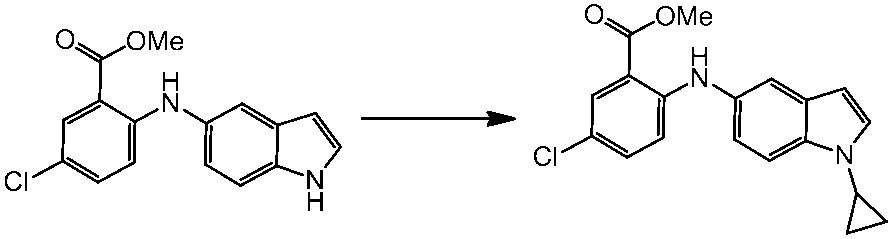
1H-NMR(CDCl3)δ:1.02-1.08(4H,m),3.30-3.38(1H,m),3.89(3H,s),6.39(1H,d,J=3.3Hz),6.90(1H,d,J=9.2Hz),7.07(1H,dd,J=8.6,2.0Hz),7.11-7.15(2H,m),7.44(1H,d,J=2.0Hz),7.54(1H,d,J=8.6Hz),7.90(1H,d,J=2.6Hz),9.33(1H,s).

1H-NMR(CDCl3)δ:1.02-1.11(4H,m),3.32-3.41(1H,m),6.41(1H,d,J=2.6Hz),6.90(1H,d,J=9.2Hz),7.08(1H,dd,J=8.6,2.0Hz),7.16-7.20(2H,m),7.46(1H,d,J=2.0Hz),7.57(1H,d,J=8.6Hz),7.95(1H,d,J=2.6Hz),9.24(1H,brs).
MS(ESI,m/z):327(M+H)+,325(M-H)-.

MS(ESI,m/z):393(M+H)+.

1H-NMR(DMSO-d6)δ:2.67(3H,s),6.82(1H,d,J=3.3Hz),7.09(1H,d,J=8.6Hz),7.20(1H,dd,J=8.6,2.0Hz),7.38(1H,dd,J=9.2,2.6Hz),7.57(1H,d,J=2.0Hz),7.78(1H,d,J=9.2Hz),7.83(1H,d,J=2.6Hz),8.08(1H,d,J=7.9Hz),8.10(1H,d,J=2.0Hz),8.47(1H,d,J=8.6Hz),9.66(1H,brs).
MS(ESI,m/z):379(M+H)+,377(M-H)-.

MS(ESI,m/z):399(M+H)+.

1H-NMR(DMSO-d6)δ:0.54-0.59(2H,m),0.83-0.90(2H,m),1.82-1.91(1H,m),2.67(3H,s),6.79(1H,d,J=3.3Hz),7.08-7.10(2H,m),7.17(1H,dd,J=9.2,2.0Hz),7.51(1H,d,J=2.0Hz),7.64(1H,s),7.77(1H,d,J=9.2Hz),8.07(1H,d,J=3.3Hz),8.09(1H,d,J=2.0Hz),8.44(1H,d,J=8.6Hz),9.47(1H,s).
MS(ESI,m/z):385(M+H)+,383(M-H)-.

MS(ESI,m/z):361(M+H)+.

1H-NMR(DMSO-d6)δ:0.36-0.41(2H,m),0.49-0.56(4H,m),0.81-0.88(2H,m),1.20-1.30(1H,m),1.79-1.88(1H,m),4.03(2H,d,J=7.3Hz),6.38(1H,d,J=3.3Hz),6.88(1H,d,J=8.6Hz),6.98(1H,dd,J=8.6,2.0Hz),7.03(1H,dd,J=8.9,2.3Hz),7.37(1H,d,J=2.0Hz),7.44(1H,d,J=3.3Hz),7.51(1H,d,J=8.6Hz),7.60(1H,d,J=2.0Hz),9.34(1H,brs).
MS(ESI,m/z):347(M+H)+,345(M-H)-.

MS(ESI,m/z):408(M+H)+.

[実施例106-1]
2-((1-(4-シアノフェニル)-1H-インドール-5-イル)アミノ)-5-シクロプロピル安息香酸1H-NMR(DMSO-d6)δ:0.51-0.62(2H,m),0.95-1.80(2H,m),1.80-1.95(1H,m),6.75(1H,s),7.02-7.14(3H,m),7.51-7.90(6H,m),8.04(2H,d,J=6.6Hz),9.47(1H,brs).
MS(ESI,m/z):394(M+H)+,392(M-H)-.
[実施例106-2]
2-((1-(4-カルバモイルフェニル)-1H-インドール-5-イル)アミノ)-5-シクロプロピル安息香酸1H-NMR(DMSO-d6)δ:0.54-0.59(2H,m),0.84-0.90(2H,m),1.82-1.91(1H,m),6.72(1H,d,J=3.3Hz),7.01(1H,d,J=8.6Hz),7.07-7.13(2H,m),7.46(1H,s),7.52(1H,d,J=2.0Hz),7.63-7.77(5H,m),8.07-8.11(3H,m),9.44(1H,s).
MS(ESI,m/z):412(M+H)+,410(M-H)-.

1H-NMR(DMSO-d6)δ:0.51-0.58(2H,m),0.82-0.88(2H,m),1.79-1.90(1H,m),3.68(2H,s),4.88(2H,s),6.84(1H,d,J=7.9Hz),6.92(1H,d,J=8.6Hz),7.00-7.08(2H,m),7.16(1H,s),7.26-7.36(5H,m),7.60(1H,d,J=2.0Hz).
MS(ESI,m/z):399(M+H)+,397(M-H)-.

1H-NMR(DMSO-d6)δ:0.31-0.36(2H,m),0.43-0.50(2H,m),0.52-0.58(2H,m),0.82-0.90(2H,m),1.08-1.20(1H,m),1.80-1.90(1H,m),3.18-3.66(4H,m),6.94(1H,d,J=8.6Hz),7.04-7.17(4H,m),7.61(1H,s),9.31(1H,brs).
MS(ESI,m/z):363(M+H)+,361(M-H)-.
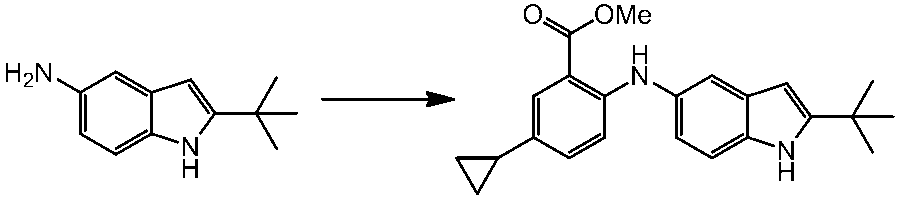
MS(ESI,m/z):363(M+H)+.

1H-NMR(DMSO-d6)δ:0.50-0.56(2H,m),0.81-0.87(2H,m),1.35(9H,s),1.78-1.87(1H,m),6.09(1H,d,J=2.0Hz),6.80-6.87(2H,m),7.01(1H,dd,J=8.6,2.0Hz),7.25(1H,d,J=2.0Hz),7.29(1H,d,J=7.9Hz),7.59(1H,d,J=2.0Hz),9.29(1H,brs),10.90(1H,s),12.82(1H,brs).
MS(ESI,m/z):349(M+H)+,347(M-H)-.
MS(ESI,m/z):349(M+H)+.

1H-NMR(DMSO-d6)δ:0.50-0.56(2H,m),0.82-0.88(2H,m),1.46(6H,d,J=6.6Hz),1.78-1.88(1H,m),4.73(1H,sep,J=6.6Hz),6.40(1H,d,J=3.3Hz),6.89(1H,d,J=8.6Hz),6.98(1H,dd,J=8.6,2.0Hz),7.03(1H,dd,J=8.9,2.3Hz),7.37(1H,d,J=1.3Hz),7.47-7.52(2H,m),7.60(1H,d,J=2.0Hz),9.34(1H,brs),12.86(1H,brs).
MS(ESI,m/z):335(M+H)+,333(M-H)-.

MS(ESI,m/z):399(M+H)+.

1H-NMR(DMSO-d6)δ:1.15(6H,d,J=6.6Hz),2.73(1H,sep,J=6.6Hz),5.37(2H,s),6.36(1H,d,J=2.6Hz),6.85(1H,dd,J=8.6,2.0Hz),6.90(1H,dd,J=8.6,2.0Hz),6.96(1H,d,J=8.6Hz),7.18-7.35(7H,m),7.41(1H,d,J=3.3Hz),7.75(1H,d,J=2.6Hz),11.50(1H,s).
MS(ESI,m/z):385(M+H)+,383(M-H)-.

1H-NMR(DMSO-d6)δ:3.93(3H,s),5.43(2H,s),6.48(1H,d,J=2.6Hz),7.18-7.34(6H,m),7.43(1H,d,J=8.6Hz),7.54(1H,d,J=3.3Hz),7.88(1H,d,J=2.0Hz),8.38(1H,d,J=2.6Hz),8.66(1H,d,J=2.0Hz),10.20(1H,s).
MS(ESI,m/z):426(M+H)+.

1H-NMR(DMSO-d6)δ:5.43(2H,s),6.48(1H,d,J=3.3Hz),7.18-7.34(6H,m),7.43(1H,d,J=8.6Hz),7.53(1H,d,J=2.6Hz),7.90(1H,d,J=2.0Hz),8.35(1H,d,J=2.6Hz),8.64(1H,d,J=2.0Hz),10.55(1H,s).
MS(ESI,m/z):412(M+H)+,410(M-H)-.

MS(ESI,m/z):408(M+H)+.
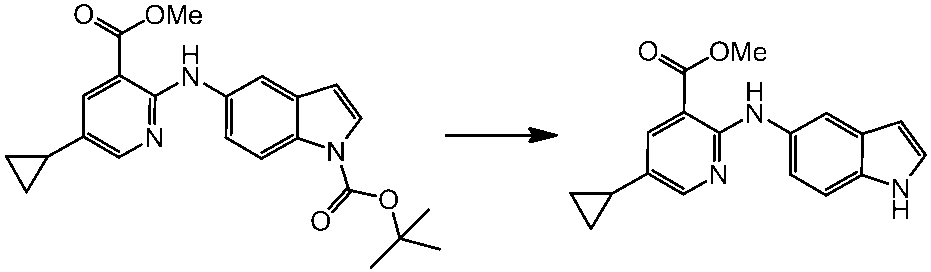
1H-NMR(DMSO-d6)δ:0.61-0.68(2H,m),0.87-0.95(2H,m),1.85-1.96(1H,m),3.89(3H,s),6.37(1H,s),7.15(1H,dd,J=8.6,2.0Hz),7.29-7.35(2H,m),7.88(1H,d,J=2.7Hz),7.93(1H,d,J=2.1Hz),8.21(1H,d,J=2.0Hz),9.82(1H,s),10.99(1H,s).
MS(ESI,m/z):308(M+H)+.

1H-NMR(DMSO-d6)δ:0.61-0.67(2H,m),0.87-0.94(2H,m),1.85-1.95(1H,m),3.77(3H,s),6.36(1H,d,J=2.6Hz),7.21(1H,dd,J=8.6,2.0Hz),7.28(1H,d,J=3.3Hz),7.36(1H,d,J=9.2Hz),7.87(1H,d,J=2.6Hz),7.98(1H,d,J=2.0Hz),8.19(1H,d,J=2.0Hz),10.15(1H,s),13.41(1H,brs).
MS(ESI,m/z):308(M+H)+,306(M-H)-.

MS(ESI,m/z):336(M+H)+.

1H-NMR(DMSO-d6)δ:0.61-0.67(2H,m),0.87-0.94(2H,m),1.36(3H,t,J=6.9Hz),1.85-1.95(1H,m),4.18(2H,q,J=7.0Hz),6.37(1H,d,J=2.6Hz),7.20(1H,dd,J=8.9,1.7Hz),7.35(1H,d,J=2.6Hz),7.40(1H,d,J=8.6Hz),7.88(1H,d,J=2.0Hz),7.95(1H,d,J=1.3Hz),8.18(1H,d,J=2.6Hz),10.14(1H,s),13.41(1H,brs).
MS(ESI,m/z):322(M+H)+,320(M-H)-.

1H-NMR(DMSO-d6)δ:0.62-0.67(2H,m),0.85-0.95(2H,m),1.45(6H,d,J=6.6Hz),1.88-1.93(1H,m),3.84(3H,s),4.71(1H,sep,J=6.9Hz),6.40(1H,d,J=2.6Hz),7.19(1H,dd,J=8.6,2.0Hz),7.42-7.47(2H,m),7.88(1H,d,J=2.6Hz),7.93(1H,d,J=2.0Hz),8.21(1H,d,J=2.0Hz),9.83(1H,s).
MS(ESI,m/z):350(M+H)+.
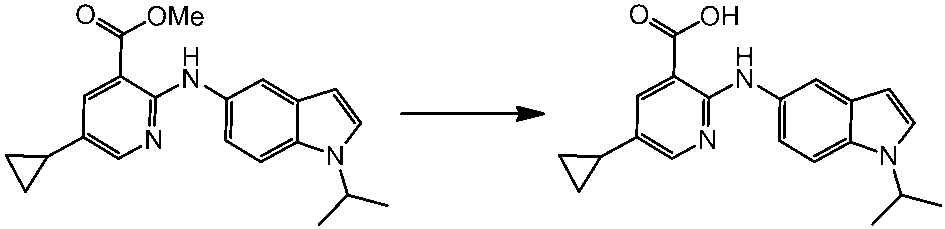
1H-NMR(DMSO-d6)δ:0.61-0.67(2H,m),0.87-0.94(2H,m),1.45(6H,d,J=6.6Hz),1.86-1.93(1H,m),4.71(1H,sep,J=6.6Hz),6.39(1H,d,J=3.3Hz),7.19(1H,dd,J=8.6,2.0Hz),7.41-7.45(2H,m),7.87(1H,d,J=2.6Hz),7.94(1H,d,J=2.0Hz),8.19(1H,d,J=2.0Hz),10.12(1H,s),13.40(1H,brs).
MS(ESI,m/z):336(M+H)+.

1H-NMR(DMSO-d6)δ:2.27(3H,s),3.88(3H,s),5.40(2H,s),6.44(1H,d,J=2.6Hz),7.14-7.39(7H,m),7.48(1H,d,J=2.6Hz),7.95(1H,d,J=1.3Hz),8.05(1H,d,J=2.0Hz),8.21(1H,d,J=2.0Hz),9.82(1H,s).
MS(ESI,m/z):372(M+H)+.

1H-NMR(DMSO-d6)δ:2.21(3H,s),5.41(2H,s),6.46(1H,d,J=2.6Hz),7.13-7.34(6H,m),7.41(1H,d,J=9.2Hz),7.51(1H,d,J=3.3Hz),7.90(1H,s),8.10-8.15(2H,m),10.19(1H,s).
MS(ESI,m/z):358(M+H)+,356(M-H)-.

1H-NMR(DMSO-d6)δ:0.61-0.67(2H,m),0.85(6H,d,J=6.6Hz),0.89-0.94(2H,m),1.86-1.94(1H,m),2.06-2.12(1H,m),3.95(2H,d,J=7.3Hz),6.36(1H,d,J=3.3Hz),7.18(1H,dd,J=8.6,1.3Hz),7.30(1H,d,J=3.3Hz),7.40(1H,d,J=8.6Hz),7.87(1H,d,J=2.6Hz),7.95(1H,d,J=1.3Hz),8.19(1H,d,J=2.6Hz),10.11(1H,s),13.39(1H,brs).
MS(ESI,m/z):350(M+H)+,348(M-H)-.

1H-NMR(DMSO-d6)δ:1.41-1.82(6H,m),1.95-2.05(2H,m),2.86-2.99(1H,m),3.89(3H,s),5.40(2H,s),6.44(1H,d,J=2.6Hz),7.15-7.39(7H,m),7.48(1H,d,J=3.3Hz),7.96(1H,d,J=2.0Hz),8.06(1H,d,J=2.6Hz),8.28(1H,d,J=2.6Hz),9.84(1H,s).
MS(ESI,m/z):426(M+H)+,424(M-H)-.
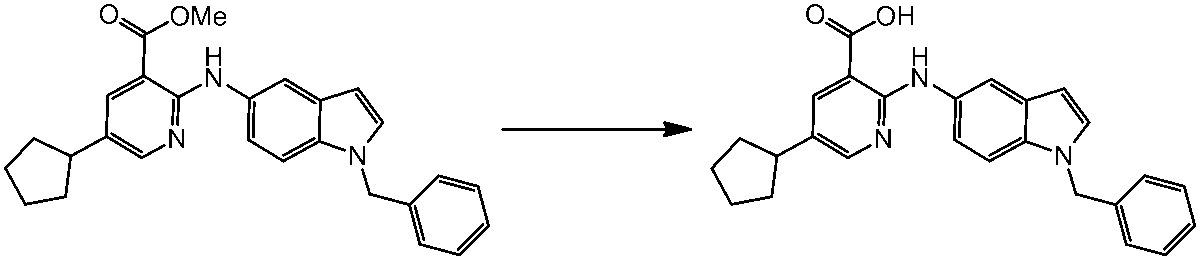
1H-NMR(DMSO-d6)δ:1.42-1.55(2H,m),1.56-1.80(4H,m),1.95-2.05(2H,m),2.86-2.98(1H,m),5.40(2H,s),6.43(1H,d,J=3.3Hz),7.15-7.38(7H,m),7.47(1H,d,J=2.6Hz),7.97(1H,d,J=2.0Hz),8.05(1H,d,J=2.6Hz),8.24(1H,d,J=2.0Hz),10.15(1H,s).
MS(ESI,m/z):412(M+H)+,410(M-H)-.

1H-NMR(DMSO-d6)δ:0.61-0.65(2H,m),0.85-0.95(2H,m),1.85-1.94(1H,m),3.22(3H,s),3.65(2H,t,J=5.3Hz),4.30(2H,t,J=5.3Hz),6.36(1H,d,J=3.3Hz),7.19(1H,d,J=8.6,2.0Hz),7.31(1H,d,J=2.6Hz),7.41(1H,d,J=9.2Hz),7.87(1H,d,J=2.6Hz),7.95(1H,s),8.19(1H,d,J=2.6Hz),10.14(1H,s),13.41(1H,brs).
MS(ESI,m/z):352(M+H)+,350(M-H)-.
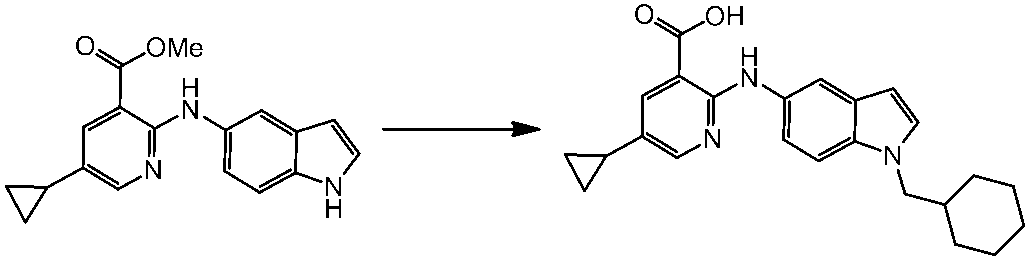
1H-NMR(DMSO-d6)δ:0.60-0.67(2H,m),0.80-1.22(7H,m),1.45-1.70(5H,m),1.73-1.83(1H,m),1.85-1.95(1H,m),3.98(2H,d,J=7.3Hz),6.35(1H,d,J=3.3Hz),7.17(1H,dd,J=8.9,1.7Hz),7.28(1H,d,J=2.6Hz),7.39(1H,d,J=8.6Hz),7.86(1H,d,J=2.6Hz),7.93(1H,d,J=1.3Hz),8.17-8.20(1H,m),10.12(1H,s),13.40(1H,brs).
MS(ESI,m/z):390(M+H)+,388(M-H)-.

1H-NMR(DMSO-d6)δ:5.41(2H,s),6.45(1H,d,J=3.3Hz),7.14-7.33(6H,m),7.39(1H,d,J=8.6Hz),7.50(1H,d,J=2.6Hz),7.88(1H,d,J=2.0Hz),8.25(1H,d,J=2.6Hz),8.39(1H,d,J=2.6Hz),10.21(1H,s).
MS(ESI,m/z):424(M+H)+,422(M-H)-.

1H-NMR(DMSO-d6)δ:3.78(3H,s),5.39(2H,s),6.42(1H,d,J=3.3Hz),7.10-7.38(7H,m),7.46(1H,d,J=3.3Hz),7.79(1H,d,J=3.3Hz),7.96(1H,d,J=2.0Hz),8.16(1H,d,J=3.3Hz),9.97(1H,s),13.54(1H,brs).
MS(ESI,m/z):374(M+H)+,372(M-H)-.
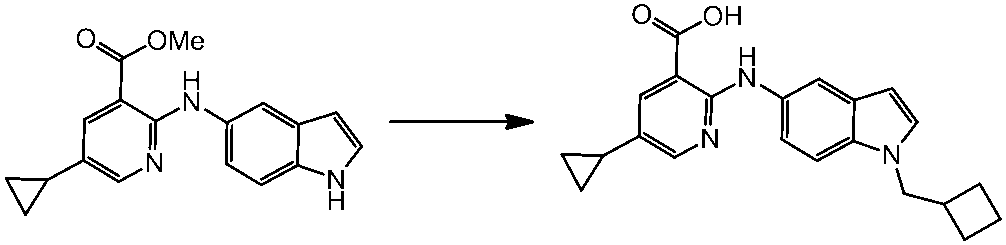
1H-NMR(DMSO-d6)δ:0.61-0.66(2H,m),0.87-0.93(2H,m),1.73-1.99(7H,m),2.71-2.82(1H,m),4.15(2H,d,J=7.3Hz),6.35(1H,d,J=2.6Hz),7.18(1H,dd,J=8.6,2.0Hz),7.32(1H,d,J=2.6Hz),7.40(1H,d,J=8.6Hz),7.86(1H,d,J=2.6Hz),7.95(1H,d,J=2.0Hz),8.17(1H,d,J=2.6Hz),10.25(1H,brs),13.42(1H,brs).
MS(ESI,m/z):362(M+H)+,360(M-H)-.

MS(ESI,m/z):399(M+H)+.

1H-NMR(DMSO-d6)δ:0.61-0.68(2H,m),0.88-0.93(2H,m),1.85-1.94(1H,m),5.48(2H,s),6.45(1H,d,J=2.6Hz),6.94(1H,d,J=7.9Hz),7.15(1H,dd,J=8.6,2.0Hz),7.24-7.29(1H,m),7.33(1H,d,J=9.2Hz),7.47(1H,d,J=3.3Hz),7.71(1H,td,J=7.8,1.8),7.86(1H,d,J=2.6Hz),7.98(1H,d,J=2.0Hz),8.18(1H,d,J=2.6Hz),8.54(1H,dd,J=4.0,2.0Hz),10.11(1H,s),13.42(1H,brs).
MS(ESI,m/z):385(M+H)+,383(M-H)-.

1H-NMR(DMSO-d6)δ:0.61-0.67(2H,m),0.87-0.95(2H,m),1.86-1.94(1H,m),3.89(3H,s),5.45(2H,s),6.45(1H,d,J=2.6Hz),7.17(1H,dd,J=8.9,2.3Hz),7.33(1H,dd,J=7.9,4.6Hz),7.43(1H,d,J=9.2Hz),7.51(1H,d,J=2.6Hz),7.54-7.59(1H,m),7.88(1H,d,J=2.6Hz),7.97(1H,d,J=2.0Hz),8.20(1H,d,J=2.6Hz),8.46(1H,dd,J=4.6,2.0Hz),8.52(1H,d,J=2.0Hz),9.82(1H,s).
MS(ESI,m/z):399(M+H)+.

1H-NMR(DMSO-d6)δ:0.61-0.68(2H,m),0.86-0.94(2H,m),1.85-1.94(1H,m),5.45(2H,s),6.45(1H,d,J=3.3Hz),7.18(1H,dd,J=8.6,2.0Hz),7.33(1H,dd,J=7.9,4.6Hz),7.42(1H,d,J=8.6Hz),7.51(1H,d,J=2.6Hz),7.54-7.59(1H,m),7.86(1H,d,J=2.6Hz),7.97(1H,d,J=2.0Hz),8.18(1H,d,J=2.6Hz),8.46(1H,dd,J=4.6,1.3Hz),8.52(1H,d,J=1.3Hz),10.11(1H,s),13.40(1H,brs).
MS(ESI,m/z):385(M+H)+,383(M-H)-.

1H-NMR(DMSO-d6)δ:0.59-0.64(2H,m),0.86-0.92(2H,m),1.19-1.30(2H,m),1.46-1.67(6H,m),1.83-1.92(1H,m),2.38(1H,sep,J=7.3Hz),4.04(2H,d,J=7.3Hz),6.34(1H,d,J=2.6Hz),7.17(1H,dd,J=8.6,2.0Hz),7.32(1H,d,J=2.6Hz),7.38(1H,d,J=9.2Hz),7.86(1H,d,J=2.0Hz),8.00(1H,d,J=2.0Hz),8.11(1H,d,J=2.6Hz),10.82(1H,brs).
MS(ESI,m/z):376(M+H)+,374(M-H)-.

1H-NMR(DMSO-d6)δ:0.63-0.69(2H,m),0.88-0.96(2H,m),1.87-1.97(1H,m),3.74(3H,s),3.91(3H,s),6.54(1H,s),7.27(1H,dd,J=8.6,2.0Hz),7.41-7.47(2H,m),7.49-7.55(2H,m),7.59-7.62(2H,m),7.90(1H,d,J=2.6Hz),8.03(1H,d,J=2.0Hz),8.25(1H,d,J=2.6Hz),9.91(1H,s).
MS(ESI,m/z):398(M+H)+.

1H-NMR(DMSO-d6)δ:0.63-0.68(2H,m),0.88-0.95(2H,m),1.87-1.96(1H,m),3.74(3H,s),6.54(1H,s),7.27(1H,dd,J=9.2,2.0Hz),7.41-7.47(2H,m),7.49-7.56(2H,m),7.59-7.63(2H,m),7.90(1H,d,J=2.6Hz),8.04(1H,d,J=2.0Hz),8.21(1H,d,J=2.6Hz),10.22(1H,s),13.47(1H,brs).
MS(ESI,m/z):384(M+H)+,382(M-H)-.

1H-NMR(DMSO-d6)δ:0.63-0.69(2H,m),0.88-0.96(2H,m),1.21(3H,t,J=6.9Hz),1.87-1.97(1H,m),3.91(3H,s),4.20(2H,q,J=7.3Hz),6.49(1H,s),7.26(1H,dd,J=9.2,2.0Hz),7.45-7.58(6H,m),7.90(1H,d,J=2.6Hz),8.00(1H,d,J=2.0Hz),8.25(1H,d,J=2.0Hz),9.90(1H,s).
MS(ESI,m/z):412(M+H)+.

1H-NMR(DMSO-d6)δ:0.62-0.68(2H,m),0.88-0.95(2H,m),1.21(3H,t,J=6.6Hz),1.86-1.96(1H,m),4.20(2H,q,J=7.3Hz),6.49(1H,s),7.27(1H,dd,J=9.2,2.0Hz),7.45-7.57(6H,m),7.89(1H,d,J=2.6Hz),8.00-8.03(1H,m),8.22(1H,d,J=2.0Hz),10.18(1H,s),13.43(1H,brs).
MS(ESI,m/z):398(M+H)+,396(M-H)-.

1H-NMR(DMSO-d6)δ:0.63-0.70(2H,m),0.89-0.99(5H,m),1.39-1.48(2H,m),1.63(9H,s),1.74(2H,quin,J=7.9Hz),1.90-1.99(1H,m),4.33(2H,t,J=6.6Hz),6.68(1H,d,J=3.3Hz),7.43(1H,dd,J=8.6,2.0Hz),7.64(1H,d,J=4.0Hz),7.93(1H,d,J=2.6Hz),7.96(1H,d,J=9.2Hz),8.11(1H,d,J=2.0Hz),8.26(1H,d,J=2.6Hz),10.01(1H,s).
MS(ESI,m/z):450(M+H)+.
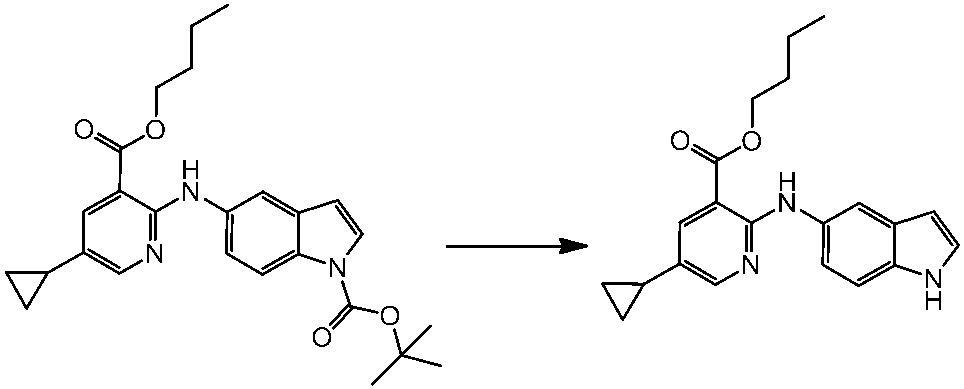
1H-NMR(DMSO-d6)δ:0.61-0.67(2H,m),0.88-0.95(2H,m),0.96(3H,t,J=7.3Hz),1.44(2H,sext,J=7.9Hz),1.73(2H,quin,J=7.9Hz),1.86-1.95(1H,m),4.32(2H,t,J=6.6Hz),6.37(1H,s),7.15(1H,dd,J=8.6,2.0Hz),7.29-7.35(2H,m),7.89(1H,d,J=1.3Hz),7.93(1H,d,J=1.3Hz),8.20(1H,d,J=2.0Hz),9.84(1H,s),10.99(1H,s).
MS(ESI,m/z):350(M+H)+.

1H-NMR(DMSO-d6)δ:0.35-0.42(2H,m),0.46-0.57(2H,m),0.61-0.67(2H,m),0.88-0.95(2H,m),0.96(3H,t,J=7.3Hz),1.19-1.30(1H,m),1.40-1.51(2H,m),1.74(2H,quin,J=7.3Hz),1.88-1.96(1H,m),4.01(2H,d,J=7.3Hz),4.32(2H,t,J=6.6Hz),6.37(1H,d,J=3.3Hz),7.19(1H,dd,J=8.6,2.0Hz),7.39(1H,d,J=2.6Hz),7.44(1H,d,J=8.6Hz),7.90(1H,d,J=2.6Hz),7.93(1H,d,J=2.0Hz),8.20(1H,d,J=2.6Hz),9.84(1H,s).
MS(ESI,m/z):404(M+H)+.
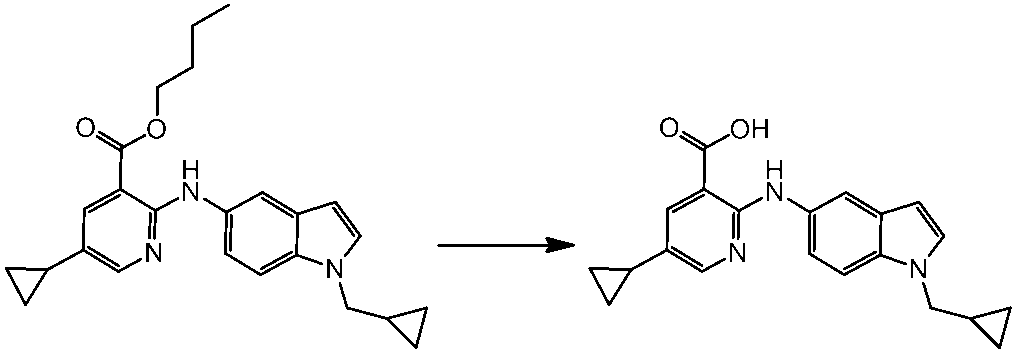
1H-NMR(DMSO-d6)δ:0.34-0.40(2H,m),0.47-0.54(2H,m),0.57-0.63(2H,m),0.84-0.92(2H,m),1.20-1.28(1H,m),1.81-1.91(1H,m),4.00(2H,d,J=7.3Hz),6.34(1H,d,J=2.6Hz),7.18(1H,dd,J=8.6,2.0Hz),7.35(1H,d,J=3.3Hz),7.39(1H,d,J=8.6Hz),7.83(1H,d,J=2.6Hz),8.03-8.07(2H,m),11.32(1H,brs).
MS(ESI,m/z):348(M+H)+,346(M-H)-.

1H-NMR(DMSO-d6)δ:0.60-0.67(2H,m),0.88-0.94(2H,m),0.95(3H,t,J=7.3Hz),1.43(2H,sext,J=7.3Hz),1.72(2H,quin,6.6Hz),1.88-1.96(1H,m),4.31(2H,t,J=6.6Hz),5.48(2H,s),6.48(1H,d,J=3.3Hz),7.07(2H,d,J=5.9Hz),7.16(1H,dd,J=8.9,1.7Hz),7.31(1H,d,J=8.6Hz),7.50(1H,d,J=3.3Hz),7.89(1H,d,J=2.6Hz),7.99(1H,d,J=2.0Hz),8.19(1H,d,J=2.6Hz),8.46-8.50(2H,m),9.84(1H,s).
MS(ESI,m/z):441(M+H)+.

1H-NMR(DMSO-d6)δ:0.61-0.67(2H,m),0.85-0.94(2H,m),1.85-1.95(1H,m),5.48(2H,s),6.48(1H,d,J=3.3Hz),7.07(2H,d,J=5.9Hz),7.16(1H,dd,J=8.9,1.7Hz),7.30(1H,d,J=8.6Hz),7.49(1H,d,J=3.3Hz),7.86(1H,d,J=2.6Hz),8.00(1H,d,J=2.0Hz),8.18(1H,d,J=2.6Hz),8.48(2H,d,J=5.9Hz),10.11(1H,s).
MS(ESI,m/z):385(M+H)+,383(M-H)-.

1H-NMR(DMSO-d6)δ:0.67-0.73(2H,m),0.91-0.98(2H,m),1.87-1.98(1H,m),3.22(3H,s),5.41(2H,s),6.51(1H,d,J=3.3Hz),7.14(1H,dd,J=8.6,2.0Hz),7.22-7.36(5H,m),7.46(1H,d,J=8.6Hz),7.53(1H,d,J=2.6Hz),7.81(1H,d,J=2.0Hz),7.98(2H,s).
MS(ESI,m/z):459(M-H)-.

MS(ESI,m/z):386(M+H)+,384(M-H)-.
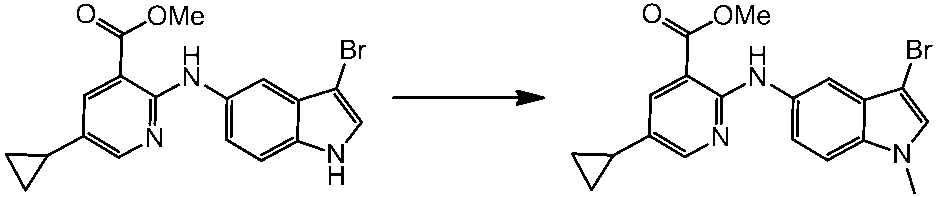
1H-NMR(DMSO-d6)δ:0.65-0.71(2H,m),0.89-0.95(2H,m),1.88-1.98(1H,m),3.78(3H,s),3.90(3H,s),7.29(1H,dd,J=9.2,2.0Hz),7.45(1H,d,J=9.2Hz),7.52(1H,s),7.90-7.93(2H,m),8.26(1H,d,J=2.6Hz),9.95(1H,s).
MS(ESI,m/z):400(M+H)+.

MS(ESI,m/z):398(M+H)+.
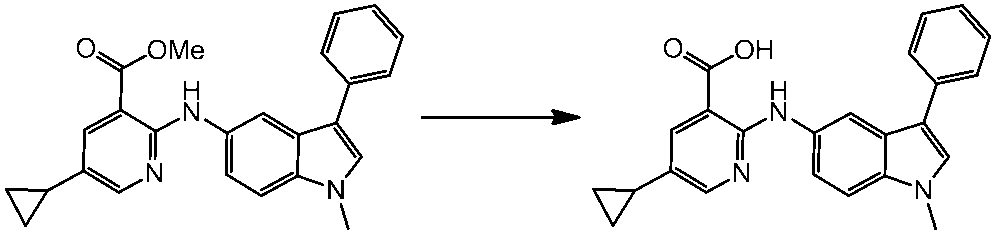
1H-NMR(DMSO-d6)δ:0.62-0.68(2H,m),0.88-0.94(2H,m),1.88-1.96(1H,m),3.81(3H,s),7.20-7.26(1H,m),7.33(1H,dd,J=8.6,2.0Hz),7.40-7.48(3H,m),7.64-7.68(3H,m),7.92(1H,d,J=2.6Hz),8.14(1H,d,J=2.6Hz),8.24(1H,d,J=1.3Hz),10.21(1H,s).
MS(ESI,m/z):384(M+H)+,382(M-H)-.

1H-NMR(DMSO-d6)δ:0.64-0.70(2H,m),0.88-0.98(2H,m),1.88-1.97(1H,m),3.90(3H,s),7.26(1H,dd,J=8.6,2.0Hz),7.37(1H,d,J=8.6Hz),7.52(1H,d,J=2.6Hz),7.70(1H,d,J=2.6Hz),7.90(1H,d,J=2.6Hz),8.24(1H,d,J=2.6Hz),9.90(1H,s),11.45(1H,s).
MS(ESI,m/z):434(M+H)+.

MS(ESI,m/z):384(M+H)+.

1H-NMR(DMSO-d6)δ:0.54-0.60(2H,m),0.82-0.89(2H,m),1.78-1.88(1H,m),7.18-7.25(1H,m),7.28-7.37(2H,m),7.40-7.47(2H,m),7.58(1H,d,J=2.6Hz),7.68(2H,d,J=7.3Hz),7.80(1H,d,J=2.0Hz),7.94(1H,d,J=2.6Hz),8.33(1H,s),11.13(1H,s),12.31(1H,brs).
MS(ESI,m/z):370(M+H)+,368(M-H)-.

1H-NMR(DMSO-d6)δ:0.60-0.68(2H,m),0.86-0.94(2H,m),1.42(9H,s),1.84-1.95(1H,m),3.85(3H,s),6.19(1H,s),7.17(1H,dd,J=8.6,2.0Hz),7.31(1H,d,J=8.6Hz),7.84(1H,d,J=1.8Hz),7.86(1H,d,J=2.1Hz),8.17(1H,d,J=2.6Hz),10.14(1H,s).
MS(ESI,m/z):364(M+H)+,362(M-H)-.

1H-NMR(DMSO-d6)δ:0.61-0.66(2H,m),0.85-0.96(2H,m),1.32(3H,t,J=6.9Hz),1.48(9H,s),1.85-1.95(1H,m),4.35(2H,q,J=6.8Hz),6.14(1H,s),7.17(1H,dd,J=8.6,2.0Hz),7.28(1H,d,J=8.4Hz),7.82(1H,d,J=2.1Hz),7.86(1H,d,J=2.7Hz),8.17(1H,d,J=2.6Hz),10.10(1H,s).
MS(ESI,m/z):378(M+H)+,376(M-H)-.

1H-NMR(DMSO-d6)δ:0.63-0.70(2H,m),0.87-0.95(2H,m),1.83-1.94(1H,m),3.12(3H,s),6.65(1H,d,J=3.3Hz),7.26(1H,dd,J=8.6,2.0Hz),7.35-7.42(1H,m),7.49-7.63(6H,m),7.93(1H,d,J=2.0Hz),8.13(1H,d,J=2.0Hz),8.18(1H,d,J=2.0Hz).
MS(ESI,m/z):447(M+H)+,445(M-H)-.

1H-NMR(DMSO-d6)δ:0.71-0.78(2H,m),0.85(6H,d,J=6.6Hz),0.88-0.95(2H,m),1.84-1.95(1H,m),2.05-2.22(1H,m),3.96(2H,d,J=7.3Hz),6.39(1H,d,J=2.6Hz),7.16(1H,dd,J=9.2,2.0Hz),7.34(1H,d,J=2.6Hz),7.44(1H,d,J=8.6Hz),7.83-7.92(2H,m),8.09-8.21(1H,m).
MS(ESI,m/z):427(M+H)+,425(M-H)-.
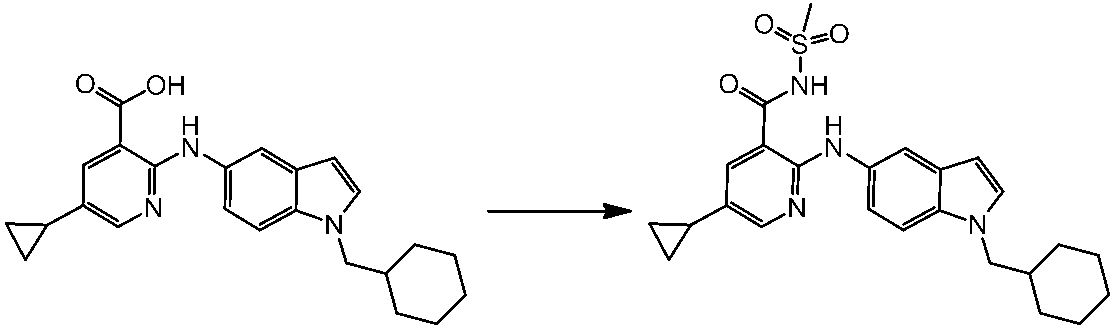
1H-NMR(DMSO-d6)δ:0.67-0.74(2H,m),0.92-1.19(7H,m),1.45-1.73(5H,m),1.73-1.84(1H,m),1.89-1.99(1H,m),3.17(3H,s),4.02(2H,d,J=6.6Hz),6.47(1H,d,J=3.3Hz),7.14(1H,dd,J=8.6,2.0Hz),7.36(1H,d,J=3.3Hz),7.52(1H,d,J=8.6Hz),7.73(1H,s),7.89(1H,s),8.09(1H,s).
MS(ESI,m/z):467(M+H)+,465(M-H)-.

1H-NMR(DMSO-d6)δ:0.67-0.76(2H,m),0.90(2H,m),0.95-1.19(4H,m),1.83-1.94(1H,m),3.10-3.20(1H,m),5.40(2H,s),6.44(1H,d,J=2.6Hz),7.14(1H,dd,J=8.9,1.7Hz),7.17-7.42(6H,m),7.48(1H,d,J=2.6Hz),7.80-7.94(2H,m),8.16(1H,s).
MS(ESI,m/z):487(M+H)+,485(M-H)-.

1H-NMR(DMSO-d6)δ:0.71-0.77(2H,m),0.89-0.97(2H,m),1.87-1.96(1H,m),3.28(3H,s),5.42(2H,s),6.75(1H,m),7.01-7.08(2H,m),7.16-7.33(5H,m),7.47(1H,d,J=3.3Hz),7.93(1H,d,J=2.6Hz),8.14(1H,d,J=6.6Hz),8.26(1H,s)
MS(ESI,m/z):461(M+H)+,459(M-H)-.

1H-NMR(DMSO-d6)δ:0.55-0.61(2H,m),0.85-0.93(2H,m),1.82-1.90(1H,m),5.38(2H,s),6.41(1H,d,J=2.6Hz),7.11(1H,dd,J=8.6,2.0Hz),7.17-7.37(6H,m),7.44(1H,d,J=2.6Hz),7.98(1H,d,J=2.0Hz),8.04(2H,m),11.02(1H,s)
MS(ESI,m/z):515(M+H)+,513(M-H)-.

1H-NMR(DMSO-d6)δ:0.61-0.67(2H,m),0.86-0.93(2H,m),1.75-1.85(4H,m),1.85-1.95(1H,m),2.55-2.62(2H,m),2.65-2.72(2H,m),3.89(3H,s),7.13(1H,dd,J=8.6,1.3Hz),7.18(1H,d,J=8.6Hz),7.60(1H,d,J=1.3Hz),7.87(1H,d,J=2.6Hz),8.19(1H,d,J=2.0Hz),9.79(1H,s),10.54(1H,s).
MS(ESI,m/z):362(M+H)+.

1H-NMR(DMSO-d6)δ:0.61-0.66(2H,m),0.86-0.93(2H,m),1.21(3H,t,J=6.9Hz),1.73-1.93(5H,m),2.56-2.63(2H,m),2.67-2.74(2H,m),4.06(2H,q,J=7.0Hz),7.19(1H,dd,J=8.6,2.0Hz),7.29(1H,d,J=8.6Hz),7.64(1H,d,J=2.0Hz),7.86(1H,d,J=2.6Hz),8.16(1H,d,J=2.0Hz),10.11(1H,s),13.39(1H,brs).
MS(ESI,m/z):376(M+H)+,374(M-H)-.

1H-NMR(DMSO-d6)δ:0.61-0.67(2H,m),0.86-0.93(2H,m),1.76-1.93(5H,m),2.55-2.63(2H,m),2.65-2.72(2H,m),7.11-7.18(2H,m),7.61(1H,s),7.85(1H,d,J=2.6Hz),8.16(1H,d,J=2.0Hz),10.10(1H,s),10.51(1H,s).
MS(ESI,m/z):348(M+H)+,346(M-H)-.

1H-NMR(DMSO-d6)δ:0.64-0.71(2H,m),0.88-0.95(2H,m),1.36(3H,t,J=7.3Hz),1.87-1.97(1H,m),3.90(3H,s),4.19(2H,q,J=7.0Hz),7.28(1H,dd,J=8.6,2.0Hz),7.50(1H,d,J=9.2Hz),7.59(1H,s),7.92-7.89(2H,m),8.26(1H,d,J=2.6Hz),9.94(1H,s).
MS(ESI,m/z):414(M+H)+.
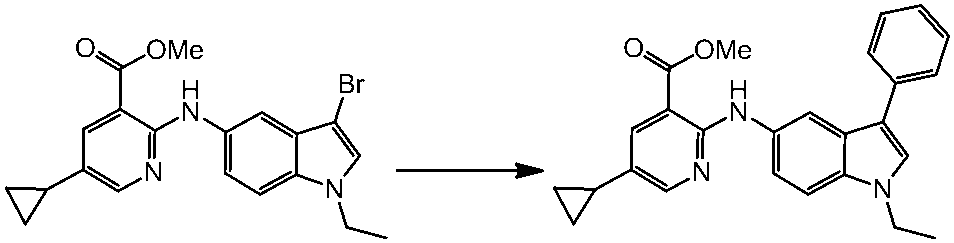
1H-NMR(DMSO-d6)δ:0.62-0.68(2H,m),0.87-0.94(2H,m),1.42(3H,t,J=6.9Hz),1.86-1.96(1H,m),3.90(3H,s),4.24(2H,q,J=7.3Hz),7.26-7.20(1H,m),7.35(1H,dd,J=8.6,2.0Hz),7.41-7.52(3H,m),7.66(2H,d,J=7.3Hz),7.73(1H,s),7.89(1H,d,J=2.6Hz),8.21-8.19(2H,m),9.87(1H,s).
MS(ESI,m/z):412(M+H)+.

1H-NMR(DMSO-d6)δ:0.63-0.69(2H,m),0.88-0.95(2H,m),1.42(3H,t,J=6.9Hz),1.88-1.98(1H,m),4.25(2H,q,J=7.3Hz),7.23(1H,t,J=7.3Hz),7.31(1H,dd,J=8.6,2.0Hz),7.44(2H,t,J=7.6Hz),7.52(1H,d,J=8.6Hz),7.66(2H,d,J=7.3Hz),7.75(1H,s),7.94(1H,d,J=2.6Hz),8.12(1H,d,J=2.6Hz),8.20(1H,d,J=1.3Hz),10.21(1H,s).
MS(ESI,m/z):398(M+H)+,396(M-H)-.
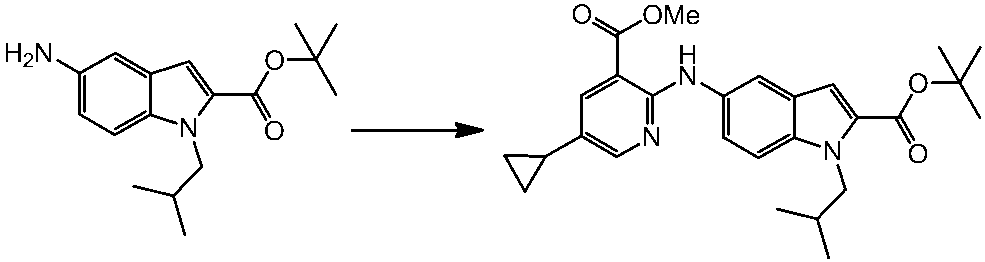
MS(ESI,m/z):465(M+H)+.
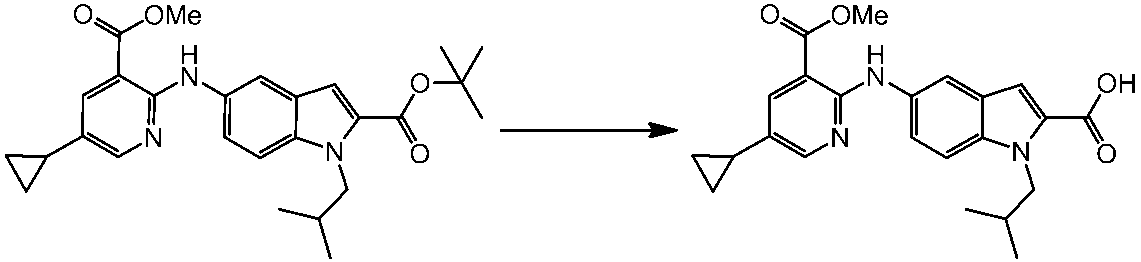
1H-NMR(DMSO-d6)δ:0.62-0.70(2H,m),0.81(6H,d,J=6.6Hz),0.89-0.95(2H,m),1.89-1.98(1H,m),2.05-2.15(1H,m),3.56-4.22(3H,m),4.40(2H,d,J=7.3Hz),7.19(1H,s),7.38(1H,dd,J=9.2,2.0Hz),7.56(1H,d,J=9.2Hz),7.93(1H,d,J=2.6Hz),8.07(1H,d,J=2.0Hz),8.22(1H,d,J=2.6Hz),9.91(1H,s).
MS(ESI,m/z):408(M+H)+,406(M-H)-.

MS(ESI,m/z):509(M+H)+.
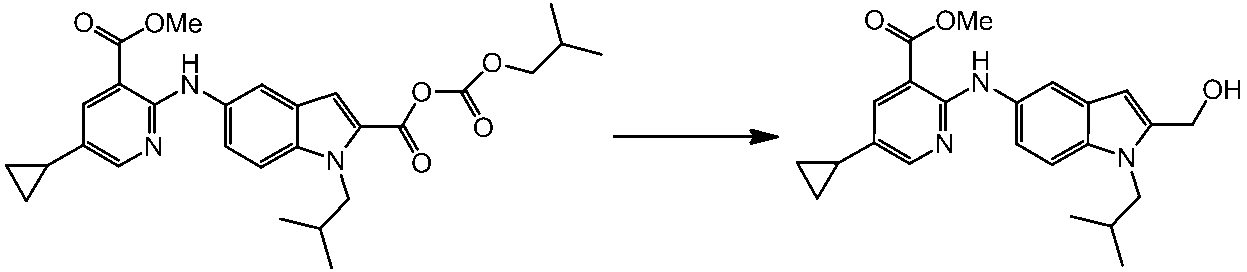
1H-NMR(DMSO-d6)δ:0.61-0.68(2H,m),0.86(6H,d,J=6.6Hz),0.88-0.95(2H,m),1.86-1.96(1H,m),2.14-2.25(1H,m),3.89(3H,s),3.99(2H,d,J=7.9Hz),4.62(2H,d,J=5.3Hz),5.22(1H,t,J=5.6Hz),6.32(1H,s),7.17(1H,dd,J=8.6,2.0Hz),7.36(1H,d,J=8.6Hz),7.87(1H,d,J=2.0Hz),7.88(1H,d,J=2.6Hz),8.22(1H,d,J=2.6Hz),9.82(1H,s).
MS(ESI,m/z):394(M+H)+.

1H-NMR(DMSO-d6)δ:0.62-0.68(2H,m),0.86(6H,d,J=6.6Hz),0.88-0.94(2H,m),1.86-1.96(1H,m),2.14-2.25(1H,m),3.99(2H,d,J=7.3Hz),4.62(2H,s),6.32(1H,s),7.17(1H,dd,J=8.6,2.0Hz),7.37(1H,d,J=8.6Hz),7.86(1H,d,J=2.0Hz),7.89(1H,d,J=2.0Hz),8.17(1H,d,J=2.6Hz),10.12(1H,s).
MS(ESI,m/z):380(M+H)+,378(M-H)-.
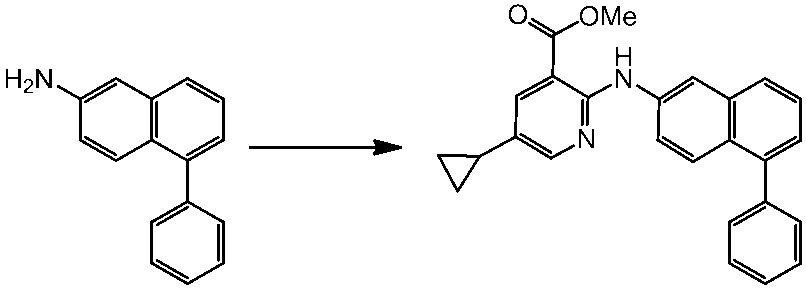
MS(ESI,m/z):395(M+H)+.

1H-NMR(DMSO-d6)δ:0.63-0.65(2H,m),0.88-0.95(2H,m),1.85-1.94(1H,m),7.18(1H,d,J=6.6Hz),7.43-7.56(7H,m),7.68(1H,d,J=8.6Hz),7.77(1H,d,J=8.6Hz),7.88(1H,d,J=2.6Hz),8.13(1H,d,J=2.0Hz),8.64(1H,d,J=2.0Hz),12.65(1H,s).
MS(ESI,m/z):381(M+H)+,379(M-H)-.

MS(ESI,m/z):395(M+H)+.

1H-NMR(DMSO-d6)δ:0.63-0.68(2H,m),0.90-0.96(2H,m),1.90-1.99(1H,m),7.38-7.51(3H,m),7.54-7.61(4H,m),7.69(1H,dd,J=9.2,2.0Hz),7.85-7.87(2H,m),7.93(1H,d,J=8.6Hz),8.13(1H,d,J=2.6Hz),8.48(1H,d,J=2.0Hz),10.43(1H,s),13.62(1H,s).
MS(ESI,m/z):381(M+H)+,379(M-H)-.

MS(ESI,m/z):400(M+H)+.

1H-NMR(DMSO-d6)δ:0.60-0.67(2H,m),0.80-0.94(2H,m),1.85-1.97(3H,m),2.76(2H,t,J=6.6Hz),3.57(2H,t,J=5.6Hz),6.69(1H,d,J=8.6Hz),7.01(1H,t,J=7.3Hz),7.17-7.23(3H,m),7.29-7.34(3H,m),7.85(1H,d,J=2.0Hz),8.17(1H,d,J=2.0Hz),9.99(1H,s).
MS(ESI,m/z):386(M+H)+,384(M-H)-.

MS(ESI,m/z):414(M+H)+.

1H-NMR(DMSO-d6)δ:0.58-0.64(2H,m),0.85-0.91(2H,m),1.82-1.98(3H,m),2.69-2.77(2H,m),3.35-3.47(2H,m),4.46(2H,s),6.43(1H,d,J=9.2Hz),7.11-7.14(2H,m),7.20-7.35(5H,m),7.82(1H,s),8.11(1H,s),9.81(1H,s).
MS(ESI,m/z):400(M+H)+,398(M-H)-.
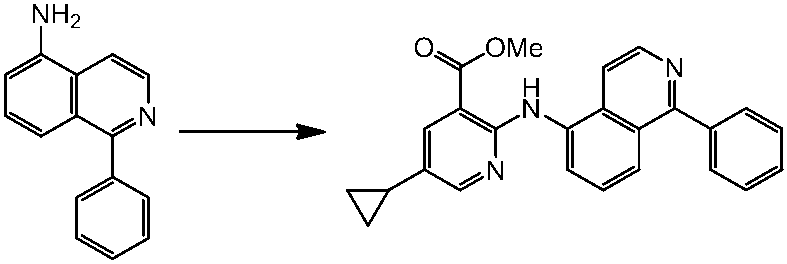
MS(ESI,m/z):396(M+H)+.

1H-NMR(DMSO-d6)δ:0.69-0.71(2H,m),0.92-0.98(2H,m),1.92-2.01(1H,m),7.52-7.70(7H,m),7.91(1H,d,J=5.9Hz),8.00(1H,d,J=2.6Hz),8.26(1H,d,J=2.6Hz),8.64-8.67(2H,m),11.04(1H,s).
MS(ESI,m/z):382(M+H)+,380(M-H)-.

MS(ESI,m/z):396(M+H)+.

1H-NMR(DMSO-d6)δ:0.72-0.73(2H,m),0.94-1.00(2H,m),1.95-2.04(1H,m),7.37(1H,dd,J=8.6,1.3Hz),7.51-7.61(7H,m),8.00(1H,d,J=2.6Hz),8.39(1H,d,J=2.6Hz),8.94(1H,d,J=4.0Hz),9.13(1H,dd,J=7.9,1.3Hz),12.30(1H,s).
MS(ESI,m/z):382(M+H)+,380(M-H)-.

MS(ESI,m/z):474(M+H)+.

1H-NMR(DMSO-d6)δ:0.64-0.65(2H,m),0.87-0.93(2H,m),1.85-1.94(1H,m),3.31(3H,s),6.47(1H,d,J=3.3Hz),7.09(1H,d,J=2.0Hz),7.25(1H,d,J=2.6Hz),7.38(1H,t,J=7.3Hz),7.47(3H,t,J=7.6Hz),7.57(1H,t,J=7.6Hz),7.76(4H,t,J=6.9Hz),7.88(1H,d,J=2.6Hz),8.07(1H,d,J=2.6Hz),8.21(1H,d,J=2.6Hz),10.23(1H,s).
MS(ESI,m/z):460(M+H)+.
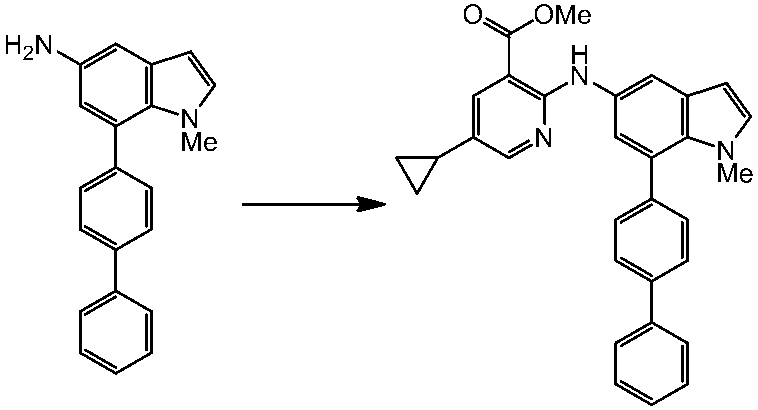
MS(ESI,m/z):474(M+H)+.

1H-NMR(DMSO-d6)δ:0.63-0.65(2H,m),0.81-0.96(2H,m),1.86-1.89(1H,m),3.36(3H,s),6.46(1H,d,J=2.6Hz),7.06(1H,d,J=2.0Hz),7.25(1H,d,J=2.6Hz),7.40(1H,t,J=7.3Hz),7.49-7.58(4H,m),7.76-7.80(4H,m),7.87(1H,d,J=2.6Hz),8.07(1H,d,J=2.0Hz),8.18(1H,d,J=2.6Hz).
MS(ESI,m/z):460(M+H)+.
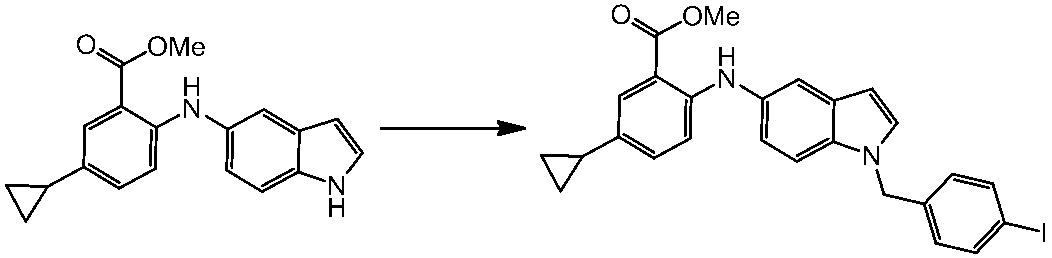
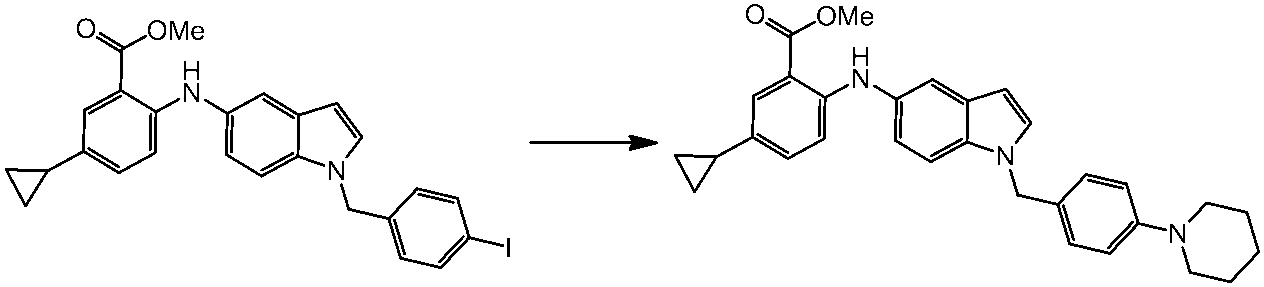

1H-NMR(DMSO-d6)δ:0.49-0.57(2H,m),0.80-0.90(2H,m),1.44-1.63(6H,m),1.76-1.89(1H,m),3.03-3.11(4H,m),5.26(2H,s),6.40(1H,d,J=2.6Hz),6.83-6.90(3H,m),6.92-7.05(2H,m),7.12(2H,d,J=8.6Hz),7.37(1H,d,J=2.0Hz),7.44-7.50(2H,m),7.59(1H,d,J=2.0Hz),9.32(1H,brs).
MS(ESI,m/z):466(M+H)+.

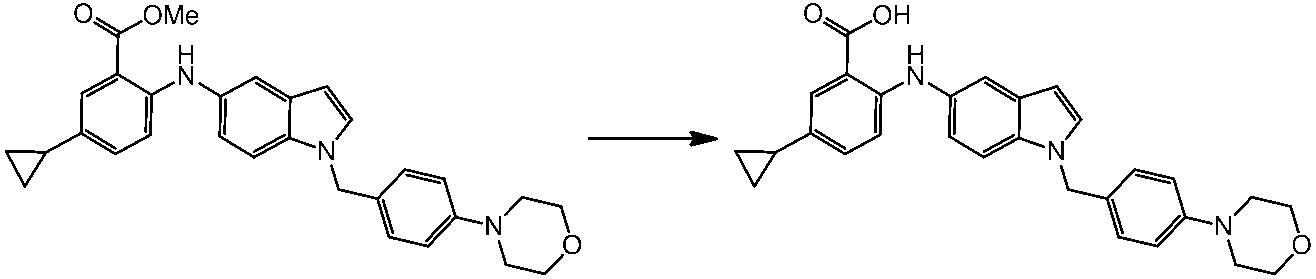
1H-NMR(DMSO-d6)δ:0.49-0.57(2H,m),0.80-0.90(2H,m),1.77-1.87(1H,m),3.02-3.08(4H,m),3.67-3.74(4H,m),5.28(2H,s),6.40(1H,d,J=2.6Hz),6.84-6.91(3H,m),6.91-7.04(2H,m),7.15(2H,d,J=8.6Hz),7.37(1H,d,J=1.3Hz),7.44-7.50(2H,m),7.59(1H,d,J=2.0Hz),9.32(1H,brs).
MS(ESI,m/z):468(M+H)+.


1H-NMR(DMSO-d6)δ:0.49-0.57(2H,m),0.80-0.90(2H,m),1.77-1.87(1H,m),2.84(6H,s),5.24(2H,s),6.39(1H,d,J=2.6Hz),6.66(2H,d,J=9.2Hz),6.86(1H,d,J=8.6Hz),6.91-7.04(2H,m),7.13(2H,d,J=8.6Hz),7.34-7.38(1H,m),7.44-7.50(2H,m),7.59(1H,d,J=2.6Hz),9.32(1H,brs).
MS(ESI,m/z):426(M+H)+.

1H-NMR(DMSO-d6)δ:0.49-0.57(2H,m),0.80-0.90(2H,m),1.78-1.88(1H,m),6.35-6.42(1H,m),6.85-7.05(3H,m),7.33-7.41(3H,m),7.60(1H,d,J=2.0Hz),9.33(1H,brs),11.09(1H,s),12.85(1H,brs).
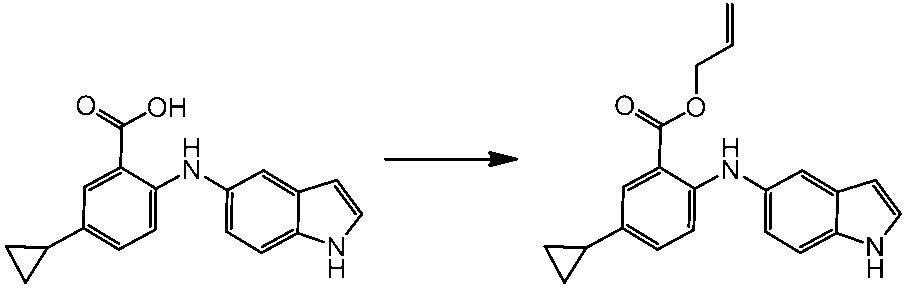
得られたアリル=2-((1H-インドール-5-イル)アミノ)-5-シクロプロピルベンゾアートを、全量が6mLになるように、ジクロロメタンに溶解させた。

1H-NMR(DMSO-d6)δ:0.55-0.63(2H,m),0.84-0.93(2H,m),1.86-1.95(1H,m),4.83(2H,d,J=5.9Hz),5.26-5.47(2H,m),6.00-6.15(1H,m),6.71(1H,d,J=3.3Hz),7.14(2H,s),7.24(1H,dd,J=8.9,2.3Hz),7.39(1H,d,J=4.0Hz),7.50-7.80(7H,m),8.25(1H,d,J=8.6Hz),9.22(1H,s).

1H-NMR(DMSO-d6)δ:0.55-0.63(2H,m),0.84-0.93(2H,m),1.83-1.92(1H,m),6.71(1H,d,J=3.3Hz),7.08-7.17(2H,m),7.23(1H,dd,J=8.6,2.0Hz),7.38(1H,d,J=4.0Hz),7.52-7.80(7H,m),8.25(1H,d,J=8.6Hz),9.54(1H,brs).
MS(ESI,m/z):397(M+H)+.

1H-NMR(DMSO-d6)δ:0.55-0.63(2H,m),0.84-0.93(2H,m),1.84-1.96(1H,m),4.80-4.86(2H,m),5.27-5.46(2H,m),6.05-6.16(1H,m),6.72(1H,d,J=3.3Hz),7.14(2H,d,J=1.3Hz),7.24(1H,dd,J=9.2,2.0Hz),7.41(1H,d,J=3.3Hz),7.52(1H,d,J=2.0Hz),7.65-7.72(3H,m),7.78-7.83(2H,m),8.25(1H,d,J=9.2Hz),9.22(1H,s).

1H-NMR(DMSO-d6)δ:0.52-0.62(2H,m),0.82-0.91(2H,m),1.83-1.94(1H,m),6.71(1H,d,J=4.0Hz),7.08-7.17(2H,m),7.23(1H,dd,J=8.9,2.3Hz),7.41(1H,d,J=4.0Hz),7.52(1H,d,J=2.0Hz),7.64-7.70(3H,m),7.77-7.83(2H,m),8.25(1H,d,J=8.6Hz),9.52(1H,brs).
MS(ESI,m/z):431(M+H)+.

得られたメチル=2-ブロモ-5-メチルベンゾアートに1-ベンジル-1H-インドール-5-アミン110mg、トリス(ジベンジリデンアセトン)ジパラジウム(0)10mg、4,5’-ビス(ジフェニルホスフィノ)-9,9’-ジメチルキサンテン18mg、炭酸セシウム342mgおよびトルエン4mLを加え、マイクロウェーブ装置を用いて、190℃で1時間30分間攪拌した。反応混合物を室温まで冷却した後、不溶物をろ去し、減圧下で溶媒を留去した。得られた残留物をシリカゲルカラムクロマトグラフィー(ヘキサン:酢酸エチルの勾配溶離=100:0-75:25)で精製し、黄色油状物のメチル=2-((1-ベンジル-1H-インドール-5-イル)アミノ)-5-メチルベンゾアートを得た。
MS(ESI,m/z):371(M+H)+.
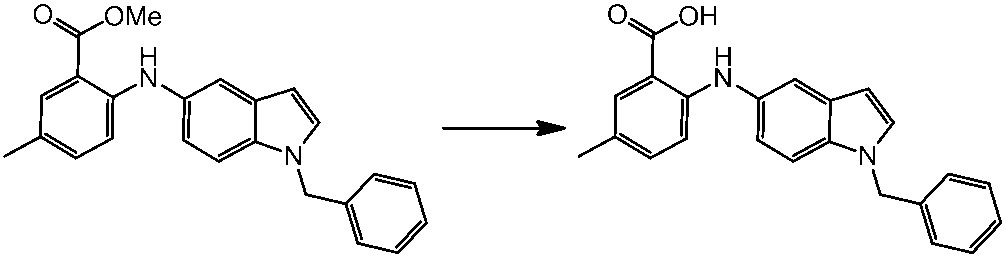
1H-NMR(DMSO-d6)δ:2.18(3H,s),5.42(2H,s),6.44(1H,d,J=2.6Hz),6.89(1H,d,J=8.6Hz),6.96(1H,dd,J=8.6,2.0Hz),7.08-7.68(10H,m),9.34(1H,brs).
MS(ESI,m/z):357(M+H)+.
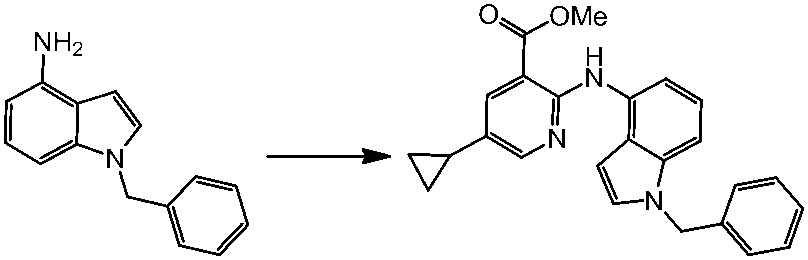
MS(ESI,m/z):398(M+H)+.

1H-NMR(DMSO-d6)δ:0.64-0.72(2H,m),0.90-0.98(2H,m),1.88-2.00(1H,m),5.42(2H,s),6.54(1H,d,J=3.3Hz),7.02-7.12(2H,m),7.16-7.34(5H,m),7.51(1H,d,J=3.3Hz),7.94(1H,d,J=2.6Hz),8.17(1H,dd,J=6.9,1.7Hz),8.30(1H,d,J=2.0Hz),10.82(1H,brs).
MS(ESI,m/z):384(M+H)+.
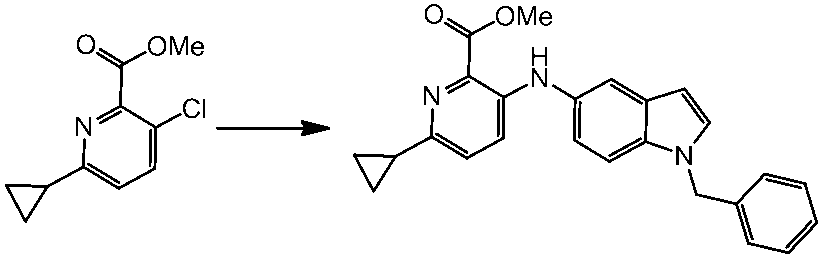
MS(ESI,m/z):398(M+H)+.

1H-NMR(DMSO-d6)δ:0.80-0.87(4H,m),1.96-2.07(1H,m),5.40(2H,s),6.41(1H,d,J=2.6Hz),6.90(1H,dd,J=8.6,2.0Hz),7.01(1H,d,J=8.6Hz),7.18-7.35(7H,m),7.41(1H,d,J=8.6Hz),7.49(1H,d,J=3.3Hz).
MS(ESI,m/z):384(M+H)+.
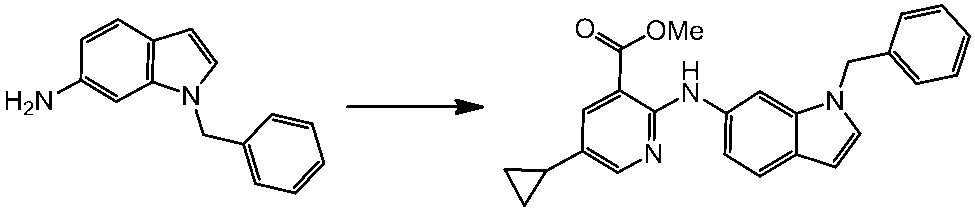
MS(ESI,m/z):398(M+H)+.

1H-NMR(DMSO-d6)δ:0.62-0.68(2H,m),0.88-0.97(2H,m),1.86-1.98(1H,m),5.36(2H,s),6.41(1H,d,J=2.6Hz),7.11(1H,dd,J=8.6,1.3Hz),7.20-7.48(7H,m),7.86(1H,d,J=2.6Hz),8.02(1H,s),8.19(1H,d,J=2.6Hz),10.38(1H,brs).
MS(ESI,m/z):384(M+H)+.

MS(ESI,m/z):395(M+H)+.

1H-NMR(DMSO-d6)δ:0.66-0.74(2H,m),0.91-0.99(2H,m),1.91-2.02(1H,m),7.38-7.58(4H,m),7.64(1H,d,J=7.9Hz),7.78-7.83(2H,m),7.88(1H,dd,J=8.6,1.3Hz),7.97-8.08(2H,m),8.29(1H,d,J=2.6Hz),8.40(1H,s),8.60(1H,d,J=7.9Hz),11.23(1H,brs).
MS(ESI,m/z):381(M+H)+.

MS(ESI,m/z):395(M+H)+.

1H-NMR(DMSO-d6)δ:0.64-0.72(2H,m),0.90-0.98(2H,m),1.90-1.99(1H,m),7.41(1H,t,J=7.3Hz),7.49-7.56(3H,m),7.69(1H,d,J=7.9Hz),7.82-7.98(4H,m),8.18-8.26(3H,m),8.46(1H,d,J=7.9Hz).
MS(ESI,m/z):381(M+H)+.

MS(ESI,m/z):395(M+H)+.

1H-NMR(DMSO-d6)δ:0.68-0.75(2H,m),0.92-1.01(2H,m),1.92-2.03(1H,m),7.38(1H,t,J=7.3Hz),7.51(2H,t,J=7.6Hz),7.66-7.98(7H,m),8.14(1H,s),8.35(1H,d,J=2.6Hz),8.49(1H,s),10.59(1H,s).
MS(ESI,m/z):381(M+H)+.
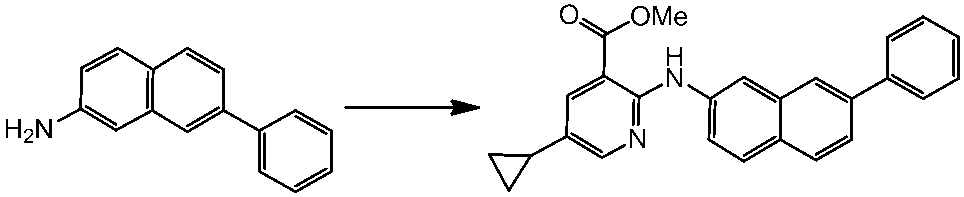
MS(ESI,m/z):395(M+H)+.

1H-NMR(DMSO-d6)δ:0.67-0.74(2H,m),0.92-0.99(2H,m),1.91-2.03(1H,m),7.40(1H,t,J=7.3Hz),7.52(2H,t,J=7.3Hz),7.65-7.71(2H,m),7.79-7.97(5H,m),8.08(1H,s),8.33(1H,d,J=2.6Hz),8.53(1H,d,J=1.3Hz),10.64(1H,brs).
MS(ESI,m/z):381(M+H)+.

MS(ESI,m/z):398(M+H)+.

1H-NMR(DMSO-d6)δ:0.61-0.67(2H,m),0.85-0.94(2H,m),1.84-1.95(1H,m),3.25(3H,s),6.45(1H,d,J=3.3Hz),7.00(1H,d,J=2.0Hz),7.23(1H,d,J=3.3Hz),7.43-7.49(5H,m),7.87(1H,d,J=2.6Hz),8.05(1H,d,J=2.0Hz),8.19(1H,d,J=2.6Hz),10.35(1H,brs).
MS(ESI,m/z):384(M+H)+.

MS(ESI,m/z):440(M+H)+.

1H-NMR(DMSO-d6)δ:0.35(6H,d,J=6.6Hz),0.62-0.69(2H,m),0.80-0.93(2H,m),1.31-1.42(1H,m),1.84-1.95(1H,m),3.52(2H,d,J=6.6Hz),6.45(1H,d,J=3.3Hz),6.98(1H,d,J=2.0Hz),7.27(1H,d,J=2.6Hz),7.43-7.51(5H,m),7.87(1H,d,J=2.6Hz),8.04(1H,d,J=2.0Hz),8.20(1H,d,J=2.0Hz),10.24(1H,s).
MS(ESI,m/z):426(M+H)+.

MS(ESI,m/z):484(M+H)+.
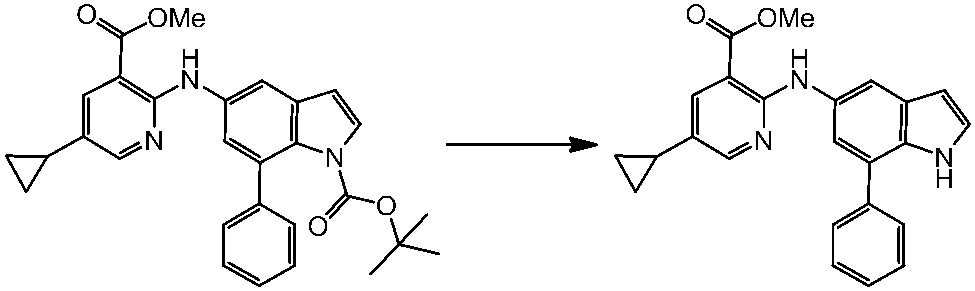
MS(ESI,m/z):384(M+H)+.

1H-NMR(DMSO-d6)δ:0.61-0.69(2H,m),0.87-0.97(2H,m),1.84-1.95(1H,m),6.44-6.50(1H,m),7.22(1H,d,J=2.0Hz),7.29(1H,t,J=2.6Hz),7.42(1H,t,J=7.3Hz),7.53(2H,t,J=7.3Hz),7.67(2H,d,J=7.3Hz),7.88(1H,d,J=2.6Hz),7.96(1H,d,J=1.3Hz),8.20(1H,d,J=2.6Hz),10.18(1H,s),10.89(1H,s).
MS(ESI,m/z):370(M+H)+.

MS(ESI,m/z):434(M+H)+.
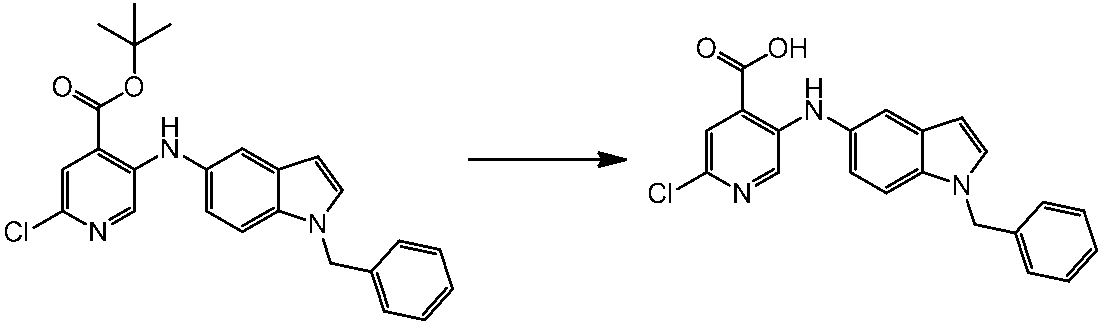
1H-NMR(DMSO-d6)δ:5.44(2H,s),6.48(1H,d,J=3.3Hz),7.05(1H,dd,J=8.6,2.0Hz),7.19-7.38(5H,m),7.47-7.53(2H,m),7.56(1H,d,J=2.6Hz),7.65(1H,s),8.08(1H,s),9.09(1H,s).
MS(ESI,m/z):378(M+H)+.

MS(ESI,m/z):402(M+H)+.

1H-NMR(DMSO-d6)δ:0.63-0.71(2H,m),0.89-0.96(2H,m),1.87-1.98(1H,m),6.69(1H,d,J=3.3Hz),7.18-7.34(2H,m),7.46-7.71(5H,m),7.90(1H,d,J=2.6Hz),8.15(1H,d,J=2.0Hz),8.23(1H,d,J=2.6Hz),10.26(1H,s).
MS(ESI,m/z):388(M+H)+.

MS(ESI,m/z):402(M+H)+.

1H-NMR(DMSO-d6)δ:0.62-0.69(2H,m),0.89-0.95(2H,m),1.87-1.97(1H,m),6.66(1H,d,J=3.3Hz),7.27(1H,dd,J=9.2,2.0Hz),7.37-7.48(3H,m),7.59-7.66(3H,m),7.89(1H,d,J=2.6Hz),8.14(1H,d,J=2.0Hz),8.22(1H,d,J=2.6Hz),10.23(1H,s).
MS(ESI,m/z):388(M+H)+.
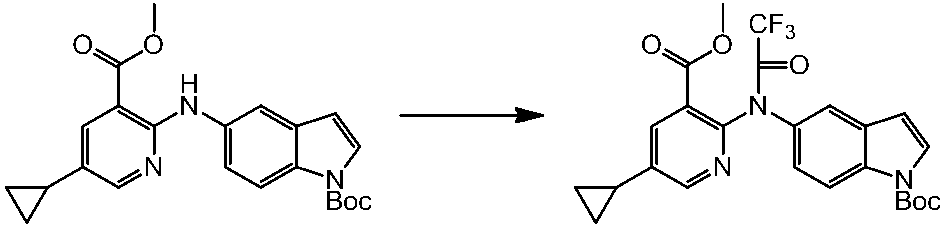
MS(ESI,m/z):504(M+H)+.

得られたメチル=5-シクロプロピル-2-(2,2,2-トリフルオロ-N-(1H-インドール-5-イル)アセトアミド)ニコチナートを、全量が8mLになるように、N,N-ジメチルホルムアミドに溶解した。
MS(ESI,m/z):404(M+H)+.

MS(ESI,m/z):524(M+H)+.

1H-NMR(DMSO-d6)δ:0.61-0.66(2H,m),0.87-0.93(2H,m),1.84-1.95(1H,m),3.69(3H,s),5.36(2H,s),6.43(1H,d,J=2.6Hz),6.70-6.84(3H,m),7.13-7.24(2H,m),7.36(1H,d,J=9.2Hz),7.47(1H,d,J=3.3Hz),7.86(1H,d,J=2.6Hz),7.96(1H,d,J=2.0Hz),8.17(1H,d,J=2.6Hz),10.10(1H,s).
MS(ESI,m/z):414(M+H)+.

MS(ESI,m/z):512(M+H)+.

1H-NMR(DMSO-d6)δ:0.61-0.68(2H,m),0.86-0.96(2H,m),1.85-1.96(1H,m),5.43(2H,s),6.45(1H,d,J=3.3Hz),6.95-7.20(4H,m),7.32-7.40(2H,m),7.50(1H,d,J=3.3Hz),7.87(1H,d,J=2.6Hz),7.97(1H,d,J=2.0Hz),8.18(1H,d,J=2.6Hz),10.10(1H,s).
MS(ESI,m/z):402(M+H)+

MS(ESI,m/z):512(M+H)+.

1H-NMR(DMSO-d6)δ:0.60-0.68(2H,m),0.85-0.95(2H,m),1.84-1.95(1H,m),5.38(2H,s),6.43(1H,d,J=3.3Hz),7.09-7.30(5H,m),7.38(1H,d,J=8.6Hz),7.48(1H,d,J=3.3Hz),7.86(1H,d,J=2.6Hz),7.96(1H,d,J=1.3Hz),8.17(1H,d,J=2.6Hz),10.10(1H,s).
MS(ESI,m/z):402(M+H)+.

1H-NMR(DMSO-d6)δ:3.85(3H,s),5.44(2H,s),6.42(1H,d,J=3.3Hz),6.93-7.13(5H,m),7.18-7.41(10H,m),7.51(1H,d,J=2.6),7.54(1H,d,J=3.3Hz),9.53(1H,s).

1H-NMR(DMSO-d6)δ:5.43(2H,s),6.42(1H,d,J=3.3Hz),6.93-7.13(5H,m),7.15-7.41(10H,m),7.50(1H,d,J=3.3Hz),7.53(1H,d,J=2.6Hz),9.83(1H,s),13.30(1H,brs).
MS(ESI/APCI,m/z):435(M+H)+,433(M-H)-.

1H-NMR(DMSO-d6)δ:3.90(3H,s),4.90(2H,s),6.45(1H,d,J=7.9Hz),7.00(1H,d,J=8.6Hz),7.24-7.46(6H,m),7.63-7.67(2H,m),7.92-7.95(1H,m),10.43(1H,s).

1H-NMR(DMSO-d6)δ:4.90(2H,s),6.44(1H,d,J=7.9Hz),7.03(1H,d,J=8.6Hz),7.24-7.45(6H,m),7.57-7.66(2H,m),7.90-7.94(1H,m),10.74(1H,s).
MS(ESI/APCI,m/z):407(M+H)+,405(M-H)-.

1H-NMR(DMSO-d6)δ:3.85(3H,s),5.38(2H,s),6.19(1H,d,J=8.6Hz),6.61(1H,d,J=3.3Hz),6.63-6.69(2H,m),6.93(1H,d,J=7.3Hz),7.03-7.11(4H,m),7.13(1H,dd,J=9.2,2.6Hz),7.47(1H,d,J=3.3Hz),7.57(1H,d,J=7.9Hz),7.72(1H,d,J=2.6Hz),8.94(1H,s).

1H-NMR(DMSO-d6)δ:5.39(2H,s),6.21(1H,d,J=8.6Hz),6.60(1H,d,J=3.3Hz),6.67-6.73(2H,m),6.94(1H,d,J=7.3Hz),7.03-7.10(4H,m),7.14(1H,dd,J=9.2,2.6Hz),7.47(1H,d,J=2.6Hz),7.55(1H,d,J=7.9Hz),7.74(1H,d,J=2.6Hz),9.30(1H,s),13.31(1H,brs).

1H-NMR(DMSO-d6)δ:3.87(3H,s),5.32(2H,s),5.39(2H,s),6.42(1H,d,J=2.6Hz),6.82(1H,d,J=7.3Hz),6.85-6.92(2H,m),6.93-7.00(2H,m),7.20-7.28(1H,m),7.32(1H,dd,J=8.6,2.6Hz),7.38-7.46(2H,m),7.53(1H,d,J=2.6Hz),7.56-7.64(2H,m),7.74-7.82(2H,m),7.94-8.04(2H,m),8.38(1H,d,J=8.6Hz),9.21(1H,s).

1H-NMR(DMSO-d6)δ:5.32(2H,s),5.38(2H,s),6.41(1H,d,J=2.6Hz),6.79-7.00(5H,m),7.20-7.33(2H,m),7.36-7.45(2H,m),7.52(1H,d,J=3.3Hz),7.56-7.65(2H,m),7.73-7.83(2H,m),7.93-8.05(2H,m),8.37(1H,d,J=7.9Hz),9.47(1H,s).
MS(ESI/APCI,m/z):534(M+H)+.

1H-NMR(DMSO-d6)δ:3.86(3H,s),5.72(2H,s),6.54(1H,d,J=2.6Hz),6.90(1H,d,J=9.2Hz),6.97(1H,dd,J=8.9,1.7Hz),7.10(1H,d,J=8.6Hz),7.32(1H,dd,J=8.9,3.0Hz),7.44-7.50(2H,m),7.56-7.63(1H,m),7.64(1H,d,J=3.3Hz),7.74-7.82(2H,m),7.91-7.96(1H,m),8.02(1H,d,J=8.6Hz),8.30(1H,d,J=8.6Hz),9.22(1H,s).
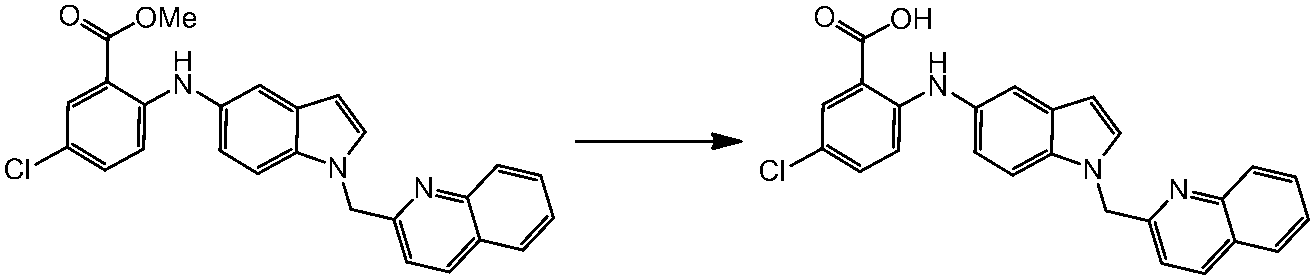
1H-NMR(DMSO-d6)δ:5.72(2H,s),6.53(1H,d,J=3.3Hz),6.91(1H,d,J=9.2Hz),6.97(1H,dd,J=8.6,2.0Hz),7.10(1H,d,J=8.6Hz),7.30(1H,dd,J=9.2,2.6Hz),7.43-7.50(2H,m),7.55-7.66(2H,m),7.74-7.82(2H,m),7.94(1H,d,J=8.6Hz),8.02(1H,d,J=7.9Hz),8.30(1H,d,J=7.9Hz),9.49(1H,s).
MS(ESI/APCI,m/z):428(M+H)+,426(M-H)-.

1H-NMR(CDCl3)δ:3.91(3H,s),5.56(2H,s),6.82(1H,d,J=9.2Hz),7.02(1H,d,J=8.6Hz),7.19-7.36(8H,m),7.40(1H,d,J=2.6Hz),7.67(1H,d,J=9.2Hz),7.93(1H,d,J=2.6Hz),9.39(1H,s).

1H-NMR(DMSO-d6)δ:5.52(2H,s),6.74(1H,d,J=9.9Hz),7.11(1H,d,J=9.2Hz),7.18-7.46(8H,m),7.67(1H,d,J=2.0Hz),7.82(1H,d,J=3.3Hz),7.96(1H,d,J=9.2Hz),9.57(1H,s).
MS(ESI/APCI,m/z):405(M+H)+,403(M-H)-.

1H-NMR(DMSO-d6)δ:0.89(3H,t,J=7.6Hz),1.26(2H,sext,J=7.6Hz),1.74(2H,quin,J=7.6Hz),3.87(3H,s),4.18(2H,t,J=7.3Hz),6.40(1H,d,J=2.6Hz),6.90(1H,d,J=9.2Hz),7.01(1H,dd,J=8.6,2.0Hz),7.34(1H,dd,J=9.2,2.6Hz),7.39-7.44(2H,m),7.51(1H,d,J=8.6Hz),7.80(1H,d,J=2.6Hz),9.24(1H,s).

1H-NMR(DMSO-d6)δ:0.90(3H,t,J=7.3Hz),1.26(2H,sext,J=7.6Hz),1.74(2H,quin,J=7.6Hz),4.17(2H,t,J=7.3Hz),6.40(1H,d,J=2.6Hz),6.91(1H,d,J=8.6Hz),7.01(1H,dd,J=8.9,2.3Hz),7.32(1H,dd,J=8.6,2.6Hz),7.38-7.43(2H,m),7.51(1H,d,J=8.6Hz),7.79(1H,d,J=2.6Hz),9.49(1H,s),13.26(1H,brs).
MS(ESI/APCI,m/z):343(M+H)+,341(M-H)-.

1H-NMR(DMSO-d6)δ:0.90-1.30(5H,m),1.45-1.85(6H,m),3.87(3H,s),4.01(2H,d,J=7.3Hz),6.40(1H,d,J=3.3Hz),6.91(1H,d,J=9.2Hz),7.00(1H,dd,J=8.6,2.0Hz),7.31-7.38(2H,m),7.42(1H,d,J=2.0Hz),7.52(1H,d,J=9.2Hz),7.80(1H,d,J=2.6Hz),9.23(1H,s).

1H-NMR(DMSO-d6)δ:0.90-1.25(5H,m),1.45-1.90(6H,m),4.01(2H,d,J=7.3Hz),6.39(1H,d,J=3.3Hz),6.92(1H,d,J=8.6Hz),7.00(1H,dd,J=8.6,2.0Hz),7.32(1H,dd,J=9.2,2.6Hz),7.36(1H,d,J=3.3Hz),7.38-7.43(1H,m),7.50(1H,d,J=8.6Hz),7.79(1H,d,J=2.6Hz),9.50(1H,s).
MS(ESI/APCI,m/z):383(M+H)+,381(M-H)-.

1H-NMR(DMSO-d6)δ:2.77(3H,d,J=4.6Hz),3.87(3H,s),5.88(2H,s),6.94(1H,d,J=9.2Hz),7.06-7.15(4H,m),7.16-7.31(3H,m),7.35(1H,dd,J=9.2,2.6Hz),7.49-7.57(2H,m),7.81(1H,d,J=2.6Hz),8.52-8.60(1H,m),9.24(1H,s).
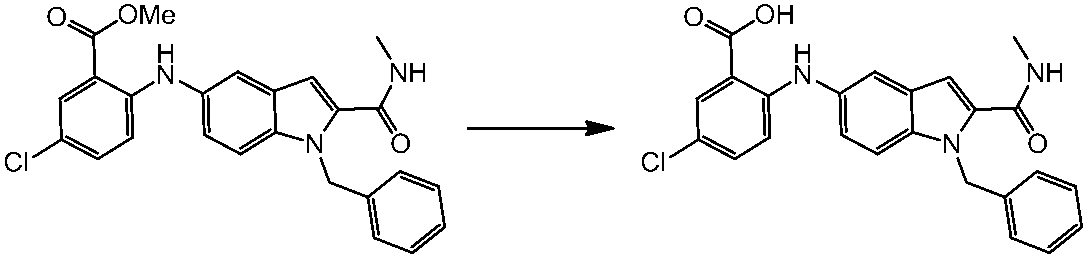
1H-NMR(DMSO-d6)δ:2.77(3H,d,J=4.6Hz),5.87(2H,s),6.94(1H,d,J=9.2Hz),7.06-7.14(4H,m),7.16-7.30(3H,m),7.33(1H,dd,J=9.2,2.6Hz),7.48-7.56(2H,m),7.80(1H,d,J=2.6Hz),8.51-8.60(1H,m),9.51(1H,s).
MS(ESI/APCI,m/z):434(M+H)+,432(M-H)-.

1H-NMR(DMSO-d6)δ:1.38(9H,s),3.02-3.15(2H,m),3.23-3.40(2H,m),3.87(3H,s),5.85(2H,s),6.86-6.97(2H,m),7.08-7.31(7H,m),7.35(1H,dd,J=9.2,2.6Hz),7.50-7.58(2H,m),7.81(1H,d,J=2.6Hz),8.53-8.62(1H,m),9.24(1H,s).

1H-NMR(DMSO-d6)δ:1.38(9H,s),3.02-3.50(4H,m),5.84(2H,s),6.86-6.99(2H,m),7.05-7.15(4H,m),7.16-7.31(4H,m),7.45-7.53(2H,m),7.80(1H,d,J=2.6Hz),8.51-8.60(1H,m).

1H-NMR(DMSO-d6)δ:1.03-1.22(2H,m),1.35-1.52(2H,m),1.38(9H,s),1.90-2.08(1H,m),2.54-2.75(2H,m),3.85-3.98(2H,m),3.88(3H,s),4.08(2H,d,J=7.9Hz),6.41(1H,d,J=2.6Hz),6.92(1H,d,J=9.2Hz),7.01(1H,dd,J=8.6,2.0Hz),7.35(1H,dd,J=9.2,2.6Hz),7.39(1H,d,J=2.6Hz),7.42(1H,d,J=1.3Hz),7.56(1H,d,J=8.6Hz),7.81(1H,d,J=2.6Hz),9.24(1H,s).

1H-NMR(DMSO-d6)δ:1.02-1.21(2H,m),1.35-1.52(2H,m),1.38(9H,s),1.88-2.09(1H,m),2.55-2.75(2H,m),3.86-3.99(2H,m),4.08(2H,d,J=6.6Hz),6.40(1H,d,J=2.6Hz),6.93(1H,d,J=9.2Hz),7.01(1H,dd,J=8.6,2.0Hz),7.30(1H,dd,J=9.2,2.6Hz),7.38(1H,d,J=2.6Hz),7.41(1H,d,J=2.0Hz),7.55(1H,d,J=8.6Hz),7.80(1H,d,J=2.6Hz).
MS(ESI/APCI,m/z):482(M-H)-.
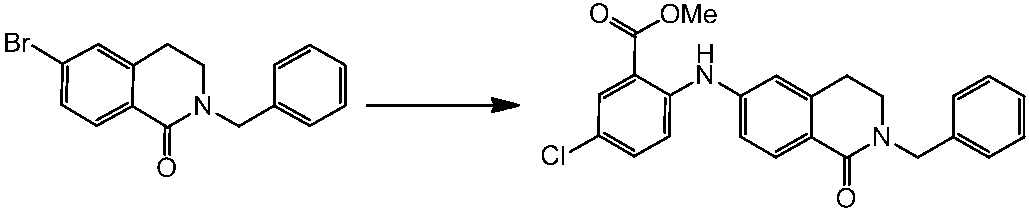
1H-NMR(DMSO-d6)δ:2.91(2H,t,J=6.6Hz),3.46(2H,t,J=6.6Hz),3.86(3H,s),4.69(2H,s),7.09(1H,d,J=2.0Hz),7.17(1H,dd,J=8.3,2.3Hz),7.23-7.39(5H,m),7.45(1H,d,J=9.2Hz),7.53(1H,dd,J=8.9,2.3Hz),7.83-7.89(2H,m),9.32(1H,s).

1H-NMR(DMSO-d6)δ:2.92(2H,t,J=6.6Hz),3.46(2H,t,J=6.6Hz),4.70(2H,s),7.11(1H,d,J=2.0Hz),7.19(1H,dd,J=8.6,2.0Hz),7.23-7.39(5H,m),7.45(1H,d,J=9.2Hz),7.51(1H,dd,J=9.2,2.6Hz),7.84-7.90(2H,m),9.71(1H,s).
MS(ESI/APCI,m/z):405(M-H)-.
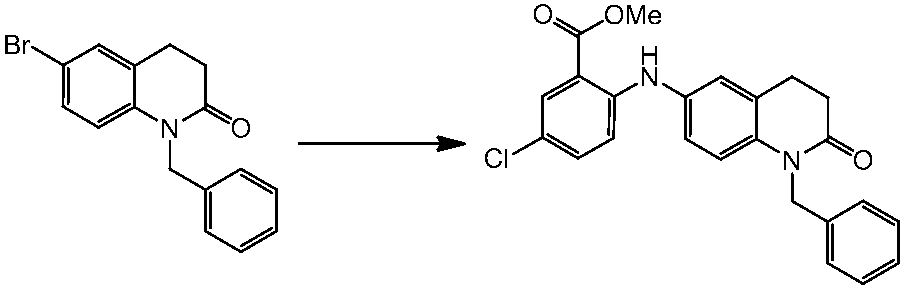
1H-NMR(DMSO-d6)δ:2.66-2.75(2H,m),2.90-3.00(2H,m),3.85(3H,s),5.14(2H,s),6.91(1H,d,J=8.6Hz),6.99-7.09(2H,m),7.16(1H,d,J=2.0Hz),7.19-7.27(3H,m),7.28-7.36(2H,m),7.40(1H,dd,J=8.6,2.6Hz),7.80(1H,d,J=2.6Hz),9.14(1H,s).

1H-NMR(DMSO-d6)δ:2.66-2.75(2H,m),2.90-2.99(2H,m),5.14(2H,s),6.90(1H,d,J=8.6Hz),7.02(1H,dd,J=8.6,2.0Hz),7.06(1H,d,J=9.2Hz),7.16(1H,d,J=2.6Hz),7.19-7.26(3H,m),7.28-7.34(2H,m),7.37(1H,dd,J=8.6,2.6Hz),7.80(1H,d,J=2.6Hz),9.46(1H,s).
MS(ESI/APCI,m/z):405(M-H)-.

1H-NMR(CDCl3)δ:3.91(3H,s),6.64(1H,d,J=2.6Hz),6.97(1H,d,J=9.2Hz),7.07(1H,dd,J=8.9,2.3Hz),7.16(1H,dd,J=8.9,2.3Hz),7.30-7.40(2H,m),7.48-7.57(6H,m),7.91(1H,d,J=2.6Hz),9.37(1H,s).

1H-NMR(DMSO-d6)δ:6.69(1H,d,J=3.3Hz),7.00(1H,d,J=9.2Hz),7.09(1H,dd,J=8.6,2.0Hz),7.35(1H,dd,J=8.6,2.6Hz),7.38-7.45(1H,m),7.53-7.65(6H,m),7.70(1H,d,J=3.3Hz),7.81(1H,d,J=2.6Hz),9.56(1H,s).

MS(ESI,m/z):384(M+H)+.

1H-NMR(DMSO-d6)δ:6.71(1H,d,J=3.3Hz),7.03(1H,d,J=9.2Hz),7.16(1H,dd,J=8.9,2.3Hz),7.36(1H,dd,J=9.2,2.6Hz),7.54(1H,d,J=2.0Hz),7.80-7.84(2H,m),7.94(1H,d,J=3.3Hz),8.09(1H,d,J=8.6Hz),9.26(1H,d,J=2.0Hz),9.60(1H,brs).
MS(ESI,m/z):368(M-H)-.
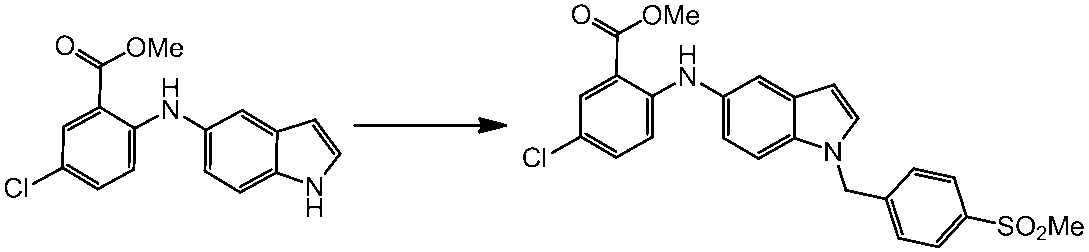
1H-NMR(CDCl3)δ:3.03(3H,s),3.91(3H,s),5.43(2H,s),6.57(1H,d,J=3.3Hz),6.90-6.96(1H,m),7.04(1H,dd,J=8.6,2.0Hz),7.13-7.20(3H,m),7.24-7.31(2H,m),7.51(1H,d,J=2.0Hz),7.86-7.93(3H,m),9.34(1H,s).

1H-NMR(DMSO-d6)δ:3.17(3H,s),5.57(2H,s),6.51(1H,d,J=3.3Hz),6.92(1H,d,J=9.2Hz),7.00(1H,dd,J=8.6,2.0Hz),7.31(1H,dd,J=9.2,2.6Hz),7.40-7.50(4H,m),7.59(1H,d,J=2.6Hz),7.79(1H,d,J=2.6Hz),7.88(2H,d,J=7.9Hz),9.50(1H,s).


1H-NMR(DMSO-d6)δ:6.56(1H,d,J=3.3Hz),7.13(1H,d,J=7.3Hz),7.18-7.25(2H,m),7.35(1H,d,J=7.9Hz),7.39-7.47(2H,m),7.56-7.64(4H,m),7.66(1H,d,J=3.3Hz),7.88(1H,d,J=2.6Hz),10.00(1H,s).

1H-NMR(CDCl3)δ:3.91(3H,s),5.32(2H,s),6.47(1H,t,J=73.7Hz),6.53(1H,d,J=3.3Hz),6.88-6.98(3H,m),7.00-7.07(2H,m),7.11-7.18(2H,m),7.20-7.34(2H,m),7.50(1H,d,J=2.0Hz),7.90(1H,d,J=2.6Hz),9.33(1H,s).

1H-NMR(DMSO-d6)δ:5.45(2H,s),6.48(1H,d,J=3.3Hz),6.91(1H,d,J=9.2Hz),7.00(1H,dd,J=8.6,2.0Hz),7.03-7.10(3H,m),7.20(1H,t,J=74.0Hz),7.31(1H,dd,J=9.2,2.6Hz),7.33-7.46(2H,m),7.49(1H,d,J=8.6Hz),7.56(1H,d,J=2.6Hz),7.79(1H,d,J=2.6Hz),9.49(1H,s).
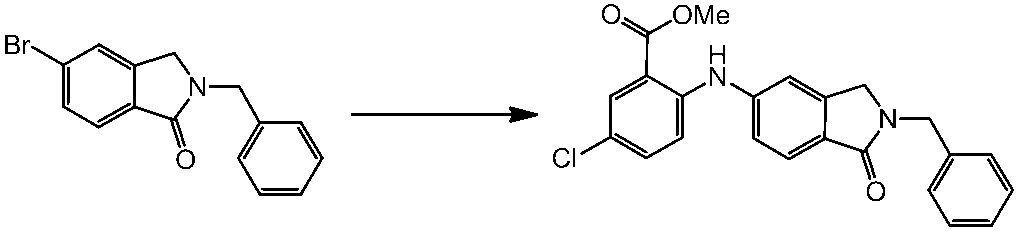
1H-NMR(CDCl3)δ:3.91(3H,s),4.23(2H,s),4.79(2H,s),7.19(1H,s),7.24-7.38(8H,m),7.83(1H,d,J=8.6Hz),7.95(1H,t,J=1.3Hz),9.59(1H,s).

1H-NMR(DMSO-d6)δ:4.31(2H,s),4.70(2H,s),7.23-7.50(9H,m),7.66(1H,d,J=7.9Hz),7.86(1H,d,J=2.6Hz),9.76(1H,s).

1H-NMR(CDCl3)δ:3.94(3H,s),4.83(2H,s),7.14-7.21(1H,m),7.28-7.48(6H,m),7.82-7.89(3H,m),7.98(1H,d,J=2.0Hz),9.67(1H,s).

1H-NMR(DMSO-d6)δ:4.97(2H,s),7.16(1H,t,J=7.3Hz),7.32-7.37(1H,m),7.39-7.57(5H,m),7.71(1H,d,J=8.6Hz),7.86-7.93(3H,m),9.81(1H,s).

1H-NMR(CDCl3)δ:3.13(2H,t,J=8.3Hz),3.90(3H,s),3.99(2H,t,J=8.3Hz),6.87-7.05(4H,m),7.12(1H,d,J=7.9Hz),7.15-7.26(3H,m),7.30-7.40(2H,m),7.89(1H,d,J=2.6Hz),9.16(1H,s).

1H-NMR(DMSO-d6)δ:3.10(2H,t,J=8.3Hz),3.96(2H,t,J=8.6Hz),6.90-6.99(3H,m),7.07-7.15(2H,m),7.20-7.27(2H,m),7.31-7.40(3H,m),7.78(1H,d,J=2.6Hz),9.37(1H,s).

1H-NMR(CDCl3)δ:3.11(2H,t,J=8.3Hz),3.91(3H,s),4.00-4.22(2H,m),6.97-7.11(3H,m),7.22(1H,dd,J=9.2,2.6Hz),7.40-7.62(5H,m),7.91(1H,d,J=2.6Hz),8.18(1H,brs),9.31(1H,s).
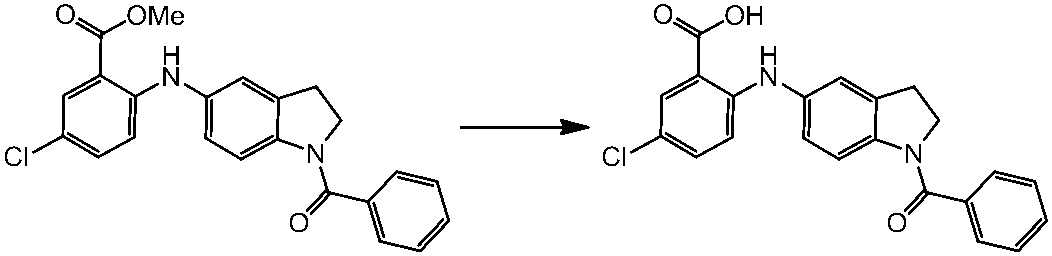
1H-NMR(DMSO-d6)δ:3.09(2H,t,J=8.3Hz),4.02(2H,t,J=8.3Hz),7.09(2H,d,J=9.2Hz),7.19(1H,s),7.40(1H,dd,J=9.2,2.6Hz),7.45-7.64(5H,m),7.82(1H,d,J=2.6Hz),8.06(1H,brs),9.55(1H,s).
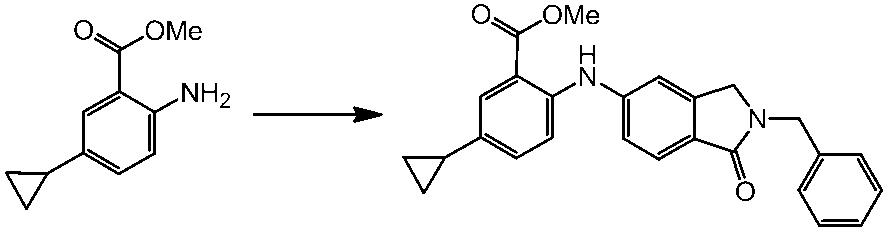
1H-NMR(CDCl3)δ:0.60-0.67(2H,m),0.88-0.96(2H,m),1.80-1.90(1H,m),3.89(3H,s),4.20(2H,s),4.78(2H,s),7.11(1H,dd,J=8.6,2.0Hz),7.14-7.17(1H,m),7.20-7.38(7H,m),7.71(1H,d,J=2.0Hz),7.79(1H,d,J=8.6Hz),9.46(1H,s).

1H-NMR(DMSO-d6)δ:0.56-0.65(2H,m),0.86-0.96(2H,m),1.85-1.97(1H,m),4.28(2H,s),4.69(2H,s),7.13-7.41(9H,m),7.61(1H,d,J=7.9Hz),7.66(1H,d,J=2.0Hz),9.58(1H,s),13.19(1H,brs).
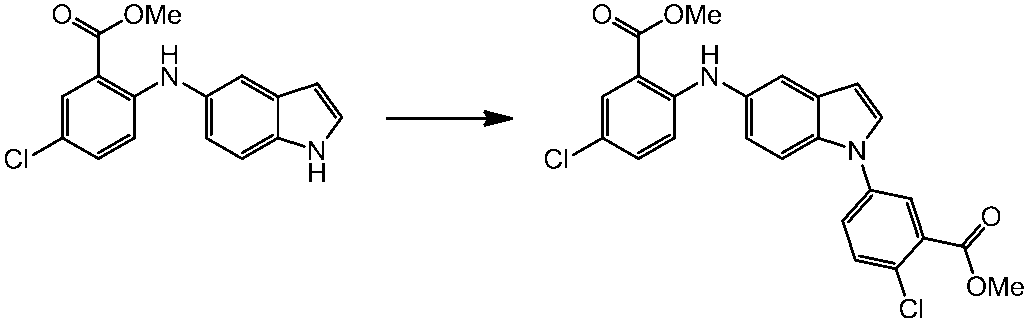
1H-NMR(CDCl3)δ:3.92(3H,s),3.98(3H,s),6.67(1H,d,J=2.6Hz),6.97(1H,d,J=9.2Hz),7.11(1H,dd,J=8.6,2.0Hz),7.18(1H,dd,J=9.2,2.6Hz),7.34(1H,d,J=3.3Hz),7.44-7.68(4H,m),7.92(1H,d,J=2.6Hz),7.99(1H,d,J=2.0Hz),9.38(1H,brs).

1H-NMR(DMSO-d6)δ:6.72(1H,d,J=3.3Hz),7.01(1H,d,J=9.2Hz),7.13(1H,dd,J=8.6,2.0Hz),7.36(1H,dd,J=9.2,2.6Hz),7.56(1H,d,J=2.0Hz),7.61(1H,d,J=8.6Hz),7.70-7.85(4H,m),7.97(1H,d,J=2.6Hz),9.57(1H,brs).
MS(ESI/APCI,m/z):439(M-H)-.

1H-NMR(CDCl3)δ:3.91(3H,s),4.43(2H,s),5.31(2H,s),5.46-5.69(1H,m),6.32-6.57(2H,m),6.64-6.70(1H,m),6.78-6.87(2H,m),6.93(1H,d,J=9.2Hz),7.02(1H,dd,J=8.9,2.3Hz),7.11-7.19(2H,m),7.20-7.33(2H,m),7.50(1H,d,J=2.0Hz),7.90(1H,d,J=2.6Hz),9.33(1H,brs).

1H-NMR(DMSO-d6)δ:4.62(2H,s),5.39(2H,s),6.46(1H,d,J=3.3Hz),6.73-6.84(3H,m),6.91(1H,d,J=9.2Hz),6.99(1H,dd,J=8.6,2.0Hz),7.16-7.35(2H,m),7.43(1H,d,J=2.0Hz),7.49(1H,d,J=8.6Hz),7.55(1H,d,J=3.3Hz),7.78(1H,d,J=2.6Hz),9.49(1H,brs).
MS(ESI/APCI,m/z):448(M-H)-.

1H-NMR(CDCl3)δ:3.76(3H,s),3.91(3H,s),4.56(2H,s),5.29(2H,s),6.51(1H,d,J=2.6Hz),6.63-6.70(1H,m),6.75-6.83(2H,m),6.93(1H,d,J=9.2Hz),7.02(1H,dd,J=8.6,2.0Hz),7.10-7.19(2H,m),7.20-7.29(2H,m),7.48(1H,d,J=2.0Hz),7.90(1H,d,J=2.6Hz),9.32(1H,brs).

1H-NMR(DMSO-d6)δ:4.62(2H,s),5.39(2H,s),6.46(1H,d,J=2.6Hz),6.74-6.84(3H,m),6.91(1H,d,J=9.2Hz),6.99(1H,dd,J=8.6,2.0Hz),7.18-7.26(1H,m),7.30(1H,dd,J=9.2,2.6Hz),7.43(1H,d,J=2.0Hz),7.49(1H,d,J=8.6Hz),7.54(1H,d,J=2.6Hz),7.78(1H,d,J=2.6Hz),9.50(1H,brs).
MS(ESI/APCI,m/z):451(M+H)+,449(M-H)-.

1H-NMR(CDCl3)δ:3.59(2H,t,J=6.3Hz),3.91(3H,s),4.22(2H,t,J=6.3Hz),5.29(2H,s),6.51(1H,d,J=3.3Hz),6.66-6.70(1H,m),6.76(1H,d,J=7.9Hz),6.82(1H,dd,J=8.3,2.3Hz),6.92(1H,d,J=9.2Hz),7.02(1H,dd,J=8.6,2.0Hz),7.10-7.19(2H,m),7.20-7.29(2H,m),7.49(1H,d,J=2.0Hz),7.90(1H,d,J=2.6Hz),9.32(1H,brs).

1H-NMR(CDCl3)δ:2.45-2.67(4H,m),2.68-2.88(2H,m),3.64-3.82(4H,m),3.91(3H,s),3.99-4.21(2H,m),5.28(2H,s),6.45-6.60(1H,m),6.65-7.10(5H,m),7.10-7.36(4H,m),7.43-7.58(1H,m),7.85-7.98(1H,m),9.24-9.44(1H,m).

1H-NMR(CD3OD)δ:3.25-3.34(8H,m),3.51-3.61(2H,m),4.25-4.35(2H,m),5.39(2H,s),6.49(1H,d,J=3.3Hz),6.67-6.75(1H,m),6.85-7.02(4H,m),7.12-7.22(1H,m),7.23-7.36(3H,m),7.38-7.46(1H,m),7.86(1H,d,J=2.6Hz).
MS(ESI/APCI,m/z):506(M+H)+,504(M-H)-.

1H-NMR(CDCl3)δ:3.42(3H,s),3.59-3.86(2H,m),3.91(3H,s),3.99-4.20(2H,m),5.28(2H,s),6.46-6.59(1H,m),6.63-7.08(5H,m),7.10-7.36(4H,m),7.41-7.61(1H,m),7.83-8.02(1H,m),9.31(1H,brs).

1H-NMR(DMSO-d6)δ:3.27(3H,s),3.55-3.67(2H,m),3.94-4.08(2H,m),5.39(2H,s),6.46(1H,d,J=2.6Hz),6.73-6.87(3H,m),6.91(1H,d,J=8.6Hz),6.99(1H,dd,J=8.6,2.0Hz),7.17-7.27(1H,m),7.30(1H,dd,J=9.2,2.6Hz),7.43(1H,d,J=1.3Hz),7.48(1H,d,J=8.6Hz),7.55(1H,d,J=3.3Hz),7.78(1H,d,J=2.6Hz),9.48(1H,brs),13.26(1H,brs).
MS(ESI,m/z):451(M+H)+,449(M-H)-.


1H-NMR(DMSO-d6)δ:3.61-3.72(2H,m),3.86-3.96(2H,m),4.82(1H,t,J=5.6Hz),5.39(2H,s),6.47(1H,d,J=3.3Hz),6.71-6.86(3H,m),6.91(1H,d,J=9.2Hz),6.99(1H,dd,J=8.6,2.0Hz),7.17-7.27(1H,m),7.30(1H,dd,J=9.2,2.6Hz),7.43(1H,d,J=2.0Hz),7.48(1H,d,J=9.2Hz),7.55(1H,d,J=3.3Hz),7.78(1H,d,J=2.6Hz),9.50(1H,brs).
MS(ESI,m/z):437(M+H)+,435(M-H)-.

1H-NMR(CDCl3)δ:3.91(3H,s),5.52(2H,s),6.53(1H,d,J=3.3Hz),6.88(1H,d,J=1.3Hz),6.92(1H,d,J=9.2Hz),7.05(1H,dd,J=8.9,2.3Hz),7.14(1H,dd,J=9.2,2.6Hz),7.25(1H,d,J=3.3Hz),7.33(1H,d,J=8.6Hz),7.49(1H,d,J=2.0Hz),7.90(1H,d,J=2.6Hz),8.81(1H,d,J=2.0Hz),9.33(1H,brs).

1H-NMR(DMSO-d6)δ:5.54(2H,s),6.44(1H,d,J=3.3Hz),6.90(1H,d,J=9.2Hz),7.01(1H,dd,J=8.6,2.0Hz),7.31(1H,dd,J=9.2,2.6Hz),7.42(1H,d,J=2.0Hz),7.50(1H,d,J=3.3Hz),7.55(1H,d,J=2.0Hz),7.59(1H,d,J=8.6Hz),7.79(1H,d,J=2.6Hz),9.06(1H,d,J=2.0Hz),9.49(1H,brs),13.28(1H,brs).
MS(ESI/APCI,m/z):382(M-H)-.
1H-NMR(CDCl3)δ:3.91(3H,s),6.70(1H,d,J=3.3Hz),6.98(1H,d,J=9.2Hz),7.05(1H,dd,J=8.9,2.3Hz),7.12(1H,d,J=8.6Hz),7.15-7.21(2H,m),7.49-7.66(3H,m),7.72-7.82(1H,m),7.91(1H,d,J=2.6Hz),8.06(1H,d,J=8.6Hz),9.35(1H,brs).

1H-NMR(DMSO-d6)δ:6.71(1H,d,J=3.3Hz),7.00(1H,d,J=9.2Hz),7.05(1H,dd,J=8.6,2.0Hz),7.12(1H,d,J=8.6Hz),7.35(1H,dd,J=9.2,2.6Hz),7.51-7.58(2H,m),7.71-7.84(3H,m),7.89-7.99(1H,m),8.22(1H,dd,J=8.3,1.7Hz),9.58(1H,s).
MS(ESI,m/z):408(M+H)+,406(M-H)-.

1H-NMR(CDCl3)δ:3.92(3H,s),6.65-6.85(1H,m),6.91-8.04(11H,m),9.38(1H,brs).
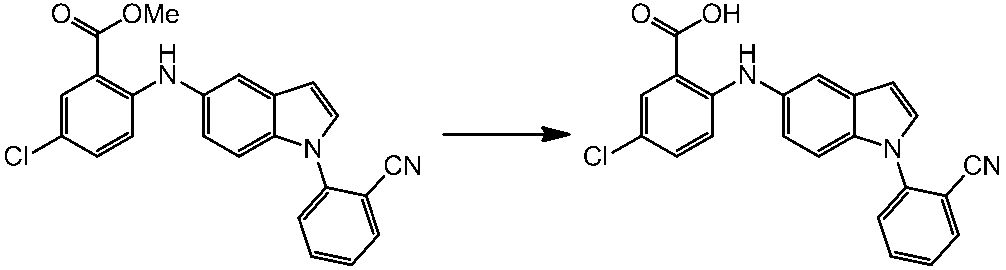
1H-NMR(DMSO-d6)δ:6.76(1H,d,J=3.3Hz),7.02(1H,d,J=9.2Hz),7.11(1H,dd,J=8.6,2.0Hz),7.28-7.39(2H,m),7.58(1H,d,J=1.3Hz),7.65-7.72(1H,m),7.74(1H,d,J=3.3Hz),7.77(1H,d,J=7.3Hz),7.82(1H,d,J=2.6Hz),7.89-7.97(1H,m),8.11(1H,dd,J=7.6,1.7Hz),9.58(1H,brs),13.33(1H,brs).
MS(ESI,m/z):388(M+H)+,386(M-H)-.

1H-NMR(CDCl3)δ:3.63(2H,s),3.91(3H,s),6.66(1H,d,J=3.3Hz),6.82-6.92(2H,m),6.97(1H,d,J=9.2Hz),7.05(1H,dd,J=8.6,2.0Hz),7.10-7.19(2H,m),7.19-7.31(3H,m),7.53(1H,d,J=2.0Hz),7.91(1H,d,J=2.6Hz),9.36(1H,s).
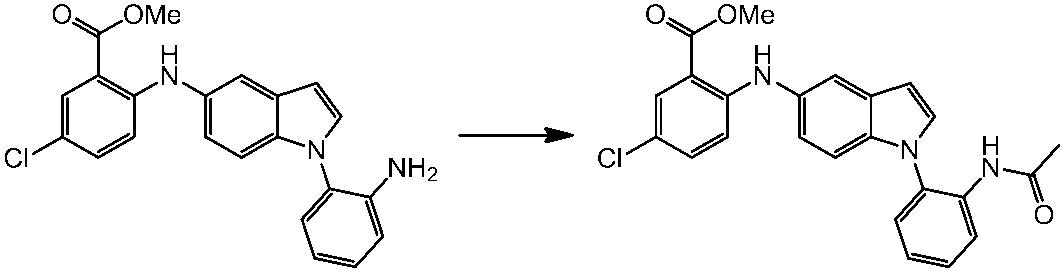
1H-NMR(CDCl3)δ:1.95(3H,s),3.92(3H,s),6.67-6.92(2H,m),6.93-7.41(7H,m),7.42-7.65(2H,m),7.85-8.03(1H,m),8.33-8.54(1H,m),9.40(1H,brs).
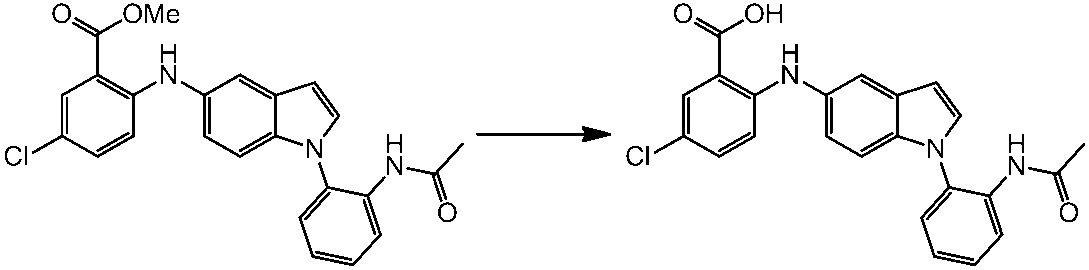
1H-NMR(DMSO-d6)δ:1.82(3H,s),6.66(1H,d,J=3.3Hz),6.91-7.12(3H,m),7.25-7.55(6H,m),7.72(1H,d,J=8.6Hz),7.81(1H,d,J=2.6Hz),9.33(1H,s).

1H-NMR(CDCl3)δ:3.92(3H,s),6.68(1H,d,J=4.0Hz),7.00(1H,d,J=9.2Hz),7.12-7.23(3H,m),7.44-7.52(2H,m),7.73(1H,d,J=4.0Hz),7.79-7.89(1H,m),7.92(1H,d,J=2.0Hz),8.26(1H,d,J=9.2Hz),8.54-8.60(1H,m),9.39(1H,brs).
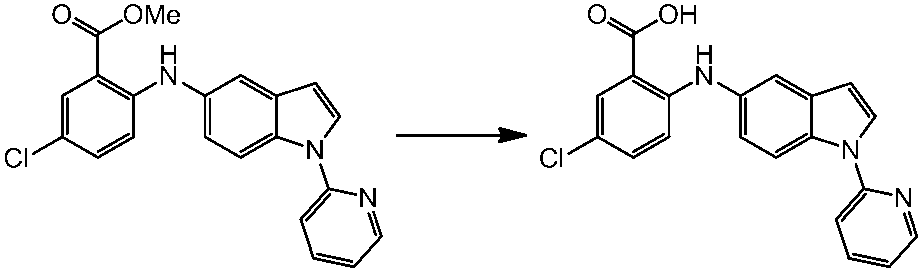
1H-NMR(DMSO-d6)δ:6.75(1H,d,J=4.0Hz),7.06(1H,d,J=9.2Hz),7.16(1H,dd,J=9.2,2.0Hz),7.27-7.41(2H,m),7.54(1H,d,J=2.0Hz),7.74-7.86(2H,m),7.94-8.05(1H,m),8.09(1H,d,J=3.3Hz),8.46(1H,d,J=8.6Hz),8.58(1H,d,J=4.0Hz),9.60(1H,brs).
MS(ESI/APCI,m/z):364(M+H)+,362(M-H)-.

1H-NMR(CDCl3)δ:3.93(3H,s),6.69-6.86(1H,m),6.98-7.14(1H,m),7.15-7.38(2H,m),7.46-7.60(1H,m),7.70-7.86(1H,m),7.89-8.03(1H,m),8.25-8.65(3H,m),8.78-9.07(1H,m),9.34-9.53(1H,m).
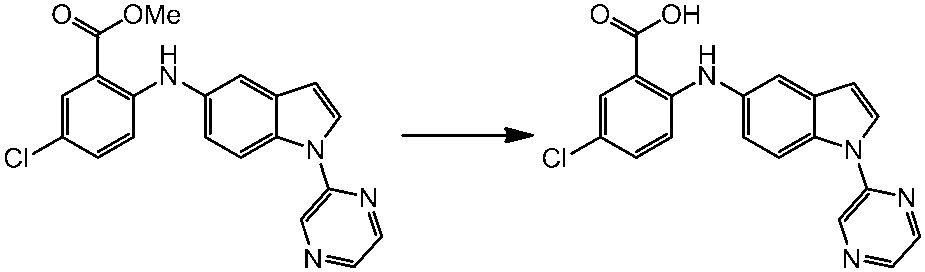
1H-NMR(DMSO-d6)δ:6.83(1H,d,J=3.3Hz),7.08(1H,d,J=9.2Hz),7.20(1H,dd,J=8.9,2.3Hz),7.38(1H,dd,J=9.2,2.6Hz),7.57(1H,d,J=2.6Hz),7.83(1H,d,J=2.6Hz),8.24(1H,d,J=3.3Hz),8.49(1H,d,J=8.6Hz),8.53(1H,d,J=2.6Hz),8.57-8.64(1H,m),9.20(1H,d,J=1.3Hz),9.61(1H,s).
MS(ESI/APCI,m/z):363(M-H)-.

1H-NMR(CDCl3)δ:3.92(3H,s),6.65-6.83(1H,m),6.91-7.36(5H,m),7.38-7.83(5H,m),7.87-8.05(1H,m),9.41(1H,brs).
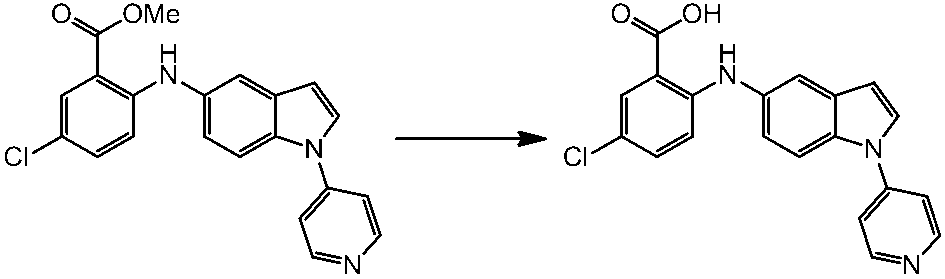
1H-NMR(DMSO-d6)δ:6.79(1H,d,J=4.0Hz),7.05(1H,d,J=9.2Hz),7.17(1H,dd,J=8.6,2.0Hz),7.37(1H,dd,J=8.6,2.6Hz),7.58(1H,d,J=2.0Hz),7.70-7.79(2H,m),7.80-7.94(3H,m),8.72(2H,d,J=5.3Hz),9.59(1H,brs).
MS(ESI/APCI,m/z):362(M-H)-.

1H-NMR(CDCl3)δ:3.93(3H,s),6.75(1H,d,J=3.3Hz),7.00(1H,d,J=9.2Hz),7.10-7.23(2H,m),7.47(1H,d,J=3.3Hz),7.54-7.71(3H,m),7.74-7.84(1H,m),7.87-7.96(2H,m),8.21(1H,d,J=9.2Hz),8.26(1H,d,J=2.6Hz),9.16(1H,d,J=2.6Hz),9.40(1H,s).

1H-NMR(DMSO-d6)δ:6.80(1H,d,J=3.3Hz),7.03(1H,d,J=9.2Hz),7.16(1H,dd,J=8.6,2.0Hz),7.37(1H,dd,J=8.9,3.0Hz),7.60(1H,d,J=2.0Hz),7.68-7.78(2H,m),7.78-7.87(2H,m),7.93(1H,d,J=3.3Hz),8.13(2H,d,J=8.6Hz),8.67(1H,d,J=2.6Hz),9.21(1H,d,J=2.6Hz),9.59(1H,s).
MS(ESI/APCI,m/z):414(M+H)+,412(M-H)-.

1H-NMR(DMSO-d6)δ:2.64(3H,s),3.88(3H,s),6.85(1H,d,J=3.3Hz),7.12(1H,d,J=9.2Hz),7.25(1H,dd,J=8.6,2.0Hz),7.41(1H,dd,J=9.2,2.6Hz),7.55(1H,d,J=2.0Hz),7.60(1H,d,J=5.9Hz),7.84(1H,d,J=2.6Hz),8.21(1H,d,J=4.0Hz),8.60-8.67(2H,m),9.33(1H,s).

1H-NMR(DMSO-d6)δ:2.64(3H,s),6.80(1H,d,J=3.3Hz),7.06-7.21(3H,m),7.42(1H,d,J=2.0Hz),7.55(1H,d,J=5.9Hz),7.84(1H,d,J=2.0Hz),8.13(1H,d,J=4.0Hz),8.53(1H,d,J=8.6Hz),8.58(1H,d,J=5.9Hz).
MS(ESI/APCI,m/z):409(M-H)-.

1H-NMR(CDCl3)δ:3.04(3H,s),3.93(3H,s),6.78(1H,d,J=4.0Hz),7.09(1H,d,J=9.2Hz),7.18-7.32(2H,m),7.39(1H,d,J=5.9Hz),7.46(1H,d,J=2.0Hz),7.74(1H,d,J=4.0Hz),7.94(1H,d,J=2.6Hz),8.69(1H,d,J=9.2Hz),8.78(1H,d,J=5.9Hz),9.46(1H,s).


1H-NMR(DMSO-d6)δ:3.65-3.89(8H,m),6.78(1H,d,J=3.3Hz),7.04-7.15(2H,m),7.21(1H,dd,J=8.9,2.3Hz),7.39(1H,dd,J=9.2,2.6Hz),7.53(1H,d,J=2.0Hz),7.83(1H,d,J=2.6Hz),8.14(1H,d,J=3.3Hz),8.43(1H,d,J=5.3Hz),8.50(1H,d,J=9.2Hz),9.61(1H,brs).
MS(ESI,m/z):450(M+H)+,448(M-H)-.


1H-NMR(DMSO-d6)δ:3.19-3.36(6H,m),3.53-3.74(2H,m),3.80-3.98(2H,m),6.84(1H,d,J=4.0Hz),7.02-7.27(3H,m),7.40(1H,dd,J=9.2,2.6Hz),7.55(1H,d,J=2.0Hz),7.83(1H,d,J=2.6Hz),8.19(1H,d,J=3.3Hz),8.38(1H,d,J=5.9Hz),8.59(1H,d,J=7.3Hz),9.63(1H,s).
MS(ESI,m/z):452(M+H)+,450(M-H)-.


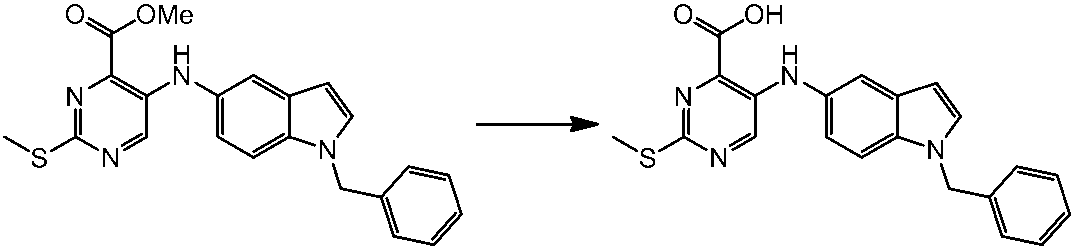
1H-NMR(DMSO-d6)δ:2.45-2.56(3H,m),5.43(2H,s),6.46(1H,d,J=2.6Hz),7.03(1H,dd,J=8.6,2.0Hz),7.18-7.37(5H,m),7.45-7.51(2H,m),7.54(1H,d,J=2.6Hz),8.53(1H,s),8.83(1H,s).
MS(ESI,m/z):391(M+H)+,389(M-H)-.

1H-NMR(CDCl3)δ:1.43-1.88(6H,m),1.93-2.10(2H,m),2.81-2.96(1H,m),3.90(3H,s),5.32(2H,s),6.52(1H,dd,J=12.9,3.0Hz),6.62(1H,d,J=8.6Hz),6.98(1H,dd,J=8.6,2.6Hz),7.05(1H,dd,J=8.6,2.0Hz),7.09-7.38(7H,m),7.50(1H,d,J=2.0Hz),7.80(1H,d,J=2.6Hz),9.22(1H,s).
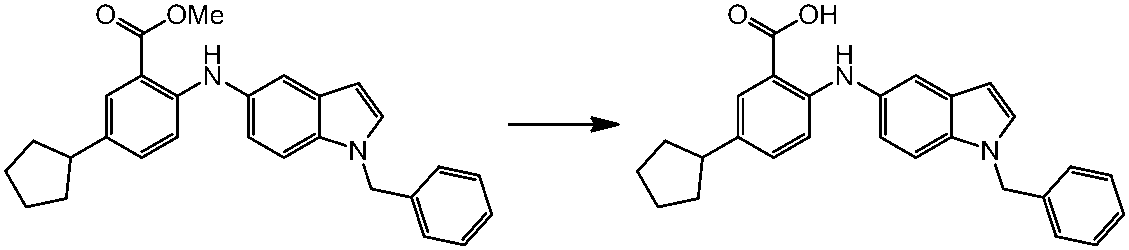
1H-NMR(DMSO-d6)δ:1.33-1.85(6H,m),1.87-2.06(2H,m),2.74-2.99(1H,m),5.42(2H,s),6.44(1H,d,J=2.6Hz),6.86-7.03(2H,m),7.15-7.50(8H,m),7.52(1H,d,J=3.3Hz),7.71(1H,d,J=2.0Hz),9.36(1H,s),12.83(1H,s).
MS(ESI/APCI,m/z):409(M-H)-.
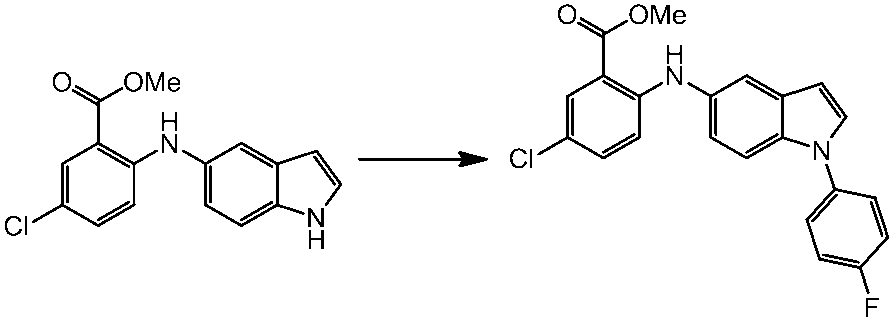
1H-NMR(DMSO-d6)δ:3.88(3H,s),6.65-6.76(1H,m),6.98(1H,dd,J=9.2,3.3Hz),7.09(1H,dd,J=9.2,2.0Hz),7.31-7.77(8H,m),7.82(1H,d,J=2.6Hz),9.29(1H,s).

1H-NMR(DMSO-d6)δ:6.65-6.73(1H,m),6.99(1H,dd,J=9.2,3.3Hz),7.09(1H,dd,J=8.9,2.3Hz),7.30-7.74(8H,m),7.81(1H,d,J=2.6Hz),9.58(1H,s).
MS(ESI/APCI,m/z):379(M-H)-.

1H-NMR(DMSO-d6)δ:3.88(3H,s),6.74(1H,d,J=3.3Hz),7.01(1H,d,J=9.2Hz),7.14(1H,dd,J=8.6,2.0Hz),7.39(1H,dd,J=9.2,2.6Hz),7.53-7.66(2H,m),7.74-7.88(4H,m),7.91-8.02(2H,m),9.30(1H,s).
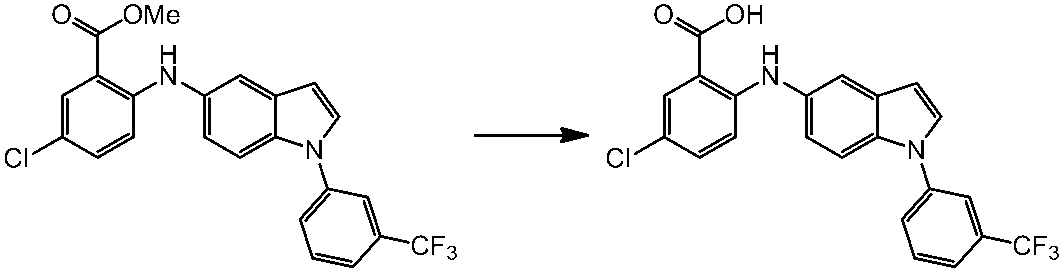
1H-NMR(DMSO-d6)δ:6.74(1H,d,J=3.3Hz),7.02(1H,d,J=9.2Hz),7.14(1H,dd,J=8.6,2.0Hz),7.36(1H,dd,J=9.2,2.6Hz),7.54-7.65(2H,m),7.73-7.88(4H,m),7.91-8.01(2H,m),9.60(1H,s).
MS(ESI/APCI,m/z):429(M-H)-.

1H-NMR(DMSO-d6)δ:3.88(3H,s),6.72(1H,d,J=3.3Hz),6.98(1H,d,J=9.2Hz),7.09(1H,dd,J=8.6,2.0Hz),7.26(1H,dd,J=8.6,2.0Hz),7.33-7.72(7H,m),7.82(1H,d,J=2.6Hz),9.29(1H,s).

1H-NMR(DMSO-d6)δ:6.71(1H,d,J=3.3Hz),6.99(1H,d,J=8.6Hz),7.08(1H,dd,J=8.6,2.0Hz),7.25(1H,dd,J=8.6,2.0Hz),7.35(1H,dd,J=8.6,2.6Hz),7.38-7.48(1H,m),7.49-7.71(5H,m),7.81(1H,d,J=2.6Hz),9.56(1H,s),13.34(1H,s).
MS(ESI/APCI,m/z):381(M+H)+,379(M-H)-.

1H-NMR(DMSO-d6)δ:3.88(3H,s),6.74(1H,d,J=3.3Hz),7.01(1H,d,J=9.2Hz),7.14(1H,dd,J=8.6,2.0Hz),7.39(1H,dd,J=9.2,2.6Hz),7.54-7.66(2H,m),7.73-7.89(4H,m),7.91-8.02(2H,m),9.30(1H,s).

1H-NMR(DMSO-d6)δ:6.74(1H,d,J=3.3Hz),7.02(1H,d,J=8.6Hz),7.14(1H,dd,J=8.6,2.0Hz),7.36(1H,dd,J=9.2,2.6Hz),7.54-7.65(2H,m),7.73-7.88(4H,m),7.91-8.02(2H,m),9.58(1H,s),13.35(1H,s).
MS(ESI/APCI,m/z):431(M+H)+,429(M-H)-.
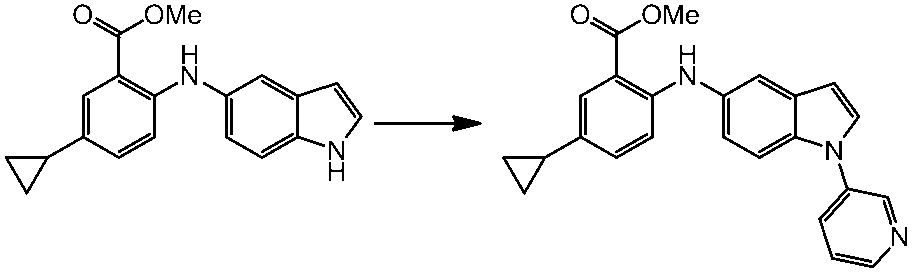
1H-NMR(CDCl3)δ:0.56-0.65(2H,m),0.80-0.97(2H,m),1.75-1.89(1H,m),3.92(3H,d,J=2.0Hz),6.68(1H,d,J=4.0Hz),6.99-7.07(2H,m),7.13(1H,dd,J=8.6,2.0Hz),7.34(1H,d,J=3.3Hz),7.43-7.59(3H,m),7.67-7.73(1H,m),7.82-7.90(1H,m),8.62(1H,dd,J=4.6,1.3Hz),8.85(1H,d,J=2.0Hz),9.27(1H,s).
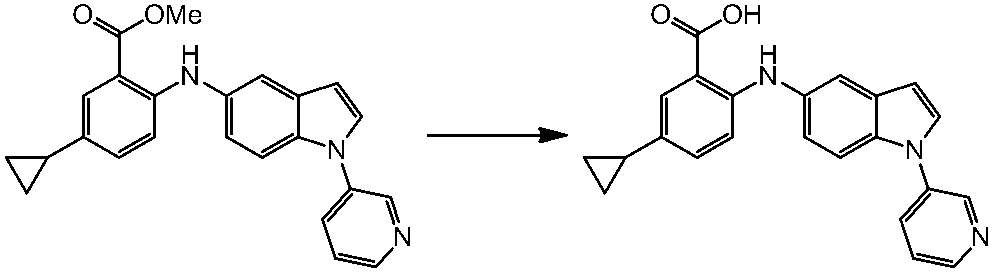
1H-NMR(DMSO-d6)δ:0.47-0.64(2H,m),0.77-0.96(2H,m),1.77-1.94(1H,m),6.72(1H,d,J=2.6Hz),6.92-7.18(3H,m),7.45-7.70(4H,m),7.76(1H,d,J=3.3Hz),8.10(1H,d,J=7.9Hz),8.61(1H,d,J=4.0Hz),8.88(1H,d,J=2.0Hz),9.42(1H,brs),12.93(1H,brs).
MS(ESI,m/z):370(M+H)+,368(M-H)-.

1H-NMR(DMSO-d6)δ:3.87(3H,s),5.52(2H,s),6.49(1H,d,J=2.6Hz),6.90(1H,d,J=9.2Hz),6.95-7.06(2H,m),7.25-7.37(2H,m),7.42-4-7.50(2H,m),7.55(1H,d,J=2.6Hz),7.73(1H,td,J=7.8,1.8Hz),7.80(1H,d,J=2.6Hz),8.52-8.57(1H,m),9.23(1H,s).

1H-NMR(DMSO-d6)δ:5.51(2H,s),6.48(1H,d,J=3.3Hz),6.91(1H,d,J=9.2Hz),6.95-7.05(2H,m),7.25-7.34(2H,m),7.42-7.48(2H,m),7.54(1H,d,J=3.3Hz),7.73(1H,td,J=7.6,2.0Hz),7.78(1H,d,J=2.6Hz),8.51-8.57(1H,m),9.48(1H,s).
MS(ESI/APCI,m/z):376(M-H)-.
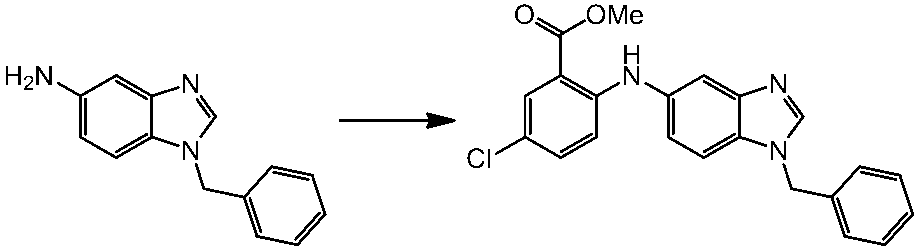
1H-NMR(DMSO-d6)δ:3.87(3H,s),5.51(2H,s),6.96(1H,d,J=8.6Hz),7.08-7.15(1H,m),7.25-7.40(6H,m),7.50-7.58(2H,m),7.81(1H,d,J=2.6Hz),8.45(1H,s),9.26(1H,s).

1H-NMR(DMSO-d6)δ:5.55(2H,s),7.02(1H,d,J=8.6Hz),7.18(1H,dd,J=8.6,2.0Hz),7.29-7.40(6H,m),7.56(1H,d,J=1.3Hz),7.59(1H,d,J=8.6Hz),7.81(1H,d,J=2.6Hz),8.68(1H,s),9.55(1H,s).
MS(ESI/APCI,m/z):376(M-H)-.
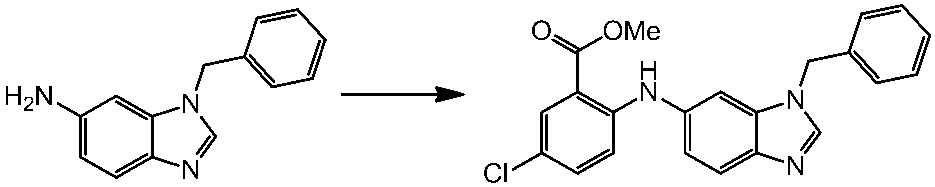
1H-NMR(DMSO-d6)δ:3.86(3H,s),5.47(2H,s),6.97(1H,d,J=9.2Hz),7.05-7.12(1H,m),7.25-7.50(7H,m),7.66(1H,d,J=8.6Hz),7.82(1H,d,J=2.6Hz),8.40(1H,s),9.32(1H,s).

1H-NMR(DMSO-d6)δ:5.64(2H,s),7.05(1H,d,J=8.6Hz),7.31-7.47(7H,m),7.66(1H,d,J=2.0Hz),7.77(1H,d,J=8.6Hz),7.85(1H,d,J=2.6Hz),9.30(1H,s),9.69(1H,s).
MS(ESI/APCI,m/z):376(M-H)-.

1H-NMR(DMSO-d6)δ:3.71(3H,s),3.87(3H,s),5.34(2H,s),6.45(1H,d,J=3.3Hz),6.84-6.92(3H,m),6.98(1H,dd,J=8.6,2.0Hz),7.17-7.25(2H,m),7.32(1H,dd,J=9.2,2.6Hz),7.38-7.55(3H,m),7.80(1H,d,J=2.6Hz),9.22(1H,s).

1H-NMR(DMSO-d6)δ:3.71(3H,s),5.34(2H,s),6.44(1H,d,J=3.3Hz),6.84-6.92(3H,m),6.98(1H,dd,J=8.6,2.0Hz),7.17-7.25(2H,m),7.30(1H,dd,J=9.2,2.6Hz),7.42(1H,d,J=2.0Hz),7.47-7.55(2H,m),7.78(1H,d,J=2.6Hz),9.48(1H,brs).
MS(ESI/APCI,m/z):405(M-H)-.

1H-NMR(DMSO-d6)δ:3.87(3H,s),5.49(2H,s),6.49(1H,d,J=3.3Hz),6.90(1H,d,J=8.6Hz),7.01(1H,dd,J=8.6,2.0Hz),7.29-7.38(2H,m),7.45(1H,d,J=2.0Hz),7.52-7.65(3H,m),7.80(1H,d,J=2.6Hz),8.44-8.50(1H,m),8.52-8.57(1H,m),9.23(1H,s).

1H-NMR(DMSO-d6)δ:5.48(2H,s),6.48(1H,d,J=3.3Hz),6.91(1H,d,J=9.2Hz),7.01(1H,dd,J=8.6,2.0Hz),7.27-7.38(2H,m),7.44(1H,d,J=2.0Hz),7.51-7.64(3H,m),7.79(1H,d,J=2.6Hz),8.47(1H,dd,J=4.6,1.3Hz),8.54(1H,d,J=2.0Hz),9.50(1H,brs).
MS(ESI/APCI,m/z):376(M-H)-.

1H-NMR(DMSO-d6)δ:3.90(3H,s),5.53(2H,s),7.07-7.44(10H,m),7.50-7.68(3H,m),7.76-7.86(3H,m),8.14(1H,s),10.18(1H,s).

1H-NMR(DMSO-d6)δ:3.84(3H,s),3.99(2H,s),5.40(2H,s),6.64(1H,d,J=9.2Hz),6.84-7.16(7H,m),7.18-7.39(8H,m),7.73(1H,d,J=2.6Hz),9.19(1H,s).

1H-NMR(DMSO-d6)δ:4.03(2H,s),5.39(2H,s),6.72(1H,d,J=9.2Hz),6.89(1H,d,J=7.3Hz),6.93-7.13(6H,m),7.16-7.36(8H,m),7.74(1H,d,J=2.6Hz),9.63(1H,s).
MS(ESI/APCI,m/z):465(M-H)-.

1H-NMR(DMSO-d6)δ:3.92(3H,s),5.65(2H,s),7.18-7.50(6H,m),7.67(1H,d,J=9.2Hz),8.08(1H,s),8.14(1H,d,J=2.0Hz),8.22(1H,d,J=2.6Hz),8.42(1H,d,J=2.6Hz),9.97(1H,s).

1H-NMR(DMSO-d6)δ:5.64(2H,s),7.13-7.52(6H,m),7.64(1H,d,J=9.2Hz),8.05(1H,s),8.12-8.24(2H,m),8.30-8.36(1H,m),10.80(1H,brs).

1H-NMR(DMSO-d6)δ:3.91(3H,s),6.36-6.42(1H,m),7.11-7.20(1H,m),7.30-7.39(2H,m),7.86(1H,s),8.19(1H,d,J=2.6Hz),8.38(1H,d,J=2.6Hz),9.90(1H,s),11.04(1H,brs).
MS(ESI,m/z):302(M+H)+,300(M-H)-.


1H-NMR(DMSO-d6)δ:4.72(2H,q,J=8.8Hz),5.38(2H,s),6.46(1H,d,J=2.6Hz),6.84(1H,d,J=7.3Hz),6.91-6.98(2H,m),7.17(1H,dd,J=8.6,2.0Hz),7.23-7.31(1H,m),7.41(1H,d,J=9.2Hz),7.51(1H,d,J=2.6Hz),7.90(1H,d,J=2.0Hz),8.15(1H,d,J=2.6Hz),8.34(1H,d,J=2.6Hz),10.22(1H,brs).
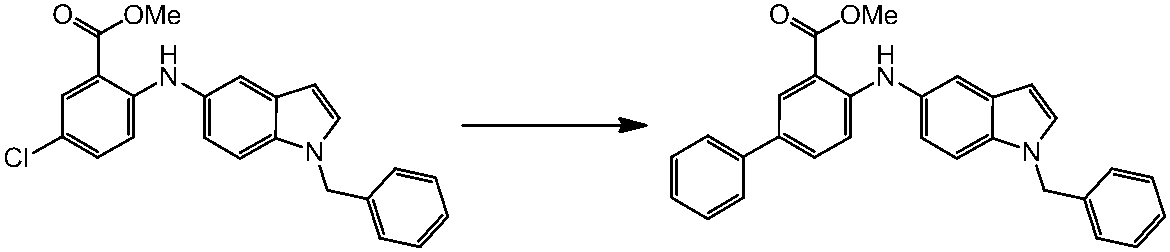
1H-NMR(DMSO-d6)δ:3.90(3H,s),5.44(2H,s),6.49(1H,d,J=3.3Hz),6.98-7.06(2H,m),7.20-7.70(14H,m),8.14(1H,d,J=2.6Hz),9.32(1H,s).
MS(ESI,m/z):433(M+H)+.

1H-NMR(DMSO-d6)δ:5.44(2H,s),6.48(1H,d,J=2.6Hz),6.99-7.06(2H,m),7.20-7.60(13H,m),7.64(1H,dd,J=8.6,2.6Hz),8.14(1H,d,J=2.6Hz),9.58(1H,s).
MS(ESI,m/z):419(M+H)+.

1H-NMR(DMSO-d6)δ:3.90(3H,s),5.48(2H,s),6.48(1H,d,J=2.6Hz),7.10-7.60(7H,m),7.86-7.93(1H,m),8.18(1H,d,J=2.6Hz),8.37(1H,d,J=2.0Hz),9.89(1H,s).
MS(ESI,m/z):476,478(M+H)+.

1H-NMR(DMSO-d6)δ:5.48(2H,s),6.48(1H,d,J=3.3Hz),7.13-7.29(4H,m),7.38-7.48(2H,m),7.53(1H,d,J=2.6Hz),7.92(1H,d,J=2.0Hz),8.16(1H,d,J=2.6Hz),8.35(1H,d,J=2.6Hz),10.24(1H,s).
MS(ESI,m/z):462,464(M+H)+,460(M-H)-.

1H-NMR(DMSO-d6)δ:3.87(3H,s),5.51(2H,s),6.50(1H,d,J=2.6Hz),6.90(1H,d,J=9.2Hz),7.00(1H,dd,J=9.2,2.0Hz),7.18-7.29(3H,m),7.33(1H,dd,J=9.2,2.6Hz),7.42-7.54(3H,m),7.59(1H,d,J=3.3Hz),7.80(1H,d,J=2.6Hz),9.23(1H,s).
MS(ESI,m/z):475(M+H)+.

1H-NMR(DMSO-d6)δ:5.50(2H,s),6.49(1H,d,J=2.6Hz),6.91(1H,d,J=8.6Hz),7.00(1H,dd,J=8.6,2.0Hz),7.17-7.34(4H,m),7.42-7.53(3H,m),7.58(1H,d,J=2.6Hz),7.79(1H,d,J=2.6Hz),9.50(1H,brs).
MS(ESI,m/z):461(M+H)+,459(M-H)-.

1H-NMR(DMSO-d6)δ:3.90(3H,s),5.44(2H,s),6.47(1H,d,J=3.3Hz),7.00-7.09(3H,m),7.14-7.20(2H,m),7.32-7.45(2H,m),7.52(1H,d,J=2.6Hz),7.88(1H,d,J=1.3Hz),8.18(1H,d,J=2.6Hz),8.37(1H,d,J=2.6Hz),9.89(1H,s).
MS(ESI,m/z):458(M+H)+.

1H-NMR(DMSO-d6)δ:5.43(2H,s),6.47(1H,d,J=2.6Hz),6.99-7.10(3H,m),7.14-7.20(2H,m),7.32-7.45(2H,m),7.52(1H,d,J=2.6Hz),7.91(1H,d,J=2.0Hz),8.16(1H,d,J=2.6Hz),8.34(1H,d,J=2.6Hz),10.24(1H,brs).
MS(ESI,m/z):444(M+H)+,442(M-H)-.
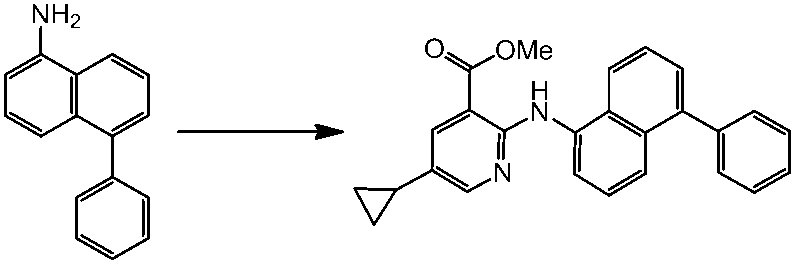
MS(ESI,m/z):395(M+H)+.

1H-NMR(DMSO-d6)δ:0.67-0.69(2H,m),0.92-0.95(2H,m),1.90-1.99(1H,m),7.47-7.55(8H,m),7.64(1H,dd,J=8.6,7.3Hz),7.97(1H,d,J=2.6Hz),8.12(1H,d,J=8.6Hz),8.22(1H,d,J=2.6Hz),8.32(1H,dd,J=7.3,1.3Hz),10.84(1H,s),13.72(1H,s).
MS(ESI,m/z):381(M+H)+,379(M-H)-.

MS(ESI,m/z):413(M+H)+.

1H-NMR(DMSO-d6)δ:0.71-0.73(2H,m),0.94-1.00(2H,m),1.94-2.03(1H,m),7.50-7.59(6H,m),7.73(1H,dd,J=7.9,1.3Hz),7.98(1H,d,J=2.6Hz),8.37(1H,d,J=2.6Hz),8.42(1H,s),9.21(1H,dd,J=7.9,1.3Hz),11.74(1H,s).
MS(ESI,m/z):399(M+H)+,397(M-H)-.

MS(ESI,m/z):319(M+H)+.

1H-NMR(DMSO-d6)δ:0.66-0.71(2H,m),0.91-0.97(2H,m),1.90-1.99(1H,m),7.48-7.66(4H,m),7.96(2H,dd,J=8.3,2.3Hz),8.08(1H,d,J=7.9Hz),8.24(1H,d,J=2.6Hz),8.39(1H,d,J=6.6Hz),10.85(1H,s).
MS(ESI,m/z):305(M+H)+,303(M-H)-.

MS(ESI,m/z):413(M+H)+.
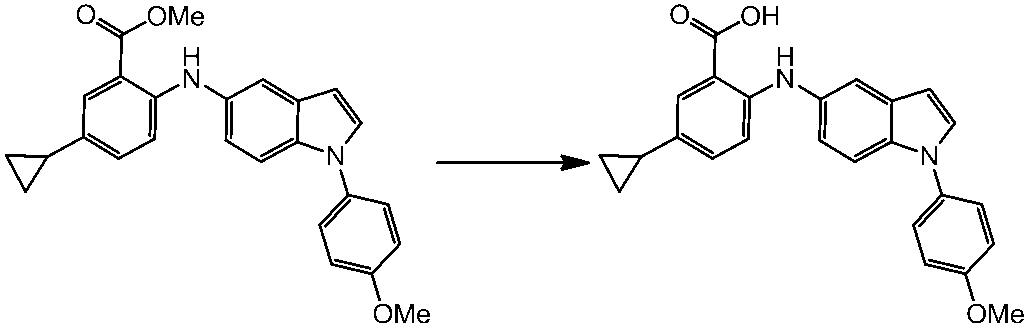
1H-NMR(DMSO-d6)δ:0.52-0.58(2H,m),0.82-0.87(2H,m),1.80-1.89(1H,m),3.83(3H,s),6.62(1H,d,J=3.3Hz),6.96(1H,d,J=8.6Hz),7.08-7.11(2H,m),7.13(2H,d,J=8.6Hz),7.42-7.53(4H,m),7.58(1H,d,J=2.6Hz),7.62(1H,d,J=2.0Hz),9.39(1H,s).
MS(ESI,m/z):399(M+H)+,397(M-H)-.

MS(ESI,m/z):451(M+H)+.
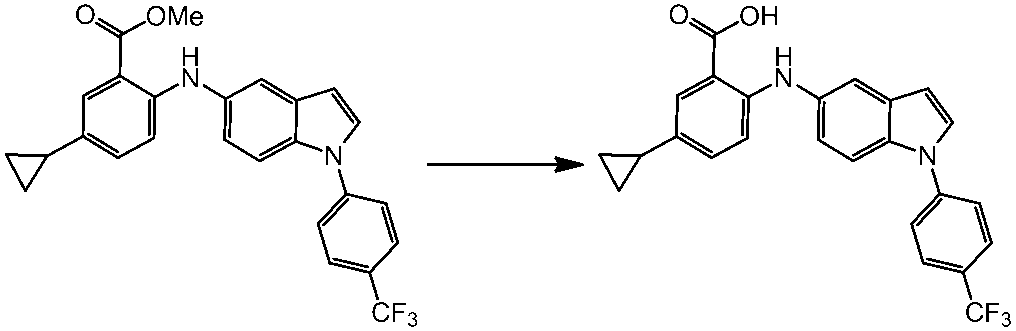
1H-NMR(DMSO-d6)δ:0.53-0.58(2H,m),0.83-0.89(2H,m),1.80-1.90(1H,m),6.72(1H,d,J=3.3Hz),7.03(2H,s),7.09(1H,dd,J=9.2,2.0Hz),7.50(1H,d,J=2.0Hz),7.63(1H,s),7.67(1H,d,J=9.2Hz),7.78(1H,d,J=3.3Hz),7.87(2H,d,J=9.2Hz),7.94(2H,d,J=9.2Hz).
MS(ESI,m/z):437(M+H)+,435(M-H)-.

MS(ESI,m/z):383(M+H)+.

1H-NMR(DMSO-d6)δ:0.50-0.56(2H,m),0.80-0.88(2H,m),1.77-1.87(1H,m),6.88(1H,d,J=8.6Hz),7.03(2H,d,J=8.6Hz),7.18-7.23(1H,m),7.38-7.48(3H,m),7.60-7.75(5H,m),9.38(1H,brs),11.40(1H,s),12.88(1H,brs).
MS(ESI,m/z):369(M+H)+,367(M-H)-.

1H-NMR(DMSO-d6)δ:1.20(6H,d,J=6.6Hz),2.88(1H,sep,J=6.6Hz),3.90(3H,s),5.40(2H,s),6.44(1H,d,J=3.3Hz),7.15-7.39(7H,m),7.48(1H,d,J=3.3Hz),7.96(1H,d,J=2.0Hz),8.07(1H,d,J=2.6Hz),8.29(1H,d,J=2.6Hz),9.84(1H,s).
MS(ESI,m/z):400(M+H)+.

1H-NMR(DMSO-d6)δ:1.20(6H,d,J=6.6Hz),2.87(1H,sep,J=6.6Hz),5.40(2H,s),6.44(1H,d,J=3.3Hz),7.14-7.38(7H,m),7.48(1H,d,J=3.3Hz),7.97(1H,d,J=2.0Hz),8.07(1H,d,J=2.6Hz),8.25(1H,d,J=2.6Hz),10.13(1H,s),13.40(1H,brs).
MS(ESI,m/z):386(M+H)+,384(M-H)-.

1H-NMR(DMSO-d6)δ:1.16(3H,t,J=7.6Hz),2.54(2H,q,J=7.9Hz),3.89(3H,s),5.40(2H,s),6.44(1H,d,J=3.3Hz),7.14-7.37(7H,m),7.48(1H,d,J=3.3Hz),7.96(1H,d,J=2.0Hz),8.07(1H,d,J=2.6Hz),8.24(1H,d,J=2.0Hz),9.84(1H,s).
MS(ESI,m/z):387(M+H)+.

1H-NMR(DMSO-d6)δ:1.16(3H,t,J=7.6Hz),2.53(2H,q,J=7.6Hz),5.40(2H,s),6.44(1H,d,J=2.6Hz),7.15-7.34(6H,m),7.36(1H,d,J=3.6Hz),7.47(1H,d,J=3.3Hz),7.97(1H,d,J=2.0Hz),8.05(1H,d,J=2.6Hz),8.21(1H,d,J=2.0Hz),10.13(1H,s).
MS(ESI,m/z):372(M+H)+,370(M-H)-.

1H-NMR(DMSO-d6)δ:1.78-1.87(1H,m),1.91-2.13(3H,m),2.22-2.32(2H,m),3.48(1H,quin,J=8.6Hz),3.90(3H,s),5.40(2H,s),6.44(1H,d,J=3.3Hz),7.13-7.34(6H,m),7.37(1H,d,J=8.6Hz),7.48(1H,d,J=3.3Hz),7.96(1H,d,J=2.0Hz),8.08(1H,d,J=2.6Hz),8.26(1H,d,J=2.6Hz),9.85(1H,s).
MS(ESI,m/z):412(M+H)+.

1H-NMR(DMSO-d6)δ:1.81-2.11(4H,m),2.24-2.31(2H,m),3.48(1H,quin,J=8.6Hz),5.36(2H,s),6.43(1H,d,J=3.3Hz),7.16-7.35(7H,m),7.42(1H,d,J=3.3Hz),8.01-8.05(2H,m),8.11(1H,d,J=2.6Hz).
MS(ESI,m/z):398(M+H)+,396(M-H)-.

1H-NMR(DMSO-d6)δ:0.63-0.69(2H,m),0.88-0.96(2H,m),0.87-1.96(1H,m),3.90(3H,s),6.87(1H,d,J=1.3Hz),7.18(1H,dd,J=8.6,2.0Hz),7.30-7.36(2H,m),7.43-7.49(2H,m),7.86(2H,d,J=7.3Hz),7.89(1H,d,J=2.6Hz),7.97(1H,d,J=1.3Hz),8.24(1H,d,J=2.6Hz),9.86(1H,s),11.45(1H,s).
MS(ESI,m/z):384(M+H)+.

1H-NMR(DMSO-d6)δ:0.63-0.68(2H,m),0.88-0.95(2H,m),1.86-1.96(1H,m),6.86(1H,d,J=1.3Hz),7.17(1H,dd,J=8.6,2.0Hz),7.27-7.35(2H,m),7.43-7.49(2H,m),7.83-7.88(3H,m),7.99(1H,d,J=1.3Hz),8.21(1H,d,J=2.6Hz),10.21(1H,brs),11.42(1H,s),13.42(1H,brs).
MS(ESI,m/z):370(M+H)+,368(M-H)-.

MS(ESI,m/z):474(M+H)+.
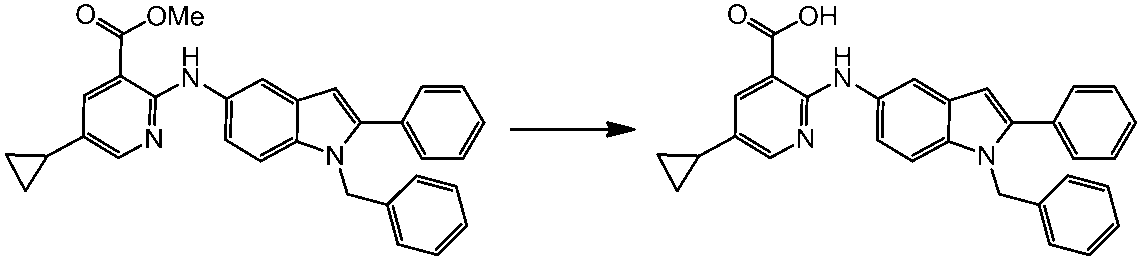
1H-NMR(DMSO-d6)δ:0.52-0.65(2H,m),0.82-0.92(2H,m),1.76-1.87(1H,m),5.42(2H,s),6.57(1H,s),6.92(2H,d,J=6.6Hz),7.09-7.28(5H,m),7.35-7.53(5H,m),7.79(1H,d,J=1.3Hz),7.93(1H,d,J=2.0Hz),8.24(1H,s),12.73(1H,s).
MS(ESI,m/z):460(M+H)+,458(M-H)-.

メチル=2-((2-(tert-ブチル)-1H-インドール-5-イル)アミノ)-5-シクロプロピルニコチナート1H-NMR(DMSO-d6)δ:0.61-0.67(2H,m),0.87-0.94(2H,m),1.34(9H,s),1.85-1.95(1H,m),3.84(3H,s),6.07(1H,d,J=2.0Hz),7.10(1H,dd,J=8.6,2.0Hz),7.23(1H,d,J=8.6Hz),7.75(1H,d,J=2.0Hz),7.87(1H,d,J=2.6Hz),8.19(1H,d,J=2.0Hz),9.78(1H,s),10.78(1H,s).
MS(ESI,m/z):364(M+H)+
ブチル=2-((2-(tert-ブチル)-1H-インドール-5-イル)アミノ)-5-シクロプロピルニコチナート
MS(ESI,m/z):406(M+H)+.
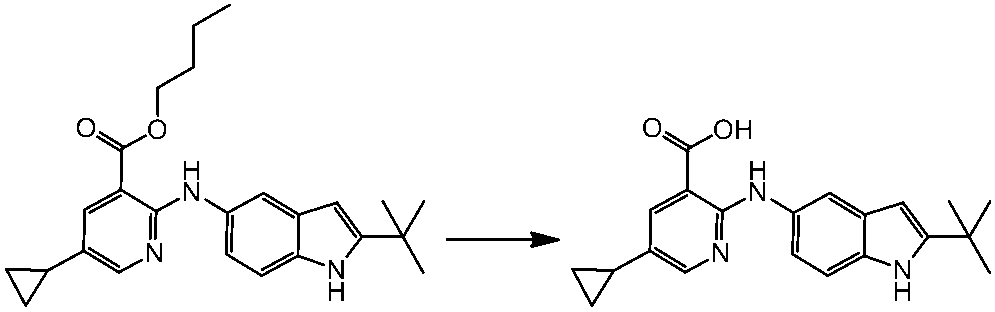
1H-NMR(DMSO-d6)δ:0.57-0.63(2H,m),0.85-0.92(2H,m),1.34(9H,s),1.81-1.92(1H,m),6.04(1H,d,J=2.0Hz),7.11(1H,dd,J=8.6,2.0Hz),7.19(1H,d,J=8.6Hz),7.83-7.86(2H,m),8.06(1H,d,J=2.6Hz),10.69(1H,s),10.98(1H,brs).
MS(ESI,m/z):350(M+H)+,348(M-H)-.
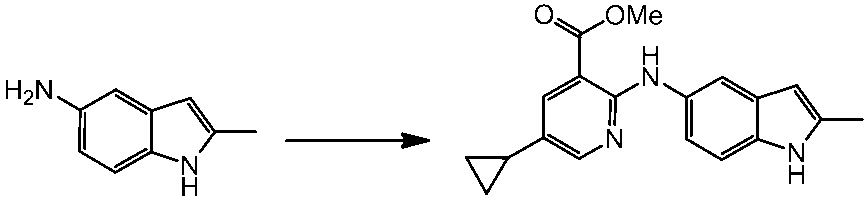
1H-NMR(DMSO-d6)δ:0.61-0.68(2H,m),0.87-0.95(2H,m),1.85-1.95(1H,m),2.36(3H,s),3.92(3H,s),6.06(1H,s),7.06(1H,dd,J=8.6,2.0Hz),7.20(1H,d,J=8.7Hz),7.75-7.80(1H,m),7.87(1H,d,J=2.7Hz),8.20(1H,d,J=2.0Hz),9.79(1H,s),10.80(1H,s).
MS(ESI,m/z):322(M+H)+.
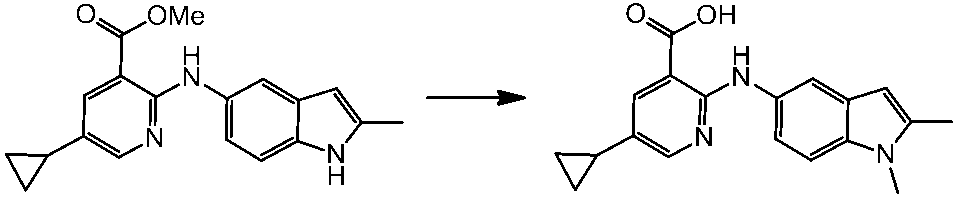
1H-NMR(DMSO-d6)δ:0.60-0.68(2H,m),0.86-0.95(2H,m),1.84-1.95(1H,m),2.38(3H,s),3.64(3H,s),6.15(1H,s),7.14(1H,d,J=8.6Hz),7.29(1H,d,J=8.6Hz),7.84(1H,s),7.87(1H,d,J=1.8Hz),8.18(1H,d,J=2.0Hz),10.11(1H,s),13.40(1H,brs).
MS(ESI,m/z):322(M+H)+,320(M-H)-.

MS(ESI,m/z):362(M+H)+.

1H-NMR(DMSO-d6)δ:0.52-0.59(2H,m),0.59-0.66(2H,m),0.81-0.94(4H,m),1.82-1.93(2H,m),3.67(3H,s),6.95(1H,s),7.27(1H,d,J=8.6Hz),7.32(1H,dd,J=8.6,2.0Hz),7.85(1H,d,J=2.6Hz),7.93(1H,d,J=1.3Hz),8.10(1H,d,J=2.6Hz),10.88(1H,brs).
MS(ESI,m/z):348(M+H)+,346(M-H)-.

1H-NMR(DMSO-d6)δ:0.63-0.69(2H,m),0.88-0.94(2H,m),1.87-1.97(1H,m),3.90(3H,s),5.64(2H,s),7.20-7.35(5H,m),7.41(1H,dd,J=9.2,2.0Hz),7.63(1H,d,J=9.2Hz),7.90(1H,d,J=2.0Hz),8.04(1H,s),8.26-8.22(2H,m),9.92(1H,s).
MS(ESI,m/z):399(M+H)+.

1H-NMR(DMSO-d6)δ:0.62-0.68(2H,m),0.88-0.96(2H,m),1.86-1.96(1H,s),5.64(2H,s),7.20-7.35(5H,m),7.40(1H,dd,J=9.2,2.0Hz),7.62(1H,d,J=9.2Hz),7.89(1H,d,J=2.6Hz),8.04(1H,s),8.22(1H,d,J=2.6Hz),8.26(1H,d,J=2.0Hz),10.24(1H,s).
MS(ESI,m/z):385(M+H)+,383(M-H)-.
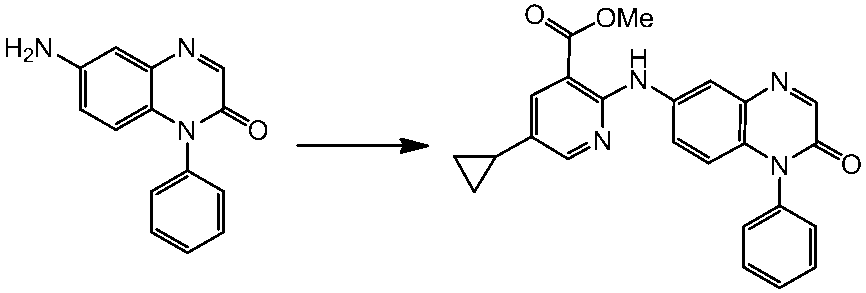
MS(ESI,m/z):413(M+H)+.

1H-NMR(DMSO-d6)δ:0.65-0.72(2H,m),0.90-0.98(2H,m),1.90-2.00(1H,m),6.55(1H,d,J=9.2Hz),7.41-7.46(2H,m),7.51-7.70(4H,m),7.92(1H,d,J=2.6Hz),8.28(1H,d,J=2.6Hz),8.32(1H,s),8.55(1H,d,J=2.6Hz),10.35(1H,s).
MS(ESI,m/z):399(M+H)+.

MS(ESI,m/z):416(M+H)+.

1H-NMR(DMSO-d6)δ:0.62-0.69(2H,m),0.88-0.97(2H,m),1.86-1.98(1H,m),4.80(2H,s),6.24(1H,d,J=9.2Hz),6.95(1H,dd,J=8.9,2.3Hz),7.31-7.37(2H,m),7.46-7.61(3H,m),7.81(1H,d,J=2.0Hz),7.88(1H,d,J=2.6Hz),8.20-8.24(1H,m),10.38(1H,brs).
MS(ESI,m/z):402(M+H)+.

MS(ESI,m/z):412(M+H)+.

1H-NMR(DMSO-d6)δ:0.64-0.71(2H,m),0.90-0.98(2H,m),1.88-2.00(1H,m),6.22(1H,d,J=8.6Hz),6.72(1H,d,J=9.9Hz),7.30-7.41(3H,m),7.52-7.67(3H,m),7.88(1H,d,J=7.3Hz),7.95(1H,d,J=2.6Hz),8.07(1H,d,J=9.9Hz),8.20(1H,d,J=2.6Hz),10.58(1H,s).
MS(ESI,m/z):398(M+H)+.
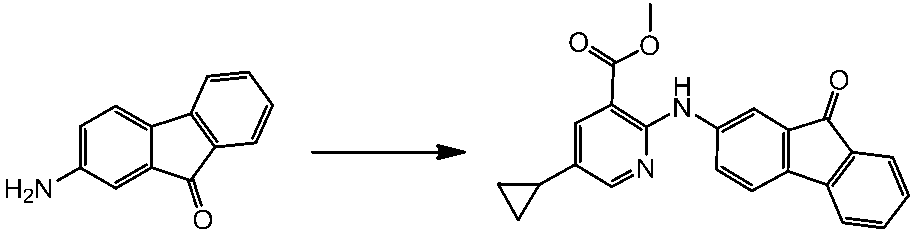
MS(ESI,m/z):371(M+H)+.
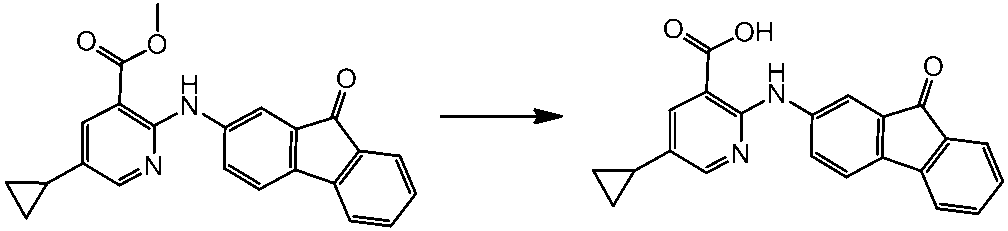
1H-NMR(DMSO-d6)δ:0.65-0.73(2H,m),0.90-0.97(2H,m),1.88-2.00(1H,m),7.27(1H,t,J=6.9Hz),7.52-7.59(2H,m),7.65-7.70(3H,m),7.93(1H,d,J=2.6Hz),8.22-8.28(2H,m),11.18(1H,brs).
MS(ESI,m/z):357(M+H)+.
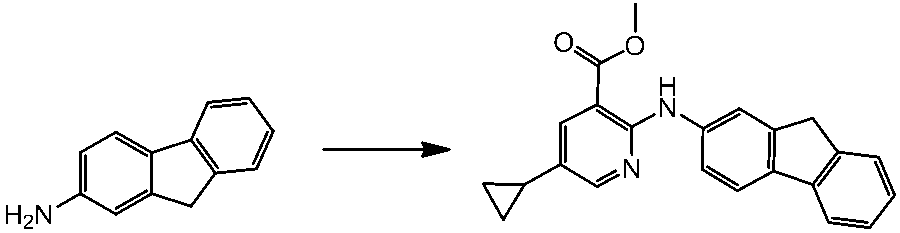
MS(ESI,m/z):357(M+H)+.

1H-NMR(DMSO-d6)δ:0.64-0.73(2H,m),0.90-0.97(2H,m),1.89-1.99(1H,m),3.91(2H,s),7.21-7.27(1H,m),7.35(1H,t,J=7.3Hz),7.51-7.64(2H,m),7.76-7.83(2H,m),7.93(1H,d,J=2.6Hz),8.06-8.10(1H,m),8.29(1H,d,J=2.6Hz),10.46(1H,s).
MS(ESI,m/z):343(M+H)+.

MS(ESI,m/z):336(M+H)+.

1H-NMR(DMSO-d6)δ:0.62-0.70(2H,m),0.86-0.95(2H,m),1.87-1.97(1H,m),2.71(3H,s),4.03(3H,s),6.31(1H,d,J=2.6Hz),6.84(1H,s),7.19(1H,d,J=2.6Hz),7.80(1H,d,J=1.3Hz),7.94(1H,d,J=2.0Hz),8.13(1H,d,J=2.0Hz),10.16(1H,s).
MS(ESI,m/z):322(M+H)+.

MS(ESI,m/z):362(M+H)+.

1H-NMR(DMSO-d6)δ:0.61-0.68(2H,m),0.76-1.02(6H,m),1.84-1.95(1H,m),3.10-3.50(1H,m),4.16(3H,s),6.31(1H,d,J=2.6Hz),6.82(1H,d,J=1.3Hz),7.19(1H,d,J=2.6Hz),7.82-7.88(2H,m),8.19(1H,d,J=2.6Hz),10.06(1H,s).
MS(ESI,m/z):348(M+H)+.

MS(ESI,m/z):364(M+H)+.
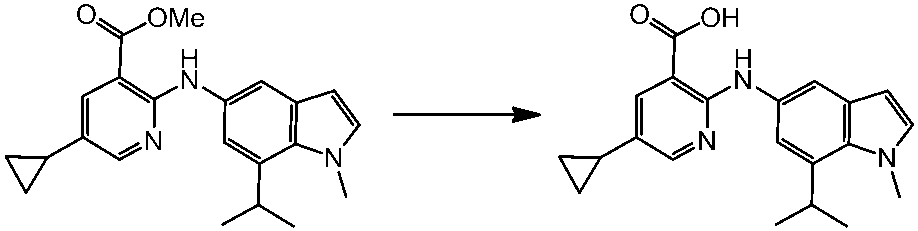
1H-NMR(DMSO-d6)δ:0.61-0.68(2H,m),0.86-0.95(2H,m),1.32(6H,d,J=7.3Hz),1.84-1.95(1H,m),3.74-3.85(1H,m),3.99(3H,s),6.32(1H,d,J=2.6Hz),6.97(1H,d,J=2.0Hz),7.17(1H,d,J=3.3Hz),7.84-7.93(2H,m),8.20(1H,d,J=2.6Hz),10.13(1H,s).
MS(ESI,m/z):350(M+H)+.

MS(ESI,m/z):364(M+H)+.
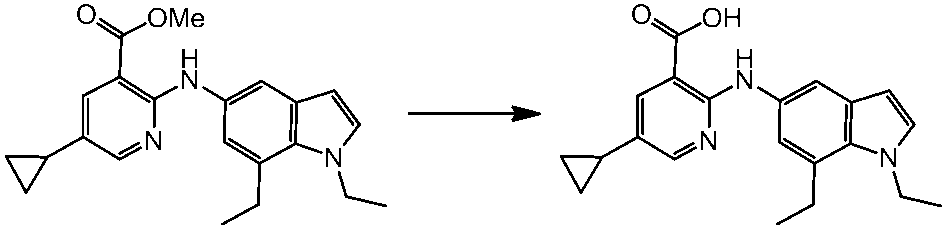
1H-NMR(DMSO-d6)δ:0.61-0.68(2H,m),0.87-0.95(2H,m),1.25-1.37(6H,m),1.84-1.95(1H,m),2.98(2H,q,J=7.5Hz),4.30(2H,q,J=7.0Hz),6.37(1H,d,J=2.6Hz),6.90(1H,d,J=2.0Hz),7.27(1H,d,J=3.3Hz),7.84-7.94(2H,m),8.20(1H,d,J=2.6Hz),10.13(1H,s).
MS(ESI,m/z):350(M+H)+.

1H-NMR(DMSO-d6)δ:0.61-0.68(2H,m),0.87-0.95(2H,m),1.11-1.28(1H,m),1.35-1.60(4H,m),1.70-1.82(1H,m),1.84-1.96(1H,m),3.20-3.50(1H,m),3.54-3.65(1H,m),3.80-3.88(1H,m),4.10-4.18(2H,m),6.35(1H,d,J=3.3Hz),7.17(1H,dd,J=8.6,2.0Hz),7.27(1H,d,J=2.6Hz),7.40(1H,d,J=8.6Hz),7.86(1H,d,J=2.6Hz),7.93(1H,d,J=2.0Hz),8.18(1H,d,J=2.6Hz),10.17(1H,s).
MS(ESI,m/z):392(M+H)+.

MS(ESI,m/z):408(M+H)+.

MS(ESI,m/z):504(M+H)+.
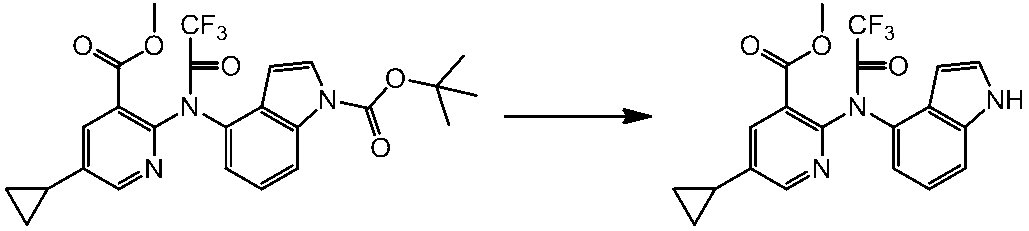
MS(ESI,m/z):404(M+H)+.
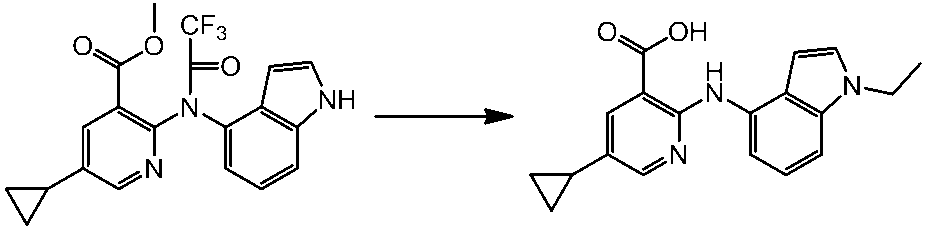
1H-NMR(DMSO-d6)δ:0.65-0.73(2H,m),0.90-0.97(2H,m),1.36(3H,t,J=7.3Hz),1.89-2.00(1H,m),4.20(2H,q,J=7.3Hz),6.48(1H,d,J=3.3Hz),7.05-7.15(2H,m),7.38(1H,d,J=3.3Hz),7.94(1H,d,J=2.6Hz),8.18(1H,dd,J=6.6,2.0Hz),8.30(1H,d,J=2.0Hz),10.82(1H,s).
MS(ESI,m/z):322(M+H)+.

1H-NMR(DMSO-d6)δ:0.65-0.73(2H,m),0.84(3H,t,J=7.6Hz),0.90-0.98(2H,m),1.71-1.85(2H,m),1.89-2.00(1H,m),4.13(2H,t,J=6.9Hz),6.48(1H,d,J=3.3Hz),7.05-7.15(2H,m),7.37(1H,d,J=3.3Hz),7.94(1H,d,J=2.6Hz),8.18(1H,dd,J=6.9,1.7Hz),8.30(1H,d,J=2.6Hz),10.83(1H,s).
MS(ESI,m/z):336(M+H)+.

MS(ESI,m/z):450(M+H)+.

MS(ESI,m/z):350(M+H)+.

MS(ESI,m/z):448(M+H)+.
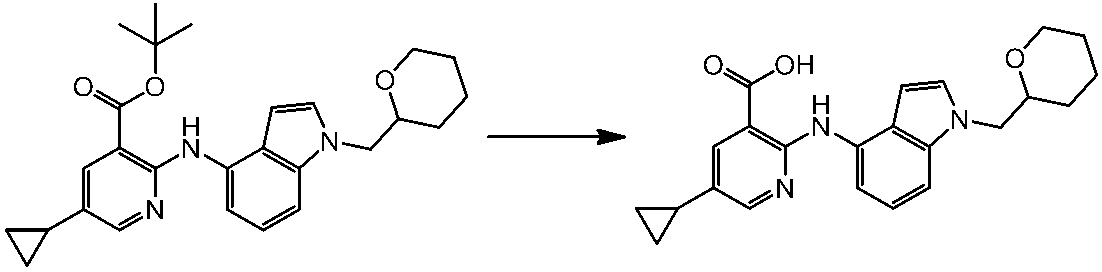
1H-NMR(DMSO-d6)δ:0.65-0.73(2H,m),0.90-0.98(2H,m),1.10-1.77(6H,m),1.90-2.00(1H,m),3.20-3.70(2H,m),3.80-3.88(1H,m),4.13-4.20(2H,m),6.46(1H,d,J=3.3Hz),7.04-7.17(2H,m),7.31(1H,d,J=3.3Hz),7.94(1H,d,J=2.6Hz),8.14(1H,d,J=7.3Hz),8.30(1H,d,J=2.6Hz),10.76(1H,s).
MS(ESI,m/z):392(M+H)+.

MS(ESI,m/z):448(M+H)+.

1H-NMR(DMSO-d6)δ:0.65-0.73(2H,m),0.90-0.97(2H,m),1.20-1.43(4H,m),1.88-2.14(2H,m),3.10-3.50(2H,m),3.76-3.86(2H,m),4.07(2H,d,J=7.3Hz),6.48(1H,d,J=3.3Hz),7.05-7.19(2H,m),7.35(1H,d,J=3.3Hz),7.93(1H,d,J=2.6Hz),8.18(1H,d,J=7.3Hz),8.30(1H,d,J=2.6Hz),10.83(1H,s).
MS(ESI,m/z):392(M+H)+.

MS(ESI,m/z):434(M+H)+.

1H-NMR(DMSO-d6)δ:0.65-0.73(2H,m),0.90-0.98(2H,m),1.54-1.68(1H,m),1.82-1.99(2H,m),2.69-2.83(1H,m),3.20-3.50(1H,m),3.58-3.68(2H,m),3.77-3.87(1H,m),4.18(2H,d,J=7.3Hz),6.49(1H,d,J=2.6Hz),7.06-7.19(2H,m),7.41(1H,d,J=3.3Hz),7.94(1H,d,J=2.6Hz),8.19(1H,d,J=6.6Hz),8.30(1H,d,J=2.6Hz),10.83(1H,s).
MS(ESI,m/z):378(M+H)+.
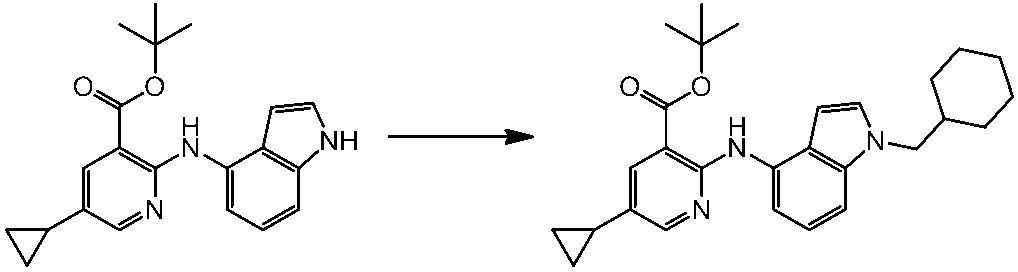
MS(ESI,m/z):446(M+H)+.

1H-NMR(DMSO-d6)δ:0.65-2.00(16H,m),4.00(2H,d,J=7.3Hz),6.47(1H,d,J=3.3Hz),7.04-7.15(2H,m),7.32(1H,d,J=2.6Hz),7.94(1H,d,J=2.6Hz),8.17(1H,dd,J=6.9,1.7Hz),8.30(1H,d,J=2.6Hz),10.80(1H,s).
MS(ESI,m/z):390(M+H)+.

MS(ESI,m/z):406(M+H)+.

1H-NMR(DMSO-d6)δ:0.65-0.73(2H,m),0.82-0.98(8H,m),1.90-2.01(1H,m),2.05-2.20(1H,m),3.98(2H,d,J=7.3Hz),6.48(1H,d,J=3.3Hz),7.04-7.16(2H,m),7.35(1H,d,J=3.3Hz),7.94(1H,d,J=2.0Hz),8.17(1H,d,J=7.3Hz),8.31(1H,d,J=2.6Hz),10.78(1H,s).
MS(ESI,m/z):350(M+H)+.

MS(ESI,m/z):426(M+H)+.
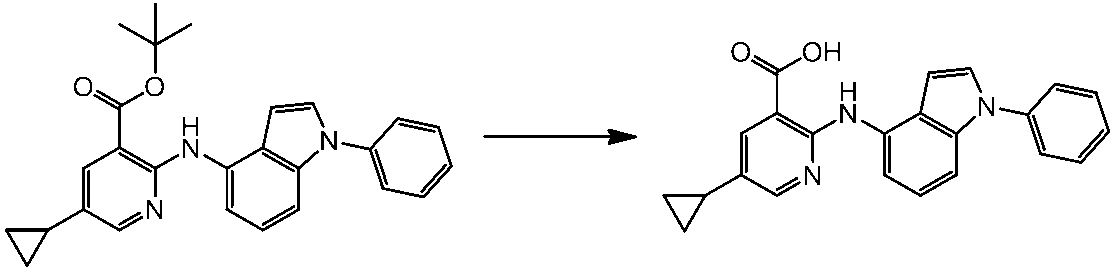
1H-NMR(DMSO-d6)δ:0.66-0.74(2H,m),0.91-0.99(2H,m),1.90-2.02(1H,m),6.74(1H,d,J=3.3Hz),7.13-7.24(2H,m),7.37-7.49(1H,m),7.56-7.69(5H,m),7.97(1H,d,J=2.6Hz),8.24-8.34(2H,m),10.93(1H,s).
MS(ESI,m/z):370(M+H)+.

MS(ESI,m/z):392(M+H)+.

1H-NMR(DMSO-d6)δ:0.65-0.73(2H,m),0.91-0.98(2H,m),1.46(6H,d,J=6.6Hz),1.89-2.00(1H,m),4.66-4.79(1H,m),6.51(1H,d,J=3.3Hz),7.06-7.19(2H,m),7.48(1H,d,J=3.3Hz),7.94(1H,d,J=2.6Hz),8.17(1H,d,J=7.3Hz),8.30(1H,d,J=2.6Hz),10.79(1H,s).
MS(ESI,m/z):336(M+H)+.
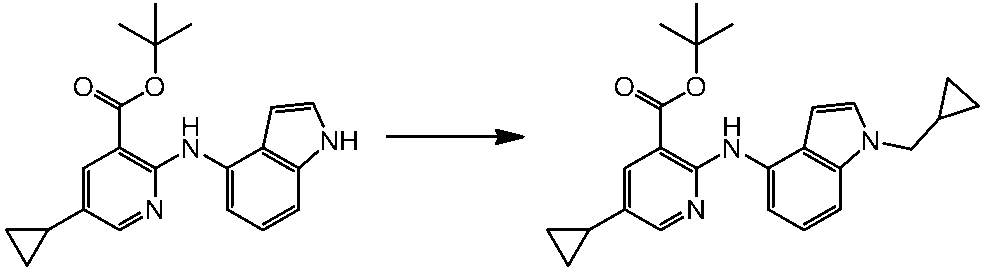
MS(ESI,m/z):404(M+H)+.

1H-NMR(DMSO-d6)δ:0.36-0.55(4H,m),0.65-0.73(2H,m),0.90-0.98(2H,m),1.17-1.31(1H,m),1.89-2.01(1H,m),4.04(2H,d,J=7.3Hz),6.48(1H,d,J=3.3Hz),7.06-7.19(2H,m),7.43(1H,d,J=3.3Hz),7.94(1H,d,J=2.6Hz),8.17(1H,d,J=7.3Hz),8.31(1H,d,J=2.6Hz),10.78(1H,s).
MS(ESI,m/z):348(M+H)+.

MS(ESI,m/z):418(M+H)+.

1H-NMR(DMSO-d6)δ:0.64-0.72(2H,m),0.90-0.98(2H,m),1.70-2.01(7H,m),2.70-2.84(1H,m),4.18(2H,d,J=7.3Hz),6.47(1H,d,J=2.6Hz),7.03-7.16(2H,m),7.36(1H,d,J=3.3Hz),7.93(1H,d,J=2.6Hz),8.17(1H,d,J=6.6Hz),8.30(1H,d,J=2.6Hz),10.79(1H,s).
MS(ESI,m/z):362(M+H)+.

MS(ESI,m/z):408(M+H)+.
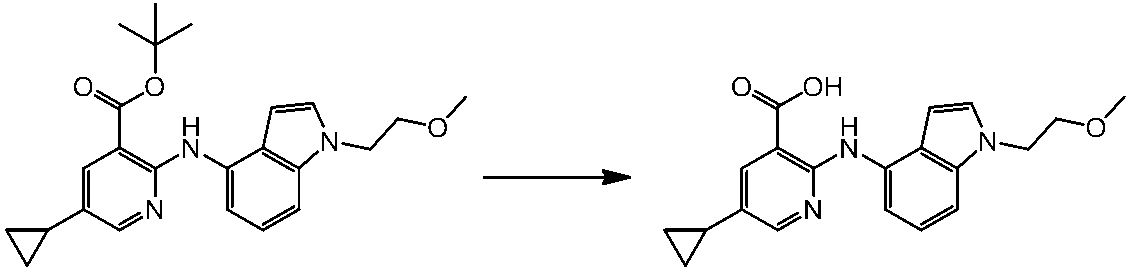
1H-NMR(DMSO-d6)δ:0.65-0.73(2H,m),0.90-0.97(2H,m),1.89-2.04(1H,m),3.22(3H,s),3.66(2H,t,J=5.3Hz),4.32(2H,t,J=5.3Hz),6.48(1H,d,J=3.3Hz),7.05-7.16(2H,m),7.34(1H,d,J=3.3Hz),7.93(1H,d,J=2.6Hz),8.17(1H,d,J=7.3Hz),8.29(1H,d,J=2.6Hz),10.91(1H,brs).
MS(ESI,m/z):352(M+H)+.

MS(ESI,m/z):422(M+H)+.
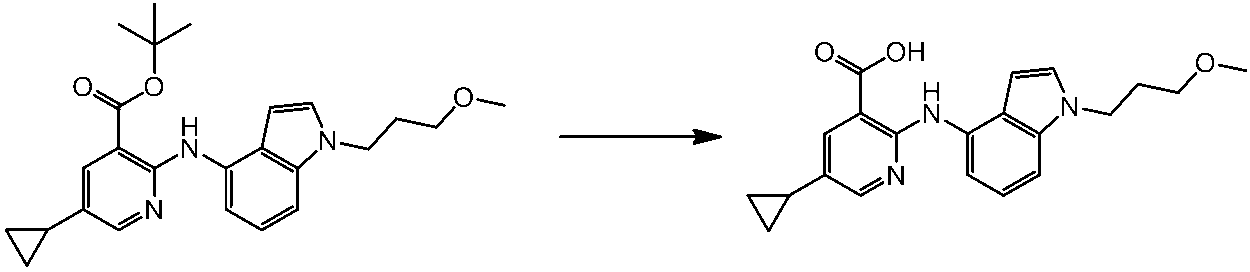
1H-NMR(DMSO-d6)δ:0.65-0.73(2H,m),0.91-0.97(2H,m),1.89-2.04(3H,m),3.21-3.28(5H,m),4.22(2H,t,J=6.9Hz),6.49(1H,d,J=3.3Hz),7.11(2H,d,J=4.6Hz),7.34(1H,d,J=3.3Hz),7.94(1H,d,J=2.6Hz),8.18(1H,t,J=4.3Hz),8.31(1H,d,J=2.6Hz),10.80(1H,s).
MS(ESI,m/z):366(M+H)+.
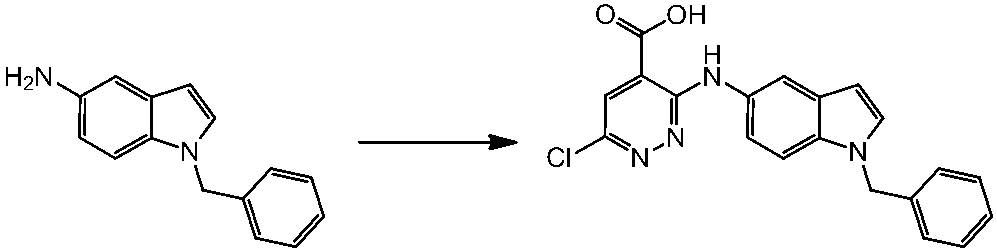
1H-NMR(DMSO-d6)δ:5.40(2H,s),6.45(1H,d,J=3.3Hz),7.17-7.34(6H,m),7.39(1H,d,J=8.6Hz),7.46(1H,d,J=2.6Hz),7.74(1H,s),8.18(1H,d,J=2.0Hz),12.22(1H,brs).
MS(ESI,m/z):379(M+H)+,377(M-H)-.

1H-NMR(DMSO-d6)δ:3.94(3H,s),5.43(2H,s),6.49(1H,d,J=2.6Hz),7.18-7.34(6H,m),7.44(1H,d,J=8.6Hz),7.53(1H,d,J=3.3Hz),7.94-7.97(2H,m),9.46(1H,s).
MS(ESI,m/z):393(M+H)+.
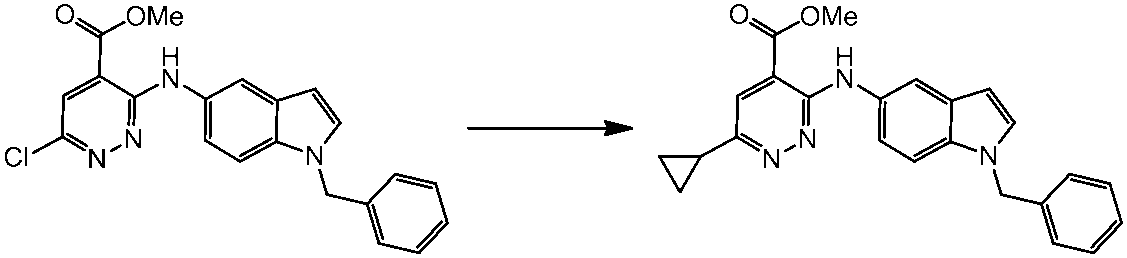
MS(ESI,m/z):399(M+H)+.

1H-NMR(DMSO-d6)δ:0.94-1.04(4H,m),2.17-2.29(1H,m),5.42(2H,s),6.47(1H,d,J=2.6Hz),7.18-7.34(6H,m),7.41(1H,d,J=8.6Hz),7.50(1H,d,J=3.3Hz),7.75(1H,s),8.08(1H,s).
MS(ESI,m/z):385(M+H)+,383(M-H)-.
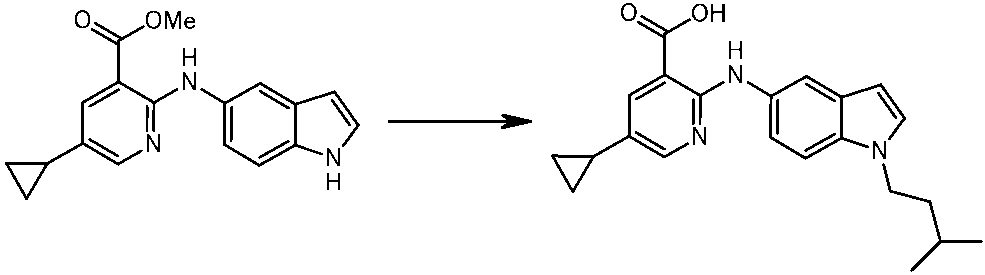
1H-NMR(DMSO-d6)δ:0.61-0.67(2H,m),0.87-0.94(8H,m),1.44-1.55(1H,m),1.65(2H,q,J=7.2Hz),1.85-1.93(1H,m),4.15(2H,t,J=7.3Hz),6.36(1H,d,J=2.4Hz),7.19(1H,dd,J=8.8,2.0Hz),7.33(1H,d,J=2.9Hz),7.38(1H,d,J=9.0Hz),7.87(1H,d,J=2.4Hz),7.94(1H,d,J=1.7Hz),8.18(1H,d,J=2.7Hz),10.12(1H,s),13.38(1H,brs).

1H-NMR(CDCl3)δ:0.61-0.67(2H,m),0.90-0.96(2H,m),1.77-1.86(1H,m),5.47(2H,s),6.53-6.58(2H,m),7.06-7.13(2H,m),7.20-7.35(3H,m),7.69(1H,d,J=7.1Hz),7.89-7.97(2H,m),8.14(1H,s),9.96(1H,brs).
MS(ESI,m/z):452(M+H)+,450(M-H)-.
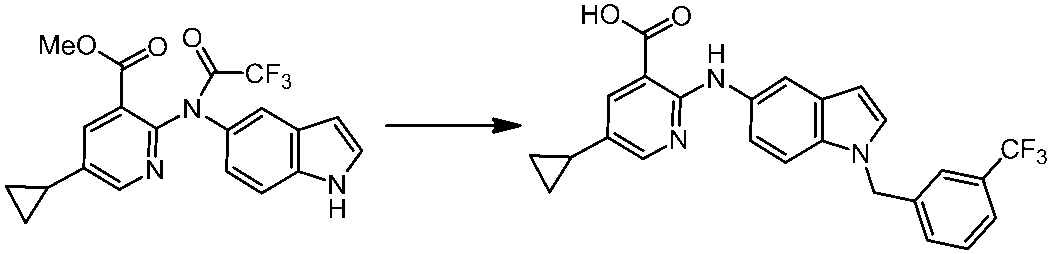
1H-NMR(DMSO-d6)δ:0.59-0.67(2H,m),0.84-0.94(2H,m),1.82-1.96(1H,m),5.52(2H,s),6.46(1H,d,J=2.6Hz),7.12-7.20(1H,m),7.36-7.46(2H,m),7.50-7.65(4H,m),7.86(1H,d,J=2.0Hz),7.99(1H,d,J=1.3Hz),8.18(1H,d,J=2.0Hz),10.15(1H,s).
MS(ESI,m/z):452(M+H)+,450(M-H)-.

1H-NMR(DMSO-d6)δ:0.60-0.68(2H,m),0.84-0.94(2H,m),1.82-1.96(1H,m),5.53(2H,s),6.47(1H,d,J=2.6Hz),7.16(1H,dd,J=8.9,1.7Hz),7.30-7.38(3H,m),7.50(1H,d,J=3.3Hz),7.68(2H,d,J=7.9Hz),7.86(1H,d,J=2.6Hz),7.99(1H,d,J=1.3Hz),8.18(1H,d,J=2.0Hz),10.13(1H,s).
MS(ESI,m/z):452(M+H)+,450(M-H)-.
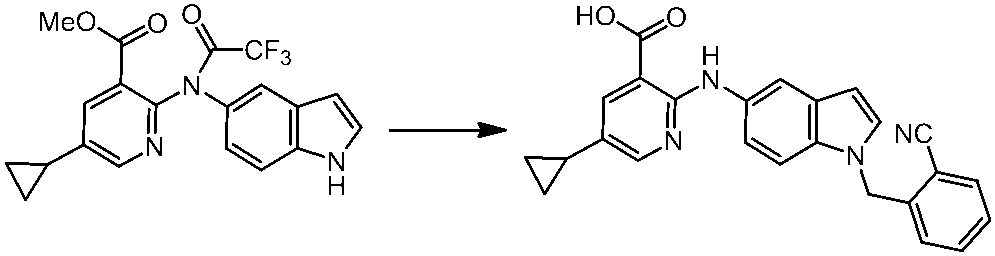
1H-NMR(DMSO-d6)δ:0.60-0.68(2H,m),0.86-0.95(2H,m),1.83-1.96(1H,m),5.64(2H,s),6.49(1H,d,J=2.6Hz),6.87(1H,d,J=7.9Hz),7.19(1H,dd,J=8.6,2.0Hz),7.35(1H,d,J=9.2Hz),7.42-7.52(2H,m),7.55-7.64(1H,m),7.84-7.94(2H,m),8.01(1H,s),8.19(1H,d,J=2.6Hz),10.15(1H,s).
MS(ESI,m/z):409(M+H)+,407(M-H)-.

1H-NMR(DMSO-d6)δ:0.59-0.68(2H,m),0.84-0.95(2H,m),1.83-1.95(1H,m),5.47(2H,s),6.46(1H,d,J=2.6Hz),7.18(1H,dd,J=8.6,2.0Hz),7.39(1H,d,J=8.6Hz),7.45-7.57(3H,m),7.64-7.76(2H,m),7.86(1H,d,J=2.6Hz),7.98(1H,d,J=1.3Hz),8.18(1H,d,J=2.6Hz),10.14(1H,s).
MS(ESI,m/z):409(M+H)+.
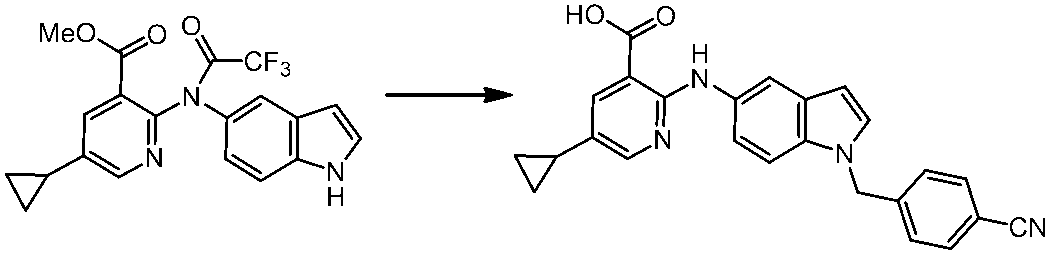
1H-NMR(DMSO-d6)δ:0.59-0.68(2H,m),0.84-0.95(2H,m),1.83-1.96(1H,m),5.52(2H,s),6.47(1H,d,J=2.6Hz),7.16(1H,dd,J=8.9,1.7Hz),7.26-7.35(3H,m),7.49(1H,d,J=2.6Hz),7.79(2H,d,J=7.8Hz),7.86(1H,d,J=2.6Hz),7.99(1H,d,J=2.0Hz),8.17(1H,d,J=2.0Hz),10.14(1H,s).
MS(ESI,m/z):409(M+H)+.

1H-NMR(DMSO-d6)δ:0.60-0.68(2H,m),0.84-0.96(2H,m),1.82-1.98(1H,m),2.32(3H,s),5.40(2H,s),6.46(1H,d,J=3.3Hz),6.53(1H,d,J=7.3Hz),7.00-7.10(1H,m),7.12-7.24(3H,m),7.26-7.34(2H,m),7.86(1H,d,J=2.6Hz),8.01(1H,d,J=2.0Hz),8.18(1H,d,J=2.6Hz),10.15(1H,s).
MS(ESI,m/z):398(M+H)+,396(M-H)-.

1H-NMR(DMSO-d6)δ:0.58-0.68(2H,m),0.84-0.94(2H,m),1.82-1.94(1H,m),2.24(3H,s),5.35(2H,s),6.42(1H,d,J=2.6Hz),6.94-7.23(5H,m),7.35(1H,d,J=8.6Hz),7.45(1H,d,J=2.6Hz),7.86(1H,d,J=2.6Hz),7.96(1H,d,J=2.0Hz),8.17(1H,d,J=2.6Hz),10.14(1H,s).
MS(ESI,m/z):398(M+H)+,396(M-H)-.

1H-NMR(DMSO-d6)δ:0.59-0.68(2H,m),0.84-0.96(2H,m),1.80-1.95(1H,m),2.24(3H,s),5.33(2H,s),6.41(1H,d,J=3.3Hz),7.10(4H,s),7.14(1H,dd,J=9.2,2.0Hz),7.34(1H,d,J=8.6Hz),7.44(1H,d,J=3.3Hz),7.85(1H,d,J=2.6Hz),7.95(1H,d,J=1.3Hz),8.17(1H,d,J=2.6Hz),10.12(1H,s).
MS(ESI,m/z):398(M+H)+,396(M-H)-.
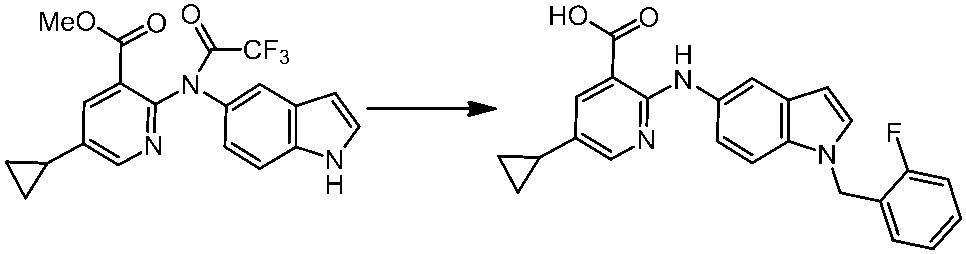
1H-NMR(DMSO-d6)δ:0.60-0.67(2H,m),0.86-0.94(2H,m),1.84-1.94(1H,m),5.45(2H,s),6.44(1H,d,J=3.2Hz),6.98-7.05(1H,m),7.07-7.26(3H,m),7.28-7.36(1H,m),7.39(1H,d,J=8.8Hz),7.42(1H,d,J=2.9Hz),7.86(1H,d,J=2.7Hz),7.97(1H,d,J=2.0Hz),8.18(1H,d,J=2.4Hz),10.13(1H,s).
MS(ESI,m/z):402(M+H)+,400(M-H)-.

1H-NMR(DMSO-d6)δ:0.60-0.68(2H,m),0.84-0.96(2H,m),1.83-1.96(1H,m),5.50(2H,s),6.48(1H,d,J=3.3Hz),6.62-6.68(1H,m),7.12-7.36(4H,m),7.42(1H,d,J=2.6Hz),7.48-7.54(1H,m),7.87(1H,d,J=2.0Hz),8.01(1H,d,J=2.0Hz),8.19(1H,d,J=2.6Hz),10.14(1H,s).
MS(ESI,m/z):418(M+H)+,416(M-H)-.

1H-NMR(DMSO-d6)δ:0.59-0.68(2H,m),0.84-0.96(2H,m),1.82-1.96(1H,m),5.42(2H,s),6.45(1H,d,J=3.3Hz),7.10-7.26(3H,m),7.28-7.41(3H,m),7.50(1H,d,J=3.3Hz),7.86(1H,d,J=2.6Hz),7.98(1H,d,J=2.0Hz),8.17(1H,d,J=2.6Hz).
MS(ESI,m/z):418(M+H)+,416(M-H)-.
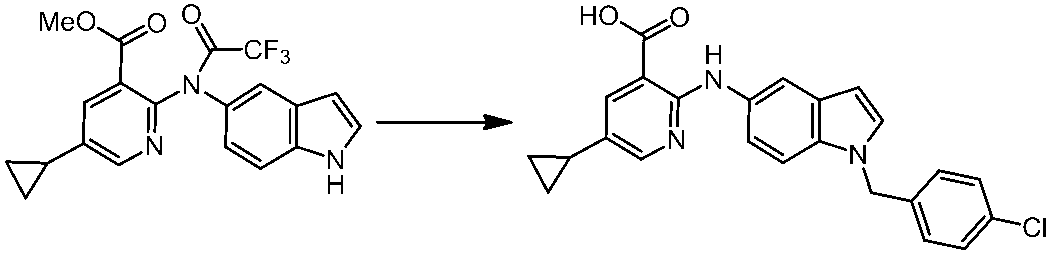
1H-NMR(DMSO-d6)δ:0.59-0.68(2H,m),0.84-0.96(2H,m),1.83-1.95(1H,m),5.40(2H,s),6.44(1H,d,J=3.3Hz),7.12-7.24(3H,m),7.30-7.40(3H,m),7.47(1H,d,J=2.6Hz),7.86(1H,d,J=2.6Hz),7.97(1H,d,J=2.0Hz),8.17(1H,d,J=2.6Hz),10.12(1H,s).
MS(ESI,m/z):418(M+H)+,416(M-H)-.

MS(ESI,m/z):386,388(M+H)+.

1H-NMR(CDCl3)δ:0.57-0.68(2H,m),0.82-0.96(2H,m),1.75-1.86(1H,m),3.22(3H,s),6.37(1H,d,J=3.2Hz),6.79(1H,d,J=2.9Hz),6.95-7.53(10H,m),7.84-8.14(3H,m).
MS(ESI,m/z):460(M+H)+,458(M-H)-.

1H-NMR(DMSO-d6)δ:0.60-0.70(2H,m),0.84-0.96(2H,m),1.82-1.96(1H,m),3.28(3H,s),6.45(1H,d,J=3.3Hz),7.06(1H,d,J=2.0Hz),7.24(1H,d,J=3.3Hz),7.28-7.40(2H,m),7.46-7.58(2H,m),7.88(1H,d,J=2.6Hz),8.07(1H,d,J=2.0Hz),8.20(1H,d,J=2.6Hz),10.26(1H,s).
MS(ESI,m/z):402(M+H)+,400(M-H)-.

1H-NMR(CDCl3)δ:0.60-0.66(2H,m),0.82-0.95(2H,m),1.76-1.85(1H,m),3.29(3H,s),6.51(1H,d,J=2.9Hz),6.95(1H,d,J=2.9Hz),7.04-7.12(2H,m),7.15-7.29(2H,m),7.32-7.41(1H,m),7.90-7.98(2H,m),8.13-8.20(1H,m),9.89(1H,brs).
MS(ESI,m/z):402(M+H)+,400(M-H)-.

1H-NMR(DMSO-d6)δ:0.60-0.69(2H,m),0.84-0.95(2H,m),1.83-1.95(1H,m),3.26(3H,s),6.45(1H,d,J=2.6Hz),7.00(1H,d,J=2.0Hz),7.24(1H,d,J=2.6Hz),7.25-7.34(2H,m),7.46-7.55(2H,m),7.88(1H,d,J=2.6Hz),8.05(1H,d,J=2.0Hz),8.20(1H,d,J=2.0Hz),10.25(1H,s).
MS(ESI,m/z):402(M+H)+,400(M-H)-.
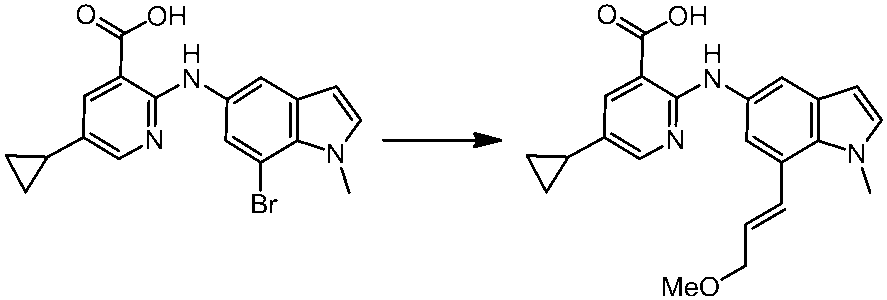
1H-NMR(DMSO-d6)δ:0.60-0.70(2H,m),0.84-0.98(2H,m),1.80-2.00(1H,m),3.20-3.50(3H,m),3.96(3H,s),4.06-4.14(2H,m),6.13(1H,dt,J=15.4,5.8Hz),6.34(1H,d,J=3.3Hz),7.17(1H,d,J=2.0Hz),7.22(1H,d,J=3.3Hz),7.43(1H,d,J=15.9Hz),7.87(1H,d,J=2.6Hz),7.95(1H,d,J=1.3Hz),8.20(1H,d,J=2.6Hz),10.14(1H,s).
MS(ESI,m/z):378(M+H)+,376(M-H)-.

1H-NMR(DMSO-d6)δ:0.60-0.68(2H,m),0.84-0.96(2H,m),1.80-1.96(3H,m),2.98-3.10(2H,m),3.27(3H,s),3.42(2H,t,J=6.3Hz),3.97(3H,s),6.32(1H,d,J=3.3Hz),6.86(1H,d,J=2.0Hz),7.17(1H,d,J=3.3Hz),7.87(1H,d,J=2.6Hz),7.93(1H,d,J=2.0Hz),8.20(1H,d,J=2.6Hz),10.14(1H,s).
MS(ESI,m/z):380(M+H)+.

1H-NMR(DMSO-d6)δ:0.52-0.70(4H,m),0.75-0.96(4H,m),1.60-1.76(1H,m),1.82-1.96(1H,m),3.98(3H,s),5.63(1H,dd,J=15.2,9.2Hz),6.31(1H,d,J=3.3Hz),7.03(1H,d,J=2.0Hz),7.19(1H,d,J=3.3Hz),7.26(1H,d,J=15.9Hz),7.86(1H,d,J=2.6Hz),7.91(1H,d,J=2.0Hz),8.19(1H,d,J=2.6Hz),10.10(1H,brs).
MS(ESI,m/z):374(M+H)+.
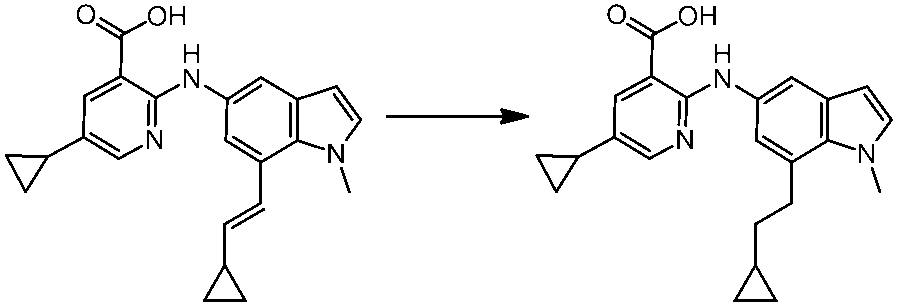
1H-NMR(DMSO-d6)δ:0.08-0.16(2H,m),0.38-0.50(2H,m),0.60-0.68(2H,m),0.76-0.96(3H,m),1.50-1.62(2H,m),1.82-1.96(1H,m),3.04-3.14(2H,m),3.98(3H,s),6.31(1H,d,J=3.3Hz),6.87(1H,d,J=2.0Hz),7.17(1H,d,J=2.6Hz),7.86(1H,d,J=2.6Hz),7.92(1H,d,J=2.0Hz),8.20(1H,d,J=2.6Hz),10.09(1H,s).
MS(ESI,m/z):376(M+H)+,374(M-H)-.
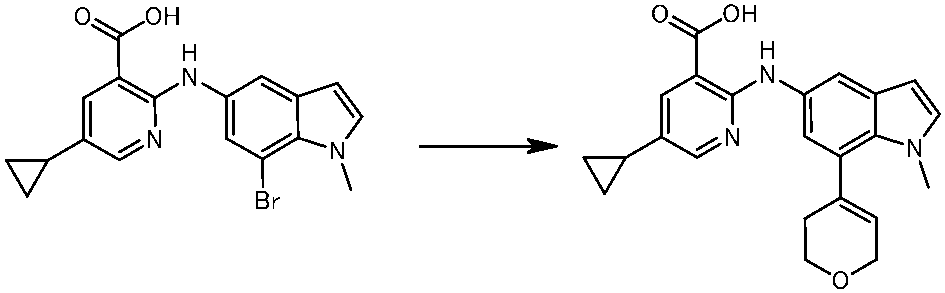
1H-NMR(DMSO-d6)δ:0.60-0.70(2H,m),0.84-0.96(2H,m),1.83-1.96(1H,m),2.36-2.48(2H,m),3.78(3H,s),3.88(2H,t,J=5.3Hz),4.20-4.28(2H,m),5.74-5.80(1H,m),6.38(1H,d,J=2.6Hz),6.86(1H,d,J=2.0Hz),7.23(1H,d,J=2.6Hz),7.87(1H,d,J=2.6Hz),8.00(1H,d,J=2.0Hz),8.20(1H,d,J=2.6Hz),10.26(1H,brs).
MS(ESI,m/z):390(M+H)+,388(M-H)-.

MS(ESI,m/z):403(M+H)+.

1H-NMR(DMSO-d6)δ:0.64-0.72(2H,m),0.89-0.99(2H,m),1.58-1.83(6H,m),1.88-2.00(1H,m),3.20-3.50(4H,m),7.45(1H,d,J=5.9Hz),7.56(1H,t,J=8.3Hz),7.73(1H,d,J=8.6Hz),7.96(1H,d,J=2.0Hz),8.15(1H,d,J=5.9Hz),8.24(1H,d,J=2.0Hz),8.60(1H,d,J=7.9Hz).
MS(ESI,m/z):389(M+H)+.
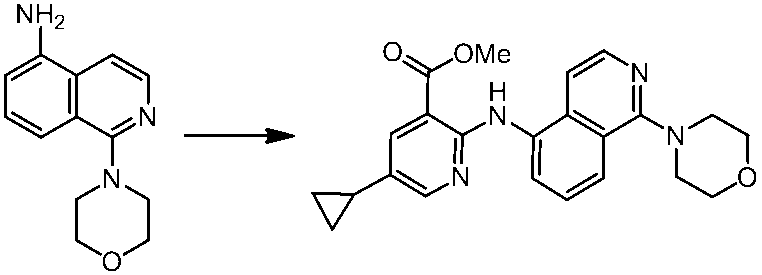
MS(ESI,m/z):405(M+H)+.

1H-NMR(DMSO-d6)δ:0.64-0.73(2H,m),0.90-0.99(2H,m),1.88-2.02(1H,m),3.20-3.50(4H,m),3.82-3.92(4H,m),7.50(1H,d,J=5.9Hz),7.58(1H,t,J=8.3Hz),7.81(1H,d,J=7.9Hz),7.97(1H,d,J=2.6Hz),8.19(1H,d,J=5.9Hz),8.25(1H,d,J=2.6Hz),8.60(1H,d,J=7.9Hz),10.89(1H,s),13.78(1H,brs).
MS(ESI,m/z):391(M+H)+.
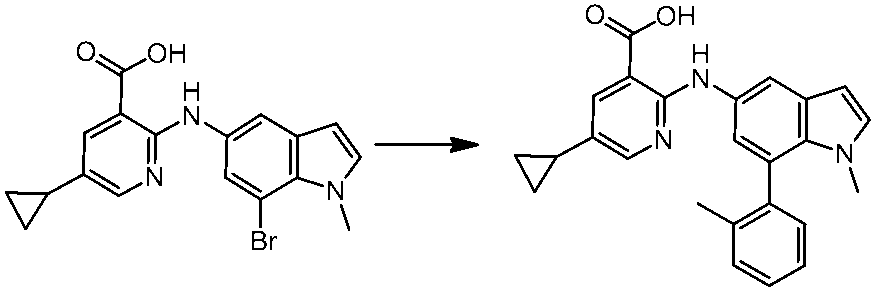
1H-NMR(CDCl3)δ:0.60-0.67(2H,m),0.84-0.96(2H,m),1.77-1.86(1H,m),2.11(3H,s),3.15(3H,s),6.49(1H,d,J=2.9Hz),6.91(1H,d,J=3.2Hz),6.97(1H,d,J=2.0Hz),7.20-7.38(4H,m),7.94(1H,d,J=2.4Hz),8.02-8.09(1H,m),8.22(1H,s),9.86(1H,brs).
MS(ESI,m/z):398(M+H)+.

1H-NMR(CDCl3)δ:0.60-0.66(2H,m),0.88-0.95(2H,m),1.76-1.86(1H,m),2.40(3H,s),3.27(3H,s),6.50(1H,d,J=3.2Hz),6.93(1H,d,J=2.9Hz),7.04(1H,d,J=2.0Hz),7.16-7.32(4H,m),7.90-8.00(2H,m),8.18(1H,s),9.89(1H,brs).
MS(ESI,m/z):398(M+H)+,396(M-H)-.

1H-NMR(DMSO-d6)δ:0.61-0.67(2H,m),0.85-0.93(2H,m),1.84-1.93(1H,m),2.39(3H,s),3.26(3H,s),6.43(1H,d,J=3.2Hz),6.97(1H,d,J=2.0Hz),7.21(1H,d,J=2.9Hz),7.27(2H,d,J=7.8Hz),7.34(2H,d,J=8.0Hz),7.87(1H,d,J=2.7Hz),8.03(1H,d,J=2.2Hz),8.18(1H,d,J=2.4Hz).
MS(ESI,m/z):398(M+H)+,396(M-H)-.
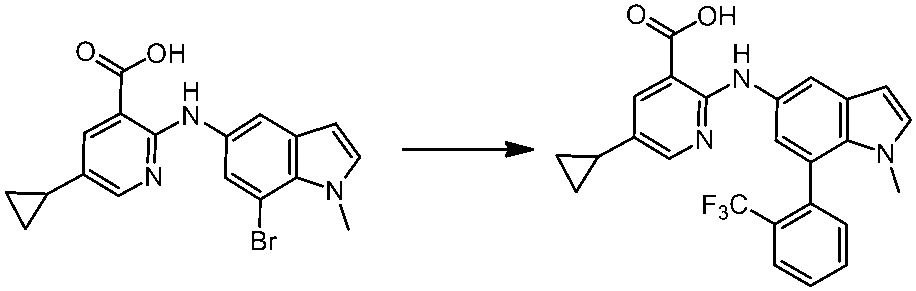
1H-NMR(CDCl3)δ:0.60-0.66(2H,m),0.86-0.95(2H,m),1.76-1.87(1H,m),3.11(3H,s),6.48(1H,d,J=2.9Hz),6.90(1H,d,J=3.2Hz),7.04(1H,s),7.47-7.59(3H,m),7.75-7.82(1H,m),7.91-7.96(1H,m),8.00-8.06(1H,m),8.14-8.22(1H,m).
MS(ESI,m/z):452(M+H)+,450(M-H)-.
1H-NMR(DMSO-d6)δ:0.60-0.69(2H,m),0.84-0.96(2H,m),1.83-1.96(1H,m),3.24(3H,s),6.48(1H,d,J=2.6Hz),7.06(1H,d,J=2.6Hz),7.27(1H,d,J=2.6Hz),7.66-7.86(4H,m),7.88(1H,d,J=2.6Hz),8.10(1H,d,J=2.0Hz),8.20(1H,d,J=2.6Hz),10.27(1H,brs).
MS(ESI,m/z):452(M+H)+.
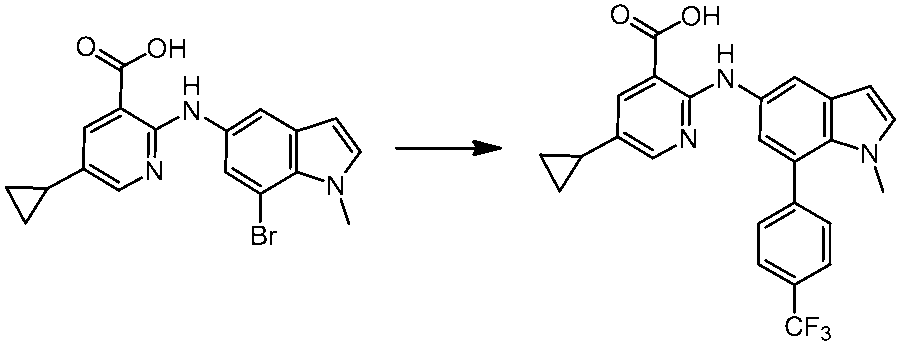
1H-NMR(DMSO-d6)δ:0.60-0.69(2H,m),0.84-0.96(2H,m),1.83-1.96(1H,m),3.27(3H,s),6.48(1H,d,J=2.6Hz),7.08(1H,d,J=2.0Hz),7.28(1H,d,J=3.3Hz),7.72(2H,d,J=7.9Hz),7.83(2H,d,J=7.9Hz),7.88(1H,d,J=2.6Hz),8.08(1H,d,J=2.0Hz),8.20(1H,d,J=2.6Hz),10.26(1H,brs).
MS(ESI,m/z):452(M+H)+,450(M-H)-.

1H-NMR(DMSO-d6)δ:0.60-0.70(2H,m),0.84-0.95(2H,m),1.84-1.96(1H,m),3.20(3H,s),6.49(1H,d,J=3.3Hz),7.12(1H,d,J=2.0Hz),7.28(1H,d,J=2.6Hz),7.65-7.72(2H,m),7.77-7.83(1H,m),7.89(1H,d,J=2.6Hz),7.98(1H,d,J=7.9Hz),8.15(1H,d,J=2.0Hz),8.21(1H,d,J=2.0Hz),10.30(1H,brs).
MS(ESI,m/z):409(M+H)+,407(M-H)-.

1H-NMR(DMSO-d6)δ:0.60-0.69(2H,m),0.85-0.95(2H,m),1.83-1.96(1H,m),3.26(3H,s),6.47(1H,d,J=3.3Hz),7.04(1H,d,J=2.0Hz),7.27(1H,d,J=2.6Hz),7.67(1H,t,J=7.9Hz),7.83(1H,d,J=7.9Hz),7.88(1H,d,J=2.7Hz),7.92(1H,d,J=8.1Hz),7.98(1H,s),8.11(1H,d,J=2.0Hz),8.20(1H,d,J=2.6Hz),10.23(1H,brs).
MS(ESI,m/z):409(M+H)+,407(M-H)-.

1H-NMR(DMSO-d6)δ:0.60-0.69(2H,m),0.84-0.96(2H,m),1.84-1.95(1H,m),3.27(3H,s),6.48(1H,d,J=2.6Hz),7.06(1H,d,J=2.6Hz),7.28(1H,d,J=2.6Hz),7.69(2H,d,J=7.9Hz),7.88(1H,d,J=2.0Hz),7.94(2H,d,J=7.9Hz),8.09(1H,d,J=2.0Hz),8.20(1H,d,J=2.6Hz),10.25(1H,s).
MS(ESI,m/z):409(M+H)+,407(M-H)-.

1H-NMR(DMSO-d6)δ:0.60-0.69(2H,m),0.84-0.95(2H,m),1.80-2.00(1H,m),3.21(3H,s),3.70(3H,s),6.39(1H,d,J=2.6Hz),6.90(1H,d,J=2.0Hz),7.04(1H,t,J=6.9Hz),7.12(1H,d,J=7.9Hz),7.17(1H,d,J=3.3Hz),7.28(1H,dd,J=7.3,1.3Hz),7.38-7.48(1H,m),7.87(1H,d,J=2.6Hz),8.01(1H,d,J=2.0Hz),8.20(1H,d,J=2.6Hz),10.22(1H,s).
MS(ESI,m/z):414(M+H)+.

1H-NMR(DMSO-d6)δ:0.60-0.69(2H,m),0.84-0.95(2H,m),1.82-1.95(1H,m),3.29(3H,s),3.81(3H,s),6.45(1H,d,J=3.3Hz),6.96-7.06(4H,m),7.23(1H,d,J=3.3Hz),7.32-7.42(1H,m),7.88(1H,d,J=2.6Hz),8.04(1H,d,J=2.0Hz),8.20(1H,d,J=2.0Hz),10.25(1H,brs).
MS(ESI,m/z):414(M+H)+,412(M-H)-.

1H-NMR(DMSO-d6)δ:0.60-0.69(2H,m),0.84-0.95(2H,m),1.82-1.96(1H,m),3.28(3H,s),3.83(3H,s),6.43(1H,d,J=3.3Hz),6.96(1H,d,J=2.0Hz),7.02(2H,d,J=8.6Hz),7.22(1H,d,J=3.3Hz),7.38(2H,d,J=8.6Hz),7.87(1H,d,J=2.6Hz),8.02(1H,d,J=2.6Hz),8.20(1H,d,J=2.0Hz),10.23(1H,brs).
MS(ESI,m/z):414(M+H)+,412(M-H)-.

1H-NMR(DMSO-d6)δ:0.60-0.69(2H,m),0.84-0.95(2H,m),1.82-1.96(1H,m),3.20(3H,s),6.43(1H,d,J=3.3Hz),6.99(1H,d,J=2.0Hz),7.22(1H,d,J=3.3Hz),7.40-7.64(4H,m),7.88(1H,d,J=2.6Hz),8.09(1H,d,J=2.0Hz),8.19(1H,d,J=2.6Hz),10.43(1H,brs).
MS(ESI,m/z):418(M+H)+.

1H-NMR(DMSO-d6)δ:0.60-0.69(2H,m),0.84-0.95(2H,m),1.82-1.95(1H,m),3.28(3H,s),6.46(1H,d,J=2.6Hz),7.04(1H,d,J=2.0Hz),7.25(1H,d,J=3.3Hz),7.41-7.57(4H,m),7.88(1H,d,J=2.6Hz),8.07(1H,d,J=2.0Hz),8.19(1H,d,J=2.6Hz),10.34(1H,brs).
MS(ESI,m/z):418(M+H)+,416(M-H)-.

1H-NMR(DMSO-d6)δ:0.60-0.68(2H,m),0.85-0.95(2H,m),1.80-1.95(1H,m),3.28(3H,s),6.46(1H,d,J=2.6Hz),7.01(1H,d,J=2.0Hz),7.25(1H,d,J=2.6Hz),7.46-7.60(4H,m),7.88(1H,d,J=2.6Hz),8.06(1H,d,J=2.0Hz),8.20(1H,d,J=2.0Hz),10.25(1H,brs).
MS(ESI,m/z):418(M+H)+,416(M-H)-.

1H-NMR(DMSO-d6)δ:0.60-0.69(2H,m),0.86-0.95(2H,m),1.82-1.96(1H,m),3.20(3H,s),6.44(1H,d,J=3.3Hz),7.03(1H,d,J=2.0Hz),7.23(1H,d,J=3.3Hz),7.46-7.66(4H,m),7.88(1H,d,J=2.6Hz),8.09(1H,d,J=2.0Hz),8.20(1H,d,J=2.6Hz),10.27(1H,s).
MS(ESI,m/z):468(M+H)+,466(M-H)-.

1H-NMR(DMSO-d6)δ:0.60-0.69(2H,m),0.84-0.95(2H,m),1.84-1.95(1H,m),3.26(3H,s),6.47(1H,d,J=3.3Hz),7.05(1H,d,J=2.0Hz),7.26(1H,d,J=3.3Hz),7.42-7.66(4H,m),7.88(1H,d,J=2.6Hz),8.08(1H,d,J=2.0Hz),8.20(1H,d,J=2.6Hz),10.25(1H,s).
MS(ESI,m/z):468(M+H)+,466(M-H)-.
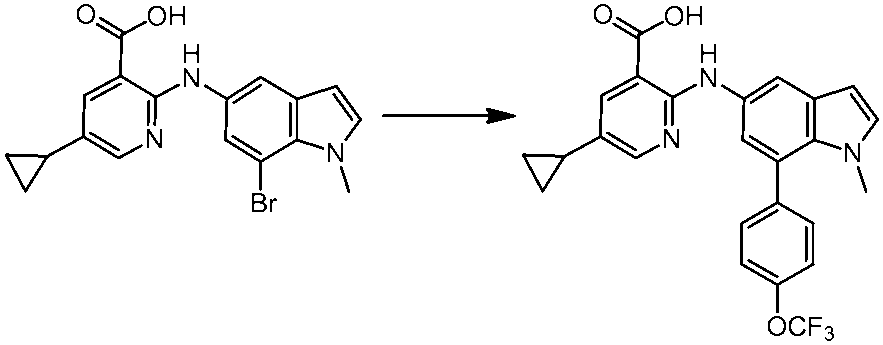
1H-NMR(DMSO-d6)δ:0.60-0.69(2H,m),0.86-0.95(2H,m),1.83-1.96(1H,m),3.27(3H,s),6.46(1H,d,J=2.6Hz),7.04(1H,d,J=2.0Hz),7.26(1H,d,J=3.3Hz),7.45(2H,d,J=7.9Hz),7.61(2H,d,J=8.6Hz),7.88(1H,d,J=2.6Hz),8.07(1H,d,J=2.0Hz),8.20(1H,d,J=2.6Hz),10.25(1H,s).
MS(ESI,m/z):468(M+H)+,466(M-H)-.

1H-NMR(DMSO-d6)δ:0.60-0.68(2H,m),0.84-0.94(2H,m),1.82-1.94(1H,m),3.20-3.40(3H,m),6.48(1H,d,J=3.3Hz),7.06(1H,d,J=2.0Hz),7.28(1H,d,J=3.3Hz),7.49-7.56(2H,m),7.87(1H,d,J=2.6Hz),8.11(1H,d,J=2.0Hz),8.17(1H,d,J=2.6Hz),8.62-8.69(2H,m).
MS(ESI,m/z):385(M+H)+,383(M-H)-.

1H-NMR(DMSO-d6)δ:0.60-0.69(2H,m),0.84-0.96(2H,m),1.82-1.96(1H,m),3.28(3H,s),6.47(1H,d,J=3.3Hz),7.06(1H,d,J=2.0Hz),7.27(1H,d,J=3.3Hz),7.50(1H,dd,J=7.6,5.0Hz),7.85-7.96(2H,m),8.10(1H,d,J=2.0Hz),8.20(1H,d,J=2.6Hz),8.65(1H,dd,J=4.6,1.3Hz),8.70(1H,d,J=1.3Hz),10.30(1H,brs).
MS(ESI,m/z):385(M+H)+,383(M-H)-.
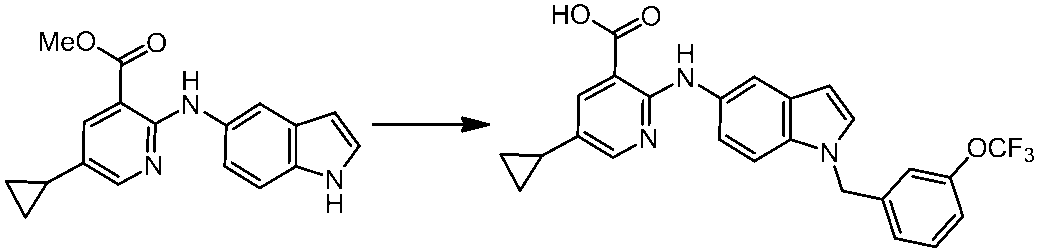
1H-NMR(DMSO-d6)δ:0.59-0.67(2H,m),0.86-0.95(2H,m),1.82-1.95(1H,m),5.47(2H,s),6.46(1H,d,J=3.3Hz),7.13-7.22(3H,m),7.24(1H,d,J=8.6Hz),7.38(1H,d,J=8.6Hz),7.44(1H,t,J=7.9Hz),7.50(1H,d,J=2.6Hz),7.86(1H,d,J=2.6Hz),7.99(1H,d,J=2.0Hz),8.18(1H,d,J=2.6Hz),10.14(1H,s).
MS(ESI,m/z):468(M+H)+,466(M-H)-.

1H-NMR(DMSO-d6)δ:0.59-0.68(2H,m),0.85-0.95(2H,m),1.82-1.96(1H,m),5.44(2H,s),6.46(1H,d,J=2.6Hz),6.82-6.92(2H,m),7.07-7.22(2H,m),7.38(1H,d,J=8.6Hz),7.51(1H,d,J=3.3Hz),7.86(1H,d,J=2.0Hz),7.99(1H,d,J=2.0Hz),8.18(1H,d,J=2.6Hz),10.16(1H,brs).
MS(ESI,m/z):420(M+H)+,418(M-H)-.

1H-NMR(DMSO-d6)δ:0.59-0.64(2H,m),0.87-1.00(2H,m),1.86-1.93(1H,m),2.20(6H,s),5.30(2H,s),6.42(1H,d,J=3.3Hz),6.78-6.92(3H,m),7.16(1H,dd,J=8.6,2.0Hz),7.35(1H,d,J=8.6Hz),7.44(1H,d,J=2.6Hz),7.86(1H,d,J=2.6Hz),7.95(1H,d,J=2.0Hz),8.17(1H,d,J=2.0Hz),10.10(1H,s).
MS(ESI,m/z):412(M+H)+,410(M-H)-.

1H-NMR(DMSO-d6)δ:0.59-0.68(2H,m),0.85-0.95(2H,m),1.82-1.96(1H,m),5.62(2H,s),6.49(1H,d,J=2.6Hz),7.19(1H,dd,J=8.6,2.0Hz),7.45(1H,d,J=9.2Hz),7.58(1H,d,J=2.6Hz),7.83-7.90(3H,m),7.98-8.05(2H,m),8.18(1H,d,J=2.0Hz),10.15(1H,brs).
MS(ESI,m/z):520(M+H)+,518(M-H)-.
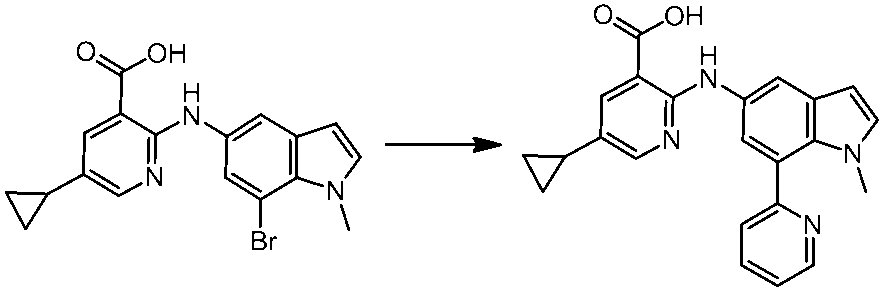
1H-NMR(DMSO-d6)δ:0.60-0.69(2H,m),0.85-0.95(2H,m),1.83-1.96(1H,m),3.20-3.50(3H,m),6.47(1H,d,J=3.3Hz),7.15(1H,d,J=2.0Hz),7.26(1H,d,J=3.3Hz),7.38-7.48(1H,m),7.65(1H,d,J=7.9Hz),7.85-7.96(2H,m),8.08(1H,d,J=2.0Hz),8.19(1H,d,J=2.0Hz),8.69(1H,d,J=4.6Hz).
MS(ESI,m/z):385(M+H)+,383(M-H)-.
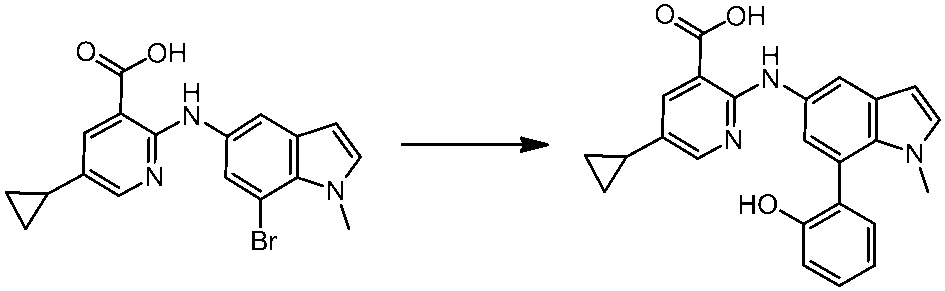
1H-NMR(DMSO-d6)δ:0.60-0.69(2H,m),0.84-0.95(2H,m),1.83-1.95(1H,m),3.20-3.40(3H,m),6.39(1H,d,J=3.3Hz),6.84-6.98(3H,m),7.14-7.30(3H,m),7.87(1H,d,J=2.6Hz),8.01(1H,d,J=2.0Hz),8.20(1H,d,J=2.6Hz),9.45(1H,s),10.23(1H,brs).
MS(ESI,m/z):400(M+H)+,398(M-H)-.

1H-NMR(DMSO-d6)δ:0.60-0.69(2H,m),0.84-0.94(2H,m),1.83-1.95(1H,m),3.30(3H,s),6.44(1H,d,J=3.3Hz),6.78-6.89(3H,m),6.99(1H,d,J=2.0Hz),7.20-7.29(2H,m),7.88(1H,d,J=2.6Hz),8.01(1H,d,J=2.0Hz),8.20(1H,d,J=2.6Hz),9.57(1H,s),10.25(1H,brs).
MS(ESI,m/z):400(M+H)+,398(M-H)-.

1H-NMR(DMSO-d6)δ:0.60-0.69(2H,m),0.84-0.95(2H,m),1.82-1.95(1H,m),3.28(3H,s),6.42(1H,d,J=3.3Hz),6.84(2H,d,J=8.6Hz),6.93(1H,d,J=2.0Hz),7.20(1H,d,J=3.3Hz),7.24(2H,d,J=8.7Hz),7.87(1H,d,J=2.6Hz),8.00(1H,d,J=2.0Hz),8.20(1H,d,J=2.0Hz),9.55(1H,s),10.23(1H,brs).
MS(ESI,m/z):400(M+H)+,398(M-H)-.

1H-NMR(DMSO-d6)δ:0.60-0.69(2H,m),0.84-0.95(2H,m),1.62-1.96(5H,m),2.14-2.36(4H,m),3.78(3H,s),5.63-5.72(1H,m),6.36(1H,d,J=2.6Hz),6.76(1H,d,J=2.0Hz),7.20(1H,d,J=2.6Hz),7.87(1H,d,J=2.6Hz),7.98(1H,d,J=2.0Hz),8.20(1H,d,J=2.6Hz),10.17(1H,brs).
MS(ESI,m/z):388(M+H)+.

1H-NMR(DMSO-d6)δ:0.58-0.68(2H,m),0.83-0.95(2H,m),1.82-1.94(1H,m),5.31(2H,s),6.42(1H,d,J=2.6Hz),6.50(1H,s),6.58-6.68(2H,m),7.04-7.18(2H,m),7.32(1H,d,J=9.2Hz),7.42(1H,d,J=2.6Hz),7.85(1H,d,J=2.6Hz),7.94-8.02(1H,m),8.12-8.18(1H,m),9.35(1H,s).
MS(ESI,m/z):400(M+H)+.

1H-NMR(DMSO-d6)δ:0.58-0.68(2H,m),0.80-0.95(2H,m),1.82-1.95(1H,m),3.27(3H,s),3.56-3.65(2H,m),3.96-4.04(2H,m),5.35(2H,s),6.43(1H,d,J=2.6Hz),6.70-6.85(3H,m),7.12-7.25(2H,m),7.36(1H,d,J=9.2Hz),7.47(1H,d,J=2.6Hz),7.86(1H,d,J=2.6Hz),7.97(1H,d,J=1.3Hz),8.17(1H,d,J=2.6Hz),10.14(1H,brs).
MS(ESI,m/z):458(M+H)+,456(M-H)-.
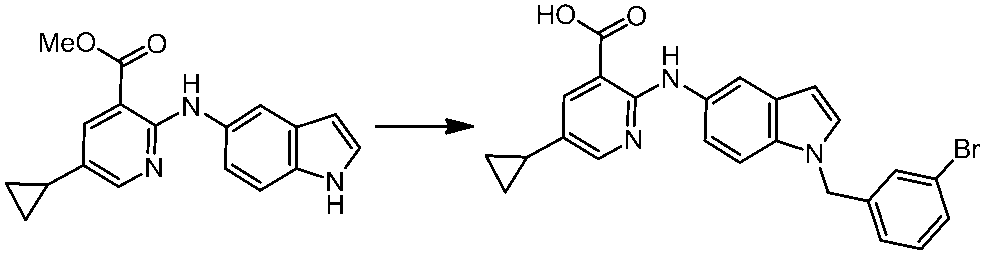
MS(ESI,m/z):464(M+H)+.

1H-NMR(DMSO-d6)δ:0.58-0.68(2H,m),0.85-0.94(2H,m),1.80-1.95(1H,m),3.26(3H,s),3.98-4.04(2H,m),5.38(2H,s),6.22-6.35(1H,m),6.43(1H,d,J=2.6Hz),6.54(1H,d,J=15.9Hz),7.05(1H,d,J=7.3Hz),7.16(1H,dd,J=8.6,2.0Hz),7.26(1H,t,J=7.9Hz),7.30-7.42(3H,m),7.49(1H,d,J=3.3Hz),7.86(1H,d,J=2.6Hz),7.90-8.00(1H,m),8.17(1H,d,J=2.6Hz),10.12(1H,brs).
MS(ESI,m/z):454(M+H)+,452(M-H)-.

1H-NMR(CDCl3)δ:0.58-0.65(2H,m),0.87-0.94(2H,m),1.76-1.88(3H,m),2.62(2H,t,J=7.8Hz),3.30(3H,s),3.33(2H,t,J=6.5Hz),5.25(2H,s),6.46-6.51(1H,m),6.89-6.98(2H,m),7.05-7.10(2H,m),7.16-7.32(3H,m),7.82-7.89(1H,m),7.92-7.99(1H,m),8.08-8.18(1H,m).
MS(ESI,m/z):456(M+H)+,454(M-H)-.

1H-NMR(DMSO-d6)δ:0.55-0.62(2H,m),0.83-0.91(2H,m),1.80-1.90(1H,m),3.06-3.15(2H,m),3.23(3H,s),3.41(2H,t,J=5.9Hz),5.11-5.25(2H,m),5.56(1H,brs),6.32-6.47(4H,m),6.94-7.00(1H,m),7.13(1H,dd,J=8.5,2.0Hz),7.30(1H,d,J=8.8Hz),7.37(1H,d,J=3.2Hz),7.84(1H,d,J=2.4Hz),8.02-8.08(2H,m).
MS(ESI,m/z):457(M+H)+.

1H-NMR(CDCl3)δ:0.60-0.67(2H,m),0.89-0.96(2H,m),1.76-1.85(1H,m),2.90(3H,s),3.30(3H,s),3.39-3.49(4H,m),5.18(2H,s),6.38-6.45(2H,m),6.48(1H,d,J=2.9Hz),6.57-6.64(1H,m),7.05-7.15(2H,m),7.19-7.30(2H,m),7.85(1H,s),7.94-8.00(1H,m),8.09(1H,s),10.04(1H,brs).
MS(ESI,m/z):471(M+H)+,469(M-H)-.

MS(ESI,m/z):322(M+H)+.

1H-NMR(DMSO-d6)δ:0.63-0.71(2H,m),0.88-0.97(2H,m),1.86-1.99(1H,m),3.75(3H,s),6.35(1H,d,J=2.6Hz),7.13(1H,dd,J=8.3,1.7Hz),7.22(1H,d,J=3.3Hz),7.45(1H,d,J=8.6Hz),7.90(1H,d,J=2.6Hz),7.96(1H,s),8.24(1H,d,J=2.6Hz),10.32(1H,s).
MS(ESI,m/z):308(M+H)+.

MS(ESI,m/z):336(M+H)+.

1H-NMR(DMSO-d6)δ:0.63-0.70(2H,m),0.88-0.96(2H,m),1.37(3H,t,J=7.3Hz),1.86-1.98(1H,m),4.15(2H,q,J=7.3Hz),6.36(1H,d,J=2.6Hz),7.13(1H,dd,J=8.3,1.7Hz),7.28(1H,d,J=3.3Hz),7.44(1H,d,J=8.6Hz),7.89(1H,d,J=2.6Hz),7.97(1H,s),8.23(1H,d,J=2.0Hz),10.28(1H,s).
MS(ESI,m/z):322(M+H)+.

MS(ESI,m/z):350(M+H)+.
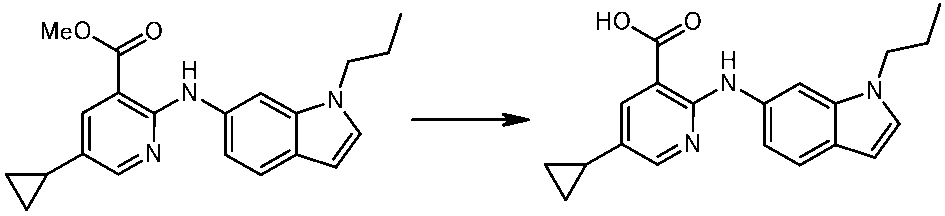
1H-NMR(DMSO-d6)δ:0.62-0.70(2H,m),0.82-0.96(5H,m),1.72-1.98(3H,m),4.08(2H,t,6.9Hz),6.35(1H,d,J=2.6Hz),7.13(1H,dd,J=8.6,2.0Hz),7.27(1H,d,J=3.3Hz),7.44(1H,d,J=8.6Hz),7.89(1H,d,J=2.6Hz),7.96(1H,s),8.22(1H,d,J=2.6Hz),10.28(1H,s).
MS(ESI,m/z):336(M+H)+.
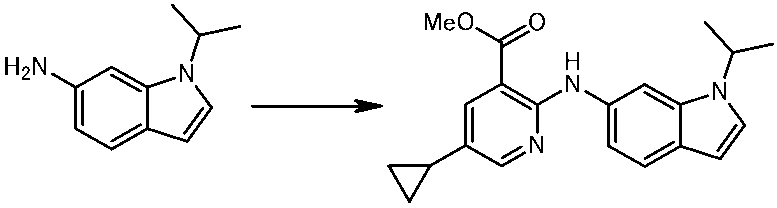
MS(ESI,m/z):350(M+H)+.

1H-NMR(DMSO-d6)δ:0.62-0.70(2H,m),0.87-0.96(2H,m),1.46(6H,d,J=6.6Hz),1.86-1.97(1H,m),4.59-4.74(1H,m),6.38(1H,d,J=2.6Hz),7.11(1H,dd,J=8.6,2.0Hz),7.38(1H,d,J=3.3Hz),7.44(1H,d,J=8.6Hz),7.89(1H,d,J=2.6Hz),8.02(1H,s),8.23(1H,d,J=2.6Hz),10.32(1H,s).
MS(ESI,m/z):336(M+H)+.
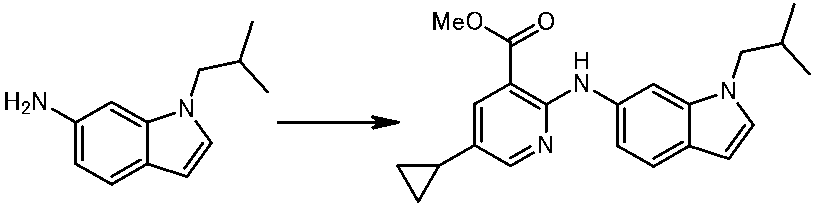
MS(ESI,m/z):364(M+H)+.
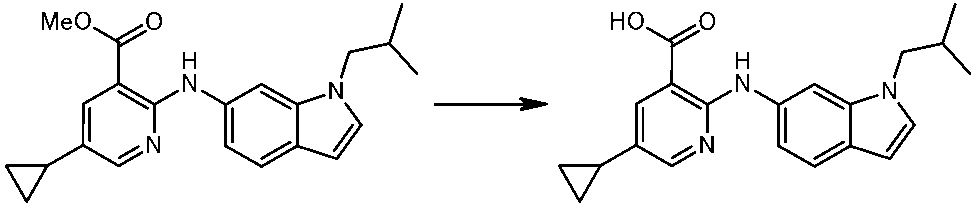
1H-NMR(DMSO-d6)δ:0.62-0.70(2H,m),0.85-0.95(8H,m),1.86-1.97(1H,m),2.06-2.22(1H,m),3.92(2H,d,J=6.6Hz),6.35(1H,d,J=2.6Hz),7.13(1H,dd,J=8.6,2.0Hz),7.24(1H,d,J=3.3Hz),7.44(1H,d,J=8.6Hz),7.88(1H,d,J=2.6Hz),7.95(1H,s),8.21(1H,d,J=2.6Hz),10.32(1H,s).
MS(ESI,m/z):350(M+H)+.

MS(ESI,m/z):404(M+H)+.

1H-NMR(DMSO-d6)δ:0.61-0.69(2H,m),0.83-1.26(7H,m),1.48-1.98(7H,m),3.95(2H,d,J=7.3Hz),6.34(1H,d,J=3.3Hz),7.14(1H,dd,J=8.6,2.0Hz),7.22(1H,d,J=2.6Hz),7.43(1H,d,J=7.9Hz),7.87(1H,d,J=2.6Hz),7.91(1H,s),8.21(1H,d,J=2.6Hz),10.28(1H,s).
MS(ESI,m/z):390(M+H)+.

MS(ESI,m/z):384(M+H)+.

1H-NMR(DMSO-d6)δ:0.62-0.69(2H,m),0.85-0.95(2H,m),1.84-1.97(1H,m),6.64(1H,d,J=2.6Hz),7.17(1H,dd,J=8.6,1.3Hz),7.35-7.46(1H,m),7.53-7.65(6H,m),7.88(1H,d,J=2.6Hz),8.17(1H,d,J=2.6Hz),8.30(1H,s),10.36(1H,s).
MS(ESI,m/z):370(M+H)+.

MS(ESI,m/z):396(M+H)+.

1H-NMR(DMSO-d6)δ:0.69-0.77(2H,m),0.93-1.02(2H,m),1.94-2.06(1H,m),7.50-7.73(7H,m),7.93(1H,d,J=9.2Hz),7.98(1H,d,J=2.6Hz),8.39(1H,d,J=2.6Hz),8.46(1H,d,J=5.3Hz),8.68(1H,d,J=2.0Hz),10.87(1H,s).
MS(ESI,m/z):382(M+H)+.
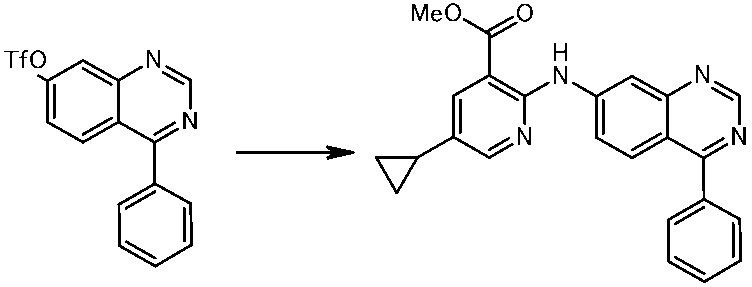
MS(ESI,m/z):397(M+H)+.

1H-NMR(DMSO-d6)δ:0.71-0.79(2H,m),0.94-1.04(2H,m),1.96-2.08(1H,m),7.58-7.69(4H,m),7.74-7.82(2H,m),7.94-8.02(2H,m),8.45(1H,d,J=2.0Hz),8.89(1H,d,J=2.6Hz),9.18(1H,s),10.93(1H,s).
MS(ESI,m/z):383(M+H)+.

MS(ESI,m/z):397(M+H)+.

1H-NMR(DMSO-d6)δ:0.70-0.78(2H,m),0.94-1.03(2H,m),1.94-2.07(1H,m),7.54-7.73(5H,m),7.77-7.86(2H,m),8.02(1H,d,J=2.6Hz),8.41(1H,d,J=2.6Hz),9.27-9.34(1H,m),9.39(1H,s),12.19(1H,s).
MS(ESI,m/z):383(M+H)+.
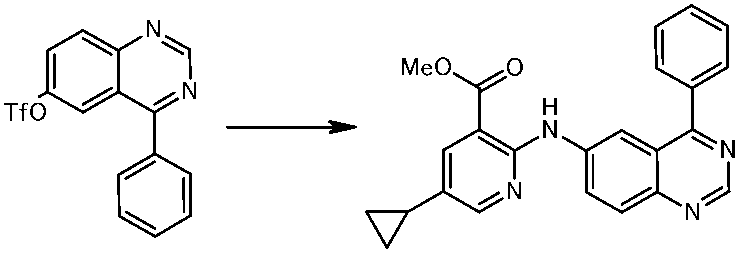
MS(ESI,m/z):397(M+H)+.

1H-NMR(DMSO-d6)δ:0.64-0.72(2H,m),0.91-1.01(2H,m),1.92-2.04(1H,m),7.62-7.73(3H,m),7.86-7.94(3H,m),7.98-8.09(2H,m),8.20(1H,d,J=2.6Hz),8.97(1H,d,J=2.0Hz),9.20(1H,s),10.82(1H,s).
MS(ESI,m/z):383(M+H)+.
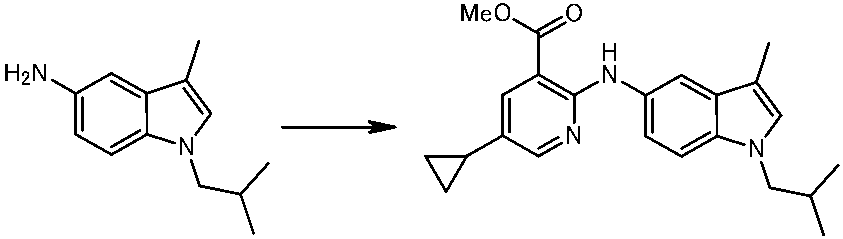
MS(ESI,m/z):378(M+H)+.

1H-NMR(DMSO-d6)δ:0.61-0.69(2H,m),0.80-0.95(8H,m),1.85-1.96(1H,m),2.00-2.16(1H,m),2.23(3H,s),3.88(2H,d,J=7.3Hz),7.08(1H,s),7.22(1H,dd,J=8.6,2.0Hz),7.35(1H,d,J=8.6Hz),7.75(1H,d,J=2.0Hz),7.89(1H,d,J=2.0Hz),8.15(1H,d,J=2.6Hz),10.11(1H,s).
MS(ESI,m/z):364(M+H)+.

MS(ESI,m/z):432(M+H)+.

1H-NMR(DMSO-d6)δ:0.64-0.72(2H,m),0.89-0.98(2H,m),1.15-1.35(2H,m),1.40-1.74(6H,m),1.88-2.00(1H,m),2.32-2.45(1H,m),4.07(2H,d,J=7.9Hz),6.48(1H,d,J=2.6Hz),7.03-7.16(2H,m),7.37(1H,d,J=3.3Hz),7.93(1H,d,J=2.6Hz),8.18(1H,dd,J=7.3,1.3Hz),8.29(1H,d,J=2.6Hz),10.93(1H,s).
MS(ESI,m/z):376(M+H)+.
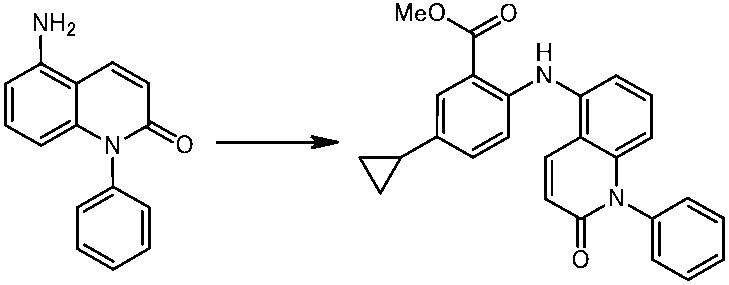
MS(ESI,m/z):411(M+H)+.

1H-NMR(DMSO-d6)δ:0.55-0.64(2H,m),0.86-0.94(2H,m),1.84-1.96(1H,m),6.23(1H,d,J=8.6Hz),6.69(1H,d,J=9.9Hz),6.95(1H,d,J=8.6Hz),7.10-7.19(2H,m),7.30-7.41(3H,m),7.51-7.71(4H,m),8.06(1H,d,J=9.9Hz),9.79(1H,s).
MS(ESI,m/z):397(M+H)+.
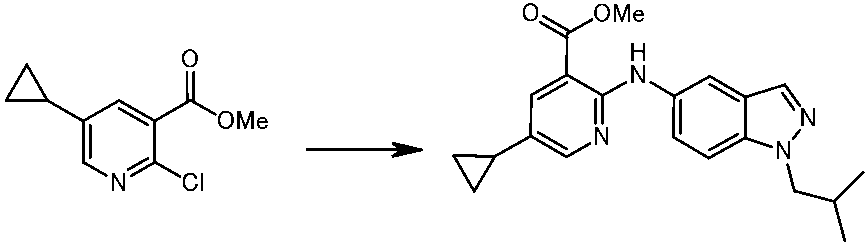
1H-NMR(DMSO-d6)δ:0.63-0.69(2H,m),0.85(6H,d,J=6.6Hz),0.89-0.96(2H,m),1.88-1.98(1H,m),2.22(1H,sep,J=6.6Hz),3.90(3H,s),4.19(2H,d,J=6.9Hz),7.41(1H,dd,J=8.6,2.0Hz),7.62(1H,d,J=9.2Hz),7.91(1H,d,J=2.6Hz),7.99(1H,s),8.21(1H,d,J=2.0Hz),8.26(1H,d,J=2.6Hz),9.92(1H,s).
MS(ESI,m/z):365(M+H)+.

1H-NMR(DMSO-d6)δ:0.63-0.69(2H,m),0.85(6H,d,J=6.6Hz),0.88-0.96(2H,m),1.86-1.97(1H,m),2.22(1H,sep,J=7.2Hz),4.19(2H,d,J=7.3Hz),7.40(1H,dd,J=8.6,2.0Hz),7.61(1H,d,J=9.2Hz),7.90(1H,d,J=2.6Hz),7.98(1H,s),8.21-8.26(2H,m),10.28(1H,s),13.53(1H,brs).
MS(ESI,m/z):351(M+H)+,349(M-H)-.

1H-NMR(DMSO-d6)δ:0.63-0.70(2H,m),0.88-0.96(2H,m),0.96-1.19(5H,m),1.43-1.52(2H,m),1.55-1.70(3H,m),1.84-1.98(2H,m),3.90(3H,s),4.22(2H,d,J=7.3Hz),7.40(1H,dd,J=8.6,2.0Hz),7.61(1H,d,J=9.2Hz),7.91(1H,d,J=2.0Hz),7.98(1H,s),8.20(1H,d,J=1.3Hz),8.25(1H,d,J=2.6Hz),9.92(1H,s).
MS(ESI,m/z):405(M+H)+.
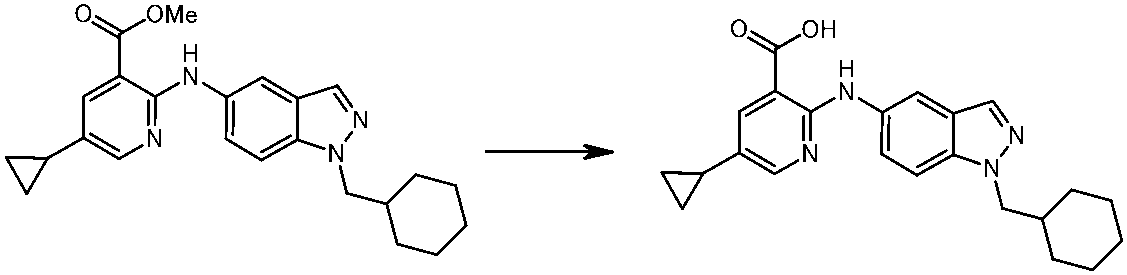
1H-NMR(DMSO-d6)δ:0.63-0.70(2H,m),0.88-0.96(2H,m),0.96-1.19(5H,m),1.43-1.53(2H,m),1.53-1.69(3H,m),1.83-1.99(2H,m),4.22(2H,d,J=7.3Hz),7.39(1H,dd,J=8.9,1.7Hz),7.61(1H,d,J=8.6Hz),7.90(1H,d,J=2.6Hz),7.97(1H,s),8.20-8.24(2H,m),10.24(1H,s),13.51(1H,brs).
MS(ESI,m/z):391(M+H)+,389(M-H)-.

1H-NMR(DMSO-d6)δ:0.61-0.68(2H,m),0.87-0.95(2H,m),1.86-1.96(1H,m),3.90(3H,s),5.47(2H,s),6.48(1H,d,J=3.3Hz),7.21-7.34(5H.m),7.61(1H,d,J=4.0Hz),7.89(1H,d,J=2.6Hz),8.19(1H,d,J=2.6Hz),8.29-8.32(2H,m),9.76(1H,s).
MS(ESI,m/z):399(M+H)+.
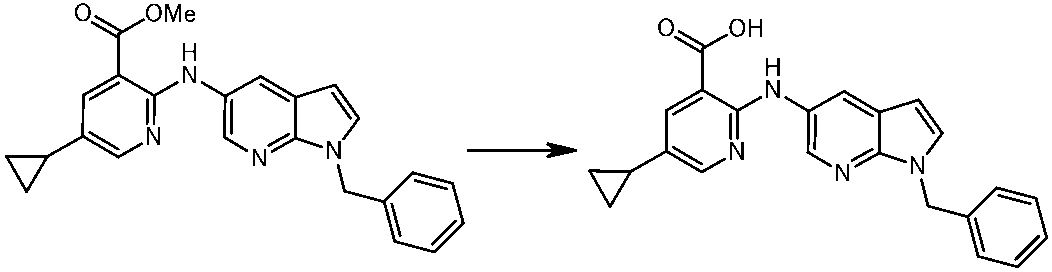
1H-NMR(DMSO-d6)δ:0.61-0.68(2H,m),0.87-0.95(2H,m),1.86-1.96(1H,m),5.47(2H,s),6.48(1H,d,J=3.3Hz),7.21-7.34(5H.m),7.61(1H,d,J=4.0Hz),7.90(1H,d,J=2.0Hz),8.16(1H,d,J=2.0Hz),8.29-8.34(2H,m),10.08(1H,s).
MS(ESI,m/z):385(M+H)+,383(M-H)-.

1H-NMR(DMSO-d6)δ:0.61-0.68(2H,m),0.85(6H,d,J=6.6Hz),0.88-0.95(2H,m),1.86-1.97(1H,m),2.21(1H,sep,J=6.6Hz),3.90(3H,s),4.05(2H,d,J=7.3Hz),6.42(1H,d,J=3.3Hz),7.51(1H,d,J=3.3Hz),7.90(1H,d,J=2.6Hz),8.20(1H,d,J=2.0Hz),8.25-8.30(2H,m),9.75(1H,s)
MS(ESI,m/z):365(M+H)+.

1H-NMR(DMSO-d6)δ:0.61-0.68(2H,m),0.85(6H,d,J=6.6Hz),0.87-0.95(2H,m),1.86-1.95(1H,m),2.21(1H,sep,J=6.6Hz),4.04(2H,d,J=7.3Hz),6.42(1H,d,J=4.0Hz),7.51(1H,d,J=3.3Hz),7.89(1H,d,J=2.6Hz),8.17(1H,d,J=2.6Hz),8.27(1H,d,J=2.3Hz),8.30(1H,d,J=2.3Hz),10.04(1H,s)
MS(ESI,m/z):351(M+H)+,349(M-H)-.

1H-NMR(DMSO-d6)δ:0.61-0.68(2H,m),0.87-1.07(4H,m),1.07-1.19(3H,m),1.44-1.54(2H,m),1.54-1.70(3H,m),1.85-1.95(2H,m),3.90(3H,s),4.07(2H,d,J=7.3Hz),6.41(1H,d,J=4.0Hz),7.49(1H,d,J=3.3Hz),7.90(1H,d,J=2.0Hz),8.19(1H,d,J=2.6Hz),8.27(2H,s),9.74(1H,s).
MS(ESI,m/z):405(M+H)+.
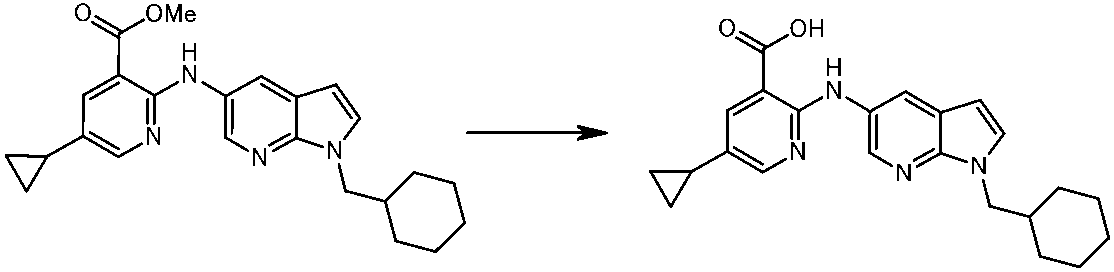
1H-NMR(DMSO-d6)δ:0.61-0.68(2H,m),0.83-1.19(7H,m),1.44-1.55(2H,m),1.56-1.71(3H,m),1.83-1.96(2H,m),4.07(2H,d,J=7.3Hz),6.40(1H,d,J=4.0Hz),7.48(1H,d,J=3.3Hz),7.88(1H,d,J=2.6Hz),8.16(1H,d,J=2.6Hz),8.27(1H,d,J=2.0Hz),8.30(1H,d,J=2.0Hz),10.13(1H,s).
MS(ESI,m/z):391(M+H)+,389(M-H)-.

1H-NMR(DMSO-d6)δ:0.61-0.67(2H,m),0.83-0.94(8H,m),1.84-1.95(1H,m),2.11(1H,sep,J=6.6Hz),2.38(3H,s),3.89(2H,d,J=7.9Hz),6.15(1H,s),7.11(1H,dd,J=8.6,2.0Hz),7.29(1H,d,J=8.6Hz),7.80(1H,d,J=1.3Hz),7.86(1H,d,J=2.0Hz),8.17(1H,d,J=2.0Hz),10.12(1H,s).
MS(ESI,m/z):364(M+H)+,362(M-H)-.

1H-NMR(DMSO-d6)δ:0.63-0.69(2H,m),0.88-0.96(2H,m),1.87-1.97(1H,m),3.89(3H,s),5.38(2H,s),6.48(1H,d,J=2.6Hz),7.20-7.37(5H,m),7.44(1H,d,J=11.9Hz),7.48(1H,d,J=3.3Hz),7.91(1H,d,J=2.6Hz),8.26(1H,d,J=2.6Hz),8.43(1H,d,J=7.9Hz),9.95(1H,d,J=2.6Hz).
MS(ESI,m/z):416(M+H)+.

1H-NMR(DMSO-d6)δ:0.62-0.69(2H,m),0.87-0.95(2H,m),1.86-1.96(1H,m),5.38(2H,s),6.47(1H,d,J=2.6Hz),7.19-7.37(5H,m),7.43(1H,d,J=11.9Hz),7.47(1H,d,J=3.3Hz),7.89(1H,d,J=2.6Hz),8.22(1H,d,J=2.6Hz),8.47(1H,d,J=7.9Hz),10.24(1H,s),13.50(1H,brs).
MS(ESI,m/z):402(M+H)+,400(M-H)-.

1H-NMR(DMSO-d6)δ:0.57-0.64(2H,m),0.85-0.91(2H,m),1.81-1.92(1H,m),3.90(3H.s),5.43(2H,s),6.55(1H,d,J=2.6Hz),7.24-7.37(6H,m),7.58(1H,d,J=3.3Hz),7.86(1H,d,J=2.0Hz),8.04(1H,d,J=2.0Hz),8.93(1H,s).
MS(ESI,m/z):434(M+H)+.

1H-NMR(DMSO-d6)δ:0.57-0.64(2H,m),0.84-0.92(2H.m),1.80-1.91(1H,m),5.42(2H,s),6.55(1H,d,J=3.3Hz),7.24-7.37(6H,m),7.58(1H,d,J=3.3Hz),7.85(1H,d,J=2.6Hz),8.00(1H,d,J=2.6Hz),9.16(1H,s).
MS(ESI,m/z):420(M+H)+,418(M-H)-.

1H-NMR(DMSO-d6)δ:0.64-0.71(2H,m),0.88-0.95(2H,m),1.87-1.98(1H,m),3.78(3H,s),3.90(3H,s),7.29(1H,dd,J=9.2,2.0Hz),7.45(1H,d,J=9.2Hz),7.52(1H,s),7.91(1H,d,J=2.7Hz),7.92(1H,d,J=1.8Hz),8.26(1H,d,J=2.6Hz),9.95(1H,s).
MS(ESI,m/z):402(M+H)+.

1H-NMR(DMSO-d6)δ:0.61-0.68(2H,m),0.87-0.94(2H,m),1.85-1.95(1H,m),3.86(3H,s),3.90(3H,s),7.27-7.34(3H,m),7.40(1H,dd,J=8.7,2.1Hz),7.47(1H,d,J=9.3Hz),7.63(1H,d,J=2.0Hz),7.67-7.74(1H,m),7.88(1H,d,J=2.0Hz),8.04(1H,s),8.19(1H,d,J=2.0Hz),9.88(1H,s).
MS(ESI,m/z):416(M+H)+.

1H-NMR(DMSO-d6)δ:0.62-0.68(2H,m),0.87-0.94(2H,m),1.86-1.96(1H,m),3.86(3H,s),7.27-7.34(3H,m),7.36(1H,dd,J=8.7,2.1Hz),7.49(1H,d,J=8.6Hz),7.64(1H,d,J=2.0Hz),7.67-7.74(1H,m),7.92(1H,d,J=2.0Hz),8.05(1H,s),8.12(1H,d,J=2.0Hz),10.21(1H,s).
MS(ESI,m/z):402(M+H)+,400(M-H)-.

1H-NMR(DMSO-d6)δ:0.62-0.68(2H,m),0.87-0.95(2H.m),1.87-1.97(1H,m),3.84(3H,s),3.90(3H,s),6.99-7.08(1H,m),7.36-7.55(5H,m),7.78(1H,s),7.89(1H,d,J=2.6Hz),8.21(1H,d,J=2.6Hz),8.25(1H,d,J=2.0Hz).9.90(1H,s).
MS(ESI,m/z):416(M+H)+.

1H-NMR(DMSO-d6)δ:0.62-0.68(2H,m),0.87-0.95(2H.m),1.87-1.97(1H,m),3.84(3H,s),6.99-7.08(1H,m),7.35(1H,dd,J=8.6,2.0Hz),7.41-7.55(4H,m),7.78(1H,s),7.91(1H,d,J=2.6Hz),8.15(1H,d,J=2.0Hz),8.28(1H,d,J=2.0Hz),10.21(1H,s).
MS(ESI,m/z):402(M+H)+,400(M-H)-.
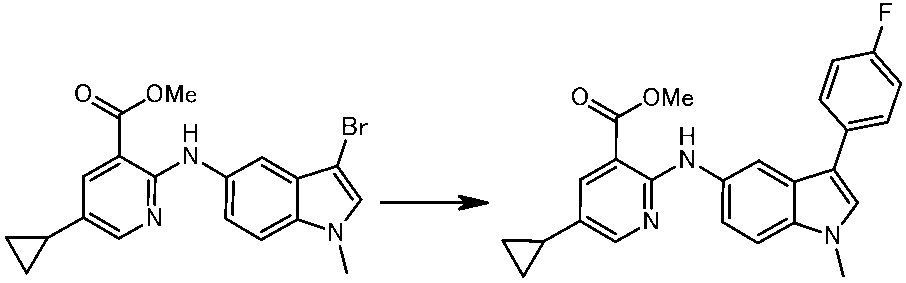
1H-NMR(DMSO-d6)δ:0.62-0.68(2H,m),0.87-0.95(2H.m),1.86-1.96(1H,m),3.83(3H,s),3.90(3H,s),7.24-7.32(2H,m),7.37(1H,dd,J=8.7,2.1Hz).7.45(1H,d,J=8.7Hz),7.63-7.69(3H,m),7.89(1H,d,J=8.9Hz),8.19-8.22(2H,m),9.89(1H,s).
MS(ESI,m/z):416(M+H)+.

1H-NMR(DMSO-d6)δ:0.63-0.69(2H,m),0.87-0.95(2H,m),1.87-1.97(1H,m),3.84(3H,s),7.24-7.35(3H,m),7.48(1H,d,J=8.6Hz),7.63-7.70(3H,m),7.93(1H,d,J=2.0Hz),8.13(1H,d,J=2.0Hz),8.19-8.22(1H,m),10.22(1H,s).
MS(ESI,m/z):402(M+H)+,400(M-H)-.

1H-NMR(DMSO-d6)δ:0.63-0.70(2H,m),0.88-0.97(8H.m),1.88-1.98(1H,m),2.12(1H,sep,J=7.3Hz),3.75(2H,d,J=7.9Hz),3.90(3H,s),7.32(1H,d,J=8.6Hz),7.51(1H,dd,J=8.9,2.3Hz),7.91(1H,d,J=2.6Hz),8.13(1H,d,J=2.6Hz),8.25(1H,d,J=2.6Hz),9.91(1H,s).
MS(ESI,m/z):398(M+H)+.
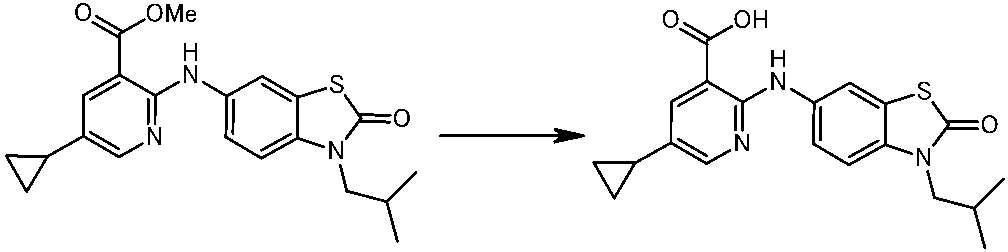
1H-NMR(DMSO-d6)δ:0.63-0.69(2H,m),0.88-0.96(8H.m),1.87-1.97(1H,m),2.12(1H,sep,J=6.6Hz),3.75(2H,d,J=7.3Hz),7.31(1H,d,J=8.6Hz),7.51(1H,dd,J=8.6,2.0Hz),7.90(1H,d,J=2.6Hz),8.13(1H,d,J=2.0Hz),8.22(1H,d,J=2.6Hz),10.23(1H,s),13.58(1H,brs).
MS(ESI,m/z):384(M+H)+,382(M-H)-.

1H-NMR(DMSO-d6)δ:0.63-0.70(2H,m),0.89-0.97(2H.m),0.97-1.22(5H,m),1.54-1.72(5H,m),1.73-1.83(1H,m),1.88-1.98(1H,m),3.78(2H,d,J=7.3Hz),3.90(3H,s),7.31(1H,d,J=8.6Hz),7.50(1H,dd,J=8.6,2.6Hz),7.91(1H,d,J=2.6Hz),8.12(1H,d,J=2.0Hz),8.25(1H,d,J=2.0Hz),9.90(1H,s).
MS(ESI,m/z):438(M+H)+.

1H-NMR(DMSO-d6)δ:0.63-0.70(2H,m),0.89-0.97(2H.m),0.97-1.20(5H,m),1.55-1.72(5H,m),1.73-1.84(1H,m),1.87-1.98(1H,m),3.78(2H,d,J=7.3Hz),7.30(1H,d,J=8.6Hz),7.51(1H,dd,J=8.9,2.3Hz),7.90(1H,d,J=2.6Hz),8.12(1H,d,J=2.0Hz),8.22(1H,d,J=2.6Hz),10.23(1H,s),13.59(1H,brs).
MS(ESI,m/z):424(M+H)+,422(M-H)-.

1H-NMR(DMSO-d6)δ:0.60-0.66(2H,m),0.85-0.93(2H.m),1.84-1.94(1H,m),2.33(3H,s),3.84(3H,s),3.88(3H,s),7.18-7.29(2H,m),7.29-7.39(3H,m),7.41(1H,s),7.44(1H,d,J=8.6Hz),7.77(1H,d,J=1.3Hz),7.86(1H,d,J=2.6Hz),8.15(1H,d,J=2.6Hz),9.84(1H,s).
MS(ESI,m/z):412(M+H)+.
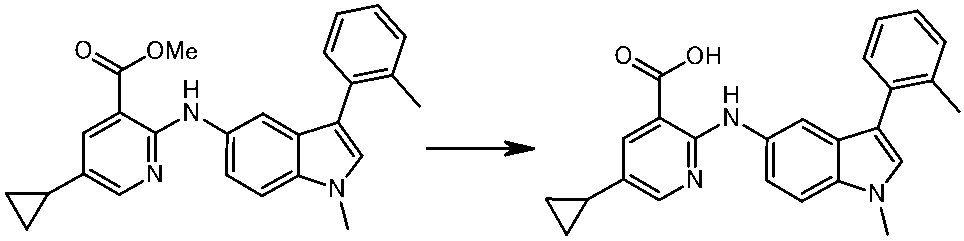
1H-NMR(DMSO-d6)δ:0.59-0.66(2H,m),0.85-0.93(2H.m),1.83-1.94(1H,m),2.33(3H,s),3.84(3H,s),7.18-7.39(5H,m),7.42(1H,s),7.45(1H,d,J=8.4Hz),7.78(1H,d,J=1.3Hz),7.88(1H,d,J=2.0Hz),8.09(1H,d,J=2.6Hz),10.16(1H,s).
MS(ESI,m/z):398(M+H)+,396(M-H)-.

1H-NMR(DMSO-d6)δ:0.62-0.68(2H,m),0.87-0.95(2H.m),1.86-1.97(1H,m),2.38(3H,s),3.83(3H,s),3.90(3H,s),7.01-7.07(1H,m),7.29-7.36(2H,m),7.42-7.49(3H,m),7.64(1H,s),7.89(1H,d,J=2.6Hz),8.20(1H,d,J=2.6Hz),8.26(1H,d,J=2.0Hz),9.88(1H,s).
MS(ESI,m/z):412(M+H)+.

1H-NMR(DMSO-d6)δ:0.61-0.67(2H,m),0.87-0.94(2H.m),1.85-1.96(1H,m),2.38(3H,s),3.83(3H,s),7.04(1H,d,J=7.3Hz),7.28-7.36(2H,m),7.41-7.49(3H,m),7.63(1H,s),7.88(1H,d,J=2.6Hz),8.17(1H,d,J=2.6Hz),8.30(1H,d,J=2.0Hz),10.17(1H,s),13.43(1H,brs).
MS(ESI,m/z):398(M+H)+,396(M-H)-.
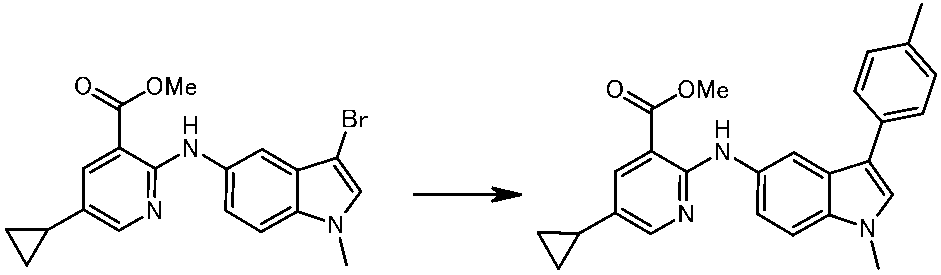
1H-NMR(DMSO-d6)δ:0.62-0.68(2H,m),0.87-0.94(2H,m),1.86-1.96(1H,m),2.33(3H,s),3.82(3H,s),3.90(3H,s),7.25(2H,d,J=7.9Hz),7.34(1H,dd,J=8.6,2.0Hz),7.44(1H,d,J=9.2Hz),7.54(2H,d,J=7.9Hz),7.60(1H,s),7.89(1H,d,J=2.6Hz),8.19-8.23(2H,m),9.88(1H,s).
MS(ESI,m/z):412(M+H)+.
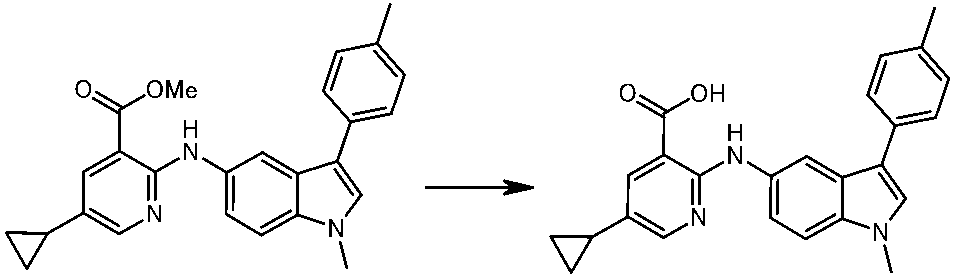
1H-NMR(DMSO-d6)δ:0.61-0.68(2H,m),0.86-0.94(2H,m),1.85-1.96(1H,m),2.30(3H,s),3.82(3H,s),7.25(2H,d,J=7.9Hz),7.31(1H,dd,J=8.9,1.7Hz),7.43(1H,d,J=9.2Hz),7.54(2H,d,J=7.9Hz),7.60(1H,s),7.89(1H,d,J=2.6Hz),8.17(1H,d,J=2.0Hz),8.24(1H,d,J=2.0Hz),10.18(1H,s),13.45(1H,brs).
MS(ESI,m/z):398(M+H)+,396(M-H)-.

1H-NMR(DMSO-d6)δ:0.56-0.63(2H,m),0.84-0.92(2H,m),1.80-1.91(1H,m),2.32(3H,s),3.89(3H,s),5.40(2H,s),6.52(1H,d,J=3.3Hz),7.17-7.34(7H,m),7.49(1H,d,J=3.3Hz),7.84(1H,d,J=2.6Hz),8.05(1H,d,J=2.0Hz),9.42(1H,s).
MS(ESI,m/z):412(M+H)+.

1H-NMR(DMSO-d6)δ:0.58-0.65(2H,m),0.85-0.93(2H,m),1.83-1.94(1H,m),2.33(3H,s),5.41(2H,s),6.55(1H,d,J=2.7Hz),7.19-7.34(7H,m),7.52(1H,d,J=3.3Hz),7.91-7.97(2H,m),9.84(1H,s).
MS(ESI,m/z):398(M+H)+,396(M-H)-.

1H-NMR(DMSO-d6)δ:0.65-0.72(2H,m),0.92-0.98(2H,m),1.91-2.02(1H,m),4.87(2H,d,J=5.9Hz),5.32(1H,dd,J=10.2,1.7Hz),5.45(1H,dd,J=17.2,1.3Hz),6.03-6.17(1H,m),6.74(1H,d,J=4.0Hz),7.36(1H,d,J=4.0Hz),7.48(1H,dd,J=8.9,2.3Hz),7.57-7.64(2H,m),7.66-7.73(1H,m),7.74-7.79(2H,m),7.94(1H,d,J=6.6Hz),8.18-8.23(2H,m),8.30(1H,d,J=2.6Hz),10.07(1H,s).
MS(ESI,m/z):438(M+H)+.

1H-NMR(DMSO-d6)δ:0.64-0.71(2H,m),0.89-0.97(2H,m),1.88-1.99(1H,m),6.74(1H,d,J=4.0Hz),7.35(1H,d,J=4.0Hz),7.47(1H,dd,J=8.6,2.0Hz),7.57-7.70(4H,m),7.74-7.80(2H,m),7.92(1H,d,J=2.6Hz),8.21(1H,d,J=8.6Hz),8.25(1H,dd,J=8.6,2.0Hz),10.45(1H,s).
MS(ESI,m/z):398(M+H)+,396(M-H)-.
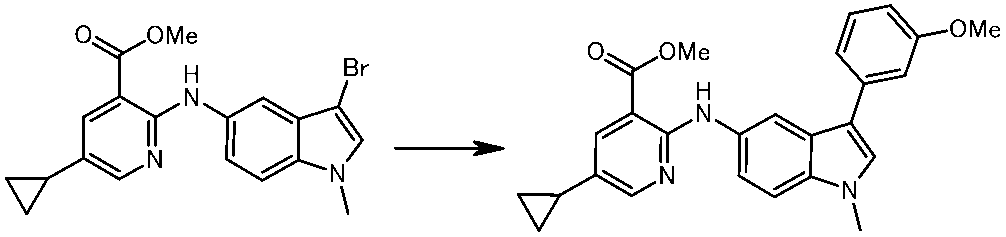
MS(ESI,m/z):428(M+H)+.

1H-NMR(DMSO-d6)δ:0.62-0.68(2H,m),0.87-0.95(2H,m),1.87-1.97(1H,m),3.83(3H,s),3.84(3H,s),6.81(1H,dd,J=7.9,2.0Hz),7.17-7.38(4H,m),7.47(1H,d,J=9.2Hz),7.70(1H,s),7.93(1H,d,J=2.6Hz),8.12(1H,d,J=2.0Hz),8.29(1H,s),10.25(1H,s).
MS(ESI,m/z):414(M+H)+,412(M-H)-.

1H-NMR(DMSO-d6)δ:0.61-0.68(2H,m),0.87-0.94(2H,m),1.85-1.96(1H,m),3.79(3H,s),3.81(3H,s),3.90(3H,s),7.03(2H,d,J=8.6Hz),7.35(1H,dd,J=8.6,2.0Hz),7.43(1H,d,J=8.6Hz),7.53-7.58(3H,m),7.88(1H,d,J=2.6Hz),8.16(1H,d,J=2.0Hz),8.21(1H,d,J=2.6Hz),9.88(1H,s).
MS(ESI,m/z):428(M+H)+.

1H-NMR(DMSO-d6)δ:0.61-0.68(2H,m),0.86-0.94(2H,m),1.84-1.96(1H,m),3.79(3H,s),3.81(3H,s),7.03(2H,d,J=8.6Hz),7.32(1H,dd,J=8.9,1.7Hz),7.42(1H,d,J=8.6Hz),7.52-7.59(3H,m),7.87(1H,d,J=2.0Hz),8.15-8.22(2H,m),10.15(1H,s),13.41(1H,brs).
MS(ESI,m/z):414(M+H)+,412(M-H)-.
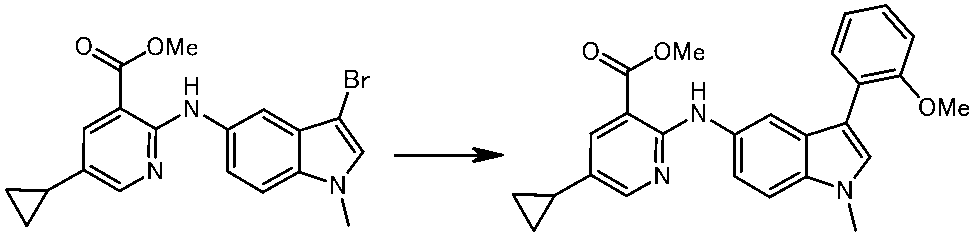
MS(ESI,m/z):428(M+H)+.

1H-NMR(DMSO-d6)δ:0.61-0.67(2H,m),0.85-0.94(2H,m),1.85-1.95(1H,m),3.81(3H,s),3.83(3H,s),7.00-7.07(1H,m),7.11(1H,d,J=7.3Hz),7.22-7.31(2H,m),7.42(1H,d,J=8.6Hz),7.50-7.55(2H,m),7.87(1H,d,J=2.6Hz),8.02(1H,d,J=2.0Hz),8.14(1H,d,J=2.0Hz),10.16(1H,s).
MS(ESI,m/z):414(M+H)+,412(M-H)-.

1H-NMR(DMSO-d6)δ:0.64-0.71(2H,m),0.90-0.97(2H,m),1.15-2.00(12H,m),4.84-4.89(2H,m),5.32(1H,dd,J=10.6,1.3Hz),5.44(1H,dd,J=17.2,1.3Hz),6.02-6.16(1H,m),6.73(1H,d,J=4.0Hz),7.41(1H,dd,J=8.9,2.3Hz),7.97(1H,d,J=2.4Hz),7.99(1H,d,J=3.9Hz),8.14(1H,d,J=2.0Hz),8.25-8.30(2H,m),10.01(1H,s).
MS(ESI,m/z):444(M+H)+.

MS(ESI,m/z):404(M+H)+,402(M-H)-.

1H-NMR(DMSO-d6)δ:0.60-0.66(2H,m),0.86-0.93(2H,m),1.83-1.94(1H,m),2.28(3H,s),3.89(3H,s),5.38(2H,s),6.40(1H,d,J=3.3Hz),7.16-7.35(6H,m),7.40(1H,d,J=3.3Hz),7.88(1H,d,J=2.0Hz),8.05(1H,s),8.16(1H,d,J=2.6Hz),9.60(1H,s).
MS(ESI,m/z):412(M+H)+.

1H-NMR(DMSO-d6)δ:0.61-0.67(2H,m),0.87-0.95(2H,m),1.85-1.96(1H,m),2.28(3H,s),5.39(2H,s),6.42(1H,d,J=2.6Hz),7.17-7.36(6H,m),7.43(1H,d,J=3.3Hz),7.95(1H,s),8.02(1H,s),8.06(1H,s),9.99(1H,s).
MS(ESI,m/z):398(M+H)+,396(M-H)-.

1H-NMR(DMSO-d6)δ:0.62-0.68(2H,m),0.87-0.94(2H,m),1.86-1.94(1H,m),3.25-3.40(3H,m),6.47(1H,d,J=2.9Hz),7.05(1H,d,J=2.2Hz),7.21-7.38(4H,m),7.88(1H,d,J=2.4Hz),8.10(1H,d,J=2.0Hz),8.21(1H,d,J=2.4Hz),10.22(1H,s).
MS(ESI,m/z):420(M+H)+

1H-NMR(DMSO-d6)δ:0.60-0.70(2H,m),0.86-0.94(2H,m),1.86-1.95(1H,m),3.30(3H,s),6.47(1H,d,J=2.9Hz),7.10(1H,d,J=2.2Hz),7.27(1H,d,J=3.2Hz),7.30-7.38(2H,m),7.48-7.52(1H,m),7.88(1H,d,J=2.4Hz),8.11(1H,d,J=2.2Hz),8.21(1H,d,J=2.4Hz),10.24(1H,s).
MS(ESI,m/z):420(M+H)+,418(M-H)-.

1H-NMR(DMSO-d6)δ:0.60-0.70(2H,m),0.82-0.96(2H,m),1.84-1.94(1H,m),3.30(3H,s),6.45(1H,d,J=2.9Hz),7.05(1H,d,J=2.0Hz),7.16-7.28(2H,m),7.36-7.46(1H,m),7.50-7.62(1H,m),7.88(1H,d,J=2.4Hz),8.09(1H,d,J=2.0Hz),8.21(1H,d,J=2.4Hz),10.22(1H,s).
MS(ESI,m/z):420(M+H)+.

1H-NMR(DMSO-d6)δ:0.60-0.73(2H,m),0.85-0.98(2H,m),1.84-1.98(1H,m),3.20-3.50(3H,m),6.45-6.55(1H,m),7.11-7.20(1H,m),7.26-7.35(1H,m),7.60-7.70(1H,m),7.84-7.94(1H,m),8.10-8.26(2H,m),8.52-8.61(1H,m),8.69-8.76(1H,m),10.23(1H,s).
MS(ESI,m/z):403(M+H)+,401(M-H)-.

1H-NMR(DMSO-d6)δ:0.61-0.68(2H,m),0.86-0.95(2H,m),1.85-1.95(1H,m),3.30(3H,s),6.46(1H,d,J=3.2Hz),7.09(1H,d,J=2.0Hz),7.27(1H,d,J=3.2Hz),7.32-7.46(3H,m),7.89(1H,d,J=2.4Hz),8.10(1H,d,J=2,0Hz),8.22(1H,d,J=2.7Hz).
MS(ESI,m/z):420(M+H)+,418(M-H)-.
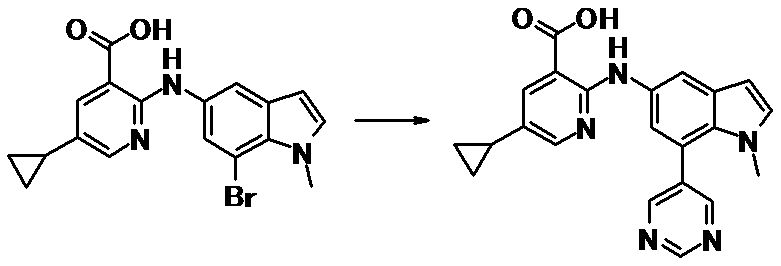
1H-NMR(DMSO-d6)δ:0.59-0.70(2H,m),0.82-0.95(2H,m),1.82-1.95(1H,m),3.27-3.37(3H,m),6.44-6.52(1H,m),7.07-7.14(1H,m),7.25-7.34(1H,m),7.84-7.92(1H,m),8.12-8.25(2H,m),8.98(2H,s),9.25(1H,s),10.23(1H,s).
MS(ESI,m/z):386(M+H)+,384(M-H)-.

1H-NMR(DMSO-d6)δ:0.60-0.68(2H,m),0.80-0.95(3H,m),1.10-1.40(5H,m),1.60-1.95(6H,m),3.96(3H,s),6.00(1H,dd,J=15.6,6.8Hz),6.33(1H,d,J=3.2Hz),7.02(1H,d,J=2.0Hz),7.15(1H,d,J=15.4Hz),7.19(1H,d,J=2.9Hz),7.87(1H,d,J=2.4Hz),7.94(1H,d,J=1.7Hz),8.19(1H,d,J=2.4Hz),10.14(1H,s).
MS(ESI,m/z):416(M+H)+.

1H-NMR(DMSO-d6)δ:0.60-0.66(2H,m),0.81-1.94(16H,m),2.91-3.06(2H,m),3.95(3H,s),6.30(1H,d,J=3.2Hz),6.80-6.86(1H,m),7.15(1H,d,J=3.2Hz),7.85(1H,d,J=2.4Hz),7.88-7.94(1H,m),8.19(1H,d,J=2.2Hz),10.09(1H,s).
MS(ESI,m/z):418(M+H)+,416(M-H)-.
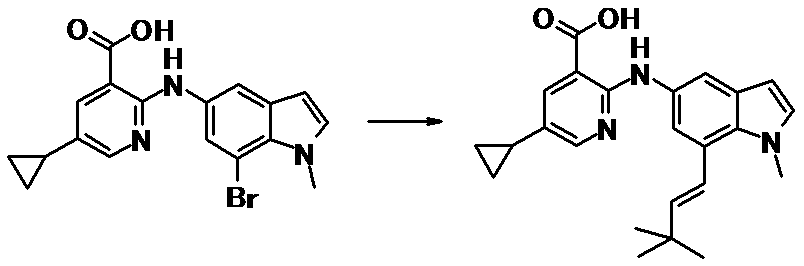
1H-NMR(DMSO-d6)δ:0.59-0.67(2H,m),0.77-0.94(2H,m),1.14(9H,s),1.83-1.93(1H,m),3.95(3H,s),6.05(1H,d,J=15.9Hz),6.32(1H,d,J=3.2Hz),6.97(1H,d,J=2.0Hz),7.09(1H,d,J=15.6Hz),7.18(1H,d,J=3.2Hz),7.85(1H,d,J=2.7Hz),7.93(1H,d,J=2.0Hz),8.18(1H,d,J=2.4Hz),10.11(1H,s).
MS(ESI,m/z):390(M+H)+.

1H-NMR(DMSO-d6)δ:0.60-0.68(2H,m),0.81-0.94(2H,m),1.01(9H,s),1.48-1.60(2H,m),1.84-1.95(1H,m),2.90-3.02(2H,m),3.98(3H,s),6.32(1H,d,J=2.9Hz),6.81(1H,d,J=1.7Hz),7.18(1H,d,J=3.2Hz),7.87(1H,d,J=2.4Hz),7.92-7.98(1H,m),8.20(1H,d,J=2.4Hz),10.10(1H,s).
MS(ESI,m/z):392(M+H)+.

1H-NMR(DMSO-d6)δ:0.56-0.67(2H,m),0.80-0.93(2H,m),1.80-1.93(1H,m),3.21(3H,s),3.58(3H,s),6.38-6.49(2H,m),7.11-7.18(1H,m),7.22-7.29(1H,m),7.50-7.57(1H,m),7.83-7.90(1H,m),8.03-8.10(1H,m),8.14-8.22(1H,m),10.24(1H,s).
MS(ESI,m/z):388(M+H)+,386(M-H)-.
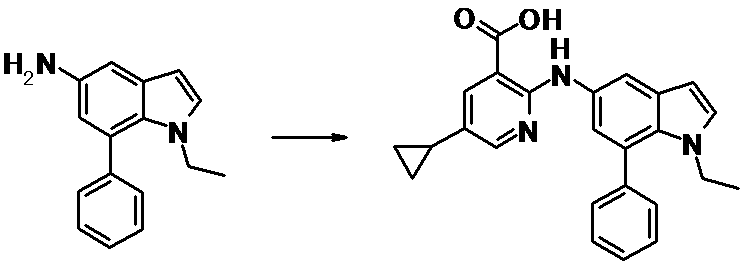
1H-NMR(DMSO-d6)δ:0.62-0.68(2H,m),0.78-0.94(5H,m),1.84-1.94(1H,m),3.68(2H,q,J=7.1Hz),6.49(1H,d,J=3.2Hz),6.98(1H,d,J=2.0Hz),7.32(1H,d,J=2.9Hz),7.42-7.50(5H,m),7.88(1H,d,J=2.4Hz),8.03(1H,d,J=2.0Hz),8.20(1H,d,J=2.7Hz),10.23(1H,s).
MS(ESI,m/z):398(M+H)+,396(M-H)-.
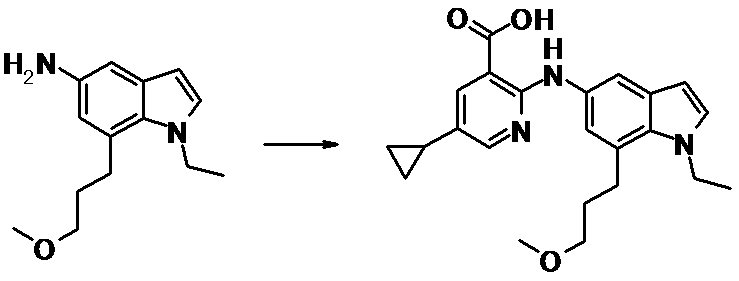
1H-NMR(DMSO-d6)δ:0.60-0.68(2H,m),0.86-0.94(2H,m),1.28-1.34(3H,m),1.80-1.94(3H,m),2.90-3.02(2H,m),3.27(3H,s),3.38-3.44(2H,m),4.24-4.34(2H,m),6.32-6.40(1H,m),6.84-6.92(1H,m),7.22-7.30(1H,m),7.82-7.88(1H,m),7.90-7.94(1H,m),8.16-8.22(1H,m),10.14(1H,s).
MS(ESI,m/z):394(M+H)+,392(M-H)-.

1H-NMR(DMSO-d6)δ:0.12(6H,s),0.60-0.67(2H,m),0.88-0.94(11H,m),1.85-1.95(1H,m),3.96(3H,s),4.39(2H,dd,J=4.6,1.7Hz),6.17(1H,dt,J=15.3,4.6Hz),6.34(1H,d,J=3.0Hz),7.17(1H,d,J=2.0Hz),7.20(1H,d,J=3.2Hz),7.39(1H,d,J=15.3Hz),7.87(1H,d,J=2.4Hz),7.95(1H,d,J=2.0Hz),8.19(1H,d,J=2.4Hz).
MS(ESI,m/z):478(M+H)+,476(M-H)-.

1H-NMR(DMSO-d6)δ:0.60-0.69(2H,m),0.80-0.95(2H,m),1.86-1.96(1H,m),3.97(3H,s),4.18(2H,dd,J=4.9,1.7Hz),6.17(1H,dt,J=15.4,4.9Hz),6.35(1H,d,J=3.2Hz),7.15(1H,d,J=2.0Hz),7.22(1H,d,J=3.0Hz),7.36(1H,d,J=15.4Hz),7.88-7.93(2H,m),8.18(1H,d,J=2.2Hz),10.16(1H,s).
MS(ESI,m/z):364(M+H)+,362(M-H)-.

1H-NMR(DMSO-d6)δ:0.61-0.67(2H,m),0.83-0.93(2H,m),1.74-1.94(3H,m),3.00-3.08(2H,m),3.48-3.56(2H,m),3.98(3H,s),6.29-6.32(1H,m),6.83-6.87(1H,m),7.12-7.22(1H,m),7.84-7.88(1H,m),7.92-7.96(1H,m),8.17-8.20(1H,m),10.25(1H,brs).
MS(ESI,m/z):366(M+H)+,364(M-H)-.

1H-NMR(DMSO-d6)δ:0.59-0.66(2H,m),0.86-0.95(2H,m),1.21(3H,t,J=6.8Hz),1.76-1.86(1H,m),1.92-2.05(2H,m),3.13(2H,t,J=7.6Hz),3.45-3.54(4H,m),3.92(3H,s),4.00(3H,s),6.41(1H,d,J=3.2Hz),6.91(1H,d,J=2.9Hz),7.00(1H,d,J=2.0Hz),7.85(1H,d,J=2.0Hz),7.89(1H,d,J=2.7Hz),8.20(1H,d,J=2.4Hz),9.80(1H,s).
MS(ESI,m/z):408(M+H)+.

1H-NMR(DMSO-d6)δ:0.60-0.69(2H,m),0.86-0.95(2H,m),1.35(3H,t,J=6.8Hz),1.80-1.95(3H,m),3.00-3.10(2H,m),3.40-3.48(4H,m),3.97(3H,s),6.32(1H,d,J=2.9Hz),6.84-6.89(1H,m)7.18(1H,d,J=2.9Hz),7.87(1H,d,J=2.2Hz),7.90-7.95(1H,m),8.20(1H,d,J=2.2Hz),10.12(1H,s).
MS(ESI,m/z):394(M+H)+,392(M-H)-.

1H-NMR(DMSO-d6)δ:0.60-0.68(2H,m),0.85-0.95(2H,m),1.29(3H,t,J=7.1Hz),1.85-1.95(1H,m),3.91-4.00(5H,m),6.30(1H,d,J=3.0Hz),6.55(1H,d,J=12.5Hz),6.87(1H,d,J=12.4Hz),6.96(1H,d,J=1.9Hz),7.17(1H,d,J=3.0Hz),7.87(1H,d,J=2.4Hz),7.89(1H,d,J=1.7Hz),8.20(1H,d,J=2.4Hz),10.10(1H,s).
MS(ESI,m/z):378(M+H)+,376(M-H)-.

1H-NMR(DMSO-d6)δ:0.61-0.68(2H,m),0.85-0.95(2H,m),1.11(3H,t,J=7.1Hz),1.85-1.95(1H,m),3.26(2H,t,J=7.2Hz),3.47(2H,q,J=7.0Hz),3.67(2H,t,J=7.1Hz),3.99(3H,s),6.32(1H,d,J=2.9Hz),6.91(1H,d,J=1.7Hz),7.18(1H,d,J=2.9Hz),7.87(1H,d,J=2.4Hz),7.97(1H,d,J=2.0Hz),8.21(1H,d,J=2.4Hz),10.14(1H,s).
MS(ESI,m/z):380(M+H)+,378(M-H)-.

1H-NMR(DMSO-d6)δ:0.62-0.69(2H,m),0.87-0.95(2H,m),1.42-1.61(3H,m),1.62-1.96(9H,m),3.89(3H,s),3.99(3H,s),6.32(1H,d,J=3.2Hz),6.93(1H,d,J=2.0Hz),7.18(1H,d,J=2.9Hz),7.88(1H,d,J=2.7Hz),7.93(1H,d,J=2.2Hz),8.24(1H,d,J=2.4Hz),9.85(1H,s).

1H-NMR(DMSO-d6)δ:0.60-0.69(2H,m),0.86-0.94(2H,m),1,42-1.60(5H,m),1.69-1.97(7H,m),3.99(3H,s),6.28-6.35(1H,m),6.90-6.97(1H,m),7.14-7.20(1H,m),7.84-7.90(1H,m),7.90-7.95(1H,m),8.16-8.25(1H,m),10.12(1H,s).
MS(ESI,m/z):390(M+H)+,388(M-H)-.

1H-NMR(DMSO-d6)δ:0.61-0.68(2H,m),0.80-0.87(6H,m),0.87-0.94(2H,m),1.76-2.02(4H,m),2.90-2.98(2H,m),3.28(3H,s),3.39-3.45(2H,m),4.03(2H,d,J=7.3Hz),6.34(1H,d,J=3.2Hz),6.90(1H,d,J=2.0Hz),7.23(1H,d,J=3.2Hz),7.87(1H,d,J=2.7Hz),7.92(1H,d,J=2.0Hz),8.20(1H,d,J=2.4Hz),10.13(1H,s).
MS(ESI,m/z):422(M+H)+,420(M-H)-.

1H-NMR(DMSO-d6)δ:0.30-0.37(2H,m),0.44-0.53(2H,m),0.60-0.68(2H,m),0.86-0.94(2H,m),1.13-1.25(1H,m),1.80-1.94(3H,m),2.98-3.08(2H,m),3.28(3H,s),3.38-3.45(2H,m),4.15(2H,d,J=6.6Hz),6.36(1H,d,J=2.4Hz),6.90(1H,d,J=2.0Hz),7.31(1H,d,J=2.9Hz),7.87(1H,d,J=2.4Hz),7.93(1H,d,J=2.0Hz),8.20(1H,d,J=2.2Hz),10.15(1H,s).
MS(DART,m/z):420(M+H)+,418(M-H)-.

1H-NMR(DMSO-d6)δ:0.61-0.68(2H,m),0.82-0.93(5H,m),1.20-1.36(4H,m),1.60-1.74(2H,m),1.78-1.94(3H,m),2.90-3.00(2H,m),3.28(3H,s),3.42(2H,t,J=6.0Hz),4.22(2H,t,J=7.3Hz),6.35(1H,d,J=3.2Hz),6.89(1H,d,J=2.0Hz),7.25(1H,d,J=3.2Hz),7.87(1H,d,J=2.4Hz),7.91(1H,d,J=2.0Hz),8.20(1H,d,J=2.4Hz),10.14(1H,s).
MS(DART,m/z):436(M+H)+,434(M-H)-.

1H-NMR(DMSO-d6)δ:0.61-0.68(2H,m),0.85-0.94(2H,m),1.15-1.32(1H,m),1.34-1.50(4H,m),1.68-2.05(6H,m),2.66-2.79(1H,m),3.71(3H,s),3.89(3H,s),7.02(1H,s),7.28-7.32(2H,m),7.76(1H,s),7.87(1H,d,J=2.4Hz),8.19(1H,d,J=2.4Hz),9.79(1H,s).
MS(ESI,m/z):404(M+H)+.

1H-NMR(DMSO-d6)δ:0.60-0.67(2H,m),0.85-0.94(2H,m),1.18-1.50(5H,m),1.66-2.04(6H,m),2.65-2.79(1H,m),3.70(3H,s),7.01(1H,s),7.26-7.32(2H,m),7.78(1H,s),7.86(1H,d,J=2.4Hz),8.16(1H,d,J=2.4Hz),10.06(1H,s).
MS(ESI,m/z):390(M+H)+,388(M-H)-.

1H-NMR(DMSO-d6)δ:0.60-0.68(2H,m),0.87-0.94(2H,m),1.55-1.82(6H,m),1.85-1.96(1H,m),2.01-2.14(2H,m),3.10-3.21(1H,m),3.70(3H,s),3.89(3H,s),7.06(1H,s),7.25-7.33(2H,m),7.83(1H,d,J=1.2Hz),7.88(1H,d,J=2.4Hz),8.20(1H,d,J=2.4Hz),9.82(1H,s).
MS(ESI,m/z):390(M+H)+.

1H-NMR(DMSO-d6)δ:0.60-0.68(2H,m),0.85-0.94(2H,m),1.55-1.83(6H,m),1.85-1.95(1H,m),2.05-2.13(2H,m),3.10-3.22(1H,m),3.70(3H,s),7.05(1H,s),7.23-7.32(2H,m),7.84-7.88(2H,m),8.17(1H,d,J=2.7Hz),10.09(1H,s).
MS(ESI,m/z):376(M+H)+,374(M-H)-.

1H-NMR(DMSO-d6):0.61-0.68(2H,m),0.88-0.99(5H,m),1.38-1.50(2H,m),1.68-1.79(2H,m),1.86-2.03(3H,m),2.12-2.30(2H,m),4.25(2H,t,J=6.6Hz),4.32(2H,t,J=6.6Hz),6.40(1H,d,J=3.2Hz),7.21(1H,dd,J=8.8,2.0Hz),7.37(1H,d,J=3.0Hz),7.45(1H,d,J=8.8Hz),7.90(1H,d,J=2.4Hz),7.96(1H,d,J=2.2Hz),8.21(1H,d,J=2.7Hz),9.85(1H,s).
MS(ESI,m/z):460(M+H)+.

1H-NMR(DMSO-d6)δ:0.60-0.68(2H,m),0.85-0.94(2H,m),1.84-2.03(3H,m),2.14-2.29(2H,m),4.24(2H,t,J=6.8Hz),6.40(1H,d,J=2.9Hz),7.22(1H,dd,J=8.8,2.0Hz),7.37(1H,d,J=3.2Hz),7.44(1H,d,J=9.0Hz),7.87(1H,d,J=2.4Hz),7.98(1H,d,J=1.7Hz),8.19(1H,d,J=2.7Hz),10.14(1H,s).
MS(ESI,m/z):404(M+H)+,402(M-H)-.
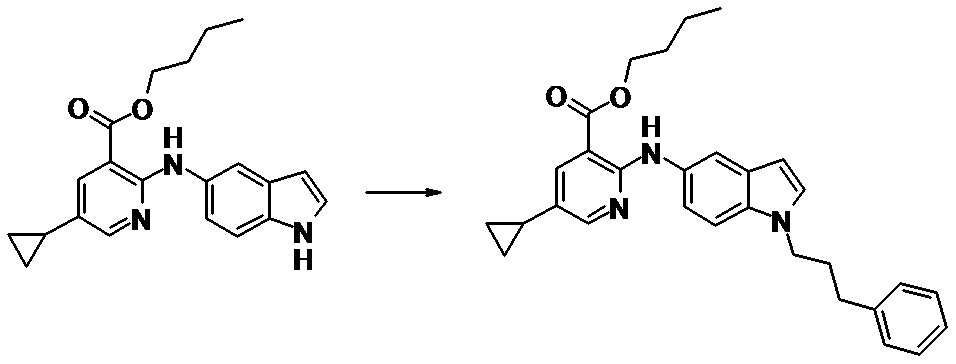
1H-NMR(DMSO-d6):0.60-0.68(2H,m),0.88-0.99(5H,m),1.38-1.50(2H,m),1.68-1.89(2H,m),1.87-1.96(1H,m),2.02-2.12(2H,m),2.54-2.60(2H,m),4.18(2H,t,J=7.1Hz),4.32(2H,t,J=6.6Hz),6.39(1H,d,J=3.0Hz),7.15-7.23(4H,m),7.25-7.31(2H,m),7.34-7.39(2H,m),7.90(1H,d,J=2.4Hz),7.95(1H,d,J=2.0Hz),8.20(1H,d,J=2.7Hz),9.85(1H,s).
MS(ESI,m/z):468(M+H)+.

1H-NMR(DMSO-d6)δ:0.61-0.68(2H,m),0.86-0.94(2H,m),1.85-1.95(1H,m),2.02-2.13(2H,m),2.54-2.60(2H,m),4.17(2H,t,J=7.2Hz),6.39(1H,d,J=2.8Hz),7.15-7.23(4H,m),7.25-7.33(2H,m),7.35-7.40(2H,m),7.87(1H,d,J=2.4Hz),7.97(1H,d,J=1.6Hz),8.19(1H,d,J=2.4Hz),10.15(1H,s).
MS(ESI,m/z):412(M+H)+,410(M-H)-.

1H-NMR(DMSO-d6)δ:0.60-0.64(2H,m),0.82-0.88(2H,m),1.83-1.88(1H,m),3.06(2H,t,J=7.3Hz),4.38(2H,t,J=7.3Hz),6.33(1H,d,J=3.0Hz),7.18-7.26(7H,m),7.43(1H,d,J=8.8Hz),7.87(1H,d,J=2.4Hz),7.94(1H,d,J=1.7Hz),8.19(1H,d,J=2.4Hz),10.12(1H,s).
MS(ESI,m/z):398(M+H)+,396(M-H)-.

1H-NMR(DMSO-d6)δ:0.62-0.68(2H,m),0.87-0.95(2H,m),1.86-1.96(1H,m),2.40(3H,s),3.89(3H,s),5.64(2H,s),6.48(1H,d,J=2.9Hz),6.60-6.66(1H,m),6.67-6.74(1H,m),6.82-6.87(1H,m),7.02-7.11(1H,m),7.31-7.39(1H,m),7.41(1H,d,J=2.9Hz),7.89(1H,d,J=2.7Hz),7.92(1H,d,J=1.9Hz),8.24(1H,d,J=2.4Hz),9.80(1H,s).
MS(ESI,m/z):430(M+H)+.
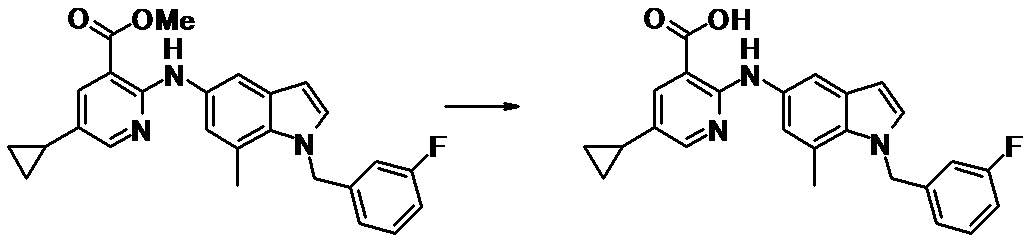
1H-NMR(DMSO-d6)δ:0.60-0.69(2H,m),0.86-0.96(2H,m),1.84-1.95(1H,m),2.40(3H,s),5.63(2H,s),6.47(1H,d,J=2.8Hz),6.59-6.65(1H,m),6.67-6.75(1H,m),6.83(1H,m),7.01-7.12(1H,m),7.30-7.43(2H,m),7.87(1H,d,J=2.4Hz),7.95(1H,s),8.21(1H,d,J=2.0Hz),10.10(1H,s).
MS(ESI,m/z):416(M+H)+,414(M-H)-.

1H-NMR(DMSO-d6)δ:0.60-0.66(2H,m),0.87-0.98(5H,m),1.38-1.50(2H,m),1.68-1.79(2H,m),1.86-1.95(1H,m),3.70(3H,s),4.31(2H,t,J=6.6Hz),5.31(2H,s),6.41(1H,d,J=3.2Hz),6.83-6.90(2H,m),7.12-7.24(3H,m),7.38(1H,d,J=8.8Hz),7.45(1H,d,J=2.9Hz),7.89(1H,d,J=2.4Hz),7.93(1H,d,J=1.9Hz),8.19(1H,d,J=2.4Hz),9.81(1H,s).
MS(ESI,m/z):470(M+H)+.
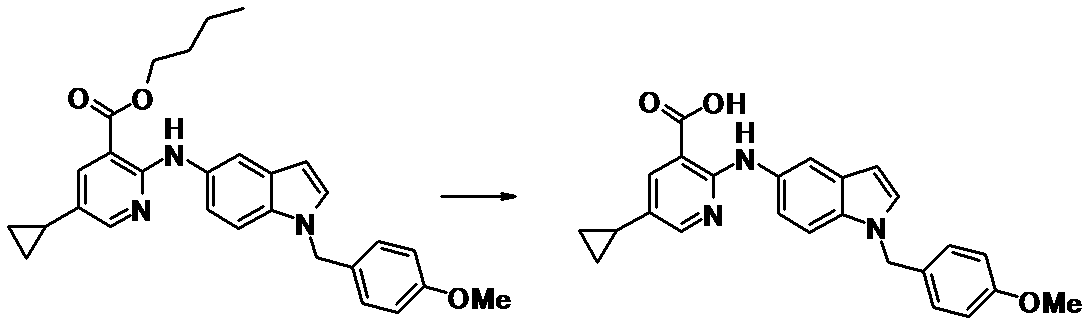
1H-NMR(DMSO-d6)δ:0.60-0.67(2H,m),0.82-0.95(2H,m),1.84-1.96(1H,m),3.70(3H,s),5.31(2H,s),6.41(1H,d,J=2.7Hz),6.83-6.90(2H,m),7.12-7.24(3H,m),7.38(1H,d,J=9.0Hz),7.45(1H,d,J=3.2Hz),7.87(1H,d,J=2.2Hz),7.94(1H,d,J=1.7Hz),8.17(1H,d,J=2.2Hz),10.09(1H,s).
MS(ESI,m/z):414(M+H)+,412(M-H)-.

1H-NMR(DMSO-d6)δ:3.27(3H,s),3.90(3H,s),6.48(1H,d,J=3.2Hz),6.98-7.03(1H,m),7.27(1H,d,J=3.2Hz),7.40-7.51(5H,m),7.91-7.96(1H,m),8.19(1H,d,J=2.2Hz),8.41(1H,d,J=2.7Hz),9.96(1H,s).
MS(ESI,m/z):392(M+H)+.

1H-NMR(DMSO-d6)δ:3.26(3H,s),6,47(1H,d,J=3.0Hz),6.96-7.01(1H,m),7.26(1H,d,J=2.9Hz),7.43-7.50(5H,m),7.99(1H,d,J=1.7Hz),8.16(1H,d,J=2.7Hz),8.39(1H,d,J=2.7Hz),10.34(1H,s).
MS(ESI,m/z):378(M+H)+,376(M-H)-.

1H-NMR(DMSO-d6)δ:3.90(3H,s),5.44(2H,s),6.45-6.50(1H,m),6.97-7.12(3H,m),7.17(1H,dd,J=8.8,2.2Hz),7.32-7.45(2H,m),7.54(1H,d,J=3.2Hz),7.88(1H,d,J=2.0Hz),8.28(1H,d,J=2.4Hz),8.43(1H,d,J=2.7Hz),9.89(1H,s).
MS(ESI,m/z):454(M+H)+.

1H-NMR(DMSO-d6)δ:5.44(2H,s),6.45-6.49(1H,m),6.97-7.12(3H,m),7.18(1H,dd,J=8.8,2.2Hz),7.32-7.44(2H,m),7.52(1H,d,J=3.2Hz),7.90(1H,d,J=2.0Hz),8.26(1H,d,J=2.7Hz),8.40(1H,d,J=2.7Hz),10.21(1H,s).
MS(ESI,m/z):442(M+H)+,440(M-H)-.

1H-NMR(DMSO-d6)δ:0.60-0.68(2H,m),0.86-0.95(2H,m),1.85-1.95(1H,m),2.40(3H,s),3.88(3H,s),5.61(2H,s),6.46(1H,d,J=2.9Hz),6.80-6.84(1H,m),6.84-6.90(2H,m),7.18-7.25(1H,m),7.26-7.33(2H,m),7.39(1H,d,J=3.2Hz),7.88(1H,d,J=2.4Hz),7.91(1H,d,J=2.0Hz),8.23(1H,d,J=2.4Hz),9.80(1H,s).
MS(ESI,m/z):412(M+H)+.

1H-NMR(DMSO-d6)δ:0.60-0.68(2H,m),0.86-0.94(2H,m),1.84-1.94(1H,m),2.40(3H,s),5.61(2H,s),6.45(1H,d,J=2.9Hz),6.81(1H,s),6.84-6.90(2H,m),7.20-7.33(3H,m),7.38(1H,d,J=3.2Hz),7.87(1H,d,J=2.7Hz),7.93(1H,d,J=1.7Hz),8.20(1H,d,J=2.4Hz),10.11(1H,s).
MS(ESI,m/z):398(M+H)+,396(M-H)-.

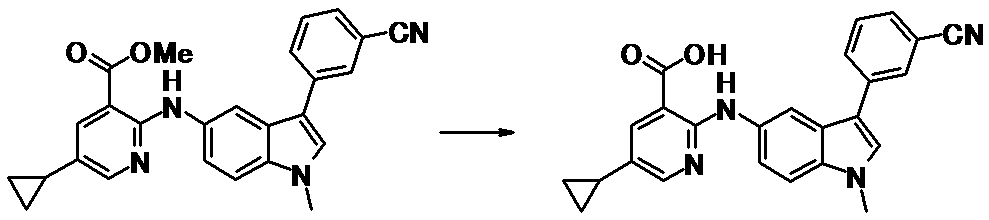
1H-NMR(DMSO-d6)δ:0.63-0.68(2H,m),0.88-0.94(2H,m),1.87-1.95(1H,m),3.85(3H,s),7.36(1H,dd,J=8.7,1.8Hz),7.48(1H,d,J=8.8Hz),7.64-7.67(2H,m),7.87(1H,s),7.91(1H,d,J=2.7Hz),8.00-8.04(1H,m),8.08(1H,s),8.18(1H,d,J=2.7Hz),8.38(1H,d,J=1.7Hz),10.20(1H,s),13.46(1H,brs).
MS(ESI,m/z):410(M+H)+,408(M-H)-.

1H-NMR(DMSO-d6)δ:0.62-0.67(2H,m),0.85(6H,t,J=7.6Hz),0.87-0.93(2H,m),1.24(4H,quin,J=7.1Hz),1.76-1.84(1H,m),1.86-1.94(1H,m),4.03(2H,d,J=7.3Hz),6.37(1H,d,J=2.9Hz),7.19(1H,dd,J=8.8,2.0Hz),7.31(1H,d,J=3.2Hz),7.36(1H,d,J=8.8Hz),7.87(1H,d,J=2.4Hz),7.94(1H,d,J=1.7Hz),8.18(1H,d,J=2.4Hz),10.12(1H,s).

1H-NMR(DMSO-d6)δ:0.61-0.66(2H,m),0.86-0.93(2H,m),1.85-1.94(1H,m),5.43(2H,s),6.44(1H,d,J=2.9Hz),6.99-7.06(1H,m),7.09-7.16(1H,m),7.19(1H,dd,J=8.8,2.0Hz),7.24-7.32(1H,m),7.37-7.43(2H,m),7.86(1H,d,J=2.4Hz),7.97(1H,d,J=1.7Hz),8.18(1H,d,J=2.4Hz),10.13(1H,s).
MS(ESI,m/z):420(M+H)+.

1H-NMR(DMSO-d6)δ:0.61-0.66(2H,m),0.87-0.94(2H,m),1.85-1.93(1H,m),5.43(2H,s),6.40(1H,d,J=3.2Hz),7.12-7.19(2H,m),7.23(1H,dd,J=8.7,1.8Hz),7.32(1H,d,J=2.7Hz),7.40-7.48(2H,m),7.86(1H,d,J=2.4Hz),7.95(1H,d,J=1.7Hz),8.17(1H,d,J=2.4Hz),10.12(1H,s),13.41(1H,brs).
MS(ESI,m/z):420(M+H)+.

1H-NMR(DMSO-d6)δ:0.61-0.67(2H,m),0.88-0.94(2H,m),1.86-1.94(1H,m),5.40(2H,s),6.45(1H,d,J=3.2Hz),7.00-7.06(1H,m),7.18(1H,d,J=8.8Hz),7.26-7.33(1H,m),7.33-7.42(2H,m),7.50(1H,d,J=2.9Hz),7.87(1H,d,J=2.2Hz),7.98(1H,s),8.18(1H,d,J=1.7Hz),10.12(1H,s),13.42(1H,brs).
MS(ESI,m/z):420(M+H)+,418(M-H)-.

1H-NMR(DMSO-d6)δ:0.61-0.67(2H,m),0.84(3H,t,J=7.3Hz),0.87-0.93(2H,m),1.77(2H,sext,J=7.3Hz),1.86-1.93(1H,m),4.11(2H,t,J=6.8Hz),6.36(1H,d,J=2.9Hz),7.19(1H,dd,J=8.5,1.7Hz),7.33(1H,d,J=2.9Hz),7.40(1H,d,J=8.8Hz),7.87(1H,d,J=2.4Hz),7.95(1H,d,J=1.7Hz),8.19(1H,d,J=2.4Hz),10.12(1H,s),13.40(1H,brs).
MS(ESI,m/z):336(M+H)+,334(M-H)-.

1H-NMR(DMSO-d6)δ:0.61-0.67(2H,m),0.86-0.93(5H,m),1.20-1.29(2H,m),1.73(2H,quin,J=7.3Hz),1.86-1.94(1H,m),4.14(2H,t,J=7.0Hz),6.36(1H,d,J=2.9Hz),7.19(1H,dd,J=8.7,1.8Hz),7.32(1H,d,J=2.9Hz),7.39(1H,d,J=8.5Hz),7.87(1H,d,J=2.4Hz),7.94(1H,d,J=2.0Hz),8.18(1H,d,J=2.7Hz),10.14(1H,s),13.40(1H,brs).
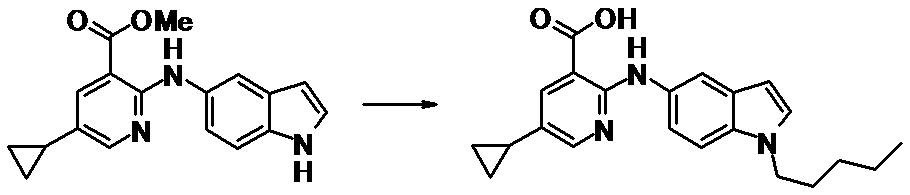
1H-NMR(DMSO-d6)δ:0.62-0.67(2H,m),0.84(3H,t,J=7.1Hz),0.88-0.94(2H,m),1.22-1.34(4H,m),1.75(2H,quin,J=7.3Hz),1.91-1.99(1H,m),4.13(2H,t,J=7.0Hz),6.36(1H,d,J=2.9Hz),7.19(1H,d,J=8.8Hz),7.33(1H,d,J=2.9Hz),7.39(1H,d,J=8.5Hz),7.87(1H,d,J=2.0Hz),7.95(1H,s),8.19(1H,d,J=2.2Hz),10.12(1H,s),13.39(1H,brs).

1H-NMR(DMSO-d6)δ:0.62-0.67(2H,m),0.81-0.86(3H,m),0.88-0.94(2H,m),1.25-1.33(6H,m),1.66-1.79(2H,m),1.86-1.94(1H,m),4.13(2H,t,J=7.0Hz),6.36(1H,d,J=2.7Hz),7.19(1H,dd,J=8.8,1.7Hz),7.32(1H,d,J=2.9Hz),7.39(1H,d,J=8.5Hz),7.87(1H,d,J=2.4Hz),7.95(1H,d,J=1.7Hz),8.19(1H,d,J=2.4Hz),10.12(1H,s),13.40(1H,brs).
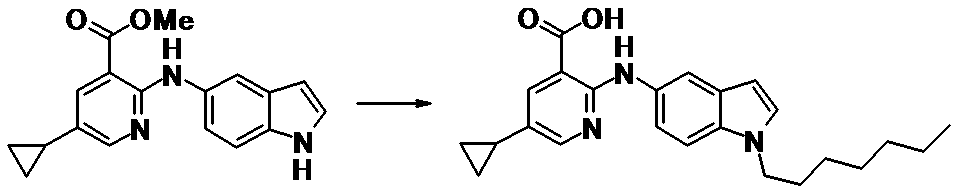
1H-NMR(DMSO-d6)δ:0.62-0.67(2H,m),0.84(3H,t,J=6.8Hz),0.87-0.94(2H,m),1.22-1.31(8H,m),1.70-1.79(2H,m),1.91-1.99(1H,m),4.13(2H,t,J=7.0Hz),6.36(1H,d,J=2.9Hz),7.19(1H,dd,J=8.8,2.0Hz),7.32(1H,d,J=2.9Hz),7.38(1H,d,J=8.8Hz),7.87(1H,d,J=2.7Hz),7.94(1H,d,J=1.7Hz),8.19(1H,d,J=2.4Hz),10.11(1H,s),13.39(1H,brs).
MS(ESI,m/z):393(M+H)+,391(M-H)-.

1H-NMR(DMSO-d6)δ:0.62-0.67(2H,m),0.88-0.94(2H,m),1.85-1.95(1H,m),5.45(2H,s),6.46(1H,d,J=2.9Hz),6.78-6.84(1H,m),7.15-7.23(2H,m),7.27-7.34(1H,m),7.41(1H,d,J=8.8Hz),7.45(1H,d,J=3.2Hz),7.87(1H,d,J=2.7Hz),7.99(1H,d,J=2.0Hz),8.19(1H,d,J=2.4Hz),10.13(1H,s),13.42(1H,brs).
MS(ESI,m/z):420(M+H)+,418(M-H)-.
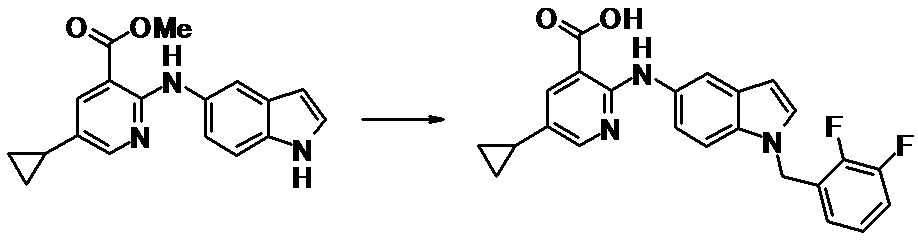
1H-NMR(DMSO-d6)δ:0.62-0.67(2H,m),0.88-0.94(2H,m),1.87-1.96(1H,m),5.53(2H,s),6.47(1H,d,J=2.9Hz),6.79-6.85(1H,m),7.09-7.17(1H,m),7.19(1H,dd,J=8.7,2.1Hz),7.31-7.39(1H,m),7.42(1H,d,J=8.5Hz),7.45(1H,d,J=2.9Hz),7.91(1H,d,J=2.2Hz),7.95(1H,d,J=2.0Hz),8.14(1H,d,J=2.4Hz),10.16(1H,s).
MS(ESI,m/z):420(M+H)+,418(M-H)-.
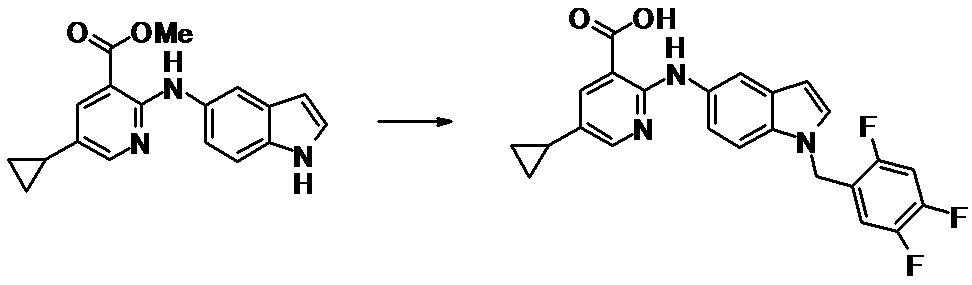
1H-NMR(DMSO-d6)δ:0.61-0.66(2H,m),0.88-0.93(2H,m),1.85-1.93(1H,m),5.42(2H,s),6.45(1H,d,J=3.2Hz),7.17-7.25(2H,m),7.41-7.45(2H,m),7.56-7.64(1H,m),7.87(1H,d,J=2.4Hz),7.98(1H,d,J=2.0Hz),8.18(1H,d,J=2.4Hz),10.13(1H,s).
MS(ESI,m/z):438(M+H)+,436(M-H)-.
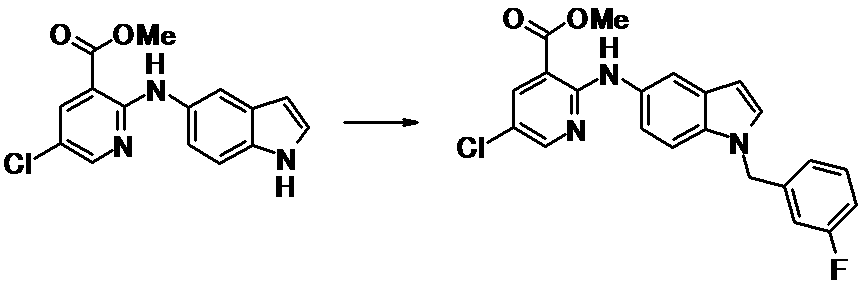
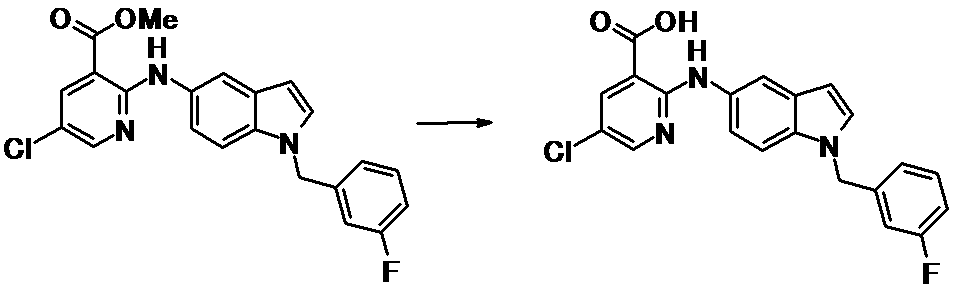
1H-NMR(DMSO-d6)δ:5.44(2H,s),6.47(1H,d,J=3.2Hz),6.98-7.04(2H,m),7.05-7.11(1H,m),7.16-7.20(1H,m),7.32-7.42(2H,m),7.52(1H,d,J=2.7Hz),7.89-7.92(1H,m),8.16(1H,dd,J=3.9,1.0Hz),8.35(1H,d,J=2.7Hz),10.20(1H,s),13.86(1H,brs).
MS(ESI,m/z):397(M+H)+,395(M-H)-.

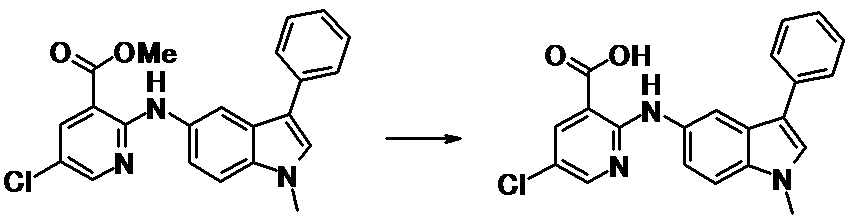
1H-NMR(DMSO-d6)δ:3.84(3H,s),7.20-7.25(1H,m),7.33(1H,dd,J=8.9,1.8Hz),7.41-7.48(3H,m),7.62-7.67(2H,m),7.67(1H,s),8.15-8.18(2H,m),8.34(1H,d,J=2.7Hz),10.23(1H,s).
MS(ESI,m/z):379(M+H)+,377(M-H)-.
(細胞増殖抑制試験)
正常ヒト新生児包皮表皮細胞(NHEK-F)(クラボウ、KK-4009)2×10³個をHumedia-EG2(クラボウ、KK-2150S)培地100μLに懸濁し、96ウェルプレートに播種し、一晩培養した。翌日試験化合物を添加し、さらに3日間培養し、ATPlite(パーキンエルマー、6016739)またはCellTiterGlo(プロメガ、G7573)を用いて細胞数を求めた。
以下の式から抑制率を算出し、50%細胞数を抑制する化合物の濃度(IC50値)を求めた。
表中の略号は、以下の意味を有する。
A:IC50値 ≦ 10 nmol/L
B:10 nmol/L < IC50値 ≦ 100 nmol/L
C:100 nmol/L < IC50値 ≦ 1000 nmol/L
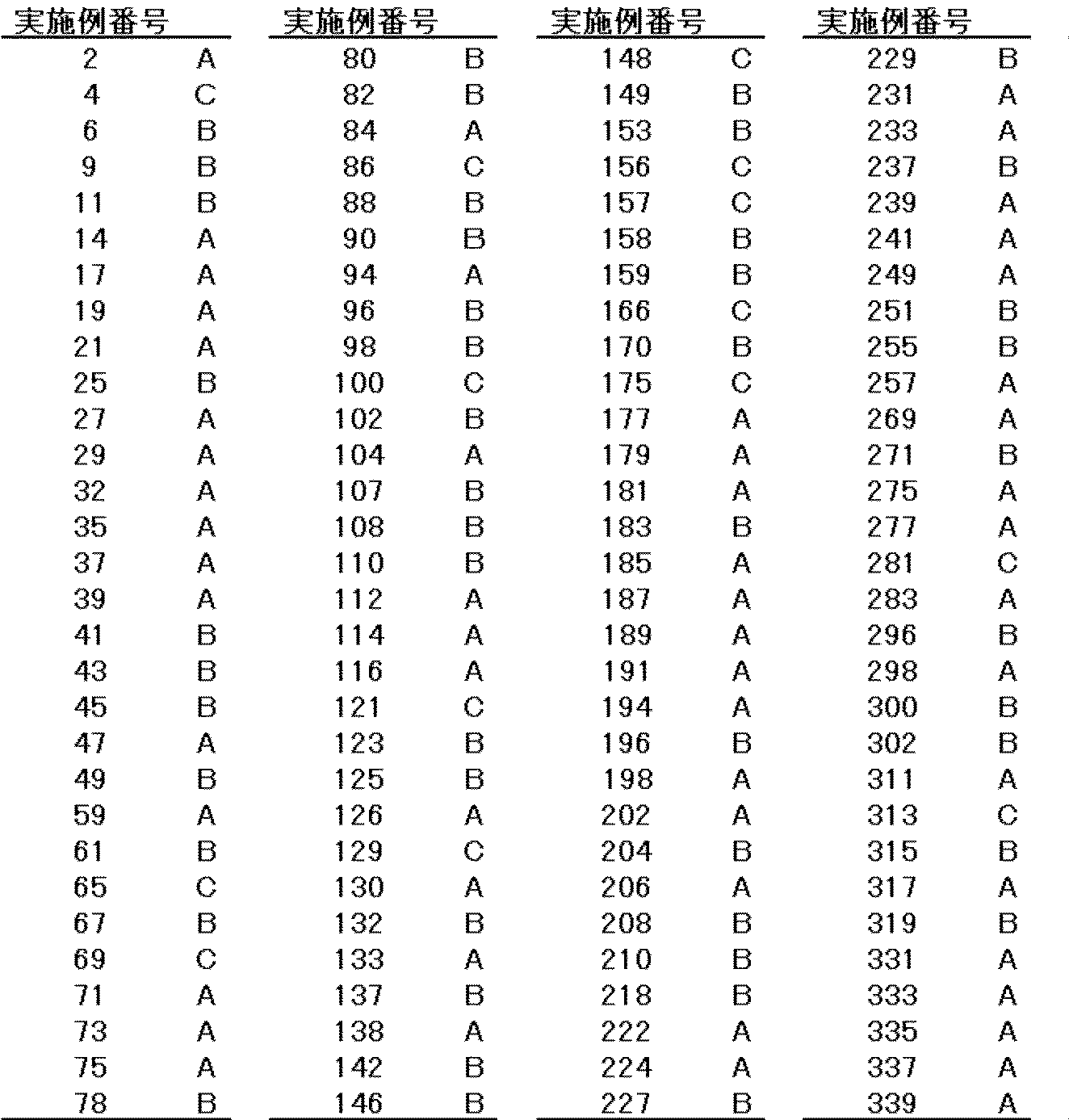


(TNFα産生抑制試験)
マウスマクロファージ由来細胞株Raw264.7細胞7×10⁴個を10%牛胎児血清含有RPMI1640培地100μLに懸濁し、96ウェルプレートに播種し一晩培養した。培養上清を除去し、1%牛胎児血清含有RPMI1640培地に希釈した試験化合物(終濃度1μmol/L)を添加し、その1時間後にLPS(B4:0111)(Sigma-Aldrich、L2630)を終濃度1μg/mLになるように添加した。刺激16時間後に上清を回収し、ELISAキット(R&D systems、MTA00B)を用いて培養上清中のTNFα産生量を求めた。
以下の式から抑制率を算出した。
本発明化合物は、優れたTNFα産生抑制効果を示した。
(マウスTPA誘発耳介浮腫モデル)
7週齢の雌性Balb/cマウス(日本チャールス・リバー)を使用した。5%DMSO/acetoneに溶解した20ng/mL TPA(和光純薬工業、162-23591)溶液をday0, day2, day4, day7, day9にマウス耳介外側に20μL塗布し、耳介浮腫・表皮肥厚を誘発した。試験化合物は、5%DMSO/acetone溶液に溶解(濃度:1%w/v)し、day0からday9まで1日1回耳介外側に20μL塗布した。なお、対照群には5%DMSO/acetone溶液を同様に塗布した。また、TPA塗布を行う日(day0, day2, day4, day7, day9)は、TPA溶解液と試験化合物溶解液を混合して塗布を行った。耳介厚みはマイクロメーター(ミツトヨ、MDC-25MJT)を用いてday0-4, day7-10に経日的に測定した。耳厚みの変化および抑制率は、以下の式で求めた。
耳厚み変化=(day10 耳厚み測定値)-(day0 TPA塗布前の耳厚み測定値)
抑制率(%)=100-(試験化合物群の耳厚み変化/対照群の耳厚み変化)×100
本発明化合物は、耳厚みを抑制する効果を有するため、乾癬の予防または治療などの処置に有用であることが示された。
Claims (19)
- 一般式(1)で表される化合物またはその塩。

G1、G2およびG3は、同一または異なって、CHまたは窒素原子であり;
R1は、塩素原子、臭素原子、ヨウ素原子、置換されてもよいC1-6アルキル基、置換されてもよいC3-8シクロアルキル基、置換されてもよいアリール基、置換されてもよいC1-6アルコキシ基、置換されてもよいアリールオキシ基、置換されてもよいC1-6アルキルチオ基、置換されてもよいアリールチオ基、置換されてもよいC1-6アルキルアミノ基、置換されてもよいジ(C1-6アルキル)アミノ基または置換されてもよい複素環基であり;
R2は、-COOR5(式中、R5は、水素原子またはカルボキシル保護基である。)または-C(O)N(R6)SO2R7(式中、R6は、水素原子またはイミノ保護基であり;R7は、置換されてもよいC1-6アルキル基または置換されてもよいC3-8シクロアルキル基である。)であり;
R3は、水素原子またはイミノ保護基であり;
R4は、置換されてもよい二環式縮合炭化水素環基、置換されてもよい三環式縮合炭化水素環基、置換されてもよい二環式複素環基または置換されてもよい三環式複素環基である。
ただし、
(1)R4が置換されてもよい二環式縮合炭化水素環基の場合、G3は窒素原子であり;
(2)G1がCHであり、G2がCHであり、G3がCHであり、R1が塩素原子、臭素原子、ヨウ素原子、C1-4アルキル基、トリフルオロメチル基、ジブチルアミノ基、メトキシ基または置換されているフェニルオキシ基であり、R2が-COOHであり、R3が水素原子の場合、R4は一般式(2-1)~(2-4)

X1aa、X1ba、X1ca、X1daおよびX1eは、同一または異なって、CR9a(式中、R9aは、水素原子、ハロゲン原子、置換されてもよいC1-6アルキル基、置換されてもよいC3-8シクロアルキル基または置換されてもよいアリール基である。)または窒素原子であり;
X2は、CR10(式中、R10は、水素原子、保護されてもよいカルボキシル基、置換されてもよいカルバモイル基、置換されてもよいC1-6アルキル基または置換されてもよいアリール基である。)または窒素原子であり;
X3は、CR11(式中、R11は、水素原子、置換されてもよいC1-6アルキル基、置換されてもよいC3-8シクロアルキル基、置換されてもよいアリール基、置換されてもよいアルC1-6アルキル基または置換されてもよいアシル基である。)または窒素原子であり;
X4は、CH2、CH2-CH2、C=O、酸素原子または硫黄原子であり;
X5は、CH2またはC=Oであり;
X6は、CH2、CH2-CH2、C=O、NR12(式中、R12は、水素原子、イミノ保護基、置換されてもよいC1-6アルキル基、置換されてもよいC3-8シクロアルキル基または置換されてもよいC3-8シクロアルキルC1-6アルキル基である。)、酸素原子または硫黄原子であり;
R8aは、置換されてもよいC3-6アルキル基、置換されてもよいC3-8シクロアルキル基、置換されてもよいC3-8シクロアルキルC1-6アルキル基、置換されてもよいアリール基、置換されてもよいアルC1-6アルキル基、置換されてもよいアシル基、置換されてもよい複素環基または置換されてもよい複素環C1-6アルキル基である。)
で表される基である。) - R1が、塩素原子、臭素原子、置換されてもよいC1-6アルキル基、置換されてもよいC3-8シクロアルキル基、置換されてもよいアリール基、置換されてもよいアリールオキシ基、置換されてもよいC1-6アルキルチオ基または置換されてもよい複素環基である、請求項1に記載の化合物またはその塩。
- R1が、塩素原子、臭素原子、C1-6アルキル基、C3-8シクロアルキル基、アリール基、メチルスルホニル基で置換されてもよいアリールオキシ基、C1-6アルキルチオ基または複素環基である、請求項1または2に記載の化合物またはその塩。
- R2が-COOHである、請求項1~3のいずれか1項に記載の化合物またはその塩。
- R3が水素原子である、請求項1~4のいずれか1項に記載の化合物またはその塩。
- R4が置換されてもよい二環式複素環基である、請求項1~5のいずれか1項に記載の化合物またはその塩。
- R1が、塩素原子またはC3-8シクロアルキル基である、請求項1~6のいずれか1項に記載の化合物またはその塩。
- R4が、一般式(3-1)~(3-3)

X1a、X1b、X1cおよびX1dは、同一または異なって、CR9(式中、R9は、水素原子、ハロゲン原子、置換されてもよいC1-6アルキル基、置換されてもよいC2-6アルケニル基、置換されてもよいC3-8シクロアルキル基、置換されてもよいC4-8シクロアルケニル基、置換されてもよいC3-8シクロアルキルC1-6アルキル基または置換されてもよいアリール基である。)または窒素原子であり;
X2は、CR10(式中、R10は、水素原子、保護されてもよいカルボキシル基、置換されてもよいカルバモイル基、置換されてもよいC1-6アルキル基または置換されてもよいアリール基である。)または窒素原子であり;
X3は、CR11(式中、R11は、水素原子、置換されてもよいC1-6アルキル基、置換されてもよいC3-8シクロアルキル基、置換されてもよいアリール基、置換されてもよいアルC1-6アルキル基または置換されてもよいアシル基である。)または窒素原子であり;
X4aは、CH2、CH2-CH2またはC=Oであり;
X5は、CH2またはC=Oであり;
X6は、CH2、CH2-CH2、C=O、NR12(式中、R12は、水素原子、イミノ保護基、置換されてもよいC1-6アルキル基、置換されてもよいC3-8シクロアルキル基または置換されてもよいC3-8シクロアルキルC1-6アルキル基である。)、酸素原子または硫黄原子であり;
R8は、水素原子、置換されてもよいC1-6アルキル基、置換されてもよいC3-8シクロアルキル基、置換されてもよいC3-8シクロアルキルC1-6アルキル基、置換されてもよいアリール基、置換されてもよいアルC1-6アルキル基、置換されてもよいアシル基、置換されてもよい複素環基または置換されてもよい複素環C1-6アルキル基である。
ただし、G1がCHであり、G2がCHであり、G3がCHであり、R1が塩素原子、臭素原子、ヨウ素原子、C1-4アルキル基、トリフルオロメチル基、ジブチルアミノ基、メトキシ基または置換されているフェニルオキシ基であり、R2が-COOHであり、R3が水素原子の場合、R4は、一般式(3-1a)~(3-3a)

X1aa、X1ba、X1caおよびX1daは、同一または異なって、CR9a(式中、R9aは、水素原子、ハロゲン原子、置換されてもよいC1-6アルキル基、置換されてもよいC3-8シクロアルキル基または置換されてもよいアリール基である。)または窒素原子であり;
X2は、CR10(式中、R10は、水素原子、保護されてもよいカルボキシル基、置換されてもよいカルバモイル基、置換されてもよいC1-6アルキル基または置換されてもよいアリール基である。)または窒素原子であり;
X3は、CR11(式中、R11は、水素原子、置換されてもよいC1-6アルキル基、置換されてもよいC3-8シクロアルキル基、置換されてもよいアリール基、置換されてもよいアルC1-6アルキル基または置換されてもよいアシル基である。)または窒素原子であり;
X5は、CH2またはC=Oであり;
X6は、CH2、CH2-CH2、C=O、NR12(式中、R12は、水素原子、イミノ保護基、置換されてもよいC1-6アルキル基、置換されてもよいC3-8シクロアルキル基または置換されてもよいC3-8シクロアルキルC1-6アルキル基である。)、酸素原子または硫黄原子であり;
R8aは、置換されてもよいC3-6アルキル基、置換されてもよいC3-8シクロアルキル基、置換されてもよいC3-8シクロアルキルC1-6アルキル基、置換されてもよいアリール基、置換されてもよいアルC1-6アルキル基、置換されてもよいアシル基、置換されてもよい複素環基または置換されてもよい複素環C1-6アルキル基であり;
X4aは、前記と同様の定義である。)で表される基である。)で表される基である、請求項1~7のいずれか1項に記載の化合物またはその塩。 - R4が、一般式(4-1)または(4-2)

X2は、CR10(式中、R10は、水素原子、保護されてもよいカルボキシル基、置換されてもよいカルバモイル基、置換されてもよいC1-6アルキル基または置換されてもよいアリール基である。)または窒素原子であり;
X6aは、CH2、C=O、NR12(式中、R12は、水素原子、イミノ保護基、置換されてもよいC1-6アルキル基、置換されてもよいC3-8シクロアルキル基または置換されてもよいC3-8シクロアルキルC1-6アルキル基である。)、酸素原子または硫黄原子であり;
R8は、水素原子、置換されてもよいC1-6アルキル基、置換されてもよいC3-8シクロアルキル基、置換されてもよいC3-8シクロアルキルC1-6アルキル基、置換されてもよいアリール基、置換されてもよいアルC1-6アルキル基、置換されてもよいアシル基、置換されてもよい複素環基または置換されてもよい複素環C1-6アルキル基であり;
R9は、水素原子、ハロゲン原子、置換されてもよいC1-6アルキル基、置換されてもよいC2-6アルケニル基、置換されてもよいC3-8シクロアルキル基、置換されてもよいC4-8シクロアルケニル基、置換されてもよいC3-8シクロアルキルC1-6アルキル基または置換されてもよいアリール基であり;
R11は、水素原子、置換されてもよいC1-6アルキル基、置換されてもよいC3-8シクロアルキル基、置換されてもよいアリール基、置換されてもよいアルC1-6アルキル基または置換されてもよいアシル基である。
ただし、G1がCHであり、G2がCHであり、G3がCHであり、R1が塩素原子、臭素原子、ヨウ素原子、C1-4アルキル基、トリフルオロメチル基、ジブチルアミノ基、メトキシ基または置換されているフェニルオキシ基であり、R2が-COOHであり、R3が水素原子の場合、R4は、一般式(4-1a)または(4-2a)

R8aは、置換されてもよいC3-6アルキル基、置換されてもよいC3-8シクロアルキル基、置換されてもよいC3-8シクロアルキルC1-6アルキル基、置換されてもよいアリール基、置換されてもよいアルC1-6アルキル基、置換されてもよいアシル基、置換されてもよい複素環基または置換されてもよい複素環C1-6アルキル基であり;
R9aは、水素原子、ハロゲン原子、置換されてもよいC1-6アルキル基、置換されてもよいC3-8シクロアルキル基または置換されてもよいアリール基であり;
R11、X2、X4aおよびX6aは、前記と同様の定義である。)で表される基である。)で表される基である、請求項1~8のいずれか1項に記載の化合物またはその塩。 - G1およびG2がCHであり;G3が窒素原子であり;
R4が、一般式(5-1)

R8bは、置換されてもよいC1-6アルキル基、置換されてもよいC3-8シクロアルキル基、置換されてもよいC3-8シクロアルキルC1-6アルキル基、置換されてもよいアリール基または置換されてもよいアルC1-6アルキル基であり;
R9は、水素原子、ハロゲン原子、置換されてもよいC1-6アルキル基、置換されてもよいC2-6アルケニル基、置換されてもよいC3-8シクロアルキル基、置換されてもよいC4-8シクロアルケニル基、置換されてもよいC3-8シクロアルキルC1-6アルキル基または置換されてもよいアリール基であり;
R10は、水素原子、保護されていてもよいカルボキシル基、置換されていてもよいカルバモイル基、置換されてもよいC1-6アルキル基または置換されていてもよいアリール基であり;
R11は、水素原子、置換されてもよいC1-6アルキル基、置換されてもよいC3-8シクロアルキル基、置換されてもよいアリール基、置換されてもよいアルC1-6アルキル基または置換されてもよいアシル基である。)
で表される基である、請求項1~9のいずれか1項に記載の化合物またはその塩。 - G1およびG2がCHであり;G3が窒素原子であり;
R4が、一般式(5-1a)

R8bは、置換されてもよいC1-6アルキル基、置換されてもよいC3-8シクロアルキル基、置換されてもよいC3-8シクロアルキルC1-6アルキル基、置換されてもよいアリール基または置換されてもよいアルC1-6アルキル基である。)
で表される基である、請求項1~10のいずれか1項に記載の化合物またはその塩。 - G1およびG2がCHであり;G3が窒素原子であり;
R4が、一般式(5-1b)
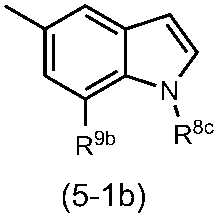
R8cは、置換されてもよいC1-6アルキル基であり;
R9bは、置換されてもよいC1-6アルキル基、置換されてもよいC3-8シクロアルキル基、置換されてもよいC3-8シクロアルキルC1-6アルキル基または置換されてもよいアリール基である。)
で表される基である、請求項1~10のいずれか1項に記載の化合物またはその塩。 - G1およびG2がCHであり;G3が窒素原子であり;
R4が、一般式(5-1c)

R8cは、置換されてもよいC1-6アルキル基であり;
R11aは、置換されてもよいアリール基である。)
で表される基である、請求項1~10のいずれか1項に記載の化合物またはその塩。 - 化合物が、5-シクロプロピル-2-((1-(3-フルオロベンジル)-1H-インドール-5-イル)アミノ)ニコチン酸、5-シクロプロピル-2-((1-(2-フルオロベンジル)-1H-インドール-5-イル)アミノ)ニコチン酸、5-シクロプロピル-2-(1-メチル-3-フェニル-1H-インドール-5-イル)アミノ)ニコチン酸、5-シクロプロピル-2-((1-メチル-7-フェニル-1H-インドール-5-イル)アミノ)ニコチン酸、2-((7-(2-シアノフェニル)-1-メチル-1H-インドール-5-イル)アミノ)-5-シクロプロピルニコチン酸、2-((1-ベンジル-1H-インドール-5-イル)アミノ)-5-シクロプロピルニコチン酸、5-シクロプロピル-2-((1-エチル-2-フェニル-1H-インドール-5-イル)アミノ)ニコチン酸、5-シクロプロピル-2-(1-イソペンチル-1H-インドール-5-イルアミノ)ニコチン酸、2-((1-(シクロヘキシルメチル)-1H-インドール-5-イル)アミノ)-5-シクロプロピルニコチン酸、2-((1-(シクロブチルメチル)-1H-インドール-5-イル)アミノ)-5-シクロプロピルニコチン酸、2-((7-(4-シアノフェニル)-1-メチル-1H-インドール-5-イル)アミノ)-5-シクロプロピルニコチン酸、5-シクロプロピル-2-((7-(2-メトキシフェニル)-1-メチル-1H-インドール-5-イル)アミノ)ニコチン酸、5-シクロプロピル-2-((1-フェニル-1H-インドール-5-イル)アミノ)ニコチン酸、2-((1-(シクロペンチルメチル)-1H-インドール-5-イル)アミノ)-5-シクロプロピルニコチン酸、5-シクロプロピル-2-((1-(4-フルオロベンジル)-1H-インドール-5-イル)アミノ)ニコチン酸、5-シクロプロピル-2-((1-(3-(トリフルオロメチル)ベンジル)-1H-インドール-5-イル)アミノ)ニコチン酸、2-((1-(シクロヘキシルメチル)-1H-インダゾール-5-イル)アミノ)-5-シクロプロピルニコチン酸、5-シクロプロピル-2-((1-(4-フルオロフェニル)-1H-インドール-5-イル)アミノ)ニコチン酸、2-((1-ベンジル-1H-インドール-5-イル)アミノ)-5-シクロプロピル安息香酸、3-((1-ベンジル-1H-インドール-5-イル)アミノ)-6-シクロプロピルピラジン-2-カルボン酸、5-シクロプロピル-2-((3-(2-フルオロフェニル)-1-メチル-1H-インドール-5-イル)アミノ)ニコチン酸、5-シクロプロピル-2-((7-(4-フルオロフェニル)-1-メチル-1H-インドール-5-イル)アミノ)ニコチン酸、2-((1-イソブチル-1H-インドール-5-イル)アミノ)-5-シクロプロピルニコチン酸、5-シクロプロピル-2-((7-(2-フルオロフェニル)-1-メチル-1H-インドール-5-イル)アミノ)ニコチン酸、5-シクロプロピル-2-((7-(3-メトキシプロピル)-1-メチル-1H-インドール-5-イル)アミノ)ニコチン酸、5-シクロプロピル-2-((7-(2-シクロプロピルエチル)-1-メチル-1H-インドール-5-イル)アミノ)ニコチン酸、5-シクロプロピル-2-((7-イソプロピル-1-メチル-1H-インドール-5-イル)アミノ)ニコチン酸、2-((1-ベンジル-1H-インドール-5-イル)アミノ)-5-シクロプロピル-N-(メチルスルホニル)ニコチンアミド、2-((3-ベンジル-2-オキソ-2,3-ジヒドロベンゾ[d]チアゾール-6-イル)アミノ)-5-シクロプロピルニコチン酸および2-((1-(シクロブチルメチル)-1H-インドール-4-イル)アミノ)-5-シクロプロピルニコチン酸からなる群より選択される少なくとも1種である、請求項1に記載の化合物またはその塩。
- 請求項1~14のいずれか1項に記載の化合物またはその塩を含有する、医薬用組成物。
- 請求項1~14のいずれか1項に記載の化合物またはその塩を含有する、ケラチノサイト増殖抑制剤。
- 請求項1~14のいずれか1項に記載の化合物またはその塩を含有する、ケラチノサイトの過剰増殖が関与する疾患の処置剤。
- 請求項1~14のいずれか1項に記載の化合物またはその塩を含有する、TNFα産生阻害剤。
- 請求項1~14のいずれか1項に記載の化合物またはその塩を含有する、TNFαの過剰産生が関与する疾患の処置剤。
Priority Applications (18)
| Application Number | Priority Date | Filing Date | Title |
|---|---|---|---|
| CN201380065977.5A CN104870422B (zh) | 2012-10-31 | 2013-10-30 | 胺衍生物或其盐 |
| AU2013339167A AU2013339167B2 (en) | 2012-10-31 | 2013-10-30 | Novel amine derivative or salt thereof |
| US14/440,010 US9624215B2 (en) | 2012-10-31 | 2013-10-30 | Amine derivative or salt thereof |
| RS20190681A RS58786B1 (sr) | 2012-10-31 | 2013-10-30 | Novi aminski derivati ili njihove soli kao inhibitori tnf alfa |
| PL13851612T PL2915804T3 (pl) | 2012-10-31 | 2013-10-30 | Nowe pochodne aminy lub ich sole jako inhibitory tnf alfa |
| CA2890003A CA2890003A1 (en) | 2012-10-31 | 2013-10-30 | Amine derivatives or salt thereof as tnf"alpha"inhibitors |
| RU2015120558A RU2668550C2 (ru) | 2012-10-31 | 2013-10-30 | Новое производное амина или его соль |
| KR1020157014279A KR102098606B1 (ko) | 2012-10-31 | 2013-10-30 | 신규 아민 유도체 또는 그 염 |
| EP13851612.5A EP2915804B1 (en) | 2012-10-31 | 2013-10-30 | Novel amine derivative or salt thereof as tnf alpha inhibitors |
| ES13851612T ES2721627T3 (es) | 2012-10-31 | 2013-10-30 | Nuevo derivado de amina o sal del mismo como inhibidores de TNF alfa |
| SM20190228T SMT201900228T1 (it) | 2012-10-31 | 2013-10-30 | Nuovo derivato amminico o suo sale come inibitori di tnf alfa |
| DK13851612.5T DK2915804T3 (da) | 2012-10-31 | 2013-10-30 | Nyt aminderivat eller salt deraf som TNF-alpha-inhibitorer |
| JP2014544546A JP6466171B2 (ja) | 2012-10-31 | 2013-10-30 | 新規アミン誘導体またはその塩 |
| BR112015009777A BR112015009777A2 (pt) | 2012-10-31 | 2013-10-30 | derivado de amina ou sal do mesmo |
| SI201331421T SI2915804T1 (sl) | 2012-10-31 | 2013-10-30 | Novi derivati aminov ali njihove soli kot inhibitorji TNF ALFA |
| HRP20190723TT HRP20190723T1 (hr) | 2012-10-31 | 2013-10-30 | Novi derivat amina ili njegova sol kao inhibitor tnf alfa |
| LTEP13851612.5T LT2915804T (lt) | 2012-10-31 | 2013-10-30 | Nauji amino dariniai arba jo druskos kaip tnf alfa inhibitoriai |
| CY20191100396T CY1121599T1 (el) | 2012-10-31 | 2019-04-09 | Νεο παραγωγο αμινης ή αλας αυτου ως παρεμποδιστες tnf αλφα |
Applications Claiming Priority (4)
| Application Number | Priority Date | Filing Date | Title |
|---|---|---|---|
| JP2012240172 | 2012-10-31 | ||
| JP2012-240172 | 2012-10-31 | ||
| JP2013-050845 | 2013-03-13 | ||
| JP2013050845 | 2013-03-13 |
Publications (1)
| Publication Number | Publication Date |
|---|---|
| WO2014069510A1 true WO2014069510A1 (ja) | 2014-05-08 |
Family
ID=50627410
Family Applications (1)
| Application Number | Title | Priority Date | Filing Date |
|---|---|---|---|
| PCT/JP2013/079364 Ceased WO2014069510A1 (ja) | 2012-10-31 | 2013-10-30 | 新規アミン誘導体またはその塩 |
Country Status (22)
| Country | Link |
|---|---|
| US (1) | US9624215B2 (ja) |
| EP (1) | EP2915804B1 (ja) |
| JP (1) | JP6466171B2 (ja) |
| KR (1) | KR102098606B1 (ja) |
| CN (1) | CN104870422B (ja) |
| AU (1) | AU2013339167B2 (ja) |
| BR (1) | BR112015009777A2 (ja) |
| CA (1) | CA2890003A1 (ja) |
| CY (1) | CY1121599T1 (ja) |
| DK (1) | DK2915804T3 (ja) |
| ES (1) | ES2721627T3 (ja) |
| HR (1) | HRP20190723T1 (ja) |
| HU (1) | HUE043663T2 (ja) |
| LT (1) | LT2915804T (ja) |
| PL (1) | PL2915804T3 (ja) |
| PT (1) | PT2915804T (ja) |
| RS (1) | RS58786B1 (ja) |
| RU (1) | RU2668550C2 (ja) |
| SI (1) | SI2915804T1 (ja) |
| SM (1) | SMT201900228T1 (ja) |
| TW (1) | TWI638814B (ja) |
| WO (1) | WO2014069510A1 (ja) |
Cited By (11)
| Publication number | Priority date | Publication date | Assignee | Title |
|---|---|---|---|---|
| WO2017038815A1 (ja) * | 2015-08-31 | 2017-03-09 | 富山化学工業株式会社 | 5-シクロプロピル-2-((1-(3-フルオロベンジル)-1h-インドール-5-イル)アミノ)ニコチン酸の結晶 |
| WO2018159734A1 (ja) * | 2017-03-01 | 2018-09-07 | 富士フイルム株式会社 | 5-シクロプロピル-2-((1-(3-フルオロベンジル)-1h-インドール-5-イル)アミノ)ニコチン酸の結晶の製造方法 |
| JP2019089795A (ja) * | 2014-09-11 | 2019-06-13 | イーライ リリー アンド カンパニー | アンドロゲン除去療法随伴症状の治療 |
| WO2019235571A1 (ja) * | 2018-06-06 | 2019-12-12 | 富士フイルム株式会社 | 血液がんの処置剤および医薬組成物 |
| WO2019235572A1 (ja) * | 2018-06-06 | 2019-12-12 | 富士フイルム株式会社 | 固形がんの処置剤および医薬組成物 |
| WO2019235570A1 (ja) | 2018-06-06 | 2019-12-12 | 富士フイルム株式会社 | グリオーマの処置剤および医薬組成物 |
| WO2020067412A1 (ja) | 2018-09-28 | 2020-04-02 | 富士フイルム株式会社 | シタラビンを含む抗腫瘍剤、シタラビンと併用される抗腫瘍効果増強剤、抗腫瘍用キット、およびシタラビンと併用される抗腫瘍剤 |
| JPWO2021085582A1 (ja) * | 2019-10-31 | 2021-05-06 | ||
| WO2022025174A1 (ja) | 2020-07-30 | 2022-02-03 | 富士フイルム株式会社 | 含窒素複素環化合物またはその塩、その利用、およびその中間体 |
| JP2022552185A (ja) * | 2019-10-09 | 2022-12-15 | バイオクリスト ファーマスーティカルズ,インコーポレイテッド | 経口補体因子d阻害剤 |
| JP2025512926A (ja) * | 2022-04-13 | 2025-04-22 | コンチネンタル・ライフェン・ドイチュラント・ゲゼルシャフト・ミト・ベシュレンクテル・ハフツング | 化合物、化合物を含有するゴムブレンド、ゴムブレンドを少なくとも一構成要素中に含む車両用タイヤ、化合物を調製するためのプロセス、及び老化防止剤及び/又は酸化防止剤としての化合物の使用 |
Families Citing this family (8)
| Publication number | Priority date | Publication date | Assignee | Title |
|---|---|---|---|---|
| US10081629B2 (en) * | 2014-04-14 | 2018-09-25 | Jiangsu Hengrui Medicine Co., Ltd. | Amide derivatives and pharmaceutically acceptable salts thereof, preparation method thereof and medicinal application thereof |
| KR101725292B1 (ko) * | 2016-03-30 | 2017-04-10 | 한국과학기술연구원 | 항암 활성을 갖는 신규 피리미딘-4-카르복시산 유도체 |
| CN112574095A (zh) * | 2020-12-21 | 2021-03-30 | 常州大学 | 一种靛红衍生物硝化的新方法 |
| CN113956240B (zh) * | 2021-11-03 | 2023-02-14 | 陕西师范大学 | 一类嘧啶衍生物及其制备抗肿瘤药物的应用 |
| CN117003754B (zh) * | 2022-04-28 | 2025-07-25 | 腾讯科技(深圳)有限公司 | 吡咯并[2,3-d]嘧啶或吡唑并[3,4-d]嘧啶衍生物及其用途 |
| CN114736156B (zh) * | 2022-05-18 | 2024-03-19 | 中捷四方生物科技股份有限公司 | 一种白叶藤碱简化衍生物的制备方法及用途 |
| CN115215782B (zh) * | 2022-07-22 | 2024-09-03 | 常州琦诺生物科技有限公司 | 一种4-溴吲哚的制备方法 |
| CN116854620B (zh) * | 2023-03-10 | 2024-10-15 | 徐州医科大学 | 一种pcbp1基因编码蛋白异常相分离抑制剂 |
Citations (19)
| Publication number | Priority date | Publication date | Assignee | Title |
|---|---|---|---|---|
| JPH026485A (ja) * | 1988-04-12 | 1990-01-10 | Ciba Geigy Ag | モノケトピロロピロール類 |
| JPH07330714A (ja) | 1994-04-11 | 1995-12-19 | Chugai Pharmaceut Co Ltd | 22−チアビタミン▲d3▼誘導体 |
| JPH083049A (ja) | 1994-04-22 | 1996-01-09 | Senju Pharmaceut Co Ltd | 表皮増殖疾患治療剤 |
| JPH10139669A (ja) | 1996-11-05 | 1998-05-26 | Teijin Ltd | 脂漏性角化症治療剤 |
| WO2001070269A1 (en) | 2000-03-24 | 2001-09-27 | Akzo Nobel N.V. | Keratinocyte growth inhibitors and hydroxamic acid derivatives |
| JP2003531883A (ja) * | 2000-05-04 | 2003-10-28 | ワーナー−ランバート・カンパニー、リミテッド、ライアビリティ、カンパニー | アミノインダン誘導体を用いたアミロイドタンパク質の凝集を抑制する方法およびアミロイド沈着部画像化の方法 |
| WO2004002959A1 (ja) | 2002-06-26 | 2004-01-08 | Carna Biosciences Inc. | 新規アザ糖誘導体およびそれを有効成分とする薬剤 |
| JP2004517851A (ja) * | 2000-12-27 | 2004-06-17 | バイエル アクチェンゲゼルシャフト | 甲状腺受容体のリガンドとしてのインドール誘導体 |
| JP2004531455A (ja) * | 2001-08-29 | 2004-10-14 | アボット・ラボラトリーズ | アミノ(オキソ)酢酸タンパク質チロシンホスファターゼ阻害剤 |
| JP2004292314A (ja) | 2000-12-14 | 2004-10-21 | Chugai Pharmaceut Co Ltd | ケラチノサイト増殖抑制剤 |
| JP2008517024A (ja) * | 2004-10-20 | 2008-05-22 | アプライド リサーチ システムズ エーアールエス ホールディング ナームロゼ フェンノートシャップ | 3−アリルアミノピペリジン誘導体 |
| WO2008077639A1 (en) | 2006-12-22 | 2008-07-03 | Laboratorios Almirall, S.A. | Amino nicotinic and isonicotinic acid derivatives as dhodh inhibitors |
| WO2009021696A1 (en) | 2007-08-10 | 2009-02-19 | Almirall, S.A. | Azabiphenylaminobenzoic acid derivatives as dhodh inhibitors |
| JP2010515712A (ja) * | 2007-01-11 | 2010-05-13 | アストラゼネカ・アクチエボラーグ | Pde4阻害剤としてのピリドピリミジンジオン類 |
| JP2010526069A (ja) * | 2007-05-02 | 2010-07-29 | アムジエン・インコーポレーテツド | Crth2及び/又はpgd2受容体調節物質としての化合物、並びにぜん息及びアレルギー性炎症を治療するためのその使用 |
| JP2010526794A (ja) * | 2007-05-10 | 2010-08-05 | エテルナ ツェンタリス ゲゼルシャフト ミット ベシュレンクテル ハフツング | 新規のピリドピラジン誘導体、その製造方法及び使用 |
| JP2010526788A (ja) * | 2007-05-11 | 2010-08-05 | バイエル・シエーリング・ファーマ アクチエンゲゼルシャフト | 過剰増殖性疾患およびマイトジェン細胞外キナーゼ活性関連性疾患を治療するための置換フェニルアミノ−ベンゼン誘導体 |
| WO2011021678A1 (ja) * | 2009-08-21 | 2011-02-24 | 武田薬品工業株式会社 | 縮合複素環化合物 |
| JP2012504556A (ja) * | 2008-10-03 | 2012-02-23 | ベーリンガー インゲルハイム インターナショナル ゲゼルシャフト ミット ベシュレンクテル ハフツング | ウイルスポリメラーゼ阻害剤 |
Family Cites Families (12)
| Publication number | Priority date | Publication date | Assignee | Title |
|---|---|---|---|---|
| GB1544419A (en) * | 1975-11-19 | 1979-04-19 | Science Union & Cie | Purines and pyrazolo-pyrimidines a process for their preparation and pharmaceutical compositions containing them |
| US4416971A (en) * | 1982-12-28 | 1983-11-22 | Polaroid Corporation | Novel xanthene compounds and their photographic use |
| JPH0561082A (ja) * | 1991-08-30 | 1993-03-12 | Teijin Ltd | 剛直な骨格を有する非線形光学材料 |
| AR031126A1 (es) * | 2000-08-29 | 2003-09-10 | Abbott Lab | Acidos amino(oxo)aceticos inhibidores de la proteina tirosina fosfatasa |
| US20020035137A1 (en) | 2000-08-29 | 2002-03-21 | Gang Liu | Amino (oxo) acetic acid protein tyrosine phosphatase inhibitors |
| US20020169157A1 (en) | 2000-08-29 | 2002-11-14 | Gang Liu | Selective protein tyrosine phosphatatase inhibitors |
| EP1423356A2 (en) * | 2001-08-28 | 2004-06-02 | Leo Pharma A/S | Novel aminobenzoephenones |
| HRP20050089B1 (hr) * | 2002-07-29 | 2015-06-19 | Rigel Pharmaceuticals | Upotreba 2,4 pirimidindiaminskog spoja za proizvodnju lijeka za lijeäśenje ili sprjeäśavanje autoimunosne bolesti |
| EP2316459B1 (en) * | 2002-07-29 | 2013-11-06 | Rigel Pharmaceuticals, Inc. | 2,4-pyrimidinediamine compounds for use in methods of treating or preventing autoimmune diseases |
| JP2010520268A (ja) * | 2007-03-05 | 2010-06-10 | バイオリポックス・アーベー | 炎症の治療に有用な新しいメチレンビスフェニル化合物 |
| WO2009127822A2 (en) * | 2008-04-16 | 2009-10-22 | Biolipox Ab | Bis-aryl compounds for use as medicaments |
| WO2010029300A1 (en) * | 2008-09-12 | 2010-03-18 | Biolipox Ab | Bis aromatic compounds for use in the treatment of inflammation |
-
2013
- 2013-10-30 CN CN201380065977.5A patent/CN104870422B/zh active Active
- 2013-10-30 LT LTEP13851612.5T patent/LT2915804T/lt unknown
- 2013-10-30 RU RU2015120558A patent/RU2668550C2/ru active
- 2013-10-30 BR BR112015009777A patent/BR112015009777A2/pt active Search and Examination
- 2013-10-30 SI SI201331421T patent/SI2915804T1/sl unknown
- 2013-10-30 TW TW102139224A patent/TWI638814B/zh not_active IP Right Cessation
- 2013-10-30 JP JP2014544546A patent/JP6466171B2/ja active Active
- 2013-10-30 ES ES13851612T patent/ES2721627T3/es active Active
- 2013-10-30 HU HUE13851612A patent/HUE043663T2/hu unknown
- 2013-10-30 PT PT13851612T patent/PT2915804T/pt unknown
- 2013-10-30 HR HRP20190723TT patent/HRP20190723T1/hr unknown
- 2013-10-30 AU AU2013339167A patent/AU2013339167B2/en not_active Ceased
- 2013-10-30 DK DK13851612.5T patent/DK2915804T3/da active
- 2013-10-30 SM SM20190228T patent/SMT201900228T1/it unknown
- 2013-10-30 US US14/440,010 patent/US9624215B2/en active Active
- 2013-10-30 RS RS20190681A patent/RS58786B1/sr unknown
- 2013-10-30 KR KR1020157014279A patent/KR102098606B1/ko not_active Expired - Fee Related
- 2013-10-30 EP EP13851612.5A patent/EP2915804B1/en active Active
- 2013-10-30 CA CA2890003A patent/CA2890003A1/en not_active Abandoned
- 2013-10-30 PL PL13851612T patent/PL2915804T3/pl unknown
- 2013-10-30 WO PCT/JP2013/079364 patent/WO2014069510A1/ja not_active Ceased
-
2019
- 2019-04-09 CY CY20191100396T patent/CY1121599T1/el unknown
Patent Citations (21)
| Publication number | Priority date | Publication date | Assignee | Title |
|---|---|---|---|---|
| JPH026485A (ja) * | 1988-04-12 | 1990-01-10 | Ciba Geigy Ag | モノケトピロロピロール類 |
| JPH07330714A (ja) | 1994-04-11 | 1995-12-19 | Chugai Pharmaceut Co Ltd | 22−チアビタミン▲d3▼誘導体 |
| JPH083049A (ja) | 1994-04-22 | 1996-01-09 | Senju Pharmaceut Co Ltd | 表皮増殖疾患治療剤 |
| JPH10139669A (ja) | 1996-11-05 | 1998-05-26 | Teijin Ltd | 脂漏性角化症治療剤 |
| WO2001070269A1 (en) | 2000-03-24 | 2001-09-27 | Akzo Nobel N.V. | Keratinocyte growth inhibitors and hydroxamic acid derivatives |
| JP2003531883A (ja) * | 2000-05-04 | 2003-10-28 | ワーナー−ランバート・カンパニー、リミテッド、ライアビリティ、カンパニー | アミノインダン誘導体を用いたアミロイドタンパク質の凝集を抑制する方法およびアミロイド沈着部画像化の方法 |
| JP2004292314A (ja) | 2000-12-14 | 2004-10-21 | Chugai Pharmaceut Co Ltd | ケラチノサイト増殖抑制剤 |
| JP2004517851A (ja) * | 2000-12-27 | 2004-06-17 | バイエル アクチェンゲゼルシャフト | 甲状腺受容体のリガンドとしてのインドール誘導体 |
| JP2004531455A (ja) * | 2001-08-29 | 2004-10-14 | アボット・ラボラトリーズ | アミノ(オキソ)酢酸タンパク質チロシンホスファターゼ阻害剤 |
| WO2004002959A1 (ja) | 2002-06-26 | 2004-01-08 | Carna Biosciences Inc. | 新規アザ糖誘導体およびそれを有効成分とする薬剤 |
| JP2008517024A (ja) * | 2004-10-20 | 2008-05-22 | アプライド リサーチ システムズ エーアールエス ホールディング ナームロゼ フェンノートシャップ | 3−アリルアミノピペリジン誘導体 |
| WO2008077639A1 (en) | 2006-12-22 | 2008-07-03 | Laboratorios Almirall, S.A. | Amino nicotinic and isonicotinic acid derivatives as dhodh inhibitors |
| JP2010513362A (ja) * | 2006-12-22 | 2010-04-30 | アルミラル・ソシエダッド・アノニマ | Dhodh阻害剤としてのアミノニコチンおよびイソニコチン酸誘導体 |
| JP2010515712A (ja) * | 2007-01-11 | 2010-05-13 | アストラゼネカ・アクチエボラーグ | Pde4阻害剤としてのピリドピリミジンジオン類 |
| JP2010526069A (ja) * | 2007-05-02 | 2010-07-29 | アムジエン・インコーポレーテツド | Crth2及び/又はpgd2受容体調節物質としての化合物、並びにぜん息及びアレルギー性炎症を治療するためのその使用 |
| JP2010526794A (ja) * | 2007-05-10 | 2010-08-05 | エテルナ ツェンタリス ゲゼルシャフト ミット ベシュレンクテル ハフツング | 新規のピリドピラジン誘導体、その製造方法及び使用 |
| JP2010526788A (ja) * | 2007-05-11 | 2010-08-05 | バイエル・シエーリング・ファーマ アクチエンゲゼルシャフト | 過剰増殖性疾患およびマイトジェン細胞外キナーゼ活性関連性疾患を治療するための置換フェニルアミノ−ベンゼン誘導体 |
| WO2009021696A1 (en) | 2007-08-10 | 2009-02-19 | Almirall, S.A. | Azabiphenylaminobenzoic acid derivatives as dhodh inhibitors |
| JP2010535824A (ja) * | 2007-08-10 | 2010-11-25 | アルミラル・ソシエダッド・アノニマ | Dhodh阻害剤としてのアザビフェニルアミノ安息香酸誘導体 |
| JP2012504556A (ja) * | 2008-10-03 | 2012-02-23 | ベーリンガー インゲルハイム インターナショナル ゲゼルシャフト ミット ベシュレンクテル ハフツング | ウイルスポリメラーゼ阻害剤 |
| WO2011021678A1 (ja) * | 2009-08-21 | 2011-02-24 | 武田薬品工業株式会社 | 縮合複素環化合物 |
Non-Patent Citations (12)
| Title |
|---|
| BALDWIN, R. W. ET AL.: "Further studies on the influence of peripheral ring substitution on the carcinogenicity of tricycloquinazoline", BIOCHEMICAL PHARMACOLOGY, vol. 14, no. 3, 1965, pages 323 - 331, XP023746009 * |
| BIOCHEM. BIOPHYS. RES. COMMUN, vol. 166, 1990, pages 916 - 923 |
| BUNKER, A. M. ET AL.: "1,3-Diaryl-2- carboxyindoles as potent non-peptide endothelin antagonists", BIOORGANIC & MEDICINAL CHEMISTRY LETTERS, vol. 6, no. 9, 1996, pages 1061 - 1066, XP004134909 * |
| M. WUTS; W. GREENE: "Protective Groups in Organic Synthesis", 2006, JOHN WILEY & SONS, INC., pages: 696 - 926 |
| MEESALA, R. ET AL.: "A short route to the synthesis of pyrroloacridines via Ullmann- Goldberg condensation", TETRAHEDRON LETTERS, vol. 51, no. 2, 2010, pages 422 - 424, XP027259074 * |
| N ENGL J MED, vol. 352, 2005, pages 1899 - 18912 |
| RICHARD C. LAROCK ET AL.: "Comprehensive Organic Transformations", 1999, JOHN WILEY & SONS, INC., pages: 823 - 827 |
| See also references of EP2915804A4 |
| W GREENE ET AL.: "Protective Groups in Organic Synthesis", 2007, JOHN WILEY & SONS, INC, pages: 696 - 926 |
| W GREENE ET AL.: "Protective Groups in Organic Synthesis", 2007, JOHN WILEY & SONS, INC., pages: 533 - 646 |
| W. GREENE ET AL.: "Protective Groups in Organic Synthesis", 2007, JOHN WILEY & SONS, INC, pages: 16 - 366 |
| W. GREENE ET AL.: "Protective Groups in Organic Synthesis", 2007, JOHN WILEY & SONS, INC, pages: 533 - 646 |
Cited By (19)
| Publication number | Priority date | Publication date | Assignee | Title |
|---|---|---|---|---|
| JP2019089795A (ja) * | 2014-09-11 | 2019-06-13 | イーライ リリー アンド カンパニー | アンドロゲン除去療法随伴症状の治療 |
| JPWO2017038815A1 (ja) * | 2015-08-31 | 2018-06-14 | 富山化学工業株式会社 | 5−シクロプロピル−2−((1−(3−フルオロベンジル)−1h−インドール−5−イル)アミノ)ニコチン酸の結晶 |
| US10174001B2 (en) | 2015-08-31 | 2019-01-08 | Fujifilm Toyama Chemical Co., Ltd. | Crystals of 5-cyclopropyl-2-((1-(3-fluorobenzyl)-1H-indol-5-yl)amino)nicotinic acid |
| WO2017038815A1 (ja) * | 2015-08-31 | 2017-03-09 | 富山化学工業株式会社 | 5-シクロプロピル-2-((1-(3-フルオロベンジル)-1h-インドール-5-イル)アミノ)ニコチン酸の結晶 |
| WO2018159734A1 (ja) * | 2017-03-01 | 2018-09-07 | 富士フイルム株式会社 | 5-シクロプロピル-2-((1-(3-フルオロベンジル)-1h-インドール-5-イル)アミノ)ニコチン酸の結晶の製造方法 |
| JPWO2019235570A1 (ja) * | 2018-06-06 | 2021-06-17 | 国立大学法人北海道大学 | グリオーマの処置剤および医薬組成物 |
| WO2019235571A1 (ja) * | 2018-06-06 | 2019-12-12 | 富士フイルム株式会社 | 血液がんの処置剤および医薬組成物 |
| WO2019235572A1 (ja) * | 2018-06-06 | 2019-12-12 | 富士フイルム株式会社 | 固形がんの処置剤および医薬組成物 |
| WO2019235570A1 (ja) | 2018-06-06 | 2019-12-12 | 富士フイルム株式会社 | グリオーマの処置剤および医薬組成物 |
| JP7370079B2 (ja) | 2018-06-06 | 2023-10-27 | 国立大学法人北海道大学 | グリオーマの処置剤および医薬組成物 |
| WO2020067412A1 (ja) | 2018-09-28 | 2020-04-02 | 富士フイルム株式会社 | シタラビンを含む抗腫瘍剤、シタラビンと併用される抗腫瘍効果増強剤、抗腫瘍用キット、およびシタラビンと併用される抗腫瘍剤 |
| JP2022552185A (ja) * | 2019-10-09 | 2022-12-15 | バイオクリスト ファーマスーティカルズ,インコーポレイテッド | 経口補体因子d阻害剤 |
| JP7630502B2 (ja) | 2019-10-09 | 2025-02-17 | バイオクリスト ファーマスーティカルズ,インコーポレイテッド | 経口補体因子d阻害剤 |
| WO2021085582A1 (ja) | 2019-10-31 | 2021-05-06 | 富士フイルム株式会社 | ピラジン誘導体またはその塩およびその利用 |
| JP7288074B2 (ja) | 2019-10-31 | 2023-06-06 | 富士フイルム株式会社 | ピラジン誘導体またはその塩およびその利用 |
| JPWO2021085582A1 (ja) * | 2019-10-31 | 2021-05-06 | ||
| US12421217B2 (en) | 2019-10-31 | 2025-09-23 | Fujifilm Corporation | Pyrazine derivative or salt thereof, and use of same |
| WO2022025174A1 (ja) | 2020-07-30 | 2022-02-03 | 富士フイルム株式会社 | 含窒素複素環化合物またはその塩、その利用、およびその中間体 |
| JP2025512926A (ja) * | 2022-04-13 | 2025-04-22 | コンチネンタル・ライフェン・ドイチュラント・ゲゼルシャフト・ミト・ベシュレンクテル・ハフツング | 化合物、化合物を含有するゴムブレンド、ゴムブレンドを少なくとも一構成要素中に含む車両用タイヤ、化合物を調製するためのプロセス、及び老化防止剤及び/又は酸化防止剤としての化合物の使用 |
Also Published As
| Publication number | Publication date |
|---|---|
| RS58786B1 (sr) | 2019-07-31 |
| TW201422605A (zh) | 2014-06-16 |
| KR102098606B1 (ko) | 2020-04-09 |
| PL2915804T3 (pl) | 2019-09-30 |
| HRP20190723T1 (hr) | 2019-06-14 |
| PT2915804T (pt) | 2019-06-06 |
| DK2915804T3 (da) | 2019-06-03 |
| SMT201900228T1 (it) | 2019-05-10 |
| SI2915804T1 (sl) | 2019-06-28 |
| BR112015009777A2 (pt) | 2017-07-11 |
| JPWO2014069510A1 (ja) | 2016-09-08 |
| KR20150079916A (ko) | 2015-07-08 |
| EP2915804A1 (en) | 2015-09-09 |
| US20150299189A1 (en) | 2015-10-22 |
| EP2915804A4 (en) | 2016-06-08 |
| HUE043663T2 (hu) | 2019-08-28 |
| AU2013339167A1 (en) | 2015-05-14 |
| EP2915804B1 (en) | 2019-03-27 |
| LT2915804T (lt) | 2019-06-10 |
| TWI638814B (zh) | 2018-10-21 |
| ES2721627T3 (es) | 2019-08-02 |
| CA2890003A1 (en) | 2014-05-08 |
| CN104870422A (zh) | 2015-08-26 |
| RU2015120558A (ru) | 2016-12-20 |
| RU2668550C2 (ru) | 2018-10-02 |
| US9624215B2 (en) | 2017-04-18 |
| CY1121599T1 (el) | 2020-05-29 |
| JP6466171B2 (ja) | 2019-02-06 |
| CN104870422B (zh) | 2019-03-15 |
| AU2013339167B2 (en) | 2018-03-15 |
Similar Documents
| Publication | Publication Date | Title |
|---|---|---|
| JP6466171B2 (ja) | 新規アミン誘導体またはその塩 | |
| EP2565191B1 (en) | 4-(Indol-7-ylcarbonylaminomethyl)cyclohexanecarboxylic acid derivatives as EP4 receptor antagonists useful for the treatment of chronic renal failure or diabetic nephropathy | |
| EP1480954A1 (en) | Vanilloid receptor modulators | |
| JP2007514759A (ja) | キナーゼ阻害剤 | |
| WO2008141843A1 (en) | Novel sulphoximine-substituted quinazoline and quinazoline derivatives as kinase inhibitors | |
| WO2005035501A1 (ja) | 新規オレフィン誘導体 | |
| JP5892550B2 (ja) | 縮合イミダゾール誘導体 | |
| JP5927071B2 (ja) | Parp阻害活性を有する新規化合物 | |
| JPWO2009041559A1 (ja) | インダゾールアクリル酸アミド化合物 | |
| WO2010057418A1 (zh) | 苯氧基嘧啶衍生物及其制备方法和用途 | |
| CA3201443A1 (en) | Tetrahydroquinoline derivative and medicinal use thereof | |
| WO2020119590A1 (zh) | 3-氰基吡啶类化合物、包含其的药物组合物及其制备方法和用途 | |
| CN102558074B (zh) | 含哒嗪取代基的哌嗪酰胺类化合物 | |
| TW202416958A (zh) | 用於抑制yap-tead交互作用的新穎雜雙環化合物及包含其之藥學組成物 | |
| JP2010229096A (ja) | 医薬組成物 | |
| TW200305567A (en) | Compounds and use thereof for decreasing activity of hormonesensitive lipase |
Legal Events
| Date | Code | Title | Description |
|---|---|---|---|
| 121 | Ep: the epo has been informed by wipo that ep was designated in this application |
Ref document number: 13851612 Country of ref document: EP Kind code of ref document: A1 |
|
| ENP | Entry into the national phase |
Ref document number: 2014544546 Country of ref document: JP Kind code of ref document: A |
|
| ENP | Entry into the national phase |
Ref document number: 2890003 Country of ref document: CA |
|
| WWE | Wipo information: entry into national phase |
Ref document number: 2013851612 Country of ref document: EP |
|
| NENP | Non-entry into the national phase |
Ref country code: DE |
|
| WWE | Wipo information: entry into national phase |
Ref document number: 14440010 Country of ref document: US |
|
| REG | Reference to national code |
Ref country code: BR Ref legal event code: B01A Ref document number: 112015009777 Country of ref document: BR |
|
| ENP | Entry into the national phase |
Ref document number: 2013339167 Country of ref document: AU Date of ref document: 20131030 Kind code of ref document: A |
|
| ENP | Entry into the national phase |
Ref document number: 20157014279 Country of ref document: KR Kind code of ref document: A |
|
| ENP | Entry into the national phase |
Ref document number: 2015120558 Country of ref document: RU Kind code of ref document: A |
|
| ENP | Entry into the national phase |
Ref document number: 112015009777 Country of ref document: BR Kind code of ref document: A2 Effective date: 20150429 |