WO2015198385A1 - Dispositif de traitement de données pour chromatographe bidimensionnel complète - Google Patents
Dispositif de traitement de données pour chromatographe bidimensionnel complète Download PDFInfo
- Publication number
- WO2015198385A1 WO2015198385A1 PCT/JP2014/066625 JP2014066625W WO2015198385A1 WO 2015198385 A1 WO2015198385 A1 WO 2015198385A1 JP 2014066625 W JP2014066625 W JP 2014066625W WO 2015198385 A1 WO2015198385 A1 WO 2015198385A1
- Authority
- WO
- WIPO (PCT)
- Prior art keywords
- dimensional
- blob
- chromatogram
- comprehensive
- blobs
- Prior art date
- Legal status (The legal status is an assumption and is not a legal conclusion. Google has not performed a legal analysis and makes no representation as to the accuracy of the status listed.)
- Ceased
Links
Images

Classifications
-
- G—PHYSICS
- G01—MEASURING; TESTING
- G01N—INVESTIGATING OR ANALYSING MATERIALS BY DETERMINING THEIR CHEMICAL OR PHYSICAL PROPERTIES
- G01N30/00—Investigating or analysing materials by separation into components using adsorption, absorption or similar phenomena or using ion-exchange, e.g. chromatography or field flow fractionation
- G01N30/02—Column chromatography
- G01N30/26—Conditioning of the fluid carrier; Flow patterns
- G01N30/38—Flow patterns
- G01N30/46—Flow patterns using more than one column
-
- G—PHYSICS
- G01—MEASURING; TESTING
- G01N—INVESTIGATING OR ANALYSING MATERIALS BY DETERMINING THEIR CHEMICAL OR PHYSICAL PROPERTIES
- G01N30/00—Investigating or analysing materials by separation into components using adsorption, absorption or similar phenomena or using ion-exchange, e.g. chromatography or field flow fractionation
- G01N30/02—Column chromatography
- G01N30/26—Conditioning of the fluid carrier; Flow patterns
- G01N30/38—Flow patterns
- G01N30/46—Flow patterns using more than one column
- G01N30/461—Flow patterns using more than one column with serial coupling of separation columns
- G01N30/463—Flow patterns using more than one column with serial coupling of separation columns for multidimensional chromatography
-
- G—PHYSICS
- G01—MEASURING; TESTING
- G01N—INVESTIGATING OR ANALYSING MATERIALS BY DETERMINING THEIR CHEMICAL OR PHYSICAL PROPERTIES
- G01N30/00—Investigating or analysing materials by separation into components using adsorption, absorption or similar phenomena or using ion-exchange, e.g. chromatography or field flow fractionation
- G01N30/02—Column chromatography
- G01N30/86—Signal analysis
- G01N30/8603—Signal analysis with integration or differentiation
- G01N30/861—Differentiation
-
- G—PHYSICS
- G01—MEASURING; TESTING
- G01N—INVESTIGATING OR ANALYSING MATERIALS BY DETERMINING THEIR CHEMICAL OR PHYSICAL PROPERTIES
- G01N30/00—Investigating or analysing materials by separation into components using adsorption, absorption or similar phenomena or using ion-exchange, e.g. chromatography or field flow fractionation
- G01N30/02—Column chromatography
- G01N30/86—Signal analysis
- G01N30/8651—Recording, data aquisition, archiving and storage
-
- G—PHYSICS
- G01—MEASURING; TESTING
- G01N—INVESTIGATING OR ANALYSING MATERIALS BY DETERMINING THEIR CHEMICAL OR PHYSICAL PROPERTIES
- G01N30/00—Investigating or analysing materials by separation into components using adsorption, absorption or similar phenomena or using ion-exchange, e.g. chromatography or field flow fractionation
- G01N30/02—Column chromatography
- G01N30/86—Signal analysis
- G01N30/8675—Evaluation, i.e. decoding of the signal into analytical information
- G01N30/8679—Target compound analysis, i.e. whereby a limited number of peaks is analysed
Definitions
- the present invention relates to a comprehensive two-dimensional chromatographic data processing apparatus for processing data collected by a comprehensive two-dimensional gas chromatograph (GC) or a comprehensive two-dimensional liquid chromatograph (LC).
- GC gas chromatograph
- LC liquid chromatograph
- GC ⁇ GC a method called comprehensive two-dimensional GC
- various components in a sample are first separated by a first-dimensional column (hereinafter referred to as “primary column”), and the eluted components are introduced into a modulator.
- the modulator collects the introduced components at regular time intervals (usually several seconds to several tens of seconds; this time is usually referred to as “modulation time”), and then leaves it with a very narrow time bandwidth.
- modulation time usually several seconds to several tens of seconds; this time is usually referred to as “modulation time”
- the component separation is performed under the same separation conditions as those for normal GC or slightly slower elution than normal GC.
- the secondary column a column having a polarity different from that of the primary column and having a short inner diameter is used, and the component separation is performed under such a condition that the elution is completed within the modulation time.
- a method called comprehensive two-dimensional LC or LC ⁇ LC using a two-stage column having different separation characteristics is known, as in the above-described comprehensive two-dimensional GC.
- the comprehensive two-dimensional GC and the comprehensive two-dimensional LC are collectively referred to as a comprehensive two-dimensional chromatograph.
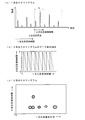
- the components in the sample gas or sample solution that have passed through the two-stage column are detected, and therefore the data output from the detector is one-line time-series data. Therefore, by plotting the data thus obtained in the order of occurrence, the same chromatogram as in normal GC, that is, the retention time is plotted on the horizontal axis and the signal intensity is plotted on the vertical axis, as shown in FIG. A one-dimensional chromatogram can be created.
- tm is the modulation time
- the chromatogram within the time tm is a chromatogram reflecting the component separation state in the secondary column.
- FIG. 3B is an explanatory diagram of a data arrangement order when creating a two-dimensional chromatogram from the one-dimensional chromatogram data.
- the range of the vertical axis of this graph is the modulation time tm, and the one-dimensional chromatogram data is sequentially plotted upward from the lower end (0) along the vertical axis (solid arrow in FIG. 3B).
- Tm it moves to the right along the horizontal axis, returns to the lower end of the vertical axis (dotted line in FIG. 3B), and repeats the operation of plotting upward along the vertical axis again.
- a two-dimensional chromatogram as shown in FIG. 3C can be created.
- the signal intensity is indicated by contour lines.
- the comprehensive two-dimensional GC provides high resolution, so it is very effective for analysis of samples containing many compounds with similar retention times, typically for hydrocarbon analysis of diesel fuel. . Particularly in such fields, they are often used for comparative analysis for the purpose of discriminating similar products, identifying causative substances such as defects, and analyzing changes over time.
- the conventional comprehensive data processing software for two-dimensional GC includes a comparison between two-dimensional chromatograms and a numerical comparison of blobs detected on two-dimensional chromatograms. Furthermore, functions such as multivariate analysis are mounted (see Non-Patent Documents 2 and 3).
- the present invention has been made in view of the above problems, and the object is to compare a plurality of two-dimensional chromatograms even when the number of blobs detected on the two-dimensional chromatogram is large. It is an object of the present invention to provide a comprehensive two-dimensional chromatographic data processing apparatus capable of presenting an important or noteworthy blob to an analyst in an easy-to-understand manner. The present invention further provides a comprehensive data processing apparatus for two-dimensional chromatograph capable of presenting compound information corresponding to a notable blob on a two-dimensional chromatogram to an analyst with a simple operation. That is.
- the present invention provides a sample separated into components in the primary column and introduced into the secondary column at predetermined intervals, and further separated into components in the secondary column and then introduced into the detector.
- a comprehensive two-dimensional chromatographic data processing device for processing data collected by a comprehensive two-dimensional chromatograph that detects each component a) Create two-dimensional chromatograms with the retention time in the primary column and the retention time in the secondary column as axes based on the data collected by the comprehensive two-dimensional chromatograph for the two samples to be compared.
- a chromatogram creation unit b) A two-dimensional difference chromatogram obtained by calculating a difference in signal intensity for each corresponding time position with respect to the first two-dimensional chromatogram and the second two-dimensional chromatogram created by the chromatogram creation unit.
- a differential chromatogram creation unit for creating a gram; c) a blob detector for detecting a blob in accordance with a predetermined standard for the first and second two-dimensional chromatograms and the two-dimensional differential chromatogram; d) The blob detected in the two-dimensional difference chromatogram and the blob detected in the first two-dimensional chromatogram, and the blob detected in the two-dimensional difference chromatogram and the second two-dimensional chromatogram A blob collating unit that collates each of the blobs detected in, and extracts blobs existing at the same time position, e) On the first and second two-dimensional chromatograms, the blob extracted by the blob matching unit as being present at the same time position as
- the comprehensive two-dimensional chromatograph may be either a comprehensive two-dimensional GC or a comprehensive two-dimensional LC.
- the detector generally used by GC and LC including a mass spectrometer can be used.
- the chromatogram creation unit acquires data collected by the comprehensive two-dimensional chromatograph for the two samples, and creates a two-dimensional chromatogram, respectively.
- the differential chromatogram creation unit calculates a difference in signal intensity for each corresponding time position in the first and second two-dimensional chromatograms, and indicates a two-dimensional change in the difference value of the signal intensity. Create a differential chromatogram.
- the blob detection unit detects a blob, that is, a spatial peak, in accordance with a predetermined standard for the two first and second two-dimensional chromatograms and the two-dimensional differential chromatogram.
- the data value (signal intensity value) at each time position may be a negative value in the two-dimensional differential chromatogram, not only a blob protruding in the positive value direction but also a blob protruding in the negative value direction is detected.
- the blob appearing in the two-dimensional difference chromatogram indicates a time position where the difference in signal intensity between the two two-dimensional chromatograms is large, and what level of signal intensity difference is regarded as a substantial difference or which Whether to pay attention to the difference in signal strength depends on the purpose of analysis. Therefore, when detecting the blob in the two-dimensional differential chromatogram, the blob detection unit may detect a blob that has an absolute value of the intensity equal to or greater than a threshold specified by the analyst.
- the blob collating unit collates the blob detected in the two-dimensional difference chromatogram with the blob detected in the first two-dimensional chromatogram, and the blob detected in the two-dimensional difference chromatogram and the second blob detected in the two-dimensional difference chromatogram.
- the blob existing at the same time position is extracted.
- whether or not a certain two blobs are present at the same time position is determined, for example, at the time position of one blob in both the holding time direction in the primary column and the holding time direction in the secondary column.
- a time width in which a predetermined time margin is expected is determined and the other blob is included in the time width, it is preferable to determine that the time positions are the same.
- a time width that allows for a predetermined time margin with respect to the retention time of a predetermined or arbitrary compound obtained from a database or library in which compound information is recorded is determined, and two target objects to be collated are determined based on the time width. You may determine with the same time position when a blob is contained.
- the blob extracted by the blob matching unit as being present at the same time position as the blob on the two-dimensional differential chromatogram has a large signal intensity difference between the two samples. Blob corresponding to the compound. In other words, this is an important or notable blob in the comparative analysis. Therefore, when the specific blob specifying unit displays the first and second two-dimensional chromatograms on the display screen, the specific blob extracted by the blob verification unit as described above is displayed on the other chromatogram. Explicitly distinguishable from blob. Specifically, for example, a marking having an appropriate shape for a specific blob may be displayed on the chromatogram. Thereby, in each of the first and second two-dimensional chromatograms, it is possible to inform the analyst of blobs that are useful for comparative analysis.
- the specific blob specifying unit displays the blob having a positive intensity value and the blob having a negative intensity value on the two-dimensional differential chromatogram so as to be distinguishable. It may be configured.
- the analyzer can confirm the positive / negative at a glance. Thereby, the analyst can intuitively grasp which signal intensity is higher in the first two-dimensional chromatogram and the second two-dimensional chromatogram at the time position of the blob.
- the blob collating unit is configured such that the extracted blob is present at the same time position in the first and second two-dimensional chromatograms.
- the difference between the signal strengths of the two corresponding blobs in the first and second two-dimensional chromatograms or the ratio of the differences is equal to or greater than a predetermined threshold value.
- the analyst can appropriately set a predetermined threshold value for determining the difference in signal strength between the two blobs or the ratio of the difference.
- a comprehensive data processing apparatus for a two-dimensional chromatograph the data processing apparatus for processing data collected by a comprehensive two-dimensional chromatograph in which a detector is a mass spectrometer that repeatedly executes scan measurement.
- a spectrum library in which mass spectrum information is stored in association with compound information; By obtaining the spectrum data obtained at the time position where the blob specified by the specific blob specifying unit exists, and collating the mass spectrum created by the data with the mass spectrum stored in the spectrum library, A library search unit for obtaining compound information corresponding to the blob; It is good to set it as a structure provided with.
- a spectrum library is a database in which compound information such as compound names, composition formulas, and structural formulas are associated with mass spectrum information.
- a mass spectrum of a general compound such as an existing NIST database or Wiley database is stored.
- a comprehensive database that is comprehensively recorded can be used, or a library that is targeted to a specific field or a specific purpose compound such as for agricultural chemicals, drugs, and metabolites can be used. It is also preferable to use the retention time for the identification of the compound.
- the comprehensive two-dimensional chromatographic data processing apparatus can automatically select important or noteworthy blobs for comparative analysis and present them to the analyst in an easy-to-understand manner. Thereby, comparative analysis using a comprehensive two-dimensional chromatograph can be performed efficiently.
- FIG. 1 is a schematic configuration diagram of an embodiment of a comprehensive two-dimensional GC-MS system including a comprehensive two-dimensional chromatograph data processing apparatus according to the present invention.
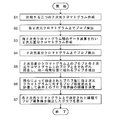
- the flowchart which shows the characteristic data processing operation
- An example of a one-dimensional chromatogram created based on data collected by a comprehensive two-dimensional GC (a), an explanatory diagram of a procedure for creating a two-dimensional chromatogram based on one-dimensional chromatogram data (b), and 2
- FIG. 1 is a schematic configuration diagram of a comprehensive two-dimensional GC-MS system according to this embodiment.
- the GC unit 1 is a component (compound) eluted from the primary column 12, the sample introduction unit 11 including the sample vaporization chamber for introducing the sample gas into the primary column 12, and the like. Is collected at regular time intervals (modulation time tm), is compressed in time, and is sent out. Modulator 13 and secondary column 14 having a separation characteristic (typically different polarity) different from that of primary column 12 and capable of being separated at high speed. .
- the sample gas containing the compound separated in the two-stage columns 12 and 14 is introduced into the mass spectrometer 2, and the mass spectrometer 2 outputs an intensity signal corresponding to the amount (concentration) of the compound in the sample gas. For example, in the mass spectrometer 2, scan measurement in a predetermined mass-to-charge ratio range is repeatedly performed, and mass spectrum data obtained for each scan is output.
- the data processing unit 3 is stored in the spectrum data storage unit 31 and the spectrum data storage unit 31 that collect and store spectral data sequentially output from the mass spectrometer 2 as time passes, as described above, as functional blocks.
- a two-dimensional chromatogram creation unit 32 that creates a two-dimensional chromatogram based on data
- a chromatogram difference calculation unit 33 that obtains a two-dimensional difference chromatogram for two two-dimensional chromatograms, a two-dimensional chromatogram, and a two-dimensional difference
- a blob detector 34 for detecting a blob (two-dimensional peak) on a chromatogram
- a blob collator 35 for collating time positions where blobs on a plurality of chromatograms appear
- a chromatogram including a blob collation result Matching result display processing unit 36 to display and mass spectrum corresponding to compound information It includes a spectral library 37 broadcast has been recorded, the library search unit 38 to identify compounds by performing a search using the spectrum library 37,
- the operations of the GC unit 1 and the mass spectrometer 2 are controlled by the analysis control unit 4.
- an operation unit 6 and a display unit 7 as user interfaces are connected to the main control unit 5 to control the entire system.
- the main control unit 5, analysis control unit 4, and data processing unit 3 are realized by using a personal computer as hardware resources and executing dedicated control / processing software installed in the personal computer in advance on the computer. You can make it.
- the sample introduction unit 11 introduces a sample to be analyzed into a carrier gas supplied at a substantially constant flow rate in response to an instruction from the analysis control unit 4.
- this sample contains a large number of compounds.
- Various compounds contained in the sample are separated while passing through the primary column 12 that has been temperature-controlled according to a predetermined temperature raising program, and are eluted with a time lag. At this point, not all compounds are sufficiently separated, and compounds with similar retention times overlap and elute.
- the modulator 13 collects all the compounds eluted from the primary column 12 over a modulation time tm (usually several seconds to several tens of seconds), compresses them in time, and sends them to the secondary column 14 with a very narrow bandwidth. Repeat the operation. Therefore, the compound eluted from the primary column 12 is sent to the secondary column 14 without leakage.
- the plurality of compounds fed at every modulation time tm are separated and eluted in the time direction with high resolution when passing through the secondary column 14, and are introduced into the mass spectrometer 2 in the order of elution. In the mass spectrometer 2, for example, all compounds can be detected without omission by performing scan measurement at an interval shorter than the time width during which one compound is eluted from the secondary column 14.
- the detection signal from the mass spectrometer 2 is converted into digital data at a predetermined sampling period by a built-in A / D converter (not shown) and output.
- the spectrum data sequentially obtained with the passage of time is stored in the spectrum data storage unit 31.
- a series of data obtained by performing comprehensive two-dimensional GC-MS analysis on one sample is collectively stored in one data file.
- the series of data mentioned here is spectral data obtained repeatedly from the analysis start point to the end point.
- FIG. 2 is a flowchart showing a data processing operation
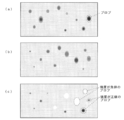
- FIG. 4 is a diagram showing an example of a two-dimensional chromatogram for two samples to be compared and a two-dimensional differential chromatogram obtained from them
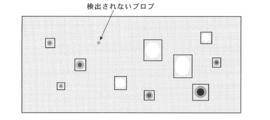
- FIG. 5 is a diagram showing 2 in FIG. 4 (c).
- FIG. 6 is a diagram showing the result of performing blob detection in the dimension difference chromatogram
- FIG. 6 is a diagram showing the result of performing blob verification on the two-dimensional chromatogram and the two-dimensional difference chromatogram shown in FIG.
- the analyst designates two samples to be compared from the operation unit 6.
- the two-dimensional chromatogram creation unit 32 that has received this designation through the main control unit 5 reads the data file for the two samples to be compared from the spectrum data storage unit 31. Then, an integrated value of ion intensity over a predetermined mass-to-charge ratio range is calculated for each mass spectrum, that is, for each time position (that is, a chromatogram data value at one time point is obtained), and for each sample.
- a two-dimensional chromatogram is created for each (step S1).
- the method for creating the two-dimensional chromatogram is the same as the conventional method.
- a two-dimensional chromatogram for the sample A is a chromatogram a
- a two-dimensional chromatogram for the sample B is a chromatogram b
- 4A shows an example of chromatogram a
- FIG. 4B shows an example of chromatogram b.
- the blob detector 34 detects a blob in accordance with a predetermined standard in each of the chromatograms a and b (step S2).
- the blob detection method is the same as the conventional method.
- the chromatogram difference calculation unit 33 performs a process of subtracting the other chromatogram b from one chromatogram a. That is, the data value (signal intensity value) at the same time position is subtracted in the first-dimensional holding time direction and the second-dimensional holding time direction on the two-dimensional chromatogram. Then, a two-dimensional difference chromatogram based on the data value obtained by the subtraction is created (step S3). Note that a process of subtracting the chromatogram a from the chromatogram b may be performed, and which one of the two two-dimensional chromatograms is subtracted may be set by the analyst.
- FIG. 4 (c) is an example of a two-dimensional differential chromatogram obtained from the chromatograms a and b shown in FIGS. 4 (a) and 4 (b).
- appropriate waveform processing such as smoothing, which is also performed in conventional chromatogram data processing, may be performed simultaneously.
- the data value may be a negative value instead of a positive value.
- the blob detector 34 detects a blob on the two-dimensional difference chromatogram (step S4).
- a threshold value of the absolute value of the signal intensity at the blob apex position is set in advance, and if the absolute value of the signal intensity at the blob apex position is not equal to or greater than the threshold value, it is not recognized as a blob It is good to.
- the threshold may be set appropriately by the analyst. This eliminates low-profile blobs that are not substantially useful for comparative analysis.
- FIG. 5 is a chromatogram showing the result of blob detection performed on the two-dimensional differential chromatogram shown in FIG.
- a blob surrounded by a rectangular boundary line is a detected blob.
- the signal intensity at the apex of the blob is a positive value and a negative value, and it is desirable to easily identify them visually. Therefore, in FIG. 5, blobs having a negative signal strength at the top are displayed in white, and blobs having a positive signal strength at the top are shown in black or gray.
- the blob collating unit 35 collates the time position between the blob detected on the two-dimensional difference chromatogram and the blob detected on the chromatogram a, and the blob detected on the two-dimensional difference chromatogram
- the time position of the blob detected in the chromatogram a is collated, and the corresponding blob is extracted (step S5).
- a time width with a predetermined margin is set before and after the time position at the top of the blob detected on the two-dimensional differential chromatogram, and the time width is detected by chromatogram a.
- blob If there is a detected blob or a blob detected in chromatogram b, it is determined that the blog on the two-dimensional differential chromatogram corresponds to the blob on chromatogram a or b. For one blob detected on the two-dimensional differential chromatogram, there may be cases where there are corresponding blobs in both chromatograms a and b, or in only one of chromatograms a and b. There may be blobs.
- the blob collating unit 35 when there is a corresponding blob in both chromatograms a and b, the intensity of the blob detected on the chromatogram a and the blob detected on the chromatogram b.
- the intensity difference ratio ⁇ can be regarded as a standardized intensity difference so that the intensity differences of different blobs can be compared.
- the line type of the blob boundary line described later is determined according to the intensity difference ratio ⁇ (step S6).
- the intensity threshold set in advance by the analyst is R [%]
- the intensity difference ratio ⁇ is a positive value and
- the boundary line of the blob on the chromatogram a is a thick solid line
- the collation result display processing unit 36 depicted a rectangular boundary line surrounding the blob with the line type determined in step S6 for the blob on chromatogram a and chromatogram b extracted in step S5.
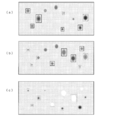
- the chromatogram is displayed on the screen of the display unit 7 (step S7). Thereby, for example, chromatograms shown in FIGS. 6A and 6B are displayed. From these chromatograms, the position of the blob whose blob intensity difference ratio is equal to or greater than the threshold, that is, the blob considered to be important in the comparative analysis, can be seen at a glance.
- the chromatogram depicting the boundary line of the same line type is displayed on the screen of the display unit 7 for all blobs extracted in step S5. Thereby, for example, the chromatogram shown in FIG. 6C is displayed.
- the blob that is important for the comparative analysis can be presented to the analyst by the above processing.
- the library search unit 38 performs the chromatogram a.
- information on the top time position is acquired for the blob extracted in one or both of the chromatograms b.
- mass spectrum data obtained at the time position is read from the spectrum data storage unit 32 and a mass spectrum is created. After that, the spectrum pattern of the mass spectrum is collated with the spectrum pattern of the mass spectrum recorded in the spectrum library 37, and a compound having a mass spectrum with high similarity is searched.
- the plurality of compound candidates are acquired as a search result together with a score indicating the probability.
- the information such as the compound name thus obtained is displayed on the chromatogram so as to be superimposed on the chromatogram or displayed on a table or the like separate from the chromatogram, thereby presenting it to the analyst. This allows the analyst to know what compounds have a difference in intensity in the comparative analysis, and to correspond to the compounds found corresponding to the blobs on chromatogram a and the blobs on chromatogram b. It is also possible to confirm whether or not the blob matching is appropriate by confirming whether or not the obtained compound is the same.
- this retention time can also be used for identification of the compound. That is, if the time position where a blob appears corresponds to the retention time of a certain compound X, and the mass spectrum at that time position is highly consistent with the spectrum pattern of the mass spectrum of that compound X, it corresponds to that blob
- the compound to be identified may be identified as Compound X.
- the comprehensive two-dimensional chromatographic data processing apparatus includes not only comprehensive two-dimensional GC-MS and comprehensive two-dimensional GC but also comprehensive two-dimensional LC-MS and comprehensive two-dimensional GC. It can also be applied to the processing of data obtained with dimensional LC.
Landscapes
- Physics & Mathematics (AREA)
- General Physics & Mathematics (AREA)
- General Health & Medical Sciences (AREA)
- Immunology (AREA)
- Life Sciences & Earth Sciences (AREA)
- Chemical & Material Sciences (AREA)
- Analytical Chemistry (AREA)
- Biochemistry (AREA)
- Pathology (AREA)
- Health & Medical Sciences (AREA)
- Library & Information Science (AREA)
- Engineering & Computer Science (AREA)
- Algebra (AREA)
- Mathematical Analysis (AREA)
- Mathematical Optimization (AREA)
- Pure & Applied Mathematics (AREA)
- Other Investigation Or Analysis Of Materials By Electrical Means (AREA)
Abstract
Priority Applications (4)
| Application Number | Priority Date | Filing Date | Title |
|---|---|---|---|
| CN201480080061.1A CN106574914B (zh) | 2014-06-24 | 2014-06-24 | 全二维色谱用数据处理装置 |
| PCT/JP2014/066625 WO2015198385A1 (fr) | 2014-06-24 | 2014-06-24 | Dispositif de traitement de données pour chromatographe bidimensionnel complète |
| US15/321,027 US10371675B2 (en) | 2014-06-24 | 2014-06-24 | Data processing device for comprehensive two-dimensional chromatograph |
| JP2016528777A JP6132073B2 (ja) | 2014-06-24 | 2014-06-24 | 包括的2次元クロマトグラフ用データ処理装置 |
Applications Claiming Priority (1)
| Application Number | Priority Date | Filing Date | Title |
|---|---|---|---|
| PCT/JP2014/066625 WO2015198385A1 (fr) | 2014-06-24 | 2014-06-24 | Dispositif de traitement de données pour chromatographe bidimensionnel complète |
Publications (1)
| Publication Number | Publication Date |
|---|---|
| WO2015198385A1 true WO2015198385A1 (fr) | 2015-12-30 |
Family
ID=54937523
Family Applications (1)
| Application Number | Title | Priority Date | Filing Date |
|---|---|---|---|
| PCT/JP2014/066625 Ceased WO2015198385A1 (fr) | 2014-06-24 | 2014-06-24 | Dispositif de traitement de données pour chromatographe bidimensionnel complète |
Country Status (4)
| Country | Link |
|---|---|
| US (1) | US10371675B2 (fr) |
| JP (1) | JP6132073B2 (fr) |
| CN (1) | CN106574914B (fr) |
| WO (1) | WO2015198385A1 (fr) |
Cited By (3)
| Publication number | Priority date | Publication date | Assignee | Title |
|---|---|---|---|---|
| JPWO2016103388A1 (ja) * | 2014-12-25 | 2017-09-07 | 株式会社島津製作所 | 分析装置 |
| JPWO2017119086A1 (ja) * | 2016-01-06 | 2018-11-01 | 株式会社島津製作所 | クロマトグラムデータ処理方法及び装置 |
| CN113933442A (zh) * | 2021-09-17 | 2022-01-14 | 深圳大学 | 全二维气象色谱-质谱联用数据分析方法、系统及应用 |
Families Citing this family (3)
| Publication number | Priority date | Publication date | Assignee | Title |
|---|---|---|---|---|
| US9718081B2 (en) | 2009-08-31 | 2017-08-01 | Illinois Tool Works Inc. | Metering system for simultaneously dispensing two different adhesives from a single metering device or applicator onto a common substrate |
| US9573159B2 (en) | 2009-08-31 | 2017-02-21 | Illinois Tool Works, Inc. | Metering system for simultaneously dispensing two different adhesives from a single metering device or applicator onto a common substrate |
| CN108287200B (zh) * | 2017-04-24 | 2020-12-18 | 麦特绘谱生物科技(上海)有限公司 | 质谱参照数据库的建立方法及基于其的物质分析方法 |
Citations (9)
| Publication number | Priority date | Publication date | Assignee | Title |
|---|---|---|---|---|
| JP2002168845A (ja) * | 2000-11-30 | 2002-06-14 | Sharp Corp | 極微量イオン分析方法及び極微量イオン分析装置 |
| WO2003067250A1 (fr) * | 2002-02-04 | 2003-08-14 | Thermo Finnigan Italia S.P.A. | Procede et dispositif perfectionne de chromatographie en phase gazeuse bidimensionnelle |
| JP2004309250A (ja) * | 2003-04-04 | 2004-11-04 | Shimadzu Corp | クロマトグラフ用データ処理装置 |
| JP2008185586A (ja) * | 2007-01-30 | 2008-08-14 | Ifp | 二次元ガスクロマトグラフィーによって分子化合物混合物の定量分析を行うための方法 |
| JP2009508107A (ja) * | 2005-09-12 | 2009-02-26 | エクソンモービル リサーチ アンド エンジニアリング カンパニー | 定量データ分析を可能にするために包括的2(多)次元クロマトグラフィー(分離)システムにおいてデータ取り込みおよびモジュレーションを同期させるシステムおよび方法 |
| US20090282897A1 (en) * | 2008-05-14 | 2009-11-19 | Fabrice Bertoncini | Method of determining physico-chemical properties of a petroleum sample from two-dimensional gas chromatography |
| JP2011122822A (ja) * | 2009-12-08 | 2011-06-23 | Shimadzu Corp | クロマトグラフ質量分析装置 |
| WO2013125001A1 (fr) * | 2012-02-23 | 2013-08-29 | 株式会社島津製作所 | Chromatographe multidimensionnel |
| WO2014064790A1 (fr) * | 2012-10-25 | 2014-05-01 | 株式会社島津製作所 | Dispositif de traitement de données pour chromatographe bidimensionnel complet |
Family Cites Families (9)
| Publication number | Priority date | Publication date | Assignee | Title |
|---|---|---|---|---|
| US227355A (en) * | 1880-05-11 | Window and door protector | ||
| US6576472B1 (en) * | 2000-07-26 | 2003-06-10 | Smithkline Beecham Corporation | Chemical constructs for solution phase chemistry |
| RU2012138298A (ru) * | 2010-02-18 | 2014-03-27 | Ф.Хоффман-Ля Рош Аг | Способ определения вариантов последовательности полипептидов |
| JP5327388B2 (ja) * | 2010-07-06 | 2013-10-30 | 株式会社島津製作所 | 分析データ処理方法及び装置 |
| JP5541415B2 (ja) * | 2011-06-29 | 2014-07-09 | 株式会社島津製作所 | 分析データ処理方法及び装置 |
| WO2013035639A1 (fr) * | 2011-09-05 | 2013-03-14 | 株式会社島津製作所 | Dispositif et procédé de traitement de données de chromatogramme |
| CN102590406B (zh) * | 2012-01-16 | 2013-12-18 | 湖南中烟工业有限责任公司 | 基于气相色谱-质谱分析数据的三维信息对比分析方法 |
| WO2014144074A1 (fr) * | 2013-03-15 | 2014-09-18 | Smiths Detection Inc. | Algorithme d'identification de spectrométrie de masse (sm) |
| US10416134B2 (en) * | 2014-09-03 | 2019-09-17 | Shimadzu Corporation | Chromatogram data processing method and chromatogram data processing apparatus |
-
2014
- 2014-06-24 US US15/321,027 patent/US10371675B2/en active Active
- 2014-06-24 WO PCT/JP2014/066625 patent/WO2015198385A1/fr not_active Ceased
- 2014-06-24 CN CN201480080061.1A patent/CN106574914B/zh not_active Expired - Fee Related
- 2014-06-24 JP JP2016528777A patent/JP6132073B2/ja active Active
Patent Citations (9)
| Publication number | Priority date | Publication date | Assignee | Title |
|---|---|---|---|---|
| JP2002168845A (ja) * | 2000-11-30 | 2002-06-14 | Sharp Corp | 極微量イオン分析方法及び極微量イオン分析装置 |
| WO2003067250A1 (fr) * | 2002-02-04 | 2003-08-14 | Thermo Finnigan Italia S.P.A. | Procede et dispositif perfectionne de chromatographie en phase gazeuse bidimensionnelle |
| JP2004309250A (ja) * | 2003-04-04 | 2004-11-04 | Shimadzu Corp | クロマトグラフ用データ処理装置 |
| JP2009508107A (ja) * | 2005-09-12 | 2009-02-26 | エクソンモービル リサーチ アンド エンジニアリング カンパニー | 定量データ分析を可能にするために包括的2(多)次元クロマトグラフィー(分離)システムにおいてデータ取り込みおよびモジュレーションを同期させるシステムおよび方法 |
| JP2008185586A (ja) * | 2007-01-30 | 2008-08-14 | Ifp | 二次元ガスクロマトグラフィーによって分子化合物混合物の定量分析を行うための方法 |
| US20090282897A1 (en) * | 2008-05-14 | 2009-11-19 | Fabrice Bertoncini | Method of determining physico-chemical properties of a petroleum sample from two-dimensional gas chromatography |
| JP2011122822A (ja) * | 2009-12-08 | 2011-06-23 | Shimadzu Corp | クロマトグラフ質量分析装置 |
| WO2013125001A1 (fr) * | 2012-02-23 | 2013-08-29 | 株式会社島津製作所 | Chromatographe multidimensionnel |
| WO2014064790A1 (fr) * | 2012-10-25 | 2014-05-01 | 株式会社島津製作所 | Dispositif de traitement de données pour chromatographe bidimensionnel complet |
Cited By (4)
| Publication number | Priority date | Publication date | Assignee | Title |
|---|---|---|---|---|
| JPWO2016103388A1 (ja) * | 2014-12-25 | 2017-09-07 | 株式会社島津製作所 | 分析装置 |
| JPWO2017119086A1 (ja) * | 2016-01-06 | 2018-11-01 | 株式会社島津製作所 | クロマトグラムデータ処理方法及び装置 |
| CN113933442A (zh) * | 2021-09-17 | 2022-01-14 | 深圳大学 | 全二维气象色谱-质谱联用数据分析方法、系统及应用 |
| CN113933442B (zh) * | 2021-09-17 | 2023-09-29 | 深圳大学 | 全二维气相色谱-质谱联用数据分析方法、系统及应用 |
Also Published As
| Publication number | Publication date |
|---|---|
| JPWO2015198385A1 (ja) | 2017-04-20 |
| CN106574914B (zh) | 2018-09-11 |
| JP6132073B2 (ja) | 2017-05-24 |
| US10371675B2 (en) | 2019-08-06 |
| US20170160245A1 (en) | 2017-06-08 |
| CN106574914A (zh) | 2017-04-19 |
Similar Documents
| Publication | Publication Date | Title |
|---|---|---|
| JP6132073B2 (ja) | 包括的2次元クロマトグラフ用データ処理装置 | |
| JP6048590B2 (ja) | 包括的2次元クロマトグラフ用データ処理装置 | |
| US20090020693A1 (en) | Chromatograph mass analysis data processing apparatus | |
| JP6658884B2 (ja) | クロマトグラフ質量分析用データ処理装置 | |
| JP5272822B2 (ja) | 代謝物解析用データ処理装置 | |
| US20140012515A1 (en) | Chromatograph mass spectrometry data processing device | |
| JP5347932B2 (ja) | クロマトグラフ質量分析装置 | |
| JP6573028B2 (ja) | データ処理装置 | |
| US20160231297A1 (en) | Chromatogram data processing system | |
| JP6308107B2 (ja) | クロマトグラフ質量分析データ処理装置 | |
| US9582909B2 (en) | Chromatograph mass spectrometry data processing device | |
| JP6439878B2 (ja) | 分析データ解析装置及び分析データ解析用プログラム | |
| JP6036838B2 (ja) | 包括的2次元クロマトグラフ用データ処理装置 | |
| JP5757264B2 (ja) | クロマトグラフ質量分析データ処理装置 | |
| CN107209151B (zh) | 干扰检测及所关注峰值解卷积 | |
| JP2017161442A (ja) | クロマトグラフ質量分析データ処理装置 | |
| WO2012004847A1 (fr) | Dispositif de traitement pour affichage de chromatogrammes | |
| JPWO2020100182A1 (ja) | クロマトグラフ装置 | |
| JP2018040655A (ja) | 質量分析用データ処理装置 | |
| US20240175850A1 (en) | Data processing system | |
| JP2016176811A (ja) | 分析データ解析装置 |
Legal Events
| Date | Code | Title | Description |
|---|---|---|---|
| 121 | Ep: the epo has been informed by wipo that ep was designated in this application |
Ref document number: 14896078 Country of ref document: EP Kind code of ref document: A1 |
|
| ENP | Entry into the national phase |
Ref document number: 2016528777 Country of ref document: JP Kind code of ref document: A |
|
| WWE | Wipo information: entry into national phase |
Ref document number: 15321027 Country of ref document: US |
|
| NENP | Non-entry into the national phase |
Ref country code: DE |
|
| 122 | Ep: pct application non-entry in european phase |
Ref document number: 14896078 Country of ref document: EP Kind code of ref document: A1 |