WO2016006568A1 - Panneau de câblage et dispositif de génération d'énergie solaire - Google Patents
Panneau de câblage et dispositif de génération d'énergie solaire Download PDFInfo
- Publication number
- WO2016006568A1 WO2016006568A1 PCT/JP2015/069404 JP2015069404W WO2016006568A1 WO 2016006568 A1 WO2016006568 A1 WO 2016006568A1 JP 2015069404 W JP2015069404 W JP 2015069404W WO 2016006568 A1 WO2016006568 A1 WO 2016006568A1
- Authority
- WO
- WIPO (PCT)
- Prior art keywords
- wiring
- width
- wiring board
- power generation
- region
- Prior art date
- Legal status (The legal status is an assumption and is not a legal conclusion. Google has not performed a legal analysis and makes no representation as to the accuracy of the status listed.)
- Ceased
Links
Images








Classifications
-
- H—ELECTRICITY
- H10—SEMICONDUCTOR DEVICES; ELECTRIC SOLID-STATE DEVICES NOT OTHERWISE PROVIDED FOR
- H10F—INORGANIC SEMICONDUCTOR DEVICES SENSITIVE TO INFRARED RADIATION, LIGHT, ELECTROMAGNETIC RADIATION OF SHORTER WAVELENGTH OR CORPUSCULAR RADIATION
- H10F77/00—Constructional details of devices covered by this subclass
- H10F77/10—Semiconductor bodies
- H10F77/16—Material structures, e.g. crystalline structures, film structures or crystal plane orientations
- H10F77/169—Thin semiconductor films on metallic or insulating substrates
- H10F77/1698—Thin semiconductor films on metallic or insulating substrates the metallic or insulating substrates being flexible
-
- H—ELECTRICITY
- H02—GENERATION; CONVERSION OR DISTRIBUTION OF ELECTRIC POWER
- H02S—GENERATION OF ELECTRIC POWER BY CONVERSION OF INFRARED RADIATION, VISIBLE LIGHT OR ULTRAVIOLET LIGHT, e.g. USING PHOTOVOLTAIC [PV] MODULES
- H02S20/00—Supporting structures for PV modules
- H02S20/30—Supporting structures being movable or adjustable, e.g. for angle adjustment
- H02S20/32—Supporting structures being movable or adjustable, e.g. for angle adjustment specially adapted for solar tracking
-
- H—ELECTRICITY
- H02—GENERATION; CONVERSION OR DISTRIBUTION OF ELECTRIC POWER
- H02S—GENERATION OF ELECTRIC POWER BY CONVERSION OF INFRARED RADIATION, VISIBLE LIGHT OR ULTRAVIOLET LIGHT, e.g. USING PHOTOVOLTAIC [PV] MODULES
- H02S30/00—Structural details of PV modules other than those related to light conversion
- H02S30/10—Frame structures
-
- H—ELECTRICITY
- H02—GENERATION; CONVERSION OR DISTRIBUTION OF ELECTRIC POWER
- H02S—GENERATION OF ELECTRIC POWER BY CONVERSION OF INFRARED RADIATION, VISIBLE LIGHT OR ULTRAVIOLET LIGHT, e.g. USING PHOTOVOLTAIC [PV] MODULES
- H02S40/00—Components or accessories in combination with PV modules, not provided for in groups H02S10/00 - H02S30/00
- H02S40/20—Optical components
- H02S40/22—Light-reflecting or light-concentrating means
-
- H—ELECTRICITY
- H02—GENERATION; CONVERSION OR DISTRIBUTION OF ELECTRIC POWER
- H02S—GENERATION OF ELECTRIC POWER BY CONVERSION OF INFRARED RADIATION, VISIBLE LIGHT OR ULTRAVIOLET LIGHT, e.g. USING PHOTOVOLTAIC [PV] MODULES
- H02S40/00—Components or accessories in combination with PV modules, not provided for in groups H02S10/00 - H02S30/00
- H02S40/40—Thermal components
- H02S40/42—Cooling means
-
- H—ELECTRICITY
- H05—ELECTRIC TECHNIQUES NOT OTHERWISE PROVIDED FOR
- H05K—PRINTED CIRCUITS; CASINGS OR CONSTRUCTIONAL DETAILS OF ELECTRIC APPARATUS; MANUFACTURE OF ASSEMBLAGES OF ELECTRICAL COMPONENTS
- H05K1/00—Printed circuits
- H05K1/02—Details
- H05K1/0277—Bendability or stretchability details
- H05K1/028—Bending or folding regions of flexible printed circuits
-
- H—ELECTRICITY
- H05—ELECTRIC TECHNIQUES NOT OTHERWISE PROVIDED FOR
- H05K—PRINTED CIRCUITS; CASINGS OR CONSTRUCTIONAL DETAILS OF ELECTRIC APPARATUS; MANUFACTURE OF ASSEMBLAGES OF ELECTRICAL COMPONENTS
- H05K1/00—Printed circuits
- H05K1/18—Printed circuits structurally associated with non-printed electric components
- H05K1/189—Printed circuits structurally associated with non-printed electric components characterised by the use of flexible or folded printed circuits
-
- H—ELECTRICITY
- H10—SEMICONDUCTOR DEVICES; ELECTRIC SOLID-STATE DEVICES NOT OTHERWISE PROVIDED FOR
- H10F—INORGANIC SEMICONDUCTOR DEVICES SENSITIVE TO INFRARED RADIATION, LIGHT, ELECTROMAGNETIC RADIATION OF SHORTER WAVELENGTH OR CORPUSCULAR RADIATION
- H10F10/00—Individual photovoltaic cells, e.g. solar cells
-
- H—ELECTRICITY
- H10—SEMICONDUCTOR DEVICES; ELECTRIC SOLID-STATE DEVICES NOT OTHERWISE PROVIDED FOR
- H10F—INORGANIC SEMICONDUCTOR DEVICES SENSITIVE TO INFRARED RADIATION, LIGHT, ELECTROMAGNETIC RADIATION OF SHORTER WAVELENGTH OR CORPUSCULAR RADIATION
- H10F19/00—Integrated devices, or assemblies of multiple devices, comprising at least one photovoltaic cell covered by group H10F10/00, e.g. photovoltaic modules
- H10F19/90—Structures for connecting between photovoltaic cells, e.g. interconnections or insulating spacers
- H10F19/902—Structures for connecting between photovoltaic cells, e.g. interconnections or insulating spacers for series or parallel connection of photovoltaic cells
- H10F19/904—Structures for connecting between photovoltaic cells, e.g. interconnections or insulating spacers for series or parallel connection of photovoltaic cells characterised by the shapes of the structures
-
- H—ELECTRICITY
- H10—SEMICONDUCTOR DEVICES; ELECTRIC SOLID-STATE DEVICES NOT OTHERWISE PROVIDED FOR
- H10F—INORGANIC SEMICONDUCTOR DEVICES SENSITIVE TO INFRARED RADIATION, LIGHT, ELECTROMAGNETIC RADIATION OF SHORTER WAVELENGTH OR CORPUSCULAR RADIATION
- H10F77/00—Constructional details of devices covered by this subclass
- H10F77/40—Optical elements or arrangements
- H10F77/42—Optical elements or arrangements directly associated or integrated with photovoltaic cells, e.g. light-reflecting means or light-concentrating means
- H10F77/484—Refractive light-concentrating means, e.g. lenses
-
- H—ELECTRICITY
- H10—SEMICONDUCTOR DEVICES; ELECTRIC SOLID-STATE DEVICES NOT OTHERWISE PROVIDED FOR
- H10F—INORGANIC SEMICONDUCTOR DEVICES SENSITIVE TO INFRARED RADIATION, LIGHT, ELECTROMAGNETIC RADIATION OF SHORTER WAVELENGTH OR CORPUSCULAR RADIATION
- H10F77/00—Constructional details of devices covered by this subclass
- H10F77/93—Interconnections
- H10F77/933—Interconnections for devices having potential barriers
- H10F77/935—Interconnections for devices having potential barriers for photovoltaic devices or modules
- H10F77/939—Output lead wires or elements
-
- H—ELECTRICITY
- H05—ELECTRIC TECHNIQUES NOT OTHERWISE PROVIDED FOR
- H05K—PRINTED CIRCUITS; CASINGS OR CONSTRUCTIONAL DETAILS OF ELECTRIC APPARATUS; MANUFACTURE OF ASSEMBLAGES OF ELECTRICAL COMPONENTS
- H05K1/00—Printed circuits
-
- H—ELECTRICITY
- H05—ELECTRIC TECHNIQUES NOT OTHERWISE PROVIDED FOR
- H05K—PRINTED CIRCUITS; CASINGS OR CONSTRUCTIONAL DETAILS OF ELECTRIC APPARATUS; MANUFACTURE OF ASSEMBLAGES OF ELECTRICAL COMPONENTS
- H05K2201/00—Indexing scheme relating to printed circuits covered by H05K1/00
- H05K2201/04—Assemblies of printed circuits
- H05K2201/046—Planar parts of folded PCBs making an angle relative to each other
-
- H—ELECTRICITY
- H05—ELECTRIC TECHNIQUES NOT OTHERWISE PROVIDED FOR
- H05K—PRINTED CIRCUITS; CASINGS OR CONSTRUCTIONAL DETAILS OF ELECTRIC APPARATUS; MANUFACTURE OF ASSEMBLAGES OF ELECTRICAL COMPONENTS
- H05K2201/00—Indexing scheme relating to printed circuits covered by H05K1/00
- H05K2201/05—Flexible printed circuits [FPCs]
-
- H—ELECTRICITY
- H05—ELECTRIC TECHNIQUES NOT OTHERWISE PROVIDED FOR
- H05K—PRINTED CIRCUITS; CASINGS OR CONSTRUCTIONAL DETAILS OF ELECTRIC APPARATUS; MANUFACTURE OF ASSEMBLAGES OF ELECTRICAL COMPONENTS
- H05K2201/00—Indexing scheme relating to printed circuits covered by H05K1/00
- H05K2201/09—Shape and layout
- H05K2201/09209—Shape and layout details of conductors
- H05K2201/09218—Conductive traces
- H05K2201/09263—Meander
-
- H—ELECTRICITY
- H05—ELECTRIC TECHNIQUES NOT OTHERWISE PROVIDED FOR
- H05K—PRINTED CIRCUITS; CASINGS OR CONSTRUCTIONAL DETAILS OF ELECTRIC APPARATUS; MANUFACTURE OF ASSEMBLAGES OF ELECTRICAL COMPONENTS
- H05K2201/00—Indexing scheme relating to printed circuits covered by H05K1/00
- H05K2201/10—Details of components or other objects attached to or integrated in a printed circuit board
- H05K2201/10007—Types of components
- H05K2201/10121—Optical component, e.g. opto-electronic component
-
- H—ELECTRICITY
- H05—ELECTRIC TECHNIQUES NOT OTHERWISE PROVIDED FOR
- H05K—PRINTED CIRCUITS; CASINGS OR CONSTRUCTIONAL DETAILS OF ELECTRIC APPARATUS; MANUFACTURE OF ASSEMBLAGES OF ELECTRICAL COMPONENTS
- H05K2201/00—Indexing scheme relating to printed circuits covered by H05K1/00
- H05K2201/20—Details of printed circuits not provided for in H05K2201/01 - H05K2201/10
-
- H—ELECTRICITY
- H05—ELECTRIC TECHNIQUES NOT OTHERWISE PROVIDED FOR
- H05K—PRINTED CIRCUITS; CASINGS OR CONSTRUCTIONAL DETAILS OF ELECTRIC APPARATUS; MANUFACTURE OF ASSEMBLAGES OF ELECTRICAL COMPONENTS
- H05K3/00—Apparatus or processes for manufacturing printed circuits
-
- H—ELECTRICITY
- H05—ELECTRIC TECHNIQUES NOT OTHERWISE PROVIDED FOR
- H05K—PRINTED CIRCUITS; CASINGS OR CONSTRUCTIONAL DETAILS OF ELECTRIC APPARATUS; MANUFACTURE OF ASSEMBLAGES OF ELECTRICAL COMPONENTS
- H05K3/00—Apparatus or processes for manufacturing printed circuits
- H05K3/36—Assembling printed circuits with other printed circuits
-
- H—ELECTRICITY
- H05—ELECTRIC TECHNIQUES NOT OTHERWISE PROVIDED FOR
- H05K—PRINTED CIRCUITS; CASINGS OR CONSTRUCTIONAL DETAILS OF ELECTRIC APPARATUS; MANUFACTURE OF ASSEMBLAGES OF ELECTRICAL COMPONENTS
- H05K3/00—Apparatus or processes for manufacturing printed circuits
- H05K3/40—Forming printed elements for providing electric connections to or between printed circuits
-
- Y—GENERAL TAGGING OF NEW TECHNOLOGICAL DEVELOPMENTS; GENERAL TAGGING OF CROSS-SECTIONAL TECHNOLOGIES SPANNING OVER SEVERAL SECTIONS OF THE IPC; TECHNICAL SUBJECTS COVERED BY FORMER USPC CROSS-REFERENCE ART COLLECTIONS [XRACs] AND DIGESTS
- Y02—TECHNOLOGIES OR APPLICATIONS FOR MITIGATION OR ADAPTATION AGAINST CLIMATE CHANGE
- Y02E—REDUCTION OF GREENHOUSE GAS [GHG] EMISSIONS, RELATED TO ENERGY GENERATION, TRANSMISSION OR DISTRIBUTION
- Y02E10/00—Energy generation through renewable energy sources
- Y02E10/50—Photovoltaic [PV] energy
-
- Y—GENERAL TAGGING OF NEW TECHNOLOGICAL DEVELOPMENTS; GENERAL TAGGING OF CROSS-SECTIONAL TECHNOLOGIES SPANNING OVER SEVERAL SECTIONS OF THE IPC; TECHNICAL SUBJECTS COVERED BY FORMER USPC CROSS-REFERENCE ART COLLECTIONS [XRACs] AND DIGESTS
- Y02—TECHNOLOGIES OR APPLICATIONS FOR MITIGATION OR ADAPTATION AGAINST CLIMATE CHANGE
- Y02E—REDUCTION OF GREENHOUSE GAS [GHG] EMISSIONS, RELATED TO ENERGY GENERATION, TRANSMISSION OR DISTRIBUTION
- Y02E10/00—Energy generation through renewable energy sources
- Y02E10/50—Photovoltaic [PV] energy
- Y02E10/52—PV systems with concentrators
Definitions
- the present invention relates to a wiring board and a solar power generation device, and more particularly, to a wiring board used for power generation and a solar power generation device including the wiring board.
- Patent Document 1 discloses the following technology. That is, the concentrating solar cell module includes a plurality of solar cell elements, a long receiver substrate in which the solar cell elements are placed in a row at a predetermined interval, and the receiver substrate. A plurality of module boards placed in parallel at a constant interval, and the receiver board has a long receiver base and a longitudinal direction with the ends facing each other on the receiver base.
- a plurality of wiring members arranged in a row along a line, wherein a positive electrode pad portion is provided at one end portion of the wiring material, and a negative electrode pad portion is provided at the other end portion, and the positive electrode A positive electrode terminal and a negative electrode terminal of the solar cell element are connected to the pad portion and the negative electrode pad portion, respectively, to constitute a solar cell element mounting portion.
- the solar cell element when sunlight is converged on the solar cell element by the lens, the solar cell element becomes high temperature. Since the heat of the solar cell element is transmitted to the receiver substrate on which the solar cell element is mounted, the receiver substrate may thermally expand.
- the power generation efficiency of the solar cell element may decrease due to the position of the solar cell element being out of focus of the lens.
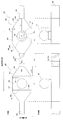
- the present invention has been made to solve the above-described problems, and an object of the present invention is to provide a wiring board and a solar power generation apparatus capable of suppressing a decrease in power generation efficiency due to the influence of heat.
- a wiring board according to an aspect of the present invention has a power generation unit mounted thereon, and the wiring board includes a land part and a wiring part, and the width of the wiring part is equal to that of the land part. Less than width.
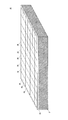
- FIG. 1 is a perspective view of a photovoltaic power generation apparatus according to the first embodiment of the present invention.
- FIG. 2 is a perspective view of the photovoltaic power generation module according to the first embodiment of the present invention.
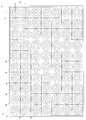
- FIG. 3 is a plan view of the photovoltaic power generation module according to the first embodiment of the present invention.
- FIG. 4 is a plan view showing a state in which the light collecting unit is removed from the photovoltaic power generation module according to the first embodiment of the present invention.
- FIG. 5 is a perspective view showing a state where the power generation unit is mounted on the wiring board according to the first embodiment of the present invention.
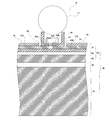
- FIG. 6 is a cross-sectional view showing a cross section taken along line VI-VI in FIG.
- FIG. 7 is a cross-sectional view showing a cross section taken along line VII-VII in FIG. 4 of the wiring module and the power generation unit in the solar power generation module according to the first embodiment of the present invention.
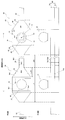
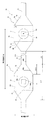
- FIG. 8 is a diagram showing a pattern of the conductive portion of the FPC in the wiring board according to the first embodiment of the present invention.
- FIG. 9 is a diagram showing a wiring board according to the first embodiment of the present invention.
- FIG. 10 is a diagram showing an FPC in the wiring board according to the first embodiment of the present invention.
- FIG. 11 is a diagram showing a reinforcing plate in the wiring board according to the first embodiment of the present invention.
- FIG. 12 is a diagram showing a wiring module in the wiring board according to the first embodiment of the present invention.
- FIG. 13 is a view showing a modification of the wiring board according to the first embodiment of the present invention.
- FIG. 14 is a view showing a modification of the wiring board according to the first embodiment of the present invention.
- FIG. 15 is a view showing a modification of the wiring board according to the first embodiment of the present invention.
- FIG. 16 is a view showing a modification of the wiring board according to the first embodiment of the present invention.
- FIG. 17 is a view showing a modification of the FPC in the wiring board according to the first embodiment of the present invention.
- FIG. 18 is a view showing a modification of the FPC in the wiring board according to the first embodiment of the present invention.
- FIG. 19 is a view showing a modification of the FPC in the wiring board according to the first embodiment of the present invention.
- FIG. 20 is a diagram showing a modification of the FPC in the wiring board according to the first embodiment of the present invention.
- FIG. 21 is a perspective view showing a state in which the power generation unit is mounted on the wiring board according to the second embodiment of the present invention.
- FIG. 22 is a cross-sectional view showing a cross section taken along a line corresponding to line VI-VI in FIG. 4 of the photovoltaic power generation module according to the second embodiment of the present invention.
- FIG. 23 is a cross-sectional view showing a cross section taken along a line corresponding to the line VII-VII in FIG. 4 of the wiring module and the power generation unit in the solar power generation module according to the second embodiment of the present invention.
- FIG. 24 is a diagram showing a wiring board according to the second embodiment of the present invention.
- a wiring board according to an embodiment of the present invention is mounted with a power generation unit, and the wiring board includes a land part and a wiring part, and the width of the wiring part is equal to the land part. Less than the width of
- the wiring portion is more easily bent than the land portion. Therefore, when the wiring substrate is thermally expanded, the wiring portion is bent so as to absorb the expansion of the wiring substrate in the extending direction, for example. The deformation and misalignment of the part can be prevented. Thereby, for example, when the power generation unit is mounted on the land part and a lens having the power generation unit as a focal point is provided above the power generation unit, the position of the power generation unit is prevented from being out of focus of the lens. Can do. Therefore, a decrease in power generation efficiency due to the influence of heat can be suppressed.
- the land part has a shape in which the power generation part is mounted on the land part, and has a length along the extending direction of the wiring board, and the wiring part has:
- the wiring board has a length along the extending direction, and the length of the wiring portion is larger than the length of the land portion.
- each of the land portion and the wiring portion includes a reinforcing plate made of metal and a flexible printed circuit board provided on the reinforcing plate.
- the wiring board can be easily handled in the manufacturing process of the power generation device using the wiring board while maintaining the property that the wiring part is more easily bent than the land part.
- the width of the land portion is 200% or more and 1000% or less of the width of the wiring portion.
- the width of the wiring portion can be reduced on the basis of the width of the land portion, so that the wiring portion can be more easily bent than the land portion. Further, the width of the wiring portion can be increased to some extent so that the strength of the wiring portion does not become a problem.
- the land portion has a first region and a second region, the first region has a first width, and the second region has a length of the land portion. At least one end in the direction, connected to the first region, and having the second width, the second width being smaller than the first width, and the wiring Greater than part width.
- heat transferred from the power generation unit to the first region can be efficiently released to the wiring unit via the second region.
- the land portion has a first region and a second region, the first region has a first width, and the second region has a length of the land portion. At both ends in the direction, connected to the first region, and having a second width, the second width being smaller than the first width, and the wiring portion Greater than width.
- the heat in the first region can be released to both wiring parts connected to each second region.
- the second width decreases as the distance from the first region approaches the wiring portion.
- the heat in the second region can be efficiently released to the wiring portion.
- the second region has a length along the extending direction of the wiring board, and a relationship between the second width and the length of the second region satisfies the following expression. . 0 ⁇ LB12 / Wb2 ⁇ 10
- Wb2 is the second width
- Lb12 is the length of the second region.
- the heat in the second region can be more efficiently released to the wiring portion.
- the area of the first region is larger than the area of the second region.
- the area of the first region is 200% or more and 1000% or less of the area of the second region.
- the land portion has a shape in which the power generation unit is arranged such that a central portion of the power generation unit is located in the first region.
- the power generation unit can be arranged at a position away from the wiring unit to some extent, so that it is possible to more reliably prevent the position of the power generation unit from being shifted due to the influence of the bending of the wiring unit.
- the land part has a mounting area, and the mounting area is configured to come into contact with the power generation part when the power generation part is mounted on the land part. More than 80% of the mounting area is located in the first area.
- Such a configuration can prevent the position of the power generation unit from shifting due to the influence of the bending of the wiring unit with higher accuracy.
- the distance from the power generation unit to the wiring unit in the extending direction is the end of the land unit from the power generation unit in the width direction of the land unit. Greater than distance to.
- the heat dissipation performance to the wiring part with respect to the heat transmitted from the power generation part to the land part can be enhanced.
- the length of the land portion in the extending direction is larger than the width of the land portion.
- the heat dissipation performance to the wiring part with respect to the heat transmitted from the power generation part to the land part can be enhanced.
- the thickness of the wiring portion is 1% or more and 50% or less of the width of the wiring portion.
- the thickness of the wiring part sufficiently smaller than the width of the wiring part, the heat of the wiring part can be efficiently released to the object on which the wiring board is placed.
- the reinforcing plate of the land part and the wiring part has a thickness, and the thickness of the reinforcing plate is 10% or more and 300% or less of the thickness of the wiring board. .
- an appropriate hardness can be given to the wiring board within a range that does not impair the property that the wiring part is more easily bent than the land part.
- a solar power generation device is a solar power generation device including the wiring board according to any one of (1) to (16) above.
- FIG. 1 is a perspective view of a photovoltaic power generation apparatus according to the first embodiment of the present invention.
- the solar power generation device 101 includes a solar power generation panel 12 and a gantry 40.
- the photovoltaic power generation panel 12 includes a plurality of photovoltaic power generation modules 10, a solar direction sensor 13, and a frame portion 14.
- the gantry 40 includes a base 46, a support column 48, a functional unit 90, and a position variable unit (not shown).
- the solar power generation device 101 is, for example, a concentrating solar power generation device.
- the solar power generation panel 12 includes, for example, five rows and five columns of solar power generation modules 10, that is, 25 solar power generation modules 10. Each photovoltaic power generation module 10 is mounted side by side on top of the frame portion 14.
- the photovoltaic power generation module 10 receives sunlight to generate power, and outputs the generated DC power to the functional unit 90 attached to the side surface of the support column 48 using wiring (not shown).
- the support column 48 is erected perpendicularly to the ground, for example, on a base 46 provided on the ground.
- the position variable unit (not shown) includes a motor and directs the direction of the light receiving surface FL in the photovoltaic power generation panel 12, that is, the normal direction of the light receiving surface FL indicated by the arrow As, to the sun based on a control signal from the function unit 90. To work. Thereby, the direction of the light receiving surface FL in the photovoltaic power generation panel 12 changes so as to track the sun from sunrise to sunset.
- the solar direction sensor 13 is used to detect the direction of the sun, and outputs a sensor signal indicating the detection result to the functional unit 90.
- the functional unit 90 includes, for example, a housing and various units housed in the housing. Specifically, for example, in the casing, a connection box for connecting wiring from each solar power generation module 10, a power conditioner that converts DC power output from the solar power generation module 10 into AC power, and A control unit and the like for controlling the direction of the light receiving surface FL in the photovoltaic power generation panel 12 are accommodated.
- FIG. 2 is a perspective view of the photovoltaic power generation module according to the first embodiment of the present invention.
- FIG. 3 is a plan view of the photovoltaic power generation module according to the first embodiment of the present invention.
- solar power generation module 10 includes a wall portion 27, a bottom portion (not shown), and a light collecting portion 25.
- the light collecting unit 25 includes a plurality of Fresnel lenses 26.
- the Fresnel lens 26 is arranged in a square lattice, for example. Specifically, the Fresnel lenses 26 are arranged such that, for example, the distance between the centers of adjacent Fresnel lenses 26 is the same W1.
- the size of the Fresnel lens 26 is, for example, 50 mm ⁇ 50 mm.
- FIG. 4 is a plan view showing a state in which the light collecting unit is removed from the photovoltaic power generation module according to the first embodiment of the present invention.
- solar power generation module 10 includes a wall portion 27, a wiring module 49, a plurality of power generation units 30, and two lead wires 39.
- the wiring module 49 includes a base portion 38 that is the bottom of the photovoltaic power generation module 10 and a wiring board 69.
- the wiring substrate 69 includes strip-shaped substrates 32A, 32B, 32C, 32D, 32E, 32F, 32G, 32H, 32I, and 32J, and connecting portions 33H, 33I, 33J, 33K, 33L, 33M, 33N, 33O, and 33P. .
- the connecting portion 33H connects the strip substrate 32A and the strip substrate 32B.
- the connecting portion 33I connects the strip substrate 32B and the strip substrate 32C.
- the connecting portion 33J connects the strip substrate 32C and the strip substrate 32D.
- the connecting portion 33K connects the strip substrate 32D and the strip substrate 32E.
- the connecting portion 33L connects the strip substrate 32E and the strip substrate 32F.
- the connecting portion 33M connects the strip substrate 32F and the strip substrate 32G.
- the connecting portion 33N connects the strip substrate 32G and the strip substrate 32H.
- the connecting portion 33O connects the strip substrate 32H and the strip substrate 32I.
- the connecting portion 33P connects the strip substrate 32I and the strip substrate 32J.
- each of the strip-shaped substrates 32A, 32B, 32C, 32D, 32E, 32F, 32G, 32H, 32I, and 32J is also referred to as a strip-shaped substrate 32.
- each of the connecting portions 33H, 33I, 33J, 33K, 33L, 33M, 33N, 33O, and 33P is also referred to as a connecting portion 33.
- Each strip substrate 32 is arranged in parallel to each other.
- the wiring board 69 may further include a large number or a small number of strip-shaped substrates 32.
- the wiring board 69 may be configured to include one strip-shaped board 32.
- the wiring board 69 specifically, the belt-like board 32 of the wiring board 69 is long.
- the strip substrate 32 of the wiring substrate 69 has a length along the extending direction.
- the wiring board 69 has a thickness.
- the wiring board 69 has a width along the direction intersecting the length and thickness of the wiring board 69.
- a lead wire 39 is connected to each of the two ends of the wiring board 69.
- the lead wire 39 passes through a through hole provided in the base portion 38 and is connected to, for example, a connection box in the functional portion 90 shown in FIG.
- the material of the base portion 38 is, for example, aluminum or copper having high heat conductivity and relatively light weight.
- the wiring board 69 is placed on and adhered to the main surface on the upper side of the base portion 38, that is, the main surface on the Fresnel lens 26 side of the base portion 38.
- the belt-like substrate 32 of the wiring board 69 includes seven land parts 60 and wiring parts 63 connected to both sides of each land part.
- the wiring part 63 connects the land parts 60 to each other.
- the width of the land portion 60 is larger than the width of the wiring portion 63.
- the power generation unit 30 is mounted on the main surface on the upper side of the land unit 60.
- the belt-like substrate 32 in the wiring substrate 69 may be configured to further include a large number or a small number of land portions 60 and wiring portions 63.
- the belt-like substrate 32 may be configured to include one land portion 60 and one wiring portion 63.
- power generation units 30P1, 30Q1, and 30R1 are mounted as the power generation unit 30 on the belt-like substrate 32E.
- power generation units 30P2, 30Q2, and 30R2 are mounted on the belt-like substrate 32F as the power generation unit 30.
- the power generation unit 30P1 and the power generation unit 30P2 are aligned and adjacent to each other along a direction perpendicular to the extending direction of the strip substrate 32.
- the power generation unit 30Q1 and the power generation unit 30Q2 are arranged adjacent to each other along a direction perpendicular to the extending direction of the belt-like substrate 32.
- the power generation unit 30R1 and the power generation unit 30R2 are arranged adjacent to each other along the direction perpendicular to the extending direction of the belt-like substrate 32.
- the distance W2 between the power generation units 30 that are arranged in the direction perpendicular to the extending direction of the strip-shaped substrate 32 and that are adjacent to each other is equal to the distance W3 between the power generation units 30 that are adjacent to each other in the strip-shaped substrate 32.
- the distance W2 between the power generation unit 30P1 and the power generation unit 30P2 is equal to the distance W3 between the power generation unit 30P2 and the power generation unit 30Q2.
- the distance W2 and the distance W3 are equal to the distance W1 between the centers of the Fresnel lenses 26 shown in FIG.
- Fresnel lens 26 shown in FIG. 3 is provided for one power generation unit 30.
- Each power generation unit 30 is disposed on the optical axis of the corresponding Fresnel lens 26.
- the solar power generation module 10 includes a power generation module 29.
- the power generation module 29 includes a wiring board 69 and a power generation unit 30 mounted on the wiring board 69.
- the wiring board 69 includes the land portion 60 and the wiring portion 63 as described above.
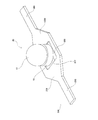
- FIG. 5 is a perspective view showing a state where the power generation unit is mounted on the wiring board according to the first embodiment of the present invention.
- the wiring board 69 includes an FPC (Flexible Printed Circuit) 79 and a reinforcing plate 89.
- the FPC 79 includes a conductive portion 77 and an insulating portion 78 that covers the conductive portion 77.
- the power generation unit 30 is mounted on the land portion 60 of the wiring board 69. Specifically, in the land portion 60, an opening 68 is provided in the FPC 79. In the opening 68, since the insulating part 78 does not cover the upper side of the conductive part 77, the conductive part 77 is exposed. The power generation unit 30 is electrically connected to the conductive unit 77 at the opening 68.
- the reinforcing plate 89 is provided on the main surface of the wiring board 69 on the base portion 38 side of the belt-like substrate 32, gives the belt-like substrate 32 a slight hardness, and the wiring board 69 at the time of manufacturing the photovoltaic power generation module 10. Easy handling.
- the reinforcing plate 89 is made of a metal such as aluminum or copper.
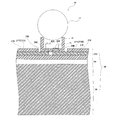
- FIG. 6 is a cross-sectional view showing a cross section taken along line VI-VI in FIG. 4 of the photovoltaic power generation module according to the first embodiment of the present invention.
- the power generation unit 30 includes a ball lens 17, a package 18, and a power generation element 19. Note that the power generation unit 30 may have a configuration that does not include all or part of the components other than the power generation element 19.
- the wiring board 69 is placed on the upper main surface of the base portion 38.
- the reinforcing plate 89 is provided on the base portion 38.
- the FPC 79 is provided on the reinforcing plate 89. Specifically, the FPC 79 is provided on the base portion 38 via the reinforcing plate 89.
- the power generation element 19 is housed in the package 18.
- the power generating element 19 is mounted on the FPC 79 while being housed in the package 18.
- the electrode of the power generation element 19 (not shown) is connected to the conductive portion 77 of the FPC 79 via the package electrode 20 provided so as to penetrate the bottom of the package 18.
- the size of the power generation element 19 is, for example, 3.2 mm ⁇ 3.2 mm.
- the Fresnel lens 26 converges sunlight on the corresponding ball lens 17.
- the ball lens 17 further converges the sunlight converged by the Fresnel lens 26 onto the power generation element 19.
- the power generation element 19 receives sunlight converged by the Fresnel lens 26 and the ball lens 17 and generates electric power corresponding to the amount of received light.
- FIG. 7 is a cross-sectional view showing a cross section taken along line VII-VII in FIG. 4 of the wiring module and the power generation unit in the solar power generation module according to the first embodiment of the present invention.
- FIG. 7 also shows an adhesive layer not shown in FIG. 5, for example.
- power generation unit 30 is mounted on wiring module 49, specifically, wiring board 69 in wiring module 49.
- the FPC 79 and the reinforcing plate 89 are bonded by the in-board adhesive layer 58.
- the wiring board 69 and the base portion 38 are bonded by the base adhesive layer 59.
- the in-substrate adhesive layer 58 and the base adhesive layer 59 are formed by, for example, an adhesive or an adhesive tape.
- the power generation element 19 has an element electrode 42A and an element electrode 42B, and outputs a voltage from the element electrode 42A and the element electrode 42B.
- Package 18 includes package electrode 20A and package electrode 20B.
- the package electrode 20A and the package electrode 20B are provided so as to penetrate the bottom portion of the package 18, and are exposed on both the upper side and the lower side of the bottom portion.
- the element electrode 42A of the power generation element 19 is connected to the package electrode 20A by wire bonding, for example.
- the element electrode 42B is connected to the package electrode 20B by, for example, a conductive paste.
- the insulating portion 78 does not cover the upper side of the conductive portion 77, a part of the conductive portion 77, specifically, a portion of the conductive portion 77A and a portion of the conductive portion 77B are exposed. Yes.
- the package electrode 20A and the package electrode 20B are connected to the conductive portion 77A and the conductive portion 77B, for example, by soldering.
- the package 18 supports the ball lens 17 at the end of its side wall, and fixes the focal point of the ball lens 17 to the power generation element 19.
- FIG. 8 is a diagram showing a pattern of the conductive portion of the FPC in the wiring board according to the first embodiment of the present invention.
- a part of the conductive portion 77 is exposed at the opening 68 of the FPC 79. Specifically, in the opening 68, a part of the conductive part 77A and the conductive part 77B are exposed.
- the conductive portion 77A and the conductive portion 77B are connected to the element electrode 42A and the element electrode 42B of the power generating element 19, respectively, for example, as shown in FIG.
- the conductive unit 77 connects, for example, the power generation unit 30 mounted on the land unit 60 and the power generation unit 30 mounted on the land unit 60 adjacent to the land unit 60 in series.
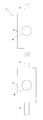
- FIG. 9 is a diagram showing a wiring board according to the first embodiment of the present invention.
- FIG. 9 shows a plan view and a side view of a part of the wiring board 69, specifically, a part of the belt-like board 32 in the wiring board 69.
- wiring board 69 on which power generation unit 30 is mounted includes a plurality of land portions 60 and a plurality of wiring portions 63 as described above.
- the land portion 60 has a shape in which the power generation unit 30 is mounted on the main surface on the upper side thereof, that is, on the Fresnel lens 26 side. That is, the land part 60 has a size that allows the power generation part 30 to be mounted.
- the land portion 60 has a length Lb1 along the extending direction of the wiring board 69.
- the power generation unit 30 including the power generation element 19 is mounted on the land unit 60.
- the wiring part 63 is electrically connected to the power generation element 19.
- the wiring part 63 electrically connects the adjacent land part 60, that is, the adjacent power generation part 30.
- the wiring part 63 has a length Lb2 along the extending direction of the wiring board 69.
- the length Lb2 of the wiring part 63 is larger than the length Lb1 of the land part 60. That is, the length Lb2 of the wiring part 63 in the extending direction of the wiring board 69 is larger than the length Lb1 of the land part 60 in the extending direction.
- the extending direction of the wiring board 69 is also referred to as a substrate extending direction.
- the width Wb3 of the wiring part 63 is smaller than the width Wb0 of the land part 60.
- the width Wb0 of the land portion 60 and the width Wb3 of the wiring portion 63 are respectively the direction intersecting the substrate extending direction, specifically, for example, the length of the land portion 60 and the wiring portion 63 in the direction perpendicular to the substrate extending direction. Is the length of Hereinafter, the direction intersecting the substrate extending direction, that is, the width direction of the land portion 60 is also referred to as a substrate width direction.
- the width Wb0 of the land portion 60 is, for example, 200% or more and 1000% or less of the width Wb3 of the wiring portion 63.
- the length Lb1 of the land portion 60 in the substrate extending direction is larger than the width Wb0 of the land portion 60.
- the land portion 60 has an inner region (first region) 61 and two outer regions (second regions) 62.
- Each outer region 62 is connected to both ends of the inner region 61 in the substrate extending direction. That is, each outer region 62 is located at both ends in the length direction of the land portion 60 and is connected to the inner region 61. That is, the outer region 62 is connected between the end portion of the inner region 61 in the substrate extending direction and the wiring portion 63.
- the land portion 60 may have one outer region 62.
- the outer region 62 is connected to, for example, one end of the inner region 61 in the substrate extending direction. That is, the outer region 62 is located at one end in the length direction of the land portion 60 and is connected to the inner region 61.
- the inner region 61 has a width Wb1 corresponding to the width Wb0 of the land portion 60.
- the outer region 62 has a width Wb2.
- the width Wb1 of the inner region 61 and the width Wb2 of the outer region 62 are the length of the inner region 61 and the length of the outer region 62 in the substrate width direction, respectively.
- the width Wb2 of the outer region 62 is smaller than the width Wb1 of the inner region 61. Further, for example, the width Wb ⁇ b> 2 of the outer region 62 is larger than the width Wb ⁇ b> 3 of the wiring part 63.
- the width Wb2 of the outer region 62 continuously decreases as the distance from the inner region 61 to the wiring portion 63 increases. That is, the width Wb2 of the outer region 62 continuously decreases as the wiring portion 63 to which the outer region 62 is connected is approached.
- the outer region 62 has a length Lb12 along the extending direction of the wiring board 69.
- the relationship between the width Wb2 of the outer region 62 and the length Lb12 of the wiring portion 63, that is, the length Lb12 of the outer region 62 in the substrate extending direction is expressed by the following equation (1). 0 ⁇ Lb12 / Wb2 ⁇ 10 (1)
- the area Sb1 of the inner region 61 is larger than the area Sb2 of the outer region 62.
- the area Sb1 of the inner region 61 is 200% or more and 1000% or less of the area Sb2 of the outer region 62.
- the wiring board 69 includes, for example, the FPC 79 and the reinforcing plate 89 as described above. That is, each of the land portion 60 and the wiring portion 63 includes a reinforcing plate 89.
- the power generation unit 30 in a plan view from above the wiring board 69, specifically, in a plan view in the direction from the top of the wiring board 69 to the mounting surface of the power generation unit 30, Has a shape in which the power generation unit 30 is arranged so that the center Ce of the power generation unit 30 is located in the inner region 61.
- the power generation unit 30 is arranged so that its center Ce is included in the inner region 61 in plan view from above the wiring board 69.
- the distance db1 from the power generation unit 30 to the wiring unit 63 in the substrate extending direction is the distance db2 from the power generation unit 30 to the end of the land unit 60 in the substrate width direction. Greater than.
- the wiring board 69 has an electrode for soldering the power generation unit 30.
- the electrode is an exposed portion of the conductive portion 77 in the opening 68 shown in FIG. 8 and is provided so as to be included in the inner region 61.
- the land portion 60 has a mounting region 31 that comes into contact with the power generation unit 30 when the power generation unit 30 is mounted on the land unit 60.
- 80% or more of the mounting area 31 is located in the inner area 61.
- 80% to 100% of the mounting region 31 in which the power generation unit 30 is mounted in the land portion 60 is included in the inner region 61.
- 100% of the mounting area 31 is included in the inner area 61.
- the thickness Tb3 of the wiring part 63 is 1% or more and 50% or less of the width Wb3 of the wiring part 63.
- the reinforcing plate 89 has a thickness Ts0.
- the thickness Ts0 of the reinforcing plate 89 is 10% or more and 90% or less of the thickness Tb0 of the wiring board 69.
- the inner region 61 has an edge 65.
- the edge 65 is located at the end of the inner region 61 in the substrate width direction.
- the outer region 62 has an edge 66.
- the edge 66 is located at the end of the outer region 62 in the substrate width direction.
- Edge 65 and edge 66 are connected to each other.
- the angle ⁇ formed by the edge 65 and the edge 66 is, for example, greater than 90 degrees and 170 degrees or less.
- FIG. 10 is a diagram showing an FPC in the wiring board according to the first embodiment of the present invention.
- FPC 79 includes a plurality of FPC land portions 70 and a plurality of FPC wiring portions 73.
- the FPC land portion 70 and the FPC wiring portion 73 are included in the land portion 60 and the wiring portion 63 shown in FIG.
- the power generation unit 30 is mounted on the FPC land unit 70.
- the FPC wiring part 73 connects the FPC land parts 70, that is, the power generation parts 30.
- the FPC land portion 70 has a length Lf1 along the extending direction of the wiring board 69.
- the FPC wiring portion 73 has a length Lf3 along the extending direction of the wiring board 69.
- the length Lf3 of the FPC wiring portion 73 is larger than the length Lf1 of the FPC land portion 70. That is, the length Lf3 of the FPC wiring portion 73 in the substrate extending direction is larger than the length Lf1 of the FPC land portion 70 in the substrate extending direction.
- the length Lf3 of the FPC wiring portion 73 in the substrate extending direction is greater than 100% and 600% or less of the length Lf1 of the FPC land portion 70 in the substrate extending direction.
- the width Wf3 of the FPC wiring part 73 is smaller than the width Wf0 of the FPC land part 70. Specifically, for example, the width Wf3 of the FPC wiring portion 73 is not less than 0.1% of the width Wf0 of the FPC land portion 70 and not more than 50%.
- the area Sf1 of the FPC land part 70 is 20% or more and 1000% or less of the area Sf3 of the FPC wiring part 73.
- the FPC land portion 70 has an inner region 71 and two outer regions 72.
- Inner region 71 has a width Wf1.
- the outer region 72 has a width Wf2.
- the outer region 72 is located at both ends in the length direction of the FPC land portion 70 and is connected to the inner region 71.
- each outer region 72 is connected to both ends of the inner region 71 in the substrate extending direction, for example. Specifically, the outer region 72 is connected between the end portion of the inner region 71 in the substrate extending direction and the FPC wiring portion 73.
- the FPC land portion 70 may have only one outer region 72.
- the outer region 72 is connected to one end of the inner region 71 in the substrate extending direction. That is, the outer region 72 is located at one end in the length direction of the FPC land portion 70 and is connected to the inner region 71.
- the inner region 71 has a width Wf1 corresponding to the width Wf0 of the FPC land portion 70.
- the outer region 72 has a width Wf2.
- the width Wf1 of the inner region 71 and the width Wf2 of the outer region 72 are the length of the inner region 71 and the length of the outer region 72 in the substrate width direction, respectively.
- the width Wf2 of the outer region 72 is smaller than the width Wf1 of the inner region 71. Further, for example, the width Wf2 of the outer region 72 is larger than the width Wf3 of the FPC wiring portion 73.
- the width Wf2 of the outer region 72 continuously decreases as the FPC wiring portion 73 is approached from the inner region 71. That is, the width Wf ⁇ b> 2 of the outer region 72 continuously decreases as the FPC wiring portion 73 connected to the outer region 72 is approached.
- the outer region 72 has a length Lf12 along the extending direction of the wiring board 69.
- the relationship between the width Wf2 of the outer region 72 and the length Lf12 of the outer region 72, that is, the length Lf12 of the outer region 72 in the substrate stretching direction is expressed by the following equation (2). 0 ⁇ Lf12 / Wf2 ⁇ 10 (2)
- the power generation unit 30 is arranged such that its own central portion, specifically, its own center Ce is included in the inner region 71.
- the FPC 79 has an electrode for soldering the power generation unit 30, for example.
- the electrode is an exposed portion of the conductive portion 77 in the opening 68 shown in FIG. 8 and is provided so as to be included in the inner region 71.
- the inner region 71 has an edge 75.
- the edge 75 is located at the end of the inner region 71 in the width direction of the FPC land portion 70, that is, the substrate width direction.
- the outer region 72 has an edge 76.
- the edge 76 is located at the end of the outer region 72 in the substrate width direction.
- Edge 75 and edge 76 are connected to each other.
- the angle ⁇ formed by the edge 75 and the edge 76 is, for example, greater than 90 degrees and 170 degrees or less.
- FIG. 11 is a view showing a reinforcing plate in the wiring board according to the first embodiment of the present invention.
- the reinforcing plate 89 has a land reinforcing portion 80 and a wiring reinforcing portion 83.
- Land reinforcing portion 80 and wiring reinforcing portion 83 are included in land portion 60 and wiring portion 63 shown in FIG. 9, respectively.
- the land reinforcing portion 80 is bonded to the FPC land portion 70.
- the wiring reinforcing part 83 is bonded to the FPC wiring part 73.
- the width Ws3 of the wiring reinforcing portion 83 is smaller than the width Ws0 of the land reinforcing portion 80.
- FIG. 12 is a diagram showing a wiring module in the wiring board according to the first embodiment of the present invention.
- FIG. 12 shows a plan view and a side view of the state in which the wiring board 69 is bonded to the base portion 38 by the base adhesive layer 59, that is, a plan view and a side view of the wiring module 49.
- the base adhesive layer 59 includes a land adhesive region 50 for bonding the land portion 60 of the wiring board 69 to the base portion 38, and a wiring adhesive region for bonding the wiring portion 63 of the wiring substrate 69 to the base portion 38. 53.
- the land reinforcing portion 80 in the land portion 60 is bonded to the base portion 38.
- the wiring reinforcing portion 83 in the wiring portion 63 is bonded to the base portion 38.
- the width Wa3 of the wiring adhesion region 53 is smaller than the width Wa0 of the land adhesion region 50. Specifically, for example, the width Wa3 of the wiring bonding region 53 is 0.1% or more and 50% or less of the width Wa0 of the land bonding region 50.
- width Wa0 of the land adhesion region 50 may be smaller than or the same as the width Wb0 of the land portion 60.
- width Wa3 of the wiring adhesion region 53 may be smaller than or the same as the width Wb3 of the wiring portion 63.
- the land adhesion region 50 has a length La1 along the substrate stretching direction.
- the wiring adhesion region 53 has a length La ⁇ b> 3 along the extending direction of the wiring substrate 69.
- the length La1 of the land adhesion region 50 is smaller than the length La3 of the wiring adhesion region 53.
- the length La1 of the land bonding region 50 in the substrate extending direction is smaller than the length La3 of the wiring bonding region 53 in the substrate extending direction.
- the width Wa0 of the land adhesion region 50 is smaller than the length La1 of the land adhesion region 50 in the substrate extending direction.
- the area Sa0 of the land adhesion region 50 is 20% or more and 1000% or less of the area Sa3 of the wiring adhesion region 53.
- the thickness Ta0 of the base adhesive layer 59 is not less than 0.25% and not more than 5% of the width Wa0 of the land adhesive region 50. Further, the thickness Ta0 of the base adhesive layer 59 is 0.5% or more and 20% or less of the width Wa3 of the wiring adhesive region 53.
- the land adhesion region 50 has, for example, an inner region 51 and two outer regions 52.
- Each outer region 52 is located at each end in the length direction of the land adhesion region 50 and is connected to the inner region 51.
- each outer region 52 is connected to both ends of the inner region 51 in the substrate extending direction.
- the outer region 52 is connected between the end of the inner region 51 in the substrate extending direction and the wiring bonding region 53.
- the land adhesion region 50 may have a configuration including one outer region 52 instead of the two outer regions 52.
- the outer region 52 is located at one end in the length direction of the land bonding region 50 and is connected to the inner region 51.
- the inner region 51 has a width Wa1 corresponding to the width Wa0.
- the outer region 52 has a width Wa2.
- the width Wa1 of the inner region 51 and the width Wb2 of the outer region 52 are the length of the inner region 51 and the length of the outer region 52 in the substrate width direction, respectively.
- the width Wa ⁇ b> 2 of the outer region 52 is smaller than the width Wa ⁇ b> 1 of the inner region 51.
- the width Wa ⁇ b> 2 of the outer region 52 is larger than the width Wa ⁇ b> 3 of the wiring adhesion region 53.
- the width Wa ⁇ b> 2 of the outer region 52 continuously decreases from the inner region 51 toward the wiring adhesion region 53. That is, the width Wa ⁇ b> 2 of the outer area 52 continuously decreases as the wiring adhesion area 53 connected to the outer area 52 is approached.
- the outer region 52 has a length La12 along the extending direction of the wiring portion 53.
- the relationship between the width Wa2 of the outer region 52 and the length La12 of the outer region 52 is expressed by the following equation (3). It is represented by 0 ⁇ La12 / Wa2 ⁇ 10 (3)
- the area Sa1 of the inner region 51 is 200% or more and 1000% or less of the area Sa2 of the outer region 52.
- the power generating element 19 is arranged such that its own central portion, specifically, its own center Cc is included in the inner region 51.
- the distance da1 from the power generation element 19 to the wiring adhesion area 53 in the board extending direction is the width direction of the land adhesion area 50, that is, the power generation element 19 in the board width direction. It is larger than the distance da2 to the end of the bonding region 50.
- the distance da1 from the power generation element 19 to the wiring adhesion region 53 in the board extending direction is, for example, the power generation element 19 to the land adhesion area 50 in the board width direction. It is 200% or more of the distance da2 to the edge part and 2000% or less.
- [Modification] 13 to 16 are diagrams showing modifications of the wiring board according to the first embodiment of the present invention.
- the shape of the land portion 60 is different from the shape of the land portion 60 shown in FIG. Specifically, in the land portion 60, the connection portion 64 between the edge 65 located at the end of the inner region 61 and the edge 66 located at the end of the outer region 62 forms a curve. More specifically, the land portion 60 has a rounded hexagonal shape.
- the connecting portion 64 between the edge 65 and the edge 66 may form a continuous curve, that is, a smoother curve.
- the edge 65 and the edge 66 may form an arc.
- the shape of land portion 60 is different from the shape of land portion 60 shown in FIG. Specifically, the land part 60 has an elliptical shape.
- the land portion 60 has a rectangular shape.
- the edge 160 located at the end of the land portion 60 in the substrate width direction and the edge 163 located at the end of the wiring portion 63 in the substrate width direction form a straight line.
- 17 to 20 are diagrams showing modifications of the FPC in the wiring board according to the first embodiment of the present invention.
- the shape of FPC land portion 70 is different from the shape of FPC land portion 70 shown in FIG. Specifically, in the FPC land portion 70, the connecting portion 74 between the edge 75 located at the end of the inner region 71 and the edge 76 located at the end of the outer region 62 forms a curve. More specifically, the FPC land portion 70 has a rounded hexagonal shape.
- the connecting portion 74 between the edge 75 and the edge 76 may form a continuous curve, that is, a smoother curve.
- the edge 65 and the edge 66 may form an arc.
- the shape of the FPC land portion 70 is different from the shape of the FPC land portion 70 shown in FIG. Specifically, the FPC land portion 70 has an elliptical shape.
- the FPC land portion 70 has a rectangular shape.
- the edge 170 located at the end of the FPC land portion 70 in the substrate width direction and the edge 173 located at the end of the FPC wiring portion 73 in the substrate width direction form a straight line.
- the FPC 79 and the reinforcing plate 89 are fixed by the in-substrate adhesive layer 58.
- the present invention is not limited to this.
- the FPC 79 and the reinforcing plate 89 may be fixed by screwing.
- the wiring board 69 is configured to be fixed to the base portion 38 by the base adhesive layer 59.
- the present invention is not limited to this.
- the wiring board 69 may be configured to be fixed to the base portion 38 by screwing.
- the solar cell element becomes high temperature. Since the heat of the solar cell element is transmitted to the receiver substrate on which the solar cell element is mounted, the receiver substrate may thermally expand. In addition, since the hardness of the receiver substrate decreases with increasing temperature, the receiver substrate is easily deformed.
- the power generation efficiency of the solar cell element may decrease due to the position of the solar cell element being out of focus of the lens.
- the width Wb3 of the wiring part 63 is smaller than the width Wb0 of the land part 60.
- the wiring part 63 is more easily bent than the land part 60, so that when the wiring board 69 is thermally expanded, the wiring part 63 absorbs, for example, the expansion of the wiring board 69 in the extending direction.
- the land portion 60 can be prevented from being deformed and displaced.
- the land part 60 has a shape in which the power generation part 30 is mounted on the land part 60 and is along the extending direction of the wiring board 69. It has a length Lb1.
- the wiring part 63 has a length Lb2 along the extending direction of the wiring board 69. The length Lb2 of the wiring part 63 is larger than the length Lb1 of the land part 60.
- each of the land portion 60 and the wiring portion 63 includes a reinforcing plate made of metal and a flexible printed board provided on the reinforcing plate. .
- the wiring board 69 can be given a certain degree of hardness while being flexible. Accordingly, for example, the wiring board 69 can be easily handled in the manufacturing process of the power generation apparatus using the wiring board 69 while maintaining the property that the wiring part 63 is more easily bent than the land part 60.
- the width Wb0 of the land portion 60 is 200% or more and 1000% or less of the width Wb3 of the wiring portion 63.
- the width Wb3 of the wiring part 63 can be reduced with reference to the width Wb0 of the land part 60, so that the wiring part 63 can be more easily bent than the land part 60. Further, the width Wb3 of the wiring part 63 can be increased to some extent so that the strength of the wiring part 63 does not become a problem.
- the land portion 60 has an inner region 61 and an outer region 62.
- the inner region 61 has a width Wb1 (first width).
- the outer region 62 is located at least at one end in the length direction of the land portion 60, is connected to the inner region 61, and has a width Wb2 (second width).
- the width Wb2 of the outer region 62 is smaller than the width Wb1 of the inner region 61 and larger than the width Wb3 of the wiring part 63.
- heat transferred from the power generation unit 30 to the inner region 61 can be efficiently released to the wiring unit 63 via the outer region 62.
- the land portion 60 has an inner region 61 and an outer region 62.
- Inner region 61 has a width Wb1.
- the outer region 62 is located at both ends of the land portion 60 in the length direction, is connected to the inner region 61, and has a width Wb2 (second width).
- the width Wb2 of the outer region 62 is smaller than the width Wb1 of the inner region 61 and larger than the width Wb3 of the wiring part 63.
- the heat in the inner region 61 can be released to both wiring parts 63 connected to the outer regions 62.
- the width Wb2 of the outer region 62 decreases as the wiring region 63 approaches the inner region 61.
- the outer region 62 has a length Lb12 along the extending direction of the wiring board 69.
- the relationship between the width Wb2 of the outer region 62 and the length Lb12 of the outer region 62 satisfies the following expression. 0 ⁇ LB12 / Wb2 ⁇ 10
- the heat in the outer region 62 can be more efficiently released to the wiring portion 63.
- the area Sb1 of the inner region 61 is larger than the area SB2 of the outer region 62.
- the area Sb1 of the inner region 61 is 200% or more and 1000% or less of the area Sb2 of the outer region 62.
- the heat dissipation performance to the wiring part 63 via the outer region 62 against the heat of the inner region 61 can be further enhanced.
- the land portion 60 is the central portion of the power generation unit 30, specifically, the power generation unit 30 in plan view from above the wiring substrate 69.
- the center Ce has a shape arranged so as to be located in the inner region 61.
- the power generation unit 30 can be disposed at a position somewhat away from the wiring unit 63, so that the position of the power generation unit 30 can be more reliably prevented from being shifted due to the influence of the bending of the wiring unit 63. Can do.
- the mounting region 31 contacts the power generation unit 30 when the power generation unit 30 is mounted on the land unit 60. 80% or more of the mounting area 31 is located in the inner area 61.
- the distance db1 from the power generation unit 30 to the wiring part 63 in the extending direction is the width of the land part 60 in a plan view from above the wiring board 69. It is larger than the distance db2 from the power generation unit 30 to the end of the land unit 60 in the direction.
- the heat dissipation performance to the wiring part 63 with respect to the heat transmitted from the power generation part 30 to the land part 60 can be enhanced.
- the length Lb1 of the land portion 60 in the extending direction is larger than the width Wb0 of the land portion 60.
- the heat dissipation performance to the wiring part 63 with respect to the heat transmitted from the power generation part 30 to the land part 60 can be enhanced.
- the thickness Tb3 of the wiring part 63 is 1% or more and 50% or less of the width Wb3 of the wiring part 63.
- the thickness of the wiring part 63 sufficiently smaller than the width of the wiring part 63, the heat of the wiring part 63 can be efficiently released to the object on which the wiring board 69 is placed.
- the thickness Ts0 of the reinforcing plate 89 of the land part 60 and the wiring part 63 is 10% or more and 90% or less of the thickness Tb0 of the wiring board 69. It is.
- the present embodiment relates to a wiring board that does not include an FPC as compared to the wiring board according to the first embodiment.
- the contents other than those described below are the same as those of the photovoltaic power generation apparatus according to the first embodiment.
- the solar power generation module 10 includes a wiring board 269 instead of the wiring board 69 in the solar power generation module 10 according to the first embodiment.
- the wiring board 269 includes another type of board instead of the FPC 79 and does not include the reinforcing plate 89.
- the wiring board 269 is the same as the wiring board 69 except for the contents described below.
- FIG. 21 is a perspective view showing a state where the power generation unit is mounted on the wiring board according to the second embodiment of the present invention.
- the wiring board 269 includes a conductive portion 277 and an insulating portion 278 that covers the conductive portion 277.
- the power generation unit 30 is mounted on the land portion 260 of the wiring board 269. Specifically, the land portion 260 is provided with an opening 268. In the opening 268, since the insulating part 278 does not cover the upper side of the conductive part 277, the conductive part 277 is exposed. The power generation unit 30 is electrically connected to the conductive unit 277 at the opening 268.
- the conductive unit 277 connects, for example, the power generation unit 30 mounted on the land unit 260 and the power generation unit 30 mounted on the land unit 260 adjacent to the land unit 260 in series.
- FIG. 22 is a cross-sectional view showing a cross section taken along the line corresponding to the VI-VI line in FIG. 4 of the photovoltaic power generation module according to the second embodiment of the present invention.
- wiring board 269 is placed on the upper main surface of base portion 38.
- the power generating element 19 is housed in the package 18.
- the power generation element 19 is mounted on the wiring board 269 in a state of being housed in the package 18.
- the electrode of the power generation element 19 (not shown) is connected to the conductive portion 277 of the wiring substrate 269 via the package electrode 20 provided so as to penetrate the bottom of the package 18.
- FIG. 23 is a cross-sectional view showing a cross section taken along a line corresponding to the VII-VII line in FIG. 4 of the wiring module and the power generation unit in the solar power generation module according to the second embodiment of the present invention.
- FIG. 23 also shows, for example, an adhesive layer not shown in FIG. Specifically, referring to FIG. 23, power generation unit 30 is mounted on wiring module 49, specifically, wiring board 269 in wiring module 49. The wiring substrate 269 and the base portion 38 are bonded by the base adhesive layer 59.
- the insulating part 278 does not cover the upper side of the conductive part 277, so that a part of the conductive part 277, specifically, a part of the conductive part 277A and a part of the conductive part 277B are exposed. is doing.
- Package electrode 20A and package electrode 20B are connected to conductive portion 277A and conductive portion 277B, respectively, by soldering, for example.
- the package 18 supports the ball lens 17 at the end of its side wall, and fixes the focal point of the ball lens 17 to the power generation element 19.
- FIG. 24 is a diagram showing a wiring board according to the second embodiment of the present invention.
- FIG. 24 shows a plan view and a side view of a part of the wiring board 269.
- wiring substrate 269 includes a plurality of land portions 260 and a plurality of wiring portions 263.
- the power generation section 30 including the power generation element 19 is mounted on the land section 260.
- the wiring part 263 is electrically connected to the power generation element 19.
- the wiring portion 263 electrically connects the adjacent land portions 260, that is, the adjacent power generation units 30.
- the length Lr2 of the wiring part 263 in the extending direction of the wiring board 269 is larger than the length Lr1 of the land part 260 in the extending direction.
- the extending direction of the wiring substrate 269 is also referred to as a substrate extending direction.
- the width Wr3 of the wiring part 263 is smaller than the width Wr0 of the land part 260.
- the width Wr0 of the land portion 260 and the width Wr3 of the wiring portion 263 are respectively the direction intersecting with the substrate extending direction, specifically, for example, the length of the land portion 260 and the wiring portion 263 in the direction perpendicular to the substrate extending direction. Is the length of Hereinafter, the direction intersecting the substrate extending direction, that is, the width direction of the land portion 260 is also referred to as a substrate width direction.
- the width Wr0 of the land part 260 is, for example, 200% or more and 1000% or less of the width Wr3 of the wiring part 263.
- the length Lr1 of the land portion 260 in the substrate extending direction is larger than the width Wr0 of the land portion 260.
- the land portion 260 has an inner region 261 and two outer regions 262.
- Each outer region 262 is connected to both ends of the inner region 261 in the substrate extending direction.
- the outer region 262 is connected between the end portion of the inner region 261 in the substrate extending direction and the wiring portion 263.
- the land portion 260 may have only one outer region 262.
- the outer region 262 is connected to one end of the inner region 261 in the substrate extending direction, for example.
- the inner region 261 has a width Wr1 corresponding to the width Wr0.
- the outer region 262 has a width Wr2.
- the width Wr1 of the inner region 261 and the width Wr2 of the outer region 262 are the length of the inner region 261 and the length of the outer region 262 in the substrate width direction, respectively.
- the width Wr2 of the outer region 262 is smaller than the width Wr1 of the inner region 261.
- the width Wr2 of the outer region 262 is larger than the width Wr3 of the wiring portion 263.
- the width Wr2 of the outer region 262 continuously decreases as the wiring portion 263 to which the corresponding outer region 262 is connected is approached.
- the relationship between the width Wr2 of the outer region 262 and the length Lr12 of the outer region 262 in the substrate width direction is expressed by the following formula (4). 0 ⁇ Lr12 / Wr2 ⁇ 10 (4)
- the area Sr1 of the inner region 261 is larger than the area Sr2 of the outer region 262.
- the area Sr1 of the inner region 261 is 200% or more and 1000% or less of the area Sr2 of the outer region 262.
- the power generation unit 30 has its own central portion, specifically, The center Ce is arranged so as to be included in the inner region 261.
- the distance dr1 from the power generation unit 30 to the wiring part 263 in the board extending direction is the distance dr2 from the power generation unit 30 to the end of the land part 260 in the board width direction. Greater than.
- the wiring board 269 has an electrode for soldering the power generation unit 30.
- the electrode is an exposed portion of the conductive portion 277 in the opening 268 and is provided so as to be included in the inner region 261.
- the mounting region 31 in which the power generation unit 30 is mounted in the land portion 260 is included in the inner region 261.
- 100% of the mounting area 31 is included in the inner area 261.
- the thickness Tr3 of the wiring part 263 is 1% or more and 50% or less of the width Wr3 of the wiring part 263.
- the inner region 261 has an edge 265.
- the edge 265 is located at the end of the inner region 261 in the substrate width direction.
- the outer region 262 has an edge 266. The edge 266 is located at the end of the outer region 262 in the substrate width direction.
- the edge 265 and the edge 266 are connected to each other.
- the angle ⁇ formed by the edge 265 and the edge 266 is, for example, greater than 90 degrees and 170 degrees or less.
- a wiring board A land portion on which a power generation unit including a power generation element is mounted; A wiring portion having a length in the extending direction of the wiring board larger than a length in the extending direction of the land portion; The width of the wiring portion is smaller than the width of the land portion, The wiring part is connected to an end of the land part in the extending direction of the wiring board,
- the wiring board is used in a solar power generation device, In the solar power generation device, the wiring board in which sunlight converged by a lens is irradiated to the power generation element.
Landscapes
- Engineering & Computer Science (AREA)
- Microelectronics & Electronic Packaging (AREA)
- Life Sciences & Earth Sciences (AREA)
- Sustainable Development (AREA)
- Photovoltaic Devices (AREA)
- Structure Of Printed Boards (AREA)
- Structures For Mounting Electric Components On Printed Circuit Boards (AREA)
- Wire Bonding (AREA)
- Manufacturing & Machinery (AREA)
- Combinations Of Printed Boards (AREA)
Abstract
Priority Applications (5)
| Application Number | Priority Date | Filing Date | Title |
|---|---|---|---|
| US15/324,984 US20170201208A1 (en) | 2014-07-10 | 2015-07-06 | Wiring substrate and photovoltaic apparatus |
| JP2016532921A JP6551408B2 (ja) | 2014-07-10 | 2015-07-06 | 配線基板および太陽光発電装置 |
| MA39682A MA39682B2 (fr) | 2014-07-10 | 2015-07-06 | Substrat de câblage et dispositif photovoltaique. |
| AU2015288769A AU2015288769B2 (en) | 2014-07-10 | 2015-07-06 | Wiring board and solar power generating device |
| CN201580037722.7A CN106537612B (zh) | 2014-07-10 | 2015-07-06 | 配线基板和光伏设备 |
Applications Claiming Priority (2)
| Application Number | Priority Date | Filing Date | Title |
|---|---|---|---|
| JP2014-142327 | 2014-07-10 | ||
| JP2014142327 | 2014-07-10 |
Publications (1)
| Publication Number | Publication Date |
|---|---|
| WO2016006568A1 true WO2016006568A1 (fr) | 2016-01-14 |
Family
ID=54829518
Family Applications (4)
| Application Number | Title | Priority Date | Filing Date |
|---|---|---|---|
| PCT/JP2015/069404 Ceased WO2016006568A1 (fr) | 2014-07-10 | 2015-07-06 | Panneau de câblage et dispositif de génération d'énergie solaire |
| PCT/JP2015/069409 Ceased WO2016006571A1 (fr) | 2014-07-10 | 2015-07-06 | Module de production d'énergie et tableau de connexions |
| PCT/JP2015/069411 Ceased WO2016006573A1 (fr) | 2014-07-10 | 2015-07-06 | Unité de circuit de génération de puissance |
| PCT/JP2015/069407 Ceased WO2016006570A1 (fr) | 2014-07-10 | 2015-07-06 | Module de câblage |
Family Applications After (3)
| Application Number | Title | Priority Date | Filing Date |
|---|---|---|---|
| PCT/JP2015/069409 Ceased WO2016006571A1 (fr) | 2014-07-10 | 2015-07-06 | Module de production d'énergie et tableau de connexions |
| PCT/JP2015/069411 Ceased WO2016006573A1 (fr) | 2014-07-10 | 2015-07-06 | Unité de circuit de génération de puissance |
| PCT/JP2015/069407 Ceased WO2016006570A1 (fr) | 2014-07-10 | 2015-07-06 | Module de câblage |
Country Status (7)
| Country | Link |
|---|---|
| US (5) | US10680127B2 (fr) |
| JP (4) | JP6551408B2 (fr) |
| CN (6) | CN106537612B (fr) |
| AU (4) | AU2015288772B2 (fr) |
| MA (4) | MA39682B2 (fr) |
| TW (5) | TWI656653B (fr) |
| WO (4) | WO2016006568A1 (fr) |
Families Citing this family (10)
| Publication number | Priority date | Publication date | Assignee | Title |
|---|---|---|---|---|
| JP6759778B2 (ja) | 2016-07-07 | 2020-09-23 | 住友電気工業株式会社 | 集光型太陽光発電モジュール、集光型太陽光発電装置及び水素精製システム |
| AU2018315807A1 (en) * | 2017-08-07 | 2020-01-30 | Sumitomo Electric Industries, Ltd. | Concentrator photovoltaic module, concentrator photovoltaic panel, concentrator photovoltaic device, and method for manufacturing concentrator photovoltaic module |
| AU2018315806B2 (en) * | 2017-08-07 | 2022-10-06 | Sumitomo Electric Industries, Ltd. | Concentrator photovoltaic module, concentrator photovoltaic panel, and concentrator photovoltaic apparatus |
| CN107453699B (zh) * | 2017-08-28 | 2024-01-23 | 江西清华泰豪三波电机有限公司 | 一种光伏组件及光伏装置 |
| US10529881B2 (en) * | 2018-03-01 | 2020-01-07 | Solaero Technologies Corp. | Interconnect member |
| EP3817519A4 (fr) * | 2018-06-27 | 2022-03-23 | Sumitomo Electric Industries, Ltd. | Corps de forme d'origine d'une carte de circuit imprimé flexible, procédé de fabrication de carte de circuit imprimé flexible, module de génération d'énergie photovoltaïque concentrée et module électroluminescent |
| WO2020004148A1 (fr) * | 2018-06-27 | 2020-01-02 | 住友電気工業株式会社 | Module de génération d'énergie solaire à concentration et panneau de génération d'énergie solaire à concentration |
| CN109067346A (zh) * | 2018-07-20 | 2018-12-21 | 上海空间电源研究所 | 刚挠结合板太阳电池阵 |
| CN111609370A (zh) * | 2020-05-19 | 2020-09-01 | 田聪 | 一种基于电容传感的太阳能路灯雨天可保证亮度的装置 |
| JP2024140456A (ja) * | 2023-03-28 | 2024-10-10 | Tdk株式会社 | 回路基板 |
Citations (5)
| Publication number | Priority date | Publication date | Assignee | Title |
|---|---|---|---|---|
| JP2007019334A (ja) * | 2005-07-08 | 2007-01-25 | Mitsubishi Electric Corp | 太陽電池装置 |
| JP2011210747A (ja) * | 2010-03-26 | 2011-10-20 | Mitsubishi Chemicals Corp | 太陽電池モジュール及びその製造方法 |
| US20120279551A1 (en) * | 2003-10-20 | 2012-11-08 | Vahan Garboushian | Method of improving the efficiency of loosely packed solar cells in dense array applications |
| JP2013080760A (ja) * | 2011-10-03 | 2013-05-02 | Sumitomo Electric Ind Ltd | 集光型太陽光発電モジュール、集光型太陽光発電パネル、及び、集光型太陽光発電モジュール用フレキシブルプリント配線板 |
| JP2013084855A (ja) * | 2011-10-12 | 2013-05-09 | Sharp Corp | 集光型太陽電池モジュール及び太陽光発電システム |
Family Cites Families (18)
| Publication number | Priority date | Publication date | Assignee | Title |
|---|---|---|---|---|
| JP2001298217A (ja) * | 2000-04-13 | 2001-10-26 | Sumitomo Electric Ind Ltd | 光モジュール |
| JP2005051133A (ja) | 2003-07-31 | 2005-02-24 | Canon Inc | プリント配線基板 |
| US7550097B2 (en) | 2003-09-03 | 2009-06-23 | Momentive Performance Materials, Inc. | Thermal conductive material utilizing electrically conductive nanoparticles |
| JP4648063B2 (ja) | 2005-04-19 | 2011-03-09 | 日東電工株式会社 | カテーテル用フレキシブル配線回路基板、並びに、該フレキシブル配線回路基板を用いたカテーテル及びその製造方法 |
| US8759138B2 (en) | 2008-02-11 | 2014-06-24 | Suncore Photovoltaics, Inc. | Concentrated photovoltaic system modules using III-V semiconductor solar cells |
| WO2009130856A1 (fr) * | 2008-04-21 | 2009-10-29 | 住友ベークライト株式会社 | Unité de câblage souple et dispositif électronique |
| CA2731984C (fr) * | 2008-08-08 | 2016-08-02 | Kyosemi Corporation | Module de batteries solaires pour eclairage naturel |
| CN102577647B (zh) | 2009-10-05 | 2015-04-01 | 株式会社村田制作所 | 电路基板 |
| EP2362432B1 (fr) | 2010-02-25 | 2017-06-07 | Saint-Augustin Canada Electric Inc. | Ensemble de cellule solaire |
| JP5853374B2 (ja) | 2010-03-12 | 2016-02-09 | オムロン株式会社 | 照明装置 |
| US8677639B2 (en) * | 2010-10-21 | 2014-03-25 | K-2 Corporation | Ski pole with inclinometer |
| JP2013012605A (ja) * | 2011-06-29 | 2013-01-17 | Sharp Corp | 集光型太陽光発電装置、および集光型太陽光発電装置の製造方法 |
| WO2013031298A1 (fr) * | 2011-08-31 | 2013-03-07 | 三洋電機株式会社 | Module de cellules solaires, et procédé de fabrication de celui-ci |
| WO2013042417A1 (fr) * | 2011-09-23 | 2013-03-28 | 三洋電機株式会社 | Module de cellules solaires et cellule solaire |
| US20130104958A1 (en) * | 2011-10-31 | 2013-05-02 | E I Du Pont De Nemours And Company | Integrated back-sheet for back contact photovoltaic module |
| JP5948899B2 (ja) | 2012-01-25 | 2016-07-06 | 住友電気工業株式会社 | 集光型太陽光発電モジュール及び集光型太陽光発電パネル |
| US9008122B2 (en) * | 2012-07-23 | 2015-04-14 | Cisco Technology, Inc. | Method and apparatus for triggering bandwidth upspeeding within an existing reservation |
| JP5643792B2 (ja) | 2012-08-10 | 2014-12-17 | 株式会社東具 | 電飾広告用のライン照明装置 |
-
2015
- 2015-07-03 TW TW104121706A patent/TWI656653B/zh not_active IP Right Cessation
- 2015-07-06 JP JP2016532921A patent/JP6551408B2/ja not_active Expired - Fee Related
- 2015-07-06 JP JP2016532924A patent/JP6565912B2/ja not_active Expired - Fee Related
- 2015-07-06 US US15/325,006 patent/US10680127B2/en active Active
- 2015-07-06 MA MA39682A patent/MA39682B2/fr unknown
- 2015-07-06 CN CN201580037722.7A patent/CN106537612B/zh not_active Expired - Fee Related
- 2015-07-06 WO PCT/JP2015/069404 patent/WO2016006568A1/fr not_active Ceased
- 2015-07-06 MA MA39681A patent/MA39681B1/fr unknown
- 2015-07-06 AU AU2015288772A patent/AU2015288772B2/en not_active Ceased
- 2015-07-06 US US15/325,034 patent/US11101395B2/en not_active Expired - Fee Related
- 2015-07-06 US US15/324,984 patent/US20170201208A1/en not_active Abandoned
- 2015-07-06 CN CN201580037394.0A patent/CN106537611B/zh not_active Expired - Fee Related
- 2015-07-06 AU AU2015288771A patent/AU2015288771B2/en not_active Ceased
- 2015-07-06 AU AU2015288769A patent/AU2015288769B2/en not_active Ceased
- 2015-07-06 CN CN201580037735.4A patent/CN106663711B/zh not_active Expired - Fee Related
- 2015-07-06 CN CN201580037390.2A patent/CN106537610B/zh not_active Expired - Fee Related
- 2015-07-06 JP JP2016532925A patent/JP6520943B2/ja not_active Expired - Fee Related
- 2015-07-06 AU AU2015288774A patent/AU2015288774B2/en not_active Ceased
- 2015-07-06 WO PCT/JP2015/069409 patent/WO2016006571A1/fr not_active Ceased
- 2015-07-06 MA MA39683A patent/MA39683B1/fr unknown
- 2015-07-06 US US15/325,045 patent/US10985286B2/en not_active Expired - Fee Related
- 2015-07-06 MA MA39684A patent/MA39684B1/fr unknown
- 2015-07-06 WO PCT/JP2015/069411 patent/WO2016006573A1/fr not_active Ceased
- 2015-07-06 WO PCT/JP2015/069407 patent/WO2016006570A1/fr not_active Ceased
- 2015-07-06 JP JP2016532923A patent/JP6551409B2/ja not_active Expired - Fee Related
- 2015-07-08 TW TW104122149A patent/TWI661569B/zh not_active IP Right Cessation
- 2015-07-08 TW TW104122150A patent/TWI658604B/zh not_active IP Right Cessation
- 2015-07-08 TW TW104122151A patent/TWI666786B/zh not_active IP Right Cessation
- 2015-07-08 TW TW104122148A patent/TWI666781B/zh not_active IP Right Cessation
- 2015-07-09 CN CN201510400688.7A patent/CN105261661B/zh not_active Expired - Fee Related
- 2015-07-09 US US14/795,653 patent/US9923107B2/en not_active Expired - Fee Related
- 2015-07-09 CN CN201520493611.4U patent/CN204885177U/zh not_active Expired - Fee Related
Patent Citations (5)
| Publication number | Priority date | Publication date | Assignee | Title |
|---|---|---|---|---|
| US20120279551A1 (en) * | 2003-10-20 | 2012-11-08 | Vahan Garboushian | Method of improving the efficiency of loosely packed solar cells in dense array applications |
| JP2007019334A (ja) * | 2005-07-08 | 2007-01-25 | Mitsubishi Electric Corp | 太陽電池装置 |
| JP2011210747A (ja) * | 2010-03-26 | 2011-10-20 | Mitsubishi Chemicals Corp | 太陽電池モジュール及びその製造方法 |
| JP2013080760A (ja) * | 2011-10-03 | 2013-05-02 | Sumitomo Electric Ind Ltd | 集光型太陽光発電モジュール、集光型太陽光発電パネル、及び、集光型太陽光発電モジュール用フレキシブルプリント配線板 |
| JP2013084855A (ja) * | 2011-10-12 | 2013-05-09 | Sharp Corp | 集光型太陽電池モジュール及び太陽光発電システム |
Also Published As
Similar Documents
| Publication | Publication Date | Title |
|---|---|---|
| JP6551408B2 (ja) | 配線基板および太陽光発電装置 | |
| JP6489143B2 (ja) | フレキシブルプリント基板およびフレキシブルプリント基板の固定方法 | |
| JP6123845B2 (ja) | 太陽光発電モジュール、太陽光発電装置および太陽光発電モジュールの製造方法 |
Legal Events
| Date | Code | Title | Description |
|---|---|---|---|
| 121 | Ep: the epo has been informed by wipo that ep was designated in this application |
Ref document number: 15819701 Country of ref document: EP Kind code of ref document: A1 |
|
| ENP | Entry into the national phase |
Ref document number: 2016532921 Country of ref document: JP Kind code of ref document: A |
|
| WWE | Wipo information: entry into national phase |
Ref document number: 39682 Country of ref document: MA Ref document number: 15324984 Country of ref document: US |
|
| NENP | Non-entry into the national phase |
Ref country code: DE |
|
| ENP | Entry into the national phase |
Ref document number: 2015288769 Country of ref document: AU Date of ref document: 20150706 Kind code of ref document: A |
|
| 122 | Ep: pct application non-entry in european phase |
Ref document number: 15819701 Country of ref document: EP Kind code of ref document: A1 |