WO2017111076A1 - α、β不飽和アミド化合物 - Google Patents
α、β不飽和アミド化合物 Download PDFInfo
- Publication number
- WO2017111076A1 WO2017111076A1 PCT/JP2016/088476 JP2016088476W WO2017111076A1 WO 2017111076 A1 WO2017111076 A1 WO 2017111076A1 JP 2016088476 W JP2016088476 W JP 2016088476W WO 2017111076 A1 WO2017111076 A1 WO 2017111076A1
- Authority
- WO
- WIPO (PCT)
- Prior art keywords
- compound
- pharmaceutically acceptable
- substituent
- acceptable salt
- unsaturated amide
- Prior art date
- Legal status (The legal status is an assumption and is not a legal conclusion. Google has not performed a legal analysis and makes no representation as to the accuracy of the status listed.)
- Ceased
Links
- 0 *c1cccc(*)n1 Chemical compound *c1cccc(*)n1 0.000 description 4
Classifications
-
- C—CHEMISTRY; METALLURGY
- C07—ORGANIC CHEMISTRY
- C07D—HETEROCYCLIC COMPOUNDS
- C07D311/00—Heterocyclic compounds containing six-membered rings having one oxygen atom as the only hetero atom, condensed with other rings
- C07D311/02—Heterocyclic compounds containing six-membered rings having one oxygen atom as the only hetero atom, condensed with other rings ortho- or peri-condensed with carbocyclic rings or ring systems
- C07D311/74—Benzo[b]pyrans, hydrogenated in the carbocyclic ring
-
- C—CHEMISTRY; METALLURGY
- C07—ORGANIC CHEMISTRY
- C07D—HETEROCYCLIC COMPOUNDS
- C07D311/00—Heterocyclic compounds containing six-membered rings having one oxygen atom as the only hetero atom, condensed with other rings
- C07D311/02—Heterocyclic compounds containing six-membered rings having one oxygen atom as the only hetero atom, condensed with other rings ortho- or peri-condensed with carbocyclic rings or ring systems
- C07D311/04—Benzo[b]pyrans, not hydrogenated in the carbocyclic ring
- C07D311/58—Benzo[b]pyrans, not hydrogenated in the carbocyclic ring other than with oxygen or sulphur atoms in position 2 or 4
- C07D311/68—Benzo[b]pyrans, not hydrogenated in the carbocyclic ring other than with oxygen or sulphur atoms in position 2 or 4 with nitrogen atoms directly attached in position 4
-
- A—HUMAN NECESSITIES
- A61—MEDICAL OR VETERINARY SCIENCE; HYGIENE
- A61K—PREPARATIONS FOR MEDICAL, DENTAL OR TOILETRY PURPOSES
- A61K31/00—Medicinal preparations containing organic active ingredients
- A61K31/33—Heterocyclic compounds
- A61K31/335—Heterocyclic compounds having oxygen as the only ring hetero atom, e.g. fungichromin
- A61K31/35—Heterocyclic compounds having oxygen as the only ring hetero atom, e.g. fungichromin having six-membered rings with one oxygen as the only ring hetero atom
- A61K31/352—Heterocyclic compounds having oxygen as the only ring hetero atom, e.g. fungichromin having six-membered rings with one oxygen as the only ring hetero atom condensed with carbocyclic rings, e.g. methantheline
- A61K31/353—3,4-Dihydrobenzopyrans, e.g. chroman, catechin
-
- A—HUMAN NECESSITIES
- A61—MEDICAL OR VETERINARY SCIENCE; HYGIENE
- A61K—PREPARATIONS FOR MEDICAL, DENTAL OR TOILETRY PURPOSES
- A61K31/00—Medicinal preparations containing organic active ingredients
- A61K31/33—Heterocyclic compounds
- A61K31/395—Heterocyclic compounds having nitrogen as a ring hetero atom, e.g. guanethidine or rifamycins
- A61K31/435—Heterocyclic compounds having nitrogen as a ring hetero atom, e.g. guanethidine or rifamycins having six-membered rings with one nitrogen as the only ring hetero atom
- A61K31/44—Non condensed pyridines; Hydrogenated derivatives thereof
- A61K31/4427—Non condensed pyridines; Hydrogenated derivatives thereof containing further heterocyclic ring systems
- A61K31/4433—Non condensed pyridines; Hydrogenated derivatives thereof containing further heterocyclic ring systems containing a six-membered ring with oxygen as a ring hetero atom
-
- A—HUMAN NECESSITIES
- A61—MEDICAL OR VETERINARY SCIENCE; HYGIENE
- A61K—PREPARATIONS FOR MEDICAL, DENTAL OR TOILETRY PURPOSES
- A61K31/00—Medicinal preparations containing organic active ingredients
- A61K31/33—Heterocyclic compounds
- A61K31/395—Heterocyclic compounds having nitrogen as a ring hetero atom, e.g. guanethidine or rifamycins
- A61K31/435—Heterocyclic compounds having nitrogen as a ring hetero atom, e.g. guanethidine or rifamycins having six-membered rings with one nitrogen as the only ring hetero atom
- A61K31/47—Quinolines; Isoquinolines
-
- A—HUMAN NECESSITIES
- A61—MEDICAL OR VETERINARY SCIENCE; HYGIENE
- A61K—PREPARATIONS FOR MEDICAL, DENTAL OR TOILETRY PURPOSES
- A61K31/00—Medicinal preparations containing organic active ingredients
- A61K31/33—Heterocyclic compounds
- A61K31/395—Heterocyclic compounds having nitrogen as a ring hetero atom, e.g. guanethidine or rifamycins
- A61K31/435—Heterocyclic compounds having nitrogen as a ring hetero atom, e.g. guanethidine or rifamycins having six-membered rings with one nitrogen as the only ring hetero atom
- A61K31/47—Quinolines; Isoquinolines
- A61K31/4709—Non-condensed quinolines and containing further heterocyclic rings
-
- A—HUMAN NECESSITIES
- A61—MEDICAL OR VETERINARY SCIENCE; HYGIENE
- A61K—PREPARATIONS FOR MEDICAL, DENTAL OR TOILETRY PURPOSES
- A61K31/00—Medicinal preparations containing organic active ingredients
- A61K31/33—Heterocyclic compounds
- A61K31/395—Heterocyclic compounds having nitrogen as a ring hetero atom, e.g. guanethidine or rifamycins
- A61K31/535—Heterocyclic compounds having nitrogen as a ring hetero atom, e.g. guanethidine or rifamycins having six-membered rings with at least one nitrogen and one oxygen as the ring hetero atoms, e.g. 1,2-oxazines
- A61K31/5375—1,4-Oxazines, e.g. morpholine
- A61K31/5377—1,4-Oxazines, e.g. morpholine not condensed and containing further heterocyclic rings, e.g. timolol
-
- A—HUMAN NECESSITIES
- A61—MEDICAL OR VETERINARY SCIENCE; HYGIENE
- A61P—SPECIFIC THERAPEUTIC ACTIVITY OF CHEMICAL COMPOUNDS OR MEDICINAL PREPARATIONS
- A61P1/00—Drugs for disorders of the alimentary tract or the digestive system
- A61P1/16—Drugs for disorders of the alimentary tract or the digestive system for liver or gallbladder disorders, e.g. hepatoprotective agents, cholagogues, litholytics
-
- A—HUMAN NECESSITIES
- A61—MEDICAL OR VETERINARY SCIENCE; HYGIENE
- A61P—SPECIFIC THERAPEUTIC ACTIVITY OF CHEMICAL COMPOUNDS OR MEDICINAL PREPARATIONS
- A61P11/00—Drugs for disorders of the respiratory system
-
- A—HUMAN NECESSITIES
- A61—MEDICAL OR VETERINARY SCIENCE; HYGIENE
- A61P—SPECIFIC THERAPEUTIC ACTIVITY OF CHEMICAL COMPOUNDS OR MEDICINAL PREPARATIONS
- A61P15/00—Drugs for genital or sexual disorders; Contraceptives
-
- A—HUMAN NECESSITIES
- A61—MEDICAL OR VETERINARY SCIENCE; HYGIENE
- A61P—SPECIFIC THERAPEUTIC ACTIVITY OF CHEMICAL COMPOUNDS OR MEDICINAL PREPARATIONS
- A61P35/00—Antineoplastic agents
-
- C—CHEMISTRY; METALLURGY
- C07—ORGANIC CHEMISTRY
- C07D—HETEROCYCLIC COMPOUNDS
- C07D213/00—Heterocyclic compounds containing six-membered rings, not condensed with other rings, with one nitrogen atom as the only ring hetero atom and three or more double bonds between ring members or between ring members and non-ring members
- C07D213/02—Heterocyclic compounds containing six-membered rings, not condensed with other rings, with one nitrogen atom as the only ring hetero atom and three or more double bonds between ring members or between ring members and non-ring members having three double bonds between ring members or between ring members and non-ring members
- C07D213/04—Heterocyclic compounds containing six-membered rings, not condensed with other rings, with one nitrogen atom as the only ring hetero atom and three or more double bonds between ring members or between ring members and non-ring members having three double bonds between ring members or between ring members and non-ring members having no bond between the ring nitrogen atom and a non-ring member or having only hydrogen or carbon atoms directly attached to the ring nitrogen atom
- C07D213/60—Heterocyclic compounds containing six-membered rings, not condensed with other rings, with one nitrogen atom as the only ring hetero atom and three or more double bonds between ring members or between ring members and non-ring members having three double bonds between ring members or between ring members and non-ring members having no bond between the ring nitrogen atom and a non-ring member or having only hydrogen or carbon atoms directly attached to the ring nitrogen atom with hetero atoms or with carbon atoms having three bonds to hetero atoms with at the most one bond to halogen, e.g. ester or nitrile radicals, directly attached to ring carbon atoms
- C07D213/72—Nitrogen atoms
- C07D213/74—Amino or imino radicals substituted by hydrocarbon or substituted hydrocarbon radicals
-
- C—CHEMISTRY; METALLURGY
- C07—ORGANIC CHEMISTRY
- C07D—HETEROCYCLIC COMPOUNDS
- C07D213/00—Heterocyclic compounds containing six-membered rings, not condensed with other rings, with one nitrogen atom as the only ring hetero atom and three or more double bonds between ring members or between ring members and non-ring members
- C07D213/02—Heterocyclic compounds containing six-membered rings, not condensed with other rings, with one nitrogen atom as the only ring hetero atom and three or more double bonds between ring members or between ring members and non-ring members having three double bonds between ring members or between ring members and non-ring members
- C07D213/04—Heterocyclic compounds containing six-membered rings, not condensed with other rings, with one nitrogen atom as the only ring hetero atom and three or more double bonds between ring members or between ring members and non-ring members having three double bonds between ring members or between ring members and non-ring members having no bond between the ring nitrogen atom and a non-ring member or having only hydrogen or carbon atoms directly attached to the ring nitrogen atom
- C07D213/60—Heterocyclic compounds containing six-membered rings, not condensed with other rings, with one nitrogen atom as the only ring hetero atom and three or more double bonds between ring members or between ring members and non-ring members having three double bonds between ring members or between ring members and non-ring members having no bond between the ring nitrogen atom and a non-ring member or having only hydrogen or carbon atoms directly attached to the ring nitrogen atom with hetero atoms or with carbon atoms having three bonds to hetero atoms with at the most one bond to halogen, e.g. ester or nitrile radicals, directly attached to ring carbon atoms
- C07D213/72—Nitrogen atoms
- C07D213/75—Amino or imino radicals, acylated by carboxylic or carbonic acids, or by sulfur or nitrogen analogues thereof, e.g. carbamates
-
- C—CHEMISTRY; METALLURGY
- C07—ORGANIC CHEMISTRY
- C07D—HETEROCYCLIC COMPOUNDS
- C07D215/00—Heterocyclic compounds containing quinoline or hydrogenated quinoline ring systems
- C07D215/02—Heterocyclic compounds containing quinoline or hydrogenated quinoline ring systems having no bond between the ring nitrogen atom and a non-ring member or having only hydrogen atoms or carbon atoms directly attached to the ring nitrogen atom
- C07D215/16—Heterocyclic compounds containing quinoline or hydrogenated quinoline ring systems having no bond between the ring nitrogen atom and a non-ring member or having only hydrogen atoms or carbon atoms directly attached to the ring nitrogen atom with hetero atoms or with carbon atoms having three bonds to hetero atoms with at the most one bond to halogen, e.g. ester or nitrile radicals, directly attached to ring carbon atoms
- C07D215/20—Oxygen atoms
- C07D215/24—Oxygen atoms attached in position 8
-
- C—CHEMISTRY; METALLURGY
- C07—ORGANIC CHEMISTRY
- C07D—HETEROCYCLIC COMPOUNDS
- C07D215/00—Heterocyclic compounds containing quinoline or hydrogenated quinoline ring systems
- C07D215/02—Heterocyclic compounds containing quinoline or hydrogenated quinoline ring systems having no bond between the ring nitrogen atom and a non-ring member or having only hydrogen atoms or carbon atoms directly attached to the ring nitrogen atom
- C07D215/16—Heterocyclic compounds containing quinoline or hydrogenated quinoline ring systems having no bond between the ring nitrogen atom and a non-ring member or having only hydrogen atoms or carbon atoms directly attached to the ring nitrogen atom with hetero atoms or with carbon atoms having three bonds to hetero atoms with at the most one bond to halogen, e.g. ester or nitrile radicals, directly attached to ring carbon atoms
- C07D215/38—Nitrogen atoms
-
- C—CHEMISTRY; METALLURGY
- C07—ORGANIC CHEMISTRY
- C07D—HETEROCYCLIC COMPOUNDS
- C07D401/00—Heterocyclic compounds containing two or more hetero rings, having nitrogen atoms as the only ring hetero atoms, at least one ring being a six-membered ring with only one nitrogen atom
- C07D401/02—Heterocyclic compounds containing two or more hetero rings, having nitrogen atoms as the only ring hetero atoms, at least one ring being a six-membered ring with only one nitrogen atom containing two hetero rings
- C07D401/04—Heterocyclic compounds containing two or more hetero rings, having nitrogen atoms as the only ring hetero atoms, at least one ring being a six-membered ring with only one nitrogen atom containing two hetero rings directly linked by a ring-member-to-ring-member bond
-
- C—CHEMISTRY; METALLURGY
- C07—ORGANIC CHEMISTRY
- C07D—HETEROCYCLIC COMPOUNDS
- C07D401/00—Heterocyclic compounds containing two or more hetero rings, having nitrogen atoms as the only ring hetero atoms, at least one ring being a six-membered ring with only one nitrogen atom
- C07D401/02—Heterocyclic compounds containing two or more hetero rings, having nitrogen atoms as the only ring hetero atoms, at least one ring being a six-membered ring with only one nitrogen atom containing two hetero rings
- C07D401/12—Heterocyclic compounds containing two or more hetero rings, having nitrogen atoms as the only ring hetero atoms, at least one ring being a six-membered ring with only one nitrogen atom containing two hetero rings linked by a chain containing hetero atoms as chain links
-
- C—CHEMISTRY; METALLURGY
- C07—ORGANIC CHEMISTRY
- C07D—HETEROCYCLIC COMPOUNDS
- C07D405/00—Heterocyclic compounds containing both one or more hetero rings having oxygen atoms as the only ring hetero atoms, and one or more rings having nitrogen as the only ring hetero atom
- C07D405/02—Heterocyclic compounds containing both one or more hetero rings having oxygen atoms as the only ring hetero atoms, and one or more rings having nitrogen as the only ring hetero atom containing two hetero rings
- C07D405/12—Heterocyclic compounds containing both one or more hetero rings having oxygen atoms as the only ring hetero atoms, and one or more rings having nitrogen as the only ring hetero atom containing two hetero rings linked by a chain containing hetero atoms as chain links
Definitions
- the present invention relates to an ⁇ , ⁇ unsaturated amide compound having anticancer activity or the like, or a pharmaceutically acceptable salt thereof.
- Mesothelioma is a general term for tumors derived from mesothelial cells that have pleura, peritoneum and pericardium as the main sites of development. Although malignant and benign exist, mesothelioma has a poor prognosis with a 5-year survival rate of 10% or less, and the establishment of a treatment method is strongly desired.
- Lung cancer is cancer in which some cells of the lung trachea, bronchi, or alveoli have become cancerous for some reason. Early detection is difficult, and the 5-year survival rate is 15% or less, with a poor prognosis (OncoTargets and Therapy, 2016, 9, 1023-1028).
- Ovarian cancer is a cancer that develops in the ovaries on both sides of the uterus. Depending on the site of the ovarian cancer, there are various types such as epithelial, embryonic, and sex stroma, but more than 90% are epithelial. It is cancer. The 5-year survival rate is 45% or less. Worldwide, 15,000 deaths are reported annually (Best (Practice & Research Clinical Obstetrics and Gynaecology, 2016, S1521-6934, 30091-30098), and the establishment of treatment is desired.
- Liver cancer is roughly classified into two types: primary liver cancer and metastatic liver cancer that has metastasized from other organs.
- Primary liver cancer includes hepatocellular carcinoma and cholangiocellular carcinoma. Many primary liver cancers are hepatocellular carcinoma.
- Primary liver cancer has a poor prognosis, and the 5-year survival rate for hepatocellular carcinoma is reported to be 12-28%, and the 5-year survival rate for cholangiocellular carcinoma is reported to be 25-40% (Journal of Gastrointestinal surgery, 2014, 18, 2136-2148). There are many recurrences, and it is difficult for systemic chemotherapy to be effective. Therefore, establishment of further treatment is desired.
- Examples of the ⁇ and ⁇ unsaturated amide compounds include ⁇ and ⁇ unsaturated amide compounds having phenyl groups substituted with aryloxy groups as melatonin receptor agonists (see Patent Document 1), and aryloxy groups as synthetic rubber constituents.
- An object of the present invention is to provide an ⁇ , ⁇ unsaturated amide compound having an anticancer activity or the like or a pharmaceutically acceptable salt thereof.
- the present invention relates to the following (1) to (37).
- the heterocyclic diyl in the optionally substituted heterocyclic diyl is chromandiyl, 5,6,7,8-tetrahydroquinolinediyl, quinolinediyl, pyridinediyl, isoquinolinediyl, naphthyridinediyl, and 5,6
- the ⁇ , ⁇ unsaturated amide compound or a pharmaceutically acceptable salt thereof according to (1) which is a heterocyclic diyl selected from the group consisting of 1,7,8-tetrahydroisoquinolinediyl.
- the heterocyclic diyl in the optionally substituted heterocyclic diyl has the following formulas (A1-1), (A1-2), (A1-3), (A1-4), (A1- 5), (A1-6), (A1-7) and a heterocyclic diyl selected from the group consisting of (A1-8), the ⁇ , ⁇ unsaturated amide compound according to (1) or a pharmaceutically acceptable salt thereof Acceptable salt:
- ⁇ Wherein-[X] is the formula (A-1): Wherein X, R 2 and n2 are the same as defined in (1), respectively, -[ACP] is the formula (A-2): (Wherein R 1 and n1 are the same as defined in (1), respectively) represent the bonding position of the group represented by ⁇ .
- the heterocyclic diyl in the heterocyclic diyl which may have a substituent is a heterocyclic diyl represented by the following formula (A2-1) or (A2-2): , ⁇ -unsaturated amide compounds or pharmaceutically acceptable salts thereof: (In the formula,-[X] and-[ACP] are the same as defined in (4), respectively).
- the heterocyclic diyl in the optionally substituted heterocyclic diyl is represented by the following formulas (A3-1), (A3-2), (A3-3), (A3-4), (A3- 5), (A3-6), (A3-7), (A3-8) and a heterocyclic diyl selected from the group consisting of (A3-9), ⁇ , ⁇ unsaturated amide according to (1) Compound or pharmaceutically acceptable salt thereof: (In the formula,-[X] and-[ACP] are the same as defined in (4), respectively).
- the heterocyclic diyl in the optionally substituted heterocyclic diyl is selected from the group consisting of the following formulas (A4-1), (A4-2), (A4-3) and (A4-4): ⁇ , ⁇ -unsaturated amide compound or a pharmaceutically acceptable salt thereof according to (1), which is a selected heterocyclic diyl: (In the formula,-[X] and-[ACP] are the same as defined in (4), respectively).
- the heterocyclic diyl in the optionally substituted heterocyclic diyl is selected from the group consisting of the following formulas (A5-1), (A5-2), (A5-3) and (A5-4) ⁇ , ⁇ -unsaturated amide compound or a pharmaceutically acceptable salt thereof according to (1), which is a selected heterocyclic diyl: (In the formula,-[X] and-[ACP] are the same as defined in (4), respectively).
- the heterocyclic diyl in the optionally substituted heterocyclic diyl is a heterocyclic diyl represented by the following formula (A6-1), ⁇ , ⁇ unsaturated amide according to (1) Compound or pharmaceutically acceptable salt thereof: (In the formula,-[X] and-[ACP] are the same as defined in (4), respectively).
- a therapeutic or prophylactic method comprising administering the ⁇ , ⁇ unsaturated amide compound or a pharmaceutically acceptable salt thereof according to any one of (1) to (22) to a subject.
- cancer is one or more selected from the group consisting of lung cancer, ovarian cancer, and liver cancer.
- a medicament comprising the ⁇ , ⁇ unsaturated amide compound or a pharmaceutically acceptable salt thereof according to any one of (1) to (22) as an active ingredient.
- a preventive or therapeutic agent for cancer comprising the ⁇ , ⁇ unsaturated amide compound or a pharmaceutically acceptable salt thereof according to any one of (1) to (21) as an active ingredient.
- the present invention provides an ⁇ , ⁇ unsaturated amide compound having anticancer activity or the like, or a pharmaceutically acceptable salt thereof.
- A represents an optionally substituted heterocyclic diyl
- R 1 represents a hydrogen atom or optionally substituted lower alkyl
- R 2 may have an aryl which may have a substituent, an cycloalkyl which may have a substituent, an aliphatic heterocyclic group which may have a substituent, or a substituent.
- A represents a heterocyclic diyl which may have a substituent.
- heterocyclic diyl examples include groups in which one hydrogen atom has been removed from the groups exemplified in the examples of the aliphatic heterocyclic group and aromatic heterocyclic group in R 2 below, and more specifically, aziridinediyl. , Azetidinediyl, pyrrolidinediyl, piperidinediyl, azepandiyl, 1,2,5,6-tetrahydropyridinediyl, imidazolidinediyl, pyrazolidinediyl, piperazinediyl, homopiperazinediyl, pyrazolinediyl, oxiranediyl, tetrahydrofuranediyl, tetrahydro-2H -Pyrandiyl, 5,6-dihydro-2H-pyrandiyl, oxazolidinediyl, morpholinediyl, thioxazolidinediyl, thio
- the heterocyclic diyl in the optionally substituted heterocyclic diyl is preferably chromandiyl, 5,6,7,8-tetrahydroquinolinediyl, quinolinediyl, pyridinediyl, isoquinolinediyl, naphthyridinediyl, and 5,6, A heterocyclic diyl selected from the group consisting of 7,8-tetrahydroisoquinolinediyl.
- the heterocyclic diyl in the heterocyclic diyl which may have a substituent is chromandiyl, quinolinediyl or isoquinolinediyl, it exhibits a higher growth inhibitory effect on the mesothelioma cell line.
- heterocyclic diyl in the optionally substituted heterocyclic diyl is chromandiyl
- the following formulas (A1-1), (A1-2), (A1-3), (A1-4), (A1- 5), Chromandiyl selected from the group consisting of (A1-6), (A1-7) and (A1-8) is preferred:
- ⁇ Wherein-[X] is the formula (A-1): (Wherein, X, R 2 and n2 are the same as defined in the above formula (I), respectively)
- -[ACP] is the formula (A-2): (Wherein R 1 and n1 are the same as defined in the above formula (I), respectively).
- heterocyclic diyl in the heterocyclic diyl optionally having substituent (s) is 5,6,7,8-tetrahydroquinolinediyl, 5 represented by the following formula (A2-1) or (A2-2) , 6,7,8-Tetrahydroquinolinediyl is preferred: (In the formula,-[X] and-[ACP] are the same as defined above, respectively).
- heterocyclic diyl in the optionally substituted heterocyclic diyl is quinolinediyl
- the following formulas (A3-1), (A3-2), (A3-3), (A3-4), (A3 -5), (A3-6), (A3-7), (A3-8) and quinolinediyl selected from the group consisting of (A3-9) are preferred: (In the formula,-[X] and-[ACP] are the same as defined above, respectively).
- heterocyclic diyl in the optionally substituted heterocyclic diyl is pyridinediyl
- it consists of the following formulas (A4-1), (A4-2), (A4-3) and (A4-4) Pyridinediyl selected from the group is preferred: (In the formula,-[X] and-[ACP] are the same as defined above, respectively).
- heterocyclic diyl in the heterocyclic diyl optionally having substituent (s) is isoquinolinediyl
- it consists of the following formulas (A5-1), (A5-2), (A5-3) and (A5-4)
- Isoquinolinediyl selected from the group is preferred: (In the formula,-[X] and-[ACP] are the same as defined above, respectively).
- heterocyclic diyl in the optionally substituted heterocyclic diyl is naphthyridine diyl
- naphthyridine diyl represented by the following formula (A6-1) is preferred: (In the formula,-[X] and-[ACP] are the same as defined above, respectively).
- heterocyclic diyl in the heterocyclic diyl optionally having substituent (s) is 5,6,7,8-tetrahydroisoquinolinediyl
- 5,6,7,8 represented by the following formula (A7-1) -Tetrahydroisoquinolinediyl is preferred: (In the formula,-[X] and-[ACP] are the same as defined above, respectively).
- R 1 represents a hydrogen atom or lower alkyl which may have a substituent, and is preferably a hydrogen atom.
- the lower alkyl includes, for example, linear or branched alkyl having 1 to 10 carbon atoms, and more specifically, methyl, ethyl, propyl, isopropyl, butyl, isobutyl, sec-butyl, tert- Examples include butyl, pentyl, isopentyl, neopentyl, hexyl, heptyl, octyl, nonyl, decyl and the like.
- the lower alkyl for R 1 is preferably straight-chain alkyl having 1 to 3 carbon atoms, and more preferably methyl.
- R 2 represents an aryl which may have a substituent, an cycloalkyl which may have a substituent, an aliphatic heterocyclic group which may have a substituent, or An aromatic heterocyclic group which may have a substituent, preferably an aryl which may have a substituent or an aromatic heterocyclic group which may have a substituent.
- examples of the aryl include aryl having 6 to 14 carbon atoms, and more specifically, phenyl, naphthyl, azulenyl, anthryl and the like.
- the aryl for R 2 is preferably phenyl.
- examples of cycloalkyl include cycloalkyl having 3 to 10 carbon atoms, and more specifically, cyclopropyl, cyclobutyl, cyclopentyl, cyclohexyl, cycloheptyl, cyclooctyl, cyclononyl, cyclodecanyl and the like.
- the cycloalkyl in R 2 is preferably a cycloalkyl having 5 to 7 carbon atoms, and more preferably cyclohexyl.
- examples of the aliphatic heterocyclic group include a 5-membered or 6-membered monocyclic aliphatic heterocyclic group containing at least one atom selected from a nitrogen atom, an oxygen atom and a sulfur atom, and 3 to 8 members.
- the aliphatic heterocyclic group for R 2 is preferably a 6-membered monocyclic aliphatic heterocyclic group containing 1 to 3 oxygen atoms, and more preferably tetrahydro-2H-pyranyl.
- examples of the aromatic heterocyclic group include a 5-membered or 6-membered monocyclic aromatic heterocyclic group containing at least one atom selected from a nitrogen atom, an oxygen atom and a sulfur atom, and 3 to 8 members.
- aromatic heterocyclic group in R 2 preferred are furyl, thienyl, pyrrolyl, imidazolyl, pyrazolyl, oxazolyl, isoxazolyl, oxadiazolyl, thiazolyl, isothiazolyl, thiadiazolyl, triazolyl, tetrazolyl, pyridyl, pyrimidinyl, pyridazinyl, pyrazinyl, triazinyl, isoindolyl , Indolyl, indazolyl, benzimidazolyl, benzotriazolyl, oxazolopyrimidinyl, thiazolopyrimidinyl, pyrrolopyridinyl, pyrrolopyrimidinyl, imidazolpyridinyl, purinyl, more preferably a single atom containing one or two nitrogen atoms aromatic Hajime Tamaki (provided that in the general formula (I
- substituent in the lower alkyl which may have a substituent are the same or different and each has, for example, 1 to 3 substituents such as halogen, hydroxy, mercapto, nitro, cyano, carboxy, carbamoyl, C 3- 10 cycloalkyl, C 6-14 aryl, aliphatic heterocyclic group, aromatic heterocyclic group, C 1-10 alkoxy, C 3-10 cycloalkoxy, C 6-14 aryloxy, C 7-16 aralkyloxy, C 2-11 alkanoyloxy, C 7-15 aroyloxy, C 1-10 alkylthio, —NR X R Y (wherein R X and R Y are the same or different and each represents a hydrogen atom, C 1-10 alkyl, C 3 -10 cycloalkyl, C 6-14 aryl, aromatic heterocyclic group, C 7-16 aralkyl, C 2-11 alkanoyl, C 7-15 aroyl, C 1-10 alkylthi
- the substituent in the lower alkyl which may have a substituent in R 1 is preferably a halogen having 1 to 3 substituents, and more preferably a fluorine atom having 3 substituents.
- substituent in the aryl which may have a substituent and the aromatic heterocyclic group which may have a substituent are the same or different, and are, for example, halogen, hydroxy having 1 to 3 substituents, respectively. , mercapto, nitro, cyano, carboxy, carbamoyl, as the substituent of the C 1-10 alkyl optionally having optionally substituted C 1-10 alkyl (the substituent, the same or different Each of which includes, for example, a halogen having 1 to 3 substituents), C 2-10 alkenyl, C 2-10 alkynyl, p-toluenesulfonyloxy, methanesulfonyloxy, trifluoromethanesulfonyl, trifluoromethanesulfonyloxy, C 3-10 cycloalkyl, C 6-14 aryl, aliphatic heterocyclic group, aromatic heterocyclic group, C 1-10 alkoxy optionally having substituent (s)
- a hydrogen atom, C 1-10 alkyl (substituents in the optionally substituted C 1-10 alkyl may be the same or different, for example, —NR having 1 to 3 substituents, respectively.
- Xa1 R Ya1 and the like wherein R Xa1 and R Ya1 are the same or different.
- Each represents a hydrogen atom or C 1-10 alkyl), C 3-10 cycloalkyl, C 6-14 aryl, aromatic heterocyclic group, C 7-16 aralkyl, C 2-11 alkanoyl, C 7- 15 represents aroyl, C 1-10 alkoxycarbonyl or C 7-16 aralkyloxycarbonyl), C 2-11 alkanoyl, C 7-15 aroyl, C 1-10 alkoxycarbonyl, C 6-14 aryloxycarbonyl, C 1 And a substituent selected from the group consisting of -10 alkylcarbamoyl and diC 1-10 alkylcarbamoyl.
- substituent in the aryl which may have a substituent, preferably a halogen having 1 or 2 substituents (preferably a chlorine atom or a fluorine atom), cyano, C 1-3 alkyl, trifluoromethyl, C 3-5 cycloalkyl, as a substituent of the C 1-5 alkoxy optionally having optionally substituted C 1-5 alkoxy (the substituent include a fluorine atom-substituted C 3 A C 7-9 aralkyloxy, an optionally substituted C 1-3 alkylthio (the substituent in the optionally substituted C 1-10 alkylthio includes 3 substituents) Fluorine atom), or —NR Xa R Ya where R Xa and R Ya are the same or different and represent C 1-3 alkyl.
- the substituent in the aromatic heterocyclic group which may have a substituent in R 2 is preferably a halogen having 1 or 2 substituents (preferably a chlorine atom or a fluorine atom), C 1-3 alkyl. , Trifluoromethyl, or C 1-5 alkoxy.
- substituents in the optionally substituted cycloalkyl and the optionally substituted aliphatic heterocyclic group are the same or different, for example, oxo, Halogen (preferably fluorine atom), hydroxy, mercapto, nitro, cyano, carboxy, carbamoyl, C 1-10 alkyl, fluoromethyl, difluoromethyl, trifluoromethyl, C 3-10 cycloalkyl, C 6-14 aryl,
- An aliphatic heterocyclic group which may have a substituent (the substituents in the aliphatic heterocyclic group which may have a substituent may be the same or different, for example, a halogen having 1 to 3 substituents; It represents), and the like, aromatic heterocyclic group, C 1-10 alkoxy, C 3-10 cycloalkoxy, C 6-14 aryloxy, C 7-16 aralkyloxy, C 2-11 alkanoyloxy, C 7-15 Aroiruoki , C 1-10 alky
- the substituent in cycloalkyl which may have a substituent in R 2 is preferably substituted with trifluoromethyl or two fluorine atoms.
- the substituent in the aliphatic heterocyclic group which may have a substituent for R 2 may be substituted with C 1-3 alkyl.
- the substituents in the heterocyclic diyl which may have a substituent are the same or different and each has, for example, a halogen having 1 to 3 substituents (preferably a chlorine atom, a fluorine atom or a bromine atom), Hydroxy, mercapto, nitro, cyano, carboxy, carbamoyl, C 1-10 alkyl, C 2-10 alkenyl, C 2-10 alkynyl, trifluoromethyl, p-toluenesulfonyloxy, methanesulfonyloxy, trifluoromethanesulfonyloxy, C 3-10 cycloalkyl, C 6-14 aryl, an optionally substituted aliphatic heterocyclic group (the substituents in the optionally substituted aliphatic heterocyclic group may be the same or different, respectively, for example, halogen such as 1 to 3 substituents and the like), aromatic heterocyclic group, which may have a substituent C 1-10 alk
- the substituent in the heterocyclic diyl which may have a substituent is preferably not a cyano group, more preferably a halogen having 1 to 3 substituents (preferably a chlorine atom, a fluorine atom, or bromine). Atom), hydroxy, mercapto, nitro, carboxy, carbamoyl, C 1-10 alkyl, C 2-10 alkynyl, trifluoromethyl, p-toluenesulfonyloxy, methanesulfonyloxy, trifluoromethanesulfonyloxy, C 3-10 cycloalkyl , C 6-14 aryl, an aliphatic heterocyclic group which may have a substituent (the substituents in the aliphatic heterocyclic group which may have a substituent are the same or different, for example, halogen such as 1 to 3 substituents and the like), aromatic heterocyclic group, which may have an optionally substituted C 1-10 alkoxy (the substituent The substitu
- An optionally substituted 4- to 6-membered monocyclic aliphatic heterocyclic group (the substituent in the optionally substituted 4- to 6-membered monocyclic aliphatic heterocyclic group includes 2 fluorine atoms), or an optionally substituted C 1-3 alkyl.
- Substituents in the C 1-3 alkyl optionally having a substituent include di-C 1-3 alkylamino having 1 to 3 substituents).
- n1 and n2 are the same or different and each represents 0 or 1. n2 is preferably 0.
- the substituent in the heterocyclic diyl which may have a substituent is an aliphatic heterocyclic moiety in the heterocyclic diyl (the aliphatic heterocyclic is, for example, the group exemplified in the above-mentioned aliphatic heterocyclic group).
- the aliphatic heterocyclic is, for example, the group exemplified in the above-mentioned aliphatic heterocyclic group.
- / or cycloalkanes for example, cycloalkanes in which a hydrogen atom is bonded to the bonding group of the group exemplified in the above-mentioned cycloalkyl.
- the substituent may be, for example, oxo having 1 to 3 substituents.
- the substituent in the heterocyclic diyl which may have a substituent is bonded to the sp 3 carbon constituting the heterocyclic diyl, the substituent is, for example, having 1 to 3 substituents. It may be substituted with oxo.
- sp 3 carbon refers to a carbon atom that forms sp 3 hybrid orbitals.
- sp 2 carbon refers to a carbon atom that forms a sp 2 hybrid orbital.
- Examples of the alkyl moiety of the 10 alkylcarbamoyl include the groups exemplified above for the lower alkyl.
- the two alkyl moieties in diC 1-3 alkylamino, diC 1-10 alkylamino and diC 1-10 alkylcarbamoyl may be the same or different.
- Examples of the cycloalkyl part of C 3-5 cycloalkyl and C 3-10 cycloalkyl and C 3-10 cycloalkoxy include the groups exemplified in the aforementioned cycloalkyl.
- Examples of the aryl moiety of C 6-14 aryl and C 6-14 aryloxy, C 7-15 aroyl, C 7-15 aroyloxy and C 6-14 aryloxycarbonyl include the groups exemplified in the above aryl examples.
- Examples of the aryl part of C 7-9 aralkyloxy, C 7-16 aralkyloxy, C 7-16 aralkyl and C 7-16 aralkyloxycarbonyl include the groups exemplified in the above aryl examples, and the alkyl part includes Examples thereof include C 1-10 alkylene, and more specifically, a group in which one hydrogen atom is removed from the groups exemplified in the lower alkyl.
- C 2-10 alkenyl represents, for example, linear or branched alkenyl having 2 to 10 carbon atoms, and more specifically, vinyl, propenyl, butenyl, pentenyl, hexenyl, heptenyl, octenyl, nonenyl, decenyl and the like can be mentioned. .
- C 2-10 alkynyl represents, for example, linear or branched alkynyl having 2 to 10 carbon atoms, and more specifically, ethynyl, propynyl, butynyl, pentynyl, hexynyl, heptynyl, octynyl, nonynyl, And decynyl.
- aliphatic heterocyclic group and the aromatic heterocyclic group are as defined above.
- halogen means each atom of fluorine, chlorine, bromine and iodine.
- A represents an optionally substituted heterocyclic diyl, wherein the heterocyclic diyl is chromandiyl, 5,6,7,8-tetrahydroquinolinediyl, quinolinediyl, pyridinediyl, isoquinolinediyl, naphthyridinediyl, and A heterocyclic diyl selected from the group consisting of 5,6,7,8-tetrahydroisoquinolinediyl,
- the heterocyclic diyl has 1 or 2 substituents, preferably halogen (preferably a chlorine atom, a fluorine atom, or a bromine atom), hydroxy, cyano, trifluoromethyl, C 2-5 alkanoyloxy, C 1-3 alkyl, C 3-5 cycloalkyl, oxo, C 1-3 alkoxy, —NR Xa R Ya where R
- R 1 represents a hydrogen atom or an optionally substituted C 1-3 alkyl (preferably trifluoromethyl);
- R 2 may have an aryl which may have a substituent, an cycloalkyl which may have a substituent, an aliphatic heterocyclic group which may have a substituent, or a substituent.
- the aryl which may have a substituent is phenyl which may have a substituent, and the phenyl is a halogen having 1 or 2 substituents (preferably a chlorine atom or a fluorine atom).
- substituent in ( 3 ) include a fluorine atom having 3 substituents), C 7-9 aralkyloxy, C 1-3 alkylthio optionally having a substituent (C optionally having C 1)
- the substituent in 1-3 alkylthio includes a fluorine atom having 3 substituents), -NR Xa R Ya (wherein R Xa and R Ya are the same or different and represent C 1-3 alkyl) Or substituted with trifluoromethanesulfonyl,
- the optionally substituted cycloalkyl is an optionally substituted cycloalkyl having 5 to 7 carbon atoms (preferably cyclohexyl), and the cycloalkyl is unsubstituted or trifluoro Optionally substituted with methyl or two fluorine
- A represents an optionally substituted heterocyclic diyl, wherein the heterocyclic diyl in the optionally substituted heterocyclic diyl is chromandiyl, 5,6,7,8-tetrahydroquinolinediyl
- a heterocyclic diyl selected from the group consisting of quinolinediyl, pyridinediyl, isoquinolinediyl, naphthyridinediyl, and 5,6,7,8-tetrahydroisoquinolinediyl;
- the heterocyclic diyl has 1 or 2 substituents, preferably halogen (preferably a chlorine atom, a fluorine atom, or a bromine atom), hydroxy, cyano, trifluoromethyl, C 2-5 alkanoyloxy, C 1-3 alkyl, C 3-5 cycloalkyl, oxo, C 1-3 alkoxy,
- R 1 represents a hydrogen atom or an optionally substituted C 1-3 alkyl (preferably trifluoromethyl);
- R 2 may have an aryl which may have a substituent, an cycloalkyl which may have a substituent, an aliphatic heterocyclic group which may have a substituent, or a substituent.
- the aryl optionally having a substituent is phenyl optionally having a substituent
- the phenyl is a halogen having 1 or 2 substituents (preferably a chlorine atom or a fluorine atom).
- substituent in ( 3 ) include a fluorine atom having 3 substituents), C 7-9 aralkyloxy, C 1-3 alkylthio optionally having a substituent (C optionally having C 1)
- substituent in 1-10 alkylthio include a fluorine atom having 3 substituents, or —NR Xa R Ya (wherein R Xa and R Ya are the same or different and represent C 1-3 alkyl) )
- the optionally substituted cycloalkyl is an optionally substituted cycloalkyl having 5 to 7 carbon atoms (preferably cyclohexyl), which is unsubstituted or trifluoro Optionally substituted with methyl or two fluorine atoms,
- the aliphatic heterocyclic group which may have a substituent is
- A represents an optionally substituted chromandiyl, which is halogen having 1 or 2 substituents (preferably a chlorine atom, a fluorine atom, or a bromine atom), oxo, hydroxy, trifluoromethyl, C 2-5 alkanoyloxy, C 1-3 alkoxy, C 1-3 alkyl, or —NR Xa R Ya (wherein R Xa and R Ya are the same or different and include C 1-3 alkyl) May be replaced with R 1 represents a hydrogen atom or an optionally substituted C 1-3 alkyl (preferably trifluoromethyl); R 2 represents aryl which may have a substituent or cycloalkyl which may have a substituent,
- the aryl which may have a substituent is phenyl which may have a substituent
- the phenyl is a halogen having 1 or
- the optionally substituted cycloalkyl is an optionally substituted cycloalkyl having 5 to 7 carbon atoms (preferably cyclohexyl), and the cycloalkyl is unsubstituted or has 2 May be substituted with a fluorine atom of X represents -O-, and n1 and n2 are the same or different and each represents 0 or 1.
- A represents an optionally substituted chromandiyl, which is halogen having 1 or 2 substituents (preferably a chlorine atom, a fluorine atom, or a bromine atom), oxo, hydroxy, trifluoromethyl, C 2-5 alkanoyloxy, C 1-3 alkoxy, C 1-3 alkyl, or —NR Xa R Ya (wherein R Xa and R Ya are the same or different and include C 1-3 alkyl) May be replaced with R 1 represents a hydrogen atom or an optionally substituted C 1-3 alkyl (preferably trifluoromethyl); R 2 represents an optionally substituted aromatic heterocyclic group, and the optionally substituted aromatic heterocyclic group is a monocyclic ring containing 1 or 2 nitrogen atoms.
- Aromatic heterocyclic group (preferably, pyridyl, pyrimidinyl, pyridazinyl, or pyrazinyl), and the aromatic heterocyclic group is a halogen having 1 or 2 substituents (preferably a chlorine atom or a fluorine atom), C 1 Optionally substituted by -3 alkyl, trifluoromethyl, or C 1-5 alkoxy, X represents -O-, and n1 and n2 are the same or different and each represents 0 or 1.
- A represents unsubstituted chromandiyl
- R 1 represents a hydrogen atom
- R 2 represents phenyl which may have a substituent
- the phenyl is a halogen having 1 or 2 substituents (preferably a chlorine atom or a fluorine atom), cyano, C 1-3 alkyl, trifluoromethyl.
- optionally C 1-5 alkoxy optionally having substituent optionally having substituent
- substituent of the C 1-5 alkoxy optionally having the substituent include a fluorine atom-substituted C 3
- substituted Substituted with an optionally substituted C 1-3 alkylthio the substituent in the optionally substituted C 1-10 alkylthio includes a fluorine atom having 3 substituents.
- X represents -O-
- n1 and n2 are the same or different and each represents 0 or 1 (preferably n2 represents 0).
- A represents unsubstituted chromandiyl
- R 1 represents a hydrogen atom
- R 2 represents an optionally substituted aromatic heterocyclic group
- the optionally substituted aromatic heterocyclic group is a monocyclic ring containing 1 or 2 nitrogen atoms.
- Aromatic heterocyclic group (preferably, pyridyl, pyrimidinyl, pyridazinyl, or pyrazinyl), and the aromatic heterocyclic group is a halogen having 1 or 2 substituents (preferably a chlorine atom or a fluorine atom), C 1 Optionally substituted by -3 alkyl, trifluoromethyl, or C 1-5 alkoxy, X represents -O-, and n1 and n2 are the same or different and each represents 0 or 1 (preferably n2 represents 0).
- A represents quinolinediyl which may have a substituent, and the quinolinediyl may be substituted with halogen (preferably a chlorine atom), hydroxy, or C 1-3 alkyl having 1 or 2 substitutions.
- R 1 represents a hydrogen atom
- R 2 represents aryl optionally having substituent (s), wherein aryl optionally having substituent (s) is phenyl optionally having substituent (s), and the phenyl is 1 or 2 halogen atoms (preferably chlorine atom or fluorine atom), C 2-5 alkynyl, cyano, C 1-3 alkyl, trifluoromethyl, C 3-5 cycloalkyl, having a substituent (the substituent in which may C 1-5 alkoxy optionally having the substituent include a fluorine atom-substituted C 3) which may C 1-5 alkoxy with, C 7-9 aralkyloxy, substituents C 1-3 alkylthio which may have (the substituent in the C 1-10 alkylthio which may have this substituent includes a fluorine atom having 3 substituents), or —NR Xa R Ya (wherein, R Xa and R Ya are the same or different, C 1-3 alky
- A represents quinolinediyl which may have a substituent, and the quinolinediyl may be substituted with halogen (preferably a chlorine atom), hydroxy, or C 1-3 alkyl having 1 or 2 substitutions.
- R 1 represents a hydrogen atom
- R 2 represents an aromatic heterocyclic group which may have a substituent, wherein the aromatic heterocyclic group which may have a substituent is one or two nitrogen atoms
- a monocyclic aromatic heterocyclic group containing preferably pyridyl, pyrimidinyl, pyridazinyl, or pyrazinyl
- the aromatic heterocyclic group substituted having 1 or 2 halogen preferably, chlorine atom or fluorine atom
- C 1-3 alkyl, trifluoromethyl or may be substituted by C 1-5 alkoxy
- X represents -O-
- n1 and n2 are the same or different and each represents 0 or 1.
- A represents unsubstituted quinolinediyl
- R 1 represents a hydrogen atom
- R 2 represents phenyl which may have a substituent
- the phenyl is a halogen having 1 or 2 substituents (preferably a chlorine atom), C 2-5 alkynyl, trifluoromethyl, or C 3-
- X represents -O-
- n1 and n2 are the same or different and each represents 0 or 1 (preferably n2 represents 0).
- A represents unsubstituted quinolinediyl
- R 1 represents a hydrogen atom
- R 2 represents an aromatic heterocyclic group which may have a substituent, wherein the aromatic heterocyclic group which may have a substituent is one or two nitrogen atoms Is a monocyclic aromatic heterocyclic group (preferably pyridyl, pyrimidinyl, pyridazinyl, or pyrazinyl), and the aromatic heterocyclic group is a halogen having 1 or 2 substituents (preferably a chlorine atom or a fluorine atom) ), C 1-3 alkyl, trifluoromethyl, or C 1-5 alkoxy, X represents -O-, and n1 and n2 are the same or different and each represents 0 or 1 (preferably n2 represents 0).
- A represents pyridinediyl which may have a substituent, and the pyridinediyl is substituted with halogen (preferably a chlorine atom), hydroxy, or C 1-3 alkyl having 1 or 2 substitutions.
- R 1 represents a hydrogen atom or C 1-3 alkyl (preferably methyl)
- R 2 represents aryl optionally having substituent (s), wherein aryl optionally having substituent (s) is phenyl optionally having substituent (s), and the phenyl is substituents which 1 or 2, halogen (preferably, chlorine atom or fluorine atom), cyano, C 1-3 alkyl, trifluoromethyl, C 3-5 cycloalkyl, optionally substituted C 1- 5 alkoxy (the substituent in C 1-5 alkoxy which may have this substituent includes a fluorine atom having 3 substituents), C 7-9 aralkyloxy, which may have a substituent
- a good C 1-3 alkylthio (the substituent in the optionally substituted C 1-10 alkylthio includes a fluorine atom having 3 substituents), or —NR Xa R Ya (wherein R Xa and R Ya are the same or different, may be substituted by C 1-3
- A represents unsubstituted pyridinediyl
- R 1 represents a hydrogen atom or methyl
- R 2 represents phenyl which may have a substituent
- the phenyl has 1 or 2 substituents, preferably halogen (preferably chlorine atom or fluorine atom), cyano, trifluoromethyl, or substituent.
- C 1-5 alkoxy optionally having the substituent include a fluorine atom-substituted C 3
- good C 1-5 alkoxy optionally have, or C 7-9 aralkyloxy May be replaced
- X represents -O-
- n1 and n2 are the same or different and each represents 0 or 1 (preferably n2 represents 0).
- A represents isoquinolinediyl which may have a substituent, and the isoquinolinediyl is substituted with halogen (preferably a chlorine atom), hydroxy, or C 1-3 alkyl having 1 or 2 substitutions.
- halogen preferably a chlorine atom
- R 1 represents a hydrogen atom or C 1-3 alkyl (preferably methyl)
- R 2 represents aryl optionally having substituent (s), wherein aryl optionally having substituent (s) is phenyl optionally having substituent (s), and the phenyl is substituents which 1 or 2, halogen (preferably, chlorine atom or fluorine atom), cyano, C 1-3 alkyl, trifluoromethyl, C 3-5 cycloalkyl, optionally substituted C 1- 5 alkoxy (the substituent in C 1-5 alkoxy which may have this substituent includes a fluorine atom having 3 substituents), C 7-9 aralkyloxy, which may have a substituent
- a good C 1-3 alkylthio (the substituent in the optionally substituted C 1-10 alkylthio includes a fluorine atom having 3 substituents), or —NR Xa R Ya (wherein R Xa and R Ya are the same or different, may be substituted by C 1-3
- A represents unsubstituted isoquinolinediyl
- R 1 represents a hydrogen atom
- R 2 represents phenyl which may have a substituent
- the phenyl is a halogen having 1 or 2 substituents (preferably a chlorine atom), C 2-5 alkynyl, trifluoromethyl, or C 3-
- X represents -O-
- n1 and n2 are the same or different and each represents 0 or 1 (preferably n2 represents 0).
- A represents unsubstituted isoquinolinediyl
- R 1 represents a hydrogen atom
- R 2 represents an aromatic heterocyclic group which may have a substituent, wherein the aromatic heterocyclic group which may have a substituent is one or two nitrogen atoms Is a monocyclic aromatic heterocyclic group (preferably pyridyl, pyrimidinyl, pyridazinyl, or pyrazinyl), and the aromatic heterocyclic group is a halogen having 1 or 2 substituents (preferably a chlorine atom or a fluorine atom) ), C 1-3 alkyl, trifluoromethyl, or C 1-5 alkoxy, X represents -O-, and n1 and n2 are the same or different and each represents 0 or 1 (preferably n2 represents 0).
- the pharmaceutically acceptable salt of compound (I) includes, for example, pharmaceutically acceptable acid addition salts, metal salts, ammonium salts, organic amine addition salts, amino acid addition salts and the like.
- pharmaceutically acceptable acid addition salt of compound (I) include inorganic acid salts such as hydrochloride, hydrobromide, nitrate, sulfate, phosphate, acetate, oxalate, and maleic acid.
- Organic salts such as salts, fumarate, citrate, benzoate, methanesulfonate, and the like
- pharmaceutically acceptable metal salts include, for example, alkali metals such as sodium salt and potassium salt Salt, magnesium salt, alkaline earth metal salt such as calcium salt, aluminum salt, zinc salt and the like.
- examples of the pharmaceutically acceptable ammonium salt include salts such as ammonium and tetramethylammonium
- examples of the pharmaceutically acceptable organic amine addition salt include addition salts such as morpholine and piperidine.
- Examples of the pharmaceutically acceptable amino acid addition salt include lysine and glycine. , Phenylalanine, aspartic acid, addition salts of glutamic acid and the like.
- Compound (I) can be produced according to the following steps.
- Production method 1 In production method 10, among compounds (II) which are precursors of compound (I), compounds (II-a), (II-b) and (II-c) which are 4-aminochroman derivatives and 4-amino Compound (II-d) which is a methylchroman derivative can be produced according to the following steps.
- R 2 and n2 are as defined above, and R 2A represents an aryl which may have a substituent in R 2 or an aromatic heterocyclic group which may have a substituent.
- R 3 represents lower alkyl
- R 4 represents lower alkyl, a fluorine atom, a chlorine atom, a bromine atom or an iodine atom
- R 5 is the substituent described above in the heterocyclic diyl which may have a substituent.
- E 1 represents CR a R b (wherein R a and R b are the same or different and each represents a substituent in the heterocyclic diyl optionally having substituent (s)).
- X 1 and X 2 are the same or different and each represents a chlorine atom, a bromine atom, an iodine atom, p-toluenesulfonyloxy, methanesulfonyloxy, trifluoromethanesulfonyloxy, or the like.
- Table of leaving groups , M 1 is, represents MgI, MgBr, MgCl, and Li, etc. ⁇
- Compound (III-b) is compound (III-a) present in a solvent, preferably in the presence of 1 to 10 equivalents of a reducing agent, preferably 1 to 10 equivalents of acid and optionally 0.01 to 1 equivalent of metal catalyst.
- the reaction can be carried out at a temperature between ⁇ 20 ° C. and the boiling point of the solvent to be used, preferably by reacting with 1 to 10 equivalents of an ammonia source for 5 minutes to 72 hours.
- Compound (III-a) can be obtained as a commercial product, or can be obtained by a known method (e.g., WO2015 / 051447, WO2001 / 18006, WO1998 / 13356, Bioorganic & Medicinal Chemistry, 2007,17,1288-1290) or It can be obtained by a method according to the above.
- a known method e.g., WO2015 / 051447, WO2001 / 18006, WO1998 / 13356, Bioorganic & Medicinal Chemistry, 2007,17,1288-1290
- ammonia source examples include aqueous ammonia, ammonium formate, and ammonium acetate.
- Examples of the reducing agent include sodium triacetoxyborohydride, sodium cyanoborohydride and the like.
- Examples of the acid include hydrochloric acid, sulfuric acid, formic acid, acetic acid, trifluoroacetic acid, p-toluenesulfonic acid, and the like.
- Examples of the metal catalyst include dichloro (pentamethylcyclopentadienyl) rhodium (III), chloro [N- ⁇ 4- (dimethylamino) phenyl ⁇ -2-pyridinecarboxyamidate] (pentamethylcyclopentadienyl)
- Examples include iridium (III).
- solvent examples include methanol, ethanol, dichloromethane, chloroform, 1,2-dichloroethane, toluene, ethyl acetate, acetonitrile, diethyl ether, tetrahydrofuran (THF), 1,2-dimethoxyethane (DME), dioxane, N, N -Dimethylformamide (DMF), N, N-dimethylacetamide (DMA), N-methyl-2-pyrrolidone (NMP), water and the like can be mentioned, and these are used alone or in combination.
- Compound (II-a) wherein n2 is 0 and R 2 is an optionally substituted aryl or an optionally substituted aromatic heterocyclic group is a compound (III-b )
- a solvent preferably in the presence of 0.01 to 1 equivalent of copper reagent, preferably 0.01 to 1 equivalent of ligand, and preferably 1 to 10 equivalent of base, between -20 ° C and the boiling point of the solvent used. It can be prepared by reacting with 1 to 10 equivalents of compound (a-3) at a temperature of 5 to 72 hours.
- Compound (a-3) can be obtained as a commercial product.
- Examples of the copper reagent include copper (0), copper (I) iodide, copper (II) acetate, copper (II) oxide, and copper (I) chloride.
- Examples of the ligand include phenanthroline, trans-1,2-cyclohexanediamine, and picolinic acid.
- Examples of the base include potassium carbonate, cesium carbonate, lithium chloride, potassium chloride, potassium tert-butoxide, sodium tert-butoxide, triethylamine, potassium acetate, sodium ethoxide, sodium carbonate, sodium hydroxide, potassium phosphate, ethylenediamine, Examples thereof include glycine, N-methylpyrrolidine, pyridine, 1,2-diaminocyclohexane and the like.
- solvent examples include methanol, ethanol, THF, pyridine, collidine, dichloromethane, 1,2-dichloroethane, DMF, acetonitrile, dioxane, N, N-dimethyl sulfoxide (DMSO), DMA, NMP, toluene, hexamethyl phosphate A triamide (HMPA) etc. are mentioned, These are used individually or in mixture.
- Process 3 Compound (III-c) in which n2 is 0 is obtained by using compound (III-a) in a solvent, preferably in the presence of 1 to 10 equivalents of a copper reagent and 1 to 10 equivalents of a base at ⁇ 20 ° C. It can be produced by reacting with 1 to 10 equivalents of compound (a-4) for 5 minutes to 72 hours at a temperature between the boiling points.
- Compound (a-4) can be obtained as a commercial product, or can be obtained by a known method [for example, “5th edition, Experimental Chemistry Course 18, Synthesis of Organic Compounds VI: Organic Synthesis Using Metals”, p. 97, Maruzen (2005 )] Or equivalent.
- Examples of the copper reagent include copper (0), copper (I) iodide, copper (II) acetate, copper (II) oxide, and copper (I) chloride.
- Examples of the base include potassium carbonate, cesium carbonate, lithium chloride, potassium chloride, potassium tert-butoxide, sodium tert-butoxide, triethylamine, potassium acetate, sodium ethoxide, sodium carbonate, sodium hydroxide, potassium phosphate, ethylenediamine, Examples thereof include glycine, N-methylpyrrolidine, pyridine, 1,2-diaminocyclohexane and the like.
- solvent examples include methanol, ethanol, THF, pyridine, collidine, dichloromethane, 1,2-dichloroethane, DMF, acetonitrile, dioxane, DMSO, DMA, NMP, toluene, HMPA, etc., and these may be used alone or in combination. Used.
- Process 4 Compound (II-a) can be produced in the same manner as in step 1 using compound (III-c).
- Compound (III-d) is preferably compound (III-c) in a solvent at a temperature between ⁇ 78 ° C. and the boiling point of the solvent used, preferably 1 to 10 equivalents of compound (a-5) for 5 minutes to It can be produced by reacting for 72 hours.
- Compound (a-5) can be obtained as a commercial product, or can be obtained by a known method [for example, “5th edition Experimental Chemistry Course 18 Synthesis of Organic Compounds VI Organic Synthesis Using Metals”, p. 59, Maruzen (2005) ] Or equivalently.
- solvent examples include toluene, diethyl ether, THF, DME, dioxane, hexane and the like, and these can be used alone or in combination.
- Compound (III-e) is preferably compound (III-d) in a solvent at a temperature between 0 ° C. and the boiling point of the solvent to be used, preferably 1 equivalent to a large excess of base or preferably, preferably It can be produced by reacting with 1 equivalent to a large excess of an azidating agent in the presence of 1 equivalent to a large excess of acid, preferably for 5 minutes to 72 hours.
- azidating agent examples include sodium azide, potassium azide, diphenyl phosphate azide and the like.
- Examples of the base include potassium carbonate, sodium carbonate, potassium bicarbonate, sodium bicarbonate, triethylamine, diisopropylethylamine, N-methylmorpholine, pyridine, 1,8-diazabicyclo [5.4.0] -7-undecene (DBU) and the like. Is mentioned.
- Examples of the acid include trifluoroacetic acid.
- solvent examples include THF, DME, benzene, toluene, xylene, 1,4-dioxane, DMF, DMA, NMP and the like, and these are used alone or in combination.
- Process 7 Compound (II-b) is obtained by reacting Compound (III-e) in a solvent at a temperature between ⁇ 78 ° C. and the boiling point of the solvent used, preferably with 1 to 10 equivalents of a reducing agent for 5 minutes to 72 hours.
- a reducing agent include lithium aluminum hydride, borane dimethyl sulfide complex, triphenylphosphine, tetrabutyltin hydride and the like.
- solvent examples include methanol, ethanol, dichloromethane, chloroform, 1,2-dichloroethane, toluene, diethyl ether, THF, DME, dioxane, DMF, DMA, NMP and the like. These may be used alone or in combination. It is done.
- the compound (II-b) is obtained by converting the compound (III-e) to ⁇ 20 ° C. in a solvent, preferably in the presence of 0.01 to 50% by weight of the catalyst with respect to the compound (III-e).
- a temperature between and the boiling point of the solvent used preferably (i) preferably 2 equivalents to a large excess of hydrogen source for 5 minutes to 72 hours, or (ii) preferably under a hydrogen atmosphere of 1 to 20 atmospheres , By reacting for 5 minutes to 72 hours.
- Examples of the catalyst include palladium carbon and palladium hydroxide.
- Examples of the hydrogen source include formic acid, ammonium formate, sodium formate, cyclohexadiene, hydrazine and the like.
- solvent examples include methanol, ethanol, toluene, ethyl acetate, acetonitrile, diethyl ether, THF, DME, dioxane, DMF, DMA, NMP, water and the like, and these can be used alone or in combination.
- Compound (III-f) can be obtained by using compound (III-c), for example, “Fifth Edition Experimental Chemistry Course 13 Synthesis of Organic Compounds I Hydrocarbons / halides”, Maruzen (2005), “Fifth Edition Experimental Chemistry Lecture 15 Synthesis of Organic Compounds III Aldehyde / Ketone / Quinone ”, Maruzen (2005), etc.
- Compound (III-f) is prepared by adding 1 equivalent to a large excess of a halogenating agent or alkylating agent for 5 minutes at a temperature between -78 ° C. and the boiling point of the solvent used. It can be produced by reacting for ⁇ 72 hours.
- halogenating agent examples include diethylaminosulfur trifluoride (DAST), bis (2-methoxyethyl) aminosulfur trifluoride, 1-fluoro-4-hydroxy-1,4-diazabicyclo [2.2.2] octane-1, 4-Diium tetrafluoroborate, N-chlorosuccinimide, N-bromosuccinimide, N-iodosuccinimide, chlorine, bromine, iodine and the like.
- alkylating agent examples include methyl iodide, ethyl iodide, methyl trifluoromethanesulfonate, and the like.
- Examples of the solvent include dichloromethane, 1,2-dichloroethane, methanol and the like, and these can be used alone or in combination.
- Step 9 Compound (II-c) can be produced in the same manner as in step 1 using compound (III-f).
- Process 10 Compound (III-g) is reacted with compound (III-c) in a solvent at a temperature between ⁇ 78 ° C. and the boiling point of the solvent used, preferably with 1 to 10 equivalents of a reducing agent for 5 minutes to 72 hours.
- a reducing agent examples include lithium aluminum hydride, diisobutylaluminum hydride, sodium bis (2-methoxyethoxy) aluminum hydride, borane dimethyl sulfide complex, lithium borohydride, sodium borohydride and the like.
- solvent examples include methanol, ethanol, dichloromethane, chloroform, 1,2-dichloroethane, toluene, diethyl ether, THF, DME, dioxane, DMF, DMA, NMP and the like. These may be used alone or in combination. It is done.
- Step 11 Compound (III-h) is preferably prepared by mixing compound (III-g) in a solvent, preferably in the presence of 1 to 10 equivalents of an additive, at a temperature between 0 ° C. and the boiling point of the solvent used. It can be produced by reacting with 10 equivalents of a cyanating agent for 5 minutes to 72 hours.
- additives examples include zinc iodide and the like.
- cyanating agent examples include sodium cyanide, potassium cyanide, tetrabutylammonium cyanide, trimethylsilyl cyanide and the like.
- solvent examples include dichloromethane, 1,2-dichloroethane, THF, DME, 1,4-dioxane, DMF, DMA, NMP, DMSO, toluene and the like, and these are used alone or in combination.
- Process 12 Compound (II-d) is obtained by reacting Compound (III-h) in a solvent at a temperature between 0 ° C. and the boiling point of the solvent used, preferably with 1 to 10 equivalents of a reducing agent for 5 minutes to 72 hours. Can be manufactured.
- Examples of the reducing agent include lithium aluminum hydride and diborane.
- solvent examples include toluene, diethyl ether, THF, DME, dioxane and the like, and these can be used alone or in combination.
- compound (III-h) may be added in the absence of solvent or in a solvent, preferably in an amount of 1 equivalent to a large excess of acid, or preferably in an amount of 1 equivalent to a large excess of ammonia / alcohol if necessary.
- catalyst Preferably in the presence of 0.01 to 50% by weight of catalyst relative to compound (III-h) at a temperature between -20 ° C. and the boiling point of the solvent used (0 ° C. and 150 ° C. when no solvent is used), (i) Preferably prepared by reacting with 2 equivalents to a large excess of hydrogen source for 5 minutes to 72 hours, or (ii) preferably reacted under hydrogen atmosphere at 1 to 20 atmospheres for 5 minutes to 72 hours be able to.
- Examples of the acid include acetic acid and hydrochloric acid.
- ammonia / alcohol solution examples include ammonia / methanol solution, ammonia / ethanol solution, and ammonia / 2-propanol solution.
- Examples of the catalyst include palladium carbon and Raney nickel.
- Examples of the hydrogen source include formic acid, ammonium formate, sodium formate, cyclohexadiene, hydrazine and the like.
- solvent examples include methanol, ethanol, toluene, ethyl acetate, acetonitrile, diethyl ether, THF, DME, dioxane, DMF, DMA, NMP, water and the like, and these can be used alone or in combination.
- Process 13 Compound (III-c) in which n2 is 1 is obtained by reacting Compound (III-a) at ⁇ 78 ° C. in a solvent, preferably in the presence of 1 to 10 equivalents of a phosphine compound and preferably 1 to 10 equivalents of an azo compound. Can be produced by reacting with 1 to 10 equivalents of compound (a-6) for 5 minutes to 72 hours, preferably at a temperature between the boiling point of the solvent and the solvent used.
- Compound (a-6) can be obtained as a commercial product.
- Examples of the phosphine compound include triphenylphosphine and tributylphosphine.
- Examples of the azo compound include diethyl azodicarboxylate (DEAD), di-tert-butyl azadicarboxylate, diisopropyl azadicarboxylate, N, N, N ′, N′-tetramethylazadicarboxamide, 1, 1 ′-(azadicarbonyl) dipiperazine, N, N, N ′, N′-tetraisopropylazadicarboxamide and the like can be mentioned.
- DEAD diethyl azodicarboxylate
- di-tert-butyl azadicarboxylate diisopropyl azadicarboxylate
- N, N, N ′, N′-tetramethylazadicarboxamide 1, 1 ′-(azadicarbonyl) dipiperazine
- N, N, N ′, N′-tetraisopropylazadicarboxamide and the like can be mentioned.
- solvent examples include toluene, ethyl acetate, acetonitrile, diethyl ether, THF, DME, dioxane, DMF, DMA, NMP and the like, and these are used alone or in combination.
- compound (III-a) may be added in a solvent, preferably in the presence of 1 to 10 equivalents of base, at a temperature between ⁇ 20 ° C. and the boiling point of the solvent used, preferably 1 to 10 equivalents. It can be produced by reacting with compound (a-7) for 5 minutes to 72 hours.
- Compound (a-7) can be obtained as a commercial product.
- Examples of the base include sodium carbonate, potassium carbonate, potassium hydroxide, sodium hydroxide, potassium tert-butoxide, diisopropylethylamine, DBU and the like.
- solvent examples include methanol, ethanol, toluene, ethyl acetate, acetonitrile, diethyl ether, THF, DME, dioxane, DMF, water and the like, and these can be used alone or in combination.
- compound (II-i) which is a 3-aminochroman derivative in which X is —O— can be produced according to the following steps. (Wherein R 2 , R 2A , R 5 , X 1 and n2 are as defined above, R 6 represents lower alkyl, and BOC represents tert-butoxycarbonyl)
- Process 14 Compound (III-p) is obtained by using compound (III-o) in the absence of a solvent or in the presence of a solvent, preferably in the presence of 1 to 10 equivalents of a base, at 0 ° C. and the boiling point of the solvent used (0 ° C. and 150 ° C. when no solvent is used). ) At a temperature between 1 equivalent and a large excess of acrylonitrile, preferably for 5 minutes to 72 hours.
- Compound (III-o) can be obtained as a commercial product, or can be obtained by a known method [for example, “Fifth Edition Experimental Chemistry Course 15, Synthesis of Organic Compounds III Aldehyde / Ketone / Quinone”, p. 78, Maruzen (2005) ] Or equivalently.
- Examples of the base include 1,4-diazabicyclo [2.2.2] octane.
- solvent examples include methanol, ethanol, dichloromethane, chloroform, 1,2-dichloroethane, toluene, acetonitrile, DMF, water and the like, and these can be used alone or in combination.
- Process 15 Compound (III-q) is treated with Compound (III-p) in a solvent at a temperature between 0 ° C. and the boiling point of the solvent used, preferably 1 equivalent to a large excess of base for 5 minutes to 72 hours. Can be manufactured.
- Examples of the base include potassium carbonate, lithium hydroxide, potassium hydroxide, sodium hydroxide, sodium methoxide and the like.
- the solvent examples include methanol, ethanol, dichloromethane, chloroform, 1,2-dichloroethane, toluene, ethyl acetate, acetonitrile, diethyl ether, THF, DME, dioxane, DMF, DMA, NMP, pyridine, and the like. It is used by mixing with water or mixing each solvent and further adding water.
- Step 16 Compound (III-r) is prepared by subjecting compound (III-q) to the boiling point of the solvent to be used (solvent free At a temperature between 0 ° C. and 150 ° C.), preferably by reaction with 1 equivalent to a large excess of azidating agent and preferably 1 equivalent to a large excess of tert-butanol for 5 minutes to 72 hours. Can be manufactured.
- azidating agent examples include sodium azide, potassium azide, diphenyl phosphate azide and the like.
- Examples of the base include potassium carbonate, sodium carbonate, potassium hydrogen carbonate, sodium hydrogen carbonate, triethylamine, diisopropylethylamine, N-methylmorpholine, pyridine, DBU and the like.
- solvent examples include THF, DME, benzene, toluene, xylene, 1,4-dioxane, DMF, DMA, NMP and the like, and these are used alone or in combination.
- Step 17 Compound (III-s) comprises compound (III-r) in a solvent, preferably in the presence of 0.01 to 50% by weight of catalyst at a temperature between ⁇ 20 ° C. and the boiling point of the solvent used, (i) preferably 1
- the reaction can be carried out in a hydrogen atmosphere at -20 atmospheres for 5 minutes to 72 hours, or (ii) preferably by reacting with a 2 equivalent to large excess hydrogen source for 5 minutes to 72 hours.
- Examples of the catalyst include palladium carbon, palladium, palladium hydroxide, palladium acetate, palladium black, and the like.
- Examples of the hydrogen source include formic acid, ammonium formate, sodium formate, cyclohexadiene, hydrazine and the like.
- solvent examples include methanol, ethanol, toluene, ethyl acetate, acetonitrile, diethyl ether, THF, DME, dioxane, DMF, DMA, NMP, water and the like, and these can be used alone or in combination.
- Process 18 Compound (III-t) can be obtained at a temperature between 0 ° C. and the boiling point of the solvent to be used (0 ° C. and 150 ° C. when no solvent is used) in the absence of or in the solvent of compound (III-s), or necessary Can be prepared by treatment with a microwave reactor and at a temperature between 0 ° C. and 200 ° C., preferably with 1 equivalent to a large excess of additives for 1 minute to 72 hours.
- additives examples include pyridine hydrochloride, boron tribromide, boron trifluoride diethyl ether complex, aluminum chloride and the like.
- Examples of the solvent include dichloromethane, chloroform, 1,2-dichloroethane, toluene, ethyl acetate, acetonitrile, diethyl ether, THF, DME, dioxane, DMF, DMA, NMP and the like. These may be used alone or in combination. Used.
- Step 19 Compound (II-i) wherein n2 is 1 can be produced in the same manner as in Step 13, using compound (III-t) and compound (a-6).
- Compound (III-r-2) is a mixture of compound (III-r-1) and -20 ° C. in a solvent, preferably in the presence of 0.1 to 10 equivalents of a base and preferably 0.001 to 0.5 equivalents of a palladium catalyst. It can be produced by reacting with 1 to 5 equivalents of compound (a-8) for 5 minutes to 72 hours at a temperature between the boiling points.
- Compound (III-r-1) can be obtained according to the method of Step 16 of Production Method 2.
- Compound (a-8) can be obtained as a commercial product, or a known method [for example, “5th edition, Experimental Chemistry Lecture 18, Synthesis of Organic Compounds VI: Organic Synthesis Using Metals”, p. 97, Maruzen (2005) ] Or equivalent.
- Examples of the base include sodium carbonate, potassium carbonate, potassium phosphate, potassium hydroxide, sodium hydroxide, potassium tert-butoxide, triethylamine, diisopropylethylamine, N-methylmorpholine, pyridine, DBU and the like.
- the palladium catalyst examples include palladium acetate, tris (dibenzylideneacetone) dipalladium, tetrakis (triphenylphosphine) palladium, 1,1′-bis (diphenylphosphino) ferrocenedichloropalladium, dichloromethane 1: 1 adduct, and the like. Can be mentioned.
- solvent examples include methanol, ethanol, toluene, ethyl acetate, acetonitrile, diethyl ether, THF, DME, dioxane, DMF, DMA, NMP, water and the like, and these can be used alone or in combination.
- compound (II-j) which is a 3-aminochroman-4-one derivative can be produced according to the following steps.
- R 2 , R 5 , n2 and E 1 are as defined above, and R 8 is selected from the group consisting of a fluorine atom, a chlorine atom, a bromine atom, an iodine atom, a lower alkyl, and a lower alkoxy.
- R 8 is selected from the group consisting of a fluorine atom, a chlorine atom, a bromine atom, an iodine atom, a lower alkyl, and a lower alkoxy.
- X 3 represents a chlorine atom, a bromine atom or an iodine atom
- Step 22 Compound (IV-a) is a solvent in which Compound (III-c) obtained in Step 3 or Step 13 of Production Method 1 is used in a solvent, preferably in the presence of 1 to 10 equivalents of a base or acid, at ⁇ 20 ° C. Preferably at 1 to 10 equivalents of hydroxylamine or a salt thereof for 5 minutes to 72 hours.
- Examples of the base include potassium carbonate, potassium phosphate, potassium hydroxide, sodium hydroxide, potassium tert-butoxide, triethylamine, diisopropylethylamine, N-methylmorpholine, pyridine, DBU and the like.
- Examples of the acid include hydrochloric acid and acetic acid.
- solvent examples include methanol, ethanol, dichloromethane, chloroform, 1,2-dichloroethane, toluene, acetonitrile, acetone, diethyl ether, THF, DME, dioxane, DMF, DMA, NMP, pyridine, water, and the like. Are used alone or in combination.
- hydroxylamine or a salt thereof examples include hydroxylamine, hydroxylamine hydrochloride, hydroxylamine sulfate, and the like.
- a hydroxylamine aqueous solution can also be used.
- Step 23 Compound (IV-b) is preferably prepared by reacting Compound (IV-a) in a solvent, preferably in the presence of 1 to 10 equivalents of a base, at a temperature between ⁇ 20 ° C. and the boiling point of the solvent used. It can be produced by reacting with an equivalent amount of compound (a-9) for 5 minutes to 72 hours.
- Compound (a-9) is obtained as a commercial product.
- Examples of the base include potassium carbonate, potassium hydroxide, sodium hydroxide, sodium bicarbonate, sodium hydride, sodium methoxide, potassium tert-butoxide, triethylamine, diisopropylethylamine, N-methylmorpholine, pyridine, DBU and the like. It is done.
- solvent examples include methanol, ethanol, dichloromethane, chloroform, 1,2-dichloroethane, toluene, ethyl acetate, acetonitrile, acetone, diethyl ether, THF, DME, dioxane, DMF, DMA, NMP, pyridine, water and the like. These may be used alone or in admixture.
- Process 24 Compound (II-j) is treated with Compound (IV-b) in a solvent at a temperature between ⁇ 20 ° C. and the boiling point of the solvent used, preferably with 1 to 10 equivalents of base for 5 minutes to 72 hours. Can be manufactured.
- Examples of the base include potassium hydroxide, sodium hydroxide, sodium methoxide, sodium ethoxide, potassium methoxide, potassium ethoxide, potassium tert-butoxide, pyridine and the like.
- Examples of the solvent include methanol, ethanol, dichloromethane, chloroform, 1,2-dichloroethane, toluene, ethyl acetate, acetonitrile, acetone, diethyl ether, THF, DME, dioxane, DMF, DMA, NMP, pyridine, and the like. These are used by mixing with water or by mixing each solvent and further adding water.
- compound (II-k) which is a 5,6,7,8-tetrahydroquinoline derivative can be produced according to the following steps.
- R 2 , R 2A , X 2 and n2 have the same meanings as defined above, respectively, and R 2B represents (i) cycloalkyl which may have a substituent in R 2 (ii ) Or an aliphatic heterocyclic group which may have a substituent, an aliphatic heterocyclic group in which X 4 is bonded to the sp 3 carbon constituting the aliphatic heterocyclic group, X 4 is Represents a leaving group such as a chlorine atom, a bromine atom, an iodine atom, p-toluenesulfonyloxy, methanesulfonyloxy or trifluoromethanesulfonyloxy, and R 10 is a substituent in the heterocyclic diyl which may have a substituent
- Step 25 Compound (Vb) is compound (Va), preferably in the presence of 0.1 to 10 equivalents of an additive, in a solvent at a temperature between ⁇ 20 ° C. and the boiling point of the solvent used, preferably 1 to 10 equivalents of compound. It can be produced by reacting with (a-10) for 5 minutes to 72 hours.
- additives examples include pyridinium / p-toluenesulfonate, p-toluenesulfonic acid, hydrochloric acid, acetic acid and the like.
- Examples of the solvent include dichloromethane, chloroform, 1,2-dichloroethane, toluene, ethyl acetate, acetonitrile and the like.
- Compound (V-a) can be obtained as a commercial product, or can be obtained by a known method [for example, Synthetic Communications, 2010, Vol. 40, pages 1708-1716] or in accordance therewith.
- Compound (a-10) is obtained as a commercial product.
- the compound (Vb) can be obtained from, for example, Protective Groups In Organic Synthesis, third edition, written by T. W. Greene, John Wiley & Sons It can also be produced by a method according to the method described in Inc. (1999).
- Step 26 Compound (Vc) is produced by reacting compound (Vb) in a solvent at a temperature between ⁇ 20 ° C. and the boiling point of the solvent used, preferably with 1 to 10 equivalents of an oxidizing agent for 5 minutes to 72 hours. be able to.
- oxidizing agent examples include metachloroperbenzoic acid (m-CPBA), benzoyl peroxide, peracetic acid, hydrogen peroxide, and the like.
- solvent examples include methanol, ethanol, dichloromethane, chloroform, 1,2-dichloroethane, toluene, ethyl acetate, acetonitrile, diethyl ether, THF, DME, dioxane, DMF, DMA, NMP, water, and the like. Used alone or in combination.
- Step 27-1 and Step 27-2 Compound (Vd) can be produced by the following method.
- Step 27-1 Compound (Vc) in a solvent, preferably in the presence of 1 to 10 equivalents of base, at a temperature between ⁇ 78 ° C. and the boiling point of the solvent used, preferably 1 to 10 equivalents of acid anhydride and 5 minutes to 72 hours. React.
- Step 27-2 The compound obtained in step 27-1 is reacted with 1 equivalent to a large excess of base with respect to compound (Vc) in a solvent at a temperature between 0 ° C. and the boiling point of the solvent used for 5 minutes to 72 hours.
- Examples of the acid anhydride include acetic anhydride and trifluoroacetic anhydride.
- Examples of the base used in Step 27-1 and Step 27-2 are the same or different and include, for example, potassium carbonate, potassium hydroxide, sodium hydroxide, triethylamine, diisopropylethylamine, N-methylmorpholine, pyridine and the like.
- the solvent used in Step 27-1 is the same or different and includes, for example, dichloromethane, chloroform, 1,2-dichloroethane, toluene, acetonitrile, diethyl ether, THF, DME, dioxane, DMF, DMA, NMP, pyridine and the like. These may be used alone or in combination.
- Step 27-2 the same or different, for example, methanol, ethanol, dichloromethane, chloroform, 1,2-dichloroethane, toluene, acetonitrile, diethyl ether, THF, DME, dioxane, DMF, DMA, NMP, respectively. , Pyridine, water and the like, and these may be used alone or in combination.
- Step 28 Compound (Ve) in which n2 is 0 and R 2 is an optionally substituted aryl or an optionally substituted aromatic heterocyclic group, compound (Vd) in a solvent, Preferably in the presence of 1 to 10 equivalents of a phosphine compound and preferably 1 to 10 equivalents of an azo compound, at a temperature between ⁇ 78 ° C. and the boiling point of the solvent used, preferably 1 to 10 equivalents of the compound (a-11 ) For 5 minutes to 72 hours.
- Compound (a-11) can be obtained as a commercial product.
- Examples of the phosphine compound include triphenylphosphine and tributylphosphine.
- Examples of the azo compound include DEAD, di-tert-butylazadicarboxylate, diisopropyl azadicarboxylate, N, N, N ′, N′-tetramethylazadicarboxamide, 1,1 ′-(azadicarbonyl ) Dipiperazine, N, N, N ′, N′-tetraisopropylazadicarboxamide and the like.
- solvent examples include toluene, ethyl acetate, acetonitrile, diethyl ether, THF, DME, dioxane, DMF, DMA, NMP and the like, and these are used alone or in combination.
- Step 29 Compound (Ve) wherein n2 is 1 is preferably compound (Vd) in a solvent, preferably in the presence of 1 to 10 equivalents of a base, at a temperature between ⁇ 20 ° C. and the boiling point of the solvent used. It can be produced by reacting with 10 equivalents of compound (a-7) for 5 minutes to 72 hours.
- Compound (a-7) can be obtained as a commercial product.
- Examples of the base include sodium carbonate, potassium carbonate, cesium carbonate, potassium hydroxide, sodium hydroxide, sodium hydride, potassium tert-butoxide, diisopropylethylamine, DBU and the like.
- solvent examples include toluene, ethyl acetate, acetonitrile, diethyl ether, THF, DME, DMF, dioxane, water and the like, and these can be used alone or in combination.
- the compound (Ve) which is an aliphatic heterocyclic group in which —O— is bonded to the sp 3 carbon constituting the aliphatic heterocyclic group, is a compound (Vd) in a solvent, preferably 1 to In the presence of 10 equivalents of base, it can be produced by reacting with 1 to 10 equivalents of compound (a-12) for 5 minutes to 72 hours at a temperature between ⁇ 20 ° C. and the boiling point of the solvent used. .
- Compound (a-12) can be obtained as a commercial product.
- Examples of the base include sodium carbonate, potassium carbonate, cesium carbonate, potassium hydroxide, sodium hydroxide, sodium hydride, potassium tert-butoxide, diisopropylethylamine, DBU and the like.
- solvent examples include toluene, ethyl acetate, acetonitrile, diethyl ether, THF, DME, DMF, dioxane, water and the like, and these can be used alone or in combination.
- Process 30 Compound (Vf) can be obtained by using, for example, Protective Groups in Organic Synthesis, third edition, by TW Greene, John Wiley & It can be produced by a method according to the method described in Sons Inc. (1999).
- Step 31 Compound (II-k) can be produced in the same manner as in step 1 using compound (Vf).
- the 2-position of 5,6,7,8-tetrahydroquinoline is lower alkoxy or —NR c R d wherein R c and R d are the same or different and each represents a hydrogen atom Or a lower alkyl, or a nitrogen-containing heterocyclic group that R c and R d may have a substituent together with the adjacent nitrogen atom
- the nitrogen-containing heterocyclic group includes, for example, aziridinyl , Azetidinyl, pyrrolidinyl, piperidino, azepanyl, pyrrolyl, imidazolidinyl, imidazolyl, pyrazolidinyl, pyrazolinyl, pyrazolyl, piperazinyl, homopiperazinyl, oxazolidinyl, 2H-oxazolyl, thioxazolidinyl, morpholinothio, As the substituent of the nitrogen-containing heterocycl
- a certain compound (II-L) can also be produced according to the following steps.
- R 2 and n2 are as defined above
- R 10A is equivalent to R 10 of the compound (Vf), among R 10, represents a fluorine atom, a chlorine atom, a bromine atom or an iodine atom
- R 13 Represents lower alkoxy in R 10 or —NR c R d (wherein R c and R d are the same as defined above)
- Process 32 Compound (Vf-2) is obtained by mixing compound (Vf-1) in a solvent, preferably in the presence of 1 to 10 equivalents of a base, at a temperature between 0 ° C. and the boiling point of the solvent used, or if necessary, using microwaves. Using a reaction apparatus and at a temperature between 0 ° C. and 200 ° C., preferably 1 to 10 equivalents of compound (a-13) or an alkali metal salt of compound (a-13) is reacted for 1 minute to 72 hours Can be manufactured.
- Examples of the base include potassium carbonate, potassium hydroxide, sodium hydroxide, sodium methoxide, potassium tert-butoxide, triethylamine, diisopropylethylamine, N-methylmorpholine, pyridine, DBU and the like.
- Compound (V-f-1) can be obtained according to the method of Step 30 of Production Method 5.
- Compound (a-13) or an alkali metal salt of compound (a-13) can be obtained as a commercial product.
- alkali metal salt of compound (a-13) examples include a lithium salt, a sodium salt or a potassium salt of compound (a-13).
- solvent examples include toluene, ethyl acetate, acetonitrile, diethyl ether, THF, DME, dioxane, DMF, DMA, NMP, pyridine, water and the like, and these are used alone or in combination.
- Step 33 Compound (II-L) can be produced in the same manner as in step 1 using compound (Vf-2).
- a A represents a heterocyclic diyl in which X5 is bonded to the sp 2 carbon constituting the heterocyclic diyl among the optionally substituted heterocyclic diyl, and R 2 and n2 are Each having the same meaning as defined above, R 14 represents amino, nitro or cyano, and X 5 represents a fluorine atom, a chlorine atom, a bromine atom or an iodine atom]
- Step 34 Compound (II-m) is compound (VII-a) in the absence of or in a solvent, preferably in the presence of 1 to 10 equivalents of sodium iodide or potassium iodide, and preferably 1 to 10 In the presence of an equivalent amount of base, at a temperature between -20 ° C and the boiling point of the solvent used (-20 ° C and 180 ° C in the absence of solvent), or if necessary using a microwave reactor and 0 ° C It can be prepared by reacting with 1 to 10 equivalents of compound (a-6) at a temperature between 200 ° C. for 1 minute to 72 hours.
- Compound (VII-a) can be obtained as a commercial product, or can be obtained by a known method [for example, Chemistry Heterocyclic Compounds, Volume 1-64, John Wiley & Sons Inc. (2008), CN101983961A, WO2007 / 036743, etc. It can also be produced by a method according to the method described in the above.
- Compound (a-6) can be obtained as a commercial product.
- Examples of the base include potassium carbonate, cesium carbonate, potassium hydroxide, sodium hydroxide, potassium tert-butoxide, triethylamine, diisopropylethylamine, N-methylmorpholine, pyridine, DBU and the like.
- solvent examples include toluene, acetonitrile, diethyl ether, THF, DME, dioxane, DMF, DMA, NMP, pyridine, water and the like, and these are used alone or in combination.
- the compound (a-6) is reacted with a compound in which n2 is 0 and R 2 is an optionally substituted aromatic heterocyclic group or an optionally substituted aryl. In some cases, it can be produced by the same method as in step 2 of production method 1.
- Step 35 Compound (II-n) is compound (II-m) in which R 14 is nitro in a solvent, preferably in the presence of 0.01 to 50% by weight of a catalyst, at a temperature between ⁇ 20 ° C. and the boiling point of the solvent used. , (I) preferably reacted under a hydrogen atmosphere of 1 to 20 atm for 5 minutes to 72 hours, or (ii) preferably 2 equivalents to a large excess of hydrogen source and 5 minutes with respect to compound (II-m) It can be produced by reacting for ⁇ 72 hours.
- the catalyst examples include palladium carbon, palladium, palladium hydroxide, palladium acetate, palladium black, platinum oxide, Raney nickel, and the like.
- Examples of the hydrogen source include formic acid, ammonium formate, sodium formate, cyclohexadiene, hydrazine and the like.
- solvent examples include methanol, ethanol, toluene, ethyl acetate, diethyl ether, THF, DME, dioxane, DMF, DMA, NMP, water and the like, and these can be used alone or in combination.
- the compound (II-m) is preferably added in an amount of 1 equivalent to 10 equivalents in a solvent, preferably in the presence of 1 equivalent to a large excess of additive at a temperature between 0 ° C. and the boiling point of the solvent used.
- the compound (II-n) can also be produced by reacting with a metal or a metal salt of 5 to 72 hours.
- metal or metal salt examples include tin, zinc, iron, samarium, indium, and tin dichloride.
- Examples of the additive include hydrochloric acid, acetic acid, ammonium chloride and the like.
- solvent examples include methanol, ethanol, toluene, ethyl acetate, acetonitrile, diethyl ether, THF, DME, dioxane, DMF, DMA, NMP, water and the like, and these can be used alone or in combination.
- Step 36 Compound (II-o) can be produced in the same manner as in step 12, using compound (II-m) in which R 14 is cyano.
- compound (II-n) can also be produced according to the following steps. (Wherein, A A , R 2 , R 2A , X 1 and n2 are the same as defined above)
- Step 37 Compound (II-n) wherein n2 is 1 is obtained by reacting Compound (VIII-a) at ⁇ 78 ° C. in a solvent, preferably in the presence of 1 to 10 equivalents of a phosphine compound and preferably 1 to 10 equivalents of an azo compound. Can be produced by reacting with 1 to 10 equivalents of compound (a-6) for 5 minutes to 72 hours, preferably at a temperature between the boiling point of the solvent and the solvent used.
- Compound (a-6) can be obtained as a commercial product.
- Compound (VIII-a) can be obtained as a commercial product, or described in a known method [for example, Chemistry of erocyclic Compounds, Volume 1-64, John Wiley & Sons Inc. (2008), WO2011 / 025546, etc.] It can also be produced by a method according to the method.
- Examples of the phosphine compound include triphenylphosphine and tributylphosphine.
- Examples of the azo compound include DEAD, di-tert-butylazadicarboxylate, diisopropyl azadicarboxylate, N, N, N ′, N′-tetramethylazadicarboxamide, 1,1 ′-(azadicarbonyl ) Dipiperazine, N, N, N ′, N′-tetraisopropylazadicarboxamide and the like.
- solvent examples include toluene, ethyl acetate, acetonitrile, diethyl ether, THF, DME, dioxane, DMF, DMA, NMP and the like, and these are used alone or in combination.
- Step 38 n2 is 0, and R 2 is a compound which is an aromatic heterocyclic group optionally having an aryl or substituted group may have a substituent (II-n), the compound (VIII-a ) And compound (a-3) can be produced by the same method as in step 2 of production method 1.
- Compound (a-3) can be obtained as a commercial product.
- compound (II-n) can also be produced according to the following steps. (Wherein, A A, R 2, R 2A, R 2B, X 1, X 2, X 4 and n2 are as defined Re Zorezo above)
- Step 39 Compound (IX-b) wherein n2 is 1 is obtained by reacting Compound (IX-a) in a solvent, preferably in the presence of 1 to 10 equivalents of a base, at a temperature between ⁇ 20 ° C. and the boiling point of the solvent used. Preferably, it can be produced by reacting with 1 to 10 equivalents of compound (a-7) for 5 minutes to 72 hours.
- Compound (a-7) can be obtained as a commercial product.
- Compound (IX-a) can be obtained as a commercial product, or according to a known method [for example, Chemistry of erocyclic Compounds, Volume 1-64, John Wiley & Sons Inc. (2008), etc.] It can also be manufactured by other methods.
- Examples of the base include sodium carbonate, potassium carbonate, cesium carbonate, potassium hydroxide, sodium hydroxide, potassium tert-butoxide, diisopropylethylamine, DBU and the like.
- solvent examples include methanol, ethanol, toluene, ethyl acetate, acetonitrile, diethyl ether, THF, DME, DMF, dioxane, water and the like, and these can be used alone or in combination.
- n2 is 0, compounds wherein R 2 is cycloalkyl which may have a substituent (IX-b), or n2 is 0, an aliphatic and R 2 is substituted among heterocyclic group, the sp 3 carbon constituting the aliphatic heterocyclic group -0- is an aliphatic heterocyclic group linked compound (IX-b) is compound (IX-a), the solvent Medium, preferably in the presence of 1 to 10 equivalents of base, at a temperature between ⁇ 20 ° C. and the boiling point of the solvent used, preferably 1 to 10 equivalents of compound (a-12) for 5 minutes to 72 hours. Can be manufactured.
- Compound (a-12) can be obtained as a commercially available product.
- Examples of the base include sodium carbonate, potassium carbonate, cesium carbonate, potassium hydroxide, sodium hydroxide, potassium tert-butoxide, diisopropylethylamine, DBU and the like.
- Examples of the solvent include methanol, ethanol, toluene, ethyl acetate, acetonitrile, diethyl ether, THF, DME, DMF, dioxane, water and the like, and these are used alone or in combination.
- Process 40 Compound (IX-b) in which n2 is 0 and R 2 is an optionally substituted aryl or an optionally substituted aromatic heterocyclic group is a compound (IX-a ) And compound (a-3) can be produced by the same method as in step 2 of production method 1.
- Step 41 Compound (II-n) can be produced in the same manner as in step 34, using compound (IX-b).
- Compound (I) can be produced according to the following production method. (Wherein R 1 , R 2 , X, n1, n2 and A are as defined above, respectively, and the wavy line portion between R 1 and the adjacent carbon atom indicates a cis or trans configuration)
- Step 42 Compound (I) is prepared by using Compound (II) in a solvent, preferably in the presence of 1 to 5 equivalents of a condensing agent, and preferably in the presence of 1 to 5 equivalents of an additive at ⁇ 20 ° C. It can be produced by reacting with 1 to 5 equivalents of compound (a-1) at a temperature between the boiling points for 5 minutes to 72 hours.
- Compound (a-1) can be obtained as a commercial product, or can be obtained by a known method [for example, “5th Experimental Chemistry Course 16 Synthesis of Organic Compounds IV Carboxylic Acid / Amino Acid / Peptide” Maruzen (2005) etc.] It can also be produced by a method according to the described method.
- Compound (II) can be produced according to any one of production methods 1, 2, 4 to 9, 11 to 15, and 17 to 19.
- the condensing agent include 1,3-dicyclohexanecarbodiimide (DCC), 1-ethyl-3- (3-dimethylaminopropyl) carbodiimide hydrochloride (EDC), carbonyldiimidazole (CDI), iodide 2- And chloro-1-methylpyridinium.
- additives examples include 1-hydroxybenzotriazole monohydrate (HOBt).
- solvent examples include toluene, ethyl acetate, acetonitrile, diethyl ether, THF, DME, dioxane, DMF, DMA, NMP, pyridine and the like, and these are used alone or in combination.
- the compound (II) is used in the absence of a solvent or in a solvent, preferably in the presence of 1 to 10 equivalents of a base, at ⁇ 20 ° C. to the boiling point of the solvent used (in the case of no solvent, ⁇ 20 It can be produced by reacting with 1 to 10 equivalents of compound (a-2) for 5 minutes to 72 hours.
- Compound (a-2) can be obtained as a commercially available product, or by a known method [for example, “5th edition, Experimental Chemistry Course 16, Synthesis of Organic Compounds IV”, p. 101, Maruzen (2005)] It can be obtained similarly.
- Examples of the base include potassium carbonate, potassium hydroxide, sodium hydroxide, potassium tert-butoxide, triethylamine, diisopropylethylamine, N-methylmorpholine, pyridine, DBU, 4-dimethylaminopyridine (DMAP) and the like.
- Examples of the solvent include dichloromethane, chloroform, 1,2-dichloroethane, toluene, ethyl acetate, acetonitrile, diethyl ether, THF, DME, dioxane, DMF, DMA, NMP, pyridine and the like. These may be used alone or in combination. Used.
- Step 43 Compound (Xb) is the boiling point of the solvent in which compound (Xa) is used in the absence of solvent or in the solvent, (i) in the presence of 1 equivalent to a large excess of acid, 1 equivalent to a large excess of reducing agent, and -20 ° C. Or (ii) preferably in the presence of 0.01 to 50% by weight of catalyst, in a hydrogen atmosphere at 1 to 20 atmospheres or from 2 equivalents to a large excess of hydrogen source. It can be produced by reacting at a temperature between ⁇ 20 ° C. and the boiling point of the solvent used for 5 minutes to 72 hours.
- Compound (X-a) can be obtained as a commercially available product, or can be obtained by a known method [Chemistry of Heterocyclic Compounds, Volume 31, John Wiley & Sons Inc. (2008), etc.] or a method according to them.
- Examples of the acid include acetic acid, hydrochloric acid, trifluoroacetic acid and the like.
- Examples of the reducing agent include triethylsilane and zinc amalgam.
- the catalyst examples include palladium carbon, palladium, palladium hydroxide, palladium acetate, palladium black, platinum oxide, Raney nickel, and the like.
- Examples of the hydrogen source include formic acid, ammonium formate, sodium formate, cyclohexadiene, hydrazine and the like.
- solvent examples include methanol, ethanol, toluene, ethyl acetate, diethyl ether, THF, DME, dioxane, DMF, DMA, NMP, water and the like, and these can be used alone or in combination.
- Step 44 Compound (II-p) in which n2 is 0 can be produced by the same method as in step 2 or step 3 of production method 1, using compound (Xb) in which X 6 is hydroxy.
- Step 45 Compound (II-p) in which n2 is 1 can be produced by the same method as in Step 13 of Production Method 1, using compound (Xb) in which X 6 is hydroxy.
- Step 46 Compound (II-p) can be produced in the same manner as in step 34, using compound (Xb) in which X 6 is a fluorine atom, a chlorine atom, a bromine atom, or an iodine atom.
- Step 47 Compound (II-q) can be produced in the same manner as in step 35, using compound (II-p) in which R 14 is nitro.
- Step 48 Compound (II-r) can be produced in the same manner as in step 12, using compound (II-p) in which R 14 is cyano.
- Step 49 Compound (Vg) can be produced using compound (Va-1) by the same method as in Production Method 7 Step 34.
- Compound (Va-1) can be obtained as a commercial product, or can be obtained by a known method [for example, Synthetic Communications, 2010, Vol. 40, pages 1708-1716] or a similar manner. it can.
- Process 50 Compound (II-s) can be produced by the same method as in step 1 of production method 1, using compound (Vg).
- compound (II-t) which is a 5,6,7,8-tetrahydroisoquinoline derivative can be produced according to the following steps. (Wherein R 2 , R 2A , R 2B , R 5 , X 2 , X 4 and n2 are as defined above)
- Step 51 Compound (XI-b), wherein n2 is 0 and R 2 is an optionally substituted aryl or an optionally substituted aromatic heterocyclic group, is a compound (XI-a) Can be produced by the same method as in step 28 of production method 5.
- Compound (XI-a) can be obtained as a commercial product, or can be obtained by a known method (for example, US2013 / 0274287, WO2013 / 079452 etc.) or a method analogous thereto.
- Step 52 Compound (XI-b) in which n2 is 1 and R 2 is an optionally substituted cycloalkyl or an optionally substituted aliphatic heterocyclic group, and n2 is 0 , compounds wherein R 2 is cycloalkyl which may have a substituent (XI-b), or n2 is 0, among the aliphatic heterocyclic group R 2 is substituted Compound (XI-b), which is an aliphatic heterocyclic group in which -0 is bonded to sp 3 carbon constituting the aliphatic heterocyclic group, uses Compound (XI-a), and the process of production method 5 It can be produced by the same method as 29.
- Step 53 Compound (XI-c) can be produced in the same manner as in step 26 of Production method 5, using compound (XI-b).
- Step 54-1 and Step 54-2 Compound (XI-d) can be produced using compound (XI-c) by the same method as in step 27-1 and step 27-2 of production method 5.
- Step 55 Compound (XI-e) is treated with Compound (XI-d) in a solvent, preferably with 1 to 10 equivalents of an oxidizing agent, at a temperature between ⁇ 20 ° C. and the boiling point of the solvent used for 5 minutes to 72 hours. Can be manufactured.
- oxidizing agent examples include manganese dioxide, chromic acid, pyridinium chlorochromate (PCC), pyridinium dichlorochromate (PDC), potassium permanganate, sulfur trioxide-pyridine, oxone (registered trademark), DMSO / oxalyl chloride. And desmartin periodinane.
- solvent examples include dichloromethane, chloroform, 1,2-dichloroethane, toluene, ethyl acetate, acetonitrile, diethyl ether, THF, DME, dioxane, DMF, DMA, NMP, DMSO, pyridine, hydrochloric acid, acetic acid, propionic acid, acetic anhydride. , Sulfuric acid, water and the like, and these may be used alone or in combination.
- Step 56 Compound (II-t) can be produced by the same method as in step 1 of production method 1, using compound (XI-e).
- X is —O—, —S—, —NR X1 — (wherein R X1 represents a hydrogen atom or lower alkyl), —CH ⁇ CH—, —NH—CO— or Compounds (II-u), (II-v), (II-w), (II-x) and (II-y) wherein -SO 2- and X is bonded to the sp 3 carbon constituting A ) Can be produced according to the following steps.
- R 2, R 14 and n2 are as defined above,
- a B among the heterocyclic diyl which may have a substituent, X 7 to sp 3 carbon constituting the heterocycle diyl
- X 7 represents a fluorine atom, a chlorine atom, a bromine atom, an iodine atom, p-toluenesulfonyloxy, methanesulfonyloxy or trifluoromethanesulfonyloxy, and X A represents —O—.
- R X1 represents a hydrogen atom or a lower alkyl
- X B is -O -, - S -, - NR X1 -
- R X1 is hydrogen Represents an atom or lower alkyl
- Step 57 Compound (II-u) wherein X B is X A can be produced by the same method as in Step 29 of Production Method 5, using Compound (XII-a) and Compound (a-6a).
- Compound (XII-a) can be obtained as a commercial product, or according to a known method [for example, Chemistry Heterocyclic Compounds, Volume 1-64, John Wiley & Sons Inc. (2008), etc.] It can also be manufactured by other methods.
- Compound (a-6a) can be obtained as a commercial product.
- Step 58 Compound (II-u) wherein X B is —NH—CO— is obtained by reacting Compound (XII-a) in a solvent, preferably in the presence of 0.01 to 1 equivalent of a copper reagent and preferably 1 to 10 equivalents of a base. It can be produced by reacting at a temperature between ⁇ 20 ° C. and the boiling point of the solvent used, preferably 1 to 10 equivalents of compound (a-14) under light irradiation for 5 minutes to 72 hours.
- Examples of the copper reagent include copper (0), copper (I) iodide, copper (II) acetate, copper (II) oxide, and copper (I) chloride.
- Examples of the base include potassium carbonate, cesium carbonate, potassium phosphate, potassium tert-butoxide, sodium tert-butoxide, lithium tert-butoxide, and potassium phosphate.
- solvent examples include toluene, ethyl acetate, acetonitrile, diethyl ether, THF, DME, DMF, HMPA, DMSO, dioxane, water and the like, and these can be used alone or in combination.
- Compound (a-14) can be obtained as a commercial product.
- Compound (a-15) can be obtained as a commercial product, or a known method [for example, “5th edition, Experimental Chemistry Course 18, Synthesis of Organic Compounds VI: Organic Synthesis Using Metals”, p. 97, Maruzen (2005) ] Or equivalently.
- Examples of the base include potassium carbonate, potassium phosphate, potassium hydroxide, sodium hydroxide, potassium tert-butoxide, triethylamine, diisopropylethylamine, N-methylmorpholine, pyridine, DBU, sodium hexamethyldisilazide and the like.
- metal catalyst examples include palladium acetate, tris (dibenzylideneacetone) dipalladium, tetrakis (triphenylphosphine) palladium, 1,1′-bis (diphenylphosphino) ferrocenedichloropalladium / dichloromethane 1: 1 adduct, nickel disulfide.
- metal catalyst examples include cyclooctadiene, nickel chloride, nickel bromide, nickel iodide and the like.
- solvent examples include methanol, ethanol, dichloromethane, chloroform, 1,2-dichloroethane, toluene, ethyl acetate, acetonitrile, diethyl ether, THF, DME, dioxane, DMF, DMA, NMP, water, and the like. Used in or mixed.
- Step 60 Compound (II-v) can be produced by the same method as in Step 35 of Production Method 7, using Compound (II-u) in which R 14 is nitro.
- Step 61 Compound (II-w) can be produced in the same manner as in production method 1, step 12 using compound (II-u) in which R 14 is cyano.
- Step 62 Compound (II-x) is compound (II-v) wherein X B is —S—, preferably in a solvent, preferably 2 to 10 equivalents of an oxidizing agent, at a temperature between 0 ° C. and the boiling point of the solvent used. Can be produced by treating for 5 minutes to 72 hours.
- oxidizing agent examples include metachloroperbenzoic acid, benzoyl peroxide, peracetic acid, hydrogen peroxide, sodium periodate, and potassium permanganate.
- solvent examples include methanol, ethanol, dichloromethane, chloroform, 1,2-dichloroethane, toluene, ethyl acetate, acetonitrile, diethyl ether, THF, DME, dioxane, DMF, DMA, NMP, pyridine, water, and the like. Are used alone or in combination.
- Step 63 Compound (II-y) can be produced in the same manner as in step 62, using compound (II-w) wherein X B is —S—.
- X is —O—, —S—, —NR X1 — (wherein R X1 represents a hydrogen atom or lower alkyl), —CH ⁇ CH—, —NH—CO— or Compounds (II-z), (II-A), (II-B), (II-C) and (II-D) wherein -SO 2- and X is bonded to the sp 2 carbon constituting A ) Can be produced according to the following steps.
- a c, of the heterocyclic diyl which may have a substituent a heterocyclic diyl (Represents a heterocyclic diyl in which X 7 is bonded to the constituent sp 2 carbon)
- Step 64 Compound (II-u) wherein X B is X A can be produced in the same manner as in step 34, using compound (XII-b) and compound (a-6a).
- Compound (XII-b) can be obtained as a commercial product or according to a known method [for example, Chemistry of erocyclic Compounds, Volume 1-64, John Wiley & Sons Inc. (2008), etc.] It can also be manufactured by other methods.
- Step 65 Compound (II-z) in which X B is —NH—CO— is obtained by using compound (XII-b) in a solvent, preferably 0.01 to 1 equivalent of a copper reagent, or 0.001 to 0.5 equivalent of a palladium catalyst, preferably 0.001.
- a solvent preferably 0.01 to 1 equivalent of a copper reagent, or 0.001 to 0.5 equivalent of a palladium catalyst, preferably 0.001.
- ⁇ 1 equivalent of ligand, and preferably 1-10 equivalent of base at a temperature between ⁇ 20 ° C. and the boiling point of the solvent used, preferably 1-10 equivalents of compound (a-14) and It can be produced by reacting for 5 minutes to 72 hours.
- Examples of the copper reagent include copper (0), copper (I) iodide, copper (II) acetate, copper (II) oxide, and copper (I) chloride.
- the palladium catalyst examples include palladium acetate, tris (dibenzylideneacetone) dipalladium, tetrakis (triphenylphosphine) palladium, 1,1′-bis (diphenylphosphino) ferrocenedichloropalladium, dichloromethane 1: 1 adduct, and the like. It is done.
- Examples of the ligand include phenanthroline, trans-1,2-cyclohexanediamine, picolinic acid, 2,2'-bis (diphenylphosphino) -1,1'-binaphthyl, o-tolylphosphine, tributylphosphine, -tert-butyldiphenylphosphine, 2- (di-tert-butylphosphino) biphenyl, 2- (dicyclohexylphosphino) biphenyl and the like.
- Examples of the base include potassium carbonate, cesium carbonate, potassium phosphate, potassium tert-butoxide, sodium tert-butoxide, sodium disilazide, triethylamine, potassium acetate, sodium ethoxide, sodium carbonate, sodium hydroxide, potassium phosphate,
- Examples include ethylenediamine, glycine, N-methylpyrrolidine, pyridine, 1,2-diaminocyclohexane and the like.
- solvent examples include toluene, ethyl acetate, acetonitrile, diethyl ether, THF, DME, DMF, HMPA, DMSO, dioxane, water and the like, and these can be used alone or in combination.
- Step 66 Compound (II-z) in which X B is —CH ⁇ CH— is preferably obtained by combining compound (XII-b) with 1 to 5 equivalents of compound (a-15) and preferably 0.1 to 10 equivalents of compound in a solvent. It can be prepared by reacting in the presence of a base and preferably 0.001 to 0.5 equivalents of palladium catalyst at a temperature between ⁇ 20 ° C. and the boiling point of the solvent used for 5 minutes to 72 hours.
- Examples of the base include potassium carbonate, potassium phosphate, potassium hydroxide, sodium hydroxide, potassium tert-butoxide, triethylamine, diisopropylethylamine, N-methylmorpholine, pyridine, DBU and the like.
- the palladium catalyst examples include palladium acetate, tris (dibenzylideneacetone) dipalladium, tetrakis (triphenylphosphine) palladium, 1,1′-bis (diphenylphosphino) ferrocenedichloropalladium, dichloromethane 1: 1 adduct, and the like. It is done.
- solvent examples include methanol, ethanol, dichloromethane, chloroform, 1,2-dichloroethane, toluene, ethyl acetate, acetonitrile, diethyl ether, THF, DME, dioxane, DMF, DMA, NMP, water, and the like. Used in or mixed.
- Step 67 Compound (II-A) can be produced by the same method as in Step 35 of Production Method 7, using Compound (II-z) in which R 14 is nitro.
- Step 68 Compound (II-B) can be produced in the same manner as in production method 1, step 12 using compound (II-z) in which R 14 is cyano.
- Step 69 Compound (II-C) is used a compound X B is -S- and (II-A), can be prepared in the same manner as in Step 62 of Preparation 14.
- Step 70 Compound (II-D) are used compounds X B is -S- and (II-B), can be prepared by the same manner as in Step 62 of Preparation 14.
- the compound (XII-d) in which X 7 is p-toluenesulfonyloxy, methanesulfonyloxy or trifluoromethanesulfonyloxy should be produced according to the following steps. Can do. (Wherein, A and R 14 are as defined above, X 7A represents p- toluenesulfonyloxy, methane sulfonyloxy or trifluoromethane sulfonyloxy)
- Step 71 Compound (XII-d) is compound (XII-c) without solvent or in a solvent, preferably with 1 to 10 equivalents of a sulfonylating agent, and preferably in the presence of a catalytic amount to 10 equivalents of a base, It can be produced by treating at a temperature between 20 ° C. and 150 ° C. for 5 minutes to 72 hours.
- sulfonylating agent examples include trifluoromethanesulfonic anhydride, methanesulfonic anhydride, methanesulfonyl chloride, p-toluenesulfonyl chloride, and the like.
- Examples of the base include triethylamine, diisopropylethylamine, pyridine and the like.
- Examples of the solvent include dichloromethane, chloroform, 1,2-dichloroethane, toluene, ethyl acetate, acetonitrile, diethyl ether, THF, DME, dioxane, DMF, DMA, NMP, pyridine and the like, and these can be used alone or in combination. Used.
- Compound (XII-c) can be obtained as a commercial product or described in a known method [for example, Chemistry of erocyclic Compounds, Volume 1-64, John Wiley & Sons Inc. (2008), WO2011 / 025546, etc.] It can also be produced by a method according to the method.
- compound (II-E) in which X is —CH (OH) — or —CH ⁇ CH— can be produced according to the following steps. [Wherein, A, A B , A C , R 2 , X 7 , M 1 and n2 are as defined above, and X C represents —CH (OH) — or —CH ⁇ CH—]
- Step 72 Compound (XII-f) wherein X C is —CH (OH) — is preferably 1 to 10 equivalents of Compound (XII-e) in a solvent at a temperature between ⁇ 78 ° C. and the boiling point of the solvent used.
- the compound (a-16) can be reacted for 5 minutes to 72 hours.
- Compound (XII-e) can be obtained as a commercial product, or according to a known method [for example, Chemistry of erocyclic Compounds, Volume 1-64, John Wiley & Sons Inc. (2008), etc.] It can also be manufactured by a method.
- Compound (a-16) can be obtained as a commercial product, or a known method [for example, “5th edition, Experimental Chemistry Course 18 Synthesis of Organic Compounds VI: Organic Synthesis Using Metals”, p. 59, Maruzen (2005) ] Or equivalently.
- solvent examples include toluene, diethyl ether, THF, DME, dioxane, hexane and the like, and these can be used alone or in combination.
- Step 73 Compound (XII-f) in which X C is —CH ⁇ CH— is preferably obtained by combining compound (XII-e) with 1 to 10 equivalents of compound (a-17) and preferably 0.1 to 10 equivalents of compound in a solvent. It can be produced by reacting in the presence of a base at a temperature between ⁇ 78 ° C. and the boiling point of the solvent used for 5 minutes to 72 hours.
- Examples of the base include potassium acetate, sodium hydrogen carbonate, potassium carbonate, potassium hydroxide, sodium hydroxide, sodium methoxide, potassium tert-butoxide, triethylamine, diisopropylethylamine, N-methylmorpholine, pyridine, DBU and the like.
- solvent examples include methanol, ethanol, dichloromethane, chloroform, 1,2-dichloroethane, toluene, ethyl acetate, acetonitrile, diethyl ether, THF, DME, dioxane, DMF, DMA, NMP, and the like. Used as a mixture.
- Compound (a-17) can be obtained as a commercial product, or can be obtained by a known method [for example, “Fourth Edition Experimental Chemistry Course 24”, p.252, Maruzen (2000)] or in accordance therewith. .
- Step 74 When the compound (XII-f) in which X 7 is bonded to the sp 3 carbon constituting A is used, the compound (XII-g) is preferably obtained by combining the compound (XII-f) with 1 to 10 equivalents of a cyanating agent and a solvent. The reaction can be carried out by reacting at a temperature between ⁇ 20 ° C. and 150 ° C. for 5 minutes to 72 hours, preferably in the presence of 1 to 10 equivalents of a base if necessary.
- cyanating agent examples include sodium cyanide, potassium cyanide, tetrabutylammonium cyanide, trimethylsilyl cyanide and the like.
- Examples of the base include potassium carbonate, potassium hydroxide, sodium hydroxide, sodium methoxide, potassium tert-butoxide, triethylamine, diisopropylethylamine, N-methylmorpholine, pyridine, DBU and the like.
- Examples of the solvent include dichloromethane, chloroform, 1,2-dichloroethane, toluene, ethyl acetate, acetonitrile, diethyl ether, THF, DME, dioxane, DMF, DMA, NMP and the like. These may be used alone or in combination. Used.
- Step 75 When the compound (XII-f) in which X 7 is bonded to the sp 2 carbon constituting A is used, the compound (XII-g) is obtained by reacting the compound (XII-f) in a solvent, preferably 0.1 to 10 equivalents of a base and Preferably in the presence of 0.001 to 0.5 equivalents of palladium catalyst, at a temperature between ⁇ 20 ° C. and the boiling point of the solvent used, or optionally using a microwave reactor and at a temperature between 0 ° C. and 200 ° C. Preferably, it can be produced by reacting with 1 to 10 equivalents of a cyanating agent for 5 minutes to 72 hours.
- a solvent preferably 0.1 to 10 equivalents of a base and Preferably in the presence of 0.001 to 0.5 equivalents of palladium catalyst, at a temperature between ⁇ 20 ° C. and the boiling point of the solvent used, or optionally using a microwave reactor and at a temperature between 0 ° C. and
- Examples of the cyanating agent include zinc cyanide, sodium cyanide, potassium cyanide and the like.
- Examples of the base include sodium carbonate, potassium carbonate, potassium phosphate, potassium hydroxide, sodium hydroxide, potassium tert-butoxide, triethylamine, diisopropylethylamine, N-methylmorpholine, pyridine, DBU and the like.
- the palladium catalyst examples include palladium acetate, tris (dibenzylideneacetone) dipalladium, tetrakis (triphenylphosphine) palladium, 1,1′-bis (diphenylphosphino) ferrocenedichloropalladium, dichloromethane 1: 1 adduct, and the like. Can be mentioned.
- solvent examples include methanol, ethanol, toluene, ethyl acetate, acetonitrile, diethyl ether, THF, DME, dioxane, DMF, DMA, NMP, water and the like, and these can be used alone or in combination.
- X is —CHR X2 ⁇ (wherein R X2 represents a hydrogen atom or hydroxy) or —CO— (compounds (II-F), (II-G) and (II- H) can be produced according to the following steps. (Wherein A, R 2 and n2 are as defined above)
- Step 76 Compound (II-F) can be produced by the same method as in Step 12 of Production Method 1, using Compound (XII-g-1).
- Compound (XII-g-1) can be obtained according to the method of Step 72 of Production Method 17.
- Step 77 Compound (XII-h) is compound (XII-g-1) without a solvent or in a solvent, preferably 1 equivalent to a large excess of chlorinating agent, and if necessary, preferably a catalyst amount to 1 equivalent of an additive Can be produced by treating at a temperature between ⁇ 20 ° C. and 150 ° C. for 5 minutes to 72 hours.
- chlorinating agent examples include phosphorus oxychloride, phosphorus pentachloride, phosphorus trichloride, thionyl chloride and the like.
- Examples of the additive include DMF, pyridine, diisopropylethylamine and the like.
- solvent examples include dichloromethane, chloroform, 1,2-dichloroethane, toluene, diethyl ether, THF, DME, dioxane, DMF, DMA, NMP, pyridine and the like, and these are used alone or in combination.
- Step 78 Compound (II-G) can be produced by the same method as in Step 12 of Production Method 1, using Compound (XII-h).
- Step 79 Compound (XII-i) can be produced using compound (XII-g-1) in the same manner as in Production Method 13, Step 55.
- Process 80 Compound (II-H) can be produced using compound (XII-i) in the same manner as in production method 1, step 12.
- Step 81 Compound (II-J) can be produced in the same manner as in step 12 using compound (XII-g-2).
- Compound (XII-g-2) can be obtained according to the method of Step 73 of Production Method 17.
- Step 82 Compound (Ib) can be produced in the same manner as in step 62, using compound (Ia). Conversion of the functional group contained in R 1 or R 2 in compound (I) can be performed by a known method [for example, Comprehensive Organic Transformations 2nd edition, RC Larock. The method described in the book, Vch Verlagsgesellschaft Mbh (1999) etc.] or in accordance with them.
- the intermediates and target compounds in each of the above production methods are isolated and purified by separation and purification methods commonly used in organic synthetic chemistry, such as filtration, extraction, washing, drying, concentration, recrystallization, and various chromatography. be able to.
- the intermediate can be subjected to the next reaction without any particular purification.
- Some compounds (I) may have stereoisomers such as geometric isomers and optical isomers, tautomers, etc., but the present invention includes all possible isomers including these. And mixtures thereof.
- each atom in the compound (I) may be replaced with a corresponding isotope atom, and the present invention also includes a compound replaced with these isotope atoms.
- some or all of the hydrogen atoms in compound (I) may be hydrogen atoms having an atomic weight of 2 (deuterium atoms).
- a compound in which part or all of each atom in the compound (I) is replaced with a corresponding isotope atom can be produced by a method similar to the above production method using a commercially available building block.
- a compound in which part or all of the hydrogen atoms in the compound (I) are replaced with deuterium atoms is, for example, 1) a method of deuterating carboxylic acid or the like under basic conditions using deuterium peroxide (See U.S. Pat.No. 3,849,458), 2) A method of deuterating alcohol, carboxylic acid, etc. using iridium complex as a catalyst and deuterium as a deuterium source [Journal of American Chemical Society ( J. Am. Chem. Soc.), Vol.
- a salt of compound (I) When it is desired to obtain a salt of compound (I), it may be purified as it is when compound (I) is obtained in a salt form, and when it is obtained in a free form, compound (I) is used as a suitable solvent. It may be isolated or purified by dissolving or suspending and forming a salt by adding an acid or a base.
- compound (I) and pharmaceutically acceptable salts thereof may exist in the form of adducts with water or various solvents, and these adducts are also encompassed in the present invention.
- the compound represented by formula (I) of the present invention is preferably a compound described in the following Tables 1 to 26.
- Compound (I) or a pharmaceutically acceptable salt thereof can be administered alone as it is, but it is usually desirable to provide it as various pharmaceutical preparations. These pharmaceutical preparations are used for animals or humans, preferably humans.
- the pharmaceutical preparation according to the present invention can contain Compound (I) or a pharmaceutically acceptable salt thereof as an active ingredient alone or as a mixture with any other active ingredient for treatment.
- These pharmaceutical preparations are well known in the technical field of pharmaceutics by mixing the active ingredient with one or more pharmaceutically acceptable carriers (e.g., diluents, solvents, excipients, etc.). Manufactured by any method.
- administration route it is desirable to use the most effective route for treatment, and oral or parenteral such as intravenous administration can be mentioned.
- administration forms include tablets and injections.
- tablets suitable for oral administration can be produced using excipients such as lactose, disintegrants such as starch, lubricants such as magnesium stearate, binders such as hydroxypropylcellulose, and the like.
- an injection suitable for parenteral administration can be produced using a diluent or a solvent such as a salt solution, a glucose solution, or a mixed solution of a saline solution and a glucose solution.
- a diluent or a solvent such as a salt solution, a glucose solution, or a mixed solution of a saline solution and a glucose solution.
- the dose and frequency of administration of compound (I) or a pharmaceutically acceptable salt thereof vary depending on the dosage form, patient age, body weight, nature or severity of symptoms to be treated, etc.
- the dose is 0.01 to 1000 mg, preferably 0.05 to 100 mg, once to several times a day.
- parenteral administration such as intravenous administration
- 0.001 to 1000 mg, preferably 0.01 to 100 mg, per adult is administered once to several times a day.
- the dose and the number of doses vary depending on the various conditions described above.
- a pharmaceutical composition comprising compound (I) or a pharmaceutically acceptable salt thereof and a carrier.
- the pharmaceutical composition of the present invention is used as the same administration route and dosage form as the above pharmaceutical preparation.
- the carrier contained in the pharmaceutical composition of the present invention may be a diluent, a solvent, an excipient or the like, as in the above pharmaceutical preparation.
- the pharmaceutical composition of the present invention is preferably used for treatment or prevention of cancer, more preferably one or two selected from the group consisting of mesothelioma, lung cancer, ovarian cancer, and liver cancer. It is used for the treatment or prevention of cancer.
- prevention refers to substantially reducing the likelihood or severity of a disease state or biological signs thereof, or delaying the onset of such disease states or biological signs. The same applies to the following prevention.
- a therapeutic or prophylactic method comprising administering Compound (I) or a pharmaceutically acceptable salt thereof to a subject (preferably a subject in need thereof).
- the subject includes animals other than humans, but preferably humans.
- the treatment or prevention method of the present invention is preferably used for the treatment or prevention of cancer, more preferably one or more selected from the group consisting of mesothelioma, lung cancer, ovarian cancer, and liver cancer. Used for the treatment or prevention of cancer.
- compound (I) or a pharmaceutically acceptable salt thereof for use in the treatment or prevention of cancer is provided.
- the cancer is preferably one or more selected from the group consisting of lung cancer, ovarian cancer, and liver cancer.
- the cancer is preferably one or more selected from the group consisting of lung cancer, ovarian cancer, and liver cancer.
- a medicament containing compound (I) or a pharmaceutically acceptable salt thereof as an active ingredient there is provided a medicament containing compound (I) or a pharmaceutically acceptable salt thereof as an active ingredient.
- a preventive or therapeutic agent for cancer containing Compound (I) or a pharmaceutically acceptable salt thereof as an active ingredient.
- Test Example 1 Cell growth inhibitory effect on human mesothelioma cell line, human lung cancer cell line, human ovarian cancer cell line and human hepatoma cell line
- Human mesothelioma cell line NCI-H226 cells ATCC, CRL- 5826
- human lung cancer cell line NCI-H322 cell the European Collection of Authenticated Cell Cultures, 95111734
- human ovarian cancer cell line OVTOKO cell JCRB cell bank, JCRB10408
- human hepatoma cell line HuH28 cell JCRB cell
- NCI-H226 cells, NCI-H322 cells, and SSP-25 cells are suspended in the above RPMI1640 medium, seeded in a 96-well flat-bottom plate at 500 cells per well, and 5% carbon dioxide gas. After culturing at 37 ° C. for 1 day in the contained incubator, evaluation of cytostatic activity was started.
- OVTOKO cells were suspended in the above RPMI1640 medium, seeded in a 96-well flat bottom plate at 250 cells per well, and cultured for 1 day at 37 ° C. in an incubator containing 5% carbon dioxide gas. Evaluation of cytostatic activity was started. On the next day, the test compound was serially diluted in the above RPMI1640 medium to a final concentration of 5 times and added to each well.
- each well was adjusted so that the final concentration of DMSO was 0.1%.
- the cells were cultured at 37 ° C. for 6 days in an incubator containing 5% carbon dioxide gas. Measurement of the number of cells at the time of addition of the test compound and after 6 days was carried out using Cell Counting Kit-8 (manufactured by Dojindo) in accordance with the recommended protocol of Dojindo.
- the kit-containing reagent was added to each plate, and a color reaction was performed at 37 ° C. for 2 or 3 hours in an incubator containing 5% carbon dioxide gas. After the reaction, absorbance was measured at a wavelength of 450 nm using a microplate reader. Calculating the growth inhibition rate by the following equation to determine the concentration of test compound showing a 50% growth inhibition (GI 50 value).
- the compound (I) of the present invention represented by the test compound is human mesothelioma cell line NCI-H226 cell, human lung cancer cell line NCI-H322 cell, human ovarian cancer cell A high growth inhibitory effect was shown on the OVTOKO cell line and the HuH28 cell human cell line. Therefore, it was found that the compound (I) of the present invention is useful as an agent for preventing or treating cancer.
- Proton nuclear magnetic resonance spectra ( 1 H NMR) used in the following examples are those measured at 300 MHz or 400 MHz, and exchangeable protons may not be clearly observed depending on the compound and measurement conditions.
- Proton nuclear magnetic resonance spectra ( 1 H NMR) used in the following examples are those measured at 300 MHz or 400 MHz, and exchangeable protons may not be clearly observed depending on the compound and measurement conditions.
- br represents that it is an apparent wide signal.
- Example 1 3-Chloro-1- (2,4-dihydroxyphenyl) propan-1-one (Compound 1-1) Trifluoromethanesulfonic acid (15 mL) was added to a mixture of resorcinol (5.00 g, 45.4 mmol) and 3-chloropropionic acid (4.90 g, 45.4 mmol), and the mixture was stirred at 80 ° C. for 0.5 hour.
- the reaction mixture obtained by adding dichloromethane (100 mL) to the mixture allowed to cool to room temperature is added little by little to water (100 mL), and the organic layer is extracted with dichloromethane, dried over anhydrous sodium sulfate, and concentrated under reduced pressure.
- N- (7-phenoxycycloman-4-yl) acrylamide (compound 1)
- Compound 1-4 (0.15 g, 0.62 mmol) was dissolved in dichloromethane (5 mL), diisopropylethylamine (0.23 mL, 1.24 mmol) and acrylic acid chloride (0.075 mL, 0.93 mmol) were added while cooling to 0 ° C. Stir at 0 ° C. for 0.5 h. Saturated aqueous sodium hydrogen carbonate was added to the mixture, and the organic layer was extracted with dichloromethane, dried over anhydrous sodium sulfate, and concentrated under reduced pressure.
- Example 2 Process 1 7- (4-Chlorophenoxy) chroman-4-one (Compound 2-1) Compound 2-1 (0.26 g, 26%) was obtained using Compound 1-2 in the same manner as in Step 3 of Example 1.
- Process 2 7- (4-Chlorophenoxy) chroman-4-amine (Compound 2-2) Using Compound 2-1 obtained in Step 1, Compound 2-2 (0.20 g, 80%) was obtained in the same manner as in Step 4 of Example 1.
- Example 3 7- ⁇ 4- (Trifluoromethyl) phenoxy ⁇ chroman-4-one (Compound 3-1)
- Process 1 Compound 1-2 (0.80 g, 4.87 mmol) was dissolved in dichloromethane (20 mL) and 4-trifluoromethylphenylboronic acid (7.40 g, 39.0 mmol), pyridine (1.96 mL, 24.4 mmol) and copper acetate (II ) (1.77 g, 9.75 mmol) was added and stirred at room temperature overnight. Saturated aqueous ammonium chloride solution is added to the mixture, and the mixture is filtered through Celite (registered trademark).
- Process 2 7- ⁇ 4- (Trifluoromethyl) phenoxy ⁇ chroman-4-amine (Compound 3-2)
- Compound 3-1 (0.45 g, 1.44 mmol) was dissolved in methanol (14 mL) and ammonium formate (1.82 g, 28.9 mmol), acetic acid (0.12 mL, 2.17 mmol) and chloro [N- ⁇ 4- (dimethyl Amino) phenyl ⁇ -2-pyridinecarboxyamidate] (pentamethylcyclopentadienyl) iridium (III) (0.026 g, 0.043 mmol) was added, and the mixture was stirred at 80 ° C. for 2.5 hours.
- Example 4 Process 1 7- (Benzyloxy) chroman-4-one (Compound 4-1) Compound 1-2 (1.50 g, 9.14 mmol) was dissolved in DMF (15 mL), benzyl bromide (1.62 g, 13.7 mmol) and potassium carbonate (3.78 g, 27.4 mmol) were added, and the mixture was stirred at room temperature for 3 hours. . Water was added to the mixture, and the organic layer was extracted with ethyl acetate, dried over anhydrous sodium sulfate, and concentrated under reduced pressure.
- Process 4 7- ⁇ 4- (Dimethylamino) phenoxy ⁇ chroman-4-amine (Compound 4-4) 4-Iodo-N, N-dimethylaniline (0.20 g, 1.21 mmol) was dissolved in DMSO (10 mL), and in an argon atmosphere, compound 4-3 (0.44 g, 1.81 mmol), tripotassium phosphate (0.51 g) , 2.42 mmol), picolinic acid (0.014 g, 0.12 mmol) and copper (I) iodide (0.012 g, 0.06 mmol) were added, and the mixture was stirred at 90 ° C. for 16 hours.
- Example 5 7-[ ⁇ 6-Chloro-5- (trifluoromethyl) pyridin-2-yl ⁇ oxy] chroman-4-one (Compound 5-1) Compound 1-2 (70.0 mg, 0.426 mmol) was dissolved in DMF (1 mL), potassium carbonate (431 mg, 3.41 mmol) and 2,6-dichloro-3- (trifluoromethyl) pyridine (0.092 mL, 0.853). mmol) was added and stirred at 50 ° C. overnight.
- Example 6 N- ⁇ 7- (Benzyloxy) chroman-4-yl ⁇ acrylamide (Compound 14) Using Compound 4-2, Compound 14 (0.075 g, 45%) was obtained in the same manner as in Step 5 of Example 1.
- Process 2 7- (Cyclohexylmethoxy) chroman-4-amine (Compound 7-2) Using Compound 7-1, a crude product of Compound 7-2 was obtained in the same manner as in Step 4 of Example 1, and used directly in the next reaction.
- Example 8 Process 1 4-Methyl-7-phenoxycycloman-4-ol (Compound 8-1) Compound 1-3 (0.10 g, 0.41 mmol) was dissolved in THF (3 mL), and 1.6 mol / L methyl lithium diethyl ether solution (0.78 mL, 1.25 mmol) was added dropwise at 0 ° C under a nitrogen atmosphere at room temperature. For 2 hours. A saturated aqueous ammonium chloride solution was added to the mixture, and the organic layer was extracted with ethyl acetate, dried over anhydrous sodium sulfate, and concentrated under reduced pressure to obtain Compound 8-1 (0.10 g, 95%).
- Example 9 Process 1 7- (4-Chlorophenoxy) -2,2-dimethylchroman-4-one (Compound 9-1) Compound 9-1 (170 mg, 72%) was obtained in the same manner as in Step 3 of Example 3 using commercially available 7-hydroxy-2,2-dimethylchroman-4-one.
- Example 10 Process 1 7-Hydroxy-2-methylchroman-4-one (Compound 10-1) Trifluoromethanesulfonic acid (3.2 mL) was added to a mixture of resorcinol (500 mg, 4.54 mmol) and crotonic acid (430 mg, 4.99 mmol), and the mixture was stirred at 80 ° C. for 2 hours. The mixture allowed to cool to room temperature was added little by little to a 2 mol / L aqueous sodium hydroxide solution, and the organic layer was extracted with ethyl acetate, dried over anhydrous magnesium sulfate, and concentrated under reduced pressure.
- Compound 10-1 Trifluoromethanesulfonic acid (3.2 mL) was added to a mixture of resorcinol (500 mg, 4.54 mmol) and crotonic acid (430 mg, 4.99 mmol), and the mixture was stirred at 80 ° C. for 2 hours. The mixture allowed to cool to room temperature was added little by little to
- Example 11 Process 1 3-Fluoro-7- (4- (trifluoromethyl) phenoxy) chroman-4-one (Compound 11-1)
- Compound 3-1 (110 mg, 0.357 mmol) was dissolved in methanol (1 mL), and 1-fluoro-4-hydroxy-1,4-diazabicyclo [2.2.2] octane-1,4-diium tetrafluoroborate ( 50% on aluminum oxide (276 mg, 0.428 mmol) was added, and the mixture was stirred at 80 ° C. for 2 hours. The mixture was filtered and the filtrate was concentrated under reduced pressure.
- Example 12 3-chloro-1- (2,4-dihydroxy-5-methylphenyl) propan-1-one (compound 12-1) Compound 12-1 (0.25 g, 48%) was obtained in the same manner as in Step 1 of Example 1 using 4-methylbenzene-1,3-diol.
- Example 13 Process 1 6-Hydroxychroman-4-one (Compound 13-1) A 33% hydrobromic acid / acetic acid solution (10.0 mL) was added to commercially available 6-methoxychroman-4-one (0.30 g, 1.68 mmol), and the mixture was stirred at 100 ° C. for 12 hours. The mixture was cooled to room temperature, saturated aqueous sodium hydrogen carbonate was added, and the organic layer was extracted with ethyl acetate, dried over anhydrous sodium sulfate, and concentrated under reduced pressure.
- Example 14 Process 1 4-Aminochroman-8-ol hydrobromide (Compound 14-1) Saturated aqueous sodium bicarbonate was added to commercially available 8-methoxychroman-4-amine hydrochloride (500 mg, 2.32 mol), and the organic layer was extracted with chloroform.Presep (registered trademark; diatomaceous earth, granular type M, 4.5 g) / 25 mL), and the filtrate was concentrated under reduced pressure.
- Presep registered trademark; diatomaceous earth, granular type M, 4.5 g) / 25 mL
- Example 15 Process 1 7- (4-Chlorophenoxy) chroman-4-ol (Compound 15-1) Compound 2-1 (0.24 g, 0.87 mmol) was dissolved in methanol (5 mL), sodium borohydride (0.16 g, 4.37 mmol) was added at 0 ° C., and the mixture was stirred at room temperature for 2 hr. Water was added to the mixture, and the organic layer was extracted with dichloromethane, dried over anhydrous sodium sulfate, and concentrated under reduced pressure to obtain compound 15-1 (0.10 g, 41%).
- Process 2 7- (4-Chlorophenoxy) chroman-4-carbonitrile (Compound 15-2)
- Compound 15-1 (0.10 g, 0.36 mmol) was dissolved in dichloromethane (3 mL), zinc (II) iodide (0.34 g, 1.08 mmol) and trimethylsilylcyanide (0.06 mL, 0.54 mmol) were added, and at room temperature. Stir for 18 hours. Water was added to the mixture, and the organic layer was extracted with ethyl acetate, dried over anhydrous sodium sulfate, and concentrated under reduced pressure to obtain compound 15-2 (0.06 g, 58%).
- Example 16 3-Chloro-1- (2,4-dihydroxy-3-methylphenyl) propan-1-one (Compound 16-1) Compound 16-1 (0.60 g, 34%) was obtained in the same manner as in Step 1 of Example 1 using 2-methylbenzene-1,3-diol.
- Example 17 Process 1 8-Methyl-7- ⁇ 4- (trifluoromethyl) phenoxy ⁇ chroman-4-one (Compound 17-1) Using Compound 16-2, Compound 17-1 (177 mg, 65%) was obtained in the same manner as in Step 1 of Example 3.
- Example 18 (E) -4,4,4-Trifluoro-N- [8-methyl-7- ⁇ 4- (trifluoromethyl) phenoxy ⁇ chroman-4-yl] -2-butenamide (Compound 29) Compound 29 (61 mg, 63%) was obtained in the same manner as in Step 3 of Example 17 using Compound 17-2 and commercially available (E) -4,4,4-trifluoro-2-butenoic acid chloride. .
- Example 19 Process 1 2-Fluorobenzene-1,3-diol (Compound 19-1) 2-Fluoro-3-methoxyphenol (0.50 g, 3.52 mmol) was dissolved in dichloromethane (10 mL), and the mixture was added to a 1 mol / L boron tribromide dichloromethane solution (17.6 mL, 17.6 at ⁇ 78 ° C. under a nitrogen atmosphere. mmol) was added dropwise and stirred at room temperature for 18 hours.
- Example 20 Process 1 8-Fluoro-7- ⁇ 4- (trifluoromethyl) phenoxy ⁇ chroman-4-one (Compound 20-1) Using Compound 19-3, Compound 20-1 (0.02 g, 11%) was obtained in the same manner as in Step 1 of Example 3.
- Process 2 8-Fluoro-7- ⁇ 4- (trifluoromethyl) phenoxy ⁇ chroman-4-amine (Compound 20-2)
- Compound 20-2 (0.12 g, 67%) was obtained using Compound 20-1 in the same manner as in Step 4 of Example 1.
- Example 22 Process 1 8-Methoxy-7- ⁇ 4- (trifluoromethyl) phenoxy ⁇ -chroman-4-one (Compound 22-1) Compound 22-1 (0.38 g, 66%) was obtained in the same manner as in Step 1 of Example 3 using Compound 21-3.
- Example 23 Process 1 5-Methoxy-2H-chromene-3-carbonitrile (Compound 23-1) Acrylonitrile (10 mL) and 1,4-diazabicyclo [2.2.2] octane (0.55 g, 4.93 mmol) were added to commercially available 2-hydroxy-6-methoxybenzaldehyde (0.50 g, 3.28 mmol) and the mixture was stirred at 85 ° C. for 16 hours. Stir. The mixture was cooled to room temperature, water was added, and the organic layer was extracted with ethyl acetate, dried over anhydrous sodium sulfate, and concentrated under reduced pressure.
- Example 24 Process 1 5- ⁇ 4- (trifluoromethyl) phenoxy ⁇ chroman-3-amine (Compound 24-1) Compound 24-1 (0.13 g, 46%) was obtained in the same manner as in Step 4 of Example 4 using Compound 23-5.
- Example 25 Process 1 3- (2-Methoxyphenoxy) propionic acid (Compound 25-1)
- DMF 10 mL
- sodium hydride 65% liquid paraffin dispersion, 1.73 g, 48.38 mmol
- 2-methoxyphenol 5.00 g, 40.32 mmol
- DMF 20 mL
- 3-bromopropionic acid 7.40 g, 48.38 mmol
- Process 6 8- (4-Chlorophenoxy) chroman-4-one O-tosyl oxime (Compound 25-6) To a suspension of sodium hydride (65% liquid paraffin dispersion, 0.025 g, 0.69 mmol) in THF (1 mL), compound 25-5 (0.10 g, 0.34 mmol) in THF (2 mL) The solution was added dropwise at room temperature under a nitrogen atmosphere and stirred for 30 minutes. A solution obtained by adding THF (2 mL) to p-toluenesulfonyl chloride (0.10 g, 0.519 mmol) was added dropwise to the mixture, and the mixture was stirred at room temperature for 1 hour under a nitrogen atmosphere.
- Process 7 3-Amino-8- (4-chlorophenoxy) chroman-4-one hydrochloride (compound 25-7)
- Compound 25-6 (0.10 g, 0.22 mmol) was dissolved in toluene (5 mL), 24% potassium ethoxide / ethanol solution (0.11 mL, 0.338 mmol) was added, and the mixture was stirred at room temperature for 18 hours under an argon atmosphere.
- To the mixture was added tert-butyl methyl ether (20 mL), filtered through Celite (registered trademark), concentrated hydrochloric acid (0.2 mL) was added to the filtrate, and the mixture was stirred at room temperature for 1 hr.
- Example 26 Process 1 8- ⁇ 4- (trifluoromethyl) phenoxy ⁇ chroman-4-one (compound 26-1) Compound 26-1 (0.05 g, 27%) was obtained in the same manner as in Step 1 of Example 3 using Compound 25-3 and 4- (trifluoromethyl) phenylboronic acid.
- Process 2 8- ⁇ 4- (Trifluoromethyl) phenoxy ⁇ chroman-4-one oxime (Compound 26-2)
- the compound 26-1 was used in the same manner as in Step 5 of Example 25 to obtain a crude product compound 26-2, which was directly used in the next reaction.
- Example 27 Process 1 5-Bromo-8-methoxy-2H-chromene-3-carbonitrile (Compound 27-1) Compound 27-1 (0.12 g, 21%) was obtained in the same manner as in Step 1 of Example 23 using commercially available 6-bromo-2-hydroxy-3-methoxybenzaldehyde.
- Process 7 8- (4-Chlorophenoxy) -5-methylchroman-3-amine (Compound 27-7) Compound 27-7 (0.150 g, 39%) was obtained in the same manner as in Step 4 of Example 4 using Compound 27-6.
- Example 28 Process 1 8-Methoxychroman-3-amine (Compound 28-1) Using commercially available 8-methoxychroman-3-one, a crude product compound 28-1 was obtained in the same manner as in Step 4 of Example 1, and used as it was in the next reaction.
- 1 H NMR 300 MHz, DMSO-d 6 , ⁇ ): 6.74 (br, 2H), 6.62-6.61 (m, 1H), 4.09-4.03 (m, 1H), 3.66 (s, 3H), 3.79-3.66 (m, 1H), 3.08-3.06 (m, 1H), 2.96-2.83 (m, 1H), 2.61-2.41 (m, 1H).
- Example 29 Process 1 8- ⁇ 4- (trifluoromethyl) phenoxy ⁇ chroman-3-amine (Compound 29-1) Using Compound 28-2, crude product Compound 29-1 was obtained in the same manner as in Step 4 of Example 4, and used as such in the next reaction.
- Example 30 Process 1 8-[ ⁇ 5- (Trifluoromethyl) pyridin-2-yl ⁇ oxy] chroman-3-amine (Compound 30-1) Using Compound 28-2 and commercially available 2-chloro-5- (trifluoromethyl) pyridine, a crude product Compound 30-1 was obtained in the same manner as in Step 4 of Example 4 and used as it was in the next reaction. It was. ESIMS m / z: [M + H] + 311.
- Example 31 Process 1 8-[ ⁇ 6- (Trifluoromethyl) pyridin-3-yl ⁇ oxy] chroman-3-amine (Compound 31-1) Using Compound 28-2 and commercially available 5-bromo-2- (trifluoromethyl) pyridine, a crude product of Compound 31-1 was obtained in the same manner as in Step 4 of Example 4, and used directly for the next reaction. It was. ESIMS m / z: [M + H] + 311.
- Example 32 Process 1 8- ⁇ (6-Chloro-5-methylpyridin-3-yl) oxy ⁇ chroman-3-amine (Compound 32-1) Using Compound 28-2 and commercially available 2-chloro-5-iodo-3-methylpyridine, the crude product Compound 32-1 was obtained in the same manner as in Step 4 of Example 4, and used as it was in the next reaction. It was. ESIMS m / z: [M + H] + 290.
- Example 33 Process 1 7 ', 8'-Dihydro-6'H-spiro [[1,3] dioxolane-2,5'-quinoline] (Compound 33-1) 7,8-Dihydroquinolin-5 (6H) -one (0.50 g, 3.40 mmol) dissolved in toluene (34 mL), ethylene glycol (0.38 mL, 6.79 mmol) and p-toluenesulfonic acid monohydrate (0.13 mg, 0.679 mmol) was added and refluxed overnight using a Dean-Stark apparatus. The mixture was allowed to cool to room temperature, triethylamine (0.14 mL) was added, and the mixture was concentrated under reduced pressure.
- Process 4 8'-phenoxy-7 ', 8'-dihydro-6'H-spiro [[1,3] dioxolane-2,5'-quinoline] (Compound 33-4)
- Compound 33-3 (36.0 mg, 0.174 mmol)
- triphenylphosphine 91.0 mg, 0.347 mmol
- phenol 33.0 mg, 0.347 mmol
- THF 0.7 mL
- diisopropyl azodicarboxylate 0.068 mL
- Cis-N- (8-phenoxy-5,6,7,8-tetrahydroquinolin-5-yl) acrylamide (Compound 67) Compound 33-6 (13.8 mg) of the crude product was dissolved in dichloromethane (0.6 mL), triethylamine (0.03 mL, 0.189 mmol) and acrylic acid chloride (0.075 mL, 0.93 mmol) were added, and the mixture was stirred at 0 ° C for 1 hour. did. To the mixture was added saturated aqueous sodium hydrogen carbonate, filtered through Presep (registered trademark; diatomaceous earth, granular type M, 4.5 g / 25 mL), and concentrated under reduced pressure.
- Presep registered trademark; diatomaceous earth, granular type M, 4.5 g / 25 mL
- Example 34 8 '-(3-Chlorophenoxy) -7', 8'-dihydro-6'H-spiro [[1,3] dioxolane-2,5'-quinoline] (Compound 34-1) Using compound 33-3 (80.0 mg, 0.386 mmol) and 3-chlorophenol (99.0 mg, 0.772 mmol) in the same manner as in Step 4 of Example 33, crude compound 34-1 (207 mg) was prepared. Obtained.
- Example 35 Process 1 2'-Chloro-7 ', 8'-dihydro-6'H-spiro [[1,3] dioxolane-2,5'-quinoline] (Compound 35-1)
- 2-chloro-7,8-dihydroquinolin-5 (6H) -one (1.50 g, 8.26 mmol) was dissolved in toluene (83 mL), and ethylene glycol (0.92 mL, 16.5 mmol) and p-toluenesulfone were dissolved.
- the mixture was basified with 4 mol / L aqueous sodium hydroxide solution, saturated aqueous sodium thiosulfate solution was added, the organic layer was extracted with chloroform, dried over anhydrous sodium sulfate, and concentrated under reduced pressure.
- the residue was dissolved in ethyl acetate (104 mL), trifluoroacetic anhydride (0.57 mL, 4.01 mmol) was added at ⁇ 78 ° C., and the mixture was stirred at room temperature overnight.
- the mixture was concentrated under reduced pressure, ethanol (20 mL) and 4 mol / L aqueous sodium hydroxide solution (2.0 mL) were added to the residue, and the mixture was stirred at room temperature for 1 hr.
- Example 36 Process 1 8- (4-Chlorophenoxy) -2-methoxy-7,8-dihydroquinolin-5 (6H) -one (Compound 36-1)
- Compound 35-4 50 mg, 0.162 mmol
- sodium methoxide 28% methanol solution (1 mL) was added, and the mixture was added at a temperature of 120 ° C using a Biotage microwave reactor. Reacted for 1 minute.
- the mixture was concentrated under reduced pressure, water was added to the residue, filtered through Presep (registered trademark; diatomaceous earth, granular type M, 4.5 g / 25 mL), and concentrated under reduced pressure.
- Presep registered trademark; diatomaceous earth, granular type M, 4.5 g / 25 mL
- Cis-N- ⁇ 8- (4-Chlorophenoxy) -2-morpholino-5,6,7,8-tetrahydroquinolin-5-yl ⁇ acrylamide Compound 74) ESIMS m / z: [M + H] + 414.
- Cis-N- ⁇ 2- (Dimethylamino) -8-[ ⁇ 6- (trifluoromethyl) pyridin-3-yl ⁇ oxy] -5,6,7,8-tetrahydroquinolin-5-yl ⁇ acrylamide (compound 78) ESIMS m / z: [M + H] + 407.
- Example 37 Process 1 2'-Chloro-8 '- ⁇ 4- (trifluoromethyl) phenoxy ⁇ -7', 8'-dihydro-6'H-spiro [[1,3] dioxolane-2,5'-quinoline] (Compound 37 -1)
- the compound 35-1 250 mg, 1.03 mmol
- 4- (trifluoromethyl) phenol 335 mg, 2.07 mmol
- ESIMS m / z [M + H] + 386.
- Example 38 Process 1 6- (4-Chlorophenoxy) pyridin-2-amine (Compound 38-1) 2-Amino-6-chloropyridine (100 mg, 0.778 mmol) is dissolved in DMF (4.00 mL), 4-chlorophenol (150 mg, 1.17 mmol) and cesium carbonate (507 mg, 1.56 mmol) are added, and Biotage The product was heated to 180 ° C. using a microwave reactor initiator manufactured by KK and stirred for 1 hour. To the mixture was added saturated aqueous sodium hydrogen carbonate, and the organic layer was extracted with ethyl acetate, washed with saturated brine, dried over anhydrous magnesium sulfate, and concentrated under reduced pressure.
- Example 39 N- ⁇ 4- (4-Chlorophenoxy) pyridin-2-yl ⁇ acrylamide (Compound 84)
- Process 1 4- (4-Chlorophenoxy) pyridin-2-amine (Compound 39-1)
- Compound 39-1 (38.0 mg, 44%) was obtained using 2-amino-4-chloropyridine in the same manner as in Step 1 of Example 38.
- Example 40 (E) -N- ⁇ 4- (4-Chlorophenoxy) pyridin-2-yl ⁇ -2-butenamide (Compound 90) Compound 90 (16.0 mg, 25%) was obtained in the same manner as in Step 2 of Example 38 using Compound 39-1 and (E) -2-butenoic acid chloride.
- Example 41 Process 1 5- (3- (trifluoromethyl) phenoxy) pyridin-3-amine (Compound 41-1) 3-Iodobenzotrifluoride (0.0530 mL, 0.357 mmol) is dissolved in DMSO (2.00 mL) and copper (I) iodide (3.40 mg, 0.0180 mmol), picolinic acid (4.39 mg, 0.0360 mmol), triphosphate Potassium (151 mg, 0.713 mmol) and 3-amino-5-hydroxypyridine (47.0 mg, 0.428 mmol) were added, and the mixture was stirred at 80 ° C. for 4 hours.
- Example 42 Process 1 5- (4- (trifluoromethyl) phenoxy) pyridin-3-amine (Compound 42-1) Compound 42-1 (30.0 mg, 33%) was obtained in the same manner as in Step 1 of Example 41 using 4-iodobenzotrifluoride.
- Example 43 Process 1 5- (4- (trifluoromethoxy) phenoxy) pyridin-3-amine (compound 43-1) Compound 43-1 (33.0 mg, 36%) was obtained in the same manner as in Step 1 of Example 41 using 1-iodo-4- (trifluoromethoxy) benzene.
- Example 44 Process 1 5- (4-Ethoxyphenoxy) pyridin-3-amine (Compound 44-1) Compound 44-1 (15.0 mg, 17%) was obtained in the same manner as in Step 1 of Example 41 using 1-ethoxy-4-iodobenzene.
- Example 45 Process 1 5-((5- (trifluoromethyl) pyridin-3-yl) oxy) pyridin-3-amine (Compound 45-1) Compound 45-1 (31.0 mg, 34%) was obtained in the same manner as in Step 1 of Example 41 using 3-iodo-5- (trifluoromethyl) pyridine.
- Example 46 Process 1 5-((2- (trifluoromethyl) pyridin-4-yl) oxy) pyridin-3-amine (Compound 46-1) Compound 46-1 (53.0 mg, 43%) was obtained using 4-iodo-2- (trifluoromethyl) pyridine in the same manner as in Step 1 of Example 41.
- Example 47 Process 1 5-[ ⁇ 5- (Trifluoromethyl) pyridin-2-yl ⁇ oxy] pyridin-3-amine (Compound 47-1) Compound 47-1 (99.0 mg, 73%) was obtained in the same manner as in Step 1 of Example 41 using 2-iodo-5- (trifluoromethyl) pyridine.
- Example 48 Process 1 5-((6-Isopropoxypyridin-3-yl) oxy) pyridin-3-amine (Compound 48-1) (26.0 mg, 23%) was obtained in the same manner as in Step 1 of Example 41 using 5-iodo-2-isopropoxypyridine.
- Example 49 Process 1 8-phenoxyquinoline-5-amine (Compound 49-1) Compound 49-1 (17.9 mg, 10%) was obtained in the same manner as in Step 4 of Example 4 using 5-aminoquinolin-8-ol.
- ESIMS m / z [M + H] + 237.
- Example 50 8-Chloro-2-methyl-5-nitroquinoline (Compound 50-1) To a mixed solution of concentrated sulfuric acid (2.5 mL), concentrated nitric acid (5.0 mL) and fuming nitric acid (1.0 mL), 8-chloro-2-methylquinoline (0.50 g, 2.28 mmol) was added under ice cooling. The mixture was slowly stirred at 65 ° C. for 16 hours. The mixture was cooled to room temperature, water was added, and the organic layer was extracted with tert-butyl methyl ether, washed with saturated brine, dried over anhydrous sodium sulfate, and concentrated under reduced pressure.
- Example 51 Process 1 8- (2-Chlorophenoxy) -5-nitroquinoline (Compound 51-1) Compound 51-1 (30.0 mg, 40%) was obtained in the same manner as in Step 2 of Example 50 using 8-fluoro-5-nitroquinoline.
- Example 52 Process 1 8- (Cyclohexyloxy) -5-nitroquinoline (Compound 52-1) 5-Nitroquinolin-8-ol (0.25 g, 1.31 mmol) is dissolved in DMF (5.0 mL), cyclohexyl bromide (0.42 g, 2.63 mmol) and cesium carbonate (1.20 g, 3.94 mmol) are added to the mixture, The mixture was stirred at 90 ° C. for 16 hours. The mixture was cooled to room temperature, water was added and the organic layer was extracted with methyl tert-butyl ether, dried over anhydrous sodium sulfate and concentrated under reduced pressure.
- Example 53 Process 1 8- ⁇ (4,4-difluorocyclohexyl) methoxy ⁇ -5-nitroquinoline (compound 53-1) Compound 53-1 (0.25 g, 38%) was obtained in the same manner as in Step 2 of Example 50 using 8-fluoro-5-nitroquinoline.
- Example 54 8-Fluoroquinoline-5-carbonitrile (Compound 54-1) 5-Bromo-8-fluoroquinoline (0.50 g, 2.21 mmol) was dissolved in DMF (11 mL) and tetrakis (triphenylphosphine) palladium (0) (0.26 g, 0.22 mmol) and zinc cyanide (0.39 g, 3.32 mmol) was added, and the mixture was reacted at a temperature of 150 ° C. for 30 minutes using a Biotage microwave reactor initiator.
- Compound 54-1 5-Bromo-8-fluoroquinoline (0.50 g, 2.21 mmol) was dissolved in DMF (11 mL) and tetrakis (triphenylphosphine) palladium (0) (0.26 g, 0.22 mmol) and zinc cyanide (0.39 g, 3.32 mmol) was added, and the mixture was reacted at a temperature of 150 ° C. for
- Example 55 8- (4-Chlorophenoxy) quinoline-5-carbonitrile (Compound 55-1) Compound 55-1 (0.64 g, 98%) was obtained in the same manner as in Step 2 of Example 50 using Compound 54-1 (0.40 g, 2.32 mmol) and 4-chlorophenol.
- Example 56 (E) -N-[ ⁇ 8- (4-Chlorophenoxy) quinolin-5-yl ⁇ methyl] -4,4,4-trifluoro-2-butenamide (Compound 135) Similar to Step 3 of Example 17 using compound 55-2 (70.0 mg, 0.25 mmol) and commercially available (E) -4,4,4-trifluoro-2-butenoic acid chloride (46.8 mg, 0.30 mmol) Compound 135 (60.0 mg, 60%) was obtained.
- Example 57 Process 1 8- (4-Bromophenoxy) quinoline-5-carbonitrile (Compound 57-1) Compound 57-1 (0.12 g, 94%) was obtained using Compound 54-1 (70.0 mg, 0.41 mmol) and 4-bromophenol (84.0 mg, 0.49 mmol) in the same manner as in Step 2 of Example 50. .
- Example 58 Process 1 8- ⁇ 3- (trifluoromethyl) phenoxy ⁇ quinoline-5-carbonitrile (compound 58-1) Compound 58-1 (86.4 mg, 95%) was prepared in the same manner as in Step 2 of Example 50 using compound 54-1 (50.0 mg, 0.29 mmol) and 3- (trifluoromethyl) phenol (56.0 mg, 0.35 mmol).
- Example 59 Process 1 8- ⁇ 4- (Trifluoromethyl) phenoxy ⁇ quinoline-5-carbonitrile (Compound 59-1) Compound 59-1 (91.1 mg, 100%) was prepared in the same manner as in Step 2 of Example 50 using compound 54-1 (50.0 mg, 0.29 mmol) and 4- (trifluoromethyl) phenol (56.0 mg, 0.35 mmol). ) ESIMS m / z: [M + H] + 315.
- Example 60 Process 1 5-Cyano-8- ⁇ 4- (trifluoromethyl) phenoxy ⁇ quinoline 1-oxide (Compound 60-1)
- Compound 59-1 (0.15 g, 0.48 mmol) was dissolved in dichloromethane (5.0 mL), metachloroperbenzoic acid (0.13 g, 0.57 mmol) was added, and the mixture was stirred at room temperature overnight, then further metachloroperbenzoic acid (0.13 g). , 0.57 mmol) and stirred at room temperature overnight.
- the mixture was basified with 4 mol / L aqueous sodium hydroxide solution and quenched with saturated aqueous sodium thiosulfate solution.
- the organic layer was extracted with chloroform, dried over anhydrous sodium sulfate, and concentrated under reduced pressure to obtain a crude product compound 60-1.
- Example 61 Process 1 8- ⁇ (6-Chloropyridin-3-yl) oxy ⁇ quinoline-5-carbonitrile (Compound 61-1) Compound 61-1 (71.9 mg, 88%) was prepared in the same manner as in Step 2 of Example 50 using Compound 54-1 (50.0 mg, 0.29 mmol) and 6-chloropyridin-3-ol (45.0 mg, 0.35 mmol).
- Example 62 Process 1 8-[ ⁇ 6- (Trifluoromethyl) pyridin-3-yl ⁇ oxy] quinoline-5-carbonitrile (Compound 62-1) Compound 62-1 (71.0 mg, 0.29 mmol) and 6- (trifluoromethyl) pyridin-3-ol (57.0 mg, 0.35 mmol) were used in the same manner as in Step 2 of Example 50. mg, 78%).
- Example 63 Process 1 2- (4-Chlorophenoxy) quinoline-4-carbonitrile (Compound 63-1) 2-Chloroquinoline-4-carbonitrile (0.10 g, 0.53 mmol) is dissolved in DMF (2 mL), 4-chlorophenol (0.082 g, 0.64 mmol) is added, and 30 minutes at 150 ° C. using a microwave apparatus. Stir for minutes. Water was added to the mixture, and the precipitated crystals were collected by filtration, washed with water, and dried under reduced pressure to obtain Compound 63-1 (145 mg, 97%).
- Example 64 Process 1 2- ⁇ 4- (Trifluoromethyl) phenoxy ⁇ quinoline-4-carbonitrile (Compound 64-1) Compound 64-1 (129 mg, 52%) was obtained in the same manner as in Step 63 of Example 63 using 2-chloroquinoline-4-carbonitrile.
- Example 65 (E) -4,4,4-trifluoro-N-([2- ⁇ 4- (trifluoromethyl) phenoxy ⁇ quinolin-4-yl] methyl) -2-butenamide (Compound 147) Compound 147 (19 mg, 23%) was obtained in the same manner as in Example 18 using Compound 64-2.
- Example 66 Process 1 2-[ ⁇ 6- (Trifluoromethyl) pyridin-3-yl ⁇ oxy] quinoline-4-carbonitrile (Compound 66-1) Compound 66-1 (76 mg, 91%) was obtained in the same manner as in Step 1 of Example 63 using 2-chloroquinoline-4-carbonitrile.
- Example 67 Process 1 2- ⁇ (2-chloropyridin-4-yl) oxy ⁇ quinoline-4-carbonitrile (compound 67-1) Compound 67-1 (75 mg, quantitative) was obtained in the same manner as in Step 1 of Example 63 using 2-chloroquinoline-4-carbonitrile.
- Example 68 Process 1 2-[ ⁇ 2- (Trifluoromethyl) pyridin-4-yl ⁇ oxy] quinoline-4-carbonitrile (Compound 68-1) Compound 68-1 (73 mg, 87%) was obtained in the same manner as in Step 63 of Example 63 using 2-chloroquinoline-4-carbonitrile.
- Example 69 Process 1 8- (4-Chlorophenoxy) chroman-4-ol (Compound 69-1) Using compound 25-4, compound 69-1 (0.40 g, 80%) was obtained in the same manner as in Step 1 of Example 15.
- Example 70 N- (6-Bromo-8-[ ⁇ 6- (trifluoromethyl) pyridin-3-yl ⁇ oxy] chroman-3-yl) acrylamide (Compound 153)
- Compound 51 50 mg, 0.137 mmol
- acetonitrile 1 mL
- N-bromosuccinimide 26.9 mg, 0.151 mmol
- Methanol was added to the reaction mixture and the mixture was concentrated under reduced pressure.
- Example 71 Process 1 8-[ ⁇ 2- (Trifluoromethyl) pyrimidin-5-yl ⁇ oxy] chroman-3-amine (Compound 71-1) Using Compound 28-2 and commercially available 5-bromo-2- (trifluoromethyl) pyrimidine, a crude product of Compound 71-1 was obtained in the same manner as in Step 4 of Example 4, and used as such for the next reaction. It was. ESIMS m / z: [M + H] + 312.
- Example 72 Process 1 8-[ ⁇ 6- (Trifluoromethyl) pyridazin-3-yl ⁇ oxy] chroman-3-amine (Compound 72-1) Using Compound 28-2 and commercially available 3-chloro-6- (trifluoromethyl) pyridazine, a crude product of Compound 72-1 was obtained in the same manner as in Step 4 of Example 4, and used directly for the next reaction. It was. ESIMS m / z: [M + H] + 312.
- Example 73 Process 1 8-[ ⁇ 5- (Trifluoromethyl) pyrazin-2-yl ⁇ oxy] chroman-3-amine (Compound 73-1) Using Compound 28-2 and commercially available 2-chloro-5- (trifluoromethyl) pyrazine, a crude product of Compound 73-1 was obtained in the same manner as in Step 4 of Example 4, and used directly for the next reaction. It was. ESIMS m / z: [M + H] + 312.
- Example 74 Process 1 8-[ ⁇ 4- (Trifluoromethyl) thio ⁇ phenoxy] chroman-3-amine (Compound 74-1) Using Compound 28-2 and commercially available (4-bromophenyl) (trifluoromethyl) sulfane, a crude product of Compound 74-1 was obtained in the same manner as in Step 4 of Example 4, and used directly for the next reaction. It was. ESIMS m / z: [M + H] + 342.
- Example 75 Process 1 8-[ ⁇ 4- (Trifluoromethyl) sulfonyl ⁇ phenoxy] chroman-3-amine (Compound 75-1) Using Compound 28-2 and commercially available 1-bromo-4- ⁇ (trifluoromethyl) sulfonyl ⁇ benzene, a crude product of Compound 75-1 was obtained in the same manner as in Step 4 of Example 4, and the following product was directly used. Used for reaction. ESIMS m / z: [M + H] + 374.
- Example 76 Process 1 N- (8-Hydroxychroman-3-yl) acrylamide (Compound 76-1) Compound 28-2 (0.20 g, 0.81 mmol) was dissolved in THF (4 mL) and water (4 mL), and sodium bicarbonate (0.34 g, 4.06 mmol) and acrylic acid chloride (0.079 mL, 0.98 mmol) were added. And stirred at room temperature for 1.5 hours. Water was added to the mixture, and the organic layer was extracted with ethyl acetate, washed with 1 mol / L aqueous hydrochloric acid solution and saturated brine, dried over anhydrous magnesium sulfate, concentrated under reduced pressure, compound 76-1 (0.17 g, 93%).
- Example 77 Process 1 8- ⁇ (5-chloropyrimidin-2-yl) oxy ⁇ chroman-3-amine hydrochloride (Compound 77-1) Compound 28-2 (0.20 g, 0.81 mmol) was dissolved in DMF (8 mL), and potassium carbonate (0.56 g, 4.06 mmol) and 2,5-dichloropyrimidine (0.13 g, 0.89 mmol) were added. Stir for 17 hours. Water was added to the mixture, and the organic layer was extracted with ethyl acetate, washed with saturated brine, dried over anhydrous magnesium sulfate, and concentrated under reduced pressure to obtain a crude product compound 77-1. Used for reaction.
- Example 78 Process 1 2-Hydroxy-5-iodo-3-methoxybenzaldehyde (Compound 78-1)
- 2-hydroxy-3-methoxybenzaldehyde (2.00 g, 13.15 mmol) was dissolved in chloroform (40 mL) and pyridine (20 mL), silver nitrate (2.10 g, 13.15 mmol) was added, and the mixture was stirred at room temperature for 10 minutes. .
- iodine monochloride (2.10 g, 12.15 mmol
- Step 9 N- ⁇ 6- (trifluoromethyl) -8-[ ⁇ 6- (trifluoromethyl) pyridin-3-yl ⁇ oxy] chroman-3-yl ⁇ acrylamide (Compound 162)
- Compound 162 (0.03 g, 34%) was obtained in the same manner as in Step 1 of Example 3 using Compound 78-8.
- Example 79 Process 1 8-Methoxy-7-[ ⁇ 6- (trifluoromethyl) pyridin-3-yl ⁇ oxy] chroman-4-one (Compound 79-1) Compound 79-1 (0.11 g, 64%) was obtained in the same manner as in Step 1 of Example 3 using Compound 21-3.
- Example 80 Process 1 7- (3,4-Difluorophenoxy) -8-methoxychroman-4-one (Compound 80-1) Compound 80-1 (0.12 g, 79%) was obtained in the same manner as in Step 1 of Example 3 using Compound 21-3.
- ESIMS m / z [M + H] + 307.
- Process 2 7- (3,4-Difluorophenoxy) -8-methoxychroman-4-amine (Compound 80-2) The compound 80-1 was used in the same manner as in Step 2 of Example 3, to obtain a crudely purified compound 80-2, which was directly used in the next reaction.
- Example 81 Process 1 7- ⁇ (4,4-Difluorocyclohexyl) methoxy ⁇ -8-methoxychroman-4-one (Compound 81-1) Compound 81-1 (0.16 g, 93%) was obtained in the same manner as in Step 2 of Example 76 using Compound 21-3.
- Process 2 7- ⁇ (4,4-Difluorocyclohexyl) methoxy ⁇ -8-methoxychroman-4-amine (Compound 81-2)
- the compound 81-2 was obtained in the same manner as in Step 2 of Example 3, to obtain a crude product, compound 81-2, which was directly used in the next reaction.
- Example 82 Process 1 7- (Benzyloxy) -8-fluorochroman-4-one (Compound 82-1)
- Compound 19-3 (0.50 g, 2.74 mmol) was dissolved in DMF (14 mL), potassium carbonate (0.76 g, 5.49 mmol) and benzyl bromide (0.39 mL, 3.29 mmol) were added, and the mixture was stirred at room temperature for 4 hours. Water was added to the mixture, and the precipitated crystals were collected by filtration, washed with water, and dried under reduced pressure to obtain Compound 82-1 (0.73 g, 98%).
- Example 83 Process 1 3-Chloro-1- (3-chloro-2,4-dihydrophenyl) propan-1-one (Compound 83-1) Compound 83-1 (0.30 g, 38%) was obtained in the same manner as in Step 1 of Example 1 using 2-chlorobenzene-1,3-diol.
- Example 84 Process 1 1- (3-Bromo-2,4-dihydrophenyl) -3-chloropropan-1-one (Compound 84-1) Compound 84-1 (0.15 g, 21%) was obtained in the same manner as in Step 1 of Example 1 using 2-bromobenzene-1,3-diol.
- Example 85 Process 1 4-Amino-7-[ ⁇ 6- (trifluoromethyl) pyridin-3-yl ⁇ oxy] chroman-8-ol hydrobromide (Compound 85-1) Using Compound 79-2, crude product Compound 85-1 was obtained in the same manner as in Step 6 of Example 27.
- Example 86 Process 1 4-Amino-8-fluorochroman-7-ol (compound 86-1) Compound 82-1 (1.33 g, 4.87 mmol) was dissolved in ethanol (100 mL), and Pd / C CatCart (registered trademark) (Thales Nano Technologies, 70 mm) was used. The reaction was performed at 35 ° C. in 2 mode. The solvent was concentrated under reduced pressure to obtain a crude product, compound 86-1, which was directly used in the next reaction.
- Pd / C CatCart registered trademark
- Example 87 N- (8-Ethoxy-7-[ ⁇ 6- (trifluoromethyl) pyridin-3-yl ⁇ oxy] chroman-4-yl) acrylamide (Compound 172)
- Compound 170 (0.05 g, 0.131 mmol) was dissolved in DMF (2 mL), potassium carbonate (0.037 g, 0.263 mmol) and iodoethane (0.050 mL, 0.657 mmol) were added, and the mixture was stirred at 70 ° C. for 1 hr. The mixture was cooled to room temperature, water was added and the organic layer was extracted with ethyl acetate, washed with water, dried over anhydrous sodium sulfate and concentrated under reduced pressure.
- Example 88 Process 1 2-Aminobenzene-1,3-diol (Compound 88-1) 2-Nitrobenzene-1,3-diol (12.0 g, 77.41 mmol) was dissolved in ethanol (100 mL), 10% palladium carbon (2.0 g) was added, and the mixture was stirred at room temperature for 18 hours in a hydrogen atmosphere. The mixture was filtered through Celite (registered trademark), and the filtrate was concentrated under reduced pressure to obtain Compound 88-1 (8.0 g, 83%).
- 1 H NMR 400 MHz, DMSO-d 6 , ⁇ ): 8.83 (br, 2H), 6.25 (br, 2H), 6.23-6.20 (m, 3H).
- Process 5 8- (Dimethylamino) -7- ⁇ (4-methoxybenzyl) oxy ⁇ chroman-4-one (Compound 88-5)
- Compound 88-5 (0.30 g, 54%) was obtained in the same manner as in Step 1 of Example 82, using Compound 88-4.
- Process 6 7- ⁇ (4-Methoxybenzyl) oxy ⁇ -N 8 , N 8 -dimethylchroman-4, 8-diamine (Compound 88-6)
- Compound 88-6 (0.22 g, 73%) was obtained using Compound 88-5 in the same manner as in Step 4 of Example 1.
- Step 9 N- ⁇ 8- (Dimethylamino) -7-hydroxychroman-4-yl ⁇ acrylamide (Compound 88-9)
- Compound 88-8 (0.12 g, 0.38 mmol) was dissolved in methanol (5 mL), potassium carbonate (0.10 g, 0.75 mmol) was added, and the mixture was stirred at 80 ° C. for 1 hr. The mixture was allowed to cool to room temperature, water (20 mL) was added, the organic layer was extracted with ethyl acetate, dried over anhydrous sodium sulfate, and concentrated under reduced pressure to give compound 88-9 (0.085 g, 85%). Obtained.
- Example 89 Process 1 4- (4-Chlorophenoxy) -3-methoxybenzonitrile (Compound 89-1) Compound 89-1 (0.50 g, 58%) was obtained in the same manner as in Step 2 of Example 50 using commercially available 4-fluoro-3-methoxybenzonitrile.
- Process 6 6- (4-Chlorophenoxy) -3-cyano-2- (oxiran-2-ylmethyl) phenyl acetate (Compound 89-6)
- Compound 89-5 (0.40 g, 1.22 mmol) was dissolved in dichloromethane (10 mL), metachloroperbenzoic acid (0.45 g, 1.83 mmol) was added, and the mixture was stirred at room temperature for 24 hours.
- Dichloromethane was added to the mixture, and the organic layer was washed with 4 mol / L aqueous sodium hydroxide solution and saturated aqueous sodium sulfate solution, dried over anhydrous sodium sulfate, and concentrated under reduced pressure.
- Process 7 1-Chloro-3- ⁇ 3- (4-chlorophenoxy) -6-cyano-2-hydroxyphenyl ⁇ propan-2-yl acetate (Compound 89-7)
- Compound 89-6 (6.00 g, 17.49 mmol) was dissolved in dioxane (50 mL), 20% hydrochloric acid dioxane solution (15.96 mL, 87.46 mmol) was added, and the mixture was stirred at room temperature for 72 hr. Water was added to the mixture, and the organic layer was extracted with ethyl acetate, dried over anhydrous sodium sulfate, and concentrated under reduced pressure.
- Process 8 8- (4-Chlorophenoxy) -5-cyanochroman-3-yl acetate (Compound 89-8) Compound 89-7 (0.24 g, 0.63 mmol) was dissolved in DMF (3.0 mL), potassium carbonate (0.10 g, 0.76 mmol) was added, and the mixture was stirred at room temperature for 1 hr. Water was added to the mixture, and the organic layer was extracted with tert-butyl methyl ether, dried over anhydrous sodium sulfate, and concentrated under reduced pressure.
- Step 9 5- (Aminomethyl) -8- (4-chlorophenoxy) chroman-3-yl acetate (Compound 89-9)
- the compound 89-9 (0.12 g) as a crude product was obtained in the same manner as in Step 3 of Example 15 using the compound 89-8.
- Step 11 N-[ ⁇ 8- (4-Chlorophenoxy) -3-hydroxychroman-5-yl ⁇ methyl] acrylamide (Compound 175)
- Compound 174 (0.27 g, 0.66 mmol) was dissolved in THF (2 mL), methanol (2 mL) and water (2 mL), sodium hydroxide (0.04 g, 0.99 mmol) was added, and the mixture was stirred at room temperature for 2 hr. .
- the mixture was concentrated under reduced pressure, water and 2 mol / L aqueous hydrochloric acid solution were added to the residue, extracted with dichloromethane, dried over anhydrous sodium sulfate, and concentrated under reduced pressure.
- Process 2 8- (4-Chlorophenoxy) -2H-chromene-5-carbonitrile (Compound 90-2)
- Compound 90-1 (0.25 g, 0.83 mmol) was dissolved in toluene (5.0 mL), methyl N- (triethylammoniumsulfonyl) carbamate (0.39 g, 1.65 mmol) was added, and the mixture was stirred at 100 ° C. for 3 hr.
- the mixture was cooled to 0 ° C., sodium hydride (0.074 g, 1.63 mmol) was added, and the mixture was stirred at 100 ° C. for 3 hr.
- Example 91 Process 1 2-Methoxy-8- ⁇ 4- (trifluoromethyl) phenoxy ⁇ -7,8-dihydroquinolin-5 (6H) -one (compound 91-1)
- Compound 37-2 (0.20 g, 0.59 mmol) was dissolved in methanol (0.6 mL), sodium methoxide (37.9 mg, 0.70 mmol) was added, and the mixture was stirred at 60 ° C. overnight.
- Saturated aqueous sodium bicarbonate was added to the mixture, and the organic layer was extracted with ethyl acetate, washed with saturated brine, dried over anhydrous magnesium sulfate, and concentrated under reduced pressure to give the crude product compound 91-1 (0.20 g). And obtained as such for the next reaction.
- ESIMS m / z [M + H] + 338.
- Example 92 Process 1 2-[ ⁇ 2- (Dimethylamino) ethyl ⁇ (methyl) amino] -8- ⁇ 4- (trifluoromethyl) phenoxy ⁇ -7,8-dihydroquinolin-5 (6H) -one (Compound 92-1)
- Compound 37-2 (0.10 g, 0.29 mmol) was dissolved in DMF (1.5 mL), N1, N1, N2-trimethylethane-1,2-diamine (44.9 mg, 0.44 mmol) was added, and the mixture was heated at 80 ° C. for 3 hours. Stir. The mixture was cooled to room temperature and concentrated under reduced pressure.
- Example 93 Process 1 2-Chloro-8- ⁇ (5,6-dichloropyridin-3-yl) oxy ⁇ -7,8-dihydro-6H-spiro [quinoline-5,2 '-[1,3] dioxolane] (compound 93- 1) Using compound 33-3 (0.10 g, 0.41 mmol) and 5,6-dichloropyridin-3-ol (70.0 mg, 0.41 mmol) in the same manner as in Step 4 of Example 33, compound 93 of the crude product -1 (0.20 g) was obtained and used as such in the next reaction.
Landscapes
- Chemical & Material Sciences (AREA)
- Organic Chemistry (AREA)
- Health & Medical Sciences (AREA)
- Animal Behavior & Ethology (AREA)
- Medicinal Chemistry (AREA)
- Pharmacology & Pharmacy (AREA)
- Life Sciences & Earth Sciences (AREA)
- General Health & Medical Sciences (AREA)
- Public Health (AREA)
- Veterinary Medicine (AREA)
- Epidemiology (AREA)
- Nuclear Medicine, Radiotherapy & Molecular Imaging (AREA)
- General Chemical & Material Sciences (AREA)
- Chemical Kinetics & Catalysis (AREA)
- Bioinformatics & Cheminformatics (AREA)
- Engineering & Computer Science (AREA)
- Pulmonology (AREA)
- Gastroenterology & Hepatology (AREA)
- Endocrinology (AREA)
- Reproductive Health (AREA)
- Pharmaceuticals Containing Other Organic And Inorganic Compounds (AREA)
- Plural Heterocyclic Compounds (AREA)
- Nitrogen Condensed Heterocyclic Rings (AREA)
- Pyridine Compounds (AREA)
- Organic Low-Molecular-Weight Compounds And Preparation Thereof (AREA)
- Pyrane Compounds (AREA)
- Quinoline Compounds (AREA)
- Other In-Based Heterocyclic Compounds (AREA)
- Acyclic And Carbocyclic Compounds In Medicinal Compositions (AREA)
Abstract
Description
(1) 下記式(I)で表される、α、β不飽和アミド化合物またはその薬学的に許容される塩:

R1は、水素原子または置換基を有していてもよい低級アルキルを表し、
R2は、置換基を有していてもよいアリール、置換基を有していてもよいシクロアルキル、置換基を有していてもよい脂肪族複素環基または置換基を有していてもよい芳香族複素環基を表し、
Xは、-O-、-S-、-SO2-、-NRX1- (式中、RX1は、水素原子または低級アルキルを表す)、-CHRX2- (式中、RX2は、水素原子またはヒドロキシを表す)、-CH=CH-、-CO-または-NH-CO-を表し、ならびに
n1およびn2は、同一または異なって、それぞれ0または1を表す]。
(2)置換基を有していてもよい複素環ジイルにおける複素環ジイルが、クロマンジイル、5,6,7,8-テトラヒドロキノリンジイル、キノリンジイル、ピリジンジイル、イソキノリンジイル、ナフチリジンジイル、および5,6,7,8-テトラヒドロイソキノリンジイルからなる群から選ばれる複素環ジイルである、(1)に記載のα、β不飽和アミド化合物またはその薬学的に許容される塩。
(3) 置換基を有していてもよい複素環ジイルにおける複素環ジイルがクロマンジイルである、(1)に記載のα、β不飽和アミド化合物またはその薬学的に許容される塩。
(4) 置換基を有していてもよい複素環ジイルにおける複素環ジイルが、下記式(A1-1)、(A1-2)、(A1-3)、(A1-4)、(A1-5)、(A1-6)、(A1-7)および(A1-8)からなる群から選ばれる複素環ジイルである、(1)に記載のα、β不飽和アミド化合物またはその薬学的に許容される塩:


-[ACP]は、式(A-2):

(5) 置換基を有していてもよい複素環ジイルにおける複素環ジイルが5,6,7,8-テトラヒドロキノリンジイルである、(1)に記載のα、β不飽和アミド化合物またはその薬学的に許容される塩。
(6) 置換基を有していてもよい複素環ジイルにおける複素環ジイルが、下記式(A2-1)または(A2-2) で表される複素環ジイルである、(1)記載のα、β不飽和アミド化合物またはその薬学的に許容される塩:

(7)置換基を有していてもよい複素環ジイルにおける複素環ジイルがキノリンジイルである、(1)に記載のα、β不飽和アミド化合物またはその薬学的に許容される塩。
(8)置換基を有していてもよい複素環ジイルにおける複素環ジイルが、下記式(A3-1)、(A3-2)、(A3-3)、(A3-4)、(A3-5)、(A3-6)、(A3-7)、(A3-8)および(A3-9)からなる群から選ばれる複素環ジイルである、(1)に記載のα、β不飽和アミド化合物またはその薬学的に許容される塩:

(9)置換基を有していてもよい複素環ジイルにおける複素環ジイルがピリジンジイルである、(1)に記載のα、β不飽和アミド化合物またはその薬学的に許容される塩。
(10)置換基を有していてもよい複素環ジイルにおける複素環ジイルが、下記式(A4-1)、(A4-2)、(A4-3)および(A4-4) からなる群から選ばれる複素環ジイルである、(1)に記載のα、β不飽和アミド化合物またはその薬学的に許容される塩:

(11)置換基を有していてもよい複素環ジイルにおける複素環ジイルがイソキノリンジイルである、(1)に記載のα、β不飽和アミド化合物またはその薬学的に許容される塩。
(12)置換基を有していてもよい複素環ジイルにおける複素環ジイルが、下記式(A5-1)、(A5-2)、(A5-3)および(A5-4) からなる群から選ばれる複素環ジイルである、(1)に記載のα、β不飽和アミド化合物またはその薬学的に許容される塩:

(13)置換基を有していてもよい複素環ジイルにおける複素環ジイルがナフチリジンジイルである、(1)に記載のα、β不飽和アミド化合物またはその薬学的に許容される塩。
(14) 置換基を有していてもよい複素環ジイルにおける複素環ジイルが、下記式(A6-1)で表される複素環ジイルである、(1)に記載のα、β不飽和アミド化合物またはその薬学的に許容される塩:

(15) 置換基を有していてもよい複素環ジイルにおける複素環ジイルが5,6,7,8-テトラヒドロイソキノリンジイルである、(1)に記載のα、β不飽和アミド化合物またはその薬学的に許容される塩。
(16) 置換基を有していてもよい複素環ジイルにおける複素環ジイルが、下記式(A7-1)で表される複素環ジイルである、(1)に記載のα、β不飽和アミド化合物またはその薬学的に許容される塩:

(17) R1が水素原子である、(1)~(16)のいずれかに記載のα、β不飽和アミド化合物またはその薬学的に許容される塩。
(18) R2が置換基を有していてもよいアリールまたは置換基を有していてもよい芳香族複素環基である、(1)~(17)のいずれかに記載のα、β不飽和アミド化合物またはその薬学的に許容される塩。
(19) n1が0である、(1)~(18)のいずれかに記載のα、β不飽和アミド化合物またはその薬学的に許容される塩。
(20) n1が1である、(1)~(18)のいずれかに記載のα、β不飽和アミド化合物またはその薬学的に許容される塩。
(21) n2が0である、(1)~(20)のいずれかに記載のα、β不飽和アミド化合物またはその薬学的に許容される塩。
(22) Xが-O-である、(1)~(21)のいずれかに記載のα、β不飽和アミド化合物またはその薬学的に許容される塩。
(23) (1)~(22)のいずれかに記載のα、β不飽和アミド化合物またはその薬学的に許容される塩と、担体とを含む、医薬組成物。
(24) がんの治療または予防のための、(23)に記載の医薬組成物。
(25) がんが中皮腫、肺がん、卵巣がん、および肝がんからなる群から選ばれる一または二以上である、(24)に記載の医薬組成物。
(26) (1)~(22)のいずれかに記載のα、β不飽和アミド化合物またはその薬学的に許容される塩を、対象に投与することを含む、治療または予防方法。
(27) がんの治療または予防方法である、(26)に記載の治療または予防方法。
(28) がんが肺がん、卵巣がん、および肝がんからなる群から選ばれる一または二以上である、(27)に記載の治療または予防方法。
(29) 医薬として使用するための、(1)~(22)のいずれかに記載のα、β不飽和アミド化合物またはその薬学的に許容される塩。
(30) がんの治療または予防に使用するための、(1)~(22)のいずれかに記載のα、β不飽和アミド化合物またはその薬学的に許容される塩。
(31) がんが肺がん、卵巣がん、および肝がんからなる群から選ばれる一または二以上である、(30)に記載のα、β不飽和アミド化合物またはその薬学的に許容される塩。
(32) がんの治療または予防のための薬剤の製造のための、(1)~(22)のいずれかに記載のα、β不飽和アミド化合物またはその薬学的に許容される塩の使用。
(33) がんが肺がん、卵巣がん、および肝がんからなる群から選ばれる一または二以上である、(32)に記載の使用。
(34) がんの治療または予防のための、(1)~(22)のいずれかに記載のα、β不飽和アミド化合物またはその薬学的に許容される塩の使用。
(35) がんが肺がん、卵巣がん、および肝がんからなる群から選ばれる一または二以上である、(34)に記載の使用。
(36) (1)~(22)のいずれかに記載のα、β不飽和アミド化合物またはその薬学的に許容される塩を有効成分として含有する、医薬。
(37) (1)~(21)のいずれかに記載のα、β不飽和アミド化合物またはその薬学的に許容される塩を有効成分として含有する、がんの予防または治療剤。

Aは、置換基を有していてもよい複素環ジイルを表し、
R1は、水素原子または置換基を有していてもよい低級アルキルを表し、
R2は、置換基を有していてもよいアリール、置換基を有していてもよいシクロアルキル、置換基を有していてもよい脂肪族複素環基または置換基を有していてもよい芳香族複素環基を表し、
Xは、-O-、-S-、-SO2-、-NRX1- (式中、RX1は、水素原子または低級アルキルを表す)、-CHRX2- (式中、RX2は、水素原子またはヒドロキシを表す)、-CH=CH-、-CO-または-NH-CO-を表し、ならびに
n1およびn2は、同一または異なって、それぞれ0または1を表す]。
キサリンジイル、ナフチリジンジイル等が挙げられる。該1つ除かれる水素原子は、該脂肪族複素環基または該芳香族複素環基上の水素原子であれば、いずれでもよい。
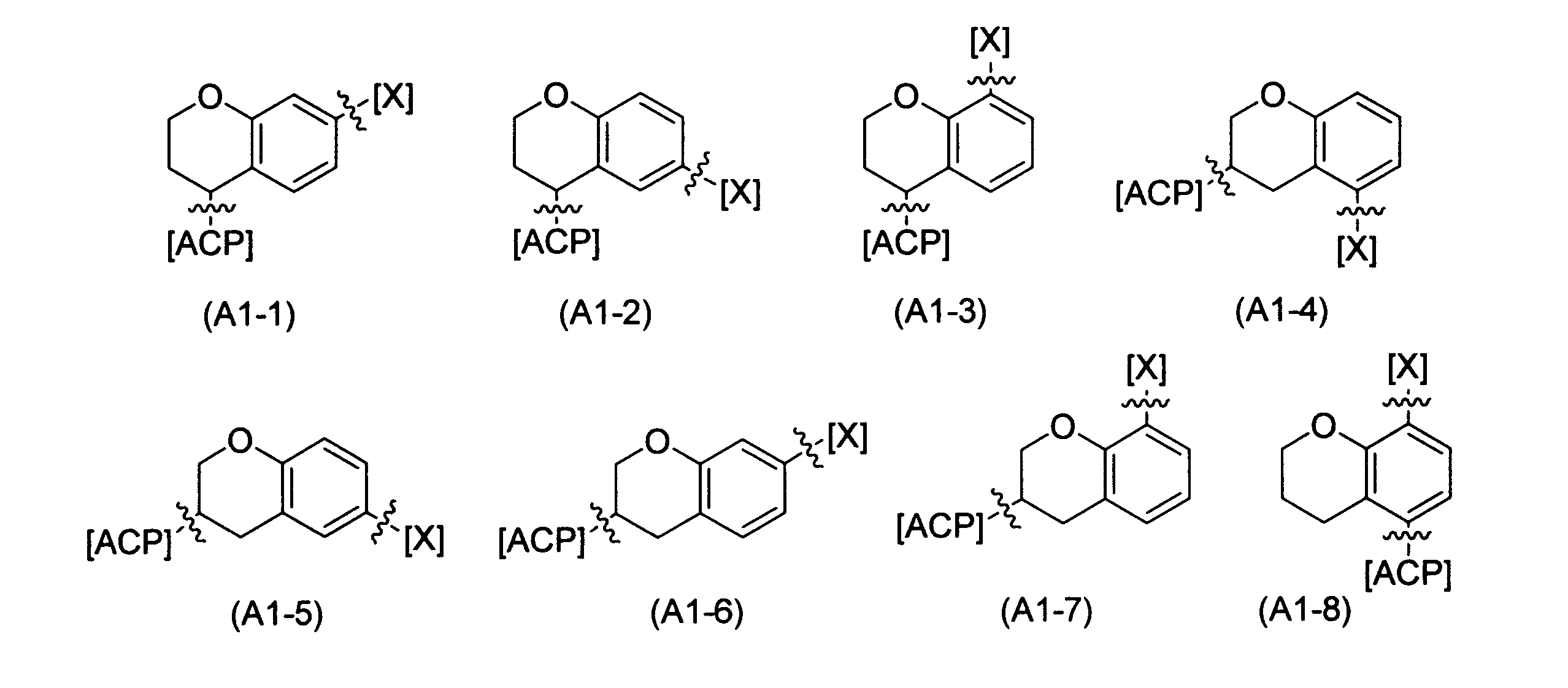

-[ACP]は、式(A-2):


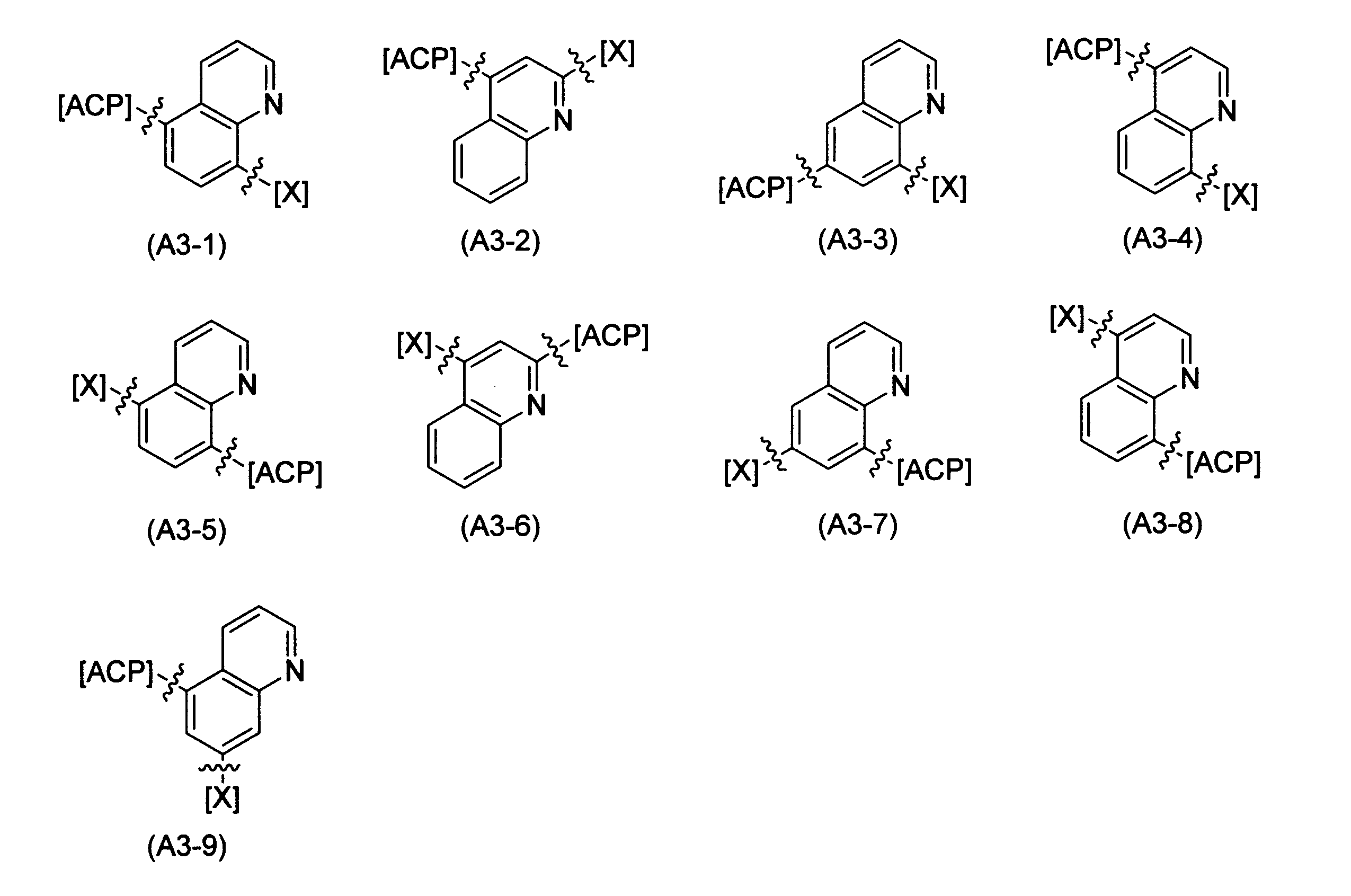


R1における低級アルキルとしては、好ましくは直鎖の炭素数1~3のアルキルであり、より好ましくはメチルである。
C6-14アリールならびにC6-14アリールオキシ、C7-15アロイル、C7-15アロイルオキシおよびC6-14アリールオキシカルボニルのアリール部分としては、例えば前記アリールの例示であげた基が例示される。
C2-10アルケニルは、例えば直鎖または分岐状の炭素数2~10のアルケニルを表し、より具体的にはビニル、プロペニル、ブテニル、ペンテニル、ヘキセニル、ヘプテニル、オクテニル、ノネニル、デセニル等が挙げられる。
Aは置換基を有していてもよい複素環ジイルを表し、ここで複素環ジイルが、クロマンジイル、5,6,7,8-テトラヒドロキノリンジイル、キノリンジイル、ピリジンジイル、イソキノリンジイル、ナフチリジンジイル、および5,6,7,8-テトラヒドロイソキノリンジイルからなる群から選ばれる複素環ジイルであり、
該複素環ジイルは、置換数1または2の、ハロゲン(好ましくは、塩素原子、フッ素原子、または臭素原子)、ヒドロキシ、シアノ、トリフルオロメチル、C2-5アルカノイルオキシ、C1-3アルキル、C3-5シクロアルキル、オキソ、C1-3アルコキシ、-NRXaRYa(式中、RXaおよびRYaは、同一または異なって、C1-3アルキルが挙げられる)、1個の窒素原子および/または1個の酸素原子を含む置換基を有していてもよい4~6員の単環性脂肪族複素環基(該置換基を有していてもよい4~6員の単環性脂肪族複素環基における置換基としては、置換数2のフッ素原子が挙げられる)、または置換基を有していてもよいC1-3アルキル(該置換基を有していてもよいC1-3アルキルにおける置換基としては、置換数1~3のジC1-3アルキルアミノ等が挙げられる)により置換されていてもよく、
R1は、水素原子、または置換基を有していてもよいC1-3アルキル(好ましくは、トリフルオロメチル)を表し、
R2は、置換基を有していてもよいアリール、置換基を有していてもよいシクロアルキル、置換基を有していてもよい脂肪族複素環基または置換基を有していてもよい芳香族複素環基を表し、
ここで
該置換基を有していてもよいアリールは、置換基を有していてもよいフェニルであり、該フェニルは、置換数1または2の、ハロゲン(好ましくは、塩素原子またはフッ素原子)、シアノ、C1-3アルキル、トリフルオロメチル、C3-5シクロアルキル、置換基を有していてもよいC1-5アルコキシ(該置換基を有していてもよいC1-5アルコキシにおける置換基としては、置換数3のフッ素原子が挙げられる)、C7-9アラルキルオキシ、置換基を有していてもよいC1-3アルキルチオ(該置換基を有していてもよいC1-3アルキルチオにおける置換基としては、置換数3のフッ素原子が挙げられる)、-NRXaRYa(式中、RXaおよびRYaは、同一または異なって、C1-3アルキルを表す)、またはトリフルオロメタンスルホニルで置換されていてもよく、
該置換基を有していてもよいシクロアルキルは、置換基を有していてもよい炭素数5~7のシクロアルキル(好ましくは、シクロヘキシル)であり、該シクロアルキルは、無置換またはトリフルオロメチルもしくは2個のフッ素原子で置換されていてもよく、
該置換基を有していてもよい脂肪族複素環基は、置換基を有していてもよい1個の酸素原子を含む6員の単環性脂肪族複素環基(好ましくは、テトラヒドロ-2H-ピラニル基)であり、該脂肪族複素環基はC1-3アルキルで置換されていてもよく、
該置換基を有していてもよい芳香族複素環基は、1個または2個の窒素原子を含む単環性芳香族複素環基(好ましくは、ピリジル、ピリミジニル、ピリダジニル、またはピラジニル)(但し、上記一般式(I)において、X=NHのとき、R2はピリミジニルではない)であり、該芳香族複素環基は置換数1または2の、ハロゲン(好ましくは、塩素原子またはフッ素原子)、オキソ、C1-3アルキル、トリフルオロメチル、またはC1-5アルコキシにより置換されていてもよく、
Xは、-O-を表し、および
n1およびn2は、同一または異なって、それぞれ0または1を表す。
Aは置換基を有していてもよい複素環ジイルを表し、ここで置換基を有していてもよい複素環ジイルにおける複素環ジイルが、クロマンジイル、5,6,7,8-テトラヒドロキノリンジイル、キノリンジイル、ピリジンジイル、イソキノリンジイル、ナフチリジンジイル、および5,6,7,8-テトラヒドロイソキノリンジイルからなる群から選ばれる複素環ジイルであり、
該複素環ジイルは、置換数1または2の、ハロゲン(好ましくは、塩素原子、フッ素原子、または臭素原子)、ヒドロキシ、シアノ、トリフルオロメチル、C2-5アルカノイルオキシ、C1-3アルキル、C3-5シクロアルキル、オキソ、C1-3アルコキシ、-NRXaRYa(式中、RXaおよびRYaは、同一または異なって、C1-3アルキルが挙げられる)、1個の窒素原子および/または1個の酸素原子を含む置換基を有していてもよい4~6員の単環性脂肪族複素環基(該置換基を有していてもよい4~6員の単環性脂肪族複素環基における置換基としては、置換数2のフッ素原子が挙げられる)、または置換基を有していてもよいC1-3アルキル(該置換基を有していてもよいC1-3アルキルにおける置換基としては、置換数1~3のジC1-3アルキルアミノ等が挙げられる)により置換されていてもよく、
R1は、水素原子、または置換基を有していてもよいC1-3アルキル(好ましくは、トリフルオロメチル)を表し、
R2は、置換基を有していてもよいアリール、置換基を有していてもよいシクロアルキル、置換基を有していてもよい脂肪族複素環基または置換基を有していてもよい芳香族複素環基を表し、
ここで
該置換基を有していてもよいアリールは、置換基を有していてもよいフェニルであり、該フェニルは、置換数1または2の、ハロゲン(好ましくは、塩素原子またはフッ素原子)、シアノ、C1-3アルキル、トリフルオロメチル、C3-5シクロアルキル、置換基を有していてもよいC1-5アルコキシ(該置換基を有していてもよいC1-5アルコキシにおける置換基としては、置換数3のフッ素原子が挙げられる)、C7-9アラルキルオキシ、置換基を有していてもよいC1-3アルキルチオ(該置換基を有していてもよいC1-10アルキルチオにおける置換基としては、置換数3のフッ素原子が挙げられる)、または-NRXaRYa(式中、RXaおよびRYaは、同一または異なって、C1-3アルキルを表す)で置換されていてもよく、
該置換基を有していてもよいシクロアルキルは、置換基を有していてもよい炭素数5~7のシクロアルキル(好ましくは、シクロヘキシル)であり、該シクロアルキルは、無置換またはトリフルオロメチルもしくは2個のフッ素原子で置換されていてもよく、
該置換基を有していてもよい脂肪族複素環基は、置換基を有していてもよい1個の酸素原子を含む6員の単環性脂肪族複素環基(好ましくは、テトラヒドロ-2H-ピラニル基)であり、該脂肪族複素環基はC1-3アルキルで置換されていてもよく、
該置換基を有していてもよい芳香族複素環基は、1個または2個の窒素原子を含む単環性芳香族複素環基(好ましくは、ピリジル、ピリミジニル、ピリダジニル、またはピラジニル)(但し、上記一般式(I)において、X=NHのとき、R2はピリミジニルではない)であり、該芳香族複素環基は置換数1または2の、ハロゲン(好ましくは、塩素原子またはフッ素原子)、C1-3アルキル、トリフルオロメチル、またはC1-5アルコキシにより置換されていてもよく、
Xは、-O-を表し、および
n1およびn2は、同一または異なって、それぞれ0または1を表す。
Aは置換基を有していてもよいクロマンジイルを表し、該クロマンジイルは、置換数1または2の、ハロゲン(好ましくは、塩素原子、フッ素原子、または臭素原子)、オキソ、ヒドロキシ、トリフルオロメチル、C2-5アルカノイルオキシ、C1-3アルコキシ、C1-3アルキル、または-NRXaRYa(式中、RXaおよびRYaは、同一または異なって、C1-3アルキルが挙げられる)で置換されていてもよく、
R1は、水素原子、または置換基を有していてもよいC1-3アルキル(好ましくは、トリフルオロメチル)を表し、
R2は、置換基を有していてもよいアリールまたは置換基を有していてもよいシクロアルキルを表し、
ここで
該置換基を有していてもよいアリールは、置換基を有していてもよいフェニルであり、該フェニルは、置換数1または2の、ハロゲン(好ましくは、塩素原子またはフッ素原子)、シアノ、C1-3アルキル、トリフルオロメチル、置換基を有していてもよいC1-5アルコキシ(該置換基を有していてもよいC1-5アルコキシにおける置換基としては、置換数3のフッ素原子が挙げられる)、置換基を有していてもよいC1-3アルキルチオ(該置換基を有していてもよいC1-3アルキルチオにおける置換基としては、置換数3のフッ素原子が挙げられる)、またはトリフルオロメタンスルホニルで置換されていてもよく、
該置換基を有していてもよいシクロアルキルは、置換基を有していてもよい炭素数5~7のシクロアルキル(好ましくは、シクロヘキシル)であり、該シクロアルキルは、無置換または2個のフッ素原子で置換されていてもよく、
Xは、-O-を表し、および
n1およびn2は、同一または異なって、それぞれ0または1を表す。
Aは置換基を有していてもよいクロマンジイルを表し、該クロマンジイルは、置換数1または2の、ハロゲン(好ましくは、塩素原子、フッ素原子、または臭素原子)、オキソ、ヒドロキシ、トリフルオロメチル、C2-5アルカノイルオキシ、C1-3アルコキシ、C1-3アルキル、または-NRXaRYa(式中、RXaおよびRYaは、同一または異なって、C1-3アルキルが挙げられる)で置換されていてもよく、
R1は、水素原子、または置換基を有していてもよいC1-3アルキル(好ましくは、トリフルオロメチル)を表し、
R2は、置換基を有していてもよい芳香族複素環基を表し、該置換基を有していてもよい芳香族複素環基は、1個または2個の窒素原子を含む単環性芳香族複素環基(好ましくは、ピリジル、ピリミジニル、ピリダジニル、またはピラジニル)であり、該芳香族複素環基は置換数1または2の、ハロゲン(好ましくは、塩素原子またはフッ素原子)、C1-3アルキル、トリフルオロメチル、またはC1-5アルコキシにより置換されていてもよく、
Xは、-O-を表し、および
n1およびn2は、同一または異なって、それぞれ0または1を表す。
Aは未置換のクロマンジイルを表し、
R1は、水素原子を表し、
R2は、置換基を有していてもよいフェニルを表し、該フェニルは置換数1または2の、ハロゲン(好ましくは、塩素原子またはフッ素原子)、シアノ、C1-3アルキル、トリフルオロメチル、置換基を有していてもよいC1-5アルコキシ(該置換基を有していてもよいC1-5アルコキシにおける置換基としては、置換数3のフッ素原子が挙げられる)、または置換基を有していてもよいC1-3アルキルチオ(該置換基を有していてもよいC1-10アルキルチオにおける置換基としては、置換数3のフッ素原子が挙げられる)で置換されていてもよく、
Xは、-O-を表し、および
n1およびn2は、同一または異なって、それぞれ0または1を表す(好ましくは、n2は0を表す)。
Aは未置換のクロマンジイルを表し、
R1は、水素原子を表し、
R2は、置換基を有していてもよい芳香族複素環基を表し、該置換基を有していてもよい芳香族複素環基は、1個または2個の窒素原子を含む単環性芳香族複素環基(好ましくは、ピリジル、ピリミジニル、ピリダジニル、またはピラジニル)であり、該芳香族複素環基は置換数1または2の、ハロゲン(好ましくは、塩素原子またはフッ素原子)、C1-3アルキル、トリフルオロメチル、またはC1-5アルコキシにより置換されていてもよく、
Xは、-O-を表し、および
n1およびn2は、同一または異なって、それぞれ0または1を表す(好ましくは、n2は0を表す)。
Aは置換基を有していてもよいキノリンジイルを表し、該キノリンジイルは、置換数1または2の、ハロゲン(好ましくは、塩素原子)、ヒドロキシ、またはC1-3アルキルで置換されていてもよく、
R1は、水素原子を表し、
R2は、置換基を有していてもよいアリールを表し、ここで、該置換基を有していてもよいアリールは、置換基を有していてもよいフェニルであり、該フェニルは、置換数1または2の、ハロゲン(好ましくは、塩素原子またはフッ素原子)、C2-5アルキニル、シアノ、C1-3アルキル、トリフルオロメチル、C3-5シクロアルキル、置換基を有していてもよいC1-5アルコキシ(該置換基を有していてもよいC1-5アルコキシにおける置換基としては、置換数3のフッ素原子が挙げられる)、C7-9アラルキルオキシ、置換基を有していてもよいC1-3アルキルチオ(該置換基を有していてもよいC1-10アルキルチオにおける置換基としては、置換数3のフッ素原子が挙げられる)、または-NRXaRYa(式中、RXaおよびRYaは、同一または異なって、C1-3アルキルを表す)で置換されていてもよく、
Xは、-O-を表し、および
n1およびn2は、同一または異なって、それぞれ0または1を表す。
Aは置換基を有していてもよいキノリンジイルを表し、該キノリンジイルは、置換数1または2の、ハロゲン(好ましくは、塩素原子)、ヒドロキシ、またはC1-3アルキルで置換されていてもよく、
R1は、水素原子を表し、
R2は、置換基を有していてもよい芳香族複素環基を表し、ここで、該置換基を有していてもよい芳香族複素環基は、、1個または2個の窒素原子を含む単環性芳香族複素環基(好ましくは、ピリジル、ピリミジニル、ピリダジニル、またはピラジニル)(但し、上記一般式(I)において、X=NHのとき、R2はピリミジニルではない)であり、該芳香族複素環基は置換数1または2の、ハロゲン(好ましくは、塩素原子またはフッ素原子)、C1-3アルキル、トリフルオロメチル、またはC1-5アルコキシにより置換されていてもよく、
Xは、-O-を表し、および
n1およびn2は、同一または異なって、それぞれ0または1を表す。
Aは未置換のキノリンジイルを表し、
R1は、水素原子を表し、
R2は、置換基を有していてもよいフェニルを表し、該フェニルは置換数1または2の、ハロゲン(好ましくは、塩素原子)、C2-5アルキニル、トリフルオロメチル、またはC3-5シクロアルキルで置換されていてもよく、
Xは、-O-を表し、および
n1およびn2は、同一または異なって、それぞれ0または1を表す(好ましくは、n2は0を表す)。
Aは未置換のキノリンジイルを表し、
R1は、水素原子を表し、
R2は、置換基を有していてもよい芳香族複素環基を表し、ここで、該置換基を有していてもよい芳香族複素環基は、、1個または2個の窒素原子を含む単環性芳香族複素環基(好ましくは、ピリジル、ピリミジニル、ピリダジニル、またはピラジニル)であり、該芳香族複素環基は置換数1または2の、ハロゲン(好ましくは、塩素原子またはフッ素原子)、C1-3アルキル、トリフルオロメチル、またはC1-5アルコキシにより置換されていてもよく、
Xは、-O-を表し、および
n1およびn2は、同一または異なって、それぞれ0または1を表す(好ましくは、n2は0を表す)。
Aは置換基を有していてもよいピリジンジイルを表し、該ピリジンジイルは、置換数1または2の、ハロゲン(好ましくは、塩素原子)、ヒドロキシ、またはC1-3アルキルで置換されていてもよく、
R1は、水素原子またはC1-3アルキル(好ましくは、メチル)を表し、
R2は、置換基を有していてもよいアリールを表し、ここで、該置換基を有していてもよいアリールは、置換基を有していてもよいフェニルであり、該フェニルは、置換数1または2の、ハロゲン(好ましくは、塩素原子またはフッ素原子)、シアノ、C1-3アルキル、トリフルオロメチル、C3-5シクロアルキル、置換基を有していてもよいC1-5アルコキシ(該置換基を有していてもよいC1-5アルコキシにおける置換基としては、置換数3のフッ素原子が挙げられる)、C7-9アラルキルオキシ、置換基を有していてもよいC1-3アルキルチオ(該置換基を有していてもよいC1-10アルキルチオにおける置換基としては、置換数3のフッ素原子が挙げられる)、または-NRXaRYa(式中、RXaおよびRYaは、同一または異なって、C1-3アルキルを表す)で置換されていてもよく、
Xは、-O-を表し、および
n1およびn2は、同一または異なって、それぞれ0または1を表す。
Aは未置換のピリジンジイルを表し、
R1は、水素原子またはメチルを表し、
R2は、置換基を有していてもよいフェニルを表し、該フェニルは置換数1または2の、ハロゲン(好ましくは、塩素原子またはフッ素原子)、シアノ、トリフルオロメチル、置換基を有していてもよいC1-5アルコキシ(該置換基を有していてもよいC1-5アルコキシにおける置換基としては、置換数3のフッ素原子が挙げられる)、またはC7-9アラルキルオキシで置換されていてもよく、
Xは、-O-を表し、および
n1およびn2は、同一または異なって、それぞれ0または1を表す(好ましくは、n2は0を表す)。
Aは置換基を有していてもよいイソキノリンジイルを表し、該イソキノリンジイルは、置換数1または2の、ハロゲン(好ましくは、塩素原子)、ヒドロキシ、またはC1-3アルキルで置換されていてもよく、
R1は、水素原子またはC1-3アルキル(好ましくは、メチル)を表し、
R2は、置換基を有していてもよいアリールを表し、ここで、該置換基を有していてもよいアリールは、置換基を有していてもよいフェニルであり、該フェニルは、置換数1または2の、ハロゲン(好ましくは、塩素原子またはフッ素原子)、シアノ、C1-3アルキル、トリフルオロメチル、C3-5シクロアルキル、置換基を有していてもよいC1-5アルコキシ(該置換基を有していてもよいC1-5アルコキシにおける置換基としては、置換数3のフッ素原子が挙げられる)、C7-9アラルキルオキシ、置換基を有していてもよいC1-3アルキルチオ(該置換基を有していてもよいC1-10アルキルチオにおける置換基としては、置換数3のフッ素原子が挙げられる)、または-NRXaRYa(式中、RXaおよびRYaは、同一または異なって、C1-3アルキルを表す)で置換されていてもよく、
Xは、-O-を表し、および
n1およびn2は、同一または異なって、それぞれ0または1を表す。
Aは未置換のイソキノリンジイルを表し、
R1は、水素原子を表し、
R2は、置換基を有していてもよいフェニルを表し、該フェニルは置換数1または2の、ハロゲン(好ましくは、塩素原子)、C2-5アルキニル、トリフルオロメチル、またはC3-5シクロアルキルで置換されていてもよく、
Xは、-O-を表し、および
n1およびn2は、同一または異なって、それぞれ0または1を表す(好ましくは、n2は0を表す)。
Aは未置換のイソキノリンジイルを表し、
R1は、水素原子を表し、
R2は、置換基を有していてもよい芳香族複素環基を表し、ここで、該置換基を有していてもよい芳香族複素環基は、、1個または2個の窒素原子を含む単環性芳香族複素環基(好ましくは、ピリジル、ピリミジニル、ピリダジニル、またはピラジニル)であり、該芳香族複素環基は置換数1または2の、ハロゲン(好ましくは、塩素原子またはフッ素原子)、C1-3アルキル、トリフルオロメチル、またはC1-5アルコキシにより置換されていてもよく、
Xは、-O-を表し、および
n1およびn2は、同一または異なって、それぞれ0または1を表す(好ましくは、n2は0を表す)。
製造法10において、化合物(I)の前駆体である化合物(II)のうち、4-アミノクロマン誘導体である化合物(II-a)、(II-b)および(II-c)ならびに4-アミノメチルクロマン誘導体である化合物(II-d)は、以下の工程に従って製造することができる。

化合物(III-b)は、化合物(III-a)を溶媒中、好ましくは1~10当量の還元剤、好ましくは1~10当量の酸および必要により好ましくは0.01~1当量 の金属触媒の存在下、-20 ℃と用いる溶媒の沸点との間の温度で、好ましくは1~10当量のアンモニア源と5分間~72時間反応させることにより製造することができる。
n2が0であり、かつR2が置換基を有していてもよいアリールまたは置換基を有していてもよい芳香族複素環基である化合物(II-a)は、化合物(III-b)を溶媒中、好ましくは0.01~1当量の銅試薬、好ましくは0.01~1当量の配位子、および好ましくは1~10当量の塩基の存在下、-20 ℃と用いる溶媒の沸点との間の温度で、好ましくは1~10当量の化合物(a-3)と5分間~72時間反応させることにより製造することができる。
n2が0である化合物(III-c)は、化合物(III-a)を溶媒中、好ましくは1~10当量の銅試薬および1~10当量の塩基の存在下、-20 ℃と用いる溶媒の沸点との間の温度で、好ましくは1~10当量の化合物(a-4)と5分間~72時間反応させることにより製造することができる。
化合物(II-a)は、化合物(III-c)を用い、工程1と同様の方法により製造することができる。
化合物(III-d)は、化合物(III-c)を溶媒中、-78 ℃と用いる溶媒の沸点との間の温度で、好ましくは1~10当量の化合物(a-5)と5分間~72時間反応させることにより製造することができる。
化合物(III-e)は、化合物(III-d)を、溶媒中、0 ℃と用いる溶媒の沸点との間の温度で、必要により好ましくは1当量~大過剰量の塩基または必要により好ましくは1当量~大過剰量の酸存在下、好ましくは1当量~大過剰量のアジド化剤と5分間~72時間反応させることにより製造することができる。
化合物(II-b)は、化合物(III-e)を、溶媒中、-78 ℃と用いる溶媒の沸点との間の温度で、好ましくは1~10当量の還元剤と5分間~72時間反応させることにより製造することができる。
還元剤としては、例えば、水素化アルミニウムリチウム、ボランジメチルスルフィド錯体、トリフェニルホスフィン、テトラブチルスズヒドリド等が挙げられる。
化合物(III-f)は、化合物(III-c)を用いて、例えば、「第5版実験化学講座13 有機化合物の合成I 炭化水素・ハロゲン化物」、丸善(2005年)、「第5版実験化学講座15 有機化合物の合成III アルデヒド・ケトン・キノン」、丸善(2005年)等に記載の方法に準じた方法により製造することができる。
アルキル化剤としては、例えばヨウ化メチル、ヨウ化エチル、トリフルオロメタンスルホン酸メチル等が挙げられる。
化合物(II-c)は、化合物(III-f)を用い、工程1と同様の方法により製造することができる。
化合物(III-g)は、化合物(III-c)を溶媒中、-78 ℃と用いる溶媒の沸点との間の温度で、好ましくは1~10当量の還元剤と5分間~72時間反応させることにより製造することができる。
還元剤としては、例えば、水素化アルミニウムリチウム、水素化ジイソブチルアルミニウム、水素化ビス(2-メトキシエトキシ)アルミニウムナトリウム、ボランジメチルスフィド錯体、水素化ホウ素リチウム、水素化ホウ素ナトリウム等が挙げられる。
化合物(III-h)は、化合物(III-g)を溶媒中、必要により好ましくは1~10当量の添加剤存在下、0 ℃と用いる溶媒の沸点との間の温度で、好ましくは1~10当量のシアノ化剤と5分間~72時間反応させることにより製造することができる。
化合物(II-d)は、化合物(III-h)を溶媒中、0 ℃と用いる溶媒の沸点との間の温度で、好ましくは1~10当量の還元剤と5分間~72時間反応させることにより製造することができる。
n2が1である化合物(III-c)は、化合物(III-a)を、溶媒中、好ましくは1~10当量のホスフィン化合物および好ましくは1~10当量のアゾ化合物の存在下、-78 ℃と用いる溶媒の沸点との間の温度で、好ましくは1~10当量の化合物(a-6)と5分間~72時間反応させることにより製造することができる。
化合物(II)のうち、Xが-O-である3-アミノクロマン誘導体である化合物(II-i)は、以下の工程に従って製造することができる。

化合物(III-p)は、化合物(III-o)を無溶媒でまたは溶媒中、好ましくは1~10当量の塩基存在下、0 ℃と用いる溶媒の沸点(無溶媒のときは0 ℃と150 ℃)の間の温度で、好ましくは1当量~大過剰量のアクリロニトリルと5分間~72時間反応させることにより製造することができる。
化合物(III-q)は、化合物(III-p)を溶媒中、0 ℃と用いる溶媒の沸点との間の温度で、好ましくは1当量~大過剰量の塩基で5分間~72時間処理することにより製造することができる。
化合物(III-r)は、化合物(III-q)を、無溶媒でまたは溶媒中、必要により好ましくは1当量~大過剰量の塩基の存在下、0 ℃と用いる溶媒の沸点(無溶媒のときは0 ℃と150 ℃)の間の温度で、好ましくは1当量~大過剰量のアジド化剤および好ましくは1当量~大過剰量のtert-ブタノールと、5分間~72時間反応させることにより製造することができる。
化合物(III-s)は、化合物(III-r)を溶媒中、好ましくは0.01~50重量%の触媒存在下-20 ℃と用いる溶媒の沸点との間の温度で、(i)好ましくは1~20気圧の水素雰囲気下で5分間~72時間反応させる、または (ii)好ましくは2当量~大過剰量の水素源と、5分間~72時間反応させることにより製造することができる。
化合物(III-t)は、化合物(III-s)を無溶媒でまたは溶媒中、0 ℃と用いる溶媒の沸点(無溶媒のときは0 ℃と150 ℃)の間の温度で、または、必要によりマイクロウェーブ反応装置を用いて、かつ0 ℃と200 ℃の間の温度で、好ましくは1当量~大過剰量の添加物で1分間~72時間処理することにより製造することができる。
n2が1である化合物(II-i)は、化合物(III-t)および化合物(a-6)を用い、工程13と同様の方法により製造することができる。
n2が0であり、かつR2が置換基を有していてもよいアリールまたは置換基を有していてもよい芳香族複素環基である化合物(II-i)は、化合物(III-t)および化合物(a-3)を用い、工程2と同様の方法により製造することができる。
製造法2に記載の化合物(III-r)のうち、化合物(III-r-2)は、以下の工程に従っても製造することができる。

化合物(III-r-2)は、化合物(III-r-1)を溶媒中、好ましくは0.1~10当量の塩基および好ましくは0.001~0.5当量のパラジウム触媒存在下、-20 ℃と用いる溶媒の沸点との間の温度で、好ましくは1~5当量の化合物(a-8)と5分間~72時間反応させることにより製造することができる。
化合物(II)のうち、3-アミノクロマン-4-オン誘導体である化合物(II-j)は、以下の工程に従って製造することができる。
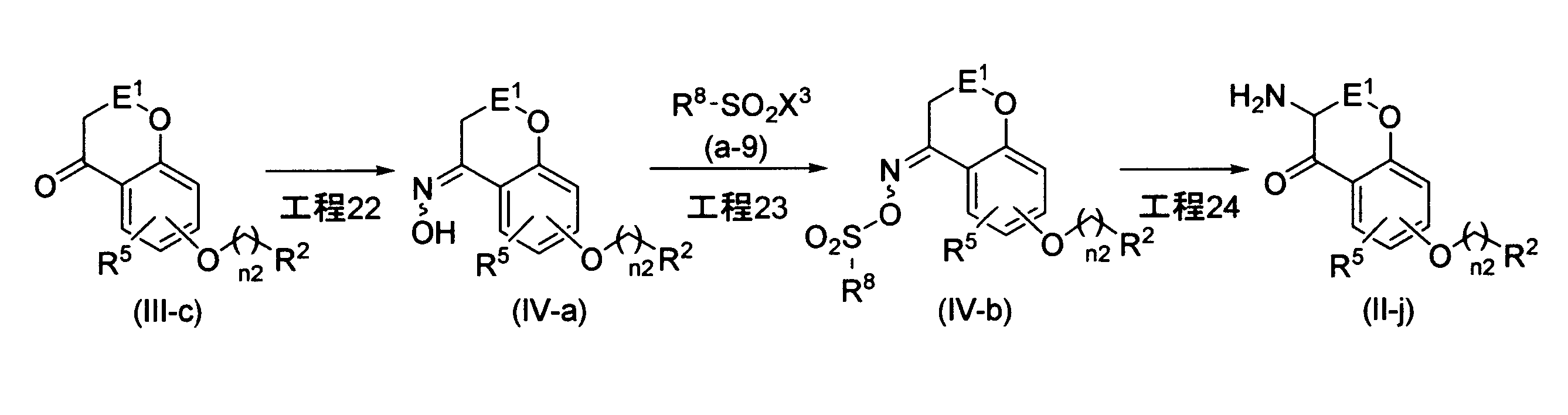
化合物(IV-a)は、製造法1の工程3または工程13で得られる化合物(III-c)を溶媒中、好ましくは1~10当量の塩基または酸の存在下、-20 ℃と用いる溶媒の沸点との間の温度で、好ましくは1~10当量のヒドロキシルアミンまたはその塩と5分間~72時間反応させることにより製造することができる。
化合物(IV-b)は、化合物(IV-a)を、溶媒中、好ましくは1~10当量の塩基存在下、-20 ℃と用いる溶媒の沸点との間の温度で、好ましくは1~10当量の化合物(a-9)と5分間~72時間反応させることにより製造することができる。
化合物(II-j)は、化合物(IV-b)を溶媒中、-20 ℃と用いる溶媒の沸点との間の温度で、好ましくは1~10当量の塩基で5分間~72時間処理することにより製造することができる。
化合物(II)のうち、5,6,7,8-テトラヒドロキノリン誘導体である化合物(II-k)は、以下の工程に従って製造することができる。
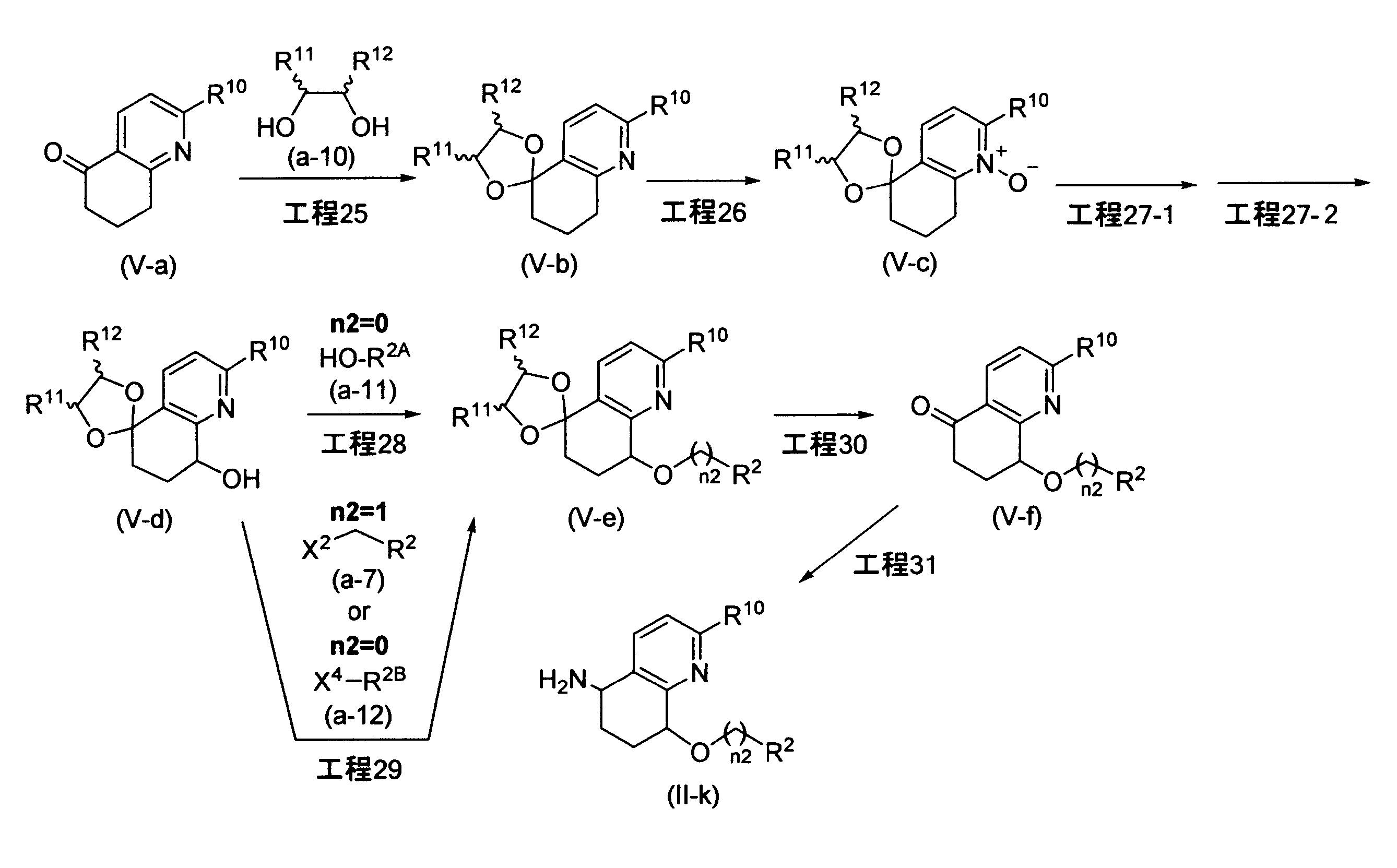
化合物(V-b)は、化合物(V-a)を、好ましくは0.1~10当量の添加物存在下、溶媒中、-20 ℃と用いる溶媒の沸点との間の温度で、好ましくは1~10当量の化合物(a-10)と5分間~72時間反応させることにより製造することができる。
化合物(V-c)は、化合物(V-b)を溶媒中、-20 ℃と用いる溶媒の沸点との間の温度で、好ましくは1~10当量の酸化剤と5分間~72時間反応させることにより製造することができる。
化合物(V-d)は以下の方法で製造することができる。
化合物(V-c)を溶媒中、好ましくは1~10当量の塩基存在下、-78 ℃と用いる溶媒の沸点との間の温度で、好ましくは1~10当量の酸無水物と5分間~72時間反応させる。
工程27-1で得られた化合物を、溶媒中、0 ℃と用いる溶媒の沸点との間の温度で、化合物(V-c)に対して1当量~大過剰量の塩基と5分間~72時間反応させる。
n2が0であり、R2が置換基を有していてもよいアリールまたは置換基を有していてもよい芳香族複素環基である化合物(V-e)は、化合物(V-d)を溶媒中、好ましくは1~10当量のホスフィン化合物および好ましくは1~10当量のアゾ化合物の存在下、-78 ℃と用いる溶媒の沸点との間の温度で、好ましくは1~10当量の化合物(a-11)と5分間~72時間反応させることにより製造することができる。
n2が1である化合物(V-e)は、化合物(V-d)を、溶媒中、好ましくは1~10当量の塩基存在下、-20 ℃と用いる溶媒の沸点との間の温度で、好ましくは1~10当量の化合物(a-7)と5分間~72時間反応させることにより製造することができる。
化合物(V-f)は、化合物(V-e)を用いて、例えば、プロテクティブ・グループス・イン・オーガニック・シンセシス第3版(Protective Groups in Organic Synthesis, third edition)、グリーン(T. W. Greene)著、John Wiley & Sons Inc.(1999年)等に記載の方法に準じた方法で製造することができる。
化合物(II-k)は、化合物(V-f)を用い、工程1と同様の方法により製造することができる。
前記化合物(II-k)のうち、5,6,7,8-テトラヒドロキノリンの2位が低級アルコキシまたは-NRcRd[式中RcおよびRdは、同一または異なって、それぞれ水素原子または低級アルキルを表すか、またはRcおよびRdが隣接する窒素原子と一緒になって置換基を有していてもよい含窒素複素環基(該含窒素複素環基としては、例えば、アジリジニル、アゼチジニル、ピロリジニル、ピペリジノ、アゼパニル、ピロリル、イミダゾリジニル、イミダゾリル、ピラゾリジニル、ピラゾリニル、ピラゾリル、ピペラジニル、ホモピペラジニル、オキサゾリジニル、2H-オキサゾリル、チオキサゾリジニル、2H-チオキサゾリル、モルホリノ、チオモルホリニル等が挙げられ、該隣接する窒素原子と一緒になって置換基を有していてもよい含窒素複素環基の該置換基としては、同一または異なって、それぞれ、例えば、置換数1~3の置換基を有していてもよい脂肪族複素環基の置換基の例示で挙げた置換基等が挙げられる)を形成する]である化合物(II-L)は、以下の工程に従って製造することもできる。
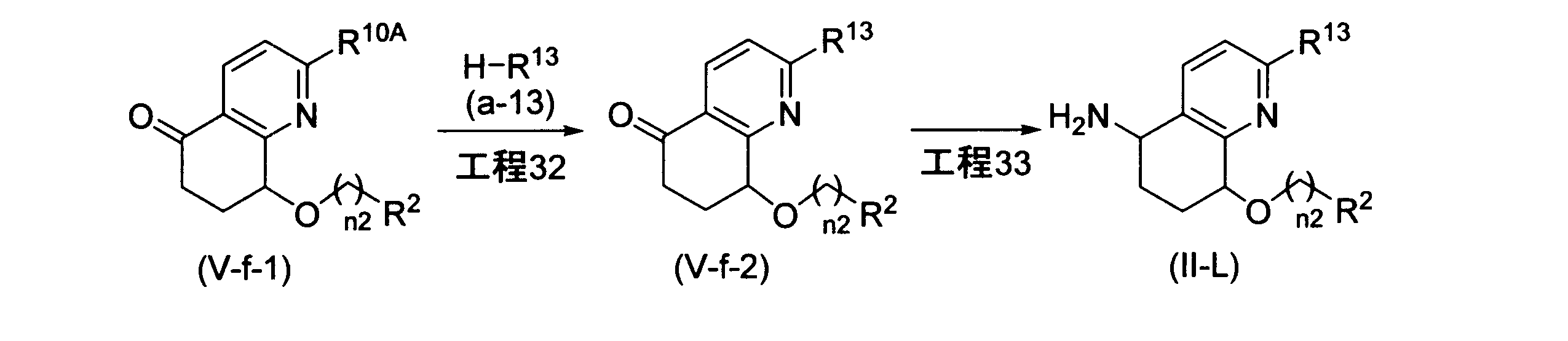
化合物(V-f-2)は、化合物(V-f-1)を溶媒中、必要により好ましくは1~10当量の塩基存在下、0 ℃と用いる溶媒の沸点との間の温度で、または必要によりマイクロウェーブ反応装置を用いて、かつ0 ℃と200 ℃の間の温度で、好ましくは1~10当量の化合物(a-13)または化合物(a-13)のアルカリ金属塩と1分間~72時間反応させることにより製造することができる。
化合物(II-L)は、化合物(V-f-2)を用い、工程1と同様の方法により製造することができる。
化合物(II)のうち、化合物(II-m)、(II-n)および(II-o)は、以下の工程に従って製造することができる。

化合物(II-m)は、化合物(VII-a)を無溶媒でまたは溶媒中、必要により好ましくは1~10当量のヨウ化ナトリウムまたはヨウ化カリウムの存在下、および必要により好ましくは1~10当量の塩基の存在下、-20 ℃と用いる溶媒の沸点(無溶媒のときは-20 ℃と180 ℃)との間の温度で、または必要によりマイクロウェーブ反応装置を用いて、かつ0 ℃と200 ℃の間の温度で、好ましくは1~10当量の化合物(a-6)と1分間~72時間反応させることにより製造することができる。
化合物(II-n)は、R14がニトロである化合物(II-m)を溶媒中、好ましくは0.01~50重量%の触媒存在下、-20 ℃と用いる溶媒の沸点との間の温度で、(i)好ましくは1~20気圧の水素雰囲気下で5分間~72時間反応させる、または(ii)化合物(II-m)に対して好ましくは2当量~大過剰量の水素源と5分間~72時間反応させることにより製造することができる。
化合物(II-o)は、R14がシアノである化合物(II-m)を用い、工程12と同様の方法により製造することができる。
化合物(II)のうち、化合物(II-n)は以下の工程に従って製造することもできる。
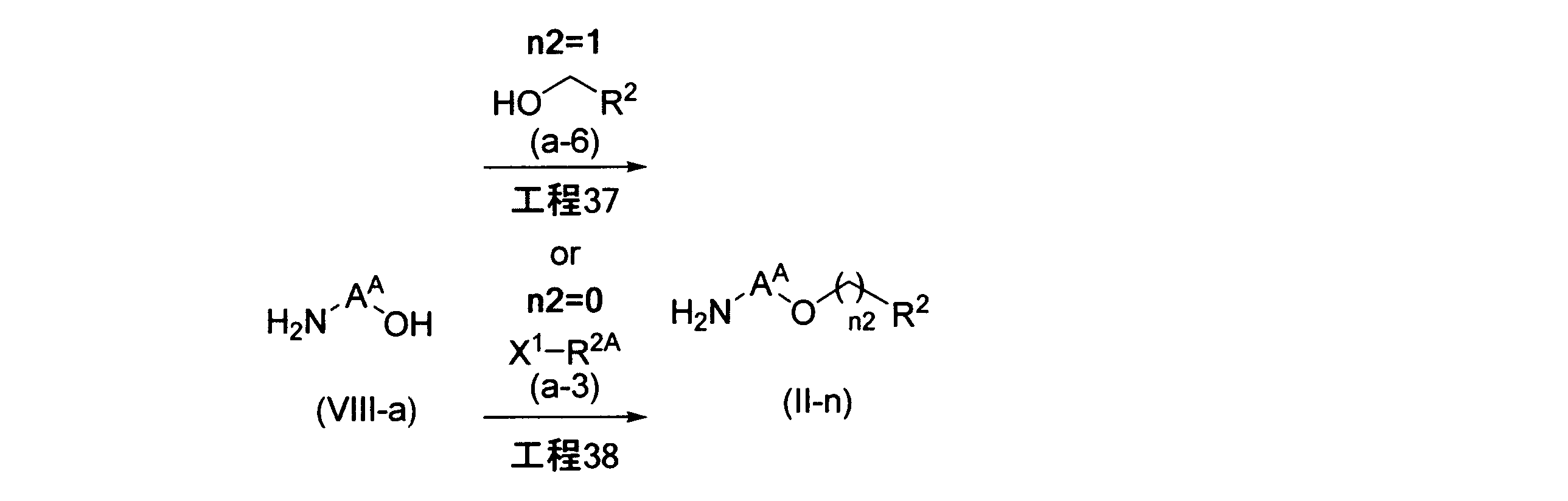
n2が1である化合物(II-n)は、化合物(VIII-a)を、溶媒中、好ましくは1~10当量のホスフィン化合物および好ましくは1~10当量のアゾ化合物の存在下、-78 ℃と用いる溶媒の沸点との間の温度で、好ましくは1~10当量の化合物(a-6)と5分間~72時間反応させることにより製造することができる。
n2が0であり、かつR2が置換基を有していてもよいアリールまたは置換基を有していてもよい芳香族複素環基である化合物(II-n)は、化合物(VIII-a)および化合物(a-3)を用い、製造法1の工程2と同様の方法により製造することができる。
化合物(II)のうち、化合物(II-n)は以下の工程に従って製造することもできる。
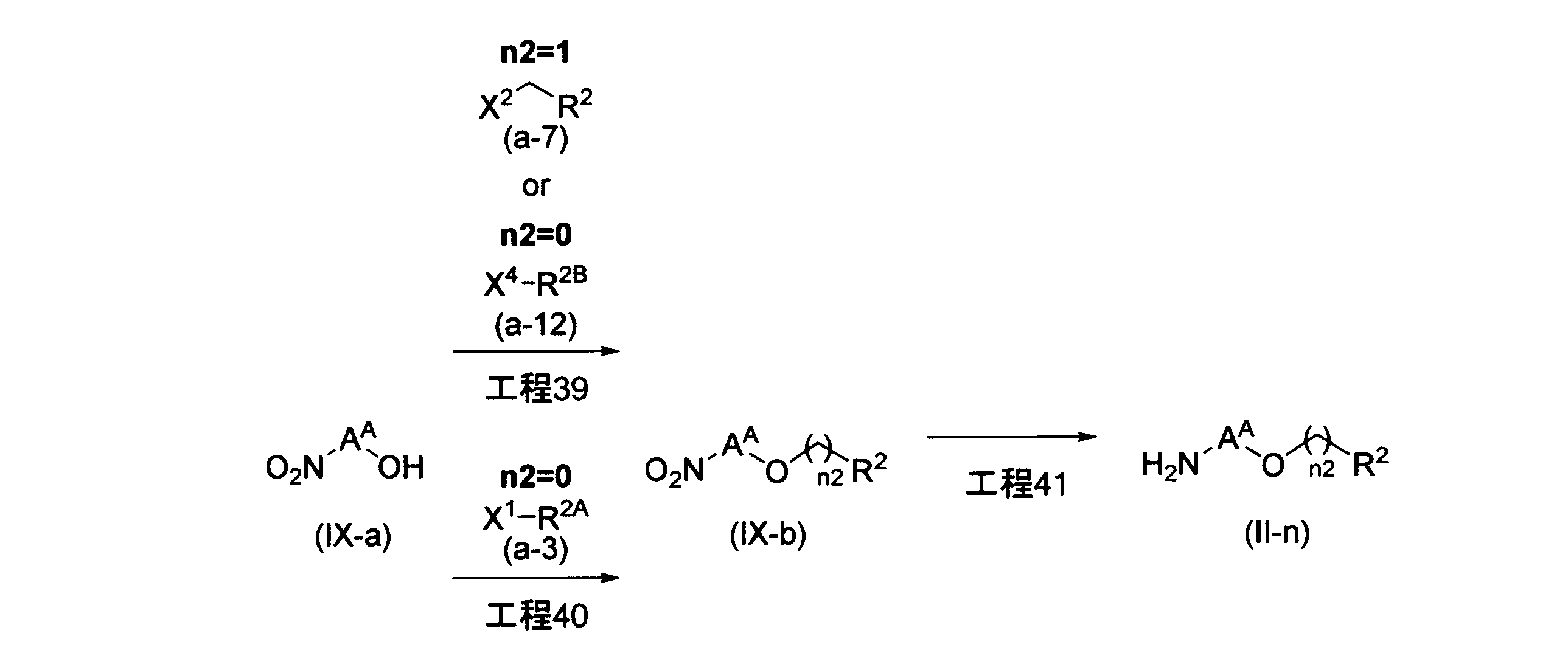
n2が1である化合物(IX-b)は、化合物(IX-a)を、溶媒中、好ましくは1~10当量の塩基存在下、-20 ℃と用いる溶媒の沸点との間の温度で、好ましくは1~10当量の化合物(a-7)と5分間~72時間反応させることにより製造することができる。
溶媒としては、例えば、メタノール、エタノール、トルエン、酢酸エチル、アセトニトリル、ジエチルエーテル、THF、DME、DMF、ジオキサン、水等が挙げられ、これらは単独でまたは混合して用いられる。
n2が0であり、かつR2が置換基を有していてもよいアリールまたは置換基を有していてもよい芳香族複素環基である化合物(IX-b)は、化合物(IX-a)および化合物(a-3)を用い、製造法1の工程2と同様の方法により製造することができる。
化合物(II-n)は、化合物(IX-b)を用い、工程34と同様の方法により製造することができる。
化合物(I)は下記製造法に従って製造することができる。

化合物(I)は、化合物(II)を、溶媒中、好ましくは1~5当量の縮合剤の存在下、必要により好ましくは1~5当量の添加剤の存在下、-20 ℃と用いる溶媒の沸点との間の温度で、好ましくは1~5当量の化合物(a-1)と5分間~72時間反応させることにより製造することができる。
縮合剤としては、例えば、1,3-ジシクロヘキサンカルボジイミド(DCC)、1-エチル-3-(3-ジメチルアミノプロピル)カルボジイミド・塩酸塩(EDC)、カルボニルジイミダゾール(CDI)、ヨウ化 2-クロロ-1-メチルピリジニウム等が挙げられる。
溶媒としては、例えば、ジクロロメタン、クロロホルム、1,2-ジクロロエタン、トルエン、酢酸エチル、アセトニトリル、ジエチルエーテル、THF、DME、ジオキサン、DMF、DMA、NMP、ピリジン等が挙げられ、これらは単独でまたは混合して用いられる。
化合物(II)のうち、5-アミノクロマン誘導体または5-アミノメチルクロマン誘導体である化合物(II-p)、(II-q)および(II-r)は、以下の工程に従って製造することができる。

化合物(X-b)は、化合物(X-a)を無溶媒でまたは溶媒中、(i)1当量~大過剰量の酸存在下、1当量~大過剰量の還元剤と-20 ℃と用いる溶媒の沸点との間の温度で5分間~72時間反応させる、または(ii)好ましくは 0.01~50重量%の触媒存在下、1~20気圧の水素雰囲気下または2等量~大過剰量の水素源と-20 ℃と用いる溶媒の沸点との間の温度で5分間~72時間反応させることにより製造することができる。
n2が0である化合物(II-p)は、X6がヒドロキシである化合物(X-b)を用い、製造法1の工程2または工程3と同様の方法により製造することができる。
n2が1である化合物(II-p)は、X6がヒドロキシである化合物(X-b)を用い、製造法1の工程13と同様の方法により製造することができる。
化合物(II-p)は、X6がフッ素原子、塩素原子、臭素原子、またはヨウ素原子である化合物(X-b)を用い、工程34と同様の方法により製造することができる。
化合物(II-q)は、R14がニトロである化合物(II-p)を用い、工程35と同様の方法により製造することができる。
化合物(II-r)は、R14がシアノである化合物(II-p)を用い、工程12と同様の方法により製造することができる。
化合物(II)のうち、5,6,7,8-テトラヒドロキノリン誘導体である(II-s)は、以下の工程に従って製造することもできる。

化合物(V-g)は、化合物(V-a-1)を用い、製造法7工程34と同様の方法により製造することができる。
化合物(II-s)は、化合物(V-g)を用い、製造法1の工程1と同様の方法により製造することができる。
化合物(II)のうち、5,6,7,8-テトラヒドロイソキノリン誘導体である化合物(II-t)は、以下の工程に従って製造することができる。

n2が0であり、R2が置換基を有していてもよいアリールまたは置換基を有していてもよい芳香族複素環基である化合物(XI-b)は、化合物(XI-a)を用い、製造法5の工程28と同様の方法により製造することができる。
n2が1であり、R2が置換基を有していてもよいシクロアルキルまたは置換基を有していてもよい脂肪族複素環基である化合物(XI-b)、ならびにn2が0であり、R2が置換基を有していてもよいシクロアルキルである化合物(XI-b)、またはn2が0であり、R2が置換基を有していてもよい脂肪族複素環基のうち、脂肪族複素環基を構成するsp3炭素に-0-が結合している脂肪族複素環基である化合物(XI-b)は、化合物(XI-a)を用い、製造法5の工程29と同様の方法により製造することができる。
化合物(XI-c)は、化合物(XI-b)を用い、製造法5の工程26と同様の方法により製造することができる。
化合物(XI-d)は、化合物(XI-c)を用い、製造法5の工程27-1および工程27-2と同様の方法により製造することができる。
化合物(XI-e)は、化合物(XI-d)を溶媒中、好ましくは1~10当量の酸化剤で、-20℃と用いる溶媒の沸点との間の温度で、5分間~72時間処理することにより製造することができる。
化合物(II-t)は、化合物(XI-e)を用い、製造法1の工程1と同様の方法により製造することができる。
化合物(II)のうち、Xが-O-、-S-、-NRX1-(式中、RX1は、水素原子または低級アルキルを表す)、-CH=CH-、-NH-CO-または-SO2-であり、XがAを構成するsp3炭素に結合している化合物(II-u)、(II-v)、(II-w)、(II-x)および(II-y)は、以下の工程に従って製造することができる。
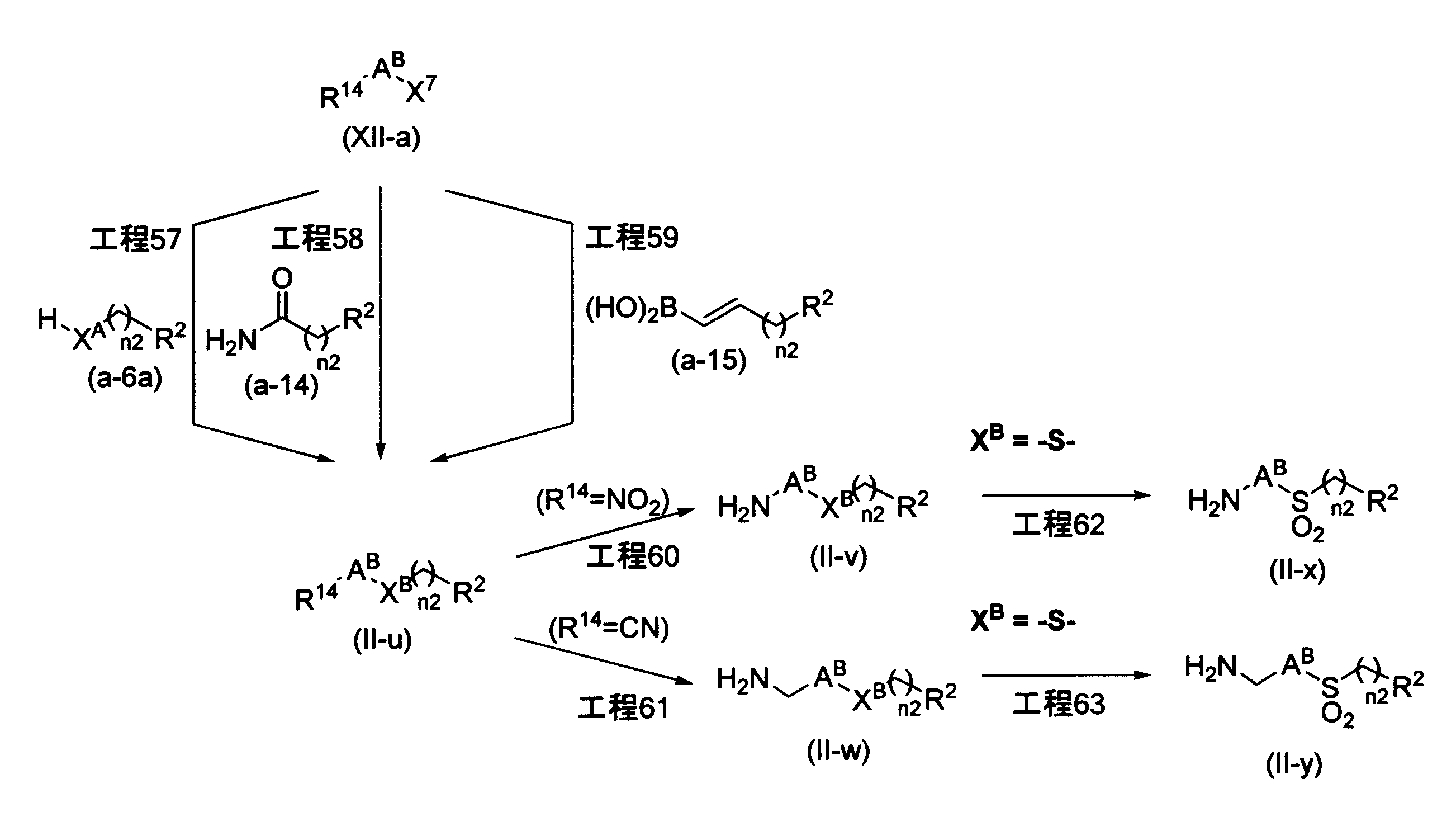
XBがXAである化合物(II-u)は、化合物(XII-a)および化合物(a-6a)を用い、製造法5の工程29と同様の方法により製造することができる。
XBが-NH-CO-である化合物(II-u)は、化合物(XII-a)を溶媒中、好ましくは0.01~1当量の銅試薬および好ましくは1~10当量の塩基の存在下、-20 ℃と用いる溶媒の沸点との間の温度で、好ましくは1~10当量の化合物(a-14)と光照射下、5分間~72時間反応させることにより製造することができる。
XBが-CH=CH-である化合物(II-u)は、化合物(XII-a)を好ましくは1~5当量の化合物(a-15)と、溶媒中、好ましくは0.1~10当量の塩基および好ましくは0.001~0.5当量の金属触媒の存在下、-20℃と用いる溶媒の沸点との間の温度で、5分間~72時間反応させることにより製造することができる。
化合物(II-v)は、R14がニトロである化合物(II-u)を用い、製造法7の工程35と同様の方法により製造することができる。
化合物(II-w)は、R14がシアノである化合物(II-u)を用い、製造法1の工程12と同様の方法により製造することができる。
化合物(II-x)は、XBが-S-である化合物(II-v)を溶媒中、好ましくは2~10当量の酸化剤で、0 ℃と用いる溶媒の沸点との間の温度で、5分間~72時間処理することにより製造することができる。
化合物(II-y)は、XBが-S-である化合物(II-w)を用い、工程62と同様の方法により製造することができる。
化合物(II)のうち、Xが-O-、-S-、-NRX1-(式中、RX1は、水素原子または低級アルキルを表す)、-CH=CH-、-NH-CO-または-SO2-であり、XがAを構成するsp2炭素に結合している化合物(II-z)、(II-A)、(II-B)、(II-C)および(II-D)は、以下の工程に従って製造することができる。
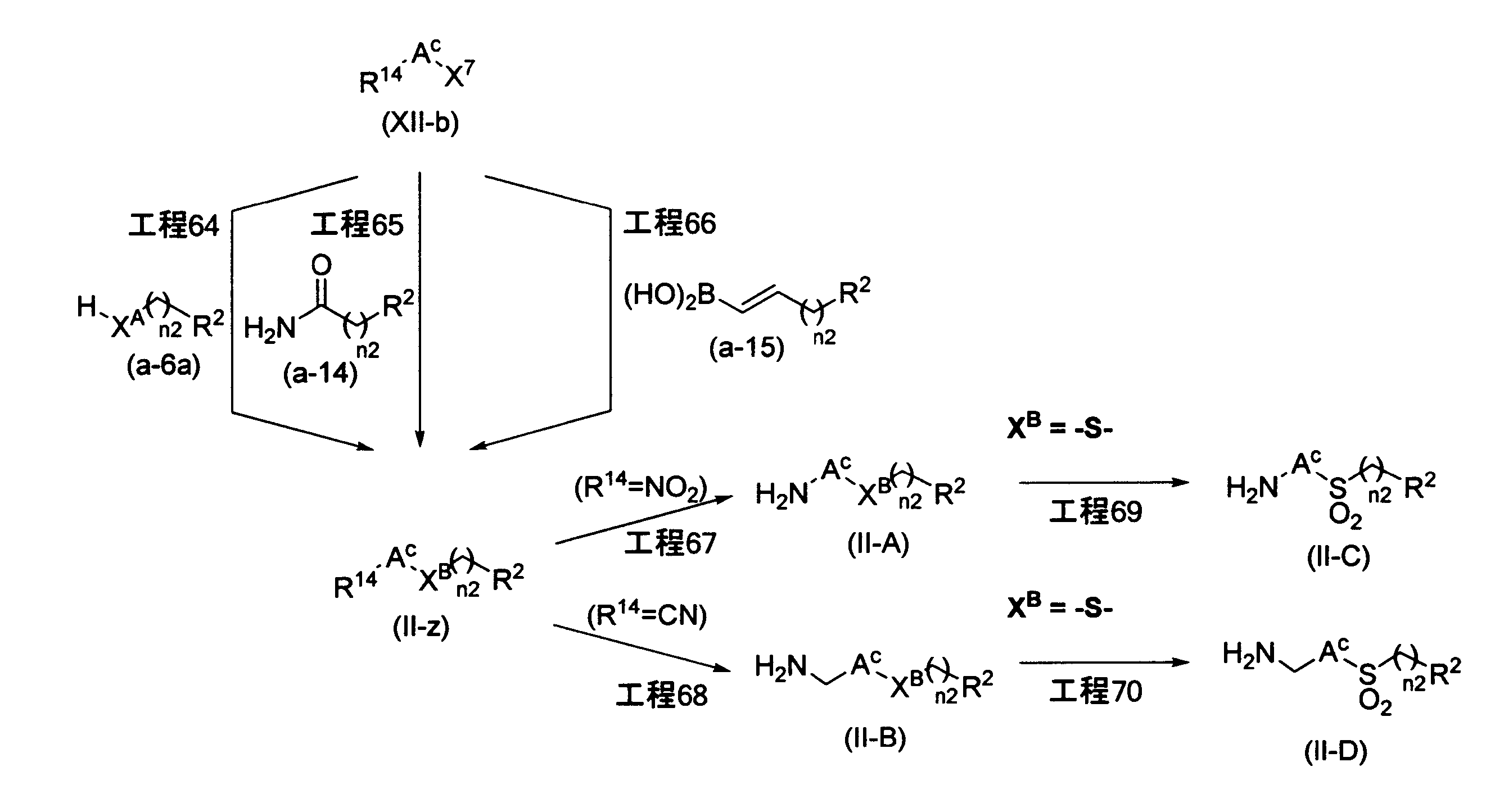
XBがXAである化合物(II-u)は、化合物(XII-b)および化合物(a-6a)を用い、工程34と同様の方法により製造することができる。
XBが-NH-CO-である化合物(II-z)は、化合物(XII-b)を溶媒中、好ましくは0.01~1当量の銅試薬、もしくは0.001~0.5当量のパラジウム触媒、好ましくは0.001~1当量の配位子、および好ましくは1~10当量の塩基の存在下、-20 ℃と用いる溶媒の沸点との間の温度で、好ましくは1~10当量の化合物(a-14)と5分間~72時間反応させることにより製造することができる。
XBが-CH=CH-である化合物(II-z)は、化合物(XII-b)を好ましくは1~5当量の化合物(a-15)と、溶媒中、好ましくは0.1~10当量の塩基および好ましくは0.001~0.5当量のパラジウム触媒の存在下、-20℃と用いる溶媒の沸点との間の温度で、5分間~72時間反応させることにより製造することができる。
化合物(II-A)は、R14がニトロである化合物(II-z)を用い、製造法7の工程35と同様の方法により製造することができる。
化合物(II-B)は、R14がシアノである化合物(II-z)を用い、製造法1の工程12と同様の方法により製造することができる。
化合物(II-C)は、XBが-S-である化合物(II-A)を用い、製造法14の工程62と同様の方法により製造することができる。
化合物(II-D)は、XBが-S-である化合物(II-B)を用い、製造法14の工程62と同様の方法により製造することができる。
前記化合物(XII-a)および(XII-b)のうち、X7がp-トルエンスルホニルオキシ、メタンスルホニルオキシまたはトリフルオロメタンスルホニルオキシである化合物(XII-d)は、以下の工程に従って製造することができる。

化合物(XII-d)は、化合物(XII-c)を無溶媒でまたは溶媒中、好ましくは1~10当量のスルホニル化剤で、必要により好ましくは触媒量~10当量の塩基の存在下、-20℃と150℃との間の温度で、5分間~72時間処理することにより製造することができる。
化合物(II)のうち、Xが-CH(OH)-または-CH=CH-である化合物(II-E)は、以下の工程に従って製造することができる。

XCが-CH(OH)-である化合物(XII-f)は、化合物(XII-e)を溶媒中、-78 ℃と用いる溶媒の沸点との間の温度で、好ましくは1~10当量の化合物(a-16)と5分間~72時間反応させることにより製造することができる。
XCが-CH=CH-である化合物(XII-f)は、化合物(XII-e)を好ましくは1~10当量の化合物(a-17)と、溶媒中、好ましくは0.1~10当量の塩基の存在下、-78℃と用いる溶媒の沸点との間の温度で、5分間~72時間反応させることにより製造することができる。
X7がAを構成するsp3炭素に結合する化合物(XII-f)を用いる場合、化合物(XII-g)は、化合物(XII-f)を好ましくは1~10当量のシアノ化剤と溶媒中、必要により好ましくは1~10当量の塩基の存在下、-20℃と150℃との間の温度で、5分間~72時間反応させることにより製造することができる。
X7がAを構成するsp2炭素に結合する化合物(XII-f)を用いる場合、化合物(XII-g)は、化合物(XII-f)を溶媒中、好ましくは0.1~10当量の塩基および好ましくは0.001~0.5当量のパラジウム触媒存在下、-20 ℃と用いる溶媒の沸点との間の温度で、または必要によりマイクロウェーブ反応装置を用いて、かつ0 ℃と200 ℃の間の温度で、好ましくは1当量~10当量のシアノ化剤と5分間~72時間反応させることにより製造することができる。
化合物(II)のうち、Xが-CHRX2- (式中、RX2は、水素原子またはヒドロキシを表す)または-CO-である化合物(II-F)、(II-G)および(II-H)は、以下の工程に従って製造することができる。

化合物(II-F)は、化合物(XII-g-1)を用い、製造法1の工程12と同様の方法により製造することができる。
化合物(XII-h)は、化合物(XII-g-1)を無溶媒でまたは溶媒中、好ましくは1当量~大過剰量の塩素化剤で、必要により好ましくは触媒量~1当量の添加剤の存在下、-20℃と150℃との間の温度で、5分間~72時間処理することにより製造することができる。
化合物(II-G)は、化合物(XII-h)を用い、製造法1の工程12と同様の方法により製造することができる。
化合物(XII-i)は、化合物(XII-g-1)を用い、製造法13の工程55と同様の方法により製造することができる。
化合物(II-H)は、化合物(XII-i)を用い、製造法1の工程12と同様の方法により製造することができる。
化合物(II)のうち、nが1であり、Xが-CH2-ある化合物(II-J)は、以下の工程に従って製造することができる。

化合物(II-J)は、化合物(XII-g-2)を用い、工程12と同様の方法により製造することができる。
化合物(I)のうち、Xが-SO2-ある化合物(I-b)は、以下の工程に従っても製造することができる。

化合物(I-a)は製造法10 の工程42の方法に従って得ることができる。
化合物(I-b)は、化合物(I-a)を用い、工程62と同様の方法により製造することができる。
化合物(I)におけるR1またはR2に含まれる官能基の変換は、公知の方法[例えば、コンプリヘンシブ・オーガニック・トランスフォーメーションズ 第2版(Comprehensive Organic Transformations 2nd edition)、R. C. ラロック(Larock)著、Vch Verlagsgesellschaft Mbh(1999年)等に記載の方法]でまたはそれらに準じて行うこともできる。
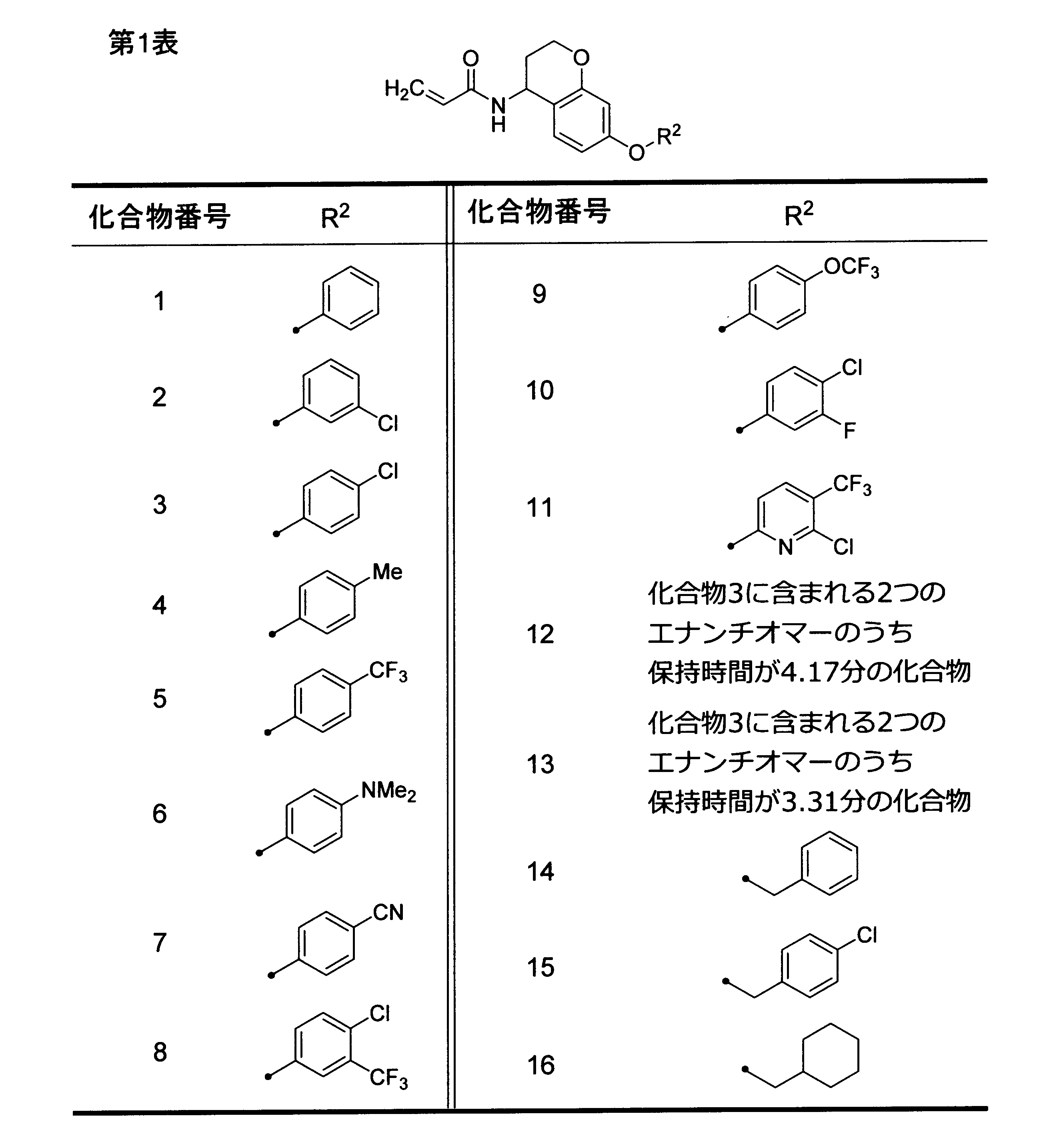


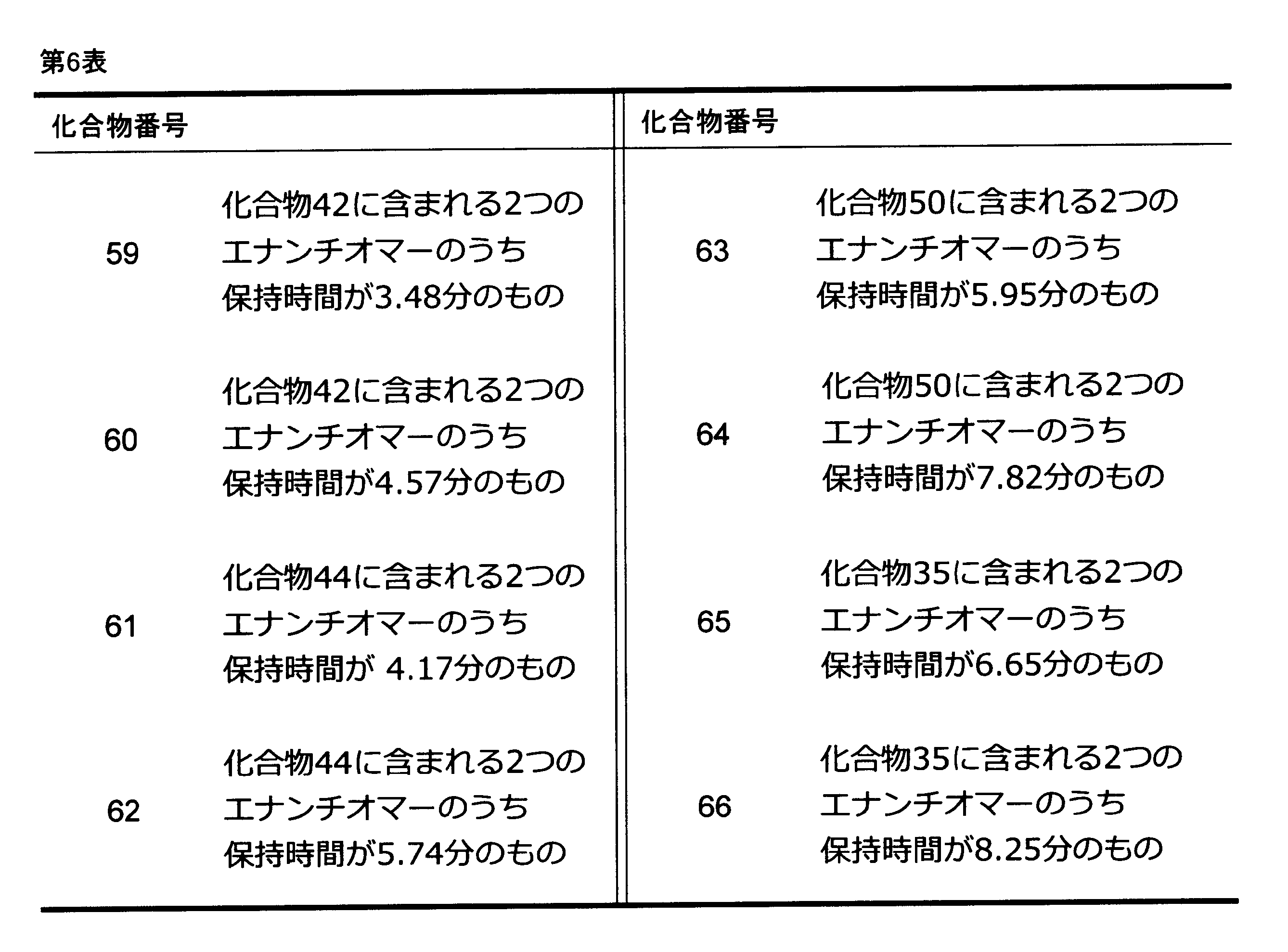


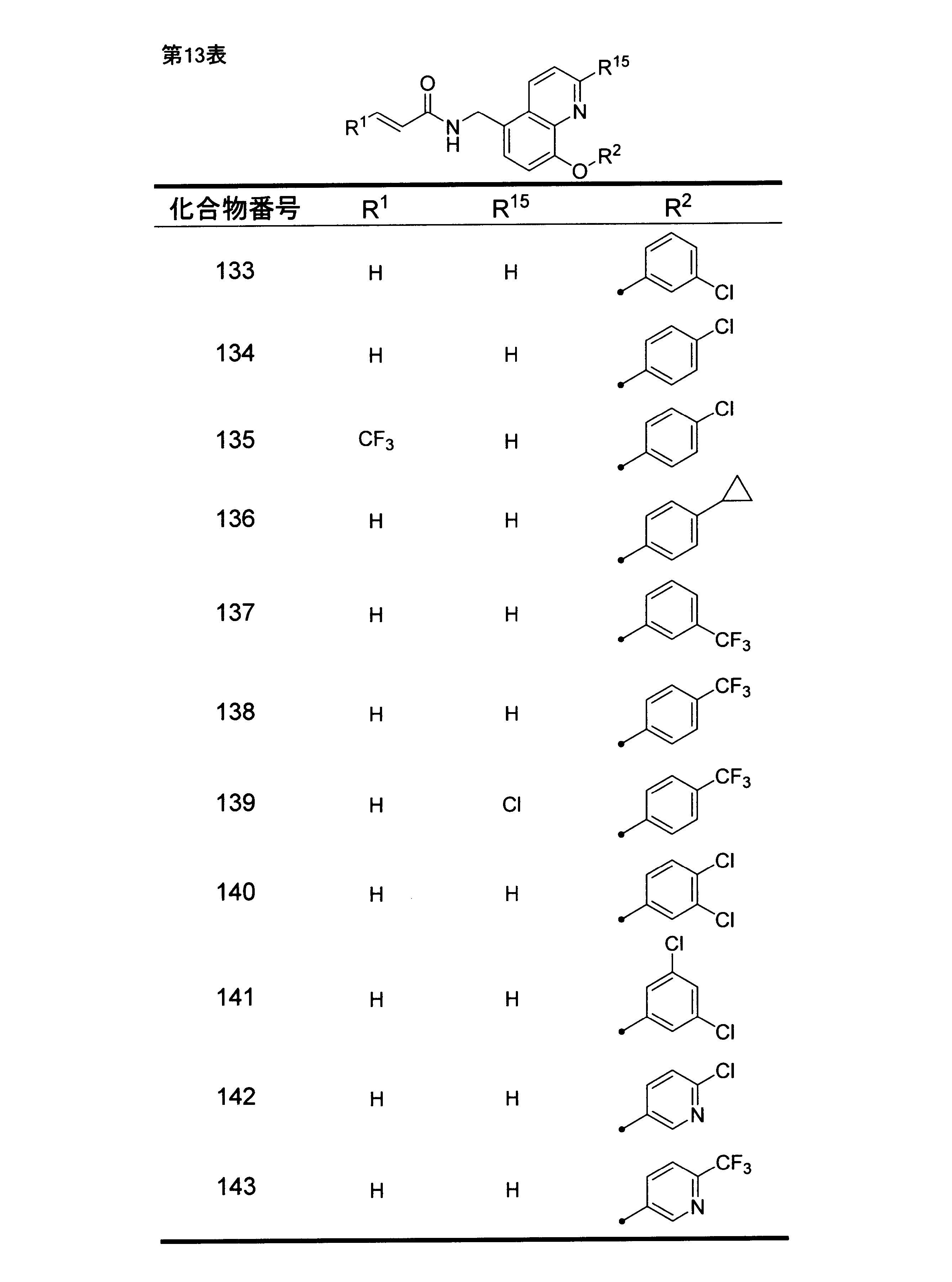


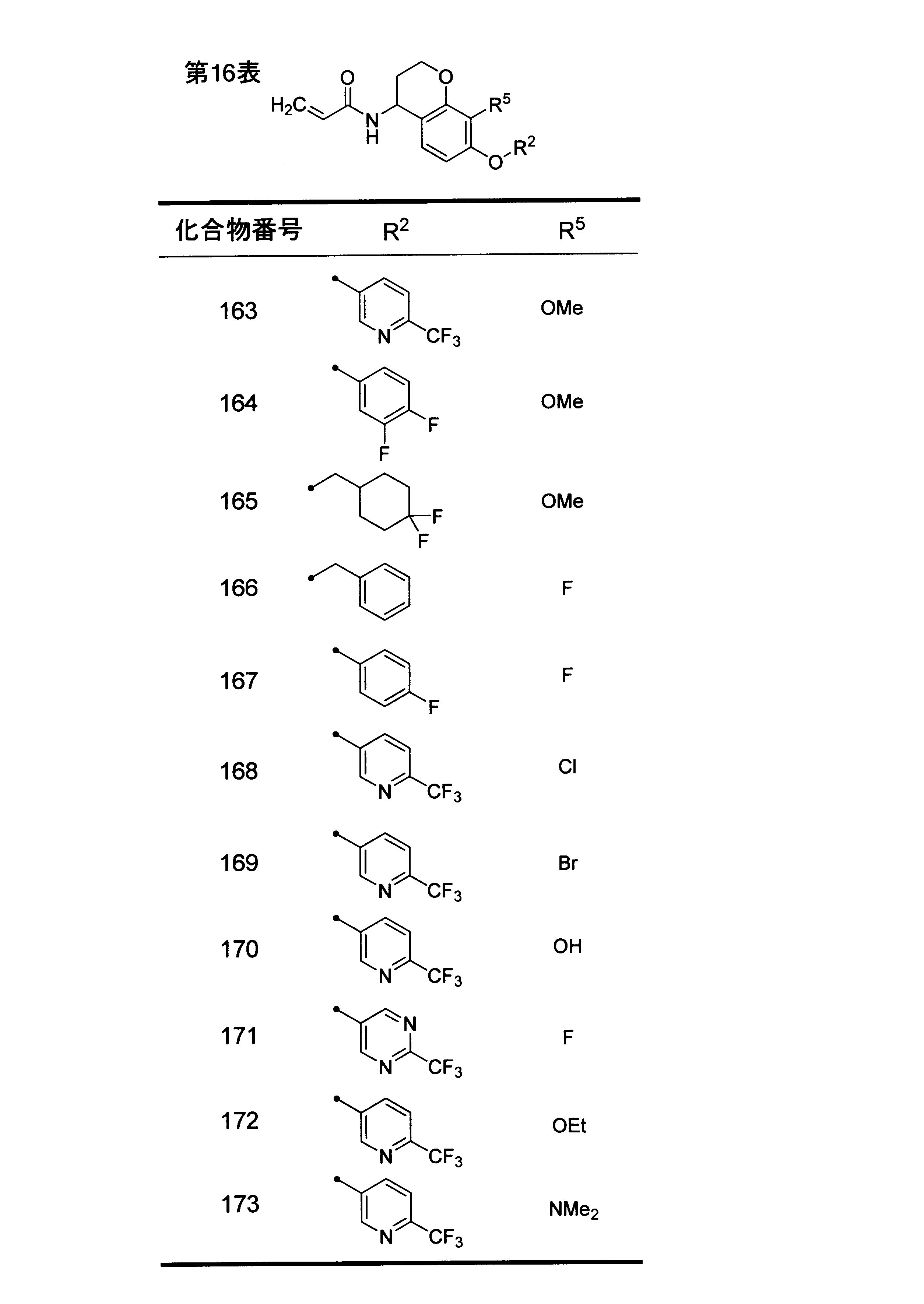


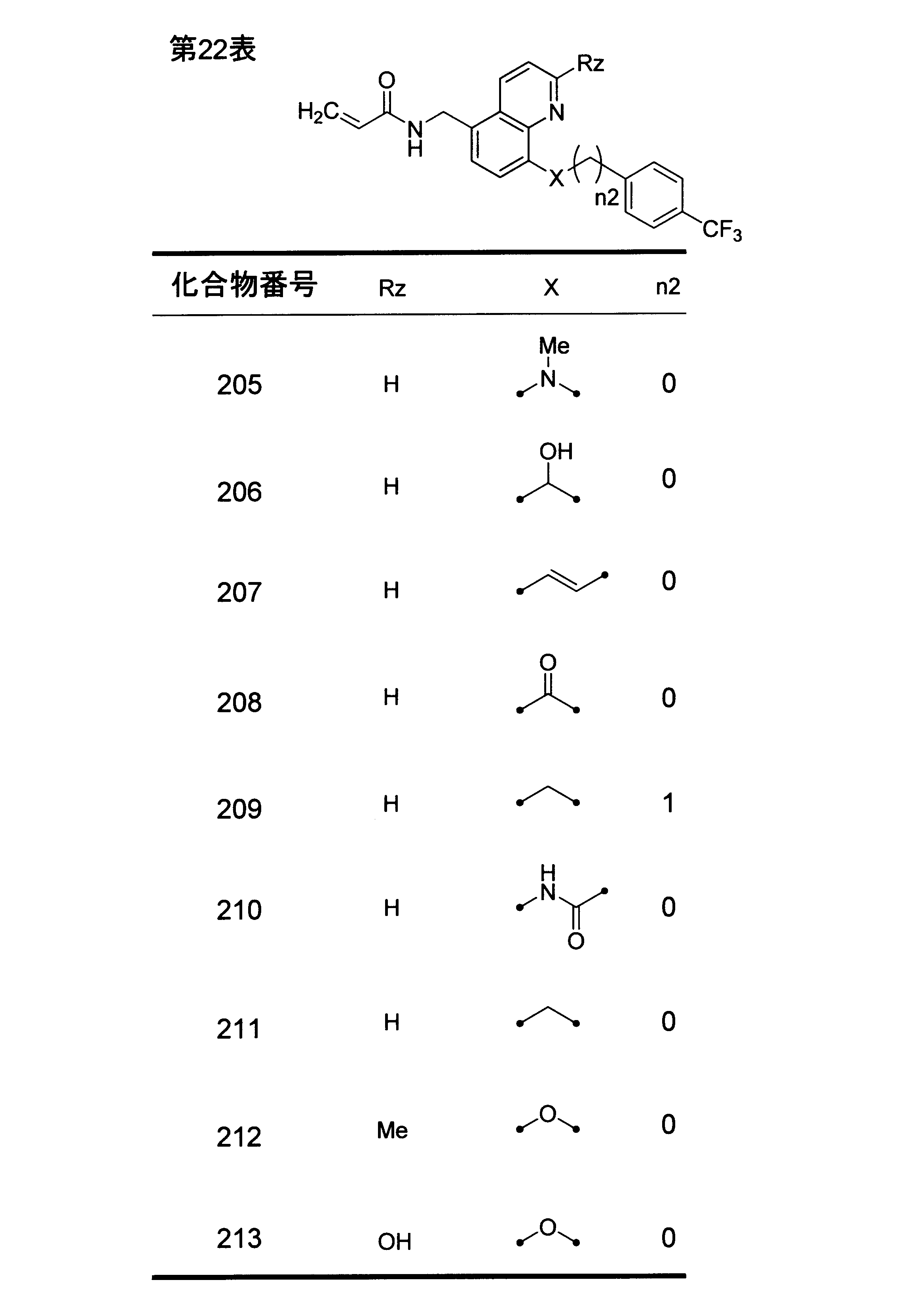


各、ヒト中皮腫細胞株NCI-H226細胞(ATCC, CRL-5826)、ヒト肺がん細胞株NCI-H322細胞(the European Collection of Authenticated Cell Cultures, 95111734)、ヒト卵巣がん細胞株OVTOKO細胞(JCRB細胞バンク, JCRB1048)およびヒト肝がん細胞株HuH28細胞(JCRB細胞バンク, JCRB0426)は、それぞれ、10%ウシ胎児血清(FBS)を含むRPMI1640培地中で、80%を超えない細胞密度で継代し、培養した。NCI-H226細胞、NCI-H322細胞およびSSP-25細胞を、それぞれ、上記RPMI1640培地中に懸濁し、96ウェル平底プレートに各ウェルに1ウェルあたり500個となるように播種し、5%炭酸ガス含有の培養器中37 ℃で1日間培養した後に、細胞増殖抑制活性の評価を開始した。OVTOKO細胞は、上記RPMI1640培地中に懸濁し、96ウェル平底プレートに各ウェルに1ウェルあたり250個となるように播種し、5%炭酸ガス含有の培養器中37 ℃で1日間培養した後に、細胞増殖抑制活性の評価を開始した。翌日、被検化合物を上記RPMI1640培地中で終濃度の5倍になるように段階希釈し、各ウェルに添加した。この際、各ウェルはDMSOの終濃度が0.1%となるように調整した。被検化合物を添加後、5%炭酸ガス含有の培養器中37 ℃で6日間培養した。被検化合物添加時および6日後の細胞数の計測は、セルカウンティングキットー8(同仁化学社製)を用いて、同仁化学社の推奨プロトコールに準ずる形で実施した。キット含有試薬を各プレートに添加し、5%炭酸ガス含有の培養器中37 ℃で2または3時間呈色反応を行った。反応後、マイクロプレートリーダーを用いて、波長450 nmにおける吸光度測定を行った。以下の式より増殖抑制率を算出し、50%増殖抑制を示す被検化合物の濃度(GI50値)を求めた。
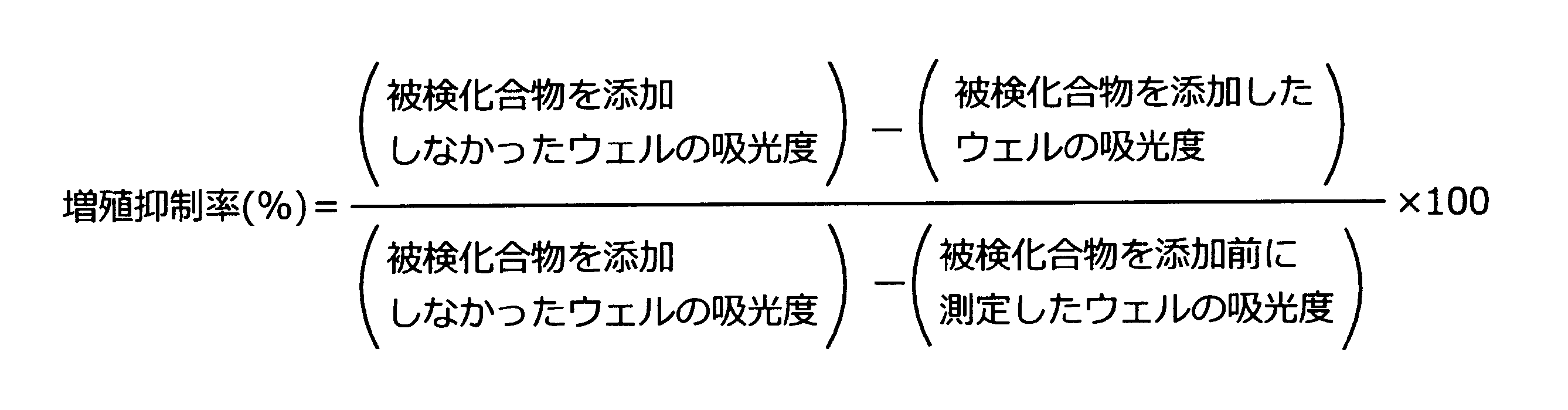
工程1
3-クロロ-1-(2, 4-ジヒドロキシフェニル)プロパン-1-オン(化合物1-1)
レゾルシノール(5.00 g, 45.4 mmol)および3-クロロプロピオン酸(4.90 g, 45.4 mmol)の混合物にトリフルオロメタンスルホン酸(15 mL)を加え、80 ℃で0.5時間撹拌した。室温まで放冷した混合物にジクロロメタン(100 mL)を加えて得られる反応液を水(100 mL)へ少しずつ加え、有機層をジクロロメタンで抽出し、無水硫酸ナトリウムで乾燥し、減圧下で濃縮し、粗生成物の化合物1-1(6.00 g)を得た。
1H NMR (400 MHz, CDCl3, δ): 12.48 (s, 1H), 7.62 (d, J = 11.6 Hz, 1H), 6.43-6.39 (m, 2H), 3.90 (t, J = 9.2 Hz, 2H), 3.40 (t, J = 9.2 Hz, 2H).
7-ヒドロキシクロマン-4-オン(化合物1-2)
化合物1-1(6.00 g)に-5 ℃で2 mol/L水酸化ナトリウム水溶液(250 mL)を加え、室温で2時間撹拌した。混合物を-5 ℃に冷却し、2 mol/L硫酸を加えてpHを2に調整した。有機層を酢酸エチルで抽出し、無水硫酸ナトリウムで乾燥し、減圧下で濃縮し、化合物1-2 (3.00 g, 2段階40%)を得た。
1H NMR (400 MHz, DMSO-d6, δ): 12.48 (s, 1H), 7.62 (d, J = 11.6 Hz, 1H), 6.43-6.39 (m, 2H), 3.90 (t, J = 9.2 Hz, 2H), 3.40 (t, J = 9.2 Hz, 2H).
7-フェノキシクロマン-4-オン(化合物1-3)
化合物1-2(0.50 g, 3.04 mmol)をジクロロメタン(15 mL)に溶解し、フェニルボロン酸(0.74 g, 6.09 mmol)、ピリジン(1.22 mL, 15.2 mmol)および酢酸銅(II)(0.82 g, 4.57 mmol)を加え、室温で18時間撹拌した。混合物にジクロロメタン(30 mL)を加え、セライト(登録商標)でろ過し、セライト上の固体をジクロロメタン(50 mL)で洗浄した。ろ液中の有機層を2 mol/L塩酸で洗浄し、無水硫酸ナトリウムで乾燥し、減圧下で濃縮した。残渣をシリカゲルカラムクロマトグラフィー(ヘキサン/酢酸エチル=100/0→70/30)で精製し、化合物1-3 (0.075 g, 10%)を得た。
1H NMR (400 MHz, CDCl3, δ): 7.87 (d, J = 8.8 Hz, 1H), 7.42-7.38 (m, 2H), 7.09-7.07 (m, 2H), 6.84-6.82 (m, 1H), 6.63 (dd, J = 8.8, 2.4 Hz, 1H), 6.42 (d, J = 2.4 Hz, 1H), 4.50 (t, J = 6.4 Hz, 2H), 2.76 (t, J = 6.4 Hz, 2H) ;
ESIMS m/z: [M + H]+ 241.
7-ヒドロキシクロマン-4-アミン(化合物1-4)
化合物1-3(0.05 g, 0.21 mmol)をメタノール(3 mL)に溶解し、酢酸アンモニウム(0.24 g, 3.12 mmol)およびシアノ水素化ホウ素ナトリウム(0.04 g, 0.62 mmol)を加え、封管中80 ℃で18時間撹拌した。混合物を室温まで放冷し、水を加えた。有機層を酢酸エチルで抽出し、無水硫酸ナトリウムで乾燥し、減圧下で濃縮し、化合物1-4(0.03 g, 60%)を得た。
1H NMR (400 MHz, CDCl3, δ): 7.39-7.34 (m, 3H), 7.12 (t, J = 7.6 Hz, 1H), 6.99-6.97 (m, 2H), 6.50 (dd, J = 8.4, 2.4 Hz, 1H), 6.30 (d, J = 2.4 Hz, 1H), 4.26-4.20 (m, 1H), 4.14-4.09 (m, 1H), 3.86 (t, J = 5.2 Hz, 1H), 2.01-1.94 (m, 1H), 1.75-1.68 (m, 1H).
N-(7-フェノキシクロマン-4-イル)アクリルアミド(化合物1)
化合物1-4(0.15 g, 0.62 mmol)をジクロロメタン(5 mL)に溶解し、0 ℃に冷却下、ジイソプロピルエチルアミン(0.23 mL, 1.24 mmol)およびアクリル酸クロリド(0.075 mL, 0.93 mmol)を加え、0 ℃で0.5時間撹拌した。混合物に飽和重曹水を加え、有機層をジクロロメタンで抽出し、無水硫酸ナトリウムで乾燥し、減圧下で濃縮した。残渣をシリカゲルカラムクロマトグラフィー(ヘキサン/酢酸エチル=90/10→50/50)で精製し、化合物1(0.08 g, 44%)を得た。
1H NMR (400 MHz, DMSO-d6, δ): 8.55 (d, J = 8.0 Hz, 1H), 7.41-7.36 (m, 2H), 7.16-7.13 (m, 2H), 7.00-6.98 (m, 2H), 6.54 (dd, J = 8.4, 2.4 Hz, 1H), 6.38 (d, J = 2.4 Hz, 1H), 6.26 (dd, J = 16.8, 9.6 Hz, 1H), 6.15 (dd, J = 16.8, 2.4 Hz, 1H), 5.62 (dd, J = 10.0, 2.4 Hz, 1H), 5.04 (q, J = 5.6 Hz, 1H), 4.26-4.13 (m, 2H), 2.10-1.86 (m, 2H)
ESIMS m/z: [M - 70]+ 225.
以下の化合物は、化合物1の合成法に準じて合成した。
N-{7-(3-クロロフェノキシ)クロマン-4-イル}アクリルアミド(化合物2)
ESIMS m/z: [M - 70]+ 259.
N-{7-(p-トリルオキシ)クロマン-4-イル}アクリルアミド(化合物4)
ESIMS m/z: [M - 70]+ 239.
工程1
7-(4-クロロフェノキシ)クロマン-4-オン(化合物2-1)
化合物1-2を用い、実施例1の工程3と同様にして化合物2-1(0.26 g, 26%)を得た。
1H NMR (300 MHz, CDCl3, δ): 7.87 (d, J = 8.7 Hz, 1H), 7.36 (dd, J = 6.9, 2.1 Hz, 2H), 7.01 (dd, J = 6.9, 2.4 Hz, 2H), 6.62 (dd, J = 9.0, 2.4 Hz, 1H), 6.42 (d, J = 2.1 Hz, 1H), 4.51 (t, J = 6.3 Hz, 2H), 2.77 (t, J = 6.3 Hz, 2H).
7-(4-クロロフェノキシ)クロマン-4-アミン(化合物2-2)
工程1で得られた化合物2-1を用い、実施例1の工程4と同様にして化合物2-2(0.20 g, 80%)を得た。
1H NMR (400 MHz, CDCl3, δ): 7.28-7.24 (m, 3H), 6.95-6.93 (m, 2H), 6.55 (dd, J = 8.4, 2.4 Hz, 1H), 6.43 (d, J = 2.4 Hz, 1H), 4.30-4.18 (m, 2H), 4.04-4.02 (m, 1H), 2.18-2.10 (m, 1H), 1.86-1.79 (m, 1H).
N-{7-(4-クロロフェノキシ)クロマン-4-イル}アクリルアミド(化合物3)
化合物2-2を用い、実施例1の工程5と同様にして化合物3(0.11 g, 55%)を得た。
1H NMR (400 MHz, DMSO-d6, δ): 8.58 (d, J = 8.0 Hz, 1H), 7.43 (d, J = 8.8 Hz, 2H), 7.16 (d, J = 8.4 Hz, 1H), 6.99 (d, J = 8.8 Hz, 2H), 6.57 (dd, J = 8.4, 2.4 Hz, 1H), 6.44 (d, J = 2.0 Hz, 1H), 6.29-6.13 (m, 2H), 5.63 (dd, J = 10.0, 2.4 Hz, 1H), 5.07-5.02 (m, 1H), 4.26-4.14 (m, 2H), 2.10-1.87 (m, 2H);
ESIMS m/z: [M - 70]+ 259.
N-{7-(4-クロロフェノキシ)クロマン-4-イル}アクリルアミド(化合物12および13)
化合物3を下記キラル分取条件に従って光学分割を行い、保持時間が3.31分の化合物13(17 mg, 34%)および保持時間が4.17分の化合物12(15 mg, 31%)を得た。
化合物12: ESIMS m/z: [M + H]+ 330.
化合物13: ESIMS m/z: [M + H]+ 330.
使用機器: SFC30 Waters製
使用カラム: CHIRALPAK(登録商標) IB/SFC 10 mmφ×250 mm, 5μM
温度: 40 ℃
送液条件: 90%二酸化炭素/10%メタノール
分取時間: 6分
流速: 30 mL/分
保持時間: 4.17分(化合物12), 3.31分(化合物13)
7-{4-(トリフルオロメチル)フェノキシ}クロマン-4-オン(化合物3-1)
工程1
化合物1-2(0.80 g, 4.87 mmol)をジクロロメタン(20 mL)に溶解し、4-トリフルオロメチルフェニルボロン酸(7.40 g, 39.0 mmol)、ピリジン(1.96 mL, 24.4 mmol)および酢酸銅(II)(1.77 g, 9.75 mmol)を加え、室温で終夜撹拌した。混合物に飽和塩化アンモニウム水溶液を加え、セライト(登録商標)でろ過を行い、ろ液中の有機層を酢酸エチルで抽出し、飽和食塩水で洗浄し、無水硫酸マグネシウムで乾燥し、減圧下で溶媒を留去した。残渣をシリカゲルカラムクロマトグラフィー(ヘプタン/酢酸エチル=80/20→20/80)で精製し、 化合物3-1(0.18 g, 12%)を得た。
1H NMR (400 MHz, CDCl3, δ): 7.91 (d, J = 8.8 Hz, 1H), 7.65 (d, J = 8.5 Hz, 2H), 7.16 (d, J = 8.5 Hz, 2H), 6.67 (dd, J = 8.8, 2.2 Hz, 1H), 6.51 (d, J = 2.2 Hz, 1H), 4.54 (t, J = 6.5 Hz, 2H), 2.80 (t, J = 6.5 Hz, 2H).
7-{4-(トリフルオロメチル)フェノキシ}クロマン-4-アミン(化合物3-2)
化合物3-1 (0.45 g, 1.44 mmol)をメタノール(14 mL)に溶解し、ぎ酸アンモニウム(1.82 g, 28.9 mmol)、酢酸(0.12 mL, 2.17 mmol)およびクロロ[N-{4-(ジメチルアミノ)フェニル}-2-ピリジンカルボキシアミデート](ペンタメチルシクロペンタジエニル)イリジウム(III)(0.026 g, 0.043 mmol)を加え、80 ℃で2.5時間撹拌した。混合物を室温まで放冷し、減圧下でメタノールを濃縮し、水および酢酸エチルを加え、Presep(登録商標; けいそう土、顆粒状タイプM, 4.5 g/25 mL)でろ過を行い、ろ液を減圧下で濃縮した。残渣をシリカゲルカラムクロマトグラフィー(ヘプタン/酢酸エチル=50/50→クロロホルム/メタノール=90/10)で精製し、 化合物3-2(0.43 g, 97%)を得た。
N-[7-{4-(トリフルオロメチル)フェノキシ}クロマン-4-イル]アクリルアミド(化合物5)
化合物3-2を用い、実施例1の工程5と同様にして化合物5(0.26 g, 51%)を得た。
1H NMR (400 MHz, CDCl3, δ): 7.58 (d, J = 8.8 Hz, 2H), 7.21 (d, J = 8.6 Hz, 1H), 7.06 (d, J = 8.8 Hz, 2H), 6.61 (dd, J = 8.6, 2.4 Hz, 1H), 6.51 (d, J = 2.4 Hz, 1H), 6.36 (dd, J = 17.0, 1.2 Hz, 1H), 6.11 (dd, J = 17.0, 10.4 Hz, 1H), 5.77 (d, J = 6.8 Hz, 1H), 5.72 (dd, J = 10.4, 1.2 Hz, 1H), 5.26-5.20 (m, 1H), 4.33-4.26 (m, 1H), 4.20-4.13 (m, 1H), 2.28-2.23 (m, 1H), 2.16-2.08 (m, 1H);
ESIMS m/z: [M - H]+ 362.
以下の化合物は、化合物5の合成法に準じて合成した。
N-[7-{4-クロロ-3-(トリフルオロメチル)フェノキシ}クロマン-4-イル]アクリルアミド(化合物8)
ESIMS m/z: [M - H]+ 396.
N-[7-{4-(トリフルオロメトキシ)フェノキシ}クロマン-4-イル]アクリルアミド(化合物9)
ESIMS m/z: [M - H]+ 378.
N-{7-(4-クロロ-3-フルオロフェノキシ)クロマン-4-イル]アクリルアミド(化合物10)
ESIMS m/z: [M - H]+ 346.
工程1
7-(ベンジルオキシ)クロマン-4-オン(化合物4-1)
化合物1-2(1.50 g, 9.14 mmol)をDMF(15 mL)に溶解し、臭化ベンジル(1.62 g, 13.7 mmol)および炭酸カリウム(3.78 g, 27.4 mmol)を加え、室温で3時間撹拌した。混合物に水を加えて、有機層を酢酸エチルで抽出し、無水硫酸ナトリウムで乾燥し、減圧下で濃縮した。残渣をシリカゲルカラムクロマトグラフィー(ヘキサン/酢酸エチル=100/0→85/15)で精製し、化合物4-1(2.00 g, 86%)を得た。
1H NMR (300 MHz, DMSO-d6, δ): 7.68 (d, J = 8.7 Hz, 1H), 7.45-7.30 (m, 5H), 6.70 (dd, J = 8.7, 2.4 Hz, 1H), 6.20 (d, J = 2.4 Hz, 1H), 5.17 (s, 2H), 4.50 (t, J = 6.3 Hz, 2H), 2.70 (t, J = 6.3 Hz, 2H).
7-(ベンジルオキシ)クロマン-4-アミン(化合物4-2)
化合物4-1を用い、実施例1の工程4と同様にして化合物4-2(1.50 g, 75%)を得た。
1H NMR (300 MHz, DMSO-d6, δ): 7.39-7.30 (m, 5H), 7.22 (d, J = 8.7 Hz, 1H), 6.51 (dd, J = 8.4, 2.4 Hz, 1H), 6.33 (d, J = 2.4 Hz, 1H), 5.03 (s, 2H), 4.22-4.16 (m, 1H), 4.10-4.05 (m, 1H), 3.80 (t, J = 5.1 Hz, 1H), 1.97-1.88 (m, 1H), 1.72-1.64 (m, 1H).
4-アミノクロマン-7-オール(化合物4-3)
化合物4-2(1.50 g, 5.88 mmol)をエタノール(50 mL)に溶解し、10%パラジウム炭素(0.15 g)を加え、圧力60 psiの水素雰囲気下、室温で16時間撹拌した。混合物をセライト(登録商標)でろ過を行い、ろ液を減圧下で濃縮し、化合物4-3(0.60 g, 61%)を得た。
1H NMR (400 MHz, DMSO-d6, δ): 7.10 (d, J = 8.4 Hz, 1H), 6.27 (dd, J = 8.1, 2.4 Hz, 1H), 6.09 (d, J = 2.4 Hz, 1H), 4.20-4.08 (m, 1H), 4.07-4.02 (m, 1H), 3.80 (t, J = 5.1 Hz, 1H), 1.96-1.92 (m, 1H), 1.72-1.64 (m, 1H).
7-{4-(ジメチルアミノ)フェノキシ}クロマン-4-アミン(化合物4-4)
4-ヨード-N,N-ジメチルアニリン(0.20 g, 1.21 mmol)をDMSO(10 mL)に溶解し、アルゴン雰囲気下、化合物4-3(0.44 g, 1.81 mmol)、リン酸三カリウム(0.51 g, 2.42 mmol)、ピコリン酸(0.014 g, 0.12 mmol)およびヨウ化銅(I)(0.012 g, 0.06 mmol)を加え、90 ℃で16時間撹拌した。混合物に水を加え、セライト(登録商標)でろ過し、ろ液中の有機層を酢酸エチルで抽出し、無水硫酸ナトリウムで乾燥し、減圧下で濃縮した。残渣をシリカゲルカラムクロマトグラフィー(ヘキサン/酢酸エチル=60/40→40/60)で精製し、化合物4-4(0.13 g, 37%)を得た。
1H NMR (400 MHz, DMSO-d6, δ): 7.27 (d, J = 7.2 Hz, 1H), 6.88 (d, J = 9.2 Hz, 2H), 6.74 (d, J = 9.2 Hz, 2H), 6.39 (dd, J = 8.0, 2.4 Hz, 1H), 6.15 (d, J = 2.4 Hz, 1H), 4.22-4.18 (m, 1H), 4.09-4.07 (m, 1H), 3.80-3.78 (m, 1H), 2.86 (s, 6H), 1.98-1.95 (m, 1H), 1.72-1.70 (m, 1H).
N-[7-{4-(ジメチルアミノ)フェノキシ}クロマン-4-イル]アクリルアミド(化合物6)
化合物4-4を用い、実施例1の工程5と同様にして化合物6(0.055 g, 35%)を得た。
1H NMR (400 MHz, DMSO-d6, δ): 8.51 (d, J = 7.6 Hz, 1H), 7.06 (d, J = 8.8 Hz, 1H), 6.88 (d, J = 9.2 Hz, 2H), 6.74 (d, J = 8.8 Hz, 2H), 6.43 (dd, J = 8.8, 2.8 Hz, 1H), 6.28-6.21 (m, 2H), 6.14 (dd, J = 16.8, 2.4 Hz, 1H), 5.61 (dd, J = 9.6, 2.4 Hz, 1H), 5.02-4.98 (m, 1H), 4.21-4.08 (m, 2H), 2.87 (m, 6H), 2.09-2.00 (m, 1H), 1.98-1.84 (m, 1H);
ESIMS m/z: [M + H]+ 339.
以下の化合物は、化合物6の合成法に準じて合成した。
N-{7-(4-シアノフェノキシ)クロマン-4-イル}アクリルアミド(化合物7)
ESIMS m/z: [M - 70]+ 250.
工程1
7-[{6-クロロ-5-(トリフルオロメチル)ピリジン-2-イル}オキシ]クロマン-4-オン(化合物5-1)
化合物1-2(70.0 mg, 0.426 mmol)をDMF(1 mL)に溶解し、炭酸カリウム(431 mg, 3.41 mmol)および2,6-ジクロロ-3-(トリフルオロメチル)ピリジン(0.092 mL, 0.853 mmol)を加え、50 ℃で終夜撹拌した。混合物に水および酢酸エチルを加え、Presep(登録商標; けいそう土、顆粒状タイプM, 4.5 g/25 mL)でろ過し、ろ液を濃縮した。残渣をシリカゲルカラムクロマトグラフィー(ヘプタン/酢酸エチル=100/0→ヘプタン/酢酸エチル=70/30)で精製し、化合物5-1(41.0 mg, 28%)を得た。
1H NMR (400 MHz, CDCl3, δ): 8.02 (d, J = 8.2 Hz, 1H), 7.96 (d, J = 8.2 Hz, 1H), 6.97 (d, J = 8.2 Hz, 1H), 6.82 (d, J = 2.3 Hz, 1H), 6.80-6.79 (m, 1H), 4.58 (t, J = 6.6 Hz, 2H), 2.83 (t, J = 6.6 Hz, 2H).
7-[{6-クロロ-5-(トリフルオロメチル)ピリジン-2-イル}オキシ]クロマン-4-アミン(化合物5-2)
化合物5-1を用い、実施例3の工程2と同様にして粗生成物の化合物5-2を得て、そのまま次の反応に用いた。
ESIMS m/z: [M + H]+ 344.
N-(7-[{6-クロロ-5-(トリフルオロメチル)ピリジン-2-イル}オキシ]クロマン-4-イル)アクリルアミド(化合物11)
化合物5-2を用い、実施例1の工程5と同様にして化合物11(20.3 mg, 2段階43%)を得た。
1H NMR (400 MHz, CDCl3, δ): 7.96 (d, J = 8.6 Hz, 1H), 7.25 (d, J = 8.6 Hz, 1H), 6.88 (d, J = 8.6 Hz, 1H), 6.70 (dd, J = 8.6, 2.4 Hz, 1H), 6.64 (d, J = 2.4 Hz, 1H), 6.36 (dd, J = 16.8, 1.4 Hz, 1H), 6.13 (dd, J = 16.8, 10.4 Hz, 1H), 5.98 (d, J = 7.2 Hz, 1H), 5.71 (dd, J = 10.4, 1.4 Hz, 1H), 5.25-5.23 (m, 1H), 4.32-4.29 (m, 1H), 4.21-4.15 (m, 1H), 2.30-2.20 (m, 1H), 2.16-2.09 (m, 1H);
ESIMS m/z: [M - H]+ 397.
N-{7-(ベンジルオキシ)クロマン-4-イル}アクリルアミド(化合物14)
化合物4-2を用い、実施例1の工程5と同様にして化合物14(0.075 g, 45%)を得た。
1H NMR (400 MHz, CDCl3, δ): 7.43-7.30 (m, 5H), 7.10 (d, J = 8.4 Hz, 1H), 6.57 (dd, J = 8.4, 2.6 Hz, 1H), 6.45 (d, J = 2.6 Hz, 1H), 6.33 (dd, J = 16.9, 1.5 Hz, 1H), 6.07 (dd, J = 16.9, 10.3 Hz, 1H), 5.74 (d, J = 7.3 Hz, 2H), 5.68 (dd, J = 10.3, 1.5 Hz, 2H), 5.14 (dd, J = 12.5, 5.1 Hz, 1H), 5.02 (s, 2H), 4.27-4.24 (m, 1H), 4.15-4.07 (m, 1H);
ESIMS m/z: [M + H]+ 310.
以下の化合物は、化合物14の合成法に準じて合成した。
N-[7-{(4-クロロベンジル)オキシ}クロマン-4-イル}アクリルアミド(化合物15)
ESIMS m/z: [M - 70]+ 273.
工程1
7-(シクロヘキシルメトキシ)クロマン-4-オン(化合物7-1)
化合物1-2(0.10 g, 0.61 mmol)をTHF(3 mL)に溶解し、トリフェニルホスフィン(0.32 g, 1.22 mmol)、ジエチルアゾジカルボキシレート (2.2 mol/Lトルエン溶液、0.55 mL, 1.22 mmol)およびシクロヘキサンメタノール(0.15 mL, 1.22mmol)を加え、室温で3時間撹拌した。混合物を減圧下で濃縮したのち、シリカゲルカラムクロマトグラフィー(ヘプタン/酢酸エチル=90/10)で精製し、化合物7-1の粗生成物を得て、そのまま次の反応に用いた。
7-(シクロヘキシルメトキシ)クロマン-4-アミン(化合物7-2)
化合物7-1を用い、実施例1の工程4と同様にして化合物7-2の粗生成物を得て、そのまま次の反応に用いた。
N-{7-(シクロヘキシルメトキシ)クロマン-4-イル}アクリルアミド(化合物16)
化合物7-2を用い、実施例1の工程5と同様にして化合物16(0.12 g, 3段階62%)を得た。
1H NMR (300 MHz, CDCl3, δ): 7.08 (d, J = 8.4 Hz, 1H), 6.49 (dd, J = 8.4, 2.6 Hz, 1H), 6.33 (dd, J = 17.2, 1.8 Hz, 2H), 6.07 (dd, J = 16.9, 10.3 Hz, 1H), 5.74 (d, J = 7.0 Hz, 1H), 5.68 (dd, J = 10.3, 1.5 Hz, 1H), 5.13 (dd, J = 12.3, 4.9 Hz, 1H), 4.30-4.21 (m, 1H), 4.15-4.07 (m, 1H), 3.70 (d, J = 6.2 Hz, 2H), 2.28-2.16 (m, 1H), 2.14-2.03 (m, 1H), 1.89-1.67 (m, 5H), 1.35-1.18 (m, 4H), 1.08-0.95 (m, 2H);
ESIMS m/z: [M + H]+ 316.
工程1
4-メチル-7-フェノキシクロマン-4-オール(化合物8-1)
化合物1-3(0.10 g, 0.41 mmol)をTHF(3 mL)に溶解し、窒素雰囲気下、0 ℃にて1.6 mol/Lメチルリチウムジエチルエーテル溶液(0.78 mL, 1.25 mmol)を滴下し、室温で2時間撹拌した。混合物に飽和塩化アンモニウム水溶液を加えて、有機層を酢酸エチルで抽出し、無水硫酸ナトリウムで乾燥し、減圧下で濃縮し、化合物8-1(0.10 g, 95%)を得た。
1H NMR (400 MHz, CDCl3, δ): 7.45-7.36 (m, 3H), 7.15-7.11 (m, 1H), 6.99 (d, J = 7.6 Hz, 2H), 6.52 (dd, J = 8.8, 2.4 Hz, 1H), 6.30 (d, J = 2.4 Hz, 1H), 5.10 (s, 1H), 4.25-4.11 (m, 2H), 1.97-1.88 (m, 2H), 1.46 (s, 3H).
4-アジド-4-メチル-7-フェノキシクロマン(化合物8-2)
化合物8-1 (0.10 g, 0.39 mmol)をクロロホルム(3 mL)に溶解し、アジ化ナトリウム(0.25 g, 3.90 mmol)を加え、0 ℃にて、トリフルオロ酢酸(0.15 mL, 1.95 mmol)およびクロロホルム(3 mL)の混合液を滴下し、室温で3時間撹拌した。混合物に水を加え、有機層をジクロロメタンで抽出し、無水硫酸ナトリウムで乾燥し、減圧下で濃縮した。残渣をシリカゲルカラムクロマトグラフィー(ヘキサン/酢酸エチル=90/10→80/20)で精製し、化合物8-2 (0.06 g, 51%)を得た。
1H NMR (400 MHz, CDCl3, δ): 7.48-7.36 (m, 3H), 7.20-7.16 (m, 1H), 7.05-7.00 (m, 2H), 6.59 (dd, J = 8.4, 2.4 Hz, 1H), 6.39 (d, J = 2.8 Hz, 1H), 4.28-4.11 (m, 2H), 2.18-1.89 (m, 2H), 1.65 (s, 3H).
4-メチル-7-フェノキシクロマン-4-アミン(化合物8-3)
化合物8-2(0.05 g, 0.17 mmol)をTHF(3 mL)に溶解し、窒素雰囲気下、0 ℃で2 mol/L水素化アルミニウムリチウムTHF溶液(0.44 mL, 0.88 mmol)を滴下し、室温で3時間撹拌した。混合物を0 ℃に冷却し、水を加え、有機層をジクロロメタンで抽出し、無水硫酸ナトリウムで乾燥し、減圧下で濃縮し、化合物8-3(0.02 g, 65%)を得た。
1H NMR (400 MHz, CDCl3, δ): 7.50 (d, J = 8.4 Hz, 1H), 7.39-7.35 (m, 2H), 7.14-7.10 (m, 1H), 7.02-6.97 (m, 2H), 6.50 (dd, J = 8.4, 2.4 Hz, 1H), 6.27 (d, J = 2.8 Hz, 1H), 4.25-4.10 (m, 2H), 1.77-1.74 (m, 2H), 1.36 (s, 3H).
N-(4-メチル-7-フェノキシクロマン-4-イル)アクリルアミド(化合物17)
化合物8-3を用い、実施例1の工程5と同様にして化合物17(0.08 g, 40%)を得た。
1H NMR (400 MHz, DMSO-d6, δ): 8.14 (s, 1H), 7.42-7.32 (m, 3H), 7.15 (t, J = 7.2 Hz, 1H), 7.01 (d, J = 8.0 Hz, 2H), 6.51 (dd, J = 8.4, 2.0 Hz, 1H), 6.36-6.29 (m, 2H), 6.01 (dd, J = 17.2, 2.0 Hz, 1H), 5.51 (dd, J = 10.0, 1.6 Hz, 1H), 4.16-4.13 (m, 2H), 2.84-2.78 (m, 1H), 1.80-1.74 (m, 1H), 1.65 (s, 3H);
ESIMS m/z: [M - 70]+ 239.
工程1
7-(4-クロロフェノキシ)-2,2-ジメチルクロマン-4-オン(化合物9-1)
市販の7-ヒドロキシ-2,2-ジメチルクロマン-4-オンを用い、実施例3の工程1と同様にして化合物9-1(170 mg, 72%)を得た。
1H NMR (400 MHz, CDCl3, δ): 7.84 (d, J = 8.6 Hz, 1H), 7.37-7.35 (m, 2H), 7.04-7.02 (m, 2H), 6.59 (dd, J = 8.6, 2.3 Hz, 1H), 6.36 (d, J = 2.3 Hz, 1H), 2.68 (s, 2H), 1.44 (s, 6H).
7-(4-クロロフェノキシ)-2,2-ジメチルクロマン-4-アミン(化合物9-2)
化合物9-1を用い、実施例3の工程2と同様にして化合物9-2の粗生成物を得て、そのまま次の反応に用いた。
ESIMS m/z: [M - 17]+ 287.
N-{7-(4-クロロフェノキシ)-2,2-ジメチルクロマン-4-イル}アクリルアミド(化合物18)
化合物9-2を用い、実施例1の工程5と同様にして化合物18 (38.0 mg, 2段階35%)を得た。
1H NMR (400 MHz, CDCl3, δ): 7.31-7.26 (m, 2H), 7.16 (d, J = 8.6 Hz, 1H), 6.96-6.93 (m, 2H), 6.54 (dd, J = 8.6, 2.7 Hz, 1H), 6.38 (d, J = 2.7 Hz, 1H), 6.34 (dd, J = 17.0, 1.4 Hz, 1H), 6.14 (dd, J = 17.0, 10.4 Hz, 1H), 5.81 (d, J = 8.6 Hz, 1H), 5.70 (dd, J = 10.4, 1.4 Hz, 1H), 5.35-5.32 (m, 1H), 2.23 (dd, J = 13.3, 6.3 Hz, 1H), 1.71 (dd, J = 13.3, 10.9 Hz, 1H), 1.40 (s, 3H), 1.33 (s, 3H);
ESIMS m/z: [M - H]+ 356.
工程1
7-ヒドロキシ-2-メチルクロマン-4-オン(化合物10-1)
レゾルシノール(500 mg, 4.54 mmol)およびクロトン酸(430 mg, 4.99 mmol)の混合物に、トリフルオロメタンスルホン酸(3.2 mL)を加え、80 ℃で2時間撹拌した。室温まで放冷した混合物を2 mol/L水酸化ナトリウム水溶液へ少しずつ加え、有機層を酢酸エチルで抽出し、無水硫酸マグネシウムで乾燥し、減圧下で濃縮した。残渣をシリカゲルカラムクロマトグラフィー(ヘプタン/酢酸エチル=100/0→ヘプタン/酢酸エチル=50/50)で精製し、化合物10-1(55.0 mg, 7%)を得た。
1H NMR (400 MHz, DMSO-d6, δ): 7.59 (d, J = 8.6 Hz, 1H), 6.46 (dd, J = 8.6, 2.3 Hz, 1H), 6.28 (d, J = 2.3 Hz, 1H), 4.58-4.55 (m, 1H), 2.62-2.58 (m, 2H), 1.39 (d, J = 6.3 Hz, 3H).
2-メチル-7-{4-(トリフルオロメチル)フェノキシ}クロマン-4-オン(化合物10-2)
化合物10-1を用い、実施例3の工程1と同様にして化合物10-2(66.5 mg, 83%)を得た。
1H NMR (400 MHz, CDCl3, δ): 7.65 (d, J = 8.5 Hz, 2H), 7.49 (d, J = 8.5 Hz, 1H), 7.16 (d, J = 8.5 Hz, 2H), 6.67 (dd, J = 8.5, 2.5 Hz, 1H), 6.49 (d, J = 2.5 Hz, 1H), 4.62-4.59 (m, 1H), 2.68-2.67 (m, 2H), 1.50 (d, J = 6.3 Hz, 3H).
2-メチル-7-{4-(トリフルオロメチル)フェノキシ}クロマン-4-アミン(化合物10-3)
化合物10-2を用い、実施例3の工程2と同様にして未精製の粗生成物である化合物10-3を得て、そのまま次の反応に用いた。
ESIMS m/z: [M - 16]+ 307.
シス-N-[2-メチル-7-{4-(トリフルオロメチル)フェノキシ}クロマン-4-イル]アクリルアミド(化合物19)
トランス-N-[2-メチル-7-{4-(トリフルオロメチル)フェノキシ}クロマン-4-イル]アクリルアミド(化合物20)
化合物10-3を用い、実施例1の工程5と同様にして化合物19(16.8 mg, 2段階22%)および化合物20(12.9 mg, 2段階17%)を得た。
化合物19: 1H NMR (400 MHz, CDCl3, δ): 7.57 (d, J = 8.6 Hz, 2H), 7.21 (dd, J = 8.6, 0.9 Hz, 1H), 7.06 (d, J = 8.6 Hz, 2H), 6.60 (dd, J = 8.6, 2.5 Hz, 1H), 6.48 (d, J = 2.5 Hz, 1H), 6.38 (dd, J = 17.0, 1.1 Hz, 1H), 6.14 (dd, J = 17.0, 10.4 Hz, 1H), 5.74 (dd, J = 10.4, 1.4 Hz, 1H), 5.64 (d, J = 8.6 Hz, 1H), 5.47-5.41 (m, 1H), 4.34-4.28 (m, 1H), 2.43-2.40 (m, 1H), 1.65-1.62 (m, 1H), 1.41 (d, J = 6.3 Hz, 3H)
ESIMS m/z: [M - H]+ 376.
化合物20: 1H NMR (400 MHz, CDCl3, δ): 7.58 (d, J = 8.6 Hz, 2H), 7.23 (d, J = 8.6 Hz, 1H), 7.07 (d, J = 8.6 Hz, 2H), 6.62 (dd, J = 8.6, 2.5 Hz, 1H), 6.51 (d, J = 2.5 Hz, 1H), 6.35 (dd, J = 17.0, 1.4 Hz, 1H), 6.08 (dd, J = 17.0, 10.4 Hz, 1H), 5.81 (d, J = 6.8 Hz, 1H), 5.70 (dd, J = 10.4, 1.4 Hz, 1H), 5.15-5.11 (m, 1H), 4.20-4.13 (m, 1H), 2.23 (dt, J = 14.3, 2.0 Hz, 1H), 1.90-1.86 (m, 1H), 1.43 (d, J = 6.3 Hz, 3H)
ESIMS m/z: [M - H]+ 376.
工程1
3-フルオロ-7-(4-(トリフルオロメチル)フェノキシ)クロマン-4-オン(化合物11-1)
化合物3-1(110 mg, 0.357mmol)をメタノール(1 mL)に溶解し、1-フルオロ-4-ヒドキシ-1,4-ジアザビシクロ[2.2.2]オクタン-1,4-ジイウム テトラフルオロボレート(50% on アルミニウムオキサイド、276 mg, 0.428 mmol)を加え、80 ℃で2時間撹拌した。混合物をろ過し、ろ液を減圧下で濃縮した。残渣をシリカゲルカラムクロマトグラフィー(ヘプタン/酢酸エチル=100/0→ヘプタン/酢酸エチル=60/40)で精製し、化合物11-1(90.0 mg, 77%)を得た。
1H NMR (400 MHz, CDCl3, δ): 7.94 (d, J = 8.6 Hz, 1H), 7.68 (d, J = 8.6 Hz, 2H), 7.17 (d, J = 8.6 Hz, 2H), 6.74 (dd, J = 8.6, 2.3 Hz, 1H), 6.52 (d, J = 2.3 Hz, 1H), 5.11 (ddd, J = 47.1, 4.2, 2.1 Hz, 1H), 4.62-4.56 (m, 2H).
3-フルオロ-7-(4-(トリフルオロメチル)フェノキシ)クロマン-4-アミン(化合物11-2)
化合物11-1を用い、実施例3の工程2と同様にして粗生成物の化合物11-2を得て、そのまま次の反応に用いた。
シス-N-[3-フルオロ-7-{4-(トリフルオロメチル)フェノキシ}クロマン-4-イル]アクリルアミ(化合物21)
トランス-N-[3-フルオロ-7-{4-(トリフルオロメチル)フェノキシ}クロマン-4-イル]アクリルアミド(化合物22)
化合物11-2を用い、実施例1の工程5と同様にして化合物21(44.5 mg, 2段階41%)および化合物22(5.5 mg, 2段階5%)を得た。
化合物21: 1H NMR (400 MHz, CDCl3, δ): 7.58 (d, J = 8.6 Hz, 2H), 7.20 (d, J = 8.6 Hz, 1H), 7.06 (d, J = 8.6 Hz, 2H), 6.65 (dd, J = 8.6, 2.7 Hz, 1H), 6.55 (d, J = 2.7 Hz, 1H), 6.43 (dd, J = 17.0, 0.9 Hz, 1H), 6.23 (dd, J = 17.0, 10.2 Hz, 1H), 6.10 (d, J = 9.1 Hz, 1H), 5.80 (dd, J = 10.2, 0.9 Hz, 1H), 5.58 (ddd, J = 29.9, 9.5, 3.2 Hz, 1H), 5.02 (dt, J = 48.5, 3.2 Hz, 1H), 4.59-4.52 (m, 1H), 4.26 (dd, J = 39.0, 13.1 Hz, 1H);
ESIMS m/z: [M - H]+ 380.
化合物22: 1H NMR (400 MHz, CDCl3, δ): 7.59 (d, J = 8.6 Hz, 2H), 7.23 (d, J = 8.2 Hz, 1H), 7.08 (d, J = 8.6 Hz, 2H), 6.68 (dd, J = 8.4, 2.5 Hz, 1H), 6.58 (d, J = 2.3 Hz, 1H), 6.38 (dd, J = 16.8, 1.4 Hz, 1H), 6.09 (dd, J = 17.0, 10.2 Hz, 1H), 5.75 (dd, J = 10.4, 1.4 Hz, 1H), 5.65 (d, J = 5.4 Hz, 1H), 5.21-5.19 (m, 1H), 5.03 (dtd, J = 45.2, 3.4, 1.4 Hz, 1H), 4.49-4.42 (m, 1H), 4.15 (ddd, J = 36.0, 12.9, 1.1 Hz, 1H);
ESIMS m/z: [M - H]+ 380.
工程1
3-クロロ-1-(2,4-ジヒドロキシ-5-メチルフェニル)プロパン-1-オン(化合物12-1)
4-メチルベンゼン-1,3-ジオールを用い、実施例1の工程1と同様にして化合物12-1(0.25 g, 48%)を得た。
1H NMR (300 MHz, DMSO-d6, δ): 10.68 (s, 1H), 12.29 (s, 1H), 7.66 (s, 1H), 6.31 (s, 1H), 3.91 (t, J = 6.3 Hz, 2H), 3.48 (t, J = 6.3 Hz, 2H), 2.06 (s, 3H).
7-ヒドロキシ-6-メチルクロマン-4-オン(化合物12-2)
化合物12-1を用い、実施例1の工程2と同様にして化合物12-2(0.15 g, 72%)を得た。
1H NMR (300 MHz, DMSO-d6, δ): 10.54 (s, 1H), 7.46 (s, 1H), 6.34 (s, 1H), 4.42 (t, J = 6.3 Hz, 2H), 2.63 (t, J = 6.3 Hz, 2H), 2.05 (s, 3H).
7-(ベンジルオキシ)-6-メチルクロマン-4-オン(化合物12-3)
化合物12-2を用い、実施例4の工程1と同様にして化合物12-3(0.55 g, 76%)を得た。
1H NMR (300 MHz, DMSO-d6, δ): 7.53 (s, 1H), 7.47-7.31 (m, 5H), 6.62 (s, 1H), 5.19 (s, 2H), 4.47 (t, J = 6.3 Hz, 2H), 2.67 (t, J = 6.3 Hz, 2H), 2.13 (s, 3H).
7-(ベンジルオキシ)-6-メチルクロマン-4-アミン(化合物12-4)
化合物12-3を用い、実施例1の工程4と同様にして化合物12-4(0.40 g, 78%)を得た。
1H NMR (300 MHz, DMSO-d6, δ): 7.43-7.30 (m, 5H), 7.09 (s, 1H), 6.34 (s, 1H), 5.04 (s, 2H), 4.20-4.02 (m, 2H), 3.77 (t, J = 5.1 Hz, 1H), 2.10 (s, 3H), 2.10-1.83 (m, 1H), 1.96-1.83 (m, 1H).
4-アミノ-6-メチルクロマン-7-オール(化合物12-5)
化合物12-4を用い、実施例4の工程3と同様にして化合物12-5(0.18 g, 65%)を得た。
1H NMR (400 MHz, DMSO-d6, δ): 7.02 (s, 1H), 6.18 (s, 1H), 4.17-3.99 (m, 2H), 3.92 (bs, 1H), 2.01 (s, 3H), 1.96-1.92 (m, 1H), 1.84-1.71 (m, 1H).
7-(4-クロロフェノキシ)-6-メチルクロマン-4-アミン(化合物12-6)
化合物12-5を用い、実施例4の工程4と同様にして化合物12-6(0.09 g, 56%)を得た。
ESIMS m/z: [M - 16]+ 273.
N-{7-(4-クロロフェノキシ)-6-メチルクロマン-4-イル}アクリルアミド(化合物23)
化合物12-6を用い、実施例1の工程5と同様にして化合物23(0.025 g, 23%)を得た。
1H NMR (400 MHz, DMSO-d6, δ): 8.56 (d, J = 8.0 Hz, 1H), 7.40 (d, J = 9.2 Hz, 2H), 7.08 (s, 1H), 6.89 (d, J = 9.2 Hz, 2H), 6.34-6.24 (m, 2H), 6.16 (d, J = 17.2, 2.4 Hz, 1H), 5.63 (dd, J = 10.0, 2.4 Hz, 1H), 5.06-5.01 (m, 1H), 4.23-4.10 (m, 2H), 2.09-2.03 (m, 4H), 1.92-1.85 (m, 1H)
ESIMS m/z: [M - 70]+ 273.
工程1
6-ヒドロキシクロマン-4-オン(化合物13-1)
市販の6-メトキシクロマン-4-オン(0.30 g, 1.68 mmol)に33%臭化水素酸 酢酸溶液(10.0 mL)を加え、100 ℃で12時間撹拌した。混合物を室温まで冷却し、飽和重曹水を加え、有機層を酢酸エチルで抽出し、無水硫酸ナトリウムで乾燥し、減圧下で濃縮した。残渣をシリカゲルカラムクロマトグラフィー(ヘプタン/酢酸エチル=70/30→60/40)で精製し、化合物13-1 (0.20 g, 72%)を得た。
1H NMR (300 MHz, DMSO-d6, δ): 9.36 (s, 1H), 7.07 (d, J = 3.0 Hz, 1H), 6.99 (dd, J = 8.7,3.0 Hz, 1H), 6.87 (d, J = 9.0 Hz, 1H), 4.42 (t, J = 6.6 Hz, 2H), 2.72 (t, J = 6.6 Hz, 2H).
6-(4-クロロフェノキシ)クロマン-4-オン(化合物13-2)
化合物13-1を用い、実施例1の工程3と同様にして化合物13-2(0.310 g, 32%)を得た。
1H NMR (300 MHz, DMSO-d6, δ): 7.44-7.41 (m, 2H), 7.34 (dd, J = 9.0, 3.3 Hz, 1H), 7.25 (d, J = 3.0 Hz, 1H), 7.11 (d, J = 9.0 Hz, 1H), 7.11-6.99 (m, 2H), 4.54 (t, J = 6.3 Hz, 2H), 2.79 (t, J = 6.3 Hz, 2H).
6-(4-クロロフェノキシ)クロマン-4-アミン(化合物13-3)
化合物13-2を用い、実施例1の工程4と同様にして粗生成物の化合物13-3を得て、そのまま次の反応に用いた。
ESIMS m/z: [M - 16]+ 259.
N-{6-(4-クロロフェノキシ)クロマン-4-イル}アクリルアミド(化合物24)
化合物13-3を用い、実施例1の工程5と同様にして化合物24 (0.120 g, 2段階35%)を得た。
1H NMR (300 MHz, DMSO-d6, δ): 8.59 (d, J = 8.1 Hz, 1H), 7.37 (d, J = 9.0 Hz, 2H), 6.94-6.89 (m, 3H), 6.85-6.83 (m, 2H), 6.28-6.19 (m, 1H), 6.15-6.09 (m, 1H), 5.61 (dd, J = 9.6, 2.4 Hz, 1H), 5.10-5.03 (m, 1H), 4.24-4.18 (m, 2H), 2.09-2.06 (m, 1H), 1.95-1.87 (m, 1H)
ESIMS m/z: [M + H]+ 330.
工程1
4-アミノクロマン-8-オール臭化水素酸塩(化合物14-1)
市販の8-メトキシクロマン-4-アミン塩酸塩(500 mg, 2.32 mol)に飽和重曹水を加え、有機層をクロロホルムで抽出し、Presep(登録商標; けいそう土、顆粒状タイプM, 4.5g/25mL)でろ過し、ろ液を減圧下で濃縮した。残査をジクロロメタン(4 mL)に溶解し、-78 ℃まで冷却し、1 mol/L 三臭化ホウ素ジクロロメタン溶液(4.64 mL, 4.64 mmol)を加え、-78 ℃で2時間撹拌した。-78 ℃で反応液にメタノールを加えて、減圧下で濃縮した。残渣をシリカゲルカラムクロマトグラフィー(クロロホルム/メタノール=90/10→クロロホルム/メタノール=70/30)で精製し、化合物14-1(403 mg, 71%)を得た。
1H NMR (400 MHz, DMSO-d6, δ): 8.35 (br, 2H), 6.89-6.88 (m, 1H), 6.78 (s, 1H), 6.77 (s, 1H), 4.49-4.48 (m, 1H), 4.27-4.22 (m, 2H), 2.28-2.23 (m, 1H), 2.12-2.05 (m, 1H).
8-(4-(トリフルオロメチル)フェノキシ)クロマン-4-アミン(化合物14-2)
化合物14-1および1-ヨード-4-(トリフルオロメチル)ベンゼン用い、実施例4の工程4と同様にして化合物14-2(20.7 mg, 17%)を得た。
1H NMR (400 MHz, CDCl3, δ): 7.53 (d, J = 8.6 Hz, 2H), 7.21 (dd, J = 6.3, 3.2 Hz, 1H), 6.98 (d, J = 8.6 Hz, 2H), 6.92-6.91 (m, 2H), 4.31-4.20 (m, 2H), 4.12 (t, J = 5.0 Hz, 1H), 2.20-2.12 (m, 1H), 1.90-1.82 (m, 1H).
N-[8-{4-(トリフルオロメチル)フェノキシ}クロマン-4-イル]アクリルアミド(化合物25)
化合物14-2を用い、実施例1の工程5と同様にして化合物25(17.3 mg, 87%)を得た。
1H NMR (400 MHz, CDCl3, δ): 7.55 (d, J = 8.5 Hz, 2H), 7.13 (dt, J = 7.6, 0.9 Hz, 1H), 6.98 (d, J = 8.1 Hz, 3H), 6.93-6.91 (m, 1H), 6.38 (d, J = 16.8 Hz, 1H), 6.12 (dd, J = 16.8, 10.5 Hz, 1H), 5.79-5.77 (m, 1H), 5.74 (d, J = 10.5 Hz, 1H), 5.32 (dd, J = 13.2, 5.6 Hz, 1H), 4.32-4.26 (m, 1H), 4.18-4.14 (m, 1H), 2.29-2.26 (m, 1H), 2.14-2.11 (m, 1H)
ESIMS m/z: [M - H]+ 362.
工程1
7-(4-クロロフェノキシ)クロマン-4-オール(化合物15-1)
化合物2-1(0.24 g, 0.87 mmol)をメタノール(5 mL)に溶解し、0 ℃にて、水素化ホウ素ナトリウム(0.16 g, 4.37 mmol)を加え、室温で2時間撹拌した。混合物に水を加え、有機層をジクロロメタンで抽出し、無水硫酸ナトリウムで乾燥し、減圧下で濃縮し、化合物15-1(0.10 g, 41%)を得た。
1H NMR (300 MHz, DMSO-d6, δ): 7.42 (dd, J = 6.6, 2.1 Hz, 2H), 7.31 (d, J= 8.4 Hz, 1H), 7.00 (d, J = 6.9 Hz, 2H), 6.54 (dd, J = 8.1, 2.4 Hz, 1H), 6.38 (d, J = 2.4 Hz, 1H), 5.37 (d, J = 4.5 Hz, 1H), 4.61-4.59 (m, 1H), 4.20-4.16 (m, 2H), 2.04-1.81 (m, 2H).
7-(4-クロロフェノキシ)クロマン-4-カルボニトリル(化合物15-2)
化合物15-1(0.10 g, 0.36 mmol)をジクロロメタン(3 mL)に溶解し、ヨウ化亜鉛(II)(0.34 g, 1.08 mmol)およびトリメチルシリルシアニド(0.06 mL, 0.54 mmol)を加え、室温で18時間撹拌した。混合物に水を加え、有機層を酢酸エチルで抽出し、無水硫酸ナトリウムで乾燥し、減圧下で濃縮し化合物15-2(0.06 g, 58%)を得た。
1H NMR (400 MHz, DMSO-d6, δ): 7.20 (d, J = 8.8 Hz, 2H), 7.09 (d, J = 8.8 Hz, 1H), 6.82 (d, J = 9.2 Hz, 2H), 6.39 (dd, J = 8.4, 2.0 Hz, 1H), 6.23 (d, J = 2.4 Hz, 1H), 4.19 (t, J = 6.0 Hz, 1H), 3.99-3.95 (m, 2H), 2.09-1.94 (m, 2H).
{7-(4-クロロフェノキシ)クロマン-4-イル}メタンアミン(化合物15-3)
化合物15-2(0.06 g, 0.21 mmol)をエタノール(5 mL)に溶解し、ラネーニッケル(0.05 g)およびアンモニア水(0.1 mL)を加え、水素雰囲気下、室温で2時間撹拌した。混合物をセライト(登録商標)でろ過し、ろ液を減圧下で濃縮し、粗生成物の化合物15-3 (0.06 g)を得た。
ESIMS m/z: [M + H]+ 290.
N-[{7-(4-クロロフェノキシ)クロマン-4-イル}メチル]アクリルアミド(化合物26)
化合物15-3を用い、実施例1の工程5と同様にして化合物26(0.03 g, 2段階42%)を得た。
1H NMR (400 MHz, DMSO-d6, δ): 8.34 (bs, 1H), 7.42 (d, J = 8.8 Hz, 2H), 7.19 (d, J = 8.4 Hz, 1H), 7.01 (d, J = 8.8 Hz, 2H), 6.54 (dd, J = 8.0, 2.0 Hz, 1H), 6.4 (d, J = 2.0 Hz, 1H), 6.26 (dd, J = 17.2, 10.0 Hz, 1H), 6.10 (dd, J = 17.2, 2.0 Hz, 1H), 5.61 (dd, J = 10.0, 1.6 Hz, 1H), 4.18-4.09 (m, 2H), 3.49-3.44 (m, 1H), 3.30-3.25 (m, 1H), 2.91-2.90 (m, 1H), 1.93-1.88 (m, 1H), 1.81-1.78 (m, 1H);
ESIMS m/z: [M + H]+ 344.
工程1
3-クロロ-1-(2,4-ジヒドロキシ-3-メチルフェニル)プロパン-1-オン(化合物16-1)
2-メチルベンゼン-1,3-ジオールを用い、実施例1の工程1と同様にして化合物16-1 (0.60 g, 34%)を得た。
ESIMS m/z: [M + H]+ 214.
7-ヒドロキシ-8-メチルクロマン-4-オン(化合物16-2)
化合物16-1を用い、実施例1の工程2と同様にして化合物16-2 (0.30 g, 60%)を得た。
1H NMR (300 MHz, DMSO-d6, δ): 10.4 (s, 1H), 7.48 (d, J = 8.7 Hz, 1H), 6.55 (d, J = 8.7 Hz, 1H), 4.50-4.46 (m, 2 H), 2.65 (t, J = 6.0 Hz, 2H), 1.97 (s, 3H).
7-(4-クロロフェノキシ)-8-メチルクロマン-4-オン(化合物16-3)
化合物16-2を用い、実施例1の工程3と同様にして化合物16-3(0.20 g, 45%)を得た。
1H NMR (300 MHz, DMSO-d6, δ): 7.46 (d, J = 8.7 Hz, 1H), 7.18 (d, J = 8.7 Hz, 2H), 7.03 (d, J = 8.7 Hz, 1H), 6.76 (d, J = 8.7 Hz, 2H), 4.60 (t, J = 6.3 Hz, 2H), 3.39 (t, J = 6.0 Hz, 1H), 2.77 (d, J = 6.3 Hz, 1H), 2.09 (s, 3H).
7-(4-クロロフェノキシ)-8-メチルクロマン-4-アミン(化合物16-4)
化合物16-3を用い、実施例1の工程4と同様にして化合物16-4(0.30 g, 60%)を得た。
1H NMR (300 MHz, DMSO-d6, δ): 7.36 (d, J = 9.0 Hz, 2H), 7.25 (d, J = 8.4 Hz, 1H), 6.85 (d, J = 9.0 Hz, 2H), 6.50 (d, J = 8.4 Hz, 1H), 4.35-4.18 (m, 2H), 3.88 (t, J = 5.1 Hz, 1H), 2.00-1.94 (m, 1H), 1.92 (s, 3H), 1.79-1.70 (m, 1H).
N-{7-(4-クロロフェノキシ)-8-メチルクロマン-4-イル}アクリルアミド(化合物27)
化合物16-4を用い、実施例1の工程5と同様にして化合物27(0.17 g, 48%)を得た。
1H NMR (300 MHz, DMSO-d6, δ): 8.60 (d, J = 7.8 Hz, 1H), 7.38 (d, J = 8.7 Hz, 2H), 7.03 (d, J = 8.4 Hz, 1H), 6.86 (d, J = 8.7 Hz, 2H), 6.54 (d, J = 8.7 Hz, 1H), 6.30-6.12 (m, 2H), 5.63 (dd, J = 9.6, 2.7 Hz, 1H), 5.10-5.08 (m, 1H), 4.34-4.09 (m, 2H), 2.11-2.06 (m, 1H), 1.96-1.88 (m, 4H)
ESIMS m/z: [M - 70]+ 273.
工程1
8-メチル-7-{4-(トリフルオロメチル)フェノキシ}クロマン-4-オン(化合物17-1)
化合物16-2を用い、実施例3の工程1と同様にして化合物17-1(177 mg, 65%)を得た。
1H NMR (400 MHz, CDCl3, δ): 7.78 (d, J = 8.8 Hz, 1H), 7.60 (d, J = 8.6 Hz, 2H), 7.03 (d, J = 8.6 Hz, 2H), 6.56 (d, J = 8.8 Hz, 1H), 4.61 (t, J = 6.3 Hz, 2H), 2.82 (t, J = 6.3 Hz, 2H), 2.14 (s, 3H).
8-メチル-7-{4-(トリフルオロメチル)フェノキシ}クロマン-4-アミン(化合物17-2)
化合物17-1を用い、実施例3の工程2と同様にして化合物17-2(140 mg, 73%)を得た。
1H NMR (400 MHz, CDCl3, δ): 7.52 (d, J = 8.6 Hz, 2H), 7.16 (d, J = 8.3 Hz, 1H), 6.93 (d, J = 8.6 Hz, 2H), 6.57 (d, J = 8.3 Hz, 1H), 4.38-4.28 (m, 2H), 4.08 (t, J = 5.1 Hz, 1H), 2.18-2.15 (m, 1H), 2.02 (s, 3H), 1.89-1.82 (m, 1H).
N-[8-メチル-7-{4-(トリフルオロメチル)フェノキシ}クロマン-4-イル]アクリルアミド(化合物28)
化合物17-2(70 mg, 0.22 mmol)をDMA(2 mL)に溶解し、混合液にアクリル酸クロリド(0.026 mL, 0.33 mmol)を加え、室温で2時間撹拌した。混合物に水を加え、析出した固体をろ取し、水で洗浄し、乾燥して粗生成物を得た。粗生成物をシリカゲルカラムクロマトグラフィー(ヘプタン/酢酸エチル=80/20→50/50)で精製し、化合物28(34 mg, 42%)を得た。
1H NMR (400 MHz, CDCl3, δ): 7.53 (d, J = 8.6 Hz, 2H), 7.08 (d, J = 8.8 Hz, 1H), 6.93 (d, J = 8.6 Hz, 2H), 6.56 (d, J = 8.8 Hz, 1H), 6.36 (dd, J = 17.0, 1.5 Hz, 1H), 6.10 (dd, J = 17.0, 10.4 Hz, 1H), 5.77 (s, 1H), 5.71 (dd, J = 10.4, 1.5 Hz, 1H), 5.25-5.22 (m, 1H), 4.39-4.34 (m, 1H), 4.24-4.18 (m, 1H), 2.30-2.22 (m, 1H), 2.17-2.10 (m, 1H), 2.03 (s, 3H)
ESIMS m/z: [M - H]+ 376.
(E)-4,4,4-トリフルオロ-N-[8-メチル-7-{4-(トリフルオロメチル)フェノキシ}クロマン-4-イル]-2-ブテンアミド(化合物29)
化合物17-2および市販の(E)-4,4,4-トリフルオロ-2-ブテン酸クロリドを用い、実施例17の工程3と同様にして化合物29(61 mg, 63%)を得た。
1H NMR (400 MHz, CDCl3, δ): 7.54 (d, J = 8.8 Hz, 2H), 7.05 (d, J = 8.3 Hz, 1H), 6.93 (d, J = 8.8 Hz, 2H), 6.85-6.81 (m, 1H), 6.57 (d, J = 8.3 Hz, 1H), 6.50-6.46 (m, 1H), 6.00 (d, J = 7.8 Hz, 1H), 5.25-5.22 (m, 1H), 4.41-4.37 (m, 1H), 4.23-4.17 (m, 1H), 2.31-2.26 (m, 1H), 2.17-2.11 (m, 1H), 2.04 (s, 3H);
ESIMS m/z: [M - H]+ 444.
工程1
2-フルオロベンゼン-1,3-ジオール(化合物19-1)
2-フルオロ-3-メトキシフェノール(0.50 g, 3.52 mmol)をジクロロメタン(10 mL)に溶解し、窒素雰囲気下、混合物に-78 ℃で1 mol/L三臭化ホウ素ジクロロメタン溶液(17.6 mL, 17.6 mmol)を滴下し、室温で18時間撹拌した。混合物を-78 ℃に冷却し、水を加え、有機層をジクロロメタンで抽出し、無水硫酸ナトリウムで乾燥し、減圧下で濃縮し、化合物19-1(0.45 g, 89%)を得た。
1H NMR (400 MHz, DMSO-d6, δ): 9.57 (s, 2H), 6.73-6.68 (m, 1H), 6.38-6.34 (m, 2H).
3-クロロ-1-(3-フルオロ-2,4-ジヒドロキシフェニル)プロパン-1-オン(化合物19-2)
化合物19-1を用い、実施例1の工程1と同様にして化合物19-2(0.65 g, 85%)を得た。
1H NMR (400 MHz, DMSO-d6, δ): 12.24 (s, 1H), 11.18 (s, 1H), 7.64-7.61 (m, 1H), 6.56-6.52 (m, 1H), 3.91 (t, J = 6.4 Hz, 2H), 3.52 (t, J = 6.4 Hz, 2H).
8-フルオロ-7-ヒドロキシクロマン-4-オン(化合物19-3)
化合物19-2を用い、実施例1の工程2と同様にして化合物19-3(0.45 g, 83%)を得た。
1H NMR (400 MHz, DMSO-d6, δ): 11.05 (s, 1H), 7.44-7.41 (m, 1H), 6.66-6.62 (m, 1H), 4.57 (t, J = 6.4 Hz, 2H), 2.73 (t, J = 6.4 Hz, 2H).
7-(4-クロロフェノキシ)-8-フルオロクロマン-4-オン(化合物19-4)
化合物19-3を用い、実施例3の工程1と同様にして粗生成物の化合物19-4を得た。
1H NMR (300 MHz, DMSO-d6, δ): 7.57 (dd, J = 9.0, 2.1 Hz, 1H), 7.49 (d, J = 8.7 Hz, 2H), 7.16 (d, J = 8.7 Hz, 2H), 6.72-6.67 (m, 1H), 4.68 (t, J = 6.3 Hz, 2H), 2.85 (t, J = 6.6 Hz, 2H).
7-(4-クロロフェノキシ)-8-フルオロクロマン-4-アミン(化合物19-5)
化合物19-4を用い、実施例1の工程4と同様にして粗生成物の化合物19-5を得た。
1H NMR (400 MHz, DMSO-d6, δ): 7.40-7.30 (m, 3H), 6.95 (d, J = 8.8 Hz, 2H), 6.68-6.64 (m, 1H), 4.34-4.09 (m, 3H), 2.04-2.00 (m, 1H), 1.80-1.76 (m, 1H);
ESIMS m/z: [M - 16]+ 277.
N-{7-(4-クロロフェノキシ)-8-フルオロクロマン-4-イル}アクリルアミド(化合物30)
化合物19-5を用い、実施例1の工程5と同様にして化合物30(0.025 g, 3段階4%)を得た。
1H NMR (400 MHz, CDCl3, δ): 7.29-7.25 (m, 2H), 6.97-6.89 (m, 3H), 6.59-6.55 (m, 1H), 6.36 (dd, J = 16.8, 1.2 Hz, 1H), 6.10 (dd, J = 16.8, 10.0 Hz, 1H), 5.81-5.71 (m, 2H), 5.30-5.20 (m, 1H), 4.43-4.38 (m, 1H), 4.29-4.23 (m, 1H), 2.32-2.24 (m, 1H), 2.18-2.11 (m, 1H);
ESIMS m/z: [M - 70]+ 277.
工程1
8-フルオロ-7-{4-(トリフルオロメチル)フェノキシ}クロマン-4-オン(化合物20-1)
化合物19-3を用い、実施例3の工程1と同様にして化合物20-1(0.02 g, 11%)を得た。
1H NMR (400 MHz, CDCl3, δ): 7.70-7.62 (m, 3H), 7.12 (d, J = 8.4 Hz, 2H), 6.69-6.65 (m, 1H), 4.70-4.66 (m, 2H), 2.89-2.86 (m, 2H).
8-フルオロ-7-{4-(トリフルオロメチル)フェノキシ}クロマン-4-アミン(化合物20-2)
化合物20-1を用い、実施例1の工程4と同様にして化合物20-2(0.12 g, 67%)を得た。
1H NMR (300 MHz, CDCl3, δ): 7.57-7.11 (m, 3H), 7.02 (d, J = 8.7 Hz, 2H), 6.68-6.62 (m, 1H), 4.41-4.08 (m, 3H), 2.25-2.15 (m, 1H), 1.95-1.87 (m, 1H).
N-[8-フルオロ-7-{4-(トリフルオロメチル)フェノキシ}クロマン-4-イル]アクリルアミド(化合物31)
化合物20-2を用い、実施例1の工程5と同様にして化合物31(0.05 g, 39%)を得た。
1H NMR (400 MHz, DMSO-d6, δ): 8.66 (d, J = 7.6 Hz, 1H), 7.74 (d, J = 8.4 Hz, 2H), 7.11 (d, J = 8.4 Hz, 2H), 7.05 (d, J = 8.8 Hz, 1H), 6.82 (t, J = 7.6 Hz, 1H), 6.30-6.15 (m, 2H), 5.66 (dd, J = 9.6, 2.4 Hz, 1H), 5.15-5.13 (m, 1H), 4.39-4.30 (m, 2H), 2.16-2.12 (m, 1H), 1.98-1.96 (m, 1H);
ESIMS m/z: [M - 70]+ 311.
工程1
2-メトキシベンゼン-1,3-ジオール(化合物21-1)
ベンゼン-1,2,3-トリオール(2.00 g, 15.87 mmol)をアセトン(20 mL)に溶解し、炭酸水素カリウム(1.74 g, 17.46 mmol)およびヨウ化メチル(2.25 g, 15.83 mmol)を加え、50 ℃で24時間撹拌した。混合物をセライト(登録商標)でろ過し、ろ液を減圧下で濃縮した。残渣をシリカゲルカラムクロマトグラフィー(ヘキサン/酢酸エチル=100/0→70/30)で精製し、化合物21-1(0.50 g, 22%)を得た。
1H NMR (400 MHz, DMSO-d6, δ): 8.98 (s, 2H), 6.65 (t, J = 8.4 Hz, 1H), 6.27 (d, J = 8.0 Hz, 2H), 3.65 (s, 3H).
3-クロロ-1-(2,4-ジヒドロキシ-3-メトキシフェニル)プロパン-1-オン(化合物21-2)
化合物21-1を用い、実施例1の工程1と同様にして化合物21-2(0.77 g, 46%)を得た。
1H NMR (400 MHz, DMSO-d6, δ): 12.39 (s, 1H), 10.50 (s, 1H), 7.57 (d, J = 8.8 Hz, 1H),6.46 (d, J = 8.8 Hz, 1H), 3.90-3.88 (m, 2H), 3.71 (s, 3H), 3.51-3.48 (m, 2H).
7-ヒドロキシ-8-メトキシクロマン-4-オン(化合物21-3)
化合物21-2を用い、実施例1の工程2と同様にして化合物21-3(0.10 g, 59%)を得た。
1H NMR (400 MHz, DMSO-d6, δ): 10.30 (s, 1H), 7.38 (d, J = 8.8 Hz, 1H), 6.55 (d, J = 8.8 Hz 1H), 4.52 (t, J = 6.4 Hz, 2H), 3.70 (s, 3H), 2.68 (t, J = 5.6 Hz, 2H).
7-(4-クロロフェノキシ)-8-メトキシクロマン-4-オン(化合物21-4)
化合物21-3を用い、実施例3の工程1と同様にして化合物21-4 (0.30 g, 58%)を得た。
1H NMR (300 MHz, DMSO-d6, δ): 7.54-7.46 (m, 3H), 7.06 (d, J = 8.7 Hz, 2H), 6.63 (d, J = 9.0 Hz, 1H), 4.62 (t, J = 6.6 Hz, 2H), 3.73 (s, 3H), 2.80 (t, J = 6.3 Hz, 2H).
7-(4-クロロフェノキシ)-8-メトキシクロマン-4-アミン(化合物21-5)
化合物21-4を用い、実施例1の工程4と同様にして化合物21-5 (0.20 g, 70%)を得た。
1H NMR (300 MHz, DMSO-d6, δ): 7.36 (d, J = 9.0 Hz, 2H), 7.15 (d, J = 9.0 Hz, 1H), 6.88 (d, J = 9.0 Hz, 2H), 6.58 (d, J = 8.7 Hz, 1H), 4.32-4.10 (m, 2H), 3.90-3.86 (m, 1H), 3.59 (s, 3H), 2.03-1.96 (m, 1H), 1.79-1.71 (m, 1H).
N-{7-(4-クロロフェノキシ)-8-メトキシクロマン-4-イル}アクリルアミド(化合物32)
化合物21-5を用い、実施例1の工程5と同様にして化合物32(0.09 g, 38%)を得た。
1H NMR (300 MHz, DMSO-d6, δ): 8.62 (d, J = 8.1 Hz, 1H), 7.38 (d, J = 9.0 Hz, 2H), 6.91-6.88 (m, 3H), 6.62 (d, J = 8.7 Hz, 1H), 6.31-6.12 (m, 2H), 5.63 (dd, J = 8.7, 2.7 Hz, 1H), 5.08 (d, J = 7.8 Hz, 1H) 4.36-4.20 (m, 2H), 3.6 (s, 3H), 2.12-2.06 (m, 1H), 1.94-1.90 (m, 1H);
ESIMS m/z: [M - 70]+ 289.
工程1
8-メトキシ-7-{4-(トリフルオロメチル)フェノキシ}-クロマン-4-オン(化合物22-1)
化合物21-3を用い、実施例3の工程1と同様にして化合物22-1(0.38 g, 66%)を得た。
1H NMR (300 MHz, DMSO-d6, δ): 7.75 (d, J = 8.4 Hz, 2H), 7.58 (d, J = 8.4 Hz, 1H), 7.17 (d, J = 8.4 Hz, 2H), 6.79 (d, J = 8.7 Hz, 1H), 4.65 (t, J = 6.6 Hz, 2H), 3.72 (s, 3H), 2.82 (t, J = 6.6 Hz, 2H).
8-メトキシ-7-{4-(トリフルオロメチル)フェノキシ}-クロマン-4-アミン(化合物22-2)
化合物22-1を用い、実施例1の工程4と同様にして化合物22-2(0.34 g, 90%)を得た。
1H NMR (300 MHz, DMSO-d6, δ): 7.60 (d, J = 8.7 Hz, 2H), 7.20 (d, J = 8.4 Hz, 1H), 7.02 (d, J = 8.4 Hz, 2H), 6.67 (d, J = 8.4 Hz, 1H), 4.34-4.19 (m, 2H), 3.92-3.88 (m, 1H), 3.59 (s, 3H), 2.06-1.99 (m, 1H), 1.82-1.73 (m,1H).
N-[8-メトキシ-7-{4-(トリフルオロメチル)フェノキシ}クロマン-4-イル]アクリルアミド(化合物33)
化合物22-2を用い、実施例1の工程5と同様にして化合物33(0.12 g, 28%)を得た。
1H NMR (300 MHz, DMSO-d6, δ): 8.60 (d, J = 7.8 Hz, 1H), 7.70 (d, J = 8.7 Hz, 2H), 7.00 (d, J = 8.7 Hz, 2H), 6.90 (d, J = 8.4 Hz, 1H), 6.70 (d, J = 8.4 Hz, 1H), 6.32-6.13 (m, 2H), 5.64 (dd, J = 9.6, 2.7 Hz, 1H), 5.13 (d, J = 5.7 Hz, 1H), 4.37-4.22 (m, 2H), 3.60 (s, 3H), 2.14-2.08 (m, 1H) 1.99-1.91 (m, 1H);
ESIMS m/z: [M - 70]+ 323.
工程1
5-メトキシ-2H-クロメン-3-カルボニトリル(化合物23-1)
市販の2-ヒドロキシ-6-メトキシベンズアルデヒド(0.50 g, 3.28 mmol)にアクリロニトリル(10 mL)および1,4-ジアザビシクロ[2.2.2]オクタン(0.55 g, 4.93 mmol)を加え、85 ℃で16時間撹拌した。混合物を室温まで冷却し、水を加え、有機層を酢酸エチルで抽出し、無水硫酸ナトリウムで乾燥し、減圧下で濃縮した。残渣をシリカゲルカラムクロマトグラフィー(ヘキサン/酢酸エチル=80/20→70/30)で精製し、化合物23-1(0.30 g, 48%)を得た。
1H NMR (400 MHz, DMSO-d6, δ): 7.55 (d, J = 0.8 Hz, 1H), 7.30 (t, J = 8.4 Hz, 1H), 6.67 (dd, J = 8.4, 0.4 Hz, 1H), 6.52 (d, J = 8.0 Hz, 1H), 4.80 (d, J = 1.2 Hz, 2H), 3.83 (s, 3H)
5-メトキシ-2H-クロメン-3-カルボン酸(化合物23-2)
化合物23-1(0.30 g, 1.64 mmol)に3 mol/L 水酸化ナトリウム水溶液(10 mL)を加え、5時間還流させた。混合物を室温まで冷却し、2 mol/L 塩酸(10.0 mL)を加えた。析出した固体をろ取し、水で洗浄し、減圧乾燥し、化合物23-2(0.25 g, 72%)を得た。
1H NMR (400 MHz, DMSO-d6, δ): 12.75 (s, 1H), 7.56 (d, J = 0.8 Hz, 1H), 7.24 (t, J = 8.4 Hz, 1H), 6.62 (dd, J = 8.4, 0.4 Hz, 1H), 6.49-6.47 (m, 1H), 4.84 (d, J = 1.6 Hz, 2H), 3.82 (s, 3H).
tert-ブチル(5-メトキシ-2H-クロメン-3-イル)カーバメート(化合物23-3)
化合物23-2(0.50 g, 3.28 mmol)にtert-ブタノール (25 mL)およびトリエチルアミン(1.3 mL, 9.70 mmol)を加えて、室温でジフェニルリン酸アジド(1.3 mL, 5.82 mmol)を加え、90 ℃で16時間撹拌した。混合物を室温まで冷却し、減圧下で濃縮した。残渣をシリカゲルカラムクロマトグラフィー(ヘキサン/酢酸エチル=60/40→40/60)で精製し、化合物23-3(0.95 g, 73%)を得た。
1H NMR (300 MHz, DMSO-d6, δ): 8.97 (s, 1H), 6.93 (t, J = 8.1 Hz, 1H), 6.72 (s, 1H), 6.54 (d, J = 8.1 Hz, 1H), 6.30 (d, J = 8.1Hz, 1H), 4.60 (s, 2H), 3.76 (s, 3H), 1.44 (s, 9H).
tert-ブチル(5-メトキシ-2H-クロマン-3-イル)カーバメート(化合物23-4)
化合物23-3(0.95 g, 3.42 mmol)をエタノール(20 mL)に溶解し、パラジウム/炭素(0.90 g)を加え、水素雰囲気下、室温で16時間撹拌した。反応液をセライト(登録商標)でろ過し、ろ液を減圧下で濃縮し、粗生成物の化合物23-4を得て、そのまま次の反応に用いた。
1H NMR (300 MHz, DMSO-d6, δ): 7.04 (t, J = 8.1 Hz, 1H), 6.96 (d, J = 6.6 Hz, 1H), 6.51 (d, J = 8.1 Hz, 1H), 6.40 (d, J = 8.1Hz, 1H), 4.08-4.05 (m, 1H), 3.82 (s, 3H), 3.59-3.82 (m, 2H), 2.80 (dd, J = 16.8, 5.4 Hz, 1H), 2.44-2.38 (m, 1H), 1.40 (s, 9H).
3-アミノクロマン-5-オール(化合物23-5)
化合物23-4にピリジン塩酸塩(150 mg)を加え、Biotage社製マイクロウェーブ反応装置initiatorを用い、150 ℃で30分間撹拌した。混合物を室温まで冷却し、飽和重曹水を加え、有機層をジクロロメタンで抽出し、無水硫酸ナトリウムで乾燥し、減圧下で濃縮した。残渣をシリカゲルカラムクロマトグラフィー(ヘキサン/酢酸エチル=40/60→30/70)で精製し、化合物23-5(40.0 mg, 2段階62%)を得た。
1H NMR (300 MHz, DMSO-d6, δ): 9.31 (s, 1H), 6.82 (t, J = 8.1 Hz, 1H), 6.33 (d, J = 7.8 Hz, 1H), 6.20 (d, J = 8.1 Hz, 1H), 4.01-3.98 (m, 1H), 3.48 (t, J = 9.0 Hz, 1H), 3.05-3.02 (m, 1H), 2.78 (dd, J = 16.8, 4.8 Hz, 1H), 2.19-2.11 (m, 1H).
5-(4-クロロフェノキシ)クロマン-3-アミン(化合物23-6)
化合物23-5を用い、実施例4の工程4を同様にして化合物23-6(0.110 g, 26%)を得た。
ESIMS m/z: [M + H]+ 276.
N-{5-(4-クロロフェノキシ)クロマン-3-イル}アクリルアミド(化合物34)
化合物23-6を用い、実施例1の工程5と同様にして化合物34 (21 mg, 18%)を得た。
1H NMR (300 MHz, DMSO-d6, δ): 8.25 (d, J = 6.6 Hz, 1H), 7.40 (d, J = 9.0 Hz, 2H), 7.14 (t, J = 8.1 Hz, 1H), 6.96 (d, J = 9.0 Hz, 2H), 6.70 (d, J = 8.1 Hz, 1H), 6.50 (d, J = 7.8 Hz, 1H), 6.26 (dd, J = 17.1, 9.9 Hz, 1H), 6.10 (dd, J = 17.1, 2.4 Hz, 1H), 5.59 (dd, J = 9.9, 2.4 Hz, 1H), 4.21-4.13 (m, 2H), 3.93-3.88 (m, 1H), 2.87 (dd, J = 17.1, 5.7 Hz, 1H), 2.57-2.50 (m, 1H);ESIMS m/z: [M + H]+ 330.
以下の化合物は、化合物34の合成法に準じて合成した。
N-{6-(4-クロロフェノキシ)クロマン-3-イル}アクリルアミド(化合物36)
ESIMS m/z: [M + H]+ 330.
N-{7-(4-クロロフェノキシ)クロマン-3-イル}アクリルアミド(化合物37)
ESIMS m/z: [M + H]+ 330.
N-[7-{4-(トリフルオロメチル)フェノキシ}クロマン-3-イル]アクリルアミド(化合物38)
ESIMS m/z: [M + H]+ 364.
工程1
5-{4-(トリフルオロメチル)フェノキシ}クロマン-3-アミン(化合物24-1)
化合物23-5を用い、実施例4の工程4と同様にして化合物24-1(0.13 g, 46%)を得た。
ESIMS m/z: [M + H]+ 310.
N-[5-{4-(トリフルオロメチル)フェノキシ}クロマン-3-イル]アクリルアミド(化合物35)
化合物24-1を用い、実施例1の工程5と同様にして化合物35(70 mg, 46%)を得た。
1H NMR (400 MHz, DMSO-d6, δ): 8.26 (d, J = 6.8 Hz, 1H), 7.71 (d, J = 8.8 Hz, 2H), 7.20 (t, J = 8.4 Hz, 1H), 7.08 (d, J = 8.4 Hz, 2H), 6.78-6.76 (m, 1H), 6.64 (dd, J = 8.0, 0.8 Hz, 1H), 6.24 (dd, J = 17.2, 10.4 Hz, 1H), 6.09 (dd, J = 16.8, 2.0 Hz, 1H), 5.59 (dd, J = 10.0, 2.4 Hz, 1H), 4.20-4.15 (m, 2H), 3.94-3.89 (m, 1H), 2.83 (dd, J = 16.8, 6.4 Hz, 1H), 2.56-2.54 (m, 1H);
ESIMS m/z: [M + H]+ 364.
N-[5-{4-(トリフルオロメチル)フェノキシ}クロマン-3-イル]アクリルアミド(化合物65および66)
化合物35を下記キラル分取条件に従って光学分割を行い、保持時間が6.65分の化合物65(17 mg, 25%)および保持時間が8.25分の化合物66(19 mg, 29%)を得た。
化合物65: ESIMS m/z: [M + H]+ 364.
化合物66: ESIMS m/z: [M + H]+ 364.
使用機器: SFC30 Waters製
使用カラム: CHIRALPAK(登録商標) IA/SFC 10 mmφ×250 mm, 5μM
温度:40 ℃
送液条件: 95%二酸化炭素/5%イソプロパノール
分取時間: 15分
流速: 30 mL/分
保持時間: 6.65分 (化合物65), 8.25分(化合物66)
工程1
3-(2-メトキシフェノキシ)プロピオン酸(化合物25-1)
水素化ナトリウム(65%流動パラフィンディスパージョン, 1.73 g, 48.38 mmol)にDMF (10 mL)を加えて、2-メトキシフェノール(5.00 g, 40.32 mmol)にDMF(20 mL)を加えた溶液を窒素雰囲気下、0 ℃で滴下し、30分間撹拌した。混合物に、DMF(20 mL)を3-ブロモプロピオン酸(7.40 g, 48.38 mmol)に加えた溶液を滴下し、窒素雰囲気下、室温で18時間撹拌した。混合物に水を加え、2 mol/L塩酸水溶液(20 mL)を加えて酸性にして、有機層を酢酸エチルで抽出し、無水硫酸ナトリウムで乾燥し、減圧下で濃縮し、粗生成物の化合物25-1を得て、そのまま次の反応に用いた。
1H NMR (400 MHz, DMSO-d6, δ): 12.34 (br, 1H), 6.97-6.86 (m, 2H), 6.76-6.73 (m, 1H), 4.13 (t, J = 6.0 Hz, 2H), 3.73 (s, 3H), 2.68 (t, J = 6.0 Hz, 2H).
8-メトキシクロマン-4-オン(化合物25-2)
化合物25-1にトリフルオロメタンスルホン酸(1 mL)を加え、80 ℃で30分間撹拌した。室温まで放冷した混合物にジクロロメタンを加えたものを水へゆっくり加え、有機層をジクロロメタンで抽出し、無水硫酸ナトリウムで乾燥し、減圧下で濃縮した。残渣をシリカゲルカラムクロマトグラフィー(ヘキサン/酢酸エチル=100/0→70/30)で精製し、化合物25-2(0.15 g, 2段階13%)を得た。
1H NMR (400 MHz, DMSO-d6, δ): 7.32-7.30 (m, 1H), 7.23-7.21 (m, 1H), 6.97 (t, J = 8.0 Hz, 1H), 4.53 (t, J = 6.4 Hz, 2H), 3.79 (s, 3H), 2.77 (t, J = 6.8 Hz, 2H).
8-ヒドロキシクロマン-4-オン(化合物25-3)
化合物25-2(0.10 g, 0.56 mmol)をジクロロメタン(3 mL)に溶解し、-78 ℃まで冷却し、窒素雰囲気下で、1 mol/L三臭化ホウ素・ジクロロメタン溶液(2.80 mL, 2.80 mmol)を滴下し、室温で2時間撹拌した。混合物を-78 ℃まで冷却し、水を加え、有機層を酢酸エチルで抽出し、無水硫酸ナトリウムで乾燥し、減圧下で濃縮し、粗生成物の化合物25-3を得て、そのまま次の反応に用いた。
1H NMR (400 MHz, DMSO-d6, δ): 9.52 (s, 1H), 7.19 (dd, J = 8.0, 1.6 Hz, 1H), 7.04-7.02 (m, 1H), 6.84 (t, J = 7.6 Hz, 1H), 4.53 (t, J = 6.4 Hz, 2H), 2.77 (t, J = 6.4 Hz, 2H).
8-(4-クロロフェノキシ)クロマン-4-オン(化合物25-4)
化合物25-3および4-クロロフェニルボロン酸を用い、実施例3の工程1と同様にして、化合物25-4(0.10 g, 2段階39%)を得た。
1H NMR (400 MHz, DMSO-d6, δ): 7.65 (dd, J = 8.0, 1.2 Hz, 1H), 7.39-7.37 (m, 3H), 7.08 (t, J = 8.0 Hz, 1H), 6.94 (d, J = 8.8 Hz, 2H), 4.53 (t, J = 6.4 Hz, 2H), 2.81 (t, J = 6.4 Hz, 2H).
8-(4-クロロフェノキシ)クロマン-4-オン オキシム(化合物25-5)
化合物25-4(0.10 g, 0.364 mmol)をピリジン(2 mL)に溶解し、ヒドロキシルアミン塩酸塩(0.05 g, 0.72 mmol)を加え、80 ℃で2時間撹拌した。混合物を室温まで冷却し、2 mol/L 塩酸水溶液(5 mL)を加え、有機層をジクロロメタンで抽出し、無水硫酸ナトリウムで乾燥し、減圧下で濃縮し、粗生成物の化合物25-5を得て、そのまま次の反応に用いた。
1H NMR (400 MHz, DMSO-d6, δ): 11.39 (s, 1H), 7.69-7.67 (m, 1H), 7.35 (d, J = 9.2 Hz, 2H), 7.08-7.06 (m, 1H), 7.00-6.96 (m, 1H), 6.89 (d, J = 9.2 Hz, 2H), 4.14 (t, J = 6.0 Hz, 2H), 2.83 (t, J = 6.0 Hz, 2H).
8-(4-クロロフェノキシ)クロマン-4-オン O-トシル オキシム(化合物25-6)
水素化ナトリウム(65%流動パラフィンディスパージョン, 0.025 g, 0.69 mmol)にTHF (1 mL)を加えた懸濁溶液に、化合物25-5(0.10 g, 0.34 mmol)にTHF(2 mL)を加えた溶液を窒素雰囲気下、室温で滴下し、30分間撹拌した。p-トルエンスルホニルクロリド(0.10 g, 0.519 mmol)にTHF(2 mL)を加えた溶液を混合物に滴下し、窒素雰囲気下、室温で1時間撹拌した。混合物に水を加えて、有機層をジクロロメタンで抽出し、無水硫酸ナトリウムで乾燥し、減圧下で濃縮し、粗生成物の化合物25-6を得て、そのまま次の反応に用いた。
1H NMR (400 MHz, DMSO-d6, δ): 7.93 (d, J = 8.0 Hz, 2H), 7.57-7.45 (m, 3H), 7.34 (d, J = 8.0 Hz, 2H), 7.24-7.22 (m, 1H), 7.06-7.00 (m, 1H), 6.89 (d, J = 8.8 Hz, 2H), 4.18 (t, J = 6.0 Hz, 2H), 3.00 (t, J = 6.4 Hz, 2H), 2.43 (s, 3H).
3-アミノ-8-(4-クロロフェノキシ)クロマン-4-オン・塩酸塩(化合物25-7)
化合物25-6(0.10 g, 0.22 mmol)をトルエン(5 mL)に溶解し、24%カリウムエトキシド・エタノール溶液(0.11 mL, 0.338 mmol)を加え、アルゴン雰囲気下、室温で18時間撹拌した。混合物にtert-ブチルメチルエーテル(20 mL)を加え、セライト(登録商標)でろ過し、ろ液に濃塩酸(0.2 mL)を加え、室温で1時間撹拌した。混合液を減圧下で濃縮し、残査にtert-ブチルメチルエーテルを加えて、リスラリーを行い、化合物25-7(0.02 g, 3段階14%)を得た。
1H NMR (400 MHz, DMSO-d6, δ): 8.76 (s, 3H), 7.70 (dd, J = 7.6, 1.2 Hz, 1H), 7.46 (dd, J = 7.6, 1.2 Hz, 1H), 7.41 (d, J = 8.8 Hz, 2H), 7.19 (t, J = 8.0 Hz, 1H), 6.99 (d, J = 8.8 Hz, 2H), 4.79-4.71 (m, 2H), 4.50-4.42 (m, 1H).
N-{8-(4-クロロフェノキシ)-4-オキソクロマン-3-イル}アクリルアミド(化合物39)
化合物25-7を用い実施例1の工程5と同様にして化合物39(0.11 g, 52%)を得た。
1H NMR (400 MHz, DMSO-d6, δ): 8.58 (d, J = 7.6 Hz, 1H), 7.68 (dd, J = 7.6, 1.2 Hz, 1H), 7.42-7.38 (m, 3H), 7.14 (t, J = 8.0 Hz, 1H), 6.98 (d, J = 8.8 Hz, 2H), 6.35 (dd, J = 17.2, 10.4 Hz, 1H), 6.15 (dd, J = 17.2, 1.6 Hz, 1H), 5.69 (dd, J = 10.0, 1.6 Hz, 1H), 5.02-4.96 (m, 1H), 4.55-4.51 (m, 1H), 4.36-4.30 (m, 1H);
ESIMS m/z: [M + H]+ 344.
工程1
8-{4-(トリフルオロメチル)フェノキシ}クロマン-4-オン(化合物26-1)
化合物25-3および4-(トリフルオロメチル)フェニルボロン酸を用い、実施例3の工程1と同様にして、化合物26-1(0.05 g, 27%)を得た。
1H-NMR (400 MHz, H, CDCl3) δ: 7.80 (dd, J = 8.0, 1.2 Hz, 1H), 7.57 (d, J = 8.4 Hz, 2H), 7.28-7.26 (m, 1H), 7.06-6.91 (m, 3H), 4.54 (t, J = 6.4 Hz, 2H), 2.85 (t, J = 6.4 Hz, 2H).
8-{4-(トリフルオロメチル)フェノキシ}クロマン-4-オン オキシム(化合物26-2)
化合物26-1を用い、実施例25の工程5と同様にして、粗生成物の化合物26-2を得て、そのまま次の反応に用いた。
1H NMR (300 MHz, DMSO-d6, δ): 11.43 (s, 1H), 7.74 (dd, J = 7.8, 1.2 Hz, 1H), 7.68 (d, J = 8.7 Hz, 2H), 7.18 (dd, J = 8.1, 1.5 Hz, 1H), 7.05-7.03 (m, 3H), 4.14 (t, J = 6.0 Hz, 2H), 2.83 (t, J = 6.3 Hz, 2H).
8-{4-(トリフルオロメチル)フェノキシ}クロマン-4-オン O-トシル オキシム(化合物26-3)
化合物26-2を用い、実施例25の工程6と同様にして、粗生成物の化合物26-3を得て、そのまま次の反応に用いた。
1H NMR (300 MHz, DMSO-d6, δ): 7.94 (d, J = 8.1 Hz, 2H), 7.80 (t, J = 7.8 Hz, 1H), 7.68-7.61 (m, 2H), 7.52 (d, J = 8.1 Hz, 2H), 7.36-7.33 (m, 1H), 7.10-7.01 (m, 3H), 4.18 (t, J = 6.3 Hz, 2H), 3.01 (t, J = 6.3 Hz, 2H), 2.43 (s, 3H).
3-アミノ-8-{4-(トリフルオロメチル)フェノキシ}クロマン-4-オン塩酸塩(化合物26-4)
化合物26-3を用い、実施例25の工程7と同様にして化合物26-4(0.03 g, 3段階31%)を得た。
1H NMR (400 MHz, DMSO-d6, δ): 8.90 (s, 3H), 7.78-7.71 (m, 3H), 7.59 (d, J = 8.0 Hz, 1H), 7.23 (t, J = 8.0 Hz, 1H), 7.13 (d, J = 8.4 Hz, 2H), 4.80-4.72 (m, 2H), 4.52-4.46 (m, 1H).
N-[4-オキソ-8-{4-(トリルオロメチル)フェノキシ}クロマン-3-イル]アクリルアミド(化合物40)
化合物26-4(0.25 g, 0.70 mmol)を用い、実施例1の工程5と同様にして化合物40(0.18 g, 69%)を得た。
1H NMR (400 MHz, DMSO-d6, δ): 8.58 (d, J = 7.6 Hz, 1H), 7.75-7.70 (m, 3H), 7.53-7.51 (m, 1H), 7.18 (t, J = 7.6 Hz, 1H), 7.12 (d, J = 8.8 Hz, 2H), 6.35 (dd, J = 17.2, 10.0 Hz, 1H), 6.15 (dd, J = 17.2, 1.6 Hz, 1H), 5.68 (dd, J = 10.0, 1.2 Hz, 1H), 5.04-4.97 (m, 1H), 4.54-4.50 (m, 1H), 4.37-4.31 (m, 1H);
ESIMS m/z: [M + H]+ 378.
工程1
5-ブロモ-8-メトキシ-2H-クロメン-3-カルボニトリル(化合物27-1)
市販の6-ブロモ-2-ヒドロキシ-3-メトキシベンズアルデヒドを用い、実施例23の工程1と同様にして、化合物27-1(0.12 g, 21%)を得た。
1H NMR (300 MHz, DMSO-d6, δ): 7.53 (s, 1H), 7.25 (d, J = 9.0 Hz, 1H), 7.05 (d, J = 8.7 Hz, 1H), 4.87(d, J = 1.2 Hz, 2H), 3.77 (s, 3H).
5-ブロモ-8-メトキシ-2H-クロメン-3-カルボン酸(化合物27-2)
化合物27-1を用い、実施例23の工程2と同様にして、化合物27-2(0.10 g, 85%)を得た。
1H NMR (300 MHz, DMSO-d6, δ): 13.18 (br, 1H), 7.45 (s, 1H), 7.20 (d, J = 8.7 Hz, 1H), 6.99 (d, J = 8.7 Hz, 1H), 4.89(d, J = 1.2 Hz, 2H), 3.77 (s, 3H).
tert-ブチル(5-ブロモ-8-メトキシ-2H-クロメン-3-イル)カーバメート(化合物27-3)
化合物27-2を用い、実施例23の工程3と同様にして、(0.10 g, 80%)を得た。
1H-NMR (300 MHz, DMSO-d6, δ): 9.22 (s, 1H), 7.08 (d, J = 9.0 Hz, 1H), 6.77 (s, 1H), 6.72 (d, J = 8.7 Hz, 1H), 4.64 (s, 2H), 3.72 (s, 3H), 1.46 (s, 9H).
tert-ブチル (8-メトキシ-5-メチル-2H-クロメン-3-イル)カーバメート(化合物27-4)
化合物27-3(0.90 g, 2.52 mmol)を1,4-ジオキサン(20 mL)に溶解し、トリメチルボロキシン(0.41 g, 5.05 mmol) 、炭酸カリウム(0.69 g, 5.05 mmol)およびテトラキス(トリフェニルホスフィン)パラジウム(0)(0.29 g, 0.25 mmol) を加え、100 ℃で16時間撹拌した。混合液をろ過して、ろ液に水を加え、有機層をtert-ブチルメチルエーテルで抽出し、無水硫酸ナトリウムで乾燥し、減圧下で濃縮した。残渣をシリカゲルカラムクロマトグラフィー(ヘキサン/酢酸エチル=60/40→50/50)で精製し、化合物27-4(0.65 g, 88%)を得た。
1H NMR (300 MHz, DMSO-d6, δ): 9.06 (s, 1H), 6.64-6.61 (m, 3H), 4.58 (s, 2H), 3.68 (s, 3H), 2.12 (s, 3H), 1.45 (s, 9H).
tert-ブチル(8-メトキシ-5-メチル-2H-クロマン-3-イル)カーバメート(化合物27-5)
化合物27-4を用い、実施例23の工程4と同様にして、粗生成物の化合物27-5を得て、そのまま次の反応に用いた。
1H NMR (400 MHz, DMSO-d6, δ): 6.97 (d, J = 6.80 Hz, 1H), 6.66 (q, J = 8.4 Hz, 2H), 4.06 (d, J = 9.6 Hz, 1H), 3.80-3.61 (m, 5H), 2.79(dd, J = 16.4, 5.6 Hz, 1H), 2.46-2.44 (m, 1H), 2.06 (s, 3H), 1.40 (s, 9H).
3-アミノ-5-メチルクロマン-8-オール 臭化水素酸塩(化合物27-6)
化合物27-5をジクロロメタン(10 mL)に溶解し、0 ℃まで冷却し、窒素雰囲気下で、1 mol/L三臭化ホウ素・ジクロロメタン溶液(8.5 mL, 8.53 mmol)を滴下し、室温で2時間撹拌した。混合物を0 ℃まで冷却し、メタノール(15 mL)を加え、減圧下で濃縮し、残査にtert-ブチルメチルエーテルを加え、リスラリーを行い化合物27-6(0.38 g, 3段階62%)を得た。
1H NMR (400 MHz, DMSO-d6, δ): 8.82 (br, 1H), 8.14 (br, 3H), 6.59 (q, J = 8.0 Hz, 2H), 4.11 (s, 2H), 3.81 (br, 1H), 2.99 (dd, J = 17.2, 5.6 Hz, 1H), 2.63-2.58 (m, 1H), 2.05 (s, 3H).
8-(4-クロロフェノキシ)-5-メチルクロマン-3-アミン(化合物27-7)
化合物27-6を用い、実施例4の工程4と同様にして化合物27-7(0.150 g, 39%)を得た。
1H NMR (300 MHz, DMSO-d6, δ): 7.31 (d, J = 9.0 Hz, 2H), 6.85-6.76 (m, 4H), 4.00-3.98 (m, 1H), 3.59-3.47 (m, 2H), 2.72 (br, 1H), 2.27-2.25 (m, 1H), 2.17 (s, 3H).
N-{8-(4-クロロフェノキシ)-5-メチルクロマン-3-イル}アクリルアミド(化合物41)
化合物27-7を用い、実施例1の工程5と同様にして化合物41(0.18 g, 26%)を得た。
1H NMR (300 MHz, DMSO-d6, δ): 8.28 (d, J = 6.6 Hz, 1H), 7.31 (d, J = 9.0 Hz, 2H), 6.91-6.78 (m, 4H), 6.28 (dd, J = 17.1, 10.2 Hz, 1H), 6.11 (dd, J = 17.1, 2.1 Hz, 1H), 5.60 (dd, J = 9.9, 2.4 Hz, 1H), 4.24-4.20 (m, 1H), 4.04-3.99 (m, 1H), 3.86-3.80 (m, 1H), 3.00-2.93 (m, 1H), 2.64-2.56 (m, 1H), 2.18 (s, 3H);
ESIMS m/z: [M + H]+ 344.
工程1
8-メトキシクロマン-3-アミン(化合物28-1)
市販の8-メトキシクロマン-3-オンを用い、実施例1の工程4と同様にして、粗生成物の化合物28-1を得て、そのまま次の反応に用いた。
1H NMR (300 MHz, DMSO-d6, δ): 6.74 (br, 2H), 6.62-6.61 (m, 1H), 4.09-4.03 (m, 1H), 3.66 (s, 3H), 3.79-3.66 (m, 1H), 3.08-3.06 (m, 1H), 2.96-2.83 (m, 1H), 2.61-2.41 (m, 1H).
3-アミノクロマン-8-オール臭化水素酸塩(化合物28-2)
化合物28-1を用い、実施例27の工程6と同様にして、化合物28-2(0.25 g, 2段階30%)を得た。
ESIMS m/z: [M + H]+ 166.
8-(4-クロロフェノキシ)クロマン-3-アミン(化合物28-3)
化合物28-2を用い、実施例4の工程4を同様にして化合物28-3(0.150 g, 36%)を得た。
ESIMS m/z: [M + H]+ 276.
N-{8-(4-クロロフェノキシ)クロマン-3-イル}アクリルアミド(化合物42)
化合物28-3を用い、実施例1の工程5と同様にして化合物42(35 mg, 19%)を得た。
1H NMR (300 MHz, DMSO-d6, δ): 8.29 (d, J = 6.9 Hz, 1H), 7.33 (d, J = 8.7 Hz, 2H), 7.03-7.01 (m, 1H), 6.91-6.86 (m, 4H), 6.29 (dd, J = 17.1, 10.2 Hz, 1H), 6.10 (dd, J = 16.8, 2.1 Hz, 1H), 5.60 (dd, J = 10.2, 2.4 Hz, 1H), 4.21-4.17 (m, 1H), 4.09-4.05 (m, 1H), 3.92-3.86 (m, 1H), 3.15-309 (m, 1H), 2.82-2.74 (m, 1H);
ESIMS m/z: [M + H]+ 330.
以下の化合物は、化合物42の合成法に準じて合成した。
N-[8-{3-(トリフルオロメチル)フェノキシ}クロマン-3-イル]アクリルアミド(化合物43)
ESIMS m/z: [M - H]+ 362.
N-[8-{4-(トリフルオロメトキシ)フェノキシ}クロマン-3-イル]アクリルアミド(化合物45)
ESIMS m/z: [M - H]+ 378.
N-{8-(3,4-ジクロロフェノキシ)クロマン-3-イル}アクリルアミド(化合物46)
ESIMS m/z: [M - H]+ 362, 364.
N-[8-{4-クロロ-3-(トリフルオロメチル)フェノキシ}クロマン-3-イル]アクリルアミド(化合物47)
ESIMS m/z: [M - H]+ 396.
N-[8-{(5-クロロピリジン-2-イル)オキシ}クロマン-3-イル]アクリルアミド(化合物48)
ESIMS m/z: [M + H]+ 331.
N-[8-{(6-クロロピリジン-3-イル)オキシ}クロマン-3-イル]アクリルアミド(化合物49)
ESIMS m/z: [M + H]+ 331.
N-[8-{(4,5-ジクロロピリジン-2-イル)オキシ}クロマン-3-イル]アクリルアミド(化合物52)
ESIMS m/z: [M + H]+ 365, 367.
N-[8-{(5,6-ジクロロピリジン-2-イル)オキシ}クロマン-3-イル]アクリルアミド(化合物53)
ESIMS m/z: [M + H]+ 365, 367.
N-[8-{(5-クロロ-6-メチルピリジン-2-イル)オキシ}クロマン-3-イル]アクリルアミド(化合物54)
ESIMS m/z: [M + H]+ 345.
N-[8-{(5-クロロ-4-メチルピリジン-2-イル)オキシ}クロマン-3-イル]アクリルアミド(化合物55)
ESIMS m/z: [M + H]+ 345.
N-(8-[{6-クロロ-5-(トリフルオロメチル)ピリジン-2-イル}オキシ]クロマン-3-イル)アクリルアミド(化合物57)
ESIMS m/z: [M + H]+ 399.
N-(8-[{4,5-ビス(トリフルオロメチル)ピリジン-2-イル}オキシ]クロマン-3-イル)アクリルアミド(化合物58)
ESIMS m/z: [M + H]+ 433.
N-[8-{(6-イソプロポキシピリジン-3-イル)オキシ}クロマン-3-イル]アクリルアミド(化合物154)
ESIMS m/z: [M + H]+ 355.
N-{8-(4-クロロフェノキシ)クロマン-3-イル}アクリルアミド(化合物59および60)
化合物42を下記キラル分取条件に従って光学分割を行い、保持時間が3.48分の化合物59(63 mg、31%)および保持時間が4.57分の化合物60(68 mg、33%)を得た。
化合物59: ESIMS m/z: [M + H]+ 330.
化合物60: ESIMS m/z: [M + H]+ 330.
使用機器: SFC30 Waters製
使用カラム: CHIRALPAK(登録商標)IB/SFC 10 mmφ×250 mm、5μM
温度:40 ℃
送液条件: 90%二酸化炭素/10%メタノール
分取時間: 6分
流速: 30 mL/分
保持時間: 3.48分(化合物59)、4.57分(化合物60)
工程1
8-{4-(トリフルオロメチル)フェノキシ}クロマン-3-アミン(化合物29-1)
化合物28-2を用い、実施例4の工程4と同様にして粗生成物の化合物29-1を得て、そのまま次の反応に用いた。
ESIMS m/z: [M + H]+ 310.
N-[8-{4-(トリフルオロメチル)フェノキシ}クロマン-3-イル]アクリルアミド(化合物44)
化合物29-1を用い、実施例1の工程5と同様にして化合物44(0.17 g、2段階33%)を得た。
1H NMR (400 MHz, DMSO-d6, δ): 8.28 (d, J = 6.8 Hz, 1H), 7.65 (d, J = 8.8 Hz, 2H), 7.08-6.92 (m, 5H), 6.28 (dd, J = 17.2, 10.4 Hz, 1H), 6.10 (d, J = 17.2, 2.0 Hz, 1H), 5.60 (dd, J = 10.0, 2.0 Hz, 1H), 4.21-4.19 (m, 1H), 4.08-4.05 (m, 1H), 3.91-3.87 (m, 1H), 3.17-3.10 (m, 1H), 2.83-2.77 (m, 1H)
ESIMS m/z: [M + H]+ 364.
N-[8-{4-(トリフルオロメチル)フェノキシ}クロマン-3-イル]アクリルアミド(化合物61および62)
化合物44を下記キラル分取条件に従って光学分割し、保持時間が4.17分の化合物61(46 mg, 34%)および保持時間が5.74分の化合物62(66 mg、48%)を得た。
化合物61: ESIMS m/z: [M + H]+ 364.
化合物62: ESIMS m/z: [M + H]+ 364.
使用機器: SFC30 Waters製
使用カラム: CHIRALPAK(登録商標)IB/SFC 10 mmφ×250 mm, 5μM
温度:40 ℃
送液条件: 93%二酸化炭素/3.5%メタノール/3.5%クロロホルム
分取時間: 10分
流速: 30 mL/分
保持時間: 4.17分(化合物61), 5.74分(化合物62)
工程1
8-[{5-(トリフルオロメチル)ピリジン-2-イル}オキシ]クロマン-3-アミン(化合物30-1)
化合物28-2および市販の2-クロロ-5-(トリフルオロメチル)ピリジンを用い、実施例4の工程4と同様にして粗生成物の化合物30-1を得て、そのまま次の反応に用いた。
ESIMS m/z: [M + H]+ 311.
N-(8-[{5-(トリフルオロメチル)ピリジン-2-イル}オキシ]クロマン-3-イル)アクリルアミド(化合物50)
化合物30-1を用い、実施例1の工程5と同様にして化合物50 (82.0 mg, 2段階55%)を得た。
1H NMR (400 MHz, CDCl3, δ): 8.35 (br, 1H), 7.90 (dd, J = 8.6, 2.5 Hz, 1H), 7.06 (d, J = 8.6 Hz, 1H), 7.00-6.95 (m, 3H), 6.27 (dd, J = 17.0, 1.6 Hz,1H), 6.25-6.22 (m, 1H), 6.05 (dd, J = 17.0, 10.2 Hz, 1H), 5.63 (dd, J = 10.2, 1.6 Hz, 1H), 4.59-4.54 (m, 1H), 4.12 (ddd, J = 10.9, 2.0, 1.0 Hz, 1H), 4.05 (dd, J = 10.9, 2.0 Hz, 1H), 3.19 (dd, J = 17.0, 5.2 Hz, 1H), 2.87-2.85 (m, 1H);
ESIMS m/z: [M + H]+ 365.
N-(8-[{5-(トリフルオロメチル)ピリジン-2-イル}オキシ]クロマン-3-イル)アクリルアミド(化合物63および64)
化合物50を下記キラル分取条件に従って光学分割し、保持時間が5.95分の化合物63(23 mg, 34%)および保持時間が7.82分の化合物64(26 mg, 38%)を得た。
化合物63: ESIMS m/z: [M + H]+ 365.
化合物64: ESIMS m/z: [M + H]+ 365.
使用機器: SFC30 Waters製
使用カラム: CHIRALPAK(登録商標)IA/SFC 10 mmφ×250 mm, 5μM
温度:40 ℃
送液条件: 93%二酸化炭素/7%イソプロパノール
分取時間: 12分
流速: 30 mL/分
保持時間: 5.95分(化合物63), 7.82分(化合物64)
工程1
8-[{6-(トリフルオロメチル)ピリジン-3-イル}オキシ]クロマン-3-アミン(化合物31-1)
化合物28-2および市販の5-ブロモ-2-(トリフルオロメチル)ピリジンを用い、実施例4の工程4と同様にして化合物31-1の粗生成物を得て、そのまま次の反応に用いた。
ESIMS m/z: [M + H]+ 311.
N-(8-[{6-(トリフルオロメチル)ピリジン-3-イル}オキシ]クロマン-3-イル)アクリルアミド(化合物51)
化合物31-1を用い、実施例1の工程5と同様にして化合物51(43.4 mg, 2段階29%)を得た。
1H NMR (400 MHz, CDCl3, δ): 8.39 (d, J = 2.7 Hz, 1H), 7.60 (d, J = 8.6 Hz, 1H), 7.27 (dd, J = 8.6, 2.7 Hz, 1H), 7.01-6.92 (m, 3H), 6.29 (dd, J = 16.8, 1.4 Hz, 1H), 6.12 (d, J = 8.2 Hz, 1H), 6.07 (dd, J = 16.8, 10.4 Hz, 1H), 5.66 (dd, J = 10.4, 1.4 Hz, 1H), 4.59-4.53 (m, 1H), 4.16 (ddd, J = 11.1, 2.0, 1.0 Hz, 1H), 4.10 (dd, J = 11.1, 2.0 Hz, 1H), 3.20 (dd, J = 17.0, 5.4 Hz, 1H), 2.90 (dd, J = 17.0, 2.0 Hz, 1H);
ESIMS m/z: [M + H]+ 365.
工程1
8-{(6-クロロ-5-メチルピリジン-3-イル)オキシ}クロマン-3-アミン(化合物32-1)
化合物28-2および市販の2-クロロ-5-ヨード-3-メチルピリジンを用い、実施例4の工程4と同様にして粗生成物の化合物32-1を得て、そのまま次の反応に用いた。
ESIMS m/z: [M + H]+ 290.
N-[8-{(6-クロロ-5-メチルピリジン-3-イル)オキシ}クロマン-3-イル]アクリルアミド(化合物56)
化合物32-1を用い、実施例1の工程5と同様にして化合物56(2.7 mg, 7%)を得た。
1H NMR (400 MHz, CDCl3, δ): 7.92 (d, J = 3.2 Hz, 1H), 7.17 (d, J = 3.2 Hz, 1H), 6.94-6.89 (m, 3H), 6.31 (dd, J = 17.0, 1.4 Hz, 1H), 6.05 (dd, J = 17.0, 10.2 Hz, 1H), 5.88 (d, J = 8.2 Hz, 1H), 5.67 (dd, J = 10.2, 1.1 Hz, 1H), 4.61-4.58 (m, 1H), 4.23 (ddd, J = 11.1, 2.0, 1.0 Hz, 1H), 4.12 (dd, J = 11.1, 2.0 Hz, 1H), 3.20 (dd, J = 17.0, 5.2 Hz, 1H), 2.90 (dt, J = 17.0, 2.5 Hz, 1H), 2.36 (s, 3H);
ESIMS m/z: [M + H]+ 345.
工程1
7',8'-ジヒドロ-6'H-スピロ[[1,3]ジオキソラン-2,5'-キノリン](化合物33-1)
7,8-ジヒドロキノリン-5(6H)-オン(0.50 g, 3.40 mmol)をトルエン(34 mL)に溶解し、エチレングリコール(0.38 mL, 6.79 mmol)およびp-トルエンスルホン酸・1水和物(0.13 mg, 0.679 mmol)を加え、ディーン・スターク装置を用いて終夜で還流させた。混合物を室温まで放冷し、トリエチルアミン(0.14 mL)を加え減圧下で濃縮した。残渣をアミノシリカゲルカラムクロマトグラフィー(ヘプタン/酢酸エチル=100/0→80/20)で精製し、化合物33-1(374 mg, 58%)を得た。
1H NMR (400 MHz, CDCl3, δ): 8.49 (dd, J = 4.8, 1.8 Hz, 1H), 7.79 (dd, J = 8.1, 1.8 Hz, 1H), 7.15 (ddt, J = 8.1, 4.8, 0.7 Hz, 1H), 4.20-4.12 (m, 4H), 2.98-2.96 (m, 2H), 2.08-1.95 (m, 4H); ESIMS m/z: [M + H]+ 192.
7',8'-ジヒドロ-6'H-スピロ[[1,3]ジオキソラン-2,5'-キノリン] 1'-オキシド(化合物33-2)
化合物33-1(0.374 g, 1.95 mmol)をジクロロメタン(20 mL)に溶解し、メタクロロ過安息香酸(674 mg, 2.93 mmol)を加え、室温で1時間撹拌した。混合物に飽和重層水および飽和チオ硫酸ナトリウム水溶液を加え、Presep(登録商標; けいそう土、顆粒状タイプM, 4.5 g/25 mL)でろ過し、減圧下で濃縮し、粗生成物の化合物33-2(415 mg)を得た。
ESIMS m/z: [M + H]+ 208.
7',8'-ジヒドロ-6'H-スピロ[[1,3]ジオキソラン-2,5'-キノリン]-8'-オール(化合物33-3)
粗生成物の化合物33-2(415 mg)を酢酸エチル(15 mL)に溶解し、トリエチルアミン(0.84 mL, 6.01 mmol)を加えた。-78 ℃で酢酸エチル(5 mL)に溶解したトリフルオロ酢酸無水物(0.57 mL, 4.01 mmol)を加え、-78 ℃で1時間撹拌した後、室温で終夜撹拌した。混合物に飽和重層水を加え、Presep(登録商標; けいそう土、顆粒状タイプM, 4.5 g/25 mL)でろ過し、減圧下で濃縮した。残渣にエタノール(1.0 mL)および2 mol/L水酸化ナトリウム水溶液(1.0 mL)を加え、室温で1時間撹拌した。混合物に水を加え、有機層を酢酸エチルで抽出し、無水硫酸ナトリウムで乾燥し、減圧下で濃縮した。残渣をシリカゲルカラムクロマトグラフィー(クロロホルム/メタノール=97/3→93/7)で精製し、化合物33-3(325 mg, 2段階78%)を得た。
1H NMR (400 MHz, CDCl3, δ): 8.56 (dd, J = 4.8, 1.8 Hz, 1H), 7.81 (dd, J = 8.2, 1.8 Hz, 1H), 7.27 (dd, J = 8.2, 4.8 Hz, 1H), 4.69 (dd, J = 9.1, 5.4 Hz, 1H), 4.25-4.06 (m, 4H), 3.98 (br, 1H), 2.39-2.36 (m, 1H), 2.22-2.19 (m, 1H), 2.01-1.94 (m, 2H);
ESIMS m/z: [M + H]+ 208.
8'-フェノキシ-7',8'-ジヒドロ-6'H-スピロ[[1,3]ジオキソラン-2,5'-キノリン](化合物33-4)
化合物33-3(36.0 mg, 0.174 mmol)、トリフェニルホスフィン(91.0 mg, 0.347 mmol)およびフェノール(33.0 mg, 0.347 mmol)をTHF(0.7 mL)に溶解し、アゾジカルボン酸ジイソプロピル(0.068 mL)を加え、室温で終夜撹拌した。混合物を減圧下で濃縮し、残渣をシリカゲルカラムクロマトグラフィー(ヘプタン/酢酸エチル=80/20→50/50)で精製し、粗生成物の化合物33-4(93.0 mg)を得た。
ESIMS m/z: [M + H]+ 284.
8-フェノキシ-7,8-ジヒドロキノリン-5(6H)-オン(化合物33-5)
粗生成物の化合物33-4に2 mol/L塩酸ジオキサン溶液(1 mL)を加え、50 ℃で終夜撹拌した。混合物を減圧下で濃縮し、残渣をシリカゲルカラムクロマトグラフィー(ヘプタン/酢酸エチル=90/10→70/30)で精製し、化合物33-5(16.3 mg, 2段階39%)を得た。
1H NMR (400 MHz, CDCl3, δ): 8.80 (dd, J = 4.8, 2.1 Hz, 1H), 8.35 (dd, J = 7.9, 2.1 Hz, 1H), 7.45 (dd, J = 7.9, 4.8 Hz, 1H), 7.32 (tt, J = 7.9, 2.1 Hz, 2H), 7.16-7.15 (m, 2H), 7.01 (td, J = 7.9, 1.1 Hz, 1H), 5.63 (t, J = 3.4 Hz, 1H), 3.16-3.13 (m, 1H), 2.72-2.59 (m, 2H), 2.43-2.34 (m, 1H);
ESIMS m/z: [M + H]+ 240.
8-フェノキシ-5,6,7,8-テトラヒドロキノリン-5-アミン(化合物33-6)
化合物33-5(15.0 mg, 0.063 mmol)を用いて、実施例1の工程4と同様にして粗生成物の化合物33-6(13.8 mg)を得た。
ESIMS m/z: [M + H]+ 241.
シス-N-(8-フェノキシ-5,6,7,8-テトラヒドロキノリン-5-イル)アクリルアミド(化合物67)
粗生成物の化合物33-6(13.8 mg)をジクロロメタン(0.6 mL)に溶解し、トリエチルアミン(0.03 mL, 0.189 mmol)およびアクリル酸クロリド(0.075 mL, 0.93 mmol)を加え、0 ℃で1時間撹拌した。混合物に飽和重曹水を加え、Presep(登録商標; けいそう土、顆粒状タイプM, 4.5 g/25 mL)でろ過し、減圧下で濃縮した。残渣をシリカゲルカラムクロマトグラフィー(ヘプタン/酢酸エチル=70/30→40/60)で精製し、化合物67(3.20 mg, 2段階17%)を得た。
1H NMR (400 MHz, CDCl3, δ): 8.58 (dt, J = 4.5, 1.5 Hz, 1H), 7.71 (dd, J = 8.2, 4.5 Hz, 1H), 7.31-7.27 (m, 3H), 7.10 (dd, J = 8.6, 1.1 Hz, 2H), 6.99 (tt, J = 7.2, 1.1 Hz, 1H), 6.39 (dd, J = 17.0, 1.4 Hz, 1H), 6.16 (dd, J = 17.0, 10.2 Hz, 1H), 5.93 (d, J = 9.1 Hz, 1H), 5.75 (dd, J = 10.2, 1.4 Hz, 1H), 5.45-5.38 (m, 2H), 2.44-2.42 (m, 1H), 2.18-1.98 (m, 3H);
ESIMS m/z: [M + H]+ 295.
工程1
8'-(3-クロロフェノキシ)-7',8'-ジヒドロ-6'H-スピロ[[1,3]ジオキソラン-2,5'-キノリン](化合物34-1)
化合物33-3(80.0 mg, 0.386 mmol)および3-クロロフェノール(99.0 mg, 0.772 mmol)を用いて、実施例33の工程4と同様にして粗生成物の化合物34-1(207 mg)を得た。
1H NMR (400 MHz, CDCl3, δ): 8.64 (dd, J = 4.8, 1.8 Hz, 1H), 7.88 (dd, J = 7.9, 1.8 Hz, 1H), 7.33 (dd, J = 7.9, 4.8 Hz, 1H), 7.21 (t, J = 7.9 Hz, 1H), 7.11 (t, J = 2.3 Hz, 1H), 7.00-6.94 (m, 2H), 5.41 (t, J = 3.4 Hz, 1H), 4.23-4.14 (m, 4H), 2.35-2.30 (m, 3H), 2.00-1.97 (m, 1H); ESIMS m/z: [M + H]+ 318.
8-(3-クロロフェノキシ)-7,8-ジヒドロキノリン-5(6H)-オン(化合物34-2)
粗生成物の化合物34-1 (207 mg)を用いて、実施例33の工程5と同様にして粗生成物の化合物34-2(180 mg)を得た。
1H NMR (400 MHz, CDCl3, δ):8.80 (dd, J = 4.5, 1.8 Hz, 1H), 8.36 (dd, J = 8.2, 1.8 Hz, 1H), 7.46 (dd, J = 8.2, 4.5 Hz, 1H), 7.23 (t, J = 8.2 Hz, 1H), 7.19 (t, J = 2.3 Hz, 1H), 7.07-7.05 (m, 1H), 7.00-6.98 (m, 1H), 5.60 (t, J = 3.9 Hz, 1H), 3.17-3.08 (m, 1H), 2.73-2.68 (m, 1H), 2.64-2.57 (m, 1H), 2.45-2.37 (m, 1H);
ESIMS m/z: [M + H]+ 274.
8-(3-クロロフェノキシ)-5,6,7,8-テトラヒドロキノリン-5-アミン(化合物34-3)
粗生成物の化合物34-2 (180 mg)を用いて、実施例33の工程6と同様にして粗生成物の化合物34-3(59.2 mg)を得た。
ESIMS m/z: [M + H]+ 275.
シス-N-{8-(3-クロロフェノキシ)-5,6,7,8-テトラヒドロキノリン-5-イル}アクリルアミド(化合物68)
トランス-N-{8-(3-クロロフェノキシ)-5,6,7,8-テトラヒドロキノリン-5-イル}アクリルアミド(化合物79)
粗生成物の化合物34-3 (59.2 mg)を用いて、実施例33の工程7と同様にして化合物68(26.8 mg, 4段階38%)および、化合物79(5.50 mg, 4段階8%)を得た。
化合物68: 1H NMR (400 MHz, CDCl3, δ): 8.59 (d, J = 4.9 Hz, 1H), 7.73 (d, J = 7.8 Hz, 1H), 7.30 (d, J = 4.9 Hz, 1H), 7.23 (t, J = 8.3 Hz, 1H), 7.12-7.11 (m, 1H), 7.01-6.97 (m, 2H), 6.40 (dd, J = 17.1, 1.5 Hz, 1H), 6.16 (dd, J = 17.1, 10.2 Hz, 1H), 5.82 (d, J = 10.0 Hz, 1H), 5.76 (dd, J = 10.2, 1.5 Hz, 1H), 5.42-5.40 (m, 2H), 2.42-2.40 (m, 1H), 2.15-2.09 (m, 3H);
ESIMS m/z: [M + H]+ 329.
化合物79: 1H NMR (400 MHz, CDCl3, δ): 8.62 (d, J = 6.8 Hz, 1H), 7.74 (d, J = 6.8 Hz, 1H), 7.22-7.14 (m, 3H), 7.00-6.98 (m, 2H), 6.37 (dd, J = 17.1, 1.9 Hz, 1H), 6.08 (dd, J = 17.1, 10.2 Hz, 1H), 5.74-5.71 (m, 2H), 5.46-5.44 (m, 2H), 2.45-2.42 (m, 1H), 2.27-2.18 (m, 2H), 1.96-1.90 (m, 1H);
ESIMS m/z: [M + H]+ 329.
以下の化合物は、前記合成法に準じて合成した。
シス-N-{8-(4-クロロフェノキシ)-5,6,7,8-テトラヒドロキノリン-5-イル}アクリルアミド(化合物69)
ESIMS m/z: [M + H]+ 329.
トランス-N-{8-(4-クロロフェノキシ)-5,6,7,8-テトラヒドロキノリン-5-イル}アクリルアミド(化合物80)
ESIMS m/z: [M + H]+ 329.
シス-N-{2-クロロ-8-(3,4-ジクロロフェノキシ)-5,6,7,8-テトラヒドロキノリン-5-イル}アクリルアミド(化合物178)
ESIMS m/z: [M + H]+ 397.
工程1
2'-クロロ-7',8'-ジヒドロ-6'H-スピロ[[1,3]ジオキソラン-2,5'-キノリン](化合物35-1)
市販の2-クロロ-7,8-ジヒドロキノリン-5(6H)-オン(1.50 g, 8.26 mmol)をトルエン(83 mL)に溶解し、エチレングリコール(0.92 mL, 16.5 mmol)およびp-トルエンスルホン酸ピリジニウム(208 mg, 0.826 mmol)を加え、ディーン・スターク装置を用い、30分ごとにエチレングリコール(0.92 mL, 16.5 mmol)を4回加え、3時間還流させた。混合物を0 ℃に冷却し、トリエチルアミン(0.35 mL)を加え、減圧下で濃縮した。残渣をアミノシリカゲルカラムクロマトグラフィー(ヘプタン/酢酸エチル=90/10→70/30)で精製し、化合物35-1(1.75 g, 94%)を得た。
1H NMR (400 MHz, CDCl3, δ): 7.73 (d, J = 8.2 Hz, 1H), 7.17 (d, J = 8.2 Hz, 1H), 4.21-4.08 (m, 4H), 2.93 (t, J = 6.1 Hz, 2H), 2.03-1.93 (m, 4H);
ESIMS m/z: [M + H]+ 226.
2'-クロロ-7',8'-ジヒドロ-6'H-スピロ[[1,3]ジオキソラン-2,5'-キノリン]-8'オール(化合物35-2)
化合物35-1(2.35 g, 10.4 mmol)をジクロロメタン(104 mL)に溶解し、メタクロロ過安息香酸(4.79 g, 20.8 mmol)を加えて、室温で終夜撹拌した後、メタクロロ過安息香酸(2.39 g, 10.4 mmol)をさらに加え、室温で1時間撹拌した。混合物に4 mol/L 水酸化ナトリウム水溶液を加えて塩基性にして、飽和チオ硫酸ナトリウム水溶液を加え、有機層をクロロホルムで抽出し、無水硫酸ナトリウムで乾燥し、減圧下で濃縮した。残渣を酢酸エチル(104 mL)に溶解し、-78 ℃でトリフルオロ酢酸無水物(0.57 mL, 4.01 mmol)を加え、室温で終夜撹拌した。混合物を減圧下で濃縮し、残渣にエタノール(20 mL)および4 mol/L 水酸化ナトリウム水溶液(2.0 mL)を加え、室温で1時間撹拌した。混合物に水を加え、有機層を酢酸エチルで抽出し、無水硫酸ナトリウムで乾燥し、減圧下で濃縮した。残渣をシリカゲルカラムクロマトグラフィー(ヘプタン/酢酸エチル=90/10→50/50)で精製し化合物35-2(1.63 g, 65%)を得た。
1H NMR (400 MHz, CDCl3, δ): 7.76 (d, J = 8.2 Hz, 1H), 7.27 (d, J = 8.2 Hz, 1H), 4.67 (dd, J = 8.6, 5.4 Hz, 1H), 4.16-4.12 (m, 4H), 2.38-2.31 (m, 1H), 2.18 (ddd, J = 13.4, 6.8, 2.5 Hz, 1H), 2.07-1.98 (m, 1H), 1.90 (ddd, J = 14.0, 11.1, 2.3 Hz, 1H);
ESIMS m/z: [M + H]+ 242.
2'-クロロ-8'-(4-クロロフェノキシ)-7',8'-ジヒドロ-6'H-スピロ[[1,3]ジオキソラン-2,5'-キノリン]-8'オール(化合物35-3)
化合物35-2(110 mg, 0.455 mmol)および4-クロロフェノール(117 mg, 9.10 mmol)を用いて、実施例33の工程4と同様にして粗生成物の化合物35-3(68.5 mg)を得た。
ESIMS m/z: [M + H]+ 352.
2-クロロ-8-(4-クロロフェノキシ)-7,8-ジヒドロキノリン-5(6H)-オン(化合物35-4)
粗生成物の化合物35-3(422 mg)を用いて実施例33の工程5と同様にして化合物35-4(57.5 mg, 2段階41%)を得た。
1H NMR (400 MHz, CDCl3, δ): 8.29 (d, J = 8.1 Hz, 1H), 7.46 (d, J = 8.1 Hz, 1H), 7.29-7.28 (m, 2H), 7.08 (td, J = 6.1, 3.8 Hz, 2H), 5.49 (t, J = 3.5 Hz, 1H), 3.17-3.05 (m, 1H), 2.69-2.59 (m, 2H), 2.41-2.31 (m, 1H);
ESIMS m/z: [M + H]+ 308.
2-クロロ-8-(4-クロロフェノキシ)-5,6,7,8-テトラヒドロキノリン-5-アミン(化合物35-5)
化合物35-4(57.5 mg, 0.185 mmol)を用いて、実施例1の工程4と同様にして粗生成物の化合物35-5(23.5 mg)を得た。
ESIMS m/z: [M + H]+ 309.
シス-N-{2-クロロ-8-(4-クロロフェノキシ)-5,6,7,8-テトラヒドロキノリン-5-イル}アクリルアミド(化合物70)
粗生成物の化合物35-5 (23.5 mg)を用いて、実施例33の工程7と同様にして化合物70(10.2 mg, 2段階15%)を得た。
1H NMR (400 MHz, CDCl3, δ): 7.66 (d, J = 8.6 Hz, 1H), 7.27 (d, J = 5.4 Hz, 1H), 7.24 (t, J = 2.9 Hz, 2H), 7.02 (td, J = 6.2, 3.8 Hz, 2H), 6.39 (dd, J = 16.8, 1.4 Hz, 1H), 6.16 (dd, J = 16.8, 10.4 Hz, 1H), 5.95 (d, J = 9.5 Hz, 1H), 5.75 (dd, J = 10.4, 1.4 Hz, 1H), 5.36-5.33 (m, 1H), 5.28-5.28 (m, 1H), 2.42-2.33 (m, 1H), 2.08-2.01 (m, 3H);
ESIMS m/z: [M + H]+ 363.
以下の化合物は、化合物70の合成法に準じて合成した。
シスーN-[2-クロロ-8-{(2-オキソ-2H-クロメン-7-イル)オキシ}-5,6,7,8-テトラヒドロキノリン-5-イル]アクリルアミド(化合物75)
ESIMS m/z: [M + H]+ 397.
工程1
8-(4-クロロフェノキシ)-2-メトキシ-7,8-ジヒドロキノリン-5(6H)-オン(化合物36-1)
化合物35-4(50 mg, 0.162 mmol)をメタノール(0.5 mL)に溶解し、ナトリウムメトキシド 28%メタノール溶液(1 mL)を加え、Biotage社製マイクロウェーブ反応装置を用い120 ℃の温度で3分間反応させた。混合物を減圧下で濃縮し、残渣に水を加え、Presep(登録商標; けいそう土、顆粒状タイプM, 4.5 g/25 mL)でろ過し、減圧下で濃縮した。残渣をシリカゲルカラムクロマトグラフィー(ヘプタン/酢酸エチル=90/10→50/50)で精製し、化合物36-1(39 mg、79%)を得た。
1H NMR (400 MHz, CDCl3, δ):8.20 (d, J = 8.6 Hz, 1H), 7.25 (td, J = 6.1, 3.6 Hz, 2H), 7.13 (td, J = 6.1, 3.6 Hz, 2H), 6.79 (d, J = 8.6 Hz, 1H), 5.42 (dd, J = 4.5, 3.6 Hz, 1H), 3.90 (s, 3H), 3.08-3.03 (m, 1H), 2.66-2.61 (m, 1H), 2.56-2.49 (m, 1H), 2.44-2.36 (m, 1H);
ESIMS m/z: [M + H]+ 304.
8-(4-クロロフェノキシ)-2-メトキシ-5,6,7,8-テトラヒドロキノリン-5-アミン(化合物36-2)
化合物36-1(39 mg, 0.128 mmol)を用いて、実施例1の工程4と同様にして粗生成物の化合物36-2を得た。
ESIMS m/z: [M + H]+ 305.
シス-N-{8-(4-クロロフェノキシ)-2-メトキシ-5,6,7,8-テトラヒドロキノリン-5-イル}アクリルアミド(化合物71)
トランス-N-{8-(4-クロロフェノキシ)-2-メトキシ-5,6,7,8-テトラヒドロキノリン-5-イル}アクリルアミド(化合物81)
粗生成物の化合物36-2を用いて、実施例33の工程7と同様にして、化合物71(9.2 mg, 2段階20%)および化合物81(1.8 mg, 2段階4%)を得た。
化合物71:1H NMR (400 MHz, CDCl3, δ): 7.55 (d, J = 8.6 Hz, 1H), 7.24-7.23 (m, 2H), 7.14 (td, J = 6.2, 3.8 Hz, 2H), 6.70 (d, J = 8.6 Hz, 1H), 6.36 (dd, J = 17.2, 1.4 Hz, 1H), 6.12 (dd, J = 17.2, 10.4 Hz, 1H), 5.74 (d, J = 9.5 Hz, 1H), 5.72 (dd, J = 10.4, 1.4 Hz, 1H), 5.31-5.29 (m, 1H), 5.23-5.22 (m, 1H), 3.82 (s, 3H), 2.32-2.28 (m, 1H), 2.18-2.01 (m, 3H);
ESIMS m/z: [M + H]+ 359.
化合物81: 1H NMR (400 MHz, CDCl3, δ): 7.55 (d, J = 8.6 Hz, 1H), 7.24-7.23 (m, 2H), 7.12 (td, J = 6.1, 3.9 Hz, 2H), 6.70 (d, J = 8.6 Hz, 1H), 6.34 (dd, J = 16.8, 1.4 Hz, 1H), 6.06 (dd, J = 16.8, 10.4 Hz, 1H), 5.69 (dd, J = 10.4, 1.4 Hz, 1H), 5.63 (d, J = 8.2 Hz, 1H), 5.34-5.32 (m, 1H), 5.26-5.24 (m, 1H), 3.79 (s, 3H), 2.48-2.38 (m, 1H), 2.26-2.08 (m, 2H), 1.95-1.88 (m, 1H);
ESIMS m/z: [M + H]+ 359.
以下の化合物は、化合物71の合成法に準じて合成した。
シス-N-{8-(4-クロロフェノキシ)-2-(ジメチルアミノ)-5,6,7,8-テトラヒドロキノリン-5-イル}アクリルアミド(化合物72)
ESIMS m/z: [M + H]+ 372.
シス-N-{8-(4-クロロフェノキシ)-2-(3,3-ジフルオロアゼチジン-1-イル)-5,6,7,8-テトラヒドロキノリン-5-イル}アクリルアミド(化合物73)
ESIMS m/z: [M + H]+ 420.
シス-N-{8-(4-クロロフェノキシ)-2-モルホリノ-5,6,7,8-テトラヒドロキノリン-5-イル}アクリルアミド(化合物74)
ESIMS m/z: [M + H]+ 414.
シス-N-{2-(ジメチルアミノ)-8-[{6-(トリフルオロメチル)ピリジン-3-イル}オキシ]-5,6,7,8-テトラヒドロキノリン-5-イル}アクリルアミド(化合物78)
ESIMS m/z: [M + H]+ 407.
工程1
2'-クロロ-8'-{4-(トリフルオロメチル)フェノキシ}-7',8'-ジヒドロ-6'H-スピロ[[1,3]ジオキソラン-2,5'-キノリン] (化合物37-1)
化合物35-2(250 mg, 1.03 mmol)および4-(トリフルオロメチル)フェノール(335 mg, 2.07 mmol)を用いて、実施例33の工程4と同様にして粗生成物の化合物37-1を得た。
ESIMS m/z: [M + H]+ 386.
2-クロロ-8-{4-(トリフルオロメチル)フェノキシ}-7,8-ジヒドロキノリン-5(6H)-オン(化合物37-2)
粗生成物の化合物37-1(339 mg)を用いて、実施例33の工程5と同様にして粗生成物の化合物37-2を得た。
ESIMS m/z: [M + H]+ 342.
2-クロロ-8-{4-(トリフルオロメチル)フェノキシ}-5,6,7,8-テトラヒドロキノリン-5-アミン(化合物37-3)
粗生成物の化合物37-2(70 mg)を用いて、実施例3の工程2と同様にして粗生成物の化合物37-3を得た。
ESIMS m/z: [M + H]+ 343.
シス-N-[2-クロロ-8-{4-(トリフルオロメチル)フェノキシ}-5,6,7,8-テトラヒドロキノリン-5-イル]アクリルアミド(化合物76)
トランス-N-[2-クロロ-8-{4-(トリフルオロメチル)フェノキシ}-5,6,7,8-テトラヒドロキノリン-5-イル]アクリルアミド(化合物82)
粗生成物の化合物37-3を用いて、実施例17の工程3と同様にして、化合物76(33.7 mg, 4段階52%)および化合物82(21.6 mg, 4段階33%)を得た。
化合物76:1H NMR (400 MHz, CDCl3, δ): 7.70 (d, J = 8.5 Hz, 1H), 7.57 (dt, J = 9.3, 2.4 Hz, 2H), 7.31 (d, J = 8.5 Hz, 1H), 7.17 (dt, J = 9.3, 2.4 Hz, 2H), 6.41 (dd, J = 17.1, 1.3 Hz, 1H), 6.16 (dd, J = 17.1, 10.3 Hz, 1H), 5.82 (d, J = 9.4 Hz, 1H), 5.77 (dd, J = 10.3, 1.3 Hz, 1H), 5.41-5.38 (m, 2H), 2.43-2.41 (m, 1H), 2.20-2.00 (m, 3H);
ESIMS m/z: [M + H]+ 397.
化合物82:1H NMR (400 MHz, CDCl3, δ): 7.73 (d, J = 8.5 Hz, 1H), 7.57 (d, J = 8.5 Hz, 2H), 7.31 (d, J = 8.5 Hz, 1H), 7.17 (d, J = 8.5 Hz, 2H), 6.37 (dd, J = 16.6, 1.3 Hz, 1H), 6.08 (dd, J = 16.6, 10.5 Hz, 1H), 5.73 (dd, J = 10.5, 1.3 Hz, 1H), 5.72 (d, J = 9.0 Hz, 1H), 5.45-5.42 (m, 2H), 2.47-2.42 (m, 1H), 2.31-2.28 (m, 1H), 2.19-2.10 (m, 1H), 1.94-1.90 (m, 1H);
ESIMS m/z: [M + H]+ 397.
以下の化合物は、化合物76の合成法に準じて合成した。
シス-N-(2-クロロ-8-[{6-(トリフルオロメチル)ピリジン-3-イル}オキシ]-5,6,7,8-テトラヒドロキノリン-5-イル)アクリルアミド(化合物77)
ESIMS m/z: [M + H]+ 398.
工程1
6-(4-クロロフェノキシ)ピリジン-2-アミン(化合物38-1)
2-アミノ-6-クロロピリジン(100 mg, 0.778 mmol)をDMF(4.00 mL)に溶解し、4-クロロフェノール(150 mg, 1.17 mmol)および炭酸セシウム(507 mg, 1.56 mmol)を加え、Biotage社製マイクロウェーブ反応装置initiatorを用い、180 ℃に加熱し、1時間撹拌した。混合物に飽和重曹水を加え、有機層を酢酸エチルで抽出し、飽和食塩水で洗浄し、無水硫酸マグネシウムで乾燥し、減圧下で濃縮した。残渣を分取用HPLC[Waters Xbridge Prep C18 OBD カラム、 5 μm シリカ、 19 mm 直径、100 mm長;アセトニトリル/0.05%TFA水溶液(30/70→40/60)]で精製し、化合物38-1 (92.0 mg, 54%)を得た。
1H NMR (400 MHz, CDCl3, δ): 7.41 (t, J = 8.2 Hz, 1H), 7.34-7.29 (m, 2H), 7.08-7.02 (m, 2H), 6.20 (d, J = 8.2 Hz, 1H), 6.13 (d, J = 8.2 Hz, 1H), 4.35 (br, 2H);
ESIMS m/z: [M + H]+ 221.
N-{6-(4-クロロフェノキシ)ピリジン-2-イル}アクリルアミド(化合物83)
化合物38-1(47.0 mg, 0.213 mmol)をジクロロメタン(2.00 mL)に溶解し、氷冷下でトリエチルアミン(0.0890 mL, 0.639 mmol)およびアクリル酸クロリド(0.0270 mL, 0.320 mmol)を加え、室温で1.5時間撹拌した。混合物に水および酢酸エチルを加え、Presep(登録商標; けいそう土、顆粒状タイプM, 4.5 g/25 mL)でろ過し、減圧下で濃縮した。残渣をシリカゲルカラムクロマトグラフィー(ヘプタン/酢酸エチル=100/0→60/40)で精製し、化合物83(34.0 mg, 58%)を得た。
1H NMR (400 MHz, CDCl3, δ): 7.99 (d, J = 7.7 Hz, 1H), 7.76-7.65 (m, 2H), 7.38-7.32 (m, 2H), 7.09-7.02 (m, 2H), 6.63 (d, J = 7.7 Hz, 1H), 6.43 (dd, J = 16.8, 1.1 Hz, 1H), 6.18 (dd, J = 16.8, 10.2 Hz, 1H), 5.79 (dd, J = 10.2, 1.1 Hz, 1H);
ESIMS m/z: [M + H]+ 275.
以下の化合物は、化合物83の合成法に準じて合成した。
N-{2-(4-クロロフェノキシ)ピリジン-4-イル}アクリルアミド(化合物85);
ESIMS m/z: [M + H]+ 275.
N-{6-(4-クロロフェノキシ)-5-メチルピリジン-2-イル}アクリルアミド(化合物86)
ESIMS m/z: [M + H]+ 289.
N-{6-(4-クロロフェノキシ)-4-メチルピリジン-2-イル}アクリルアミド(化合物87)
ESIMS m/z: [M + H]+ 289.
N-{4-(4-クロロフェノキシ)-6-メチルピリジン-2-イル}アクリルアミド(化合物88)
ESIMS m/z: [M + H]+ 289.
N-{4-(4-クロロフェノキシ)-5-メチルピリジン-2-イル}アクリルアミド(化合物89)
ESIMS m/z: [M + H]+ 289.
N-{2-(4-クロロフェノキシ)-6-メチルピリジン-4-イル}アクリルアミド(化合物91)
ESIMS m/z: [M + H]+ 289.
N-{5-(4-クロロフェノキシ)-6-メチルピリジン-3-イル}アクリルアミド(化合物92)
ESIMS m/z: [M + H]+ 289.
N-{5-(4-クロロフェノキシ)-2-メチルピリジン-3-イル}アクリルアミド(化合物93)
ESIMS m/z: [M + H]+ 289.
N-{5-(4-クロロフェノキシ)ピリジン-3-イル}アクリルアミド(化合物94)
ESIMS m/z: [M + H]+ 275.
N-{4-(4-クロロフェノキシ)ピリジン-2-イル}アクリルアミド(化合物84)
工程1
4-(4-クロロフェノキシ)ピリジン-2-アミン(化合物39-1)
2-アミノ-4-クロロピリジンを用いて、実施例38の工程1と同様にして化合物39-1(38.0 mg, 44%)を得た。
1H NMR (400 MHz, CDCl3, δ): 7.95 (d, J = 5.9 Hz, 1H), 7.39-7.33 (m, 2H), 7.05-6.99 (m, 2H), 6.27 (dd, J = 5.9, 2.3 Hz, 1H), 5.95 (d, J = 2.3 Hz, 1H), 4.39 (br, 2H);
ESIMS m/z: [M + H]+ 221.
化合物39-1を用いて、実施例38の工程2と同様にして化合物84(18.0 mg, 38%)を得た。
1H NMR (400 MHz, CDCl3, δ): 8.14 (d, J = 5.9 Hz, 1H), 8.01 (br, 1H), 7.90 (d, J = 2.3 Hz, 1H), 7.41-7.36 (m, 2H), 7.09-7.03 (m, 2H), 6.62 (dd, J = 5.9, 2.3 Hz, 1H), 6.43 (dd, J = 17.0, 1.1 Hz, 1H), 6.22 (dd, J = 16.8, 10.4 Hz, 1H), 5.81 (dd, J = 10.4, 1.1 Hz, 1H);
ESIMS m/z: [M + H]+ 275.
(E)-N-{4-(4-クロロフェノキシ)ピリジン-2-イル}-2-ブテンアミド(化合物90)
化合物39-1および(E)-2-ブテン酸クロリドを用いて、実施例38の工程2と同様にして化合物90(16.0 mg, 25%)を得た。
1H NMR (400 MHz, CDCl3, δ): 8.12 (d, J = 5.4 Hz, 1H), 7.88 (d, J = 2.3 Hz, 1H), 7.82 (br, 1H), 7.40-7.36 (m, 2H), 7.08-6.95 (m, 3H), 6.60 (dd, J = 5.4, 2.3 Hz, 1H), 5.91 (dd, J = 15.0, 1.6 Hz, 1H), 1.92 (dd, J = 7.0, 1.6 Hz, 3H);
ESIMS m/z: [M + H]+ 289.
工程1
5-(3-(トリフルオロメチル)フェノキシ)ピリジン-3-アミン(化合物41-1)
3-ヨードベンゾトリフルオリド(0.0530 mL, 0.357 mmol)をDMSO(2.00 mL)に溶解し、ヨウ化銅(I)(3.40 mg, 0.0180 mmol)、ピコリン酸(4.39 mg, 0.0360 mmol)、リン酸三カリウム(151 mg, 0.713 mmol)および3-アミノ-5-ヒドロキシピリジン(47.0 mg, 0.428 mmol)を加え、80 ℃で4時間撹拌した。混合物に飽和重曹水を加え、有機層を酢酸エチルで抽出し、飽和食塩水で洗浄し、無水硫酸マグネシウムで乾燥し、減圧下で濃縮した。残渣を分取用HPLC[Waters Xbridge Prep C18 OBD カラム、5 μm シリカ、直径19 mm、長さ100 mm;アセトニトリル/0.05%TFA水溶液(30/70→40/60)]で精製し、化合物41-1 (36.0 mg, 40%)を得た。
1H NMR (400 MHz, CDCl3, δ): 7.92 (s, 1H), 7.82 (s, 1H), 7.51-7.35 (m, 2H), 7.30-7.16 (m, 2H), 6.63 (s, 1H), 3.79 (br, 2H)
ESIMS m/z: [M + H]+ 255.
N-[5-{3-(トリフルオロメチル)フェノキシ}ピリジン-3-イル]アクリルアミド(化合物95)
化合物41-1を用いて、実施例38の工程2と同様にして化合物95(26.0 mg, 60%)を得た。
1H NMR (400 MHz, CDCl3, δ): 8.37 (s, 1H), 8.17 (s, 1H), 8.08 (s, 1H), 7.56-7.17 (m, 5H), 6.46 (d, J = 16.8 Hz, 1H), 6.25 (dd, J = 16.8, 10.0 Hz, 1H), 5.85 (d, J = 10.0 Hz, 1H);
ESIMS m/z: [M + H]+ 309.
工程1
5-(4-(トリフルオロメチル)フェノキシ)ピリジン-3-アミン(化合物42-1)
4-ヨードベンゾトリフルオリドを用いて、実施例41の工程1と同様にして化合物42-1(30.0 mg, 33%)を得た。
1H NMR (400 MHz, CDCl3, δ): 7.93 (d, J = 2.3 Hz, 1H), 7.84 (d, J = 2.3 Hz, 1H), 7.60 (d, J = 8.2 Hz, 2H), 7.08 (d, J = 8.2 Hz, 2H), 6.65 (t, J = 2.3 Hz, 1H), 3.79 (br, 2H);
ESIMS m/z: [M + H]+ 255.
N-[5-{4-(トリフルオロメチル)フェノキシ}ピリジン-3-イル]アクリルアミド(化合物96)
化合物42-1を用いて、実施例38の工程2と同様にして化合物96(24.0 mg, 66%)を得た。
1H NMR (400MHz, DMSO-d6, δ): 10.55 (br, 1H), 8.64 (d, J = 2.3 Hz, 1H), 8.21 (d, J = 2.3 Hz, 1H), 7.94 (t, J = 2.3 Hz, 1H), 7.80 (d, J = 8.6 Hz, 2H), 7.28 (d, J = 8.6 Hz, 2H), 6.41 (dd, J = 16.8, 10.0 Hz, 1H), 6.28 (dd, J = 16.8, 1.8 Hz, 1H), 5.82 (dd, J = 10.0, 1.8 Hz, 1H); ESIMS m/z: [M + H]+ 309.
工程1
5-(4-(トリフルオロメトキシ)フェノキシ)ピリジン-3-アミン(化合物43-1)
1-ヨード-4-(トリフルオロメトキシ)ベンゼンを用いて、実施例41の工程1と同様にして化合物43-1(33.0 mg, 36%)を得た。
1H-NMR (400 MHz, CDCl3, δ): 7.88 (d, J = 2.3 Hz, 1H), 7.80 (d, J = 2.3 Hz, 1H), 7.24-7.17 (m, 2H), 7.06-7.00 (m, 2H), 6.59 (t, J = 2.3 Hz, 1H), 3.75 (br, 2H);
ESIMS m/z: [M + H]+ 271.
N-[5-{4-(トリフルオロメトキシ)フェノキシ}ピリジン-3-イル]アクリルアミド(化合物100)
化合物43-1を用いて、実施例38の工程2と同様にして化合物100(26.0 mg, 66%)を得た。
1H NMR (400 MHz, DMSO-d6, δ): 10.50 (br, 1H), 8.61 (d, J = 2.3 Hz, 1H), 8.15 (d, J = 2.3 Hz, 1H), 7.84 (t, J = 2.3 Hz, 1H), 7.45 (d, J = 8.6 Hz, 2H), 7.24 (d, J = 8.6 Hz, 2H), 6.40 (dd, J = 16.8, 10.0 Hz, 1H), 6.27 (dd, J = 16.8, 1.8 Hz, 1H), 5.81 (dd, J = 10.0, 1.8 Hz, 1H); ESIMS m/z: [M + H]+ 325.
工程1
5-(4-エトキシフェノキシ)ピリジン-3-アミン(化合物44-1)
1-エトキシ-4-ヨードベンゼンを用いて、実施例41の工程1と同様にして化合物44-1(15.0 mg, 17%)を得た。
1H NMR (400 MHz, CDCl3, δ): 7.79 (d, J = 2.3 Hz, 1H), 7.77 (d, J = 2.3 Hz, 1H), 7.00-6.95 (m, 2H), 6.91-6.86 (m, 2H), 6.50 (t, J = 2.3 Hz, 1H), 4.02 (q, J = 7.0 Hz, 2H), 3.67 (br, 2H), 1.42 (t, J = 7.0 Hz, 3H);
ESIMS m/z: [M + H]+ 231.
N-{5-(4-エトキシフェノキシ)ピリジン-3-イル}アクリルアミド(化合物102)
化合物44-1を用いて、実施例38の工程2と同様にして化合物102(9.90 mg, 54%)を得た。
1H NMR (400 MHz, DMSO-d6, δ): 10.41 (br, 1H), 8.52 (d, J = 2.3 Hz, 1H), 8.06 (d, J = 2.3 Hz, 1H), 7.68 (t, J = 2.3 Hz, 1H), 7.10-7.05 (m, 2H), 7.02-6.96 (m, 2H), 6.38 (dd, J = 17.0, 10.0 Hz, 1H), 6.25 (dd, J = 17.0, 1.8 Hz, 1H), 5.79 (dd, J = 10.0, 1.8 Hz, 1H), 4.03 (q, J = 7.0 Hz, 2H), 1.34 (t, J = 7.0 Hz, 3H)
ESIMS m/z: [M + H]+ 285.
工程1
5-((5-(トリフルオロメチル)ピリジン-3-イル)オキシ)ピリジン-3-アミン(化合物45-1)
3-ヨード-5-(トリフルオロメチル)ピリジンを用いて、実施例41の工程1と同様にして 化合物45-1(31.0 mg, 34%)を得た。
1H NMR (400 MHz, CDCl3, δ): 8.66 (br, 1H), 8.59 (d, J = 2.3 Hz, 1H), 7.98 (d, J = 2.3 Hz, 1H), 7.84 (d, J = 2.3 Hz, 1H), 7.50 (br, 1H), 6.66 (t, J = 2.3 Hz, 1H), 3.86 (br, 2H); ESIMS m/z: [M + H]+ 256.
N-(5-[{5-(トリフルオロメチル)ピリジン-3-イル}オキシ]ピリジン-3-イル)アクリルアミド(化合物107)
化合物45-1を用いて、実施例38の工程2と同様にして化合物107(13.0 mg, 34%)を得た。
1H NMR (DMSO-d6, δ): 10.56 (br, 1H), 8.84 (br, 1H), 8.79 (d, J = 2.3 Hz, 1H), 8.65 (d, J = 2.3 Hz, 1H), 8.23 (d, J = 2.7 Hz, 1H), 8.05 (br, 1H), 7.94 (t, J = 2.3 Hz, 1H), 6.42 (dd, J = 17.2, 10.0 Hz, 1H), 6.28 (dd, J = 17.2, 1.8 Hz, 1H), 5.82 (dd, J = 10.0, 1.8 Hz, 1H); ESIMS m/z: [M + H]+ 310.
工程1
5-((2-(トリフルオロメチル)ピリジン-4-イル)オキシ)ピリジン-3-アミン(化合物46-1)
4-ヨード-2-(トリフルオロメチル)ピリジンを用いて、実施例41の工程1と同様にして 化合物46-1(53.0 mg, 43%)を得た。
1H NMR (400 MHz, CDCl3, δ): 8.59 (d, J = 5.9 Hz, 1H), 8.05 (d, J = 2.3 Hz, 1H), 7.87 (d, J = 2.3 Hz, 1H), 7.28-7.24 (m, 1H), 7.01 (dd, J = 5.9, 2.3 Hz, 1H), 6.72 (t, J = 2.3 Hz, 1H), 3.91 (br, 2H);
ESIMS m/z: [M + H]+ 256.
N-(5-[{2-(トリフルオロメチル)ピリジン-4-イル}オキシ]ピリジン-3-イル)アクリルアミド(化合物108)
化合物46-1を用いて、実施例38の工程2と同様にして化合物108(40.0 mg, 63%)を得た。
1H NMR (400 MHz, DMSO-d6, δ): 10.64 (br, 1H), 8.72 (d, J = 2.3 Hz, 1H), 8.68 (d, J = 5.4 Hz, 1H), 8.30 (d, J = 2.3 Hz, 1H), 8.11 (t, J = 2.3 Hz, 1H), 7.59 (d, J = 2.3 Hz, 1H), 7.29 (dd, J = 5.4, 2.3 Hz, 1H), 6.44 (dd, J = 17.0, 10.0 Hz, 1H), 6.30 (dd, J = 17.0, 1.8 Hz, 1H), 5.84 (dd, J = 10.0, 1.8 Hz, 1H);
ESIMS m/z: [M + H]+ 310.
工程1
5-[{5-(トリフルオロメチル)ピリジン-2-イル}オキシ]ピリジン-3-アミン(化合物47-1)
2-ヨード-5-(トリフルオロメチル)ピリジンを用いて、実施例41の工程1と同様にして化合物47-1(99.0 mg, 73%)を得た。
1H NMR (400 MHz, CDCl3, δ): 8.44 (br, 1H), 8.00 (br, 1H), 7.95-7.89 (m, 2H), 7.06 (d, J = 8.6 Hz, 1H), 6.83 (t, J = 2.3 Hz, 1H), 3.81 (br, 2H);
ESIMS m/z: [M + H]+ 256.
N-(5-[{5-(トリフルオロメチル)ピリジン-2-イル}オキシ]ピリジン-3-イル)アクリルアミド(化合物109)
化合物47-1を用いて、実施例38の工程2と同様にして化合物109(82.0 mg, 68%)を得た。
1H NMR (400 MHz, DMSO-d6, δ): 10.57 (br, 1H), 8.66 (d, J = 2.3 Hz, 1H), 8.59 (br, 1H), 8.33-8.23 (m, 2H), 8.10 (t, J = 2.3 Hz, 1H), 7.38 (d, J = 8.6 Hz, 1H), 6.44 (dd, J = 16.8, 10.0 Hz, 1H), 6.29 (dd, J = 16.8, 1.8 Hz, 1H), 5.83 (dd, J = 10.0, 1.8 Hz, 1H);
ESIMS m/z: [M + H]+ 310.
工程1
5-((6-イソプロポキシピリジン-3-イル)オキシ)ピリジン-3-アミン(化合物48-1)
5-ヨード-2-イソプロポキシピリジンを用いて、実施例41の工程1と同様にして (26.0 mg, 23%)を得た。
1H NMR (400 MHz, CDCl3, δ): 7.95 (d, J = 3.2 Hz, 1H), 7.82 (d, J = 2.3 Hz, 1H), 7.77 (d, J = 2.3 Hz, 1H), 7.33-7.26 (m, 1H), 6.69 (d, J = 8.6 Hz, 1H), 6.52 (t, J = 2.3 Hz, 1H), 5.29-5.20 (m, 1H), 3.71 (br, 2H), 1.36 (d, J = 6.8 Hz, 6H);
ESIMS m/z: [M + H]+ 246.
N-[5-{(6-イソプロポキシピリジン-3-イル)オキシ}ピリジン-3-イル]アクリルアミド(化合物110)
化合物48-1を用いて、実施例38の工程2と同様にして化合物110(17.0 mg, 54%)を得た。
1H-NMR (400 MHz, DMSO-d6, δ): 10.45 (br, 1H), 8.56 (d, J = 2.3 Hz, 1H), 8.11 (d, J = 2.3 Hz, 1H), 8.07 (d, J = 2.7 Hz, 1H), 7.71 (t, J = 2.3 Hz, 1H), 7.59 (dd, J = 9.1, 2.7 Hz, 1H), 6.84 (d, J = 9.1 Hz, 1H), 6.39 (dd, J = 16.8, 10.0 Hz, 1H), 6.26 (dd, J = 16.8, 1.8 Hz, 1H), 5.80 (dd, J = 10.0, 1.8 Hz, 1H), 5.26-5.15 (m, 1H), 1.31 (d, J = 5.9 Hz, 6H);
ESIMS m/z: [M + H]+ 300.
以下の化合物は、化合物95の合成法に準じて合成した。
N-{5-(3-メトキシフェノキシ)ピリジン-3-イル}アクリルアミド(化合物97)
ESIMS m/z: [M + H]+ 271.
N-{5-(4-メトキシフェノキシ)ピリジン-3-イル}アクリルアミド(化合物98)
ESIMS m/z: [M + H]+ 271.
N-{5-(4-シアノフェノキシ)ピリジン-3-イル}アクリルアミド(化合物99)
ESIMS m/z: [M + H]+ 266.
N-{5-(3-エトキシフェノキシ)ピリジン-3-イル}アクリルアミド(化合物101)
ESIMS m/z: [M + H]+ 285.
N-{5-(4-イソプロポキシフェノキシ)ピリジン-3-イル}アクリルアミド(化合物103)
ESIMS m/z: [M + H]+ 299.
N-[5-{4-(ベンジルオキシ)フェノキシ}ピリジン-3-イル]アクリルアミド(化合物104)
ESIMS m/z: [M + H]+ 347.
N-{5-(3,4-ジクロロフェノキシ)ピリジン-3-イル}アクリルアミド(化合物105)
ESIMS m/z: [M + H]+ 309.
N-[5-{3-フルオロ-4-(トリフルオロメチル)フェノキシ}ピリジン-3-イル]アクリルアミド(化合物106)
ESIMS m/z: [M + H]+ 327.
工程1
8-フェノキシキノリン-5-アミン(化合物49-1)
5-アミノキノリン-8-オールを用い、実施例4の工程4と同様にして化合物49-1 (17.9 mg, 10%)を得た。
1H NMR (300 MHz, CDCl3, δ): 8.94 (dd, J = 4.0, 1.5 Hz, 1H), 8.22 (dd, J = 8.6, 1.6 Hz, 1H), 7.44-7.40 (m, 2H), 7.12 (d, J = 8.1 Hz, 1H), 7.06-7.00 (m, 4H), 6.77 (d, J = 8.4 Hz, 1H)
ESIMS m/z: [M + H]+ 237.
N-(8-フェノキシキノリン-5-イル)アクリルアミド(化合物111)
化合物49-1を用い、実施例1の工程5と同様にして化合物111(8.3 mg, 40%)を得た。
1H NMR (300 MHz, CDCl3, δ): 9.02 (s, 1H), 8.23 (d, J = 7.3 Hz, 1H), 7.70-7.62 (m, 1H), 7.54-7.46 (m, 2H), 7.39 (t, J = 7.7 Hz, 2H), 7.21-7.13 (m, 3H), 7.05 (d, J = 8.4 Hz, 1H), 6.57-6.43 (m, 2H), 5.87 (d, J = 9.9 Hz, 1H)
ESIMS m/z: [M + H]+ 291.
工程1
8-クロロ-2-メチル-5-ニトロキノリン(化合物50-1)
濃硫酸(2.5 mL)、濃硝酸(5.0 mL)および発煙硝酸(1.0 mL)の混合液に、8-クロロ-2-メチルキノリン(0.50 g, 2.28 mmol)を氷冷下加えた。混合物をゆっくりと65 ℃で16時間撹拌した。混合物を室温まで冷却し、水を加え、有機層をtert-ブチルメチルエーテルで抽出し、飽和食塩水で洗浄し、無水硫酸ナトリウムで乾燥し、減圧下で濃縮した。残渣をシリカゲルカラムクロマトグラフィー(ヘキサン/酢酸エチル=100/0→80/20)で精製し、化合物50-1(0.35 g, 56%)を得た。
1H NMR (400 MHz, DMSO-d6, δ): 8.77 (d, J = 8.8 Hz, 1H), 8.34 (d, J = 8.4 Hz, 1H), 8.10 (d, J = 8.8 Hz, 1H), 7.78 (d, J = 9.2 Hz, 1H), 2.76 (s, 3H).
2-メチル-5-ニトロ-8-フェノキシキノリン(化合物50-2)
化合物50-1(0.35 g, 1.57 mmol)をDMF(5.0 mL)に溶解し、フェノール(0.11 g, 1.89 mmol)および炭酸セシウム(1.20 g, 3.94 mmol)を加え、90 ℃で3時間撹拌した。混合物を室温まで冷却し、水を加え、有機層をtert-ブチルメチルエーテルで抽出し、飽和食塩水で洗浄し、無水硫酸ナトリウムで乾燥し、減圧下で濃縮した。残渣をシリカゲルカラムクロマトグラフィー(ヘキサン/酢酸エチル=80/20→70/30)で精製し、化合物50-2(0.29 g, 56%)を得た。
1H NMR (400 MHz, DMSO-d6, δ): 8.91 (d, J = 9.2 Hz, 1H), 8.38 (d, J = 8.8 Hz, 1H), 7.78 (d, J = 9.2 Hz, 1H), 7.52 (t, J = 8.0 Hz, 2H), 7.32 (t, J = 7.2 Hz, 1H), 7.25 (d, J = 7.6 Hz, 2H), 6.99 (d, J = 8.8 Hz, 1H), 2.72 (s, 3H).
2-メチル-8-フェノキシキノリン-5-アミン(化合物50-3)
化合物50-2(0.28 g, 1.00 mmol)をエタノール(5.0 mL)および水(2.5 mL)に懸濁させ、懸濁液に鉄(0.27 g, 5.00 mmol)および塩化アンモニウム(0.26 g, 5.00 mmol)を加えて2時間還流させた。混合物を室温まで冷却し、ジクロロメタン(30 mL)を加えてセライト(登録商標)でろ過し、有機層を水(10 mL)で洗浄し、無水硫酸ナトリウムで乾燥し、減圧下で濃縮して化合物50-3(0.16 g, 66%)を得た。
1H NMR (400 MHz, DMSO-d6, δ): 8.43 (d, J = 8.8 Hz, 1H), 7.29-7.20 (m, 3H), 7.12 (d, J = 8.4 Hz, 1H), 6.92 (t, J = 7.6 Hz, 1H), 6.77 (d, J = 8.0 Hz, 2H), 6.62 (d, J = 8.0 Hz, 1H), 5.81 (s, 2H), 2.50 (s, 3H).
N-(2-メチル-8-フェノキシキノリン-5-イル)アクリルアミド(化合物112)
化合物50-3(0.15 g, 0.60 mmol)を用い、実施例1の工程5と同様にして、化合物112(51.0 mg, 28%)を得た。
1H NMR (400 MHz, DMSO-d6, δ): 10.16 (s, 1H), 8.36 (d, J = 8.7 Hz, 1H), 7.71 (d, J = 8.1 Hz, 1H), 7.51 (d, J = 8.7 Hz, 1H), 7.38-7.33 (m, 2H), 7.23 (d, J = 8.4 Hz, 1H), 7.09 (t, J = 7.2 Hz, 1H), 6.97 (d, J = 7.8 Hz, 2H), 6.66 (dd, J = 16.8, 10.2 Hz, 1H), 6.31 (dd, J = 17.1, 1.8 Hz, 1H), 5.82 (dd, J = 10.2, 1.5 Hz, 1H), 2.60 (s, 3H)
ESIMS m/z: [M + H]+ 305.
以下の化合物は、化合物112の合成法に準じて合成した。
N-{8-(3-クロロフェノキシ)-2-メチルキノリン-5-イル}アクリルアミド(化合物115)
ESIMS m/z: [M + H]+ 339.
N-{8-(4-クロロフェノキシ)-2-メチルキノリン-5-イル}アクリルアミド(化合物117)
ESIMS m/z: [M + H]+ 339.
工程1
8-(2-クロロフェノキシ)-5-ニトロキノリン(化合物51-1)
8-フルオロ-5-ニトロキノリンを用い、実施例50の工程2と同様にして化合物51-1(30.0 mg, 40%)を得た。
1H NMR (400 MHz, CDCl3, δ): 9.24 (dd, J = 9.2, 1.6 Hz, 1H), 9.14 (dd, J = 4.0, 1.2 Hz, 1H), 8.37 (d, J = 8.8 Hz, 1H), 7.76 (dd, J = 8.8, 4.0 Hz, 1H), 7.58-7.55 (m, 1H), 7.40-7.38 (m, 1H), 7.32-7.26 (m, 2H), 6.74 (d, J = 8.8 Hz, 1H).
8-(2-クロロフェノキシ)キノリン-5-アミン(化合物51-2)
化合物51-1を用い、実施例50の工程3と同様にして化合物51-2(20.0 mg, 60%)を得た。
1H NMR (400 MHz, CDCl3, δ): 8.95 (dd, J = 4.4, 1.6 Hz, 1H), 8.21 (dd, J = 8.4, 1.2 Hz, 1H), 7.47-7.41 (m, 2H), 7.12-7.10 (m, 1H), 7.04-7.00 (m, 2H), 6.84-6.82 (m, 1H), 6.73 (d, J = 8.4 Hz, 1H), 4.11 (bs, 2H).
N-{8-(2-クロロフェノキシ)キノリン-5-イル}アクリルアミド(化合物113)
化合物51-2を用い、実施例1の工程5と同様にして化合物113(150 mg, 70%)を得た。
1H-NMR (400 MHz, DMSO-d6, δ): 10.22 (s, 1H), 8.90-8.89 (m, 1H), 8.51-8.49 (m, 1H), 7.82 (d, J = 8.0 Hz, 1H), 7.66-7.58 (m, 2H), 7.29-7.21 (m, 2H), 7.15-7.11 (m, 1H), 6.77-6.75 (m, 1H), 6.67 (dd, J = 16.8, 10.0 Hz, 1H), 6.33 (dd, J = 16.8, 1.6 Hz, 1H), 5.85-5.82 (m, 1H)
ESIMS m/z: [M + H]+ 325.
以下の化合物は、化合物113の合成法に準じて合成した。
N-{8-(3-クロロフェノキシ)キノリン-5-イル}アクリルアミド(化合物114)
ESIMS m/z: [M + H]+ 325.
N-{8-(4-クロロフェノキシ)キノリン-5-イル}アクリルアミド(化合物116)
ESIMS m/z: [M + H]+ 325.
N-{8-(3,4-ジクロロフェノキシ)キノリン-5-イル}アクリルアミド(化合物118)
ESIMS m/z: [M + H]+ 359.
N-[8-{(4,4-ジフルオロシクロヘキシル)オキシ}キノリン-5-イル]アクリルアミド(化合物120)
ESIMS m/z: [M + H]+ 333.
N-[8-{(テトラヒドロ-2H-ピラン-4-イル)オキシ}キノリン-5-イル]アクリルアミド(化合物121)
ESIMS m/z: [M + H]+ 299.
N-[8-{(テトラヒドロ-2H-ピラン-3-イル)オキシ}キノリン-5-イル]アクリルアミド(化合物122)
ESIMS m/z: [M + H]+ 299.
N-[8-{(4-エチニルベンジル)オキシ}キノリン-5-イル]アクリルアミド(化合物124)
ESIMS m/z: [M + H]+ 329.
シス-N-(8-[{4-(トリフルオロメチル)シクロヘキシル}メトキシ]キノリン-5-イル)アクリルアミド(化合物127)
ESIMS m/z: [M + H]+ 379.
トランス-N-(8-[{4-(トリフルオロメチル)シクロヘキシル}メトキシ]キノリン-5-イル)アクリルアミド(化合物128)
ESIMS m/z: [M + H]+ 379.
N-[8-{(テトラヒドロ-2H-ピラン-4-イル)メトキシ}キノリン-5-イル]アクリルアミド(化合物129)
ESIMS m/z: [M + H]+ 313.
N-[8-{(テトラヒドロ-2H-ピラン-3-イル)メトキシ}キノリン-5-イル]アクリルアミド(化合物130)
ESIMS m/z: [M + H]+ 313.
N-[8-{(テトラヒドロ-2H-ピラン-2-イル)メトキシ}キノリン-5-イル]アクリルアミド(化合物131)
ESIMS m/z: [M + H]+ 313.
N-[8-{(2,2-ジメチルテトラヒドロ-2H-ピラン-4-イル)メトキシ}キノリン-5-イル]アクリルアミド(化合物132)
ESIMS m/z: [M + H]+ 341.
工程1
8-(シクロヘキシルオキシ)-5-ニトロキノリン(化合物52-1)
5-ニトロキノリン-8-オール(0.25 g, 1.31 mmol)をDMF(5.0 mL)に溶解し、混合液にシクロヘキシルブロミド(0.42 g, 2.63 mmol)および炭酸セシウム(1.20 g, 3.94 mmol)を加え、90 ℃で16時間撹拌した。混合物を室温まで冷却し、水を加え、有機層をメチル tert-ブチルエーテルで抽出し、無水硫酸ナトリウムで乾燥し、減圧下で濃縮した。残渣をシリカゲルカラムクロマトグラフィー(ヘキサン/酢酸エチル=100/0→80/20)で精製し、化合物52-1(0.24 g, 67%)を得た。
1H-NMR (300 MHz, DMSO-d6, δ): 9.05-9.00 (m, 2H), 8.52 (d, J = 9.0 Hz, 1H), 7.85-7.81 (m, 1H), 7.42 (d, J = 9.0 Hz, 1H), 4.84-4.78 (m, 1H), 2.06-1.37 (m, 10H).
8-(シクロヘキシルオキシ)キノリン-5-アミン(化合物52-2)
化合物52-1を用い、実施例50の工程3と同様にして化合物52-2(0.17 g, 83%)を得た。
1H-NMR (300 MHz, DMSO-d6, δ): 8.78 (dd, J = 3.9, 1.5 Hz, 1H), 8.44 (dd, J = 8.4, 1.2 Hz, 1H), 7.37 (dd, J = 8.7, 4.2 Hz, 1H), 7.02 (d, J = 8.4 Hz, 1H), 6.62 (d, J = 8.1 Hz, 1H), 5.47 (s, 2H), 4.35-4.29 (m, 1H), 1.98-1.90 (m, 2H), 1.78-1.75 (m, 2H), 1.52-1.46 (m, 3H), 1.33-1.23 (m, 3H).
N-{8-(シクロヘキシルオキシ)キノリン-5-イル}アクリルアミド(化合物119)
化合物52-2を用い、実施例1の工程5と同様にして化合物119(89 mg, 46%)を得た。
1H-NMR (300 MHz, DMSO-d6, δ): 10.04 (s, 1H), 8.88 (dd, J = 3.9, 1.5 Hz, 1H), 8.30 (dd, J = 8.7, 1.8 Hz, 1H), 7.63-7.55 (m, 2H), 7.24 (d, J = 8.7 Hz, 1H), 6.62 (dd, J = 17.1, 10.2Hz, 1H), 6.28 (dd, J = 17.1, 1.8 Hz, 1H), 5.80 (dd, J = 10.2, 1.8 Hz, 1H), 4.62-4.56 (m, 1H), 2.05-2.01 (m, 2H), 1.81-1.77 (m, 2H), 1.60-1.23 (m, 6H)
ESIMS m/z: [M + H]+ 297.
以下の化合物は、化合物119の合成法に準じて合成した。
N-{8-(ベンジルオキシ)キノリン-5-イル}アクリルアミド(化合物123)
ESIMS m/z: [M + H]+ 305.
N-{8-(シクロヘキシルメトキシ)キノリン-5-イル}アクリルアミド(化合物125)
ESIMS m/z: [M + H]+ 311.
工程1
8-{(4,4-ジフルオロシクロヘキシル)メトキシ}-5-ニトロキノリン(化合物53-1)
8-フルオロ-5-ニトロキノリンを用い、実施例50の工程2と同様にして化合物53-1(0.25 g, 38%)を得た。
1H-NMR (400 MHz, DMSO-d6, δ): 9.04-9.02 (m, 2H), 8.54 (d, J = 9.2 Hz, 1H), 7.85-7.82 (m, 1H), 7.36 (d, J = 8.8 Hz, 1H), 4.22 (d, J = 6.8 Hz, 2H), 2.10-1.86 (m, 7H), 1.45-1.41(m, 2H).
8-{(4,4-ジフルオロシクロヘキシル)メトキシ}キノリン-5-アミン(化合物53-2)
化合物53-1を用い、実施例50の工程3と同様にして化合物53-2(0.17 g, 78%)を得た。
1H-NMR (400 MHz, DMSO-d6, δ): 8.79-8.78 (m, 1H), 8.45 (dd, J = 8.4, 1.6 Hz, 1H), 7.41-7.38 (m, 1H), 6.99 (d, J = 8.4 Hz, 1H), 6.63 (d, J = 8.4 Hz, 1H), 5.40 (s, 2H), 3.92 (d, J = 6.0 Hz, 2H), 2.07-1.78 (m, 7H), 1.40-1.31(m, 2H).
N-[8-{(4,4-ジフルオロシクロヘキシル)メトキシ}キノリン-5-イル]アクリルアミド(化合物126)
化合物53-2を用い、実施例1の工程5と同様にして化合物126(78 mg, 38%)を得た。
1H-NMR (400 MHz, DMSO-d6, δ): 8.89 (dd, J = 4.0, 1.2 Hz, 1H), 8.31 (d, J = 7.6 Hz, 1H), 7.63 (d, J = 8.4 Hz, 1H), 7.60-7.57 (m, 1H), 7.20 (d, J = 8.4 Hz, 1H), 6.61 (dd, J = 17.2, 10.4 Hz, 1H), 6.28 (dd, J = 17.2, 2.0 Hz, 1H), 5.79 (d, J = 10.8 Hz, 1H), 4.06 (d, J = 6.4 Hz, 2H), 2.07-1.81 (m, 7H), 1.44-1.36 (m, 2H); ESIMS m/z: [M + H]+ 347.
工程1
8-フルオロキノリン-5-カルボニトリル(化合物54-1)
5-ブロモ-8-フルオロキノリン(0.50 g, 2.21 mmol)をDMF(11 mL)に溶解し、テトラキス(トリフェニルホスフィン)パラジウム(0)(0.26 g, 0.22 mmol)およびシアン化亜鉛(0.39 g, 3.32 mmol)を加え、Biotage社製マイクロウェーブ反応装置initiatorを用い150 ℃の温度で30分間反応させた。混合物を室温まで冷却し、飽和重層水を加え、セライト(登録商標)でろ過し、有機層を酢酸エチルで抽出し、飽和食塩水で洗浄し、無水硫酸マグネシウムで乾燥し、減圧下で濃縮した。残渣をシリカゲルカラムクロマトグラフィー(ヘプタン/酢酸エチル=90/10→60/40)で精製し、化合物54-1 (0.36 g, 94%)を得た。
1H NMR (400 MHz, CDCl3, δ): 9.12 (dd, J = 4.5, 1.5 Hz, 1H), 8.58 (dt, J = 8.5, 1.5 Hz, 1H), 7.99 (dd, J = 8.3, 4.5 Hz, 1H), 7.72 (dd, J = 8.5, 4.0 Hz, 1H), 7.50 (dd, J = 9.6, 8.3 Hz, 1H)
ESIMS m/z: [M + H]+ 173.
8-(3-クロロフェノキシ)キノリン-5-カルボニトリル(化合物54-2)
化合物54-1(50.0 mg, 0.29 mmol)を用い、実施例50の工程2と同様にして化合物54-2(73.9 mg, 91%)を得た。
1H NMR (400 MHz, CDCl3, δ): 9.12 (dd, J = 4.0, 1.8 Hz, 1H), 8.59 (dd, J = 8.5, 1.8 Hz, 1H), 7.88 (d, J = 8.5 Hz, 1H), 7.72 (dd, J = 8.5, 4.0 Hz, 1H), 7.40 (t, J = 8.1 Hz, 1H), 7.28 (dd, J = 1.9, 1.0 Hz, 1H), 7.22 (q, J = 1.9 Hz, 1H), 7.11 (dq, J = 8.1, 1.0 Hz, 1H), 7.02 (d, J = 8.1 Hz, 1H)
ESIMS m/z: [M + H]+ 281.
{8-(3-クロロフェノキシ)キノリン-5-イル}メタンアミン(化合物54-3)
水素化アルミニウムリチウム(35.2 mg, 0.93 mmol)をTHF(4.0 mL)に懸濁させ、氷冷下でTHF(1.0 mL)に溶解した化合物54-2(86.8 mg, 0.31 mmol)を加え、60 ℃で2時間撹拌した。混合物を0 ℃に冷却し、水(0.04 mL)、4 mol/L 水酸化ナトリウム水溶液(0.04 mL)および水(0.12 mL)を順次加え、室温で30分撹拌した。混合物をセライト(登録商標)でろ過し、有機層を酢酸エチルで抽出し、飽和食塩水で洗浄し、無水硫酸ナトリウムで乾燥し、減圧下で濃縮した。残渣をアミノシリカゲルカラムクロマトグラフィー(クロロホルム/メタノール=100/0→95/5)で精製し、粗精製物の化合物54-3を得て、そのまま次の反応に用いた。
N-[{8-(3-クロロフェノキシ)キノリン-5-イル}メチル]アクリルアミド(化合物133)
化合物54-3を用い、実施例17の工程3と同様にして化合物133 (3.0 mg, 2段階3%)を得た。
1H NMR (400 MHz, CDCl3, δ): 8.99 (dd, J = 4.0, 1.3 Hz, 1H), 8.47 (dd, J = 8.5, 1.8 Hz, 1H), 7.54 (dd, J = 8.5, 4.5 Hz, 1H), 7.44 (d, J = 8.1 Hz, 1H), 7.30 (d, J = 8.1 Hz, 1H), 7.13-7.10 (m, 2H), 7.06 (t, J = 2.0 Hz, 1H), 7.03-7.00 (m, 1H), 6.37 (dd, J = 16.9, 1.3 Hz, 1H), 6.09 (dd, J = 17.1, 10.3 Hz, 1H), 5.81 (br, 1H), 5.70 (dd, J = 10.3, 1.3 Hz, 1H), 4.96 (d, J = 5.8 Hz, 2H)
ESIMS m/z: [M + H]+ 339.
工程1
8-(4-クロロフェノキシ)キノリン-5-カルボニトリル(化合物55-1)
化合物54-1(0.40 g, 2.32 mmol)および4-クロロフェノールを用い、実施例50の工程2と同様にして化合物55-1(0.64 g, 98%)を得た。
1H NMR (400 MHz, CDCl3, δ): 9.12 (dd, J = 4.5, 1.8 Hz, 1H), 8.58 (dd, J = 8.5, 1.8 Hz, 1H), 7.85 (d, J = 8.1 Hz, 1H), 7.72 (dd, J = 8.5, 4.5 Hz, 1H), 7.44 (dq, J = 12.6, 2.8 Hz, 2H), 7.16 (dq, J = 12.6, 2.8 Hz, 2H), 6.96 (d, J = 8.5 Hz, 1H)
ESIMS m/z: [M + H]+ 281.
{8-(4-クロロフェノキシ)キノリン-5-イル}メタンアミン(化合物55-2)
化合物55-1(20.0 mg, 0.071 mmol)を用い、実施例54の工程3と同様にして粗生成物の化合物55-2を得て、そのまま次の反応に用いた。
N-[{8-(4-クロロフェノキシ)キノリン-5-イル}メチル]アクリルアミド(化合物134)
化合物55-2を用い、実施例17の工程3と同様にして化合物134(2.2 mg, 2段階9%)を得た。
1H NMR (400 MHz, CDCl3, δ): 9.00 (dd, J = 4.0, 1.3 Hz, 1H), 8.46 (dd, J = 8.8, 1.6 Hz, 1H), 7.54 (dd, J = 8.5, 4.0 Hz, 1H), 7.40 (d, J = 8.1 Hz, 1H), 7.34-7.33 (m, 2H), 7.06-7.02 (m, 3H), 6.36 (dd, J = 16.9, 1.0 Hz, 1H), 6.08 (dd, J = 16.9, 10.3 Hz, 1H), 5.79 (br, 1H), 5.70 (dd, J = 10.3, 1.0 Hz, 1H), 4.94 (d, J = 5.8 Hz, 2H)
ESIMS m/z: [M + H]+ 339.
(E)-N-[{8-(4-クロロフェノキシ)キノリン-5-イル}メチル]-4,4,4-トリフルオロ-2-ブテンアミド(化合物135)
化合物55-2(70.0 mg, 0.25 mmol)および市販の(E)-4,4,4-トリフルオロ-2-ブテン酸クロリド(46.8 mg, 0.30 mmol)を用い、実施例17の工程3と同様にして化合物135(60.0 mg, 60%)を得た。
1H NMR (400 MHz, CDCl3, δ): 8.96 (dd, J = 4.0, 1.8 Hz, 1H), 8.39 (dd, J = 8.5, 1.8 Hz, 1H), 7.52 (dd, J = 8.5, 4.0 Hz, 1H), 7.40 (d, J = 8.1 Hz, 1H), 7.33 (dd, J = 7.0, 2.0 Hz, 2H), 7.04-7.00 (m, 3H), 6.88-6.79 (m, 1H), 6.46 (dd, J = 15.3, 1.8 Hz, 1H), 6.15 (br, 1H), 4.95 (d, J = 5.4 Hz, 2H)
ESIMS m/z: [M + H]+ 407.
工程1
8-(4-ブロモフェノキシ)キノリン-5-カルボニトリル(化合物57-1)
化合物54-1(70.0 mg, 0.41 mmol)および4-ブロモフェノール(84.0 mg, 0.49 mmol)を用い、実施例50の工程2と同様にして化合物57-1(0.12 g, 94%)を得た。
1H NMR (400 MHz, CDCl3, δ): 9.12 (dd, J = 4.3, 1.6 Hz, 1H), 8.58 (dd, J = 8.5, 1.3 Hz, 1H), 7.85 (d, J = 8.1 Hz, 1H), 7.72 (dd, J = 8.3, 4.3 Hz, 1H), 7.59-7.57 (m, 2H), 7.12-7.08 (m, 2H), 6.97 (d, J = 8.1 Hz, 1H)
ESIMS m/z: [M + H]+ 324.
{8-(4-ブロモフェノキシ)キノリン-5-イル}メタンアミン(化合物57-2)
化合物57-1(125.0 mg, 0.38 mmol)を2 mol/Lアンモニア・メタノール溶液(12 mL)に溶解し、Raney Nickel CatCart(登録商標)(ThalesNano Technologies社製、30 mm)を用いH-cube(登録商標)のfull H2 modeで、25 ℃で反応させた。減圧下で溶媒を濃縮し、粗生成物の化合物57-2を得た。
N-[{8-(4-ブロモフェノキシ)キノリン-5-イル}メチル]アクリルアミド(化合物57-3)
化合物57-2を用い、実施例17の工程3と同様にして化合物57-3(0.10 g, 2段階70%)を得た。
1H NMR (400 MHz, CDCl3, δ): 8.99 (dd, J = 4.0, 1.8 Hz, 1H), 8.46 (dd, J = 8.5, 1.8 Hz, 1H), 7.54 (dd, J = 8.5, 4.0 Hz, 1H), 7.48-7.47 (m, 2H), 7.41 (d, J = 8.1 Hz, 1H), 7.04-6.95 (m, 3H), 6.36 (dd, J = 17.0, 1.3 Hz, 1H), 6.07 (dd, J = 17.0, 10.3 Hz, 1H), 5.75 (br, 1H), 5.70 (dd, J = 10.3, 1.3 Hz, 1H), 4.95 (d, J = 5.8 Hz, 2H)
ESIMS m/z: [M + H]+ 383.
N-[{8-(4-シクロプロピルフェノキシ)キノリン-5-イル}メチル]アクリルアミド(化合物136)
化合物57-3(50.0 mg, 0.13 mmol)を1,4-ジオキサン(1.0 mL)に溶解し、塩化ビス(トリフェニルホスフィン)パラジウム(II) ジクロロメタン付加物(10.7 mg, 0.013 mmol)、シクロプロピルボロン酸(33.6 mg, 0.391 mmol)、炭酸セシウム(0.26 g, 0.783 mmol)および水(0.1 mL)を加え、1.5時間還流させた。混合物を室温まで冷却し、飽和食塩水を加え、Presep(登録商標; けいそう土、顆粒状タイプM, 4.5 g/25 mL)でろ過し、減圧下で濃縮した。残渣をシリカゲルカラムクロマトグラフィー(ヘプタン/酢酸エチル=90/10→50/50)で精製し、化合物136(12.8 mg, 28%)を得た。
1H NMR (400 MHz, CDCl3, δ): 9.02 (dd, J = 4.1, 1.4 Hz, 1H), 8.44 (dd, J = 8.6, 1.4 Hz, 1H), 7.53 (dd, J = 8.6, 4.1 Hz, 1H), 7.35 (d, J = 7.7 Hz, 1H), 7.11-7.04 (m, 4H), 6.90 (d, J = 8.2 Hz, 1H), 6.35 (dd, J = 17.2, 1.4 Hz, 1H), 6.06 (dd, J = 17.2, 10.2 Hz, 1H), 5.73 (br, 1H), 5.69 (dd, J = 10.2, 1.4 Hz, 1H), 4.92 (d, J = 5.9 Hz, 2H), 1.92 (tt, J = 8.4, 3.9 Hz, 1H), 0.98-0.96 (m, 2H), 0.70-0.69 (m, 2H)
ESIMS m/z: [M + H]+ 345.
工程1
8-{3-(トリフルオロメチル)フェノキシ}キノリン-5-カルボニトリル(化合物58-1)
化合物54-1(50.0 mg, 0.29 mmol)および3-(トリフルオロメチル)フェノール(56.0 mg, 0.35 mmol)を用い、実施例50の工程2と同様にして化合物58-1(86.4 mg, 95%)を得た。
1H NMR (400 MHz, CDCl3, δ): 9.12 (dd, J = 4.0, 1.5 Hz, 1H), 8.60 (dd, J = 8.5, 1.5 Hz, 1H), 7.89 (d, J = 8.5 Hz, 1H), 7.73 (dd, J = 8.5, 4.0 Hz, 1H), 7.61-7.53 (m, 2H), 7.47 (s, 1H), 7.39 (dt, J = 8.2, 1.7 Hz, 1H), 7.02 (d, J = 8.1 Hz, 1H)
ESIMS m/z: [M + H]+ 315.
[8-{3-(トリフルオロメチル)フェノキシ}キノリン-5-イル]メタンアミン(化合物58-2)
化合物58-1(86.4 mg, 0.28 mmol)を用い、実施例57の工程2と同様にして粗生成物の化合物58-2を得た。
ESIMS m/z: [M + H]+ 319.
N-([8-{3-(トリフルオロメチル)フェノキシ}キノリン-5-イル]メチル)アクリルアミド(化合物137)
化合物58-2を用い、実施例17の工程3と同様にして化合物137(65.3 mg, 2段階64%)を得た。
1H NMR (400 MHz, CDCl3, δ): 8.98 (dd, J = 4.4, 1.6 Hz, 1H), 8.48 (dd, J = 8.8, 1.6 Hz, 1H), 7.55 (dd, J = 8.8, 4.4 Hz, 1H), 7.46-7.44 (m, 2H), 7.40 (d, J = 8.1 Hz, 1H), 7.34 (br, 1H), 7.26-7.26 (m, 1H), 7.12 (d, J = 7.6 Hz, 1H), 6.38 (dd, J = 16.9, 1.3 Hz, 1H), 6.09 (dd, J = 16.9, 10.3 Hz, 1H), 5.82 (br, 1H), 5.71 (dd, J = 10.3, 1.3 Hz, 1H), 4.97 (d, J = 5.8 Hz, 2H)
ESIMS m/z: [M + H]+ 373.
以下の化合物は、化合物137の合成法に準じて合成した。
N-[{8-(3,4-ジクロロフェノキシ)キノリン-5-イル}メチル]アクリルアミド(化合物140)
ESIMS m/z: [M + H]+ 373.
N-[{8-(3,5-ジクロロフェノキシ)キノリン-5-イル}メチル]アクリルアミド(化合物141)
ESIMS m/z: [M + H]+ 373.
工程1
8-{4-(トリフルオロメチル)フェノキシ}キノリン-5-カルボニトリル(化合物59-1)
化合物54-1(50.0 mg, 0.29 mmol)および4-(トリフルオロメチル)フェノール(56.0 mg, 0.35 mmol)を用い、実施例50の工程2と同様にして化合物59-1(91.1 mg, 100%)を得た。
ESIMS m/z: [M + H]+ 315.
[8-{4-(トリフルオロメチル)フェノキシ}キノリン-5-イル]メタンアミン(化合物59-2)
化合物59-1(91.1 mg, 0.29 mmol)を用い、実施例57の工程2と同様にして粗生成物の化合物59-2を得た。
ESIMS m/z: [M + H]+ 319.
N-([8-{4-(トリフルオロメチル)フェノキシ}キノリン-5-イル]メチル)アクリルアミド(化合物138)
化合物59-2を用い、実施例17の工程3と同様にして化合物138(22.8 mg, 2段階21%)を得た。
1H NMR (400 MHz, CDCl3, δ): 8.97 (dd, J = 4.0, 1.5 Hz, 1H), 8.49 (dd, J = 8.5, 1.5 Hz, 1H), 7.59 (d, J = 8.5 Hz, 2H), 7.54 (dd, J = 8.8, 4.3 Hz, 1H), 7.47 (d, J = 8.1 Hz, 1H), 7.19 (d, J = 7.6 Hz, 1H), 7.12 (d, J = 8.5 Hz, 2H), 6.38 (dd, J = 17.1, 1.3 Hz, 1H), 6.09 (dd, J = 17.1, 10.3 Hz, 1H), 5.79 (br, 1H), 5.71 (dd, J = 10.3, 1.3 Hz, 1H), 4.98 (d, J = 5.4 Hz, 2H)
ESIMS m/z: [M + H]+ 373.
工程1
5-シアノ-8-{4-(トリフルオロメチル)フェノキシ}キノリン 1-オキシド(化合物60-1)
化合物59-1(0.15 g, 0.48 mmol)をジクロロメタン(5.0 mL)に溶解し、メタクロロ過安息香酸(0.13 g, 0.57 mmol)を加え、室温で終夜撹拌した後、さらにメタクロロ過安息香酸(0.13 g, 0.57 mmol)を加え、室温で終夜撹拌した。混合物に4 mol/L 水酸化ナトリウム水溶液を加えて塩基性にして、飽和チオ硫酸ナトリウム水溶液を加えてクエンチした。有機層をクロロホルムで抽出し、無水硫酸ナトリウムで乾燥し、減圧下で濃縮し、粗生成物の化合物60-1を得た。
2-クロロ-8-{4-(トリフルオロメチル)フェノキシ}キノリン-5-カルボニトリル(化合物60-2)
化合物60-1をトルエン(4.8 mL)に溶解し、塩化ホスホリル(0.22 mL, 2.39 mmol)およびジイソプロピルエチルアミン(0.42 mL, 2.39 mmol)を加え、80 ℃で1時間反応させた。混合物を室温まで冷却し、アセトニトリルで希釈した後、混合物を氷冷した水へ滴下した。飽和重層水を加え、有機層を酢酸エチルで抽出し、無水硫酸ナトリウムで乾燥し、減圧下で濃縮した。残渣をシリカゲルカラムクロマトグラフィー(ヘプタン/酢酸エチル=90/10→80/20)で精製し、化合物60-2(31.8 mg, 2段階19%)を得た。
1H NMR (400 MHz, CDCl3, δ): 8.52 (d, J = 9.0 Hz, 1H), 7.87 (d, J = 8.1 Hz, 1H), 7.72 (d, J = 8.5 Hz, 2H), 7.69 (d, J = 8.5 Hz, 1H), 7.30-7.28 (m, 2H), 7.06 (d, J = 8.5 Hz, 1H)
ESIMS m/z: [M + H]+ 349.
[2-クロロ-8-{4-(トリフルオロメチル)フェノキシ}キノリン-5-イル]メタンアミン(化合物60-3)
化合物60-2(31.8 mg, 0.091 mmol)を用い、実施例57の工程2と同様にして粗生成物の化合物60-3を得た。
ESIMS m/z: [M + H]+ 353.
N-([2-クロロ-8-{4-(トリフルオロメチル)フェノキシ}キノリン-5-イル]メチル)アクリルアミド(化合物139)
化合物60-3を用い、実施例17の工程3と同様にして化合物139(27.5 mg, 2段階29%)を得た。
1H NMR (400 MHz, CDCl3, δ): 8.45 (d, J = 9.1 Hz, 1H), 7.61 (d, J = 8.6 Hz, 2H), 7.51 (d, J = 9.1 Hz, 1H), 7.44 (d, J = 8.2 Hz, 1H), 7.14 (dd, J = 9.7, 7.9 Hz, 3H), 6.37 (dd, J = 17.0, 1.1 Hz, 1H), 6.08 (dd, J = 17.0, 10.4 Hz, 1H), 5.80 (br, 1H), 5.72 (dd, J = 10.4, 1.1 Hz, 1H), 4.94 (d, J = 5.9 Hz, 2H)
ESIMS m/z: [M + H]+ 407.
工程1
8-{(6-クロロピリジン-3-イル)オキシ}キノリン-5-カルボニトリル(化合物61-1)
化合物54-1(50.0 mg, 0.29 mmol)および6-クロロピリジン-3-オール(45.0 mg, 0.35 mmol)を用い、実施例50の工程2と同様にして化合物61-1(71.9 mg, 88%)を得た。
1H NMR (400 MHz, CDCl3, δ): 9.10 (dd, J = 4.0, 1.8 Hz, 1H), 8.60 (dd, J = 8.5, 1.8 Hz, 1H), 8.32 (d, J = 2.2 Hz, 1H), 7.91 (d, J = 8.1 Hz, 1H), 7.74 (dd, J = 8.5, 4.0 Hz, 1H), 7.49 (dd, J = 8.8, 2.9 Hz, 1H), 7.41 (d, J = 8.5 Hz, 1H), 7.07 (d, J = 8.1 Hz, 1H)
ESIMS m/z: [M + H]+ 282.
[8-{(6-クロロピリジン-3-イル)オキシ}キノリン-5-イル]メタンアミン(化合物61-2)
化合物61-1(71.0 mg, 0.25 mmol)を用い、実施例57の工程2と同様にして粗生成物の化合物61-2を得た。
ESIMS m/z: [M + H]+ 286.
N-([8-{(6-クロロピリジン-3-イル)オキシ}キノリン-5-イル]メチル)アクリルアミド(化合物142)
化合物61-2を用い、実施例17の工程3と同様にして化合物142(27.7 mg, 2段階32%)を得た。
1H NMR (400 MHz, CDCl3, δ): 8.97 (dd, J = 4.3, 1.3 Hz, 1H), 8.49 (dd, J = 8.5, 1.3 Hz, 1H), 8.21 (d, J = 2.7 Hz, 1H), 7.56 (dd, J = 8.5, 4.0 Hz, 1H), 7.46 (d, J = 7.6 Hz, 1H), 7.36 (dd, J = 8.8, 2.9 Hz, 1H), 7.30-7.29 (m, 1H), 7.15 (d, J = 7.6 Hz, 1H), 6.38 (dd, J = 16.8, 1.3 Hz, 1H), 6.09 (dd, J = 16.8, 10.3 Hz, 1H), 5.81 (s, 1H), 5.71 (dd, J = 10.3, 1.3 Hz, 1H), 4.97 (d, J = 5.8 Hz, 2H); ESIMS m/z: [M + H]+ 340.
工程1
8-[{6-(トリフルオロメチル)ピリジン-3-イル}オキシ]キノリン-5-カルボニトリル(化合物62-1)
化合物54-1(50.0 mg, 0.29 mmol)および6-(トリフルオロメチル)ピリジン-3-オール(57.0 mg, 0.35 mmol)を用い、実施例50の工程2と同様にして化合物62-1(71.0 mg, 78%)を得た。
1H NMR (400 MHz, CDCl3, δ):9.06 (dd, J = 4.0, 0.9 Hz, 1H), 8.62 (dd, J = 8.5, 0.9 Hz, 1H), 8.58 (d, J = 2.7 Hz, 1H), 7.74-7.72 (m, 2H), 7.52 (dd, J = 8.7, 2.9 Hz, 1H), 7.30-7.29 (m, 1H)
ESIMS m/z: [M + H]+ 316.
(8-[{6-(トリフルオロメチル)ピリジン-3-イル}オキシ]キノリン-5-イル)メタンアミン(化合物62-2)
化合物62-1(71.0 mg, 0.23 mmol)を用い、実施例57の工程2と同様にして粗生成物の化合物62-2を得た。
ESIMS m/z: [M + H]+ 320.
N-{(8-[{6-(トリフルオロメチル)ピリジン-3-イル}オキシ]キノリン-5-イル)メチル}アクリルアミド(化合物143)
化合物62-2を用い、実施例17の工程3と同様にして化合物143(26.7 mg, 2段階32%)を得た。
1H NMR (400 MHz, CDCl3, δ): 8.93 (dd, J = 3.8, 1.6 Hz, 1H), 8.52-8.50 (m, 2H), 7.61 (d, J = 8.5 Hz, 1H), 7.56-7.52 (m, 2H), 7.34-7.29 (m, 2H), 6.38 (d, J = 17.1 Hz, 1H), 6.10 (dd, J = 17.1, 10.1 Hz, 1H), 5.81 (br, 1H), 5.72 (d, J = 10.1 Hz, 1H), 5.00 (d, J = 5.8 Hz, 2H)
ESIMS m/z: [M + H]+ 374.
工程1
2-(4-クロロフェノキシ)キノリン-4-カルボニトリル(化合物63-1)
2-クロロキノリン-4-カルボニトリル(0.10 g, 0.53 mmol)をDMF(2 mL)に溶解し、4-クロロフェノール(0.082 g, 0.64 mmol)を加え、マイクロウェーブ装置を用い、150 ℃で30分間撹拌した。混合物に水を加え、析出した結晶をろ取し、水で洗浄し、減圧下で乾燥し、化合物63-1(145 mg, 97%)を得た。
1H NMR (400 MHz, CDCl3, δ): 8.13 (d, J = 8.3 Hz, 1H), 7.83 (d, J = 8.3 Hz, 1H), 7.75 (t, J = 7.6 Hz, 1H), 7.62 (t, J = 7.6 Hz, 1H), 7.50-7.40 (m, 2H), 7.24-7.18 (m, 3H).
2-{4-(クロロフェノキシ)キノリン-4-イル}メタンアミン(化合物63-2)
化合物63-1を用い、実施例15の工程3と同様にして化合物63-2(148 mg, 定量的)を得た。
1H NMR (400 MHz, CDCl3, δ): 7.91 (d, J = 7.8 Hz, 1H), 7.80 (d, J = 7.8 Hz, 1H), 7.62 (t, J = 7.8 Hz, 1H), 7.46 (t, J = 7.8 Hz, 1H), 7.38 (t, J = 8.8 Hz, 2H), 7.21-7.20 (m, 3H), 4.36 (s, 2H).
N-[{2-(4-クロロフェノキシ)キノリン-4-イル}メチル]アクリルアミド(化合物144)
化合物63-2を用い、実施例1の工程5と同様にして化合物144(118 mg, 68%)を得た。
1H-NMR (400 MHz, DMSO-d6, δ): 8.81 (s, 1H), 8.09 (d, J = 8.3 Hz, 1H), 7.67 (s, 2H), 7.52 (d, J = 8.8 Hz, 3H), 7.30 (d, J = 8.8 Hz, 2H), 7.09 (s, 1H), 6.36 (dd, J = 17.1, 10.2 Hz, 1H), 6.19 (d, J = 17.1 Hz, 1H), 5.69 (d, J = 10.2 Hz, 1H), 4.87 (d, J = 5.4 Hz, 2H)
ESIMS m/z: [M + H]+ 339.
(E)-N-[{2-(4-クロロフェノキシ)キノリン-4-イル}メチル]-4,4,4-トリフルオロ-2-ブテンアミド(化合物145)
ESIMS m/z: [M + H]+ 407.
N-([2-{(6-クロロピリジン-3-イル)オキシ}キノリン-4-イル]メチル)アクリルアミド(化合物148)
ESIMS m/z: [M + H]+ 340.
工程1
2-{4-(トリフルオロメチル)フェノキシ}キノリン-4-カルボニトリル(化合物64-1)
2-クロロキノリン-4-カルボニトリルを用い、実施例63の工程1と同様にして化合物64-1(129 mg, 52%)を得た。
1H NMR (400 MHz, CDCl3, δ): 8.16-8.12 (m, 1H), 7.86-7.71 (m, 4H), 7.66-7.62 (m, 1H), 7.52 (s, 1H), 7.39 (d, J = 8.8 Hz, 2H).
[2-{4-(トリフルオロメチル)フェノキシ}キノリン-4-イル]メタンアミン(化合物64-2)
化合物64-1を用い、実施例15の工程3と同様にして化合物64-2(127 mg, 定量的)を得た。
1H NMR (400 MHz, CDCl3, δ): 7.92 (d, J = 8.5 Hz, 1H), 7.81 (d, J = 8.5 Hz, 1H), 7.68-7.61 (m, 3H), 7.47 (t, J = 7.6 Hz, 1H), 7.36 (d, J = 8.5 Hz, 1H), 7.29-7.26 (m, 2H), 4.43-4.40 (m, 2H).
N-([2-{4-(トリフルオロメチル)フェノキシ}キノリン-4-イル]メチル)アクリルアミド(化合物146)
化合物64-2を用い、実施例1の工程5と同様にして化合物146(29 mg, 41%)を得た。
1H NMR (400 MHz, CDCl3, δ): 7.94 (d, J = 8.3 Hz, 1H), 7.80 (d, J = 8.3 Hz, 1H), 7.68-7.64 (m, 3H), 7.49 (t, J = 8.3 Hz, 1H), 7.37 (d, J = 8.8 Hz, 2H), 7.08 (s, 1H), 6.40 (d, J = 17.1 Hz, 1H), 6.18 (dd, J = 17.1, 10.2 Hz, 1H), 5.98 (s, 1H), 5.75 (d, J = 10.2 Hz, 1H), 5.01 (d, J = 6.3 Hz, 2H)
ESIMS m/z: [M + H]+ 373.
(E)-4,4,4-トリフルオロ-N-([2-{4-(トリフルオロメチル)フェノキシ}キノリン-4-イル]メチル)-2-ブテンアミド(化合物147)
化合物64-2を用い、実施例18と同様にして化合物147(19 mg, 23%)を得た。
1H NMR (400 MHz, CDCl3, δ): 7.90 (d, J = 8.1 Hz, 1H), 7.81 (d, J = 8.1 Hz, 1H), 7.71-7.64 (m, 3H), 7.50 (t, J = 8.1 Hz, 1H), 7.37 (d, J = 8.8 Hz, 2H), 7.08 (s, 1H), 6.90-6.85 (m, 1H), 6.54 (dd, J = 15.1, 2.0 Hz, 1H), 6.16 (br, 1H), 5.03 (d, J = 5.9 Hz, 2H)
ESIMS m/z: [M + H]+ 441.
工程1
2-[{6-(トリフルオロメチル)ピリジン-3-イル}オキシ]キノリン-4-カルボニトリル(化合物66-1)
2-クロロキノリン-4-カルボニトリルを用い、実施例63の工程1と同様にして化合物66-1(76 mg, 91%)を得た。
1H NMR (400 MHz, CDCl3, δ): 8.76 (d, J = 2.4 Hz, 1H), 8.17 (d, J = 8.8 Hz, 1H), 7.85-7.80 (m, 4H), 7.69-7.65 (m, 1H), 7.58 (s, 1H).
(2-[{6-(トリフルオロメチル)ピリジン-3-イル}オキシ]キノリン-4-イル)メタンアミン(化合物66-2)
化合物66-1を用い、実施例15の工程3と同様にして化合物66-2(70 mg, 91%)を得た。
1H NMR (400 MHz, CDCl3, δ): 8.75 (d, J = 2.3 Hz, 1H), 7.94 (dd, J = 8.4, 1.2 Hz, 1H), 7.86 (dd, J = 8.4, 2.3 Hz, 1H), 7.81-7.75 (m, 2H), 7.68-7.63 (m, 1H), 7.50 (td, J = 7.7, 1.2 Hz, 1H), 7.34 (s, 1H).
N-{(2-[{6-(トリフルオロメチル)ピリジン-3-イル}オキシ]キノリン-4-イル)メチル}アクリルアミド(化合物149)
化合物66-2を用い、実施例1の工程5と同様にして化合物149(72 mg, 90%)を得た。
1H NMR (400 MHz, CDCl3, δ): 8.73 (d, J = 2.4 Hz, 1H), 7.96 (d, J = 8.3 Hz, 1H), 7.86 (dd, J = 8.3, 2.4 Hz, 1H), 7.78-7.77 (m, 2H), 7.67 (t, J = 7.8 Hz, 1H), 7.54-7.51 (m, 1H), 7.14 (s, 1H), 6.42 (dd, J = 17.1, 1.5 Hz, 1H), 6.21 (dd, J = 17.1, 10.2 Hz, 1H), 5.99 (br, 1H), 5.78 (dd, J = 10.2, 1.5 Hz, 1H), 5.04 (d, J = 5.9 Hz, 2H)
ESIMS m/z: [M + H]+ 374.
工程1
2-{(2-クロロピリジン-4-イル)オキシ}キノリン-4-カルボニトリル(化合物67-1)
2-クロロキノリン-4-カルボニトリルを用い、実施例63の工程1と同様にして化合物67-1(75 mg, 定量的)を得た。
1H NMR (400 MHz, CDCl3, δ): 8.45 (d, J = 5.8 Hz, 1H), 8.19 (d, J = 7.8 Hz, 1H), 7.92 (d, J = 7.8 Hz, 1H), 7.83 (td, J = 7.8, 1.3 Hz, 1H), 7.72-7.69 (m, 1H), 7.54 (s, 1H), 7.37 (d, J = 2.1 Hz, 1H), 7.23 (dd, J = 5.8, 2.1 Hz, 1H).
[2-{(2-クロロピリジン-4-イル)オキシ}キノリン4-イル]メタンアミン(化合物67-2)
化合物67-1を用い、実施例15の工程3と同様にして化合物67-2(72 mg, 94%)を得た。
1H NMR (400 MHz, CDCl3, δ): 8.37 (d, J = 5.4 Hz, 1H), 7.96 (d, J = 8.5 Hz, 1H), 7.89 (d, J = 8.5 Hz, 1H), 7.70 (t, J = 7.6 Hz, 1H), 7.54 (t, J = 7.6 Hz, 1H), 7.31 (d, J = 5.9 Hz, 2H), 7.19 (d, J = 5.9 Hz, 1H), 4.42 (s, 2H).
N-([2-{(2-クロロピリジン-4-イル)オキシ}キノリン-4-イル]メチル)アクリルアミド(化合物150)
化合物67-2を用い、実施例1の工程5と同様にして化合物150(63 mg, 75%)を得た。
1H NMR (400 MHz, CDCl3, δ): 8.38 (d, J = 5.8 Hz, 1H), 7.98 (d, J = 8.8 Hz, 1H), 7.88 (d, J = 8.3 Hz, 1H), 7.74-7.69 (m, 1H), 7.58-7.54 (m, 1H), 7.32 (d, J = 2.1 Hz, 1H), 7.20 (dd, J = 5.8, 2.1 Hz, 1H), 7.10 (s, 1H), 6.41 (dd, J = 17.1, 1.3 Hz, 1H), 6.20 (dd, J = 17.1, 10.2 Hz, 1H), 6.00 (br, 1H), 5.77 (dd, J = 10.2, 1.3 Hz, 1H), 5.04 (d, J = 5.8 Hz, 2H)
ESIMS m/z: [M + H]+ 340.
工程1
2-[{2-(トリフルオロメチル)ピリジン-4-イル}オキシ]キノリン-4-カルボニトリル(化合物68-1)
2-クロロキノリン-4-カルボニトリルを用い、実施例63の工程1と同様にして化合物68-1(73 mg, 87%)を得た。
1H NMR (400 MHz, CDCl3, δ): 8.79 (d, J = 5.5 Hz, 1H), 8.19 (d, J = 8.5 Hz, 1H), 7.90 (d, J = 8.5 Hz, 1H), 7.86-7.81 (m, 1H), 7.72-7.70 (m, 2H), 7.57 (s, 1H), 7.51 (dd, J = 5.5, 2.2 Hz, 1H).
(2-[{2-(トリフルオロメチル)ピリジン-4-イル}オキシ]キノリン-4-イル]メタンアミン(化合物68-2)
化合物68-1を用い、実施例15の工程3と同様にして化合物62-2(69 mg, 94%)を得た。
1H NMR (400 MHz, CDCl3, δ): 8.72 (d, J = 5.5 Hz, 1H), 7.97 (d, J = 7.8 Hz, 1H), 7.87 (d, J = 7.8 Hz, 1H), 7.71-7.69 (m, 2H), 7.54 (t, J = 7.8 Hz, 1H), 7.47 (dd, J = 5.5, 2.2 Hz, 1H), 7.34 (s, 1H), 4.43 (s, 2H).
N-{(2-[{2-(トリフルオロメチル)ピリジン-4-イル}オキシ]キノリン-4-イル)メチル}アクリルアミド(化合物151)
化合物68-2を用い、実施例1の工程5と同様にして化合物151(65 mg, 83%)を得た。
1H NMR (400 MHz, CDCl3, δ): 8.72 (d, J = 5.4 Hz, 1H), 7.99 (dd, J = 8.3, 1.0 Hz, 1H), 7.86 (d, J = 7.8 Hz, 1H), 7.74-7.70 (m, 1H), 7.68 (d, J = 2.2 Hz, 1H), 7.59-7.55 (m, 1H), 7.47 (dd, J = 5.4, 2.2 Hz, 1H), 7.13 (s, 1H), 6.42 (dd, J = 16.9, 1.3 Hz, 1H), 6.20 (dd, J = 16.9, 10.2 Hz, 1H), 5.99 (br, 1H), 5.78 (dd, J = 10.2, 1.3 Hz, 1H), 5.05 (d, J = 5.9 Hz, 2H)
ESIMS m/z: [M + H]+ 374.
工程1
8-(4-クロロフェノキシ)クロマン-4-オール(化合物69-1)
化合物25-4を用い、実施例15の工程1と同様にして化合物69-1(0.40g, 80%)を得た。
1H NMR (400 MHz, DMSO-d6, δ): 7.34 (d, J = 8.8 Hz, 2H), 7.22 (d, J = 7.2 Hz, 1H), 6.97-6.89 (m, 2H), 6.83 (d, J = 8.8 Hz, 2H), 5.47 (d, J = 5.2 Hz, 1H), 4.68-4.64 (m, 1H), 4.14-4.12 (m, 2H), 2.02-1.88 (m, 2H).
8-(4-クロロフェノキシ)クロマン-4-カルボニトリル(化合物69-2)
化合物69-1を用い、実施例15の工程2と同様にして化合物69-2(0.02g, 20%)を得た。
1H NMR (400 MHz, DMSO-d6, δ): 7.36 (d, J = 8.8 Hz, 2H), 7.22 (d, J = 7.6 Hz, 1H), 7.06-6.97 (m, 2H), 6.88 (d, J = 8.8 Hz, 2H), 4.53 (t, J = 6.0 Hz, 1H), 4.18-4.14 (m, 2H), 2.33-2.24 (m, 2H).
{8-(4-クロロフェノキシ)クロマン-4-イル}メタンアミン(化合物69-3)
化合物69-2を用い、実施例15の工程3と同様にして化合物69-3(0.12g, 79%)を得た。
1H NMR (400 MHz, DMSO-d6, δ): 7.33 (d, J = 8.8 Hz, 2H), 7.10 (dd, J = 6.4, 2.8 Hz, 1H), 6.87-6.81 (m, 4H), 4.10-3.98 (m, 2H), 2.93-2.89 (m, 1H), 2.75-2.64 (m, 2H), 2.03-1.89 (m, 2H).
N-[{8-(4-クロロフェノキシ)クロマン-4-イル}メチル]アクリルアミド(化合物152)
化合物69-3を用い、実施例1の工程5と同様にして化合物152(0.09g, 69%)を得た。
1H NMR (400 MHz, DMSO-d6, δ): 8.37 (br, 1H), 7.34 (d, J = 8.8 Hz, 2H), 7.10-7.08 (m, 1H), 6.93-6.83 (m, 4H), 6.26 (dd, J = 16.8, 10.0 Hz, 1H), 6.11 (dd, J = 17.2, 2.0 Hz, 1H), 5.62 (dd, J = 10.0, 1.6 Hz, 1H), 4.14-4.02 (m, 2H), 3.54-3.48 (m, 1H), 3.36-3.29 (m, 1H), 2.98-2.97 (m, 1H), 1.93-1.78 (m, 2H);
ESIMS m/z: [M + H]+ 344.
N-(6-ブロモ-8-[{6-(トリフルオロメチル)ピリジン-3-イル}オキシ]クロマン-3-イル)アクリルアミド(化合物153)
化合物51 (50 mg, 0.137 mmol)をアセトニトリル(1 mL)に溶解し、N-ブロモスクシンイミド(26.9 mg, 0.151 mmol)を加え、室温で72時間撹拌した。反応液にメタノールを加え、減圧濃縮した。
残渣を分取用HPLC[Waters Xbridge Prep C18 OBD カラム、5 μm シリカ、直径19 mm、長さ100 mm;アセトニトリル/0.05%TFA水溶液(30/70→40/60)]で精製し、化合物153 (26.9 mg, 47%)を得た。
1H NMR (400 MHz, CDCl3, δ): 8.33 (d, J = 2.7 Hz, 1H), 7.56 (d, J = 8.6 Hz, 1H), 7.23 (dd, J = 8.6, 2.7 Hz, 1H), 7.06 (dd, J = 13.1, 2.3 Hz, 2H), 6.23 (dd, J = 17.0, 1.1 Hz, 1H), 5.98 (dd, J = 17.0, 10.2 Hz, 1H), 5.80 (d, J = 7.2 Hz, 1H), 5.61 (dd, J = 10.4, 1.4 Hz, 1H), 4.51-4.48 (m, 1H), 4.12-4.10 (m, 1H), 4.04-4.01 (m, 1H), 3.10 (dd, J = 17.2, 5.4 Hz, 1H), 2.85-2.80 (m, 1H).
ESIMS m/z: [M + H]+ 443, 445.
工程1
8-[{2-(トリフルオロメチル)ピリミジン-5-イル}オキシ]クロマン-3-アミン(化合物71-1)
化合物28-2および市販の5-ブロモ-2-(トリフルオロメチル)ピリミジンを用い、実施例4の工程4と同様にして化合物71-1の粗生成物を得て、そのまま次の反応に用いた。
ESIMS m/z: [M + H]+ 312.
N-(8-[{2-(トリフルオロメチル)ピリミジン-5-イル}オキシ]クロマン-3-イル)アクリルアミド(化合物155)
化合物71-1を用い、実施例1の工程5と同様にして化合物155(130 mg, 2段階44%)を得た。
1H NMR (400 MHz, CDCl3, δ):8.37 (s, 2H), 6.94-6.90 (m, 3H), 6.26-6.17 (m, 2H), 6.00 (dd, J = 17.0, 10.2 Hz, 1H), 5.56 (dd, J = 10.4, 1.4 Hz, 1H), 4.50-4.44 (m, 1H), 4.05-4.02 (m, 2H), 3.12 (dd, J = 17.0, 5.2 Hz, 1H), 2.82 (dd, J = 17.2, 4.1 Hz, 1H).
ESIMS m/z: [M + H]+ 366.
工程1
8-[{6-(トリフルオロメチル)ピリダジン-3-イル}オキシ]クロマン-3-アミン(化合物72-1)
化合物28-2および市販の3-クロロ-6-(トリフルオロメチル)ピリダジンを用い、実施例4の工程4と同様にして化合物72-1の粗生成物を得て、そのまま次の反応に用いた。
ESIMS m/z: [M + H]+ 312.
N-(8-[{6-(トリフルオロメチル)ピリダジン-3-イル}オキシ]クロマン-3-イル)アクリルアミド(化合物156)
化合物72-1を用い、実施例1の工程5と同様にして化合物156(158 mg, 2段階53%)を得た。
1H NMR (400 MHz, CDCl3, δ):7.74 (d, J = 9.1 Hz, 1H), 7.29 (d, J = 9.1 Hz, 1H), 6.97-6.83 (m, 3H), 6.44 (d, J = 8.2 Hz, 1H), 6.18 (dd, J = 17.2, 1.4 Hz, 1H), 6.05 (dd, J = 17.0, 10.2 Hz, 1H), 5.53 (dd, J = 10.0, 1.4 Hz, 1H), 4.47-4.46 (m, 1H), 3.98-3.93 (m, 2H), 3.06 (dd, J = 16.8, 5.4 Hz, 1H), 2.74 (dd, J = 16.8, 3.2 Hz, 1H).
ESIMS m/z: [M + H]+ 366.
工程1
8-[{5-(トリフルオロメチル)ピラジン-2-イル}オキシ]クロマン-3-アミン(化合物73-1)
化合物28-2および市販の2-クロロ-5-(トリフルオロメチル)ピラジンを用い、実施例4の工程4と同様にして化合物73-1の粗生成物を得て、そのまま次の反応に用いた。
ESIMS m/z: [M + H]+ 312.
N-(8-[{5-(トリフルオロメチル)ピラジン-2-イル}オキシ]クロマン-3-イル)アクリルアミド(化合物157)
化合物73-1を用い、実施例1の工程5と同様にして化合物157(89 mg, 2段階29%)を得た。
1H NMR (400 MHz, CDCl3, δ):8.45 (s, 1H), 8.29 (s, 1H), 6.97-6.95 (m, 2H), 6.89 (dd, J = 9.1, 6.3 Hz, 1H), 6.18 (dd, J = 17.7, 12.2 Hz, 2H), 5.98 (dd, J = 16.8, 10.4 Hz, 1H), 5.57 (d, J = 10.9 Hz, 1H), 4.48-4.48 (m, 1H), 4.02-3.99 (m, 2H), 3.12 (dd, J = 16.8, 5.4 Hz, 1H), 2.80 (d, J = 16.8 Hz, 1H).
ESIMS m/z: [M + H]+ 366.
工程1
8-[{4-(トリフルオロメチル)チオ}フェノキシ]クロマン-3-アミン(化合物74-1)
化合物28-2および市販の(4-ブロモフェニル)(トリフルオロメチル)スルファンを用い、実施例4の工程4と同様にして化合物74-1の粗生成物を得て、そのまま次の反応に用いた。
ESIMS m/z: [M + H]+ 342.
N-(8-[{4-(トリフルオロメチル)チオ}フェノキシ]クロマン-3-イル)アクリルアミド(化合物158)
化合物74-1を用い、実施例1の工程5と同様にして化合物158(48 mg, 2段階15%)を得た。
1H NMR (400 MHz, CDCl3, δ):7.50 (d, J = 11.6 Hz, 2H), 6.87-6.84 (m, 5H), 6.22 (d, J = 16.8 Hz, 1H), 5.97 (dd, J = 17.0, 10.2 Hz, 2H), 5.59 (d, J = 10.9 Hz, 1H), 4.52-4.49 (m, 1H), 4.14 (dt, J = 11.2, 2.8 Hz, 1H), 4.03 (dd, J = 11.3, 1.4 Hz, 1H), 3.13 (dd, J = 17.0, 5.2 Hz, 1H), 2.83 (dt, J = 17.2, 2.5 Hz, 1H).
ESIMS m/z: [M + H]+ 396.
工程1
8-[{4-(トリフルオロメチル)スルホニル}フェノキシ]クロマン-3-アミン(化合物75-1)
化合物28-2および市販の1-ブロモ-4-{(トリフルオロメチル)スルホニル}ベンゼンを用い、実施例4の工程4と同様にして化合物75-1の粗生成物を得て、そのまま次の反応に用いた。
ESIMS m/z: [M + H]+ 374.
N-(8-[{4-(トリフルオロメチル)スルホニル}フェノキシ]クロマン-3-イル)アクリルアミド(化合物159)
化合物75-1を用い、実施例1の工程5と同様にして化合物159(34 mg, 2段階10%)を得た。
1H NMR (400 MHz, CDCl3, δ):7.87 (d, J = 9.3 Hz, 2H), 7.02 (dt, J = 9.5, 2.5 Hz, 2H), 6.98-6.88 (m, 3H), 6.23 (dd, J = 16.8, 1.4 Hz, 1H), 5.97 (dd, J = 17.0, 10.2 Hz, 1H), 5.86 (d, J = 7.7 Hz, 1H), 5.61 (dd, J = 10.4, 1.4 Hz, 1H), 4.53-4.48 (m, 1H), 4.11 (dq, J = 11.1, 2.0 Hz, 1H), 4.02 (dd, J = 10.9, 1.8 Hz, 1H), 3.14 (dd, J = 17.2, 5.4 Hz, 1H), 2.85 (dt, J = 16.9, 2.8 Hz, 1H).
ESIMS m/z: [M + H]+ 428.
工程1
N-(8-ヒドロキシクロマン-3-イル)アクリルアミド(化合物76-1)
化合物28-2(0.20 g, 0.81 mmol)をTHF(4 mL)および水(4 mL)に溶解し、炭酸水素ナトリウム(0.34 g, 4.06 mmol)およびアクリル酸クロリド(0.079 mL, 0.98 mmol)を加え、室温で1.5時間撹拌した。混合物に水を加え、有機層を酢酸エチルで抽出し、1 mol/L 塩酸水溶液および飽和食塩水で洗浄し、無水硫酸マグネシウムで乾燥し、減圧下で濃縮し、化合物76-1(0.17 g, 93%)を得た。
1H NMR (400 MHz, DMSO-d6, δ): 8.90 (s, 1H), 8.27 (d, J = 6.8 Hz, 1H), 6.68-6.59 (m, 2H), 6.51 (d, J = 7.8 Hz, 1H), 6.35-6.23 (m, 1H), 6.12 (dd, J = 17.1, 2.0 Hz, 1H), 5.62-5.57 (m, 1H), 4.27-4.10 (m, 2H), 3.92 (dd, J = 9.5, 6.6 Hz, 1H), 3.01 (dd, J = 16.5, 6.2 Hz, 1H), 2.69 (dd, J = 16.5, 6.2 Hz, 1H);
ESIMS m/z: [M + H]+ 220.
N-[8-{(4,4-ジフルオロシクロヘキシル)メトキシ}クロマン-3-イル]アクリルアミド(化合物160)
化合物76-1(165 mg, 0.753 mmol)、トリフェニルホスフィン(237.0 mg, 0.903 mmol)および(4,4-ジフルオロシクロヘキシル)メタノール(136.0 mg, 0.347 mmol)をTHF(4 mL)に溶解し、0 ℃に冷却下、アゾジカルボン酸ジイソプロピル(0.19 mL)を加え、室温で2時間撹拌した。混合物に塩化マグネシウム6水和物(612 mg, 3.01 mmol)およびヘプタン(3.8 mL)を加え、60 ℃で2時間撹拌した。混合物に水を加え、有機層を酢酸エチルで抽出し、飽和食塩水で洗浄し、無水硫酸マグネシウムで乾燥し、減圧下で濃縮し、残渣をシリカゲルカラムクロマトグラフィー(クロロホルム/メタノール=99/1→96/4)で精製し、粗生成物を得た。得られた粗精製物を分取用HPLC[Waters Xbridge Prep C18 OBD カラム、 5 μm シリカ、 19 mm 直径、100 mm長;アセトニトリル/0.05%TFA水溶液(30/70→40/60)]で精製し、化合物160(37.0 mg, 13%)を得た。
1H NMR (400 MHz, CDCl3, δ): 6.84 (t, J = 7.6 Hz, 1H), 6.74 (d, J = 7.6 Hz, 1H), 6.68 (d, J = 7.6 Hz, 1H), 6.31 (dd, J = 17.1, 1.3 Hz, 1H), 6.10-6.01 (m, 2H), 5.64 (dd, J = 10.3, 1.3 Hz, 1H), 4.63-4.56 (m, 1H), 4.35-4.28 (m, 1H), 4.15 (dd, J = 11.0, 2.0 Hz, 1H), 3.87-3.80 (m, 2H), 3.16 (dd, J = 17.1, 5.4 Hz, 1H), 2.87-2.78 (m, 1H), 2.21-2.08 (m, 2H), 2.07-1.92 (m, 3H), 1.87-1.66 (m, 2H), 1.47-1.32 (m, 2H);
ESIMS m/z: [M + H]+ 352.
工程1
8-{(5-クロロピリミジン-2-イル)オキシ}クロマン-3-アミン・塩酸塩(化合物77-1)
化合物28-2(0.20 g, 0.81 mmol)をDMF (8 mL)に溶解し、炭酸カリウム(0.56 g, 4.06 mmol)および2,5-ジクロロピリミジン(0.13 g, 0.89 mmol)を加え、100 ℃で17時間撹拌した。混合物に水を加え、有機層を酢酸エチルで抽出し、飽和食塩水で洗浄し、無水硫酸マグネシウムで乾燥し、減圧下で濃縮し、粗精製物の化合物77-1を得て、そのまま次の反応に用いた。
N-[8-{(5-クロロピリミジン-2-イル)オキシ}クロマン-3-イル]アクリルアミド(化合物161)
化合物77-1を用い、実施例1の工程5と同様にして化合物161 (10.0 mg, 2段階5%)を得た。
1H NMR (400 MHz, CDCl3, δ): 8.46 (s, 2H), 7.08 (dd, J = 7.7, 1.6 Hz, 1H), 7.04-6.94 (m, 2H), 6.29 (dd, J = 17.2, 1.5 Hz, 1H), 6.08-5.95 (m, 2H), 5.66 (dd, J = 10.4, 1.5 Hz, 1H), 4.62-4.56 (m, 1H), 4.17-4.01 (m, 2H), 3.20 (dd, J = 17.0, 5.0 Hz, 1H), 2.87 (d, J = 17.0 Hz, 1H);
ESIMS m/z: [M + H]+ 332.
工程1
2-ヒドロキシ-5-ヨード-3-メトキシベンズアルデヒド(化合物78-1)
市販の2-ヒドロキシ-3-メトキシベンズアルデヒド(2.00 g, 13.15 mmol)をクロロホルム(40 mL)およびピリジン(20 mL)に溶解し、硝酸銀(2.10 g, 13.15 mmol)を加え、室温で10分間撹拌した。混合物に一塩化ヨウ素(2.10 g, 12.15 mmol)を加え、室温で3時間撹拌した。混合物に飽和チオ硫酸ナトリウム水溶液(50 mL)および2 mol/L 塩酸水溶液(50 mL)を加え、有機層をジクロロメタンで抽出し、無水硫酸ナトリウムで乾燥し、減圧下で濃縮し、化合物78-1(1.80 g, 50%)を得た。
1H NMR (300 MHz, DMSO-d6, δ): 10.42 (s, 1H), 10.18 (s, 1H), 7.49 (d, J = 1.8 Hz, 1H), 7.45 (d, J = 2.1 Hz, 1H), 3.86 (s, 3H).
6-ヨード-8-メトキシ-2H-クロメン-3-カルボニトリル(化合物78-2)
化合物78-1を用い、実施例23の工程1と同様にして化合物78-2(0.50 g, 22%)を得た。
1H NMR (300 MHz, DMSO-d6, δ): 7.52 (s, 1H), 7.31 (s, 1H), 7.25 (d, J = 1.5 Hz, 1H), 4.87 (s, 2H), 3.77 (s, 3H).
8-メトキシ-6-(トリフルオロメチル)-2H-クロメン-3-カルボニトリル(化合物78-3)
化合物78-2(1.50 g, 4.80 mmol)をDMF (15 mL)に溶解し、メチル 2,2-ジフルオロ-2-(フルオロスルホニル)酢酸(4.50 g, 24.03 mmol)、ヘキサメチルリン酸トリアミド(4.20 g, 24.03 mmol)およびヨウ化銅(I)(0.76 g, 4.80 mmol)を加え、90 ℃で16時間撹拌した。混合物に水を加え、有機層を酢酸エチルで抽出し、無水硫酸ナトリウムで乾燥し、減圧下で濃縮した。残渣をシリカゲルカラムクロマトグラフィー(ヘキサン/酢酸エチル=80/20→70/30)で精製し、化合物78-3(0.65 g, 53%)を得た。
1H NMR (300 MHz, DMSO-d6, δ): 7.63 (s, 1H), 7.31 (d, J = 4.2 Hz, 2H), 4.99 (d, J = 1.2 Hz, 2H), 3.85 (s, 3H).
8-メトキシ-5-(トリフルオロメチル)-2H-クロメン-3-カルボン酸(化合物78-4)
化合物78-3を用い、実施例23の工程2と同様にして化合物78-4(0.60 g, 86%)を得た。
1H NMR (400 MHz, DMSO-d6, δ): 13.01 (bs, 1H), 7.50 (s, 1H), 7.38 (d, J = 1.2 Hz, 1H), 7.25 (d, J = 2.0 Hz, 1H), 4.99 (d, J = 1.6 Hz, 2H), 3.84 (s, 3H).
tert-ブチル{8-メトキシ-6-(トリフルオロメチル)-2H-クロメン-3-イル)カーバメート(化合物78-5)
化合物78-4を用い、実施例23の工程3と同様にして化合物78-5(0.60 g, 79%)を得た。
1H NMR (400 MHz, DMSO-d6, δ): 9.17 (s, 1H), 6.99 (d, J = 0.8 Hz, 2H), 6.60 (s, 1H), 4.75 (d, J = 1.2 Hz, 2H), 3.80 (s, 3H), 1.45 (s, 9H).
tert-ブチル{8-メトキシ-6-(トリフルオロメチル)クロマン-3-イル)カーバメート(化合物78-6)
化合物78-5を用い、実施例23の工程4と同様にして化合物78-6(0.55 g, 91%)を得た。
1H NMR (400 MHz, CDCl3, δ): 6.95 (d, J = 9.2 Hz, 2H), 4.85-4.83 (m, 1H), 4.33-4.16 (m, 3H), 3.92 (s, 3H), 3.15-3.10 (m, 1H), 2.80-2.76 (m, 1H), 1.43 (s, 9H).
3-アミノ-6-(トリフルオロメチル)クロマン-8-オール・臭化水素酸塩(化合物78-7)
化合物78-6を用い、実施例27の工程6と同様にして化合物78-7(0.35 g, 86%)を得た。
ESIMS m/z: [M + H]+ 234.
N-{8-ヒドロキシ-6-(トリフルオロメチル)クロマン-3-イル}アクリルアミド(化合物78-8)
化合物78-7を用い、実施例76の工程1と同様にして化合物78-8(0.07 g, 25%)を得た。
1H NMR (300 MHz, DMSO-d6, δ): 9.65 (s, 1H), 8.28 (d, J = 6.6 Hz, 1H), 6.90 (d, J = 12.9 Hz, 2H), 6.29 (dd, J = 17.1, 9.9 Hz, 1H), 6.12 (dd, J = 17.1, 2.4 Hz, 1H), 5.60 (dd, J = 9.9, 2.4 Hz, 1H), 4.25-4.18 (m, 2H), 4.04 (dd, J = 11.1, 6.3 Hz, 1H), 3.11 (dd, J = 16.5, 5.1 Hz, 1H), 2.75 (dd, J = 16.8, 6.0 Hz, 1H).
N-{6-(トリフルオロメチル)-8-[{6-(トリフルオロメチル)ピリジン-3-イル}オキシ]クロマン-3-イル}アクリルアミド(化合物162)
化合物78-8を用い、実施例3の工程1と同様にして化合物162(0.03 g, 34%)を得た。
1H NMR (400 MHz, DMSO-d6, δ): 8.51 (d, J = 2.8 Hz, 1H), 8.30 (d, J = 6.8 Hz, 1H), 7.82 (d, J = 8.8 Hz, 1H), 7.54 (d, J = 8.4 Hz, 2H), 7.46 (dd, J = 8.4, 2.4 Hz, 1H), 6.26 (dd, J = 16.8, 10.0 Hz, 1H), 6.10 (dd, J = 16.8, 2.0 Hz, 1H), 5.60 (dd, J = 10.4, 2.4 Hz, 1H), 4.29-4.27 (m, 1H), 4.16 (dd, J = 10.8, 2.0 Hz, 1H), 4.06 (dd, J = 10.0, 6.4 Hz, 1H), 3.21 (dd, J = 16.4, 4.8 Hz, 1H), 2.87 (dd, J = 17.6, 6.0 Hz, 1H);
ESIMS m/z: [M + H]+ 433.
工程1
8-メトキシ-7-[{6-(トリフルオロメチル)ピリジン-3-イル}オキシ]クロマン-4-オン(化合物79-1)
化合物21-3を用い、実施例3の工程1と同様にして化合物79-1(0.11 g, 64%)を得た。
1H NMR (400 MHz, CDCl3, δ): 8.50 (d, J = 2.5 Hz, 1H), 7.72 (d, J = 8.6 Hz, 1H), 7.66 (d, J = 8.6 Hz, 1H), 7.34 (dd, J = 8.6, 2.5 Hz, 1H), 6.73 (d, J = 8.6 Hz, 1H), 4.68 (t, J = 6.3 Hz, 2H), 3.84 (s, 3H), 2.87 (t, J = 6.3 Hz, 2H);
ESIMS m/z: [M + H]+ 340.
8-メトキシ-7-[{6-(トリフルオロメチル)ピリジン-3-イル}オキシ]クロマン-4-アミン(化合物79-2)
化合物79-1を用い、実施例3の工程2と同様にして粗精製物の化合物79-2を得て、そのまま次の反応に用いた。
N-(8-メトキシ-7-[{6-(トリフルオロメチル)ピリジン-3-イル}オキシ]クロマン-4-イル)アクリルアミド(化合物163)
化合物79-2を用い、実施例17の工程3と同様にして化合物163(0.013 g, 2段階14%)を得た。
1H NMR (400 MHz, CDCl3, δ): 8.44 (d, J = 2.7 Hz, 1H), 7.58 (d, J = 8.6 Hz, 1H), 7.23 (dd, J = 8.6, 2.7 Hz, 1H), 7.02 (d, J = 8.6 Hz, 1H), 6.66 (d, J = 8.6 Hz, 1H), 6.37 (dd, J = 17.1, 1.4 Hz, 1H), 6.13 (dd, J = 17.1, 10.3 Hz, 1H), 6.01 (d, J = 7.7 Hz, 1H), 5.73 (dd, J = 10.3, 1.4 Hz, 1H), 5.31-5.24 (m, 1H), 4.45-4.37 (m, 1H), 4.32-4.22 (m, 1H), 3.77 (s, 3H), 2.34-2.22 (m, 1H), 2.21-2.10 (m, 1H);
ESIMS m/z: [M + H]+ 395.
工程1
7-(3,4-ジフルオロフェノキシ)-8-メトキシクロマン-4-オン(化合物80-1)
化合物21-3を用い、実施例3の工程1と同様にして化合物80-1(0.12 g, 79%)を得た。
1H NMR (400 MHz, CDCl3, δ):7.64 (d, J = 9.2 Hz, 1H), 7.15 (q, J = 9.2 Hz, 1H), 6.91-6.84 (m, 1H), 6.79-6.73 (m, 1H), 6.56 (d, J = 9.2 Hz, 1H), 4.65 (t, J = 6.6 Hz, 2H), 3.89 (s, 3H), 2.84 (t, J = 6.6 Hz, 2H).;
ESIMS m/z: [M + H]+ 307.
7-(3,4-ジフルオロフェノキシ)-8-メトキシクロマン-4-アミン(化合物80-2)
化合物80-1を用い、実施例3の工程2と同様にして粗精製物の化合物80-2を得て、そのまま次の反応に用いた。
N-{7-(3,4-ジフルオロフェノキシ)-8-メトキシクロマン-4-イル}アクリルアミド(化合物164)
化合物80-2を用い、実施例17の工程3と同様にして化合物164(0.052 g, 2段階39%)を得た。
1H NMR (400 MHz, CDCl3, δ): 7.08 (q, J = 9.2 Hz, 1H), 6.94 (dd, J = 8.5, 0.9 Hz, 1H), 6.81-6.74 (m, 1H), 6.71-6.66 (m, 1H), 6.56 (d, J = 9.2 Hz, 1H), 6.37 (dd, J = 17.1, 1.3 Hz, 1H), 6.11 (dd, J = 17.1, 10.3 Hz, 1H), 5.82 (d, J = 7.2 Hz, 1H), 5.72 (dd, J = 10.3, 1.3 Hz, 1H), 5.27-5.20 (m, 1H), 4.44-4.37 (m, 1H), 4.28-4.20 (m, 1H), 3.81 (s, 3H), 2.33-2.22 (m, 1H), 2.18-2.09 (m, 1H);
ESIMS m/z: [M + H]+ 362.
工程1
7-{(4,4-ジフルオロシクロヘキシル)メトキシ}-8-メトキシクロマン-4-オン(化合物81-1)
化合物21-3を用い、実施例76の工程2と同様にして化合物81-1(0.16 g, 93%)を得た。
1H NMR (400 MHz, CDCl3, δ): 7.67 (d, J = 8.6 Hz, 1H), 6.61 (d, J = 8.6 Hz, 1H), 4.59 (t, J = 6.3 Hz, 2H), 3.93 (d, J = 6.3 Hz, 2H), 3.86 (s, 3H), 2.78 (t, J = 6.3 Hz, 2H), 2.18-2.13 (m, 2H), 2.03-1.95 (m, 3H), 1.88-1.71 (m, 2H), 1.53-1.42 (m, 2H);
ESIMS m/z: [M + H]+ 327.
7-{(4,4-ジフルオロシクロヘキシル)メトキシ}-8-メトキシクロマン-4-アミン(化合物81-2)
化合物81-1を用い、実施例3の工程2と同様にして粗精製物の化合物81-2を得て、そのまま次の反応に用いた。
N-[7-{(4,4-ジフルオロシクロヘキシル)メトキシ}-8-メトキシクロマン-4-イル]アクリルアミド(化合物165)
化合物81-2を用い、実施例17の工程3と同様にして化合物165(0.039 g, 2段階24%)を得た。
1H NMR (400 MHz, CDCl3, δ): 6.87 (d, J = 8.5 Hz, 1H), 6.46 (d, J = 8.5 Hz, 1H), 6.34 (dd, J = 17.1, 1.3 Hz, 1H), 6.11 (dd, J = 17.1, 10.3 Hz, 1H), 6.03 (d, J = 7.2 Hz, 1H), 5.69 (dd, J = 10.3, 1.3 Hz, 1H), 5.19-5.12 (m, 1H), 4.39-4.29 (m, 1H), 4.23-4.13 (m, 1H), 3.85-3.80 (m, 5H), 2.26-2.04 (m, 4H), 2.01-1.91 (m, 3H), 1.86-1.67 (m, 2H), 1.50-1.36 (m, 2H);
ESIMS m/z: [M + H]+ 382.
工程1
7-(ベンジルオキシ)-8-フルオロクロマン-4-オン(化合物82-1)
化合物19-3(0.50 g, 2.74 mmol)をDMF(14 mL)に溶解し、炭酸カリウム(0.76 g, 5.49 mmol)およびベンジルブロミド(0.39 mL, 3.29 mmol)を加え、室温で4時間撹拌した。混合物に水を加え、析出した結晶をろ取し、水で洗浄し、減圧下で乾燥し、化合物82-1(0.73 g, 98%)を得た。
1H NMR (400 MHz, CDCl3, δ): 7.64 (dd, J = 8.9, 2.2 Hz, 1H), 7.46-7.32 (m, 5H), 6.70 (dd, J = 8.9, 7.0 Hz, 1H), 5.22 (s, 2H), 4.62 (t, J = 6.4 Hz, 2H), 2.81 (t, J = 6.4 Hz, 2H);
ESIMS m/z: [M + H]+ 273.
7-(ベンジルオキシ)-8-フルオロクロマン-4-アミン(化合物82-2)
化合物82-1を用い、実施例1の工程4と同様にして化合物82-2(0.053 g, 53%)を得た。
1H NMR (400 MHz, CDCl3, δ): 7.46-7.28 (m, 5H), 6.93 (dd, J = 8.7, 2.0 Hz, 1H), 6.56 (dd, J = 8.7, 7.6 Hz, 1H), 5.12 (s, 2H), 4.37-4.26 (m, 2H), 4.00 (t, J = 5.2 Hz, 1H), 2.18-2.09 (m, 1H), 1.86-1.77 (m, 1H), 1.69-1.58 (m, 2H).
N-{7-(ベンジルオキシ)-8-フルオロクロマン-4-イル}アクリルアミド(化合物166)
化合物82-2を用い、実施例17の工程3と同様にして化合物82-2(0.014 g, 27%)を得た。
1H NMR (400 MHz, CDCl3, δ): 7.46-7.30 (m, 5H), 7.12 (d, J = 7.6 Hz, 1H), 6.88-6.85 (m, 1H), 6.58 (t, J = 8.1 Hz, 1H), 6.32 (d, J = 17.1 Hz, 1H), 6.13 (dd, J = 17.1, 10.3 Hz, 1H), 5.69 (dd, J = 10.3, 1.3 Hz, 1H), 5.19-5.11 (m, 3H), 4.40-4.32 (m, 1H), 4.28-4.18 (m, 1H), 2.26-2.17 (m, 1H), 2.12-2.03 (m, 1H);
ESIMS m/z: [M + H]+ 328.
以下の化合物は、化合物31の合成法に準じて合成した。
N-{8-フルオロ-7-(4-フルオロフェノキシ)クロマン-4-イル}アクリルアミド(化合物167)
ESIMS m/z: [M + H]+ 332.
工程1
3-クロロ-1-(3-クロロ-2,4-ジヒドロフェニル)プロパン-1-オン(化合物83-1)
2-クロロベンゼン-1,3-ジオールを用い、実施例1の工程1と同様にして化合物83-1(0.30 g, 38%)を得た。
1H NMR (300 MHz, DMSO-d6, δ): 13.09 (s, 1H), 11.52 (s, 1H), 7.82 (d, J = 9.0 Hz, 1H), 6.61 (d, J = 8.7 Hz, 1H), 3.92 (t, J = 6.3 Hz, 2H), 3.54 (t, J = 6.0 Hz, 2H).
8-クロロ-7-ヒドロキシクロマン-4-オン(化合物83-2)
化合物83-1を用いを用い、実施例1の工程2と同様にして化合物83-2(0.15 g, 60%)を得た。
1H NMR (300 MHz, DMSO-d6, δ): 11.29 (s, 1H), 7.58 (d, J = 9.0 Hz, 1H), 6.69 (d, J = 8.7 Hz, 1H), 4.59 (t, J = 6.6 Hz, 2H), 2.71 (t, J = 6.6 Hz, 2H).
8-クロロ-7-{(4-メトキシベンジル)オキシ}クロマン-4-オン(化合物83-3)
化合物83-2を用い、実施例82の工程1と同様にして化合物83-3(0.35 g, 73%)を得た。
1H NMR (300 MHz, DMSO-d6, δ): 7.71 (d, J = 8.7 Hz, 1H), 7.39 (d, J = 8.7 Hz, 2H), 7.03-6.95 (m, 3H), 5.22 (s, 2H), 4.62 (t, J = 6.3 Hz, 2H), 3.75 (s, 3H), 2.77 (t, J = 6.3 Hz, 2H).
8-クロロ-7-{(4-メトキシベンジル)オキシ}クロマン-4-アミン(化合物83-4)
化合物83-3を用い、実施例1の工程4と同様にして化合物83-4(0.33 g, 94%)を得た。
1H NMR (300 MHz, DMSO-d6, δ): 7.36 (d, J = 8.4 Hz, 2H), 7.22 (d, J = 8.4 Hz, 1H), 6.94 (d, J = 8.4 Hz, 2H), 6.75 (d, J = 8.4 Hz, 1H), 5.23-5.01 (m, 3H), 4.35-4.18 (m, 2H), 3.74 (s, 3H), 2.08-1.92 (m, 1H), 1.85-1.69 (m, 1H).
4-アミノ-8-クロロクロマン-7-オール・塩酸塩(化合物83-5)
化合物83-4(0.33 g, 1.03 mmol)をジクロロメタン(10 mL)に溶解し、4 mol/L 塩酸ジオキサン溶液(1.81 mL, 7.24 mmol)を加え、室温で18時間撹拌した。混合物を減圧下で濃縮し、得られた固体をジクロロメタンで洗浄することで化合物83-5(0.20 g, 82%)を得た。
1H NMR (400 MHz, DMSO-d6, δ): 10.41 (br, 1H), 8.58 (br, 3H), 7.28 (d, J = 8.8 Hz, 1H), 6.64 (d, J = 8.8 Hz, 1H), 4.41-4.31 (m, 3H), 2.26-2.15 (m, 2H).
N-(8-クロロ-7-ヒドロキシクロマン-4-イル)アクリルアミド(化合物83-6)
化合物83-5を用い、実施例76の工程1と同様にして化合物83-6(0.10 g, 93%)を得た。
ESIMS m/z: [M + H]+ 254.
N-(8-クロロ-7-[{6-(トリフルオロメチル)ピリジン-3-イル}オキシ]クロマン-4-イル)アクリルアミド(化合物168)
化合物83-6を用い、実施例3の工程1と同様にして化合物168(0.13 g, 41%)を得た。
1H NMR (400 MHz, DMSO-d6, δ): 8.64 (d, J = 8.0 Hz, 1H), 8.54 (d, J = 2.4 Hz, 1H), 7.90 (d, J = 8.8 Hz, 1H), 7.41 (dd, J = 8.4, 2.4 Hz, 1H), 7.24 (d, J = 8.4 Hz, 1H), 6.92 (d, J = 8.4 Hz, 1H), 6.29-6.19 (m, 2H), 5.66 (dd, J = 9.6, 2.4 Hz, 1H), 5.17-5.14 (m, 1H), 4.44-4.32 (m, 2H), 2.16-2.12 (m, 1H), 1.99-1.96 (m, 1H);
ESIMS m/z: [M + H]+ 328.
工程1
1-(3-ブロモ-2,4-ジヒドロフェニル)-3-クロロプロパン-1-オン(化合物84-1)
2-ブロモベンゼン-1,3-ジオールを用い、実施例1の工程1と同様にして化合物84-1(0.15 g, 21%)を得た。
1H NMR (300 MHz, DMSO-d6, δ): 11.99 (br, 1H), 11.35 (br, 1H), 7.62 (d, J = 8.7 Hz, 1H), 6.68 (d, J = 8.7 Hz, 1H), 4.59 (t, J = 6.3 Hz, 2H), 2.72 (t, J = 6.3 Hz, 2H).
8-ブロモ-7-ヒドロキシクロマン-4-オン(化合物84-2)
化合物84-1を用いを用い、実施例1の工程2と同様にして化合物84-2(0.080 g, 62%)を得た。
1H NMR (400 MHz, DMSO-d6, δ): 11.34 (s, 1H), 7.62 (d, J = 8.8 Hz, 1H), 6.68 (d, J = 8.8 Hz, 1H), 4.59 (t, J = 6.4 Hz, 2H), 2.72 (t, J = 6.4 Hz, 2H).
8-ブロモ-7-{(4-メトキシベンジル)オキシ}クロマン-4-オン(化合物84-3)
化合物84-2を用い、実施例82の工程1と同様にして化合物84-3(0.55 g, 73%)を得た。
1H NMR (300 MHz, CDCl3, δ): 7.85 (d, J = 9.0 Hz, 1H), 7.37 (d, J = 8.7 Hz, 2H), 6.93-6.88 (m, 3H), 5.17 (s, 2H), 4.63 (t, J = 6.6 Hz, 2H), 3.81 (s, 3H), 2.79 (t, J = 6.3 Hz, 2H).
8-ブロモ-7-{(4-メトキシベンジル)オキシ}クロマン-4-アミン(化合物84-4)
化合物84-3を用い、実施例1の工程4と同様にして化合物84-4(0.50 g, 90%)を得た。
ESIMS m/z: [M + H]+ 364.
4-アミノ-8-ブロモクロマン-7-オール・塩酸塩(化合物84-5)
化合物84-4を用い、実施例83の工程5と同様にして化合物84-5(0.25 g, 65%)を得た。
ESIMS m/z: [M + H]+ 244.
N-(8-ブロモ-7-ヒドロキシクロマン-4-イル)アクリルアミド(化合物84-6)
化合物84-5を用い、実施例76の工程1と同様にして化合物84-6(0.15 g, 61%)を得た。
1H NMR (400 MHz, DMSO-d6, δ): 10.12 (s, 1H), 8.51 (d, J = 8.0 Hz, 1H), 6.93 (d, J = 8.8 Hz, 1H), 6.52 (d, J = 8.4 Hz, 1H), 6.26-6.11 (m, 2H), 5.61 (dd, J = 9.6, 2.4 Hz, 1H), 5.01-4.96 (m, 1H), 4.34-4.29 (m, 1H), 4.22-4.00 (m, 1H), 2.07-1.98 (m, 1H), 1.87-1.83 (m, 1H).
N-(8-ブロモ-7-[{6-(トリフルオロメチル)ピリジン-3-イル}オキシ]クロマン-4-イル)アクリルアミド(化合物169)
化合物84-6を用い、実施例3の工程1と同様にして化合物169(0.055 g, 23%)を得た。
1H NMR (300 MHz, DMSO-d6, δ): 8.64 (d, J = 8.1 Hz, 1H), 8.53 (d, J = 2.4 Hz, 1H), 7.90 (d, J = 8.7 Hz, 1H), 7.38 (dd, J = 8.7, 2.4 Hz, 1H), 7.28 (d, J = 8.4 Hz, 1H), 6.90 (d, J = 8.4 Hz, 1H), 6.30-6.13 (m, 2H), 5.65 (dd, J = 9.3, 2.7 Hz, 1H), 5.18-5.14 (m, 1H), 4.46-4.30 (m, 2H), 2.17-1.95 (m, 2H);
ESIMS m/z: [M + H]+ 443.
工程1
4-アミノ-7-[{6-(トリフルオロメチル)ピリジン-3-イル}オキシ]クロマン-8-オール・臭化水素酸塩(化合物85-1)
化合物79-2を用い、実施例27の工程6と同様にして粗生成物の化合物85-1を得た。
ESIMS m/z: [M - 16]+ 310.
N-(8-ヒドロキシ-7-[{6-(トリフルオロメチル)ピリジン-3-イル}オキシ]クロマン-4-イル)アクリルアミド(化合物170)
化合物85-1を用い、実施例76の工程1と同様にして化合物170(0.030 g, 16%)を得た。
1H NMR (400 MHz, DMSO-d6, δ): 9.20 (s, 1H), 8.61 (d, J = 8.0 Hz, 1H), 8.44 (d, J = 2.8 Hz, 1H), 7.85 (d, J = 8.8 Hz, 1H), 7.26 (dd, J = 8.4, 2.4 Hz, 1H), 6.74-6.69 (m, 2H), 6.27 (dd, J = 16.8, 7.2 Hz, 1H), 6.19-6.12 (m, 1H), 5.64 (dd, J = 9.6, 2.4 Hz, 1H), 5.11-5.09 (m, 1H), 4.34-4.32 (m, 1H), 4.27-4.25 (m, 1H), 2.16-2.08 (m, 1H), 1.98-1.91 (m, 1H);
ESIMS m/z: [M + H]+ 381.
工程1
4-アミノ-8-フルオロクロマン-7-オール(化合物86-1)
化合物82-1(1.33 g, 4.87 mmol)をエタノール(100 mL)に溶解し、Pd/C CatCart(登録商標)(ThalesNano Technologies社製、70 mm)を用いH-cube(登録商標)のfull H2 modeで、35 ℃で反応させた。減圧下で溶媒を濃縮し、粗精製物の化合物86-1を得て、そのまま次の反応に用いた。
N-(8-フルオロ-7-ヒドロキシクロマン-4-イル)アクリルアミド(化合物86-2)
化合物86-1を用い、実施例17の工程3と同様にして化合物86-2(0.35 g, 2段階29%)を得た。
1H NMR (400 MHz, CDCl3, δ): 6.83 (d, J = 10.1 Hz, 1H), 6.55 (t, J = 8.4 Hz, 1H), 6.34 (t, J = 8.4 Hz, 1H), 6.13-6.07 (m, 2H), 5.70 (dd, J = 10.1, 1.3 Hz, 1H), 5.17-5.13 (m, 1H), 4.38-4.32 (m, 1H), 4.23-4.16 (m, 1H), 2.28-2.18 (m, 1H), 2.15-2.07 (m, 1H);
ESIMS m/z: [M - H]+ 236.
N-(8-フルオロ-7-[{2-(トリフルオロメチル)ピリミジン-5-イル}オキシ]クロマン-4-イル)アクリルアミド(化合物171)
化合物86-2を用い、実施例1の工程3と同様にして化合物171(6.00 mg, 7%)を得た。
1H NMR (400 MHz, CDCl3, δ): 8.54 (s, 2H), 7.10 (dd, J = 8.8, 1.4 Hz, 1H), 6.75 (dd, J = 8.8, 7.0 Hz, 1H), 6.40 (dd, J = 17.0, 1.4 Hz, 1H), 6.13 (dd, J = 17.0, 10.3 Hz, 1H), 5.80-5.75 (m, 2H), 5.34 (dd, J = 13.5, 5.8 Hz, 1H), 4.48-4.40 (m, 1H), 4.36-4.27 (m, 1H), 2.37-2.27 (m, 1H), 2.22-2.13 (m, 1H);
ESIMS m/z: [M + H]+ 384.
N-(8-エトキシ-7-[{6-(トリフルオロメチル)ピリジン-3-イル}オキシ]クロマン-4-イル)アクリルアミド(化合物172)
化合物170(0.05 g, 0.131 mmol)をDMF(2 mL)に溶解し、炭酸カリウム(0.037 g, 0.263 mmol)およびヨードエタン(0.050 mL, 0.657 mmol)を加え、70 ℃で1時間撹拌した。混合物を室温まで冷却し、水を加え、有機層を酢酸エチルで抽出し、水で洗浄し、無水硫酸ナトリウムで乾燥し、減圧下で濃縮した。残渣をシリカゲルカラムクロマトグラフィー(ヘキサン/酢酸エチル=80/20→40/60)で精製し、化合物172(0.030 g, 56%)を得た。
1H NMR (400 MHz, DMSO-d6, δ): 8.64 (d, J = 8.0 Hz, 1H), 8.50 (d, J = 2.7 Hz, 1H), 7.87 (d, J = 8.8 Hz, 1H), 7.36 (d, J = 8.4 Hz, 1H), 6.98 (d, J = 8.4 Hz, 1H), 6.81 (d, J = 8.4 Hz, 1H), 6.30-6.15 (m, 2H), 5.66-5.63 (m, 1H), 5.12-5.10 (m, 1H), 4.34-4.22 (m, 2H), 3.93-3.86 (m, 2H), 2.13-2.09 (m, 1H), 1.95-1.92 (m, 1H), 1.03 (t, J = 7.2 Hz, 3H);
ESIMS m/z: [M + H]+ 409.
工程1
2-アミノベンゼン-1,3-ジオール(化合物88-1)
2-ニトロベンゼン-1,3-ジオール(12.0 g, 77.41 mmol)をエタノール(100 mL)に溶解し、10%パラジウム炭素(2.0 g)を加え、水素雰囲気下、室温で18時間撹拌した。混合物をセライト(登録商標)でろ過を行い、ろ液を減圧下で濃縮し、化合物88-1(8.0 g, 83%)を得た。
1H NMR (400 MHz, DMSO-d6, δ): 8.83 (br, 2H), 6.25 (br, 2H), 6.23-6.20 (m, 3H).
2-(ジメチルアミノ)ベンゼン-1,3-ジオール(化合物88-2)
化合物88-1(3.0 g, 24.0 mmol)をTHF(40 mL)に溶解し、0 ℃に冷却し、ホルムアルデヒド(2.10 mL, 72.0 mmol)およびシアノ水素化ホウ素ナトリウム(2.20 g, 36.0 mmol)を加え、室温で18時間撹拌した。混合物に水(50 mL)を加え、有機層を酢酸エチルで抽出し、水で洗浄し、無水硫酸ナトリウムで乾燥し、減圧下で濃縮した。残渣をシリカゲルカラムクロマトグラフィー(ヘキサン/酢酸エチル=90/10→70/30)で精製し、化合物88-2(1.80 g, 38%)を得た。
1H NMR (300 MHz, DMSO-d6, δ): 9.44 (br, 2H), 6.82 (t, J = 8.1 Hz, 1H), 6.29 (d, J = 8.1 Hz, 2H), 2.77 (s, 6H).
3-クロロ-1-{3-(ジメチルアミノ)-2,4-ジヒドロフェニル}プロパン-1-オン(化合物88-3)
化合物88-2を用い、実施例1の工程1と同様にして化合物88-3(0.92 g, 33%)を得た。
ESIMS m/z: [M + H]+ 244.
8-(ジメチルアミノ)-7-ヒドロキシクロマン-4-オン(化合物88-4)
化合物88-3を用い、実施例1の工程2と同様にして化合物88-4(0.35 g, 46%)を得た。
1H NMR (400 MHz, DMSO-d6, δ): 9.49 (br, 1H), 7.47 (d, J = 8.4 Hz, 1H), 6.52 (d, J = 8.4 Hz, 1H), 4.52 (t, J = 6.0 Hz, 2H), 2.68 - 2.67 (m, 8H).
8-(ジメチルアミノ)-7-{(4-メトキシベンジル)オキシ}クロマン-4-オン(化合物88-5)
化合物88-4を用い、実施例82の工程1と同様にして化合物88-5(0.30 g, 54%)を得た。
1H NMR (300 MHz, DMSO-d6, δ): 7.51 (d, J = 8.7 Hz, 1H), 7.39 (d, J = 8.4 Hz, 2H), 6.96 (d, J = 8.4 Hz, 2H), 6.83 (d, J = 9.0 Hz, 1H), 5.10 (s, 2H), 4.49 (t, J = 6.3 Hz, 2H), 3.75 (s, 3H), 2.70-2.67 (m, 8H).
7-{(4-メトキシベンジル)オキシ}-N8, N8-ジメチルクロマン-4, 8-ジアミン(化合物88-6)
化合物88-5を用い、実施例1の工程4と同様にして化合物88-6(0.22 g, 73%)を得た。
1H NMR (300 MHz, DMSO-d6, δ): 7.36 (d, J = 8.4 Hz, 2H), 6.95-6.92 (m, 3H), 6.56 (d, J = 8.4 Hz, 1H), 4.96 (s, 2H), 4.23-4.10 (m, 2H), 3.81-3.78 (m, 1H), 3.74 (s, 3H), 2.64 (s, 6H), 1.95-1.89 (m, 1H), 1.68-1.63 (m, 1H).
4-アミノ-8-(ジメチルアミノ)クロマン-7-オール・塩酸塩(化合物88-7)
化合物88-6を用い、実施例83の工程5と同様にして化合物88-7(0.10 g, 65%)を得た。
ESIMS m/z: [M + H]+ 209.
4-アクリルアミド-8-(ジメチルアミノ)クロマン-7-イル アクリレート(化合物88-8)
化合物88-7を用い、実施例76の工程1と同様にして化合物88-8(0.10 g, 65%)を得た。
ESIMS m/z: [M + H]+ 317.
N-{8-(ジメチルアミノ)-7-ヒドロキシクロマン-4-イル}アクリルアミド(化合物88-9)
化合物88-8(0.12 g, 0.38 mmol)をメタノール(5 mL)に溶解し、炭酸カリウム(0.10 g, 0.75 mmol)を加え、80 ℃で1時間撹拌した。混合物を室温まで放冷し、水(20 mL)を加え、有機層を酢酸エチルで抽出し、無水硫酸ナトリウムで乾燥し、減圧下で濃縮し、化合物88-9(0.085 g, 85%)を得た。
1H NMR (300 MHz, DMSO-d6, δ): 8.52 (d, J = 8.0 Hz, 1H), 8.35 (br, 1H), 7.22 (d, J = 8.8 Hz, 1H), 6.76 (d, J = 9.2 Hz, 1H), 6.25 (dd, J = 17.2, 10.0 Hz, 1H), 6.13 (dd, J = 17.2, 2.8 Hz, 1H), 5.59 (dd, J = 9.6, 2.4 Hz, 1H), 4.95-4.91 (m, 1H), 4.28-4.11 (m, 2H), 2.65 (s, 6H), 2.08-1.96 (m, 1H), 1.87-1.81 (m, 1H).
N-{8-(ジメチルアミノ)-7-[{6-(トリフルオロメチル)ピリジン-3-イル}オキシ]クロマン-4-イル}アクリルアミド(化合物173)
化合物88-9を用い、実施例3の工程1と同様にして化合物173(0.019 g, 15%)を得た。
1H NMR (400 MHz, DMSO-d6, δ): 8.40 (d, J = 2.4 Hz, 1H), 7.58 (d, J = 8.8 Hz, 1H), 7.22 (dd, J = 8.4, 2.4 Hz, 1H), 6.98 (d, J = 8.4 Hz, 1H), 6.57 (d, J = 8.4 Hz, 1H), 6.36 (dd, J = 16.8, 1.2 Hz, 1H), 6.11 (dd, J = 16.8, 10.0 Hz, 1H), 5.82 (d, J = 7.2 Hz, 1H), 5.72 (dd, J = 10.0, 0.8 Hz, 1H), 5.26-5.21 (m, 1H), 4.42-4.37 (m, 1H), 4.25-4.19 (m, 1H), 2.65 (s, 6H), 2.31-2.23 (m, 1H), 2.17-2.09 (m, 1H);
ESIMS m/z: [M + H]+ 408.
工程1
4-(4-クロロフェノキシ)-3-メトキシベンゾニトリル(化合物89-1)
市販の4-フルオロ-3-メトキシベンゾニトリルを用い、実施例50の工程2と同様にして化合物89-1(0.50 g, 58%)を得た。
1H NMR (400 MHz, DMSO-d6, δ): 7.67 (d, J = 2.0 Hz, 1H), 7.46-7.41 (m, 3H), 7.11 (d, J = 8.4 Hz, 1H), 6.99 (d, J = 8.8 Hz, 2H), 3.83 (s, 3H).
4-(4-クロロフェノキシ)-3-ヒドロキシベンゾニトリル(化合物89-2)
化合物89-1を用い、実施例19の工程1と同様にして化合物89-2(0.40 g, 85%)を得た。
1H NMR (400 MHz, DMSO-d6, δ): 10.46 (s, 1H), 7.42 (d, J = 9.2 Hz, 2H), 7.32-7.31 (m, 2H), 7.09 (d, J = 8.0 Hz, 1H), 6.98 (d, J = 8.8 Hz, 2H).
3-(アリルオキシ)-4-(4-クロロフェノキシ)ベンゾニトリル(化合物89-3)
化合物89-2(1.00 g, 4.08 mmol)をDMF(10 mL)に溶解し、炭酸カリウム(1.12 g, 8.16 mmol)および塩化アリル(0.40 mL, 4.89 mmol)を加え、80 ℃で1時間撹拌した。混合物を室温まで冷却し、水を加え、有機層をtert-ブチルメチルエーテルで抽出し、無水硫酸ナトリウムで乾燥し、減圧下で濃縮した。残渣をシリカゲルカラムクロマトグラフィー(ヘキサン/酢酸エチル=100/0→80/20)で精製し、化合物89-3(1.00 g, 86%)を得た。
1H NMR (400 MHz, DMSO-d6, δ): 7.67 (d, J = 1.8 Hz, 1H), 7.43 - 7.40 (m, 3H), 7.16 (d, J = 8.4 Hz, 1H), 7.00 (d, J = 9.0 Hz, 2H), 5.97 - 5.84 (m, 1H), 5.25 - 5.17 (m, 2H), 4.65 (d, J = 5.1 Hz, 2H).
2-アリル-4-(4-クロロフェノキシ)-3-ヒドロキシベンゾニトリル(化合物89-4)
化合物89-3(0.50 g, 1.75 mmol)をマイクロウェーブ反応装置を用いて、180 ℃で1時間撹拌した。混合物を室温まで冷却し、酢酸エチルを加え、有機層を水で洗浄し、無水硫酸ナトリウムで乾燥し、減圧下で濃縮し、化合物89-4(0.45 g, 90%)を得た。
1H NMR (400 MHz, DMSO-d6, δ): 9.99 (s, 1H), 7.46 (d, J = 9.2 Hz, 2H), 7.26 (d, J = 8.4 Hz, 1H), 7.08 (d, J = 9.2 Hz, 2H), 6.85 (d, J = 8.4 Hz, 1H), 5.99-5.89 (m, 1H), 5.07-4.98 (m, 2H), 3.55 (d, J = 6.4 Hz, 2H).
2-アリル-6-(4-クロロフェノキシ)-3-シアノフェニル アセテート(化合物89-5)
化合物89-4(0.50 g, 1.75 mmol)をジクロロメタン(10 mL)に溶解し、トリエチルアミン(0.5o mL, 3.50 mmol)および無水酢酸(0.35 mL, 3.50 mmol)を加え、室温で2時間撹拌した。混合物にジクロロメタンを加え、有機層を飽和炭酸水素ナトリウム水溶液で洗浄し、無水硫酸ナトリウムで乾燥し、減圧下で濃縮した。残渣をシリカゲルカラムクロマトグラフィー(ヘキサン/酢酸エチル=100/0→90/10)で精製し、化合物89-5(0.45 g, 78%)を得た。
1H NMR (400 MHz, DMSO-d6, δ): 7.74 (d, J = 8.8 Hz, 1H), 7.50 (d, J = 8.8 Hz, 2H), 7.10 (d, J = 8.8 Hz, 2H), 6.96 (d, J = 8.8 Hz, 1H), 5.88-5.78 (m, 1H), 5.11-5.04 (m, 2H), 3.52 (d, J = 6.4 Hz, 2H), 2.30 (s, 3H).
6-(4-クロロフェノキシ)-3-シアノ-2-(オキシラン-2-イルメチル)フェニル アセテート(化合物89-6)
化合物89-5(0.40 g, 1.22 mmol)をジクロロメタン(10 mL)に溶解し、メタクロロ過安息香酸(0.45 g, 1.83 mmol)を加え、室温で24時間撹拌した。混合物にジクロロメタンを加え、有機層を4 mol/L水酸化ナトリウム水溶液および飽和硫酸ナトリウム水溶液で洗浄し、無水硫酸ナトリウムで乾燥し、減圧下で濃縮した。残渣をシリカゲルカラムクロマトグラフィー(ヘキサン/酢酸エチル=100/0→80/20)で精製し、化合物89-6(0.35 g, 74%)を得た。
1H NMR (400 MHz, DMSO-d6, δ): 7.75 (d, J = 8.8 Hz, 1H), 7.51 (d, J = 9.2 Hz, 2H), 7.11 (d, J = 9.2 Hz, 2H), 6.98 (d, J = 8.4 Hz, 1H), 3.12-3.04 (m, 3H), 2.76-2.74 (m, 2H), 2.33 (s, 3H).
1-クロロ-3-{3-(4-クロロフェノキシ)-6-シアノ-2-ヒドロキシフェニル}プロパン-2-イル アセテート(化合物89-7)
化合物89-6(6.00 g, 17.49 mmol)をジオキサン(50 mL)に溶解し、20%塩酸ジオキサン溶液(15.96 mL, 87.46 mmol)を加え、室温で72時間撹拌した。混合物に水を加え、有機層を酢酸エチルで抽出し、無水硫酸ナトリウムで乾燥し、減圧下で濃縮した。残渣をシリカゲルカラムクロマトグラフィー(ヘキサン/酢酸エチル=90/10→80/20)で精製し、化合物89-7(4.70 g, 70%)を得た。
1H NMR (300 MHz, DMSO-d6, δ): 10.19 (s, 1H), 7.45 (d, J = 9.0 Hz, 2H), 7.24 (d, J = 8.4 Hz, 1H), 7.05 (d, J = 8.7 Hz, 2H), 6.88 (d, J = 8.4 Hz, 1H), 5.40-5.35 (m, 1H), 4.04-3.92 (m, 1H), 3.82-3.66 (m, 1H), 3.24-3.03 (m, 2H), 1.99 (s, 3H).
8-(4-クロロフェノキシ)-5-シアノクロマン-3-イル アセテート(化合物89-8)
化合物89-7(0.24 g, 0.63 mmol)をDMF(3.0 mL)に溶解し、炭酸カリウム(0.10 g, 0.76 mmol)を加え、室温で1時間撹拌した。混合物に水を加え、有機層をtert-ブチルメチルエーテルで抽出し、無水硫酸ナトリウムで乾燥し、減圧下で濃縮した。残渣をシリカゲルカラムクロマトグラフィー(ヘキサン/酢酸エチル=100/0→80/20)で精製し、化合物89-8(0.16 g, 75%)を得た。
1H NMR (400 MHz, DMSO-d6, δ): 7.45-7.42 (m, 3H), 7.03-6.97 (m, 3H), 5.32-5.30 (m, 1H), 4.32-4.16 (m, 2H), 3.38-3.33 (m, 1H), 2.99-2.94 (m, 1H), 2.02 (s, 3H).
5-(アミノメチル)-8-(4-クロロフェノキシ)クロマン-3-イル アセテート(化合物89-9)
化合物89-8を用い、実施例15の工程3と同様にして、粗生成物の化合物89-9(0.12 g)を得た。
ESIMS m/z: [M + H]+ 348.
5-(アクリルアミドメチル)-8-(4-クロロフェノキシ)クロマン-3-イル アセテート(化合物174)
化合物89-9を用い、実施例76の工程1と同様にして、化合物174(0.09 g, 2段階71%)を得た。
1H NMR (300 MHz, DMSO-d6, δ): 8.48 (t, J = 5.4 Hz, 1H), 7.34 (d, J = 9.0 Hz, 2H), 6.94 (d, J = 8.4 Hz, 1H), 6.87-6.83 (m, 3H), 6.30 (dd, J = 17.1, 10.2 Hz, 1H), 6.13 (dd, J = 17.1, 2.1 Hz, 1H), 5.63 (dd, J = 9.9, 2.1 Hz, 1H), 5.25 (br, 1H), 4.32-4.26 (m, 2H), 4.15-4.01 (m, 2H), 3.15-3.07 (m, 1H), 2.84-2.73 (m, 1H), 2.01 (s, 3H);
ESIMS m/z: [M + H]+ 402.
N-[{8-(4-クロロフェノキシ)-3-ヒドロキシクロマン-5-イル}メチル]アクリルアミド(化合物175)
化合物174(0.27 g, 0.66 mmol)をTHF(2 mL)、メタノール(2 mL)および水(2 mL)に溶解し、水酸化ナトリウム(0.04 g, 0.99 mmol)を加え、室温で2時間撹拌した。混合物を減圧下で濃縮し、残渣に水および2 mol/L塩酸水溶液を加え、ジクロロメタンで抽出し、無水硫酸ナトリウムで乾燥し、減圧下で濃縮した。残渣をシリカゲルカラムクロマトグラフィー(ヘキサン/酢酸エチル=100/0→80/20)で精製し、化合物175(0.12 g, 46%)を得た。
1H NMR (400 MHz, DMSO-d6, δ): 8.45 (t, J = 5.6 Hz, 1H), 7.33 (d, J = 9.2 Hz, 2H), 6.89 (d, J = 8.0 Hz, 1H), 6.83-6.81 (m, 3H), 6.30 (dd, J = 17.2, 10.4 Hz, 1H), 6.13 (dd, J = 17.2, 2.4 Hz, 1H), 5.62 (dd, J = 10.0, 2.0 Hz, 1H), 5.17 (d, J = 4.0 Hz, 1H), 4.28 (d, J = 5.6 Hz, 2H), 4.03-3.96 (m, 2H), 3.76-3.72 (m, 1H), 2.97-2.92 (m, 1H), 2.60-2.56 (m, 1H);
ESIMS m/z: [M + H]+ 360.
工程1
8-(4-クロロフェノキシ)-3-ヒドロキシクロマン-5-カルボニトリル(化合物90-1)
化合物89-8を用い、実施例89の工程11と同様にして、化合物90-1(0.30 g, 68%)を得た。
1H NMR (400 MHz, DMSO-d6, δ): 7.41 (d, J = 8.8 Hz, 2H), 7.37 (d, J = 8.4 Hz, 1H), 6.99 (d, J = 8.8 Hz, 2H), 6.94 (d, J = 8.4 Hz, 1H), 5.30 (d, J = 3.6 Hz, 1H), 4.17-4.00 (m, 2H), 3.99-3.96 (m, 1H), 3.17-3.11 (m, 1H), 2.82-2.77 (m, 1H).
8-(4-クロロフェノキシ)-2H-クロメン-5-カルボニトリル(化合物90-2)
化合物90-1(0.25 g, 0.83 mmol)をトルエン(5.0 mL)に溶解し、メチル N-(トリエチルアンモニウムスルホニル)カーバメート(0.39 g, 1.65 mmol)を加え、100 ℃で3時間撹拌した。混合物を0 ℃まで冷却し、水素化ナトリウム(0.074 g, 1.63 mmol)を加え、100 ℃で3時間撹拌した。混合物を0 ℃まで冷却し、水を加え、有機層を酢酸エチルで抽出し、無水硫酸ナトリウムで乾燥し、減圧下で濃縮した。残渣をシリカゲルカラムクロマトグラフィー(ヘキサン/酢酸エチル=80/20→50/50)で精製し、化合物90-2(0.075 g, 32%)を得た。
1H NMR (300 MHz, DMSO-d6, δ): 7.43-7.36 (m, 3H), 7.04-6.99 (m, 3H), 6.66 (d, J = 10.2 Hz, 1H), 6.27-6.22 (m, 1H), 4.87-4.86 (m, 2H).
{8(4-クロロフェノキシ)クロマン-5-イル}メタンアミン(化合物90-3)
化合物90-2を用い、実施例15の工程3と同様にして、粗生成物の化合物90-3(0.025 g)を得た。
ESIMS m/z: [M - 16]+ 273.
N-[{8-(4-クロロフェノキシ)クロマン-5-イル}メチル]アクリルアミド(化合物176)
化合物90-3を用い、実施例1の工程5と同様にして、化合物176(0.025 g, 2段階31%)を得た。
1H NMR (400 MHz, DMSO-d6, δ): 8.44 (br, 1H), 7.32 (d, J = 8.0 Hz, 2H), 6.89-6.80 (m, 4H), 6.30 (dd, J = 17.6, 10.4 Hz, 1H), 6.15-6.11 (m, 1H), 5.63-5.61 (m, 1H), 4.29 (d, J = 3.2 Hz, 2H), 4.03 (br, 2H), 2.72 (br, 2H), 1.92 (br, 2H);
ESIMS m/z: [M + H]+ 344.
以下の化合物は、化合物152の合成法に準じて合成した。
N-[{6-(4-クロロフェノキシ)クロマン-4-イル}メチル]アクリルアミド(化合物177)
ESIMS m/z: [M + H]+ 344.
ESIMS m/z: [M + H]+ 397.
工程1
2-メトキシ-8-{4-(トリフルオロメチル)フェノキシ}-7,8-ジヒドロキノリン-5(6H)-オン(化合物91-1)
化合物37-2(0.20 g, 0.59 mmol)をメタノール(0.6 mL)に溶解し、ナトリウムメトキシド(37.9 mg, 0.70 mmol)を加え、60 ℃で終夜反撹拌した。混合物に飽和重曹水を加え、有機層を酢酸エチルで抽出し、飽和食塩水で洗浄し、無水硫酸マグネシウムで乾燥し、減圧下で濃縮し、粗生成物の化合物91-1(0.20 g)を得て、そのまま次の反応に用いた。
ESIMS m/z: [M + H]+ 338.
2-メトキシ-8-{4-(トリフルオロメチル)フェノキシ}-5,6,7,8-テトラヒドロキノリン-5-アミン(化合物91-2)
化合物91-1を用い、実施例3の工程2と同様にして粗生成物の化合物91-2 (0.23 g)を得て、そのまま次の反応に用いた。
ESIMS m/z: [M + H]+ 339.
シス-N-[2-メトキシ-8-{4-(トリフルオロメチル)フェノキシ}-5,6,7,8-テトラヒドロキノリン-5-イル]アクリルアミド(化合物179)
化合物91-2を用い、実施例76の工程1と同様にして化合物179 (4.70 mg, 3段階 2.1%)を得た。
1H NMR (400 MHz, CDCl3, δ): 7.56 (d, J = 8.5 Hz, 3H), 7.28 (d, J = 7.4 Hz, 2H), 6.71 (d, J = 8.5 Hz, 1H), 6.38 (dd, J = 16.9, 1.3 Hz, 1H), 6.13 (dd, J = 16.9, 10.2 Hz, 1H), 5.75 (br, 1H), 5.74 (dd, J = 10.2, 1.3 Hz, 1H), 5.38-5.32 (m, 2H), 3.80 (s, 3H), 2.36-2.29 (m, 1H), 2.17-2.09 (m, 3H).
ESIMS m/z: [M + H]+ 393.
工程1
2-[{2-(ジメチルアミノ)エチル}(メチル)アミノ]-8-{4-(トリフルオロメチル)フェノキシ}-7,8-ジヒドロキノリン-5(6H)-オン(化合物92-1)
化合物37-2(0.10 g, 0.29 mmol)をDMF(1.5 mL)に溶解し、N1,N1,N2-トリメチルエタン-1,2-ジアミン(44.9 mg, 0.44 mmol)を加え、80 ℃で3時間撹拌した。混合物を室温まで冷却し、減圧下で濃縮した。残渣をアミノシリカゲルカラムクロマトグラフィー(ヘキサン/酢酸エチル=70/30→40/60)で精製し、化合物92-1(88.4 mg, 74%)を得た。
1H NMR (400 MHz, CDCl3, δ): 8.07 (d, J = 9.0 Hz, 1H), 7.54 (d, J = 8.5 Hz, 2H), 7.25 (d, J = 8.5 Hz, 2H), 6.52 (d, J = 9.0 Hz, 1H), 5.45 (dd, J = 5.4, 3.6 Hz, 1H), 3.64-3.63 (m, 2H), 3.07 (s, 3H), 3.04-2.95 (m, 1H), 2.60 (ddd, J = 17.4, 6.2, 5.0 Hz, 1H), 2.52-2.36 (m, 4H), 2.20 (s, 6H).
ESIMS m/z: [M + H]+ 408.
N2-{2-(ジメチルアミノ)エチル}-N2-メチル-8-{4-(トリフルオロメチル)フェノキシ}-5,6,7,8-テトラヒドロキノリン-2,5-ジアミン(化合物92-2)
化合物92-1(88.4 mg, 0.22 mmol)を用い、実施例17の工程2と同様にして粗生成物の化合物92-2を得て、そのまま次の反応に用いた。
ESIMS m/z: [M + H]+ 409.
シス-N-(2-[{2-(ジメチルアミノ)エチル}(メチル)アミノ]-8-{4-(トリフルオロメチル)フェノキシ}-5,6,7,8-テトラヒドロキノリン-5-イル)アクリルアミド(化合物180)
化合物92-2を用い、実施例17の工程3と同様にして化合物180 (10.2 mg, 2段階 10%)を得た。
1H NMR (400 MHz, CDCl3, δ): 7.54 (d, J = 9.0 Hz, 2H), 7.41 (d, J = 8.5 Hz, 1H), 7.25 (d, J = 8.5 Hz, 2H), 6.47 (d, J = 9.0 Hz, 1H), 6.35 (dd, J = 17.0, 1.2 Hz, 1H), 6.11 (dd, J = 17.0, 10.3 Hz, 1H), 5.72 (br, 1H), 5.71 (dd, J = 10.3, 1.2 Hz, 1H), 5.30-5.24 (m, 2H), 3.62-3.59 (m, 1H), 3.54-3.47 (m, 1H), 2.97 (s, 3H), 2.37-2.03 (m, 6H), 2.18 (s, 6H).
ESIMS m/z: [M + H]+ 463.
工程1
2-クロロ-8-{(5,6-ジクロロピリジン-3-イル)オキシ}-7,8-ジヒドロ-6H-スピロ[キノリン-5,2’-[1,3]ジオキソラン](化合物93-1)
化合物33-3(0.10 g, 0.41 mmol)と5,6-ジクロロピリジン-3-オール(70.0 mg, 0.41 mmol)を用いて、実施例33の工程4と同様にして、粗生成物の化合物93-1(0.20 g)を得て、そのまま次の反応に用いた。
1H NMR (300 MHz, DMSO-d6, δ): 8.13 (d, J = 2.7 Hz, 1H), 7.82 (d, J = 8.4 Hz, 1H), 7.67 (d, J = 2.7 Hz, 1H), 7.34 (d, J = 8.4 Hz, 1H), 5.30 (t, J = 3.6 Hz, 1H), 4.28 - 4.04 (m, 4H), 2.35 - 2.22 (m, 3H), 2.03 - 2.00 (m, 1H).
2-クロロ-8-{(5,6-ジクロロピリジン-3-イル)オキシ}-7,8-ジヒドロキノリン-5(6H)-オン(化合物93-2)
化合物93-1を用いて、実施例33の工程5と同様にして、粗生成物の化合物93-2(0.18 g)を得て、そのまま次の反応に用いた。
1H NMR (300 MHz, DMSO-d6, δ): 8.28 (d, J = 8.4 Hz, 1H), 8.19 (d, J = 2.4 Hz, 1H), 7.76 (d, J = 2.7 Hz, 1H), 7.47 (d, J = 8.4 Hz, 1H), 5.15 (t, J = 3.6 Hz, 1H), 3.15 - 3.03 (m, 1H), 2.77 - 2.45 (m, 3H).
2-クロロ-8-{(5,6-ジクロロピリジン-3-イル)オキシ}-5,6,7,8-テトラヒドロキノリン-5-アミン(化合物93-3)
化合物93-2を用いて、実施例1の工程4と同様にして化合物93-3(50.0 mg, 3段階 35%)を得た。
1H NMR (400 MHz, DMSO-d6, δ): 8.23 - 8.22 (m, 1H), 8.16 (d, J = 8.4 Hz, 0.7H), 8.10 - 8.09 (m, 1H), 8.00 (d, J = 8.4 Hz, 0.3H), 7.53 - 7.47 (m, 1H), 5.63 - 5.62 (m, 0.3H), 5.60 - 5.56 (m, 0.7H), 3.98 -3.95 (m, 0.3H), 3.83 - 3.78 (m, 0.7H), 2.41 - 2.21 (m, 3H), 2.18 - 2.04 (m, 1H).
シス-N-[2-クロロ-8-{(5,6-ジクロロピリジン-3-イル)オキシ}-5,6,7,8-テトラヒドロキノリン-5-イル]アクリルアミド(化合物181)
化合物93-3(0.48 mg, 0.14 mmol)を用いて、実施例1の工程5と同様にして化合物181(0.22 g, 40%)を得た。
1H NMR (300 MHz, CDCl3, δ): 8.14 (d, J = 3.0 Hz, 1H), 7.74 (d, J = 2.4 Hz, 1H), 7.70 (d, J = 8.1 Hz, 1H), 7.31 (d, J = 8.4 Hz, 1H), 6.41 (dd, J = 16.8, 1.2 Hz, 1H), 6.16 (dd, J = 17.1, 10.2 Hz, 1H), 5.82 - 5.76 (m, 2H), 5.43 - 5.31 (m, 2H), 2.42 - 2.37 (m, 1H), 2.31 - 2.13 (m, 3H).
ESIMS m/z: [M + H]+ 400.
工程1
5-オキソ-8-{4-(トリフルオロメチル)フェノキシ}-5,6,7,8-テトラヒドロキノリン-2-カルボニトリル (化合物94-1)
化合物37-2(90.0 mg, 0.26 mmol)を用いて、実施例54の工程1と同様にして化合物94-1(65.2 mg, 75%)を得た。
1H NMR (400 MHz, CDCl3, δ): 8.50 (d, J = 7.7 Hz, 1H), 7.85 (d, J = 7.7 Hz, 1H), 7.60 (d, J = 9.0 Hz, 2H), 7.25 (d, J = 9.0 Hz, 2H), 5.70 (t, J = 3.4 Hz, 1H), 3.21 (ddd, J = 18.1, 13.1, 4.8 Hz, 1H), 2.80 (dt, J = 18.1, 4.8 Hz, 1H), 2.72-2.65 (m, 1H), 2.49-2.40 (m, 1H).
ESIMS m/z: [M + H]+ 333.
5-アミノ-8-{4-(トリフルオロメチル)フェノキシ}-5,6,7,8-テトラヒドロキノリン-2-カルボニトリル(化合物94-2)
化合物94-1(65.2 mg, 0.20 mmol)を用いて、実施例3の工程2と同様にして、粗生成物の化合物94-2を得て、そのまま次の反応に用いた。
シス-N-[2-シアノ-8-{4-(トリフルオロメチル)フェノキシ}-5,6,7,8-テトラヒドロキノリン-5-イル]アクリルアミド(化合物182)
化合物94-2を用いて、実施例76の工程1と同様にして化合物182(20.4 mg, 2段階 27%)を得た。
1H NMR (400 MHz, CDCl3, δ) : 7.90 (dd, J = 8.1, 1.0 Hz, 1H), 7.66 (d, J = 8.1 Hz, 1H), 7.59 (d, J = 8.5 Hz, 2H), 7.20 (d, J = 8.5 Hz, 2H), 6.44 (dd, J = 16.7, 1.0 Hz, 1H), 6.17 (dd, J = 16.7, 10.3 Hz, 1H), 5.87 (d, J = 9.0 Hz, 1H), 5.81 (dd, J = 10.3, 1.0 Hz, 1H), 5.51-5.44 (m, 2H), 2.50-2.46 (m, 1H), 2.24-2.05 (m, 3H).
ESIMS m/z: [M + H]+ 388.
N-[(5R*,8S* )-2-メチル-8-{4-(トリフルオロメチル)フェノキシ}-5,6,7,8-テトラヒドロキノリン-5-イル]アクリルアミド(化合物183)
化合物242(30.0 mg, 0.076 mmol)をトルエン(1.0 mL)に溶解し、酢酸パラジウム(1.7 mg, 7.60 μmol)、トリメチルボロキシン(38.0 mg, 0.30 mmol)、ジシクロヘキシル(2’,6’-ジイソプロポキシ-[1,1’-ビフェニル]-2-イル)ホスフェート(7.1 mg, 15.0 μmol)、炭酸セシウム(0.74 g, 0.23 mmol)および水(0.3 mL)を加え、100℃で終夜撹拌した。混合物を室温まで冷却し、酢酸パラジウム(1.7 mg, 7.60 μmol)、トリメチルボロキシン(19.0 mg, 0.15 mmol)、ジシクロヘキシル(2’,6’-ジイソプロポキシ-[1,1’-ビフェニル]-2-イル)ホスフェート(7.1 mg, 15.0 μmol)、炭酸セシウム(0.74 g, 0.23 mmol)
を加え、再度100℃で1.5時間撹拌した。混合物を室温まで冷却し、Presep(登録商標; けいそう土、顆粒状タイプM, 4.5 g/25 mL)でろ過し、減圧下で濃縮した。残渣をシリカゲルカラムクロマトグラフィー(ヘプタン/酢酸エチル=80/20→40/60)で精製し、化合物183(30.0 mg, 定量的)を得た。
1H NMR (400 MHz, CDCl3, δ) : 7.60 (d, J = 7.8 Hz, 1H), 7.56 (d, J = 8.5 Hz, 2H), 7.20 (d, J = 8.5 Hz, 2H), 7.14 (d, J = 7.8 Hz, 1H), 6.40 (dd, J = 17.1, 1.3 Hz, 1H), 6.15 (dd, J = 17.1, 10.3 Hz, 1H), 5.80 (br, 1H), 5.75 (dd, J = 10.3, 1.3 Hz, 1H), 5.45 (t, J = 2.5 Hz, 1H), 5.38 (dd, J = 15.7, 9.0 Hz, 1H), 2.54 (s, 3H), 2.44-2.38 (m, 1H), 2.18-2.11 (m, 1H), 2.07-2.02 (m, 2H).
ESIMS m/z: [M + H]+ 377.
シス-N-[2-メチル-8-{4-(トリフルオロメチル)フェノキシ}-5,6,7,8-テトラヒドロキノリン-5-イル]アクリルアミド(化合物184)
化合物76(30.0 mg, 0.076 mmol)を用いて、実施例95の工程1と同様にして化合物184(18.2 mg, 64%)を得た。
1H NMR (400 MHz, CDCl3, δ) : 7.60 (d, J = 8.1 Hz, 1H), 7.56 (d, J = 8.5 Hz, 2H), 7.20 (d, J = 8.5 Hz, 2H), 7.15 (d, J = 8.1 Hz, 1H), 6.40 (dd, J = 17.0, 1.3 Hz, 1H), 6.15 (dd, J = 17.0, 10.3 Hz, 1H), 5.79 (br, 1H), 5.75 (dd, J = 10.3, 1.3 Hz, 1H), 5.45 (t, J = 2.7 Hz, 1H), 5.38 (dd, J = 16.2, 9.0 Hz, 1H), 2.54 (s, 3H), 2.44-2.39 (m, 1H), 2.16-2.14 (m, 1H), 2.08-2.01 (m, 2H).
ESIMS m/z: [M + H]+ 377.
シス-N-[2-シクロプロピル-8-{4-(トリフルオロメチル)フェノキシ}-5,6,7,8-テトラヒドロキノリン-5-イル]アクリルアミド(化合物185)
化合物76(30.0 mg, 0.076 mmol)とカリウムシクロプロピルトリフルオロボレート(55.9 mg, 0.38 mmol)を用いて、実施例95の工程1と同様にして化合物185(17.8 mg, 59%)を得た。
1H NMR (400 MHz, CDCl3, δ) : 7.56 (d, J = 10.4 Hz, 2H), 7.53 (d, J = 8.1 Hz, 1H), 7.27 (d, J = 10.4 Hz, 2H), 7.09 (d, J = 8.1 Hz, 1H), 6.38 (dd, J = 16.9, 1.3 Hz, 1H), 6.14 (dd, J = 16.9, 10.3 Hz, 1H), 5.79 (br, 1H), 5.74 (dd, J = 10.3, 1.3 Hz, 1H), 5.37-5.33 (m, 2H), 2.36-2.35 (m, 1H), 2.20-2.14 (m, 1H), 2.12-2.06 (m, 2H), 2.01-1.94 (m, 1H), 1.02-0.88 (m, 3H), 0.86-0.79 (m, 1H).
ESIMS m/z: [M + H]+ 403.
シス-N-[2-エチル-8-{4-(トリフルオロメチル)フェノキシ}-5,6,7,8-テトラヒドロキノリン-5-イル]アクリルアミド(化合物186)
化合物76(30.0 mg, 0.076 mmol)とエチルボロン酸(5.6 mg, 0.076 mmol)を用いて、実施例95の工程1と同様にして化合物186(7.5 mg, 25%)を得た。
1H NMR (400 MHz, CDCl3, δ) : 7.63 (d, J = 8.1 Hz, 1H), 7.56 (d, J = 8.5 Hz, 2H), 7.25 (d, J = 8.5 Hz, 2H), 7.15 (d, J = 8.1 Hz, 1H), 6.39 (dd, J = 16.9, 1.3 Hz, 1H), 6.15 (dd, J = 16.9, 10.1 Hz, 1H), 5.80 (d, J = 9.4 Hz, 1H), 5.75 (dd, J = 10.1, 1.3 Hz, 1H), 5.46 (t, J = 2.5 Hz, 1H), 5.39 (dd, J = 16.2, 9.9 Hz, 1H), 2.80 (q, J = 7.6 Hz, 2H), 2.44-2.39 (m, 1H), 2.20-2.14 (m, 1H), 2.10-2.05 (m, 2H), 1.26 (t, J = 7.6 Hz, 3H).
ESIMS m/z: [M + H]+ 391.
工程1
2-クロロ-8-{3-フルオロ-4-(トリフルオロメチル)フェノキシ}-7,8-ジヒドロ-6H-スピロ[キノリン-5,2’-[1,3]ジオキソラン](化合物99-1)
化合物33-3(0.20 g, 0.83 mmol)と3-フルオロ-4-(トリフルオロメチル)フェノール(0.18 g, 0.99 mmol)を用いて、実施例33の工程4と同様にして化合物99-1(0.13 g, 38%)を得た。
1H NMR (400 MHz, CDCl3, δ): 7.84 (d, J = 8.5 Hz, 1H), 7.51 (t, J = 8.1 Hz, 1H), 7.36 (d, J = 8.5 Hz, 1H), 6.92 (d, J = 10.3 Hz, 2H), 5.39 (t, J = 3.4 Hz, 1H), 4.29-4.14 (m, 3H), 4.11-4.08 (m, 1H), 2.32-2.27 (m, 3H), 2.01-1.96 (m, 1H).
ESIMS m/z: [M + H]+ 404.
2-クロロ-8-{3-フルオロ-4-(トリフルオロメチル)フェノキシ}-7,8-ジヒドロキノリン-5(6H)-オン(化合物99-2)
化合物99-1(0.13 g, 0.32 mmol)を用いて、実施例33の工程5と同様にして化合物99-2(0.11 g, 定量的)を得た。
1H NMR (400 MHz, CDCl3, δ): 8.31 (d, J = 8.1 Hz, 1H), 7.54 (t, J = 8.5 Hz, 1H), 7.49 (d, J = 8.1 Hz, 1H), 7.04-7.01 (m, 2H), 5.59 (t, J = 3.6 Hz, 1H), 3.11 (ddd, J = 17.5, 12.1, 4.9 Hz, 1H), 2.74 (dt, J = 17.5, 4.0 Hz, 1H), 2.64-2.60 (m, 1H), 2.48-2.39 (m, 1H).
ESIMS m/z: [M + H]+ 360.
2-クロロ-8-{3-フルオロ-4-(トリフルオロメチル)フェノキシ}-5,6,7,8-テトラヒドロキノリン-5-アミン(化合物99-3)
化合物99-2(0.11 g, 0.32 mmol)を用いて、実施例3の工程2と同様にして、粗生成物の化合物99-3(0.11 g)を得て、そのまま次の反応に用いた。
ESIMS m/z: [M + H]+ 361.
シス-N-[2-クロロ-8-{3-フルオロ-4-(トリフルオロメチル)フェノキシ}-5,6,7,8-テトラヒドロキノリン-5-イル]アクリルアミド(化合物187)
化合物99-3を用いて、実施例17の工程3と同様にして化合物187(33.3 mg, 2段階 25%)を得た。
1H NMR (400 MHz, CDCl3, δ): 7.71 (d, J = 8.1 Hz, 1H), 7.53 (t, J = 8.3 Hz, 1H), 7.32 (d, J = 8.1 Hz, 1H), 6.96-6.93 (m, 2H), 6.42 (dd, J = 16.9, 1.3 Hz, 1H), 6.16 (dd, J = 16.9, 10.3 Hz, 1H), 5.79 (dd, J = 10.3, 1.3 Hz, 1H), 5.77 (d, J = 9.0 Hz, 1H), 5.42-5.38 (m, 2H), 2.42-2.41 (m, 1H), 2.19-2.17 (m, 1H), 2.08-2.02 (m, 2H).
ESIMS m/z: [M + H]+ 415.
工程1
2-エトキシ-8-{4-(トリフルオロメチル)フェノキシ}-7,8-ジヒドロ-6H-スピロ[キノリン-5,2’-[1,3]ジオキソラン](化合物100-1)
化合物37-1(0.20 g, 0.52 mmol)をエタノール(5 mL)に溶解し、20%ナトリウムエトキシドエタノール溶液(0.41 mL, 1.04 mmol)を加え、80 ℃で1週間撹拌した。混合物に水を加え、有機層を酢酸エチルで抽出し、飽和食塩水で洗浄し、無水硫酸マグネシウムで乾燥し、減圧下で濃縮し、粗生成物の化合物100-1(0.13 g)を得て、そのまま次の反応に用いた。
1H NMR (400 MHz, CDCl3, δ): 7.71 (d, J = 8.5 Hz, 1H), 7.54 (d, J = 8.8 Hz, 2H), 7.23 (d, J = 8.8 Hz, 2H), 6.70 (d, J = 8.5 Hz, 1H), 5.37 (t, J = 4.0 Hz, 1H), 4.27-4.05 (m, 6H), 2.35-2.28 (m, 3H), 2.02-1.98 (m, 1H), 1.23 (t, J = 7.2 Hz, 3H).
ESIMS m/z: [M + H]+ 396.
2-メトキシ-8-{4-(トリフルオロメチル)フェノキシ}-7,8-ジヒドロキノリン-5(6H)-オン(化合物100-2)
化合物100-1(0.13 g, 0.33 mmol)を用いて、実施例33の工程5と同様にして、粗生成物の化合物100-2(0.12 g)を得て、そのまま次の反応に用いた。
ESIMS m/z: [M + H]+ 352.
2-エトキシ-8-{4-(トリフルオロメチル)フェノキシ}-5,6,7,8-テトラヒドロキノリン-5-アミン(化合物100-3)
化合物100-2を用いて、実施例1の工程4と同様にして、粗生成物の化合物100-3(71.0 mg)を得て、そのまま次の反応に用いた。
ESIMS m/z: [M + H]+ 353.
シス-N-[2-エトキシ-8-{4-(トリフルオロメチル)フェノキシ}-5,6,7,8-テトラヒドロキノリン-5-イル]アクリルアミド(化合物188)
化合物100-3を用いて、実施例17の工程3と同様にして化合物188(25.6 mg, 4段階 31%)を得た。
1H NMR (400 MHz, CDCl3, δ): 7.57-7.54 (m, 3H), 7.26 (d, J = 8.5 Hz, 2H), 6.68 (d, J = 8.5 Hz, 1H), 6.38 (dd, J = 17.1, 1.3 Hz, 1H), 6.13 (dd, J = 17.1, 10.3 Hz, 1H), 5.74 (dd, J = 10.3, 1.3 Hz, 1H), 5.73 (br, 1H), 5.36 (t, J = 3.6 Hz, 1H), 5.30 (dd, J = 8.8, 6.1 Hz, 1H), 4.22-4.16 (m, 2H), 2.34-2.26 (m, 1H), 2.15-2.07 (m, 3H), 1.27 (t, J = 7.2 Hz, 3H).
ESIMS m/z: [M + H]+ 407.
工程1
2-クロロ-8-[{5-(トリフルオロメチル)ピリジン-2-イル}オキシ]-7,8-ジヒドロ-6H-スピロ[キノリン-5,2’-[1,3]ジオキソラン](化合物101-1)
化合物33-3(0.20 g, 0.83 mmol)と5-(トリフルオロメチル)ピリジン-2-オール(0.16 g, 0.99 mmol)を用いて、実施例33の工程4と同様にして、粗生成物の化合物101-1(0.15 g, 47%)を得て、そのまま次の反応に用いた。
1H NMR (400 MHz, CDCl3, δ): 8.47 (s, 1H), 7.83 (d, J = 8.1 Hz, 1H), 7.78 (dd, J = 8.6, 2.5 Hz, 1H), 7.34 (d, J = 8.1 Hz, 1H), 6.83 (d, J = 8.6 Hz, 1H), 6.30 (t, J = 4.5 Hz, 1H), 4.28-4.09 (m, 4H), 2.41-2.36 (m, 2H), 2.24-2.19 (m, 1H), 2.01-1.97 (m, 1H).
ESIMS m/z: [M + H]+ 387.
2-クロロ-8-[{5-(トリフルオロメチル)ピリジン-2-イル}オキシ]-7,8-ジヒドロキノリン-5(6H)-オン(化合物101-2)
化合物101-1(0.15 g, 0.39 mmol)を用いて、実施例33の工程5と同様にして化合物101-2(0.13 g, 97%)を得た。
1H NMR (400 MHz, CDCl3, δ): 8.49 (dd, J = 1.8, 0.9 Hz, 1H), 8.31 (d, J = 8.3 Hz, 1H), 7.83 (dd, J = 8.8, 1.8 Hz, 1H), 7.47 (d, J = 8.3 Hz, 1H), 6.87 (d, J = 8.8 Hz, 1H), 6.54 (dd, J = 4.9, 3.6 Hz, 1H), 3.01-2.97 (m, 1H), 2.77-2.62 (m, 2H), 2.53-2.45 (m, 1H).
ESIMS m/z: [M + H]+ 343.
2-クロロ-8-[{5-(トリフルオロメチル)ピリジン-2-イル}オキシ]-5,6,7,8-テトラヒドロキノリン-5-アミン(化合物101-3)
化合物101-2(0.13 g, 0.38 mmol)を用いて、実施例3の工程2と同様にして粗生成物の化合物101-3(0.14 g)を得て、そのまま次の反応に用いた。
ESIMS m/z: [M + H]+ 344.
シス-N-(2-クロロ-8-[{5-(トリフルオロメチル)ピリジン-2-イル}オキシ]-5,6,7,8-テトラヒドロキノリン-5-イル)アクリルアミド(化合物189)
化合物101-3を用いて、実施例17の工程3と同様にして化合物189(25.7 mg, 17%)を得た。
1H NMR (400 MHz, CDCl3, δ): 8.47 (s, 1H), 7.79 (dd, J = 8.8, 2.5 Hz, 1H), 7.69 (d, J = 8.5 Hz, 1H), 7.30 (d, J = 8.8 Hz, 1H), 6.81 (d, J = 8.5 Hz, 1H), 6.41 (dd, J = 16.9, 1.0 Hz, 1H), 6.25 (t, J = 3.6 Hz, 1H), 6.15 (dd, J = 16.9, 10.3 Hz, 1H), 5.82 (d, J = 9.0 Hz, 1H), 5.77 (dd, J = 10.3, 1.0 Hz, 1H), 5.39 (td, J = 9.5, 5.5 Hz, 1H), 2.49-2.45 (m, 1H), 2.20-2.11 (m, 2H), 2.03-1.94 (m, 1H).
ESIMS m/z: [M + H]+ 398.
工程1
3-クロロ-7,8-ジヒドロキノリン-5(6H)-オン (化合物102-1)
シクロヘキサン-1,3-ジオン(0.824 g, 7.35 mmol)のTHF溶液 (20 mL)に、0℃にて1 mol/L カリウムtert-ブトキシド/テトラヒドロフラン溶液 (8.00 mL, 8.00 mmol)を滴下した。室温で30分間撹拌した後、2-クロロ-N,N-ジメチルアミノトリメチニウムヘキサフルオロホスフェート(1.50 g, 4.89 mmol)を加え、50℃にて1時間撹拌した。次に、酢酸アンモニウム(1.70 g, 22.05 mmol)を加え、100℃にて1.5時間撹拌した。反応液を減圧濃縮した後、残渣に酢酸エチルを加え、水と飽和食塩水で洗浄し無水硫酸マグネシウムで乾燥した。シリカゲルカラムクロマトグラフィー(ヘプタン/酢酸エチル=100/0→70/30)により精製し、化合物102-1 (257.4 mg, 29%)を得た。
1H NMR (400 MHz, CDCl3, δ): 8.64 (d, J = 2.7 Hz, 1H), 8.24 (d, J = 2.7 Hz, 1H), 3.14 (t, J = 6.3 Hz, 2H), 2.70 (dd, J = 7.2, 5.9 Hz, 2H), 2.21 (m, 2H).
3-クロロ-5,6,7,8-テトラヒドロキノリン-5-オール (化合物102-2)
化合物102-1 (322.6 mg, 1.776 mmol)のメタノール溶液(10 mL)に、0℃にて水素化ホウ素ナトリウム(160.0 mg, 4.230 mmol)を少量ずつ加えた。室温で15分間撹拌した後、水を加え、クロロホルムで抽出した。抽出液を無水硫酸マグネシウムで乾燥後、シリカゲルカラムクロマトグラフィー(ヘプタン/酢酸エチル=100/0→50/50)により精製し、化合物102-2(296.7 mg, 91%)を得た。
1H NMR (400 MHz, CDCl3, δ): 8.25 (d, J = 2.7 Hz, 1H), 7.80 (d, J = 2.7 Hz, 1H), 4.74 (m, 1H), 4.62 (br d, J = 6.3 Hz, 1H), 2.83 (m, 2H), 2.05 (m, 2H), 1.80 (m, 2H);
ESIMS m/z: [M + H]+ 184, 186.
5-アジド-3-クロロ-5,6,7,8-テトラヒドロキノリン(化合物102-3)
化合物102-2 (296.7 mg, 1.616 mmol)をトルエン(8 mL)-テトラヒドロフラン(2 mL)混合溶媒に溶かし、1,8-ジアザビシクロ[5.4.0]-7-ウンデセン(0.370 mL, 2.455 mmol)とジフェニルホスホリルアジド(0.530 mL, 2.459 mmol)を順次加え、室温で2時間撹拌した。反応液を減圧濃縮し、残渣に飽和炭酸水素ナトリウム水を加え、クロロホルムで抽出した。抽出液を飽和食塩水で洗浄し、無水硫酸マグネシウムで乾燥した。シリカゲルカラムクロマトグラフィー(ヘプタン/酢酸エチル=100/0→80/20)により精製し、化合物102-3(337.0 mg, 100%)を得た。
1H NMR (400 MHz, CDCl3, δ): 8.43 (d, J = 2.3 Hz, 1H), 7.64 (d, J = 2.3 Hz, 1H), 4.54 (m, 1H), 2.91 (m, 2H), 2.07 (m, 2H), 2.00-1.83 (m, 2H);
ESIMS m/z: [M + H]+ 209, 211.
tert-ブチル(3-クロロ-5,6,7,8-テトラヒドロキノリン-5-イル)カーバメート(化合物102-4)
10%パラジウム/炭素(140 mg)を酢酸エチル(15 mL)に懸濁させ、水素雰囲気下15分間撹拌した。化合物102-3(447.8 mg, 2.146 mmol)と二炭酸ジ-tert-ブチル(937.0 mg, 4.290 mmol)の酢酸エチル溶液(2 mL)を加え、室温で30分間撹拌した。反応液をセライト(登録商標)を用いてろ過し、ろ液を濃縮して得られる残渣をシリカゲルカラムクロマトグラフィー(ヘプタン/酢酸エチル=100/0→50/50)により精製し、化合物102-4(296.1 mg, 49%)を得た。
1H NMR (400 MHz, CDCl3, δ): 8.37 (br, 1H), 7.66 (br, 1H), 4.87 (br, 1H), 4.77 (br, 1H), 2.89 (m, 2H), 2.10 (m, 1H), 1.94 (m, 2H), 1.71 (m, 1H), 1.50 (s, 9H);
ESIMS m/z: [M + H]+ 283, 285.
tert-ブチル(3-クロロ-8-ヒドロキシ-5,6,7,8-テトラヒドロキノリン-5-イル)カーバメート(化合物102-5)
化合物102-4(296.1 mg, 1.047 mmol)の塩化メチレン溶液(5 mL)に3-クロロ過安息香酸(300.0 mg, 1.738 mmol)を加え、室温で1時間撹拌した。反応液に飽和炭酸水素ナトリウム水を加え、クロロホルムで抽出した。抽出液を飽和チオ硫酸ナトリウム水で洗浄し、無水硫酸マグネシウムで乾燥し、N-オキシド(373.2 mg)を得た。N-オキシドを塩化メチレン(3 mL)に溶かし、トリフルオロ酢酸無水物(0.400 mL, 2.83 mmol)を0℃にて加え、0℃にて20分間、次いで室温にて16時間撹拌した。4N 水酸化ナトリウム水(2 mL, 8 mmol)を0℃にて加え、室温で40分間撹拌した。0℃に冷却しながら2N 塩酸水を滴下し、pH 2-3に調整し、クロロホルムで抽出した。抽出液を飽和食塩水で洗浄し無水硫酸マグネシウムで乾燥した。シリカゲルカラムクロマトグラフィー(クロロホルム/メタノール=100/0→85/15)により精製し、化合物102-5(122.5 mg, 39%)を得た。
1H NMR (400 MHz, CDCl3, cis/trans-ジアステレオ混合物, δ): 8.10 (d, J = 1.8 Hz, 1H), 7.68 (d, J = 1.8 Hz, 1H), 7.65 (br, 1H), 7.31 (br, 1H), 5.54 (d, J = 9.1 Hz, 1H), 5.38 (d, J = 9.5 Hz, 1H), 4.89 (m, 1H), 4.82 (m, 2H), 4.65 (m, 3H), 2.85-2.65 (m, 2H), 2.32 (m, 1H), 2.11-1.95 (m, 3H), 1.81 (m, 1H), 1.68 (m, 1H), 1.49 (s, 18H);
ESIMS m/z: [M + H]+ 299, 301.
tert-ブチル(3-クロロ-8-(4-(トリフルオロメチル)フェノキシ)-5,6,7,8-テトラヒドロキノリン-5-イル)カーバメート(化合物102-6)
化合物102-5(122.5 mg, 0.410 mmol)のテトラヒドロフラン溶液(4 mL)に、4-(トリフルオロメチル)フェノール(140 mg, 0.864 mmol)、トリフェニルホスフィン(250 mg, 0.953 mmol)、および2.2 mol/L アゾジカルボン酸ジエチル/トルエン溶液(0.400 mL, 0.880 mmol)を順次加え、室温で2時間撹拌した。反応液を減圧濃縮した後、シリカゲルカラムクロマトグラフィー(ヘプタン/酢酸エチル=100/0→70/30)により精製し、化合物102-6(182.0 mg, 100%)を得た。
1H NMR (400 MHz, CDCl3, cis/trans-ジアステレオ混合物,δ): 8.51 (m, 2H), 7.80 (m, 2H), 7.52 (m, 4H), 7.10 (m, 4H), 5.47 (m, 2H), 5.01-4.85 (m, 3H), 3.75 (m, 1H), 2.38 (m, 2H), 2.21 (m, 2H), 2.12 (m, 1H), 1.99 (m, 2H), 1.85 (m, 1H), 1.52 (s, 9H), 1.50 (s, 9H);
ESIMS m/z: [M + H]+ 443, 445.
N-((5R*,8S*)-3-クロロ-8-(4-(トリフルオロメチル)フェノキシ)-5,6,7,8-テトラヒドロキノリン-5-イル)アクリルアミド(化合物190)
化合物102-6(191.5 mg, 0.432 mmol)の塩化メチレン溶液(2 mL)にトリフルオロ酢酸(1.0 mL, 12.98 mmol)を加え、室温で1時間撹拌した。反応液を減圧濃縮した後、残渣を塩化メチレン(2 mL)に溶かし、トリエチルアミン(0.150 mL, 1.076 mmol)とアクリロイルクロリド(0.100 mL, 1.231 mmol)を滴下し、室温で30分間撹拌した。反応液を1N 塩酸水に注ぎ、クロロホルムで抽出した。抽出液を飽和食塩水で洗浄し、無水硫酸マグネシウムで乾燥した。シリカゲルカラムクロマトグラフィー(ヘプタン/酢酸エチル=100/0→55/45)により精製し、化合物190(cis体, 24.8 mg, 15%)とtrans異性体(17.0 mg, 9.9%)を得た。
1H NMR (400 MHz, CDCl3, δ): 8.49 (d, J = 1.8 Hz, 1H), 7.70 (d, J = 1.8 Hz, 1H), 7.56 (d, J = 8.6 Hz, 2H), 7.15 (d, J = 8.6 Hz, 2H), 6.42 (dd, J = 16.8, 1.4 Hz, 1H), 6.19 (dd, J = 16.8, 10.4 Hz, 1H), 6.08 (d, J = 9.5 Hz, 1H), 5.78 (dd, J = 10.4, 1.4 Hz, 1H), 5.47 (br t, J = 2.3 Hz, 1H), 5.37 (m, 1H), 2.46-2.35 (m, 1H), 2.18-2.00 (m, 3H);
ESIMS m/z: [M + H]+ 397, 399.
工程1
2-{4-(トリフルオロメチル)フェノキシ}-7,8-ジヒドロキノリン-5(6H)-オン(化合物103-1)
市販の2-クロロ-7,8-ジヒドロキノリン-5(6H)-オン(0.20 g, 1.10 mmol)をDMF(5.5 mL)に溶解し、炭酸セシウム(0.72 g, 2.20 mmol)、4-(トリフルオロメチル)フェノール(0.72 g, 1.65 mmol)を加え、Biotage社製マイクロウェーブ反応装置を用い120 ℃の温度で30分間反応させた。混合物に水を加え、有機層を酢酸エチルで抽出し、飽和食塩水で洗浄し、無水硫酸マグネシウムで乾燥し、減圧下で濃縮した。残渣をシリカゲルカラムクロマトグラフィー(ヘプタン/酢酸エチル=90/10→60/40)で精製し、化合物103-1(0.23 g、68%)を得た。
1H NMR (400 MHz, CDCl3, δ): 8.32 (d, J = 8.6 Hz, 1H), 7.68 (d, J = 8.6 Hz, 2H), 7.29 (d, J = 8.6 Hz, 2H), 6.85 (d, J = 8.6 Hz, 1H), 2.96 (t, J = 6.1 Hz, 2H), 2.65 (t, J = 6.6 Hz, 2H), 2.15 (tt, J = 6.6, 6.1 Hz, 2H).
ESIMS m/z: [M + H]+ 308.
2-{4-(トリフルオロメチル)フェノキシ}-5,6,7,8-テトラヒドロキノリン-5-アミン(化合物103-2)
化合物103-1(0.23 g、0.75 mmol)を用い、実施例3の工程2と同様にして粗生成物の化合物103-2を得て、そのまま次の反応に用いた。
ESIMS m/z: [M + H]+ 309.
N-[2-{4-(トリフルオロメチル)フェノキシ}-5,6,7,8-テトラヒドロキノリン-5-イル]アクリルアミド(化合物191)
化合物103-2を用いて、実施例17の工程3と同様にして化合物191(71.4 mg, 26%)を得た。
1H NMR (400 MHz, CDCl3, δ): 7.65 (d, J = 8.1 Hz, 1H), 7.62 (d, J = 8.7 Hz, 2H), 7.20 (d, J = 8.7 Hz, 2H), 6.73 (d, J = 8.1 Hz, 1H), 6.37 (dd, J = 17.0, 1.1 Hz, 1H), 6.10 (dd, J = 17.0, 10.3 Hz, 1H), 5.72 (dd, J = 10.3, 1.1 Hz, 1H), 5.70 (d, J = 8.5 Hz, 1H), 5.32 (dd, J = 14.8, 6.3 Hz, 1H), 2.88-2.73 (m, 2H), 2.12-2.08 (m, 1H), 1.91-1.83 (m, 3H).
ESIMS m/z: [M + H]+ 363.
工程1
5-[(4,4-ジフルオロシクロヘキシル)メトキシ]ピリジン-3-アミン(化合物192)
4,4-ジフルオロシクロヘキサンメタノール(110 mg, 0.733 mmol)および3-アミノ-5-ヒドロキシピペリジン(161 mg, 1.47 mmol)を用いて、実施例33の工程4と同様にして化合物104-1 (78.0 mg, 44%)を得た。
1H NMR (400 MHz, CDCl3, δ): 7.73 (d, J = 1.8 Hz, 2H), 6.52-6.48 (m, 1H), 3.82 (d, J = 5.9 Hz, 2H), 3.67 (br, 2H), 2.22-2.08 (m, 2H), 1.99-1.66 (m, 5H), 1.50-1.35 (m, 2H).
ESIMS m/z: [M + H]+ 243.
工程1で得られた化合物104-1 (78.0 mg, 0.322 mmol)を用いて、実施例1の工程5と同様にして、化合物192(28.0 mg, 収率29%)を得た。
1H NMR (400 MHz, CDCl3, δ): 8.09-8.05 (m, 3H), 7.38 (br, 1H), 6.48 (dd, J = 16.8, 0.9 Hz, 1H), 6.26 (dd, J = 16.8, 10.4 Hz, 1H), 5.85 (dd, J = 10.2, 1.1 Hz, 1H), 3.88 (d, J = 6.3 Hz, 2H), 2.22-2.09 (m, 2H), 2.01-1.67 (m, 5H), 1.52-1.36 (m, 2H).
ESIMS m/z: [M + H]+ 297.
以下の化合物は、化合物95の合成法に準じて合成した。
N-(5-{[4-(トリフルオロメチル)ピリミジン-2-イル]オキシ}ピリジン-3-イル)アクリルアミド(化合物193); ESIMS m/z: [M + H]+ 311.
以下の化合物は、化合物192の合成法に準じて合成した。
N-{5-[(4,4-ジフルオロシクロヘキシル)オキシ]ピリジン-3-イル}アクリルアミド(化合物194); ESIMS m/z: [M + H]+ 283.
以下の化合物は、化合物137の合成法に準じて合成した。
N-([8-{(4,4-ジフルオロシクロヘキシル)メトキシ}キノリン-5-イル]メチル)アクリルアミド(化合物195)
ESIMS m/z: [M + H]+ 361.
N-{(8-[{5-(トリフルオロメチル)ピリジン-2-イル}オキシ]キノリン-5-イル)メチル}アクリルアミド(化合物197)
ESIMS m/z: [M + H]+ 374.
N-{(8-[{5-(トリフルオロメチル)ピラジン-2-イル}オキシ]キノリン-5-イル)メチル}アクリルアミド(化合物198)
ESIMS m/z: [M + H]+ 375.
工程1
8-[{2-(トリフルオロメチル)ピリミジン-5-イル}オキシ]キノリン-5-カルボニトリル(化合物105-1)
化合物54-1を用い、実施例50の工程2と同様にして、化合物105-1(0.059 g, 66%)を得た。
1H NMR (400 MHz, CDCl3, δ): 8.99 (dd, J = 4.1, 1.8 Hz, 1H), 8.65 (dd, J = 8.6, 1.8 Hz, 1H), 8.59 (s, 2H), 8.06 (d, J = 8.2 Hz, 1H), 7.74 (dd, J = 8.6, 4.1 Hz, 1H), 7.50 (d, J = 8.2 Hz, 1H);
ESIMS m/z: [M + H]+ 317.
(8-[{2-(トリフルオロメチル)ピリミジン-5-イル}オキシ]キノリン-5-イル)メタンアミン(化合物105-2)
化合物105-1を用い、実施例57の工程2と同様にして、粗生成物の化合物105-2(0.063 g)を得た。
ESIMS m/z: [M + H]+ 321.
N-{(8-[{2-(トリフルオロメチル)ピリミジン-5-イル}オキシ]キノリン-5-イル)メチル}アクリルアミド(化合物196)
化合物105-2を用い、実施例1の工程5と同様にして化合物196(0.025 g, 2段階36%)を得た。
1H NMR (400 MHz, CDCl3, δ): 8.88 (dd, J = 4.3, 1.5 Hz, 1H), 8.54 (dd, J = 8.5, 1.5 Hz, 1H), 8.49 (s, 2H), 7.60-7.54 (m, 2H), 7.47 (d, J = 7.6 Hz, 1H), 6.40 (dd, J = 17.0, 1.2 Hz, 1H), 6.11 (dd, J = 17.0, 10.3 Hz, 1H), 5.87 (br, 1H), 5.74 (dd, J = 10.3, 1.2 Hz, 1H), 5.03 (d, J = 5.8 Hz, 2H);
ESIMS m/z: [M + H]+ 375.
工程1
3-ヨード-8-{4-(トリフルオロメチル)フェノキシ}キノリン-5-カルボニトリル(化合物106-1)
化合物59-1(0.10 g, 0.32 mmol)をアセトニトリル(5.0 mL)に溶解し、ヨウ素(0.12 g, 0.48 mmol)およびtert-ブチルヒドロペルオキシド(0.44 mL, 3.18 mmol)を加え、80 ℃で5日間撹拌した。混合物を室温まで冷却し、チオ硫酸ナトリウムを加え、有機層を酢酸エチルで抽出し、飽和食塩水で洗浄し、無水硫酸マグネシウムで乾燥し、減圧下で濃縮した。残渣をシリカゲルカラムクロマトグラフィー(ヘプタン/酢酸エチル=80/20→50/50)で精製し、化合物106-1(0.051 g, 36%)を得た。
1H NMR (400 MHz, CDCl3, δ): 9.21 (d, J = 1.8 Hz, 1H), 8.96 (d, J = 1.8 Hz, 1H), 7.89 (d, J = 8.3 Hz, 1H), 7.72 (d, J = 8.1 Hz, 2H), 7.27-7.26 (m, 2H), 7.07 (d, J = 8.3 Hz, 1H).
3-メチル-8-{4-(トリフルオロメチル)フェノキシ}キノリン-5-カルボニトリル(化合物106-2)
化合物106-1(0.06 g, 0.14 mmol)をトルエン(1.0 mL)および水(0.25 mL)に溶解し、炭酸セシウム(0.22 g, 0.68 mmol)、トリメチルボロキシン(0.095 mL, 0.68 mmol)、2-ジシクロヘキシルホスフィノ-2',6'-ジイソプロポキシ-1,1'-ビフェニル (0.013 g, 0.027 mmol)および酢酸パラジウム (0.003 g, 0.014 mmol)を加え、アルゴン雰囲気下、100 ℃で0.5時間撹拌した。混合物をPresep(登録商標; けいそう土、顆粒状タイプM, 4.5 g/25 mL)でろ過し、減圧下で濃縮した。残渣をシリカゲルカラムクロマトグラフィー(ヘプタン/酢酸エチル=80/20→50/50)で精製し、化合物106-2(0.044 g, 98%)を得た。
1H NMR (400 MHz, CDCl3, δ): 8.93 (s, 1H), 8.34 (s, 1H), 7.86 (d, J = 8.1 Hz, 1H), 7.70 (d, J = 8.3 Hz, 2H), 7.27-7.26 (m, 2H), 7.00 (d, J = 8.1 Hz, 1H), 2.65 (s, 3H).
[3-メチル-8-{4-(トリフルオロメチル)フェノキシ}キノリン-5-イル]メタンアミン(化合物106-3)
化合物106-2を用い、実施例57の工程2と同様にして、化合物106-3(0.039 g, 96%)を得た。
1H NMR (400 MHz, CDCl3, δ): 8.80 (d, J = 2.0 Hz, 1H), 8.26 (s, 1H), 7.57 (d, J = 8.8 Hz, 2H), 7.46 (d, J = 7.8 Hz, 1H), 7.16 (d, J = 7.8 Hz, 1H), 7.09 (d, J = 8.8 Hz, 2H), 4.31 (s, 2H), 2.57 (s, 3H).
N-([3-メチル-8-{4-(トリフルオロメチル)フェノキシ}キノリン-5-イル]メチル)アクリルアミド(化合物199)
化合物106-3を用い、実施例17の工程3と同様にして化合物199(0.032 g, 80%)を得た。
1H NMR (400 MHz, CDCl3, δ): 8.80 (d, J = 2.0 Hz, 1H), 8.19 (s, 1H), 7.58 (d, J = 9.3 Hz, 2H), 7.43 (d, J = 7.8 Hz, 1H), 7.11-7.10 (m, 3H), 6.38 (dd, J = 17.0, 1.1 Hz, 1H), 6.10 (dd, J = 17.0, 10.2 Hz, 1H), 5.80 (br, 1H), 5.71 (dd, J = 10.2, 1.1 Hz, 1H), 4.94 (d, J = 5.4 Hz, 2H), 2.55 (s, 3H);
ESIMS m/z: [M + H]+ 387.
工程1
3-ヨード-8-[{6-(トリフルオロメチル)ピリジン-3-イル}オキシ]キノリン-5-カルボニトリル(化合物107-1)
化合物62-1を用い、実施例106の工程1と同様にして化合物107-1(0.22 g, 91%)を得た。
1H NMR (400 MHz, CDCl3, δ): 9.16 (d, J = 2.0 Hz, 1H), 8.98 (d, J = 2.0 Hz, 1H), 8.57 (d, J = 2.5 Hz, 1H), 7.96 (d, J = 8.4 Hz, 1H), 7.74 (d, J = 8.8 Hz, 1H), 7.52 (dd, J = 8.4, 2.5 Hz, 1H), 7.26-7.25 (m, 1H).
3-メチル-8-[{6-(トリフルオロメチル)ピリジン-3-イル}オキシ]キノリン-5-カルボニトリル(化合物107-2)
化合物107-1を用い、実施例106の工程2と同様にして化合物107-2(0.040 g, 90%)を得た。
1H NMR (400 MHz, CDCl3, δ): 8.89 (d, J = 2.4 Hz, 1H), 8.57 (d, J = 2.4 Hz, 1H), 8.36 (s, 1H), 7.93 (d, J = 8.1 Hz, 1H), 7.73 (d, J = 8.7 Hz, 1H), 7.51 (dd, J = 8.7, 2.7 Hz, 1H), 7.17 (d, J = 8.1 Hz, 1H), 2.65 (s, 3H).
(3-メチル-8-[{6-(トリフルオロメチル)ピリジン-3-イル}オキシ]キノリン-5-イル)メタンアミン(化合物107-3)
化合物107-2を用い、実施例57の工程2と同様にして、粗生成物の化合物107-3(0.065 g)を得た。
ESIMS m/z: [M + H]+ 334.
N-{(3-メチル-8-[{6-(トリフルオロメチル)ピリジン-3-イル}オキシ]キノリン-5-イル)メチル}アクリルアミド(化合物200)
化合物107-3を用い、実施例1の工程5と同様にして、化合物200(0.025 g, 2段階54%)を得た。
1H NMR (400 MHz, CDCl3, δ): 8.72 (s, 1H), 8.43 (d, J = 2.7 Hz, 1H), 8.20 (s, 1H), 7.59 (d, J = 8.5 Hz, 1H), 7.47 (d, J = 7.6 Hz, 1H), 7.30 (dd, J = 8.5, 2.7 Hz, 1H), 7.21 (d, J = 7.6 Hz, 1H), 6.37 (dd, J = 17.1, 1.3 Hz, 1H), 6.19 (br, 1H), 6.12 (dd, J = 17.1, 10.3 Hz, 1H), 5.70 (d, J = 10.3 Hz, 1H), 4.94 (d, J = 5.4 Hz, 2H), 2.53 (s, 3H);
ESIMS m/z: [M + H]+ 388.
工程1
5-ブロモ-8-フルオロ-4-メチルキノリン(化合物108-1)
5-ブロモ-2-フルオロアニリン(0.20 g, 1.05 mmol)をトルエン(3.0 mL)に溶解し、6 mol/Lの塩酸水溶液(0.53 mL, 3.16 mmol)およびメチルビニルケトン(0.17 mL, 2.11 mmol)を加え、120 ℃で1.5時間撹拌した。混合物を室温まで放冷し、水を加え、水層を酢酸エチルで洗浄した。水層に2 mol/L 水酸化ナトリウム水溶液を加え、酢酸エチルで抽出し、無水硫酸マグネシウムで乾燥し、減圧下で濃縮した。残渣をシリカゲルカラムクロマトグラフィー(ヘプタン/酢酸エチル=90/10→80/20)で精製し、化合物108-1(0.040 g, 16%)を得た。
1H NMR (400 MHz, CDCl3, δ): 8.79 (d, J = 4.2 Hz, 1H), 7.81 (dd, J = 8.3, 5.4 Hz, 1H), 7.34 (d, J = 4.2 Hz, 1H), 7.23 (t, J = 9.0 Hz, 1H), 3.14 (s, 3H).
8-フルオロ-4-メチルキノリン-5-カルボニトリル(化合物108-2)
化合物108-1を用い、実施例54の工程1と同様にして化合物108-2(0.047 g, 48%)を得た。
1H NMR (400 MHz, CDCl3, δ): 8.90 (d, J = 4.4 Hz, 1H), 8.01 (dd, J = 8.1, 5.1 Hz, 1H), 7.49-7.42 (m, 2H), 3.12 (s, 3H).
4-メチル-8-{4-(トリフルオロメチル)フェノキシ}キノリン-5-カルボニトリル(化合物108-3)
化合物108-2を用い、実施例50の工程2と同様にして化合物108-3(0.051 g, 66%)を得た。
1H NMR (400 MHz, CDCl3, δ): 8.90 (d, J = 4.4 Hz, 1H), 7.93 (d, J = 8.3 Hz, 1H), 7.70 (d, J = 9.3 Hz, 2H), 7.44 (d, J = 4.4 Hz, 1H), 7.26-7.22 (m, 2H), 7.06 (d, J = 8.3 Hz, 1H), 3.14 (s, 3H).
[4-メチル-8-{4-(トリフルオロメチル)フェノキシ}キノリン-5-イル]メタンアミン(化合物108-4)
化合物108-3を用い、実施例57の工程2と同様にして、粗生成物の化合物108-4(0.043 g)を得た。
N-([4-メチル-8-{4-(トリフルオロメチル)フェノキシ}キノリン-5-イル]メチル)アクリルアミド(化合物201)
化合物108-4を用い、実施例1の工程5と同様にして、化合物201(0.013 g, 2段階22%)を得た。
1H NMR (400 MHz, CDCl3, δ): 8.71 (d, J = 4.4 Hz, 1H), 7.57 (d, J = 8.8 Hz, 2H), 7.47 (d, J = 7.8 Hz, 1H), 7.28-7.24 (m, 1H), 7.16 (d, J = 7.8 Hz, 1H), 7.05 (d, J = 8.8 Hz, 2H), 6.37 (d, J = 17.1 Hz, 1H), 6.12 (dd, J = 17.1, 10.2 Hz, 1H), 6.02 (br, 1H), 5.69 (d, J = 10.2 Hz, 1H), 5.04 (d, J = 4.9 Hz, 2H), 2.92 (s, 3H);
ESIMS m/z: [M + H]+ 387.
工程1
8-[{4-(トリフルオロメチル)フェニル}チオ]キノリン-5-カルボニトリル(化合物109-1)
化合物54-1を用い、実施例50の工程2と同様にして化合物109-1(0.40 g, 42%)を得た。
ESIMS m/z: [M + H]+ 331.
(8-[{4-(トリフルオロメチル)フェニル}チオ]キノリン-5-イル)メタンアミン(化合物109-2)
化合物109-1を用い、実施例57の工程2と同様にして、粗生成物の化合物109-2(0.20 g)を得た。
ESIMS m/z: [M + H]+ 335.
N-{(8-[{4-(トリフルオロメチル)フェニル}チオ]キノリン-5-イル)メチル}アクリルアミド(化合物202)
化合物109-2を用い、実施例76の工程1と同様にして、化合物202(0.10 g, 2段階34%)を得た。
1H NMR (400 MHz, DMSO-d6, δ): 8.96 (dd, J = 4.0, 1.6 Hz, 1H), 8.67 (t, J = 5.6 Hz, 1H), 8.61 (dd, J = 8.8, 1.6 Hz, 1H), 7.76 (d, J = 8.0 Hz, 2H), 7.70-7.67 (m, 1H), 7.58 (d, J = 8.0 Hz, 2H), 7.47 (d, J = 7.6 Hz, 1H), 7.37 (d, J = 7.6 Hz, 1H), 6.29-6.22 (m, 1H ), 6.17-6.12 (m, 1H ), 5.62 (dd, J = 10.0, 2.4 Hz, 1H), 4.80 (d, J = 5.6 Hz, 2H);
ESIMS m/z: [M + H]+ 389.
工程1
8-[{4-(トリフルオロメチル)フェニル}アミノ]キノリン-5-カルボニトリル(化合物110-1)
化合物54-1を用い、実施例50の工程2と同様にして化合物110-1(0.25 g, 46%)を得た。
ESIMS m/z: [M + H]+ 314.
5-(アミノメチル)-N-{4-(トリフルオロメチル)フェニル}キノリン-8-アミン(化合物110-2)
化合物110-1を用い、実施例57の工程2と同様にして、粗生成物の化合物110-2(0.20 g)を得た。
ESIMS m/z: [M + H]+ 318.
N-{(8-[{4-(トリフルオロメチル)フェニル}アミノ]キノリン-5-イル)メチル}アクリルアミド(化合物203)
化合物110-2を用い、実施例76の工程1と同様にして、化合物203(0.020 g, 2段階8%)を得た。
1H NMR (400 MHz, DMSO-d6, δ): 9.13 (s, 1H), 8.92 (d, J = 3.9 Hz, 1H), 8.60-8.51 (m, 2H), 7.69-7.46 (m, 7H), 6.30-6.21 (m, 1H), 6.18-6.11 (m, 1H), 6.62 (dd, J = 9.6, 2.4 Hz, 1H), 4.75 (d, J =5.4 Hz, 2H);
ESIMS m/z: [M + H]+ 372.
N-{(8-[{4-(トリフルオロメチル)フェニル}スルホニル]キノリン-5-イル)メチル}アクリルアミド(化合物204)
化合物202(0.050 g, 0.12 mmol)をジクロロエタン(10 mL)に溶解し、オキソン(0.29 g, 1.93 mmol)を加え、80 ℃で12時間撹拌した。混合物を室温まで冷却し、水(10 mL)を加えて、有機層をジクロロメタンで抽出し、無水硫酸ナトリウムで乾燥し、減圧下で濃縮した。残渣をシリカゲルカラムクロマトグラフィー(ヘキサン/酢酸エチル=80/20→40/60)で精製し、化合物204(0.050 g, 85%)を得た。
1H NMR (300 MHz, DMSO-d6, δ): 8.91 (d, J = 3.3 Hz, 1H), 8.80-7.79 (m, 1H), 8.69-8.64 (m, 2H), 8.27 (d, J = 7.8 Hz, 2H), 7.93 (d, J = 8.1 Hz, 2H), 7.78 (d, J = 7.5 Hz, 1H), 7.66 (dd, J = 8.4, 4.2 Hz, 1H), 6.33-6.24 (m, 1H ), 6.19-6.13 (m, 1H ), 5.68-5.64 (m, 1H ), 4.90 (d, J = 5.7 Hz, 2H);
ESIMS m/z: [M + H]+ 421.
工程1
8-[メチル{4-(トリフルオロメチル)フェニル}アミノ]キノリン-5-カルボニトリル(化合物112-1)
化合物54-1を用い、実施例50の工程2と同様にして化合物112-1(0.12 g, 21%)を得た。
1H NMR (400 MHz, CDCl3, δ): 9.12 (dd, J = 4.4, 1.6 Hz, 1H), 8.94 (dd, J = 4.4 Hz, 2.0 Hz, 1H), 7.96 (d, J = 8.0 Hz, 1H), 7.74-7.71 (m, 1H), 7.62 (d, J = 8.0 Hz, 1H), 7.43 (d, J = 8.8 Hz, 2H), 6.86 (d, J = 8.8 Hz, 2H), 3.58 (s, 3H).
5-(アミノメチル)-N-メチル-N-{4-(トリフルオロメチル)フェニル}キノリン-8-アミン(化合物112-2)
化合物112-1を用い、実施例57の工程2と同様にして、粗生成物の化合物112-2(0.10 g)を得た。
ESIMS m/z: [M + H]+ 332.
N-{(8-[メチル{4-(トリフルオロメチル)フェニル}アミノ]キノリン-5-イル)メチル}アクリルアミド(化合物205)
化合物112-2を用い、実施例76の工程1と同様にして、化合物205(0.030 g, 2段階21%)を得た。
1H NMR (400 MHz, CDCl3, δ): 8.91 (dd, J = 4.4, 1.6 Hz, 1H), 8.48 (dd, J = 8.8, 1.6 Hz, 1H), 7.59-7.47 (m, 3H), 7.35 (d, J = 8.8 Hz, 2H), 6.68 (d, J = 8.8 Hz, 2H), 6.39 (dd, J = 17.2, 1.2 Hz, 1H), 6.10 (dd, J = 16.8, 10.4 Hz, 1H), 5.83-5.82 (m, 1H), 5.72 (dd, J = 10.4, 1.2 Hz, 1H), 5.01 (d, J = 5.6 Hz, 2H), 3.48 (s, 3H);
ESIMS m/z: [M + H]+ 386.
工程1
(5-ブロモキノリン-8-イル){4-(トリフルオロメチル)フェニル}メタノール(化合物113-1)
マグネシウム(削り状)(0.08 g, 3.41 mmol)をTHF(10 mL)に溶解し、ヨウ素(10 mg)を加え、室温で5分間撹拌した。混合物に1-ブロモ-4-(トリフルオロメチル)ベンゼン(0.38 g, 1.70 mmol)を加え、室温で45分間撹拌した。その後、混合物を0 ℃に冷却し、5-ブロモキノリン-8-カルボアルデヒド(0.20 g, 0.85 mmol)のTHF(5.0 mL)溶液を加え、0 ℃で30分間撹拌した。混合物に飽和塩化アンモニウム水溶液を加え、有機層を酢酸エチルで抽出し、無水硫酸ナトリウムで乾燥し、減圧下で濃縮した。残渣をシリカゲルカラムクロマトグラフィー(ヘキサン/酢酸エチル=90/10→70/30)で精製し、化合物113-1(0.15 g, 46%)を得た。
1H NMR (400 MHz, DMSO-d6, δ): 9.02 (dd, J = 4.0, 1.6 Hz, 1H), 8.53 (dd, J = 8.8, 1.6 Hz, 1H), 8.03 (d, J = 8.0 Hz, 1H), 7.89 (dd, J = 8.0 Hz, 1H), 7.73-7.70 (m, 1H), 7.65 (d, J = 8.4 Hz, 2H), 7.60 (d, J = 8.4 Hz, 2H), 7.00 (d, J = 4.4 Hz, 1H), 6.26 (d, J = 4.4 Hz, 1H).
8-[ヒドロキシ{4-(トリフルオロメチル)フェニル}メチル]キノリン-5-カルボニトリル(化合物113-2)
化合物113-1を用い、実施例54の工程1と同様にして化合物113-2(0.020 g, 58%)を得た。
1H NMR (300 MHz, CDCl3, δ): 8.99 (d, J = 3.9 Hz, 1H), 8.61 (d, J = 8.4 Hz, 1H), 7.95 (d, J = 7.5 Hz, 1H), 7.70-7.65 (m, 1H), 7.63-7.57 (m, 5H), 6.55 (d, J = 6.6 Hz, 1H), 6.04 (d, J = 6.9 Hz, 1H).
{5-(アミノメチル)キノリン-8-イル}{4-(トリフルオロメチル)フェニル}メタノール(化合物113-3)
化合物113-2を用い、実施例57の工程2と同様にして、粗生成物の化合物113-3(0.025 g, 50%)を得た。
1H NMR (300 MHz, DMSO-d6, δ): 8.93 (d, J = 3.6 Hz, 1H), 8.59 (d, J = 8.4 Hz, 1H), 7.87 (d, J = 7.5 Hz, 1H), 7.67-7.53 (m, 6H), 7.01 (br, 1H), 6.17 (br, 1H), 4.18 (s, 2H).
N-{(8-[ヒドロキシ{4-(トリフルオロメチル)フェニル}メチル]キノリン-5-イル)メチル}アクリルアミド(化合物206)
化合物113-3を用い、実施例76の工程1と同様にして、化合物206(0.13 g, 51%)を得た。
1H NMR (400 MHz, DMSO-d6, δ): 8.96 (dd, J = 4.0, 1.2 Hz, 1H), 8.61 (t, J = 5.6 Hz, 1H), 8.52 (dd, J = 8.8, 1.6 Hz, 1H), 7.90 (d, J = 7.2 Hz, 1H), 7.66 (d, J = 8.0 Hz, 2H), 7.67-7.56 (m, 4H), 7.01 (d, J = 4.4 Hz, 1H), 6.27-6.11 (m, 3H), 5.61 (dd, J = 10.0, 2.4 Hz, 1H), 4.86-4.72 (m, 2H);
ESIMS m/z: [M + H]+ 387.
工程1
トリフェニル{4-(トリフルオロメチル)ベンジル}ホスホニウムブロミド(化合物114-1)
1-(ブロモメチル)-4-(トリフルオロメチル)ベンゼン(1.00 g, 4.18 mmol)をトルエン(10 mL)に溶解し、トリフェニルホスフィン(1.64 g, 6.27 mmol)を加え、8時間還流させた。混合物を室温まで冷却し、析出した固体をろ取し、ヘキサンで洗浄し、化合物114-1(1.75 g, 99%)を得た。
ESIMS m/z: [M + H]+ 422.
(E)-5-ブロモ-8-{4-(トリフルオロメチル)スチリル}キノリン(化合物114-2)
化合物114-1(1.90 g, 4.51 mmol)をTHF(20 mL)に溶解し、-78 ℃に冷却し、カリウム tert-ブトキシド(1.01 g, 9.02 mmol)を加え、アルゴン雰囲気下、-30 ℃で30分間撹拌した。5-ブロモキノリン-8-カルボアルデヒド(1.17 g, 4.96 mmol)を加え、室温で1時間撹拌した。混合物に水(10 mL)を加え、有機層を酢酸エチルで抽出し、無水硫酸ナトリウムで乾燥し、減圧下で濃縮した。残渣をシリカゲルカラムクロマトグラフィー(ヘキサン/酢酸エチル=80/20→40/60)で精製し、化合物114-2(1.20 g, 70%)を得た。
ESIMS m/z: [M + H]+ 378.
(E)-8-{4-(トリフルオロメチル)スチリル}キノリン-5-カルボニトリル(化合物114-3)
化合物114-2を用い、実施例54の工程1と同様にして化合物114-3(0.80 g, 78%)を得た。
ESIMS m/z: [M + H]+ 325.
(E)-[8-{4-(トリフルオロメチル)スチリル}キノリン-5-イル]メタンアミン(化合物114-4)
化合物114-3を用い、実施例54の工程3と同様にして粗生成物の化合物114-4(0.10 g)を得た。
ESIMS m/z: [M + H]+ 329.
(E)-N-([8-{4-(トリフルオロメチル)スチリル}キノリン-5-イル]メチル)アクリルアミド(化合物207)
化合物114-4を用い、実施例76の工程1と同様にして、化合物207(0.040 g, 2段階22%)を得た。
1H NMR (400 MHz, DMSO-d6, δ): 8.97 (dd, J = 4.0, 1.6 Hz, 1H), 8.65 (t, J = 5.2 Hz, 1H), 8.57 (dd, J = 8.4, 1.6 Hz, 1H), 7.66-7.63 (m, 1H ), 7.58-7.52 (m, 3H ), 7.46 (d, J = 7.2 Hz, 1H), 7.38-7.35 (m, 3H ), 6.90 (d, J = 12.4 Hz, 1H), 6.30-6.23 (m, 1H ), 6.17-6.12 (m, 1H ), 5.62 (dd, J = 10.0, 2.4 Hz, 1H), 4.81 (d, J = 6.0 Hz, 2H);
ESIMS m/z: [M + H]+ 383.
N-([8-{4-(トリフルオロメチル)ベンゾイル}キノリン-5-イル]メチル)アクリルアミド(化合物208)
化合物206(0.20 g, 0.52 mmol)をジクロロメタン(10 mL)に溶解し、クロロクロム酸ピリジニウム(0.22 g, 1.03 mmol)を加え、室温で3時間撹拌した。混合物をセライト(登録商標)でろ過し、ジクロロメタン(20 mL)で洗浄し、有機層を減圧下で濃縮した。残渣をシリカゲルカラムクロマトグラフィー(ヘキサン/酢酸エチル=80/20→20/80)で精製し、化合物208(0.055 g, 24%)を得た。
1H NMR (400 MHz, DMSO-d6, δ): 8.79-8.77 (m, 2H), 8.66 (dd, J = 8.4, 1.2 Hz, 1H), 7.88-7.81 (m, 5H), 7.68 (d, J = 7.2 Hz, 1H), 7.64-7.61 (m, 1H), 6.31 (dd, J = 16.8, 10.0 Hz, 1H), 6.18 (dd, J = 17.2, 2.4 Hz, 1H), 5.66 (dd, J = 10.0, 2.4 Hz, 1H), 4.92 (d, J = 5.6 Hz, 2H);
ESIMS m/z: [M + H]+ 385.
工程1
[8-{4-(トリフルオロメチル)フェネチル}キノリン-5-イル]メタンアミン(化合物116-1)
化合物114-4(0.05 g, 1.15 mmol)をエタノール(20 mL)に溶解し、10%パラジウム炭素(0.05 g)を加え、水素雰囲気下、室温で2時間撹拌した。混合物をセライト(登録商標)でろ過を行い、ろ液を減圧下で濃縮し、粗生成物の化合物116-1(0.05 g)を得た。
ESIMS m/z: [M + H]+ 331.
N-([8-{4-(トリフルオロメチル) フェネチル}キノリン-5-イル]メチル)アクリルアミド(化合物209)
化合物116-1を用い、実施例76の工程1と同様にして、化合物209(0.040 g, 2段階7%)を得た。
1H NMR (400 MHz, DMSO-d6, δ): 8.98 (dd, J = 4.0, 1.6 Hz, 1H), 8.26 (t, J = 5.6 Hz, 1H), 8.52 (dd, J = 8.4, 1.6 Hz, 1H), 7.64 (d, J = 8.4 Hz, 2H), 7.61 - 7.56 (m, 2H ), 7.49 (d, J = 8.0 Hz, 2H), 7.44 (d, J = 7.2 Hz, 1H), 6.29-6.23 (m, 1H ), 6.17-6.12 (m, 1H ), 5.62 (dd, J = 10.0, 2.4 Hz, 1H), 4.79 (d, J = 5.6 Hz, 2H), 3.51 (t, J = 8.4 Hz, 2H), 3.11 (t, J = 8.4 Hz, 2H);
ESIMS m/z: [M + H]+ 385.
工程1
5-ブロモキノリン-8-アミン(化合物117-1)
キノリン-8-アミン(0.20 g, 1.38 mmol)をアセトニトリル(20 mL)に溶解し、N-ブロモスクシンイミド()0.26 g, 1.43 mmol)を加え、室温で30分間撹拌した。混合物に水を加え、有機層を酢酸エチルで抽出し、無水硫酸ナトリウムで乾燥し、減圧下で濃縮した。残渣をシリカゲルカラムクロマトグラフィー(ヘキサン/酢酸エチル=90/10→70/30)で精製し、化合物117-1(0.15 g, 50%)を得た。
1H NMR (300 MHz, DMSO-d6, δ): 8.76 (d, J = 3.3 Hz, 1H), 8.42 (d, J = 8.1 Hz, 1H), 7.56 (d, J = 8.4 Hz, 1H), 7.48 (dd, J = 8.4, 4.2 Hz, 1H), 6.80 (d, J = 8.1 Hz, 1H), 5.04 (br, 2H).
N-(5-ブロモキノリン-8-イル)-4-(トリフルオロメチル)ベンズアミド(化合物117-2)
化合物117-1(0.15 g, 1.20 mmol)をDMF(5 mL)に溶解し、O-(7-アザベンゾトリアゾール-1-イル)-N,N,N',N'-テトラメチルウロニウムヘキサフルオロりん酸塩(0.38 g, 1.45 mmol)、ジイソプロピルエチルアミン(0.45 mL, 2.41 mmol)および4-(トリフルオロメチル)安息香酸(0.34 g, 1.81 mmol)を加え、室温で18時間撹拌した。混合物に水を加え、有機層を酢酸エチルで抽出し、無水硫酸ナトリウムで乾燥し、減圧下で濃縮し、化合物117-2(0.15 g, 57%)を得た。
1H NMR (300 MHz, CDCl3, δ): 10.76 (br, 1H), 8.88 (d, J = 3.6 Hz, 1H), 8.82 (d, J = 8.4 Hz, 1H), 8.58 (d, J = 8.4 Hz, 1H), 8.18 (d, J = 8.4 Hz, 2H), 7.88 (d, J = 8.4 Hz, 1H), 7.83 (d, J = 8.4 Hz, 2H), 7.64 - 7.60 (m, 1H).
N-(5-シアノキノリン-8-イル)-4-(トリフルオロメチル)ベンズアミド(化合物117-3)
化合物117-2を用い、実施例54の工程1と同様にして化合物117-3(0.52 g, 72%)を得た。
ESIMS m/z: [M + H]+ 342.
N-{5-(アミノメチル)キノリン-8-イル}-4-(トリフルオロメチル)ベンズアミド(化合物117-4)
化合物117-3を用い、実施例57の工程2と同様にして、粗生成物の化合物117-4(0.09g)を得た。
ESIMS m/z: [M + H]+ 346.
N-{5-(アクリルアミドメチル)キノリン-8-イル}-4-(トリフルオロメチル)ベンズアミド(化合物210)
化合物117-4を用い、実施例76の工程1と同様にして、化合物210(0.15 g, 2段階32%)を得た。
1H NMR (300 MHz, DMSO-d6, δ): 10.79 (s, 1H), 9.00 (d, J = 3.6 Hz, 1H), 8.67-8.62 (m, 3H), 8.24 (d, J = 8.1 Hz, 2H), 8.00 (d, J = 7.8 Hz, 2H), 7.76-7.72 (m, 1H), 7.62 (d, J = 7.8 Hz, 1H), 6.32-6.13 (m, 2H), 5.63 (dd, J = 9.6, 2.1 Hz, 1H), 4.82 (d, J = 5.4 Hz, 2H);
ESIMS m/z: [M + H]+ 400.
工程1
8-[クロロ{4-(トリフルオロメチル)フェニル}メチル]キノリン-5-カルボニトリル(化合物118-1)
化合物113-2(0.28 g, 0.85 mmol)をトルエン(5 mL)に溶解し、塩化チオニル(0.53 g, 4.48 mmol)を加え、室温で3時間撹拌した。混合物を減圧下で、トルエンを濃縮し、残渣をシリカゲルカラムクロマトグラフィー(ヘキサン/酢酸エチル=100/0→85/15)で精製し、化合物118-1(0.17 g, 57%)を得た。
1H NMR (300 MHz, CDCl3, δ): 9.05 (d, J = 3.9 Hz, 1H), 8.56 (d, J = 8.4 Hz, 1H), 8.11-8.02 (m, 2H), 7.69-7.64 (m, 4H), 7.57 (d, J = 8.1Hz, 2H).
[8-{4-(トリフルオロメチル)ベンジル}キノリン-5-イル]メタンアミン(化合物118-2)
化合物118-1を用い、実施例57の工程2と同様にして、粗生成物の化合物118-2(0.09 g)を得た。
1H NMR (400 MHz, DMSO-d6, δ): 8.94 (dd, J = 4.4, 2.0 Hz, 1H), 8.59 (dd, J = 8.4, 1.6 Hz, 1H), 7.63-7.55 (m, 5H), 7.49 (d, J = 8.0 Hz, 2H), 4.65 (s, 2H), 4.21 (s, 2H).
N-([8-{4-(トリフルオロメチル)ベンジル}キノリン-5-イル]メチル)アクリルアミド(化合物211)
化合物118-2を用い、実施例76の工程1と同様にして、化合物211(0.11 g, 2段階6%)を得た。
1H NMR (400 MHz, DMSO-d6, δ): 8.96 (dd, J = 4.0, 1.6 Hz, 1H), 8.62 (br, 1H), 8.52 (dd, J = 8.4, 1.6 Hz, 1H), 7.65-7.58 (m, 4H), 7.50-7.48 (m, 3H), 6.24 (dd, J = 17.2, 10.0 Hz, 1H), 6.14 (dd, J = 17.2, 2.8 Hz, 1H), 5.61 (dd, J = 10.0, 2.8 Hz, 1H), 4.79 (d, J = 5.60 Hz, 2H), 4.65 (s, 2H);
ESIMS m/z: [M + H]+ 371.
工程1
2-メチル-8-{4-(トリフルオロメチル)フェノキシ}キノリン-5-カルボニトリル(化合物119-1)
化合物60-1を用い、実施例106の工程2と同様にして、化合物119-1(0.050 g, 89%)を得た。
1H NMR (400 MHz, CDCl3, δ): 8.45 (d, J = 8.5 Hz, 1H), 7.81 (d, J = 8.3 Hz, 1H), 7.70 (d, J = 8.5 Hz, 2H), 7.58 (d, J = 8.5 Hz, 1H), 7.29-7.24 (m, 2H), 7.01 (d, J = 8.3 Hz, 1H), 2.83 (s, 3H).
[2-メチル-8-{4-(トリフルオロメチル)フェノキシ}キノリン-5-イル]メタンアミン(化合物119-2)
化合物119-1を用い、実施例57の工程2と同様にして、粗生成物の化合物119-2(0.051 g)を得た。
ESIMS m/z: [M + H]+ 333.
N-([2-メチル-8-{4-(トリフルオロメチル)フェノキシ}キノリン-5-イル]メチル)アクリルアミド(化合物212)
化合物119-2を用い、実施例1の工程5と同様にして、化合物212(0.029 g, 2段階49%)を得た。
1H NMR (400 MHz, CDCl3, δ): 8.33 (d, J = 8.5 Hz, 1H), 7.58 (d, J = 8.5 Hz, 2H), 7.38 (t, J = 8.0 Hz, 2H), 7.11 (dd, J = 8.0, 2.7 Hz, 3H), 6.37 (dd, J = 16.9, 1.3 Hz, 1H), 6.09 (dd, J = 16.9, 10.3 Hz, 1H), 5.85 (br, 1H), 5.70 (dd, J = 10.3, 1.3 Hz, 1H), 4.94 (d, J = 5.8 Hz, 2H), 2.71 (s, 3H);
ESIMS m/z: [M + H]+ 387.
工程1
2-ヒドロキシ-8-{4-(トリフルオロメチル)フェノキシ}キノリン-5-カルボニトリル(化合物120-1)
化合物60-2(0.050 g, 0.14 mmol)をDMSO(3 mL)に溶解し、N-ヒドロキシアセトアミド(0.022 g, 0.29 mmol)および炭酸カリウム(0.059 g, 0.43 mmol)を加え、80 ℃で2時間撹拌した。。混合物を室温まで冷却し、水を加え、有機層を酢酸エチルで抽出し、飽和食塩水で洗浄し、無水硫酸マグネシウムで乾燥し、減圧下で濃縮した。残渣をシリカゲルカラムクロマトグラフィー(ヘプタン/酢酸エチル=100/0→50/50)で精製し、化合物120-1(0.043 g, 91%)を得た。
ESIMS m/z: [M + H]+ 331.
5-(アミノメチル)-8-{4-(トリフルオロメチル)フェノキシ}キノリン-2-オール(化合物120-2)
化合物120-1を用い、実施例57の工程2と同様にして、粗生成物の化合物120-2(0.045 g)を得た。
N-([2-ヒドロキシ-8-{4-(トリフルオロメチル)フェノキシ}キノリン-5-イル]メチル)アクリルアミド(化合物213)
化合物120-2を用い、実施例1の工程5と同様にして、化合物213(7.0 mg, 2段階13%)を得た。
1H NMR (400 MHz, CDCl3, δ): 8.15 (d, J = 9.9 Hz, 1H), 7.65 (d, J = 8.5 Hz, 2H), 7.16 (dd, J = 7.9, 6.1 Hz, 3H), 7.03 (d, J = 8.1 Hz, 1H), 6.77 (d, J = 9.9 Hz, 1H), 6.35 (dd, J = 17.0, 1.3 Hz, 1H), 6.14 (dd, J = 17.0, 10.2 Hz, 1H), 5.70 (dd, J = 10.2, 1.3 Hz, 1H), 4.76 (s, 2H);
ESIMS m/z: [M + H]+ 389.
工程1
8-フルオロキノリン-6-カルボニトリル(化合物121-1)
6-ブロモ-8-フルオロキノリンを用い、実施例54の工程1と同様にして化合物121-1(0.15 g, 83%)を得た。
1H NMR (400 MHz, CDCl3, δ): 9.13 (dd, J = 4.4, 1.6 Hz, 1H), 8.59-8.54 (m, 2H), 8.09 (dd, J = 10.4, 1.6 Hz, 1H), 7.82 (dd, J = 8.4, 4.0 Hz, 1H).
8-{4-(トリフルオロメチル)フェノキシ}キノリン-6-カルボニトリル(化合物121-2)
化合物121-1を用い、実施例50の工程2と同様にして化合物121-2(0.16 g, 27%)を得た。
ESIMS m/z: [M + H]+ 315.
[8-{4-(トリフルオロメチル)フェノキシ}キノリン-6-イル]メタンアミン(化合物121-3)
化合物121-2を用い、実施例57の工程2と同様にして、粗生成物の化合物121-3(0.16 g)を得た。
ESIMS m/z: [M + H]+ 319.
N-([8-{4-(トリフルオロメチル)フェノキシ}キノリン-6-イル]メチル)アクリルアミド(化合物214)
化合物121-3を用い、実施例76の工程1と同様にして、化合物214(0.010 g, 2段階6%)を得た。
1H NMR (400 MHz, CDCl3, δ): 8.91(dd, J = 4.0, 1.6 Hz, 1H), 8.18 (dd, J = 8.4, 1.6 Hz, 1H), 7.59-7.57 (m, 3H), 7.49-7.46 (m, 1H), 7.19 (d, J = 1.6 Hz, 1H), 7.10 (d, J = 8.4 Hz, 2H), 6.33 (dd, J = 16.8, 1.2 Hz, 1H), 6.12 (dd, J = 16.8, 10.0 Hz, 1H), 5.96 (bs, 1H), 5.72 (dd, J = 10.4, 1.6 Hz, 1H), 4.66 (d, J = 6.0 Hz, 2H);
ESIMS m/z: [M + H]+ 373.
工程1
4-ブロモ-8-{4-(トリフルオロメチル)フェノキシ}キノリン(化合物122-1)
4-ブロモキノリン-8-オールを用い、実施例3の工程1と同様にして、化合物122-1(0.030 g, 37%)を得た。
ESIMS m/z: [M + H]+ 369.
8-{4-(トリフルオロメチル)フェノキシ}キノリン-4-カルボニトリル(化合物122-2)
化合物122-1を用い、実施例54の工程1と同様にして化合物122-2(0.018 g, 70%)を得た。
ESIMS m/z: [M + H]+ 315.
[8-{4-(トリフルオロメチル)フェノキシ}キノリン-4-イル]メタンアミン(化合物122-3)
化合物122-2を用い、実施例57の工程2と同様にして、粗生成物の化合物122-3(0.30 g)を得た。
ESIMS m/z: [M + H]+ 319.
N-([8-{4-(トリフルオロメチル)フェノキシ}キノリン-4-イル]メチル)アクリルアミド(化合物215)
化合物122-3を用い、実施例76の工程1と同様にして、化合物215(0.040 g, 2段階11%)を得た。
1H NMR (300 MHz, DMSO-d6, δ): 8.82 (t, J = 5.4 Hz 1H), 8.77 (t, J = 4.2 Hz, 1H), 8.12 (d, J = 8.4 Hz, 1H), 7.27 (t, J = 7.8 Hz, 1H), 7.70-7.61 (m, 3H ), 7.42 (d, J = 4.2 Hz, 1H), 6.98 (d, J = 8.4 Hz, 2H), 6.39-6.30 (m, 1H ), 6.21-6.15 (m, 1H ), 5.68 (dd, J = 9.9, 1.8 Hz, 1H), 4.89 (d, J = 5.7 Hz, 2H);
ESIMS m/z: [M + H]+ 373.
工程1
5-フルオロキノリン-8-カルボニトリル(化合物123-1)
8-ブロモ-5-フルオロキノリンを用い、実施例54の工程1と同様にして化合物123-1(0.15 g, 65%)を得た。
1H NMR (300 MHz, CDCl3, δ): 9.17 (dd, J = 4.2, 1.5 Hz, 1H), 8.51 (dd, J = 8.4, 1.5 Hz, 1H), 8.11 (dd, J = 8.1, 5.7 Hz, 1H), 7.63 (dd, J = 8.4, 4.2 Hz, 1H), 7.31 (t, J = 8.7 Hz, 1H).
5-{4-(トリフルオロメチル)フェノキシ}キノリン-8-カルボニトリル(化合物123-2)
化合物123-1を用い、実施例50の工程2と同様にして化合物123-2(0.10 g, 36%)を得た。
1H NMR (400 MHz, DMSO-d6, δ): 9.17 (dd, J = 4.0, 1.6 Hz, 1H), 8.69 (dd, J = 8.8, 2.0 Hz, 1H), 8.03 (d, J = 8.0 Hz, 1H), 7.73 (d, J = 8.8 Hz, 2H), 7.61 (dd, J = 8.4, 4.4 Hz, 1H), 7.25 (d, J = 8.8 Hz, 2H), 6.88 (d, J = 8.4 Hz, 1H).
[5-{4-(トリフルオロメチル)フェノキシ}キノリン-8-イル]メタンアミン(化合物123-3)
化合物123-2を用い、実施例57の工程2と同様にして、粗生成物の化合物123-3(0.060 g)を得た。
ESIMS m/z: [M + H]+ 319.
N-([5-{4-(トリフルオロメチル)フェノキシ}キノリン-8-イル]メチル)アクリルアミド(化合物216)
化合物123-3を用い、実施例76の工程1と同様にして、化合物216(0.010 g, 2段階17%)を得た。
1H NMR (300 MHz, CDCl3, δ): 8.97(dd, J = 3.9, 1.5 Hz, 1H), 8.44 (dd, J = 8.7, 1.5 Hz, 1H), 7.72 (d, J = 7.8 Hz, 1H), 7.60 (d, J = 8.7 Hz, 2H), 7.47 (dd, J = 8.4, 4.2 Hz, 1H), 7.10-7.01 (m, 4H), 6.28 (dd, J = 16.8, 1.2 Hz, 1H), 6.09 (dd, J = 16.8, 10.2 Hz, 1H), 5.61 (dd, J = 9.9, 1.2 Hz, 1H), 5.05 (d, J = 6.3 Hz, 2H);
ESIMS m/z: [M + H]+ 373.
工程1
8-ブロモ-4-クロロキノリン(化合物124-1)
8-ブロモキノリン-4-オール(0.10 g, 0.44 mmol)に、0 ℃にてオキシ塩化リン(2.0 mL)を加え、120 ℃で2時間撹拌した。混合物を室温まで冷却し、氷水(30 mL)に滴下し、有機層を酢酸エチルで抽出し、無水硫酸ナトリウムで乾燥し、減圧下で濃縮し、化合物124-1(0.070 g, 65%)を得た。
1H NMR (400 MHz, CDCl3, δ): 8.93 (d, J = 4.8 Hz, 1H), 8.25 (dd, J = 8.4, 1.2 Hz, 1H), 8.13 (dd, J = 7.2, 1.2 Hz, 1H), 7.58 (d, J = 4.8 Hz, 1H), 7.53-7.49 (m, 1H).
8-ブロモ-4-{4-(トリフルオロメチル)フェノキシ}キノリン(化合物124-2)
化合物124-1を用い、実施例50の工程2と同様にして化合物124-2(0.050 g, 33%)を得た。
1H NMR (300 MHz, CDCl3, δ): 8.87 (d, J = 5.1 Hz, 1H), 8.31 (d, J = 8.4 Hz, 1H), 8.13 (d, J = 7.5 Hz, 1H), 7.75 (d, J = 8.7 Hz, 2H), 7.48-7.42 (m, 1H), 7.29 (d, J = 8.4 Hz, 2H), 6.70 (d, J = 5.4 Hz, 1H).
4-{4-(トリフルオロメチル)フェノキシ}キノリン-8-カルボニトリル(化合物124-3)
化合物124-2を用い、実施例54の工程1と同様にして化合物124-3(0.15 g, 58%)を得た。
1H NMR (400 MHz, CDCl3, δ): 8.91 (d, J = 5.2 Hz, 1H), 8.59 (dd, J = 8.4, 1.2 Hz, 1H), 8.20 (dd, J = 7.2, 1.6 Hz, 1H), 7.79 (d, J = 8.4 Hz, 2H), 7.69-7.65 (m, 1H), 7.32 (d, J = 8.4 Hz, 2H), 6.72 (d, J = 5.2 Hz, 1H).
[4-{4-(トリフルオロメチル)フェノキシ}キノリン-8-イル]メタンアミン(化合物124-4)
化合物124-3を用い、実施例57の工程2と同様にして、粗生成物の化合物124-4(0.27 g)を得た。
ESIMS m/z: [M + H]+ 319.
N-([4-{4-(トリフルオロメチル)フェノキシ}キノリン-8-イル]メチル)アクリルアミド(化合物217)
化合物124-4を用い、実施例76の工程1と同様にして、化合物217(0.050 g, 2段階31%)を得た。
1H NMR (300 MHz, CDCl3, δ): 8.75(d, J = 5.1 Hz, 1H), 8.25 (d, J = 8.4 Hz, 1H), 7.83 (d, J = 6.9 Hz, 1H), 7.73 (d, J = 8.7 Hz, 2H), 7.56-7.51 (m, 1H), 7.30 (dd, J = 8.7 Hz, 2H), 7.13 (br, 1H), 6.68 (d, J = 5.1 Hz, 1H), 6.27 (d, J = 16.5 Hz, 1H), 6.09 (dd, J = 17.1, 10.2 Hz, 1H), 5.59 (d, J = 10.2 Hz, 1H), 5.07 (d, J = 6.3 Hz, 2H);
ESIMS m/z: [M + H]+ 373.
工程1
4-{4-(トリフルオロメチル)フェノキシ}キノリン-2-カルボニトリル(化合物125-1)
4-クロロキノリン-2-カルボニトリルを用い、実施例50の工程2と同様にして化合物125-1(0.30 g, 60%)を得た。
1H NMR (400 MHz, CDCl3, δ): 8.38 (dd, J = 8.4, 0.8 Hz, 1H), 8.18 (d, J = 8.8 Hz, 1H), 7.92-7.88 (m, 1H), 7.81 (d, J = 8.4 Hz, 2H), 7.77-7.73 (m, 1H), 7.32 (d, J = 8.4 Hz, 2H), 6.85 (s, 1H).
[4-{4-(トリフルオロメチル)フェノキシ}キノリン-2-イル]メタンアミン(化合物125-2)
化合物125-1を用い、実施例57の工程2と同様にして、粗生成物の化合物125-2(0.12 g)を得た。
ESIMS m/z: [M + H]+ 319.
N-([4-{4-(トリフルオロメチル)フェノキシ}キノリン-2-イル]メチル)アクリルアミド(化合物218)
化合物125-2を用い、実施例76の工程1と同様にして、化合物218(0.030 g, 2段階13%)を得た。
1H NMR (400 MHz, CDCl3, δ): 8.27(dd, J = 8.4, 0.8 Hz, 1H), 8.07 (d, J = 8.4Hz, 1H), 7.81-7.73 (m, 3H), 7.61-7.57 (m, 1H), 7.28-7.23 (m, 3H), 6.57 (s, 1H), 6.36-6.24 (m, 2H), 5.69 (dd, J = 9.6, 2.4 Hz, 1H), 4.66 (d, J = 4.4 Hz, 2H);
ESIMS m/z: [M + H]+ 373.
工程1
5-[{6-(トリフルオロメチル)ピリジン-3-イル}オキシ]キノリン-8-カルボニトリル(化合物126-1)
化合物123-1を用い、実施例50の工程2と同様にして化合物126-1(0.20 g, 54%)を得た。
ESIMS m/z: [M + H]+ 316.
(5-[{6-(トリフルオロメチル)ピリジン-3-イル}オキシ]キノリン-8-イル)メタンアミン(化合物126-2)
化合物126-1を用い、実施例57の工程2と同様にして、粗生成物の化合物126-2(0.020 g)を得た。
ESIMS m/z: [M + H]+ 320.
N-{(5-[{6-(トリフルオロメチル)ピリジン-3-イル}オキシ]キノリン-8-イル)メチル}アクリルアミド(化合物219)
化合物126-2を用い、実施例76の工程1と同様にして、化合物219(0.055 g, 2段階20%)を得た。
1H NMR (400 MHz, DMSO-d6, δ): 9.00 (dd, J = 4.2 Hz, 1H), 8.57 (d, J = 2.4 Hz, 1H), 8.42 (dd, J = 8.4, 1.5 Hz, 1H), 7.75 (d, J = 7.8 Hz, 1H), 7.63 (d, J = 8.4 Hz, 1H), 7.50 (dd, J = 8.7, 4.2 Hz, 1H), 7.39-7.30 (m, 1H), 7.08-7.01 (m, 2H), 6.28 (dd, J = 16.8, 1.5 Hz, 1H), 6.09 (dd, J = 17.1, 10.2 Hz, 1H), 5.62 (dd, J = 10.2, 1.5 Hz, 1H), 5.06 (d, J = 6.3 Hz, 2H);
ESIMS m/z: [M + H]+ 374.
工程1
5-ブロモ-7-フルオロキノリン(化合物127-1-1)
7-ブロモ-5-フルオロキノリン(化合物127-1-2)
3-ブロモ-5-フルオロアニリン・塩酸塩(4.00 g, 17.66 mmol)およびグリセロール(3.26 g, 35.50 mmol)をニトロベンゼン(2 mL)に溶解し、硫酸鉄(II)・7水和物(0.24 g, 0.06 mmol)および濃硫酸(4.8 mL)を加え、80 ℃で12時間撹拌した。混合物を室温まで冷却し、飽和炭酸水素ナトリウム水溶液で中和し、有機層を酢酸エチルで抽出し、無水硫酸ナトリウムで乾燥し、減圧下で濃縮した。残渣をシリカゲルカラムクロマトグラフィー(ヘキサン/酢酸エチル=95/5→90/10)で精製し、化合物127-1-1と化合物127-1-2の混合物(2.4 g)を得た。
ESIMS m/z: [M + H]+ 226.
7-フルオロキノリン-5-カルボニトリル(化合物127-2-1)
5-フルオロキノリン-7-カルボニトリル(化合物127-2-2)
化合物127-1-1と化合物127-1-2の混合物(0.27 g, 1.21 mmol)を用い、実施例50の工程2と同様にして化合物127-2-1と化合物127-2-2の混合物(0.17 g)を得た。
ESIMS m/z: [M + H]+ 173.
7-メトキシキノリン-5-カルボニトリル(化合物127-3-1)
5-メトキシキノリン-7-カルボニトリル(化合物127-3-2)
化合物127-2-1と化合物127-2-2の混合物(1.2 g, 6.97 mmol)をTHF(10 mL)に溶解し、ナトリウムメトキシドの25%メタノール溶液(0.73 mL, 13.94 mmol)を加え、100 ℃で30分間撹拌した。混合物を室温まで放冷し、水(50 mL)を加え、有機層をジクロロメタンで抽出し、無水硫酸ナトリウムで乾燥し、減圧下で濃縮した。残渣をシリカゲルカラムクロマトグラフィー(ヘキサン/酢酸エチル=80/20→70/30)で精製し、化合物127-3-1(0.50 g, 38%)と化合物127-3-2(0.40 g, 31%)を得た。
化合物127-3-1:1H NMR (300 MHz, CDCl3, δ): 8.95 (d, J = 3.3 Hz, 1H), 8.45 (d, J = 8.4 Hz, 1H), 7.65 (d, J = 6.6 Hz, 2H), 7.49-7.45 (m, 1H), 3.99 (s, 3H).
化合物127-3-2:1H NMR (400 MHz, CDCl3, δ): 9.01 (d, J = 2.4 Hz, 1H), 8.60 (d, J = 8.0 Hz, 1H), 8.07 (s, 1H), 7.54-7.50 (m, 1H), 6.96 (s, 1H), 4.05 (s, 3H).
(7-メトキシキノリン-5-イル)メタンアミン(化合物127-4)
化合物127-3-1を用い、実施例57の工程2と同様にして、化合物127-4(0.45 g, 88%)を得た。
ESIMS m/z: [M + H]+ 189.
5-(アミノメチル)キノリン-7-オール(化合物127-5)
化合物127-4(0.45 g, 2.39 mmol)にピリジン・塩酸塩(0.15 g)を加え、マイクロウェーブ装置を用い、180 ℃で1時間撹拌した。混合物を室温まで放冷し、飽和炭酸水素ナトリウム水溶液(20 mL)を加え、有機層をジクロロメタンで抽出し、無水硫酸ナトリウムで乾燥し、減圧下で濃縮し、化合物127-5(0.40 g, 54%)を得た。
ESIMS m/z: [M + H]+ 175.
5-(アクリルアミドメチル)キノリン-7-イル アクリレート(化合物127-6)
化合物127-5を用い、実施例76の工程1と同様にして、化合物127-6(0.35 g, 54%)を得た。
1H NMR (300 MHz, DMSO-d6, δ): 8.84 (dd, J = 4.0, 1.2 Hz, 1H), 8.33 (d, J = 8.0 Hz, 1H), 7.73 (d, J = 2.0 Hz, 1H), 7.38-7.35 (m, 1H), 7.26 (d, J = 2.4 Hz, 1H), 6.60 (dd, J = 17.2, 0.8 Hz, 1H), 6.34-6.26 (m, 2H), 6.08-5.99 (m, 3H), 5.61 (dd, J = 10.4, 1.2 Hz, 1H), 4.88 (d, J = 6.0 Hz, 2H).
N-{(7-ヒドロキシキノリン-5-イル)メチル}アクリルアミド(化合物127-7)
化合物127-6(0.11 g, 0.38 mmol)をメタノール(5 mL)に溶解し、炭酸カリウム(0.10 g, 0.77 mmol)を加え、80 ℃で30分間撹拌した。混合物を室温まで放冷し、水(20 mL)を加え、有機層をジクロロメタンで抽出し、無水硫酸ナトリウムで乾燥し、減圧下で濃縮し、化合物127-7(0.20 g, 70%)を得た。
1H NMR (400 MHz, DMSO-d6, δ): 10.15 (s, 1H), 8.75-8.73 (m, 1H), 8.67-8.66 (m, 1H), 8.35 (d, J = 8.0 Hz, 1H), 7.31 (dd, J = 8.4, 4.4 Hz, 1H), 7.16-7.10 (m, 2H), 6.29 (dd, J = 16.8, 10.0 Hz, 1H), 6.15 (dd, J = 16.8, 2.0 Hz, 1H), 5.64 (dd, J = 10.0, 2.4 Hz, 1H), 4.75 (d, J = 6.0 Hz, 2H).
N-([7-{4-(トリフルオロメチル)フェノキシ}キノリン-5-イル]メチル)アクリルアミド(化合物220)
化合物127-7を用い、実施例3の工程1と同様にして、化合物220(0.023 g, 14%)を得た。
1H NMR (400 MHz, CDCl3, δ): 8.98 (s, 1H), 8.75-8.70 (m, 2H), 7.84 (d, J = 7.6 Hz, 2H), 7.66 (bs, 1H), 7.43 (s, 2H), 7.35 (d, J = 7.6 Hz, 2H), 6.30-6.12 (m, 2H), 5.64 (d, J = 9.2 Hz, 1H), 4.87 (d, J = 4.0 Hz, 2H);
ESIMS m/z: [M + H]+ 373.
工程1
6-フルオロキノリン-8-カルボニトリル(化合物128-1)
8-ブロモ-6-フルオロキノリンを用い、実施例50の工程2と同様にして、化合物128-1(0.25 g, 82%)を得た。
1H NMR (300 MHz, CDCl3, δ): 9.09 (d, J = 3.0 Hz, 1H), 8.21 (dd, J = 8.1, 1.2 Hz, 1H), 7.92 (dd, J = 7.8, 2.7 Hz, 1H), 7.72 (dd, J = 8.1, 2.7 Hz, 1H), 7.58 (dd, J = 8.4, 4.2 Hz, 1H).
6-メトキシキノリン-8-カルボニトリル(化合物128-2)
化合物128-1を用い、実施例127の工程3と同様にして、化合物128-2(0.75 g, 64%)を得た。
1H NMR (400 MHz, CDCl3, δ): 8.95 (dd, J = 4.4, 2.0 Hz, 1H), 8.12 (dd, J = 8.4, 1.6 Hz, 1H), 7.79 (d, J = 2.8 Hz, 1H), 7.51-7.49 (m, 1H), 7.32 (d, J = 2.8 Hz, 1H), 3.97 (s, 3H).
(6-メトキシキノリン-8-イル)メタンアミン(化合物128-3)
化合物128-2を用い、実施例57の工程2と同様にして、化合物128-3(0.60 g, 90%)を得た。
1H NMR (300 MHz, CDCl3, δ): 8.76 (dd, J = 4.0, 1.6 Hz, 1H), 8.04 (dd, J = 8.4, 1.6 Hz, 1H), 7.38-7.26 (m, 2H), 6.96 (d, J = 2.8 Hz, 1H), 4.37 (s, 2H), 3.92 (s, 3H).
8-(アミノメチル)キノリン-6-オール(化合物128-4)
化合物128-3を用い、実施例127の工程5と同様にして、化合物128-4(0.20 g, 78%)を得た。
ESIMS m/z: [M + H]+ 175.
8-(アクリルアミドメチル)キノリン-6-イル アクリレート(化合物128-5)
化合物128-4を用い、実施例76の工程1と同様にして、化合物128-5(0.11 g, 27%)を得た。
ESIMS m/z: [M + H]+ 283.
N-{(6-ヒドロキシキノリン-8-イル)メチル}アクリルアミド(化合物128-6)
化合物128-5を用い、実施例127の工程7と同様にして、化合物128-6(0.070 g, 86%)を得た。
ESIMS m/z: [M + H]+ 229.
N-([6-{4-(トリフルオロメチル)フェノキシ}キノリン-8-イル]メチル)アクリルアミド(化合物221)
化合物128-6を用い、実施例3の工程1と同様にして、化合物221(6.0 mg, 4%)を得た。
1H NMR (400 MHz, CDCl3, δ): 8.90 (dd, J = 4.4, 1.6 Hz, 1H), 8.11 (dd, J = 8.4, 1.6 Hz, 1H),7.65-7.52 (m, 3H), 7.49-7.46 (m, 1H), 7.31-7.24 (m, 2H), 7.14(d, J = 8.4 Hz, 2H), 6.26 (dd, J = 16.8, 1.2 Hz, 1H), 6.10 (dd, J = 16.8, 10.0 Hz, 1H), 5.61 (d, J = 10.4, 1.6 Hz, 1H), 5.05 (d, J = 6.0 Hz, 2H);
ESIMS m/z: [M + H]+ 373.
工程1
4-ブロモ-1-{4-(トリフルオロメチル)フェノキシ}イソキノリン(化合物129-1)
4-ブロモ-1-クロロイソキノリンを用い、実施例50の工程2と同様にして、粗生成物の化合物129-1(0.50 g)を得た。
ESIMS m/z: [M + H]+ 369.
1-{4-(トリフルオロメチル)フェノキシ}イソキノリン-4-カルボニトリル(化合物129-2)
化合物129-1を用い、実施例54の工程1と同様にして、化合物129-2(0.20 g, 2段階43%)を得た。
1H NMR (300 MHz, DMSO-d6, δ): 8.62 (s, 1H), 8.56 (d, J = 8.1 Hz, 1H), 8.14-8.09 (m, 2H), 7.98-7.88 (m, 3H), 7.60 (d, J = 8.7 Hz, 2H).
[1-{4-(トリフルオロメチル)フェノキシ}イソキノリン-4-イル]メタンアミン(化合物129-3)
化合物129-2を用い、実施例57の工程2と同様にして、粗生成物の化合物129-3(0.15 g)を得た。
ESIMS m/z: [M + H]+ 319.
N-([1-{4-(トリフルオロメチル)フェノキシ}イソキノリン-4-イル]メチル)アクリルアミド(化合物222)
化合物129-3を用い、実施例76の工程1と同様にして、化合物222(0.070 g, 2段階30%)を得た。
1H NMR (400 MHz, DMSO-d6, δ): 8.58 (t, J = 5.6 Hz, 1H), 8.42 (d, J = 7. Hz, 1H), 8.12 (d, J = 8.4 Hz, 1H), 7.95-7.91 (m, 2H ), 7.84 (d, J = 8.4 Hz, 2H), 7.78 (t, J = 8.0 Hz, 1H), 7.49 (d, J = 8.4 Hz, 2H), 6.25-6.11 (m, 2H ), 5.61 (dd, J = 9.6, 2.8 Hz, 1H), 4.71 (d, J = 5.2 Hz, 2H);
ESIMS m/z: [M + H]+ 373.
工程1
8-フルオロイソキノリン-5-カルボニトリル(化合物130-1)
5-ブロモ-8-フルオロイソキノリンを用い、実施例54の工程1と同様にして、化合物130-1(0.30 g, 87%)を得た。
1H NMR (400 MHz, DMSO-d6, δ): 9.64 (d, J = 0.8 Hz, 1H), 8.88 (d, J = 6.0 Hz, 1H), 8.53 (dd, J = 8.0, 5.2 Hz, 1H), 8.03-8.01 (m, 1H), 7.75-7.71 (m, 1H).
8-{4-(トリフルオロメチル)フェノキシ}イソキノリン-5-カルボニトリル(化合物130-2)
化合物130-1を用い、実施例50の工程2と同様にして、化合物130-2(0.35 g, 76%)を得た。
1H NMR (400 MHz, DMSO-d6, δ): 9.83 (s, 1H).8.84 (d, J = 6.0 Hz, 1H), 8.03 (dd, J = 6.0 Hz, 1H), 7.88 (d, J = 8.0 Hz, 1H), 7.77 (d, J = 8.4 Hz, 2H), 7.31 (d, J = 8.8 Hz, 2H), 6.86 (d, J = 8.0 Hz, 1H).
[8-{4-(トリフルオロメチル)フェノキシ}イソキノリン-5-イル]メタンアミン(化合物130-3)
化合物130-2を用い、実施例57の工程2と同様にして、化合物130-3(0.20 g, 66%)を得た。
ESIMS m/z: [M + H]+ 319.
N-([8-{4-(トリフルオロメチル)フェノキシ}イソキノリン-5-イル]メチル)アクリルアミド(化合物223)
化合物130-3を用い、実施例76の工程1と同様にして化合物223(0.028 g, 14%)を得た。
1H NMR (300 MHz, DMSO-d6, δ): 9.43(d, J = 0.8 Hz, 1H), 8.70-8.65 (m, 2H), 8.04 (dd, J = 6.0, 1.2 Hz, 1H), 7.78 (d, J = 8.8 Hz, 2H), 7.71 (d, J = 8.0 Hz, 1H), 7.27-7.25 (m, 3H), 6.27 (dd, J = 16.8, 10.0 Hz, 1H), 6.16 (dd, J = 17.2, 2.4 Hz, 1H), 5.64 (dd, J = 9.6, 2.0 Hz, 1H), 4.80 (d, J = 6.0 Hz, 2H);
ESIMS m/z: [M + H]+ 373.
工程1
1-クロロ-4-{4-(トリフルオロメチル)フェノキシ}イソキノリン(化合物131-1)
1-クロロイソキノリン-4-オールを用い、実施例3の工程1と同様にして、化合物131-1(0.45 g, 25%)を得た。
ESIMS m/z: [M + H]+ 324.
4-{4-(トリフルオロメチル)フェノキシ}イソキノリン-1-カルボニトリル(化合物131-2)
化合物131-1を用い、実施例54の工程1と同様にして、化合物131-2(0.32 g, 73%)を得た。
1H NMR (300 MHz, DMSO-d6, δ): 8.39 (s, 1H), 8.35-8.25 (m, 2H), 8.05-8.02 (m, 2H), 7.83 (d, J = 8.7 Hz, 2H), 7.43 (d, J = 8.4 Hz, 2H);
ESIMS m/z: [M + H]+ 315.
[4-{4-(トリフルオロメチル)フェノキシ}イソキノリン-1-イル]メタンアミン(化合物131-3)
化合物131-2(0.20 g, 0.63 mmol)をエタノール(10 mL)に溶解し、塩化ニッケル・6水和物(0.010 g, 0.063 mmol)および水素化ホウ素ナトリウム(0. 070 g, 1.90 mmol)を加え、室温で2時間撹拌した。混合物をセライト(登録商標)でろ過を行い、ろ液を減圧下で濃縮し、粗精製物の化合物131-3(0.20 g)を得た。
ESIMS m/z: [M + H]+ 319.
N-([4-{4-(トリフルオロフェニル) フェノキシ}イソキノリン-1-イル]メチル)アクリルアミド(化合物224)
化合物131-3を用い、実施例76の工程1と同様にして化合物224(0.050 g, 2段階22%)を得た。
1H NMR (400 MHz, DMSO-d6, δ): 8.75-8.74 (m, 1H ), 8.40 (d, J = 8.0 Hz, 1H), 8.33 (s, 1H), 7.94 (d, J = 7.6 Hz, 1H), 7.86-7.77 (m, 2H ), 7.74 (d, J = 8.8 Hz, 2H), 7.17 (d, J = 8.4 Hz, 2H), 6.39-6.32 (m, 1H ), 6.19-6.14 (m, 1H ), 5.63 (dd, J = 10.0, 2.0 Hz, 1H), 5.03 (d, J = 5.6 Hz, 2H);
ESIMS m/z: [M + H]+ 373.
工程1
8-ブロモ-5-メトキシイソキノリン(化合物132-1)
5-メトキシイソキノリン(0.20 g, 1.25 mmol)を酢酸(5 mL)に溶解し、0 ℃にて臭素(0.20 g, 1.25 mmol)を加え、室温で16時間撹拌した。混合物に水(50 mL)を加え、有機層を酢酸エチルで抽出し、無水硫酸ナトリウムで乾燥し、減圧下で濃縮した。残渣をシリカゲルカラムクロマトグラフィー(ヘプタン/酢酸エチル=80/20→70/30)で精製し、化合物132-1(0.10 g, 33%)を得た。
1H NMR (300 MHz, CDCl3, δ): 9.53 (s, 1H), 8.61 (d, J = 5.7 Hz, 1H), 7.99 (d, J = 5.7 Hz, 1H), 7.71 (d, J = 8.1 Hz, 1H), 6.85 (d, J = 8.1 Hz, 1H), 4.00 (s, 3H).
5-メトキシイソキノリン-8-カルボニトリル(化合物132-2)
化合物132-1を用い、実施例54の工程1と同様にして化合物132-2(0.30 g, 77%)を得た。
1H NMR (400 MHz, CDCl3, δ): 9.58 (s, 1H), 8.71 (d, J = 6.0 Hz, 1H), 8.05 (d, J = 5.6 Hz, 1H), 7.96 (d, J = 8.4 Hz, 1H), 7.02 (d, J = 8.4 Hz, 1H), 4.10 (s, 3H).
{5-メトキシイソキノリン-8-イル}メタンアミン(化合物132-3)
化合物132-2を用い、実施例57の工程2と同様にして、化合物132-3(0.17 g, 66%)を得た。
ESIMS m/z: [M + H]+ 189.
8-(アミノメチル)イソキノリン-5-オール・臭化水素酸塩(化合物132-4)
化合物132-3を用い、実施例27の工程6と同様にして化合物132-4(0.20 g, 49%)を得た。
ESIMS m/z: [M + H]+ 175.
tert-ブチル ([5-{(tert-ブトキシカルボニル)オキシ}イソキノリン-8-イル]メチル)カーバメート(化合物132-5)
化合物132-4(1.0 g, 3.93 mmol)をジクロロメタン(15 mL)に溶解し、ジイソプロピルエチルアミン(2.1 mL, 11.7 mmol)および二炭酸ジ-tert-ブチル(6.0 mL, 27.55 mmol)を加え、室温で16時間撹拌した。混合物に水(50 mL)を加え、有機層をtert-ブチルメチルエーテルで抽出し、無水硫酸ナトリウムで乾燥し、減圧下で濃縮した。残渣をシリカゲルカラムクロマトグラフィー(ヘプタン/酢酸エチル=60/40→50/50)で精製し、化合物132-5(0.60 g, 41%)を得た。
1H NMR (400 MHz, DMSO-d6, δ): 9.61 (s, 1H), 8.62 (d, J = 6.0 Hz, 1H), 7.69 (d, J = 5.6 Hz, 1H), 7.64-7.62 (m, 2H), 7.54 (d, J = 7.6 Hz, 1H), 4.70 (d, J = 6.0 Hz, 2H), 1.53 (s, 9H), 1.39 (s, 9H).
tert-ブチル {(5-ヒドロキシイソキノリン-8-イル)メチル}カーバメート(化合物132-6)
化合物132-5(0.60 g, 1.60 mmol)をメタノール(10 mL)に溶解し、炭酸カリウム(0.44 g, 3.20 mmol)を加え、60 ℃で30分間撹拌した。混合物を室温まで放冷し、水(20 mL)を加え、有機層をジクロロメタンで抽出し、無水硫酸ナトリウムで乾燥し、減圧下で濃縮し、化合物132-6(0.50 g, 61%)を得た。
1H NMR (400 MHz, DMSO-d6, δ): 10.50 (bs, 1H), 9.42 (s, 1H), 8.48 (d, J = 5.6 Hz, 1H), 7.94 (d, J = 5.6 Hz, 1H), 7.45-7.44 (m, 1H), 7.32 (d, J = 7.6 Hz, 1H), 7.00 (d, J = 8.0 Hz, 1H), 4.55 (d, J = 5.6 Hz, 2H), 1.38 (s, 9H).
tert-ブチル ([5-{4-(トリフルオロメチル)フェノキシ}イソキノリン-8-イル]メチル)カーバメート(化合物132-7)
化合物132-6を用い、実施例3の工程1と同様にして化合物132-7(0.28 g, 36%)を得た。
ESIMS m/z: [M + H]+ 419.
[5-{4-(トリフルオロメチル)フェニルオキシ}イソキノリン-8-イル]メタンアミン・塩酸塩(化合物132-8)
化合物132-7(0.30 g, 0.71 mmol)をジクロロメタン(10 mL)に溶解し、0 ℃にて4 mol/L塩酸ジオキサン溶液(0.04 mL, 1.43 mmol)を加え、16時間ン撹拌した。混合物を減圧下で濃縮し、得られた固体をtert-ブチルメチルエーテルで洗浄することで化合物132-8(0.15 g, 59%)を得た。
ESIMS m/z: [M + H]+ 319.
N-([5-{4-(トリフルオロメチル)フェノキシ}イソキノリン-8-イル]メチル)アクリルアミド(化合物225)
化合物132-8(0.10 g, 0.28 mmol)をDMF(5 mL)に溶解し、0 ℃にてジイソプロピルアミン(0.10 mL, 0.56 mmmol)、O-(7-アザベンゾトリアゾール-1-イル)-N,N,N',N'-テトラメチルウロニウムヘキサフルオロりん酸塩(0.12 g, 0.33 mmol)およびアクリル酸(0.040 g, 0.56 mmol)を加え、室温で16時間撹拌した。混合物に水(10 mL)を加え、有機層をジクロロメタンで抽出し、無水硫酸ナトリウムで乾燥し、減圧下で濃縮した。残渣を分取用HPLCで精製し、化合物225(6.0 mg, 6%)を得た。
1H NMR (400 MHz, CDCl3, δ): 9.47 (s, 1H), 8.55 (s, 1H), 7.86 (d, J = 5.6 Hz, 1H), 7.55 (d, J = 8.8 Hz, 2H), 7.45 (d, J = 8.0 Hz, 1H), 7.09 (d, J = 8.0 Hz, 1H), 7.02 (d, J = 8.4 Hz, 2H), 6.30 (dd, J = 16.8, 1.2 Hz, 1H), 6.05 (d, J = 17.2, 10.4 Hz, 1H), 5.91 (bs, 1H), 5.64 (dd, J = 10.0, 0.8 Hz, 1H), 5.04 (d, J = 5.6 Hz, 2H);
ESIMS m/z: [M + H]+ 373.
工程1
1,7-ナフチリジン-8-アミン(化合物133-1)
市販のピリジン-2,3-ジアミン(2.0 g, 18.34 mmol)を濃硫酸(10 mL)と水(20 mL)に溶解し、グリセロール(6.69 mL, 91.74 mmol)および3-ニトロベンゼンスルホン酸ナトリウム(8.25 g, 36.69 mmol)を加え、135℃で36時間撹拌した。混合物を冷却し、6 mol/L水酸化ナトリウム水溶液を加えて、pH=10
とした後、有機層を酢酸エチルで抽出し、無水硫酸ナトリウムで乾燥し、減圧下で濃縮した。残渣をシリカゲルカラムクロマトグラフィー(ジクロロメタン/メタノール=100/0→92/8)で精製し、化合物133-1 (0.50 g, 20%)を得た。
1H NMR (400 MHz, DMSO-d6, δ): 8.78 (dd, J = 4.0 Hz, 1.6 Hz, 1H), 8.16 (dd, J = 6.8 Hz, 1.6 Hz, 1H), 7.85 (d, J = 5.6 Hz, 1H), 7.66 (dd, J = 8.4 Hz, 4.4 Hz, 1H), 6.94 (s, 2H), 6.91 (d, J = 5.6 Hz, 1H).
5-ブロモ-1,7-ナフチリジン-8-アミン(化合物133-2)
化合物133-1(0.50 g, 3.44 mmol)を酢酸(5 mL)に溶解し、臭素(1.18 mL)を加え、90℃で3時間撹拌した。混合物を冷却し、アンモニア水を加えてpH=7とした後、析出した固体をろ取し、減圧乾燥することで、化合物133-2(0.45 g, 53%)を得た。
1H NMR (300 MHz, DMSO-d6, δ):8.87-8.86 (m, 1H), 8.24 (d, J = 8.4 Hz, 1H), 8.05 (s, 1H), 7.84 (dd, J = 7.8 Hz, 4.2 Hz, 1H), 7.23 (s, 2H).
5-ブロモ-8-クロロ-1,7-ナフチリジン(化合物133-3)
化合物133-2(0.45 g, 3.10 mmol)を濃塩酸(5 mL)と水(5 mL)に溶解し、水(5 mL)に溶解した亜硝酸ナトリウム(1.05 g, 15.51 mmol)を-10℃で滴下し、室温で1時間撹拌した。混合物を冷却し、飽和炭酸水素ナトリウム水溶液を加えて、pH=8とした後、有機層をジクロロメタンで抽出し、無水硫酸ナトリウムで乾燥し、減圧下で濃縮した。残渣をシリカゲルカラムクロマトグラフィー(ヘキサン/酢酸エチル=80/20→60/40)で精製し、化合物133-3(0.15 g, 30%)を得た。
1H NMR (400 MHz, DMSO-d6, δ):9.24 (dd, J = 4.0 Hz, 1.2 Hz, 1H), 8.72 (s, 1H), 8.59 (dd, J = 8.4 Hz, 1.6 Hz, 1H), 8.58 (dd, J = 8.8 Hz, 4.4 Hz, 1H).
5-ブロモ-8-(4-クロロフェノキシ)-1,7-ナフチリジン(化合物133-4)
化合物133-3(0.50 g, 2.05 mmol)をジメチルホルムアミド(10 mL)に溶解し、4-クロロフェノール(0.31 g, 2.46 mmol)と炭酸カリウム(0.56 g, 4.11 mmol)を加え、マイクロウェーブ装置を用いて100℃で1時間撹拌した。混合物を冷却し、水を加え、有機層を酢酸エチルで抽出し、無水硫酸ナトリウムで乾燥し、減圧下で濃縮した。残渣をシリカゲルカラムクロマトグラフィー(ヘキサン/酢酸エチル=90/10→50/50)で精製し、化合物133-4(0.50 g, 72%)を得た。
1H NMR (400 MHz, DMSO-d6, δ): 9.15 (dd, J = 4.4 Hz, 1.6 Hz, 1H), 8.50 (dd, J = 8.4 Hz, 1.6 Hz, 1H), 8.30 (s, 1H), 8.02 (dd, J = 8.8 Hz, 4.4 Hz, 1H), 7.53 (dd, J = 6.8 Hz, 2.0 Hz, 2H), 7.33 (dd, J = 6.8 Hz, 2.4 Hz, 2H).
tert-ブチル{8-(4-クロロフェノキシ)-1,7-ナフチリジン-5-イル}カーバメート(化合物133-5)
化合物133-4(0.25 g, 0.75 mmol)をジメチルアセトアミド(5 mL)に溶解し、カルバミン酸tert-ブチル(0.175 g, 1.501 mmol)、tert-ブトキシナトリウム(0.144 g, 1.501 mmol)、X-phos (0.035 g, 0.075 mmol)を加え、窒素置換行った。そこにトリス(ジベンジリデンアセトン)ジパラジウム (0.034 g, 0.037 mmol)を加え、マイクロウェーブ装置を用いて150℃で1時間撹拌した。混合物を冷却し、水を加え、有機層を酢酸エチルで抽出し、無水硫酸ナトリウムで乾燥し、減圧下で濃縮した。残渣をシリカゲルカラムクロマトグラフィー(ヘキサン/酢酸エチル=90/10→10/90)で精製し、化合物133-5(0.11 g, 40%)を得た。
1H NMR (400 MHz, DMSO-d6, δ):9.31 (s, 1H), 9.06 (d, J = 2.8 Hz, 1H), 8.40 (d, J = 7.6 Hz, 1H), 8.01 (s, 1H), 7.88 (dd, J = 8.8 Hz, 4.4 Hz, 1H), 7.50 (d, J = 8.8 Hz, 2H), 7.28 (d, J = 8.8 Hz, 2H), 1.47 (s, 9H).
8-(4-クロロフェノキシ)-1,7-ナフチリジン-5-アミン塩酸塩(化合物133-6)
化合物133-5 (0.110 g, 0.296 mmol)をジクロロメタン(10 mL)に溶解し、0℃で4 mol/L 塩酸1,4-
ジオキサン溶液(2.0 mL)を加え、室温で4時間撹拌した。混合物を減圧濃縮し、得られた結晶をtert-
ブチルメチルエーテルで洗浄することで、化合物133-6(0.05 g, 62%)を得た。
ESIMS m/z: [M + H]+ 272.
N-{8-(4-クロロフェノキシ)-1,7-ナフチリジン-5-イル}アクリルアミド(化合物226)
化合物133-6を用い、実施例1の工程5と同様にして化合物226(15 mg, 25%)を得た。
1H NMR (400 MHz, DMSO-d6, δ): 10.23 (s, 1H), 9.09 (d, J = 2.4 Hz, 1H), 8.41 (d, J = 8.4 Hz, 1H), 8.20 (s, 1H), 7.92 (dd, J = 8.4 Hz, 4.0 Hz, 1H), 7.52 (d, J = 9.2 Hz, 2H), 7.31 (d, J = 8.8 Hz, 2H), 6.62 (dd, J = 17.2 Hz, 10.8 Hz, 1H), 6.30 (dd, J = 17.2 Hz, 1.6 Hz, 1H), 5.86 - 5.84 (m, 1H).
ESIMS m/z: [M + H]+ 326.
工程1
8-(4-クロロフェノキシ)-1,7-ナフチリジン-5-カルボニトリル(化合物134-1)
化合物133-4(0.25 g, 0.75 mmol)をジメチルホルムアミド(5 mL)に溶解し、シアン化亜鉛(0.113 g, 1.12 mmol)を加え、窒素置換行った。そこにテトラキス(トリフェニルホスフィン)パラジウム (0.043 g, 0.037 mmol)を加え、マイクロウェーブ装置を用いて150℃で1時間撹拌した。混合物を冷却し、水を加え、有機層を酢酸エチルで抽出し、無水硫酸ナトリウムで乾燥し、減圧下で濃縮した。残渣をシリカゲルカラムクロマトグラフィー(ヘキサン/酢酸エチル=90/10→30/70)で精製し、化合物134-1(0.10 g, 47%)を得た。
ESIMS m/z: [M + H]+ 282.
{8-(4-クロロフェノキシ)-1,7-ナフチリジン-5-イル}メタンアミン(化合物134-2)
化合物134-1(0.10 g, 0.35 mmol)をエタノール (10 mL)に溶解し、アンモニア水(1.0 mL) とラニー
ニッケル(0.050 g)を加え、水素雰囲気下室温で2時間撹拌した。混合物をセライトでろ過し、ろ液
を減圧濃縮することで、化合物134-2(0.08 g, 79%)を得た。
ESIMS m/z: [M + H]+ 286.
N-[{8-(4-クロロフェノキシ)-1,7-ナフチリジン-5-イル}メチル]アクリルアミド(化合物227)
化合物134-2を用い、実施例1の工程5と同様にして化合物227(18 mg, 19%)を得た。
1H NMR (300 MHz, DMSO-d6, δ): 9.08-9.07 (m, 1H), 8.62 (t, J = 5.1 Hz, 1H), 8.56-8.53 (m, 1H), 7.98 (s, 1H), 7.92 (dd, J = 8.4 Hz, 4.2 Hz, 1H), 7.52 (d, J = 8.7 Hz, 2H), 7.27 (d, J = 9.0 Hz, 2H), 6.25-6.15 (m, 2H), 5.63-5.94 (m, 1H), 4.70 (d, J = 5.4 Hz, 2H).
ESIMS m/z: [M + H]+ 340.
工程1
6,7-ジヒドロイソキノリン-8(5H)-オン(化合物135-1)
市販の5,6,7,8-テトラヒドロイソキノリン(1.00 g、7.51 mmol)を水(33.4 mL)、酢酸(0.56 mL)に溶解し、過マンガン酸カリウム(2.67 g、16.9 mmol)を加え、室温で30分撹拌した。混合物をセライト(登録商標)でろ過し、ろ液に飽和重層水を加え、有機層をジクロロメタンで抽出し、無水硫酸マグネシウムで乾燥し、減圧下で濃縮した。残渣をシリカゲルカラムクロマトグラフィー(ヘプタン/酢酸エチル=80/20→50/50)で精製し、化合物135-1(0.17 g、16%)を得た。
1H NMR (400 MHz, CDCl3, δ): 9.17 (s, 1H), 8.62 (d, J = 5.1 Hz, 1H), 7.20 (dd, J = 5.1, 0.7 Hz, 1H), 2.97 (t, J = 6.1 Hz, 2H), 2.70 (t, J = 6.5 Hz, 2H), 2.22-2.15 (m, 2H).
ESIMS m/z: [M + H]+ 148.
5,6,7,8-テトラヒドロイソキノリン-8-オール(化合物135-2)
化合物135-1(0.17 g、1.17 mmol)を実施例15の工程1と同様にして、化合物135-2(0.17 g、95%)を得た。
1H NMR (400 MHz, CDCl3, δ): 8.63 (s, 1H), 8.35 (d, J = 5.2 Hz, 1H), 7.01 (d, J = 5.2 Hz, 1H), 4.87 (t, J = 4.5 Hz, 1H), 2.85-2.78 (m, 1H), 2.72-2.68 (m, 1H), 2.17 (br, 1H), 2.07-1.90 (m, 3H), 1.85-1.76 (m, 1H).
ESIMS m/z: [M + H]+ 150.
8-{4-(トリフルオロメチル)フェノキシ}-5,6,7,8-テトラヒドロイソキノリン(化合物135-3)
化合物135-2(0.17 g、1.11 mmol)と4-(トリフルオロメチル)フェノール(0.22 g、1.33 mmol)を用いて実施例33の工程4と同様にして、化合物135-3(0.31 g、95%)を得た。
1H NMR (400 MHz, CDCl3, δ): 8.55 (s, 1H), 8.43 (d, J = 4.9 Hz, 1H), 7.59 (d, J = 8.5 Hz, 2H), 7.10 (d, J = 4.9 Hz, 1H), 7.08 (d, J = 8.5 Hz, 2H), 5.49 (t, J = 3.8 Hz, 1H), 2.91 (dt, J = 17.7, 4.6 Hz, 1H), 2.79-2.74 (m, 1H), 2.26-2.20 (m, 1H), 2.09-1.98 (m, 2H), 1.87-1.82 (m, 1H).
ESIMS m/z: [M + H]+ 294.
8-{4-(トリフルオロメチル)フェノキシ}-5,6,7,8-テトラヒドロイソキノリン-2-オキシド(化合物135-4)
化合物135-3(0.31 g, 1.05 mmol)をジクロロメタン(5.2 mL)に溶解し、メタクロロ過安息香酸(0.62 g, 2.32 mmol)を加えて、室温で1時間撹拌した。混合物に4 mol/L 水酸化ナトリウム水溶液を加えて塩基性にして、飽和チオ硫酸ナトリウム水溶液を加え、有機層をクロロホルム/メタノールで抽出し、無水硫酸ナトリウムで乾燥し、減圧下で濃縮した。無水硫酸マグネシウムで乾燥し、減圧下で濃縮し、粗生成物の化合物135-4を得た。
ESIMS m/z: [M + H]+ 310.
粗生成物の化合物135-4を酢酸エチル(10.5 mL)に溶解し、トリエチルアミン(0.44 mL, 3.16 mmol)を加えた。トリフルオロ酢酸無水物(0.30 mL, 2.11 mmol)を加え、室温で4時間撹拌した。混合物を減圧濃縮し、残渣にエタノール(5.0 mL)および2 mol/L水酸化ナトリウム水溶液(2.0 mL)を加え、室温で1時間撹拌した。混合物に水を加え、有機層を酢酸エチルで抽出し、無水硫酸マグネシウムで乾燥し、減圧下で濃縮した。残渣をアミノシリカゲルカラムクロマトグラフィー(クロロホルム/メタノール=100/0→90/10→85/15)で精製し、粗生成物の化合物135-5(145 mg)を得た。
ESIMS m/z: [M + H]+ 310.
8-{4-(トリフルオロメチル)フェノキシ}-7,8-テトラヒドロイソキノリン-5(6H)-オン(化合物135-6)
化合物135-5をジクロロメタン(4.7 mL)に溶解し、デス-マーチンペルヨージナン(0.24 mg, 0.57 mmol)を加え、室温で30分撹拌した。混合物に飽和重層水を加え、有機層をクロロホルムで抽出し、無水硫酸マグネシウムで乾燥し、減圧下で濃縮した。残渣をシリカゲルカラムクロマトグラフィー(クロロホルム/メタノール=90/10→50/50)で精製し、化合物135-6(0.11 mg, 3段階 35%)を得た。
1H NMR (400 MHz, CDCl3, δ): 8.87 (s, 1H), 8.84 (d, J = 5.0 Hz, 1H), 7.85 (d, J = 5.0 Hz, 1H), 7.63 (d, J = 9.1 Hz, 2H), 7.12 (d, J = 9.1 Hz, 2H), 5.68 (dd, J = 5.9, 3.6 Hz, 1H), 3.05 (ddd, J = 17.7, 9.3, 5.2 Hz, 1H), 2.73 (ddd, J = 17.7, 6.8, 5.2 Hz, 1H), 2.56-2.49 (m, 2H).
ESIMS m/z: [M + H]+ 308.
8-{4-(トリフルオロメチル)フェノキシ}-5,6,7,8-テトラヒドロイソキノリン-5-アミン(化合物135-7)
化合物135-6(40.0 mg, 0.13 mmol)を用いて、実施例3の工程2と同様にして、粗生成物の化合物135-7を得た。
ESIMS m/z: [M + H]+ 309.
N-[8-{4-(トリフルオロメチル)フェノキシ}-5,6,7,8-テトラヒドロイソキノリン-5-イル]アクリルアミド(化合物228)
化合物135-7を用いて、実施例17の工程3と同様にして、化合物228(1.00 mg, 2段階 2% )を得た。
1H NMR (400 MHz, CDCl3, δ): 8.59 (s, 1H), 8.55 (d, J = 5.4 Hz, 1H), 7.60 (d, J = 8.8 Hz, 2H), 7.30 (d, J = 5.4 Hz, 1H), 7.06 (d, J = 8.8 Hz, 2H), 6.42 (dd, J = 16.7, 1.0 Hz, 1H), 6.18 (dd, J = 16.7, 10.3 Hz, 1H), 5.85 (d, J = 9.0 Hz, 1H), 5.79 (dd, J = 10.3, 1.0 Hz, 1H), 5.48 (t, J = 3.1 Hz, 1H), 5.34 (td, J = 9.4, 5.4 Hz, 1H), 2.39-2.34 (m, 1H), 2.17-1.99 (m, 3H).
ESIMS m/z: [M + H]+ 363.
N-(8-[{6-(トリフルオロメチル)ピリジン-3-イル}オキシ]クロマン-3-イル)アクリルアミド(化合物229および230)
化合物51を下記キラル分取条件に従って光学分割し、保持時間が2.61分の化合物229(137 mg, 45%)および保持時間が3.28分の化合物230(135 mg, 44%)を得た。
化合物229: ESIMS m/z: [M + H]+ 365.
化合物230: ESIMS m/z: [M + H]+ 365.
使用機器: SFC30 Waters製
使用カラム: CHIRALPAK(登録商標)IA/SFC 10 mmφ×250 mm, 5μM
温度:40 ℃
送液条件: 88%二酸化炭素/12%イソプロパノール
分取時間: 5分
流速: 30 mL/分
保持時間: 2.61分(化合物229), 3.28分(化合物230)
N-(6-ブロモ-8-[{6-(トリフルオロメチル)ピリジン-3-イル}オキシ]クロマン-3-イル)アクリルアミド(化合物231および232)
化合物153を下記キラル分取条件に従って光学分割し、保持時間が2.44分の化合物231(7.6 mg, 36%)および保持時間が3.24分の化合物232(8.1 mg, 39%)を得た。
化合物231: ESIMS m/z: [M + H]+ 443, 445.
化合物232: ESIMS m/z: [M + H]+ 443, 445.
使用機器: SFC30 Waters製
使用カラム: CHIRALPAK(登録商標)IA/SFC 10 mmφ×250 mm, 5μM
温度:40 ℃
送液条件: 86%二酸化炭素/14%メタノール
分取時間: 5分
流速: 30 mL/分
保持時間: 2.44分(化合物231), 3.24分(化合物232)
N-[4-オキソ-8-{4-(トリルオロメチル)フェノキシ}クロマン-3-イル]アクリルアミド(化合物233および234)
化合物40を下記キラル分取条件に従って光学分割し、保持時間が4.56分の化合物233(24 mg, 48%)および保持時間が5.07分の化合物234(22 mg, 44%)を得た。
化合物233: ESIMS m/z: [M + H]+ 378.
化合物234: ESIMS m/z: [M + H]+ 378.
使用機器: SFC30 Waters製
使用カラム: CHIRALPAK(登録商標)ID/SFC 10 mmφ×250 mm, 5μM
温度:40 ℃
送液条件: 88%二酸化炭素/12%メタノール
分取時間: 10分
流速: 30 mL/分
保持時間: 4.56分(化合物233), 5.07分(化合物234)
N-(6-ブロモ-8-[{6-(トリフルオロメチル)ピリジン-3-イル}オキシ]クロマン-3-イル)アクリルアミド(化合物235および236)
化合物153を下記キラル分取条件に従って光学分割し、保持時間が3.67分の化合物235(13.5 mg, 45%)および保持時間が4.35分の化合物236(12 mg, 40%)を得た。
化合物235: ESIMS m/z: [M + H]+ 345.
化合物236: ESIMS m/z: [M + H]+ 345.
使用機器: SFC30 Waters製
使用カラム: CHIRALPAK(登録商標)IC/SFC 10 mmφ×250 mm, 5μM
温度:40 ℃
送液条件: 88%二酸化炭素/12%メタノール
分取時間: 10分
流速: 30 mL/分
保持時間: 3.67分(化合物235), 4.35分(化合物236)
N-[8-メトキシ-7-{4-(トリフルオロメチル)フェノキシ}クロマン-4-イル]アクリルアミド(化合物237および238)
化合物33を下記キラル分取条件に従って光学分割を行い、保持時間が5.14分の化合物237および保持時間が6.79分の化合物238を得た。
化合物237: ESIMS m/z: [M + H]+ 394.
化合物238: ESIMS m/z: [M + H]+ 394.
キラル分取条件
使用機器: SFC30 Waters製
使用カラム: CHIRALPAK(登録商標) IA/SFC 10 mmφ×250 mm, 5μM
温度:40 ℃
送液条件: 95%二酸化炭素/5%メタノール→93%二酸化炭素/7%メタノール
分取時間: 10分
流速: 30 mL/分
保持時間: 5.14分 (化合物237), 6.79分(化合物238)
N-[8-フルオロ-7-{4-(トリフルオロメチル)フェノキシ}クロマン-4-イル]アクリルアミド(化合物239および240)
化合物31を下記キラル分取条件に従って光学分割を行い、保持時間が6.19分の化合物239および保持時間が7.43分の化合物240を得た。
化合物239: ESIMS m/z: [M + H]+ 382.
化合物240: ESIMS m/z: [M + H]+ 382.
使用機器: SFC30 Waters製
使用カラム: CHIRALPAK(登録商標) IB/SFC 10 mmφ×250 mm, 5μM
温度:40 ℃
送液条件: 96%二酸化炭素/4%メタノール
分取時間: 10分
流速: 30 mL/分
保持時間: 6.19分 (化合物239), 7.43分(化合物240)
工程1
シス-N-[2-クロロ-8-{4-(トリフルオロメチル)フェノキシ}-5,6,7,8-テトラヒドロキノリン-5-イル]アクリルアミド(化合物241および242)
化合物76を下記キラル分取条件に従って光学分割を行い、保持時間が2.73分の化合物241および保持時間が3.41分の化合物242を得た。
化合物241: ESIMS m/z: [M + H]+ 397.
化合物242: ESIMS m/z: [M + H]+ 397.
使用機器: SFC30 Waters製
使用カラム: CHIRALPAK(登録商標) IC/SFC 10 mmφ×250 mm, 5μM
温度:40 ℃
送液条件: 88%二酸化炭素/12%(クロロホルム:メタノール = 1:1)
分取時間: 4分
流速: 30 mL/分
保持時間: 2.73分 (化合物241), 3.41分(化合物242)
Claims (33)
- 下記式(I)で表される、α、β不飽和アミド化合物またはその薬学的に許容される塩:

Aは、置換基を有していてもよい複素環ジイルを表し、
R1は、水素原子または置換基を有していてもよい低級アルキルを表し、
R2は、置換基を有していてもよいアリール、置換基を有していてもよいシクロアルキル、置換基を有していてもよい脂肪族複素環基または置換基を有していてもよい芳香族複素環基を表し、
Xは、-O-、-S-、-SO2-、-NRX1- (式中、RX1は、水素原子または低級アルキルを表す)、-CHRX2- (式中、RX2は、水素原子またはヒドロキシを表す)、-CH=CH-、-CO-または-NH-CO-を表し、ならびに
n1およびn2は、同一または異なって、それぞれ0または1を表す]。 - 置換基を有していてもよい複素環ジイルにおける複素環ジイルが、クロマンジイル、5,6,7,8-テトラヒドロキノリンジイル、キノリンジイル、ピリジンジイル、イソキノリンジイル、ナフチリジンジイル、および5,6,7,8-テトラヒドロイソキノリンジイルからなる群から選ばれる複素環ジイルである、請求項1に記載のα、β不飽和アミド化合物またはその薬学的に許容される塩。
- 置換基を有していてもよい複素環ジイルにおける複素環ジイルがクロマンジイルである、請求項1に記載のα、β不飽和アミド化合物またはその薬学的に許容される塩。
- 置換基を有していてもよい複素環ジイルにおける複素環ジイルが、下記式(A1-1)、(A1-2)、(A1-3)、(A1-4)、(A1-5)、(A1-6)、(A1-7)および(A1-8)からなる群から選ばれる複素環ジイルである、請求項1に記載のα、β不飽和アミド化合物またはその薬学的に許容される塩:


-[ACP]は、式(A-2):

- 置換基を有していてもよい複素環ジイルにおける複素環ジイルが5,6,7,8-テトラヒドロキノリンジイルである、請求項1に記載のα、β不飽和アミド化合物またはその薬学的に許容される塩。
- 置換基を有していてもよい複素環ジイルにおける複素環ジイルが、下記式(A2-1)または(A2-2) で表される複素環ジイルである、請求項1に記載のα、β不飽和アミド化合物またはその薬学的に許容される塩:
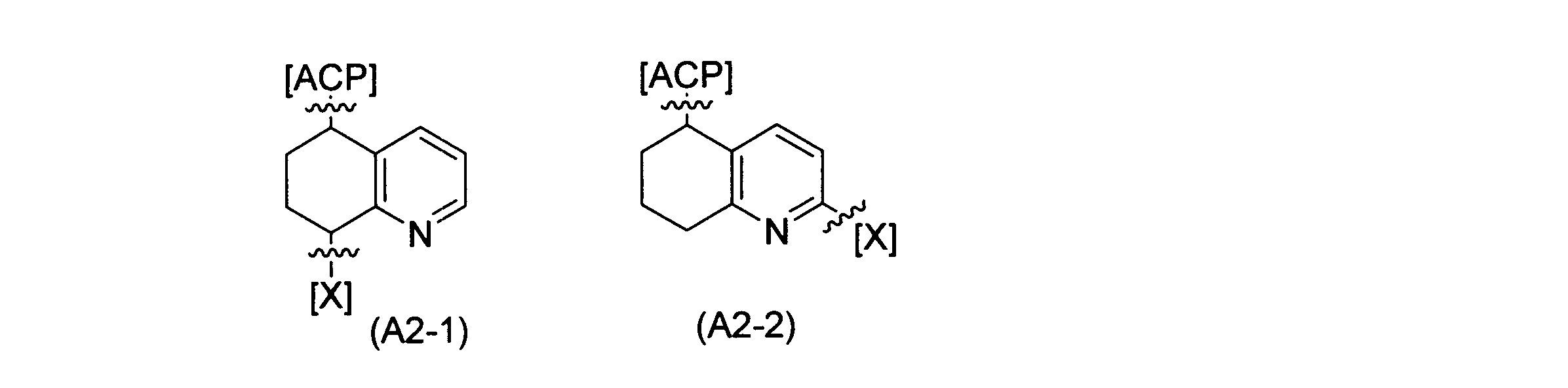
- 置換基を有していてもよい複素環ジイルにおける複素環ジイルがキノリンジイルである、請求項1に記載のα、β不飽和アミド化合物またはその薬学的に許容される塩。
- 置換基を有していてもよい複素環ジイルにおける複素環ジイルが、下記式(A3-1)、(A3-2)、(A3-3)、(A3-4)、(A3-5)、(A3-6)、(A3-7)、(A3-8)および(A3-9)からなる群から選ばれる複素環ジイルである、請求項1に記載のα、β不飽和アミド化合物またはその薬学的に許容される塩:

- 置換基を有していてもよい複素環ジイルにおける複素環ジイルがピリジンジイルである、請求項1に記載のα、β不飽和アミド化合物またはその薬学的に許容される塩。
- 置換基を有していてもよい複素環ジイルにおける複素環ジイルが、下記式(A4-1)、(A4-2)、(A4-3)および(A4-4)からなる群から選ばれる複素環ジイルである、請求項1に記載のα、β不飽和アミド化合物またはその薬学的に許容される塩:

- 置換基を有していてもよい複素環ジイルにおける複素環ジイルがイソキノリンジイルである、請求項1に記載のα、β不飽和アミド化合物またはその薬学的に許容される塩。
- 置換基を有していてもよい複素環ジイルにおける複素環ジイルが、下記式(A5-1)、(A5-2)、(A5-3)および(A5-4) からなる群から選ばれる複素環ジイルである、請求項1に記載のα、β不飽和アミド化合物またはその薬学的に許容される塩:

- 置換基を有していてもよい複素環ジイルにおける複素環ジイルがナフチリジンジイルである、請求項1に記載のα、β不飽和アミド化合物またはその薬学的に許容される塩。
- 置換基を有していてもよい複素環ジイルにおける複素環ジイルが、下記式(A6-1) で表される複素環ジイルである、請求項1に記載のα、β不飽和アミド化合物またはその薬学的に許容される塩:

- 置換基を有していてもよい複素環ジイルにおける複素環ジイルが5,6,7,8-テトラヒドロイソキノリンジイルである、請求項1に記載のα、β不飽和アミド化合物またはその薬学的に許容される塩。
- 置換基を有していてもよい複素環ジイルにおける複素環ジイルが、下記式(A7-1)で表される複素環ジイルである、請求項1に記載のα、β不飽和アミド化合物またはその薬学的に許容される塩:

- R1が水素原子である、請求項1~16のいずれか一項に記載のα、β不飽和アミド化合物またはその薬学的に許容される塩。
- R2が置換基を有していてもよいアリールまたは置換基を有していてもよい芳香族複素環基である、請求項1~17のいずれか一項に記載のα、β不飽和アミド化合物またはその薬学的に許容される塩。
- n1が0である、請求項1~18のいずれか一項に記載のα、β不飽和アミド化合物またはその薬学的に許容される塩。
- n1が1である、請求項1~18のいずれか一項に記載のα、β不飽和アミド化合物またはその薬学的に許容される塩。
- n2が0である、請求項1~20のいずれか一項に記載のα、β不飽和アミド化合物またはその薬学的に許容される塩。
- Xが-O-である、請求項1~21のいずれか一項に記載のα、β不飽和アミド化合物またはその薬学的に許容される塩。
- 請求項1~22のいずれか一項に記載のα、β不飽和アミド化合物またはその薬学的に許容される塩と、担体とを含む、医薬組成物。
- がんの治療または予防のための、請求項23に記載の医薬組成物。
- がんが中皮腫、肺がん、卵巣がん、および肝がんからなる群から選ばれる一または二以上である、請求項24に記載の医薬組成物。
- 請求項1~22のいずれか一項に記載のα、β不飽和アミド化合物またはその薬学的に許容される塩を、対象に投与することを含む、治療または予防方法。
- がんの治療または予防方法である、請求項26に記載の治療または予防方法。
- がんが肺がん、卵巣がん、および肝がんからなる群から選ばれる一または二以上である、請求項27に記載の方法。
- 医薬として使用するための、請求項1~22のいずれか一項に記載のα、β不飽和アミド化合物またはその薬学的に許容される塩。
- がんの治療または予防に使用するための、請求項1~22のいずれか一項に記載のα、β不飽和アミド化合物またはその薬学的に許容される塩。
- がんが肺がん、卵巣がん、および肝がんからなる群から選ばれる一または二以上である、請求項30に記載のα、β不飽和アミド化合物またはその薬学的に許容される塩。
- がんの治療または予防のための薬剤の製造のための、請求項1~22のいずれか一項に記載のα、β不飽和アミド化合物またはその薬学的に許容される塩の使用。
- がんが肺がん、卵巣がん、および肝がんからなる群から選ばれる一または二以上である、請求項32に記載の使用。
Priority Applications (13)
| Application Number | Priority Date | Filing Date | Title |
|---|---|---|---|
| MYPI2018001047A MY196809A (en) | 2015-12-24 | 2016-12-22 | (),()-unsaturated amide compound |
| CA3009159A CA3009159C (en) | 2015-12-24 | 2016-12-22 | .alpha.,.beta.-unsaturated amide compound |
| US16/065,937 US10787428B2 (en) | 2015-12-24 | 2016-12-22 | α,β-unsaturated amide compound |
| KR1020187017440A KR20180094923A (ko) | 2015-12-24 | 2016-12-22 | α, β 불포화 아미드 화합물 |
| CN201680076128.3A CN108430972B (zh) | 2015-12-24 | 2016-12-22 | α,β不饱和酰胺化合物 |
| AU2016379292A AU2016379292B2 (en) | 2015-12-24 | 2016-12-22 | α, β unsaturated amide compound |
| SG11201805286RA SG11201805286RA (en) | 2015-12-24 | 2016-12-22 | α,β-UNSATURATED AMIDE COMPOUND |
| JP2017558282A JP6983661B2 (ja) | 2015-12-24 | 2016-12-22 | α、β不飽和アミド化合物 |
| EP16878962.6A EP3401309A4 (en) | 2015-12-24 | 2016-12-22 | ALPHA, BETA-UNSATURATED AMID CONNECTION |
| US17/034,604 US11332455B2 (en) | 2015-12-24 | 2020-09-28 | α,β-unsaturated amide compound |
| AU2021204307A AU2021204307B2 (en) | 2015-12-24 | 2021-06-24 | a, ß unsaturated amide compound |
| JP2021176942A JP7312227B2 (ja) | 2015-12-24 | 2021-10-28 | α、β不飽和アミド化合物 |
| AU2023222816A AU2023222816A1 (en) | 2015-12-24 | 2023-08-28 | a, ß unsaturated amide compound |
Applications Claiming Priority (2)
| Application Number | Priority Date | Filing Date | Title |
|---|---|---|---|
| JP2015252234 | 2015-12-24 | ||
| JP2015-252234 | 2015-12-24 |
Related Child Applications (2)
| Application Number | Title | Priority Date | Filing Date |
|---|---|---|---|
| US16/065,937 A-371-Of-International US10787428B2 (en) | 2015-12-24 | 2016-12-22 | α,β-unsaturated amide compound |
| US17/034,604 Continuation US11332455B2 (en) | 2015-12-24 | 2020-09-28 | α,β-unsaturated amide compound |
Publications (1)
| Publication Number | Publication Date |
|---|---|
| WO2017111076A1 true WO2017111076A1 (ja) | 2017-06-29 |
Family
ID=59090542
Family Applications (1)
| Application Number | Title | Priority Date | Filing Date |
|---|---|---|---|
| PCT/JP2016/088476 Ceased WO2017111076A1 (ja) | 2015-12-24 | 2016-12-22 | α、β不飽和アミド化合物 |
Country Status (11)
| Country | Link |
|---|---|
| US (2) | US10787428B2 (ja) |
| EP (1) | EP3401309A4 (ja) |
| JP (3) | JP6983661B2 (ja) |
| KR (1) | KR20180094923A (ja) |
| CN (1) | CN108430972B (ja) |
| AU (3) | AU2016379292B2 (ja) |
| CA (2) | CA3009159C (ja) |
| MY (1) | MY196809A (ja) |
| SG (1) | SG11201805286RA (ja) |
| TW (2) | TWI804987B (ja) |
| WO (1) | WO2017111076A1 (ja) |
Cited By (15)
| Publication number | Priority date | Publication date | Assignee | Title |
|---|---|---|---|---|
| WO2018235926A1 (ja) * | 2017-06-23 | 2018-12-27 | 協和発酵キリン株式会社 | α、β不飽和アミド化合物 |
| WO2020083662A1 (en) | 2018-10-23 | 2020-04-30 | Basf Se | Tricyclic pesticidal compounds |
| WO2021209265A1 (en) | 2020-04-14 | 2021-10-21 | Basf Se | Tricyclic pesticidal compounds |
| US11274082B2 (en) | 2019-05-31 | 2022-03-15 | Ikena Oncology, Inc. | Tead inhibitors and uses thereof |
| WO2022120355A1 (en) | 2020-12-02 | 2022-06-09 | Ikena Oncology, Inc. | Tead degraders and uses thereof |
| WO2022159986A1 (en) | 2021-01-25 | 2022-07-28 | Ikena Oncology, Inc. | Combination of a 3-(imidazol-4-yl)-4-(amino)-benzenesulfonamide tead inhibitor with an egfr inhibitor and/or mek inhibitor for use in the treatment of lung cancer |
| US11458149B1 (en) | 2019-05-31 | 2022-10-04 | Ikena Oncology, Inc. | TEAD inhibitors and uses thereof |
| WO2022221866A1 (en) | 2021-04-16 | 2022-10-20 | Ikena Oncology, Inc. | Mek inhibitors and uses thereof |
| WO2023060227A1 (en) | 2021-10-07 | 2023-04-13 | Ikena Oncology, Inc. | Tead inhibitors and uses thereof |
| WO2023173053A1 (en) | 2022-03-10 | 2023-09-14 | Ikena Oncology, Inc. | Mek inhibitors and uses thereof |
| WO2023173057A1 (en) | 2022-03-10 | 2023-09-14 | Ikena Oncology, Inc. | Mek inhibitors and uses thereof |
| WO2023230205A1 (en) | 2022-05-25 | 2023-11-30 | Ikena Oncology, Inc. | Mek inhibitors and uses thereof |
| WO2024092116A1 (en) | 2022-10-26 | 2024-05-02 | Ikena Oncology, Inc. | Combination of tead inhibitors and egfr inhibitors and uses thereof |
| WO2024173761A1 (en) | 2023-02-17 | 2024-08-22 | Ikena Oncology, Inc. | Combinations comprising mek inhibitors for use in the treatment of cancer |
| US12365688B2 (en) | 2017-01-23 | 2025-07-22 | Revolution Medicines, Inc. | Substituted pyrazolopyrazines, imidazopyrazines and [1,2,4]triazolopyrazines as allosteric SHP2 inhibitors |
Families Citing this family (8)
| Publication number | Priority date | Publication date | Assignee | Title |
|---|---|---|---|---|
| JP7628108B2 (ja) * | 2019-07-19 | 2025-02-07 | ブリッドジーン バイオサイエンシズ インコーポレイテッド | チロシンキナーゼの阻害剤 |
| CA3150878A1 (en) * | 2019-09-12 | 2021-03-18 | Jonathan Bentley | Inhibitors of sarm1 |
| US12590298B2 (en) | 2019-10-18 | 2026-03-31 | The Regents Of The University Of California | Ex vivo tumor angiogenesis model |
| KR20220087497A (ko) | 2019-10-18 | 2022-06-24 | 더 리전츠 오브 더 유니버시티 오브 캘리포니아 | 병원성 혈관을 표적화하기 위한 화합물 및 방법 |
| CA3162348A1 (en) * | 2019-12-24 | 2021-07-01 | Nathanael S. Gray | Transcriptional enhanced associate domain (tead) transcription factor inhibitors and uses thereof |
| IL301691A (en) | 2020-09-30 | 2023-05-01 | Univ Leuven Kath | 1,2,3,4-tetrahydroquinoline derivatives as inhibitors of the yap/taz-tead activation for treating cancer |
| EP4452253A4 (en) | 2021-12-23 | 2026-04-15 | The Katholieke Univ Leuven | 2-PYRAZOLE, ANILINES AND RELATED ANALOGUES TO INHIBIT YAP/TAZ-TEAD |
| CN119930515B (zh) * | 2025-01-22 | 2026-04-03 | 南开大学 | 8-取代苯胺基氯喹啉类化合物及其制备方法和应用 |
Citations (36)
| Publication number | Priority date | Publication date | Assignee | Title |
|---|---|---|---|---|
| US3849458A (en) | 1966-01-21 | 1974-11-19 | Incentive Res & Dev Ab | Method for deuterating organic compounds |
| JPS61275241A (ja) | 1985-05-29 | 1986-12-05 | Mitsubishi Rayon Co Ltd | 重水素化アクリル酸又は重水素化メタクリル酸の製造方法 |
| JPS61277648A (ja) | 1985-06-03 | 1986-12-08 | Mitsubishi Rayon Co Ltd | 重水素化アクリル酸又は重水素化メタクリル酸の製造方法 |
| JPS63198638A (ja) | 1987-01-17 | 1988-08-17 | ヘキスト・アクチエンゲゼルシャフト | 重水素化した有機化合物の製造方法 |
| EP0409565A1 (en) | 1989-07-17 | 1991-01-23 | Sumitomo Chemical Company, Limited | Rubber composition useful for tires |
| JPH0519536B2 (ja) | 1984-12-21 | 1993-03-17 | Mitsubishi Rayon Co | |
| WO1998013356A1 (en) | 1996-09-25 | 1998-04-02 | Takeda Chemical Industries, Ltd. | Trycyclic compounds as prostaglandin i2 receptor agonists |
| WO1999048859A1 (en) | 1998-03-20 | 1999-09-30 | Bristol-Myers Squibb Company | Aryloxyanilides and related compounds |
| US6002008A (en) | 1997-04-03 | 1999-12-14 | American Cyanamid Company | Substituted 3-cyano quinolines |
| WO2001018006A1 (en) | 1999-09-09 | 2001-03-15 | Merck & Co., Inc. | Inhibitors of prenyl-protein transferase |
| JP2002543198A (ja) * | 1999-04-21 | 2002-12-17 | アメリカン・サイアナミド・カンパニー | チロシンキナーゼ類の置換された3−シアノ−[1.7]、[1.5]および[1.8]−ナフチリジン阻害剤 |
| WO2004032909A2 (en) | 2002-10-11 | 2004-04-22 | Wyeth Holdings Corporation | Stabilized pharmaceutical composition containing basic excipients |
| JP2004536094A (ja) * | 2001-06-23 | 2004-12-02 | バイエル クロップサイエンス ゲーエムベーハー | 除草性の置換ピリジン、その製造方法並びに除草薬剤及び植物成長調整剤としてのその使用 |
| WO2007036743A2 (en) | 2005-09-30 | 2007-04-05 | Argenta Discovery Limited | Quinolines and their therapeutic use |
| WO2009051822A1 (en) | 2007-10-19 | 2009-04-23 | Avila Therapeutics, Inc. | Heteroaryl compounds and uses thereof |
| JP2009528980A (ja) * | 2006-01-20 | 2009-08-13 | シェーリング コーポレイション | ガンマセクレターゼ阻害剤としての、炭素環および複素環アリールスルホン |
| WO2010036928A1 (en) * | 2008-09-26 | 2010-04-01 | Takeda Pharmaceutical Company Limited | Prevention and treatment of cancer with lkb1 non-expression (deletion or mutation) |
| WO2011022440A2 (en) | 2009-08-17 | 2011-02-24 | Memorial Sloan-Kettering Cancer Center | Heat shock protein binding compounds, compositions, and methods for making and using same |
| WO2011025546A1 (en) | 2009-08-31 | 2011-03-03 | Massachusetts Institute Of Technology | 1, 2, 3-triazole containing protein kinase sensors |
| CN101983961A (zh) | 2010-11-24 | 2011-03-09 | 上海展昱生化科技有限公司 | 5-氨基-2-甲基喹啉的制备方法 |
| JP2012524123A (ja) * | 2009-04-20 | 2012-10-11 | アビラ セラピューティクス, インコーポレイテッド | へテロアリール化合物およびその使用 |
| WO2012167600A1 (zh) * | 2011-06-09 | 2012-12-13 | 上海汇伦生命科技有限公司 | 一种杂环并吡啶酮类化合物,其中间体、制备方法和用途 |
| WO2013079452A1 (en) | 2011-11-30 | 2013-06-06 | F. Hoffmann-La Roche Ag | New bicyclic dihydroisoquinoline-1-one derivatives |
| WO2013108754A1 (ja) * | 2012-01-17 | 2013-07-25 | アステラス製薬株式会社 | ピラジンカルボキサミド化合物 |
| US20130274287A1 (en) | 2012-04-17 | 2013-10-17 | Hoffmann-La Roche Inc. | Phenyl-tetrahydroisoquinoline derivatives |
| WO2014040555A1 (zh) * | 2012-09-12 | 2014-03-20 | 山东亨利医药科技有限责任公司 | 作为酪氨酸激酶抑制剂的含氮杂芳环衍生物 |
| JP2014514348A (ja) * | 2011-05-04 | 2014-06-19 | アリアド・ファーマシューティカルズ・インコーポレイテッド | Egfr発動性がんの細胞増殖阻害用化合物 |
| JP2014517016A (ja) * | 2011-06-10 | 2014-07-17 | メルク パテント ゲゼルシャフト ミット ベシュレンクテル ハフツング | Btk阻害活性を有するピリミジンおよびピリミジン化合物の組成物と製造方法 |
| WO2014182829A1 (en) * | 2013-05-09 | 2014-11-13 | Principia Biopharma Inc. | Quinolone derivatives as fibroblast growth factor inhibitors |
| WO2015025197A1 (en) * | 2013-08-22 | 2015-02-26 | Jubilant Biosys Limited | Substituted pyrimidine compounds, compositions and medicinal applications thereof |
| WO2015051447A1 (en) | 2013-10-09 | 2015-04-16 | University Health Network | Methods and compositions for treating cancer |
| CN104761544A (zh) * | 2014-01-03 | 2015-07-08 | 南京波尔泰药业科技有限公司 | Egfr酪氨酸激酶的临床重要突变体的选择性抑制剂 |
| WO2015158310A1 (zh) * | 2014-04-18 | 2015-10-22 | 山东轩竹医药科技有限公司 | 一种酪氨酸激酶抑制剂及其用途 |
| WO2015188777A1 (en) | 2014-06-12 | 2015-12-17 | Shanghai Fochon Pharmaceutical Co Ltd | Certain protein kinase inhibitors |
| WO2016015453A1 (zh) * | 2014-07-29 | 2016-02-04 | 上海艾力斯医药科技有限公司 | 吡啶胺基嘧啶衍生物、其制备方法及应用 |
| WO2016118951A2 (en) * | 2015-01-23 | 2016-07-28 | Confluence Life Sciences, Inc. | Heterocyclic itk inhibitors for treating inflammation and cancer |
Family Cites Families (22)
| Publication number | Priority date | Publication date | Assignee | Title |
|---|---|---|---|---|
| TW436485B (en) * | 1997-08-01 | 2001-05-28 | American Cyanamid Co | Substituted quinazoline derivatives |
| AU2871900A (en) * | 1999-02-04 | 2000-08-25 | Millennium Pharmaceuticals, Inc. | G-protein coupled heptahelical receptor binding compounds and methods of use thereof |
| US6548496B2 (en) | 1999-04-21 | 2003-04-15 | American Cyanamid Company | Substituted 3-cyano-[1.7], [1.5], and [1.8] naphthyridine inhibitors of tyrosine kinases |
| US6624159B2 (en) * | 2000-07-12 | 2003-09-23 | Pharmacia & Upjohn Company | Heterocycle carboxamides as antiviral agents |
| UA77200C2 (en) | 2001-08-07 | 2006-11-15 | Wyeth Corp | Antineoplastic combination of cci-779 and bkb-569 |
| CA2478047C (en) * | 2002-03-01 | 2014-01-21 | Immunomedics, Inc. | Rs7 antibodies |
| CA2514479A1 (en) * | 2003-01-23 | 2004-08-05 | T.K. Signal Ltd. | Irreversible inhibitors of egf receptor tyrosine kinases and uses thereof |
| BRPI0410720A (pt) | 2003-05-27 | 2006-06-20 | Pfizer Prod Inc | quinazolinas e pirido[3,4-d]pirimidinas como inibidores do receptor de tirosina cinase |
| CN100545161C (zh) * | 2003-08-15 | 2009-09-30 | 中国科学院上海药物研究所 | 一类杂环衍生物、制备方法及其用途 |
| US7399865B2 (en) | 2003-09-15 | 2008-07-15 | Wyeth | Protein tyrosine kinase enzyme inhibitors |
| CN101405280B (zh) * | 2006-01-20 | 2012-11-14 | 先灵公司 | 作为γ分泌酶抑制剂的碳环和杂环芳基砜化合物 |
| CN101245050A (zh) | 2007-02-14 | 2008-08-20 | 上海艾力斯医药科技有限公司 | 4-苯胺喹唑啉衍生物的盐 |
| CN101638383B (zh) | 2008-07-29 | 2013-07-10 | 北大方正集团有限公司 | 喹啉衍生物及其药物组合物和用途 |
| CN103249721B (zh) * | 2010-10-18 | 2016-10-12 | 拉夸里亚创药株式会社 | 作为ttx-s阻滞剂的芳胺衍生物 |
| WO2012122058A2 (en) | 2011-03-04 | 2012-09-13 | Newgen Therapeutics, Inc. | Alkyne substituted quinazoline compound and methods of use |
| CN102311395B (zh) * | 2011-07-05 | 2014-04-16 | 张爱华 | 喹唑啉环取代的二苯脲类衍生物及其用途 |
| CN104203242B (zh) * | 2012-04-04 | 2017-03-15 | 杭州德润玉成生物科技有限公司 | 取代的喹啉类作为布鲁顿酪氨酸激酶抑制剂 |
| CA2908098A1 (en) * | 2013-03-15 | 2014-09-25 | Celgene Avilomics Research, Inc. | Mk2 inhibitors and uses thereof |
| EP3013797B1 (en) * | 2013-06-28 | 2018-01-03 | BeiGene, Ltd. | Fused tricyclic amide compounds as multiple kinase inhibitors |
| CN103450133B (zh) | 2013-09-16 | 2015-07-08 | 中国药科大学 | 具有抗肿瘤活性的东莨菪素衍生物、其制备方法及用途 |
| EP3778584A1 (en) | 2014-06-19 | 2021-02-17 | ARIAD Pharmaceuticals, Inc. | Production process of 2-chloro-4-heteroaryl-pyrimidine derivatives |
| CN104370825B (zh) * | 2014-09-29 | 2017-04-19 | 人福医药集团股份公司 | 作为激酶抑制剂的取代杂环化合物及其制备方法和用途 |
-
2016
- 2016-12-22 SG SG11201805286RA patent/SG11201805286RA/en unknown
- 2016-12-22 CA CA3009159A patent/CA3009159C/en active Active
- 2016-12-22 JP JP2017558282A patent/JP6983661B2/ja not_active Expired - Fee Related
- 2016-12-22 AU AU2016379292A patent/AU2016379292B2/en not_active Ceased
- 2016-12-22 TW TW110134669A patent/TWI804987B/zh not_active IP Right Cessation
- 2016-12-22 WO PCT/JP2016/088476 patent/WO2017111076A1/ja not_active Ceased
- 2016-12-22 EP EP16878962.6A patent/EP3401309A4/en not_active Withdrawn
- 2016-12-22 CN CN201680076128.3A patent/CN108430972B/zh not_active Expired - Fee Related
- 2016-12-22 US US16/065,937 patent/US10787428B2/en active Active
- 2016-12-22 MY MYPI2018001047A patent/MY196809A/en unknown
- 2016-12-22 TW TW105142790A patent/TWI740873B/zh active
- 2016-12-22 KR KR1020187017440A patent/KR20180094923A/ko not_active Ceased
- 2016-12-22 CA CA3228632A patent/CA3228632A1/en active Pending
-
2020
- 2020-09-28 US US17/034,604 patent/US11332455B2/en active Active
-
2021
- 2021-06-24 AU AU2021204307A patent/AU2021204307B2/en not_active Ceased
- 2021-10-28 JP JP2021176942A patent/JP7312227B2/ja active Active
-
2023
- 2023-07-07 JP JP2023112517A patent/JP2023123857A/ja active Pending
- 2023-08-28 AU AU2023222816A patent/AU2023222816A1/en not_active Abandoned
Patent Citations (37)
| Publication number | Priority date | Publication date | Assignee | Title |
|---|---|---|---|---|
| US3849458A (en) | 1966-01-21 | 1974-11-19 | Incentive Res & Dev Ab | Method for deuterating organic compounds |
| JPH0519536B2 (ja) | 1984-12-21 | 1993-03-17 | Mitsubishi Rayon Co | |
| JPS61275241A (ja) | 1985-05-29 | 1986-12-05 | Mitsubishi Rayon Co Ltd | 重水素化アクリル酸又は重水素化メタクリル酸の製造方法 |
| JPS61277648A (ja) | 1985-06-03 | 1986-12-08 | Mitsubishi Rayon Co Ltd | 重水素化アクリル酸又は重水素化メタクリル酸の製造方法 |
| JPS63198638A (ja) | 1987-01-17 | 1988-08-17 | ヘキスト・アクチエンゲゼルシャフト | 重水素化した有機化合物の製造方法 |
| EP0409565A1 (en) | 1989-07-17 | 1991-01-23 | Sumitomo Chemical Company, Limited | Rubber composition useful for tires |
| WO1998013356A1 (en) | 1996-09-25 | 1998-04-02 | Takeda Chemical Industries, Ltd. | Trycyclic compounds as prostaglandin i2 receptor agonists |
| US6002008A (en) | 1997-04-03 | 1999-12-14 | American Cyanamid Company | Substituted 3-cyano quinolines |
| WO1999048859A1 (en) | 1998-03-20 | 1999-09-30 | Bristol-Myers Squibb Company | Aryloxyanilides and related compounds |
| JP2002543198A (ja) * | 1999-04-21 | 2002-12-17 | アメリカン・サイアナミド・カンパニー | チロシンキナーゼ類の置換された3−シアノ−[1.7]、[1.5]および[1.8]−ナフチリジン阻害剤 |
| WO2001018006A1 (en) | 1999-09-09 | 2001-03-15 | Merck & Co., Inc. | Inhibitors of prenyl-protein transferase |
| JP2004536094A (ja) * | 2001-06-23 | 2004-12-02 | バイエル クロップサイエンス ゲーエムベーハー | 除草性の置換ピリジン、その製造方法並びに除草薬剤及び植物成長調整剤としてのその使用 |
| WO2004032909A2 (en) | 2002-10-11 | 2004-04-22 | Wyeth Holdings Corporation | Stabilized pharmaceutical composition containing basic excipients |
| WO2007036743A2 (en) | 2005-09-30 | 2007-04-05 | Argenta Discovery Limited | Quinolines and their therapeutic use |
| JP2009528980A (ja) * | 2006-01-20 | 2009-08-13 | シェーリング コーポレイション | ガンマセクレターゼ阻害剤としての、炭素環および複素環アリールスルホン |
| WO2009051822A1 (en) | 2007-10-19 | 2009-04-23 | Avila Therapeutics, Inc. | Heteroaryl compounds and uses thereof |
| WO2010036928A1 (en) * | 2008-09-26 | 2010-04-01 | Takeda Pharmaceutical Company Limited | Prevention and treatment of cancer with lkb1 non-expression (deletion or mutation) |
| JP2012524123A (ja) * | 2009-04-20 | 2012-10-11 | アビラ セラピューティクス, インコーポレイテッド | へテロアリール化合物およびその使用 |
| WO2011022440A2 (en) | 2009-08-17 | 2011-02-24 | Memorial Sloan-Kettering Cancer Center | Heat shock protein binding compounds, compositions, and methods for making and using same |
| JP2013502424A (ja) * | 2009-08-17 | 2013-01-24 | メモリアル スローン−ケタリング キャンサー センター | 熱ショックタンパク質結合化合物、組成物、およびそれらを製造するための方法 |
| WO2011025546A1 (en) | 2009-08-31 | 2011-03-03 | Massachusetts Institute Of Technology | 1, 2, 3-triazole containing protein kinase sensors |
| CN101983961A (zh) | 2010-11-24 | 2011-03-09 | 上海展昱生化科技有限公司 | 5-氨基-2-甲基喹啉的制备方法 |
| JP2014514348A (ja) * | 2011-05-04 | 2014-06-19 | アリアド・ファーマシューティカルズ・インコーポレイテッド | Egfr発動性がんの細胞増殖阻害用化合物 |
| WO2012167600A1 (zh) * | 2011-06-09 | 2012-12-13 | 上海汇伦生命科技有限公司 | 一种杂环并吡啶酮类化合物,其中间体、制备方法和用途 |
| JP2014517016A (ja) * | 2011-06-10 | 2014-07-17 | メルク パテント ゲゼルシャフト ミット ベシュレンクテル ハフツング | Btk阻害活性を有するピリミジンおよびピリミジン化合物の組成物と製造方法 |
| WO2013079452A1 (en) | 2011-11-30 | 2013-06-06 | F. Hoffmann-La Roche Ag | New bicyclic dihydroisoquinoline-1-one derivatives |
| WO2013108754A1 (ja) * | 2012-01-17 | 2013-07-25 | アステラス製薬株式会社 | ピラジンカルボキサミド化合物 |
| US20130274287A1 (en) | 2012-04-17 | 2013-10-17 | Hoffmann-La Roche Inc. | Phenyl-tetrahydroisoquinoline derivatives |
| WO2014040555A1 (zh) * | 2012-09-12 | 2014-03-20 | 山东亨利医药科技有限责任公司 | 作为酪氨酸激酶抑制剂的含氮杂芳环衍生物 |
| WO2014182829A1 (en) * | 2013-05-09 | 2014-11-13 | Principia Biopharma Inc. | Quinolone derivatives as fibroblast growth factor inhibitors |
| WO2015025197A1 (en) * | 2013-08-22 | 2015-02-26 | Jubilant Biosys Limited | Substituted pyrimidine compounds, compositions and medicinal applications thereof |
| WO2015051447A1 (en) | 2013-10-09 | 2015-04-16 | University Health Network | Methods and compositions for treating cancer |
| CN104761544A (zh) * | 2014-01-03 | 2015-07-08 | 南京波尔泰药业科技有限公司 | Egfr酪氨酸激酶的临床重要突变体的选择性抑制剂 |
| WO2015158310A1 (zh) * | 2014-04-18 | 2015-10-22 | 山东轩竹医药科技有限公司 | 一种酪氨酸激酶抑制剂及其用途 |
| WO2015188777A1 (en) | 2014-06-12 | 2015-12-17 | Shanghai Fochon Pharmaceutical Co Ltd | Certain protein kinase inhibitors |
| WO2016015453A1 (zh) * | 2014-07-29 | 2016-02-04 | 上海艾力斯医药科技有限公司 | 吡啶胺基嘧啶衍生物、其制备方法及应用 |
| WO2016118951A2 (en) * | 2015-01-23 | 2016-07-28 | Confluence Life Sciences, Inc. | Heterocyclic itk inhibitors for treating inflammation and cancer |
Non-Patent Citations (25)
Cited By (21)
| Publication number | Priority date | Publication date | Assignee | Title |
|---|---|---|---|---|
| US12365688B2 (en) | 2017-01-23 | 2025-07-22 | Revolution Medicines, Inc. | Substituted pyrazolopyrazines, imidazopyrazines and [1,2,4]triazolopyrazines as allosteric SHP2 inhibitors |
| TWI804498B (zh) * | 2017-06-23 | 2023-06-11 | 日商協和麒麟股份有限公司 | α、β不飽和醯胺化合物 |
| AU2018289759B2 (en) * | 2017-06-23 | 2022-03-10 | Kyowa Kirin Co., Ltd. | Alpha, beta-unsaturated amide compound |
| WO2018235926A1 (ja) * | 2017-06-23 | 2018-12-27 | 協和発酵キリン株式会社 | α、β不飽和アミド化合物 |
| US11447471B2 (en) * | 2017-06-23 | 2022-09-20 | Kyowa Kirin Co., Ltd. | α,β-unsaturated amide compound |
| WO2020083662A1 (en) | 2018-10-23 | 2020-04-30 | Basf Se | Tricyclic pesticidal compounds |
| US11925651B2 (en) | 2019-05-31 | 2024-03-12 | Ikena Oncology, Inc. | TEAD inhibitors and uses thereof |
| US11458149B1 (en) | 2019-05-31 | 2022-10-04 | Ikena Oncology, Inc. | TEAD inhibitors and uses thereof |
| US11760728B2 (en) | 2019-05-31 | 2023-09-19 | Ikena Oncology, Inc. | Tead inhibitors and uses thereof |
| US11274082B2 (en) | 2019-05-31 | 2022-03-15 | Ikena Oncology, Inc. | Tead inhibitors and uses thereof |
| US12577208B2 (en) | 2019-05-31 | 2026-03-17 | EHE Foundation | TEAD inhibitors and uses thereof |
| WO2021209265A1 (en) | 2020-04-14 | 2021-10-21 | Basf Se | Tricyclic pesticidal compounds |
| WO2022120355A1 (en) | 2020-12-02 | 2022-06-09 | Ikena Oncology, Inc. | Tead degraders and uses thereof |
| WO2022159986A1 (en) | 2021-01-25 | 2022-07-28 | Ikena Oncology, Inc. | Combination of a 3-(imidazol-4-yl)-4-(amino)-benzenesulfonamide tead inhibitor with an egfr inhibitor and/or mek inhibitor for use in the treatment of lung cancer |
| WO2022221866A1 (en) | 2021-04-16 | 2022-10-20 | Ikena Oncology, Inc. | Mek inhibitors and uses thereof |
| WO2023060227A1 (en) | 2021-10-07 | 2023-04-13 | Ikena Oncology, Inc. | Tead inhibitors and uses thereof |
| WO2023173057A1 (en) | 2022-03-10 | 2023-09-14 | Ikena Oncology, Inc. | Mek inhibitors and uses thereof |
| WO2023173053A1 (en) | 2022-03-10 | 2023-09-14 | Ikena Oncology, Inc. | Mek inhibitors and uses thereof |
| WO2023230205A1 (en) | 2022-05-25 | 2023-11-30 | Ikena Oncology, Inc. | Mek inhibitors and uses thereof |
| WO2024092116A1 (en) | 2022-10-26 | 2024-05-02 | Ikena Oncology, Inc. | Combination of tead inhibitors and egfr inhibitors and uses thereof |
| WO2024173761A1 (en) | 2023-02-17 | 2024-08-22 | Ikena Oncology, Inc. | Combinations comprising mek inhibitors for use in the treatment of cancer |
Also Published As
| Publication number | Publication date |
|---|---|
| EP3401309A1 (en) | 2018-11-14 |
| TW202202483A (zh) | 2022-01-16 |
| CN108430972A (zh) | 2018-08-21 |
| US20190010136A1 (en) | 2019-01-10 |
| AU2021204307A1 (en) | 2021-07-29 |
| KR20180094923A (ko) | 2018-08-24 |
| US10787428B2 (en) | 2020-09-29 |
| TWI804987B (zh) | 2023-06-11 |
| CA3009159A1 (en) | 2017-06-29 |
| AU2016379292B2 (en) | 2021-03-25 |
| CA3228632A1 (en) | 2017-06-29 |
| TWI740873B (zh) | 2021-10-01 |
| US20210380551A1 (en) | 2021-12-09 |
| CA3009159C (en) | 2024-03-19 |
| MY196809A (en) | 2023-05-03 |
| AU2021204307B2 (en) | 2023-06-01 |
| JP2022009699A (ja) | 2022-01-14 |
| JP6983661B2 (ja) | 2021-12-17 |
| SG11201805286RA (en) | 2018-07-30 |
| AU2016379292A1 (en) | 2018-07-12 |
| EP3401309A4 (en) | 2019-11-27 |
| JP7312227B2 (ja) | 2023-07-20 |
| AU2023222816A1 (en) | 2023-09-14 |
| US11332455B2 (en) | 2022-05-17 |
| CN108430972B (zh) | 2022-12-27 |
| JP2023123857A (ja) | 2023-09-05 |
| JPWO2017111076A1 (ja) | 2018-10-18 |
| TW201736347A (zh) | 2017-10-16 |
Similar Documents
| Publication | Publication Date | Title |
|---|---|---|
| JP7312227B2 (ja) | α、β不飽和アミド化合物 | |
| AU2018289759B2 (en) | Alpha, beta-unsaturated amide compound | |
| AU2016311426A1 (en) | Compounds and compositions useful for treating disorders related to NTRK | |
| CN116801883A (zh) | 一类杂芳环化合物、其制备方法及用途 | |
| AU2021307502B2 (en) | Compound serving as BTK inhibitor, preparation method therefor, and use thereof | |
| TW202423428A (zh) | Tead抑制劑及其使用方法 | |
| JP2025519624A (ja) | Hpk1阻害剤およびその医薬における使用 | |
| TW202340198A (zh) | 靶向malt1的蛋白降解化合物、包含其的醫藥組合物及其用途 | |
| CN119522224A (zh) | 含氮杂环化合物作为泛素-特异性蛋白酶1抑制剂的制备方法、应用及其用途 | |
| JP2025537242A (ja) | 含窒素スピロ環式化合物、医薬組成物及びその用途 | |
| HK40001048B (zh) | S1p1激动剂及其应用 |
Legal Events
| Date | Code | Title | Description |
|---|---|---|---|
| 121 | Ep: the epo has been informed by wipo that ep was designated in this application |
Ref document number: 16878962 Country of ref document: EP Kind code of ref document: A1 |
|
| ENP | Entry into the national phase |
Ref document number: 2017558282 Country of ref document: JP Kind code of ref document: A |
|
| ENP | Entry into the national phase |
Ref document number: 3009159 Country of ref document: CA |
|
| ENP | Entry into the national phase |
Ref document number: 20187017440 Country of ref document: KR Kind code of ref document: A |
|
| WWE | Wipo information: entry into national phase |
Ref document number: 11201805286R Country of ref document: SG |
|
| NENP | Non-entry into the national phase |
Ref country code: DE |
|
| ENP | Entry into the national phase |
Ref document number: 2016379292 Country of ref document: AU Date of ref document: 20161222 Kind code of ref document: A |
|
| WWE | Wipo information: entry into national phase |
Ref document number: 2016878962 Country of ref document: EP |
|
| ENP | Entry into the national phase |
Ref document number: 2016878962 Country of ref document: EP Effective date: 20180724 |