WO2017149701A1 - Composition de graisse ou d'huile - Google Patents
Composition de graisse ou d'huile Download PDFInfo
- Publication number
- WO2017149701A1 WO2017149701A1 PCT/JP2016/056457 JP2016056457W WO2017149701A1 WO 2017149701 A1 WO2017149701 A1 WO 2017149701A1 JP 2016056457 W JP2016056457 W JP 2016056457W WO 2017149701 A1 WO2017149701 A1 WO 2017149701A1
- Authority
- WO
- WIPO (PCT)
- Prior art keywords
- oil
- water
- weight
- fat
- fat composition
- Prior art date
- Legal status (The legal status is an assumption and is not a legal conclusion. Google has not performed a legal analysis and makes no representation as to the accuracy of the status listed.)
- Ceased
Links
Images
Classifications
-
- C—CHEMISTRY; METALLURGY
- C11—ANIMAL OR VEGETABLE OILS, FATS, FATTY SUBSTANCES OR WAXES; FATTY ACIDS THEREFROM; DETERGENTS; CANDLES
- C11B—PRODUCING, e.g. BY PRESSING RAW MATERIALS OR BY EXTRACTION FROM WASTE MATERIALS, REFINING OR PRESERVING FATS, FATTY SUBSTANCES, e.g. LANOLIN, FATTY OILS OR WAXES; ESSENTIAL OILS; PERFUMES
- C11B5/00—Preserving by using additives, e.g. anti-oxidants
Definitions
- the present invention relates to an oil and fat composition comprising a food or food additive and having a strong antioxidant power, and a method for producing the same.
- Patent Document 1 It is known that an antioxidant effect can be obtained by adding a water-soluble antioxidant to fats and oils (Patent Document 1).
- Patent Document 2 describes an oil and fat imparted with oxidation stability using a water-soluble tea polyphenol and an emulsifier.
- Patent Document 3 describes that, in the chlorogenic acids having a specific composition, the antioxidant activity is improved by further adding a saccharide.
- Patent Document 4 discloses that “a solid phase containing a tea extract is an oily composition dispersed in an oil phase containing an oily component and an emulsifier having an HLB of 10 or less, and containing the tea extract.
- Patent Document 5 describes “an oil-soluble antioxidant having a water-soluble antioxidant property derived from a natural product and having an average particle size of 40 to 120 nm that can be transparently dispersed in fats and oils”.
- Non-patent Document 1 TBHQ (tertiary butylhydroquinone) is a powerful synthetic antioxidant (Non-patent Document 1), and it may be used as an index when screening for a new antioxidant (Non-patent Document 1). Reference 2).
- An object of the present invention is to provide an oil and fat composition having unprecedented strong oxidation stability by a simple method.
- Patent Document 1 is the fats and oils used for frying in principle, and the state containing a fixed amount or more of water is not assumed. In the first place, there is no suggestion of an effect on polyunsaturated fatty acid-containing fats and oils that are extremely susceptible to oxidative degradation than frying fats and oils. Also in Patent Document 2, as in Patent Document 1, application to heating and cooking oils and fats such as frying is a preferred use, and a state of containing a certain amount or more of water is not assumed. And it is not suggested about the effect on polyunsaturated fatty acid-containing fats and oils.
- Patent Document 3 the composition of chlorogenic acids must be specified, and the versatility is low. In addition, it does not suggest that the present invention exhibits extremely strong antioxidant power, which is a problem.
- Patent Document 4 a tea extract that is substantially dehydrated and solid is dispersed in oil, and suggests a strong antioxidant effect that prevents oxidation of PUFA oil. Not what you want.
- Patent Document 5 the description of the examples shows that what can be used as an antioxidant is substantially limited to catechins, and it is necessary to use a water-soluble emulsifier. there were. In addition, its antioxidant power is less than 1.5 times that of control oil (corn oil), and PUFA oil, which has extremely low oxidative stability compared to corn oil, can impart oxidative stability. Was unthinkable.
- TBHQ is known to be a powerful antioxidant, but it has not been approved for food use in Japan. Actually, in order to further improve the oxidative stability of fats and oils containing a large amount of polyunsaturated fatty acids, it has been estimated that an antioxidant power exceeding TBHQ is required. Of course it needs to be usable as food.
- an oil composition containing a water-soluble antioxidant and, if necessary, water-soluble solids such as carbohydrates, and an aqueous phase containing a certain amount or more of water-soluble solids dispersed in the oil phase with a predetermined particle size or less was completed by finding that a material containing a predetermined amount of water exhibits a very strong oxidation stabilizing effect.
- the present invention (1) An oil and fat composition containing 1.9 to 18% by weight of water that satisfies the following requirements: 1. Containing 3 to 65% by weight of a water-soluble antioxidant in the aqueous phase, 2. The aqueous phase contains saccharides as necessary, and contains a total of 18 to 75% by weight of water-soluble solids. 3. 4.3 to 38% by weight of the aqueous phase is dispersed in the oil phase with a particle size of 300 nm or less.
- the oil phase contains at least one oil-soluble emulsifier selected from polyglycerin condensed ricinolate, sugar ester, and glycerin fatty acid ester in an amount of 0.7 to 6.8 times the weight of water.
- the oil phase contains one or more oil-soluble emulsifiers selected from polyglycerin condensed ricinolate, sugar ester, glycerin fatty acid ester, 0.7 to 6.8 times the weight of water, (2)
- the fat and oil composition according to the description (5)
- the oil and fat composition according to (2), wherein the water-soluble antioxidant is one or more selected from vitamin C, amino acids and catechins
- (6) The oil and fat composition according to (3), wherein the water-soluble antioxidant is one or more selected from vitamin C, amino acids, and catechins, (7)
- the oil and fat composition according to (6), wherein the amino acid is one or more selected from glycine, proline, and serine
- the oil and fat composition according to (7), wherein the amino acid is one or more selected from glycine, proline
- the water phase is added to the oil phase so that the water phase is 4.3 to 38% by weight, and the water content in the oil and fat composition is 1.9 to 18% by weight, so that the particle diameter is 300 nm or less.
- a process for making a water-in-oil type oil and fat composition (11) The production method according to (10), wherein the saccharide is one or more selected from sugar alcohol, glucose, sucrose, and dextrin, (12)
- the oil phase contains at least one oil-soluble emulsifier selected from polyglycerin condensed ricinolate, sugar ester, and glycerin fatty acid ester in an amount of 0.7 to 6.8 times the weight of water in the oil and fat composition.
- the oily phase contains at least one oil-soluble emulsifier selected from polyglycerin condensed ricinolate, sugar ester, and glycerin fatty acid ester in an amount of 0.7 to 6.8 times the weight of water in the oil and fat composition.
- the water-soluble antioxidant is at least one selected from vitamin C, glycine, proline, serine and catechin, and 12 to 76% of the water contained in the oil and fat composition is partially dehydrated,
- the production method according to (10), wherein the water content is 1.9 to 18% by weight (19) A method for producing an unsaturated fatty acid-containing oil or fat, wherein the oil or fat composition according to (7) is added to an unsaturated fatty acid-containing oil or fat so as to be 0.1 to 40% by weight, (20) A method for preventing oxidation of unsaturated fatty acid-containing fats and oils, comprising adding the fat composition according to (7) to unsaturated fatty acid-containing fats so as to be 0.1 to 40% by weight, It is about.
- a water phase of 4.3 to 38% by weight containing a water-soluble antioxidant in an amount of 18 to 65% by weight in the aqueous phase is dispersed in the oil phase with a particle size of 300 nm or less, and a water content of 1.9 to 18
- An oil and fat composition containing% by weight (22) Aqueous phase 4 containing 3 to 65% by weight of a water-soluble antioxidant in the aqueous phase, and further adding a saccharide such that the total amount of water-soluble solids in the aqueous phase is 18 to 75% by weight.
- the oil phase contains at least one oil-soluble emulsifier selected from polyglycerin condensed ricinolate, sugar ester, and glycerin fatty acid ester in an amount of 0.7 to 6.8 times the weight of water.
- Aqueous phase Adding the aqueous phase to the oil phase such that the proportion of the aqueous phase is 4.3 to 38% by weight and the water content in the oil and fat composition is 1.9 to 18% by weight; 3.
- a method for producing an oil and fat composition by the following steps, 1.
- the oily phase contains at least one oil-soluble emulsifier selected from polyglycerin condensed ricinolate, sugar ester, and glycerin fatty acid ester in an amount of 0.7 to 6.8 times the weight of water in the oil and fat composition.
- a method for producing an unsaturated fatty acid-containing fat or oil wherein the fat or oil composition according to any one of (21) to (26) is added to an unsaturated fatty acid-containing fat or oil so as to be 0.1 to 40% by weight
- (34) A method for preventing oxidation of an unsaturated fatty acid-containing oil or fat comprising adding the oil or fat composition according to any one of (21) to (26) to an unsaturated fatty acid-containing oil or fat so as to be 0.1 to 40% by weight.
- (35) Soybean oil wherein the oil or fat composition according to any one of (21) to (26) is contained in an oil or fat containing 10 to 70% by weight of a highly unsaturated fatty acid in an amount of 0.1 to 40% by weight.
- the oil or fat composition according to any one of (21) to (26) is added to an oil or fat containing 10 to 70% by weight of a highly unsaturated fatty acid so as to be 0.1 to 40% by weight.
- the oil or fat composition according to any one of (21) to (26) is added to an oil or fat containing 10 to 70% by weight of a highly unsaturated fatty acid so as to be 0.1 to 40% by weight.
- an oil and fat composition with extremely high antioxidant ability using edible raw materials that are widely used, and to provide highly unsaturated fatty acid-containing fats and oils having high oxidation stability using the composition. I can do it.
- the oil and fat composition according to the present invention has a high antioxidant power. As a mode of use, this is simply mixed with a subject to be given antioxidant power. Since the oil / fat composition according to the present invention is a water-in-oil emulsified oil / fat composition, when used for oil / fat, it can be easily dispersed in the oil / fat. As fats and oils to be used, oils and fats containing unsaturated fatty acids can be widely used. Therefore, it can also be used to improve the stabilization of commonly used oils such as soybean oil and rapeseed oil.
- the performance of the fats and oils composition which concerns on this invention is exhibited notably, and a preferable result can be obtained.
- docosahexaenoic acid may be abbreviated as DHA
- eicosapentaenoic acid may be abbreviated as EPA.
- PUFA oil fats and oils containing a large amount of these are sometimes simply referred to as “PUFA oil”.
- the amount of the oil / fat composition according to the present invention depends on the amount of unsaturated fatty acid in the target oil / fat, etc., but is preferably added so that the oil / fat composition is 0.1 to 40% by weight. This amount is more desirably 3 to 30% by weight, and further desirably 7 to 20% by weight. Antioxidant power can be preferably imparted by adding an appropriate amount.
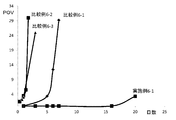
- the effect relating to the oxidation stability of the oil and fat composition according to the present invention is achieved by measuring a peroxide value (POV) when a predetermined amount of the oil and fat composition is added to a predetermined oil and fat and stored at a constant temperature. It can be said that the longer the time during which the increase in the POV value is suppressed, the stronger the oxidation stability. Specific measurement methods are described in the examples. As a simple evaluation method, a certain judgment index can be obtained by a CDM test.
- CDM Conductmetric Determination Method
- CDM is a value indicating the oxidation stability of fats and oils and can be used as an index for evaluating the oxidation stability. The longer the stability time by CDM, the better the oxidation stability.
- the CDM test can be performed using dedicated test equipment (Rancimat).
- Rancimat dedicated test equipment
- the specific measurement method of this method is also described in the examples. Both are accelerated tests that test at a higher temperature than the intended mode of use.
- Oxidative stability higher than soybean oil refers to a case where the above-described measurement method exhibits oxidative stability exceeding that of soybean oil.
- the water-soluble antioxidant referred to in the present invention is an antioxidant that is soluble in water.
- vitamin C sometimes abbreviated as VC in the present specification
- catechin, tea extract, amino acid, bayberry extract can be given, more preferably vitamin C, amino acid, Vitamin C, glycine, proline and serine are desirable. In this invention, these can be selected suitably and 1 or more can be used.
- a suitable water-soluble antioxidant it is possible to obtain an oil and fat composition exhibiting strong antioxidant power.
- the water-soluble antioxidants mentioned here are not limited to those conventionally known as water-soluble antioxidants, but also include water-soluble components that have been newly found to have antioxidant power.
- amino acids include those that have been newly found to have antioxidant power by this study. Among amino acids, proline, glycine, and serine are particularly desirable because of their strong antioxidant power.
- the oil composition according to the present invention exhibits a certain antioxidant power, but when other water-soluble antioxidants such as vitamin C and proline are used. In comparison, its antioxidant power tends to be low. Therefore, in the present invention, it is desirable to mainly use other water-soluble antioxidants such as vitamin C, and catechins are desirably used only incidentally, not as antioxidants.
- the present invention can develop an antioxidant power far exceeding that of a synthetic antioxidant in vitamin C, which can be said to be approved in many countries and has been confirmed to be safe from long dietary experiences. It has the feature in the point that can be done.
- the amount of the water-soluble antioxidant in the present invention is required to be 3 to 65% by weight in the aqueous phase, more preferably 10 to 63% by weight, and still more preferably 16 to 60% by weight. is there.
- an appropriate amount of an appropriate water-soluble antioxidant it is possible to obtain an oil and fat composition exhibiting a strong antioxidant power.
- the aqueous phase in the present invention is a mixture of water and raw materials that are soluble in water.
- the aqueous phase must be contained in an amount of 4.3 to 38% by weight, and this amount is more desirably 9 to 34% by weight, and further desirably 18 to 30% by weight. It is.
- the oil and fat composition according to the present invention exhibits a strong antioxidant power.
- the water-soluble solid content used is a foodstuff or a food additive.
- the amount of water-soluble solid in the aqueous phase is 18 to 75% by weight, and this amount is preferably 30 to 75% by weight, and more preferably 50 to 75% by weight.
- the quantity of water-soluble solid content said here contains the quantity of a water-soluble antioxidant.
- the water-soluble solid content other than the water-soluble antioxidant various materials that can be used as foods or food additives can be used.
- carbohydrates are desirable because they are inexpensive and have the effect of further increasing antioxidant power.
- sugar alcohols oligosaccharides, various monosaccharides including glucose, various disaccharides including sucrose, and dextrins, more preferably sugar alcohols, sucrose, and dextrins.
- sucrose ie sugar.
- an appropriate saccharide is used, and the amount of water-soluble solid content in the aqueous phase is adjusted to an appropriate amount, whereby an oil and fat composition exhibiting a strong antioxidant power can be obtained.
- the oil phase as used in the field of this invention means what dissolved the oil-soluble component in a raw material in oil.
- various edible oils and fats such as soybean oil, rapeseed oil, and fractionated palm oil can be used as the oil.
- the oil itself is referred to as an oil phase.
- an oil-soluble emulsifier is used as necessary.
- an emulsifier having an HLB of 7 or less is defined as an oil-soluble emulsifier.
- the oil-soluble emulsifier one or more selected from polyglycerin esters, sugar esters, sorbitan esters, and monoglycerin fatty acid esters are desirable, more desirably polyglycerin esters, sugar esters, and distilled monoglycerides, and polyglycerin esters are particularly desirable.
- polyglycerin condensed ricinoleate is most preferred.
- Polyglycerin condensed ricinolate may be abbreviated as PGPR.
- the amount of the oil-soluble emulsifier is preferably 0.7 to 6.8 times, more preferably 0.7 to 5 times, and still more preferably 0.7 to 6.8 times the weight of water in the state of the oil or fat composition. 7 to 2 times. If necessary, by using an appropriate amount of an appropriate oil-soluble emulsifier, an oil and fat composition exhibiting a strong antioxidant power can be obtained.
- the oil and fat composition according to the present invention is characterized in that the aqueous phase is dispersed in the oil phase with a particle size of 300 nm or less.
- the particle size is more desirably 160 nm or less, and further desirably 130 nm or less.
- a strong antioxidant power can be stably expressed.
- the particle size is larger than 300 nm. That is, it is necessary that no precipitation occurs visually, and it can be confirmed that the particle diameter is 300 nm or less because precipitation does not occur.
- the particle size was measured with the apparatus and conditions described below.
- Device name Zetasizer Nano S, manufacturer: Malvern 10 ⁇ l of oil composition to be measured was diluted in 2 ml of hexane and measured. (Measurement at the stage of the first day after sample preparation was rejected when it was 300 nm or more (that is, when precipitation occurred)) Temperature: 20.0 °C Equilibrium time: 240 seconds Cell: Glass cell Measurement angle: 173 ° Positioning method: Optimal position selection Automatic damping selection: Existence
- the oil and fat composition according to the present invention contains 1.9 to 18% by weight of water.
- the water content is more desirably 3 to 15% by weight, and further desirably 5 to 13% by weight.
- precipitation does not occur in the oil and fat composition, and a strong antioxidant power can be exhibited. Needless to say, this moisture is brought into the water phase.
- a water phase is prepared by dissolving a water-soluble antioxidant and, if necessary, other water-soluble solids such as carbohydrates in water.
- these components need to be substantially dissolved in the aqueous phase. Whether or not it is substantially dissolved is determined by placing 5 ml of the aqueous phase into a 20 ml centrifuge tube at 20 ° C. and centrifuging at 3000 G for 1 minute. Also by the said process, it judges that it has melt
- the oil phase is prepared by dissolving oil-soluble components in fats and oils.
- an oil-soluble emulsifier is used as necessary as the oil-soluble component.
- the oil phase and the aqueous phase are mixed and emulsified to obtain a water-in-oil type emulsified fat composition.
- a preferred oil and fat composition can be easily obtained by using a commonly used emulsifier for emulsification.
- a high-pressure homogenizer, an ultrasonic emulsifier, or a two-liquid collision type emulsifying device called a wet jet mill can be used.
- a suitable emulsifying device a predetermined oil and fat composition can be obtained.
- the general emulsification conditions when using a high-pressure homogenizer are 30 to 40 MPa and 10 to 30 passes.
- the use of a general emulsifier can easily make the particle size finer because the water phase contains a large amount of water-soluble solids in a dissolved state.
- the particle diameter is 300 nm or less at the stage of the emulsification operation. Even when the particle diameter is not within the predetermined range at the emulsification stage, the particle diameter can be further reduced by appropriate partial dehydration thereafter.
- the oil and fat composition finally obtained needs to have a water phase of 300 nm or less and be dispersed in the oil phase.
- the water content of the obtained emulsion by partial dehydration is preferable to adjust the water content of the obtained emulsion by partial dehydration.
- a water-soluble solid having a low solubility can be used, and the particle size can be made finer, thereby suppressing the occurrence of precipitation.
- the conditions for partial dehydration can be set as appropriate. If a small amount of sample is prepared, partial dehydration can be achieved by heating to about 60 ° C. and stirring. It is also possible to perform partial dehydration under reduced pressure. In this case, a simple device such as an aspirator can be used. Generation of precipitation can be suppressed by partial dehydration.
- the amount of water after partial dehydration it is desirable to dehydrate 12 to 76% of the water contained in the original fat composition, and this value is more preferably 33 to 50%. This value is sometimes simply called dehydration rate.
- production of the precipitation in an oil-fat composition can be suppressed by carrying out partial dehydration of the water
- a dehydration rate can be calculated
- equation. Dehydration rate 1-(water content of sample after dehydration) / (water content of sample before dehydration)
- the antioxidant effect seems to be limited to the periphery of the precipitation. Therefore, when using the oil-and-fat composition once precipitated, unevenness may appear in the antioxidant effect. Therefore, in order to exhibit the antioxidant effect even in a stationary state, it is necessary that the oil and fat composition according to the present invention does not cause precipitation at the time of use. That is, due to partial dehydration, the expiration date of the oil and fat composition according to the present invention in a stationary state can be extended. In addition, after adding the oil-fat composition which concerns on this invention to the target oil-fat, generation
- the oil and fat composition according to the present invention is particularly suitable for uses such as stabilization of fats and oils containing highly unsaturated fatty acids, such as PUFA oil. Examples will be described below.
- Table 1-1 “Sanphenon 90S” manufactured by Taiyo Kagaku Co., Ltd. was used as the catechin. -As the palm fractionation oil 1, "Palm Ace 10" manufactured by Fuji Oil Co., Ltd. was used. IV was 67. As the emulsifier, “CRS-75” (polyglycerin condensed ricinoleic acid ester: PGPR) manufactured by Sakamoto Pharmaceutical Co., Ltd. was used. -In all the formulations, no precipitation was confirmed in the aqueous phase at the time of preparation.
- Preparation method 1 of oil and fat composition 1. According to the formulation, catechin was dissolved in water to obtain an aqueous phase. 2. An emulsifier was dissolved in the oil according to the formulation to obtain an oil phase. 3. The aqueous phase was added to the oil phase and mixed with a homomixer. 4). Further, the sample was emulsified with a high-pressure homogenizer (37 MPa, 20 passes) to obtain a sample.
- a high-pressure homogenizer 37 MPa, 20 passes
- Table 1-2 Formulation 2 -As the palm fractionation oil 2, "Univers 100” manufactured by Fuji Oil Co., Ltd. was used. IV was 57. -As the palm oil, “refined palm oil” manufactured by Fuji Oil Co., Ltd. was used.
- CDM oxidation stability evaluation method 1 Each sample was evaluated for oxidation stability with a CDM measuring device (Metrome CDM tester “Rancimat”) under the conditions of 120 ° C., air blowing rate 20.0 L / h, sample loading amount 3.0 g. It was. 2. The CDM value of each sample was divided by the CDM value of the oil used for each dilution, and a value of 2.7 or higher was regarded as acceptable.
- the oil and fat composition according to the present invention has a function of suppressing an increase in POV to half or less even when compared with TBHQ. Further, when an oil-soluble emulsifier was used in combination, the effect was further improved.
- the oil-soluble emulsifier to be used polyglycerin ester, sugar ester, and distilled monoglyceride are preferable, and polyglycerin ester is particularly preferable, and polyglycerin condensed ricinoleic acid ester is most preferable.
- Use of emulsifier with high HLB had a weak POV rise inhibitory effect.
- CDM oxidation stability evaluation method 2 1. Each sample was diluted 4-fold with PUFA oil (containing 19.8% EPA and 45.4% DHA). 2. Using a CDM measuring device (Metrohm CDM tester “Rancimat”), 3.0 g of the diluted sample of 2.1 was added at 96 ° C., an air blowing amount of 20.0 L / h, a specimen charging amount of 3.0 g, (water The oxidation stability was evaluated under the condition of 70 ml). Also, the PUFA oil alone used for dilution was measured in the same manner as the “CDM value of control oil”.
- the CDM value of each diluted sample obtained in 3.2 was divided by the CDM value of the PUFA oil used for dilution (CDM value of the control fat / oil), and 2.3 or more was regarded as acceptable. Note that the sample in which precipitation occurred during the measurement was rejected at that time (the particle diameter is larger than 300 nm), and thus CDM measurement was not performed. (When measuring the CDM value of 3.0 g of soybean oil under the above conditions 2, it was 20 hr).
- Preparation method 3 of oil and fat composition 1.
- the raw materials classified into the aqueous phase by mixing were mixed and dissolved to obtain an aqueous phase.
- An emulsifier was dissolved in the oil according to the formulation to obtain an oil phase.
- the aqueous phase was added to the oil phase and mixed with a homomixer to obtain an emulsion. 4). Further, the mixture was emulsified with a high-pressure homogenizer (37 MPa, 20 passes). 5. The temperature was raised to 60 ° C. while stirring with a stirrer. 6). When 12 to 76% of the water in the oil and fat composition was partially dehydrated, stirring was stopped as appropriate and the temperature was returned to room temperature. Note: Samples with a dehydration step of “-” in the recipe table were not subjected to steps 5 and 6.
- Example 4-9 precipitation occurred on the 9th day of preparation.
- Example 4-10 in which it was partially dehydrated, no precipitation was observed even on the 9th day.
- Example 4-20 in which Example 4-19 was partially dehydrated, precipitation occurred at the stage of the ninth day, but in Comparative Example 4-1, which was further dehydrated, precipitation occurred at the stage of the first day. occured.
- Comparative Example 4-1 which was further dehydrated, precipitation occurred at the stage of the first day. occured.
- Comparative Examples 4-2 to 4 and Examples 4-25 to 27 it was confirmed that precipitation occurred after the emulsification operation when the water-soluble solid content in the aqueous phase was too small.
- Oil and fat composition having an antioxidant effect even if the kind and amount of the antioxidant used and the amount of sugar which is a water-soluble solid content are changed, provided that the amount of the antioxidant and the water-soluble solid content is the predetermined amount. It became clear that ⁇ It was suggested that by carrying out appropriate partial dehydration, the particle size becomes smaller and the storage period can be extended.
- Table 6-1 Sample details -PUFA oil used fats and oils containing EPA 19.8% and DHA 45.4%.
- ⁇ POV oxidation stability evaluation method 2 1. The fats and oils prepared according to the formulation shown in Table 6-1 were placed in a 50 ml glass bottle, capped, placed in a 60 ° C. incubator and stirred at 80 rpm. 2. Sampling was carried out in a timely manner, and POV (peroxide value) was measured. The POV was measured according to the standard oil analysis test method.
- the PUFA oil using the oil / fat composition according to the present invention was able to be used for general purposes because generation of off-flavors such as fishy odor was strongly suppressed.
- an off-flavor may be generated before the increase in the value of the peroxide value becomes apparent, and the occurrence of off-flavor has been assumed to have an element other than oxidation.
- the present invention by using an oil and fat composition having an overwhelmingly strong anti-oxidant power, it was possible to suppress the generation of off-flavors, so the occurrence of off-flavors such as fish oil is mainly due to oxidation. It has been suggested.
Landscapes
- Chemical & Material Sciences (AREA)
- Life Sciences & Earth Sciences (AREA)
- Engineering & Computer Science (AREA)
- Chemical Kinetics & Catalysis (AREA)
- Oil, Petroleum & Natural Gas (AREA)
- Wood Science & Technology (AREA)
- Organic Chemistry (AREA)
- Edible Oils And Fats (AREA)
- Fats And Perfumes (AREA)
Abstract
La présente invention a pour objet une composition de graisse ou d'huile qui présente une stabilité d'oxydation très élevée et sans précédent produite à l'aide d'un procédé simple. La présente invention a été rendue possible par la découverte du fait qu'un effet de très grande stabilité d'oxydation est obtenu par une composition de graisse ou d'huile qui contient un antioxydant soluble dans l'eau, utilise du sucre si besoin, implique la dispersion d'une phase aqueuse contenant au moins une quantité donnée d'un solide soluble dans l'eau dans une phase huileuse dans une plage de diamètres de particule donnée, et contient également une quantité prédéfinie d'eau.
Priority Applications (22)
| Application Number | Priority Date | Filing Date | Title |
|---|---|---|---|
| PCT/JP2016/056457 WO2017149701A1 (fr) | 2016-03-02 | 2016-03-02 | Composition de graisse ou d'huile |
| CN201780014630.6A CN108697112B (zh) | 2016-03-02 | 2017-02-28 | 含高度不饱和脂肪酸的巧克力类食品 |
| JP2018503345A JP6889415B2 (ja) | 2016-03-02 | 2017-02-28 | 高度不飽和脂肪酸含有チョコレート様食品 |
| KR1020187028168A KR102798083B1 (ko) | 2016-03-02 | 2017-02-28 | 항산화 유지 조성물 |
| PCT/JP2017/007906 WO2017150558A1 (fr) | 2016-03-02 | 2017-02-28 | Composition de graisse ou d'huile présentant des propriétés anti-oxydation |
| JP2018503344A JP7103216B2 (ja) | 2016-03-02 | 2017-02-28 | 抗酸化油脂組成物 |
| BR112018016854-8A BR112018016854B1 (pt) | 2016-03-02 | 2017-02-28 | Produto alimentício do tipo chocolate contendo ácido graxo poliinsaturado e método de produção do mesmo |
| EP17760023.6A EP3425033B1 (fr) | 2016-03-02 | 2017-02-28 | Composition de graisse ou d'huile présentant des propriétés anti-oxydation |
| US16/082,216 US20200347300A1 (en) | 2016-03-02 | 2017-02-28 | Fat or oil composition exhibiting anti-oxidation properties |
| KR1020187028169A KR102792455B1 (ko) | 2016-03-02 | 2017-02-28 | 고도 불포화 지방산 함유 초콜릿양 식품 |
| MYPI2018703050A MY187373A (en) | 2016-03-02 | 2017-02-28 | Fat or oil composition exhibiting anti-oxidation properties |
| SG11201807311WA SG11201807311WA (en) | 2016-03-02 | 2017-02-28 | Chocolate-like food containing polyunsaturated fatty acid |
| PCT/JP2017/007908 WO2017150559A1 (fr) | 2016-03-02 | 2017-02-28 | Aliment de type chocolat contenant un acide gras polyinsaturé |
| SG11201807310QA SG11201807310QA (en) | 2016-03-02 | 2017-02-28 | Fat or oil composition exhibiting anti-oxidation properties |
| MYPI2018703052A MY193218A (en) | 2016-03-02 | 2017-02-28 | Chocolate-like food containing polyunsaturated fatty acid |
| US16/082,238 US11957135B2 (en) | 2016-03-02 | 2017-02-28 | Chocolate-like food containing polyunsaturated fatty acid |
| EP17760024.4A EP3424338A4 (fr) | 2016-03-02 | 2017-02-28 | Aliment de type chocolat contenant un acide gras polyinsaturé |
| BR112018016998-6A BR112018016998B1 (pt) | 2016-03-02 | 2017-02-28 | Composição antioxidante de óleo e gordura e métodos para produzir a mesma |
| CN201780014720.5A CN108713053A (zh) | 2016-03-02 | 2017-02-28 | 抗氧化油脂组合物 |
| TW106106807A TWI722126B (zh) | 2016-03-02 | 2017-03-02 | 含有高度不飽和脂肪酸之巧克力類食品 |
| TW106106808A TWI726057B (zh) | 2016-03-02 | 2017-03-02 | 抗氧化油脂組成物 |
| JP2022064186A JP7343001B2 (ja) | 2016-03-02 | 2022-04-08 | 抗酸化油脂組成物 |
Applications Claiming Priority (1)
| Application Number | Priority Date | Filing Date | Title |
|---|---|---|---|
| PCT/JP2016/056457 WO2017149701A1 (fr) | 2016-03-02 | 2016-03-02 | Composition de graisse ou d'huile |
Publications (1)
| Publication Number | Publication Date |
|---|---|
| WO2017149701A1 true WO2017149701A1 (fr) | 2017-09-08 |
Family
ID=59742647
Family Applications (1)
| Application Number | Title | Priority Date | Filing Date |
|---|---|---|---|
| PCT/JP2016/056457 Ceased WO2017149701A1 (fr) | 2016-03-02 | 2016-03-02 | Composition de graisse ou d'huile |
Country Status (1)
| Country | Link |
|---|---|
| WO (1) | WO2017149701A1 (fr) |
Cited By (8)
| Publication number | Priority date | Publication date | Assignee | Title |
|---|---|---|---|---|
| JP2017225381A (ja) * | 2016-06-21 | 2017-12-28 | 不二製油株式会社 | 高度不飽和脂肪酸含有可塑性油脂組成物 |
| JP2019156797A (ja) * | 2018-03-16 | 2019-09-19 | 不二製油株式会社 | アスコルビン酸製剤 |
| JP2019188294A (ja) * | 2018-04-20 | 2019-10-31 | ミヨシ油脂株式会社 | 乳化物の安定化方法および乳化物とそれを用いたエマルション燃料 |
| WO2020149287A1 (fr) * | 2019-01-16 | 2020-07-23 | 不二製油グループ本社株式会社 | Composition d'huile/graisse comestible et procédé pour la production de celle-ci |
| JPWO2019187242A1 (ja) * | 2018-03-28 | 2021-04-01 | 不二製油株式会社 | 油脂組成物 |
| CN112638166A (zh) * | 2018-08-09 | 2021-04-09 | 不二制油集团控股株式会社 | 油脂组合物 |
| JP2021193923A (ja) * | 2020-06-12 | 2021-12-27 | 不二製油株式会社 | 油中水型の不飽和脂肪酸含有組成物及びその製造法 |
| US20220295810A1 (en) * | 2019-09-02 | 2022-09-22 | Fuji Oil Holdings Inc. | Oil and fat composition |
Citations (5)
| Publication number | Priority date | Publication date | Assignee | Title |
|---|---|---|---|---|
| JPS6312697A (ja) * | 1986-07-03 | 1988-01-20 | 日本油脂株式会社 | トコフエロ−ルの変性防止剤 |
| JPH03221587A (ja) * | 1990-01-29 | 1991-09-30 | Dainippon Ink & Chem Inc | 水溶性抗酸化剤 |
| JPH0584436A (ja) * | 1991-09-27 | 1993-04-06 | Marino Forum 21 | 抗酸化能を有するエマルジヨンの製造法 |
| JPH09235584A (ja) * | 1996-03-01 | 1997-09-09 | Nof Corp | 油脂組成物及びそれを含む食品 |
| JP2002142673A (ja) * | 2000-11-17 | 2002-05-21 | T Hasegawa Co Ltd | 油脂調理食品の親油性酸化防止剤およびその製造方法 |
-
2016
- 2016-03-02 WO PCT/JP2016/056457 patent/WO2017149701A1/fr not_active Ceased
Patent Citations (5)
| Publication number | Priority date | Publication date | Assignee | Title |
|---|---|---|---|---|
| JPS6312697A (ja) * | 1986-07-03 | 1988-01-20 | 日本油脂株式会社 | トコフエロ−ルの変性防止剤 |
| JPH03221587A (ja) * | 1990-01-29 | 1991-09-30 | Dainippon Ink & Chem Inc | 水溶性抗酸化剤 |
| JPH0584436A (ja) * | 1991-09-27 | 1993-04-06 | Marino Forum 21 | 抗酸化能を有するエマルジヨンの製造法 |
| JPH09235584A (ja) * | 1996-03-01 | 1997-09-09 | Nof Corp | 油脂組成物及びそれを含む食品 |
| JP2002142673A (ja) * | 2000-11-17 | 2002-05-21 | T Hasegawa Co Ltd | 油脂調理食品の親油性酸化防止剤およびその製造方法 |
Non-Patent Citations (1)
| Title |
|---|
| M.MOSCA ET AL., BIOCOMPATIBLE WATER-IN-OIL EMULSION AS A MODEL TO STUDY ASCORBIC ACID EFFECT ON LIPID OXIDATION, THE JOURNAL OF PHYSICAL CHEMISTRY B, vol. 112, no. 15, 2008, pages 4635 - 4641, XP055414959 * |
Cited By (15)
| Publication number | Priority date | Publication date | Assignee | Title |
|---|---|---|---|---|
| JP2017225381A (ja) * | 2016-06-21 | 2017-12-28 | 不二製油株式会社 | 高度不飽和脂肪酸含有可塑性油脂組成物 |
| JP2019156797A (ja) * | 2018-03-16 | 2019-09-19 | 不二製油株式会社 | アスコルビン酸製剤 |
| JPWO2019187242A1 (ja) * | 2018-03-28 | 2021-04-01 | 不二製油株式会社 | 油脂組成物 |
| JP7342855B2 (ja) | 2018-03-28 | 2023-09-12 | 不二製油株式会社 | 油脂組成物の製造方法 |
| JP7063703B2 (ja) | 2018-04-20 | 2022-05-09 | ミヨシ油脂株式会社 | 乳化物の安定化方法および乳化物とそれを用いたエマルション燃料 |
| JP2019188294A (ja) * | 2018-04-20 | 2019-10-31 | ミヨシ油脂株式会社 | 乳化物の安定化方法および乳化物とそれを用いたエマルション燃料 |
| CN112638166A (zh) * | 2018-08-09 | 2021-04-09 | 不二制油集团控股株式会社 | 油脂组合物 |
| CN112638166B (zh) * | 2018-08-09 | 2024-05-03 | 不二制油集团控股株式会社 | 油脂组合物 |
| WO2020149287A1 (fr) * | 2019-01-16 | 2020-07-23 | 不二製油グループ本社株式会社 | Composition d'huile/graisse comestible et procédé pour la production de celle-ci |
| JPWO2020149287A1 (ja) * | 2019-01-16 | 2021-11-25 | 不二製油グループ本社株式会社 | 食用油脂組成物およびその製造方法 |
| CN113316395A (zh) * | 2019-01-16 | 2021-08-27 | 不二制油集团控股株式会社 | 食用油脂组合物及其制造方法 |
| US12178219B2 (en) | 2019-01-16 | 2024-12-31 | Fuji Oil Holdings Inc. | Edible oil/fat composition and method for producing same |
| JP7672225B2 (ja) | 2019-01-16 | 2025-05-07 | 不二製油株式会社 | 食用油脂組成物およびその製造方法 |
| US20220295810A1 (en) * | 2019-09-02 | 2022-09-22 | Fuji Oil Holdings Inc. | Oil and fat composition |
| JP2021193923A (ja) * | 2020-06-12 | 2021-12-27 | 不二製油株式会社 | 油中水型の不飽和脂肪酸含有組成物及びその製造法 |
Similar Documents
| Publication | Publication Date | Title |
|---|---|---|
| JP7343001B2 (ja) | 抗酸化油脂組成物 | |
| WO2017149701A1 (fr) | Composition de graisse ou d'huile | |
| JP6870220B2 (ja) | 高度不飽和脂肪酸含有可塑性油脂組成物 | |
| JP6694726B2 (ja) | O/d型乳化組成物、水中油型乳化組成物、飲食品及び食品用素材 | |
| EP3520620B1 (fr) | Prémélange pour la préparation d'une composition sous forme d'émulsion, et composition l'utilisant | |
| JP6969618B2 (ja) | 高度不飽和脂肪酸を含有するアイスクリーム | |
| JP5786215B1 (ja) | 抗酸化剤組成物およびそれを添加した油脂 | |
| JP7797784B2 (ja) | Dha,epaを含有する、可塑性油脂組成物及びその製造法 | |
| JP2017143754A (ja) | 乳化組成物、酸性食品及び酸性飲料 | |
| JP6836226B1 (ja) | 油中水型の不飽和脂肪酸含有組成物及びその製造法 | |
| AU2015286964B2 (en) | Pourable water-in-oil cooking composition | |
| CN108368451A (zh) | 油脂组合物和油脂的氧化抑制方法 | |
| EP3166414B1 (fr) | Composition fluide huile dans l'eau pour la cuisson | |
| EP2629626B1 (fr) | Produit alimentaire contenant de l'éthylcellulose | |
| JP2025015437A (ja) | 高度不飽和脂肪酸含有乳化製剤 | |
| JP2018139553A (ja) | 油中水型乳化油脂組成物及び、その製造方法 |
Legal Events
| Date | Code | Title | Description |
|---|---|---|---|
| NENP | Non-entry into the national phase |
Ref country code: DE |
|
| 121 | Ep: the epo has been informed by wipo that ep was designated in this application |
Ref document number: 16892543 Country of ref document: EP Kind code of ref document: A1 |
|
| 122 | Ep: pct application non-entry in european phase |
Ref document number: 16892543 Country of ref document: EP Kind code of ref document: A1 |