WO2020004531A1 - 光学部材用重合性組成物、光学部材および光学部材の製造方法 - Google Patents
光学部材用重合性組成物、光学部材および光学部材の製造方法 Download PDFInfo
- Publication number
- WO2020004531A1 WO2020004531A1 PCT/JP2019/025549 JP2019025549W WO2020004531A1 WO 2020004531 A1 WO2020004531 A1 WO 2020004531A1 JP 2019025549 W JP2019025549 W JP 2019025549W WO 2020004531 A1 WO2020004531 A1 WO 2020004531A1
- Authority
- WO
- WIPO (PCT)
- Prior art keywords
- compound
- optical member
- polymerizable composition
- member according
- bis
- Prior art date
- Legal status (The legal status is an assumption and is not a legal conclusion. Google has not performed a legal analysis and makes no representation as to the accuracy of the status listed.)
- Ceased
Links
Classifications
-
- C—CHEMISTRY; METALLURGY
- C08—ORGANIC MACROMOLECULAR COMPOUNDS; THEIR PREPARATION OR CHEMICAL WORKING-UP; COMPOSITIONS BASED THEREON
- C08G—MACROMOLECULAR COMPOUNDS OBTAINED OTHERWISE THAN BY REACTIONS ONLY INVOLVING UNSATURATED CARBON-TO-CARBON BONDS
- C08G18/00—Polymeric products of isocyanates or isothiocyanates
- C08G18/06—Polymeric products of isocyanates or isothiocyanates with compounds having active hydrogen
- C08G18/28—Polymeric products of isocyanates or isothiocyanates with compounds having active hydrogen characterised by the compounds used containing active hydrogen
- C08G18/30—Low-molecular-weight compounds
- C08G18/38—Low-molecular-weight compounds having heteroatoms other than oxygen
- C08G18/3855—Low-molecular-weight compounds having heteroatoms other than oxygen having sulfur
- C08G18/3876—Low-molecular-weight compounds having heteroatoms other than oxygen having sulfur containing mercapto groups
-
- C—CHEMISTRY; METALLURGY
- C08—ORGANIC MACROMOLECULAR COMPOUNDS; THEIR PREPARATION OR CHEMICAL WORKING-UP; COMPOSITIONS BASED THEREON
- C08G—MACROMOLECULAR COMPOUNDS OBTAINED OTHERWISE THAN BY REACTIONS ONLY INVOLVING UNSATURATED CARBON-TO-CARBON BONDS
- C08G18/00—Polymeric products of isocyanates or isothiocyanates
- C08G18/06—Polymeric products of isocyanates or isothiocyanates with compounds having active hydrogen
- C08G18/28—Polymeric products of isocyanates or isothiocyanates with compounds having active hydrogen characterised by the compounds used containing active hydrogen
- C08G18/30—Low-molecular-weight compounds
- C08G18/38—Low-molecular-weight compounds having heteroatoms other than oxygen
- C08G18/3855—Low-molecular-weight compounds having heteroatoms other than oxygen having sulfur
-
- C—CHEMISTRY; METALLURGY
- C08—ORGANIC MACROMOLECULAR COMPOUNDS; THEIR PREPARATION OR CHEMICAL WORKING-UP; COMPOSITIONS BASED THEREON
- C08G—MACROMOLECULAR COMPOUNDS OBTAINED OTHERWISE THAN BY REACTIONS ONLY INVOLVING UNSATURATED CARBON-TO-CARBON BONDS
- C08G18/00—Polymeric products of isocyanates or isothiocyanates
- C08G18/06—Polymeric products of isocyanates or isothiocyanates with compounds having active hydrogen
- C08G18/70—Polymeric products of isocyanates or isothiocyanates with compounds having active hydrogen characterised by the isocyanates or isothiocyanates used
- C08G18/72—Polyisocyanates or polyisothiocyanates
- C08G18/74—Polyisocyanates or polyisothiocyanates cyclic
- C08G18/76—Polyisocyanates or polyisothiocyanates cyclic aromatic
- C08G18/7614—Polyisocyanates or polyisothiocyanates cyclic aromatic containing only one aromatic ring
- C08G18/7621—Polyisocyanates or polyisothiocyanates cyclic aromatic containing only one aromatic ring being toluene diisocyanate including isomer mixtures
-
- C—CHEMISTRY; METALLURGY
- C08—ORGANIC MACROMOLECULAR COMPOUNDS; THEIR PREPARATION OR CHEMICAL WORKING-UP; COMPOSITIONS BASED THEREON
- C08G—MACROMOLECULAR COMPOUNDS OBTAINED OTHERWISE THAN BY REACTIONS ONLY INVOLVING UNSATURATED CARBON-TO-CARBON BONDS
- C08G75/00—Macromolecular compounds obtained by reactions forming a linkage containing sulfur with or without nitrogen, oxygen, or carbon in the main chain of the macromolecule
- C08G75/02—Polythioethers
- C08G75/04—Polythioethers from mercapto compounds or metallic derivatives thereof
- C08G75/045—Polythioethers from mercapto compounds or metallic derivatives thereof from mercapto compounds and unsaturated compounds
-
- G—PHYSICS
- G02—OPTICS
- G02B—OPTICAL ELEMENTS, SYSTEMS OR APPARATUS
- G02B1/00—Optical elements characterised by the material of which they are made; Optical coatings for optical elements
- G02B1/04—Optical elements characterised by the material of which they are made; Optical coatings for optical elements made of organic materials, e.g. plastics
- G02B1/041—Lenses
Definitions
- the present invention relates to a polymerizable composition for an optical member, an optical member, and a method for producing an optical member.
- Cured products obtained by curing a polymerizable composition containing a polyene compound and a polythiol compound are widely used as various optical members such as lenses (for example, see Patent Document 1).
- Optical members are generally used as base materials for various optical products.
- An optical product is usually manufactured by forming one or more functional films (for example, a hard coat, an antireflection film, etc.) on an optical member (substrate).
- the functional film is formed by various film forming methods, and many film forming methods involve heat treatment. If the optical member, which is the base material, has poor heat resistance, the quality of the optical product may be degraded due to deformation and / or deterioration of the base material due to the heat treatment.
- the functional film formed on the base material may not follow the deformation of the base material, and a crack may be generated in the functional film.
- the film forming conditions are restricted, and the usable film forming materials are also limited.
- One embodiment of the present invention provides an optical member which is obtained by curing a polymerizable composition containing a polyene compound and a polythiol compound and has excellent heat resistance.
- One embodiment of the present invention relates to a polymerizable composition for an optical member including a polyene compound, a polyiso (thio) cyanate compound, and a polythiol compound (however, excluding those subjected to a photopolymerization treatment).
- a polymerizable composition for optical members including a polyene compound, a polyiso (thio) cyanate compound, and a polythiol compound (however, excluding those subjected to a photopolymerization treatment).
- the “polymerizable composition for optical members” is also simply referred to as “polymerizable composition”.
- the polymerizable composition for an optical member to be subjected to the photopolymerization treatment is excluded from the polymerizable composition for an optical member according to one embodiment of the present invention.
- the polymerizable composition for an optical member to be subjected to the photopolymerization treatment refers to a composition including a polymerization treatment by light irradiation in a process for producing an optical member which is a cured product of the polymerizable composition.
- the step of curing the polymerizable composition for an optical member according to one embodiment of the present invention to produce a cured product (optical member) does not include polymerization treatment by light irradiation.
- the polymerization treatment by light irradiation is not included” means that the polymerizable composition is intentionally irradiated with light as a polymerization treatment, and the polymerizable composition is irradiated by natural light, illumination light, or the like. It is permissible that the object is unintentionally irradiated with light.
- polyene compound refers to a compound having two or more carbon-carbon double bonds per molecule
- polythiol compound is a compound having two or more thiol groups per molecule. Shall be referred to.
- a cured product of the polymerizable composition containing a polyene compound and a polythiol compound reacts with a carbon-carbon double bond of the polyene compound and a thiol group of the polythiol compound (hereinafter referred to as a “thiol-ene reaction”).
- the present inventors have conducted intensive studies and as a result, by further adding a polyiso (thio) cyanate compound to a polymerizable composition containing a polyene compound and a polythiol compound, a cured product obtained by curing the polymerizable composition is obtained. It has been newly found that heat resistance can be increased. This is because the cured product obtained by curing the polymerizable compound has, in addition to the bond obtained by the thiol-ene reaction, a thiourethane bond obtained by reacting the polyiso (thio) cyanate compound with the polythiol compound. It is considered.
- the “polyiso (thio) cyanate compound” refers to a compound having two or more iso (thio) cyanate groups per molecule.
- "Iso (thio) cyanate” means isocyanate and / or isothiocyanate.
- the “thiourethane bond” is a bond represented by the following formula 1: Shall be referred to.
- Z is an oxygen atom or a sulfur atom.
- Z forms the above bond of an oxygen atom
- the thiol group reacts with the isothiocyanate group the above bond forms a sulfur atom of Z.
- these reactions are referred to as "thiourethanation reaction”.
- * indicates the position where the thiourethane bond is bonded to another adjacent structure.
- an optical member obtained by curing a polymerizable composition containing a polyene compound and a polythiol compound, which has excellent heat resistance can be provided.
- the polymerizable composition contains a polyene compound, a polyiso (thio) cyanate compound, and a polythiol compound.
- a polyene compound a polyene compound
- a polyiso (thio) cyanate compound a polyiso (thio) cyanate compound
- a polythiol compound a polythiol compound
- the number of carbon-carbon double bonds in the polyene compound is 2 or more, preferably 3 or more, for example, 3 to 5 per molecule.
- the polyene compound can include a carbon-carbon double bond in a carbon-carbon double bond-containing group such as a (meth) acryl group, a vinyl group, and an allyl group.
- the types of the carbon-carbon double bond-containing groups contained in the polyene compound may be the same or different.
- polyene compound examples include vinyl compounds such as divinylbenzene and divinyltoluene, ethylene glycol di (meth) acrylate, diethylene glycol di (meth) acrylate, triethylene glycol di (meth) acrylate, and trimethylolpropane tri (meth) acrylate.
- (Meth) acrylates such as trimethylolpropane di (meth) acrylate, pentaerythritol tri (meth) acrylate, pentaerythritol tetra (meth) acrylate, tetraethylene glycol di (meth) acrylate, and isocyanuric acid ethylene oxide-modified tri (meth) acrylate , Diallyl phthalate, diallyl maleate, triallyl cyanurate, triallyl isocyanurate, triallyl trimellitate, tetraallyl Allyl compounds such as Kishietan like.
- the polyene compound only one kind of polyene compound may be used, or two or more kinds may be used as a mixture.
- the polyene compound can be, for example, an aliphatic compound, an alicyclic compound, an aromatic compound, a heterocyclic compound, or the like.
- the polyene compound can be a cyclic structure containing compound.
- the cyclic structure-containing compound may be a carbocyclic compound, a heterocyclic compound, a monocyclic compound, or a bicyclic or higher polycyclic compound. Good.
- the polyene compound may include a plurality of cyclic structures.
- the polyene compound can be a heteroalicyclic or heteroaromatic compound, and specifically can be an isocyanuric ring-containing compound or a cyanuric ring-containing compound.
- the content of the polyene compound in the polymerizable composition is, for example, more than 0% by mass and 50.00% by mass or less, preferably 10.00 to 35.00, based on the mass (100% by mass) of the polymerizable composition. % By weight.
- the mass of the polymerizable composition means the mass excluding the solvent when the polymerizable composition contains a solvent.
- the polyiso (thio) cyanate compound can be an aliphatic compound, an alicyclic compound, an aromatic compound, a heterocyclic compound, or the like.
- the number of iso (thio) cyanate groups contained in the polyiso (thio) cyanate compound is 2 or more per molecule, preferably 2 to 4, more preferably 2 or 3.
- the polyiso (thio) cyanate compound can be, for example, an aliphatic compound, an alicyclic compound, an aromatic compound, a heterocyclic compound, or the like.
- Specific examples of the polyiso (thio) cyanate compound include hexamethylene diisocyanate, 1,5-pentane diisocyanate, isophorone diisocyanate, bis (isocyanatomethyl) cyclohexane, dicyclohexylmethane diisocyanate, and 2,5-bis (isocyanatomethyl) -bicyclo.
- heptane 2,6-bis (isocyanatomethyl) -bicyclo
- heptane bis (4-isocyanatocyclohexyl) methane, 1,3-bis (isocyanato) Aliphatic polyisocyanate compounds such as methyl) cyclohexane and 1,4-bis (isocyanatomethyl) cyclohexane
- aromatic polyisocyanates such as xylylene diisocyanate, 1,3-diisocyanatobenzene, tolylene diisocyanate and diphenylmethane diisocyanate Lithocyanate compounds and the like can be mentioned.
- the polyiso (thio) cyanate compound may be a chlorine-substituted product, a halogen-substituted product such as a bromine-substituted product, an alkyl-substituted product, an alkoxy-substituted product, a nitro-substituted product, a modified prepolymer with a polyhydric alcohol, a carbodiimide-modified product, Urea modified products, buret modified products, dimerization or trimerization reaction products, and the like can also be used.
- a halogen-substituted product such as a bromine-substituted product, an alkyl-substituted product, an alkoxy-substituted product, a nitro-substituted product
- a modified prepolymer with a polyhydric alcohol a carbodiimide-modified product
- Urea modified products buret modified products, dimerization or trimerization reaction products
- the polymerizable composition can include a cyclic structure-containing compound as the polyiso (thio) cyanate compound.
- the cyclic structure-containing compound may be a carbocyclic compound, a heterocyclic compound, a monocyclic compound, or a bicyclic or higher polycyclic compound.
- the polyiso (thio) cyanate compound may include a plurality of cyclic structures.
- the polyiso (thio) cyanate compound can be an aromatic compound (aromatic polyiso (thio) cyanate compound).
- the content of the polyiso (thio) cyanate compound in the polymerizable composition is, for example, more than 0% by mass and 50.00% by mass or less, preferably 10.00% by mass, based on the mass (100% by mass) of the polymerizable composition. It can be in the range of ⁇ 35.00% by mass.
- the polythiol compound can be an aliphatic compound, an alicyclic compound, an aromatic compound, a heterocyclic compound, or the like.
- the number of thiol groups contained in the polythiol compound is two or more per molecule, preferably 2 to 4. Further, the number of thiol groups contained in the polythiol compound is preferably 3 or more per molecule.
- polythiol compound examples include methanedithiol, 1,2-ethanedithiol, 1,1-propanedithiol, 1,2-propanedithiol, 1,3-propanedithiol, 2,2-propanedithiol, and 1,6-hexane Dithiol, 1,2,3-propanetrithiol, tetrakis (mercaptomethyl) methane, 1,1-cyclohexanedithiol, 1,2-cyclohexanedithiol, 2,2-dimethylpropane-1,3-dithiol, 3,4- Dimethoxybutane-1,2-dithiol, 2-methylcyclohexane-2,3-dithiol, 1,1-bis (mercaptomethyl) cyclohexane, bis (2-mercaptoethyl thiomalate), 2,3-dimercaptosuccinic acid (2-mercaptoethyl ester), 2,3 Dimer
- Polythiol compounds containing a sulfur atom in addition to a thiol group such as one of the isomers or a mixture of two or three of these isomers); 3,4-thiophenedithiol, tetrahydrothiophene-2,5-dimercaptomethyl Containing a sulfur atom in addition to thiol groups such as 2,5-dimercapto-1,3,4-thiadiazole, 2,5-dimercapto-1,4-dithiane and 2,5-dimercaptomethyl-1,4-dithiane And the like.
- the polythiol compound contained in the polymerizable composition can be an aliphatic compound.
- the polythiol compound can be an ester bond-containing compound.
- the polythiol compound containing an ester bond can contain, for example, two or more ester bonds per molecule, for example, 2 to 5 ester bonds.
- the polythiol compound in one aspect, can be an ester bond-containing aliphatic compound.
- the content of the polythiol compound in the polymerizable composition is, for example, 20.00 to 80.00% by mass, preferably 30.00 to 70.00% by mass with respect to the mass (100% by mass) of the polymerizable composition. %.
- the polymerizable composition may optionally contain one or more known components such as additives and a polymerization catalyst generally used for the production of an optical member.
- additives include various additives such as an ultraviolet absorber, an antioxidant, and a release agent.
- an organic phosphorus compound such as a phosphine derivative can be used as an additive. The amount of the additive used can be appropriately set.
- the polymerizable composition comprises, as a polymerization catalyst, a first polymerization catalyst that catalyzes a thiol-ene reaction between a polyene compound and a polythiol compound, and a thiourethanation reaction between the polyiso (thio) cyanate compound and the polythiol compound. It is preferable to include a second polymerization catalyst for catalysis.
- Known polymerization catalysts can be used as the first polymerization catalyst that catalyzes the thiol-ene reaction and the second polymerization catalyst that catalyzes the thiourethanation reaction.
- Examples of the first polymerization catalyst that catalyzes a thiol-ene reaction include 2,2′-azobisisobutyronitrile, 2,2′-azobis (2-methylbutyronitrile), and 2,2′-azobis-2. , 4-Dimethylvaleronitrile, dimethyl-2,2'-azobisisobutyrate, 1,1'-azobis (cyclohexane-1-carbonitrile), 1,1'-azobis (1-acetoxy-1-phenylethane) , Azobis compounds such as 2,2'-azobis (4-methoxy-2,4-dimethylvaleronitrile), benzoyl peroxide, acetyl peroxide, tert-butyl peroxide, propionyl peroxide, lauroyl peroxide, peracetic acid tert-butyl, tert-butyl perbenzoate, tert-butyl hydroperoxide, tert-butylperoxypivalate, 1,
- the polymerizable composition can contain, for example, the first polymerization catalyst in an amount of 0.01 to 0.10% by mass based on the mass (100% by mass) of the polymerizable composition.
- the second polymerization catalyst that catalyzes the thiourethanation reaction include dibutyltin diacetate, dibutyltin dilaurate, dibutyltin dichloride, dimethyltin dichloride, monomethyltin trichloride, trimethyltin chloride, tributyltin chloride, and tributyltin.
- Organic tin compounds such as fluoride and dimethyltin dibromide can be mentioned.
- the polymerizable composition may contain, for example, the second polymerization catalyst in an amount of 0.01 to 0.50% by mass based on the mass (100% by mass) of the polymerizable composition.
- the polymerizable composition can be prepared by mixing the various components described above simultaneously or sequentially in an arbitrary order.
- the preparation method is not particularly limited, and a known method for preparing a polymerizable composition can be employed. Further, the polymerizable composition may be prepared without adding a solvent, or may be prepared by adding an arbitrary amount of a solvent. As the solvent, one or more known solvents that can be used for the polymerizable composition can be used.
- the polyene compound, polyiso (thio) cyanate compound, and polythiol compound described above are all polymerizable compounds, and by polymerizing these compounds, the polymerizable composition can be cured to obtain a cured product. .
- the cured product thus obtained can be used as various optical members.
- the optical member include various lenses such as a spectacle lens, a telescope lens, a binocular lens, a microscope lens, an endoscope lens, and an imaging system lens of various cameras.
- the “lens” in the present invention and the present specification includes a “lens substrate” in which one or more layers are arbitrarily laminated.
- cast polymerization is preferable.
- the polymerizable composition is injected into a cavity of a mold having two cavities facing each other at a predetermined interval and a cavity formed by closing the space, and the polymerizable composition is injected into the cavity.
- the polymerization (curing reaction) of the polymerizable compound contained in the above can be performed to obtain a cured product.
- molds usable for casting polymerization refer to, for example, paragraphs 0012 to 0014 of JP-A-2009-262480 and FIG. 1 of the same.
- a molding die in which a gap between two molds is closed by a gasket as a sealing member is shown, but a tape may be used as the sealing member.
- the casting polymerization can be performed as follows.
- the polymerizable composition is injected into the mold cavity from an injection port provided on the side surface of the mold. After the injection, the polymerizable compound contained in the polymerizable composition is polymerized by heating (curing reaction), whereby the polymerizable composition is cured and a cured product in which the internal shape of the cavity is transferred can be obtained.
- the polymerization conditions are not particularly limited, and can be appropriately set according to the composition of the polymerizable composition and the like.
- the mold in which the polymerizable composition has been injected into the cavity can be heated at a heating temperature of 20 to 150 ° C. for about 1 to 72 hours, but is not limited to this condition.
- the temperature such as a heating temperature for casting polymerization refers to an ambient temperature at which a mold is placed.
- the temperature can be increased at an arbitrary rate, and the temperature can be decreased (cooled) at an arbitrary rate.
- the cured product inside the cavity is released from the mold.
- the cured product can be released from the mold by removing the upper and lower molds and the gasket or tape forming the cavity in any order.
- the cured product released from the mold can be used as an optical member after post-processing as necessary, and can be used as, for example, various lenses (for example, a lens substrate).
- a cured product used as a lens base material for an eyeglass lens is usually, after release, annealing, dyeing, a grinding process such as a rounding process, a polishing process, a primer coat layer for improving impact resistance, and a surface. It can be applied to a post-process such as a process of forming a coat layer such as a hard coat layer for increasing hardness. Further, various functional layers such as an antireflection layer and a water-repellent layer can be formed on the lens substrate. For each of these steps, a known technique can be applied. Thus, a spectacle lens in which the lens substrate is the cured product can be obtained. Furthermore, spectacles can be obtained by attaching this spectacle lens to a frame.
- the spectacle lens when the cured product obtained by curing the polymerizable composition is a spectacle lens (a spectacle lens substrate), in one embodiment, the spectacle lens is a finished lens in which both surfaces are optically finished (both surfaces are optically (Finished lens blank). In another aspect, the spectacle lens is a semi-finished lens in which one surface is an optical surface and the other surface is a non-optical surface (only one surface is optically finished lens blank). be able to. In a semi-finished lens, the front surface (object-side surface; for example, convex surface) is an optically finished surface, and the rear surface (eyeball-side surface; for example, concave surface) has a desired lens power according to the lens prescription value. Polished.
- the semi-finished lens is formed to have a larger thickness (for example, a central thickness of 3 to 10 mm) than the finished lens.
- a polymerization treatment for obtaining such a thick cured product a polymerization treatment by a heat treatment is preferable to a polymerization treatment by a light irradiation.
- the optical member can have excellent heat resistance.
- An optical member having excellent heat resistance has, for example, less deformation and / or deterioration of the optical member as a base material even if heat treatment is performed in a film forming step of forming one or more various functional films thereon. Therefore, it is preferable.
- a glass transition temperature (Tg) can be mentioned.
- the glass transition temperature (Tg) in the present invention and the present specification refers to a glass transition temperature measured by a thermomechanical analysis (TMA) penetration method in accordance with JIS K7196-2012. For specific measurement methods, reference can be made to Examples described later.
- the optical member can have, for example, a glass transition temperature of 70 ° C. or higher or 80 ° C. or higher. A high glass transition temperature is preferable from the viewpoint of heat resistance.
- the content is more preferably at least 00% by mass, more preferably at least 14.00% by mass, even more preferably at least 16.00% by mass, and even more preferably at least 18.00% by mass. Preferably, it is still more preferably 20.00% by mass or more, still more preferably 22.00% by mass or more, still more preferably 24.00% by mass or more, and 26.00% by mass. It is even more preferred that the content is not less than 28.00% by mass.
- the content of thiourethane bonds in the optical member can be, for example, 35.00% by mass or less or 30.00% by mass or less.
- the content of the thiourethane bond is a value based on the mass (100% by mass) of the optical member.
- the thiourethane bond content of the optical member can be determined by a known method.
- the thiourethane bond content of the optical member can be calculated based on the known composition.
- the content of thiourethane bonds in the cured product can be adjusted by the composition of the polymerizable composition used to obtain the cured product.
- Example 1 A 300 ml eggplant-shaped flask was charged with 10.9 g of 2,4-tolylene diisocyanate (TDI) as a polyiso (thio) cyanate compound and 32.8 g of triallyl isocyanurate (TAIC) as a polyene compound, and triphenylphosphine as an organic phosphorus compound.
- TDI 2,4-tolylene diisocyanate
- TAIC triallyl isocyanurate
- triphenylphosphine an organic phosphorus compound.
- TPP butoxyethyl acid phosphate
- JP-506H butoxyethyl acid phosphate
- dimethyltin dichloride 0.01 g
- 2,2′-azobis-2,4-dimethyl 0.02 g of valeronitrile was added, and stirring was continued for 1 hour under a nitrogen purge at 20 ° C.
- PETMA pentaerythritol tetrakis (2-mercaptoacetate)
- Example 2 In a 300 ml eggplant-shaped flask, 22.0 g of 2,4-tolylene diisocyanate (TDI) as a polyiso (thio) cyanate compound and 22.0 g of triallyl isocyanurate (TAIC) as a polyene compound were charged, and triphenylphosphine was used as an organic phosphorus compound.
- TDI 2,4-tolylene diisocyanate
- TAIC triallyl isocyanurate
- TPP butoxyethyl acid phosphate
- JP-506H butoxyethyl acid phosphate
- dimethyltin dichloride 0.02 g
- 2,2′-azobis-2,4-dimethyl 0.02 g of valeronitrile was added, and stirring was continued for 1 hour under a nitrogen purge at 20 ° C.
- PETMA pentaerythritol tetrakis (2-mercaptoacetate)
- This polymerizable composition 2 was injected into a cavity of a mold through a polytetrafluoroethylene membrane filter having a pore size of 1.0 ⁇ m, and cast polymerization was performed for 24 hours by a temperature program at an initial temperature of 25 ° C. to a final temperature of 120 ° C., A plastic lens having a center thickness of 2 mm was produced. The content of thiourethane bonds in the plastic lens thus produced is 18.98% by mass.
- Example 3 A 300 ml eggplant-shaped flask was charged with 33.2 g of 2,4-tolylene diisocyanate (TDI) as a polyiso (thio) cyanate compound and 11.1 g of triallyl isocyanurate (TAIC) as a polyene compound, and triphenylphosphine as an organic phosphorus compound.
- TDI 2,4-tolylene diisocyanate
- TAIC triallyl isocyanurate
- triphenylphosphine an organic phosphorus compound.
- TPP butoxyethyl acid phosphate
- JP-506H manufactured by Johoku Chemical Co., Ltd.
- dimethyltin dichloride 0.03 g
- 2,2′-azobis-2,4-dimethyl 0.02 g of valeronitrile was added, and stirring was continued for 1 hour under a nitrogen purge at 20 ° C.
- PETMA pentaerythritol tetrakis (2-mercaptoacetate)
- Example 4 In a 300 ml eggplant-shaped flask, 24.0 g of 2,4-tolylene diisocyanate (TDI) as a polyiso (thio) cyanate compound and 24.0 g of triallyl isocyanurate (TAIC) as a polyene compound were charged, and triphenylphosphine was used as an organic phosphorus compound.
- TDI 2,4-tolylene diisocyanate
- TAIC triallyl isocyanurate
- TPP butoxyethyl acid phosphate
- JP-506H butoxyethyl acid phosphate
- dimethyltin dichloride 0.01 g
- 2,2′-azobis-2,4-dimethyl 0.08 g
- valeronitrile 0.08 g
- 52.0 g of bis (mercaptomethyl) -3,6,9-trithiaundecane-1,11-dithiol was compounded as a polythiol compound, and the mixture was added at 0.13 kPa (1.0 Torr) for 20 minutes.
- a polymerizable composition 4 containing a polyene compound, a polyiso (thio) cyanate compound and a polythiol compound.
- This polymerizable composition 4 is injected into a cavity of a mold through a polytetrafluoroethylene membrane filter having a pore size of 1.0 ⁇ m, and cast polymerization is performed for 24 hours by a temperature program at an initial temperature of 25 ° C. to a final temperature of 125 ° C., A plastic lens having a center thickness of 2 mm was produced. The content of thiourethane bonds in the plastic lens thus produced was 20.71% by mass.
- Example 5 A 300 ml eggplant-shaped flask was charged with 11.5 g of 2,4-tolylene diisocyanate (TDI) as a polyiso (thio) cyanate compound and 35.0 g of triallyl isocyanurate (TAIC) as a polyene compound, and triphenylphosphine as an organic phosphorus compound.
- TDI 2,4-tolylene diisocyanate
- TAIC triallyl isocyanurate
- triphenylphosphine an organic phosphorus compound.
- TPP butoxyethyl acid phosphate
- JP-506H butoxyethyl acid phosphate
- dimethyltin dichloride 0.01 g
- 2,2′-azobis-2,4-dimethyl 0.08 g
- valeronitrile was added and stirring was continued for 1 hour under a nitrogen purge at 20 ° C.
- 52.5 g of bis (mercaptomethyl) -3,6,9-trithiaundecane-1,11-dithiol was blended as a polythiol compound, and the mixture was added at 0.13 kPa (1.0 Torr) for 20 minutes.
- a polymerizable composition 5 containing a polyene compound, a polyiso (thio) cyanate compound and a polythiol compound.
- This polymerizable composition 5 is injected into a cavity of a mold through a polytetrafluoroethylene membrane filter having a pore size of 1.0 ⁇ m, and cast polymerization is performed for 24 hours by a temperature program at an initial temperature of 25 ° C. to a final temperature of 125 ° C., A plastic lens having a center thickness of 2 mm was produced. The content of thiourethane bonds in the plastic lens thus produced is 9.93% by mass.
- the glass transition temperature of the plastic lens of Comparative Example 1 was 65 ° C.
- the glass transition temperature of the plastic lenses of Examples 1 to 5 was 70 ° C. or higher.
- each of the plastic lenses of Examples 1 to 5 and the plastic lens of Comparative Example 1 were made from a polymerizable composition containing a polyene compound and a polythiol compound, but were made from a polymerizable composition also containing a polyiso (thio) cyanate compound.
- the plastic lenses of Examples 1 to 5 had higher glass transition temperatures (excellent heat resistance) than the plastic lenses of Comparative Example 1.
- Such plastic lenses of Examples 1 to 5 are suitable as various optical members such as spectacle lenses which are desired to have excellent heat resistance.
- a spectacle lens can be manufactured using the plastic lenses of Examples 1 to 5 as a lens substrate.
- the polymerizable compositions 1 to 5 contain various polymerizable compounds in a molar ratio such that the total amount of the isocyanate groups of the polyiso (thio) cyanate compound can react with the thiol groups contained in the polythiol compound.
- the thiourethane bond content is a value calculated by the following formula, assuming that all the isocyanate groups of the polyiso (thio) cyanate compound react to form a thiourethane bond.
- Thiourethane bond content (mass of thiourethane bond formed / total weight of polymerizable composition) ⁇ 100 Since the polymerizable composition 6 does not contain a polyiso (thio) cyanate compound, the content of thiourethane bonds in the plastic lens of Comparative Example 1 obtained from the polymerizable composition 4 is 0% by mass.
- a polymerizable composition for optical members comprising a polyene compound, a polyiso (thio) cyanate compound, and a polythiol compound.
- the polyene compound may be a cyclic structure-containing compound.
- the cyclic structure can be an isocyanuric ring.
- the polyene compound can be an allyl compound.
- the polyene compound may be a compound containing three or more carbon-carbon double bonds per molecule.
- the polythiol compound can be an aliphatic compound.
- the polythiol compound may be a compound containing three or more thiol groups per molecule.
- the polyiso (thio) cyanate compound can be an aromatic compound.
- the optical member may be a lens.
- the lens may be a spectacle lens.
- an optical member which is a cured product obtained by curing the polymerizable composition.
- the optical member can have excellent heat resistance.
- the glass transition temperature of the optical member can be 70 ° C. or higher.
- the content of the thiourethane bond may be 9.00% by mass or more.
- a method for producing an optical member comprising curing the polymerizable composition by heat treatment.
- One embodiment of the present invention is useful in the field of manufacturing various optical members such as spectacle lenses.
Landscapes
- Chemical & Material Sciences (AREA)
- Health & Medical Sciences (AREA)
- Chemical Kinetics & Catalysis (AREA)
- Medicinal Chemistry (AREA)
- Polymers & Plastics (AREA)
- Organic Chemistry (AREA)
- Physics & Mathematics (AREA)
- General Physics & Mathematics (AREA)
- Optics & Photonics (AREA)
- Polyurethanes Or Polyureas (AREA)
- Polymers With Sulfur, Phosphorus Or Metals In The Main Chain (AREA)
Abstract
ポリエン化合物、ポリイソ(チオ)シアネート化合物およびポリチオール化合物を含む光学部材用重合性組成物(ただし、光重合処理に付されるものを除く)。
Description
本発明は、光学部材用重合性組成物、光学部材および光学部材の製造方法に関する。
ポリエン化合物およびポリチオール化合物を含む重合性組成物を硬化させて得られる硬化物は、レンズ等の各種光学部材として広く用いられている(例えば特許文献1参照)。
光学部材に望まれる物性の1つとしては、優れた耐熱性を有することが挙げられる。これは、例えば、以下の理由による。光学部材は、一般に、各種光学製品の基材として使用される。光学製品は、通常、光学部材(基材)の上に一層以上の機能性膜(例えば、ハードコート、反射防止膜、等)を形成することにより製造される。上記機能性膜は、各種製膜法により形成され、多くの製膜法は加熱処理を伴う。基材である光学部材が耐熱性に劣るものであると、加熱処理によって基材が変形および/または変質することによって、光学製品の品質が低下してしまう場合がある。例えば、基材が変形すると、基材上に形成された機能性膜が基材の変形に追従できずに機能性膜にクラックが発生してしまう場合がある。一方、そのような品質低下を防ぐために基材が耐え得る加熱温度で加熱処理をしようとすると、製膜条件が制約を受けることとなり、使用可能な製膜材料も制限されてしまう。
本発明の一態様は、ポリエン化合物およびポリチオール化合物を含む重合性組成物を硬化させて得られる光学部材であって、耐熱性に優れる光学部材を提供する。
本発明の一態様は、ポリエン化合物、ポリイソ(チオ)シアネート化合物およびポリチオール化合物を含む光学部材用重合性組成物(ただし、光重合処理に付されるものを除く)に関する。以下、「光学部材用重合性組成物」を、単に「重合性組成物」とも記載する。
本発明の一態様にかかる上記の光学部材用重合性組成物からは、光重合処理に付される光学部材用重合性組成物は除かれるものとする。光重合処理に付される光学部材用重合性組成物とは、この重合性組成物の硬化物である光学部材の製造工程に、光照射による重合処理を含むものをいう。これに対し、本発明の一態様にかかる上記の光学部材用重合性組成物を硬化させて硬化物(光学部材)を製造する工程には、光照射による重合処理は含まれない。ここで「光照射による重合処理は含まれない」とは、重合性組成物に対して、重合処理として意図的に光照射を行うことを意味し、自然光、照明光等の入射によって重合性組成物に対して意図せず光が照射されることは許容されるものとする。
本発明および本明細書において、「ポリエン化合物」とは炭素-炭素二重結合を1分子あたり2つ以上有する化合物をいうものとし「ポリチオール化合物」とはチオール基を1分子あたり2つ以上有する化合物をいうものとする。ポリエン化合物およびポリチオール化合物を含む重合性組成物の硬化物は、ポリエン化合物が有する炭素-炭素二重結合とポリチオール化合物が有するチオール基との反応(以下、「チオール-エン反応」と記載する。)により形成される結合を有する。
本発明者らは鋭意検討を重ねた結果、ポリエン化合物およびポリチオール化合物を含む重合性組成物にポリイソ(チオ)シアネート化合物を更に添加することにより、重合性組成物を硬化させて得られる硬化物の耐熱性を高めることが可能になることを新たに見出した。これは、重合性化合物を硬化させて得られる硬化物が、チオール-エン反応により得られる結合に加えて、ポリイソ(チオ)シアネート化合物とポリチオール化合物との反応により得られるチオウレタン結合も有することによるものと考えられる。
本発明者らは鋭意検討を重ねた結果、ポリエン化合物およびポリチオール化合物を含む重合性組成物にポリイソ(チオ)シアネート化合物を更に添加することにより、重合性組成物を硬化させて得られる硬化物の耐熱性を高めることが可能になることを新たに見出した。これは、重合性化合物を硬化させて得られる硬化物が、チオール-エン反応により得られる結合に加えて、ポリイソ(チオ)シアネート化合物とポリチオール化合物との反応により得られるチオウレタン結合も有することによるものと考えられる。
本発明および本明細書において、「ポリイソ(チオ)シアネート化合物」とは、イソ(チオ)シアネート基を1分子あたり2つ以上有する化合物をいうものとする。「イソ(チオ)シアネート」とは、イソシアネートおよび/またはイソチオシアネートを意味する。また、本発明および本明細書において、「チオウレタン結合」とは、下記式1で表される結合:
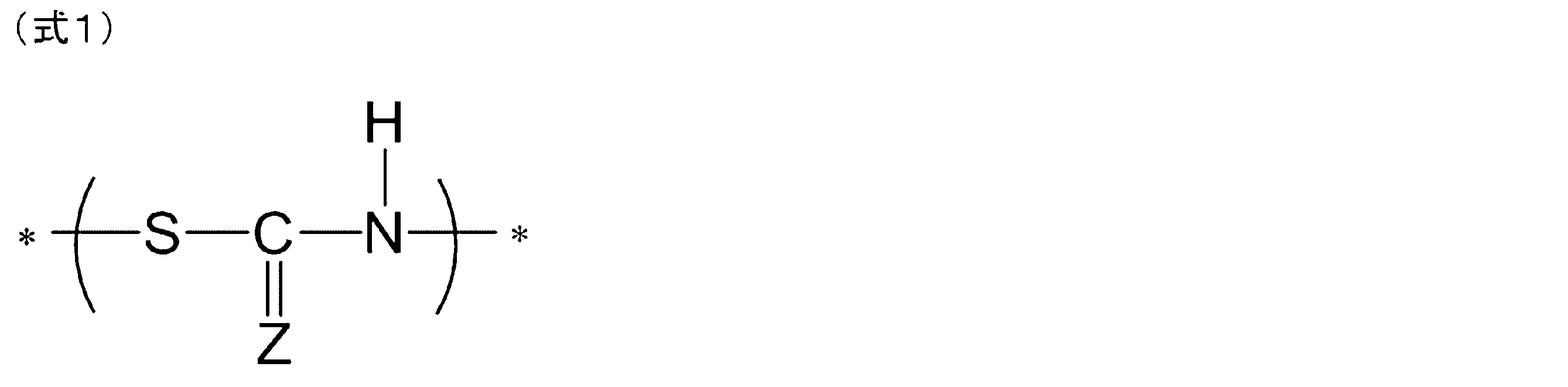
をいうものとする。式1において、Zは酸素原子または硫黄原子である。チオール基がイソシアネート基と反応することによりZが酸素原子の上記結合が形成され、イソチオシアネート基と反応することによりZが硫黄原子の上記結合が形成される。本発明および本明細書において、これらの反応を、「チオウレタン化反応」というものとする。式1中、*は、チオウレタン結合が、隣接する他の構造と結合する位置を示す。
本発明の一態様によれば、ポリエン化合物およびポリチオール化合物を含む重合性組成物を硬化させて得られる光学部材であって、優れた耐熱性を有する光学部材を提供することができる。
[光学部材用重合性組成物]
上記重合性組成物は、ポリエン化合物、ポリイソ(チオ)シアネート化合物およびポリチオール化合物を含む。以下に、これら化合物について、更に詳細に説明する。
上記重合性組成物は、ポリエン化合物、ポリイソ(チオ)シアネート化合物およびポリチオール化合物を含む。以下に、これら化合物について、更に詳細に説明する。
(ポリエン化合物)
ポリエン化合物が有する炭素-炭素二重結合の数は、1分子あたり2つ以上であり、3つ以上であることが好ましく、例えば3~5つであることができる。ポリエン化合物は、炭素-炭素二重結合を、(メタ)アクリル基、ビニル基、アリル基等の炭素-炭素二重結合含有基中に含むことができる。ポリエン化合物に複数含まれる炭素-炭素二重結合含有基の種類は、同一であってもよく異なっていてもよい。
ポリエン化合物が有する炭素-炭素二重結合の数は、1分子あたり2つ以上であり、3つ以上であることが好ましく、例えば3~5つであることができる。ポリエン化合物は、炭素-炭素二重結合を、(メタ)アクリル基、ビニル基、アリル基等の炭素-炭素二重結合含有基中に含むことができる。ポリエン化合物に複数含まれる炭素-炭素二重結合含有基の種類は、同一であってもよく異なっていてもよい。
ポリエン化合物の具体例としては、ジビニルベンゼン、ジビニルトルエン等のビニル化合物、エチレングリコールジ(メタ)アクリレート、ジエチレングリコールジ(メタ)アクリレート、トリエチレングリコールジ(メタ)アクリレート、トリメチロールプロパントリ(メタ)アクリレート、トリメチロールプロパンジ(メタ)アクリレート、ペンタエリスリトールトリ(メタ)アクリレート、ペンタエリスリトールテトラ(メタ)アクリレート、テトラエチレングリコールジ(メタ)アクリレート、イソシアヌル酸エチレンオキシド変性トリ(メタ)アクリレート等の(メタ)アクリレート、ジアリルフタレート、ジアリルマレエート、トリアリルシアヌレート、トリアリルイソシアヌレート、トリアリルトリメリテート、テトラアリロキシエタン等のアリル化合物等が挙げられる。ポリエン化合物としては、一種のポリエン化合物のみ使用してもよく、二種以上を混合して使用してもよい。
ポリエン化合物は、例えば、脂肪族化合物、脂環式化合物、芳香族化合物、複素環式化合物等であることができる。一態様では、ポリエン化合物は、環状構造含有化合物であることができる。環状構造含有化合物は、炭素環式化合物であってもよく、複素環式化合物であってもよく、また単環式化合物であってもよく、二環式以上の多環式化合物であってもよい。また、ポリエン化合物は、環状構造を複数含むものであってもよい。一態様では、ポリエン化合物は、複素脂環式化合物または複素芳香族化合物であることができ、具体的にはイソシアヌル環含有化合物またはシアヌル環含有化合物であることができる。
上記重合性組成物におけるポリエン化合物の含有率は、上記重合性組成物の質量(100質量%)に対して、例えば0質量%超50.00質量%以下、好ましくは10.00~35.00質量%の範囲であることができる。本発明および本明細書において、重合性組成物の質量とは、重合性組成物が溶媒を含む場合には溶媒を除く質量をいうものとする。
(ポリイソ(チオ)シアネート化合物)
ポリイソ(チオ)シアネート化合物は、脂肪族化合物、脂環式化合物、芳香族化合物、複素環式化合物等であることができる。ポリイソ(チオ)シアネート化合物が有するイソ(チオ)シアネート基の数は、1分子あたり2つ以上であり、好ましくは2~4つであり、より好ましくは2つまたは3つである。
ポリイソ(チオ)シアネート化合物は、脂肪族化合物、脂環式化合物、芳香族化合物、複素環式化合物等であることができる。ポリイソ(チオ)シアネート化合物が有するイソ(チオ)シアネート基の数は、1分子あたり2つ以上であり、好ましくは2~4つであり、より好ましくは2つまたは3つである。
ポリイソ(チオ)シアネート化合物は、例えば、脂肪族化合物、脂環式化合物、芳香族化合物、複素環式化合物等であることができる。ポリイソ(チオ)シアネート化合物の具体例としては、ヘキサメチレンジイソシアネート、1,5-ペンタンジイソシアネート、イソホロンジイソシアネート、ビス(イソシアナトメチル)シクロヘキサン、ジシクロヘキシルメタンジイソシアネート、2,5-ビス(イソシアナトメチル)-ビシクロ[2.2.1]ヘプタン、2,6-ビス(イソシアナトメチル)-ビシクロ[2.2.1]ヘプタン、ビス(4-イソシアナトシクロへキシル)メタン、1,3-ビス(イソシアナトメチル)シクロヘキサン、1,4-ビス(イソシアナトメチル)シクロヘキサン等の脂肪族ポリイソシアネート化合物;キシリレンジイソシアネート、1,3-ジイソシアナトベンゼン、トリレンジイソシアネート、ジフェニルメタンジイソシアネート等の芳香族ポリイソシアネート化合物等を挙げることができる。更に、上記ポリイソ(チオ)シアネート化合物の塩素置換体、臭素置換体等のハロゲン置換体、アルキル置換体、アルコキシ置換体、ニトロ置換体や多価アルコールとのプレポリマー型変性体、カルボジイミド変性体、ウレア変性体、ビュレット変性体、ダイマー化またはトリマー化反応生成物等も使用できる。ポリイソ(チオ)シアネート化合物としては、一種のポリイソ(チオ)シアネート化合物のみ使用してもよく、二種以上のポリイソ(チオ)シアネート化合物を混合して使用してもよい。一態様では、上記重合性組成物は、ポリイソ(チオ)シアネート化合物として、環状構造含有化合物を含むことができる。環状構造含有化合物は、炭素環式化合物であってもよく、複素環式化合物であってもよく、また単環式化合物であってもよく、二環式以上の多環式化合物であってもよい。また、ポリイソ(チオ)シアネート化合物は、環状構造を複数含むものであってもよい。一態様では、ポリイソ(チオ)シアネート化合物は、芳香族化合物(芳香族ポリイソ(チオ)シアネート化合物)であることができる。
上記重合性組成物におけるポリイソ(チオ)シアネート化合物の含有率は、上記重合性組成物の質量(100質量%)に対して、例えば0質量%超50.00質量%以下、好ましくは10.00~35.00質量%の範囲であることができる。
(ポリチオール化合物)
ポリチオール化合物は、脂肪族化合物、脂環式化合物、芳香族化合物、複素環式化合物等であることができる。ポリチオール化合物が有するチオール基の数は、1分子あたり2つ以上であり、好ましくは2~4つである。また、ポリチオール化合物が有するチオール基の数が1分子あたり3つ以上であることも好ましい。
ポリチオール化合物は、脂肪族化合物、脂環式化合物、芳香族化合物、複素環式化合物等であることができる。ポリチオール化合物が有するチオール基の数は、1分子あたり2つ以上であり、好ましくは2~4つである。また、ポリチオール化合物が有するチオール基の数が1分子あたり3つ以上であることも好ましい。
ポリチオール化合物としては、例えば、メタンジチオール、1,2-エタンジチオール、1,1-プロパンジチオール、1,2-プロパンジチオール、1,3-プロパンジチオール、2,2-プロパンジチオール、1,6-ヘキサンジチオール、1,2,3-プロパントリチオール、テトラキス(メルカプトメチル)メタン、1,1-シクロヘキサンジチオール、1,2-シクロヘキサンジチオール、2,2-ジメチルプロパン-1,3-ジチオール、3,4-ジメトキシブタン-1,2-ジチオール、2-メチルシクロヘキサン-2,3-ジチオール、1,1-ビス(メルカプトメチル)シクロヘキサン、チオリンゴ酸ビス(2-メルカプトエチルエステル)、2,3-ジメルカプトコハク酸(2-メルカプトエチルエステル)、2,3-ジメルカプト-1-プロパノール(2-メルカプトアセテート)、2,3-ジメルカプト-1-プロパノール(3-メルカプトアセテート)、ジエチレングリコールビス(2-メルカプトアセテート)、ジエチレングリコールビス(3-メルカプトプロピオネート)、1,2-ジメルカプトプロピルメチルエーテル、2,3-ジメルカプトプロピルメチルエーテル、2,2-ビス(メルカプトメチル)-1,3-プロパンジチオール、ビス(2-メルカプトエチル)エーテル、エチレングリコールビス(2-メルカプトアセテート)、エチレングリコールビス(3-メルカプトプロピオネート)、トリメチロールプロパントリス(2-メルカプトアセテート)、トリメチロールプロパントリス(3-メルカプトプロピオネート)、ペンタエリスリトールテトラキス(2-メルカプトアセテート)、ペンタエリスリトールテトラキス(3-メルカプトプロピオネート)、1,2-ビス(2-メルカプトエチルチオ)-3-メルカプトプロパン等の脂肪族ポリチオール化合物;1,2-ジメルカプトベンゼン、1,3-ジメルカプトベンゼン、1,4-ジメルカプトベンゼン、1,2-ビス(メルカプトメチル)ベンゼン、1,3-ビス(メルカプトメチル)ベンゼン、1,4-ビス(メルカプトメチル)ベンゼン、1,3-ビス(メルカプトエチル)ベンゼン、1,4-ビス(メルカプトエチル)ベンゼン、1,2-ビス(メルカプトメトキシ)ベンゼン、1,3-ビス(メルカプトメトキシ)ベンゼン、1,4-ビス(メルカプトメトキシ)ベンゼン、1,2-ビス(メルカプトエトキシ)ベンゼン、1,3-ビス(メルカプトエトキシ)ベンゼン、1,4-ビス(メルカプトエトキシ)ベンゼン、1,2,3-トリメルカプトベンゼン、1,2,4-トリメルカプトベンゼン、1,3,5-トリメルカプトベンゼン、1,2,3-トリス(メルカプトメチル)ベンゼン、1,2,4-トリス(メルカプトメチル)ベンゼン、1,3,5-トリス(メルカプトメチル)ベンゼン、1,2,3-トリス(メルカプトエチル)ベンゼン、1,2,4-トリス(メルカプトエチル)ベンゼン、1,3,5-トリス(メルカプトエチル)ベンゼン、1,2,3-トリス(メルカプトメトキシ)ベンゼン、1,2,4-トリス(メルカプトメトキシ)ベンゼン、1,3,5-トリス(メルカプトメトキシ)ベンゼン、1,2,3-トリス(メルカプトエトキシ)ベンゼン、1,2,4-トリス(メルカプトエトキシ)ベンゼン、1,3,5-トリス(メルカプトエトキシ)ベンゼン、1,2,3,4-テトラメルカプトベンゼン、1,2,3,5-テトラメルカプトベンゼン、1,2,4,5-テトラメルカプトベンゼン、1,2,3,4-テトラキス(メルカプトメチル)ベンゼン、1,2,3,5-テトラキス(メルカプトメチル)ベンゼン、1,2,4,5-テトラキス(メルカプトメチル)ベンゼン、1,2,3,4-テトラキス(メルカプトエチル)ベンゼン、1,2,3,5-テトラキス(メルカプトエチル)ベンゼン、1,2,4,5-テトラキス(メルカプトエチル)ベンゼン、1,2,3,4-テトラキス(メルカプトエチル)ベンゼン、1,2,3,5-テトラキス(メルカプトメトキシ)ベンゼン、1,2,4,5-テトラキス(メルカプトメトキシ)ベンゼン、1,2,3,4-テトラキス(メルカプトエトキシ)ベンゼン、1,2,3,5-テトラキス(メルカプトエトキシ)ベンゼン、1,2,4,5-テトラキス(メルカプトエトキシ)ベンゼン、2,2'-ジメルカプトビフェニル、4,4' -ジメルカプトビフェニル、4,4' -ジメルカプトビベンジル、2,5-トルエンジチオール、3,4-トルエンジチオール、1,4-ナフタレンジチオール、1,5-ナフタレンジチオール、2,6-ナフタレンジチオール、2,7-ナフタレンジチオール、2,4-ジメチルベンゼン-1,3-ジチオール、4,5-ジメチルベンゼン-1,3-ジチオール、9,10-アントラセンジメタンチオール、1,3-ジ(p-メトキシフェニル)プロパン-2,2-ジチオール、1,3-ジフェニルプロパン-2,2-ジチオール、フェニルメタン-1,1-ジチオール、2,4-ジ(p-メルカプトフェニル)ペンタン等の芳香族ポリチオール化合物;2,5-ジクロロベンゼン-1,3-ジチオール、1,3-ジ(p-クロロフェニル)プロパン-2,2-ジチオール、3,4,5-トリブロム-1,2-ジメルカプトベンゼン、2,3,4,6-テトラクロル-1,5-ビス(メルカプトメチル)ベンゼン等の塩素置換体、臭素置換体等のハロゲン置換芳香族ポリチオール化合物;1,2-ビス(メルカプトメチルチオ)ベンゼン、1,3-ビス(メルカプトメチルチオ)ベンゼン、1,4-ビス(メルカプトメチルチオ)ベンゼン、1,2-ビス(メルカプトエチルチオ)ベンゼン、1,3-ビス(メルカプトエチルチオ)ベンゼン、1,4-ビス(メルカプトエチルチオ)ベンゼン、1,2,3-トリス(メルカプトメチルチオ)ベンゼン、1,2,4-トリス(メルカプトメチルチオ)ベンゼン、1,3,5-トリス(メルカプトメチルチオ)ベンゼン、1,2,3-トリス(メルカプトエチルチオ)ベンゼン、1,2,4-トリス(メルカプトエチルチオ)ベンゼン、1,3,5-トリス(メルカプトエチルチオ)ベンゼン、1,2,3,4-テトラキス(メルカプトメチルチオ)ベンゼン、1,2,3,5-テトラキス(メルカプトメチルチオ)ベンゼン、1,2,4,5-テトラキス(メルカプトメチルチオ)ベンゼン、1,2,3,4-テトラキス(メルカプトエチルチオ)ベンゼン、1,2,3,5-テトラキス(メルカプトエチルチオ)ベンゼン、1,2,4,5-テトラキス(メルカプトエチルチオ)ベンゼン等、およびこれらの核アルキル化物等のチオール基(「メルカプト基」とも呼ばれる。)以外に硫黄原子を含有する芳香族ポリチオール化合物;ビス(メルカプトメチル)スルフィド、ビス(メルカプトエチル)スルフィド、ビス(メルカプトプロピル)スルフィド、ビス(メルカプトメチルチオ)メタン、ビス(2-メルカプトエチルチオ)メタン、ビス(3-メルカプトプロピルチオ)メタン、1,2-ビス(メルカプトメチルチオ)エタン、1,2-ビス(2-メルカプトエチルチオ)エタン、1,2-ビス(3-メルカプトプロピルチオ)エタン、1,3-ビス(メルカプトメチルチオ)プロパン、1,3-ビス(2-メルカプトエチルチオ)プロパン、1,3-ビス(3-メルカプトプロピルチオ)プロパン、1,2-ビス(2-メルカプトエチルチオ)-3-メルカプトプロパン、2-メルカプトエチルチオ-1,3-プロパンジチオール、1,2,3-トリス(メルカプトメチルチオ)プロパン、1,2,3-トリス(2-メルカプトエチルチオ)プロパン、1,2,3-トリス(3-メルカプトプロピルチオ)プロパン、テトラキス(メルカプトメチルチオメチル)メタン、テトラキス(2-メルカプトエチルチオメチル)メタン、テトラキス(3-メルカプトプロピルチオメチル)メタン、ビス(2,3-ジメルカプトプロピル)スルフィド、2,5-ジメルカプト-1,4-ジチアン、ビス(メルカプトメチル)ジスルフィド、ビス(メルカプトエチル)ジスルフィド、ビス(メルカプトプロピル)ジスルフィド等、およびこれらのチオグリコール酸およびメルカプトプロピオン酸のエステル、ヒドロキシメチルスルフィドビス(2-メルカプトアセテート)、ヒドロキシメチルスルフィドビス(3-メルカプトプロピオネート)、ヒドロキシエチルスルフィドビス(2-メルカプトアセテート)、ヒドロキシエチルスルフィドビス(3-メルカプトプロピオネート)、ヒドロキシプロピルスルフィドビス(2-メルカプトアセテート)、ヒドロキシプロピルスルフィドビス(3-メルカプトプロピオネート)、ヒドロキシメチルジスルフィドビス(2-メルカプトアセテート)、ヒドロキシメチルジスルフィドビス(3-メルカプトプロピオネート)、ヒドロキシエチルジスルフィドビス(2-メルカプトアセテート)、ヒドロキシエチルジスルフィドビス(3-メルカプトプロピオネート)、ヒドロキシプロピルジスルフィドビス(2-メルカプトアセテート)、ヒドロキシプロピルジスルフィドビス(3-メルカプトプロピオネート)、2-メルカプトエチルエーテルビス(2-メルカプトアセテート)、2-メルカプトエチルエーテルビス(3-メルカプトプロピオネート)、1,4-ジチアン-2,5-ジオールビス(2-メルカプトアセテート)、1,4-ジチアン-2,5-ジオールビス(3-メルカプトプロピオネート)、チオグリコール酸(2-メルカプトエチルエステル)、チオジプロピオン酸ビス(2-メルカプトエチルエステル)、4,4' -チオジブチル酸ビス(2-メルカプトエチルエステル)、ジチオジグリコール酸ビス(2-メルカプトエチルエステル)、ジチオジプロピオン酸ビス(2-メルカプトエチルエステル)、4,4' -ジチオジブチル酸ビス(2-メルカプトエチルエステル)、チオジグリコール酸ビス(2,3-ジメルカプトプロピルエステル)、チオジプロピオン酸ビス(2,3-ジメルカプトプロピルエステル)、ジチオジグリコール酸ビス(2,3-ジメルカプトプロピルエステル)、ジチオジプロピオン酸ビス(2,3-ジメルカプトプロピルエステル)、4-メルカプトメチル-3,6-ジチアオクタン-1,8-ジチオール、ビス(1,3-ジメルカプト-2-プロピル)スルフィド、ビス(メルカプトメチル)-3,6,9-トリチアウンデカン-1,11-ジチオール(「ビス(メルカプトメチル)-3,6,9-トリチア-1,11-ウンデカンジチオール」とも呼ばれる;4,7-ビス(メルカプトメチル)-3,6,9-トリチアウンデカン-1,11-ジチオール、4,8-ビス(メルカプトメチル)-3,6,9-トリチアウンデカン-1,11-ジチオールおよび5,7-ビス(メルカプトメチル)-3,6,9-トリチアウンデカン-1,11-ジチオールからなる群から選択される異性体の一種またはこれら異性体の二種もしくは三種の混合物)等のチオール基以外に硫黄原子を含有する脂肪族ポリチオール化合物;3,4-チオフェンジチオール、テトラヒドロチオフェン-2,5-ジメルカプトメチル、2,5-ジメルカプト-1,3,4-チアジアゾール、2,5-ジメルカプト-1,4-ジチアン、2,5-ジメルカプトメチル-1,4-ジチアン等のチオール基以外に硫黄原子を含有する複素環化合物等が挙げられる。
上記重合性組成物に含まれるポリチオール化合物は、一態様では、脂肪族化合物であることができる。また、一態様では、ポリチオール化合物は、エステル結合含有化合物であることができる。エステル結合を含有するポリチオール化合物は、例えば、エステル結合を1分子あたり2つ以上含むことができ、例えば2~5つ含むことができる。ポリチオール化合物は、一態様では、エステル結合含有脂肪族化合物であることができる。
上記重合性組成物におけるポリチオール化合物の含有率は、上記重合性組成物の質量(100質量%)に対して、例えば20.00~80.00質量%、好ましくは30.00~70.00質量%であることができる。
(その他の成分)
上記重合性組成物は、必要に応じて、光学部材の製造のために一般に用いられる添加剤、重合触媒等の公知の成分の一種以上を任意に含むことができる。添加剤としては、例えば、紫外線吸収剤、酸化防止剤、離型剤等の各種添加剤を挙げることができる。また、添加剤として、ホスフィン誘導体等の有機リン化合物を用いることもできる。添加剤の使用量は適宜設定することができる。
上記重合性組成物は、必要に応じて、光学部材の製造のために一般に用いられる添加剤、重合触媒等の公知の成分の一種以上を任意に含むことができる。添加剤としては、例えば、紫外線吸収剤、酸化防止剤、離型剤等の各種添加剤を挙げることができる。また、添加剤として、ホスフィン誘導体等の有機リン化合物を用いることもできる。添加剤の使用量は適宜設定することができる。
また、上記重合性組成物は、重合触媒として、ポリエン化合物とポリチオール化合物とのチオール-エン反応を触媒する第1の重合触媒と、ポリイソ(チオ)シアネート化合物とポリチオール化合物とのチオウレタン化反応を触媒する第2の重合触媒とを含むことが好ましい。チオール-エン反応を触媒する第1の重合触媒、チオウレタン化反応を触媒する第2の重合触媒としては、公知の重合触媒を用いることができる。
チオール-エン反応を触媒する第1の重合触媒としては、2,2’-アゾビスイソブチロニトリル、2,2’-アゾビス(2-メチルブチロニトリル)、2,2’-アゾビス-2,4-ジメチルバレロニトリル、ジメチル-2,2’-アゾビスイソオブチレート、1,1’-アゾビス(シクロヘキサン-1-カルボニトリル)、1,1’-アゾビス(1-アセトキシ1-フェニルエタン)、2,2’-アゾビス(4-メトキシ-2,4-ジメチルバレロニトリル)等のアゾビス系化合物、過酸化ベンゾイル、過酸化アセチル、過酸化tert-ブチル、過酸化プロピオニル、過酸化ラウロイル、過酢酸tert-ブチル、過安息香酸tert-ブチル、tert-ブチルヒドロペルオキシド、tert-ブチルペルオキシピバレート、1,1-ビス(t-ブチルパーオキシ)-3, 3,5-トリメチルシクロヘキサン、t-ブチルパーオキシ-2-エチルヘキサノエート、t-アミルパーオキシ-2-エチルヘキサノエート、t-アミルパーイソノナノエート、t-アミルパーオキシアセテート、t-アミルパーオキシベンゾエート等の過酸化物系化合物等を挙げることができる。上記重合性組成物は、例えば、第1の重合触媒を、上記重合性組成物の質量(100質量%)に対して、0.01~0.10質量%含むことができる。
チオウレタン化反応を触媒する第2の重合触媒としては、ジブチル錫ジアセテ-ト、ジブチル錫ジラウレ-ト、ジブチル錫ジクロライド、ジメチル錫ジクロライド、モノメチル錫トリクロライド、トリメチル錫クロライド、トリブチル錫クロライド、トリブチル錫フロライド、ジメチル錫ジブロマイド等の有機錫系化合物を挙げることができる。上記重合性組成物は、例えば、第2の重合触媒を、上記重合性組成物の質量(100質量%)に対して、0.01~0.50質量%含むことができる。
チオール-エン反応を触媒する第1の重合触媒としては、2,2’-アゾビスイソブチロニトリル、2,2’-アゾビス(2-メチルブチロニトリル)、2,2’-アゾビス-2,4-ジメチルバレロニトリル、ジメチル-2,2’-アゾビスイソオブチレート、1,1’-アゾビス(シクロヘキサン-1-カルボニトリル)、1,1’-アゾビス(1-アセトキシ1-フェニルエタン)、2,2’-アゾビス(4-メトキシ-2,4-ジメチルバレロニトリル)等のアゾビス系化合物、過酸化ベンゾイル、過酸化アセチル、過酸化tert-ブチル、過酸化プロピオニル、過酸化ラウロイル、過酢酸tert-ブチル、過安息香酸tert-ブチル、tert-ブチルヒドロペルオキシド、tert-ブチルペルオキシピバレート、1,1-ビス(t-ブチルパーオキシ)-3, 3,5-トリメチルシクロヘキサン、t-ブチルパーオキシ-2-エチルヘキサノエート、t-アミルパーオキシ-2-エチルヘキサノエート、t-アミルパーイソノナノエート、t-アミルパーオキシアセテート、t-アミルパーオキシベンゾエート等の過酸化物系化合物等を挙げることができる。上記重合性組成物は、例えば、第1の重合触媒を、上記重合性組成物の質量(100質量%)に対して、0.01~0.10質量%含むことができる。
チオウレタン化反応を触媒する第2の重合触媒としては、ジブチル錫ジアセテ-ト、ジブチル錫ジラウレ-ト、ジブチル錫ジクロライド、ジメチル錫ジクロライド、モノメチル錫トリクロライド、トリメチル錫クロライド、トリブチル錫クロライド、トリブチル錫フロライド、ジメチル錫ジブロマイド等の有機錫系化合物を挙げることができる。上記重合性組成物は、例えば、第2の重合触媒を、上記重合性組成物の質量(100質量%)に対して、0.01~0.50質量%含むことができる。
上記重合性組成物は、以上説明した各種成分を同時に、または任意の順序で順次、混合することにより調製することができる。調製方法は特に限定されるものではなく、重合性組成物の調製方法として公知の方法を採用することができる。また、重合性組成物は、溶媒を添加せずに調製してもよく、任意の量の溶媒を添加して調製してもよい。溶媒としては、重合性組成物に使用可能な溶媒として公知の溶媒の一種以上を用いることができる。
<硬化物の製造方法>
先に説明したポリエン化合物、ポリイソ(チオ)シアネート化合物およびポリチオール化合物は、いずれも重合性化合物であり、これら化合物を重合させることにより、上記重合性組成物を硬化させて硬化物を得ることができる。こうして得られる硬化物は、各種光学部材として用いることができる。例えば、光学部材としては、眼鏡レンズ、望遠鏡レンズ、双眼鏡レンズ、顕微鏡レンズ、内視鏡レンズ、各種カメラの撮像系レンズ等の各種レンズを挙げることができる。本発明および本明細書における「レンズ」には、一層以上の層が任意に積層される「レンズ基材」が包含されるものとする。
先に説明したポリエン化合物、ポリイソ(チオ)シアネート化合物およびポリチオール化合物は、いずれも重合性化合物であり、これら化合物を重合させることにより、上記重合性組成物を硬化させて硬化物を得ることができる。こうして得られる硬化物は、各種光学部材として用いることができる。例えば、光学部材としては、眼鏡レンズ、望遠鏡レンズ、双眼鏡レンズ、顕微鏡レンズ、内視鏡レンズ、各種カメラの撮像系レンズ等の各種レンズを挙げることができる。本発明および本明細書における「レンズ」には、一層以上の層が任意に積層される「レンズ基材」が包含されるものとする。
例えば、レンズ形状を有する硬化物(「プラスチックレンズ」とも呼ばれる。)を製造するためには、注型重合が好ましい。注型重合では、所定の間隔をもって対向する2つのモールドと、上記間隔を閉塞することにより形成されたキャビティを有する成形型のキャビティへ重合性組成物を注入し、このキャビティ内で重合性組成物に含まれる重合性化合物の重合(硬化反応)を行い硬化物を得ることができる。注型重合に使用可能な成形型の詳細については、例えば特開2009-262480号公報の段落0012~0014および同公報の図1を参照できる。上記公報では、2つのモールドの間隔を、封止部材としてガスケットにより閉塞した成形型が示されているが、封止部材としてはテープを用いることもできる。
一態様では、注型重合は、次のように行うことができる。重合性組成物を、成形型側面に設けた注入口から成形型キャビティに注入する。注入後、重合性組成物に含まれる重合性化合物を、加熱により重合(硬化反応)させることで、重合性組成物が硬化し、キャビティの内部形状が転写された硬化物を得ることができる。重合条件は、特に限定されるものではなく、重合性組成物の組成等に応じて適宜設定することができる。一例として、重合性組成物をキャビティに注入した成形型を、加熱温度20~150℃で1~72時間程度加熱することができるが、この条件に限定されるものではない。本発明および本明細書において、注型重合に関する加熱温度等の温度とは、成形型が配置される雰囲気温度をいう。また、加熱中に、任意の昇温速度で昇温することができ、任意の降温速度で降温(冷却)することができる。重合(硬化反応)終了後、キャビティ内部の硬化物を成形型から離型する。注型重合において通常行われているように、キャビティを形成している上下モールドとガスケットまたはテープを任意の順序で取り外すことにより、硬化物を成形型から離型することができる。成形型から離型された硬化物は、必要に応じて後処理を行った後、光学部材として用いることができ、例えば各種レンズ(例えばレンズ基材)として用いることができる。一例として、眼鏡レンズのレンズ基材として用いられる硬化物は、通常、離型後に、アニーリング、染色処理、丸め工程等の研削工程、研磨工程、耐衝撃性を向上させるためのプライマーコート層、表面硬度を上げるためのハードコート層等のコート層形成工程等の後工程に付され得る。更に、反射防止層、撥水層等の各種機能性層を、レンズ基材上に形成することができる。これらの工程については、いずれも公知技術を適用することができる。こうして、レンズ基材が上記硬化物である眼鏡レンズを得ることができる。更に、この眼鏡レンズをフレームに取り付けることにより、眼鏡を得ることができる。
例えば、上記重合性組成物を硬化した硬化物が眼鏡レンズ(眼鏡レンズ基材)である場合、眼鏡レンズは、一態様では、両面が光学面に仕上げられたフィニッシュドレンズ(両面が光学的に仕上げられたレンズブランク)であることができる。他の一態様では、眼鏡レンズは、一方の面が光学面であって、他の面が非光学面であるセミフィニッシュドレンズ(一方の面だけが光学的に仕上げられたレンズブランク)であることができる。セミフィニッシュドレンズは、通常、前面(物体側表面;例えば凸面)は光学的に仕上げられた面であり、後面(眼球側表面;例えば凹面)はレンズ処方値に応じて所望のレンズ度数となるように研磨加工される。そのため、セミフィニッシュドレンズは、フィニッシュドレンズと比べて厚い肉厚(例えば中心肉厚3~10mm)に成形される。そのような厚い肉厚の硬化物を得るための重合処理として、光照射による重合処理よりも加熱処理による重合処理は好ましい。
[光学部材および光学部材の製造方法]
本発明の一態様は、上記重合性組成物を硬化した硬化物である光学部材に関する。
また、本発明の一態様は、上記重合性組成物を加熱処理により硬化させることを含む光学部材の製造方法に関する。
上記重合性組成物および硬化物の製造方法等の詳細については、先の記載を参照できる。
本発明の一態様は、上記重合性組成物を硬化した硬化物である光学部材に関する。
また、本発明の一態様は、上記重合性組成物を加熱処理により硬化させることを含む光学部材の製造方法に関する。
上記重合性組成物および硬化物の製造方法等の詳細については、先の記載を参照できる。
上記光学部材は、優れた耐熱性を有することができる。優れた耐熱性を有する光学部材は、例えば、その上に各種機能性膜を一層以上形成する製膜工程において加熱処理が行われても、基材である光学部材の変形および/または変質が少ないため、好ましい。耐熱性の指標としては、ガラス転移温度(Tg)を挙げることができる。本発明および本明細書におけるガラス転移温度(Tg)とは、JIS K7196-2012に準拠した熱機械分析(TMA)ペネトレーション法により測定されるガラス転移温度をいう。具体的な測定方法については、後述の実施例を参照できる。上記光学部材は、例えば70℃以上または80℃以上のガラス転移温度を有することができる。ガラス転移温度が高いことは、耐熱性の観点から好ましい。
上記光学部材は、ポリエン化合物、ポリイソ(チオ)シアネート化合物、およびポリチオール化合物を含む重合性組成物の硬化物であるため、ポリイソ(チオ)シアネート化合物が有するイソ(チオ)シアネート基とポリチオール化合物が有するチオール基との反応(以下、「チオウレタン化反応」とも記載する。)により形成されるチオウレタン結合を有することができる。上記光学部材のチオウレタン結合の含有率は、より一層の耐熱性向上の観点からは、9.00質量%以上であることが好ましく、10.00質量%以上であることがより好ましく、12.00質量%以上であることが更に好ましく、14.00質量%以上であることが一層好ましく、16.00質量%以上であることがより一層好ましく、18.00質量%以上であることが更に一層好ましく、20.00質量%以上であることがなお一層好ましく、22.00質量%以上であることが更に一層好ましく、24.00質量%以上であることが更により一層好ましく、26.00質量%以上であることがなお更により一層好ましく、28.00質量%以上であることが特に更に好ましい。また、上記光学部材のチオウレタン結合の含有率は、例えば35.00質量%以下または30.00質量%以下であることができる。上記のチオウレタン結合の含有率は、光学部材の質量(100質量%)に対する値である。光学部材のチオウレタン結合の含有率は、公知の方法で求めることができる。また、光学部材(硬化物)を得るための重合性組成物の組成が既知な場合、この既知の組成に基づき、光学部材のチオウレタン結合の含有率を算出することができる。上記硬化物のチオウレタン結合の含有率は、硬化物を得るために用いられる重合性組成物の組成によって調整することができる。
以下、本発明を実施例により更に詳細に説明するが、本発明は実施例に示す態様に限定されるものではない。以下に記載の操作および評価は、特記しない限り、大気中室温下(20~25℃程度)で行った。また、以下に記載の%は、特記しない限り質量基準である。
[実施例1]
300mlナス型フラスコに、ポリイソ(チオ)シアネート化合物として2,4-トリレンジイソシアネート(TDI)10.9g、ポリエン化合物としてトリアリルイソシアヌレート(TAIC)32.8gを仕込み、有機リン化合物としてトリフェニルホスフィン(TPP)0.30g、離型剤としてブトキシエチルアシッドホスフェート(城北化学株式会社製JP-506H)0.15g、重合触媒としてジメチル錫ジクロライド0.01gおよび2,2’―アゾビスー2,4-ジメチルバレロニトリル0.02gを添加し、20℃窒素パージ下で1時間撹拌を続けた。これらが完全に溶解したところで、ポリチオール化合物としてペンタエリスリトールテトラキス(2-メルカプトアセテート)(PETMA)56.3gを配合し、0.13kPa(1.0Torr)で20分減圧撹拌を行い、ポリエン化合物、ポリイソ(チオ)シアネート化合物およびポリチオール化合物を含む重合性組成物1を調製した。
この重合性組成物1を、孔径1.0μmのポリテトラフルオロエチレンメンブランフィルターを通して成形型のキャビティに注入し、初期温度25℃から最終温度120℃の温度プログラムにて24時間注型重合を行い、中心肉厚2mmのプラスチックレンズを作製した。
こうして作製されたプラスチックレンズのチオウレタン結合の含有率は、9.41質量%である。
300mlナス型フラスコに、ポリイソ(チオ)シアネート化合物として2,4-トリレンジイソシアネート(TDI)10.9g、ポリエン化合物としてトリアリルイソシアヌレート(TAIC)32.8gを仕込み、有機リン化合物としてトリフェニルホスフィン(TPP)0.30g、離型剤としてブトキシエチルアシッドホスフェート(城北化学株式会社製JP-506H)0.15g、重合触媒としてジメチル錫ジクロライド0.01gおよび2,2’―アゾビスー2,4-ジメチルバレロニトリル0.02gを添加し、20℃窒素パージ下で1時間撹拌を続けた。これらが完全に溶解したところで、ポリチオール化合物としてペンタエリスリトールテトラキス(2-メルカプトアセテート)(PETMA)56.3gを配合し、0.13kPa(1.0Torr)で20分減圧撹拌を行い、ポリエン化合物、ポリイソ(チオ)シアネート化合物およびポリチオール化合物を含む重合性組成物1を調製した。
この重合性組成物1を、孔径1.0μmのポリテトラフルオロエチレンメンブランフィルターを通して成形型のキャビティに注入し、初期温度25℃から最終温度120℃の温度プログラムにて24時間注型重合を行い、中心肉厚2mmのプラスチックレンズを作製した。
こうして作製されたプラスチックレンズのチオウレタン結合の含有率は、9.41質量%である。
[実施例2]
300mlナス型フラスコに、ポリイソ(チオ)シアネート化合物として2,4-トリレンジイソシアネート(TDI)22.0g、ポリエン化合物としてトリアリルイソシアヌレート(TAIC)22.0gを仕込み、有機リン化合物としてトリフェニルホスフィン(TPP)0.30g、離型剤としてブトキシエチルアシッドホスフェート(城北化学株式会社製JP-506H)0.15g、重合触媒としてジメチル錫ジクロライド0.02gおよび2,2’―アゾビスー2,4-ジメチルバレロニトリル0.02gを添加し、20℃窒素パージ下で1時間撹拌を続けた。これらが完全に溶解したところで、ポリチオール化合物としてペンタエリスリトールテトラキス(2-メルカプトアセテート)(PETMA)56.0gを配合し、0.13kPa(1.0Torr)で20分減圧撹拌を行い、ポリエン化合物、ポリイソ(チオ)シアネート化合物およびポリチオール化合物を含む重合性組成物2を調製した。
この重合性組成物2を、孔径1.0μmのポリテトラフルオロエチレンメンブランフィルターを通して成形型のキャビティに注入し、初期温度25℃から最終温度120℃の温度プログラムにて24時間注型重合を行い、中心肉厚2mmのプラスチックレンズを作製した。
こうして作製されたプラスチックレンズのチオウレタン結合の含有率は、18.98質量%である。
300mlナス型フラスコに、ポリイソ(チオ)シアネート化合物として2,4-トリレンジイソシアネート(TDI)22.0g、ポリエン化合物としてトリアリルイソシアヌレート(TAIC)22.0gを仕込み、有機リン化合物としてトリフェニルホスフィン(TPP)0.30g、離型剤としてブトキシエチルアシッドホスフェート(城北化学株式会社製JP-506H)0.15g、重合触媒としてジメチル錫ジクロライド0.02gおよび2,2’―アゾビスー2,4-ジメチルバレロニトリル0.02gを添加し、20℃窒素パージ下で1時間撹拌を続けた。これらが完全に溶解したところで、ポリチオール化合物としてペンタエリスリトールテトラキス(2-メルカプトアセテート)(PETMA)56.0gを配合し、0.13kPa(1.0Torr)で20分減圧撹拌を行い、ポリエン化合物、ポリイソ(チオ)シアネート化合物およびポリチオール化合物を含む重合性組成物2を調製した。
この重合性組成物2を、孔径1.0μmのポリテトラフルオロエチレンメンブランフィルターを通して成形型のキャビティに注入し、初期温度25℃から最終温度120℃の温度プログラムにて24時間注型重合を行い、中心肉厚2mmのプラスチックレンズを作製した。
こうして作製されたプラスチックレンズのチオウレタン結合の含有率は、18.98質量%である。
[実施例3]
300mlナス型フラスコに、ポリイソ(チオ)シアネート化合物として2,4-トリレンジイソシアネート(TDI)33.2g、ポリエン化合物としてトリアリルイソシアヌレート(TAIC)11.1gを仕込み、有機リン化合物としてトリフェニルホスフィン(TPP)0.30g、離型剤としてブトキシエチルアシッドホスフェート(城北化学株式会社製JP-506H)0.15g、重合触媒としてジメチル錫ジクロライド0.03gおよび2,2’―アゾビスー2,4-ジメチルバレロニトリル0.02gを添加し、20℃窒素パージ下で1時間撹拌を続けた。これらが完全に溶解したところで、ポリチオール化合物としてぺンタエリスリトールテトラキス(2-メルカプトアセテート)(PETMA)55.7gを配合し、0.13kPa(1.0Torr)で20分減圧撹拌を行い、ポリエン化合物、ポリイソ(チオ)シアネート化合物およびポリチオール化合物を含む重合性組成物3を調製した。
この重合性組成物3を、孔径1.0μmのポリテトラフルオロエチレンメンブランフィルターを通して成形型のキャビティに注入し、初期温度25℃から最終温度120℃の温度プログラムにて24時間注型重合を行い、中心肉厚2mmのプラスチックレンズを作製した。
こうして作製されたプラスチックレンズのチオウレタン結合の含有率は、28.74質量%である。
300mlナス型フラスコに、ポリイソ(チオ)シアネート化合物として2,4-トリレンジイソシアネート(TDI)33.2g、ポリエン化合物としてトリアリルイソシアヌレート(TAIC)11.1gを仕込み、有機リン化合物としてトリフェニルホスフィン(TPP)0.30g、離型剤としてブトキシエチルアシッドホスフェート(城北化学株式会社製JP-506H)0.15g、重合触媒としてジメチル錫ジクロライド0.03gおよび2,2’―アゾビスー2,4-ジメチルバレロニトリル0.02gを添加し、20℃窒素パージ下で1時間撹拌を続けた。これらが完全に溶解したところで、ポリチオール化合物としてぺンタエリスリトールテトラキス(2-メルカプトアセテート)(PETMA)55.7gを配合し、0.13kPa(1.0Torr)で20分減圧撹拌を行い、ポリエン化合物、ポリイソ(チオ)シアネート化合物およびポリチオール化合物を含む重合性組成物3を調製した。
この重合性組成物3を、孔径1.0μmのポリテトラフルオロエチレンメンブランフィルターを通して成形型のキャビティに注入し、初期温度25℃から最終温度120℃の温度プログラムにて24時間注型重合を行い、中心肉厚2mmのプラスチックレンズを作製した。
こうして作製されたプラスチックレンズのチオウレタン結合の含有率は、28.74質量%である。
[実施例4]
300mlナス型フラスコに、ポリイソ(チオ)シアネート化合物として2,4-トリレンジイソシアネート(TDI)24.0g、ポリエン化合物としてトリアリルイソシアヌレート(TAIC)24.0gを仕込み、有機リン化合物としてトリフェニルホスフィン(TPP)0.30g、離型剤としてブトキシエチルアシッドホスフェート(城北化学株式会社製JP-506H)0.15g、重合触媒としてジメチル錫ジクロライド0.01gおよび2,2’―アゾビスー2,4-ジメチルバレロニトリル0.08gを添加し、20℃窒素パージ下で1時間撹拌を続けた。これらが完全に溶解したところで、ポリチオール化合物としてビス(メルカプトメチル)-3,6,9-トリチアウンデカン-1,11-ジチオール52.0gを配合し、0.13kPa(1.0Torr)で20分減圧撹拌を行い、ポリエン化合物、ポリイソ(チオ)シアネート化合物およびポリチオール化合物を含む重合性組成物4を調製した。
この重合性組成物4を、孔径1.0μmのポリテトラフルオロエチレンメンブランフィルターを通して成形型のキャビティに注入し、初期温度25℃から最終温度125℃の温度プログラムにて24時間注型重合を行い、中心肉厚2mmのプラスチックレンズを作製した。
こうして作製されたプラスチックレンズのチオウレタン結合の含有率は、20.71質量%である。
300mlナス型フラスコに、ポリイソ(チオ)シアネート化合物として2,4-トリレンジイソシアネート(TDI)24.0g、ポリエン化合物としてトリアリルイソシアヌレート(TAIC)24.0gを仕込み、有機リン化合物としてトリフェニルホスフィン(TPP)0.30g、離型剤としてブトキシエチルアシッドホスフェート(城北化学株式会社製JP-506H)0.15g、重合触媒としてジメチル錫ジクロライド0.01gおよび2,2’―アゾビスー2,4-ジメチルバレロニトリル0.08gを添加し、20℃窒素パージ下で1時間撹拌を続けた。これらが完全に溶解したところで、ポリチオール化合物としてビス(メルカプトメチル)-3,6,9-トリチアウンデカン-1,11-ジチオール52.0gを配合し、0.13kPa(1.0Torr)で20分減圧撹拌を行い、ポリエン化合物、ポリイソ(チオ)シアネート化合物およびポリチオール化合物を含む重合性組成物4を調製した。
この重合性組成物4を、孔径1.0μmのポリテトラフルオロエチレンメンブランフィルターを通して成形型のキャビティに注入し、初期温度25℃から最終温度125℃の温度プログラムにて24時間注型重合を行い、中心肉厚2mmのプラスチックレンズを作製した。
こうして作製されたプラスチックレンズのチオウレタン結合の含有率は、20.71質量%である。
[実施例5]
300mlナス型フラスコに、ポリイソ(チオ)シアネート化合物として2,4-トリレンジイソシアネート(TDI)11.5g、ポリエン化合物としてトリアリルイソシアヌレート(TAIC)35.0gを仕込み、有機リン化合物としてトリフェニルホスフィン(TPP)0.30g、離型剤としてブトキシエチルアシッドホスフェート(城北化学株式会社製JP-506H)0.15g、重合触媒としてジメチル錫ジクロライド0.01gおよび2,2’―アゾビスー2,4-ジメチルバレロニトリル0.08gを添加し、20℃窒素パージ下で1時間撹拌を続けた。これらが完全に溶解したところで、ポリチオール化合物としてビス(メルカプトメチル)-3,6,9-トリチアウンデカン-1,11-ジチオール52.5gを配合し、0.13kPa(1.0Torr)で20分減圧撹拌を行い、ポリエン化合物、ポリイソ(チオ)シアネート化合物およびポリチオール化合物を含む重合性組成物5を調製した。
この重合性組成物5を、孔径1.0μmのポリテトラフルオロエチレンメンブランフィルターを通して成形型のキャビティに注入し、初期温度25℃から最終温度125℃の温度プログラムにて24時間注型重合を行い、中心肉厚2mmのプラスチックレンズを作製した。
こうして作製されたプラスチックレンズのチオウレタン結合の含有率は、9.93質量%である。
300mlナス型フラスコに、ポリイソ(チオ)シアネート化合物として2,4-トリレンジイソシアネート(TDI)11.5g、ポリエン化合物としてトリアリルイソシアヌレート(TAIC)35.0gを仕込み、有機リン化合物としてトリフェニルホスフィン(TPP)0.30g、離型剤としてブトキシエチルアシッドホスフェート(城北化学株式会社製JP-506H)0.15g、重合触媒としてジメチル錫ジクロライド0.01gおよび2,2’―アゾビスー2,4-ジメチルバレロニトリル0.08gを添加し、20℃窒素パージ下で1時間撹拌を続けた。これらが完全に溶解したところで、ポリチオール化合物としてビス(メルカプトメチル)-3,6,9-トリチアウンデカン-1,11-ジチオール52.5gを配合し、0.13kPa(1.0Torr)で20分減圧撹拌を行い、ポリエン化合物、ポリイソ(チオ)シアネート化合物およびポリチオール化合物を含む重合性組成物5を調製した。
この重合性組成物5を、孔径1.0μmのポリテトラフルオロエチレンメンブランフィルターを通して成形型のキャビティに注入し、初期温度25℃から最終温度125℃の温度プログラムにて24時間注型重合を行い、中心肉厚2mmのプラスチックレンズを作製した。
こうして作製されたプラスチックレンズのチオウレタン結合の含有率は、9.93質量%である。
[比較例1]
300mlナス型フラスコに、ポリエン化合物としてトリアリルイソシアヌレート(TAIC)43.5gを仕込み、有機リン化合物としてトリフェニルホスフィン(TPP)0.30g、離型剤としてブトキシエチルアシッドホスフェート(城北化学株式会社製JP-506H)0.15g、重合触媒として2,2’―アゾビスー2,4-ジメチルバレロニトリル0.02gを添加し、20℃窒素パージ下で1時間撹拌を続けた。これらが完全に溶解したところで、ポリチオール化合物としてぺンタエリスリトールテトラキス(2-メルカプトアセテート)(PETMA)56.5gを配合し、0.13kPa(1.0Torr)で20分減圧撹拌を行い、ポリエン化合物およびポリチオール化合物を含み、ポリイソ(チオ)シアネート化合物を含まない重合性組成物6を調製した。
この重合性組成物6を、孔径1.0μmのポリテトラフルオロエチレンメンブランフィルターを通して成形型のキャビティに注入し、初期温度25℃から最終温度120℃の温度プログラムにて24時間注型重合を行い、中心肉厚2mmのプラスチックレンズを作製した。
こうして作製されたプラスチックレンズのチオウレタン結合の含有率は、0質量%である。
300mlナス型フラスコに、ポリエン化合物としてトリアリルイソシアヌレート(TAIC)43.5gを仕込み、有機リン化合物としてトリフェニルホスフィン(TPP)0.30g、離型剤としてブトキシエチルアシッドホスフェート(城北化学株式会社製JP-506H)0.15g、重合触媒として2,2’―アゾビスー2,4-ジメチルバレロニトリル0.02gを添加し、20℃窒素パージ下で1時間撹拌を続けた。これらが完全に溶解したところで、ポリチオール化合物としてぺンタエリスリトールテトラキス(2-メルカプトアセテート)(PETMA)56.5gを配合し、0.13kPa(1.0Torr)で20分減圧撹拌を行い、ポリエン化合物およびポリチオール化合物を含み、ポリイソ(チオ)シアネート化合物を含まない重合性組成物6を調製した。
この重合性組成物6を、孔径1.0μmのポリテトラフルオロエチレンメンブランフィルターを通して成形型のキャビティに注入し、初期温度25℃から最終温度120℃の温度プログラムにて24時間注型重合を行い、中心肉厚2mmのプラスチックレンズを作製した。
こうして作製されたプラスチックレンズのチオウレタン結合の含有率は、0質量%である。
実施例1~5、比較例1のプラスチックレンズを、成形型から離型した後、ガラス転移温度の測定に付した。ガラス転移温度の測定は、株式会社リガク製熱器械分析装置TMA8310を用いてペネトレーション法により行った。測定時の昇温速度は10K/分とし、ペネトレーション法用圧子として直径0.5mmの圧子を用いた。測定結果を表1に示す。
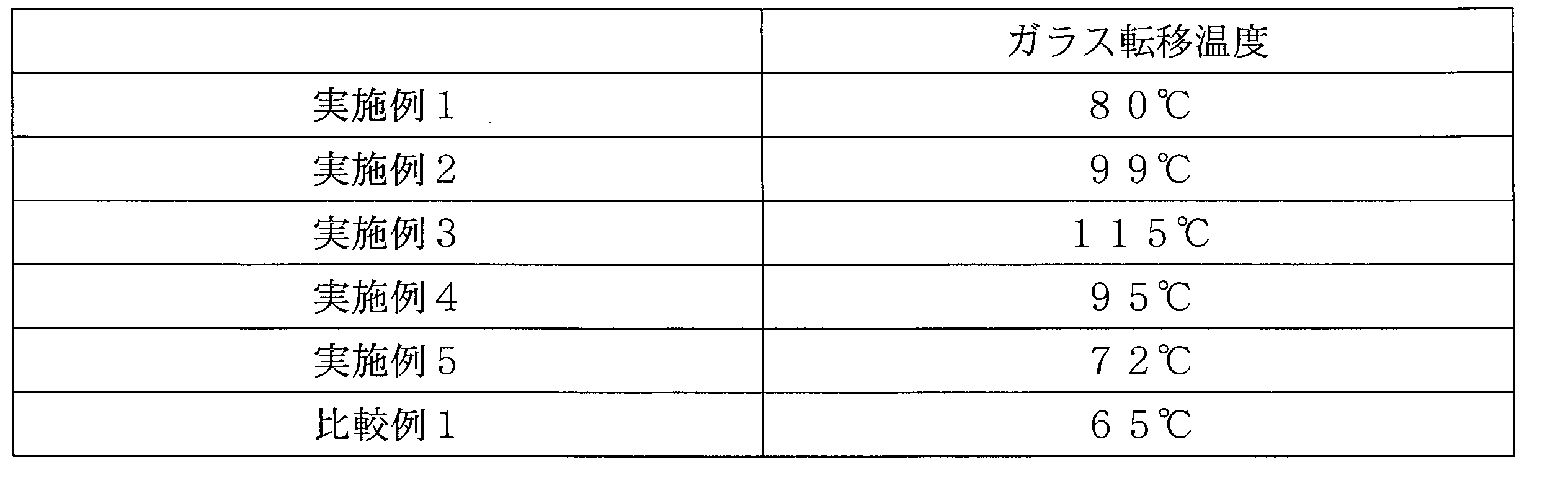
表1に示されている通り、比較例1のプラスチックレンズのガラス転移温度は65℃であったのに対し、実施例1~5のプラスチックレンズのガラス転移温度は70℃以上であった。
実施例1~5のプラスチックレンズと比較例1のプラスチックレンズは、いずれもポリエン化合物およびポリチオール化合物を含む重合性組成物から作製されたが、ポリイソ(チオ)シアネート化合物も含む重合性組成物から作製された実施例1~5のプラスチックレンズは、比較例1のプラスチックレンズよりも高いガラス転移温度(優れた耐熱性)を有していた。このような実施例1~5のプラスチックレンズは、優れた耐熱性を有することが望まれる眼鏡レンズ等の各種光学部材として好適である。例えば、実施例1~5のプラスチックレンズをレンズ基材として用いて眼鏡レンズを製造することができる。
重合性組成物1~5は、ポリイソ(チオ)シアネート化合物が有するイソシアネート基の全量がポリチオール化合物に含まれるチオール基と反応可能なモル比で各種重合性化合物を含む。上記のチオウレタン結合の含有率は、ポリイソ(チオ)シアネート化合物が有するイソシアネート基の全量が反応してチオウレタン結合が生成されるものとして、下記式により算出した値である。
チオウレタン結合の含有率=(生成されるチオウレタン結合の質量/重合性組成物の総質量)×100
重合性組成物6は、ポリイソ(チオ)シアネート化合物を含まないため、重合性組成物4から得られた比較例1のプラスチックレンズのチオウレタン結合の含有率は0質量%である。
チオウレタン結合の含有率=(生成されるチオウレタン結合の質量/重合性組成物の総質量)×100
重合性組成物6は、ポリイソ(チオ)シアネート化合物を含まないため、重合性組成物4から得られた比較例1のプラスチックレンズのチオウレタン結合の含有率は0質量%である。
最後に、前述の各態様を総括する。
一態様によれば、ポリエン化合物、ポリイソ(チオ)シアネート化合物、およびポリチオール化合物を含む光学部材用重合性組成物(ただし、光重合処理に付されるものを除く)が提供される。
上記重合性組成物を加熱により硬化させることにより、耐熱性に優れる光学部材を製造することができる。
一態様では、上記ポリエン化合物は、環状構造含有化合物であることができる。
一態様では、上記環状構造は、イソシアヌル環であることができる。
一態様では、上記ポリエン化合物は、アリル化合物であることができる。
一態様では、上記ポリエン化合物は、炭素-炭素二重結合を1分子あたり3つ以上含有する化合物であることができる。
一態様では、上記ポリチオール化合物は、脂肪族化合物であることができる。
一態様では、上記ポリチオール化合物は、エステル結合含有化合物であることができる。
一態様では、上記ポリチオール化合物は、チオール基を1分子あたり3つ以上含有する化合物であることができる。
一態様では、上記ポリイソ(チオ)シアネート化合物は、芳香族化合物であることができる。
一態様では、上記光学部材は、レンズであることができる。
一態様では、上記レンズは、眼鏡レンズであることができる。
一態様によれば、上記重合性組成物を硬化した硬化物である光学部材が提供される。
上記光学部材は、優れた耐熱性を有することができる。
一態様では、上記光学部材のガラス転移温度は、70℃以上であることができる。
一態様では、上記チオウレタン結合の含有率は、9.00質量%以上であることができる。
一態様によれば、上記重合性組成物を加熱処理により硬化させることを含む光学部材の製造方法が提供される。
本明細書に記載の各種態様は、任意の組み合わせで2つ以上を組み合わせることができる。
今回開示された実施の形態はすべての点で例示であって制限的なものではないと考えられるべきである。本発明の範囲は上記した説明ではなくて請求の範囲によって示され、請求の範囲と均等の意味および範囲内でのすべての変更が含まれることが意図される。
本発明の一態様は、眼鏡レンズ等の各種光学部材の製造分野において有用である。
Claims (15)
- ポリエン化合物、
ポリイソ(チオ)シアネート化合物、および
ポリチオール化合物、
を含む光学部材用重合性組成物(ただし、光重合処理に付されるものを除く)。 - 前記ポリエン化合物は、環状構造含有化合物である、請求項1に記載の光学部材用重合性組成物。
- 前記環状構造は、イソシアヌル環である、請求項2に記載の光学部材用重合性組成物。
- 前記ポリエン化合物は、アリル化合物である、請求項1~3のいずれか1項に記載の光学部材用重合性組成物。
- 前記ポリエン化合物は、炭素-炭素二重結合を1分子あたり3つ以上含有する化合物である、請求項1~4のいずれか1項に記載の光学部材用重合性組成物。
- 前記ポリチオール化合物は、脂肪族化合物である、請求項1~5のいずれか1項に記載の光学部材用重合性組成物。
- 前記ポリチオール化合物は、エステル結合含有化合物である、請求項1~6のいずれか1項に記載の光学部材用重合性組成物。
- 前記ポリチオール化合物は、チオール基を1分子あたり3つ以上含有する化合物である、請求項1~7のいずれか1項に記載の光学部材用重合性組成物。
- 前記ポリイソ(チオ)シアネート化合物は、芳香族化合物である、請求項1~8のいずれか1項に記載の光学部材用重合性組成物。
- 前記光学部材はレンズである、請求項1~9のいずれか1項に記載の光学部材用重合性組成物。
- 前記レンズは眼鏡レンズである、請求項10に記載の光学部材用重合性組成物。
- 請求項1~11のいずれか1項に記載の光学部材用重合性組成物を硬化した硬化物である光学部材。
- ガラス転移温度が70℃以上である、請求項12に記載の光学部材。
- チオウレタン結合の含有率が9.00質量%以上である、請求項12または13に記載の光学部材。
- 請求項1~11のいずれか1項に記載の光学部材用重合性組成物を加熱処理により硬化させることを含む、光学部材の製造方法。
Priority Applications (3)
| Application Number | Priority Date | Filing Date | Title |
|---|---|---|---|
| EP19824703.3A EP3816200A4 (en) | 2018-06-29 | 2019-06-27 | Polymerizable composition for optical member, optical member, and method for producing optical member |
| JP2020527618A JPWO2020004531A1 (ja) | 2018-06-29 | 2019-06-27 | 光学部材用重合性組成物、光学部材および光学部材の製造方法 |
| US17/104,567 US20210079163A1 (en) | 2018-06-29 | 2020-11-25 | Polymerizable composition for optical component, optical component, and method for producing optical component |
Applications Claiming Priority (2)
| Application Number | Priority Date | Filing Date | Title |
|---|---|---|---|
| JP2018125589 | 2018-06-29 | ||
| JP2018-125589 | 2018-06-29 |
Related Child Applications (1)
| Application Number | Title | Priority Date | Filing Date |
|---|---|---|---|
| US17/104,567 Continuation US20210079163A1 (en) | 2018-06-29 | 2020-11-25 | Polymerizable composition for optical component, optical component, and method for producing optical component |
Publications (1)
| Publication Number | Publication Date |
|---|---|
| WO2020004531A1 true WO2020004531A1 (ja) | 2020-01-02 |
Family
ID=68985040
Family Applications (1)
| Application Number | Title | Priority Date | Filing Date |
|---|---|---|---|
| PCT/JP2019/025549 Ceased WO2020004531A1 (ja) | 2018-06-29 | 2019-06-27 | 光学部材用重合性組成物、光学部材および光学部材の製造方法 |
Country Status (4)
| Country | Link |
|---|---|
| US (1) | US20210079163A1 (ja) |
| EP (1) | EP3816200A4 (ja) |
| JP (1) | JPWO2020004531A1 (ja) |
| WO (1) | WO2020004531A1 (ja) |
Cited By (5)
| Publication number | Priority date | Publication date | Assignee | Title |
|---|---|---|---|---|
| JPWO2020004534A1 (ja) * | 2018-06-29 | 2021-06-24 | ホヤ レンズ タイランド リミテッドHOYA Lens Thailand Ltd | 光学部材用硬化物および光学部材 |
| JPWO2020004532A1 (ja) * | 2018-06-29 | 2021-06-24 | ホヤ レンズ タイランド リミテッドHOYA Lens Thailand Ltd | 光学部材用重合性組成物および光学部材 |
| JPWO2020004533A1 (ja) * | 2018-06-29 | 2021-06-24 | ホヤ レンズ タイランド リミテッドHOYA Lens Thailand Ltd | 光学部材用ポリチオウレタン樹脂および光学部材 |
| US20210317257A1 (en) * | 2020-04-13 | 2021-10-14 | Hoya Lens Thailand Ltd. | Method for producing polymerizable composition for optical materials, method for producing transparent resin, and method for producing lens base material |
| US20210317255A1 (en) * | 2020-04-13 | 2021-10-14 | Hoya Lens Thailand Ltd. | Polymerizable composition for optical materials and method for producing the same, method for producing transparent resin, and method for producing lens base material |
Citations (15)
| Publication number | Priority date | Publication date | Assignee | Title |
|---|---|---|---|---|
| JPS5780428A (en) * | 1980-11-10 | 1982-05-20 | Sumitomo Bakelite Co Ltd | Curable composition |
| JPS63265922A (ja) | 1987-04-23 | 1988-11-02 | Mitsui Toatsu Chem Inc | プラスチックレンズ |
| JPH0379614A (ja) * | 1989-08-22 | 1991-04-04 | Kureha Chem Ind Co Ltd | プラスチックレンズ |
| JPH03236386A (ja) * | 1989-12-28 | 1991-10-22 | Hoya Corp | ポリチオール化合物を用いて得られた光学材料及び光学製品 |
| JPH0525240A (ja) * | 1991-07-19 | 1993-02-02 | Mitsubishi Rayon Co Ltd | プラスチツクレンズ用組成物 |
| JPH05287050A (ja) * | 1992-04-13 | 1993-11-02 | Mitsubishi Petrochem Co Ltd | 高屈折率光学材料およびその製造法 |
| JPH07228659A (ja) * | 1993-12-20 | 1995-08-29 | Mitsui Toatsu Chem Inc | 高速重合性樹脂組成物およびレンズ |
| JPH0971625A (ja) * | 1995-06-30 | 1997-03-18 | Mitsui Toatsu Chem Inc | 含硫ウレタン系樹脂組成物、該樹脂その樹脂よりなる光学素子及びレンズ |
| JPH10114825A (ja) * | 1996-04-19 | 1998-05-06 | Mitsui Chem Inc | 光学樹脂用組成物およびその用途 |
| JPH10146849A (ja) * | 1996-09-18 | 1998-06-02 | Mitsui Chem Inc | ウレタン系樹脂成型用テープ、および該テープを用いるプラスチックレンズの成型方法 |
| WO2000073365A1 (en) * | 1999-05-27 | 2000-12-07 | Nof Corporation | Monomer composition for optical plastic material, optical plastic material, and lens |
| JP2001174601A (ja) * | 1999-12-17 | 2001-06-29 | Hoya Corp | 光学製品 |
| JP2002241464A (ja) * | 2001-02-16 | 2002-08-28 | Nof Corp | 光学材料用単量体組成物および硬化物 |
| JP2003105227A (ja) * | 2001-09-28 | 2003-04-09 | Nof Corp | プラスチック光学材料用ブルーイング剤 |
| JP2009262480A (ja) | 2008-04-28 | 2009-11-12 | Hoya Corp | 染色プラスチックレンズの製造方法 |
Family Cites Families (5)
| Publication number | Priority date | Publication date | Assignee | Title |
|---|---|---|---|---|
| US6008296A (en) * | 1995-04-19 | 1999-12-28 | Optima, Inc. | Optical terpolymer of polyisocyanate, polythiol and polyene monomers |
| US5736609A (en) * | 1995-06-30 | 1998-04-07 | Mitsui Toatsu Chemicals, Inc. | Sulfur-containing urethane-based resin composition, its resin, and optical element and lens comprising resin |
| EP3816202A4 (en) * | 2018-06-29 | 2022-03-16 | Hoya Lens Thailand Ltd. | Cured object for optical member and optical member |
| JPWO2020004532A1 (ja) * | 2018-06-29 | 2021-06-24 | ホヤ レンズ タイランド リミテッドHOYA Lens Thailand Ltd | 光学部材用重合性組成物および光学部材 |
| JPWO2020004533A1 (ja) * | 2018-06-29 | 2021-06-24 | ホヤ レンズ タイランド リミテッドHOYA Lens Thailand Ltd | 光学部材用ポリチオウレタン樹脂および光学部材 |
-
2019
- 2019-06-27 EP EP19824703.3A patent/EP3816200A4/en not_active Withdrawn
- 2019-06-27 JP JP2020527618A patent/JPWO2020004531A1/ja active Pending
- 2019-06-27 WO PCT/JP2019/025549 patent/WO2020004531A1/ja not_active Ceased
-
2020
- 2020-11-25 US US17/104,567 patent/US20210079163A1/en not_active Abandoned
Patent Citations (15)
| Publication number | Priority date | Publication date | Assignee | Title |
|---|---|---|---|---|
| JPS5780428A (en) * | 1980-11-10 | 1982-05-20 | Sumitomo Bakelite Co Ltd | Curable composition |
| JPS63265922A (ja) | 1987-04-23 | 1988-11-02 | Mitsui Toatsu Chem Inc | プラスチックレンズ |
| JPH0379614A (ja) * | 1989-08-22 | 1991-04-04 | Kureha Chem Ind Co Ltd | プラスチックレンズ |
| JPH03236386A (ja) * | 1989-12-28 | 1991-10-22 | Hoya Corp | ポリチオール化合物を用いて得られた光学材料及び光学製品 |
| JPH0525240A (ja) * | 1991-07-19 | 1993-02-02 | Mitsubishi Rayon Co Ltd | プラスチツクレンズ用組成物 |
| JPH05287050A (ja) * | 1992-04-13 | 1993-11-02 | Mitsubishi Petrochem Co Ltd | 高屈折率光学材料およびその製造法 |
| JPH07228659A (ja) * | 1993-12-20 | 1995-08-29 | Mitsui Toatsu Chem Inc | 高速重合性樹脂組成物およびレンズ |
| JPH0971625A (ja) * | 1995-06-30 | 1997-03-18 | Mitsui Toatsu Chem Inc | 含硫ウレタン系樹脂組成物、該樹脂その樹脂よりなる光学素子及びレンズ |
| JPH10114825A (ja) * | 1996-04-19 | 1998-05-06 | Mitsui Chem Inc | 光学樹脂用組成物およびその用途 |
| JPH10146849A (ja) * | 1996-09-18 | 1998-06-02 | Mitsui Chem Inc | ウレタン系樹脂成型用テープ、および該テープを用いるプラスチックレンズの成型方法 |
| WO2000073365A1 (en) * | 1999-05-27 | 2000-12-07 | Nof Corporation | Monomer composition for optical plastic material, optical plastic material, and lens |
| JP2001174601A (ja) * | 1999-12-17 | 2001-06-29 | Hoya Corp | 光学製品 |
| JP2002241464A (ja) * | 2001-02-16 | 2002-08-28 | Nof Corp | 光学材料用単量体組成物および硬化物 |
| JP2003105227A (ja) * | 2001-09-28 | 2003-04-09 | Nof Corp | プラスチック光学材料用ブルーイング剤 |
| JP2009262480A (ja) | 2008-04-28 | 2009-11-12 | Hoya Corp | 染色プラスチックレンズの製造方法 |
Non-Patent Citations (1)
| Title |
|---|
| See also references of EP3816200A4 |
Cited By (5)
| Publication number | Priority date | Publication date | Assignee | Title |
|---|---|---|---|---|
| JPWO2020004534A1 (ja) * | 2018-06-29 | 2021-06-24 | ホヤ レンズ タイランド リミテッドHOYA Lens Thailand Ltd | 光学部材用硬化物および光学部材 |
| JPWO2020004532A1 (ja) * | 2018-06-29 | 2021-06-24 | ホヤ レンズ タイランド リミテッドHOYA Lens Thailand Ltd | 光学部材用重合性組成物および光学部材 |
| JPWO2020004533A1 (ja) * | 2018-06-29 | 2021-06-24 | ホヤ レンズ タイランド リミテッドHOYA Lens Thailand Ltd | 光学部材用ポリチオウレタン樹脂および光学部材 |
| US20210317257A1 (en) * | 2020-04-13 | 2021-10-14 | Hoya Lens Thailand Ltd. | Method for producing polymerizable composition for optical materials, method for producing transparent resin, and method for producing lens base material |
| US20210317255A1 (en) * | 2020-04-13 | 2021-10-14 | Hoya Lens Thailand Ltd. | Polymerizable composition for optical materials and method for producing the same, method for producing transparent resin, and method for producing lens base material |
Also Published As
| Publication number | Publication date |
|---|---|
| US20210079163A1 (en) | 2021-03-18 |
| JPWO2020004531A1 (ja) | 2021-07-08 |
| EP3816200A1 (en) | 2021-05-05 |
| EP3816200A4 (en) | 2022-03-16 |
Similar Documents
| Publication | Publication Date | Title |
|---|---|---|
| WO2020004532A1 (ja) | 光学部材用重合性組成物および光学部材 | |
| WO2020004531A1 (ja) | 光学部材用重合性組成物、光学部材および光学部材の製造方法 | |
| WO2007105355A1 (ja) | ポリチオウレタン系光学材料製造用の内部離型剤 | |
| WO2020004534A1 (ja) | 光学部材用硬化物および光学部材 | |
| KR101877590B1 (ko) | 광학 재료용 조성물 | |
| US20210301062A1 (en) | Method for producing polymerizable composition for optical materials, method for producing transparent resin, and method for producing lens base material | |
| WO2022138865A1 (ja) | ポリチオール組成物、重合性組成物、樹脂、成形体、光学材料及びレンズ | |
| WO2020004533A1 (ja) | 光学部材用ポリチオウレタン樹脂および光学部材 | |
| WO2022102625A1 (ja) | ポリチオール組成物、重合性組成物、樹脂、成形体、光学材料及びレンズ | |
| US20210301060A1 (en) | Method for producing polymerizable composition for optical materials, method for producing transparent resin, and method for producing lens base material | |
| JP4684427B2 (ja) | 新規なポリチオール | |
| US20220120936A1 (en) | Polymerizable composition for optical material, optical material, and method for producing optical material | |
| US20210317257A1 (en) | Method for producing polymerizable composition for optical materials, method for producing transparent resin, and method for producing lens base material | |
| JP2022156417A (ja) | ポリチオウレタン系重合性組成物、透明樹脂、及びレンズ基材 | |
| US20210301061A1 (en) | Polymerizable composition for optical materials, transparent resin and method for producing the same, and lens base material and method for producing the same | |
| WO2020262660A1 (ja) | 眼鏡レンズの製造方法、眼鏡レンズおよび眼鏡 | |
| US20210317255A1 (en) | Polymerizable composition for optical materials and method for producing the same, method for producing transparent resin, and method for producing lens base material | |
| JP2015066869A (ja) | チオウレタン樹脂製光学レンズの製造方法 |
Legal Events
| Date | Code | Title | Description |
|---|---|---|---|
| 121 | Ep: the epo has been informed by wipo that ep was designated in this application |
Ref document number: 19824703 Country of ref document: EP Kind code of ref document: A1 |
|
| ENP | Entry into the national phase |
Ref document number: 2020527618 Country of ref document: JP Kind code of ref document: A |
|
| NENP | Non-entry into the national phase |
Ref country code: DE |
|
| WWE | Wipo information: entry into national phase |
Ref document number: 2019824703 Country of ref document: EP |