WO2020004635A1 - Dispositif de purification d'eau, système de purification d'eau d'aquaculture, procédé de purification d'eau, et procédé de production d'organisme aquatique - Google Patents
Dispositif de purification d'eau, système de purification d'eau d'aquaculture, procédé de purification d'eau, et procédé de production d'organisme aquatique Download PDFInfo
- Publication number
- WO2020004635A1 WO2020004635A1 PCT/JP2019/025878 JP2019025878W WO2020004635A1 WO 2020004635 A1 WO2020004635 A1 WO 2020004635A1 JP 2019025878 W JP2019025878 W JP 2019025878W WO 2020004635 A1 WO2020004635 A1 WO 2020004635A1
- Authority
- WO
- WIPO (PCT)
- Prior art keywords
- water
- water purification
- culture
- purification device
- treated
- Prior art date
- Legal status (The legal status is an assumption and is not a legal conclusion. Google has not performed a legal analysis and makes no representation as to the accuracy of the status listed.)
- Ceased
Links
Images
Classifications
-
- A—HUMAN NECESSITIES
- A01—AGRICULTURE; FORESTRY; ANIMAL HUSBANDRY; HUNTING; TRAPPING; FISHING
- A01K—ANIMAL HUSBANDRY; AVICULTURE; APICULTURE; PISCICULTURE; FISHING; REARING OR BREEDING ANIMALS, NOT OTHERWISE PROVIDED FOR; NEW BREEDS OF ANIMALS
- A01K63/00—Receptacles for live fish, e.g. aquaria; Terraria
- A01K63/04—Arrangements for treating water specially adapted to receptacles for live fish
-
- A—HUMAN NECESSITIES
- A01—AGRICULTURE; FORESTRY; ANIMAL HUSBANDRY; HUNTING; TRAPPING; FISHING
- A01K—ANIMAL HUSBANDRY; AVICULTURE; APICULTURE; PISCICULTURE; FISHING; REARING OR BREEDING ANIMALS, NOT OTHERWISE PROVIDED FOR; NEW BREEDS OF ANIMALS
- A01K63/00—Receptacles for live fish, e.g. aquaria; Terraria
- A01K63/04—Arrangements for treating water specially adapted to receptacles for live fish
- A01K63/045—Filters for aquaria
-
- C—CHEMISTRY; METALLURGY
- C02—TREATMENT OF WATER, WASTE WATER, SEWAGE, OR SLUDGE
- C02F—TREATMENT OF WATER, WASTE WATER, SEWAGE, OR SLUDGE
- C02F9/00—Multistage treatment of water, waste water or sewage
-
- A—HUMAN NECESSITIES
- A01—AGRICULTURE; FORESTRY; ANIMAL HUSBANDRY; HUNTING; TRAPPING; FISHING
- A01K—ANIMAL HUSBANDRY; AVICULTURE; APICULTURE; PISCICULTURE; FISHING; REARING OR BREEDING ANIMALS, NOT OTHERWISE PROVIDED FOR; NEW BREEDS OF ANIMALS
- A01K61/00—Culture of aquatic animals
- A01K61/10—Culture of aquatic animals of fish
-
- C—CHEMISTRY; METALLURGY
- C02—TREATMENT OF WATER, WASTE WATER, SEWAGE, OR SLUDGE
- C02F—TREATMENT OF WATER, WASTE WATER, SEWAGE, OR SLUDGE
- C02F2101/00—Nature of the contaminant
- C02F2101/10—Inorganic compounds
- C02F2101/16—Nitrogen compounds, e.g. ammonia
- C02F2101/163—Nitrates
-
- C—CHEMISTRY; METALLURGY
- C02—TREATMENT OF WATER, WASTE WATER, SEWAGE, OR SLUDGE
- C02F—TREATMENT OF WATER, WASTE WATER, SEWAGE, OR SLUDGE
- C02F2103/00—Nature of the water, waste water, sewage or sludge to be treated
- C02F2103/20—Nature of the water, waste water, sewage or sludge to be treated from animal husbandry
-
- C—CHEMISTRY; METALLURGY
- C02—TREATMENT OF WATER, WASTE WATER, SEWAGE, OR SLUDGE
- C02F—TREATMENT OF WATER, WASTE WATER, SEWAGE, OR SLUDGE
- C02F2203/00—Apparatus and plants for the biological treatment of water, waste water or sewage
- C02F2203/006—Apparatus and plants for the biological treatment of water, waste water or sewage details of construction, e.g. specially adapted seals, modules, connections
-
- C—CHEMISTRY; METALLURGY
- C02—TREATMENT OF WATER, WASTE WATER, SEWAGE, OR SLUDGE
- C02F—TREATMENT OF WATER, WASTE WATER, SEWAGE, OR SLUDGE
- C02F3/00—Biological treatment of water, waste water, or sewage
- C02F3/02—Aerobic processes
- C02F3/06—Aerobic processes using submerged filters
-
- C—CHEMISTRY; METALLURGY
- C02—TREATMENT OF WATER, WASTE WATER, SEWAGE, OR SLUDGE
- C02F—TREATMENT OF WATER, WASTE WATER, SEWAGE, OR SLUDGE
- C02F3/00—Biological treatment of water, waste water, or sewage
- C02F3/30—Aerobic and anaerobic processes
- C02F3/302—Nitrification and denitrification treatment
- C02F3/305—Nitrification and denitrification treatment characterised by the denitrification
-
- C—CHEMISTRY; METALLURGY
- C02—TREATMENT OF WATER, WASTE WATER, SEWAGE, OR SLUDGE
- C02F—TREATMENT OF WATER, WASTE WATER, SEWAGE, OR SLUDGE
- C02F3/00—Biological treatment of water, waste water, or sewage
- C02F3/34—Biological treatment of water, waste water, or sewage characterised by the microorganisms used
- C02F3/341—Consortia of bacteria
-
- Y—GENERAL TAGGING OF NEW TECHNOLOGICAL DEVELOPMENTS; GENERAL TAGGING OF CROSS-SECTIONAL TECHNOLOGIES SPANNING OVER SEVERAL SECTIONS OF THE IPC; TECHNICAL SUBJECTS COVERED BY FORMER USPC CROSS-REFERENCE ART COLLECTIONS [XRACs] AND DIGESTS
- Y02—TECHNOLOGIES OR APPLICATIONS FOR MITIGATION OR ADAPTATION AGAINST CLIMATE CHANGE
- Y02A—TECHNOLOGIES FOR ADAPTATION TO CLIMATE CHANGE
- Y02A40/00—Adaptation technologies in agriculture, forestry, livestock or agroalimentary production
- Y02A40/80—Adaptation technologies in agriculture, forestry, livestock or agroalimentary production in fisheries management
- Y02A40/81—Aquaculture, e.g. of fish
-
- Y—GENERAL TAGGING OF NEW TECHNOLOGICAL DEVELOPMENTS; GENERAL TAGGING OF CROSS-SECTIONAL TECHNOLOGIES SPANNING OVER SEVERAL SECTIONS OF THE IPC; TECHNICAL SUBJECTS COVERED BY FORMER USPC CROSS-REFERENCE ART COLLECTIONS [XRACs] AND DIGESTS
- Y02—TECHNOLOGIES OR APPLICATIONS FOR MITIGATION OR ADAPTATION AGAINST CLIMATE CHANGE
- Y02W—CLIMATE CHANGE MITIGATION TECHNOLOGIES RELATED TO WASTEWATER TREATMENT OR WASTE MANAGEMENT
- Y02W10/00—Technologies for wastewater treatment
- Y02W10/10—Biological treatment of water, waste water, or sewage
Definitions
- the present invention relates to a water purification device, a culture water purification system, a water purification method, and a method for producing aquatic organisms.
- the aquarium system In aquaculture of aquatic organisms, the aquarium system needs to be in an aerobic environment for the growth of aquatic organisms, and the reduction reaction of nitrate nitrogen that proceeds in an anaerobic environment is carried out in general aquaculture farms. I didn't. Therefore, with regard to the removal of nitrate nitrogen, it was necessary to replace the water in the aquaculture tanks in a short period of time by taking fresh water from a river or the like.
- replacing water means generating a large amount of wastewater, and flowing all nitrogen compounds such as ammonia, nitrous acid, nitric acid, etc. generated during aquaculture into rivers and the sea as wastewater will lead to eutrophication of rivers and the like. It is not preferable from the viewpoint of the above.
- the standards for drainage are becoming stricter from the viewpoint of environmental protection in recent years.
- ammonia generated from fish and the like has been removed from wastewater using a two-stage reaction using microorganisms. That is, a method using a reaction for converting ammonia into nitric acid (nitrification) and a reaction for decomposing nitric acid into nitrogen (denitrification). If it is decomposed into nitrogen, it can be discharged into the air without imposing any burden on the environment.
- the reaction using this organism, in particular, the subsequent reaction of decomposing nitric acid into nitrogen has been used under anaerobic conditions for bacteria on the premise that anaerobic bacteria are used.
- cellulose or the like is used as a base material in the denitrification reaction.
- biodegradable polymers such as natural polymers and biodegradable synthetic resins serve as substrates or hydrogen donors for the growth and growth of heterotrophic (organic) vegetative bacteria and have very little dissolved oxygen in water.
- Denitrifying bacteria which are facultative anaerobic microorganisms that use oxygen in nitrogen oxides for respiration and reduce nitrogen oxides in the presence of nitrites and nitrates, are highly biodegradable. They swarm and land on the molecule.
- Patent Documents 2 and 3 disclose techniques in which a biodegradable resin is exemplified as a substrate that can be used in a denitrification reaction in addition to cellulose.
- Patent Document 4 As an apparatus for performing a denitrification reaction using aerobic conditions, in Patent Document 4, a filter medium containing a biodegradable plastic is disposed inside a water channel of a filtration apparatus, and the upper side of the filter medium is exposed to air. A touching structure is disclosed. In this technique, the biodegradable plastic is contained inside the filter medium, and aerobic microorganisms exist around the filter medium. Therefore, the biodegradable plastic itself to be denitrified is placed in an anaerobic state.
- An object of the present invention is to solve such a problem, and to efficiently remove nitric acid contained in water to be treated, and to purify aquaculture water as water to be treated.
- An object of the present invention is to provide a water purification apparatus capable of improving a feed conversion rate of a certain aquatic organism and reducing a feed cost. It is another object of the present invention to provide a method for producing aquatic organisms in which the conversion of aquatic organisms to feed is extremely good.
- the present inventors proceeded with research to solve the above problems, and found that denitrification reaction, which was conventionally often performed under anaerobic conditions, was increased in denitrification capacity by intentionally exposing it to the atmosphere.
- the invention has been reached.
- the present invention includes the following.
- At least one substrate carrying denitrifying bacteria A holding unit for holding the base material, A watering mechanism for watering the water to be treated on the substrate, A drain mechanism that is provided in the holding unit and drains the water to be treated so that at least a part of the base material is always exposed from the water to be treated, Water purification device equipped with.
- the biodegradable plastic includes two or more types of structural units derived from dicarboxylic acid.
- the base material is a three-dimensional mesh-shaped formed body in which the wires are fused together at a contact portion where the wires containing the thermoplastic resin are bent and entangled and in contact with each other, and the wires are The water purification device according to any one of (4) to (6), comprising the biodegradable plastic.
- a culture water purification system for purifying culture water extracted from a culture pond for culturing aquatic organisms and supplying the purified water to the culture pond again, A biological filtration bed that converts ammonia contained in the culture water extracted from the culture pond to nitric acid,
- the water purification device according to any one of (1) to (11), wherein nitric acid is removed from the culture water discharged from the biological filtration bed.
- Culture water purification system equipped with.
- a method for purifying water having a denitrification step of removing nitric acid from the water to be treated The denitrification step is a step of sprinkling water to be treated on a substrate supporting denitrifying bacteria, and draining the water to be treated so that at least a part of the substrate is always exposed from the water to be treated. And a method for purifying water.
- (14) (13) The method for purifying water according to (13), wherein the base material includes a biodegradable plastic containing two or more types of structural units derived from dicarboxylic acids.
- a method for producing aquatic organisms using the water purification method according to (13) or (14), wherein the water to be treated is aquaculture water.
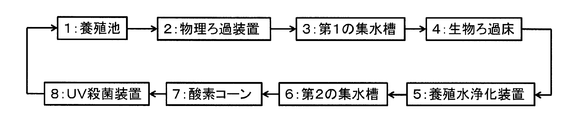
- FIG. 7 shows an example of a preferred embodiment of the culture water purification system according to the second embodiment of the present invention.
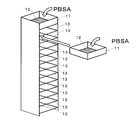
- group culture water purification apparatus used in the Example is shown.
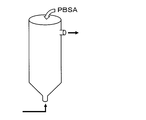
- the outline of the sedimentation type culture water purification apparatus used in the comparative example is shown.
- the water purification device includes at least one substrate supporting denitrifying bacteria, a holding unit that retains the substrate, and watering that sprays water to be treated on the substrate.
- a mechanism and a drainage mechanism that is provided in the holding unit and drains the water to be treated so that at least a part of the base material is always exposed from the water to be treated.
- the water to be treated is not particularly limited, and may be, for example, culture water, that is, the water purification device may be a culture water purification device.
- the water purification device according to the present embodiment will be described in detail by taking a culture water purification device, which is one aspect thereof, as an example.
- the culture water purification device includes at least one substrate supporting denitrifying bacteria, a holding unit that retains the substrate, and a watering mechanism that waters the culture water on the substrate. And a drain mechanism that is provided on the holding unit and drains the culture water so that at least a part of the base material is always exposed from the culture water.
- the culture water purification apparatus may appropriately include a configuration other than these configurations as needed.
- the substrate used in the culture water purification apparatus supports denitrifying bacteria that convert nitric acid to nitrogen, and provides a reducing power for denitrification.
- the nitric acid may be, for example, nitric acid converted from ammonia by nitrifying bacteria. It is not necessary that all of the loaded base materials carry denitrifying bacteria, and it is sufficient that denitrifying bacteria are carried to such an extent that nitric acid can be sufficiently converted from the water to be treated into nitrogen according to the intended use. .
- a denitrifying bacterium for converting nitric acid into nitrogen a known bacterium having the function can be appropriately used.
- the substrate preferably contains a biodegradable plastic from the viewpoint of providing organic substances to the denitrifying bacteria as a substrate or a hydrogen donor.
- biodegradable plastics PLA (polylactic acid), PBS (polybutylene succinate), PCL (polycaprolactone), and PHB (polyhydroxybutyrate) are generally known.
- a synthetic biodegradable plastic of PBS (polybutylene succinate) or PCL (polycaprolactone) containing a dicarboxylic acid-derived structural unit is preferable, and a PBS-based biodegradable plastic containing a dicarboxylic acid-derived structural unit is preferable.
- Degradable plastics are most preferred.
- the PBS-based biodegradable plastics are those in which the butylene succinate unit is contained in the repeating unit constituting the polymer, and the molar ratio of the butylene succinate unit to all the repeating units constituting the polymer is 0.3 or more. Is more preferable, and more preferably 0.5 or more.
- Preferred biodegradable plastics include, specifically, polycaprolactone, poly (caprolactone / butylene succinate), polybutylene succinate, poly (butylene succinate / adipate), poly (butylene succinate / carbonate), (poly (Lactic acid / polybutylene succinate-based) block copolymer, and the like.
- PBSA poly (butylene succinate / adipate)
- PBSA poly (butylene succinate / adipate)
- PBSA poly (butylene succinate / adipate)
- PBSA poly (butylene succinate / adipate)
- PBSA poly (butylene succinate / adipate)
- PHB reducing power
- the shape of the base material is not particularly limited, and may be any shape such as a pellet shape, a bulk shape (a rectangular shape, a spherical shape, a three-dimensional network shape, etc.), a flake shape, a particle shape, and a fibrous shape. Considering the ease of filling, it is preferably in the form of flakes, particles, fibers, or the like.
- the holding unit holds the base material by the mesh structure, depending on the aperture, to prevent the loss of the base material through the mesh or from the viewpoint of improving the work efficiency, pellet-like, bulk-like, etc.
- the base material contains a biodegradable plastic
- the base material for example, a wire containing a thermoplastic resin is bent and entangled, and at the contact portion where the wires come into contact with each other, the wires are fused together to be integrated.
- the wire may include a biodegradable plastic.
- Such a three-dimensional network shaped article can be obtained, for example, by the following method. That is, when a molten biodegradable resin (thermoplastic resin) such as PBSA is extruded as a plurality of wires from an extruder die, the extruded wire is bent into a loop shape by a bending force acting on the extruded wire. And the multiple wires bent in a loop shape are entangled and heat bonded at the part where the wires come into contact with each other. It is possible to obtain a three-dimensional net-like shaped body in which wires are intertwined at random.
- the holding part is not particularly limited as long as it can hold the base material.
- the holding unit holds the base material by a drainage mechanism or the like so that the base material is not completely immersed in the culture water and at least a part is always exposed from the culture water.
- the holding unit can hold the base material in an aerobic environment by holding the base material in a state where at least a part of the base material is exposed to air.
- exposure includes an exposure that is not completely immersed in aquaculture water and, if exposed to air, the surface of the substrate is wet.
- the holding part includes the same mode as holding the head even if it is not directly in contact with the base material. For example, it includes parts surrounding the base material.
- the aerobic environment means not an aerobic environment for microorganisms but an aerobic environment for aquatic organisms (mainly fish).
- the aerobic environment may have a dissolved oxygen concentration (DO) in water of 5 mg / L or more, 6 mg / L or more, 7 mg / L or more, and 8 mg / L or more. May be 9 mg / L or more, and may be 10 mg / L or more.
- DO dissolved oxygen concentration
- the holding portion has a hole through which the culture water sprinkled on the base material can be released from the holding portion.
- the base material is prevented from being completely immersed in the culture water, at least a part of the base material is exposed from the water to be treated, and the base material is kept in an aerobic environment. This is because it becomes easy.
- the hole is not particularly limited as long as the culture water in the holding part can be released from the holding part, and its shape, size, number, position, and the like are appropriately selected depending on the quality of the culture water, the type of the base material, and the like. Can be.
- the hole may be an opening having a net structure to be described later, and may function as a watering mechanism for a base material arranged on the downstream side when the culture water purification apparatus is provided with a plurality of holding portions.
- the holding unit when the holding unit is disposed at the most downstream of the culture water purification device, the holding unit can also serve as a drainage mechanism of the culture water purification device.
- the holding section is detachably provided to the culture water purification device. This is because when the holding unit is removed from the culture water purification device, the base material is also removed from the culture water purification device, and deterioration and reduction of the base material can be easily confirmed visually or by various measurements. When deterioration or reduction of the base material is confirmed, the base material can be removed from the culture water purification apparatus together with the holding part, and a holding part holding a new base material can be attached. As shown in FIG. 2, for example, as shown in FIG. 2, as a culture water purifying device having a detachable holding portion, a holding portion 11 of a rectangular box having an opening surface on one side on which the culture water is sprinkled is provided on the guide rail 13. Along with the aquaculture water purification device.
- the holding unit when the holding unit is detachably provided to the culture water purification device, it is preferable that a plurality of the holding units are provided in the culture water purification device.
- a decrease in the amount of base material, a decrease in denitrification capacity, etc. occurs in some of the holding parts, remove only the holding part from the culture water purification device and attach a holding part holding a new base material. This is because a decrease in the denitrification capacity of the culture water purification device can be suppressed.
- the arrangement of the plurality of holding units may be either parallel or series. For example, in a culture water purification apparatus used in an embodiment described later, as shown in FIG. 2, a plurality of holding units 11 are arranged in series.
- the new holding unit is attached downstream of the holding unit that has not been replaced. Even if nitric acid that could not be denitrified remains in the culture water that has passed through the base material in the upstream holding unit, the denitrifying bacteria newly supplied to the downstream denitrify, and the culture water purification device Can enhance the denitrification effect.
- the number is not particularly limited, and may be appropriately set according to the base material to be used, the nitric acid concentration of the culture water, and the like. For example, it is preferable to use about 2 to 20 holding sections.
- the holding section holds the base material by a net structure.
- the net structure can also function as a watering mechanism described later.
- the holding unit disposed at the most downstream side can function as a drainage mechanism for discharging culture water from the culture water purification device.
- the material of the net structure, the wire diameter, the mesh, the weaving method, and the like are not particularly limited, and can be appropriately selected according to the quality of the culture water, the size of the base material, and the like. Since culture water containing nitric acid may pass through, the net structure is preferably a titanium wire net, a fluororesin net, or the like having high resistance to nitric acid.
- the sprinkling mechanism is a mechanism for sprinkling culture water on such a substrate while maintaining the substrate supporting the denitrifying bacteria in an aerobic environment. During watering, the substrate is exposed to the atmosphere in addition to the droplets of the culture water, so that an aerobic environment can be provided.
- the watering mechanism is not particularly limited as to the size of the droplets, the direction of watering, and the like, as long as the droplets of the culture water can be sprayed on the base material.
- Specific examples of the watering mechanism include a shower, a mist spray, and the like in addition to the above-described net structure of the holding unit, and a shower is preferable because water can be uniformly sprayed on the base material. From the viewpoint of suppressing energy consumption, it is preferable to spray water in the direction of gravity.
- Drainage mechanism is a mechanism that is provided in the holding unit and drains the culture water so that at least a part of the base material is always exposed from the culture water.
- As one mode of the drainage mechanism there is a mechanism for discharging the culture water sprinkled on the base material by the watering mechanism so as not to stay in the culture water purification device.
- the culture water is filled in the culture water purification device, particularly in the holding unit, the substrate carrying the denitrifying bacteria is immersed in the culture water, and the aerobic environment cannot be maintained, so that the sprinkled culture water is discharged. There is a need.
- discharge so as not to accumulate does not mean that the culture water does not accumulate in the water purification device at all, but means that the substrate supporting the denitrifying bacteria is exhausted to such an extent that an aerobic environment can be maintained.
- the surface area immersed in the culture water is preferably 20% or less, more preferably 10% or less, more preferably 10% or less, and particularly preferably not immersed at all, based on the total surface area of the substrate.
- the surface area of the culture water in contact with the total surface area of the base material can be adjusted by, for example, an opening ratio of holes, a drain valve, or the like.
- the drainage mechanism is not particularly limited as long as the culture water sprinkled on the base material can be discharged at a speed that does not stay in the culture water purification device. , A drain port, a drain pipe, or the like.
- the biodegradable plastic Biodegradation proceeds quickly to provide a substrate or an organic substance, that is, a nutrient source for denitrifying bacteria, and thus the denitrification ability is improved.
- a substrate or an organic substance that is, a nutrient source for denitrifying bacteria
- the feed conversion rate in the present specification refers to the weight of feed required for weight gain of 1 kg of aquatic organism, and is calculated by the following formula.
- Feed conversion rate weight of feed given / increased weight of aquatic organisms
- the feed conversion rate varies depending on the type of aquatic organism, water temperature, and the like. For example, the feed conversion rate of eels is usually 1.8 to 2.0. Also, feed conversion rates are generally worse in winter (i.e., higher values) than in summer.
- the culture water purification system according to the second embodiment of the present invention is a culture water purification system that purifies culture water extracted from a culture pond for culturing aquatic organisms and supplies the culture water to the culture pond again.
- a biological filtration bed that converts ammonia contained in the culture water extracted from the culture pond into nitric acid; and the culture water purification device that removes nitric acid from the culture water discharged from the biological filtration bed.
- the biological filtration bed includes a calcium-based substrate and a biodegradable resin substrate.
- the calcium-based substrate is a substrate on which bacteria for converting ammonia in culture water transferred from the culture pond to nitric acid grow.
- bacteria for converting ammonia to nitric acid a known bacterium having the function can be appropriately used.
- the calcium-based substrate also has a function of suppressing the pH of the culture water from being biased to acidic due to the effect of nitric acid produced by nitrifying bacteria.
- the calcium-based substrate is not particularly limited as long as it is a substrate containing calcium, but it is preferable to use shells, coral sand, and the like from the viewpoint of utilization and utilization of waste.
- the calcium-based substrate When a shell or the like is used as the calcium-based substrate, it may be placed on a biological filtration bed as it is, may be placed after coarse pulverization, or may be placed after fine pulverization.
- calcium carbonate or the like is separately added to the culture water and the pH of the culture water is adjusted, it is not necessary to use a calcium-based substrate for the biological filtration bed, and a microbial carrier for water treatment such as resin may be used. Absent.
- the culture water purification system shown in FIG. 1 includes a culture pond 1, a physical filtration device 2, a first water collection tank 3, a biological filtration bed 4, a culture water purification device 5, a second water collection tank 6, an oxygen cone 7, and a UV.
- a sterilizer 8 is provided.
- the culture water is transferred from the culture pond 1 to the physical filtration device 2, where solid substances such as food and feces contained in the culture water are removed.
- the culture water subjected to the physical filtration is temporarily stored in the first water collection tank 3.
- the culture water is transferred to the biological filtration bed 4, and the ammonia in the culture water is converted into nitric acid by the nitrifying bacteria carried on the biological filtration bed 4.
- the culture water discharged from the biological filtration bed 4 is sprinkled on the substrate of the culture water purification device 5 of the present invention, and the nitric acid contained in the culture water is converted into nitrogen gas by the denitrifying bacteria carried on the substrate. Is removed.
- the culture water from which nitric acid has been removed in this manner is transferred to the second water collection tank 6. Thereafter, oxygen is blown into the culture water by the oxygen cone 7 to increase the dissolved oxygen concentration in the culture water. Further, the culture water is transferred to the UV sterilizer 8 and is returned to the culture pond 1 after UV sterilization.
- the preferred embodiment of the culture water purification system is not limited to the above-described example, and various changes may be made. Of course, other configurations (not shown) may be provided.
- a water purification method is a water purification method having a denitrification step of removing nitric acid from water to be treated, wherein the denitrification step comprises denitrification bacteria And a step of draining the water to be treated so that at least a part of the substrate is always exposed from the water to be treated.
- the denitrification step is performed by sprinkling the culture water on the base material of the culture water purification device described above and draining the culture water so that at least a part of the base material is always exposed from the culture water by a drainage mechanism. Can be.
- the aquatic organism production method according to the fourth embodiment of the present invention includes a denitrification step of removing nitric acid from culture water by the water purification method according to the third embodiment of the present invention. It is a production method.
- the production method according to the present embodiment may further include a nitrification step of converting ammonia in the culture water into nitric acid. Such a nitrification step can be performed by passing culture water through the above-mentioned biological filtration bed.
- Aquatic organisms may be any organisms that live in water, and typically include fish such as eels, salmon, trout, ayu, char, crustaceans such as crab and shrimp, and among them, eels are preferred.
- aquatic organisms were cultured under the following conditions.
- As the culture ponds five culture ponds each capable of receiving 5 tons of culture water and about 100 kg of eels were prepared. Cultured water was put into each of the prepared culture ponds by 5 tons (total water amount: 25 ton). Next, a total of 485 kg of eels (Anguilla marmorata species) were put into each culture pond, and aquaculture was started. At this time, eels were introduced so that the breeding density was approximately equal in each of the ponds. The aquaculture started on June 14.
- Example 1-1 In the present example, the conversion rate of feed in summer when a culture water purification system incorporating a watering type culture water purification device was used was examined. The details will be described below.
- the culture water purification system shown in FIG. 1 was used to start the purification of the culture water using the sprinkling culture water purification apparatus shown in FIG. Specifically, PBSA pellets (75 kg) were separately charged in equal amounts from the respective opening surfaces of the 13 holding portions of the rectangular box, and attached to a sprinkled aquaculture water purification device having a capacity of 350 L. Next, a watering type culture water purification device was attached to the water collecting tank, and the culture water was sprinkled on the base material at a flow rate of 180 to 290 L / HR.
- the culture water that has passed through the base material is divided by the net structure and sprinkled on the base material in the holding portion on the downstream side.
- the PBSA pellets were in contact with the atmosphere during the water flow and were placed in an aerobic environment. Normal culture was continued under the conditions described above, and the denitrifying bacteria were accumulated on the PBSA pellet.
- nitric acid was no longer detected from the culture water that passed through the sprinkling culture water purification device, and that nitric acid contained in the culture water was decomposed 100%.
- Example 1 In this example, the feed conversion rate in winter when a culture water purification system incorporating a watering type culture water purification device was used was examined. The details will be described below. After performing the above Example 1-1, the eels were returned to the culture pond, and the eel culture was continued. On January 12, eels were removed from all five ponds and their weight was measured to determine the feed conversion rate. The total weight of the eels cultured for 79 days from October 24 to January 12 was 807.1 kg, and the weight gain was 142.7 kg. The weight of the feed given during this time was 226.9 kg. Therefore, the feed conversion rate in the above period (winter) was calculated to be 1.59.
- Example 1-3 In the culture water purification system used in Example 1-1 and Example 1-2, the culture water and sprinkling type culture water purification device before purification is performed once daily for 139 days from August 25 to January 10. The nitrate nitrogen concentration of the culture water after passage was measured, and the amount of nitrate nitrogen removed per kg of PBSA was calculated by the following equation. The result was 4 to 19 g / kg / Day. The PBSA weight was 75 kg.
- Example 1-1 and Example 1-2 the feed conversion rate of eels is usually 1.8 to 2.0, and is generally worse in winter than in summer.
- Example 1-1 and Example 1-2 it can be understood that the use of the sprinkled aquaculture water purifying apparatus according to the first embodiment of the present invention makes it possible to obtain a normal feed conversion rate. It was found that the feed conversion rate was improved by about 20% in winter when the water quality deteriorated. By improving the feed conversion rate, it is expected that feed costs can be reduced by about 20%.
- Example 1 In the period from August 24, when the test was started, to September 24, in which the removal of nitric acid from the culture water was confirmed in Example 1, the nitrate removal ability of the sedimentation-type culture water purification device was not stable. % With a resolution of 38%.
- the nitrate nitrogen concentration of the culture water before purification and the culture water after passing through the sedimentation type culture water purification device were measured once a day for 139 days from August 25 to January 10, and the results were shown in Examples 1-3.
- the amount of nitrate nitrogen removed per kg of PBSA was calculated in the same manner as described above, and the result was 0 to 4 g / kg / Day.
Landscapes
- Life Sciences & Earth Sciences (AREA)
- Environmental Sciences (AREA)
- Biodiversity & Conservation Biology (AREA)
- Hydrology & Water Resources (AREA)
- Engineering & Computer Science (AREA)
- Environmental & Geological Engineering (AREA)
- Water Supply & Treatment (AREA)
- Chemical & Material Sciences (AREA)
- Organic Chemistry (AREA)
- Microbiology (AREA)
- Animal Husbandry (AREA)
- Marine Sciences & Fisheries (AREA)
- Zoology (AREA)
- Farming Of Fish And Shellfish (AREA)
- Purification Treatments By Anaerobic Or Anaerobic And Aerobic Bacteria Or Animals (AREA)
- Biological Treatment Of Waste Water (AREA)
Abstract
La présente invention concerne un dispositif de purification d'eau pourvu : d'au moins un matériau de base supportant des bactéries de dénitrification ; une partie de maintien qui maintient le matériau de base ; un mécanisme d'arrosage-aspersion d'eau qui asperge, sur le matériau de base, de l'eau à traiter ; et un mécanisme de drainage d'eau qui est disposé au niveau de la partie de maintien, et qui draine l'eau traitée de sorte qu'au moins une partie du matériau de base est constamment non recouverte de l'eau à traiter.
Priority Applications (3)
| Application Number | Priority Date | Filing Date | Title |
|---|---|---|---|
| EP19825974.9A EP3815525A4 (fr) | 2018-06-29 | 2019-06-28 | Dispositif de purification d'eau, système de purification d'eau d'aquaculture, procédé de purification d'eau, et procédé de production d'organisme aquatique |
| JP2020527691A JPWO2020004635A1 (ja) | 2018-06-29 | 2019-06-28 | 水浄化装置、養殖水浄化システム、水の浄化方法及び水生生物の生産方法 |
| US17/123,762 US20210101812A1 (en) | 2018-06-29 | 2020-12-16 | Water purification device, aquaculture water purification system, water purification method, and production method for aquatic organism |
Applications Claiming Priority (2)
| Application Number | Priority Date | Filing Date | Title |
|---|---|---|---|
| JP2018123959 | 2018-06-29 | ||
| JP2018-123959 | 2018-06-29 |
Related Child Applications (1)
| Application Number | Title | Priority Date | Filing Date |
|---|---|---|---|
| US17/123,762 Continuation US20210101812A1 (en) | 2018-06-29 | 2020-12-16 | Water purification device, aquaculture water purification system, water purification method, and production method for aquatic organism |
Publications (1)
| Publication Number | Publication Date |
|---|---|
| WO2020004635A1 true WO2020004635A1 (fr) | 2020-01-02 |
Family
ID=68987172
Family Applications (1)
| Application Number | Title | Priority Date | Filing Date |
|---|---|---|---|
| PCT/JP2019/025878 Ceased WO2020004635A1 (fr) | 2018-06-29 | 2019-06-28 | Dispositif de purification d'eau, système de purification d'eau d'aquaculture, procédé de purification d'eau, et procédé de production d'organisme aquatique |
Country Status (5)
| Country | Link |
|---|---|
| US (1) | US20210101812A1 (fr) |
| EP (1) | EP3815525A4 (fr) |
| JP (1) | JPWO2020004635A1 (fr) |
| TW (1) | TW202000604A (fr) |
| WO (1) | WO2020004635A1 (fr) |
Cited By (2)
| Publication number | Priority date | Publication date | Assignee | Title |
|---|---|---|---|---|
| JP2023017126A (ja) * | 2021-07-25 | 2023-02-06 | 和順 佐藤 | 脱窒装置 |
| WO2023287358A3 (fr) * | 2021-07-15 | 2023-04-13 | Vertical Oceans Pte. Ltd. | Procédés et systèmes d'aquaculture |
Families Citing this family (2)
| Publication number | Priority date | Publication date | Assignee | Title |
|---|---|---|---|---|
| CN113526795A (zh) * | 2021-07-27 | 2021-10-22 | 北京国一尚德环保科技有限公司 | 一种改善水产养殖水质循环利用处理装置及处理方法 |
| CN113683133B (zh) * | 2021-08-27 | 2022-11-29 | 安徽农业大学 | 一种光唇鱼养殖和尾水净化利用系统 |
Citations (11)
| Publication number | Priority date | Publication date | Assignee | Title |
|---|---|---|---|---|
| JPH1085782A (ja) | 1996-09-13 | 1998-04-07 | Susumu Maruyama | 細菌着床具 |
| US6025152A (en) * | 1997-06-03 | 2000-02-15 | Hiatt; William N. | Denitrifying bacterial preparation and method |
| JP2002346594A (ja) * | 2001-05-25 | 2002-12-03 | Taiho Ind Co Ltd | 脱窒細菌固定用成形体 |
| JP2004175848A (ja) * | 2002-11-25 | 2004-06-24 | Taiho Ind Co Ltd | 脱窒作用を有する生分解性樹脂成形体 |
| JP2006149221A (ja) | 2004-11-25 | 2006-06-15 | Tetra Japan Kk | 水槽用濾過装置及び濾材 |
| JP2010088307A (ja) | 2008-10-03 | 2010-04-22 | Taiyo Suiken:Kk | 閉鎖系水域の自動脱窒システム |
| JP2012000542A (ja) * | 2010-06-15 | 2012-01-05 | Npo Jisedai Mizumawari Kenkyukai | 尿処理方法、及び、尿処理装置 |
| JP2013063036A (ja) * | 2011-09-16 | 2013-04-11 | Clion Co Ltd | 水棲動物の飼育方法及び硝酸性窒素の除去方法 |
| JP2014024000A (ja) | 2012-07-26 | 2014-02-06 | Mitsui Eng & Shipbuild Co Ltd | 液体処理装置および液体処理方法 |
| WO2017073304A1 (fr) * | 2015-10-28 | 2017-05-04 | 株式会社カネカ | Procédé de retrait d'azote, agent favorisant la réaction de nitrification pour le traitement d'eau, et procédé de traitement d'eau |
| WO2017110296A1 (fr) * | 2015-12-22 | 2017-06-29 | 国立大学法人東京海洋大学 | Dispositif de dénitrification et système d'élevage d'organismes aquatiques |
Family Cites Families (6)
| Publication number | Priority date | Publication date | Assignee | Title |
|---|---|---|---|---|
| US4370234A (en) * | 1981-02-05 | 1983-01-25 | Marsland William P | System and method for removing ammonia from wastewater |
| JPH0349630A (ja) * | 1989-07-18 | 1991-03-04 | Nabitsukusu Rain Kk | 活魚輸送装置 |
| JP2001157817A (ja) * | 1999-12-02 | 2001-06-12 | Towa Tsusho Kk | 消臭装置 |
| JP2002177731A (ja) * | 2000-12-11 | 2002-06-25 | Toshikazu Shimodaira | 生物学的嫌気・好気循環式空気浄化装置 |
| DE10120421B4 (de) * | 2001-04-26 | 2019-02-21 | Tetra Gmbh | Nitratentfernung aus Aquarienwasser |
| SE521571C2 (sv) * | 2002-02-07 | 2003-11-11 | Greenfish Ab | Integrerat slutet recirkulerande system för rening av spillvatten i vattenbruk. |
-
2019
- 2019-06-28 TW TW108122968A patent/TW202000604A/zh unknown
- 2019-06-28 JP JP2020527691A patent/JPWO2020004635A1/ja active Pending
- 2019-06-28 WO PCT/JP2019/025878 patent/WO2020004635A1/fr not_active Ceased
- 2019-06-28 EP EP19825974.9A patent/EP3815525A4/fr not_active Withdrawn
-
2020
- 2020-12-16 US US17/123,762 patent/US20210101812A1/en not_active Abandoned
Patent Citations (11)
| Publication number | Priority date | Publication date | Assignee | Title |
|---|---|---|---|---|
| JPH1085782A (ja) | 1996-09-13 | 1998-04-07 | Susumu Maruyama | 細菌着床具 |
| US6025152A (en) * | 1997-06-03 | 2000-02-15 | Hiatt; William N. | Denitrifying bacterial preparation and method |
| JP2002346594A (ja) * | 2001-05-25 | 2002-12-03 | Taiho Ind Co Ltd | 脱窒細菌固定用成形体 |
| JP2004175848A (ja) * | 2002-11-25 | 2004-06-24 | Taiho Ind Co Ltd | 脱窒作用を有する生分解性樹脂成形体 |
| JP2006149221A (ja) | 2004-11-25 | 2006-06-15 | Tetra Japan Kk | 水槽用濾過装置及び濾材 |
| JP2010088307A (ja) | 2008-10-03 | 2010-04-22 | Taiyo Suiken:Kk | 閉鎖系水域の自動脱窒システム |
| JP2012000542A (ja) * | 2010-06-15 | 2012-01-05 | Npo Jisedai Mizumawari Kenkyukai | 尿処理方法、及び、尿処理装置 |
| JP2013063036A (ja) * | 2011-09-16 | 2013-04-11 | Clion Co Ltd | 水棲動物の飼育方法及び硝酸性窒素の除去方法 |
| JP2014024000A (ja) | 2012-07-26 | 2014-02-06 | Mitsui Eng & Shipbuild Co Ltd | 液体処理装置および液体処理方法 |
| WO2017073304A1 (fr) * | 2015-10-28 | 2017-05-04 | 株式会社カネカ | Procédé de retrait d'azote, agent favorisant la réaction de nitrification pour le traitement d'eau, et procédé de traitement d'eau |
| WO2017110296A1 (fr) * | 2015-12-22 | 2017-06-29 | 国立大学法人東京海洋大学 | Dispositif de dénitrification et système d'élevage d'organismes aquatiques |
Non-Patent Citations (1)
| Title |
|---|
| See also references of EP3815525A4 |
Cited By (3)
| Publication number | Priority date | Publication date | Assignee | Title |
|---|---|---|---|---|
| WO2023287358A3 (fr) * | 2021-07-15 | 2023-04-13 | Vertical Oceans Pte. Ltd. | Procédés et systèmes d'aquaculture |
| GB2624988A (en) * | 2021-07-15 | 2024-06-05 | Vertical Oceans Pte Ltd | Methods and systems for aquaculture |
| JP2023017126A (ja) * | 2021-07-25 | 2023-02-06 | 和順 佐藤 | 脱窒装置 |
Also Published As
| Publication number | Publication date |
|---|---|
| JPWO2020004635A1 (ja) | 2021-08-02 |
| EP3815525A1 (fr) | 2021-05-05 |
| TW202000604A (zh) | 2020-01-01 |
| US20210101812A1 (en) | 2021-04-08 |
| EP3815525A4 (fr) | 2021-08-25 |
Similar Documents
| Publication | Publication Date | Title |
|---|---|---|
| US6447681B1 (en) | Aquaculture wastewater treatment system and method of making same | |
| JP5847376B2 (ja) | 魚介類の閉鎖循環式養殖方法 | |
| US20210101812A1 (en) | Water purification device, aquaculture water purification system, water purification method, and production method for aquatic organism | |
| CN204968967U (zh) | 基于生态养殖的污水处理系统 | |
| KR102799540B1 (ko) | 폴리우레탄 바이오필름 및 흰다리새우의 고밀도 육묘 및 양식 방법 | |
| KR102103668B1 (ko) | 내염성 호기성 그래뉼 슬러지 기반 친환경 순환여과 양식시스템 | |
| CN101767902B (zh) | 一种农村废水处理方法 | |
| JPH0970599A (ja) | 排水処理装置および排水処理方法 | |
| CN109942156B (zh) | 基于生物滤池的海水养殖尾水处理系统及其应用方法 | |
| JP2024157496A (ja) | アクアポニックスシステム | |
| CN102010071A (zh) | 一种组合式高效河道水质净化工艺 | |
| KR102726329B1 (ko) | 병렬구조의 혼합 결합형 아쿠아포닉스 시스템 | |
| CN113526785A (zh) | 一池一坝淡水池塘养殖尾水处理系统 | |
| CN102295394B (zh) | 沙蚕生物滤池内微生物膜的培养方法 | |
| JPWO2020122168A1 (ja) | 水生生物養殖装置、浄化装置、浄化方法及び成形体 | |
| CN106186510A (zh) | 一种植物滤床生态工艺 | |
| JP2013247949A (ja) | 水処理装置 | |
| KR101448892B1 (ko) | 양식장 배출수내 유기물 및 질소제거를 위한 공정 및 방법 | |
| KR101249009B1 (ko) | 부영양화 유발물질의 처리와 녹조방지를 위한 수처리용 인공식물섬 | |
| JPWO2002046104A1 (ja) | 細菌高密度吸着材、これを組み込んだ閉鎖循環式養殖および種苗生産システム、及び該システムにより育成されてなる魚介類 | |
| CN112919639B (zh) | 一种多功能组合式生态浮床 | |
| WO2019112044A1 (fr) | Procédé de purification d'eau, dispositif de purification d'eau et utilisation dudit dispositif de purification à basse température d'eau | |
| JP2023111655A (ja) | 水処理装置、及び水処理方法 | |
| Sánchez-O et al. | Performance of different biofilters in a recirculating system for rainbow trout farming | |
| KR20230101555A (ko) | 내염성 호기성 그래뉼 슬러지 및 미세조류 기반 친환경 순환여과 복합양식시스템 |
Legal Events
| Date | Code | Title | Description |
|---|---|---|---|
| 121 | Ep: the epo has been informed by wipo that ep was designated in this application |
Ref document number: 19825974 Country of ref document: EP Kind code of ref document: A1 |
|
| WWE | Wipo information: entry into national phase |
Ref document number: 2020527691 Country of ref document: JP |
|
| NENP | Non-entry into the national phase |
Ref country code: DE |
|
| WWE | Wipo information: entry into national phase |
Ref document number: 2019825974 Country of ref document: EP |